Mt Hirao (1155m), Saku City, Nagano Prefecture, Sunday, September 24, 2023 [Map Available]

I needed a short, easy hike after my three-month summer break; I also needed to get above one thousand meters, free of the spiders and their webs, seemingly everywhere at this time of year. I decided to go to the Saku, a plateau between Asamayama and Yatsugatake; there, I would go up a mountain spotted on my hiking map while researching Golden Week hikes. Although the hike was under two hours, it promised a great view from the top and a hot spring bath at the base.

Read this Blog Post on Hiking Around Tokyo

I would ride the shinkansen from Omiya to Saku-Daira, and from there, take a taxi to Parada, a ski resort turned amusement park in the warmer months; at the end, I would need to walk one hour back to the shinkansen station. It was supposed to be a warm, sunny day, and so I was looking forward to my first hike of the autumn season.

Get a map of the Mt Hirao hike

This map was developed for Japanwilds with the Hokkaido Cartographer

Find Japan Hiking Maps on Japanwilds

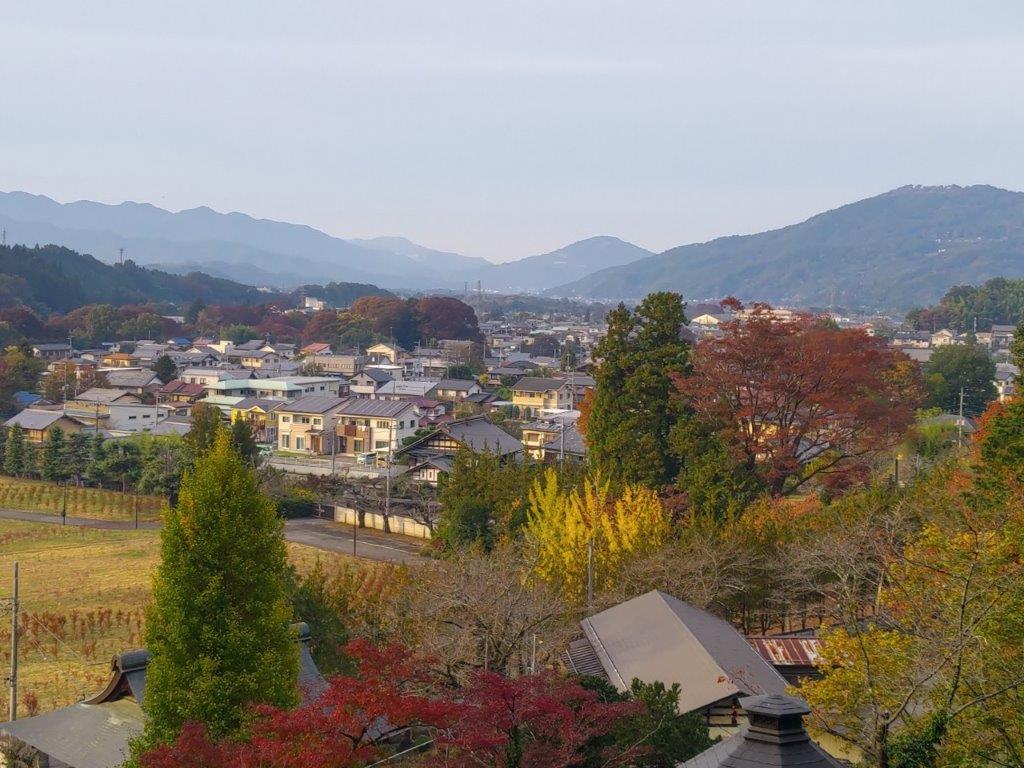
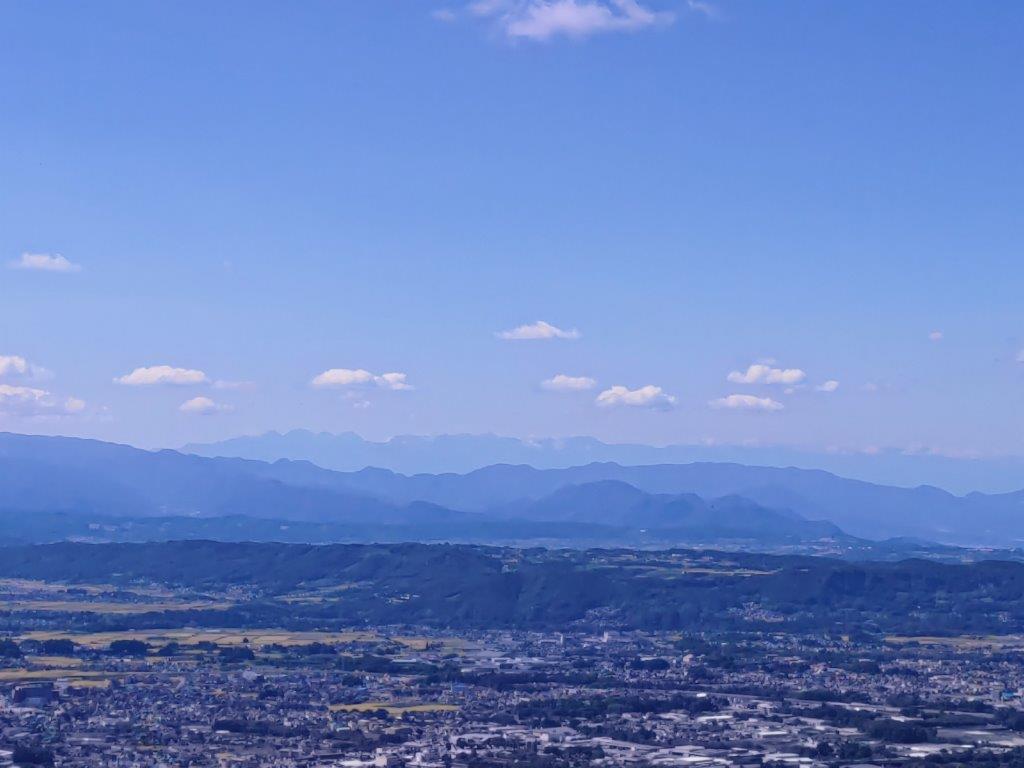
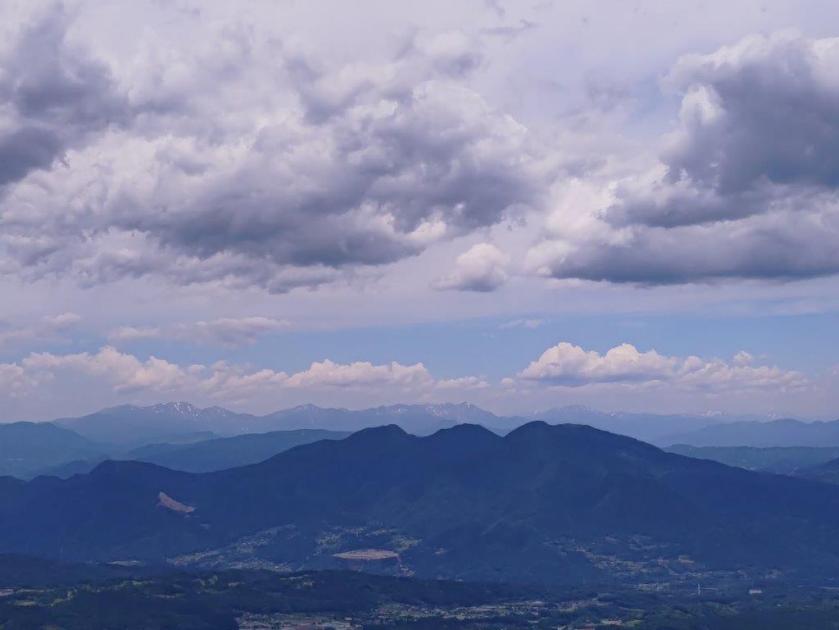
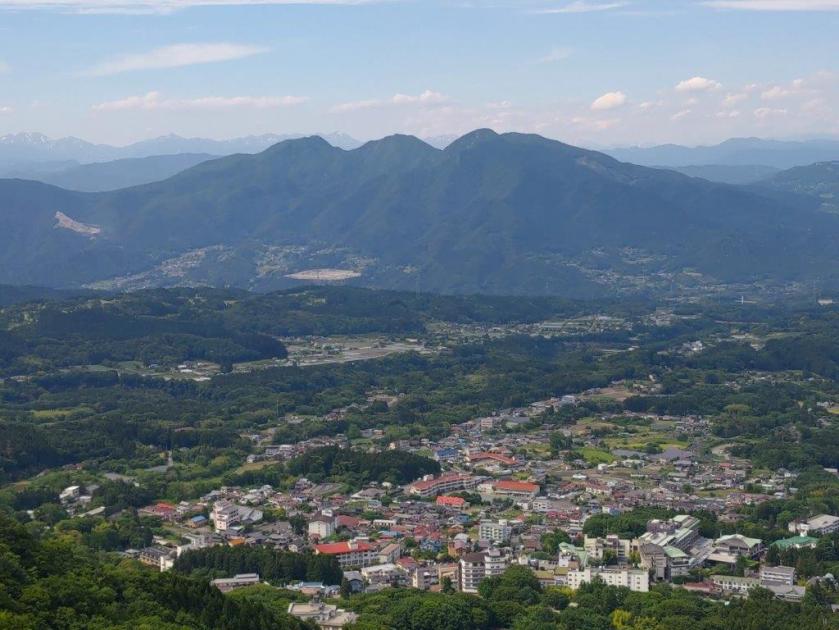
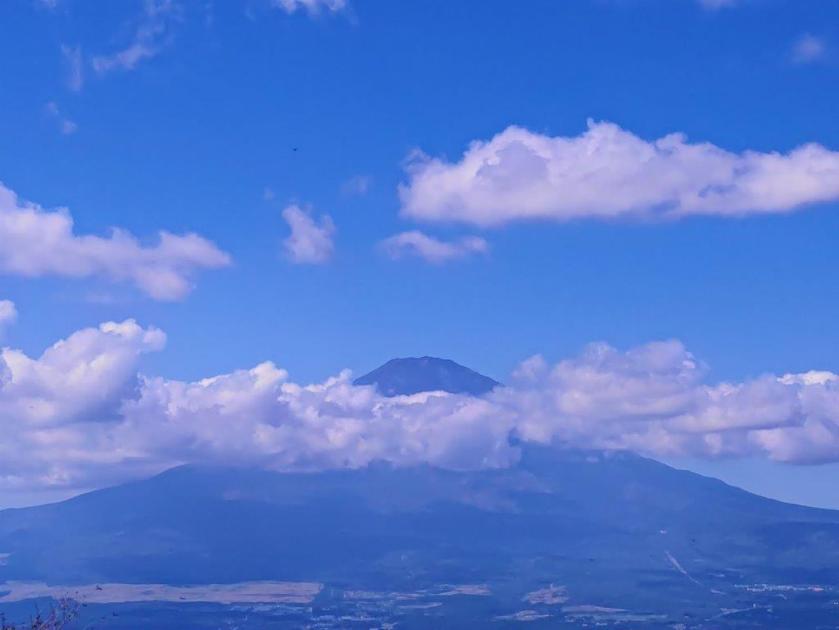
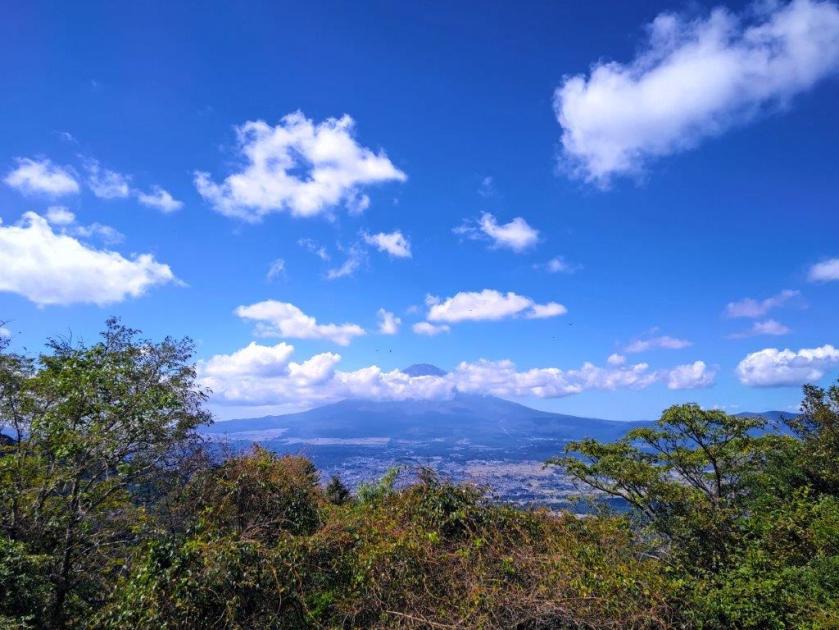
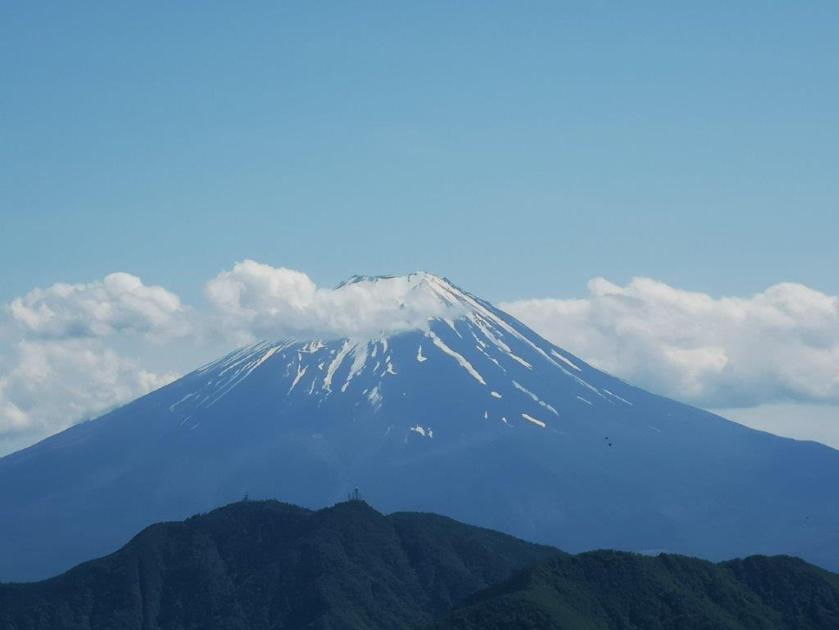
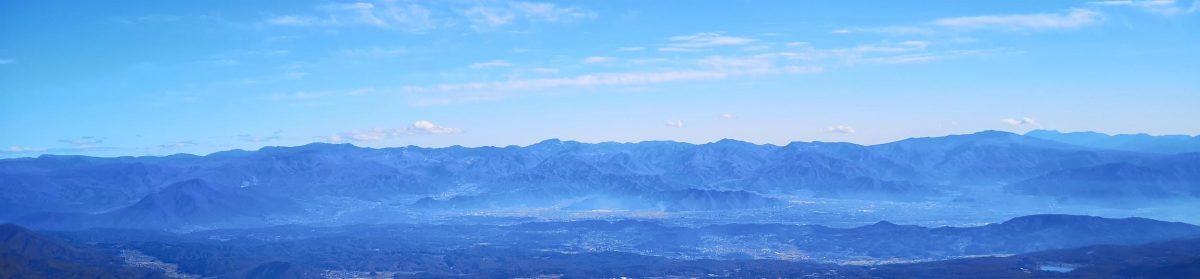
View of Yatsugatake from Hirao Onsen

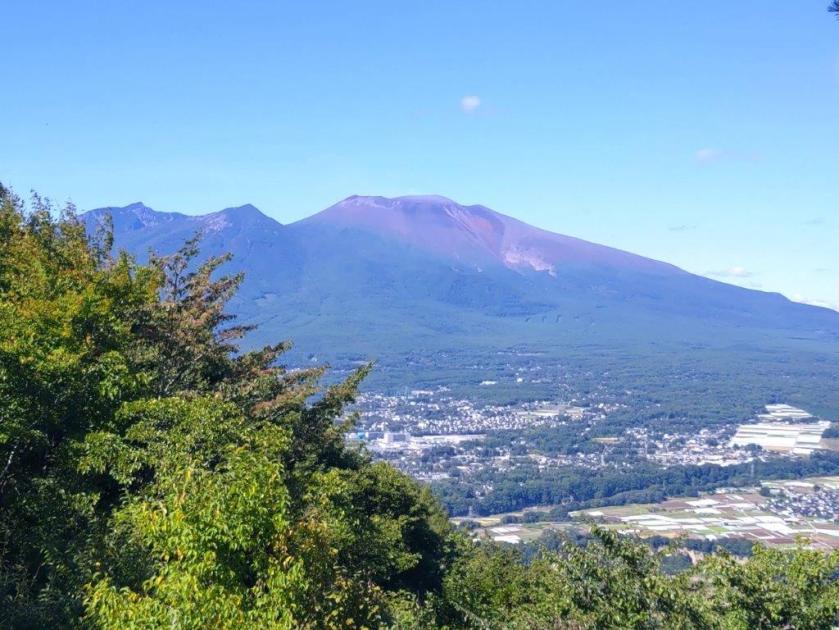
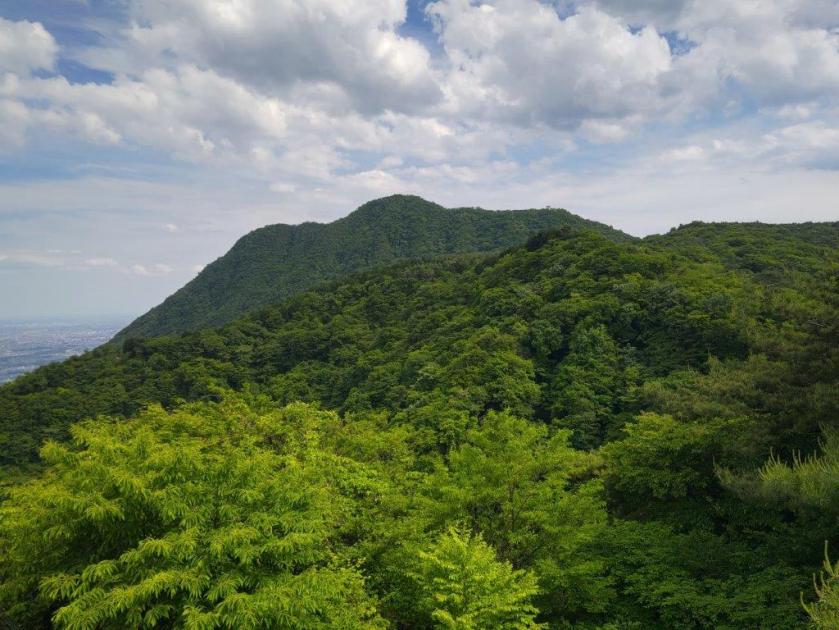
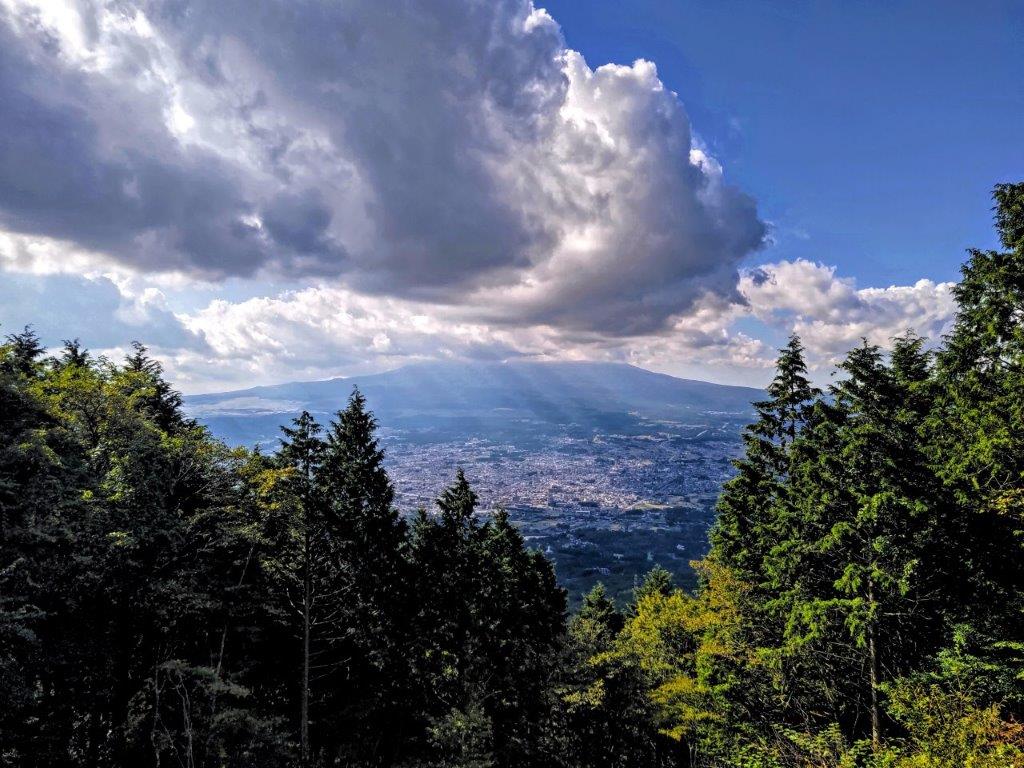
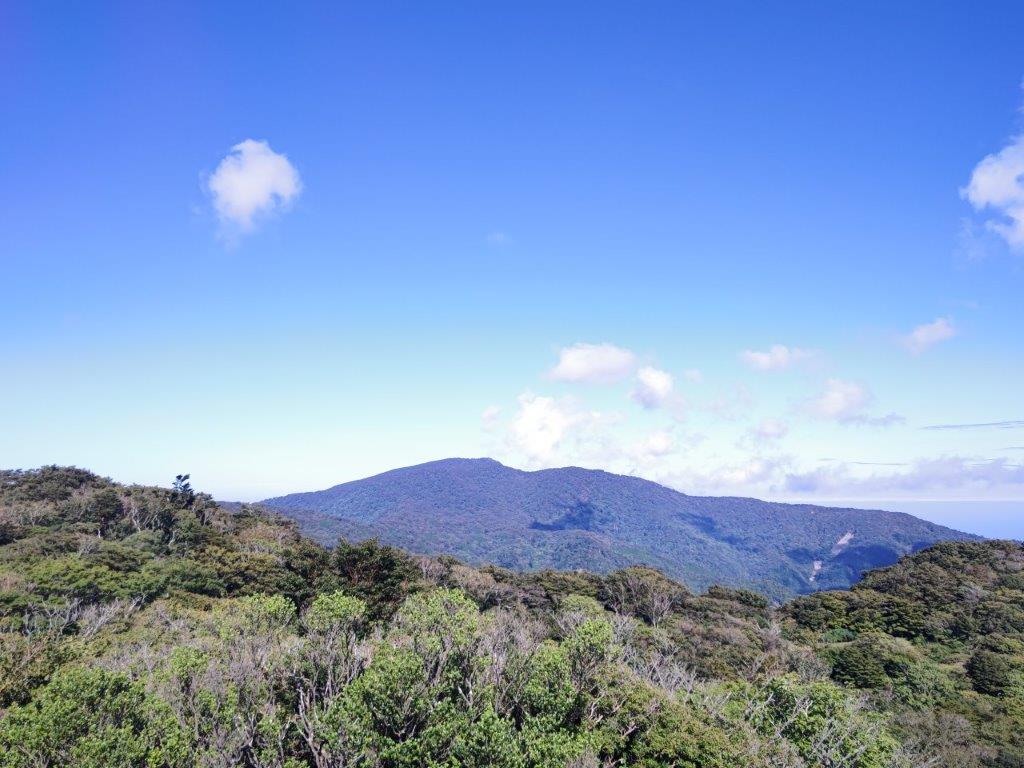
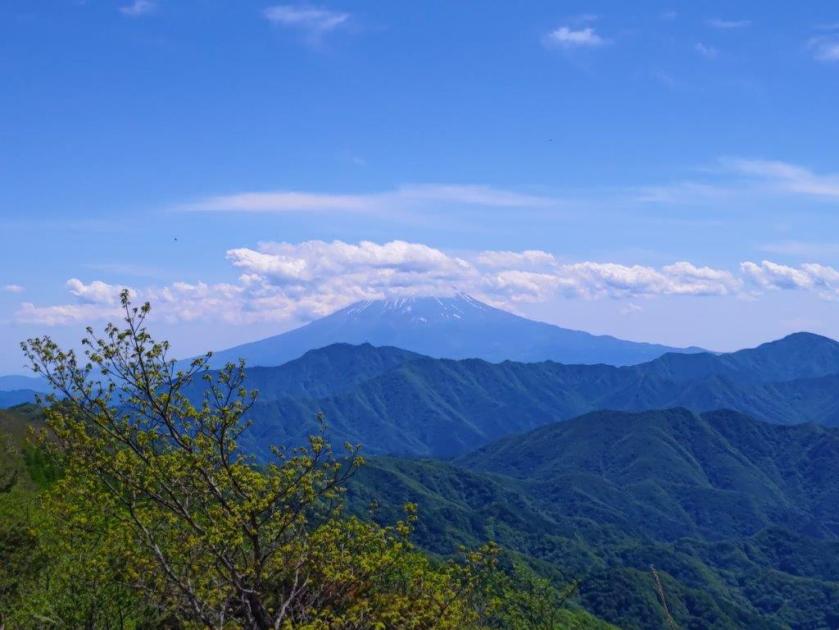
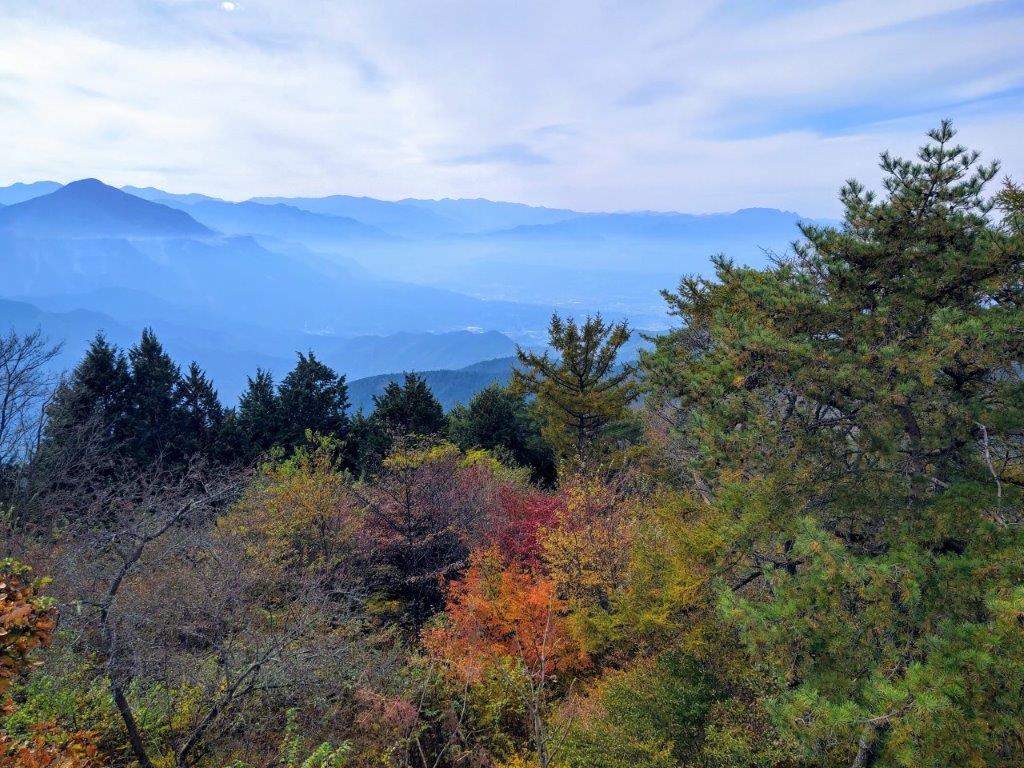
View of Asamaya from behind the summit of Mt Hirao

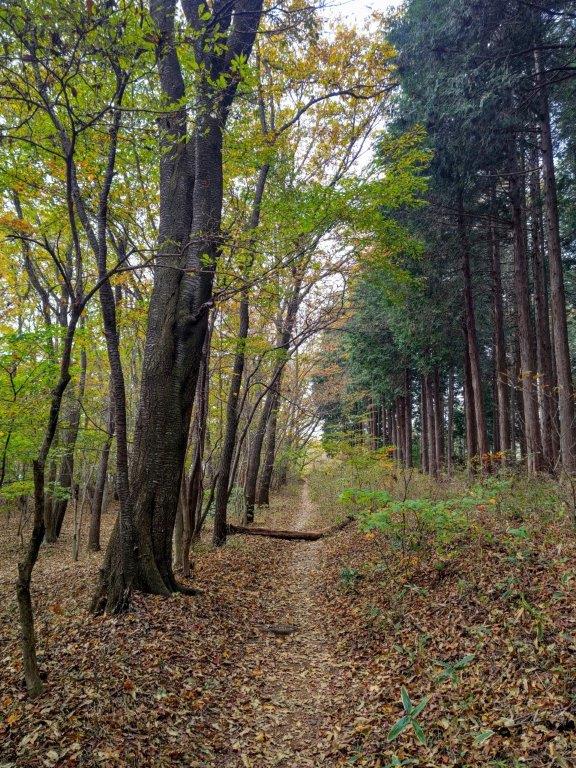
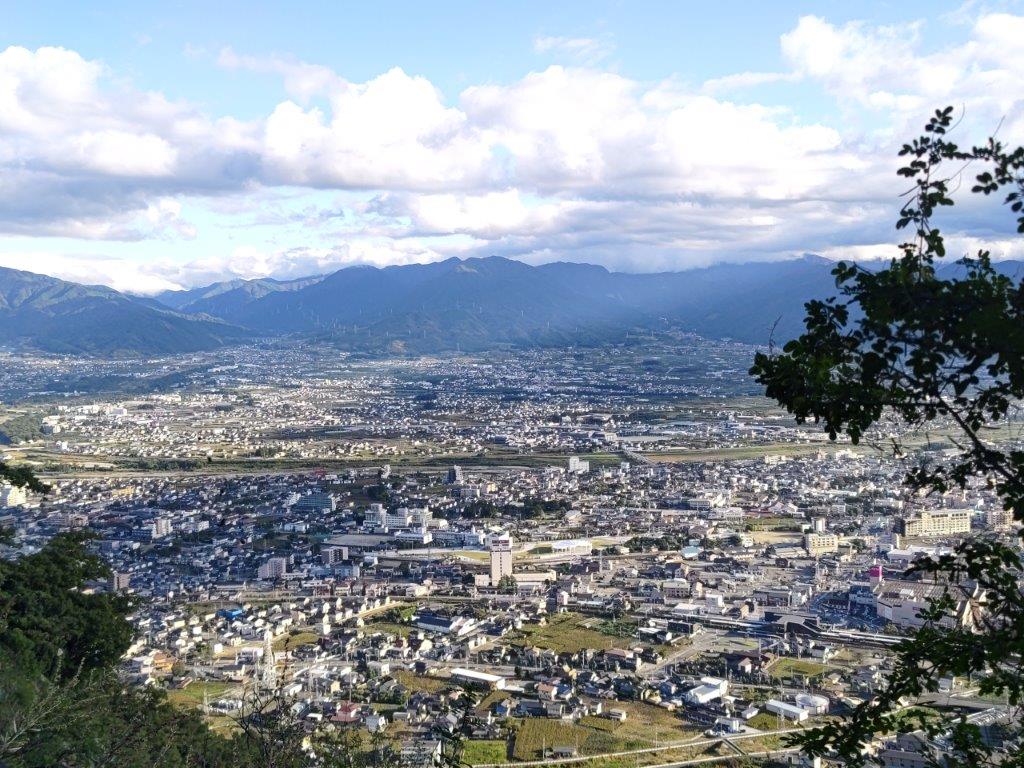
It was slightly overcast as I rode the shinkansen from Omiya, but after passing Karuizawa town, blue skies stretched away in all directions. I got off at Saku-Daira station a little before 1030, and there, caught a taxi for the short ride to Hirao Onsen. Perched a little way up the mountain side, I already had a great view of the Saku plateau, and the Yatsugatake range directly ahead. I found a 200 yen locker to store the things I didn’t need for the hike itself, and shortly before 1130, started up the Hirao Forest “Therapy Road”.

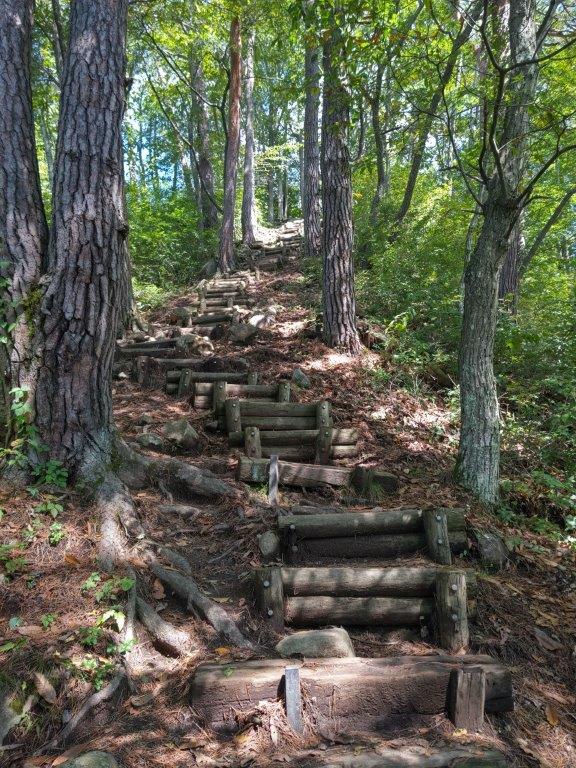
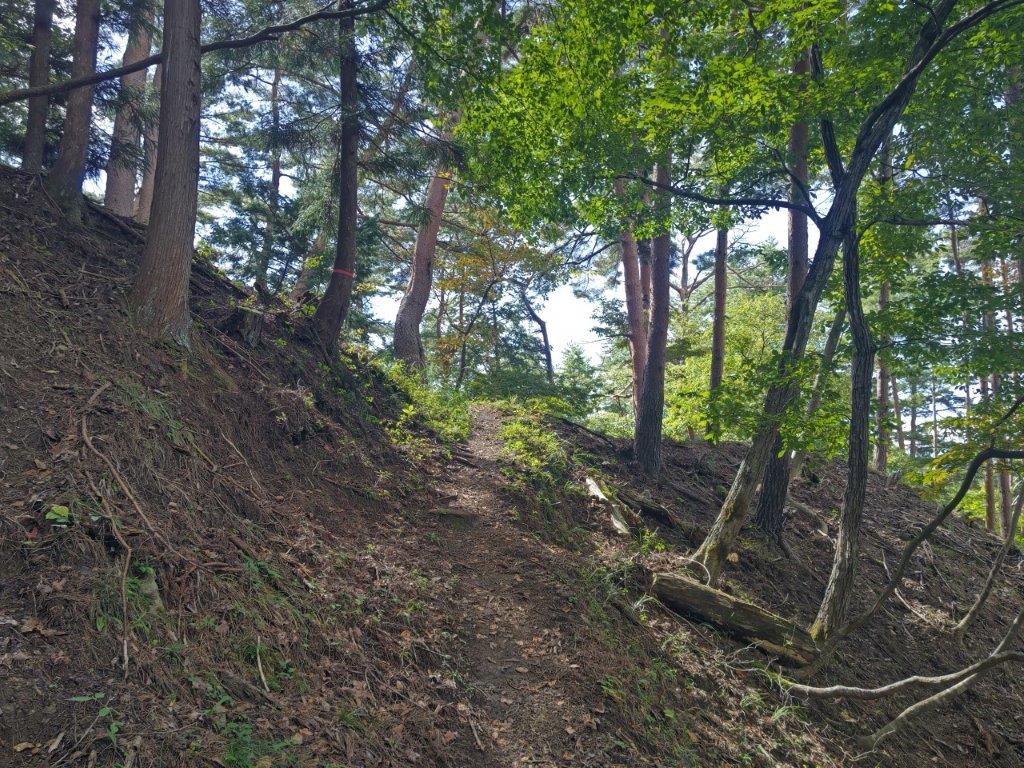
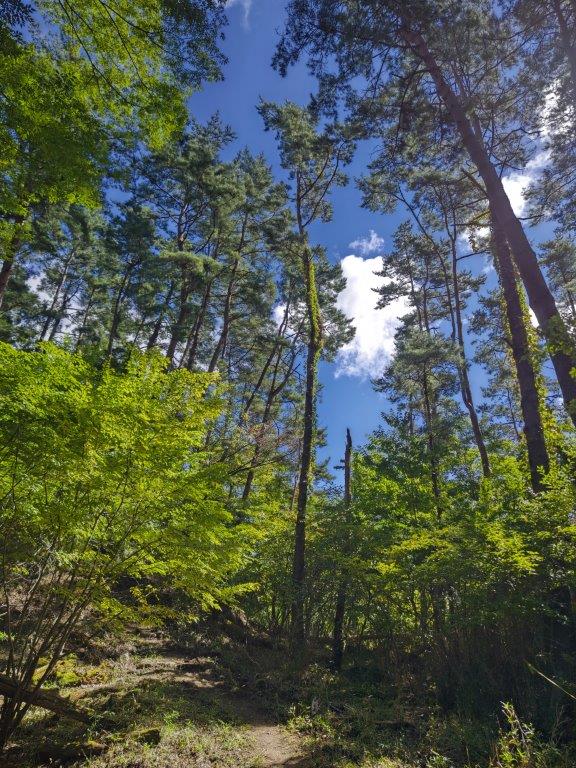
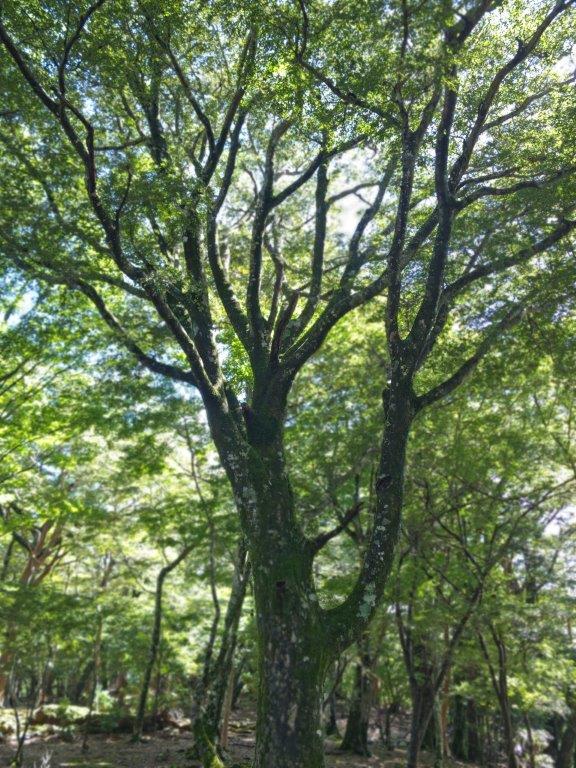
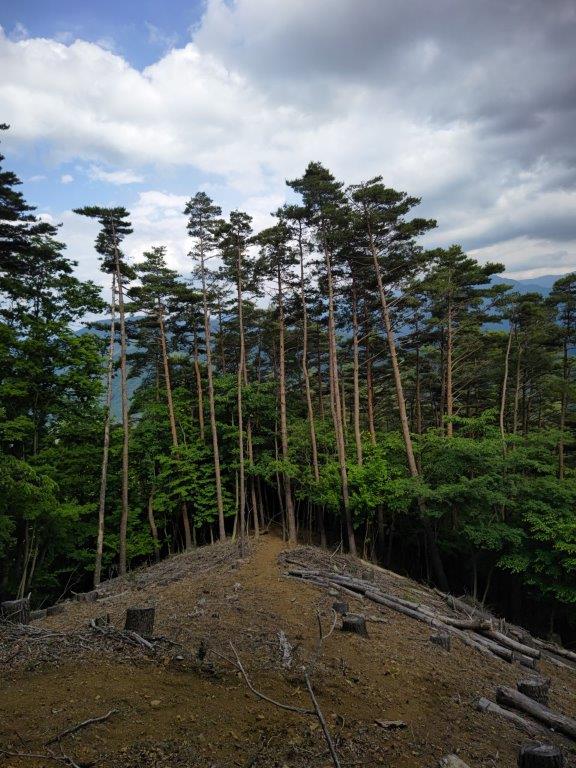
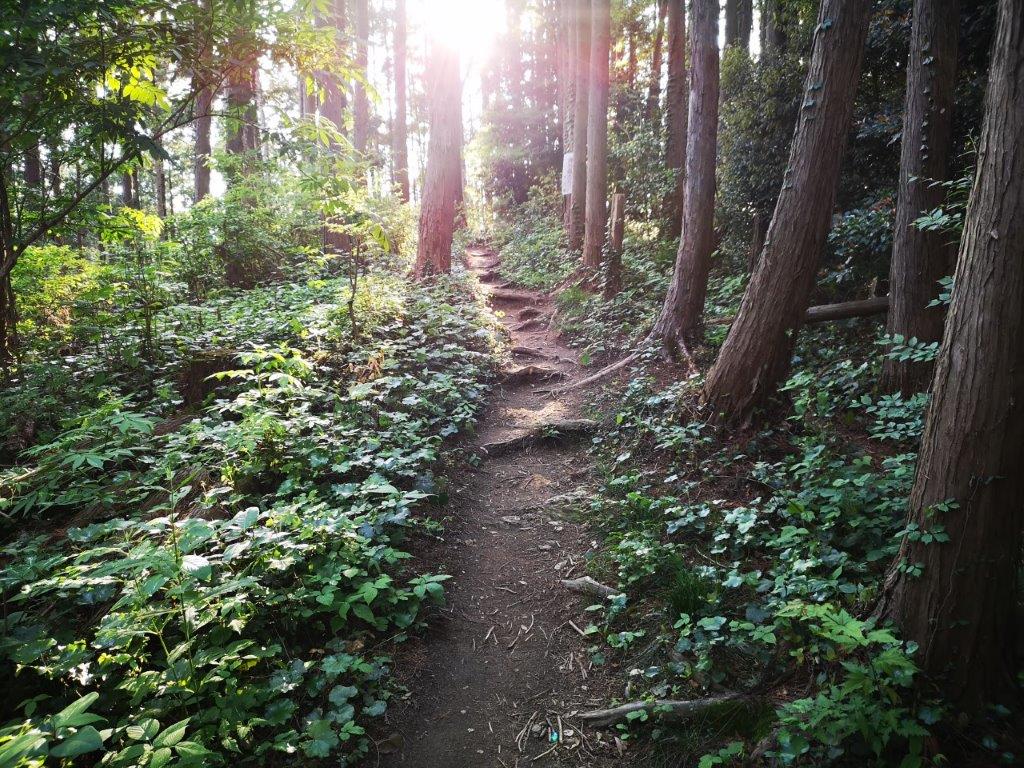
Pines Trees (left) and Log Steps (right) on the Therapy Road

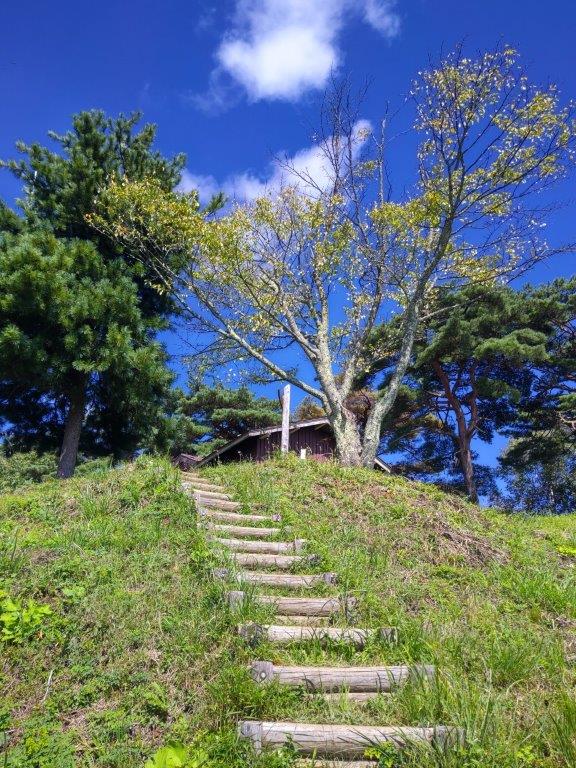
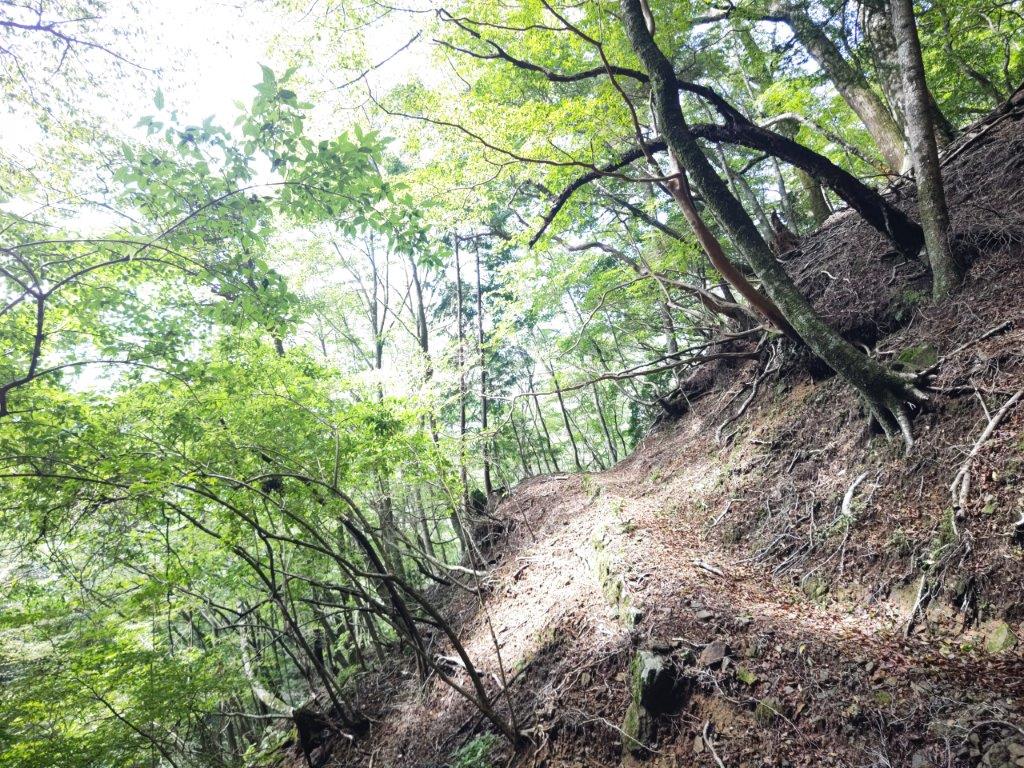
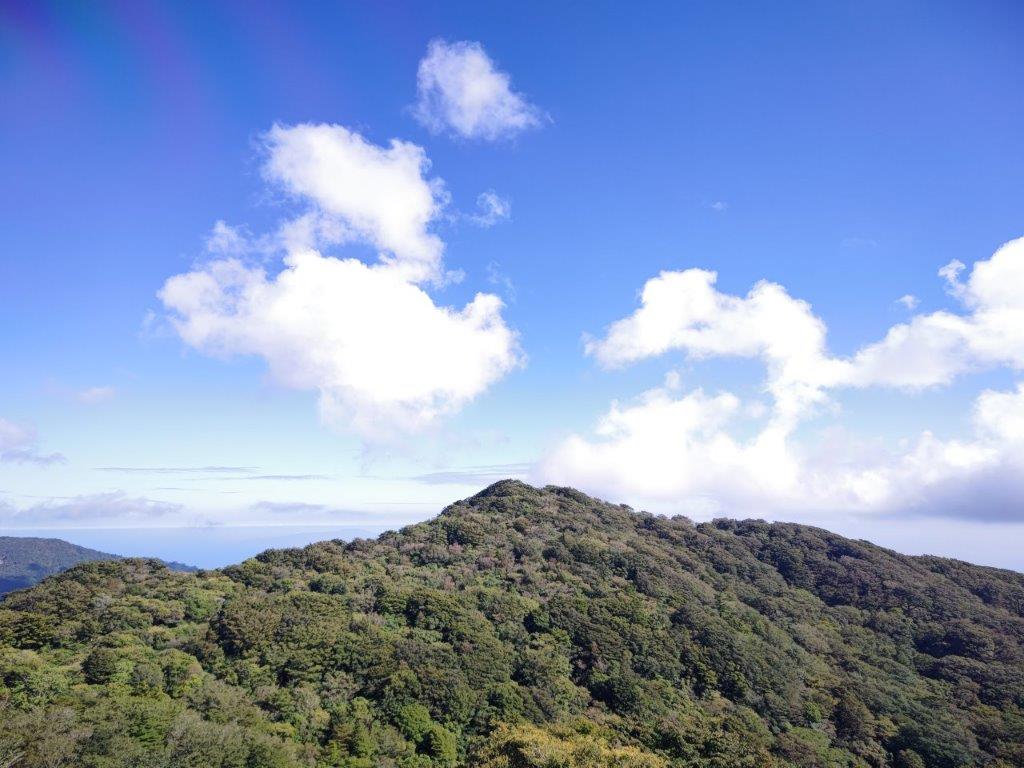
Looking up at Mt Hirao (left) Looking down from Mt Hirao (right)

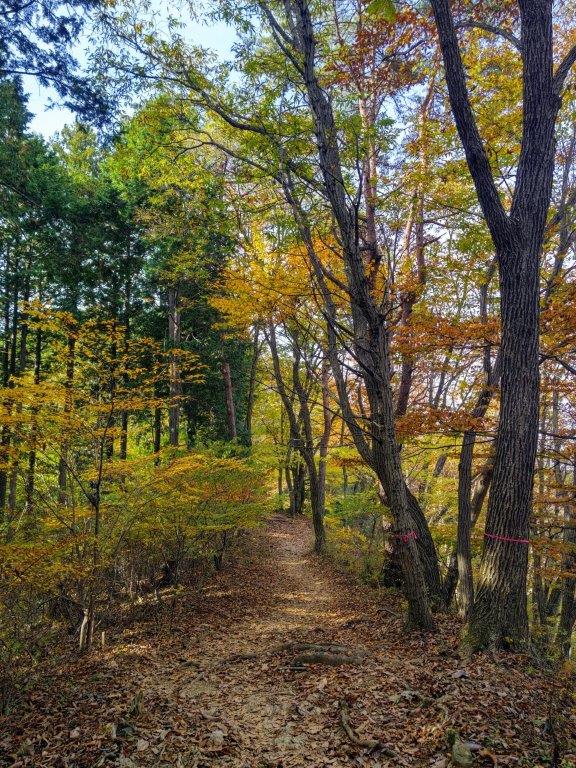
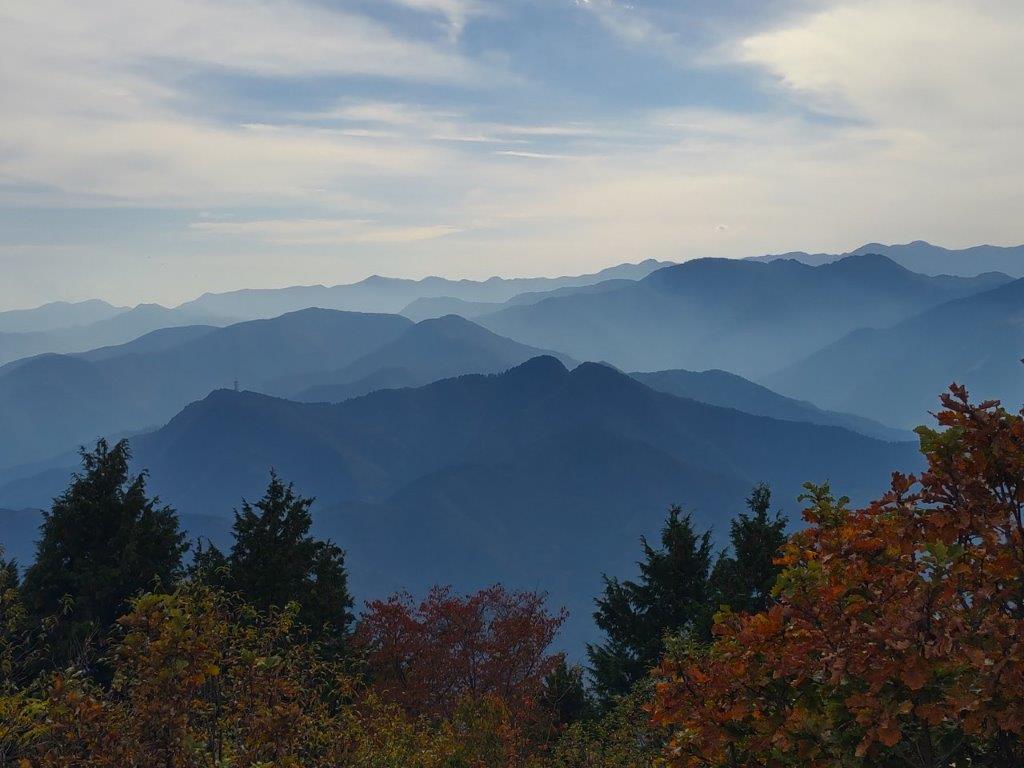
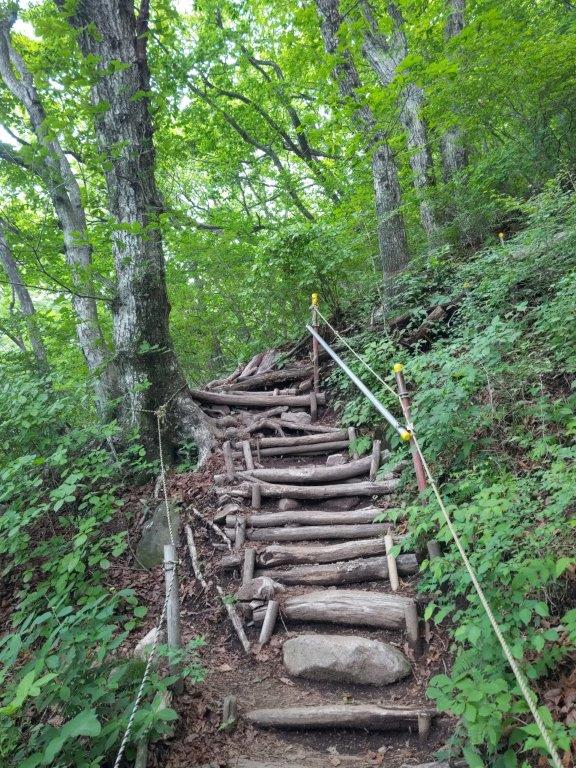
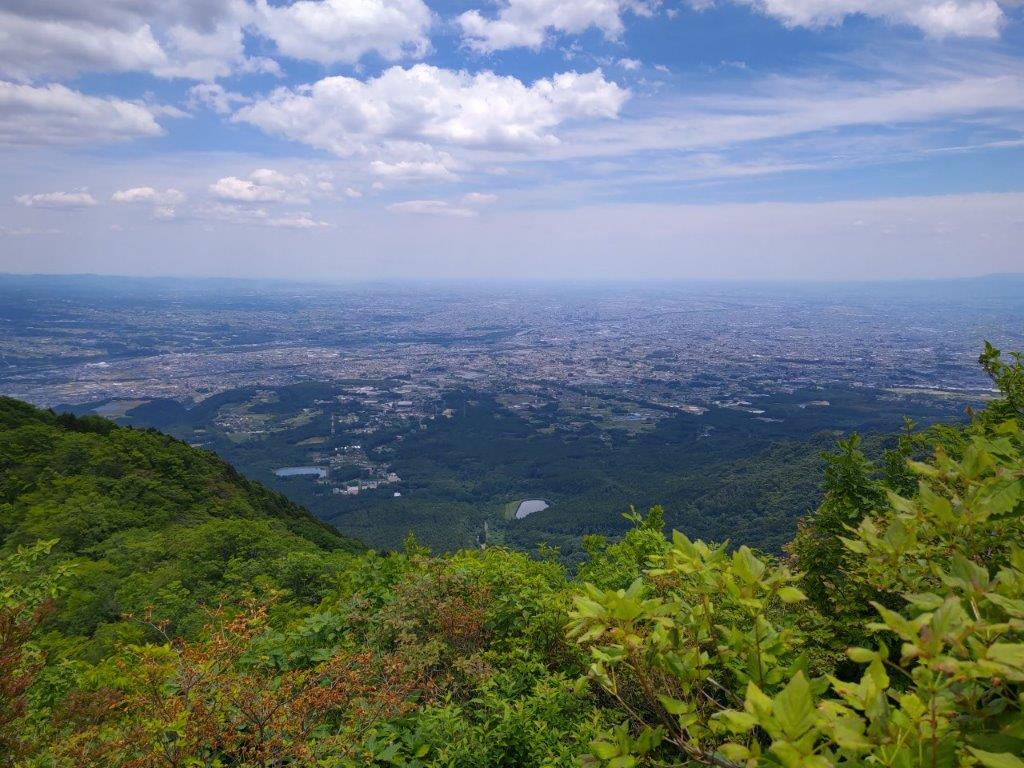
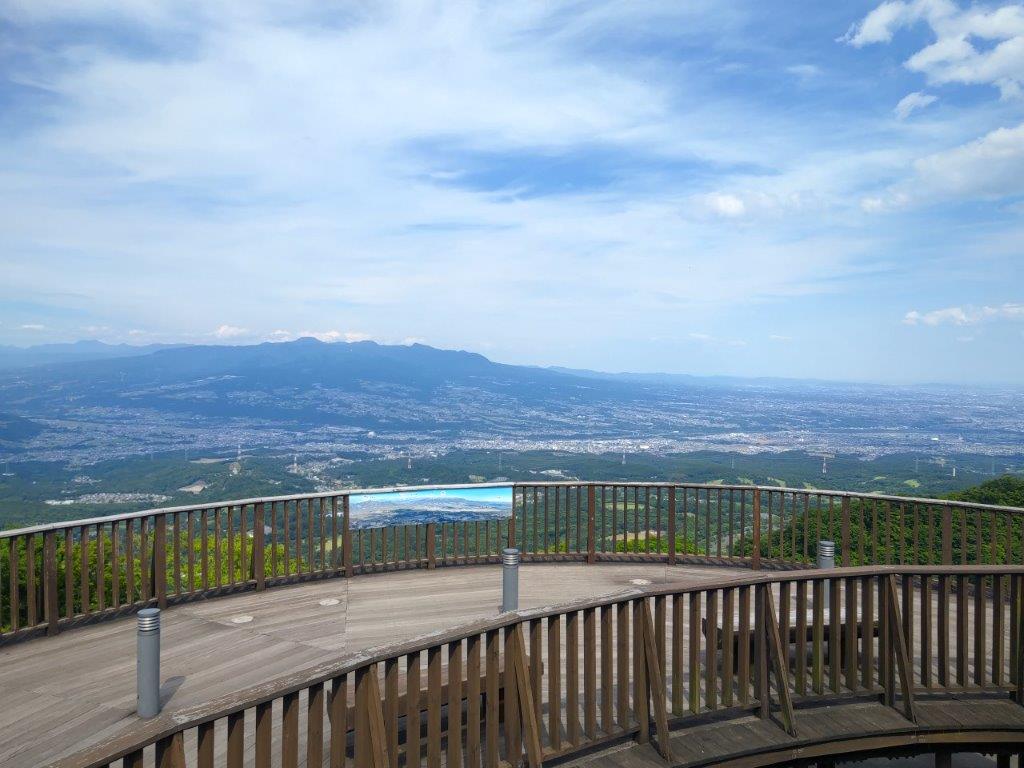
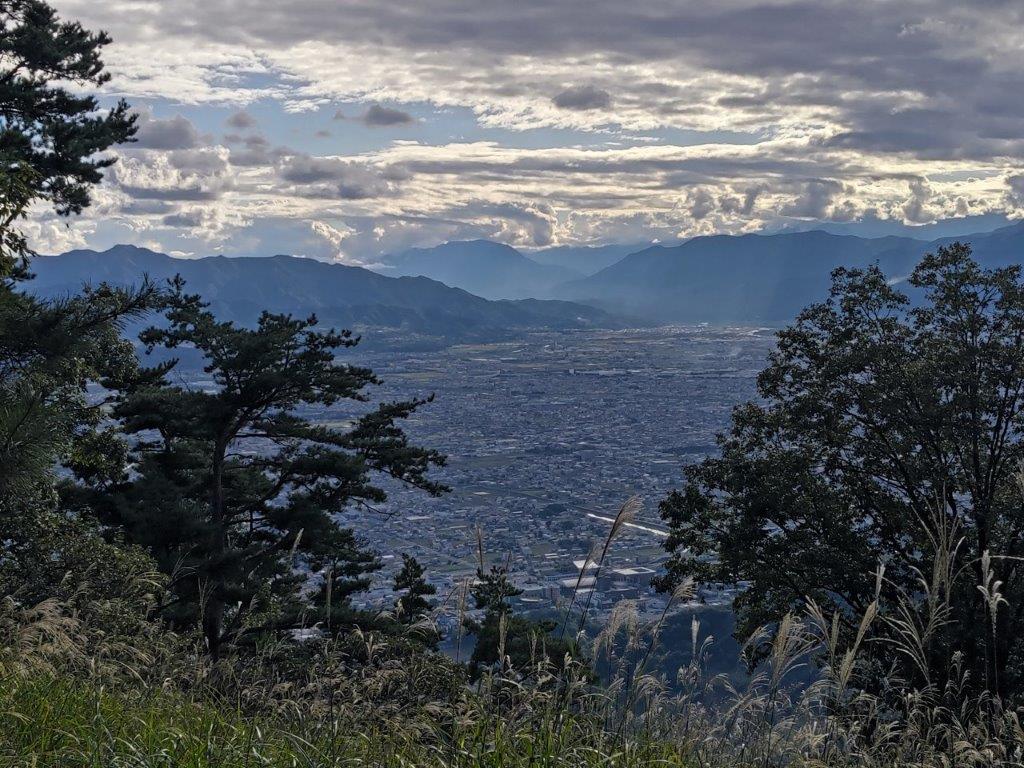
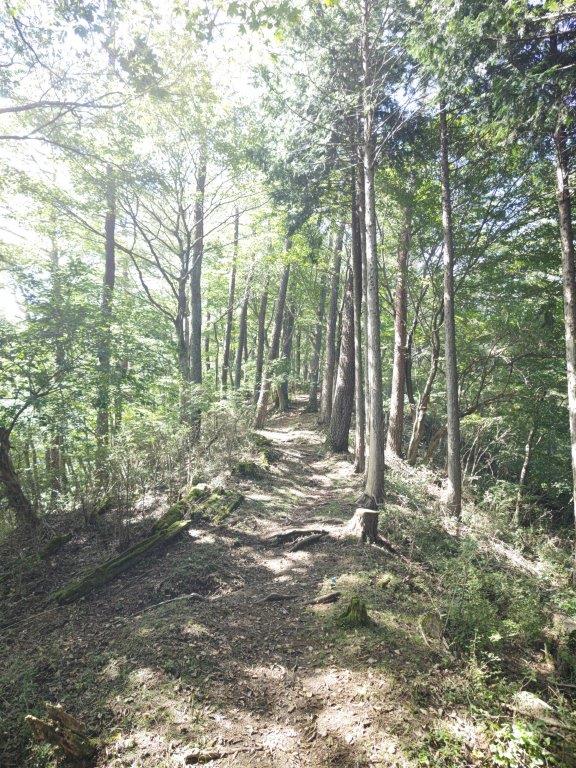
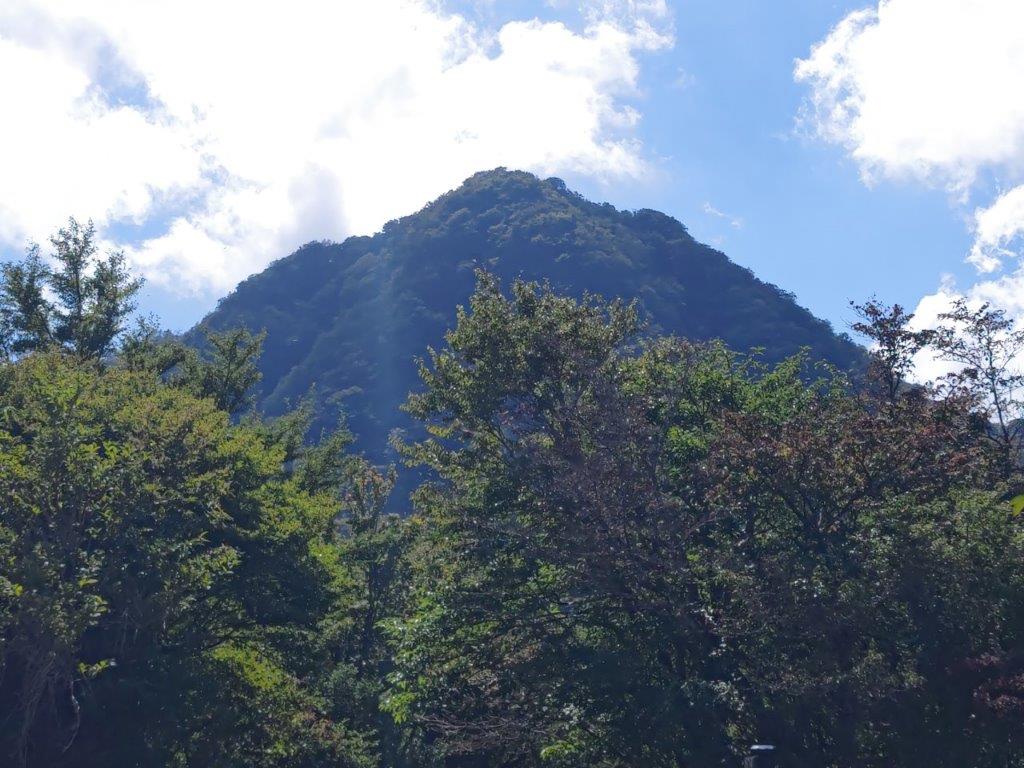
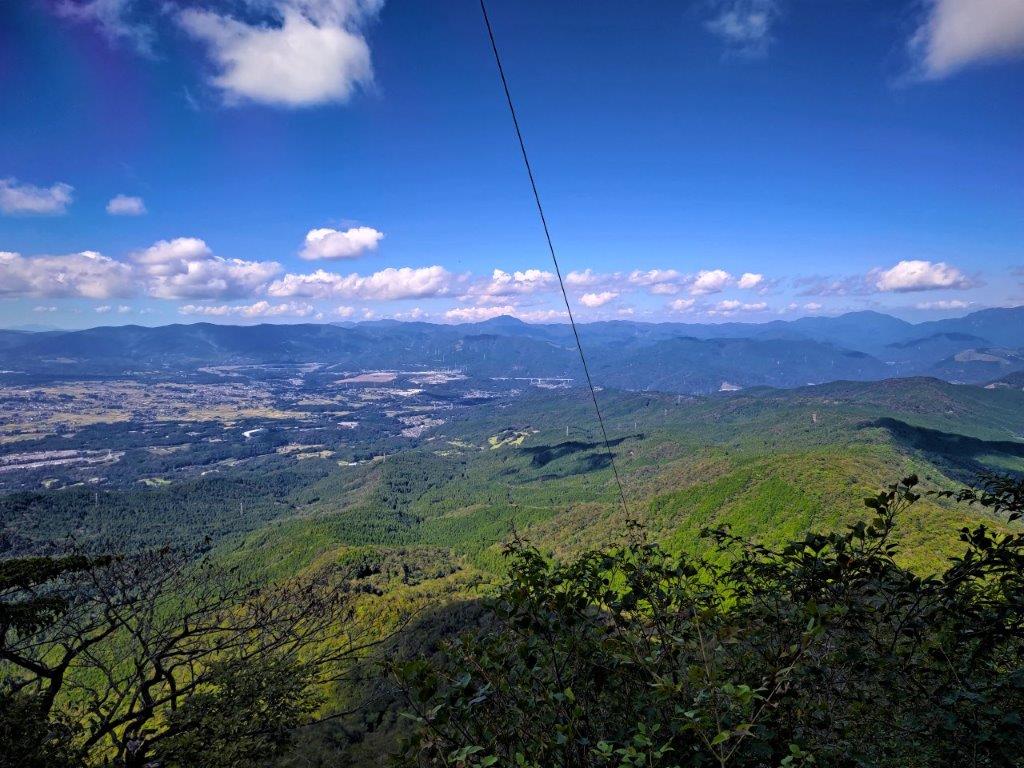
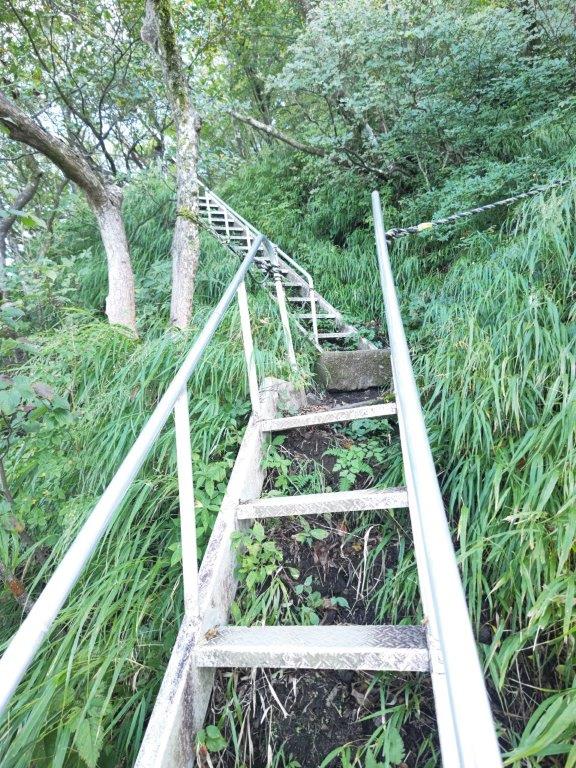
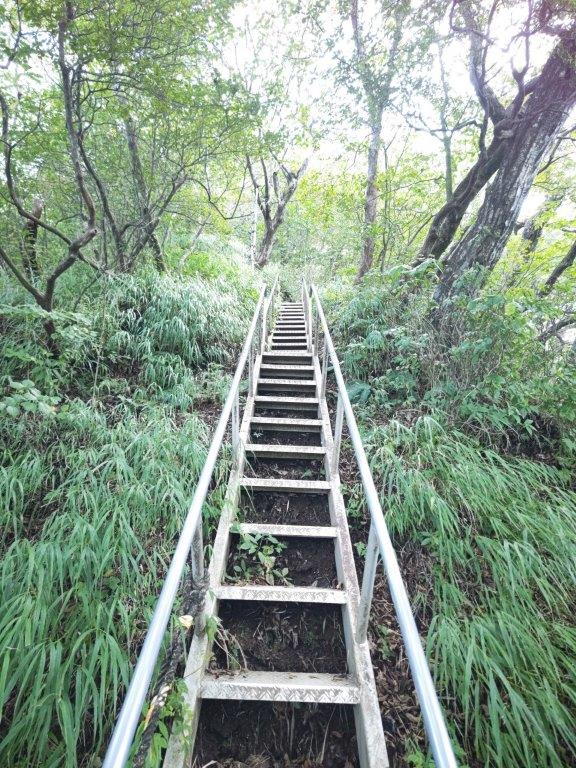
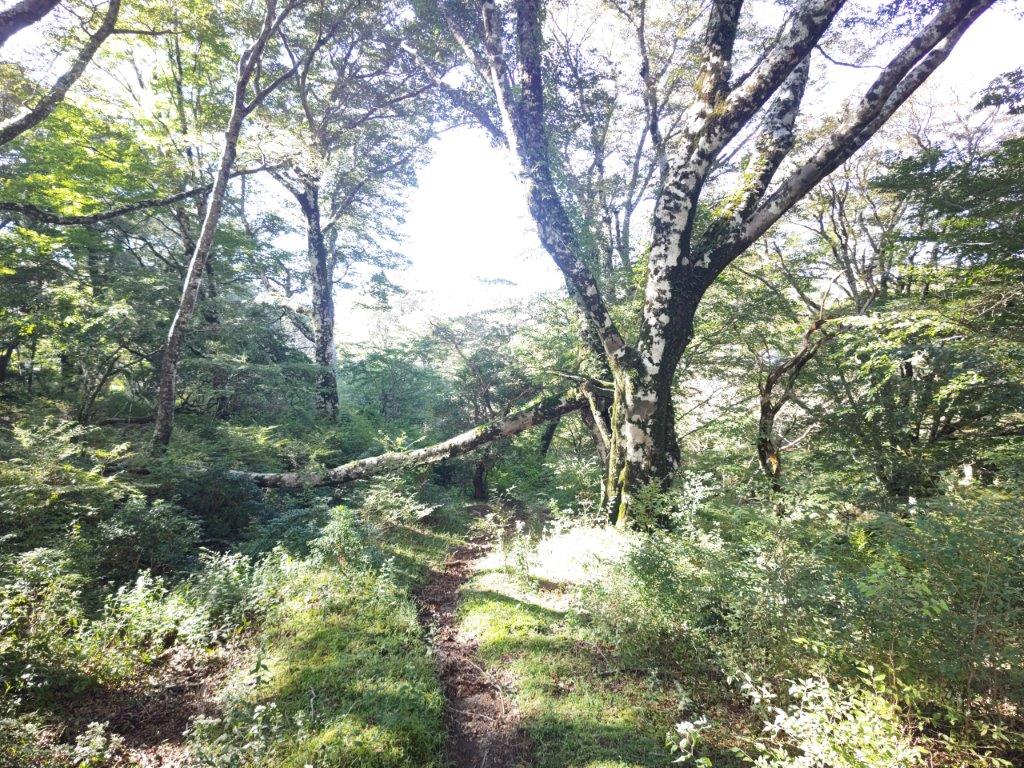
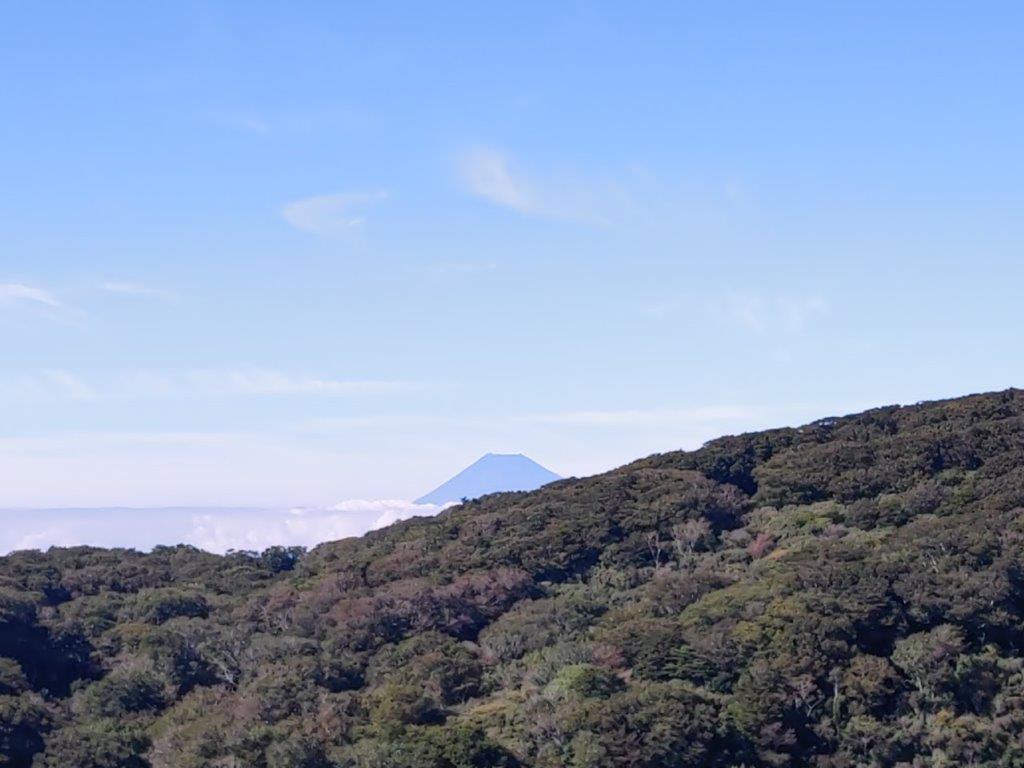
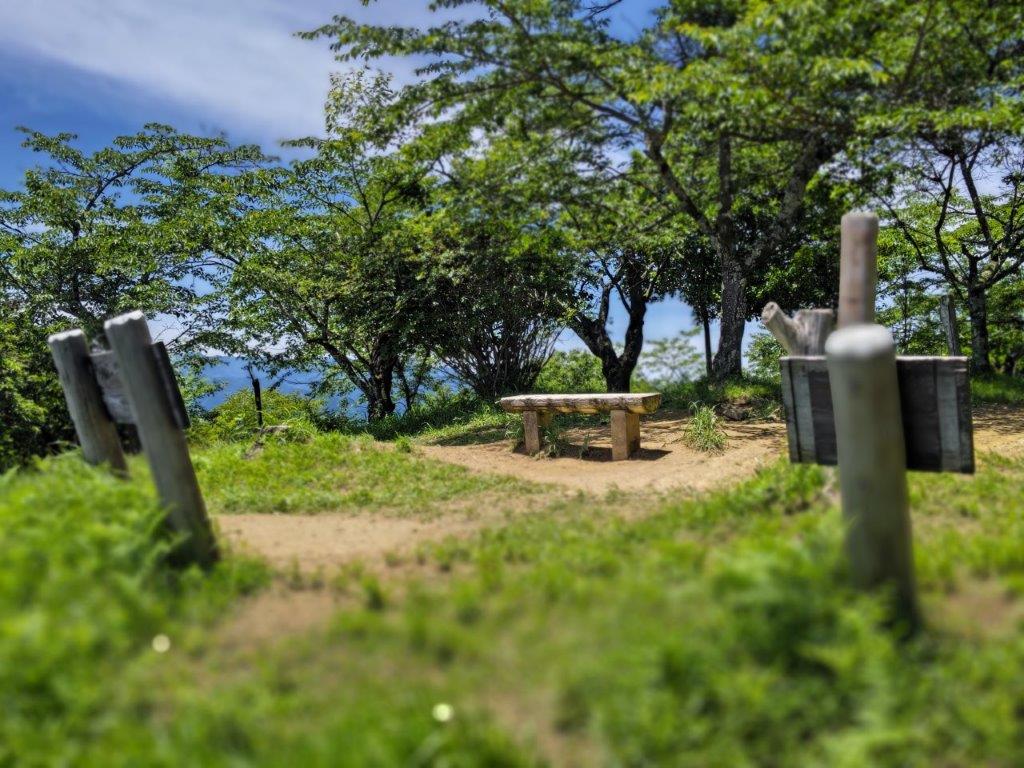
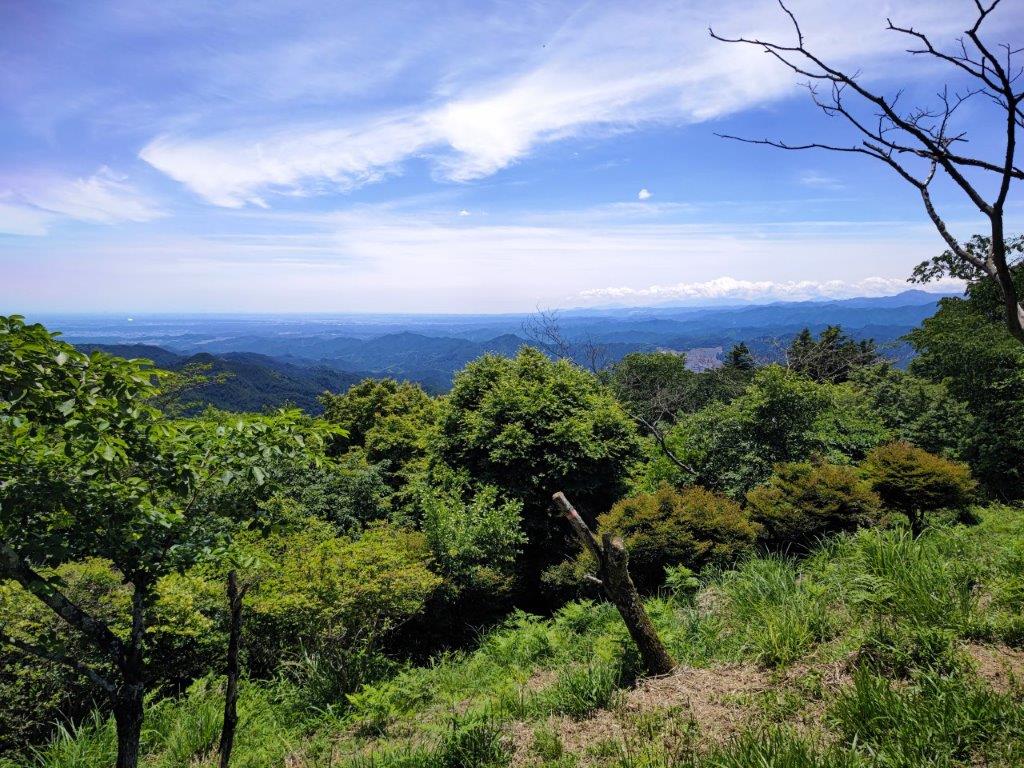
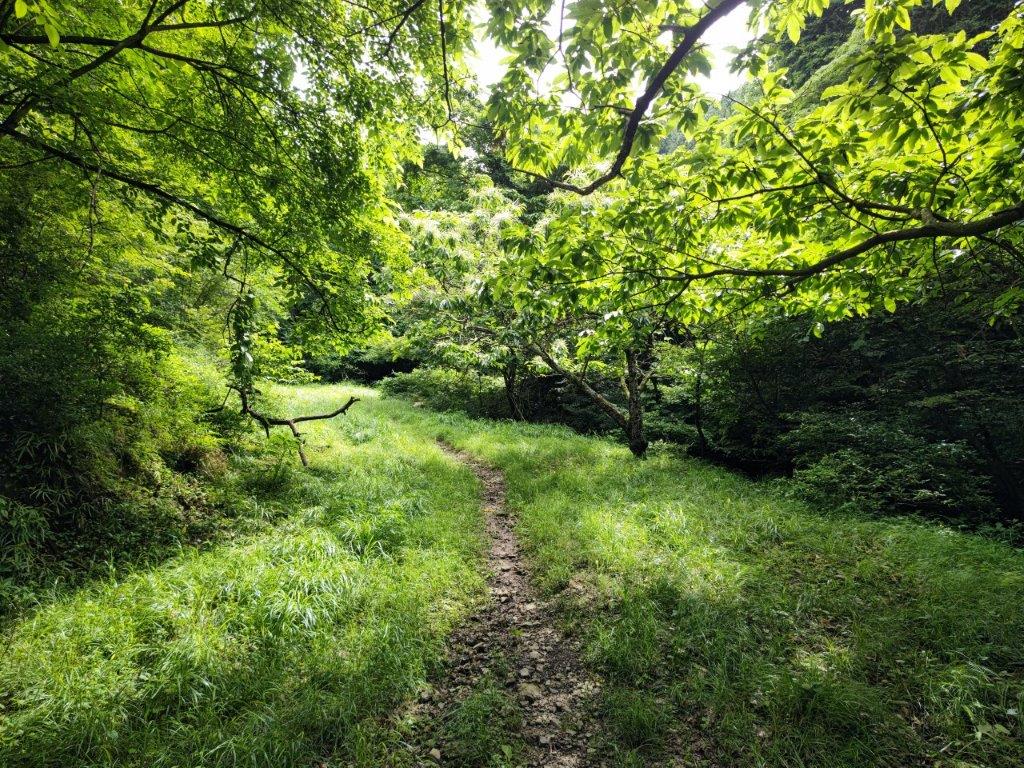
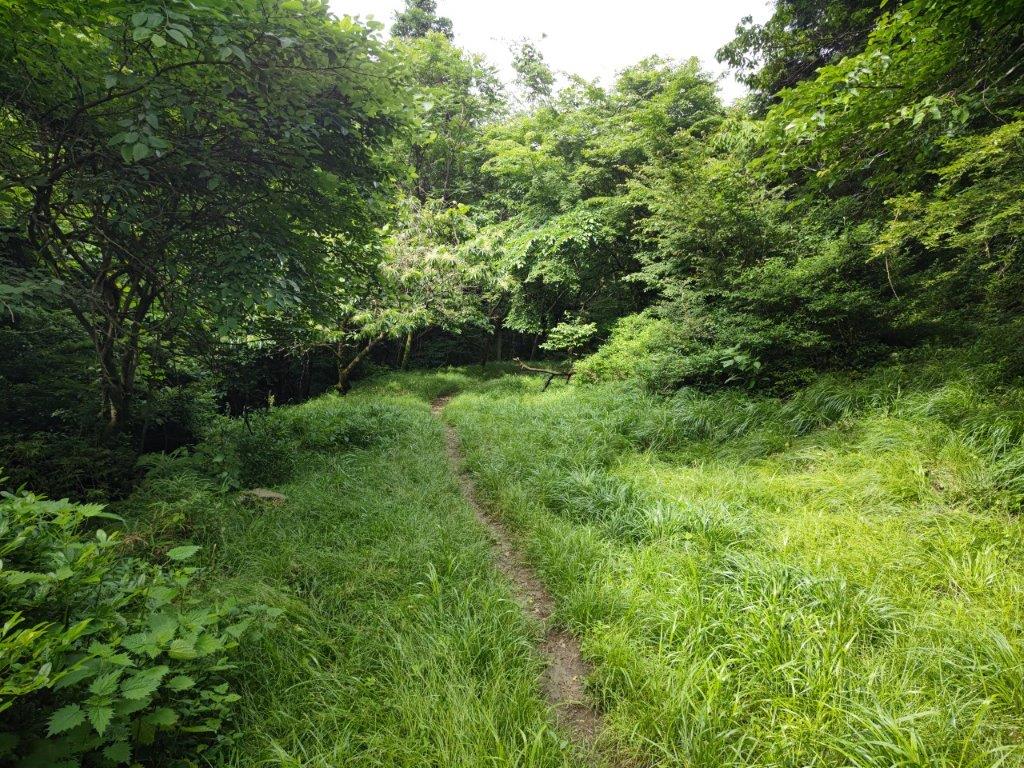
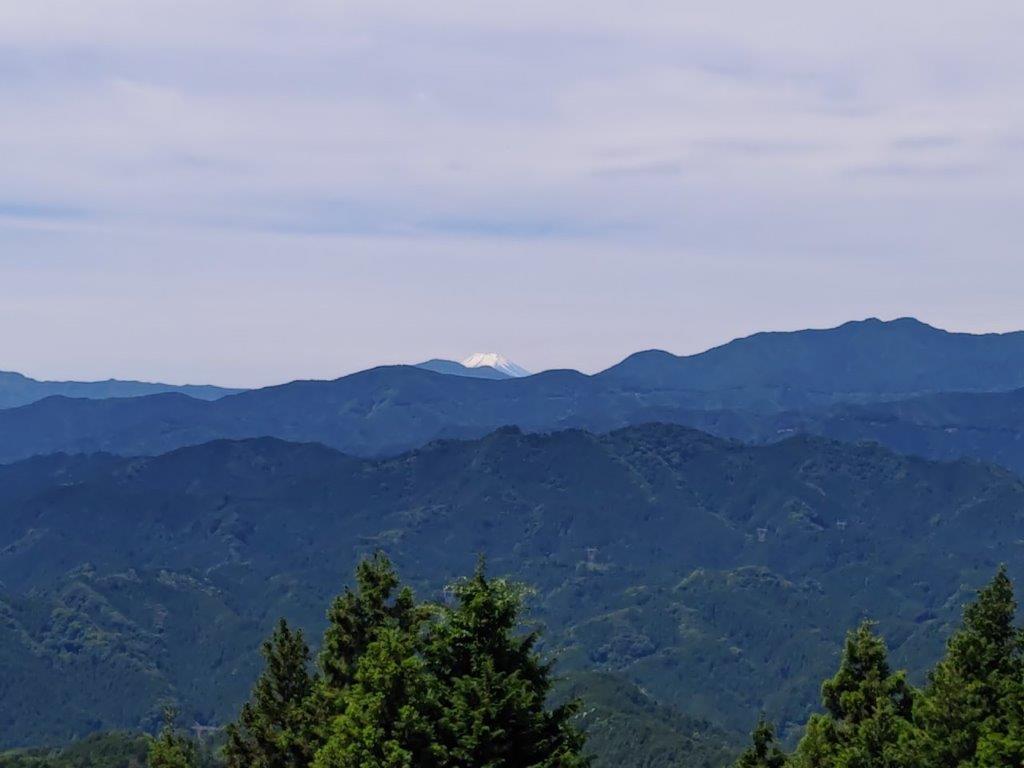
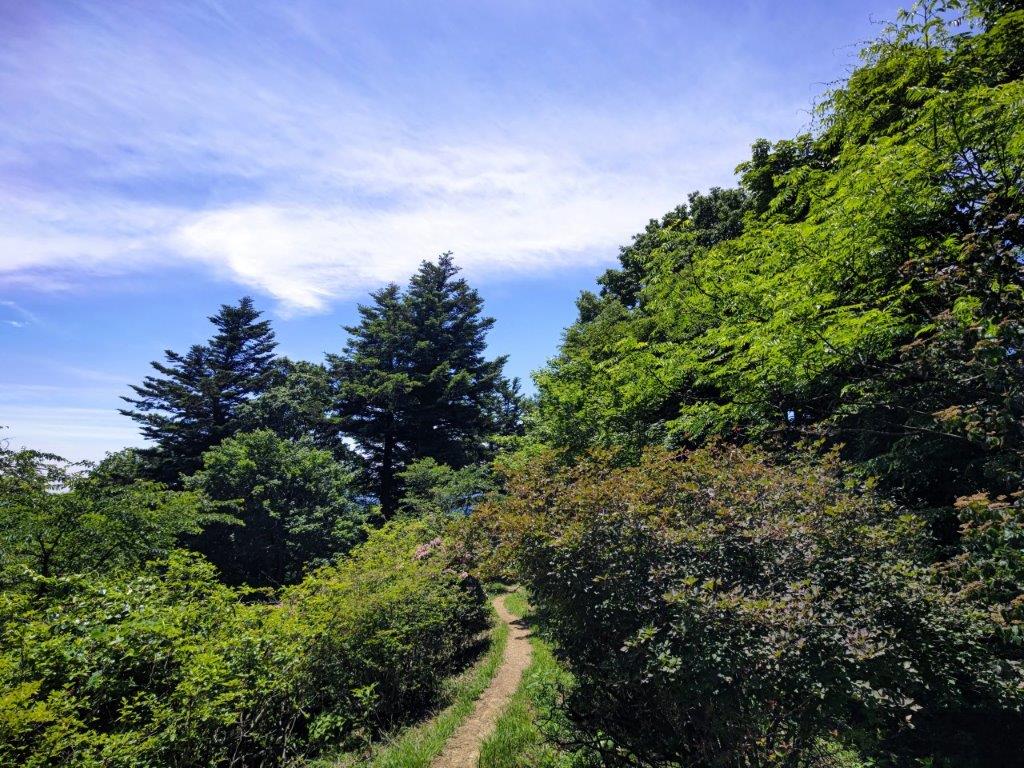
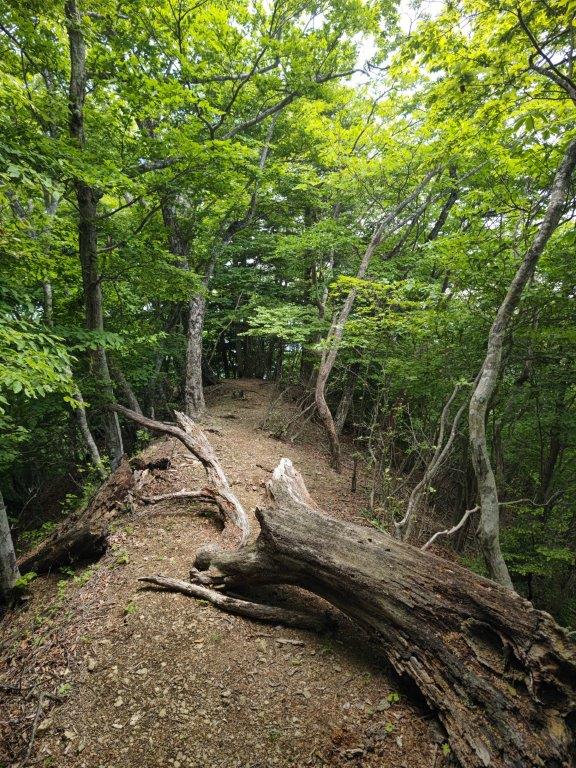
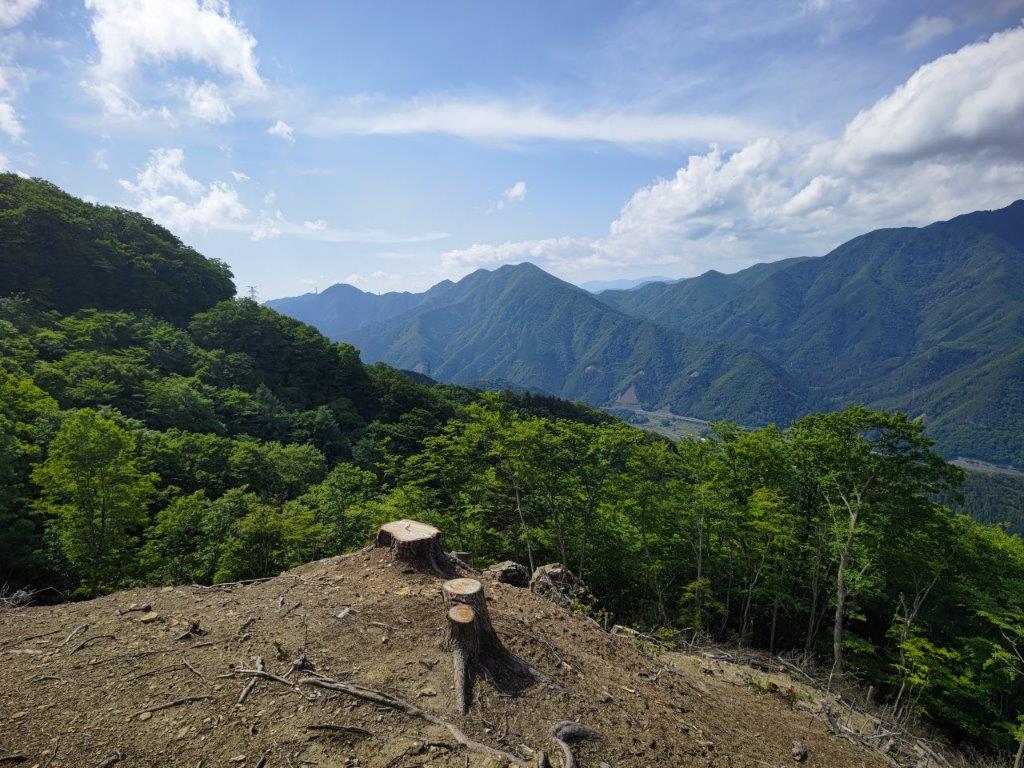
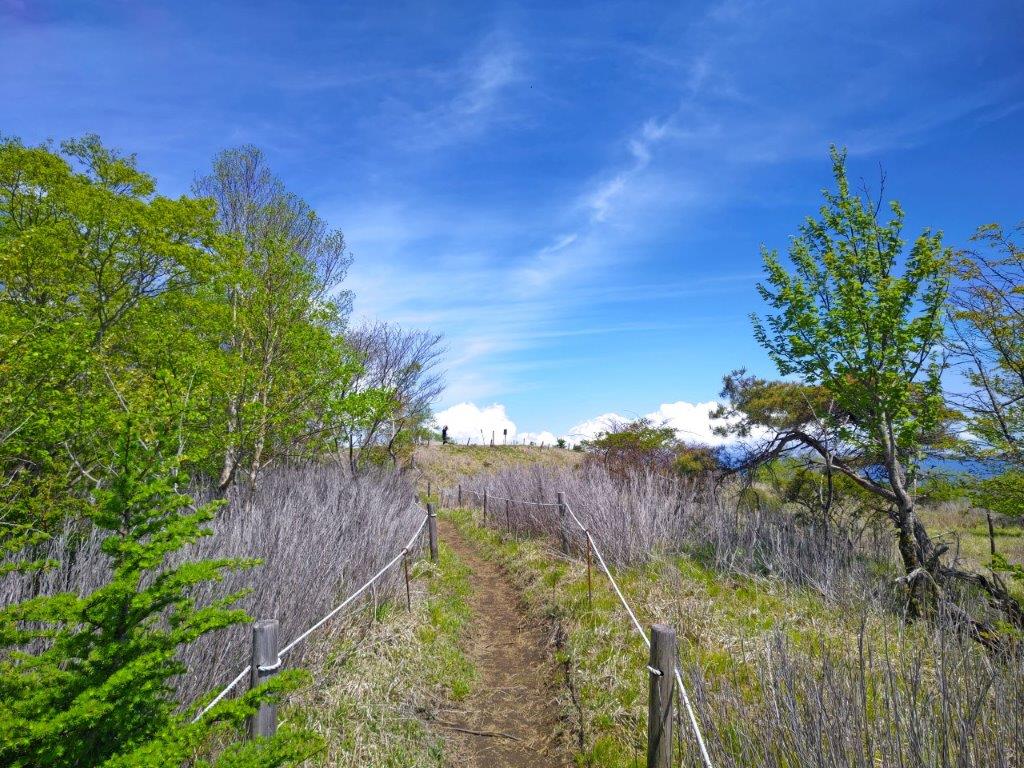
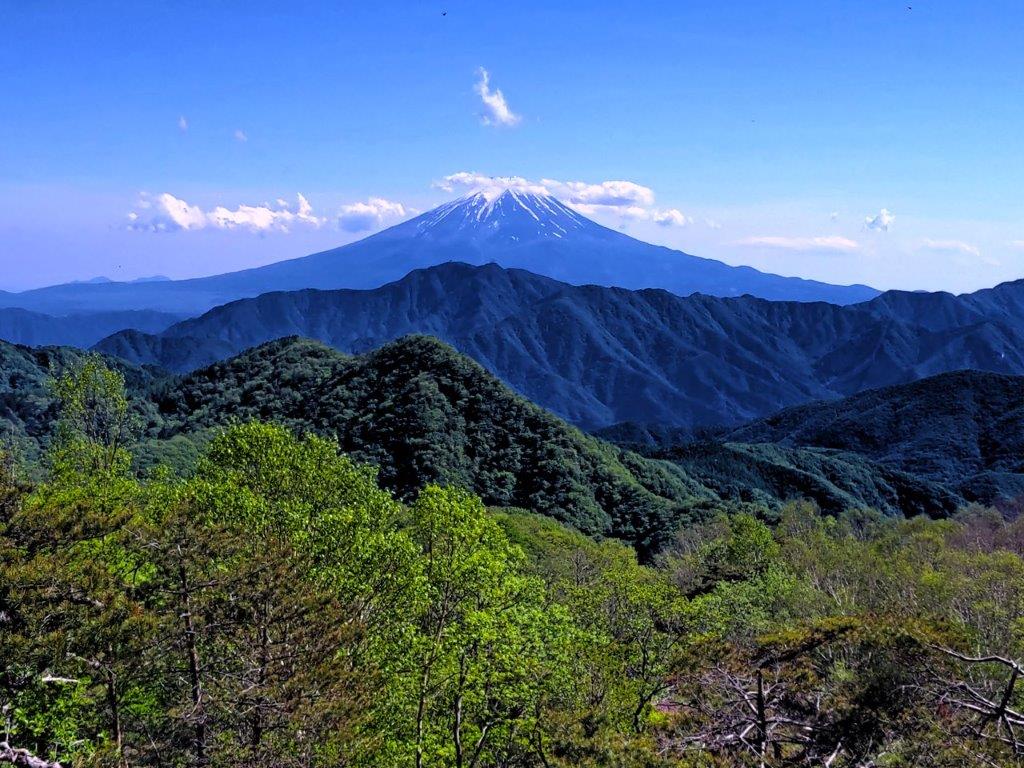
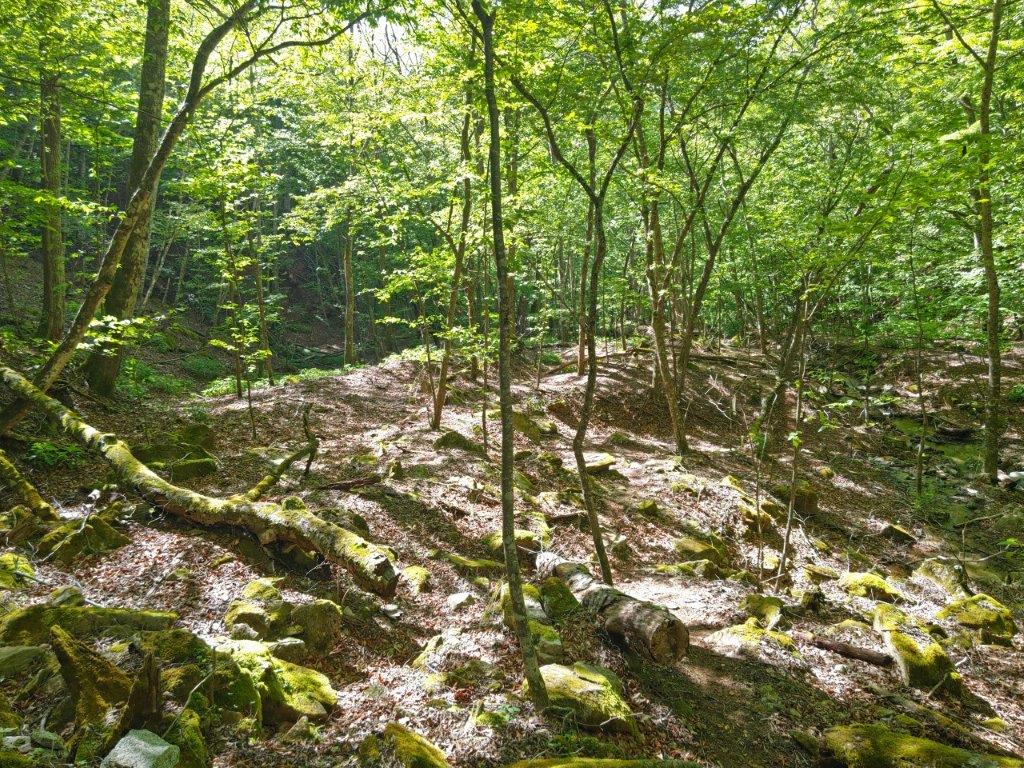
I climbed through beautiful, spider-free forest, up the “Path of Endurance” (忍耐の小径); at the top of a steep log staircase, I reached the top of Mt Hirao, also known as Hirao-Fuji (平尾富士 ひらおふじ hirao-fuji). It was nearly 12h30 so I sat down on one of the several west-facing benches for lunch with a view. To the south, were the mountains of Oku-Chichibu, Mt Ogura visible in the far distance; opposite was a sideview of Yatsugatake, stretching from Mt Aka to Mt Tateshina; further west, I could see the entire range of the North Alps, extending from Mt Yari to Mt Shirouma, free of clouds and snow; on the north side, the crater of Asamayama, as well as the long, flat top of Mt Hanamagari were both visible.

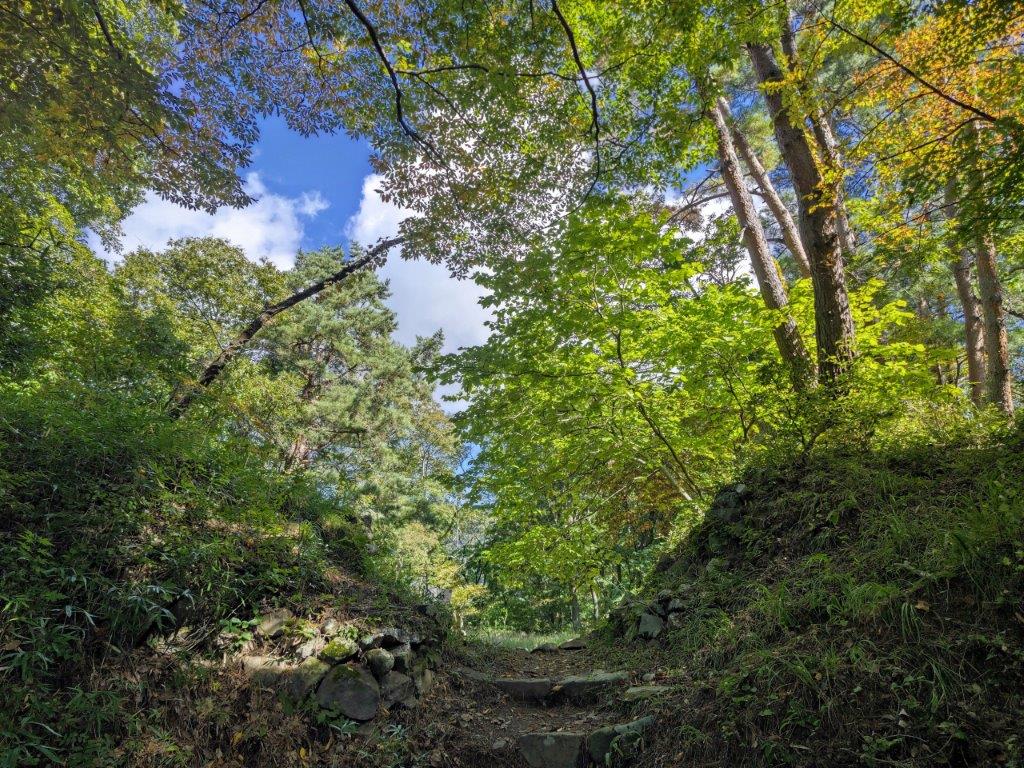
Log Steps near the Top of Hirao Forest

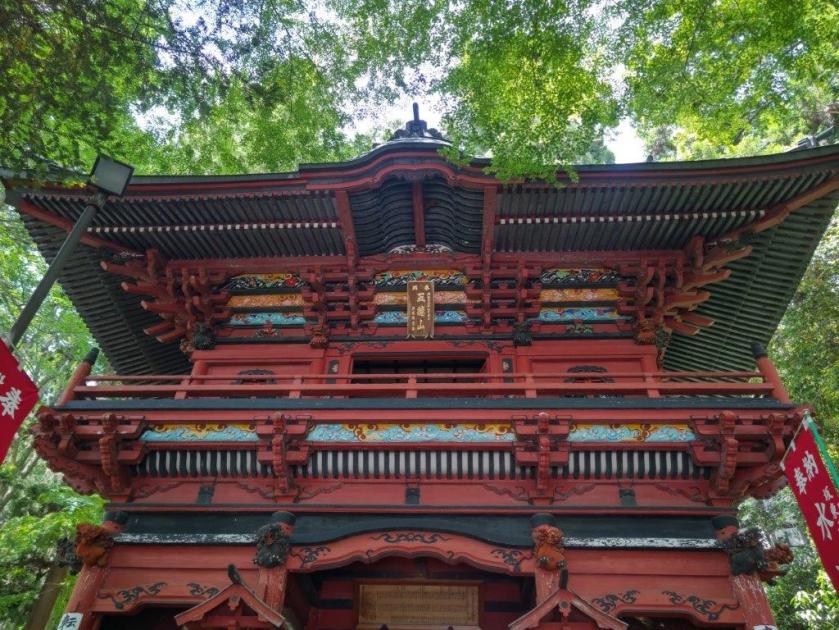
The Summit of Hirao-Fuji

I had never seen so many butterflies flutter around before, flying together in complex patterns. At 1pm, I left my pack on the bench, and went to explore a trail along the southern ridge. After going up and down a small summit completely in the trees, I reached a T-junction where I turned left. After following the slightly descending trail for a short while, I reached a clearing at a forest road. There, I had one of the best views of Mt Asama I’ve ever had, the entire range extending from east to west, completely free of clouds. I then retraced my steps back to Mt Hirao, and after picking up my pack, headed down the mountain.

View of Yatsugatake from the Summit

View of the North Alps from the Summit

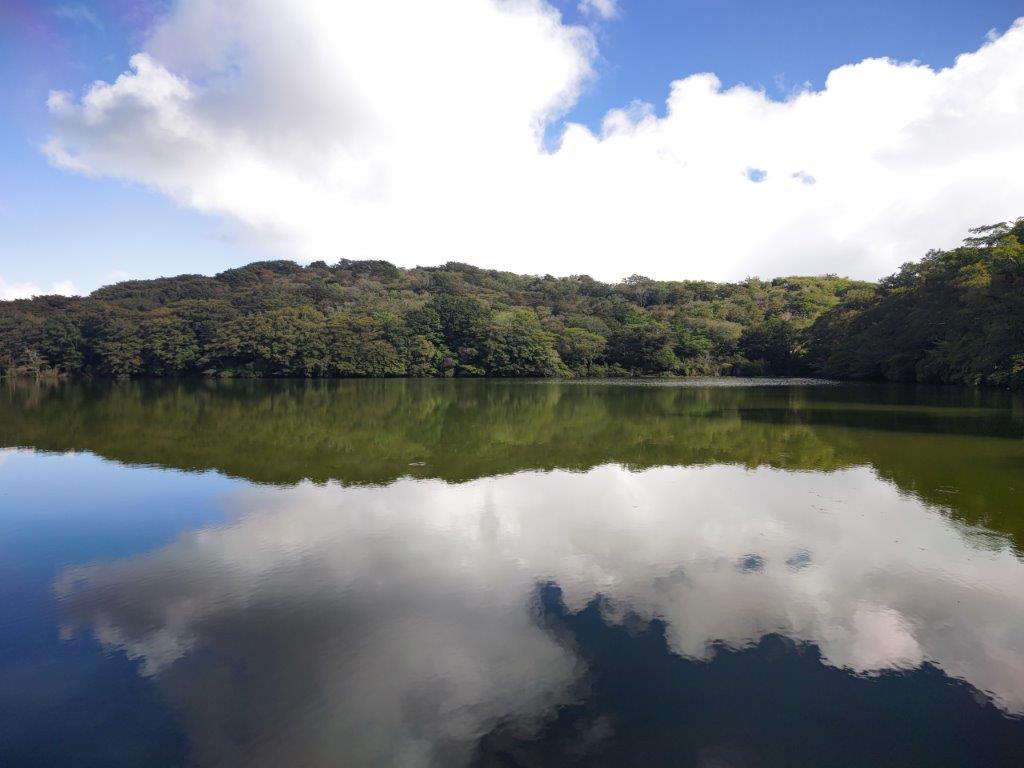
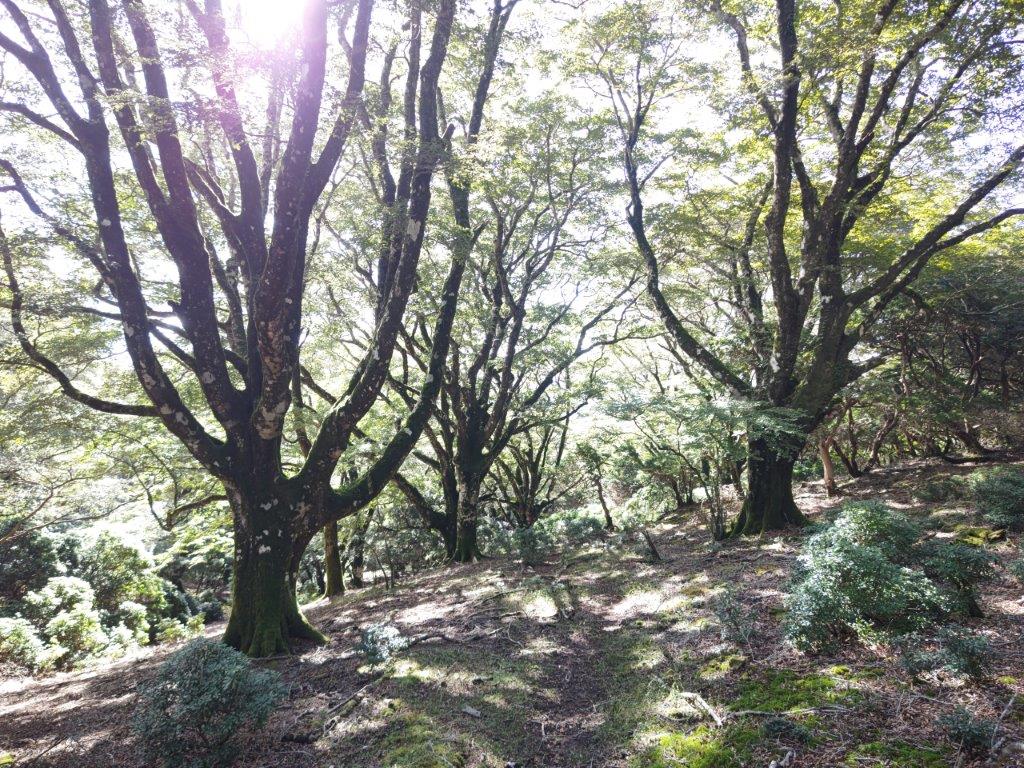
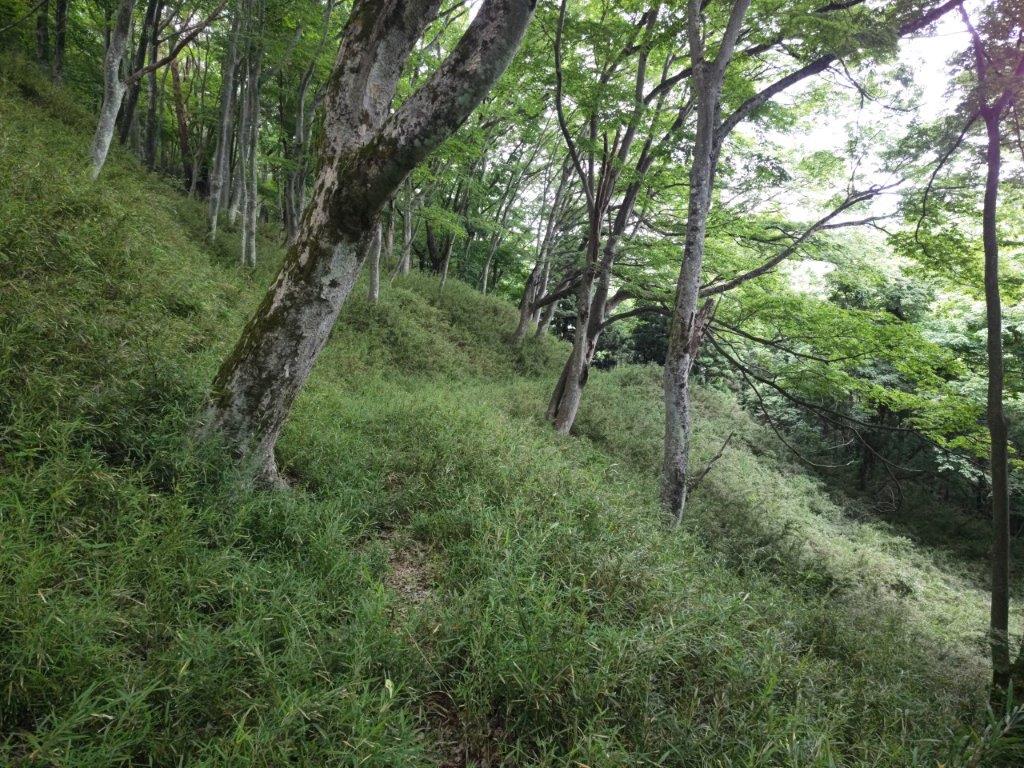
I descended through the forest, chestnut burrs thick underfoot, occasionally dropping to the ground with a “plonk”. I first followed the “Path of Nostalgia” (郷愁の小径) and then the “Red Pine Path” (あかまつの小径), before reaching Ryujin-Ike pond (竜神池), a little after 2pm. Along the way, I passed another viewpoint, just off the trail, the landing spot for a pair of chairlifts, not in operation during the summer season. Beyond the “susuki” waving in the autumn breeze, I could see Mt Tateshina wearing its crown of clouds. From the pond, I reconnected with the “Path of Endurance” which I then followed back to Hirao Onsen.

View of the Crater of Mt Asama (left) and Mt Hanamagari (right)

Side view of Mt Asama from the Clearing on the Forest Road

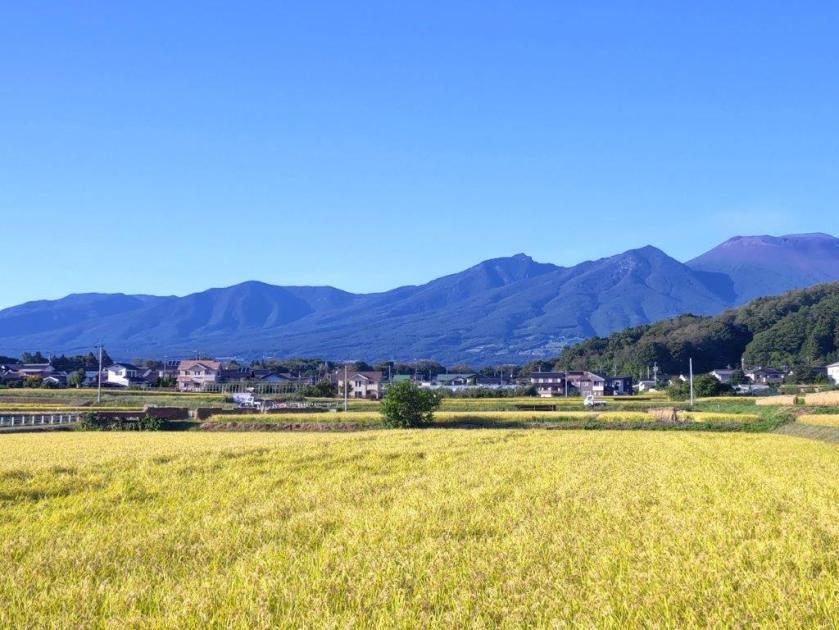
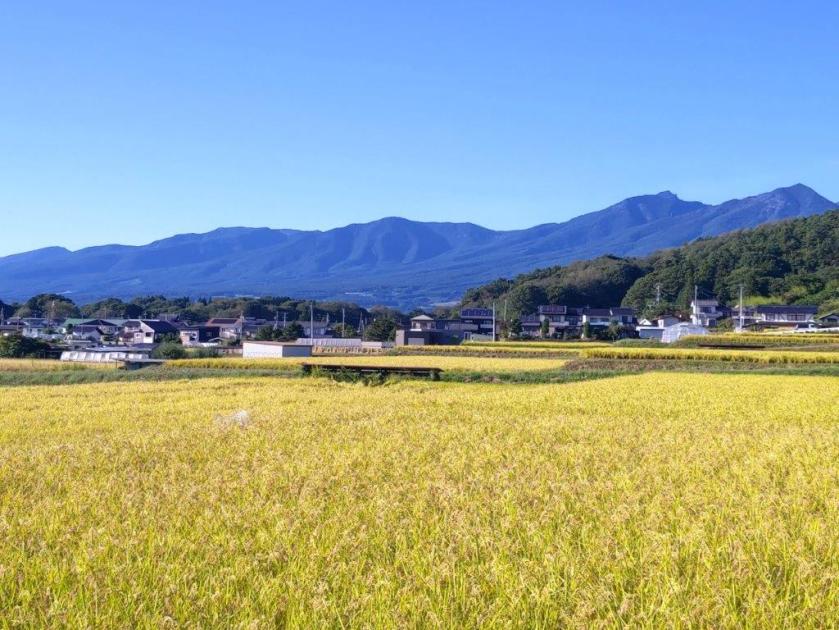
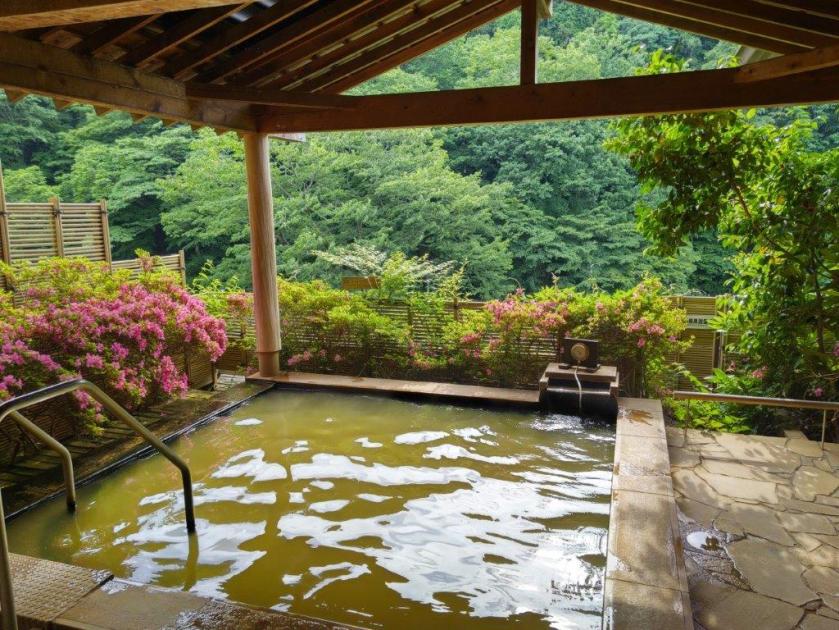
Although it was only 2h30, I wasted no time entering the onsen, also known as “Miharashi no yu“, meaning hot bath with a view; indeed, I immensely enjoyed sitting in the “rotemburo”, or outdoor bath, gazing at the view of the surrounding mountains. At 3h30, I set off again, down a long escalator to the nearby Sakudaira parking area. From there, I followed a road down into the valley, and then walked among the golden fields, ready to be harvested. I was glad I had chosen to walk rather than take a taxi, since I had good views of Asamayama and Mt Hirao along the way. I arrived at Saku-Daira station a little before 5pm, and caught the shinkansen for Tokyo shortly after.

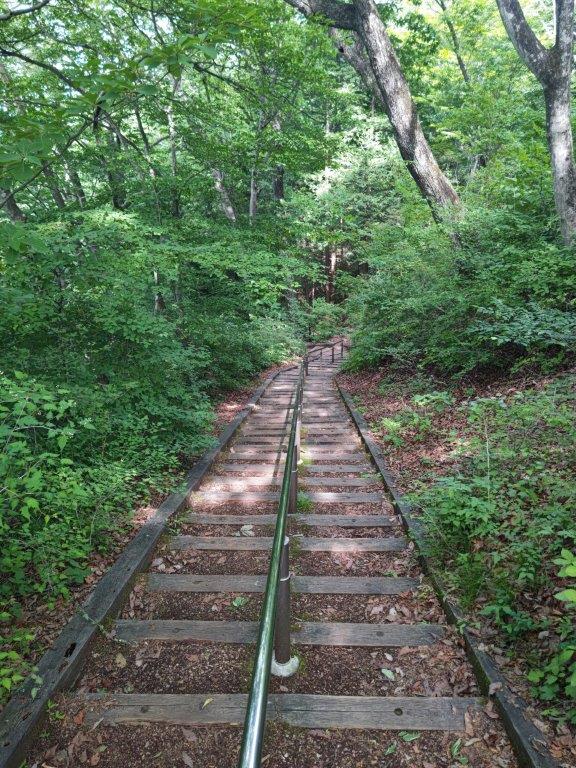
Last Steps of the Endurance Path (right) Walking the Red Pine Path (right)

Golden Fields Ripe for Harvest

Although on paper it seemed a long way to travel for a short hike, it turned out to be very satisfactory and an excellent way to restart hiking after a long break. Ideally, I would have used the Tokyo Wide Pass and combined it with another hike but the opportunity just didn’t present itself. Basically, I was glad I had several viewpoints, the hot spring wasn’t too crowded, and the spiders were nowhere to be seen along the hiking trail. I would like to return one day for a longer hike along some of the forest roads in the area, and during the colder months for a clearer view of the North Alps.

Watch a Video of the Mt Hirao Hike

Watch the Video of the Hike on Youtube

See a Slideshow of More Pictures of the Hike

Mt Mizusawa (1194m), Shibukawa City, Gunma Prefecture, Monday, June 5th, 2023

I had a chance to go hiking on a weekday, so for once, I wanted to visit a popular mountain. I decided to redo one of the peaks on Mt Haruna, first climbed during Golden Week 2016, via a different route. Back then, it was a short roundtrip off the main trail between Mt Soma, the 2nd highest peak, and Ikaho Hot Spring. This time, I would start from Mizusawa-dera Temple, on the east side of the volcano, and finish again at Ikaho Onsen, since I could get a hot spring bath before heading back. I would take the shinkansen to Takasaki station, and there catch a bus to the temple, my first time to use this bus line. For the return, I could take a bus to Shibukawa station, from where I could catch the Kusatsu Limited Express for Ueno, also my first time to return this way. The weather was supposed to be sunny with some clouds, warm but not too hot, typical for this time of the year. I was looking forward to my first visit to Mt Haruna in nearly 4 years, and what would probably be my last hike before the start of the rainy season.

Hiking on Mt Haruna 榛名山

Read this Blog Post on Hiking Around Tokyo

View of Mt Komochi (left) and Mt Akagi (right) from near the Summit

Side view of the Steep climb up Mt Mizusawa

It was already very warm as I got off the nearly empty bus at 10am, after a one hour ride from Takasaki. I quickly walked past some Udon restaurants and up a steep staircase. I was impressed by the massive Buddhist gate leading to the 1300 year-old Mizusawa-dera 水沢寺, quite busy with sightseers despite the mid-morning heat. I sat on a bench next to a ancient cedar and got ready for my hike. At 10h30, I ducked under a small red Shinto gate and climbed another steep staircase, as chanting from some Buddhist ceremony drifted up from below.

Walking under Towering Cedars (left) Climbing Log Steps (right)

Steps Difficulty Level 2 (left) Steps Difficulty Level 3 (right)

I followed a path in the shade of towering cedars before finally reaching the start of the trail. At first the logs steps were easy to climb, but they gradually got more chaotic as I reached the steepest part of the climb. However, it never got so tough that I couldn’t enjoy the green spring forest. Just past 11h30, I reached the first viewpoint of the day, on the east side, near a row of small Buddhist statues.

Transition between Levels 1 and 2

Viewpoint near the Buddhist Statues

I had a bird’s-eye view of the wide valley between Mt Haruna and Mt Akagi. On the left side, I could also see Mt Onoko (climbed in January 2016), Mt Komochi, and behind it, Mt Hodaka (climbed in September 2015). After a short break, I continued my hike. Although I passed several people on the way up, I still had long stretches of the trail to myself. I soon passed another viewpoint on the south side, the flat Kanto plan stretching away into the distance; after a short scramble up a rocky section, equipped with ropes for safety, I reached one more viewpoint on the north side, near a pair of tiny shrines.

The Kanto Plain Stretching South

Looking down at the Shoulder

In the distance, I was surprised I could make out Mt Sennokura and Mt Tanigawa, still wearing their winter coats, the haze having already returned just two days after heavy rain. A little further, I reached the top of Mt Mizusawa (水沢山 みずさわやま mizusawa-yama), its prominence barely noticeable along the ridgeline, but with a spectacular 360° panorama. Directly ahead on the west side, I could see the highest peaks of Mt Haruna. To the southwest, were the Chichibu mountains, and to the southeast were Mt Kusatsu-Shirane, Mt Shirasuna and Mt Naeba (climbed in June 2015), its white, flat peak only just visible. It was past noon, so I sat down for some lunch.

The Chichibu Mountains on the Southwest Side

The Highest Peaks of Mt Haruna

After I had my full of the spectacular view on this sunny day, I set off again, around 1h30. After some descending along the forested, rocky ridge, I reached a paved road, and there, turned right along the path for “Tsutsuji-ga-oka”, or Azalea hill, although they were now out of season and no flowers could be seen. I soon reached an open shelter before another road crossing, where I had an impressive side view of the peak I had just climbed. I continued along the easy-to-walk trail, and at 2h30, arrived at the “Tokimeki Deck”, a wooden observation deck near the top of the Haruna Ropeway.

View of Mt Akagi from the Tokimeki Observation Deck

View of Mt Mizusawa from the Tokimeki Observation Deck

I enjoyed this view more than during my two previous visits, since not only had I now crossed the entire Mt Mizusawa ridge on the south side, but also many of the other peaks in the area. Looking north, I could see the hot spring town of Ikaho Onsen, nestled at the base of the mountain. I skipped the ropeway and followed the Fureai no Michi for the last part of the hike. At 3pm, I reached Ikako Shrine, at the top of the famous stone steps that cross the entire town. Almost immediately, I found a hot spring accepting day trippers. After a relaxing bath, I boarded the bus for the short ride to Shibukawa station, where I caught the limited express for the 100-minute comfortable ride back to Tokyo.

Trail past Tsutsuji-ga-oka (left) Staircase leading to Haruna-jinja (right)

Looking down at Ikaho Onsen from Tokimeki Deck

I was glad I could squeeze in this short hike, around 4 hours, just before the start of the rainy season. Although many people were hiking up and down the east side of Mt Mizusawa, there were a lot less people on the west side, so the second half of the hike was more peaceful. I’d like to return in the future to try some more hikes on Mt Haruna, especially now that I discovered the bus from Takasaki and the limited express from Shibukawa; however, whatever route I choose, I am sure I’ll always end with a hot spring bath at Ikaho Onsen.

Watch a Video of the Mt Mizusawa Hike

Watch a Slideshow of more Photos of the Mt Mizusawa Hike

Watch the Video of the Hike on Youtube
Mt Yogai (780m), Mt Fukakusa (906m) & Mt Daizokyoji (715m), Kofu and Fuefuki Cities, Yamanashi Prefecture, Saturday, October 15, 2022

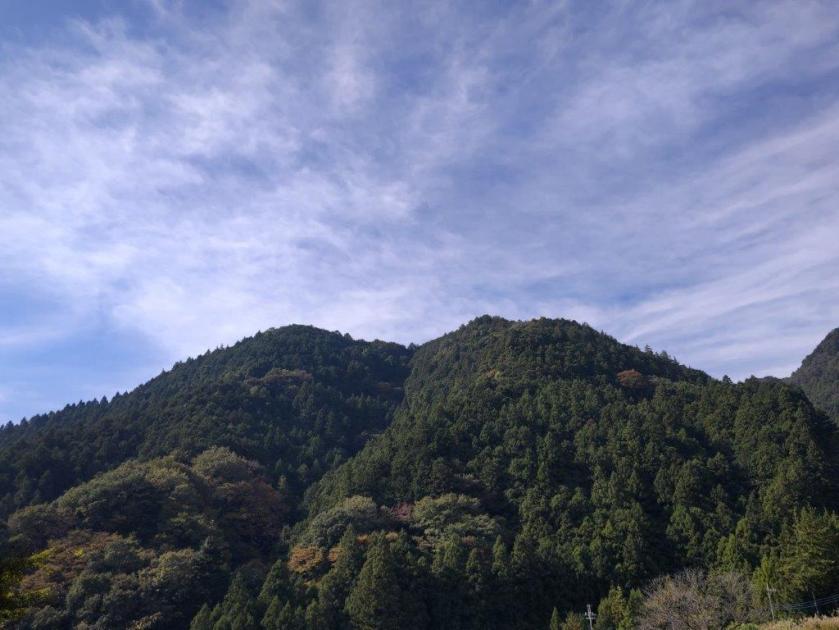
View of the Kofu basin from near the summit of Mt Yogai

This was a hike from my mountains of Yamanashi guidebook. I chose it mainly because it seemed to follow fire breaks through the forest and would thus be free from spiders and their webs (or so I hoped), a real problem when doing low altitude hiking in the autumn. I also chose it because it ended at Isawa Onsen, a hot spring town and a limited express station; I hadn’t been there since 2020 so I was looking forward to visiting again. Finally, I could reach the trail entrance next to Yogai Onsen via a short taxi ride from Kofu station, making it almost a station to station hike.

An easy to follow trail at the start of the hike

Nearing the summit of Mt Yogai, the site of an ancient fort

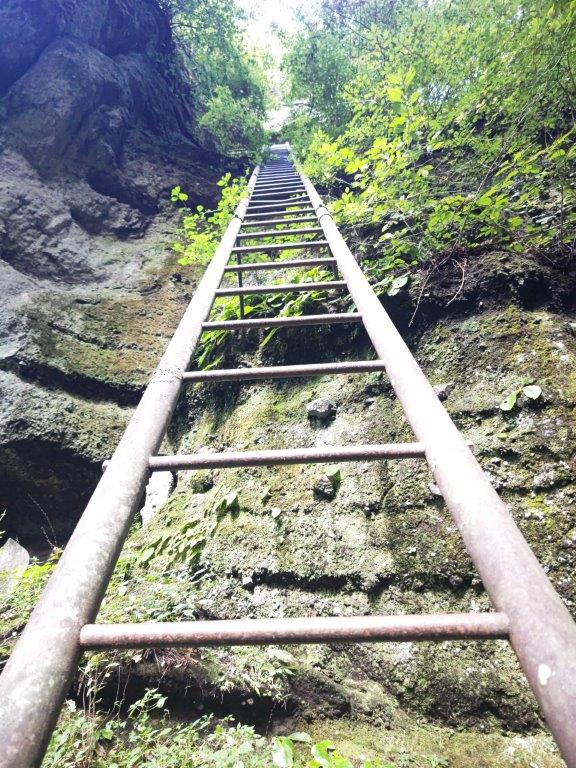
At 10h15, I started up a well-maintained trail for the summit of Mt Yogai (要害山 ようがいさん yougaisan), the site of an old castle; signposts marked the various sections of the fort, but apart from mounds and ditches, there wasn’t much to see (except for a huge snake – see video). The summit was a grassy, rectangular area surrounded by trees, through which I had glimpses of the Kofu basin. The next part of the hike, a level trail along the mountainside, led to Fukakusa Kanon (深草観音); the main attraction is a long metallic ladder leading to a tiny cave in a cliff, also accessible via a small path on the right side (this is not part of the hiking trail).

Beautiful red pine trees along the way

The ladder leads to a small cave

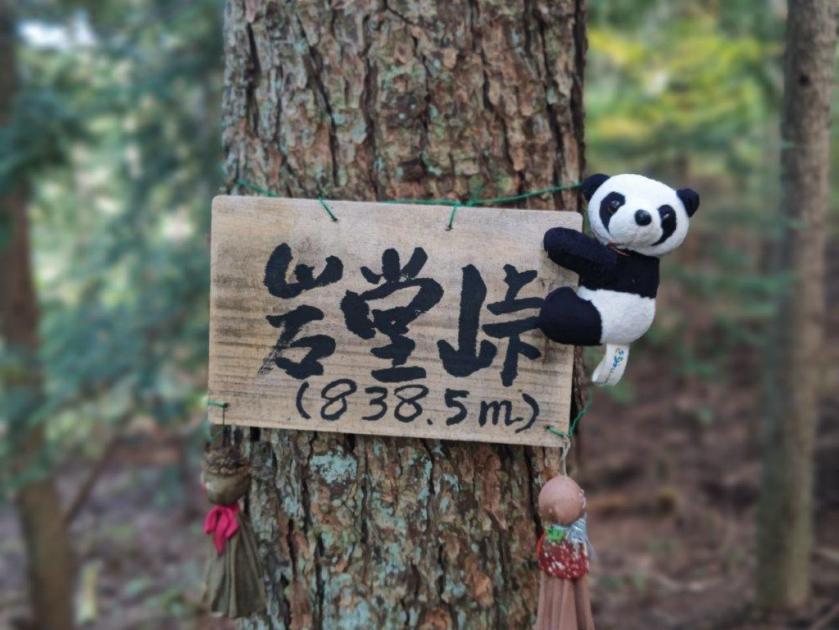
After a short climb next to a rocky, dried-up river bed, I reached Iwado Pass (岩堂峠) and then followed an easy, level path through beautiful forest. I soon reached a junction at Shishiana (鹿穴) where I turned southeast along the ridgeline. The path suddenly became harder to follow. It was obvious that fewer people had followed it and I soon walked into a spider web; fortunately its owner remained dangling above my head. After some ups and downs, I arrived at the peaceful summit of Mt Fukasaka (深草山 ふかくさやま fukasamayama), also completely in the trees.

The ladder at Fukakusa Kannon, from the side and looking up

View of the Kofu basin between Mt Fukakusa and Mt Daizokyoji

Past this point, the trail started to descend steeply. I had some more glimpses of the Kofu basin on the right side, and spotted another large snake slither off the trail and into the bushes, before arriving at Mt Daizokyoji (大蔵経寺山 だいぞうきょうじやま daizoukyoujiyama). Oddly enough, the summit maker was about 100 meters from the highest point, and surrounded by thick forest. I chose to take the panorama route down, but had to wait till the lower half of the trail for some good views of the Kofu basin and surrounding mountains.

View towards the Mt Fuji area from the Panorama trail

View toward the South Alps from the Panorama trail

I arrived at Isawa Onsen at 4h30, in time to enjoy some wine tasting from the wine server at the Fukeki Tourist Office on the 1st floor of the station building (ends at 5pm). After a nice hot bath at the nearby Hotel Hana Isawa, I boarded the Chuo line limited express for the 90 minute ride back to Shinjuku.

See the views on the Mt Yogai – Mt Daizokyoji hike

Mt Kintoki (1212m), Minami-Ashigara City, Kanagawa Prefecture, Saturday, October 1st, 2022 [Yuhi Waterfall to Otome Pass route]

Hiking in the Fuji-Hakone-Izu National Park

富士箱根伊豆国立公園

I was looking for a hike close to Tokyo, high enough to escape the late summer heat and strenuous enough to maintain my regained form. I decided to revisit a mounatin I climbed ten years ago, which I could traverse north to south via a different route that would include a famous waterfall, as well as views of Mt Fuji. The trail up from Ashigara in Kanagawa, connected by local bus from Matsuda station, had been closed for a while due to typhoon damage; however looking online, it seemed to be in use again. I also saw that the final section was quite steep, a good test of my current physical ability. The trail down ended at a hot spring near Gotemba in Shizuoka, connected to the station by shuttle bus. The weather was supposed to be mostly sunny and warm, with few clouds and little wind, ideal conditions conditions for hiking. I was looking forward to climbing a familiar mountain via a new, challenging route and getting some good views of Mt Fuji in the autumn.

Mt Fuji before it got engulfed in the clouds

Yuhi waterfall, a famous purification spot

A cloudy cover still lingered in the early morning sky, as I rode the Odakyu Romance limited express train to Shin-Matsuda station. There, I boarded a full bus and rode it all the way to Jizodo (地蔵堂), the last stop. I had been there once before on my Yamabushi-daira hike. This time, I continued on foot along a small paved road up a pleasant, green valley. The sun was now shining above, and although it was only 9h30am, it already felt quite warm; despite that, the cosmos flowers were out, a sure sign of autumn.

A 23 meter drop (left) Climbing up the Ashigara Pass trail

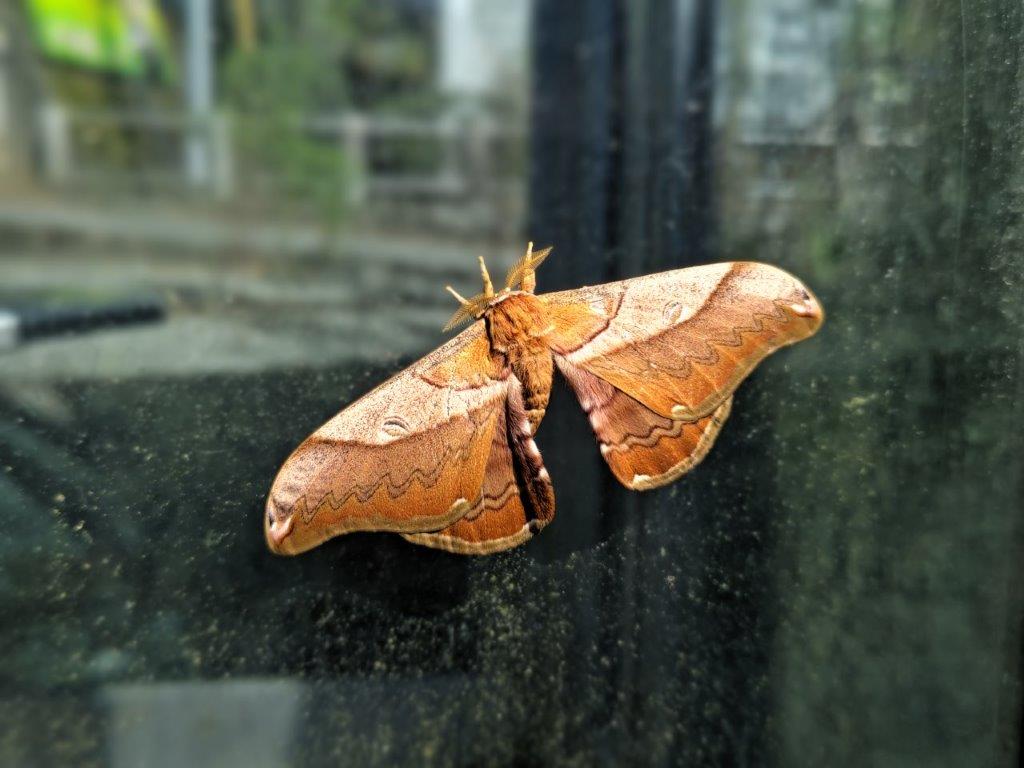
Moth spotted near the start of the hike

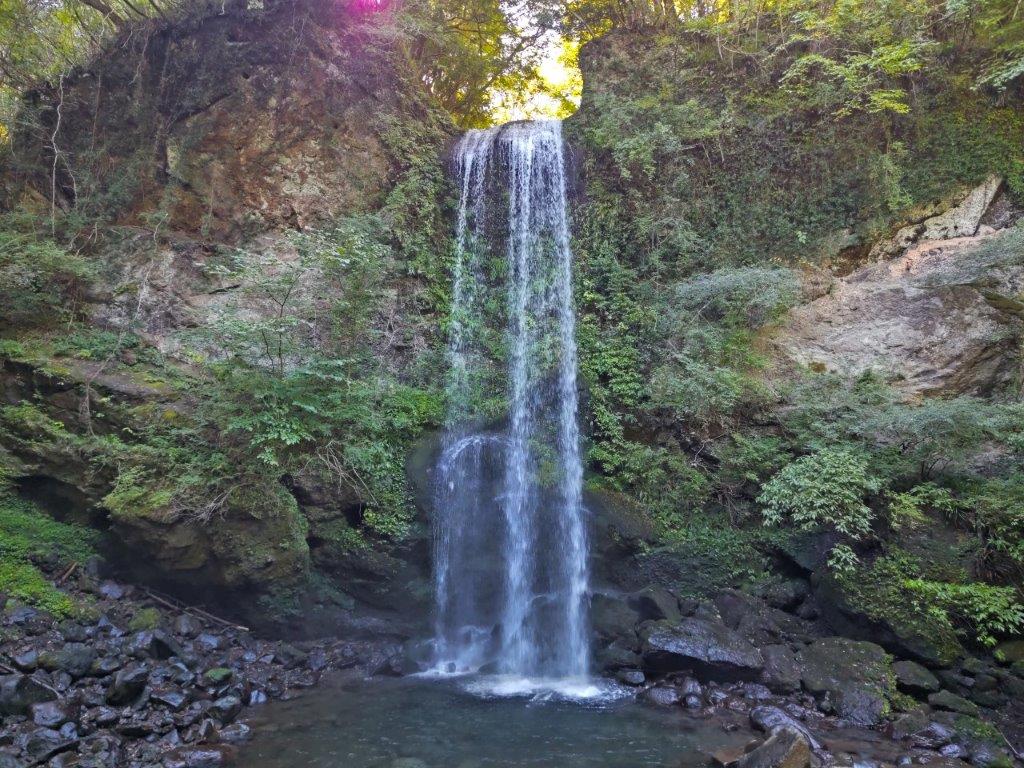
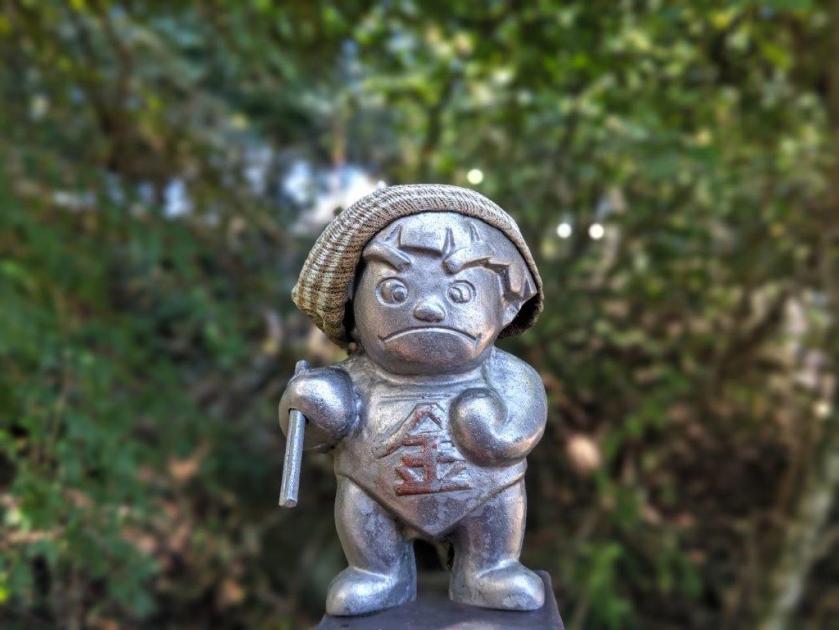
I was delighted to spot a beautiful yellow moth on a phone booth, possibly a Japanese silk moth. At 10am, I reached the entrance for the short trail to the waterfall, next to a campground. A few minutes later, I was standing in front of the thundering Yuhi waterfall (夕日の滝). The water falls from a height of 23 meters, and apparently it’s a popular place for people to stand under to get purified. At 10h30, I started up the Kintoki trail (金時コース), a gently climbing trail through cedars. After passing an open shelter, the trail went up a shady valley next to a mountain stream.

Easy hiking along the Ashigara Pass trail

The summit of Mt Kintoki, a tough climb via the north side

I was happy to be walking next to a river again, the rushing water like music to my ears. The rocky terrain made it difficult to see the path, but pink ribbons attached to branches, as well as the occasional signpost, led the way. At 11am, the trail left the river and went up a steep ridge. I met no one along this section, adding to the sense of peace and quiet. Half an hour later, after getting a glimpse of today’s summit through a gap in the trees, I reached a level dirt road, also the Ashigara Pass Trail (足柄峠コース). I turned left, and 3o minutes later, arrived at a viewpoint of Mt Fuji.

Mt Fuji slowly disappearing into the clouds

The western part of the Tanzawa mountains

I was lucky that the summit was free of clouds; just a few minutes later some clouds rolled in and refused to budge for the rest of the day. According to my map I was at the remains of the Inohara Fort (猪鼻砦跡 962m), a few stone blocks making a good place to sit and have an early lunch while enjoying the view. Directly ahead loomed the triangular-shaped summit of today’s mountain, looking steep and menacing. I soon set off again, the path now climbing straight up the mountain side, equipped with ropes and ladders for safety.

Lots of ladders to assist the hiker

Mt Hakone at the center of Hakone Volcano

I was surprised to find such a thrilling ascent so close to Tokyo; halfway up, the view through the trees to the northwest made me feel like I was hanging from a cliff. To the left, Mt Fuji was now completely in the clouds, to the right, I could see the green Tanzawa mountain range. I met several people on their way down, and had to find “passing spots” to let them by. At 1pm, I emerged onto the top of Mt Kintoki (金時山 きんときやま kintoki-yama). I had a fantastic view of the entire Hakone area; beyond the outer caldera, I could see Mt Ashitaka, Suruga bay, and a big cloud where Mt Fuji was supposed to be. As on my previous visit, the summit area was fairly crowded so I quickly moved on.

Viewpoint between Mt Kintoki and Mt Nagao

View of Mt Fuji and Gotemba city from Otome Pass

I made my way down a steep path through forest, counter-clockwise along the outer caldera rim, and now inside the Hakone part of the Fuji-Hakone-Izu National Park. Half an hour later, I passed the flat summit of Mt Nagao (長尾山 1150m), surrounded by trees. After some more descending I arrived at Otome Pass (乙女峠 1004m). From a small wooden observation platform, I could see the lower half of Mt Fuji and Gotemba city spread out around its base. At 3pm, I reached a bus stop next to Otome Tunnel; I hopped on the next bus and got off at the nearby Fuji Hakkei no Yu. After a relaxing hot spring bath, I took the shuttle bus to Gotemba station, where I boarded the Odakyu Fujisan limited express for the 100-minute trip back to Shinjuku.

See and hear the sounds and sights of the Yuhi waterfall and Mt Kintoki hike

Hatcho Pond (1170m), Izu City, Shizuoka Prefecture, Sunday, September 25, 2022 [Mt Amagi Hike]

Hiking in the Fuji-Hakone-Izu National Park

富士箱根伊豆国立公園

I wanted to use the Shinkansen for this hike, since a typhoon had dashed my silver week Tokyo Wide Pass plans. I decided to use the Tokaido shinkansen, not covered by the pass, to do a hike on Mt Amagi on the Izu peninsula. It had been five years since my last time there; it would also allow me to make a 4th consecutive visit to a National Park. Looking at my hiking map, I saw that I could hike up the west side to a lake and a viewpoint, and then return via a different path. I would ride the high speed train from Tokyo station to Mishima, and then transfer to the Izu-Hakone line which I would ride to Shuzenji; there, I could hop on a bus for Amagi Tunnel; I would return the same way. The typhoon had brought record rain to the area but online information showed no disruption to public transport; I hoped the trails would be intact as well, since the weather was supposed to be blue skies and warm temperatures. I was looking forward to a nice forest hike and a great view from its highest point.

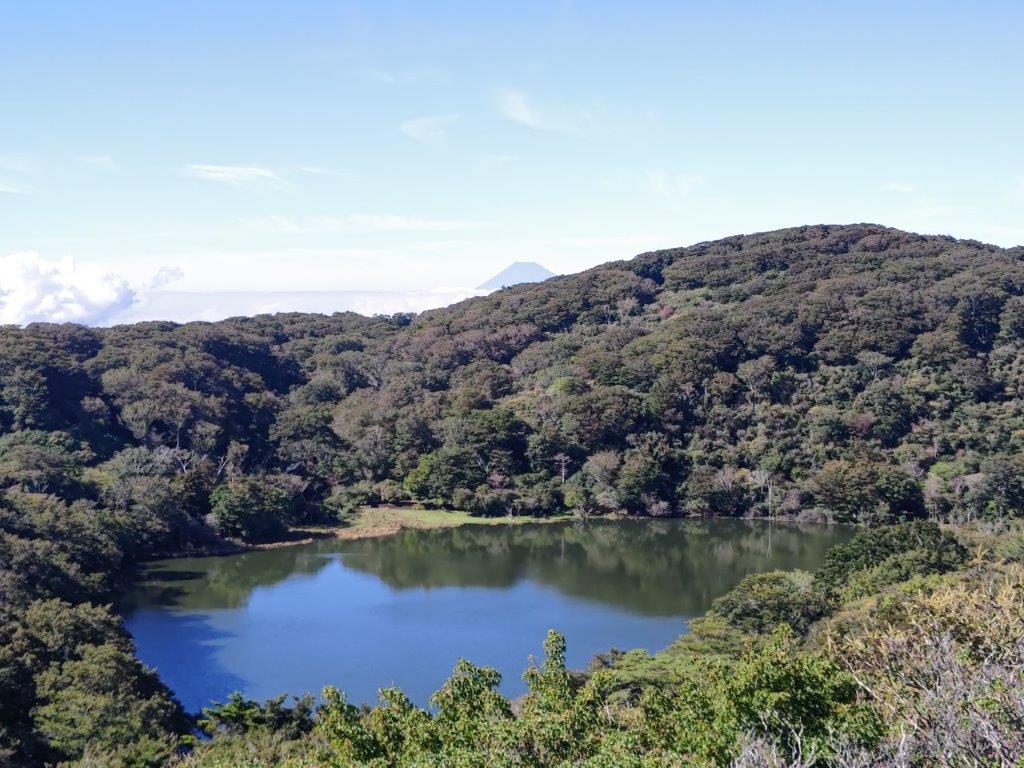
Hatcho Pond from the observatory

Hatcho Pond on Mt Amagi

It was a beautiful day as I rode the shinkansen from Tokyo station. After arriving at Mishama station, I transferred to the nearly empty Izu-Hakone line; it was an exciting ride along a pretty river valley through green hills. I got off at Shuzenji, the end of the line, and boarded an equally empty bus, finally getting off at the Amagi Pass bus stop (天城峠 あまぎとうげ) just before 11am. I had been here before and so I was familiar with the short hike up to the pass, which I reached less than thirty minutes later.

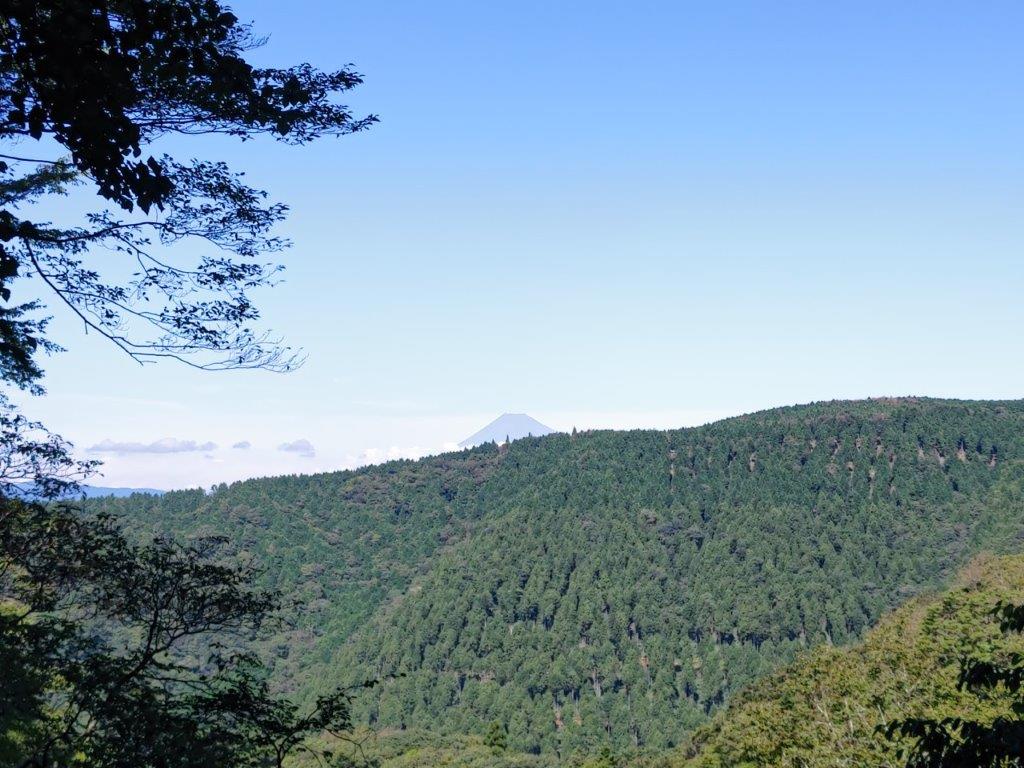
First view of Mt Fuji

Trail leading to Amagi Pass (left) Beech tree along the trail (right)

I had my first glimpse of Mt Fuji soon after turning left onto a level trail hugging the mountain side. Very soon, the trail took a right turn and went up some logs steps taking me to the ridgeline. Here I found the pathlovely forest harder to follow; eventually it descended back to a level path following the mountain contour. I had another good view of Mt Fuji before reaching a swollen stream rushing down the mountain and cutting straight through the path. After hopping across, I soon arrived at a second ridge, leading to another level path, now heading north.

One of the more level sections of the hike

Looking towards the Aosuzudai viewpoint and the Pacific ocean

I reached a rushing stream interrupting the quiet of the forest. The path turned east and became hard to follow again; I was relieved each time I spotted a wooden signpost. A little after 1h30, I reached the entrance of the Nobori Gyoko trail (上り御幸歩道). Before heading to the viewpoint, I made a short detour to another viewpoint called Aosuzudai (青スズ台), from where I was able to see the ocean and Toshima island; the rest of the view was hidden by high bushes. I soon turned back and a little after 2pm, arrived at the Hatcho Pond observatory (八丁池見晴台) at the top of a metallic staircase.

Mt Amagi, a Japan hundred famous mountain

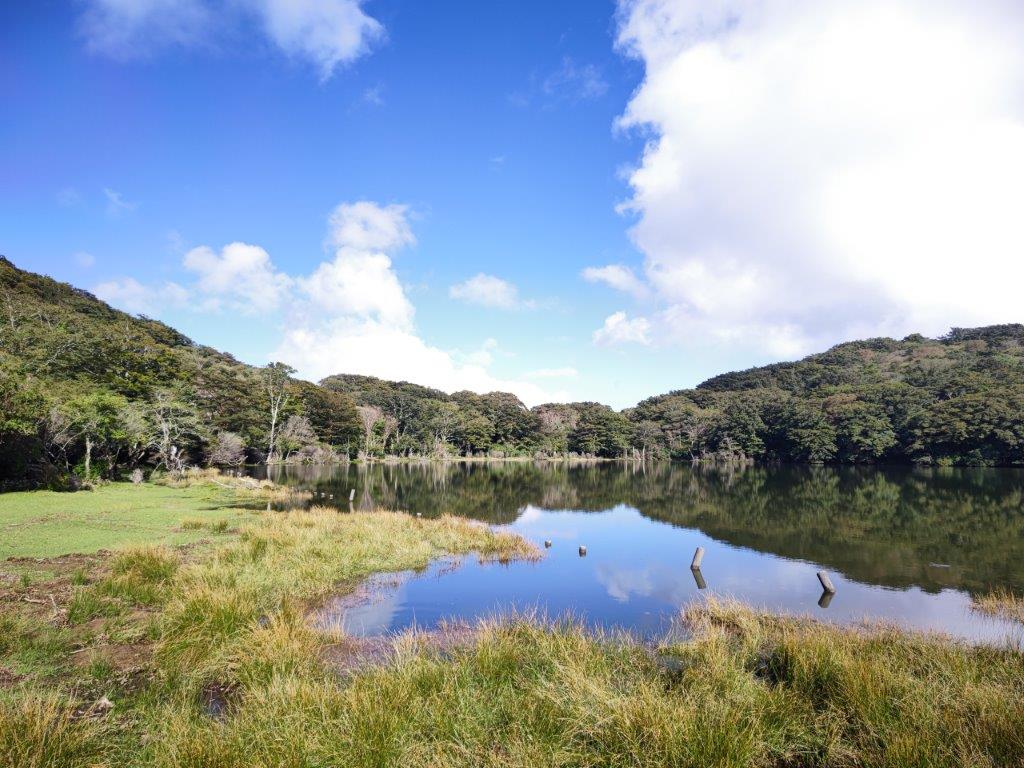
On the left, the path flooded by the lake

I had a fantastic 360° panoramic view of the center of Izu peninsula: directly below on the north side was Hatcho pond (八丁池) with Mt Fuji behind it; stretching eastwards was the gentle summit ridge of Mt Amagi, a Japan 100-famous mountain; looking south, I could see the Aosuzudai viewpoint and the Pacific ocean; westwards was Mt Chokuro, its summit in the clouds. I felt lucky that the sunny weather had continued the whole day with just a few cumulus clouds floating in from the ocean side. I had the observatory to myself, so I had a late lunch while admiring the views. Half an hour later, I descended to the lake shore.

Some clouds coming in from the south

A gentle descending trail through lovely a forest

I was surprised to see that the path around the lake was flooded. I managed to get to the other side by walking through the forest and reached the entrance of the Kudari Hatcho trail (下り八丁歩道), a little before 3pm. It descended gently through a stunning forest; I passed several huge beech trees, their branches twisting in fantastic shapes, and I could truly feel that I was walking within the Izu part of the Fuji-Hakone-Izu National Park. The path was hard to follow once again; I was relieved when I eventually got to a level wide path going straight through the forest. After merging with a forest road, the trail headed south, before arriving at a sunny junction at the edge of a cedar forest.

Walking through the Japanese beeches

A giant beech (left) towering cedars (right)

I enjoyed the change in the surrounding vegetation, as well as the extra sunlight filtering through the smaller cedar tree canopies. The path started to descend quickly and soon the sun was lost behind a ridgeline. A little past 4pm, the rocky trail suddenly merged with a small stream; I was glad I had good hiking boots. After about ten minutes of “river walking”, I emerged onto a paved road. From there, it was another half an hour to the Suishochi-shita bus stop (水生地下), which I reached ten minutes before my bus was due. After arriving at Shunzenji statiom, I had a quick hot bath at the nearby Hyakuwarai no yu hot spring before riding the Izu-Hakone line to Mishima station, where I transferred to the shinkansen for the 40-minute ride back to Tokyo.

See the views up and down Mt Amagi’s west side

Kanhashu Viewpoint (771m), Hanno City, Saitama Prefecture, Monday, June 13, 2022

I wanted to do a half-day hike near Tokyo to escape the early summer heat and humidity. Poor weather had prevented me from going as planned on the weekend but fortunately, an opportunity presented itself to go the Monday right after. I decided to visit a viewpoint in Oku-Musashi, which I had last visited about ten years ago. I could take the limited express “Laview” train to Nishi-Agano station; it made a special stop there during spring and autumn. After reaching the highest point, I could descend via a different trail to “Kyuka Mura”, where I could enjoy a hot spring bath; day trippers were only allowed on weekdays, so it was a good chance to drop by. Afterwards, I could use their free shuttle bus to get to Agano station on the Seibu-Chichibu line. The weather was supposed to be cloudy and cool in the early morning, turning sunny and warm in the mid-morning. I hoped that I could reach the top before it got too hot, and was looking forward to revisiting a favorite spot after several years.

Good visibility from the Kanhashu Viewpoint

Looking East towards the Kanto Plain

I was slightly disappointed to see that the sky was still completely overcast after arriving at the tiny Nishi-Agano station around 8h30. I walked a short way along the road to the trail entrance and surprised a black and white cat sitting in the tall grass nearby; it escaped into the forest before I could say “hi”. I followed the wide path, labeled as the “Panorama Route” on my map, up a green valley alongside a tiny brook.

An easy path to start the hike with

Although it was called the Panorama route, there were few views

At 9am, I reached an open space offering a view of the forested valley and neighbouring hills. The path narrowed and after a couple of switchbacks up a shoulder of the mountain side, entered the forest and started to climb more steeply; half an hour later, it merged with another path coming from the left and became level. I found this part of the hike very pleasant, as sunshine was now filtering through the trees and the birds had started to sing.

Mt Fuji, barely visible from Takayama

Out of the forest and through the flowers

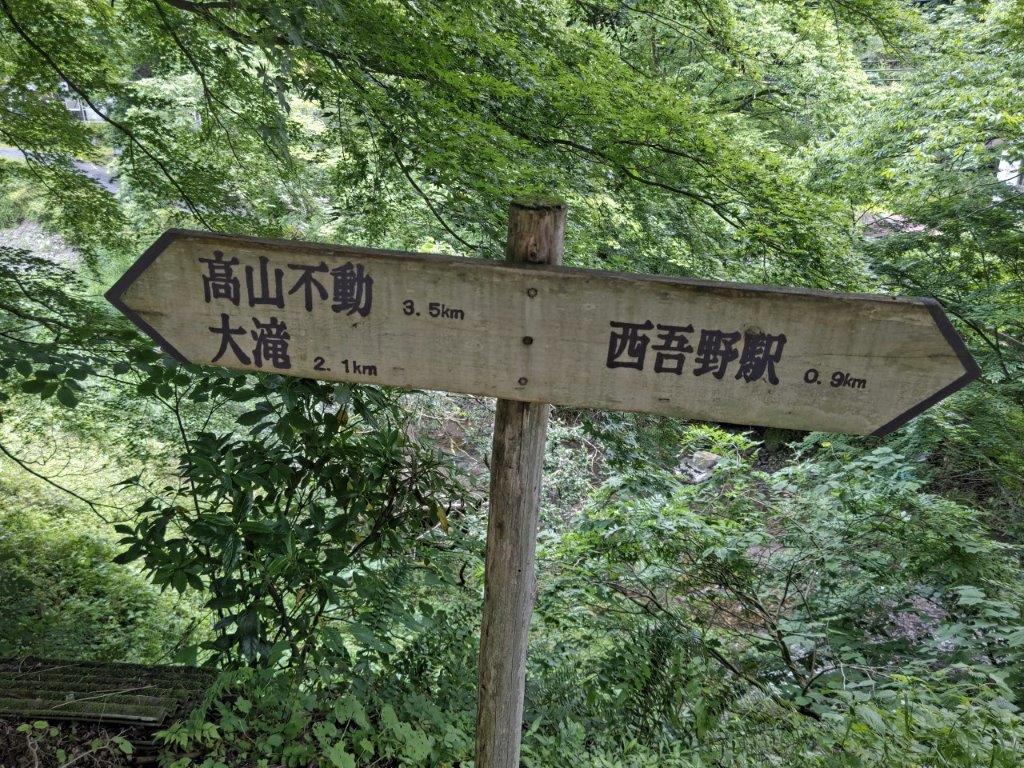
At 10am, I reached a road with a viewpoint and was excited to spot Mt Fuji in the distance. After admiring its still snowy cap, I picked up the next part of the path less than a hundred meters away, opposite a signpost for Takayama (高山), a place I would return to later; I was now on the well-trodden Kanto Fureai no Michi. After crossing the road a second time, the trail finally emerged from the forest and passed through some Kalmia bushes (カルミア) covered in white flowers.

View south towards Okutama, and lost in the clouds, Tanzawa

The Musashi hills fading into Musashi

I hoped this was the last climb of the day as the sun was shining directly above and it was starting to feel quite warm. At 10h30, I was relieved to reach the Kanhashu viewpoint (関八州見晴台 かんはっしゅうみはらしだい kanhasshuu-miharashidai), which translates as the Kanto 8 provinces lookout and refers to its historical role. There was an open shelter and a number of trees providing some welcome shade. I took a break on a bench to enjoy the view and a late breakfast.

A better view of Mt Fuji from the highest point of the hike

One of the few paths with a view in Oku-Musashi

The view was better than I had remembered: to the west, the Oku-musashi hills melted into the Kanto plain; to the south, they merged with the Okutama mountains; Mt Fuji was visible behind the long flat summit of Mt Bonomine; closer by were the Hanno Alps on the other side of the Agano valley; supposedly, Mt Akagi and the peaks of Oku-Nikko could be seen on the north side, but today they were lost in the haze. At 11h30, I made my way back to Takayama and Takayama-Fudoson Temple (高山不動尊), just off the main road.

View of Oku-Musashi between Takayama and the Takayama-Fudoson Temple

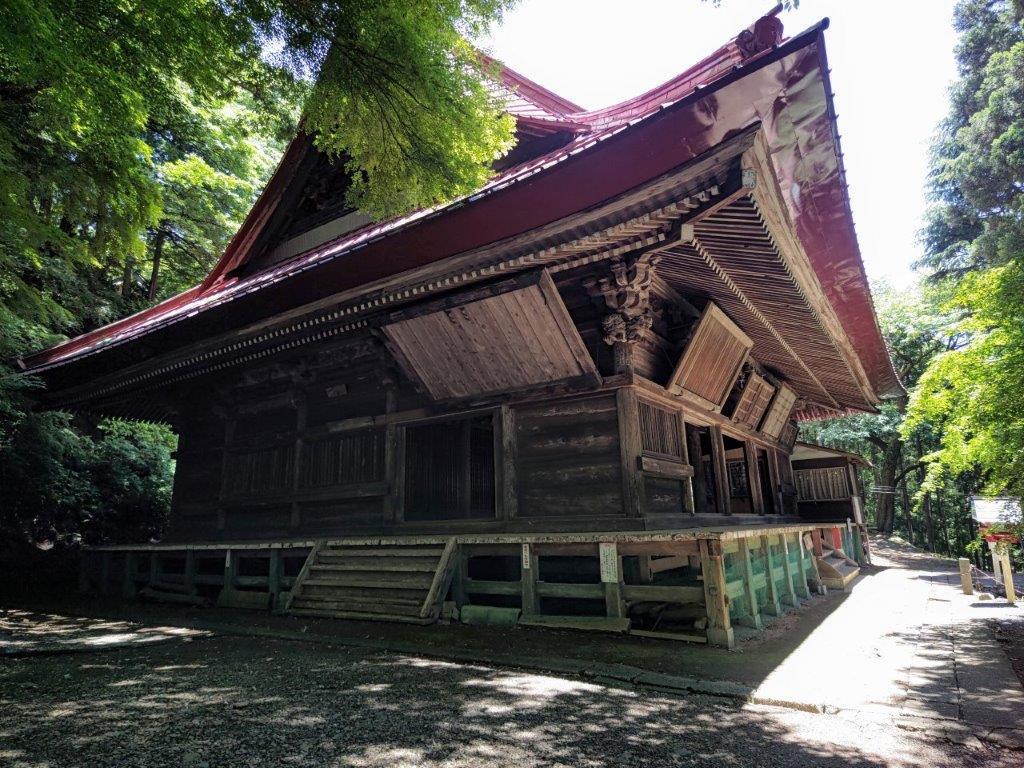
The main building of Takayama-Fudoson Temple

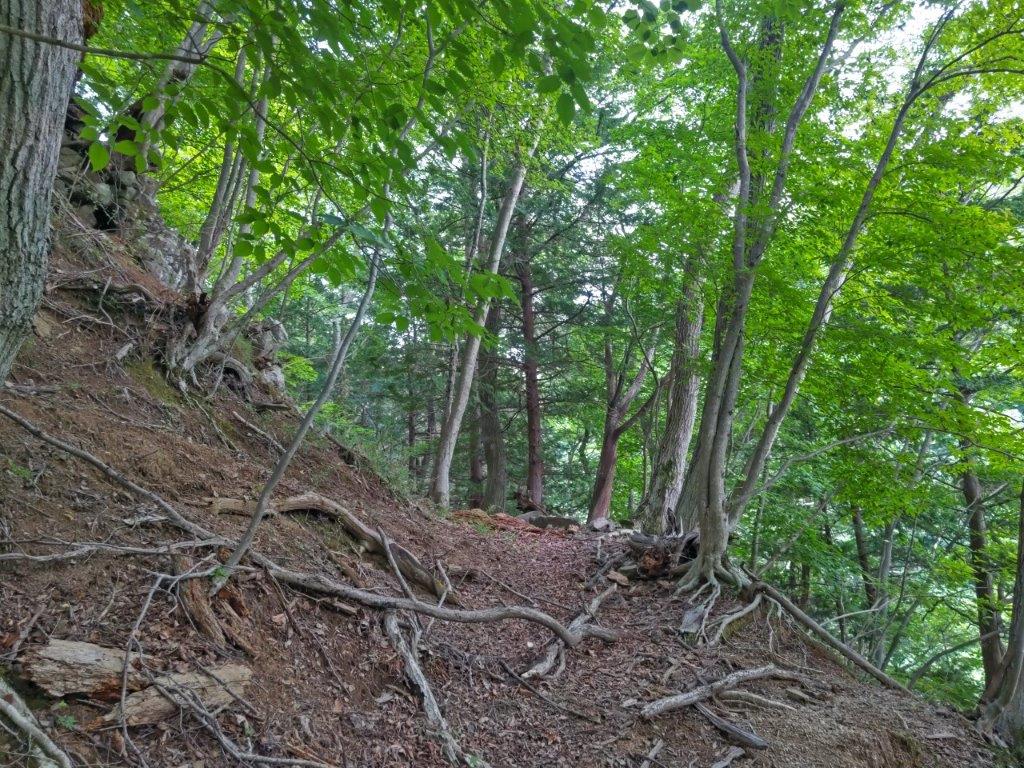
I was astounded to see such a magnificent structure in the middle of the forest; it’s these kind of moments that make hiking in Japan so rewarding. I returned to the road and soon rejoined the hiking trail again, leading back into the forest. After a few minutes, I reached a junction where I turned right. The path was pleasantly level for a while, but then proceeded to rush straight down the mountain, ending at a lovely stream.

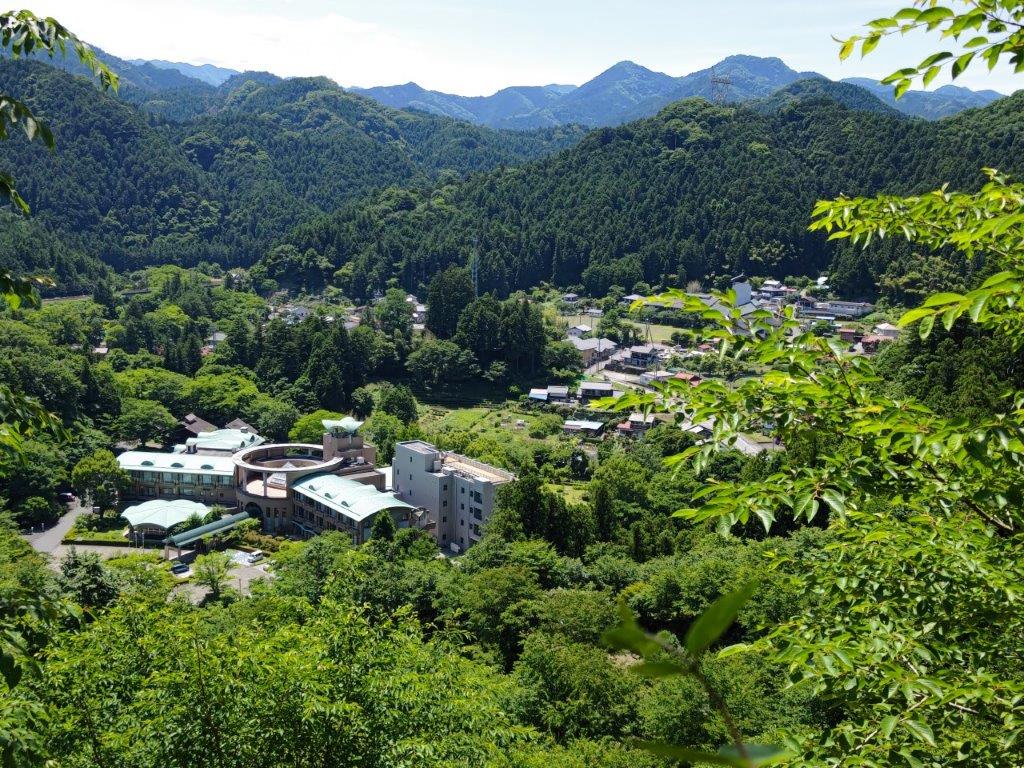
A glimpse of “Holiday Village” (on the left)

Crossing the Koma river

After crossing a rickety bridge, I emerged into a narrow, sunny valley at around 12h30. I noticed a small house on the right, meaning I was getting near the end of today’s walk. However, it took another half hour of small ups and downs, a couple more bridges and road crossings, to finally arrive at Kyuka Mura Hot Spring (休暇村 meaning Holiday Village), nestled in a bend of the Koma river. After an enjoyable hot bath, I hopped on the shuttle bus for Agano, where I boarded the local line to Hanno and then transferred to the limited express for the forty-minute ride back to Tokyo.

See the views from the Kanhashu viewpoint (in 4K)

Mt Tsurugatoya (1374m), Otsuki City, Yamanashi Prefecture, Saturday, June 4, 2022 [Monkeys & 4K video]

Due to construction related to the Maglev line, part of the trail past the deforested area (see below) is unpassable till June 2025 (令和 7年6月)

I wanted to do a hike along the Chuo line, because of its easy access from Tokyo and relatively high mountains, perfect for escaping the early summer heat. It seemed like a good time to do a hike I had planned next to Mt Honjagamaru, starting from Sasago station., a couple of stops from Otsuki. However, it was a little on the short side, a shame during the long days of June. Studying my hiking map, I saw that instead of ending back at the Chuo line, I could traverse to the next valley, south of Mt Takagawa. As an added bonus, I could finish at Yorimichi no Yu hot spring near Tsurushi station. The weather forecast was the same as the previous few weeks: sunny and warm, with relatively little humidity. I was looking forward to hiking a local mountain and enjoying a hot bath after a long ramble.

View towards Otsuki city

View of the Doshi mountains through the trees

It was a beautiful June day as I rode the limited express to Otsuki, where I changed to the local Chuo line, finally getting off at Sasago station at 10am. Before hitting the hiking trail, I checked out the nearby Sasaichi sake brewery. By 10h30, I was walking up a narrow road through the forest alongside a river. I soon reached the end of the road and continued on a hiking trail, up a beautiful river valley; I was astonished that I had never heard of this spot before. A little after 11am, the path suddenly turned left, zigzagging up the mountain side.

River valley at the start of the hike

Getting close to the top ridge

It was a steep climb, with a couple of flat bits at an electric pylon and a road crossing. At noon, I reached a shoulder and saw movement out of the corner of my eye: I had stumbled on a troop of monkeys. I had not known there were monkeys in this area and spent half and hour observing them. Unlike the Okutama ones, they seemed quite scared of me, and kept a good distance; only one, probably the alpha male, completely ignored me while sitting on a tree stump next to the path (I kept my distance from him). At 12h30, I finally reached a narrow ridgetop, where I turned left.

Walking the narrow ridgetop

View towards Mitsutoge

I followed an undulating path through low, bright green trees; I saw no-one and felt far from the world. Just before 1pm, I had a view through a break in the trees: to the west was Mitsutoge, and to the east, the Doshi mountains. I continued on my way, enjoying the peace and quiet of this little hiked trail, and 15 minutes later reached the summit of Mt Tsurugatoya (鶴ヶ鳥屋山 つるがとややま tsurugatoyayama). It was in the trees, so I moved on without a break. The trail headed down steeply, the rocky sections equipped with ropes; I soon emerged onto a road, but picked up the trail again, 50 meters on the right.

Few hikers on this trail

A deforested area half way down the mountain

Here, I had a sweeping view north and east, as the trees had been cut, and upon reaching the top of a knoll, I sat down on a stump for a late lunch. To the north there was Mt Takigo, and behind, its summit in the clouds, Mt Gangaharasuri; to the east Mt Iwadono, Mt Momokura , and Mt Takagawa, surrounding Otsuki city; further south, I spotted Mt Kuki, Mt Imakura, and the Tsuru Alps, beyond Tsuru city. The latter was my final destination and it seemed still quite far; on top of that, many low dark clouds had gathered in that direction, hiding the highest peaks of the Doshi mountains.

Mt Takigo on the other side of the Chuo line

Today’s lunch stump

After lunch, I continued down a winding trail through a lovely pine forest. At 3pm, I reached a road which I followed for about half an hour to the start of Chigasaka Highway (近ヶ坂往還), hidden behind an old person’s home. It was a pleasant trail, gently climbing through mixed forest, although the sections before and after the pass were overgrown with grass, making it hard to follow. A little before 4pm, I arrived at a crossing at Chigasaka Pass (近ヶ坂峠 662m). After enjoying its tranquil atmosphere, I went straight down the other side.

Walking down through the pine trees (left) Heading up to Chigasaka Pass (right)

Walking through the tall grass around Chigasaka pass

I descended a grassy gully surrounded by tall trees; this was one of the most beautiful forested areas I had ever seen in the Tokyo area. Around 4pm, I reached a small stream which I followed for a short while, before reaching a house and a road at the edge of the forest. From there, it took less than an hour to reach Yorimicho no Yu onsen, six hours and a half after setting out in the morning; after a satisfying soak, I boarded the Fujikyu line for Otsuki, where I transferred to the limited express for the one hour trip back to Shinjuku.

See the river valley and the monkeys of Mt Tsurugatoya

Mt Okuratakamaru (1781m) & Mt Hamaiba (1752m), Otsuki and Koshu Cities, Yamanashi Prefecture, Saturday, May 28, 2022 [with 4K video]

I was looking for a relatively easy hike above 1500 meters ending at a hot spring, conditions dictated by the increasingly warm weather. I had walked most of the long ridge extending south from Daibosatsurei, but on examining my hiking map, I found a short, unexplored section. As an added bonus, it included one of the 12 beautiful Mt Fuji views of Otsuki. I could reach the start of the trail by taking the Chuo line to Kai-Yamato station and then a bus to Tenmoku hot spring; I could return to my starting point via a different trail further to the south. The weather was supposed to be sunny, warm and relatively dry. I was looking forward to enjoying the fine spring weather before the start of the rainy season, as well as getting a good view of Mt Fuji.

View of Mt Fuji near Mt Hamaiba

A ridge trail with plenty of views of Mt Fuji

It was a beautiful day as I rode the fully booked limited express to Otsuki where I changed to the local line for Kai-Yamato station. There, I squeezed onto an equally full bus for the ten-minute ride to Yamato Tenmoku Onsen; I was the only person to get off, the other passengers probably headed for the Daibosatsurei trailhead. I used a bench in front of the hot spring to get ready, and, at 10h30, set off along a narrow paved road through a green forest. One hour later, I reached the start of the trail for Yunosawa Pass (湯の沢峠).

Start of the trail for Yunosawa Pass

Looking back at Mt Kuro, further north along the ridge

I was soon heading up one of the most beautiful river valleys I had ever walked, made especially beautiful by the sunshine filtering through the new green of spring; few hikers, several river crossings and some fallen trees along the path made it quite adventurous as well. I could hear the croaking of toads, hiding under the mud, and the song of birds, hiding in the trees. A little before 1pm, I reached Yunosawa Pass, which had a parking area and a restroom. At a T-junction, I took the right branch and soon reached a grassy ridgeline.

Looking forward towards Mt Okuratakamaru

Getting close to the summit

I had a great view of the snowy peaks of the South Alps, from Mt Kaikoma to Mt Hijiri. It was a short, relaxing stroll to Mt Okuratakamaru (大蔵高丸 おおくらたかまる ootakumaru), also a 100 famous mountain of Kanto and Yamanashi; the name uses “maru” meaning round, instead of “yama“, and indeed, the summit was round and almost featureless. However, as promised, it had a stunning view of Mt Fuji, its crater rim still snowy white. I also had a view of the South Alps, and the Chuo line valley on the opposite side. It was 1h30, so I found a place to sit down for lunch; half an hour later, I continued on my way.

Mt Fuji still had its snowy cap

View southeast towards the Chuo line

The trail was easy to hike and easy to follow; I had excellent views in all directions. Huge cumulus clouds passed overhead and made me worry slightly about a sudden downpour. At 2h30, I reached Mt Hamaiba (ハマイバ丸 はまいばまる hamaibamaru), another “round” summit. Although this summit was mostly in the trees, Mt Fuji could be seen through a gap on the south side. After admiring Japan’s most famous mountain, I set off again. The path started to descend, and one hour later, reached Komeshoi Pass (米背負峠). There, I turned right, down another river valley.

Heading down from Komeshoi pass

The road back to Tenmoku onsen

This valley was just as beautiful as the one I had ascended, the rushing water sparkling under the mid-afternoon sun. At 4pm, I emerged onto a road, which I followed off the mountain; the road twisted and turned, giving me good views of the green hills of Yamanashi. After passing through a dark tunnel, I reached the main road, and at 5pm, I was back at Tenmoku Onsen. After a refreshing bath, I caught the bus for Kai-Yamato station, then boarded the train for Otsuki, and finally switched to the limited express for the one hour comfortable ride back to Shinjuku.

See the river and Fuji views on the Mt Okuratakamaru hike in 4K

Mt Otakatori (376m), Ogose Town, Saitama Prefecture, Sunday, May 22, 2022 [with 4K video]

I wanted to do a late afternoon hike close to Tokyo since the weather had suddenly become quite warm; I also wanted to try out the camera of my new smartphone. I chose a relatively low mountain I had climbed six years ago, which I could redo using different trails. I would take a train to Ogose in the early afternoon, have a soba lunch near the station, and finish the hike at a hot spring facility, newly opened since my previous visit; afterwards, I could use the onsen shuttle bus to return to Ogose. The weather was supposed to be sunny in the daytime and overcast in the evening. I was looking forward to doing another hike in the forests on the eastern edge of Oku-Musashi.

View from the top of Mt Otakatori

View form Nishiyama-Takatori

I arrived at Ogose station at 2pm, the hottest time of the day, and quickly made my way to Yoshiro (よしひろ), which I reached just at the end of the lunch time. After a satisfying soba meal, I walked another 15 minutes to the start of the trail inside the Go-Daison Azalea Park (五大尊つつじ公園). The flowering season was already over and the park was deserted. I found a small path through the forest, not on my map, but which led to a viewpoint of Ogose Town at the Tomb of the Unknown Soldier of the World (世界無名戦士之墓), on the 2nd floor of a gleaming white monument.

Path to the tomb of the unknown soldier of the world

View from the monument of the unknown soldier

I had an excellent view of the Kanto plain thanks to the clear May weather, despite being less than 200 meters high. Behind the monument was the start of the trail up today’s mountain. It was about 4pm and the temperature was just right for some light hiking. After a short climb, I arrived at Nishiyama-Takatori (西山高取 271m), not a summit, but a shoulder on the mountain with a view east through the trees. It was also the intersection of several paths; after checking my map, I went south down some steps, before turning right at a T-junction.

Steps leading down from Nishiyama-Takatori

A trail mostly through the forest

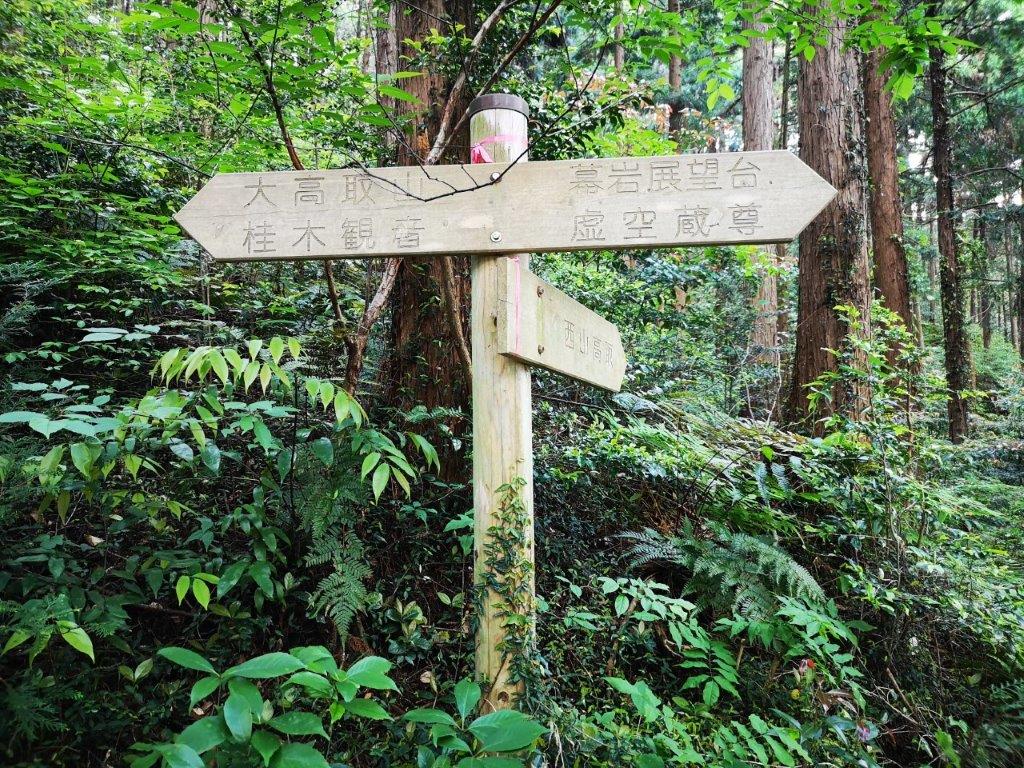
I followed a pleasant level path through the green forest, stopping now and then to listen the sound of birds singing. I passed a group of white limestone rocks (白石様 shiraishi-sama) and a minor summit named Mt Nekko (根っ子山 324m), both completely in the trees. Around 5pm, I started to climb again, and after reaching a forested ridgeline, turned left. A few minutes later I was on the top of Mt Otakatori (大高取山 おおたかとりやま ootakatoriyama), where I had a view eastwards through a break in the trees. After a short break, I continued south along the summit ridge, reaching another minor peak, Mt Katsuragi (桂木山 367m) just before 5h30.

An easy to walk trail

Late afternoon on Mt Otakatori

The gloom was starting to gather, so I took the next path down, a shortcut according to a handwritten sign. I had passed some hikers earlier, but now I was all alone, except for a large animal I heard but never saw. The path became level and easy to walk, luckily, since visibility was dropping fast. Around 6pm, I passed another viewpoint on top of a hill, but not much to see under the grey clouds. A few minutes later I emerged onto a road inside O-Park Ogose ( オーパークおごせ). After a quick hot bath, I boarded the free shuttle bus for Ogose station where I caught the Tobu line for the one hour ride back to Ikebukuro.

See the green and hear the birds of Mt Otakatori in 4K

Kaburi Pass (508m) and Amagoi Hill (574m), Hanno City, Saitama Prefecture, Sunday, May 15, 2022

I wanted to hike in the hills close to Tokyo to enjoy the the new green of Spring. I had already done most of the trails in the Oku-Musashi area, but looking at my hiking map, I found two interesting trails I hadn’t done yet; between them, was a trail I had done more than ten years ago in the autumn, which I was happy to do again in a different season. I would take a train to Moroyama and from there a taxi to Kamakita lake; I would end at Kuroyama, from where I could catch a bus back to Ogose. Since the travel time was relatively short, I wouldn’t have to leave at the crack of dawn. Although there were no summits on the way, I hoped to get some good views from the “Green Road”. The weather was supposed to be mostly clear with pleasant temperatures. I was looking forward to exploring some new trails and enjoying a relaxing Spring hike.

View of the Hanno Alps from Kaburi Pass

Spider taking a break on an Iris

I rode the Tobu line under cloudy skies and arrived at Moroyama station a little past 10am. Since the bus to Kamakita lake wasn’t running on Sundays, I took a taxi instead and was ready to hike by 11am, just as the sun was coming out of the clouds. I was surprised at how much greener everything looked since my previous visit one month ago; rather than cherry blossoms, I got to enjoy many Irises (“shaga“) on the side of the road.

The sun breaking through the clouds

A pleasant path up to the “Green Line”

At a bend in the road, I spotted the trail entrance past a stream running through grassy area dotted with irises. I followed an easy to walk path through the forest, enjoying the sound of birds singing and reached a junction with a ridge trail running parallel to the Oku-Musashi Green Line (奥武蔵グリーンライン) just after 12h30. From there, I followed a mostly level road to Kaburi Pass (顔振峠) where I had a good view of the Hanno Alps on the other side of the valley.

An easy to walk trail through the forest

Hazy view of the Kanto plain from Amagoi Hill

I followed a small trail above the pass to a viewpoint of the Kanto plain on the east side; it was also the summit of Amagoi Hill (雨乞い塚 あまごいづか amagoizuka). It was 1h3o, so I sat down on a tree stump for a late lunch. The sun had gone back into the clouds and the view was hazy. I was the only person there and it was very peaceful. At 2pm, I continued my hike and walked along the road, past Kanto Adventures, to the start of the descent towards Kuroyama. Halfway down, I passed the eerie statue of En no Gyoja at the top of some rocks in a clearing. A little further, I spotted some deer escaping into the forest.

“En no Gyoja” statue on the way to Kuroyama waterfall

A small waterfall, not part of the Kuroyama 3 waterfalls

Shortly after 3h15, I reached a stream at the base of the mountain; it led me to the 3 waterfalls of Kuroyama (黒山三滝), Tengu-Taki (天狗滝), Medaki (女滝) and Odaki (男滝), from where it was a short walk down the road to the bus stop. On the way back, I stopped off at the Ume no Yu hot spring for a refreshing bath, and then caught then next (and last) bus for the short ride to Ogose station, from where it was a one hour ride on the Tobu line to Ikebukuro.

See the flowers and hear the birdsong on the Amagoi hill hike