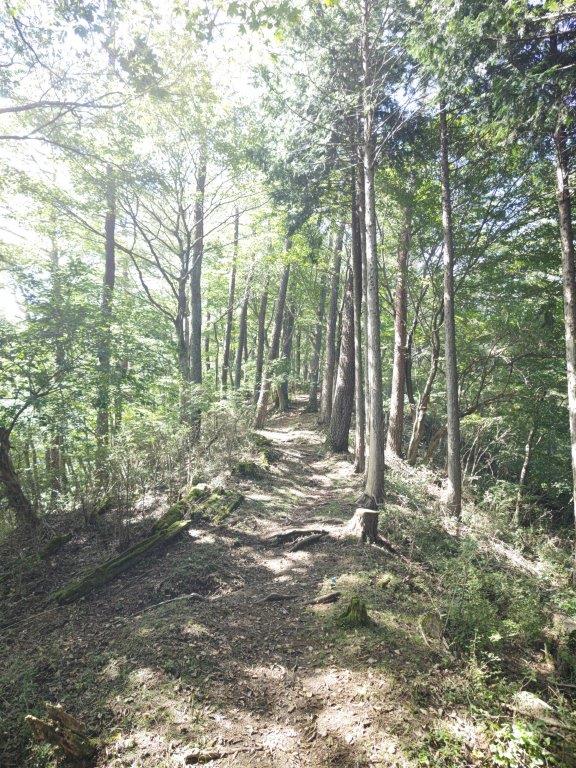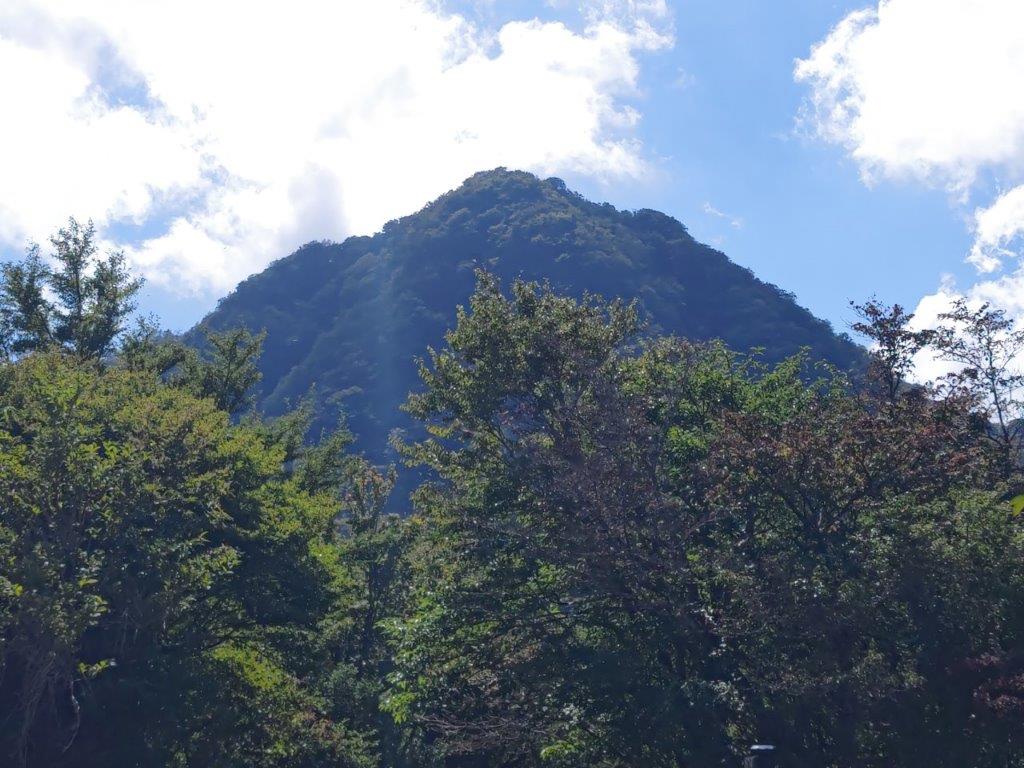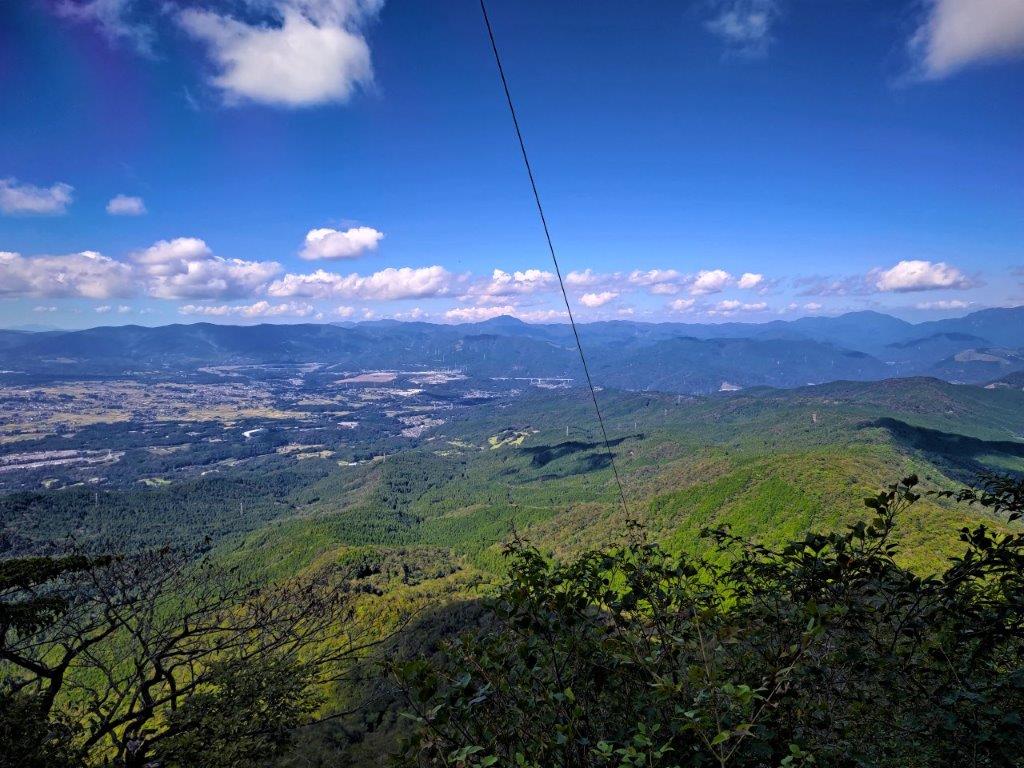
Mt Takatsuka (216m), Minamiboso City, Chiba Prefecture, Tuesday, December 20, 2022

This is a hike from my mountains of Chiba guidebook. Although it can be done as a day trip, by walking one hour from Chikura station on the Uchibo line, I decided to drive from Tokyo and spend the night at Nojima cape, the southernmost point of the Boso peninsula; from there, it was a short drive to a parking near the trail entrance. I had done many hikes on the Boso peninsula, but it would be my first to hike in Minami-Boso.

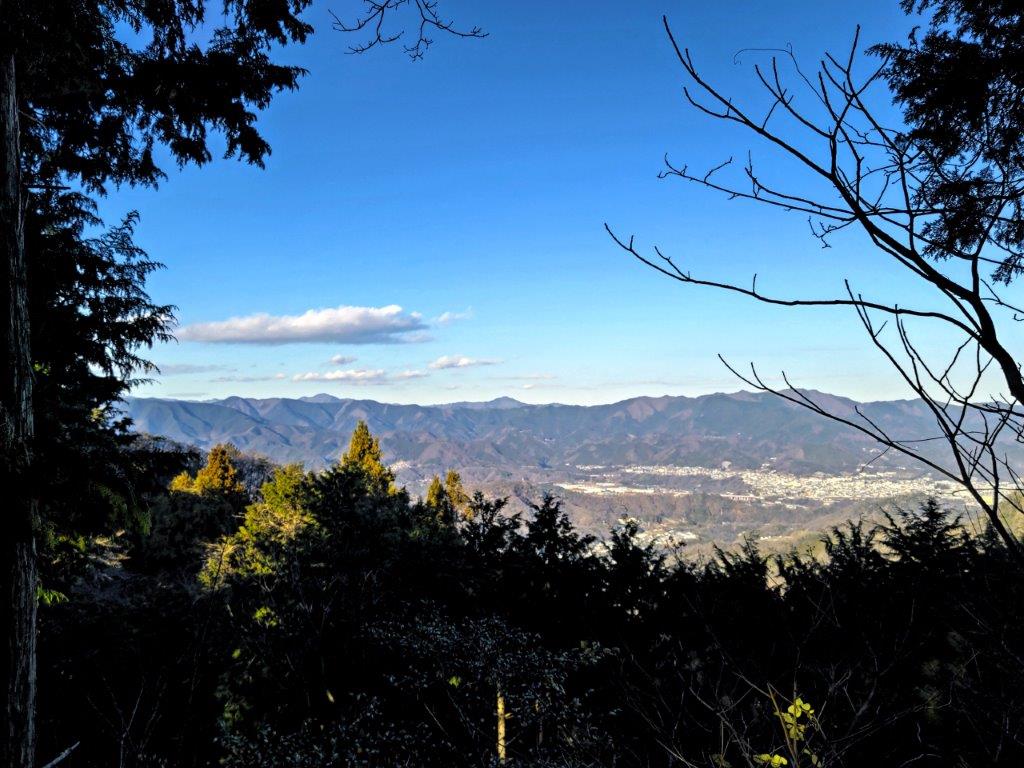
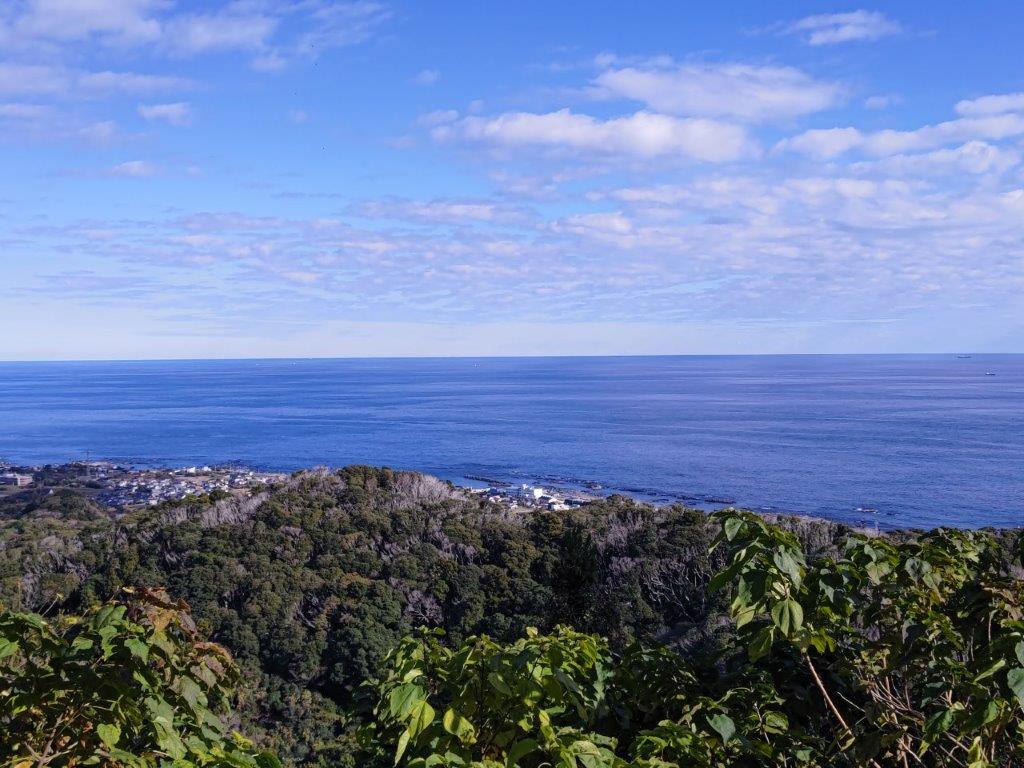
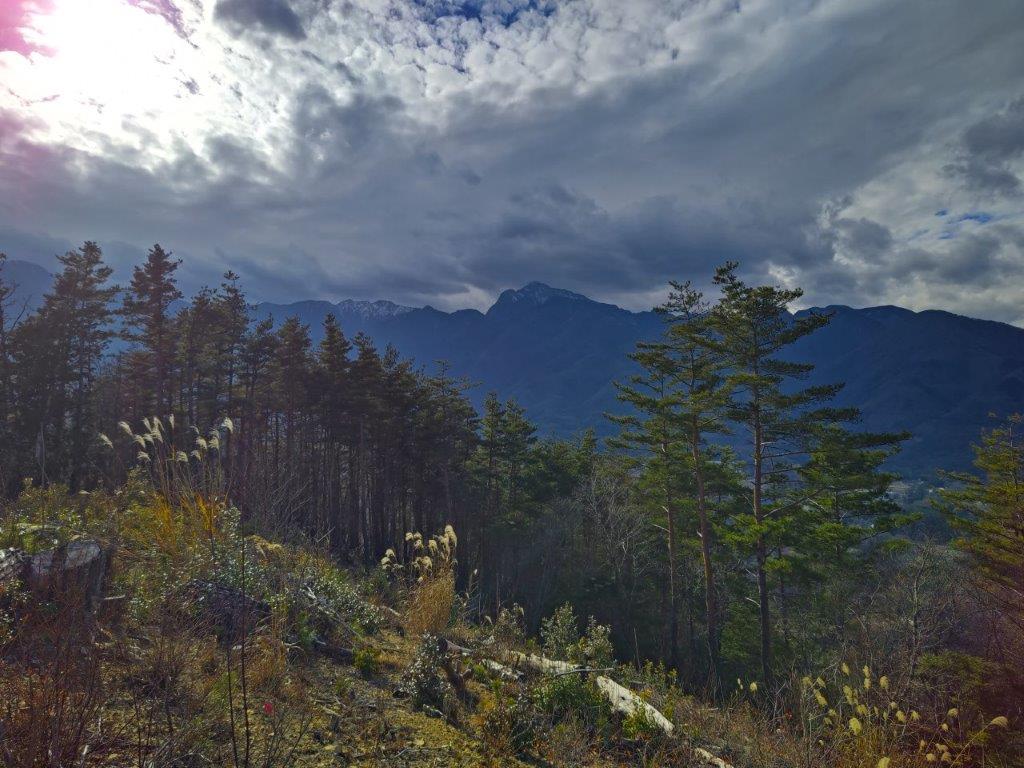
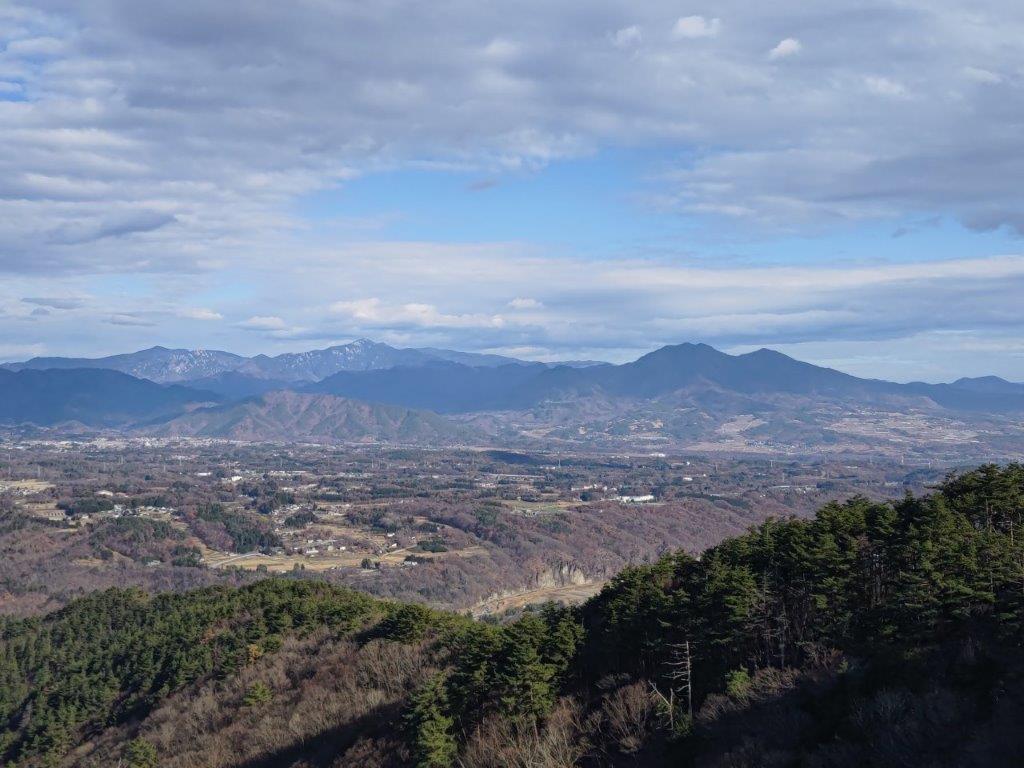
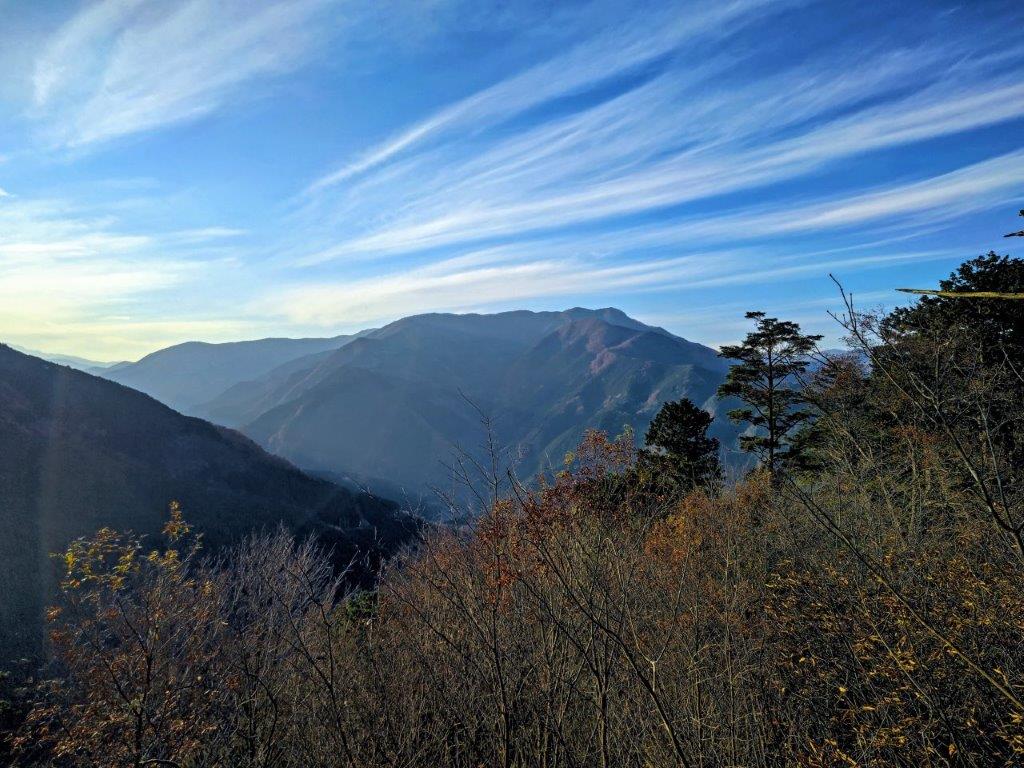
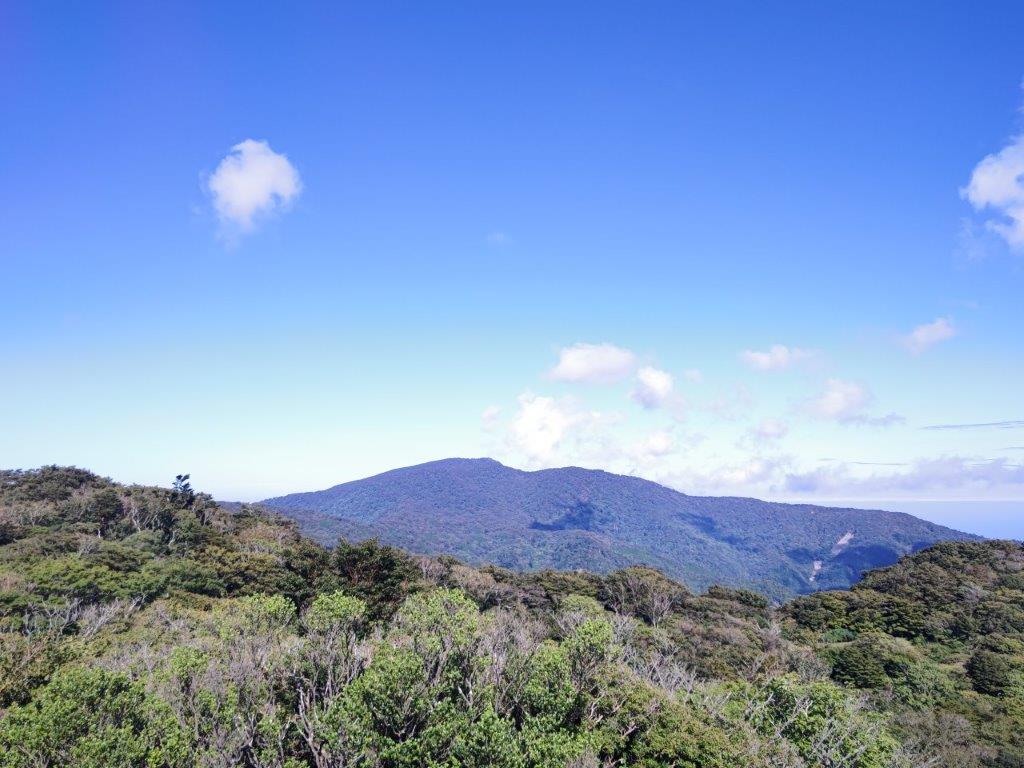
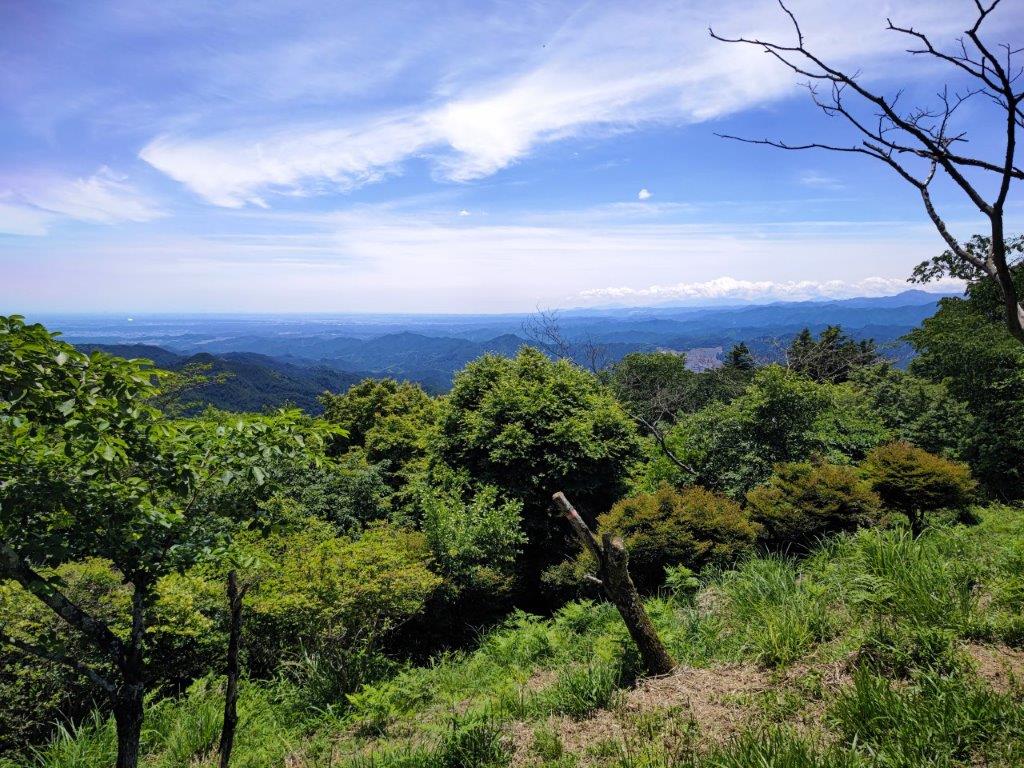
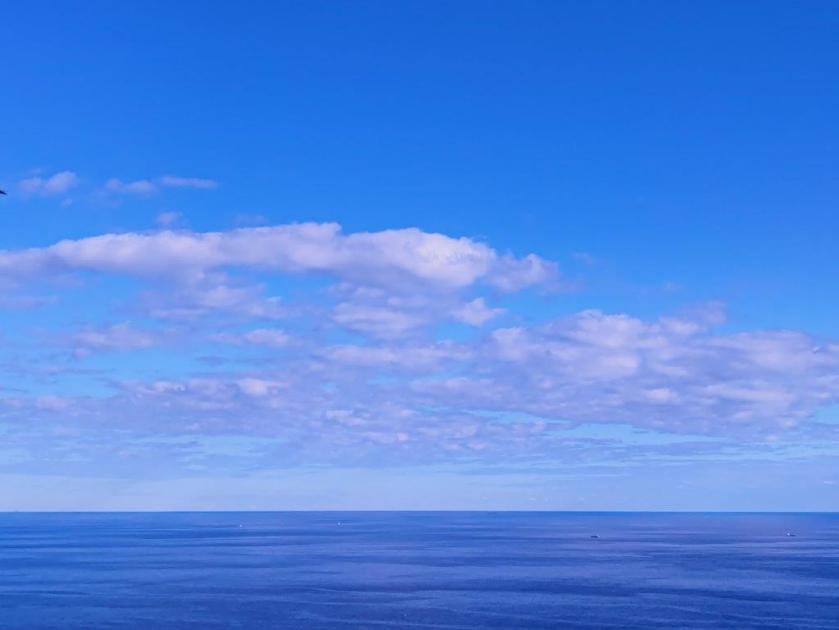
View of the Pacific from the summit

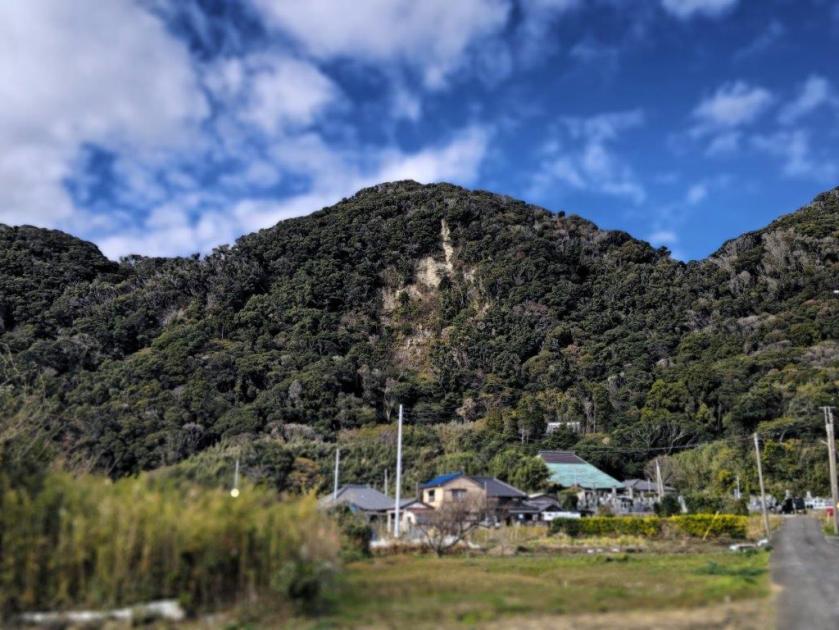
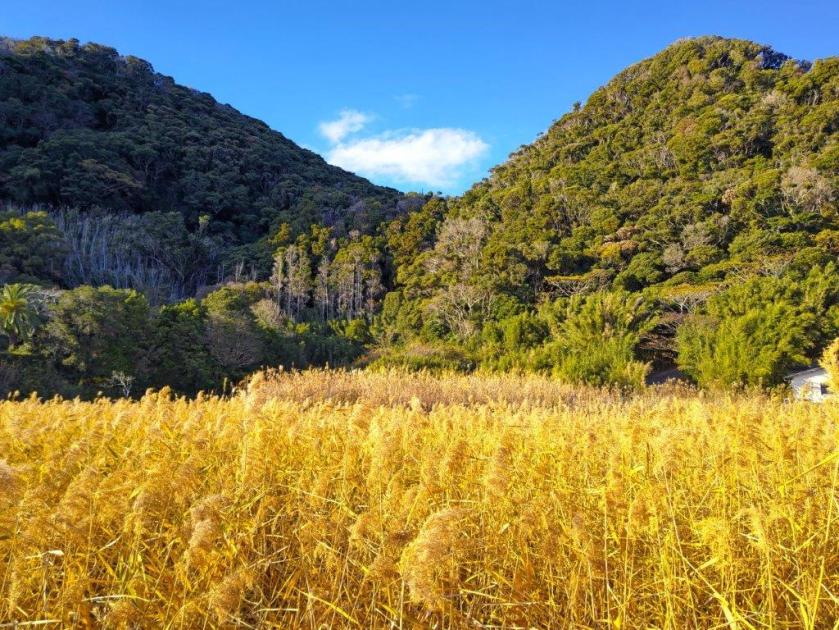
Walking to the trailhead through the fields

I had been wanting to climb this low peak for several years, but had to be patient since the hiking trail was closed for a while after the powerful typhoons of 2019; online reports showed that the path was now more or less back to normal. After heading straight up the mountain, I go down following the ridgeline, and then walk back through the countryside. The weather was supposed to be sunny and so I was looking forward to new views in a new area.

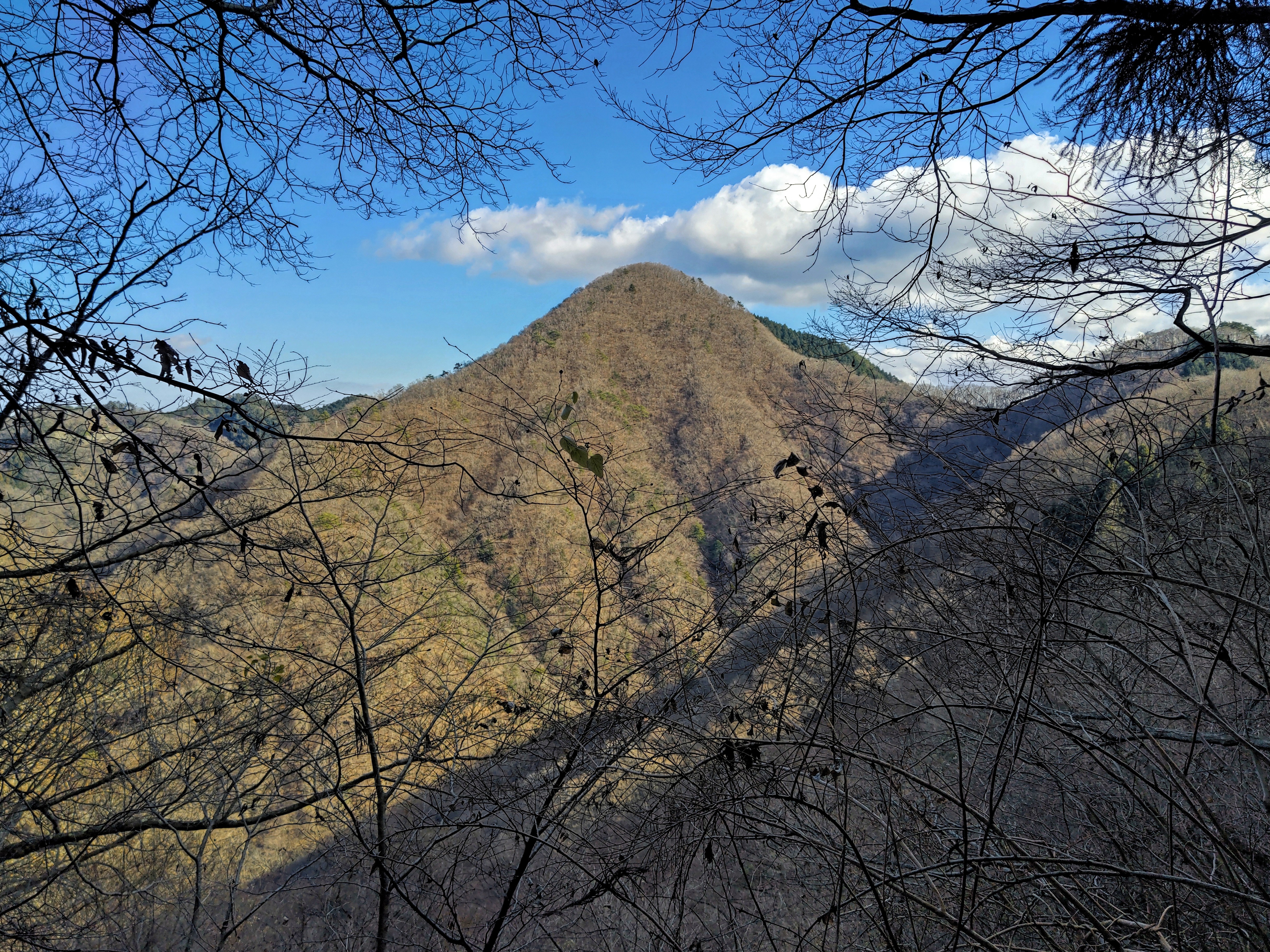
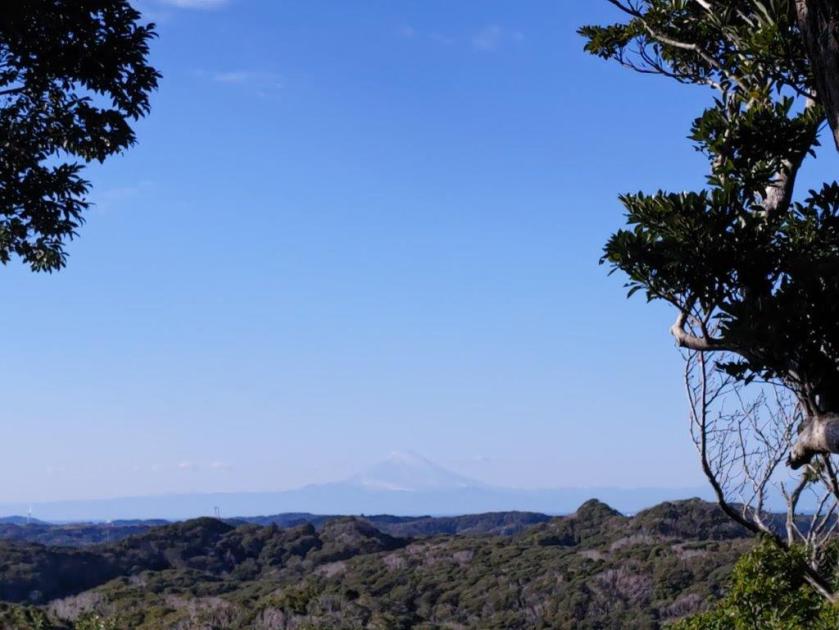
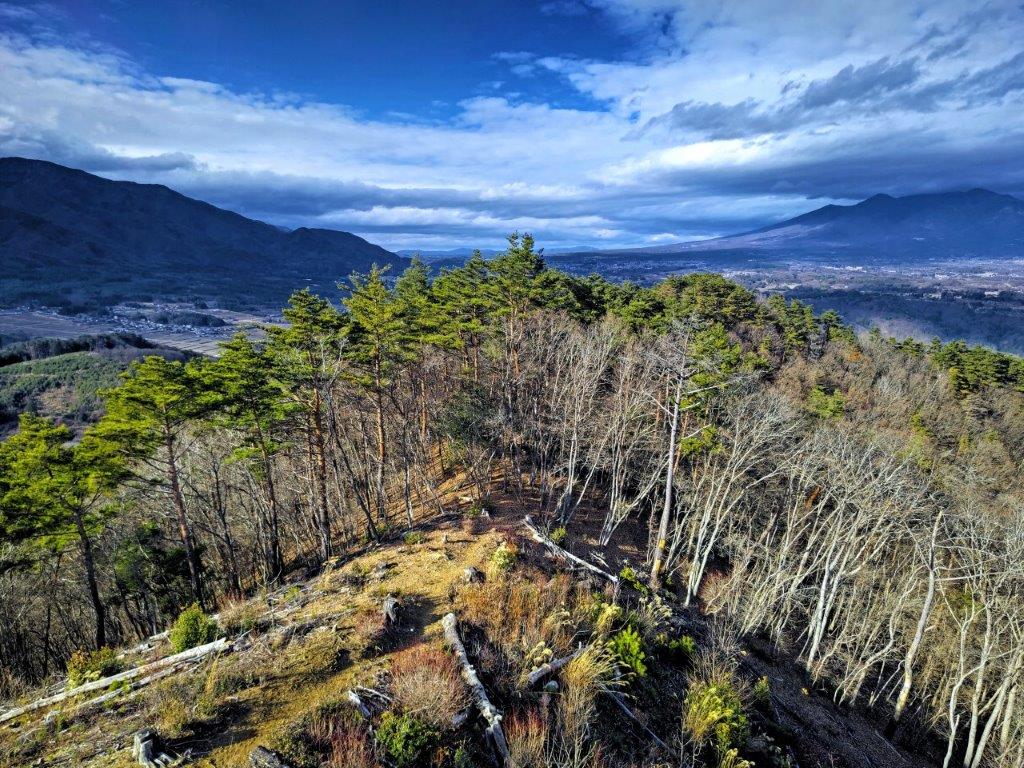
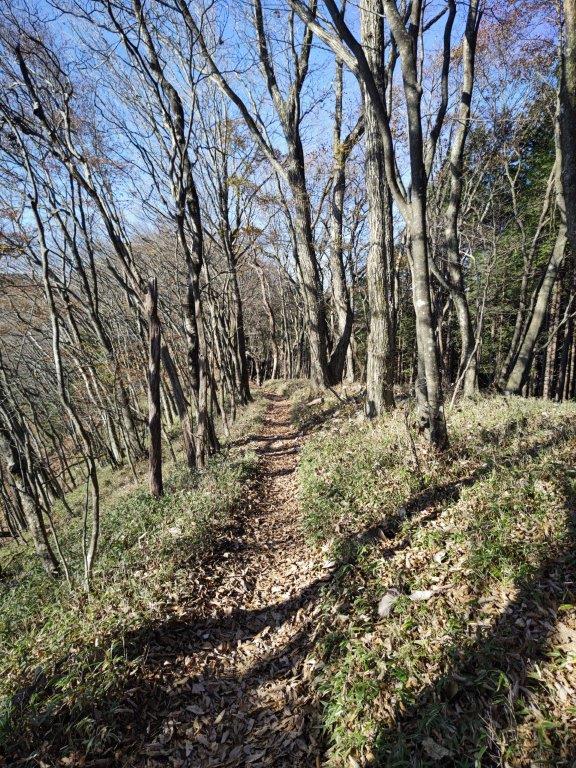
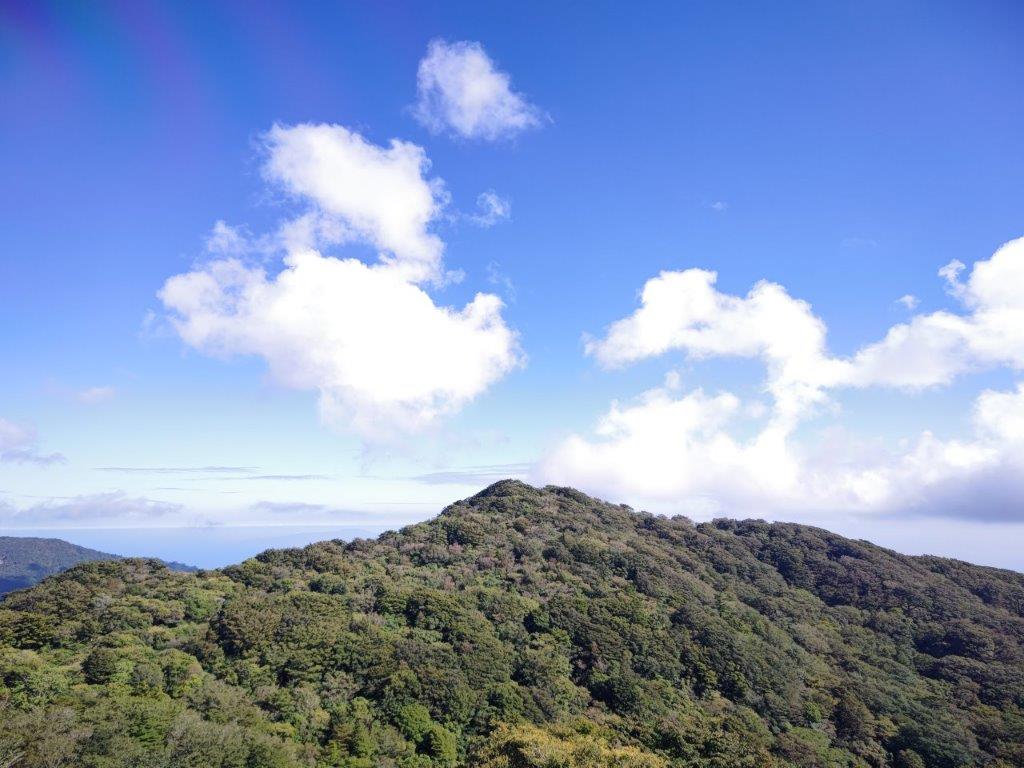
View of the forested ridge through a break in the trees

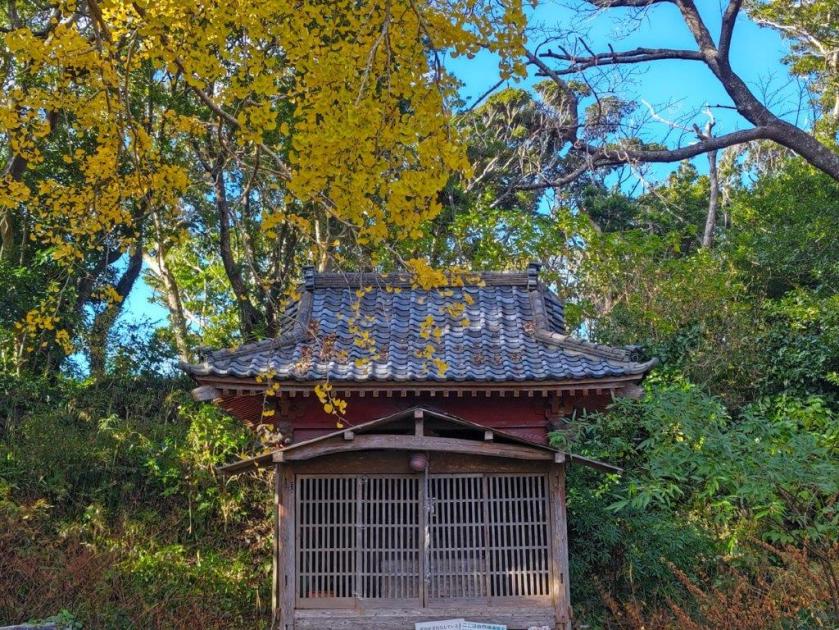
Late autumn leaves on the summit

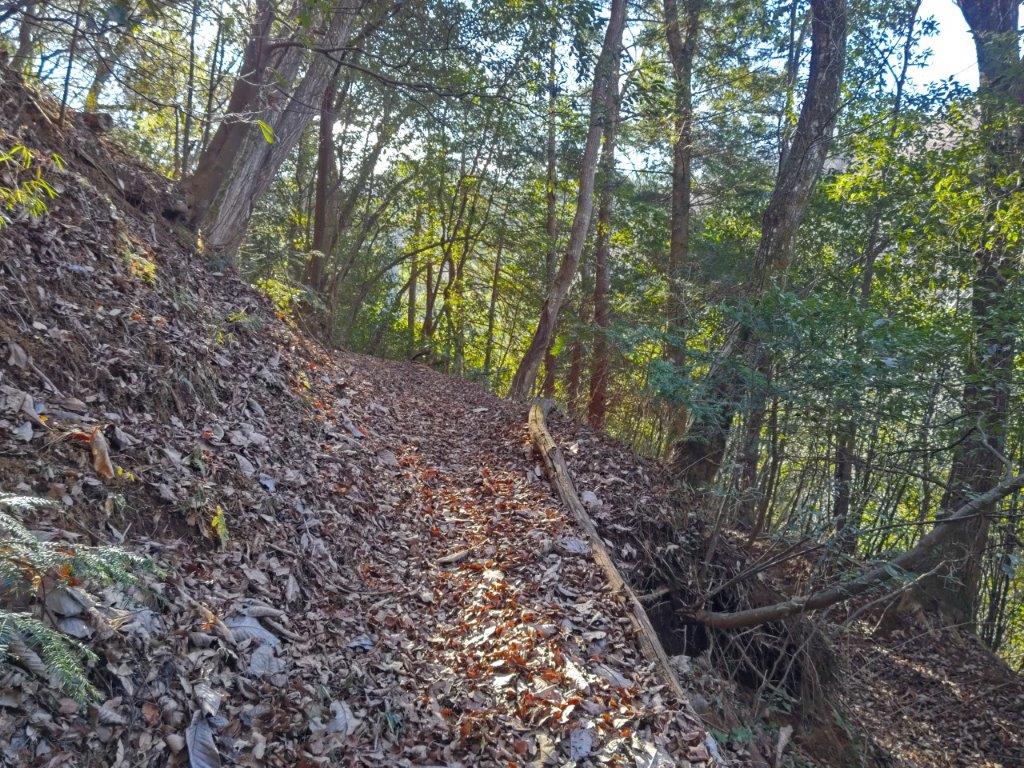
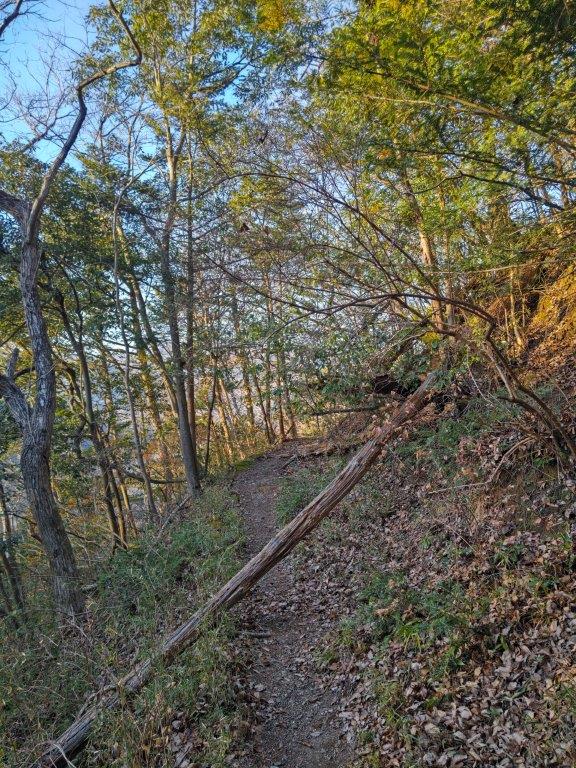
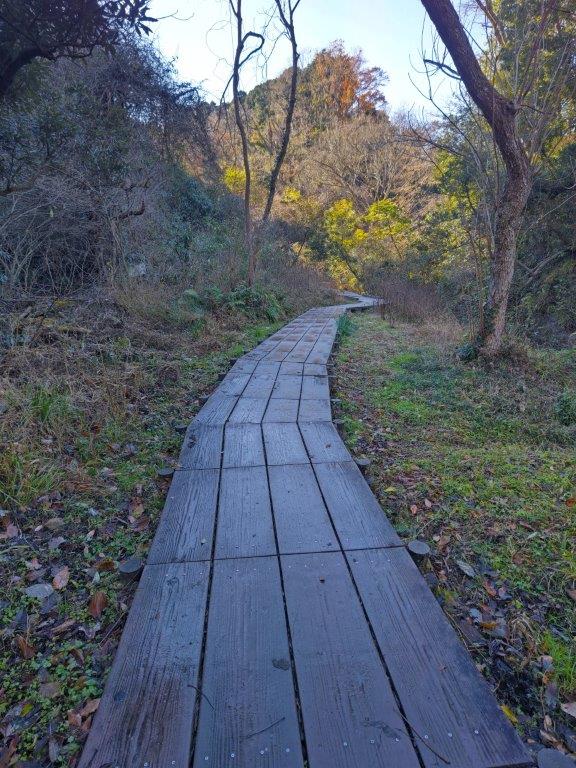
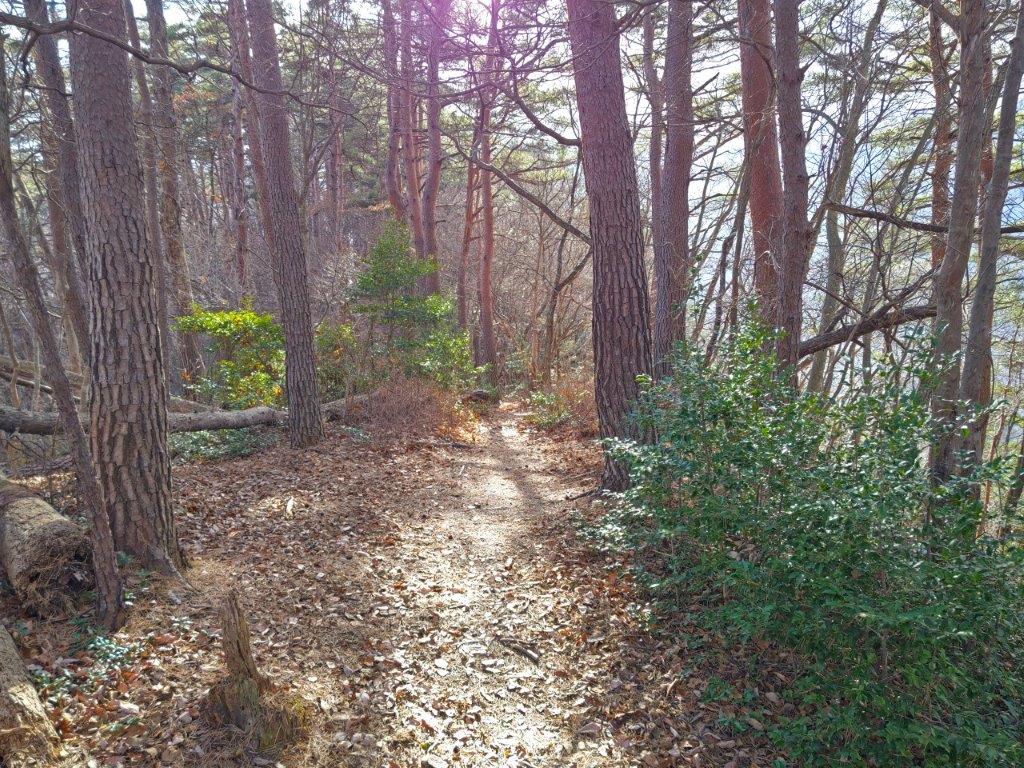
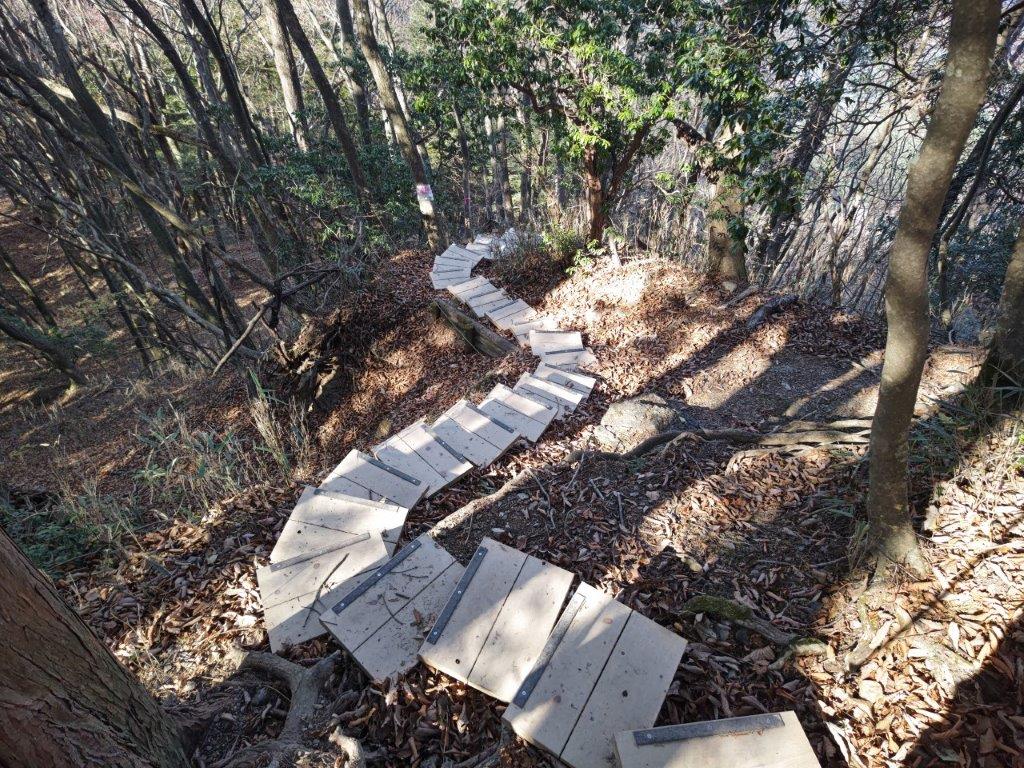
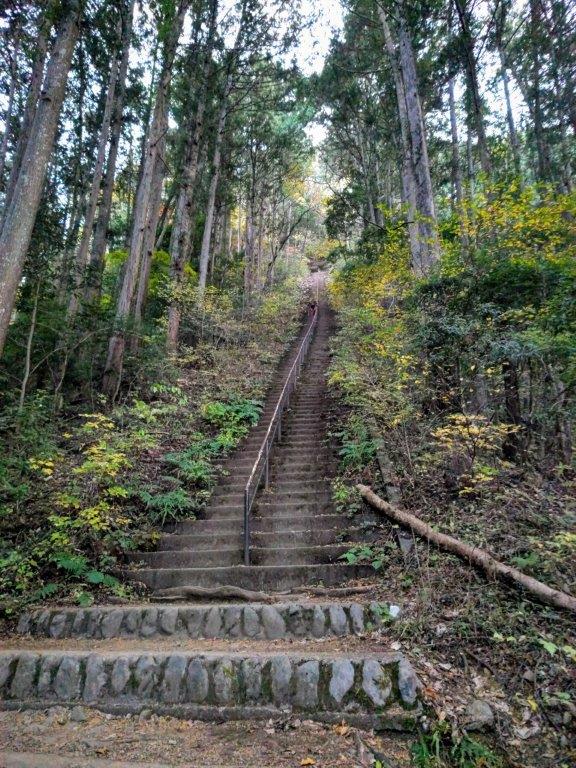
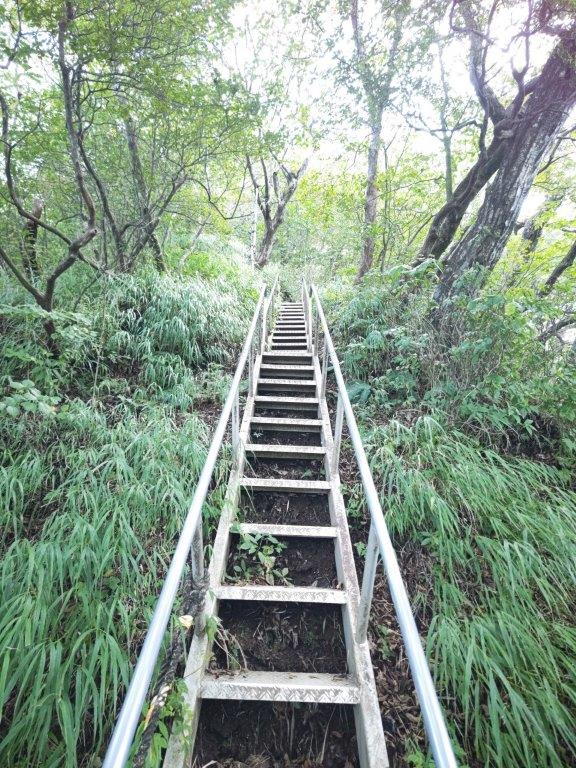
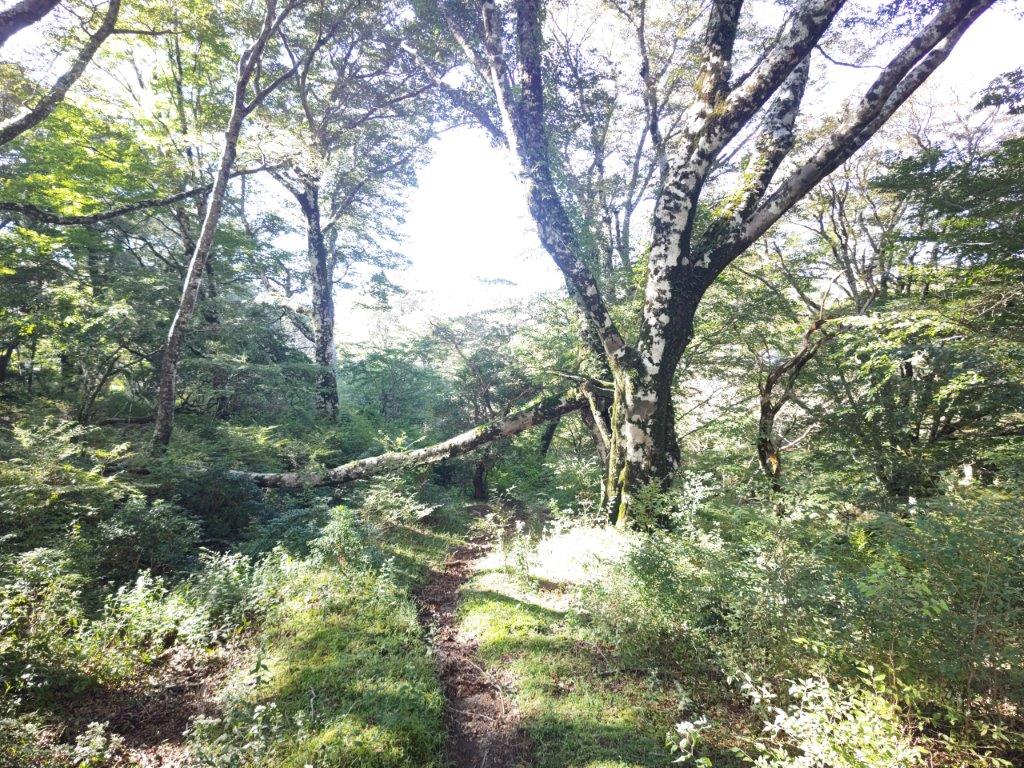
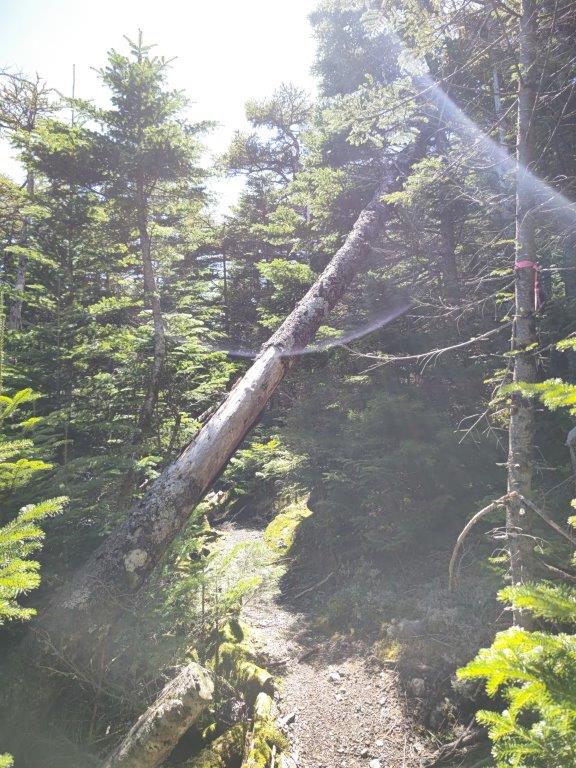
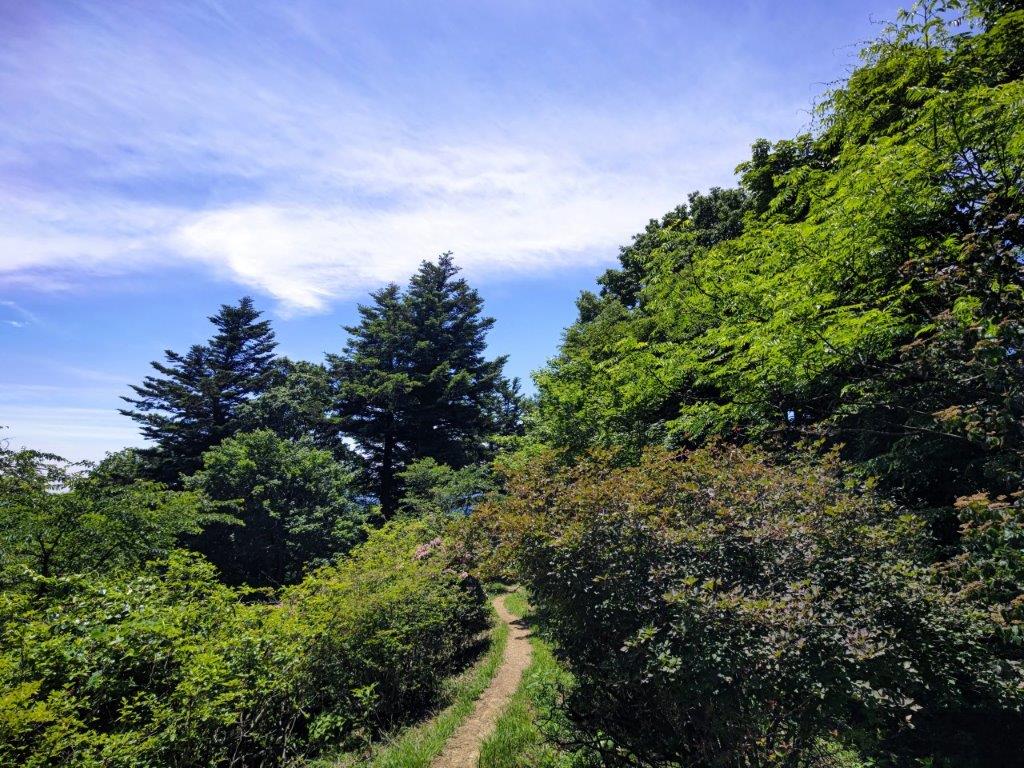
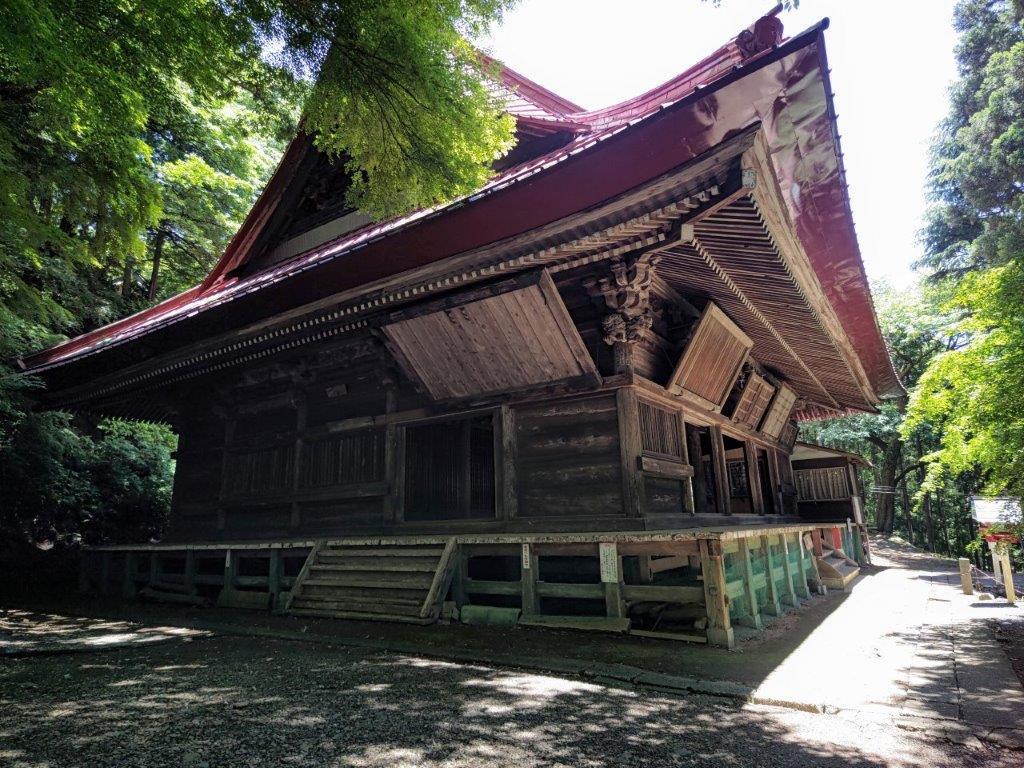
I drove along the Pacific coast under the late morning sun to the nearby Nanbo Chikura Bridge Park Parking (南房千倉大橋公園), from where it was a 20 minute walk to the trailhead next to a temple. At 1230, I started up a series of steps, following the winding path through the evergreen forest of Japanese stone oaks (マテバシイ matebashii). Very soon the trail became level and the forested summit ridge appeared through a break in the trees.

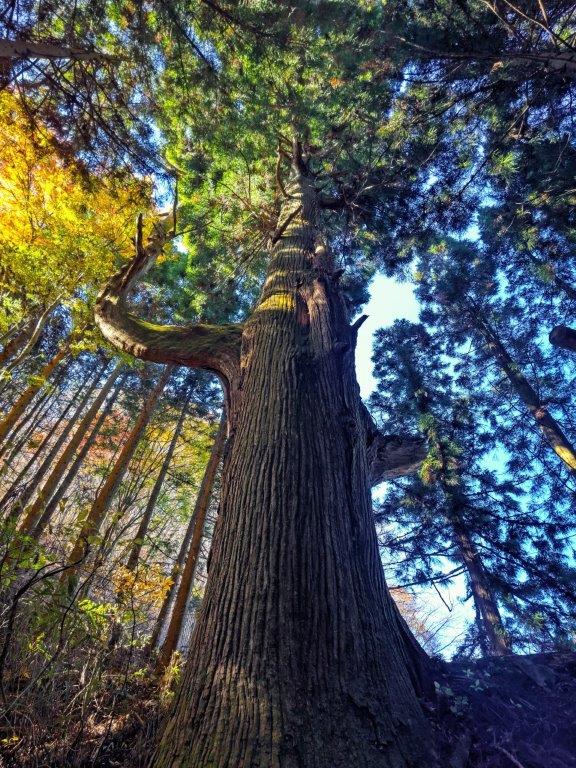
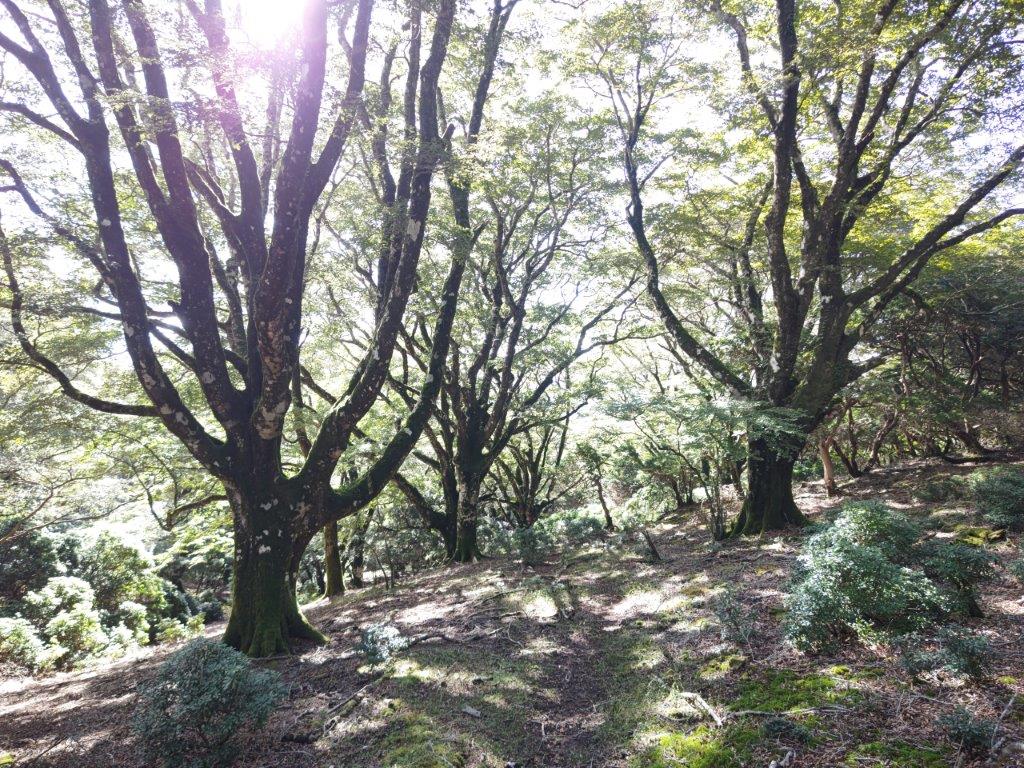
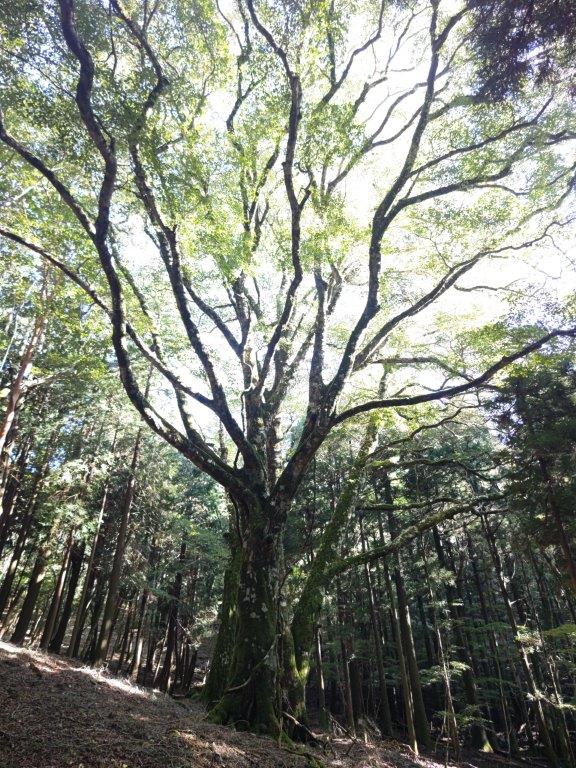
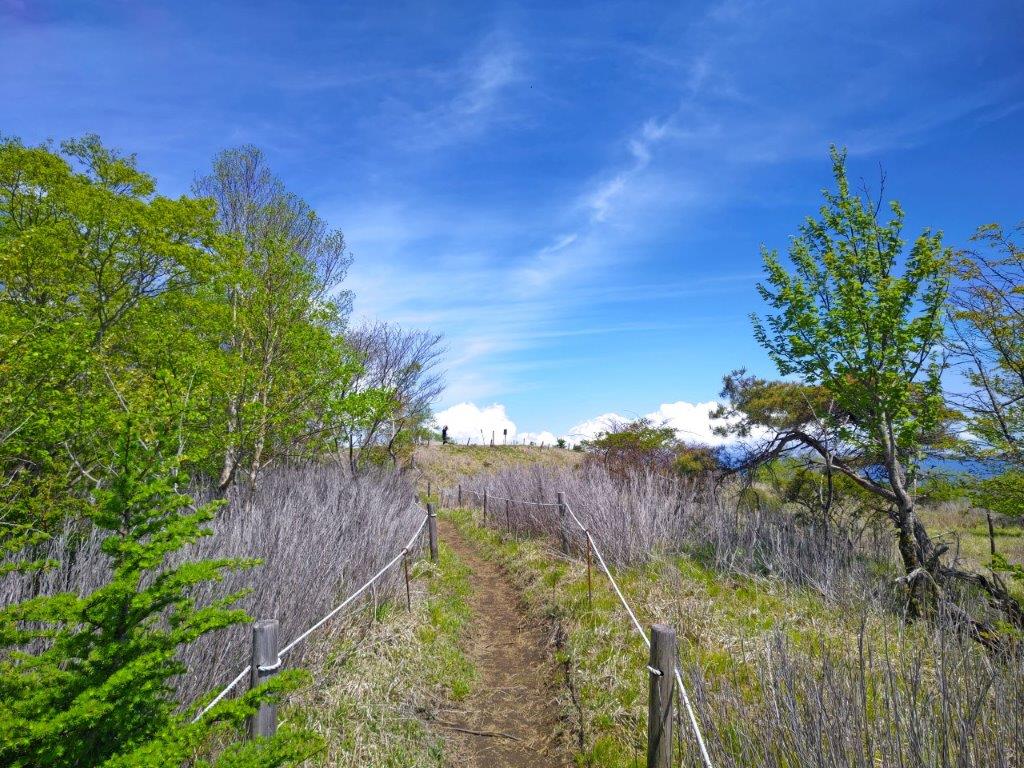
Fantastically shaped trees along the summit ridge

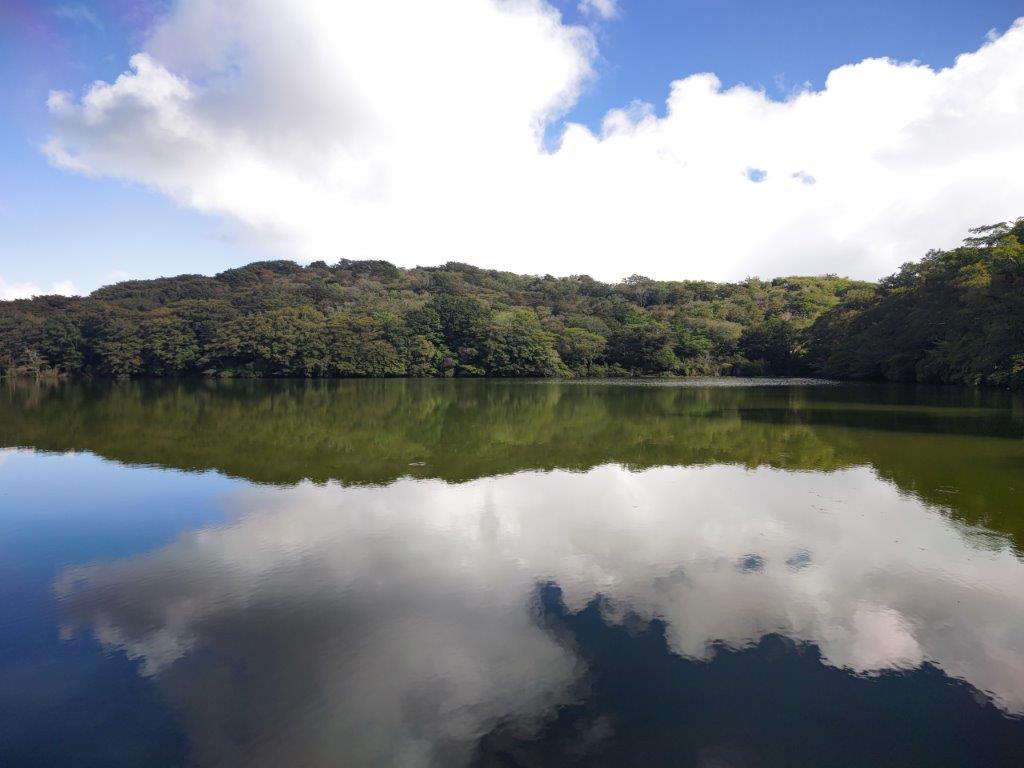
Summit shrine (left) / Valley bottom lake (right)

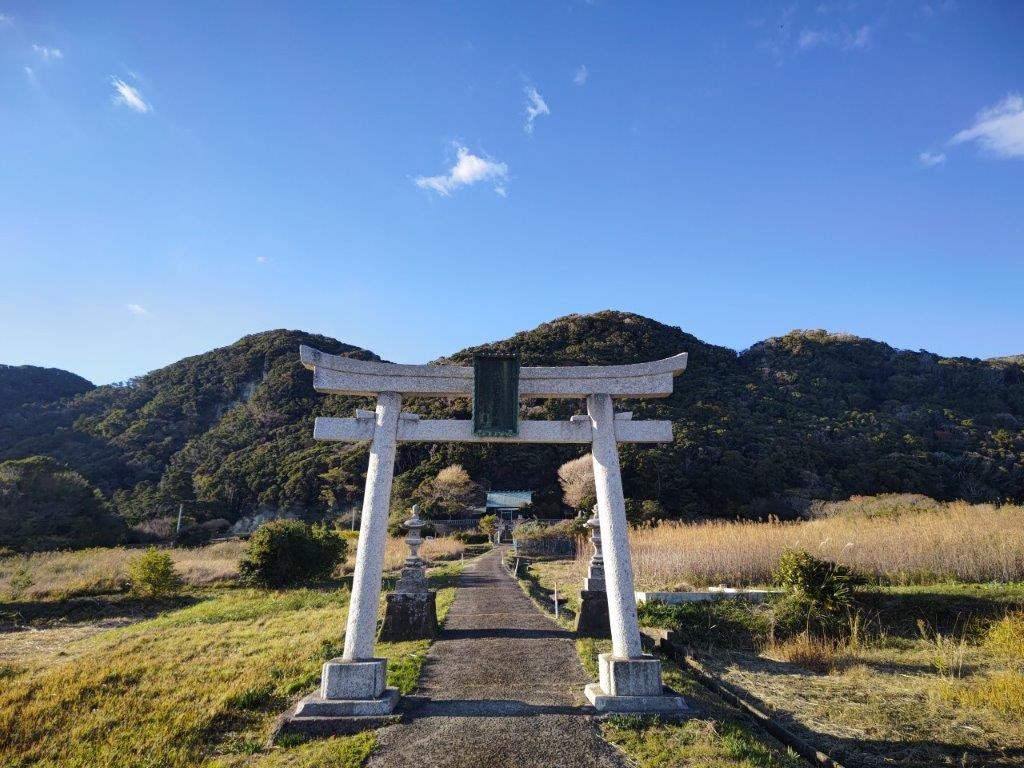
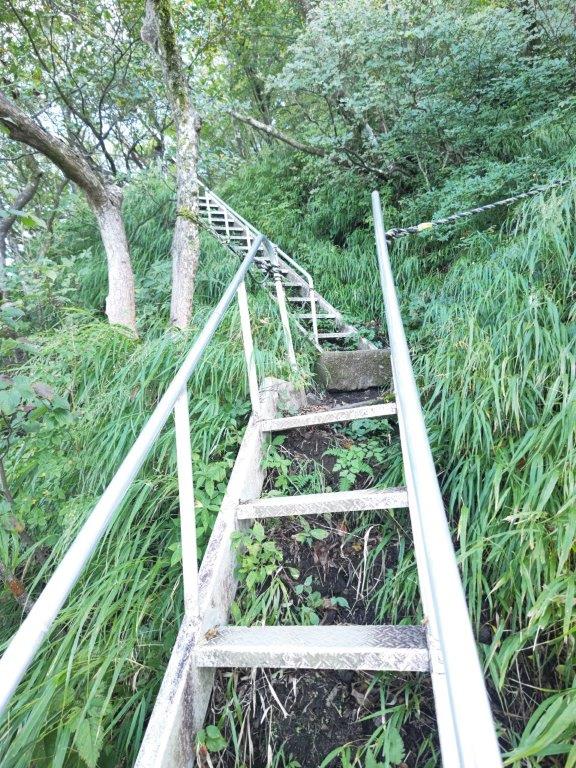
A little further, I passed under a stone Shinto gate at the top of a flight of steps, looking like the entrance to some long-lost ruin. I then made my way up a steep, muddy path, being careful not to slip, and at 1pm, emerged onto the flat summit of Mt Takatsuka (高塚山 たかつかやま takatsukayama), a kanto 100 famous mountain; the summit marker, wrecked by the typhoon, and had yet to be replaced and was nowhere to be seen.

Shinto gate at the mountain base (different from the one on the mountain itself)

Temple at the base of Mt Takatsuka

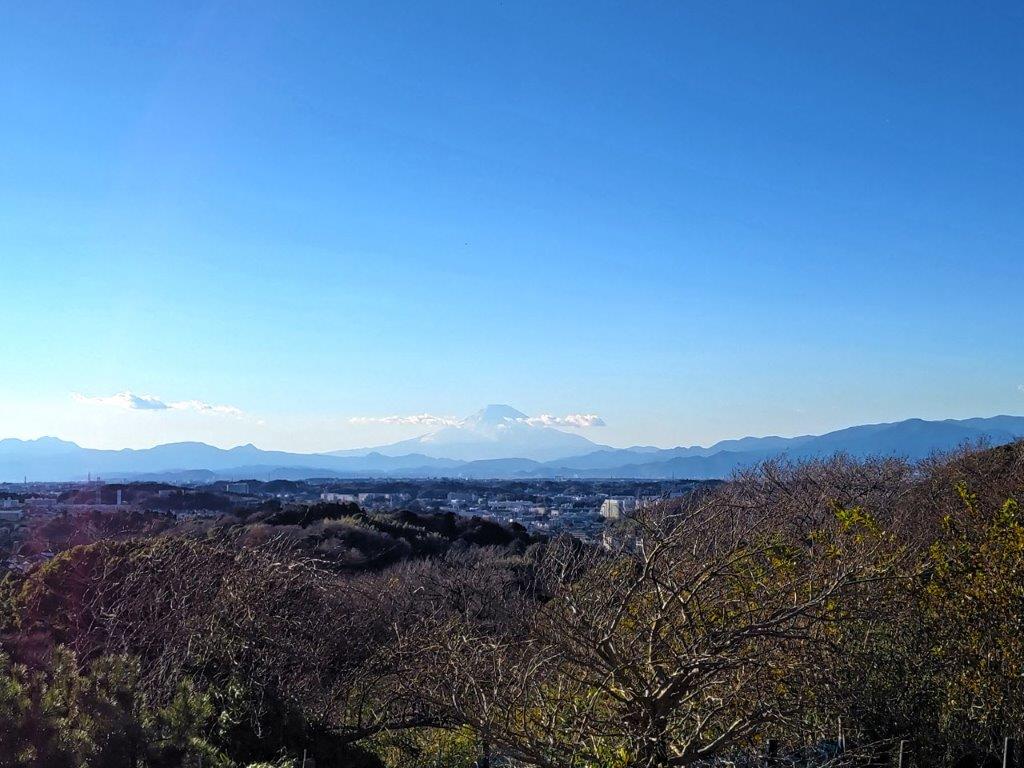
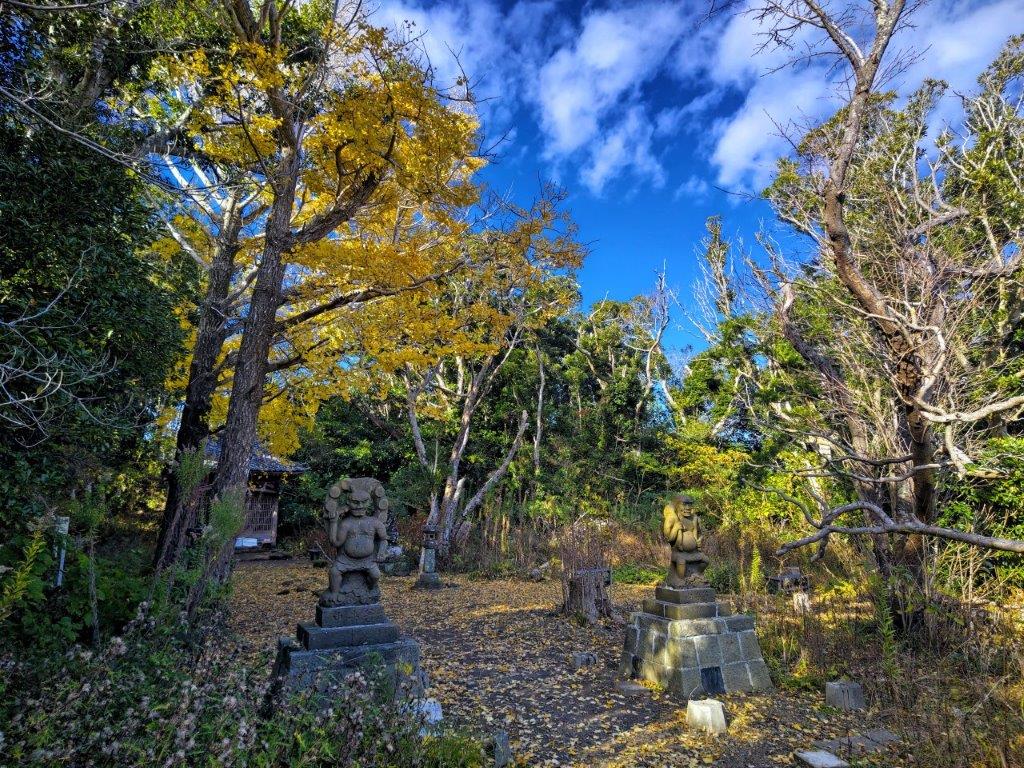
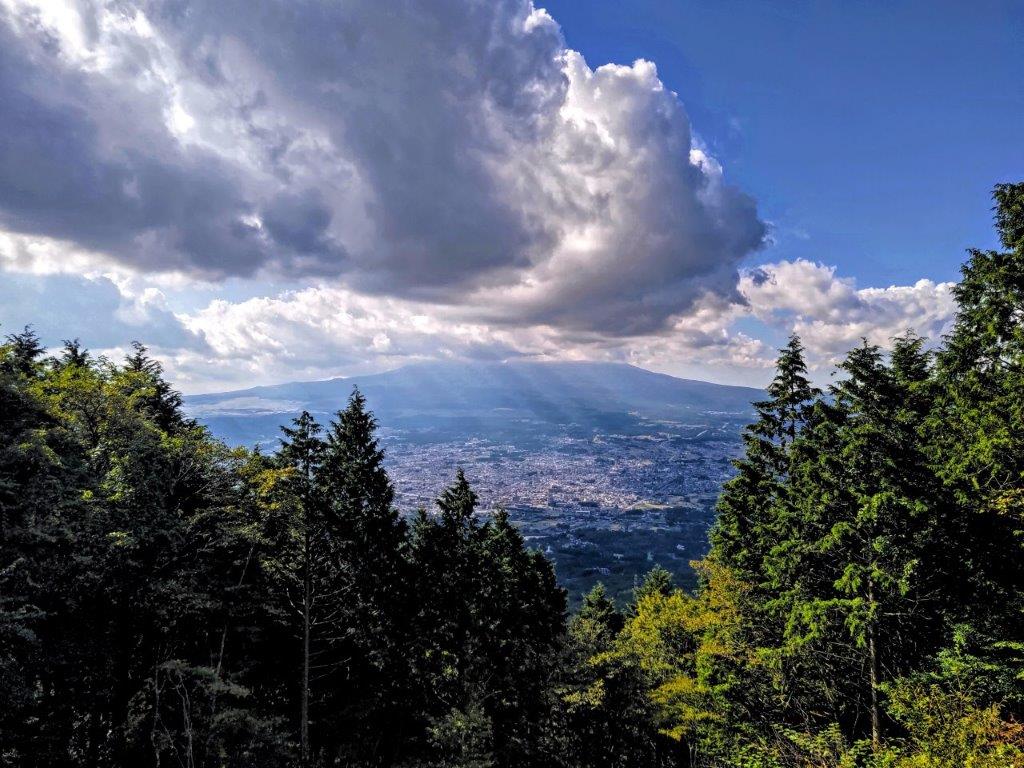
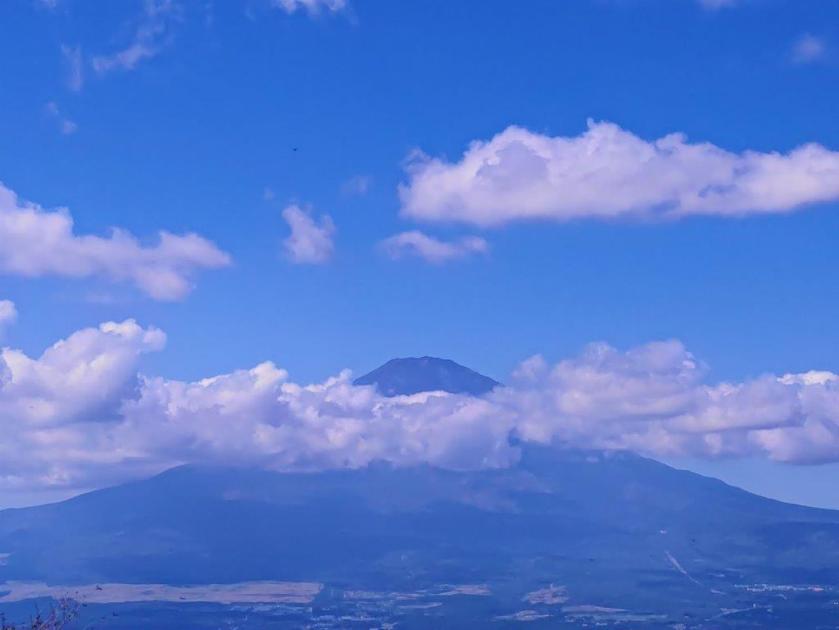
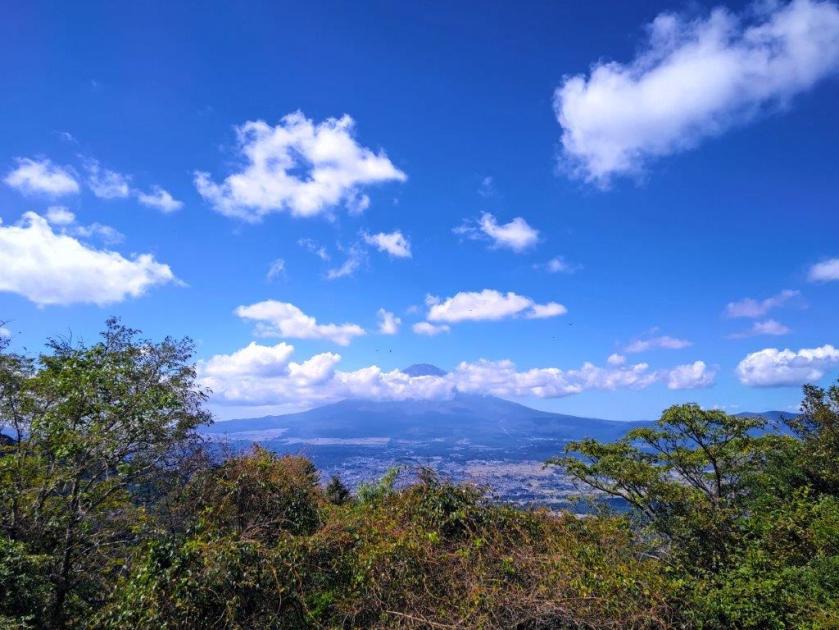
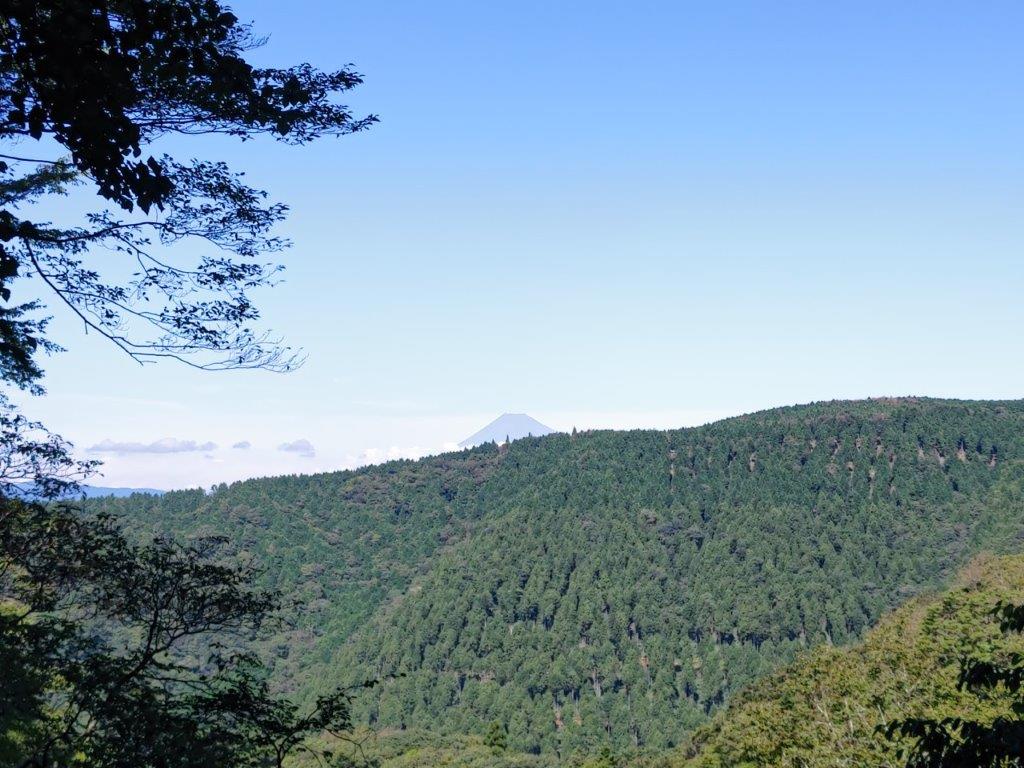
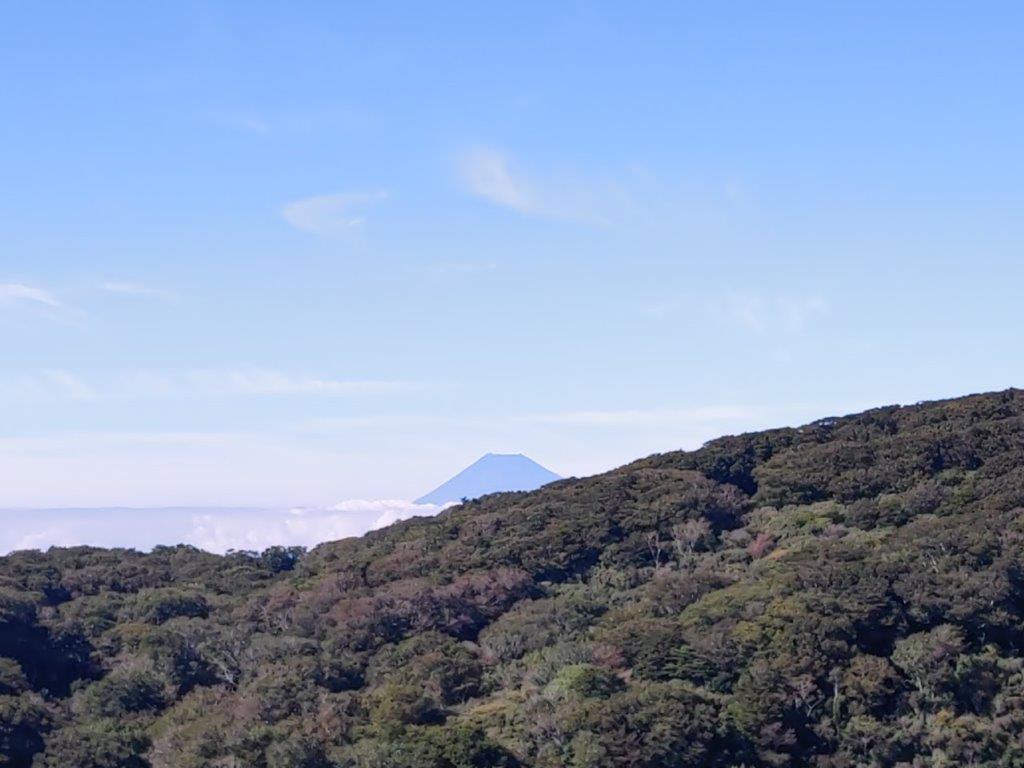
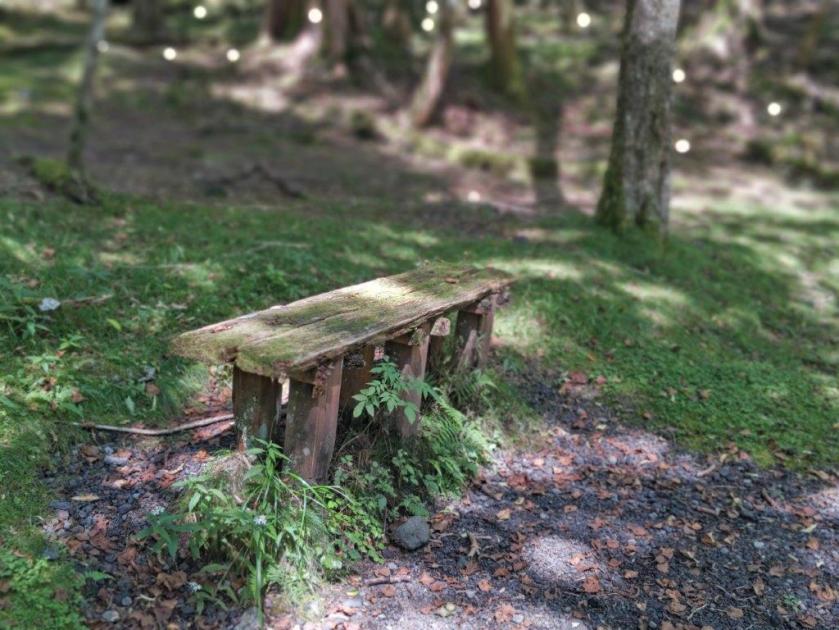
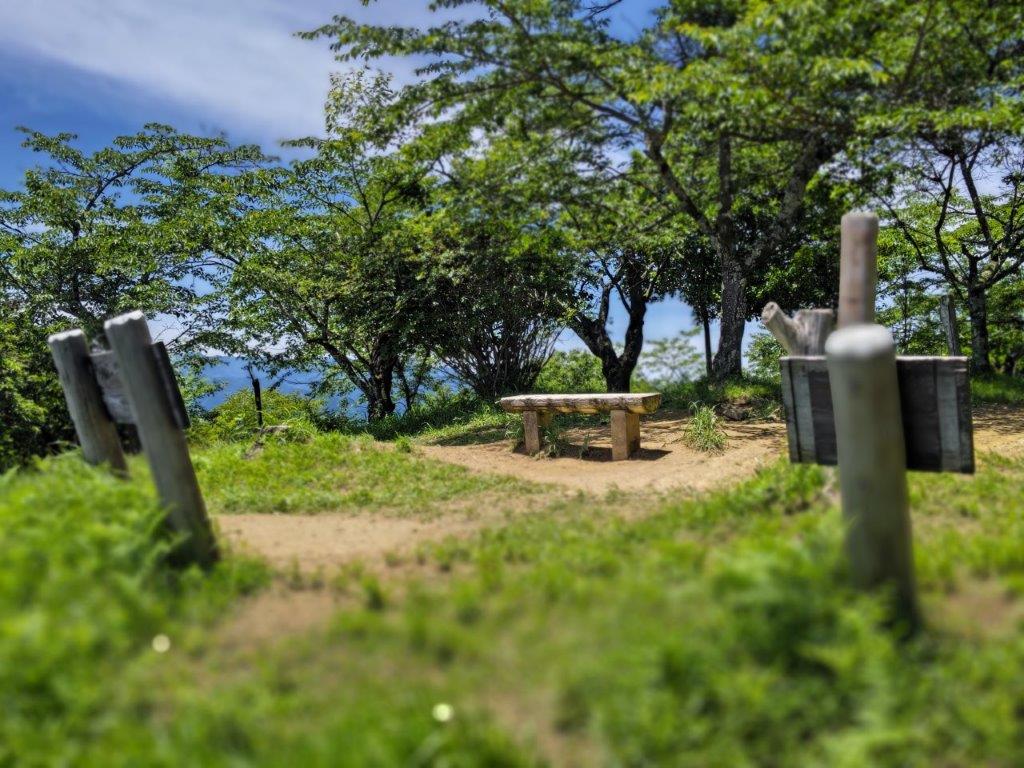
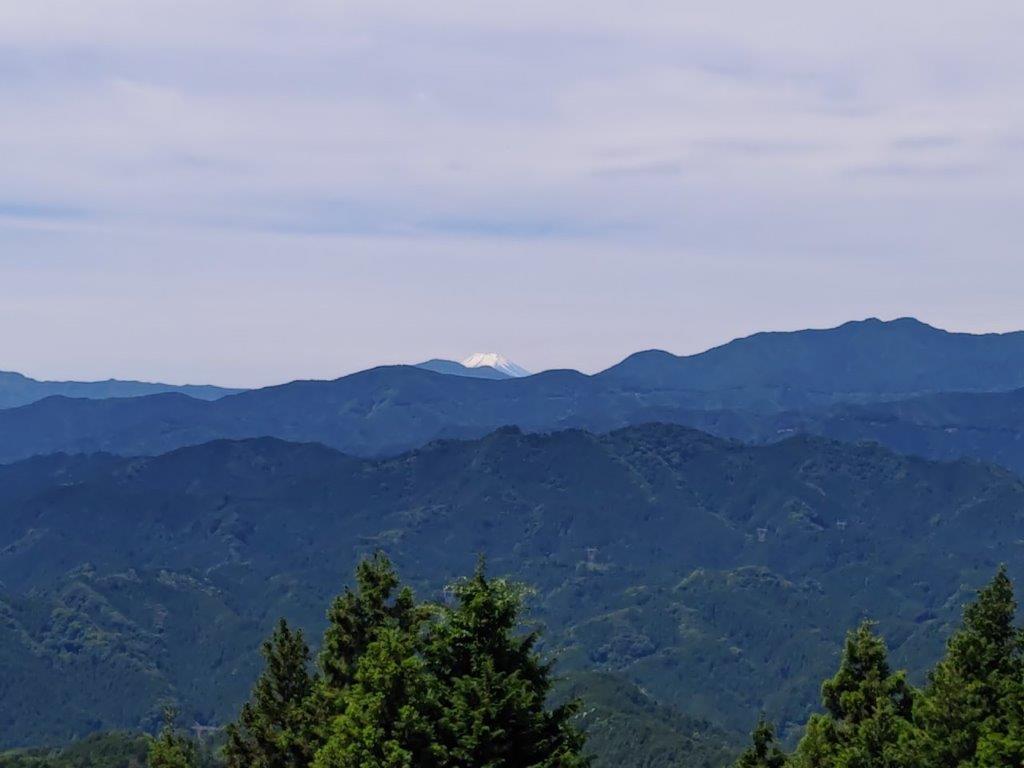
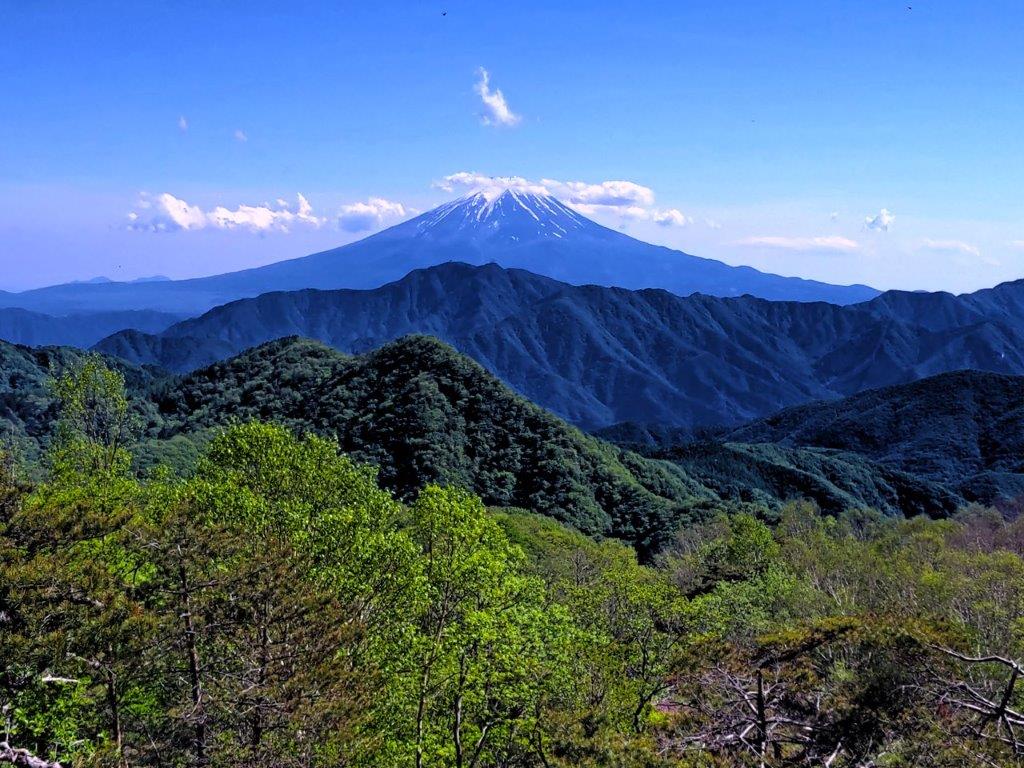
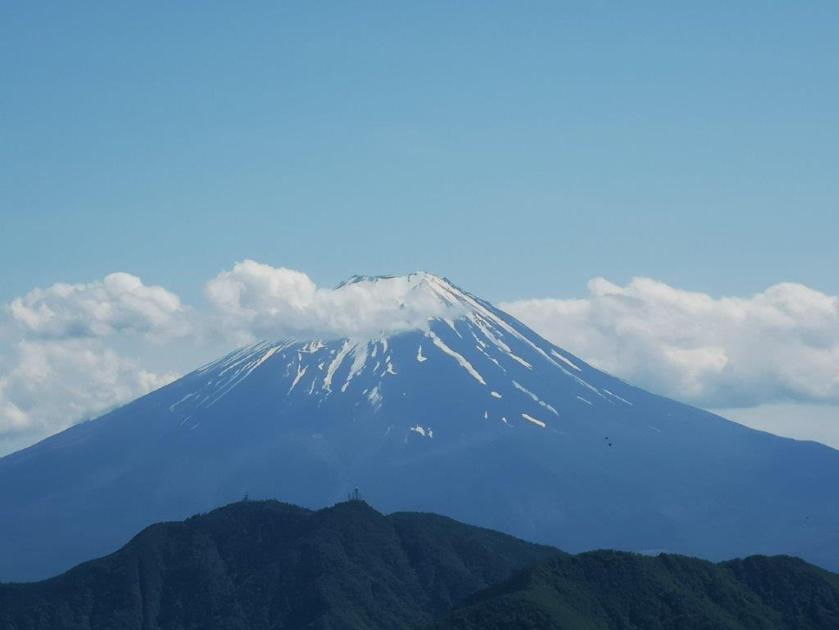
I was surprised to see a towering oak above a tiny shrine, its yellow trees still clinging on at the very end of autumn. On one side was a bench in the sun, with a view of the Pacific ocean, the perfect spot for lunch on a cool day. Before heading down, I explored a path behind the shrine building leading to a view point from where I could make out the faint outline of Mt Fuji. Once back down at the stone gate, I took a small path on the left side.

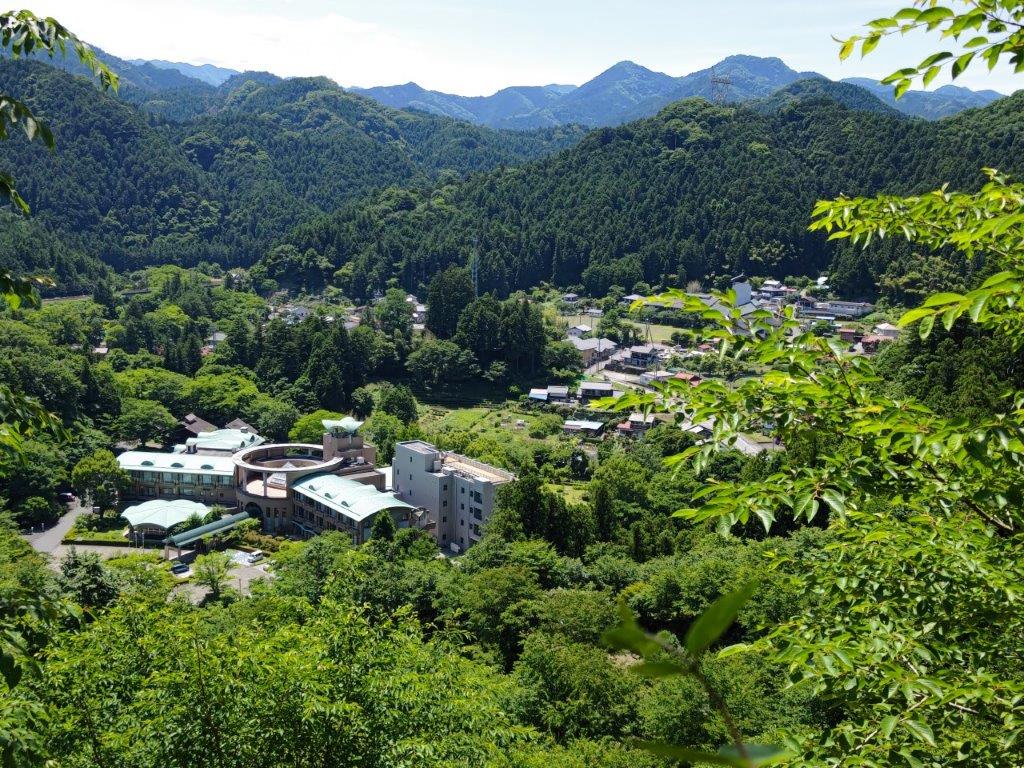
Mt Takatsuka in the late afternoon sun

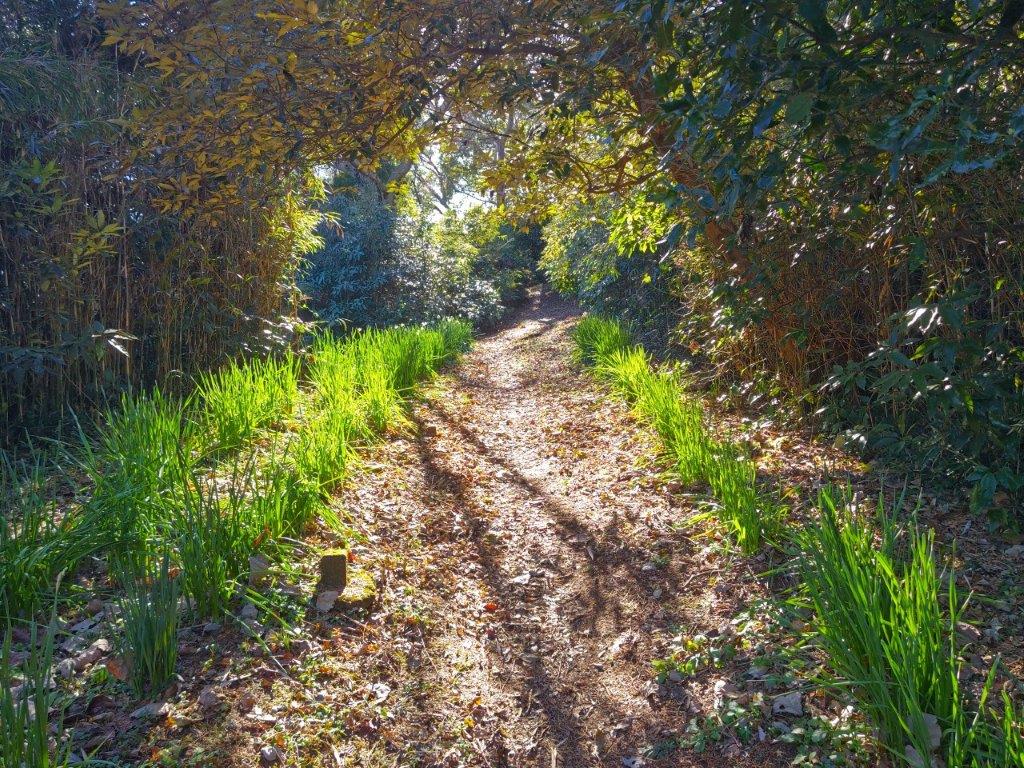
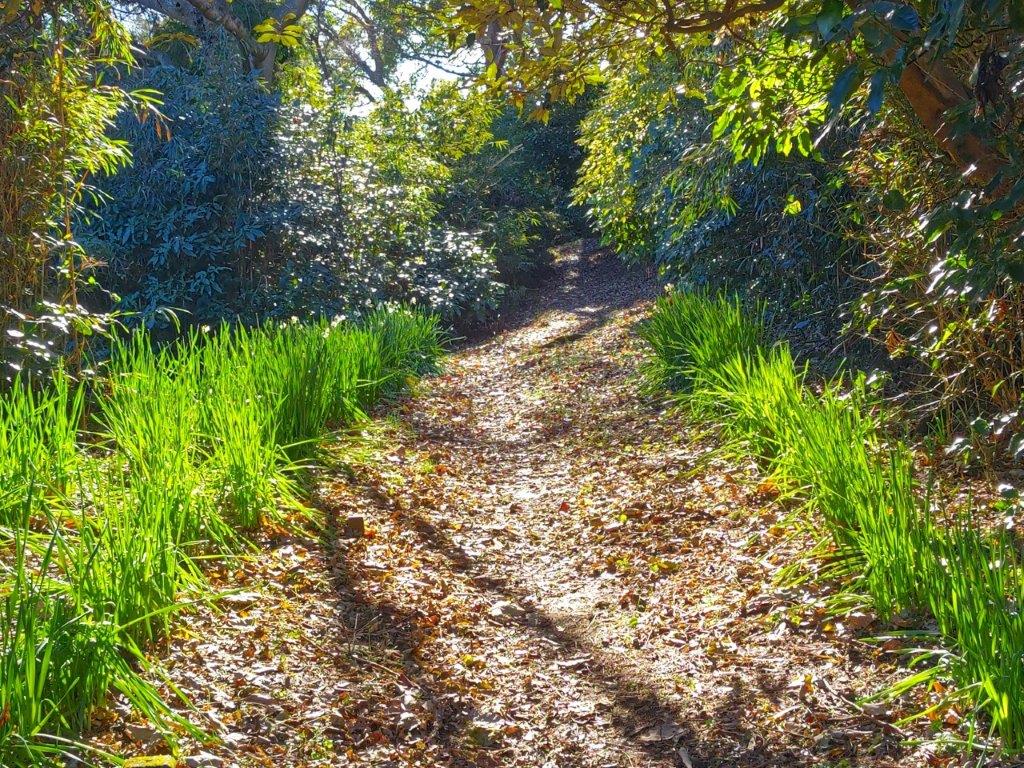
Heading back through the fields

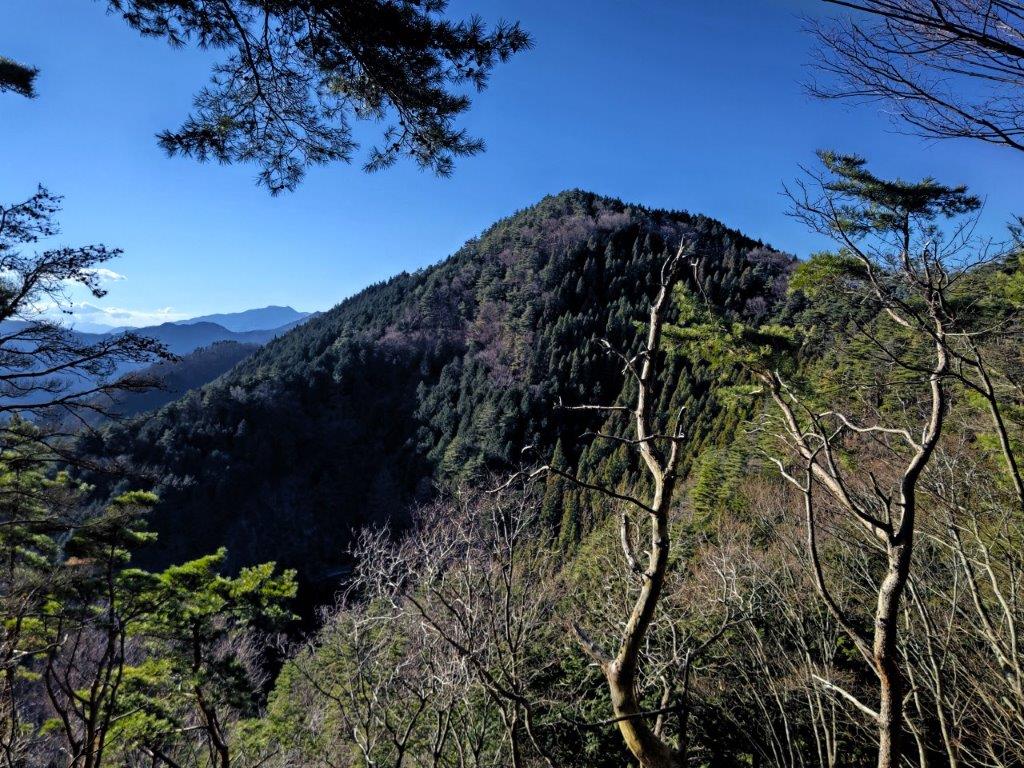
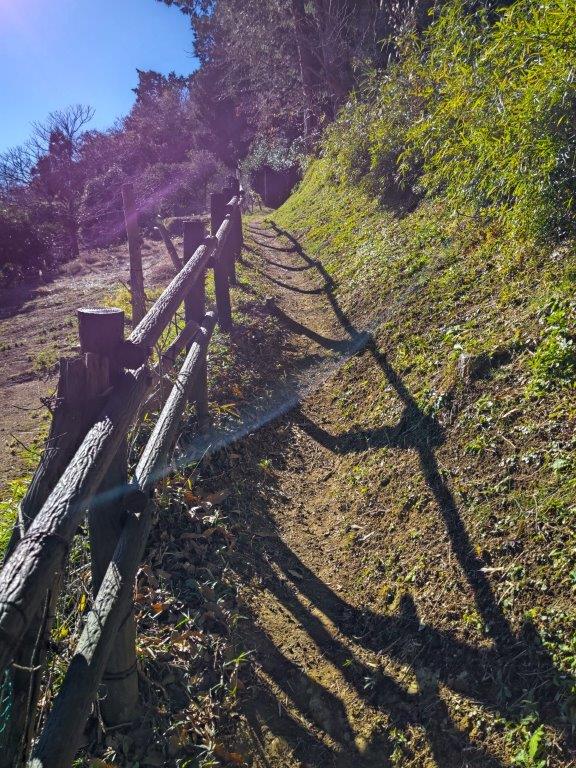
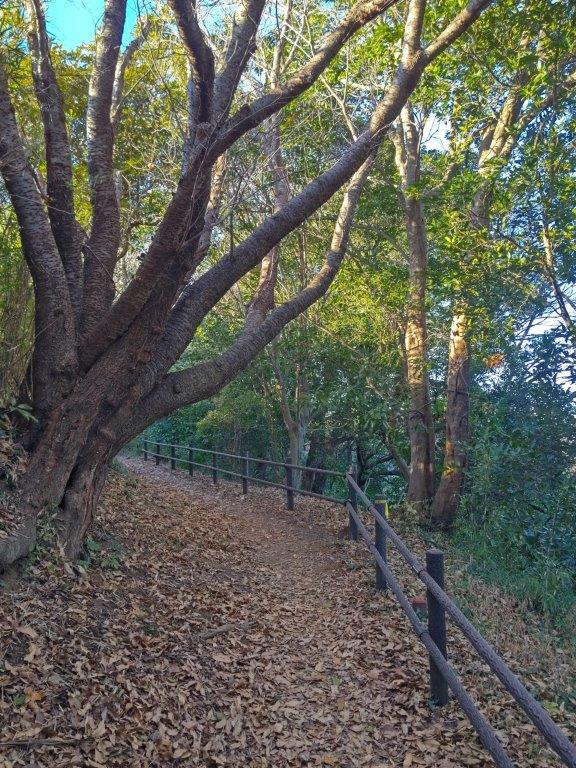
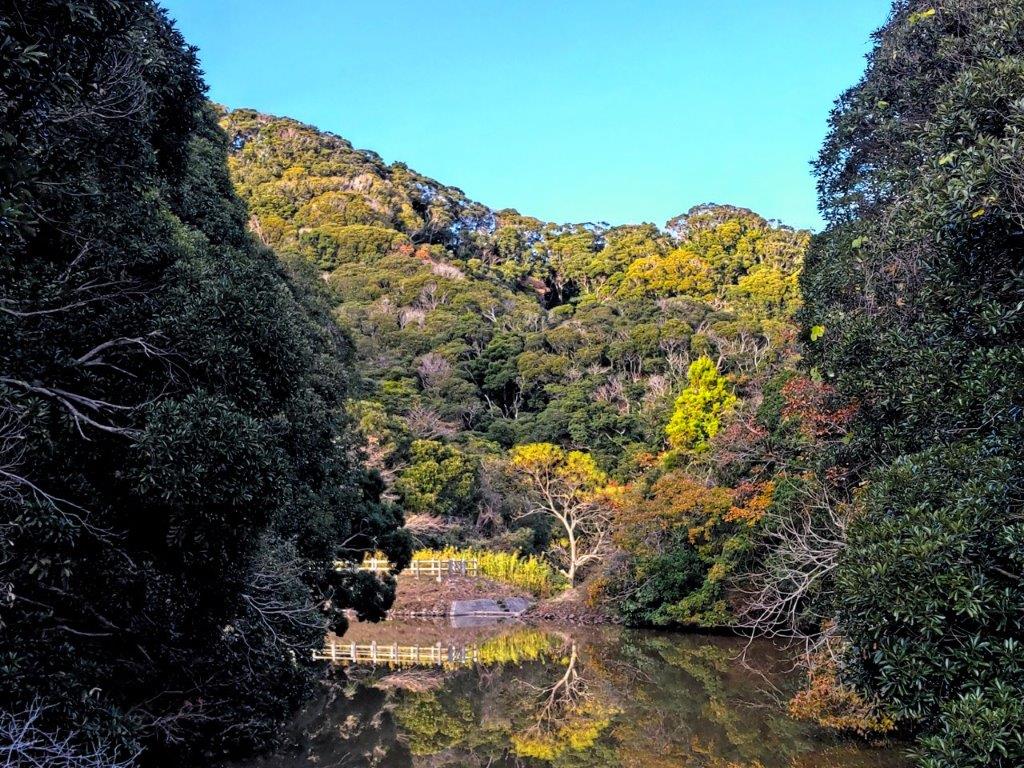
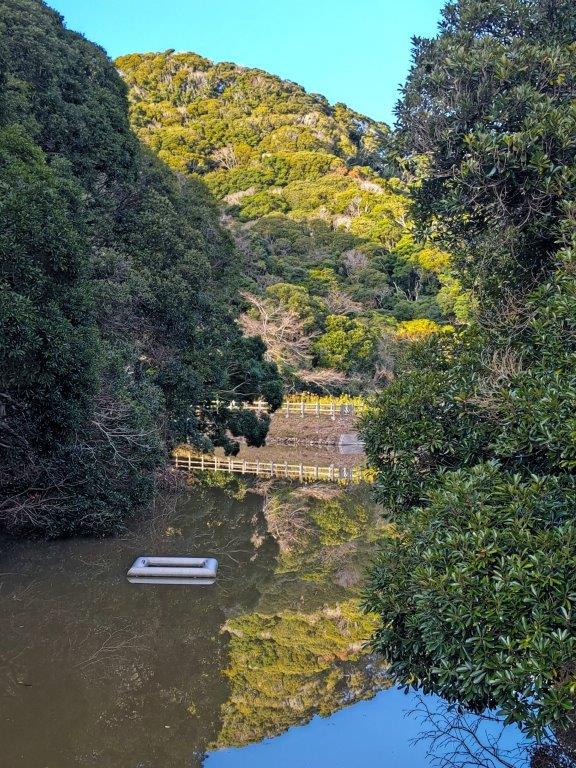
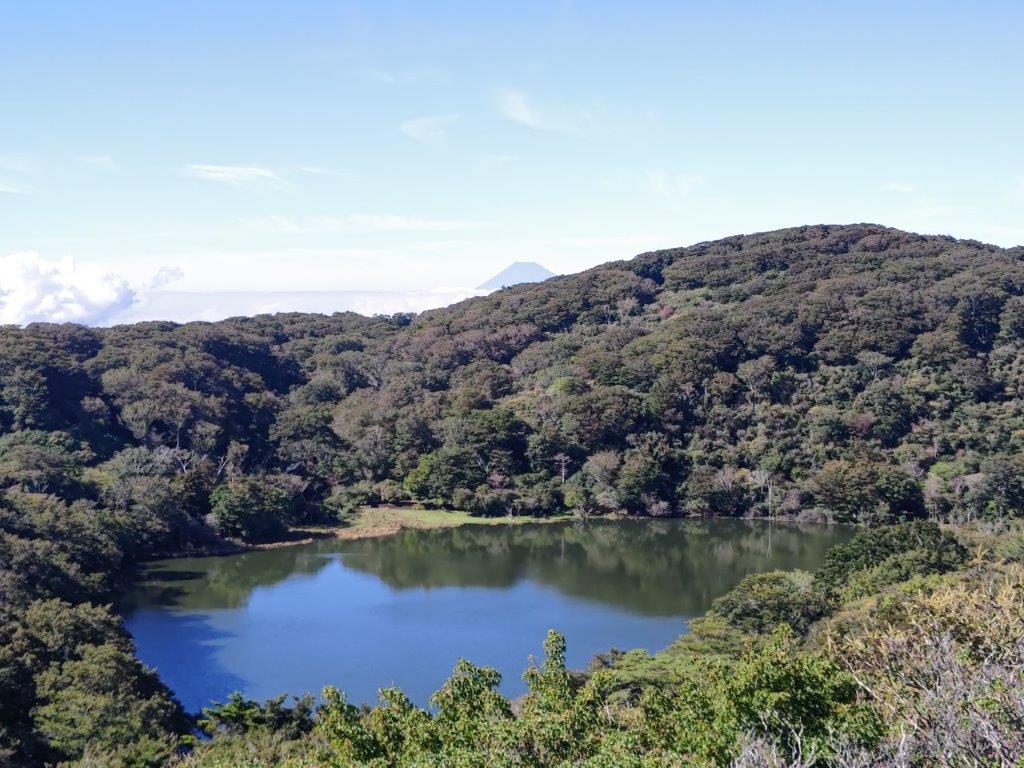
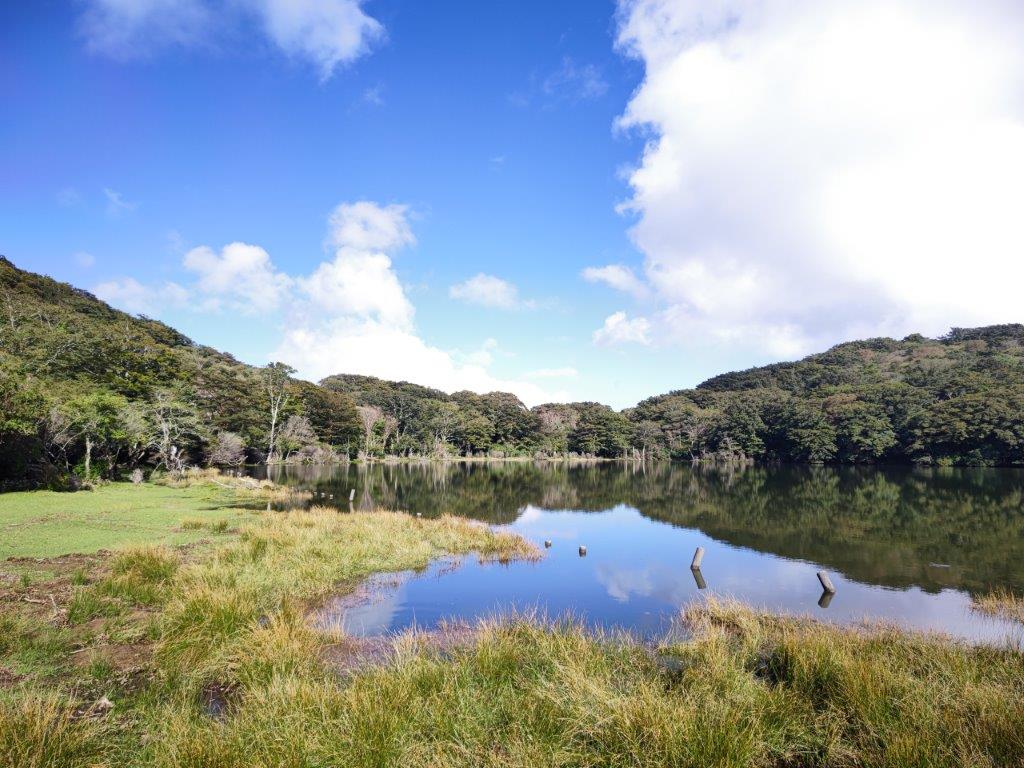
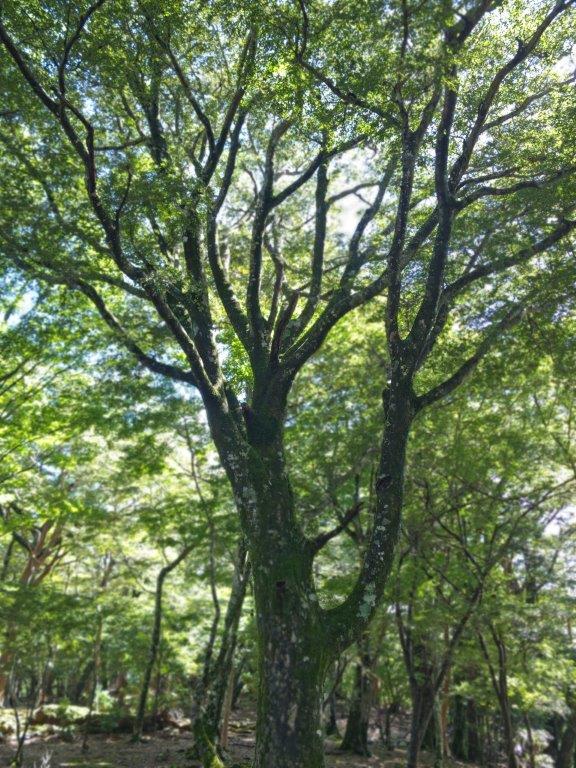
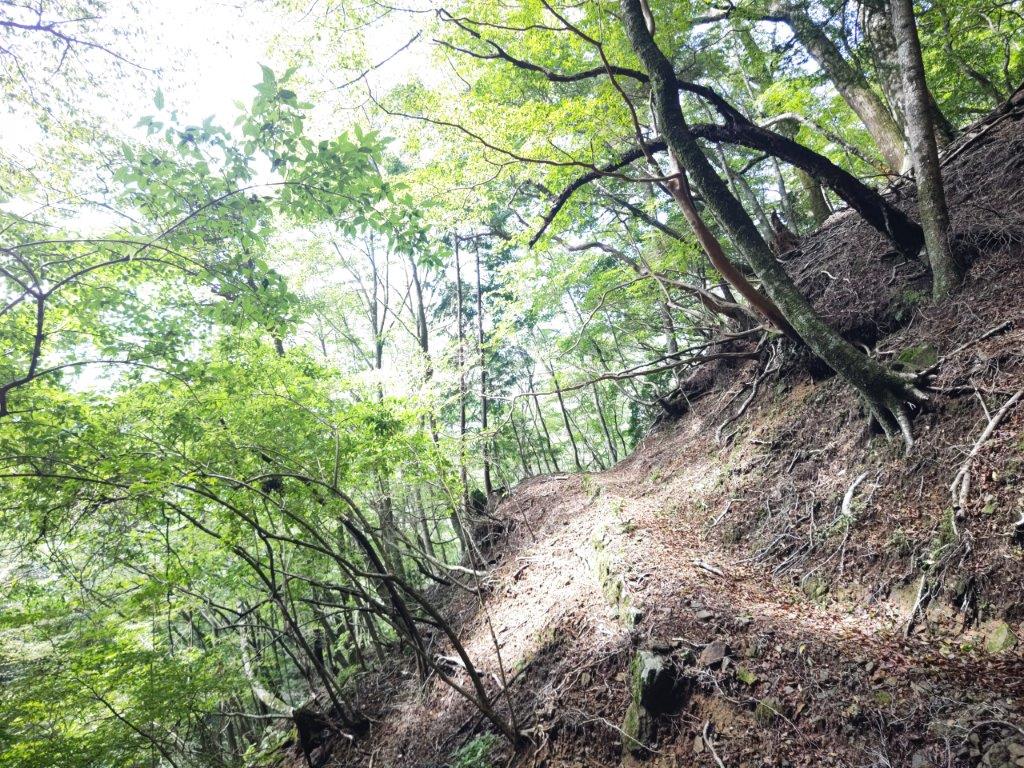
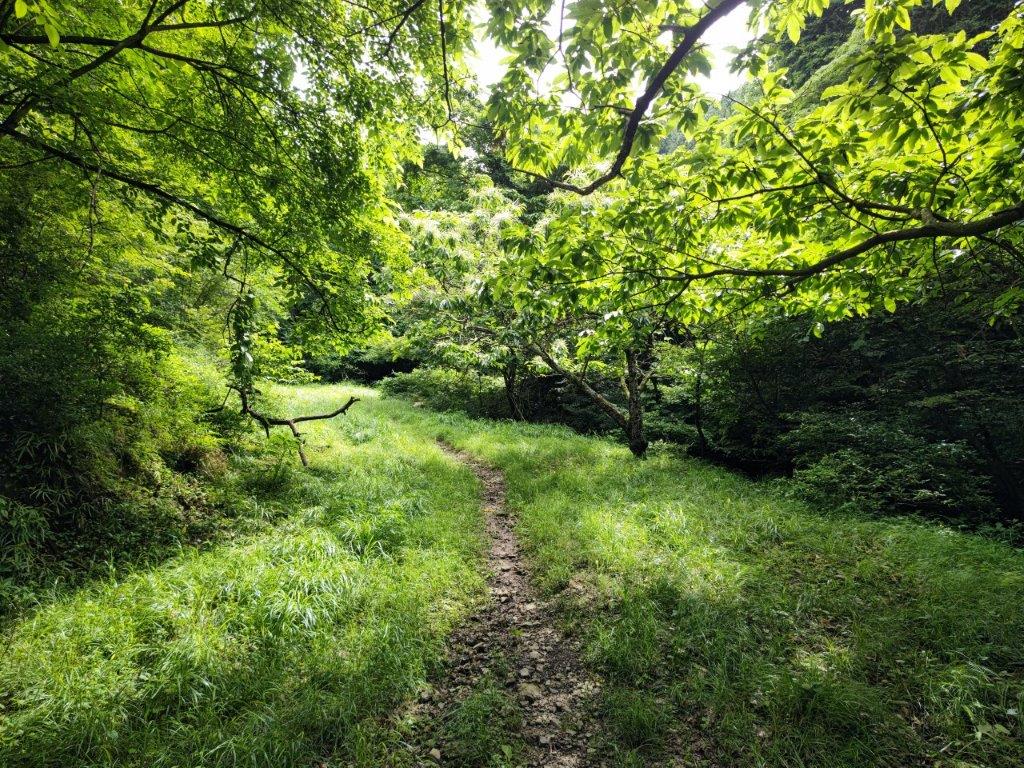
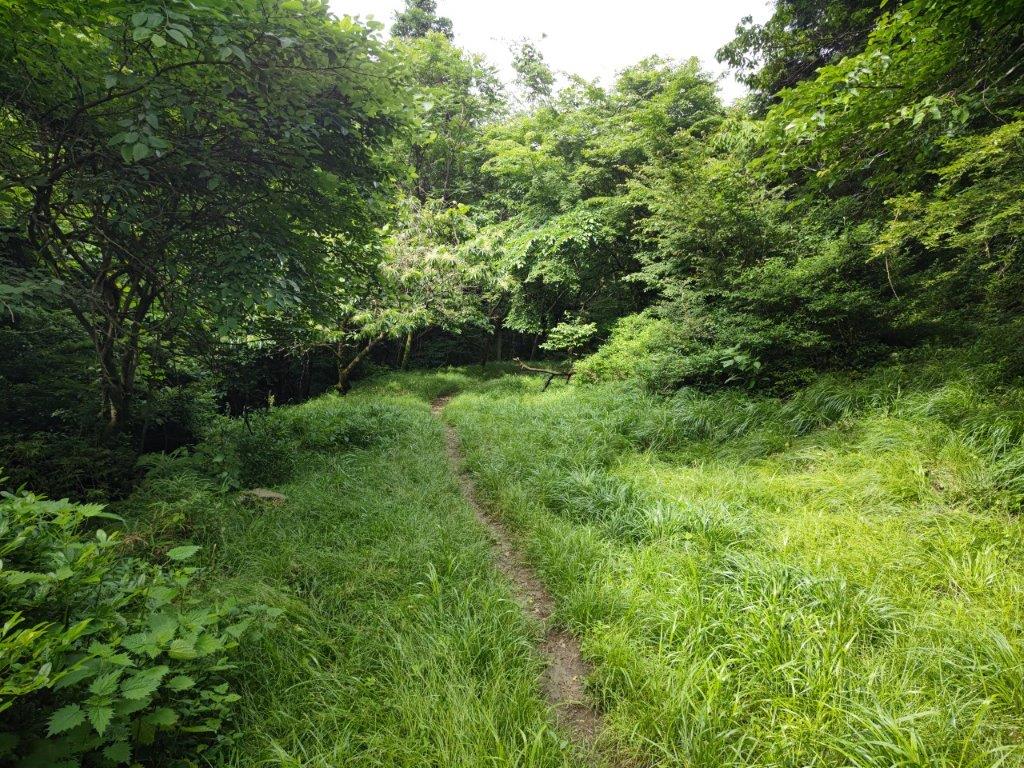
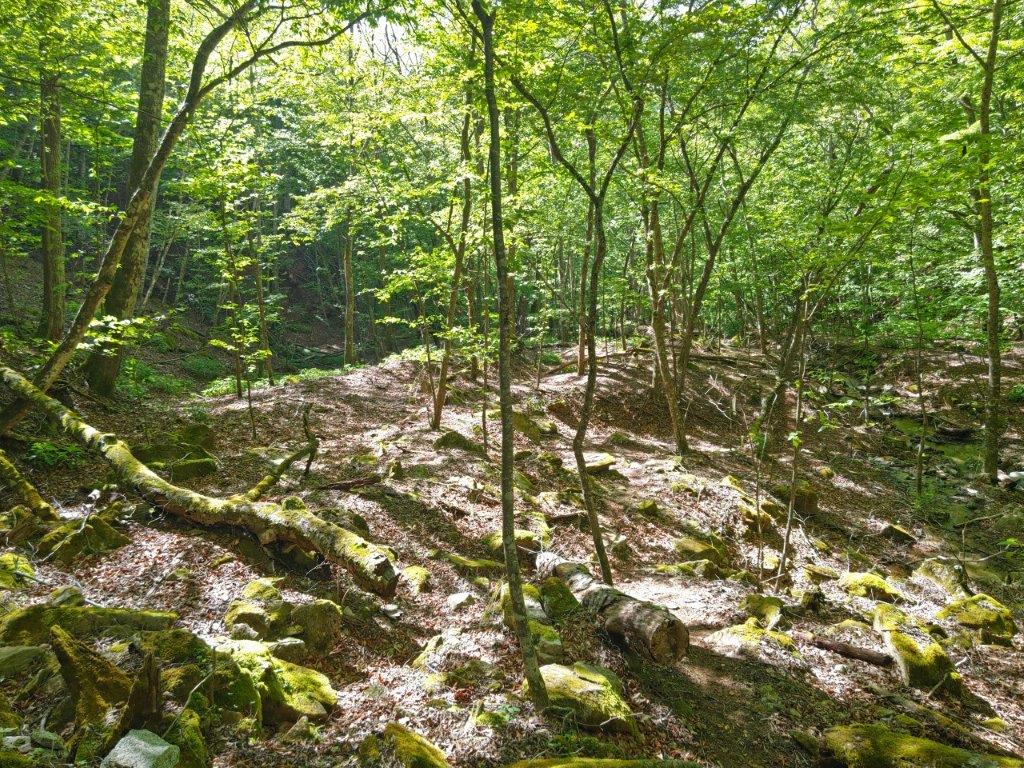
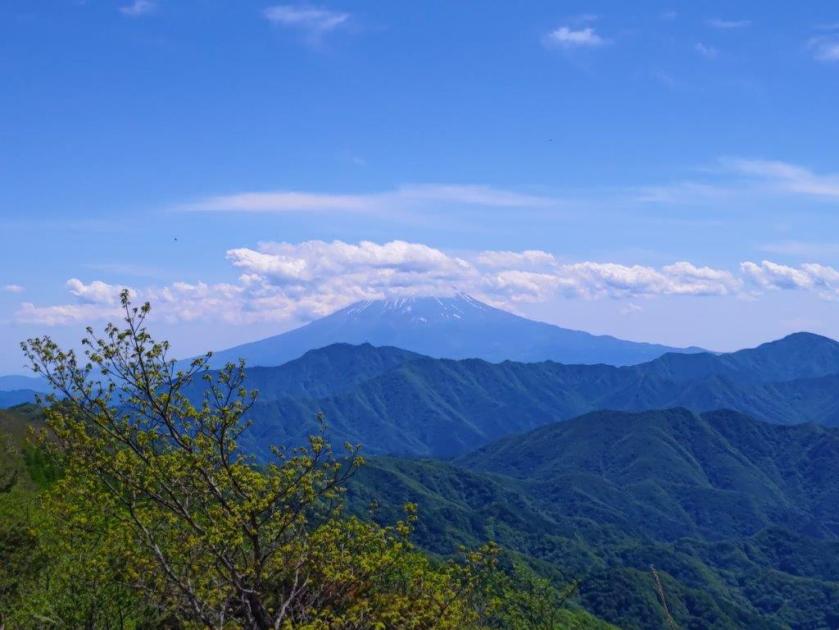
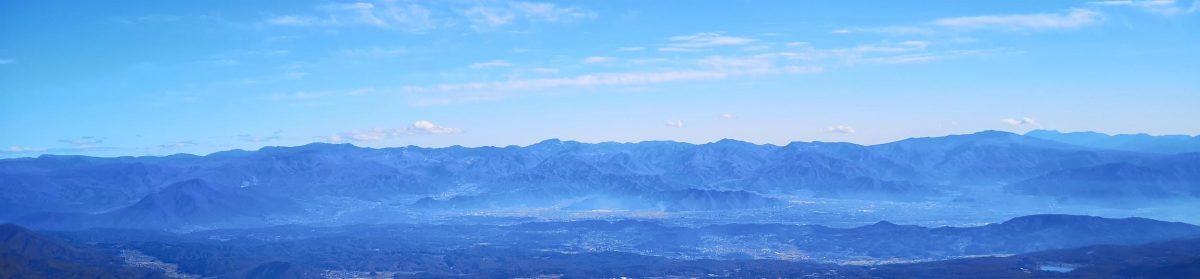
I marveled at the fantastic shapes of the tall trees as I followed the ridgeline northeast, here and there broken branches sill on the ground. The path descended gradually into a quiet, forested valley and ended at a peaceful lake, next to a paved road. After enjoying this magical spot, I walked down the road to the base of the mountain. From there, I followed a footpath through fields, golden in the late afternoon sun, past the starting point of the hike, and arrived back at my car just after 3pm.

See the views of the Mt Takatsuka hike

Slideshow of more photos from the Mt Takatsuka hike

Mt Naka (888m), Hokuto City, Yamanashi Prefecture, Sunday, December 4, 2022

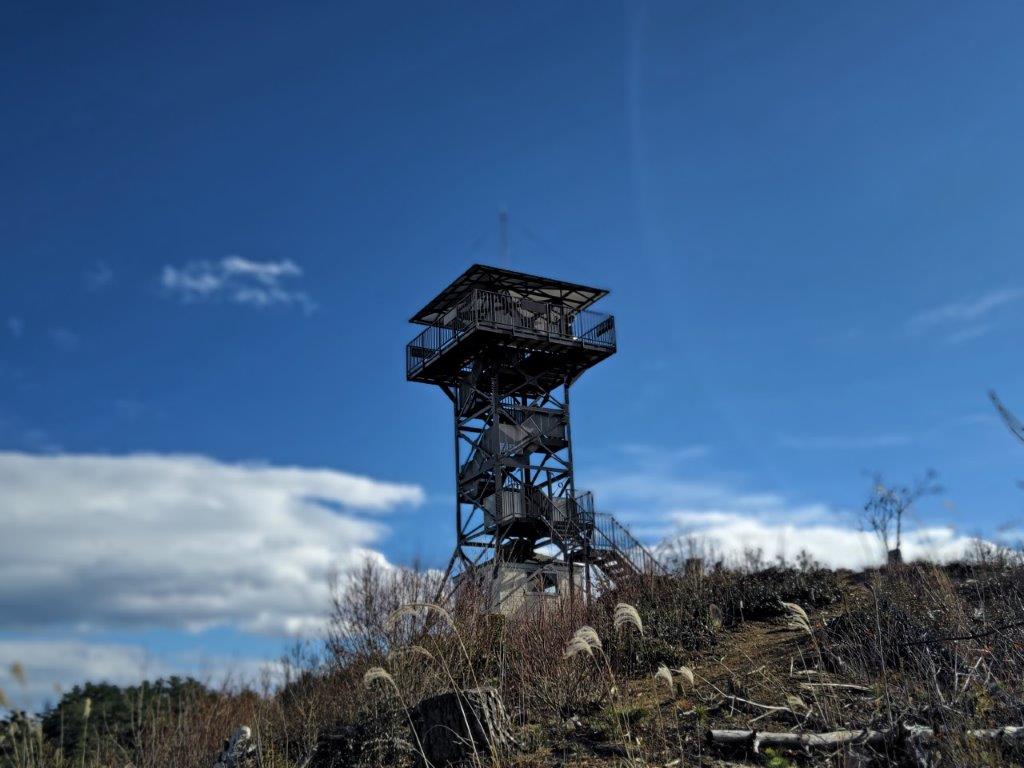
The observation tower at the top of Mt Naka

The summit of Mt Yatsu in the clouds

The starting point for this hike was a famous soba restaurant I had been meaning to visit for a while. Looking at my map, I found an easy loop hike nearby, ideal for the short, cold days of December: up and down a relatively low mountain, at the junction of two rivers, with an observation tower at the top. I was familiar with the area since I had hiked there twice before, once on Mt Amagoi and once on Mt Hinata. The forecast called for sun in the morning, with clouds rolling in from the afternoon; I was looking forward to the views of the mountains of Yamanashi before the weather went downhill.

A steep climb (left) Walking along the top ridge (right)

Walking among the pines

I rode the Chuo limited express to Kofu station and then drove an hour to Okina (翁), located in a hilly, wooded area, wild monkeys occasionally crossing the winding road. I arrived exactly at 11am, just ahead of the weekend lunch crowd. After a satisfying soba meal, I drove a short way to the free, and nearly empty, municipal parking lot of Dai-ga-harajuku (台ヶ原宿), an old post town on the Koshu Kaido Highway.

Dark clouds above the South Alps

Mt Kaikoma (left) and Mt Hinata and Mt Amagoi (right)

I set off a little after noon and followed a small road up the wooded mountainside, reaching Nakayama Pass (中山峠) just before 1pm. From there it was a steep, short climb up wooden log steps, the outline of the South Alps forming a dramatic backdrop. The path then followed the undulating ridge through a forest of red pines. At 1h30, I reached a clearing, in the middle of which stood the observation tower; although it was the highest point, the official summit was a little further along the ridge.

Looking down at the clearing at the base of the tower

A huge cloud perched on top of Mt Yatsu

From the tower, I was relieved to the see that most of the sky was still clear, although dark clouds had started to gather on the west side, giving Mt Kaikoma a menacing look. From its snow-freckled peak, a ridgeline extended northwards, ending at Mt Hinata, with Mt Amagoi lurking behind. On the north side was Mt Yatsugatake, with a huge cloud sitting on its head. To the east, the grey rocks of Mt Mizugaki and Mt Kinpu shone under the sun, while the twin peaks of Mt Kaya next to them were in the shade. Southwards, the white streaked cone of Mt Fuji was still clearly visible.

The mountains of Oku-Chichibu

Heading towards the official summit

Once I had finished enjoying the panoramic view, I continued along the top ridge, now heading eastwards, and 5 minutes later, arrived at the summit marker of Mt Naka (中山 なかやま nakayama, meaning “middle mountain”), completely in the trees. From there, the path descended through the forest, and half an hour later I reached a road at the base of the mountain. At 3pm, I was back at the parking lot. The clouds had finally filled the whole sky, throwing a gloomy chill on the afternoon.

Walking down through the forest

Nearing the end of a short hike

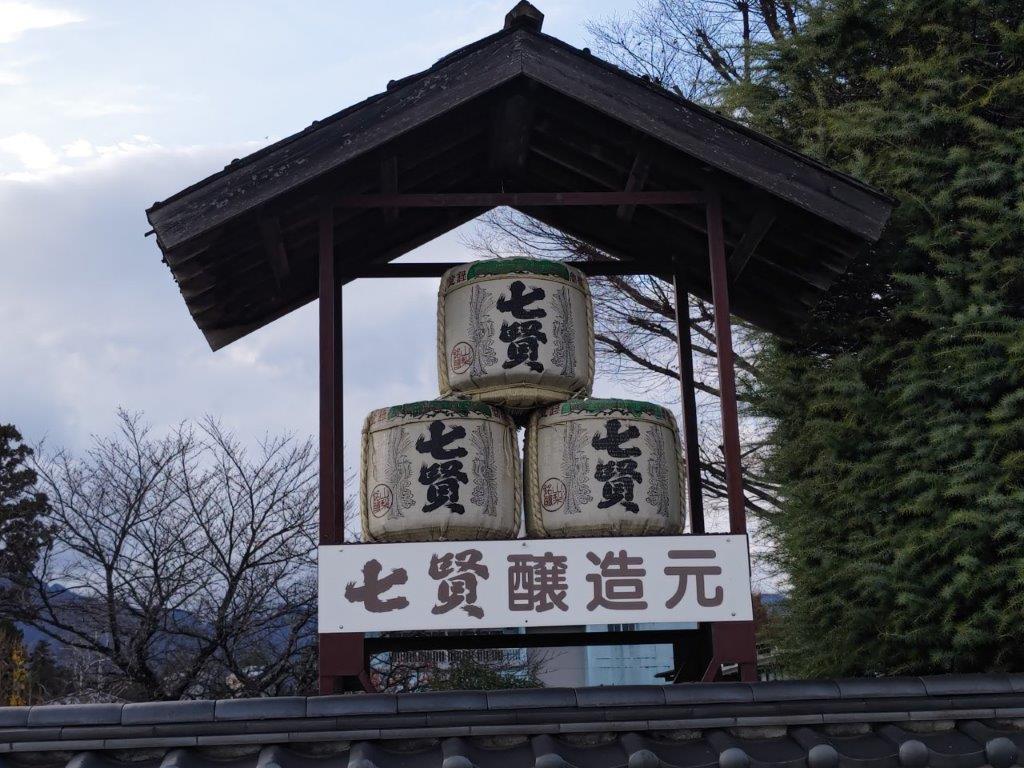
Since it was still early, I decided to check out the nearby Shichiken sake brewery shop. During the drive back, I enjoyed some fantastic views of Mt Fuji from the highway. After returning the car in Kofu, I boarded the limited express for the 90 minute ride back to Shinjuku.

See the views from the top of Mt Naka

Mt Odake (1267m), Okutama Town, Tokyo Prefecture, Saturday, November 19, 2022 [Mitakesan Station to Okutama Station]

Hiking in the Chichibu-Tama-Kai National Park

秩父多摩甲斐国立公園

I had hiked this mountain during my first year in Japan, following a route from my hiking in Japan Lonely Planet guidebook. Over the years, I had redone portions of it but not the peak itself. I had originally planned to do the entire route again last summer, but the weather never cooperated; this time, the forecast called for blue skies, little wind and pleasant autumn temperatures.

View towards the Kanto plain from Mitakedaira

I only had faint recollections of the hike, and no blog post, but since it’s a popular, well-trodden trail, I found plenty of information online to refresh my memory. One aspect I could recall was that it was long walk with some steep, rocky sections; fortunately, I was feeling relatively fit and nimble after 3 consecutive hikes.

Mt Nabewari, not part of today’s hiking route

I also knew it would be crowded, especially the first part around Mitake shrine. However, I wanted to go on the weekend to take advantage of the direct train from Shinjuku, a minor comfort to make up for the lack of limited express trains on the JR Ome line. I was looking forward to redoing a classic Tokyo hike inside the Chichibu-Tama-Kai National Park.

A 60-metre high cedar (left) Hiking in the sun past Okunoin (right)

It was a beautiful, slightly chilly autumn day as I rode the “Okutama Holiday Rapid” through western Tokyo. I had arrived early in Shinjuku to make sure I could sit during the 80-minute trip to Mitake, arriving there at 9am. I boarded a Nishitokyo bus for the short ride to the base of the Mitake Tozan Railway. I tried to be quick but could only get on the second bus, added to help with the weekend crowds. I had better luck on the cable car, ending up with a front view for the ascent.

View of Mt Gozen (foreground) and Mt Mito (background)

I had a wonderful view of the Kanto plain, past some fiery larches, from Mitakedaira (御岳山平) next to the Mitakesan top station. It was nearly 10h30, so I quickly moved on, skipping the many steps to the Mt Mitake summit, climbed twice before. I soon arrived at the Nagaodaira viewpoint (長尾平展望台), a couple of minutes off the main trail, from where I could observe the Akigawa river valley. By 11am, I was back on the main trail.

Mt Fuji, clearly visible from the summit

I continued along the wide, easy-to walk path, following the mountain side. I stopped briefly to gaze up at the 60-meter high “Tengu-no-koshikake” Cedar (天狗の腰掛け杉), and also glimpsed a “Kamoshika”, navigating the steep forested slope below. After Okunoin (奥の院), the path started to climb, merging with the ridgeline around 11h30. After some small ups and downs, I reached the start of the rocky section just before noon.

A steep descent aided by steps

I carefully navigated this section, using the fixed chains for support, occasionally waiting for people ahead of me. Past the rocks, I ducked under a Shinto gate, part of the Odake Shrine (大岳神社) and started up the steep summit climb. A little after noon, I was standing on top of Mt Odake (大岳山 おおだけさん oodakesan meaning big peak). From the top of this famous 200-mountain, I had a sweeping view of the Okutama and Tanzawa mountains, with Mt Fuji in the middle. After about an hour, I headed down the other side.

View of Mt Takanosu on the way down to Okutama town

I could enjoy the peace and quiet of the surrounding forest as I saw few people on the descent. The path alternated between level and steep sections, the latter made easier thanks to steps, chains and the occasional short ladder. A little after 2pm, I reached the top of Mt Nokogiriyama (鋸山), surrounded by the trees. An hour later, through a gap in the pines, I had a spectacular view of Mt Takanosu. After a short break, I resumed my descent, quickening my pace as I wanted to be down before dark.

The path alternated between level and steep sections

I was relieved when the path became easier to walk, descending rapidly through the dark forest. At 4pm, just as the sun was dipping below the mountains, I arrived at a small shrine on top of Mt Atago (愛宕山). I took a minute to admire the nearby five-story pagoda, before tackling the final stretch, consisting of a long, steep staircase. I carefully walked down the mossy, narrow steps in the gathering gloom. At 4h30 I emerged onto a road near a bridge across the Tama river. After walking to Okutama station a few minutes away, I hopped on the direct train for the 90-minute ride back to Shinjuku.

Autumn leaves and afternoon sun (left) A long, steep staircase (right)

See the autumn views along the Mt Odake hike

See a slideshow of some more pictures of the Mt Odake hike

Mt Kintoki (1212m), Minami-Ashigara City, Kanagawa Prefecture, Saturday, October 1st, 2022 [Yuhi Waterfall to Otome Pass route]

Hiking in the Fuji-Hakone-Izu National Park

富士箱根伊豆国立公園

I was looking for a hike close to Tokyo, high enough to escape the late summer heat and strenuous enough to maintain my regained form. I decided to revisit a mounatin I climbed ten years ago, which I could traverse north to south via a different route that would include a famous waterfall, as well as views of Mt Fuji. The trail up from Ashigara in Kanagawa, connected by local bus from Matsuda station, had been closed for a while due to typhoon damage; however looking online, it seemed to be in use again. I also saw that the final section was quite steep, a good test of my current physical ability. The trail down ended at a hot spring near Gotemba in Shizuoka, connected to the station by shuttle bus. The weather was supposed to be mostly sunny and warm, with few clouds and little wind, ideal conditions conditions for hiking. I was looking forward to climbing a familiar mountain via a new, challenging route and getting some good views of Mt Fuji in the autumn.

Mt Fuji before it got engulfed in the clouds

Yuhi waterfall, a famous purification spot

A cloudy cover still lingered in the early morning sky, as I rode the Odakyu Romance limited express train to Shin-Matsuda station. There, I boarded a full bus and rode it all the way to Jizodo (地蔵堂), the last stop. I had been there once before on my Yamabushi-daira hike. This time, I continued on foot along a small paved road up a pleasant, green valley. The sun was now shining above, and although it was only 9h30am, it already felt quite warm; despite that, the cosmos flowers were out, a sure sign of autumn.

A 23 meter drop (left) Climbing up the Ashigara Pass trail

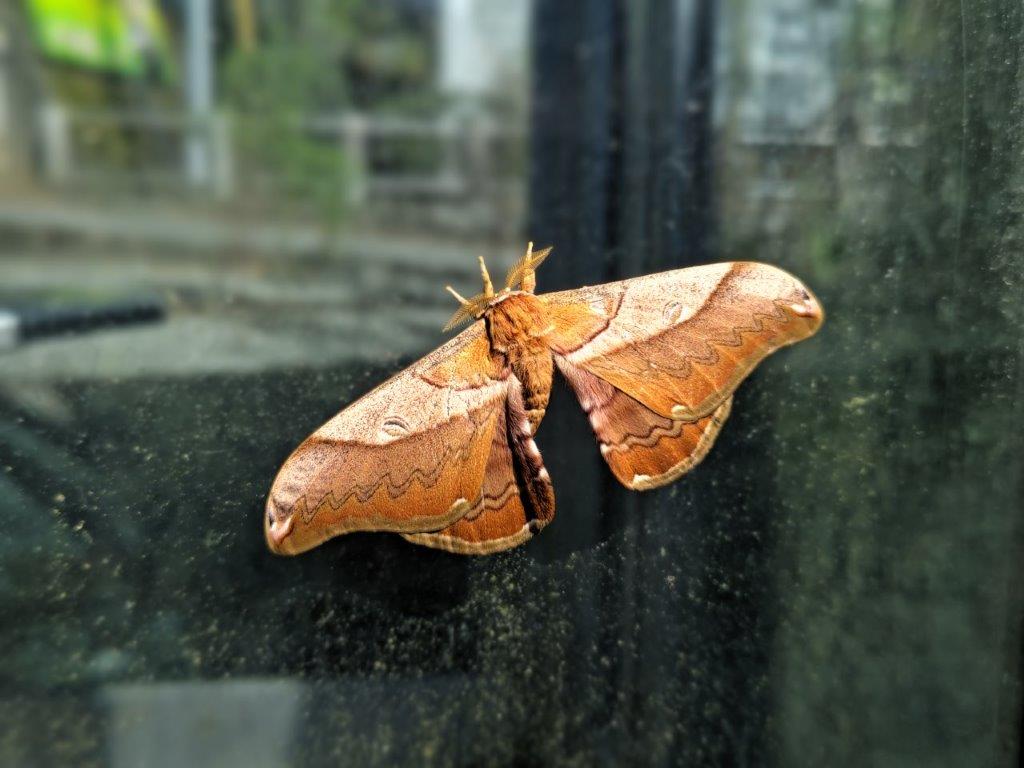
Moth spotted near the start of the hike

I was delighted to spot a beautiful yellow moth on a phone booth, possibly a Japanese silk moth. At 10am, I reached the entrance for the short trail to the waterfall, next to a campground. A few minutes later, I was standing in front of the thundering Yuhi waterfall (夕日の滝). The water falls from a height of 23 meters, and apparently it’s a popular place for people to stand under to get purified. At 10h30, I started up the Kintoki trail (金時コース), a gently climbing trail through cedars. After passing an open shelter, the trail went up a shady valley next to a mountain stream.

Easy hiking along the Ashigara Pass trail

The summit of Mt Kintoki, a tough climb via the north side

I was happy to be walking next to a river again, the rushing water like music to my ears. The rocky terrain made it difficult to see the path, but pink ribbons attached to branches, as well as the occasional signpost, led the way. At 11am, the trail left the river and went up a steep ridge. I met no one along this section, adding to the sense of peace and quiet. Half an hour later, after getting a glimpse of today’s summit through a gap in the trees, I reached a level dirt road, also the Ashigara Pass Trail (足柄峠コース). I turned left, and 3o minutes later, arrived at a viewpoint of Mt Fuji.

Mt Fuji slowly disappearing into the clouds

The western part of the Tanzawa mountains

I was lucky that the summit was free of clouds; just a few minutes later some clouds rolled in and refused to budge for the rest of the day. According to my map I was at the remains of the Inohara Fort (猪鼻砦跡 962m), a few stone blocks making a good place to sit and have an early lunch while enjoying the view. Directly ahead loomed the triangular-shaped summit of today’s mountain, looking steep and menacing. I soon set off again, the path now climbing straight up the mountain side, equipped with ropes and ladders for safety.

Lots of ladders to assist the hiker

Mt Hakone at the center of Hakone Volcano

I was surprised to find such a thrilling ascent so close to Tokyo; halfway up, the view through the trees to the northwest made me feel like I was hanging from a cliff. To the left, Mt Fuji was now completely in the clouds, to the right, I could see the green Tanzawa mountain range. I met several people on their way down, and had to find “passing spots” to let them by. At 1pm, I emerged onto the top of Mt Kintoki (金時山 きんときやま kintoki-yama). I had a fantastic view of the entire Hakone area; beyond the outer caldera, I could see Mt Ashitaka, Suruga bay, and a big cloud where Mt Fuji was supposed to be. As on my previous visit, the summit area was fairly crowded so I quickly moved on.

Viewpoint between Mt Kintoki and Mt Nagao

View of Mt Fuji and Gotemba city from Otome Pass

I made my way down a steep path through forest, counter-clockwise along the outer caldera rim, and now inside the Hakone part of the Fuji-Hakone-Izu National Park. Half an hour later, I passed the flat summit of Mt Nagao (長尾山 1150m), surrounded by trees. After some more descending I arrived at Otome Pass (乙女峠 1004m). From a small wooden observation platform, I could see the lower half of Mt Fuji and Gotemba city spread out around its base. At 3pm, I reached a bus stop next to Otome Tunnel; I hopped on the next bus and got off at the nearby Fuji Hakkei no Yu. After a relaxing hot spring bath, I took the shuttle bus to Gotemba station, where I boarded the Odakyu Fujisan limited express for the 100-minute trip back to Shinjuku.

See and hear the sounds and sights of the Yuhi waterfall and Mt Kintoki hike

Hatcho Pond (1170m), Izu City, Shizuoka Prefecture, Sunday, September 25, 2022 [Mt Amagi Hike]

Hiking in the Fuji-Hakone-Izu National Park

富士箱根伊豆国立公園

I wanted to use the Shinkansen for this hike, since a typhoon had dashed my silver week Tokyo Wide Pass plans. I decided to use the Tokaido shinkansen, not covered by the pass, to do a hike on Mt Amagi on the Izu peninsula. It had been five years since my last time there; it would also allow me to make a 4th consecutive visit to a National Park. Looking at my hiking map, I saw that I could hike up the west side to a lake and a viewpoint, and then return via a different path. I would ride the high speed train from Tokyo station to Mishima, and then transfer to the Izu-Hakone line which I would ride to Shuzenji; there, I could hop on a bus for Amagi Tunnel; I would return the same way. The typhoon had brought record rain to the area but online information showed no disruption to public transport; I hoped the trails would be intact as well, since the weather was supposed to be blue skies and warm temperatures. I was looking forward to a nice forest hike and a great view from its highest point.

Hatcho Pond from the observatory

Hatcho Pond on Mt Amagi

It was a beautiful day as I rode the shinkansen from Tokyo station. After arriving at Mishama station, I transferred to the nearly empty Izu-Hakone line; it was an exciting ride along a pretty river valley through green hills. I got off at Shuzenji, the end of the line, and boarded an equally empty bus, finally getting off at the Amagi Pass bus stop (天城峠 あまぎとうげ) just before 11am. I had been here before and so I was familiar with the short hike up to the pass, which I reached less than thirty minutes later.

First view of Mt Fuji

Trail leading to Amagi Pass (left) Beech tree along the trail (right)

I had my first glimpse of Mt Fuji soon after turning left onto a level trail hugging the mountain side. Very soon, the trail took a right turn and went up some logs steps taking me to the ridgeline. Here I found the pathlovely forest harder to follow; eventually it descended back to a level path following the mountain contour. I had another good view of Mt Fuji before reaching a swollen stream rushing down the mountain and cutting straight through the path. After hopping across, I soon arrived at a second ridge, leading to another level path, now heading north.

One of the more level sections of the hike

Looking towards the Aosuzudai viewpoint and the Pacific ocean

I reached a rushing stream interrupting the quiet of the forest. The path turned east and became hard to follow again; I was relieved each time I spotted a wooden signpost. A little after 1h30, I reached the entrance of the Nobori Gyoko trail (上り御幸歩道). Before heading to the viewpoint, I made a short detour to another viewpoint called Aosuzudai (青スズ台), from where I was able to see the ocean and Toshima island; the rest of the view was hidden by high bushes. I soon turned back and a little after 2pm, arrived at the Hatcho Pond observatory (八丁池見晴台) at the top of a metallic staircase.

Mt Amagi, a Japan hundred famous mountain

On the left, the path flooded by the lake

I had a fantastic 360° panoramic view of the center of Izu peninsula: directly below on the north side was Hatcho pond (八丁池) with Mt Fuji behind it; stretching eastwards was the gentle summit ridge of Mt Amagi, a Japan 100-famous mountain; looking south, I could see the Aosuzudai viewpoint and the Pacific ocean; westwards was Mt Chokuro, its summit in the clouds. I felt lucky that the sunny weather had continued the whole day with just a few cumulus clouds floating in from the ocean side. I had the observatory to myself, so I had a late lunch while admiring the views. Half an hour later, I descended to the lake shore.

Some clouds coming in from the south

A gentle descending trail through lovely a forest

I was surprised to see that the path around the lake was flooded. I managed to get to the other side by walking through the forest and reached the entrance of the Kudari Hatcho trail (下り八丁歩道), a little before 3pm. It descended gently through a stunning forest; I passed several huge beech trees, their branches twisting in fantastic shapes, and I could truly feel that I was walking within the Izu part of the Fuji-Hakone-Izu National Park. The path was hard to follow once again; I was relieved when I eventually got to a level wide path going straight through the forest. After merging with a forest road, the trail headed south, before arriving at a sunny junction at the edge of a cedar forest.

Walking through the Japanese beeches

A giant beech (left) towering cedars (right)

I enjoyed the change in the surrounding vegetation, as well as the extra sunlight filtering through the smaller cedar tree canopies. The path started to descend quickly and soon the sun was lost behind a ridgeline. A little past 4pm, the rocky trail suddenly merged with a small stream; I was glad I had good hiking boots. After about ten minutes of “river walking”, I emerged onto a paved road. From there, it was another half an hour to the Suishochi-shita bus stop (水生地下), which I reached ten minutes before my bus was due. After arriving at Shunzenji statiom, I had a quick hot bath at the nearby Hyakuwarai no yu hot spring before riding the Izu-Hakone line to Mishima station, where I transferred to the shinkansen for the 40-minute ride back to Tokyo.

See the views up and down Mt Amagi’s west side

Mt Futago (1804m), Gotemba City, Shizuoka Prefecture, Sunday, September 11, 2022 [Hiking on Mt Fuji]

Hiking in the Fuji-Hakone-Izu National Park

富士箱根伊豆国立公園

It had been 4 years since my last hike on Mt Fuji, so I thought it was time to visit again. As on my previous trips, instead of climbing to the summit, I wanted to combine several of the trails that crisscross the Shizuoka side of the mountain. This would allow me to do some moderate hiking, further helping me get back into shape, and immerse myself in nature again, since I would be inside the Fuji-Hakone-Izu National Park. I would get up extra early to catch the first Odakyu limited express of the day, the only one in the morning going all the way to Gotemba station. From there, I would take a Fujikyu bus to the Gotemba New 5th station, the lowest of the four trails up Mt Fuji. This time, I decided to do a loop hike, so I would travel back the same way. The weather was supposed to be sunny and even a little warm, perfect for a high-altitude ramble on the side of Japan’s most famous volcano. I was looking forward to getting some great views and enjoying the beautiful forest covering the lower half of Japan’s highest mountain.

Summit of Mt Fuji from the 5th station, clear of clouds and snow

Pleasant hiking at high altitude

Some clouds remained as I rode the early morning limited express to Gotemba, where I boarded a Fujikyu bus for the one-hour ride to the Gotemba New 5th station (1439m 御殿場口新五合目), getting there a little after 9am. By now, the clouds had vanished, and it was already felt quite warm under the sun. From the parking lot observation tower I enjoyed a wide view to the west of Gotemba city and the Tanzawa and Hakone mountains; turning around, I could also see cloud free summit of Mt Fuji, looking somewhat ordinary without its snowcap. At 9h30, I set off up the, now officially closed for the season, trail for the summit.

The Tanzawa mountains in Kanagawa

Yamanaka lake in Yamanashi

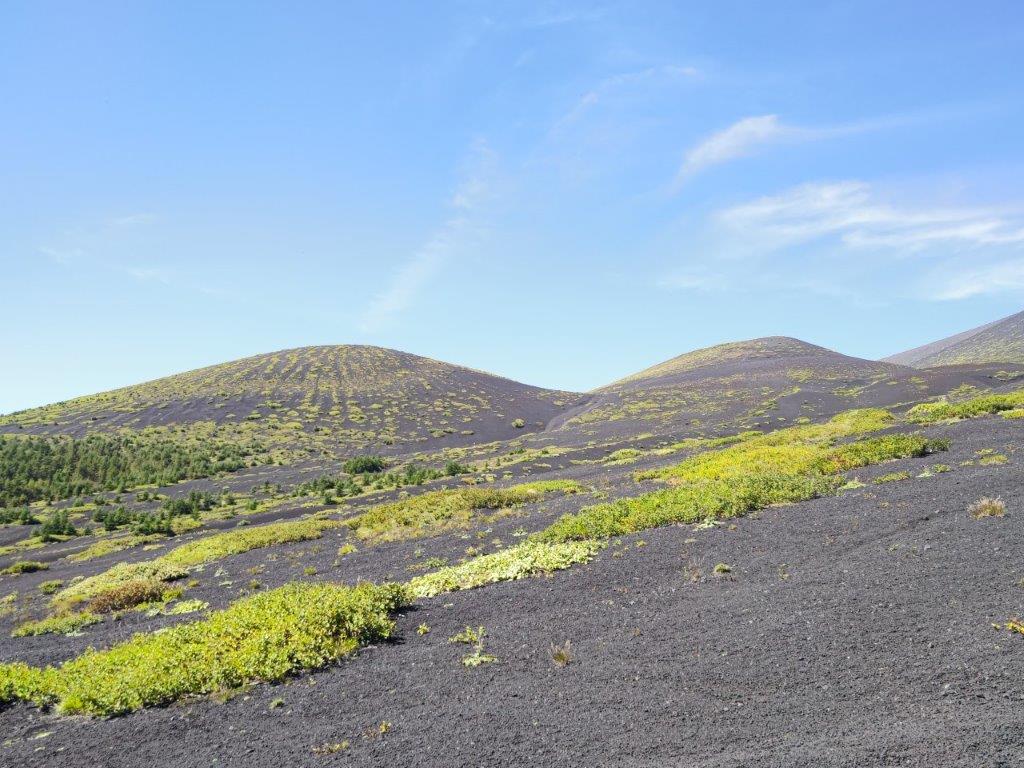
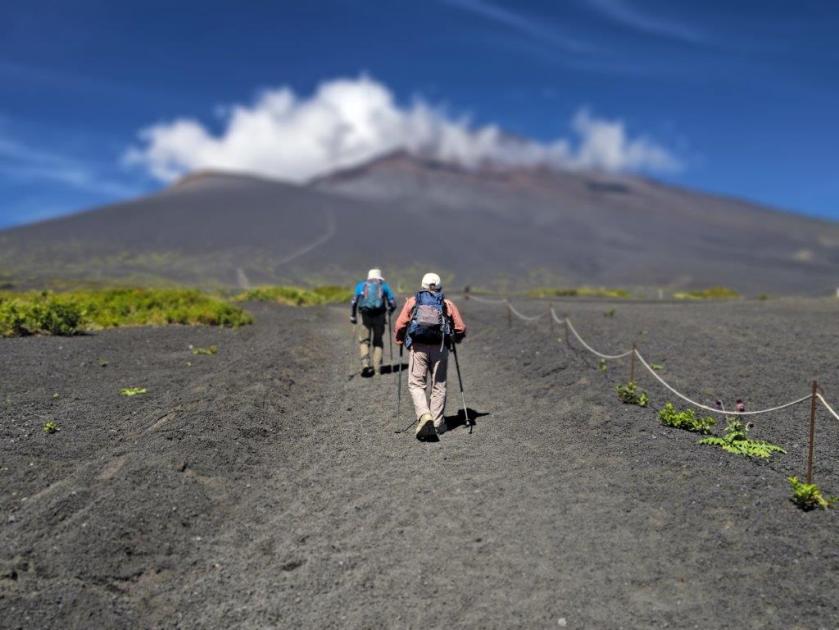
It seemed like a perfect day to climb to the top, which felt tantalizing close, even though it was 17oo meters higher. I quickly reached a junction at Oishi-Chaya (大石茶屋), where I took the left branch, heading towards a gap between two pimple-like mounds protruding from the volcano side. I slowly treaded up the sandy path, often stopping and turning to take in the soaring views; north, I could now see the light blue waters of Yamanaka lake, emerging from behind a light-green ridge. At 10h30, I reached the wide, flat top of Mt Futago (双子山 ふたごやま futago-yama, also called Futatsuzuka-Shitazuka 二ツ塚下塚).

The summit looks tantalizingly close

The twin mounds of Shitazuka (left) and Kamitsuka (right)

I was stunned by the majestic view, looking down at the surrounding area, which had been obscured by the clouds on my previous visit. South, I could now see Mt Ashitaka, and directly behind, the Izu peninsula and Tsuruga bay; the slightly higher Kamitsuka (上塚), and Mt Fuji, now with a cloudy headpiece, rose behind me. After a short break, I headed back to the main trail along a valley between the two mounds, and followed the “H route” of the Mt Fuji Natural Recreation Forest Trail (自然休養林歩道 “shizen kyuyorin hodo“), as it climbed gently through scattered pines, with impressive views of the rocky formations around Mt Hoei, as well as of Mt Ashitaka.

View of some of the rocky formations around Mt Hoei

View of the Ashitaka volcano mountain range

It felt amazing to walk this mostly level, panoramic trail at an altitude of nearly 2000 meters. A little before noon, I arrived at the entrance of Goten Garden (御殿庭入口). From this point, the feel of the hike became completely different, as I made me way through a dense mixed forest, on a narrow and faint path. However, this section was equally enjoyable, as the midday sun amplified the various shades of green, from the dark green of the pine needles to the light green blades of the grassy forest floor. I soon arrived at a junction at the base of Goten garden (1977m 御殿庭下). I found a fallen tree in a sunny clearing, and sat down for an early lunch.

The low mountains of Izu disappearing into the haze

It was easy to forget I was hiking on Mt Fuji

It was hard to believe I was more than halfway up Japan’s highest mountain, as I was completely surrounded by trees; it was also eerily quiet, except for the background hum of insects. At 12h30, I headed down the steep Suyamaguchi hiking trail (須山口登山道), also the “D route” of the Nature Recreation Forest Trail. As the altitude dropped, I got to enjoy the change in the surrounding nature, from a thick, impenetrable pine forest, to a roomy, shady birch forest. After nearly an hour of descending, I reached another junction at about 1600m, where I turned left, along the “E route”, heading back to my starting point.

Looking back at the trail hiked so far from the entrance of Goten Niwa

A mix of dense pine (left) and spacious birch (right) forests

I was once again walking along a pleasant and mostly level trail, although this time, the views were hidden by the towering birches. I slowed my pace and admired the beautiful nature of the Fuji part of the Fuji-Hakone-Izu National Park, better known for the volcano view, rather than the ancient forests covering its lower slopes. At 2pm, I reached Maku Rock (幕岩 “makuiwa“), a lava formation created by the Mt Hoei eruption 300 years ago. From there, it took less than an hour along the ” I route” to get back to the Gotemba New 5th station, completing the loop hike in five hours and a half.

Sunny, grassy path lower down the mountain

A relaxing trail near the end the hike

I was glad I had chosen to revisit the area on a clear day: although the the top of Mt Fuji was shrouded in clouds for most of the day, I enjoyed great views in other directions; I also got a decent workout thanks to the moderate climb from the 5th station to Goten Garden. After a short wait, I caught the bus for Gotemba station; even though the bus was full, I had seen few people on the route I had chosen. Back in Gotemba, I made a quick visit to Ninjinyu public bath (人参湯) to wash off the sweat, before boarding the limited express train for the 90-minute comfortable ride to Shinjuku.

See the views from halfway up Japan’s highest volcano

Kanhashu Viewpoint (771m), Hanno City, Saitama Prefecture, Monday, June 13, 2022

I wanted to do a half-day hike near Tokyo to escape the early summer heat and humidity. Poor weather had prevented me from going as planned on the weekend but fortunately, an opportunity presented itself to go the Monday right after. I decided to visit a viewpoint in Oku-Musashi, which I had last visited about ten years ago. I could take the limited express “Laview” train to Nishi-Agano station; it made a special stop there during spring and autumn. After reaching the highest point, I could descend via a different trail to “Kyuka Mura”, where I could enjoy a hot spring bath; day trippers were only allowed on weekdays, so it was a good chance to drop by. Afterwards, I could use their free shuttle bus to get to Agano station on the Seibu-Chichibu line. The weather was supposed to be cloudy and cool in the early morning, turning sunny and warm in the mid-morning. I hoped that I could reach the top before it got too hot, and was looking forward to revisiting a favorite spot after several years.

Good visibility from the Kanhashu Viewpoint

Looking East towards the Kanto Plain

I was slightly disappointed to see that the sky was still completely overcast after arriving at the tiny Nishi-Agano station around 8h30. I walked a short way along the road to the trail entrance and surprised a black and white cat sitting in the tall grass nearby; it escaped into the forest before I could say “hi”. I followed the wide path, labeled as the “Panorama Route” on my map, up a green valley alongside a tiny brook.

An easy path to start the hike with

Although it was called the Panorama route, there were few views

At 9am, I reached an open space offering a view of the forested valley and neighbouring hills. The path narrowed and after a couple of switchbacks up a shoulder of the mountain side, entered the forest and started to climb more steeply; half an hour later, it merged with another path coming from the left and became level. I found this part of the hike very pleasant, as sunshine was now filtering through the trees and the birds had started to sing.

Mt Fuji, barely visible from Takayama

Out of the forest and through the flowers

At 10am, I reached a road with a viewpoint and was excited to spot Mt Fuji in the distance. After admiring its still snowy cap, I picked up the next part of the path less than a hundred meters away, opposite a signpost for Takayama (高山), a place I would return to later; I was now on the well-trodden Kanto Fureai no Michi. After crossing the road a second time, the trail finally emerged from the forest and passed through some Kalmia bushes (カルミア) covered in white flowers.

View south towards Okutama, and lost in the clouds, Tanzawa

The Musashi hills fading into Musashi

I hoped this was the last climb of the day as the sun was shining directly above and it was starting to feel quite warm. At 10h30, I was relieved to reach the Kanhashu viewpoint (関八州見晴台 かんはっしゅうみはらしだい kanhasshuu-miharashidai), which translates as the Kanto 8 provinces lookout and refers to its historical role. There was an open shelter and a number of trees providing some welcome shade. I took a break on a bench to enjoy the view and a late breakfast.

A better view of Mt Fuji from the highest point of the hike

One of the few paths with a view in Oku-Musashi

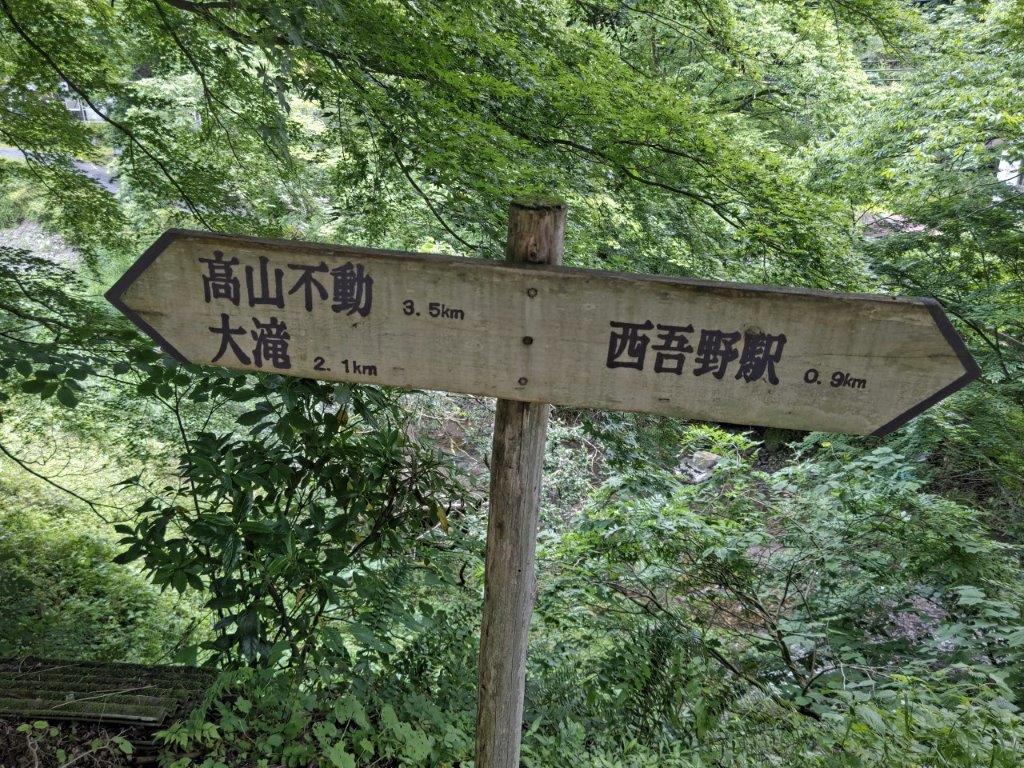
The view was better than I had remembered: to the west, the Oku-musashi hills melted into the Kanto plain; to the south, they merged with the Okutama mountains; Mt Fuji was visible behind the long flat summit of Mt Bonomine; closer by were the Hanno Alps on the other side of the Agano valley; supposedly, Mt Akagi and the peaks of Oku-Nikko could be seen on the north side, but today they were lost in the haze. At 11h30, I made my way back to Takayama and Takayama-Fudoson Temple (高山不動尊), just off the main road.

View of Oku-Musashi between Takayama and the Takayama-Fudoson Temple

The main building of Takayama-Fudoson Temple

I was astounded to see such a magnificent structure in the middle of the forest; it’s these kind of moments that make hiking in Japan so rewarding. I returned to the road and soon rejoined the hiking trail again, leading back into the forest. After a few minutes, I reached a junction where I turned right. The path was pleasantly level for a while, but then proceeded to rush straight down the mountain, ending at a lovely stream.

A glimpse of “Holiday Village” (on the left)

Crossing the Koma river

After crossing a rickety bridge, I emerged into a narrow, sunny valley at around 12h30. I noticed a small house on the right, meaning I was getting near the end of today’s walk. However, it took another half hour of small ups and downs, a couple more bridges and road crossings, to finally arrive at Kyuka Mura Hot Spring (休暇村 meaning Holiday Village), nestled in a bend of the Koma river. After an enjoyable hot bath, I hopped on the shuttle bus for Agano, where I boarded the local line to Hanno and then transferred to the limited express for the forty-minute ride back to Tokyo.

See the views from the Kanhashu viewpoint (in 4K)

Mt Okuratakamaru (1781m) & Mt Hamaiba (1752m), Otsuki and Koshu Cities, Yamanashi Prefecture, Saturday, May 28, 2022 [with 4K video]

I was looking for a relatively easy hike above 1500 meters ending at a hot spring, conditions dictated by the increasingly warm weather. I had walked most of the long ridge extending south from Daibosatsurei, but on examining my hiking map, I found a short, unexplored section. As an added bonus, it included one of the 12 beautiful Mt Fuji views of Otsuki. I could reach the start of the trail by taking the Chuo line to Kai-Yamato station and then a bus to Tenmoku hot spring; I could return to my starting point via a different trail further to the south. The weather was supposed to be sunny, warm and relatively dry. I was looking forward to enjoying the fine spring weather before the start of the rainy season, as well as getting a good view of Mt Fuji.

View of Mt Fuji near Mt Hamaiba

A ridge trail with plenty of views of Mt Fuji

It was a beautiful day as I rode the fully booked limited express to Otsuki where I changed to the local line for Kai-Yamato station. There, I squeezed onto an equally full bus for the ten-minute ride to Yamato Tenmoku Onsen; I was the only person to get off, the other passengers probably headed for the Daibosatsurei trailhead. I used a bench in front of the hot spring to get ready, and, at 10h30, set off along a narrow paved road through a green forest. One hour later, I reached the start of the trail for Yunosawa Pass (湯の沢峠).

Start of the trail for Yunosawa Pass

Looking back at Mt Kuro, further north along the ridge

I was soon heading up one of the most beautiful river valleys I had ever walked, made especially beautiful by the sunshine filtering through the new green of spring; few hikers, several river crossings and some fallen trees along the path made it quite adventurous as well. I could hear the croaking of toads, hiding under the mud, and the song of birds, hiding in the trees. A little before 1pm, I reached Yunosawa Pass, which had a parking area and a restroom. At a T-junction, I took the right branch and soon reached a grassy ridgeline.

Looking forward towards Mt Okuratakamaru

Getting close to the summit

I had a great view of the snowy peaks of the South Alps, from Mt Kaikoma to Mt Hijiri. It was a short, relaxing stroll to Mt Okuratakamaru (大蔵高丸 おおくらたかまる ootakumaru), also a 100 famous mountain of Kanto and Yamanashi; the name uses “maru” meaning round, instead of “yama“, and indeed, the summit was round and almost featureless. However, as promised, it had a stunning view of Mt Fuji, its crater rim still snowy white. I also had a view of the South Alps, and the Chuo line valley on the opposite side. It was 1h30, so I found a place to sit down for lunch; half an hour later, I continued on my way.

Mt Fuji still had its snowy cap

View southeast towards the Chuo line

The trail was easy to hike and easy to follow; I had excellent views in all directions. Huge cumulus clouds passed overhead and made me worry slightly about a sudden downpour. At 2h30, I reached Mt Hamaiba (ハマイバ丸 はまいばまる hamaibamaru), another “round” summit. Although this summit was mostly in the trees, Mt Fuji could be seen through a gap on the south side. After admiring Japan’s most famous mountain, I set off again. The path started to descend, and one hour later, reached Komeshoi Pass (米背負峠). There, I turned right, down another river valley.

Heading down from Komeshoi pass

The road back to Tenmoku onsen

This valley was just as beautiful as the one I had ascended, the rushing water sparkling under the mid-afternoon sun. At 4pm, I emerged onto a road, which I followed off the mountain; the road twisted and turned, giving me good views of the green hills of Yamanashi. After passing through a dark tunnel, I reached the main road, and at 5pm, I was back at Tenmoku Onsen. After a refreshing bath, I caught the bus for Kai-Yamato station, then boarded the train for Otsuki, and finally switched to the limited express for the one hour comfortable ride back to Shinjuku.

See the river and Fuji views on the Mt Okuratakamaru hike in 4K

Mt Meshimori (1643m), Minamimaki Village, Nagano Prefecture, Wednesday, May 4, 2022

For my second trip using the Tokyo Wide Pass, I chose another relatively easy mountain opposite Yatsugatake and about fifty kilometers south of the previous hike. I would travel to Kobuchizawa using the Chuo limited express, change to the Koumi line for Nobeyama, and finally hop on a bus for Shishi Rock, just opposite the trail entrance. After reaching the summit, I would descend via a different trail to Kiyosato, one station before Nobeyama. The sunny May weather was supposed to hold one more day, with slightly warmer temperatures. I was looking forward to visiting Kiyosato again, and seeing Yatsugatake from a new angle and in a different season.

Yatsugatake still topped in white in the middle of spring

The conical top of Mt Meshimori

I arrived at Kobuchizawa shortly before 10am on a perfect, blue-sky day, and boarded the highest train line in Japan for the 45 minutes ride to the highest train station in Japan, Nobeyama (1345m). It was my first time there and the wide open fields surrounding it gave the impression of being on a high plateau. I had planned to get some extra food from a 7\11 near the station, the highest convenience store in Japan, but the free loop bus was leaving in a few minutes, and I decided to get on rather than wait for the next one.

View of Yatsugatake from Shishi Rock

The South Alps also visible from Shishi Rock

I has some a great side view of Yatsugatake during the ten-minute ride to Hirasawa pass (平沢峠); although the surrounding countryside was bright green, the higher reaches of this ancient volcano were still of a brilliant white. Before starting my hike, I checked out the rocky formation of Shishi-iwa (しし岩 meaning lion rock); standing on the highest rock, I could see the Minami Alps to the south. After a short climb, I passed the flat summit of Mt Hirasawa (平沢山 1653m), from where it was a mostly an easy, level walk to a trail junction. I went left and after a short climb, arrived at the exposed and windy peak of Mt Hiramori (平盛山 1643m).

Near the Mt Hiramori (left) and Mt Meshimori (right) junction

The rounded summit of Mt Hiramori

Looking south, I could see the conical shape of today’s mountain, miniature people walking up and down the steps on the western side: it seemed almost man-made and reminded me of the “Lion’s Mound” in Belgium. To the east, I could see the highest peaks of Oku-Chichibu, Mt Kinpu, and Mt Miuzugaki with its blue-grey cliffs. After a short break, I set off again, and a few minutes later, arrived at the top of Mt Meshimori (飯盛山 めしもりやま meshimori-yama), just after 1pm. Its name could be translated as “a pile of food” which only made me hungrier, since I hadn’t packed a lunch today.

View of Yatsugatake from near the top of Mt Meshimori

View of the highest peaks of Oku-Chichibu

After enjoying the panoramic view, which included a faintly visible Mt Fuji, I headed down the western side; surrounded by pine trees and facing a view of the Alps on the left and Yatsugatake on the right, I almost felt like I was hiking in the Swiss Alps. At 1h30, I arrived at an intersection with a forest road near an open shelter. Here, I was delighted to see some cherry blossoms near full bloom, since I had thought I had already seen the last ones of the season. I continued down the path through green forest and soon arrived at a road outside a village. Beyond, the road descended into a river valley and then up the other side.

Walking towards Kiyosato

Walking through the new green of spring

It was only 2pm when I arrived at Kiyosato so, I hopped on another loop bus (this one had a flat fee) for Sun Meadows, where I got on a chairlift for Kiyosato Terrace (1906m), a viewpoint halfway up Mt Yatsugatake. Like the day before, I got to observe the mountain where I had been just two hours earlier. A ton of people were lining up for the return trip, so I opted to walk down to Utsukushi Mori (美し森 meaning beautiful forest). It was a peaceful walk, on a path little used this time of the year. I passed the lonely Hagoromo Pond (羽衣池 1610m) before arriving at a viewpoint on Mt Utsukushimori (美し森山 1542m) at 4pm.

View of the highest peaks of Yatsugatake from Utsukushi Mori

Last view before heading down to Utsukushi Mori bus stop

It enjoyed one last view of the South Alps, as well as a closeup view of Mt Aka and Mt Gongen, before heading down to the bus stop just a few minutes away, where I caught the same loop bus back to Kiyosato station. I had half an hour before the train back so I had a local beer and some food at a table outside a nearby Family mart. Around 5pm, I boarded the Koumi line and transferred to the Chuo limited express in Kobuchizawa for the comfortable two-hour ride back to Shinjuku.

See the views of Mt Meshimori

Mt Momokura (1003m), Otsuki City, Yamanashi Prefecture, Sunday, February 27, 2022 [Map Available]

After Mt Takagawa, I felt like revisiting another mountain in the area, so that I could get more views of Mt Fuji with its seasonal snowcap, especially since snowfall had been quite generous this year. On my last visit, I had combined this summit with its neighbour, Mt Oogi; this time, I was looking for something more laid-back. Studying my map, I found alternate trails leading up and down, meaning the entire hike would be new. The weather forecast was looking good, apart from strong winds threatening the higher elevations; I was more concerned about clouds forming around the top of Mt Fuji. I was looking forward to my first hike of the year above 1000 meters, as well as keeping my fingers crossed that Fuji wouldn’t be too shy.

Download a map of the Mt Momokura hike
This map was developed for Japanwilds with the Hokkaido Cartographer

Find more Japan hiking maps on Avenza

View to the south of Mt Fuji half in the clouds

View of Mt Fuji from my 2011 hike
I rode the Chuo line limited express for about an hour to Otsuki station, where I transferred to a bus, taking me close to the trail entrance. It was nearly 11am, and I felt quite warm while making my way up a steep road. I soon arrived at a fork and followed the left branch. I passed by a relatively new toilet facility (advertised as “very clean”), and had my first view of Mt Fuji, partially hidden by the clouds.

Lion-dog guarding the start of the trail

View of the Doshi and Tanzawa mountains

The start of the trail lay just beyond a lion-dog statue guarding a shrine entrance. After half an hour of climbing through the cool forest, I arrived at the first view of the day. On the left, I could see the Doshi and Tanzawa mountains; opposite was Mt Fuji, popping in and out of the clouds; on the right stood Mt Takagawa and Mitsutoge. I sat down on a bench to enjoy the view, but a cold wind started blowing, so I quickly set off again; ten minutes later, I reached a junction on the top ridge.

To the right of Mt Fuji, Mt Takagawa and Mitsutoge

A bench with a view

I was hit by powerful gusts of wind coming from the north side and I immediately felt very cold. I had to take shelter on the south side to add a layer of clothing. I continued towards the summit, slightly worried about falling branches. Fortunately, the wind abated somewhat once I arrived at the top of Mt Momokura (百蔵山 ももくらやま momokura-yama), a Yamanashi hundred famous mountain. Since it was 12h30, I found a grassy spot and sat down for lunch.

Fairly easy hiking all the way to the top

One of the 12 views of Mt Fuji from the Otsuki area

Mt Fuji was flirting with the clouds, but eventually I had a clear view. At 1h30, I retraced my steps to the ridge junction, and continued straight, heading west. I soon passed Mt Daido (大同山 907m) and then started down a steep descent. I encountered some snow for the first time of the day, but it was half melted and I reached the base of the slope safely. I continued along the path as it descended gently, slowly curving around to the south side. On the way, I passed Konpira-kyu, a lonely shrine in the middle of the forest.
Heading back to the ridge junction

Looking across the Kazuno river valley

At around 2h30, the path leveled and glimpses of the Kazuno river valley came into view; on the left side, I could see Mt Iwadono. It was still windy, but the biting cold of the summit ridge was now a distant memory. Fifteen minutes later, I reached a road and a bus stop near Fukusen-ji Temple. A little after 3pm, I boarded the bus for Otsuki station, and by 4pm I was back on the limited express for the one-hour ride back to Shinjuku.

See the views of Mt Momokura on a windy day