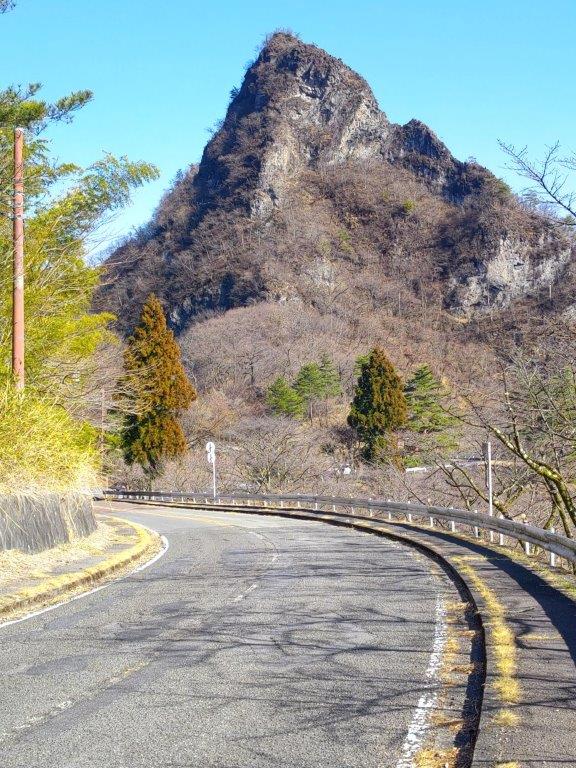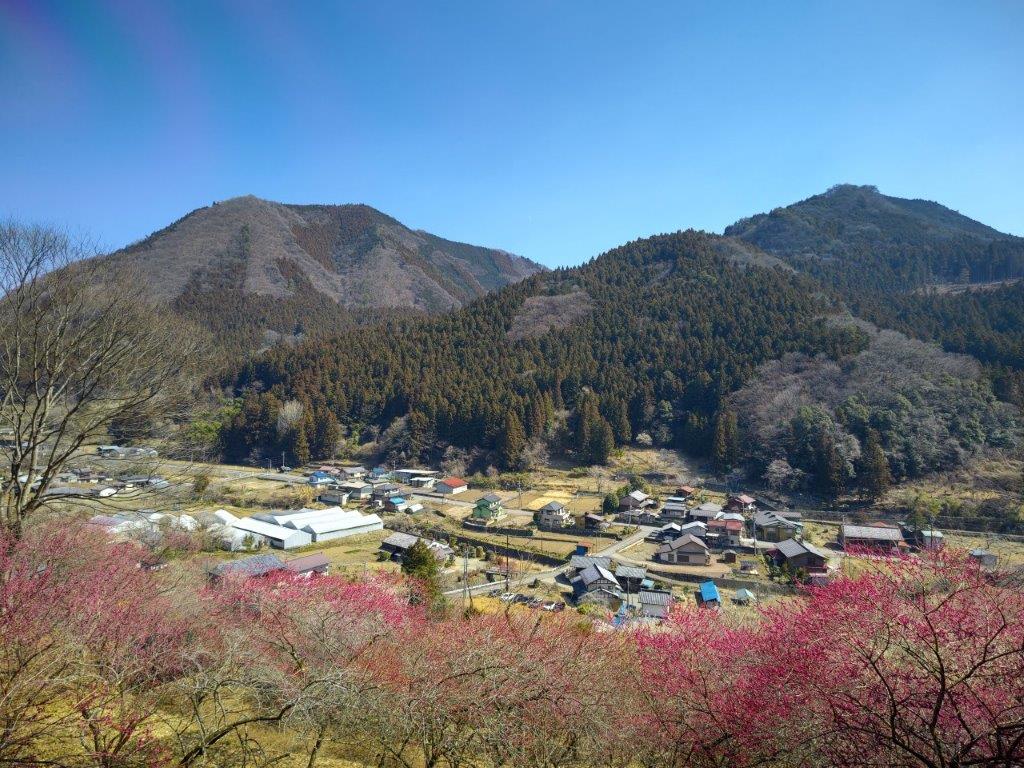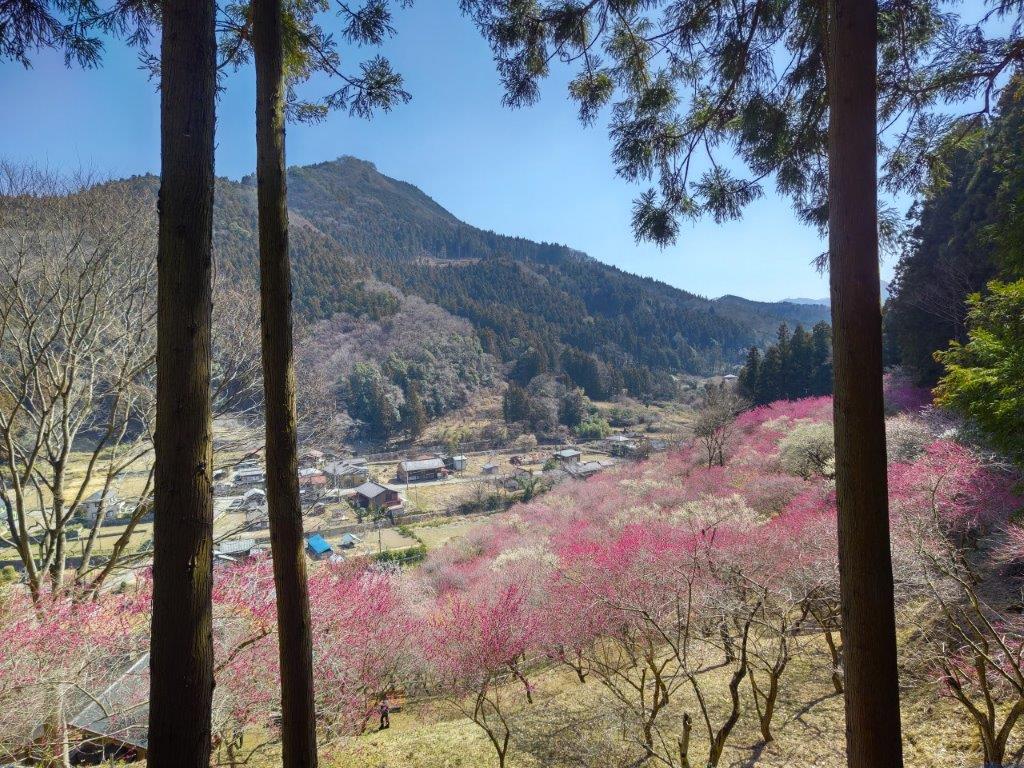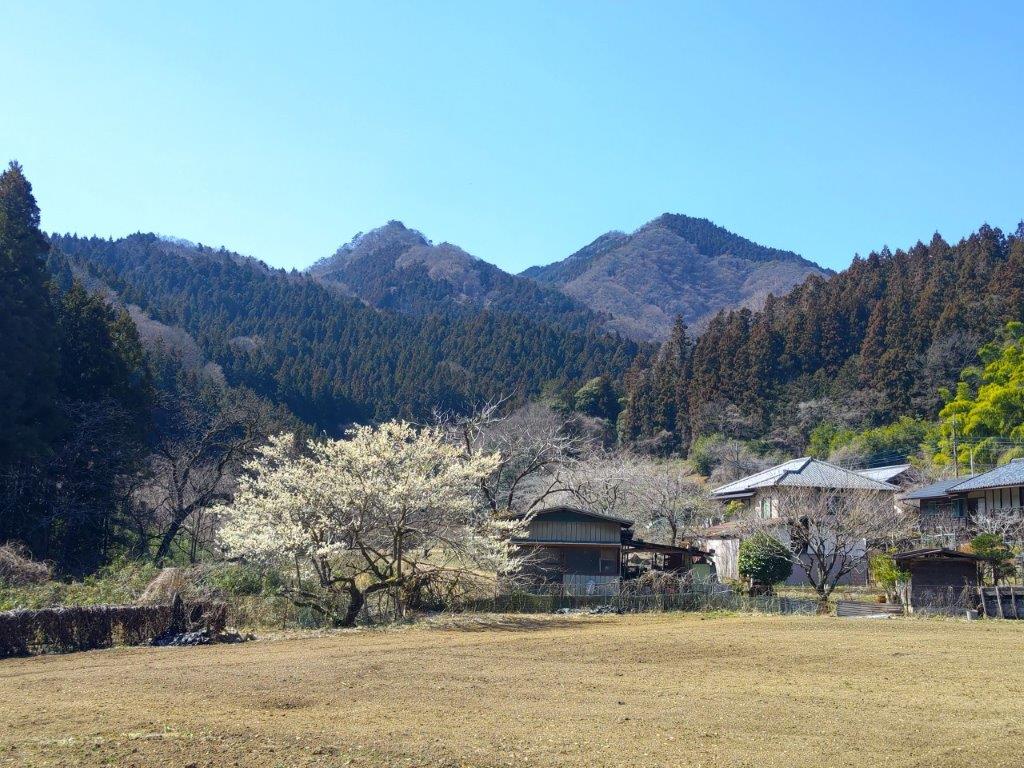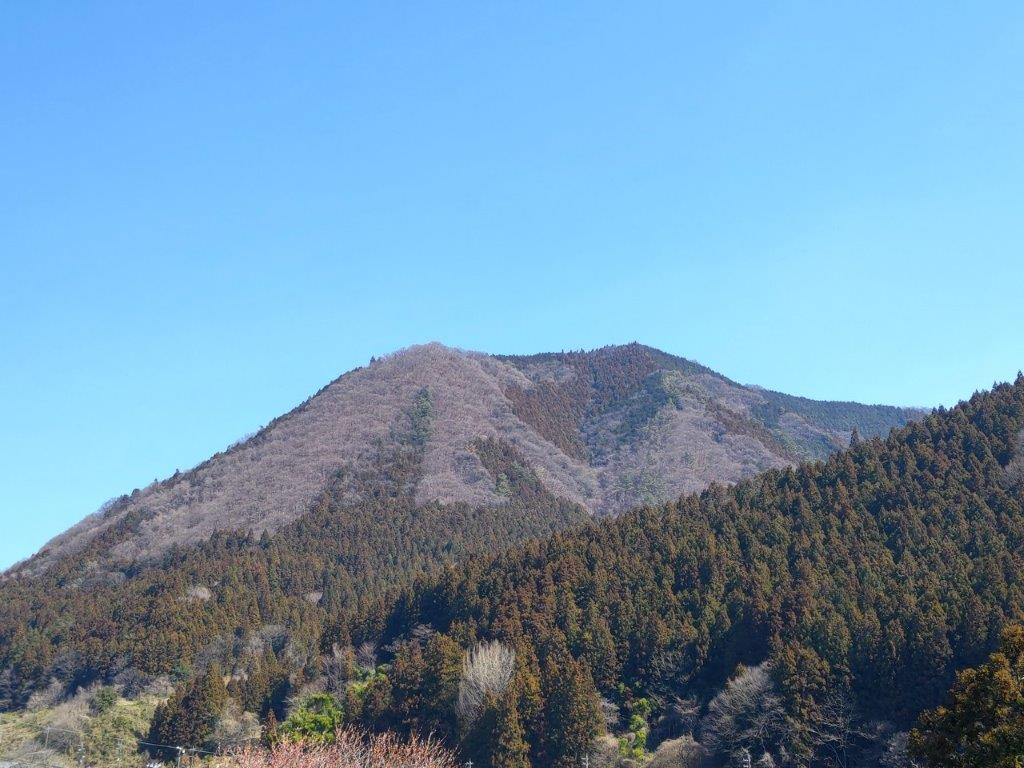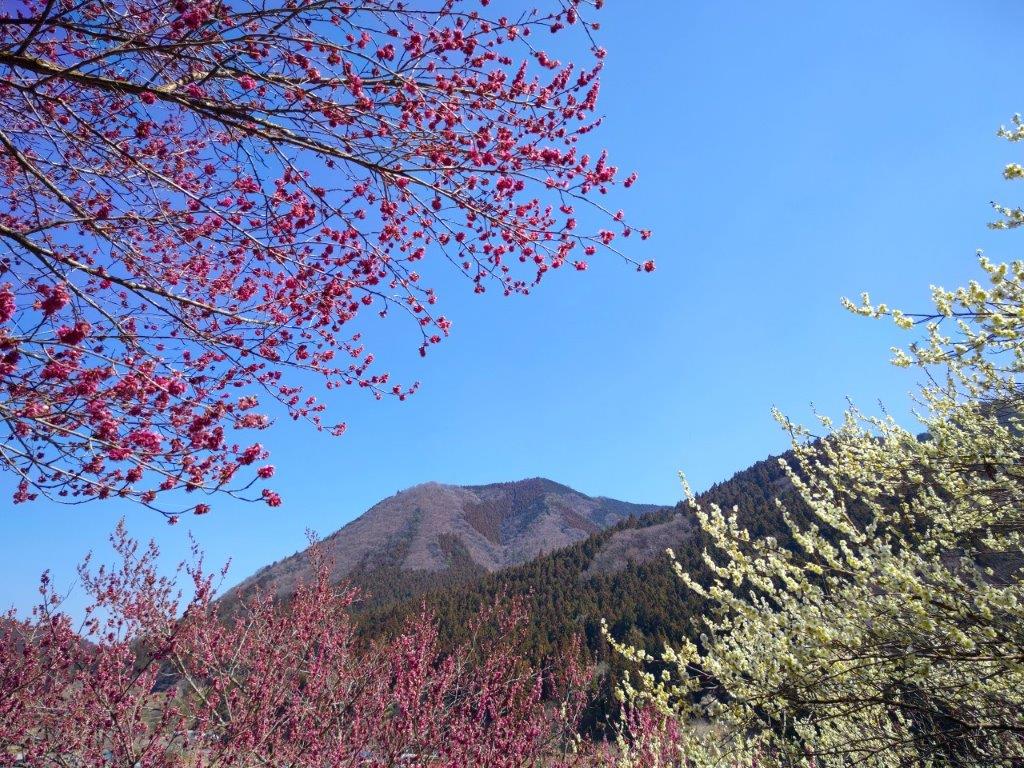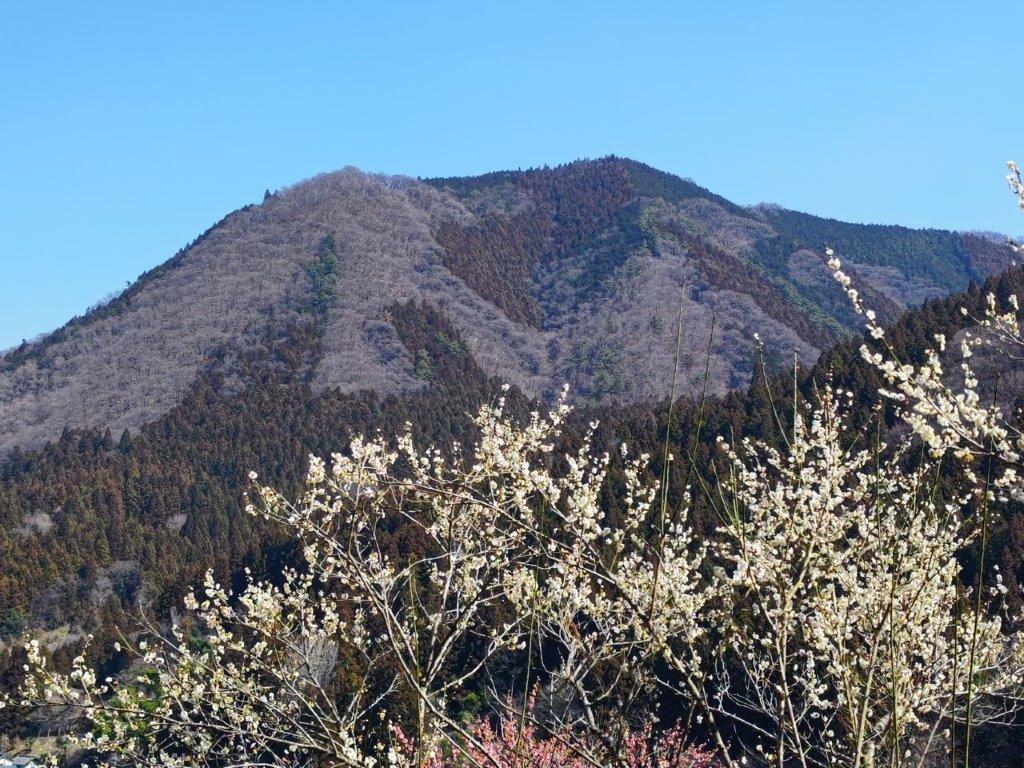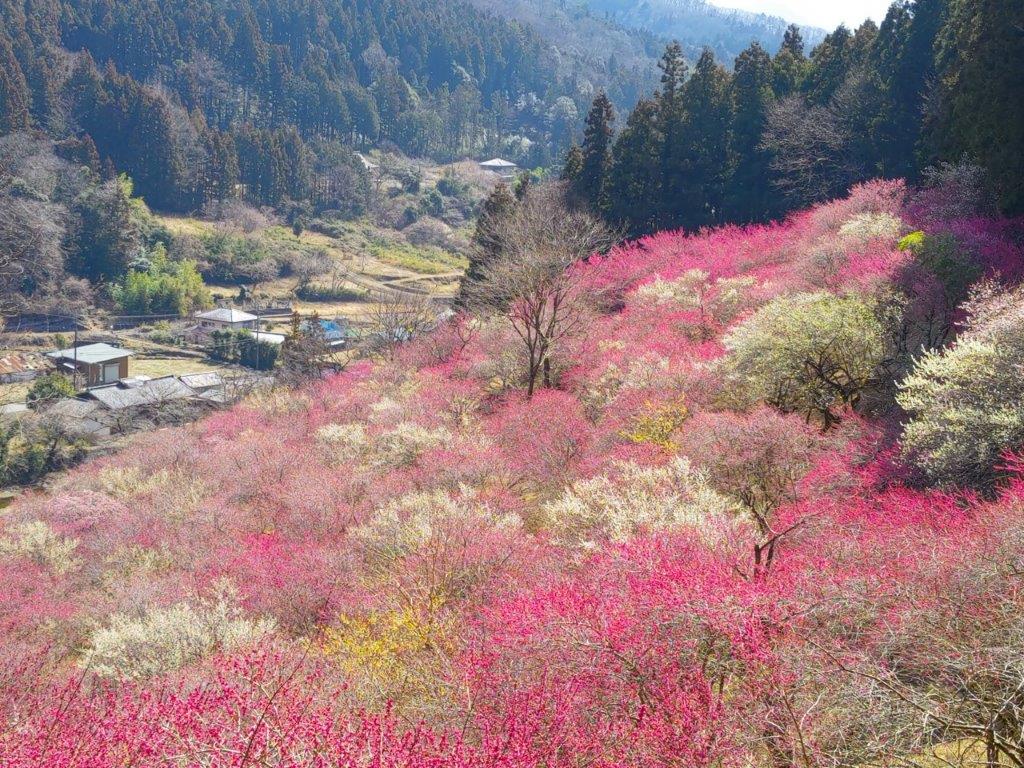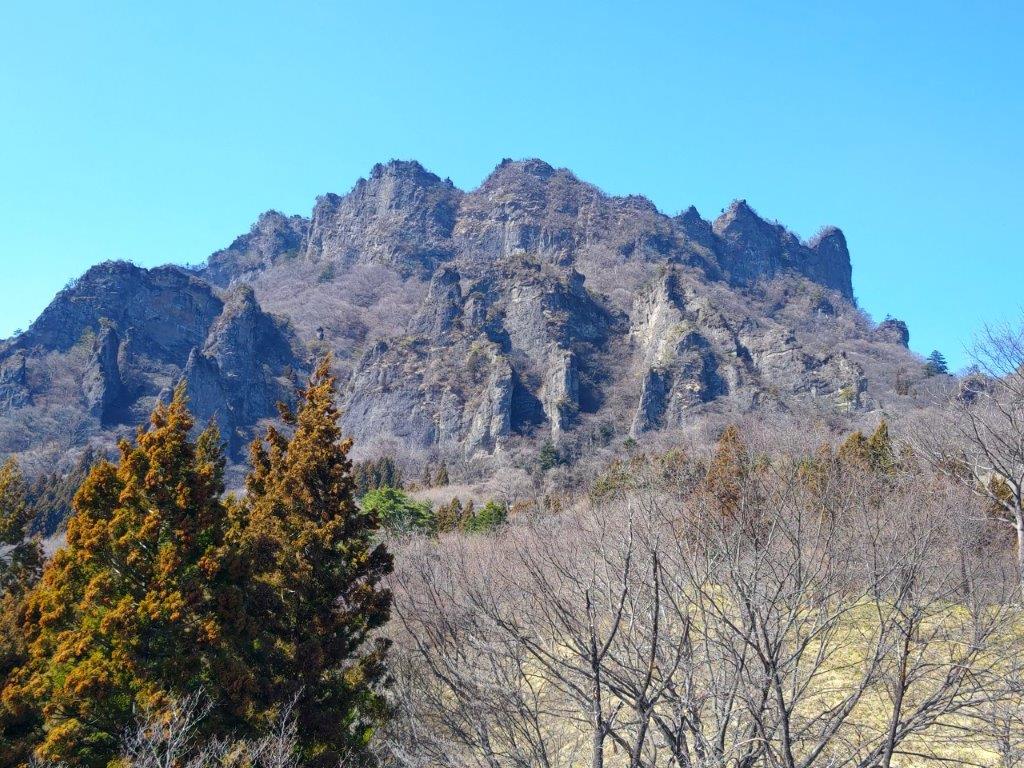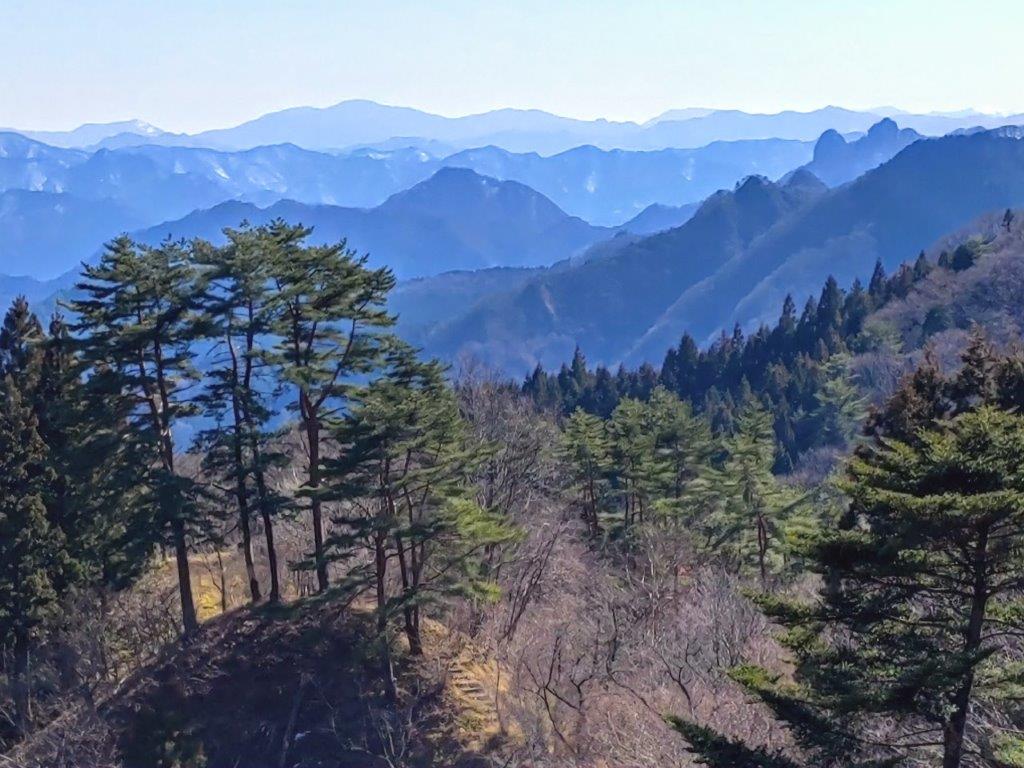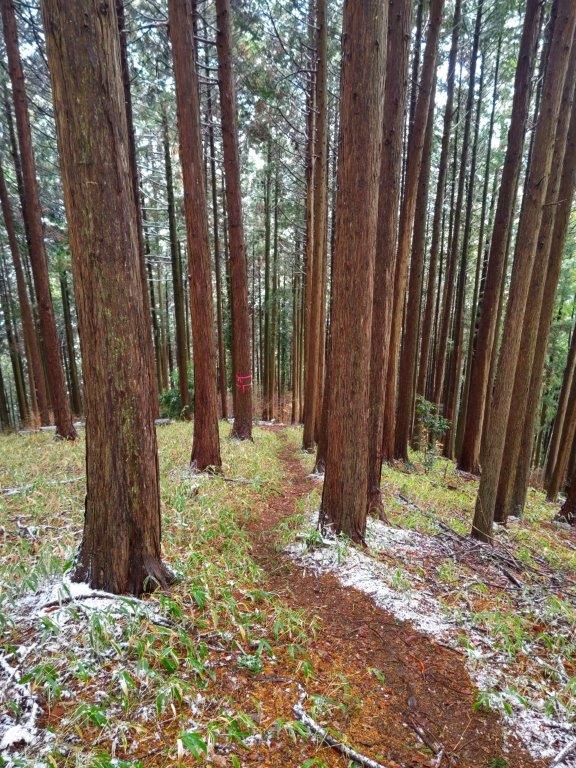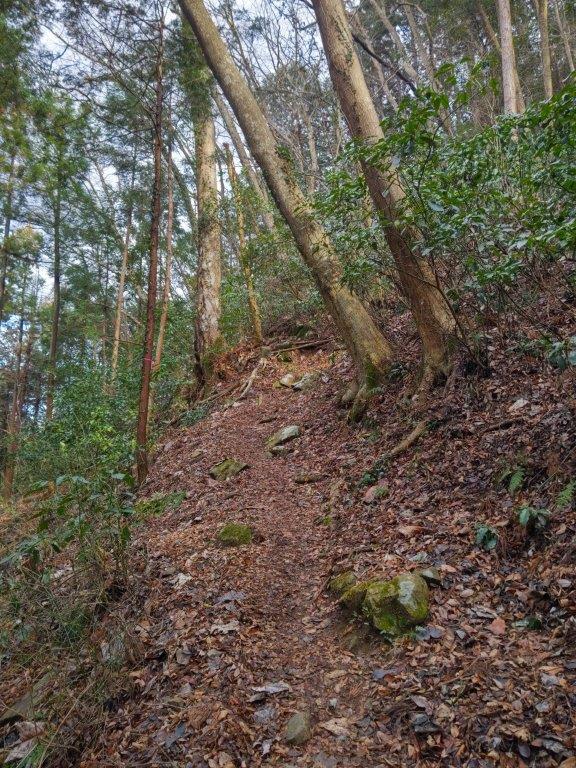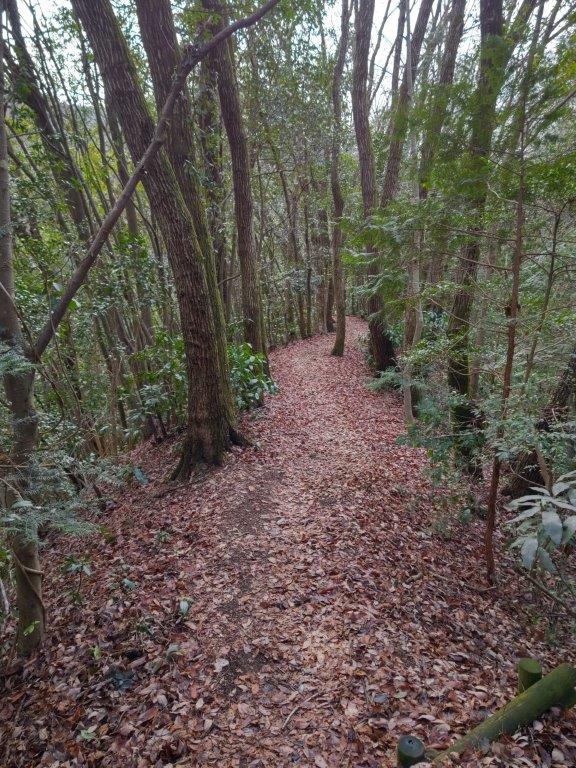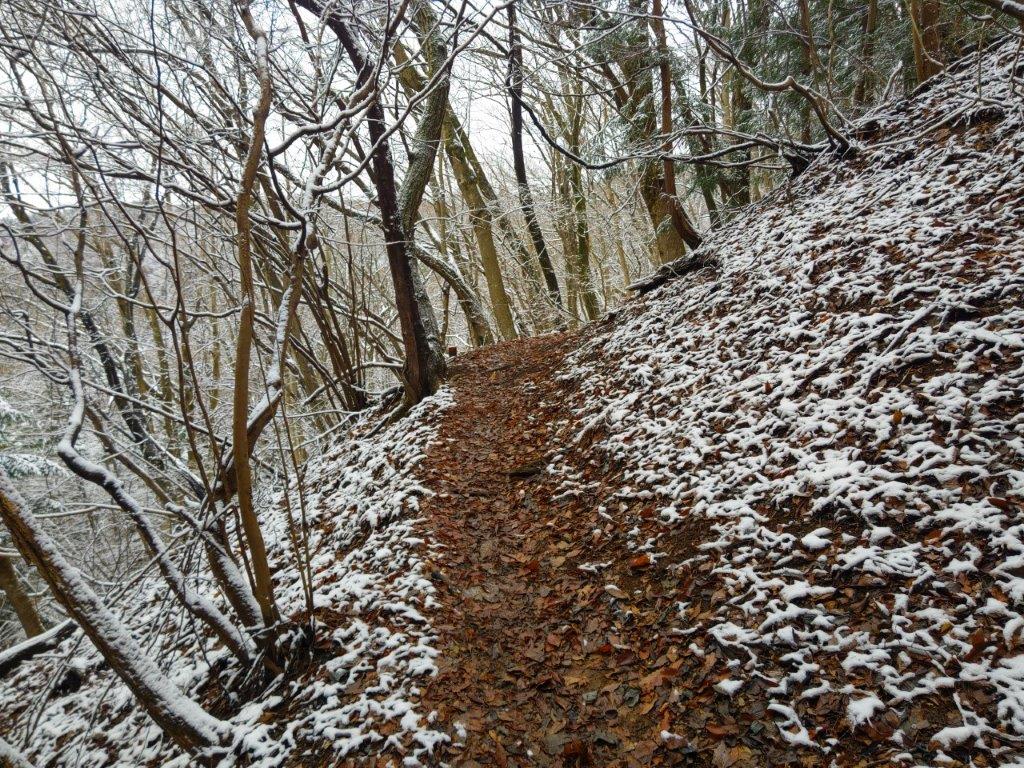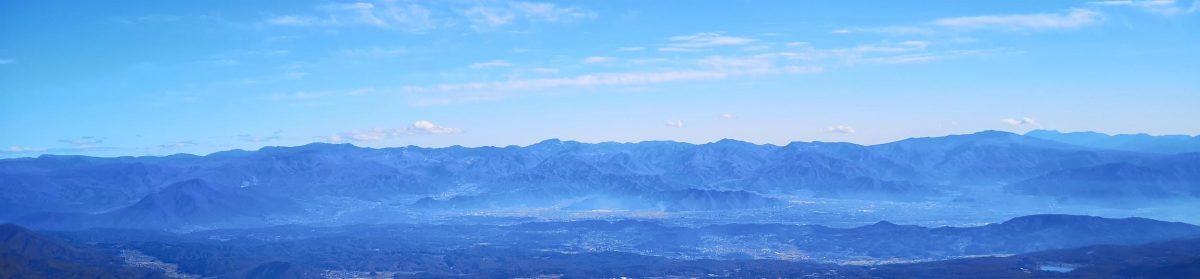
Mt Hatsuhi (364m), Uchiurayama Forest & Mamenbara Highland, Otaki Town, Chiba Prefecture, Saturday, March 9th, 2024

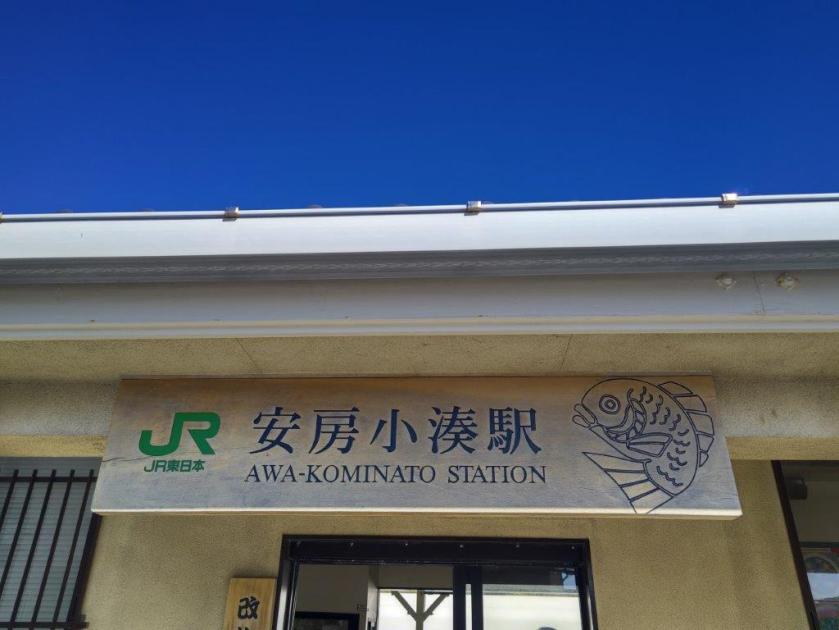
I had been wanting to do a section of the Chiba Kanto Fureai no Michi for a while but it had been closed due to a landslide in 2021. It was supposed to be the continuation of a hike from March 2019. In the end, I decided to give up starting from Seichoji Temple. Instead, I would begin and end at Uchiurayama Forest, a short taxi ride from Awa-Kominato Station, which in turn was a two-hour trip from Tokyo with the Wakashio Limited Express.

Hiking in the Minami Boso Quasi-National Park

南房総国定公園

The hiking trails through the Forest were permanently closed due to typhoon damage in 2019, but I could explore the area by following narrow, winding mountain roads with little traffic. First, I would head north towards Katsuura Dam, then west and up to Mamenbara Highland, before finally making my way back down along the Fureai no Michi.

Hiking on the Kanto Fureai no Michi

関東ふれあいの道

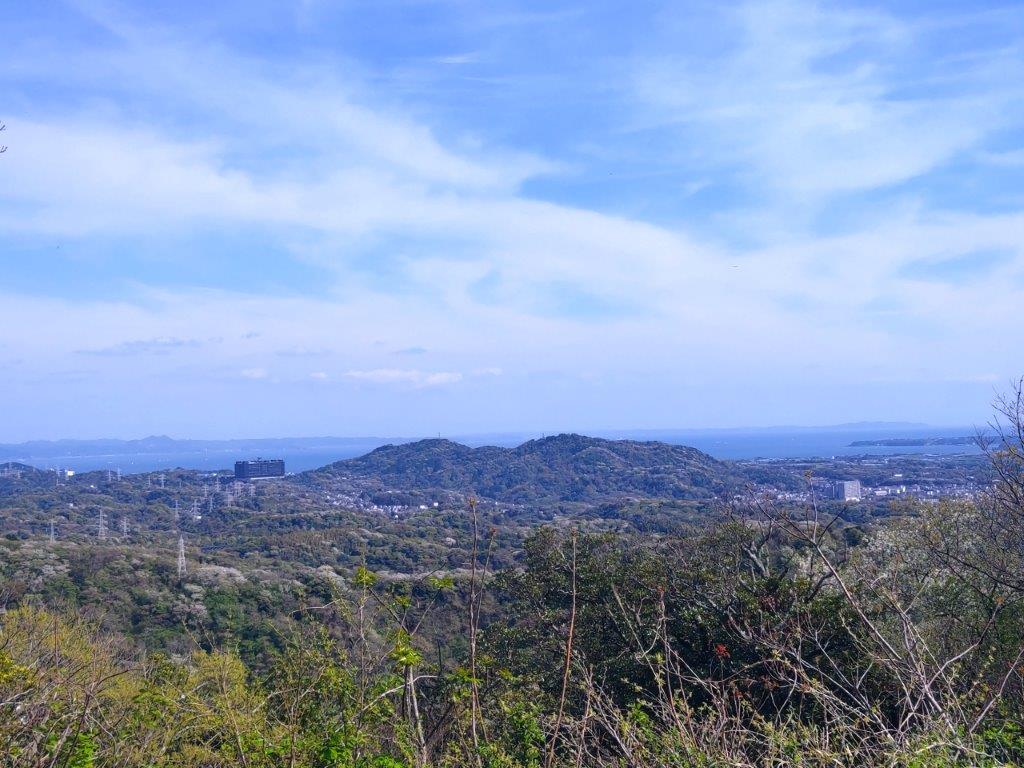
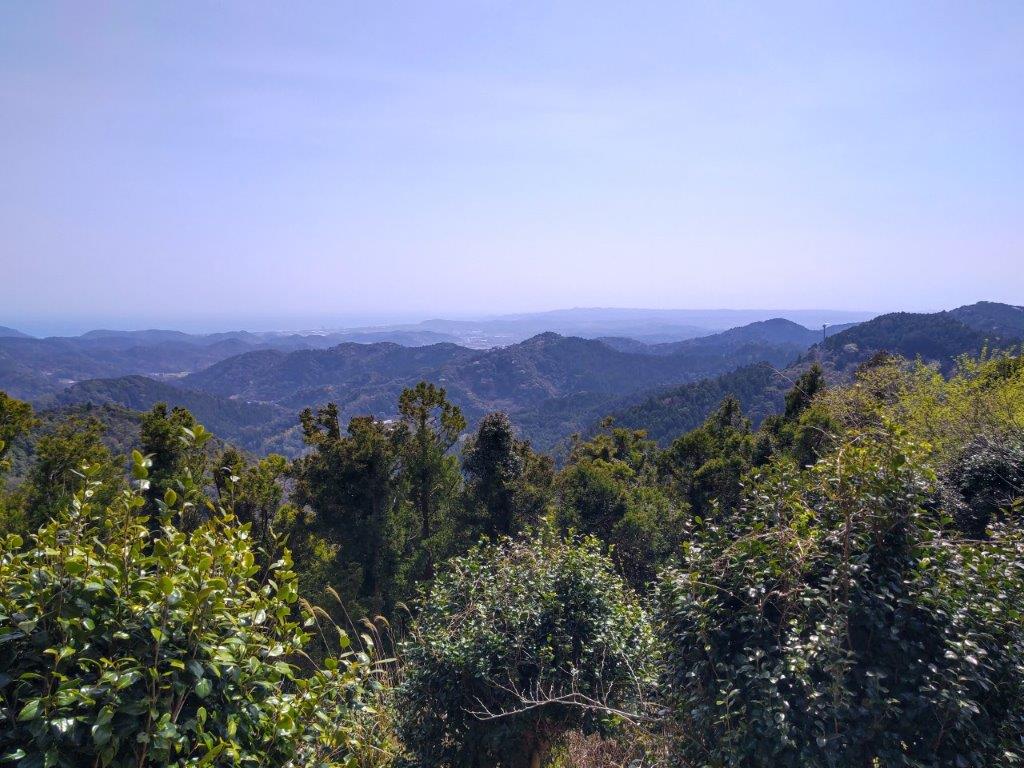
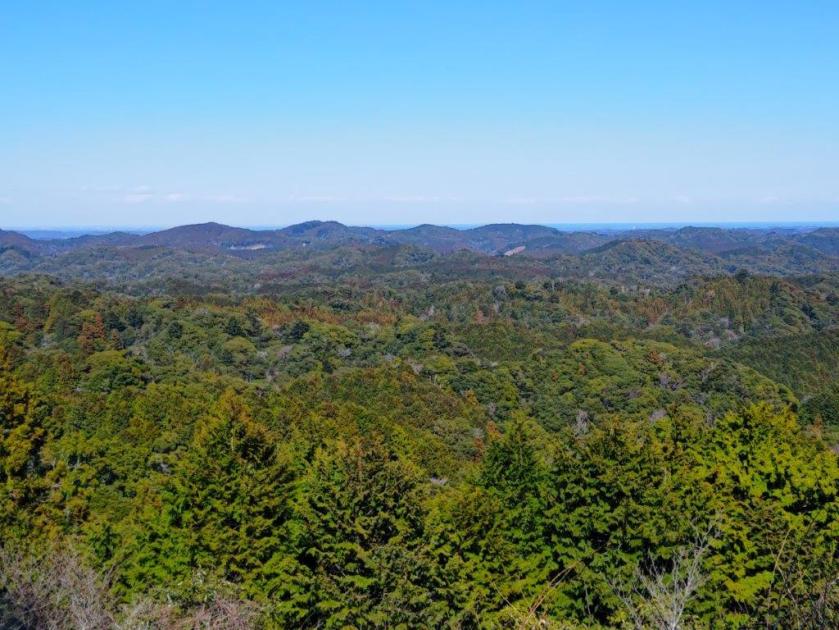
From the highest point of the Highland it was possible to get a view of the Pacific Ocean. The forecast called for clear skies all day and a moderate breeze. I was looking forward to seeing some new views, as well as revisiting the ancient forests of Boso peninsula.

For subscribers, read this Blog Post on Hiking Around Tokyo for a better viewing experience and the latest updates

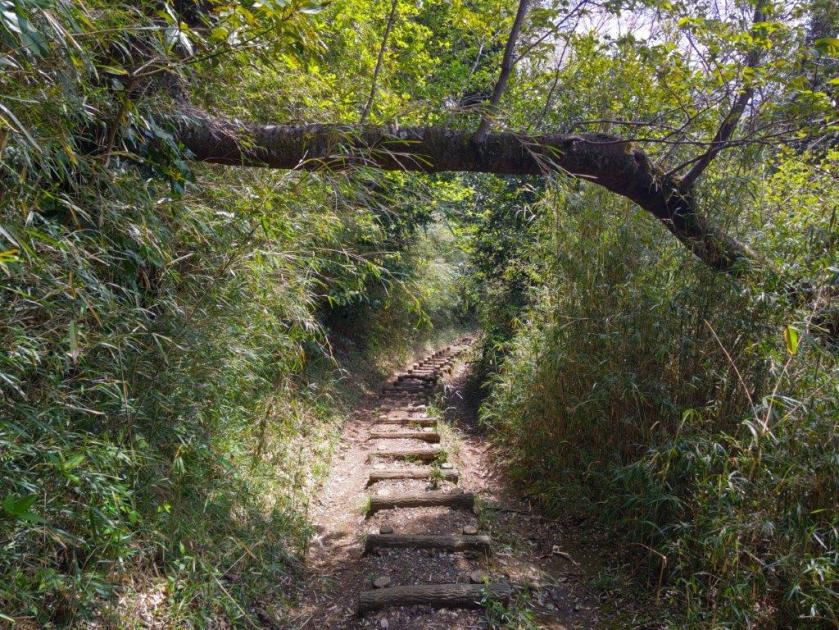
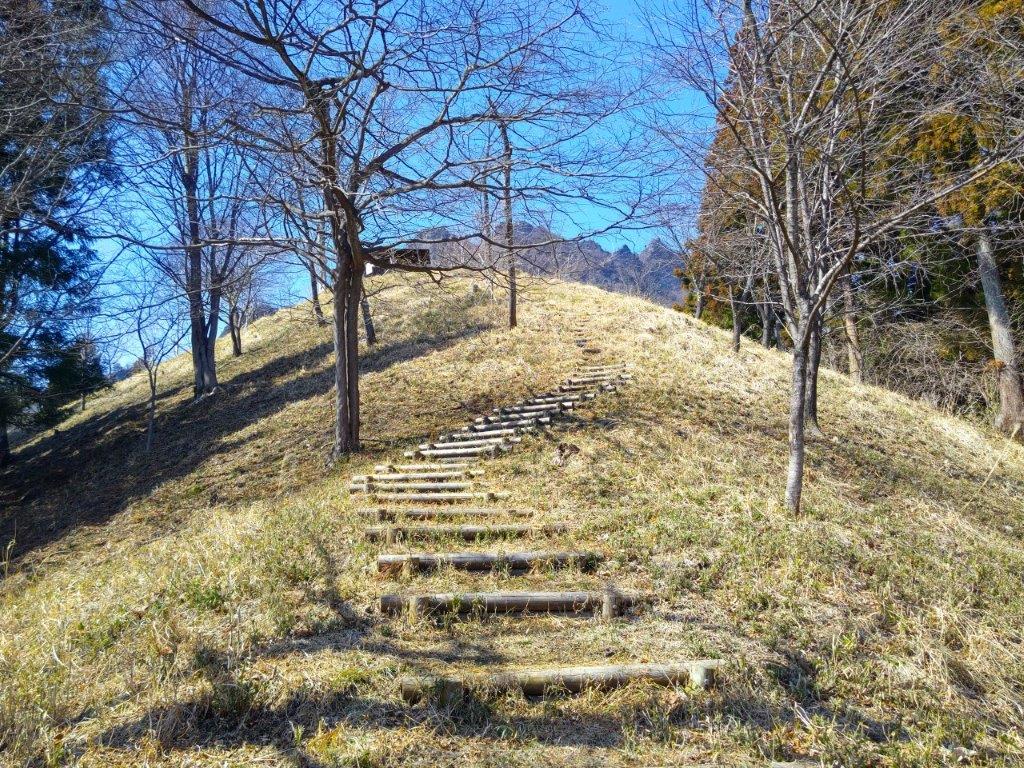
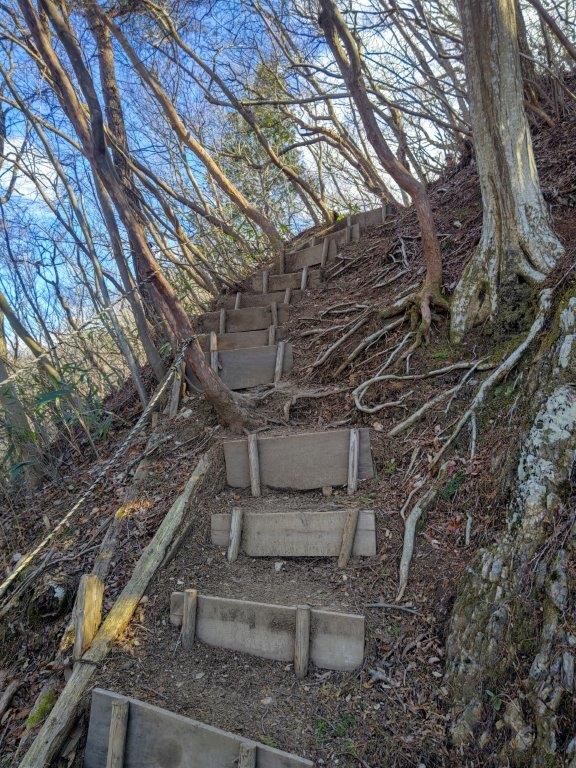
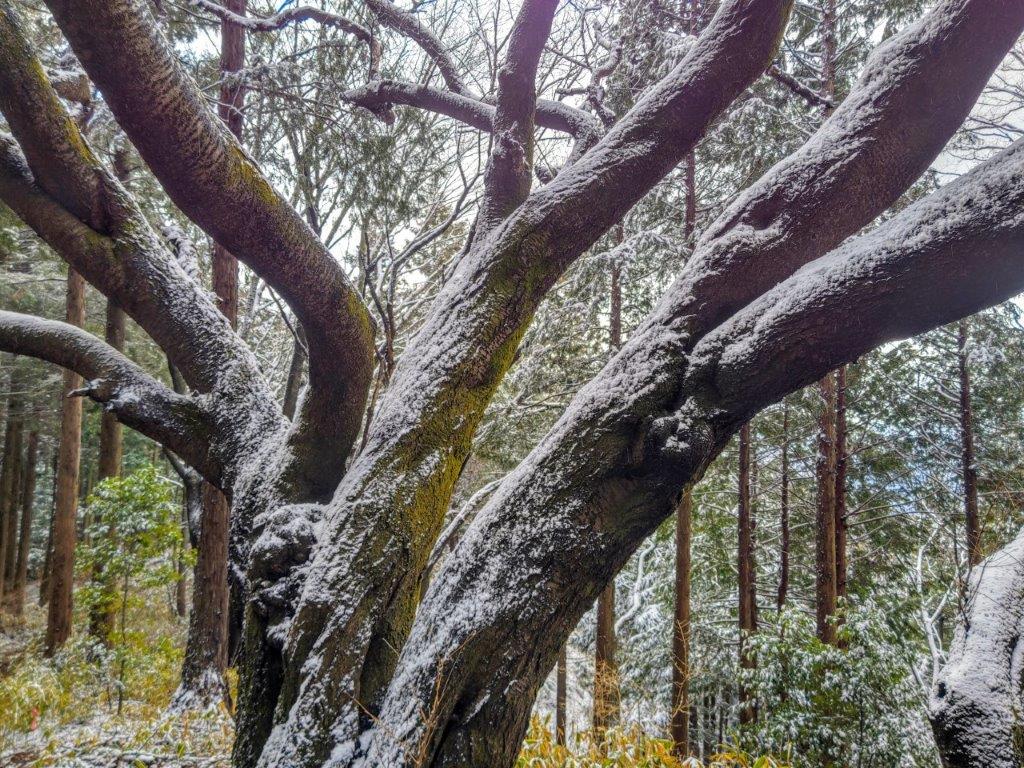
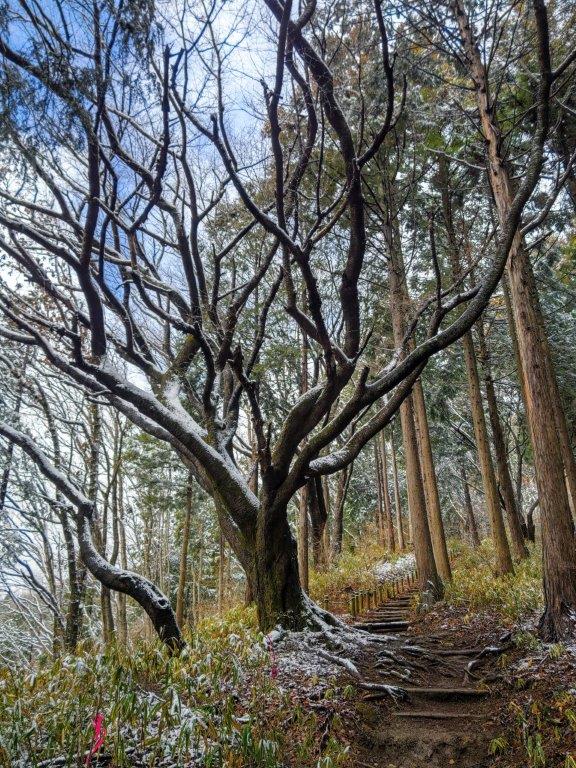
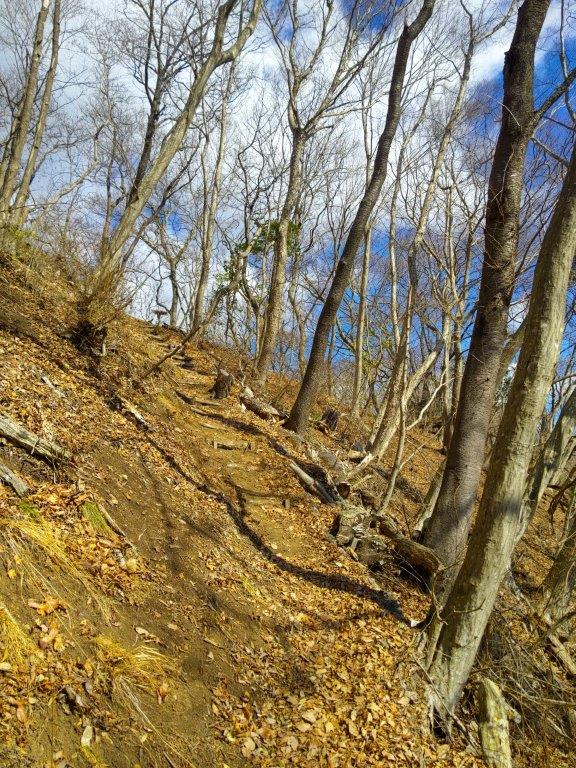
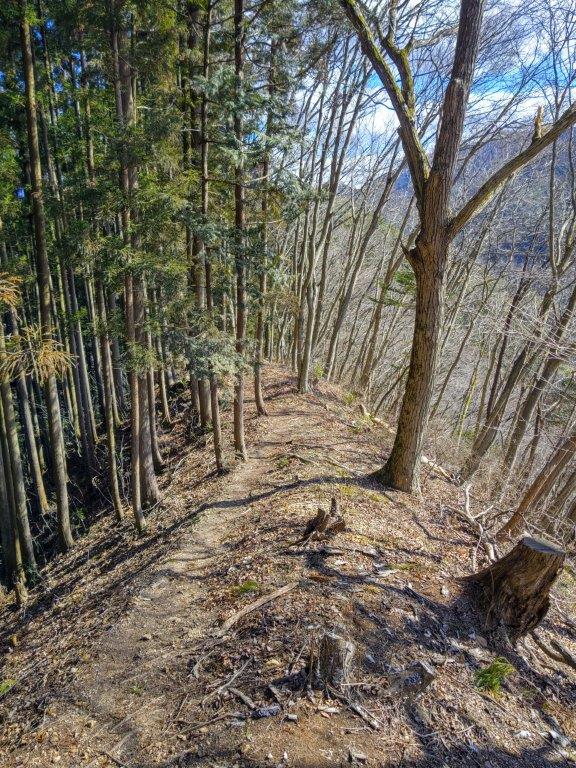
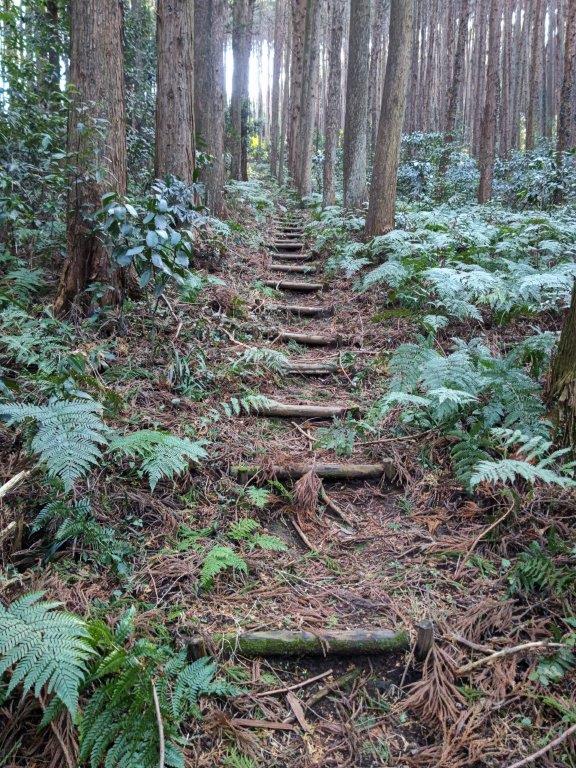
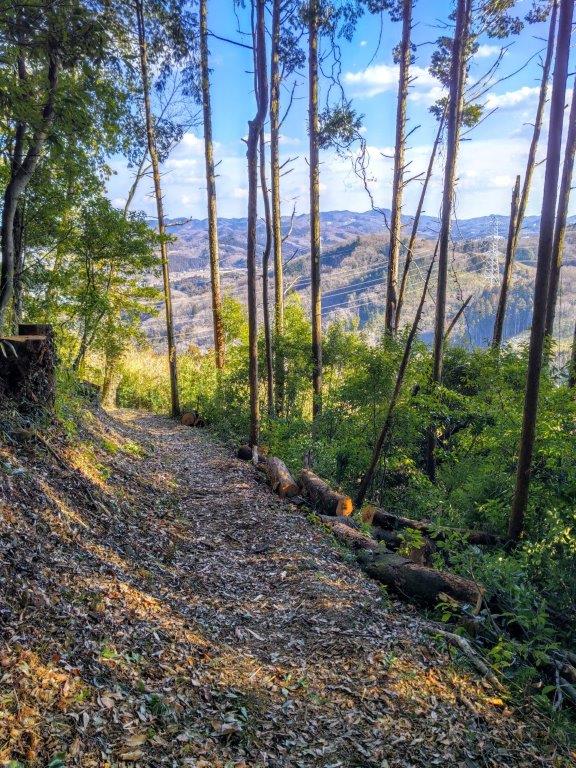
Log Steps (left) & Hiking Trail (right) North of Katsuura Dam

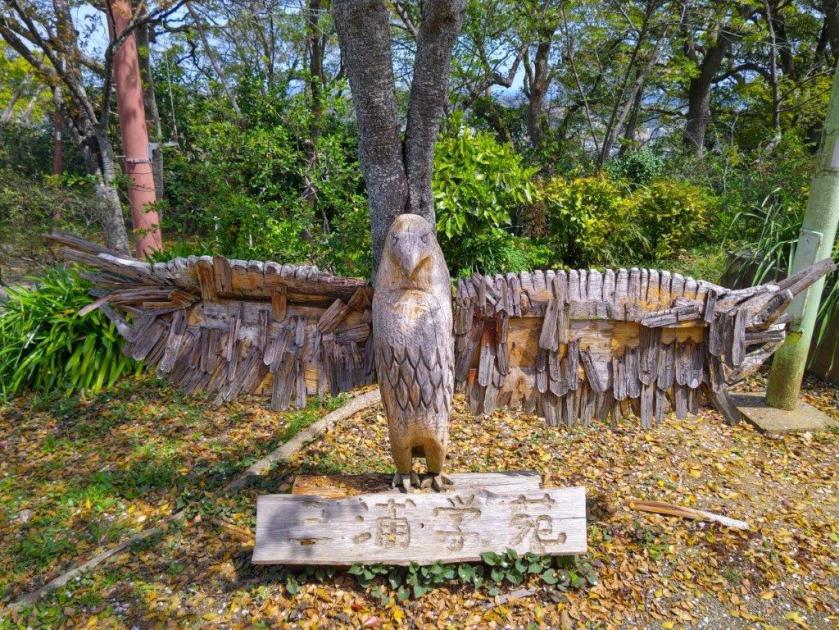
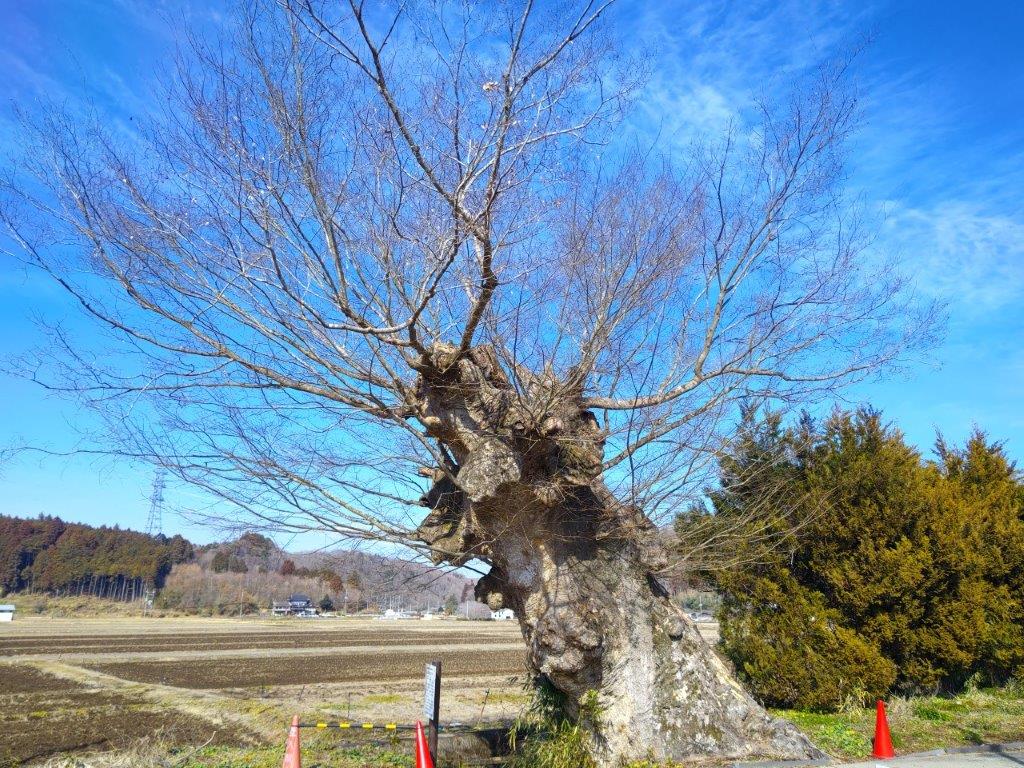
Inside the Uchiurayama Learning Center (left) Sequoia near Mominoki Soba (right)

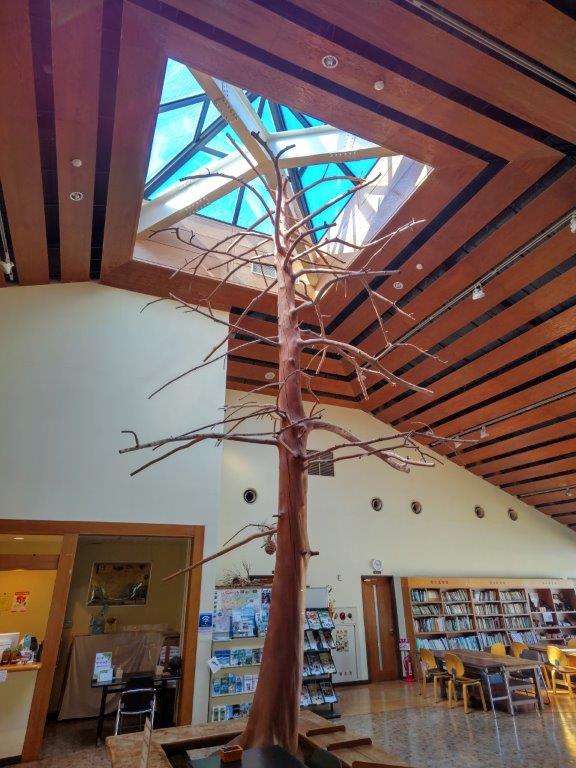
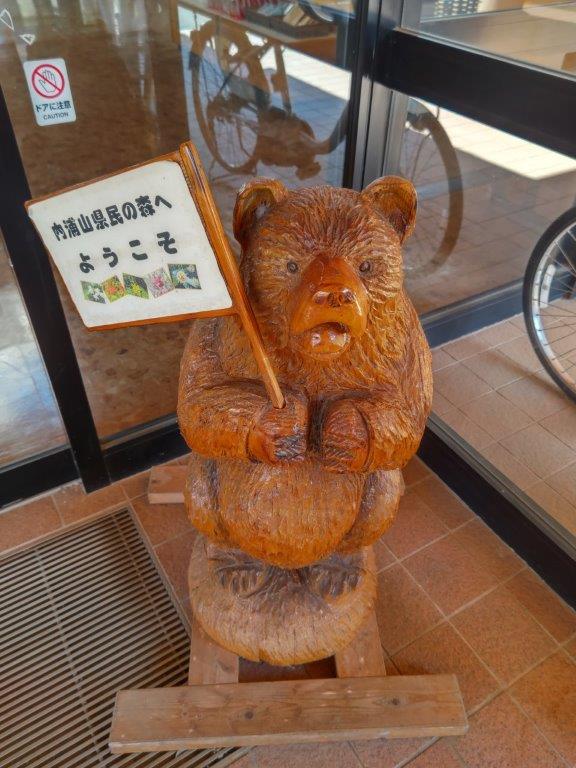
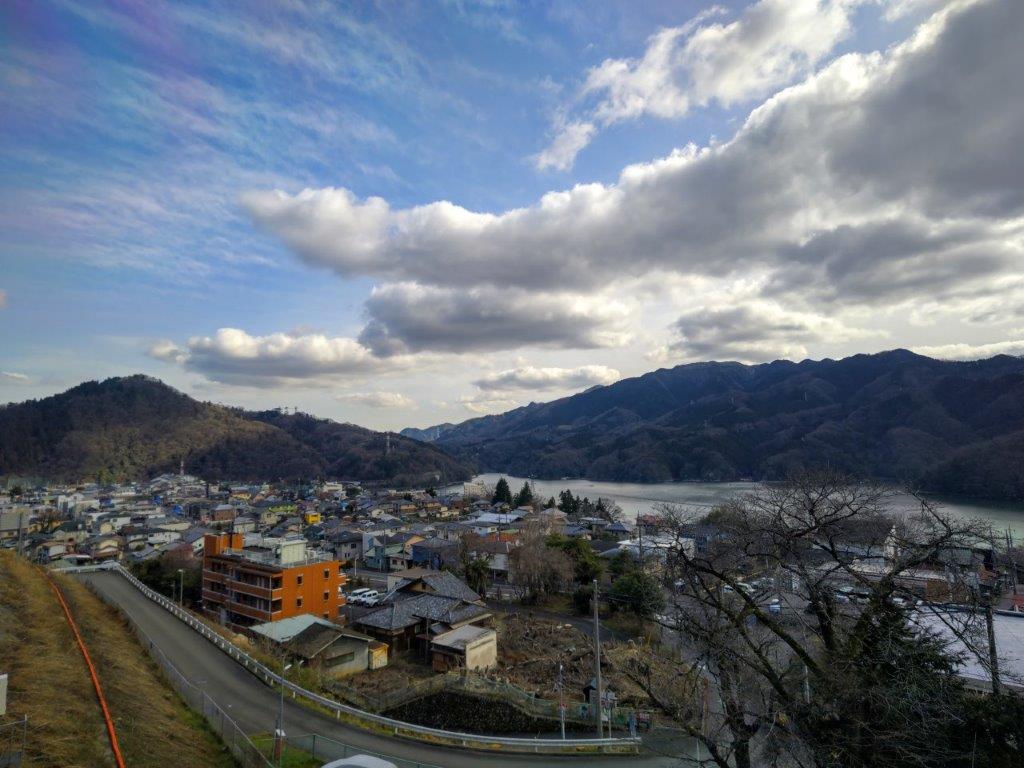
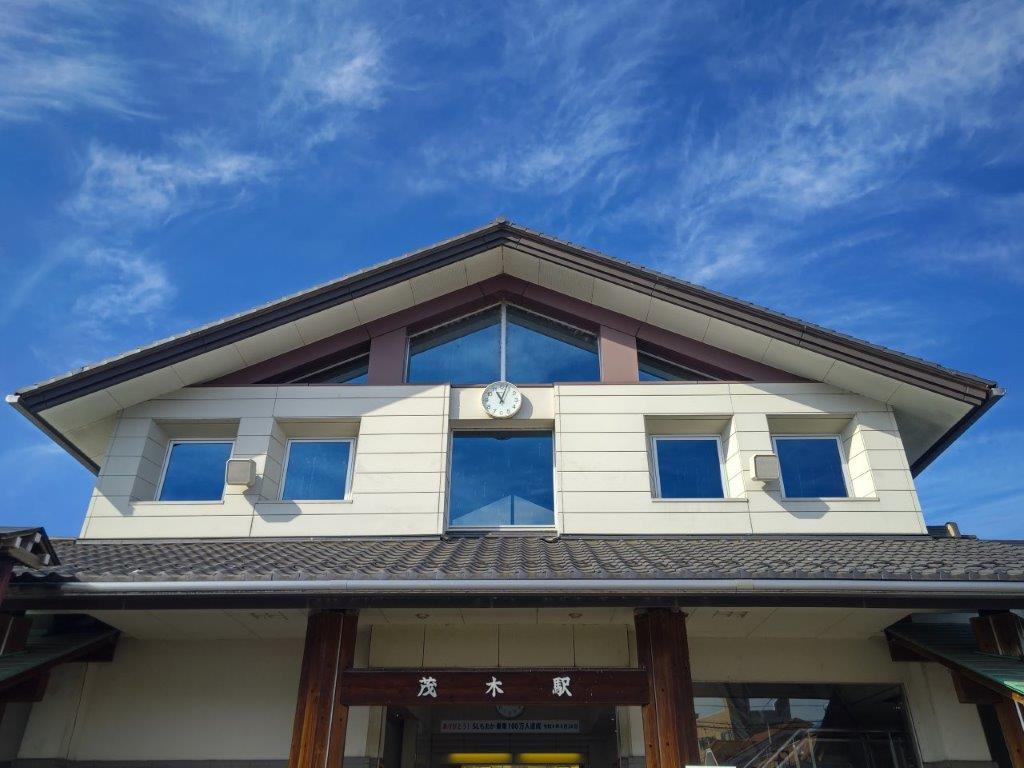
It was a sunny winter day as I rode the limited express from Akihabara station along the Sotobo line all the way to Kominato station, one stop from Awa-Kamogawa, the end of the line. While waiting for a taxi to arrive, I watched the waves wash up on Uchiura Beach. After arriving at the Uchiurayama Prefectural Forest (内浦山県民の森), I went inside the learning center to check out a relief map of the area showing the now defunct hiking trails. At 1030, I set off along the Uchiurayama forest road. At a fork in the road, I turned right for Katsuura Dam (勝浦ダム), a few minutes away.

View West from Katsuura Dam

Hiking the Hills around Katsuura Dam

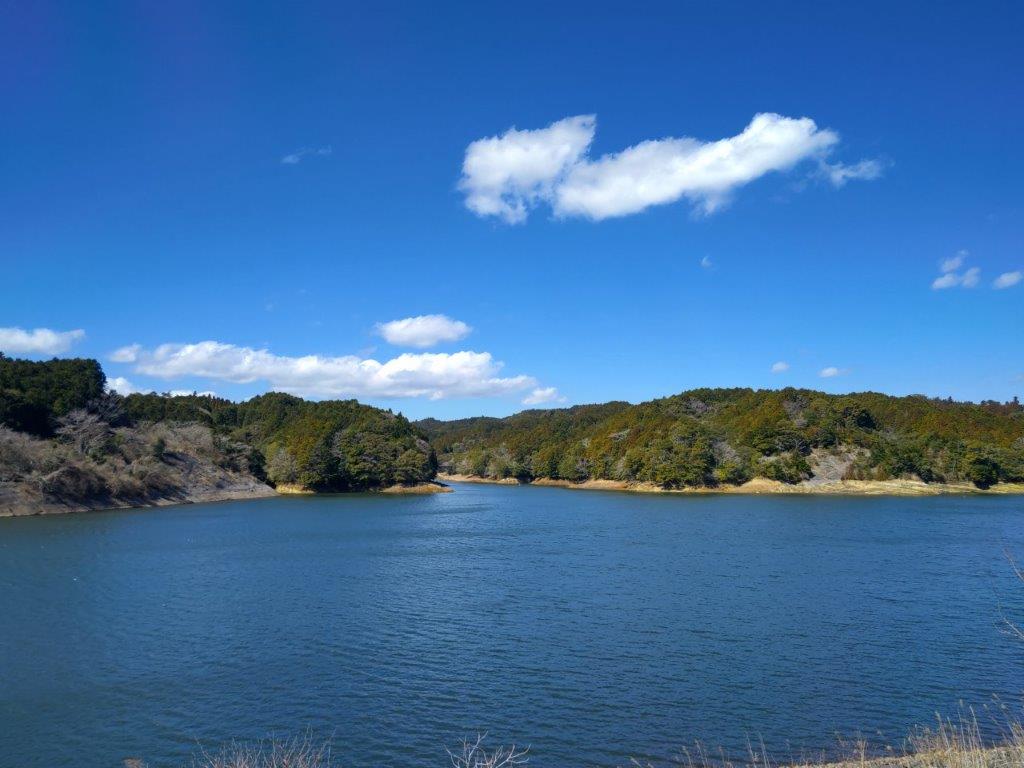
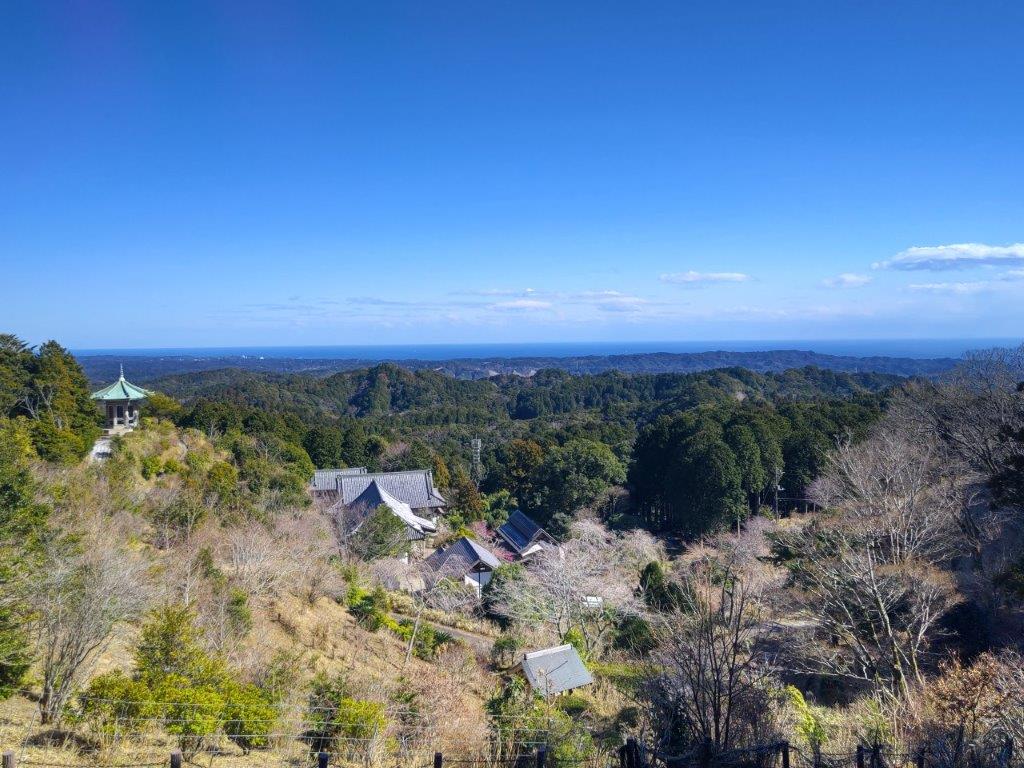
I was delighted to get a wide open view of blue waters and green shores, fluffy white clouds in the light blue sky completing this peaceful scene. I headed into the valley on the right and then followed a prefectural road northwards. After passing through a tunnel, I turned left, and soon reached the entrance of a trail on the left side. However, before diving into the forest, I decided to have lunch at the nearby Mominoki Soba Restaurant (もみの木庵), since it was nearly noon. After a filling soba meal, which I was able to eat at a table outside, I followed a signposted path to the top of a ridge on the north side of the dammed lake.

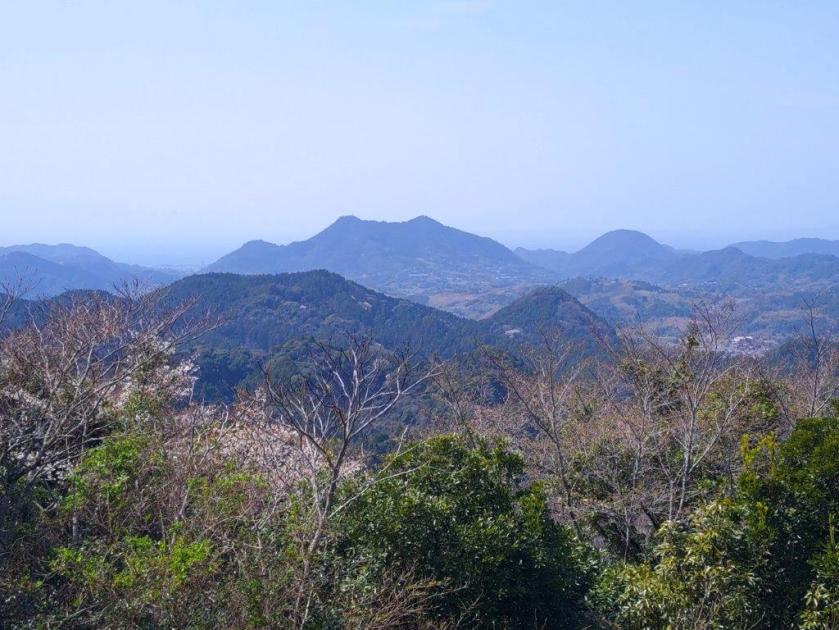
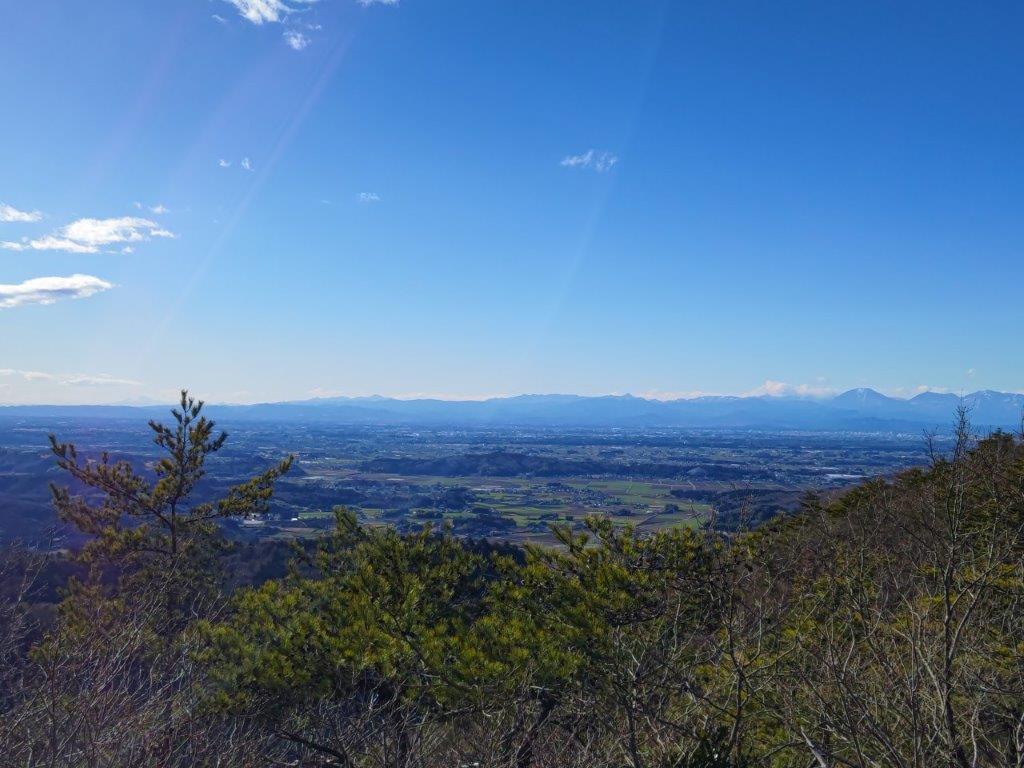
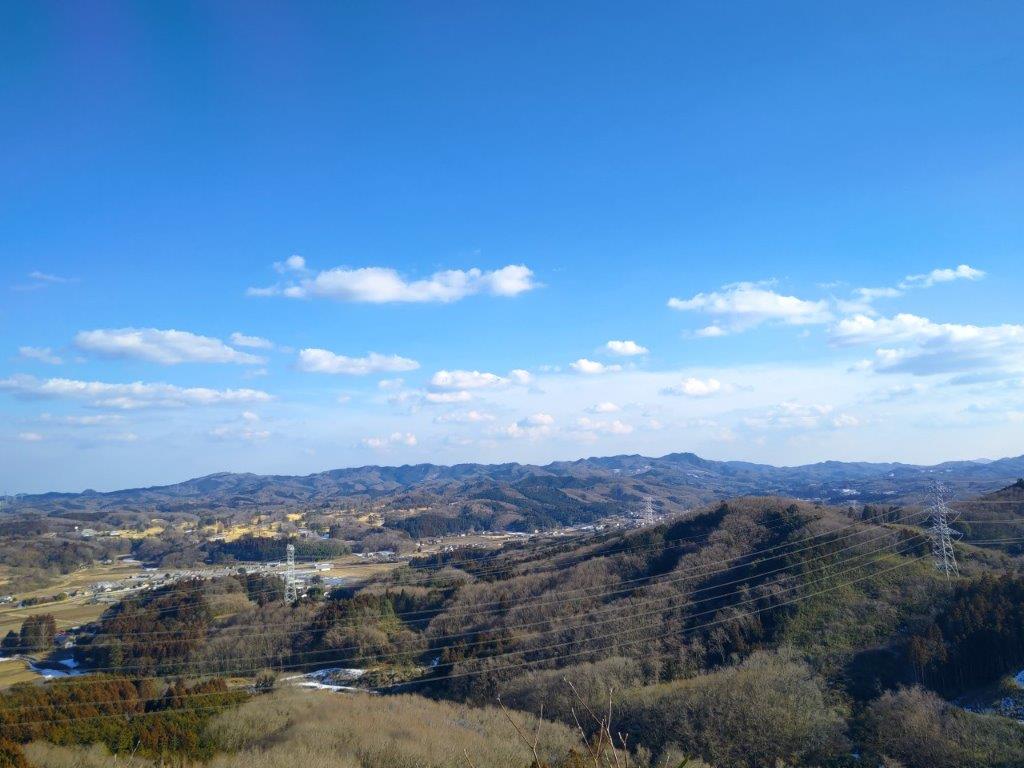
View of the Pacific from Mamenbara Kogen

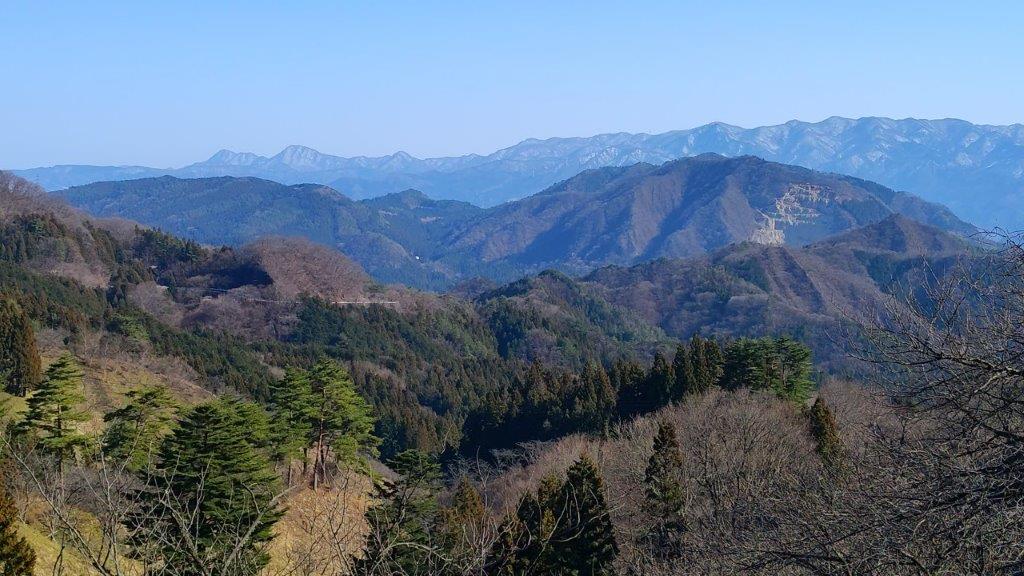
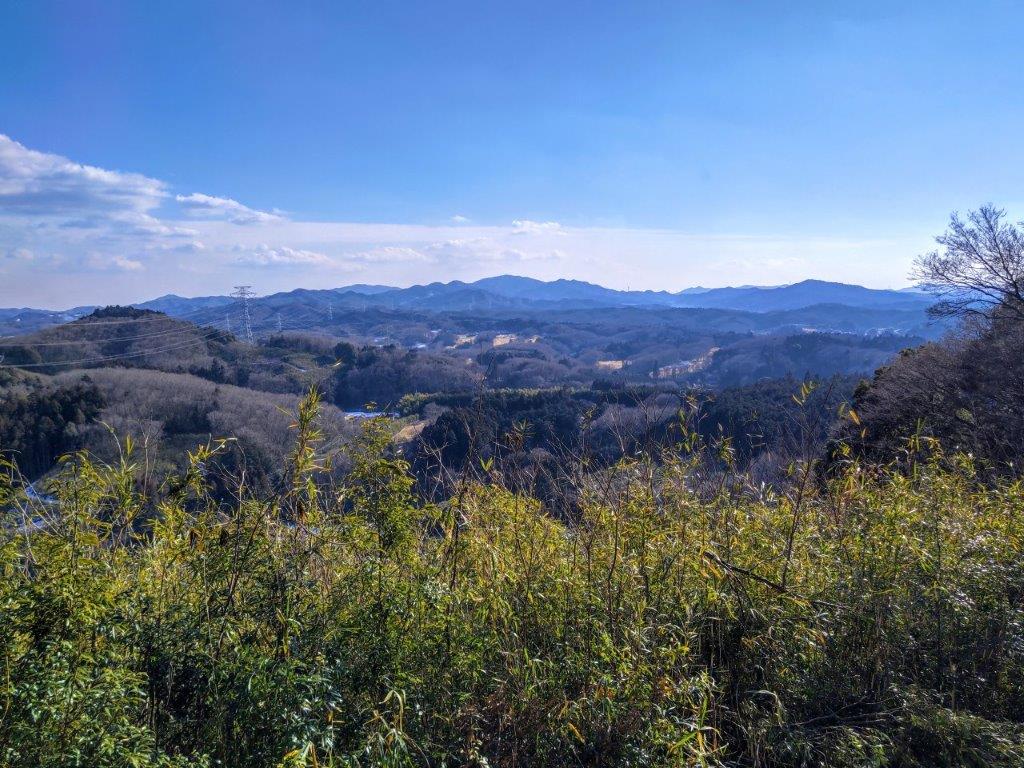
View towards Yoro Keikoku from Mt Hatsuhi

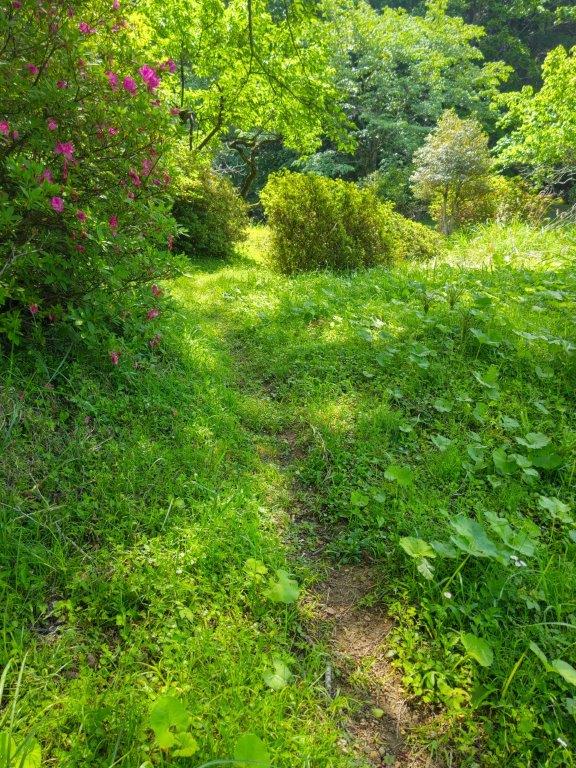
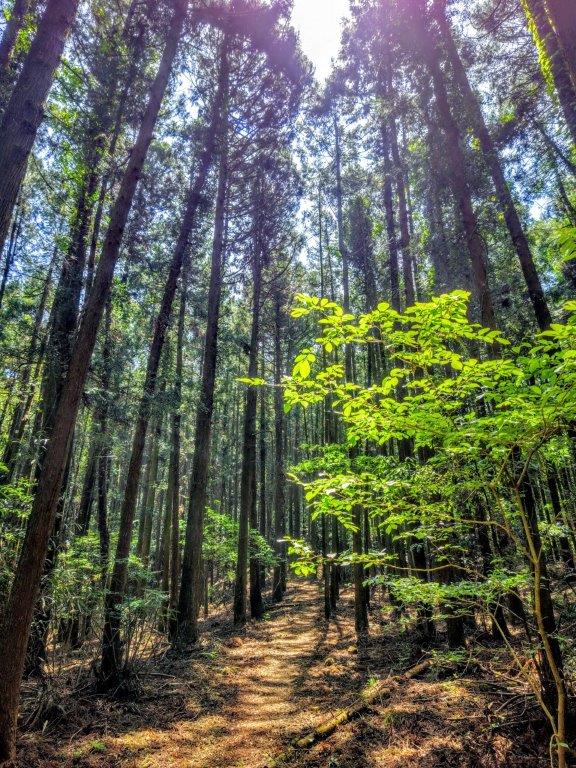
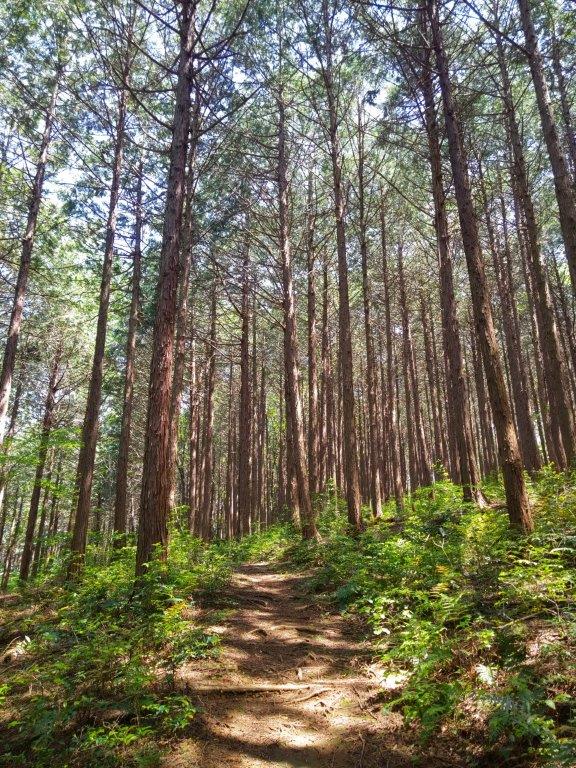
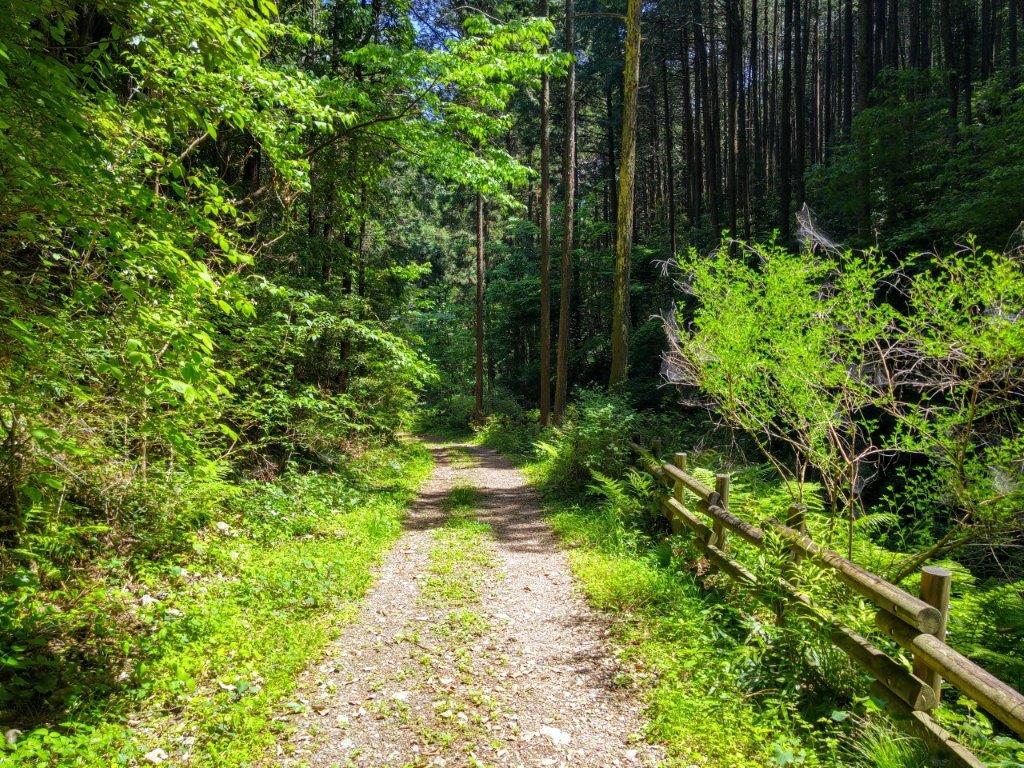
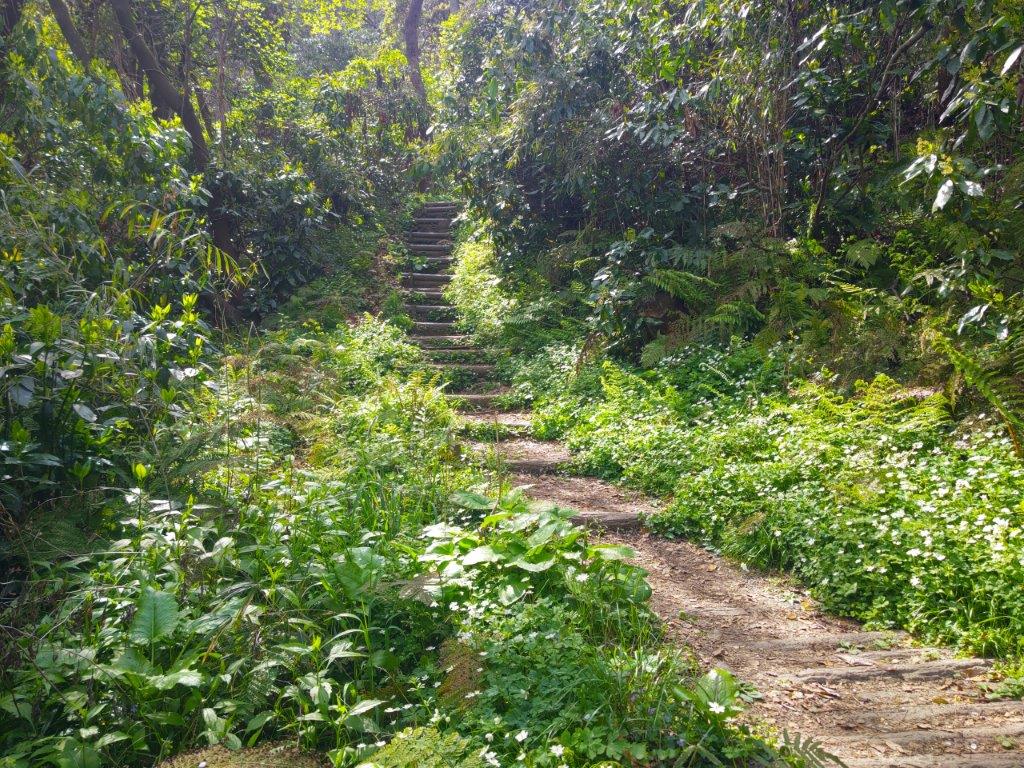
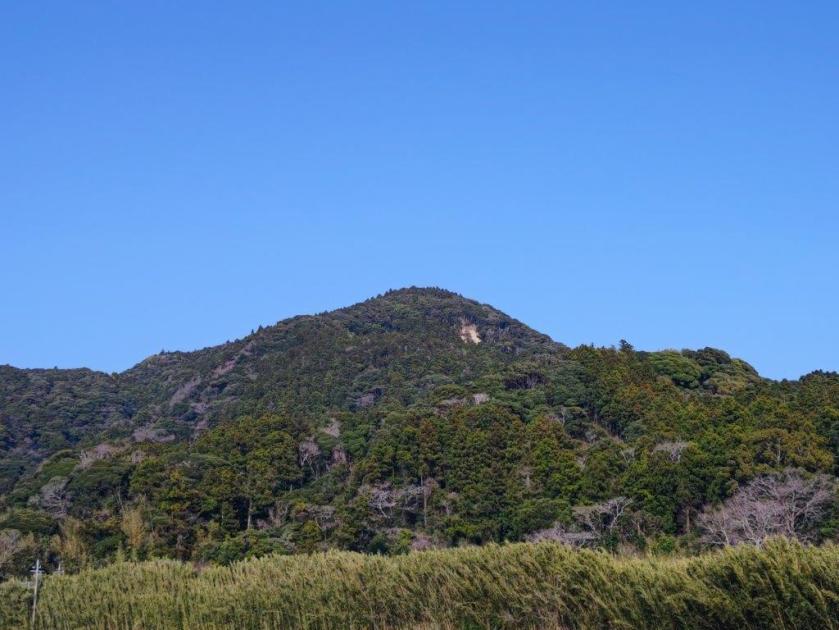
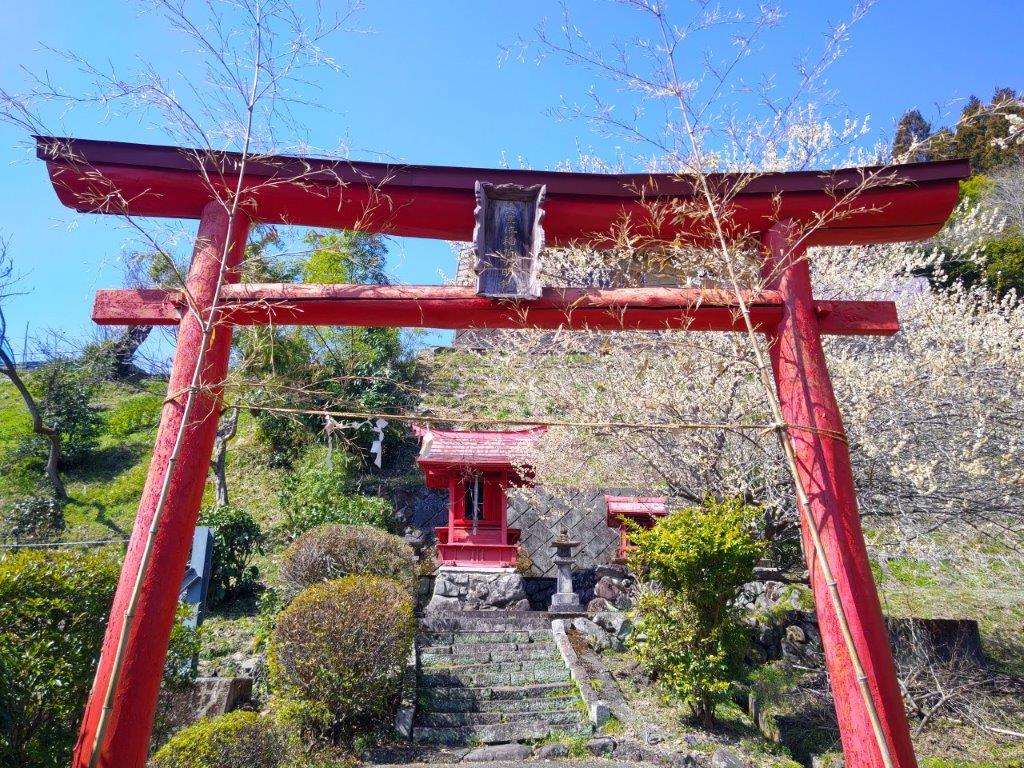
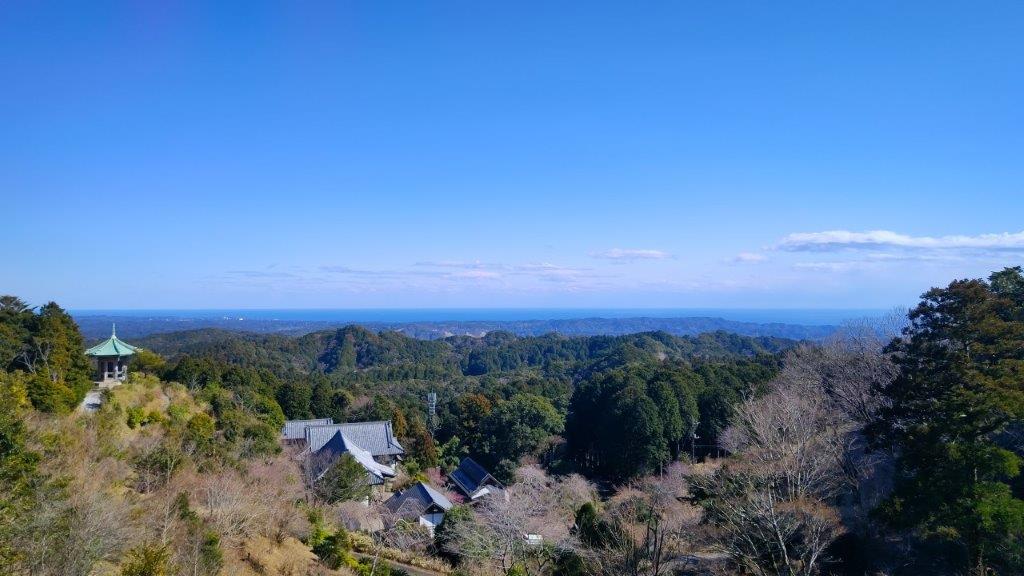
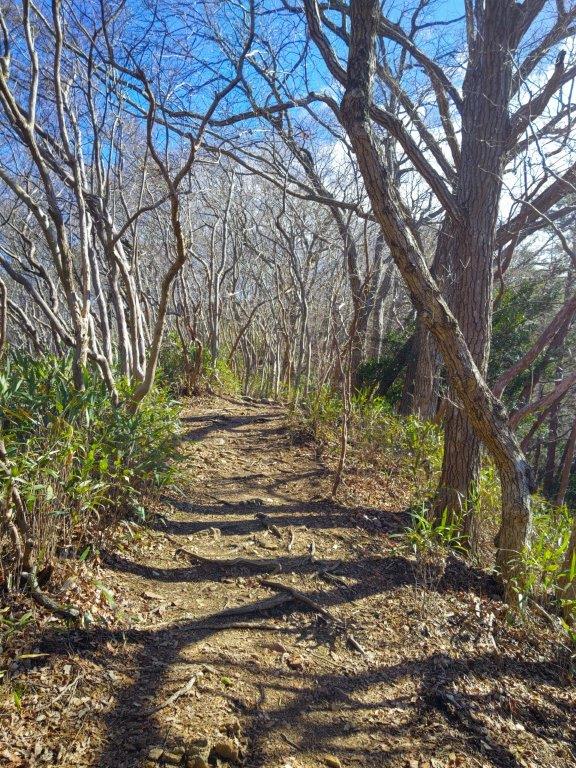
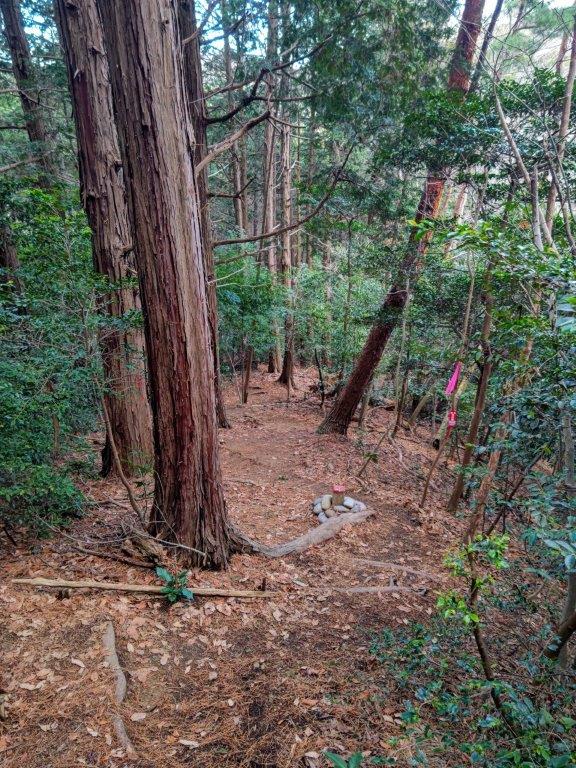
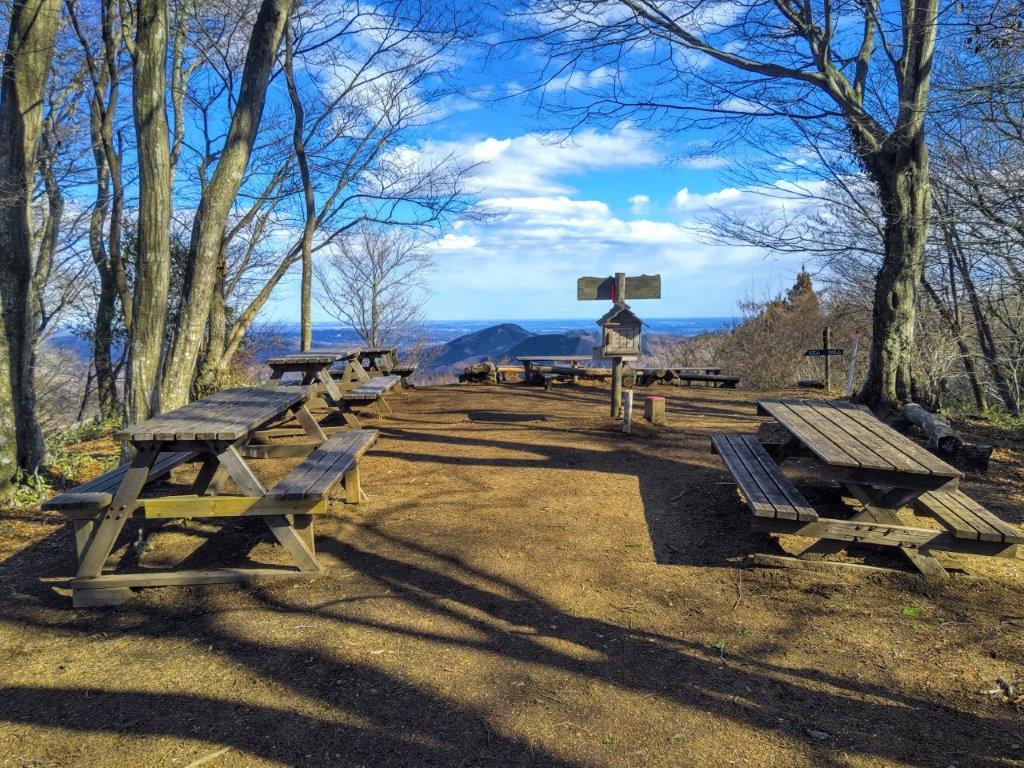
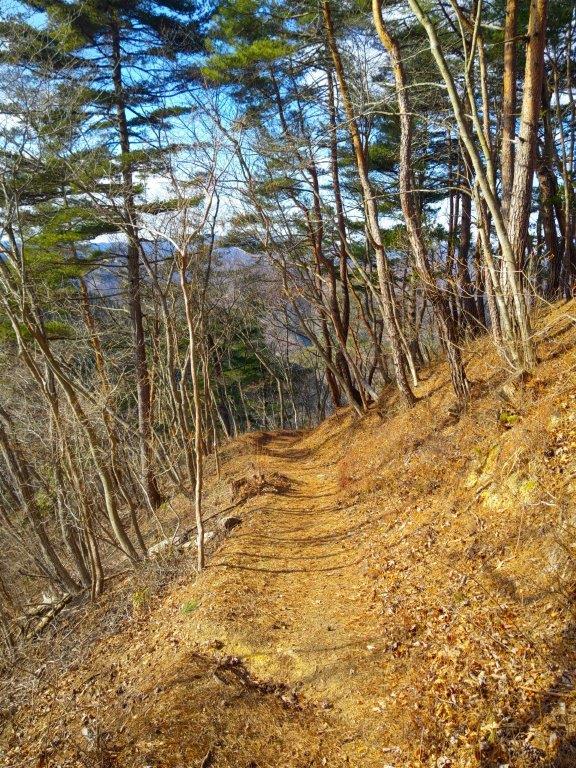
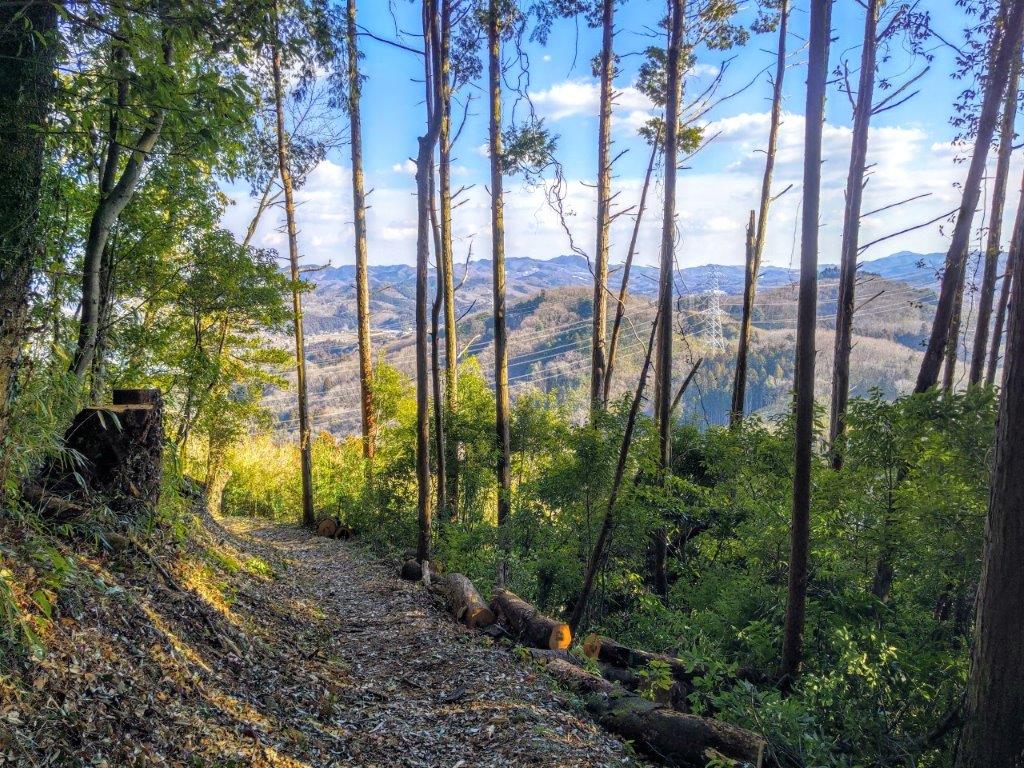
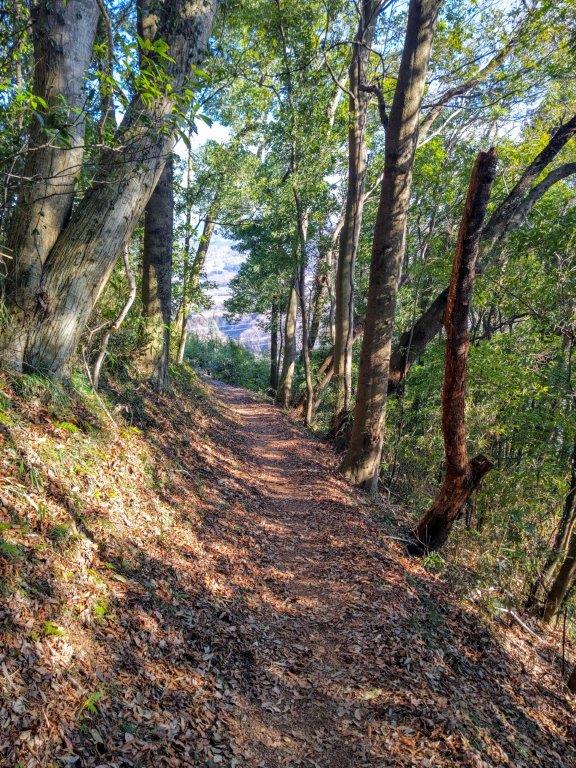
I was surprised by how faint the trail was, nature slowly reclaiming this ancient forest track. At 1230, I emerged onto a forest road opposite a wooden Shinto Gate. I turned left and ignoring a couple of side trails descending to the lake, arrived at a hard to spot trail on the right. On the way, I passed an open shelter; it used to have a view, but that was now blocked by pampas grass. This part was easier to follow, the up and down path winding through swaying cedars. At 1pm, I reached a road where I turned left. After one hour of climbing, I reached Mamenbara Highland (麻綿原高原) and the top of Mt Hatsuhi (初日山 はつひやま hatsuhiyama), inside Tenpai-en Garden (天拝園), famous for its Azalea in the spring.

View of Okuyatsu Number 2 Dam

View of the Pacific from Uchiura Beach

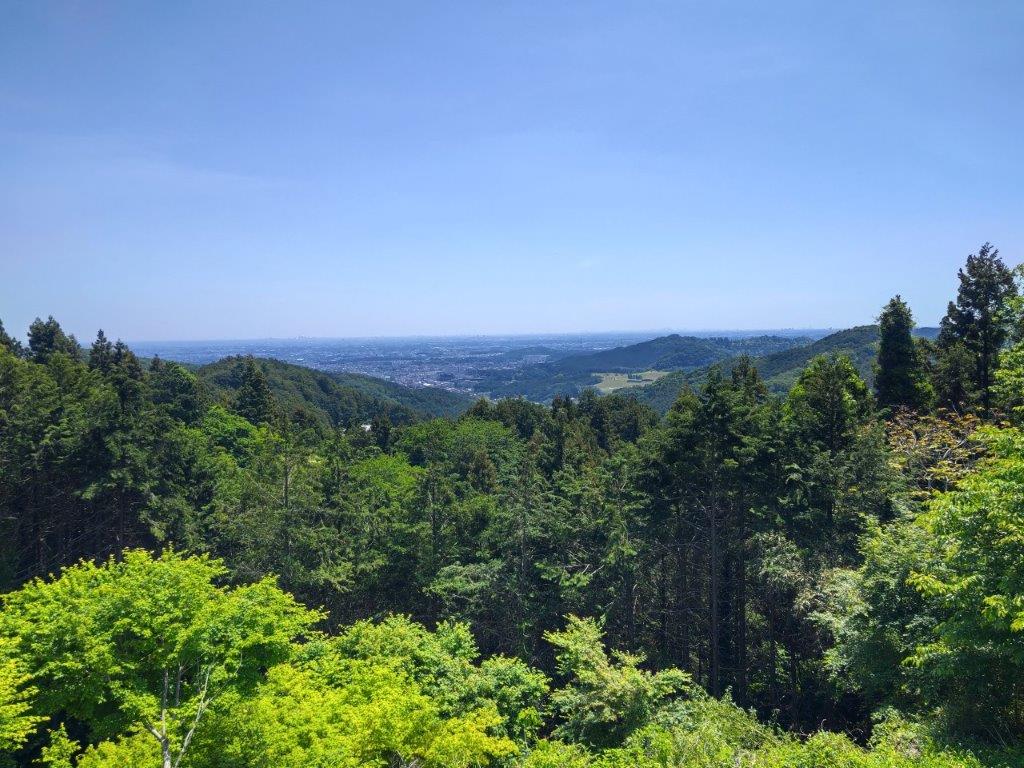
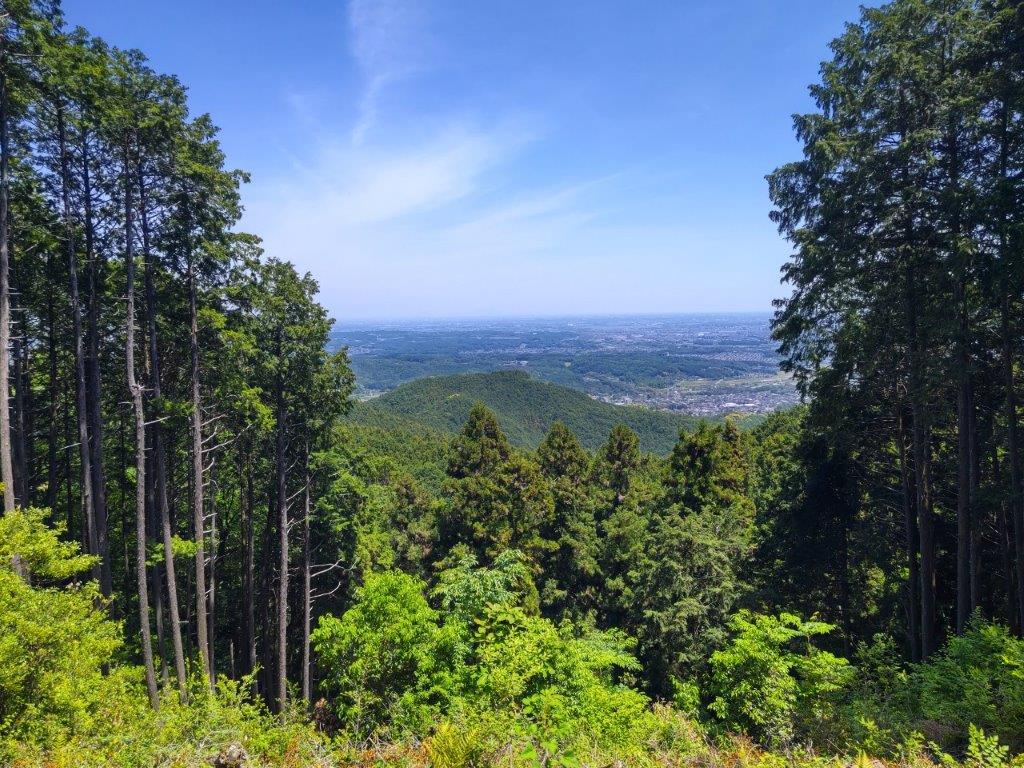
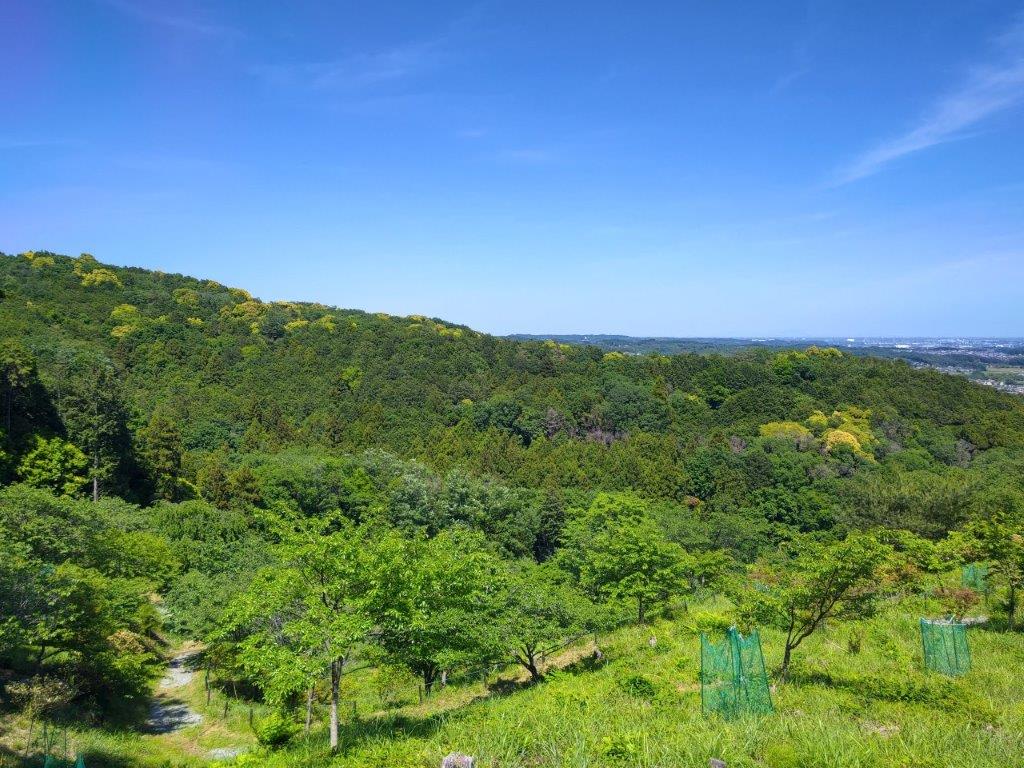
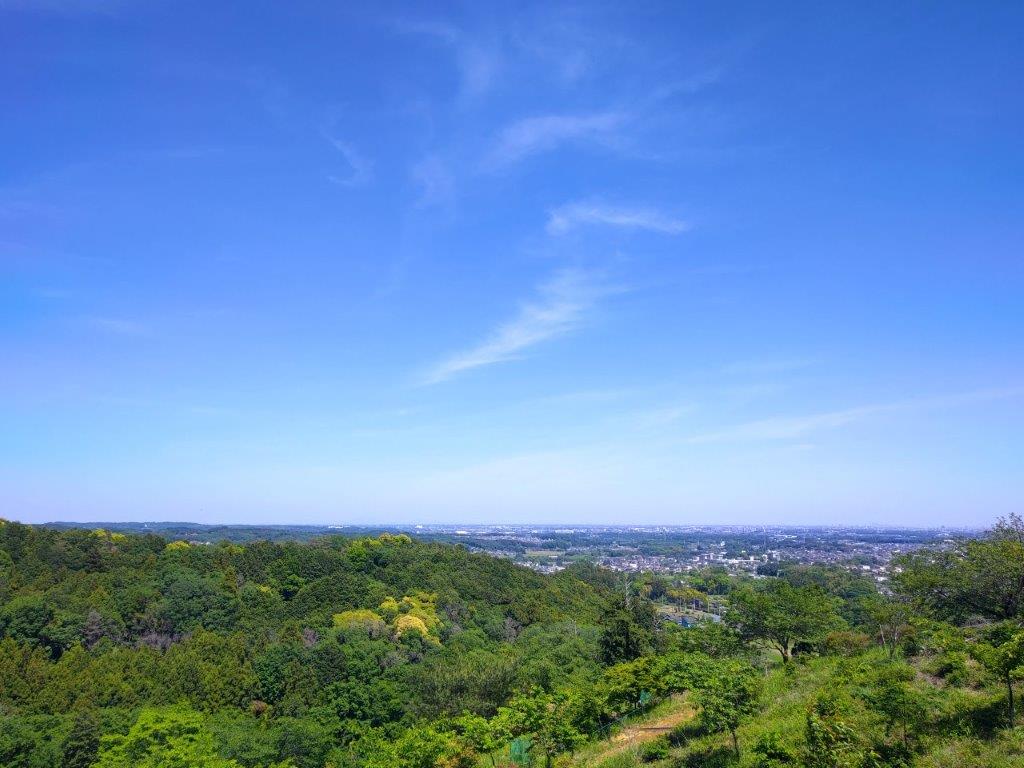
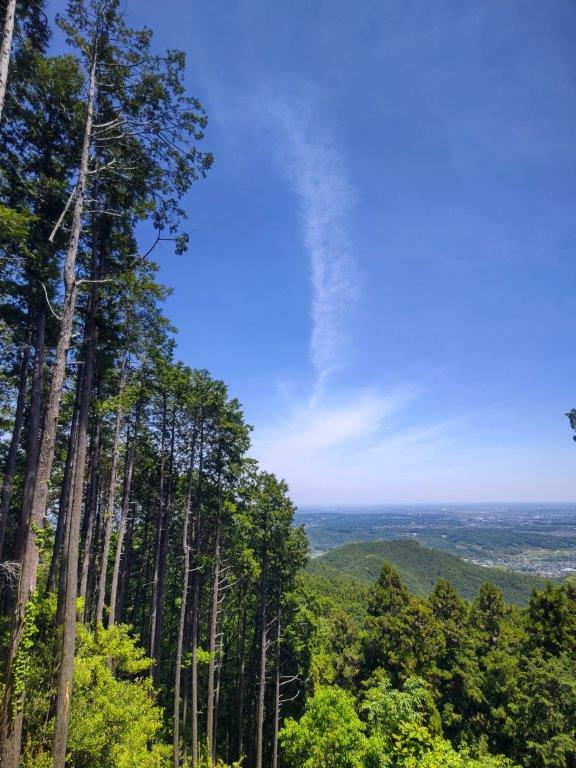
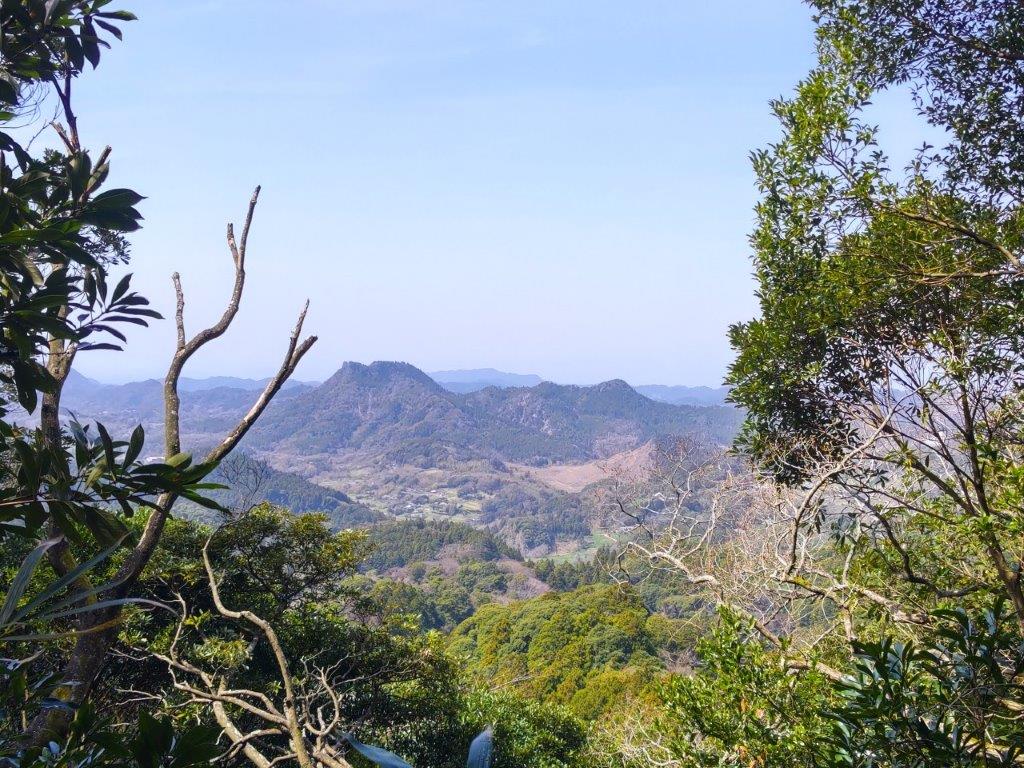
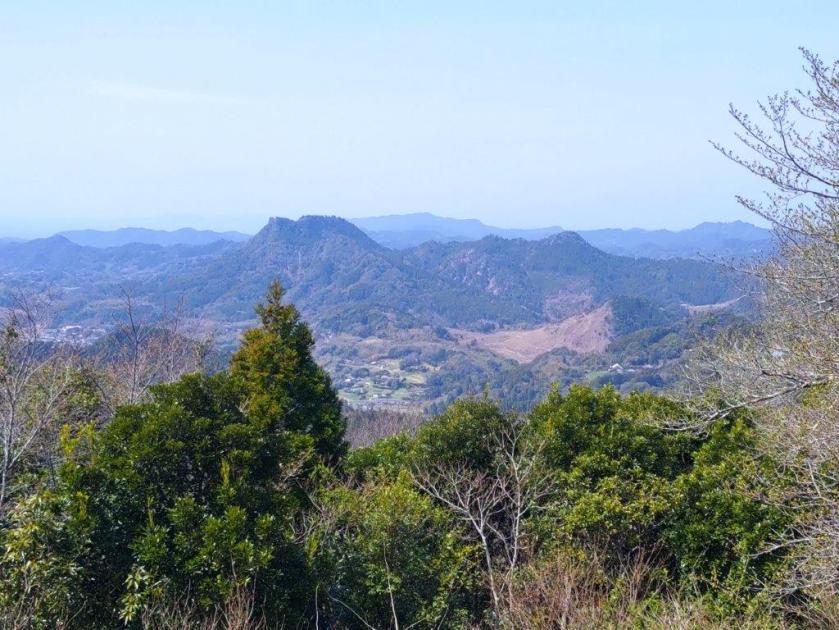
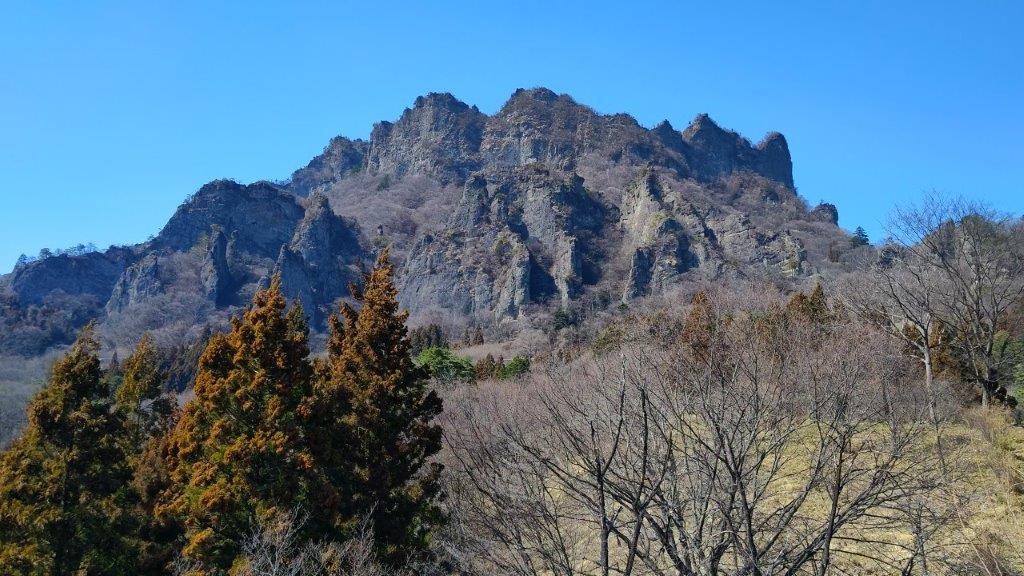
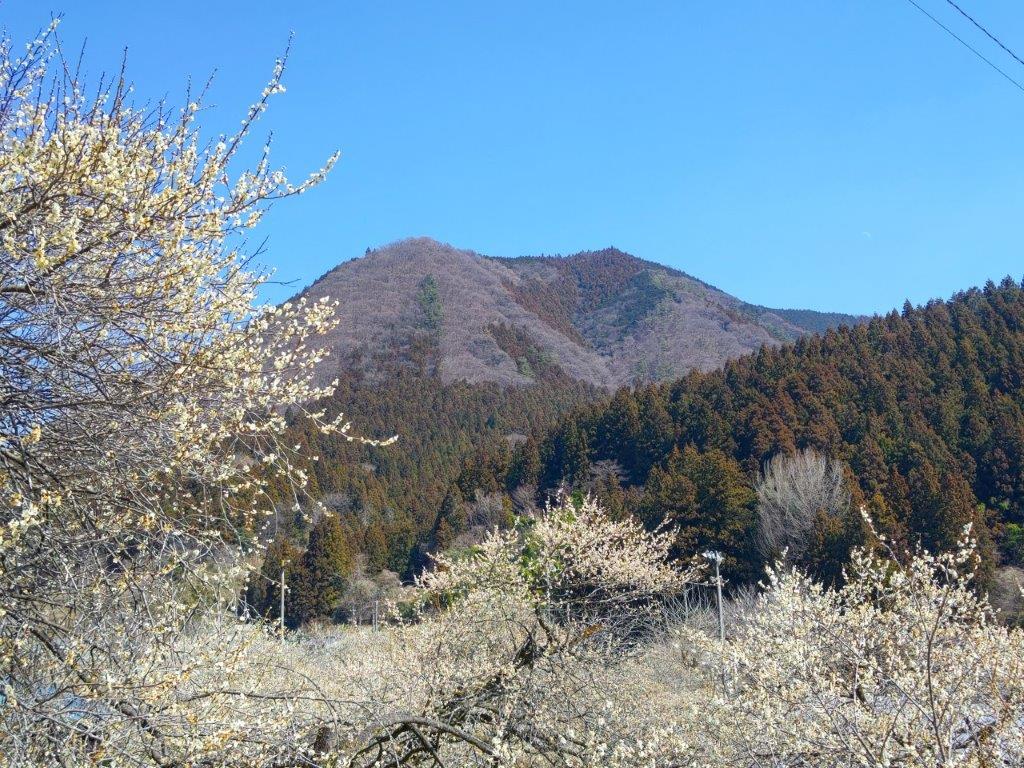
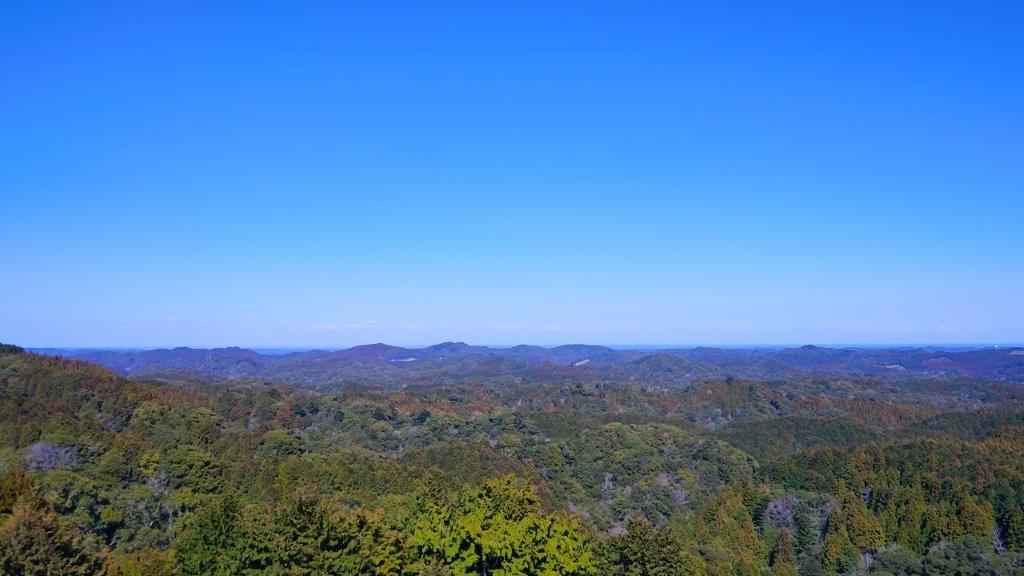
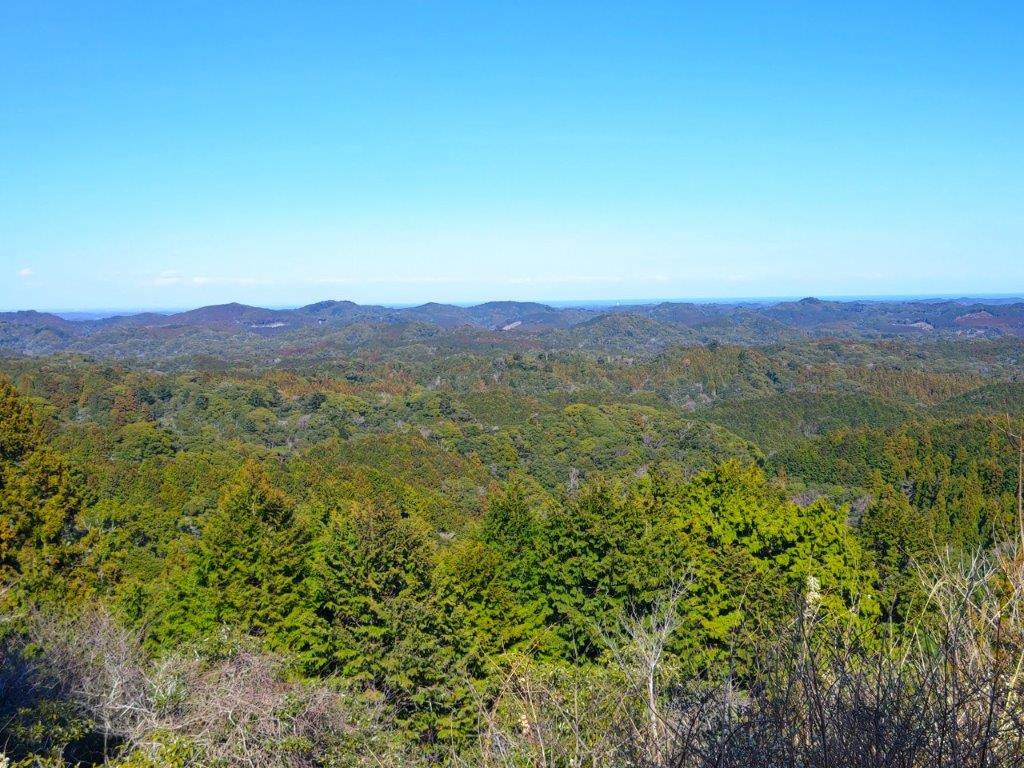
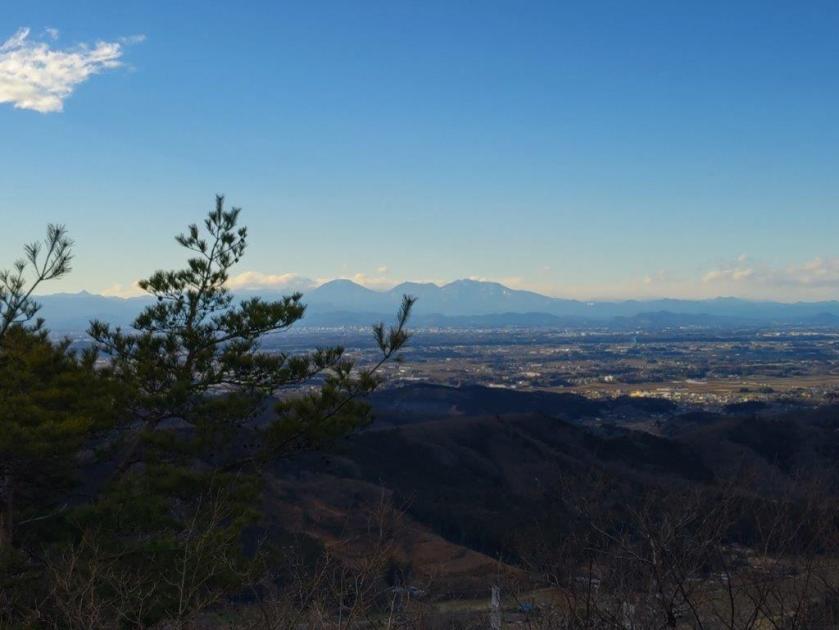
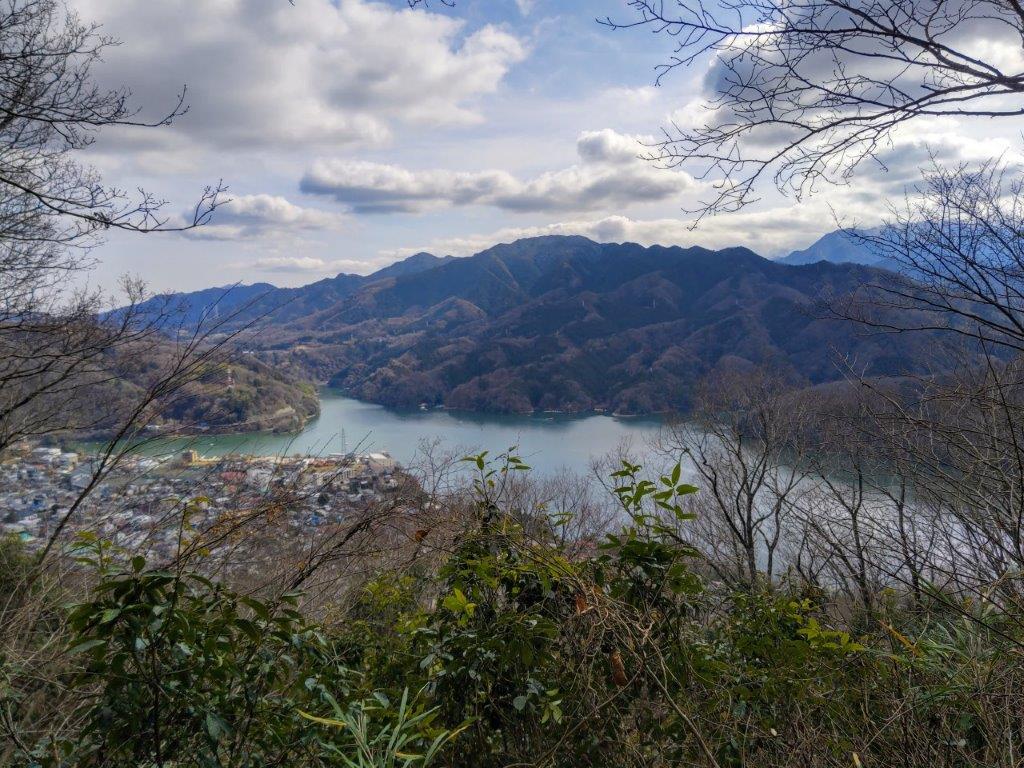
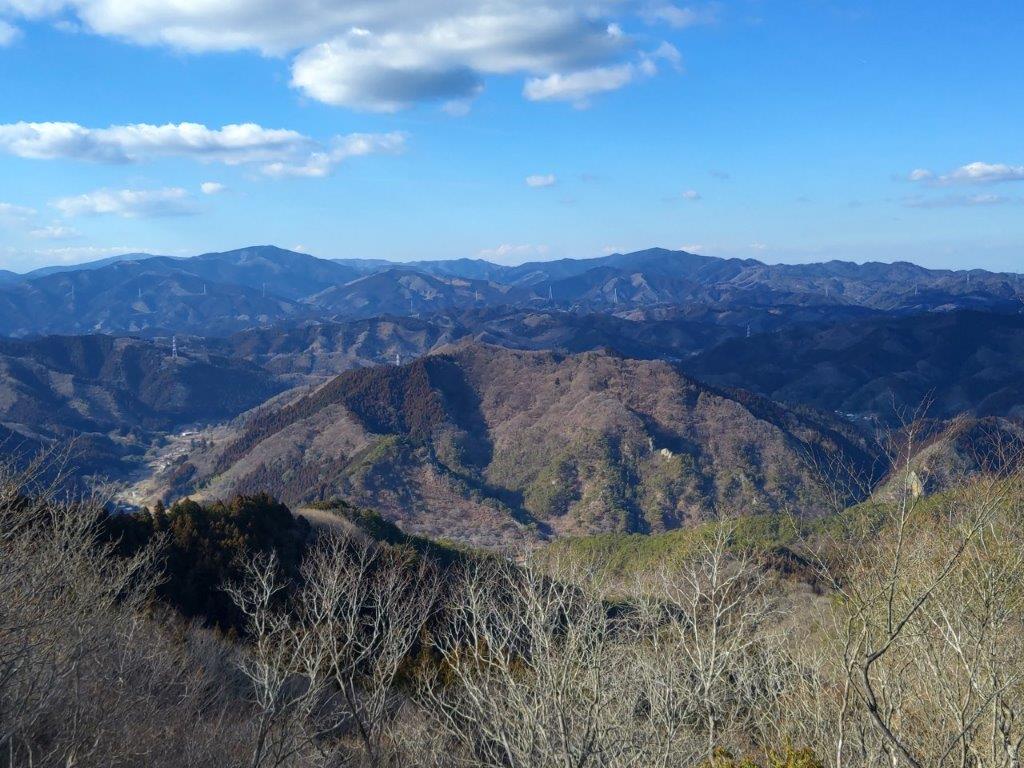
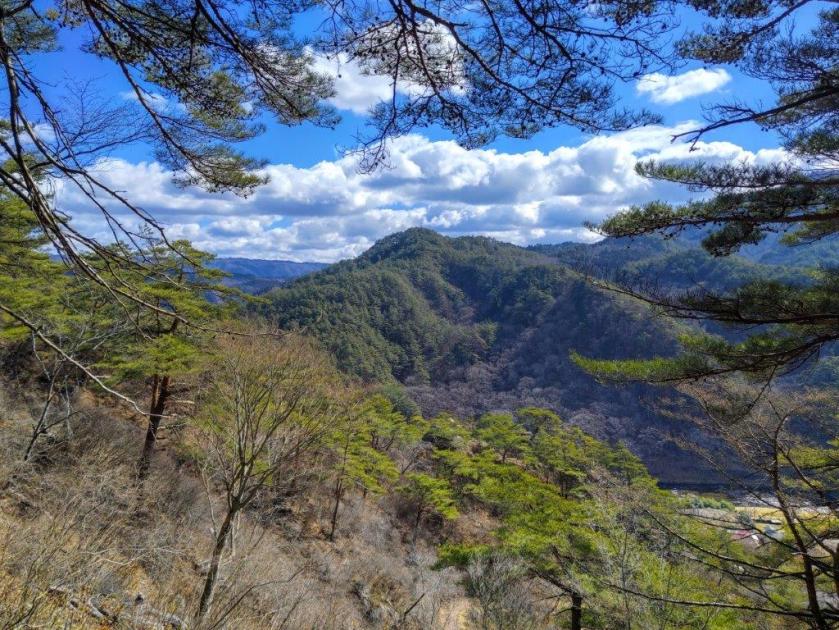
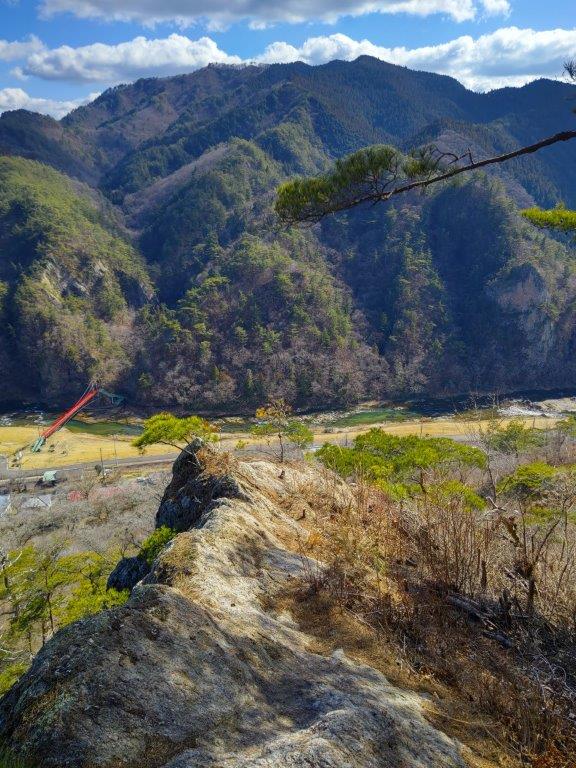
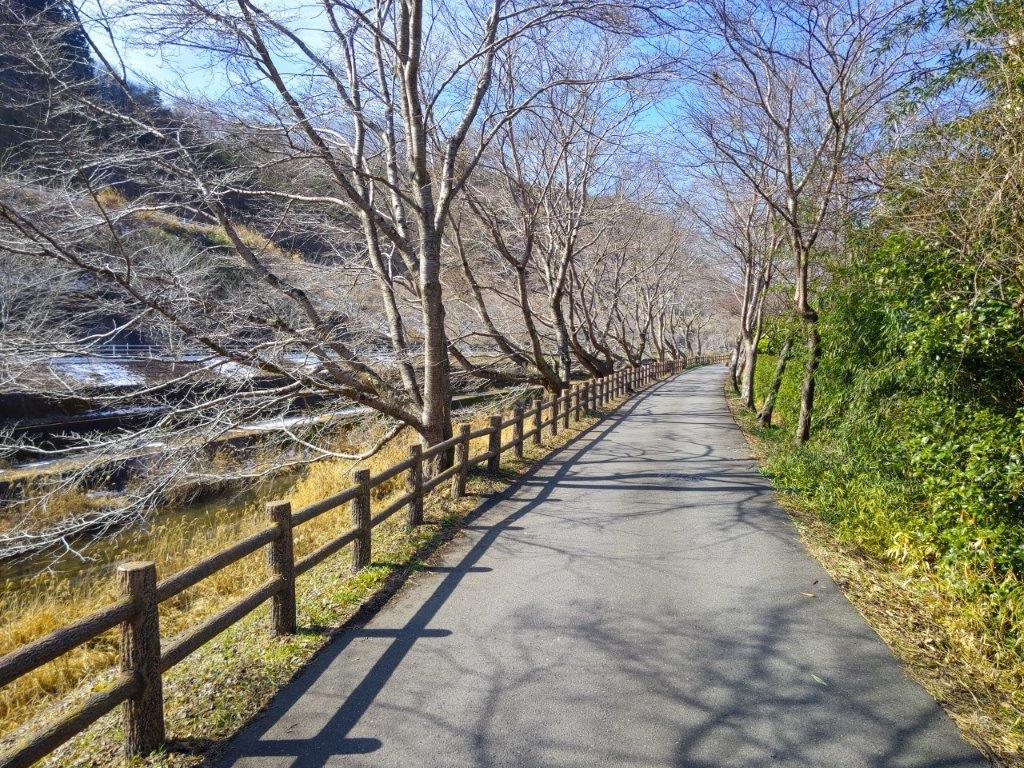
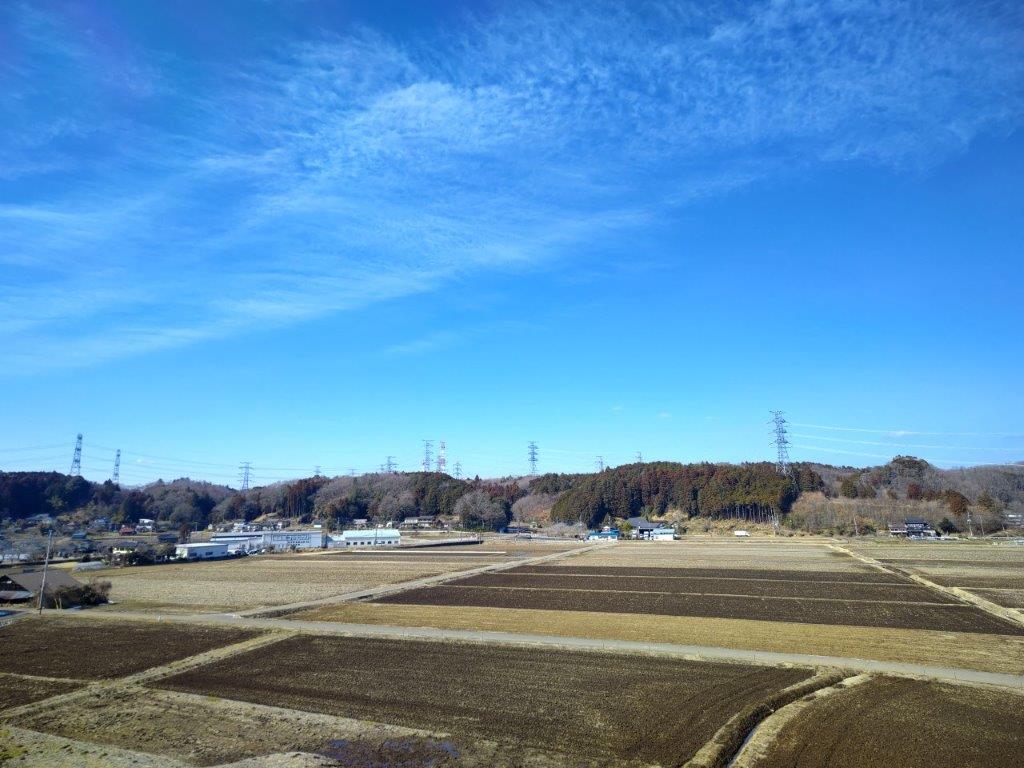
I was stunned by the extensive view on the east side, far better than I had imagined. On the north side, I could see the rolling green hills of Boso extending to the Yoro River valley; on the south side, I could see forested ridges ending at the Pacific Ocean; directly below was Myohosho-ji Temple (妙法生寺). After a short break, I made my way back to the road, and soon turned left onto the Fureai no Michi, leaving behind the closed section on the right. After an hour of downhill walking, I arrived at a rest spot next to Okuyatsu Number 2 Dam (奥谷第二ダム). I spent a few minutes gazing at the yellow waters dazzling in the afternoon sun, the silence broken by urgent quacking of ducks. After setting off again, at a bend in the road, I spotted a “kyon“, a kind of miniature deer, darting into the bushes. At 3h30, I was back at the learning center, giving me plenty of time to catch the limited express for the two hour return trip to Tokyo.

Watch a video of the Mt Hatsuhi Hike

Watch the Video of the Hike on YouTube
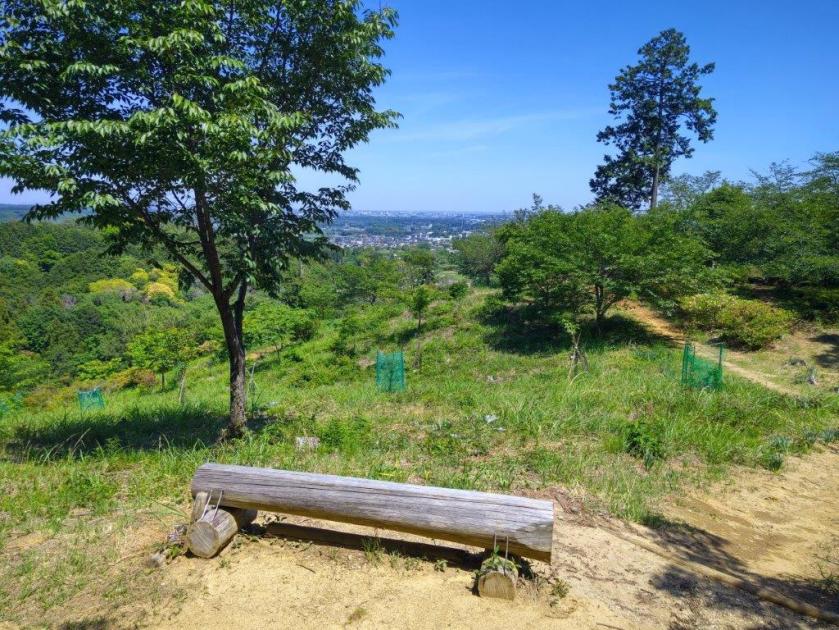
See a Slideshow of More Pictures of the Hike

Mt Amamaki (533m) & Mt Mitsutoya (433m), Mashiko Town, Tochigi Prefecture, Saturday, March 2, 2024

I wanted to revisit a mountain in Ibaraki I had climbed six years ago. According to my guidebook, a network of trails existed on the other side, in Tochigi, allowing me to create a loop hike. I could combine it with another peak on the same ridge. Since no buses run in the area, I would need to drive a car from Mito station, one hour away. The hike was on the short side, so I could get an early lunch at one of the many soba restaurants dotted throughout the countryside, and then start walking from the early afternoon. The weather was supposed to be mostly sunny but cold for the season, with temperatures slightly above freezing at the highest point. I was looking forward to visiting a hard to access, but rewarding hiking area close to Tokyo.

For subscribers, read this Blog Post on Hiking Around Tokyo for a better viewing experience and the latest updates

Walking the Summit Ridge (left) A well-maintained Trail (right)

Trail Before (left) and After (right) Mt Mitsutoya

I got a good look at the plum blossoms of Kairakuen Park in full bloom, as the Hitachi limited express approached Mito station just before 10am. Shortly after getting off the Kita-Kanto expressway, I reached Donjuan (呑珠庵) where I enjoyed one of the best soba lunches in a long while. After driving a little further, I arrived at the Okawado parking lot (大川戸登山口駐車場) and was finally ready to start hiking just before 1am. The weather was cloudier than forecast, although the sun was shining as I followed a forest road up a river valley and through a cedar forest.

Trail just below the Summit of Mt Amamaki

Summit of Mt Amamaki

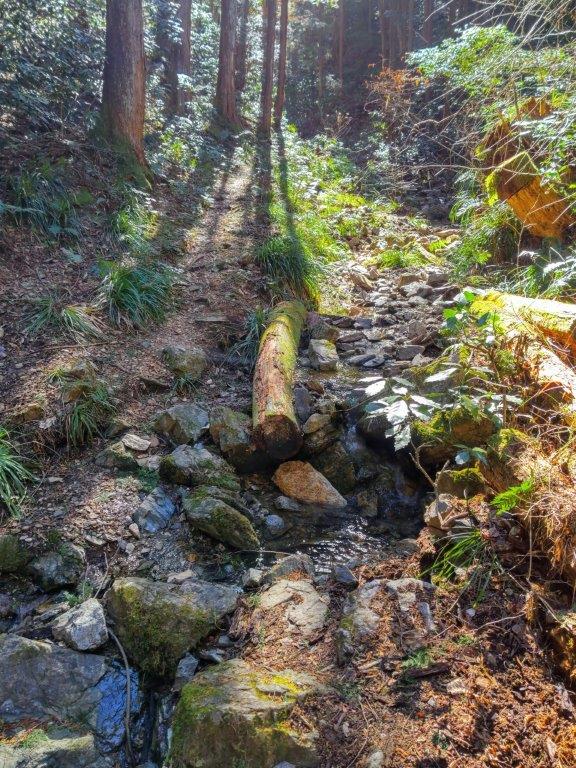
I was delighted to be hiking alongside a stream, the noise of the water rushing over rocks was like music to my ears. Eventually, the forest road turned into a rocky trail. Thirty minutes after setting out, I arrived at a fork where I turned right, onto the Mt Amamaki Ridge Route (雨巻山尾根コース). After a short, steep climb up a well-maintained path, I reached the ridgeline. There, I turned left, and after some gentle climbing surrounded by bare trees, arrived at the summit of Mt Amamaki (雨巻山 あままきやま amamaki-yama), a Tochigi and Kanto 100-famous mountain, a little after 2pm. On the west side, I could see Mt Takamine, Mt Bucho, and further away Mt Yakimori and Mt Keisoku.

View from the Top of Mt Amamaki

The Rounded Summit of Mt Bucho

I was surprised to find the summit completely deserted despite the nearly full parking lot at the base. I sat at one of the benches for a short break before heading back the same way. I continued past the top of the Ridge Route, now following the Mt Mitsutoya Ridge Route (三登谷山大根コース), a mostly level path through the trees. I soon reached a bench with a view of the Ashio mountains on the west side: I could see the highest peaks of Oku-Nikko, the pointy top of Mt Sukai, and the many summits of Mt Akagi. Another half an hour of walking brought me to one more viewpoint, this time on the south side. I could see the Ogodo Alps directly ahead, as well as Mt Tsukuba in the distance.

View West of the Ashio Mountains

Late Afternoon Sun and the Ogodo Alps

I was mesmerized by the colours of the late afternoon sun rays, piercing the clouds on the south side. Soon after, I arrived at Mt Mitsutoya (三登谷山 みつとやさん mitsutoya-san). Westwards, I could see the Oku-Nikko mountains, Mt Takahara and Mt Nasu; directly ahead, and much closer was Mt Takadate. After some descending, I turned right, off the ridge and into the valley through an evergreen forest, eventually rejoining the forest road taken earlier in the day. By now, the clouds had completely covered the sky, making the sun a distant memory. My car was almost the last one left, and by 5pm, I was on the road. At Mito station, I tried some local sake at Ibaraki Jizake Bar before boarding the limited express train for the comfortable ride back to Ueno.

Watch a Video of the Mt Amamaki Hike

Watch the Video of the Hike on YouTube

See a Slideshow of More Pictures of the Hike

Mt Jinba (854m) & Mt Arashi (406m), Sagamihara City, Kanagawa Prefecture, Saturday, February 24, 2024

I wanted to hike a section of the Tokai Nature Trail close to Tokyo which I hadn’t done before. The trail started a short bus ride from Sagamihara Station and ended near a bus stop on the same line, as well as a hot spring. The hike was on the short side, so I decided to tag on a mountain I had climbed nearly ten years ago; looking at my map, I saw I could redo it via a different set of trails. I would take the shortest route up from Wada, a short bus ride from Fujino station on the Chuo line, and walk down to Sagamihara station, passing a couple of minor summits on the way.

Hiking in Okutama 奥多摩

Hiking in the Takao-Jinba Natural Park 都立高尾陣場自然公園

The whole area is a popular hiking spot with well-maintained trails, so although it had snowed the previous day, I was confident it would be easy to walk; I also knew from my previous visit that the summit had a spectacular view of Mt Fuji. The weather was supposed to be sunny, with temperatures slightly above freezing. I was looking forward to a rare winter hike with a Fuji view from the highest point and a hot spring bath at the end.

For subscribers, read this Blog Post on Hiking Around Tokyo for a better viewing experience and the latest updates

Number 2 Wada Ridge Route without (left) and with Snow (right)

Walking the Ichi-no-O Ridge Trail (left) & the Kanto Fureai no Michi (right)

Before (left) and after (right) the summit of Ya-no-Ne

Just past Ohira Hut (left) & Just before Yose Shrine (right)

Heading Up (left) and Down Mt Arashi (right)

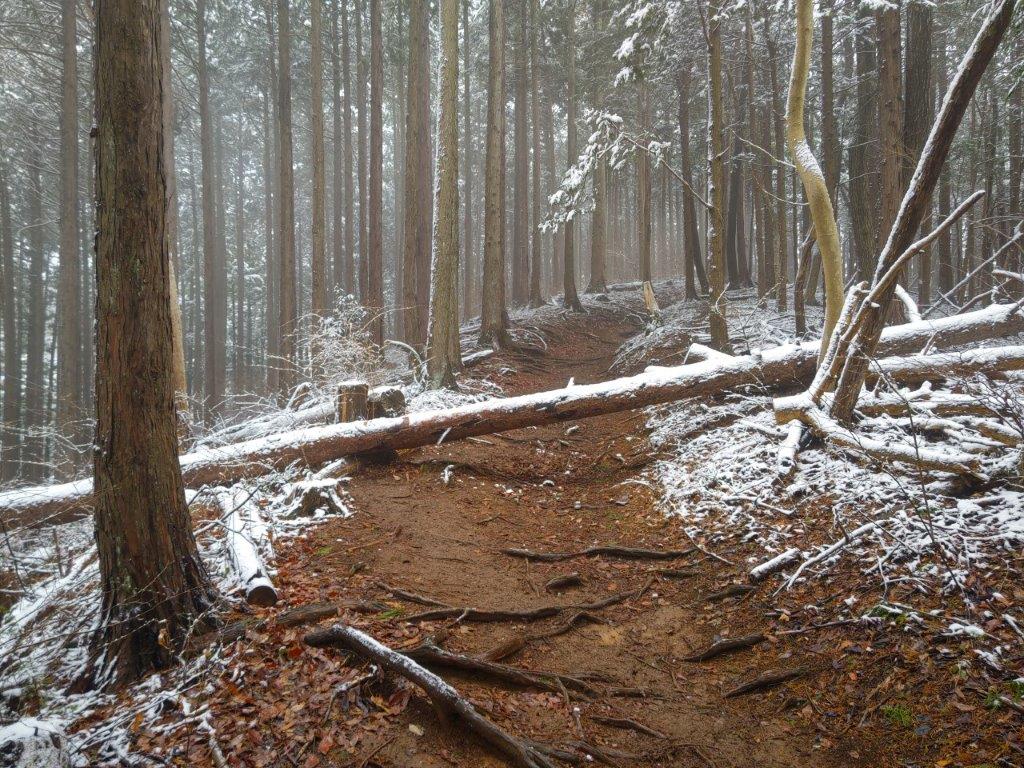
I could see patches of blue sky as I rode the almost full bus from Fujino station around 9am. Most people got off at the main trail entrance, and surprisingly, I was the only person heading up the Number 2 Wada Ridge Route (和田第二尾根コース), shortly before 10am. Looking up, I could see the higher slopes, white with snow before disappearing into the clouds. Less than half an hour later, the scenery changed from dull brown to brilliant white. Contrary to the forecast, the sun remained hidden behind a grey cloud cover, allowing the white mantle to last a little longer.

First snow on the Number 2 Wada Ridge Route

Fallen Log near the Junction with the Ichi-no-O Ridge Route

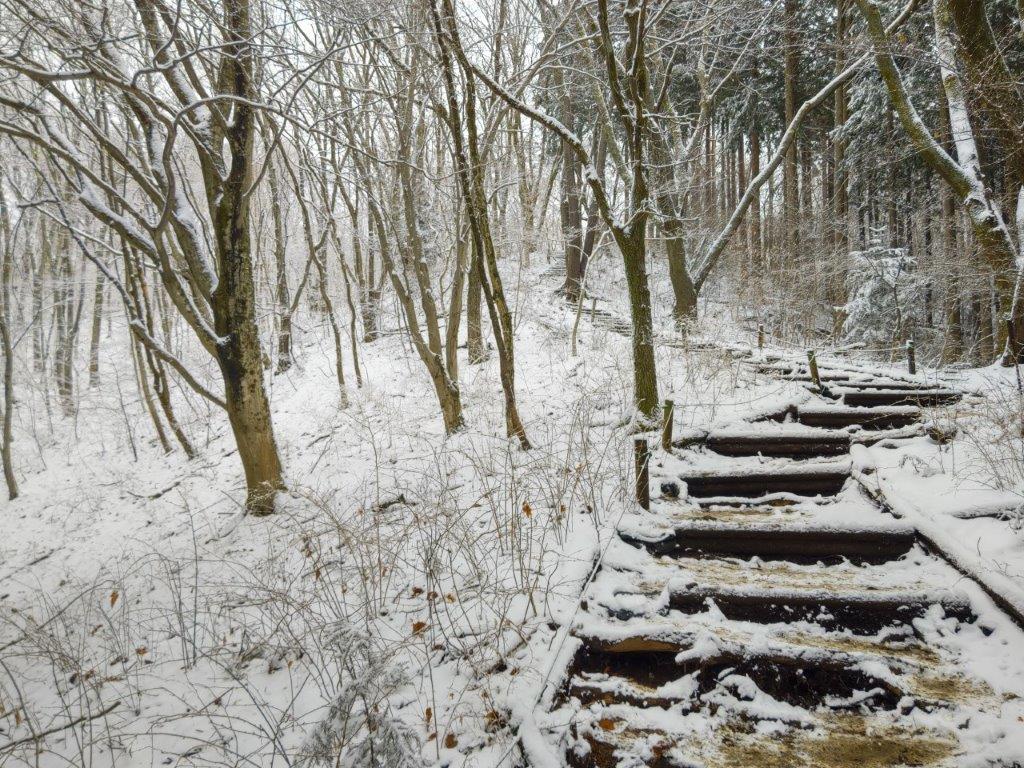
I was amazed by the beautiful wintery surroundings, the wet snow clinging to any surface that wasn’t completely vertical. Melting snow falling gently from the tree branches enhanced the effect, its falling noise reminiscent of soft rain. After merging with the Ichi-no-O Ridge Trail (一ノ尾尾根コース), I saw more people walking through this winter wonderland. At the top of a staircase, I reached the top of Mt Jinba (陣馬山 じんばさん jinba-san), a Kanto 100-famous mountain, shortly after 11am. The view of Mt Fuji on the south side was hidden by thick clouds, but the frozen landscape was compensation enough.

Walking through a Winter Wonderland

Cloudy View from the Top of Mt Jinba

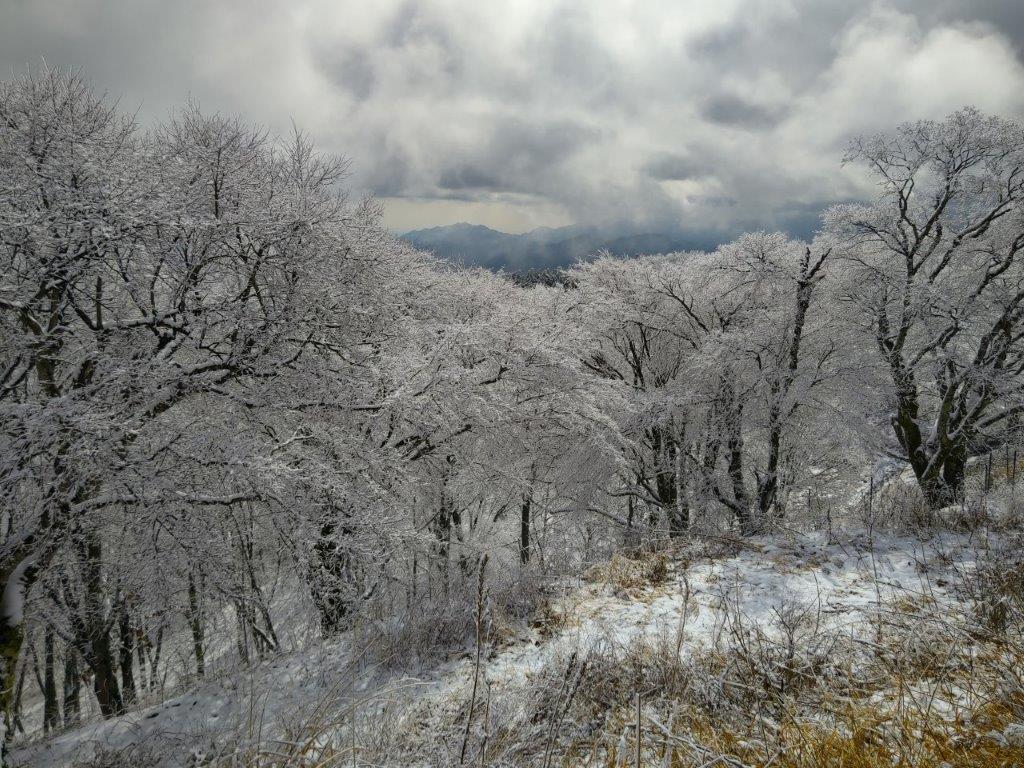
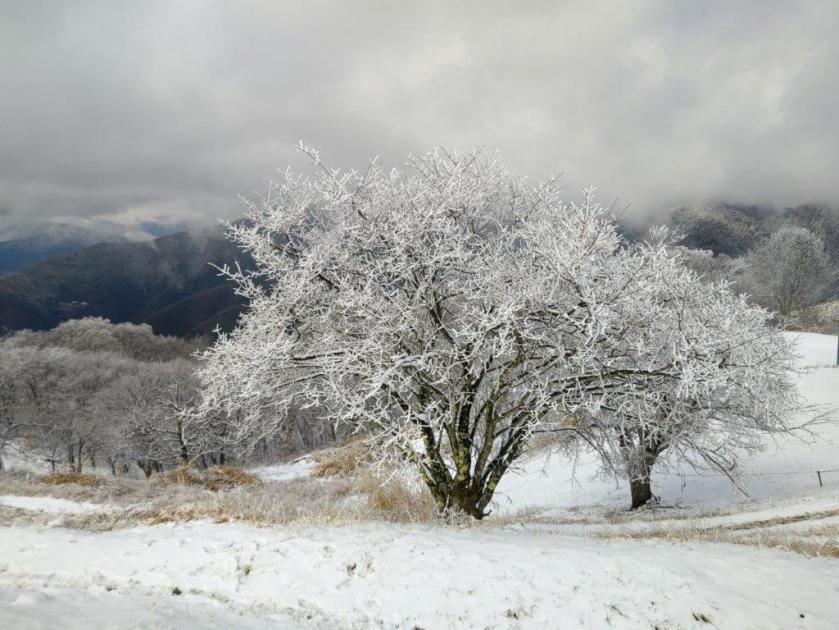
I was stunned by the nearly completely white trees on the north side of the summit. Beyond their frosty crowns, I could see the Kanto Plain, as well as the eastern edge of the Takao mountain range. After a short break, I set off again, now following the Kanto Fureai no Michi. I was walking on the snow, but since any sloping sections had steps, it always felt perfectly safe. I was glad to be wearing a wide-brim hat, as it protected me from snow falling from the trees. A little after noon, I arrived at Myou Pass (明王峠) where I left the Fureai no Michi, and headed down a series of steps southwards.

White Trees on the North Side of Mt Jinba

In the Background, the Eastern Edge of the Takao Range

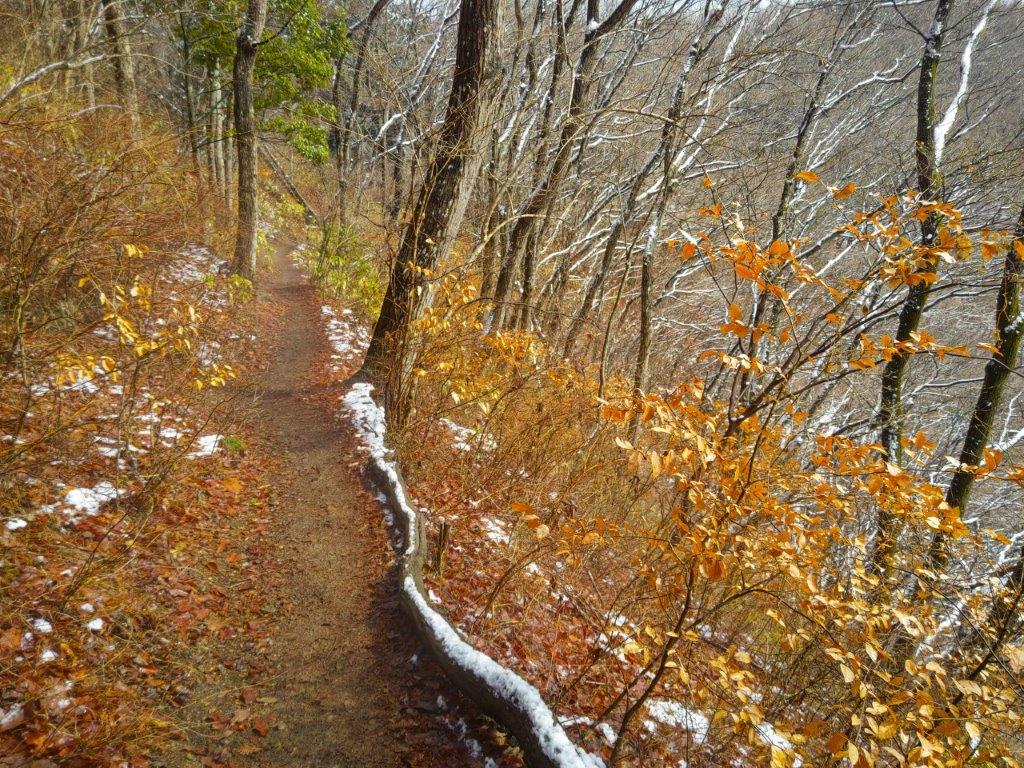
I was once again walking on solid ground although snow still covered the trunks and branches of the bare trees; it was like walking through a Christmas displayed created with snow spray. Thirty minutes later, I went left at a fork in the trail. Very soon, I reached the top of Yanone (矢ノ音 633m), completely in the trees. I immediately headed down a precipitous trail on the left side, and soon reached Ohira Hut (大平小屋), actually an open shelter. After a short break, I continued on my way, on a level trail though a forest of tall cedars. On the way, I made a short detour via Mt Mago (孫山 543m). After some descending, I reached a viewpoint on the southeastern side.

A little bit of Autumn in the Wintery Landscape

Snow Coated Trees at Lower Elevations

I enjoyed the view of the majestic bulk of Mt Sekiro rising directly behind Sagami Lake; to its left, was Mt Arashi, today’s next peak, and Sagamihara City. Since it was 2pm, I had a late lunch before setting off again. I soon reached Yose Shrine, at the base of the mountain, and shortly after, Sagamiko Station. There, I hopped on a bus for the short ride to Sagamiko Bridge, a few minutes on foot from the Tokai Nature Trail. After thirty minutes of easy climbing, I arrived at the summit of Mt Arashi (嵐山 あらしやま arashi-yama), meaning Mount Storm. On the west side, I could see Mt Momokura, Mt Ogiyama and Mt Gongen, but the view was rather subdued on this cloudy, wintery day.

Descending from Mt Mago

Viewpoint of Sagami Lake and Mt Sekiro

I was surprised by the up and down nature of the trail beyond the summit. I crossed tiny streams over narrow wooden bridges and scaled thin metal ladders up steep slopes. At 4pm, I crossed a dense and dark bamboo forest, always a fascinating experience for me. Less then half an hour later, I finally reached a road at the end of the trail. After a refreshing hot bath at Ururi Onsen, part of the Sagamiko Resort Pleasure Forest, I caught a bus for the ten-minute ride back to Sagamiko Station, where I boarded the Chuo line for the one-hour ride back to Shinjuku.

View of Mr Arashi (left) and Mt Sekiro (right ) from below Yose Shrine

Bamboo Forest on the Tokai Nature Trail

The hike was longer and harder than I had expected, over 6 hours, so I was glad I could recover at a hot spring at the end. On the other hand, the snowy scenery far exceeded my expectations, thanks to the cloudy cover shielding the sticky snowy tree decorations from the sun and preserving them throughout the day. The snowmelt dripping from the trees was also a new experience for me, as I was walking under sunshine and snowfall at the same time. I encountered many other hikers between Ichi-no-O Ridge and Myou Pass, but very few before and after. I hope to return in the future to explore the other trails crisscrossing the Takao mountain range.

Watch a Video of the Mt Jinba Hike

Watch the Video of the Hike on YouTube

See a Slideshow of More Pictures of the Hike
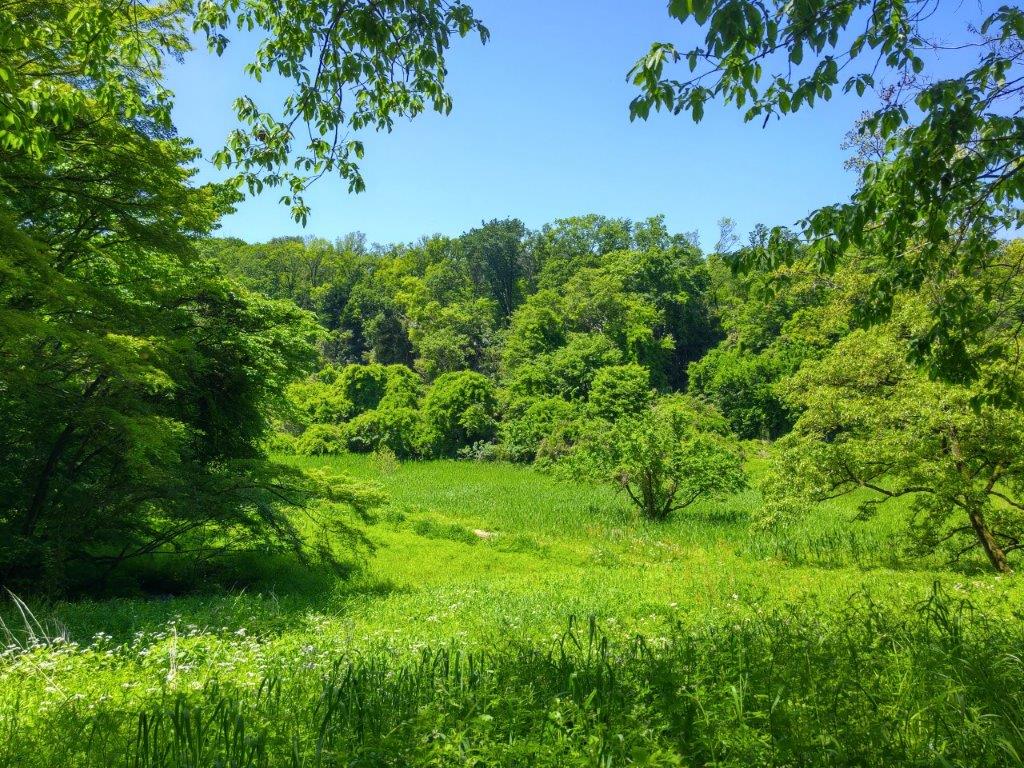
Mt Yamatsuri (383m) & Mt Hiyama (510m), Yamatsuri Town, Fukushima Prefecture, Sunday, February 18, 2024

I wanted to do another hike on the Abukuma Plateau after seeing it from afar on my previous hike. Looking at my Mountains of Fukushima guidebook, I found two short loop hikes on opposite sides of the Kuji river, just across the border with Ibaraki prefecture. It was similar to a hike I had done in 2019, but somewhat further up the valley. Looking online, it seemed I could get some great views of the whole area; at the end, I could visit a nearby waterfall, if time allowed.

Hiking in Tohoku 東北

I would ride the Hitachi Limited Express from Ueno to Mito, and there transfer to the Suigun line, getting off at Yamatsuri station, two stops past Hitachi-Daigo. For the return, I could continue along the same line, all the way to Koriyama, the last station, from where I could catch the shinkansen back. The weather was supposed to be sunny and cloudy, with temperatures above average for the season. I was looking forward to riding the entire length of the Suigun line for the first time, and getting some new views of the Abukuma Mountains.

For subscribers, read this Blog Post on Hiking Around Tokyo for a better viewing experience and the latest updates

Start of the hike (left) Near the Top of Mt Yamatsuri (right)

Heading Down Mt Yamatsuri (left) and Mt Hiyama (right)

It was a blue sky day as I got off the colourful train car just before 11am, the other cars having been left behind a few stations back. I immediately headed to the nearby trail entrance, and soon reached the first viewpoint of the day, on a rocky ridge slightly off the main path. After taking in the views of the river valley below, I made my way up some log steps leading to a paved path. Shortly after a viewpoint of Hizuki Rock (日月岩 hizuki-iwa) to the south, I reached the start of the hiking trail on the right. In almost no time I reached a treeless ridgeline, from where I had a view of the Abukuma plateau to the north.

View North of Abukuma-kochi from below Mt Yamatsuri

View North of Abukuma-kochi from Tendozuka

I was amazed by the bird’s-eye view of the valley and hills below, especially since my elevation was relatively low. A few minutes later, I arrived at the summit of Mt Yamatsuri (矢祭山 やまつりやま yamatsuri-yama). Northeast, I could see Mt Yamizo. The clouds had started to roll in, creating alternating patches of light and dark on the scenery. I quickly moved on, and after a short up and down, reached the flat top of Tendozuka (402m 天道塚 てんどうづか) from where I had a nearly 360° view of the entire area.

Looking down from Hizuki-iwa

Looking East towards Mt Hiyama

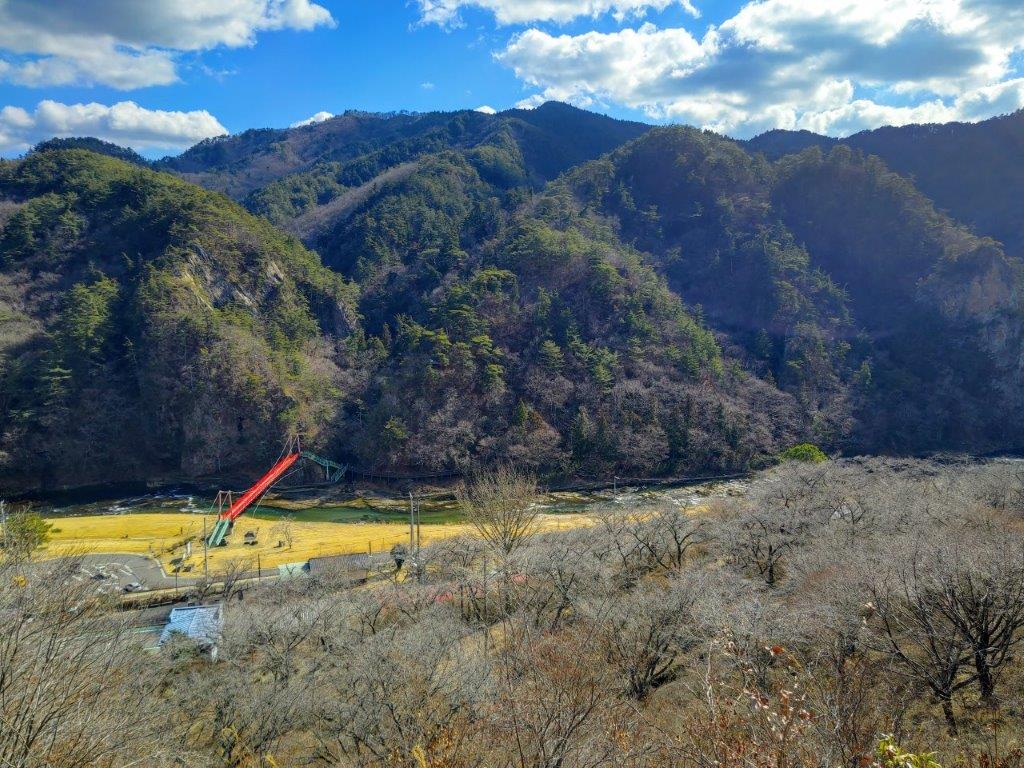
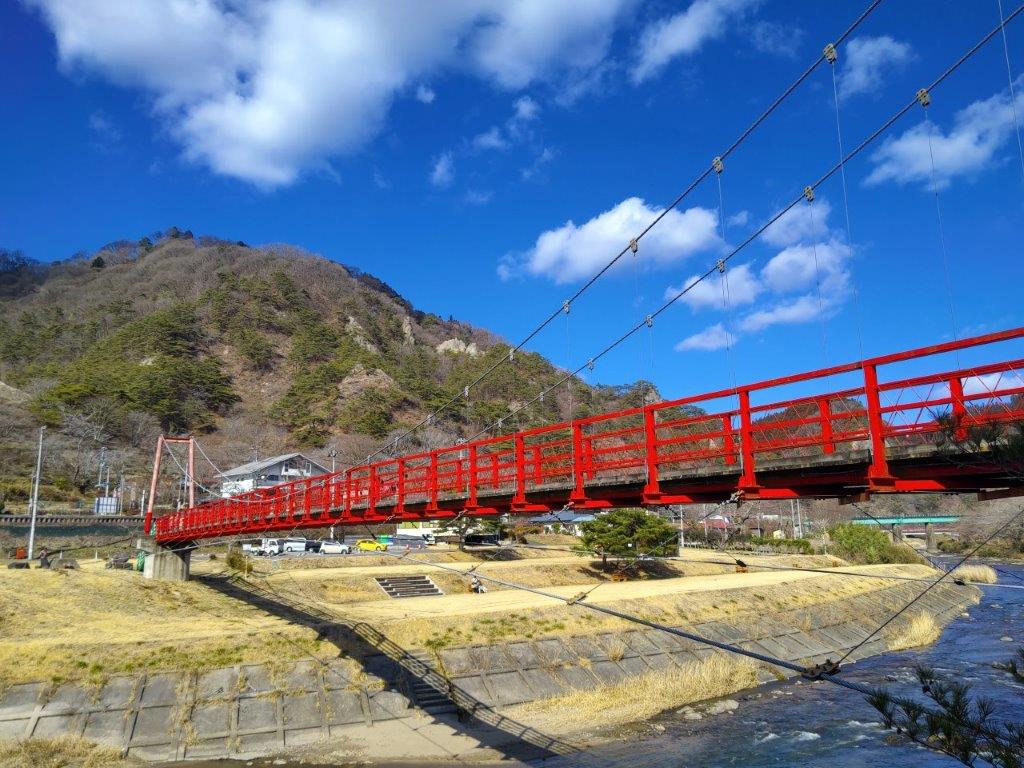
I was stunned by the vast panorama, most of the surrounding mountains new to me; apparently even Mt Fuji could be seen, although not today. It was just past noon so I had sat on one of the many benches for an early lunch. At 12h30, I started to head down. On the way, I passed a viewpoint on the side of Hizuki Rock. From the rocky outcrop, I could see the meandering Kuji river below. The trail now hugged steep mountain side, mostly out of the trees, and it felt very warm under the sun. At 1pm, I reached the base, and after crossing a red hanging bridge, headed up a trail through the cedars. I soon turned left onto a forest road which I followed for a while, before leaving it for a path on the right.

Red Hanging Bridge over Kuji River

View North of the Kuji River Valley

At 2pm, I reached a level area with a bench and a wide view. Directly ahead, the Kuji river valley extended northwards. On the west side, I was looking down at the loop hike I had walked earlier in the day, with the bulk of Mt Yamizo spreading out in the background. A few more minutes of walking brought me to the top of Mt Hiyama (檜山 ひやま hiyama) where I finally a had a good view on the south side. I could see the rugged outline of Mt Nantai, the most famous peak in the area. After a short break, I headed back down the same way. Since I was on schedule, I made a detour via Muso Taki (夢想滝 dream waterfall), which I reached at the end of a narrow ravine.

Mt Nantai (left) from the top of Mt Hiyama

In the foreground, Mt Yamatsuri, in the background, Mt Yamizo

Although the waterfall in this season was rather small, I was impressed with the huge overhanging cliff right next to it. It was nearly 3h30 so I made my way back to the station to catch one of the few afternoon trains for the one hour and a half ride to Koriyama. Along the way, I enjoyed some views of the higher mountains of Fukushima prefecture on the west side. After arriving in Koriyama, I boarded the shinkansen for the one hour ride back to Tokyo. I saw few people and had lots of great views on today’s hike so I was glad I had gone all the way to a little visited in area northeastern Japan.

Watch a Video of the Mt Yamatsuri & Mt Hiyama Hike

Watch the Video of the Hike on Youtube

See a Slideshow of More Pictures of the Hike
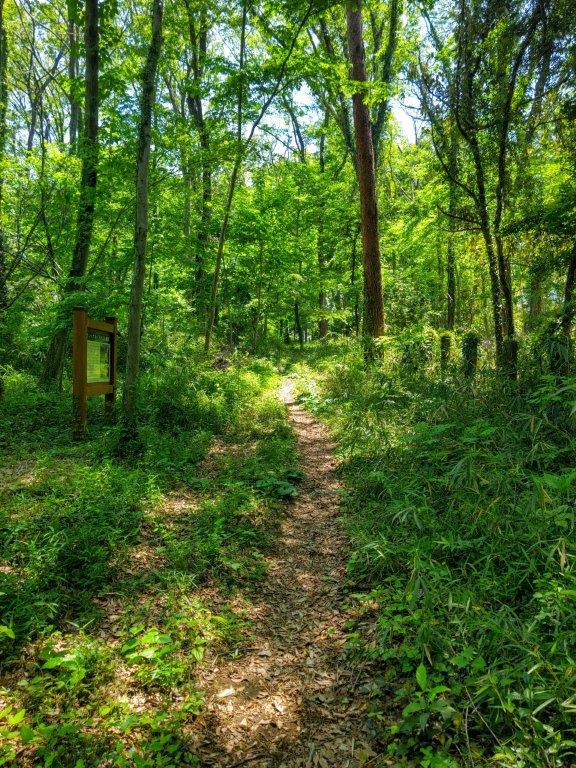
Haga-Fuji (271m), Motegi Town, Tochigi Prefecture, Saturday, February 10, 2024

I wanted to explore more of the Kanto Fureai no Michi, its trails being well-suited for winter hiking. I decided to do a section between Motegi and Nanai stations in eastern Tochigi, mostly following back lanes through an area of low hills, at the southern edge of the Abukuma Plateau. It had snowed heavily a few days before so this felt like a safe choice. At the halfway point was another local “Fuji”, with supposedly good views from the top, although I hoped no snow would be left on the steep climb.

Hiking the Kanto Fureai no Michi

関東ふれあいの道

I would ride the Utsunomiya line to Oyama Station, and then the Mito line to Shimodate station. There, I would transfer to the private Mooka line (pronounced “mo-oka”) and get off at the last station. For the return, I could get catch a bus for Utsunomiya, and then ride the shinkansen back to Tokyo. The weather was supposed to be sunny and cold, but not freezing. I was looking forward to a relaxing station to station hike and getting some new views in a little-visited area.

For subscribers, read this Blog Post on Hiking Around Tokyo for a better viewing experience and the latest updates

Heading up (left) and down Haga-Fuji (right)

A Well-Maintained Trail on Haga-Fuji (left) with Views through the Trees (right)

It was a beautiful blue-sky day as I stepped off the train at Motegi just before 11am. I was surprised by how few people visit this charming riverside town in the hills, although it might be due to the winter season. I set off half an hour later and followed a promenade along the Sakasa river. On the way, I passed the quiet “Cat Store” (猫の雑貨屋), a small shop and cafe selling cat-related goods, and the busy “Motegi Roadside station” (道の駅もてぎ), from where I got a glimpse of the steam locomotive (SL) that runs on the Moka line on weekends.

Promenade along the Sakasa River

Walking through the Tochigi Countryside

It was a day for sights in the sky: white herons taking off above the river, wispy cirrus clouds moving quickly overhead, a helicopter whizzing by, power lines spanning the sky between pylons, and even a couple of circling hang-gliders which I first mistook for birds of prey. After a short bit on a busy road, I crossed a bridge and left the Sakasa river for a short detour by Anraku-ji temple (安楽寺) and its 600-year-old Zelkova tree (“keyaki“), from where I had my first glimpse of the conical top of today’s mountain. Thirty minutes later, I passed some terraced rice fields, one of the 100 rural landscapes of Tochigi, still covered in snow. Soon after, I reached the entrance to the hiking trail on the left.

Mt Yakimori & Mt Keisoku from near the top of Haga-Fuji

Mt Amamaki & Mt Takamine from halfway down Haga-Fuji

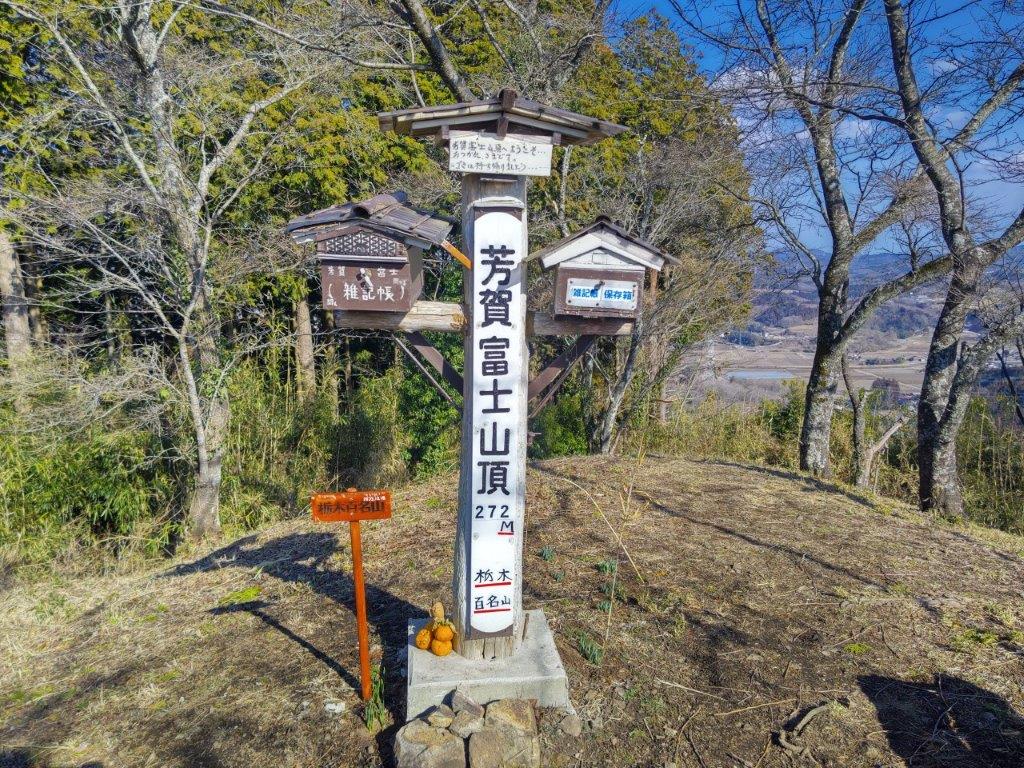
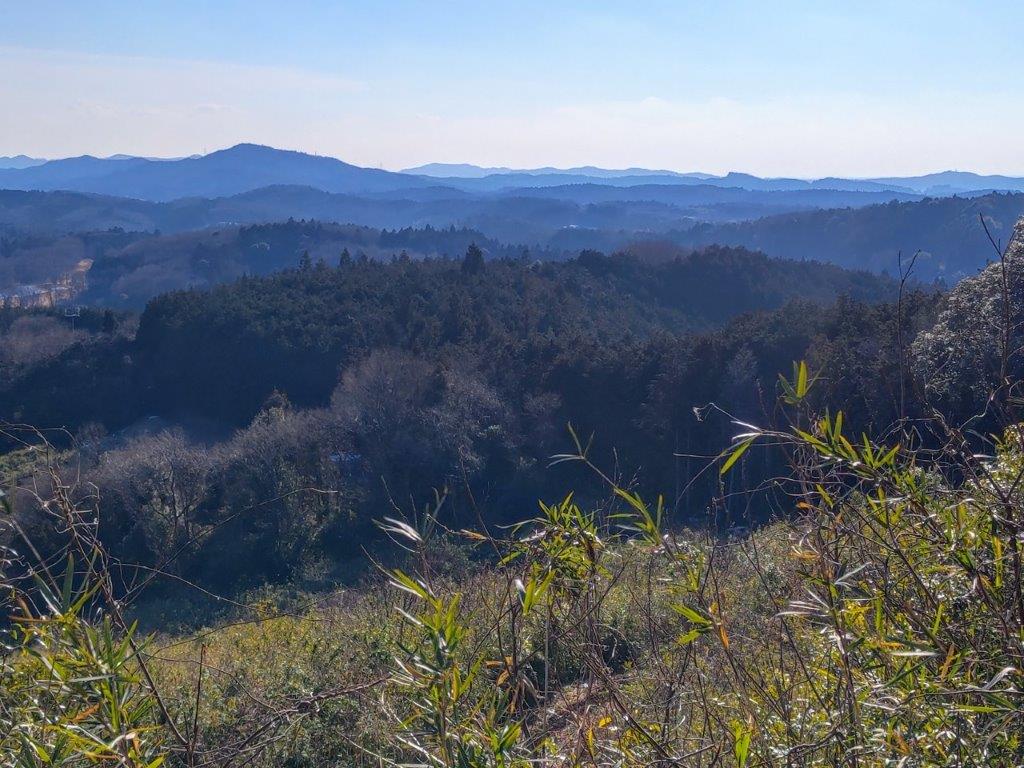
I was surprised to see the path covered in snow, with only one set of footsteps. Luckily, once it entered the forest, the snow all but disappeared. After a steep but short climb through cedars, I reached a dirt track with a wide view on the east side. I could see Mt Yakemori and Mt Keisoku, as well as the other Mt Fuji in the area. One final effort brought me to the highest point of Haga-Fuji (芳賀富士 はがふじ), a 100 famous mountain of Tochigi. The view was mostly blocked by trees; through a gap on the southwest side was a view of the real Fuji, although today it was lost in the haze. It was 2pm so I sat on one of the benches for a late lunch. After half an hour, I headed down a switchback trail on the south side.

Snowy Section of the Fureai no Michi

Looking back at Haga-Fuji

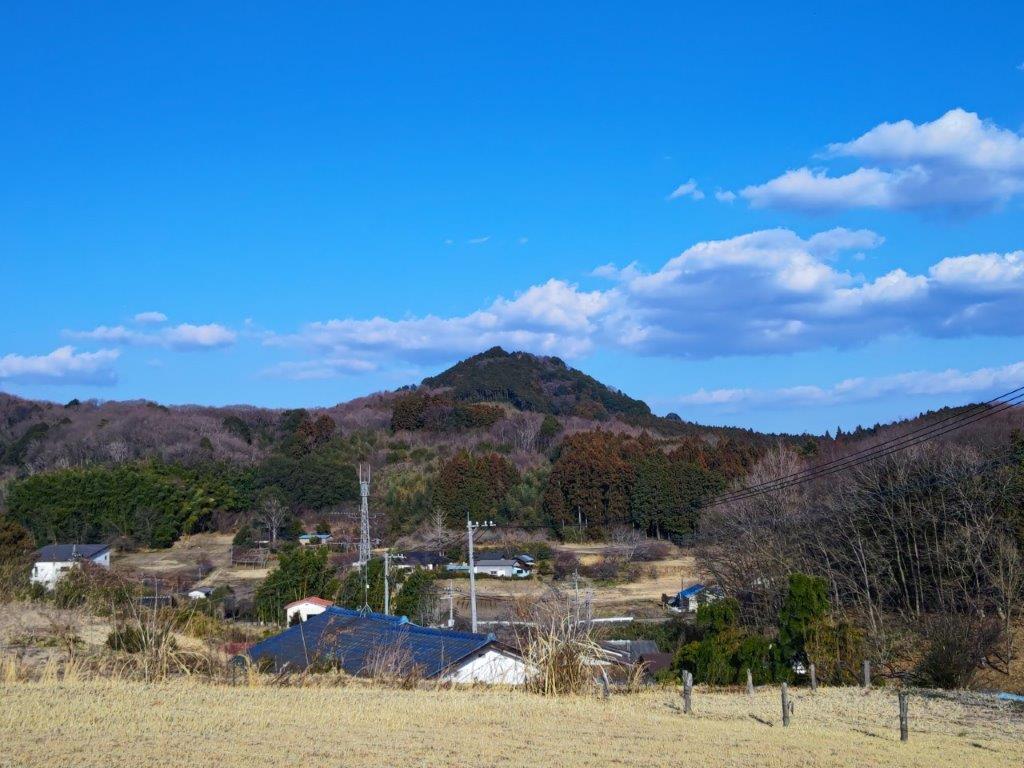
This was by far the most pleasant part of the hike. Halfway down and slightly off the trail, I had a view to the south of Mt Amamaki and Mt Takamine, as well as the Ogodo Alps. I soon reached the base, and after passing Kumano shrine and Anzen-ji temple (安善寺), was back on countryside lanes. Turning around at the top of a slope, I could admire the conical shape of today’s peak. Another hour of uneventful walking brought me to a bus stop near Nanai station; a little after 4pm I boarded the bus for Utsunomiya, where I hopped on the shinkansen for the short trip back to Tokyo.

View a Video of the Haga-Fuji Hike

Watch the Video of the Hike on Youtube

See a Slideshow of More Pictures of the Hike

Mt Takatori (219m), Oiso Town, Kanagawa Prefecture, Saturday, February 3, 2024

I was looking for a suitable winter hike in the Tokyo area. While checking my map, I spotted a section of the Kanagawa Kanto Fureai no Michi I had yet to explore, connecting the Tokaido line with the Odakyu line. Although it mostly followed back roads through the countryside, the first section was up a minor peak on a forested plateau, from the top of which I hoped to get some views.

Hiking the Kanto Fureai no Michi

I would ride the Shonan-Shinjuku line from Ikebukuro to Ninomiya station on the Shonan coast, and then take a bus to a stop near the start of the trail, skipping a one-hour section through Oiso Town. For the return, I could catch a bus for Hadano Station near Kaname River, since I had already done the next section for Mt Koubou, and then ride the Romancecar limited express back to Tokyo. If had time, I’d be able to get a hot bath at the nearby Manyo-no-Yu.

関東ふれあいの道

The weather was supposed to be sunny in the morning and overcast in the early afternoon; although it was a short hike, I decided to get an early start to take advantage of the good weather. I was looking forward to a relaxing hike through a new area close to home.

For subscribers, read this Blog Post on Hiking Around Tokyo for a better viewing experience

Bamboo forest (left) and steep slope (right) at the start of the hike

Walking on the top ridge (left) and up the steps (right)

Walking down to (left) and up from Kirifuri Keiryu (right)

It was a 90-minute train ride under clear blue skies to Ninomiya station where I boarded a bus for the short ride to Higashi-no-Ike (東の池), a reedy pond with a shrine on an islet. After getting ready, I located a sign for the Fureai no Michi and set off, a little before 11am, through a residential neighbourhood. Past a bamboo forest, the road rose sharply, and after a few minutes of climbing under tall cedars, I reached the ridge top, where I turned right, onto a level hiking path through the forest.

Clearing at the Top of Kirifuri Keiryu

View East towards Yokohama and the Miura Peninsula

I was amazed to be on such a lovely trail, reminding me of Kamakura, but minus the crowds. It was mostly in the trees but I did get a glimpse of Hakone through a gap on the west side. At 1130, I passed under a stone Shinto gate and made my way up a series of log steps, at the top of which I arrived at Takatori Shrine (鷹取神社). A little beyond, and slightly off the trail on the left side, was the top of Mt Takatori (鷹取山 たかとりやま) surrounded by forest. I couldn’t see a summit marker but my GPS confirmed the spot. I sat down on a sunny tree trunk for a short break.

View North from Yurugi Hill

Tanzawa from Yurugi Hill

I basked in the sunshine and listened to the birdsong, before setting off again at noon, down a dirt road leading to a turn-off for Kirifuri Stream (霧降渓り流 kirifuri-keiryu). I decided to check it out since according to my map, I could do a short loop along a river valley (the full trail continues to Shonan-Daira). I soon arrived at a clearing around an electric pylon, and was rewarded with a view of Yokohama and the Miura peninsula to the east. A little further, I turned righ, descending steeply into the valley, and then took another path on the left, leading up to some fields on top of Yurugi Hill (ゆるぎの丘 yurugi-no-oka).

Mt Oyama and Plum Blossoms from the Fureai no Michi

Mt Nabewari (left), Mt Tono (middle) and Mt Oyama (right)

It was the best view of the day, and would have made a great lunch spot if there had been a place to sit. To the north, I could see the Tanzawa mountains, with the triangular top of Mt Oyama at the very right. I turned left again and soon arrived back at the clearing, thus completing my loop. Minutes later, I was back on the Fureai no Michi. From then on, I followed peaceful back roads meandering through the countryside. I had occasional views of the Tanzawa range, including one from a roadside bench where I had lunch at 1h30. The clouds had started to roll in from the west, and although, they hadn’t yet reached the sun, I quickened my pace.

View of the Tanzawa Range Extending Westwards

Bright Red Shinto Gates at Myoen-ji Temple

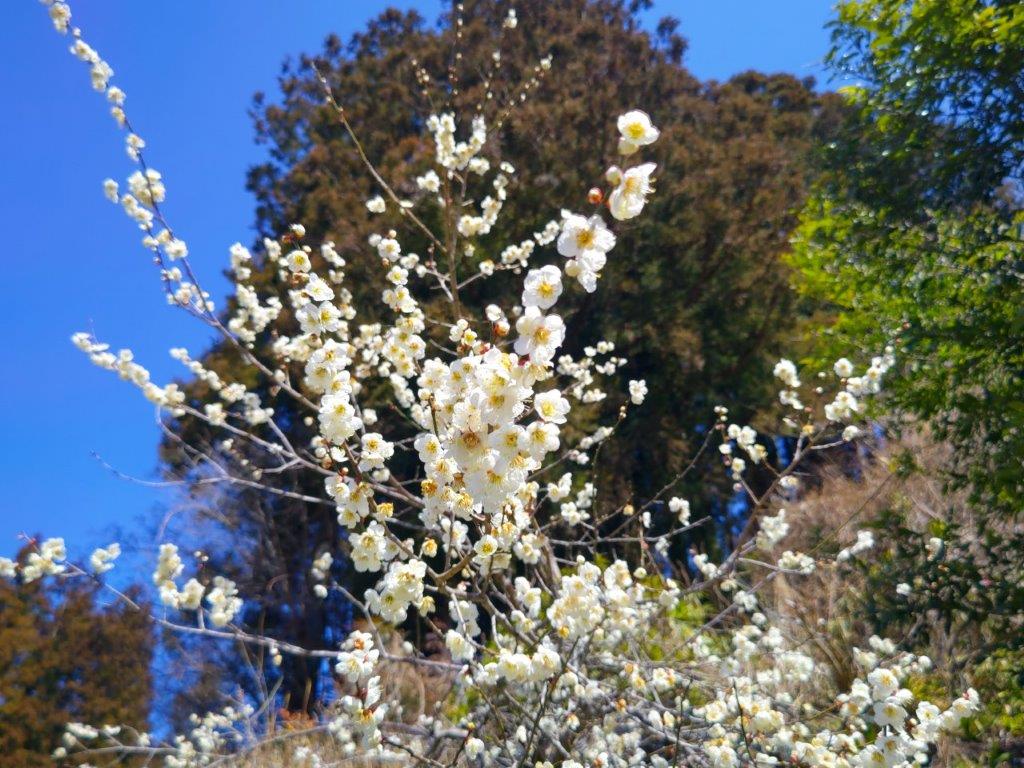
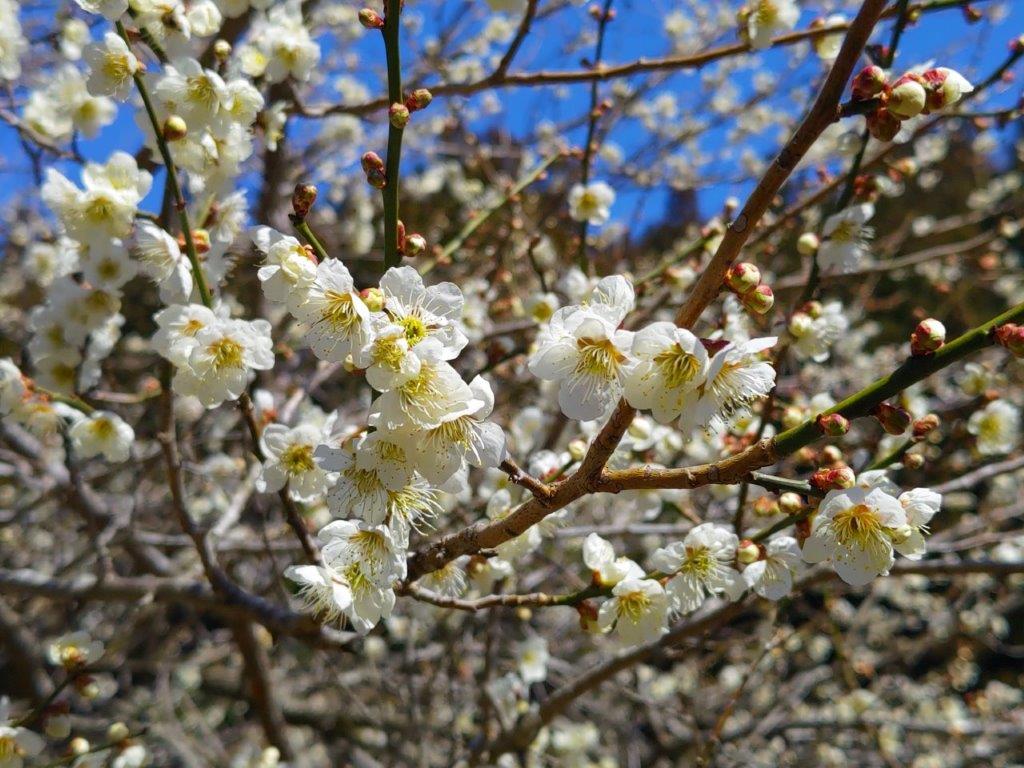
I was surprised by the many plum trees in full bloom, very early for the season. At 2pm I reached the photogenic Myoen-ji Temple (妙圓寺) with its flapping banners and bright red “torii” catching the last of the sun. Before moving on, I ventured into a small cave within the temple grounds and followed an underground passage till it became too low to continue. After passing Daijoin Temple, with its huge plum tree in full flower, I arrived at Nanpei Bridge (南平橋) at 3pm, where I caught one of the frequent buses for Hadano station. I had enough time for the hot spring bath, so I was refreshed for the one-hour trip back to Shinjuku.

Watch a Video of the Mt Takatori Hike

Watch the Video of the Hike on Youtube

See a Slideshow of More Pictures of the Hike

Mt Fuji (220m) & Shirogane-Daira (195m), Hidaka City, Saitama Prefecture, Tuesday, January 30, 2024

I wanted to do a short hike to get back into shape after a three-week break. I settled upon going on a weekday morning, as other commitments and poor weather had prevented me from going the previous weekend. I decided to do a hike up a minor peak on the eastern edge of the Oku-Musashi hills, planned last year and kept in reserve for a cold winter day. Although it shared a name with Japan’s most famous volcano due its conical summit, the climb would be a lot less arduous. I was more interested in the nearby observation deck and its view of the Kanto plain. To round out the hike, I would make a short roundtrip to a nearby waterfall. I would take the Laview limited express to Hanno, and there, ride a bus north towards Hidaka City. I would then make my way to Koma station on the Seibu-Chichibu line, from where I could catch a train for Hanno. The weather forecast was sunny and warmer than the previous days, which was good news since I would be starting earlier in the day. I was looking forward to a morning hike in the forested hills close to Tokyo after a few weeks off.

Hiking in Oku-Musashi 奥武蔵

For subscribers, read this Blog Post on Hiking Around Tokyo for a better viewing experience

Start of the Hike (left) Trail past Shirogane-Daira (right)

Trail past Takizawa Falls

It was sunny, cold day as I rode the limited express train to Hanno. After a 40-minute bus ride, roughly the same duration as the train ride, I got off at a stop a little after 9am, a few minutes on foot from Ten Shrine (天神社) and the start of the hike. After getting ready and quickly checking out shrine, I set off around 9h30. I headed up a paved road leading past Komagawa Country Club and took a left at a signboard of today’s hiking route, featuring the birds “Kurikka” and “Kurippi”, Hidaka City’s mascots.

Walking up Mt Fuji

The Shirogane-Daira Observation Deck

I was delighted to be walking in nature, tall pines on both sides, the sun shining down from above; to my right was the Komagawa golf course, a low fence protecting me from stray balls. At 10am, I reached the hiking trail, beyond a stone “torii” (shinto gate). Very soon the path rose steeply, but I had barely broken a sweat when I emerged onto the sunny top of Mt Fuji (富士山 ふじやま fujiyama). Despite being in the sun, the top area was surrounded by trees. As I took a break next to the small summit shrine, a helicopter darted across the sky, probably headed to the nearby Tokorozawa airfield.

View Northeast of the Kanto Plain from Shirogane-Daira

View East of the Kanto Plain from Shirogane-Daira

I set off down a steep series of steps, at the end of which I turned left along a level path, and soon reached the Observation Deck at Shirogane-Daira (白銀平 しろがねだいら), at 10h30. From the top of the white, square structure, I had a view of the Kanto plain on the east side. Apparently Mt Tsukuba, Mt Nantai, Mt Akagi, the Tanzawa mountains and even Mt Fuji are visible, but I couldn’t make them out despite the clear skies. However, I could see the Tokyo skyscrapers, as well as Seibu dome; turning around I could see Mt Hiwada and Mt Monomi above the trees on the west side. After a late breakfast, I retraced my steps and followed a path along the mountain side.

Trail between Shirogane-Daira and Takizawa Falls

Wooden Carved Pillars outside Koma Station

I was surprised to see such beautiful forest so close to the big city. All too soon, I reached a paved road next to another golf course. I turned right, and shortly after, rejoined the trail on the left, taking me to the turnoff for the Takizawa Falls (滝沢の滝). I had seen more impressive waterfalls, although the dry winter season might be to blame, and quickly headed back to the main trail. After a short up and down along a sunny trail, I popped onto a pleasant countryside lane, ending at a busy road for Koma station, where I arrived shortly after noon. After admiring the two demon pillars guarding the station building, I hopped onto the local train for Hanno, just 2 stops away, and then boarded the express train for Ikebukuro.

Watch a Video of the Mt Fuji Hike

Watch the Video of the Hike on Youtube

See a Slideshow of More Pictures of the Hike

Mt Sasago-Gangaharasuri (1358m), Otsuki City, Yamanashi Prefecture, Saturday, January 6, 2024

I wanted to see Mt Fuji on my first hike of the year. I had already climbed this peak, just over 10 years ago. Back then, I had made a long loop, along a hard to follow trail on the south side. I was inspired to redo this mountain thanks to a JR East hiking map showing a shorter loop hike: up the same way, but down a different trail on the east side, and passing by a giant cedar tree. I would take the Chuo limited express to Ostuki, and then continue by bus to the trailhead. I would have to leave relatively early to catch the sole morning bus. For the return, I could catch the only mid-afternoon bus back, or walk downhill to Sasago station, a couple of kilometers away, and a short ride on the local Chuo line to Otsuki. The weather was supposed to be sunny all day, meaning Fuji would be clearly visible. The temperatures would be lower than on my December trips, and I hoped it wouldn’t get too cold above 1000 meters. I was looking forward to my first hike and Fuji views of 2024.

Hiking in the Misaka Mountains 御坂山地

Hiking along the Chuo Line 中央線

Descent from the Summit (left) Ridge Trail to Sasago Pass (right)

Walking the Ridge Trail (left) Steps for Sasago Pass (right)

It was still very cold after I got off the bus just after 9am, near the entrance of Sasago tunnel. I found a sunny bench opposite the start of the trail and slowly got ready. A little after 9h30, I set off up a valley, walking in the shade of the cedars. At 10am, I reached an electric pylon out of the trees and with a view southeast towards Mt Tsurugatoya. I continued east, up a ridgeline within a valley enclosed on three sides. At 11am, I spotted the white top of Mt Fuji above the southern side. Shortly after, I was blasted by a biting cold wind blowing over the eastern ridgeline from the Kofu basin. Through the trees, I also had a glimpse of the South Alps, the highest peaks capped in snow. I found a sheltered spot and bundled up. At 1130, I reached an open space near a reflector.

Back into the Sun just below the Electric Pylon

Following the Ridgeline to the Summit

Turning around I had the best view of the day: directly south was the white cone of Mt Fuji, shining in the midday sun; to the southeast, I could see Mt Imakura, the 4th highest peak of the Doshi mountains, as well as Mt Omuro in the Tanzawa mountains. A few more minutes of climbing brought me to the summit of Mt Sasago-Gangaharasuri (笹子雁ヶ腹摺山 ささごがんがはらすりやま sasagogangaharasuriyama), a Yamanashi 100-famous mountain and one of the 12 beautiful views of Mt Fuji (秀麗富嶽十二景). Through the bare trees on the southwest side, I spotted Mt Houou, Mt Kita and Mt Aino, some of the main peaks of the South Alps, before they were engulfed by the clouds.

Last Stretch before the Summit

Checking out the Trail for Mt Komezawa

I was surprised to see traces of snow on the path leading northwards towards Mt Komezawa, in the opposite direction of my hike. I sat down on a bench near the summit marker, facing the sun and Mt Fuji, for an early lunch; about half a kilometer below was the busy Sasago Tunnel. The wind had died down but it was still chilly, and around noon, I set off again, down a steep path, heading west along the narrow ridge separating the Kofu and Otsuki valleys. The path soon became level. After passing a second pylon, I arrived at a fork in the trail, where I took the the “ridge route” on the right. According to my map, it would join up with the “new route” on the left, shortly before Sasago pass.

Following the Ridgeline to Sasago Pass

View Northwest of the Okuchichibu Mountains

I was glad with my choice since I was rewarded by views of Mt Koshu-Takao, Mt Konara, Mt Daibosatsurei, and Mt Okuratakamaru to my right, and glimpses of Mt Fuji to my left. Since I was well on schedule, I took my time peering at the views between the leafless trees. Soon after the two routes merged, I arrived at the third pylon of the day, beyond which the trail headed down a series of steps ending at Sasago Pass (笹子峠) completely in the trees. It was nearly 2pm, and the sun had just dipped behind the ridge rising steeply on the opposite side. I turned left down a shaded valley, and soon reached a road at the end of the old Sasago tunnel (Sasago-zuido 笹子隧道). I followed the road for a short while before getting back on the hiking trail. I soon arrived at Yatate-no-Sugi (矢立の杉), a giant cedar tree, and one of the 100 famous trees of Yamanashi.

Leafless Trees along the Ridge Trail

Heading Down from Sasago Pass

I spent a few minutes gazing at the thousand-year-old tree, nearly 30 meters high, its crown lost from sight, before leaving the viewing platform. After crossing Sasago River on a couple of wooden bridges, the trail widened and hugged the steep mountain side; the valley was bathed in sun again and the rushing river could be heard below on the right. After another short road section, I rejoined the trail again, this time the river on my left side. At 3pm, I reached a gate, beyond which was the main road and the bus stop. It was too early for the bus so I speed walked back to the Sasago station so that I could get the 3h30 train for Otsuki. There, I transferred to the limited express for the comfortable one-hour ride back to Shinjuku.

Wooden Bridge Crossing over Sasago River

Wide Trail in the Sun above Sasago River

Although the whole hike took six me hours, I did it at a fairly leisurely pace, hoping to match my arrival time with the return bus, but ended up an hour too early. In warmer weather it might be possible to take longer breaks but this is definitely a hike that should be done in the winter months; otherwise the views will be blocked by the leaves. The hike can be extended north or south along the ridgeline, but there are big up and downs on both sides, requiring more time and energy. I saw only one other hiker and he told me he had seen a bear run away, up the steep slope on the other side of Sasago river, barely seconds before I caught up with him. It seems like this bear had been spotted before and may the reason for the absence of other hikers, so a bear bell or other noise-emitting device would also be a good idea.

Watch a Video of the Mt Sasagogangaharasuri Hike

Watch the Video of the Hike on Youtube

See a Slideshow of More Pictures of the Hike
Mt Sendoji (583m) & Mt Sankaku (515m), Sagamihara City, Kanagawa Prefecture, Saturday, December 30, 2023

For subscribers, read this Blog Post on Hiking Around Tokyo for a better viewing experience

This hike requires a GPS device

I always find it tricky to select the final hike of the year since many bus services switch to special year-end schedules. This year was doubly difficult due to the unusually short “shogatsu” (Japanese new year holidays), meaning the day of my hike coincided with the first day of the holidays, and limited express trains were fully booked. Inspired by my previous outing, I decided to head to Hashimoto again, and ride the bus to the end of the line, near the western edge of Tsukui lake, my first time to visit that area. Looking at my map, I saw I could hike in the Tanzawa mountains, last visited nearly 3 years ago. I would summit a couple of minor peaks, and finish at a view point on Lake Miyagase, from where I could catch a different bus back to Hashimoto. The weather was supposed to be sunny and mild, as it usually is at this time of the year. I was looking forward to exploring a new area on my last hike of 2023.

Hiking in the Tanzawa Mountains 丹沢山地

Heading up to Sagami Forest (left) Hiking between Mt Sendoji and Mt Baba (right)

Walking down from Mt Sankaku

The express train was mostly empty for the one-hour ride to Hashimoto Station. I had a quick breakfast at the McDonalds near the south exit before heading to the north exit where I hopped on the bus for Mikage (三ヶ木), getting there around 10am. I dropped by a supermarket conveniently located on the way to the trail entrance. After buying supplies for the day, I continued along a busy road, and at 11am, turned right onto a road thankfully closed to traffic, but not hikers, that led up the mountain side and into the forest; it wasn’t signposted and it was only thanks to my phone GPS I managed to locate it.

Start of the hike in Sagami Forest

First view north towards the Mt Takao area

I was delighted to be walking on a forest road through beautiful, sunny forest, away from the noisy road. After a couple of switchbacks, I had a view on the north side of the mountains on the other side of Sagami river. I could see the spot where I had been hiking the previous week. A little later, I had a view on the east side of Mt Shiroyama. A little before noon, I arrived at signboard for Forest 21 Sagami no Mori” (Sagami’s Forest) and the start of the hiking trail. I took the left branch, the valley trail (谷道), along the mountain side, and very soon, I had some good views on the east side.

Road to Forest 21 Sagami’s Forest

A solitary hike on a sunny day

It was like gazing into a hidden valley, the Tokyo’s tall buildings almost hidden by the hilltops; as the noon chime rang out, I was reminded how close I was to civilisation. At the one point, all signs of the trail vanished, and I had to rely on my phone GPS to find my way back to the ridgeline. The trail remained faint, and I was completely dependent on my GPS signal and the occasional pink ribbon strip. I was moving through beautiful, mixed forest, and at times, it was easy to forget I was only a stone’s throw from Tokyo’s urban jungle. At the top of a short climb, I arrived at the summit of Mt Sendoji (仙洞寺山 せんどうじさん sendojisan), completely within the trees.

View of a Hidden Valley from Sagami’s Forest

Steep Climb up to Mt Baba

I was glad the summit was bathed in sunlight, the trees growing less thick and allowing for a patch of open sky. Since it was past 1230, I sat down for lunch. I set off again after 1pm, and found the trail to be just as hard to follow as before. After a steep descent, I reached a forest road, beyond which was a proper path. After another steep descent, the trail curved to the right, and started to climb gradually. I was completely surrounded by nature and found it hard to believe I wasn’t deep inside some national park. Suddenly, I reached the base of a steep series of steps, at the top of which was a small shrine, the top of Mt Baba (ババ山 ばばやま babayama). Since I couldn’t see a summit marker, nor a view, I quickly moved on, and after a short downhill section, arrived at an electric pylon.

Arriving at the top of Mt Baba

Heading back from Mt Sankaku

I continued up a sunny, narrow ridge, the higher peaks of the Tanzawa mountains visible through the leafless trees. At 2pm, I arrived at the top of Mt Sankaku (三角山さんかくやま sankakuyama), also the location of a TV relay station. Once again, it was surrounded by trees, so I soon headed back to the pylon, where I took a path heading down on the west side. After passing under some tall cedars at the base of the mountain, I emerged onto a road. I then walked through the countryside for half an hour before reaching Toribara Park (鳥居原園地) at the edge of Miyagase Lake (宮ケ瀬湖) at 3h30. After enjoying the late afternoon views of the lake and the Tanzawa mountains, I boarded a bus for the 30-minute ride back to Hashimoto station.

Looking back at Mt Sankaku (left) and Mt Sendoji (right)

View of Miyagase Lake from Toribara Park

I was entirely satisfied with my final hike of the year. Thanks to my phone GPS, I was able to save time looking for the trail. It’s a shame it isn’t better maintained, since it’s a beautiful patch of nature, wedged between two populated areas; perhaps the point is to keep it that way. It took a good five hours from start to finish, four of which were on forest roads, hiking trails and just walking through the forest. I saw no one else but that could be due to the year-end holiday period. In the future, I’d like to return to the end of the hike and continue the following the trail westwards into the Tanzawa mountains.

Watch a Video of the Mt Sendoji Hike

Watch the Video of the Hike on Youtube

See a Slideshow of More Pictures of the Hike

Mt Enokubo (420m), Sagamihara and Hachioji Cities, Kanagawa and Tokyo Prefectures, Saturday, December 24, 2023

For subscribers read this Blog Post on Hiking Around Tokyo for a better viewing experience

I wanted to do a short and easy hike close to Tokyo for Christmas Eve. I had been doing bits and pieces of the Kanto Fureai no Michi for a while now, and this was a good chance to explore the final section of the Kanagawa trail, starting at Tsukui Lake and ending at Takaosan-guchi Station. I had previously hiked Mt Shiro on the other side of the lake, as well as the first part of the Tokyo Fureai no Michi, from Takaosanguchi station to Mt Shiro (no relation to the Kanagawa one). Since the hike was relatively short, I could leave later than usual, and since it probably had few views, I could expect fewer people. At the end, I could take a hot bath at the Keio Takaosan Onsen, my first time to visit this hot spring right next to the station. The weather was supposed to be cloudy over Tokyo, but sunny over Kanagawa. I would take an express train to Hashimoto Station, and there, transfer to one of the frequent buses for Shiroyama. Afterwards, I could take an express train directly back to Shinjuku. I was looking forward to a relaxing Christmas hike and hoped I could still catch the very last of the autumn colours.

Hiking on the Kanto Fureai no Michi 関東ふれあいの道

Hiking up to Misawa Pass (left) Exploring the Tokyo Fureai no Michi (right)

Hiking down from Misawa Pass (left) Heading to the Takao Green Center (right)

The sky was grey and gloomy as I made my way to the bus stop at Hashimoto station. However, blue sky miraculously appeared as I approached my stop, just before Shiroyama dam. I walked a short distance to a viewpoint of the dam where I had breakfast, warming up under the midday sunshine. It was nearly noon when I finally set off, first on a road next to the lake, then along a forest road up the mountain side. I met no other hikers till I arrived at a Buddhist temple called Mine no Yakushi (峰の薬師), at the halfway point.

Shiroyama Dam and Bridge from the Observation Deck

Forest road for Mine no Yakushi

I was delighted to get some views through gaps in the trees on the southeast side. Directly below, I could see Mt Shiroyama, lake Tsukui; filling up the rest of the horizon was the city of Tokyo. Soon after, the forest road turned into a hiking trail, leveling out as it reached the ridgetop. At 1h30, I arrived at Misawa Pass (三沢峠) where the Kanagawa Fureai no Michi intersects with the Tokyo one. I was tempted me to have lunch at one of the tables there, but was dissuaded by the lack of sun. Instead, I headed up a path on the right and soon reached the top of Mt Enokubo (榎窪山 えのくぼやま enokubo-yama), completely surrounded by trees.

View of Mt Shiro and Lake Tsukui from Mine no Yakushi

View of western Tokyo from Mine no Yasushi

I was happy to see that one of the three benches was bathed in sunlight and I immediately claimed it for my lunch spot. After my break, I returned to the pass and made a short loop along the Tokyo Fureai no Michi, along which I was lucky to spot some fiery orange “momiji” (Japanese maple). At 2h30, I followed a forest road into the valley on the north side, already in the shade; I had the trail entirely to myself. At one point, I thought I heard a wild animal to my left, but it was just my imagination; later on, I thought I heard water coming from the right side.

Clouds were still hanging over Tokyo

Where the city meets the mountains

I was surprised to see that a stream had appeared at the bottom of the valley, turning my forest walk into a river walk. Soon after passing the Takao Green Center, I was back on a paved road surrounded by fields. I sneaked a peak at the outer gardens of Ukai Chikutei, a Japanese restaurant on the way, and was enchanted by the small waterfall and its carp pond. At 3h30, I joined a busy road at Ume-no-ki-Daira (梅ノ木平) that took me under the impressive Takao interchange. Suddenly, shops appeared on both sides of the road, and a few minutes later, I reached the beautiful Takaosanguchi station. After a satisfying hot spring bath, I hopped on the train for the one-hour ride back to Shinjuku.

Waterfall Outside Ukai Chikutei Restaurant

A Rare Shot of Takaosanguchi Station without People

I was glad I was able to stretch out this hike to just over 4 hours, making it a nice Christmas day stroll. The Fureai no Michi frequently follows paved roads but in this case, most of this section was along forest roads and hiking trails. The views from Mine no Yakushi, the hot bath at the end and the easy access at both ends, made it worthwhile. It would be good to return one day to redo the first section of the Tokyo Fureai no Michi, or even a Mt Takao hike.

Watch a Video of the Mt Enokubo Hike

Watch the Video of the Hike on Youtube
See a Slidehsow of more Pictures of the Hike