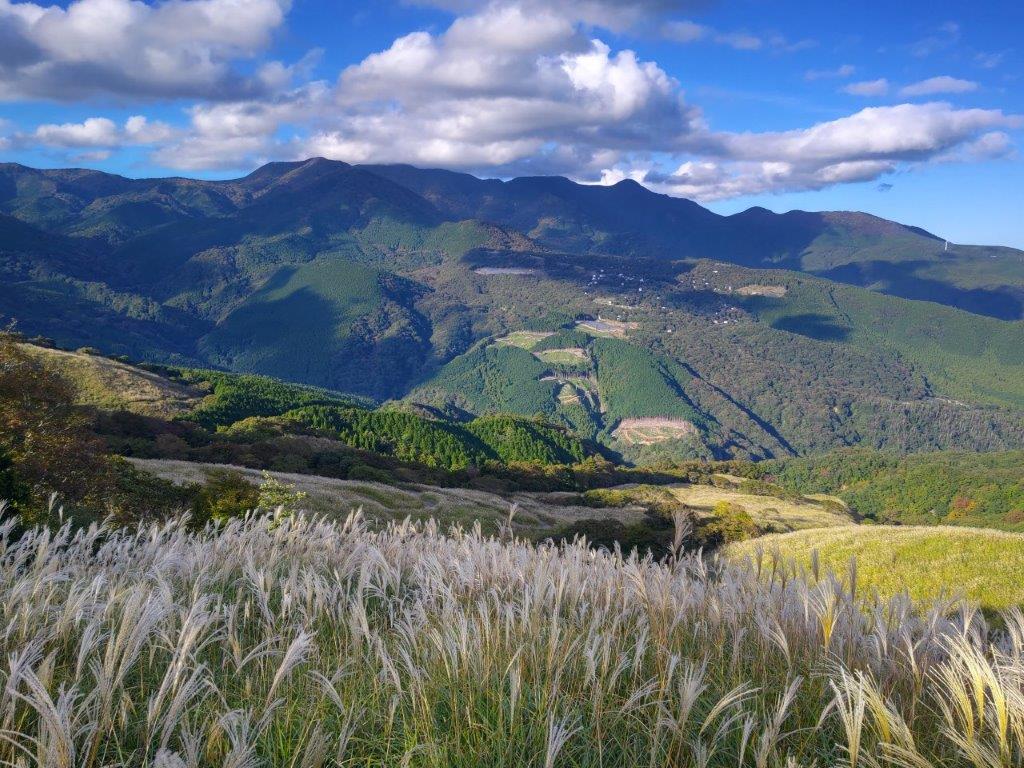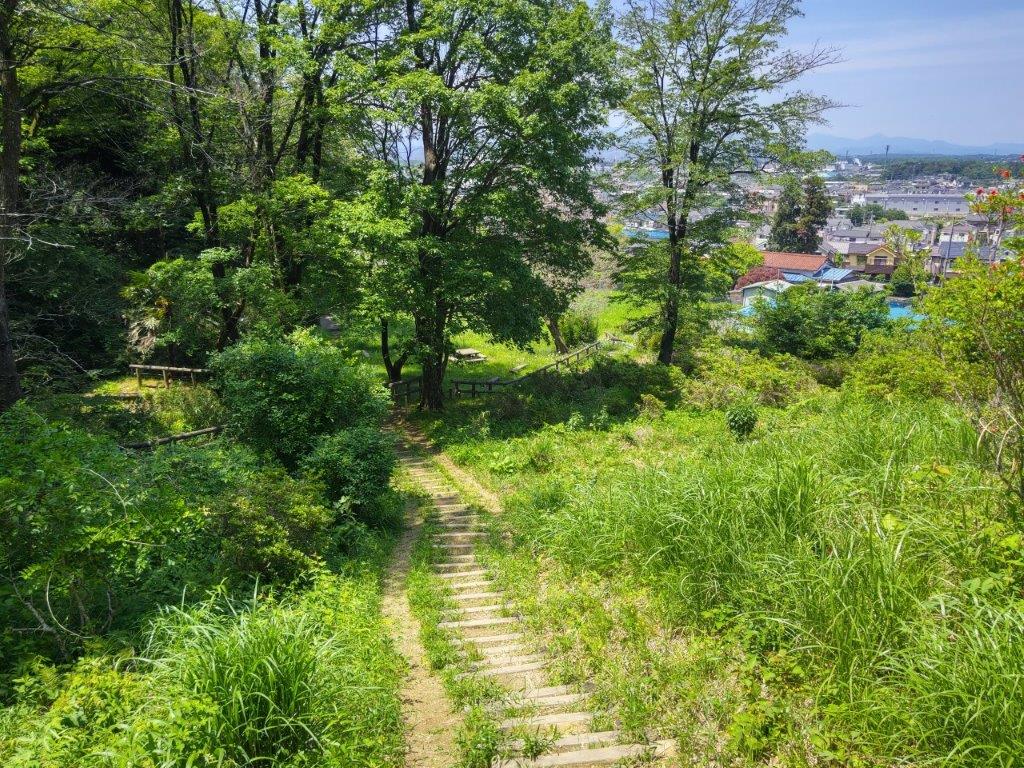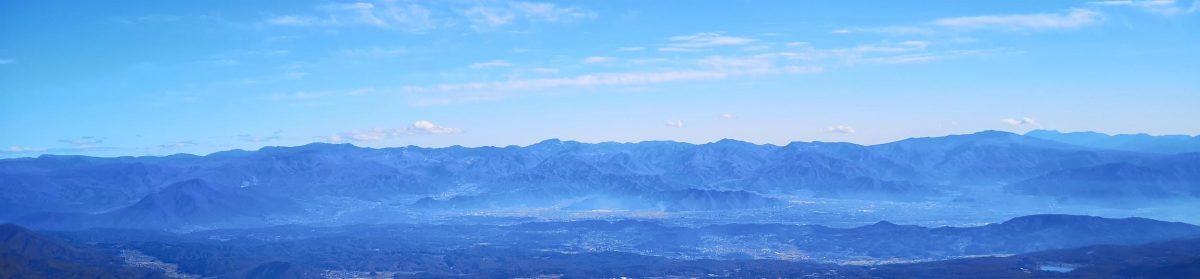
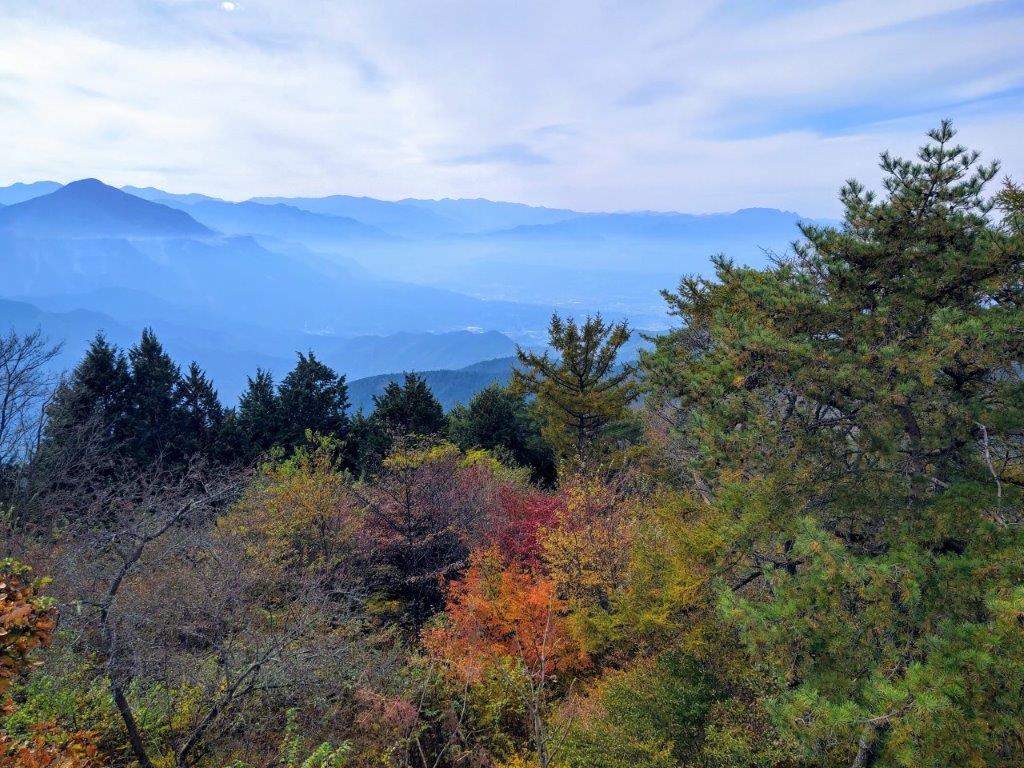
Mt Hirao (1155m), Saku City, Nagano Prefecture, Sunday, September 24, 2023 [Map Available]

I needed a short, easy hike after my three-month summer break; I also needed to get above one thousand meters, free of the spiders and their webs, seemingly everywhere at this time of year. I decided to go to the Saku, a plateau between Asamayama and Yatsugatake; there, I would go up a mountain spotted on my hiking map while researching Golden Week hikes. Although the hike was under two hours, it promised a great view from the top and a hot spring bath at the base.

Read this Blog Post on Hiking Around Tokyo

I would ride the shinkansen from Omiya to Saku-Daira, and from there, take a taxi to Parada, a ski resort turned amusement park in the warmer months; at the end, I would need to walk one hour back to the shinkansen station. It was supposed to be a warm, sunny day, and so I was looking forward to my first hike of the autumn season.

Get a map of the Mt Hirao hike

This map was developed for Japanwilds with the Hokkaido Cartographer

Find Japan Hiking Maps on Japanwilds

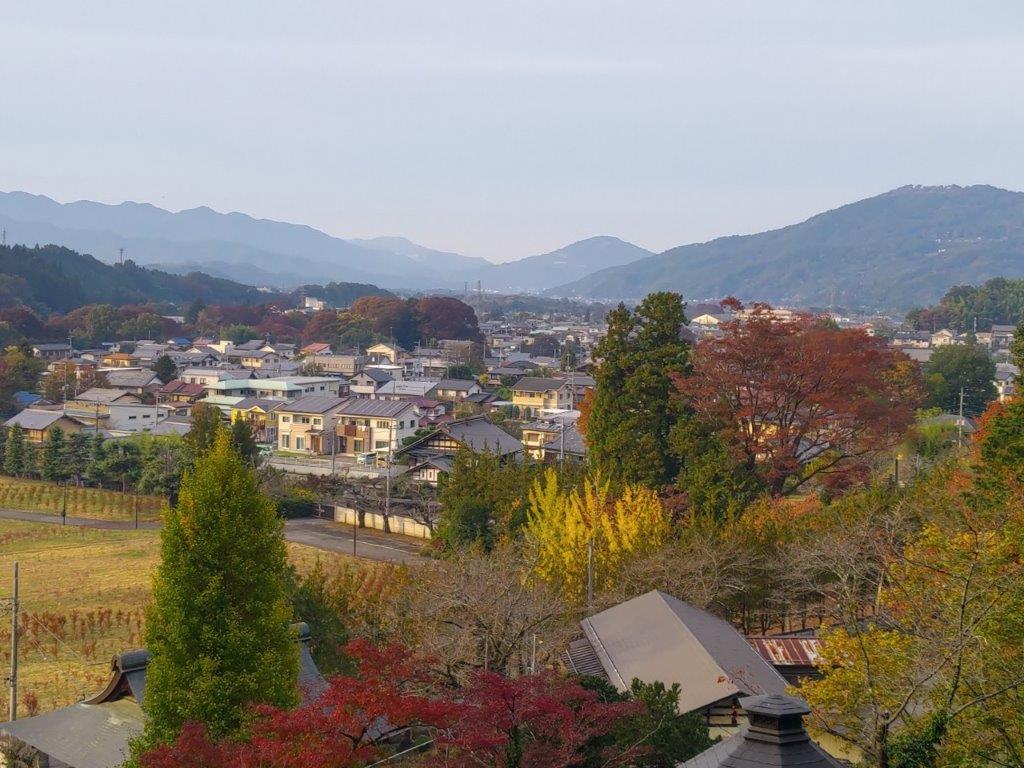
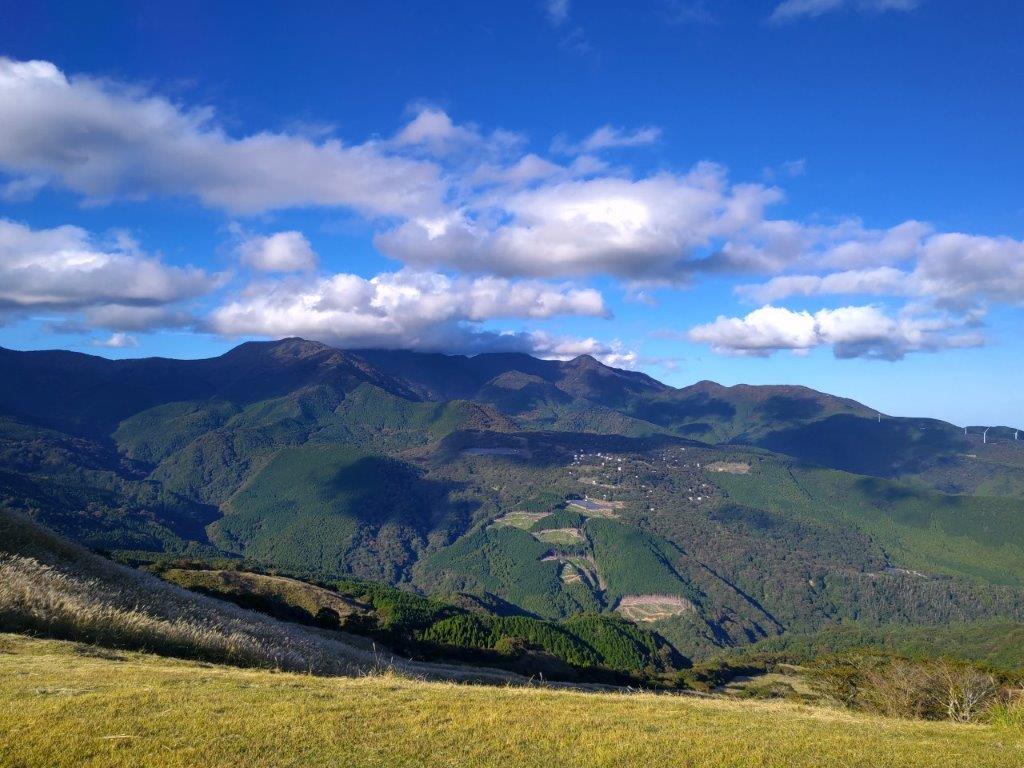
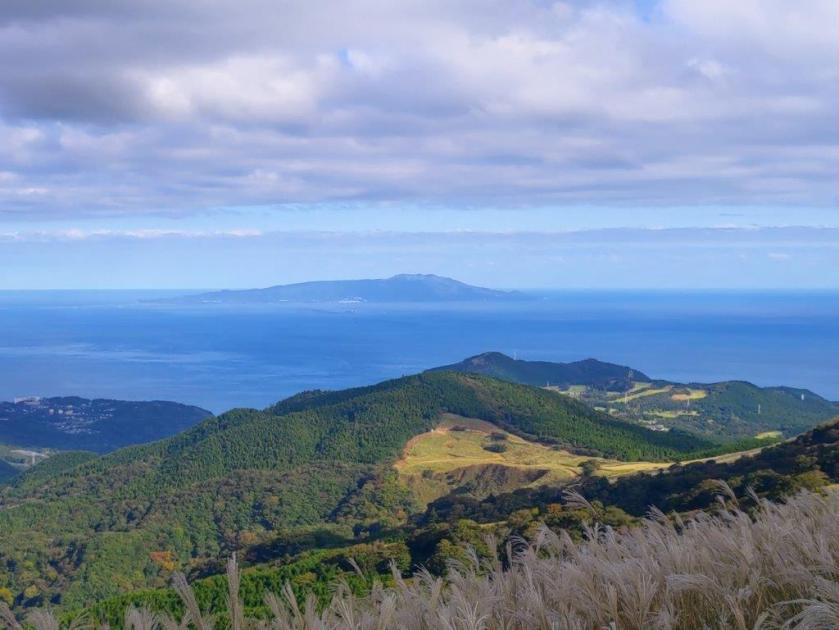
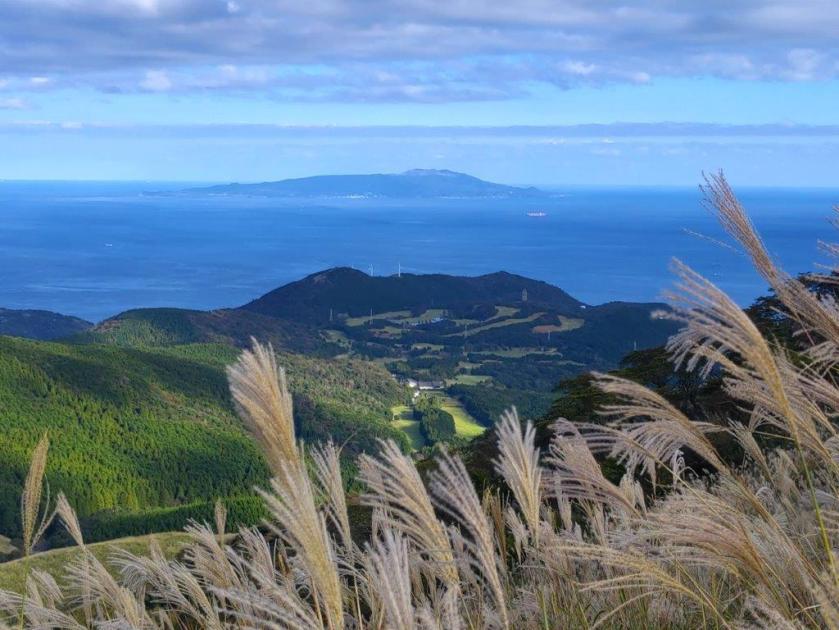
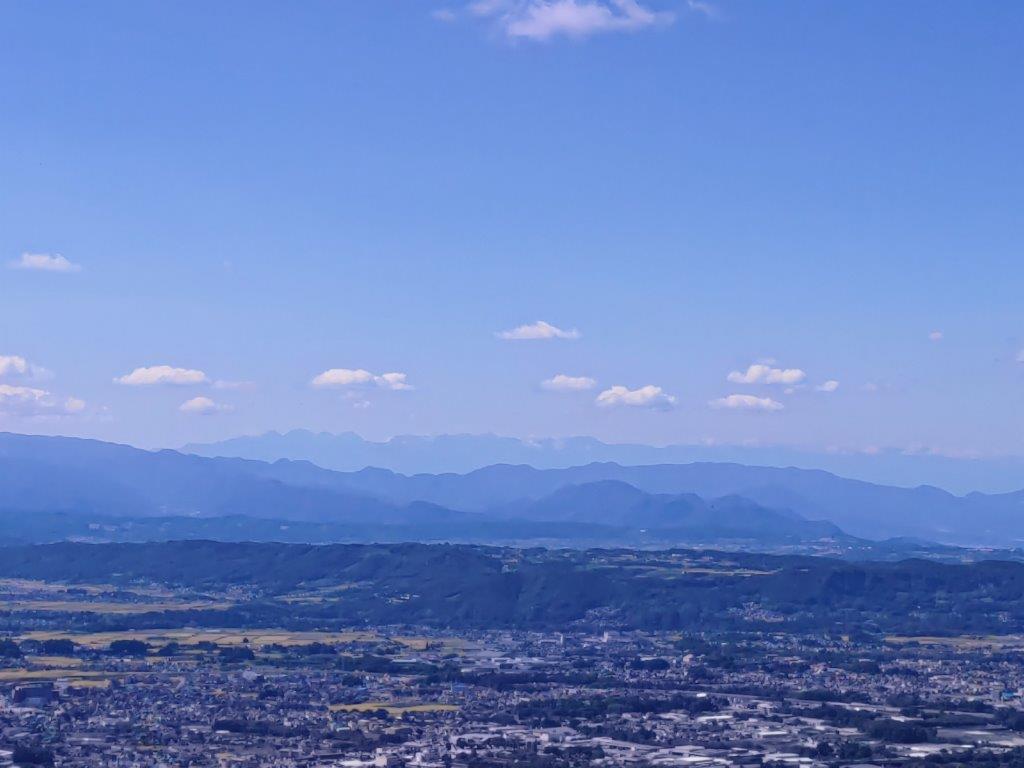
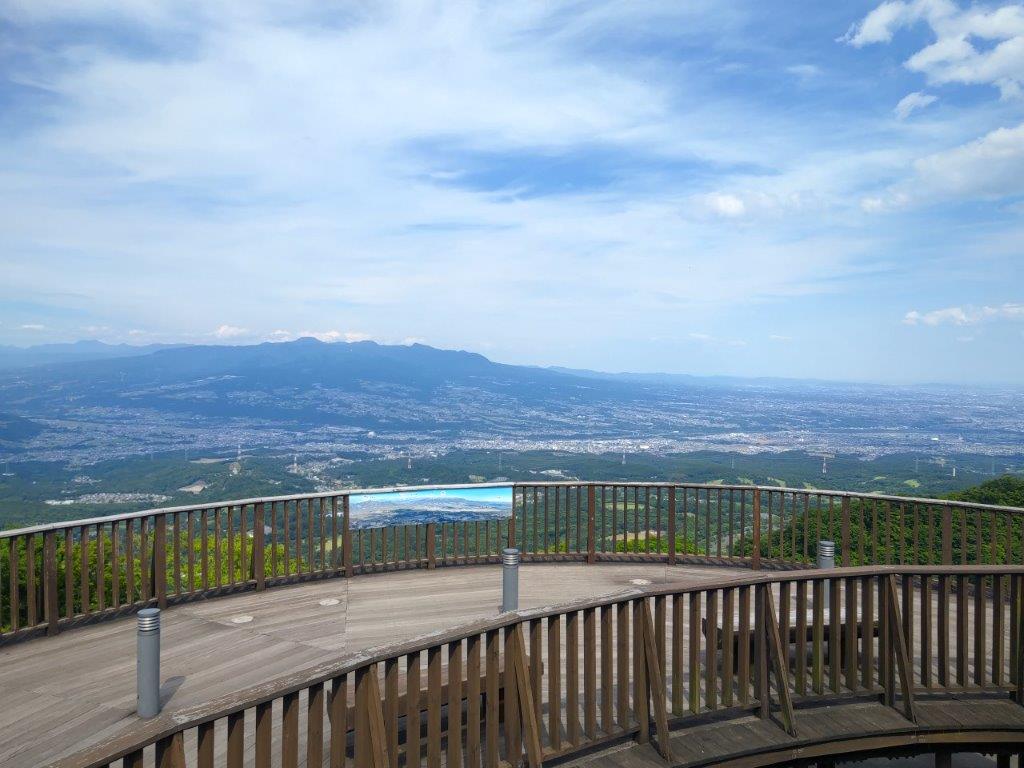
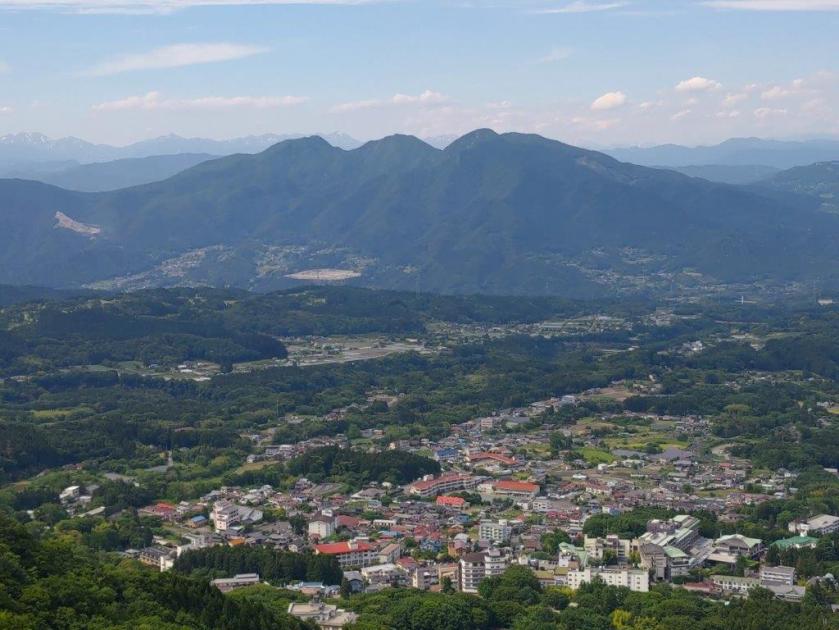
View of Yatsugatake from Hirao Onsen

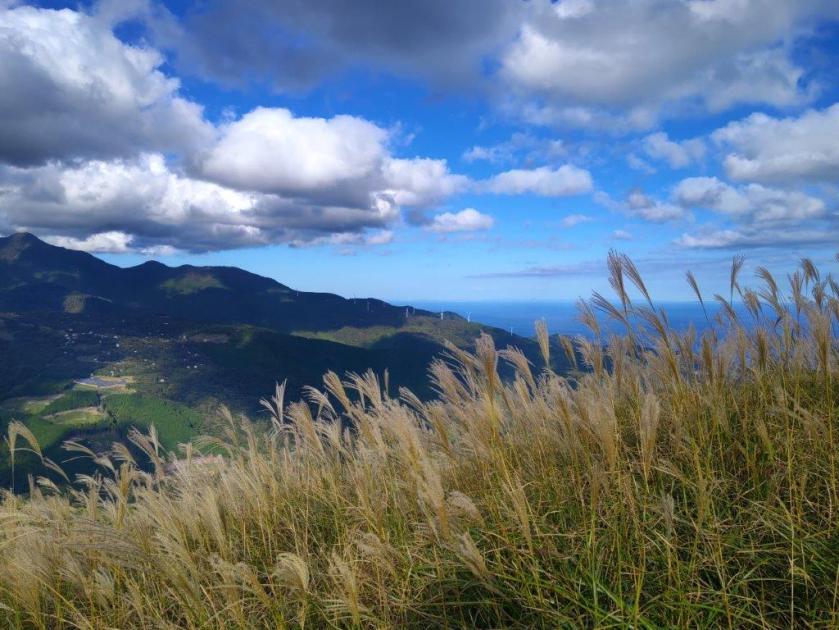
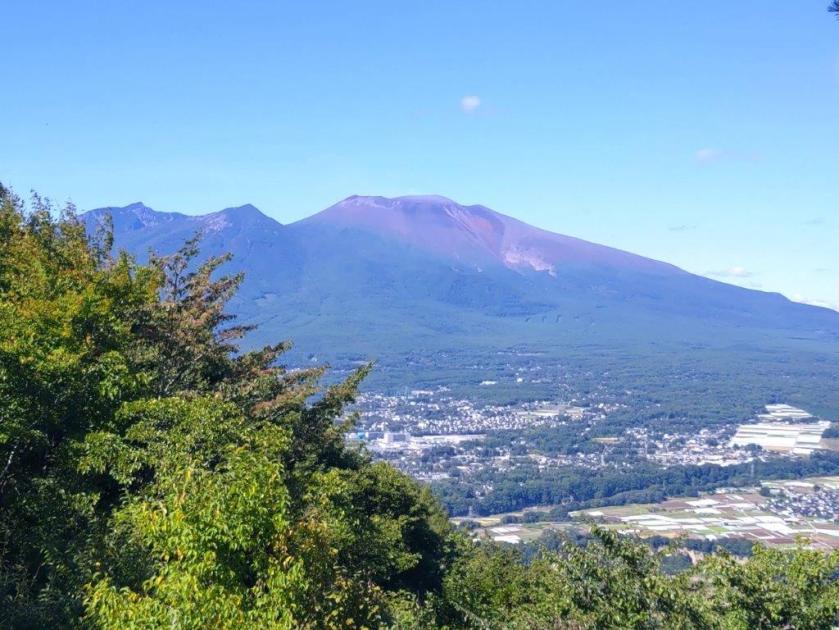
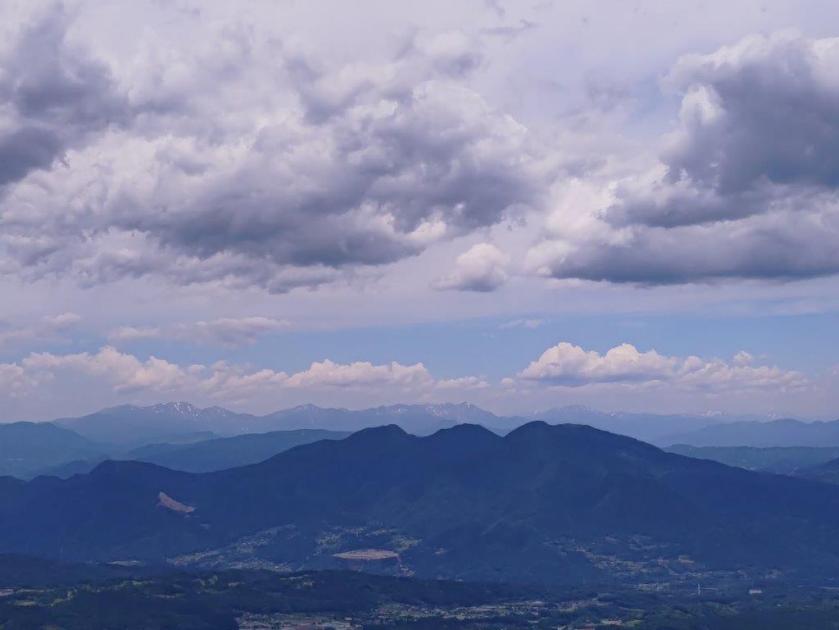
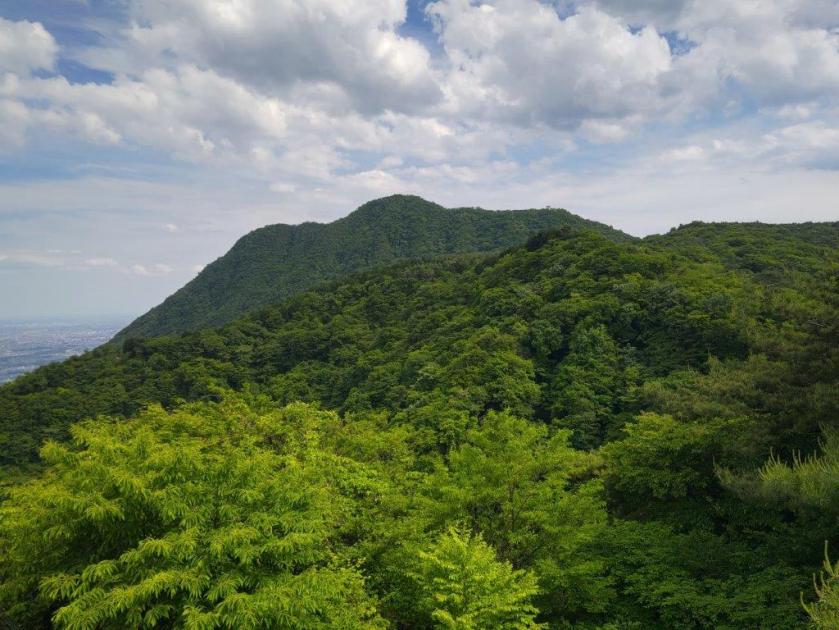
View of Asamaya from behind the summit of Mt Hirao

It was slightly overcast as I rode the shinkansen from Omiya, but after passing Karuizawa town, blue skies stretched away in all directions. I got off at Saku-Daira station a little before 1030, and there, caught a taxi for the short ride to Hirao Onsen. Perched a little way up the mountain side, I already had a great view of the Saku plateau, and the Yatsugatake range directly ahead. I found a 200 yen locker to store the things I didn’t need for the hike itself, and shortly before 1130, started up the Hirao Forest “Therapy Road”.

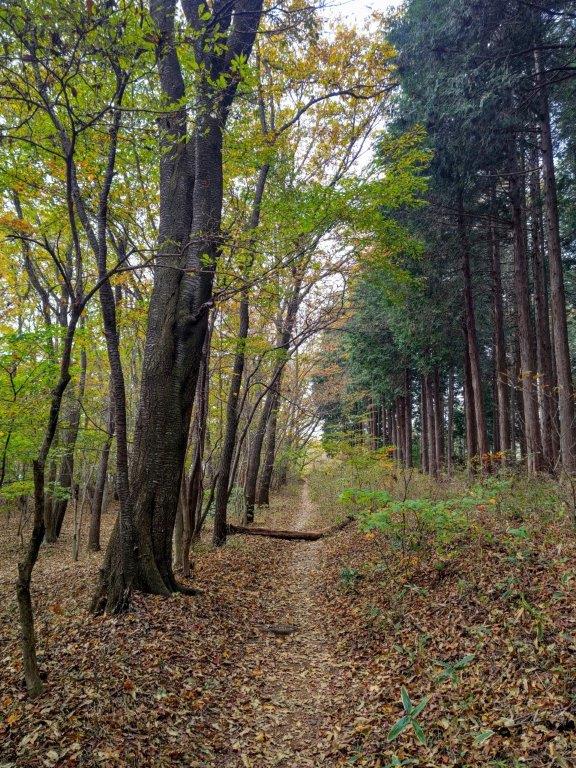
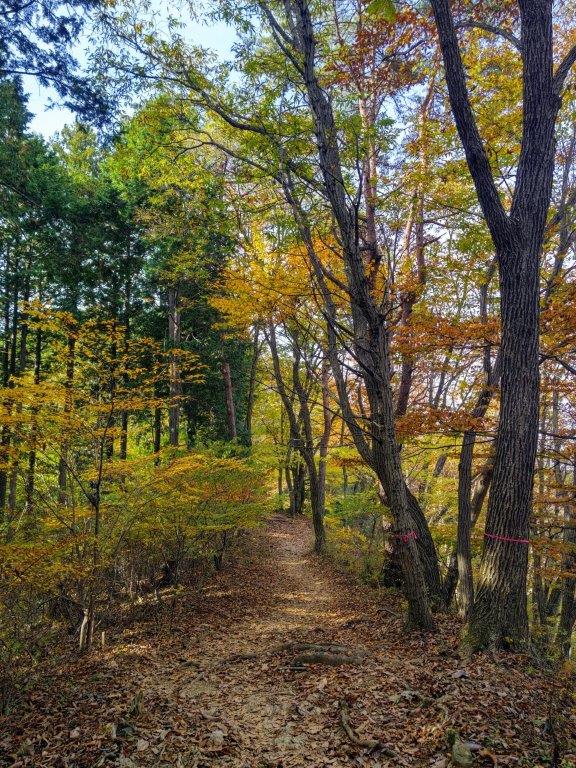
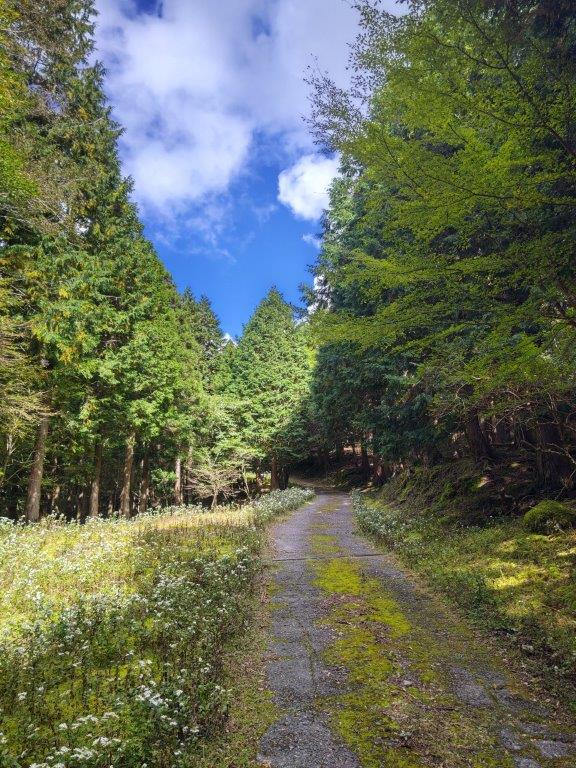
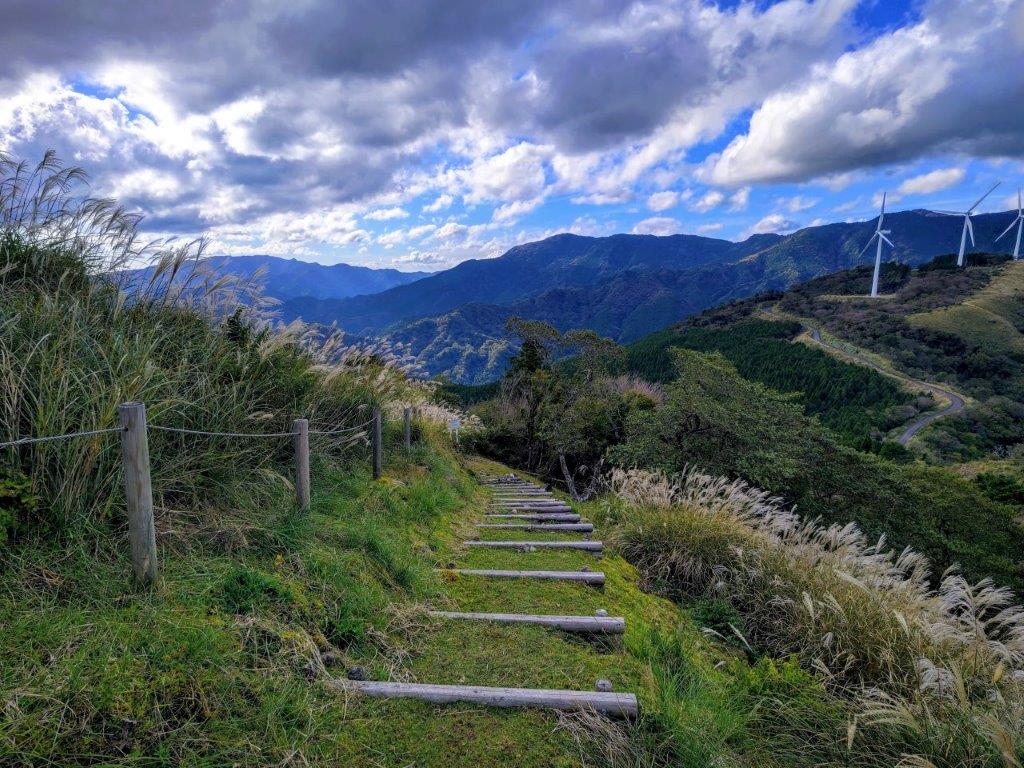
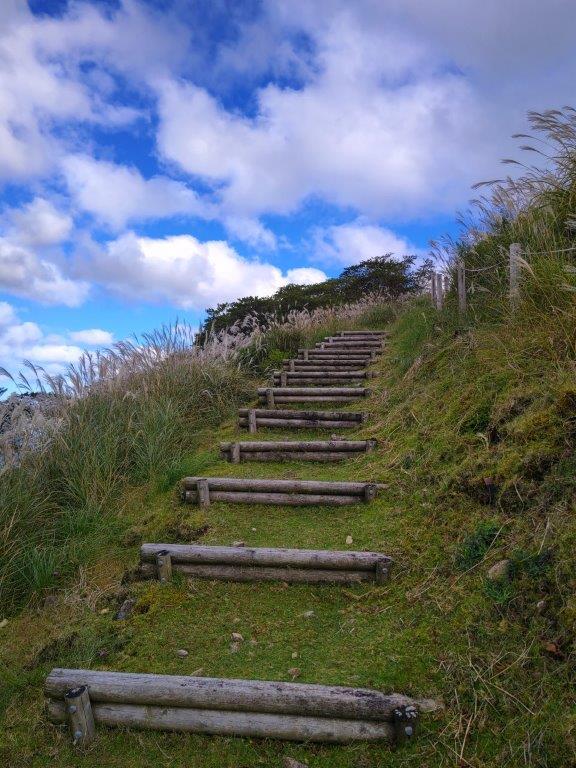
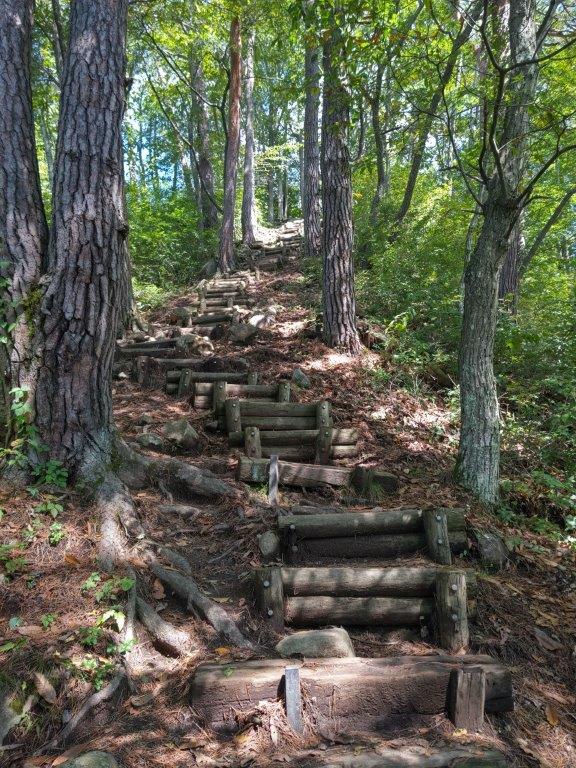
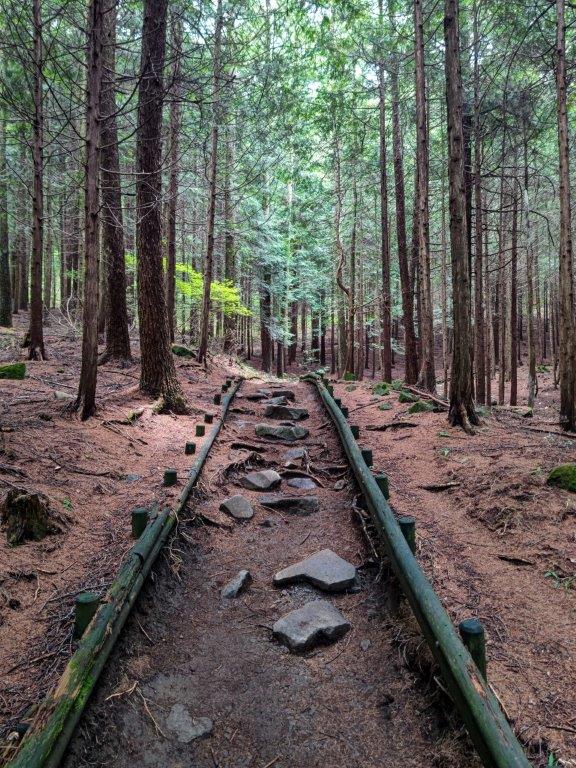
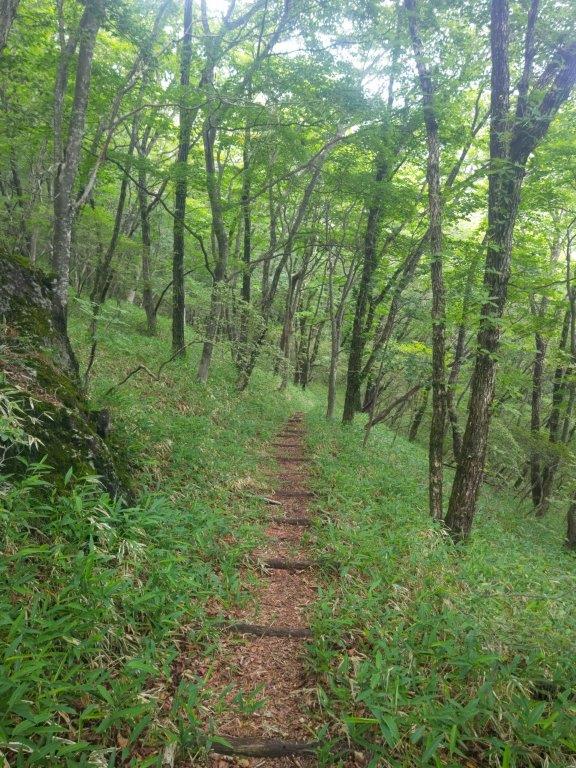
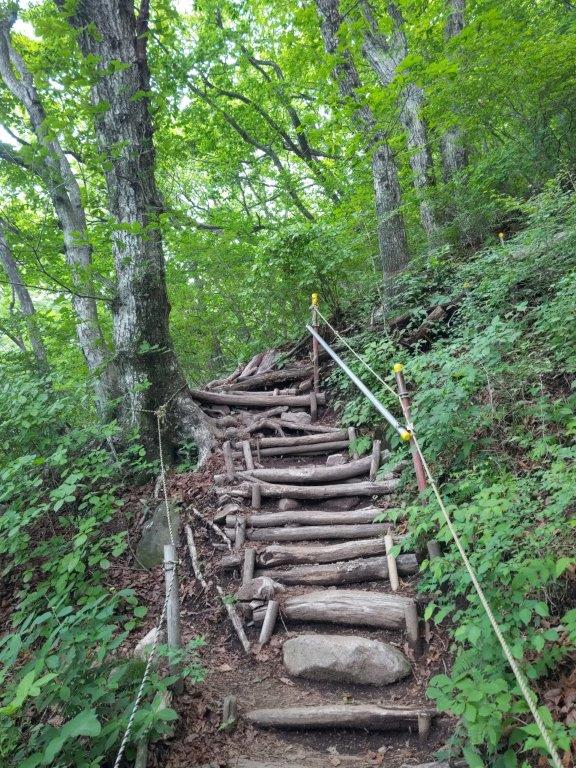
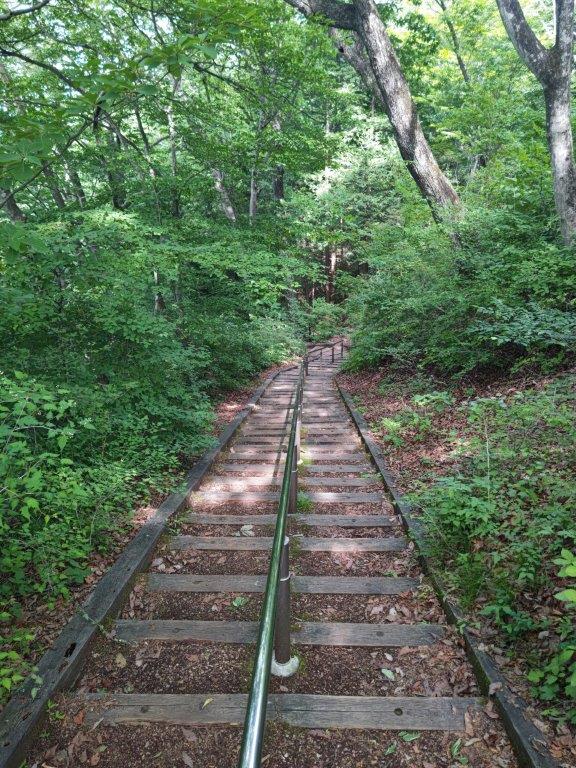
Pines Trees (left) and Log Steps (right) on the Therapy Road

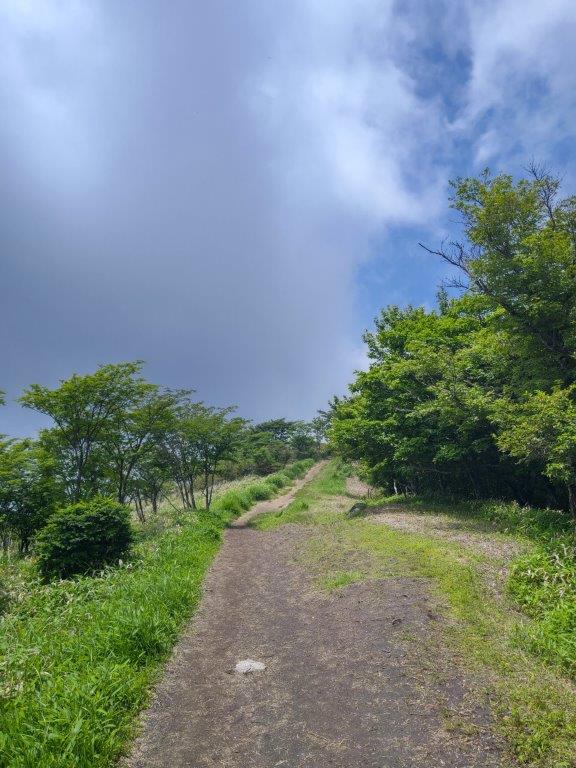
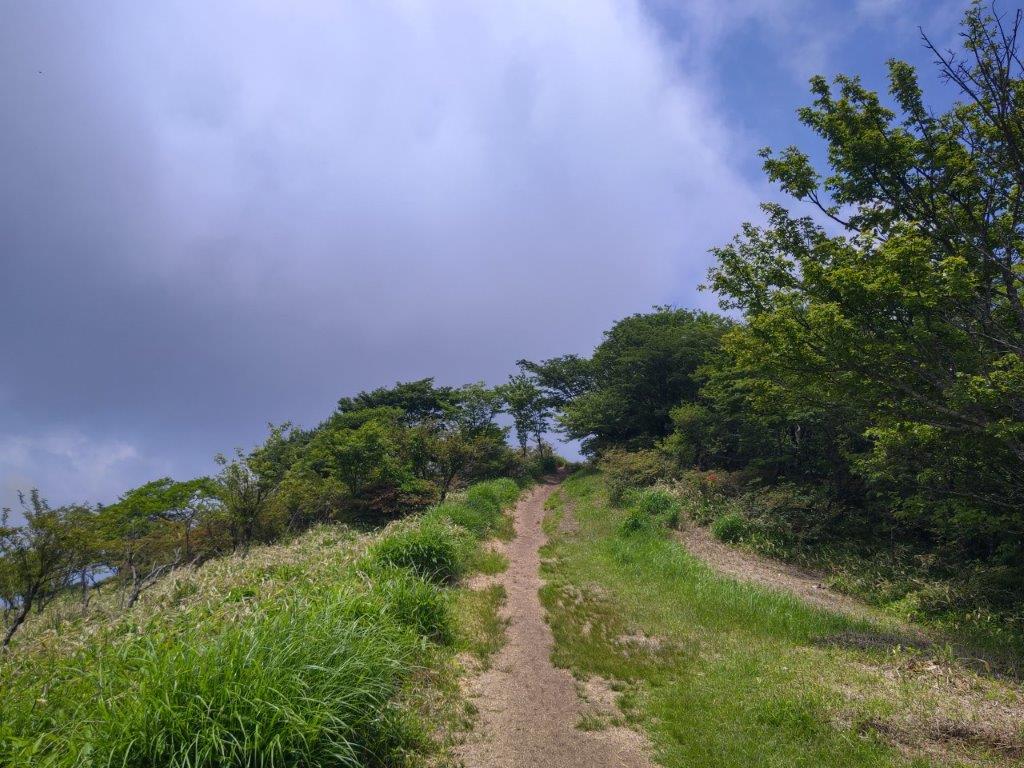
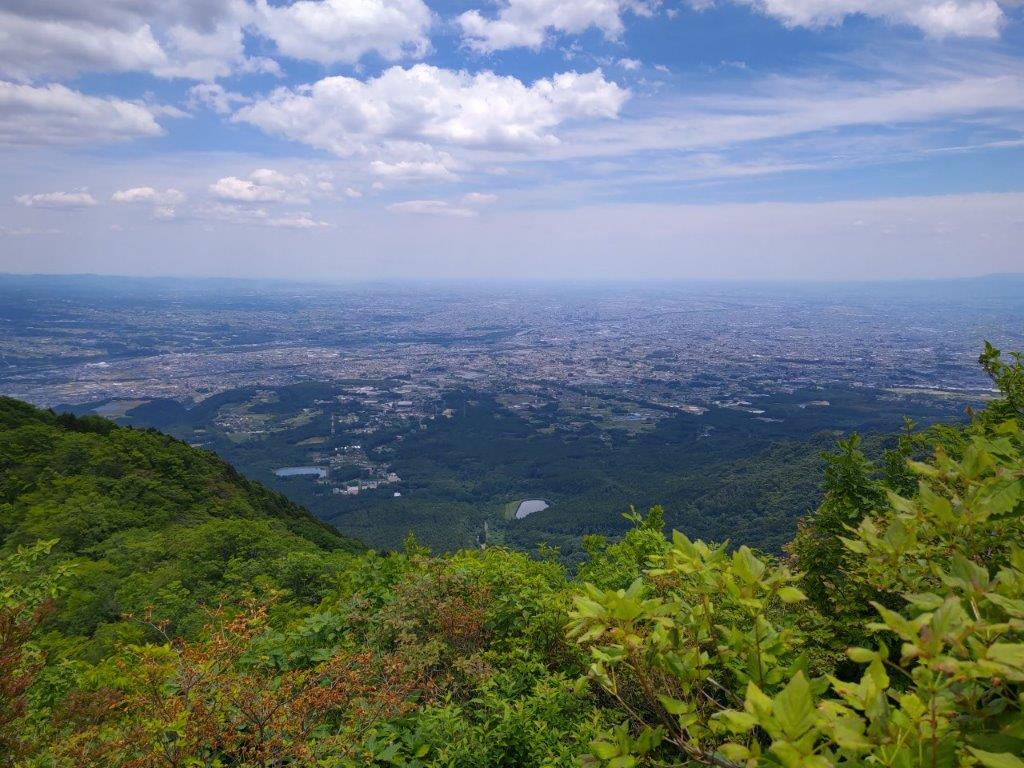
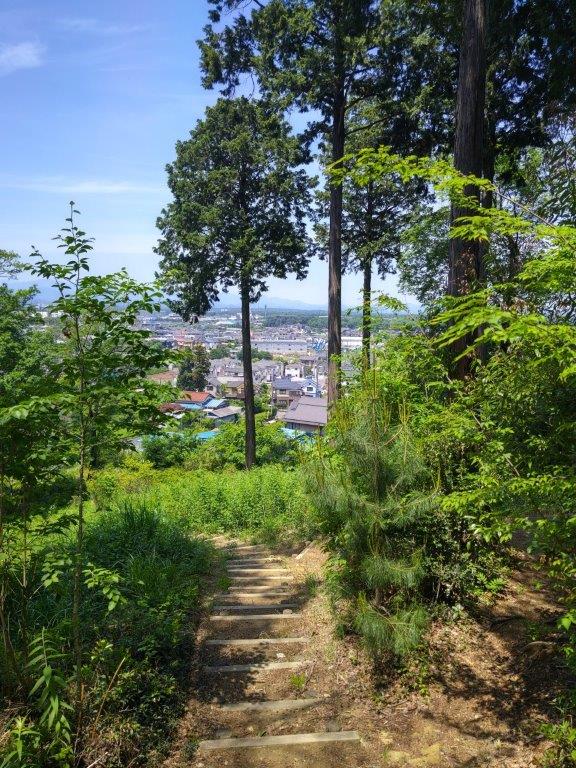
Looking up at Mt Hirao (left) Looking down from Mt Hirao (right)

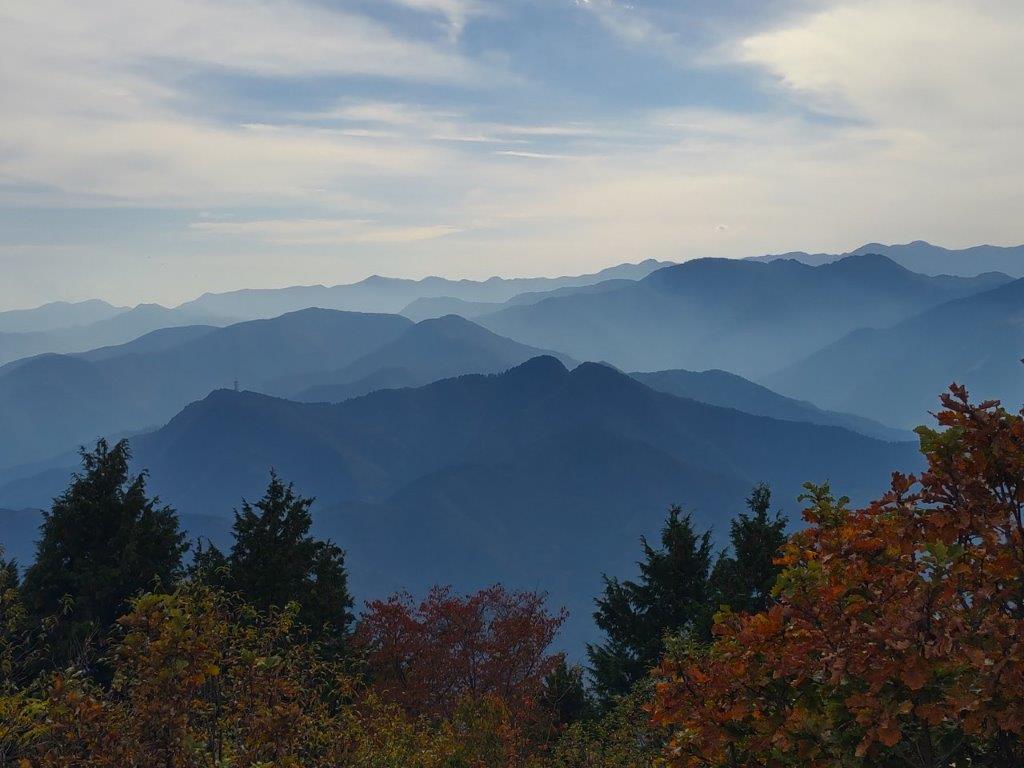
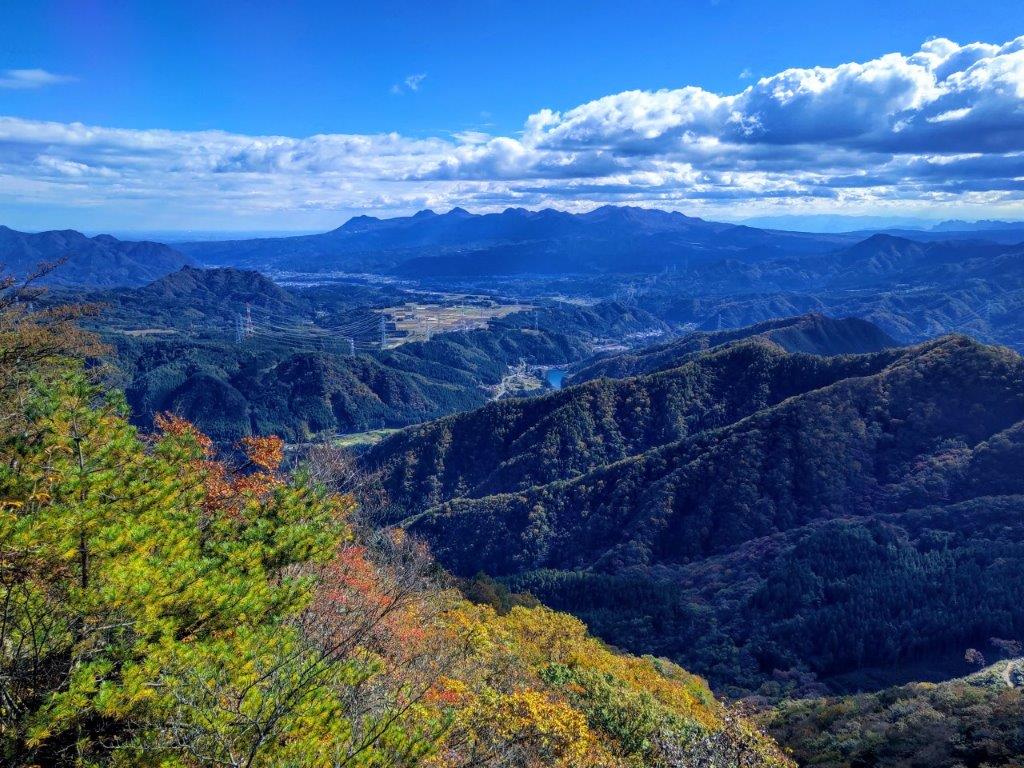
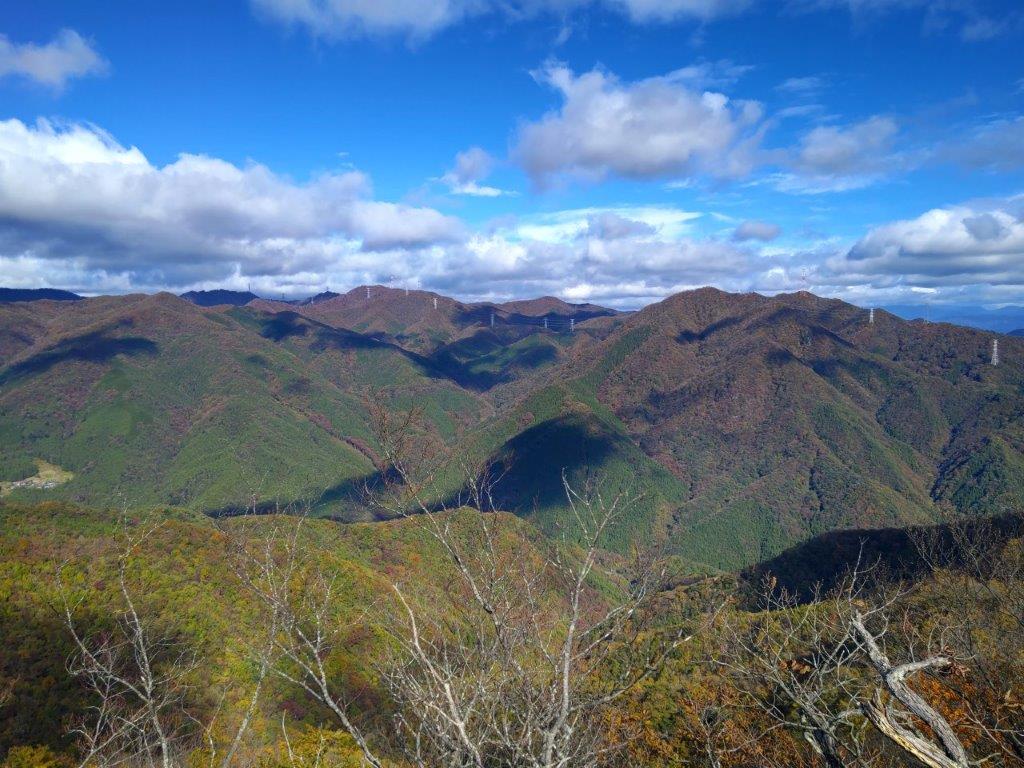
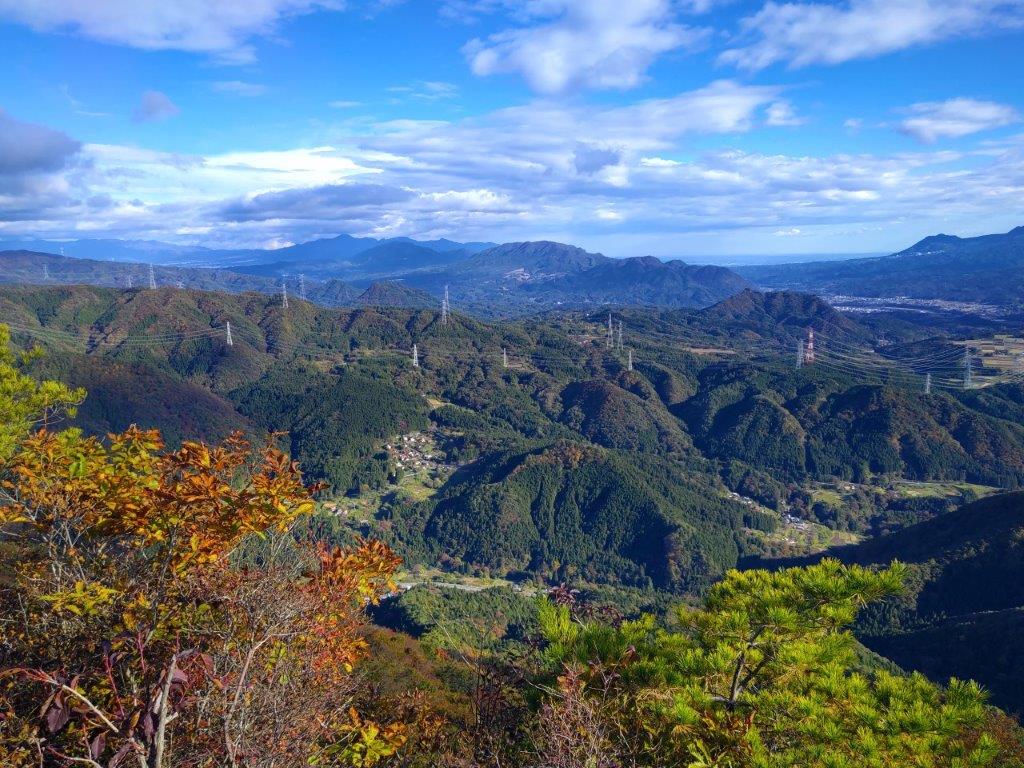
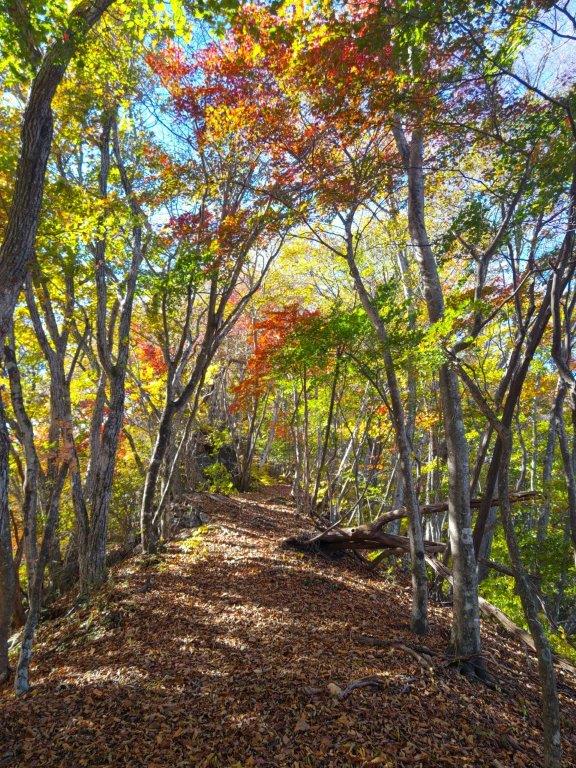
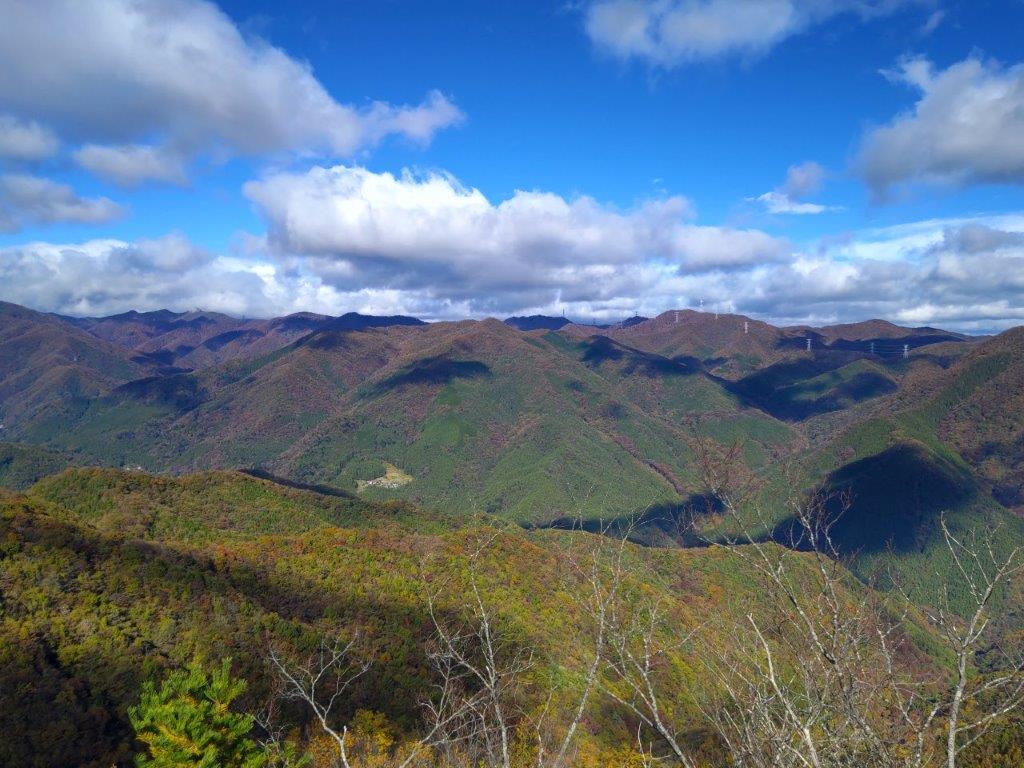
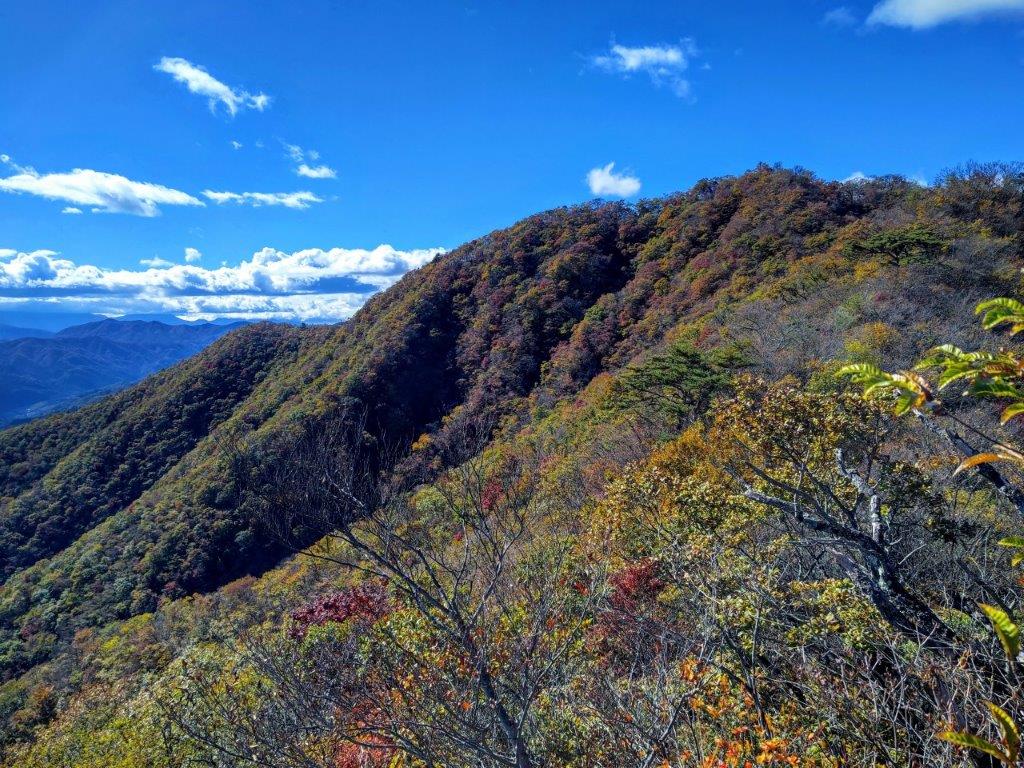
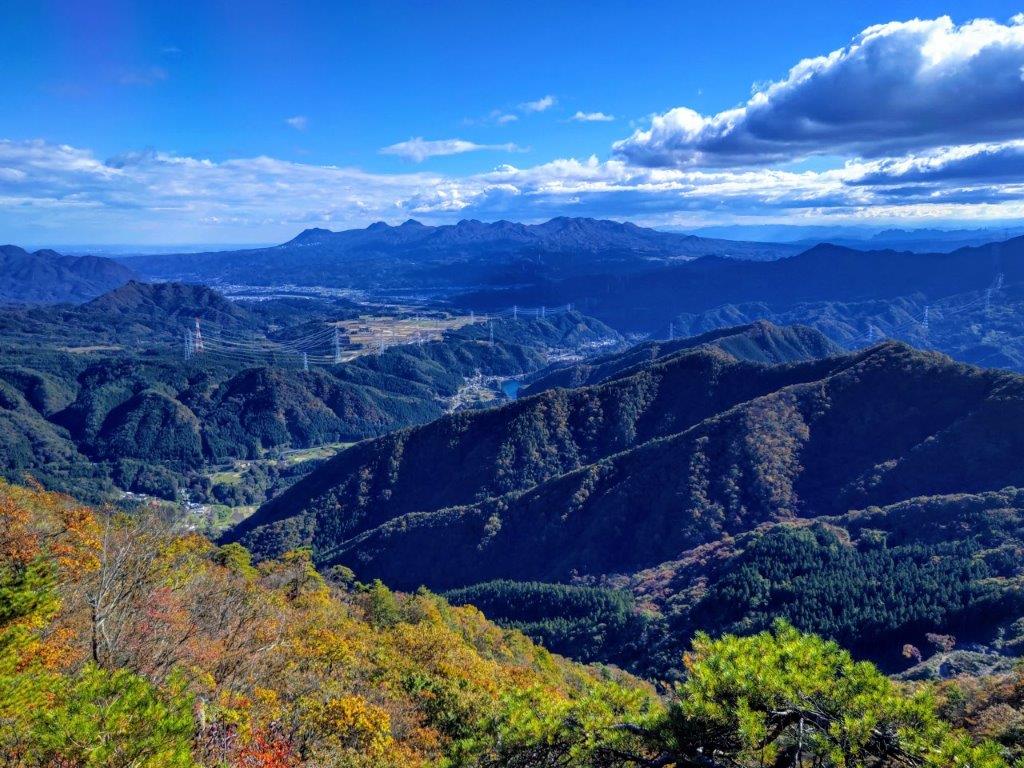
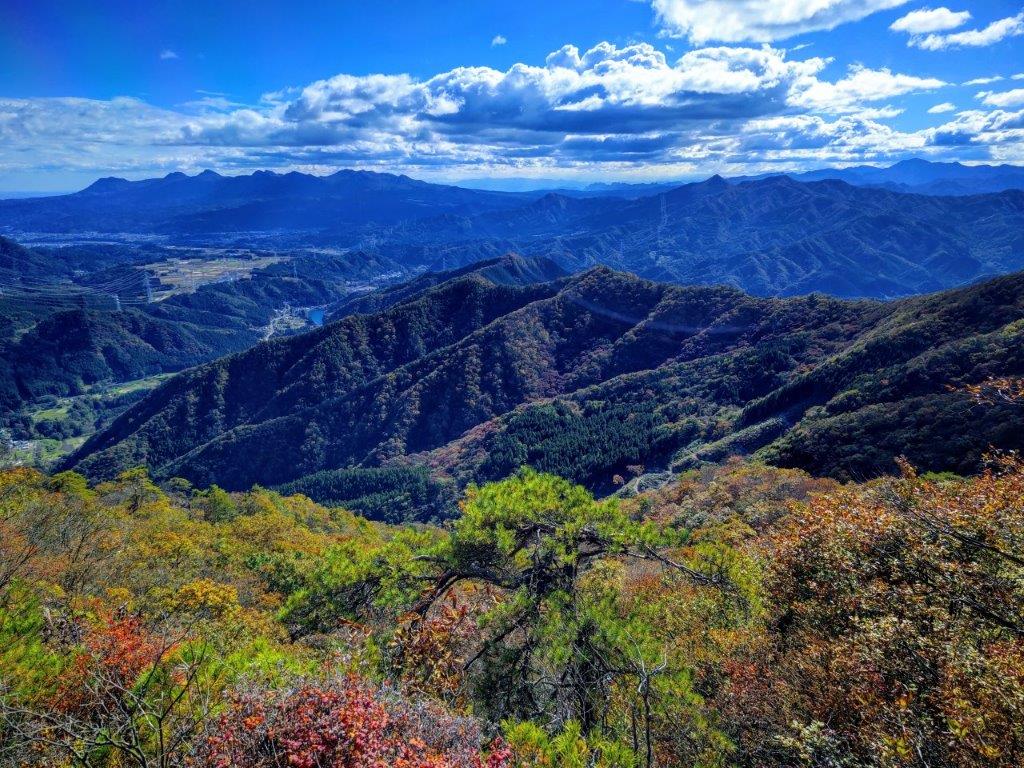
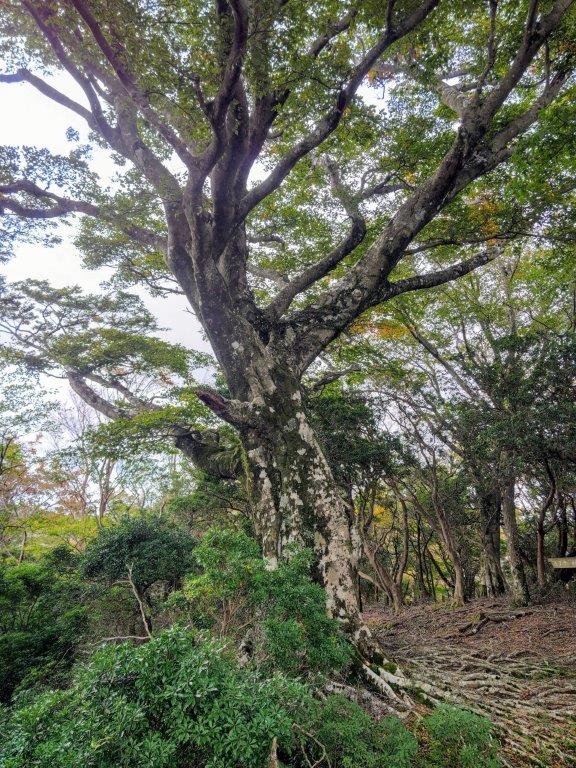
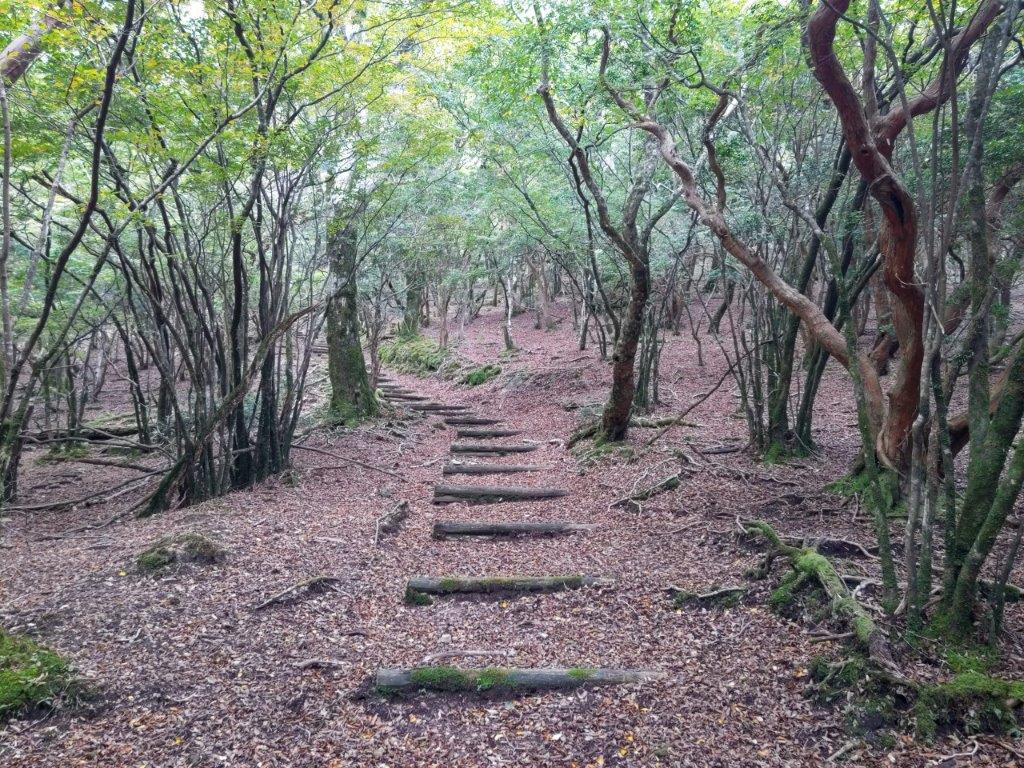
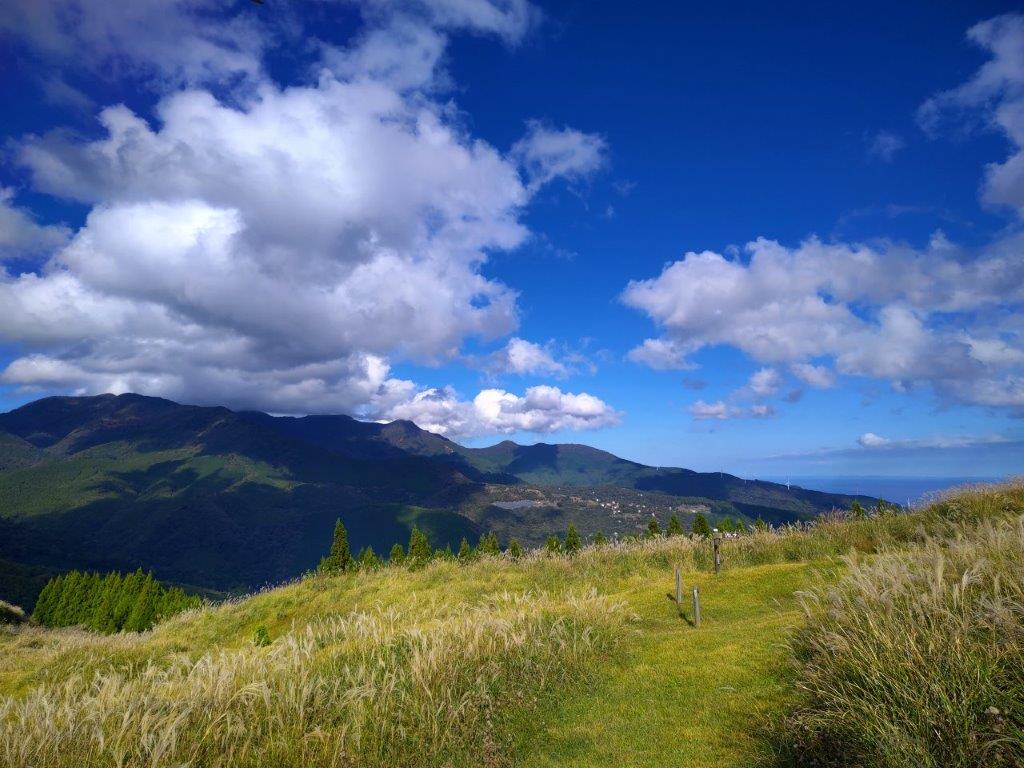
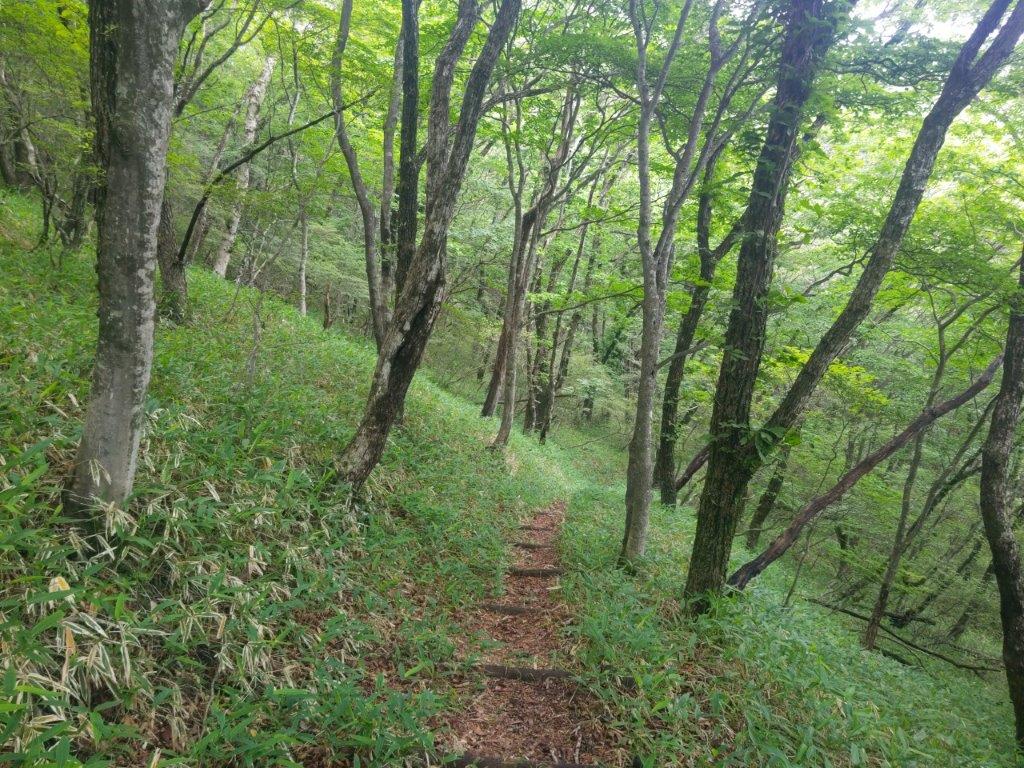
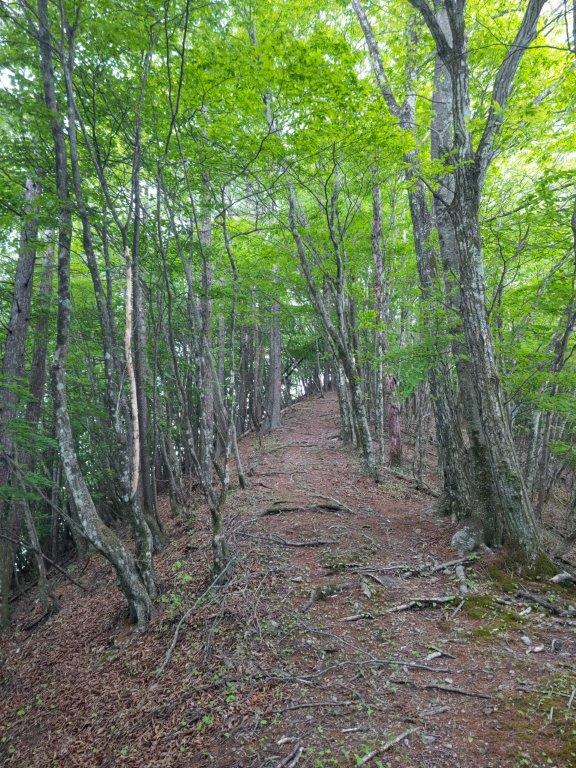
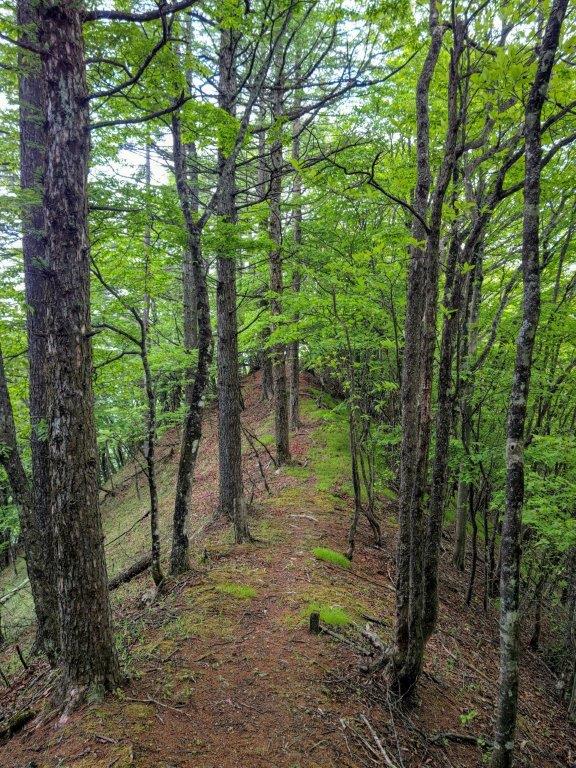
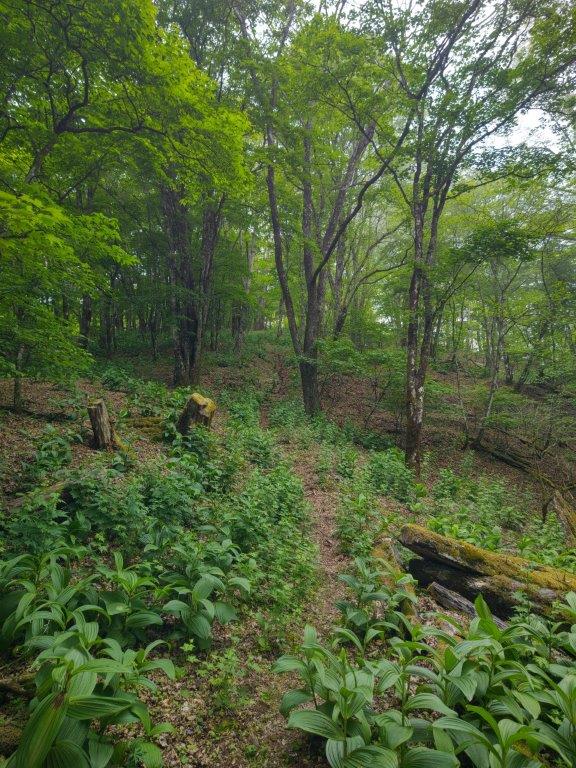
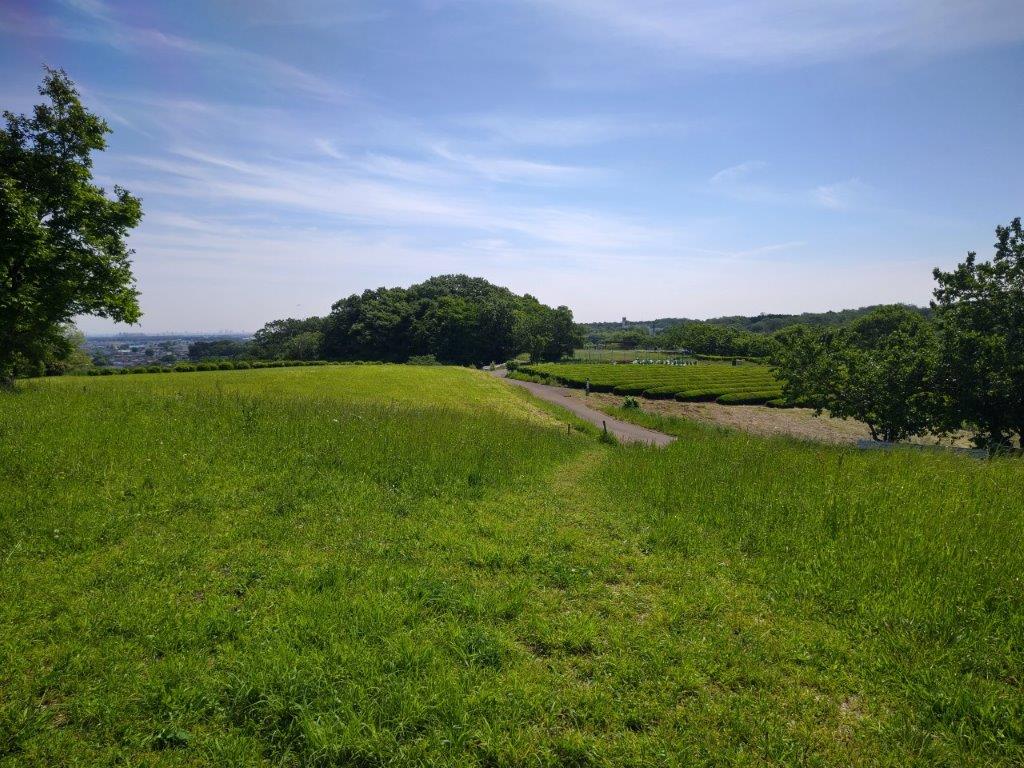
I climbed through beautiful, spider-free forest, up the “Path of Endurance” (忍耐の小径); at the top of a steep log staircase, I reached the top of Mt Hirao, also known as Hirao-Fuji (平尾富士 ひらおふじ hirao-fuji). It was nearly 12h30 so I sat down on one of the several west-facing benches for lunch with a view. To the south, were the mountains of Oku-Chichibu, Mt Ogura visible in the far distance; opposite was a sideview of Yatsugatake, stretching from Mt Aka to Mt Tateshina; further west, I could see the entire range of the North Alps, extending from Mt Yari to Mt Shirouma, free of clouds and snow; on the north side, the crater of Asamayama, as well as the long, flat top of Mt Hanamagari were both visible.

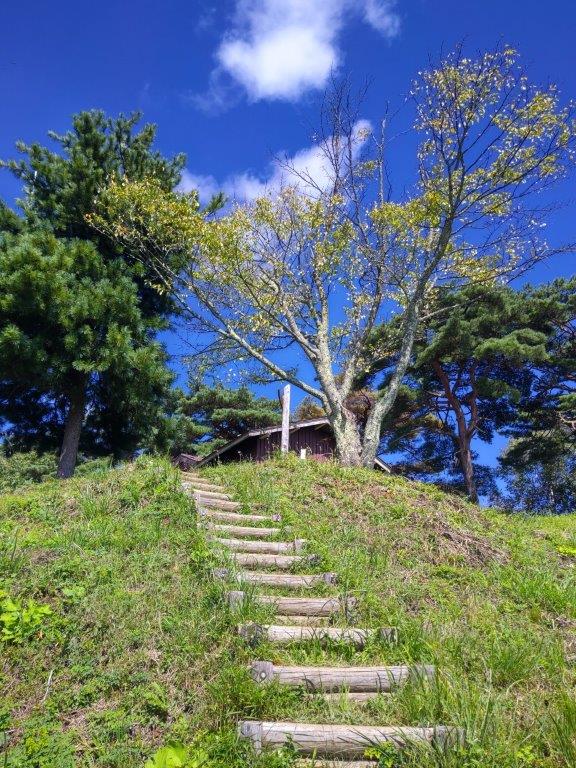
Log Steps near the Top of Hirao Forest

The Summit of Hirao-Fuji

I had never seen so many butterflies flutter around before, flying together in complex patterns. At 1pm, I left my pack on the bench, and went to explore a trail along the southern ridge. After going up and down a small summit completely in the trees, I reached a T-junction where I turned left. After following the slightly descending trail for a short while, I reached a clearing at a forest road. There, I had one of the best views of Mt Asama I’ve ever had, the entire range extending from east to west, completely free of clouds. I then retraced my steps back to Mt Hirao, and after picking up my pack, headed down the mountain.

View of Yatsugatake from the Summit

View of the North Alps from the Summit

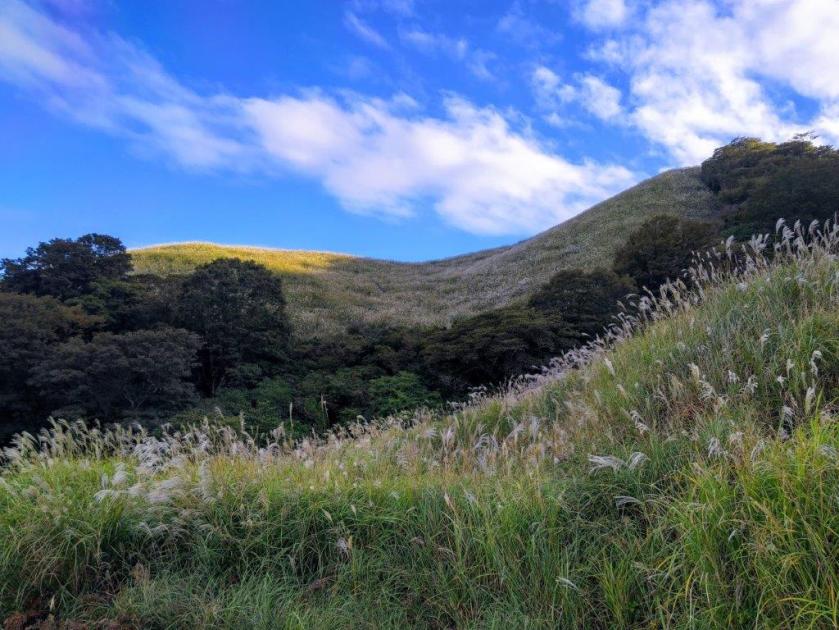
I descended through the forest, chestnut burrs thick underfoot, occasionally dropping to the ground with a “plonk”. I first followed the “Path of Nostalgia” (郷愁の小径) and then the “Red Pine Path” (あかまつの小径), before reaching Ryujin-Ike pond (竜神池), a little after 2pm. Along the way, I passed another viewpoint, just off the trail, the landing spot for a pair of chairlifts, not in operation during the summer season. Beyond the “susuki” waving in the autumn breeze, I could see Mt Tateshina wearing its crown of clouds. From the pond, I reconnected with the “Path of Endurance” which I then followed back to Hirao Onsen.

View of the Crater of Mt Asama (left) and Mt Hanamagari (right)

Side view of Mt Asama from the Clearing on the Forest Road

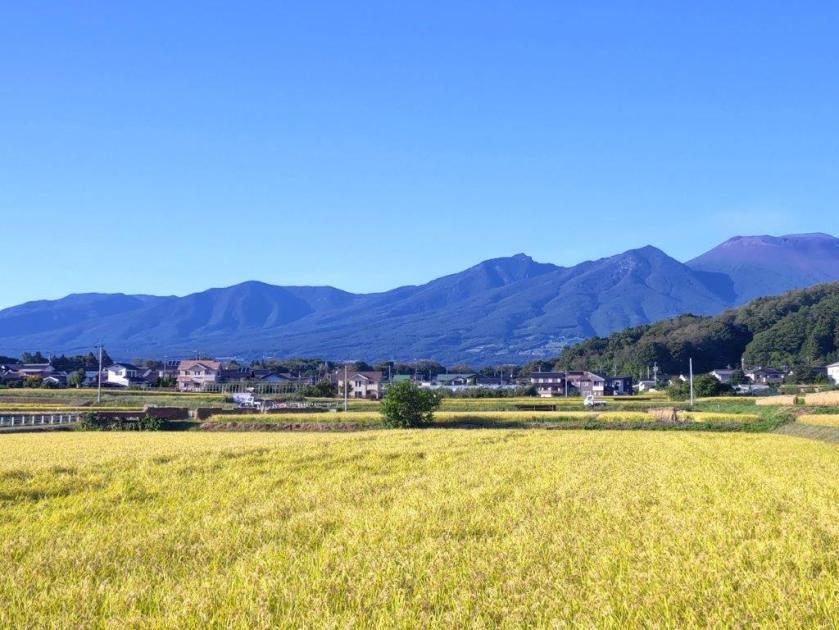
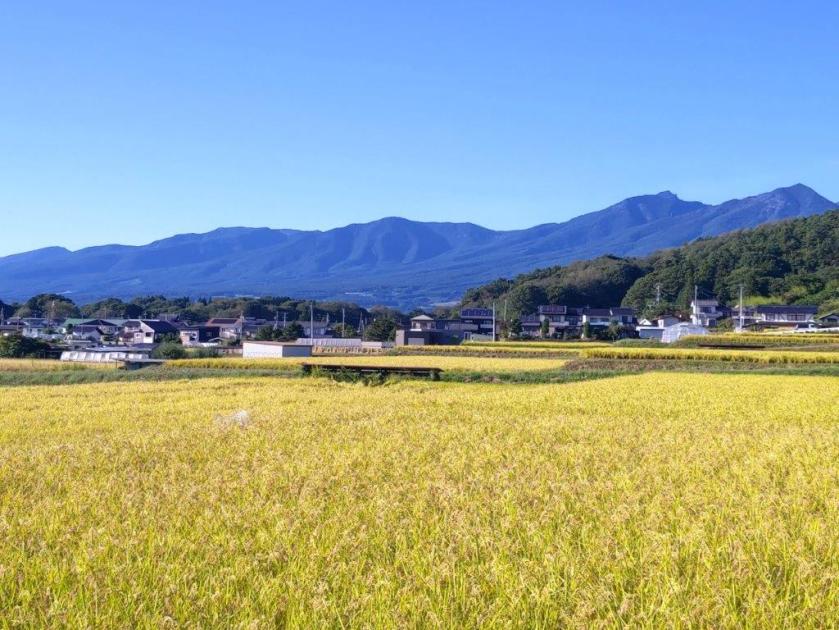
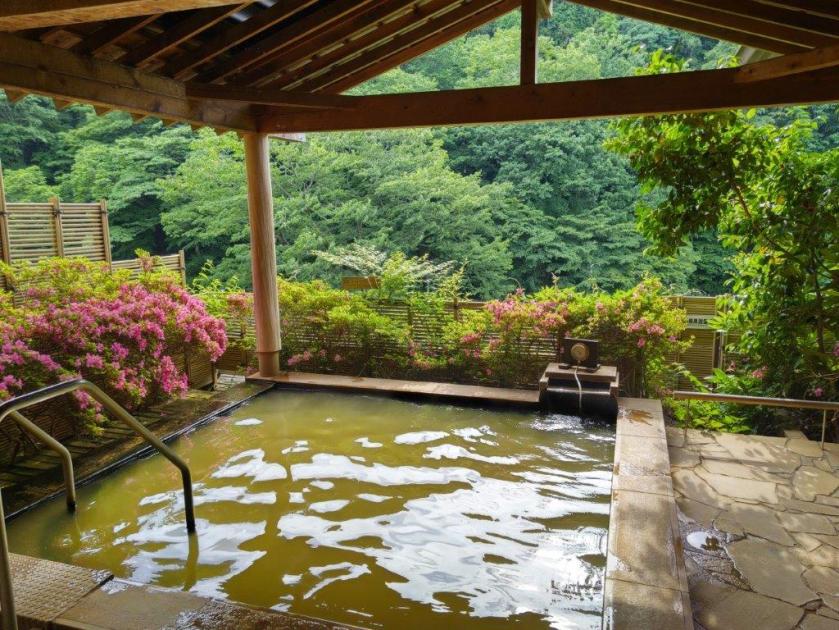
Although it was only 2h30, I wasted no time entering the onsen, also known as “Miharashi no yu“, meaning hot bath with a view; indeed, I immensely enjoyed sitting in the “rotemburo”, or outdoor bath, gazing at the view of the surrounding mountains. At 3h30, I set off again, down a long escalator to the nearby Sakudaira parking area. From there, I followed a road down into the valley, and then walked among the golden fields, ready to be harvested. I was glad I had chosen to walk rather than take a taxi, since I had good views of Asamayama and Mt Hirao along the way. I arrived at Saku-Daira station a little before 5pm, and caught the shinkansen for Tokyo shortly after.

Last Steps of the Endurance Path (right) Walking the Red Pine Path (right)

Golden Fields Ripe for Harvest

Although on paper it seemed a long way to travel for a short hike, it turned out to be very satisfactory and an excellent way to restart hiking after a long break. Ideally, I would have used the Tokyo Wide Pass and combined it with another hike but the opportunity just didn’t present itself. Basically, I was glad I had several viewpoints, the hot spring wasn’t too crowded, and the spiders were nowhere to be seen along the hiking trail. I would like to return one day for a longer hike along some of the forest roads in the area, and during the colder months for a clearer view of the North Alps.

Watch a Video of the Mt Hirao Hike

Watch the Video of the Hike on Youtube

See a Slideshow of More Pictures of the Hike

Mt Nabewari (1332m), Maebashi City, Gunma Prefecture, Sunday, June 25, 2023

I wanted to do one last hike before the hot and humid summer. I found a peak I had never climbed before on Mt Akagi, last visited three years ago. It promised good views, but the roundtrip to the summit was on the short side. I saw on my map that I could combine it with the Kanto Fureai no Michi and end at Fudo-daki waterfall. Since it was mostly along a level trail on the south side of the volcano, it seemed ideal for a warm summer day. I would take a bus from Maebashi station for the Akagi Visitor Center and get off at a stop half way up the mountain. For the return, I planned to use the “furusato basu” to get to the nearest train station, an on-demand bus system requiring me to request a pickup before the end of my hike. I had never used such a system before, and if for some reason it didn’t work, I would have to call an expensive taxi instead. The weather was supposed to be overcast in the morning, then sunny in the afternoon, the temperatures comfortable enough for hiking. I wasn’t sure I would get any views this time, but I hoped to have one last satisfying hike before the long summer break.

Hiking on Mt Akagi and the Fureai no Michi

赤城山 ・ 関東ふれあいの道

Read this Blog Post on Hiking Around Tokyo

View Towards Mt Akagi on the Way Back from Mt Nabewari

Start of the Ridge Leading to Mt Nabewari

It was a cloudy morning as I got off the train at Maebashi station around 9am. I was surprised how few people boarded the bus for the one hour ride to Akagi mountain, although the parking lot next to the trail entrance was packed with cars. I set off a little before 11am, up a wide, gently sloping trail through the forest; rays of sunshine pierced the clouds, a sign of improving weather. Half an hour later, I reached Arayama Highland (荒山高原). To the south, I had a view of the head of the ridge leading to today’s summit. Many hikers were taking a break, so I quickly moved on. After a short climb, I reached a level path along a bare ridgeline.

Start of the Hike (left) Easy Walking through the Forest (right)

Near the Top of the Ridge (left) Just Before the Summit (right)

I was amazed to find such an exposed ridgeline at a relatively low altitude, although the surrounding views were hidden by the clouds. After passing two minor summits, Mt Hiokoshi (火起山) and Mt Kamado (竈山), the path reentered the forest and descended for a short while, before reaching another section of the ridgeline out of the trees. At noon, I arrived at the top of Mt Nabewari (鍋割山 なべわりやま nabewari-yama). Looking south, I could barely make out the Kanto plain through the haze; in clear weather, one can see Mt Fuji, Tanzawa, Oku-Chichibu, the South Alps and Yatsugatake. Patches of blue sky above gave me hope for the rest of the day. I sat on a bench for some lunch, before retracing my steps half an hour later.

Jumble of Rocks on the way to Arayama Kogen

Walking the Exposed Ridgeline

I was lucky to get some views on the return on the north side: I could see the long ridgeline on the west side of the volcano, ending at the rounded peak of Mt Suzu. Directly ahead, I could see Mt Ara and Mt Jizo, two other peaks of Mt Akagi (climbed in September 2015), slowly emerging from the mist. On a clear day, it would have been possible to see the North Alps, Mt Asama, Mt Azuma, Mt Kusatsu-Shirane, Mt Naeba, Mt Tanigawa, and Mt Hotaka. At 1pm, I was back at Arayama Kogen, where I joined the “Fureai no Michi”, heading west through the forest. From this point, I saw no other hikers, the sound of voices replaced by the buzzing of insects.

Some Blue Sky Above

On the Right, Mt Suzu

This was by far the best part of today’s hike, as I could totally immerse myself in the surrounding nature. The sun had finally come out but it remained tolerably cool under the tree shade. It took me about three hours of pleasant hiking to reach the trail entrance for Fudo-daki waterfall (不動滝).

I checked it out myself: it was indeed impassible, but I was rewarded with a close-up encounter with a deer. The short trail to the waterfall followed a rushing river, requiring some surefootedness along a rocky section, equipped with a small ladder for safety.

Heading back to Arayama Highland

Following the Fureai no Michi

I was stunned by how high this waterfall was, as it suddenly appeared past a rocky cliff in a bend in the river; according to a nearby information board, it was 32 meters tall. I got as close as I could to the thundering water, the cold splashing water welcome on this warm summer day. At 4h30 I turned back, and after reaching the road at the trail entrance, turned left. From here, it was about an hour walk down the mountain. As soon as I was back within phone range, I dialed the “furusato bus” number. After several long rings, my call was answered. I requested to be picked up from Nakanosawa Museum, the closest stop to the mountain.

Walking in the shade (left) Staircase at the End of the Fureai no Michi (right)

First view of Fudo-daki Waterfall (left) Close-up view of the Waterfall (right)

I was relieved when my request was accepted without any hesitation. I arrived at the museum just before 5h30, and a few anxious minutes later, a minibus arrived, dot on time. After a short ride through the countryside (total cost 210 yen), I was dropped off at Ogo station on the Jomo railway, a 15 minute train ride from Chuo-Maebashi station, which in turn is a ten minute bus ride from Maebashi station. I was glad I could experience a new form of transport, although on a busier day it would have taken longer to accommodate more passengers. I hope to redo this hike one day on a clear winter day so I can see all the views along the ridgeline and from the summit.

Watch a Video of the Mt Nabewari Hike

Watch the Video of the Hike on Youtube
Mt Yakebitai (2009m) & Mt Ryuo (1900m), Yamanouchi Town, Nagano Prefecture, Saturday, June 17, 2023

Read this Blog Post on Hiking Around Tokyo

I wanted to make another trip to Shiga Highland since I had such a great hike there last year. I had been planning to use the Ryuo ropeway for a while, but needed good weather to justify the expense. I had my chance after a typhoon passed over East Japan, bringing clear blue skies in its wake. My hiking map from ten years ago showed a trail between the ropeway and the Oku-Shiga ski resort; however, it was absent in future versions. Looking at online reports, I saw that a trail still existed and that I could do a roundtrip to the highest point, although it was hard to tell the duration. I would take the shinkansen to Nagano and then the Nagano Dentetsu line to Yudanaka; there, I could catch a free shuttle bus to the base of the ropeway. For the return, I had to make sure to catch the last ropeway at 5pm. It was supposed to be quite hot, but hopefully it wouldn’t affect me much, since the hike would be mostly above 1800 meters. I was looking forward to visiting a new part of Shiga Kogen and getting some great views on a clear day.

Hiking in the Joshin-Estu Kogen National Park

上信越高原国立公園

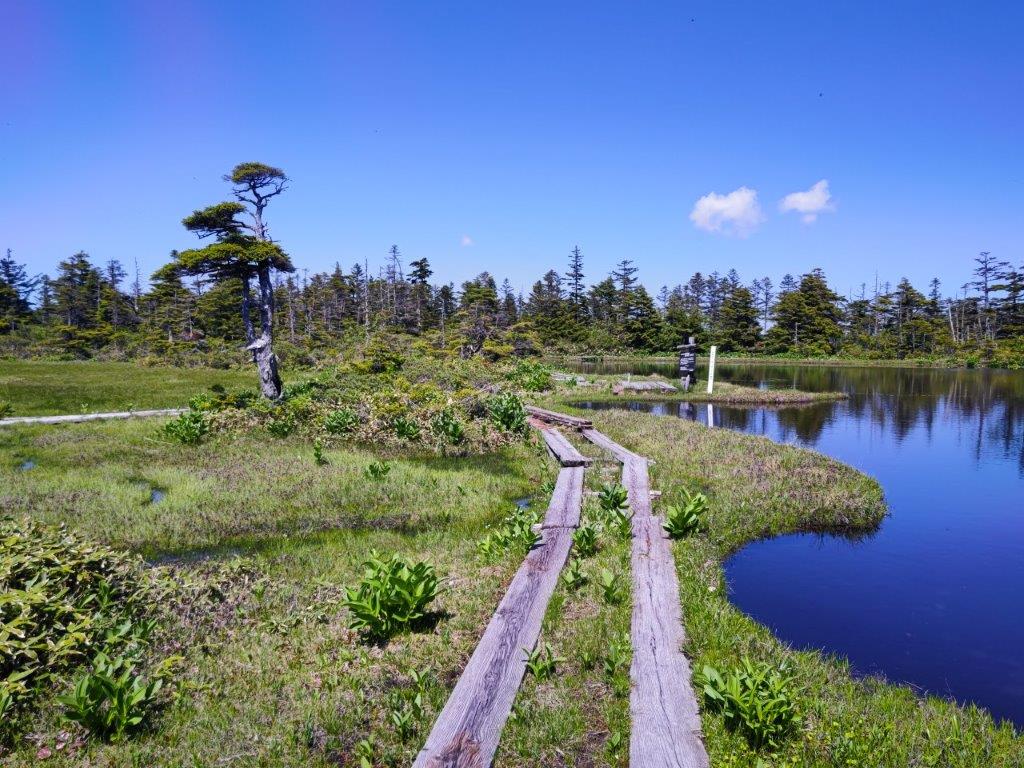
Chigoike Wetland, near the top of Mt Yakebitai

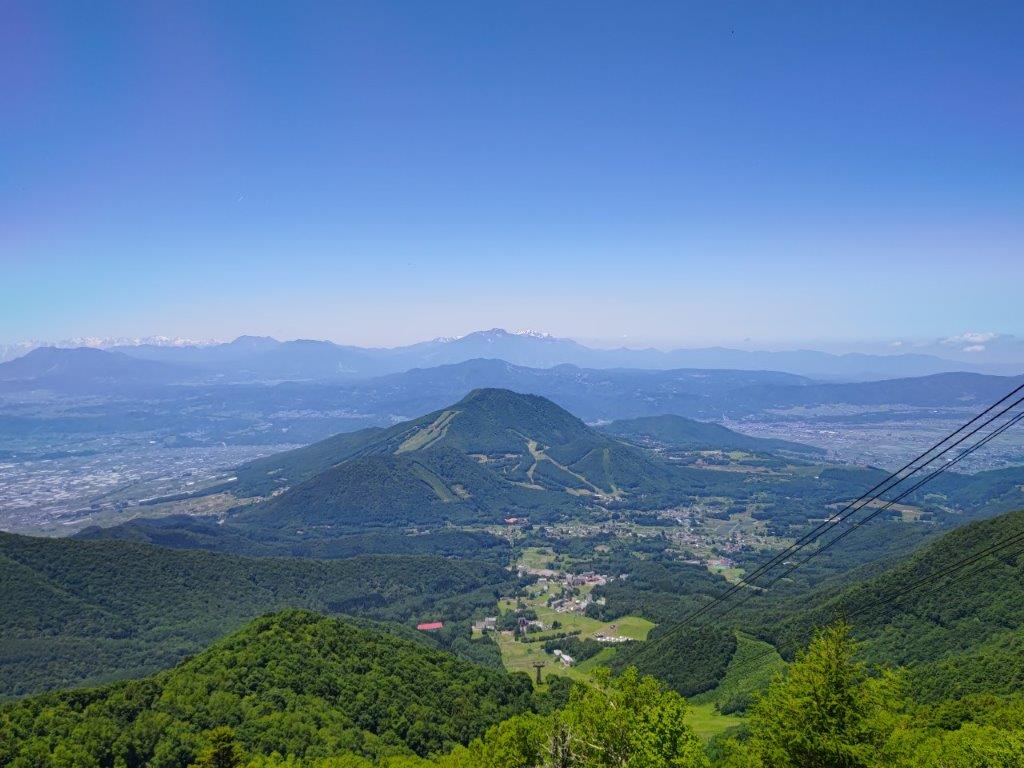
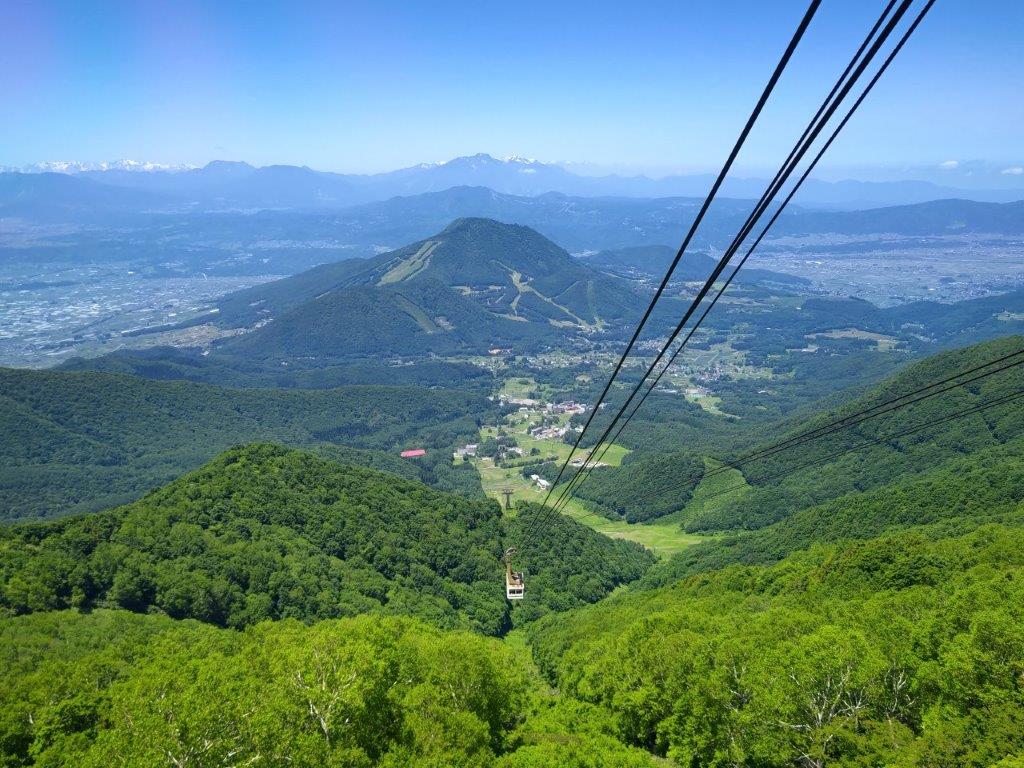
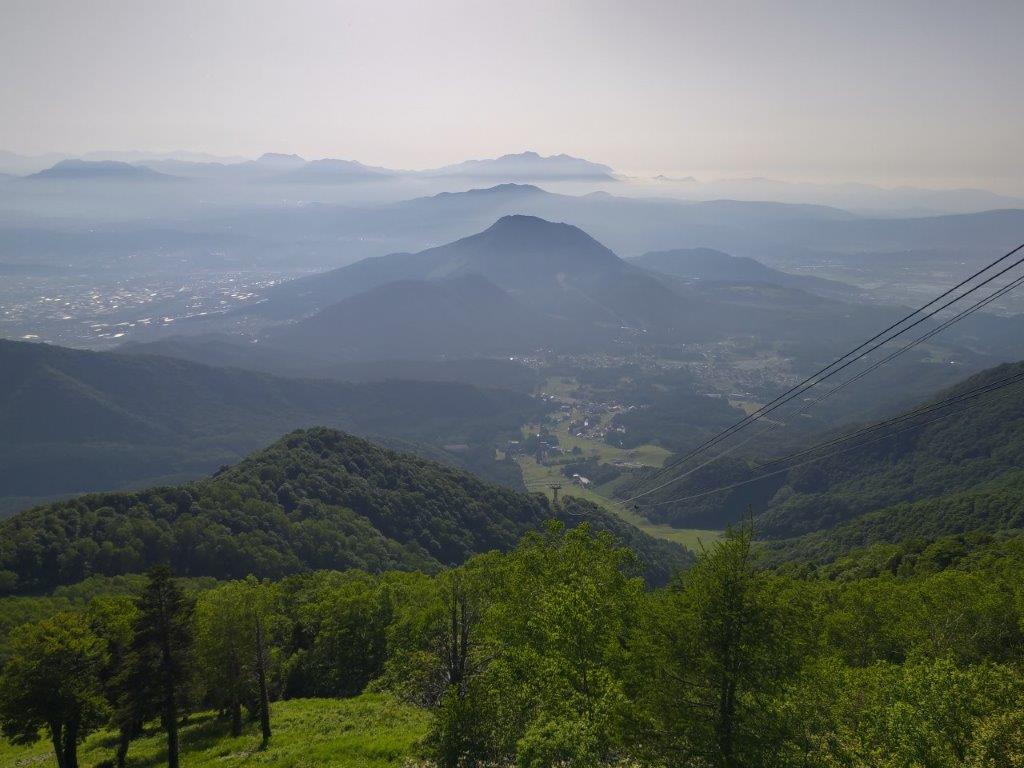
View of Togakushi Kogen from Sora Terrace

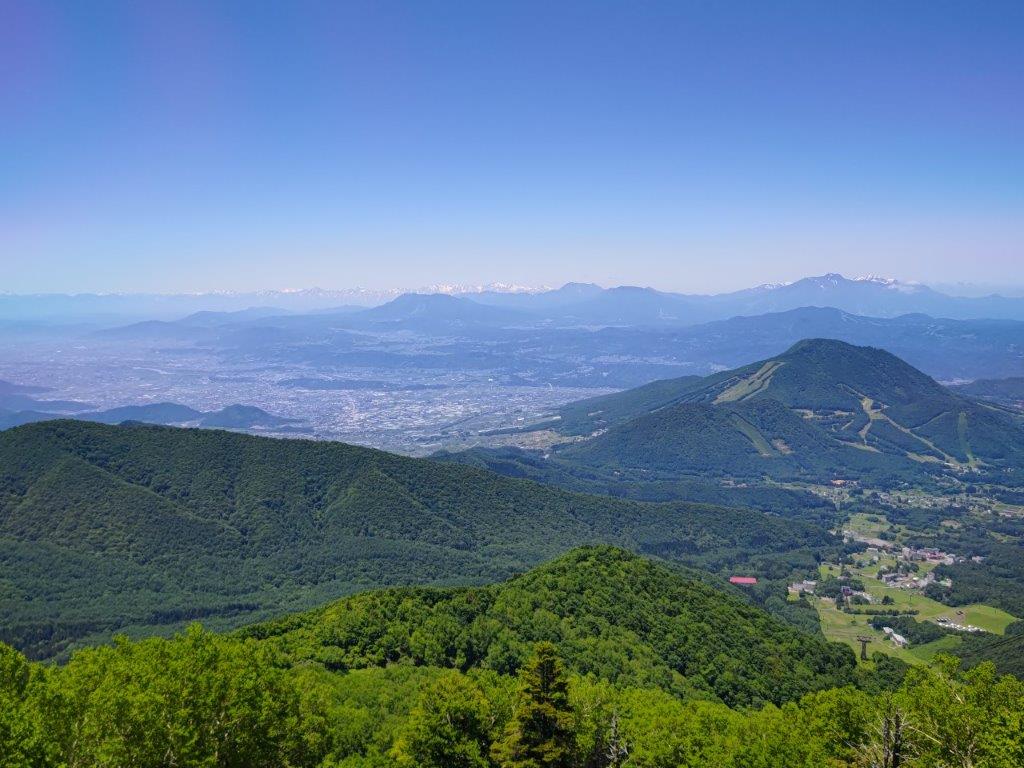
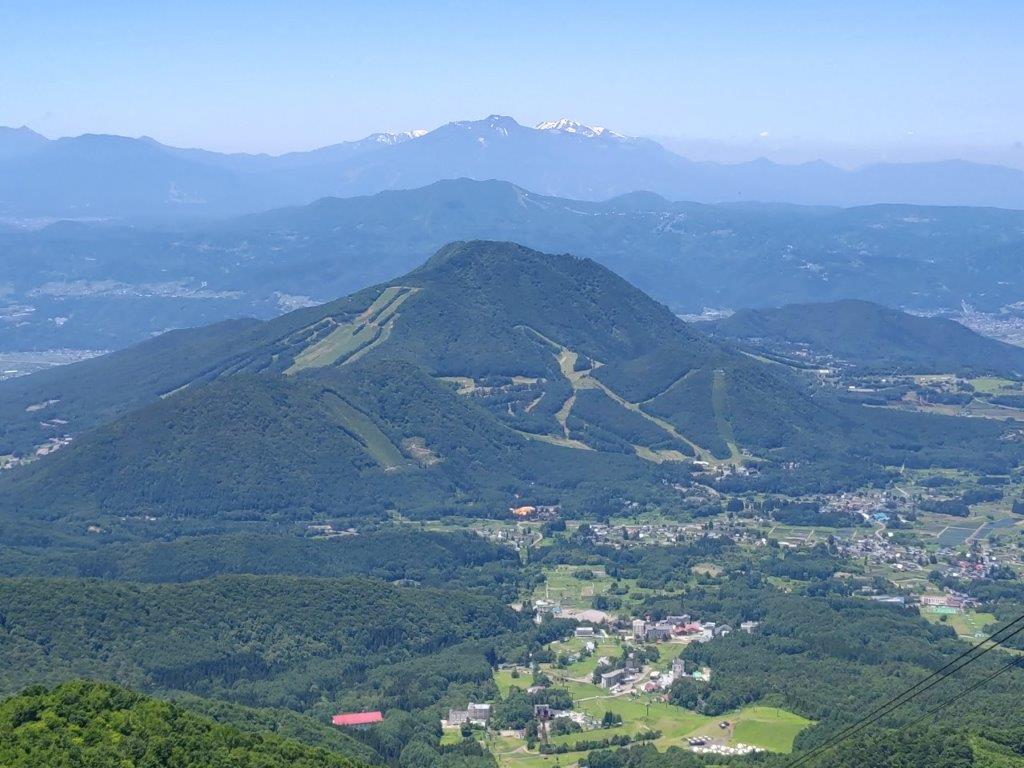
It was the perfect day as I rode the shinkansen to Nagano, where I caught the limited express “Snow Monkey”, arriving at Yudanaka around 1030. I was one of the few people to board the minivan, departing opposite the station, for the half an hour ride to the ropeway, located in the North part of Shiga-Kogen. At 1130, I finally reached Sora Terrace at the top of the ropeway, where I had a sweeping view of the mountains of Nagano, completely free of clouds. In the background, was the entire range of the North Alps, the highest peaks still covered in snow. In the foreground, was Togakushi Highland and its many volcanoes: Mt Takatsuma, Mt Iizuna, Mt Kurohime, Mt Myoko, and its highest peak crowned in white, Mt Hiuchi; closer still was Mt Madarao, climbed in the summer and skied in the winter; directly opposite was Mt Kosha, a summit I hope to climb soon.

View towards Nagano

View of the Ryuo Ropeway

I was surprised by how warm it felt, even though I was 1770 meters high. After admiring the view, I set off just before noon. First, I followed a gently climbing ski slope through the forest, wide enough to be out of the shade; I was feeling pretty hot and wondered if I had enough water. I soon reached the start of a short loop through the Ryuo summit wetland (竜王山頂湿原), along a wooden walkway on the left side. It took about ten minutes, but gave me a close look at the natural beauty of the Joshin-Etsu Kogen National Park. I resumed my hike and soon made my way up a steeper slope, eventually reaching a (closed) restaurant at the top of the Ryuo ski resort.

The North Alps still covered in snow

Close to Far: Mt Kosha, Mt Madarao and Mt Myoko

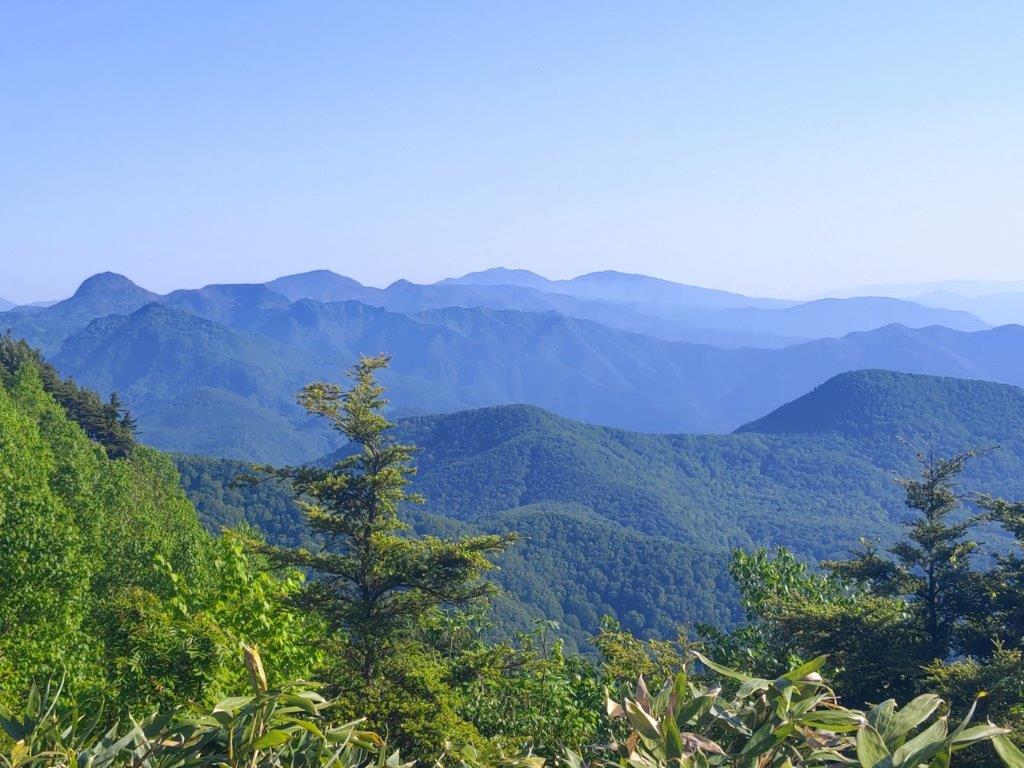
Turning around, I had a view of the North Alps framed by pines, as well as the round top of Mt Yakebitai, to be climbed on the return. I soon located the start of the trail on the right side: although there were no signposts, pink ribbons were attached to trees at regular intervals; thick forest on both sides made the use of a GPS device superfluous. The path descended into a broad valley, completely hidden from the outside world; above the trees, I had my first view of today’s highest peak. Very soon, I was climbing up a steep slope, sweating a lot in the heat; I had to use my head net to keep out the many insects. A little before 1pm, the slope leveled and a wooden walkway suddenly appeared.

A short loop through the Ryuosancho-Shitsugen

Looking back at the summit of Mt Ryuo

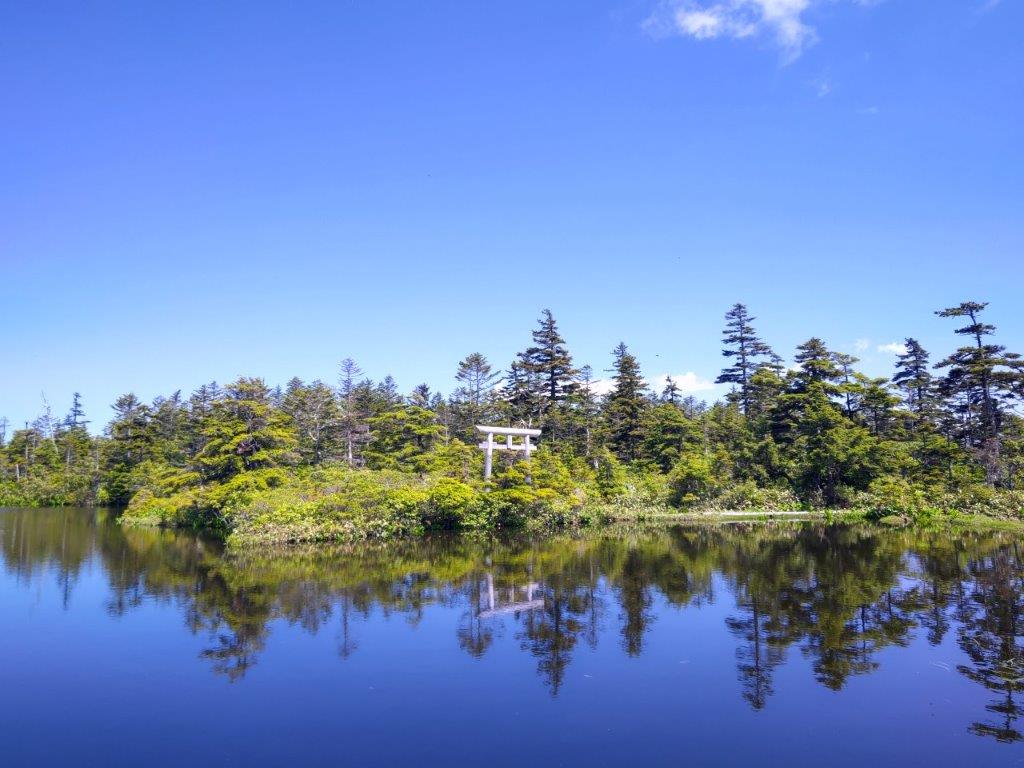
I soon arrived at a stunningly beautiful pond, chigoike wetland (稚児池湿原); although it was shown on my map, I hadn’t expected anything like this. I had also arrived at the summit of Mt Yakebitai (焼額山 やけびたいやま yakebitaiyama). After some lunch, I dropped my pack and did tour of the wetland, following the walkway counterclockwise. On the west side, Mt Kurohime and Mt Myoko rose majestically from the edge of the grassy wetland. On the east side, I emerged from the forest onto another ski slope, looking totally different from the time I was there on skis.

The summit of Mt Yakebitai, across the hidden valley

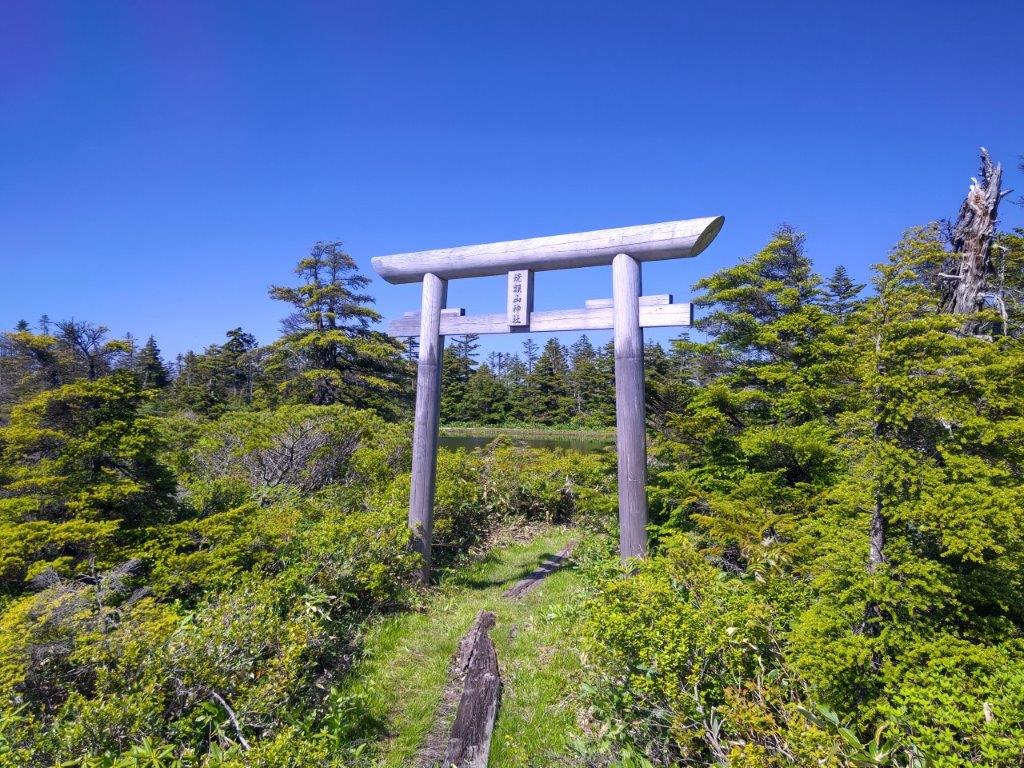
Wooden Shinto Gate at Chigoike Wetland

I had another amazing view, this time of the mountains of Niigata, many of them yet to be climbed. From left to right, I could see Mt Torikabuto, Mt Naeba, Mt Shirasuna and Mt Iwasuge, its side view resembling a ship. It was already 2h30 so I quickly completed the loop, passing near a small shrine and its wooden “torii” (Shinto Gate), looking quite magical among the pines, next to the pond. A little before 3pm, I set off for the return, reaching the top of Mt Ryuo (竜王山 りゅうおうさん ryuuousan) less than an an hour later. Sadly the path to the summit was overgrown by vegetation and view of Shiga Kogen to the south was mostly hidden by trees. I could only stay a few minutes till swarms of insects forced me to retreat.

Mt Kurohime and Mt Myoko rising from the wetland

Top of the Oku-Shiga Ski Resort

I was absolutely astounded that the trail I used on the return was not better known. I had frequent views on the left side through breaks in the vegetation. Fortunately I was ahead of schedule, so I could take my time. After the peaks of Shiga Kogen, including Mt Kasa, Mt Kusatsu-Shirane and Mt Azumaya, I also had a magical view of Mt Kosha, Mt Madarao and Mt Myoko, lined up and shrouded in the afternoon haze. I arrived back at the ropeway just before 4h30, relieved that I had made it back with time to spare. Once back at Yudanaka, I regretfully had to skip the hot spring next to the station, as I wanted to catch the last limited express for Nagano, where I then hopped onto the shinkansen for the 90 minute ride back to Tokyo.

View of Shiga-kogen from the path between Mt Ryuo and the ropeway

Magical view of Mt Kosha, Mt Madarao and Mt Myoko

I was glad I was able to complete the roundtrip to Mt Yakebitai as a daytrip from Tokyo, in less than 5 hours at a relatively fast pace. I was also pleased to discover the beautiful Chigo Pond; I couldn’t believe I had it totally to myself. It’s a total mystery why the trail has been abandoned and this place isn’t better known. I was also surprised that the ropeway itself didn’t have more people, although the rainy season might have something to do with this. From the pond, I found a signposted trail heading down into Oku-Shiga, so I hope I can return to do it one day.

Watch a Video of the Mt Yakebitai and Mt Ryuou Hike

Watch the Video of the Hike on Youtube

Watch a Slideshow of More Pictures of the Hike

Mt Mizusawa (1194m), Shibukawa City, Gunma Prefecture, Monday, June 5th, 2023

I had a chance to go hiking on a weekday, so for once, I wanted to visit a popular mountain. I decided to redo one of the peaks on Mt Haruna, first climbed during Golden Week 2016, via a different route. Back then, it was a short roundtrip off the main trail between Mt Soma, the 2nd highest peak, and Ikaho Hot Spring. This time, I would start from Mizusawa-dera Temple, on the east side of the volcano, and finish again at Ikaho Onsen, since I could get a hot spring bath before heading back. I would take the shinkansen to Takasaki station, and there catch a bus to the temple, my first time to use this bus line. For the return, I could take a bus to Shibukawa station, from where I could catch the Kusatsu Limited Express for Ueno, also my first time to return this way. The weather was supposed to be sunny with some clouds, warm but not too hot, typical for this time of the year. I was looking forward to my first visit to Mt Haruna in nearly 4 years, and what would probably be my last hike before the start of the rainy season.

Hiking on Mt Haruna 榛名山

Read this Blog Post on Hiking Around Tokyo

View of Mt Komochi (left) and Mt Akagi (right) from near the Summit

Side view of the Steep climb up Mt Mizusawa

It was already very warm as I got off the nearly empty bus at 10am, after a one hour ride from Takasaki. I quickly walked past some Udon restaurants and up a steep staircase. I was impressed by the massive Buddhist gate leading to the 1300 year-old Mizusawa-dera 水沢寺, quite busy with sightseers despite the mid-morning heat. I sat on a bench next to a ancient cedar and got ready for my hike. At 10h30, I ducked under a small red Shinto gate and climbed another steep staircase, as chanting from some Buddhist ceremony drifted up from below.

Walking under Towering Cedars (left) Climbing Log Steps (right)

Steps Difficulty Level 2 (left) Steps Difficulty Level 3 (right)

I followed a path in the shade of towering cedars before finally reaching the start of the trail. At first the logs steps were easy to climb, but they gradually got more chaotic as I reached the steepest part of the climb. However, it never got so tough that I couldn’t enjoy the green spring forest. Just past 11h30, I reached the first viewpoint of the day, on the east side, near a row of small Buddhist statues.

Transition between Levels 1 and 2

Viewpoint near the Buddhist Statues

I had a bird’s-eye view of the wide valley between Mt Haruna and Mt Akagi. On the left side, I could also see Mt Onoko (climbed in January 2016), Mt Komochi, and behind it, Mt Hodaka (climbed in September 2015). After a short break, I continued my hike. Although I passed several people on the way up, I still had long stretches of the trail to myself. I soon passed another viewpoint on the south side, the flat Kanto plan stretching away into the distance; after a short scramble up a rocky section, equipped with ropes for safety, I reached one more viewpoint on the north side, near a pair of tiny shrines.

The Kanto Plain Stretching South

Looking down at the Shoulder

In the distance, I was surprised I could make out Mt Sennokura and Mt Tanigawa, still wearing their winter coats, the haze having already returned just two days after heavy rain. A little further, I reached the top of Mt Mizusawa (水沢山 みずさわやま mizusawa-yama), its prominence barely noticeable along the ridgeline, but with a spectacular 360° panorama. Directly ahead on the west side, I could see the highest peaks of Mt Haruna. To the southwest, were the Chichibu mountains, and to the southeast were Mt Kusatsu-Shirane, Mt Shirasuna and Mt Naeba (climbed in June 2015), its white, flat peak only just visible. It was past noon, so I sat down for some lunch.

The Chichibu Mountains on the Southwest Side

The Highest Peaks of Mt Haruna

After I had my full of the spectacular view on this sunny day, I set off again, around 1h30. After some descending along the forested, rocky ridge, I reached a paved road, and there, turned right along the path for “Tsutsuji-ga-oka”, or Azalea hill, although they were now out of season and no flowers could be seen. I soon reached an open shelter before another road crossing, where I had an impressive side view of the peak I had just climbed. I continued along the easy-to-walk trail, and at 2h30, arrived at the “Tokimeki Deck”, a wooden observation deck near the top of the Haruna Ropeway.

View of Mt Akagi from the Tokimeki Observation Deck

View of Mt Mizusawa from the Tokimeki Observation Deck

I enjoyed this view more than during my two previous visits, since not only had I now crossed the entire Mt Mizusawa ridge on the south side, but also many of the other peaks in the area. Looking north, I could see the hot spring town of Ikaho Onsen, nestled at the base of the mountain. I skipped the ropeway and followed the Fureai no Michi for the last part of the hike. At 3pm, I reached Ikako Shrine, at the top of the famous stone steps that cross the entire town. Almost immediately, I found a hot spring accepting day trippers. After a relaxing bath, I boarded the bus for the short ride to Shibukawa station, where I caught the limited express for the 100-minute comfortable ride back to Tokyo.

Trail past Tsutsuji-ga-oka (left) Staircase leading to Haruna-jinja (right)

Looking down at Ikaho Onsen from Tokimeki Deck

I was glad I could squeeze in this short hike, around 4 hours, just before the start of the rainy season. Although many people were hiking up and down the east side of Mt Mizusawa, there were a lot less people on the west side, so the second half of the hike was more peaceful. I’d like to return in the future to try some more hikes on Mt Haruna, especially now that I discovered the bus from Takasaki and the limited express from Shibukawa; however, whatever route I choose, I am sure I’ll always end with a hot spring bath at Ikaho Onsen.

Watch a Video of the Mt Mizusawa Hike

Watch a Slideshow of more Photos of the Mt Mizusawa Hike

Watch the Video of the Hike on Youtube

Mt Akaguna (1523m), Kanna Town, Gunma Prefecture, Sunday, May 28, 2023 [Mikabo Super Forest Road]

I had been wanting to climb this mountain for a several years, but couldn’t figure out a way to do it as a day trip by bus; even using a share car to reach the trailhead at the Hayataki car park meant a long hike combined with a long drive. In the end, I decided to approach via the “Mikabo Super Rindo”, a 67km forest road that follows the ridgeline from east to west, and passes just below the summit, on the north side. Looking at my hiking map, I noticed I could return via a logging road road on the south side, and thus do a loop hike; it seemed a bit adventurous, requiring me to reply on my GPS. I would take the Takasaki line to Honjo station, where I would switch to a car, and then drive to Shiozawa Pass; I would return via the same route. The weather was supposed to be cloudy most of the day; since no rain was forecast, I still hoped to get some good views. I was looking forward to doing some more exploring of one of the less accessible hiking areas around Tokyo.

First View of Mt Akaguna from the Hiking Trail

Hiking through Green Forest below the Summit

The weather was definitely cloudy as I got off the train at Honjo station around 9am, dashing any hope of sun. Despite the gloomy skies, I enjoyed the drive through Onishi Town and past Kanna Lake, places I had visited on previous hikes. I passed the trail entrances for Mt Mikabo and Mt Tetemiezu, reflecting on how the weather had also been poor on those two hikes. After Kanna Town, I turned right, onto a smaller road leading up the mountain, and parked my car at Shiozawa Pass (塩沢峠), near the junction with the Mikabo Super Rindo (御荷鉾スーパー林道).

The Mikabo Super Forest Road near Mt Akaguna

Green Path and Pink Flowers

I enjoyed the wide view across the valley on the south side: I could see the rounded top of Mt Tetemiezu and the twin peaks of Mt Futago, both on the border of Gunma and Saitama; behind Mt Futago, the summit ridge of Mt Ryokami was hidden in the clouds. I set off at 11h30, and and soon reached the turnoff for the “super-rindo” on the left side. I was glad I had opted to leave my car at the pass; although I could have parked closer to the summit, this gravel road was better suited to walking, bicycling or motorcycling. At noon, I arrived at the trail entrance on the left, as well as an open shelter with a viewpoint.

Light Green Above (left) Light Green Below (right)
Following a Narrow Ridge (left) Walking among the Birches (right)

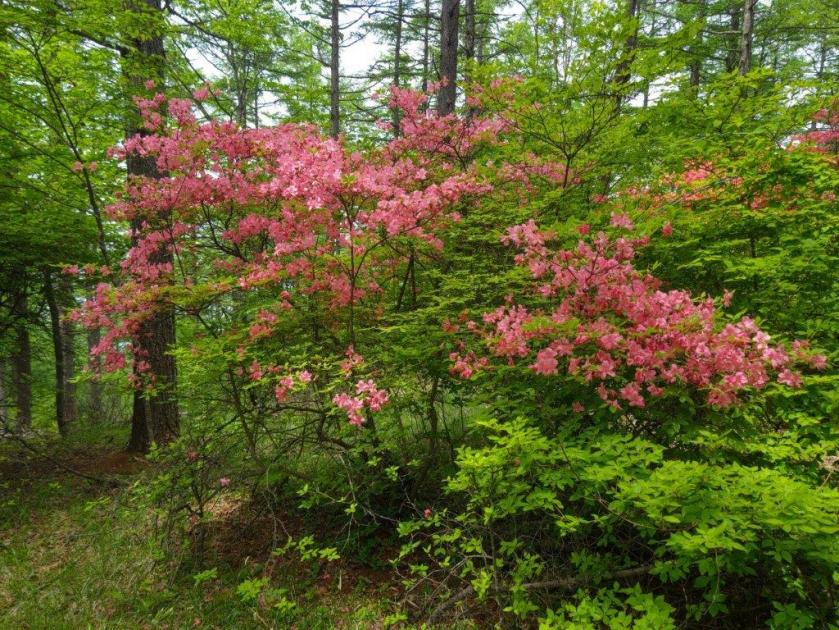
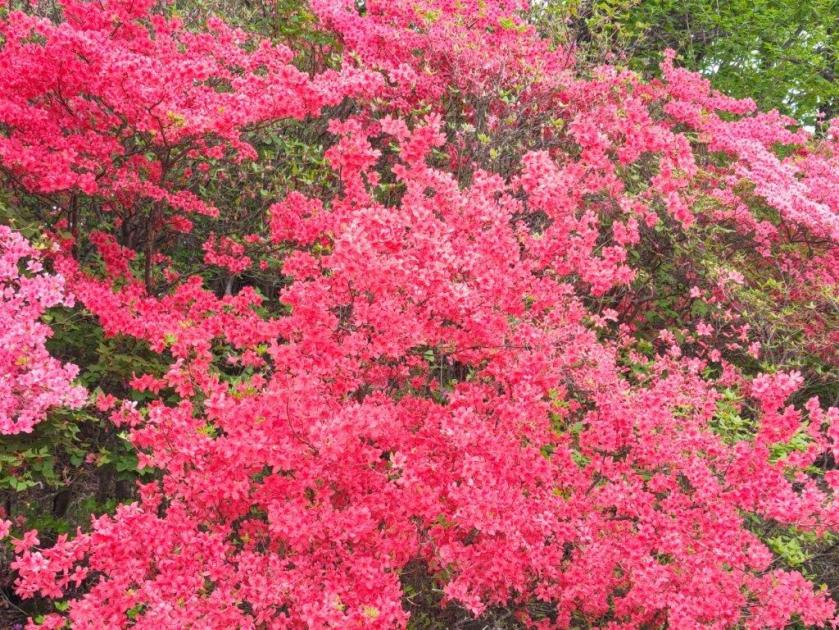
The view of the Kanto Plain to the east was completely in the clouds; I could only imagine what it looked like on a clear day. I followed the up and down ridge trail westwards, through light green forest; occasionally the vroom of a motorcycle interrupted the background noise of buzzing insects, a reminder of the nearby forest road, mostly hidden by the trees. At the top of a grassy slope, I stumbled upon a cluster of bright red azalea (“tsutsuji“), always a nice surprise, even though I had seen hundreds the previous week.

View of the Top of Mt Akaguna from the Forest Road

Pylon next to the Forest Road (left) Surrounded by Green (right)

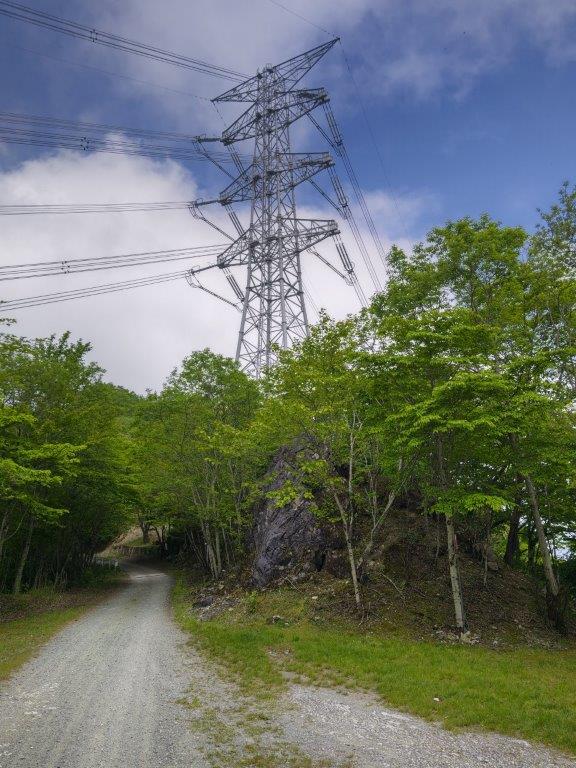
I reached the best viewpoint of the day just before 1pm, as I passed through an area clear of trees on the south side. The clouds had thinned and the sun was now shining on the rolling, forested mountains; Mt Ryokami’s ragged ridgetop was now visible; a power line stretched down into the valley, suspended between giant pylons, creating a dramatic effect from where I stood; directly ahead, at the end of a long ridge, was the tree-covered top of Mt Akaguna. Past a pylon, the trail merged with the forest road, but after a short distance, headed up the ridgeline again, along the East Route (東コース).

Power Line Diving into the Valley

Ridgeline Leading to the Summit of Mt Akaguna

This was by far the nicest section of today’s hike, the trail alternating between level and gently climbing portions, giving me ample time to take in the surrounding scenery. After a steep section, the trail merged with the North Route (北コース); a few minutes later, I reached the summit of Mt Akaguna (赤久縄山 あかぐなやま akaguna-yama), a Gunma and a Kanto 100 famous mountain. It was about 1h30, so I sat on a low bench for some lunch; although there was no view, looking up, I could see a huge patch of blue sky. At 2pm, I headed back down the West Route, and then followed the Forest Road till the start of the alternate trail back to Shiozawa Pass.

The Usual Hiking Trail is along this Ridge

Walking through a Green Wonderland

It was a challenge to find the main logging road after leaving the Super-Rindo, even with using the GPS on my phone, as many minor offshoots crisscrossed the mountain side. I was relieved when I finally reached one with a signpost for Shiozawa Pass, a little before 3pm. After an easy, slightly downhill stroll, I was back at my parked car, less than half an hour later. As it was still early, I drove a short way to the start of the trail of Mt Odoke (オドケ山). It took 30 minutes to complete the loop hike; although the summit was in the trees, I was impressed by the fancy new, bright red signposts. At 4pm, I set off for the return drive, arriving back at Honjo station just before 6pm.

Walking back along the Mikabo Super Forest Road

One of the many Logging Roads in the Area

I was glad to be able to check this mountain off my to-climb list after so many years, even though I had to settle for a 3h30 hike, about half the time it would have taken from the trailhead at the base; maybe one day I’ll return to do the whole hike, although it would require an overnight stay. I’d also like to explore more of the Mikabo Super Forest Road, on foot or by bicycle, as there are many viewpoints along the way. Hopefully I can do this on a blue sky day.

Watch a Video of the Mt Akaguna Hike

See a Slideshow of More Photos of Mt Akaguna

Ido Marsh (1278m), Kanuma City, Tochigi Prefecture, Sunday, May 21, 2023

I discovered this spot in Mae-Nikko on a hike in December 2018, and since then, had wanted to visit again, but in a different season. However, as it took 4 hours of uphill walking to reach from the closest bus stop at Furumine Shrine, this time I decided to go by car; I could park at the Mae-Nikko Highland lodge, just a short distance from the trail entrance. As the loop of the marsh was relatively short, I also decided to combine it with lunch at a famous soba restaurant in the area. I would take the Utsunomiya line to Oyama station, and there change to the Ryoma line for the short ride to Tochigi station, where I would switch to a share car. It was supposed to be a sunny and warm spring day, and so I was looking forward to an easy, relaxing hike in a secluded area deep in the mountains of Tochigi.

View this Blog Post on Hiking Around Tokyo

View of Ido Marsh from the South Side

Walkway Through the Marsh

I drove for about an hour under grey skies, reaching Kamiyama, a soba restaurant situated at the end of a valley, far from any populated areas. Despite its remote location, a line of people was already waiting outside at 11h30; it took nearly an hour before I was seated. Fortunately it was worth the wait: I enjoyed some of the best soba I had ever had. At 1pm, I drove back down the valley, and then up a parallel one towards Kasuo Pass (粕尾峠), hoping that the sun would come out soon.

Gravel Path Through Mae-Nikko Highland

Bright Red Azalea on the way to Ido Marsh

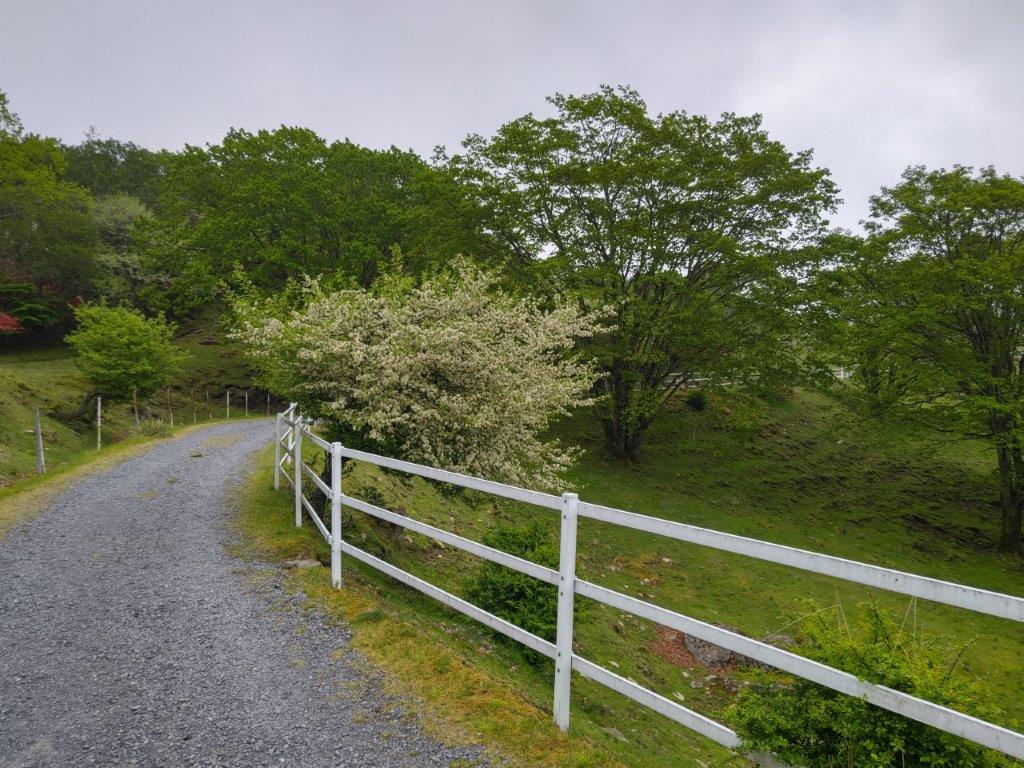
Mist blocked the view in every direction, as I parked the car at the Mae-Nikko Highland Lodge’前日光ハイランドロッジ) parking just after 2pm; I was grateful that I had had clear weather on my last visit. I strolled along a gravel road, pastures on each side, no cows in sight though; after passing an open shelter, I arrived at the trail entrance on the left side around 3pm.

Walkway Leading to Godan-no-Taki Falls

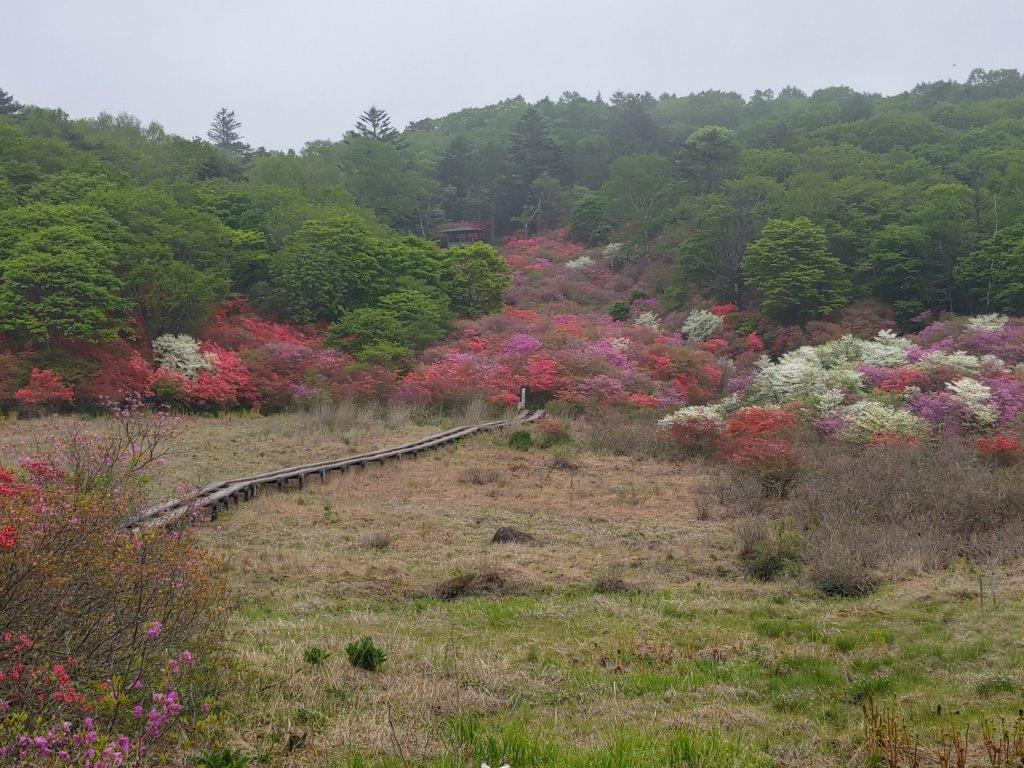
Tsutsuji Flowers of Every Colour

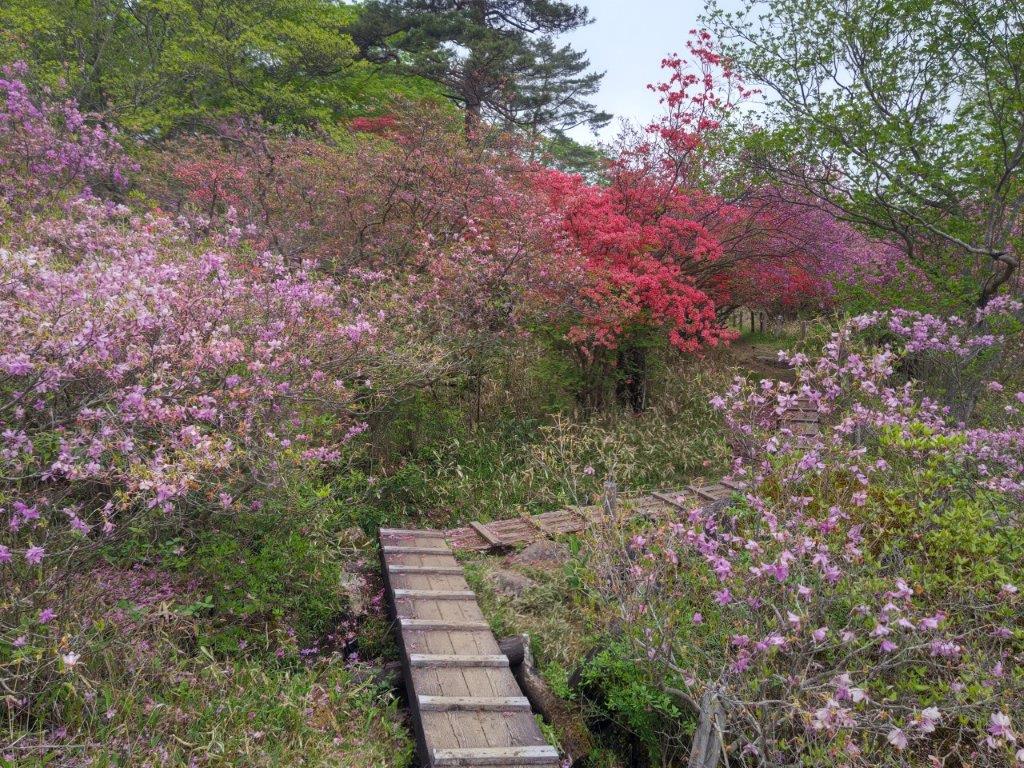
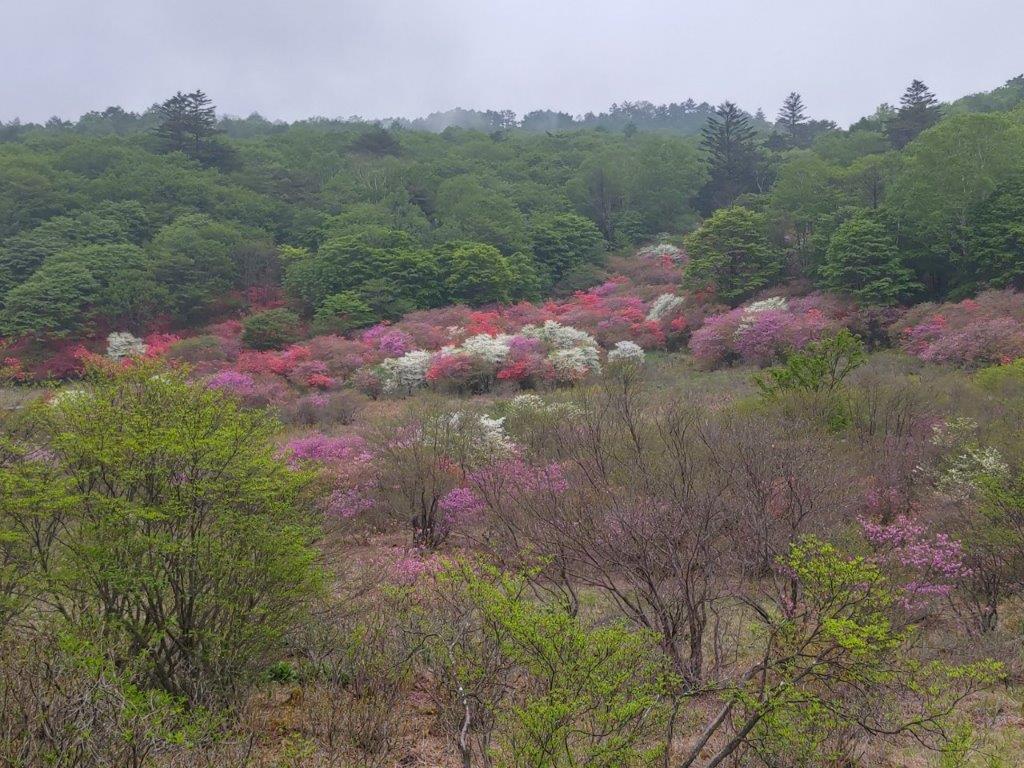
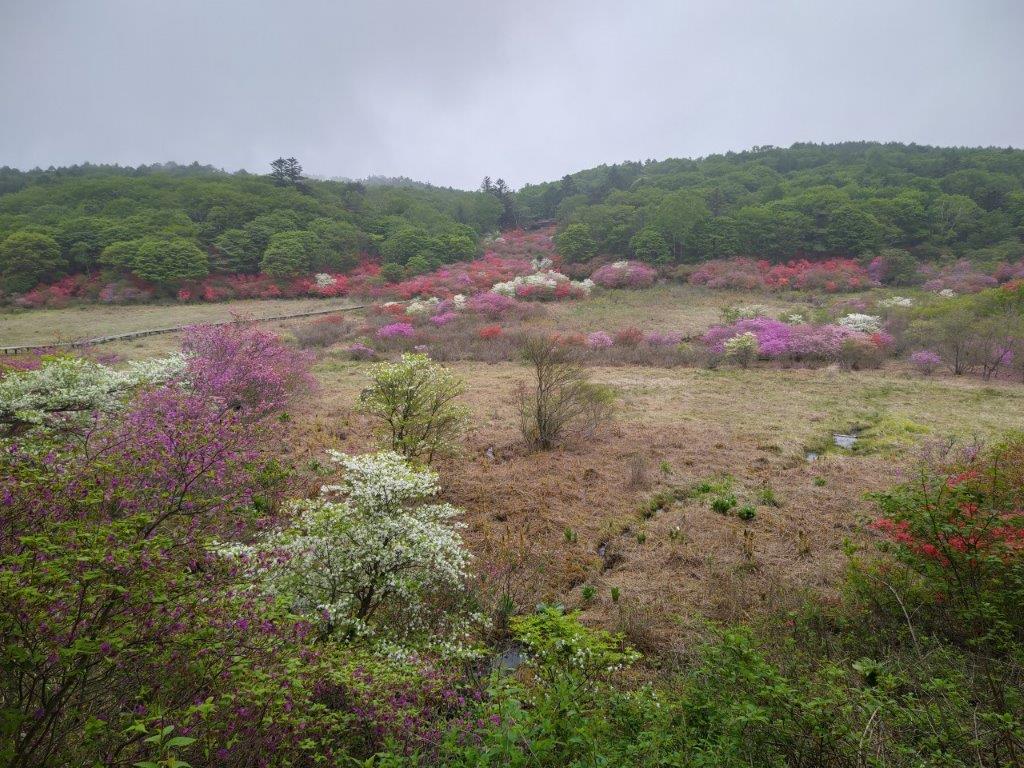
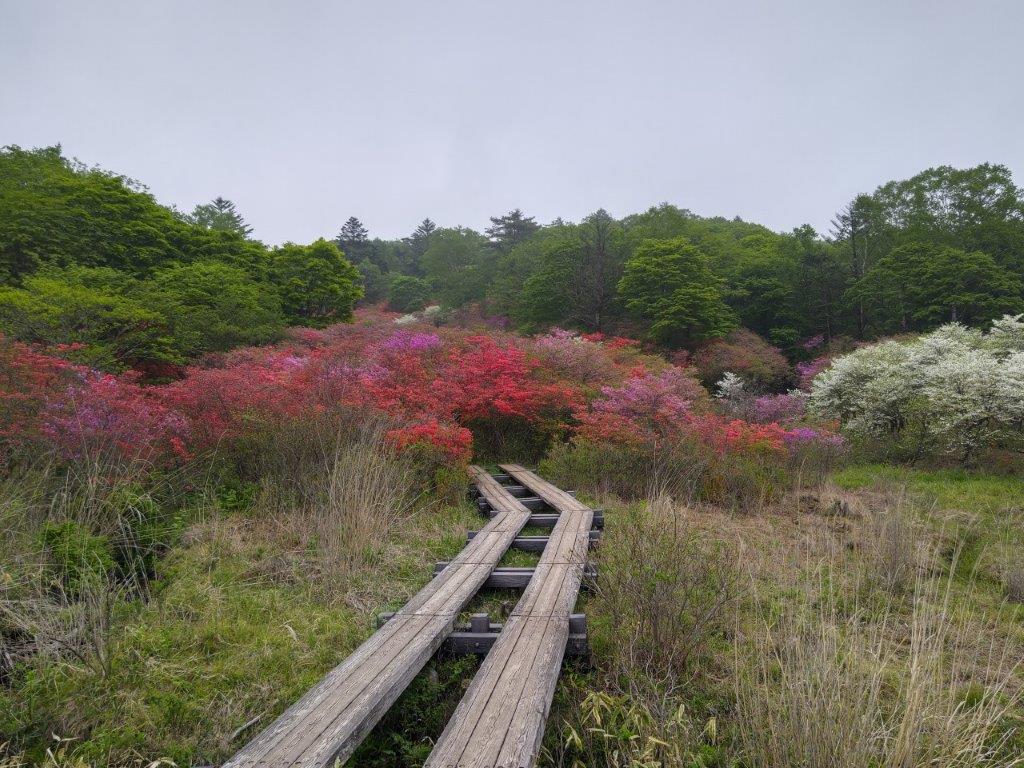
I was stunned by the azelea (tsutsuji) in full bloom; until now I had never realised that they existed in such a wide range of colors, from white to pink to bright red. The trail soon started to descend; after crossing a stream, I had my first glimpse of the day of Ido Marsh (井戸湿原 ido-shitsugen), next to another open shelter. It felt like I had entered a colourful, magical fantasyland, and I could only imagine what this fantastic scenery would be like on a sunny day.

View of Ido Marsh from the South Side

Walkway Crossing the Marsh

I was surprised by how few people were on the trail, as I made my way clockwise around the marsh. Around 3h30, I reached Godan-no-taki (五段の滝), a small waterfall with 5 “steps”, and the lowest point of today’s hike. After a short climb, I reached a section free of trees on the south side of the marsh, from where I had some best views of the day. At 4pm, I reached a wooden walkway cutting across the marshland; I decided to head back along it, rather than continue to the Zoonohana observation deck (象の鼻展望台 meaning the elephant’s trunk) as no would view would be had today.

A Secret Spot of Mae-Nikko

Most of the Hike is on Walkways (left) Entrance of Ido Marsh (right)

I was able to enjoy the splendour of the azaleas again, as I did the trail in reverse, sometimes passing through actual tunnels of flowers, the surrounding mist enhancing the magical atmosphere. At 4h30, I was back at the parking lot, my car being one of the last left. I decided to return via a different route, past Furumine shrine, and was rewarded with a view of a monkey walking near the road; on the way up, I had also spotted a racoon crossing the road. At 6pm, I was back at Tochigi station, from where it was a one hour ride back to Ikebukuro with the Tobu Revaty limited express train.

Nearing the End of the Hike

Entrance to the “Azalea Tunnel

At around two hours, this was one of my shorter hikes, and even if I had included the observation desk, it would not have been much longer. Even though the mist was in, hiding the view of the Oku-Nikko mountains, the flowers in full bloom made the 3 hour trip each way worthwhile. I’d like to return in the future to do the “fureai no michi” trail that passes through the area, as well as check out another local soba restaurant.

Watch a Video of the Ido Marsh Hike

See the video of the hike on Youtube

See a Slideshow with more Pictures of the Ido Marsh Hike

Sayama Hills (Highest Point 194m), Tokyo & Saitama Prefectures, Tuesday, May 9, 2023 [Nawatake Forest Road]

I had visited the forested hills around Sayama Lake earlier in the year, but felt like exploring the area some more; I decided to do a morning hike since the parks sit comfortably within the city. I would start from a prominent hill on the north side, then follow a forest road leading to the south side, a shortcut for the perimeter road I followed in January; from there, I would go up and down some hills in the southwest corner of the park; finally, I would leave the hills on the west side, hopefully reaching a bus stop by noon. It was supposed to be fine spring day, sunny with comfortable temperatures; it had rained hard the day before, so the air would be crisp and clear. As before, I would take the local Seibu line to Kotesashi station, and then a bus along the north side of the lake; I could catch the same bus back from the end of the line. I was looking forward to an easy morning hike through a nature park within Tokyo.

Hiking in the Sayama Natural Park 都立狭山自然公園

May 2024 update: the Nawatake Forest Road is closed till at least 2026 due to fallen trees from typhoons in 2023

View this Blog Post on Hiking Around Tokyo

Trail Leading to Akasaka

Top of Hira Hill

It was still pleasantly cool when I got off the bus at 9am next to a small shrine shrine under some cedars. After passing Kinsenji Temple, I turned left onto a lane leading up a hill, called Hira Hill (比良の丘 ひらのおか 155m), next to Midori no Mori Nature Park. The flat top area is used for farming, and walking among the fields, it felt like I had suddenly been transported to the countryside. It was now 9h30 so I had breakfast at a table under a huge Japanese Bird Cherry, probably a nice place for a picnic during the sakura season.

Signboard for Totoro’s Forest

Flower Field at the Top of Hira Hill

I was impressed by the serenity of this spot so close to the city. Nearby was a signboard for Totoro’s Forest #13, # 18 and #49. At the moment, there are 57 off these protected parcels of forestland. To the north, I had a view of the city between two wooded areas; on the south side, Sayama lake was hidden behind a forested ridge. This whole area of hills and forests surrounding the lake is known as the Sayama Hills (狭山丘陵), one of the main features of the Musashino Plateau. I soon set off in the direction of the lake, heading down a faint footpath, and entering the forest, past a bridge across a creek.

Cherry Tree on Hira Hill (left) Forest Path to the Perimeter Road (right)

Walking the Nawatake Forest Road

I was stunned by the beauty of the forest, enhanced by the play of sunlight on the light green leaves, as I made my way up a switchback path. A little before 1oam, I reached the top of the ridge and the Sayama Perimeter road. I turned right, and after a few minutes, arrived at the gated entrance of the Nawatake Forest road on the left side. After passing through the door on the side, I made my way along the gravel path, surrounded by thick forest and silence, punctuated by intermittent birdsong.

A Green Corridor Within the City

South Side of the Sayama Perimeter Road

It felt like I had entered a secret section of the park: I saw few other people, birdwatchers with huge cameras, walking under the shade of trees crowding in on each side. Past Nawatake bridge (縄竹橋), where I had glimpse of the lake on the left, the path headed gently uphill for a while; less than half an hour later, I arrived at another gate, where the forest road rejoined the Perimeter Road. I soon ducked down a path on the right side, and at a parking lot, turned right onto a wooden walkway along Akasaka-yato (赤坂谷戸), a marshy area at the bottom of a valley.

Path Leading to Akasaka

Walking in the Akasaka Valley (left) Walking Down the Western Side (right)

It felt like I was walking through a hidden valley, lush vegetation on both sides. After some ups and downs, I arrived at Satoyama-minka (里山民家), a recreated traditional farmhouse from the Edo era, at the edge of the forest. It was past 11am, and I was behind schedule, so I skipped a visit, and headed up a charming valley, filled with paddy fields, and frogs, judging from the croaking noises. After a short climb through forest, I reached the observatory at the top of Mt Rokudo, merging with my previous hike. Heading west, I passed the triangulation point, and soon turned left onto a path down the hill side.

Viewpoint of the Okutama Mountains

End of the Hike at Takane

I arrived at a viewpoint of the Okutama mountains, the outlook partially obscured by trees, but I could still make out Mt Kawanori in the middle. After descending a log staircase, I reached the Takane residential area at the base of the hill, and after walking along a road for a short while, made it to the bus stop at Miyadera-Nishi just before noon. The hike had taken 3 hours as planned, although I had to speed up the pace at the end. I’d definitely like to return in the autumn to explore more trails, as well as visit the Satoyama Farmhouse.

See a video of the Sayama Hills Hike

See the video of the hike on Youtube

Mt Usuiri (421m), Mt Kannokura (344m) & Mt Sekison (344m), Higashi-Chichibu Village & Ogawa Town, Saitama Prefecture, Saturday, April 29, 2023

I wanted to take advantage of the comfortable spring weather to do a short hike close to Tokyo. I had already climbed Mt Kannokura and Mt Sekison in 2016, going up via Tennou Pond, and then down past Kitamuki-fudo, both on the north side. Looking at my hiking map, I saw I could approach them again via a different route: along the ridge on the west side, and then head back down on the south side, creating a slightly longer hike. I would take a bus from Ogawamachi station on the Tobu line to a stop close to the trail entrance; from the end of the hike, I could catch the same bus back from a stop closer to the station. The weather was supposed to be overcast with sun from time to time, and so I was looking forward to some easy hiking near home.

View this Blog Post on Hiking Around Tokyo

View north of the Kanto Plain Near Mt Usuiri

Mt Sekison from Mt Kannokura (June 2016)

Grey clouds hung overhead as I got off the bus near the Higashi-Chichibu Village Hall a little after 10h30. After getting ready, I made my way to a stone Shinto gate and staircase leading to Okusawa Shrine, which I reached a little after 11am. It was surrounded by bamboo, but on the left side, I found the trail entrance, marked by a light blue metallic signpost.

Trail leading up to Mt Usuiri

Near the top of Mt Usuiri (left) On the way to Mt Kannokura (right)

I was excited to find a new hiking trail so close to Tokyo. The path climbed steadily through mixed forest; shortly before noon, I arrived at the summit of Mt Usuiri (臼入山 うすいりやま usuiriyama). Through the trees on the west side, I had a partial view of the ridgeline between Mt Oogiri and Mt Toya in eastern Chichibu. After a short break, I followed the trail through the cedars, down the east side of the summit.

Looking back at Mt Usuiri

View North from a Clearing past Mt Usuiri

I reached the first good viewpoint of the day about half an hour later. It was a deforested area next to a road over a pass. The clouds had dissipated and blue sky was visible again. On the north side, I could see the long ridge extending east beyond Mt Kanetsukido. I sat down on some tree trunks for some lunch in the sun and with a view. At 1pm, I set off again, crossing the road and up a short steep slope.

View North of Chichibu Past Mt Usuiri

View of Mt Sekison from Mt Kannokura

It felt very peaceful as I followed the up and down ridgeline trail, completely in the trees. At 1h30, reached the junction with my previous hike. From there, it was a short climb to the top of Mt Kannokura (官ノ倉山 かんのくらやま kannokura-yama). The clouds had reappeared and the view wasn’t as good as during my last visit. On the north side, I could see the Chichibu mountains and the Kanto Plain; directly ahead was the rounded peak of today’s final summit.

View North of Chichibu from Mt Kannokura

View of Chichibu and the Kanto Plain from Mt Kannokura

After a short descent, followed by an equally short ascent, I reached the top of Mt Sekison (石尊山 せきそんさん sekison-san) around 2pm. The view on the north side was similar to before, but now, I also had a view of Ogawa Town to the south. There were more hikers here so I quickly moved on. On my last hike, I had continued along a trail past the summit. This time, I retraced my steps a short way, and took a path heading down on the left side; although it wasn’t properly signposted, the trail was in good condition.

View of Ogawa Town from Mt Sekison

Hiking Down from Mt Sekison

Half way down, I passed through what seemed like a hidden valley: a grassy, flat area surrounded by trees, only the blue sky visible overhead. It was an interesting spot that wasn’t marked on the map. A short way beyond, I passed the ruins of an old fort, its access unfortunately closed off for some reason. I then descended a narrow valley with many Irises (“shaga”) along the way, and emerged onto a road just before 3h30. The bus stop was a short distance away; once back at Ogawamachi station, I caught the express train for the one hour ride to Ikebukuro.

A Hidden Valley on the Way Down from Mt Sekison

Easy Hiking Near the End of the Hike

I was glad to redo these mountains via a different route although the weather wasn’t as good as the first time, when I could see as far as Mt Akagi and Mt Haruna. Since it’s less than 4 hours, it’s a really short hike that can’t be stretched any longer without heading up another ridgeline; going up and down the route on the north side is even shorter, less than 2 hours. Next time, it might be interesting to head up in the winter for a clearer view, and also check out the nearby Michi no Eki, Washi-no-sato, as well as a local soba shop.

See a Video of the Mt Usuiri, Mt Kannokura and Mt Sekison Hike

See the video of the hike on Youtube

See a Slideshow of Some More Pictures of the Mt Sekison Hike

Mt Usuiri from Mt Kannokura (June 2016)

East Chichibu from Mt Kannokura (June 2016)

Mt Yagura (599m), Kanuma City, Tochigi Prefecture, Saturday April 22, 2023

Exactly five years ago, I had climbed Mt Mitsumine, a hike recommended in my mountains of Tochigi guidebook. Looking at my hiking maps, I noticed another peak directly opposite, not featured in my guidebook. Further research showed that the trail wasn’t in optimal condition, but since I was eager to revisit the area, I thought I would give it a go. I would take the Nikko line from Ikebukuro to Tochigi station, and from there, a bus to the Hoshino Archaeological site. I would take the most direct way to the summit, up the valley, and then return via the longer ridge route on the north side. For the return, I could take the same bus and train back. The weather was supposed to be good once again, and I was looking forward to a peaceful hike and some good views.

View South from the Summit

Trail-finding needed during the Descent

Carp streamers were flapping in the spring breeze as I waited for the minibus bus outside Tochigi station around 1030; I was the only passenger for most of the one-hour ride. I had a quick look at the Jomon era huts of the Hoshino Archaeological site (星野遺跡), and admired the stunning view of Mt Mitsumine directly opposite, before setting off a little after 11h30. Shortly past the village, I entered the forest and soon reached the start of the trail, following a disused forest road.

Mt Mitsumine from near the Trail Entrance

Obstacle Course up the Mountain

I had to clamber over, and pass under, countless fallen trees, before the path left the narrow valley, and headed directly up a steep slope. I had rarely experienced such a challenging and adventurous start, and without my phone GPS to show me the correct way, it would have taken a lot more time. I was glad when I finally reached a flat area on the top ridge, refreshingly cool in the shade of the new green of spring.

Flat Area on the Ridgeline

Nearly at the top (left) TV Antenna on the Summit (right)

I was surrounded by bright red Azalea on both sides, as I followed the ridgeline southwards through the green forest. A little after 1pm, I reached the summit of Mt Yagura (谷倉山 やぐらさん yagura-san), a Tochigi 100 famous mountain. I dropped my pack next to the TV antenna, and went to enjoy the wide view on the other side: directly ahead, to the south, was the Kanto plain; on the east side, I could spot Mt Futamata in the distance.

View East towards Kanuma City

View West from the Summit

I was surprised to see that most of the trees on the south side had been cut down. I took a break for lunch, and at 2pm, retraced my steps past the spot I had joined the ridge, and from there continued northwards. After an up and down section, the path curved west and started to head down. Here again, the trail was hard to follow and I had to rely on my phone GPS. From time to time, I had glimpses of a flat valley and green hills on the north side through the trees. I saw no other hikers during the entire hike and it felt very peaceful.

Following the Ridgeline up and down

Walking down through the forest

I was nearly level with the base of the valley when the trail suddenly disappeared. After fighting my way through some thick bushes, I finally emerged onto a grassy path next shrine, just a few minutes from the bus stop. It was just past 3h30 and had a little time to cool down before catching the 4pm bus for Tochigi station, about an hour away from Ikebukuro by limited express.

Back in the Valley

Mt Mitsumine from the end of the Trail

Although this hike took only 4 hours, it could have taken longer without my phone GPS. It’s a shame that the trail sections near the start and finish are unmaintained and hard to find, although it does guarantee some solitary hiking. On the summit, I discovered an unmarked path following the southwest ridge, so it might be interesting to try that in the future, especially since it is relatively close to Tokyo.

Watch a Video of the Mt Yagura Hike

See a Slideshow of some more pictures of the Mt Yagura Hike

Noborio (1056m) & the Odoriko Trail, Kawazu Town, Shizuoka Prefecture, Sunday, April 16, 2023

During my Shimoda trip, I was reminded of the Odoriko Trail in Kawazu, inspired by the Dancing Girl of Izu novel. Although I was interested in hiking its entire length (18.5 km), I also wanted to climb a summit in the area. I had found a nearby peak in my mountains of Shizuoka guidebook, which I could combine with part of the Dancing Girl Trail. Apparently the upper part of the trail was hard to follow, so I would need to rely on my phone GPS to stay on track; on the other hand, the Odoriko trail was supposed to be well signposted and easy to follow. After riding the Shinkansen to Mishima, and then a local train line to Shuzenji, I would take a bus to a stop just past the Amagi Pass Tunnel, and then walk up a road towards Hatcho Pond to the trail entrance. After reaching the summit and heading back along the same path, I would follow the Odoriko Trail to Kawazu Nanadaru, or the 7 waterfalls of Kawazu, from where I could catch the same bus back to Shuzenji. The weather was supposed to perfect all day so I was looking forward to a relaxing hike in a familiar area.

Hiking in the Fuji-Hakone-Izu National Park

富士箱根伊豆国立公園

First glimpse of Noborio

View of the Izu Peninsula from near the Summit

It was a blue-sky spring day as I rode the empty bus up towards Amagi Pass tunnel. The stop was next to a parking with an open shelter, so I could sit down and get ready for my hike. At 11am, I headed up some steps through the forest and soon reached a minor road, part of the Odoriko trail. There, I turned left, and after a few minutes, arrived at Nikai Waterfall (二階滝). It was hard to see it well even with the observation deck, so I quickly moved on, reaching Kanten bridge and the road for Hatcho Pond shortly after.

Past Kanten Bridge (left) Under the Cedars (right)

View of Noborio from the Road to Hatcho Pond

It was an enjoyable walk, alongside a rushing river, surrounded by trees covered in new green, and occasionally passing under tall cedars swaying in the spring breeze. Just before noon, at a bend in the road, I had my first views of today’s peak, at the end of an undulating ridgeline, part of Amagi Volcano. Shortly after, I spotted a signpost for the start of the trail on the right. After crossing the river on a small wooden bridge, I headed straight up the mountain through the cedars, and upon reaching a pass, turned right along the wide ridgeline.

View of the Noborio Summit Ridge

River Crossing near the Trail Entrance

From this point, the trail became faint, requiring me to rely on my phone GPS. The wind started to blow in gusts, and although the sun was shining directly above, it actually felt a bit chilly. From time to time, I had glances of the Pacific ocean through the cedars on the east side; further on, I had a glimpse of Mt Fuji, through trees still bare of leaves to the west. A little before 1pm, I reached the top of Noborio (登り尾 のぼりお), a 100 famous mountain of Shizuoka. It was completely in the trees, but a short distance from the summit marker, I found a viewpoint on the southeast side.

Some Trail-finding needed along the Ridgeline

View of Kawazu and Eastern Izu

I had an stunning view of southeastern Izu, rows of green ridges ending at the Pacific ocean. Directly below, I could see the Kawazu Nadadaru Loop Bridge, close to the end of today’s hike; far away to the south, I could make out the top of Mt Nesugata. After a break, I headed back the same way, faster now, since I knew the way. I enjoyed the peace and quiet of the surrounding forest, within the confines of the Fuji-Hakone-Izu National Park; no other hikers had ventured along this lonely ridgeline. At 2pm, I was back on the road, and half an hour later, was finally walking along the Odoriko Trail, the road soon turning into a wide gravel path.

Walking the Odoriko Trail

Hiraname Falls along the Odoriko Trail

It was a pleasant ramble in the shade, welcome on a warm day, the path lazily hugging the valley side. Suddenly, the trail turned right, crossed the Shuzenji-Kawazu road, and after a short descent through the forest, arrived at the impressive Hiraname Falls (平滑の滝) on the Kawazu river. It was a little past 3pm and I was right on schedule, so I stopped for a break in this sunny, secluded spot. I soon set off again and crossed a wooden bridge, passing above fenced wasabi fields along the river. The next part was more adventurous, following the steep valley side along metal walkways and wooden staircases. At 4pm, I was walking on a straight path under towering cedars.

Kawazu River from the Odoriko Trail

Nameless Waterfall along the Kawazu River

It felt like I was walking down an ancient avenue, perhaps the part of the hike that most reminded me of the Dancing Girl of Izu story. After rounding a bend, I arrived at the top of a long wooden staircase taking me down to Saruta Depth (猿田淵), a deep pool of water on the Kawazu river, a foretaste of the seven falls to come. Further downstream, I reached a junction for the thundering Kama-daru fall (釜滝). I only had a little time before my bus back and since I had seen all 7 falls on a previous trip, I erred on the side of caution. I turned left, up the steps leading out of the deep valley, arriving at the bus stop at 4h30. Two hours later, I was back in Mishima, a one hour ride with the Kodama shinkansen back to Tokyo.

Walking the Odoriko Trail between Kaname Falls and Kawazu

Walking down to Saruta Depth

The whole hike took less than 6 hours, which is about as long as one could hope for considering the the distance and travel time from Tokyo. If I had been a bit faster, I could have walked past the seven waterfalls, about 1km, and caught the bus further down the road; it would have brought the total tally of waterfalls on the hike to ten. The hike up and down the Noborio ridge was a pleasant surprise; it’s hard to imagine one getting lost on the short section without a proper trail, but the GPS ensured it went smoothly. Another surprise is that I saw no other hikes all day, even along the Odoriko trail. I hope to return one day to explore the other half, through the Old Amagi tunnel (headlight required) although I doubt I will get to see as many falls as today.

Watch a Video of the Mt Noborio and Odoriko Trail

See a Slideshow of More Pictures of the Hike