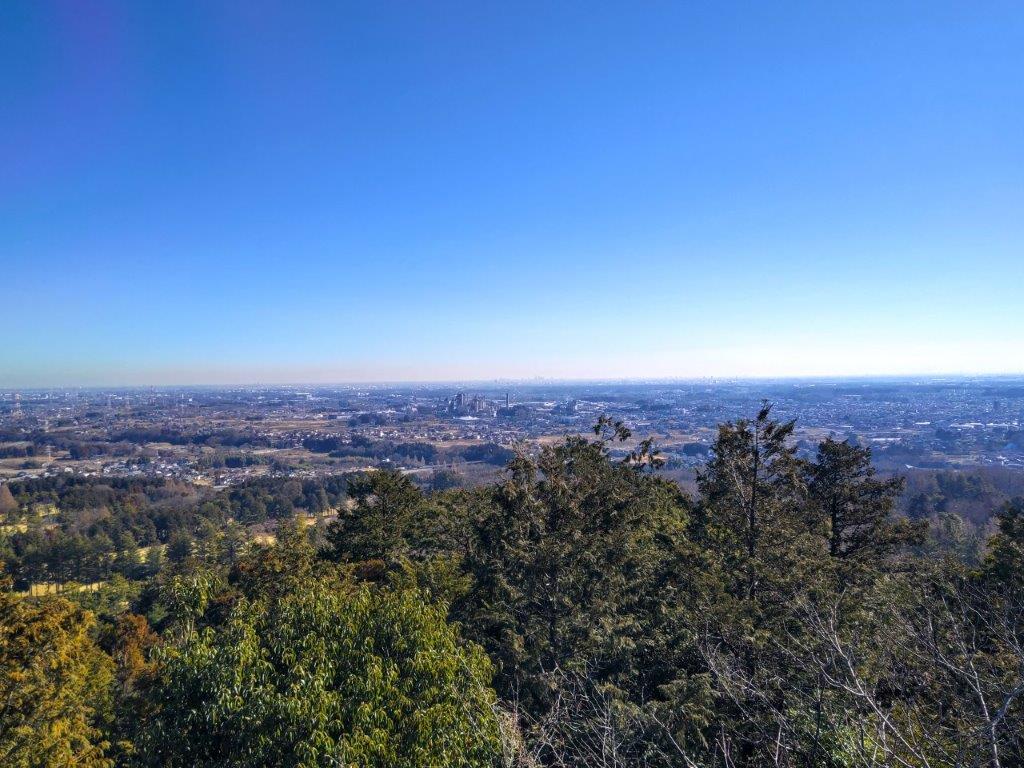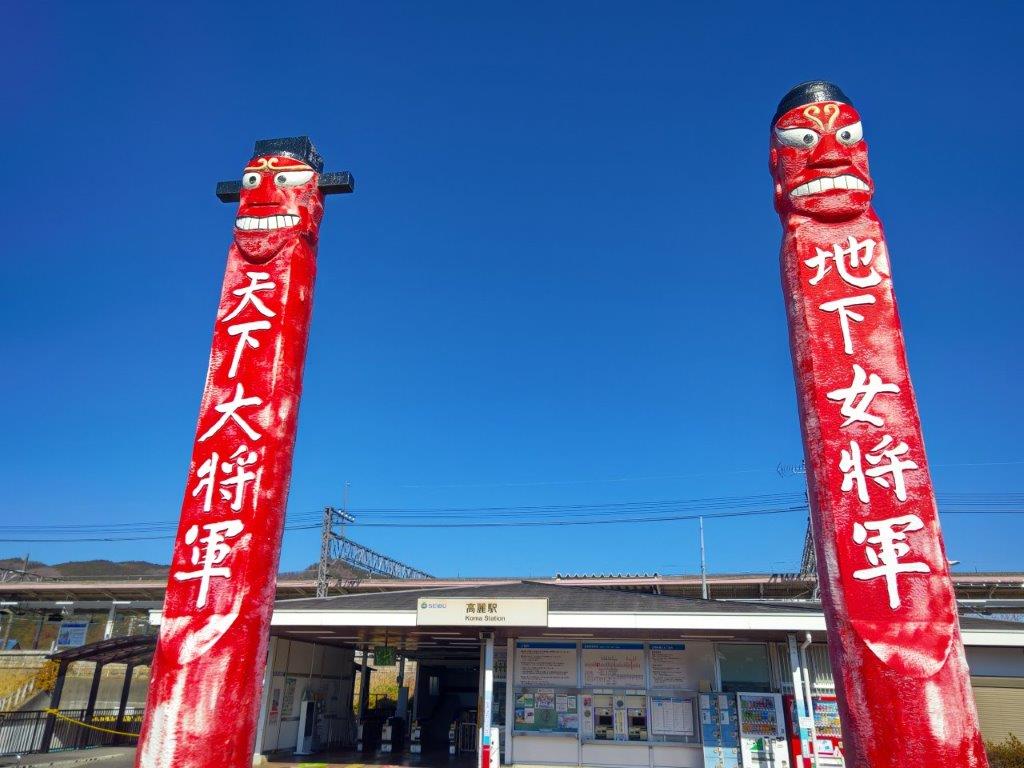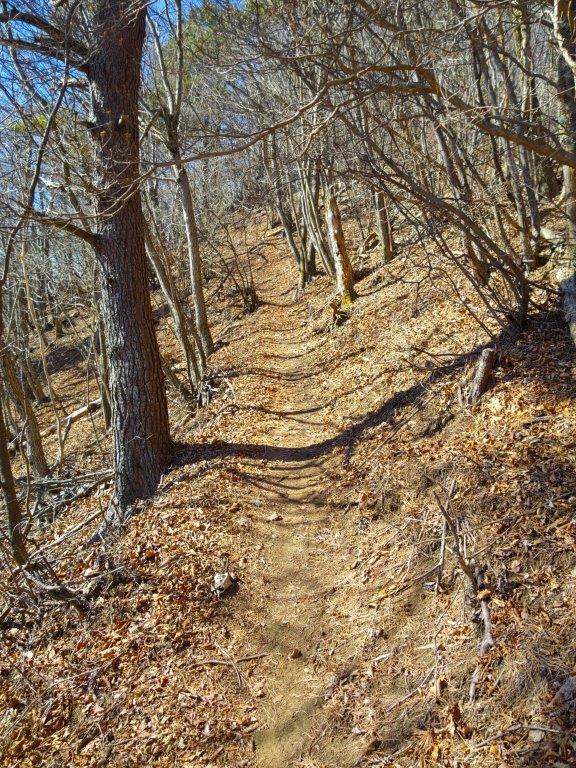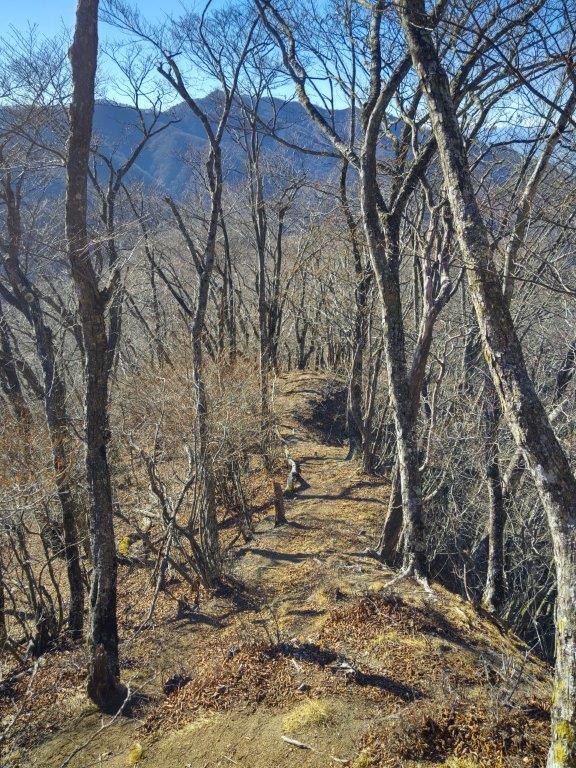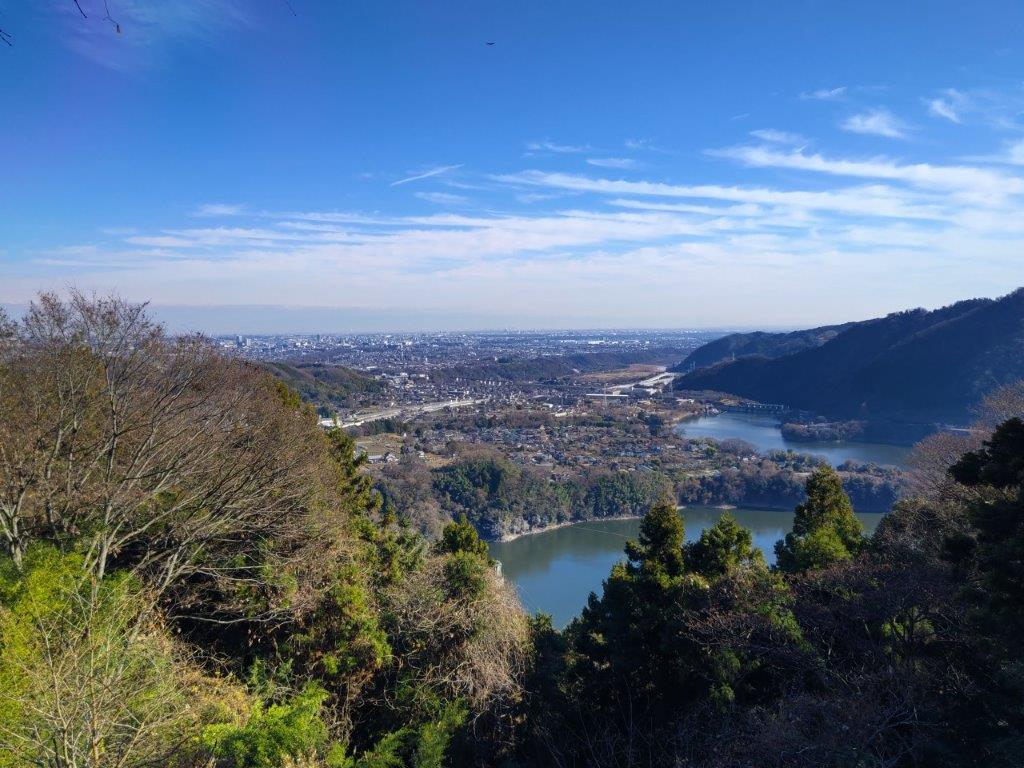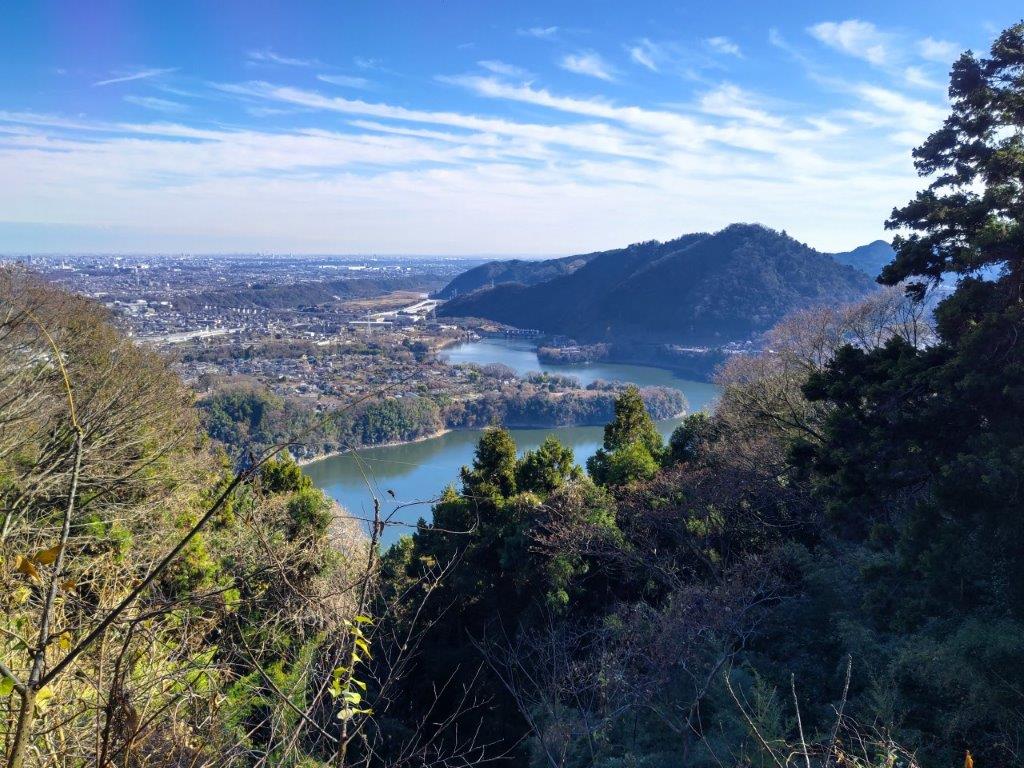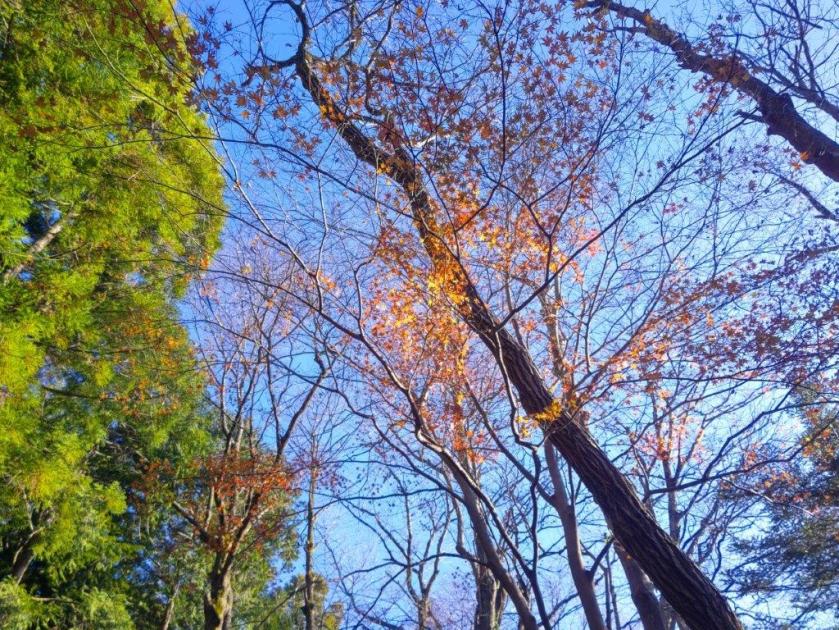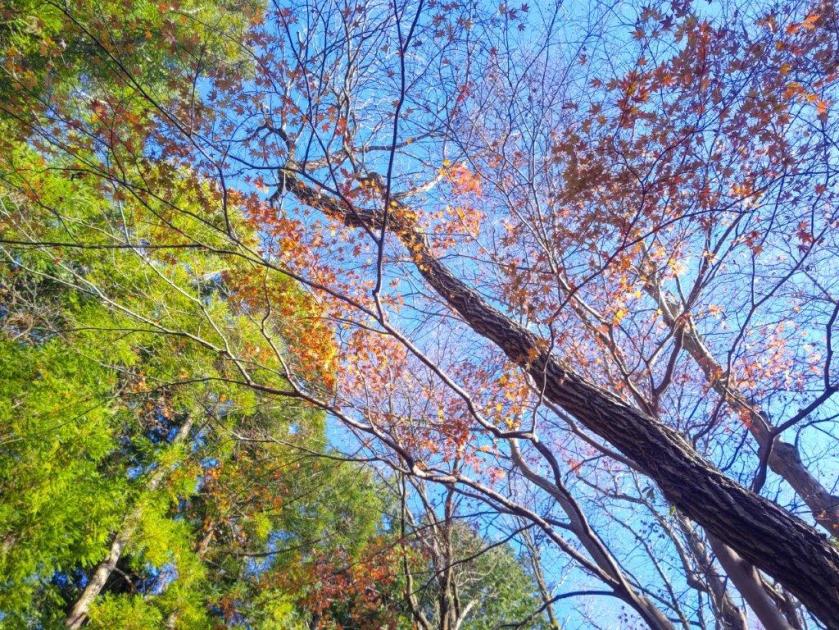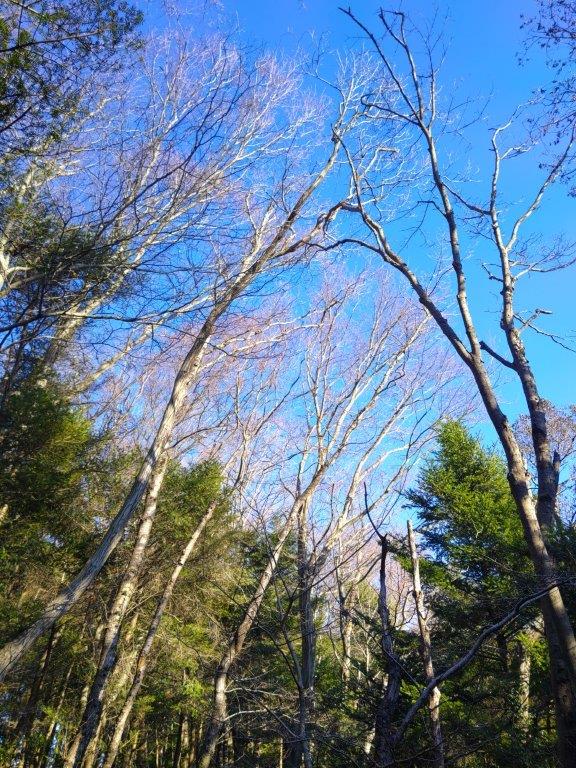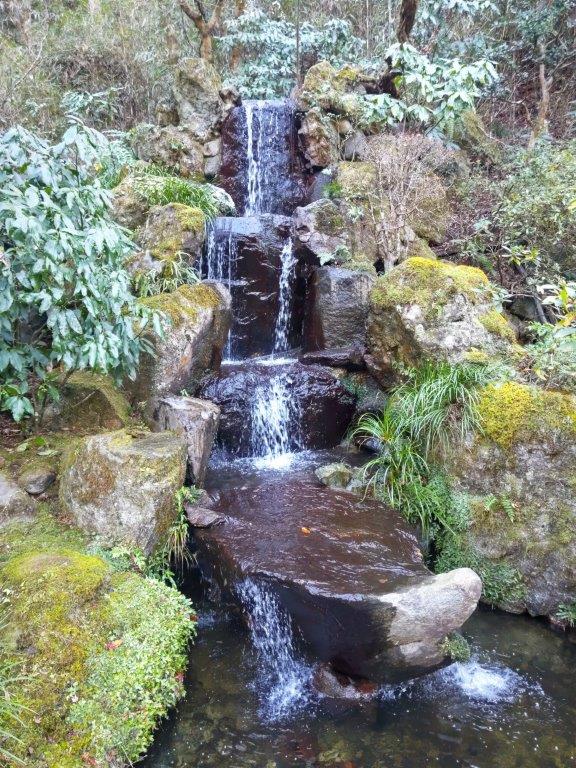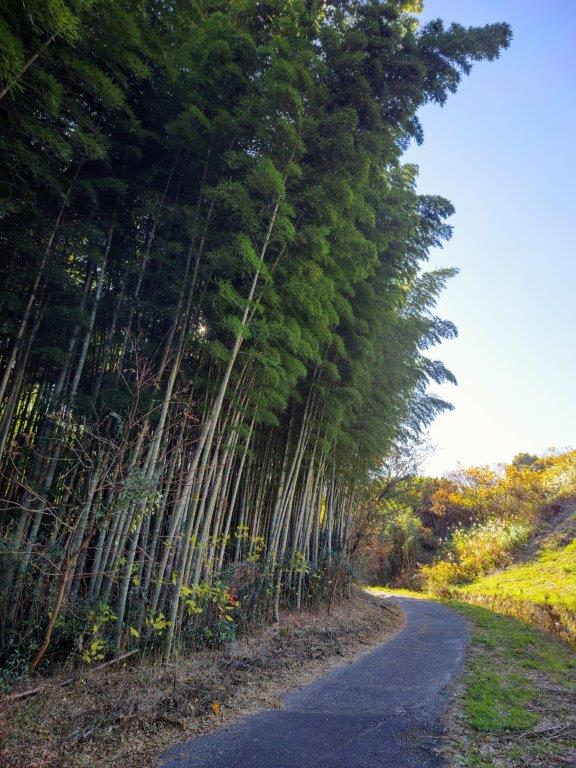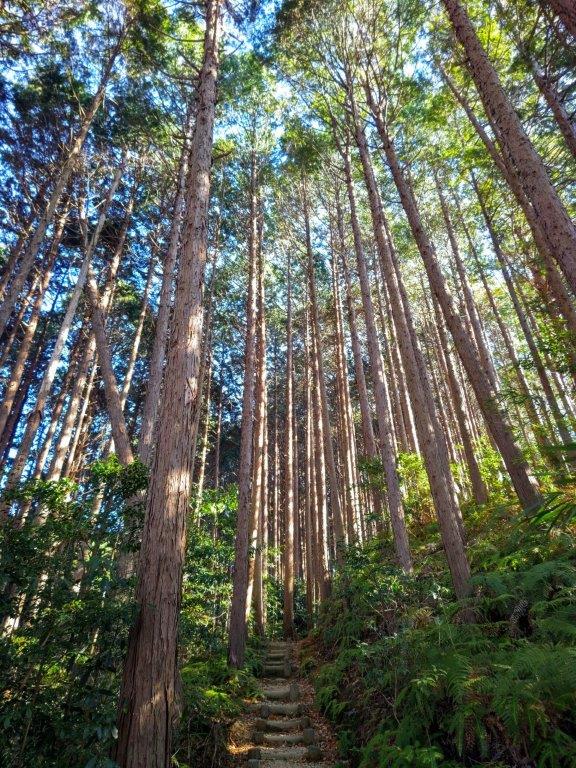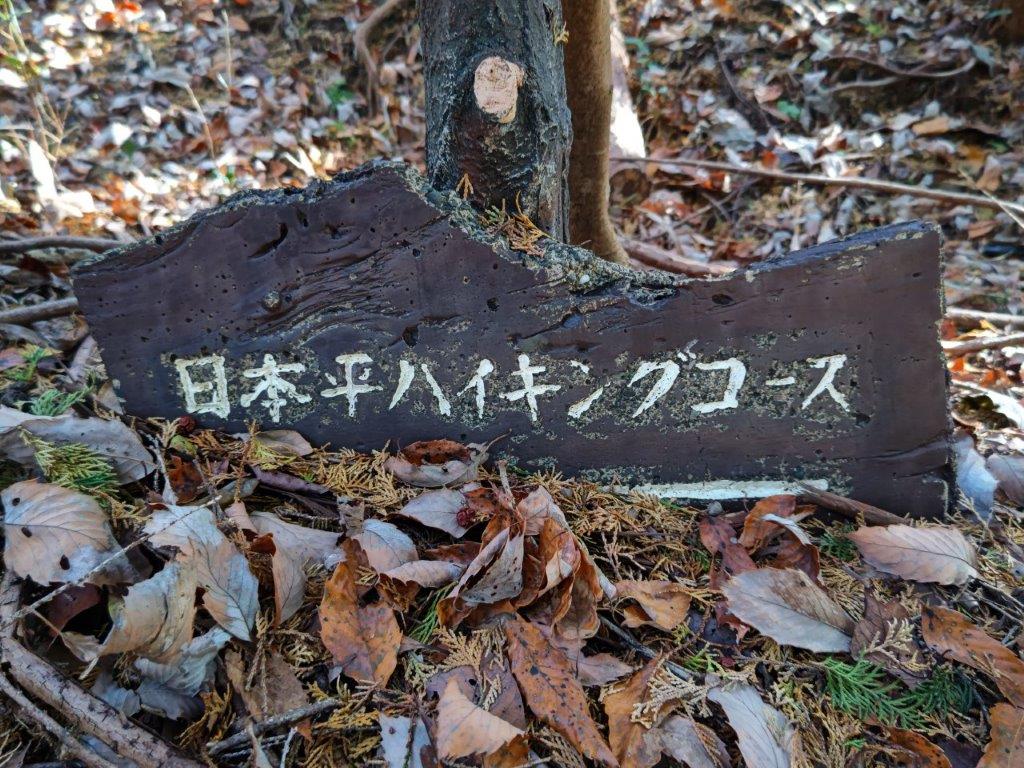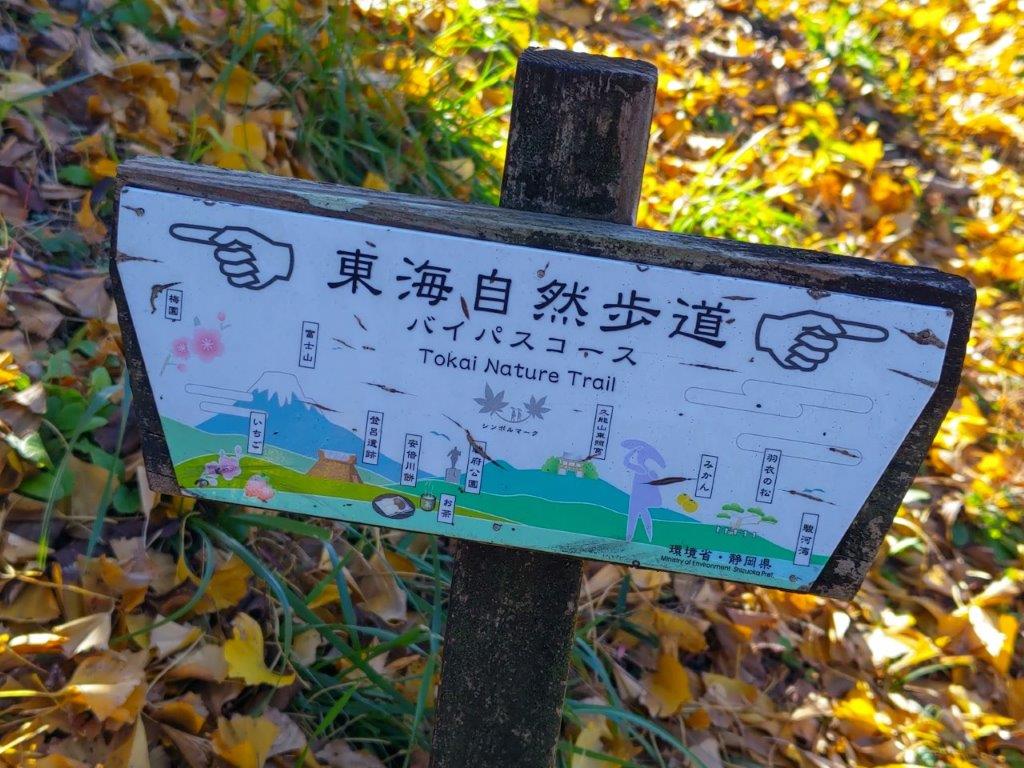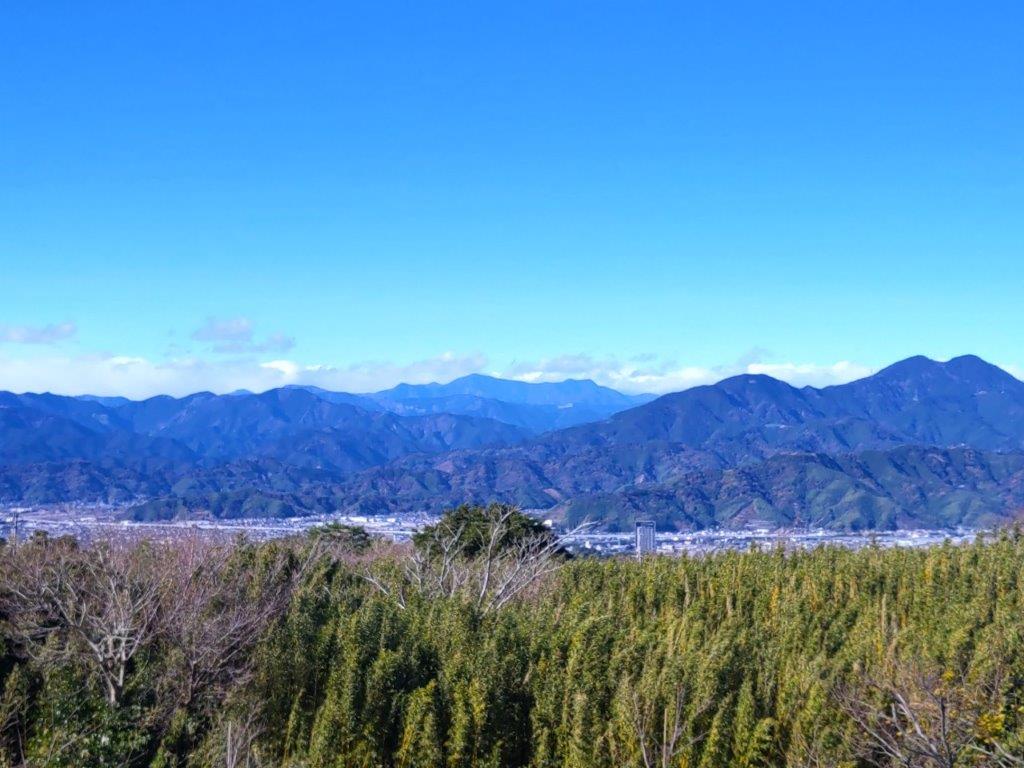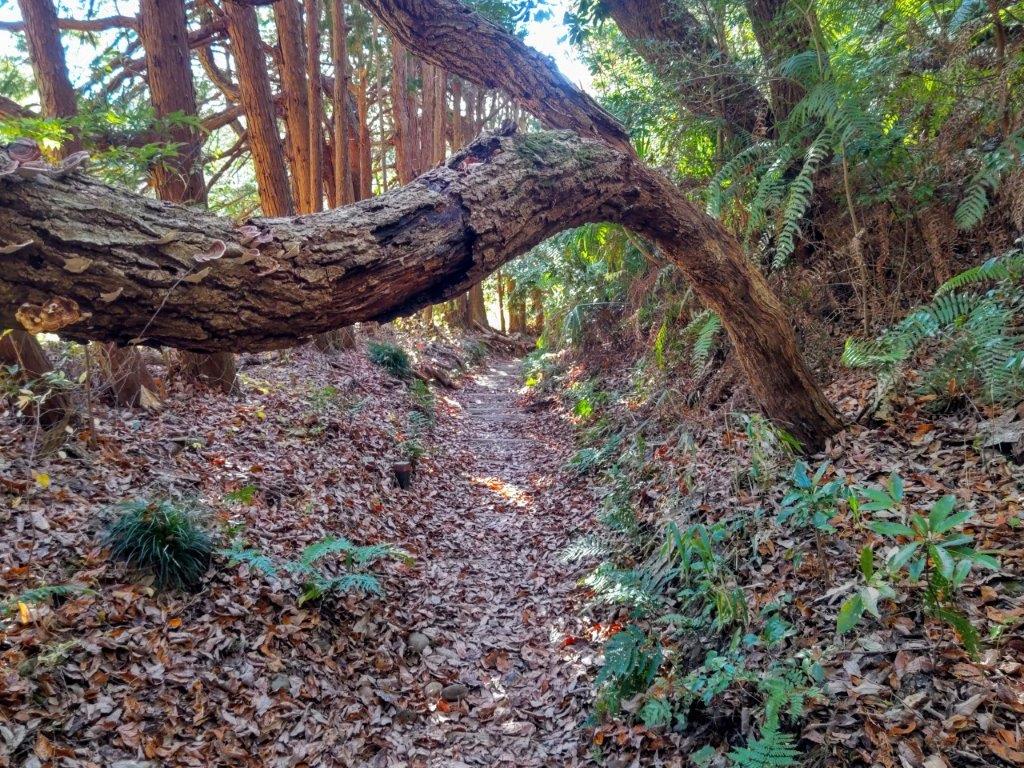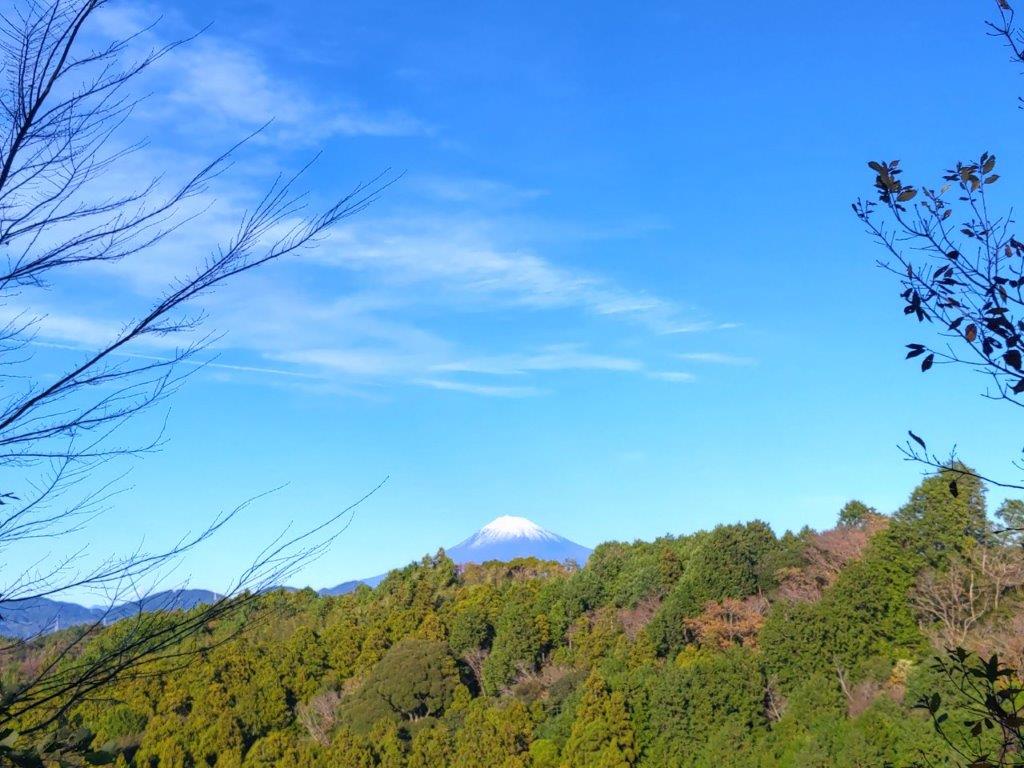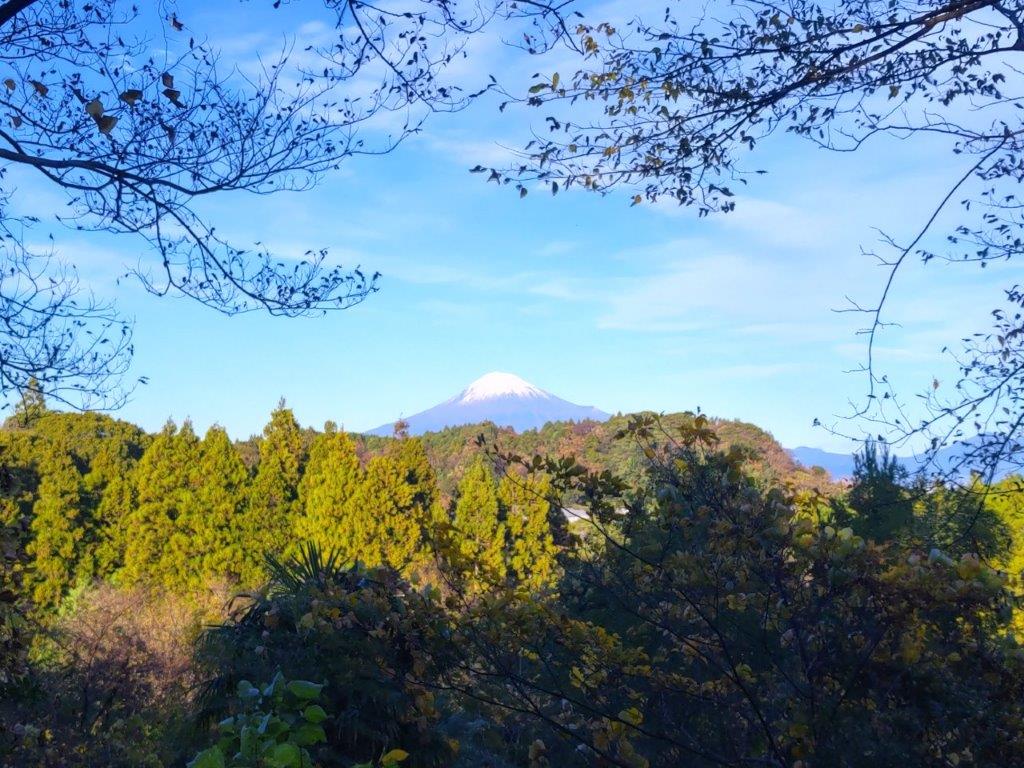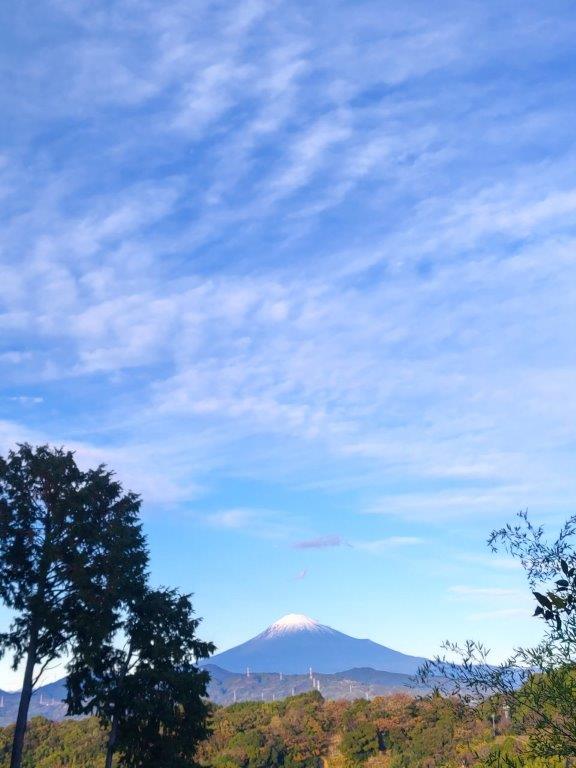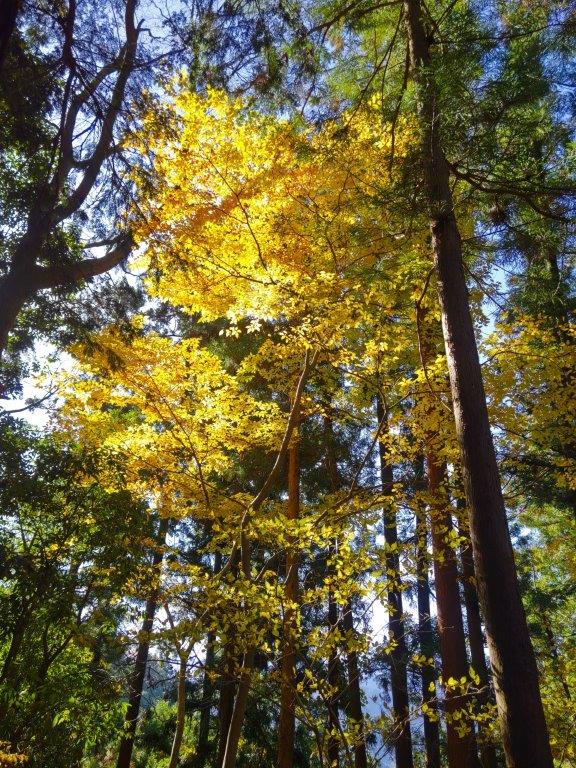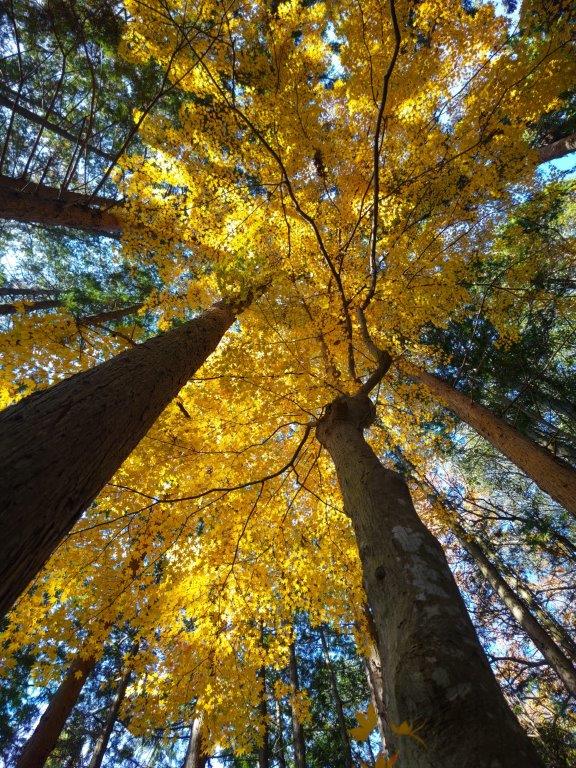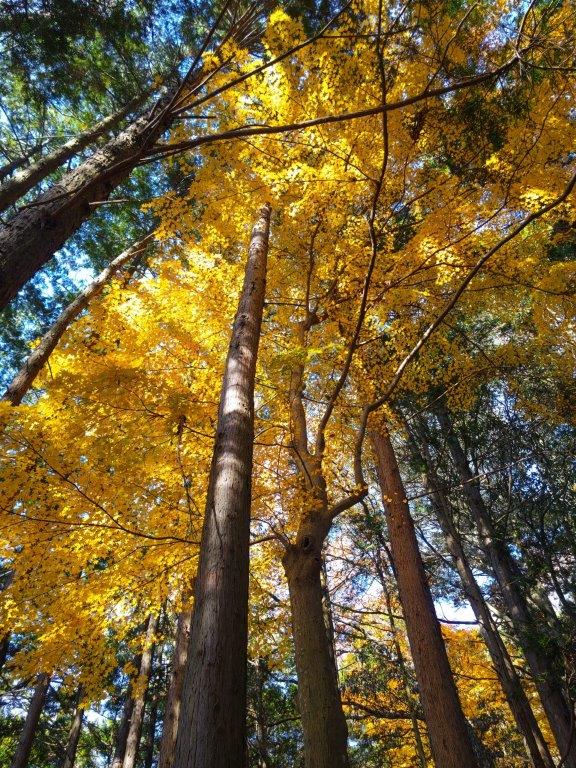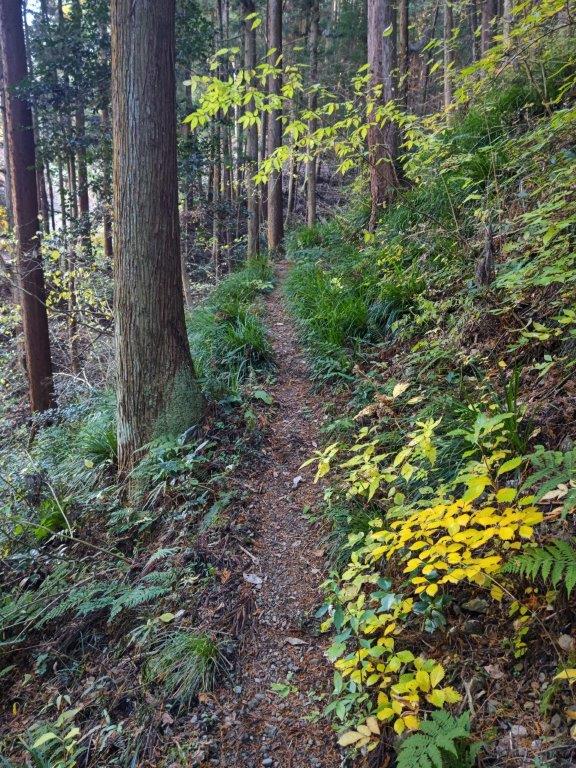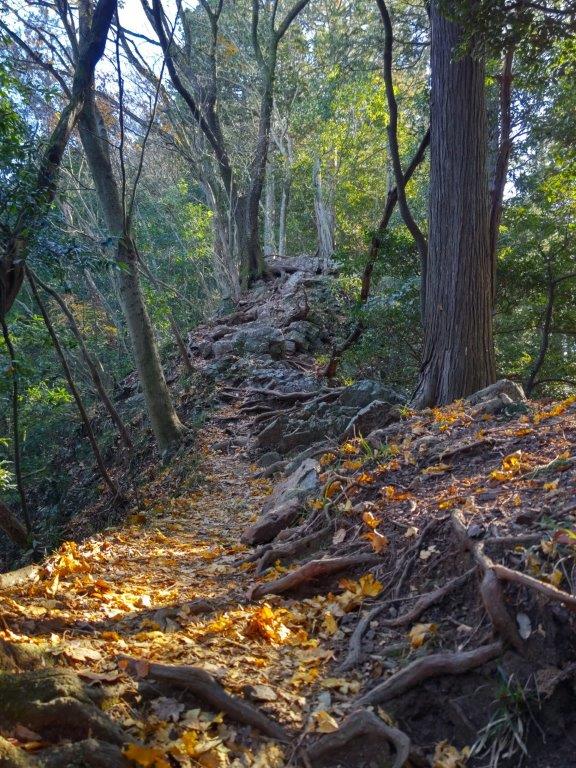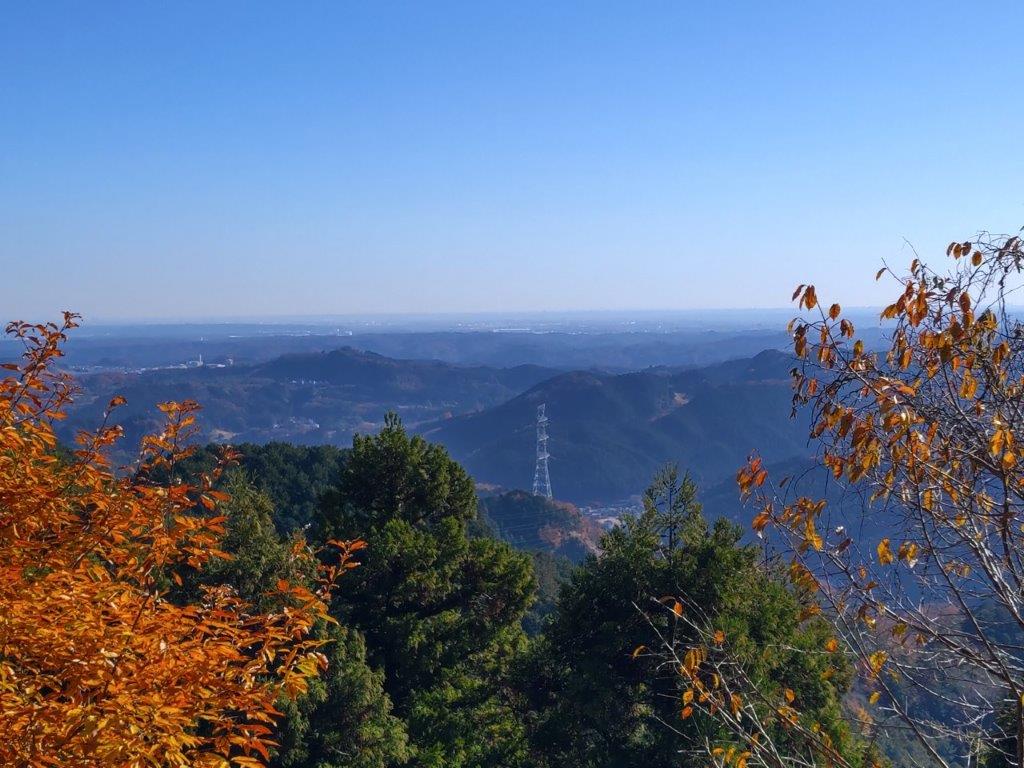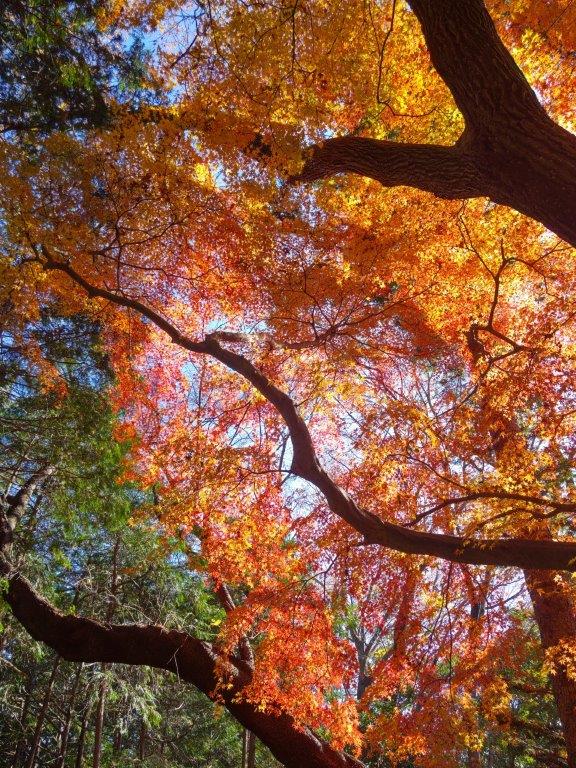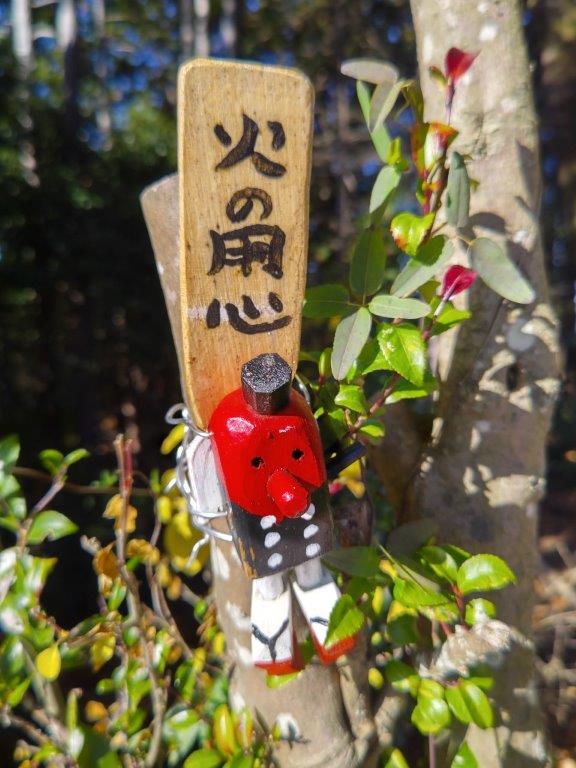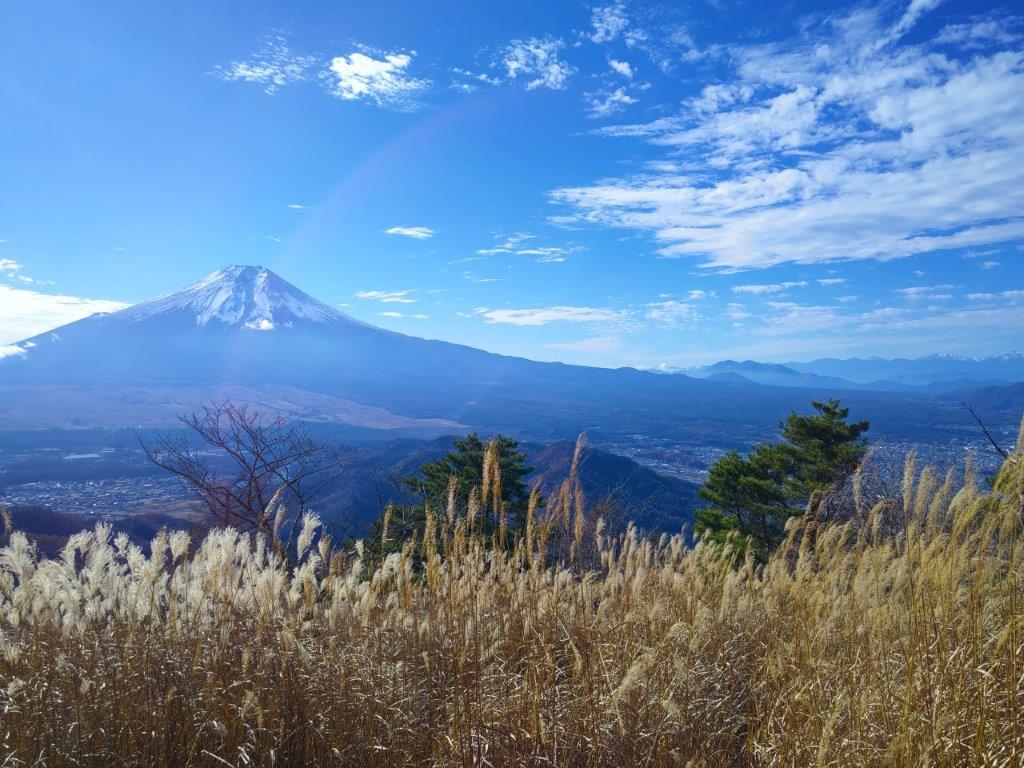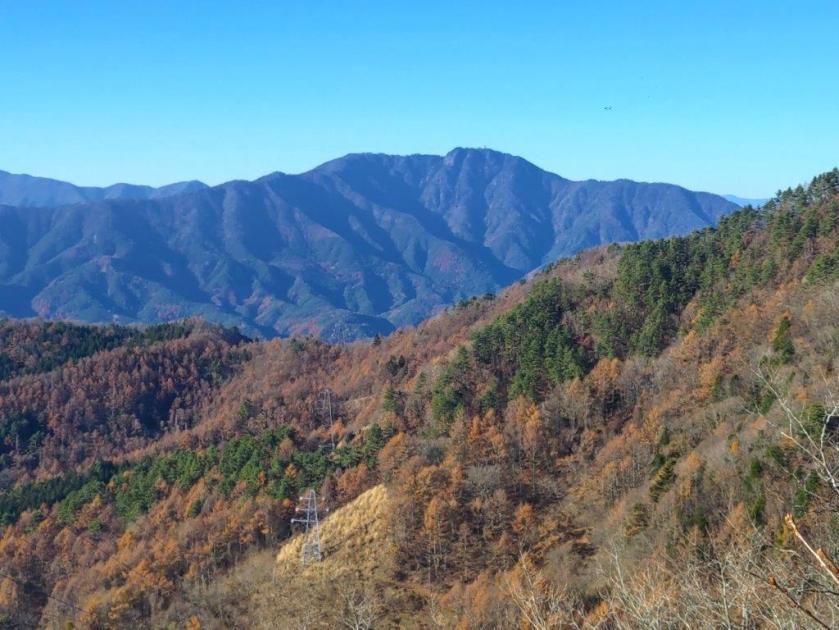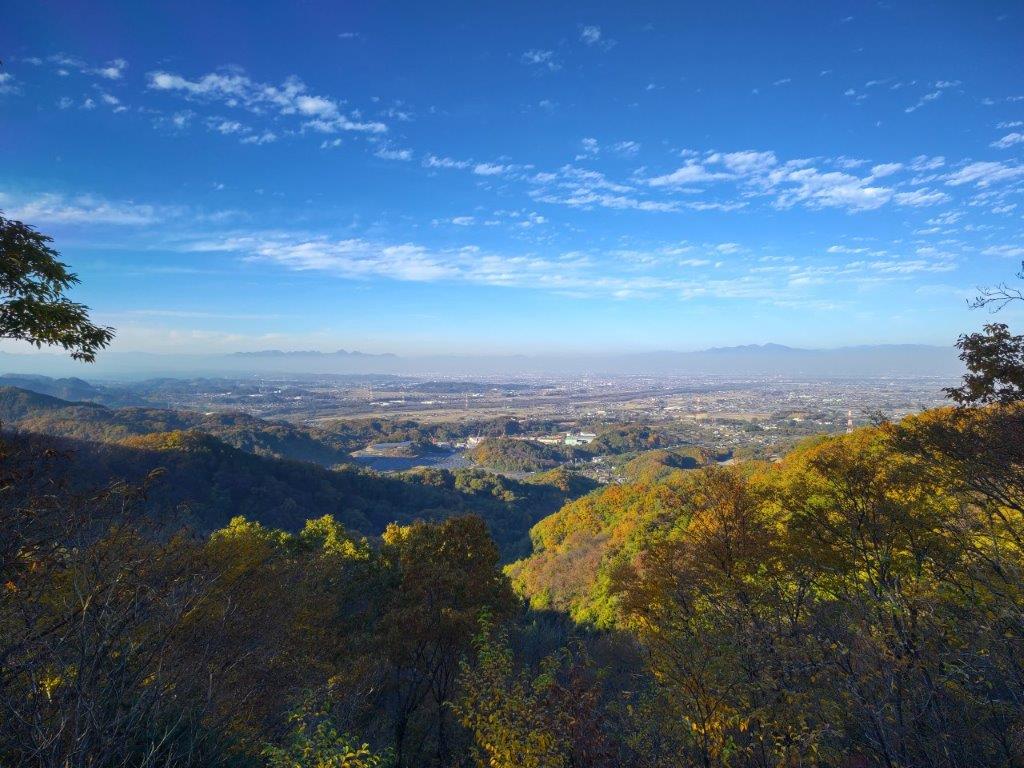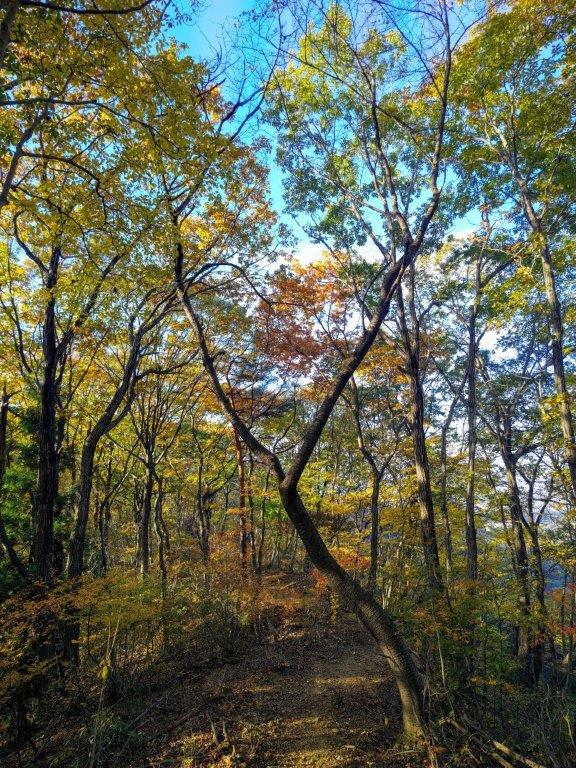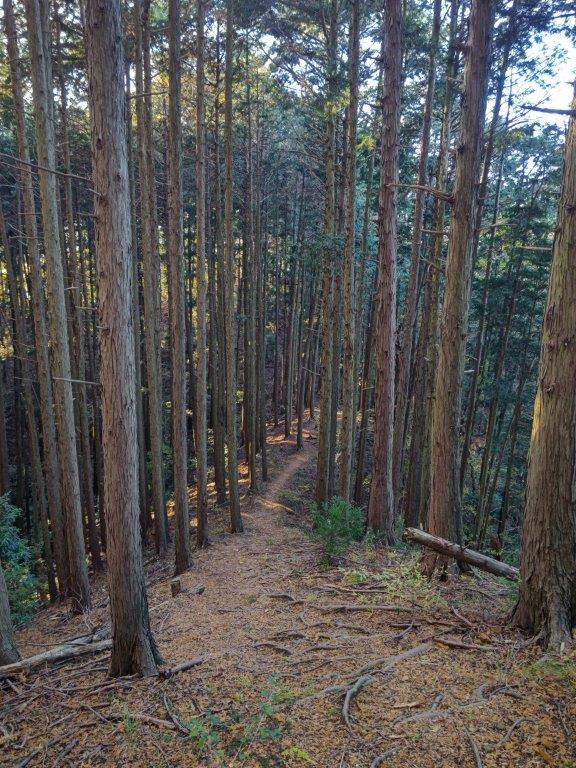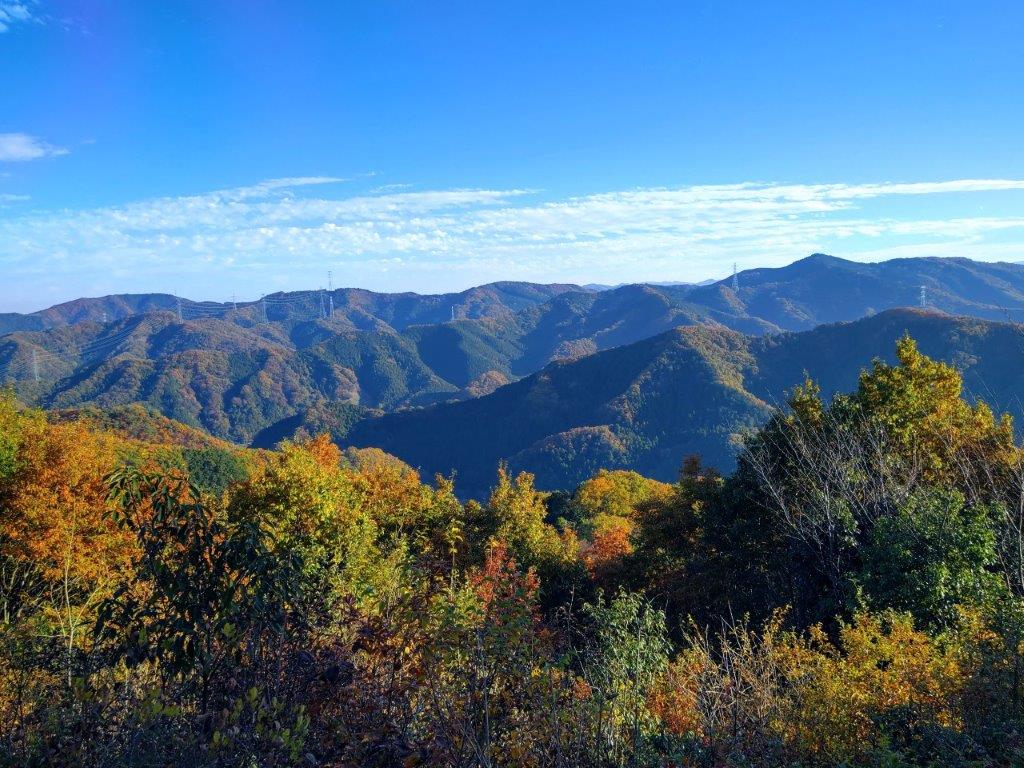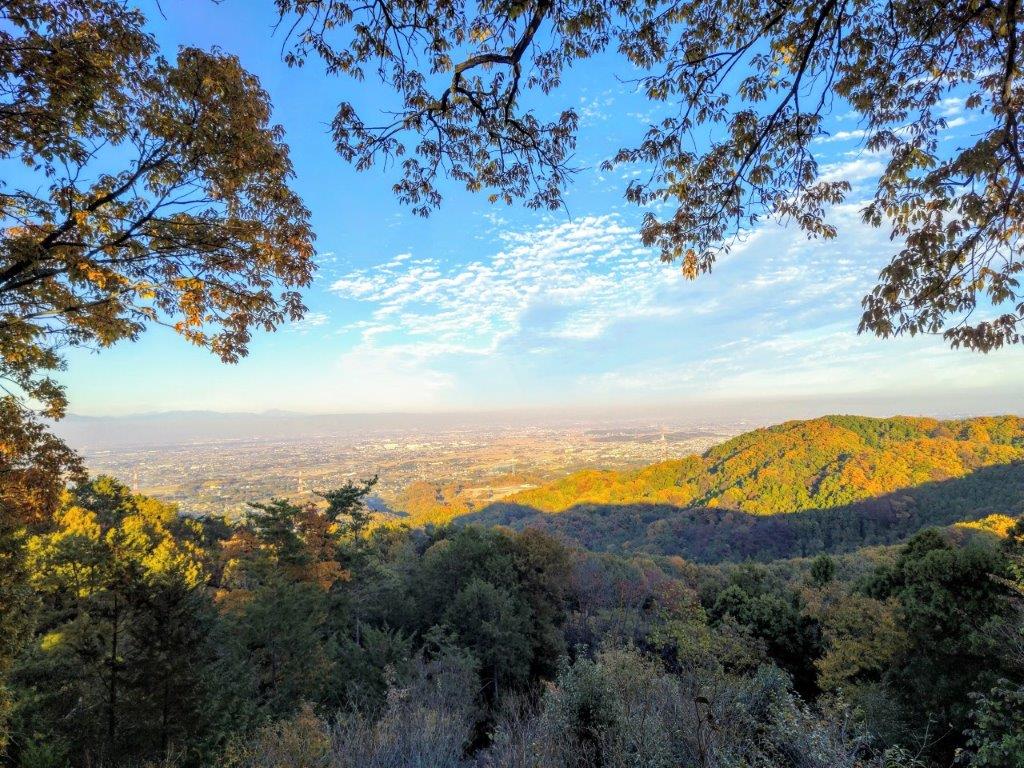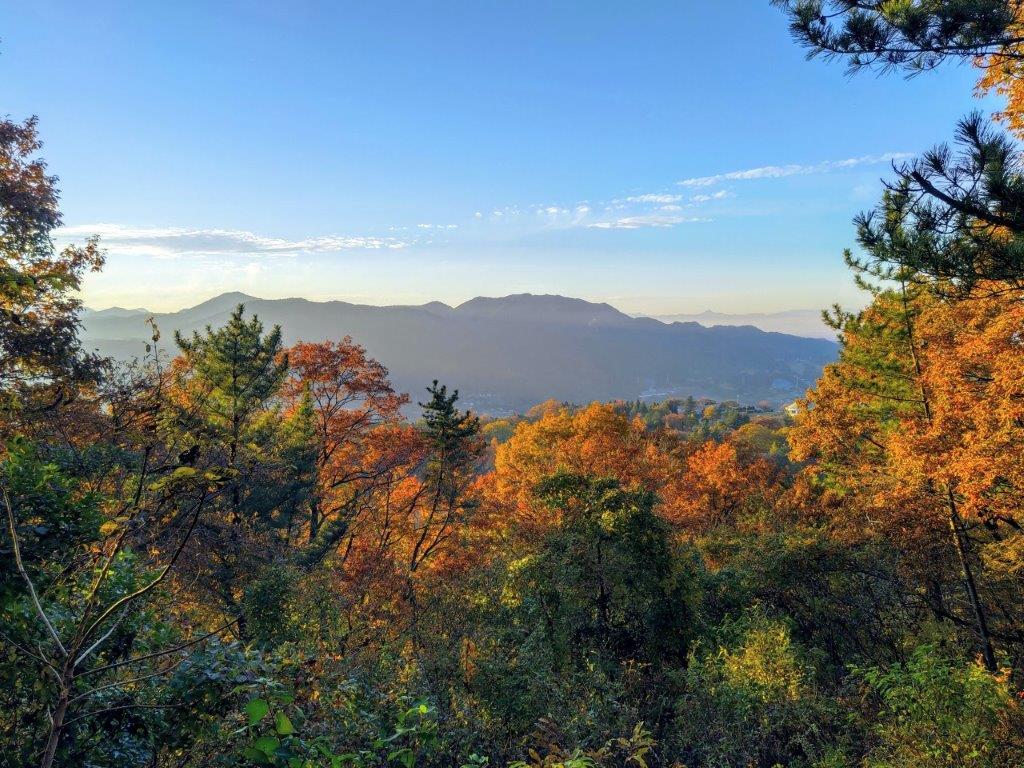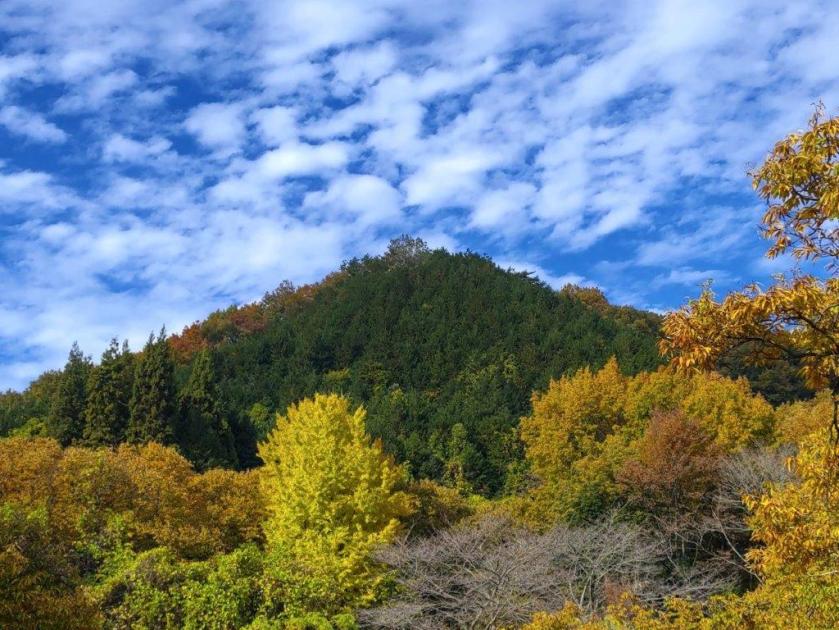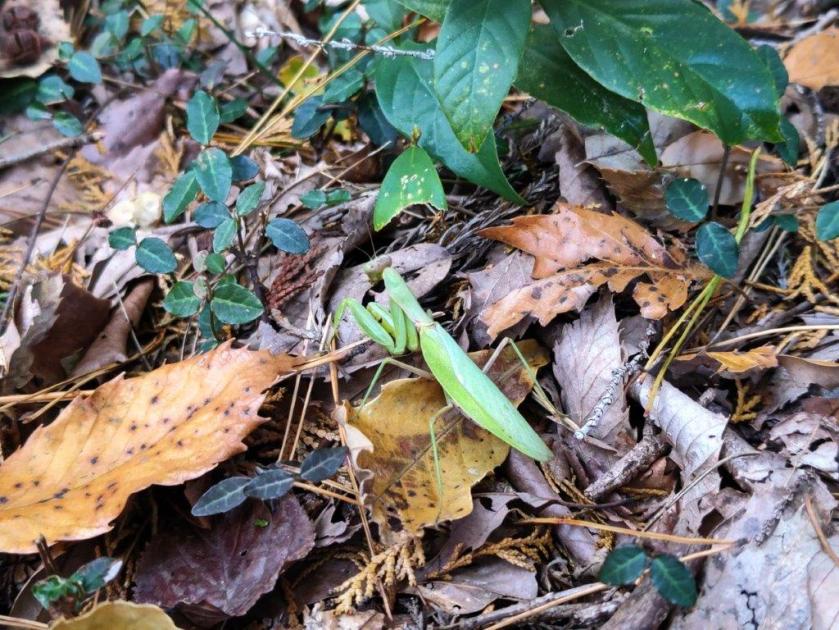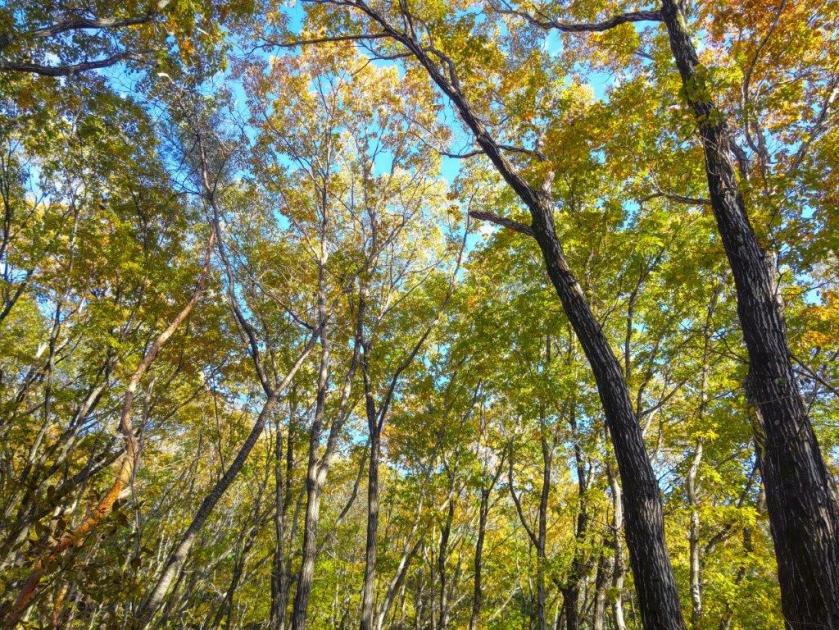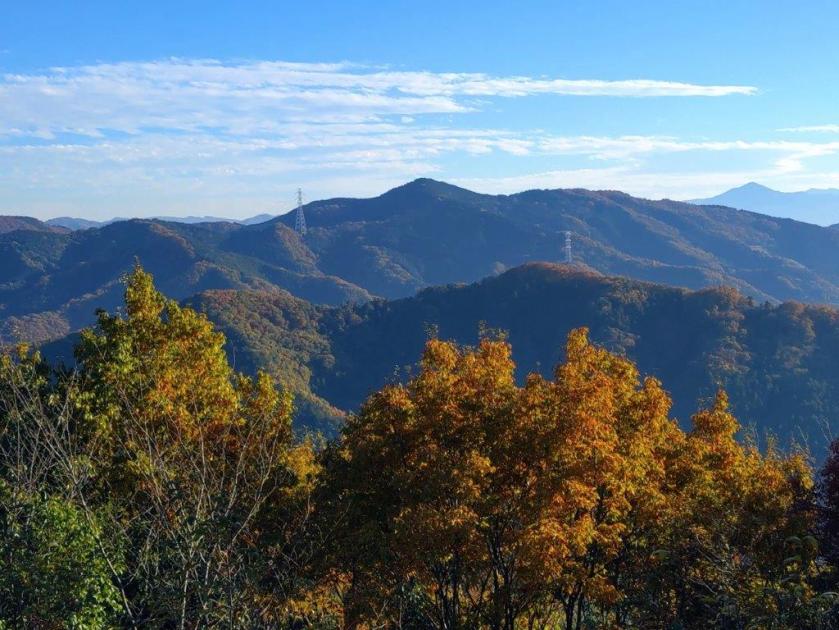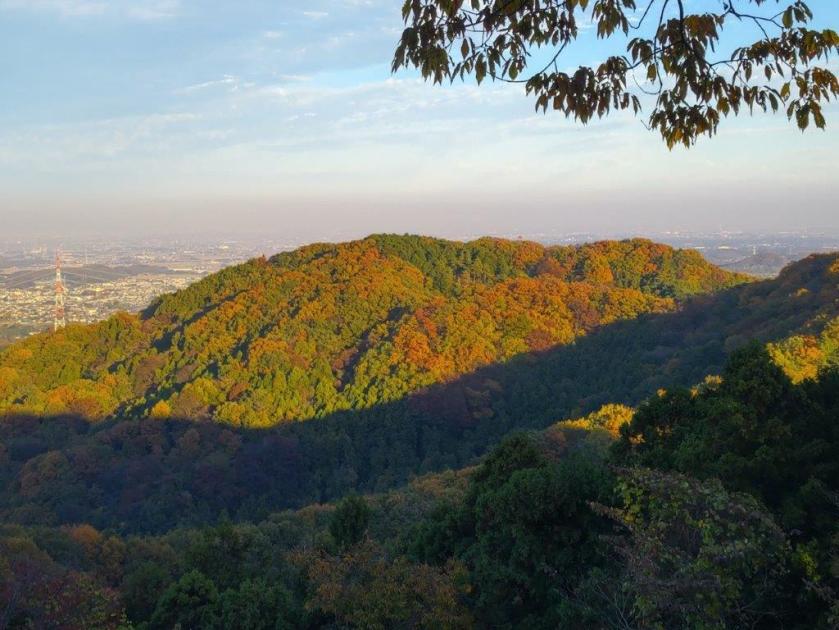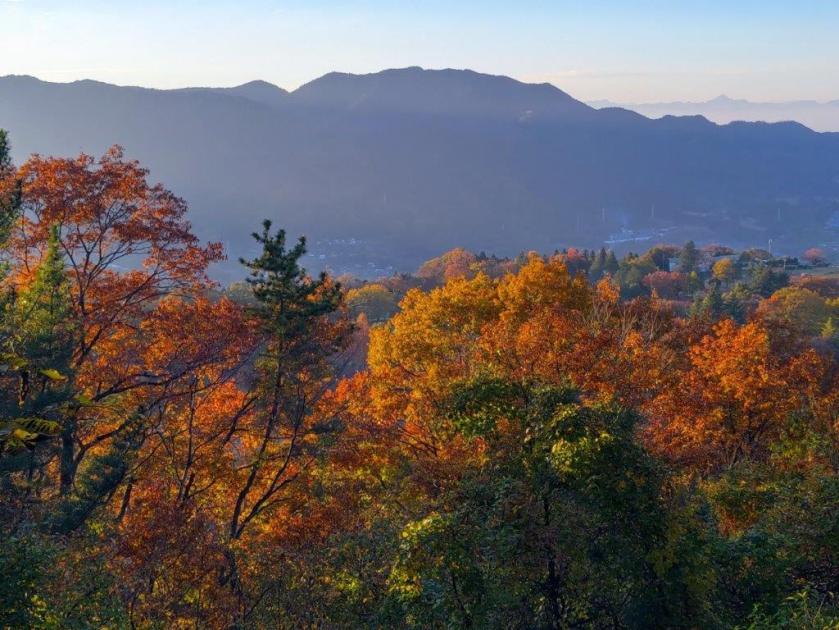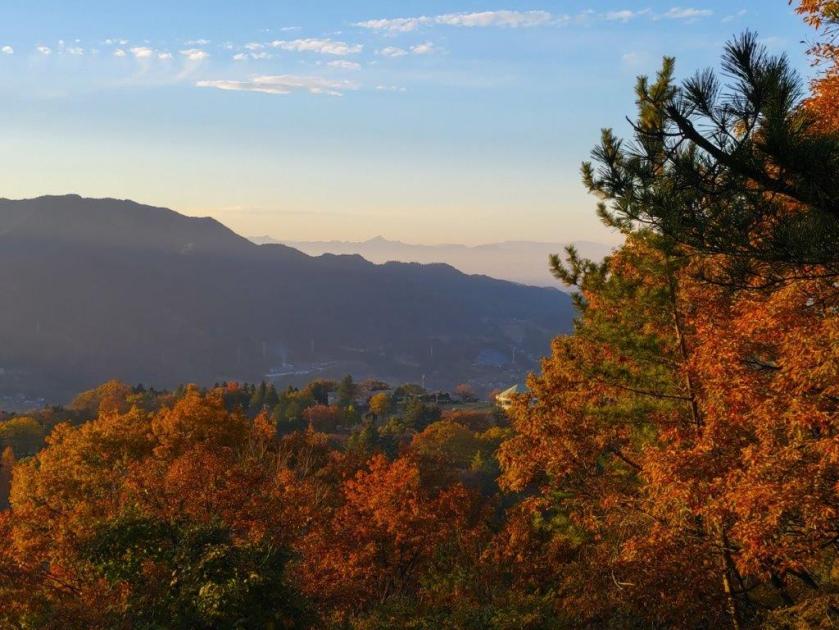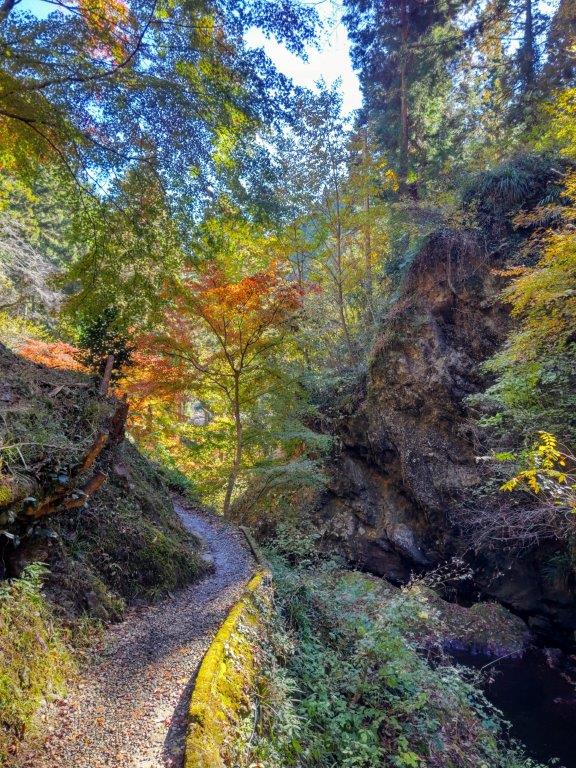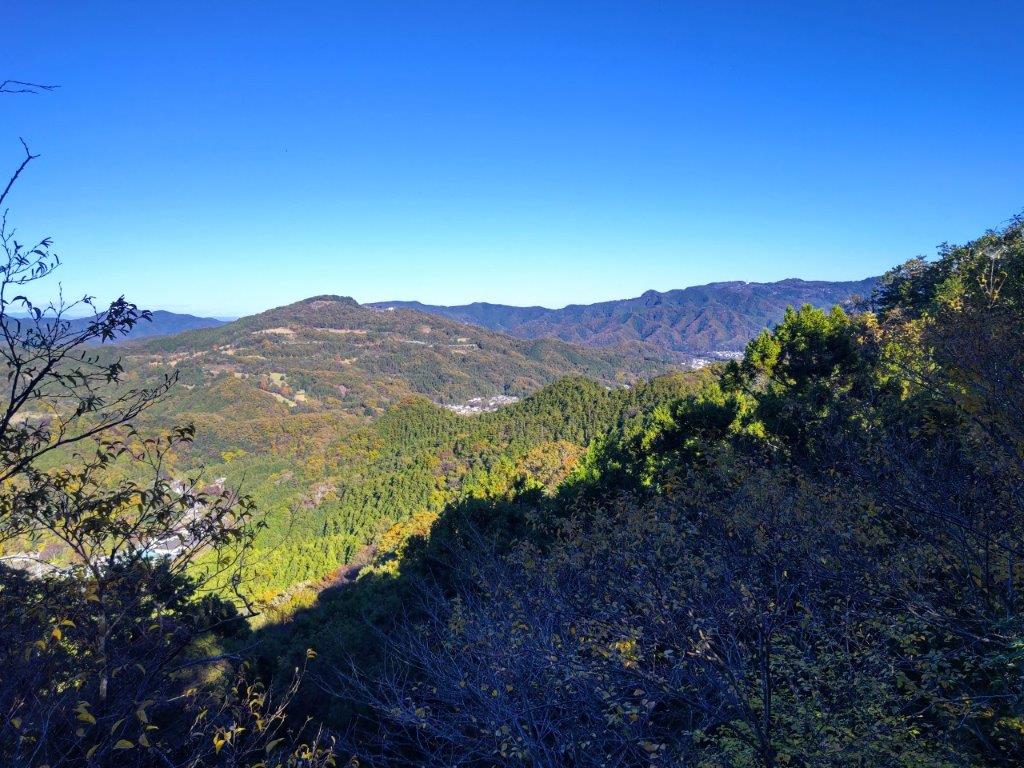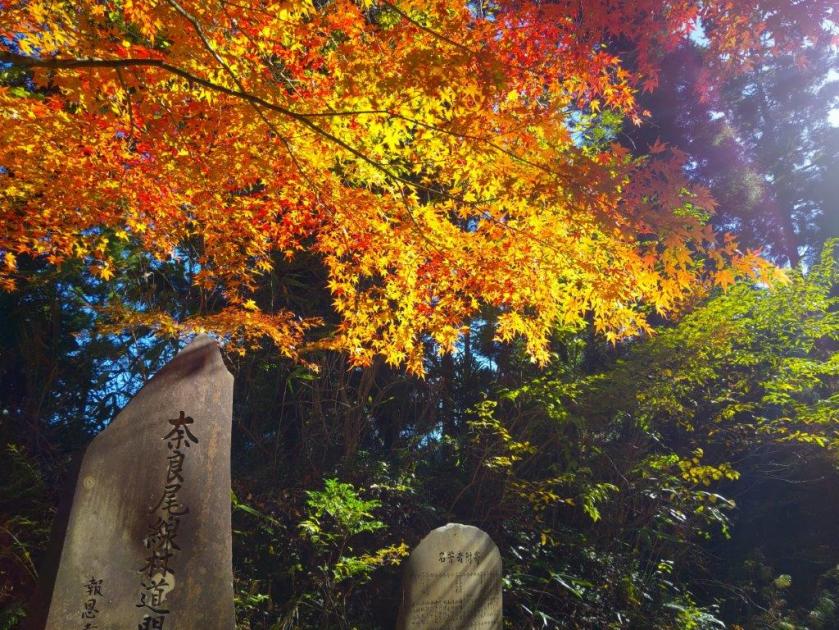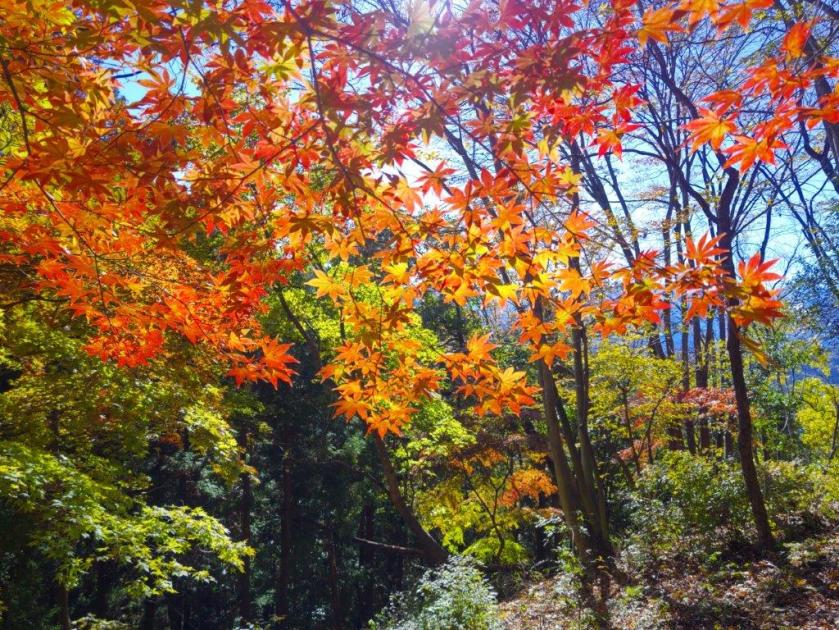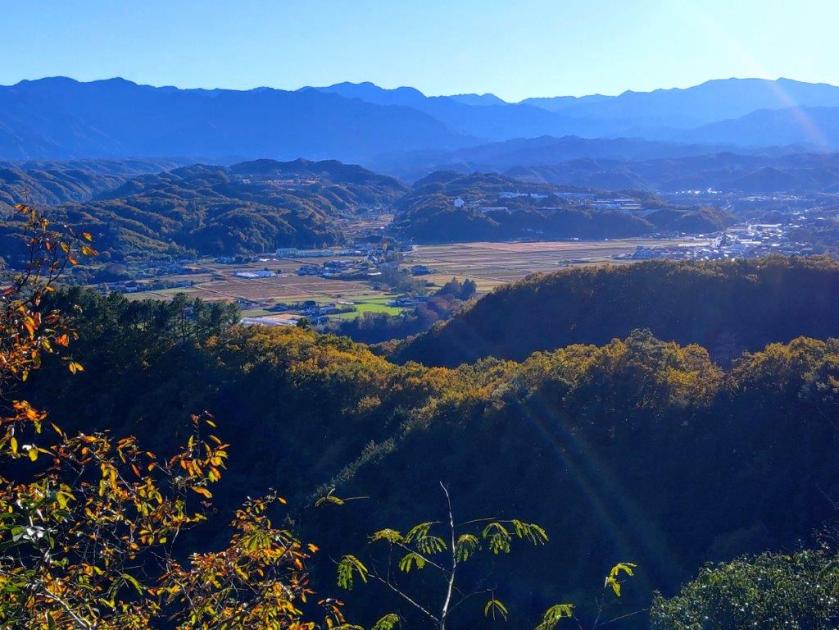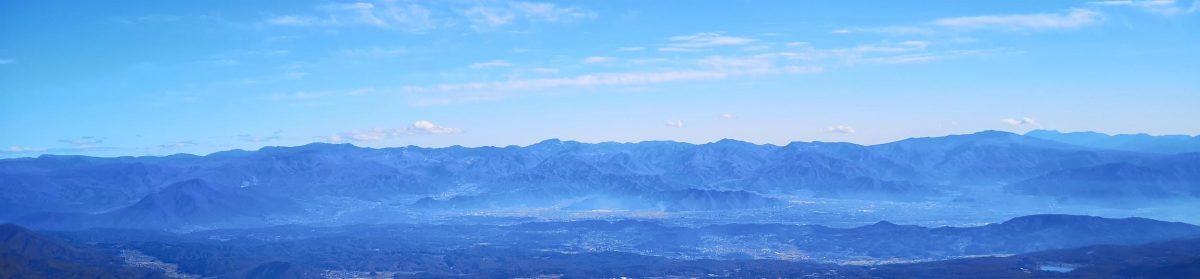
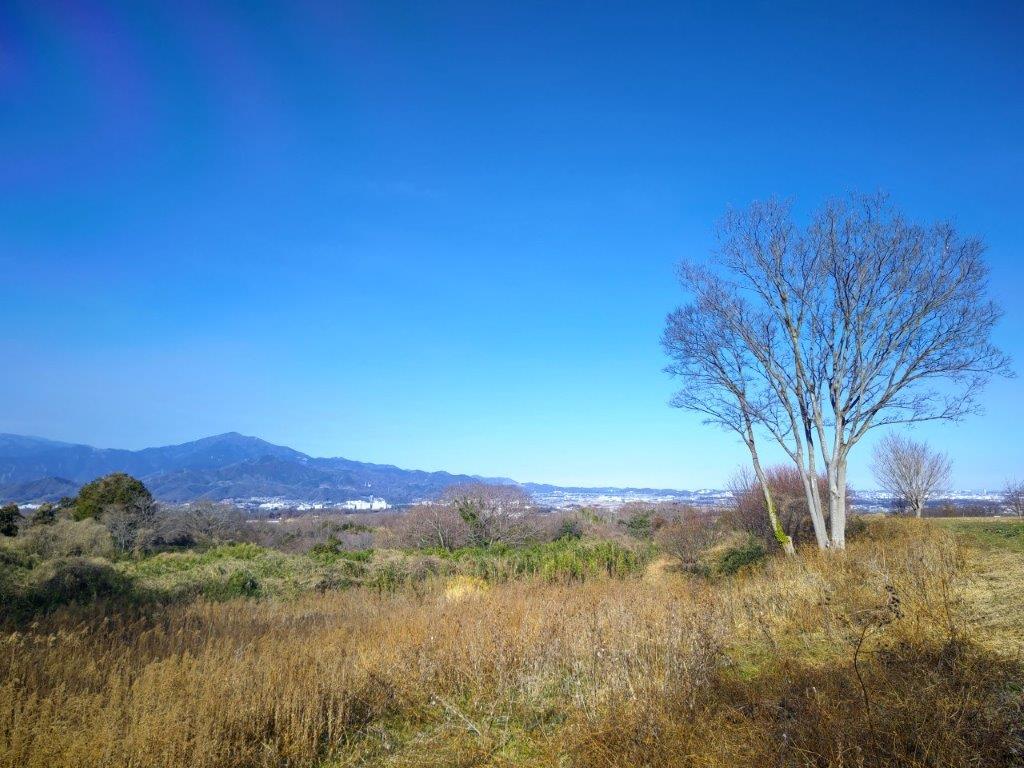
Nihondaira (307m) & Mt Udo (308m), Shizuoka City, Shizuoka Prefecture, Sunday, December 17, 2023

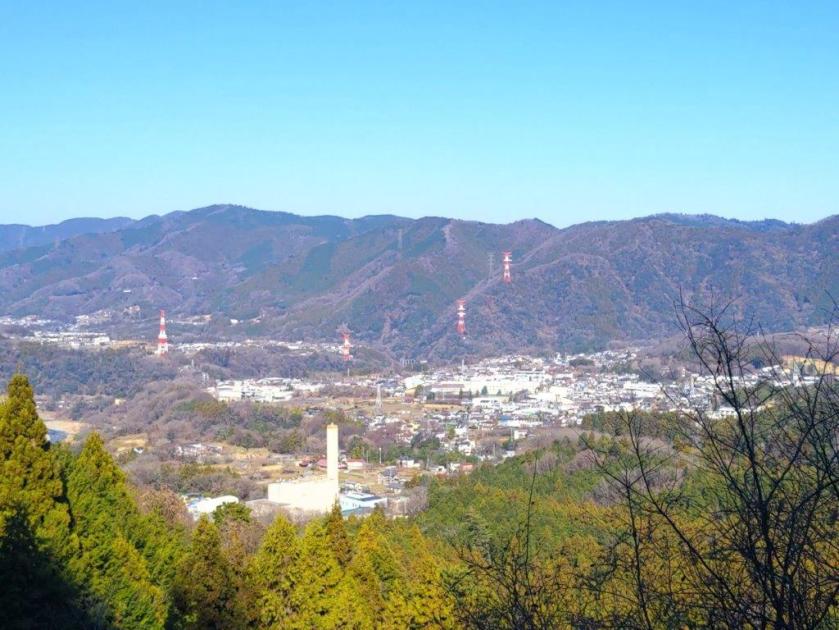
I wanted to do a hike in Shizuoka, last visited one year ago, to take advantage of the warmer ocean climate and the Mt Fuji winter views. While researching my December 2022 trip to Shimoda, I’d noticed a ropeway on Suruga Bay, opposite the Izu peninsula. Further investigation showed that the top station was located on Nihondaira, a low plateau with several short hiking trails, including a section of the Tokai Nature Trail, the Shizuoka Bypass Route. Looking at my map, I saw I could do a station to station hike long enough to justify the cost of the trip. From the station, I would walk up to the observation deck at the highest point, and after a short roundtrip to a nearby minor peak, return via a different route; although, to my regret, I’d have to skip the ropeway. I would ride the shinkansen to Shizuoka station; a couple of short transfers would get me to Kitsunegasaki station, near the start of the hike. Before heading back to Shizuoka station from the Kusanagi JR station, I could drop by the nearby Kusanagi no Yu for a hot spring bath. The weather was supposed to be sunny and cold, as well as a little windy. I was looking forward to exploring a new hiking spot and getting some good views of Mt Fuji from a new direction.

Hiking the Tokai Nature Trail 東海自然歩道

Read this Blog Post on Hiking Around Tokyo

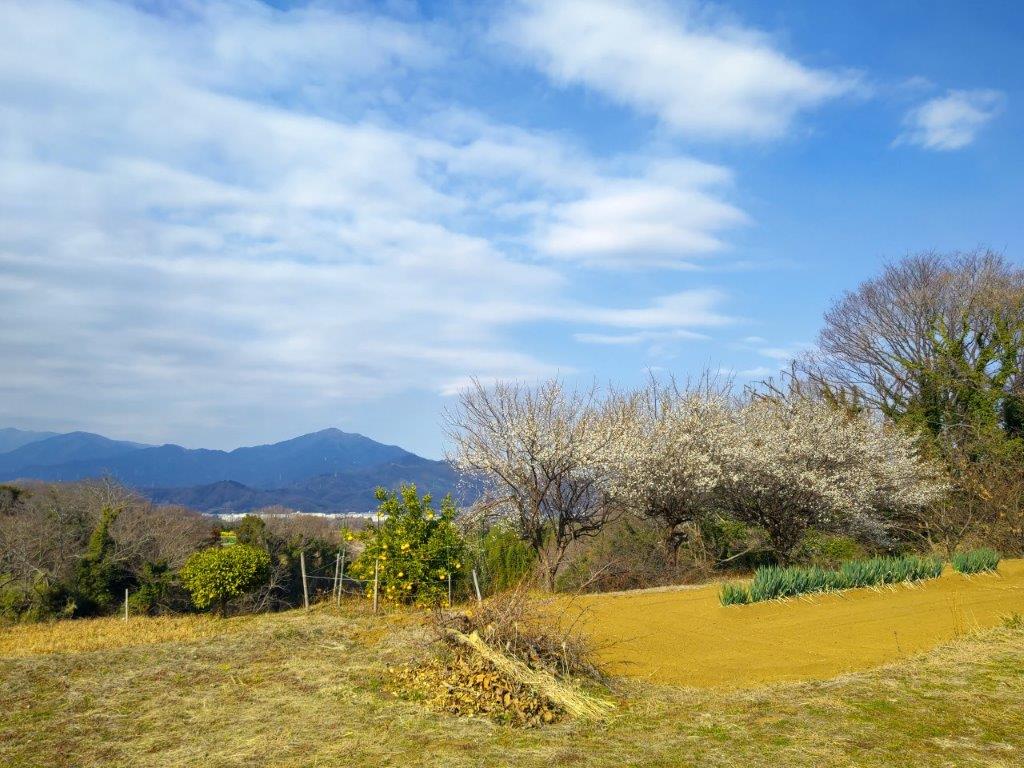
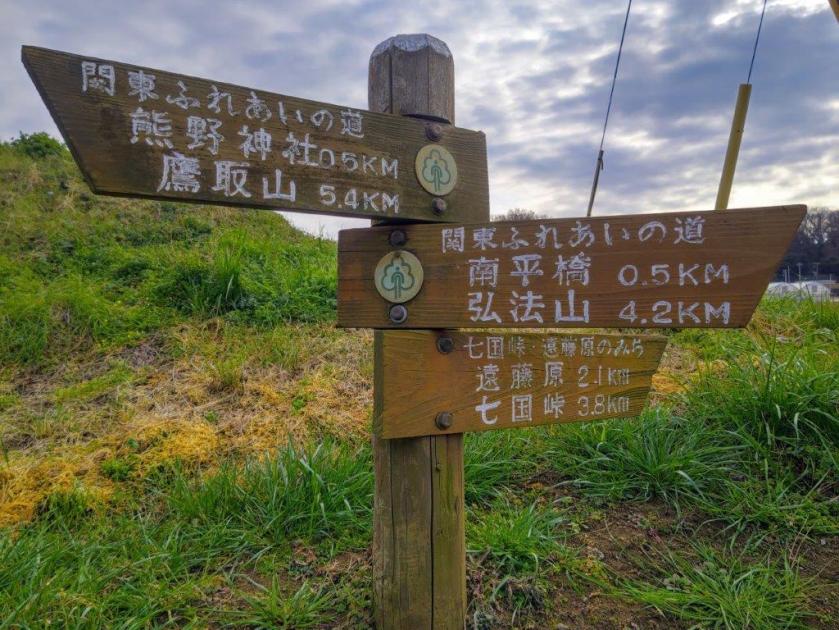
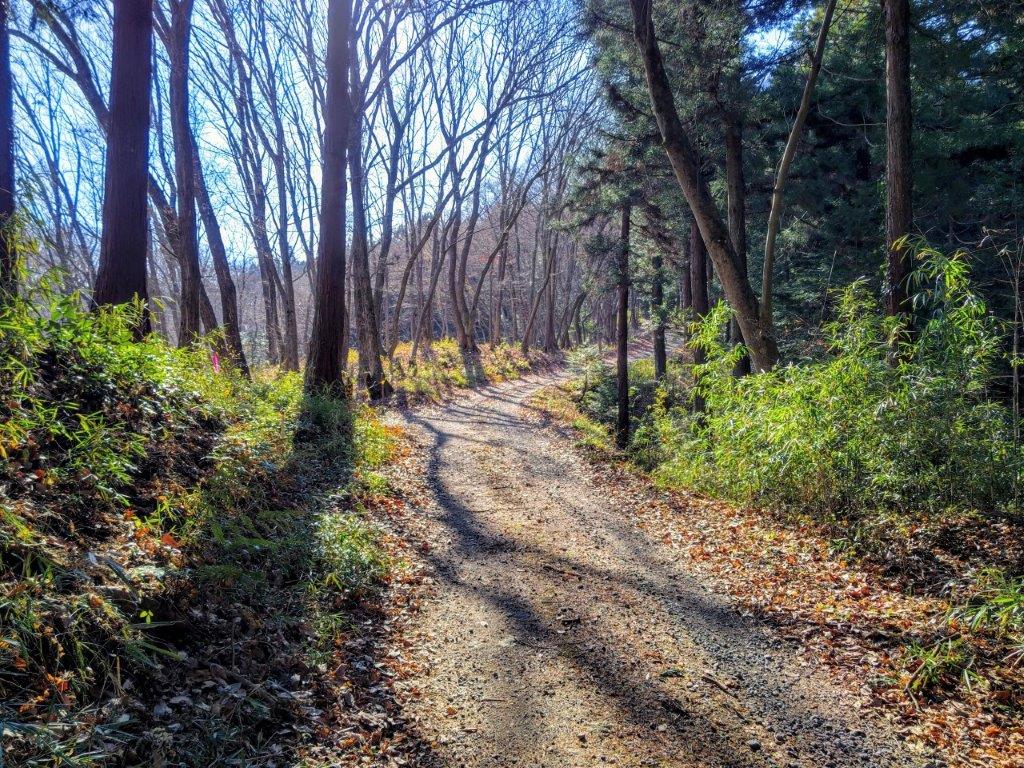
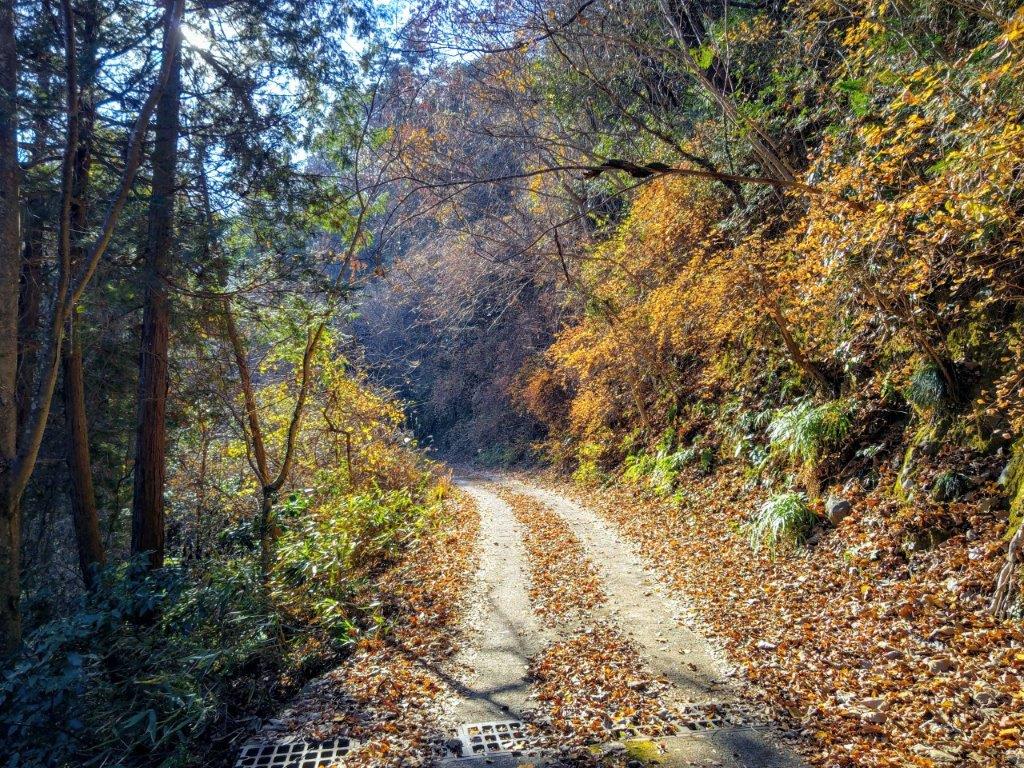
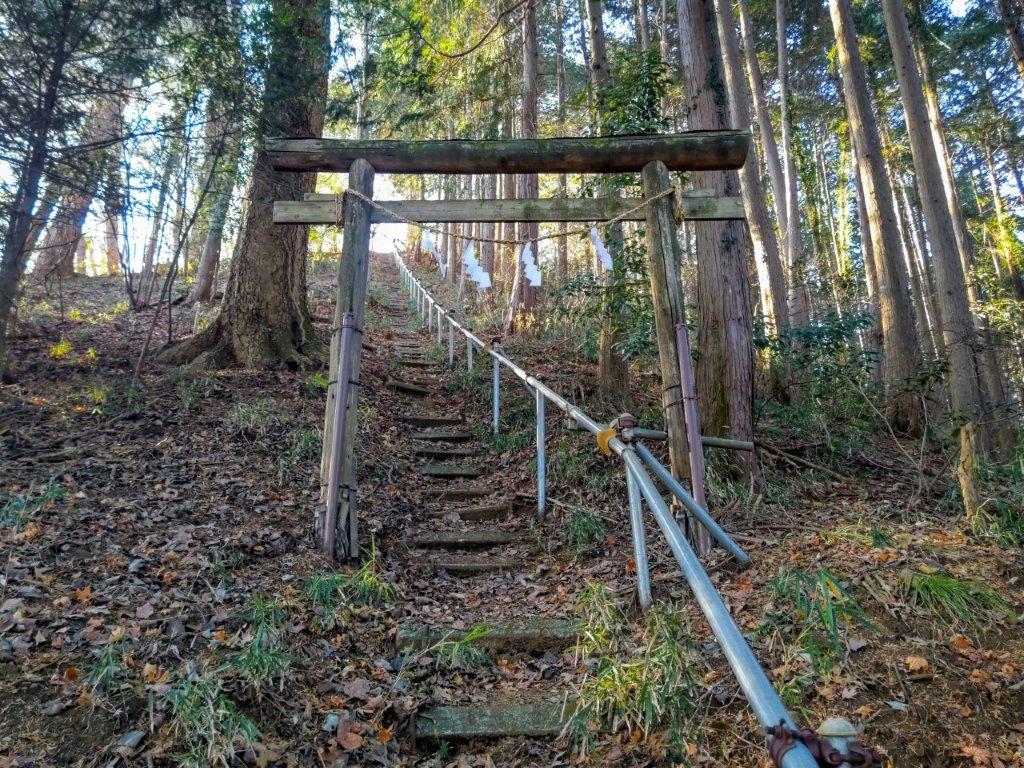
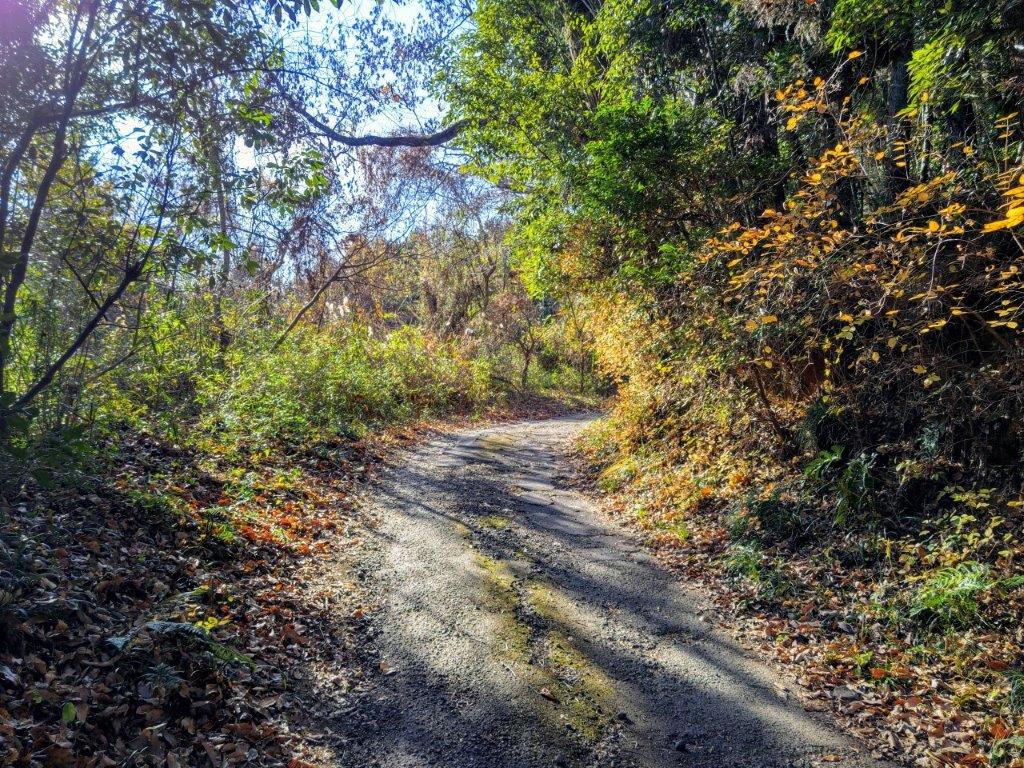
Country lane (left) leading to the Tokai Nature Trail (right)

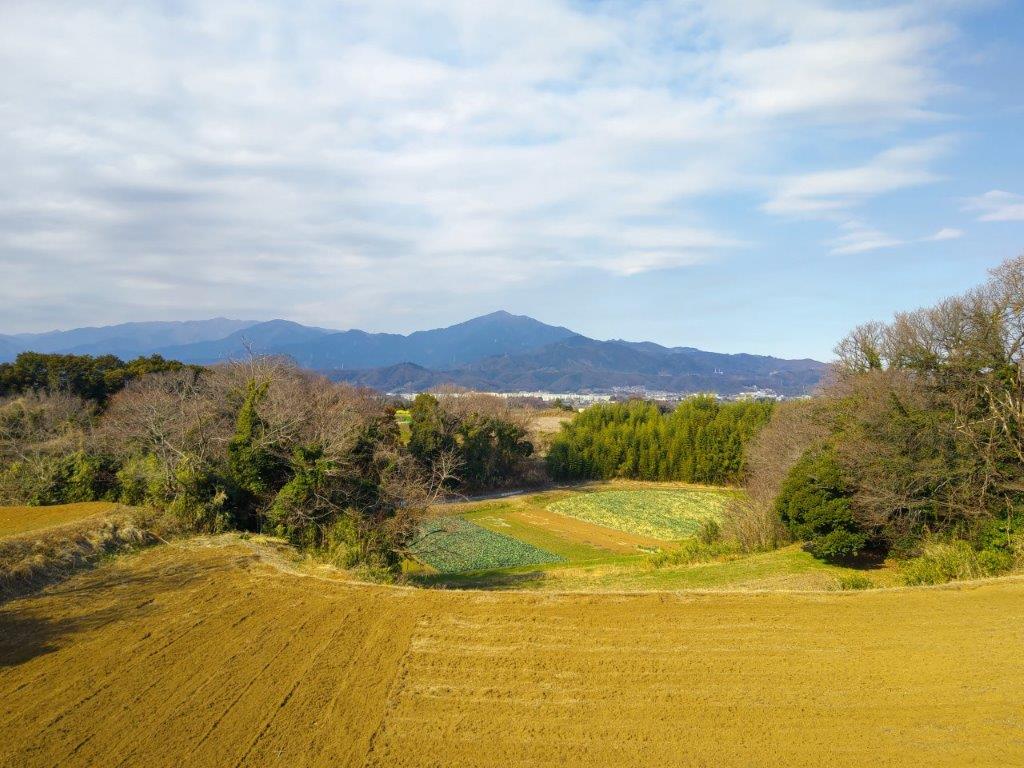
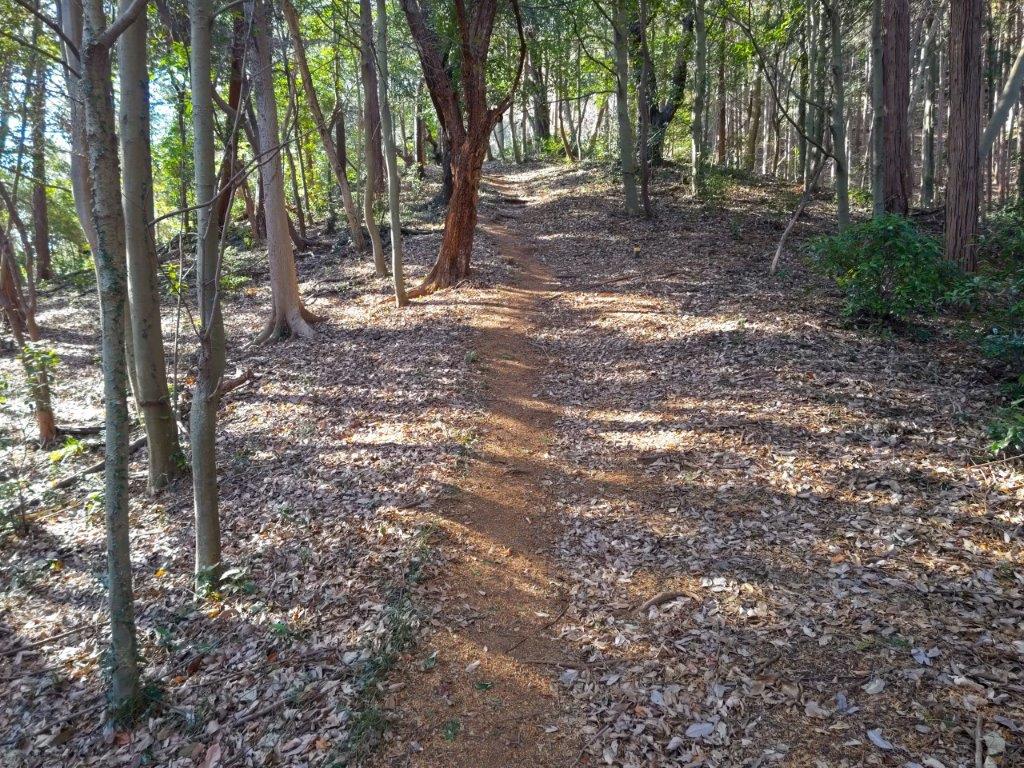
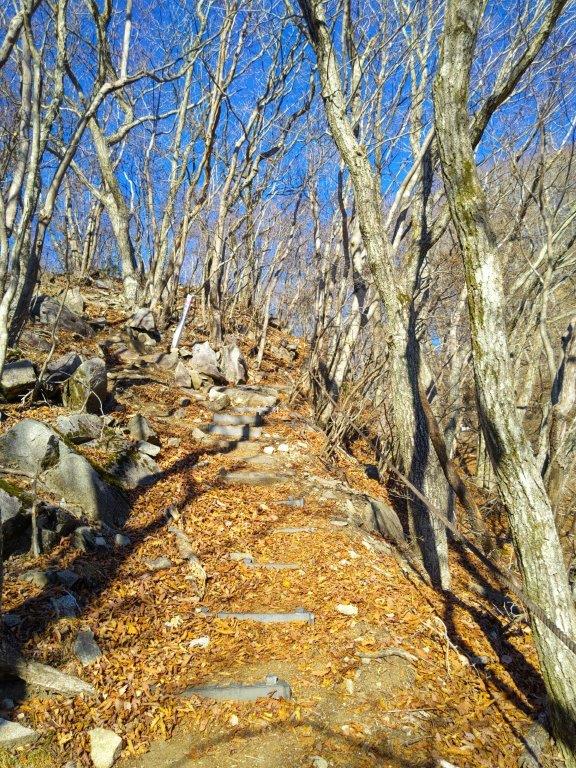
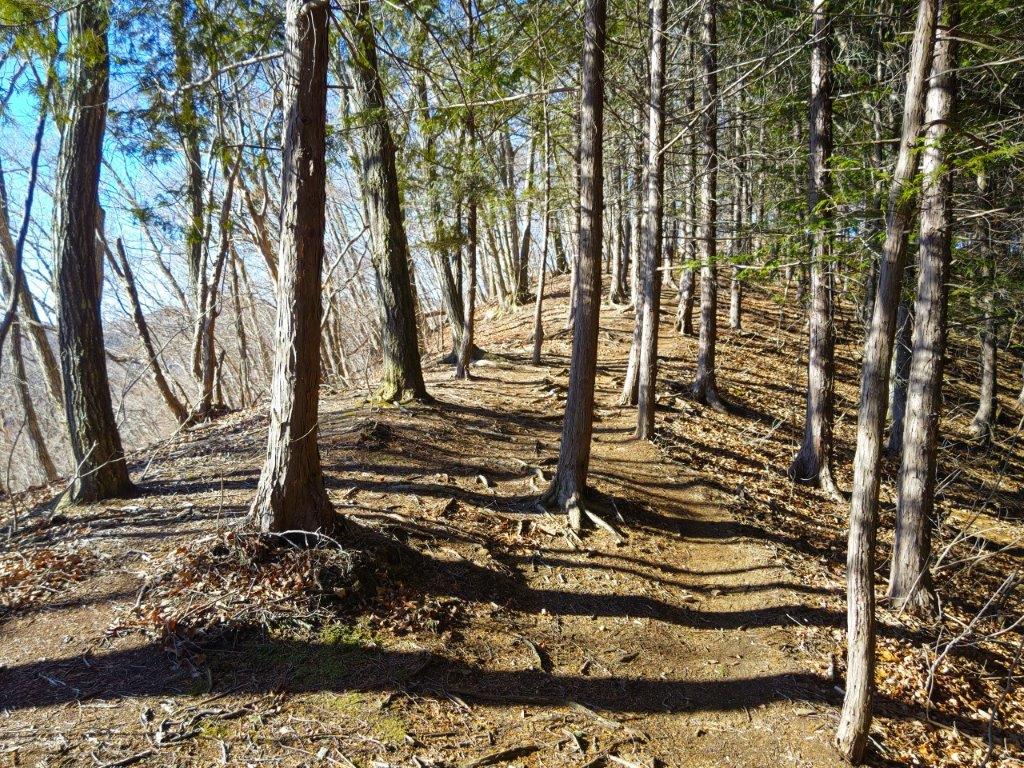
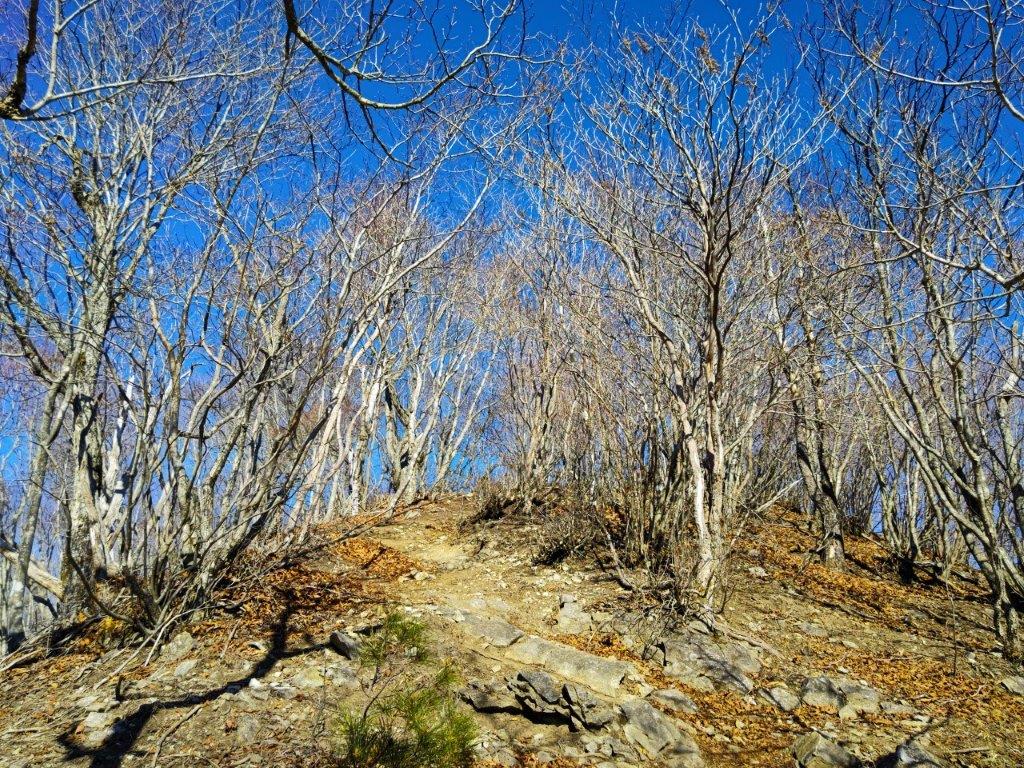
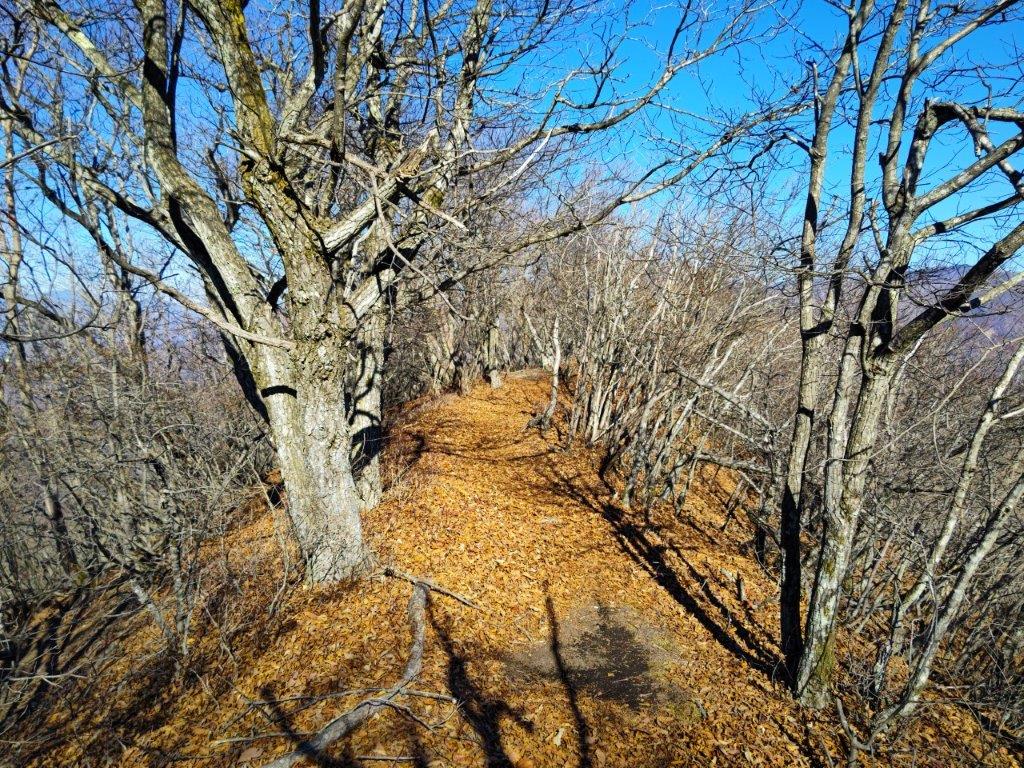
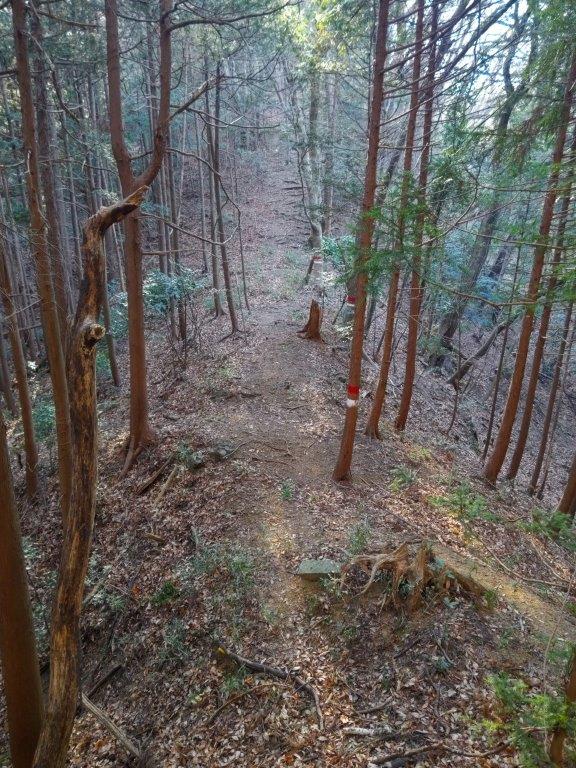
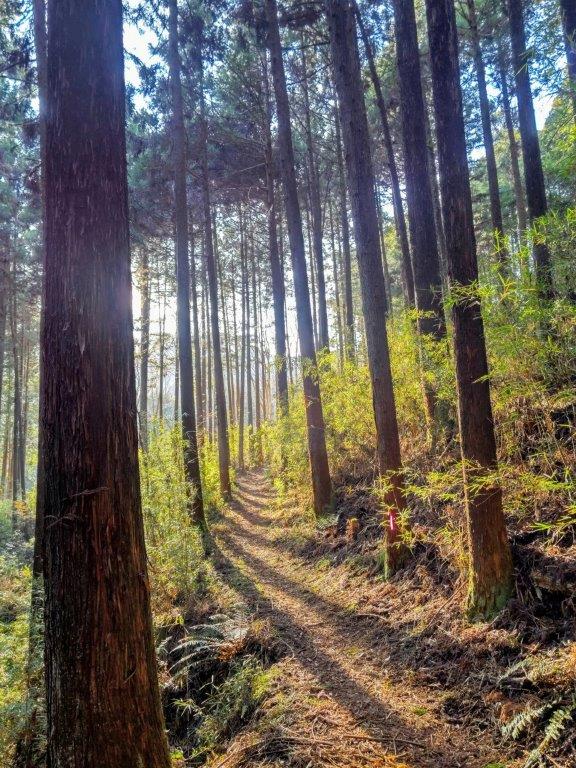
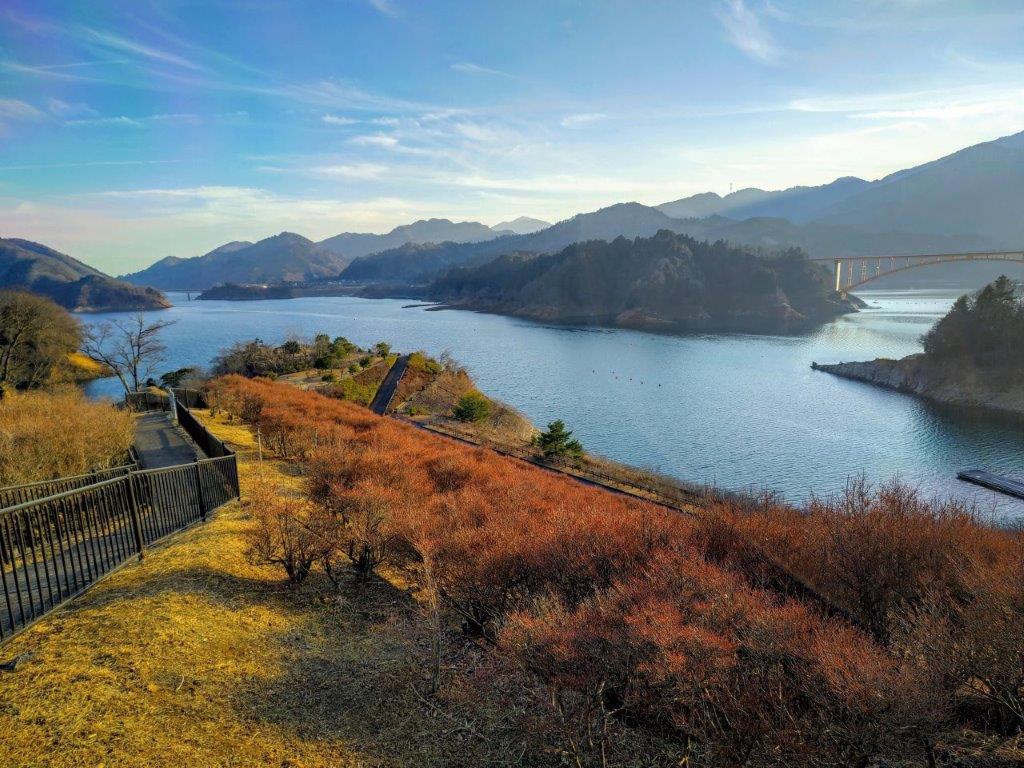
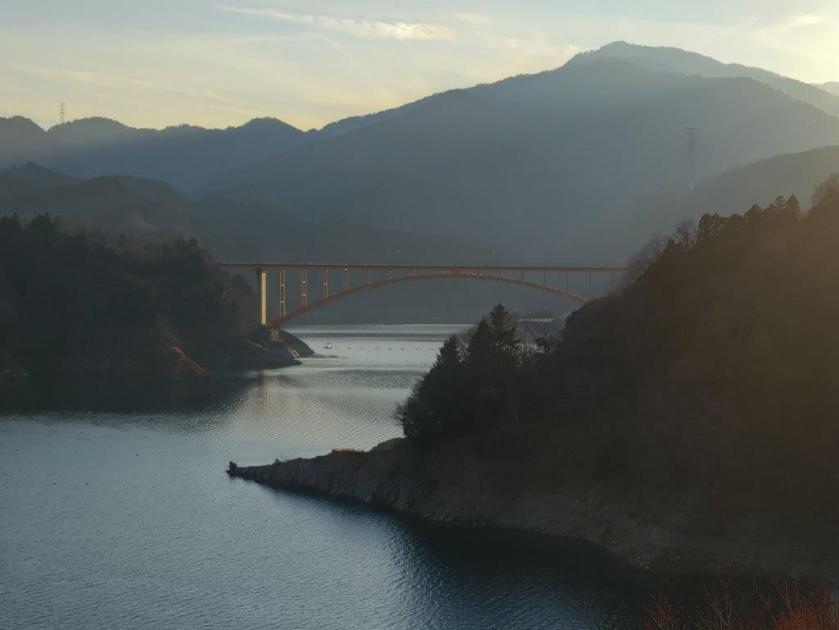
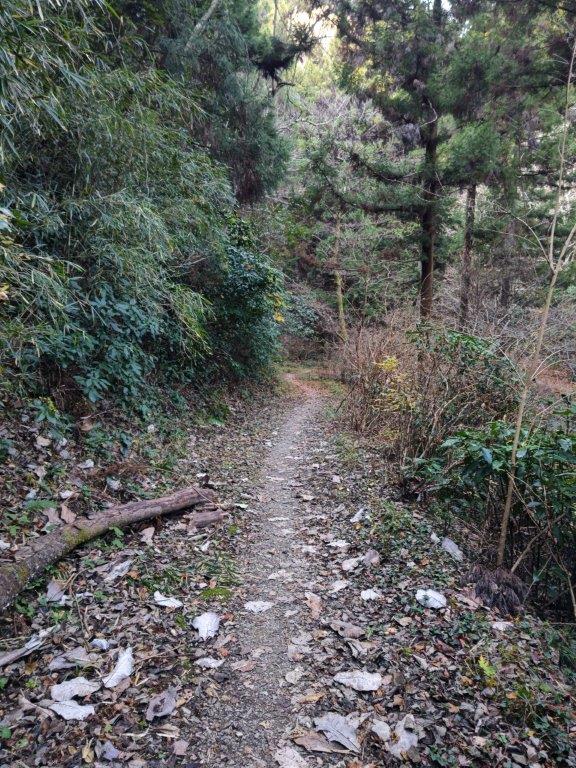
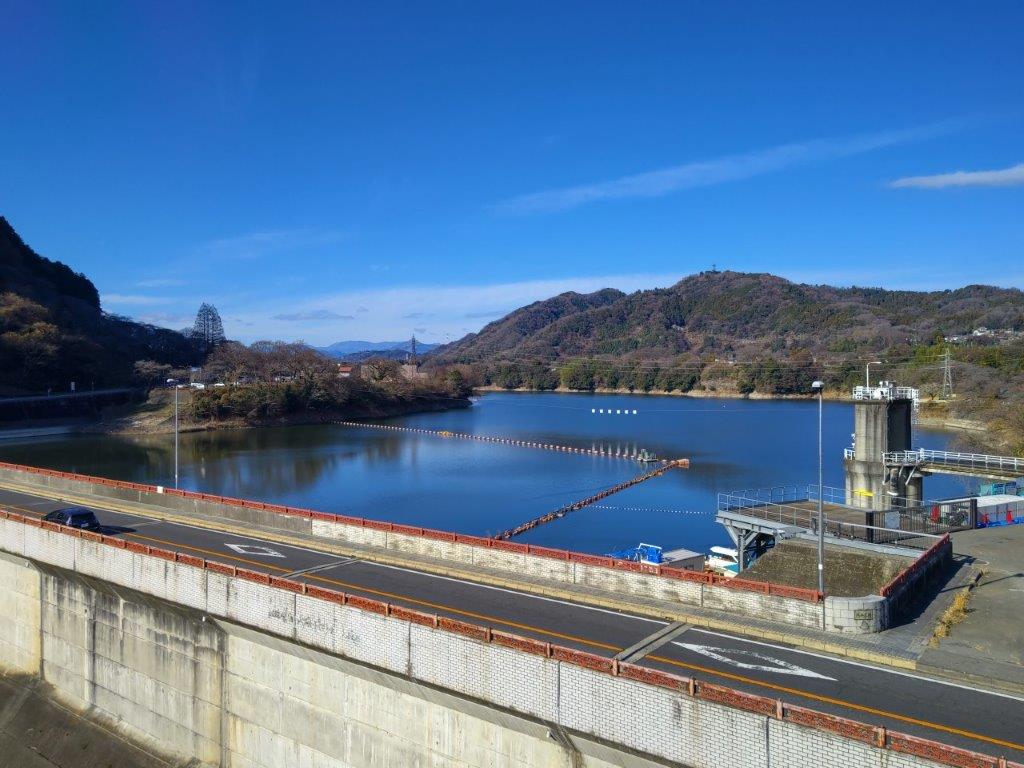
Walking down from Mt Udo (left) and from Nihondaira (right)

It was a blue-sky day and Mt Fuji was clearly visible as I rode the shinkansen from Tokyo station. After getting off at Kitsune-ga-saki station, it still felt quite cold, so I retreated to a nearby 7/11 to buy some food and water for the day. At 1030, I finally set off along a narrow road, next to a small river, passing several unmanned vegetable stands, a common sight in rural Japan. After walking through some tea fields, I arrived at the entrance of Shimizu Funakoshi Zutsumi Park (清水船越堤公園) just after 11am. After checking out the view of Mt Fuji from inside the park, I continued along the road, and finally reached the Mabase Route (馬走コース on the Tokai Nature Trail just before noon.

Hiking along the Nihondaira Alps

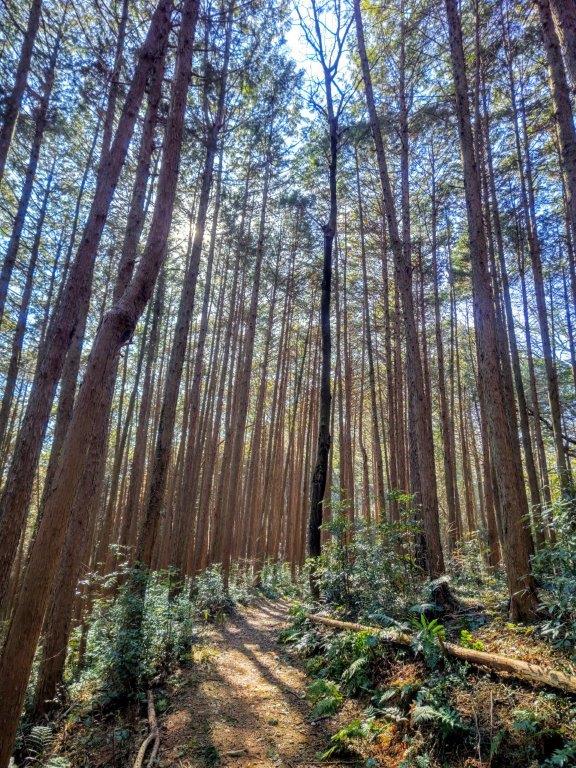
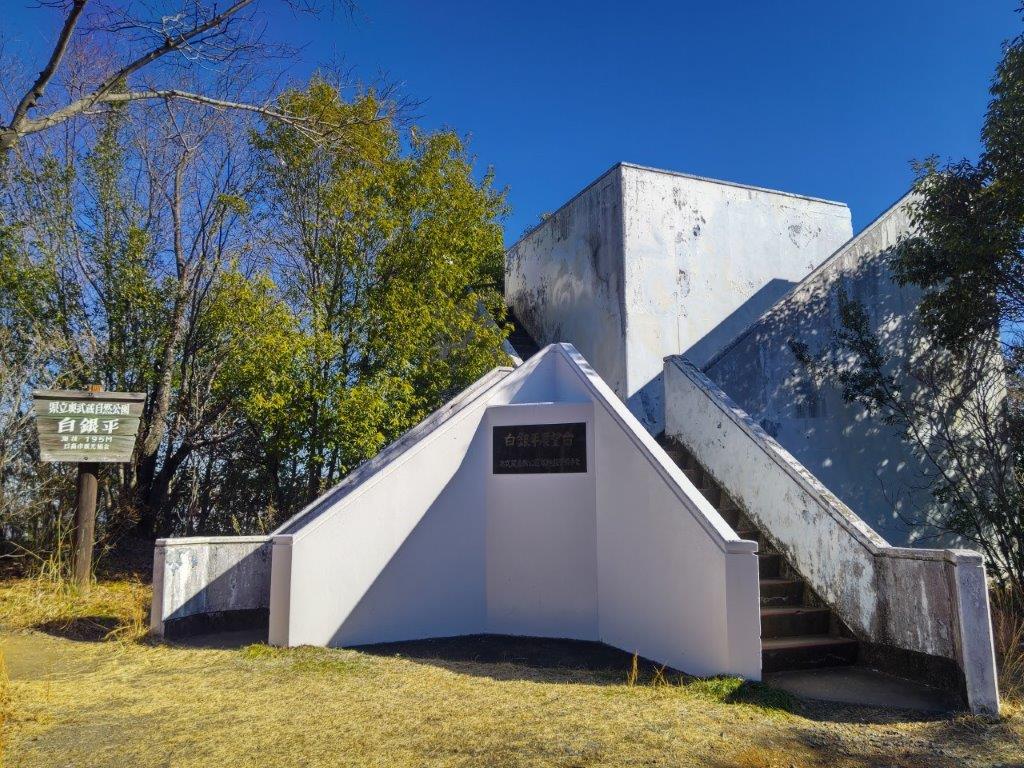
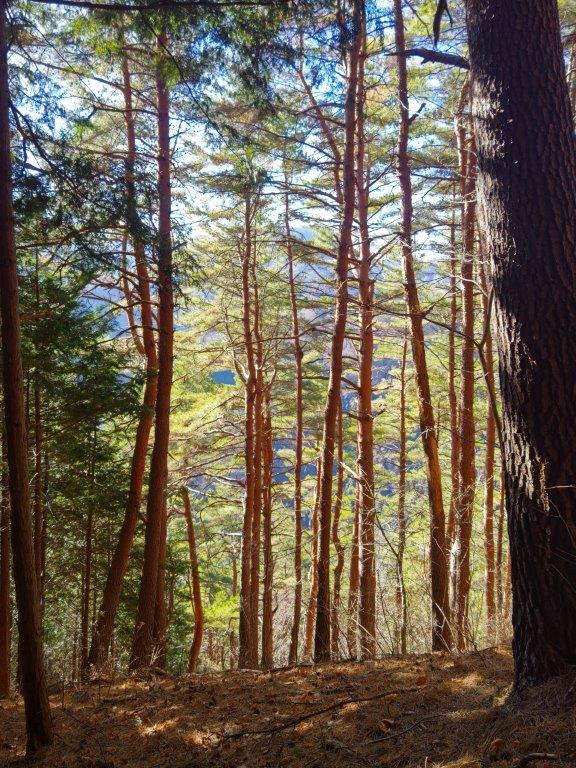
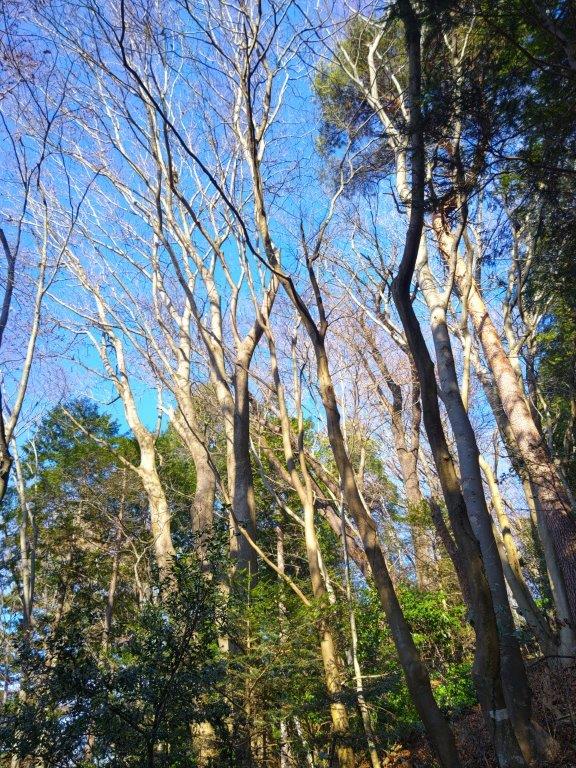
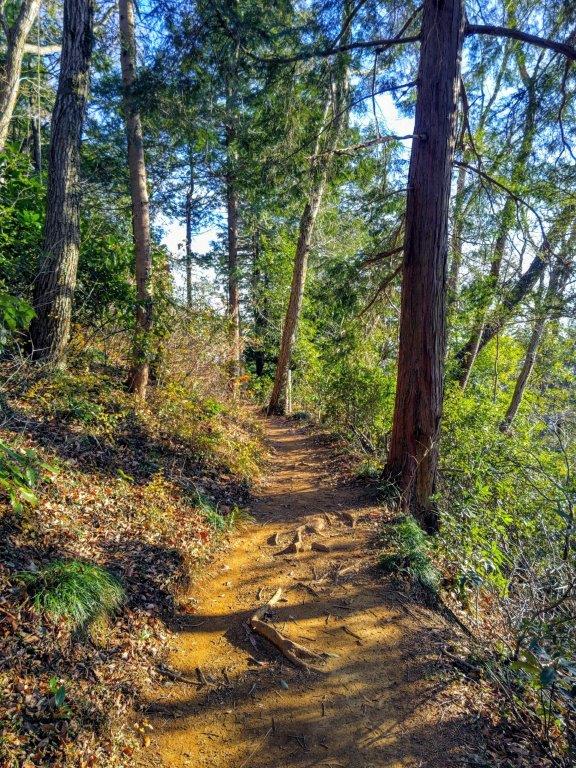
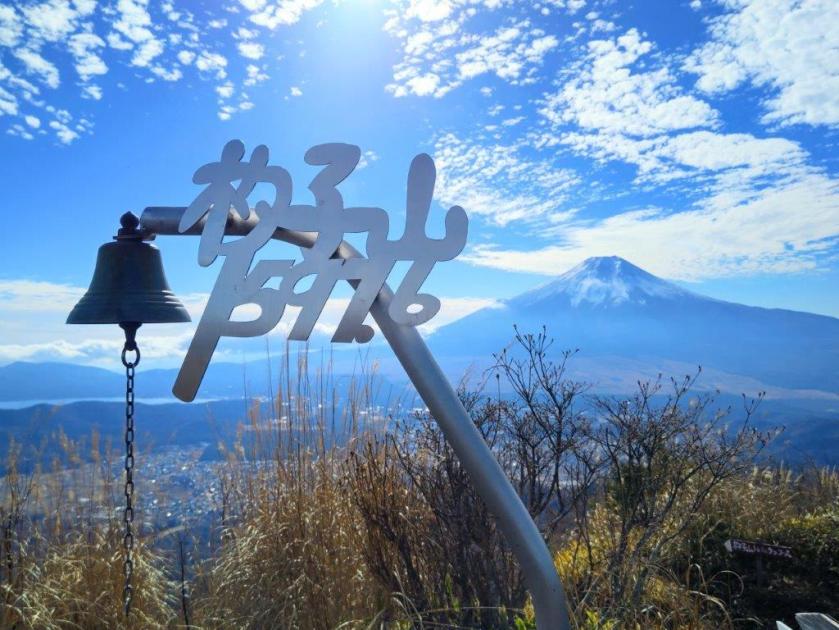
The trail weaved left and right, up and down, along a narrow forested ridge; the treetops swayed in the breeze, occasionally letting through the sunshine. Half an hour later, I reached Mabase Fork and the end of the hiking trail. There, I turned left and walked up a straight road leading to the highest point of the Nihondaira (日本平), also a sightseeing spot with a hotel, souvenirs shops and restaurants. After quickly checking out the eastern observation deck, I made my way to Yume Terrace (夢テラス), one of the most beautifully designed observation towers I’ve ever visited, its wooden deck curving east to west on the north side.

Walking through the Shizuoka Countryside

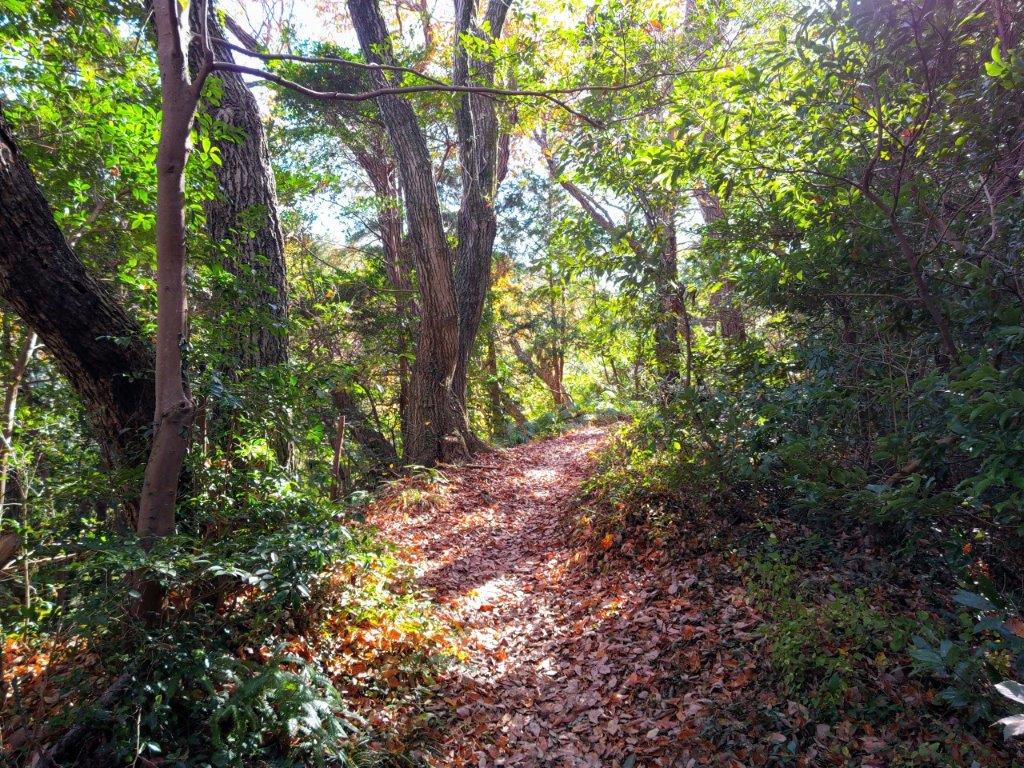
Walking along the Shizuoka Tokai Nature Trail

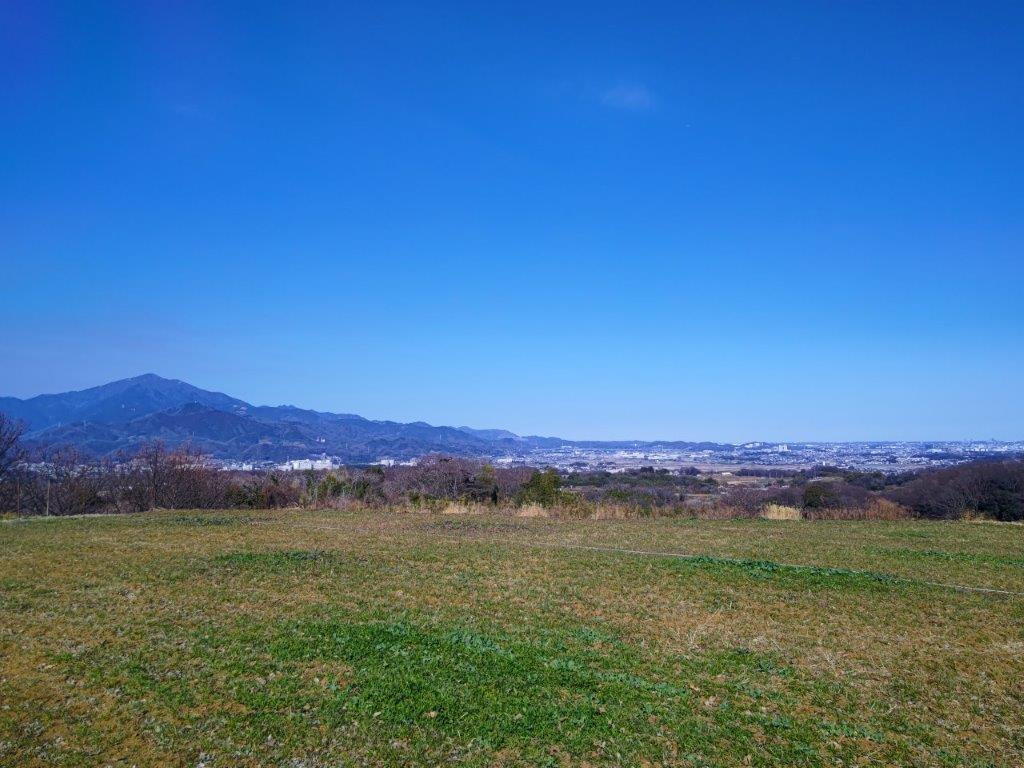
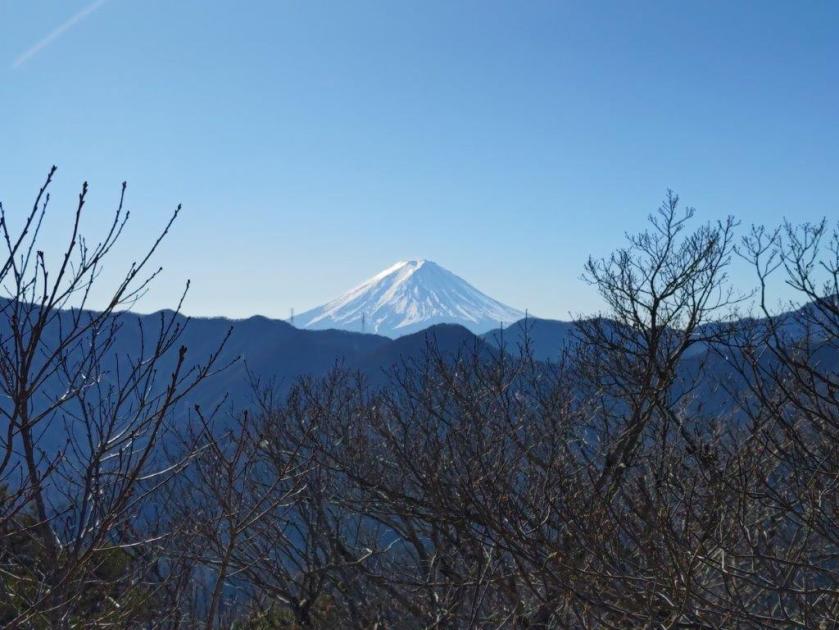
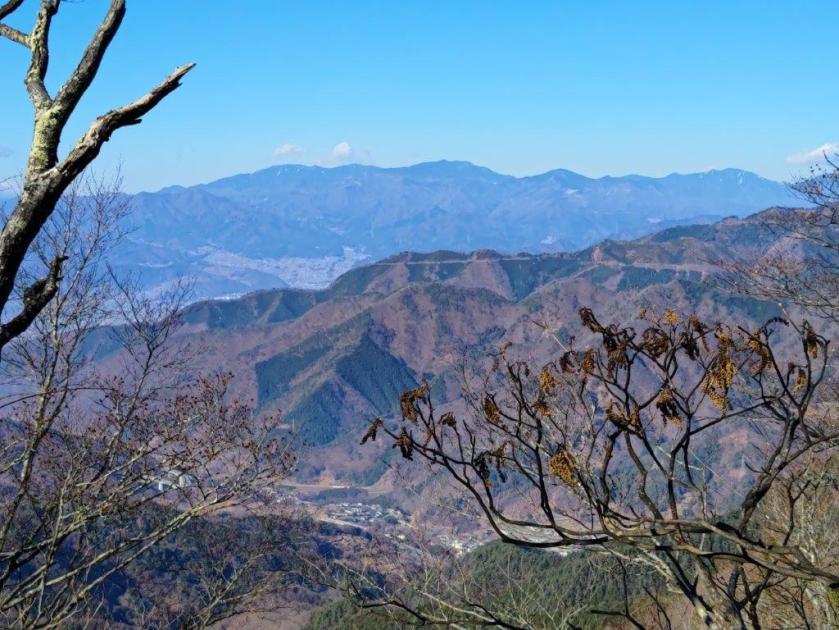
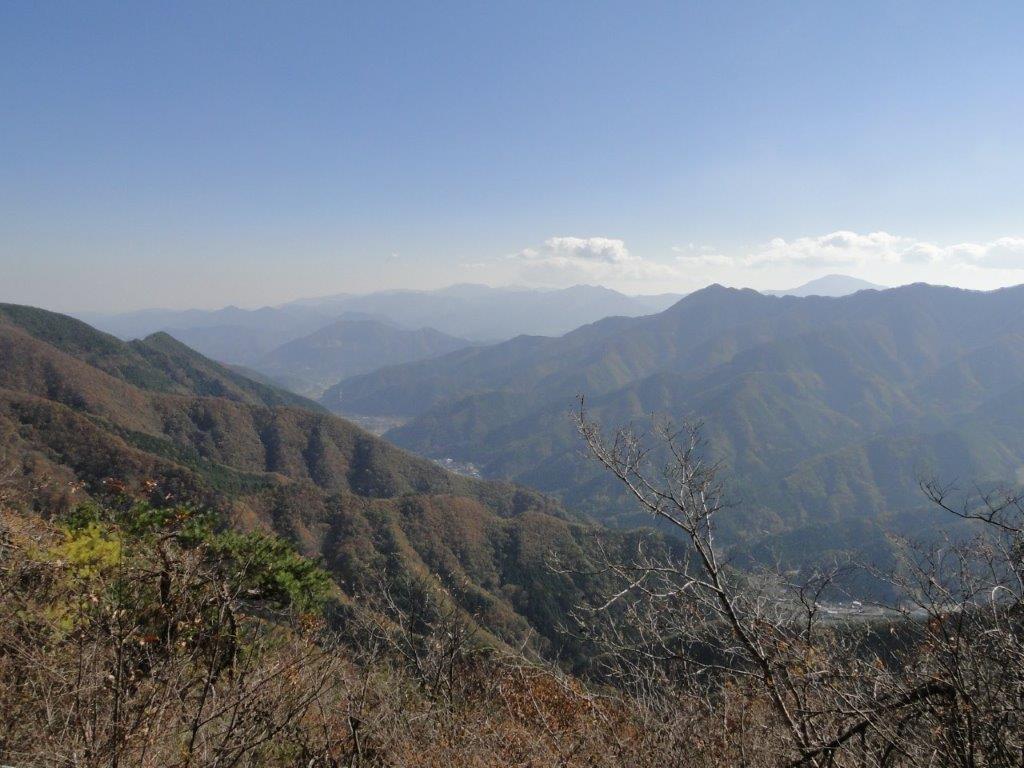
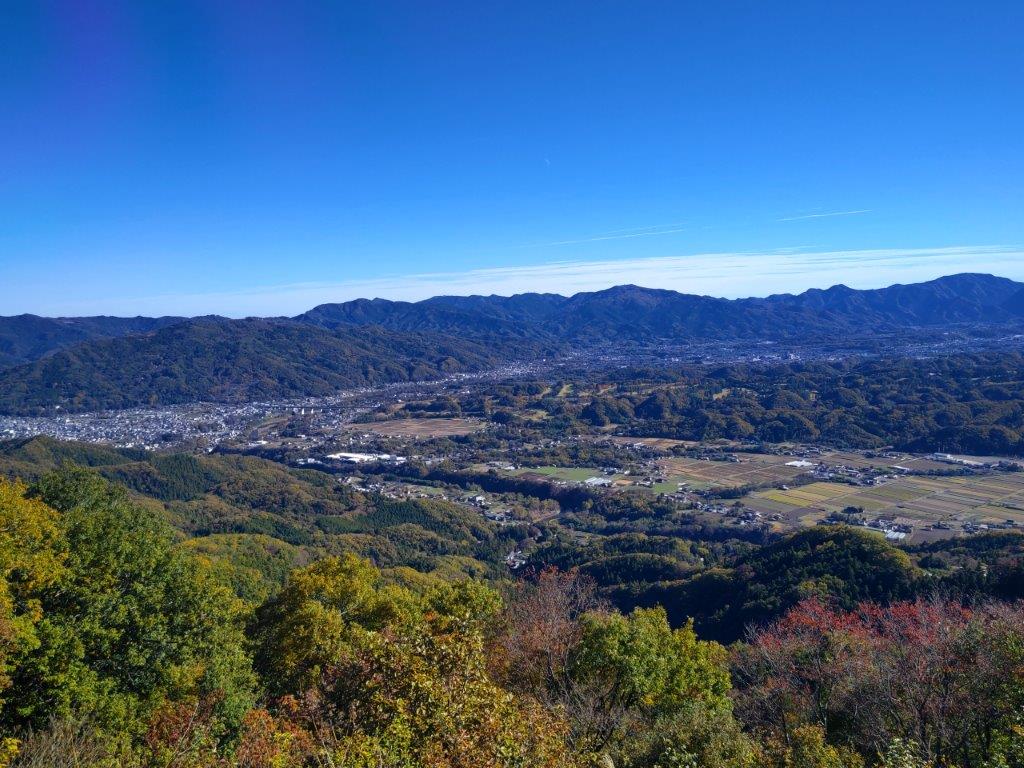
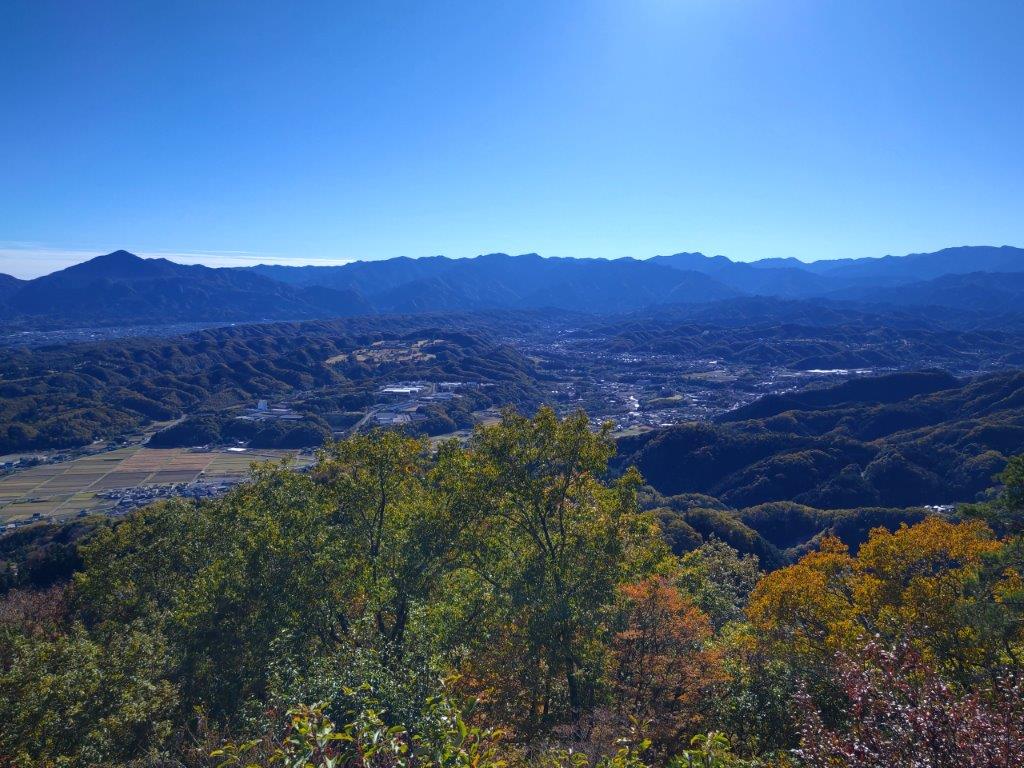
I had a stunning view of snowcapped Mt Fuji, rising above Mt Hamaishi. To its right, past Suruga Bay, I could see Mt Ashitaka, Mt Hakone and the Izu peninsula; to its left, beyond Shizuoka city, I could observe the southern edge of the Minami Alps, Mt Daimugen visible in the distance; on the opposite side was Mt Takakusa and the Pacific Ocean, sparkling in the sun. Since it was 1h30, I sat down on a bench for lunch with a view. The wind was blowing quite a bit, so I soon set off for today’s only peak. I walked down a short section of the Shimizu-Nihondaira road, being careful of the traffic, till I reached a trail on the right. After a short climb, the path at times rather faint, I reached the top of Mt Udo (有度山 うどやま udoyama), just one meter higher than the top of the Nihondaira Plateau.

View of Mt Fuji from Yume Terrace at the top of Nihondaira

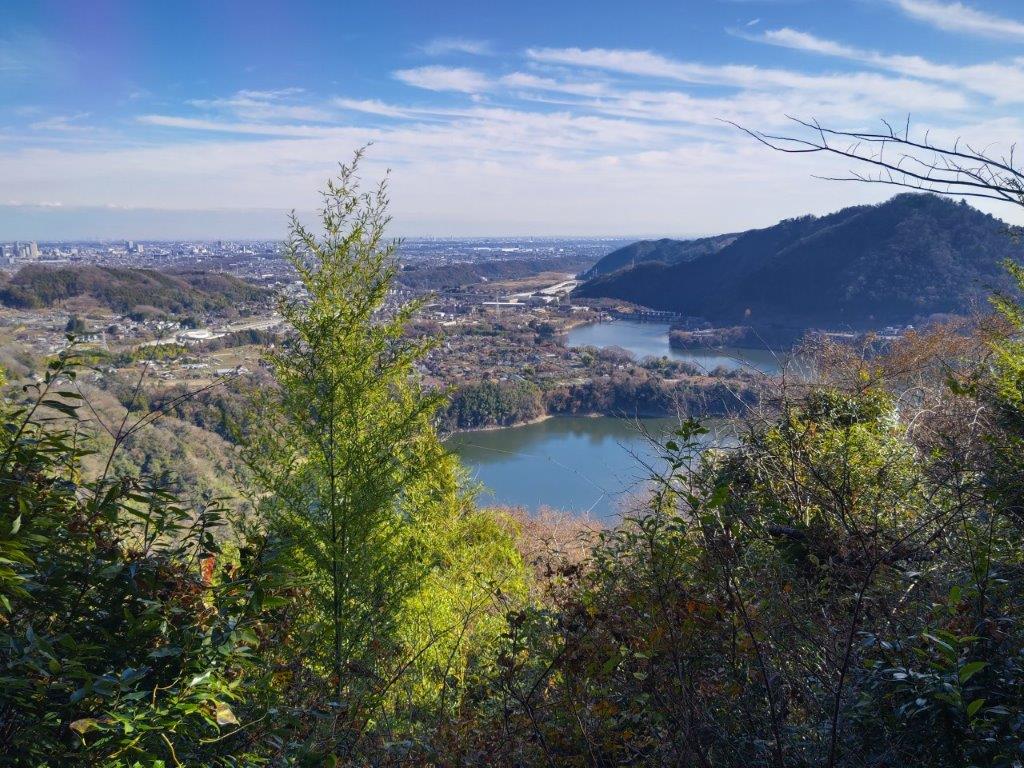
View of the Izu Peninsula from the top of Mt Udo

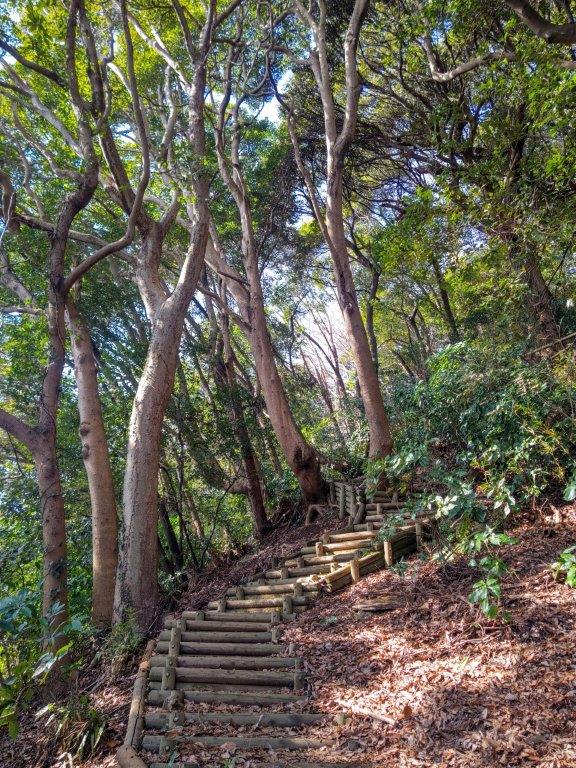
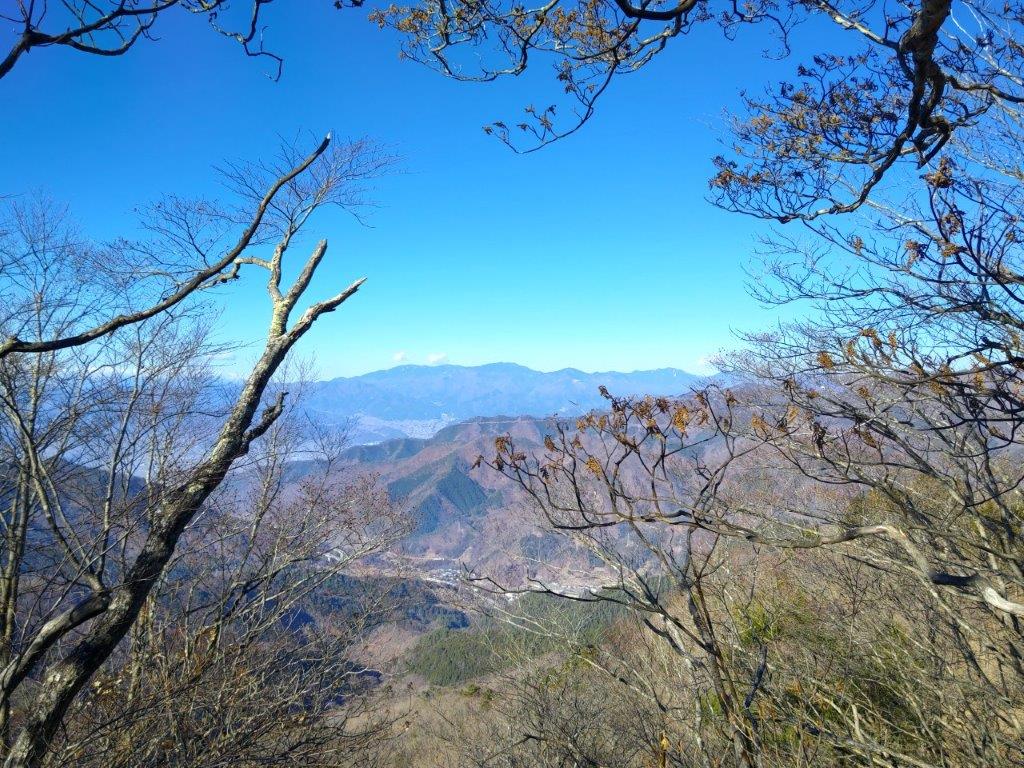
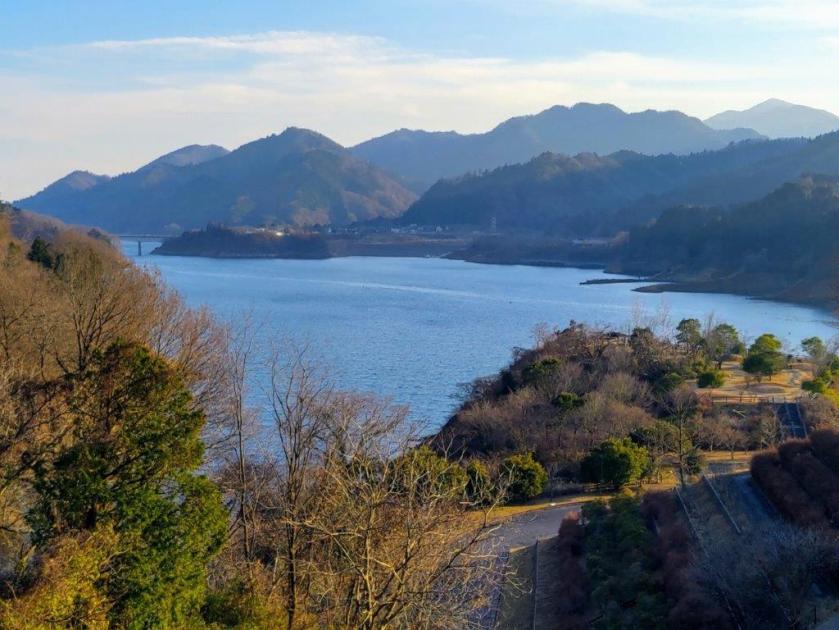
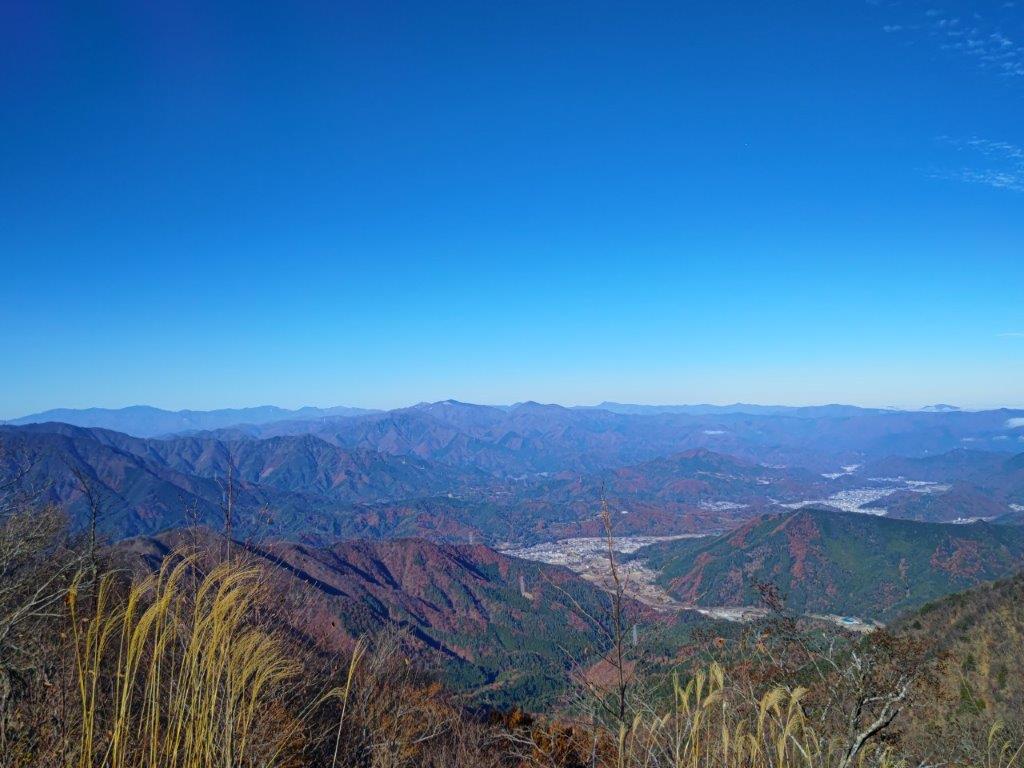
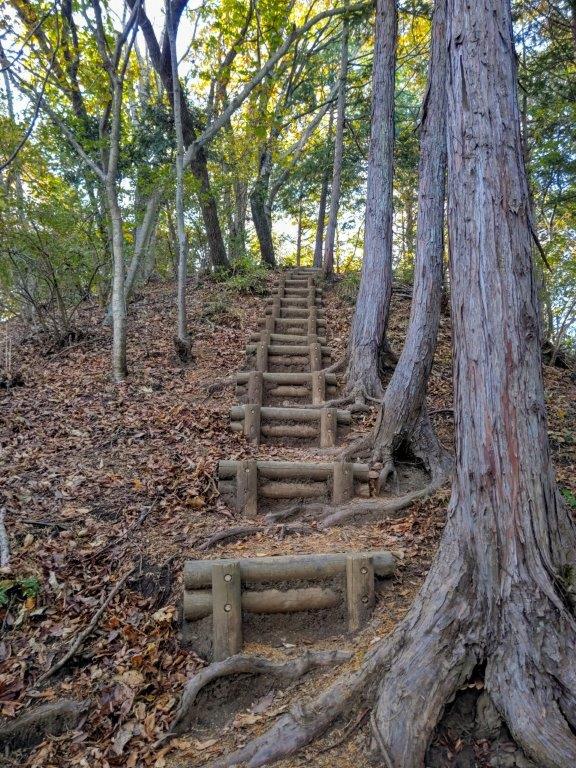
I was stunned by the blue colours of the sea below, visible from a gap in the trees on the southeast side. It was shaded light blue in the nearby shallows and dark blue further out in the bay; the tiny waves were topped with white foam on this windy day. On the other side of the bay was the outline of the western coast of Izu Peninsula, an area of scenic beauty relatively close to Tokyo. After a short break, I retraced my steps to Mabase fork. There, I left the Tokai Nature Trail and continued straight, first down some wooden steps through the cedars, then down stones ones alongside a golf course, reaching Kusanagi fork and a paved road at 3pm. I crossed the road, continuing on the hiking path, and at the top of small rise, turned right, following a trail signposted for the Kusanagi Museum (美術館), not featured on any of the map signboards (the official Kusanagi Route continues straight and merges with a paved road after a short while).

Start of the Nihondaira Alps

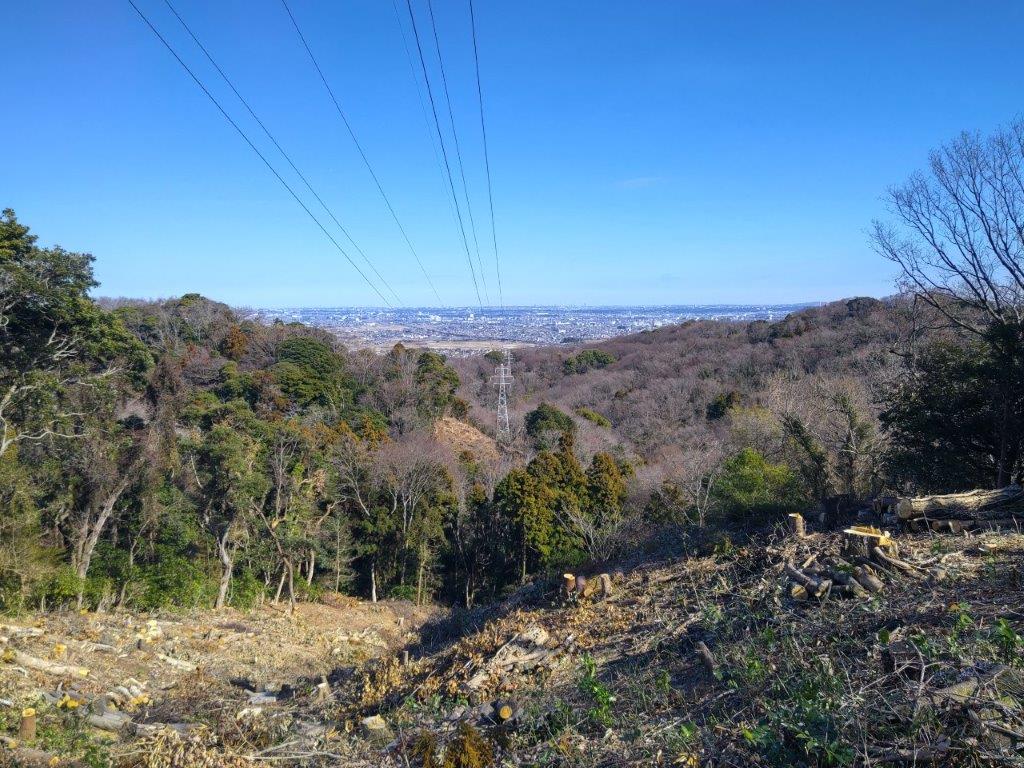
Looking back at the Nihondaira Plateau

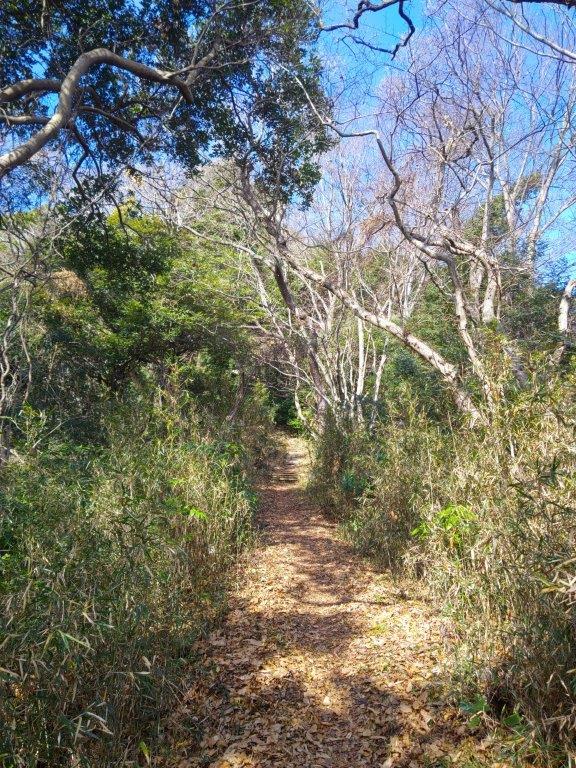
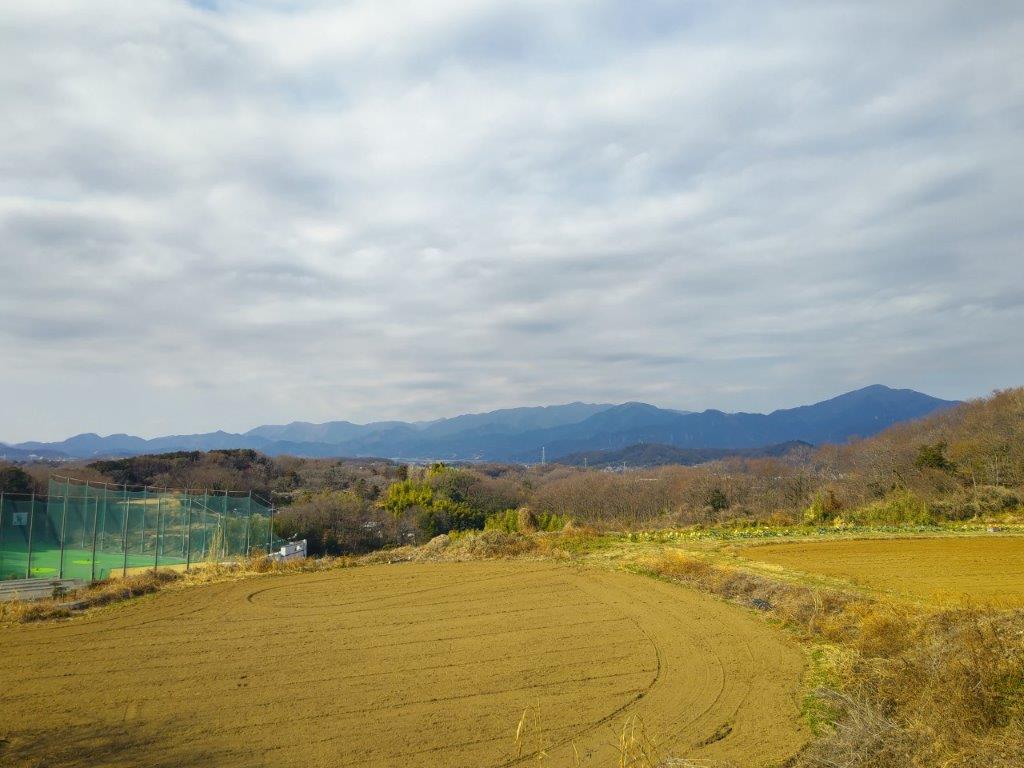
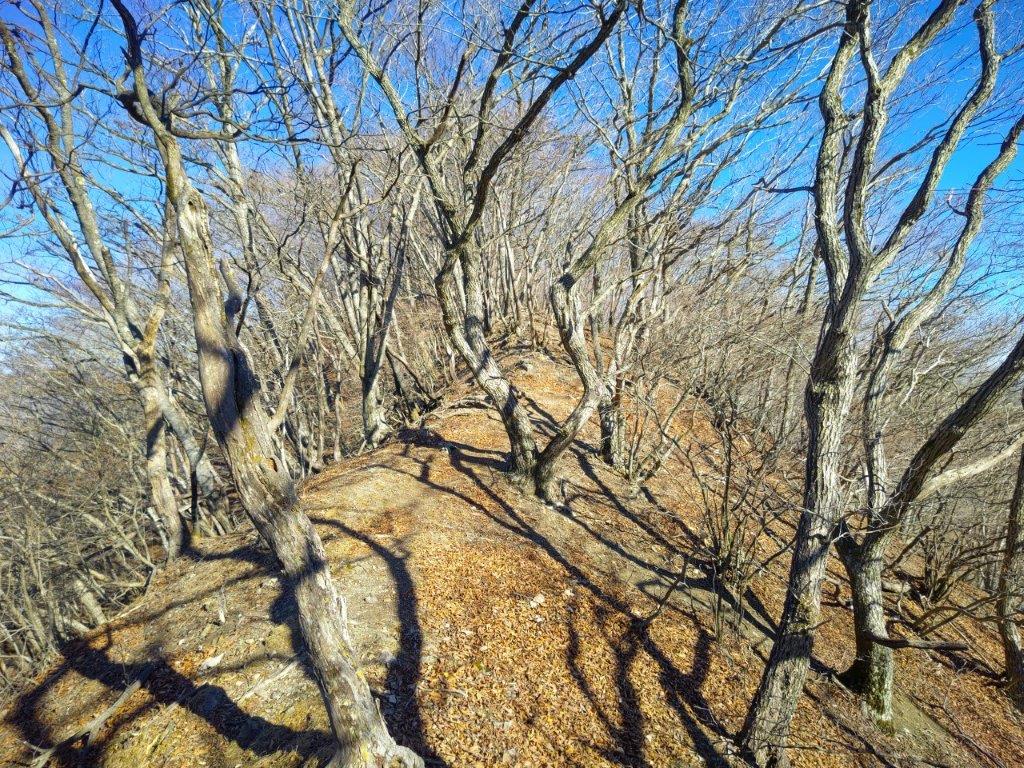
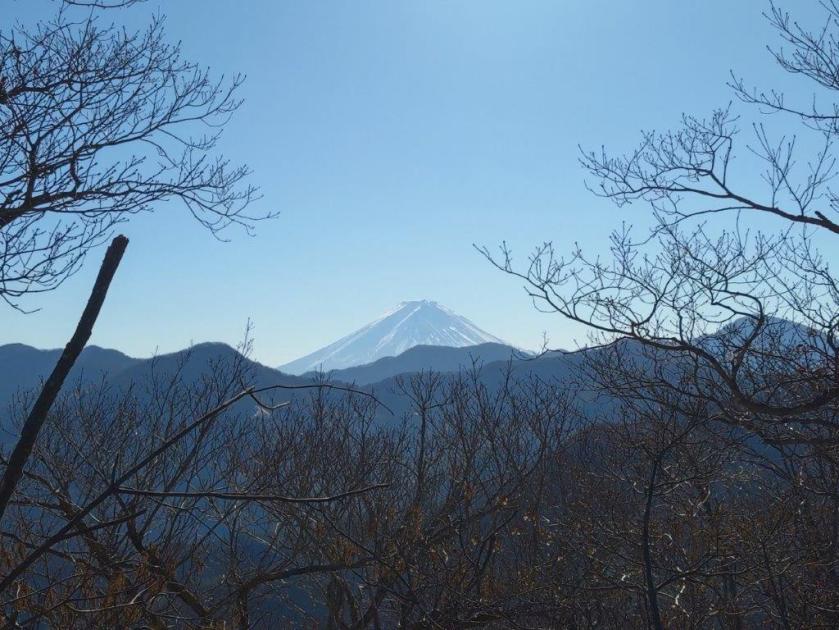
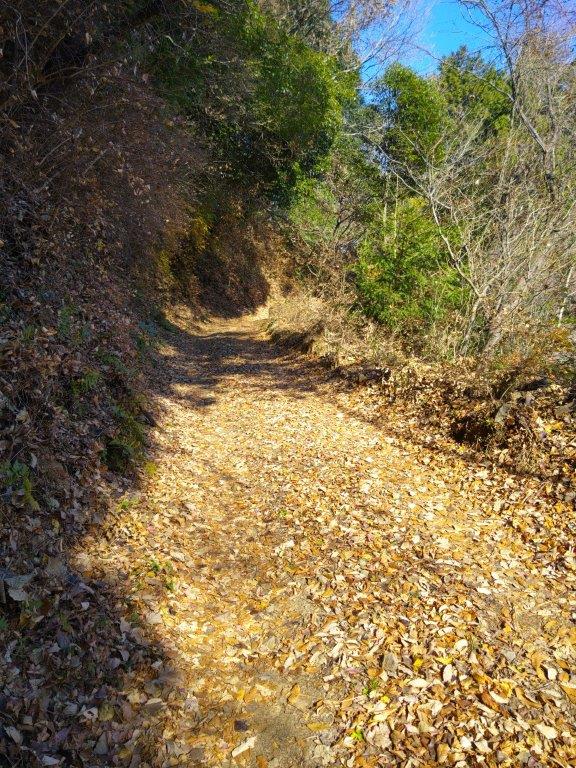
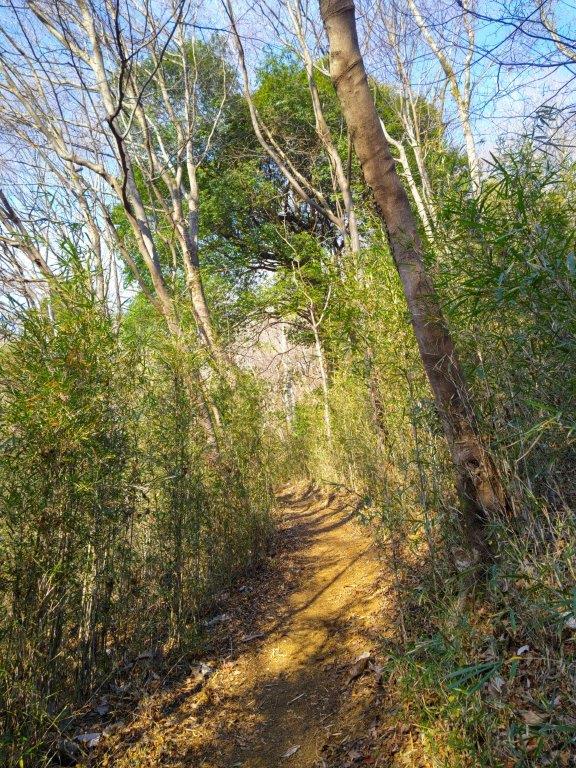
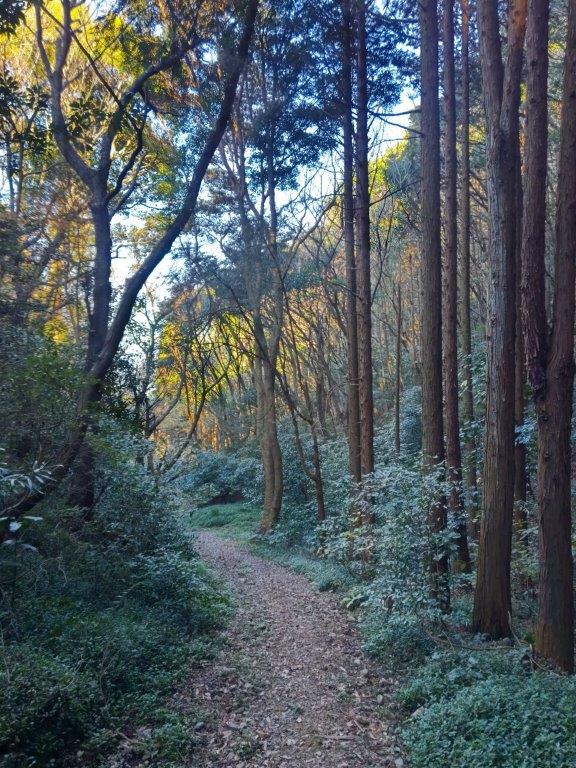
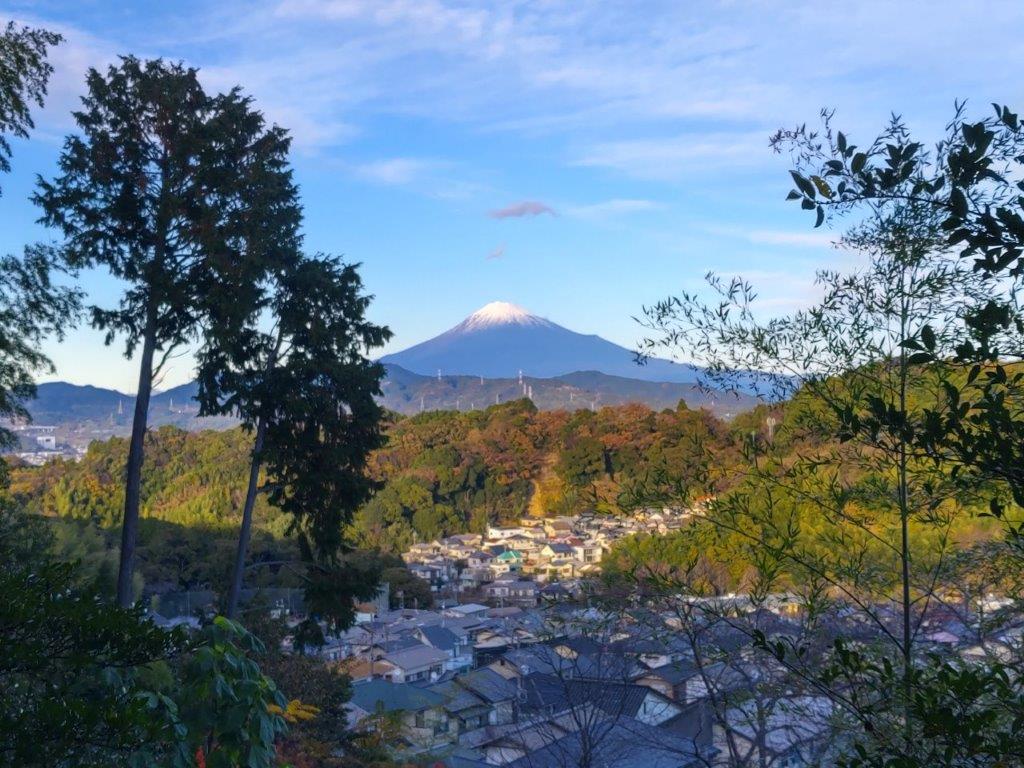
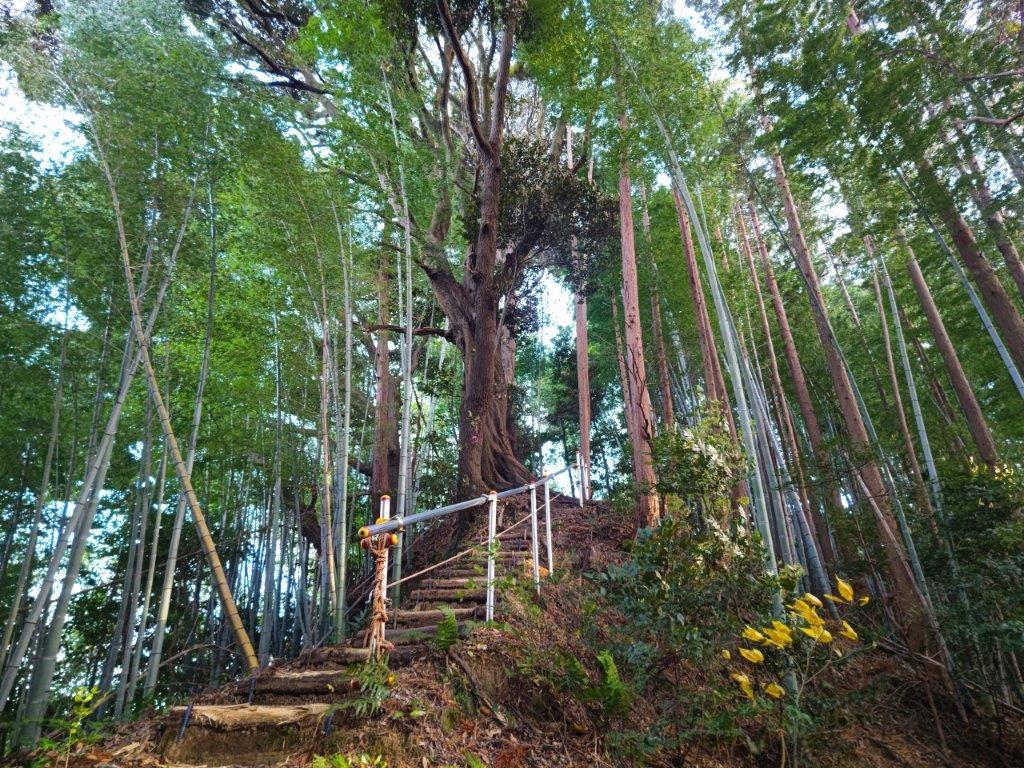
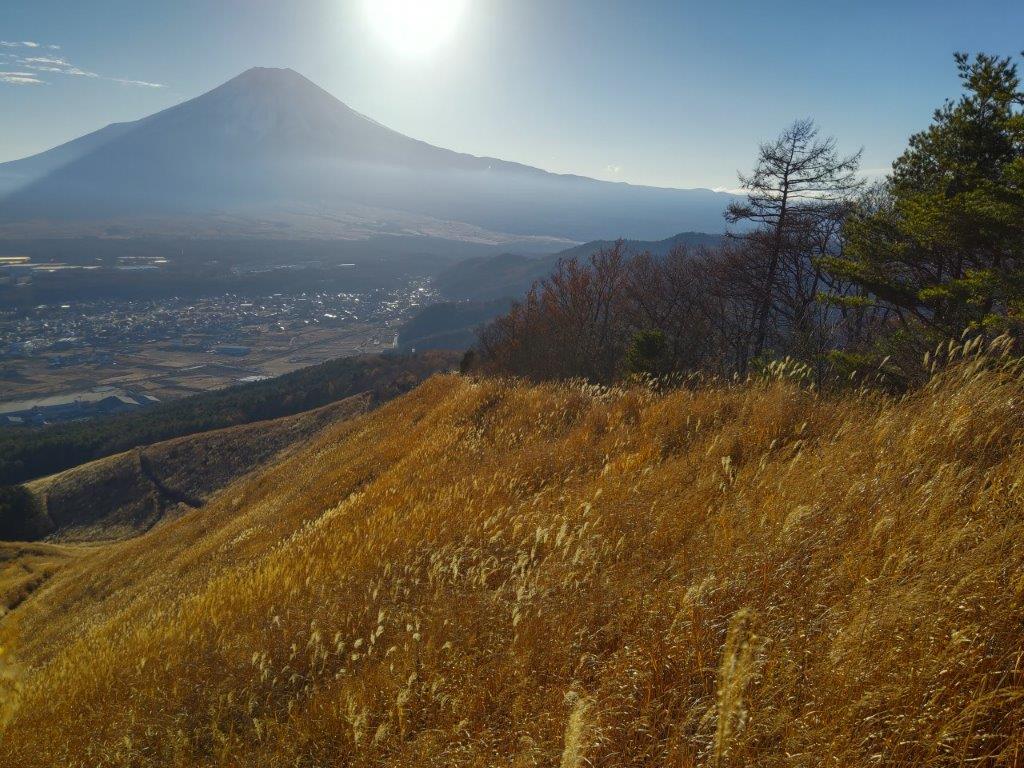
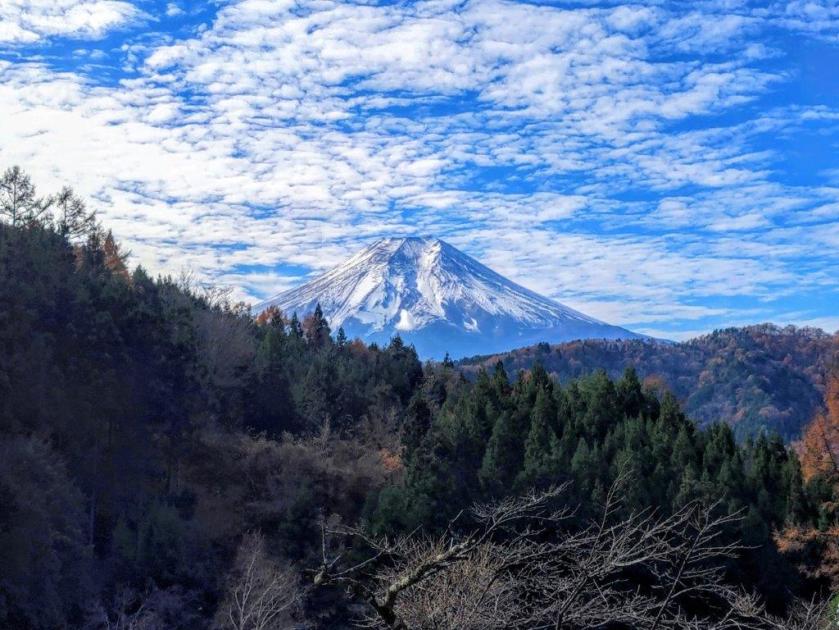
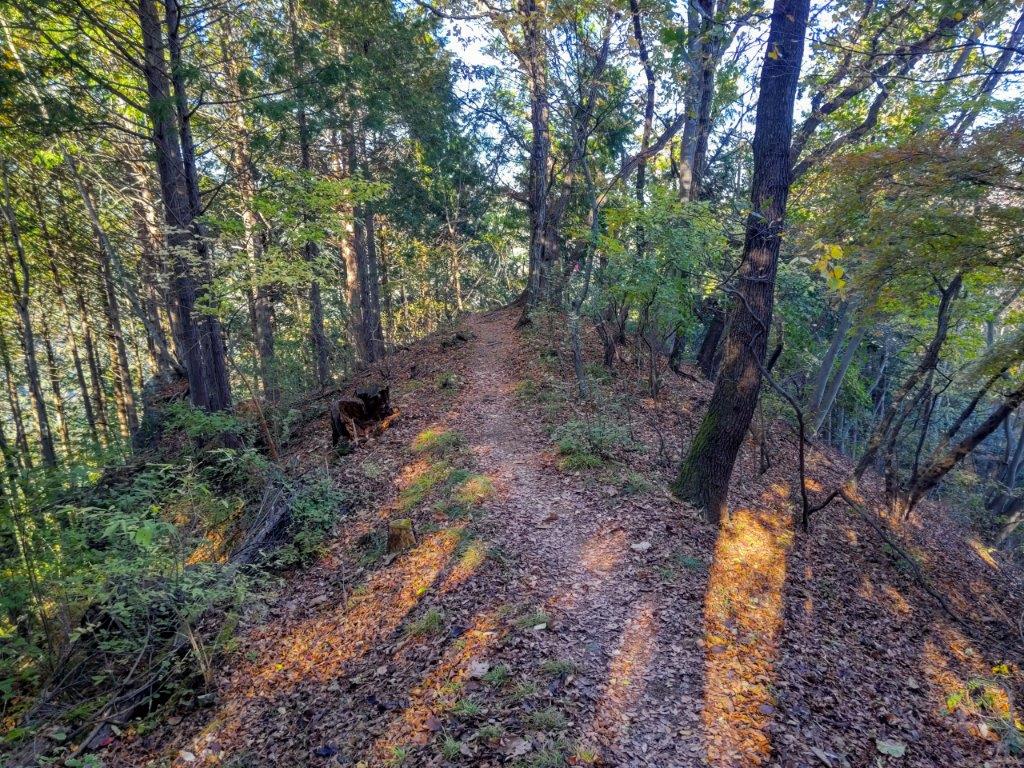
Very soon, I reached a view point of Mt Fuji, its snowy summit poking above a green ridgeline. After a short descent, I found myself walking northwards, along a forested ridge squeezed between two roads. The trail went up and down, a kind of “Nihondaira Alps”, although I couldn’t find any reference to this name. Eventually, I reached the edge of the city, rows of houses crowding in on the east side. I was now walking through a bamboo forest, the densely packed stalks blocking the late afternoon light. I eventually arrived at a fork: left for the museum and right for the University of Shizuoka. I took the right branch, since it was the most direct route to the station, leaving the museum for another day. By 4pm, I was back at the station, and after a refreshing hot bath, I caught a train for Shizuoka station, where I boarded the shinkansen for the one-hour ride back to Tokyo.

Hiking Trail at the Edge of the City

Near the End of the Nihondaira Alps

This hike took about 5 hours, excluding breaks, just the right length for a day hike. The view from the top of Nihondaira was blocked by trees on the southeast side, so it was worth making the roundtrip to Mt Udo to complete the view. The highlight of the hike was the hilly trail between Kusanagi fork and Shizuoka University: it was well-maintained and signposted, with several views of Mt Fuji along the way, even though it doesn’t appear on any maps. I’d like to return one day to explore more trails in the area, and perhaps hike the “Nihondaira Alps” in reverse.

Watch a video of the Nihondaira Hike

Watch the Video of the Hike on Youtube

Watch a Slideshow of more Pictures of the Hike

Mt Otaka (493m), Mt Tenkaku (445m) & Mt Kamado (293m), Hanno City, Saitama Prefecture, Sunday, December 10, 2023 [Hanno Alps]

I wanted to do a hike with little elevation gain, since I had been out sick for the past two weeks. I decided to continue my hike along the Hanno Alps, from where I had left off two years ago, as well as explore more of the newly created Oku-Musashi Long Trail. Looking at my map, I saw I could follow a couple of new trails allowing me to get on and off the “Alps”. I would take a bus from Hanno station to Nakazawa, at the end of the line, then walk to Maezaka Pass. I would end the hike at Musashi-Yokote-station, on the Seibu-Chichibu line. The weather was supposed to be sunny with temperatures reaching 20° Celsius in the afternoon, a record for the season. I had hiked most of this trail nearly ten years ago, and remembered it was mostly in the trees. I expected few views on the way; since the elevation was relatively low, I hoped to still see some Autumn colours. I was looking forward to exploring some new trails, along a familiar route.

Hiking in Oku-Musashi 奥武蔵

Hiking the Hanno Alps 飯能アルプス

Read this Blog Post on Hiking Around Tokyo

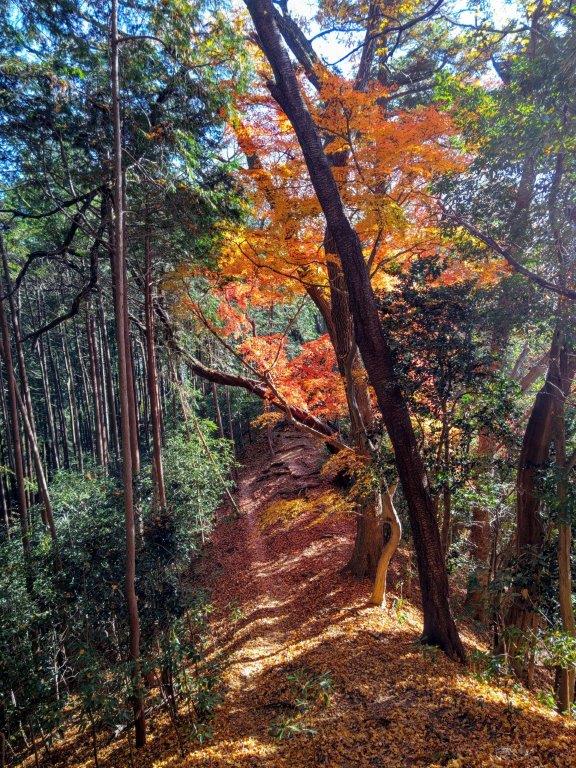
Autumn Leaves Along the Trail

It was a perfect blue sky day as I rode the Laview limited express to Hanno station. There, I skipped a long line of hikers headed for Bonomine, and boarded a mostly empty bus for the short ride to Nakazawa (中沢), at the start of the road leading to Takedera. Morning frost on the road and a biting cold in the shade reminded me that it was nearly the start of Winter. After a short walk up a road, I reached the entrance to the hiking trail at 9h30.

Start of the hike (left) Rocky Section before Mt Otaka (right)

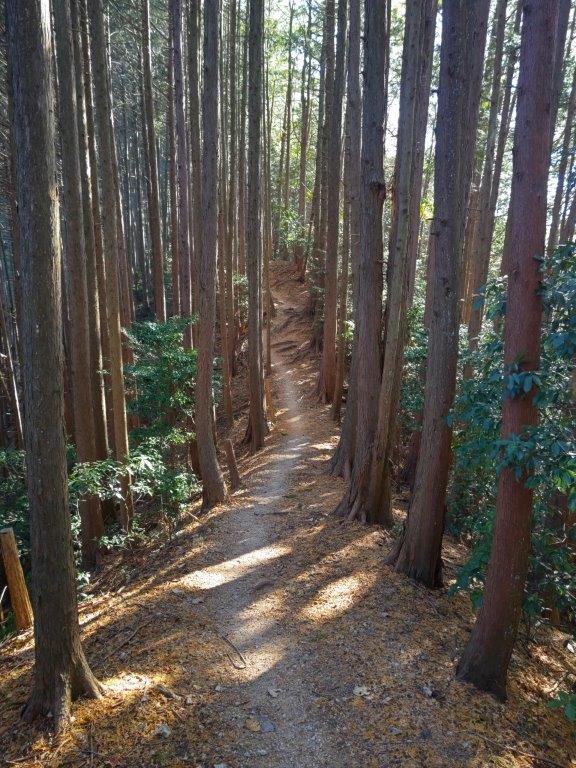
Flat Section past Mt Otaka (left) Maple Tree on the way to Mt Tenkaku (right)

I was happy to be walking again in nature after a two-week break. After a short climb, I reached a level section; I sat down on a log in the sun to enjoy a late breakfast, while listening to the sound of birdsong. The trail then headed down a valley and I soon emerged onto a road, the same one I had followed on my previous visit. At a bend in the road, I rejoined the hiking trail, and at 11am, I arrived at Maezaka Pass (前坂峠). There, I turned right, heading southeast along the Hanno Alps (飯能アルプス) and the Oku-Musashi Long Trail.

Maple Tree Past Oiwa Rock (left) Fantastic Tree along a Narrow Ridge (right)

Trail Before Mt Tenkaku (left) Trail for Mt Kamado (right)

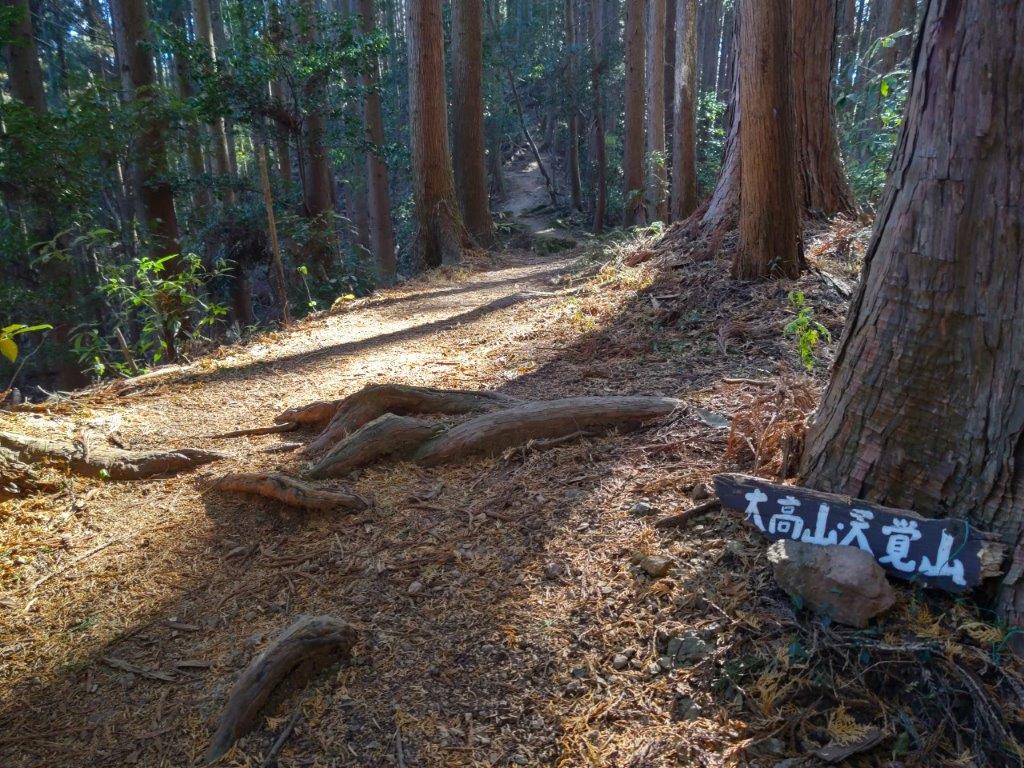
I spotted the first Autumn leaves of the day, halfway up a slope: a mix of orange and yellow, on a background of dark green cedar and bright blue sky. Soon after, I reached the summit of Mt Otaka (大高山 おおたかやま ootakayama). After peering at the view on the west side, I set off again. At the base of a steep slope, I passed under a huge Japanese maple, its leaves falling gently in the breeze. At noon, I arrived at Oiwa Rock, a a big boulder in the middle of the forest. After some ups and downs, and the occasional tree sporting its autumn colours, I reached the top of Mt Tenkaku (天覚山 てんかくざん tenkakuzan).

Joining the Hanno Alps at Maezaka Pass

Westward View from Mt Otaka

I was surprised by the wide view on the south side, proof that a refresher had been necessary. Southeast, I could see the Kanto plain, the central Tokyo skyscrapers barely visible in the midday haze; to the right was the outline of the Tanzawa mountains; southwest, slightly hidden by the trees, were the highest peaks of the Okutama mountains. Since it was 1pm, I found a bench in the sun and sat down for lunch. After spending some time basking in the sun, I set off again a little before 2pm. After some descending through Japanese pampas grass, I reached a paved road which I followed for a short while to Azuma Pass (東峠), where I rejoined the hiking trail.

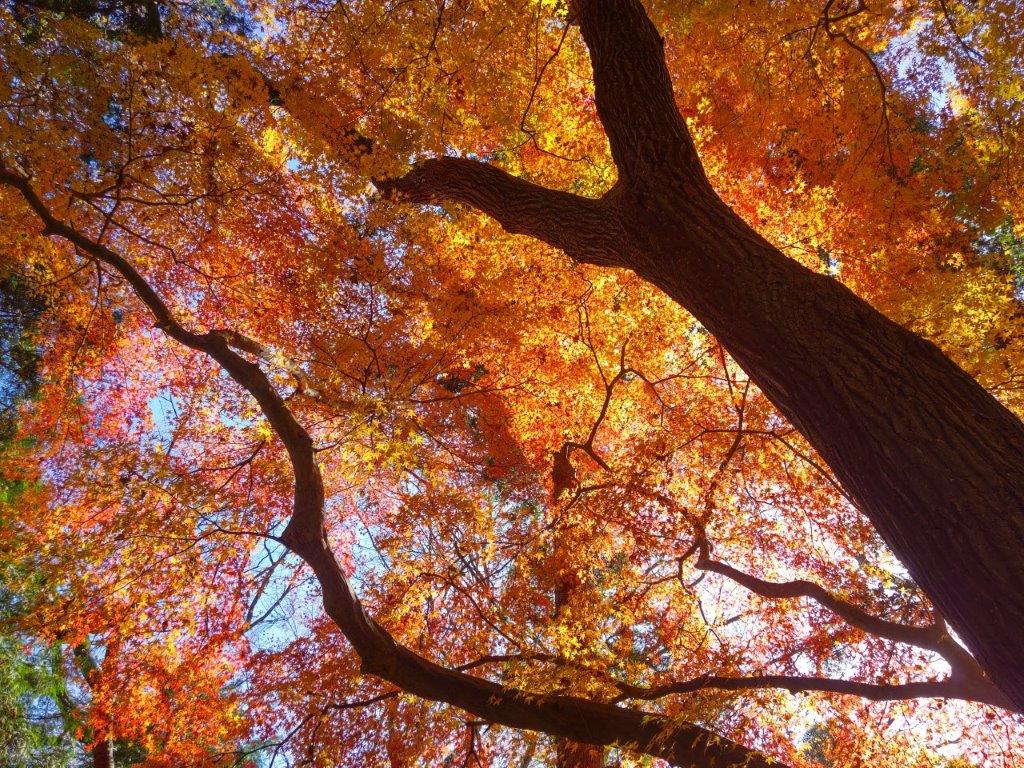
Orange and Red Japanese Maple Overhead

Explosion of Colours Above

The endless ups and downs of the next section made me feel that the “Alps” nickname was well-deserved. Through a break in the trees, I had a good view to the east of Mt Sukari; it was above Fudo-Iwa Rock, which I had to skip as I was running late. At a junction with a bench, I turned left, leaving the last part of the Hanno Alps for another day. At 3pm, I arrived at the last peak of the day, Mt Kamado (釜戸山 かまどやま kamadoyama), with only a narrow view on the south side. I rushed down the mountain side, popping onto a forest road a little before 3h30. After a short walk, I arrived at Musashi-Yokote station where I caught the train for Hanno, 3 stops away. There, I boarded the limited express for the 40-minute ride back to Ikebukuro.

View of the Kanto plain from Mt Tenkaku

View of Mt Sukari from near Fudo-Iwa

The entire hike took me about 6 hours, including a leisurely break on the top of Mt Tenkaku. It was longer than I had planned for, and my knees were aching a little after all the ups and downs (I had neglected to bring my walking stick). Although I did pass several people along the way, there were a lot less hikers than would be expected on an easily accessible trail close to Tokyo; I did however see some families with very young children. I saw no on on the final part along Mt Kamado even though the signage was brand new. I was glad I got to see some beautiful autumn colours on the way, and I hope to one day redo this hike in the Spring.

Watch a Video of the Autumn Colours on the Mt Tenkaku Hike

Watch the Video of the Hike on Youtube

See a Slideshow of more Pictures of the Hike

Mt Shakushi (1597m) & Mt Takazasu (1304m), Fujiyoshida City, Yamanashi Prefecture, Sunday, November 26, 2023 [MAP AVAILABLE]

I had climbed this mountain once before but I wanted to redo it via a different route. This would be my first trip to the Fuji Five Lake Region since 2022. I decided to go up via the Asumi ridge; it was mostly in the trees but had a couple of viewpoints on the Fuji side. Looking at my map, I realised that going down via the Japanese Pampas grass (“susuki“) field, as I had done previously, was the best option, as it offered plenty of views of Mt Fuji.

Get a Map of the Mt Shakushi Hike

This map was developed for Japanwilds with the Hokkaido Cartographer

Find more Japan Hiking Maps on Avenza

I would take the Chuo Limited Express to Fujisan station, although the section past Otsuki would be standing room only. From the station, I would ride a taxi to Fudoyu Inn, next to the trail entrance. For the return from Oshino village, I could take a bus or a taxi back to the station, depending on the timing. The weather was supposed to be sunny with average temperatures for the season. I was looking forward to getting some closeup views of Mt Fuji and walking through the “susuki” field.

Hiking in the Doshi Mountains 道志山地

Hiking in the Fuji Five Lake Region 富士五湖

Heading Up the Z Trail (left) and the Asumi Ridge (right)

Looking Down (left) and Up (right) the Steps to Ozasu Pass

The grey skies hanging over Tokyo turned into blue skies as the limited express entered Yamanashi. At Otsuki station, I gave up my comfortable seat and squeezed into the front car, the train packed with tourists. Fortunately, few people got off at Fujisan station, and after a short taxi ride, I arrived at Fudoyu Inn. After getting ready, I set off at 11am, up a trail through a deforested area.

The top of Mt Fuji is only 20 kilometers away

Hiking through the Japanese Pampas Grass Fields

Turning around, I had a superb view of Mt Fuji, my first since April. The sky was streaked with cirrus clouds but Mt Fuji was clearly visible, its distinctive snowcap shining in the morning light. After a couple of switchbacks, I arrived at the entrance of the Z trail (Zコース), a gentle slope through the forest. At 1130, I reached the Ridge Trail (尾根コース), on Asumi-One (明見尾根). Through the bare trees on the north side, I had a glimpse of next valley. After a few minutes of level walking, I reached a viewpoint.

Mt Fuji viewpoint just above Fudoyu Inn

Deforested Area at the Start of the Hike

This was the best view of Mt Fuji of the day: it was framed by green cedars on both sides, with golden “susuki” below and white clouds above. I was resolved to enjoy the Fuji views early in the day; later on, the sun would move behind, leaving just a dark outline. The path suddenly became quite steep, some parts lined with rope for safety. I climbed as quickly as I could, passing many hikers on their way down. Just before 1230, I reached the second viewpoint of the climb.

Autumn Colours on the Lower Hills

Best Fuji View of the Day

I took a few minutes to enjoy the view of Mt Fuji, beyond the “susuki” swaying in the wind. To the west, I could see Kawaguchiko City, and far behind, Mt Warusawa and Mt Akaishi, two prominent peaks in the South Alps. One last effort brought me to the top of Mt Shakushi (杓子山 しゃくしやま shakushi-yama), a Yamanashi 100-famous mountain. To the left of Mt Fuji was Yamanaka lake and to the right was the entire range of the South Alps, from the Shirane-Sanzan to Mt Hijiri; on the north side were the Oku-Chichibu mountains; on the right side, the Kanto plain was still hidden by the clouds. It was just past 1pm so I sat at at a bench for a lunch with a view.

Mt Fuji and the South Alps from the Asumi Ridge

Looking back at Mt Fuji

I was amazed to see a paraglider fly at high altitude, back and forth past the summit of Mt Fuji, at one point passing above my lunch spot. The jump-off point being much lower down on the mountain, it must have caught the perfect updraft. A little after 1h30, I set off again, heading down the steep south side. I soon re-entered the trees, and less than half an hour later, reached Ozasu Pass and the paragliding launch spot. I continued straight ahead, following an up and down trail; near an electric pylon, I passed a viewpoint of Mt Mitsutoge.

The Oku-Chichibu Mountains from the Top of Mt Shakushi

Kawaguchiko City and the South Alps from the Top of Mt Shakushi

I was surprised by how demanding this section was, with short rocky sections lined with rope for safety, even though I had done it once before some years ago. One hour after leaving the top of Mt Shakushi, I arrived at the summit of Mt Takazasu (高座山 たかざすさん takazasu-san). Mt Fuji was visible once again, its north face now mostly in the shade. After a short break, I continued my descent, and very soon I was walking above a huge field of Japanese pampas grass (“susuki“) covering most of the mountain side.

View of Mt Mitsutoge between Ozasu Pass and Mt Takazasu

View of Mt Fuji from the Top of Mt Takazasu

I enjoyed unobstructed views of Mt Fuji for the next half an hour but since it was past 3pm, the low sun made it difficult to get good photos. On the other hand, the “susuki” were at their best, shining golden in the mid-afternoon light. At 3h30, I reached a forest road leading to a paved road at Toriichi Pass. There, I turned left, and after walking downhill for a short while, arrived at Oshino Village. Since it was still early, I decided to walk to nearby Oshino Hakkai. Once there, I was lucky to be able to flag down a passing taxi, allowing me to quickly get back to Fujisan station. After riding the Fujikyuko line to Otsuki, I boarding the limited express for the one-hour ride back to Shinjuku.

Susuki field below the Mt Takazasu

Heading towards Toriichi Pass

The entire hike took about 5 hours, roughly the same time as my previous hike along a slightly longer route. I was glad that for the extra expense of taking a taxi to the trailhead, I got several good viewpoints of Mt Fuji along the way. Although I saw a number of people while going up the Asumi ridge, I saw no one during the entire descent, a shame considering the amazing Japanese pampas grass field on the way. Late autumn is definitely the best time to visit this mountain, although I’d love to attempt this hike earlier in the day to get clearer views of Mt Fuji.

Watch a Video of the Mt Shakushi Hike

Watch a 3mn Video of the Hike on Youtube

See a Slideshow of more Pictures of the Hike

Inazawa Hiking Trail (highest point 430m), Honjo City, Saitama Prefecture, Thursday, November 23, 2023

I wanted to do a hike close to Tokyo allowing me to enjoy the autumn leaves. Looking at my hiking map, I found a short loop hike near Nagatoro town in the Chichibu mountains. It was under four hours, making it perfect for an Autumn ramble. Although the entire trail was under 500 meters, it included four different viewpoints. Since there was no public transport to the trail entrance, I would use a share car from nearby Honjo station. Before the hike, I could get lunch at a local soba restaurant. The weather was supposed to be good: some clouds in the morning but sunny later on; the temperatures would reach 20°C in the afternoon, making me wonder whether I’d get to see any Autumn colours. In any case, I was looking forwards to seeing new views in an explored corner of Chichibu.

Get a Map of the Inazawa Hiking Trail

This map was developed for Japanwilds with the Hokkaido Cartographer

Find Japan Hiking Maps on Japanwilds

Autumn Leaves (left) and Bamboo (right) at the Start of the Hike

Walking through the Bamboo Tunnel

It was a fine autumn day as a I rode the Shonan-Shinjuku line to Honjo station. I drove for about half an hour, reaching Nishoan (二松菴) a little before noon. After a short wait, I enjoyed some delicious handmade soba with tempura. From the restaurant, it was a short drive to the small parking lot near the start of the Inazawa Hiking Trail (稲沢ハイキングコース). After getting ready, I set off just before 1h30, following a road through a small village.

Walking under the Autumn Leaves

In the Shade of the Cedars (left) Late Afternoon Light (right)

I found myself walking under coloured leaves, as soon as the last house was behind me. Shortly after, bamboo surrounded me on both sides, the tall stalks creating the effect on a tunnel. The path suddenly went straight up the mountain side, demanding a burst of effort to reach the ridgeline. On the right was an open space, turned into terraced fields; it was also the first viewpoint of the hike. On the east side, I could see the Kanto plain, its finer details lost in the haze. After some more climbing through mixed forest, I reached bench in the middle of the trees. Following the ridge a little further, I arrived at the day’s second viewpoint.

Start of the Inazawa Hiking Trail

Kanto Plain from the 1st Viewpoint

Looking north, I could see the peaks of the Mt Haruna volcano. After a short break, I set off again, passing a small shrine and its wooden Shinto gate (“torii“). The trail went down and up through the oaks, the overhead leaves golden in the afternoon sun. After a steep climb, I reached the third viewpoint, and second bench, of today’s hike just before 3pm. Looking north again, I could see both Mt Akagi and Mt Haruna. On the south side were the Nagatoro North Alps, with Mt Buko in the background. After another short break, I continued on my way.

Mt Haruna from the 2nd Viewpoint

Mt Haruna (left) and Mt Akagi (right) from the 3rd Viewpoint

The trail continued up and down through lovely mixed forest. Half an hour later, I reached the fourth and final viewpoint. It was again on the east side, towards the Kanto plain, but this time I could observe most of the ridgeline I had just followed; in the very far distance, I could make out Mt Nantai and the snowy peak of Mt Nikko-Shirane. This spot also had a bench so I sat down to enjoy the last view of the day, the hills rust-coloured in the late afternoon light. I soon started to descend, anxious to get off the mountain before sunset.

The Nagatoro North Alps from the 3rd Viewpoint

Looking back at the Inazawa Hiking Trail

I was pleasantly surprised to get one last view between the trees of the twin peaks of Mt Mikabo, on the west side. I was now heading straight down the mountain among the cedars; the sun had disappeared behind the ridgeline and the surrounding forest had turned gloomy. After a short rocky section and a series of switchbacks, I emerged onto a forest road at the base of the mountain. After crossing three log bridges, I reached some houses on a road, where I turned left. From there, it was a short walk back to the parking lot which I reached just before 4h30, just as it was getting dark.

Kanto Plain from the 4th Viewpoint

On the West Side, the mountains of Gunma

I was delighted to have discovered this hike, created by the Honjo Mountain Association, apparently quite recently, judging from the fresh paint on the signs. The entire loop is relatively short, about three hours, and the short steep up and down sections make it fun and interesting. The views are the best part, especially since they are in all four directions; I could get a really good sense of the location of this low range of hills. It seems this hike is also popular for its cherry blossoms in the spring, so I hope to return to do it in the future in a different season.

See a video of the Inazawa Hiking Trail

Watch the video on Youtube

See a Slideshow of more Pictures of the Hike

Mt Happu (626m) & the Minano Alps, Minano Town, Saitama Prefecture, Sunday, November 19, 2023 [Map Available]

Read this Blog Post on Hiking Around Tokyo

I had hiked this mountain in November 2015, one of the hikes from my mountains of Saitama guidebook. Since then, I’d found out it was part of the “Minano Alps”. At the time, I had only hiked two thirds of it. Looking at my map, I saw I could redo it via a different set of trails; only the central part would overlap. I would start at Temple #34 on the Kannon Temple Circuit and follow the Kanto Fureai no Michi. Past the summit, I would leave the Fureai no Michi, and descend a ridgeline extending southwest, ending a short distance from Minano station.

Get a map of the Mt Happu hike

This map was developed for Japanwilds with the Hokkaido Cartographer

Find Japan Hiking Maps on Japanwilds

Path to Kegon Falls (left) / Steps for Suisen-ji Temple (right)

Since it was a relatively short hike, I could combine it with a visit to a waterfall, a short distance from the temple. To get there, I would take the Laview Limited Express to Yokoze station, where I’d change to the local Chichibu line. At Minano station, I’d catch a bus and get off at near the falls. At the end of the hike, I could walk back to Minano station. If time allowed, I’d drop by a local onsen before heading back. The weather was supposed to be sunny, with temperatures slightly above average for the season. On my last visit, I didn’t see many autumn leaves, so I hoped that this time around, I’d get to see plenty.

Hiking on the Kanto Fureai no Michi 関東ふれあいの道

Hiking in Chichibu 秩父

Following the Fureai no Michi up to the Ridgeline

Series of Steps (left) and Tree-Framed View (right) on the Descent

It was a blue-sky day as I stepped off the train at Minano station, a little past 10am. Although the micro-bus was full, everyone had a seat. After a 30-minute ride, I followed a paved road to the nearby entrance of the short path leading to Chichibu Kegon no Taki (秩父華厳の滝). At 10 meters high, it wasn’t the most spectacular waterfall I’d seen recently, but the Autumn foliage made it worthwhile. I made a short loop to see some more autumn colours and then walked down the road for 15 minutes to Suisen-ji Temple (水潜寺). I was the only visitor enjoying the serene atmosphere. It was nearly noon and high time for me to start my hike.

Mt Mino (front) Higashi-Chichibu (back)

In the Center, Mt Maruyama

I walked up the mountain side under the cool shade of the cedars. I was following the Kanto Fureai no Michi (関東ふれあいの道), and as usual, the trail was well-maintained and well-signposted. The trail became a series of switchbacks to tackle the steep section below the ridgetop. At Fudatate Pass (札立峠), I turned left, continuing along the Fureai no Michi. To the right is the “Nyokin” ridge route (如金峰コース) which I had taken on my last visit. After passing a beautiful Japanese maple (“momiji), I had to climb a little more to reach the top of Mt Happu (破風山 はっぷさん happusan), which could be translated as “Ripping Wind”.

Mt Buko (left) The Oku-Chichibu Mountains (right)

Mt Jomine from the Summit of Mt Happu

I was amazed to have the summit all to myself, completely free of trees on the south side. From east to west, I could see Mt Mino, Mt Dodaira, Mt Maruyama, Mt Buko and Mt Ryokami. However, just moments later a large group arrived. I retreated to the north side, from where I could see the top of Mt Jomine above the trees. It was 1pm so I sat down for lunch. I was surprised how warm it felt in the sun, even though it was the middle of November. Half an hour later, I set off again. The trail started to descend quickly, and a little after 2pm, I reached a fork. I went right, following the “Maehara Ridge” Route (前原尾根コース), leaving the Fureai no Michi as it descended into the valley.

Looking North from the Top of Mt Happu

Walking along the Fureai no Michi

I followed the trail as it went up and down, seemingly without end. I felt like I was truly hiking the “Minano Alps” (皆野アルプス), even though I was lower than the main ridge. At the top of a big rock, called Nantai-Ogami (男体拝), I had a view of Mt Hodo; in the distance, I could see snow-capped Mt Nantai. Past a short rock section, equipped with rope for safety, was a steep slope leading me lower and lower. Half an hour later, I reached a couple of rocky outcrops with good views north and south. Just before 3pm, I passed the minor summit of Mt Maehara (前原山 347m), and after one more steep slope, I emerged at the base of the mountain at Ofuchi (大淵登山口). It was still early so I walked to Bon no Yu, and after a refreshing bath, took a taxi to Minano station. By 5pm, I was at Seibu-Chichibu Station where I boarded the Laview for the 80 minute ride to Ikebukuro.

Mt Hodo from Nantai-Ogami

View from a Rocky Outcrop on the Maehara Ridge Route

At just over 3 hours this is a relatively short hike so I was glad I was able to stretch the time a little with a visit to a waterfall, a temple and an onsen. I was also glad I’d decided to revisit this mountain. At first glance, it didn’t seem like I could get an interesting hike out of it, but in the end, it was extremely satisfying. The best part was that, although I passed a few people on the higher sections, I saw almost no one on the way down. So it turned out to be a peaceful ramble relatively close to Tokyo, something that can be hard to find.

See a Video of the Mt Happu Hike

Watch the Video of the Hike on Youtube
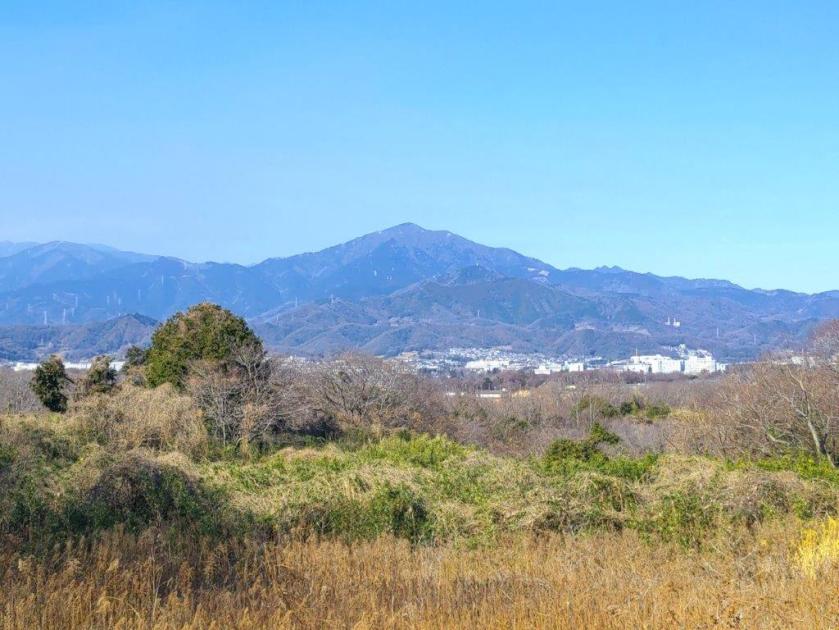
See a Slideshow of some more Pictures of the Hike

Mt Tsutsuji (879m) & Mt Maruyama (960m), Hanno & Chichibu Cities, Saitama Prefecture, Sunday, November 4th, 2023

I wanted to go for a hike closer to home, in Oku-Musashi, an area I’ve been to many times before. I found a couple of trails I had yet to explore, and finishing in Chichibu, where I could get a hot bath before returning via the limited express. In the morning, I would take the train to Shomaru station and follow a section of the “Oku-Musashi Long Distance Trail” up to Kabasaka Pass; from there, I would make my way along the Kanto Fureai-no-Michi to the observation tower on top of Mt Maruyama. After enjoying the view, I would continue north, down into the Chichibu Basin, ending at Temple 4 on the Kannon Temple Circuit, a short bus ride from Seibu-Chichibu Station. I hoped the area would be spider-free and full of autumn colours, despite the continuing warm weather. The forecast called for clear skies in the morning, but cloudy from the afternoon. I was looking forward to a relaxing ramble along a route of my own creation.

Read this Blog Post on Hiking Around Tokyo

Hiking in Oku-Musashi 奥武蔵

Hiking on the Kanto Fureai-no-Michi 関東ふれあいの道

Going up the Oku-Musashi Trail to Kabasaka Pass

Walking through the Forest on Mt Maruyama

It was a blue sky day as I rode the Laview Limited Express to Hanno station, where I transferred to the local Seibu-Chichibu line, arriving at Shomaru station around 9:30. It felt quite warm as a I got ready for my hike, although cirrus clouds has appeared overhead. After walking along a busy road for a short while, I reached the start of the trail, a little after 10am.

Start of the Trail near Shomaru Station

First View of the Day

I followed the trail up a narrow valley under the cedars, blissfully quiet after the noisy road. A couple of steep climbs took me past the minor summits of Mt Kotsutsuji (小都津路山 770m) and Mt Otsutsuji (大都津路山 831m). I saw no one on this section, possibly because the trail is marked as difficult to follow on maps, although it was well-signposted the whole way. After a short, level section through the trees, I reached the top of Mt Tsutsuji (ツツジ山), crowned with yellow pampas grass.

Pampas Grass on the Summit of Mt Tsutsuji

View East from the Paragliding Jump-off Spot

I was stunned by the sight of a bright red Japanese maple, or “momiji” right next to the summit marker, reminding me that it was indeed autumn, despite the short-sleeve temperatures. Since it was noon, I sat down for an early lunch, facing the view on the south side through a break in the trees. I soon set off again and reached Kabasaka Pass (刈場坂峠) just before 12h30, from where I continued to Ono Pass (大野峠). I had hiked this section before, part of the Kanto Fureai no Michi. After climbing a series of steps, I reached am open space, a jump-off spot for paragliders.

Easy Hiking near Mt Maruyama

View of Mt Buko from the Maruyama Observation Tower

On the east side, I had a view down the valley towards Tokigawa Town, although the visibility was somewhat reduced by high-altitude clouds spread across the sky. I continued along an easy to walk trail through mixed forest, here and there autumn colours already visible. After a short climb, I reached the observation tower at the top of Mt Maruyama (丸山 まるやま maruyama) just before 1h30. I was my third time to visit what is one of the best viewpoints of the Chichibu area.

Hazy View of the Chichibu Basin

The Low Mountains of Oku-Musashi from Maruyama

Today’s view was slightly hazy, giving a different impression from my previous visits; on the other hand, I could clearly see I still had some way to go, so I soon moved on. I headed down some steps on the north side, now inside the Saitama Prefectural Forest. At 2pm, I passed the Forest Study Pavilion (森林学習展示館), with a view of Mt Dodaira to the East, and started on the long, gradual descent into the Chichibu Basin ending at Kinsho-ji Temple. The sun was shining again, the clouds kept in check by the Chichibu micro-climate.

Autumn Leaves on the Descent to Kinsho-ji Temple

View from Kinsho-ji: Mt Happu (left), Mt Hodo (center) & Minoyama (right)

I was happy to be finally walking surrounded by the autumn leaves, the yellows dazzling in the afternoon light. One hour later, I had descended below the reach of the sun rays and was now walking on a switchback trail under the cedars; on each side of the trail, I could see empty spider webs. A little after 3h30, I emerged at Kinsho-ji Temple. I stayed a short while to gaze at its many small stone Buddha statues and huge, red maple tree, before running off to catch the 4pm bus for Seibu-Chichibu station.

Red Momiji and Buddha Statues at Kinsho-ji

Giant Straw Sandals at the Entrance Gate of Kinsho-ji

The entire hike took a little under six hours, a little longer than I would have liked, but I was thankful for the hot bath at the end. The weather was also a little warmer than I would have preferred, but as least I didn’t need to put on and take off layers at every break. Finally, I was glad that the two trails I decided to explore were easy to walk and follow, and that I had them entirely to myself. I look forward to creating more of my own Oku-Musashi hikes in the future.

Watch a Video of the Hike

Watch the Video of the Hike on Youtube
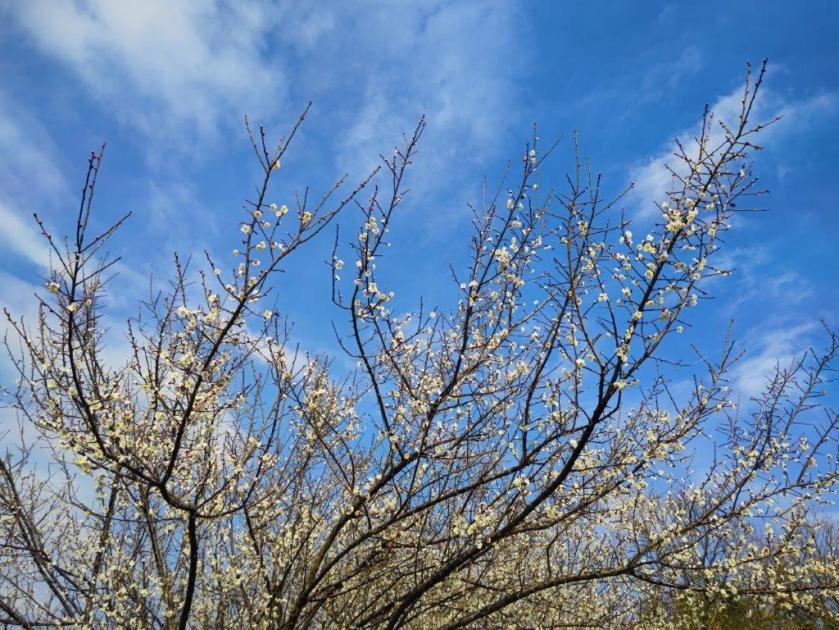
Watch a Slideshow of more Pictures of the Hike

Mt Sekison (1049m) & Mt Takada (1212m), Nakanojo Town, Gunma Prefecture, Sunday, October 29, 2023

I wanted to see some autumn colours, and also do a more challenging hike than the previous week. I chose a pair of minor peaks in the Nakanojo area, last visited a year and a half ago, not mentioned in my guidebook, nor shown on my hiking map. I knew about them thanks to a hiking pamphlet I had picked up during my stay at Shima Onsen in 2019. Although it wasn’t a long hike, it started from the valley bottom and seemed to go high enough to satisfy both my conditions. After riding the shinkansen to Takasaki, and then the Agatsuma line to Nakanojo station, I would catch the bus for Shima Onsen to the start of the trail. If I finished early enough, I could get the bus connecting with the Kusatsu limited express, direct for Ueno on the return; otherwise, I would use the same route as in the morning. I was a little concerned about the weather forecast: sunny in the morning but cloudy in the afternoon. I was looking forward to a peaceful hike on a quiet mountain and seeing the first autumn leaves of the season.

Get a Map of the Mt Sekison Hike

This map was developed for Japanwilds with the Hokkaido Cartographer

Find Japan Hiking Maps on Japanwilds

Read this Blog Post on Hiking Around Tokyo

View north towards the Joshin-Etsu Mountain Range

View of Mt Juni, Mt Komochi and Mt Akagi

It was a sunny day with few clouds as I got off the bus around 1030. After getting ready, I found the trail entrance behind Komaiwa village, and started hiking from 11am; according to the locals, I was 3rd person of the day to head up. I followed a gently sloping forest road through the cedars, before reaching a stone “torii” (shinto gate) and the start of a steep slope half an hour later.

First Autumn Colours

I got my wish for a workout as I followed the switchback trail up the mountain side through mixed forest. The leaves hadn’t changed yet this low down, but would probably look spectacular in a couple of weeks. With relief, I reached the top of the long climb just before noon. The trail then curved around the mountain, becoming faint at times, so that the final approach was along a ridge on the north side, buffeted by a cold wind.

Directly opposite, Mt Suisho and Mt Buno

Bird’s-eye view from the Top of Mt Sekison

I spotted the first autumn colours of the day on a bright red “momiji” (Japanese maple), to the right of the trail, as I followed the narrow ridgeline, now heading west. Very soon, I was walking under oranges and yellows, and after scrambling up a short steep bit, I emerged onto the top of Mt Sekison (石尊山 せきそんさん sekison-san), just before 12h30. The narrow summit was mostly free of trees, so I settled down for an early lunch.

View North from the Mt Sekison Summit

Mt Takada seen from Mt Sekison

I was surprised that such a little-known summit had such a great view: on the north side, I could see the foothills of the Joshin-Etsu mountain range; to the south was Mt Haruna; southwest was the pointed shape of Mt Asamakakushi, and behind, Mt Asama, sitting under a dark cloud; looking east, Mt Akagi, Mt Komochi and Mt Juni were lined up; directly below, I had a bird’s-eye view of the mountains and valleys of Nakanojo. At 1pm, I set off for the next summit, looking tantalizingly close further along the ridgeline.

The Mountains and Valleys of Nakanojo

View towards the Joshin-Etsu Kogen National Park

I hadn’t expected the next part to be so challenging: the trail kept on going up and down, and included a short rocky section fitted with rope; on the other hand there were good views to be had in both directions at various points. It took a full half hour to reach the top of Mt Takada (高田山 たかだやま takada-yama). Since it was mostly in the trees, I turned around at once and headed back along the up-and-down ridge, arriving at Mt Sekison around 2pm.

In the background, Mt Haruna

In the foreground, Mt Takeyama

I was amazed by how pleasantly warm it was, the sunny weather outperforming the forecast; since it was now too late to catch the earlier bus, I spent another thirty minutes enjoying the panoramic view. I had the summit to myself, having passed the two other hikers earlier in the day. After descending at a relaxed pace, I was back at the bus stop a little before 4pm.

On the right side, the Agatsuma River Valley and Mt Asamakakushi

Heading down through the Forest

The toughest part of this 4h1/2 hike was without doubt the roundtrip ridge walk between the two peaks: the views were superb but it required surefootedness due to the steep slopes on each side. If I had been faster, I could have enjoyed a comfortable train ride directly back to Tokyo, but since the good weather held throughout the day, it was worth spending more time on the mountain itself. Going a little later in the season, I could have seen more autumn leaves but I was glad I had gone when few other people were on the trail.

Watch a Video of the Mt Takada & Mt Sekison Hike

Watch the Video of the Hike on Youtube
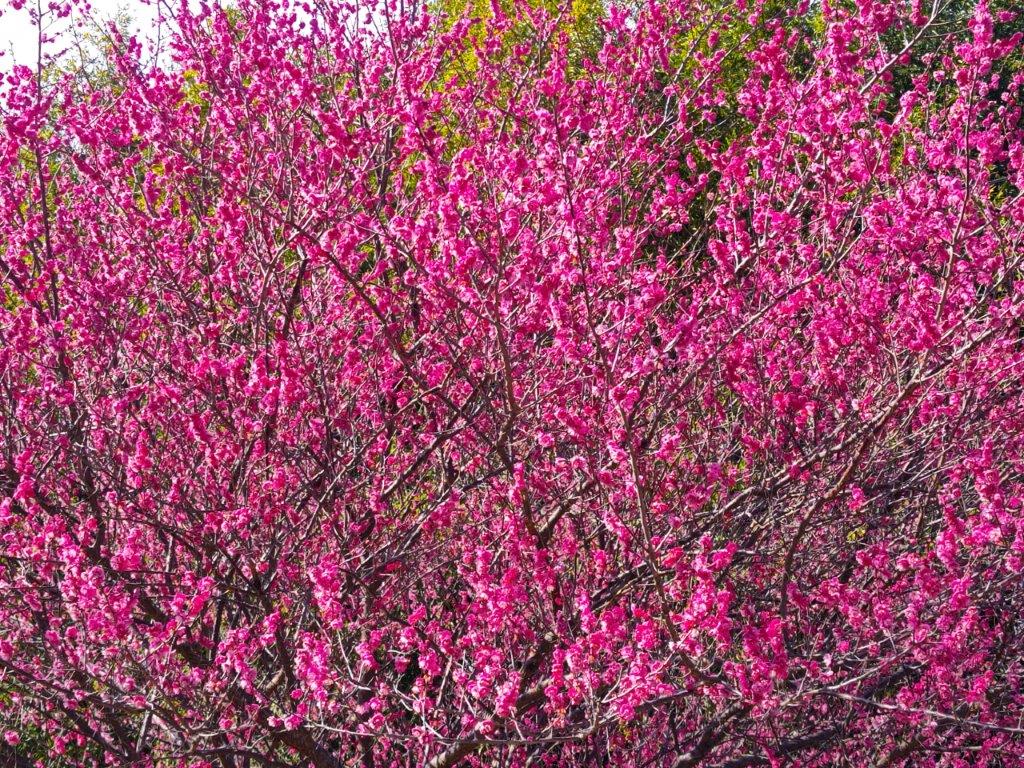
Mt Misuji (822m), Kawazu Town, Shizuoka Prefecture, Sunday, October 22, 2023 [Mt Amagi Hike]

I had wanted to hike the “Amagi Misujiyama Trail”, ever since I had spotted it on my map a few years ago. However, the hike from Amagi Pass all the way down to the coast seemed just too long day for a day hike. On my previous visit there, I realised it was possible to catch a seasonal bus from Showa-no-Mori-Kaikan to Hachoike-Guchi, cutting out the two-hour climb from the pass. I had another breakthrough when I found out about a short-term bus running from Hosono Plateau to the Izu-Inatori station, shortening it by one more hour. With a mostly downhill route with stunning views and a favourable weather forecast, it was the ideal hike after a one-month break. On Mt Noborio, I had a glimpse of the many wind turbines along the trail, and so I was curious to see them close up. It would be my sixth time on Mt Amagi and I looking forward to exploring another side of this ancient volcano range.

Hiking on Mt Amagi 天城山

Read this Blog Post on Hiking Around Tokyo

Looking Back at the Wind Turbines

Wind Turbines from the Top of Mt Misuji

It was a sunny autumn day as I rode the shinkansen to Mishima station, where I changed to the local line for Shuzenji. There I caught a bus for Kawazu, but got off halfway, at Showa-no-Mori-Kaikan, and then boarded the bus for Hachoike-Guchi. I was sole passenger on the half hour ride up the twisting mountain road closed to normal traffic.

Paved Road near the Start of the Hike

Japanese Beech (left) Sarubeni (right)

It was overcast when I finally set off, a little after 11am, along a paved road through the forest. I was the only person on the trail; I supposed that most people had flocked to places with autumn colours. Half an hour later, I reached a clearing from where I could see the ridgeline of Mt Amagi. Through a break in the trees on the right, I had a glimpse of the wind turbines below.

Walking up through the Forest

Flowers Covering the Trail

A little after noon, I reached the summit of a minor peak (東猿山 1127m) and the highest point of the hike, completely in the trees. After taking a short break to enjoy the peace and quiet of the surrounding beeches, I started to descend through the forest. I soon passed a viewpoint on the south side, from where I could see the Izu coastline, beyond golden fields of Japanese Pampas grass.

Highest Point of the Hike

Descending through the Forest

Just before 1pm, I left the forest and reached the start of the wind turbine service road. From this point, I passed beneath several wind turbines, most of them turning at a steady pace despite there being little wind; some stopped turbines, actually started turning while I was walking by, making an eerie noise. I guess there is a mechanism allowing them to be activated depending on demand.

Open Spaces on the Second Half of the Hike

Looking Back at the Windmill Walk

The weather was slowly improving and now the sun had the upper hand over the clouds. The trail alternated between paved road and hiking paths. The view gradually opened up on both sides: turning around, I could see the entire range of the Amagi Volcanic Range on the west and north sides; to the south, I could see the top of Mt Chokuro; looking east, I could see the Pacific Ocean and Oshima Island.

Bench with a View

Wind Turbines on the top of Mt Misuji

After a short climb, I reached a viewpoint with a bench, just before 2pm, where I stopped for a late lunch. Half an hour later, I continued on my way, heading down and then up again. Thirty minutes later, I reached the top of Mt Misuji (三筋山 みすじやま misuji-yama). Here, I finally saw other people, walking up from Hosono-Kogen. From the observation platform, I could see most of the Tokyo Islands, even Kozusima, the first time I had ever been able to see it clearly from the mainland.

Hiking Trail off the Service Road

The Amagi Volcanic Mountain Range

After enjoying the view, I took the left trail heading directly down the grassy side of the mountain; another trail continued south along the wind turbines, but that would be for another day. I met more and more people, who had mostly come to see the autumn “suzuki” or Japanese pampas grass, and had decided to push on to the highest point. Soon I reached another fork where I went left, following the shortest route down.

The Trail Passes directly under the Wind Turbines

Hiking through the Pampas Grass

I was now walking in the midst of the “suzuki”, the main reason to visit Hosono Plateau, and best viewed during the month of October. I had great views north of Mt Amagi and south of Oshima island. The clouds had mostly drifted away and the surrounding landscape was golden in the late afternoon sun. A little before 4pm, I reached a big parking lot, where I caught the nearly empty bus for Izu-Inatori station. There I rode a local trail to Atami station and then transferred to the Shinkansen for the one hour ride back to Tokyo.

Mt Amagi and Suzuki Fields

Looking Down at Inatori on the Izu Coast

I had high hopes for this hike and I wasn’t disappointed. It took less than 4 hours 1/2 to complete, leaving me ample time to catch the bus at the end; however this is only possible in October, otherwise it takes 7 hours. The views were amazing, mainly thanks to the clearings due to the service road. I enjoyed getting a close-up view of the wind turbines, and they also made for some dramatic shots. Finally, between Hatchoike-Guchi and Mt Misuji, I had the path entirely to myself, a rarity during the autumn leaves season.

Easy Hiking on Hosono-Kogen

Last View of the Wind Turbines

Watch a Video of the Amagi Misujiyama Trail

Watch the Video of the Hike on Youtube
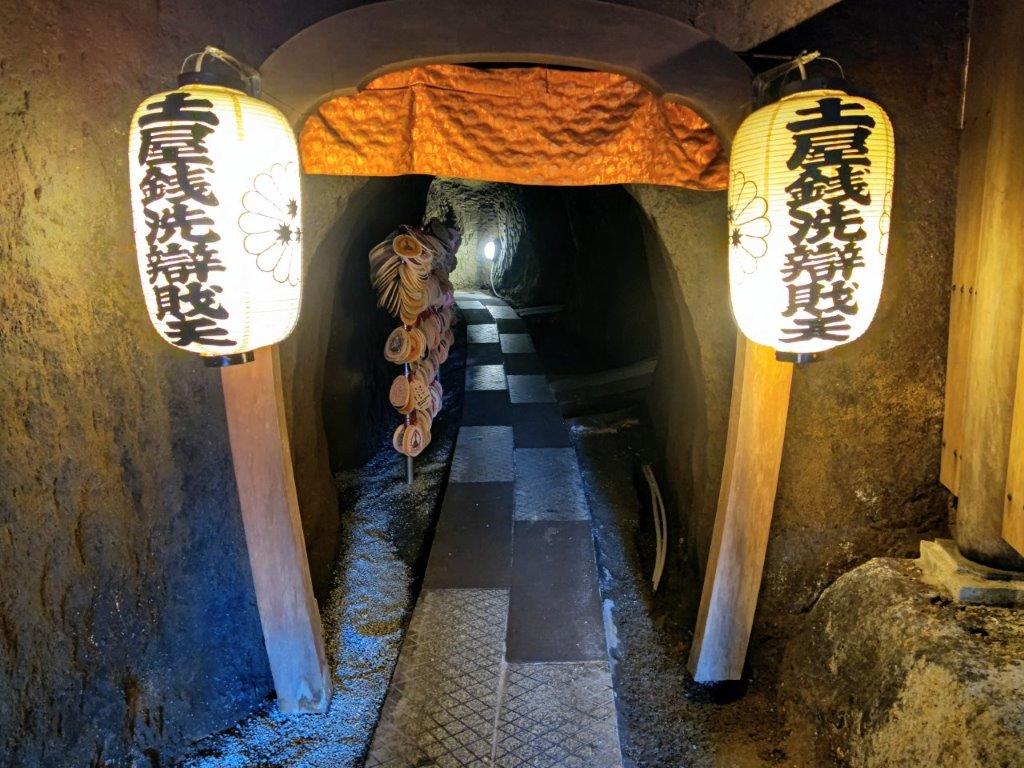
See a Slideshow of more Pictures of the Hike

Mt Hirao (1155m), Saku City, Nagano Prefecture, Sunday, September 24, 2023 [Map Available]

I needed a short, easy hike after my three-month summer break; I also needed to get above one thousand meters, free of the spiders and their webs, seemingly everywhere at this time of year. I decided to go to the Saku, a plateau between Asamayama and Yatsugatake; there, I would go up a mountain spotted on my hiking map while researching Golden Week hikes. Although the hike was under two hours, it promised a great view from the top and a hot spring bath at the base.

Read this Blog Post on Hiking Around Tokyo

I would ride the shinkansen from Omiya to Saku-Daira, and from there, take a taxi to Parada, a ski resort turned amusement park in the warmer months; at the end, I would need to walk one hour back to the shinkansen station. It was supposed to be a warm, sunny day, and so I was looking forward to my first hike of the autumn season.

Get a map of the Mt Hirao hike

This map was developed for Japanwilds with the Hokkaido Cartographer

Find Japan Hiking Maps on Japanwilds

View of Yatsugatake from Hirao Onsen

View of Asamaya from behind the summit of Mt Hirao

It was slightly overcast as I rode the shinkansen from Omiya, but after passing Karuizawa town, blue skies stretched away in all directions. I got off at Saku-Daira station a little before 1030, and there, caught a taxi for the short ride to Hirao Onsen. Perched a little way up the mountain side, I already had a great view of the Saku plateau, and the Yatsugatake range directly ahead. I found a 200 yen locker to store the things I didn’t need for the hike itself, and shortly before 1130, started up the Hirao Forest “Therapy Road”.

Pines Trees (left) and Log Steps (right) on the Therapy Road

Looking up at Mt Hirao (left) Looking down from Mt Hirao (right)

I climbed through beautiful, spider-free forest, up the “Path of Endurance” (忍耐の小径); at the top of a steep log staircase, I reached the top of Mt Hirao, also known as Hirao-Fuji (平尾富士 ひらおふじ hirao-fuji). It was nearly 12h30 so I sat down on one of the several west-facing benches for lunch with a view. To the south, were the mountains of Oku-Chichibu, Mt Ogura visible in the far distance; opposite was a sideview of Yatsugatake, stretching from Mt Aka to Mt Tateshina; further west, I could see the entire range of the North Alps, extending from Mt Yari to Mt Shirouma, free of clouds and snow; on the north side, the crater of Asamayama, as well as the long, flat top of Mt Hanamagari were both visible.

Log Steps near the Top of Hirao Forest

The Summit of Hirao-Fuji

I had never seen so many butterflies flutter around before, flying together in complex patterns. At 1pm, I left my pack on the bench, and went to explore a trail along the southern ridge. After going up and down a small summit completely in the trees, I reached a T-junction where I turned left. After following the slightly descending trail for a short while, I reached a clearing at a forest road. There, I had one of the best views of Mt Asama I’ve ever had, the entire range extending from east to west, completely free of clouds. I then retraced my steps back to Mt Hirao, and after picking up my pack, headed down the mountain.

View of Yatsugatake from the Summit

View of the North Alps from the Summit

I descended through the forest, chestnut burrs thick underfoot, occasionally dropping to the ground with a “plonk”. I first followed the “Path of Nostalgia” (郷愁の小径) and then the “Red Pine Path” (あかまつの小径), before reaching Ryujin-Ike pond (竜神池), a little after 2pm. Along the way, I passed another viewpoint, just off the trail, the landing spot for a pair of chairlifts, not in operation during the summer season. Beyond the “susuki” waving in the autumn breeze, I could see Mt Tateshina wearing its crown of clouds. From the pond, I reconnected with the “Path of Endurance” which I then followed back to Hirao Onsen.

View of the Crater of Mt Asama (left) and Mt Hanamagari (right)

Side view of Mt Asama from the Clearing on the Forest Road

Although it was only 2h30, I wasted no time entering the onsen, also known as “Miharashi no yu“, meaning hot bath with a view; indeed, I immensely enjoyed sitting in the “rotemburo”, or outdoor bath, gazing at the view of the surrounding mountains. At 3h30, I set off again, down a long escalator to the nearby Sakudaira parking area. From there, I followed a road down into the valley, and then walked among the golden fields, ready to be harvested. I was glad I had chosen to walk rather than take a taxi, since I had good views of Asamayama and Mt Hirao along the way. I arrived at Saku-Daira station a little before 5pm, and caught the shinkansen for Tokyo shortly after.

Last Steps of the Endurance Path (right) Walking the Red Pine Path (right)

Golden Fields Ripe for Harvest

Although on paper it seemed a long way to travel for a short hike, it turned out to be very satisfactory and an excellent way to restart hiking after a long break. Ideally, I would have used the Tokyo Wide Pass and combined it with another hike but the opportunity just didn’t present itself. Basically, I was glad I had several viewpoints, the hot spring wasn’t too crowded, and the spiders were nowhere to be seen along the hiking trail. I would like to return one day for a longer hike along some of the forest roads in the area, and during the colder months for a clearer view of the North Alps.

Watch a Video of the Mt Hirao Hike

Watch the Video of the Hike on Youtube
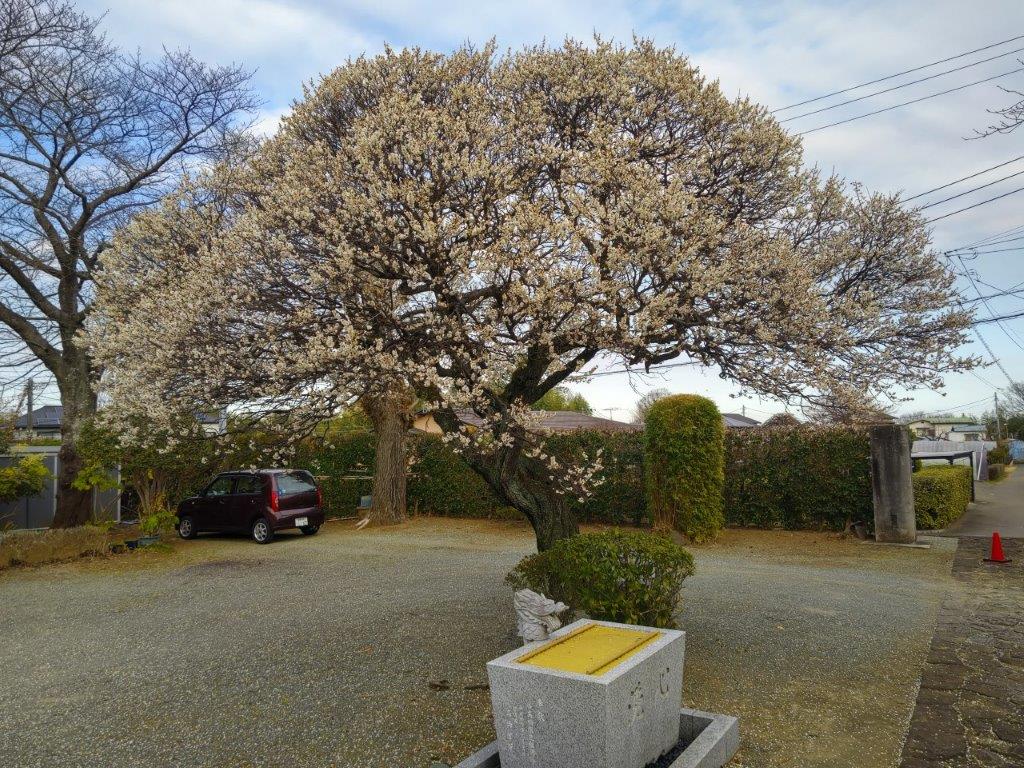
See a Slideshow of More Pictures of the Hike
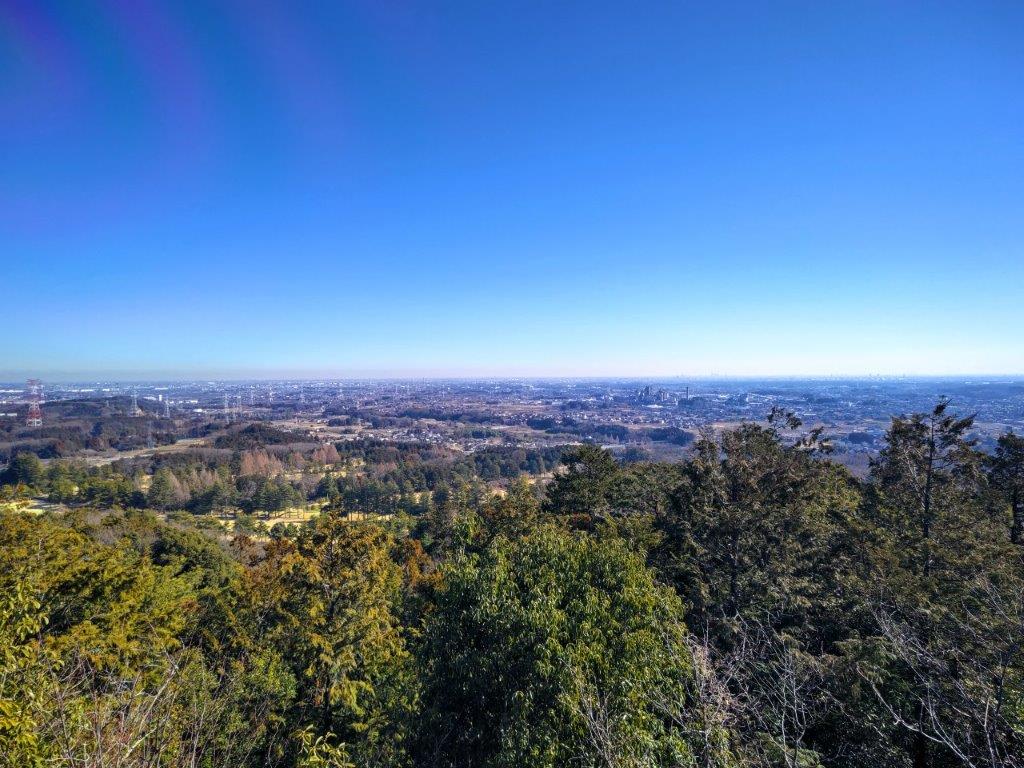
Mt Nabewari (1332m), Maebashi City, Gunma Prefecture, Sunday, June 25, 2023

I wanted to do one last hike before the hot and humid summer. I found a peak I had never climbed before on Mt Akagi, last visited three years ago. It promised good views, but the roundtrip to the summit was on the short side. I saw on my map that I could combine it with the Kanto Fureai no Michi and end at Fudo-daki waterfall. Since it was mostly along a level trail on the south side of the volcano, it seemed ideal for a warm summer day. I would take a bus from Maebashi station for the Akagi Visitor Center and get off at a stop half way up the mountain. For the return, I planned to use the “furusato basu” to get to the nearest train station, an on-demand bus system requiring me to request a pickup before the end of my hike. I had never used such a system before, and if for some reason it didn’t work, I would have to call an expensive taxi instead. The weather was supposed to be overcast in the morning, then sunny in the afternoon, the temperatures comfortable enough for hiking. I wasn’t sure I would get any views this time, but I hoped to have one last satisfying hike before the long summer break.

Hiking on Mt Akagi and the Fureai no Michi

赤城山 ・ 関東ふれあいの道

Read this Blog Post on Hiking Around Tokyo

View Towards Mt Akagi on the Way Back from Mt Nabewari

Start of the Ridge Leading to Mt Nabewari

It was a cloudy morning as I got off the train at Maebashi station around 9am. I was surprised how few people boarded the bus for the one hour ride to Akagi mountain, although the parking lot next to the trail entrance was packed with cars. I set off a little before 11am, up a wide, gently sloping trail through the forest; rays of sunshine pierced the clouds, a sign of improving weather. Half an hour later, I reached Arayama Highland (荒山高原). To the south, I had a view of the head of the ridge leading to today’s summit. Many hikers were taking a break, so I quickly moved on. After a short climb, I reached a level path along a bare ridgeline.

Start of the Hike (left) Easy Walking through the Forest (right)

Near the Top of the Ridge (left) Just Before the Summit (right)

I was amazed to find such an exposed ridgeline at a relatively low altitude, although the surrounding views were hidden by the clouds. After passing two minor summits, Mt Hiokoshi (火起山) and Mt Kamado (竈山), the path reentered the forest and descended for a short while, before reaching another section of the ridgeline out of the trees. At noon, I arrived at the top of Mt Nabewari (鍋割山 なべわりやま nabewari-yama). Looking south, I could barely make out the Kanto plain through the haze; in clear weather, one can see Mt Fuji, Tanzawa, Oku-Chichibu, the South Alps and Yatsugatake. Patches of blue sky above gave me hope for the rest of the day. I sat on a bench for some lunch, before retracing my steps half an hour later.

Jumble of Rocks on the way to Arayama Kogen

Walking the Exposed Ridgeline

I was lucky to get some views on the return on the north side: I could see the long ridgeline on the west side of the volcano, ending at the rounded peak of Mt Suzu. Directly ahead, I could see Mt Ara and Mt Jizo, two other peaks of Mt Akagi (climbed in September 2015), slowly emerging from the mist. On a clear day, it would have been possible to see the North Alps, Mt Asama, Mt Azuma, Mt Kusatsu-Shirane, Mt Naeba, Mt Tanigawa, and Mt Hotaka. At 1pm, I was back at Arayama Kogen, where I joined the “Fureai no Michi”, heading west through the forest. From this point, I saw no other hikers, the sound of voices replaced by the buzzing of insects.

Some Blue Sky Above

On the Right, Mt Suzu

This was by far the best part of today’s hike, as I could totally immerse myself in the surrounding nature. The sun had finally come out but it remained tolerably cool under the tree shade. It took me about three hours of pleasant hiking to reach the trail entrance for Fudo-daki waterfall (不動滝).

I checked it out myself: it was indeed impassible, but I was rewarded with a close-up encounter with a deer. The short trail to the waterfall followed a rushing river, requiring some surefootedness along a rocky section, equipped with a small ladder for safety.

Heading back to Arayama Highland

Following the Fureai no Michi

I was stunned by how high this waterfall was, as it suddenly appeared past a rocky cliff in a bend in the river; according to a nearby information board, it was 32 meters tall. I got as close as I could to the thundering water, the cold splashing water welcome on this warm summer day. At 4h30 I turned back, and after reaching the road at the trail entrance, turned left. From here, it was about an hour walk down the mountain. As soon as I was back within phone range, I dialed the “furusato bus” number. After several long rings, my call was answered. I requested to be picked up from Nakanosawa Museum, the closest stop to the mountain.

Walking in the shade (left) Staircase at the End of the Fureai no Michi (right)

First view of Fudo-daki Waterfall (left) Close-up view of the Waterfall (right)

I was relieved when my request was accepted without any hesitation. I arrived at the museum just before 5h30, and a few anxious minutes later, a minibus arrived, dot on time. After a short ride through the countryside (total cost 210 yen), I was dropped off at Ogo station on the Jomo railway, a 15 minute train ride from Chuo-Maebashi station, which in turn is a ten minute bus ride from Maebashi station. I was glad I could experience a new form of transport, although on a busier day it would have taken longer to accommodate more passengers. I hope to redo this hike one day on a clear winter day so I can see all the views along the ridgeline and from the summit.

Watch a Video of the Mt Nabewari Hike

Watch the Video of the Hike on Youtube