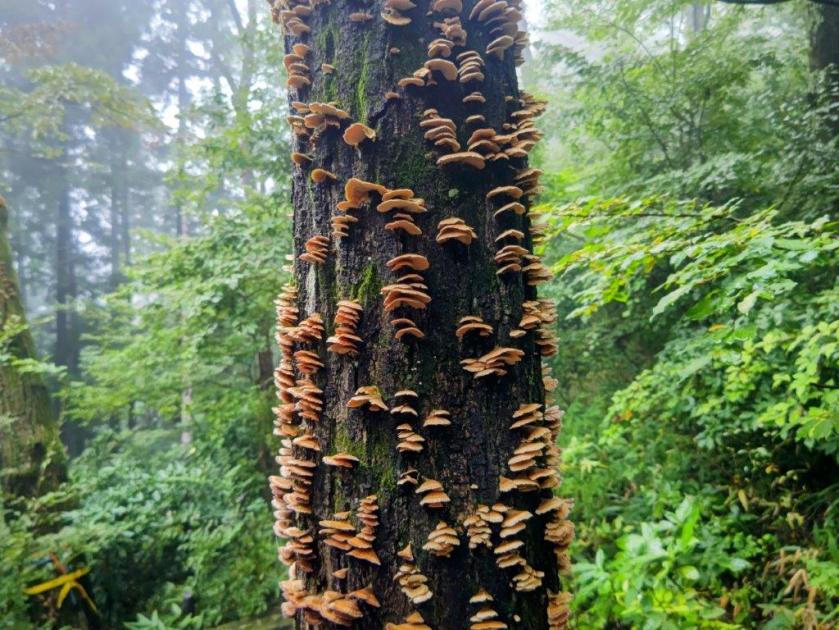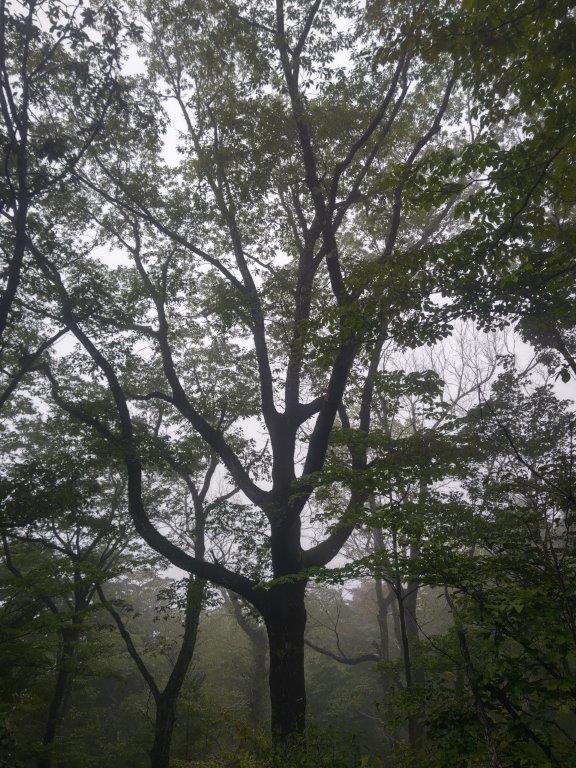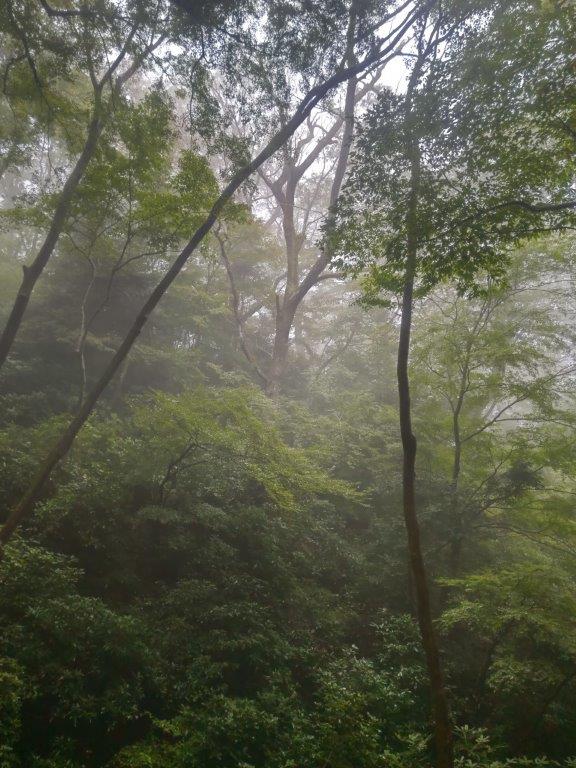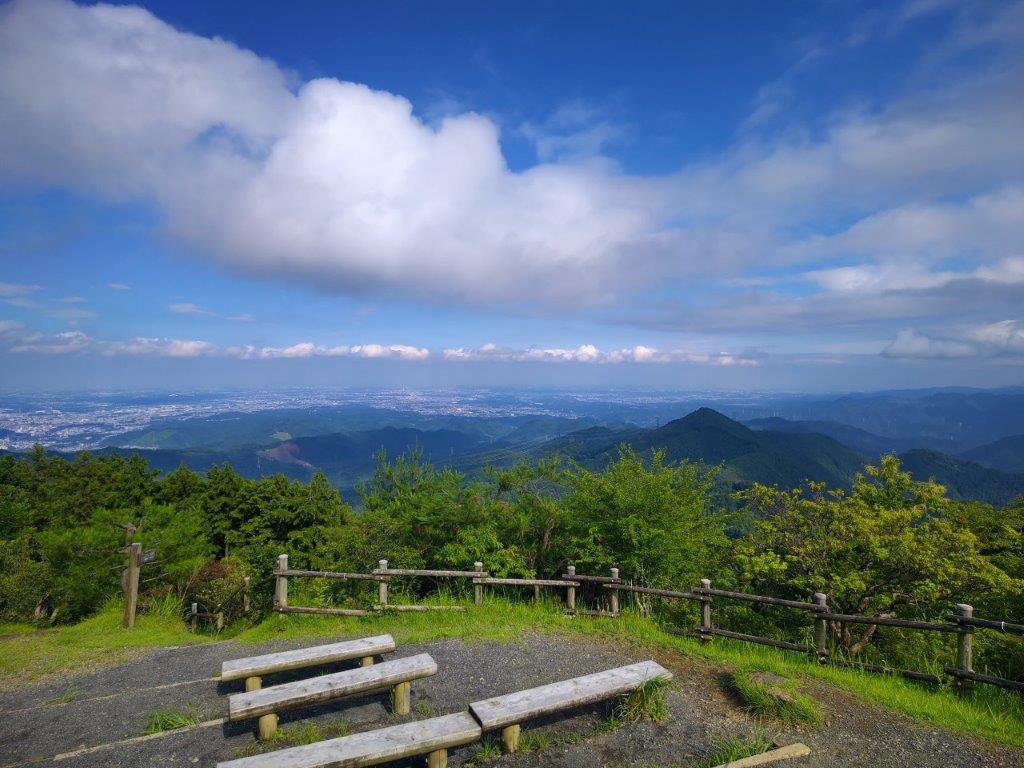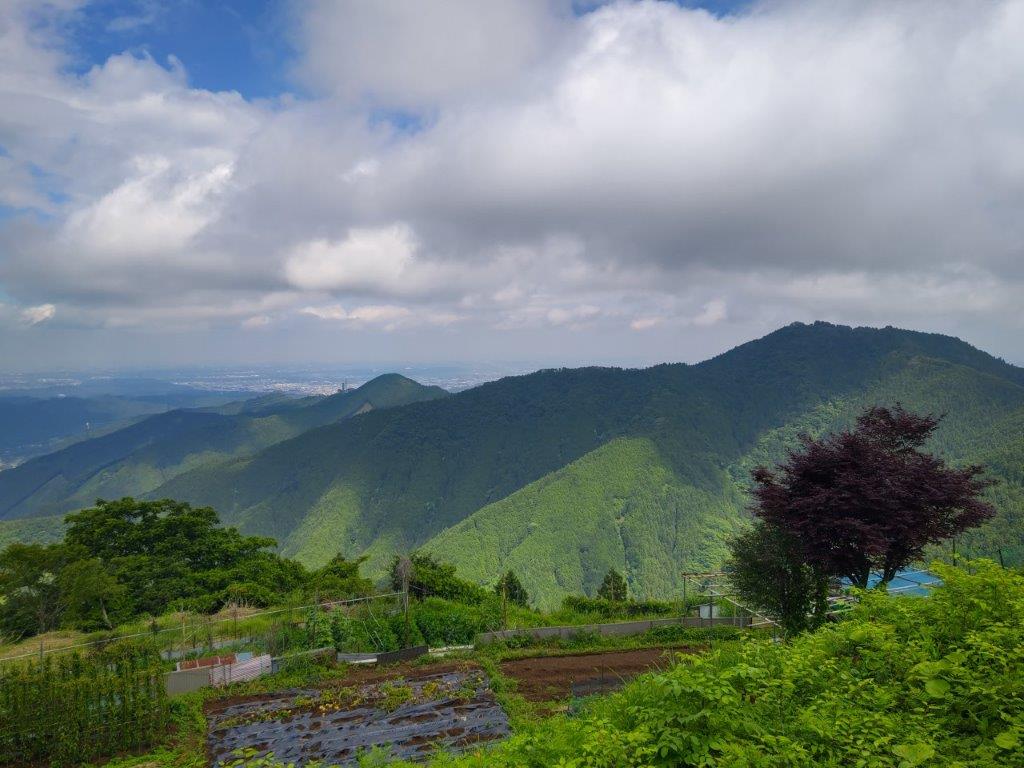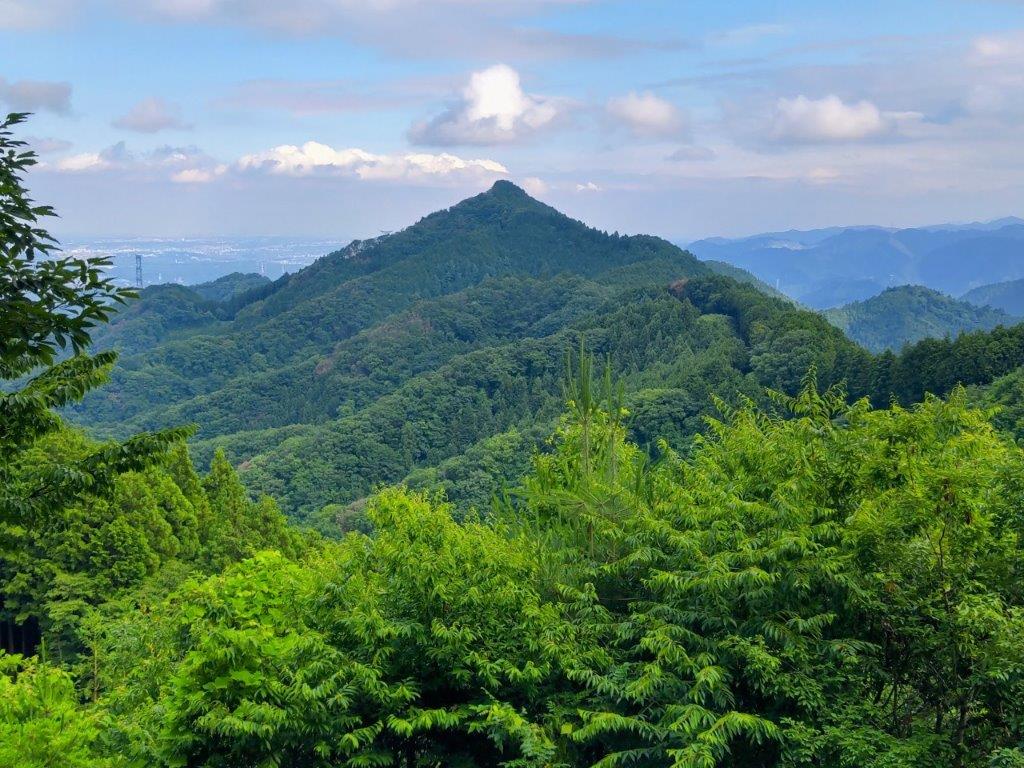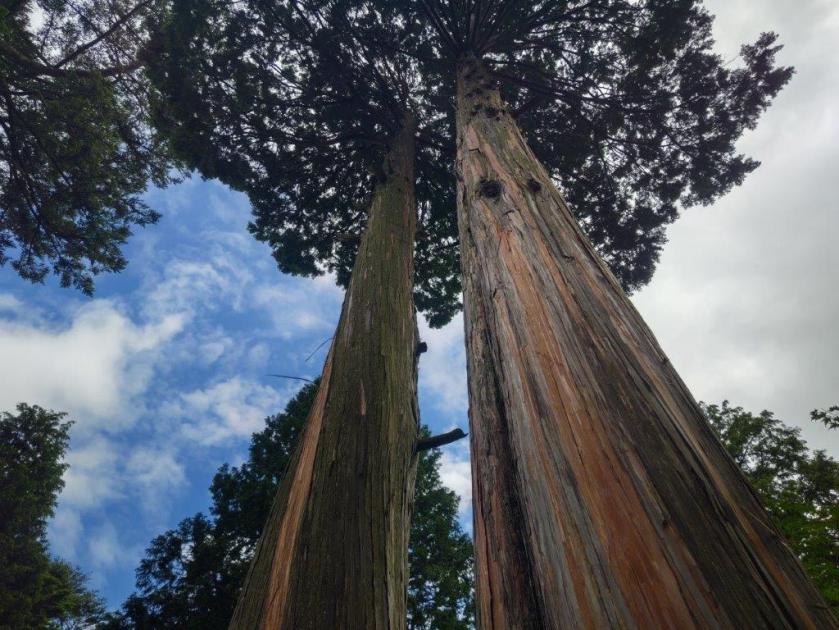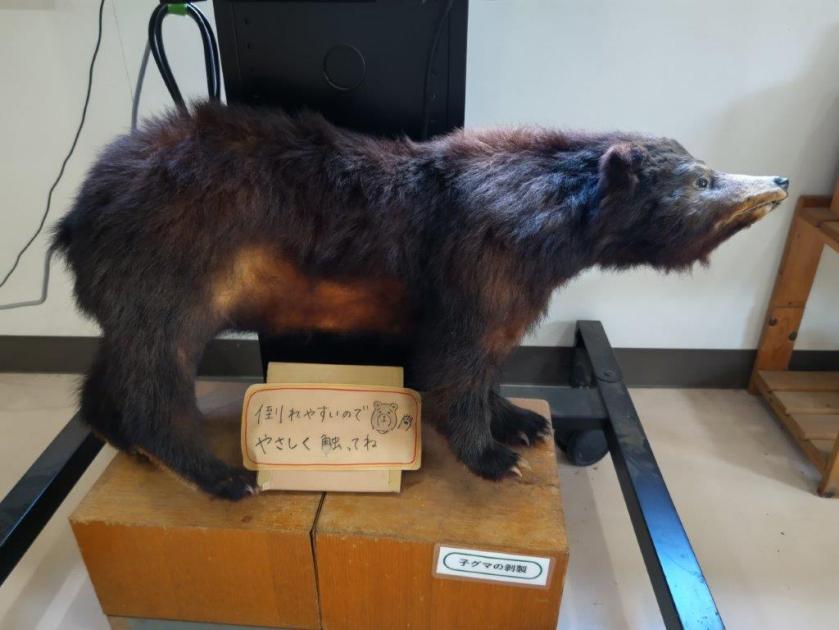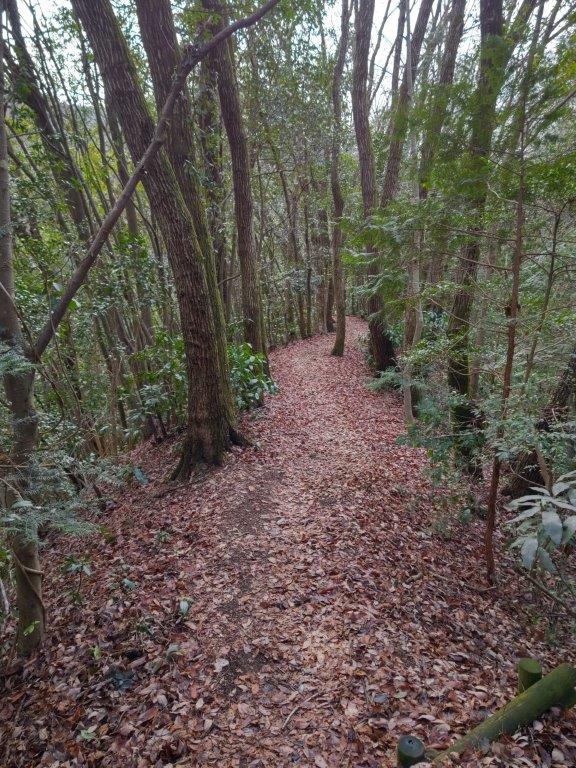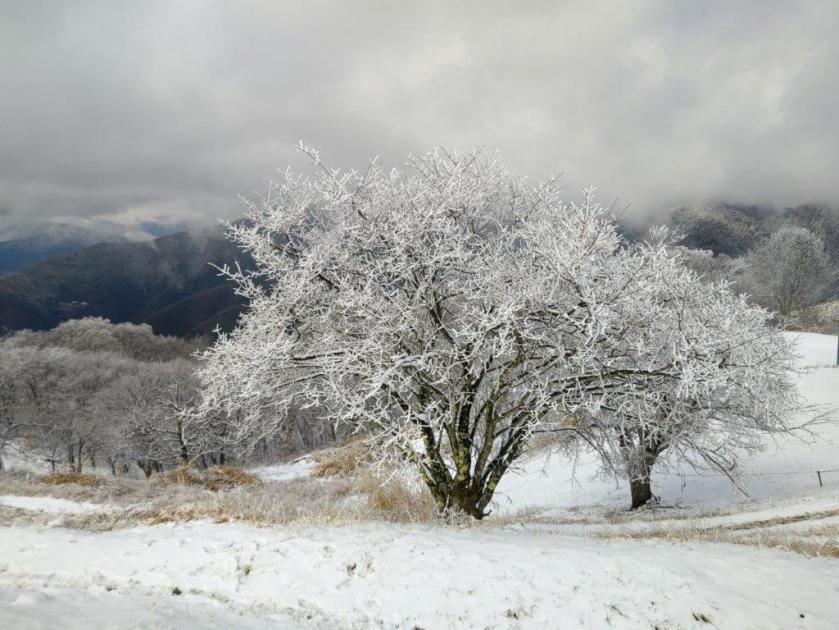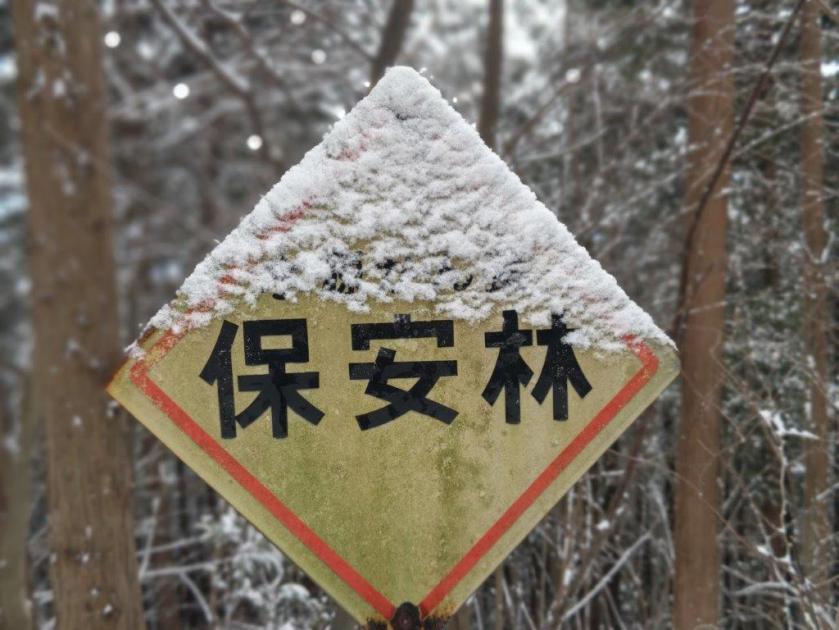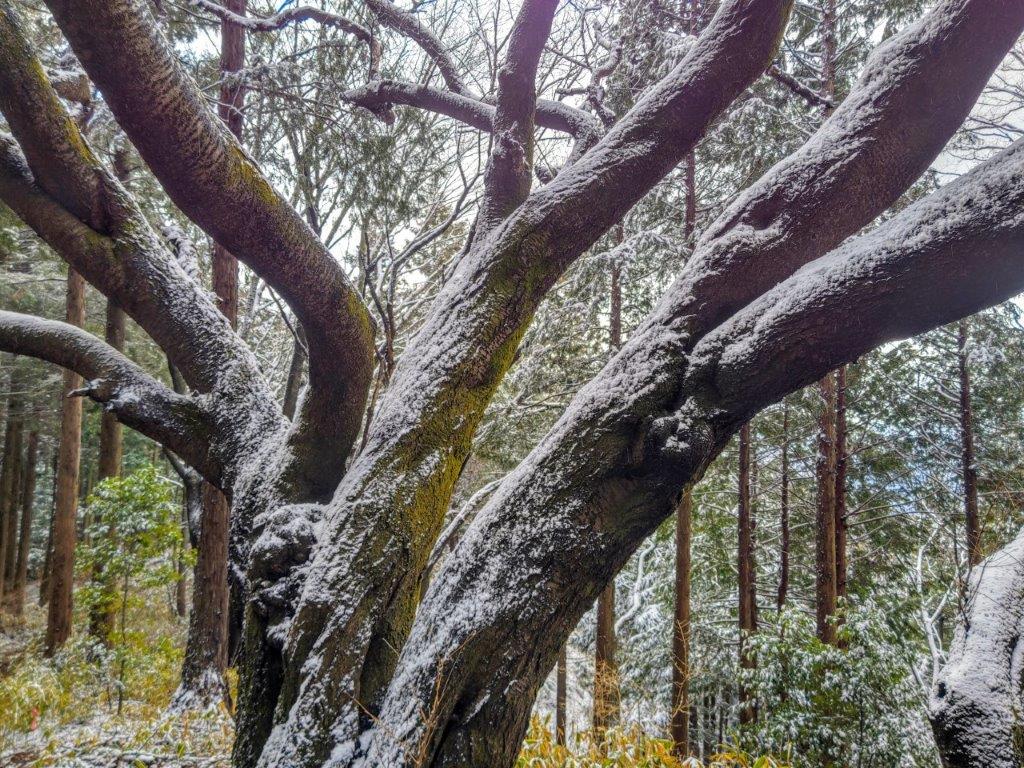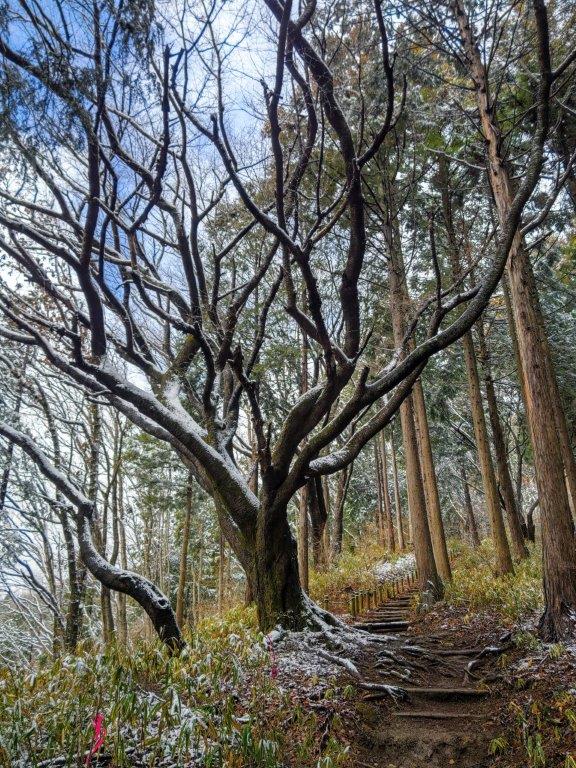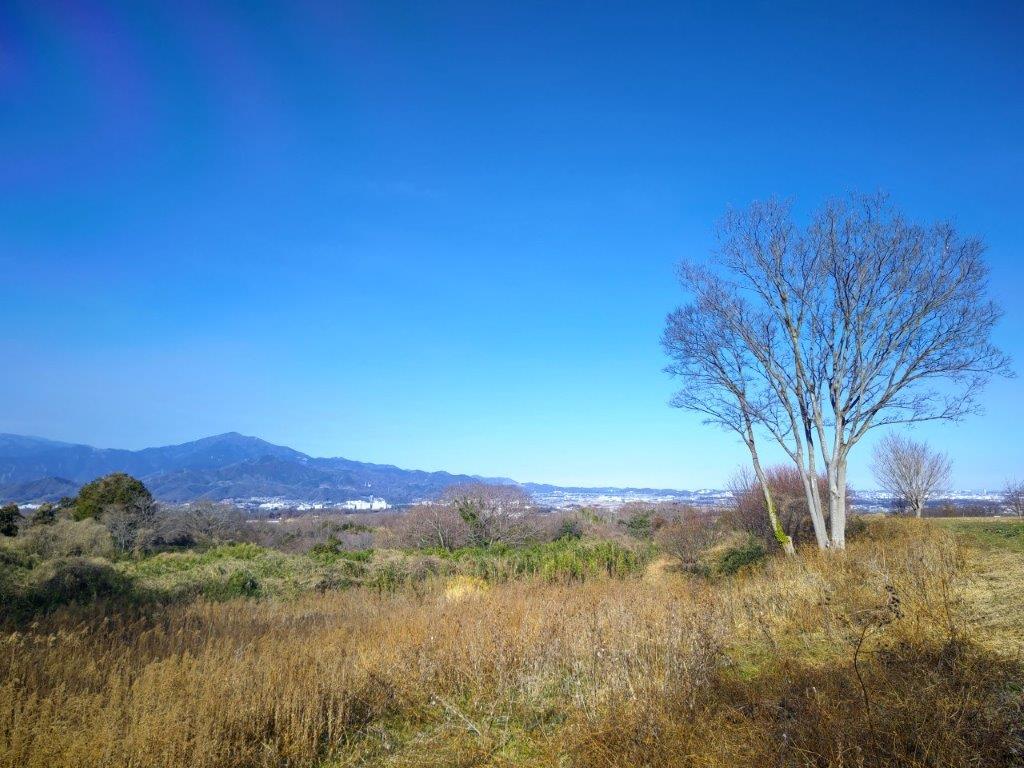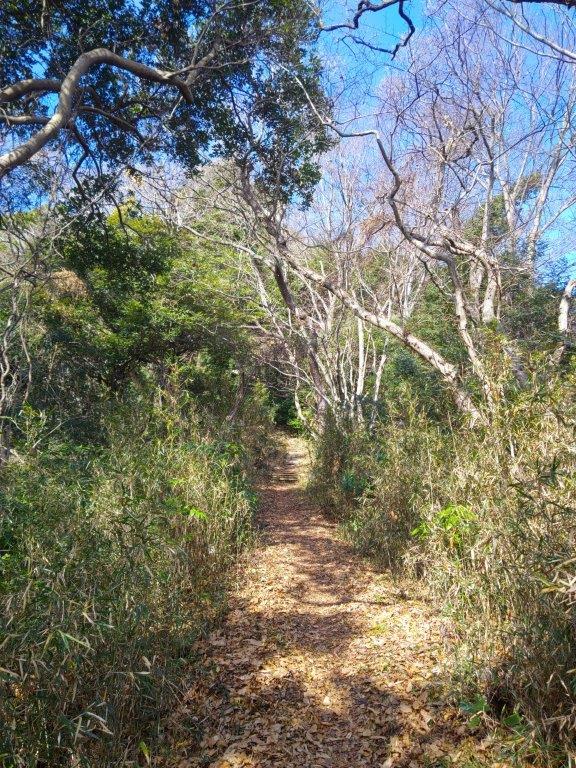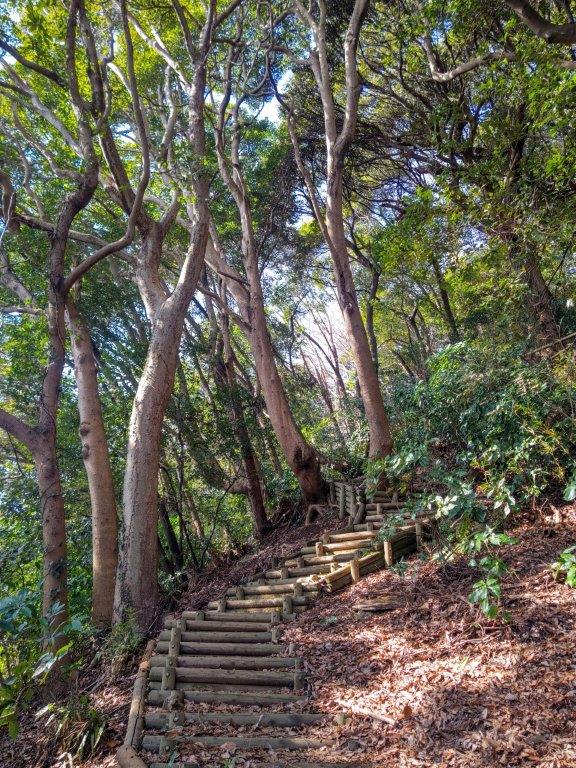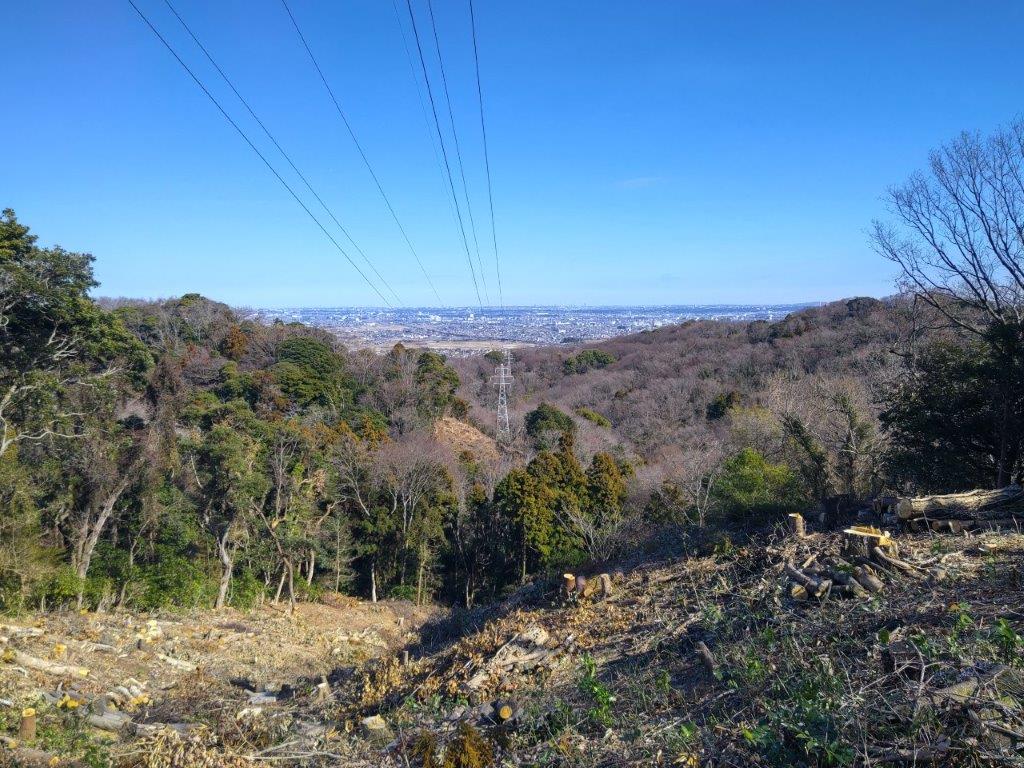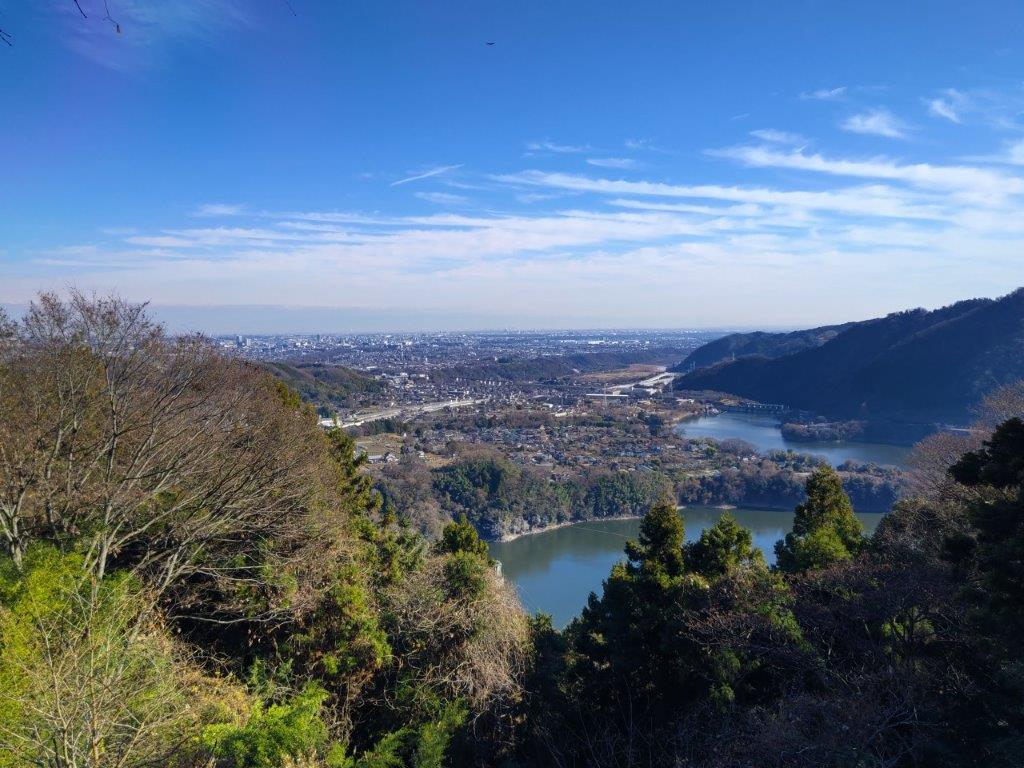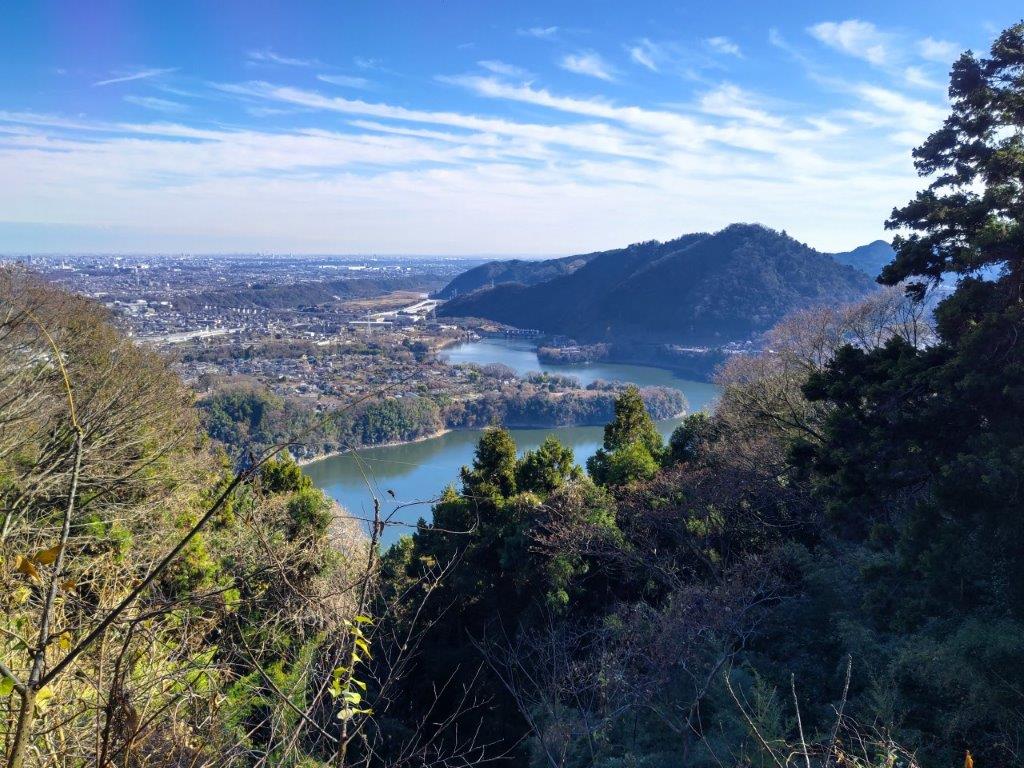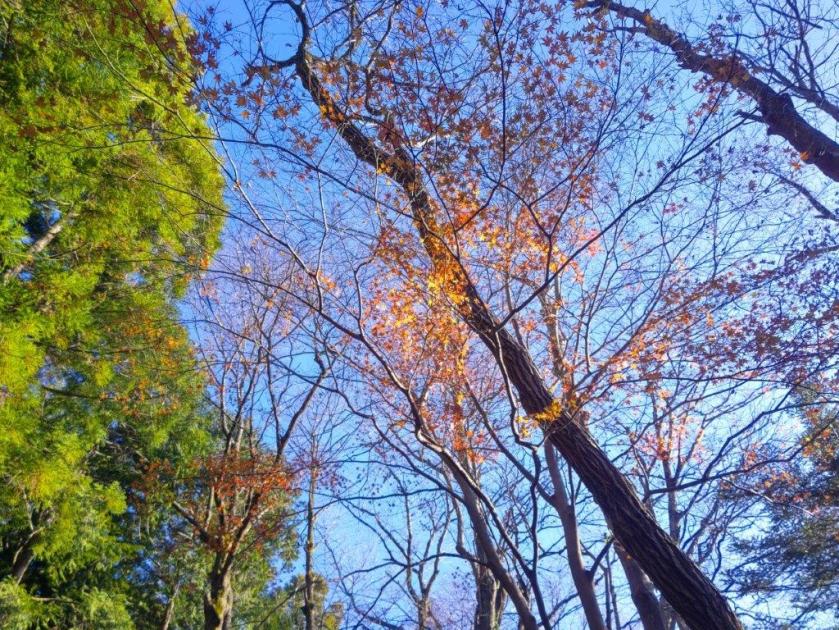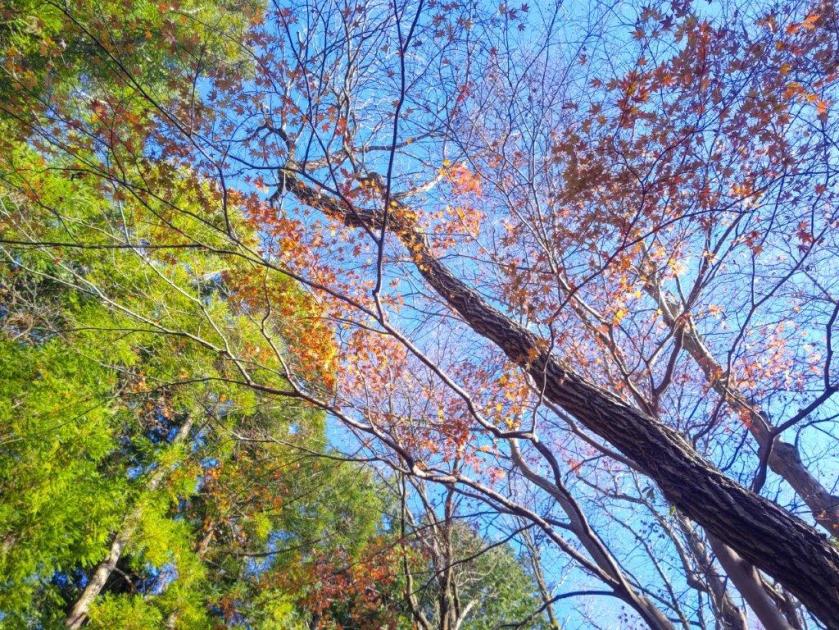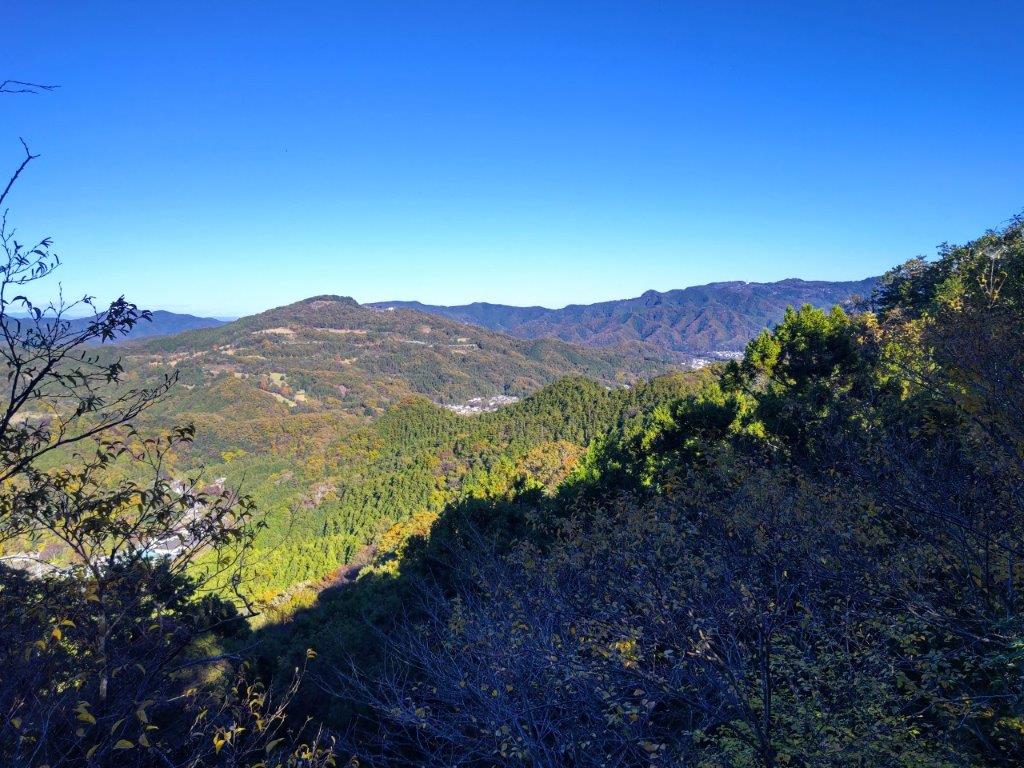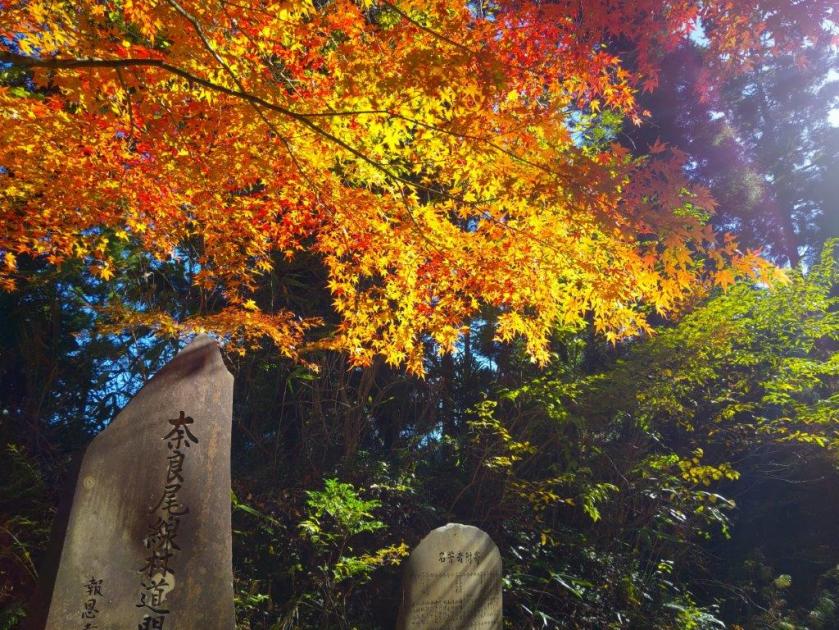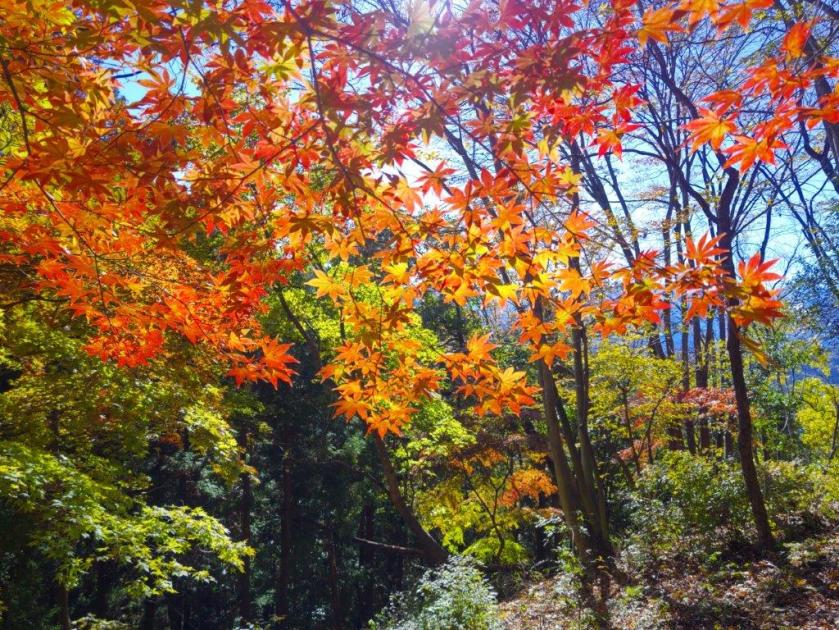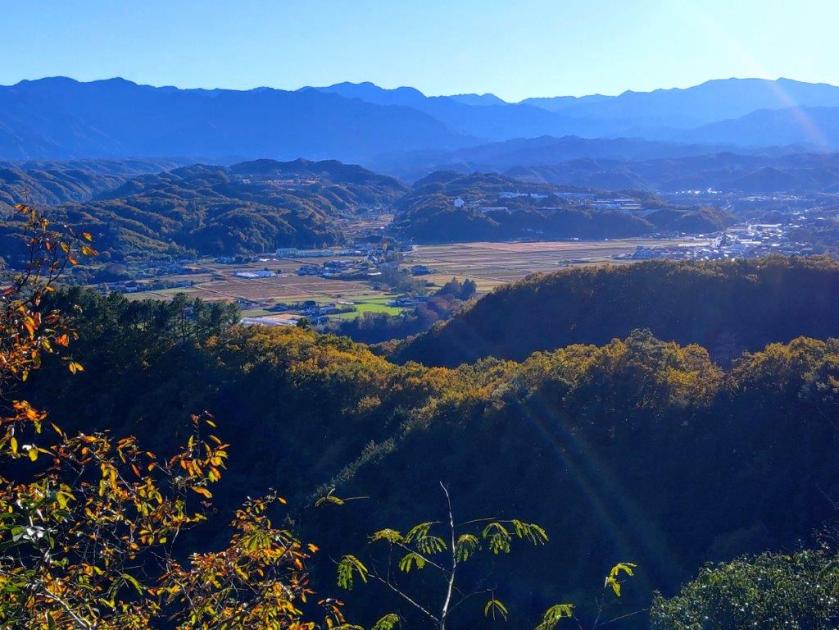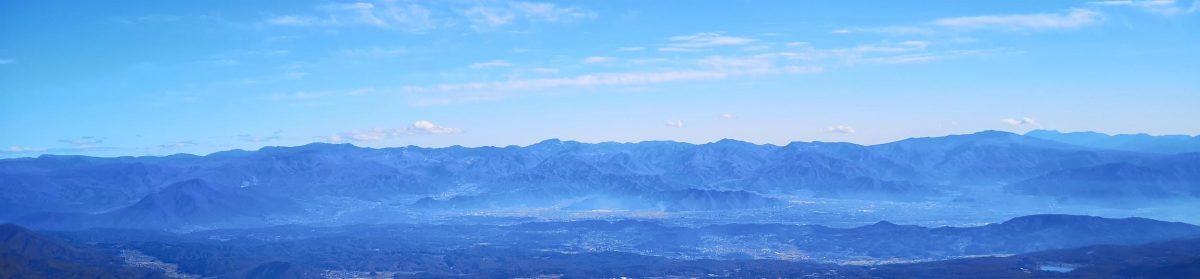
Mt Takao (599m), Hachioji City, Tokyo Prefecture, Sunday, October 6, 2024 [Iroha & Katsura Forest Trails]

I wanted to do another afternoon hike on Mt Takao and explore more of its many trails. As the weather was supposed to be cloudy all day, it seemed like a good chance to do a hike close to home. The well-beaten tracks also meant that the path would be clear of spiders and spider webs. Finally, the cable car would be running past 6pm because of the summer beer garden, although I’d most likely be done before since it would be getting dark around 5pm.

Hiking in the Meiji no Mori Takao Quasi-National Park

明治の森高尾国定公園

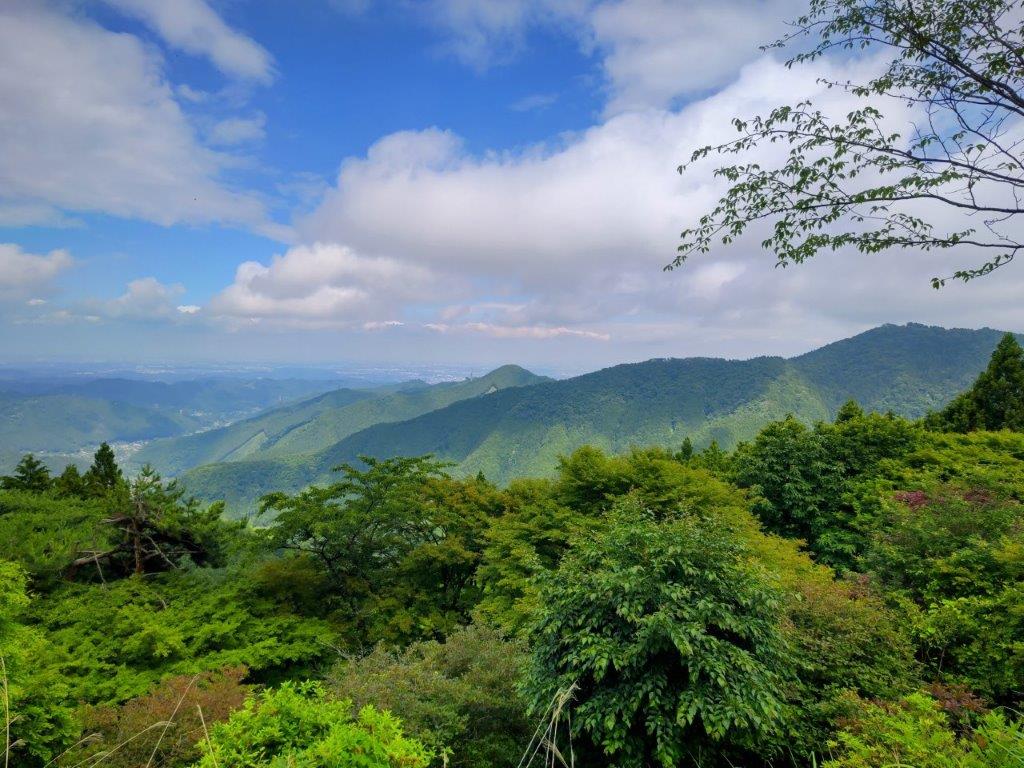
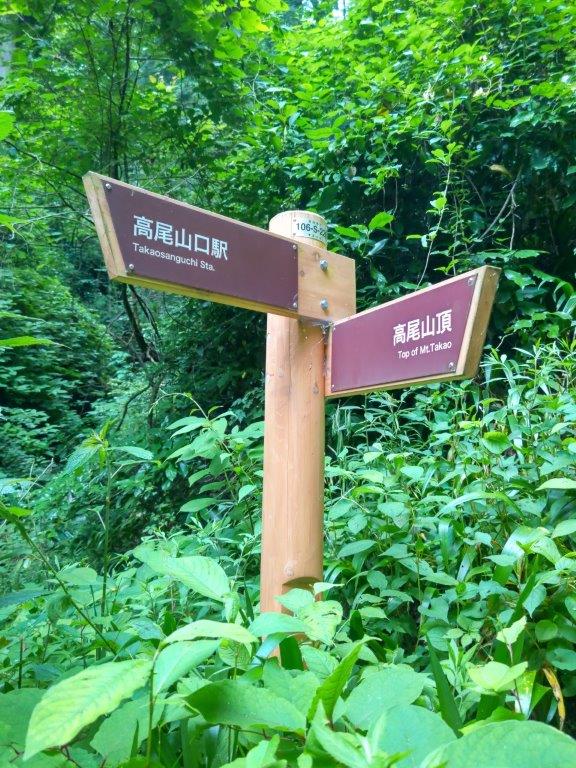
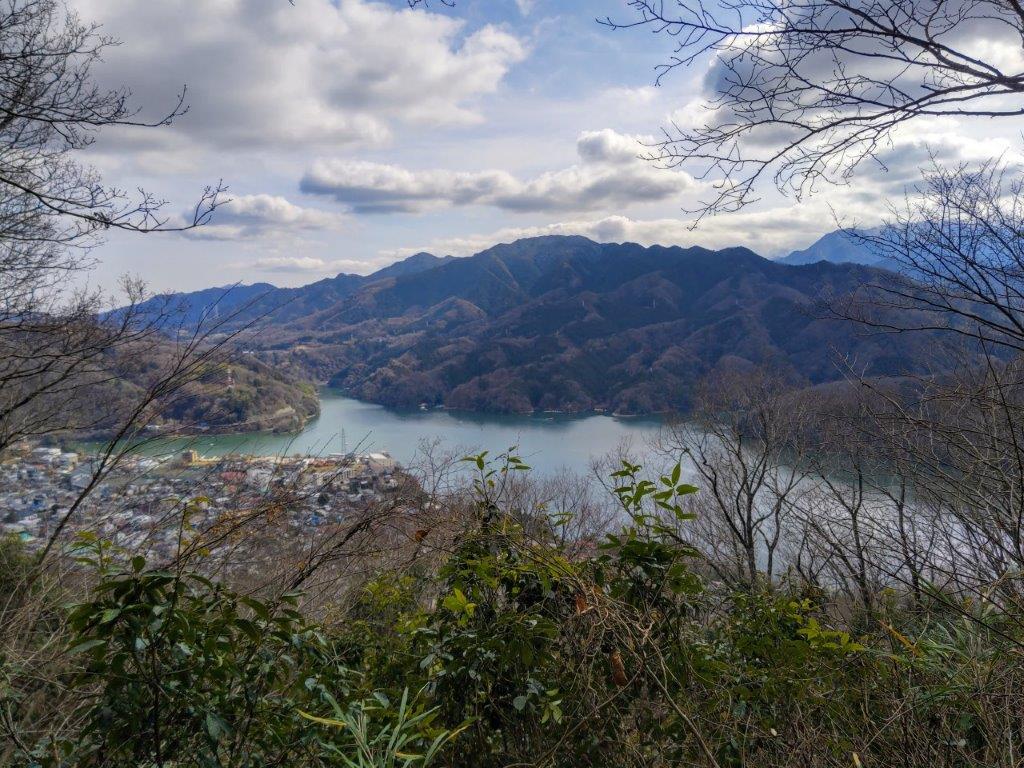
I’d take a local JR train from Shinjuku to Takao station; there, I’d board the bus for Kobotoke, at the back of the mountain, and then go up the Iroha Forest trail, leading all the way to the summit. I’d go down the Katsura Forest Trail, ending at the cable car top station. Before heading back, I could enjoy a hot spring bath at the Keio Takao-san Onsen, right next to the Takaosanguchi station. Although I knew I wouldn’t get any views, I hoped I could enjoy Tokyo’s most famous mountain minus the crowds.

For subscribers, read this Blog Post on Hiking Around Tokyo for a better viewing experience and the latest updates

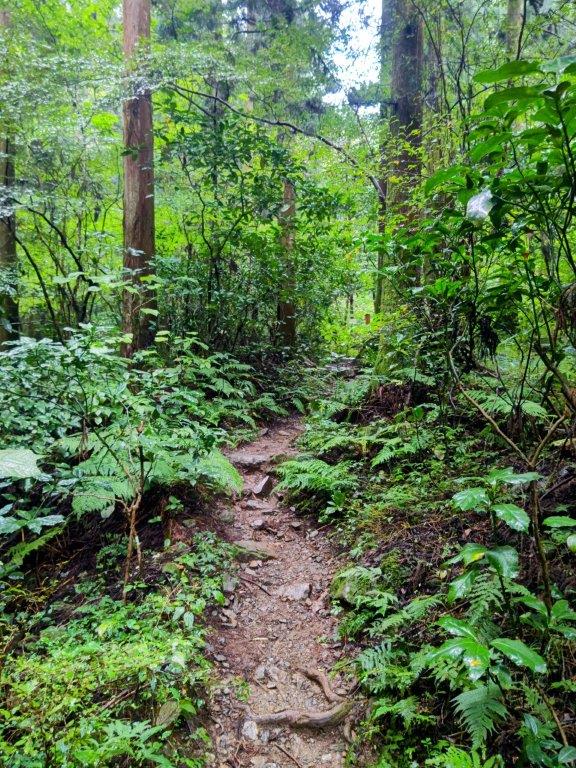
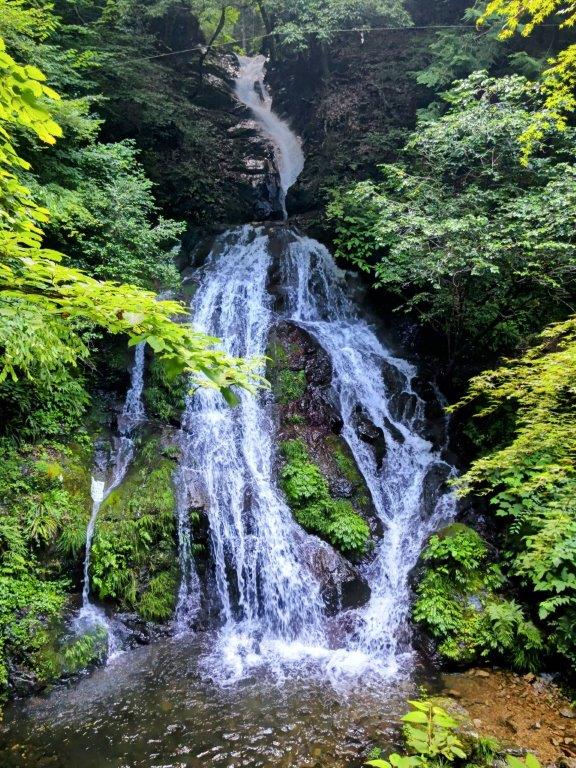
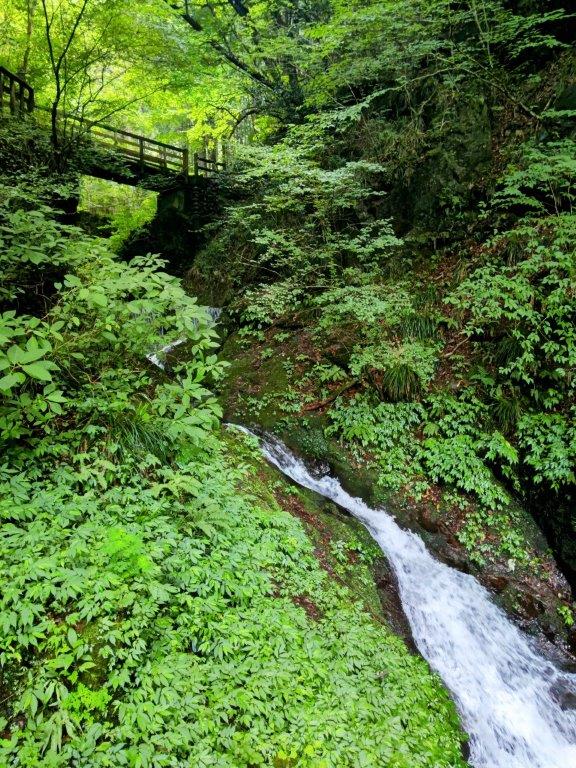
Hikage Stream (left) Iroha Forest Trail (right)

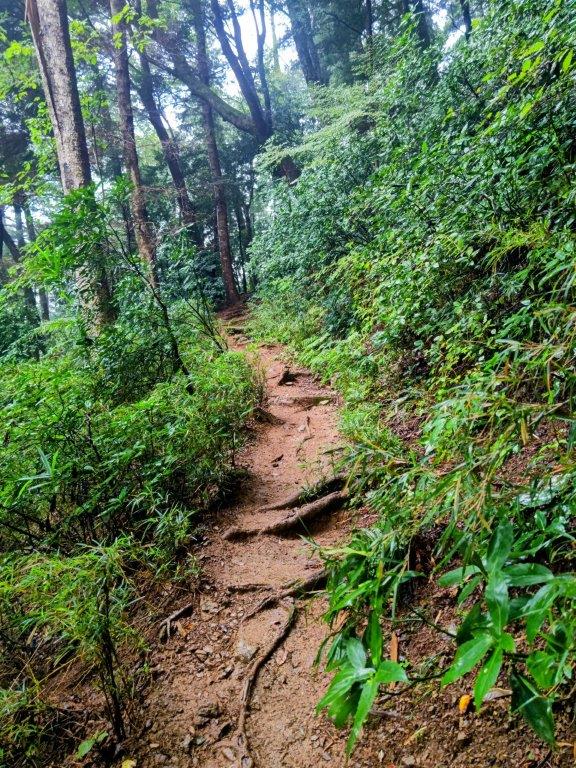
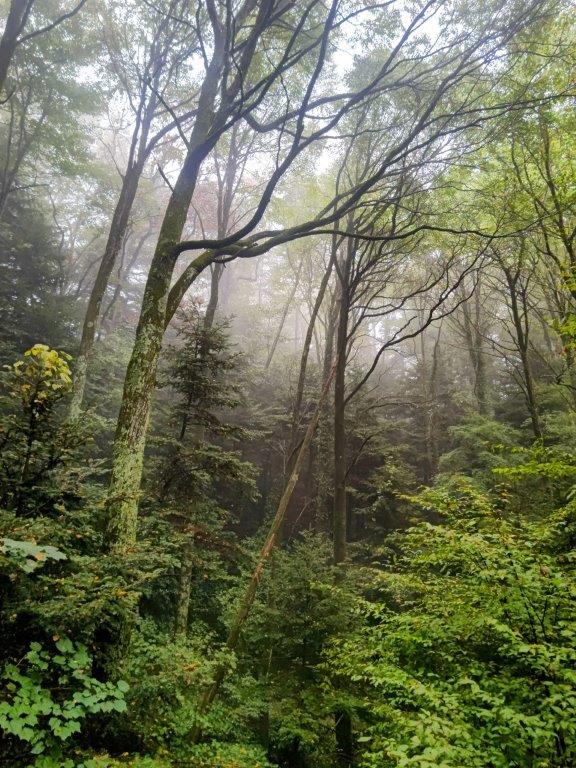
Gaining Altitude (left) Reaching the Mist (right)

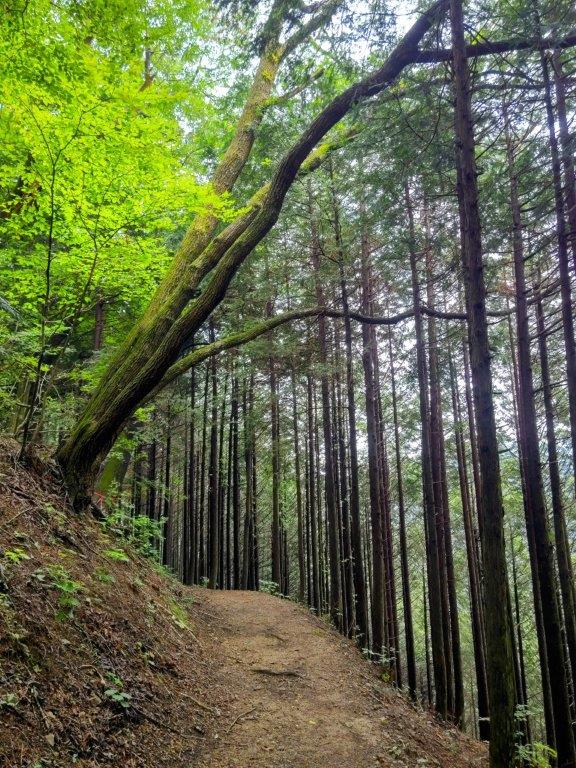
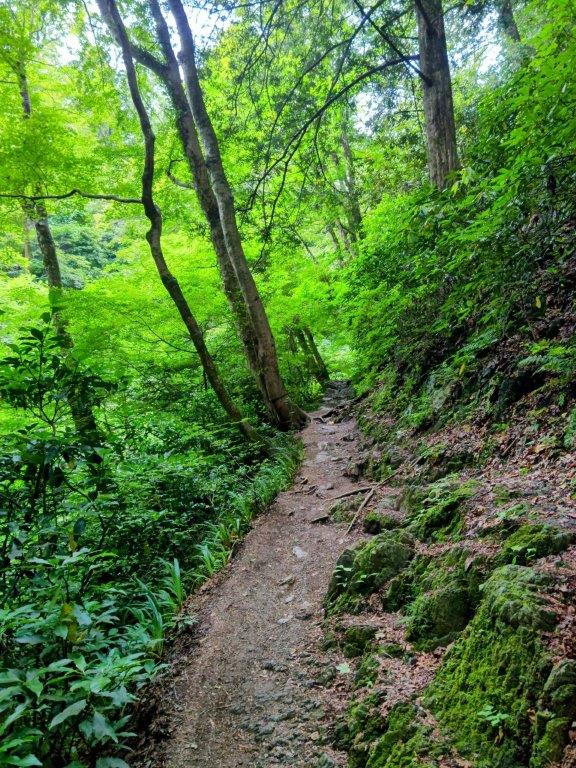
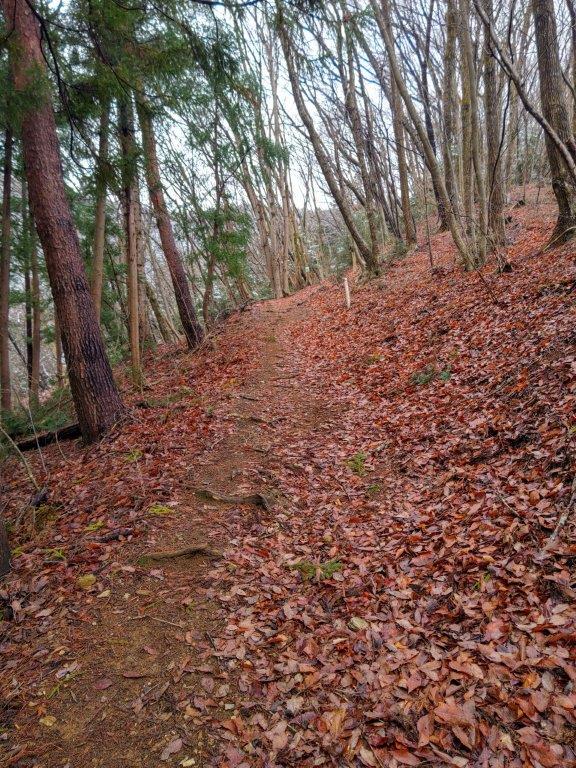
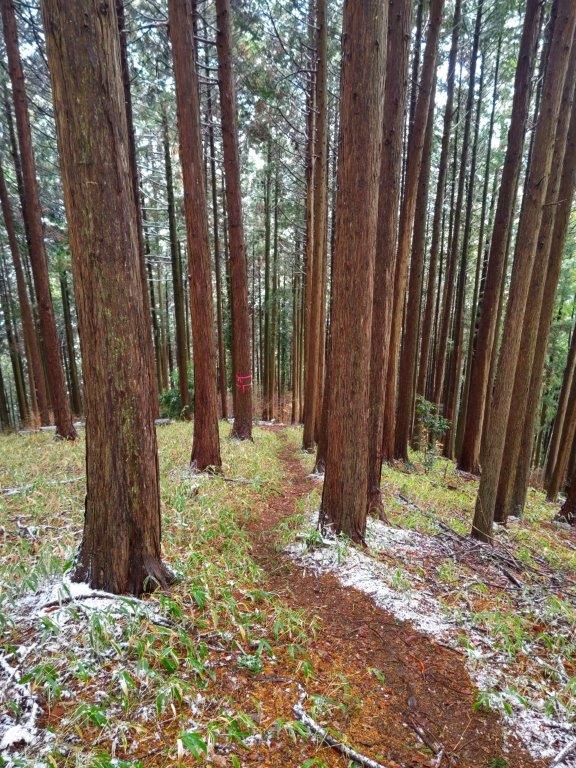
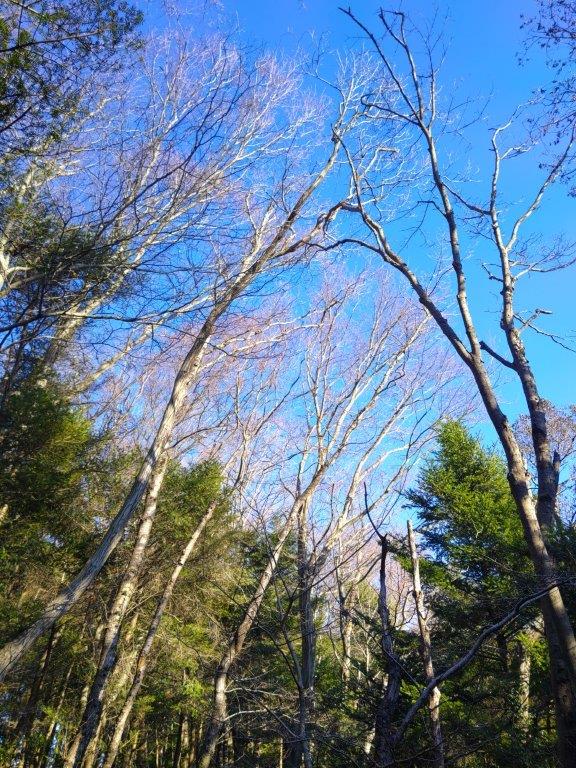
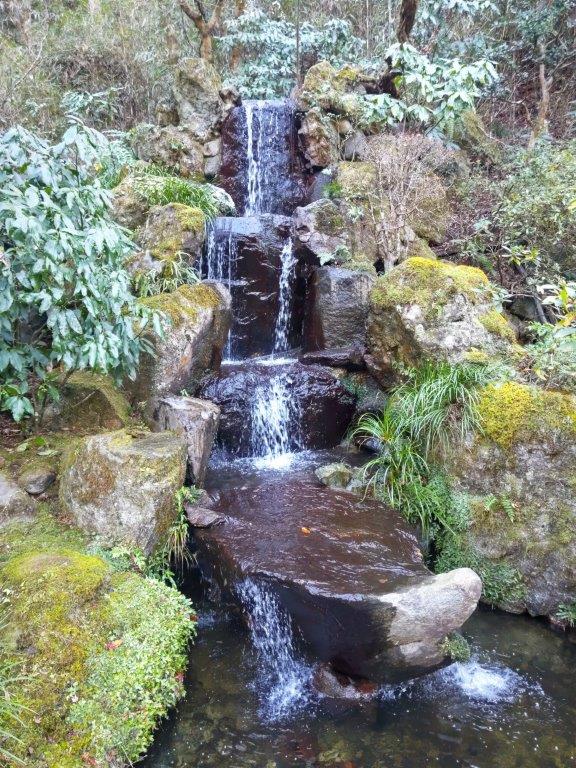
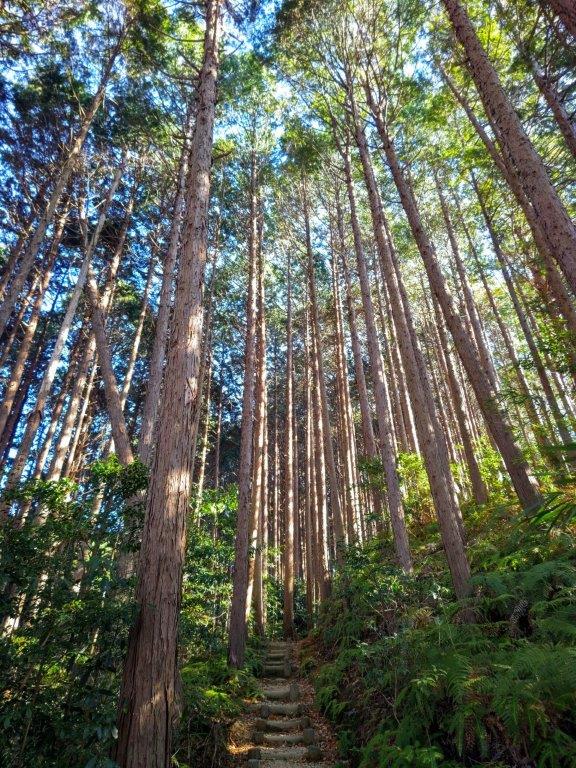
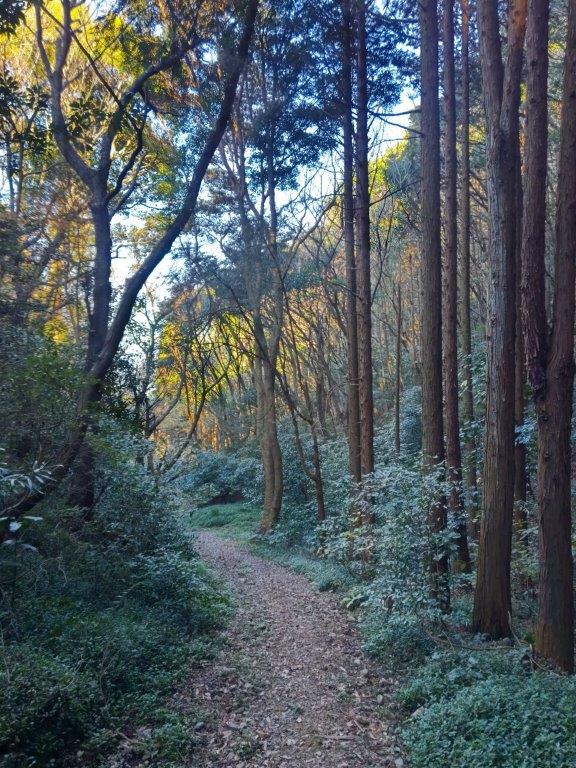
A few raindrops fell as I got off the train at Takao station just past 2pm, but fortunately nothing was falling as I got off at Hikage (日影), ten minutes away on a mostly empty bus. I continued up the main road for a few minutes before turning left and passing over a bridge; I then followed a narrow road alongside Hikage-sawa stream (日影沢). The pleasing rushing sound of the water made up for the gloomy skies overhead. At the Hikagezawa Camping Ground, I turned left onto the Iroha Forest Trail (いろはの森コース). Soon the path started to climb through thick forest, the sound of water slowly fading.

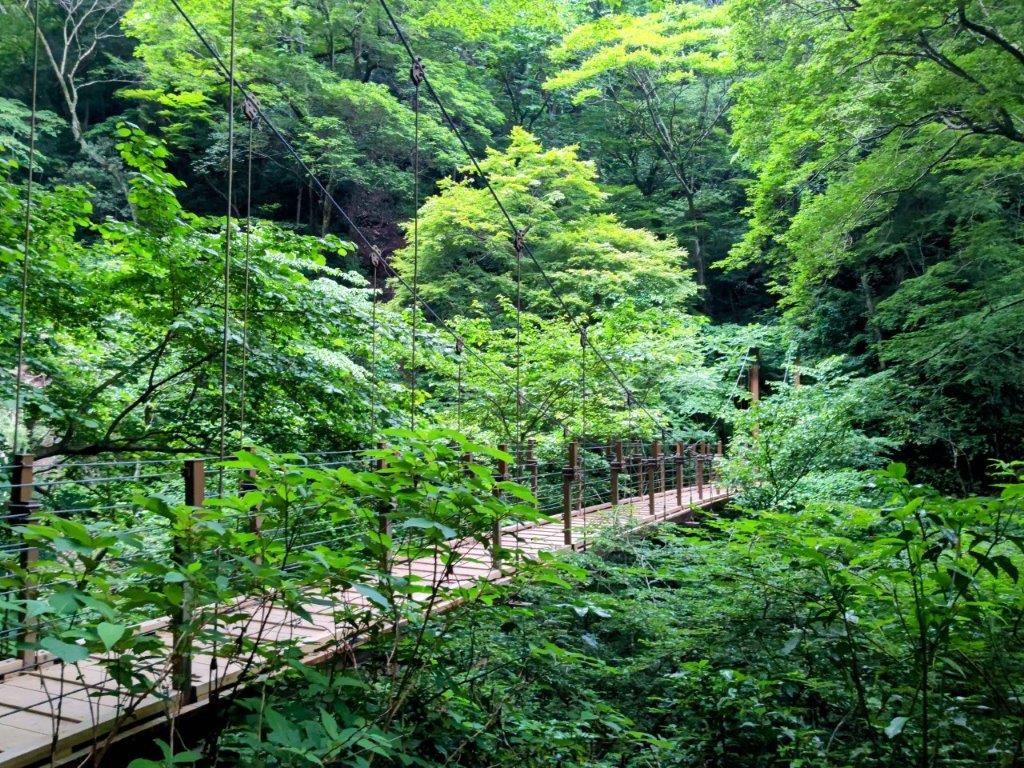
Halfway to the Top (left) Just before the Suspension Bridge Trail (right)

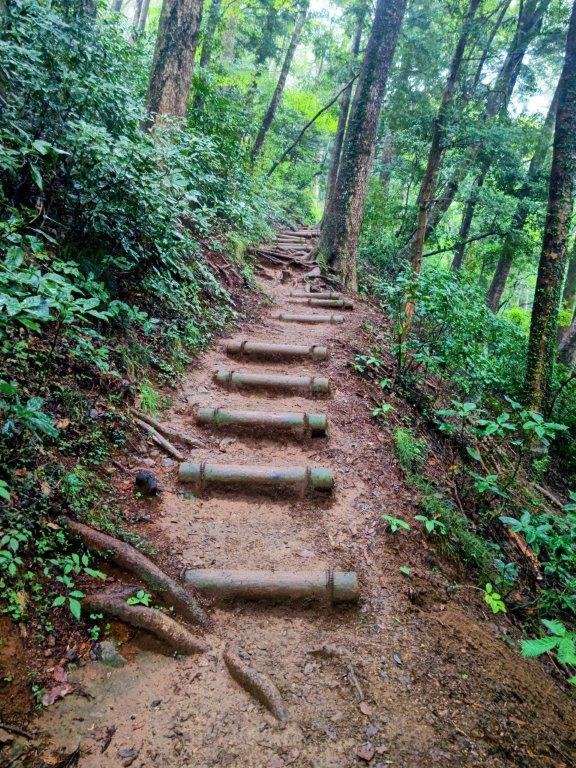
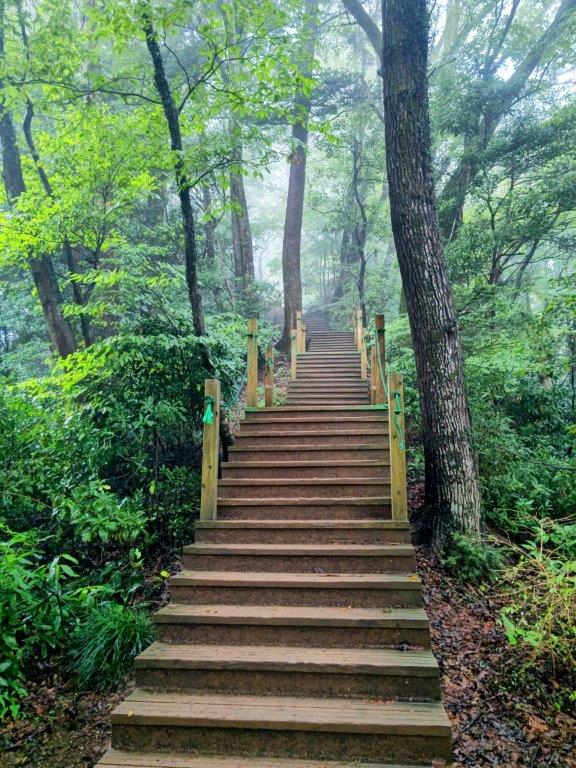
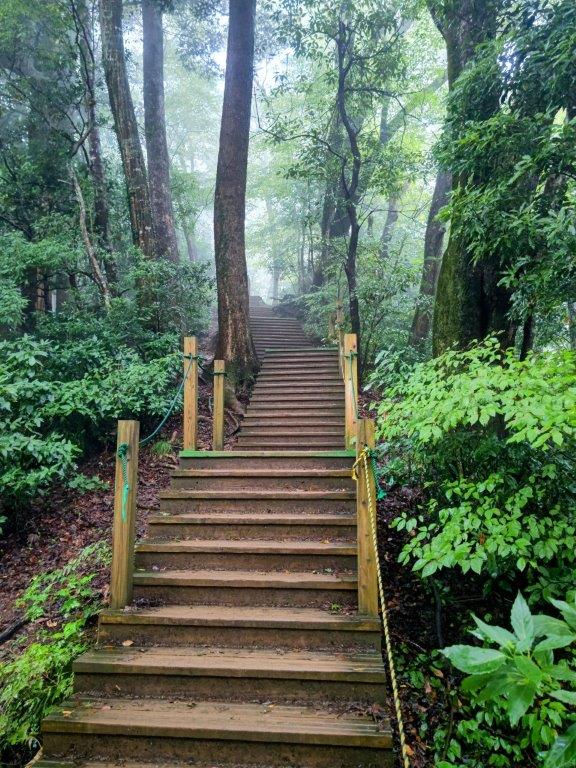
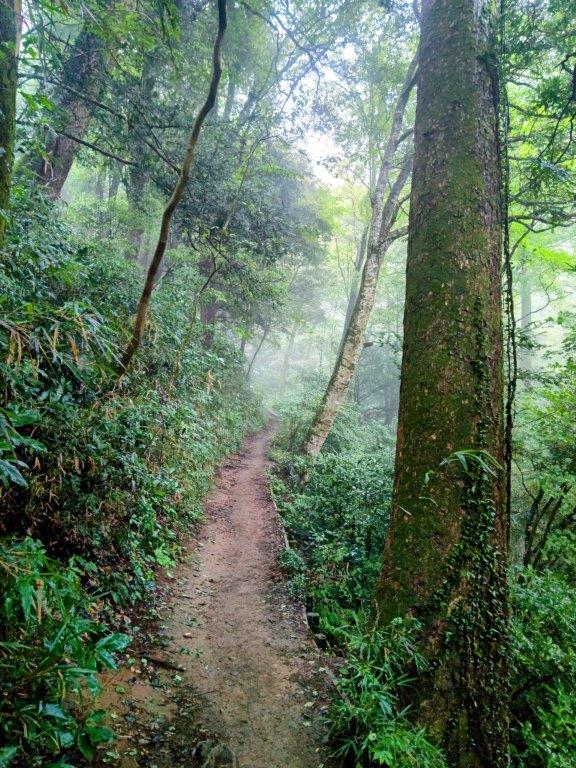
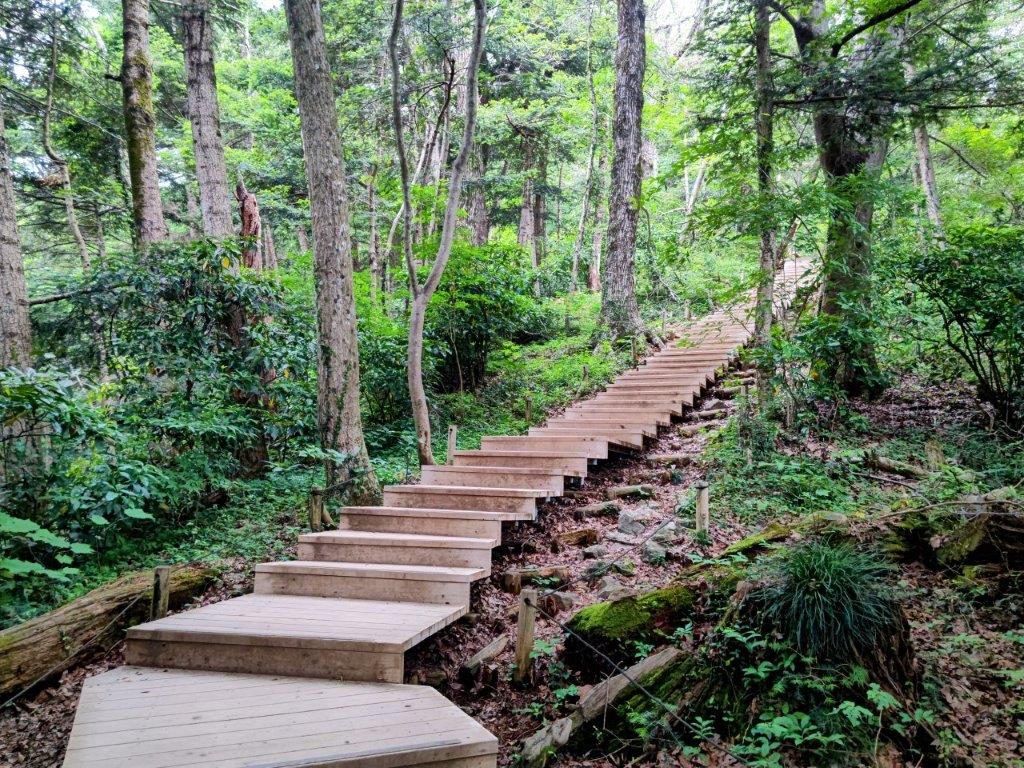
Walking up Wooden Steps (left) and Through the Mist (right)

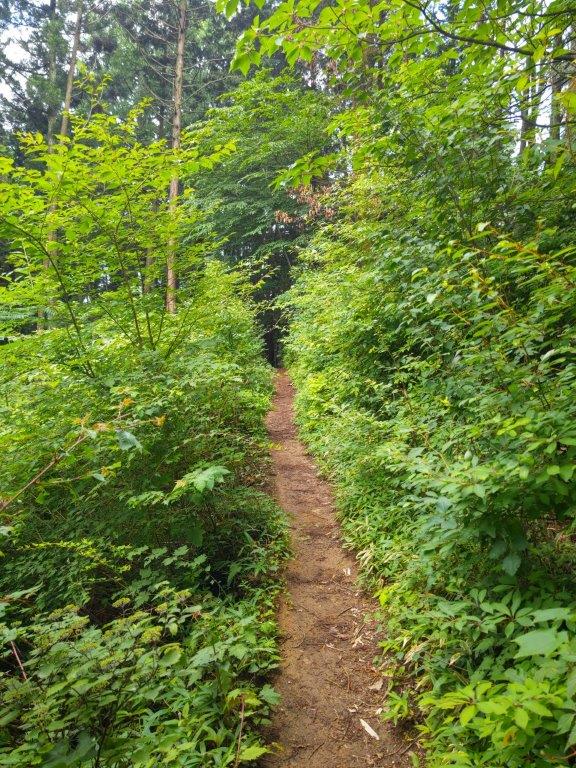
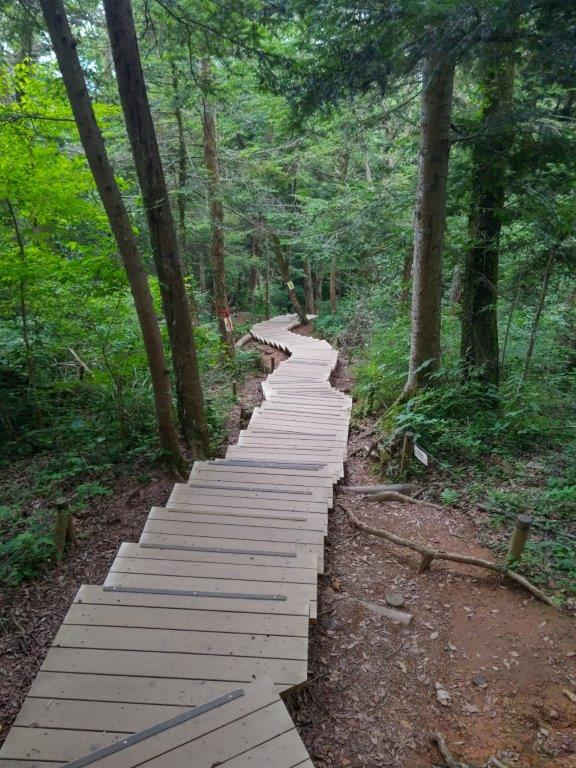
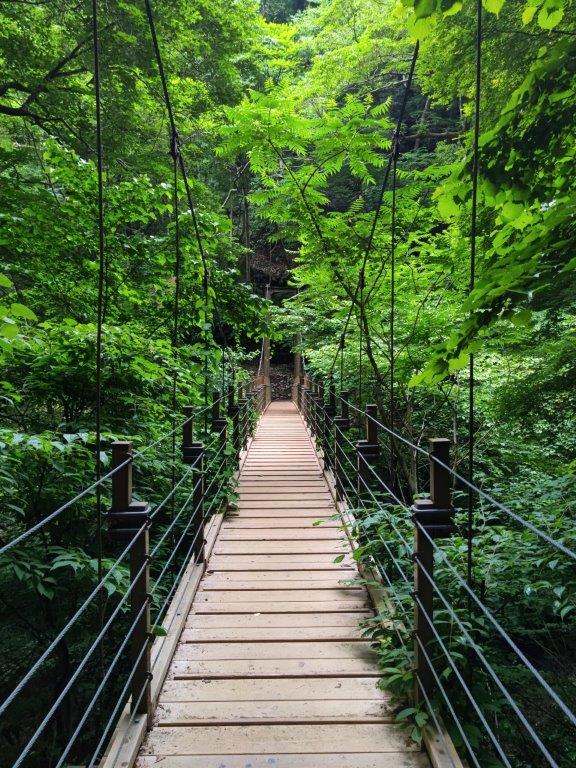
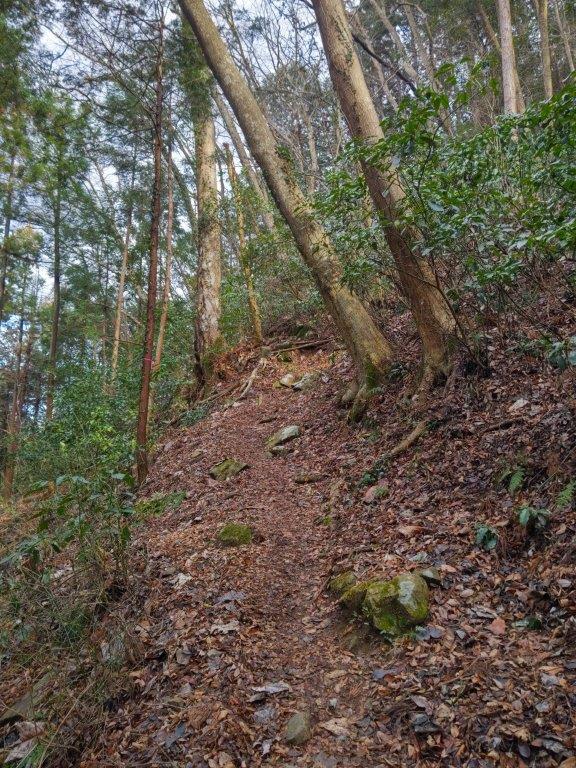
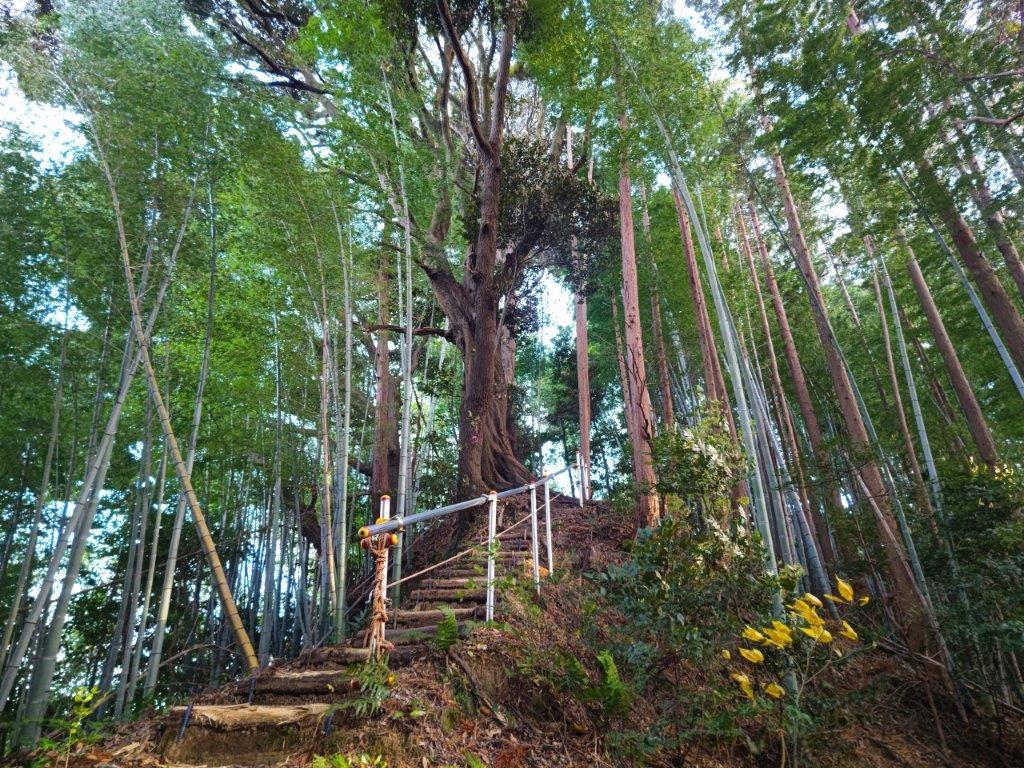
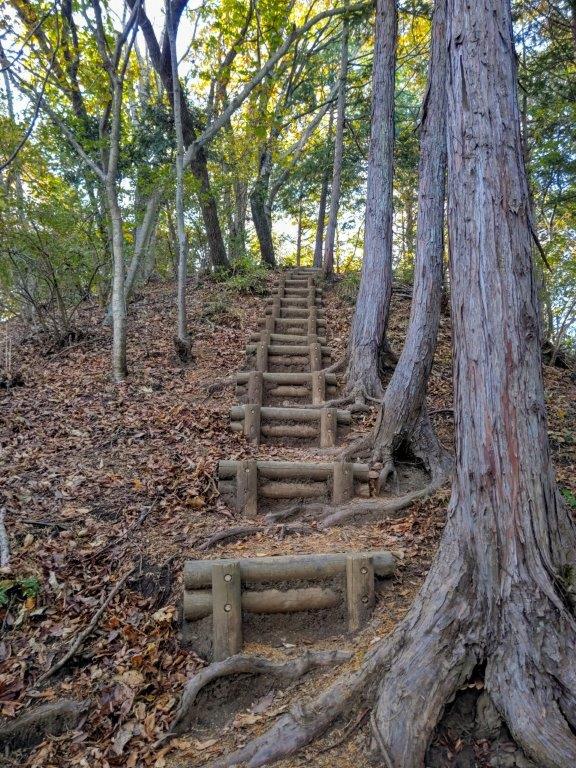
I was surprised by how humid it still was, as I didn’t expect to break a sweat in such a short time. At 3pm, I reached a flatter section on a shoulder of the mountain, the surrounding forest shrouded in mist. Soon I was climbing again, the trail wet and slippery because of yesterday’s rain. I arrived at the intersection with the Suspension Bridge Trail (trail #4), explored four months ago. I continued along the Iroha Forest Trail, making my way up a series of wooden staircases, eventually merging with the Omotesando Trail (trail #1). I now had to share the path with dozens of other people, as well as huge Jorogumo spiders, hanging from immense webs on both sides of the trail. At 3h30, one hour after setting off, I reached the top of Mt Takao (高尾山 たかおさん takao-san), the view consisting entirely of white space.

Exploring Ura-Takao (left) The Path for Momijidai (right)

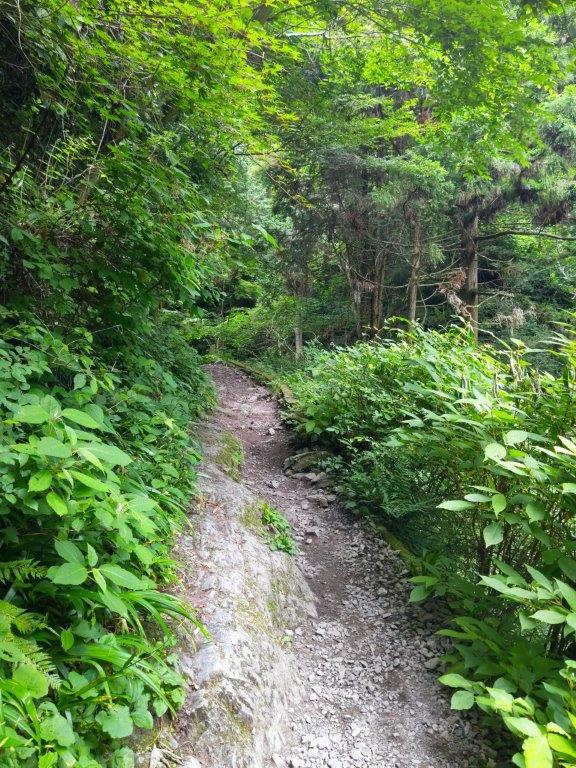
The Summit Loop Trail (left) The Katsura Forest Trail (right)

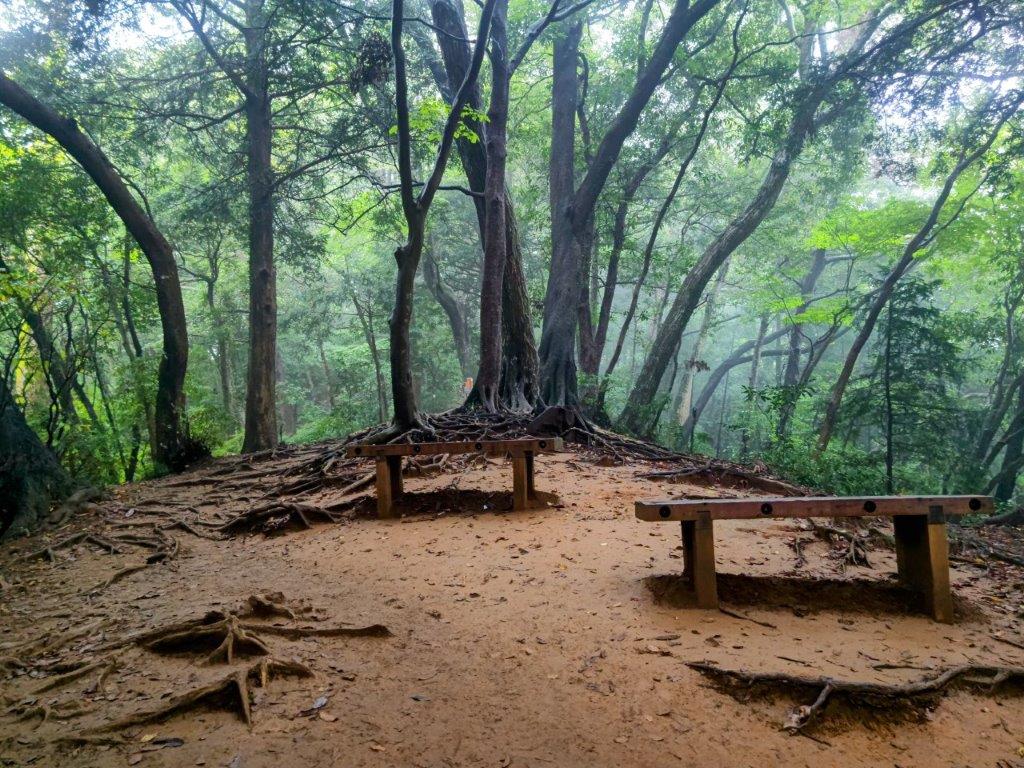
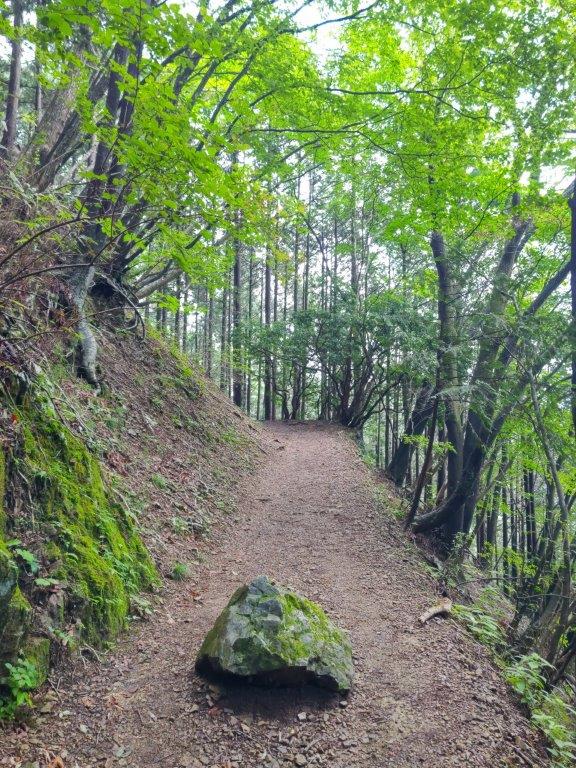
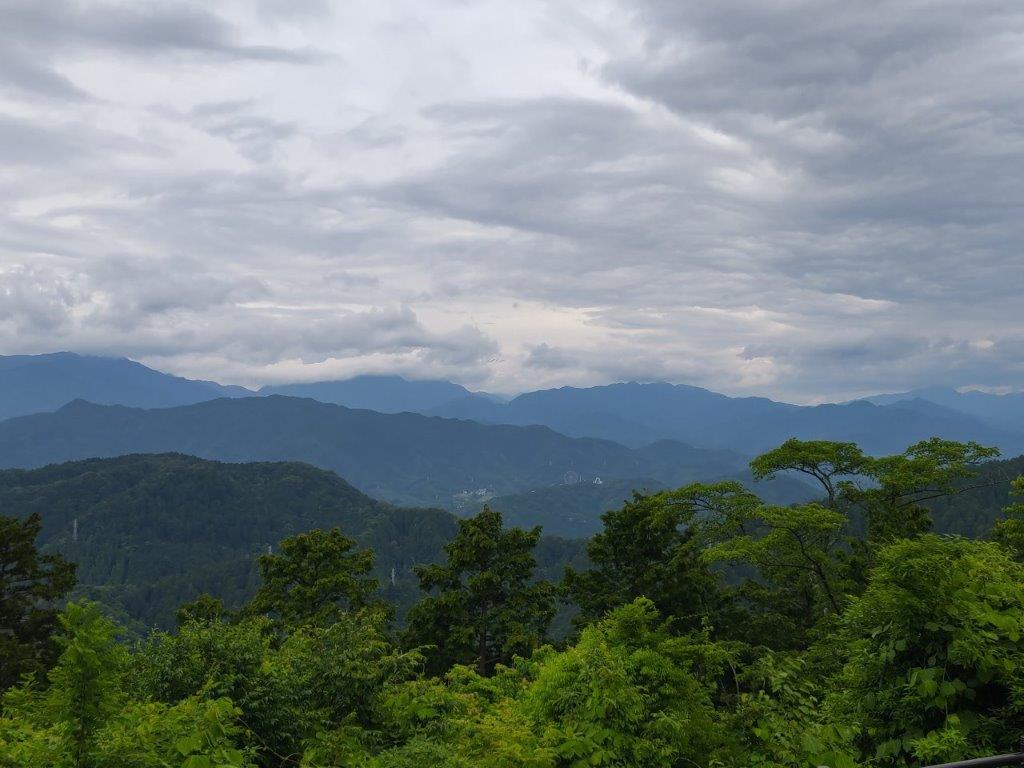
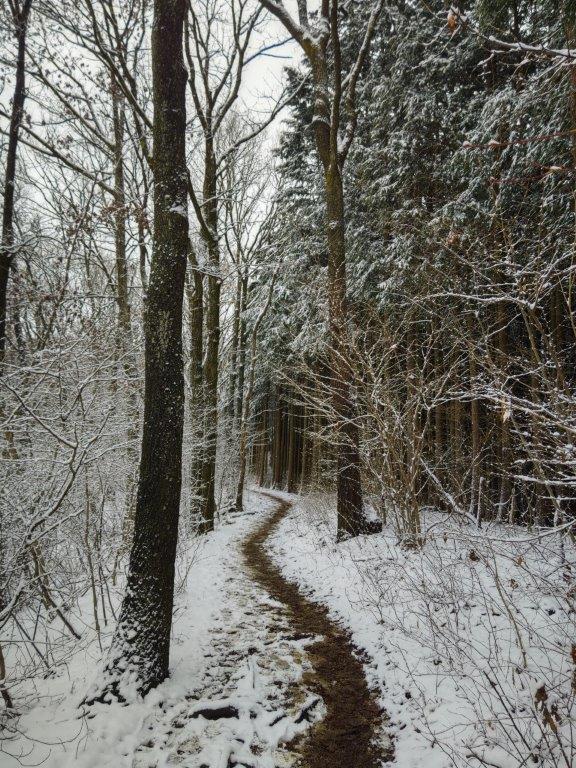
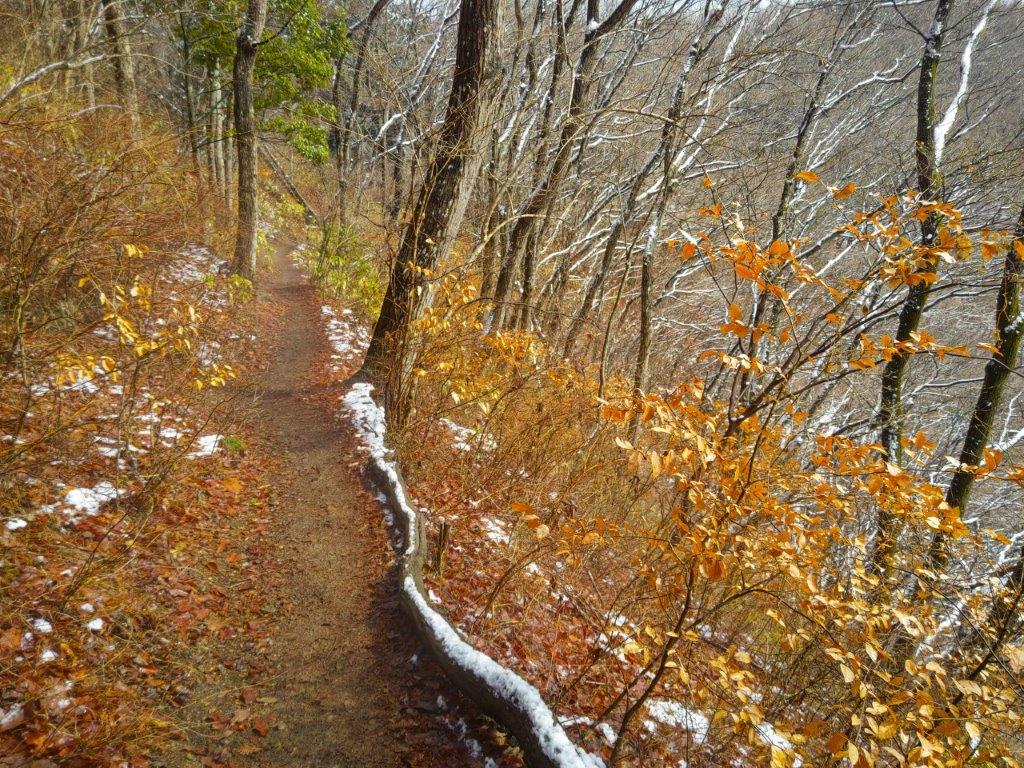
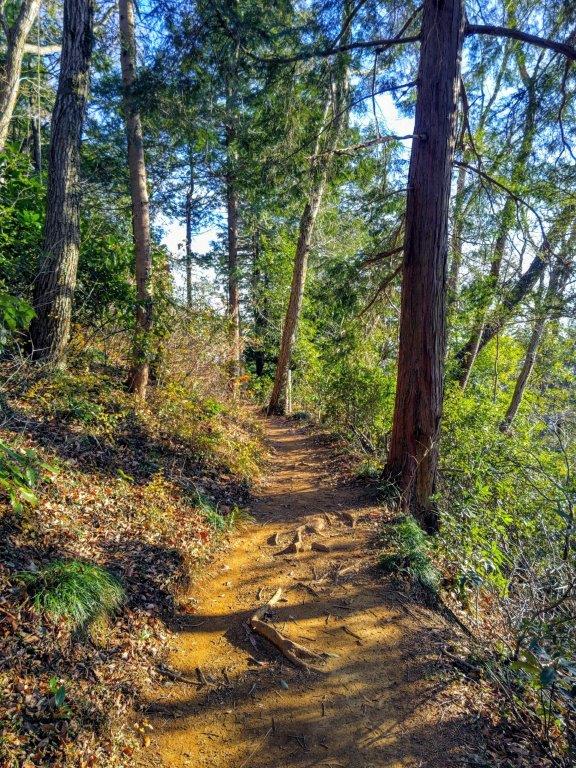
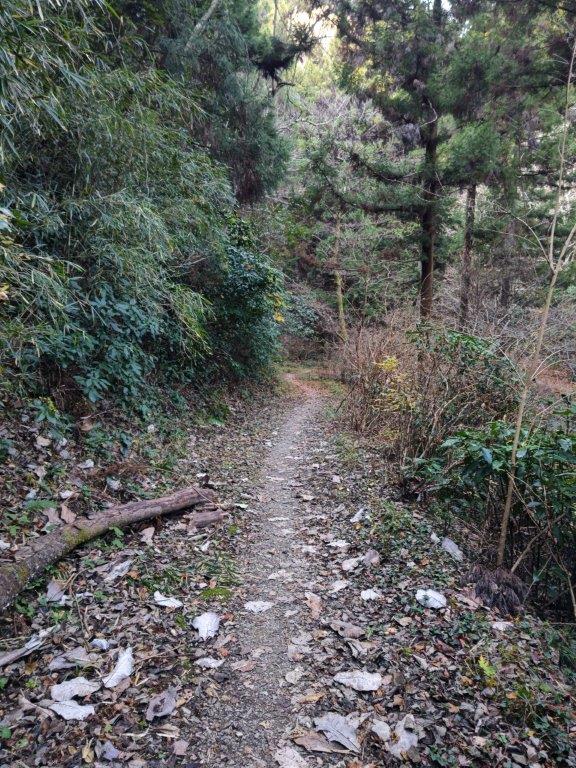
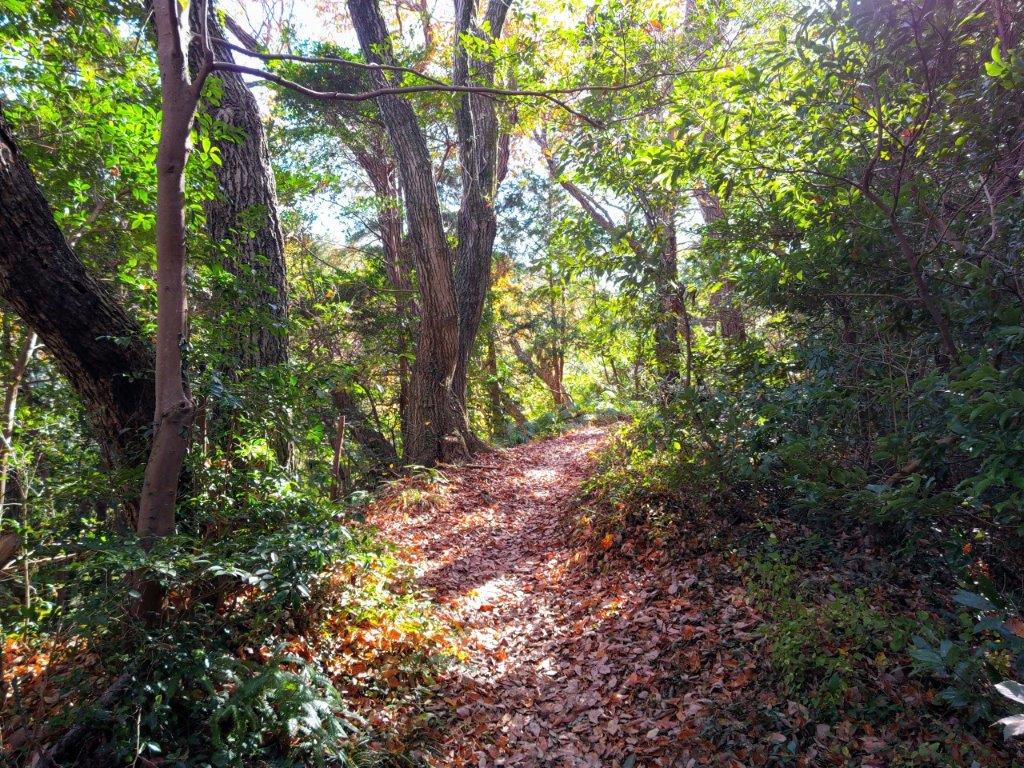
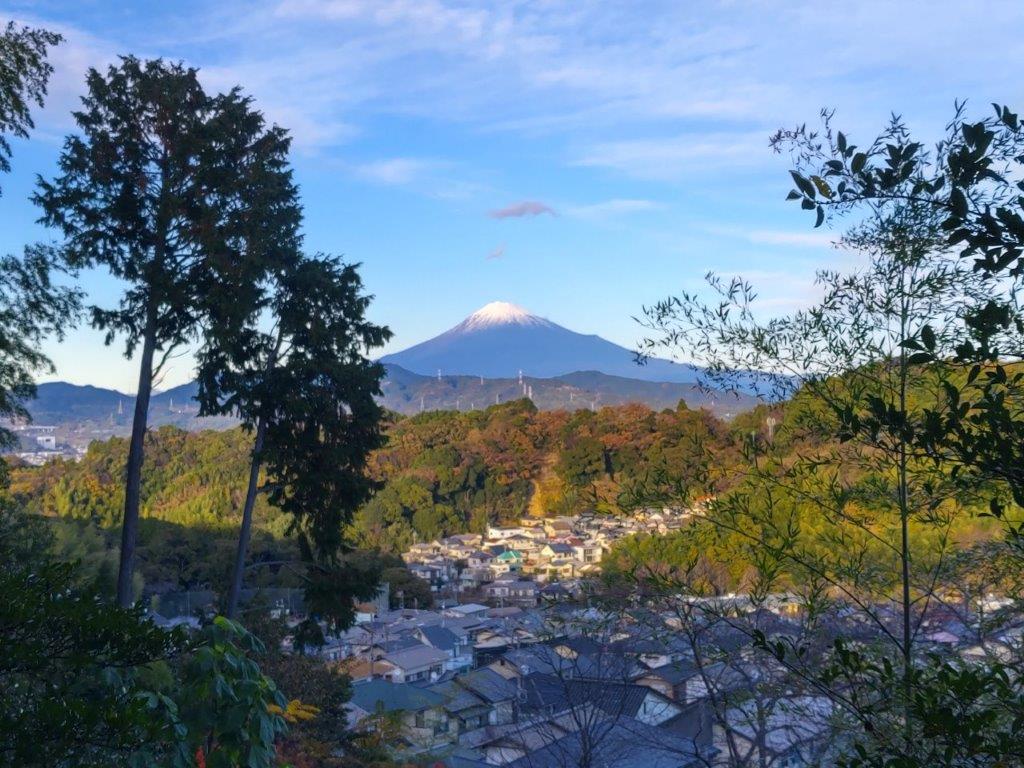
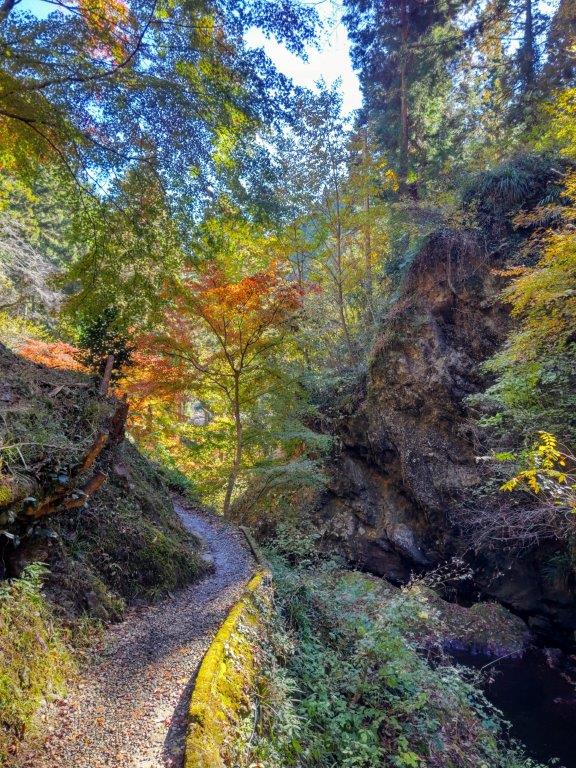
I was surprised to see many people on the summit despite the poor weather. I found an empty spot at a bench for a late lunch. At 4pm, I decided to make a short roundtrip to Momijidai, on the backside of Mt Takao (裏高尾 ura-takao), as I was ahead of schedule. It took half an hour during which I only saw a small snake slither off the trail, and of course more spiders. It was starting to get gloomy so I upped the pace, following the Summit Trail (#5) back to the main side of the mountain, and quickly headed down the Katsura Forest Trail (#3, meaning Japanese Judas Tree). It was a solitary walk through the Meiji no Mori Takao Quasi-National Park, the misty silence broken by the cries of birds.

Rest spot near the intersection of the Iroha Forest and Suspension Bridge Trails

Reaching the End of the Katsura Forest Trail

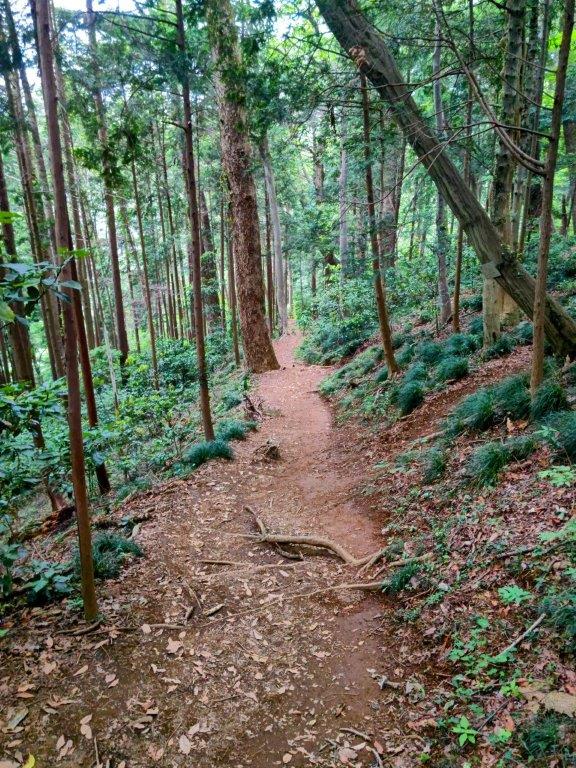
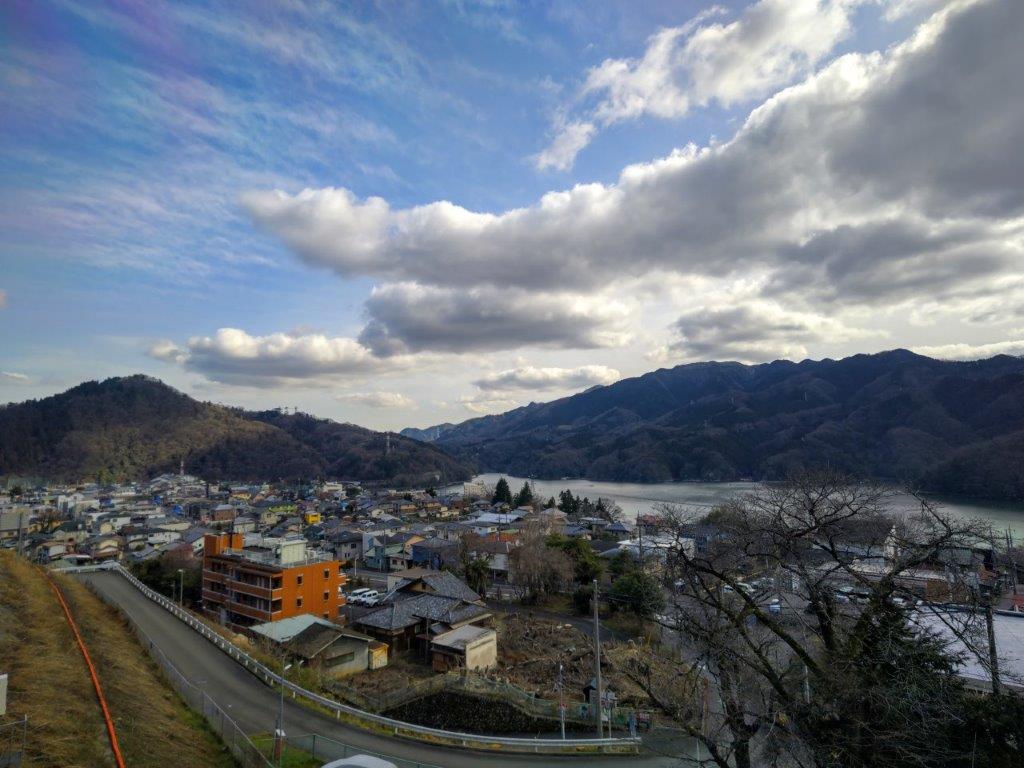
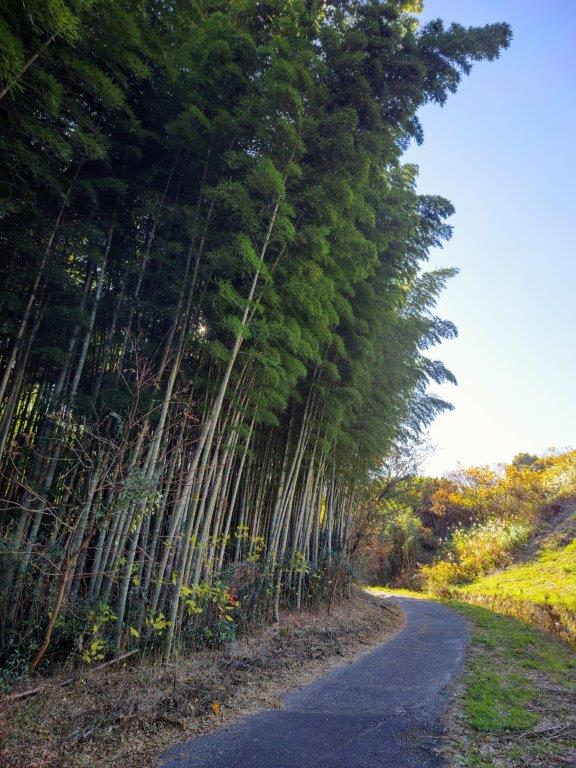
This part took longer than expected as it hugged the mountain side, winding in and out of tiny valleys. Luckily, it was mostly flat and easy to walk, although I had to be careful of the steep drop on the right side and the slippery surface of a couple of wooden bridges. Just as I thought I’d have to take out my headlight, I reached the Kasumidai Trail (#2) at 5pm, and a few minutes later, I emerged into an open space near the cable car, city lights barely visible though the mist. I was tempted to head down the Biwa waterfall trail to avoid the crowds but I knew it would be a tricky descent at this time of the day. Soon after, I was enjoying a nice hot soak at Takaosan Onsen, before hopping on the train for the one hour ride back to Tokyo.

Watch a Video of the Mt Takao Hike

Watch the Video of the Hike on YouTube

See a Slideshow of More Pictures of the Hike

Mt Hinode (902m) & Mt Aso (794m), Tokyo Prefecture, Ome City & Hinode Town, Saturday, June 29, 2024

I was looking for another afternoon hike to make the most of the longer days of June. I also wanted to include a river section as it had rained a lot recently. I decided to head to Mt Mitake and follow the Kanto Fureai no Michi to Mt Hinode last visited ten years ago. From there I would follow a ridgeline to a minor peak I had to yet to climb; according to online reports, it had a wide view on the east side. I’d then follow the Shiraiwa-Taki hiking trail westwards to Shiraiwa waterfall, a short distance from the end of the trail. If time allowed, I could drop by nearby Tsuru Tsuru Onsen for a wash and a soak before heading back.

Hiking in the Chichibu-Tama-Kai National Park

秩父多摩甲斐国立公園

Hiking in Okutama 奥多摩

Hiking the Kanto Fureai no Michi 関東ふれあいの道

To get to Mt Mitake, I’d ride the Chuo line from Shinjuku, change to the Ome lime in Tachikawa, change again to the Okutama line in Ome, and get off at Mitake station, a short bus ride from the Mitake cable car. For the return, I’d ride the bus from the hot spring to Musashi-Itsukaichi station, then take the Itsukaichi line to Tachikawa and finally transfer to the Chuo line for Shinjuku. The weather was supposed to be cloudy with temperatures in the mid-twenties. I hoped the higher humidity would still allow for comfortable hiking. I was looking forward to exploring new trails, getting some good views and seeing lots of rushing water.

For subscribers, read this Blog Post on Hiking Around Tokyo for a better viewing experience and the latest updates

Fureai no Michi past Mitake Village (left) on the way to Mt Hinode (right)

Mt Hinode Trail Before the Summit (left) and Past the Summit (right)

It was a cloudy day as I rode the train from the tall, shiny skyscrapers of Shinjuku to the low, green hills of Ome. As I had left around noon, I was rewarded with sitting space on the trains, as well as on the cable car shuttle bus and the cable car itself, my first time to be comfortably seated after half a dozen trips to the area. It was also my first time to visit in June, the green of spring in full swing, white and purple Hydrangea (ajisai) lining the road.

Trail between Mt Hinode and Mt Aso (left) Shiraiwa-Taki Hiking Trail (right)

Falls (left) and Wooden Walkway (right) along the Shiraiwa-Taki Hiking Trail

It felt pleasantly cool felt as I exited the cable car top station just before 2pm. I was relieved that few people had chosen to visit in the rainy season. After getting ready and checking the view of today’s two peaks from Mitakedaira, I made my way up some steps to an observation deck from where I had a slightly better view of the area. I decided to make a quick detour via Ubuyasu Shrine (産安社), a peaceful spot with some impressive cedars, reminding me that I was inside the Chichibu-Tama-Kai National Park. I then headed down a different path taking care not to slip, the ground still wet from yesterday’s rain, arriving at the Mitake Visitor Center at 2h30, also the junction with the Kanto Fureai no Michi.

View of Mt Aso (left) and Mt Hinode (right) from Mitakedaira

View of Mt Aso (left) and Mt Hinode (right) from the Observation Deck

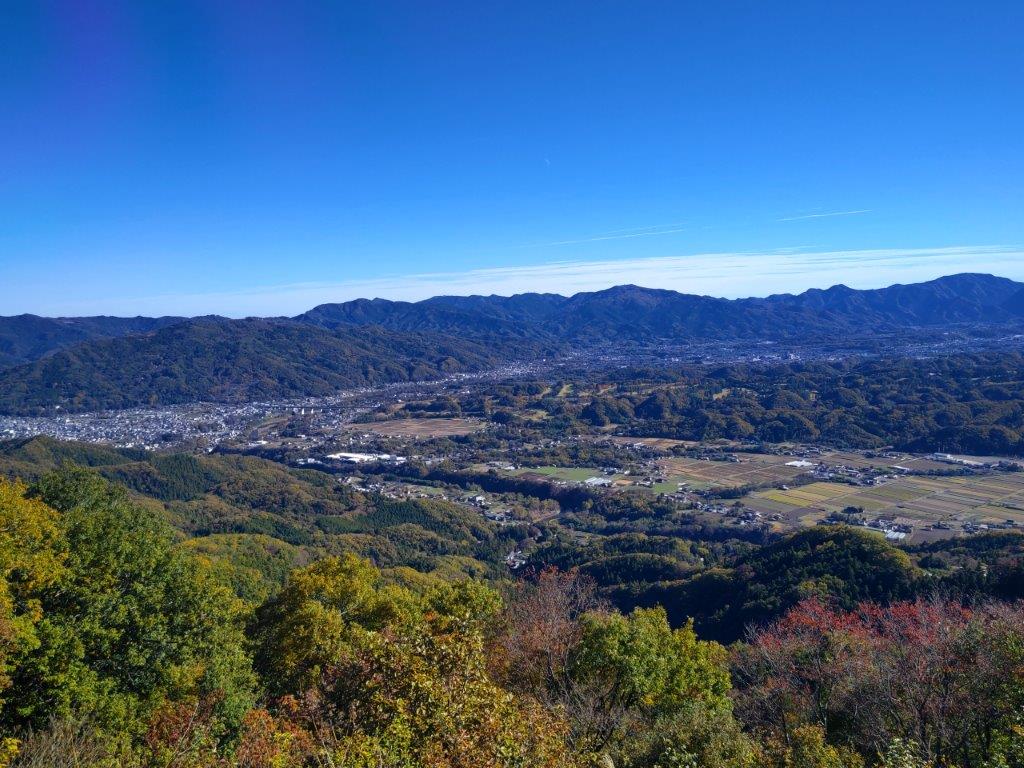
I suddenly felt quite warm as the sun had came out from behind the clouds. After crossing Mitake Village, I found myself on a level path through cedars, arriving at a junction past a Shinto gate at 3pm. I took the left path heading up the mountain side, and less than half an hour later, arrived at the top of Mt Hinode (日の出山 ひのでやま hinodeyama), a Tokyo 100 famous mountain, the name translating as “sunrise mountain”. Looking north, I could see the Okutama Mountains, and to the south, the Tanzawa mountains; straight ahead was the Kanto Plain and Tokyo.

Steps leading to the Observation Deck and Ubuyasu Shrine

View of Tokyo and Kanto Plain from the top of Mt Hinode

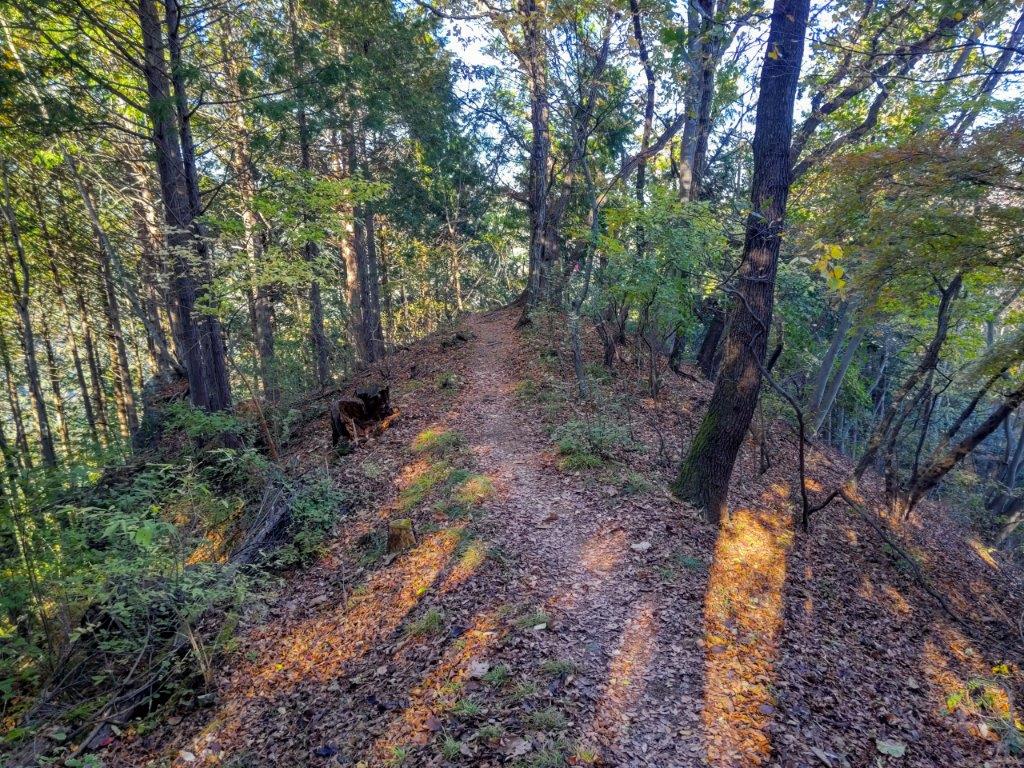
I was slightly worried about rain as thick clouds had appeared on the west side, hiding the summit of Mt Mitake. After a break, I set off down a steep trail on the south side, the descent made easier by log steps. Just before 4pm, I reached a T-junction: to the left was the shortest path for Tsurutsuru onsen, favoured by the few remaining hikers; however, I turned right, now following a narrow path, with views of the triangular summit of today’s next mountain on the left side through gaps in the vegetation; I soon left the Fureai no Michi as it descended into the valley on the right. At 4h30 I was standing on the top of Mt Aso (麻生山 あそうさん aso-san), feeling quite sweaty despite the short climb.

View of the Triangular Summit of Mt Aso

Second Viewpoint of Mt Aso

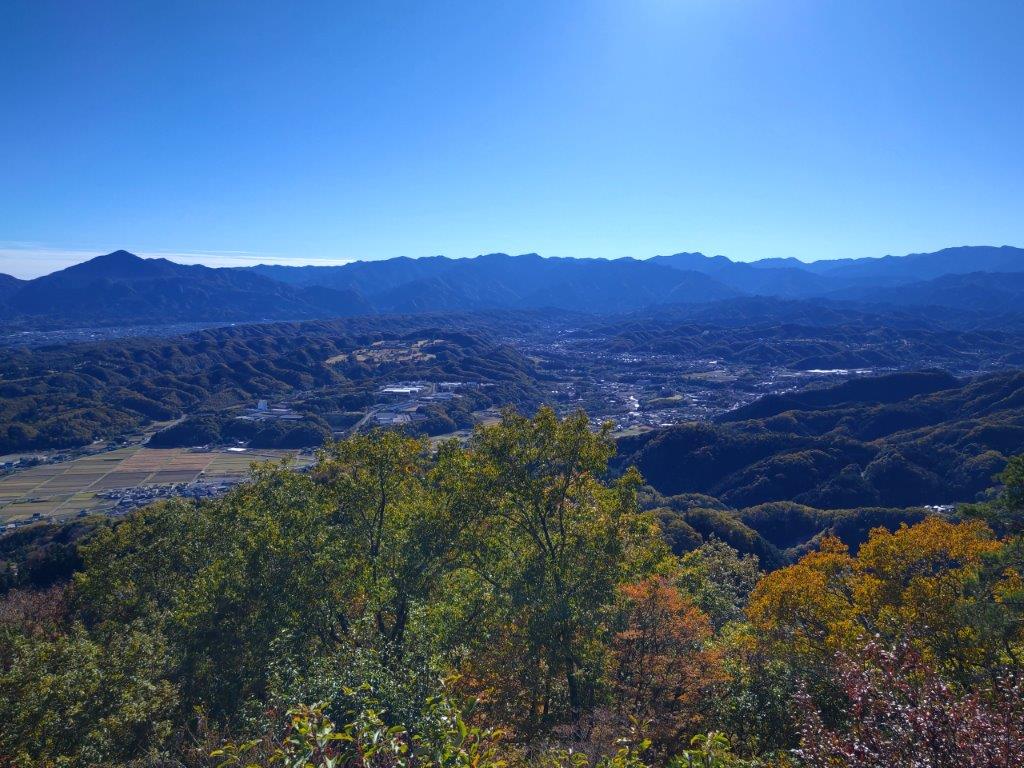
I was stunned by breathtaking view of the Kanto plain, the east side completely free of trees and mountains. I was a little behind schedule so instead of taking a breather on one of the several benches, I headed west, now following the Shiraiwa-Taki Hiking Trail (白岩滝ハイキングコース). As I walked down a dark valley, I could hear the bark of deer but never saw any. Very soon, I was walking beside a small charming stream, my hopes for the day fulfilled. A little after 5pm, I arrived at a trail junction, where I went right, sticking close to the rushing water. I passed several small falls before arriving at a point where the trail had collapsed.

View of Mt Mimuro from Asodaira

Trail leading to Shiraiwa-no-Taki Waterfall

I thought I’d have to turn back but then noticed some rope leading down into and then up and out of the jumble of rocks and sand. Proceeding carefully and using the rope, I safely crossed to the other side and was soon walking again on a normal, but slippery trail. Shortly after, I arrived at the highlight of the hike, Shiraiwa waterfall (白岩ノ滝 shiraiwa-no-taki). The path took me right next to the falls, the sound water roaring in my ears; at the base, I crossed a bridge and made my way to a an observation platform on the opposite side.

Preliminary Waterfall near the Collapsed Part of the Trail

View of Shiraiwa Waterfall from the Observation Platform

I gazed in wonder at the thundering falls, wondering how much of the water was due to the recent rainfall. I was also amazed I had the place entirely to myself, although this may have been due to the late hour. I eventually pulled myself away from the view, and at 6pm, arrived at a bus stop at the end of the trail. After a short wait I boarded a bus for the short ride to Tsurutsuru Onsen, at the end of the line. After a refreshing bath, I boarded the bus again for the 30 minute ride to Musashi-Itsukaichi station where I boarded the 8pm train, finally arriving back in Shinjuku about an hour later.

See a video of the Mt Hinode Hike

Watch the Video of the Hike on YouTube

See a Slideshow of More Pictures of the Hike

Mt Takao (599m), Hachioji City, Tokyo Prefecture, Sunday, June 9, 2024

I wanted to do a late afternoon hike to take advantage of the longer days of June. I decided to head to Mt Takao in the hope that most people would be on the way home by then. It would be my first visit in a while since lately I’ve preferred the less popular peaks. Although I’d been to the top about a dozen times it would be my first time in June. Looking at the English map on the Mt Takao official site, I chose to go up Trail 6 and down Trails 4, 2 & 1. If I finished early enough, I could enjoy a hot spring bath before heading back.

Hiking in the Meiji no Mori Takao Quasi-National Park

明治の森高尾国定公園

I would ride the Keio line limited express from Shinjuku to Takaosan-guchi, and use the same train for the return. The weather was supposed to be overcast and dry with temperatures cool for the season but comfortable for hiking. I was looking forward to my first late afternoon hike in 2 years and revisiting a familiar place. The cloudy weather meant views would be scarce but I hoped the new green of spring would make the trip worthwhile.

As of july 2025, the Inariyama trail is closed for repair. Consequently, trail #6 (described in this post) has been changed to a one-way ascending-only trail to prevent accidents and traffic jams due to overcrowding. This restriction in in place all day; trail running (in either direction) is also prohibited. In other words, it’s not possible to hike down this trail for the time being (no end date to the restriction has been given). Multiple signs in Japanese and English have been placed at the bottom and top of the trail, as well as long other trails. Please take this into account when planning your hike.

Start of Trail #6 (left) Before the Inariyama Trail Connecting Path (right)

Walking on Water past the Inariyama Trail Connection Path (left & right)

It was a grey day as I rode the mostly empty limited express from Shinjuku, arriving at Takoasan-guchi station a little after 4pm. I passed countless people heading home as I made my way from the train station to the cable car station, the starting point for most of the hiking paths. As I started up trail #6 on a paved road alongside a river, the cable car thundered by overhead; I would not be riding it today as the last one was scheduled for 6pm, well before the end of today’s hike.

River Section of Trail #6 (left) Steps at the Top of Trail #6 (right)

Looking Back at the Steps of Trail #6 (left) Heading Down Trail #4 (right)

I was surprised by the volume of water in the river, considerably more than during my previous visit in the winter months. The number of descending hikers became less and less, and past Oyama Bridge, I had the trail mostly to myself. I was impressed by the height of the cedar trees along the river valley, a reminder that I was inside the Meiji no Mori Takao Quasi-National Park. Shortly after 5pm, I reached a connecting path with the Inariyama Trail (#1) but continued straight along trail #6.

Walking Down Trail #4 (left) Steps Down Trail #4 (right)

Crossing the Suspension Bridge (left) Near the End of Trail #4 (right)

The trail turned into a stream without warning, the overflow probably due to the heavy rain from the previous days. I hadn’t expected to be walking in water and it was hard to believe I was right at the edge of Tokyo. Eventually, the trail left the river valley, heading straight up the mountain side. The steep ascent was aided by wooden steps, a fairly recent addition. Soon I reached a flat area just before trail #5, a short path encircling the summit. At 5h30, I was standing on the top of Mt Takao, eerily quiet in the early evening.

Wooden Steps on the Higher Sections of Mt Takao

Mt Fuji hidden in the Clouds

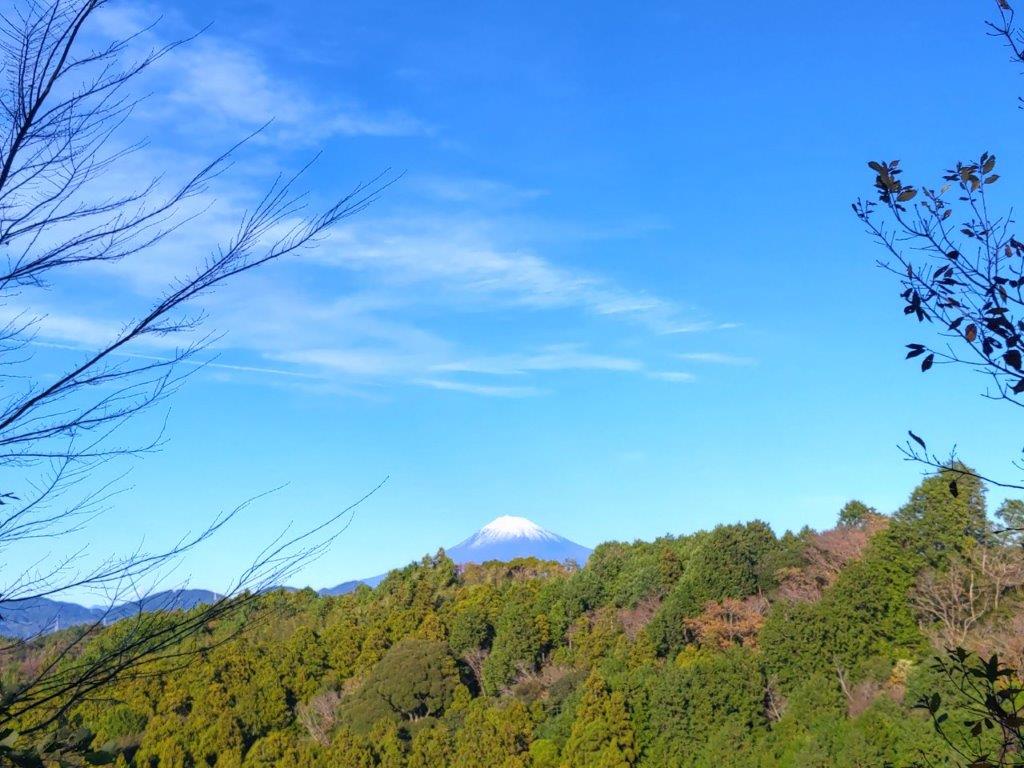
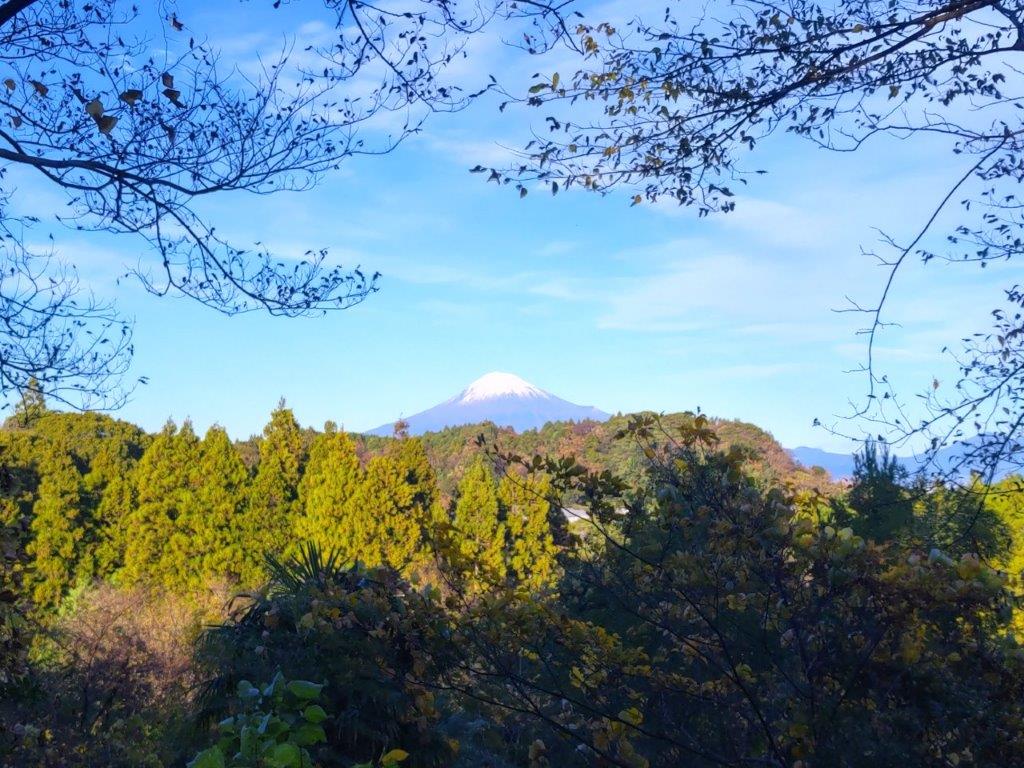
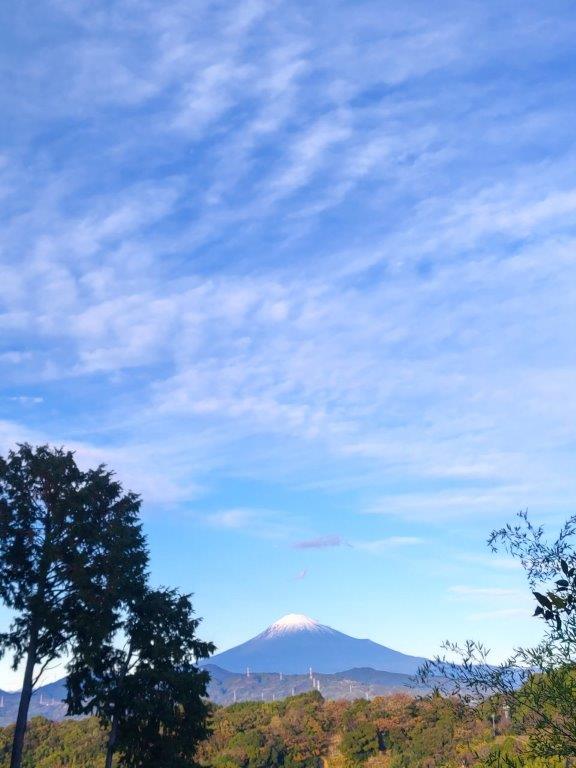
It was a rare sight to see the top of Mt Takao empty of people. I made my way to the viewpoint on the south side but today Mt Fuji was mostly hidden in the clouds. After a short break, I made my way down Trail #4 on the other side of the mountain. Many sections were fitted with steps making it easy to walk even as the daylight was swiftly fading. At 6pm, I arrived at a suspension bridge, partially hidden by green tree branches. Before the junction of Trail #4 with the road leading down from the summit, I ducked down Trail #2 for some more forest walking. At 6h30, I reached the now deserted top station of the Takao cable car.

Suspension Bridge Hidden by Tree Branches

Walking a Level Section of Trail #4

I spent a few moments enjoying the quiet atmosphere of what is usually a very busy place, before heading down trail #1, a steep road shared with authorized cars. I walked at a fast pace, overtaking the few people still left, and less than half an hour later, was back at my starting point. At 7pm, I entered the Keio Takaosan Onsen Gokurakuyu (京王高尾山温泉極楽湯), right next to train station and last visited in December 2023. After a refreshing hot spring bath, I hopped onto the Keio limited express train for the one-hour ride back to Shinjuku.

Watch a Video of the Mt Takao Hike

Watch the Video of the Hike on YouTube
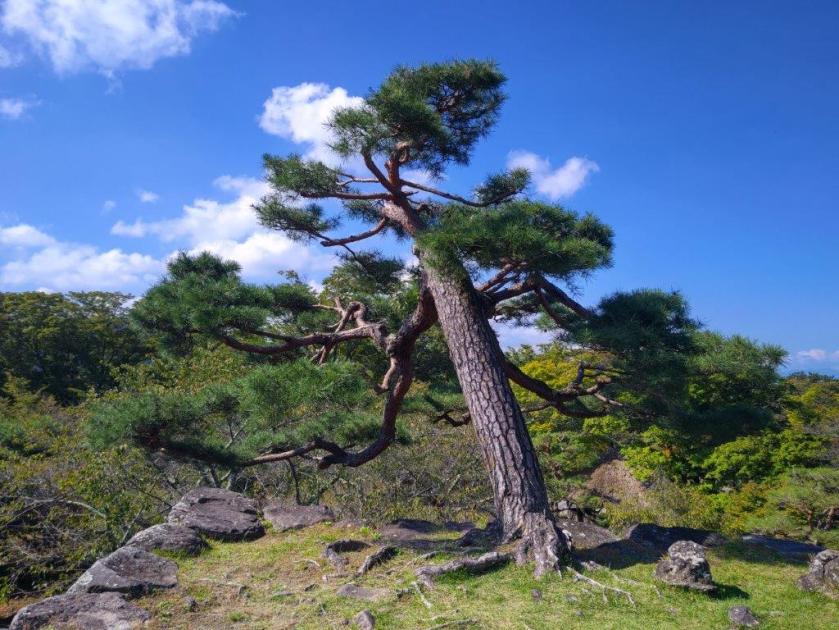
See a Slideshow of More Pictures of the Hike

Sakura no Sato (700m), Mt Myogi, Shimonita Town, Gunma Prefecture, Saturday, March 16, 2024

I had been planning to do this section of the Gunma Fureai no Michi for a while but kept on putting it off since the second half, done more than ten years ago, was closed due to rockfall. As with my previous hike, it was becoming clear that the closure might be permanent so I decided to head out anyway, and just follow the road for the last part. Although I wouldn’t be passing any summits on the way, I hoped to to get a view of the mountains of western Gunma from a park located on the southern flanks of Mt Myogi.

Hiking on the Kanto Fureai no Michi 関東ふれあいの道

Hiking in Nishi-Joshu 西上州

To get to the start of the hike, I would ride the shinkansen to Takasaki and then transfer to the Joshin railway for the one-hour ride to Shimonita. There, I would ride a taxi to a nearby plum blossom garden. I would end the hike at a hot spring facility at the northern edge of Mt Myogi; after a refreshing dip, I could take a taxi to Matsuida station on the Shin-Etsu line, a few stops from Takasaki. The weather was supposed to be sunny, as well as warm for the season. I was looking forward to getting some close up views of one of the three famous mountains of Gunma.

For subscribers, read this Blog Post on Hiking Around Tokyo for a better viewing experience and the latest updates

Going up through the Sakura no Sato Park

View of Hitto Rock (left) Path for Myogi Shrine (right)

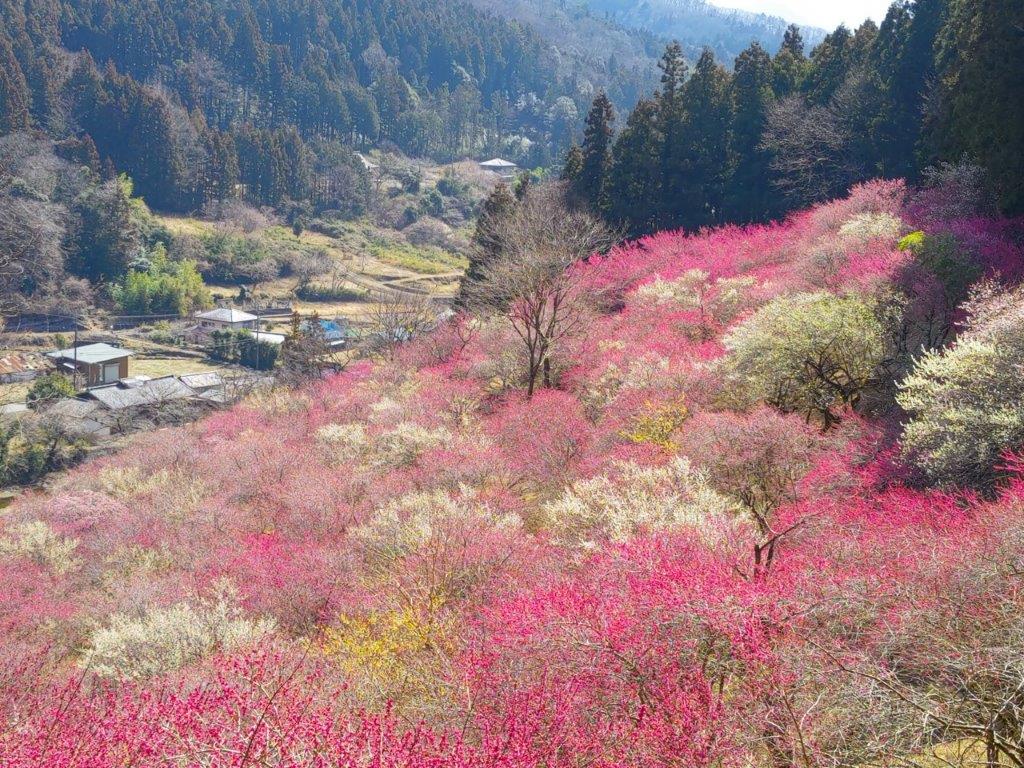
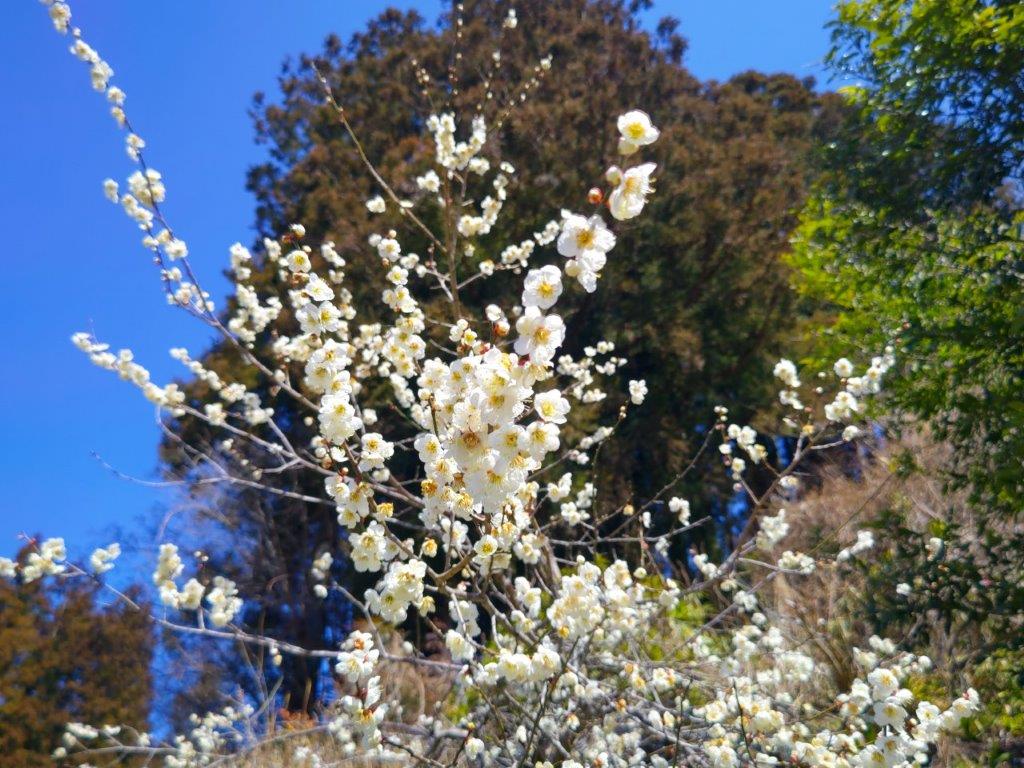
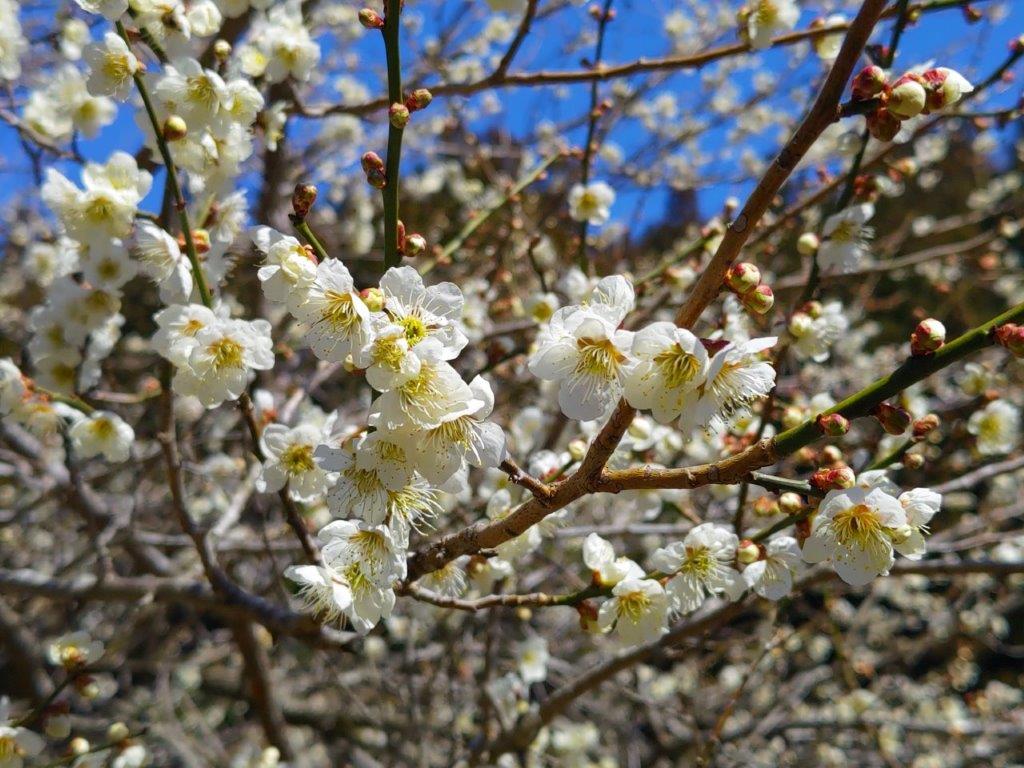
Surprisingly, almost all seats on the Joshin Electric line were taken upon leaving Takasaki station, although most passengers got off well before Shinomita, the final station on the line. After a short taxi ride, I was at the entrance of Fukujuso no Sato (寿草の里), a little past 10am. After getting reading for hiking, I made a small donation at the front gate and entered the plum blossom garden, the last day of the year it was open to the public. I made my way along a path under white and red blossoms, slowly heading up the mountain side; at 11am, I reached a viewpoint at the highest point of the garden.

View of Mt Ogeta (right) from Fukujuso no Sato

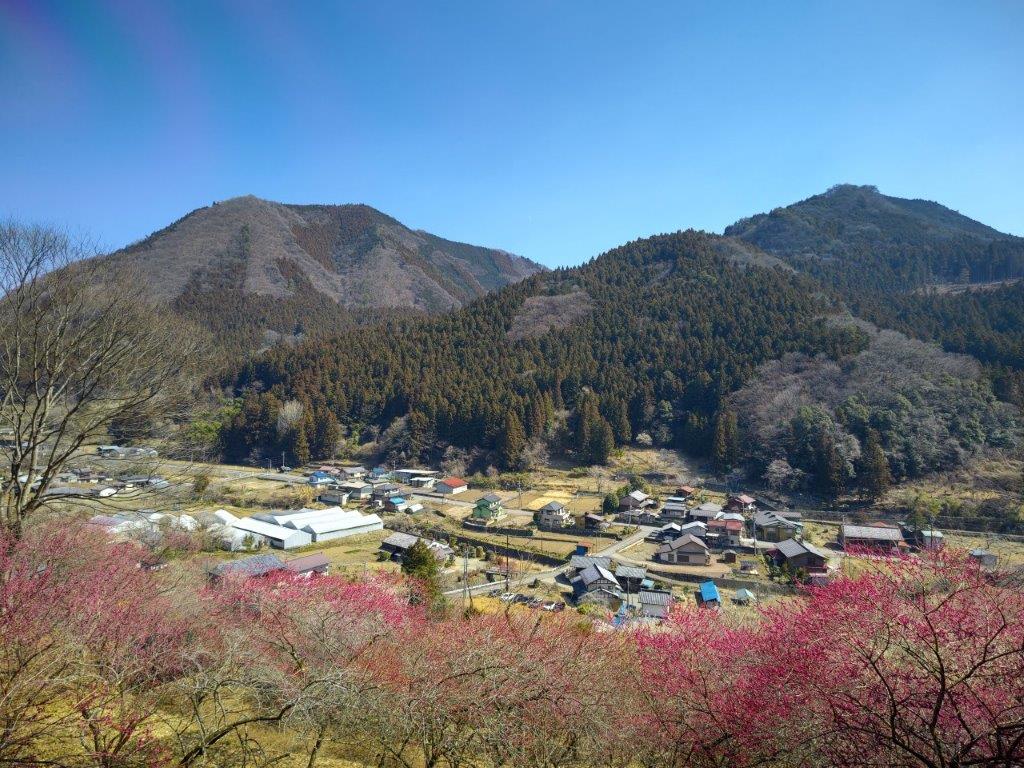
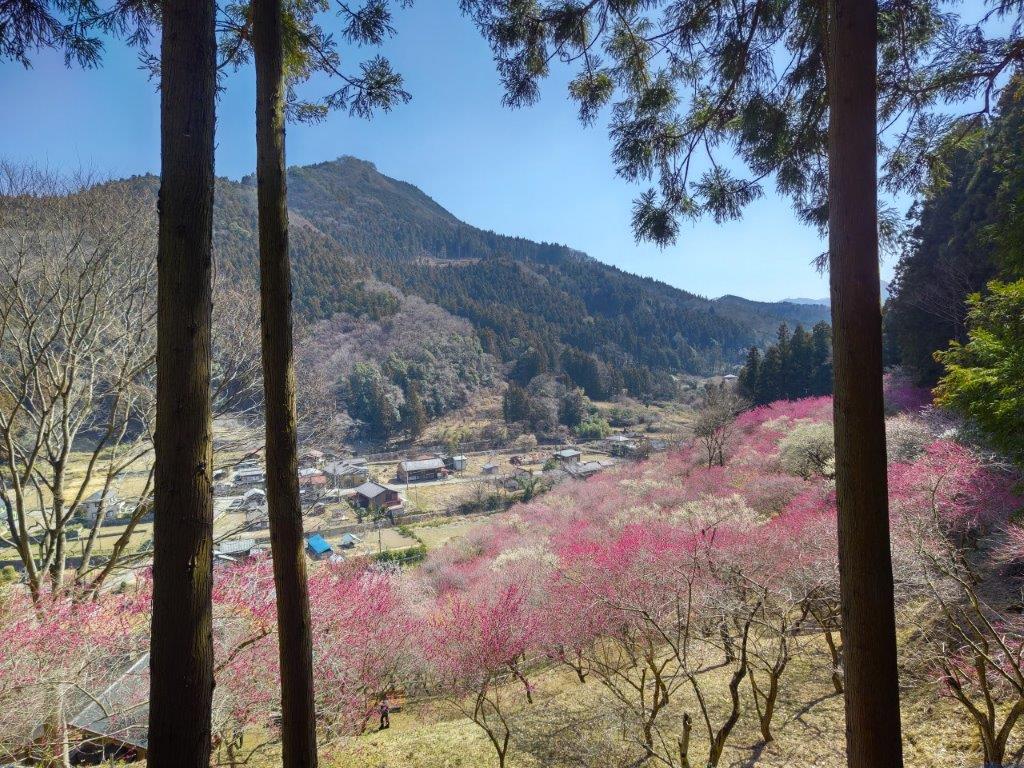
View of the Plum Blossoms from the Highest Point

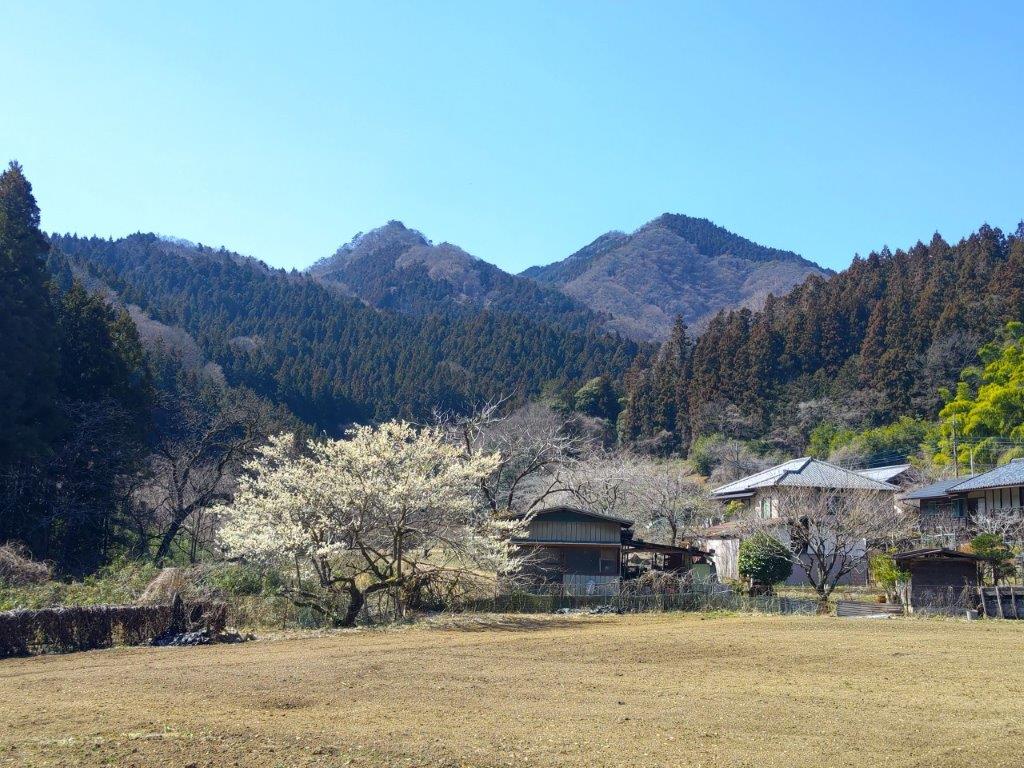
I was amazed by the sea of pink spreading down into the valley. Opposite was Mt Ogeta; on the south side, I spotted the triangular shape of Mt Inafukumi, and northwards, I could make out one of Mt Myogi’s many peaks. After a short break, I headed down via a different path, and half an hour later, joined up with the Fureai no Michi, descending from Mt Ogeta on the right. I was now heading north along a road connecting Shimonita with Matsuida, but soon turned left onto a smaller road leading up a valley. On the left side, beyond a stream, I could see the higher slopes of Mt Mido. At noon, I arrived at the Nakamura bus stop, where I turned right, heading up a small mountain road with almost no traffic.

View of Mt Mido from the Fureai no Michi

View of Mt Myogi from the Fureai no Michi

Along the way, I enjoyed the view of plum blossoms trees in full bloom, whetting my appetite for the approaching cherry blossom season. As the road climbed higher and higher, I noticed patches of melting snow in the shade, a reminder of the winter weather that had only just loosened its grip a few days ago. At 1pm, I reached a trail at the base of the Sakura no Sato Prefectural Forest Park (県立森林公園 さくらの里), meaning “Sakura Village” and famous for its many cherry blossom trees, supposed to reach full bloom in a few weeks. A short climb took me above the tree tops, their buds firmly closed, and at a fork in the path I stopped to turn around.

View of Western Gunma from Sakura no Sato

Nearing the Open Shelter and Mt Myogi Viewpoint

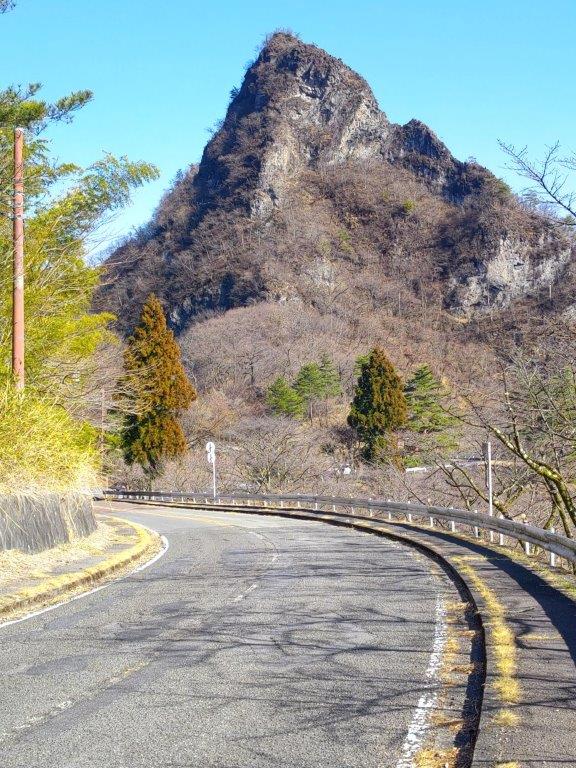
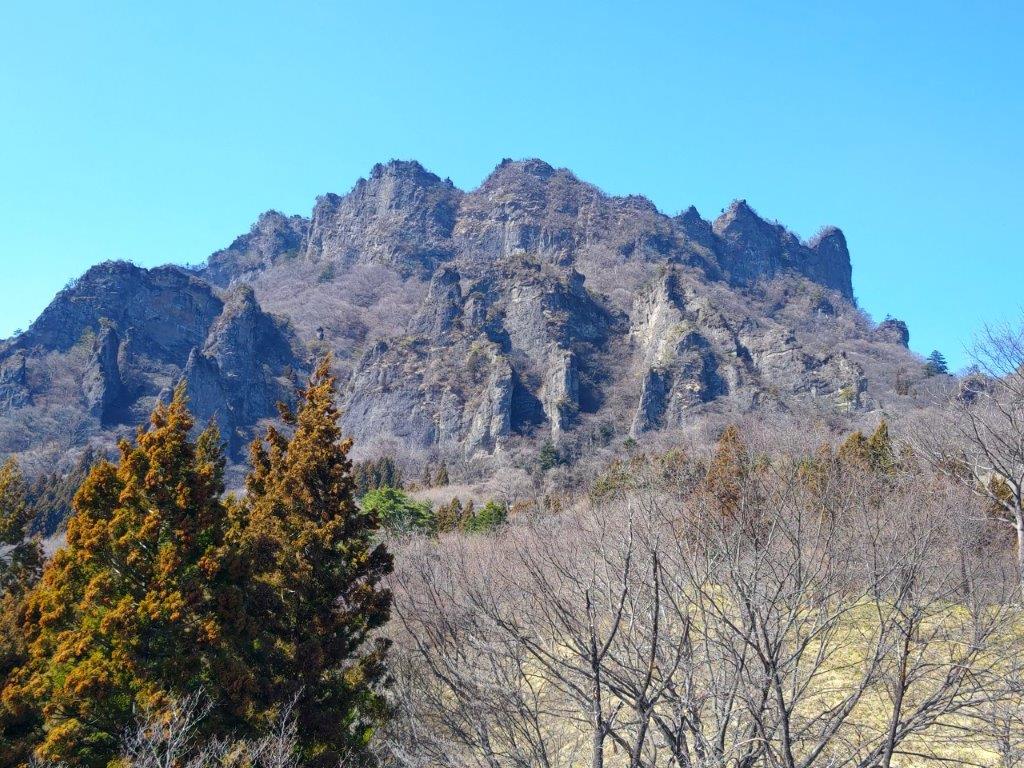
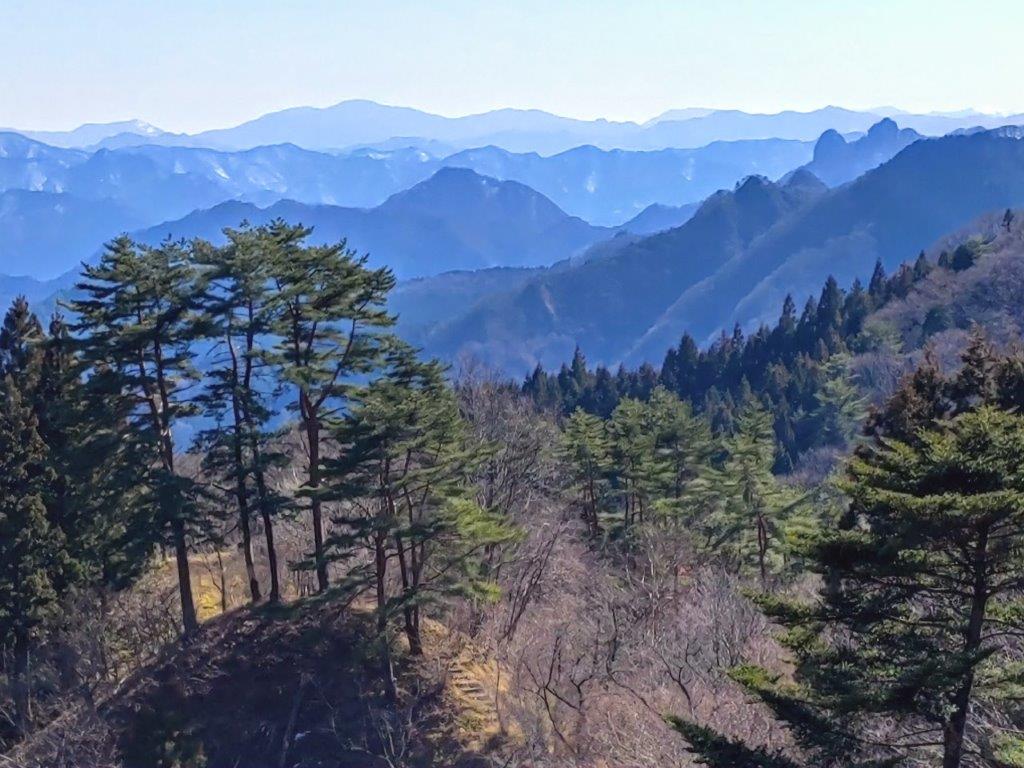
I was stunned by the impressive view of the long mountain ridge separating Gunma and Saitama, still covered in snow; I had climbed many of these peaks, including the highest one, Mt Akaguna; in the foreground, I could see Mt Ogeta and Mt Mido. A few more minutes up some log steps brought me to an open shelter with a dramatic view of Mt Kondo, the north side of Mt Myogi. Since it was just past 1pm, I settled down for lunch. At 2pm, I resumed my hike and made my way to the rest house at the highest point of the park. Along the way, I had some excellent views of the nearby Hitto-Iwa (筆頭岩 826m), a mini-version of the Matterhorn. Although the trail to the summit is closed, I could follow it all the way to the base of the rocky summit.

Mt Kondo from Sakura no Sato

In the background, Mt Mikabo (left), Mt Inafukumi (center) and Mt Akaguna (right)

I was rewarded with a striking view of Mt Souma, the south side of Mt Myogi and its highest peak, the best view of the day. Since I was on schedule, I took some time to walk along the road above the park to get some more views of the mountains of Nish-Joshu; I could see all the way from Mt Mikabo on the eastern side to Mt Arafune on the western side. At 3pm, after crossing the road, I was back on a hiking path for Myogi Shrine along the Fureai no Michi, heading down a steep, rocky trail, now in the afternoon shade. Very soon, I reached another viewpoint of Mt Souma, this time from below; fortunately, the rocky face was sill bathed in the late-afternoon sunlight.

The Matterhorn lookalike Hitto Rock from Sakura no Sato Park

Mt Souma from the Fureai no Michi

I admired the ragged summit, tantalizingly close but beyond the reach of the casual hiker. Some more descending brought me back to the road I was on earlier; it had taken a long detour around Hitto-Iwa. From this point it was a thirty-minute walk to Momiji-no-yu Hot Spring, which I reached around 4pm. Before hopping into the outdoor bath with a view of Mt Akagi, a made a quick visit to the neighbouring Visitor Center where I was able to examine a couple of relief models of Mt Myogi. The onsen staff were kind enough to arrange a taxi for me, and by 5h30, I was at Matsuida station waiting for the train for Takasaki. Although roughly half of this six-hour hike was on paved roads, I met no other hikers, saw plenty of plum blossoms and had some amazing views of the mountains of Gunma.

Watch a Video of the Sakura no Sato Mt Myogi Hike

Watch the Video of the Hike on YouTube
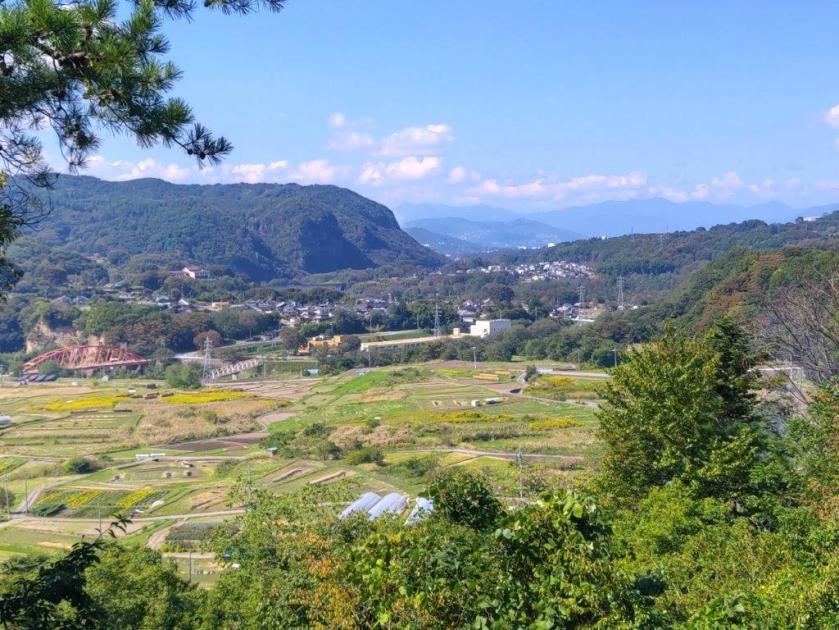
See a Slideshow of More Pictures of the Hike

Mt Jinba (854m) & Mt Arashi (406m), Sagamihara City, Kanagawa Prefecture, Saturday, February 24, 2024

I wanted to hike a section of the Tokai Nature Trail close to Tokyo which I hadn’t done before. The trail started a short bus ride from Sagamihara Station and ended near a bus stop on the same line, as well as a hot spring. The hike was on the short side, so I decided to tag on a mountain I had climbed nearly ten years ago; looking at my map, I saw I could redo it via a different set of trails. I would take the shortest route up from Wada, a short bus ride from Fujino station on the Chuo line, and walk down to Sagamihara station, passing a couple of minor summits on the way.

Hiking in Okutama 奥多摩

Hiking in the Takao-Jinba Natural Park 都立高尾陣場自然公園

The whole area is a popular hiking spot with well-maintained trails, so although it had snowed the previous day, I was confident it would be easy to walk; I also knew from my previous visit that the summit had a spectacular view of Mt Fuji. The weather was supposed to be sunny, with temperatures slightly above freezing. I was looking forward to a rare winter hike with a Fuji view from the highest point and a hot spring bath at the end.

For subscribers, read this Blog Post on Hiking Around Tokyo for a better viewing experience and the latest updates

Number 2 Wada Ridge Route without (left) and with Snow (right)

Walking the Ichi-no-O Ridge Trail (left) & the Kanto Fureai no Michi (right)

Before (left) and after (right) the summit of Ya-no-Ne

Just past Ohira Hut (left) & Just before Yose Shrine (right)

Heading Up (left) and Down Mt Arashi (right)

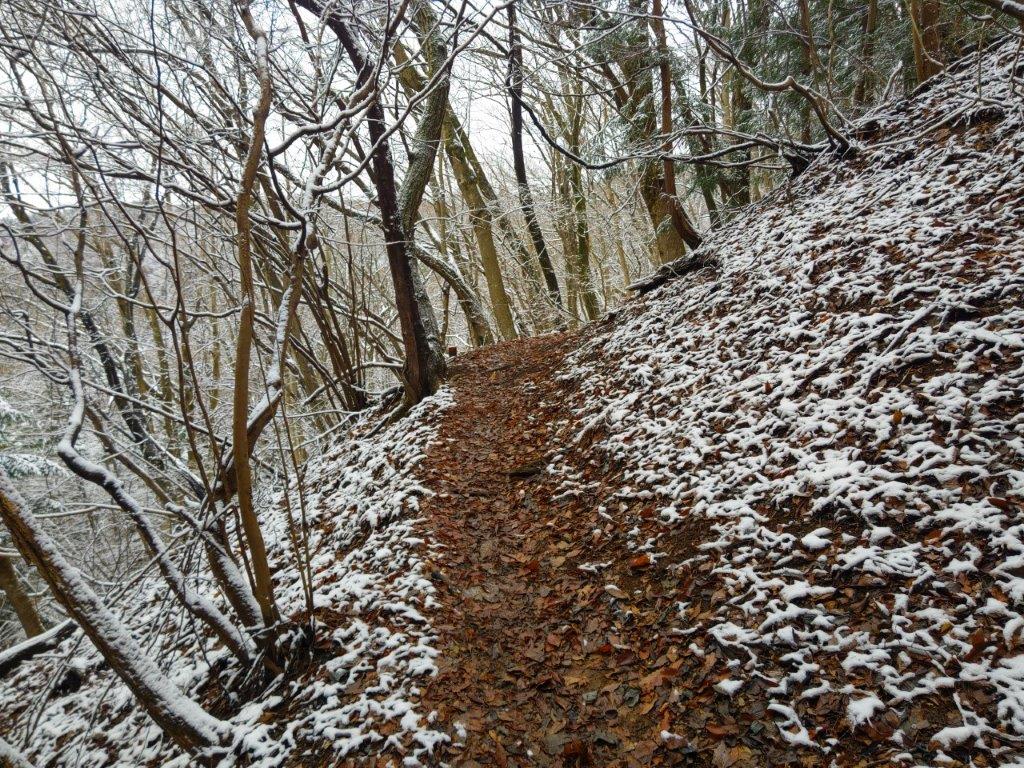
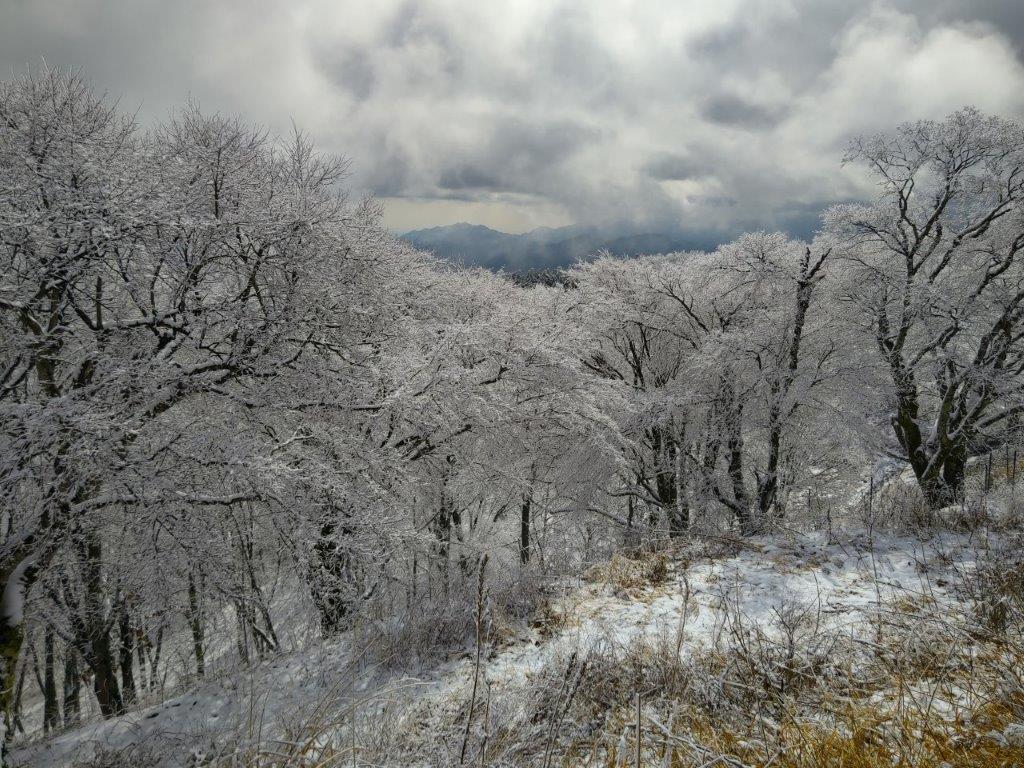
I could see patches of blue sky as I rode the almost full bus from Fujino station around 9am. Most people got off at the main trail entrance, and surprisingly, I was the only person heading up the Number 2 Wada Ridge Route (和田第二尾根コース), shortly before 10am. Looking up, I could see the higher slopes, white with snow before disappearing into the clouds. Less than half an hour later, the scenery changed from dull brown to brilliant white. Contrary to the forecast, the sun remained hidden behind a grey cloud cover, allowing the white mantle to last a little longer.

First snow on the Number 2 Wada Ridge Route

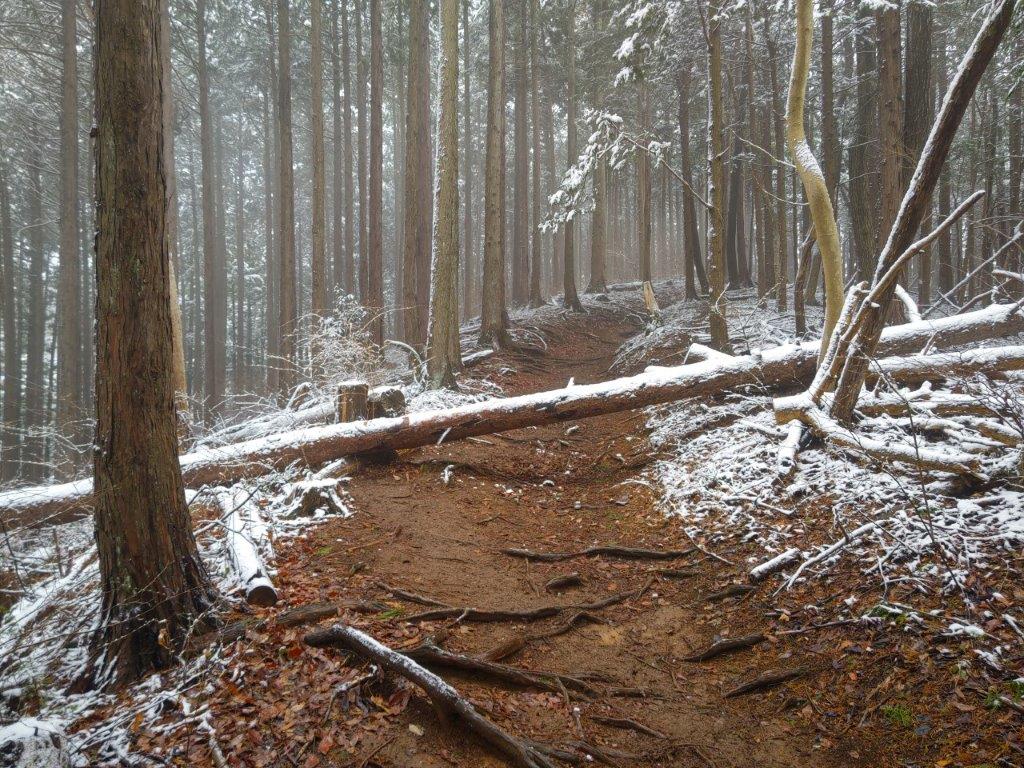
Fallen Log near the Junction with the Ichi-no-O Ridge Route

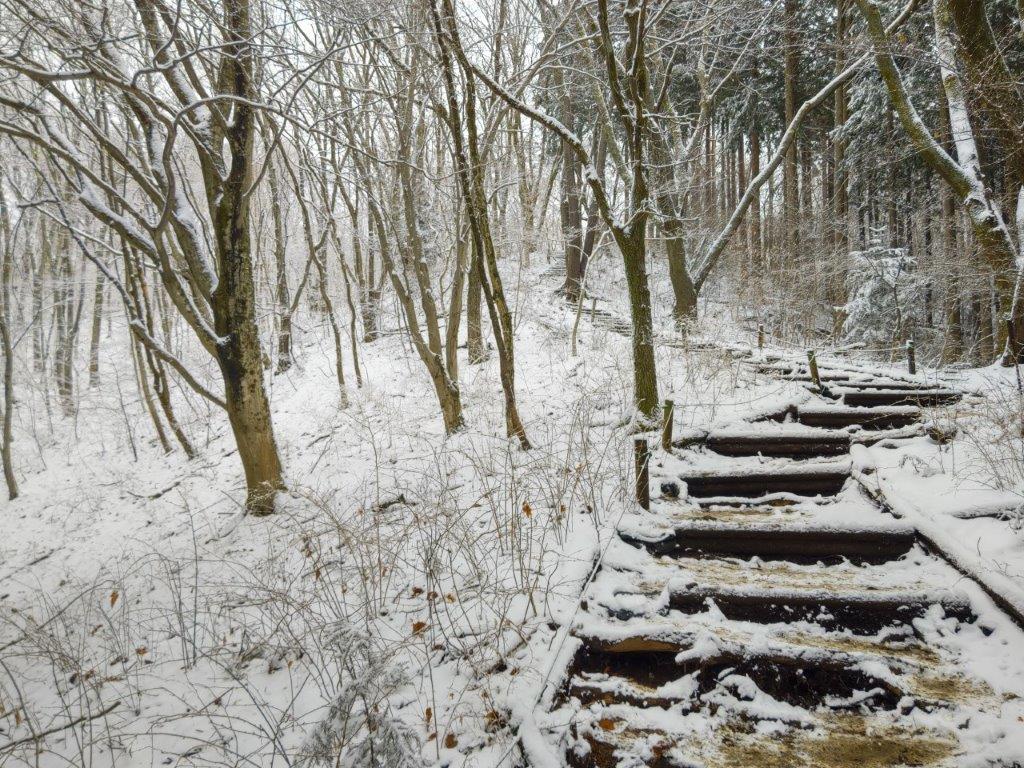
I was amazed by the beautiful wintery surroundings, the wet snow clinging to any surface that wasn’t completely vertical. Melting snow falling gently from the tree branches enhanced the effect, its falling noise reminiscent of soft rain. After merging with the Ichi-no-O Ridge Trail (一ノ尾尾根コース), I saw more people walking through this winter wonderland. At the top of a staircase, I reached the top of Mt Jinba (陣馬山 じんばさん jinba-san), a Kanto 100-famous mountain, shortly after 11am. The view of Mt Fuji on the south side was hidden by thick clouds, but the frozen landscape was compensation enough.

Walking through a Winter Wonderland

Cloudy View from the Top of Mt Jinba

I was stunned by the nearly completely white trees on the north side of the summit. Beyond their frosty crowns, I could see the Kanto Plain, as well as the eastern edge of the Takao mountain range. After a short break, I set off again, now following the Kanto Fureai no Michi. I was walking on the snow, but since any sloping sections had steps, it always felt perfectly safe. I was glad to be wearing a wide-brim hat, as it protected me from snow falling from the trees. A little after noon, I arrived at Myou Pass (明王峠) where I left the Fureai no Michi, and headed down a series of steps southwards.

White Trees on the North Side of Mt Jinba

In the Background, the Eastern Edge of the Takao Range

I was once again walking on solid ground although snow still covered the trunks and branches of the bare trees; it was like walking through a Christmas displayed created with snow spray. Thirty minutes later, I went left at a fork in the trail. Very soon, I reached the top of Yanone (矢ノ音 633m), completely in the trees. I immediately headed down a precipitous trail on the left side, and soon reached Ohira Hut (大平小屋), actually an open shelter. After a short break, I continued on my way, on a level trail though a forest of tall cedars. On the way, I made a short detour via Mt Mago (孫山 543m). After some descending, I reached a viewpoint on the southeastern side.

A little bit of Autumn in the Wintery Landscape

Snow Coated Trees at Lower Elevations

I enjoyed the view of the majestic bulk of Mt Sekiro rising directly behind Sagami Lake; to its left, was Mt Arashi, today’s next peak, and Sagamihara City. Since it was 2pm, I had a late lunch before setting off again. I soon reached Yose Shrine, at the base of the mountain, and shortly after, Sagamiko Station. There, I hopped on a bus for the short ride to Sagamiko Bridge, a few minutes on foot from the Tokai Nature Trail. After thirty minutes of easy climbing, I arrived at the summit of Mt Arashi (嵐山 あらしやま arashi-yama), meaning Mount Storm. On the west side, I could see Mt Momokura, Mt Ogiyama and Mt Gongen, but the view was rather subdued on this cloudy, wintery day.

Descending from Mt Mago

Viewpoint of Sagami Lake and Mt Sekiro

I was surprised by the up and down nature of the trail beyond the summit. I crossed tiny streams over narrow wooden bridges and scaled thin metal ladders up steep slopes. At 4pm, I crossed a dense and dark bamboo forest, always a fascinating experience for me. Less then half an hour later, I finally reached a road at the end of the trail. After a refreshing hot bath at Ururi Onsen, part of the Sagamiko Resort Pleasure Forest, I caught a bus for the ten-minute ride back to Sagamiko Station, where I boarded the Chuo line for the one-hour ride back to Shinjuku.

View of Mr Arashi (left) and Mt Sekiro (right ) from below Yose Shrine

Bamboo Forest on the Tokai Nature Trail

The hike was longer and harder than I had expected, over 6 hours, so I was glad I could recover at a hot spring at the end. On the other hand, the snowy scenery far exceeded my expectations, thanks to the cloudy cover shielding the sticky snowy tree decorations from the sun and preserving them throughout the day. The snowmelt dripping from the trees was also a new experience for me, as I was walking under sunshine and snowfall at the same time. I encountered many other hikers between Ichi-no-O Ridge and Myou Pass, but very few before and after. I hope to return in the future to explore the other trails crisscrossing the Takao mountain range.

Watch a Video of the Mt Jinba Hike

Watch the Video of the Hike on YouTube

See a Slideshow of More Pictures of the Hike

Mt Takatori (219m), Oiso Town, Kanagawa Prefecture, Saturday, February 3, 2024

I was looking for a suitable winter hike in the Tokyo area. While checking my map, I spotted a section of the Kanagawa Kanto Fureai no Michi I had yet to explore, connecting the Tokaido line with the Odakyu line. Although it mostly followed back roads through the countryside, the first section was up a minor peak on a forested plateau, from the top of which I hoped to get some views.

Hiking the Kanto Fureai no Michi

I would ride the Shonan-Shinjuku line from Ikebukuro to Ninomiya station on the Shonan coast, and then take a bus to a stop near the start of the trail, skipping a one-hour section through Oiso Town. For the return, I could catch a bus for Hadano Station near Kaname River, since I had already done the next section for Mt Koubou, and then ride the Romancecar limited express back to Tokyo. If had time, I’d be able to get a hot bath at the nearby Manyo-no-Yu.

関東ふれあいの道

The weather was supposed to be sunny in the morning and overcast in the early afternoon; although it was a short hike, I decided to get an early start to take advantage of the good weather. I was looking forward to a relaxing hike through a new area close to home.

For subscribers, read this Blog Post on Hiking Around Tokyo for a better viewing experience

Bamboo forest (left) and steep slope (right) at the start of the hike

Walking on the top ridge (left) and up the steps (right)

Walking down to (left) and up from Kirifuri Keiryu (right)

It was a 90-minute train ride under clear blue skies to Ninomiya station where I boarded a bus for the short ride to Higashi-no-Ike (東の池), a reedy pond with a shrine on an islet. After getting ready, I located a sign for the Fureai no Michi and set off, a little before 11am, through a residential neighbourhood. Past a bamboo forest, the road rose sharply, and after a few minutes of climbing under tall cedars, I reached the ridge top, where I turned right, onto a level hiking path through the forest.

Clearing at the Top of Kirifuri Keiryu

View East towards Yokohama and the Miura Peninsula

I was amazed to be on such a lovely trail, reminding me of Kamakura, but minus the crowds. It was mostly in the trees but I did get a glimpse of Hakone through a gap on the west side. At 1130, I passed under a stone Shinto gate and made my way up a series of log steps, at the top of which I arrived at Takatori Shrine (鷹取神社). A little beyond, and slightly off the trail on the left side, was the top of Mt Takatori (鷹取山 たかとりやま) surrounded by forest. I couldn’t see a summit marker but my GPS confirmed the spot. I sat down on a sunny tree trunk for a short break.

View North from Yurugi Hill

Tanzawa from Yurugi Hill

I basked in the sunshine and listened to the birdsong, before setting off again at noon, down a dirt road leading to a turn-off for Kirifuri Stream (霧降渓り流 kirifuri-keiryu). I decided to check it out since according to my map, I could do a short loop along a river valley (the full trail continues to Shonan-Daira). I soon arrived at a clearing around an electric pylon, and was rewarded with a view of Yokohama and the Miura peninsula to the east. A little further, I turned righ, descending steeply into the valley, and then took another path on the left, leading up to some fields on top of Yurugi Hill (ゆるぎの丘 yurugi-no-oka).

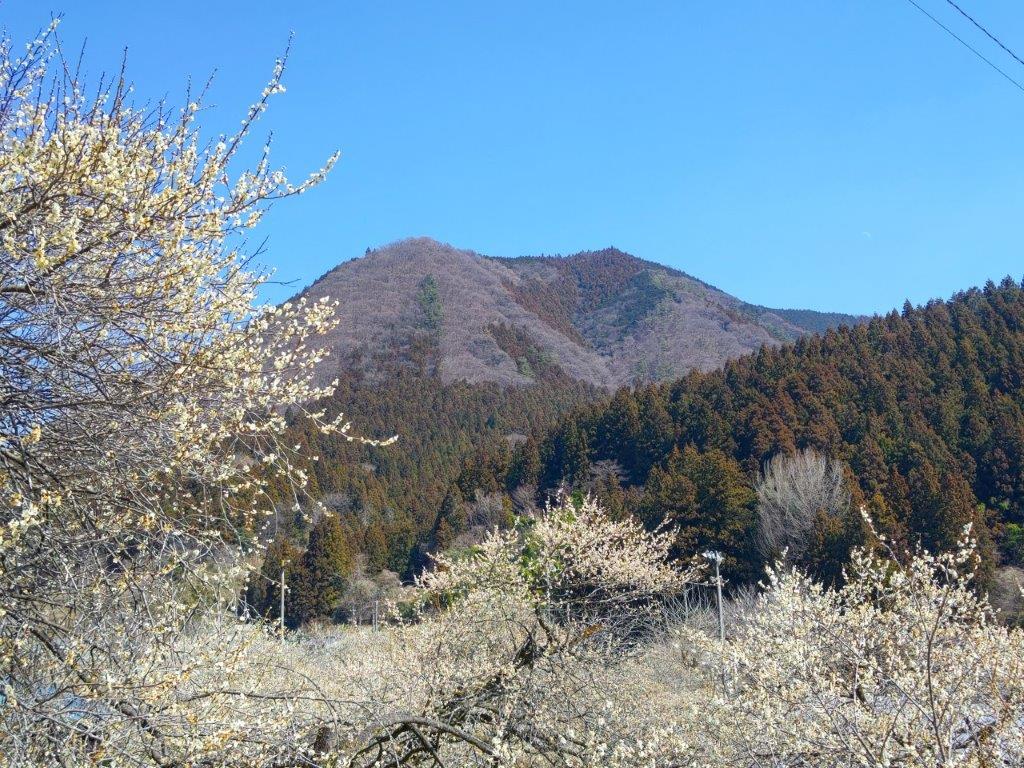
Mt Oyama and Plum Blossoms from the Fureai no Michi

Mt Nabewari (left), Mt Tono (middle) and Mt Oyama (right)

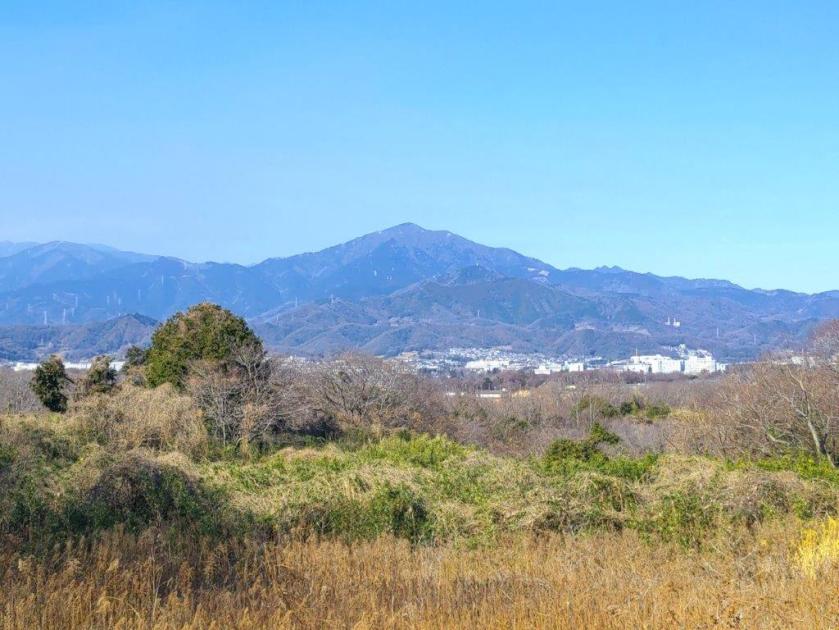
It was the best view of the day, and would have made a great lunch spot if there had been a place to sit. To the north, I could see the Tanzawa mountains, with the triangular top of Mt Oyama at the very right. I turned left again and soon arrived back at the clearing, thus completing my loop. Minutes later, I was back on the Fureai no Michi. From then on, I followed peaceful back roads meandering through the countryside. I had occasional views of the Tanzawa range, including one from a roadside bench where I had lunch at 1h30. The clouds had started to roll in from the west, and although, they hadn’t yet reached the sun, I quickened my pace.

View of the Tanzawa Range Extending Westwards

Bright Red Shinto Gates at Myoen-ji Temple

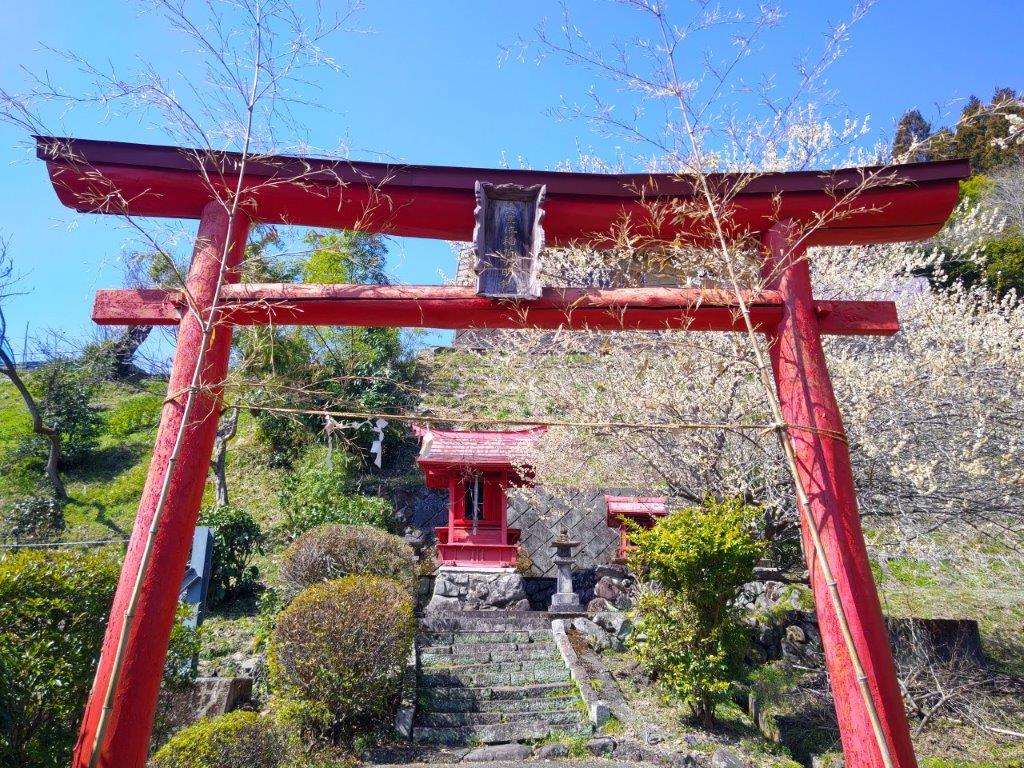
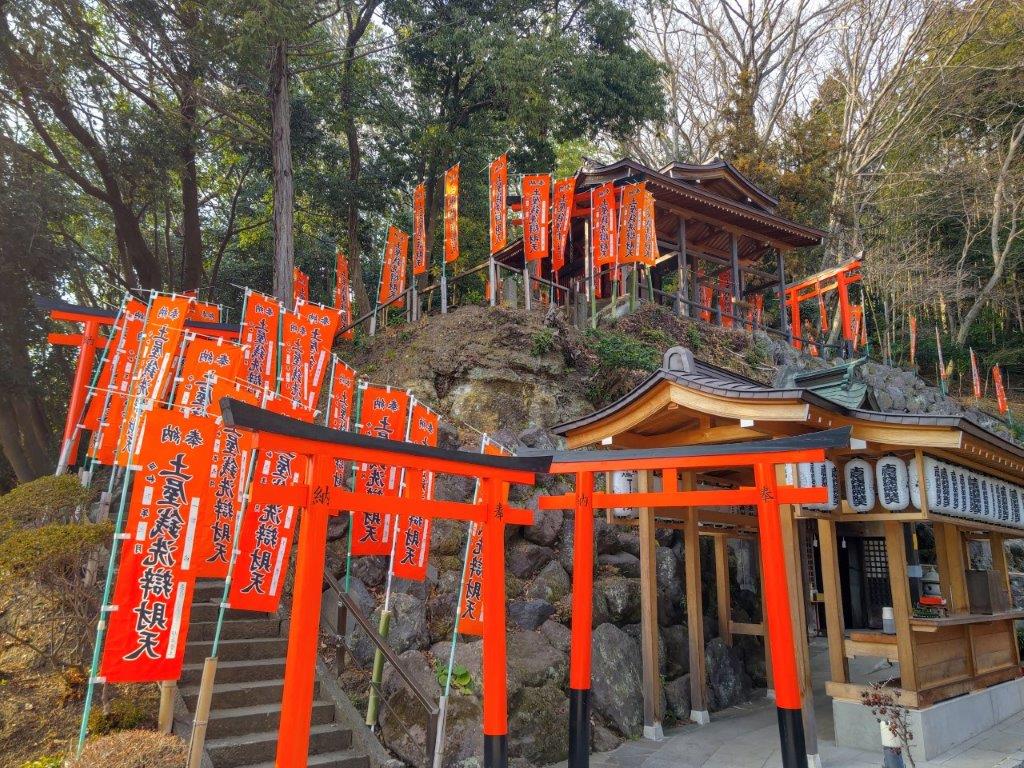
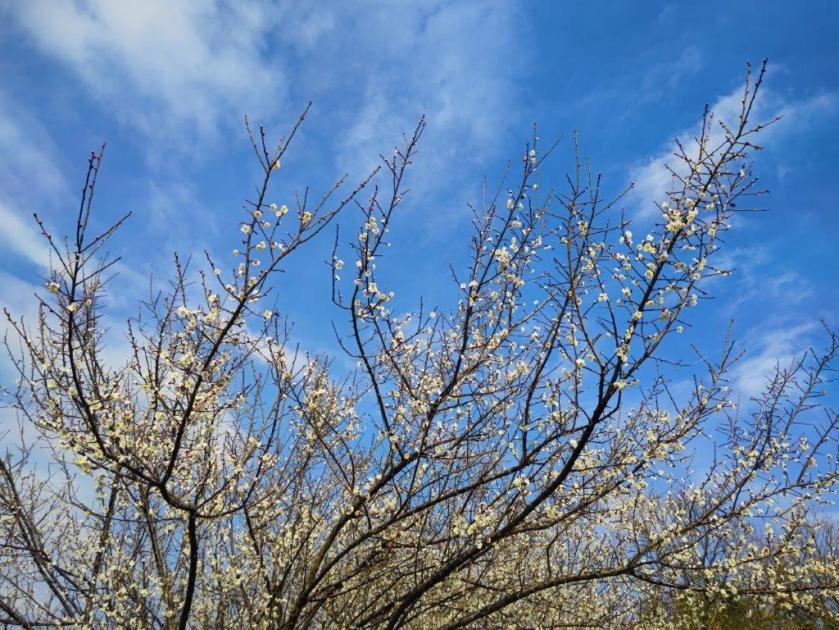
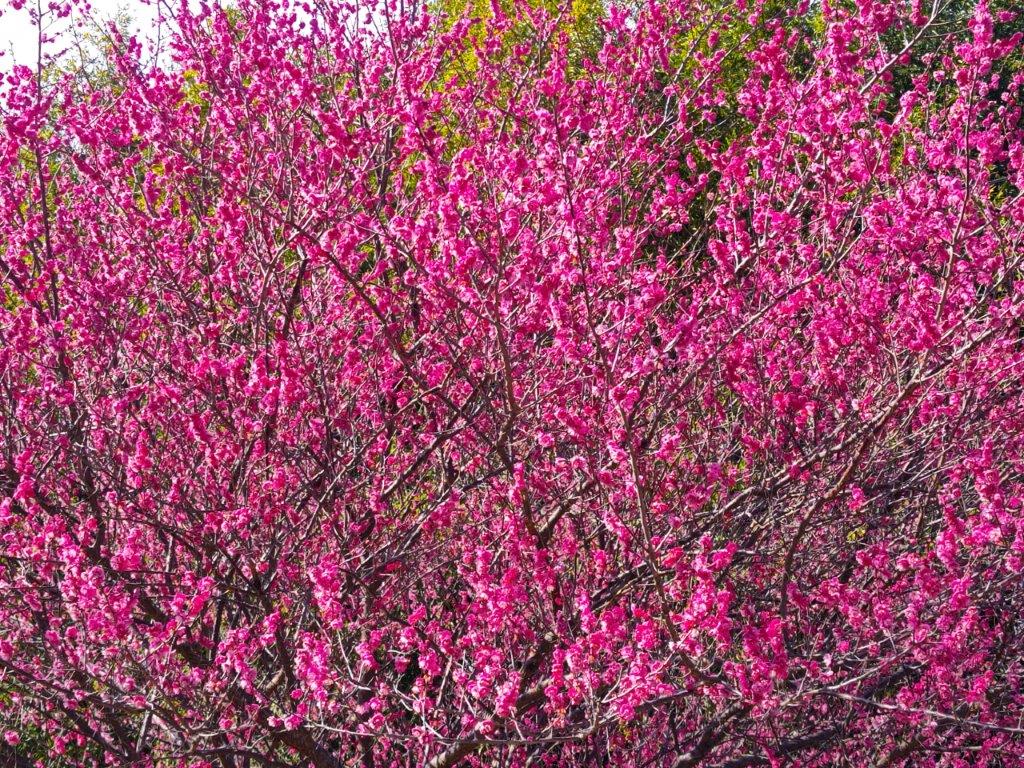
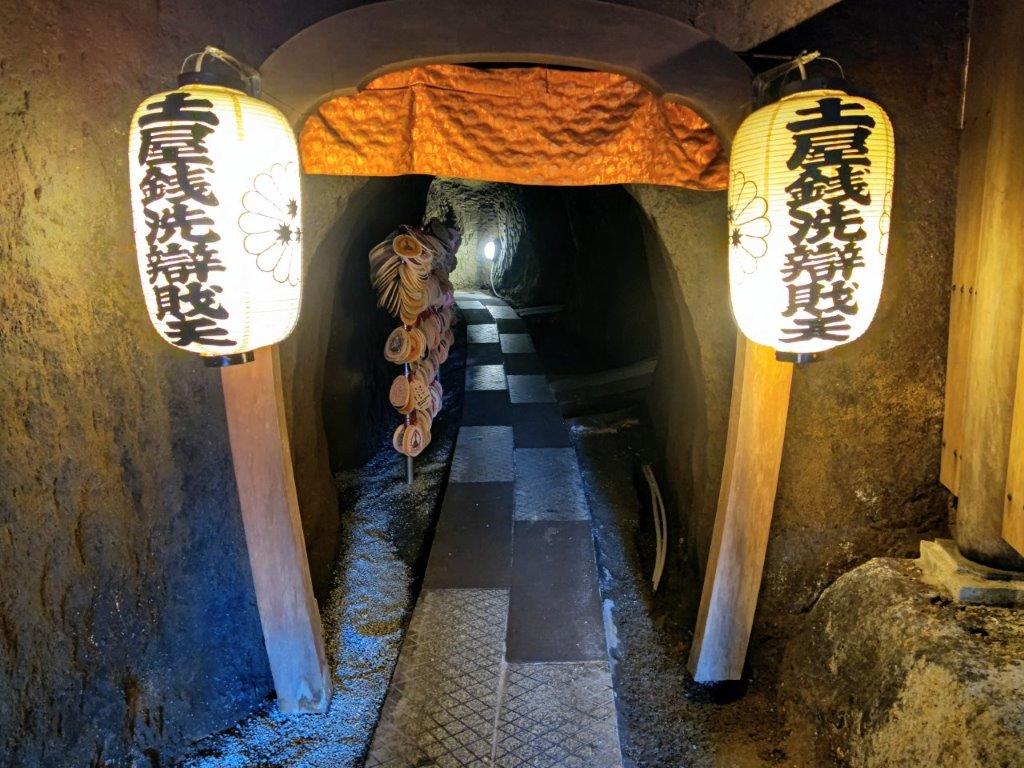
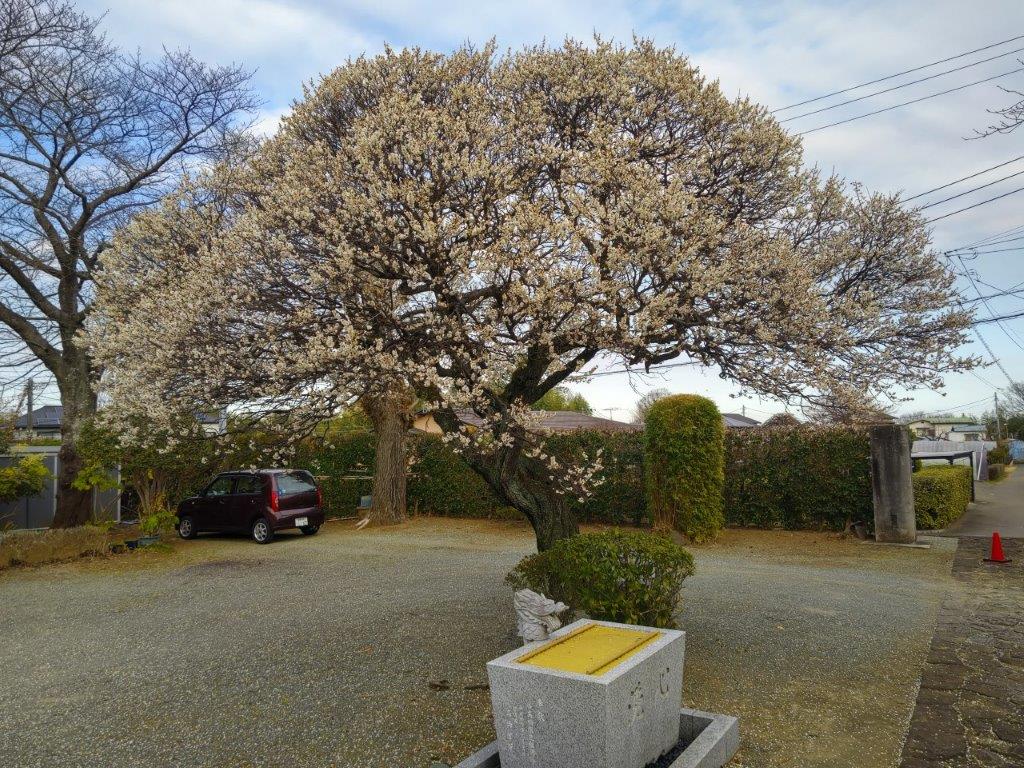
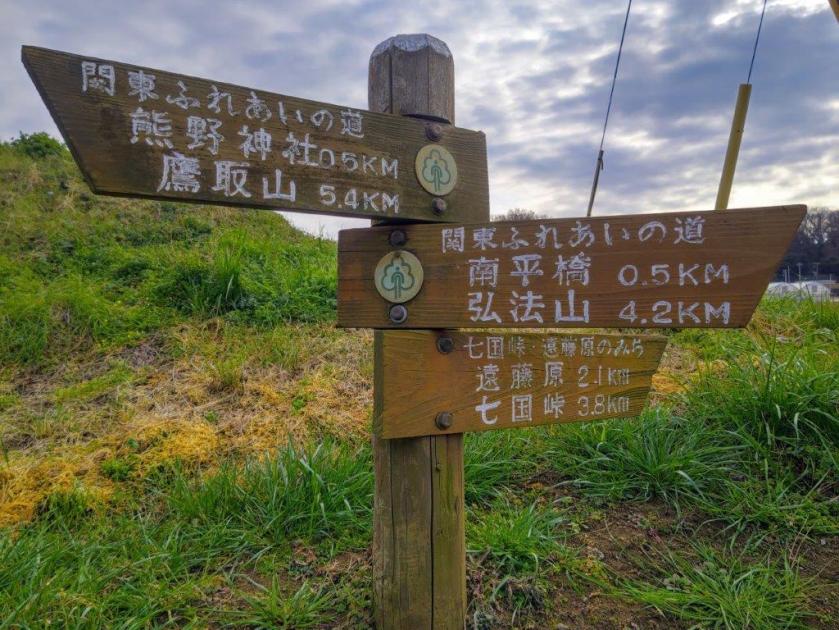
I was surprised by the many plum trees in full bloom, very early for the season. At 2pm I reached the photogenic Myoen-ji Temple (妙圓寺) with its flapping banners and bright red “torii” catching the last of the sun. Before moving on, I ventured into a small cave within the temple grounds and followed an underground passage till it became too low to continue. After passing Daijoin Temple, with its huge plum tree in full flower, I arrived at Nanpei Bridge (南平橋) at 3pm, where I caught one of the frequent buses for Hadano station. I had enough time for the hot spring bath, so I was refreshed for the one-hour trip back to Shinjuku.

Watch a Video of the Mt Takatori Hike

Watch the Video of the Hike on Youtube

See a Slideshow of More Pictures of the Hike

Mt Enokubo (420m), Sagamihara and Hachioji Cities, Kanagawa and Tokyo Prefectures, Saturday, December 24, 2023

For subscribers read this Blog Post on Hiking Around Tokyo for a better viewing experience

I wanted to do a short and easy hike close to Tokyo for Christmas Eve. I had been doing bits and pieces of the Kanto Fureai no Michi for a while now, and this was a good chance to explore the final section of the Kanagawa trail, starting at Tsukui Lake and ending at Takaosan-guchi Station. I had previously hiked Mt Shiro on the other side of the lake, as well as the first part of the Tokyo Fureai no Michi, from Takaosanguchi station to Mt Shiro (no relation to the Kanagawa one). Since the hike was relatively short, I could leave later than usual, and since it probably had few views, I could expect fewer people. At the end, I could take a hot bath at the Keio Takaosan Onsen, my first time to visit this hot spring right next to the station. The weather was supposed to be cloudy over Tokyo, but sunny over Kanagawa. I would take an express train to Hashimoto Station, and there, transfer to one of the frequent buses for Shiroyama. Afterwards, I could take an express train directly back to Shinjuku. I was looking forward to a relaxing Christmas hike and hoped I could still catch the very last of the autumn colours.

Hiking on the Kanto Fureai no Michi 関東ふれあいの道

Hiking up to Misawa Pass (left) Exploring the Tokyo Fureai no Michi (right)

Hiking down from Misawa Pass (left) Heading to the Takao Green Center (right)

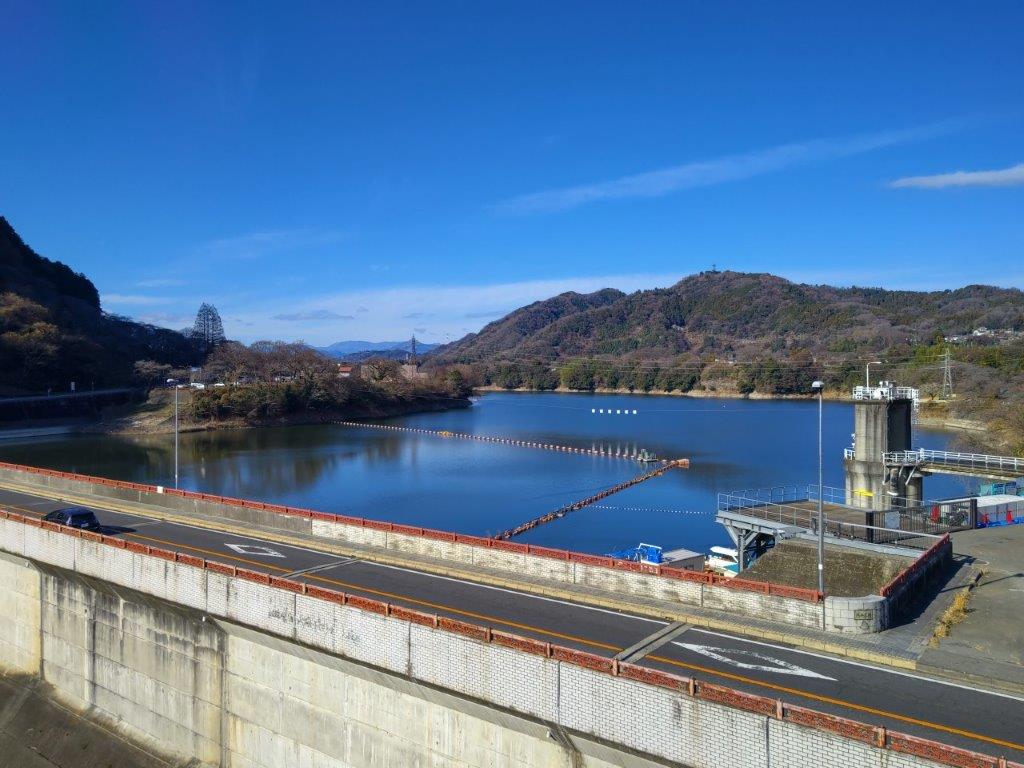
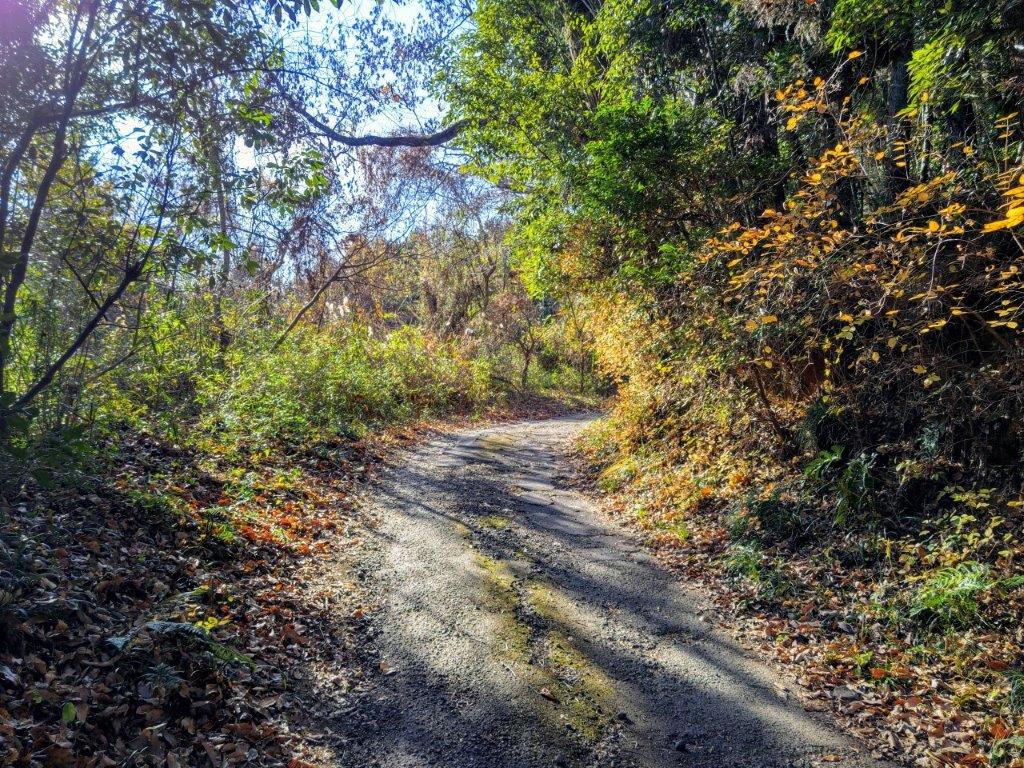
The sky was grey and gloomy as I made my way to the bus stop at Hashimoto station. However, blue sky miraculously appeared as I approached my stop, just before Shiroyama dam. I walked a short distance to a viewpoint of the dam where I had breakfast, warming up under the midday sunshine. It was nearly noon when I finally set off, first on a road next to the lake, then along a forest road up the mountain side. I met no other hikers till I arrived at a Buddhist temple called Mine no Yakushi (峰の薬師), at the halfway point.

Shiroyama Dam and Bridge from the Observation Deck

Forest road for Mine no Yakushi

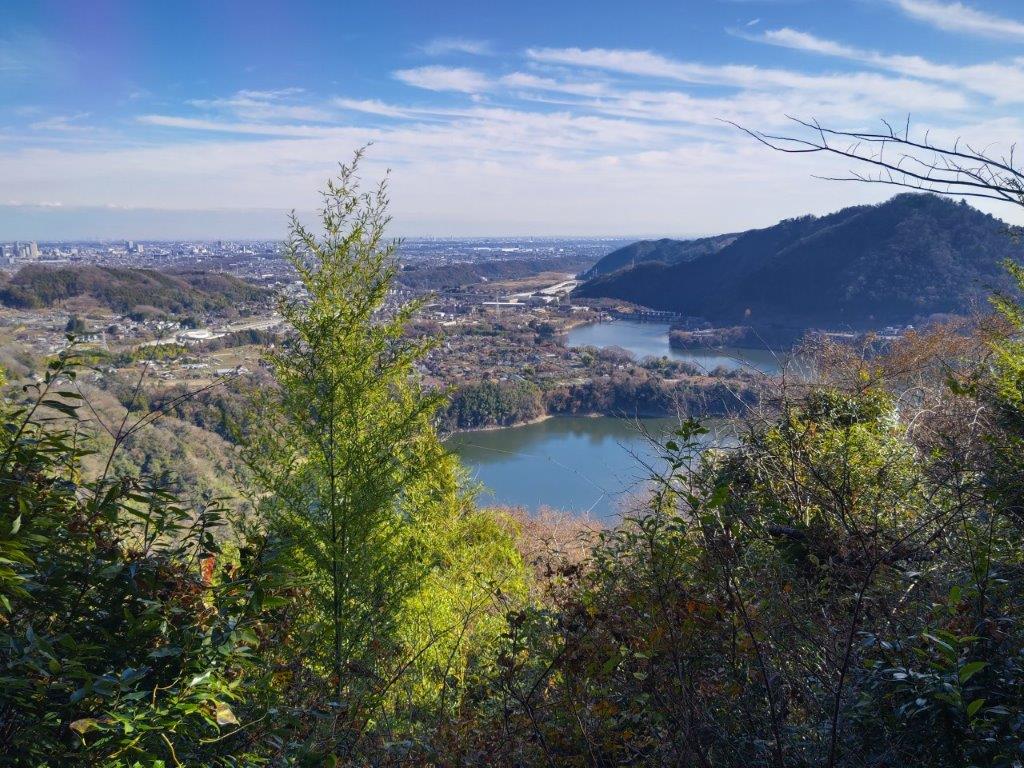
I was delighted to get some views through gaps in the trees on the southeast side. Directly below, I could see Mt Shiroyama, lake Tsukui; filling up the rest of the horizon was the city of Tokyo. Soon after, the forest road turned into a hiking trail, leveling out as it reached the ridgetop. At 1h30, I arrived at Misawa Pass (三沢峠) where the Kanagawa Fureai no Michi intersects with the Tokyo one. I was tempted me to have lunch at one of the tables there, but was dissuaded by the lack of sun. Instead, I headed up a path on the right and soon reached the top of Mt Enokubo (榎窪山 えのくぼやま enokubo-yama), completely surrounded by trees.

View of Mt Shiro and Lake Tsukui from Mine no Yakushi

View of western Tokyo from Mine no Yasushi

I was happy to see that one of the three benches was bathed in sunlight and I immediately claimed it for my lunch spot. After my break, I returned to the pass and made a short loop along the Tokyo Fureai no Michi, along which I was lucky to spot some fiery orange “momiji” (Japanese maple). At 2h30, I followed a forest road into the valley on the north side, already in the shade; I had the trail entirely to myself. At one point, I thought I heard a wild animal to my left, but it was just my imagination; later on, I thought I heard water coming from the right side.

Clouds were still hanging over Tokyo

Where the city meets the mountains

I was surprised to see that a stream had appeared at the bottom of the valley, turning my forest walk into a river walk. Soon after passing the Takao Green Center, I was back on a paved road surrounded by fields. I sneaked a peak at the outer gardens of Ukai Chikutei, a Japanese restaurant on the way, and was enchanted by the small waterfall and its carp pond. At 3h30, I joined a busy road at Ume-no-ki-Daira (梅ノ木平) that took me under the impressive Takao interchange. Suddenly, shops appeared on both sides of the road, and a few minutes later, I reached the beautiful Takaosanguchi station. After a satisfying hot spring bath, I hopped on the train for the one-hour ride back to Shinjuku.

Waterfall Outside Ukai Chikutei Restaurant

A Rare Shot of Takaosanguchi Station without People

I was glad I was able to stretch out this hike to just over 4 hours, making it a nice Christmas day stroll. The Fureai no Michi frequently follows paved roads but in this case, most of this section was along forest roads and hiking trails. The views from Mine no Yakushi, the hot bath at the end and the easy access at both ends, made it worthwhile. It would be good to return one day to redo the first section of the Tokyo Fureai no Michi, or even a Mt Takao hike.

Watch a Video of the Mt Enokubo Hike

Watch the Video of the Hike on Youtube

See a Slidehsow of more Pictures of the Hike

Nihondaira (307m) & Mt Udo (308m), Shizuoka City, Shizuoka Prefecture, Sunday, December 17, 2023

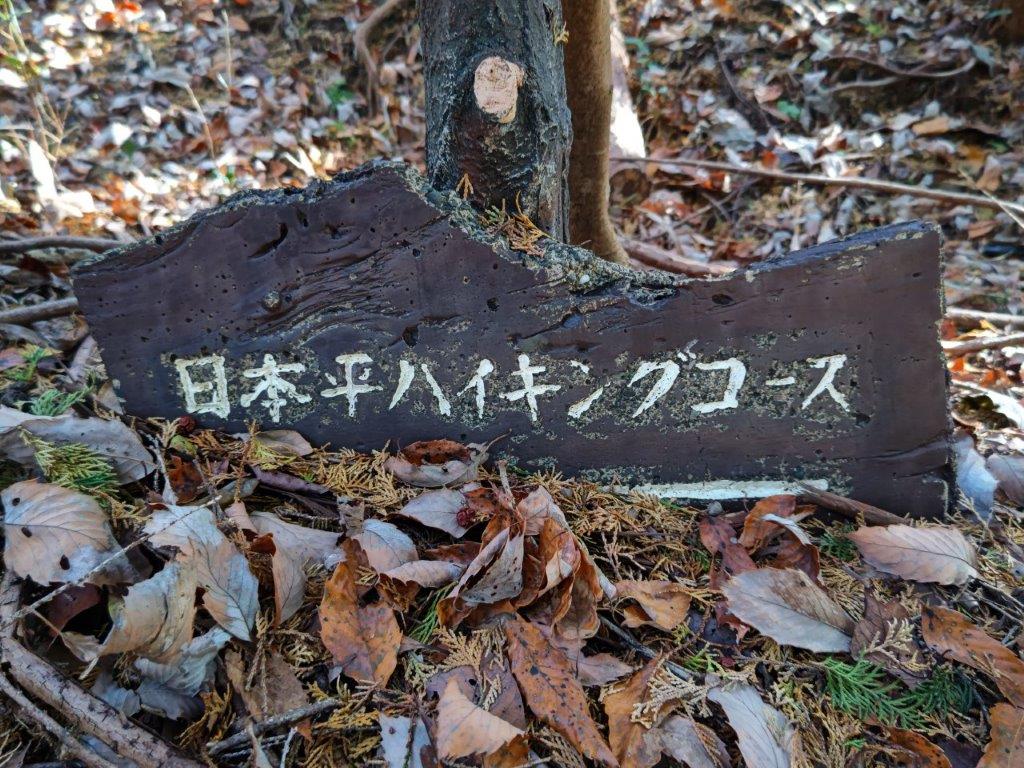
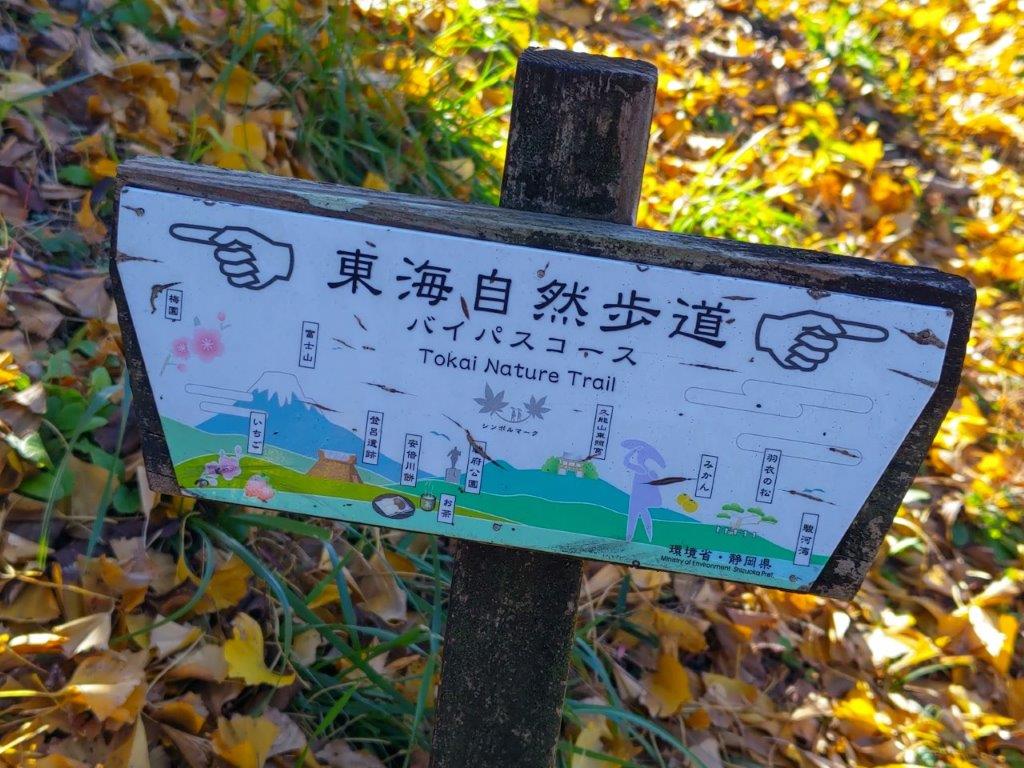
I wanted to do a hike in Shizuoka, last visited one year ago, to take advantage of the warmer ocean climate and the Mt Fuji winter views. While researching my December 2022 trip to Shimoda, I’d noticed a ropeway on Suruga Bay, opposite the Izu peninsula. Further investigation showed that the top station was located on Nihondaira, a low plateau with several short hiking trails, including a section of the Tokai Nature Trail, the Shizuoka Bypass Route. Looking at my map, I saw I could do a station to station hike long enough to justify the cost of the trip. From the station, I would walk up to the observation deck at the highest point, and after a short roundtrip to a nearby minor peak, return via a different route; although, to my regret, I’d have to skip the ropeway. I would ride the shinkansen to Shizuoka station; a couple of short transfers would get me to Kitsunegasaki station, near the start of the hike. Before heading back to Shizuoka station from the Kusanagi JR station, I could drop by the nearby Kusanagi no Yu for a hot spring bath. The weather was supposed to be sunny and cold, as well as a little windy. I was looking forward to exploring a new hiking spot and getting some good views of Mt Fuji from a new direction.

Hiking the Tokai Nature Trail 東海自然歩道

Read this Blog Post on Hiking Around Tokyo

Country lane (left) leading to the Tokai Nature Trail (right)

Walking down from Mt Udo (left) and from Nihondaira (right)

It was a blue-sky day and Mt Fuji was clearly visible as I rode the shinkansen from Tokyo station. After getting off at Kitsune-ga-saki station, it still felt quite cold, so I retreated to a nearby 7/11 to buy some food and water for the day. At 1030, I finally set off along a narrow road, next to a small river, passing several unmanned vegetable stands, a common sight in rural Japan. After walking through some tea fields, I arrived at the entrance of Shimizu Funakoshi Zutsumi Park (清水船越堤公園) just after 11am. After checking out the view of Mt Fuji from inside the park, I continued along the road, and finally reached the Mabase Route (馬走コース on the Tokai Nature Trail just before noon.

Hiking along the Nihondaira Alps

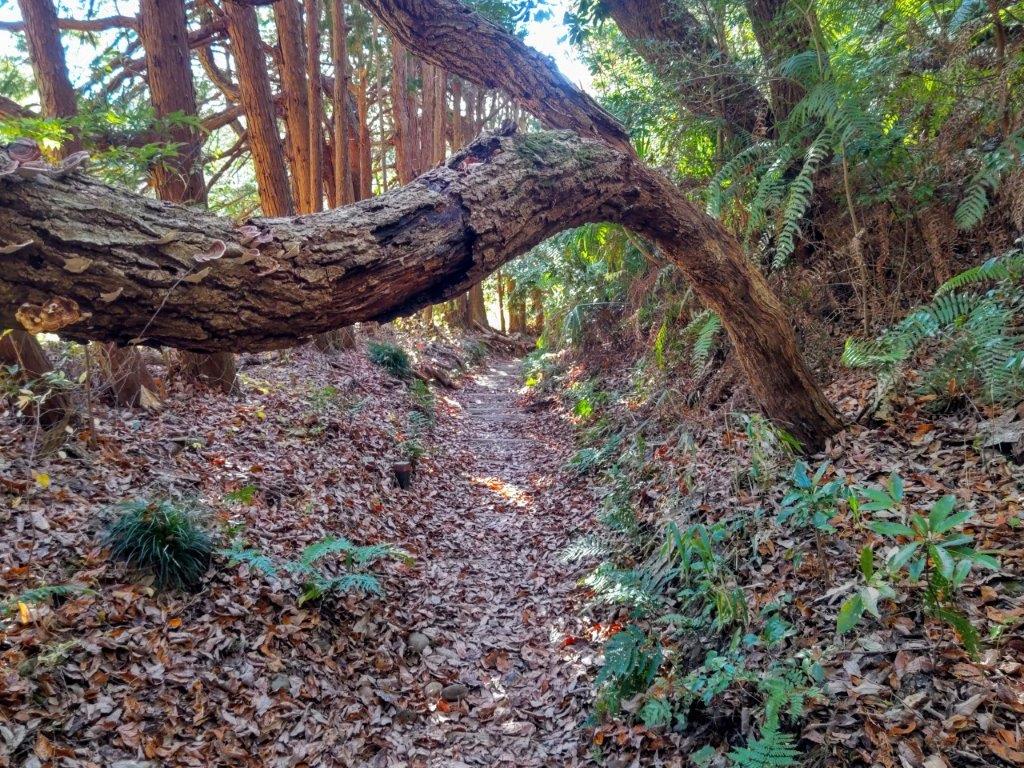
The trail weaved left and right, up and down, along a narrow forested ridge; the treetops swayed in the breeze, occasionally letting through the sunshine. Half an hour later, I reached Mabase Fork and the end of the hiking trail. There, I turned left and walked up a straight road leading to the highest point of the Nihondaira (日本平), also a sightseeing spot with a hotel, souvenirs shops and restaurants. After quickly checking out the eastern observation deck, I made my way to Yume Terrace (夢テラス), one of the most beautifully designed observation towers I’ve ever visited, its wooden deck curving east to west on the north side.

Walking through the Shizuoka Countryside

Walking along the Shizuoka Tokai Nature Trail

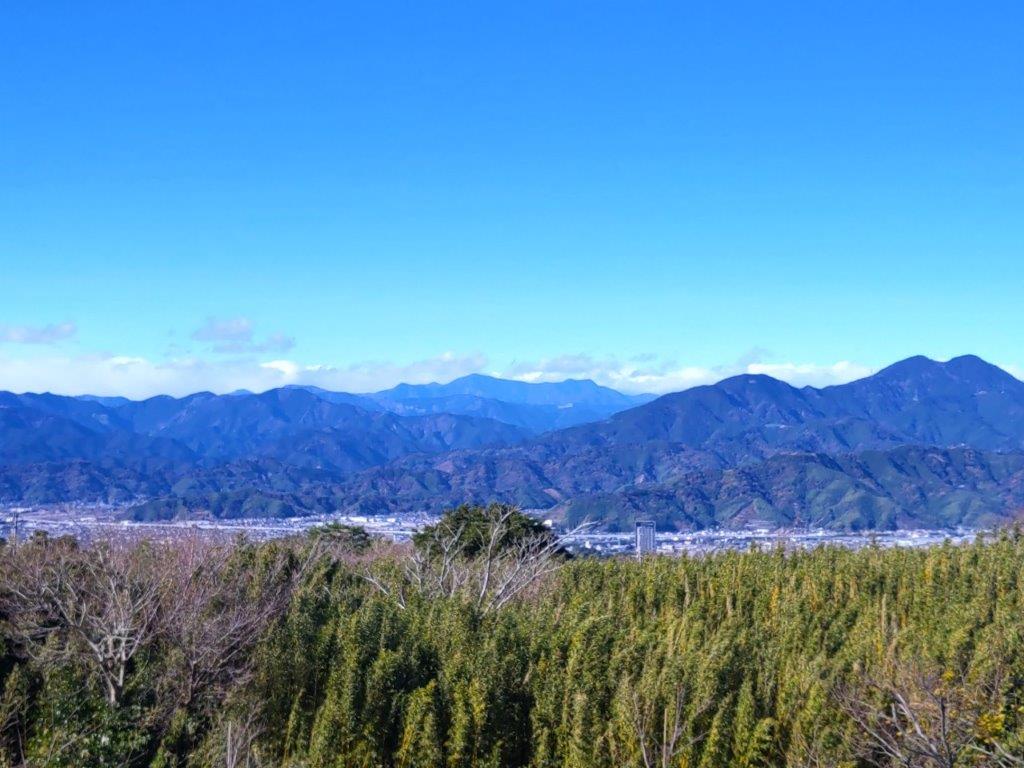
I had a stunning view of snowcapped Mt Fuji, rising above Mt Hamaishi. To its right, past Suruga Bay, I could see Mt Ashitaka, Mt Hakone and the Izu peninsula; to its left, beyond Shizuoka city, I could observe the southern edge of the Minami Alps, Mt Daimugen visible in the distance; on the opposite side was Mt Takakusa and the Pacific Ocean, sparkling in the sun. Since it was 1h30, I sat down on a bench for lunch with a view. The wind was blowing quite a bit, so I soon set off for today’s only peak. I walked down a short section of the Shimizu-Nihondaira road, being careful of the traffic, till I reached a trail on the right. After a short climb, the path at times rather faint, I reached the top of Mt Udo (有度山 うどやま udoyama), just one meter higher than the top of the Nihondaira Plateau.

View of Mt Fuji from Yume Terrace at the top of Nihondaira

View of the Izu Peninsula from the top of Mt Udo

I was stunned by the blue colours of the sea below, visible from a gap in the trees on the southeast side. It was shaded light blue in the nearby shallows and dark blue further out in the bay; the tiny waves were topped with white foam on this windy day. On the other side of the bay was the outline of the western coast of Izu Peninsula, an area of scenic beauty relatively close to Tokyo. After a short break, I retraced my steps to Mabase fork. There, I left the Tokai Nature Trail and continued straight, first down some wooden steps through the cedars, then down stones ones alongside a golf course, reaching Kusanagi fork and a paved road at 3pm. I crossed the road, continuing on the hiking path, and at the top of small rise, turned right, following a trail signposted for the Kusanagi Museum (美術館), not featured on any of the map signboards (the official Kusanagi Route continues straight and merges with a paved road after a short while).

Start of the Nihondaira Alps

Looking back at the Nihondaira Plateau

Very soon, I reached a view point of Mt Fuji, its snowy summit poking above a green ridgeline. After a short descent, I found myself walking northwards, along a forested ridge squeezed between two roads. The trail went up and down, a kind of “Nihondaira Alps”, although I couldn’t find any reference to this name. Eventually, I reached the edge of the city, rows of houses crowding in on the east side. I was now walking through a bamboo forest, the densely packed stalks blocking the late afternoon light. I eventually arrived at a fork: left for the museum and right for the University of Shizuoka. I took the right branch, since it was the most direct route to the station, leaving the museum for another day. By 4pm, I was back at the station, and after a refreshing hot bath, I caught a train for Shizuoka station, where I boarded the shinkansen for the one-hour ride back to Tokyo.

Hiking Trail at the Edge of the City

Near the End of the Nihondaira Alps

This hike took about 5 hours, excluding breaks, just the right length for a day hike. The view from the top of Nihondaira was blocked by trees on the southeast side, so it was worth making the roundtrip to Mt Udo to complete the view. The highlight of the hike was the hilly trail between Kusanagi fork and Shizuoka University: it was well-maintained and signposted, with several views of Mt Fuji along the way, even though it doesn’t appear on any maps. I’d like to return one day to explore more trails in the area, and perhaps hike the “Nihondaira Alps” in reverse.

Watch a video of the Nihondaira Hike

Watch the Video of the Hike on Youtube

Watch a Slideshow of more Pictures of the Hike

Mt Happu (626m) & the Minano Alps, Minano Town, Saitama Prefecture, Sunday, November 19, 2023 [Map Available]

Read this Blog Post on Hiking Around Tokyo

I had hiked this mountain in November 2015, one of the hikes from my mountains of Saitama guidebook. Since then, I’d found out it was part of the “Minano Alps”. At the time, I had only hiked two thirds of it. Looking at my map, I saw I could redo it via a different set of trails; only the central part would overlap. I would start at Temple #34 on the Kannon Temple Circuit and follow the Kanto Fureai no Michi. Past the summit, I would leave the Fureai no Michi, and descend a ridgeline extending southwest, ending a short distance from Minano station.

Get a map of the Mt Happu hike

This map was developed for Japanwilds with the Hokkaido Cartographer

Find Japan Hiking Maps on Japanwilds

Path to Kegon Falls (left) / Steps for Suisen-ji Temple (right)

Since it was a relatively short hike, I could combine it with a visit to a waterfall, a short distance from the temple. To get there, I would take the Laview Limited Express to Yokoze station, where I’d change to the local Chichibu line. At Minano station, I’d catch a bus and get off at near the falls. At the end of the hike, I could walk back to Minano station. If time allowed, I’d drop by a local onsen before heading back. The weather was supposed to be sunny, with temperatures slightly above average for the season. On my last visit, I didn’t see many autumn leaves, so I hoped that this time around, I’d get to see plenty.

Hiking on the Kanto Fureai no Michi 関東ふれあいの道

Hiking in Chichibu 秩父

Following the Fureai no Michi up to the Ridgeline

Series of Steps (left) and Tree-Framed View (right) on the Descent

It was a blue-sky day as I stepped off the train at Minano station, a little past 10am. Although the micro-bus was full, everyone had a seat. After a 30-minute ride, I followed a paved road to the nearby entrance of the short path leading to Chichibu Kegon no Taki (秩父華厳の滝). At 10 meters high, it wasn’t the most spectacular waterfall I’d seen recently, but the Autumn foliage made it worthwhile. I made a short loop to see some more autumn colours and then walked down the road for 15 minutes to Suisen-ji Temple (水潜寺). I was the only visitor enjoying the serene atmosphere. It was nearly noon and high time for me to start my hike.

Mt Mino (front) Higashi-Chichibu (back)

In the Center, Mt Maruyama

I walked up the mountain side under the cool shade of the cedars. I was following the Kanto Fureai no Michi (関東ふれあいの道), and as usual, the trail was well-maintained and well-signposted. The trail became a series of switchbacks to tackle the steep section below the ridgetop. At Fudatate Pass (札立峠), I turned left, continuing along the Fureai no Michi. To the right is the “Nyokin” ridge route (如金峰コース) which I had taken on my last visit. After passing a beautiful Japanese maple (“momiji), I had to climb a little more to reach the top of Mt Happu (破風山 はっぷさん happusan), which could be translated as “Ripping Wind”.

Mt Buko (left) The Oku-Chichibu Mountains (right)

Mt Jomine from the Summit of Mt Happu

I was amazed to have the summit all to myself, completely free of trees on the south side. From east to west, I could see Mt Mino, Mt Dodaira, Mt Maruyama, Mt Buko and Mt Ryokami. However, just moments later a large group arrived. I retreated to the north side, from where I could see the top of Mt Jomine above the trees. It was 1pm so I sat down for lunch. I was surprised how warm it felt in the sun, even though it was the middle of November. Half an hour later, I set off again. The trail started to descend quickly, and a little after 2pm, I reached a fork. I went right, following the “Maehara Ridge” Route (前原尾根コース), leaving the Fureai no Michi as it descended into the valley.

Looking North from the Top of Mt Happu

Walking along the Fureai no Michi

I followed the trail as it went up and down, seemingly without end. I felt like I was truly hiking the “Minano Alps” (皆野アルプス), even though I was lower than the main ridge. At the top of a big rock, called Nantai-Ogami (男体拝), I had a view of Mt Hodo; in the distance, I could see snow-capped Mt Nantai. Past a short rock section, equipped with rope for safety, was a steep slope leading me lower and lower. Half an hour later, I reached a couple of rocky outcrops with good views north and south. Just before 3pm, I passed the minor summit of Mt Maehara (前原山 347m), and after one more steep slope, I emerged at the base of the mountain at Ofuchi (大淵登山口). It was still early so I walked to Bon no Yu, and after a refreshing bath, took a taxi to Minano station. By 5pm, I was at Seibu-Chichibu Station where I boarded the Laview for the 80 minute ride to Ikebukuro.

Mt Hodo from Nantai-Ogami

View from a Rocky Outcrop on the Maehara Ridge Route

At just over 3 hours this is a relatively short hike so I was glad I was able to stretch the time a little with a visit to a waterfall, a temple and an onsen. I was also glad I’d decided to revisit this mountain. At first glance, it didn’t seem like I could get an interesting hike out of it, but in the end, it was extremely satisfying. The best part was that, although I passed a few people on the higher sections, I saw almost no one on the way down. So it turned out to be a peaceful ramble relatively close to Tokyo, something that can be hard to find.

See a Video of the Mt Happu Hike

Watch the Video of the Hike on Youtube

See a Slideshow of some more Pictures of the Hike

Mt Tsutsuji (879m) & Mt Maruyama (960m), Hanno & Chichibu Cities, Saitama Prefecture, Sunday, November 4th, 2023

I wanted to go for a hike closer to home, in Oku-Musashi, an area I’ve been to many times before. I found a couple of trails I had yet to explore, and finishing in Chichibu, where I could get a hot bath before returning via the limited express. In the morning, I would take the train to Shomaru station and follow a section of the “Oku-Musashi Long Distance Trail” up to Kabasaka Pass; from there, I would make my way along the Kanto Fureai-no-Michi to the observation tower on top of Mt Maruyama. After enjoying the view, I would continue north, down into the Chichibu Basin, ending at Temple 4 on the Kannon Temple Circuit, a short bus ride from Seibu-Chichibu Station. I hoped the area would be spider-free and full of autumn colours, despite the continuing warm weather. The forecast called for clear skies in the morning, but cloudy from the afternoon. I was looking forward to a relaxing ramble along a route of my own creation.

Read this Blog Post on Hiking Around Tokyo

Hiking in Oku-Musashi 奥武蔵

Hiking on the Kanto Fureai-no-Michi 関東ふれあいの道

Going up the Oku-Musashi Trail to Kabasaka Pass

Walking through the Forest on Mt Maruyama

It was a blue sky day as I rode the Laview Limited Express to Hanno station, where I transferred to the local Seibu-Chichibu line, arriving at Shomaru station around 9:30. It felt quite warm as a I got ready for my hike, although cirrus clouds has appeared overhead. After walking along a busy road for a short while, I reached the start of the trail, a little after 10am.

Start of the Trail near Shomaru Station

First View of the Day

I followed the trail up a narrow valley under the cedars, blissfully quiet after the noisy road. A couple of steep climbs took me past the minor summits of Mt Kotsutsuji (小都津路山 770m) and Mt Otsutsuji (大都津路山 831m). I saw no one on this section, possibly because the trail is marked as difficult to follow on maps, although it was well-signposted the whole way. After a short, level section through the trees, I reached the top of Mt Tsutsuji (ツツジ山), crowned with yellow pampas grass.

Pampas Grass on the Summit of Mt Tsutsuji

View East from the Paragliding Jump-off Spot

I was stunned by the sight of a bright red Japanese maple, or “momiji” right next to the summit marker, reminding me that it was indeed autumn, despite the short-sleeve temperatures. Since it was noon, I sat down for an early lunch, facing the view on the south side through a break in the trees. I soon set off again and reached Kabasaka Pass (刈場坂峠) just before 12h30, from where I continued to Ono Pass (大野峠). I had hiked this section before, part of the Kanto Fureai no Michi. After climbing a series of steps, I reached am open space, a jump-off spot for paragliders.

Easy Hiking near Mt Maruyama

View of Mt Buko from the Maruyama Observation Tower

On the east side, I had a view down the valley towards Tokigawa Town, although the visibility was somewhat reduced by high-altitude clouds spread across the sky. I continued along an easy to walk trail through mixed forest, here and there autumn colours already visible. After a short climb, I reached the observation tower at the top of Mt Maruyama (丸山 まるやま maruyama) just before 1h30. I was my third time to visit what is one of the best viewpoints of the Chichibu area.

Hazy View of the Chichibu Basin

The Low Mountains of Oku-Musashi from Maruyama

Today’s view was slightly hazy, giving a different impression from my previous visits; on the other hand, I could clearly see I still had some way to go, so I soon moved on. I headed down some steps on the north side, now inside the Saitama Prefectural Forest. At 2pm, I passed the Forest Study Pavilion (森林学習展示館), with a view of Mt Dodaira to the East, and started on the long, gradual descent into the Chichibu Basin ending at Kinsho-ji Temple. The sun was shining again, the clouds kept in check by the Chichibu micro-climate.

Autumn Leaves on the Descent to Kinsho-ji Temple

View from Kinsho-ji: Mt Happu (left), Mt Hodo (center) & Minoyama (right)

I was happy to be finally walking surrounded by the autumn leaves, the yellows dazzling in the afternoon light. One hour later, I had descended below the reach of the sun rays and was now walking on a switchback trail under the cedars; on each side of the trail, I could see empty spider webs. A little after 3h30, I emerged at Kinsho-ji Temple. I stayed a short while to gaze at its many small stone Buddha statues and huge, red maple tree, before running off to catch the 4pm bus for Seibu-Chichibu station.

Red Momiji and Buddha Statues at Kinsho-ji

Giant Straw Sandals at the Entrance Gate of Kinsho-ji

The entire hike took a little under six hours, a little longer than I would have liked, but I was thankful for the hot bath at the end. The weather was also a little warmer than I would have preferred, but as least I didn’t need to put on and take off layers at every break. Finally, I was glad that the two trails I decided to explore were easy to walk and follow, and that I had them entirely to myself. I look forward to creating more of my own Oku-Musashi hikes in the future.

Watch a Video of the Hike

Watch the Video of the Hike on Youtube

Watch a Slideshow of more Pictures of the Hike