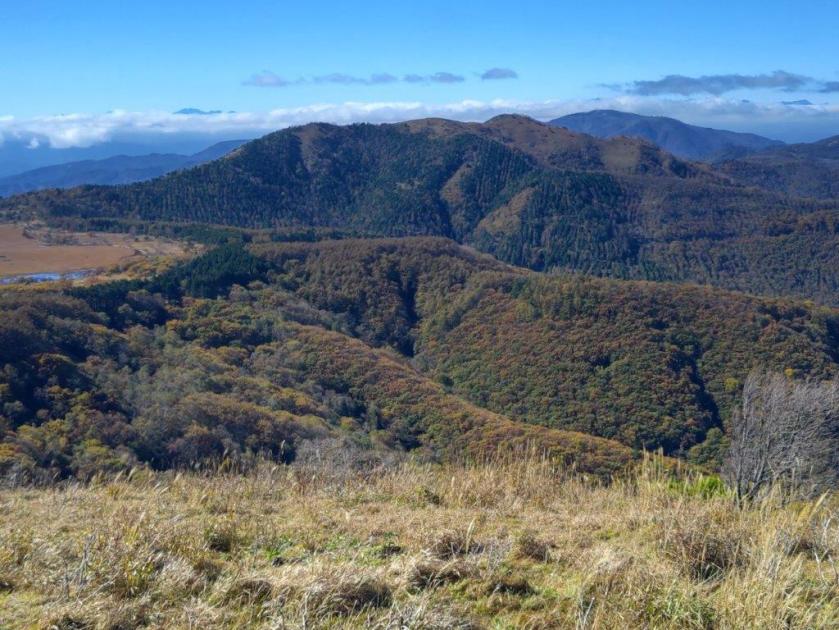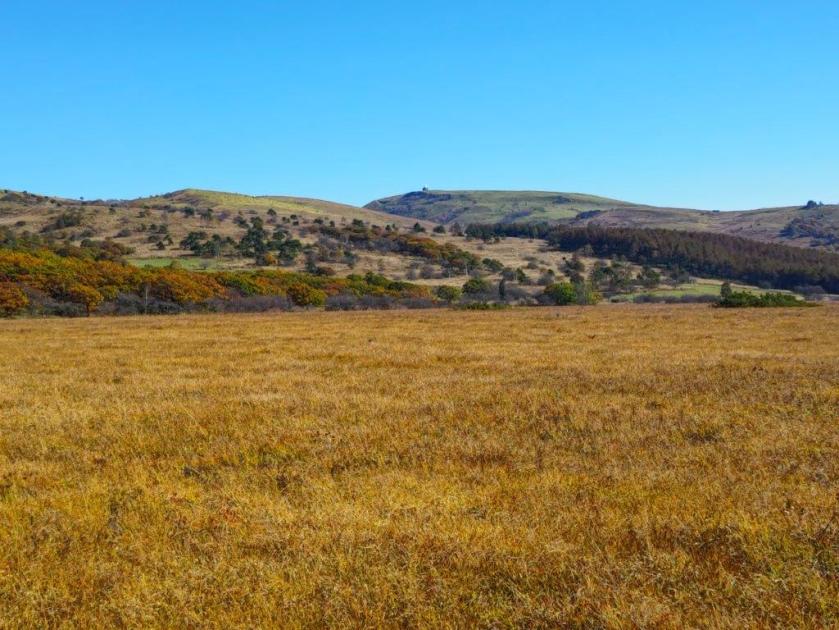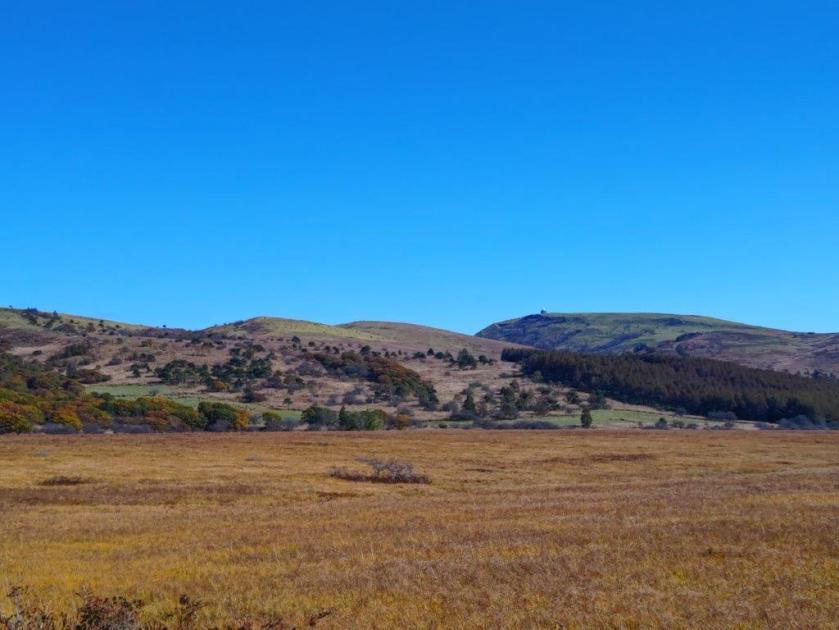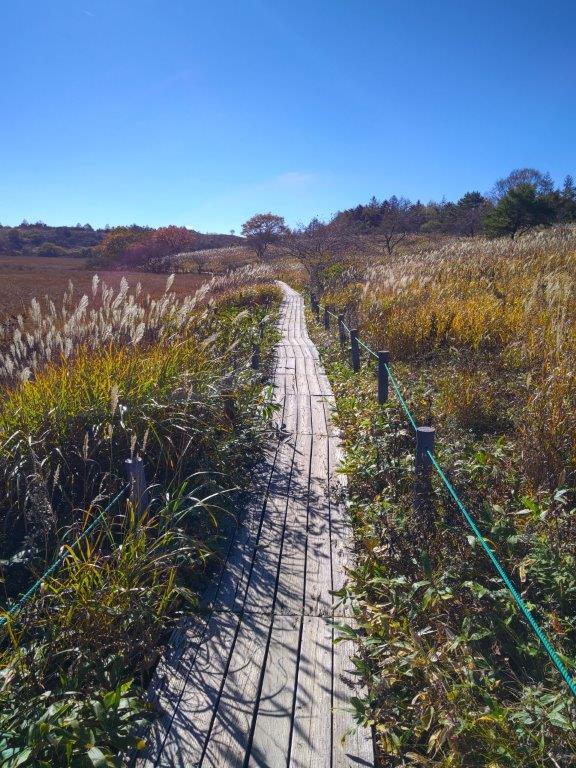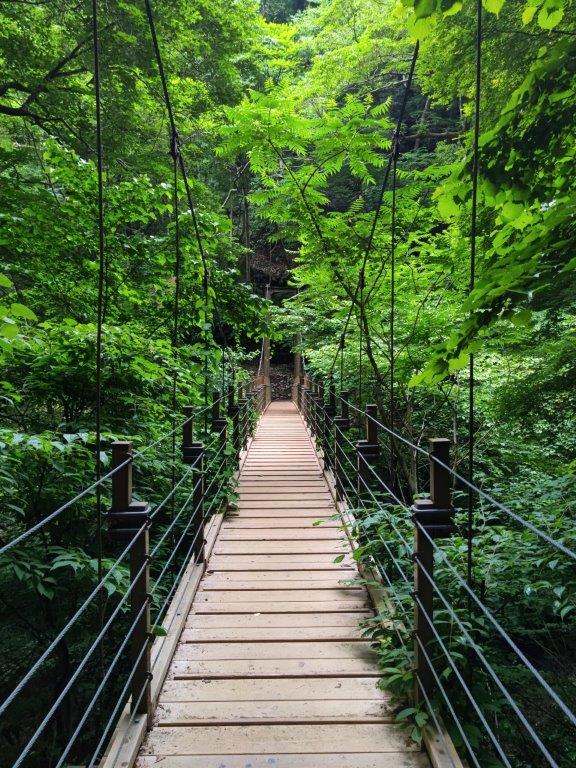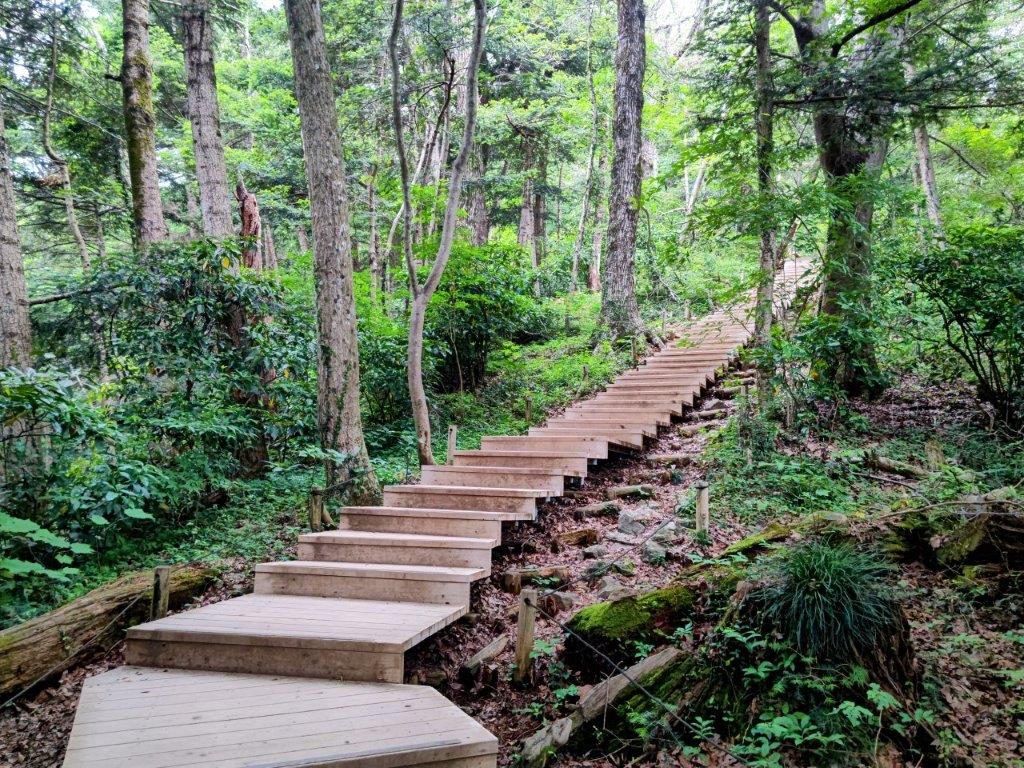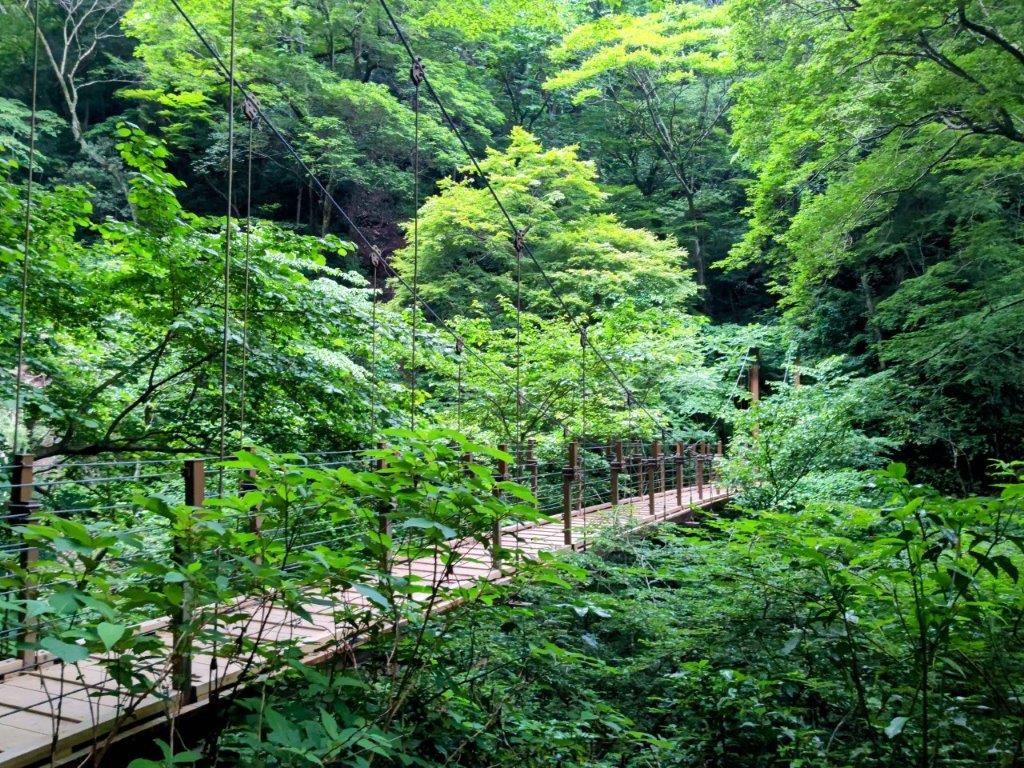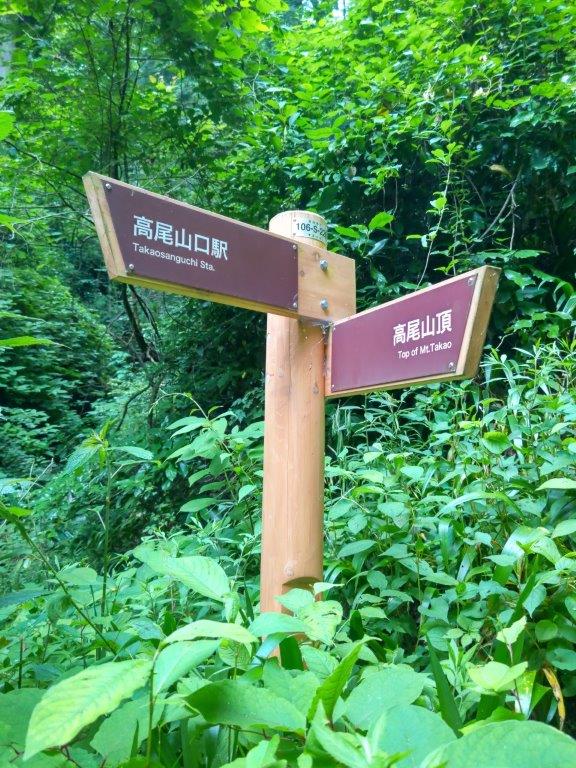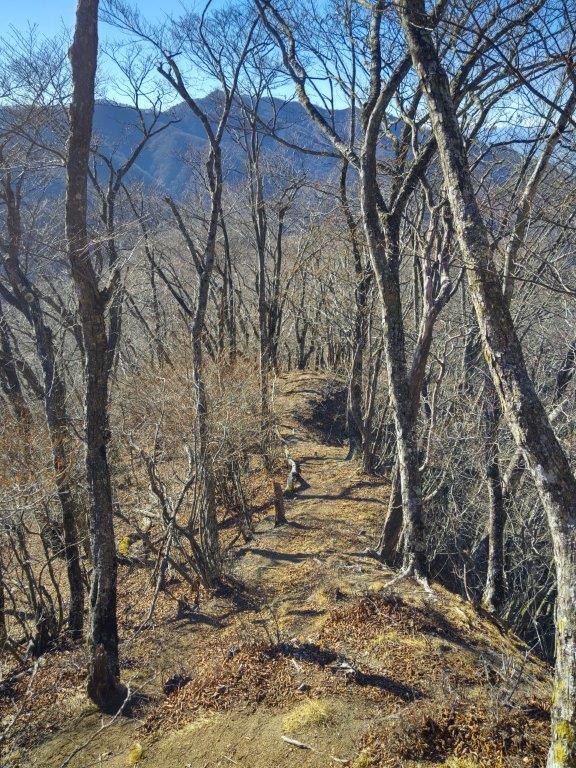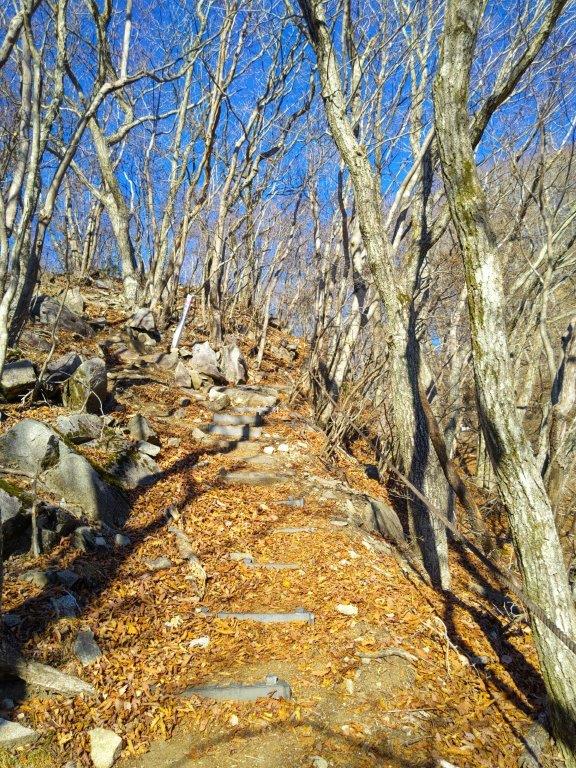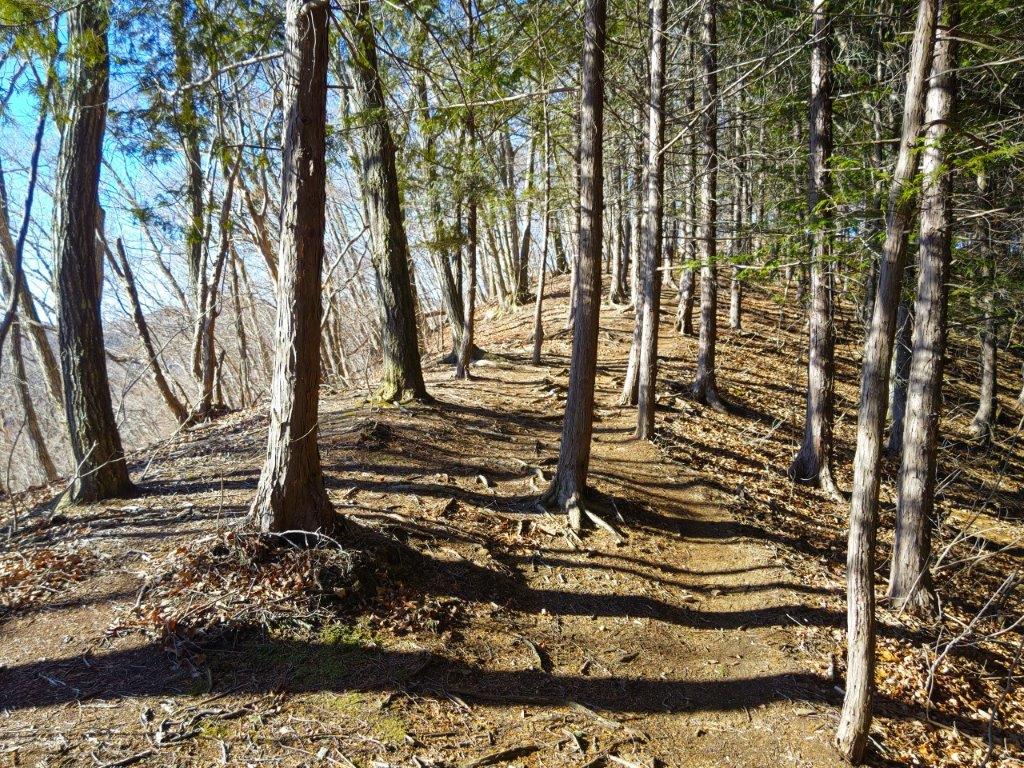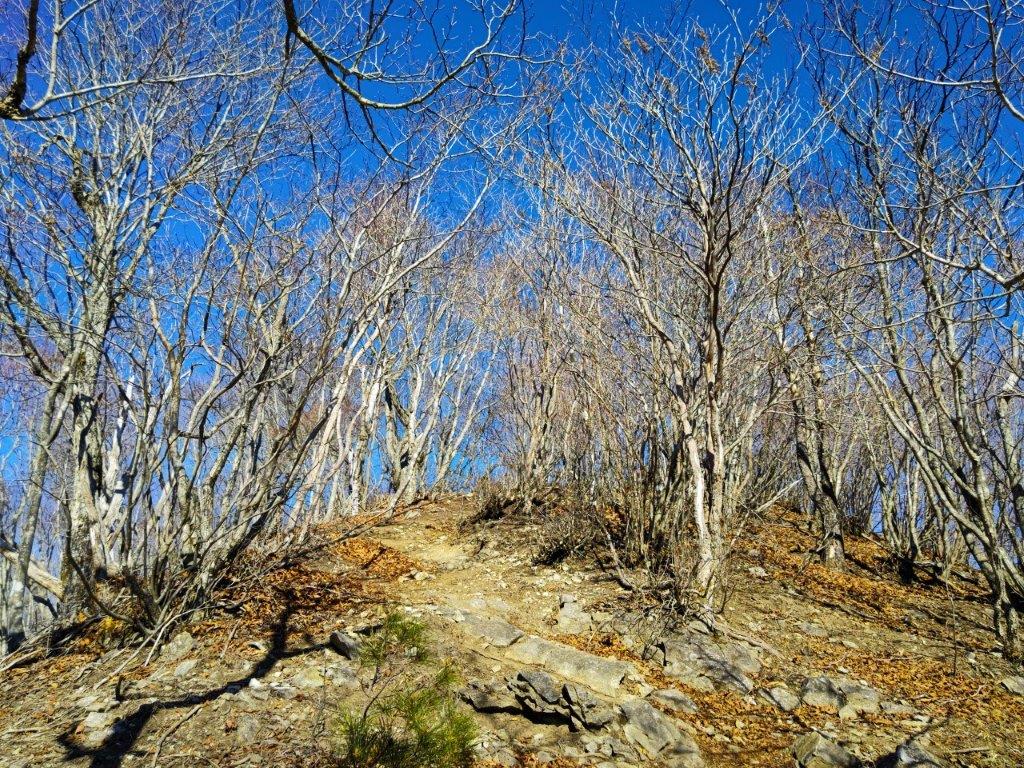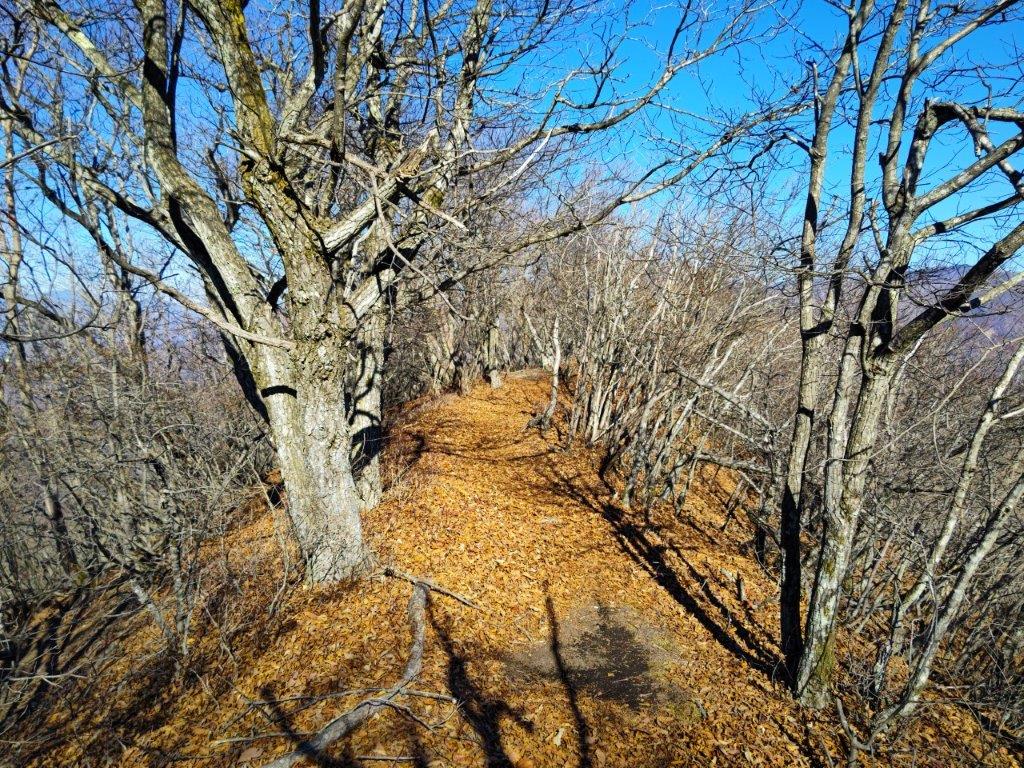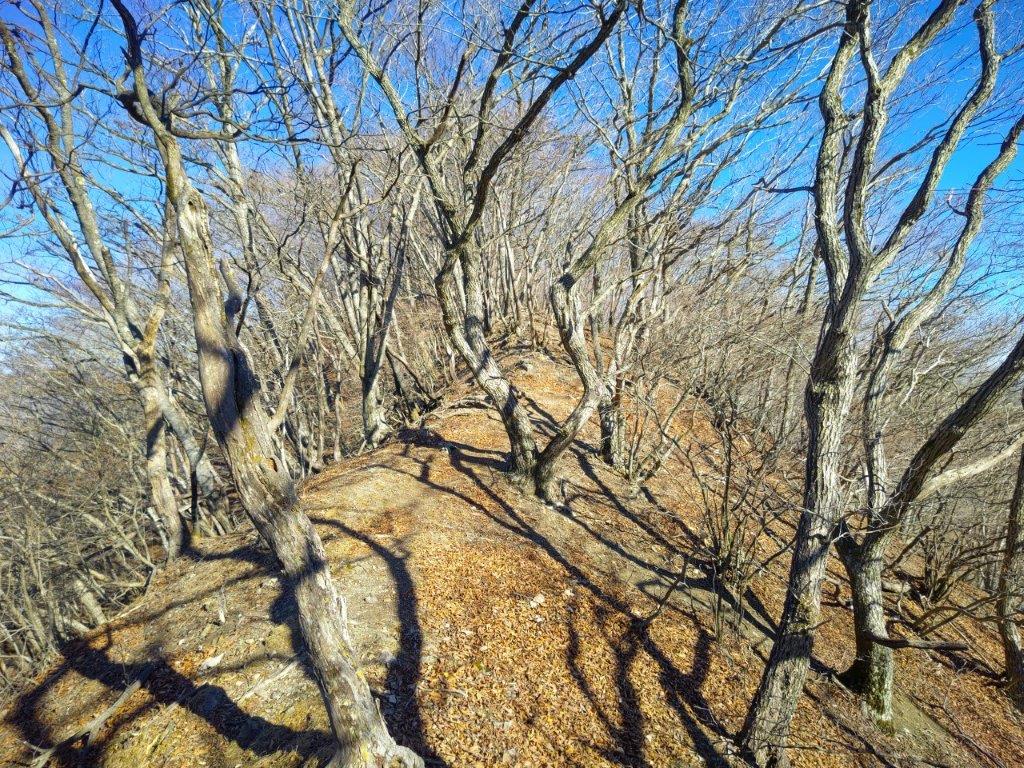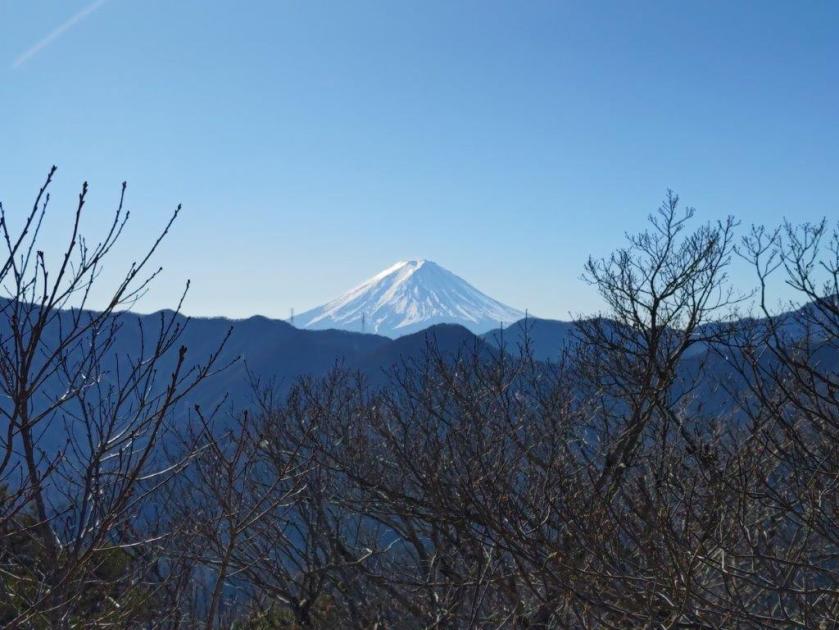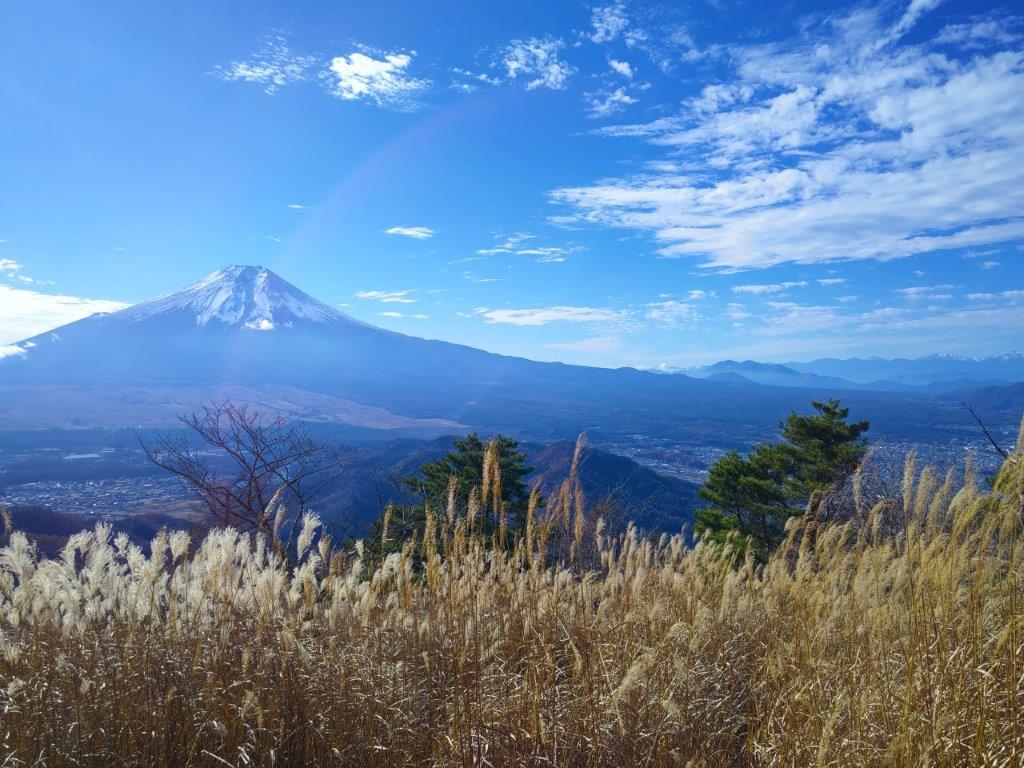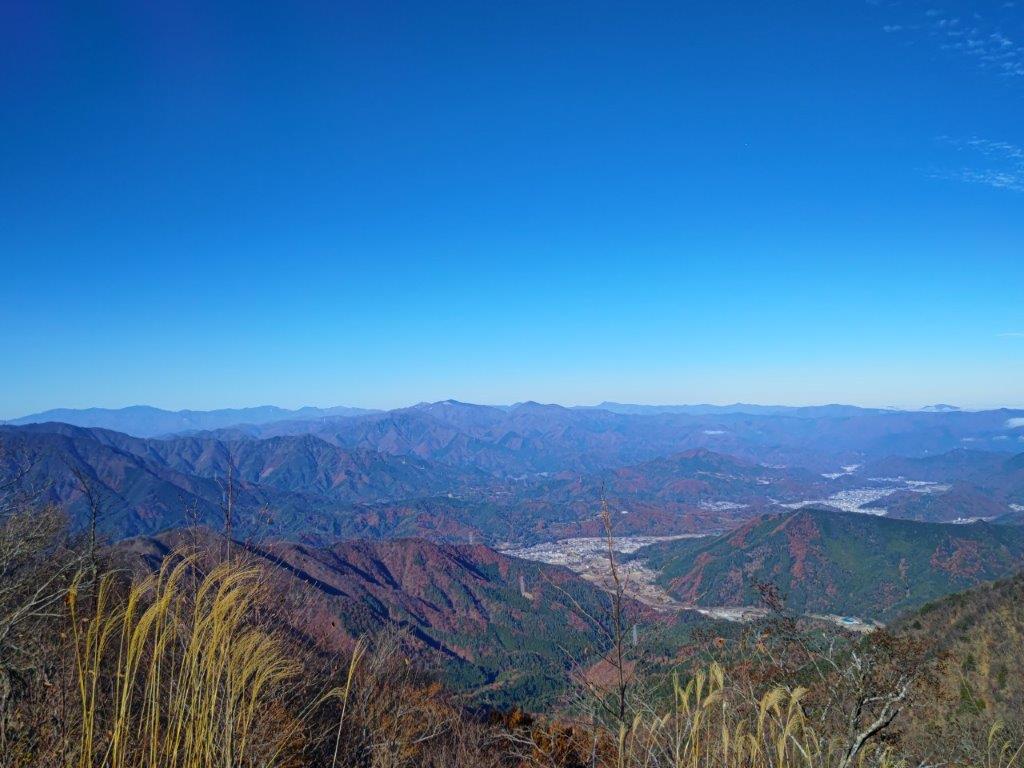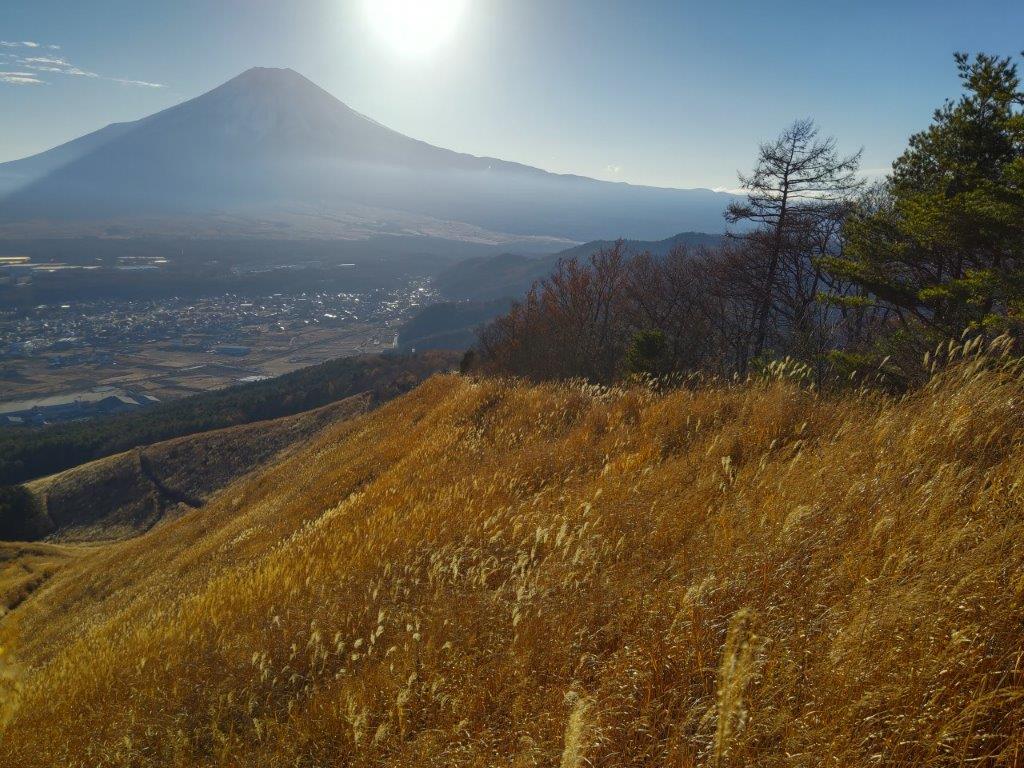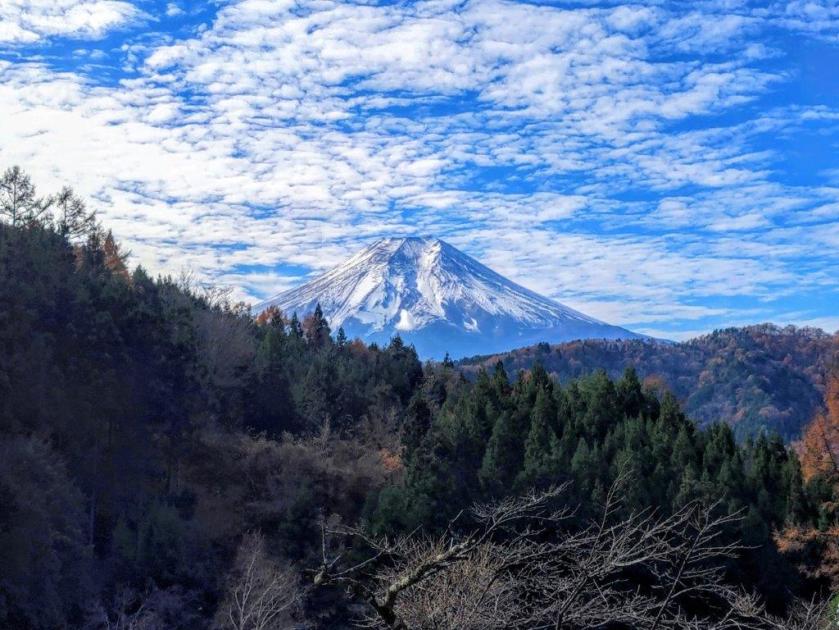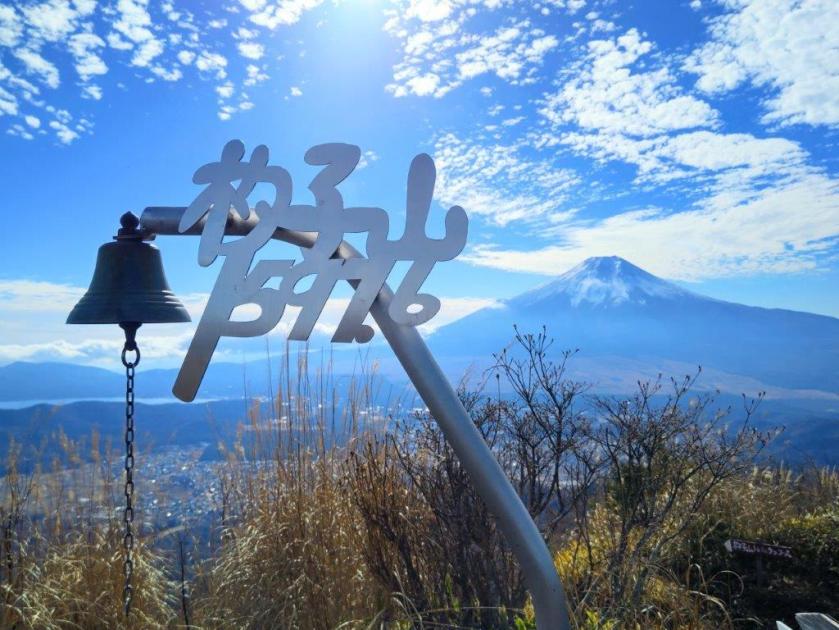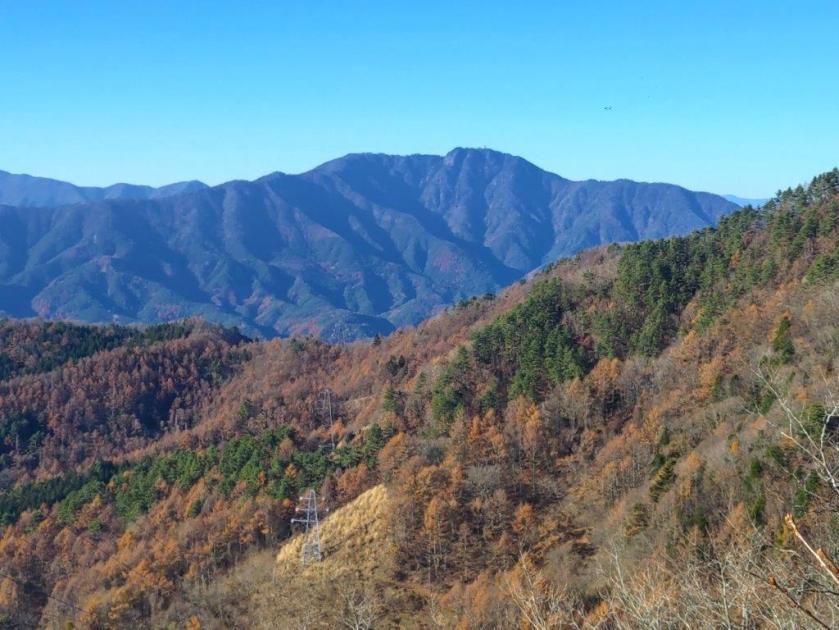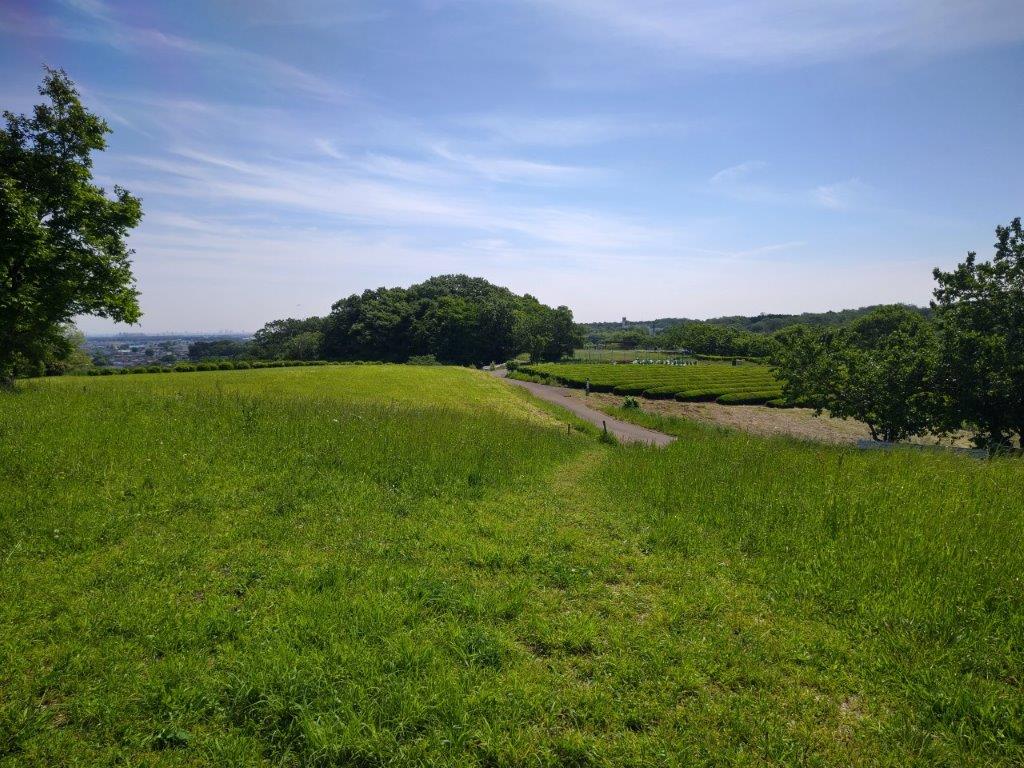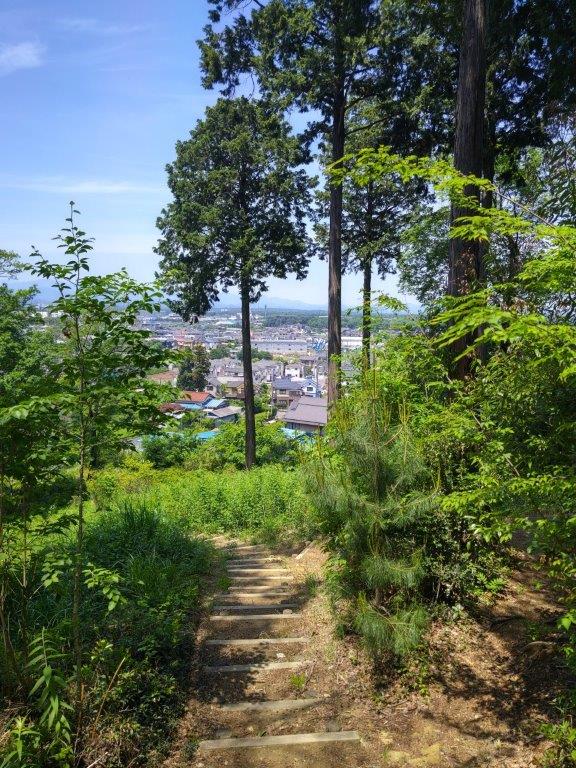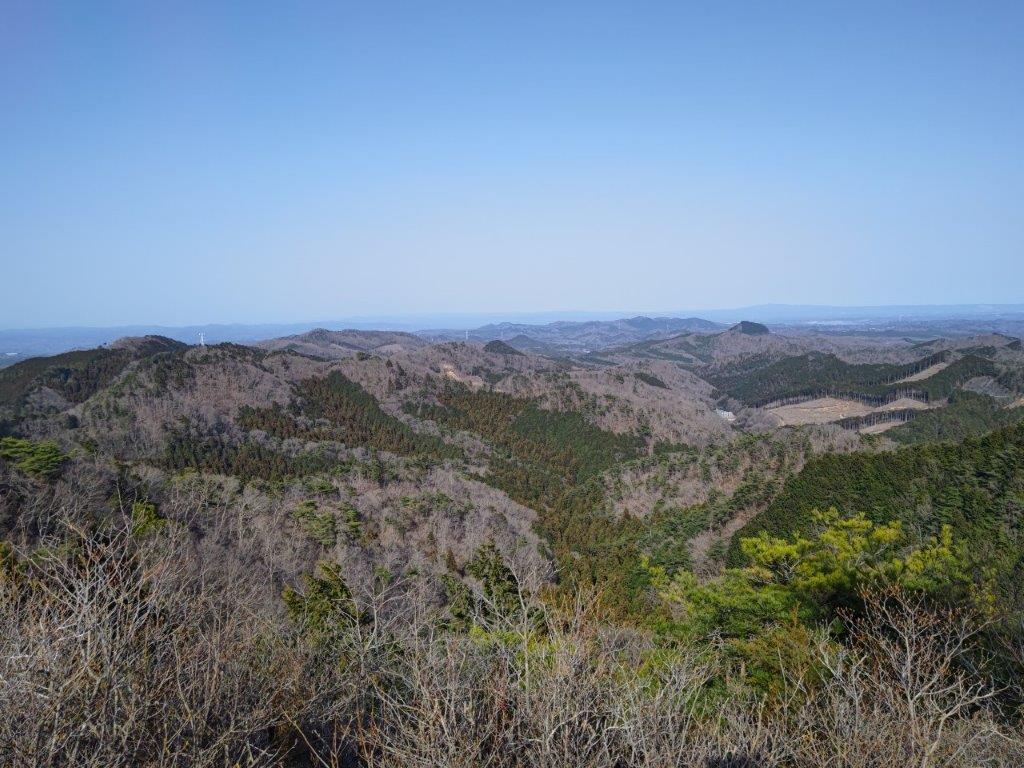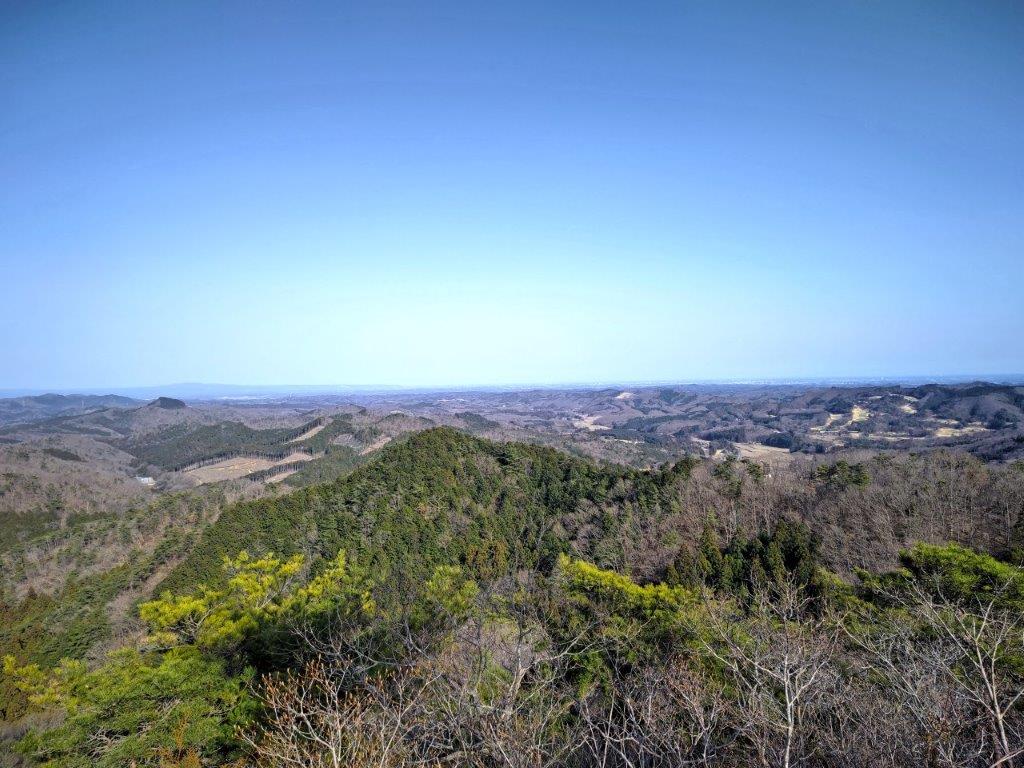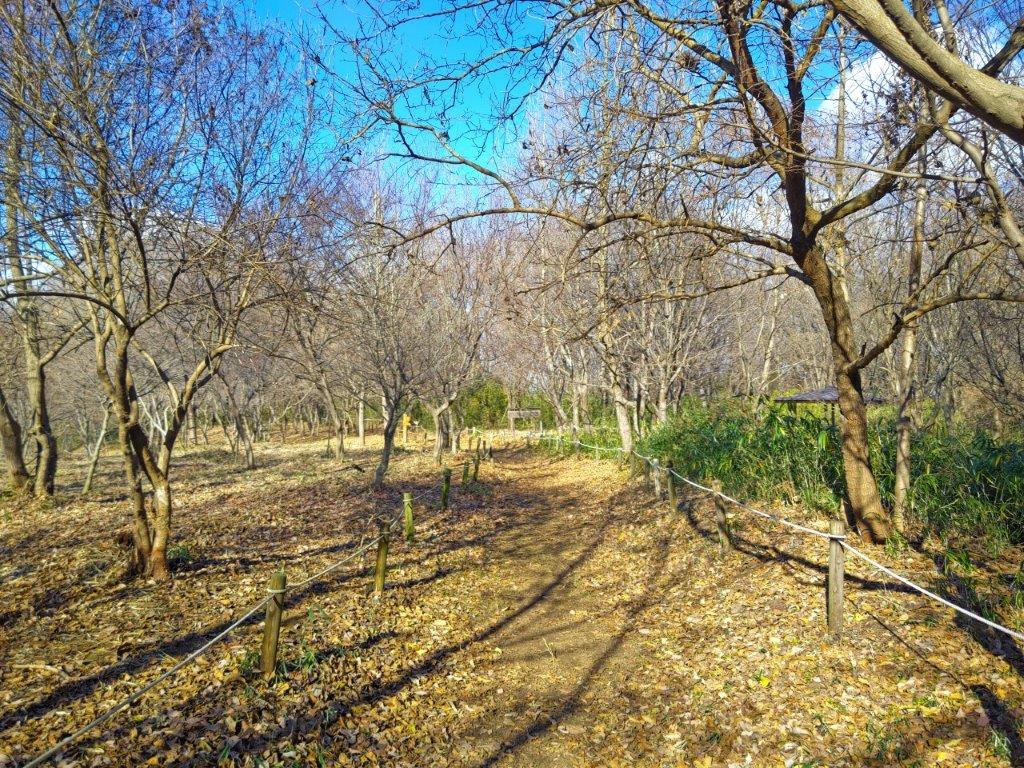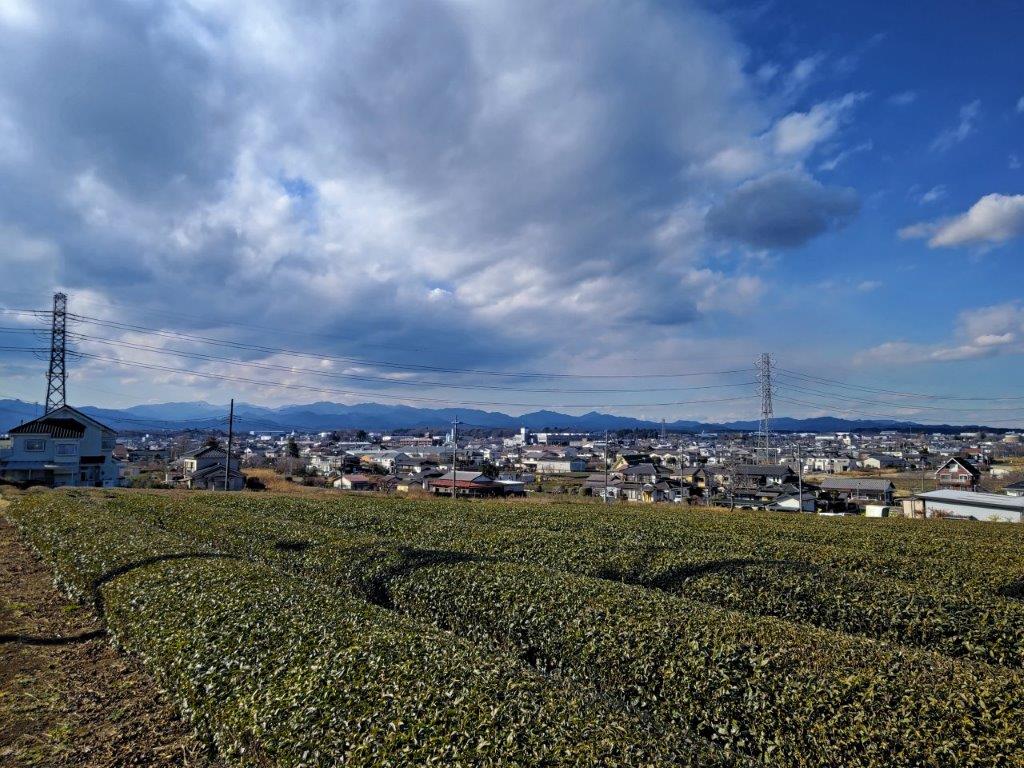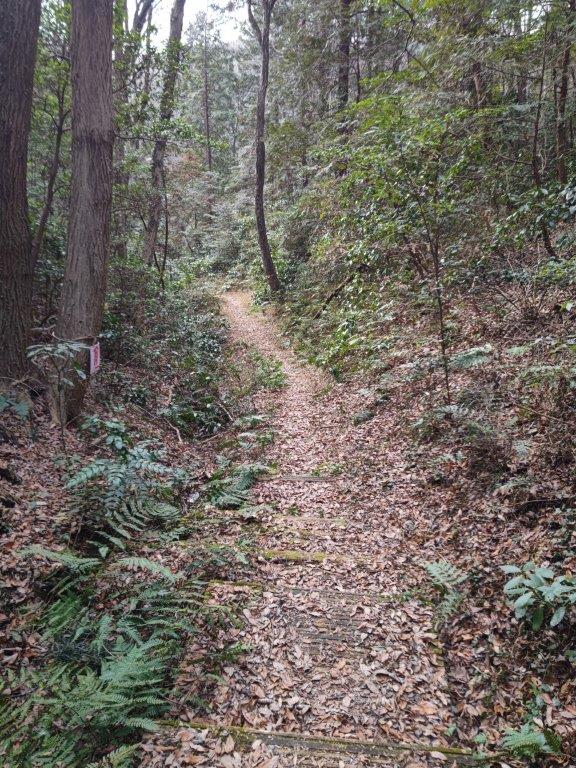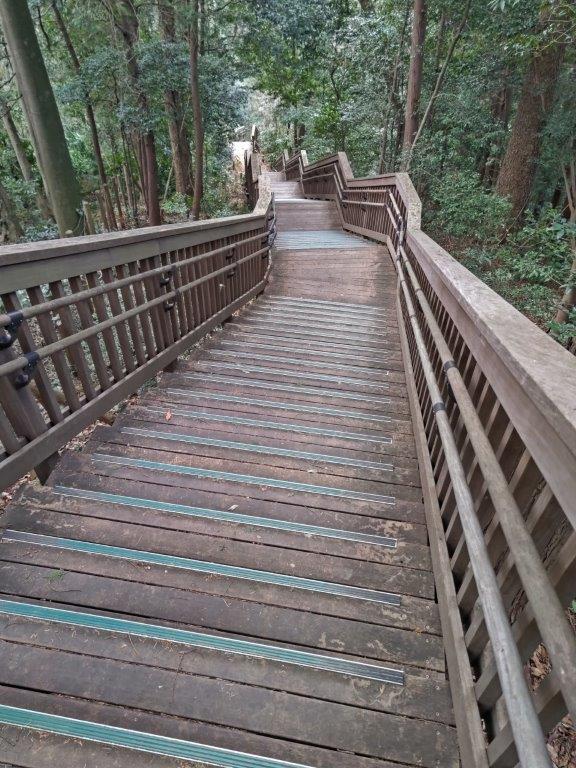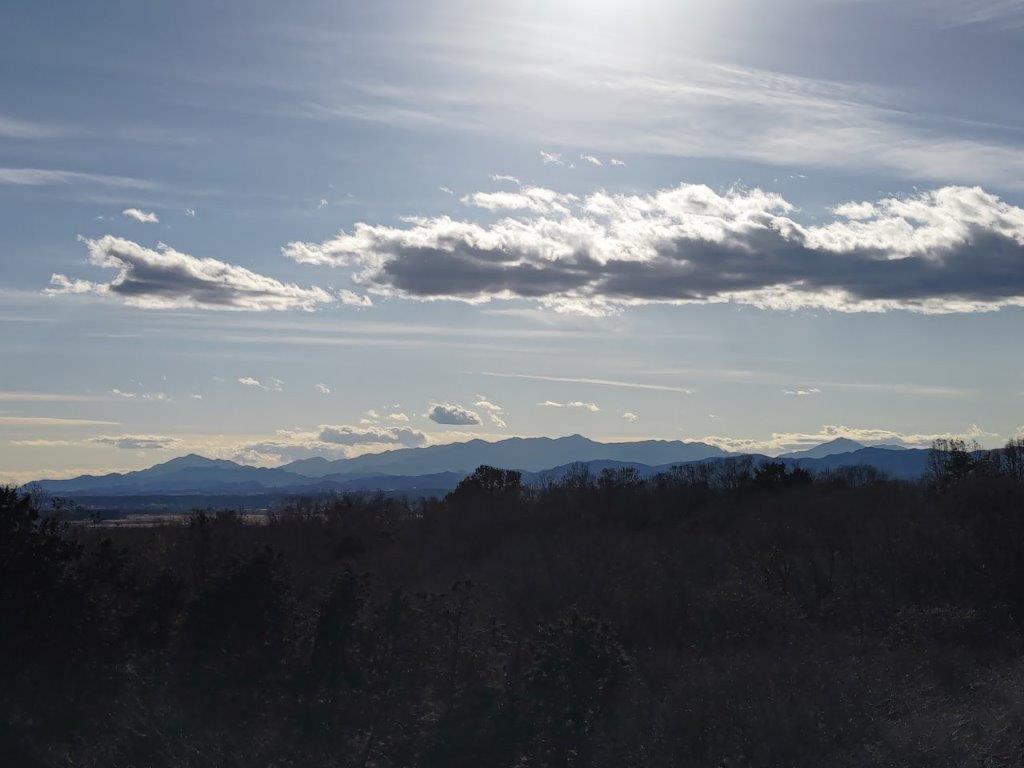
Sayama Hills (Highest Point 194m), Tokyo & Saitama Prefectures, Tuesday, May 9, 2023 [Nawatake Forest Road]

I had visited the forested hills around Sayama Lake earlier in the year, but felt like exploring the area some more; I decided to do a morning hike since the parks sit comfortably within the city. I would start from a prominent hill on the north side, then follow a forest road leading to the south side, a shortcut for the perimeter road I followed in January; from there, I would go up and down some hills in the southwest corner of the park; finally, I would leave the hills on the west side, hopefully reaching a bus stop by noon. It was supposed to be fine spring day, sunny with comfortable temperatures; it had rained hard the day before, so the air would be crisp and clear. As before, I would take the local Seibu line to Kotesashi station, and then a bus along the north side of the lake; I could catch the same bus back from the end of the line. I was looking forward to an easy morning hike through a nature park within Tokyo.

Hiking in the Sayama Natural Park 都立狭山自然公園

May 2024 update: the Nawatake Forest Road is closed till at least 2026 due to fallen trees from typhoons in 2023

View this Blog Post on Hiking Around Tokyo

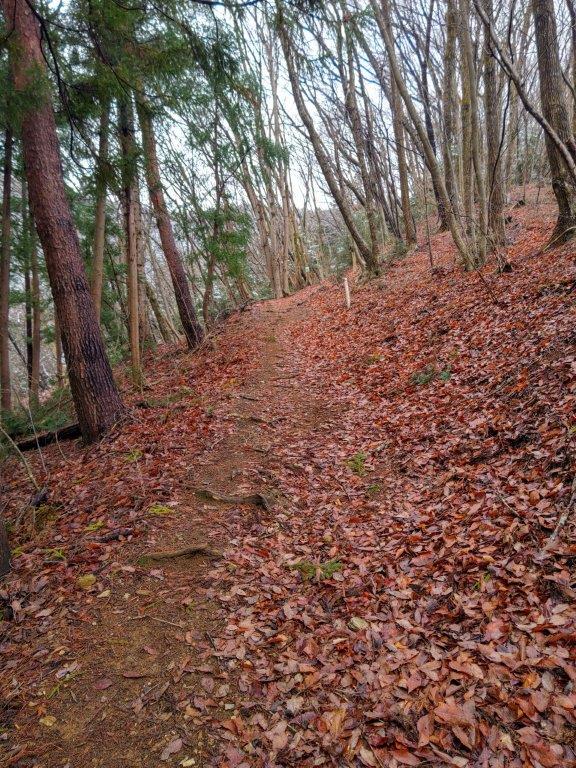
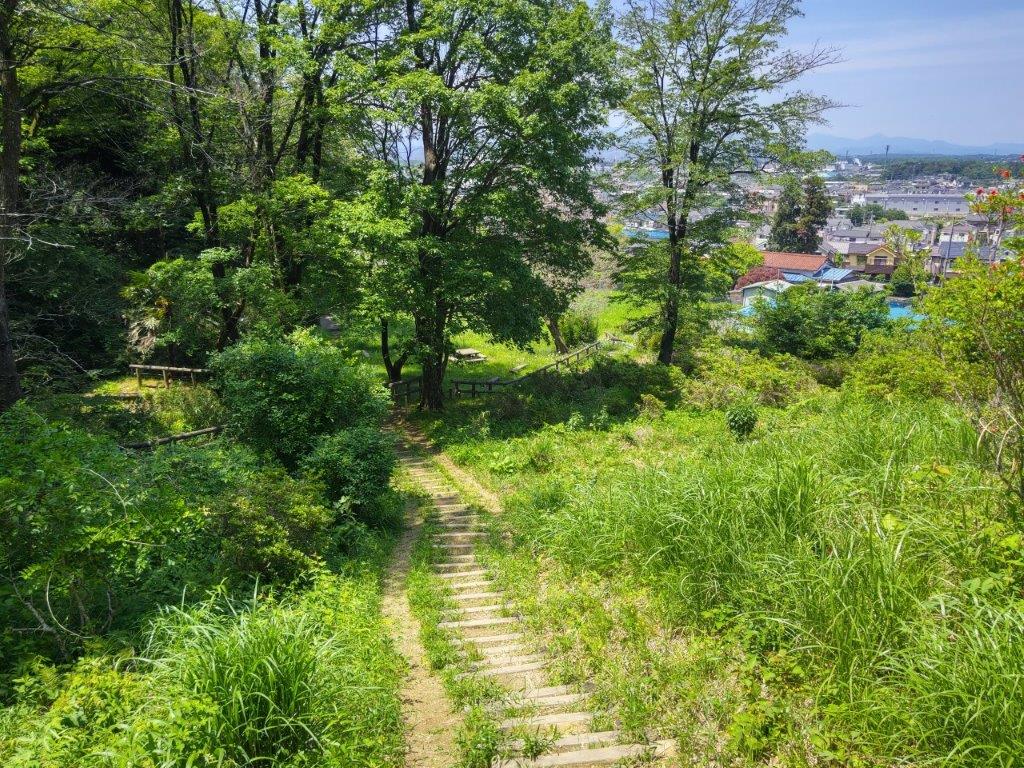
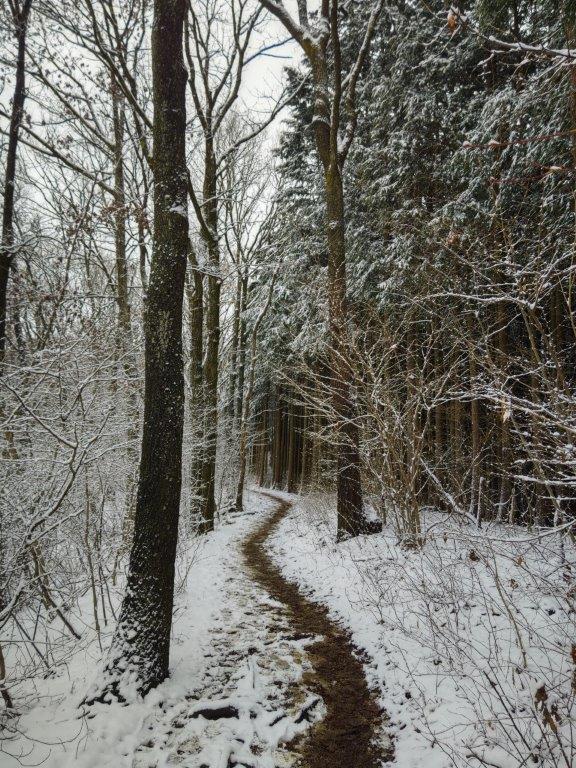
Trail Leading to Akasaka

Top of Hira Hill

It was still pleasantly cool when I got off the bus at 9am next to a small shrine shrine under some cedars. After passing Kinsenji Temple, I turned left onto a lane leading up a hill, called Hira Hill (比良の丘 ひらのおか 155m), next to Midori no Mori Nature Park. The flat top area is used for farming, and walking among the fields, it felt like I had suddenly been transported to the countryside. It was now 9h30 so I had breakfast at a table under a huge Japanese Bird Cherry, probably a nice place for a picnic during the sakura season.

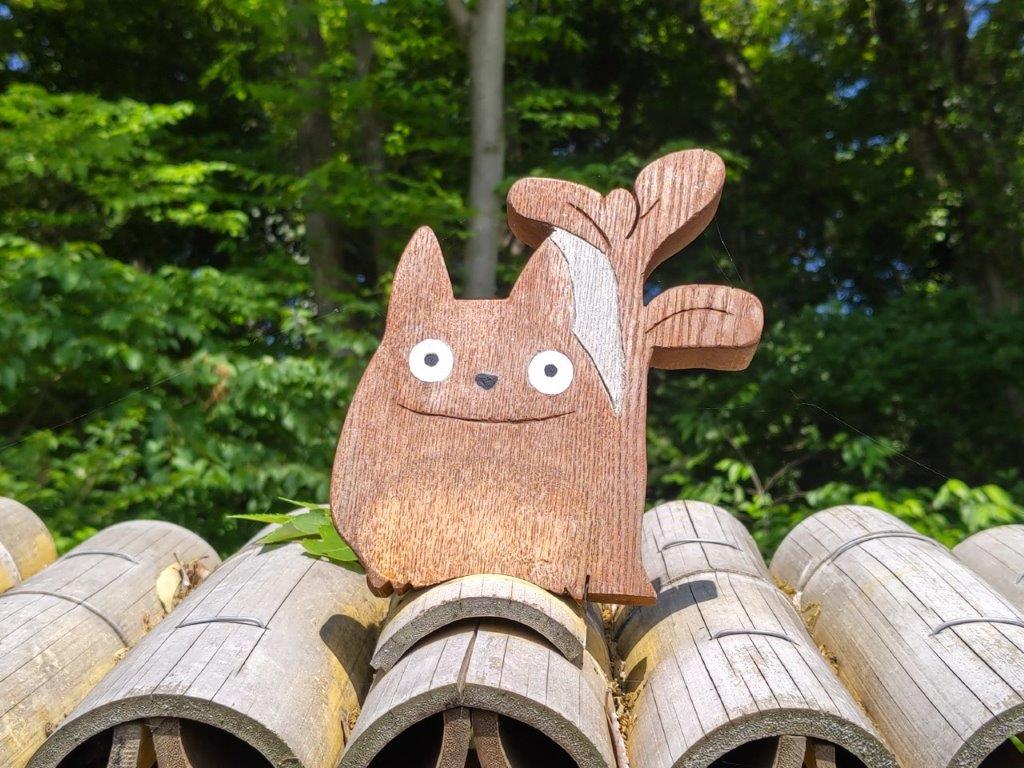
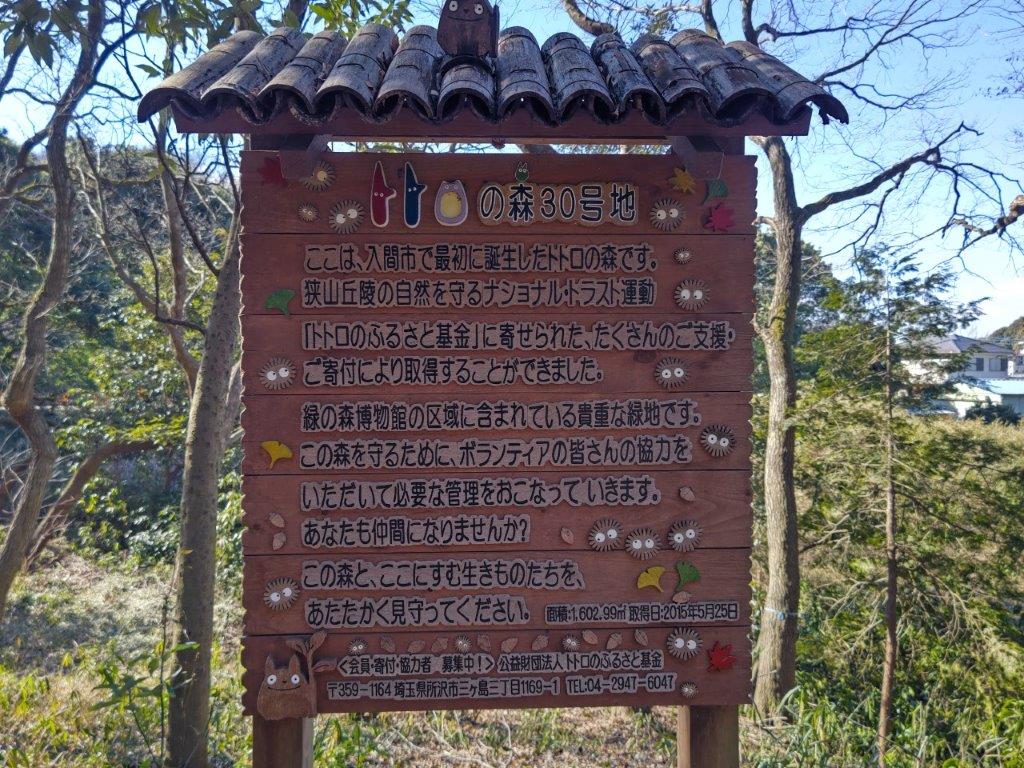
Signboard for Totoro’s Forest

Flower Field at the Top of Hira Hill

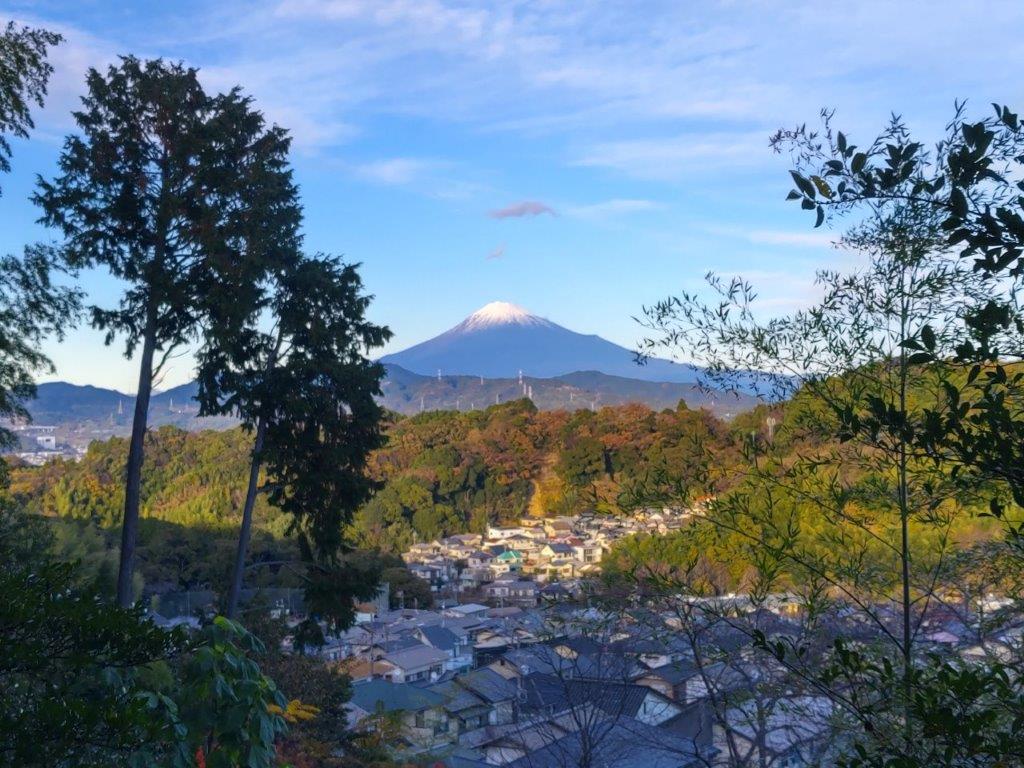
I was impressed by the serenity of this spot so close to the city. Nearby was a signboard for Totoro’s Forest #13, # 18 and #49. At the moment, there are 57 off these protected parcels of forestland. To the north, I had a view of the city between two wooded areas; on the south side, Sayama lake was hidden behind a forested ridge. This whole area of hills and forests surrounding the lake is known as the Sayama Hills (狭山丘陵), one of the main features of the Musashino Plateau. I soon set off in the direction of the lake, heading down a faint footpath, and entering the forest, past a bridge across a creek.

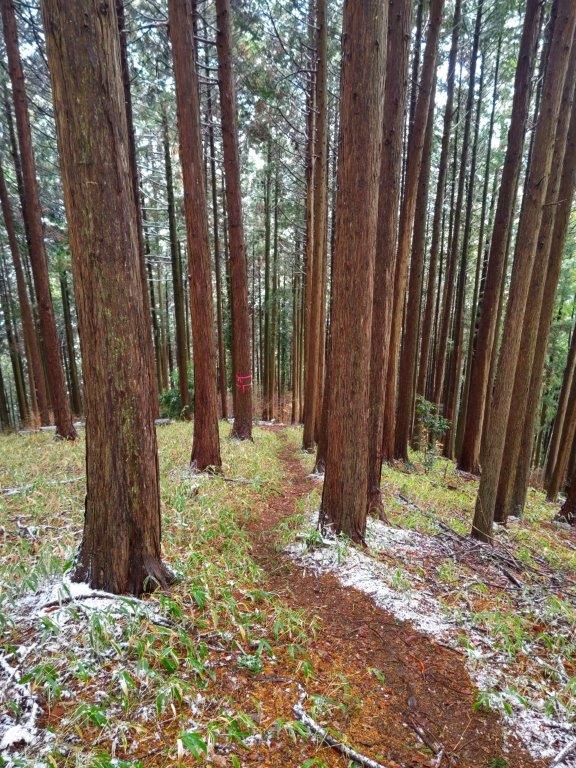
Cherry Tree on Hira Hill (left) Forest Path to the Perimeter Road (right)

Walking the Nawatake Forest Road

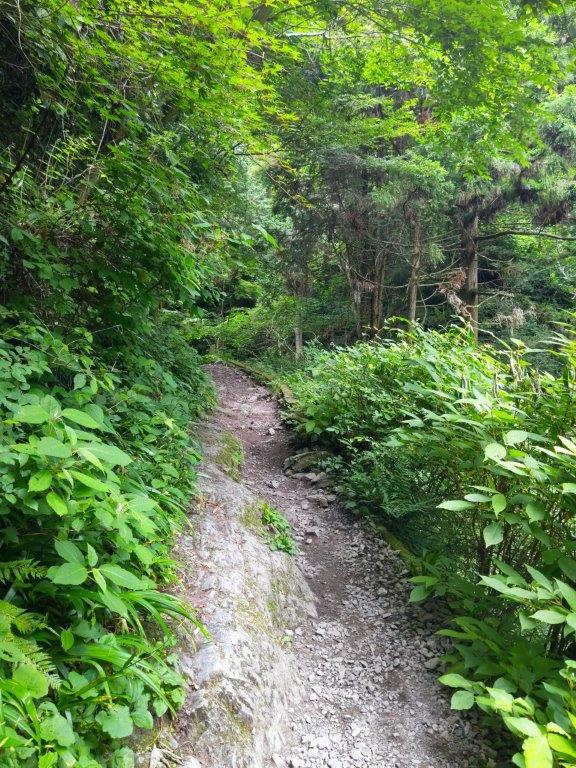
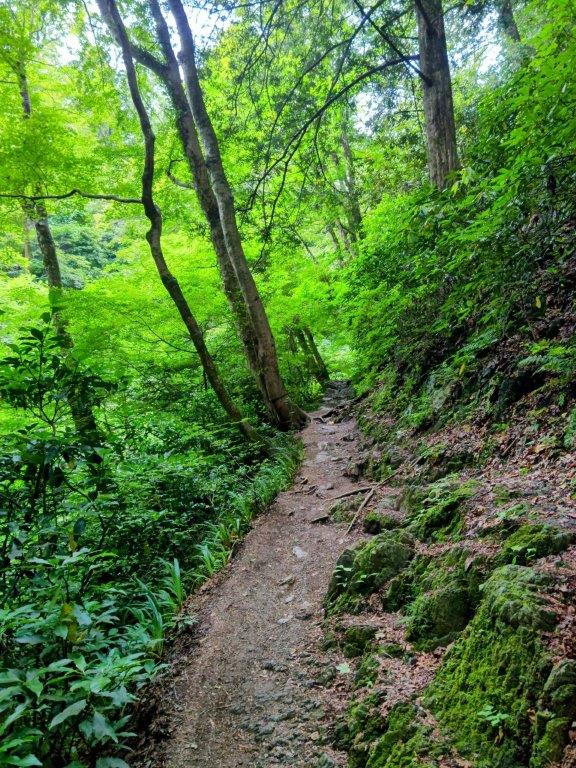
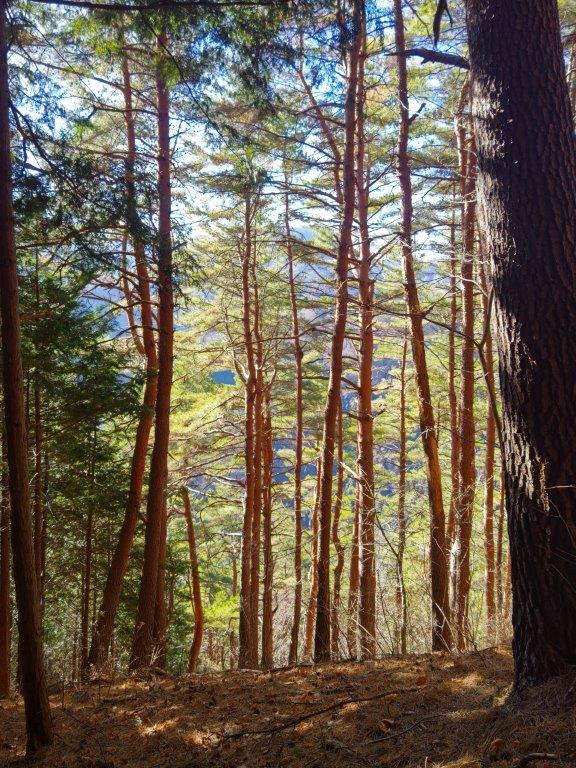
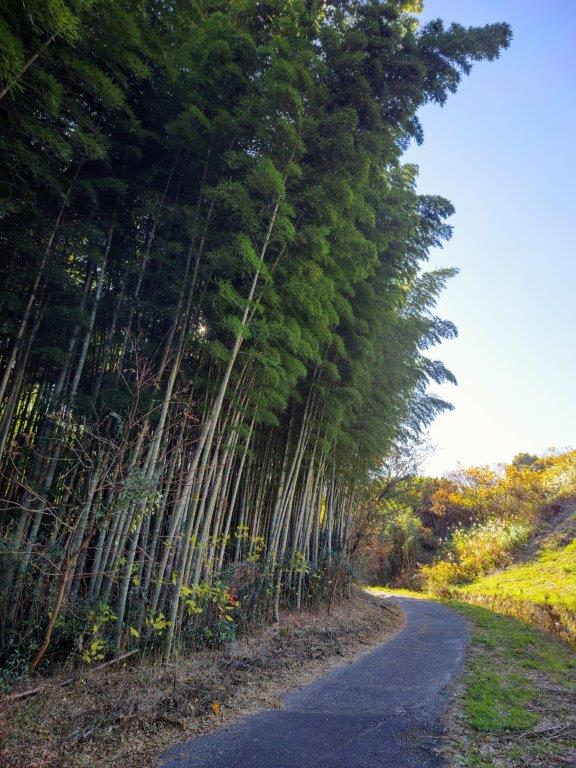
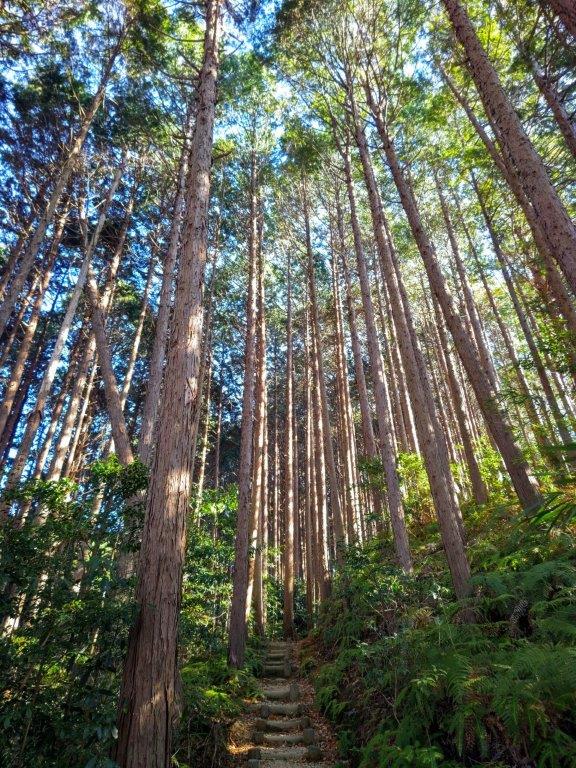
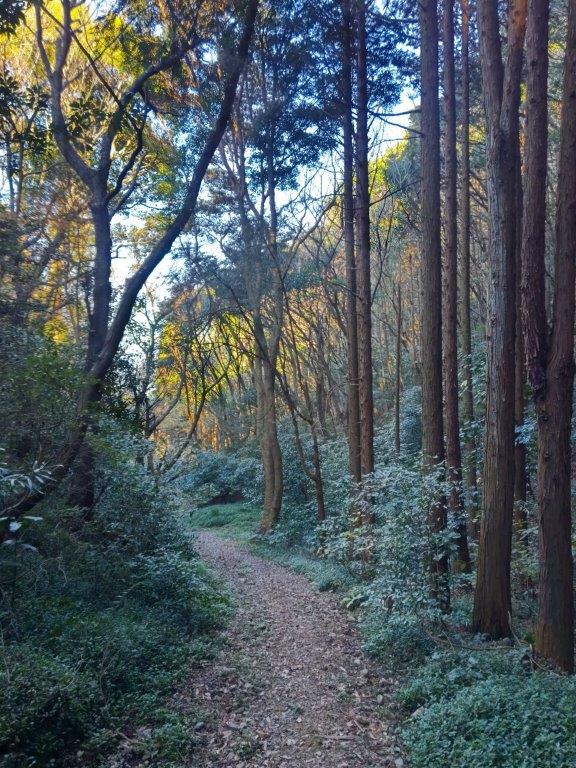
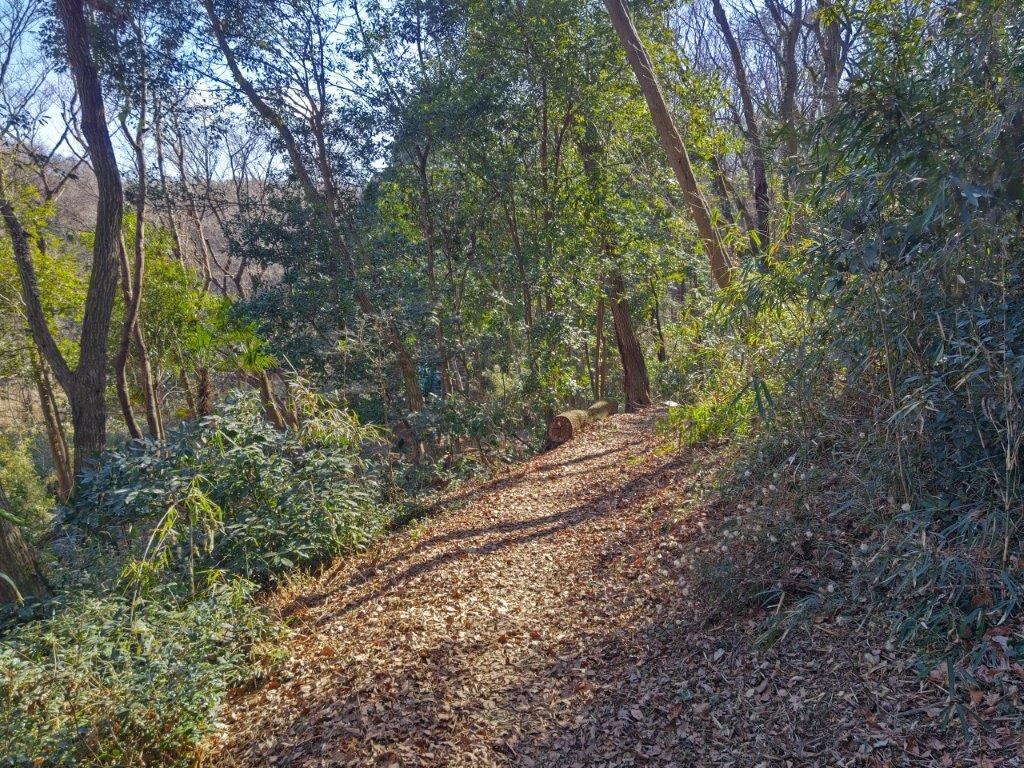
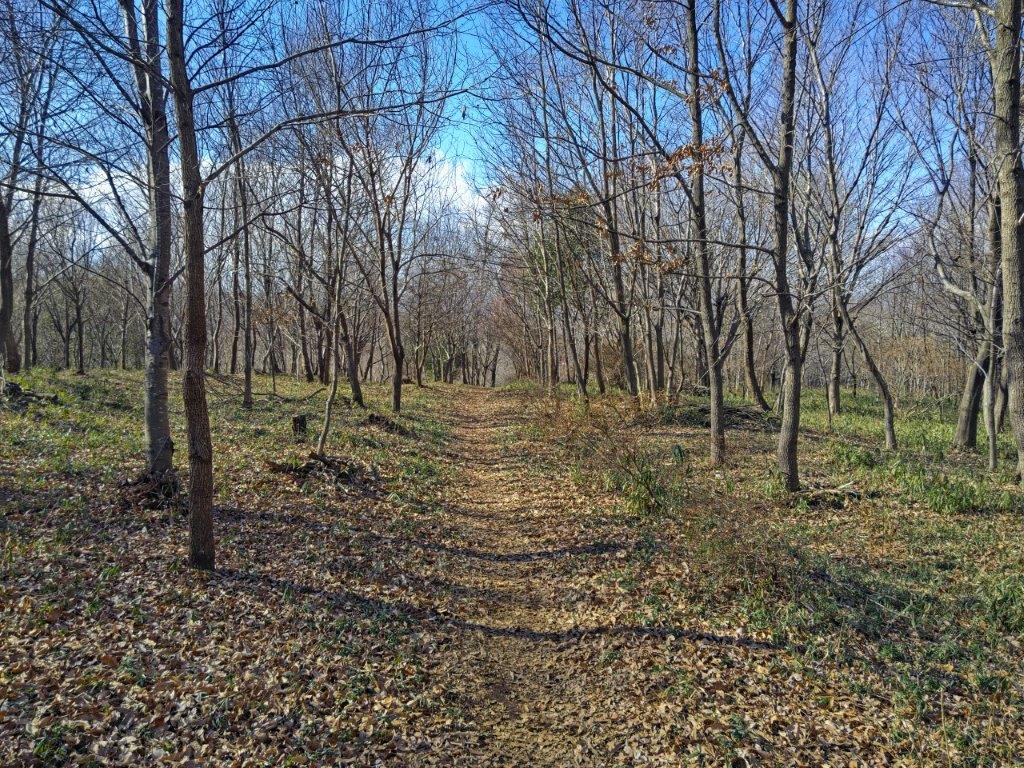
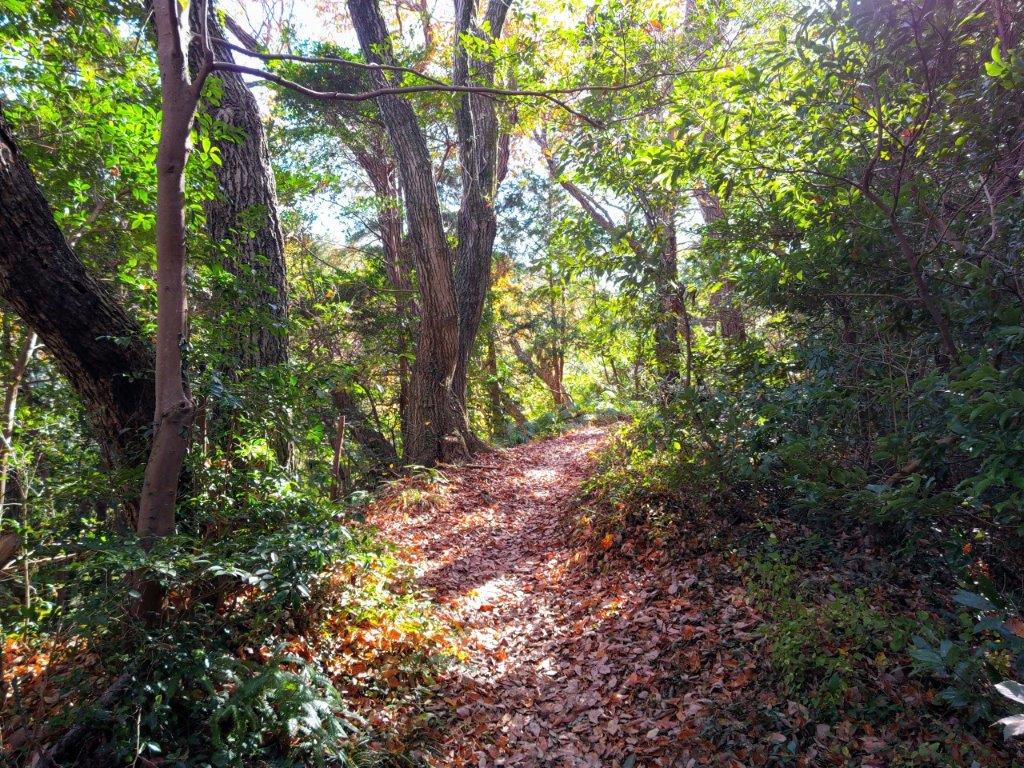
I was stunned by the beauty of the forest, enhanced by the play of sunlight on the light green leaves, as I made my way up a switchback path. A little before 1oam, I reached the top of the ridge and the Sayama Perimeter road. I turned right, and after a few minutes, arrived at the gated entrance of the Nawatake Forest road on the left side. After passing through the door on the side, I made my way along the gravel path, surrounded by thick forest and silence, punctuated by intermittent birdsong.

A Green Corridor Within the City

South Side of the Sayama Perimeter Road

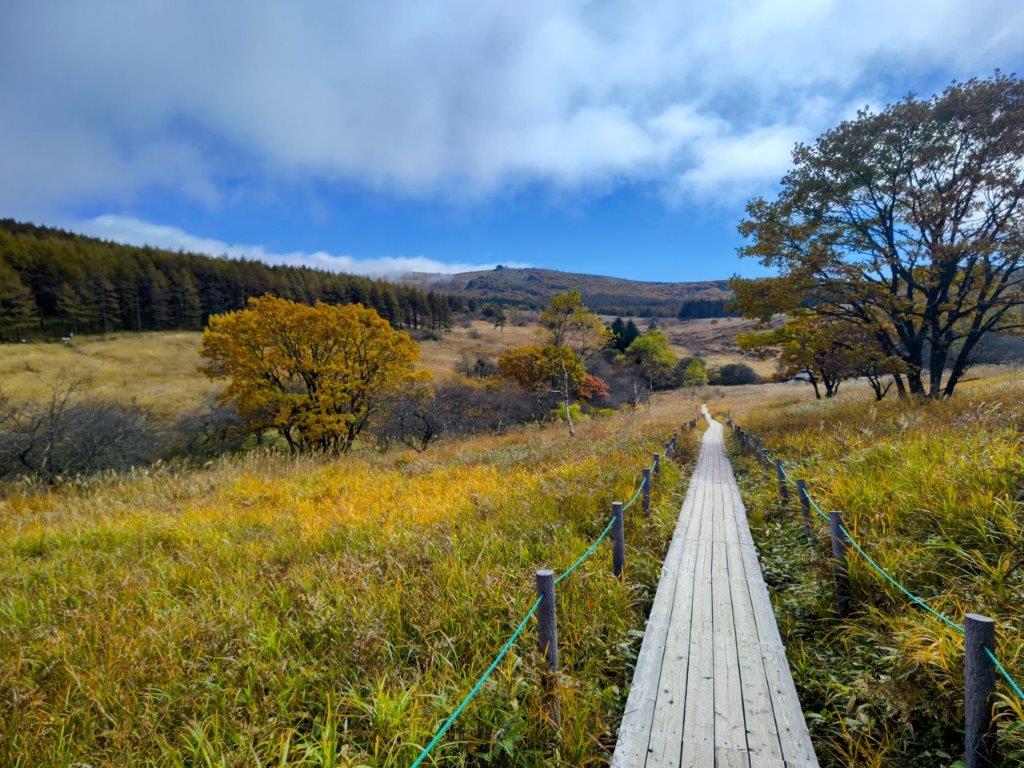
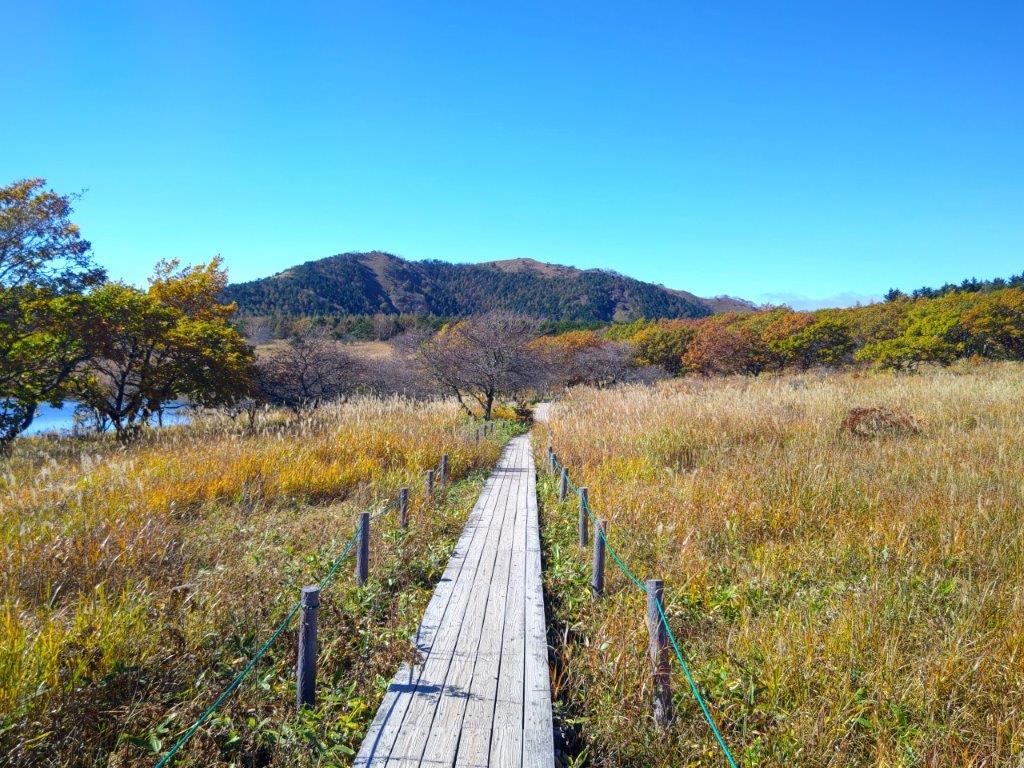
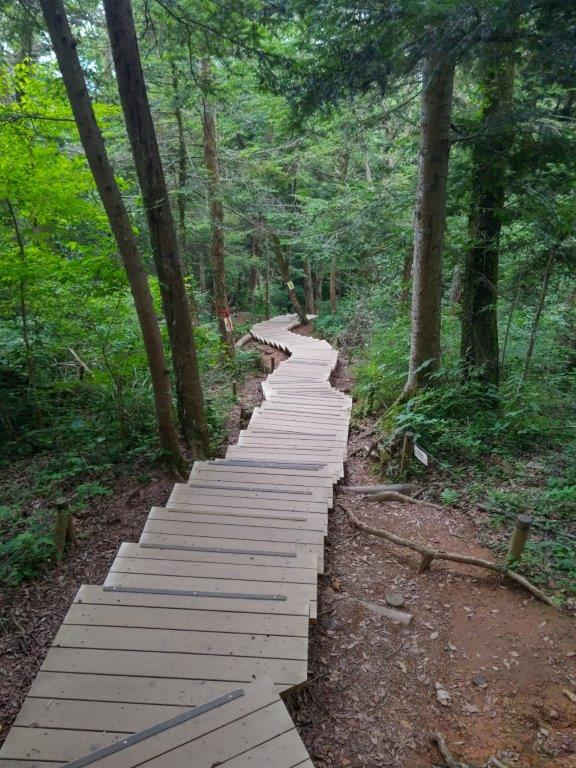
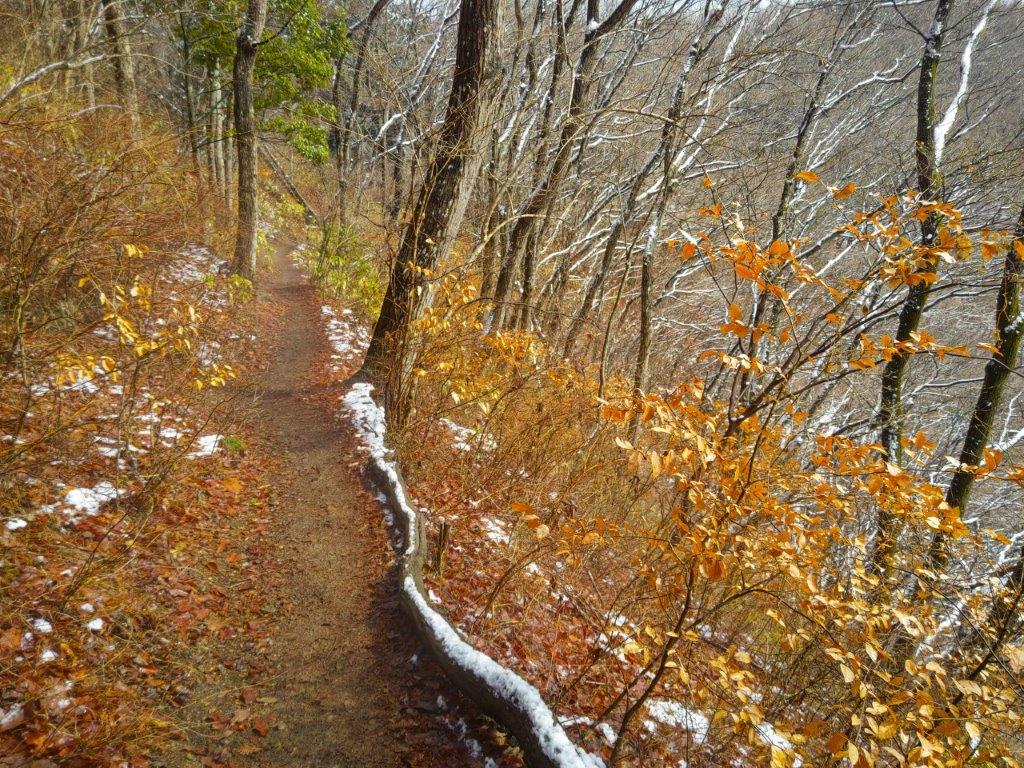
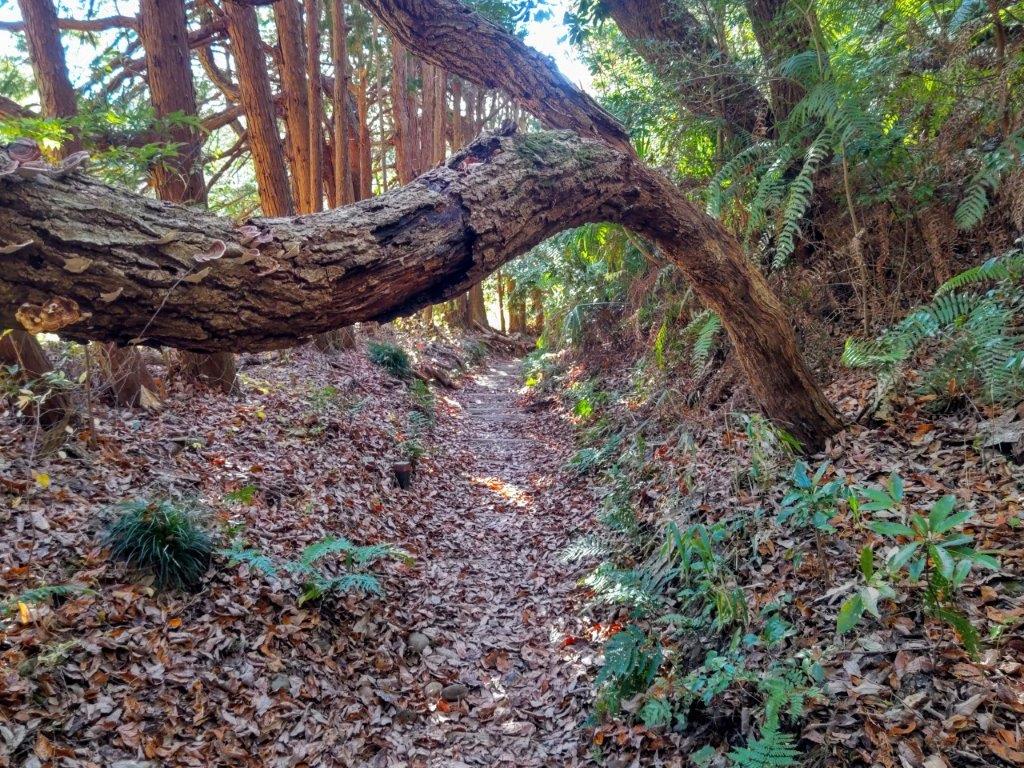
It felt like I had entered a secret section of the park: I saw few other people, birdwatchers with huge cameras, walking under the shade of trees crowding in on each side. Past Nawatake bridge (縄竹橋), where I had glimpse of the lake on the left, the path headed gently uphill for a while; less than half an hour later, I arrived at another gate, where the forest road rejoined the Perimeter Road. I soon ducked down a path on the right side, and at a parking lot, turned right onto a wooden walkway along Akasaka-yato (赤坂谷戸), a marshy area at the bottom of a valley.

Path Leading to Akasaka

Walking in the Akasaka Valley (left) Walking Down the Western Side (right)

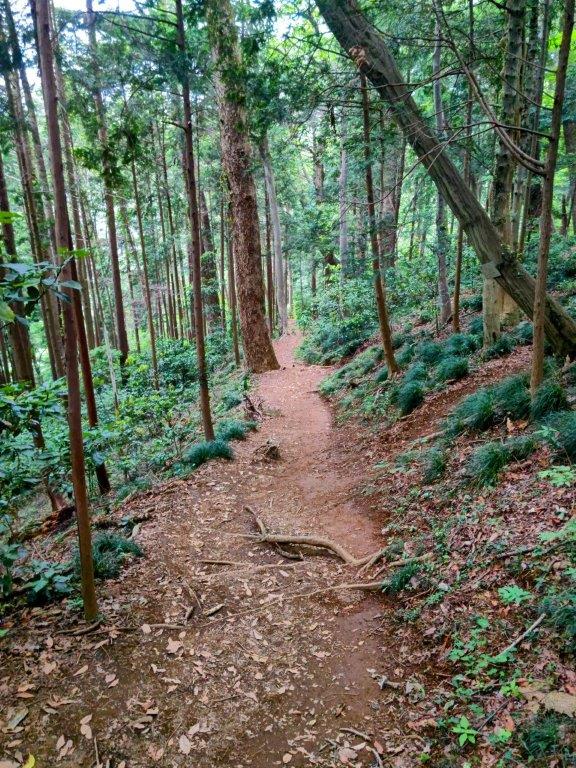
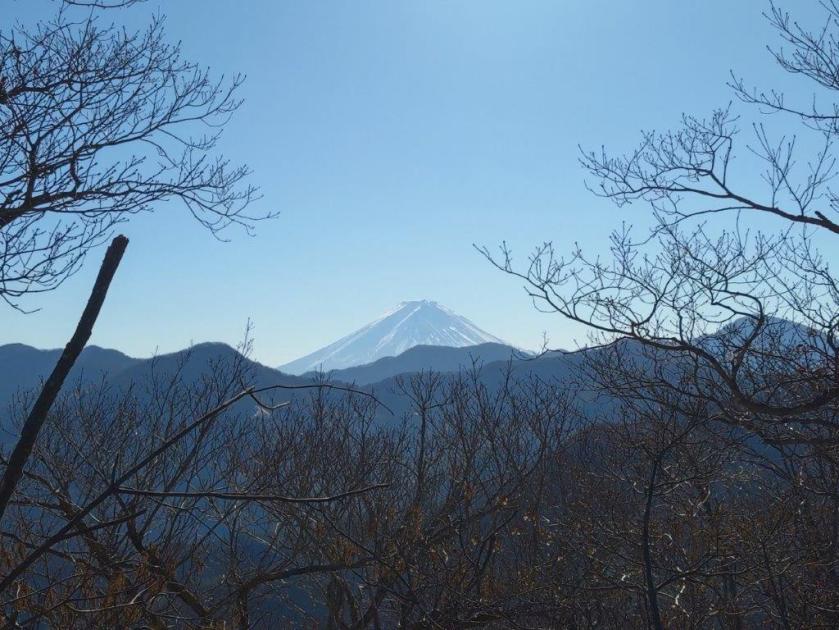
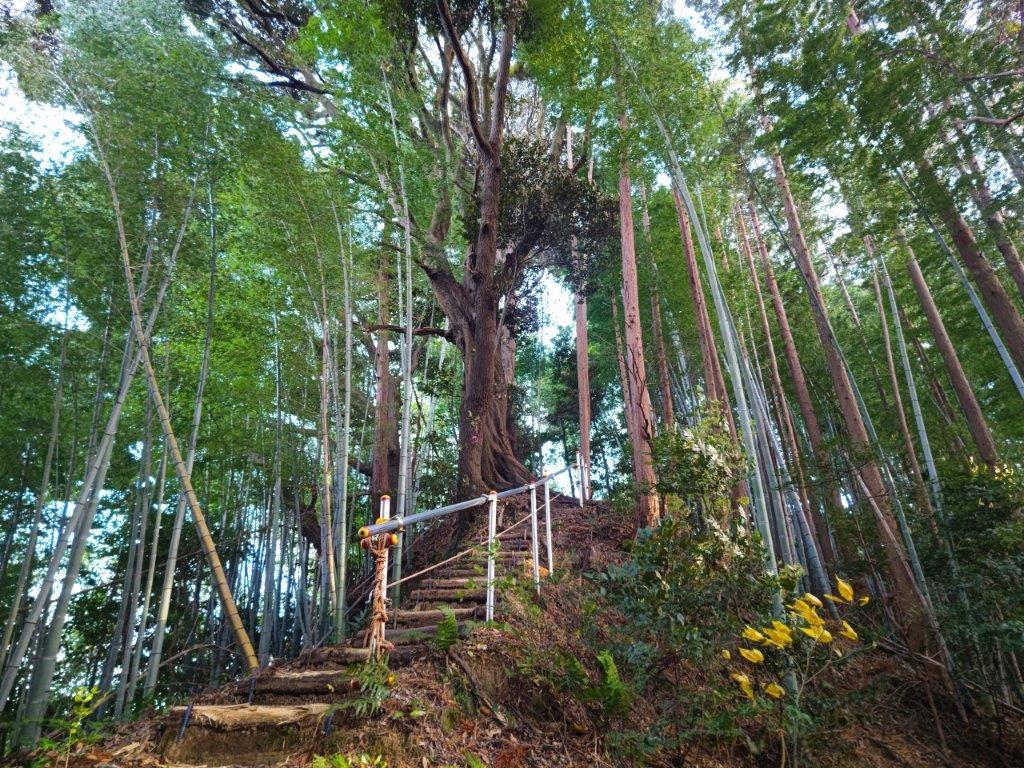
It felt like I was walking through a hidden valley, lush vegetation on both sides. After some ups and downs, I arrived at Satoyama-minka (里山民家), a recreated traditional farmhouse from the Edo era, at the edge of the forest. It was past 11am, and I was behind schedule, so I skipped a visit, and headed up a charming valley, filled with paddy fields, and frogs, judging from the croaking noises. After a short climb through forest, I reached the observatory at the top of Mt Rokudo, merging with my previous hike. Heading west, I passed the triangulation point, and soon turned left onto a path down the hill side.

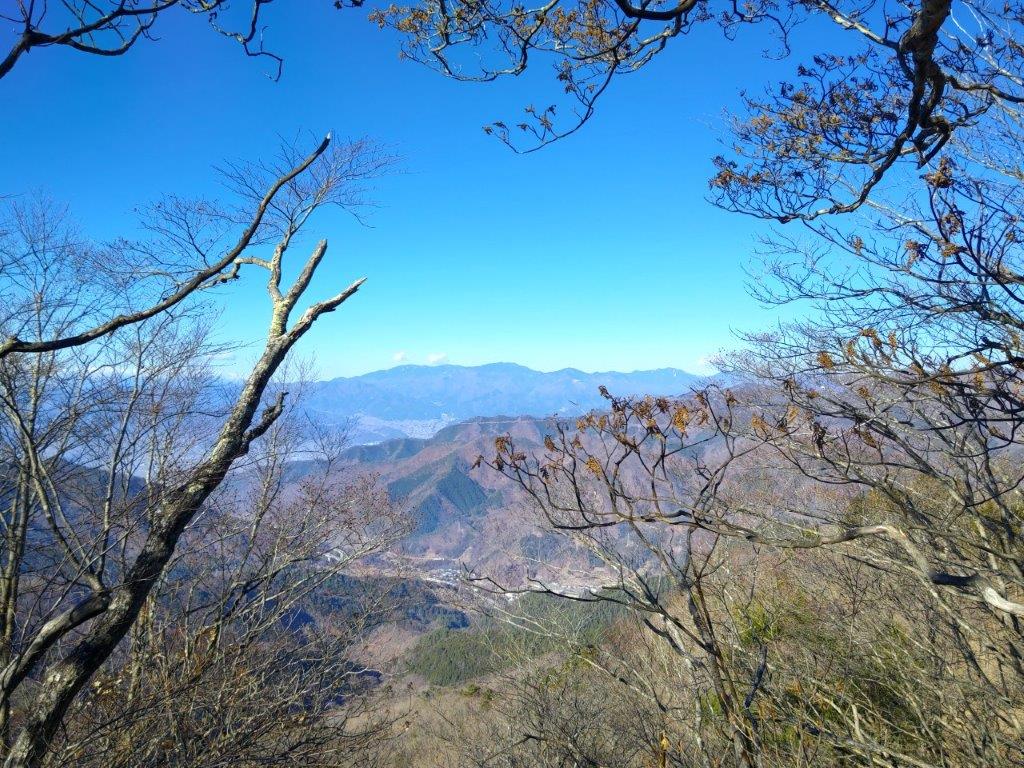
Viewpoint of the Okutama Mountains

End of the Hike at Takane
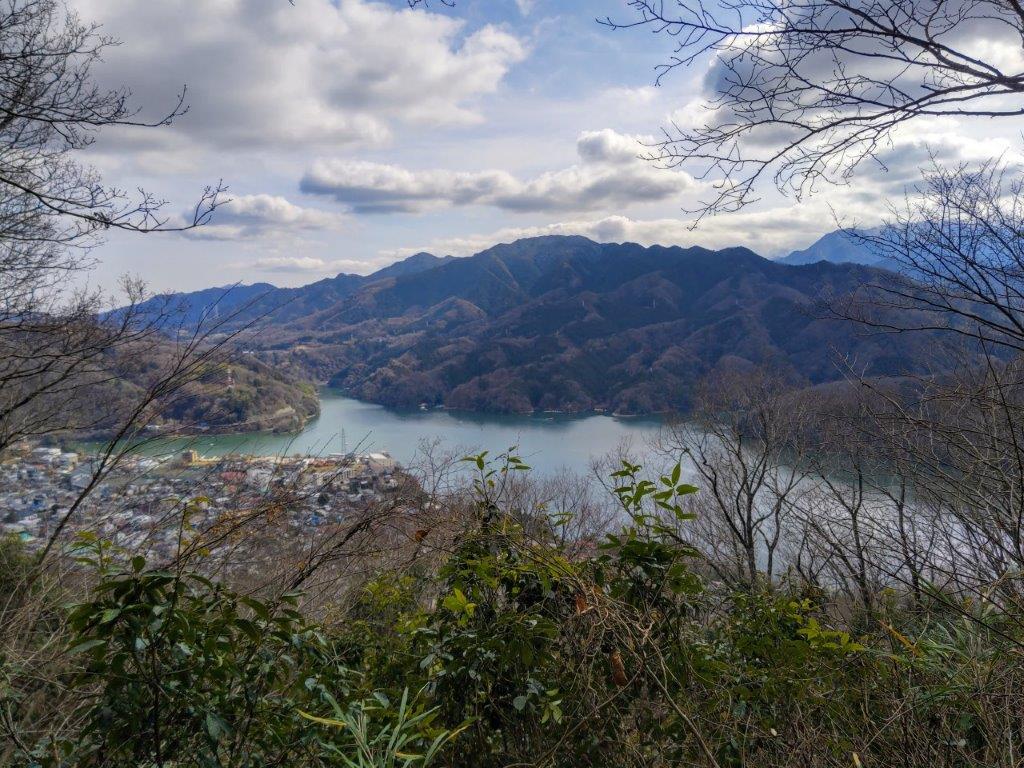
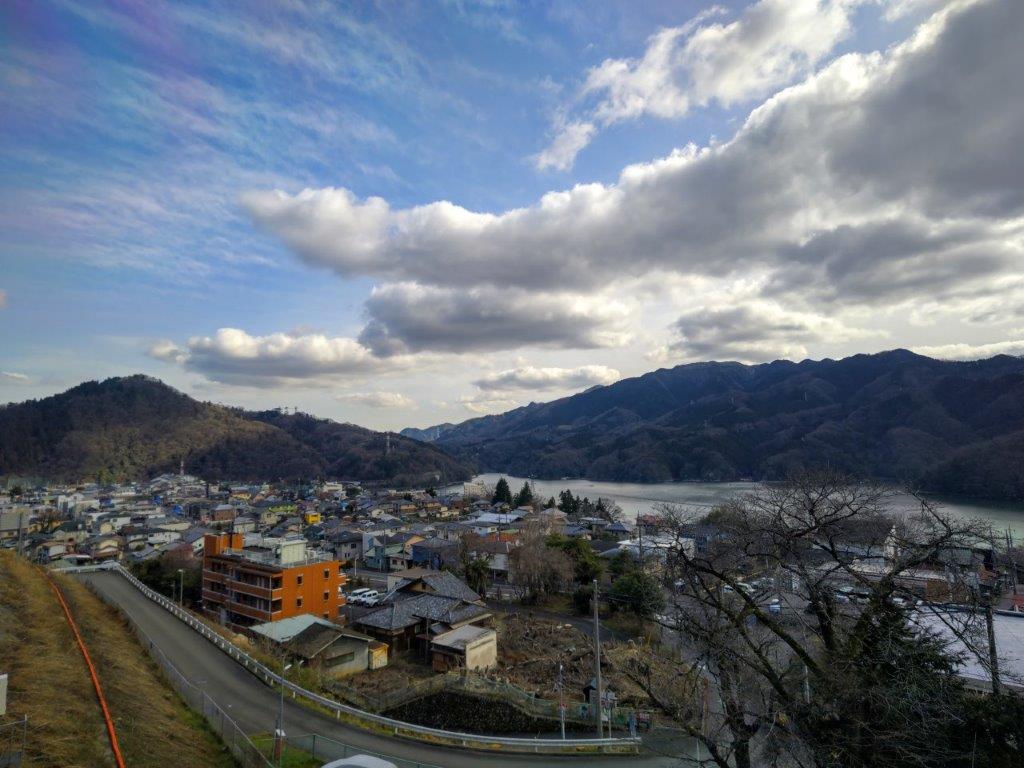
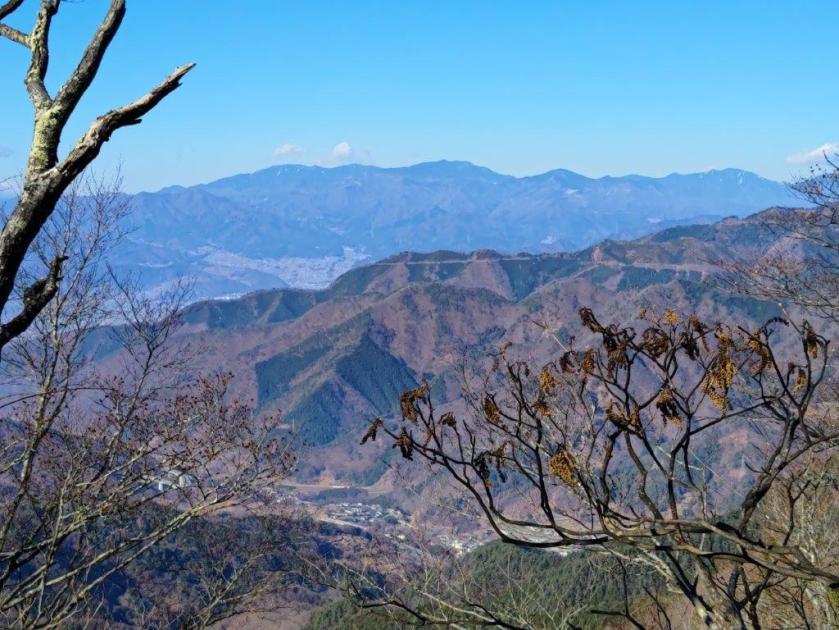
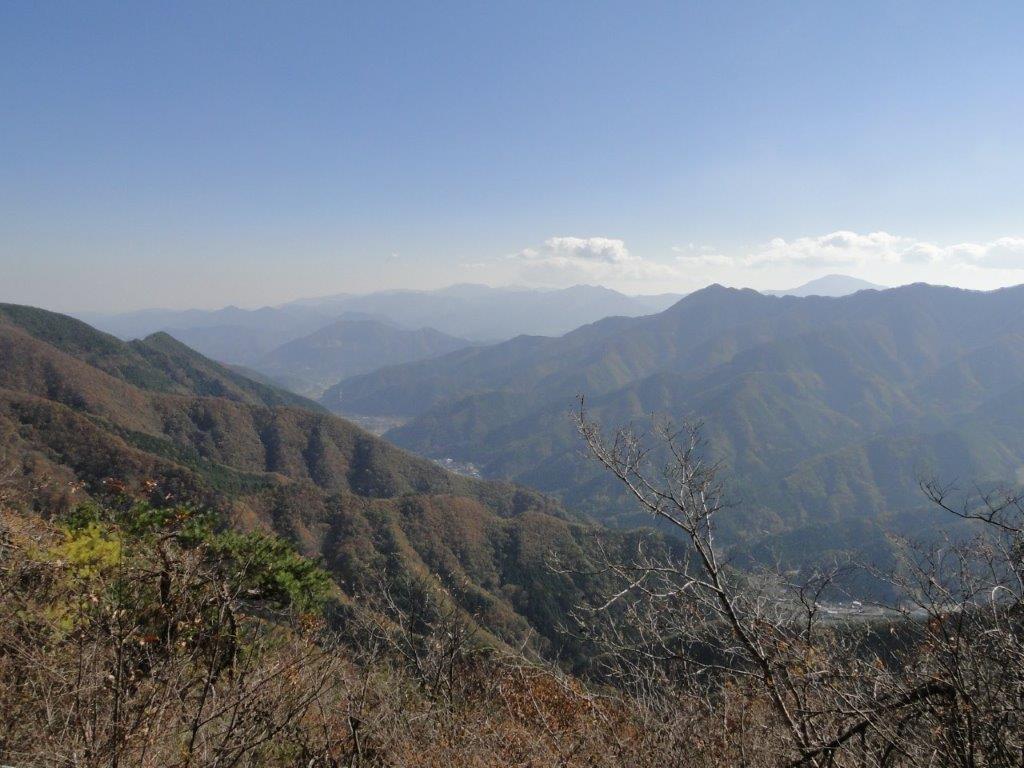
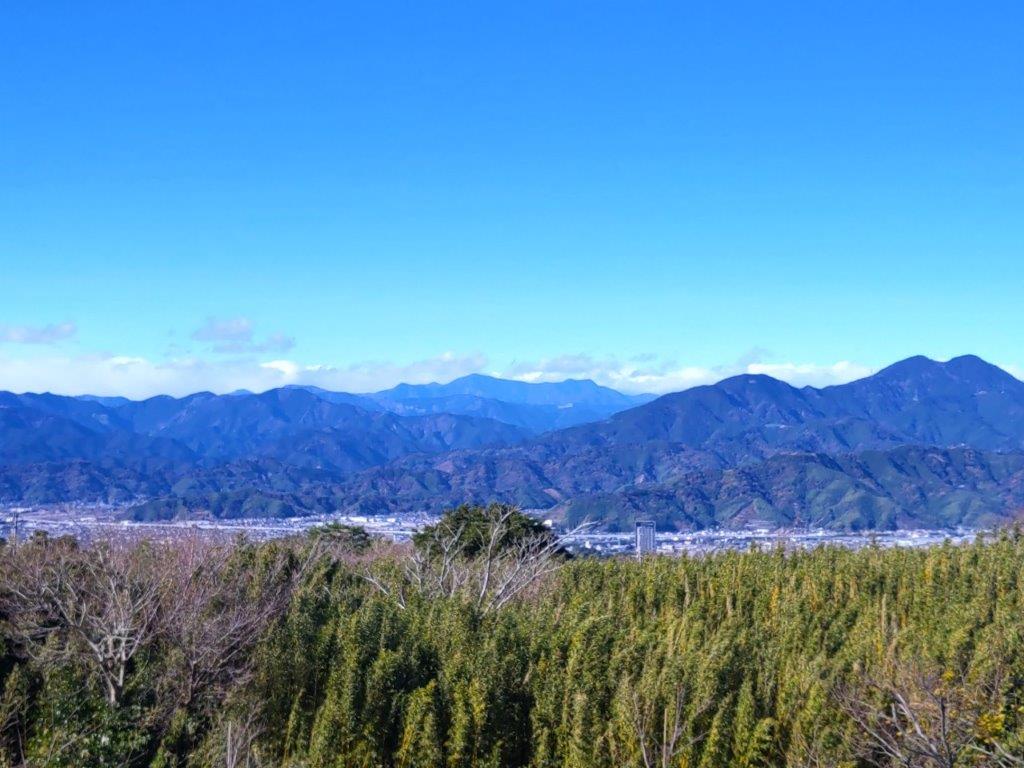
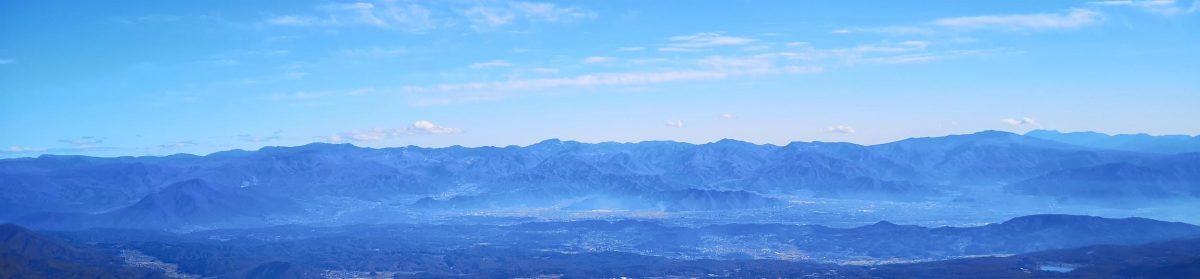
I arrived at a viewpoint of the Okutama mountains, the outlook partially obscured by trees, but I could still make out Mt Kawanori in the middle. After descending a log staircase, I reached the Takane residential area at the base of the hill, and after walking along a road for a short while, made it to the bus stop at Miyadera-Nishi just before noon. The hike had taken 3 hours as planned, although I had to speed up the pace at the end. I’d definitely like to return in the autumn to explore more trails, as well as visit the Satoyama Farmhouse.

See a video of the Sayama Hills Hike
See the video of the hike on Youtube

Mt Kuro (798m), Kannami Town and Atami City, Shizuoka Prefecture, Sunday, April 9, 2023

I found out about this peak along the Izu skyline while researching my trip to Shimoda, and resolved to climb it on a future hike. Looking at my map, I saw I could traverse from west to east, starting from the side closest to Mishima city, and ending on the Atami side. It seemed like a relatively short hike, but I knew the views would be amazing on a clear weather day. I would take the shinkansen to Atami, then transfer to the Tokaido line for a couple of stops to Kannami station, and there board a Tokai bus to a stop just a short distance on foot from the trailhead. At the end, I could catch a bus back to Atami station from near the trail entrance. The forecast called for blue skies all day, and so I was looking forward to some Mt Fuji views along a relatively easy hike.

Hiking in the Fuji-Hakone-Izu National Park

富士箱根伊豆国立公園

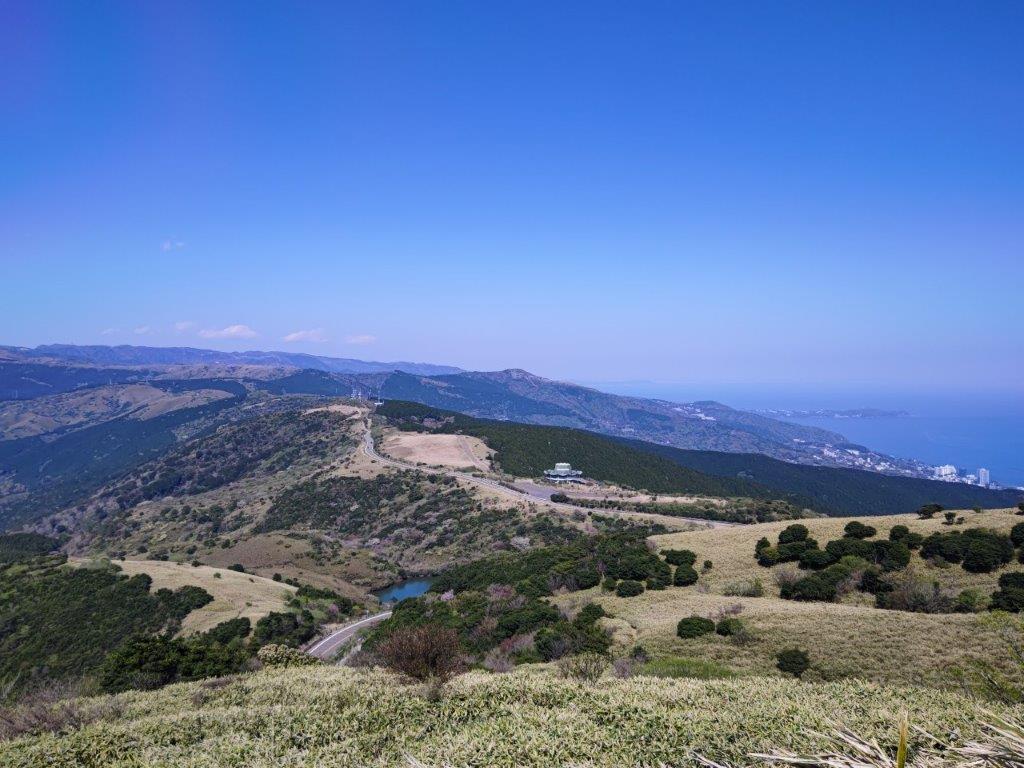
View between Kori Pond and the Mt Kuro Viewpoint

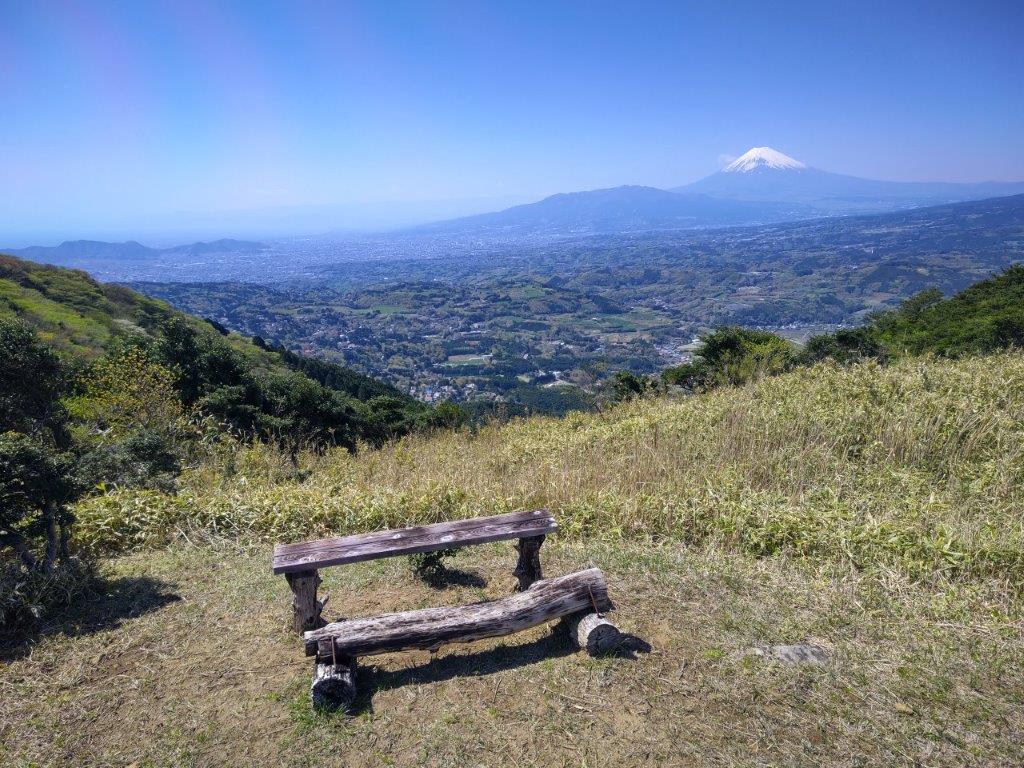
Bench with a view close to the Mt Kuro Viewpoint

I enjoyed the view of the the cherry blossoms in full bloom while I waited for the bus at Kannami station. After a short ride, I got off at a stop in the middle of the fields, opposite an “honor system” vegetable stand, and after getting ready, set off along quiet country lanes, a little before 11am. I was in high spirits, excited to explore an area I had never been to before.

View of the Izu Skyline from near the Tanna Fault

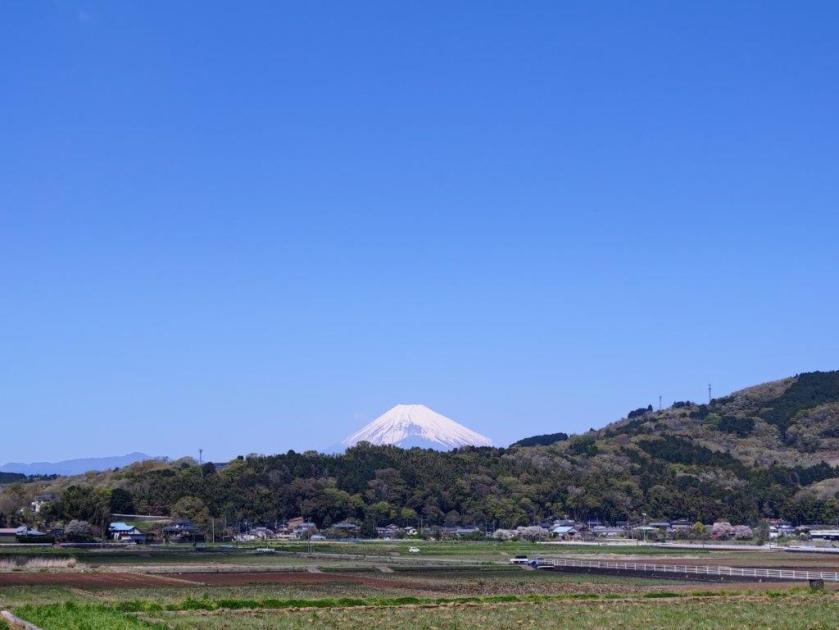
Cherry Blossoms in Full Bloom near the Trail Entrance

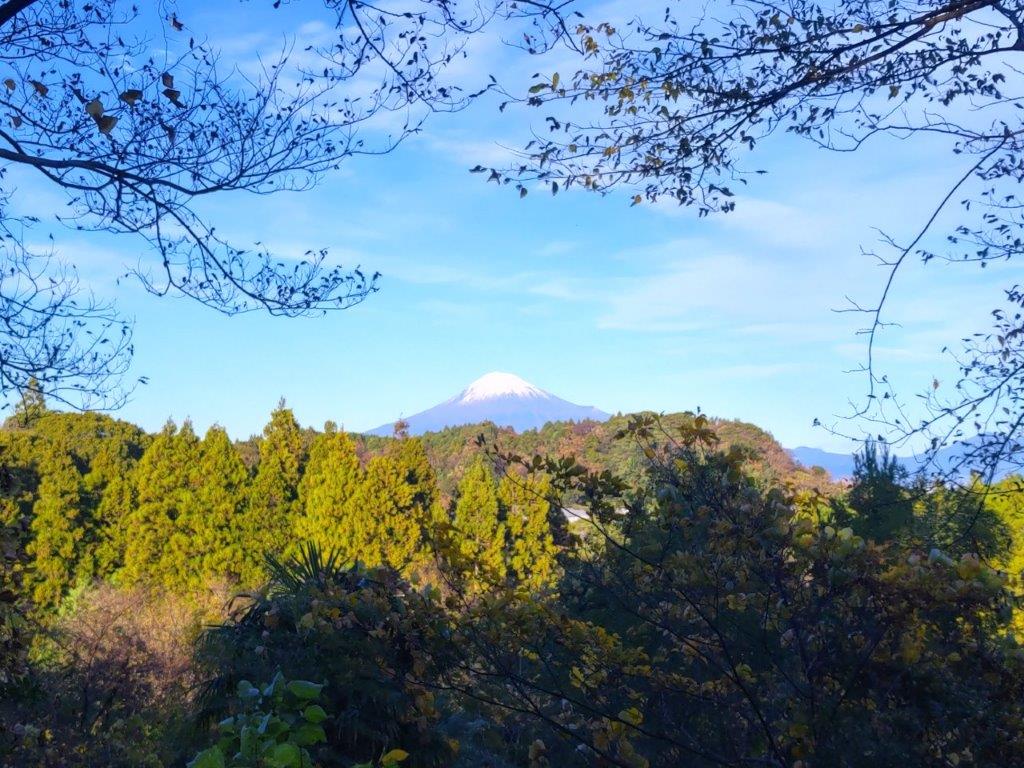
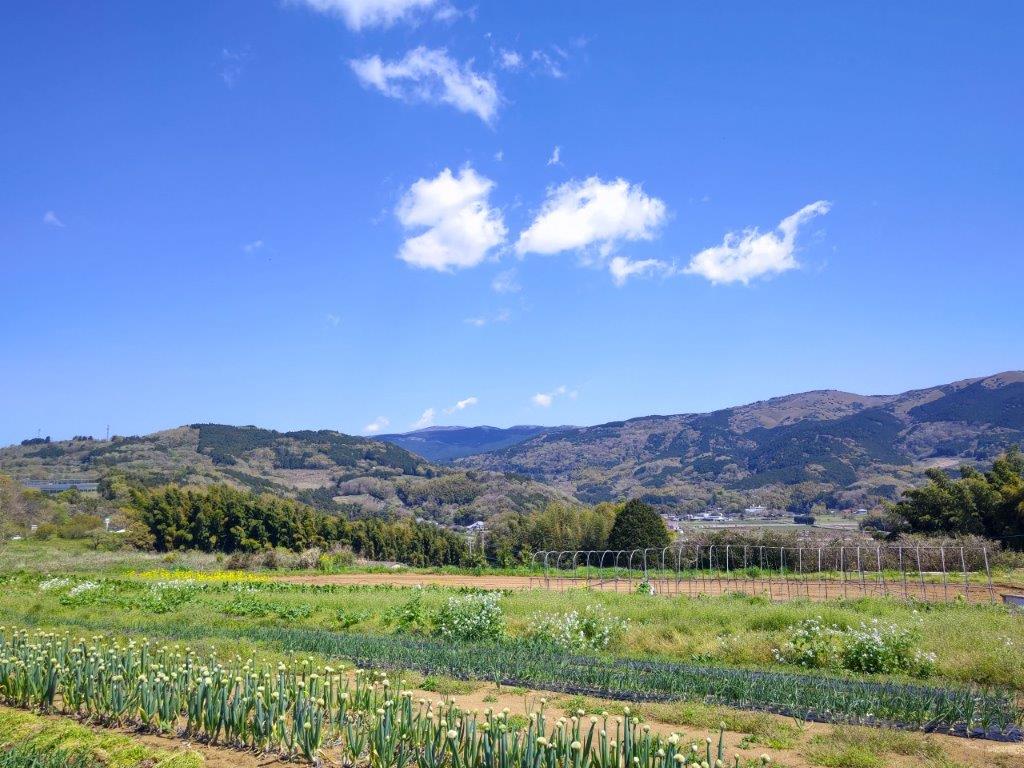
On my left, I had a view of the green, undulating ridgeline along which ran the Izu skyline and which I would soon be climbing; behind me, was Mt Fuji, still wearing its snowy winter coat. I soon passed through Tanna Fault park (丹那断層公) commemorating a massive earthquake that hit the area nearly 100 years ago, a sobering reminder of nature destructive power.

Green Meadows and White Volcanoes

Sun & New Green (left) Tall Cedars & Shade (right)

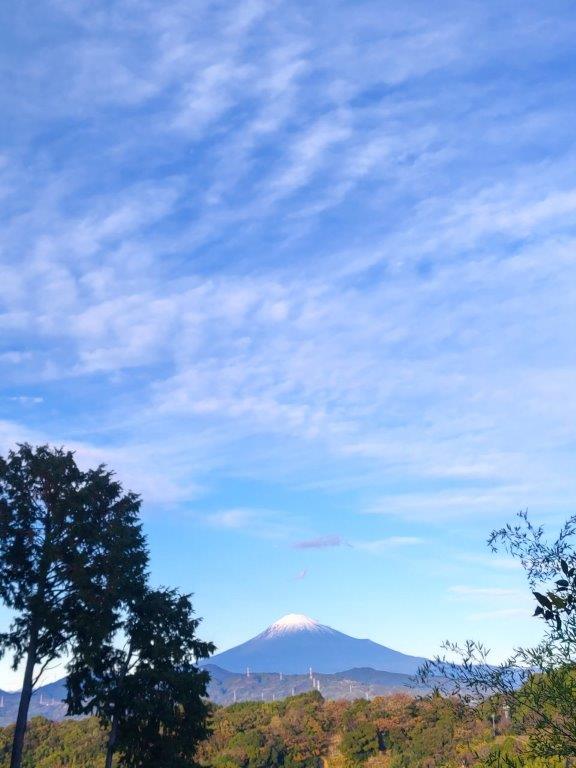
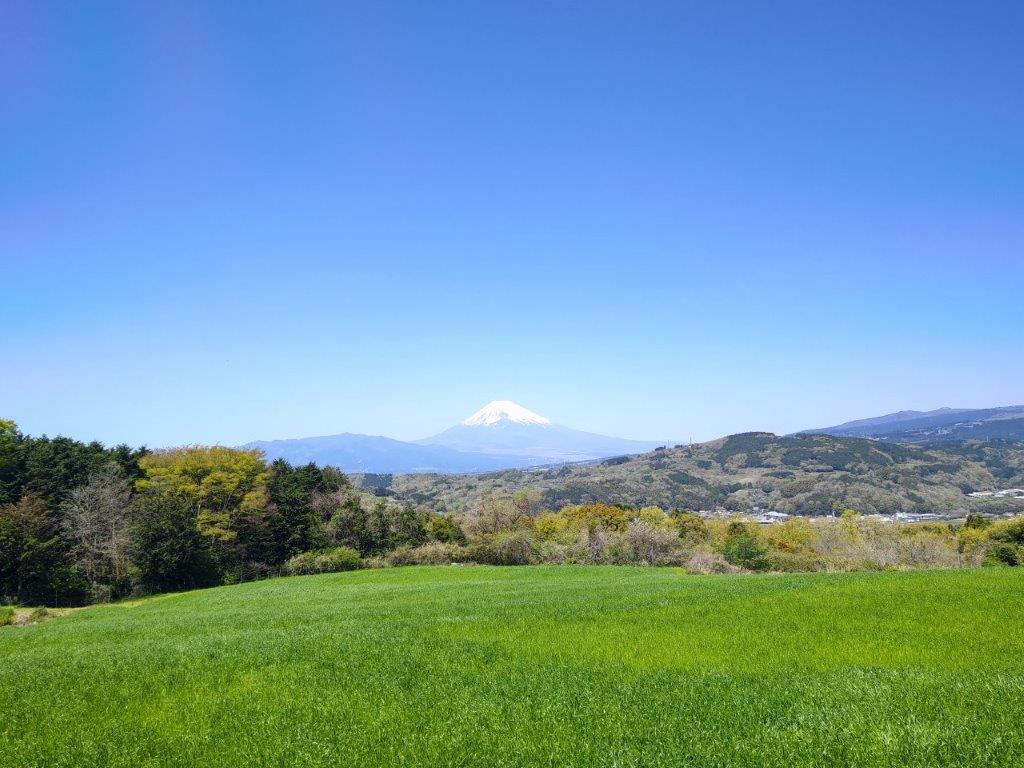
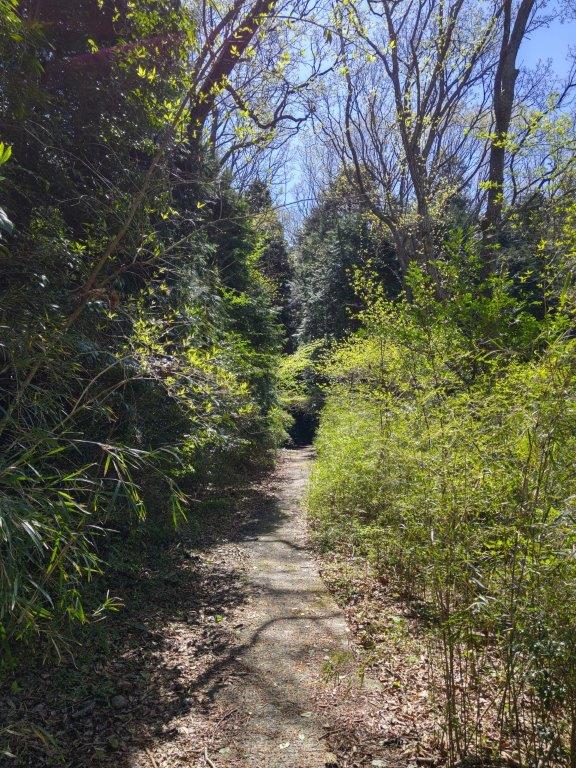
Later, I passed some green meadows, reminding me of Switzerland, except for the solitary yaezakura (“double-layered cherry blossom tree”) in the foreground and Mt Fuji in the background. At 11h30, I reached the trail entrance, and after climbing through mixed forest, towering cedars, and finally a bamboo grass tunnel, I reached Kori pond (氷ヶ池), located under a curve of the Izu skyline.

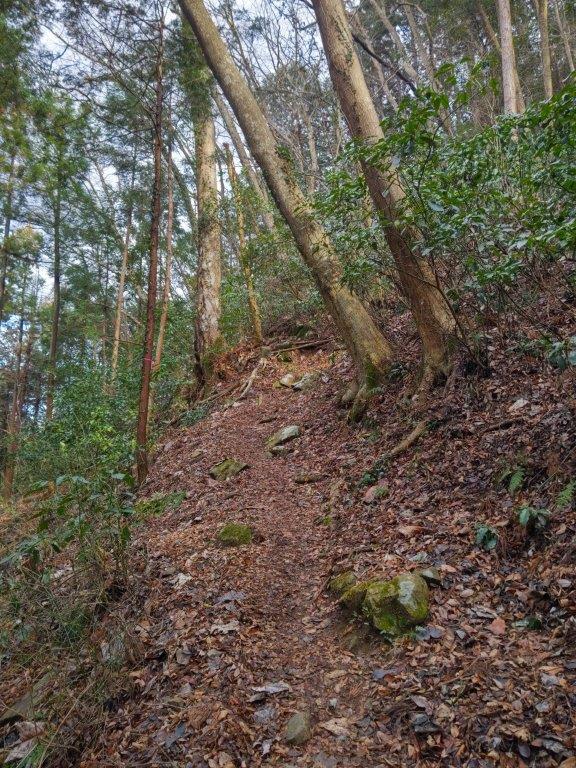
Rocks on the Trail (left) Through the Bamboo Tunnel (right)

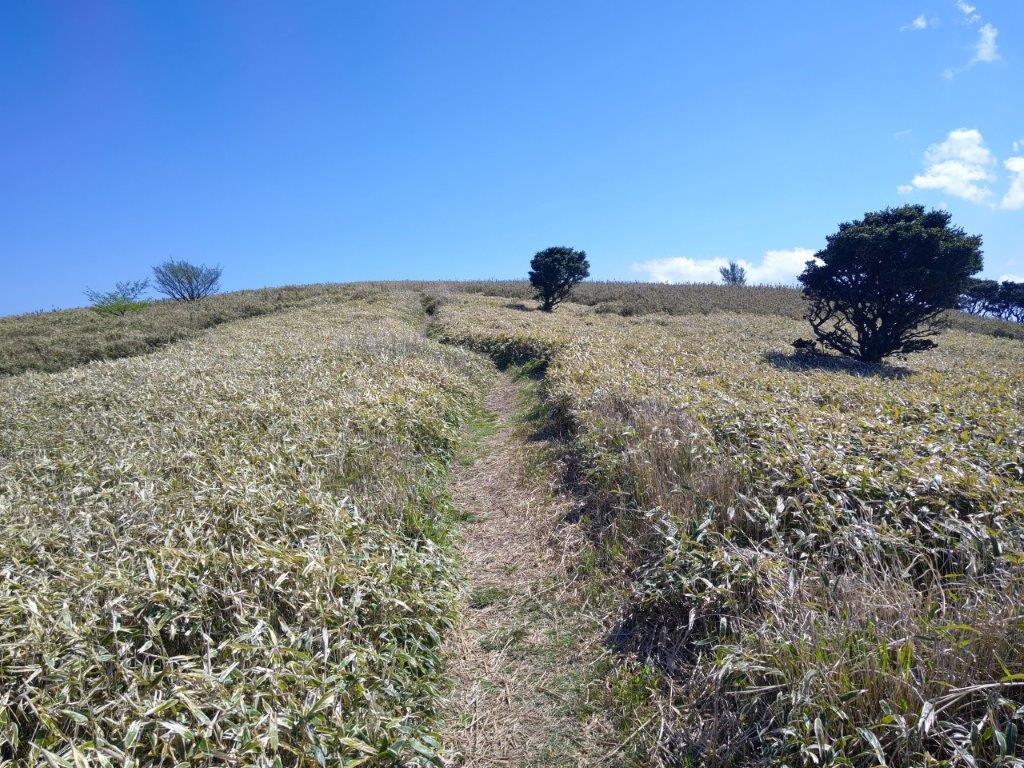
First Glimpse of the Summit

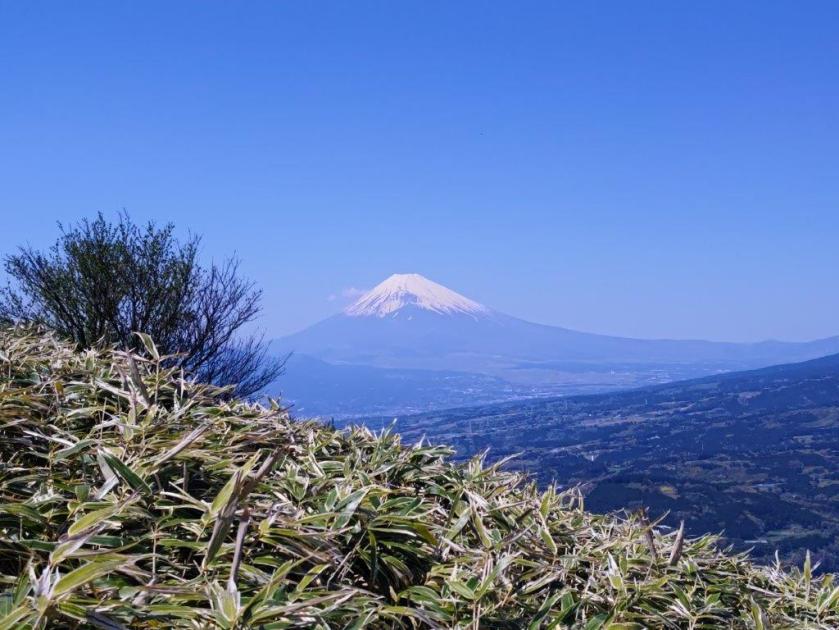
I gazed in wonder at the magical view of Mt Fuji rising above the pond. After a short break, I made my way back along the pond side to an intersection passed previously, and then up a steep path, equipped with rope for safety. The bamboo grass was much shorter now, and a panoramic view of the entire area was slowly emerging all around me. I turned around frequently to admire the view of Hakone volcano on the north side.

Mt Fuji and Kori Pond

Trail Alongside Kori Pond

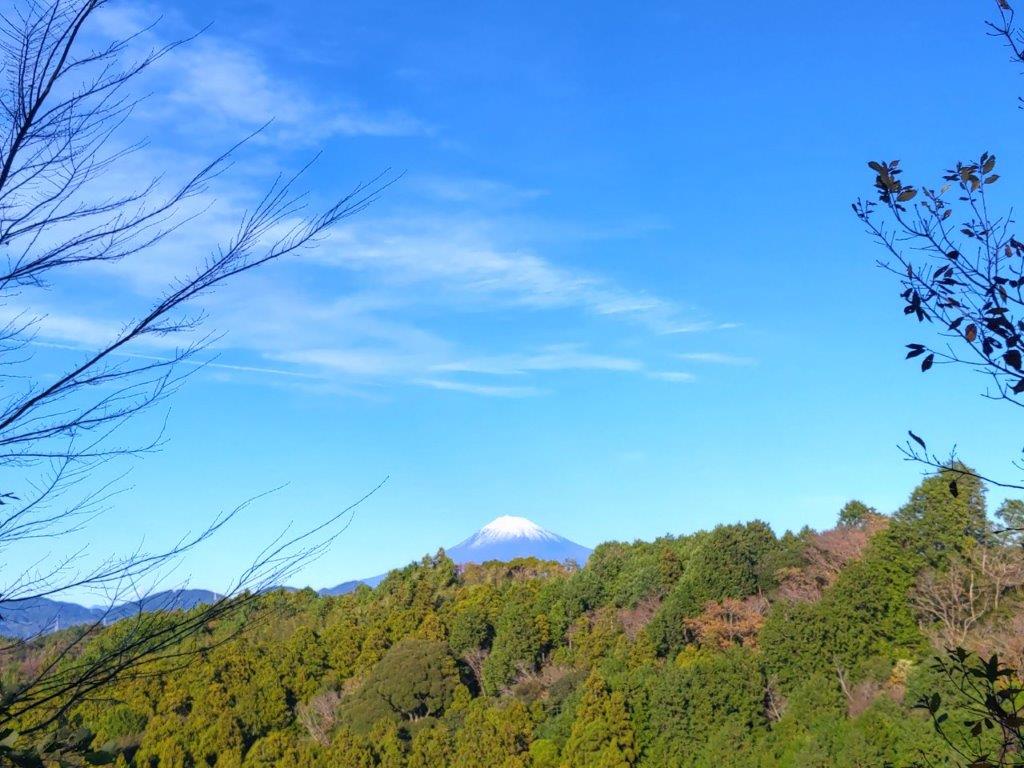
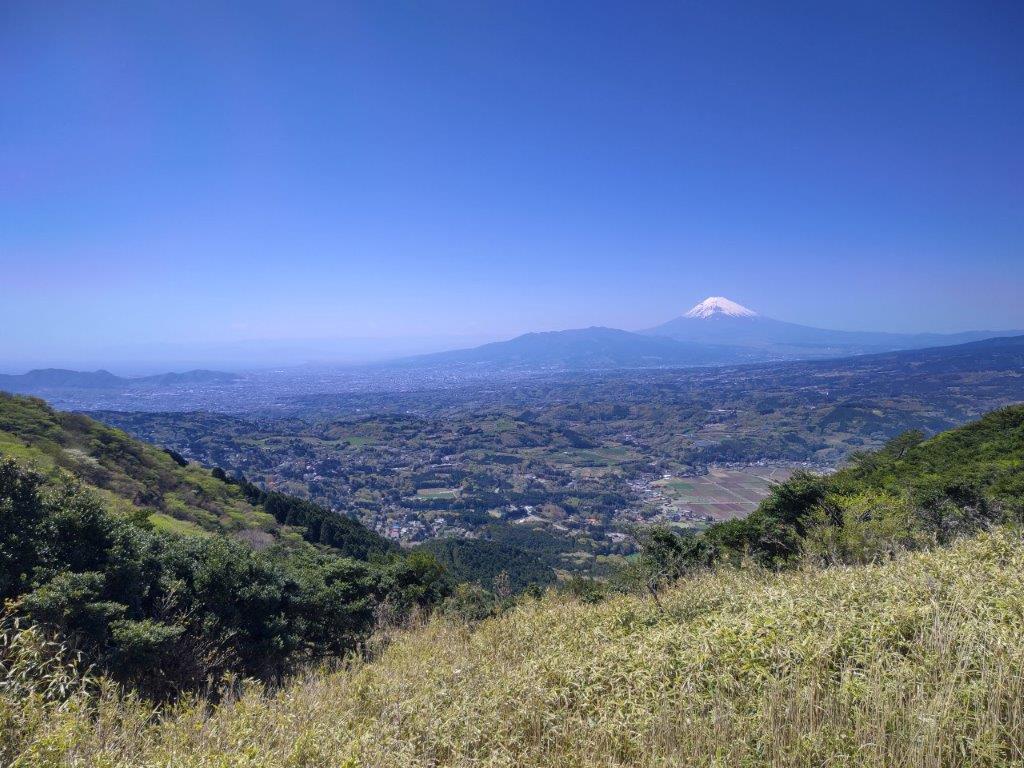
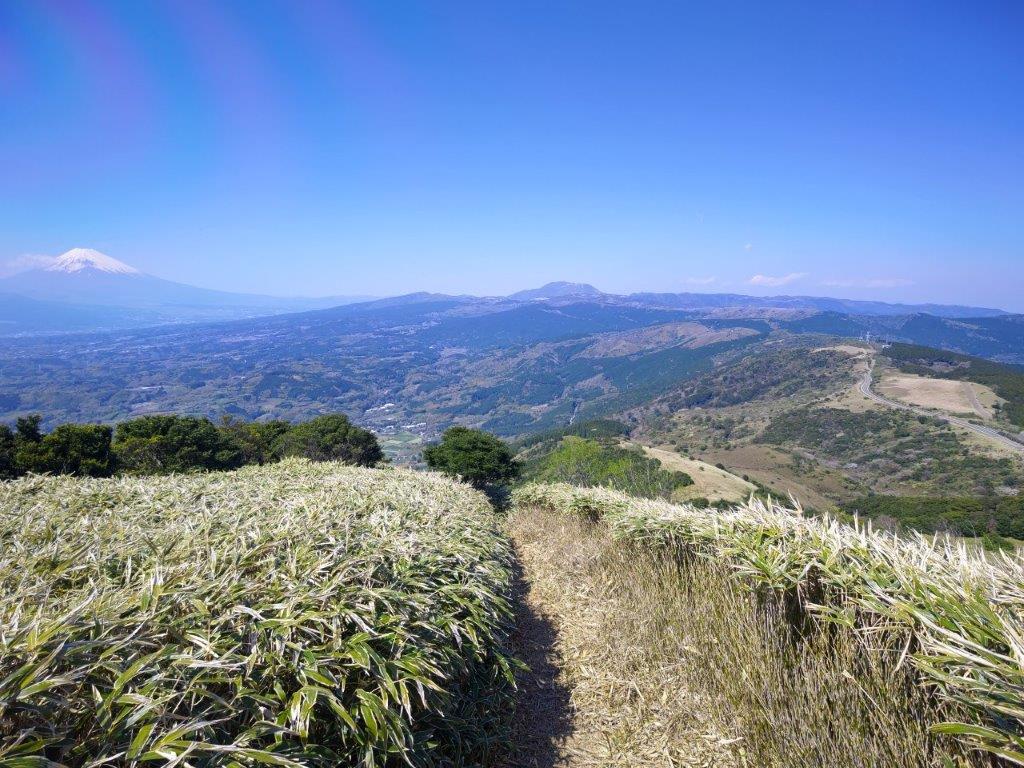
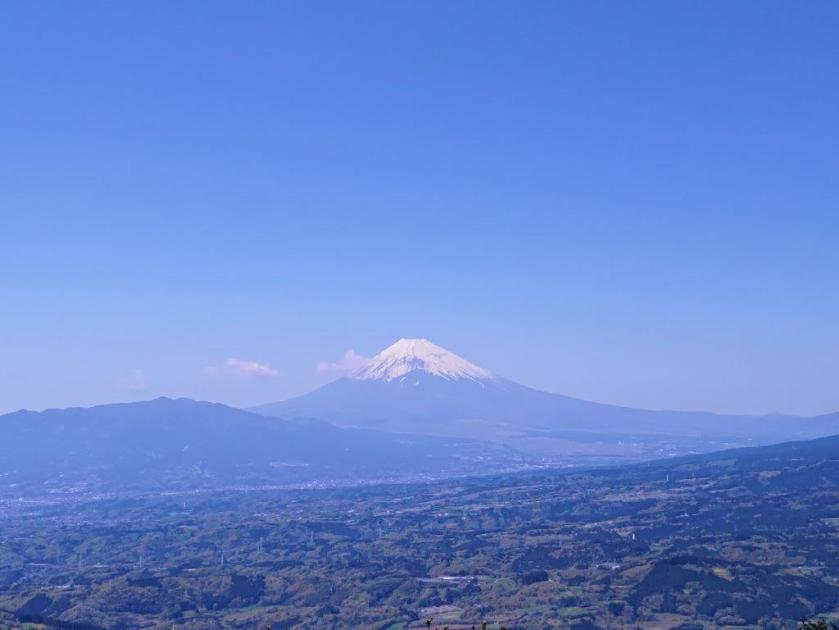
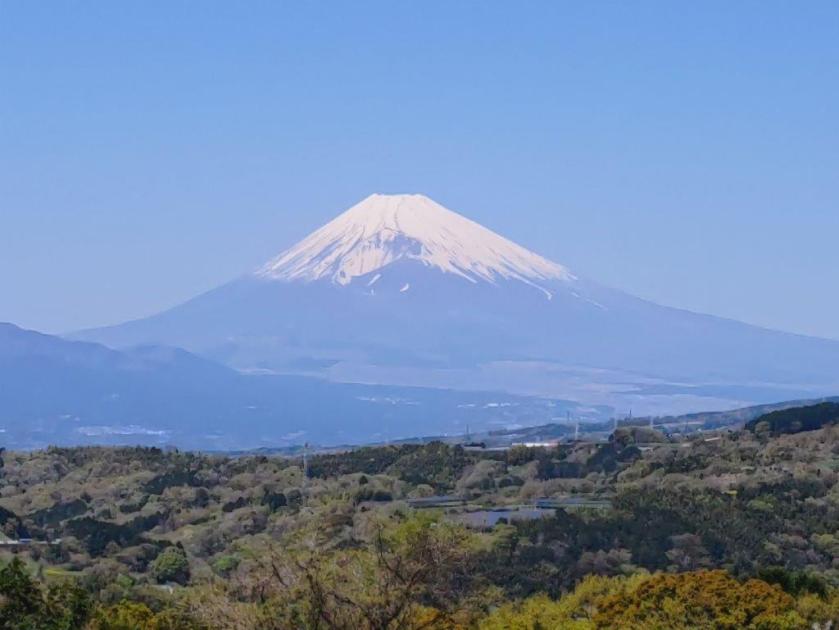
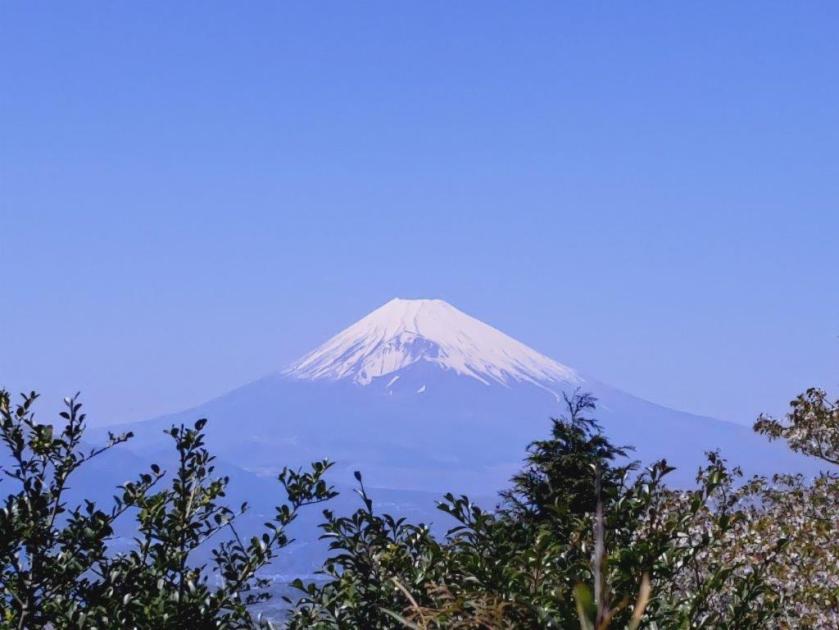
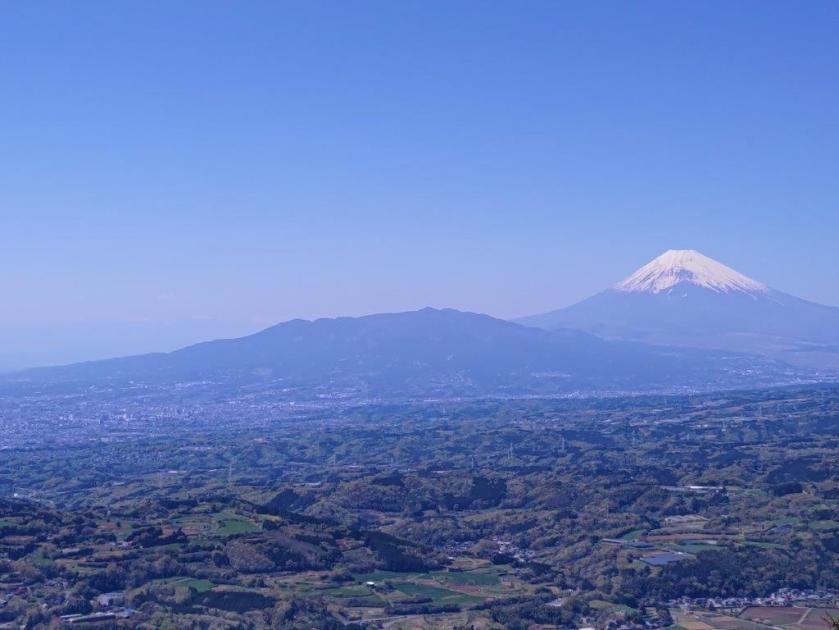
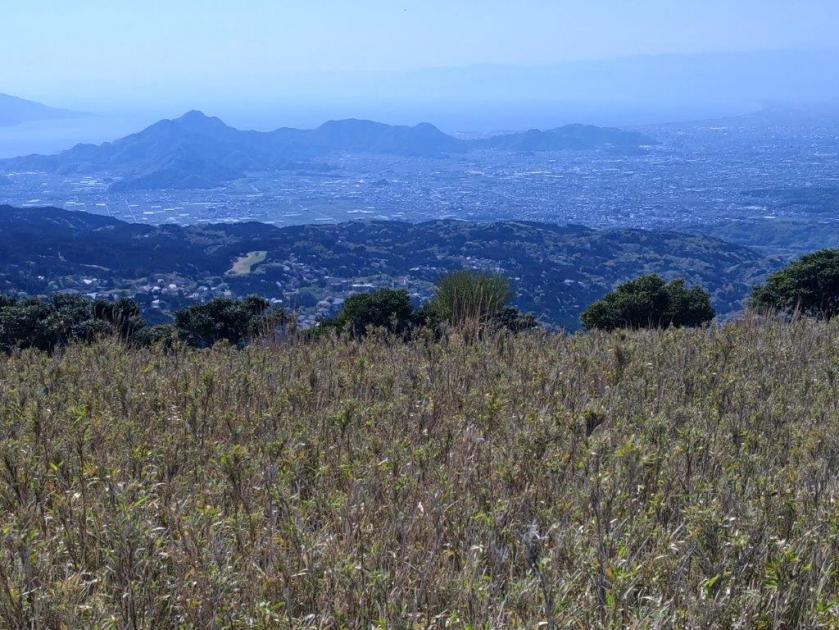
At 1pm, I reached the best view of the day: a single bench just a few minutes away from the Mt Kuro Second Viewpoint (玄岳第二展望台), which I had visited by car in the winter. Directly ahead was Mt Fuji, with Mt Ashitaka on its left, and Mt Hakone on its right; beyond was Suruga bay and the Minami Alps. Looking down, I could see the dark green lowlands stretch all the way to Numazu City.

View of Hakone Volcano above Kori Pond

View of Mt Fuji, Mt Ashitaka (center) and the Numazu Alps (left)

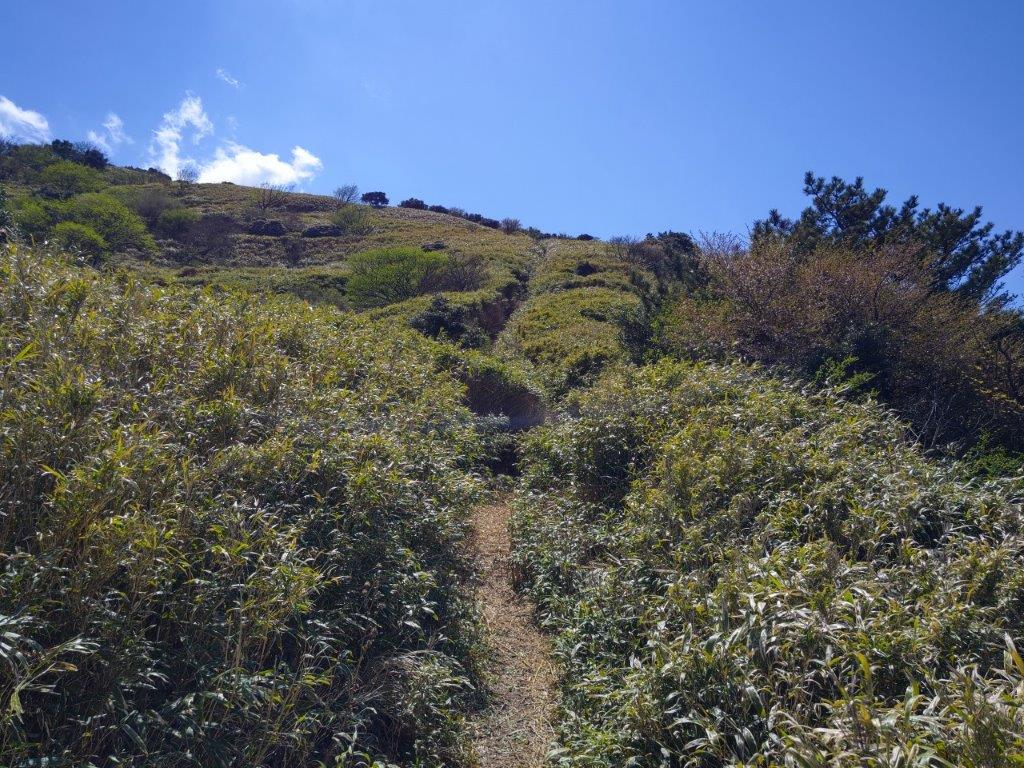
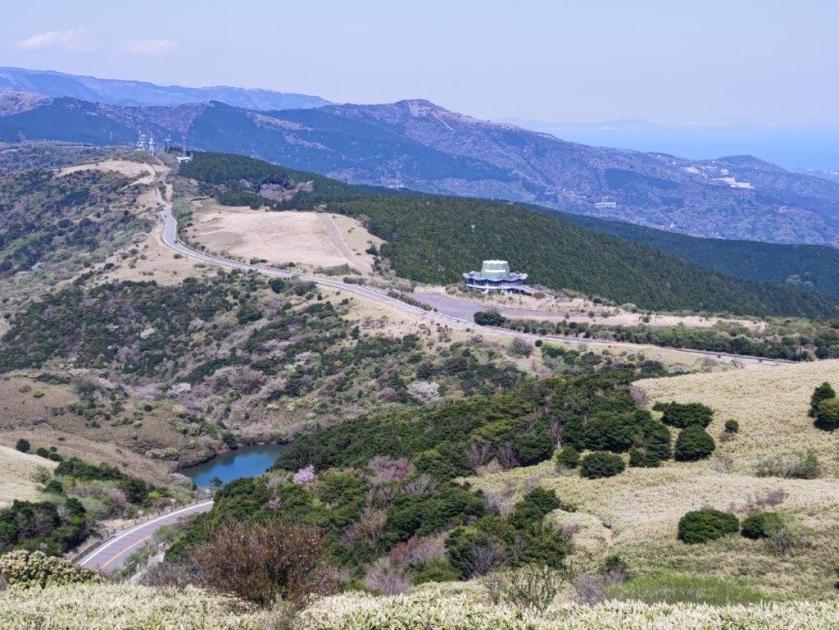
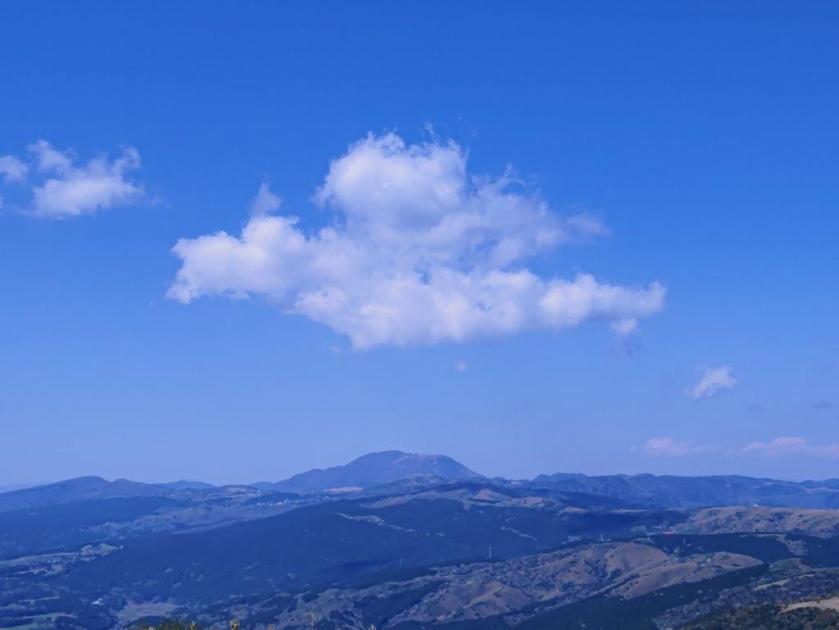
I waited for a break in the procession of roaring motorbikes before quickly crossing the skyline, and then proceeded up the final climb. As I made my way up the grassy, rounded summit, the view gradually opened up on the south side, and I could now see the Numazu Alps and the mountainous interior of Izu peninsula, culminating in Mt Amagi. At 1h30, I reached the flat top of Mt Kuro (玄岳 くろたけ kurotake), a Shizuoka 100 famous mountain.

Final Climb to the Summit

Looking Back at the Izu Skyline and Atami Resort

Curiously, the view was slightly less dramatic from the top, since I no longer had the soaring views looking down at the flat coastal area, nearly 800 meters below. I had the summit entirely to myself, most people preferring the drive the skyline and enjoy the views from the many parking areas along the way. I took a break for lunch, enjoying the picture-perfect view of Mt Fuji and the comfortable early spring weather. At 2pm, I headed down a path on the north side.

Panoramic View of the Fuji-Hakone-Izu Area

Nearly at the Top

As I walked down, I had a bird’s eye view of Atami resort and the coastline of eastern Izu. Here and there, yamazakura (mountain cherry blossom tree) in full bloom dotted the mountain side. The peace and quiet was often interrupted by the revving of engines; I picked up the pace so I could get to the quieter side of the mountain. I tarried a short while in a spot with plenty of asebi (Japanese Andromeda flower; by 2pm, I was following a trail down through mixed forest.

View of Mt Fuji and Hakone

Heading Down to Atami

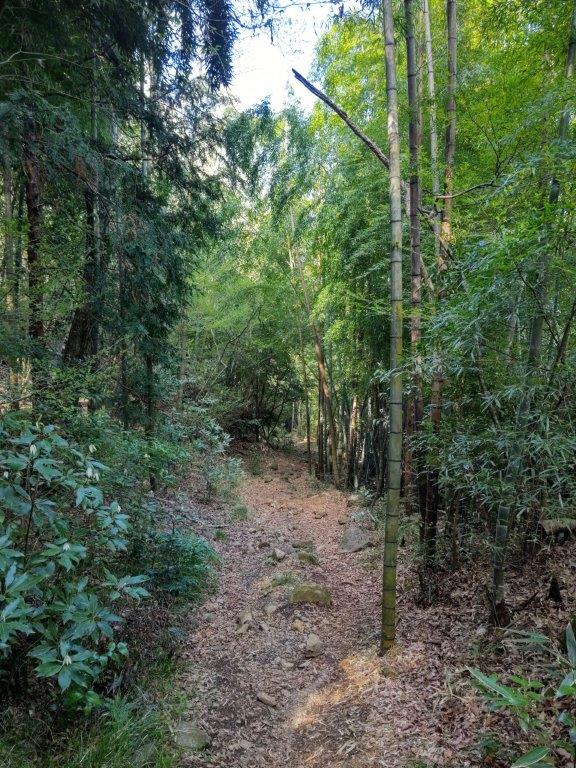
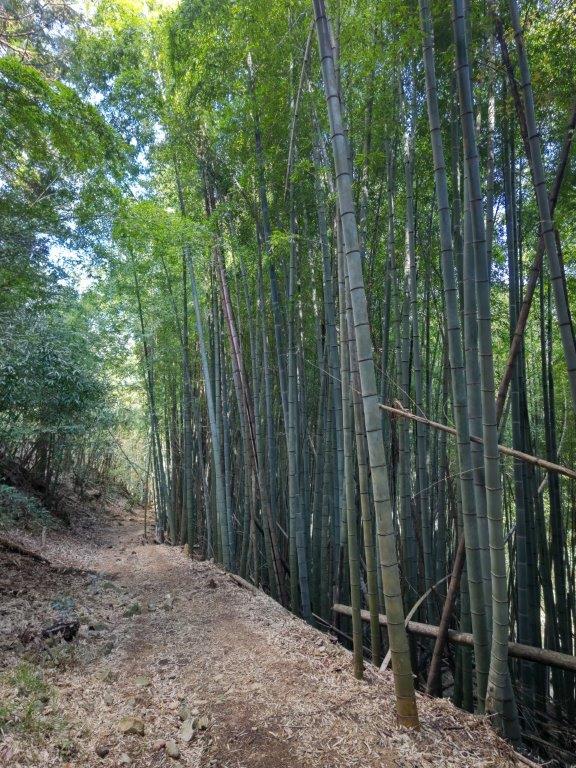
I savoured the silence and relished in the new green of spring surrounding me in all directions. Just before 3pm, after passing a bamboo forest, I reached a steep downhill road at the edge of a town, which I followed into the valley, till it merged with a wider road with a bus stop. Once back at Atami station, I boarded the shinkansen for the lightening fast 45-minute trip back to Tokyo.

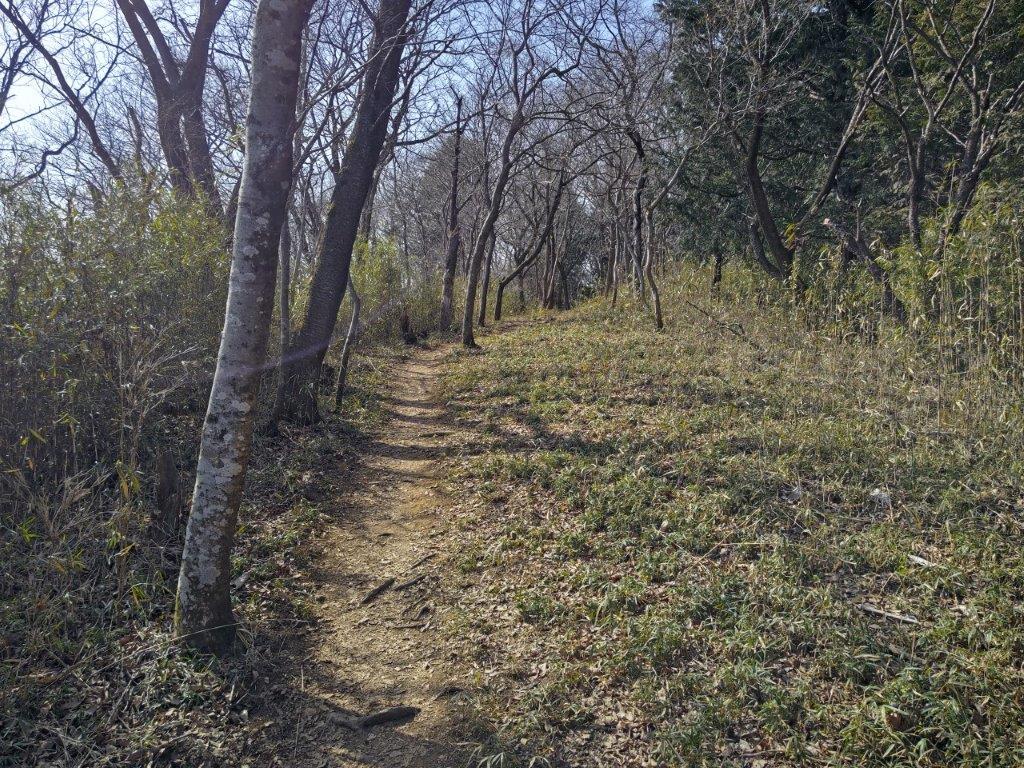
Easy Hiking Through Mixed Forest

Bamboo Forest at the End of the Trail

In December 2022, I drove along the Izu Skyline between Atami and Mt Amagi and was impressed by the many viewpoints on both sides. It was a good season to drive there since the weather was clear and not too cold, and there was relatively little traffic. In the future, I’d like to do it in reverse so that I can better enjoy the views of Mt Fuji.

View of Kori Pond from the Izu Skyline (Dec 2022)

View of Atami from the Izu Skyline (Dec 2022)

I was very satisfied with the hike mainly because of the great views but also because of the near total absence of other hikers. If I were to redo it, I would probably go by car and start from the Mt Kuro viewpoint, since it’s possible to do a loop hike with all the views.

Watch a video of the Mt Kuro Hike
See the View from the Izu Skyline (December 2022)

See a slideshow of other pictures from the Mt Kuro Hike
Mt Yakemori (420m) & Mt Keisoku (430m), Motegi & Shirosato Towns, Tochigi & Ibaraki Prefectures, Saturday, March 11, 2023

I had this hike in mind for a while, but since it could only be reached by car, it was low down on my list. I would follow the route described in my Mountains of Ibaraki guidebook: a loop hike, with short roundtrips to each peak, at opposite ends of the top ridge. These two mountains are situated near Mt Amamaki and Mt Takadate, on the Tochigi and Ibaraki border, halfway between Utsunomiya and Mito cities, their respective capitals. I decided to rent a car from the latter, about an hour’s drive to the parking on the east side. This way I could take the comfortable Hitachi limited express to Mito station and back. Since it was a relatively short hike, I could get an early lunch at a soba restaurant on the way. The weather was once again supposed to be sunny and I was looking forward to getting more views of the low mountains of the southern end of the Abukuma plateau.
Mt Keisoku (south peak) seen on the way to Mt Yakemori

View of the Abukuma Plateau from Mt Keisoku (north peak)

I was relieved that the parking lot was practically empty when I arrived at 1pm; according to the Google Maps, it’s always full in the morning, especially at this time of the year. After getting ready, I set off up a forest road through the cedars. I soon reached a switchback trail leading to Tarumi Pass (弛み峠) on the ridgeline. There, I turned left, heading west, towards today’s first peak.

Start of the hike (left) Below the south peak of Mt Keisoku (right)

Ridge trail leading to Mt Yakemori

As I followed the undulating ridge, I had glimpses through the fir trees of today’s other peak. After navigating the rocky trail round the base of Zazen Rock (座禅岩 meaning “Zen meditation”), I arrived at the summit of Mt Yakemori (焼森山 やけもりさん yakemorisan meaning “burnt forest”) from where I had a view of Mt Takamine to the southwest and the vast Abukuma Plateau stretching into the distance on the north side. At 2h30, after a short break, I headed back to Tarumi Pass.

View of Mt Keisoku from Mt Yakemori

View northwards of the Abukuma Plateau

I followed the sunny trail up a steep slope and soon reached a junction and a bench in the sun. A signpost indicated that this was the south peak of today’s second mountain; apparently Mt Fuji can be seen through the trees, but not today. I turned left, going down for a bit, and then up again through dark forest. At 3pm, I reached the north peak of Mt Keisoku (鶏足山 けいそくさん keisokusan meaning “chicken foot”), a Tochigi 100-famous mountain, and the exact same height as the south peak.

View northeast from Mt Keisoku

The outline of Mt Nantai can be seen on the right side

The summit was free of trees and offered a wide view on the north side. At this late hour, it was also free of people. I could make out the shape of Ibaraki’s Mt Nantai to the northeast, about 30km away. I followed the trail as it continued down the north side, and a few minutes later, I arrived at Tori-iwa (鶏岩 meaning “chicken rock”), where I had a view on the east side. I quickly made my way back to the junction on the south peak, and and continued along the main trail as it curved south and started to head down the mountain.

View to the southeast from Mt Keisoku

View on the way to Niwatori Rock

It was a pleasant descent through the winter forest, bathed in the late afternoon sun. After passing the minor summit of Mt Fuji-ga-hira (富士ヶ平 340m), marked by a small shrine, the trail became rockier and steeper, slowing my pace somewhat. At 4pm, I was back at the now completely deserted parking lot. I managed to get to Mito before sunset, where I boarded the limited express for the 90 minute ride to Tokyo.

View east from Niwatori Rock

Level trail leading to Mt Fuji-ga-Hira

This was another short hike with great views, ideal for the short and clear days of the Japanese winter. I found out afterwards that there’s a spot with many Mitsumata flowers on the north side of the mountain, that were in full bloom around the time of my visit, giving me a reason to return someday in the future.

See a video of the Mt Keisoku hike

Mt Rokudo (194m), Tokyo & Saitama Prefectures, Sunday, January 29, 2023 [Sayama Lake Perimeter Road]

I had cycled the Sayama Lake Perimeter Road over ten years ago, so I thought it was time to revisit the area, but on foot this time; I wanted to explore the network of hiking paths surrounding this circular trail on the Tokyo-Saitama border, and the closest nature park to the capital. Previously, I had taken a train to Seibukyujomae station, near the eastern end of Sayama lake; however, the best trails are located several kilometers away on the western side. I decided to take a train to Kotesashi station on the Seibu line, and then a bus to Kojiya, on the northern side of the lake; I would finish at Hakonegasaki station on the Hachiko line and return via Hanno, from where I could return to Ikebukuro with the Laview Limited express. In between, I didn’t have a precise plan: my main purpose was to see whether I could get a satisfying half day of hiking through the area.

Hiking in the Sayama Natural Park 都立狭山自然公園

5/2024 update:some paths between the Saitama Green Forest Museum with the Sayama Lake Perimeter Road are closed indefinitely due to fallen trees. Please see this page (Japanese only) for more information (closed sections are in red).

Walking between the Tonbo and Nishikubo Marshes

View of Mt Fuji from the Mt Rokudo Park Observatory

It was a short bus ride from the station on a sunny winter day. Before setting off, I dropped by a nearby Ministop, one advantage of hiking within the city. At 12h30, I was walking through a residential neighbourhood, the houses separated by fields: I even saw a fox trot through one of them. I soon arrived at the peaceful Kojiya Hachiman Shrine (糀谷八幡神社) at the edge of Kojiya Marsh 湿地, and the start of the hiking trails.

Kojiya Hachiman Shrine near Kojiya Marsh

Heading towards the Saitama Green Forest Museum

I had a view of the Chichibu mountains, clearly visible on this cold winter day, from behind the shrine. I followed the gently sloping path up to the Sayama Lake Perimeter Road, but almost immediately took a side path leading directly to the Saitama Green Forest Museum (緑の森博物館), a small, free museum at the edge of Dragonfly Marsh (トンボ湿地), also the location of Totoro’s Forest #30.

Walking along the Sayama Lake Perimeter Road

Exploring the paths around the Nishikubo Marsh

I had a view to the north of faraway Mt Akagi, covered in snow, from an open, elevated space behind the museum. I set off again through the marsh and soon arrived at a intersection, where I turned right. This new path led to Nishikubo Marsh (西久保湿地), not much to look at in the middle of winter, but probably a great place to wander around in summer. I made a quick detour along a backstreet to check out the nearby Nishikubo-Kannon Temple.

Intersection at the edge of the Nishikubo Marsh

View towards the mountains of western Tokyo near Nishikubo-Kannon

From there, I had another view of the mountains of western Tokyo, extending northwards; the clouds had started to roll in, making me wonder how much longer the sun would last. I reentered the woods and after a long, gradual climb, arrived once more at the Sayama Perimeter Road (狭山湖外周道路), which I followed for a short while, before turning right onto the ridge trail for Takane (高根). However, I very soon took a left, heading down some steps.

Path for Yato 谷戸 (left) / Staircase for Asama Shrine (right)

Walking through the North Sayama Valley

I followed a narrow path next to a brook through the North Sayama Valley (北狭山谷); it soon turned into a wider path, ending near some ponds at Tanoiri-Yato (田ノ入谷戸). I was now inside Noyamakita-Rokudoyama Park 野山北六道山公園. I left it briefly to follow a road leading to Takaneyama park (高根山公園), from where I walked up the Takaneyama Walking Trail, and upon reaching a road, continued till the Rokudoyama Park Observatory (六道山公園 展望台), on top of Mt Rokudo, a Tokyo 100 famous mountain.

Heading towards the Triangulation Point

View of the Tanzawa Mountains from the Mt Rokudo Park Observatory

From the top, I had a view southwest of Mt Fuji and the Tanzawa mountains, and west of the Okutama mountains. After a short break, I retraced my steps, then took a left over a bridge, arriving at a triangulation point (194m) at 3pm. I took the Oiseyama Walking Trail, past Mt Atago (190m 愛宕山). I soon reached the tiny Asama Shrine (浅間神社), and went down a wooden staircase, ending at another shrine, and the end of the trail. After a 15 minute walk through Mizuho Town, I reached Hakonsegaseki station around 4pm.

Watch a video of the Mt Rokudo Hike

Mt Yadaira (860m), Otsuki and Uenohara Cities, Yamanashi Prefecture, Friday, December 30, 2022 [Map Available]

For my last climb of the year, I wanted to do a station to station hike close to Tokyo, and on local lines, since I was worried about the reduced, year-end bus schedules and holiday travelers. I had walked most of the entire ridge south of the Chuo line, but, earlier in the year, I found a JR East hiking map, reminding me of an unexplored section between Yanagawa and Shiotsu stations. With a total time of around 5 hours and a chance to spot Mt Fuji from the summit, it seemed ideal for the last outing of 2022.

Get a map of the Mt Yadaira Hike

This map was developed for Japanwilds with the Hokkaido Cartographer

Find more Japan hiking maps on Avenza

Hiking along the Chuo Line 中央線

The summit of Mt Yadaira, just before Terashita Pass

I arrived under cloudy skies at Yanagawa station around 10am. After getting ready, I set off for the trail entrance, past a bridge on the other side of the Katsura river valley, reaching it at 11am. The sun had come out by now and sunlight was shining through the trees. The path followed a narrow valley along a dried-up riverbed; I was walking in the shade, since the winter sun was now hidden by the steep mountain-sides.

View of the Katsura river

Start of the hiking trail

I found it challenging to walk on the layer of dead leaves that had piled up during the autumn: it was like walking through ankle-deep snow. I was able to follow the trail thanks to the presence of fixed ropes, even on the level sections. My stick, which I mainly use for descending, helped me keep my balance. When the path started to zigzag up the mountain side, I had to be doubly careful not to slip on the dead foliage.
First views through the winter trees

The steepest section of the hike (left) / Approaching the summit (right)

I was relieved to be back on a sunny, leaf-free path, a little after noon, after rounding a bend. Looking north through the bare trees, I had a view of the mountains on the north side of the Chuo valley. I followed the now easy to walk trail southwards, merging with the ridgetop trail at Terashita Pass (寺下峠), half an hour later. On the way, I had a view of the rounded top of today’s peak, the curving ridgeline making it look deceptively close.

View of the Tanzawa mountains

Closeup of Mt Hiru, the highest peak of Tanzawa

I next went up the steepest section of today’s hike, and soon reached the summit of Mt Marutsuzuku (763m 丸ツヅク山(まるつづくやま marutsuzukuyama). It was completely in the trees so I quickly moved on. Very soon, I arrived at a short rocky section, that required some scrambling. Halfway up, I turned around and got a glimpse of the Doshi mountains on the south side. Turning around again, I suddenly spotted a black thing, slowly rising above the bushes.

View of Mt Omuro through the pines

Sun on the ascent (left) / View of Mt Jinnohako (right)

I thought it was a bear, but it turned out to be a camera on a tripod. It belonged to the only person I met today; he had been so quiet, that I had no idea he was nearby. I continued past him, and shortly after, arrived at the summit of Mt Yadaira (矢平山 やだいろやま yadairayama). It was also surrounded by trees, but a little further along the trail, was a clearing with a view of the Tanzawa mountains on the south side. Directly opposite, was Mt Omuro, dark and dramatic against the afternoon sun; Mt Fuji was hiding in the clouds. Since it was 1h30, I sat on a tree stump for a short lunch break.

Looking back at Mt Marutsuzuku

The Kanto mountains from just below Shinochi Pass

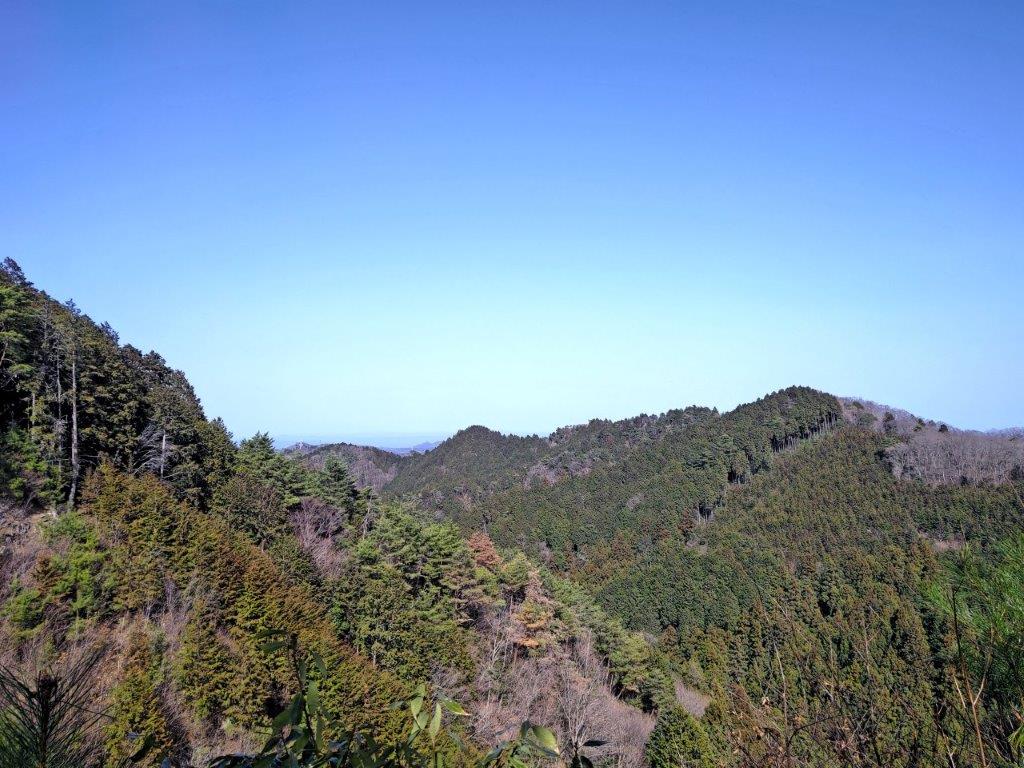
I resumed my hike and had an impressive view of a pine covered, solitary peak through a gap in the trees, slightly off the main ridge. The summit could be reached via a short roundtrip, so I decided to check it out quickly. The top of Mt Jin-no-Hako (810m 甚之函山 じんのはこやま jinnohakoyama) was again in the forest, but midway up, I had a view west of today’s summit, with Mt Mitsutoge in the background. Back on the main trail, I soon reached Shin-Ochi Pass 新大地峠), just after 2h30, where I turned left and headed down the mountain.

Descending through the forest

The surrounding landscape was golden in the late afternoon sun

I soon had a stunning view of the Kanto mountains, the triangular summits of Mt Mito and Mt Odake clearly visible below the blue winter sky. I crossed a road and then followed a gently descending trail westwards through the forest. This was the most pleasant part of the hike, the surroundings golden and peaceful in the late afternoon sun, except for the regular tap tap of a solitary woodpecker.

Mt Ogi (left) and Mt Gongen (right) in the late afternoon light

Arriving at the end of the hike

Before the trail curved north, I had one last view of Mt Ogi and Mt Gonzen, framed by two tree trunks, their features highlighted by the late afternoon light. At 4pm, I emerged from the forest, onto a road through a village, just as the last rays of sun vanished from the valley. It took another 15 minutes to reach Shiotsu station, from where it was a one hour ride back to Shinjuku.

See a video of the Mt Yadaira hike

Hitorizawa & Segami Community Woods Hiking (highest point 130m), Yokohama City, Kanagawa Prefecture, Tuesday, December 27, 2022

This was my 3rd hike in the southern part of Yokohama city. This wooded, hilly area offers some of the best hiking close to Tokyo and is well-suited for short winter walks. I had already hiked through the Yokohama Nature Sanctuary, the Kanazawa Nature Park, as well as the Kanazawa, Segami and Kamariya woods; this time, I wanted to explore the Hitorizawa woods on the northeastern side, and check out some more trails in the Segami woods.

Sunny spot at the start of the Hitorizawa trail

I would take a bus from Yokodai station on the Negishi line to the trailhead; rather than finish at Konandai station on the same line, I could take another bus to Ofuna station on the convenient Shonan-Shinjuku line, less than an hour from Ikebukuro. Although I wouldn’t be summiting any mountains, I could expect a view of Mt Fuji from Isshindo plaza at the mid-way point. I was looking forward to a short relaxing walk through the woods on a sunny winter day.

Nearing the Nabana rest area (left) / Hitorizawa creek (right)

After getting off the bus on a busy road near Hitorizawa Shrine (氷取沢神社), I followed the signposts through some backstreets, reaching the start of the trail Hitorizawa Community woods trail (氷取沢市民の森ルート) at 1pm. At the top of a staircase, I was pleased to discover a wide, level path leading through the forest. I soon reached the first viewpoint of the day at the Nabana rest area (なばな休憩所) above a road and a toll gate. Looking southeast, I could see the low-lying Miura peninsula, and behind, Mt Kano and Mt Nokogiri on the Boso peninsula.

Wooden causeway near Oyato plaza (left) / Climbing made easy (right)

I continued along the path as it descended into a small valley. I soon arrived at a bridge over the Hitorizawa creek (氷取沢小川) and a junction: the path on the left led to Kanazawa zoo, and the one on the right followed the creek back to the bus store. I went straight, and after going through some fields and under a highway bridge spanning the valley, arrived at Oyato Plaza (おおやと広場). I was now walking on wooden causeway along a cool, shaded valley, parallel to the creek.

View of Mt Fuji from Isshindo Plaza

Very soon, I was back on a trail leading up through the woods, but still easy to walk thanks to the use of wooden logs. At 2h30, I left the Hitorizawa woods and arrived at Isshindo Plaza (いっしんどう広場 130m), the highest point of the hike. As on my two previous hikes, Mt Fuji, Hakone and the Tanzawa mountains were clearly visible on the west side. After enjoying a late lunch, I followed the ridge trail (尾根道) south, towards the sun.

View south towards Kamakura

After a few minutes, I turned right, down the hillside, and passed the Bato-no-oka rest area (馬頭の丘休憩所 meaning “horse head”). Although I was at the edge of the city, the rooftops of the houses visible above the trees, I could hear, and sometimes see, squirrels scampering along the trees branches in the late afternoon sun. At 3h30, I reached a junction before the Uma-no-se rest area (馬の背休憩所 meaning “horse back”), and took the smaller branch to the right.

Following the ridge trail (left) / Between the horse’s head and back (right)

I followed the winding trail as it descended into another wooded valley inside the Segami Community Woods (瀬上市民の森), the sun now only reaching the top ridge. At the base of a staircase, I finally arrived at the peaceful Segami pond (瀬上池). From there, I followed a dirt road alongside the Segami creek (瀬上小川) through a habitat for dragonflies and fireflies, although none could be seen in this season. At 4h30, just as the sun was setting, I reached the bus stop for Ofuna station next to the Hongo bus depot, from where it was short train ride back to the city center.

The peaceful Segami lake near the end of the hike

See a short video of the Hitorizawa Creek

Mt Takatsuka (216m), Minamiboso City, Chiba Prefecture, Tuesday, December 20, 2022

This is a hike from my mountains of Chiba guidebook. Although it can be done as a day trip, by walking one hour from Chikura station on the Uchibo line, I decided to drive from Tokyo and spend the night at Nojima cape, the southernmost point of the Boso peninsula; from there, it was a short drive to a parking near the trail entrance. I had done many hikes on the Boso peninsula, but it would be my first to hike in Minami-Boso.

View of the Pacific from the summit

Walking to the trailhead through the fields

I had been wanting to climb this low peak for several years, but had to be patient since the hiking trail was closed for a while after the powerful typhoons of 2019; online reports showed that the path was now more or less back to normal. After heading straight up the mountain, I go down following the ridgeline, and then walk back through the countryside. The weather was supposed to be sunny and so I was looking forward to new views in a new area.

View of the forested ridge through a break in the trees

Late autumn leaves on the summit

I drove along the Pacific coast under the late morning sun to the nearby Nanbo Chikura Bridge Park Parking (南房千倉大橋公園), from where it was a 20 minute walk to the trailhead next to a temple. At 1230, I started up a series of steps, following the winding path through the evergreen forest of Japanese stone oaks (マテバシイ matebashii). Very soon the trail became level and the forested summit ridge appeared through a break in the trees.

Fantastically shaped trees along the summit ridge

Summit shrine (left) / Valley bottom lake (right)

A little further, I passed under a stone Shinto gate at the top of a flight of steps, looking like the entrance to some long-lost ruin. I then made my way up a steep, muddy path, being careful not to slip, and at 1pm, emerged onto the flat summit of Mt Takatsuka (高塚山 たかつかやま takatsukayama), a kanto 100 famous mountain; the summit marker, wrecked by the typhoon, and had yet to be replaced and was nowhere to be seen.

Shinto gate at the mountain base (different from the one on the mountain itself)

Temple at the base of Mt Takatsuka

I was surprised to see a towering oak above a tiny shrine, its yellow trees still clinging on at the very end of autumn. On one side was a bench in the sun, with a view of the Pacific ocean, the perfect spot for lunch on a cool day. Before heading down, I explored a path behind the shrine building leading to a view point from where I could make out the faint outline of Mt Fuji. Once back down at the stone gate, I took a small path on the left side.

Mt Takatsuka in the late afternoon sun

Heading back through the fields

I marveled at the fantastic shapes of the tall trees as I followed the ridgeline northeast, here and there broken branches sill on the ground. The path descended gradually into a quiet, forested valley and ended at a peaceful lake, next to a paved road. After enjoying this magical spot, I walked down the road to the base of the mountain. From there, I followed a footpath through fields, golden in the late afternoon sun, past the starting point of the hike, and arrived back at my car just after 3pm.

See the views of the Mt Takatsuka hike

Slideshow of more photos from the Mt Takatsuka hike

Mt Naka (888m), Hokuto City, Yamanashi Prefecture, Sunday, December 4, 2022

The observation tower at the top of Mt Naka

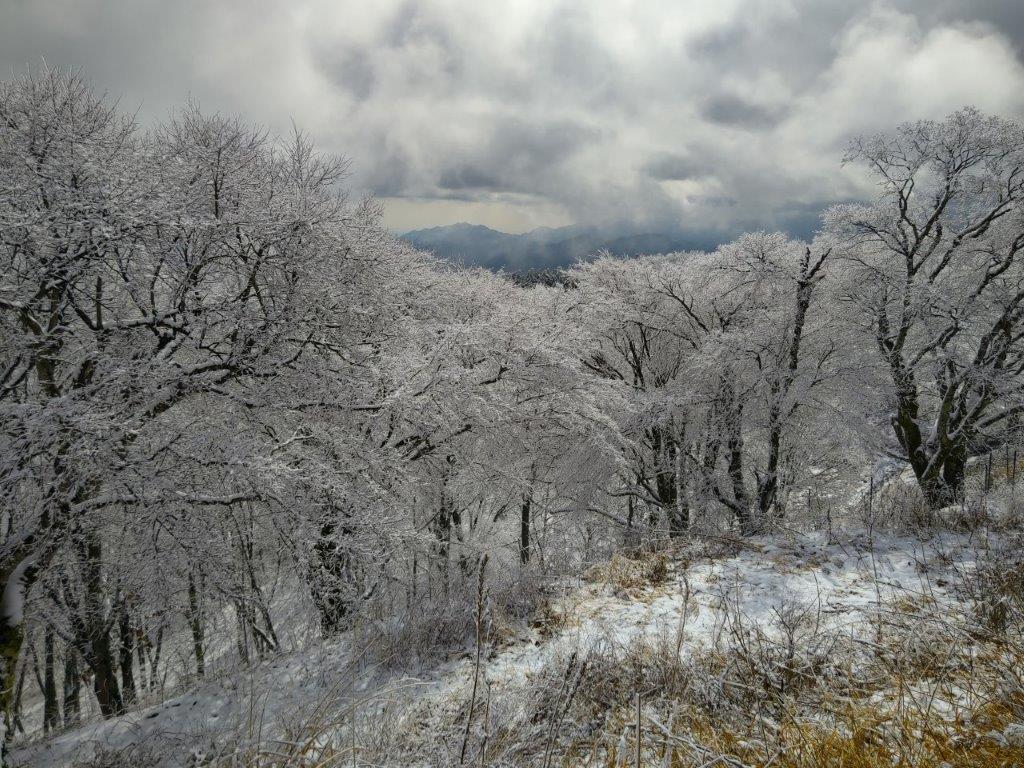
The summit of Mt Yatsu in the clouds

The starting point for this hike was a famous soba restaurant I had been meaning to visit for a while. Looking at my map, I found an easy loop hike nearby, ideal for the short, cold days of December: up and down a relatively low mountain, at the junction of two rivers, with an observation tower at the top. I was familiar with the area since I had hiked there twice before, once on Mt Amagoi and once on Mt Hinata. The forecast called for sun in the morning, with clouds rolling in from the afternoon; I was looking forward to the views of the mountains of Yamanashi before the weather went downhill.

A steep climb (left) Walking along the top ridge (right)

Walking among the pines

I rode the Chuo limited express to Kofu station and then drove an hour to Okina (翁), located in a hilly, wooded area, wild monkeys occasionally crossing the winding road. I arrived exactly at 11am, just ahead of the weekend lunch crowd. After a satisfying soba meal, I drove a short way to the free, and nearly empty, municipal parking lot of Dai-ga-harajuku (台ヶ原宿), an old post town on the Koshu Kaido Highway.

Dark clouds above the South Alps

Mt Kaikoma (left) and Mt Hinata and Mt Amagoi (right)

I set off a little after noon and followed a small road up the wooded mountainside, reaching Nakayama Pass (中山峠) just before 1pm. From there it was a steep, short climb up wooden log steps, the outline of the South Alps forming a dramatic backdrop. The path then followed the undulating ridge through a forest of red pines. At 1h30, I reached a clearing, in the middle of which stood the observation tower; although it was the highest point, the official summit was a little further along the ridge.

Looking down at the clearing at the base of the tower

A huge cloud perched on top of Mt Yatsu

From the tower, I was relieved to the see that most of the sky was still clear, although dark clouds had started to gather on the west side, giving Mt Kaikoma a menacing look. From its snow-freckled peak, a ridgeline extended northwards, ending at Mt Hinata, with Mt Amagoi lurking behind. On the north side was Mt Yatsugatake, with a huge cloud sitting on its head. To the east, the grey rocks of Mt Mizugaki and Mt Kinpu shone under the sun, while the twin peaks of Mt Kaya next to them were in the shade. Southwards, the white streaked cone of Mt Fuji was still clearly visible.

The mountains of Oku-Chichibu

Heading towards the official summit

Once I had finished enjoying the panoramic view, I continued along the top ridge, now heading eastwards, and 5 minutes later, arrived at the summit marker of Mt Naka (中山 なかやま nakayama, meaning “middle mountain”), completely in the trees. From there, the path descended through the forest, and half an hour later I reached a road at the base of the mountain. At 3pm, I was back at the parking lot. The clouds had finally filled the whole sky, throwing a gloomy chill on the afternoon.

Walking down through the forest

Nearing the end of a short hike

Since it was still early, I decided to check out the nearby Shichiken sake brewery shop. During the drive back, I enjoyed some fantastic views of Mt Fuji from the highway. After returning the car in Kofu, I boarded the limited express for the 90 minute ride back to Shinjuku.

See the views from the top of Mt Naka

Mt Odake (1267m), Okutama Town, Tokyo Prefecture, Saturday, November 19, 2022 [Mitakesan Station to Okutama Station]

Hiking in the Chichibu-Tama-Kai National Park

秩父多摩甲斐国立公園

I had hiked this mountain during my first year in Japan, following a route from my hiking in Japan Lonely Planet guidebook. Over the years, I had redone portions of it but not the peak itself. I had originally planned to do the entire route again last summer, but the weather never cooperated; this time, the forecast called for blue skies, little wind and pleasant autumn temperatures.

View towards the Kanto plain from Mitakedaira

I only had faint recollections of the hike, and no blog post, but since it’s a popular, well-trodden trail, I found plenty of information online to refresh my memory. One aspect I could recall was that it was long walk with some steep, rocky sections; fortunately, I was feeling relatively fit and nimble after 3 consecutive hikes.

Mt Nabewari, not part of today’s hiking route

I also knew it would be crowded, especially the first part around Mitake shrine. However, I wanted to go on the weekend to take advantage of the direct train from Shinjuku, a minor comfort to make up for the lack of limited express trains on the JR Ome line. I was looking forward to redoing a classic Tokyo hike inside the Chichibu-Tama-Kai National Park.

A 60-metre high cedar (left) Hiking in the sun past Okunoin (right)

It was a beautiful, slightly chilly autumn day as I rode the “Okutama Holiday Rapid” through western Tokyo. I had arrived early in Shinjuku to make sure I could sit during the 80-minute trip to Mitake, arriving there at 9am. I boarded a Nishitokyo bus for the short ride to the base of the Mitake Tozan Railway. I tried to be quick but could only get on the second bus, added to help with the weekend crowds. I had better luck on the cable car, ending up with a front view for the ascent.

View of Mt Gozen (foreground) and Mt Mito (background)

I had a wonderful view of the Kanto plain, past some fiery larches, from Mitakedaira (御岳山平) next to the Mitakesan top station. It was nearly 10h30, so I quickly moved on, skipping the many steps to the Mt Mitake summit, climbed twice before. I soon arrived at the Nagaodaira viewpoint (長尾平展望台), a couple of minutes off the main trail, from where I could observe the Akigawa river valley. By 11am, I was back on the main trail.

Mt Fuji, clearly visible from the summit

I continued along the wide, easy-to walk path, following the mountain side. I stopped briefly to gaze up at the 60-meter high “Tengu-no-koshikake” Cedar (天狗の腰掛け杉), and also glimpsed a “Kamoshika”, navigating the steep forested slope below. After Okunoin (奥の院), the path started to climb, merging with the ridgeline around 11h30. After some small ups and downs, I reached the start of the rocky section just before noon.

A steep descent aided by steps

I carefully navigated this section, using the fixed chains for support, occasionally waiting for people ahead of me. Past the rocks, I ducked under a Shinto gate, part of the Odake Shrine (大岳神社) and started up the steep summit climb. A little after noon, I was standing on top of Mt Odake (大岳山 おおだけさん oodakesan meaning big peak). From the top of this famous 200-mountain, I had a sweeping view of the Okutama and Tanzawa mountains, with Mt Fuji in the middle. After about an hour, I headed down the other side.

View of Mt Takanosu on the way down to Okutama town

I could enjoy the peace and quiet of the surrounding forest as I saw few people on the descent. The path alternated between level and steep sections, the latter made easier thanks to steps, chains and the occasional short ladder. A little after 2pm, I reached the top of Mt Nokogiriyama (鋸山), surrounded by the trees. An hour later, through a gap in the pines, I had a spectacular view of Mt Takanosu. After a short break, I resumed my descent, quickening my pace as I wanted to be down before dark.

The path alternated between level and steep sections

I was relieved when the path became easier to walk, descending rapidly through the dark forest. At 4pm, just as the sun was dipping below the mountains, I arrived at a small shrine on top of Mt Atago (愛宕山). I took a minute to admire the nearby five-story pagoda, before tackling the final stretch, consisting of a long, steep staircase. I carefully walked down the mossy, narrow steps in the gathering gloom. At 4h30 I emerged onto a road near a bridge across the Tama river. After walking to Okutama station a few minutes away, I hopped on the direct train for the 90-minute ride back to Shinjuku.

Autumn leaves and afternoon sun (left) A long, steep staircase (right)

See the autumn views along the Mt Odake hike

See a slideshow of some more pictures of the Mt Odake hike

Mt Kintoki (1212m), Minami-Ashigara City, Kanagawa Prefecture, Saturday, October 1st, 2022 [Yuhi Waterfall to Otome Pass route]

Hiking in the Fuji-Hakone-Izu National Park

富士箱根伊豆国立公園

I was looking for a hike close to Tokyo, high enough to escape the late summer heat and strenuous enough to maintain my regained form. I decided to revisit a mounatin I climbed ten years ago, which I could traverse north to south via a different route that would include a famous waterfall, as well as views of Mt Fuji. The trail up from Ashigara in Kanagawa, connected by local bus from Matsuda station, had been closed for a while due to typhoon damage; however looking online, it seemed to be in use again. I also saw that the final section was quite steep, a good test of my current physical ability. The trail down ended at a hot spring near Gotemba in Shizuoka, connected to the station by shuttle bus. The weather was supposed to be mostly sunny and warm, with few clouds and little wind, ideal conditions conditions for hiking. I was looking forward to climbing a familiar mountain via a new, challenging route and getting some good views of Mt Fuji in the autumn.

Mt Fuji before it got engulfed in the clouds

Yuhi waterfall, a famous purification spot

A cloudy cover still lingered in the early morning sky, as I rode the Odakyu Romance limited express train to Shin-Matsuda station. There, I boarded a full bus and rode it all the way to Jizodo (地蔵堂), the last stop. I had been there once before on my Yamabushi-daira hike. This time, I continued on foot along a small paved road up a pleasant, green valley. The sun was now shining above, and although it was only 9h30am, it already felt quite warm; despite that, the cosmos flowers were out, a sure sign of autumn.

A 23 meter drop (left) Climbing up the Ashigara Pass trail

Moth spotted near the start of the hike

I was delighted to spot a beautiful yellow moth on a phone booth, possibly a Japanese silk moth. At 10am, I reached the entrance for the short trail to the waterfall, next to a campground. A few minutes later, I was standing in front of the thundering Yuhi waterfall (夕日の滝). The water falls from a height of 23 meters, and apparently it’s a popular place for people to stand under to get purified. At 10h30, I started up the Kintoki trail (金時コース), a gently climbing trail through cedars. After passing an open shelter, the trail went up a shady valley next to a mountain stream.

Easy hiking along the Ashigara Pass trail

The summit of Mt Kintoki, a tough climb via the north side

I was happy to be walking next to a river again, the rushing water like music to my ears. The rocky terrain made it difficult to see the path, but pink ribbons attached to branches, as well as the occasional signpost, led the way. At 11am, the trail left the river and went up a steep ridge. I met no one along this section, adding to the sense of peace and quiet. Half an hour later, after getting a glimpse of today’s summit through a gap in the trees, I reached a level dirt road, also the Ashigara Pass Trail (足柄峠コース). I turned left, and 3o minutes later, arrived at a viewpoint of Mt Fuji.

Mt Fuji slowly disappearing into the clouds

The western part of the Tanzawa mountains

I was lucky that the summit was free of clouds; just a few minutes later some clouds rolled in and refused to budge for the rest of the day. According to my map I was at the remains of the Inohara Fort (猪鼻砦跡 962m), a few stone blocks making a good place to sit and have an early lunch while enjoying the view. Directly ahead loomed the triangular-shaped summit of today’s mountain, looking steep and menacing. I soon set off again, the path now climbing straight up the mountain side, equipped with ropes and ladders for safety.

Lots of ladders to assist the hiker

Mt Hakone at the center of Hakone Volcano

I was surprised to find such a thrilling ascent so close to Tokyo; halfway up, the view through the trees to the northwest made me feel like I was hanging from a cliff. To the left, Mt Fuji was now completely in the clouds, to the right, I could see the green Tanzawa mountain range. I met several people on their way down, and had to find “passing spots” to let them by. At 1pm, I emerged onto the top of Mt Kintoki (金時山 きんときやま kintoki-yama). I had a fantastic view of the entire Hakone area; beyond the outer caldera, I could see Mt Ashitaka, Suruga bay, and a big cloud where Mt Fuji was supposed to be. As on my previous visit, the summit area was fairly crowded so I quickly moved on.

Viewpoint between Mt Kintoki and Mt Nagao

View of Mt Fuji and Gotemba city from Otome Pass

I made my way down a steep path through forest, counter-clockwise along the outer caldera rim, and now inside the Hakone part of the Fuji-Hakone-Izu National Park. Half an hour later, I passed the flat summit of Mt Nagao (長尾山 1150m), surrounded by trees. After some more descending I arrived at Otome Pass (乙女峠 1004m). From a small wooden observation platform, I could see the lower half of Mt Fuji and Gotemba city spread out around its base. At 3pm, I reached a bus stop next to Otome Tunnel; I hopped on the next bus and got off at the nearby Fuji Hakkei no Yu. After a relaxing hot spring bath, I took the shuttle bus to Gotemba station, where I boarded the Odakyu Fujisan limited express for the 100-minute trip back to Shinjuku.

See and hear the sounds and sights of the Yuhi waterfall and Mt Kintoki hike