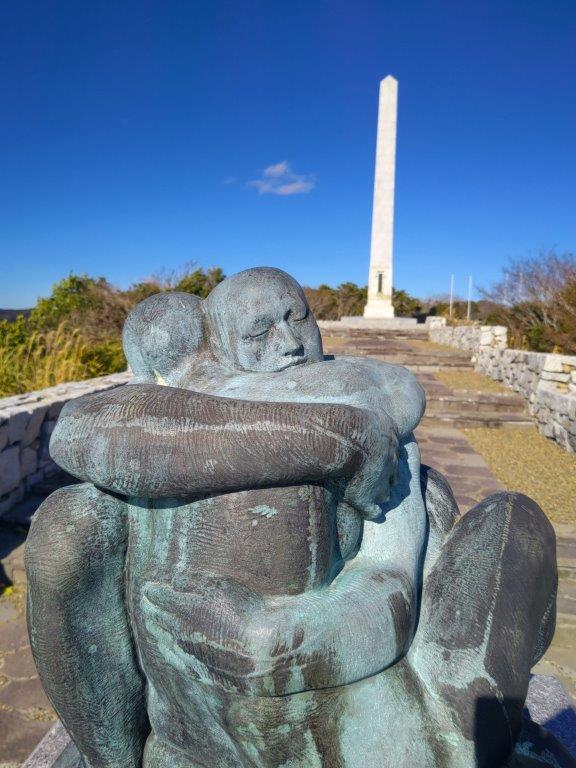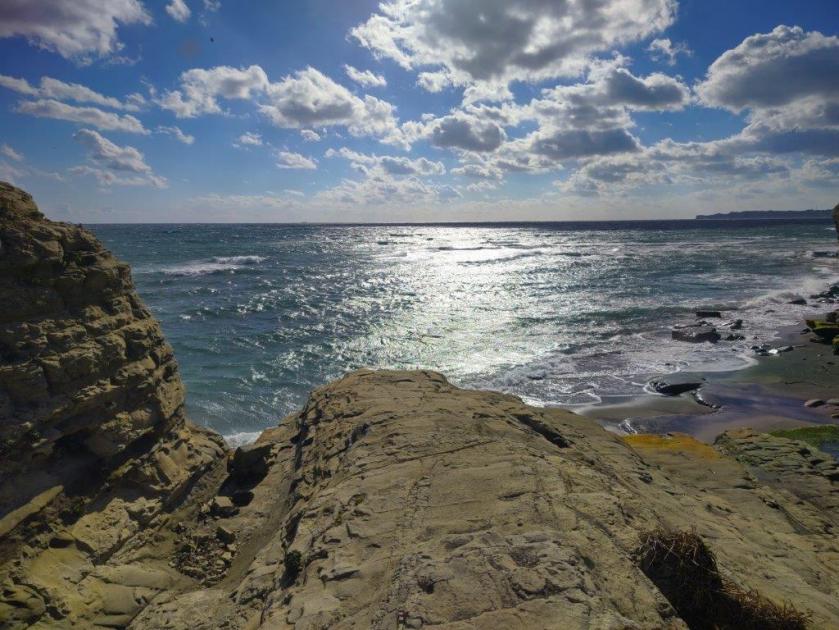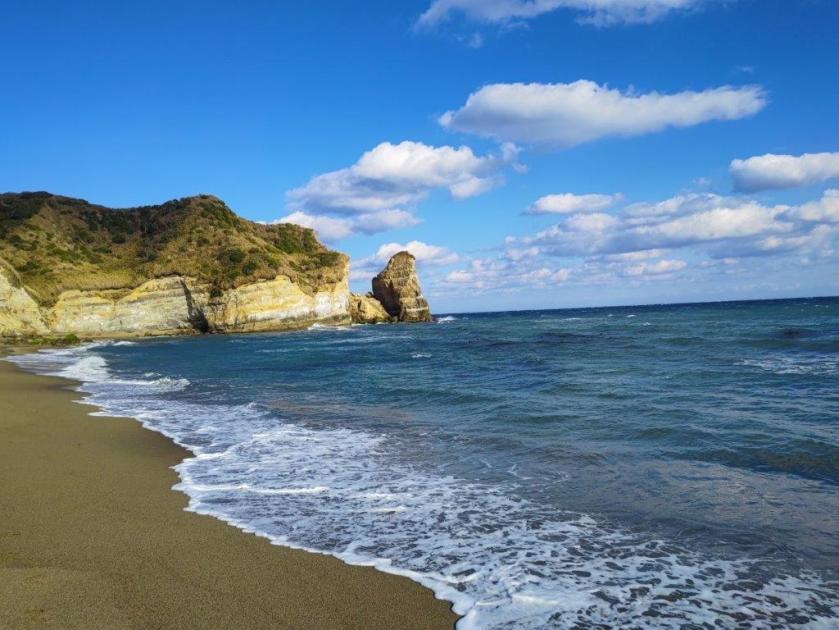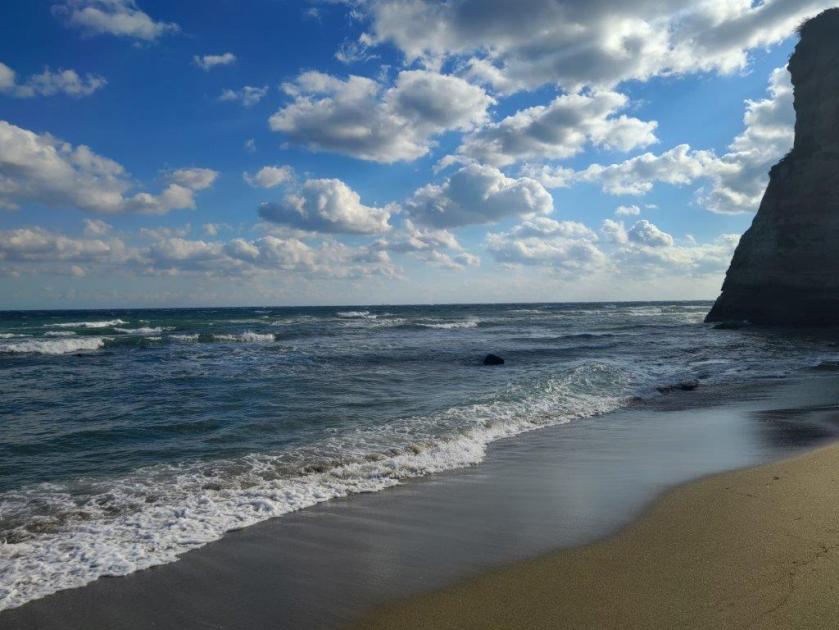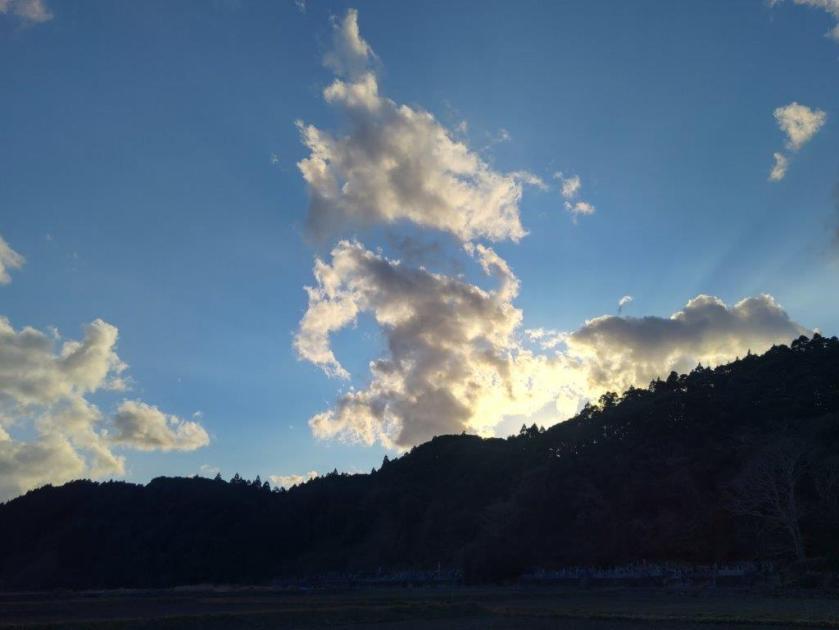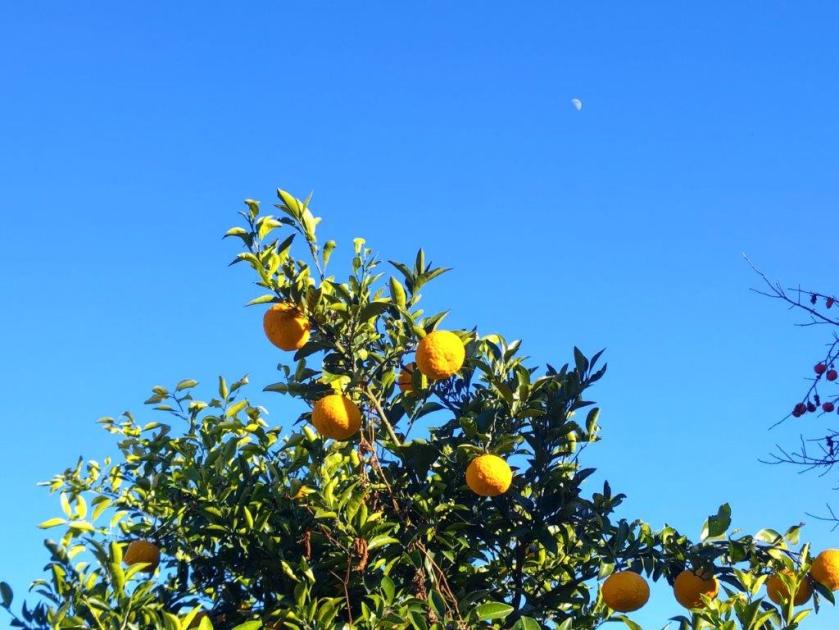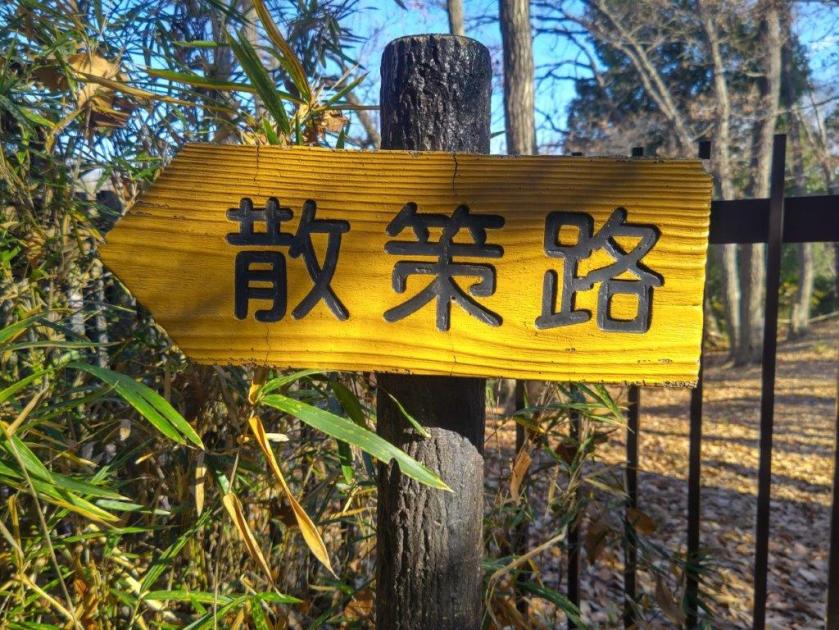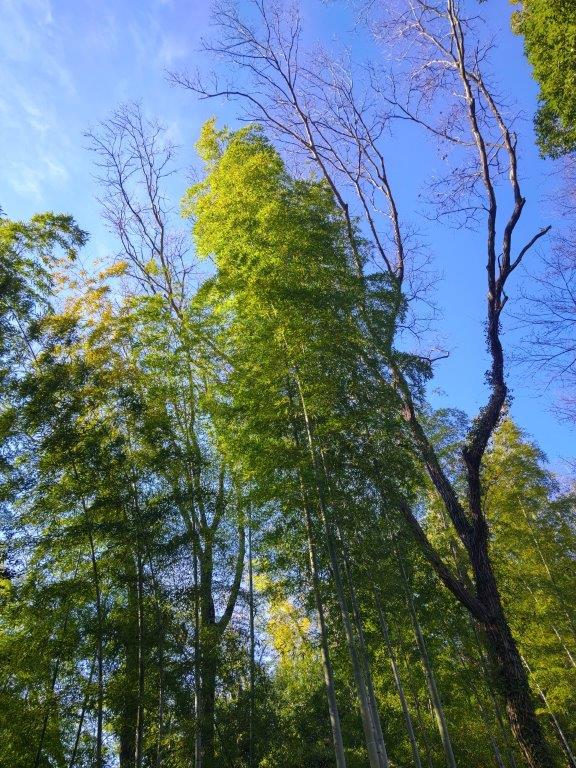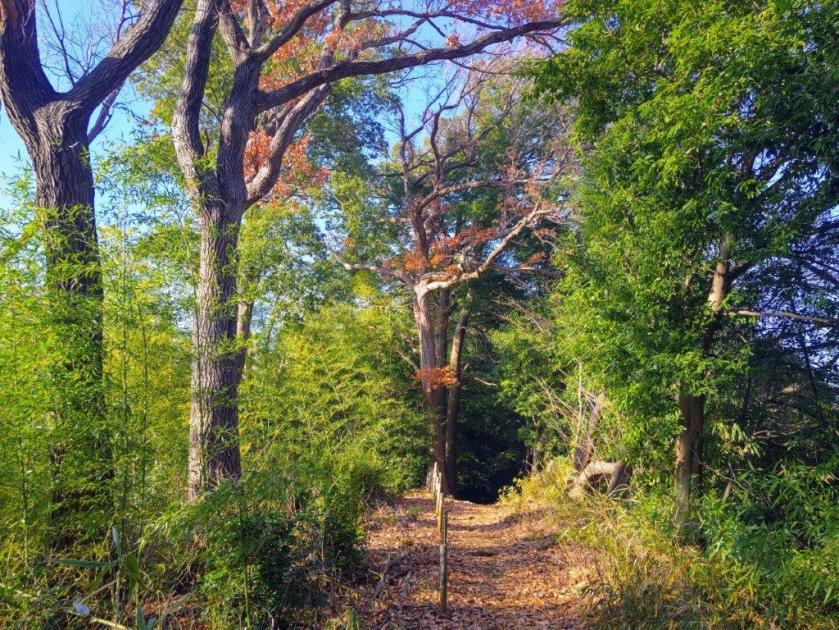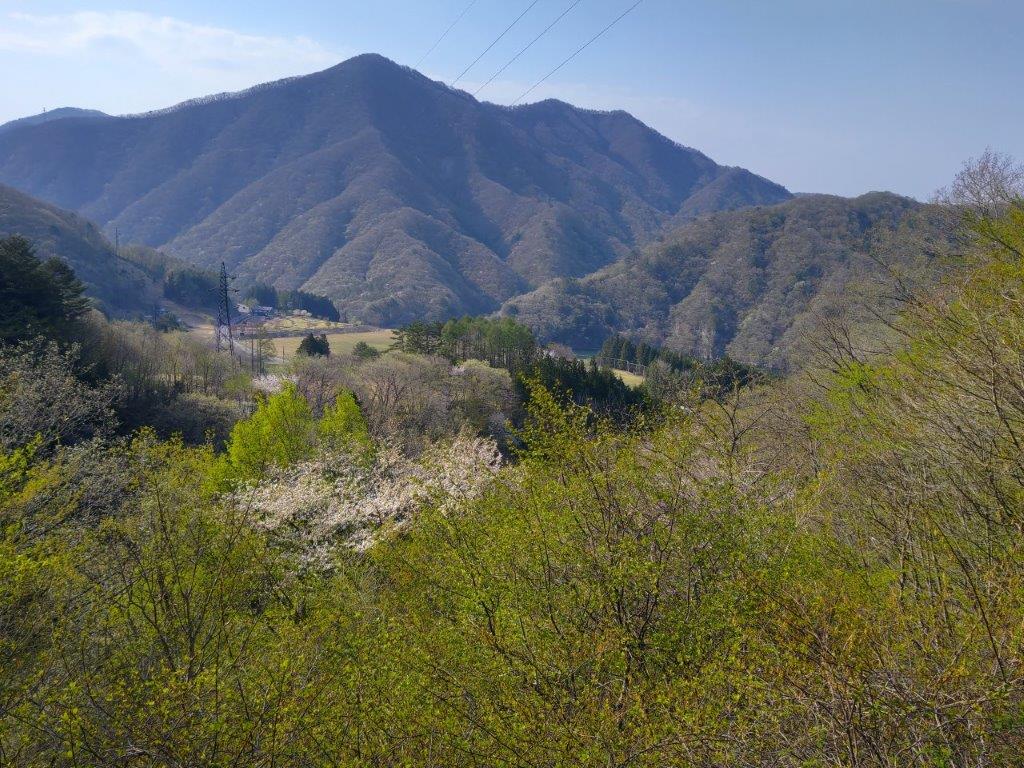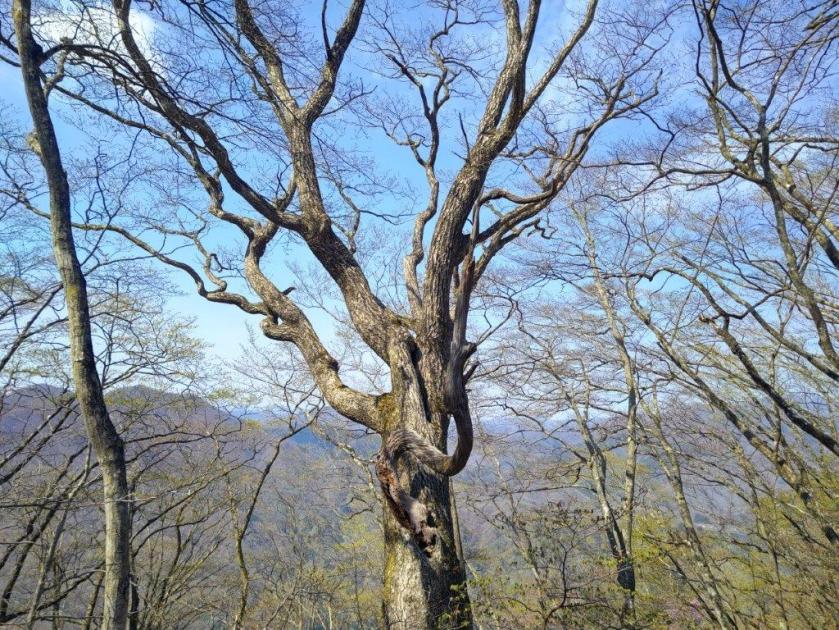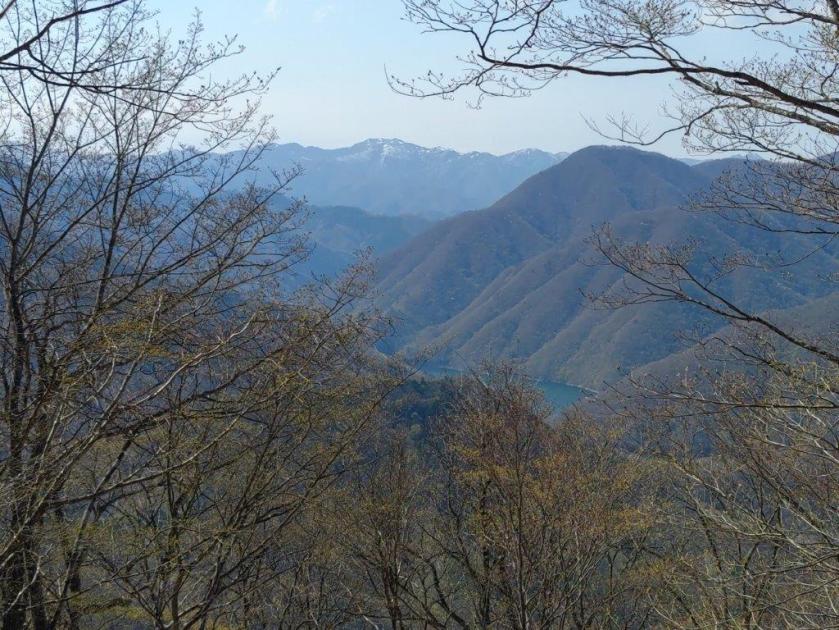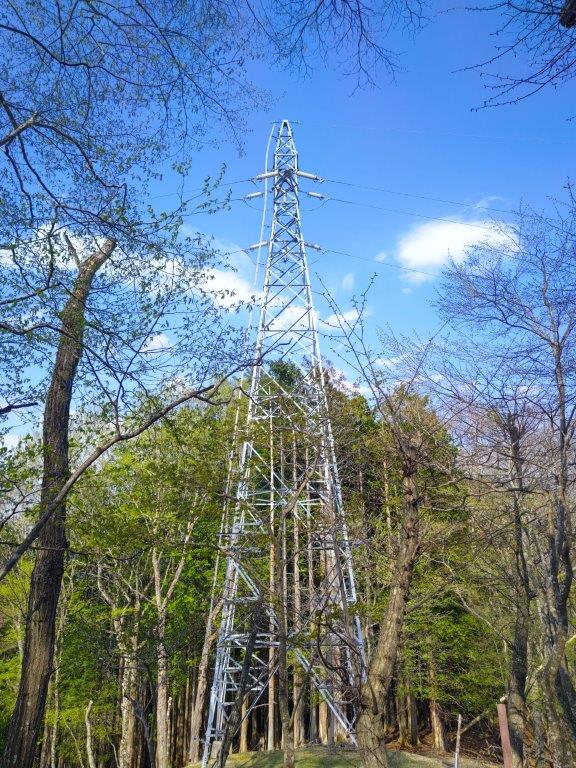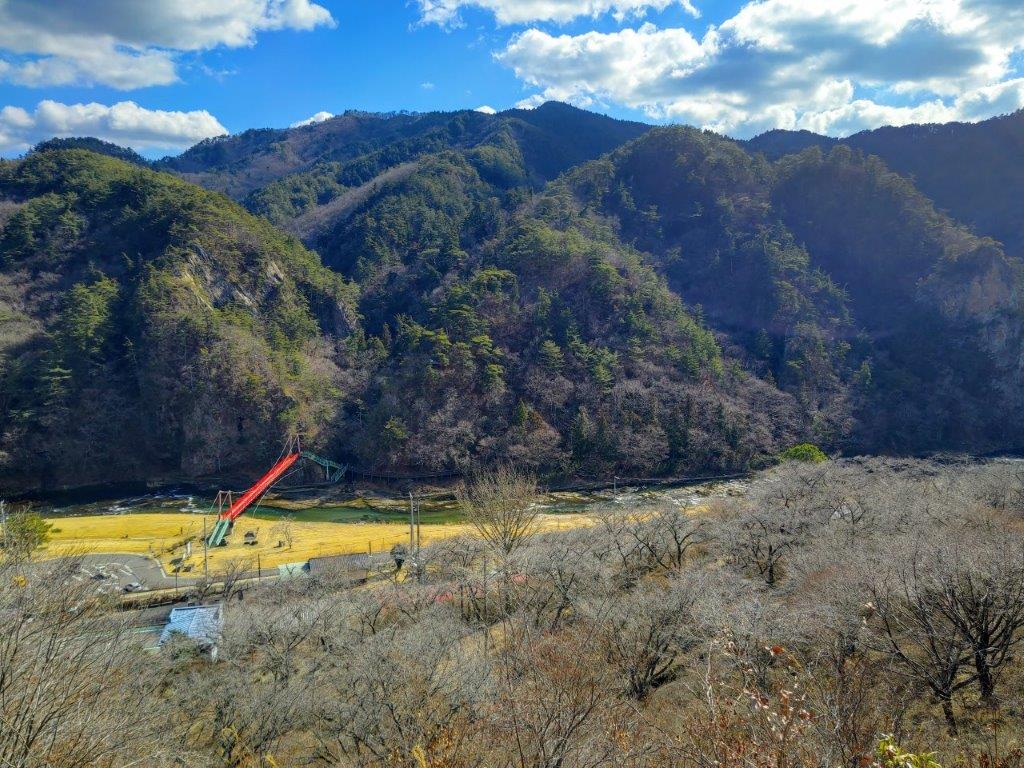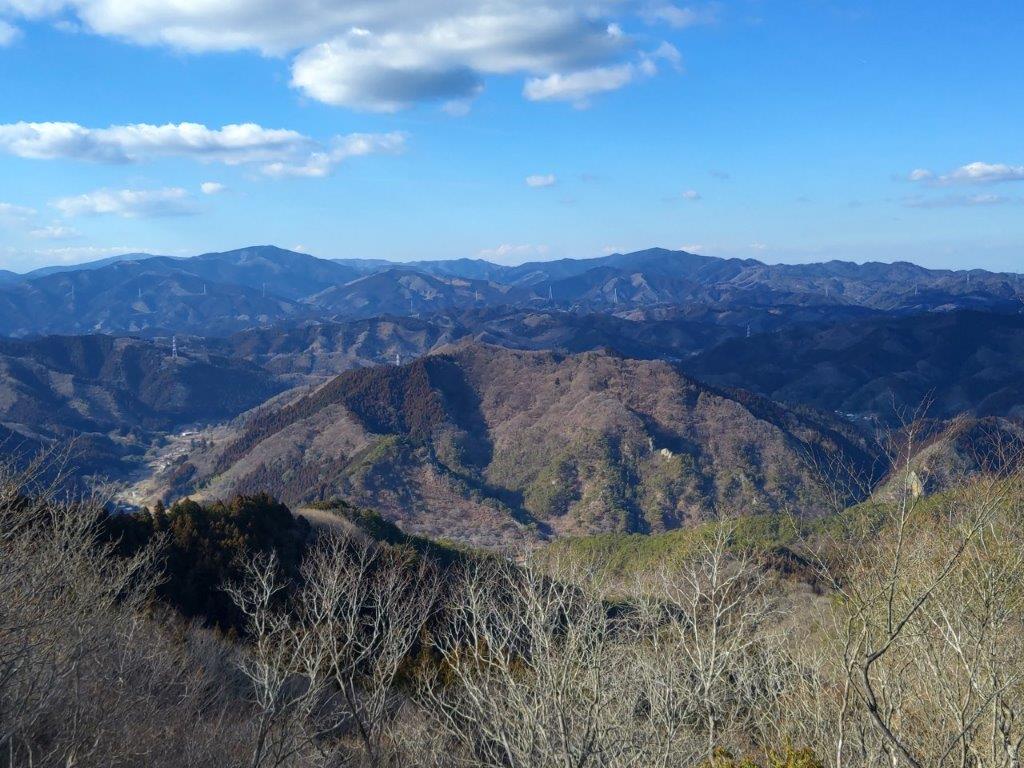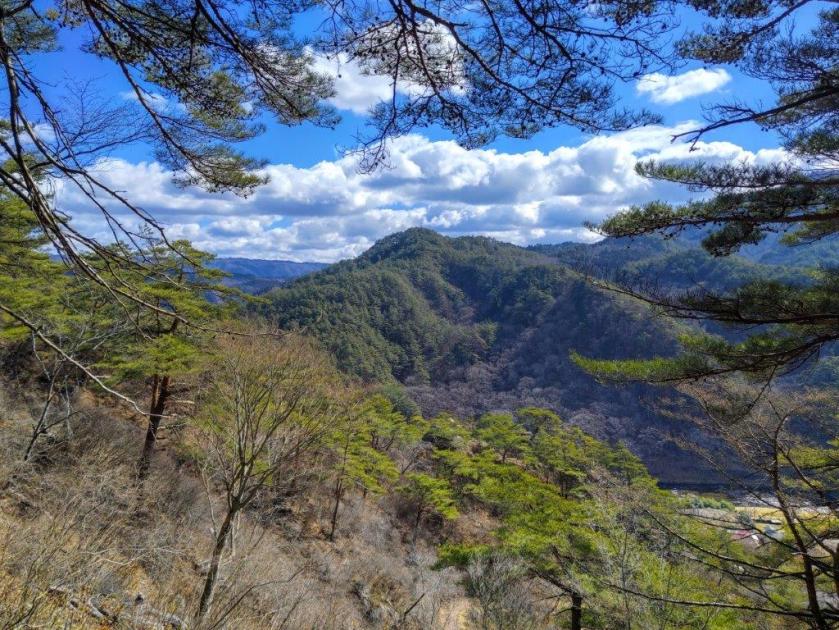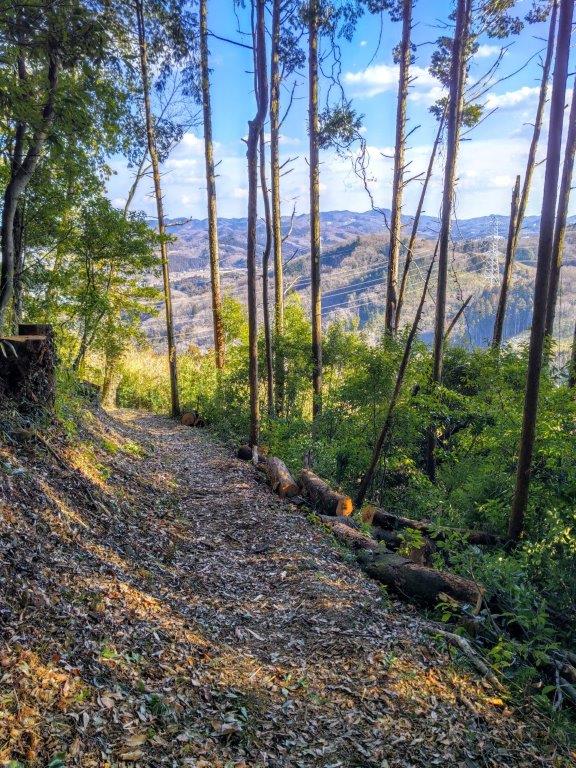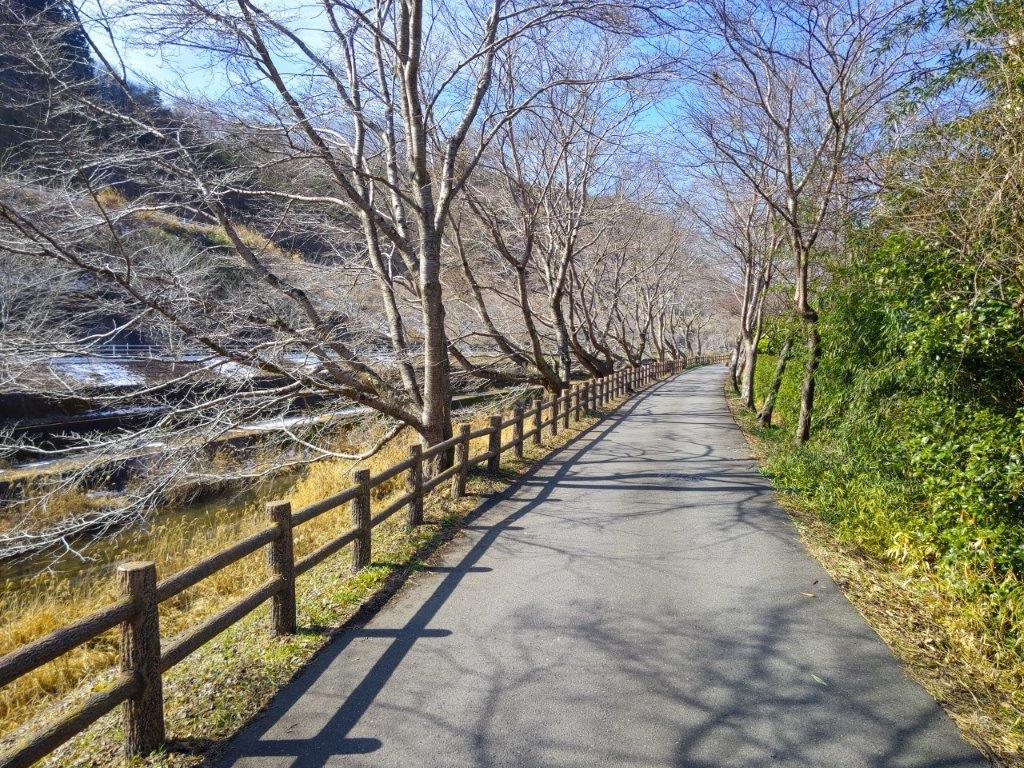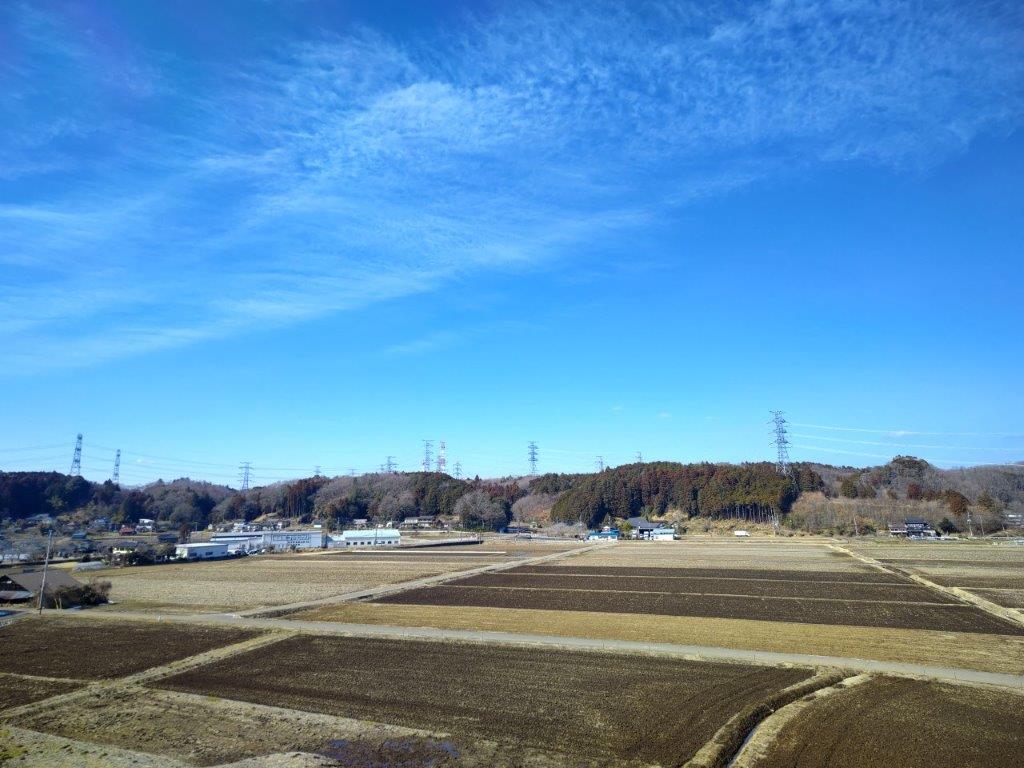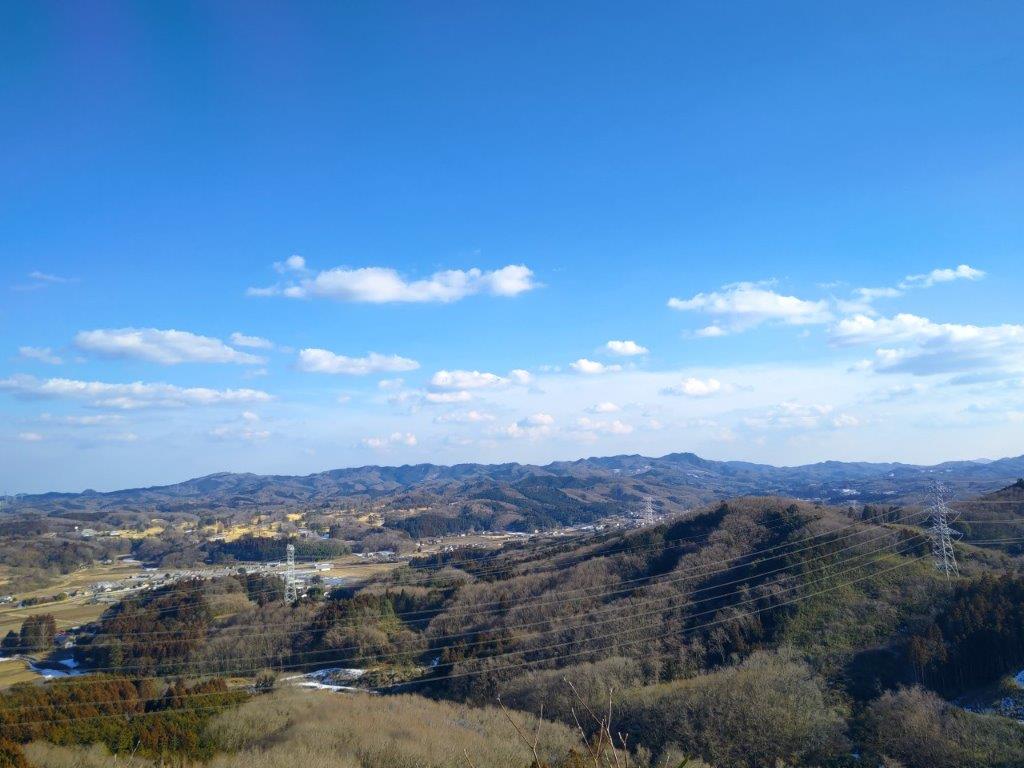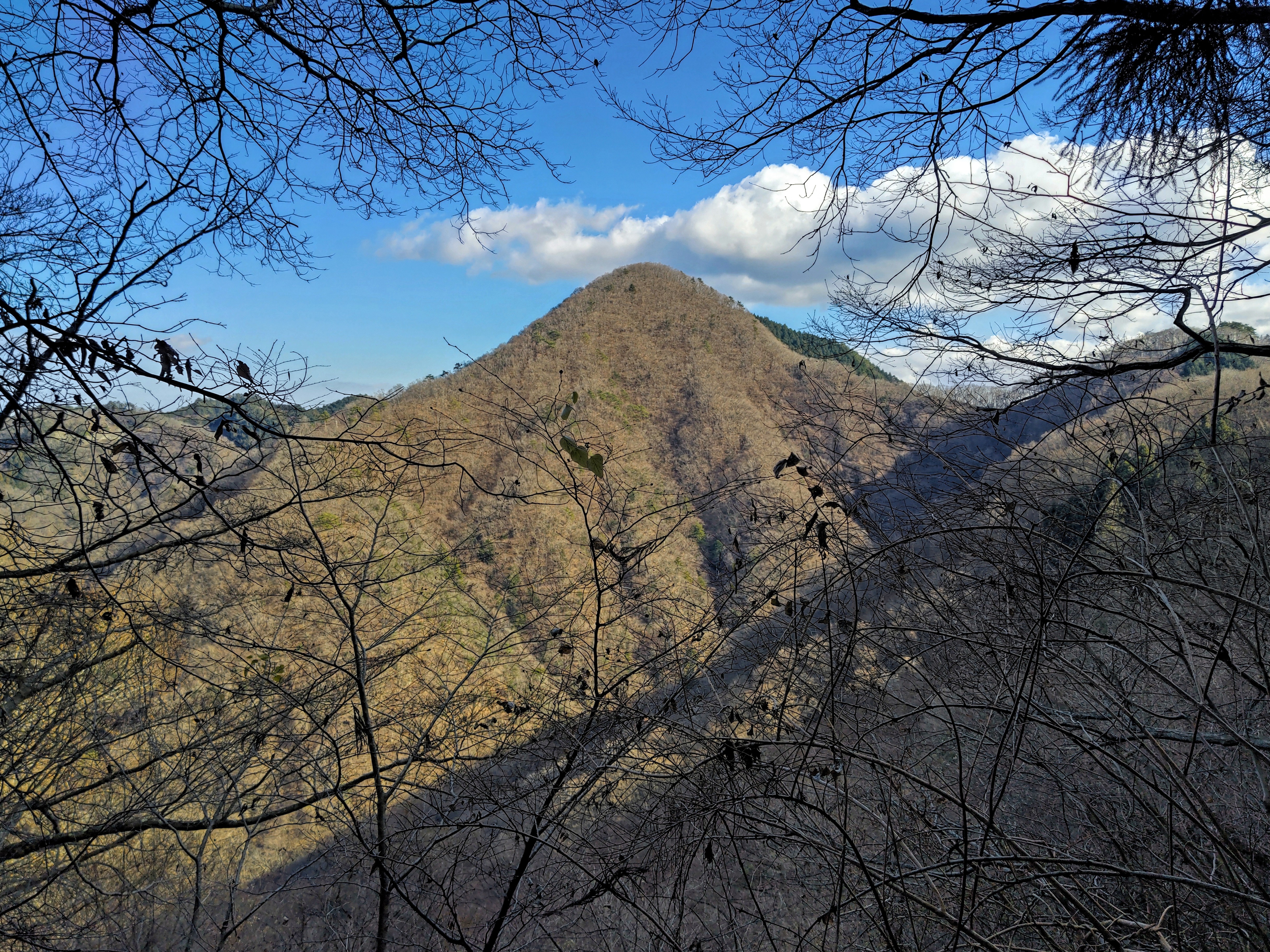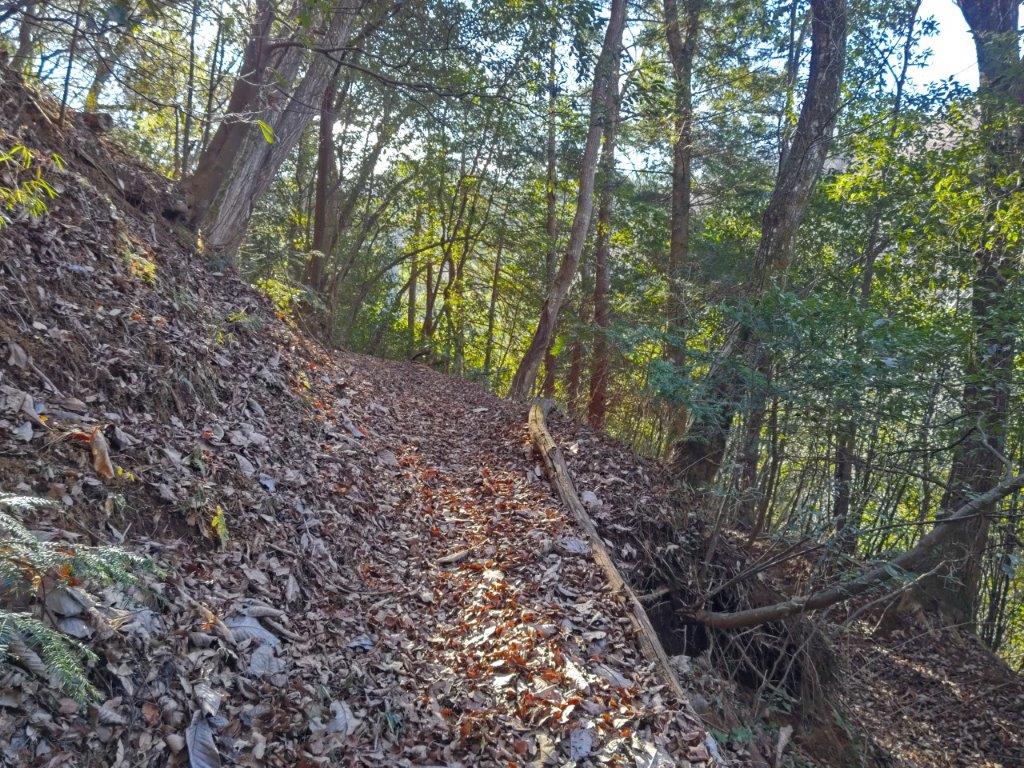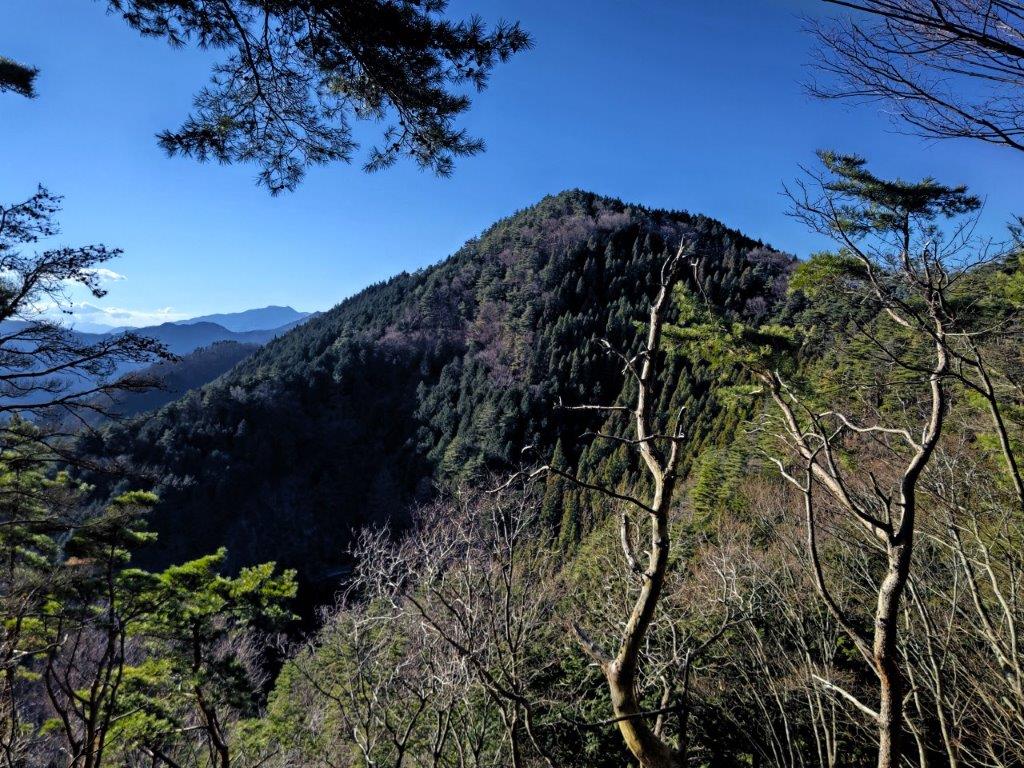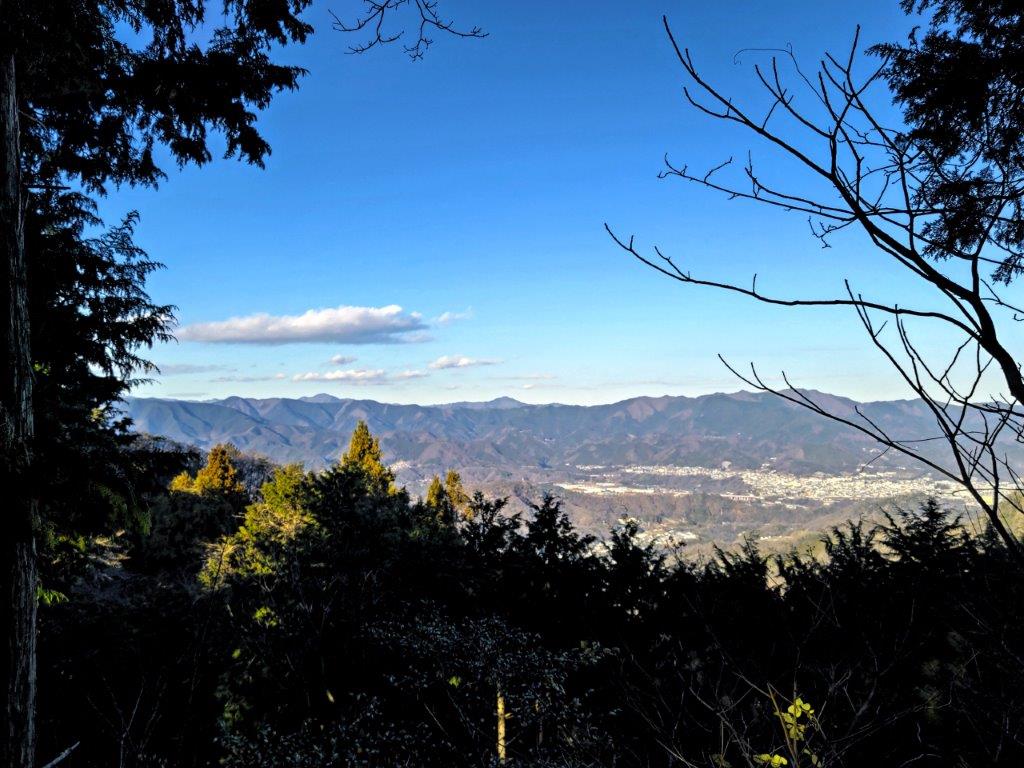
Inagi to Satsukidai Station, Inagi & Kawasaki Cities, Tokyo & Kanagawa Prefectures, Sunday & Tuesday, December 28 & 30, 2025 [Highest point 126m]

I wanted to do my year-end hike inside Tokyo since it’s the one time of the year local lines are mostly empty, as people head to their hometowns for the year-end holidays. The shorter travel times and lower elevations are also better suited to the short, cold days of winter. Finally, I was keen to continue exploring the network of trails south of the Tama river, often overlooked in my quest to scale new peaks.

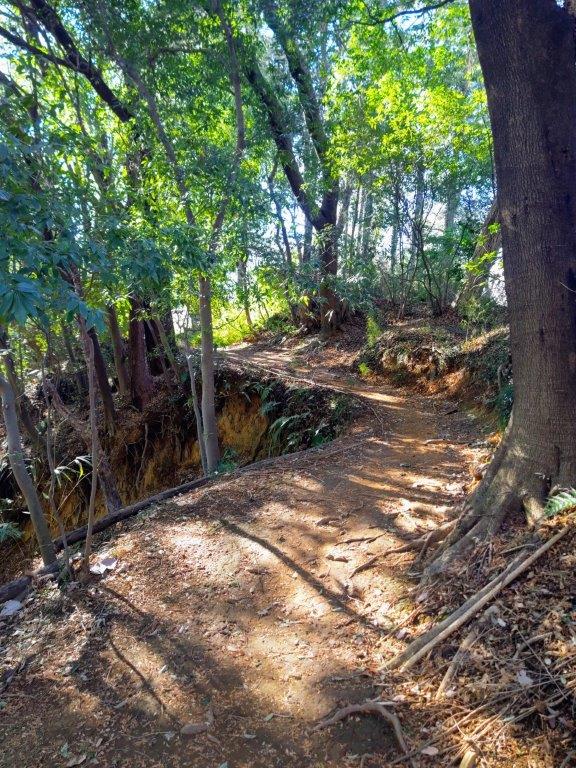
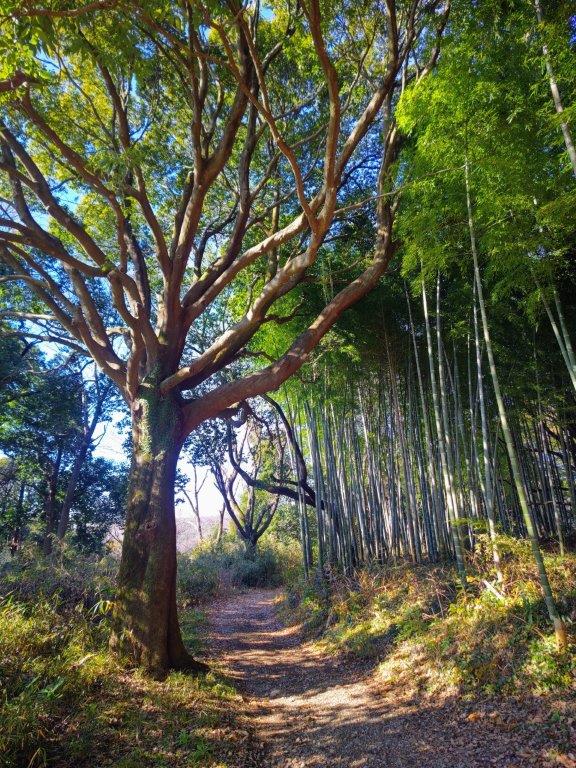
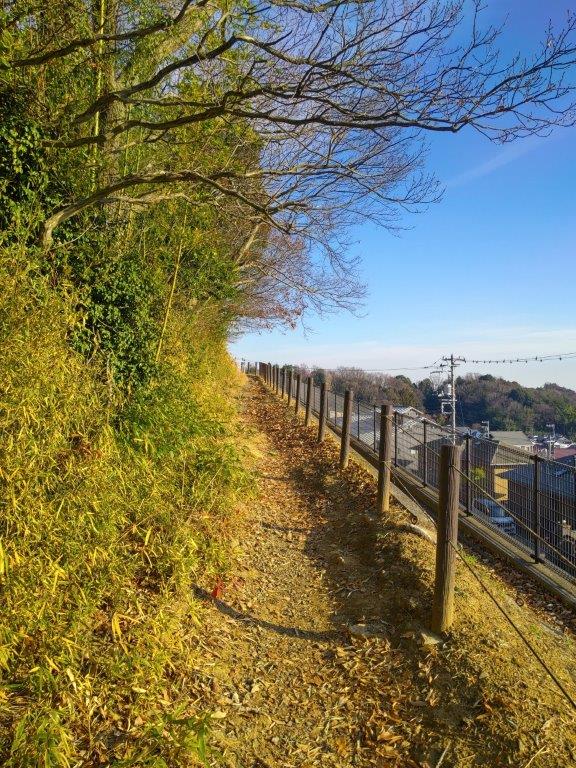
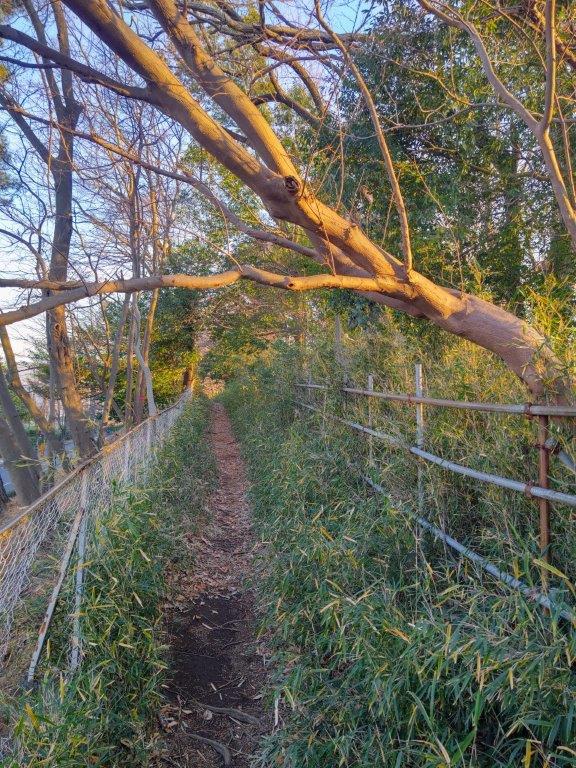
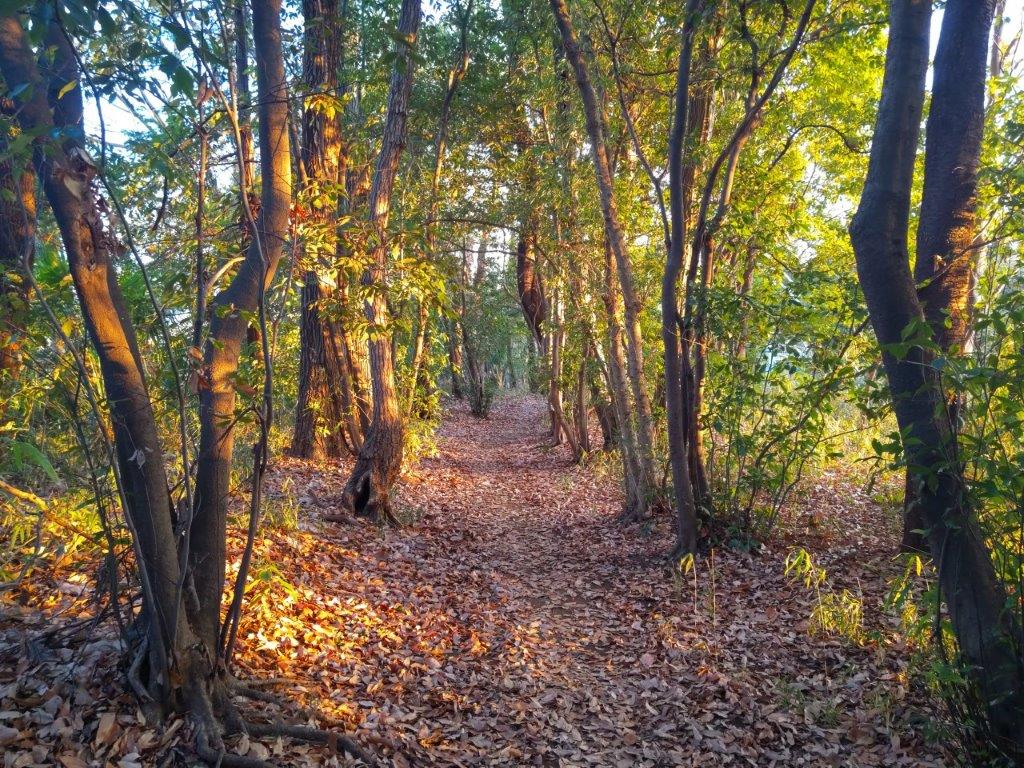
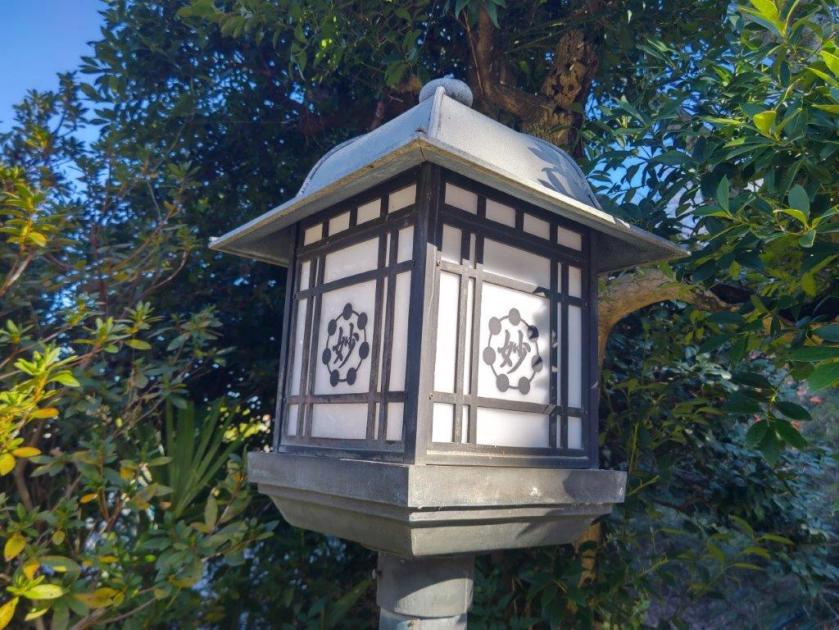
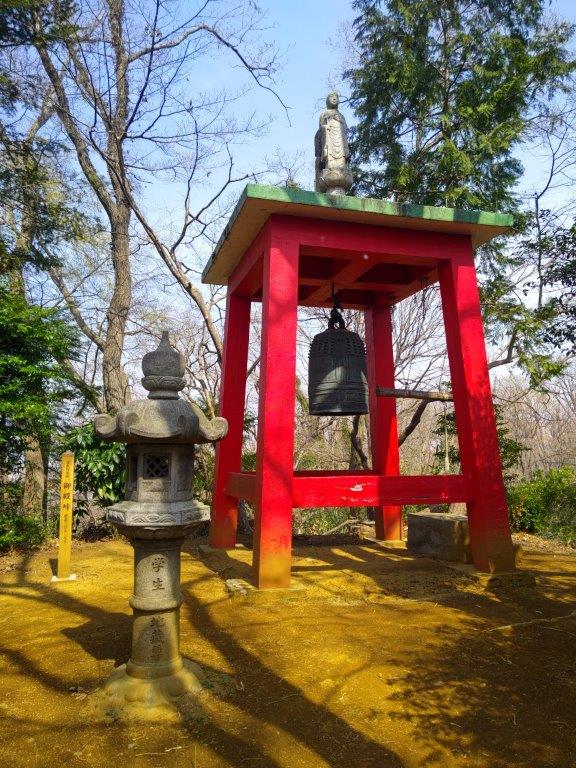
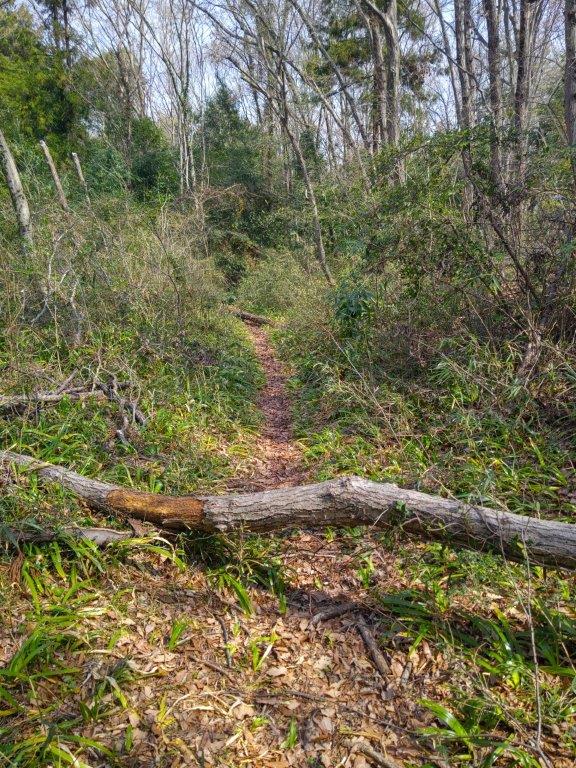
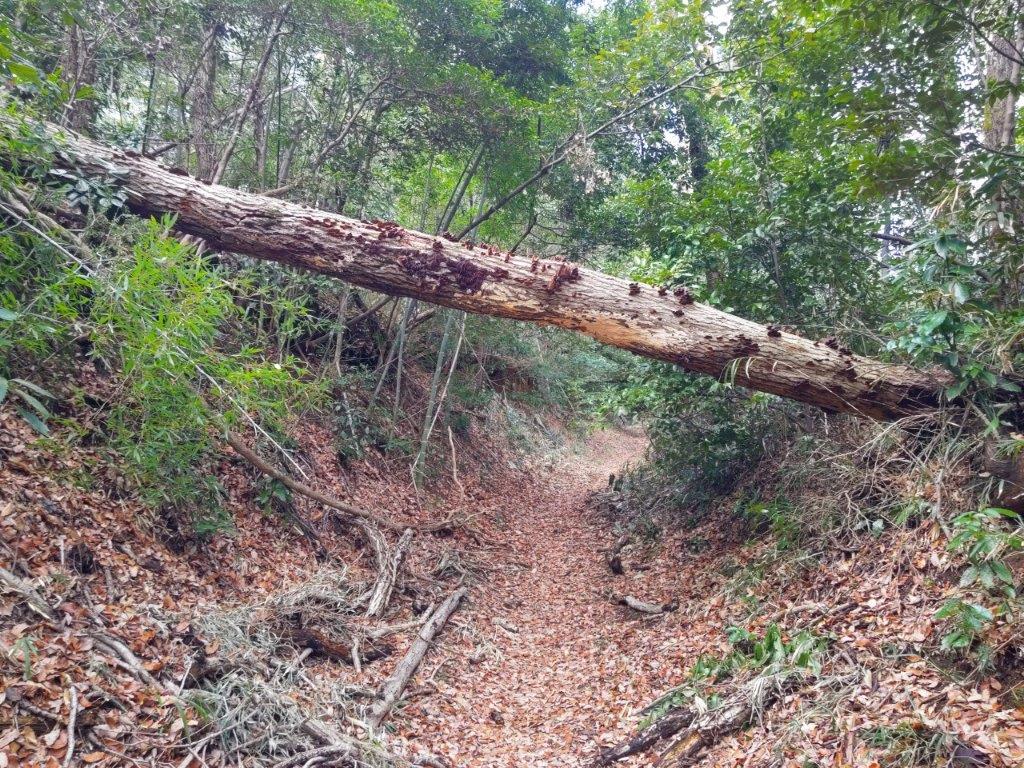
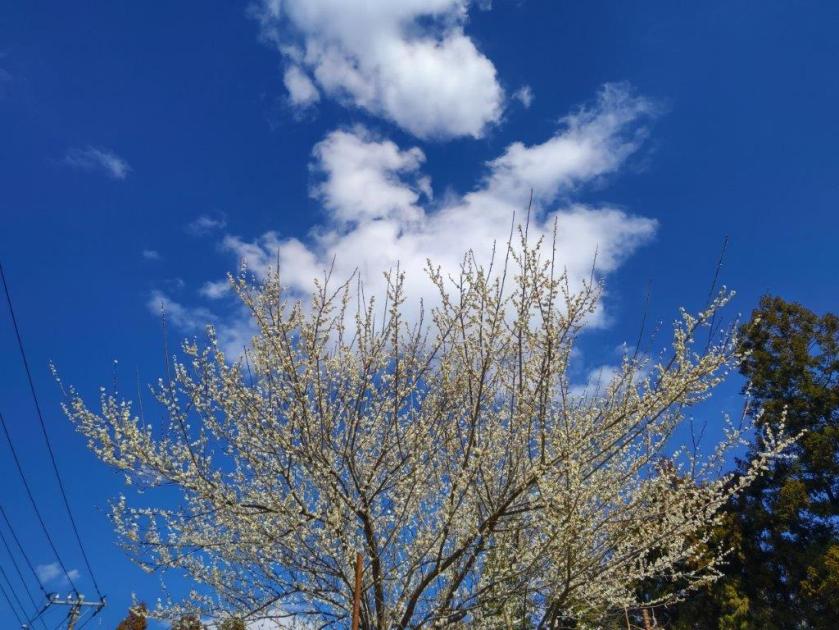
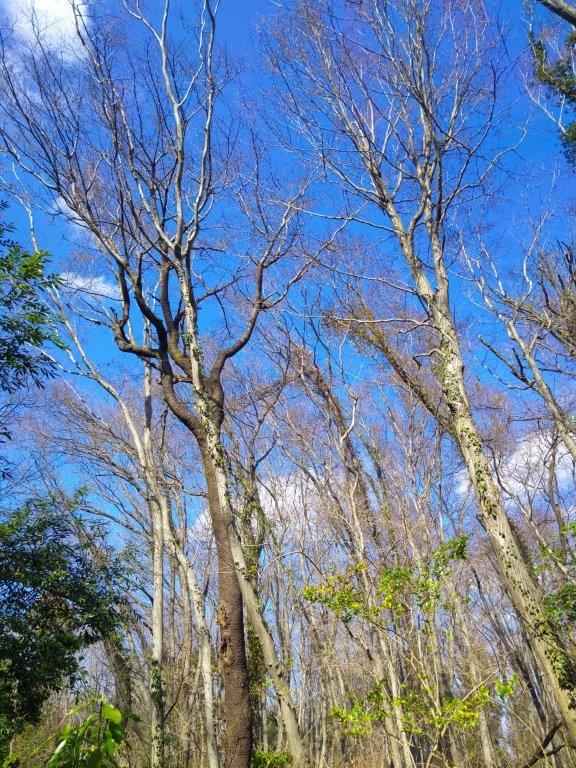
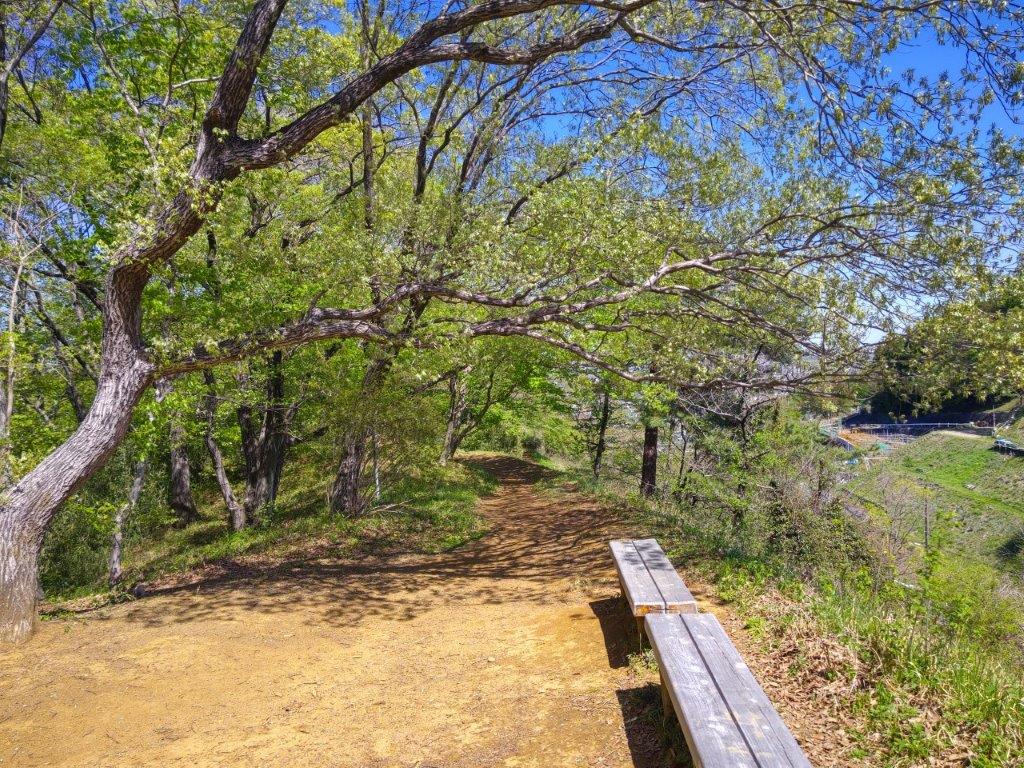
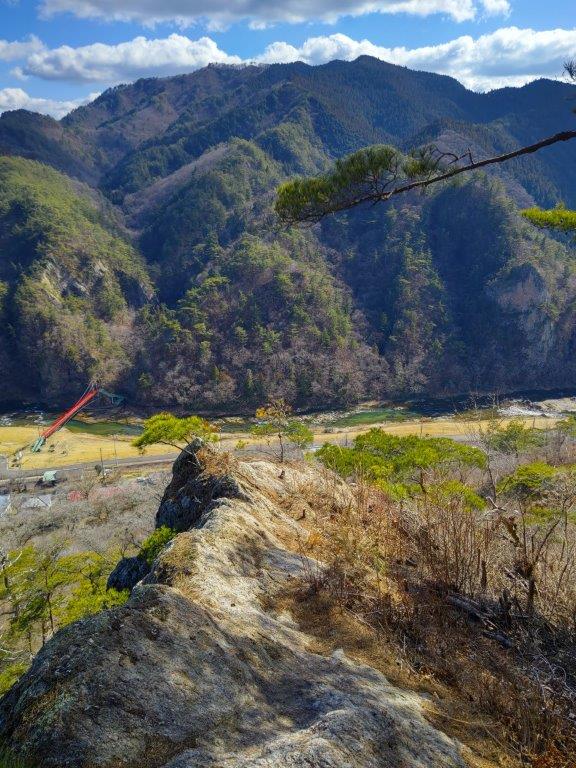
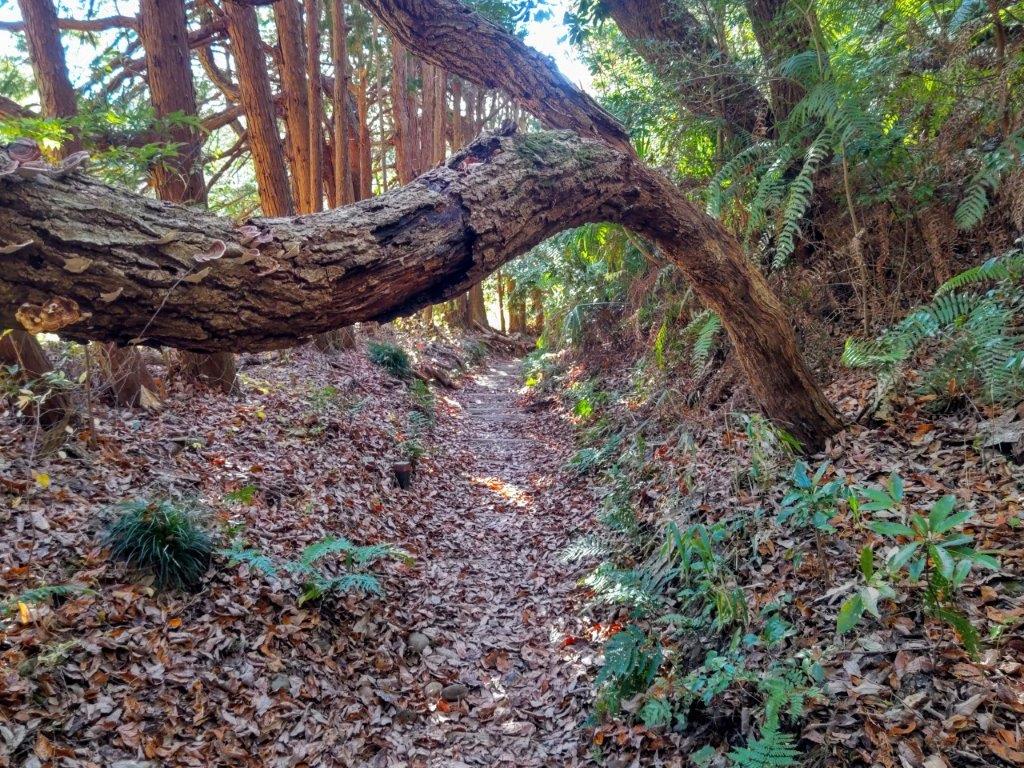
Path above (left) and behind (right) Myoken-ji

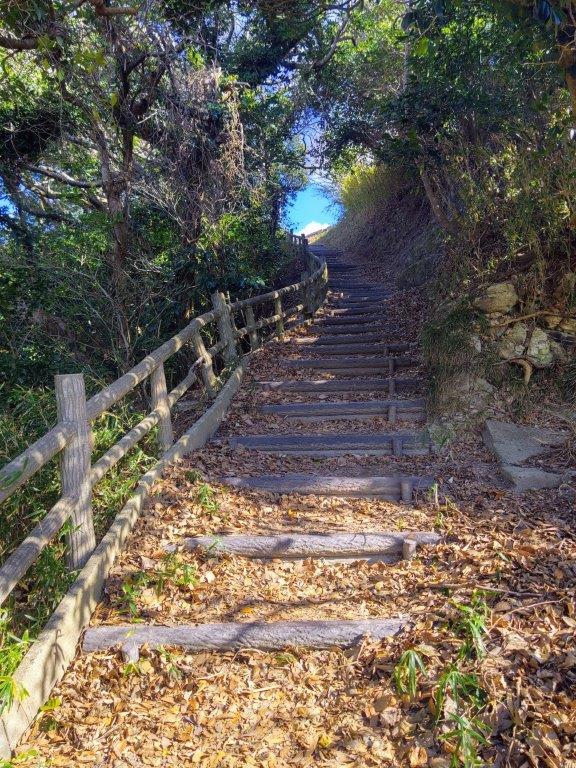
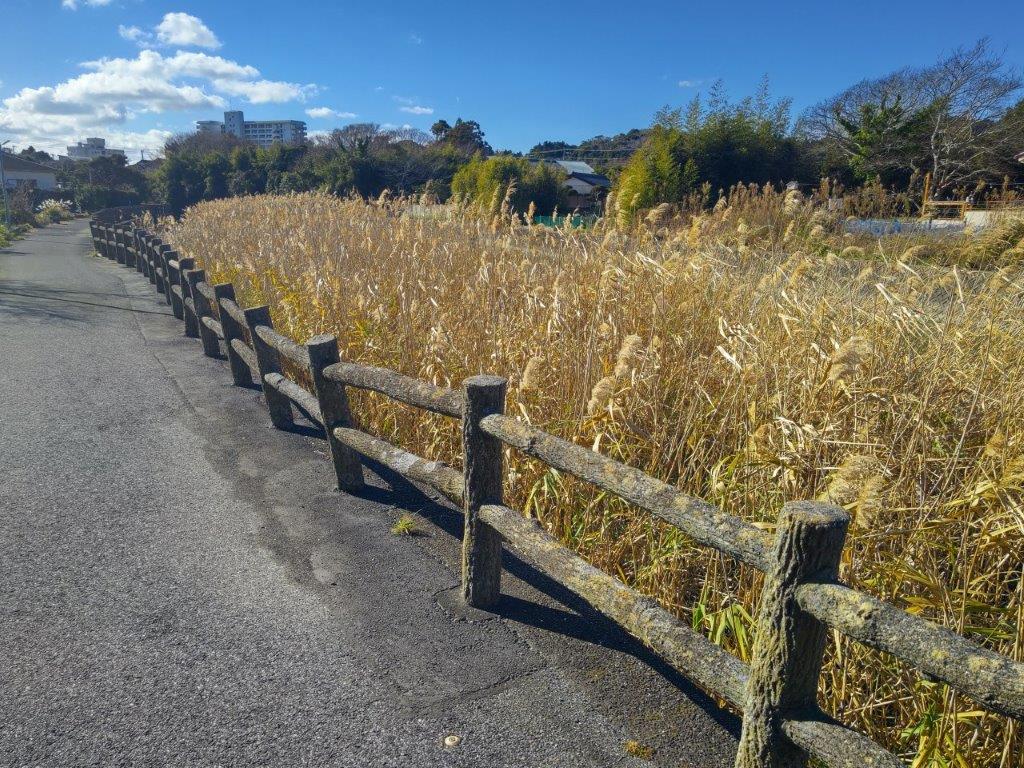
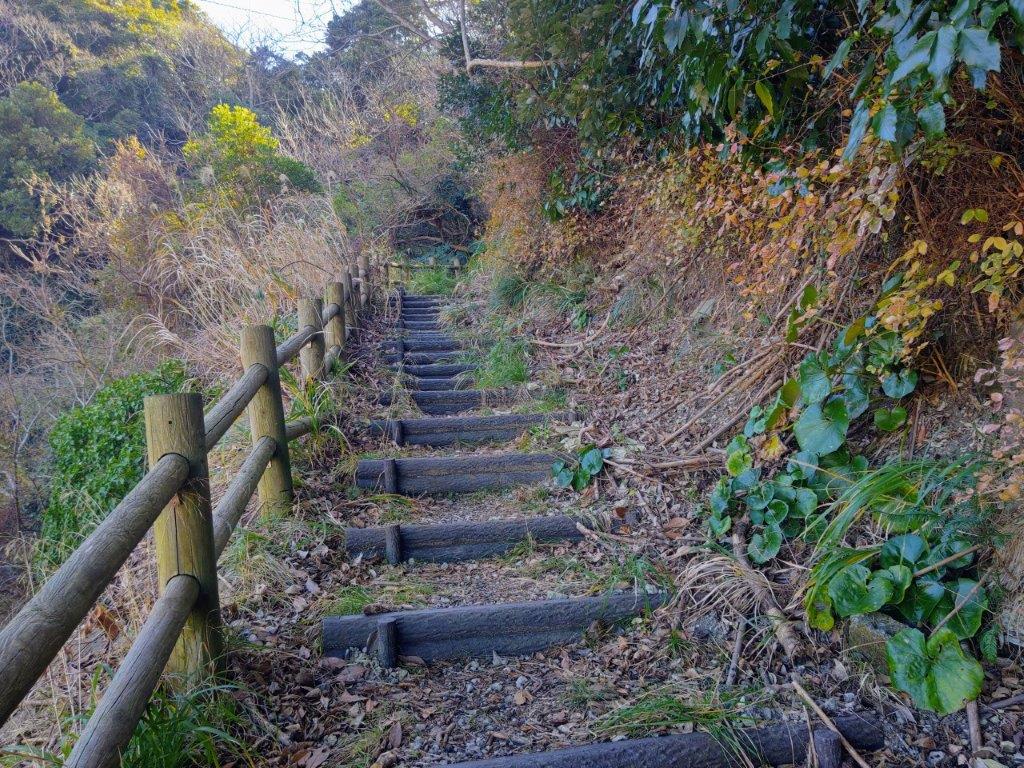
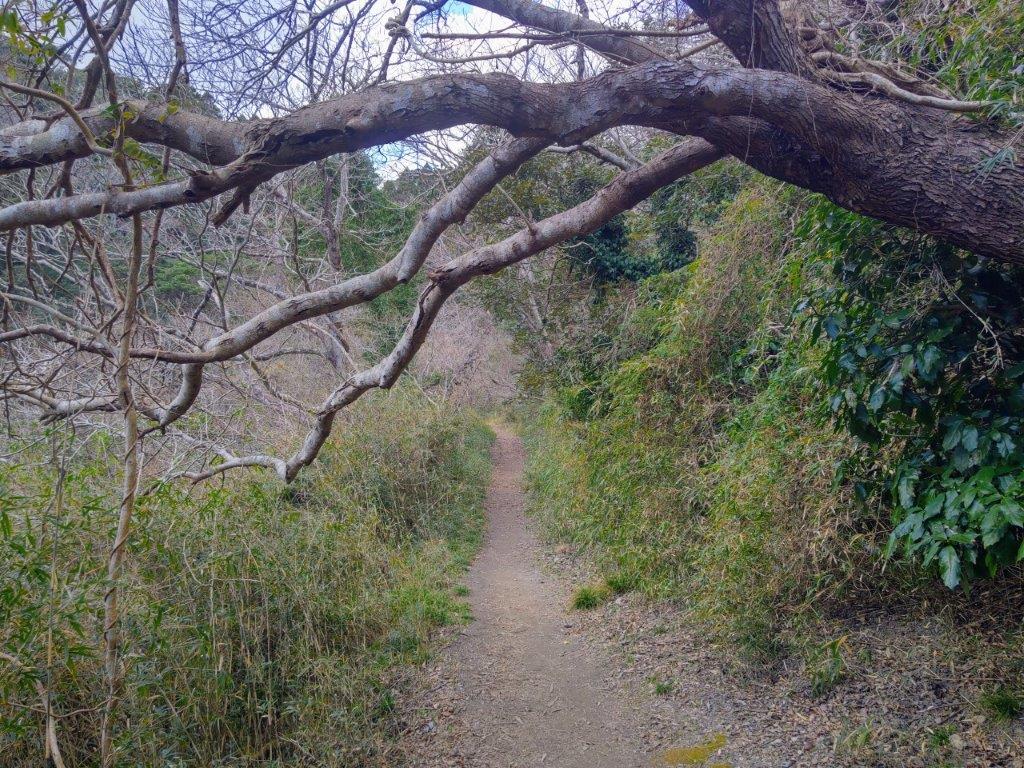
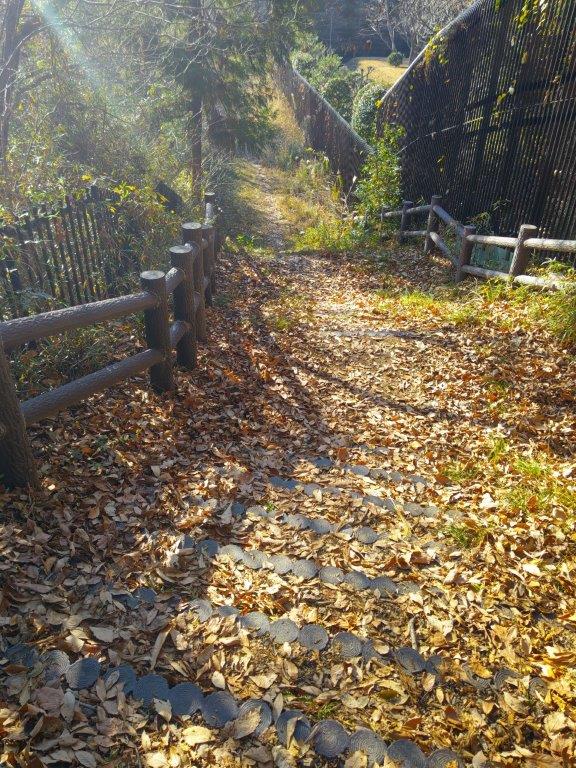
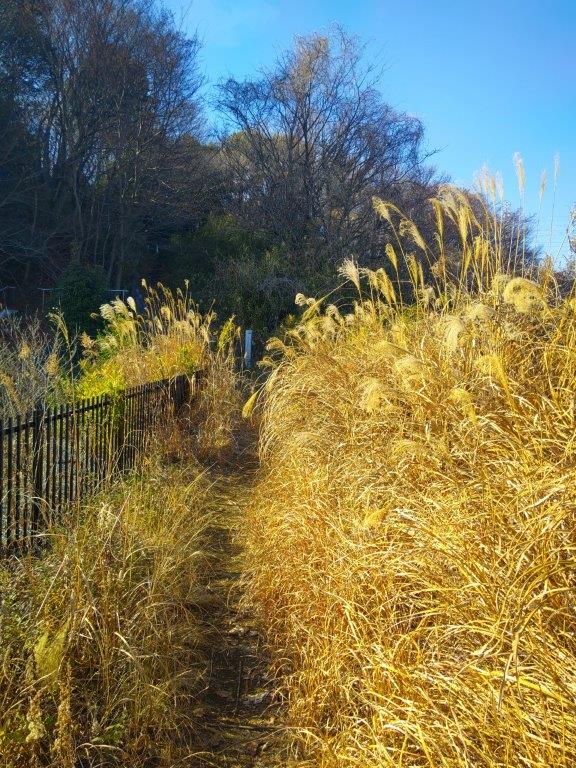
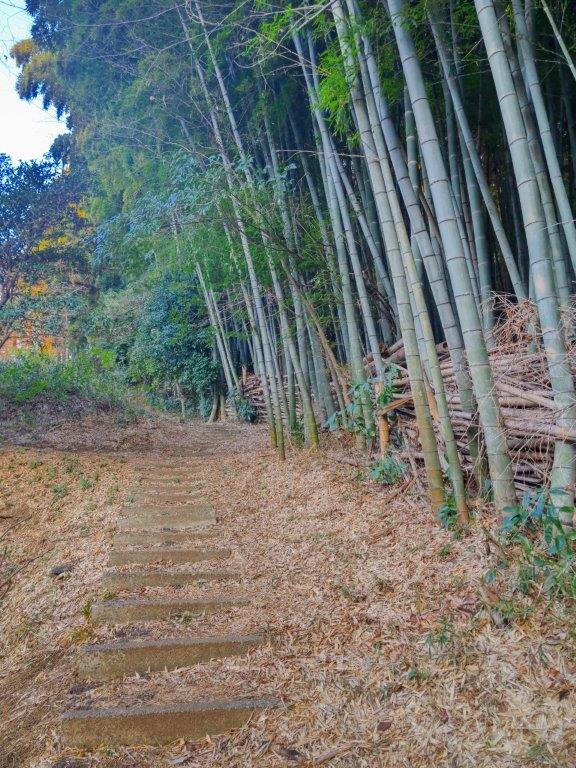
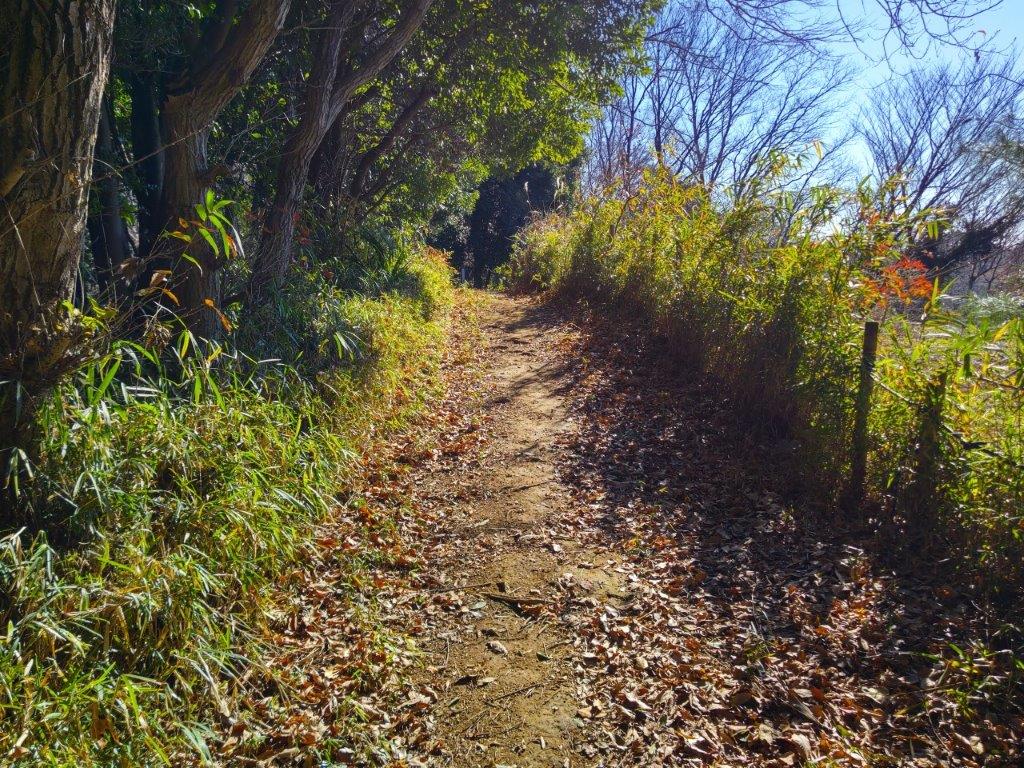
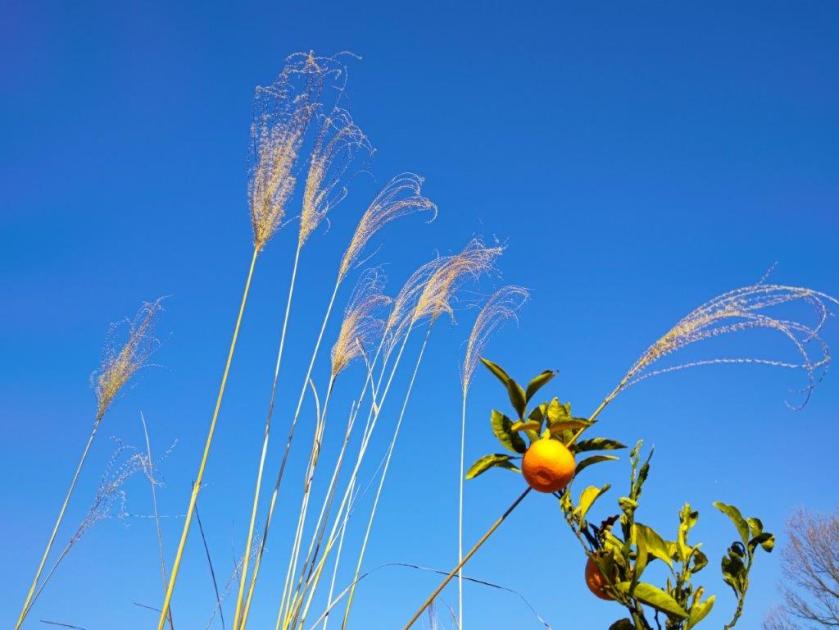
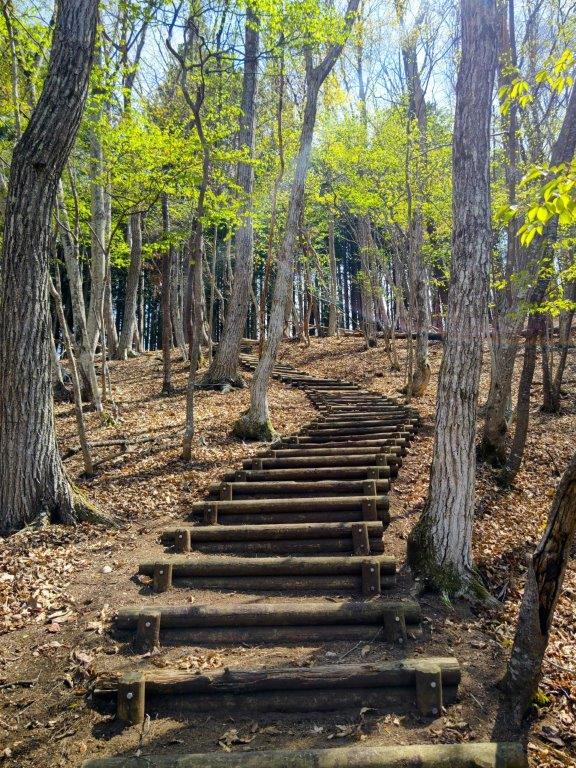
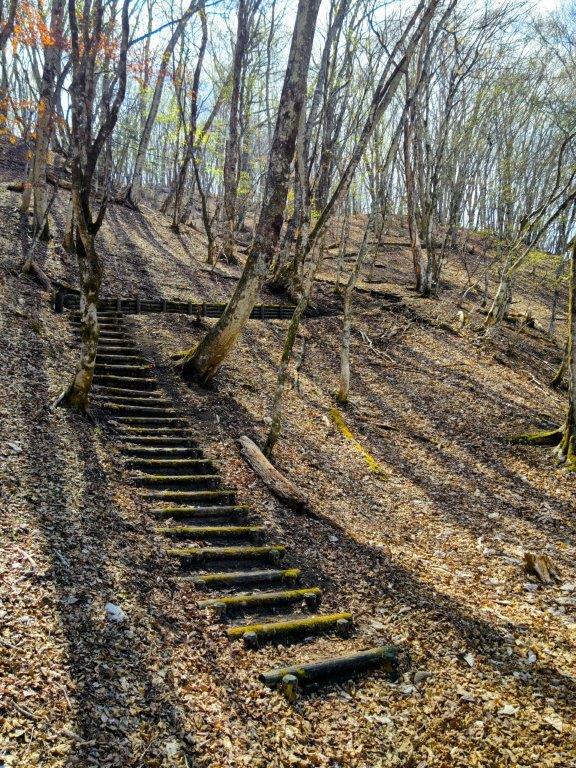
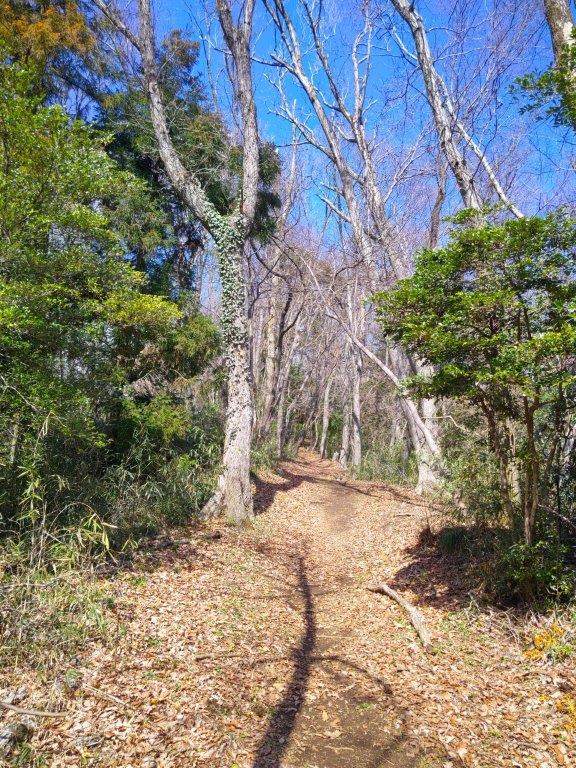
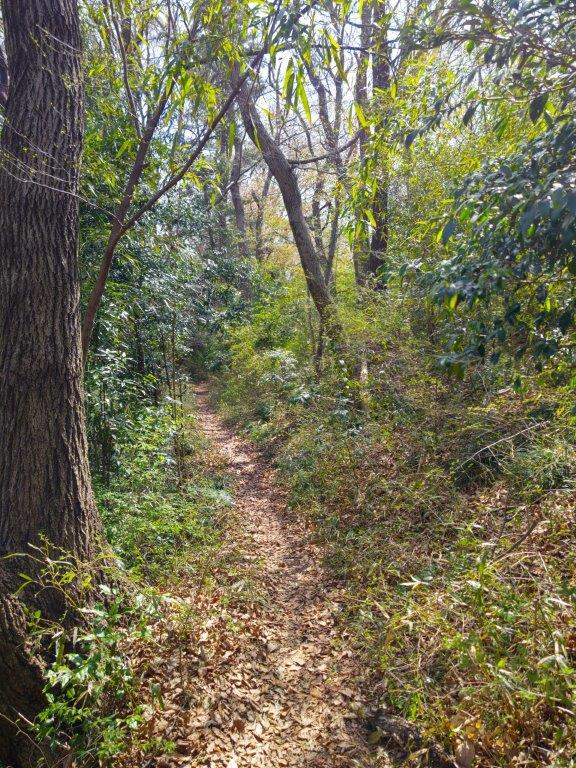
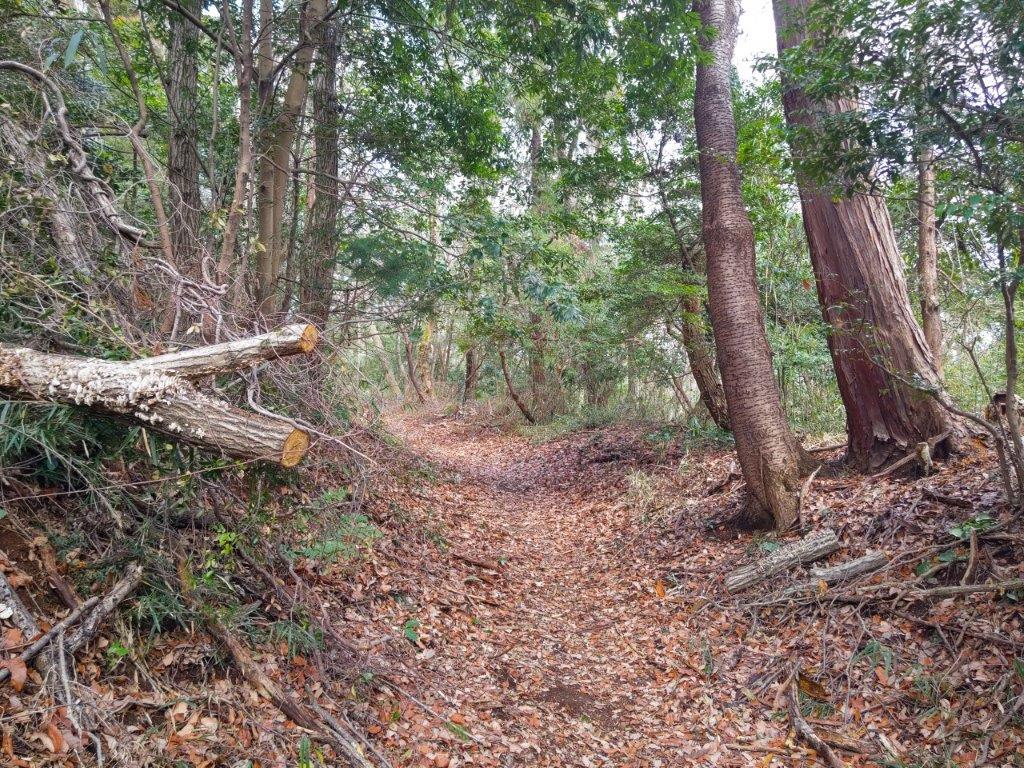
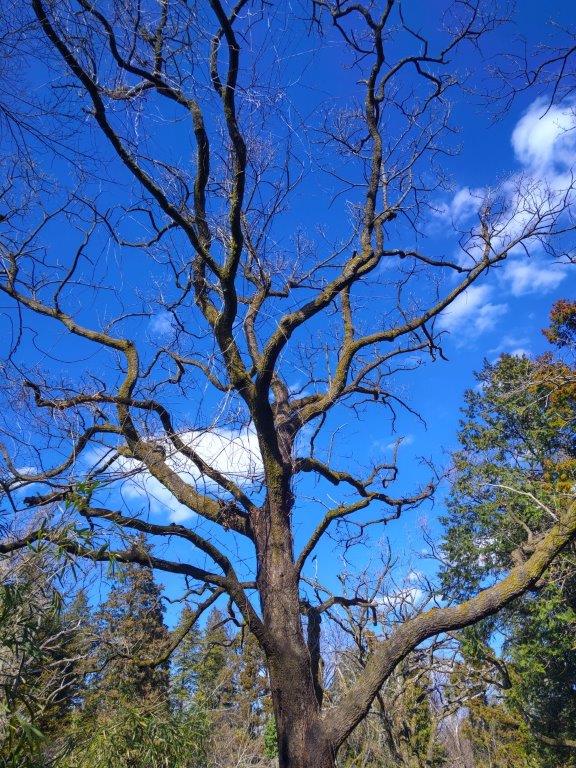
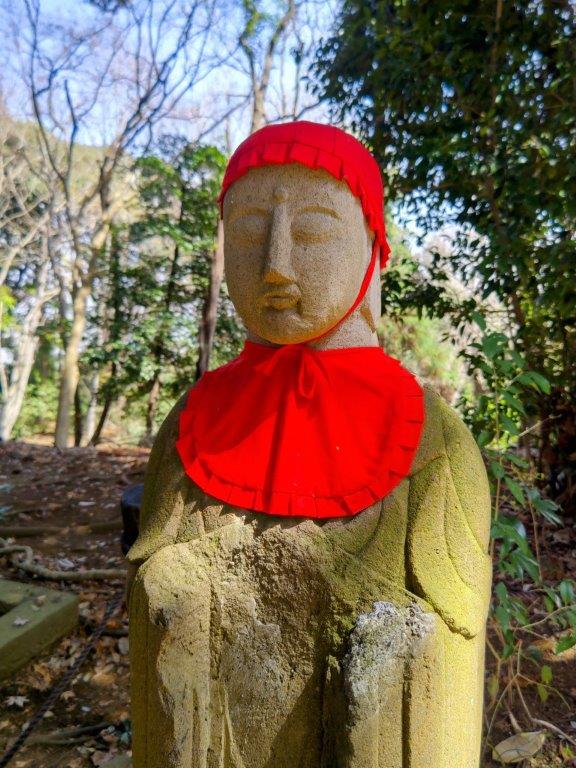
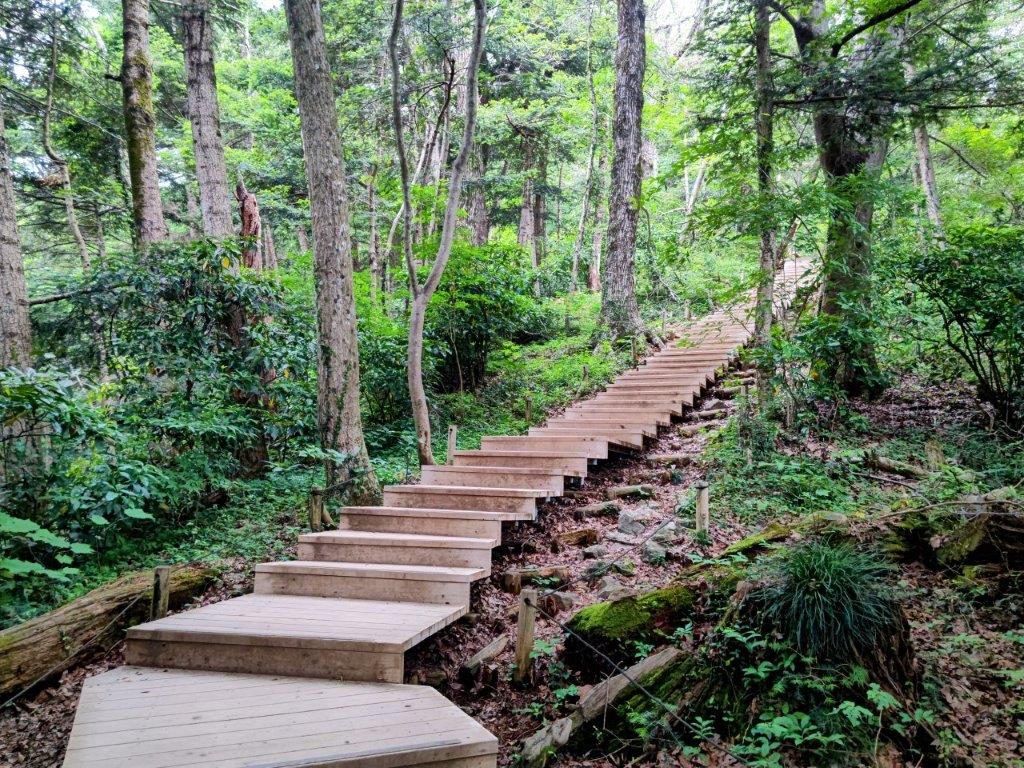
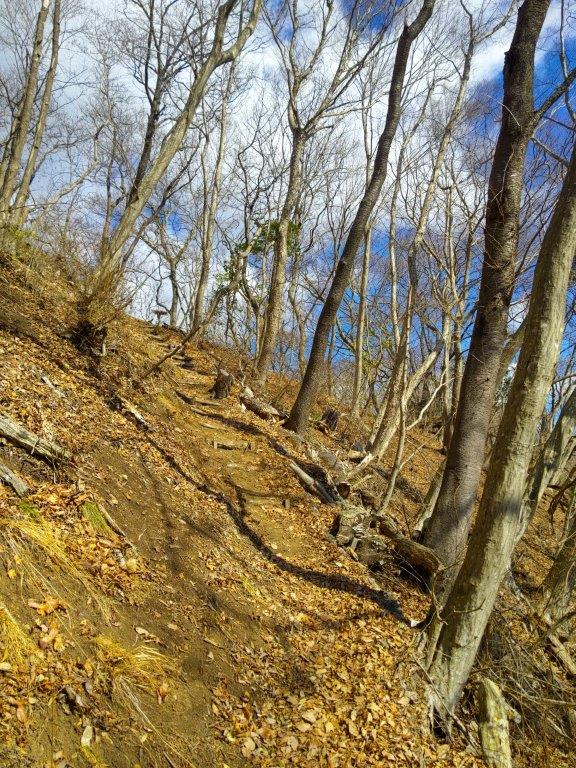
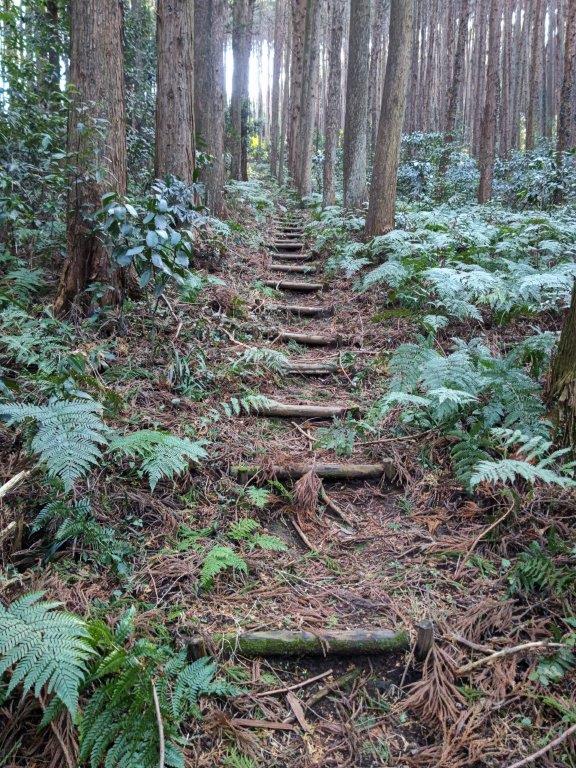
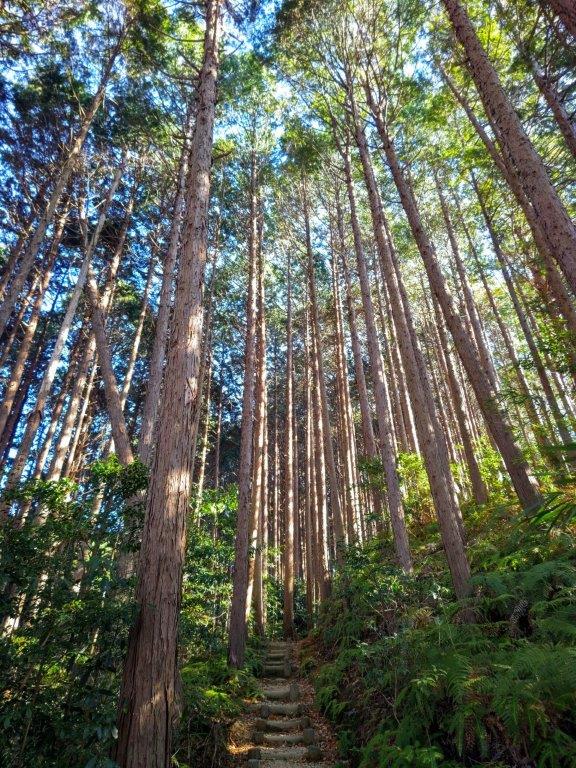
Steps (left) and Susuki (right) on the Shinrinyoku Route

Looking at my map, I picked a station to station hike easily accessible from the city center. I’d ride the Keio Sagamihara line to Inagi station, just 30 minutes from Shinjuku, and first explore the forested, hilly area above Myoken Temple. I’d then head southwest along the Misawa River valley to Kurokawa station. Next, I’d follow the “Forest Bathing” route southeast to Kurihira station. Finally, I’d continue in the same direction along an unnamed ridge path and finish at Satsukidai station on the Odakyu Tama line, also 30 minutes from Shinjuku.

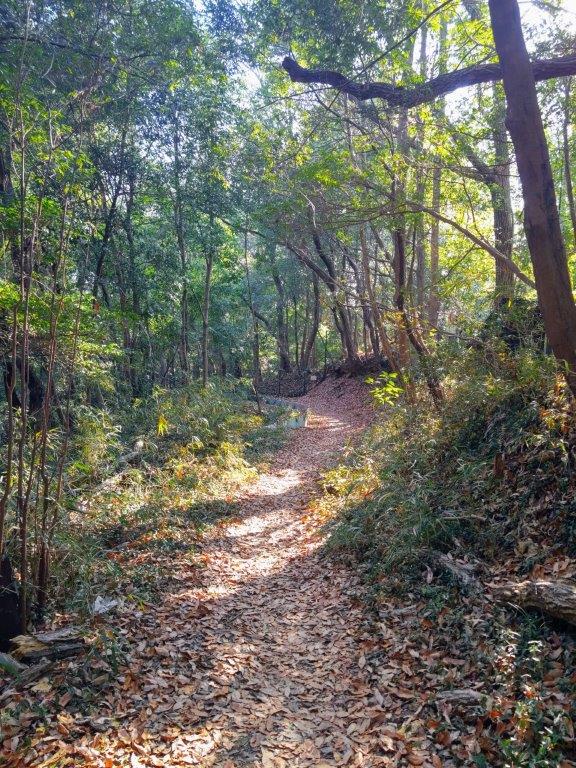
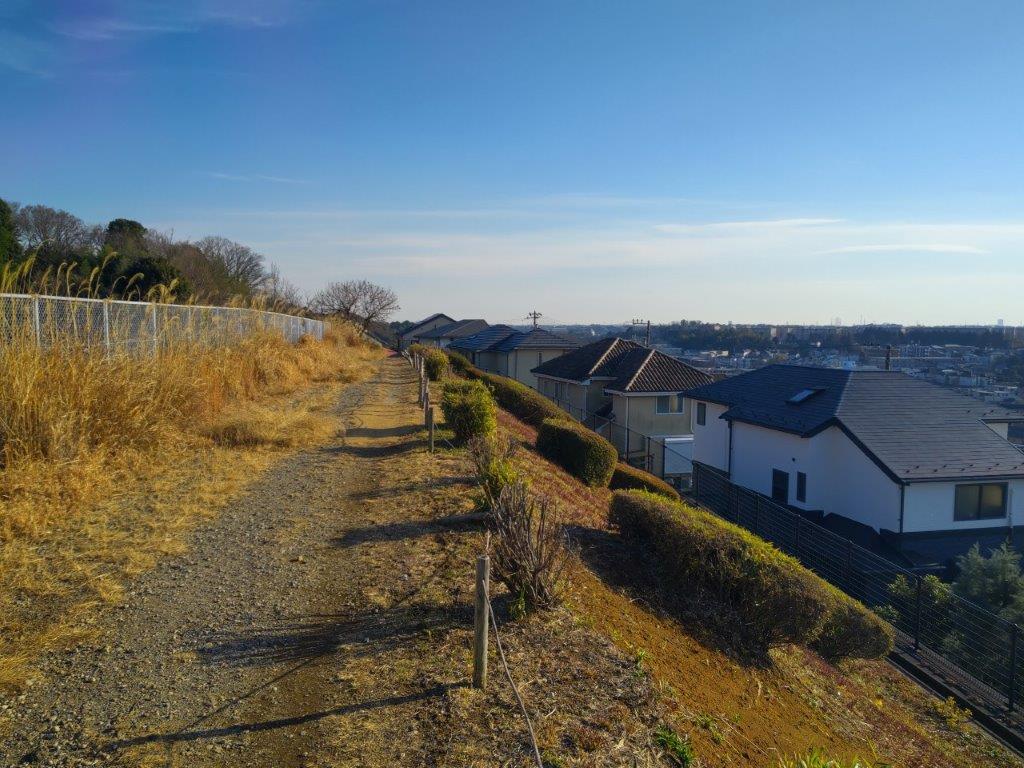
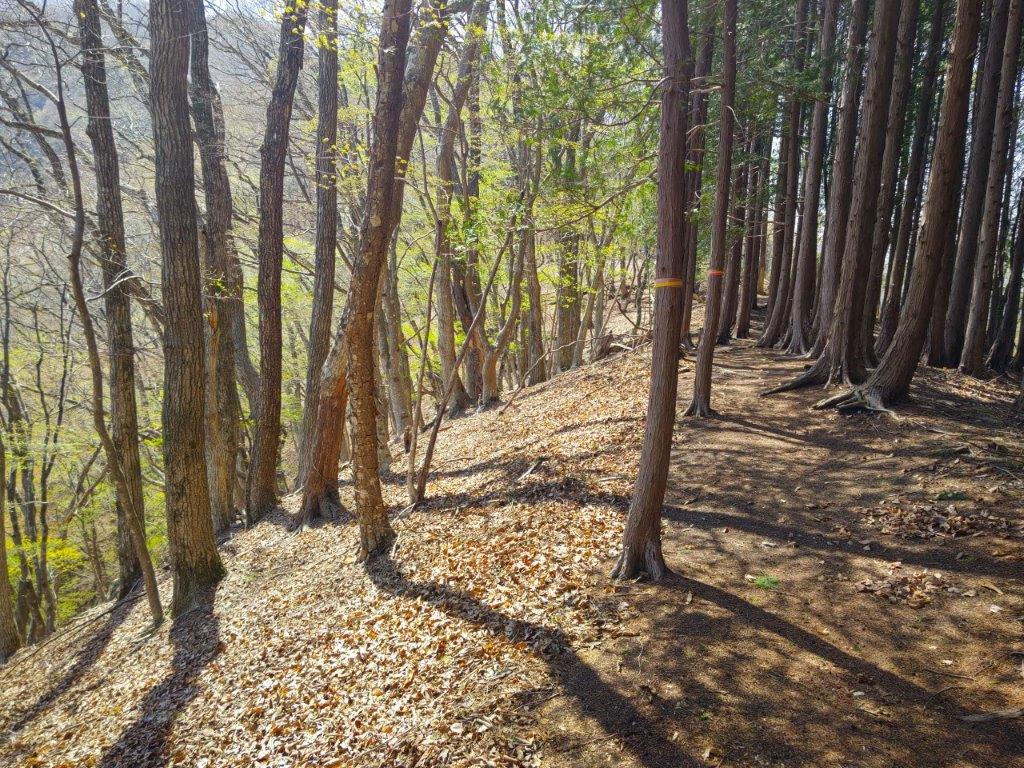
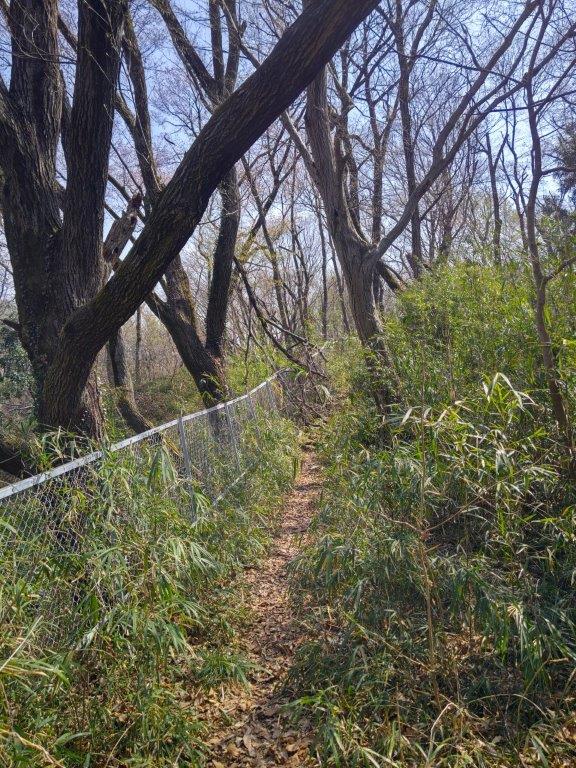
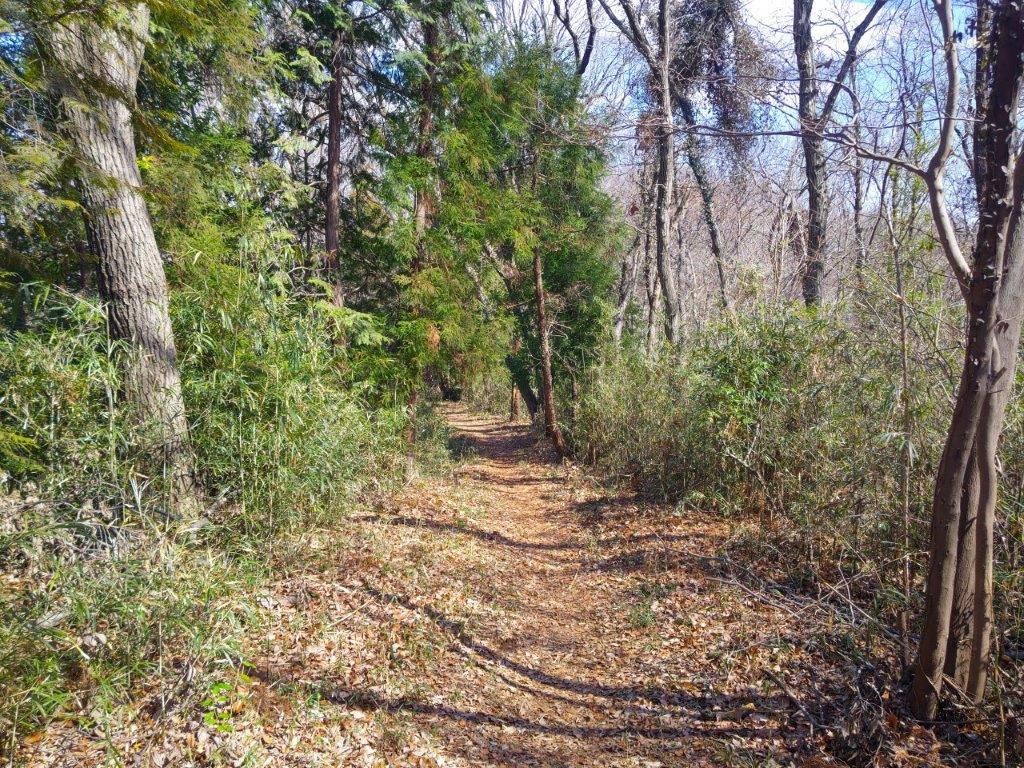
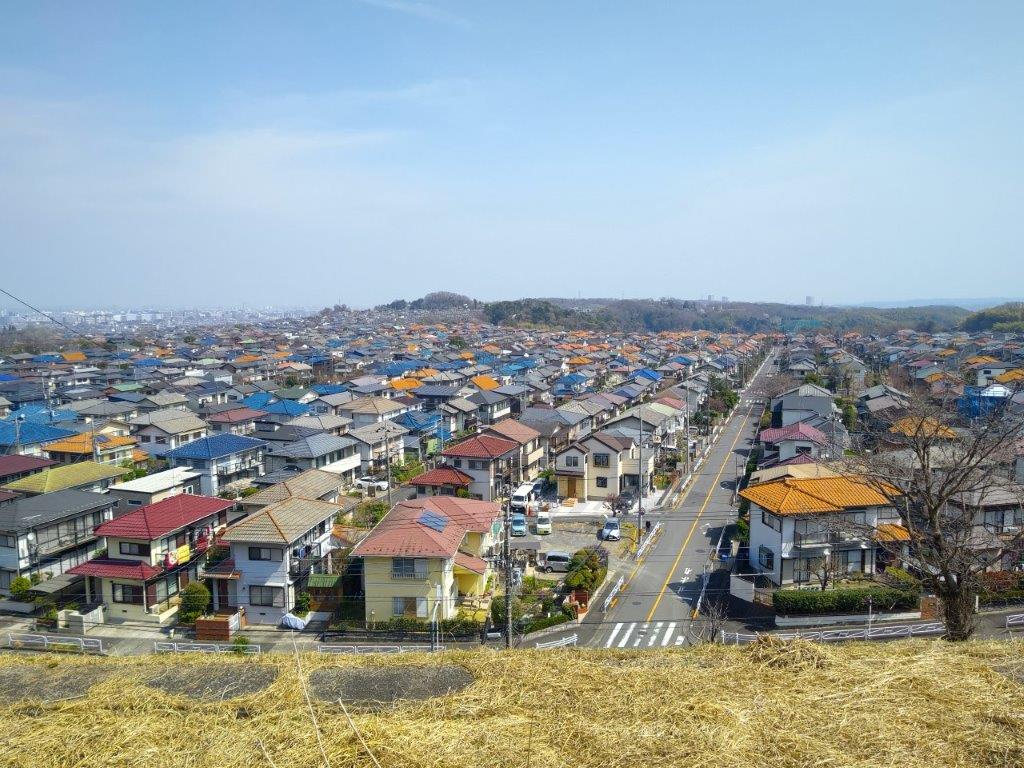
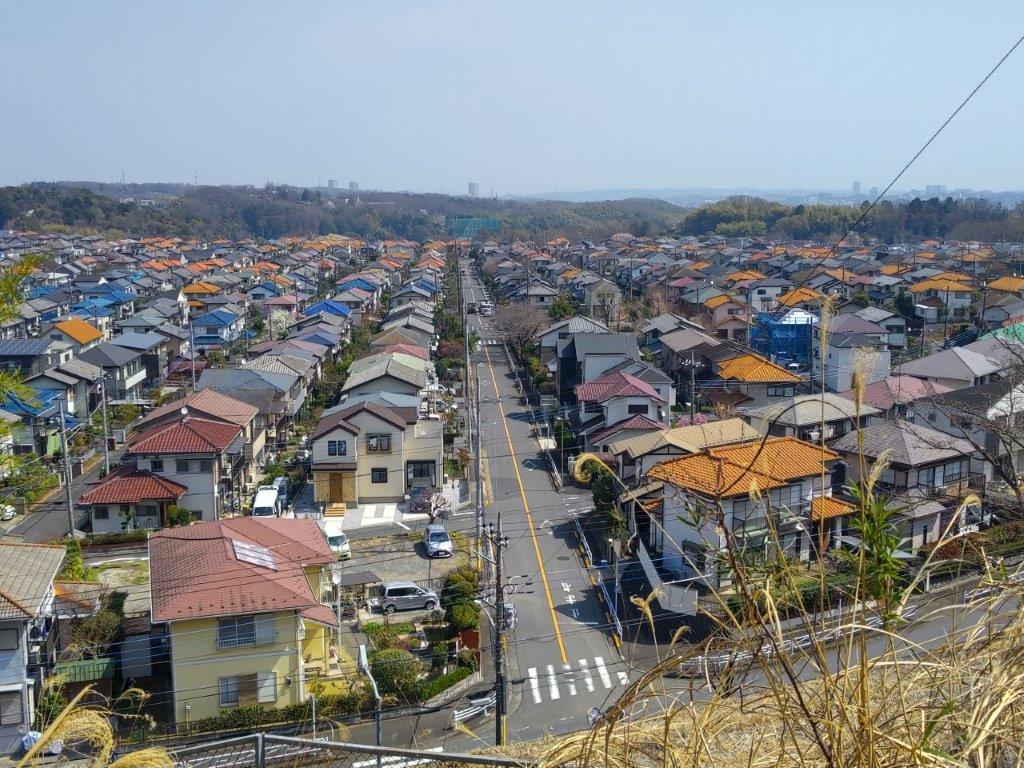
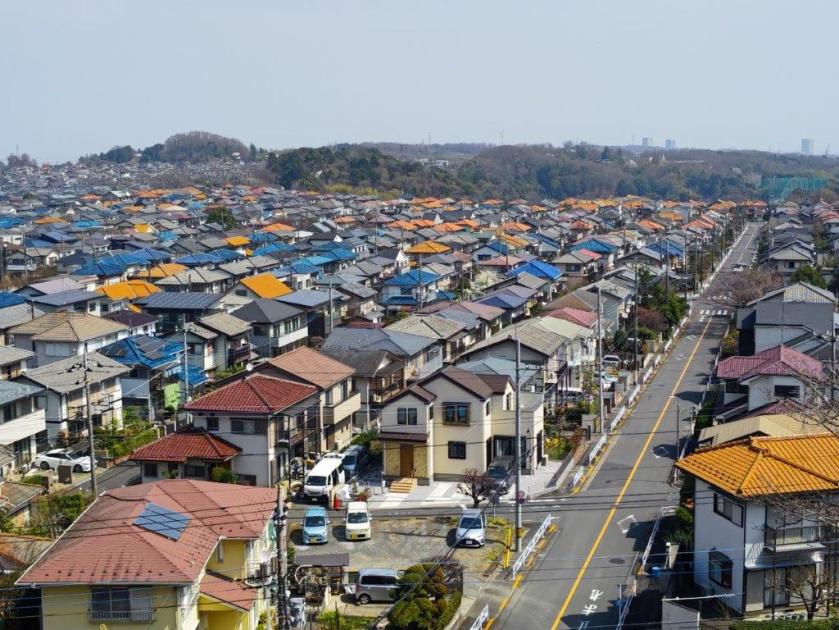
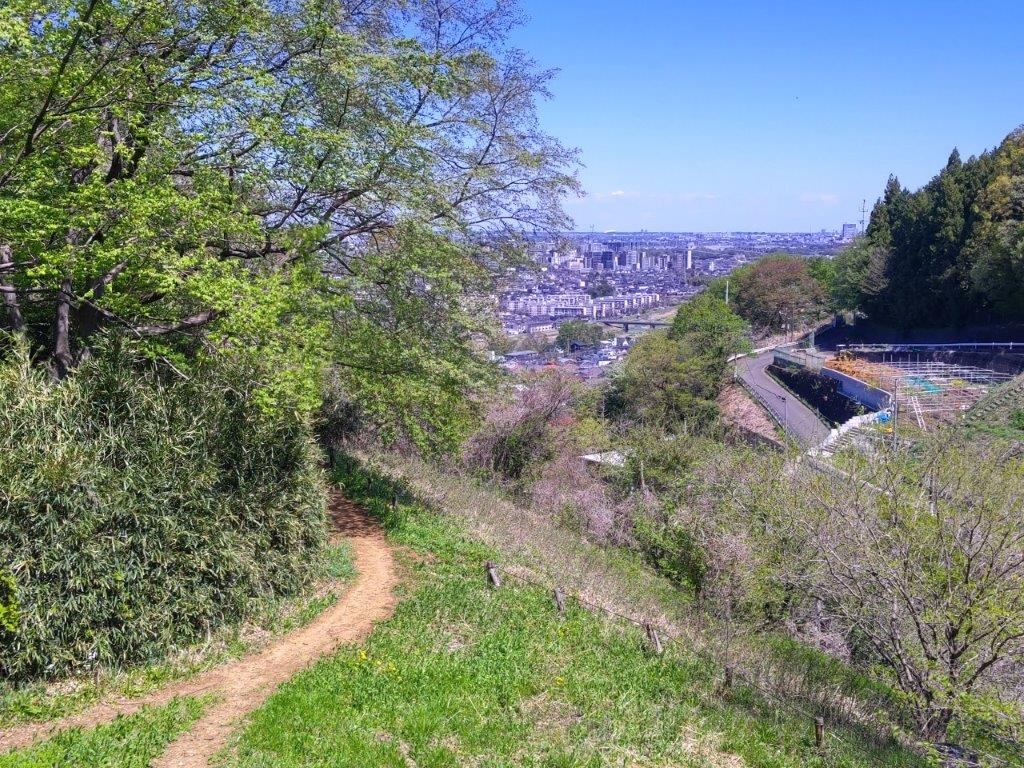
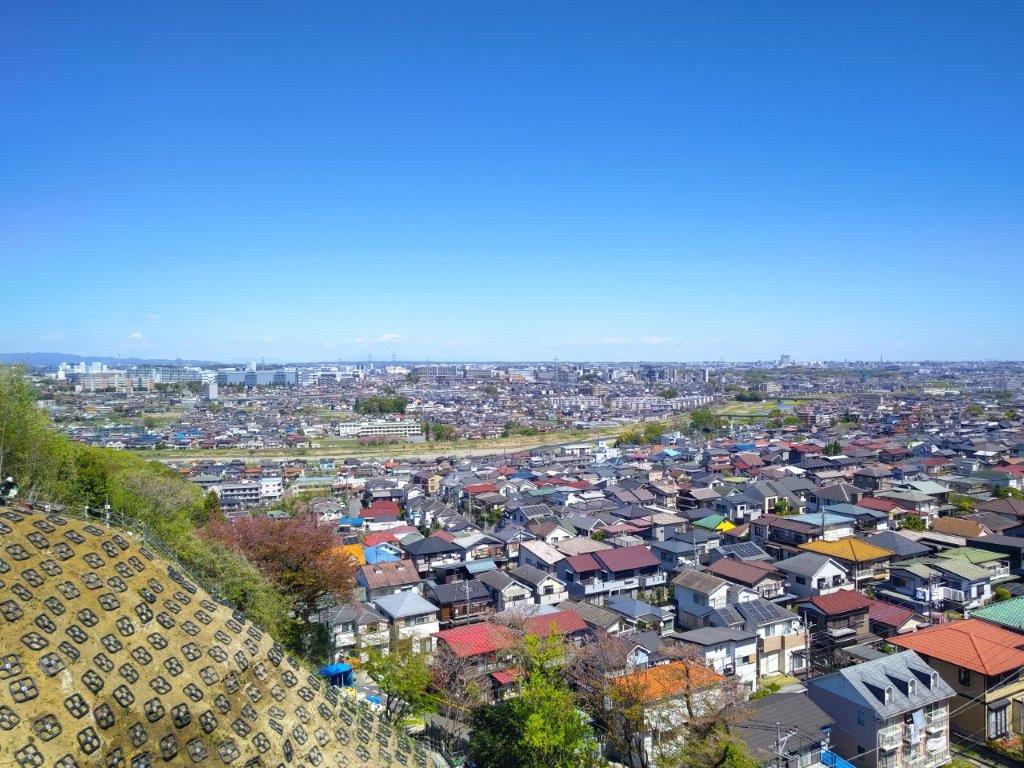
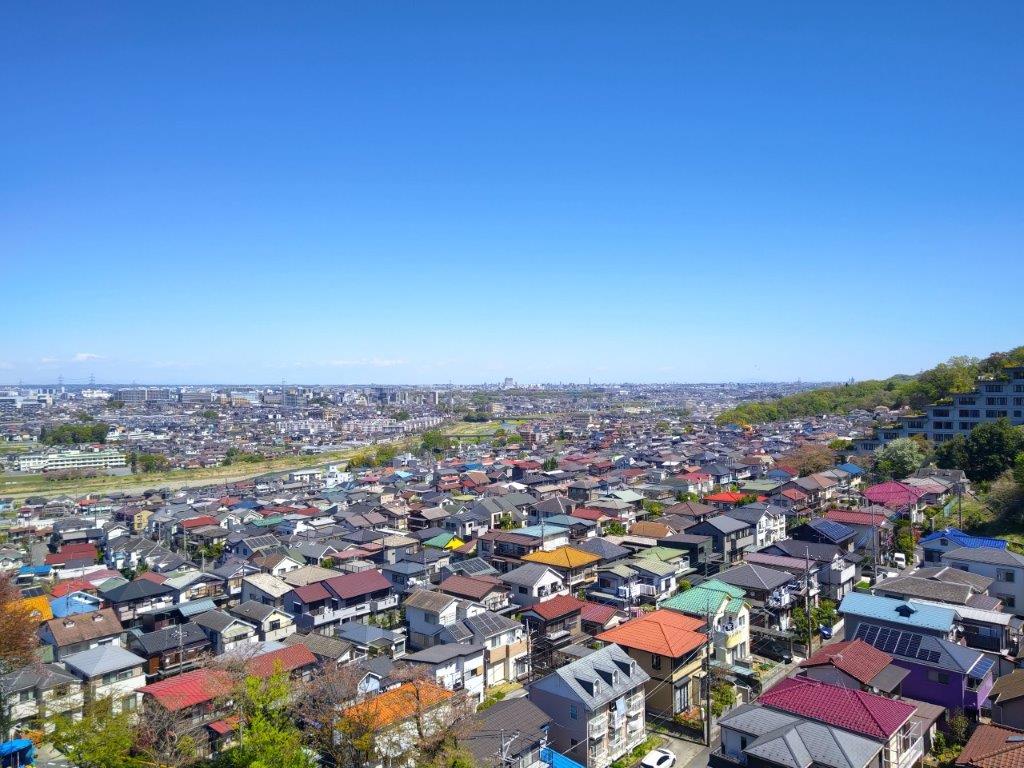
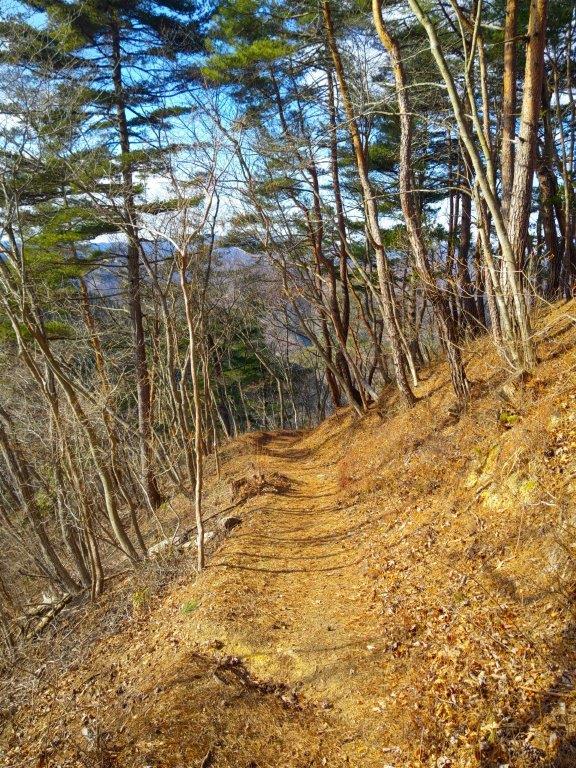
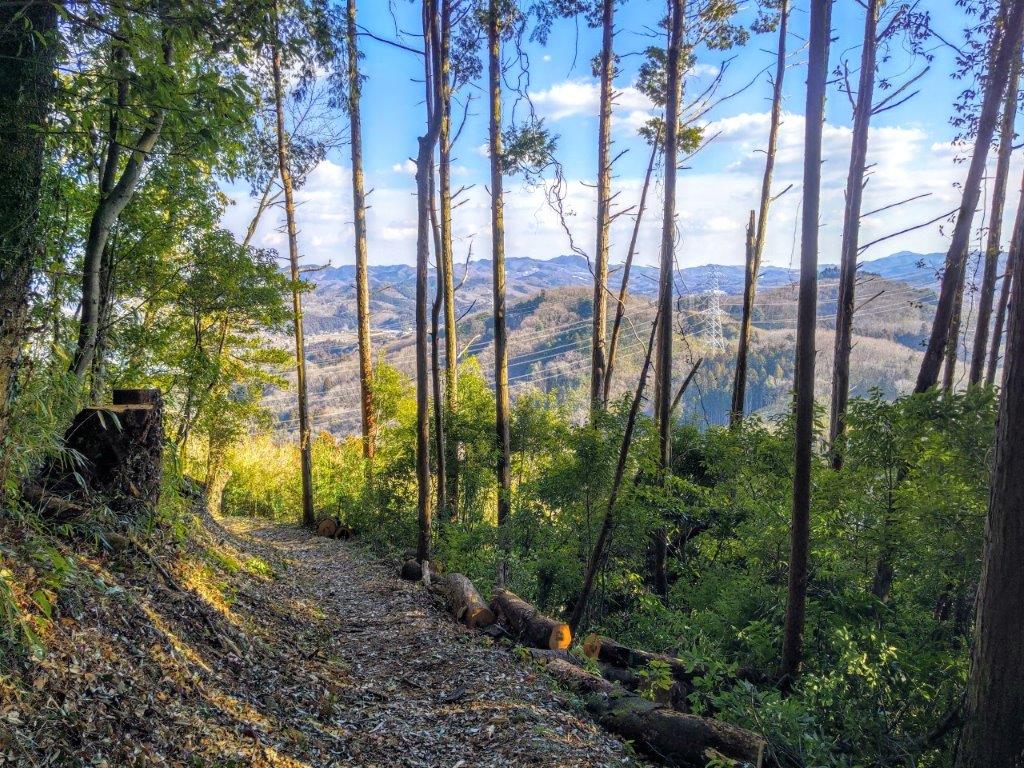
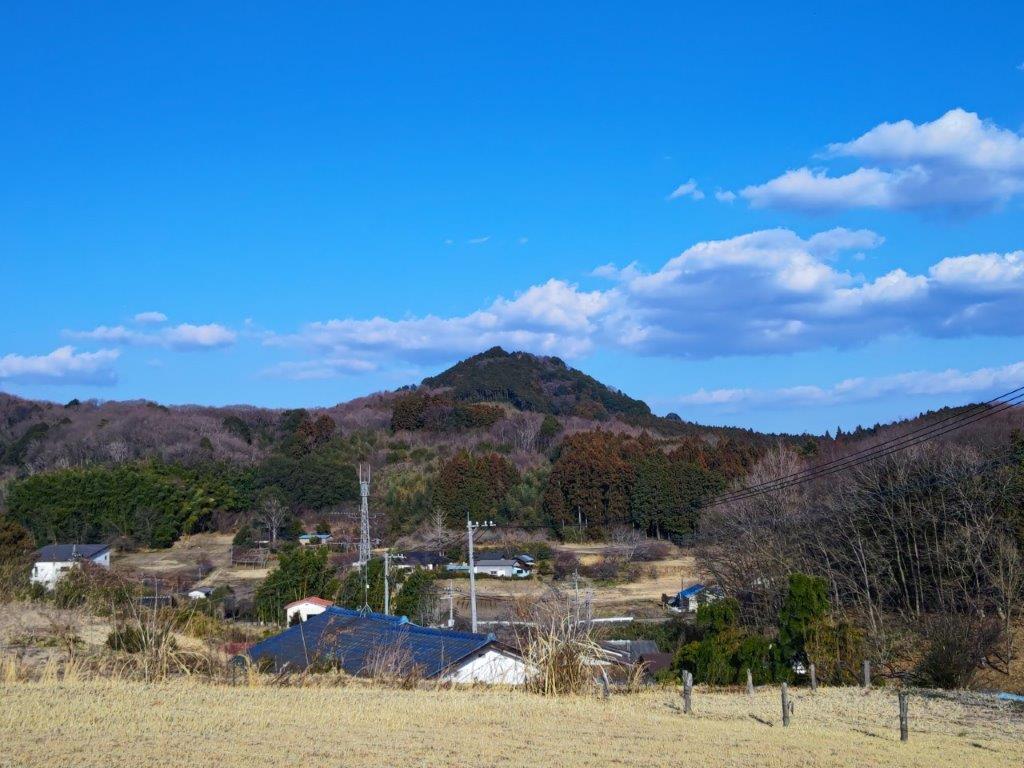
Walking above Shinkoji Park (left) and Town (right)

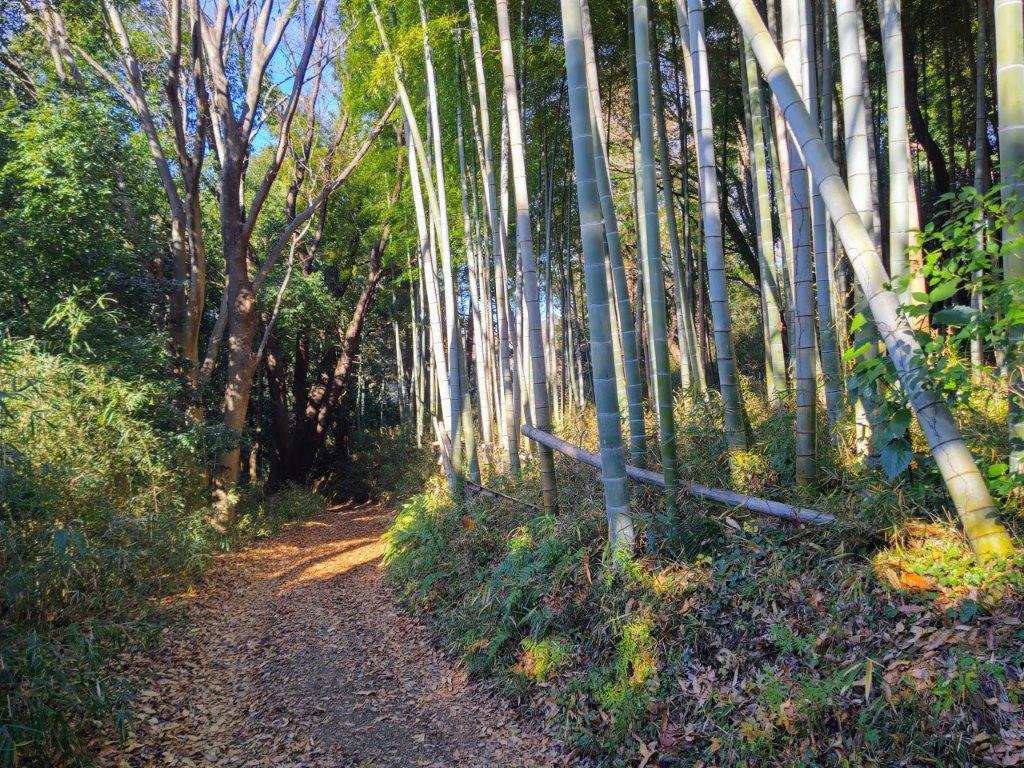
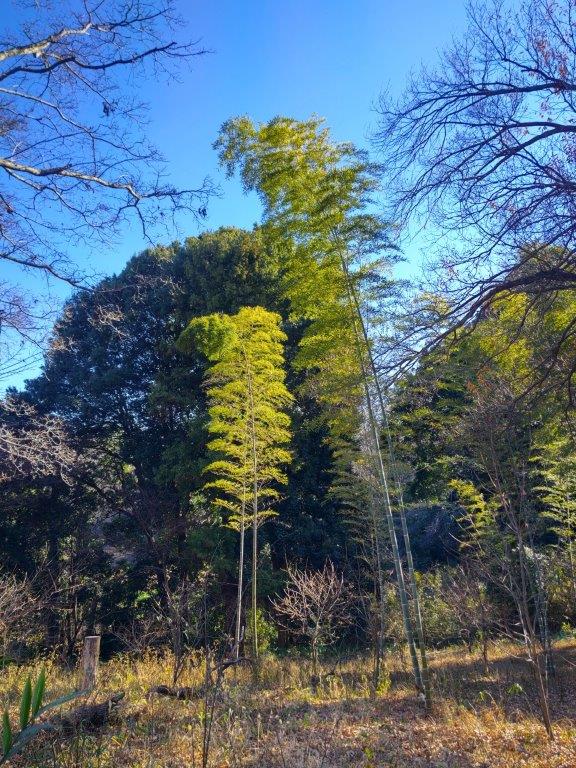
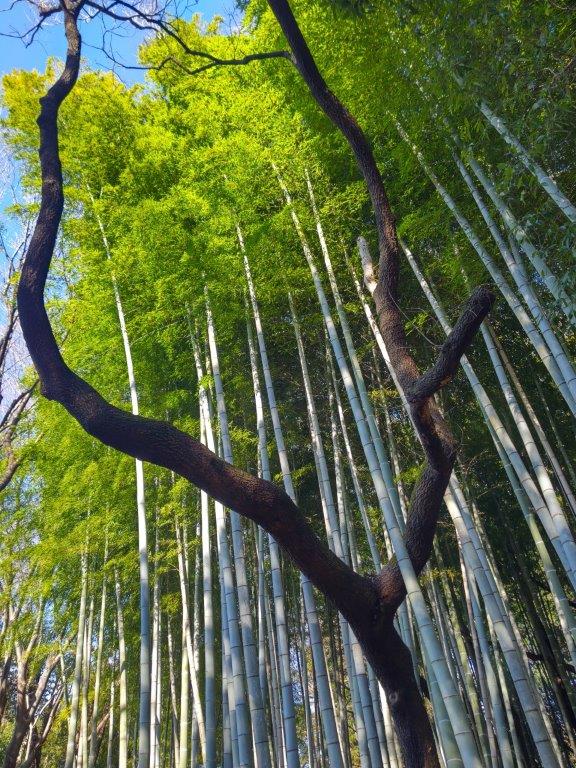
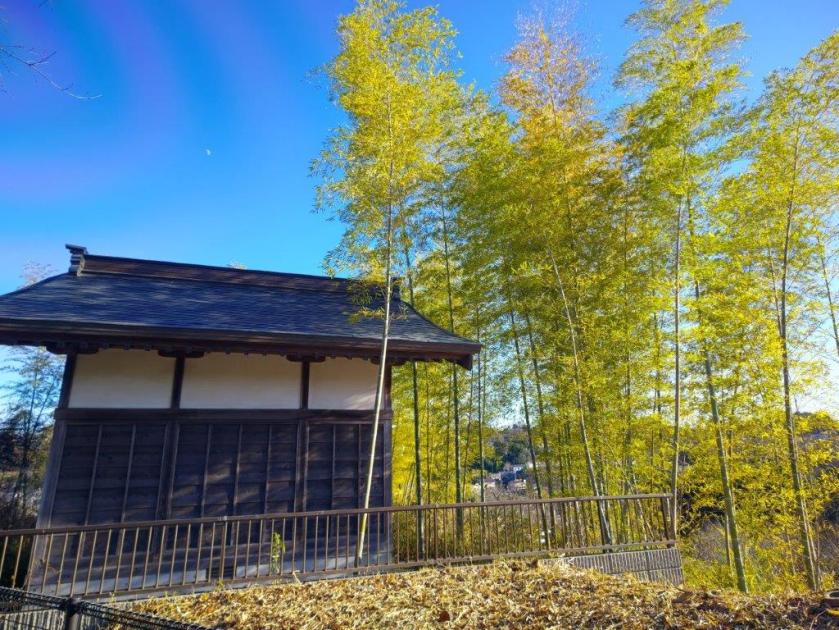
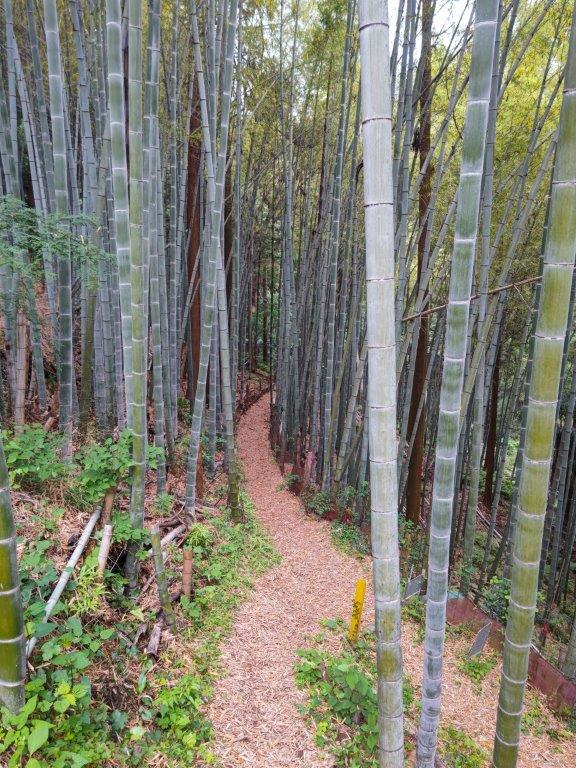
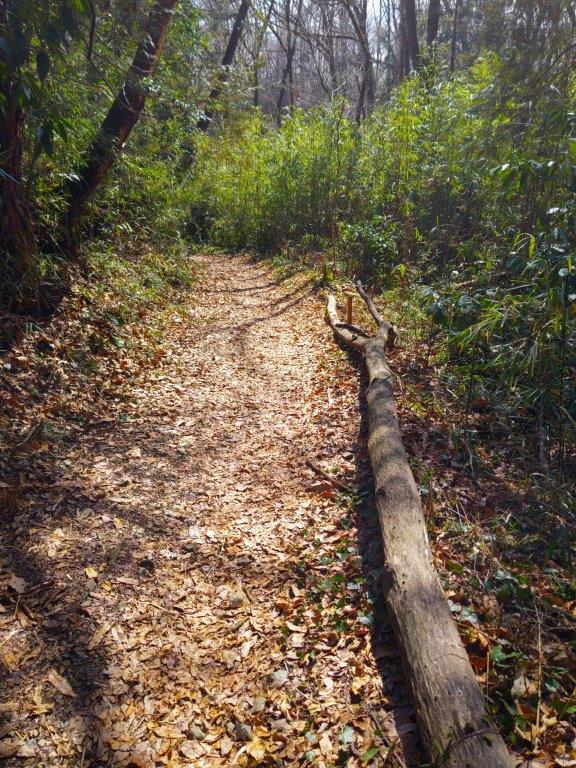
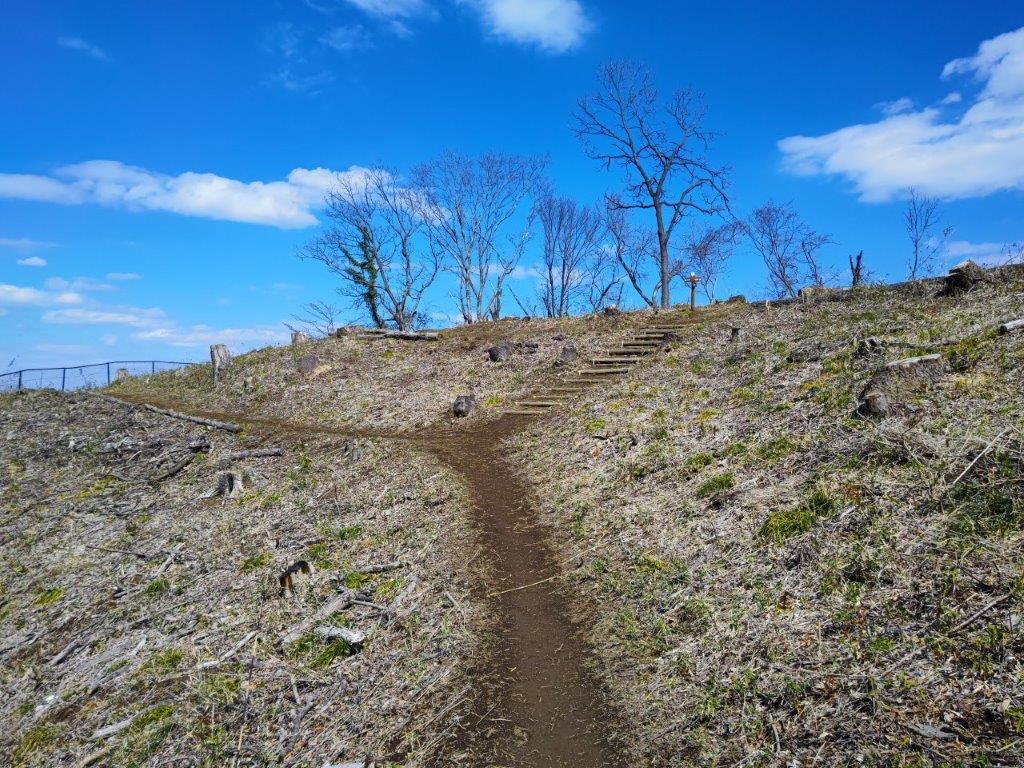
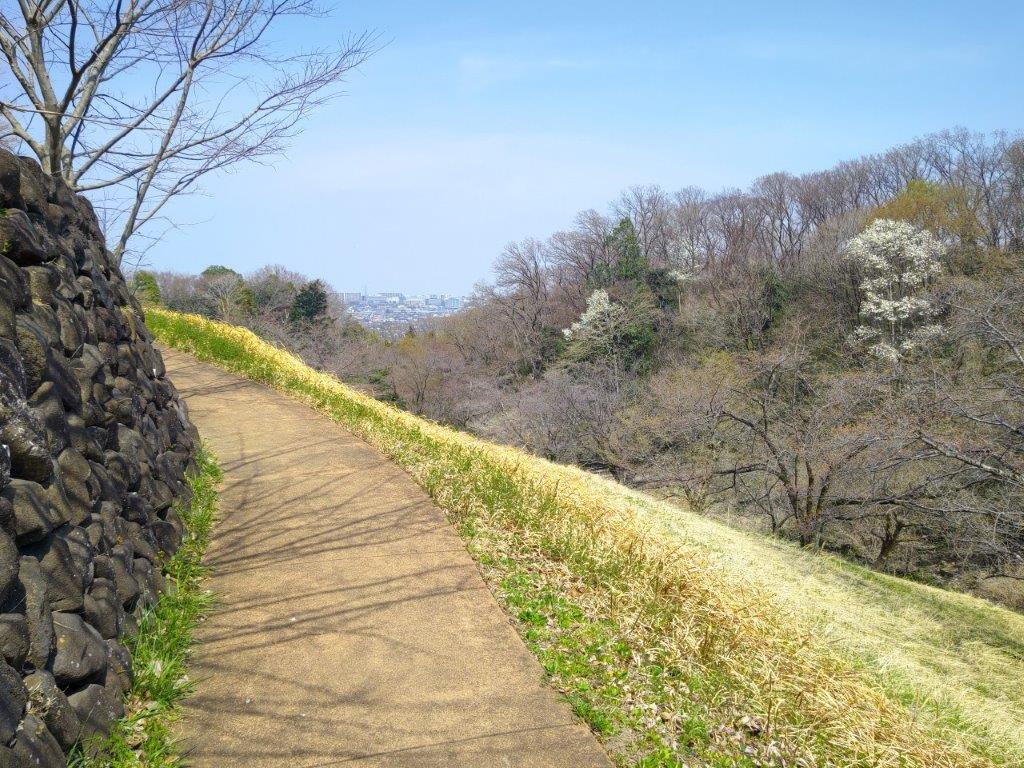
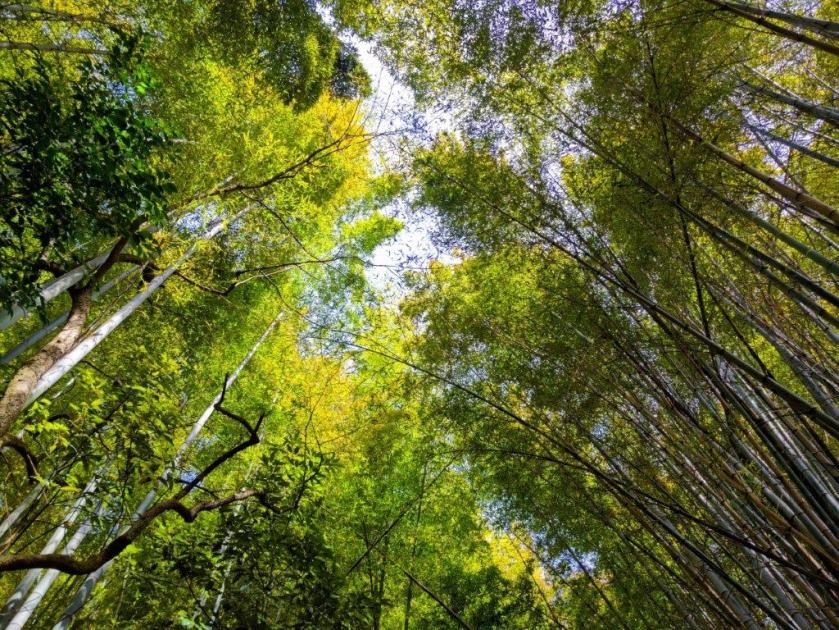
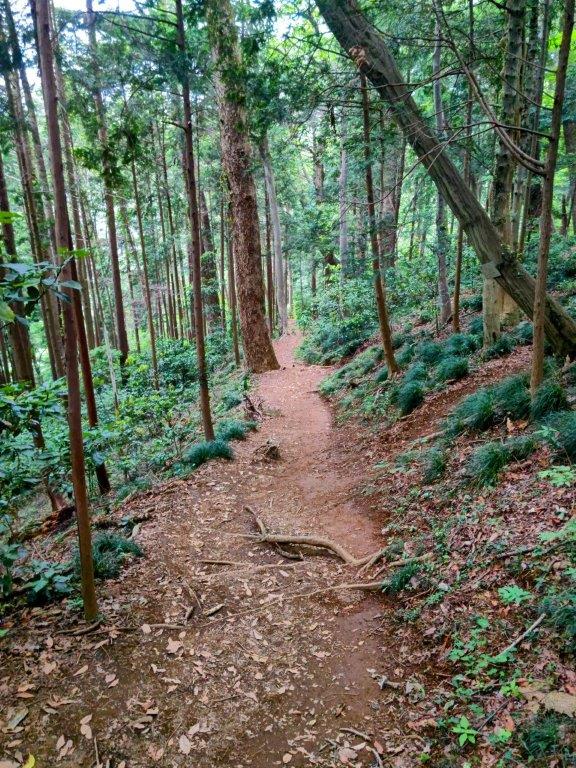
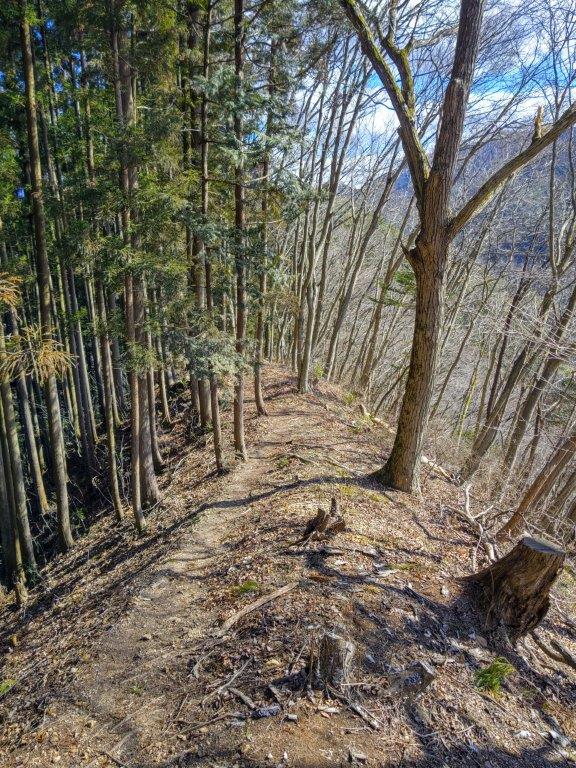
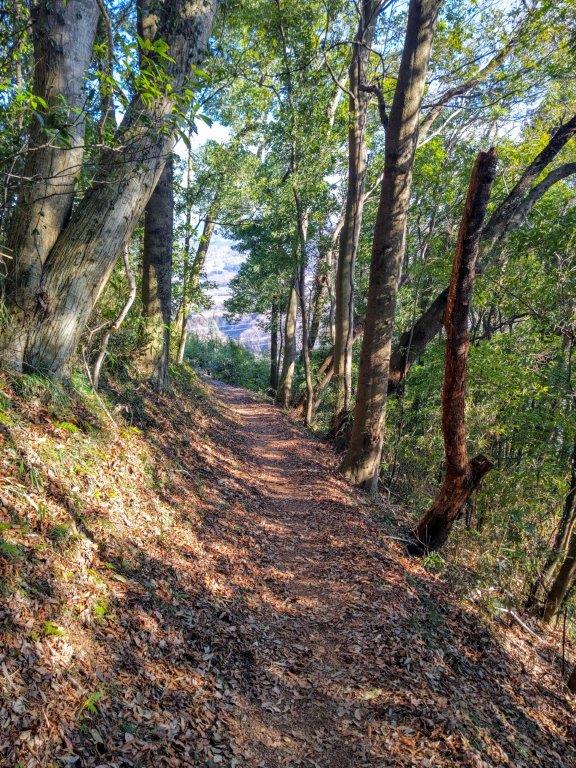
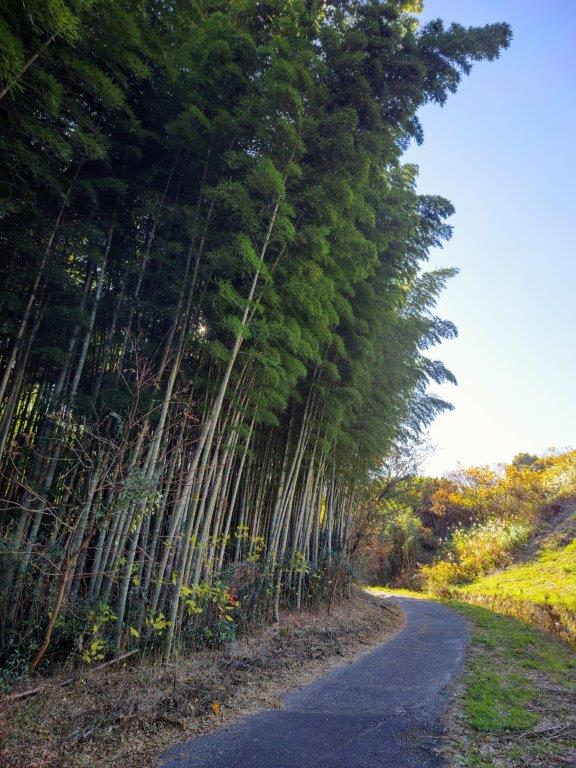
Path past Kurihira (left) Bamboo Grove before Satsukidai (right)

The weather was supposed to be sunny all day with temperatures cold for the season. Although my planned route didn’t include any summits, I hoped to get views of Tokyo, the Kanto Mountains, as well as snow-capped Mt Fuji. I was looking forward to enjoying various “Satoyama” sceneries along the way.

In the end, I decided to break the hike into two parts: I finished at Kurokawa around 3pm on the 28th, and started again from Wakabadai, one station down the line, around 1pm, on the 30th, each section about 3 hours. The weather on the 30th remained sunny but with temperatures warm for the season.

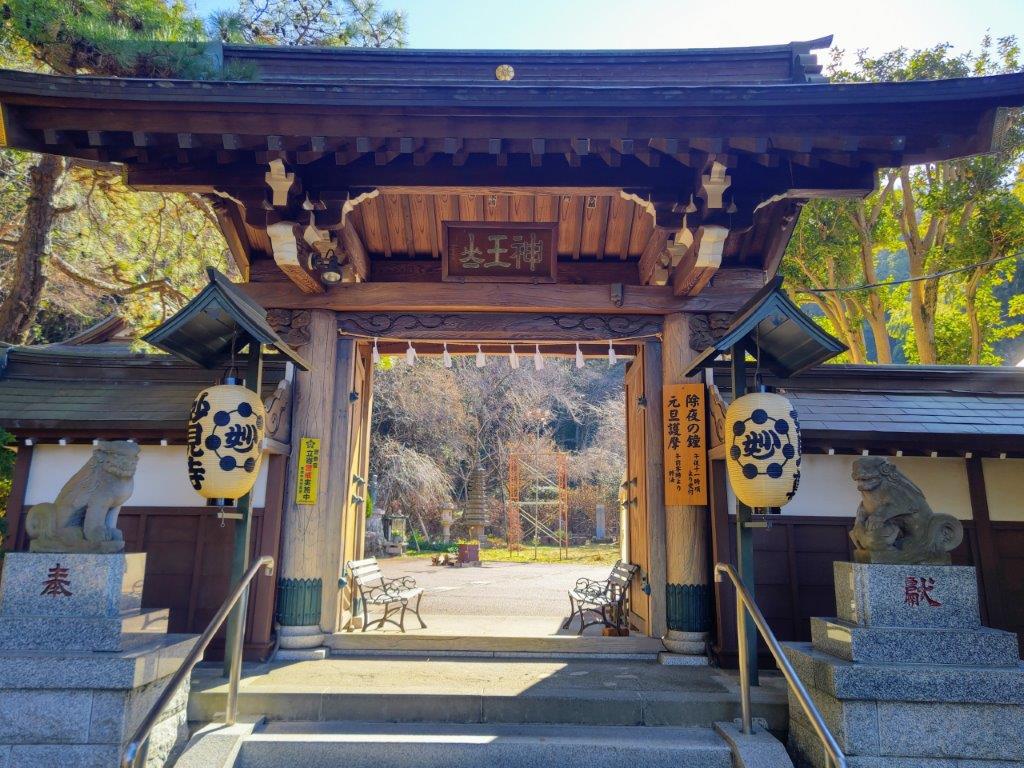
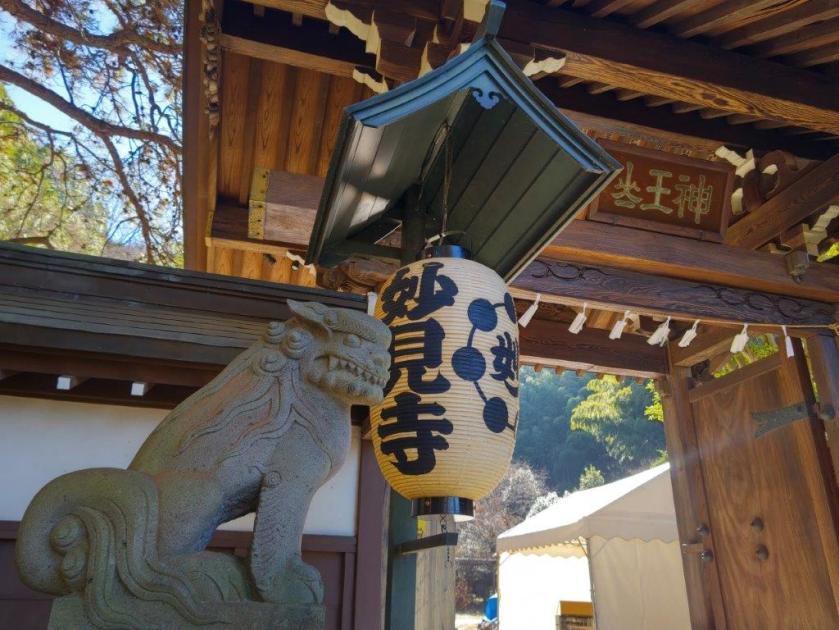
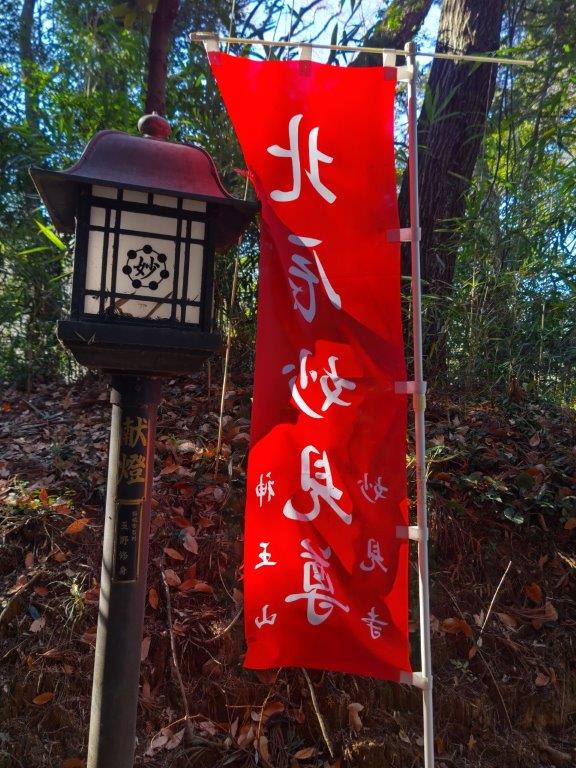
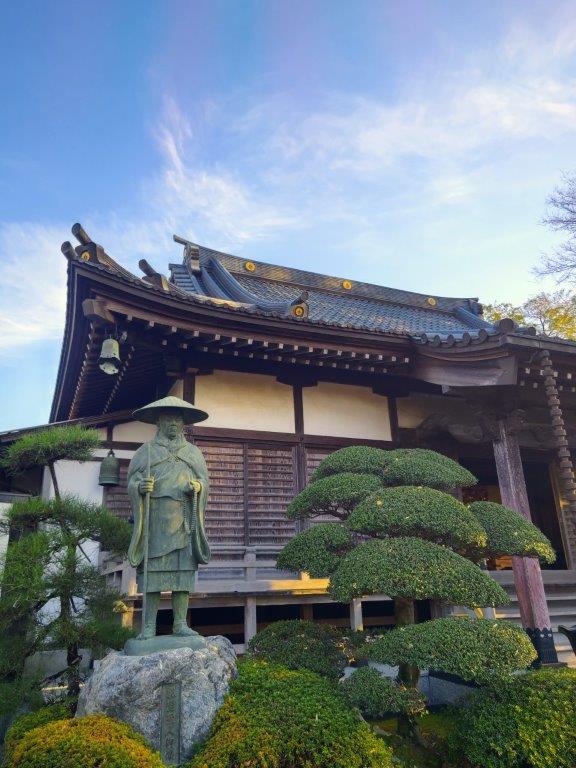
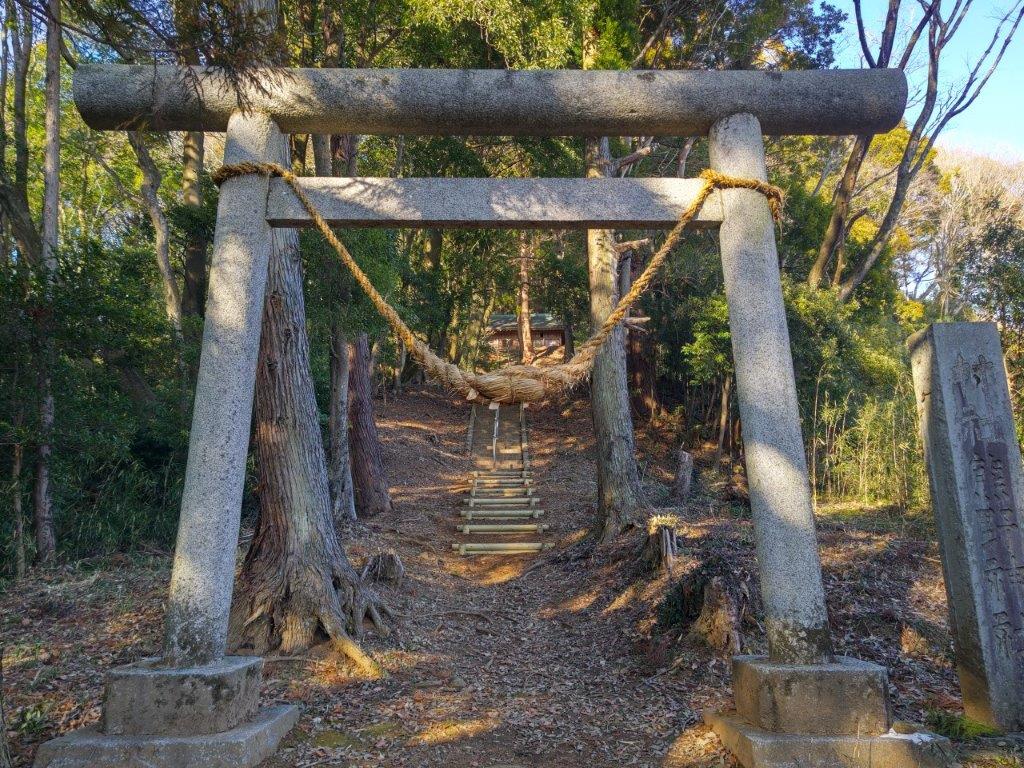
Entrance to Myoken-ji Temple

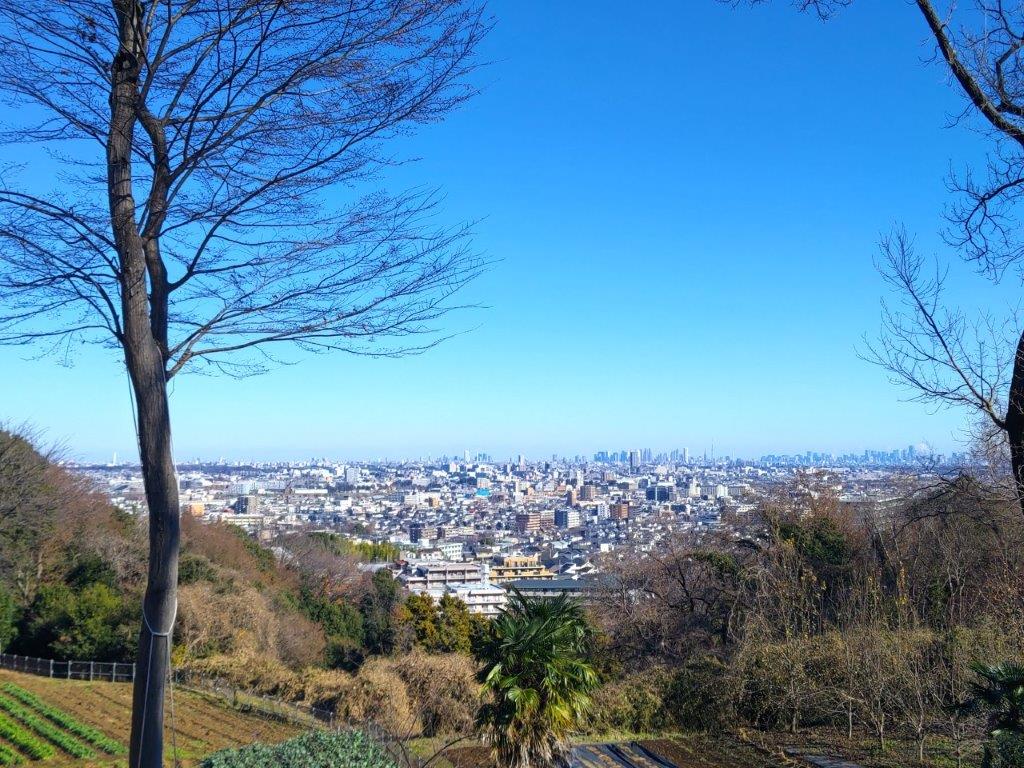
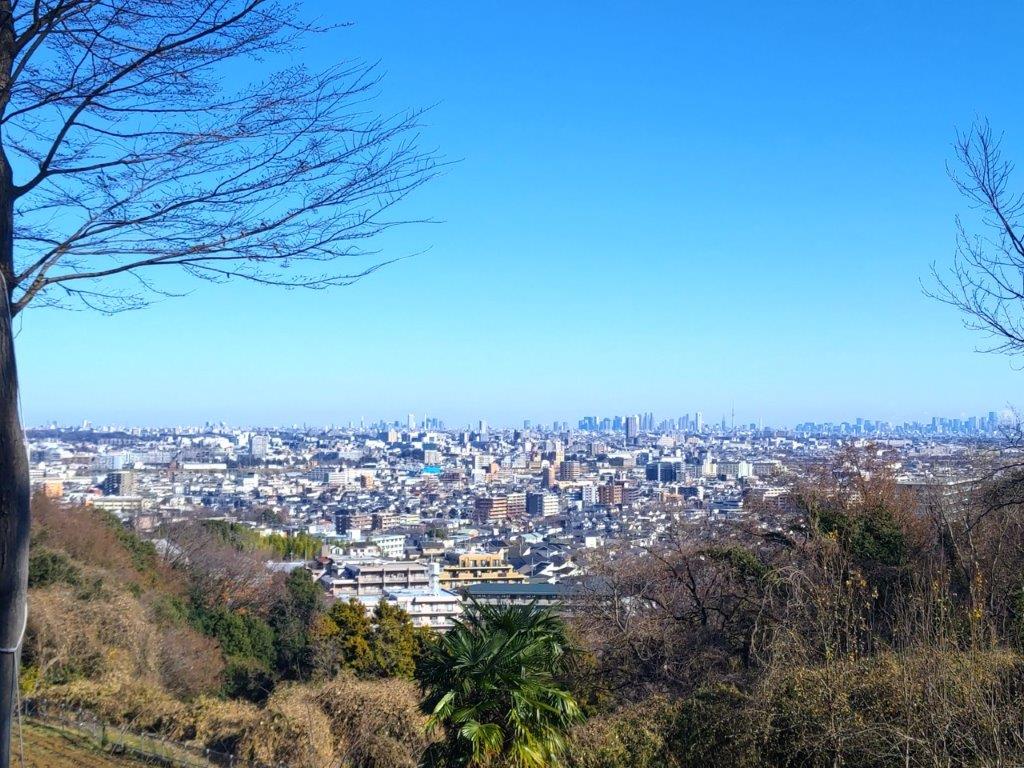
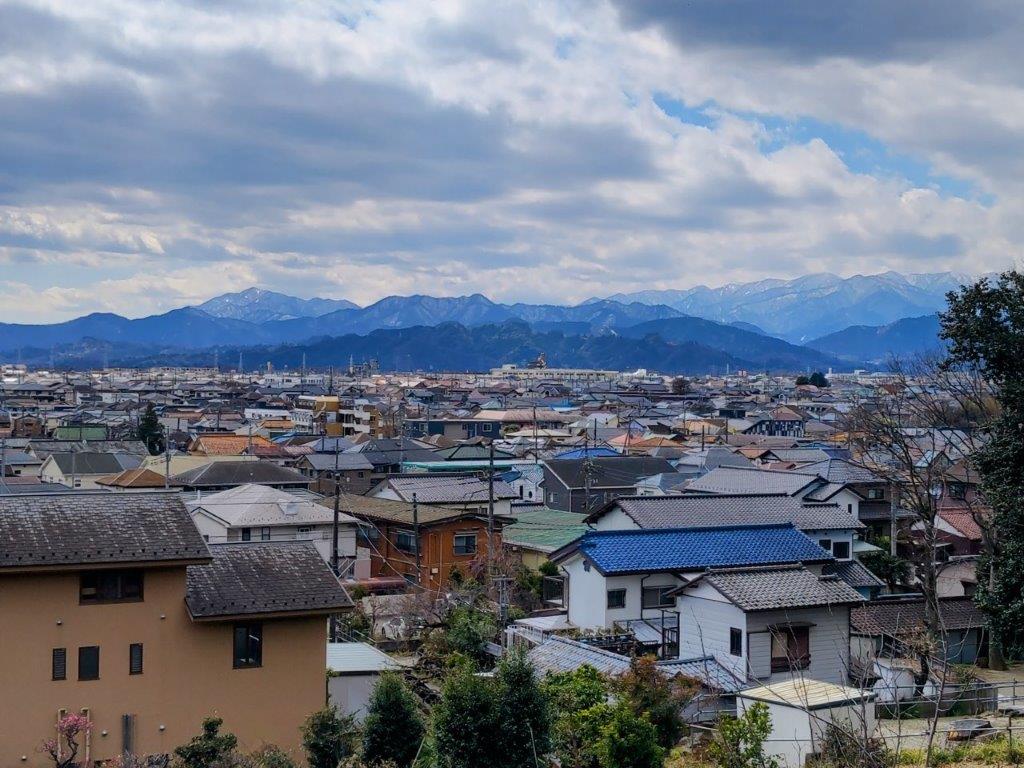
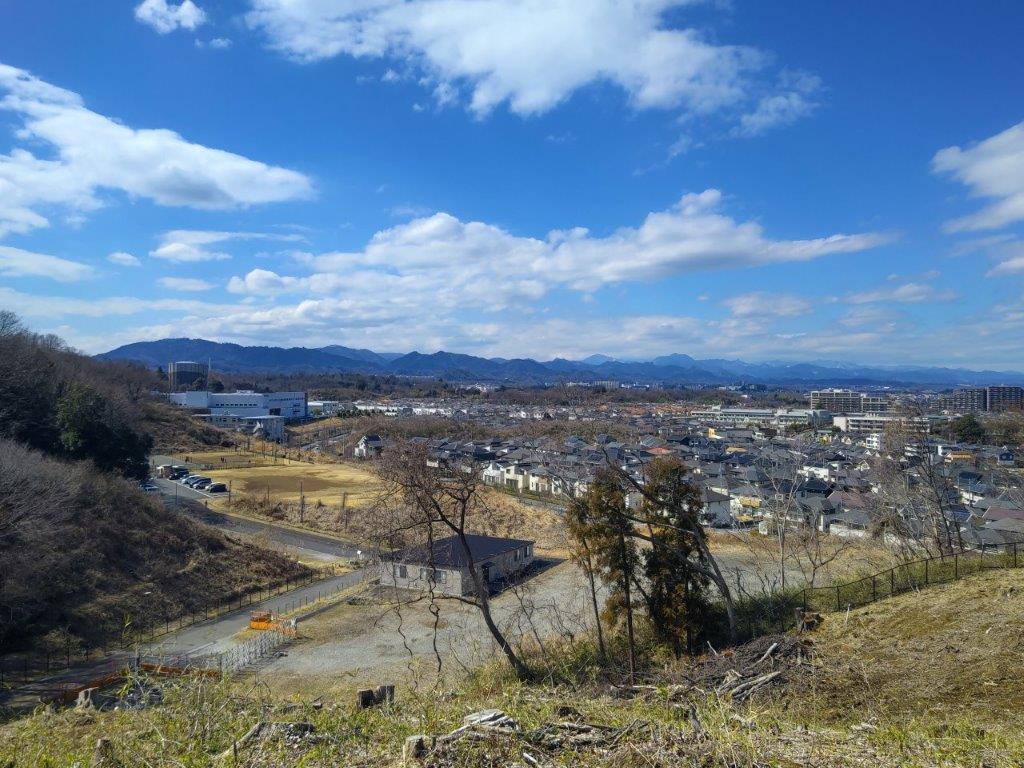
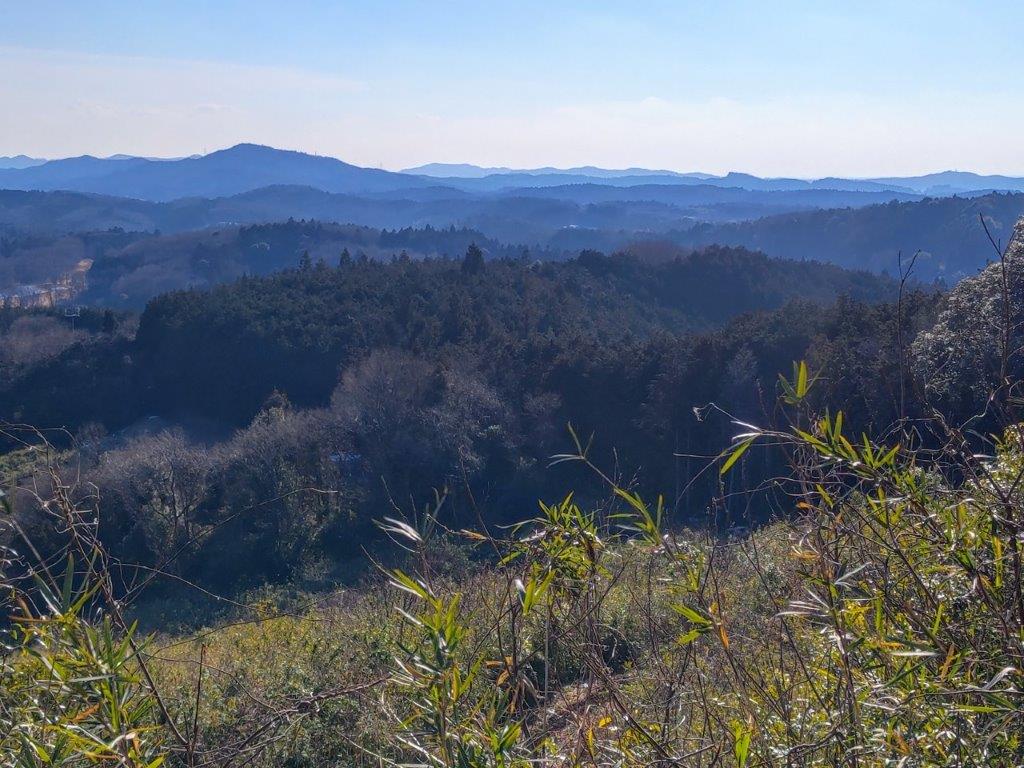
View of Central Tokyo from Yushi no Satoyama

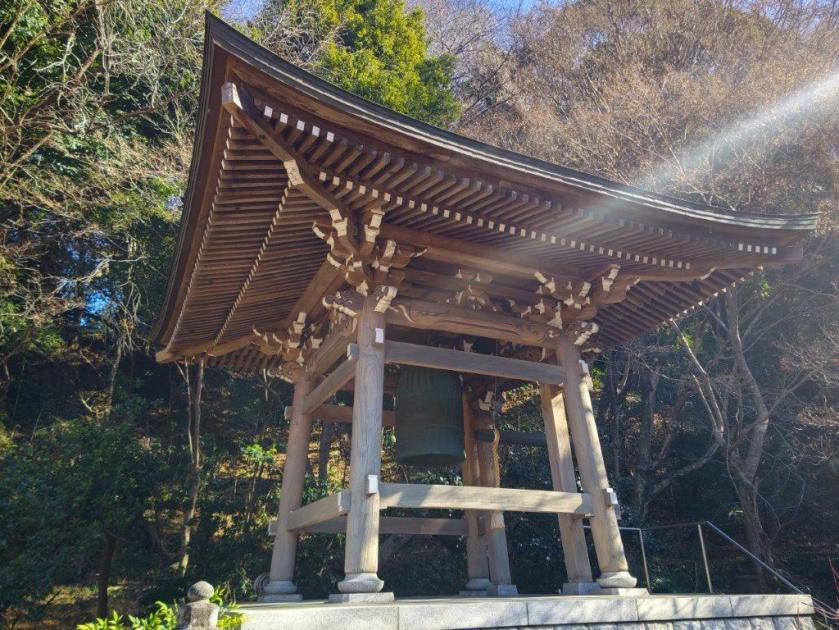
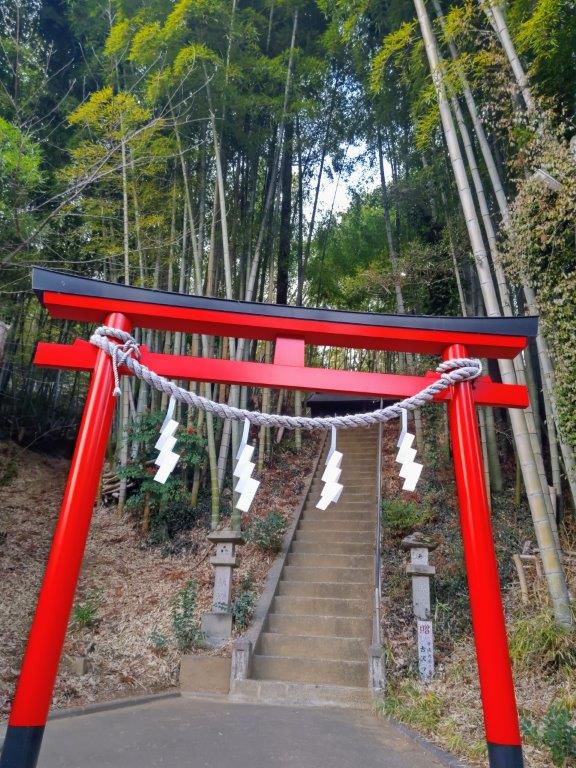
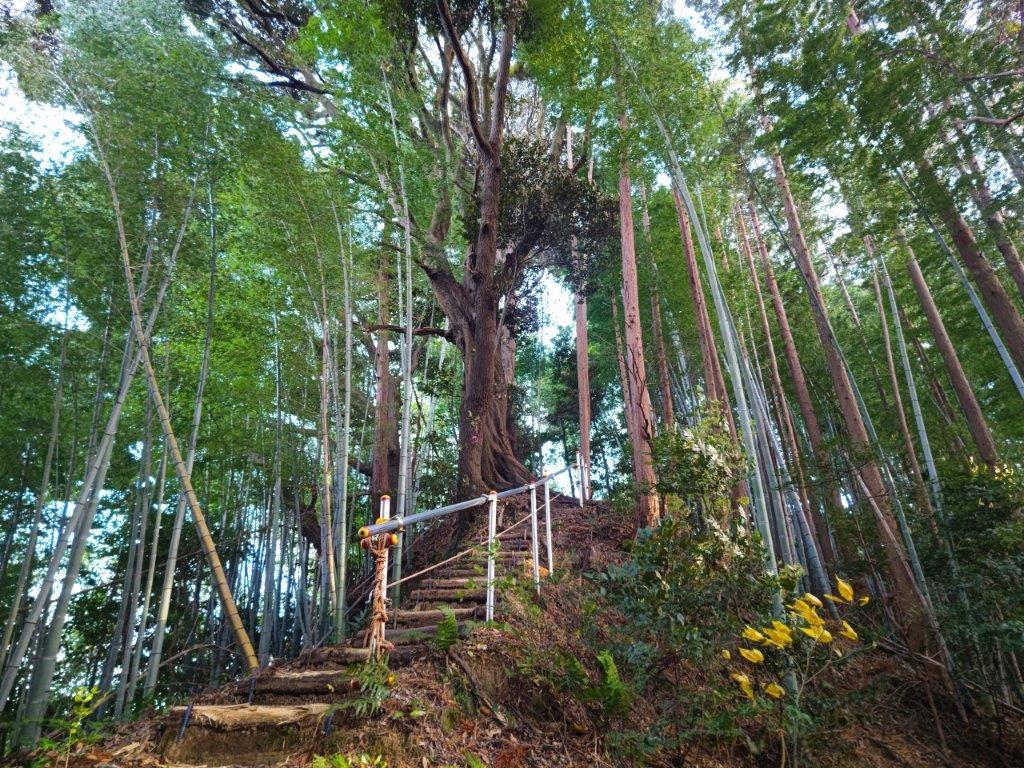
It was a crisp, cold winter day as I exited Inagi station around 1130am. A short walk brought me to the entrance of the peaceful Myoken-ji temple (妙見寺). After checking out the bell tower, I headed up a steep flight of stone steps to a shrine gate; beyond, a paved road continued uphill through a bamboo grove ending at Myoken shrine. To its right, I found a path ending at a sunny hilltop called Yushi no Satoyama (ゆうしの里山) from where I had a view to the east.

Path for Shiroyama no Mori

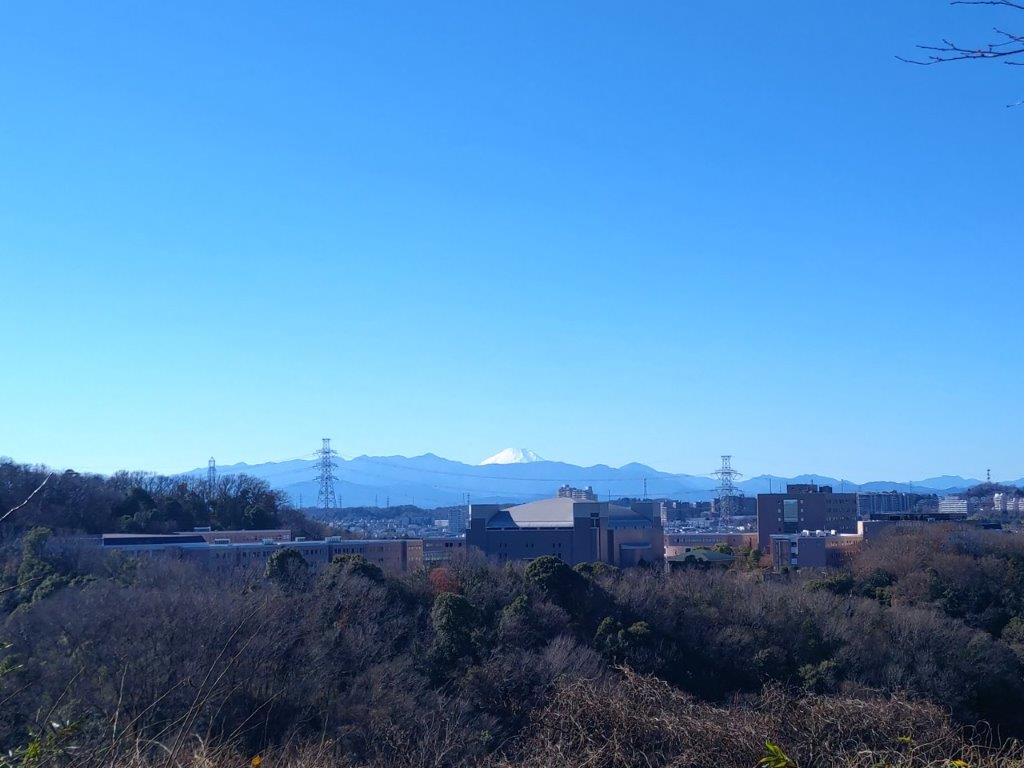
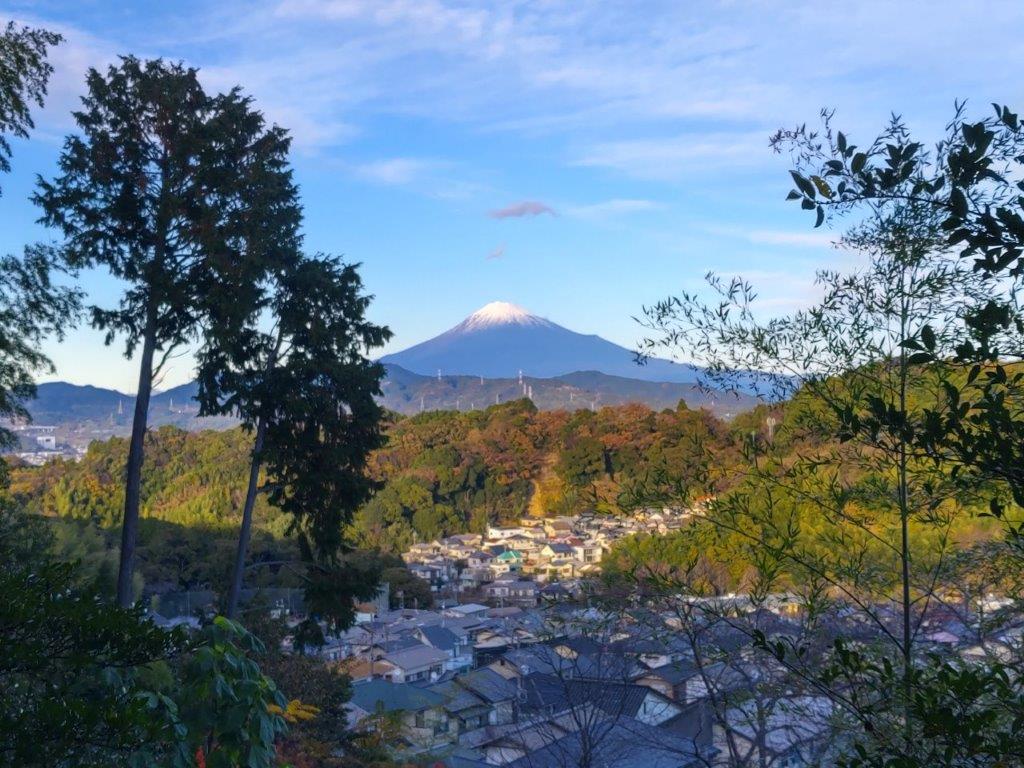
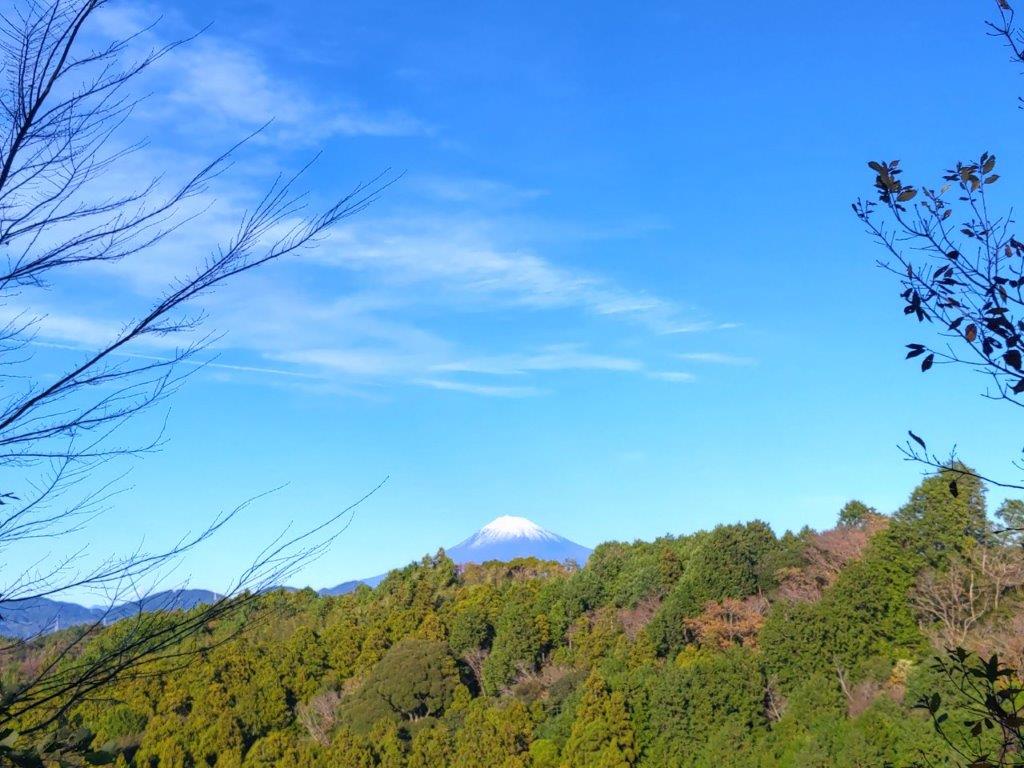
View of Mt Fuji from Shiroyama no Mori

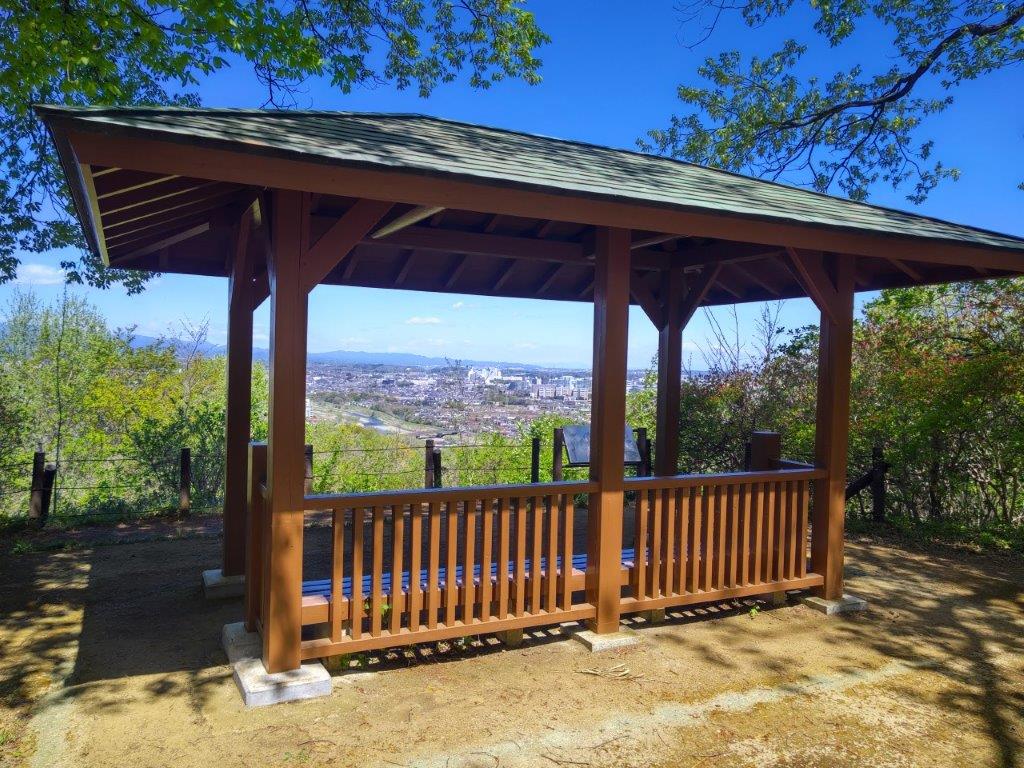
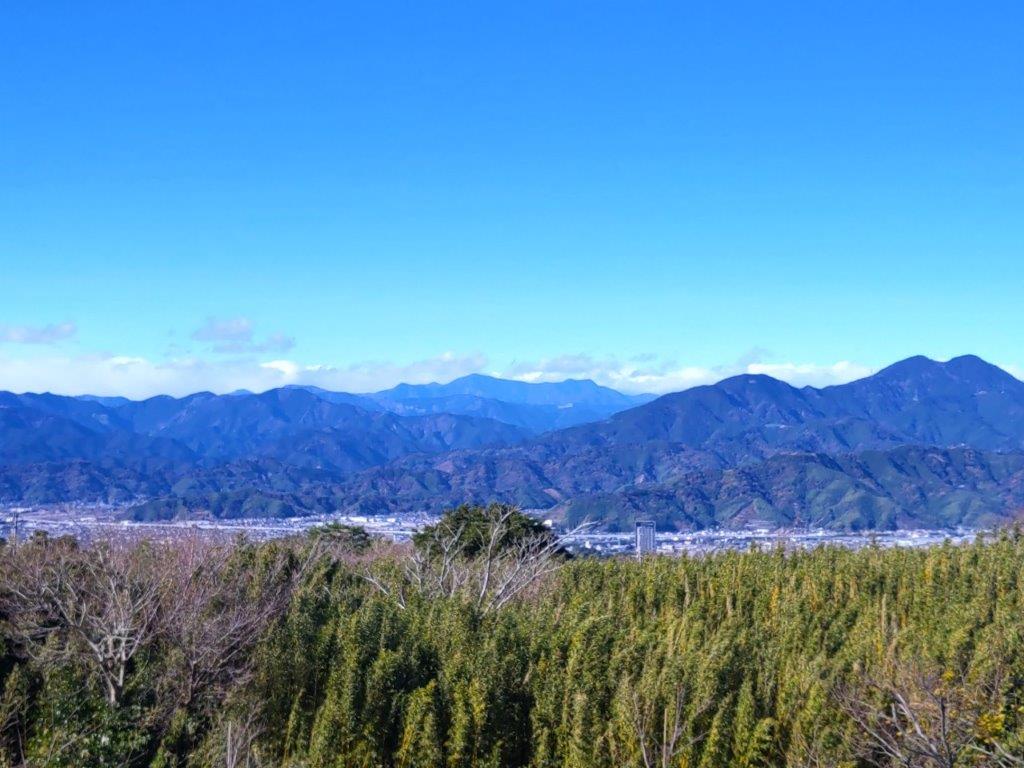
I was glad to get a view of central Tokyo so early in the hike. From left to right, I could see Sunshine 60, the Tocho and the Skytree. After admiring the view, I made my way to a nearby open shelter from where I could also see Mt Haruna and Mt Akagi, far away to the north, the highest peaks covered in snow. I followed the ridge northeast, surrounded by forest hiding the city buildings from view. Past another open shelter, I suddenly spotted Mt Fuji through the bare trees on the right side.

Walking through Shiroyama no Mori

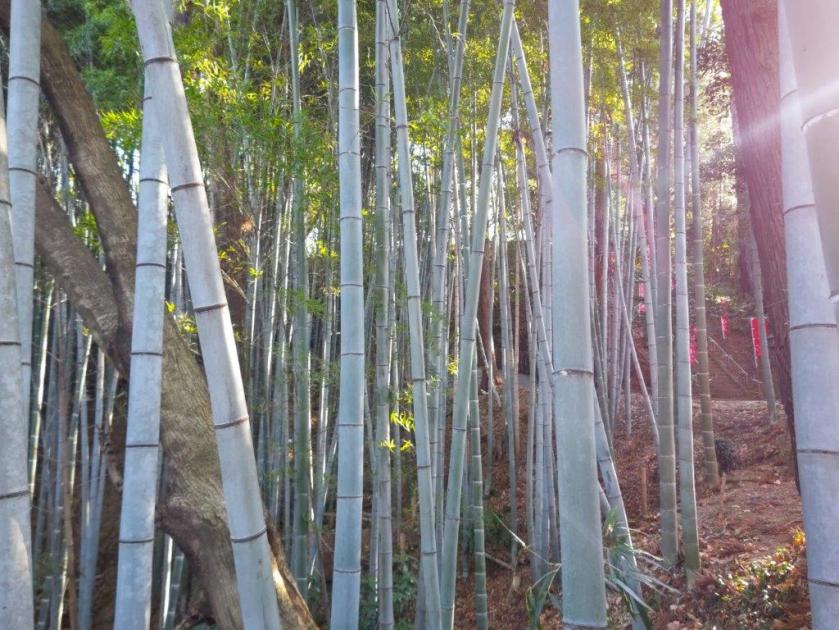
Bamboo Grove below Shiroyama no Mori

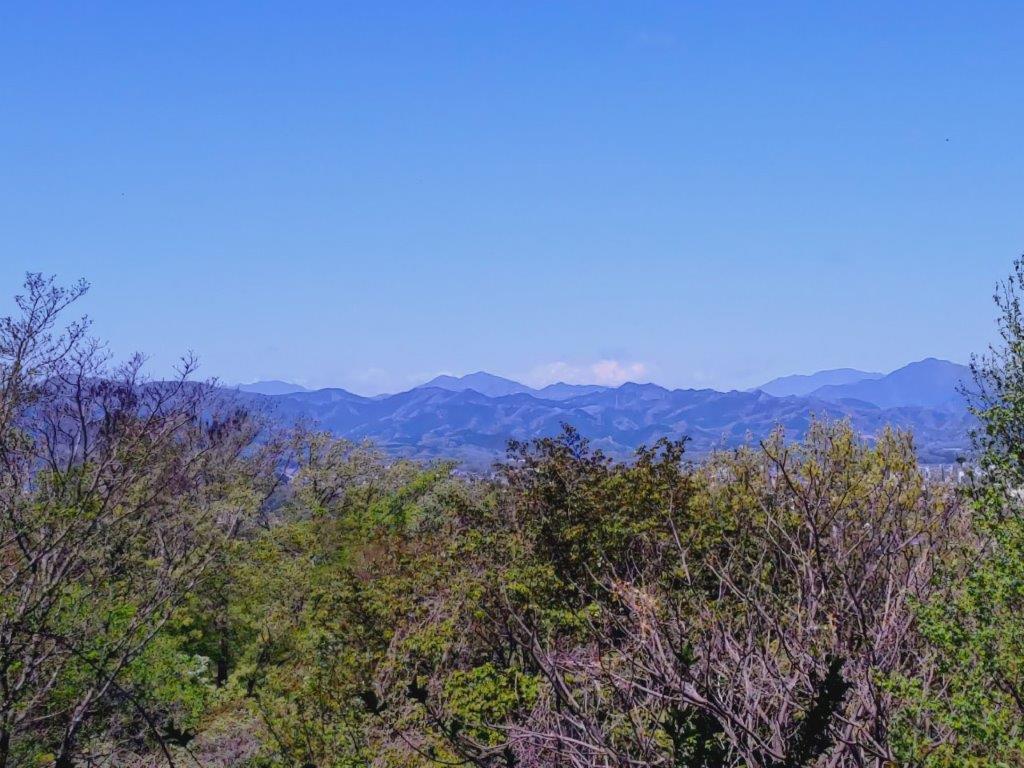
I was pleased to finally get a good view of the snowy top of Mt Fuji, its base hidden by the Tanzawa mountains; it was also truly unexpected, as this spot is unmarked on my maps. I continued on my way, heading down a dirt track with bamboo on my left side. I already felt quite satisfied with this first hour of hiking, having seen a temple, bamboo groves and views of the skyscrapers of Tokyo and Mt Fuji. After passing through some fields, I was back inside a residential neighbourhood. After going under the railway tracks, I turned left, and was now following a pedestrian path running parallel to the Misawa river.

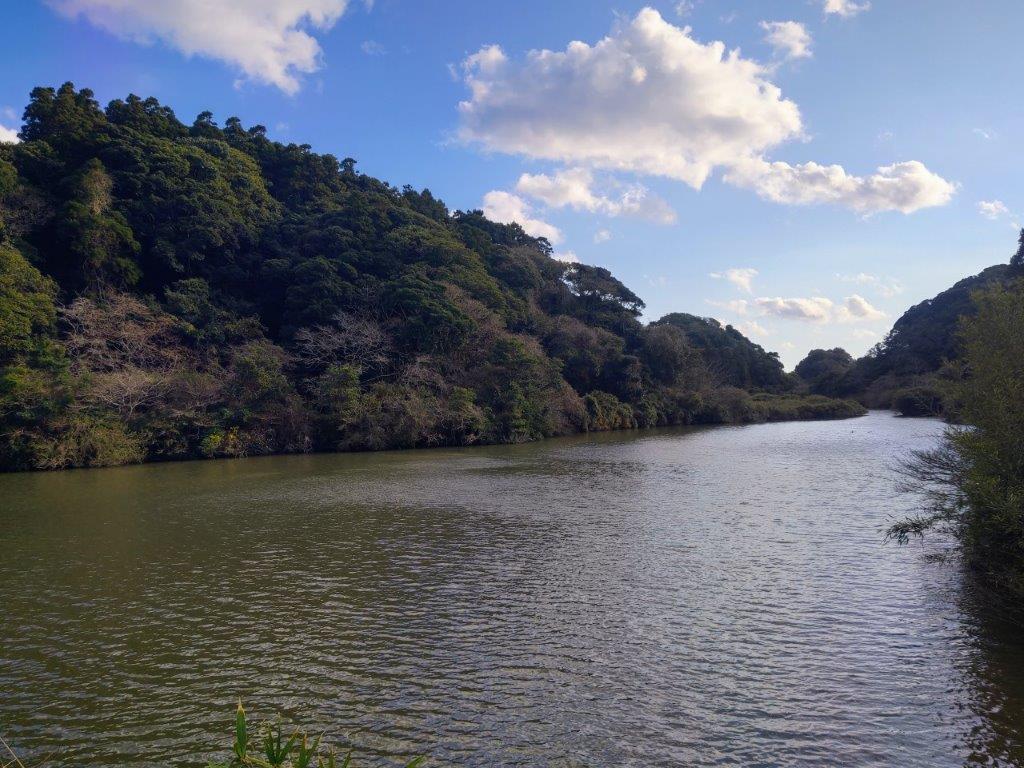
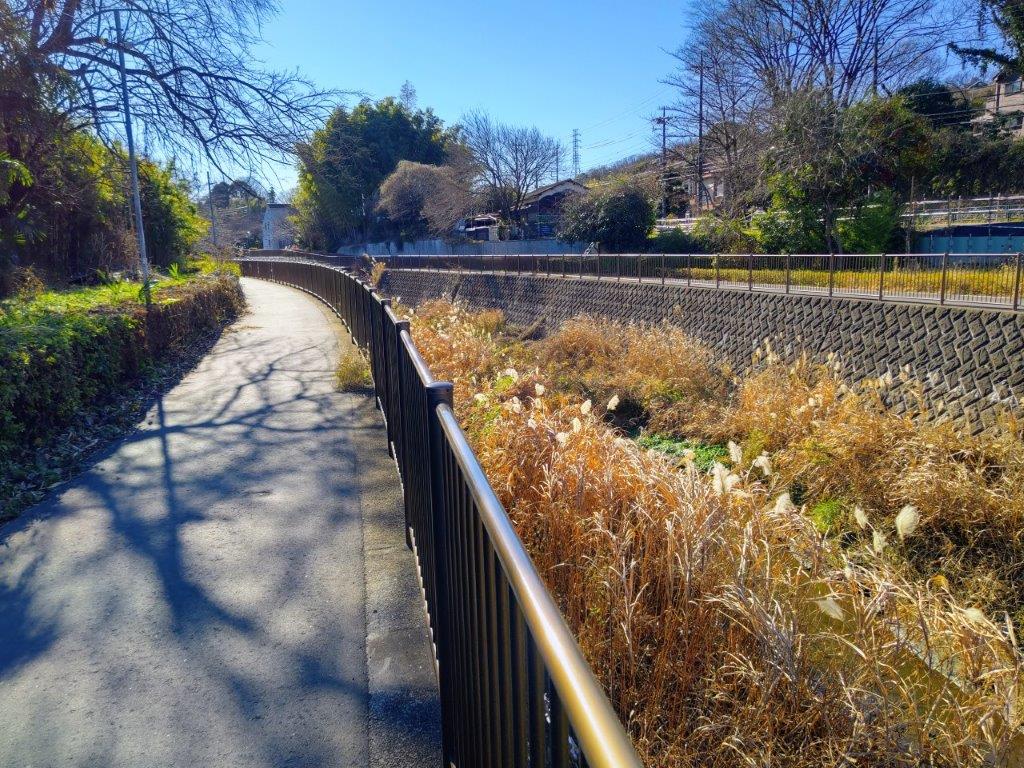
Walking along the Misawa River

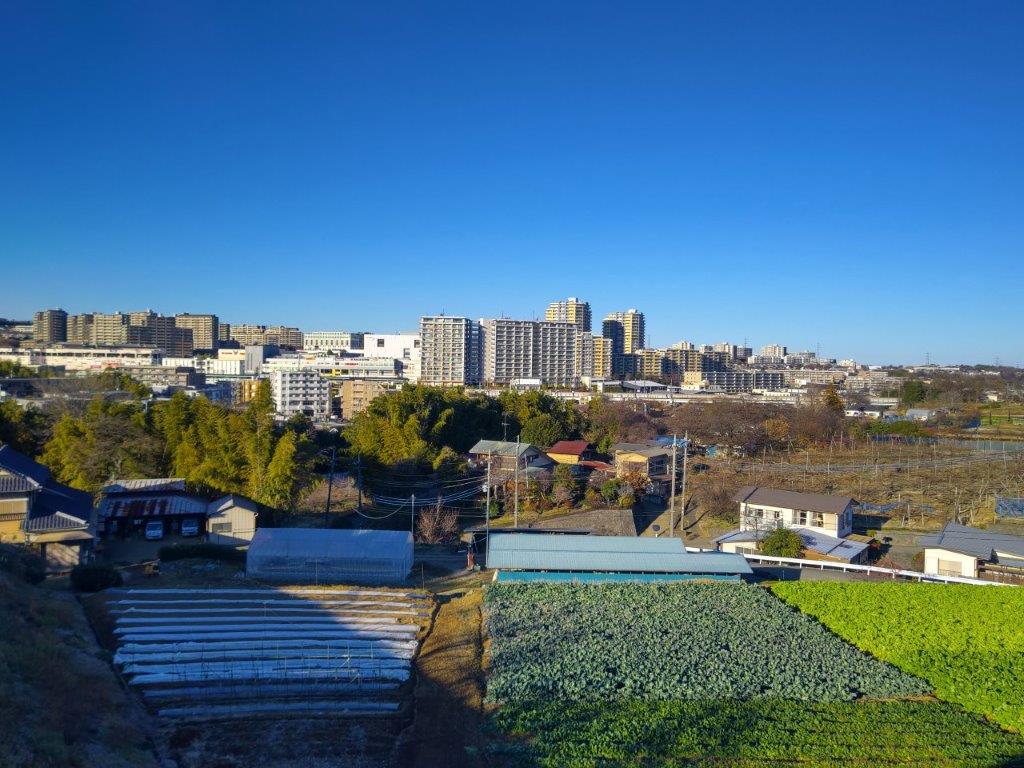
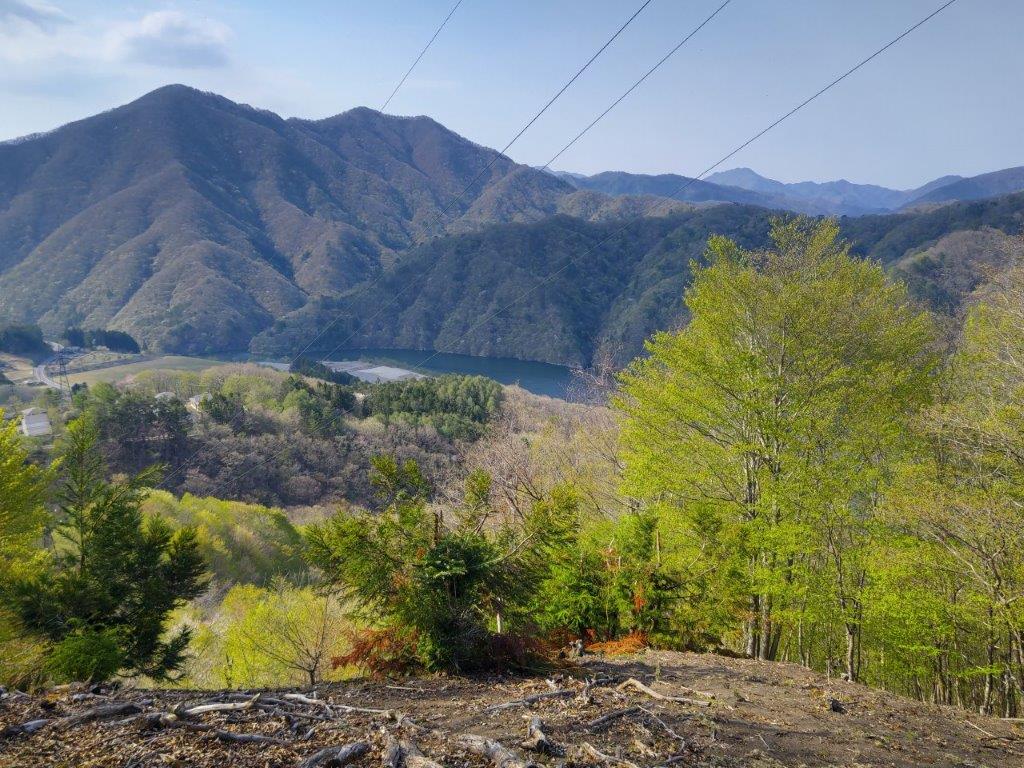
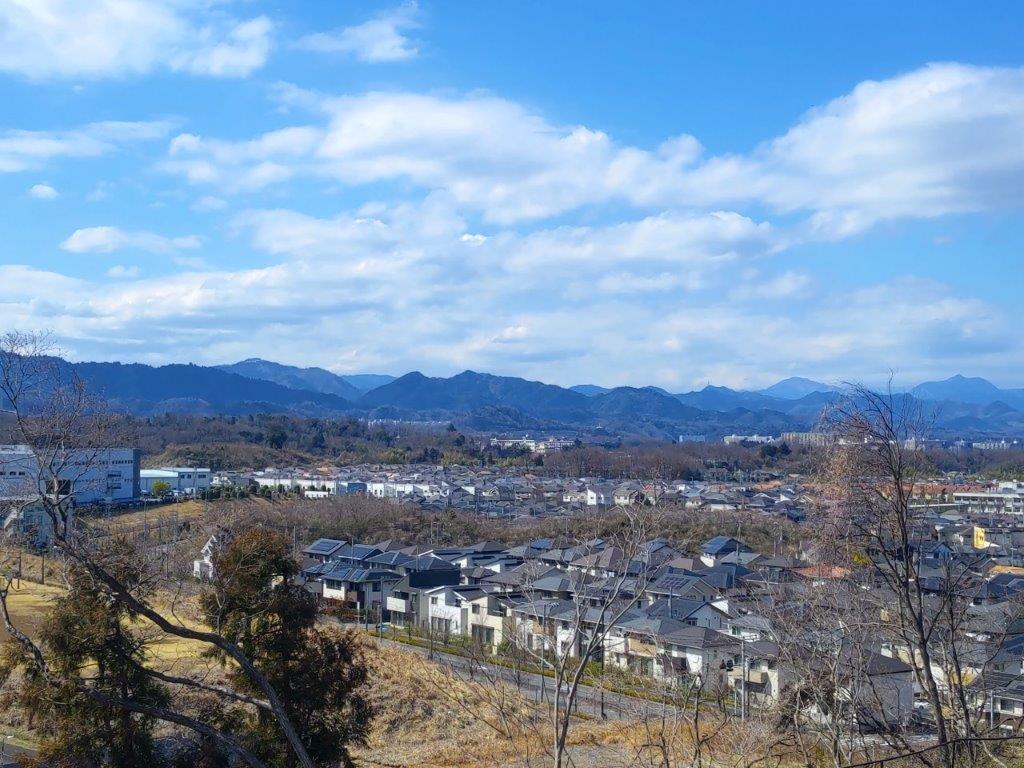
View of Wakabadai from Kurokawa Farm

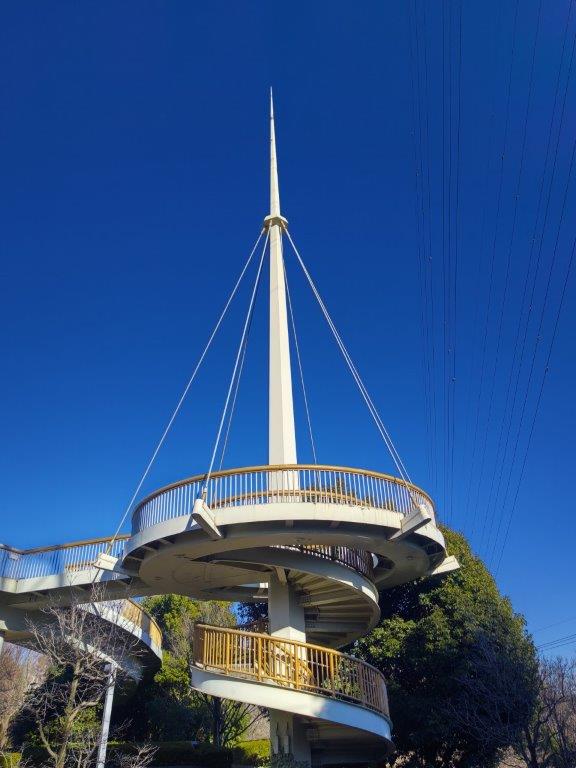
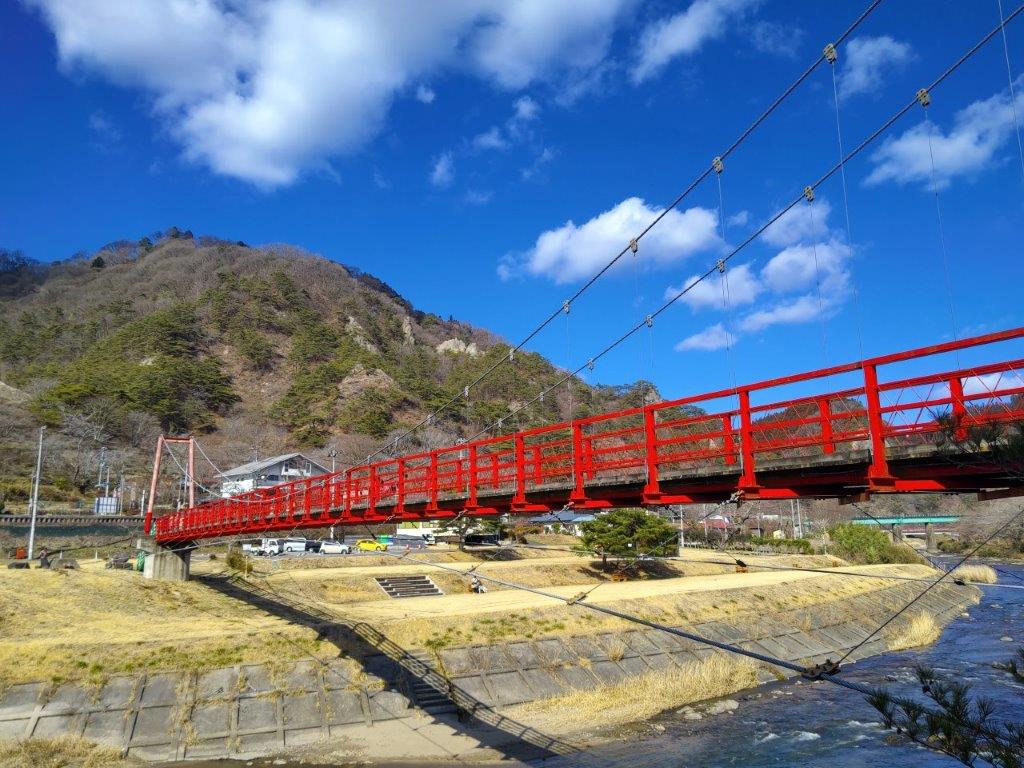
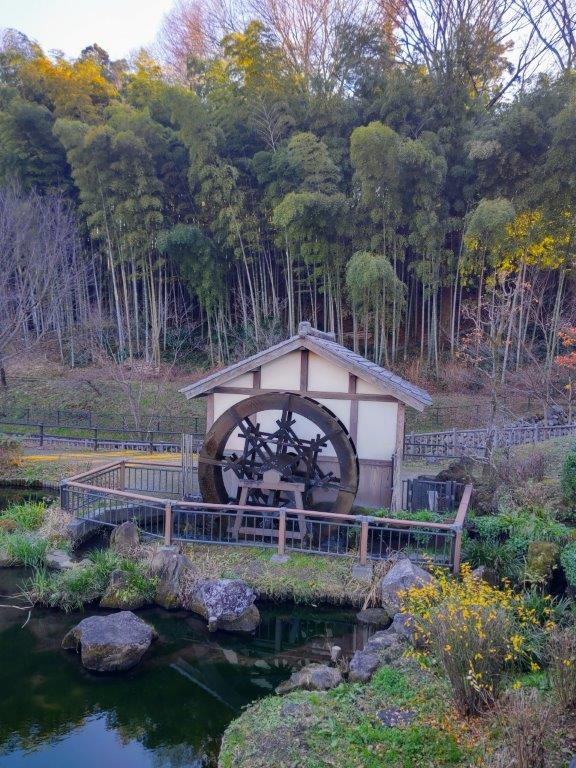
Walking against the sun, I was dazzled by the golden pampas grass, growing on both sides of the river. At 1h30, I reached the Inagi City Chūō Park (稲城中央公園), and shortly after, settled on a stone bench next to a secluded bamboo grove for a lunch break. At 2pm, I resumed my hike. After thirty minutes of walking through fields and residential areas , I arrived at Kasayato Water Park (上谷戸親水公園) in the shade of Kasayato Bridge, spanning the sky. After observing a spinning “suisha” (waterwheel), I followed narrow quiet back lanes to the Kurokawa Farm Village, on a plateau on the south side of the river.

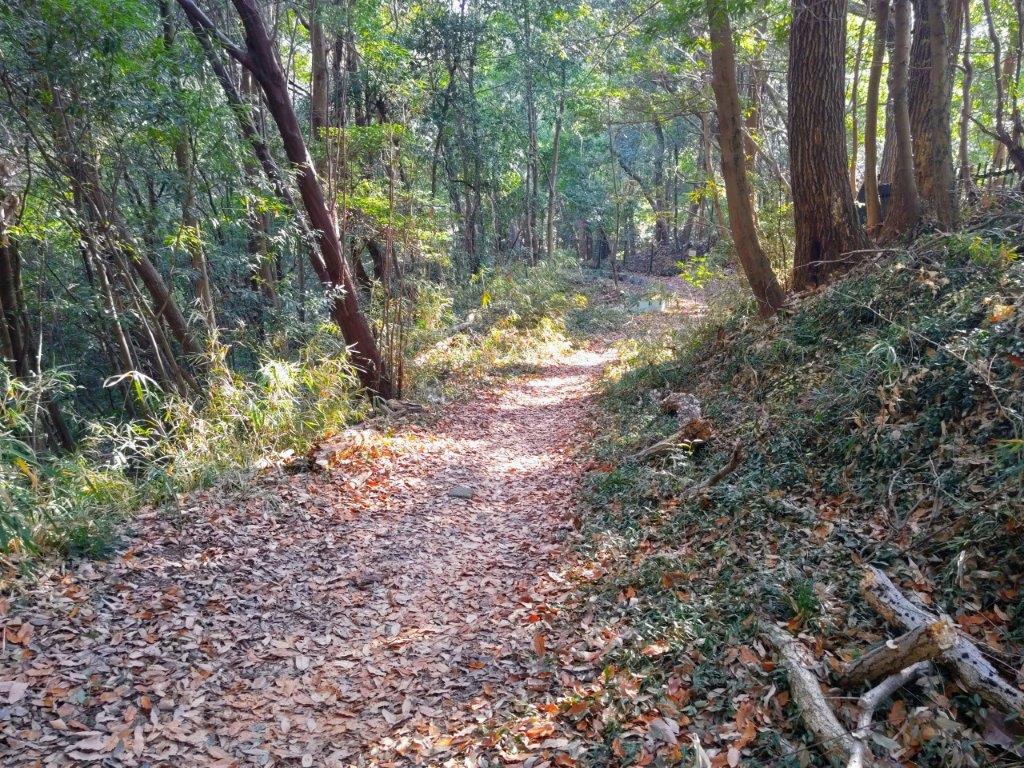
Immersed in Nature on the Shinrinyoku Route

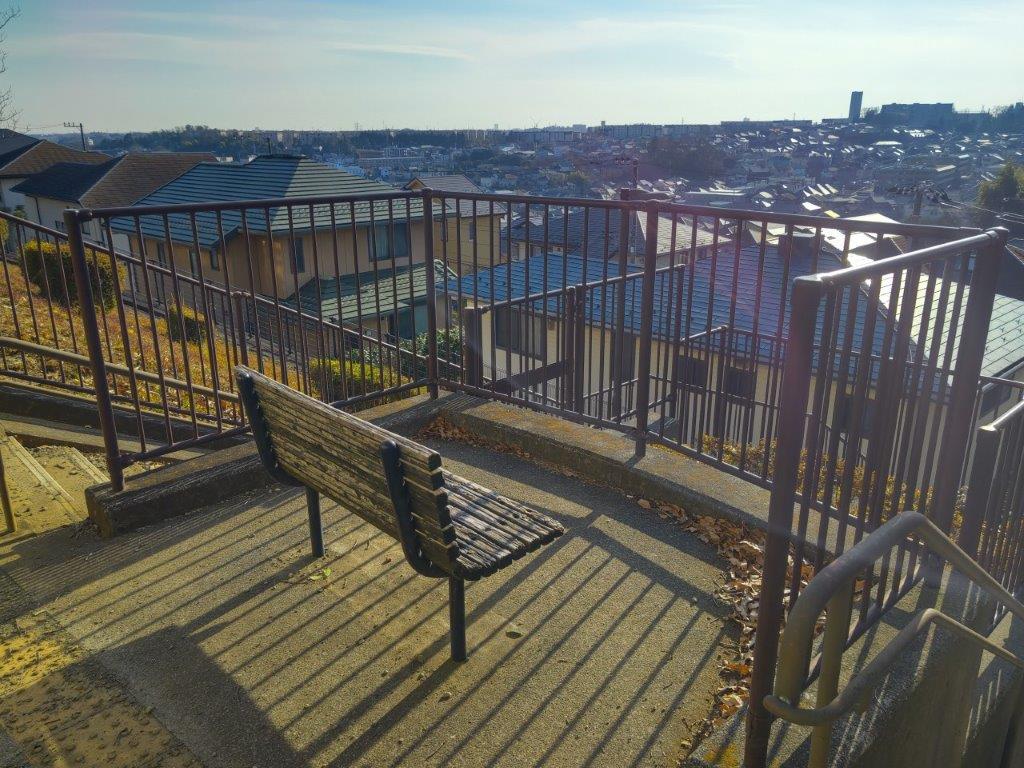
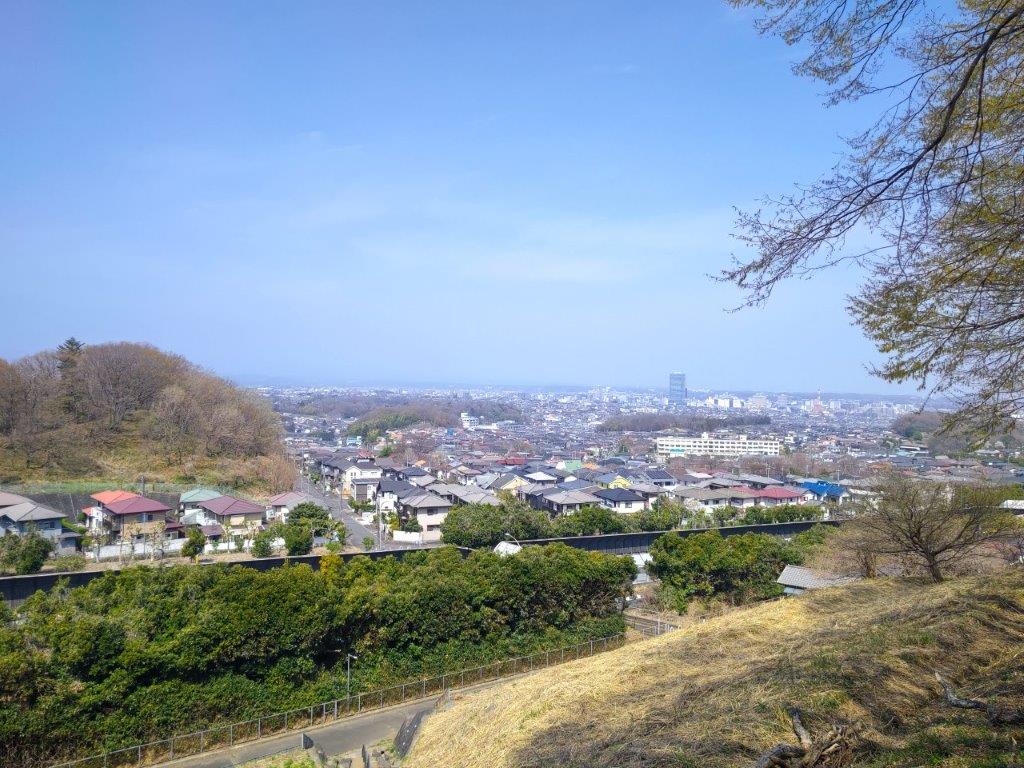
Bench with a view of Shinkoji Town

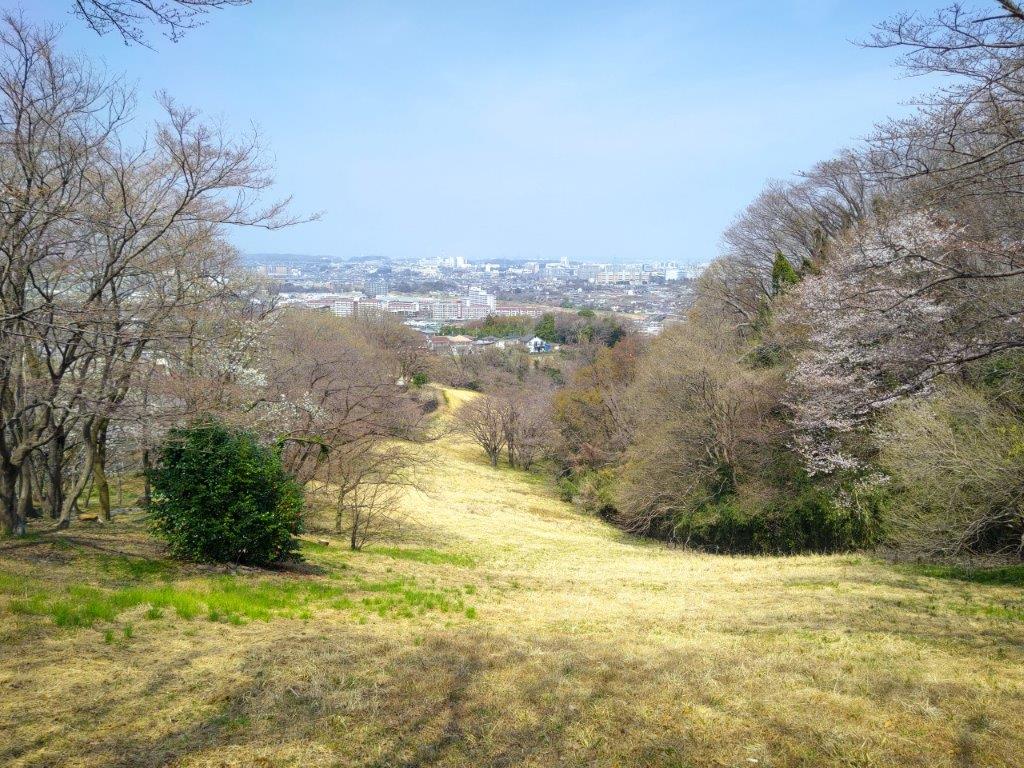
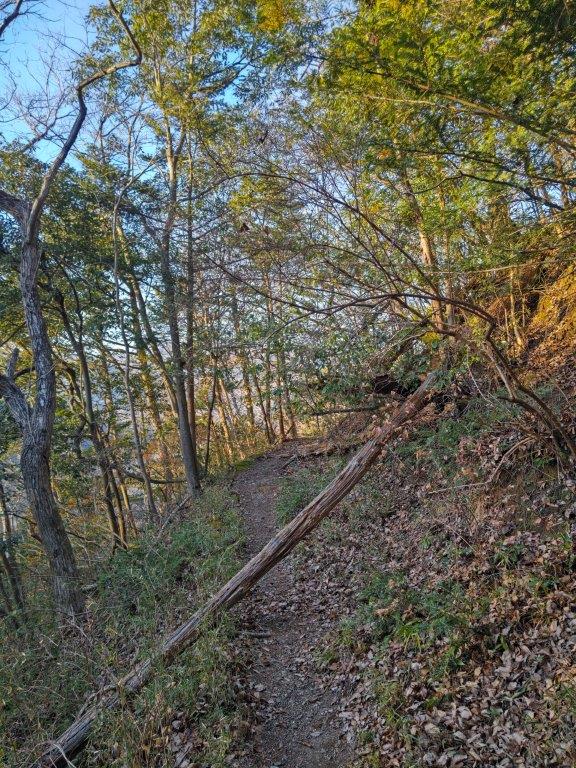
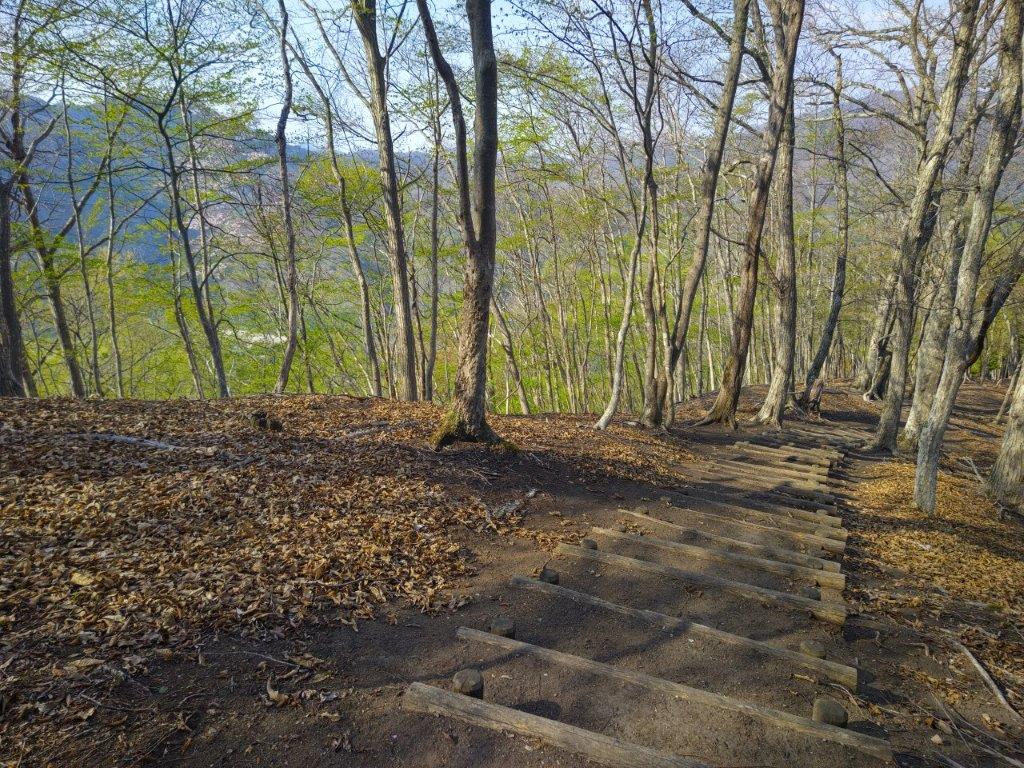
Turning around, I had a wide view of the river valley, apartment blocks lining the north ridge. I descended the west side and reached Kurokawa station at 3pm. The next day, starting from Keio Wakabadai station, I soon reached the nearby Odakyu Kurokawa station, beyond which was the Kurokawa Youth Outdoor activity center, as well as the start of the “shinrinyoku” (forest bathing) route, part of the Asao walking trails. I followed the pleasant footpath westwards through tall pampas grass waving under blue skies. At the top of some log steps, I turned left at an junction; I was now heading southeast through the suburbs, inside a narrow finger of vegetation, alongside Shinkoji Park (真光寺公園), although its central lawn and lake were hidden by forest.

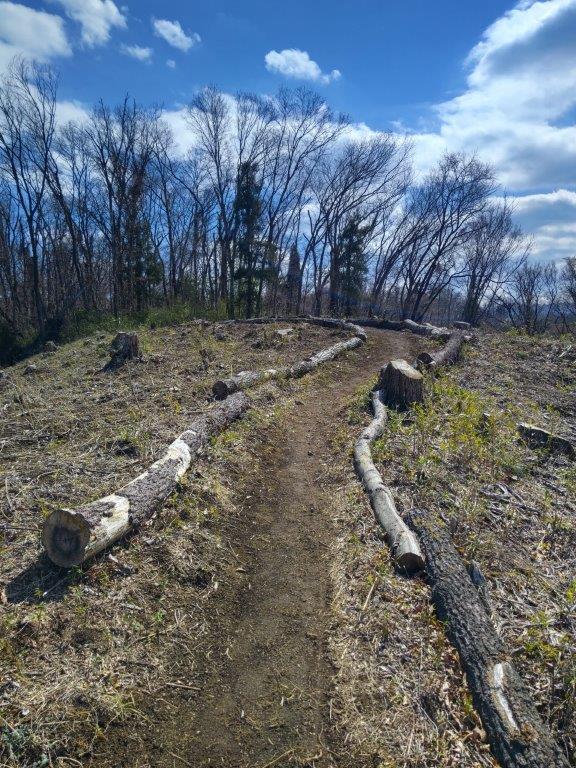
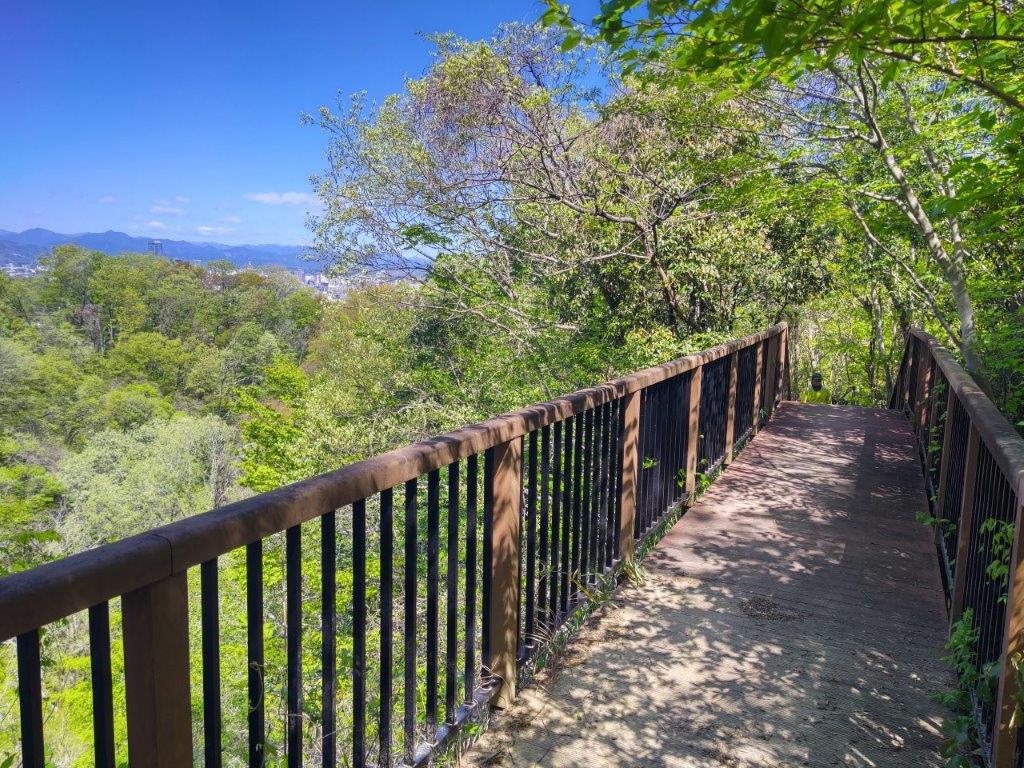
Elevated Path beyond the Shinkoji Green Space

Entering the Tsurugawadai Ridge Green Space

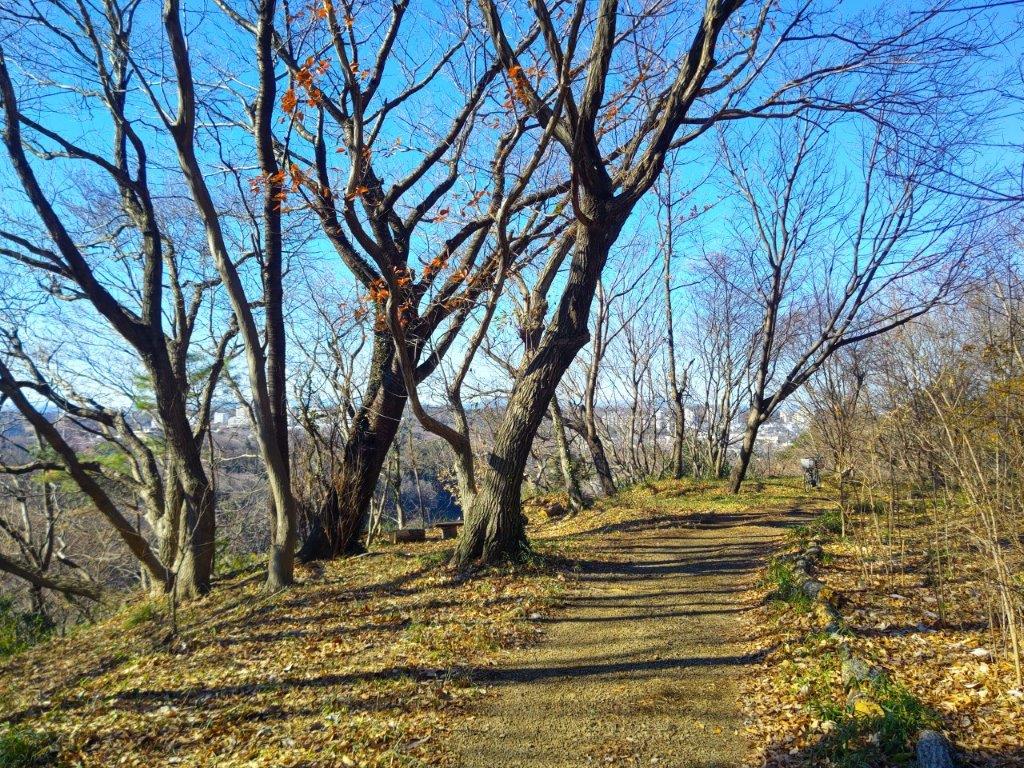
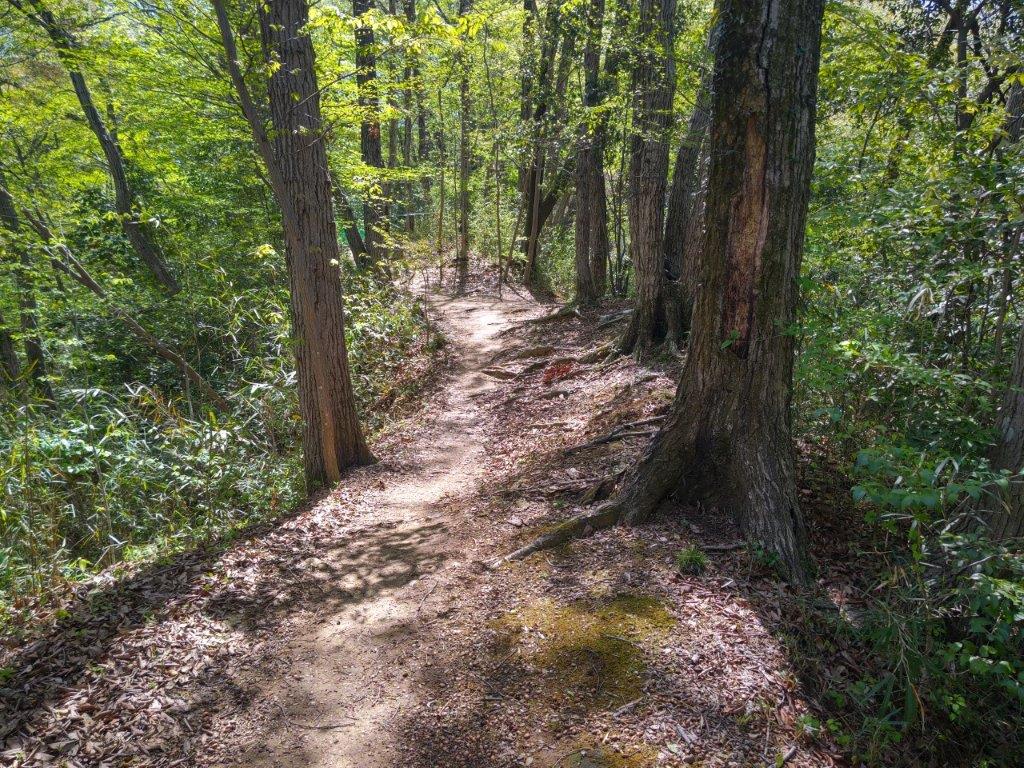
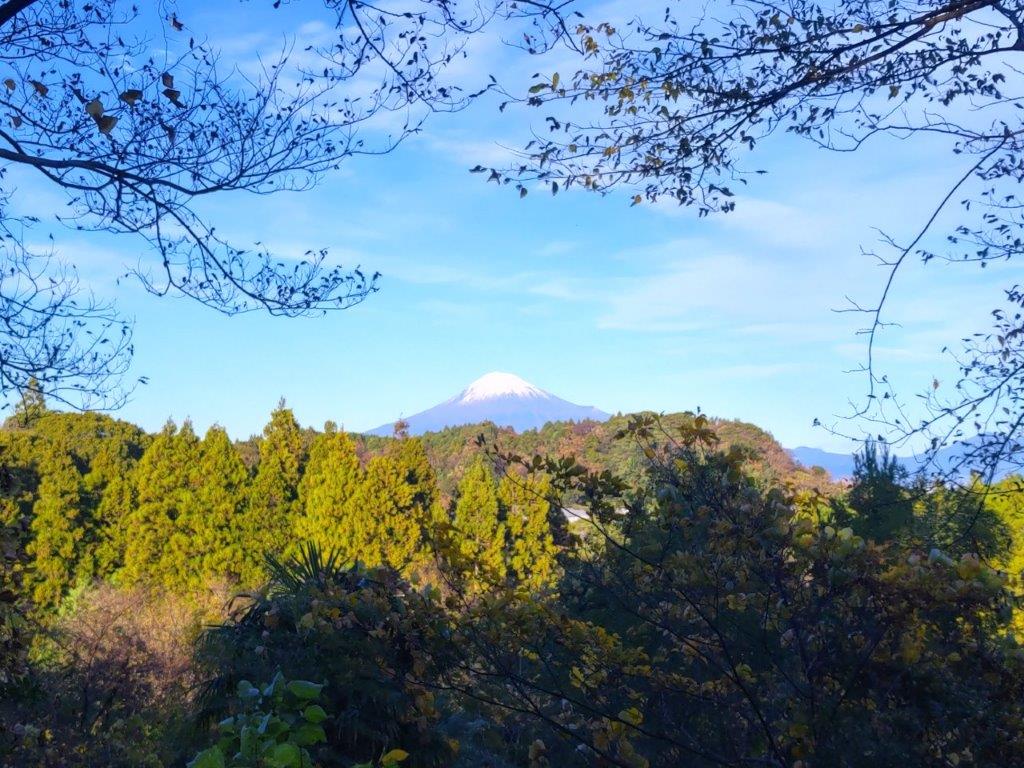
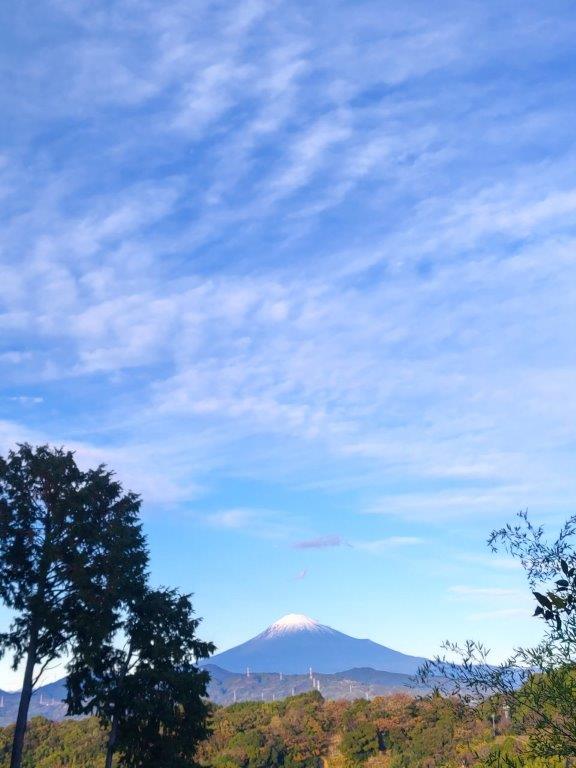
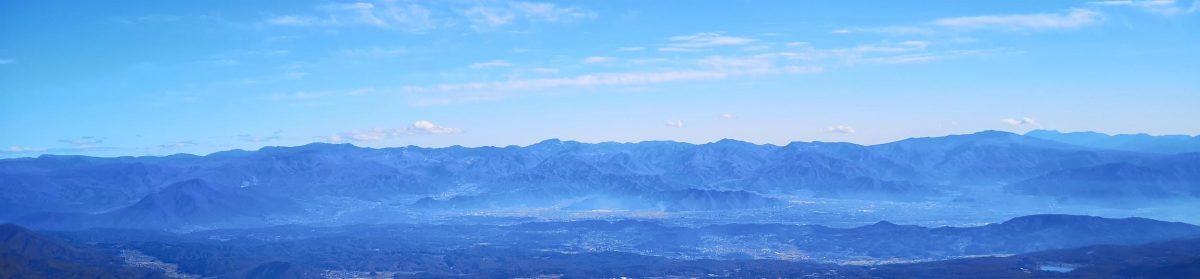
I was surprised to be enclosed by nature so close to the city center. This section is also known as the Shinkoji Green Space (真光寺緑地) and continues into the Tsurugawa-dai Ridge Green Space (鶴川尾根緑地). At 2pm, I reached a bench with a view at the edge of the forest. Looking west, I could see the Tanzawa mountains with Mt Fuji behind, although less clear then two days ago; stretching south was Shinkoji Town. I made a brief stop for lunch and then continued on my way. After a short stretch of open views, I entered the forest again. The dirt track soon ended at a paved road where I turned left, leaving the ridge and descending into the Katakira river valley, through another agricultural area. At 3pm, I passed through Odakyu Kurihira station and soon reached another ridge trail through a green space on the north side of the valley.

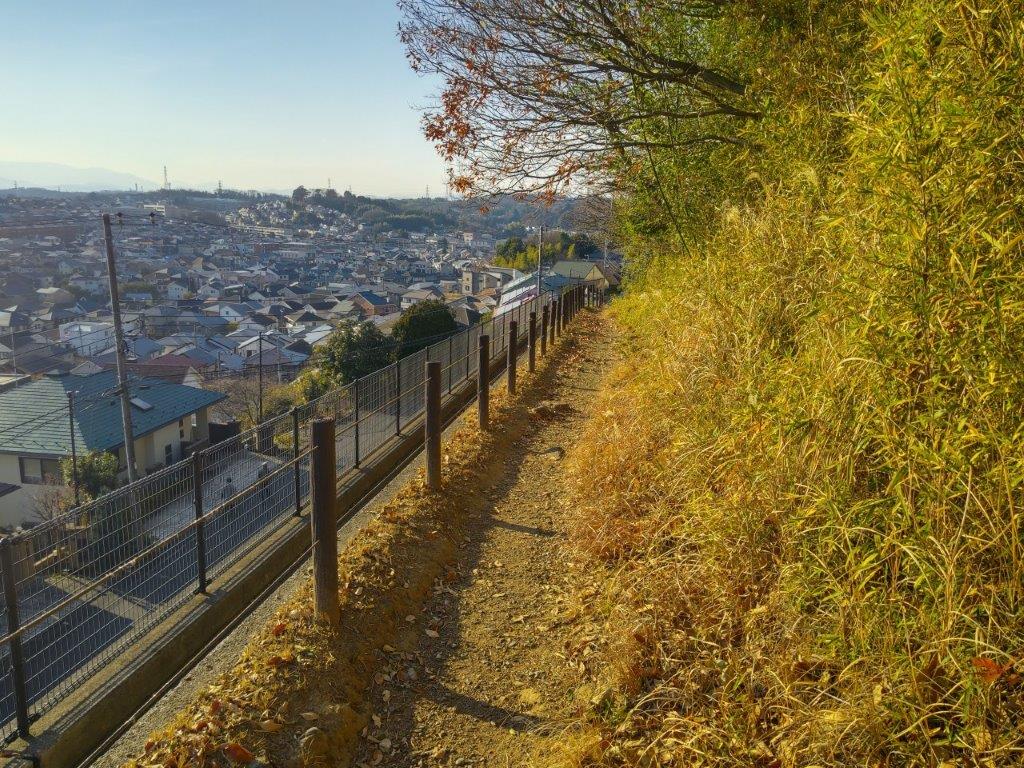
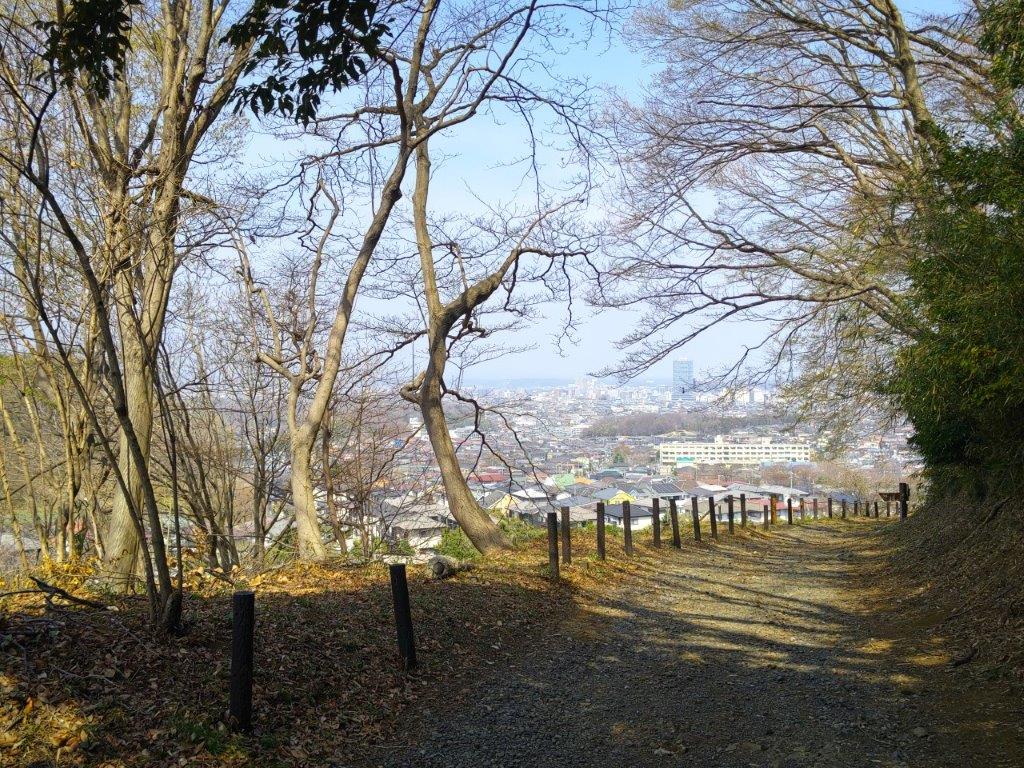
A Trail with a view of the city

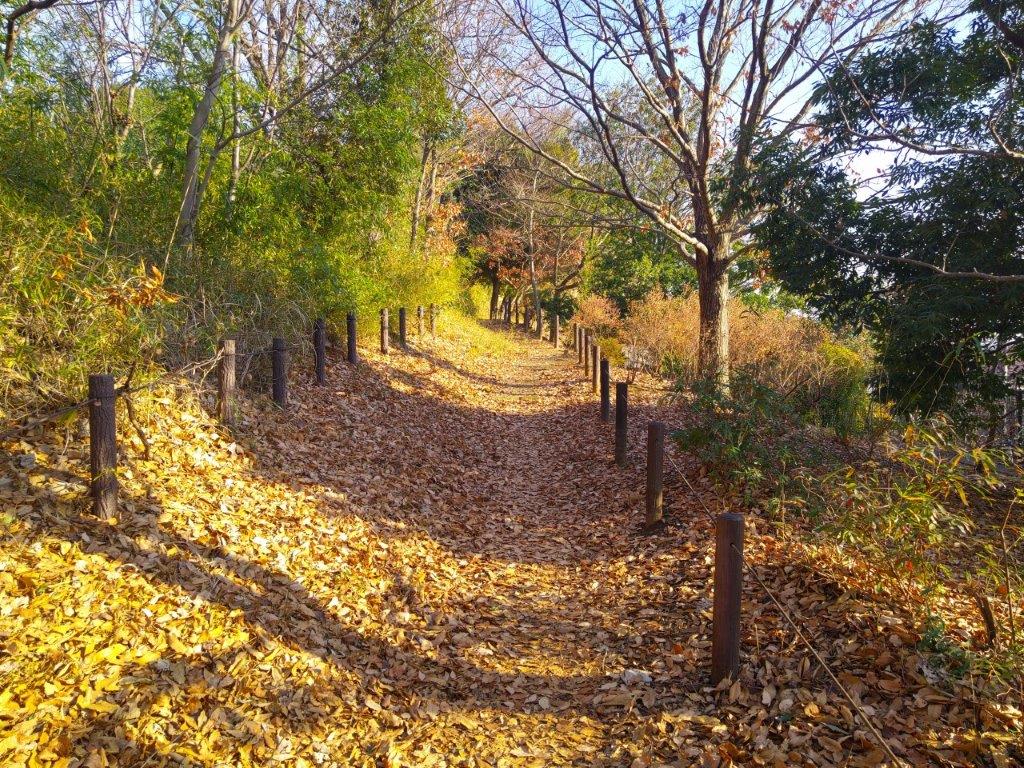
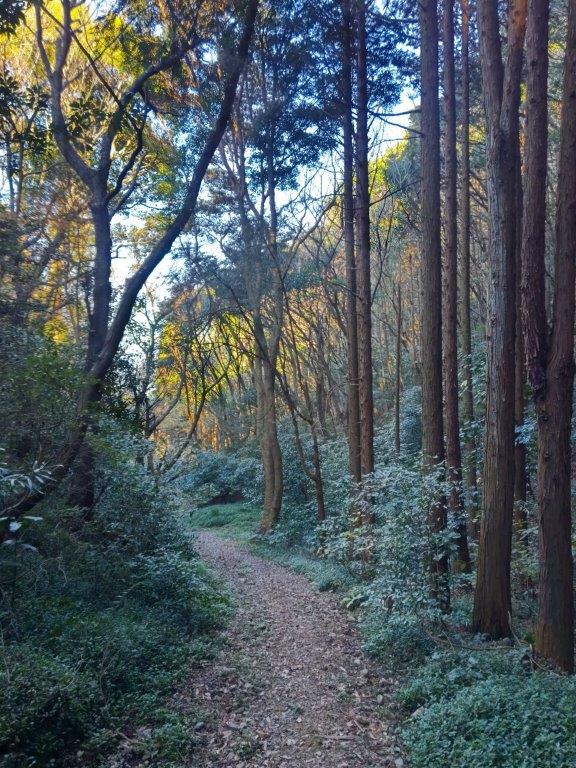
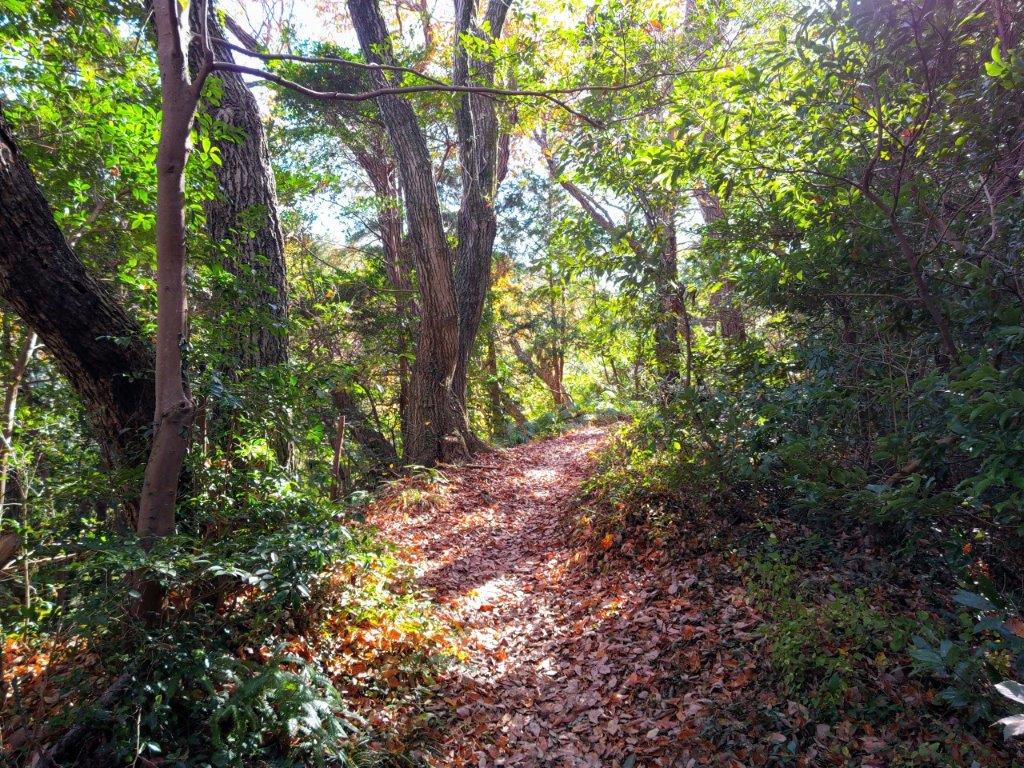
Walking through Furusawa Sakai Forest

I was delighted to be once again walking through nature. At 3h30, I passed the Gorida View Park (五力田見晴公園) with a view of the town on the southwest side. At 4pm, I entered Furusawa Sakai (古沢境), the evergreen forest alternating between shade and golden light. At a junction, I turned right and headed down stone steps, bamboo on my right. I turned left upon reaching a road and passed a red shinto gate leading to Kuromyo Shrine (九郎明神社), its grounds being cleaned for the upcoming new year shrine visit. Soon after, I came upon some fields where I turned right onto a road leading to Satsukidai station, arriving around 4h30, just on time to catch the train for the next station, Shin-Yurigaoka, where I caught the express for the short ride back to Shinjuku.

Watch a Video of the Hike
See More Pictures of the Hike

Mt Gojo (305m) & Mt Nagaone (273m), Hanno City, Saitama Prefecture, Saturday, May 24, 2025

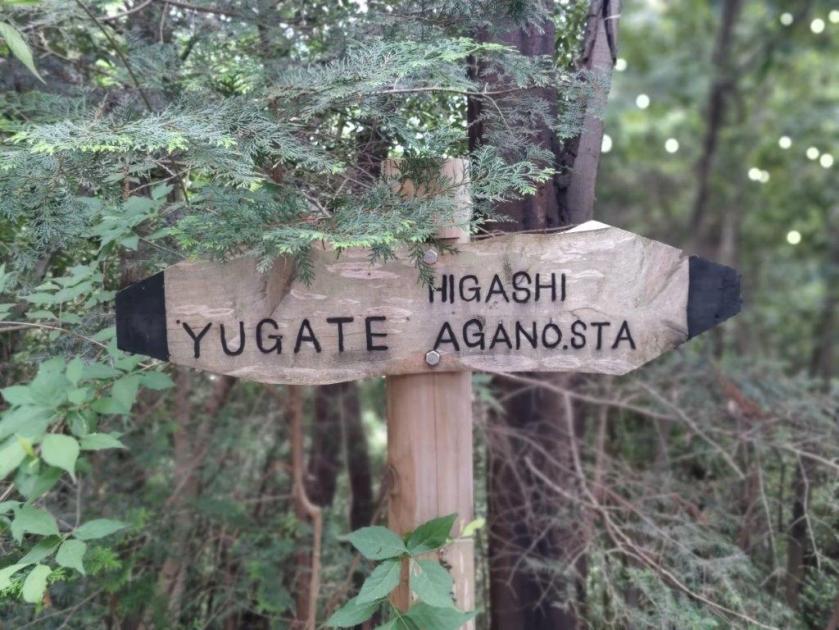
I needed to find another short hike near Tokyo while I waited for the return of the sunny days of May, better suited for long day trips. I decided to tackle a couple of minor, unclimbed peaks along a ridge running parallel to the Mt Fukuzawa one. Instead of starting from Kamakita lake on the north side, I’d approach it from the west via Yugate. Although it promised no new views, I hoped to have the latter part of the trail to myself.

For subscribers, read this Post on Hiking Around Tokyo for a better viewing experience and the latest updates

Hiking in Oku-musashi 奥武蔵

To get to the start of the hike, I’d ride the Laview limited express to Hanno, and there, change to the Chichibu line for the short ride to Higashi-agano station. I could use the same route for the return, catching the train from Musashi-yokote station, one stop up on the same line. The weather was supposed to be cloudy all day with temperatures almost cool for the season, although rain was forecast in the late afternoon. I was looking forward to exploring new peaks in a frequently visited place.

Find Japan Hiking Maps on Japanwilds and subscribe to our newsletter

Start of the Hike (left) Bamboo Grove past Yugate (right)

Trail along the 3rd clearing (left) Re-entering the Forest (right)

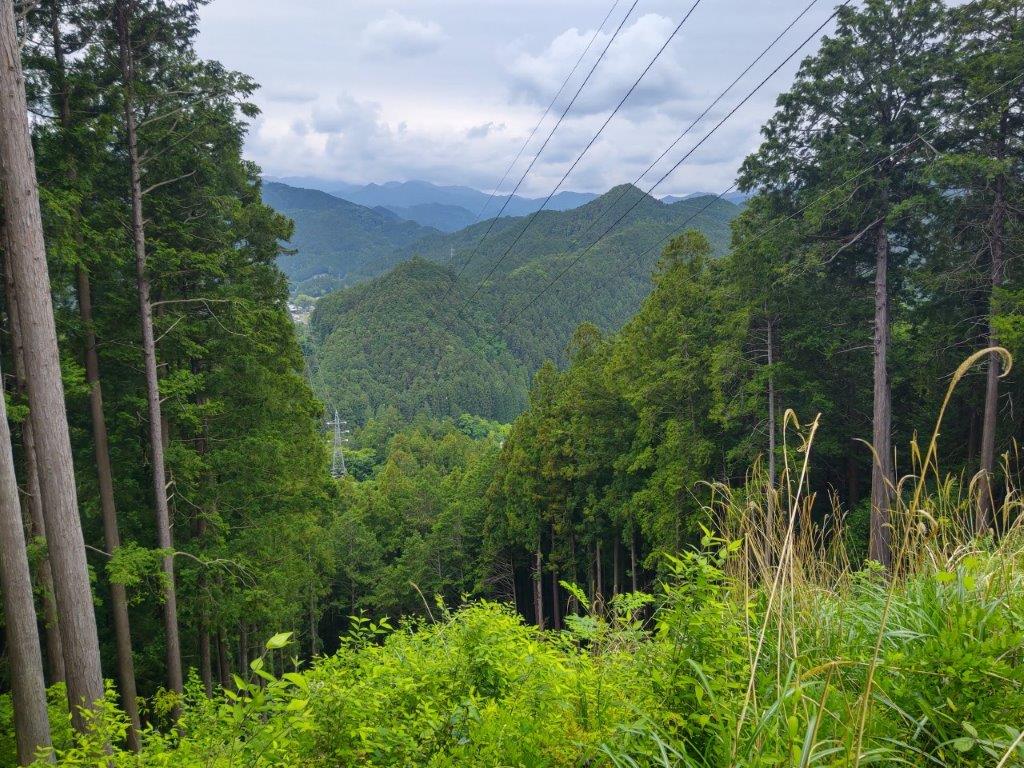
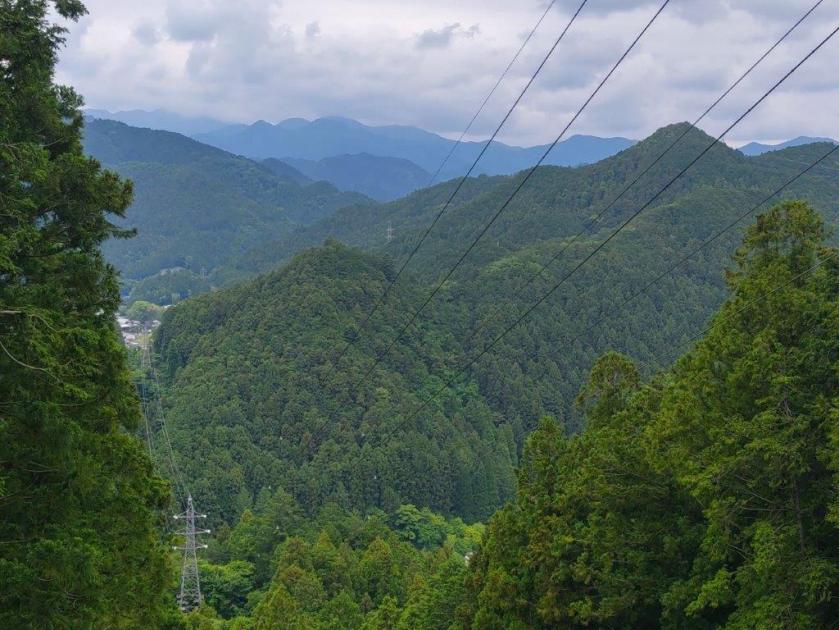
I got off the train at Higashi-Agano station under grey skies at 1130; on the bright side, it was the perfect temperature for hiking. After crossing a busy main road, I climbed some stone steps to get to Agana Shrine (吾野神社) and then headed up the Hikyaku Trail (飛脚道 meaning courier trail) to the right of the main shrine building. A little past noon, I reached a spot where the forest had been cleared to allow for the passage of an electric power line.

Plank Bridge over a Stream (left) Level Section through Ferns (right)

Ridge before (left) and after (right) Mt Gojo

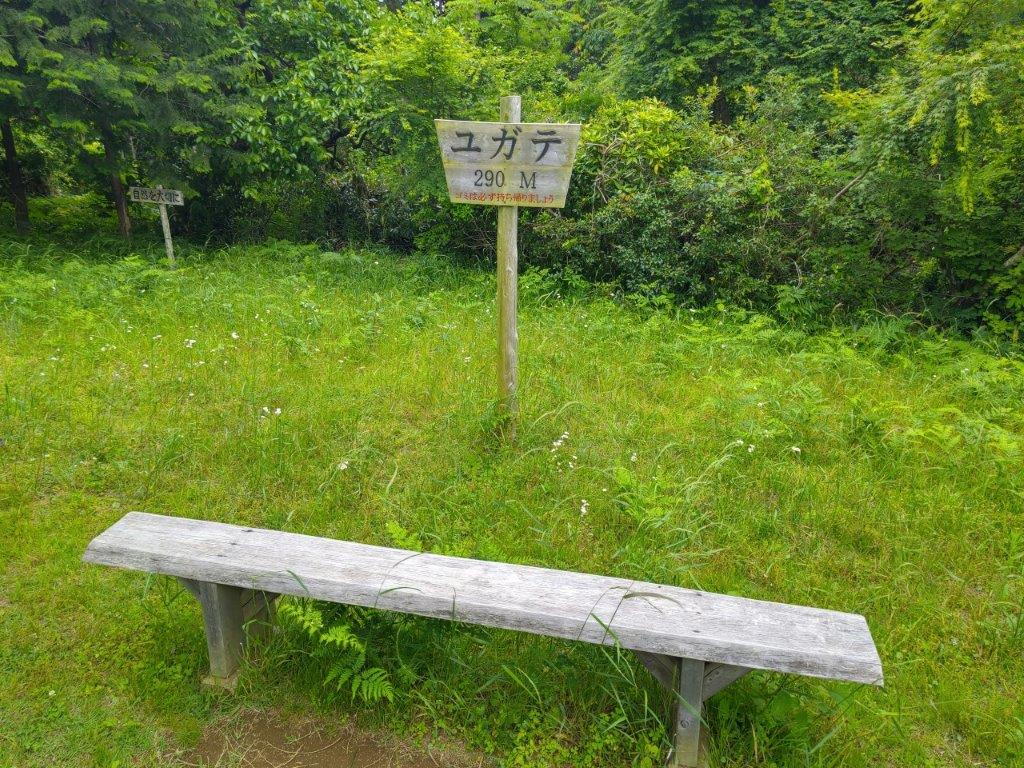
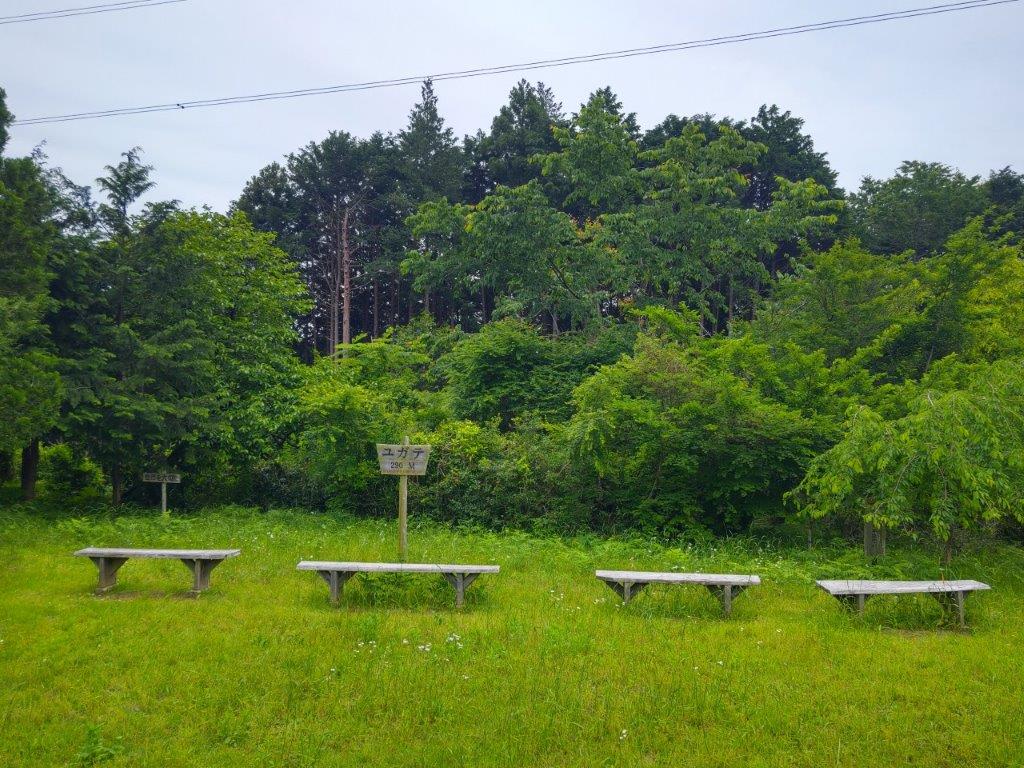
I was glad to get a view early on in the hike, although I had been past this spot before. Looking left, I could see the Hanno Alps directly opposite; further in the distance, I could just make out Mt Izugatake and Mt Buko, half-hidden by low clouds. I soon moved on, and after an up and down, arrived at the top of Mt Hashimoto (橋本山 321m) where a similar view awaited me on the west side. I quickly moved on, and after a short descent, I followed a wide track that led me to the fields and gardens of Yugate Village (ユガテ 290m); looking up, I could see a second set of power lines stretching across the sky.

Looking West towards Izugatake and Buko-san

The Hanno Alps from the First Clearing

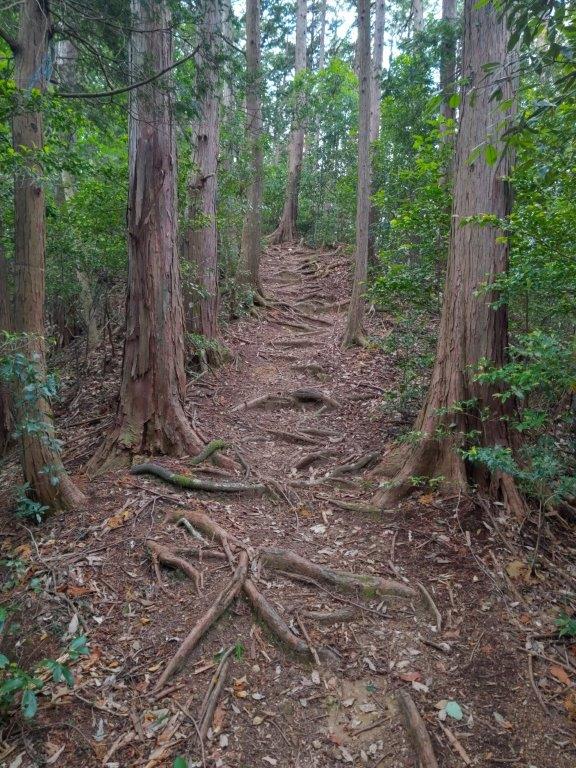
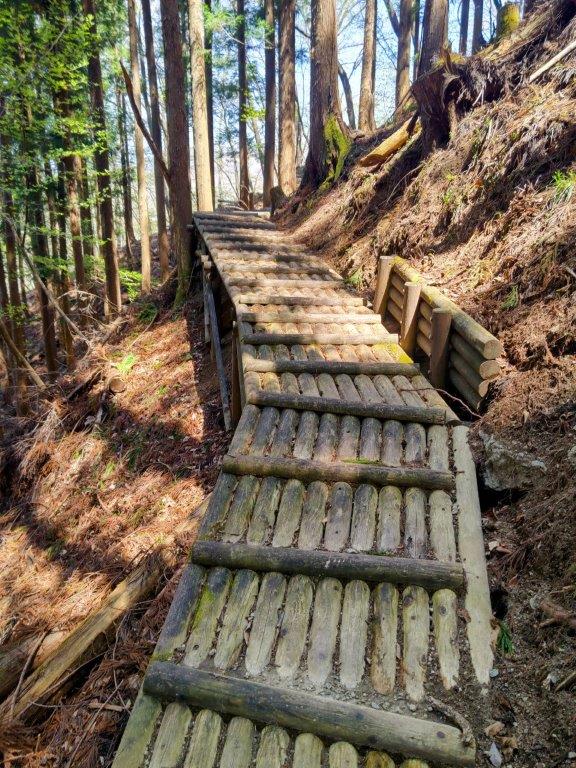
I was lucky to get the last free table under a large tree, although many benches were empty. It was nearly one o’clock so I decided to have an early lunch. I set off again a little past 1pm, now following the Oku-musashi Long Trail (奥武蔵ロングトレイル). After passing through a bamboo grove, I followed a winding path hugging the mountain side. Beyond a stream, the path started to climb, then became level at a clearing for the power line passing over Yugate. Shortly after crossing a second stream on a bridge made of two wooden planks, I arrived at Tsuchiyama Pass (土山峠), intersecting with my Fukuzawa hike.

Nearing the Top of Mt Hashimoto

View of the Hanno Alps from Mt Hashimoto

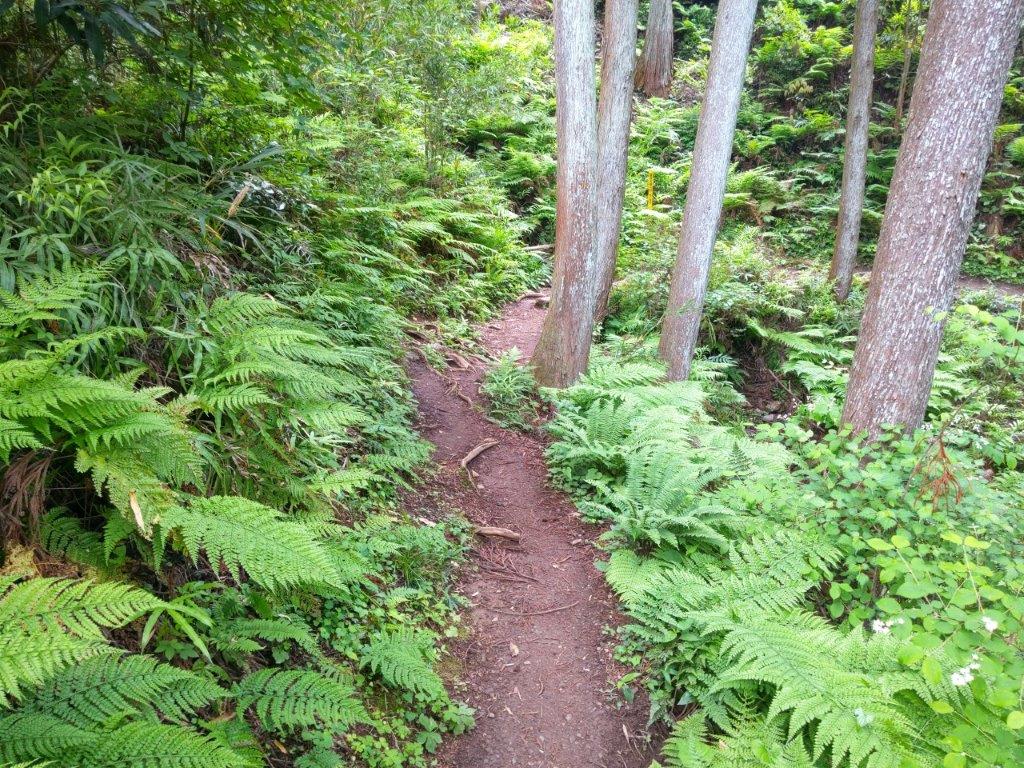
As I stood next to the charming carved wood figure sitting on top of a signpost, I decided to explore the trail heading straight as I was ahead of schedule, leaving the more usual route over Mt Omine to the right. Here, I also left the Oku-musashi Long Trail as it headed left to Kitamukijizo (北向地蔵). After a short and pleasant level section through cedars and green ferns, I popped onto a paved road past a small cemetery around 2pm. I turned right and soon spotted a faint un-signposted trail into the woods, opposite a solitary house.

Empty Benches at Yugate

Level Trail Hugging the Mountain Side

The trail was rough at first, as it followed the contour of the mountain side. Using my phone GPS, as well as the odd strip of pink tape stuck to tree branches, to guide me, I soon reached a wider and easier to follow section, eventually merging with the main trail from Tsuchiyama Pass. In total, this interesting detour around the summit of Mt Omine took me half an hour. Almost immediately, I reached a fork; here, I headed down the left branch, this time leaving the Mt Fukuzawa ridgeline for good.

Path between Yugate and Tsuchiyama-toge

Nice Path along the Oku-musashi Long Trail

I had only just started down this separate ridge that I spotted a small handwritten sign warning hikers of the up and down nature of the trail ahead; it was good news to me, since I wanted a good workout. My only concern was the threat of a downpour as I could smell rain in the air. I quickened my pace and in no time reached the top of Mt Gojo 五常山(ごじょうやま), a minor peak completely in the trees. I continued without a break, quickly passing over a couple of equally minor ups and downs.

Taking a Detour around Mt Omine

Walking through Cedars and Ferns

I enjoyed the solitude of the narrow forested ridgeline, on a well-defined trail with no other hikers. After passing another clearing for a third power line, I reached the base of a steep slope. It was the toughest climb of the day but I soon reached the top of Mt Nagaone (長尾根山 ながおねやま meaning long ridge), also completely in the trees; a log bench provided me with an excuse to take a short break and relax in the peaceful surroundings of this seemingly isolated summit. Surprisingly, it equaled the record of Mt Raiden for most summit markers: I counted up to five different ones.

Clearing near the Third Electric Power Line

Steep Slope before Mt Nagaone

At 3pm, I headed down the south side, the steepest section of today’s hike, lined with rope for safety. No sooner had the trail leveled, that I turned left down some logs steps, choosing an alternative to the main route that continued straight. I passed another clearing for a power line, the one I had passed at the very start of the hike. The trail became hard to follow, apparently little used these days, but I stayed on track thanks to my phone GPS. Shortly after passing a “Toro“, or “stone lantern”, and other signs of temple grounds, I reached a paved road at the bottom of some stone steps. At 3h30, I reached Musashi-Yokote station, well before the start of the rain.

Watch a Video of the Hike
Watch the Video of the Hike on YouTube

See a Slideshow of More Pictures of the Hike

Mt Katsuro (1123m), Nikko City, Tochigi Prefecture, Sunday, April 27, 2025

Ever since climbing Mt Gassan, I had been hoping to do another hike along the Aizu-Kinugawa line, deep inside the Nikko National Park but well off the tourist trail. Looking through my guidebook, I found a suitable mountain, its trail entrance near a train station. Although the summit was in the trees and mostly up and down the same way, the path seemed to be well-maintained with no tricky sections; along the way, it was possible to get views of 3 different lakes.

For subscribers, please go to Hiking Around Tokyo to see the slideshows as they do not play in Gmail

Initially, I had planned to go in the Autumn since apparently the leaves are quite spectacular, but online reports of leeches in that season made me switch to Spring. While researching the itinerary, I was delighted to find out that Tobu railways was running an extra return train in the afternoons during Golden week, the “Skytree Train”; this gave me an extra hour to enjoy my time in a destination far away from Tokyo.

Hiking in the Nikko National Park 日光国立公園

Find Japan Hiking Maps on Japanwilds and subscribe to our newsletter

Start of the Hike (left) a Well-maintained Trail (right)

A Mix of Flat Sections (left) and Log Staircases (right)

To get to the start of the hike, I’d ride the Tobu limited express “Revaty” from Kita-senju directly to Yunishigawa-onsen, famous for its snow house festival in the winter. For the return, I decided to ride the Skytree train only as far as Shimo-imaichi, and then switch to the Revaty coming from Nikko, since looking online, I noticed that the latter had more comfortable seats.

Spring Green Lower down (left) Bare Branches Higher up (right)

Below the Summit Ridge (left) Heading up to the Ridge (right)

The weather was supposed to be mostly sunny all day, with slightly cool temperatures, perfectly normal considering I’d be nearly 150 km north of Tokyo. If I finished on schedule, I could relax in a hot spring bath at Yunosato onsen on the 2nd floor of the roadside station connected to the train station. I was looking forward to revisiting the mountains north or Kinugawa after a 3 year interval, and curious to see whether the new green of Spring had finally arrived.

Spring Green at the Start of the Hike

Ridgeline Leading to the Summit Area

As I stepped off the train, I was surrounded by darkness, since Yunishigawa-onsen station (湯西川温泉駅) is located inside a tunnel running under today’s mountain. After riding an elevator to the surface, I got ready inside the Yunishigawa-onsen Roadside station, and at 12h30, started up the hiking trail at the far side of the parking area. After half an hour of climbing via a series of log staircases, I reached an electric pylon with views on both sides.

View South of Mt Takahara and Umijiri Bridge

Flat Section Half Way Up

I was grateful to get a good view so early in the hike: looking south, I could see Umijiri Bridge spanning Ojika River, and in the back, Mt Keicho, one of the summits of Mt Takahara; on the north side, was Yunishikawa Lake, with Mt Takase rising behind it; in the far distance was Mt Arakai. I soon continue along a well-defined path, passing an open shelter on the left side. I was surrounded by the bright green of new Spring, but as I gradually gained altitude, I reentered an area of bare branches, creating fantastical shapes against the blue sky. Branches swaying in the light breeze created the only sounds, as birds had not yet returned from their migratory trips.

Walking under Leaning Trees

Walking along a Well-Defined Path

Here and there, I glimpsed distant snowy peaks through the branches, and was glad I had chosen to visit in this season. Although it was officially the start of the Golden Week, I saw only one other hiker on the mountain, perhaps because most people prefer to visit in May, when the whole mountain is covered in new green. At a bend on the east side, I glimpsed the white ski runs of Hunter Mountain, open till the end of Golden Week. I was now following a nearly level trail heading westwards through silent forest. Shortly after reaching the summit ridge, a view on the south side opened up above some green larches.

View South of the Tochigi Mountains

Nearly at the Summit

I took a moment to enjoy the view of the mountains of Tochigi, the only recognisable peak being Mt Gassan on the right side. One of the interesting aspects of this hike is the sight the of the wooden figures of the 7 Lucky Gods (“shichifukujin” 七福神) placed along the trail. I now passed Daikokuten (大黒天), the God of Wealth, one of the more popular ones. A few minutes later, just before 2pm, I reached an open shelter at the top of Mt Katsuro (葛老山 かつろうやま katsurou-yama), a 100 famous mountain of tochigi. Through the branches on the west side, I could see Mt Tashiro; on the north side, I had a double lake view, Yunishigawa lake on the left side, and Ikari lake on the right side; to the northeast, I had a good view of Mt Hiruga. I sat next to the statue of Jurojin (寿老人), the God of Longevity, for a late lunch.

Log Steps above the First Shelter

Mt Takase from near the Electric Pylon

Afterwards, I decided to explore the ridge extending southwest as I was ahead of schedule. I was rewarded with glimpses of Yashio Lake and Mt Nyoho, one of the Oku-Nikko peaks. A little after 2h30, I started to head down the same way, spotting new details such as Magnolia flowers (“kobushi“) and mountain cherry trees (“yama-zakura“). Shortly after 3pm, I arrived back at the viewpoint at the electric pylon. Here, I turned left, for an alternative descent suggested by my guidebook. After heading down a short way, I reached another pylon, where I had a view of the foothills of Mt Takahara on the east side.

Mountain Sakura and Mt Takase

Yunishi River near Yunishigawa Station

Directly ahead on the north side, I had the best view of the day, Mt Takase and Yunishigawa Lake. The path became a little rough and I encountered the first and only tricky section of the day, a short but steep descent into a gully, thankfully roped for safety. After ascending the other side, I popped out onto a road next to Nishikawa-danchi, a group of houses on the mountain side. I then followed a road to its junction with a main road, where I turned right. After crossing a tunnel, I arrived back at the roadside station at 4pm, roughly one hour before my return train. I had a leisurely hot soak, practically by myself, and shortly after 5pm, I waited on the dark platform for the Skytree train to appear out of the darkness.

Watch a Video of the Hike
Watch the Video of the Hike on YouTube
See a Slideshow of More Pictures of the Hike

Mt Otsuka (213m), Machida & Hachioji Cities, Tokyo Prefecture, Thursday, March 20 & 27, 2025

I was looking for an easy hike for the Spring Equinox, since I planned to go hiking again a few days later on the weekend. It had snowed the day before in the mountains around Tokyo so I decided to explore some more parks inside the capital, which I hoped were mostly snow-free. Looking at my map, I noticed that Machida seemed to have a lot of green areas so it felt like a good place to start. I also saw that many trails started and ended at train stations so it seemed relatively easy to make a station to station hike.

For subscribers, read this Post on Hiking Around Tokyo for a better viewing experience and the latest updates

Find Japan Hiking Maps on Japanwilds and subscribe to our newsletter

To get to the start of the hike, I’d ride the Chuo line from Shinjuku to Hachioji station, enjoying the comfort of the newly added green (1st class) cars. There, I’d transfer to the JR Yokohama line and ride 3 stops to Aihara station. I’d end at Naganuma station on the Keio line which, after a transfer to the express at Takahatafudo station, I could ride all the way back to Shinjuku. Although Aihara is geographically far from Machida station (13km), it is connected to Machida city via a narrow neck extending westwards.

From the station, I’d head west along Machida-Kaido Avenue to the start of the Nanakuni Pass Promenade (七国峠遊歩道 nanakoku-toge yuhodo), an ancient road that used to run to Tsukui; I’d follow it north past Dainichido Shrine (大日堂 223m), the highest point of the hike, and Nanakuni Pass, where I’d turn eastwards along the north side of Aihara Central Park (相原中央公園). On the way, I hoped to get a view of the Okutama mountains on the west side from the Nanakuni Ridge Viewpoint (七国尾根見晴台).

After crossing Hachioji-kaido Avenue near Goten Pass (御殿峠 206m), I’d continue eastwards along another path, hugging the north side of a university campus; past a bridge over Hachioji bypass, I’d be standing at Yarimizu Pass (鑓水峠), just below the top of Mt Otsuka (大塚山 おおつかやま ootsukayama), also the site of Doryado Ruins (道了堂跡), a famous haunted spot. It’s also on the historical Silk road, between Hachioji and Yokohama, which I’d only follow for a short section before turning left. I’d then walk a few minutes down a paved road leading to the Kitanodai residential neighbourhood, and rejoin another hiking trail, on the south side of a small park.

After passing through forest, countryside and farmland in the Nakayama locality, and then crossing the Kaien-kaido Avenue, I’d finally arrive at Naganuma Park (長沼公園), a forested area occupying a steep slope south of Asakawa river, a tributary of Tama river. I’d descend to the park entrance via Tonoyato Path (殿ヶ谷戸の道), and from there it was a short walk through Naganuma Town to get to the train station. The weather was supposed to be cloudy in the morning turning sunny in the afternoon. I was looking forward to doing a rare hike within the city of Tokyo and getting views of the city as well as the surrounding mountains.

In the end, I decided to cut the hike short at Goten Pass, and head north to Katakura Station on the Yokohama line, one stop from Hachioji. The next Thursday, I returned to Aihara station, and after following a shorter route to Goten Pass, picked up where I had left off a week before. I reached Naganuma station around lunchtime, thus completing the planned hike. The one week delay gave me a chance to see the first cherry blossom trees in full bloom of the season.

Donichido Shrine (left) Bell near Goten Pass (right)

See a Slideshow of pictures of the Trail

Snowy Tanzawa mountains near Aihara station

Fallen Tree on the Nanakuni Pass Promenade

Gentle Climbing on the Nanakuni Pass Promenade

Trail on the North Side of the Aihara Central Park

Path heading up Nanakuni Ridge Green Space

View West of Okutama from the Nanakuni Ridge Viewpoint

Trail heading inside Aihara Central Park

Mt Takao (center front), Mt Goten & Mt Odake (right back)

Trail Past the Nanakuni Ridge Viewpoint

Trail Past Goten Pass

Bridge over Hachioji Bypass

View of Western Tokyo from Yarimizu Pass

Looking back at Yarimizu Pass on the Silk Road

Looking down at the Kitanodai Residential Neighbourhood

On the Other Side, Naganuma Park

Back on a Hiking Trail in Nakayama

Beyond the Farmland, the High Rises of Tama Center

View of West Tokyo from the Top of Naganuma Park

Walking along the Tonoyato Path

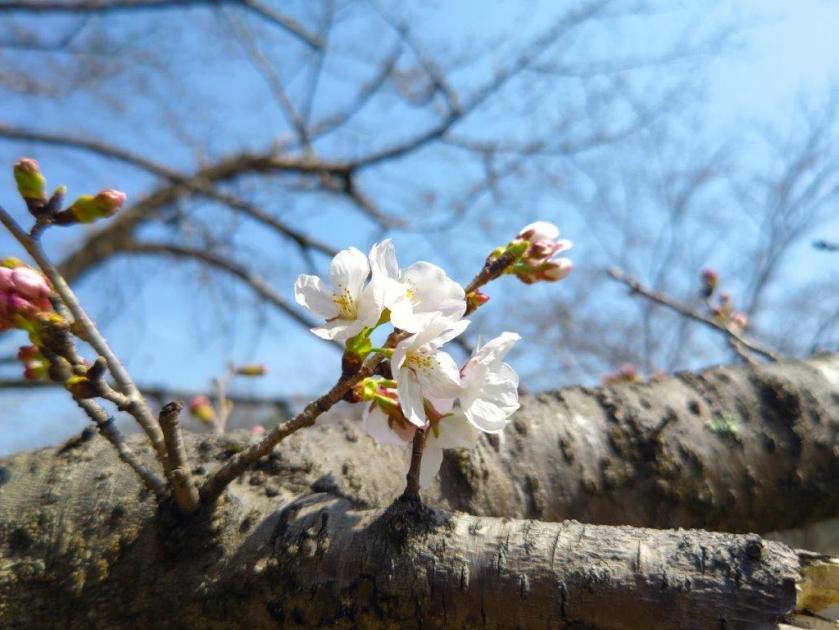
Early Sakura at Rokushagu Shrine

Watch a Video of the Mt Otsuka Hike

Watch the Video of the Hike on YouTube
See a Slideshow of More Pictures of the Hike

This Blog Post Continues a Little Longer…

I was so taken by Naganuma Park that I decided to return on the third Wednesday of April for some more exploring. This time, I’d ride the Chuo line limited express from Shinjuku to Hachioji, and from there, take the Tama Monorail to Takahatafudo, 3 stops from Naganuma station on the Keio line. I chose this slightly longer way to enjoy the view of Mt Fuji from the right side of the Monorail. For the return, I’d simply ride the Keio line from Naganuma station back to Shinjuku.

A short walk from the station would bring me back to Rokushagu shrine (六社宮). There, I’d follow the West ridge (西尾根) trail to the top of the park (頂上園地 chojo-enchi), then walk a short way to the Naganuma Park Observation Point, an open shelter with a view of West Tokyo and the Okutama mountains. I’d then head down the Tochimoto Ridge (栃木尾根) on the east side of the park. After that, if time allowed, I’d head up the Chosenji Ridge trail (長泉寺尾根), and then, halfway up the park, head down the connecting Western Chosenji Ridge Trail (西長泉寺尾根). After descending once again to the base of the park, I’d make my way back to the nearby Naganuma station.

I was looking forward to getting some more views of western Tokyo, as well as the Tanzawa and Okutama mountains. Blue skies were forecast all day, and in this season, I’d also get to enjoy the new green of Spring, as well as the pleasing melody of birdsong, especially the distinctive call of the Uguisu, the Japanese bush warbler, a sure sign that Spring has arrived.

New green at the Top of the Park (left) and on the Chosenji Ridge (right)

Rokushagu Shrine without Cherry Blossoms

Hiking the West Ridge Trail

Bridge with a View near the Top of the Park

Mt Gozen (left), Mt Odake & Mt Mitake (center), Chichibu Mountains (right)

The Naganuma Park Observation Point

West Tokyo and Surrounding Mountains

Mt Mito (center) & Mt Kumotori behind Mt Odake (right)

Top of the Tochimoto Ridge Trail

Heading down the East Side of the Park

View of the Nikkei Housing Complex

In the Distance, the High Rises of Tachikawa

Watch a Video of Naganuma Park

Mt Takao (599m), Hachioji City, Tokyo Prefecture, Sunday, June 9, 2024

I wanted to do a late afternoon hike to take advantage of the longer days of June. I decided to head to Mt Takao in the hope that most people would be on the way home by then. It would be my first visit in a while since lately I’ve preferred the less popular peaks. Although I’d been to the top about a dozen times it would be my first time in June. Looking at the English map on the Mt Takao official site, I chose to go up Trail 6 and down Trails 4, 2 & 1. If I finished early enough, I could enjoy a hot spring bath before heading back.

Hiking in the Meiji no Mori Takao Quasi-National Park

明治の森高尾国定公園

I would ride the Keio line limited express from Shinjuku to Takaosan-guchi, and use the same train for the return. The weather was supposed to be overcast and dry with temperatures cool for the season but comfortable for hiking. I was looking forward to my first late afternoon hike in 2 years and revisiting a familiar place. The cloudy weather meant views would be scarce but I hoped the new green of spring would make the trip worthwhile.

As of july 2025, the Inariyama trail is closed for repair. Consequently, trail #6 (described in this post) has been changed to a one-way ascending-only trail to prevent accidents and traffic jams due to overcrowding. This restriction in in place all day; trail running (in either direction) is also prohibited. In other words, it’s not possible to hike down this trail for the time being (no end date to the restriction has been given). Multiple signs in Japanese and English have been placed at the bottom and top of the trail, as well as long other trails. Please take this into account when planning your hike.

Start of Trail #6 (left) Before the Inariyama Trail Connecting Path (right)

Walking on Water past the Inariyama Trail Connection Path (left & right)

It was a grey day as I rode the mostly empty limited express from Shinjuku, arriving at Takoasan-guchi station a little after 4pm. I passed countless people heading home as I made my way from the train station to the cable car station, the starting point for most of the hiking paths. As I started up trail #6 on a paved road alongside a river, the cable car thundered by overhead; I would not be riding it today as the last one was scheduled for 6pm, well before the end of today’s hike.

River Section of Trail #6 (left) Steps at the Top of Trail #6 (right)

Looking Back at the Steps of Trail #6 (left) Heading Down Trail #4 (right)

I was surprised by the volume of water in the river, considerably more than during my previous visit in the winter months. The number of descending hikers became less and less, and past Oyama Bridge, I had the trail mostly to myself. I was impressed by the height of the cedar trees along the river valley, a reminder that I was inside the Meiji no Mori Takao Quasi-National Park. Shortly after 5pm, I reached a connecting path with the Inariyama Trail (#1) but continued straight along trail #6.

Walking Down Trail #4 (left) Steps Down Trail #4 (right)

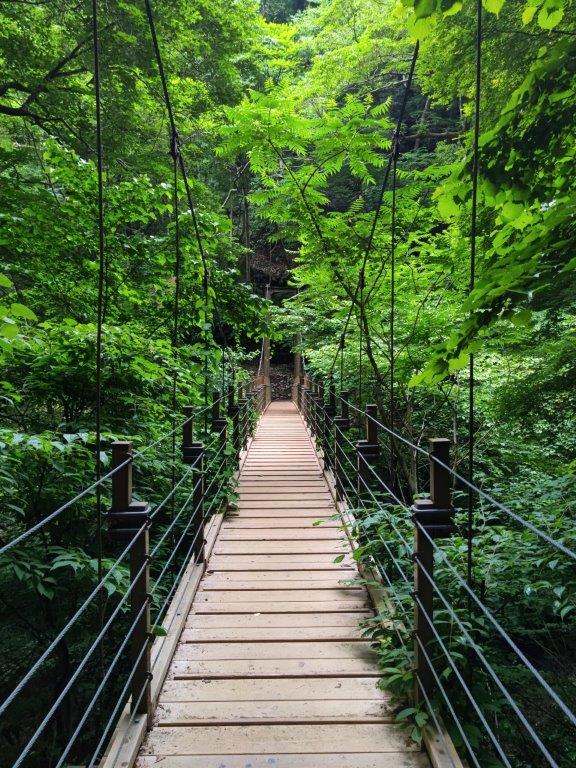
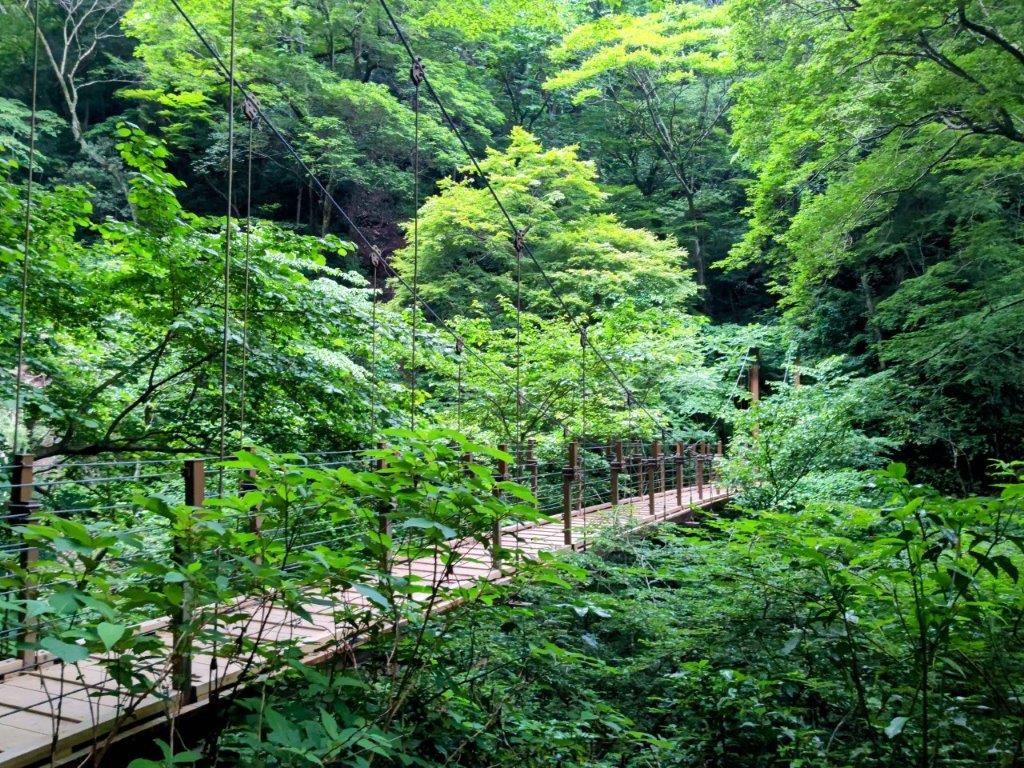
Crossing the Suspension Bridge (left) Near the End of Trail #4 (right)

The trail turned into a stream without warning, the overflow probably due to the heavy rain from the previous days. I hadn’t expected to be walking in water and it was hard to believe I was right at the edge of Tokyo. Eventually, the trail left the river valley, heading straight up the mountain side. The steep ascent was aided by wooden steps, a fairly recent addition. Soon I reached a flat area just before trail #5, a short path encircling the summit. At 5h30, I was standing on the top of Mt Takao, eerily quiet in the early evening.

Wooden Steps on the Higher Sections of Mt Takao

Mt Fuji hidden in the Clouds

It was a rare sight to see the top of Mt Takao empty of people. I made my way to the viewpoint on the south side but today Mt Fuji was mostly hidden in the clouds. After a short break, I made my way down Trail #4 on the other side of the mountain. Many sections were fitted with steps making it easy to walk even as the daylight was swiftly fading. At 6pm, I arrived at a suspension bridge, partially hidden by green tree branches. Before the junction of Trail #4 with the road leading down from the summit, I ducked down Trail #2 for some more forest walking. At 6h30, I reached the now deserted top station of the Takao cable car.

Suspension Bridge Hidden by Tree Branches

Walking a Level Section of Trail #4

I spent a few moments enjoying the quiet atmosphere of what is usually a very busy place, before heading down trail #1, a steep road shared with authorized cars. I walked at a fast pace, overtaking the few people still left, and less than half an hour later, was back at my starting point. At 7pm, I entered the Keio Takaosan Onsen Gokurakuyu (京王高尾山温泉極楽湯), right next to train station and last visited in December 2023. After a refreshing hot spring bath, I hopped onto the Keio limited express train for the one-hour ride back to Shinjuku.

Watch a Video of the Mt Takao Hike

Watch the Video of the Hike on YouTube
See a Slideshow of More Pictures of the Hike

Mt Yamatsuri (383m) & Mt Hiyama (510m), Yamatsuri Town, Fukushima Prefecture, Sunday, February 18, 2024

I wanted to do another hike on the Abukuma Plateau after seeing it from afar on my previous hike. Looking at my Mountains of Fukushima guidebook, I found two short loop hikes on opposite sides of the Kuji river, just across the border with Ibaraki prefecture. It was similar to a hike I had done in 2019, but somewhat further up the valley. Looking online, it seemed I could get some great views of the whole area; at the end, I could visit a nearby waterfall, if time allowed.

Hiking in Tohoku 東北

I would ride the Hitachi Limited Express from Ueno to Mito, and there transfer to the Suigun line, getting off at Yamatsuri station, two stops past Hitachi-Daigo. For the return, I could continue along the same line, all the way to Koriyama, the last station, from where I could catch the shinkansen back. The weather was supposed to be sunny and cloudy, with temperatures above average for the season. I was looking forward to riding the entire length of the Suigun line for the first time, and getting some new views of the Abukuma Mountains.

For subscribers, read this Blog Post on Hiking Around Tokyo for a better viewing experience and the latest updates

Start of the hike (left) Near the Top of Mt Yamatsuri (right)

Heading Down Mt Yamatsuri (left) and Mt Hiyama (right)

It was a blue sky day as I got off the colourful train car just before 11am, the other cars having been left behind a few stations back. I immediately headed to the nearby trail entrance, and soon reached the first viewpoint of the day, on a rocky ridge slightly off the main path. After taking in the views of the river valley below, I made my way up some log steps leading to a paved path. Shortly after a viewpoint of Hizuki Rock (日月岩 hizuki-iwa) to the south, I reached the start of the hiking trail on the right. In almost no time I reached a treeless ridgeline, from where I had a view of the Abukuma plateau to the north.

View North of Abukuma-kochi from below Mt Yamatsuri

View North of Abukuma-kochi from Tendozuka

I was amazed by the bird’s-eye view of the valley and hills below, especially since my elevation was relatively low. A few minutes later, I arrived at the summit of Mt Yamatsuri (矢祭山 やまつりやま yamatsuri-yama). Northeast, I could see Mt Yamizo. The clouds had started to roll in, creating alternating patches of light and dark on the scenery. I quickly moved on, and after a short up and down, reached the flat top of Tendozuka (402m 天道塚 てんどうづか) from where I had a nearly 360° view of the entire area.

Looking down from Hizuki-iwa

Looking East towards Mt Hiyama

I was stunned by the vast panorama, most of the surrounding mountains new to me; apparently even Mt Fuji could be seen, although not today. It was just past noon so I had sat on one of the many benches for an early lunch. At 12h30, I started to head down. On the way, I passed a viewpoint on the side of Hizuki Rock. From the rocky outcrop, I could see the meandering Kuji river below. The trail now hugged steep mountain side, mostly out of the trees, and it felt very warm under the sun. At 1pm, I reached the base, and after crossing a red hanging bridge, headed up a trail through the cedars. I soon turned left onto a forest road which I followed for a while, before leaving it for a path on the right.

Red Hanging Bridge over Kuji River

View North of the Kuji River Valley

At 2pm, I reached a level area with a bench and a wide view. Directly ahead, the Kuji river valley extended northwards. On the west side, I was looking down at the loop hike I had walked earlier in the day, with the bulk of Mt Yamizo spreading out in the background. A few more minutes of walking brought me to the top of Mt Hiyama (檜山 ひやま hiyama) where I finally a had a good view on the south side. I could see the rugged outline of Mt Nantai, the most famous peak in the area. After a short break, I headed back down the same way. Since I was on schedule, I made a detour via Muso Taki (夢想滝 dream waterfall), which I reached at the end of a narrow ravine.

Mt Nantai (left) from the top of Mt Hiyama

In the foreground, Mt Yamatsuri, in the background, Mt Yamizo

Although the waterfall in this season was rather small, I was impressed with the huge overhanging cliff right next to it. It was nearly 3h30 so I made my way back to the station to catch one of the few afternoon trains for the one hour and a half ride to Koriyama. Along the way, I enjoyed some views of the higher mountains of Fukushima prefecture on the west side. After arriving in Koriyama, I boarded the shinkansen for the one hour ride back to Tokyo. I saw few people and had lots of great views on today’s hike so I was glad I had gone all the way to a little visited in area northeastern Japan.

Watch a Video of the Mt Yamatsuri & Mt Hiyama Hike

Watch the Video of the Hike on Youtube
See a Slideshow of More Pictures of the Hike

Haga-Fuji (271m), Motegi Town, Tochigi Prefecture, Saturday, February 10, 2024

I wanted to explore more of the Kanto Fureai no Michi, its trails being well-suited for winter hiking. I decided to do a section between Motegi and Nanai stations in eastern Tochigi, mostly following back lanes through an area of low hills, at the southern edge of the Abukuma Plateau. It had snowed heavily a few days before so this felt like a safe choice. At the halfway point was another local “Fuji”, with supposedly good views from the top, although I hoped no snow would be left on the steep climb.

Hiking the Kanto Fureai no Michi

関東ふれあいの道

I would ride the Utsunomiya line to Oyama Station, and then the Mito line to Shimodate station. There, I would transfer to the private Mooka line (pronounced “mo-oka”) and get off at the last station. For the return, I could get catch a bus for Utsunomiya, and then ride the shinkansen back to Tokyo. The weather was supposed to be sunny and cold, but not freezing. I was looking forward to a relaxing station to station hike and getting some new views in a little-visited area.

For subscribers, read this Blog Post on Hiking Around Tokyo for a better viewing experience and the latest updates

Heading up (left) and down Haga-Fuji (right)

A Well-Maintained Trail on Haga-Fuji (left) with Views through the Trees (right)

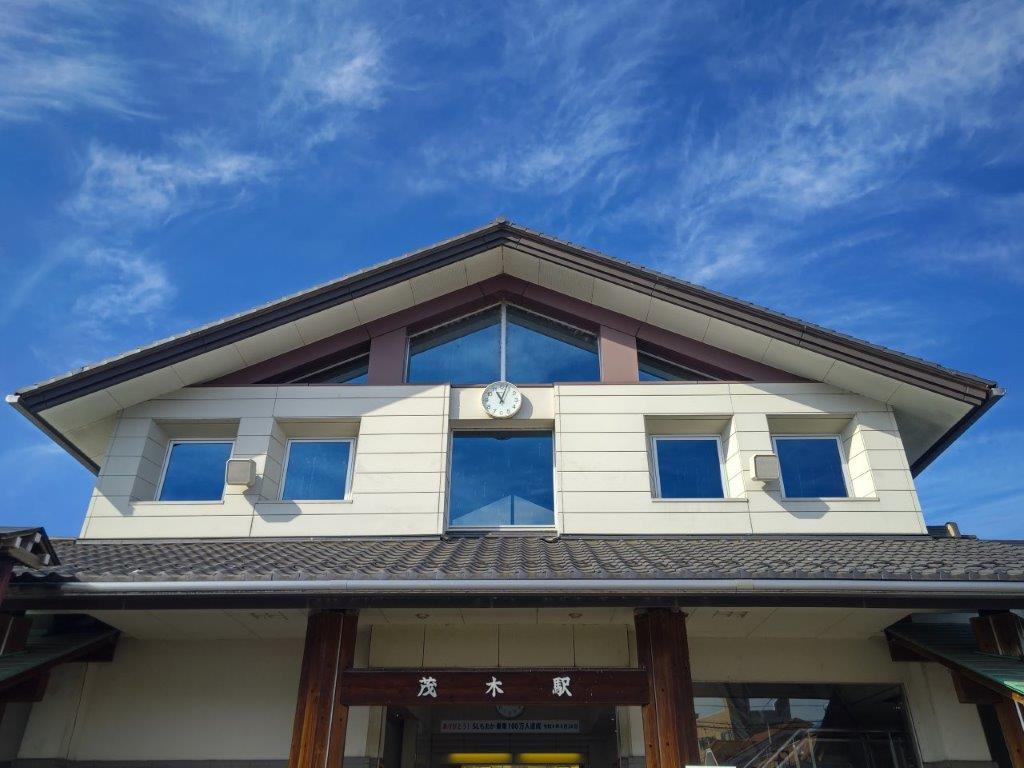
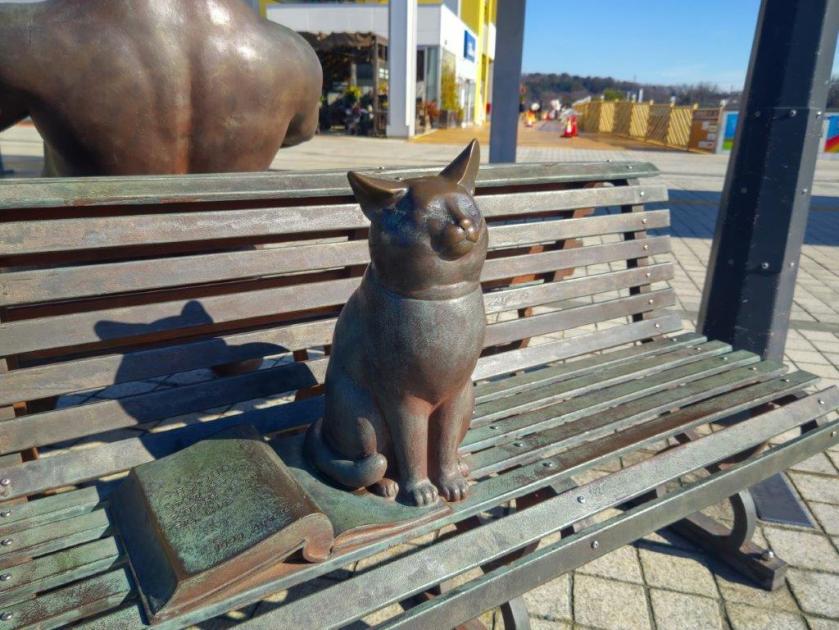
It was a beautiful blue-sky day as I stepped off the train at Motegi just before 11am. I was surprised by how few people visit this charming riverside town in the hills, although it might be due to the winter season. I set off half an hour later and followed a promenade along the Sakasa river. On the way, I passed the quiet “Cat Store” (猫の雑貨屋), a small shop and cafe selling cat-related goods, and the busy “Motegi Roadside station” (道の駅もてぎ), from where I got a glimpse of the steam locomotive (SL) that runs on the Moka line on weekends.

Promenade along the Sakasa River

Walking through the Tochigi Countryside

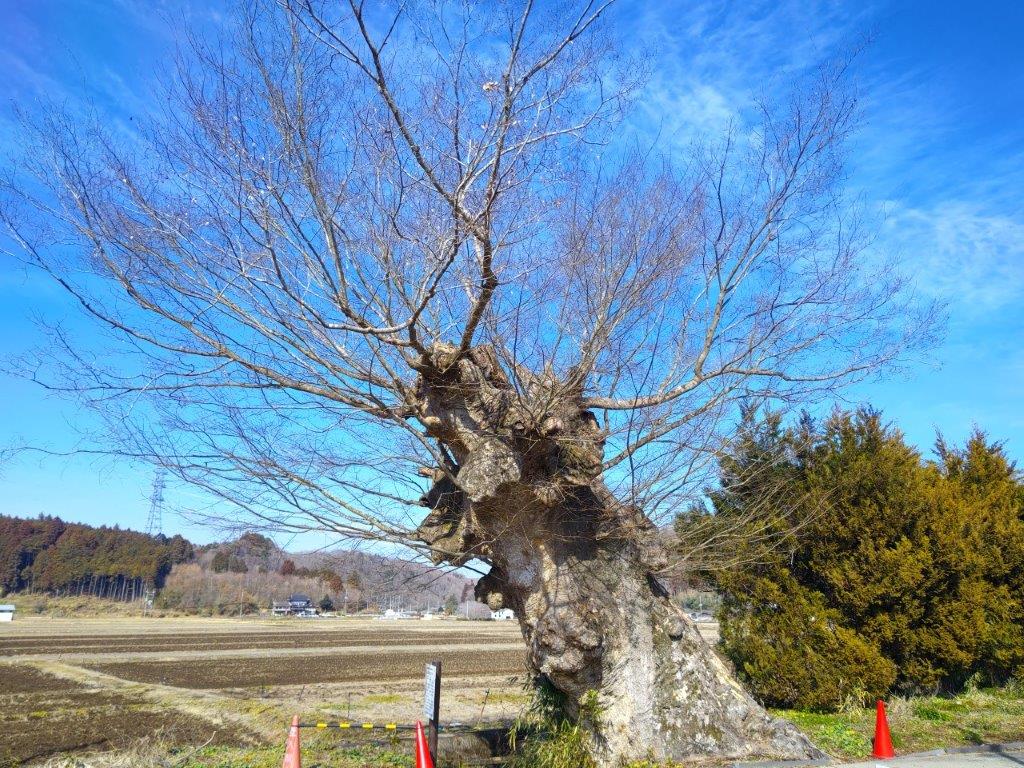
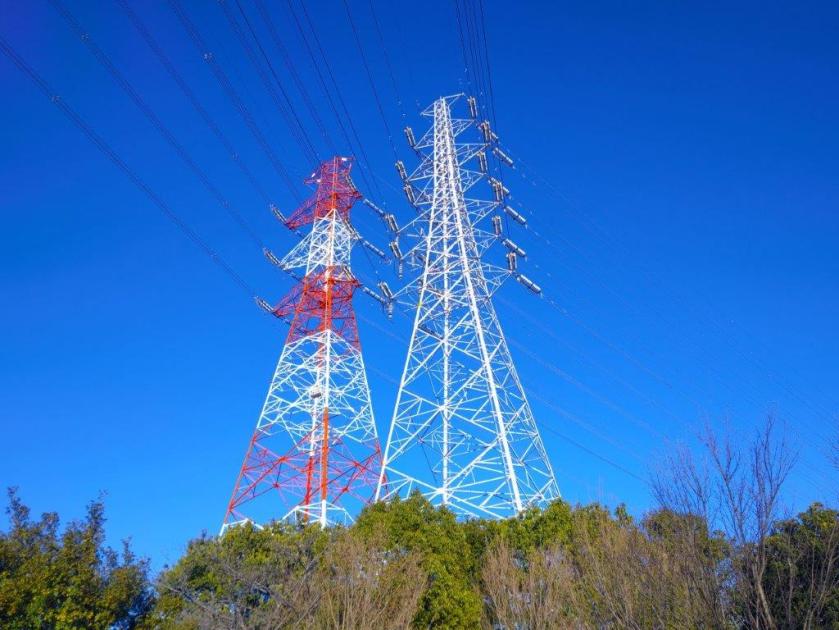
It was a day for sights in the sky: white herons taking off above the river, wispy cirrus clouds moving quickly overhead, a helicopter whizzing by, power lines spanning the sky between pylons, and even a couple of circling hang-gliders which I first mistook for birds of prey. After a short bit on a busy road, I crossed a bridge and left the Sakasa river for a short detour by Anraku-ji temple (安楽寺) and its 600-year-old Zelkova tree (“keyaki“), from where I had my first glimpse of the conical top of today’s mountain. Thirty minutes later, I passed some terraced rice fields, one of the 100 rural landscapes of Tochigi, still covered in snow. Soon after, I reached the entrance to the hiking trail on the left.

Mt Yakimori & Mt Keisoku from near the top of Haga-Fuji

Mt Amamaki & Mt Takamine from halfway down Haga-Fuji

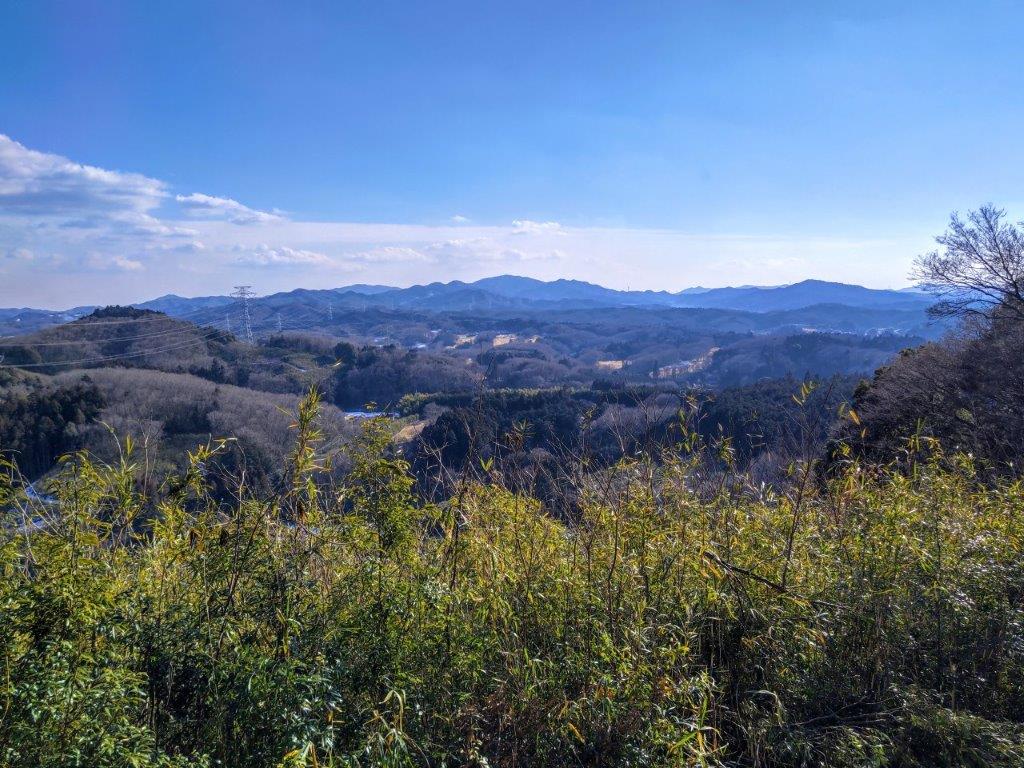
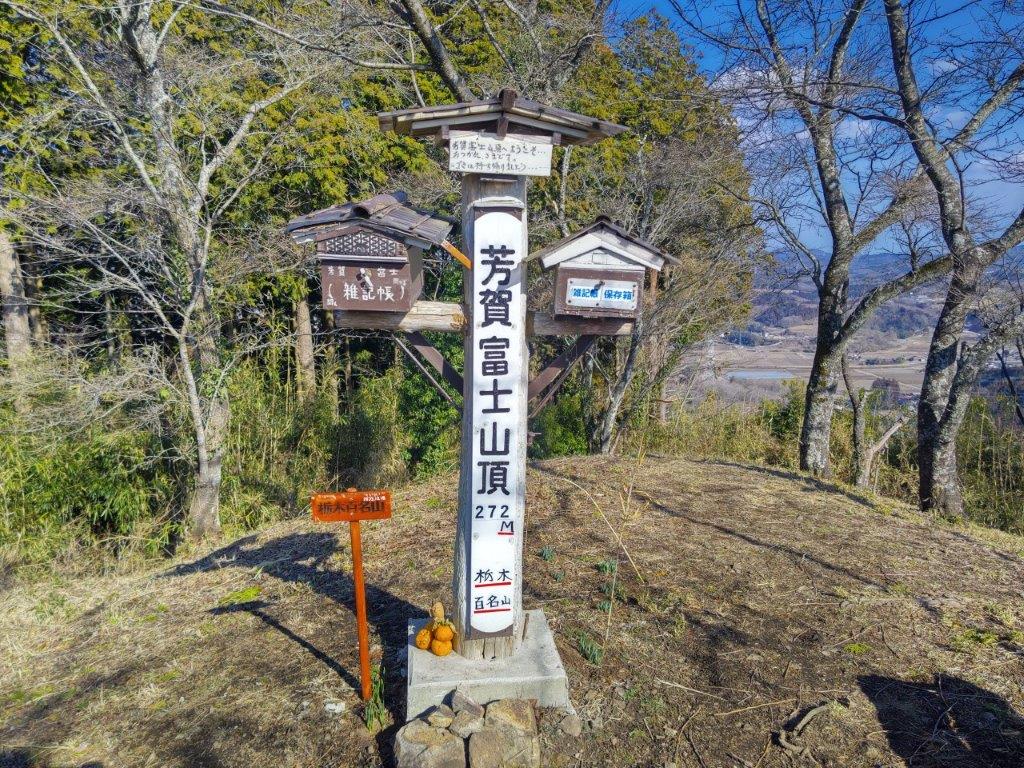
I was surprised to see the path covered in snow, with only one set of footsteps. Luckily, once it entered the forest, the snow all but disappeared. After a steep but short climb through cedars, I reached a dirt track with a wide view on the east side. I could see Mt Yakemori and Mt Keisoku, as well as the other Mt Fuji in the area. One final effort brought me to the highest point of Haga-Fuji (芳賀富士 はがふじ), a 100 famous mountain of Tochigi. The view was mostly blocked by trees; through a gap on the southwest side was a view of the real Fuji, although today it was lost in the haze. It was 2pm so I sat on one of the benches for a late lunch. After half an hour, I headed down a switchback trail on the south side.

Snowy Section of the Fureai no Michi

Looking back at Haga-Fuji

This was by far the most pleasant part of the hike. Halfway down and slightly off the trail, I had a view to the south of Mt Amamaki and Mt Takamine, as well as the Ogodo Alps. I soon reached the base, and after passing Kumano shrine and Anzen-ji temple (安善寺), was back on countryside lanes. Turning around at the top of a slope, I could admire the conical shape of today’s peak. Another hour of uneventful walking brought me to a bus stop near Nanai station; a little after 4pm I boarded the bus for Utsunomiya, where I hopped on the shinkansen for the short trip back to Tokyo.

View a Video of the Haga-Fuji Hike

Watch the Video of the Hike on Youtube
See a Slideshow of More Pictures of the Hike

Nihondaira (307m) & Mt Udo (308m), Shizuoka City, Shizuoka Prefecture, Sunday, December 17, 2023

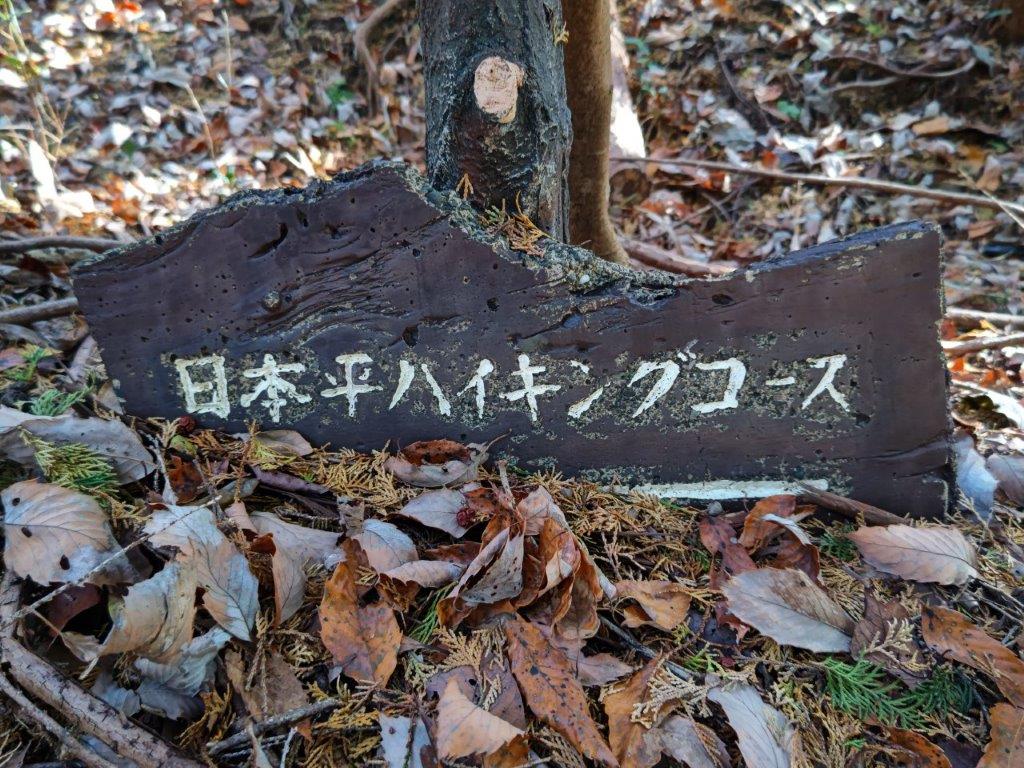
I wanted to do a hike in Shizuoka, last visited one year ago, to take advantage of the warmer ocean climate and the Mt Fuji winter views. While researching my December 2022 trip to Shimoda, I’d noticed a ropeway on Suruga Bay, opposite the Izu peninsula. Further investigation showed that the top station was located on Nihondaira, a low plateau with several short hiking trails, including a section of the Tokai Nature Trail, the Shizuoka Bypass Route. Looking at my map, I saw I could do a station to station hike long enough to justify the cost of the trip. From the station, I would walk up to the observation deck at the highest point, and after a short roundtrip to a nearby minor peak, return via a different route; although, to my regret, I’d have to skip the ropeway. I would ride the shinkansen to Shizuoka station; a couple of short transfers would get me to Kitsunegasaki station, near the start of the hike. Before heading back to Shizuoka station from the Kusanagi JR station, I could drop by the nearby Kusanagi no Yu for a hot spring bath. The weather was supposed to be sunny and cold, as well as a little windy. I was looking forward to exploring a new hiking spot and getting some good views of Mt Fuji from a new direction.

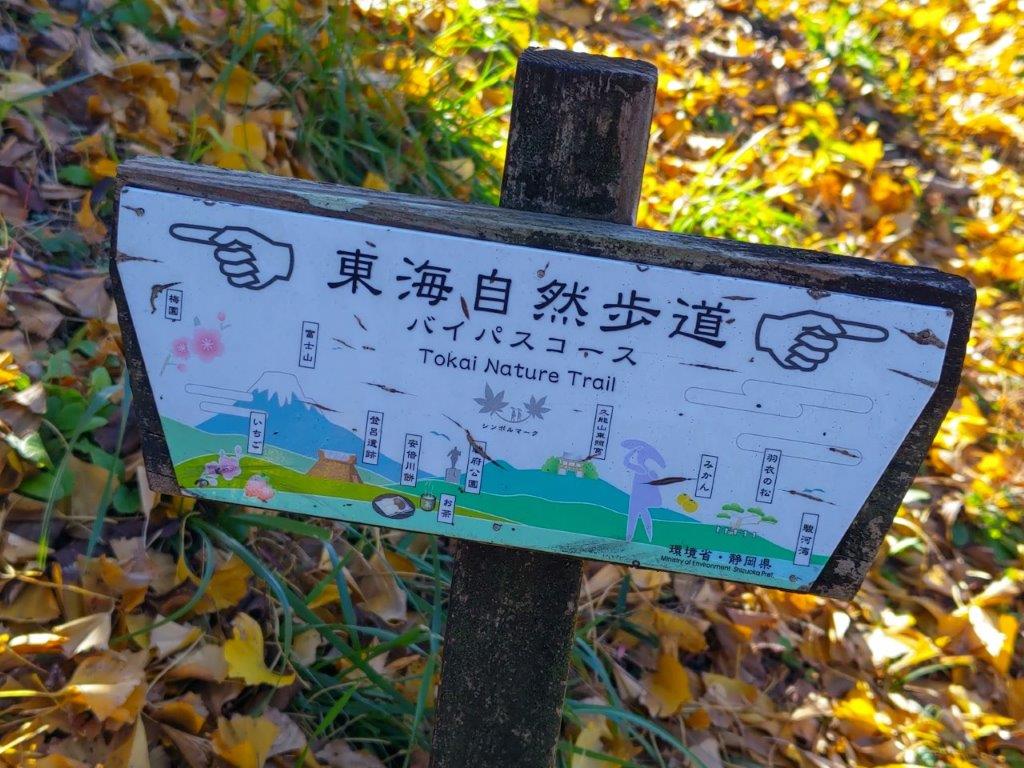
Hiking the Tokai Nature Trail 東海自然歩道

Read this Blog Post on Hiking Around Tokyo

Country lane (left) leading to the Tokai Nature Trail (right)

Walking down from Mt Udo (left) and from Nihondaira (right)

It was a blue-sky day and Mt Fuji was clearly visible as I rode the shinkansen from Tokyo station. After getting off at Kitsune-ga-saki station, it still felt quite cold, so I retreated to a nearby 7/11 to buy some food and water for the day. At 1030, I finally set off along a narrow road, next to a small river, passing several unmanned vegetable stands, a common sight in rural Japan. After walking through some tea fields, I arrived at the entrance of Shimizu Funakoshi Zutsumi Park (清水船越堤公園) just after 11am. After checking out the view of Mt Fuji from inside the park, I continued along the road, and finally reached the Mabase Route (馬走コース on the Tokai Nature Trail just before noon.

Hiking along the Nihondaira Alps

The trail weaved left and right, up and down, along a narrow forested ridge; the treetops swayed in the breeze, occasionally letting through the sunshine. Half an hour later, I reached Mabase Fork and the end of the hiking trail. There, I turned left and walked up a straight road leading to the highest point of the Nihondaira (日本平), also a sightseeing spot with a hotel, souvenirs shops and restaurants. After quickly checking out the eastern observation deck, I made my way to Yume Terrace (夢テラス), one of the most beautifully designed observation towers I’ve ever visited, its wooden deck curving east to west on the north side.

Walking through the Shizuoka Countryside

Walking along the Shizuoka Tokai Nature Trail

I had a stunning view of snowcapped Mt Fuji, rising above Mt Hamaishi. To its right, past Suruga Bay, I could see Mt Ashitaka, Mt Hakone and the Izu peninsula; to its left, beyond Shizuoka city, I could observe the southern edge of the Minami Alps, Mt Daimugen visible in the distance; on the opposite side was Mt Takakusa and the Pacific Ocean, sparkling in the sun. Since it was 1h30, I sat down on a bench for lunch with a view. The wind was blowing quite a bit, so I soon set off for today’s only peak. I walked down a short section of the Shimizu-Nihondaira road, being careful of the traffic, till I reached a trail on the right. After a short climb, the path at times rather faint, I reached the top of Mt Udo (有度山 うどやま udoyama), just one meter higher than the top of the Nihondaira Plateau.

View of Mt Fuji from Yume Terrace at the top of Nihondaira

View of the Izu Peninsula from the top of Mt Udo

I was stunned by the blue colours of the sea below, visible from a gap in the trees on the southeast side. It was shaded light blue in the nearby shallows and dark blue further out in the bay; the tiny waves were topped with white foam on this windy day. On the other side of the bay was the outline of the western coast of Izu Peninsula, an area of scenic beauty relatively close to Tokyo. After a short break, I retraced my steps to Mabase fork. There, I left the Tokai Nature Trail and continued straight, first down some wooden steps through the cedars, then down stones ones alongside a golf course, reaching Kusanagi fork and a paved road at 3pm. I crossed the road, continuing on the hiking path, and at the top of small rise, turned right, following a trail signposted for the Kusanagi Museum (美術館), not featured on any of the map signboards (the official Kusanagi Route continues straight and merges with a paved road after a short while).

Start of the Nihondaira Alps

Looking back at the Nihondaira Plateau

Very soon, I reached a view point of Mt Fuji, its snowy summit poking above a green ridgeline. After a short descent, I found myself walking northwards, along a forested ridge squeezed between two roads. The trail went up and down, a kind of “Nihondaira Alps”, although I couldn’t find any reference to this name. Eventually, I reached the edge of the city, rows of houses crowding in on the east side. I was now walking through a bamboo forest, the densely packed stalks blocking the late afternoon light. I eventually arrived at a fork: left for the museum and right for the University of Shizuoka. I took the right branch, since it was the most direct route to the station, leaving the museum for another day. By 4pm, I was back at the station, and after a refreshing hot bath, I caught a train for Shizuoka station, where I boarded the shinkansen for the one-hour ride back to Tokyo.

Hiking Trail at the Edge of the City

Near the End of the Nihondaira Alps

This hike took about 5 hours, excluding breaks, just the right length for a day hike. The view from the top of Nihondaira was blocked by trees on the southeast side, so it was worth making the roundtrip to Mt Udo to complete the view. The highlight of the hike was the hilly trail between Kusanagi fork and Shizuoka University: it was well-maintained and signposted, with several views of Mt Fuji along the way, even though it doesn’t appear on any maps. I’d like to return one day to explore more trails in the area, and perhaps hike the “Nihondaira Alps” in reverse.

Watch a video of the Nihondaira Hike

Watch the Video of the Hike on Youtube
Watch a Slideshow of more Pictures of the Hike

Mt Yadaira (860m), Otsuki and Uenohara Cities, Yamanashi Prefecture, Friday, December 30, 2022 [Map Available]

For my last climb of the year, I wanted to do a station to station hike close to Tokyo, and on local lines, since I was worried about the reduced, year-end bus schedules and holiday travelers. I had walked most of the entire ridge south of the Chuo line, but, earlier in the year, I found a JR East hiking map, reminding me of an unexplored section between Yanagawa and Shiotsu stations. With a total time of around 5 hours and a chance to spot Mt Fuji from the summit, it seemed ideal for the last outing of 2022.

Get a map of the Mt Yadaira Hike
This map was developed for Japanwilds with the Hokkaido Cartographer

Find more Japan hiking maps on Avenza

Hiking along the Chuo Line 中央線

The summit of Mt Yadaira, just before Terashita Pass

I arrived under cloudy skies at Yanagawa station around 10am. After getting ready, I set off for the trail entrance, past a bridge on the other side of the Katsura river valley, reaching it at 11am. The sun had come out by now and sunlight was shining through the trees. The path followed a narrow valley along a dried-up riverbed; I was walking in the shade, since the winter sun was now hidden by the steep mountain-sides.

View of the Katsura river

Start of the hiking trail

I found it challenging to walk on the layer of dead leaves that had piled up during the autumn: it was like walking through ankle-deep snow. I was able to follow the trail thanks to the presence of fixed ropes, even on the level sections. My stick, which I mainly use for descending, helped me keep my balance. When the path started to zigzag up the mountain side, I had to be doubly careful not to slip on the dead foliage.
First views through the winter trees

The steepest section of the hike (left) / Approaching the summit (right)
I was relieved to be back on a sunny, leaf-free path, a little after noon, after rounding a bend. Looking north through the bare trees, I had a view of the mountains on the north side of the Chuo valley. I followed the now easy to walk trail southwards, merging with the ridgetop trail at Terashita Pass (寺下峠), half an hour later. On the way, I had a view of the rounded top of today’s peak, the curving ridgeline making it look deceptively close.

View of the Tanzawa mountains

Closeup of Mt Hiru, the highest peak of Tanzawa

I next went up the steepest section of today’s hike, and soon reached the summit of Mt Marutsuzuku (763m 丸ツヅク山(まるつづくやま marutsuzukuyama). It was completely in the trees so I quickly moved on. Very soon, I arrived at a short rocky section, that required some scrambling. Halfway up, I turned around and got a glimpse of the Doshi mountains on the south side. Turning around again, I suddenly spotted a black thing, slowly rising above the bushes.

View of Mt Omuro through the pines

Sun on the ascent (left) / View of Mt Jinnohako (right)

I thought it was a bear, but it turned out to be a camera on a tripod. It belonged to the only person I met today; he had been so quiet, that I had no idea he was nearby. I continued past him, and shortly after, arrived at the summit of Mt Yadaira (矢平山 やだいろやま yadairayama). It was also surrounded by trees, but a little further along the trail, was a clearing with a view of the Tanzawa mountains on the south side. Directly opposite, was Mt Omuro, dark and dramatic against the afternoon sun; Mt Fuji was hiding in the clouds. Since it was 1h30, I sat on a tree stump for a short lunch break.

Looking back at Mt Marutsuzuku

The Kanto mountains from just below Shinochi Pass

I resumed my hike and had an impressive view of a pine covered, solitary peak through a gap in the trees, slightly off the main ridge. The summit could be reached via a short roundtrip, so I decided to check it out quickly. The top of Mt Jin-no-Hako (810m 甚之函山 じんのはこやま jinnohakoyama) was again in the forest, but midway up, I had a view west of today’s summit, with Mt Mitsutoge in the background. Back on the main trail, I soon reached Shin-Ochi Pass 新大地峠), just after 2h30, where I turned left and headed down the mountain.

Descending through the forest

The surrounding landscape was golden in the late afternoon sun

I soon had a stunning view of the Kanto mountains, the triangular summits of Mt Mito and Mt Odake clearly visible below the blue winter sky. I crossed a road and then followed a gently descending trail westwards through the forest. This was the most pleasant part of the hike, the surroundings golden and peaceful in the late afternoon sun, except for the regular tap tap of a solitary woodpecker.
Mt Ogi (left) and Mt Gongen (right) in the late afternoon light

Arriving at the end of the hike

Before the trail curved north, I had one last view of Mt Ogi and Mt Gonzen, framed by two tree trunks, their features highlighted by the late afternoon light. At 4pm, I emerged from the forest, onto a road through a village, just as the last rays of sun vanished from the valley. It took another 15 minutes to reach Shiotsu station, from where it was a one hour ride back to Shinjuku.

See a video of the Mt Yadaira hike

Mt Izugatake (851m), Hanno City, Saitama Prefecture, Sunday, November 27, 2022

I had climbed this peak over ten years ago, starting at Shomaru station, passing by Nenogongen Tenryu-ji Temple and ending at Agano station. This time, I wanted to climb it again as a station to station hike on the north side, which would also include a section of the Kanto Fureai no Michi. I could also take advantage of the direct limited express to Nishi-Agano, the last one running during the autumn season.

View towards the Green line from above the Old Shomaru Pass

Doraemon’s “anywhere door”, near Shomaru station

It was a sunny autumn day as I rode the Seibu Laview from Ikebukuro. At Nishi-Agano, I transferred to the Seibu-Chichibu line for the one-station ride to Shomaru station. A little after 10 am, I set off on a paved road along a stream, and soon reached the start of the hiking trail under a massive, orange Japanese maple.

Hiking in the sun near Kame-iwa

Steps leading to Mt Gorin (left) Approaching Mt Kawagoshi (right)

I followed the narrow path as it wound up the mountain side through a dark cedar forest. Just after 11am, I passed Kame-iwa (かめ岩), now walking in the sun; soon after, I arrived at Mt Okura (大蔵山 720m), a minor peak surrounded by trees. Here, I turned left, following the ridge; after climbing some log steps, I reached the top of Mt Gorin (五輪山 770m, meaning 5 rings), also within the forest. A little beyond, I stopped at junction, below the summit of today’s mountain.

Autumn colours near the summit of Mt Izugatake

View of the Kanto plain from just below the summit

I chose the gently sloping right branch, skipping the steep, rocky path of the other approach; I had already done my first time up this peak. A little before noon, I reached the summit of Mt Izu (伊豆ヶ岳 いずがたけ izugatake). Through the trees on the east side, I could see the low hills of Oku-Musashi, and beyond the Kanto plain; on the west side, the snowy top of Mt Asama was visible in the distance. After a short break lunch, I went back the same way.

A trail marker for the Kanto Fureai no Michi

Easy walking along the ridgeline

I followed the gently undulating ridgeline, the bare forest surrendering occasional glimpses of forested hills. I was now walking on the well-maintained Kanto Fureai no Michi. At 1pm, I reached a teahouse at Shomaru Pass (正丸峠) where I had a view of the valley leading to Shomaru station. I crossed the road, rejoining the hiking trail, and passed an arbor, the surrounding view mostly blocked by the trees.

Hiking between the Shomaru and Old Shomaru passes

Steps leading to Mt Shomaru (left) Steps leading to the Old Shomaru pass

I continued on the relaxing, easy trail, the autumn sun now below the treetops; I passed the minor peaks of Mt Shomaru (正丸山 785m) and Mt Kawagoshi (川越山), and at the bottom of a long series of log steps, arrived at the Old Shomaru Pass (旧正丸峠), just before 2pm. Here, I turned right, leaving the Kanto Fureai no Michi, heading into the forest and down the mountain. After crossing a road, the trail ran alongside a small stream.

Last autumn colours of the season under a rocky outcrop

Approaching the end of the hiking trail

I passed by some trees in beautiful autumn colours, at the base of a rocky outcrop, probably the last time to see autumn leaves while hiking this year. At 3pm, I exited the forest and followed the road back to the nicely-designed Shomaru station, just a short distance away. There, I boarded the local train for the one-stop ride to Nishi-Agano and then transferred to the limited express for the one hour ride back to Ikebukuro.

See a video from the Mt Izugatake hike