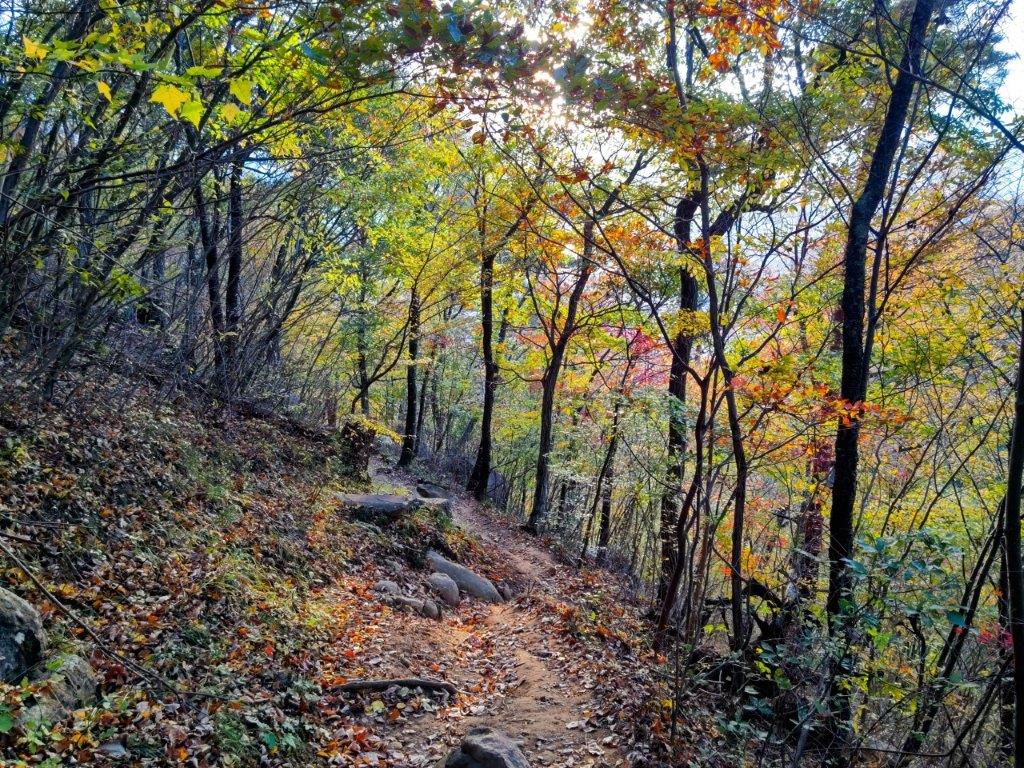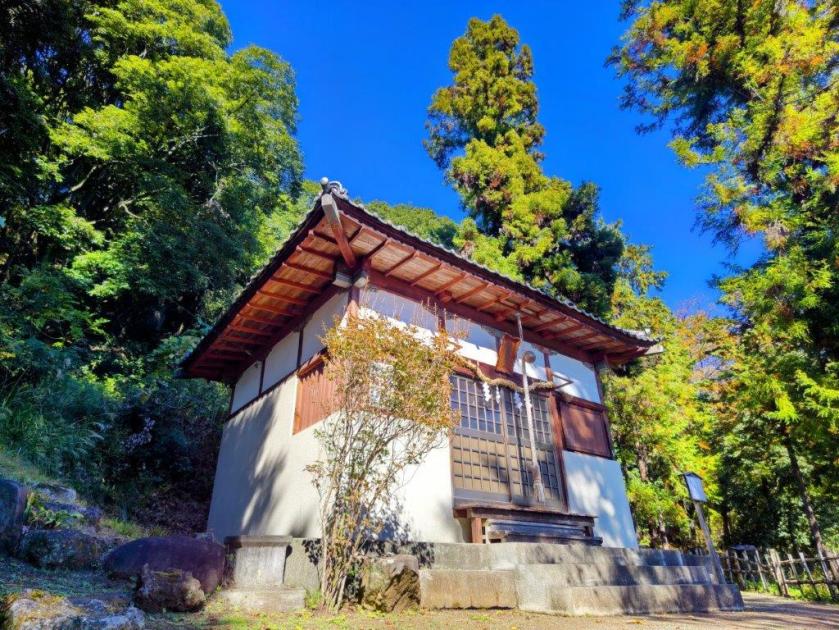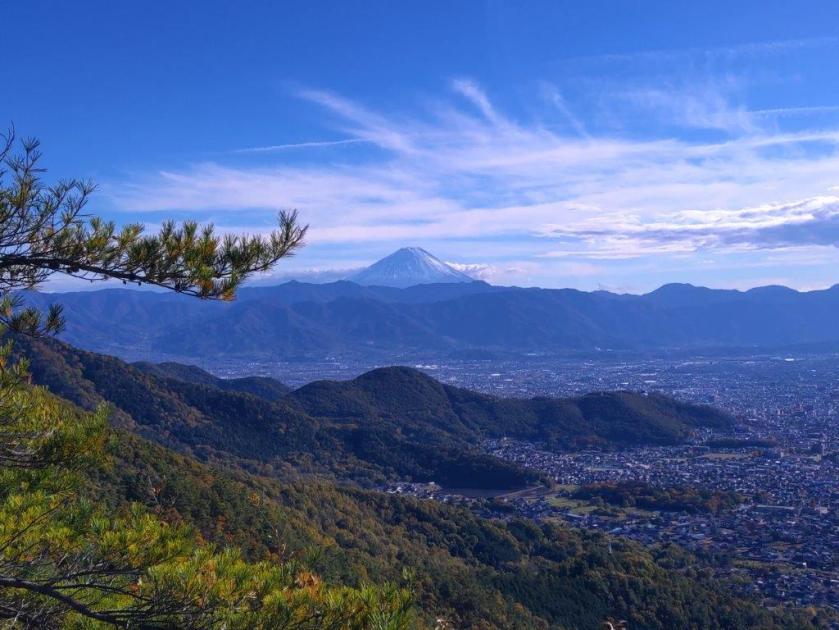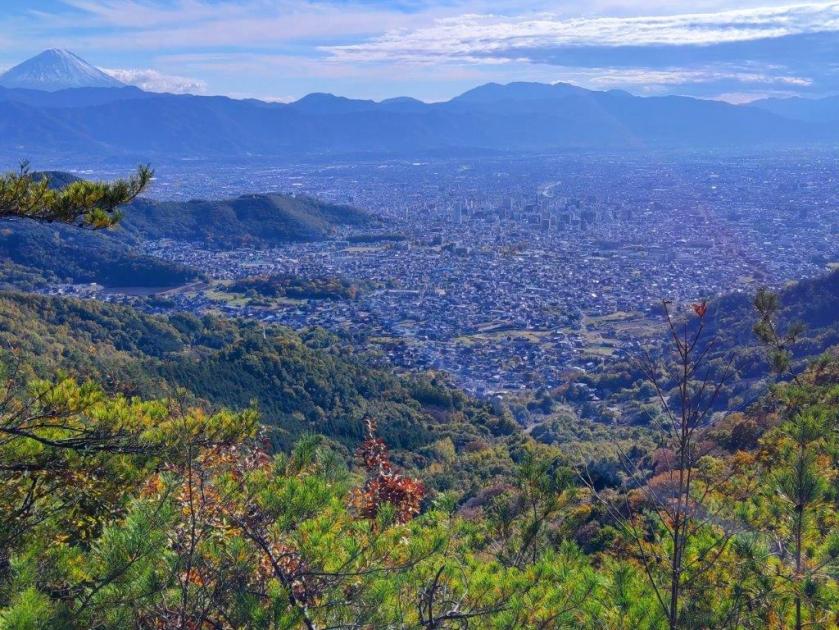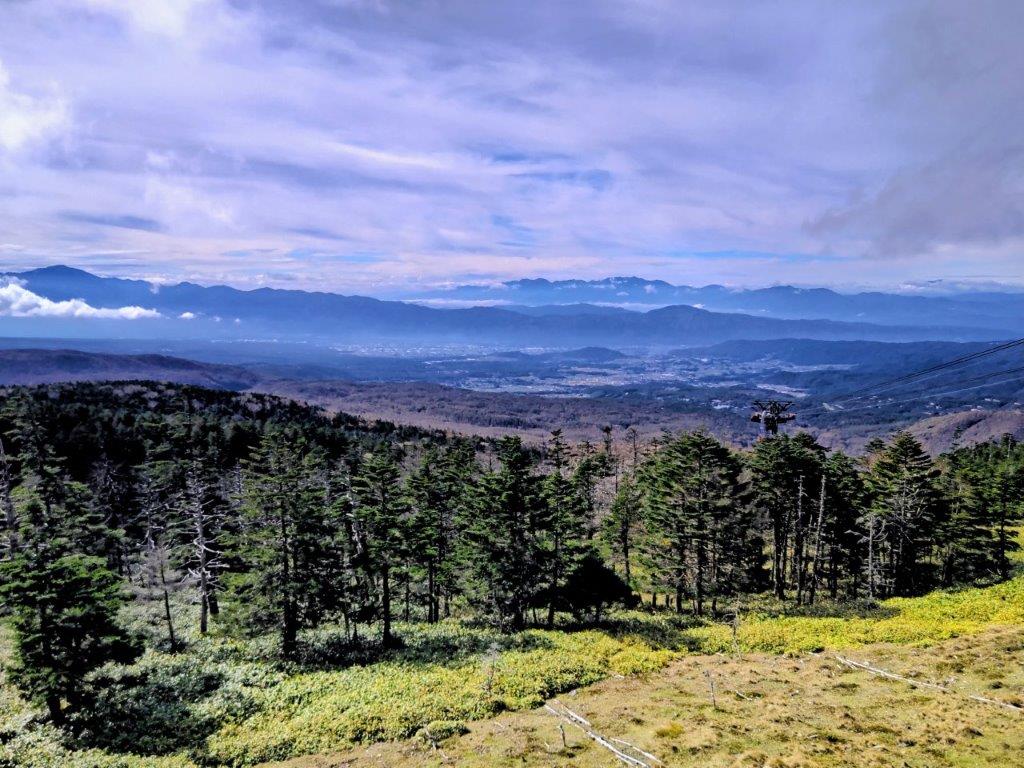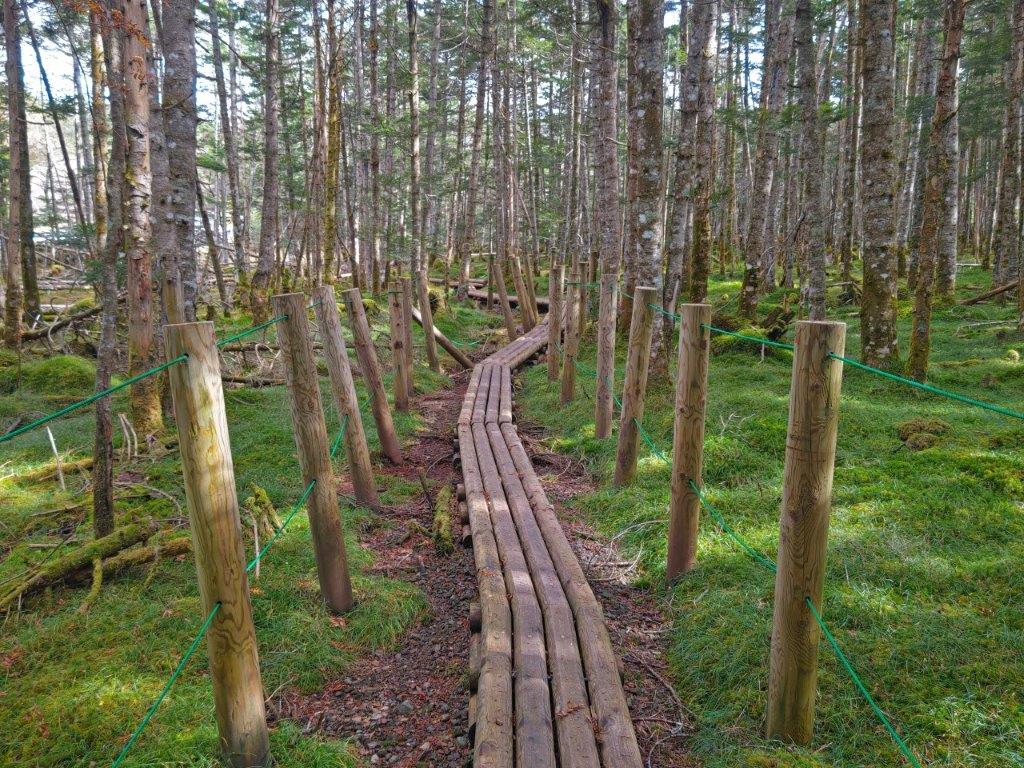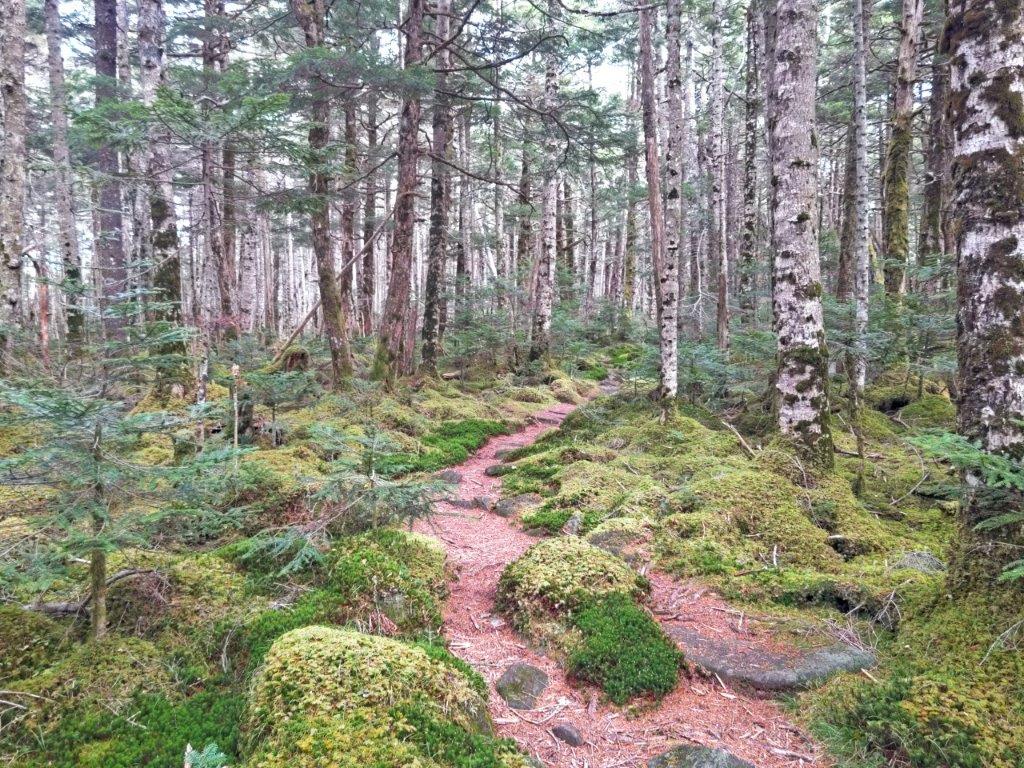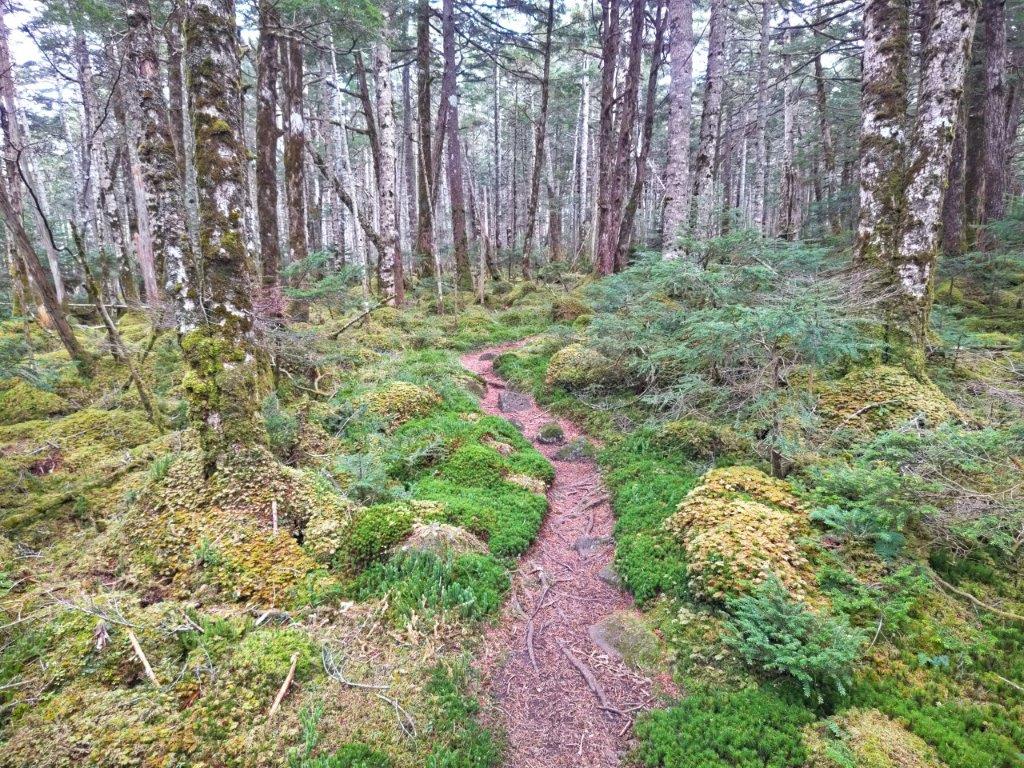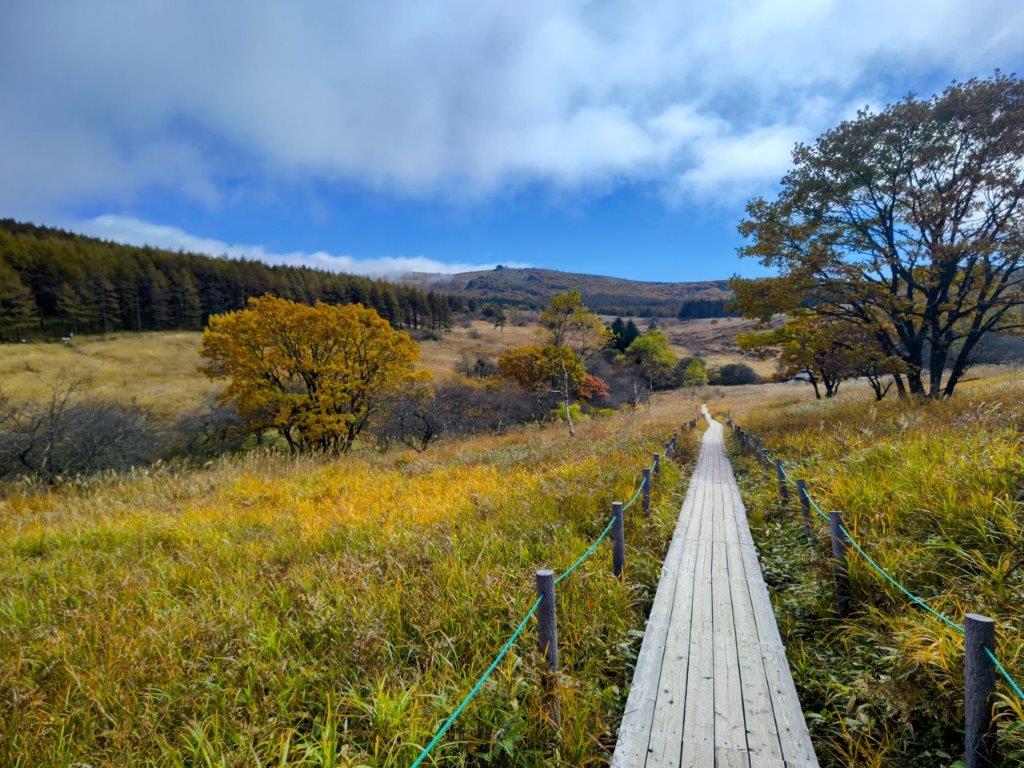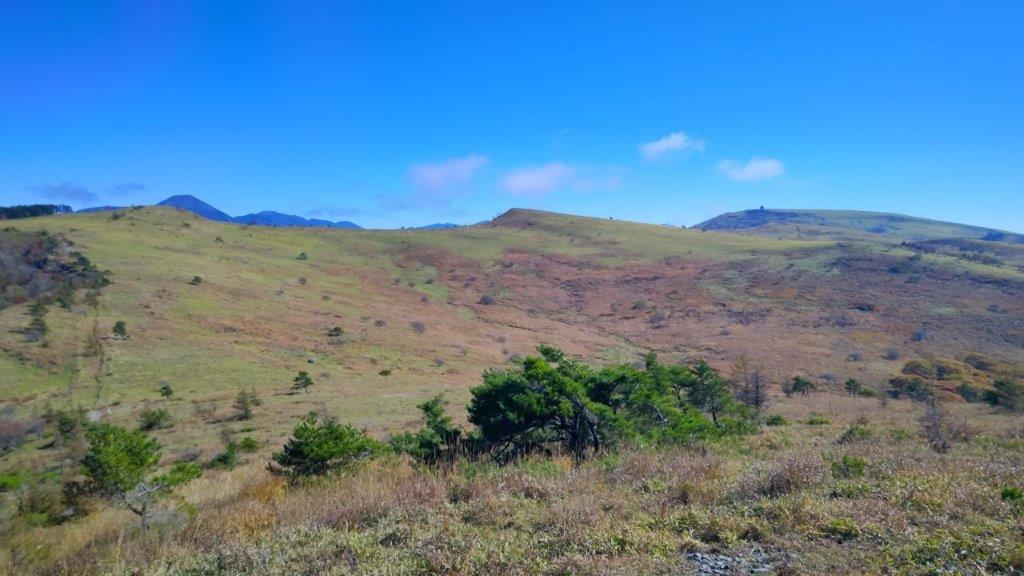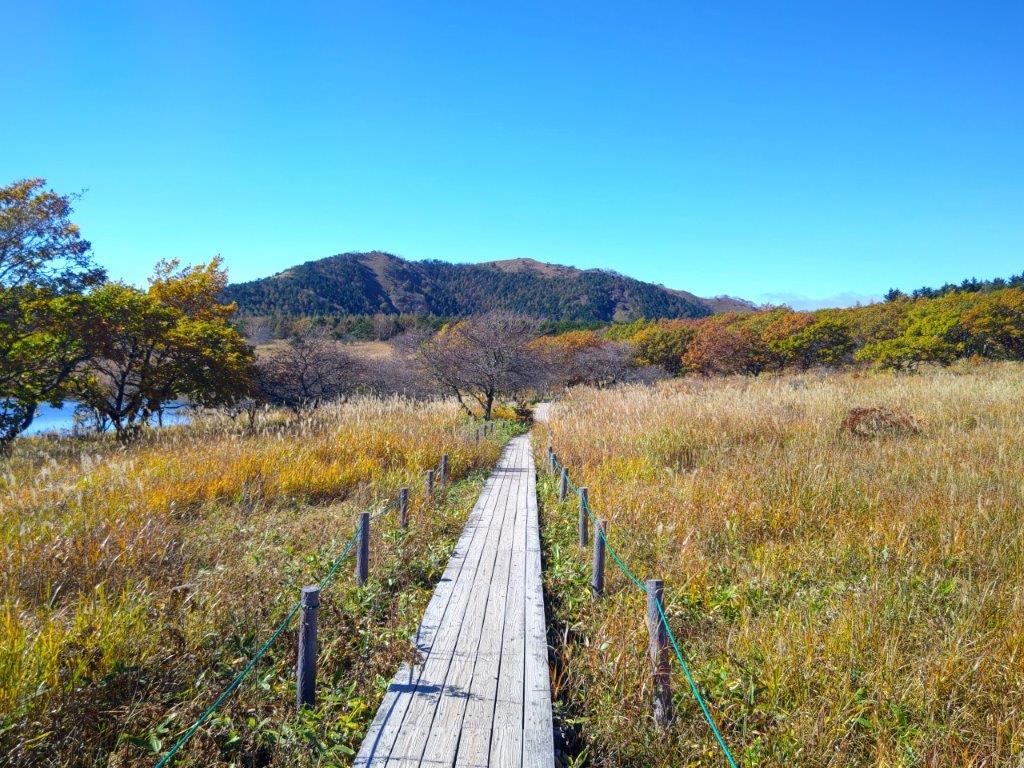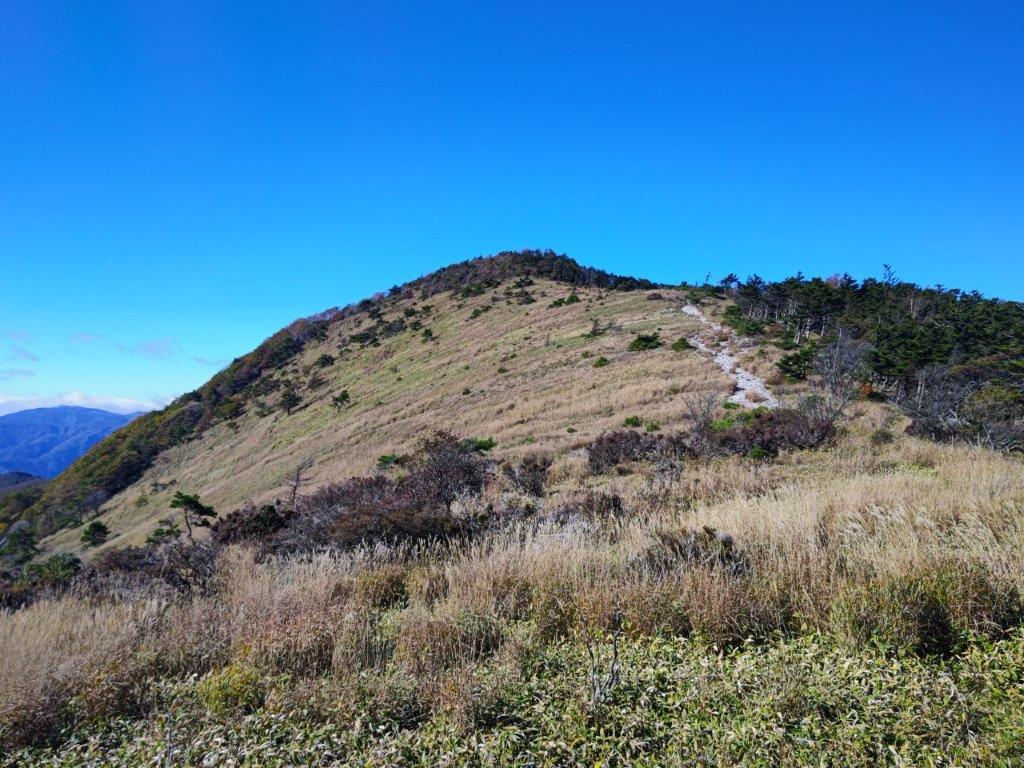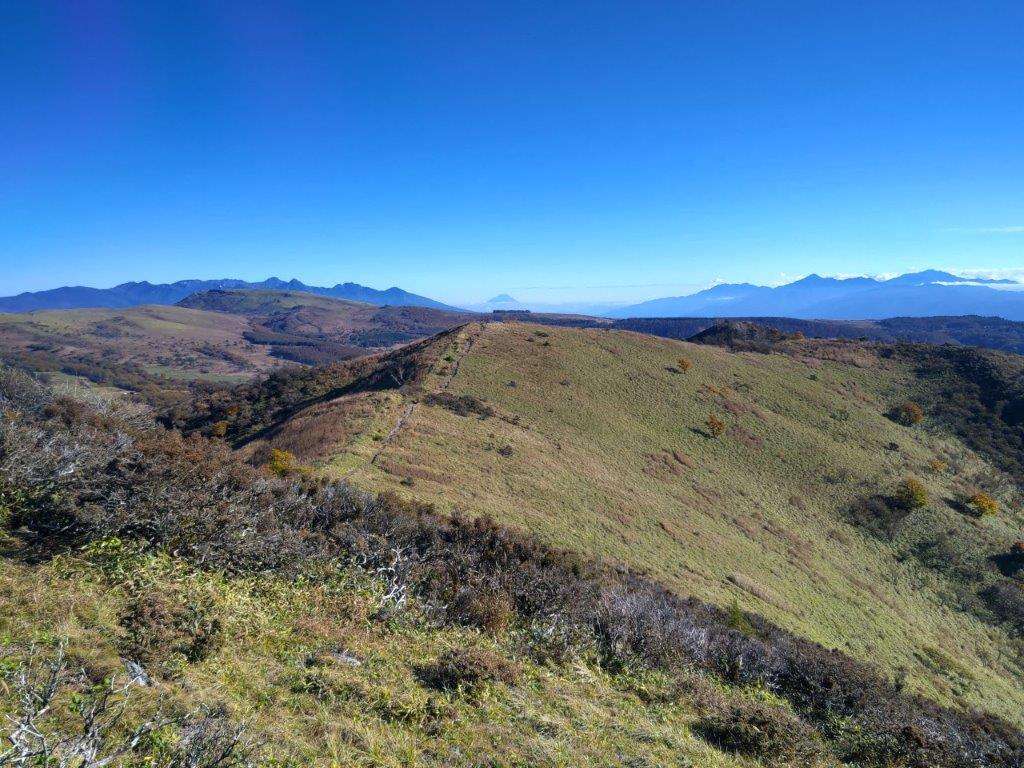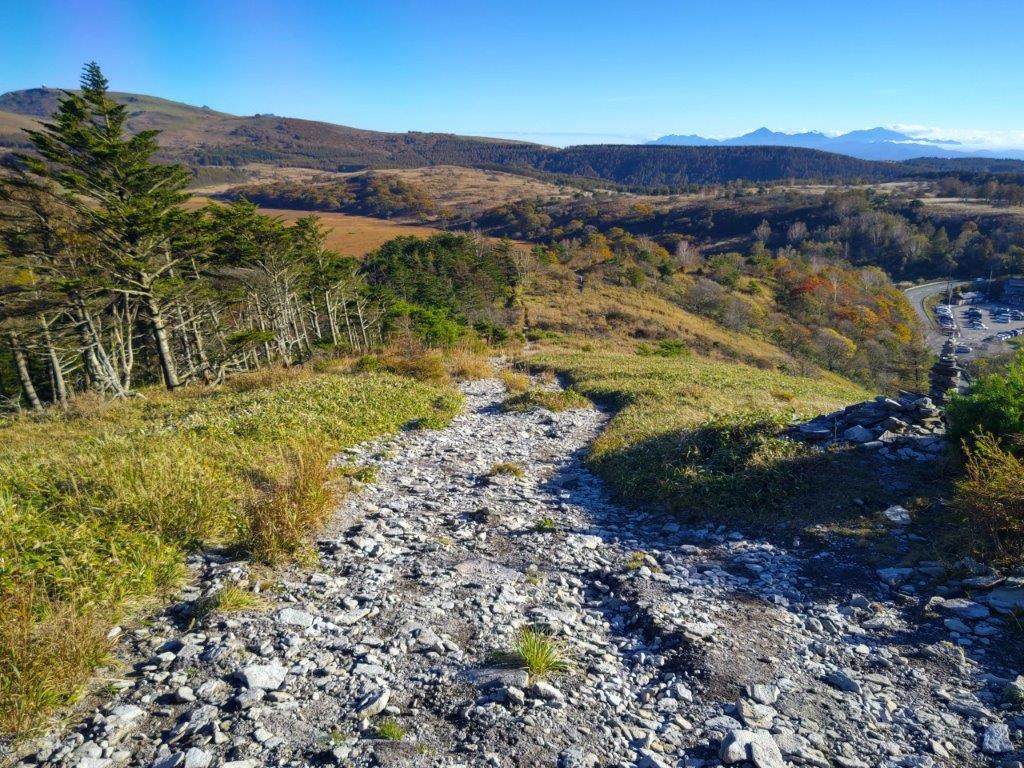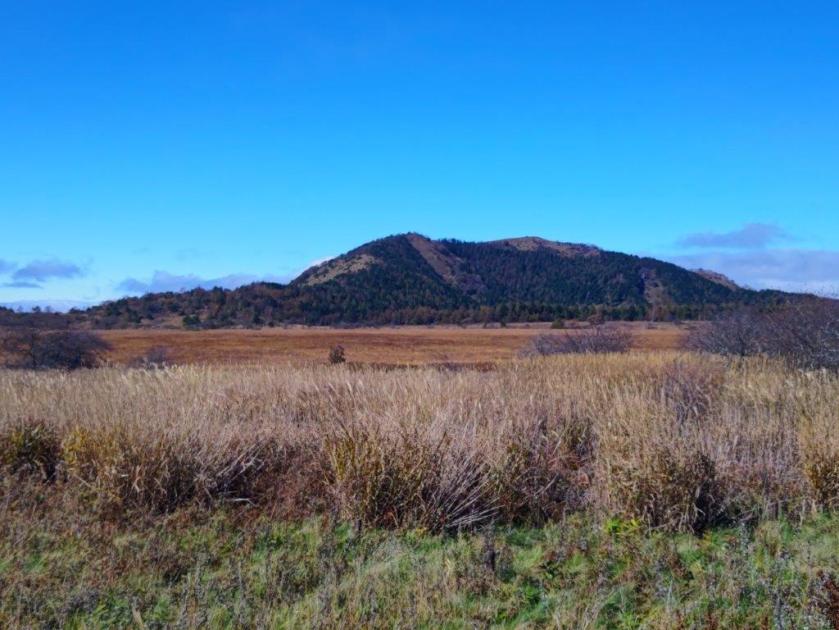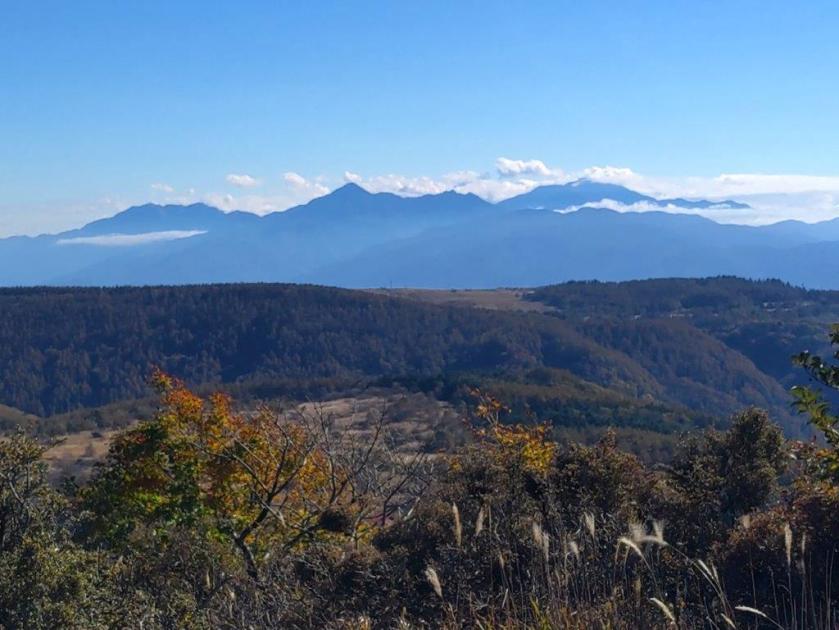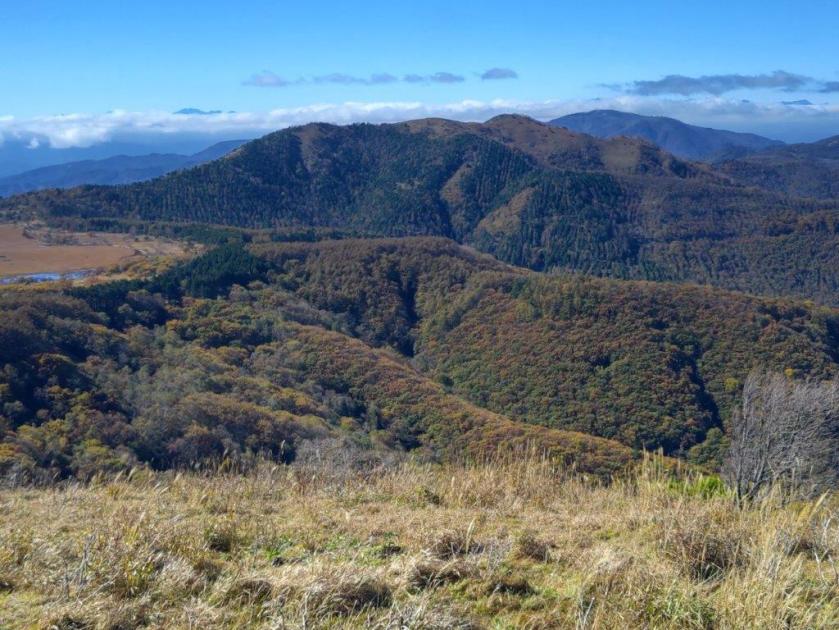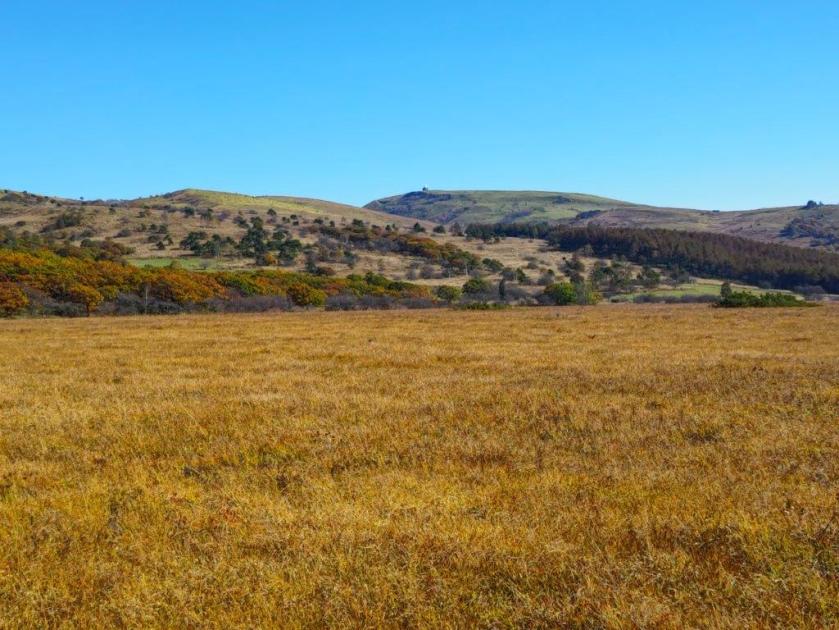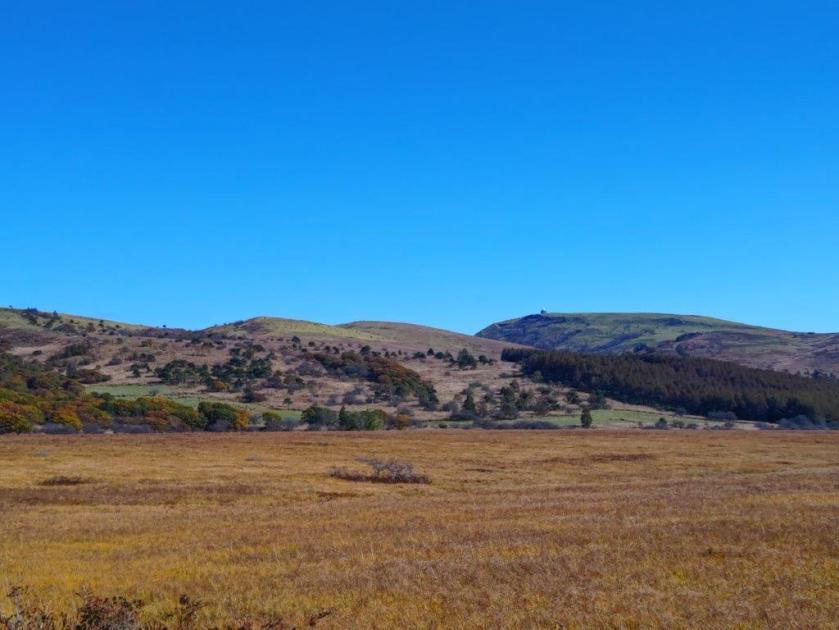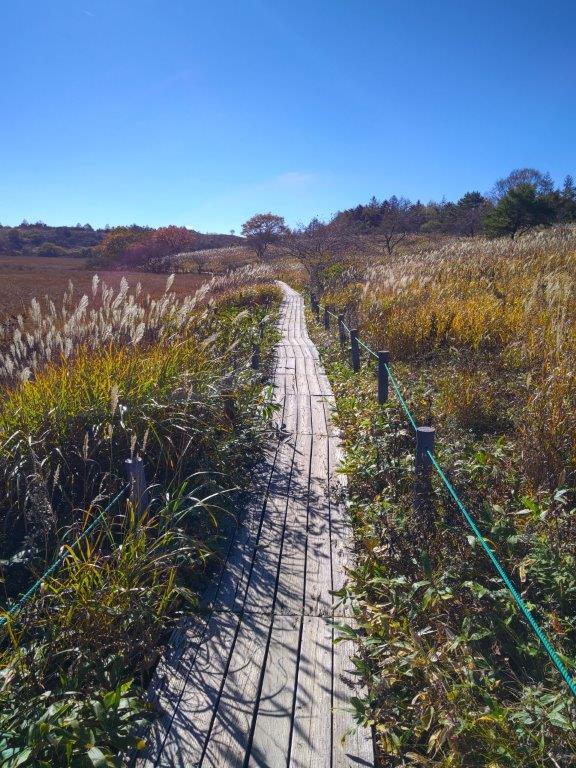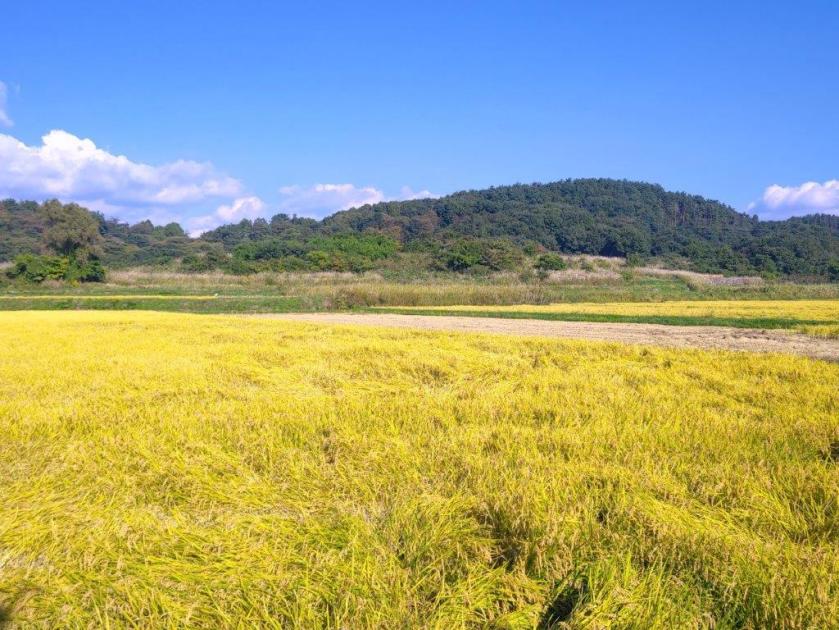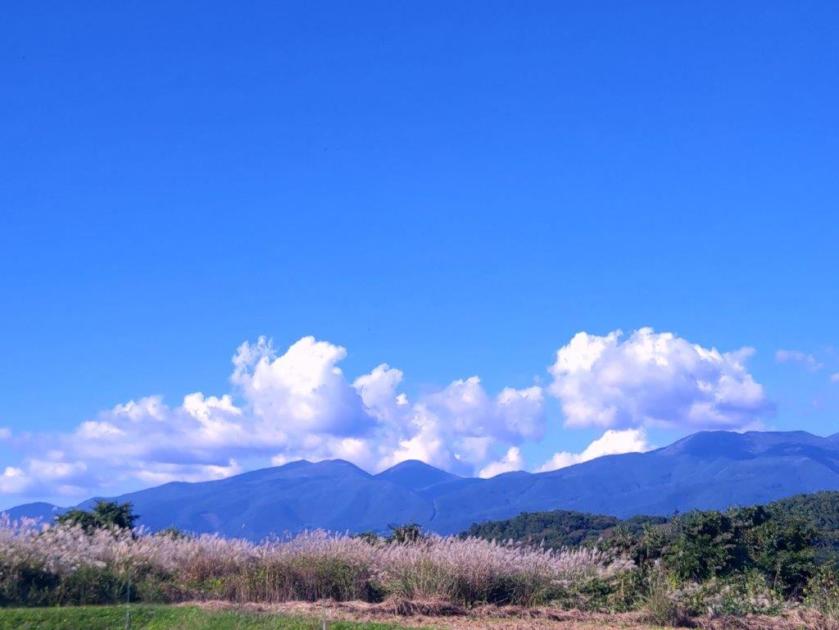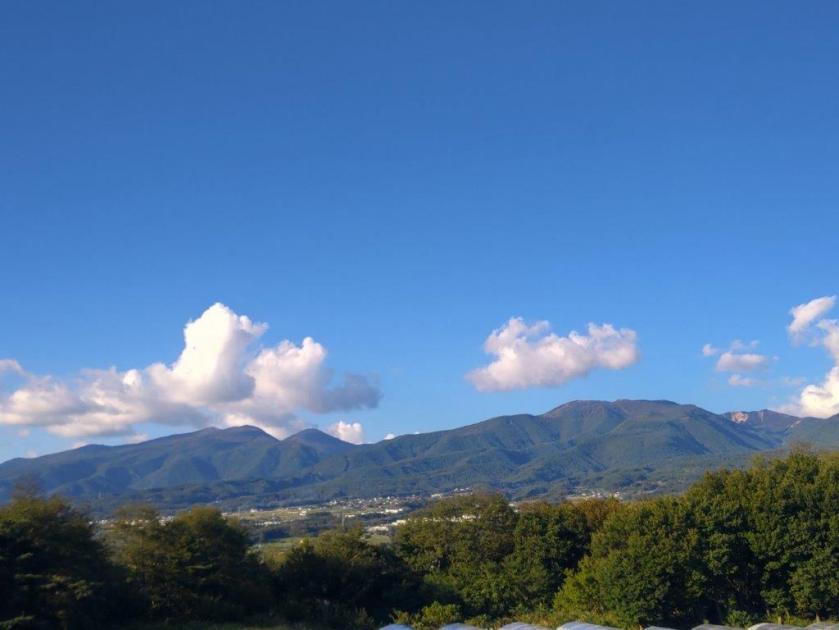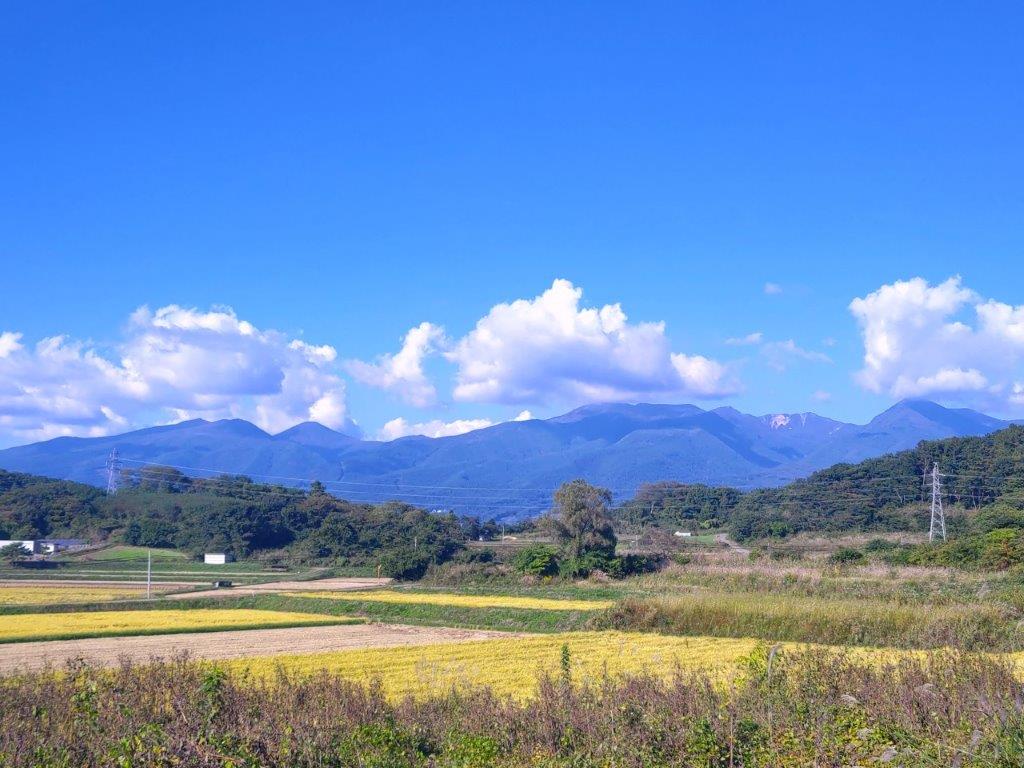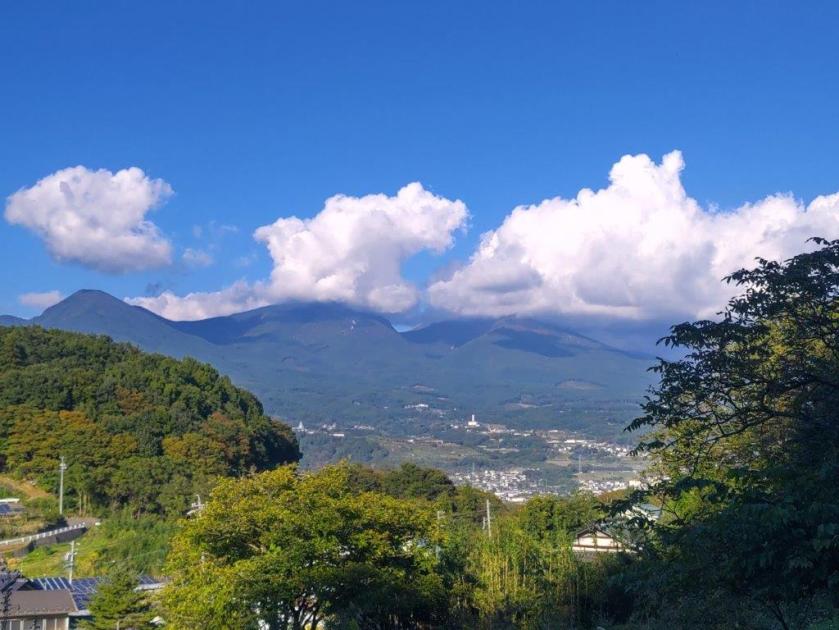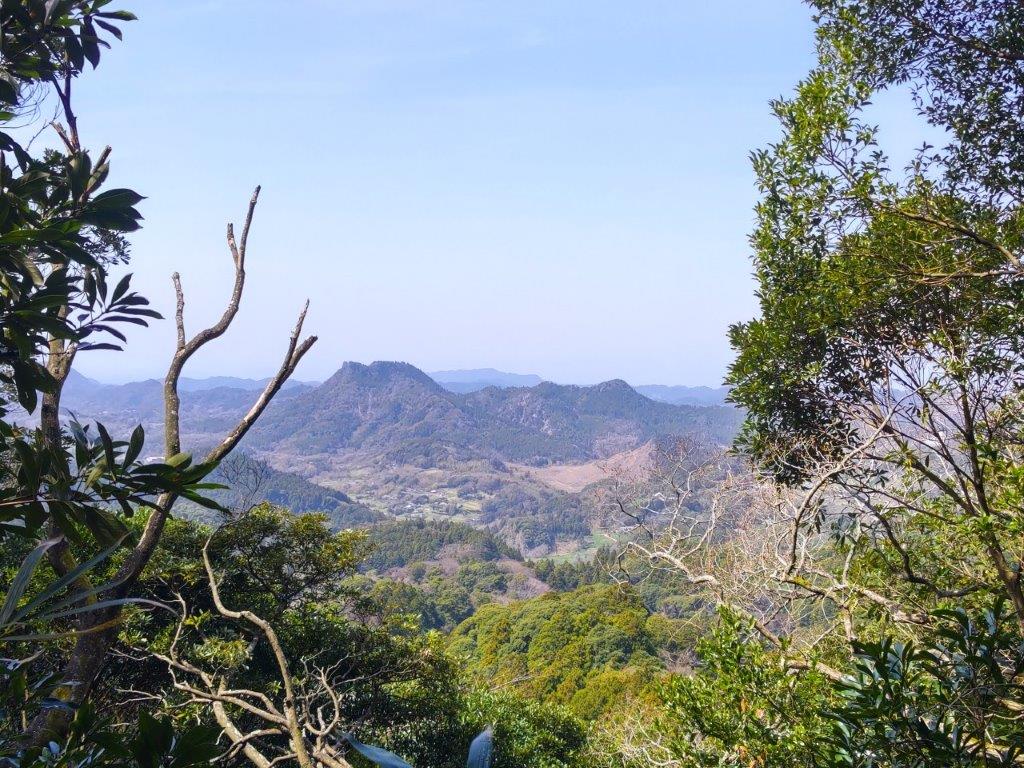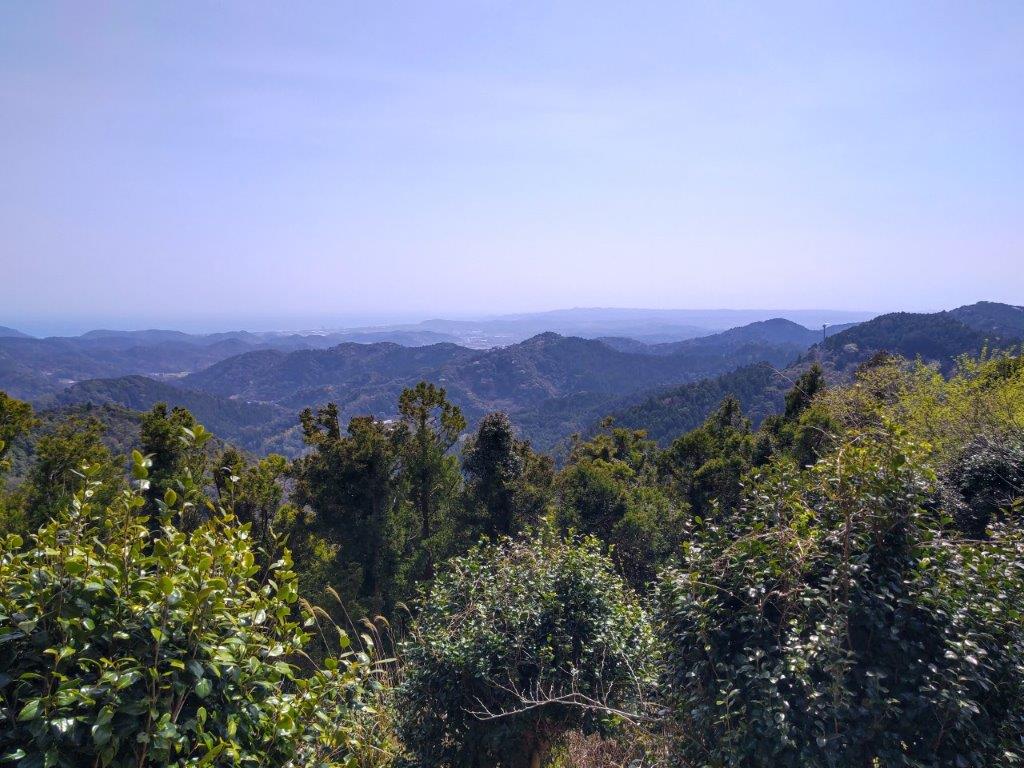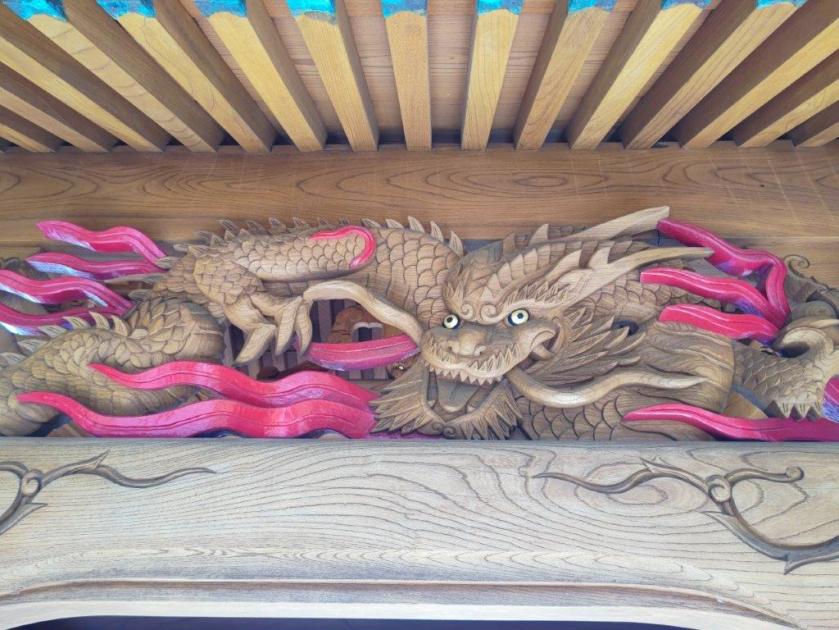
Mt Fukunari (227m) & Mt Shizuhata (171m), Shizuoka City, Shizuoka Prefecture, Saturday, December 14, 2024

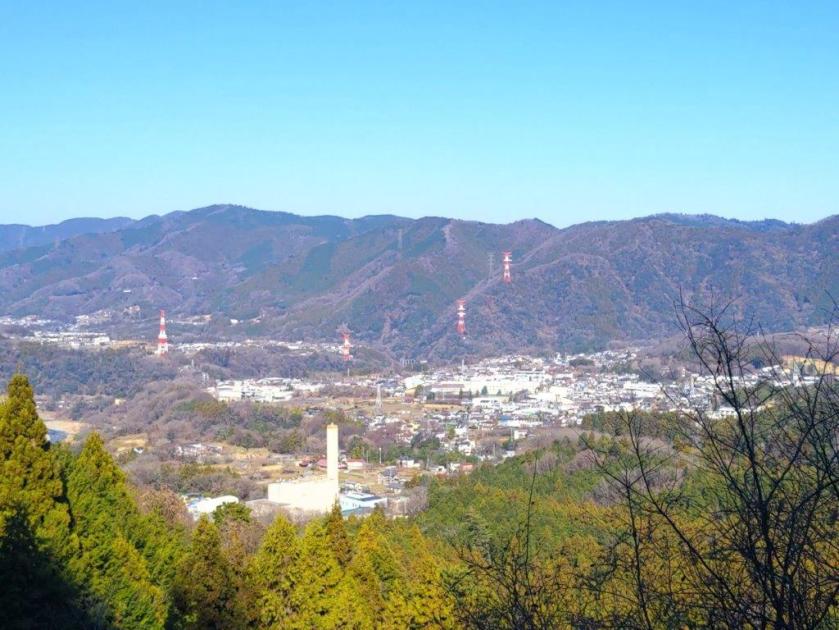
I wanted to do some more hiking in Shizuoka. Looking online, I found a trail along a north-south ridgeline extending all the way into Shizuoka city, the Mt Shizuhata Hiking Trail. It seemed a bit on the short side meaning I could walk it at a leisurely pace while enjoying the views. After visiting Asama shrine at the end of the trail, I could drop by the nearby Ofuro Cafe Bijinyu, a public bath doubling as a cafe.

For subscribers, read this Post on Hiking Around Tokyo for a better viewing experience and the latest updates

I could get to the start of the hike by riding the bullet train directly to Shizuoka station, and from there, catch a bus for Ume-ga-shima Onsen, getting off at the entrance for Kujira-ga-ike Pond (actually a lake), a short distance from the trail entrance. After the hot bath at the end, I could catch a bus for the short ride back to the station. The weather was supposed to be sunny and cold, as well as a little windy. I was looking forward to exploring a new area with new views.

Find Japan Hiking Maps on Japanwilds
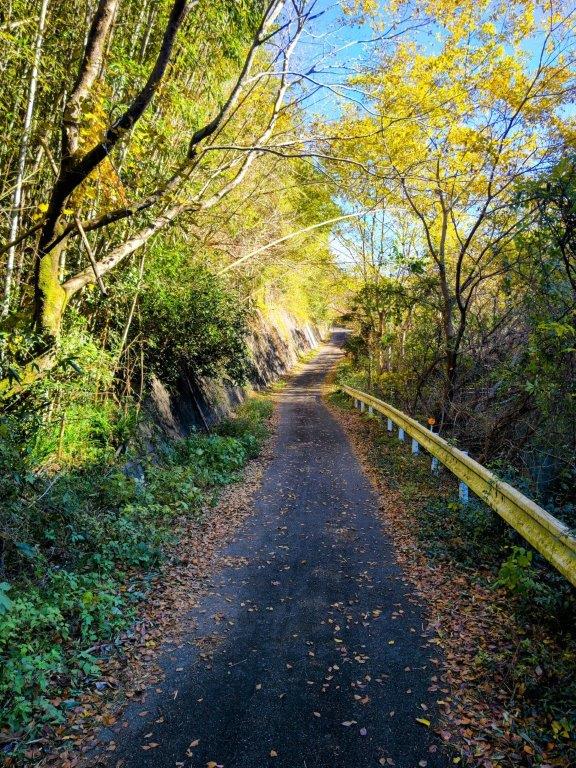
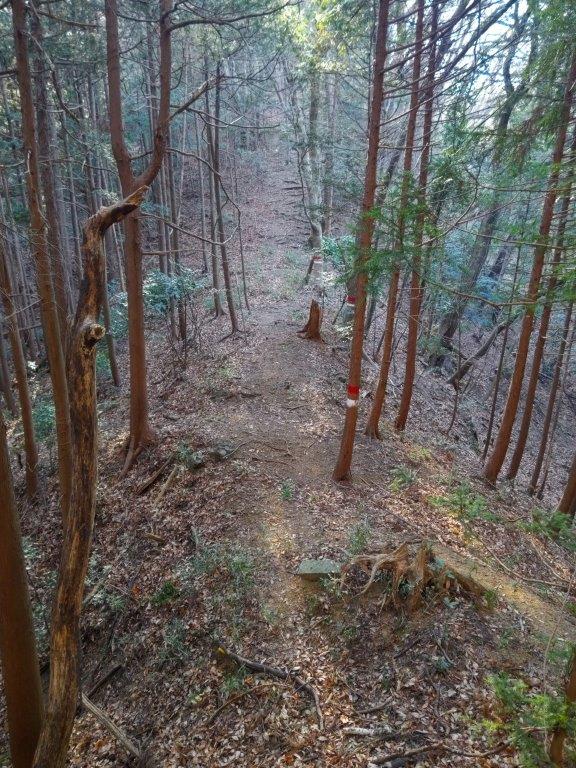
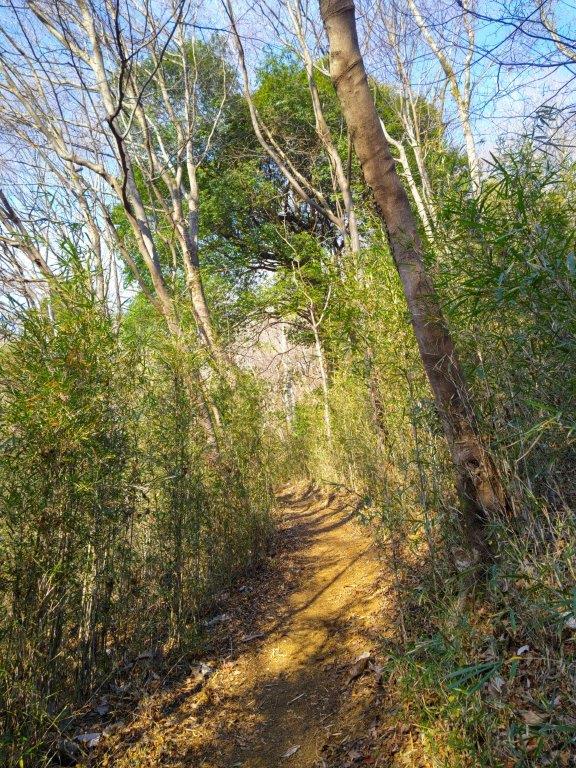
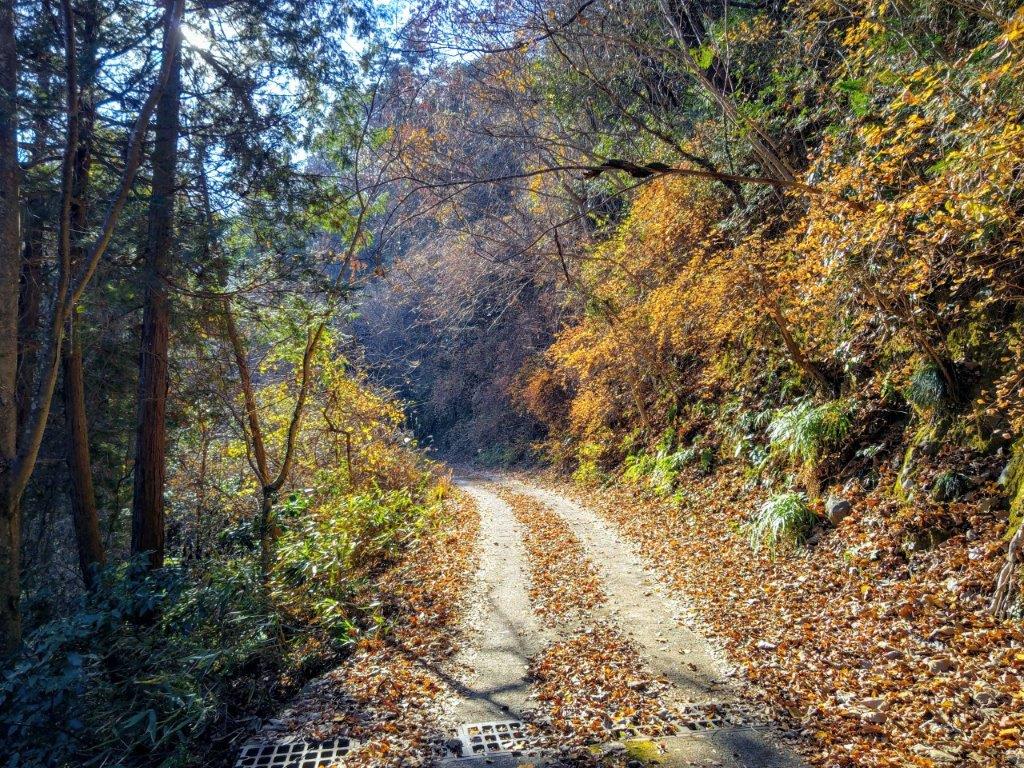
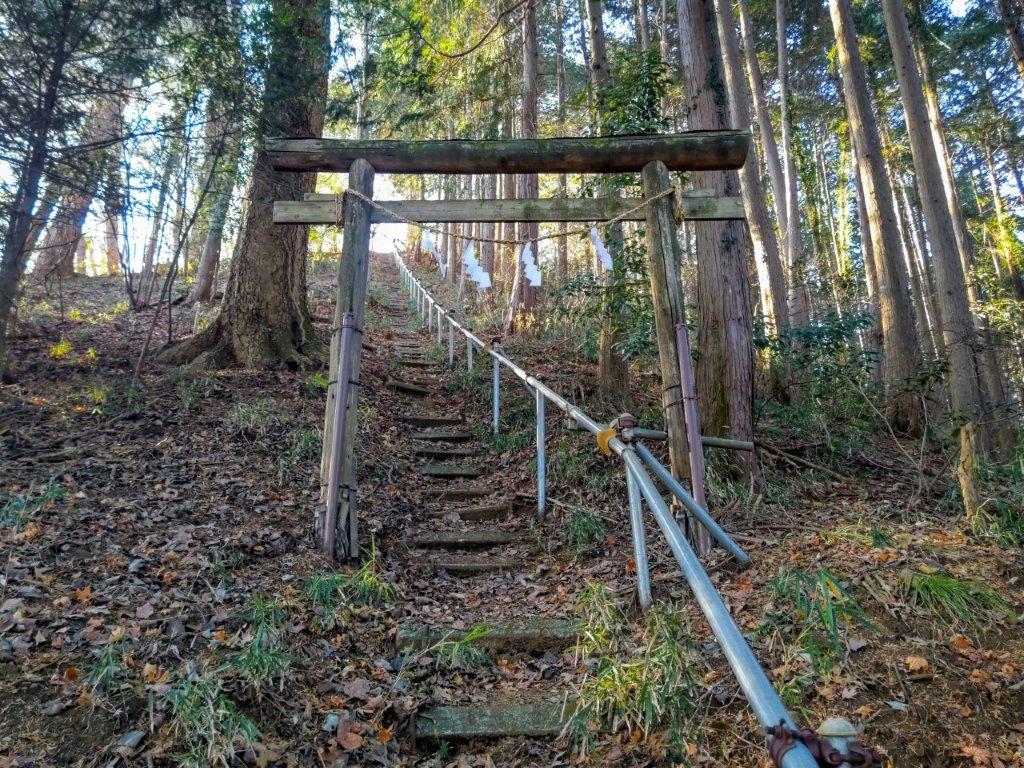
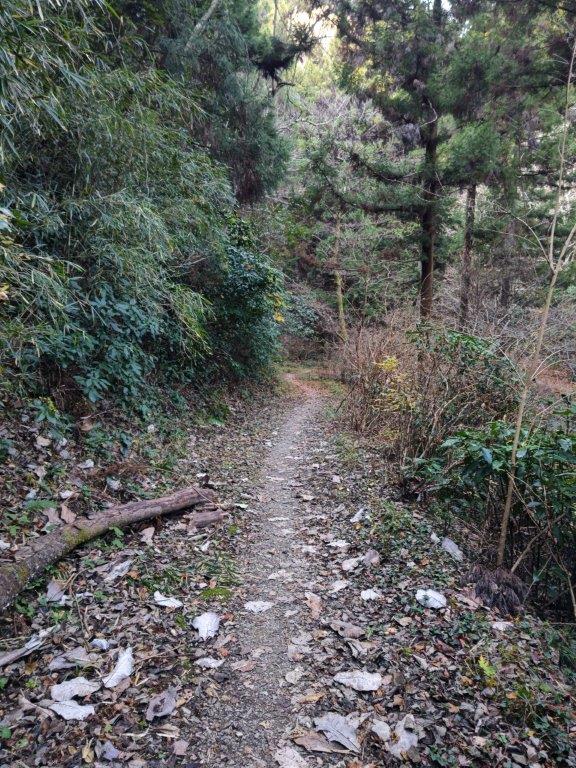
Start of the Hike past Kujira Lake (left) Entering the Bamboo Forest (right)
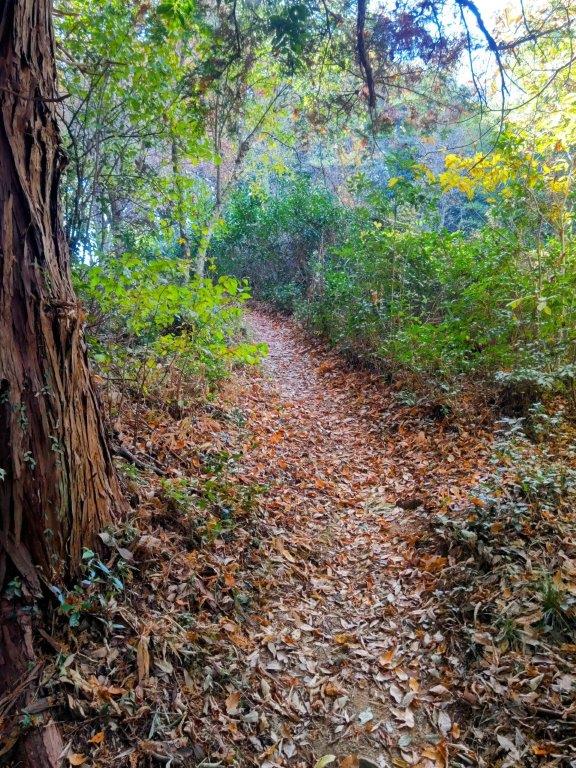
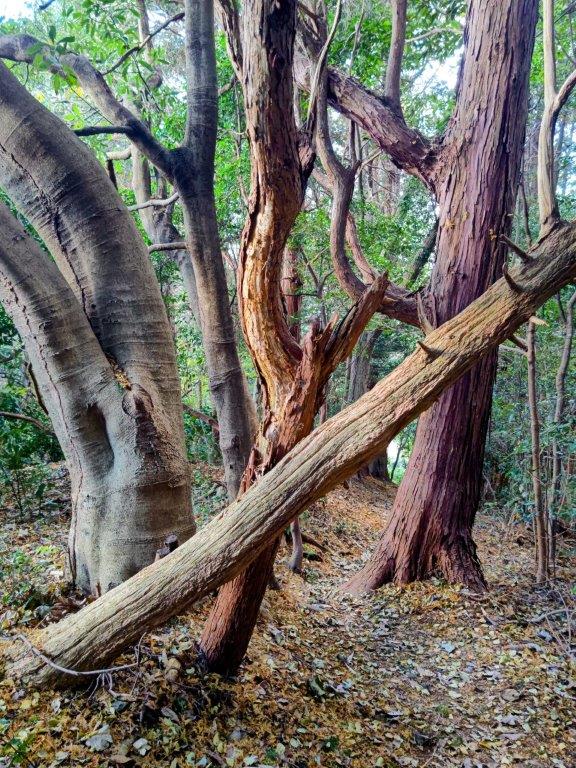
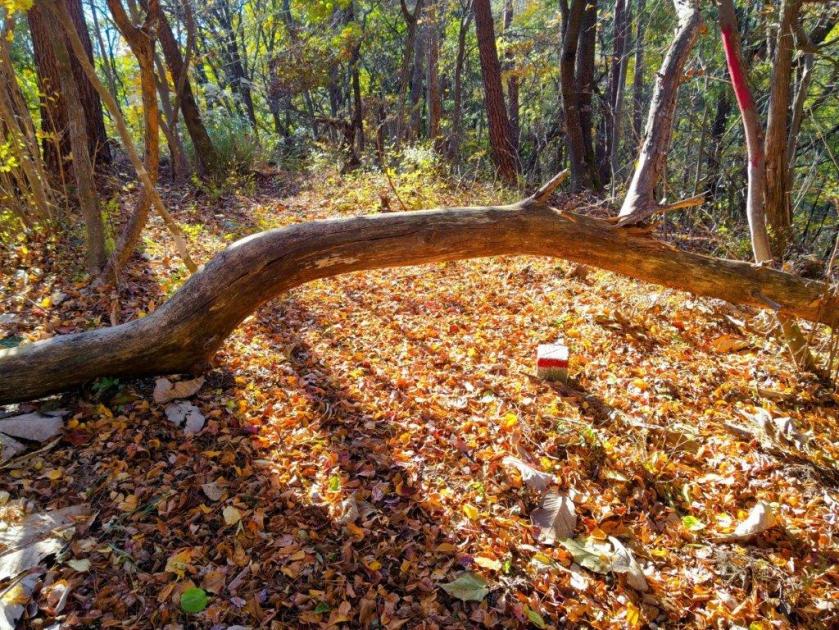
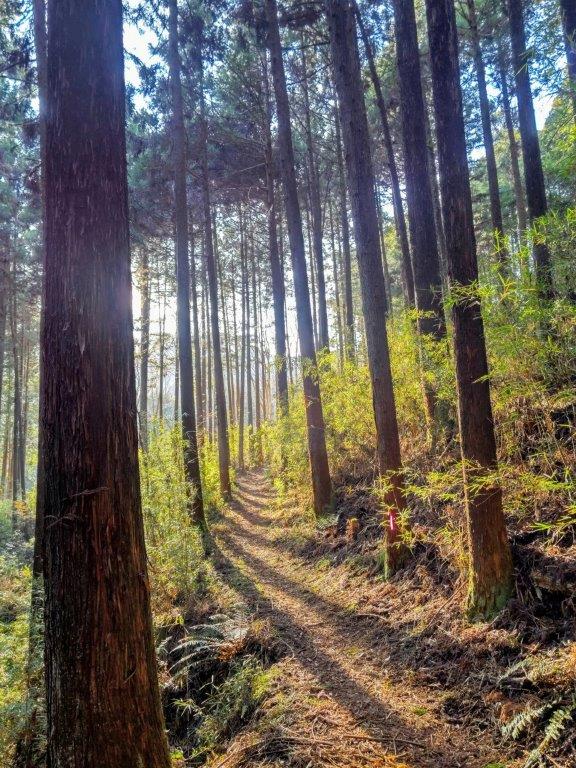
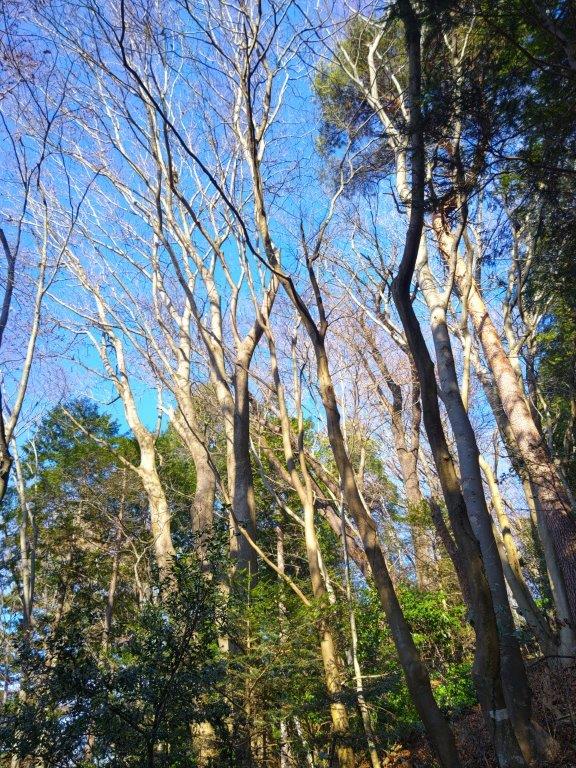
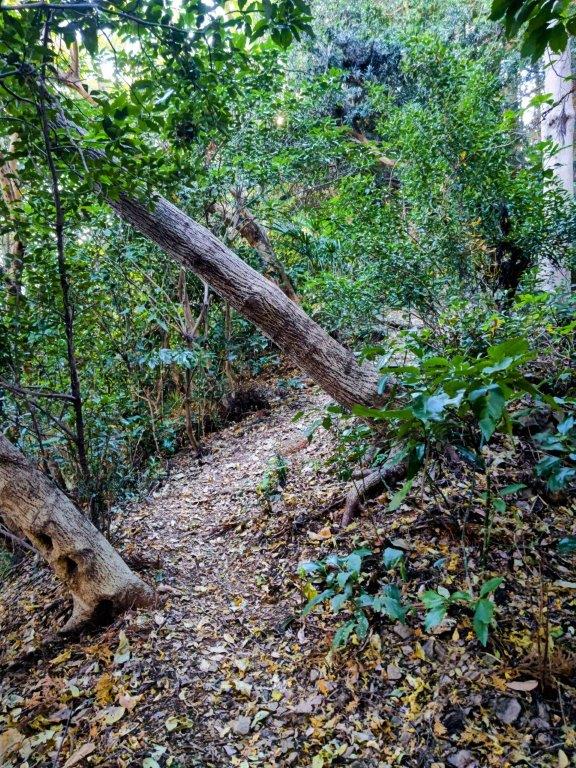
Trail near the 1st Viewpoint (left) Trees in the Way below Mt Fukunari (right)

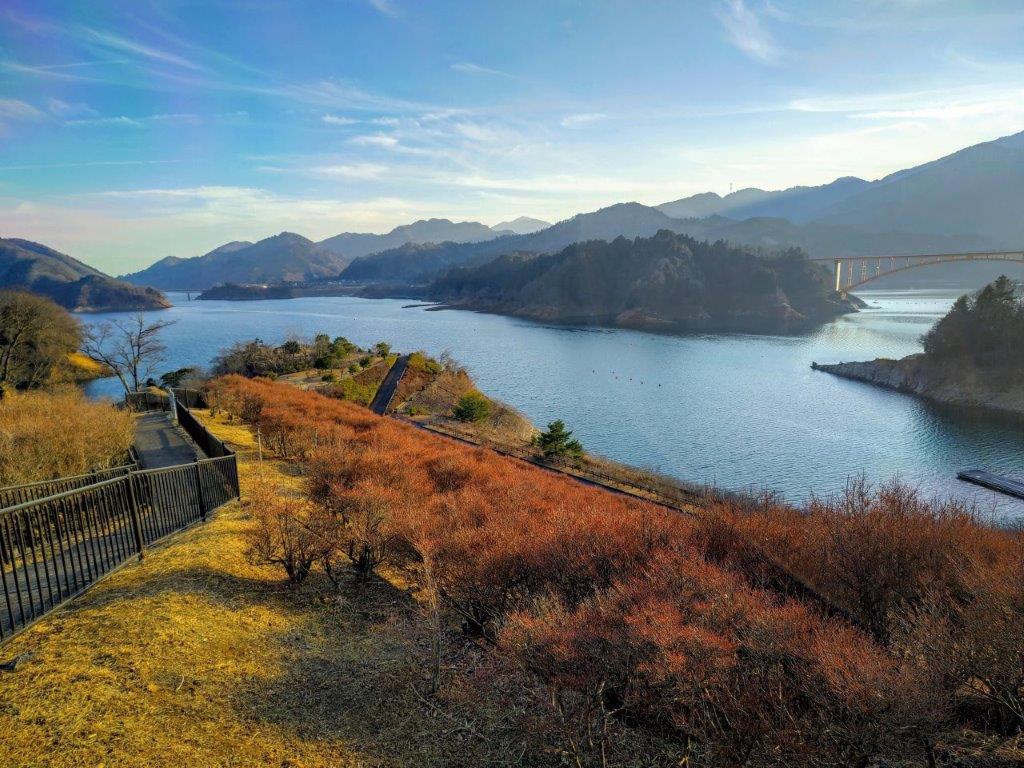
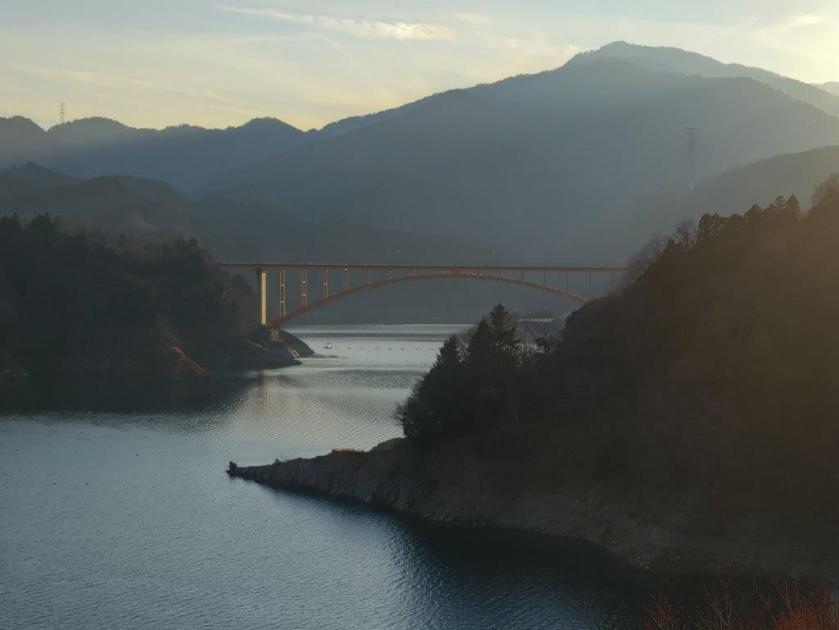
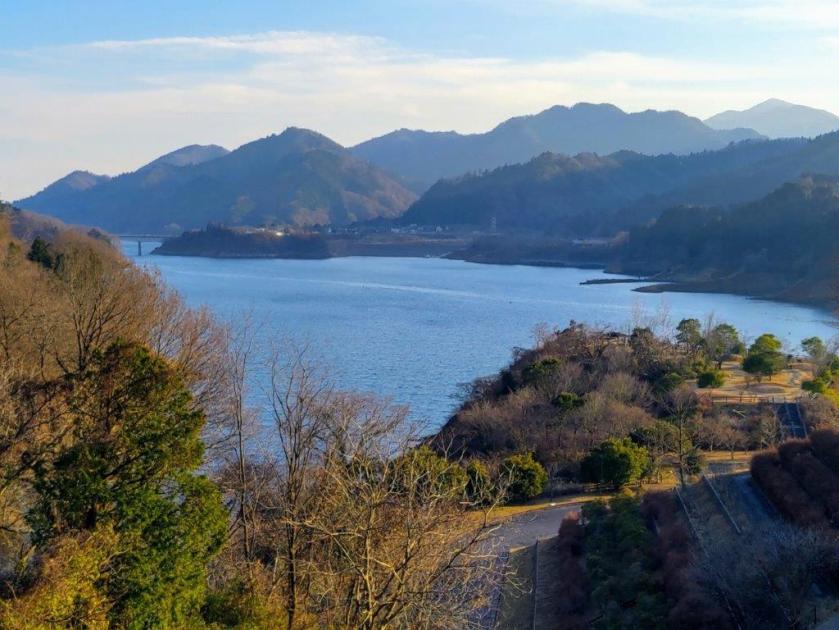
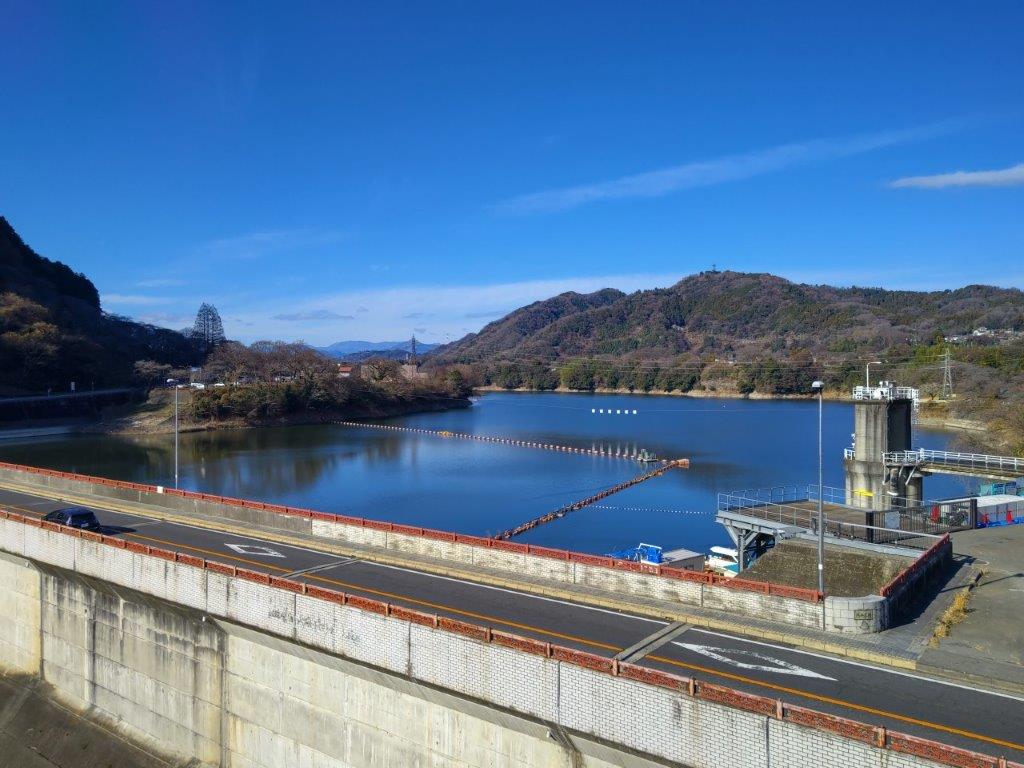
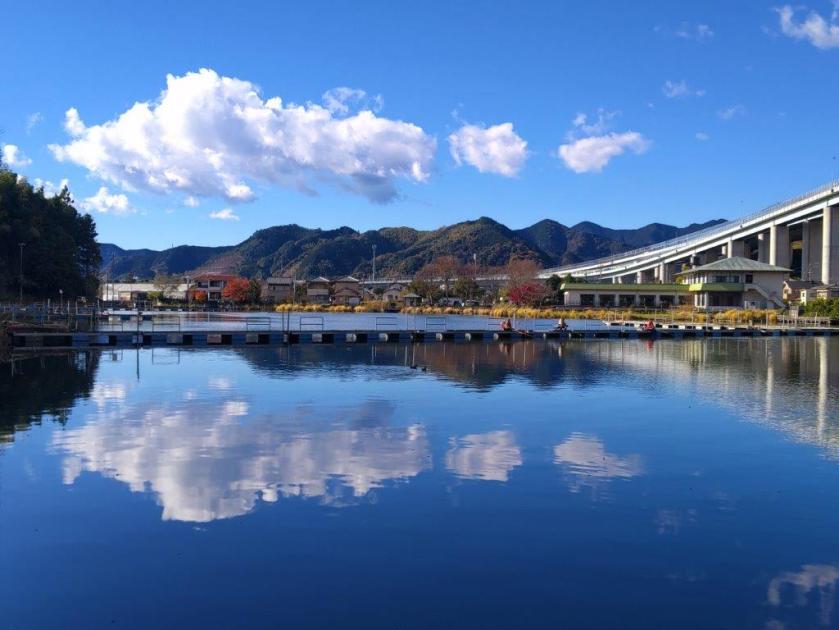
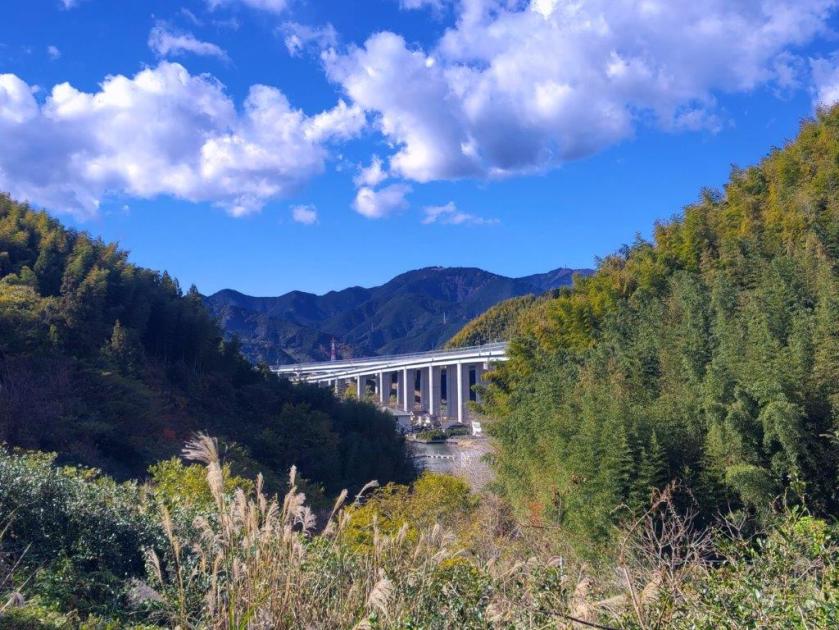
It was a blue-sky day as I rode the shinkansen, arriving at Shizuoka station around 10am. Soon after, I was riding a city bus northwards, with glimpses of the ridge I’d be walking today on my right side. It took half an hour to reach the Kujira-ga-ike Iriguchi bus stop, from where it was a short walk to Kujira-ga-ike, a fishing spot meaning “Whale pond”, presumably named after its shape. I decided to head around its south shore to better admire the view of the Shin-Tomei expressway on the opposite side .

Trail near the 2nd Viewpoint (left) Trail near the 3rd Viewpoint (right)

Trail past Mt Tanku (left) Mid-section of the Shizuhata Trail (right)

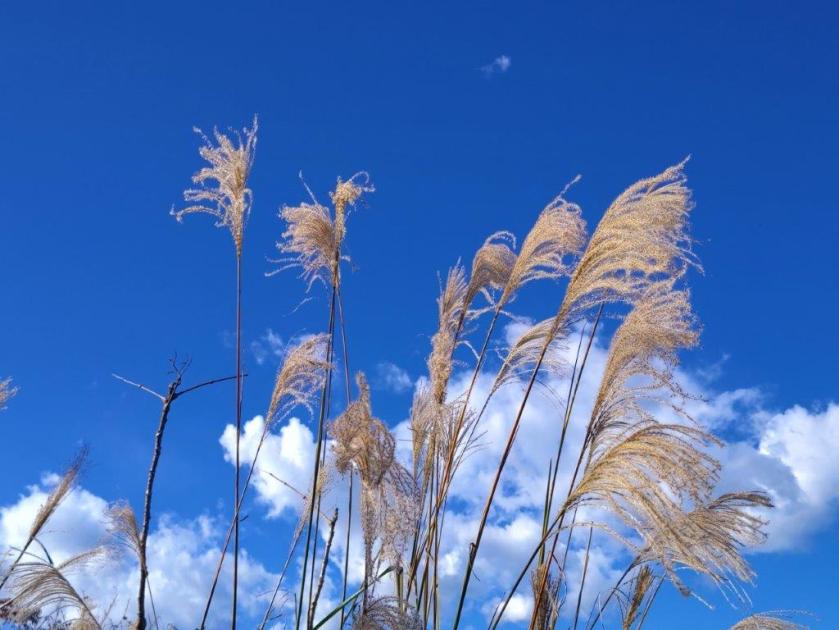
The view was best from the east side, just past Kujira-ga-ike Benten Shrine, the expressway disappearing into the mountains of the Southern Alps, puffy cumulus clouds reflected on the water surface. It was nearly noon, so I left the fisherman behind, and just before a tunnel, went up a paved road on the right, simply signposted as “Hiking Trail”, one of the trail entrances of the Mt Shizuhata Hiking Trail (賎機山ハイキングコース). I soon reached a real hiking trail, where I turned right, heading south along a gently undulating ridgeline. After passing through a tunnel of tall grasses, I arrived at the entrance of a bamboo grove.

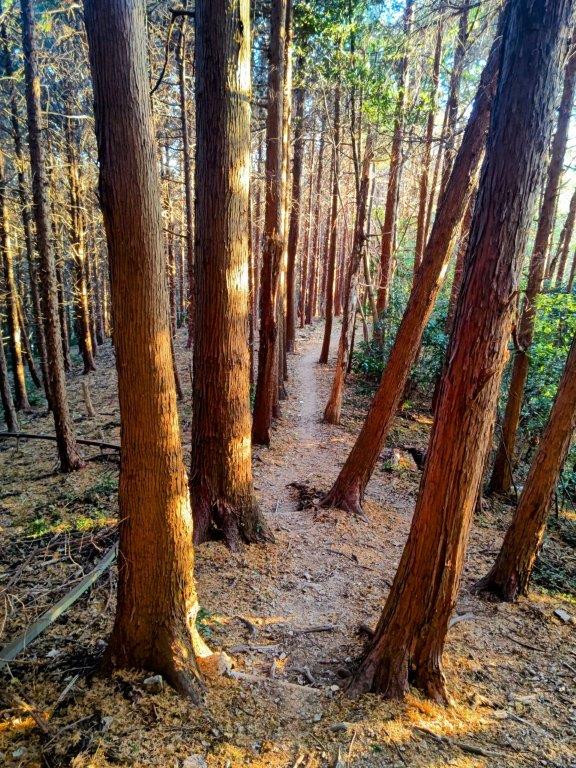
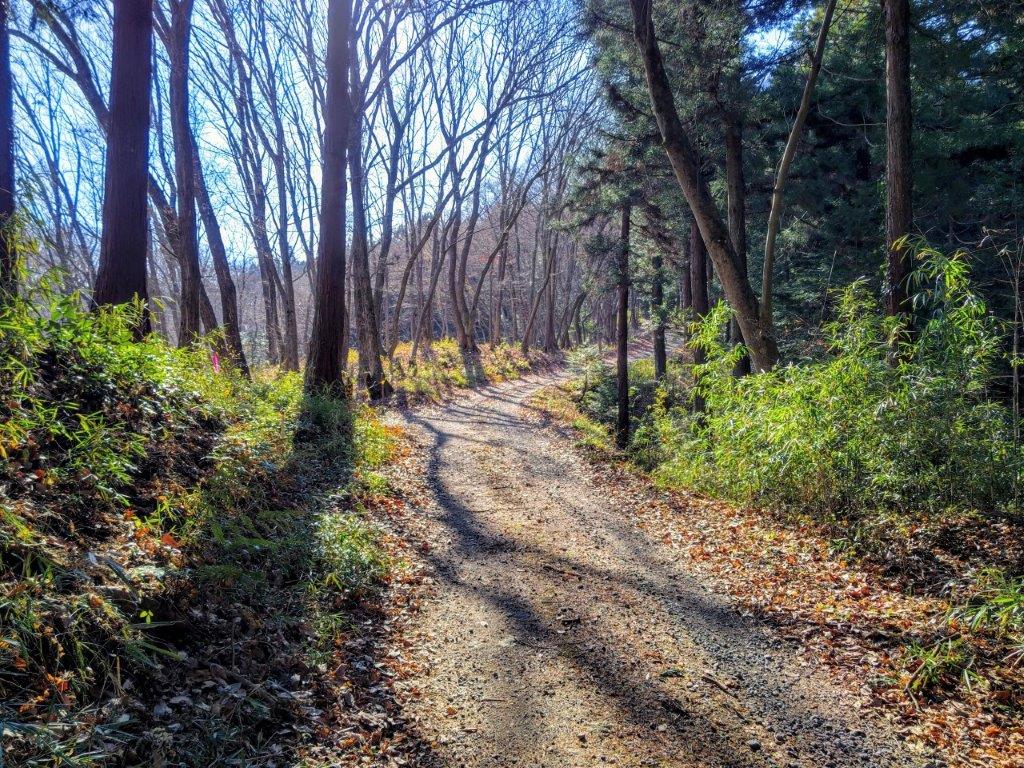
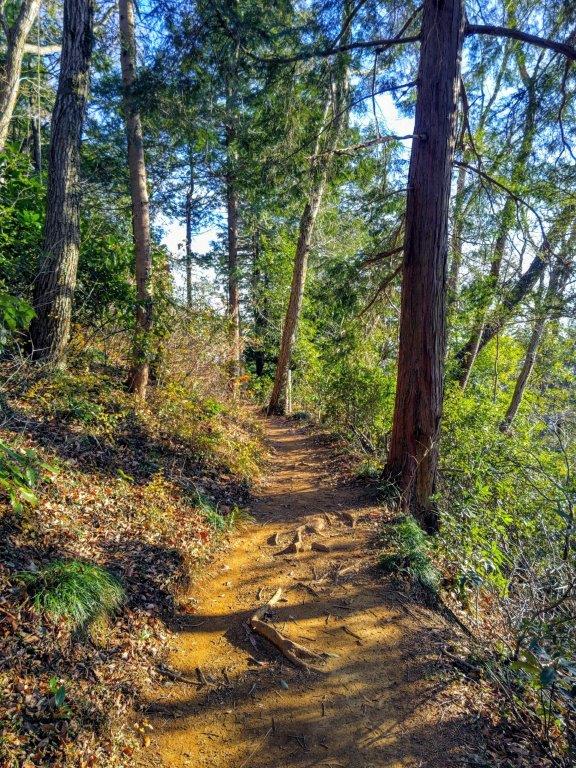
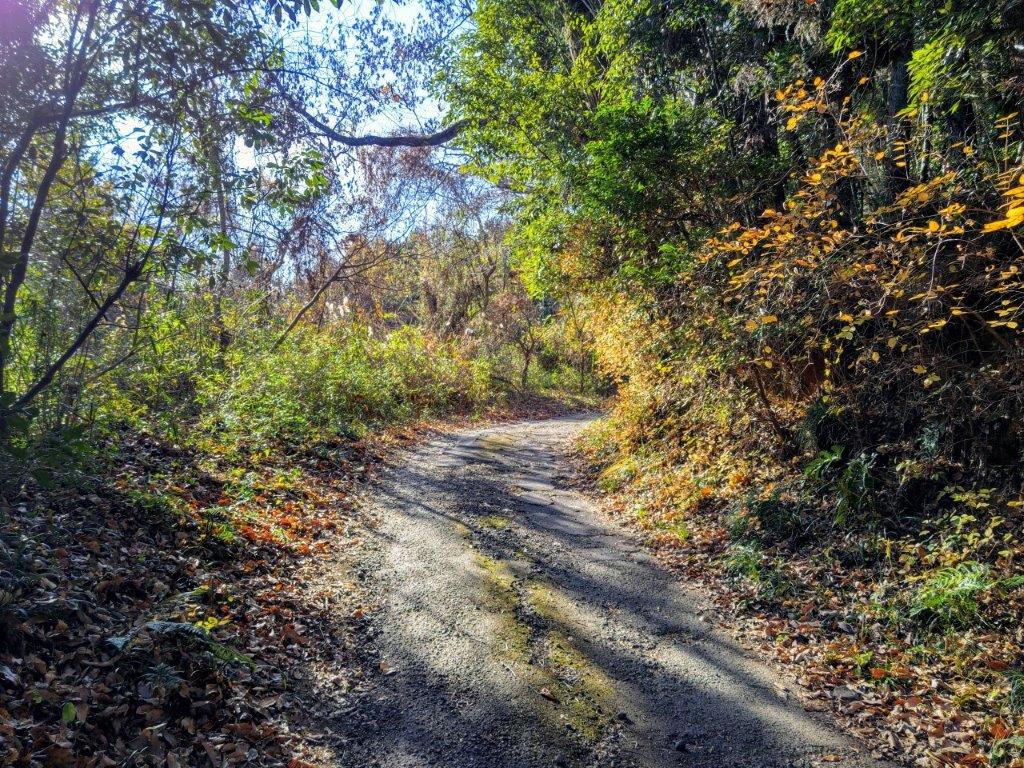
An Easy to Walk Trail (left) Trail Past Ipponmatsu (Right)

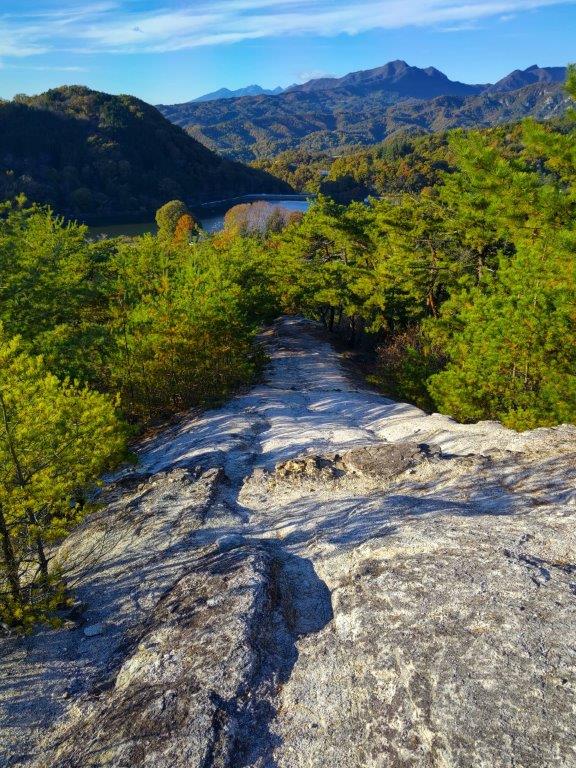
Heading down after Ipponmatsu (left) Heading Towards Mt Shizuhata (right)

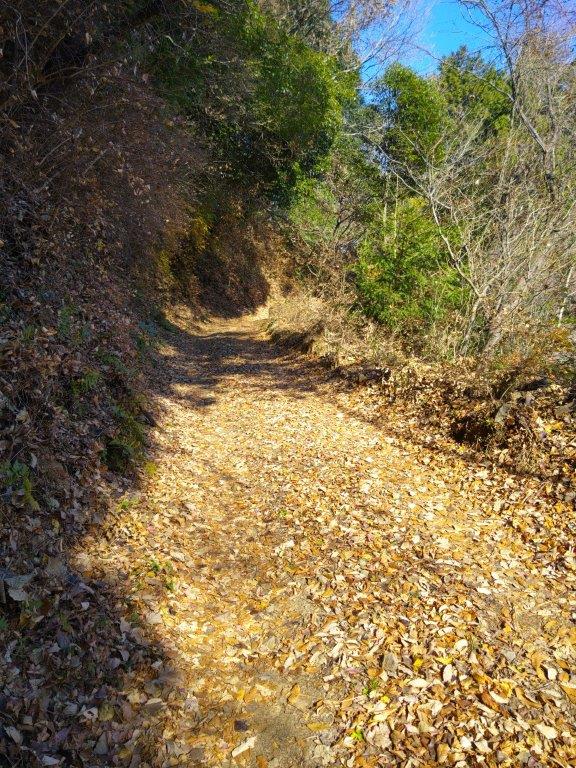
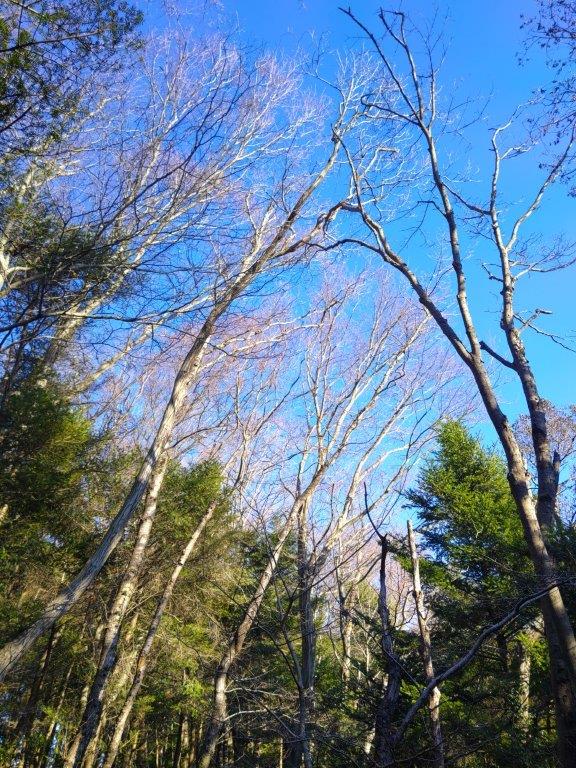
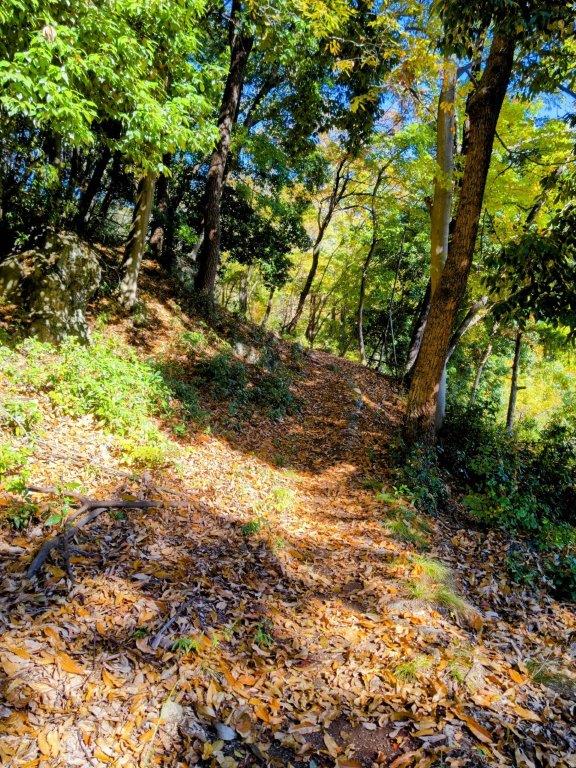
I love walking through bamboo groves as it’s something unique to this part of the world. This one was especially amazing, with one tall bare tree in its center, like a lord among its subjects. It was totally quiet, except for the occasionally cracking noises of the bamboo growing. After exiting the grove, the trail took on a very countryside-like quality, passing between hedges and rows of identical trees. Occasionally I could see some blue sky between gaps in the tree and I was starting to wonder whether I would get any views. Finally, one hour after I started along the trail, I reached the first viewpoint of the day, at the edge of a fruit orchard.
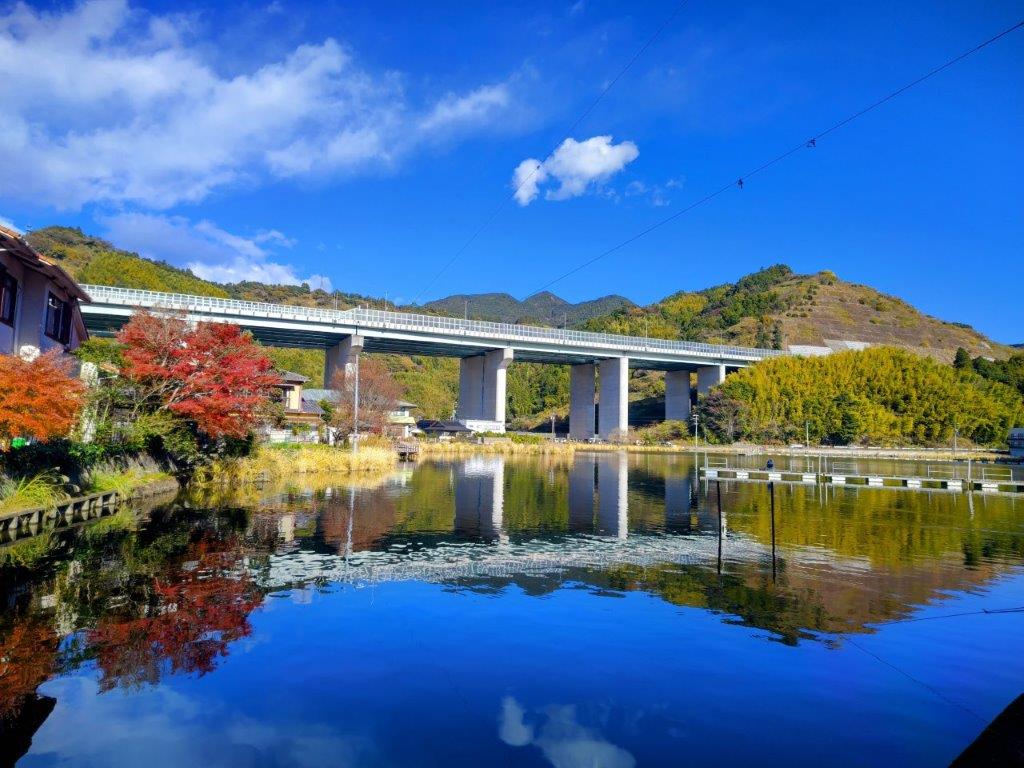
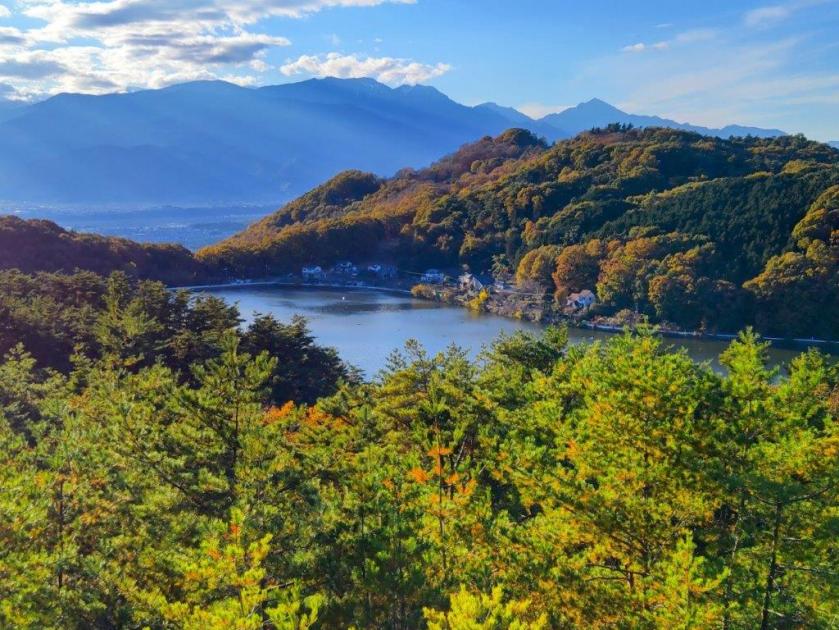
The Shin-Tomei Expressway from the South Side of Kujira Pond

The Shin-Tomei Expressway from the East Side of Kujira Pond

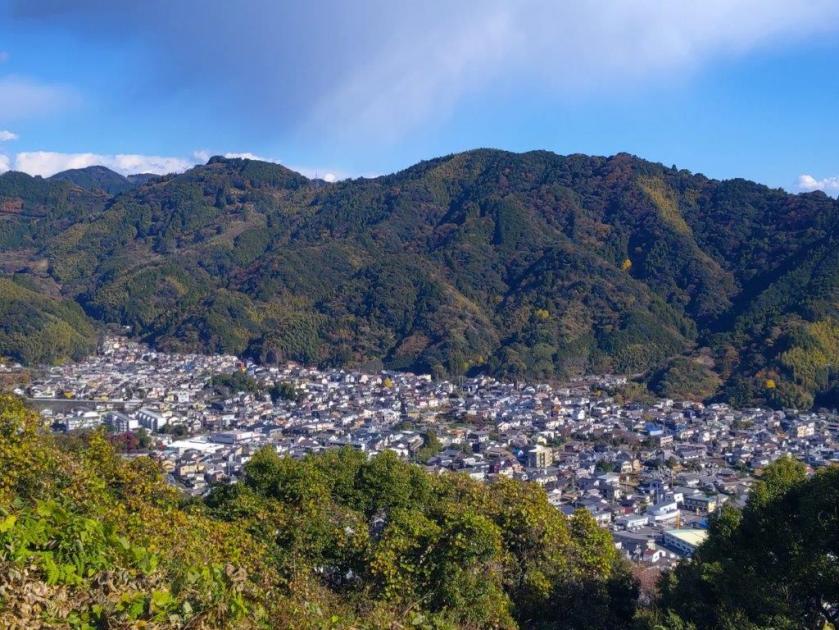
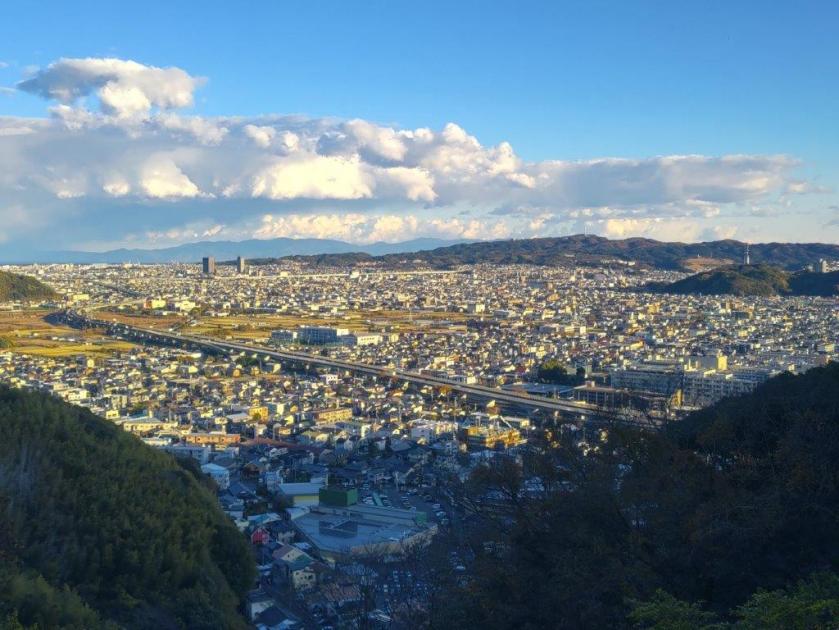
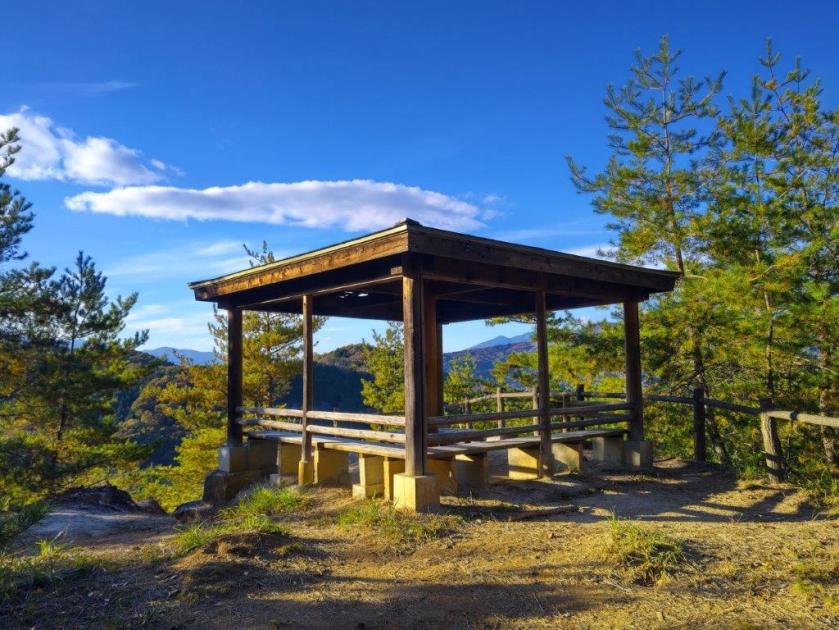
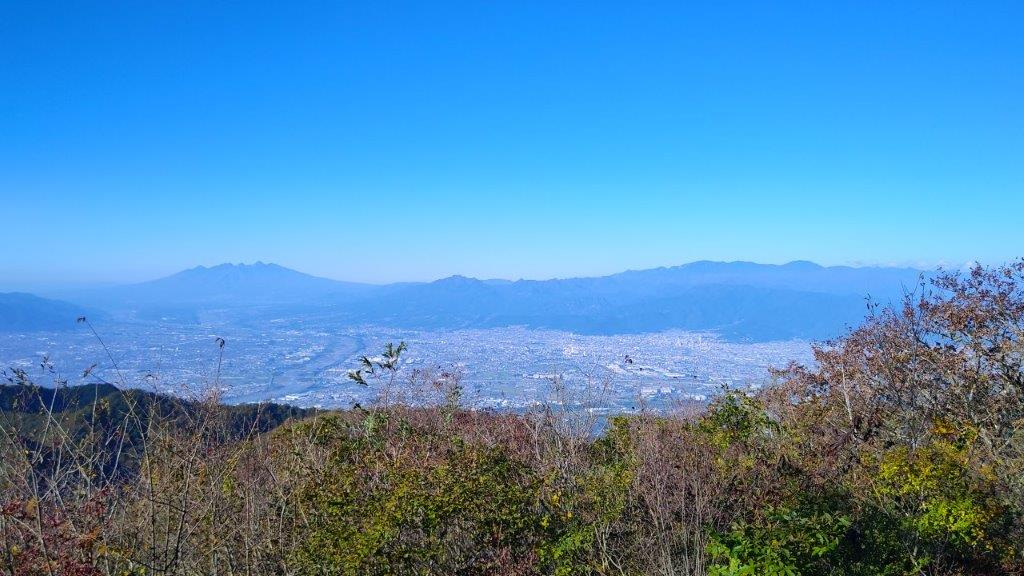
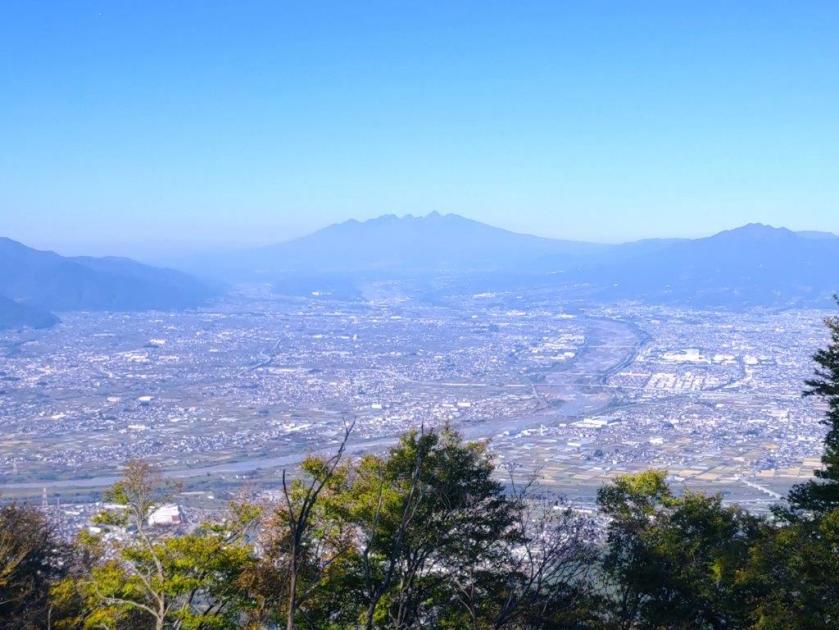
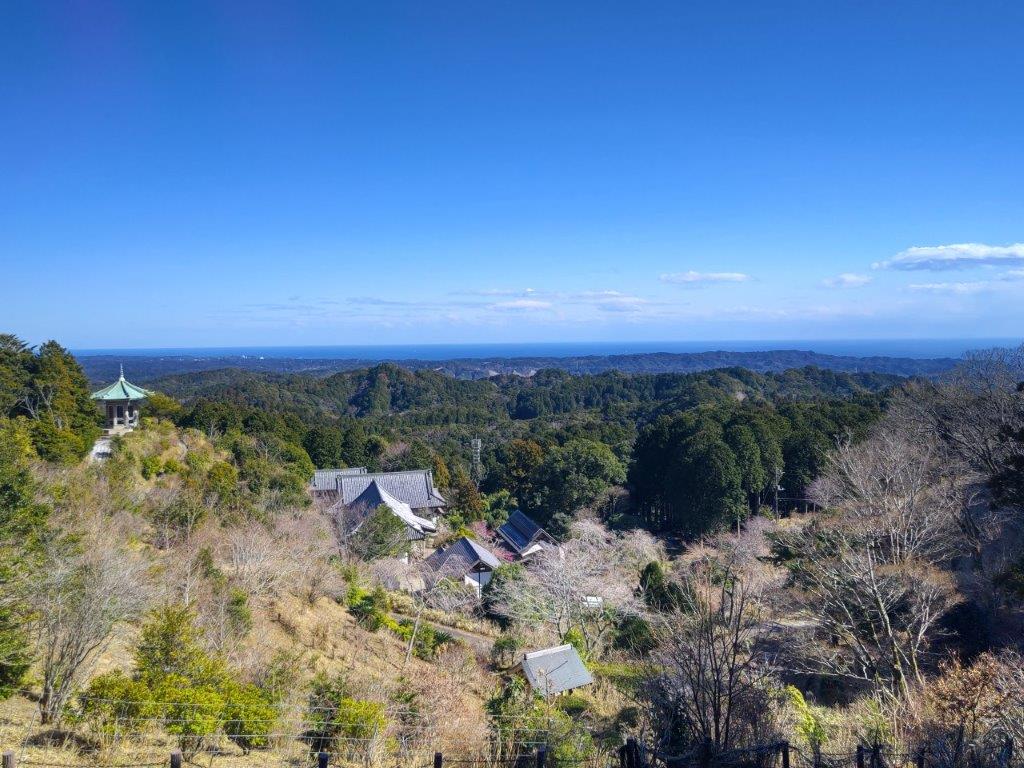
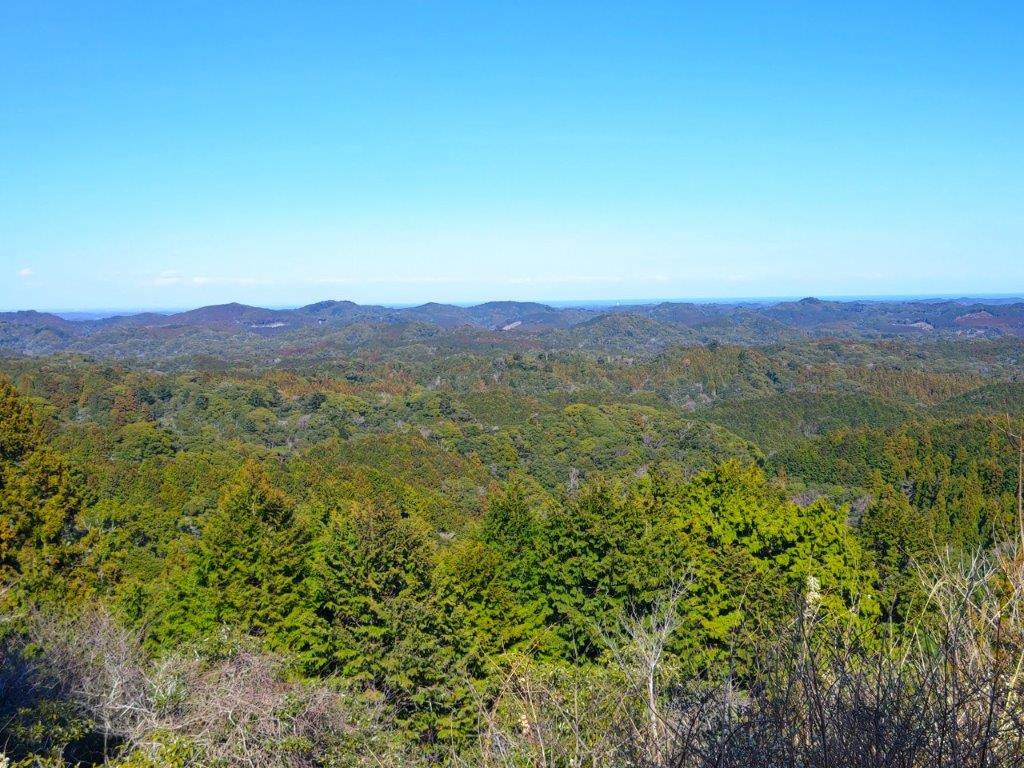
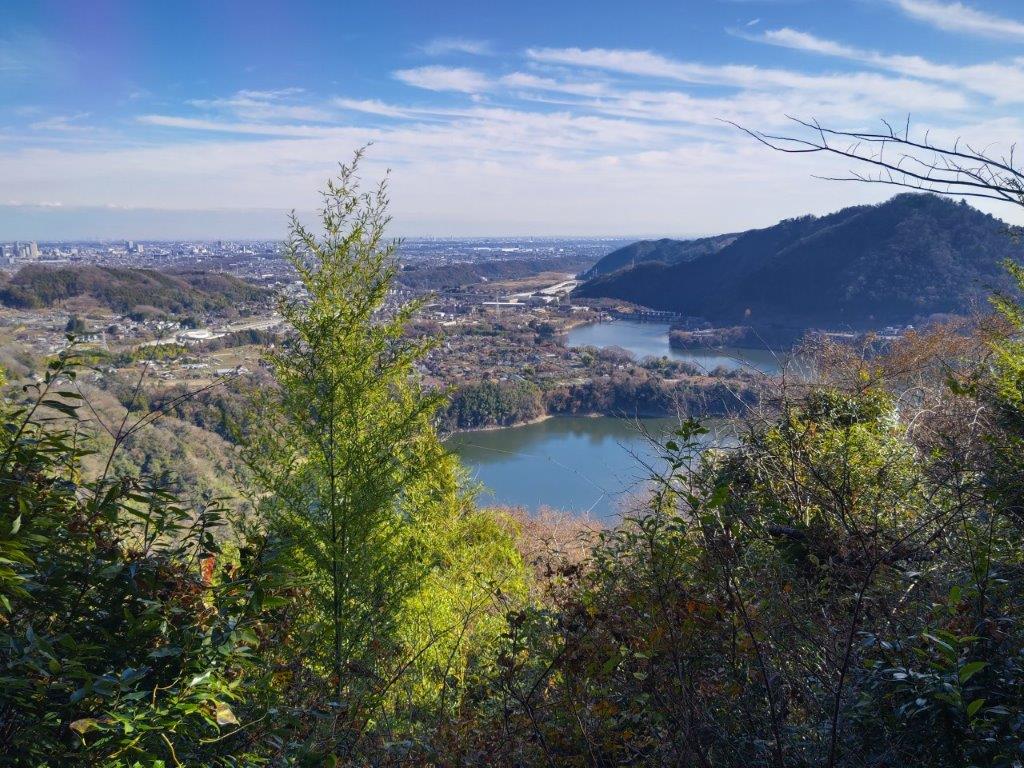
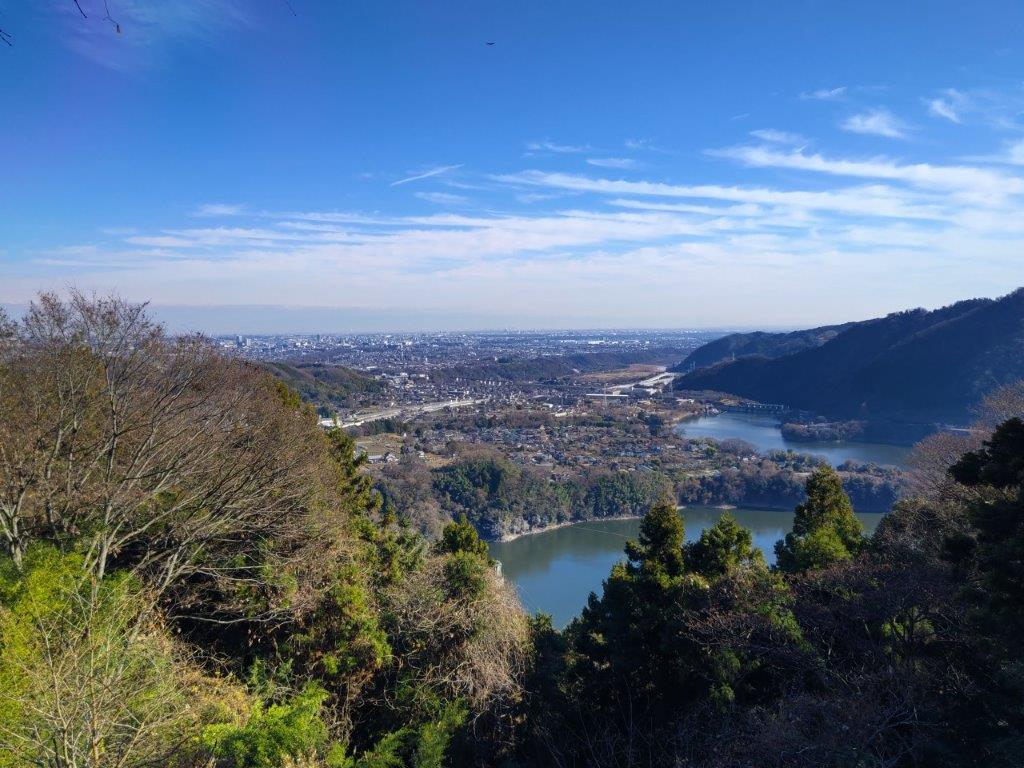
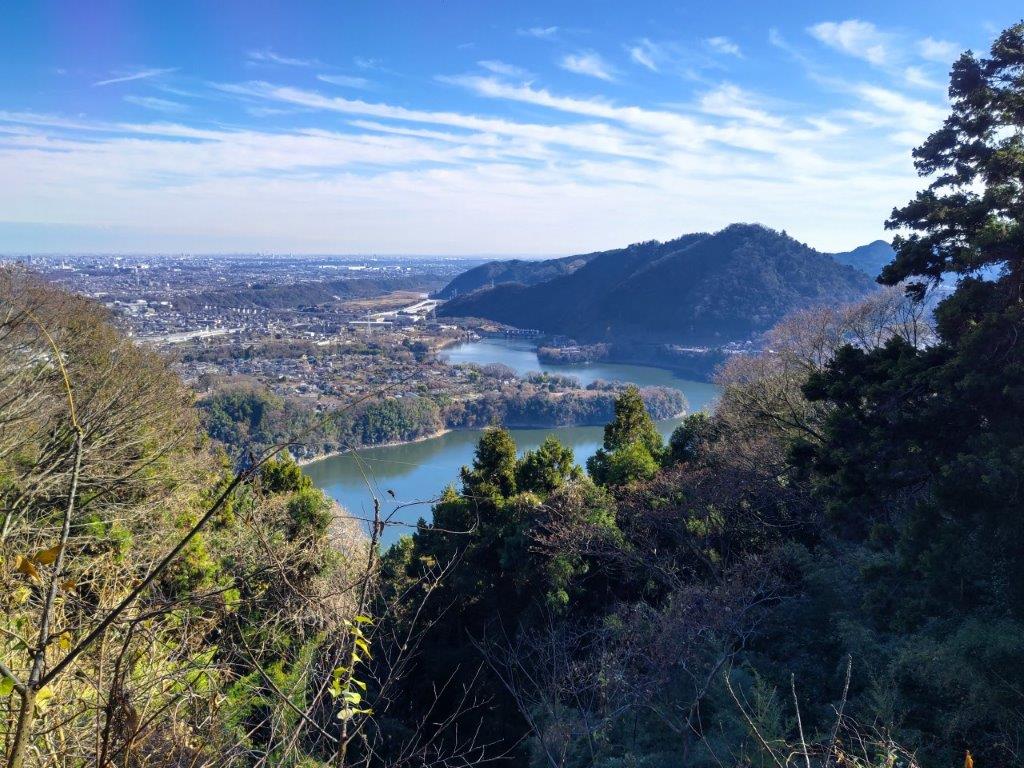
Looking eastwards, I could see all the way to the mountains of Izu peninsula; in front was Nihondaira, and to the south, Suruga Bay, with Shizuoka city filling in the low-lying spaces between the mountains and the ocean. I set off again, and after a short climb, reached Fukunari Shrine at the top of Mt Fukunari (福成山 ふくなりさん fukunari-san) at 1pm. It was mostly in the trees, with a window view of Abe river through a gap on the west side. I continued on my way, heading slightly downhill, and soon arrived at a bench and a second viewpoint, mostly of Shizuoka city on the south side. I pushed on a little further, and reached another bench and a third viewpoint.
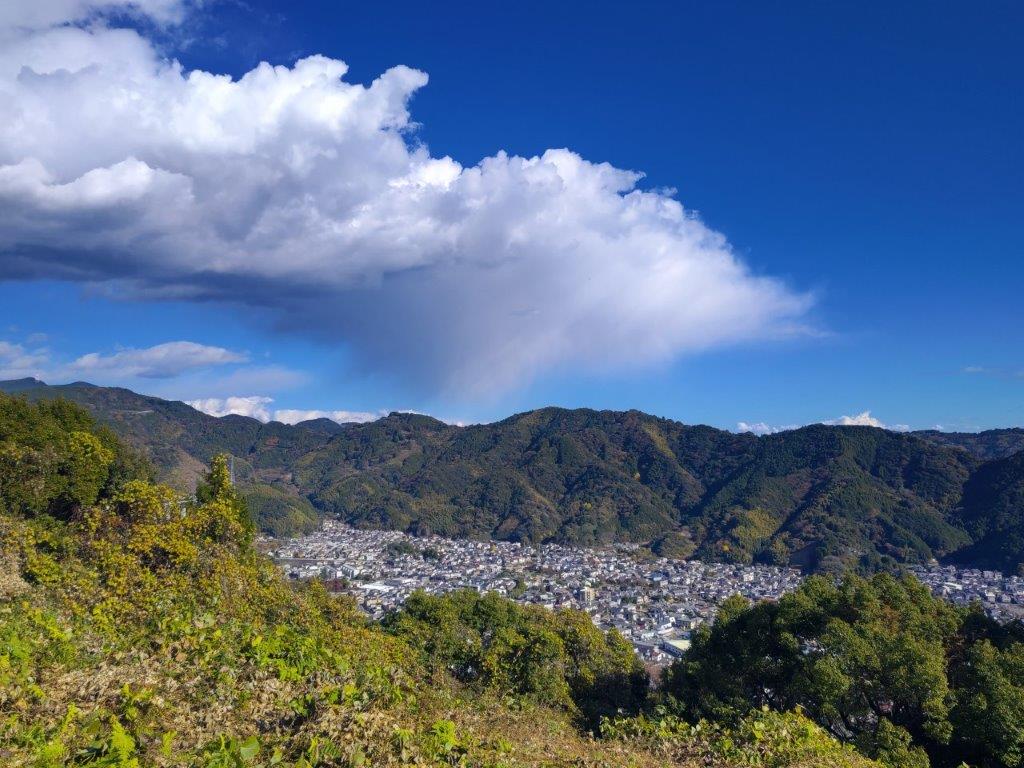
View East of Asahata Village from the 1st Viewpoint

View West of Abe River from the 3rd Viewpoint

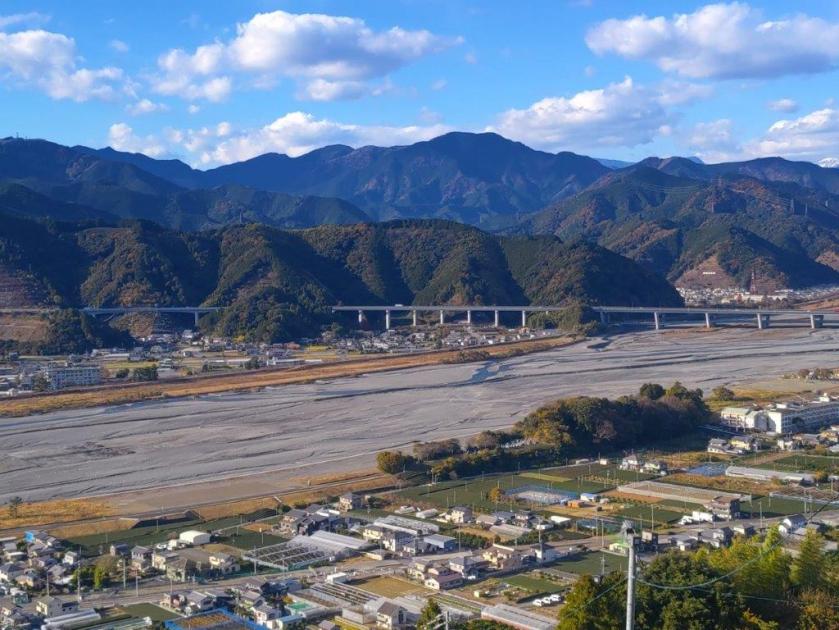
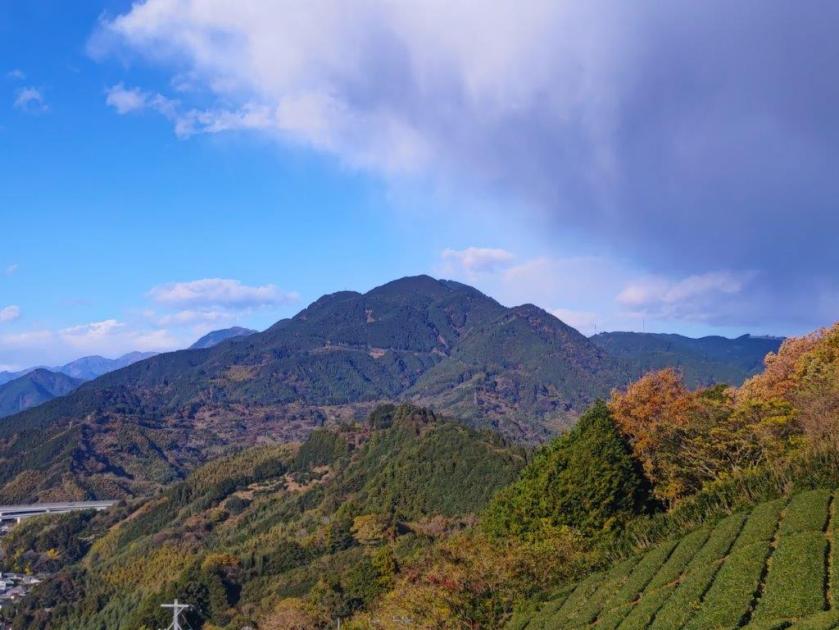
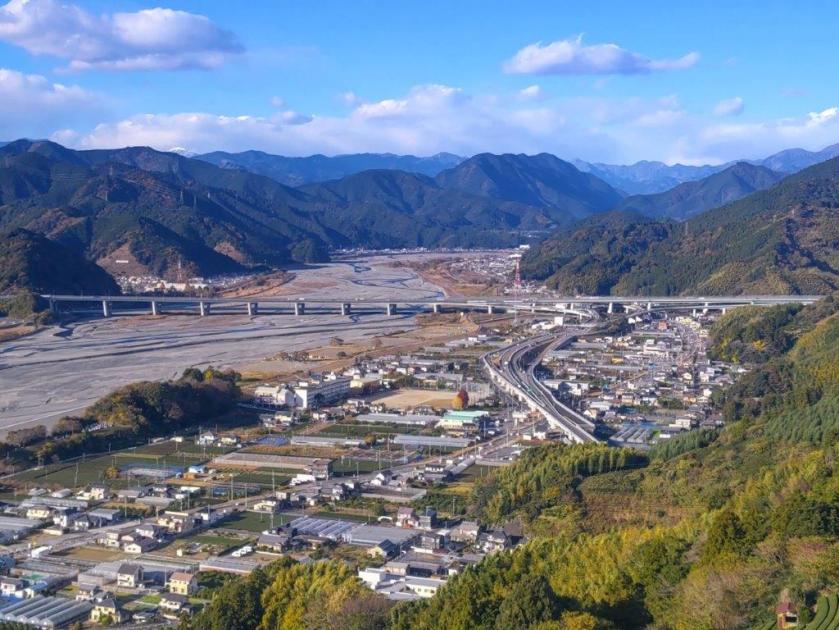
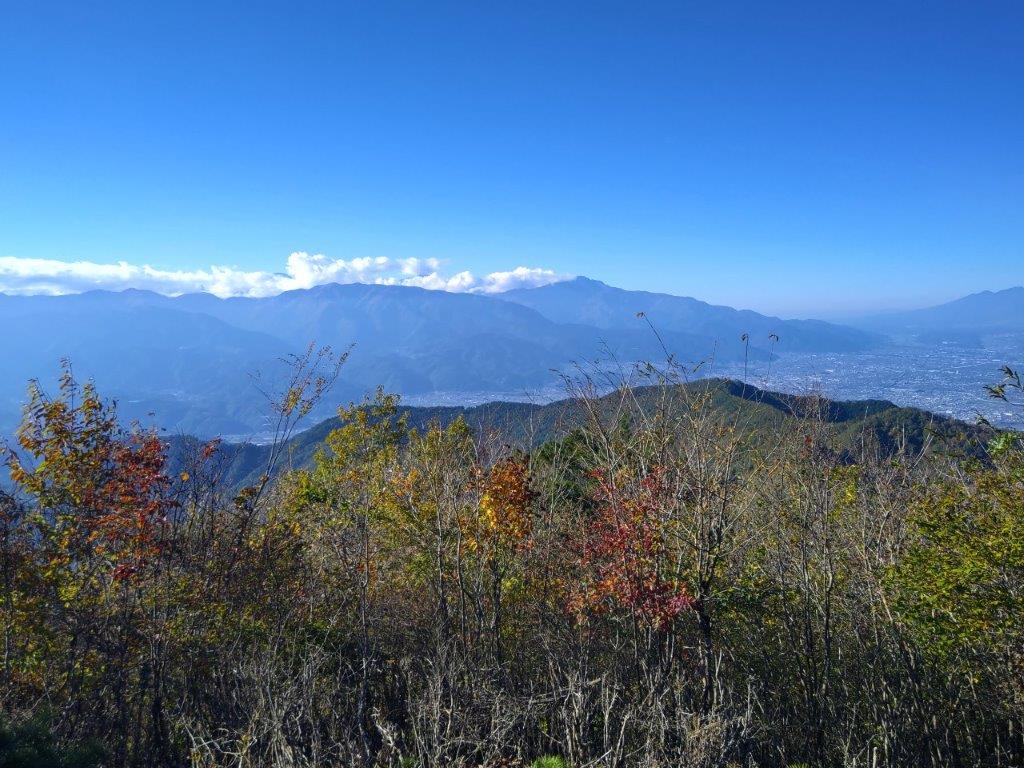
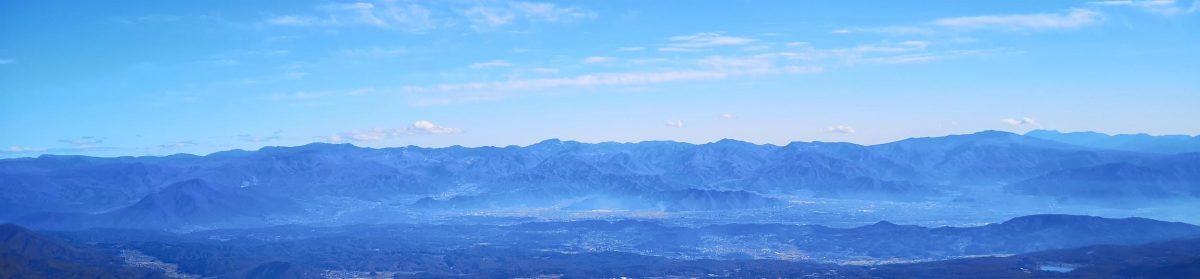
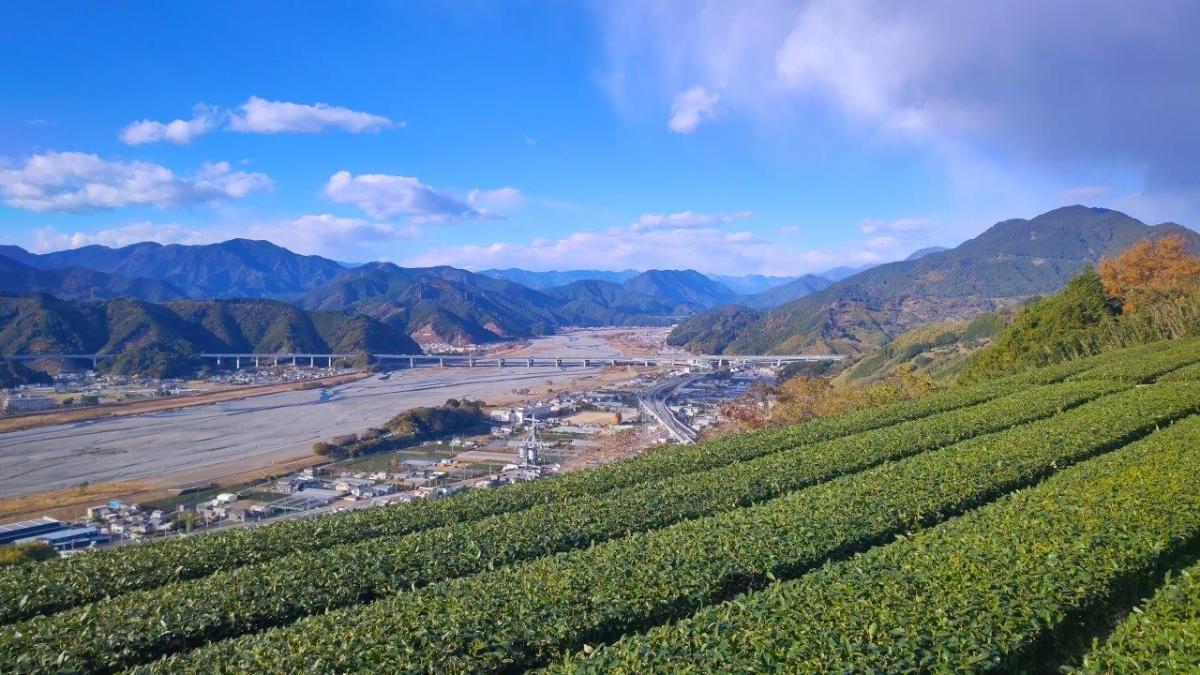
I had a better view of the Abe river valley than from the summit, and since this bench was in the sun, I decided to take a break for lunch. I set off again, a little before 2pm, and soon found myself ascending through tea fields, typical scenery of Shizuoka prefecture. Thanks to the low tea bushes, a wide view soon opened up on the west side. To the north, was Mt Ryuso; to its left, I could see the multiple mountain ranges of the Southern Alps, one tall peak in the very center already white with snow; from this mountainous mass emerged the Abe river, passing under the busy Shin-Tomei expressway.

Row of Trees Separating the Tea Fields

View of Abe River and the Shin-Tomei Expressway from Mt Tanku

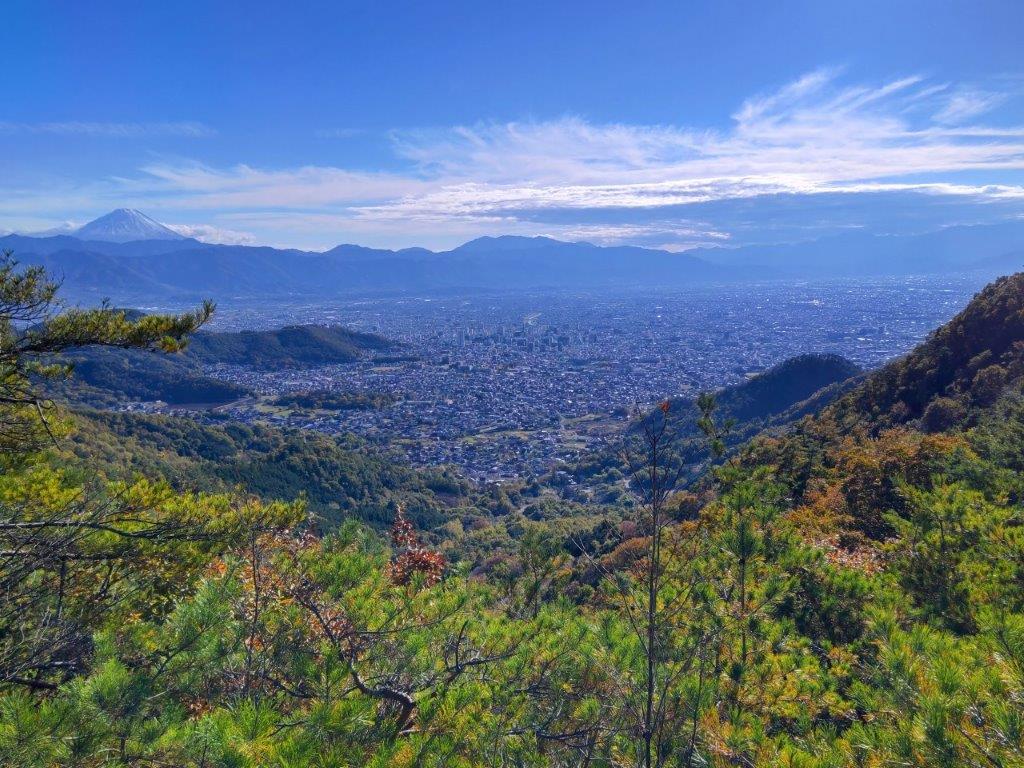
It was easily the best view of the day; it was also the coldest spot of the day, the wind blowing hard, a blast of cold air descending from the Alps, bringing dark clouds in its tow. I arrived at a concrete platform with a bench and a view on the east side, the culminating point of the surrounding tea fields. It was next to a large cylindrical storage tank, and was thus called Mt Tanku (タンク山 229m), although a summit marker seemed to be missing. I had a panoramic view of the Izu peninsula, Nihondaira, Suruga Bay and Shizuoka city; just Mt Fuji was missing from the picture. It was nearly 3pm, and I hadn’t reached the halfway point, so I stepped up the pace. The next part was mostly level, with frequent views on the east side through gaps in the vegetation.

Mt Ryuso, Tea Fields and Dark Clouds
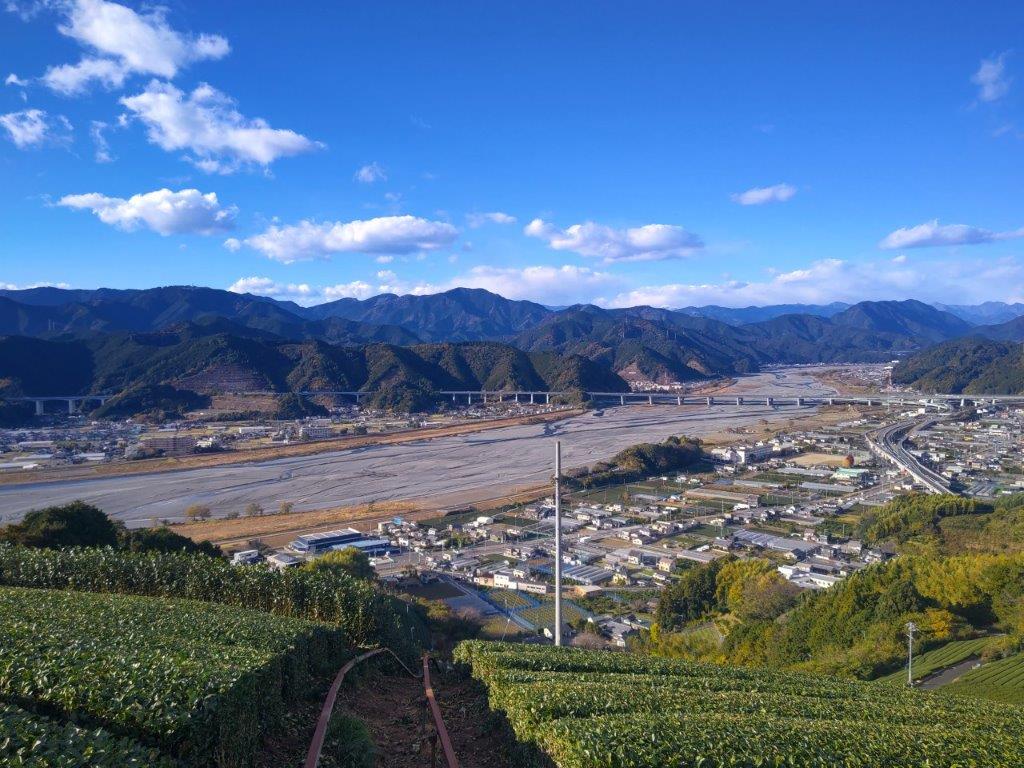
View from Mt Tanku of the Southern Alps

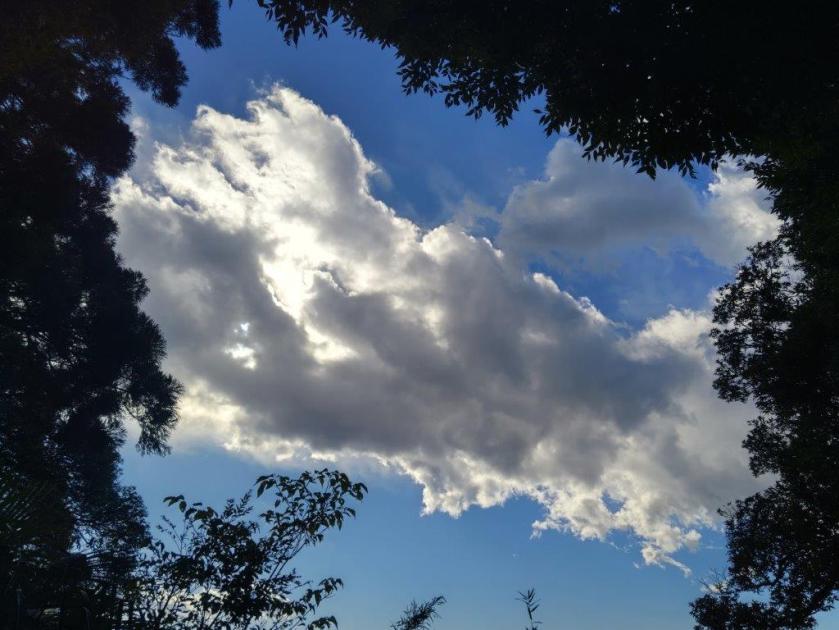
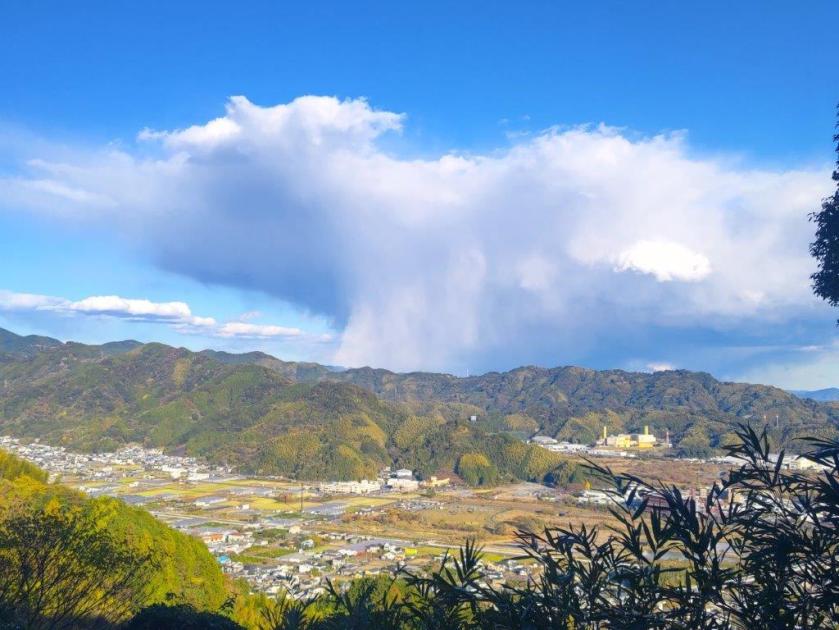
I noticed a mushroom-shaped cloud formation above the next ridgeline, a sudden downpour created by the influx of cold air from inland, a lucky escape for me. I left the tea fields behind and was once again walking through the forest. I was surprised by the variety of trees, very different from the monotonous cedar forests in other hiking areas; hanging between the branches were the ever-present jorogumo spiders still alive and well, despite the cold. After passing an electric pylon and some more orchards, I reached a road. Here, beyond the orange mikan, I had my first view of Mt Fuji, half-hidden by the clouds. I followed the road for a short while before rejoining the hiking path.

Bench with a View at the Top of Mt Tanku
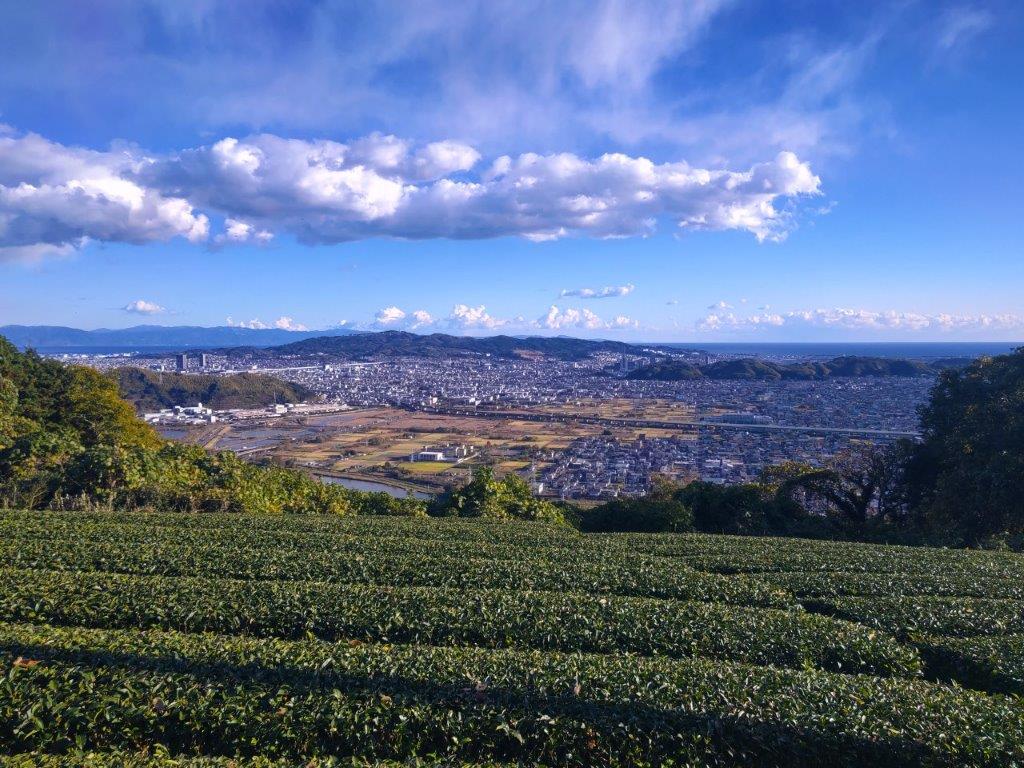
Nihondaira and Shizuoka City from Mt Tanku

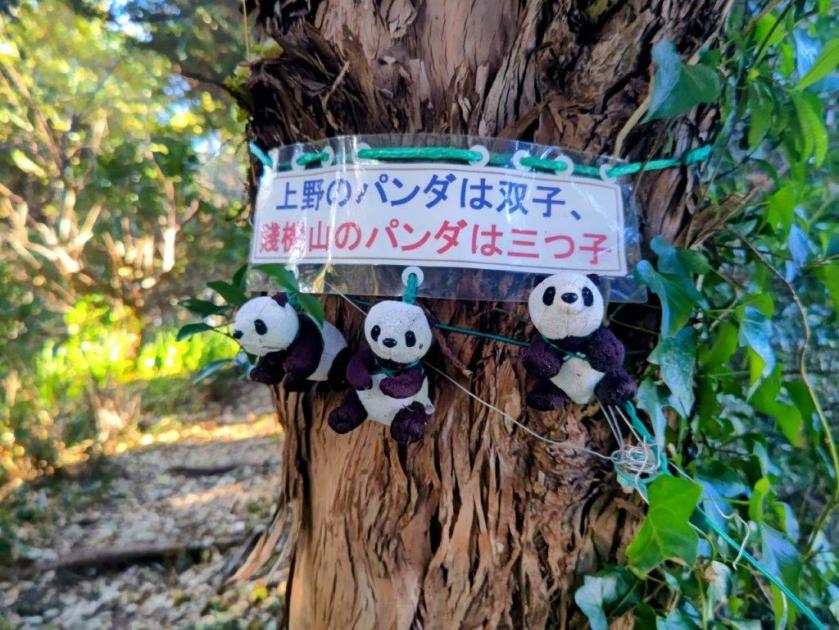
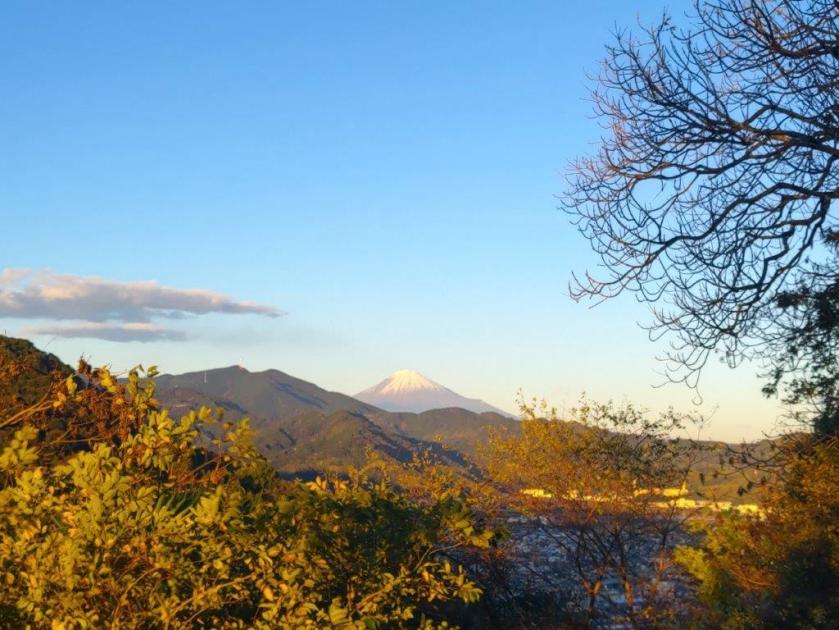
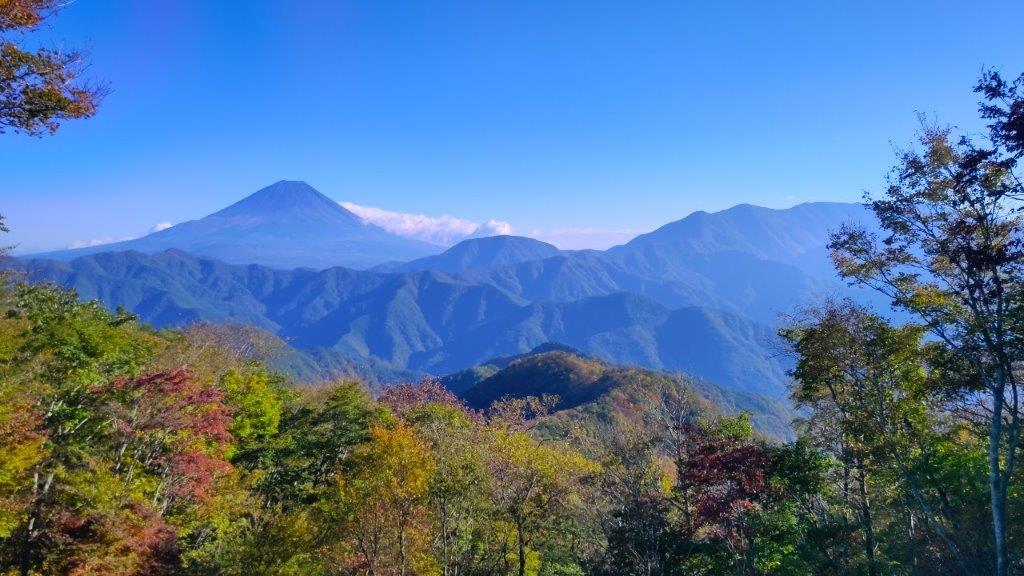
Great views, now including Mt Fuji, kept on appearing on the east side, slowing my pace. After passing 3 panda figurines hanging from a tree, I reached another road section heading up, but soon left it for path with plastic tubes for steps, leading to Ipponmatsu (一本松 192m), meaning “One Pine Tree”, which stood all by itself on the north side. From this vantage point, I could admire the ridgeline I had walked so far today, with Mt Ryusu rising directly behind; to its right was Mt Fuji, its famous snowcap now free of clouds. It was nearly 4pm, and I still had a third of the way to go, so I turned away from the view and headed down a path in the opposite direction.

Mushroom-Shaped Cloud on the Next Ridge

Mt Ryuso and the Mt Shizuhata Hiking Trail from Ipponmatsu

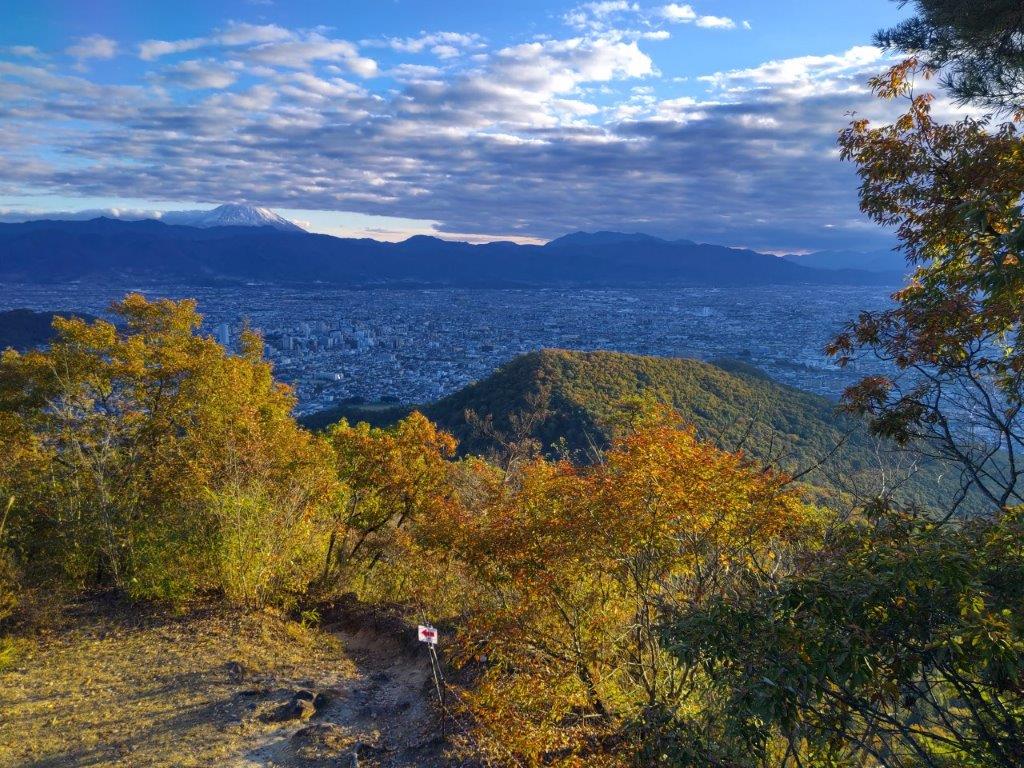
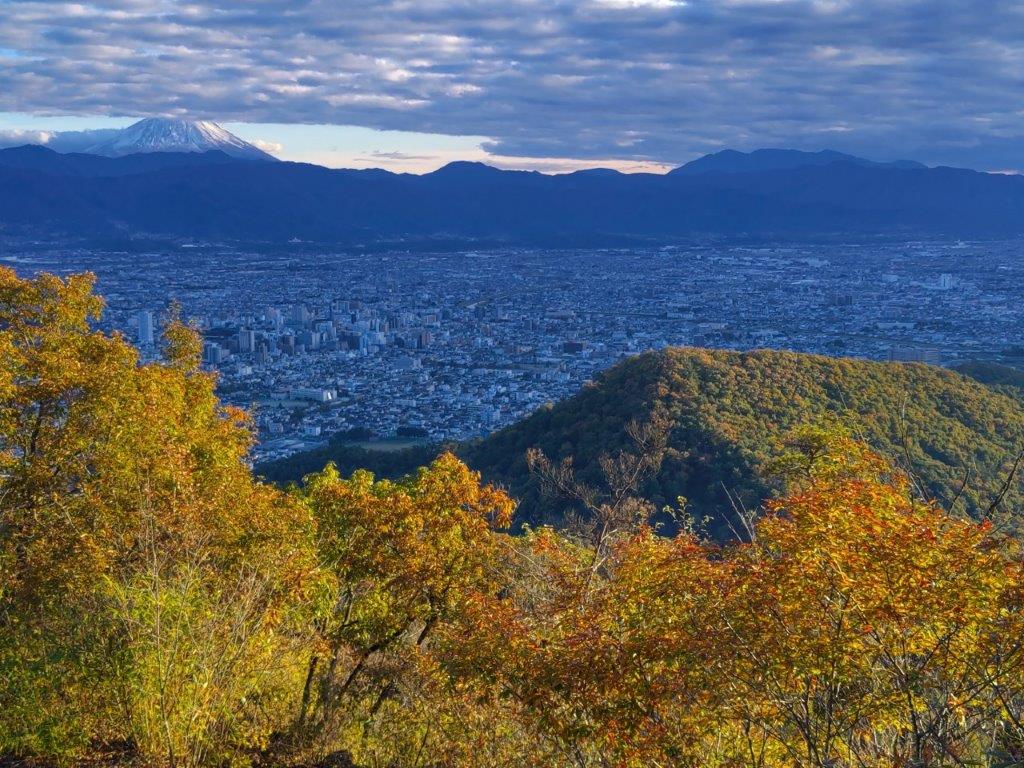
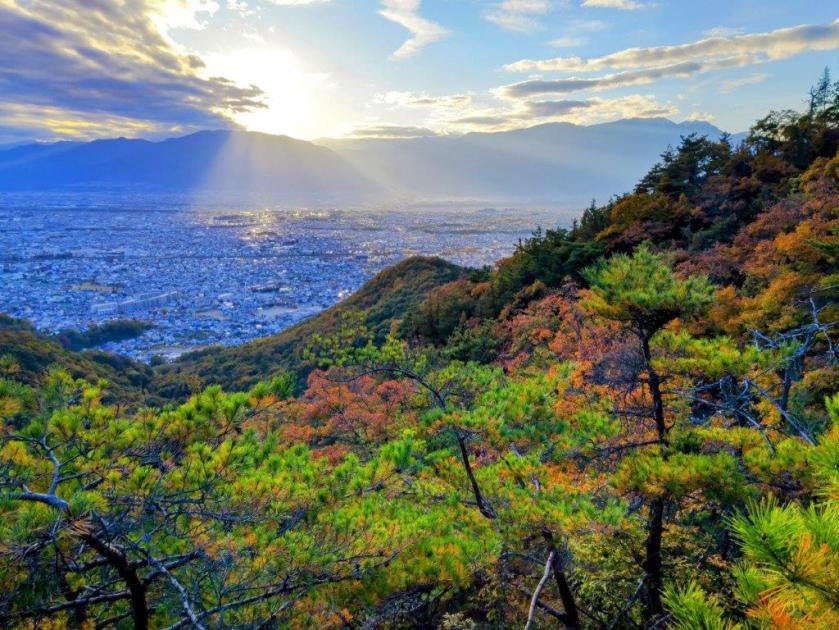
The late afternoon sunlight created a wonderful effect as I headed down some log steps facing westwards, although it also signaled that sunset was imminent. At another viewpoint with a bench, I saw the sun touching the opposite ridgeline, the Shin-Tomei expressway simply a yellow line along the valley; in the other direction, Mt Fuji was clearly visible and starting to turn pink. I continued up a steep trail, requiring one final effort to get to the top of Mt Shizuhata (賤機山 しずはたやま shizuhata-yama), also the remains of an ancient castle; apparently the “shizu” in Shizuoka comes from this mountain’s name. It was mostly in the trees so I soon moved on, along a level trail with wide open views on the west side.
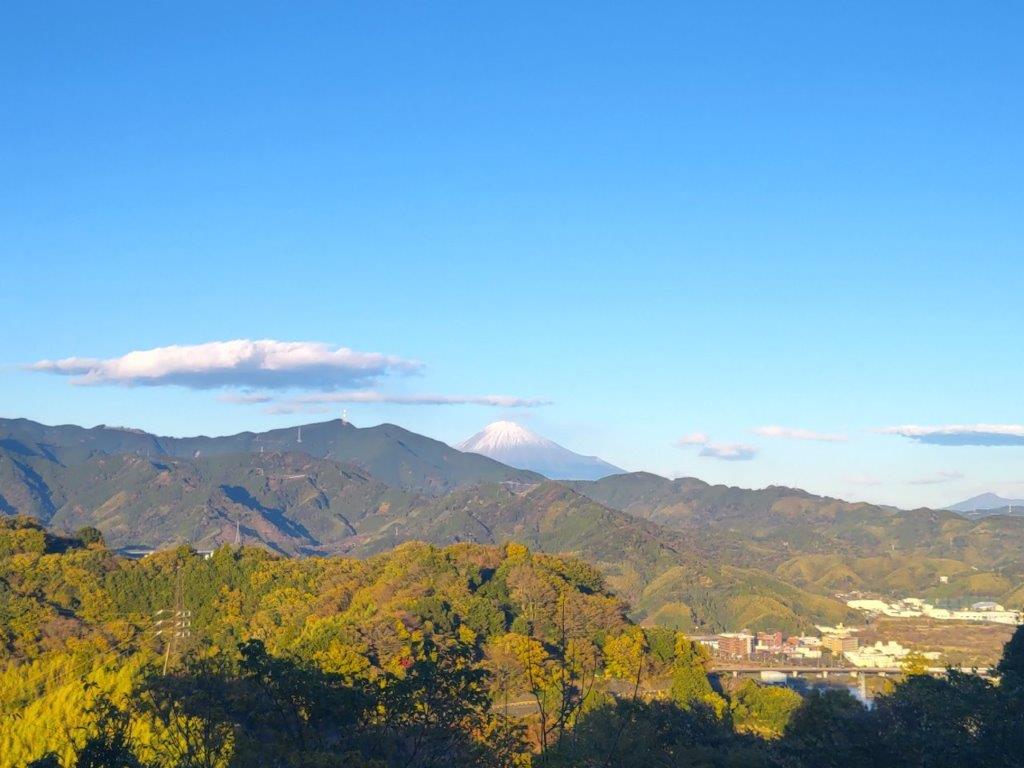
Mt Fuji from Ipponmatsu
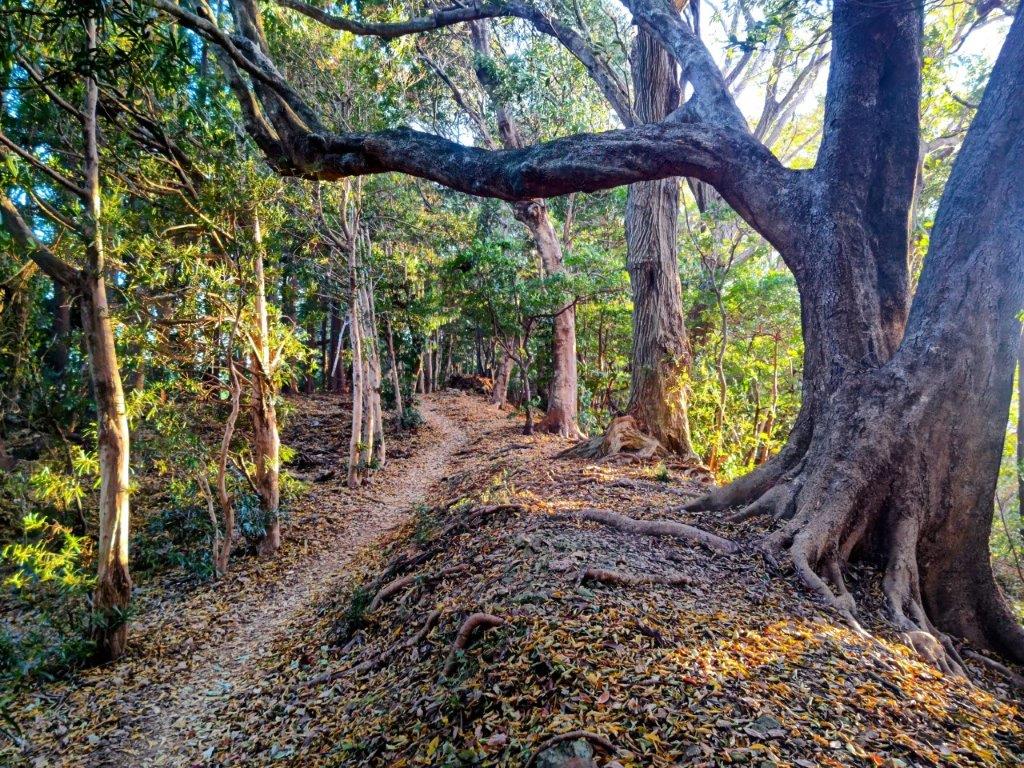
Trail between Ipponmatsu and Mt Shizuhata

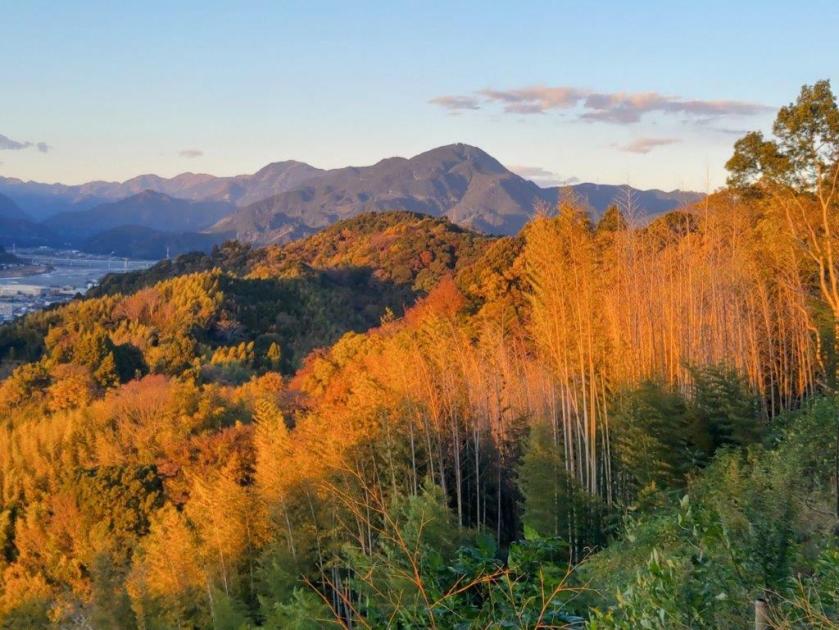
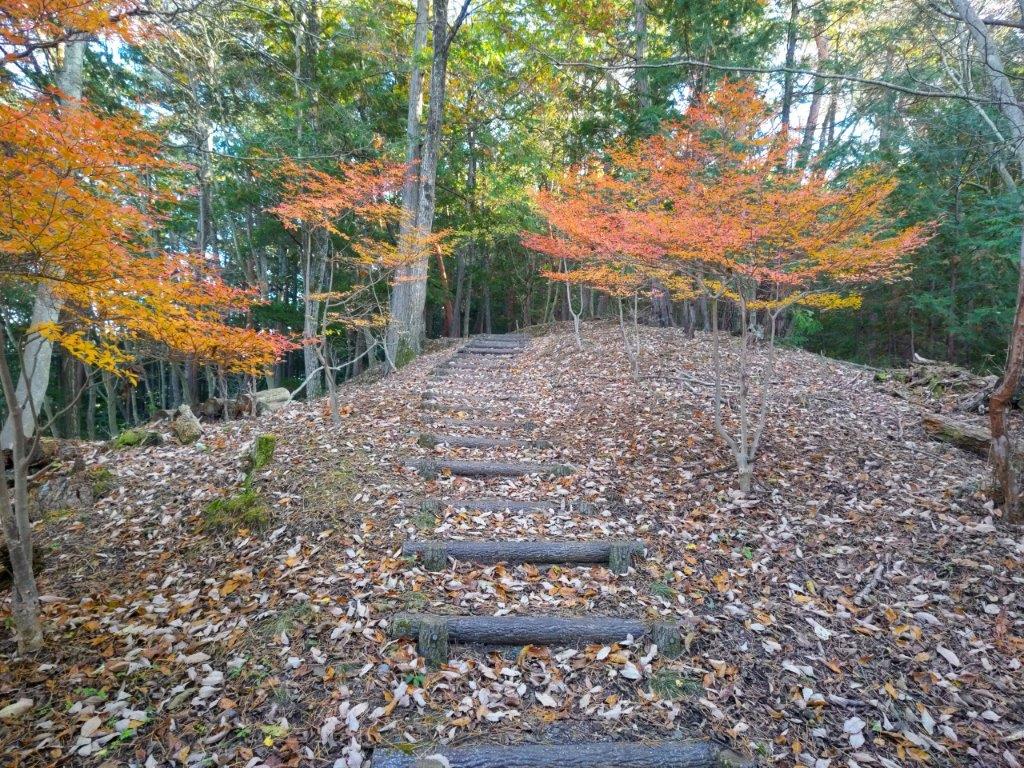
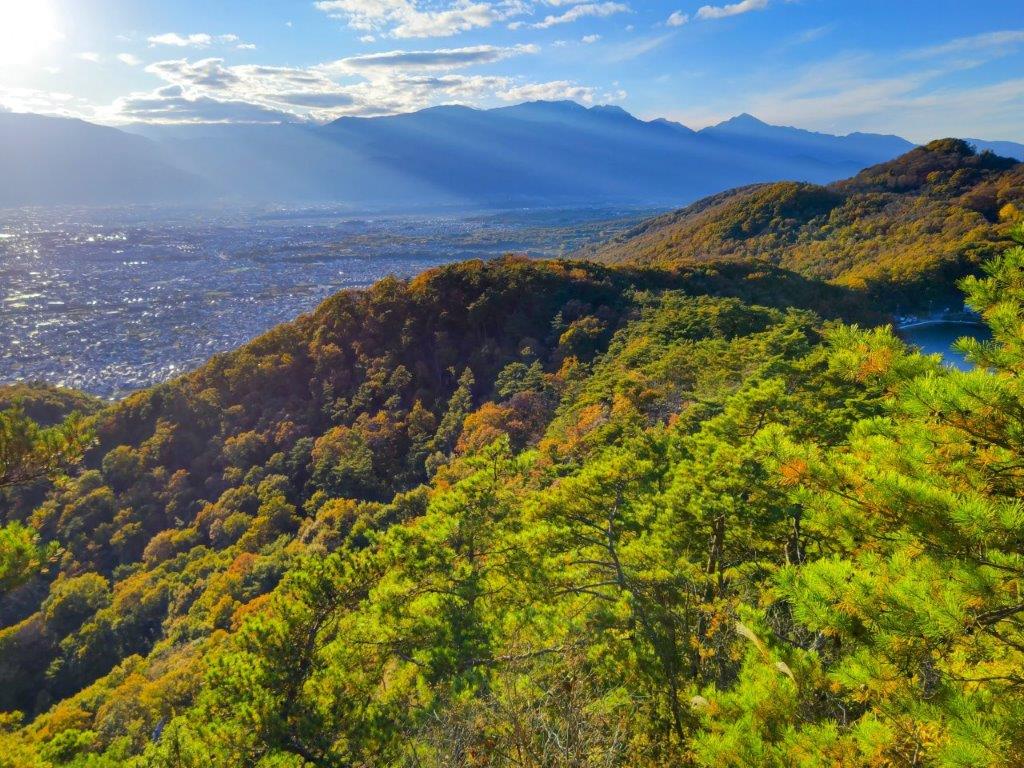
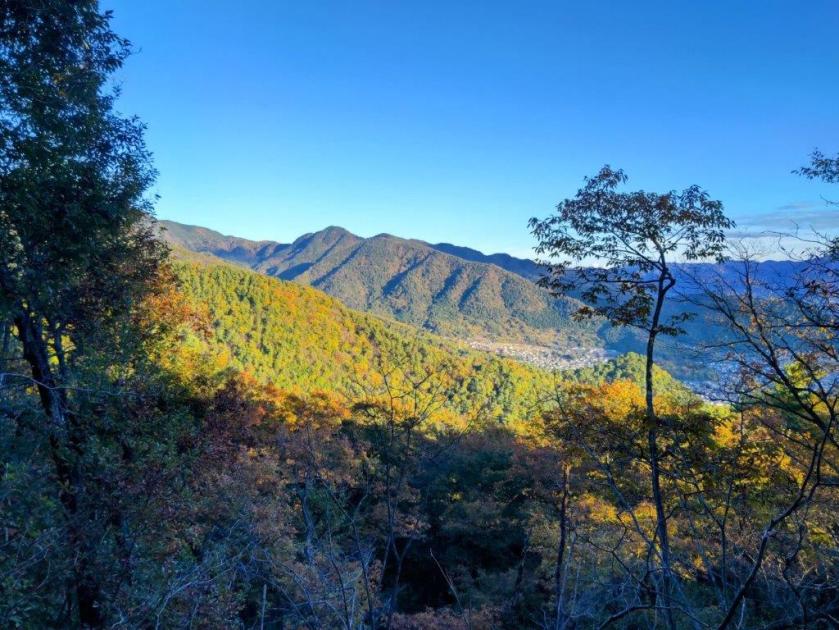
Turning around, I was stunned by the orange colours on the mountain side, highlighted by the fast setting sun. A little further on, I had another view of Shizuoka city on the east side, under pink clouds and a full moon. I quickened my pace, and after one final effort up a section crisscrossed with tree roots, forcing me to tread carefully in the growing gloom, I reached the top of Mt Asama (浅間山 140m). It was also inside Shizuhatayama park, with a paved path and occasional lampposts, meaning I could complete the hike safely even in dark conditions.

Autumn Colours Past Mt Shizuhata

Mt Fuji and Full Moon from Mt Asama

I had a breathtaking view of pink Fuji under a yellow moon, lights slowly coming on throughout the city spread out below, the last view of the day. It was past 4h30, so I quickly made my way down through the park, past Asama Shrine, the path enchantingly lit by lanterns, people still dropping by for a quick prayer in the early evening. At 5pm I emerged onto a busy road at the base of the mountain, and a short while later, arrived at Ofuro Cafe Bijinyu. After a reinvigorating hot bath, I caught a city bus for the short ride back to Shizuoka station, where I hopped onto the shinkansen for the one-hour trip back to Tokyo.

Watch a Video of the Shizuhata Hiking Trail Hike

Watch the Video of the Hike on YouTube
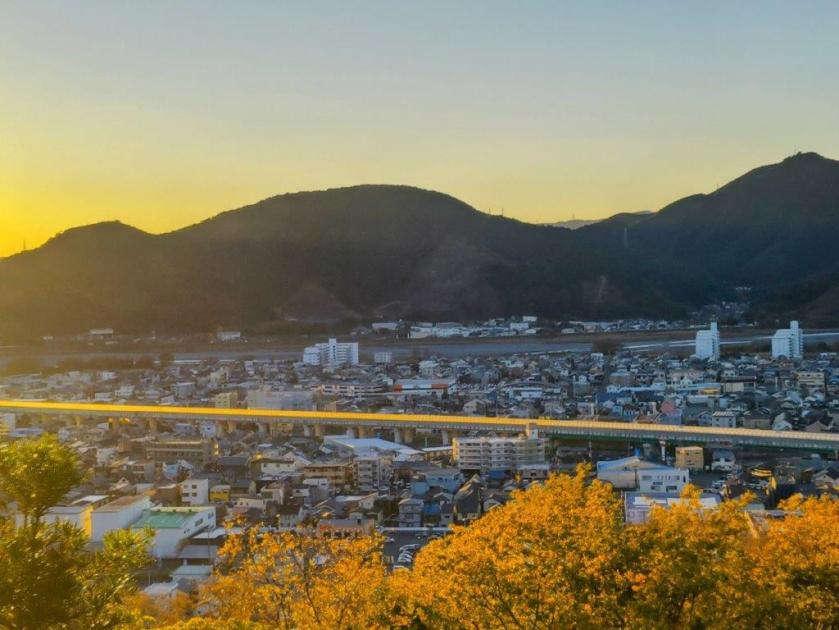
See a Slideshow of More Pictures of the Hike

Mt Komatsu (514m), Mt Shiro (640m) & Mt Yumura (446m), Kofu City, Yamanashi Prefecture, Saturday, November 23, 2024

I was looking for another hike in Yamanashi before the arrival of the snow. I also wanted to stay relatively low since the temperatures had plummeted since the previous week. Looking at my map, I spotted a group of suitable mountains just north of Kofu. I had already done a great hike on the northeast side so I was keen to explore the area more. I saw that I could make an open loop passing by several viewpoints, including an interesting rock formation and a lake, within a reasonable amount of time.

Hiking in the Chichibu-Tama-Kai National Park

秩父多摩甲斐国立公園

To get to the start of the hike near Suwa Shrine, I’d ride the Chuo limited express to Kofu station, and from there, ride a bus to a stop within walking distance of the shrine. I’d finish the hike at Yumura Onsen in northwest Kofu, and after a hot spring bath, ride a bus back to the station. The weather was supposed to be clear but cold. I hoped I could get some good views of the surrounding mountains, including Mt Fuji, and still catch the Autumn leaves at their best.

For subscribers, read this Blog Post on Hiking Around Tokyo for a better viewing experience and the latest updates

Find Japan Hiking Maps on Japanwilds

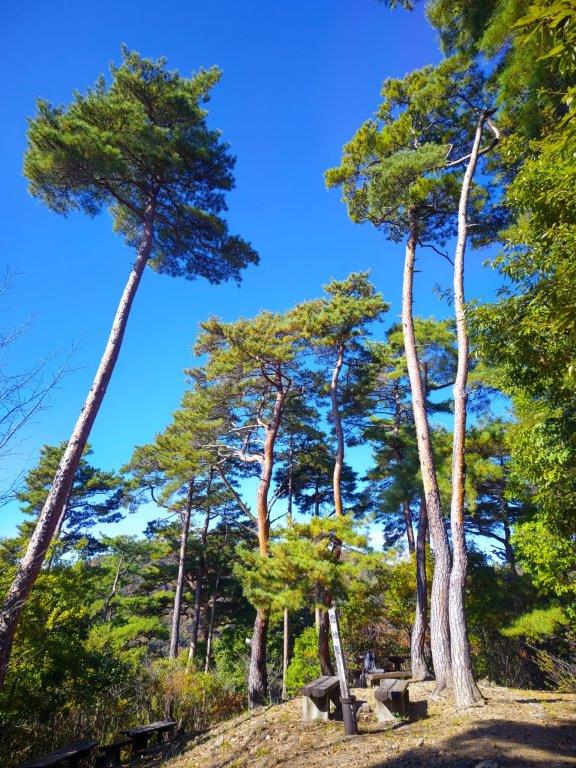
Start of the Hike near Suwa Shrine (left) Tall Pines on Mt Komatsu (right)

Exposed Rocks above Kinsu-toge (left) Autumn Colours near Chiyoda Lake (right)

It was a cloudless, blue-sky day as I stepped off the limited express in Kofu station at 10am. I boarded a local bus, the driver even kindly confirmed my destination, and after a short ride, I got off at a stop still within the confines of the city. A few minutes of walking brought me to the foot of the mountains, and after a short climb, I arrived at Hizakutsu-suwa Shrine (膝屈諏訪神社). It was just after 11am as I passed under the stone shinto gate next to an impressive yellow gingko-tree.

Trail below Mt Shiro (left) Trail past Mt Hosenji (right)

Path for Mt Yumura (left) Flagstones for Yumura Castle Ruins (right)

Turning around, I was rewarded with a view of snow-capped Fuji. I made my way to the white shrine building surrounded by tall cedars, and after taking a few minutes to adjust my gear, set off along a level trail at the far end of the shrine grounds. I soon emerged from the trees onto a sports field, and after crossing a busy road, followed a residential street up the mountain side to a staircase below the trail entrance. This section has no signposts and I had to rely entirely on my phone GPS.

Log Steps Leading to the Top of Mt Komatsu

Walking the Takeda no Mori Promenade

I was surprised to see that the trail was partly overgrown, a sign that it was little used in this season; I was even more surprised to notice spiders again, a sign of their resilience to cold weather. Once the path started to climb, the trail became better defined; I saw the first signpost of the day upon reaching a wide path along the top ridge. I turned right, and after climbing a series of log steps, arrived at the top of Mt Komatsu (小松山 こまつやま komatsu-yama), the promised view mostly blocked by vegetation.

Heading up to Kinsu-toge

The exposed rocks of Mt Awayuki

I was tempted to take a break at one of the sunny summit picnic tables but since it was barely noon, I decided to press on. Even though the mountain name means “little pine”, it was home to some very tall red pines, one of the 100 famous forests of Yamanashi. I went back down the steps and followed the ridge northwards, soon merging with the Takeda Forest Promenade (武田の森遊歩道 takeda-no-mori-yuhodo named after Takeda Shingen, a famous feudal lord from the Sengoku era), an ancient road connecting Wada and Iwado passes; I had already walked the latter part on my Mt Yogai hike. I strolled along the wide, level path as it followed the mountain side eastwards through the forest.

First view of the day near Kinsu-toge

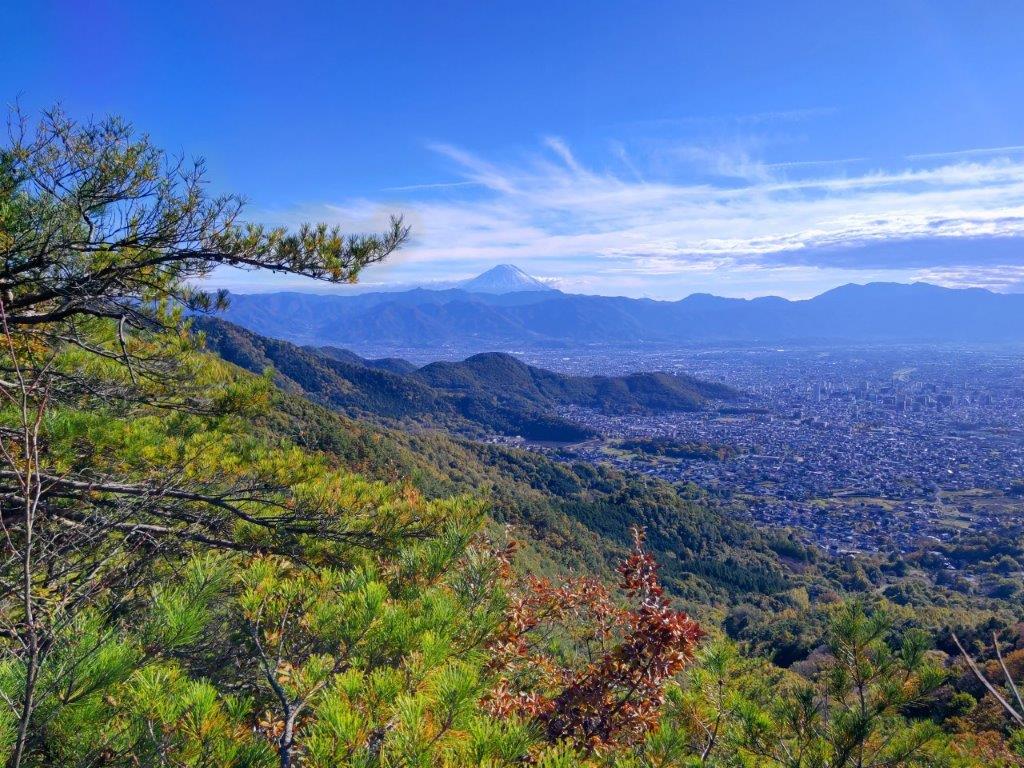
Mt Fuji, the Misaka Mountains and the Kofu Basin

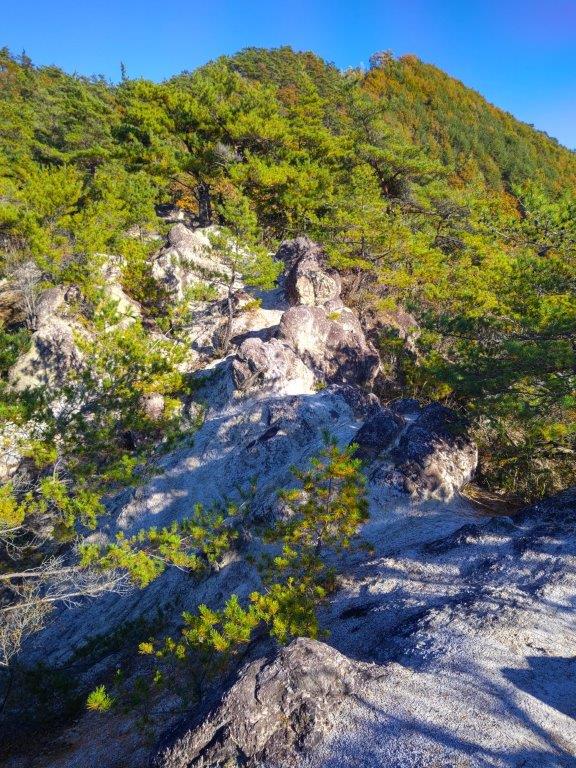
From time to time, I waved a stick to clear the stubborn spider webs that were too low to duck under, their occupants groggily moving out of the way. Shortly before 1pm, I left the promenade and turned left onto a wide path leading up the mountain side, the webs now thankfully gone. I soon reached Kinsu Pass (679m 金子峠) where I had a view of Mt Fuji between a gap in the trees. I now rejoined a hiking trail, and continued eastwards, soon arriving at a group of white-coloured rocks, called “Exposed Rocks of Mt Awayuki” (702m 淡雪山の露岩 あわゆきやまのつゆいわ), similar to the scenery one can find at the nearby Shosenkyo. It was also the highest point of today’s hike.

Mt Kaikoma from the Exposed Rocks

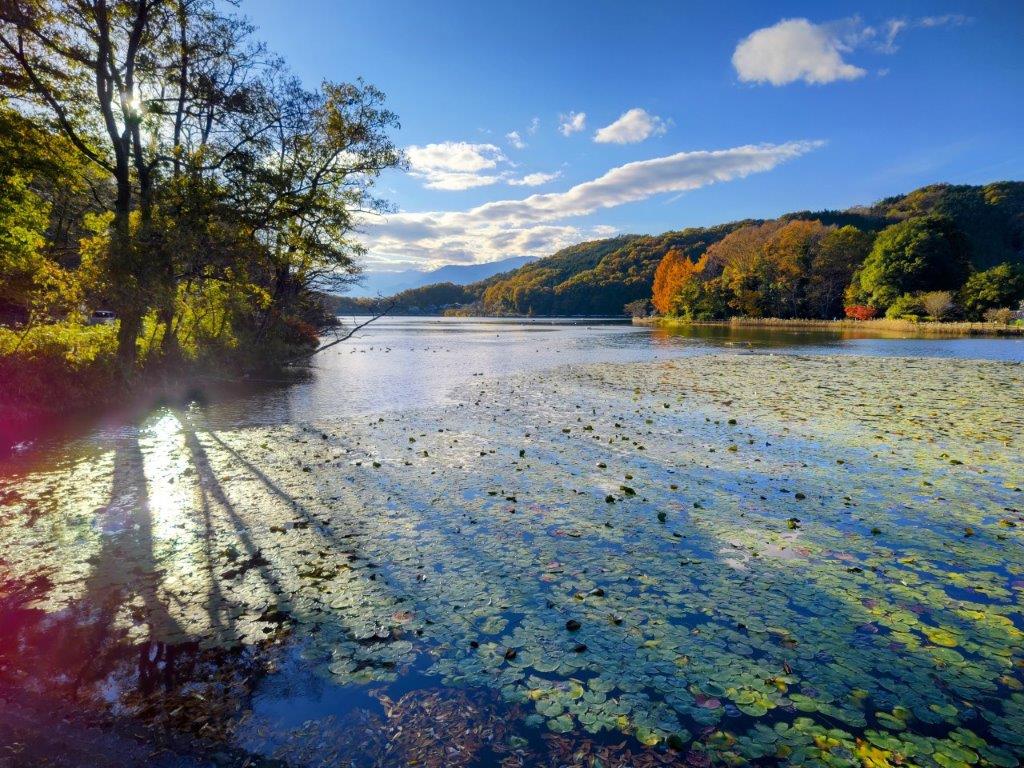
Afternoon Light at Chiyoda Lake

I felt lucky to have such a spot all to myself. Above the pines on the south side, I had a fantastic view of Mt Fuji and the Kofu basin. To the west, I could see Mt Kaikoma, also known for its white rocks, and the long summit ridge of Mt Houou. After taking a few minutes to explore and take photos, I selected a suitable rock to sit on for a lunch break. A little after 2pm, I headed back to Kinsu Pass, and followed the ridge westwards. Here the trail became faint and I had to rely on my phone GPS and the occasional pink ribbon. After a short descent, I reached a proper trail which soon turned into a road through a residential area; at 3pm, I arrived at the edge of Chiyoda lake.

Autumn Colours on the way to the Mt Shiro Viewpoint

Chiyoda Lake from the Mt Shiro Viewpoint

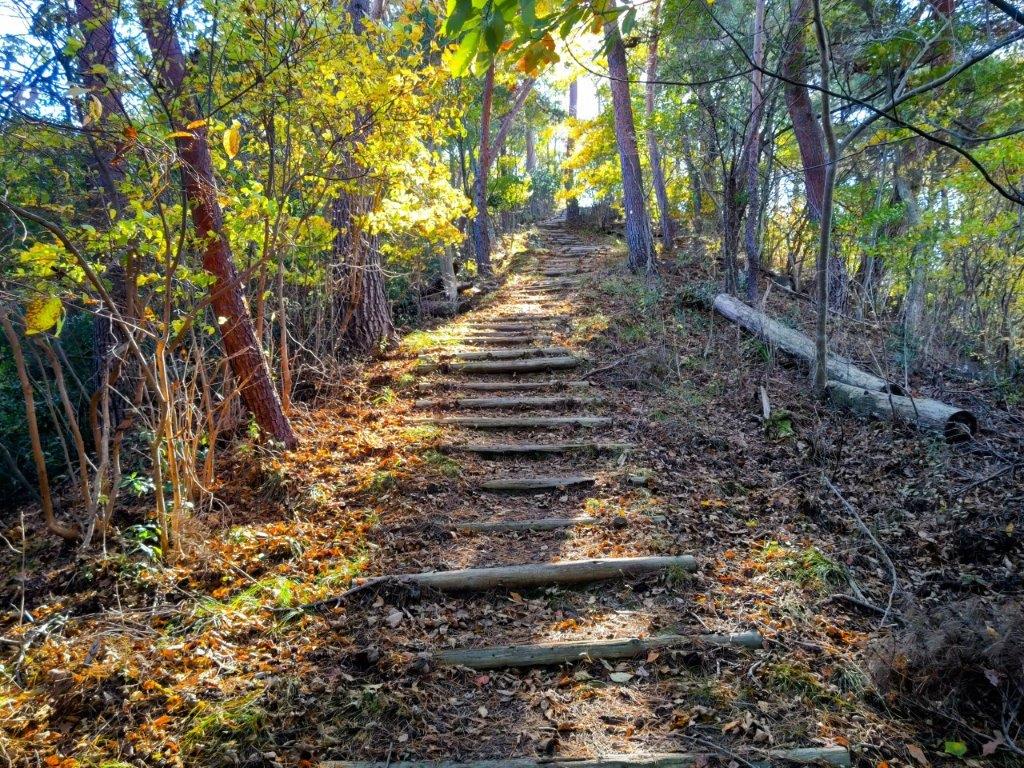
I was dazzled by the reflection of sunlight on the blue water surface and green water plants. I headed up log steps surrounded by red and orange leaves, happy to be back on a hiking trail. After a short climb, I reached an open shelter at the Shiroyama Viewpoint (白山展望台). Directly below was Chiyoda lake; to the west, I could the see the outline of Mt Houu against the fast sinking sun; looking north, I spotted Mt Kaya and the Kurofuji volcanic group, with the white rocks of Shosenkyo in the foreground and the peaks of Yatsugatake in the background. I still had a little way to go to the next summit, so after a short break, I set off again. The up and down trail was easy to follow, and at 3h30, I reached the Hachioji shrine (八王子神社) at the top of Mt Shiroyama (白山 しろやま), meaning “white mountain”.

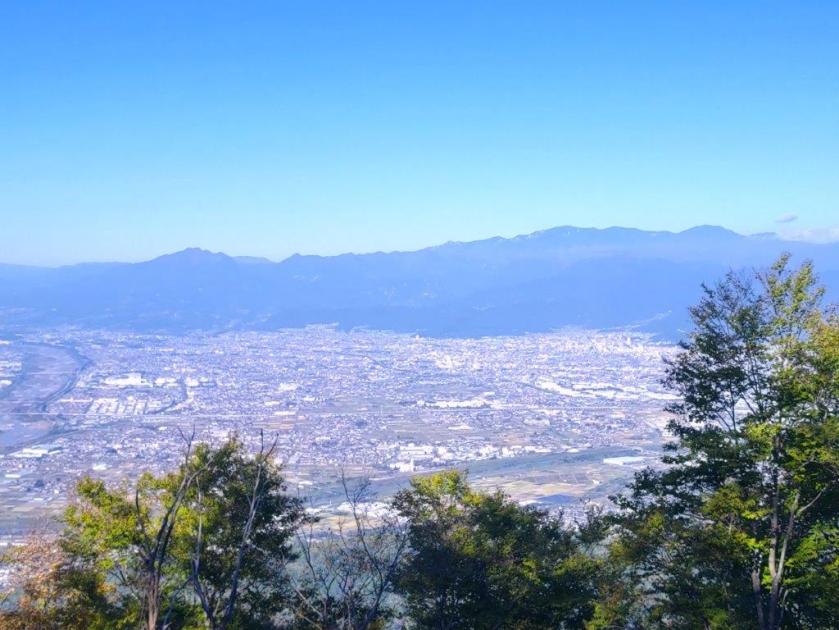
View of Kofu from the top of Mt Shiro

Dark Clouds and Yellow Leaves from Mt Shiro

I was stunned by the view of fleecy clouds spreading from the snowy slopes of Mt Fuji, casting shade over Kofu city’s urban sprawl; luckily, the light still reached the surrounding slopes, lighting them up in gold. I quickly admired the view of the South Alps on the other side of the shrine, before moving on, picking up the pace as I wanted to get down before dark. I descended a steep, sandy trail, the rocky outcroppings and gnarly pines along the way feeling quite typical of the Chichibu-Tama-Kai national park. I was delayed by two more superb viewpoints, the setting sun creating a striking contrast of light and shade, before reaching a level trail, now in the shade. At 4pm, I passed the minor summit of Mt Hosenji (539m 法泉寺山 ほうせんじやま), completely within the trees.

The Tip of Mt Fuji hidden by the Clouds

The South Alps from the Top of Mt Shiro

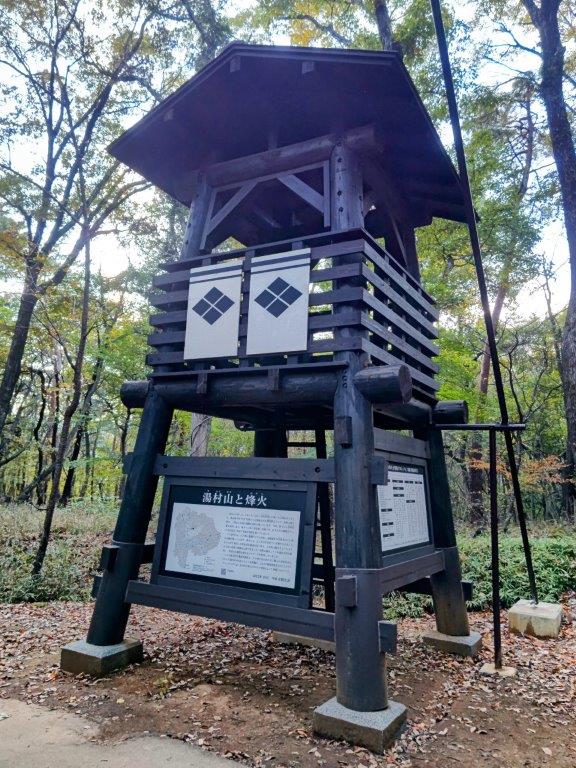
I was suddenly walking on flagstones (“ishidatami), a reminder that today’s last summit was also the location of Yumura castle (湯村城), although only some stone foundations remain today; I had to be careful not to miss my step, especially since the visibility was starting to fade. After a short descent, I reached a fire beacon (“noroshi“), a recent reconstruction of one of the many that used to exist during the Edo period, creating an ancient communication system. One final effort brought me to the open shelter at the top of Mt Yumura (湯村山 ゆむらやま yumura-yama), meaning “hot spring village”.

Sun Setting behind Mt Houou

Trail between Mt Shiro and Mt Yumura

I had one last view of Mt Fuji, its top half truncated by a layer of grey clouds. It was 4h30, so I sped back to the fire beacon and headed down a switchback trail on the west side, occasionally taking the well-worn short cuts between the bends. I was relieved to reach Yumura Onsen (湯村温泉) before it was completely dark, arriving at Yumura Hotel just before 5pm. After a refreshing hot spring bath, I caught a bus for Kofu station, where I boarded the limited express for the 90-minute ride back to Shinjuku.

Easy to Follow Trail below Mt Shiro

Last View of the day from Mt Yumura

This hike ended up taking 6 hours, a bit longer than planned, mainly because of the superb views along the way. The section around Mt Shiro was especially stunning, and I’d like a chance to redo in lighter conditions. It deserves to be better known, and it’s a mystery why I saw no other hikers the whole day. In the future, I’d also like to climb Mt Kata (片山) on the other side of Chiyoda lake and also explore more of the Takeda Forest Promenade towards Yogai Onsen. Before that, I definitely want to revisit the white rocks of nearby Shosenkyo.

Watch a Video of the Mt Shiro Hike

Watch the Video of the Hike on YouTube

See a Slideshow of more Pictures of the Hike

Mt Obatake (1117m) & Mt Hiru (1280m), Ichikawa-misato Town, Yamanashi Prefecture, Sunday, November 3, 2024

I had wanted to visit Shibireko Lake ever since I’d found out about it from the Yuru Camp anime. Looking online, I recently found out that it was possible to hike from the lake to a nearby mountain with a view of Mt Fuji. Along the way, it was also possible to make a short detour to another summit with a view of the Kofu basin. Outside these two viewpoints, the hike was mostly in the trees, perfect for seeing the autumn leaves, hopefully at their peak. The hike, up and down the same way, was on the short side, ideal for the shorter days of Autumn.

Hiking in the Misaka Mountains 御坂山地

To reach the start of the trail, I’d ride the Chuo line Limited Express to Kofu, and then drive the rest of the way, as there is no public transport to the lake. The weather was supposed to be sunny all day with temperatures warm for the season. I was looking forward to seeing Mt Fuji with new snow on its summit and hoped that, although the lake was no longer a secret due to the recent camping boom, the trail would still be relatively unknown.

For subscribers, read this Post on Hiking Around Tokyo for a better viewing experience and the latest updates

Get a Map of the Mt Hiru Hike

This map was developed for Japanwilds with the Hokkaido Cartographer

Find Japan Hiking Maps on Japanwilds

Minami Alps (left), Yatsugatake (back center) & Kofu Basin from Mt Obatake

Yatsugatake (left), Oku-Chichibu (right) & Kofu Basin from Obatakeyama

It was a beautiful Autumn day as I rode the limited express, arriving at Kofu station at 1030. By 11am, I was driving south, towards the South Alps, still completely free of snow. Shortly after noon, I pulled into the large parking lot belonging to Sumeiso Lodge, also available to day-trippers for a small fee; I had passed almost no cars during the drive up the two-lane Shibireko-koen line, a good sign for today’s hike. After getting ready, I set off at 1230, walking up the mountain side and away from the lake, hidden from view by the thick forest.

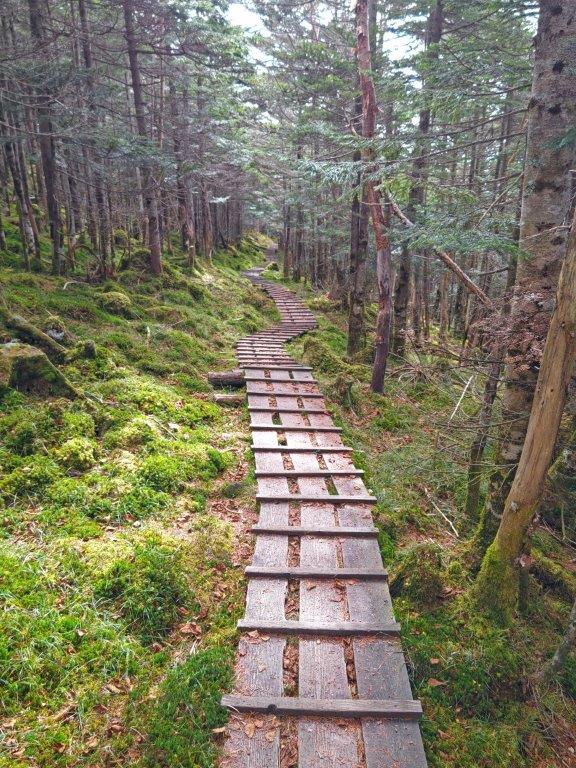
Narrow Section of the Hirugatake Trail

Sun Shining through the Trees Halfway to Hirugatake

It was a steep but short climb to the ridgetop, where I turned left along a level trail. At 1pm, I emerged onto the flat top of Mt Obatake (大畠山 oobatakeyama), with a bench and a view on the west side, as well as a telecommunication tower. I could see the South Alps, Yatsugatake and the Oku-Chichibu mountains; directly below, was the triangular-shaped Kofu Basin (kofu-bonchi), the urban sprawl running right up to the base of the mountains and the blue ribbon of the Kamanashi river splitting it in half. I settled on the summit bench for a thirty-minute lunch break then retraced my steps to the ridgetop intersection.

Snowless Fuji from the Summit of Hirugatake

Mt Fuji (left), Mt Ryu (center) & Mt Kenashi (right) from Hirugatake

I was relieved to see that this trail was still a well-kept secret as I saw few hikers along the way. The trail alternated between level and gently climbing sections; a couple of narrow traverses required careful walking. The Autumn leaves were still turning at this elevation but the surrounding forest was beautiful. A little after 2pm, I reached Nishikata Pass (西肩峠) where I turned left for the final climb to the summit. At 2h30, I was standing at the top of Mt Hiru (蛾ヶ岳 ひるがたけ hirugatake meaning Mt Moth), a Yamanashi 100-famous mountain. Although the name sounds the same as the highest peak of the Tanzawa mountains, it’s written with a different Chinese character.

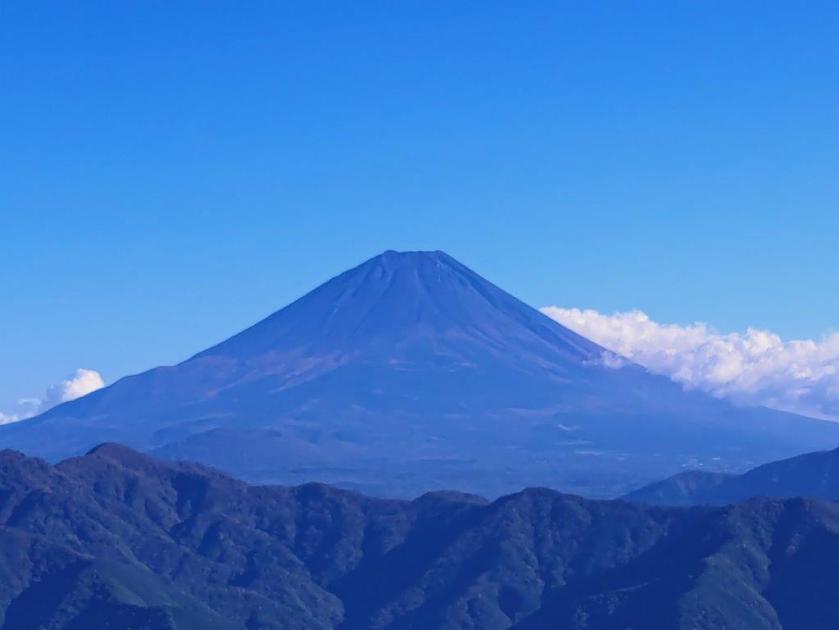
Closeup of Mt Fuji from Hirugatake

Autumn Colours at their Peak around the Top of Hirugatake

I was stunned to see that Mt Fuji still was completely snowless. However, its perfect cone on a blue sky background was beautiful even without its trademark white cap. To its right, I could see Mt Ryu and the long summit ridge of Mt Kenashi, with splendid autumn colours in the foreground; on the west side, I had a view similar to the one from the previous peak, but from a higher vantage point; I could also see the ridgeline I had walked between today’s two mountains. After a short break on the summit bench, enjoying the gorgeous view all by myself, I headed back down the same way.

Mt Kenashi from Hirugatake

The Minami Alps from Hirugatake

I enjoyed the solitary stroll back through the forest, the scenery looking slightly different in reverse. Through gaps in the trees, I had views of the Misaka mountains on the north side. One hour later, I was back at the nearly empty parking lot. Since I still had half an hour before sunset, I decided to quickly walk around Shibireko Lake (四尾連湖) before heading back.

Walking back to Shibireko Lake

Walking around Shibireko Lake

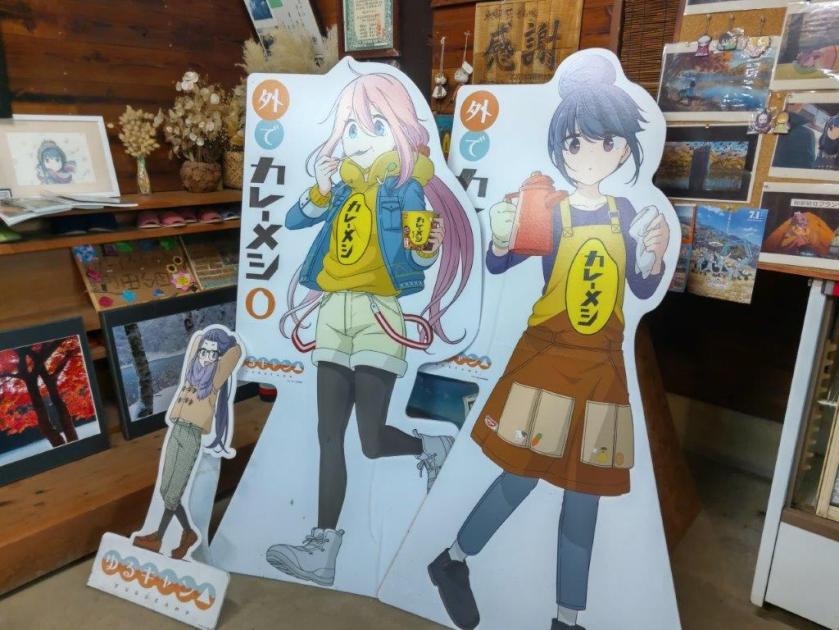
I was surprised to see that the campsite extended around the entire south half of the lake; some spots almost felt like wild camping. Even at dusk, people were still rowing boats across the lake. Half an hour later, I had completed my tour. After checking out the Yuru Camp related exhibits inside Sumeiso Lodge, I hurried back to my share car for the one hour drive back to Kofu station. There I boarded the limited express for the 90-minute ride back to Tokyo.

Shibireko Sumeiso Lodge

After Sunset at Shibireko Lake

The entire hike, including the lake loop, took about 4 hours. The view from the top of Mt Hiru was much better than I had imagined and deserves a place among the best mountain tops to view Mt Fuji. The hiking trail extends west from Mt Obatake and east from Mt Hiru and I hope to explore them one day in the future. This was my third Yuru Camp inspired hike, the first two being Takapotchi Highland and Hottarakashi Onsen. This was also my first proper sighting of Mt Fuji since Mt Sasagogangaharasuri in January of this year, and hopefully not the last one!

Watch a Video of the Mt Obatake & Mt Hiru Hike

Watch the Video of the Hike on YouTube

See a Slideshow of More Pictures of the Hike

Shirakoma & Ama Ponds (Highest Point 2241m), Chino City and Sakuho Town, Nagano Prefecture, Sunday, October 27, 2024

I had last visited the Northern Yatsugatake Mountains 6 years ago. This time, I wanted to check out two small lakes above 2000m and situated between Mt Tengu and Mt Kitayoko; I also wanted to explore the “Moss Path” near Mugikusa Pass. I’d start from the top of the Kita-Yatsugatake ropeway and walk counterclockwise around Mt Shimagare and Mt Chausu, climbed 10 years ago. Back then I stayed overnight at the Shimagare Lodge. However, in October the ropeway operated till 5pm, late enough for a day trip.

Hiking in the Yatsugatake-Chushin Kogen Quasi-National Park 八ヶ岳中信高原国定公園

Hiking on Kita-Yatsugatake 北八ヶ岳

To get to the start of my hike, I’d take the Chuo line limited express to Chino station and then catch an Alpico bus for the 40-minute ride to the ropeway; I’d use the same route for the return. The weather was supposed to be mostly cloudy, but no rain was forecast, maybe even a little sunshine in the late morning. I decided to head out as the next weekend the ropeway would run only till 4pm; also my main purpose was to see the lakes and mossy undergrowth. I was looking forward to what would probably be the last high-altitude hike of the year.

For subscribers, read this Blog Post on Hiking Around Tokyo for a better viewing experience and the latest updates

The hiking trails followed on this hike can be found on the Japanwilds map for Mt Shimagare and Mt Chausu, available for free with the Avenza app

Forest Bathing Observation Deck Route from the Kita-Yatsugatake Ropeway (left) Moss Path in the Yatsugatake Nature Recreation Forest (right)

Moss Path in Onodachi Forest (left) Walkway in Kokuyo Forest (right)

The sun was still shining as I rode the limited express to Chino, arriving there a little past 9am. From the bus, I could see the autumn colours around Tateshina lake, and I made a mental note to plan a hike there next year. Shortly after 10am, I was standing inside the full ropeway cabin (fits 100 people) as it rose from 1800m to over 2200m. After getting ready, I took a few minutes to enjoy the view of the South and Central Alps from the outside terrace; directly behind was the rounded top of Mt Shimagare.

Shirakoma Inner Garden (left) Walkway through Chamizu Forest (right)

The Ogawara Pass Forest Road (left) Walkway to Ama-ike Pond (right)

The mists had started to roll in, Mt Kitayoko and Mt Tateshina were already hidden in thick clouds. I set off before the next load of ropeway passengers arrived at 11am, and made my way along the Forest Bathing Observation Deck Route (森林浴展望台コース shinrinnyoku tenbodai kosu). I had done this route before but in reverse. I soon reached an open space where I had a view of the grassy highland of Kirigamine. After 11am, I passed the observation deck, the view partly obscured by trees, and left the wooden walkway for a proper hiking trail.

Walkway to Ama-ike Pond (left) Path for Amaike-toge (right)

Before Amaike-toge (right) After Amaike-toge (left)

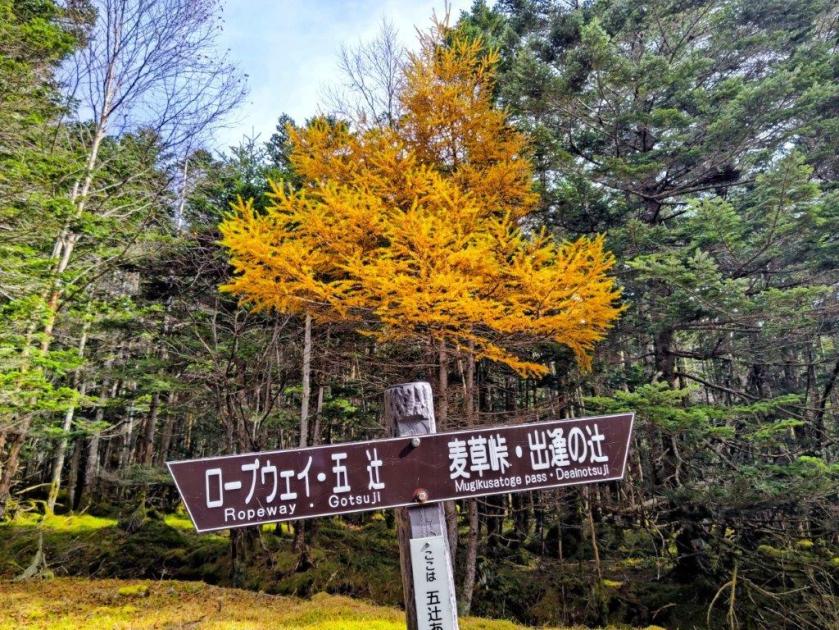
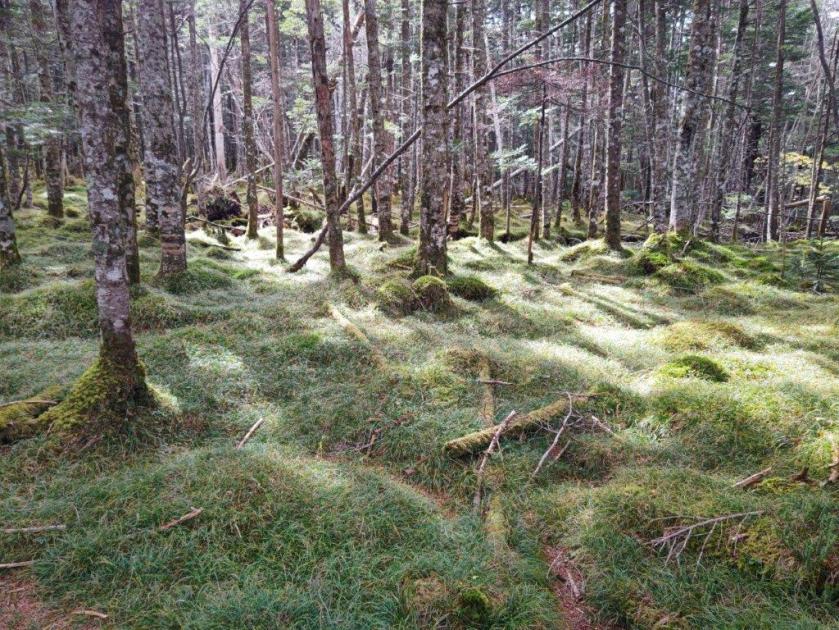
The trail was rockier than I had remembered and my progress was slower than expected. At 1130, just past the Go-Tsuji intersection, I arrived at an open rest place opposite a beautiful bright orange larch, one of the few autumn leaves I saw on today’s hike. Soon after, I entered the Yatsugatake Nature Recreation Forest (八ヶ岳自然休養林 Yatsugatake shizen-kyuyo-rin) and I found myself walking through an enchanting forest with mossy undergrowth, the path now aptly named “Koke no Michi” (苔の道) or the Moss Path. Around this point, today’s hike diverged from the one I had done ten years ago.

Central Alps from the Top of the Kita-Yatsugatake Ropeway

Start of the Shinrinyoku Tenbodai Route

I was amazed by the sheer amount of bright green moss covering everything close to the ground; perhaps there was more than usual due to the higher than average rainfall this year. At noon, I crossed the busy Marchen Road connecting Chino city with Sakuho town, and continued along the Moss Path, now inside the Mist Garden (狭霧園地 sagiri-enchi), although no mist was hanging around at the time. After a short climb, I arrived at Onodachi Forest (斧断ちの森), mostly made up of slender birches.

Walking through the Mist Garden

Passing through Onodachi Forest

I enjoyed the combined effect of the white birch trunks and light green moss on my solitary stroll through the higher reaches of the Yatsugatake-Chushin Kogen Quasi-National Park (八ヶ岳中信高原国定公園). At 1230, I passed the bright red roof of the Mugikusa Hut; beyond, the top of Mt Chausu was temporarily free of clouds. I turned left onto a side trail leading through Kokuyo Forest (黒曜の森), the name referring to a dark green coloured moss. I then exited the forest and entered the Shirakoma Inner Garden (白駒中庭), blue patches appearing in the sky above, giving me hope for the afternoon.

Following the Moss Path

Entering the Shirakoma Inner Garden

I was thankful for the wooden walkway allowing me an easy passage above a tangle of rocks and creeping pine (這い松). After a short up and down through Shirakoma Forest, I finally arrived at Shirakoma Pond (白駒池). It was past 1pm so I took a lunch break inside a pond-side open shelter. Here, I had rejoined the crowds so I decided to skip a walk around the pond, and quickly headed back to Marchen Road which I followed to Mugikusa Pass. There, I ducked down a small trail on the right, leading through Chamizu Forest (茶水の森), all by myself once again.

Beyond is Shirakoma Forest and Shirakoma Pond

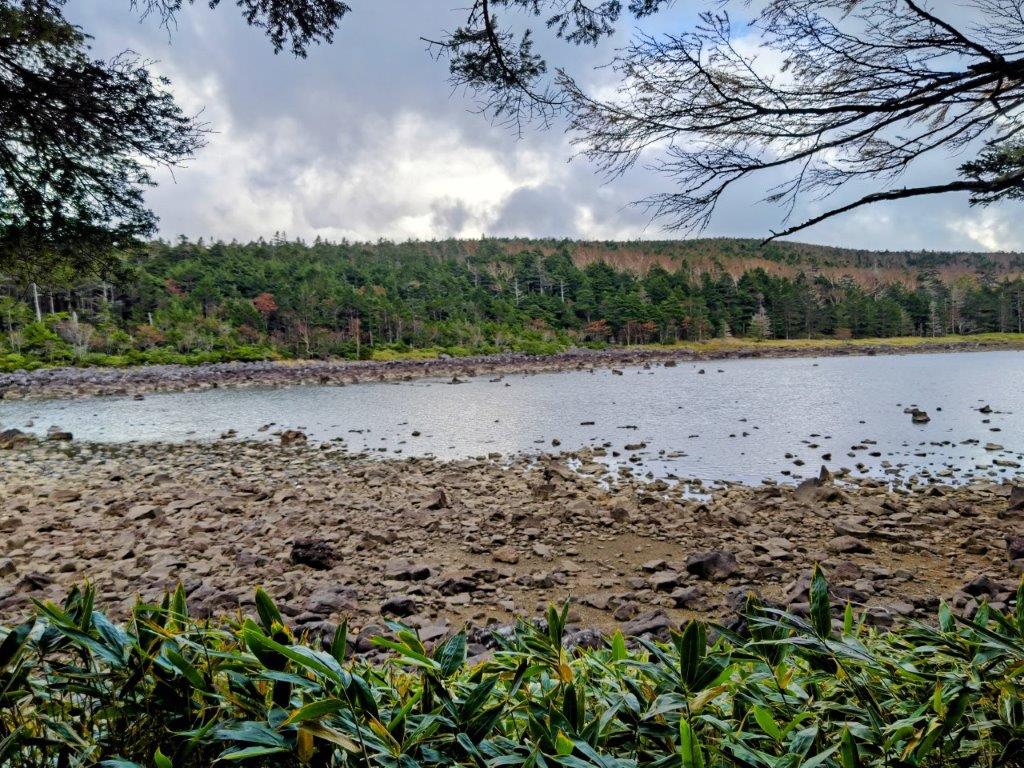
Grey Clouds above Shirakoma-ike Pond

The clouds had wrestled back control of the skies and it started to look like it might rain after all; this was also the most isolated part of the hike through somber and silent forest. I quickened my pace and by 2pm reached the Ogawara Forest Road (大河原林道) although I left it shortly after for yet another walkway. Half an hour later, I reached the far side of Ama Pond (雨池), meaning rain pond. It was smaller than indicated on my map and most likely reaches its full size after heavy rain or the spring snowmelt.

Walkway to Ama-ike Pond

Far Side of Ama-ike Pond

I was startled by a loud barking noise and looking at the opposite shore, I saw deer jump away into the forest; I wasn’t alone after all. I was back on schedule so I decided to walk around this pond. On the other side, I had a better view of the blue pond water; above the trees on the opposite bank, low clouds were blowing by quickly, a sure sign of a change in weather. As I started to climb up through the forest, I suddenly caught sight of a majestic stag with huge antlers; it was standing guard while his doe escaped. I rejoined the forest road but soon turned left up a steep trail through thick forest.

Near Side of Ama-ike Pond

Mist on Amaike-toge

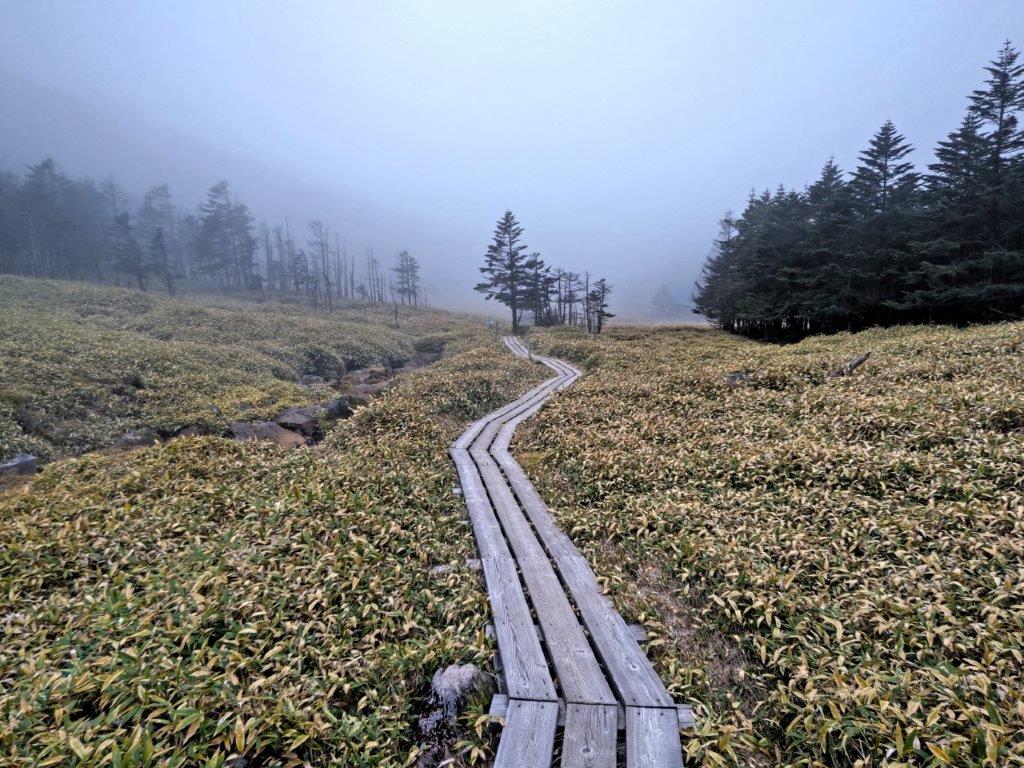
I found myself surrounded by swirling white mist as I emerged from the forest at Amaike Pass (雨池峠). It was now 3h30, leaving me ample time before the last ropeway. I followed the final walkway of the day, down a small valley past Shimagare Lodge where I spent the night ten years ago, merging with my previous hike in the area. At 4pm I was back at the top of the ropeway; half an hour later I was riding a mostly empty bus back to Chino station where I boarded the limited express for the 2-hour trip back to Tokyo.

The hiking trails followed on this hike can be found on the Japanwilds map for Mt Shimagare and Mt Chausu, available for free with the Avenza app

Watch a Video of the Shirakoma and Ama Ponds Hike

Watch the Video of the Hike on YouTube
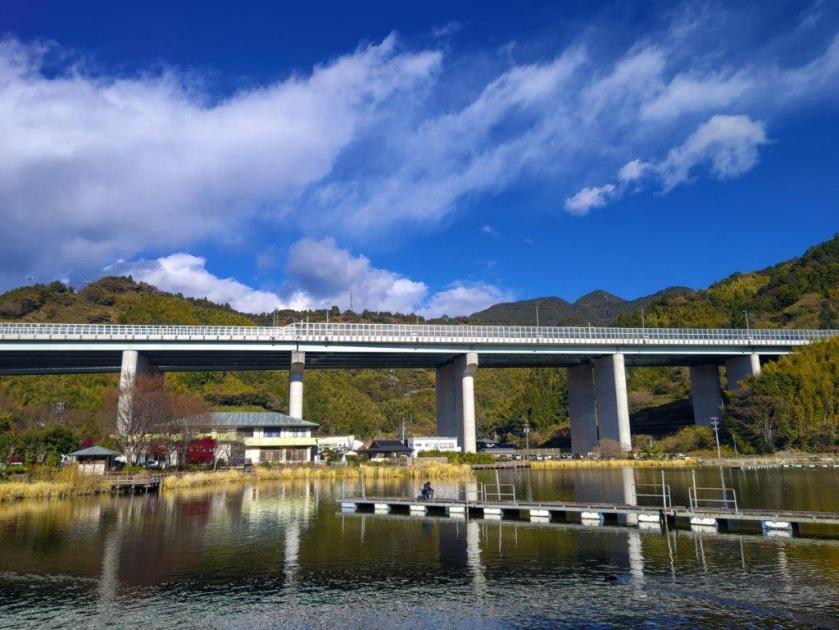
See a Slideshow of More Pictures of the Hike

Mt Zebra (1776m) & Mt Washi (1798m), Shimosuwa town, Nagano Prefecture, Sunday, October 20, 2024

I had been to the Kirigamine Highlands about eight years ago so I felt it was time for another visit. Back then, I had rented a car from Kofu and summited the highest point, Mt Kuruma, a 100 famous mountain of Japan; this time, I decided to go by bus and up a couple of minor peaks on both sides of the Yashimagara Marsh. I was hoping to catch the autumn colours at their peak, at the risk of encountering crowds of people.

For subscribers, read this Blog Post on Hiking Around Tokyo for a better viewing experience and the latest updates

To get the start of the hike, I’d ride the Chuo line limited express to Kami-Suwa, a little over 2 hours from Shinjuku, and there, catch an Alpico bus for Kuruma Highland; I’d use the same bus for the return. The weather was supposed to be sunny all day but cold for the season. On top of the autumn scenery, I was looking forward to getting some good views of the mountains of Nagano.

Hiking in the Kirigamine Highlands

霧ヶ峰高原

Hiking in the Yatsugatake-Chūshin Kōgen Quasi-National Park 八ヶ岳中信高原国定公園

Autumn Colours at Yashima-ga-Hara Marsh

View towards Kuruma Kogen

It was a surprisingly cloudy day as I rode the limited express towards Nagano, although the updated weather forecast announced that the clouds would melt away by noon. It felt really cold as I got off at Yashimagara-shitsugen (八島ヶ原湿原), after a 45-minute ride on a packed bus. I popped into the Yashima Visitor Center to check out the exhibits and warm up, before heading to the wooden walkway circling the marshland at 11am, under leaden skies.

Kuruma Kogen from Mt Zebra

Yashima-ga-Hara Marsh from Mt Zebra

I was glad to see that autumn colours were on schedule, despite the warmer than average temperatures of the past few weeks, somewhat muted due to the overcast sky. I set off at a brisk pace to warm up, counter-clockwise around the marshland; I passed by the Okugiri Hut around noon, now walking under blue skies. I followed the main trail for Mt Kuruma for a short while before turning left onto a small path leading to today’s first summit.

Heading back to Yashima-ga-Hara Marsh

Heading towards Mt Washi

I felt energised by the shining sun, enabling me to keep a fast pace up the mountain, reaching the top of Mt Zebra (ゼブラ山 zebura-yama also known as Mt Omekura 男女倉山 おめくらやま) at 12h30. Apparently melting snow in the spring looks likes Zebra stripes. I could see the crown of Mt Tateshina rising above the grasslands of Kuruma Highland; looking north, I could see the flat top of Utsukushigahara, and the long ridgeline connecting it to Kirigamine. Looking south, I could see the highest points of Mt Ontake, the Central and South Alps floating above the clouds; directly below, was Yashimagahara Marsh.

Approaching Kama Pond on Yashima-ga-Hara

Oni-no-sensui Pond on Yashima-ga-Hara Marsh

I was stunned by the bird’s eye view of the rusty red marsh. I hurried down the same way, feeling warm under the midday sun, and was soon back on the marsh-side walkway. After passing Kama and Oni-no-sensui Ponds, I reached an open area with a view of the entire marsh, as well as the rolling hills of Kuruma Highland in the background. At 1h30, I turned left onto a hiking trail, leaving the marsh behind. After a short climb, I reached the trailhead for today’s second peak.

Yashima-ga-Hara Marsh and Kuruma Kogen

Start of the Hike for Mt Washi

I was surprised by the alpine beauty of the surrounding landscape as I made my way up the rocky path though pines, especially since I was on a day trip from Tokyo. Very soon, I had another bird’s eye view of the marsh, this time with the highest peaks of the Yatsugatake range visible in the background. To its right was the Yashima Visitor Center, and looming up directly behind it, was the outline of the South Alps, now nearly completely free of clouds.

View of Yashima-ga-Hara Marsh from the Mt Washi Trail

The Yashima Visitor Center and the South Alps

It was short but pleasant hike along the top ridge with sweeping views on both sides. Shortly after 2pm, I arrived at the summit of Mt Washi (鷲ヶ峰 わしがみね washigamine). The name could translate as “Eagle Peak” and the panorama certainly made me feel like an eagle soaring high in the sky. Looking north, I could now see the rounded top of Mt Asama, as well as the flat top of Mt Arafune; westwards, in addition to Utsukushigahara, I could also see Mt Hachibuse, and in the far distance, poking out of the clouds, Mt Hotaka, Mt Tsurugi and Mt Shirouma, three famous peaks from the North Alps.

Mt Tateshina from the Mt Washi Trail

Ridgeline leading to Mt Washi

Looking south, I was most impressed by the view of Suwa lake with the Central Alps in the background, against the sun so challenging to take in photo. Suwa lake inspired the lake in the Your Name movie so I was glad to see it from above. Between the Yatsugatake range and the South Alps, I was surprised to spot the conical summit of Mt Fuji, rising from the clouds. After a short lunch break, I headed back the same way.

View of Suwa Lake from Mt Washi

Yatsugatake from Mt Washi

Mt Fuji between Yatsugatake and the South Alps

I had fantastic views of the entire range of the Yatsugatake range doing the path in reverse. After one last look at the triangular shape of Yashimagahara Marsh, I made my way down the last part of the trail, arriving back at the Yashima Visitor Center a little before 3h30, well on time for the return bus. One hour later, I was at Suwa station where I could take a foot bath directly on the platform while waiting for the limited express that would whisk me back to Tokyo.

Heading back to the Yashima Visitor Center

Yashima-ga-Hara Marsh and Yatsugatake

This hike took about 4 hours, shorter than expected, giving me plenty of time to enjoy the stunning views. I passed fewer people than expected, maybe because the area is more famous for its spring and summer flowers. I felt lucky with the timing of the Autumn leaves and the excellent weather. I’d like to return to the area in the future to hike more of the ridgeline towards Utsukushigahara, although I’d probably have to rent a car for this.

Watch Video of the Mt Zebra and Mt Washi Hike

Watch the Video of the Hike on YouTube
See a Slideshow of More Pictures of the Hike

The Asama-Yatsugatake Panorama Trail (highest point 824m), Komoro City, Nagano Prefecture, Sunday, October 13, 2024

I was looking for another hike in the Saku area since it had been one year since my previous visit. Searching online, I found a loop hike using parts of the Asama-Yatsugatake Panorama Trail (Japanese only); it was mostly along small roads and country lanes, ideal for avoiding Jorogumo spiders that hang out along forested trails in the early Autumn. Another benefit of walking through the countryside in this season is to enjoy the scenery of golden rice fields, ready to be harvested. The weather was supposed to be sunny and warm all day, welcome news after two consecutive cloudy weekends.

For subscribers, read this Blog Post on Hiking Around Tokyo for a better viewing experience and the latest updates

I would start from Komoro station, a short ride on the Shinano Tetsudo line from Karuizawa, easily reachable via the Hokuriku shinkansen. Looking at Google Maps, I noticed I could end at Aguri no Yu and, after a relaxing hot bath, take a taxi back to the station. From there, I’d ride the Koumi line in the opposite direction, to Sakudaira, so that I could board the shinkansen before Karuizawa, after which the train is usually packed. Although I wouldn’t be summiting any peaks, I’d able to visit Komoro Castle Ruins and Shakuson-ji Temple along the way, and if the weather allows, enjoy the panoramic views of Mt Asama and Mt Yatsugatake.

Chikuma River from Komoro Castle

Chikuma River from the Keizo Koyama Art Museum

It was a beautiful Autumn day as I rode the shinkansen from Tokyo, although Mt Asama was firmly in the clouds as the train pulled into Karuizawa station around 9am. I transferred to the Shinano Tetsudo line for the 20-minute ride to Komoro; I happened to catch the rapid service with reserved seating so I remained comfortably seated for the entire trip. After getting ready, I set off for the nearby Komoro-jo Castle shortly after 10am. After paying a small “strolling fee” (called sansakuken) for Kaikoen Park which surrounds the ruins, I walked past ancient stone walls to the Fujimi Observation Deck from where one can see Mt Fuji, although today the sky was too hazy for that. I had better luck with the Mizunote Observation Deck, from where I could gaze down at a bend of the Chikuma River, the longest river in Japan. After exiting the castle grounds, I made my way to the nearby Keizo Koyama Art Museum.

Downstream View of Chikuma River near Shakuson-ji

Upstream View of Chikuma River near Shakuson-ji

I had a breathtaking view of another bend of the Chikuma river, an impressive plateau rising on the opposite side; I felt excited that today’s hike would take me along its top part. I joined the Asama-Yatsugatake Panorama Trail (浅間・八ヶ岳パノラマトレイル) just below the Art Museum garden. I followed a switchback trail through the forest, reaching a road at the valley bottom around 11am. After crossing Okubo Bridge, I followed back roads through a charming residential area, the way well-signposted throughout. After a short climb, I had a view of the base of Mt Asama, the top part still hidden in thick clouds. The path then descended and merged with a cliffside road running right next ro the river. Shortly after the noon chime, I arrived at the start of the trail heading up the plateau. After a 15-minute climb through the forest, cliffs towering on both sides, I reached Shakuson-ji Temple (釈尊寺) from where I had a view of Nunobiki Kannon (布引観音).

Approach to Nunobiki Kannon

Nunobuki Kannon from Shakuson-ji Temple

I was amazed by the view of small structure clinging to the cliffside, reminding me of Daifuku Temple. Soon after, I was standing on the wooden platform, gazing past the cliffs at the still cloudy Asama, trying not to look at the drop below. I continued my way up a winding road through the forest, at one point passing a snake taking a break in a sunny spot on its warm surface. A little after 1pm, I turned left onto a forest road near a frog-filled pond; I never saw any, just heard feeble croaks followed by tiny splashes as I approached. I was now walking along the top of the plateau, the surrounding forest hiding the views. At 1h30, I reached a road junction near a lake, and here I followed a lane to the highest point of today’s hike, a grassy spot above the fields. To the south and east, I could make out the hazy outlines of Mt Yatsugatake and the Chichibu mountains.

Golden Rice Fields at Mimakigahara Plateau

Mt Asama from Mimakigahara Plateau

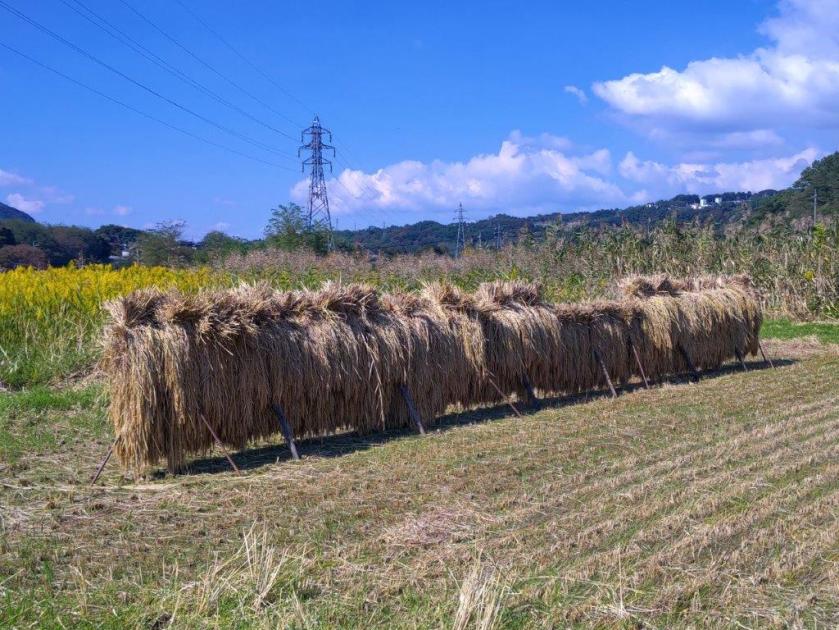
I was surprised how warm it felt in the middle of October, not even a breeze to cool off. At 2pm, I set off again, now following a country lane as it curved around and over hills. Thirty minutes later I reached a wide open space used for rice cultivation: the Mimakigahara Plateau (mimakigaharadaichi 御牧ヶ原台地). Many fields had already been harvested, the rice stalks hanging on drying racks; however a few remained untouched, the golden stalks basking under the afternoon sun. Turning around, I was rewarded with a majestic view of the highest summits of Mt Asama, finally free of clouds. I then turned left onto a dirt path and up another hill through open countryside.

Mt Asama and Pond View

View of Mt Asama from the Panorama Trail

This was the best part of the hike so far, the entire range of the Asama volcano slowly coming into view. The entire plateau is dotted with small lakes, and I eventually arrived at one of the biggest ones, Himamu-ike Pond (干間無池), the dark blue summit of Mt Asama visible above the light blue lake. The trail continues down the cliffs and along the Chikuma River back to Komoro station, but here I headed back to an intersection near my lunch spot. From there, it was half an hour of slight up and down walking to Aguri no Yu Hot Spring, famed for the view of Mt Asama from its outdoor bath. After a refreshing soak, I was back at Komoro station at 5pm, and soon after, I was comfortably seated on the Shinkansen for the one hour trip back to Tokyo.

Mt Asama and Himamu Pond

Walking back from Himamu Pond

The Asama-Yatsugatake Panorama Trail is actually a network of trails on the south bank of the Chikuma river. Today’s hike took about five hours and passed several of the area highlights, the excellent signposting and online information ensuring I could always find my way. I hope to return next year to complete the other sections and see the rest of the highlights. I’d also like to get an earlier start so that I can get clearer views of the Yatsugatake range on the south side, but I’d need to plan it for a cooler day as there is little shade along the way. In any case, I know I can finish my hike with a well-deserved hot spring bath.

Watch a Video of the Asama-Yatsugatake Panorama Trail Hike

Watch the Video of the Hike on YouTube
See a Slideshow of More Pictures of the Hike

Mt Goten (364m) & Mt Kyozuka (310m), Minamiboso City, Chiba Prefecture, Sunday, March 31, 2024

I wanted to do a hike using the newly published Miura/Boso hiking map. Looking over the Boso Peninsula section, I discovered a new trail connecting Mt Goten (climbed in winter 2016), and Mt Kyozuka. The latter was mentioned in my mountains of Chiba guidebook, but had been badly battered by the powerful typhoons of 2018. Looking online, it seemed like the mountain had recovered sufficiently and the trails were passable again. Between the two mountains, was a dammed river crossable thanks to a pedestrian bridge.

Hiking on the Boso Peninsula 房総半島

To get to the start of the hike, I would ride the Sazanami limited express from Akihabara to Iwai station, and from there, take a bus to the Mt Goten trailhead*. From the base of Mt Kyozuka, I would ride another bus to Tateyama station. There, rather than catch the limited express back to Tokyo, the connection time being only a couple of minutes, I would take the longer but more picturesque ferry route back. The weather on the peninsula was supposed to be sunny, with temperatures high for the season, but cooler than the mainland. I was looking forward to exploring a new area on the eastern side of the Boso peninsula.

*The bus only runs to the Mt Iyo trailhead, about 30 minutes away on foot, and advance phone reservation is needed for it to continue to the Mt Gozen trailhead .

For subscribers, read this Blog Post on Hiking Around Tokyo for a better viewing experience and the latest updates

End of the Road and Start of the Mt Gozen Hiking Trail

View of Mt Atago from the Mt Gozen Hiking Trail

It was a perfect blue sky day as I rode the limited express to Iwai, with views of Tokyo Bay on the right side. A little after 10am, I boarded the microbus for the half an hour ride to the end of the line. After getting off at a parking near Koshoji-Temple, I was greeted with the soothing sound of croaking frogs and bamboo bushes swaying in the wind. Across the road was today’s first peak, looking tantalisingly close. After getting ready, I set off at 11am, continuing a little further along the main road, before taking a side road on the right, an alternative path to the summit. Here and there, I could see white and pink cherry blossom trees in full bloom.

View of Mt Iyo from the Mt Goten Trail

Trail below the Mt Goten Summit

Turning around, I had an impressive view of the valley, as well as Mt Atago, the highest mountain in Chiba. At 11h30, I reached a signboard marking the start of the trail. Although it was clearly marked on my map, it seemed to have fallen in disuse. After some scrambling and path finding, I reached the ridgeline and the main trail to the summit, a little after noon. A few minutes later, I arrived at a steep section leading to the summit. Instead of going up, I followed a level path on the right, around to the other side where some log steps made for a more relaxing ascent. At 1230, I was at the top of Mt Goten (御殿山 ごてんやま goten-yama), a Kanto 100 famous mountain and fifth highest peak in Chiba.

View south from the top of Mt Goten

View West of Mt Tomi and Mt Iyo from the top of Mt Goten

I had forgotten how impressive the view was, arguably one of the best on the peninsula. Since the summit is equally far from each coast, both Tokyo Bay and the Pacific Ocean are visible. On the west side, I could see Mt Iyo and Mt Tomi, and behind, the jagged top of Mt Nokogiriyama. All 3 peaks have unique shapes, creating a view worthy of a fantasy world. It was too early for lunch so I headed back down the steps and took a path on the left, leaving the ridgeline. The trail descended steeply and was at times rather faint, although the occasional log step showed I was on the right way; I eventually reached a stream at the bottom of the valley. The hike was starting to feel quite adventurous and I was a little worried I would suddenly reach a dead-end after one of the many twists and turns in the path as it now followed the meandering stream.

Walking under the Fallen Trees

Partially Buried Section

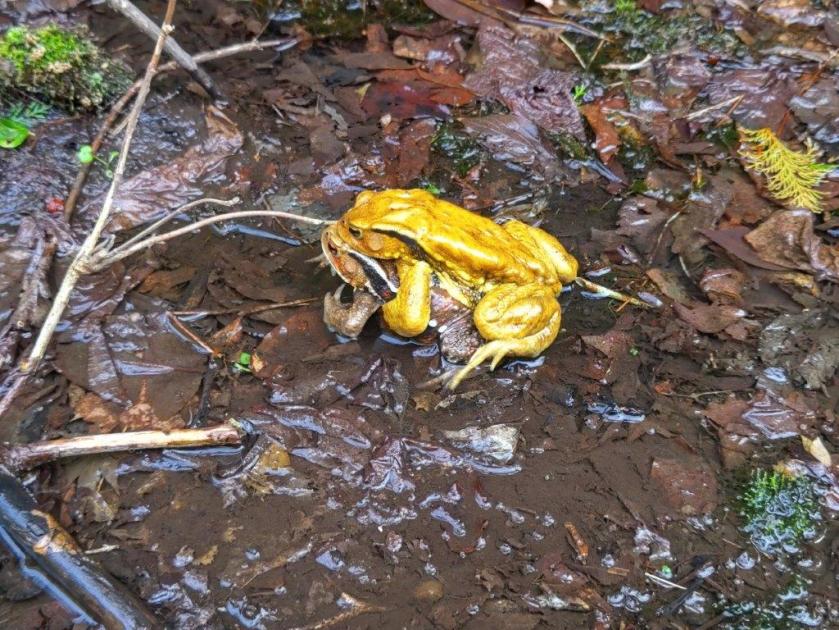
I was relieved to finally reach a forest road, right after crossing the stream. I still had to navigate a couple of obstacles, some fallen trees and a partially buried section, but eventually it became easy to walk. I heard the croaking of frogs again, and this time saw several soaking in the shallow pools along the road side. At 1h30 I reached the end of trail, marked by a domestic cat lounging on a paved road. After a short walk through the countryside, I reached a main road where I turned left. I soon turned left again, onto a smaller road, leading to a short, dark tunnel. A little beyond it, I crossed a bright red footbridge over a dammed river, its muddy waters light brown under the shining sun. On the other side, I headed up the trail for today’s second peak.

Near the end of the Mt Goten Trail

Dammed River between Mt Goten and Mt Kyozuka

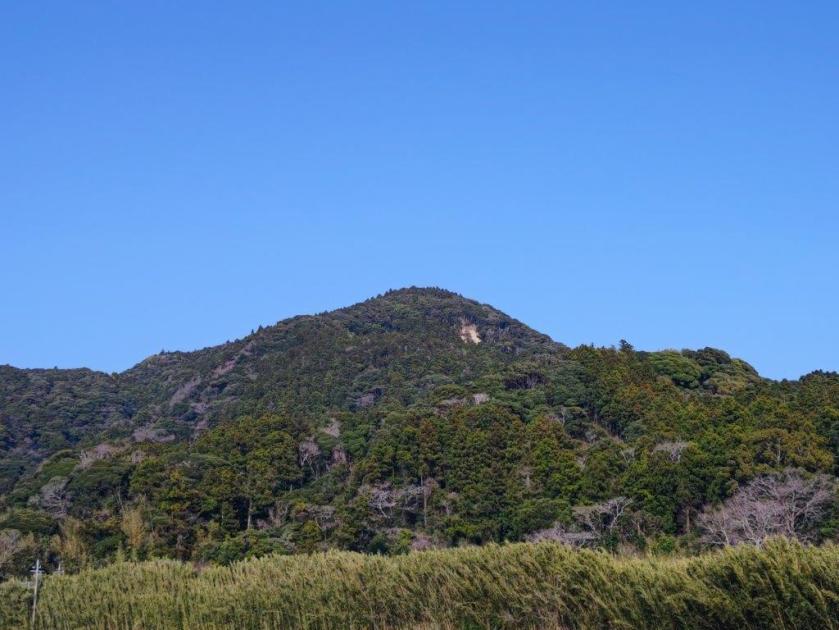
It was delightfully cool in the shade under the trees on what was turning into quite a warm day. At a bend in the path, I came across an ancient mossy stone lantern, making me feel like I had stumbled into a Ghibli movie. After a short steep climb, I found myself surrounded by Japanese stone oaks (“matebashii“), their white tree trunks reaching up like an upside-down mangrove. A little after 2h30, I reached the summit of Mt Kyozuka (経塚山 きょうづかやま kyouzuka-yama). On the east side, I could again see the Pacific ocean, this time much closer. I sat on a log seat for a late lunch; I had somehow fallen behind schedule, the times indicated on the map being a little off, so I quickly moved on, now following a trail heading southwards and downhill. Half an hour later, I emerged onto a road leading through fields to a main road where I turned left, soon arriving at a bus stop.

View of the Pacific Ocean from the Top of Mt Kyozuka

Looking back at Mt Kyozuka from the End of the Hike

From Tateyama station, I rode the local Uchibo line to Hama-Kanaya station, where I switched to the Tokyo Bay Ferry for the forty-minute trip to Kurihama port. Mt Fuji was hidden by the clouds but it was refreshingly cool and pleasant around sunset. On the other side of the bay, it was a short bus ride to Keikyu-Kurihama station, from where it was thirty minutes to Yokohama. There I rode the Shonan-Shinjuku line back to central Tokyo. This hike took a little longer than expected, and although the connection between Mt Gozen and Mt Kyozuka is doable, it requires a GPS device to ensure one doesn’t lose the trail. In the future, I’d like to return to the area by car for some more exploring.

Watch a Video of the Mt Goten & Mt Kyozuka Hike

Watch the Video of the Hike on YouTube
See a Slideshow of More Pictures of the Hike

Mt Hatsuhi (364m), Uchiurayama Forest & Mamenbara Highland, Otaki Town, Chiba Prefecture, Saturday, March 9th, 2024

I had been wanting to do a section of the Chiba Kanto Fureai no Michi for a while but it had been closed due to a landslide in 2021. It was supposed to be the continuation of a hike from March 2019. In the end, I decided to give up starting from Seichoji Temple. Instead, I would begin and end at Uchiurayama Forest, a short taxi ride from Awa-Kominato Station, which in turn was a two-hour trip from Tokyo with the Wakashio Limited Express.

Hiking in the Minami Boso Quasi-National Park

南房総国定公園

The hiking trails through the Forest were permanently closed due to typhoon damage in 2019, but I could explore the area by following narrow, winding mountain roads with little traffic. First, I would head north towards Katsuura Dam, then west and up to Mamenbara Highland, before finally making my way back down along the Fureai no Michi.

Hiking on the Kanto Fureai no Michi

関東ふれあいの道

From the highest point of the Highland it was possible to get a view of the Pacific Ocean. The forecast called for clear skies all day and a moderate breeze. I was looking forward to seeing some new views, as well as revisiting the ancient forests of Boso peninsula.

For subscribers, read this Blog Post on Hiking Around Tokyo for a better viewing experience and the latest updates

Log Steps (left) & Hiking Trail (right) North of Katsuura Dam

Inside the Uchiurayama Learning Center (left) Sequoia near Mominoki Soba (right)

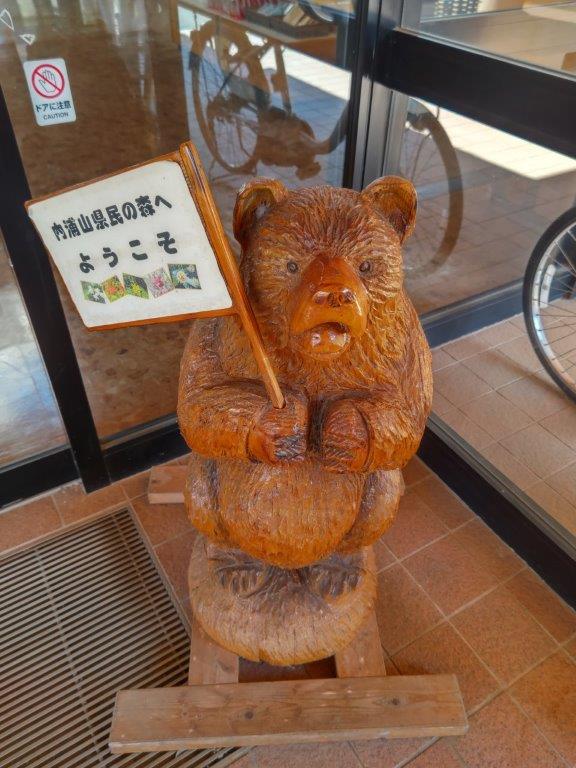
It was a sunny winter day as I rode the limited express from Akihabara station along the Sotobo line all the way to Kominato station, one stop from Awa-Kamogawa, the end of the line. While waiting for a taxi to arrive, I watched the waves wash up on Uchiura Beach. After arriving at the Uchiurayama Prefectural Forest (内浦山県民の森), I went inside the learning center to check out a relief map of the area showing the now defunct hiking trails. At 1030, I set off along the Uchiurayama forest road. At a fork in the road, I turned right for Katsuura Dam (勝浦ダム), a few minutes away.

View West from Katsuura Dam

Hiking the Hills around Katsuura Dam

I was delighted to get a wide open view of blue waters and green shores, fluffy white clouds in the light blue sky completing this peaceful scene. I headed into the valley on the right and then followed a prefectural road northwards. After passing through a tunnel, I turned left, and soon reached the entrance of a trail on the left side. However, before diving into the forest, I decided to have lunch at the nearby Mominoki Soba Restaurant (もみの木庵), since it was nearly noon. After a filling soba meal, which I was able to eat at a table outside, I followed a signposted path to the top of a ridge on the north side of the dammed lake.

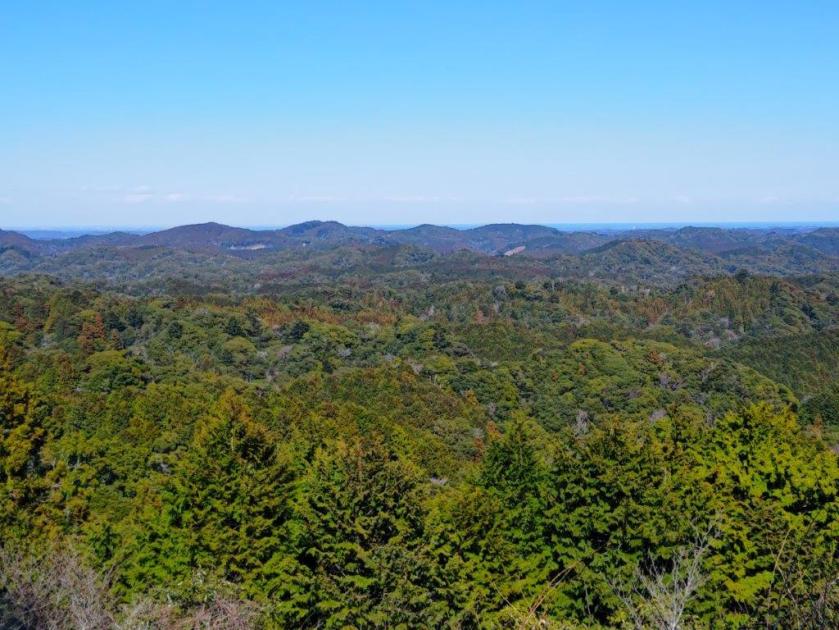
View of the Pacific from Mamenbara Kogen

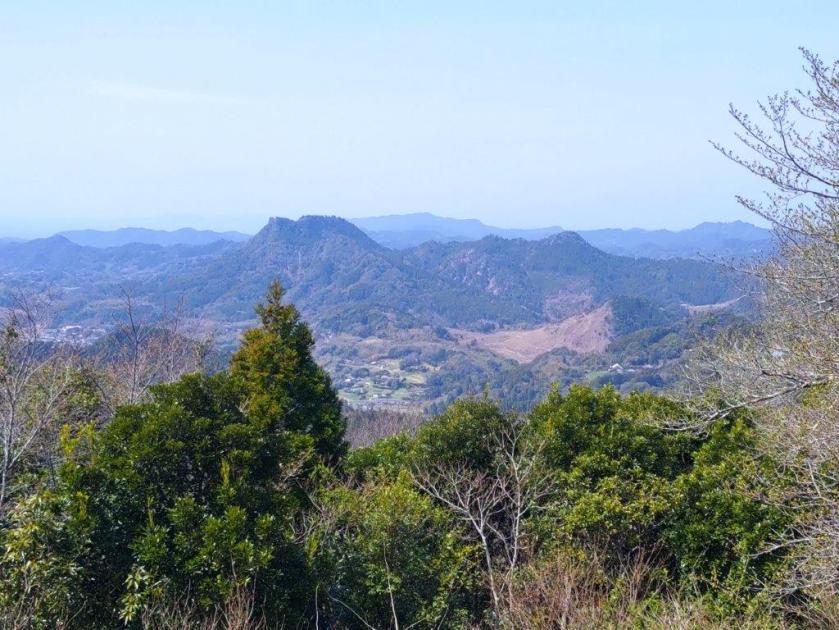
View towards Yoro Keikoku from Mt Hatsuhi

I was surprised by how faint the trail was, nature slowly reclaiming this ancient forest track. At 1230, I emerged onto a forest road opposite a wooden Shinto Gate. I turned left and ignoring a couple of side trails descending to the lake, arrived at a hard to spot trail on the right. On the way, I passed an open shelter; it used to have a view, but that was now blocked by pampas grass. This part was easier to follow, the up and down path winding through swaying cedars. At 1pm, I reached a road where I turned left. After one hour of climbing, I reached Mamenbara Highland (麻綿原高原) and the top of Mt Hatsuhi (初日山 はつひやま hatsuhiyama), inside Tenpai-en Garden (天拝園), famous for its Azalea in the spring.

View of Okuyatsu Number 2 Dam

View of the Pacific from Uchiura Beach

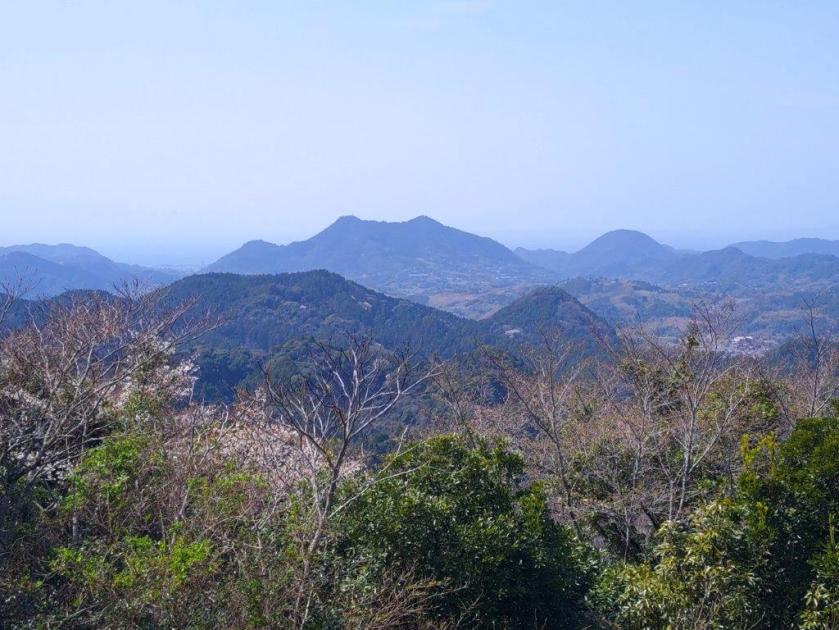
I was stunned by the extensive view on the east side, far better than I had imagined. On the north side, I could see the rolling green hills of Boso extending to the Yoro River valley; on the south side, I could see forested ridges ending at the Pacific Ocean; directly below was Myohosho-ji Temple (妙法生寺). After a short break, I made my way back to the road, and soon turned left onto the Fureai no Michi, leaving behind the closed section on the right. After an hour of downhill walking, I arrived at a rest spot next to Okuyatsu Number 2 Dam (奥谷第二ダム). I spent a few minutes gazing at the yellow waters dazzling in the afternoon sun, the silence broken by urgent quacking of ducks. After setting off again, at a bend in the road, I spotted a “kyon“, a kind of miniature deer, darting into the bushes. At 3h30, I was back at the learning center, giving me plenty of time to catch the limited express for the two hour return trip to Tokyo.

Watch a video of the Mt Hatsuhi Hike

Watch the Video of the Hike on YouTube

See a Slideshow of More Pictures of the Hike
Mt Sendoji (583m) & Mt Sankaku (515m), Sagamihara City, Kanagawa Prefecture, Saturday, December 30, 2023

For subscribers, read this Blog Post on Hiking Around Tokyo for a better viewing experience

This hike requires a GPS device

I always find it tricky to select the final hike of the year since many bus services switch to special year-end schedules. This year was doubly difficult due to the unusually short “shogatsu” (Japanese new year holidays), meaning the day of my hike coincided with the first day of the holidays, and limited express trains were fully booked. Inspired by my previous outing, I decided to head to Hashimoto again, and ride the bus to the end of the line, near the western edge of Tsukui lake, my first time to visit that area. Looking at my map, I saw I could hike in the Tanzawa mountains, last visited nearly 3 years ago. I would summit a couple of minor peaks, and finish at a view point on Lake Miyagase, from where I could catch a different bus back to Hashimoto. The weather was supposed to be sunny and mild, as it usually is at this time of the year. I was looking forward to exploring a new area on my last hike of 2023.

Hiking in the Tanzawa Mountains 丹沢山地

Heading up to Sagami Forest (left) Hiking between Mt Sendoji and Mt Baba (right)

Walking down from Mt Sankaku

The express train was mostly empty for the one-hour ride to Hashimoto Station. I had a quick breakfast at the McDonalds near the south exit before heading to the north exit where I hopped on the bus for Mikage (三ヶ木), getting there around 10am. I dropped by a supermarket conveniently located on the way to the trail entrance. After buying supplies for the day, I continued along a busy road, and at 11am, turned right onto a road thankfully closed to traffic, but not hikers, that led up the mountain side and into the forest; it wasn’t signposted and it was only thanks to my phone GPS I managed to locate it.

Start of the hike in Sagami Forest

First view north towards the Mt Takao area

I was delighted to be walking on a forest road through beautiful, sunny forest, away from the noisy road. After a couple of switchbacks, I had a view on the north side of the mountains on the other side of Sagami river. I could see the spot where I had been hiking the previous week. A little later, I had a view on the east side of Mt Shiroyama. A little before noon, I arrived at signboard for Forest 21 Sagami no Mori” (Sagami’s Forest) and the start of the hiking trail. I took the left branch, the valley trail (谷道), along the mountain side, and very soon, I had some good views on the east side.

Road to Forest 21 Sagami’s Forest

A solitary hike on a sunny day

It was like gazing into a hidden valley, the Tokyo’s tall buildings almost hidden by the hilltops; as the noon chime rang out, I was reminded how close I was to civilisation. At the one point, all signs of the trail vanished, and I had to rely on my phone GPS to find my way back to the ridgeline. The trail remained faint, and I was completely dependent on my GPS signal and the occasional pink ribbon strip. I was moving through beautiful, mixed forest, and at times, it was easy to forget I was only a stone’s throw from Tokyo’s urban jungle. At the top of a short climb, I arrived at the summit of Mt Sendoji (仙洞寺山 せんどうじさん sendojisan), completely within the trees.

View of a Hidden Valley from Sagami’s Forest

Steep Climb up to Mt Baba

I was glad the summit was bathed in sunlight, the trees growing less thick and allowing for a patch of open sky. Since it was past 1230, I sat down for lunch. I set off again after 1pm, and found the trail to be just as hard to follow as before. After a steep descent, I reached a forest road, beyond which was a proper path. After another steep descent, the trail curved to the right, and started to climb gradually. I was completely surrounded by nature and found it hard to believe I wasn’t deep inside some national park. Suddenly, I reached the base of a steep series of steps, at the top of which was a small shrine, the top of Mt Baba (ババ山 ばばやま babayama). Since I couldn’t see a summit marker, nor a view, I quickly moved on, and after a short downhill section, arrived at an electric pylon.

Arriving at the top of Mt Baba

Heading back from Mt Sankaku

I continued up a sunny, narrow ridge, the higher peaks of the Tanzawa mountains visible through the leafless trees. At 2pm, I arrived at the top of Mt Sankaku (三角山さんかくやま sankakuyama), also the location of a TV relay station. Once again, it was surrounded by trees, so I soon headed back to the pylon, where I took a path heading down on the west side. After passing under some tall cedars at the base of the mountain, I emerged onto a road. I then walked through the countryside for half an hour before reaching Toribara Park (鳥居原園地) at the edge of Miyagase Lake (宮ケ瀬湖) at 3h30. After enjoying the late afternoon views of the lake and the Tanzawa mountains, I boarded a bus for the 30-minute ride back to Hashimoto station.

Looking back at Mt Sankaku (left) and Mt Sendoji (right)

View of Miyagase Lake from Toribara Park

I was entirely satisfied with my final hike of the year. Thanks to my phone GPS, I was able to save time looking for the trail. It’s a shame it isn’t better maintained, since it’s a beautiful patch of nature, wedged between two populated areas; perhaps the point is to keep it that way. It took a good five hours from start to finish, four of which were on forest roads, hiking trails and just walking through the forest. I saw no one else but that could be due to the year-end holiday period. In the future, I’d like to return to the end of the hike and continue the following the trail westwards into the Tanzawa mountains.

Watch a Video of the Mt Sendoji Hike

Watch the Video of the Hike on Youtube

See a Slideshow of More Pictures of the Hike
Mt Enokubo (420m), Sagamihara and Hachioji Cities, Kanagawa and Tokyo Prefectures, Saturday, December 24, 2023

For subscribers read this Blog Post on Hiking Around Tokyo for a better viewing experience

I wanted to do a short and easy hike close to Tokyo for Christmas Eve. I had been doing bits and pieces of the Kanto Fureai no Michi for a while now, and this was a good chance to explore the final section of the Kanagawa trail, starting at Tsukui Lake and ending at Takaosan-guchi Station. I had previously hiked Mt Shiro on the other side of the lake, as well as the first part of the Tokyo Fureai no Michi, from Takaosanguchi station to Mt Shiro (no relation to the Kanagawa one). Since the hike was relatively short, I could leave later than usual, and since it probably had few views, I could expect fewer people. At the end, I could take a hot bath at the Keio Takaosan Onsen, my first time to visit this hot spring right next to the station. The weather was supposed to be cloudy over Tokyo, but sunny over Kanagawa. I would take an express train to Hashimoto Station, and there, transfer to one of the frequent buses for Shiroyama. Afterwards, I could take an express train directly back to Shinjuku. I was looking forward to a relaxing Christmas hike and hoped I could still catch the very last of the autumn colours.

Hiking on the Kanto Fureai no Michi 関東ふれあいの道

Hiking up to Misawa Pass (left) Exploring the Tokyo Fureai no Michi (right)

Hiking down from Misawa Pass (left) Heading to the Takao Green Center (right)

The sky was grey and gloomy as I made my way to the bus stop at Hashimoto station. However, blue sky miraculously appeared as I approached my stop, just before Shiroyama dam. I walked a short distance to a viewpoint of the dam where I had breakfast, warming up under the midday sunshine. It was nearly noon when I finally set off, first on a road next to the lake, then along a forest road up the mountain side. I met no other hikers till I arrived at a Buddhist temple called Mine no Yakushi (峰の薬師), at the halfway point.

Shiroyama Dam and Bridge from the Observation Deck

Forest road for Mine no Yakushi

I was delighted to get some views through gaps in the trees on the southeast side. Directly below, I could see Mt Shiroyama, lake Tsukui; filling up the rest of the horizon was the city of Tokyo. Soon after, the forest road turned into a hiking trail, leveling out as it reached the ridgetop. At 1h30, I arrived at Misawa Pass (三沢峠) where the Kanagawa Fureai no Michi intersects with the Tokyo one. I was tempted me to have lunch at one of the tables there, but was dissuaded by the lack of sun. Instead, I headed up a path on the right and soon reached the top of Mt Enokubo (榎窪山 えのくぼやま enokubo-yama), completely surrounded by trees.

View of Mt Shiro and Lake Tsukui from Mine no Yakushi

View of western Tokyo from Mine no Yasushi

I was happy to see that one of the three benches was bathed in sunlight and I immediately claimed it for my lunch spot. After my break, I returned to the pass and made a short loop along the Tokyo Fureai no Michi, along which I was lucky to spot some fiery orange “momiji” (Japanese maple). At 2h30, I followed a forest road into the valley on the north side, already in the shade; I had the trail entirely to myself. At one point, I thought I heard a wild animal to my left, but it was just my imagination; later on, I thought I heard water coming from the right side.

Clouds were still hanging over Tokyo

Where the city meets the mountains

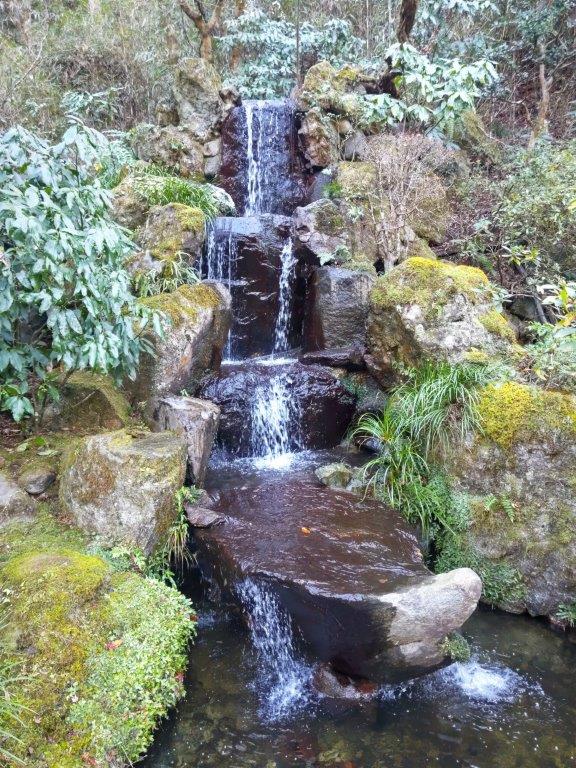
I was surprised to see that a stream had appeared at the bottom of the valley, turning my forest walk into a river walk. Soon after passing the Takao Green Center, I was back on a paved road surrounded by fields. I sneaked a peak at the outer gardens of Ukai Chikutei, a Japanese restaurant on the way, and was enchanted by the small waterfall and its carp pond. At 3h30, I joined a busy road at Ume-no-ki-Daira (梅ノ木平) that took me under the impressive Takao interchange. Suddenly, shops appeared on both sides of the road, and a few minutes later, I reached the beautiful Takaosanguchi station. After a satisfying hot spring bath, I hopped on the train for the one-hour ride back to Shinjuku.

Waterfall Outside Ukai Chikutei Restaurant

A Rare Shot of Takaosanguchi Station without People

I was glad I was able to stretch out this hike to just over 4 hours, making it a nice Christmas day stroll. The Fureai no Michi frequently follows paved roads but in this case, most of this section was along forest roads and hiking trails. The views from Mine no Yakushi, the hot bath at the end and the easy access at both ends, made it worthwhile. It would be good to return one day to redo the first section of the Tokyo Fureai no Michi, or even a Mt Takao hike.

Watch a Video of the Mt Enokubo Hike

Watch the Video of the Hike on Youtube

See a Slidehsow of more Pictures of the Hike