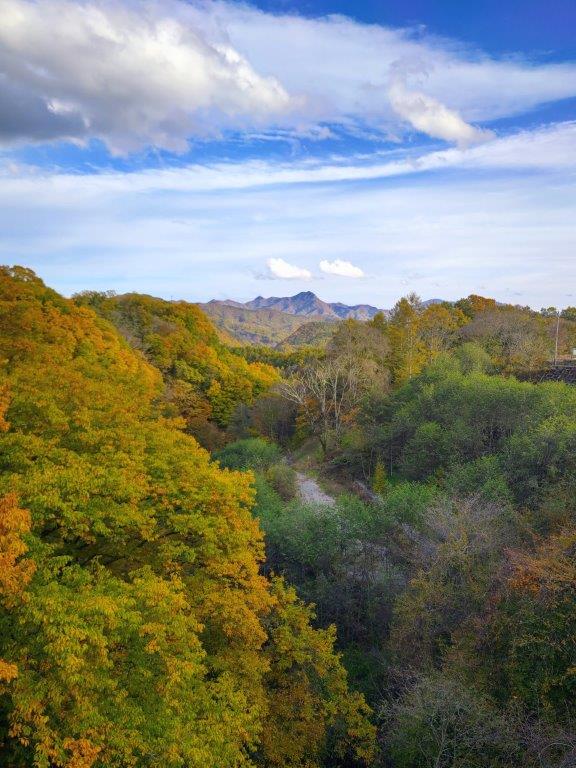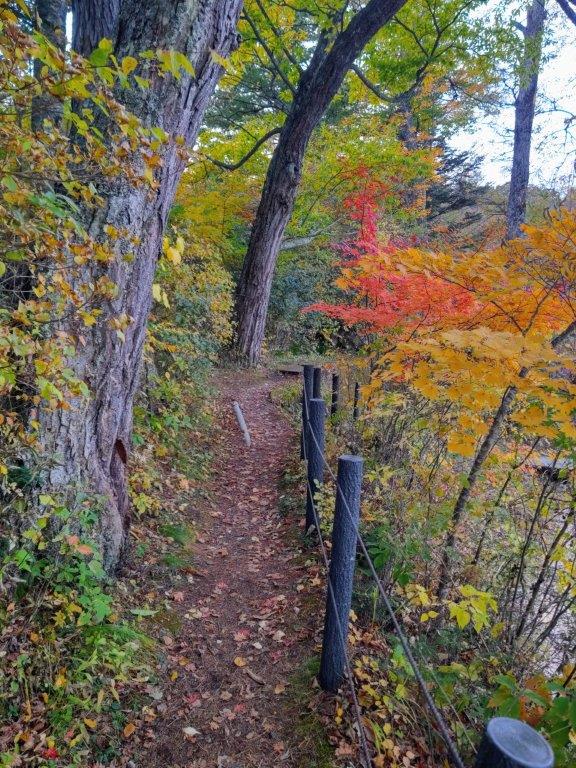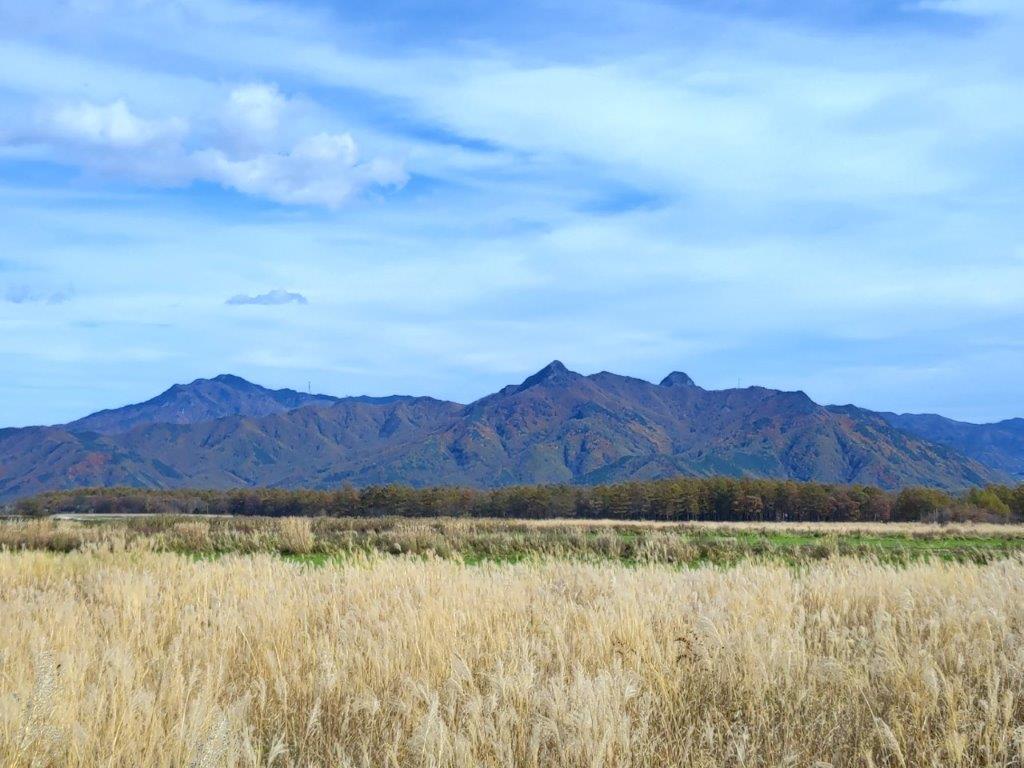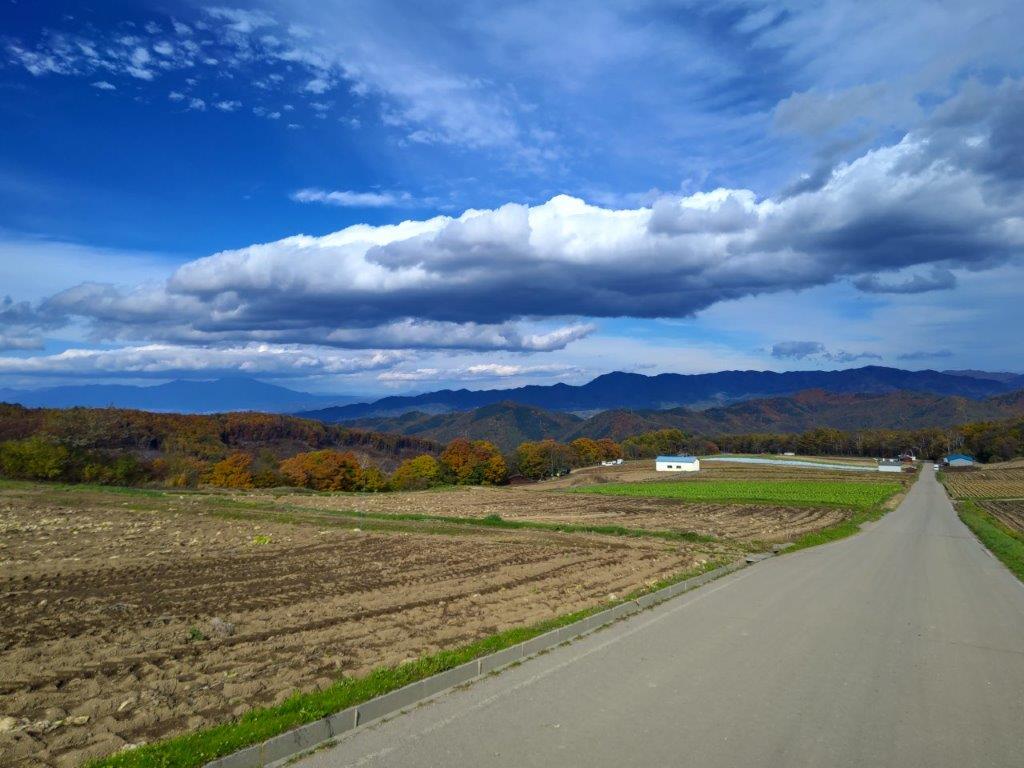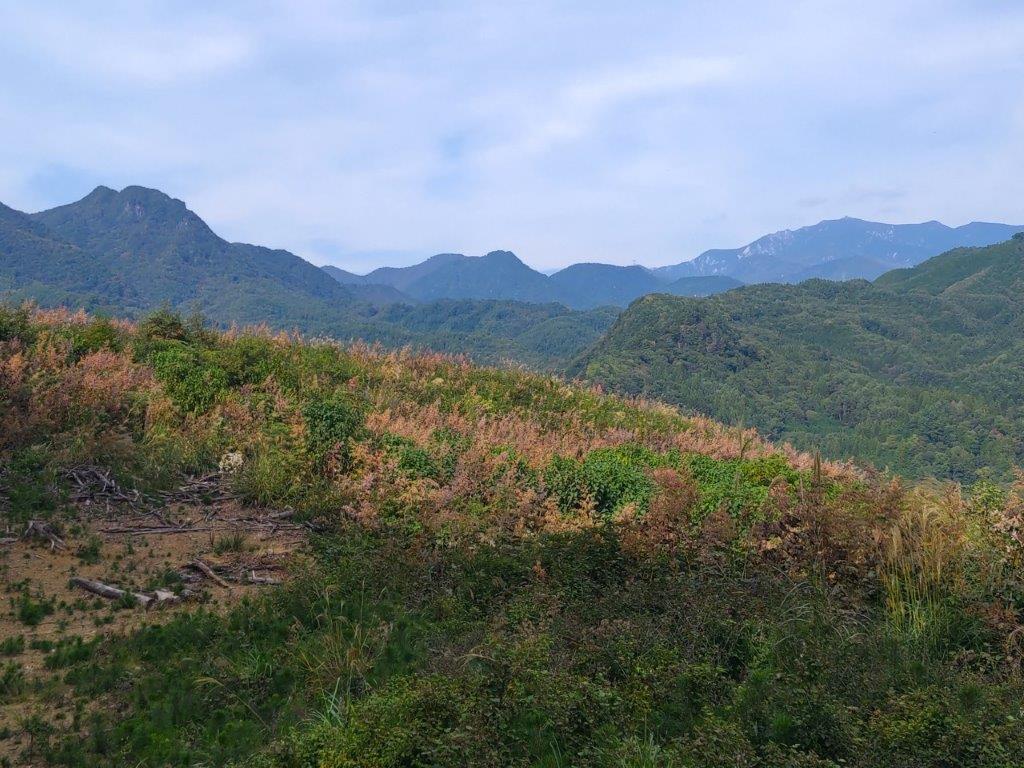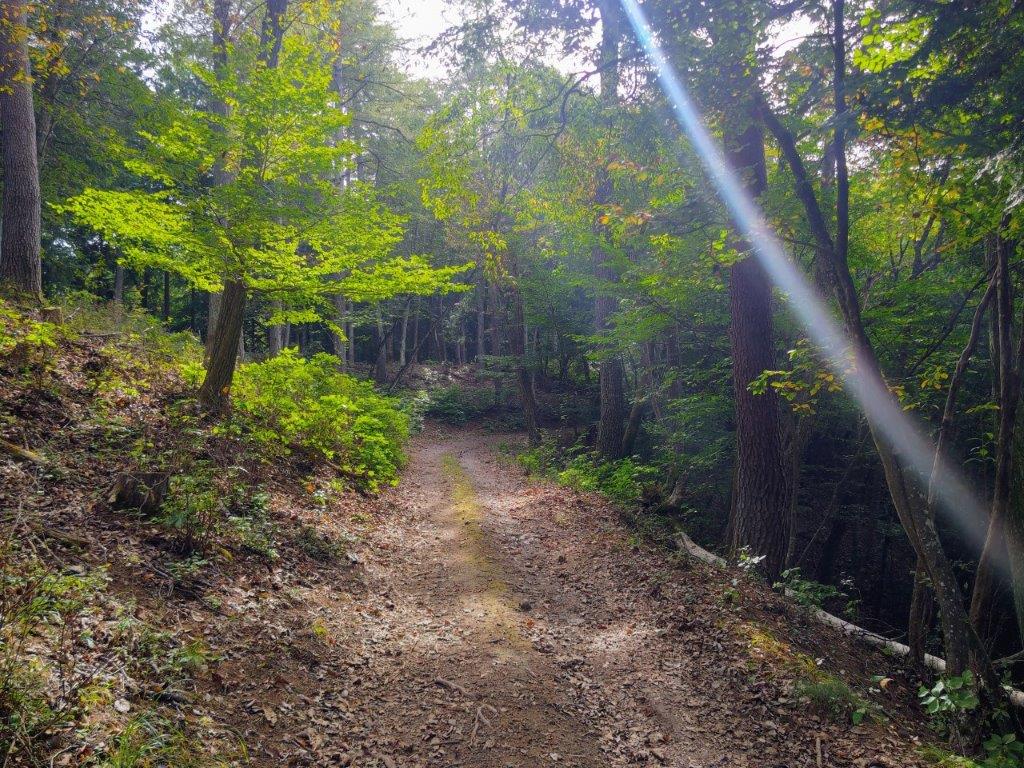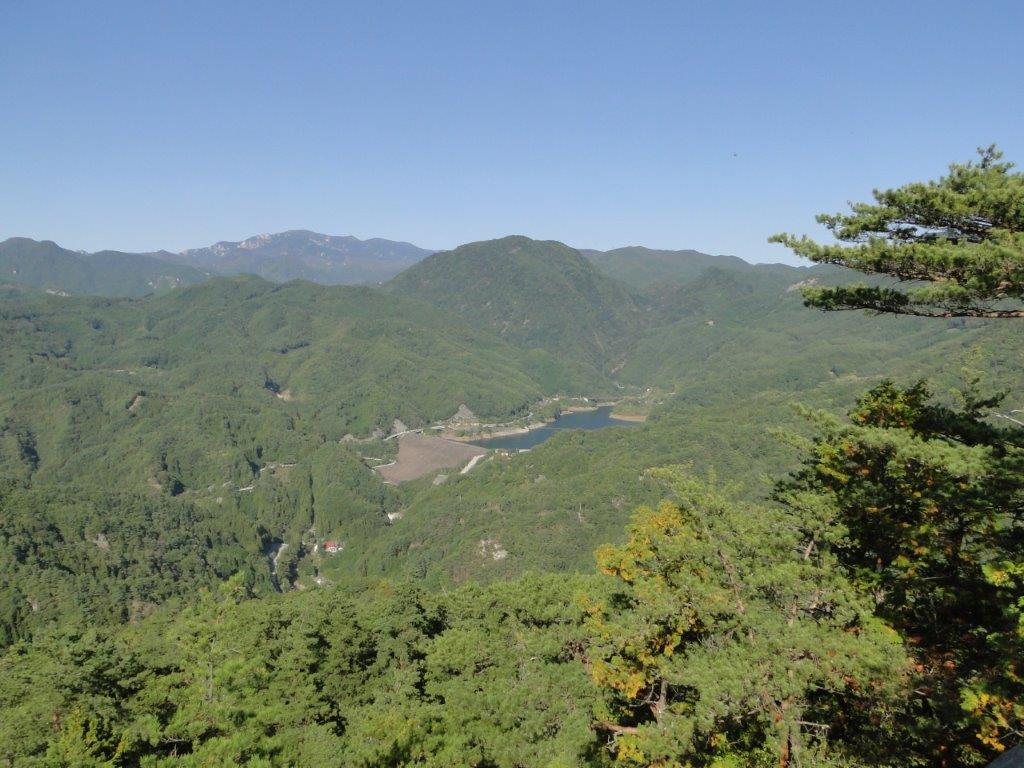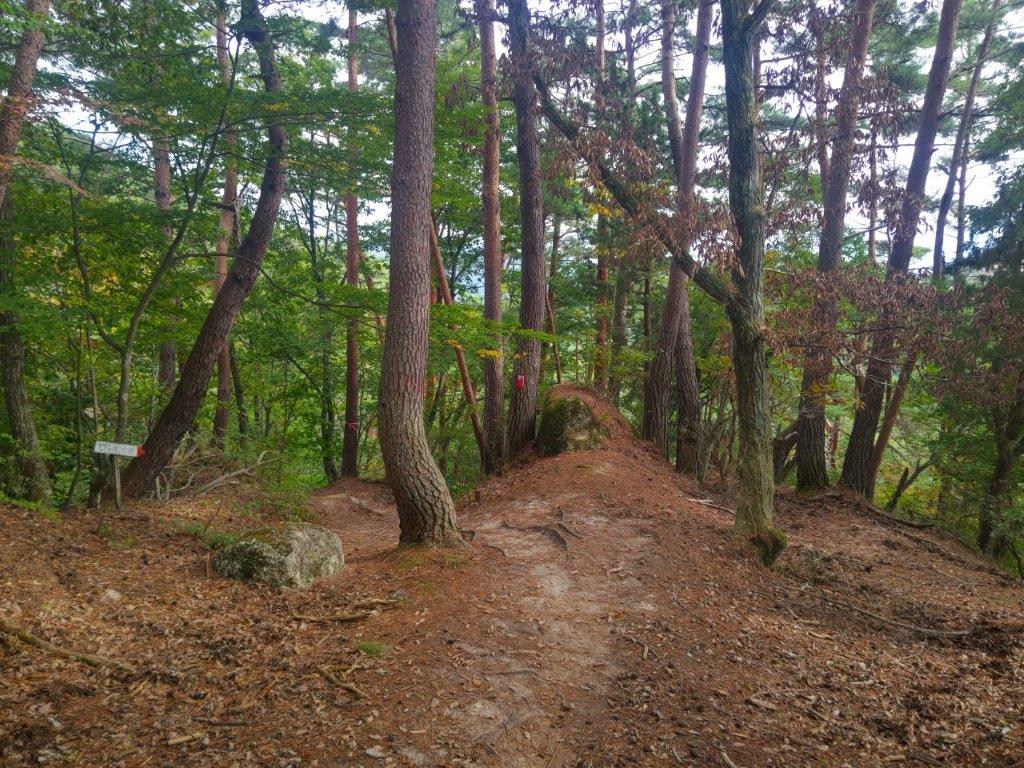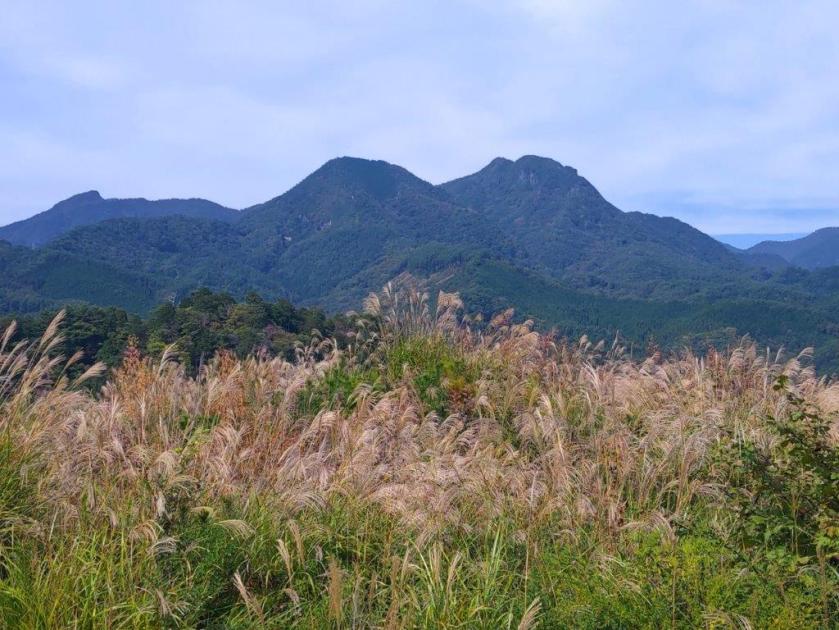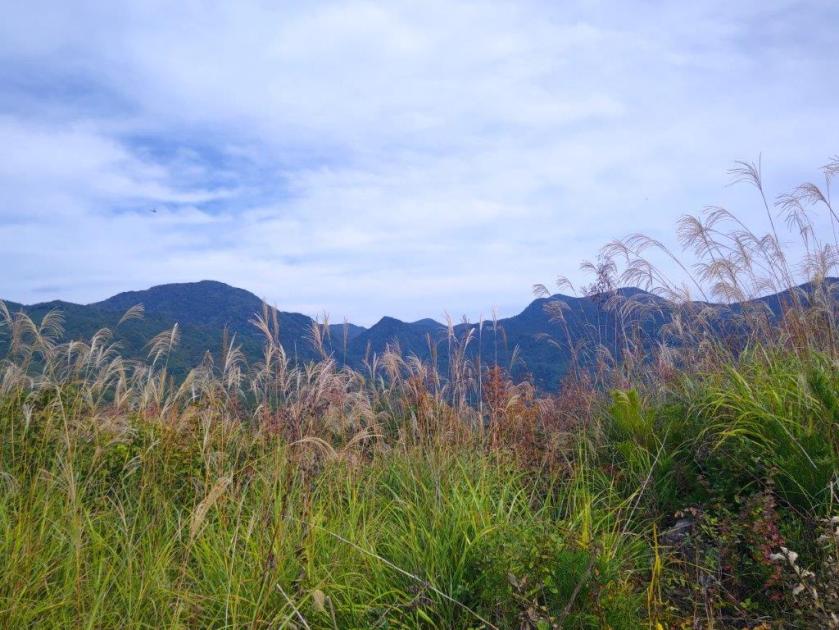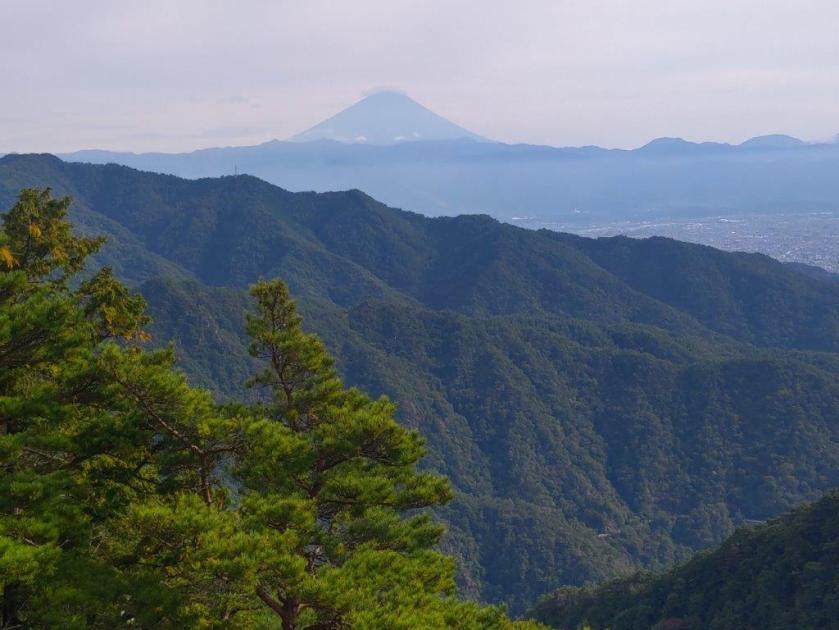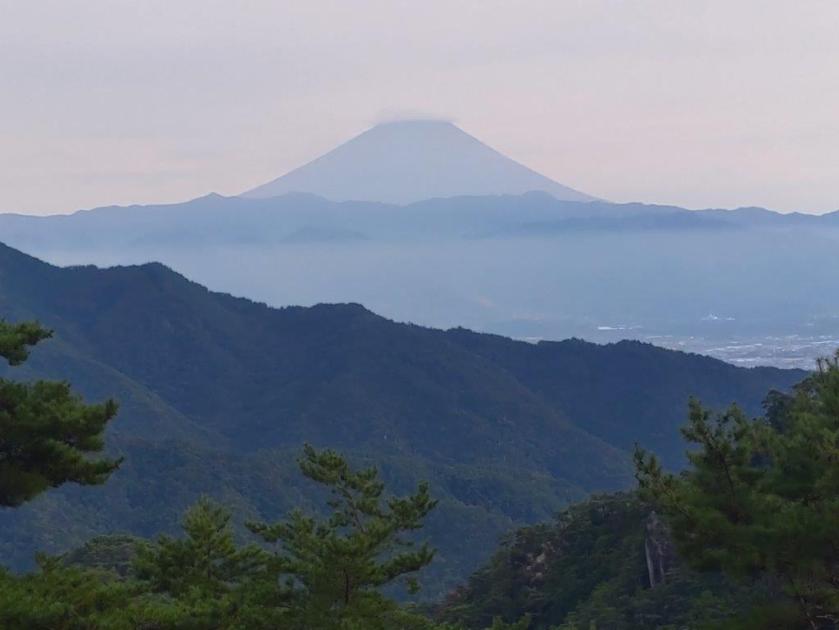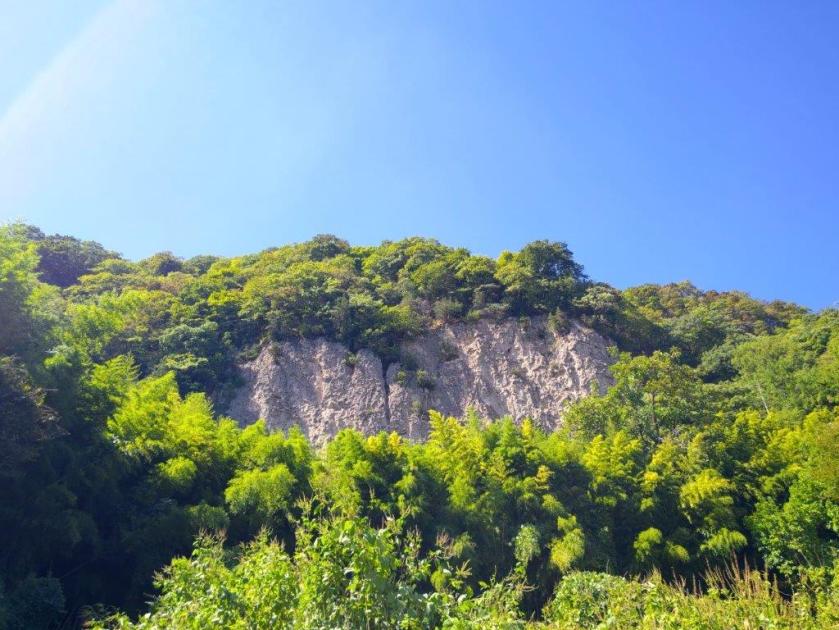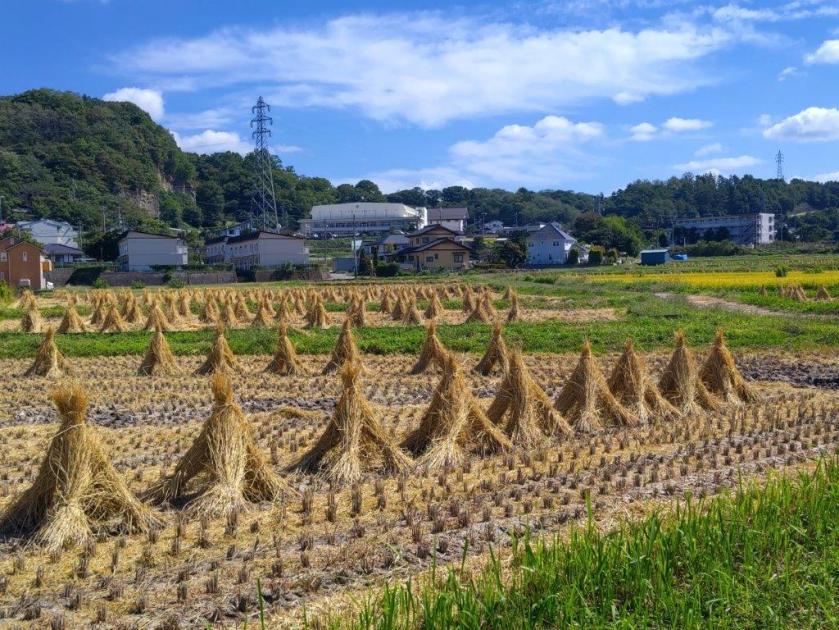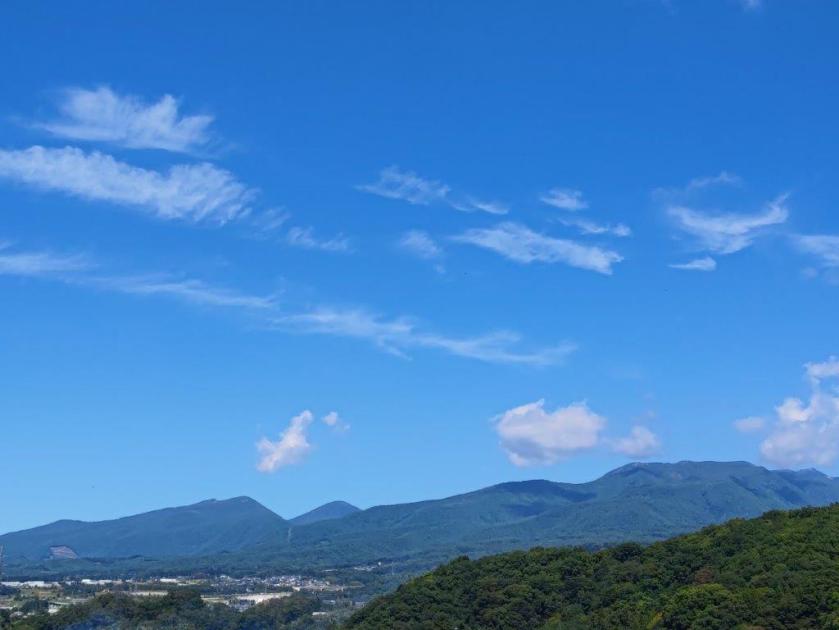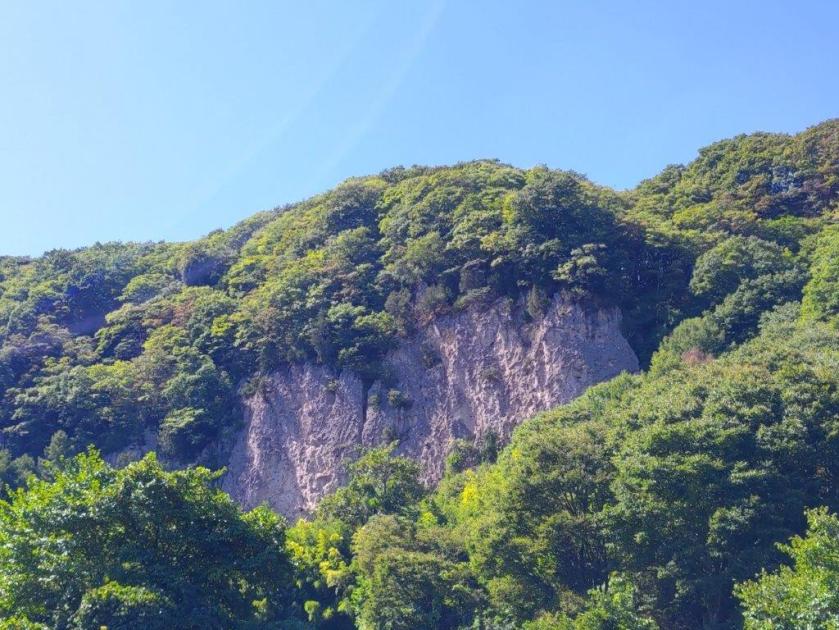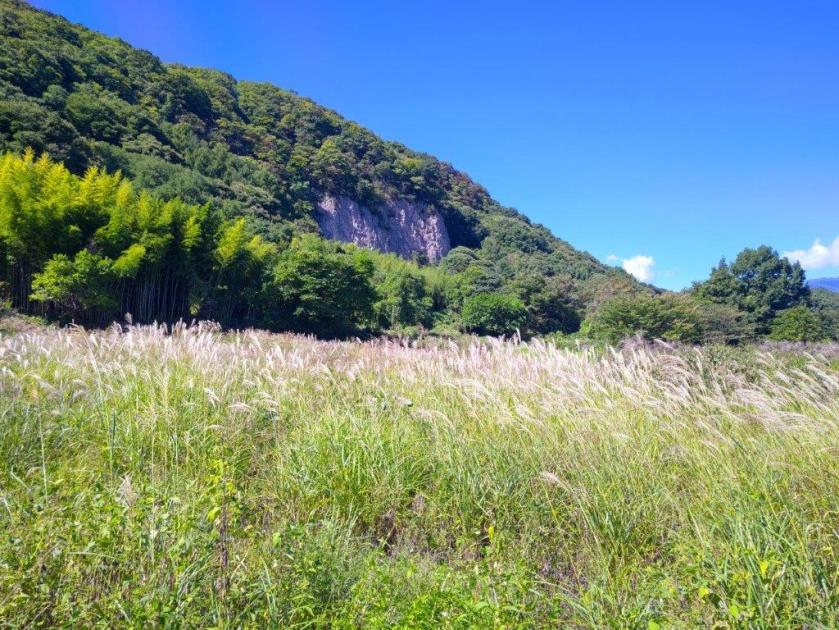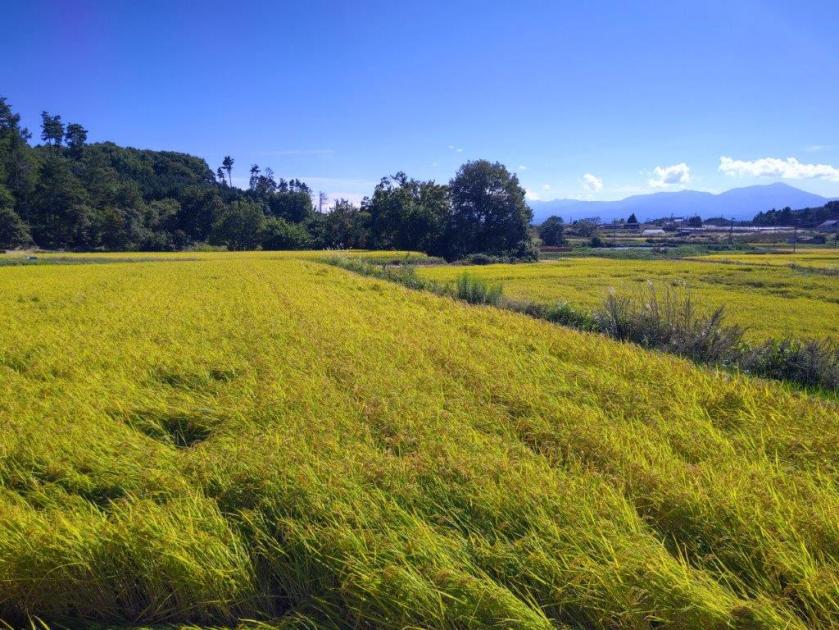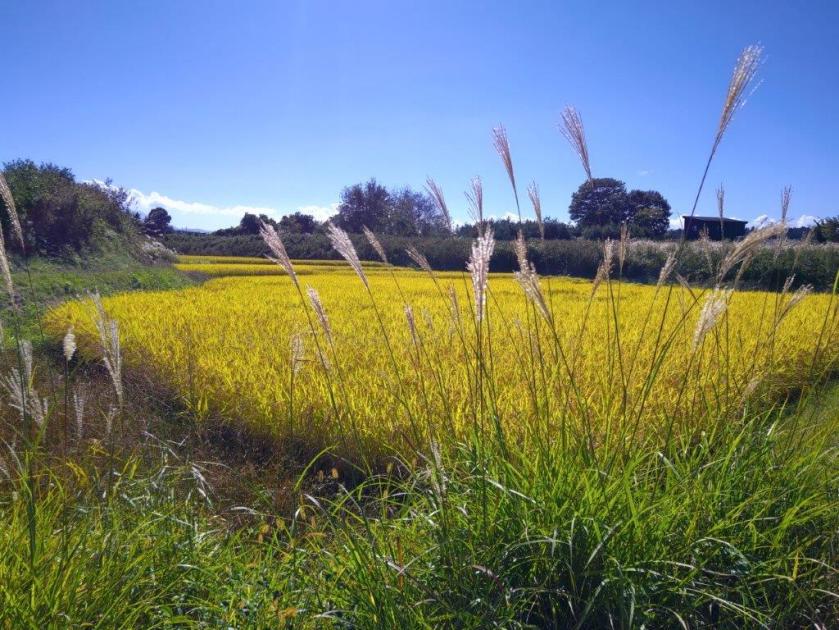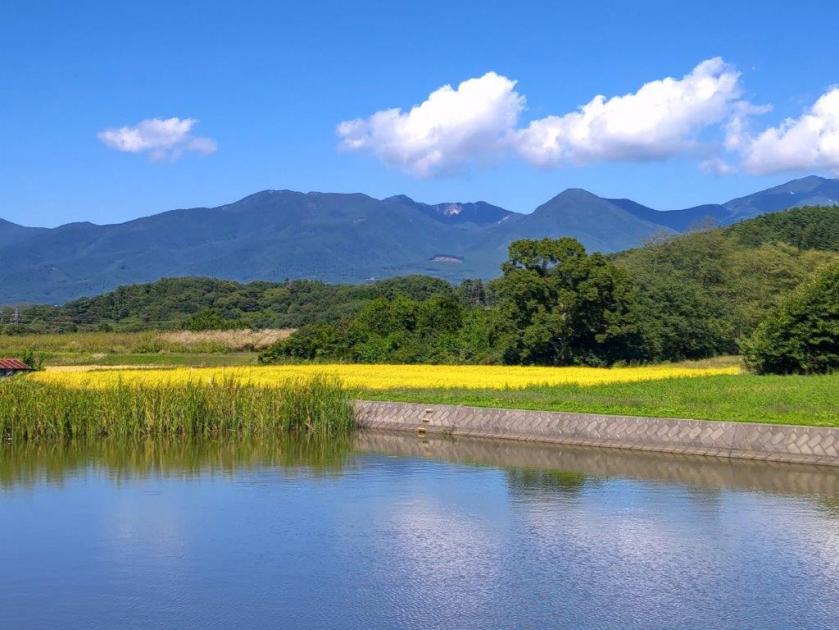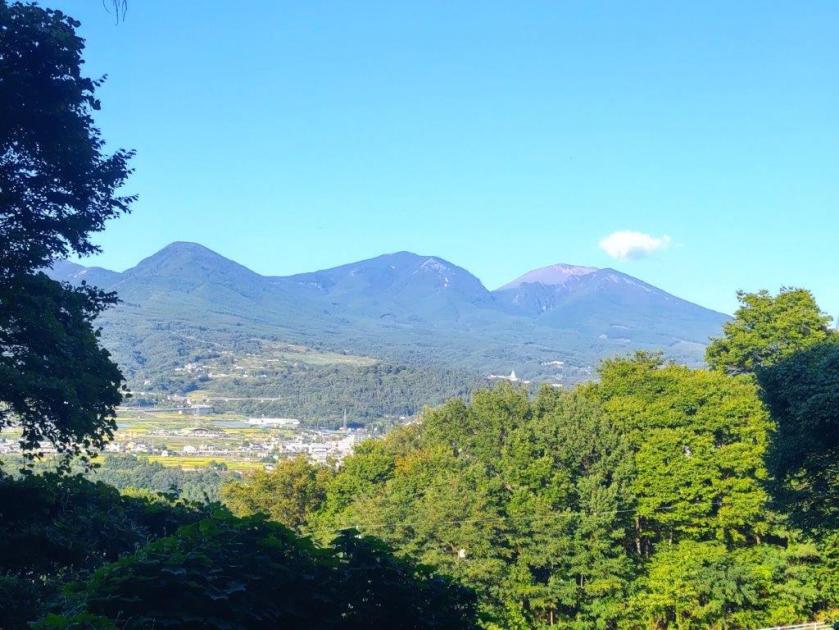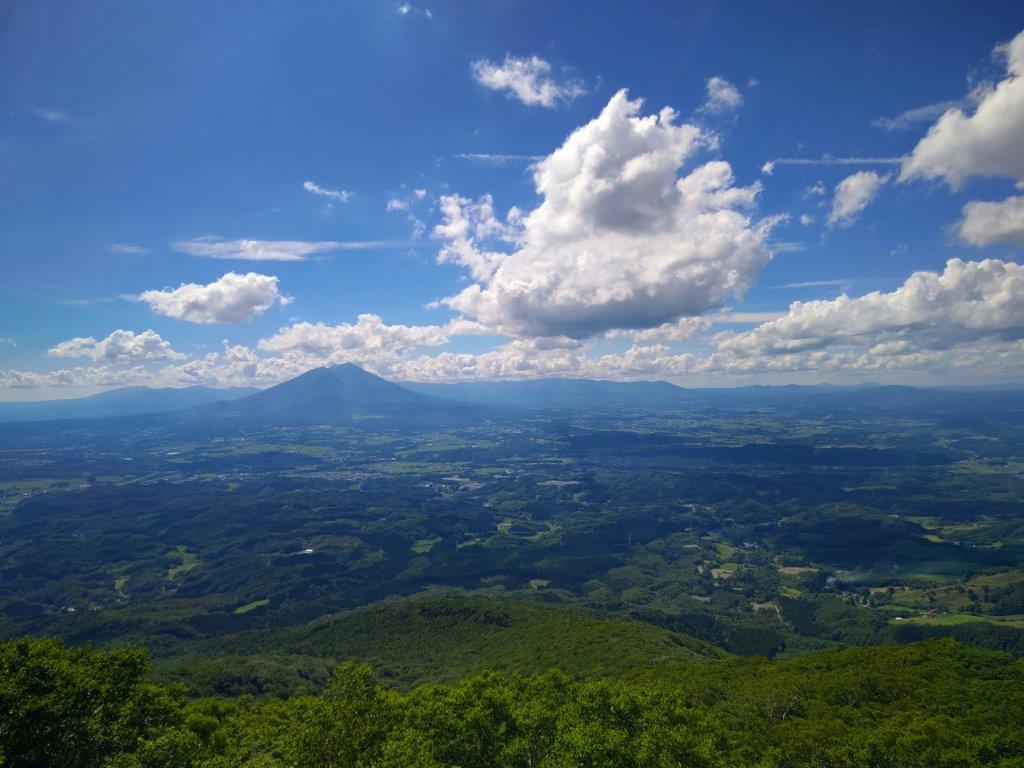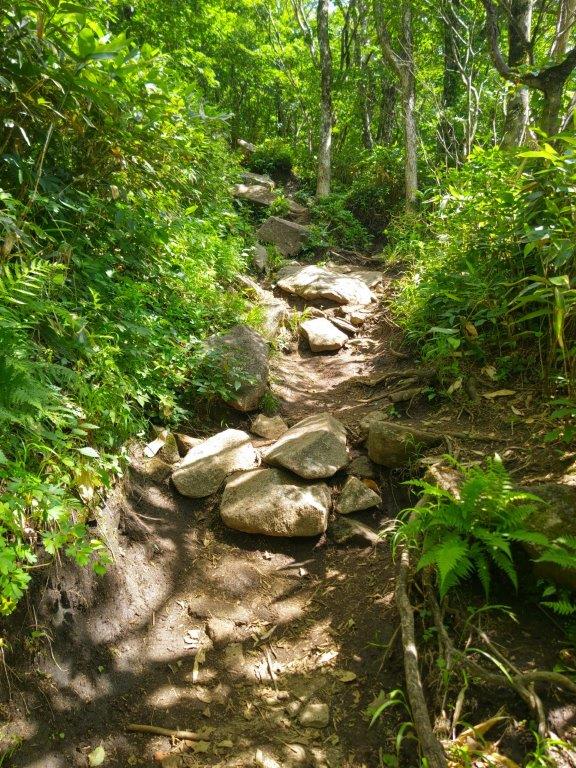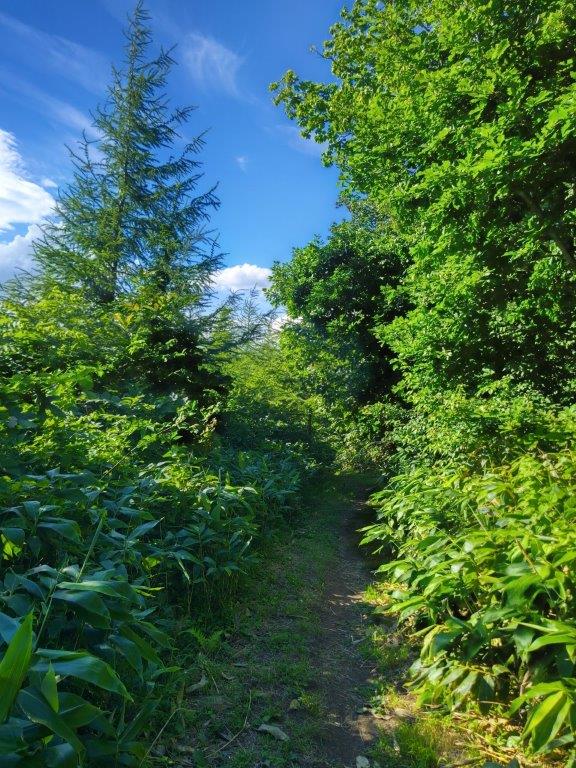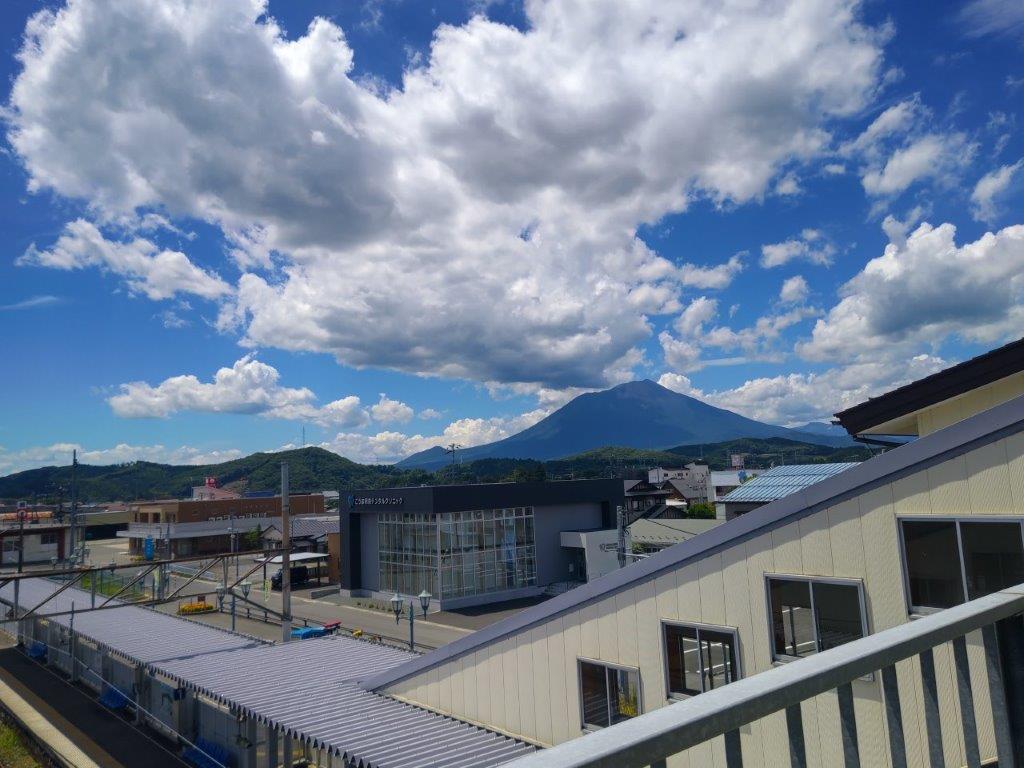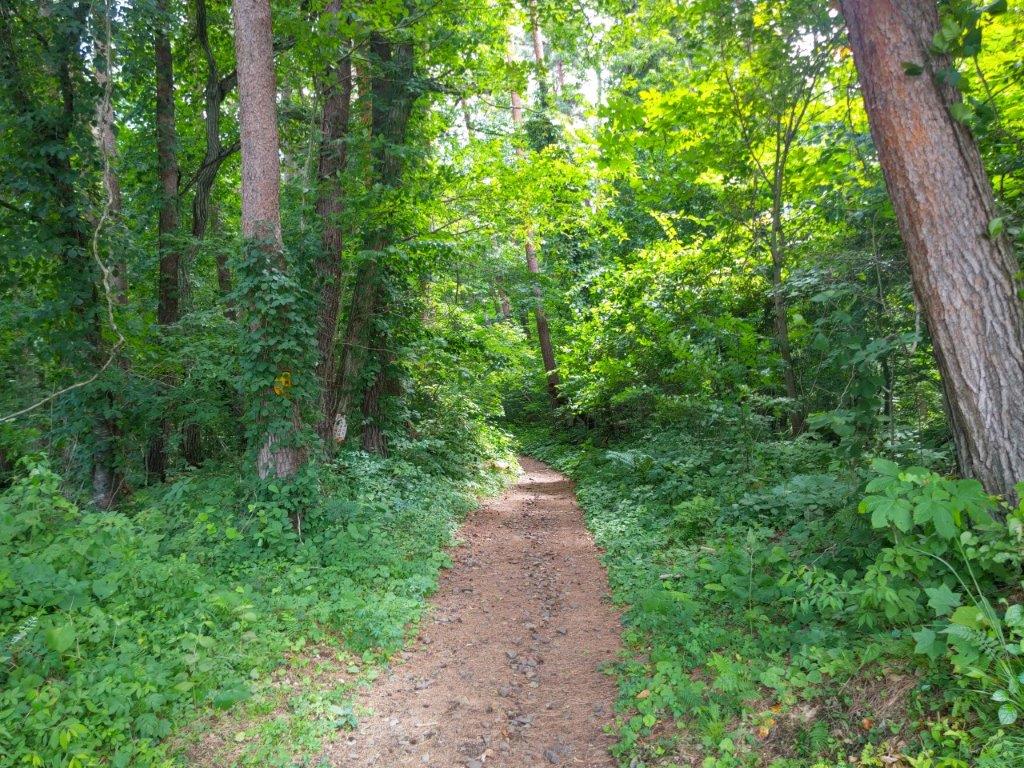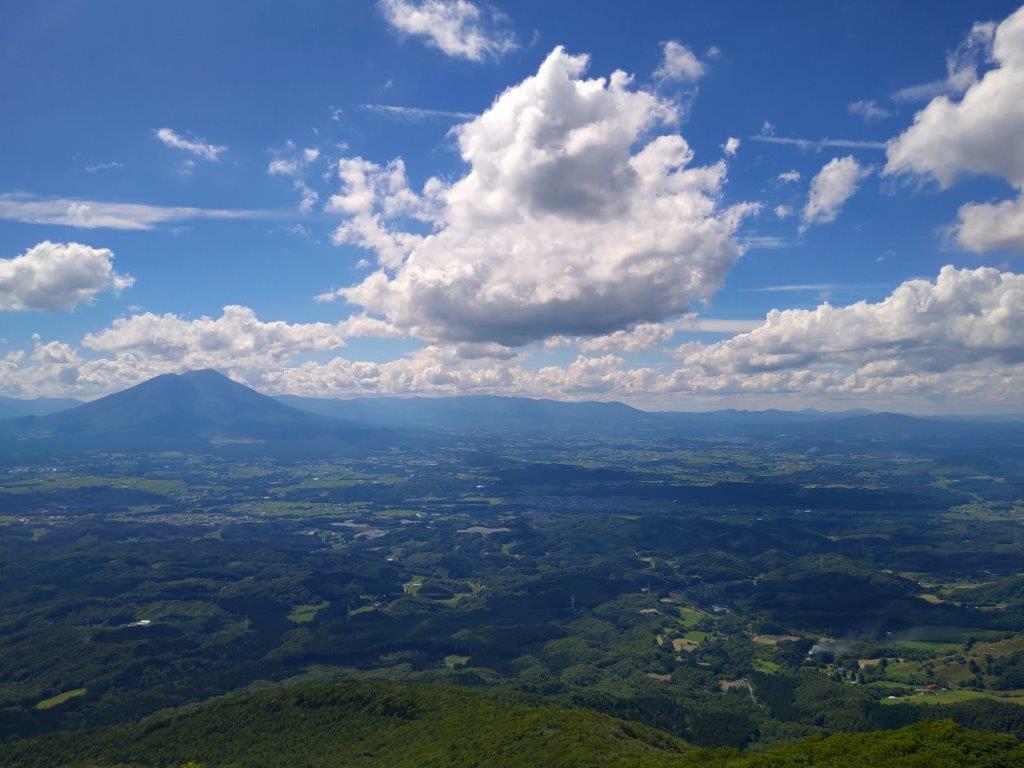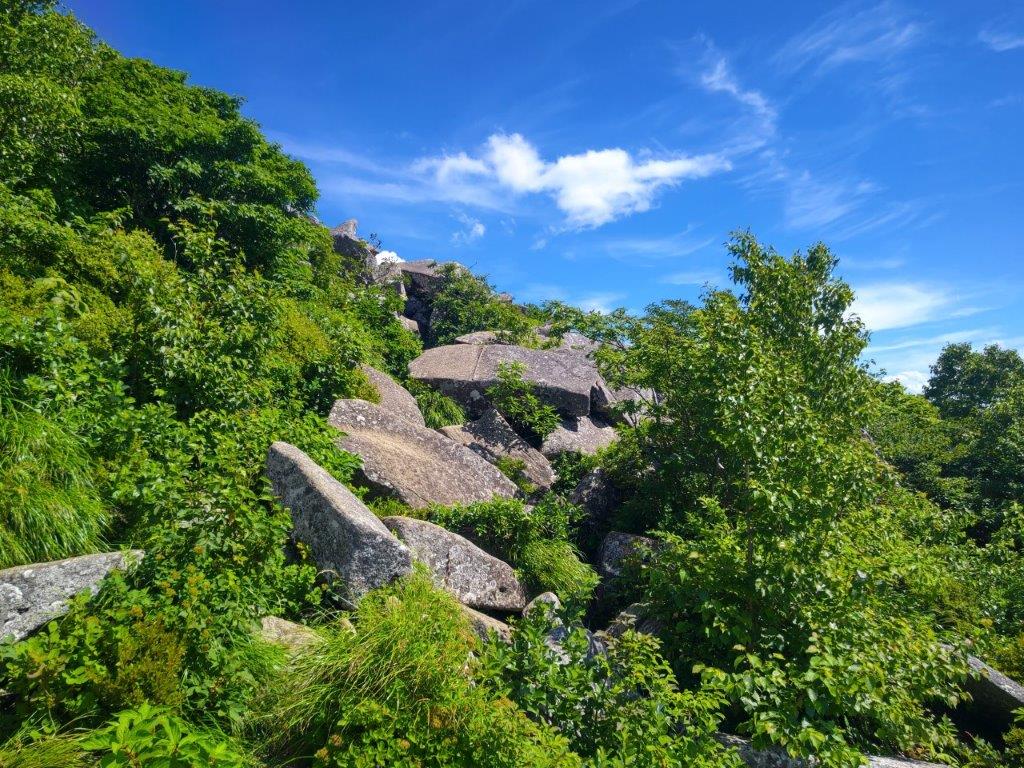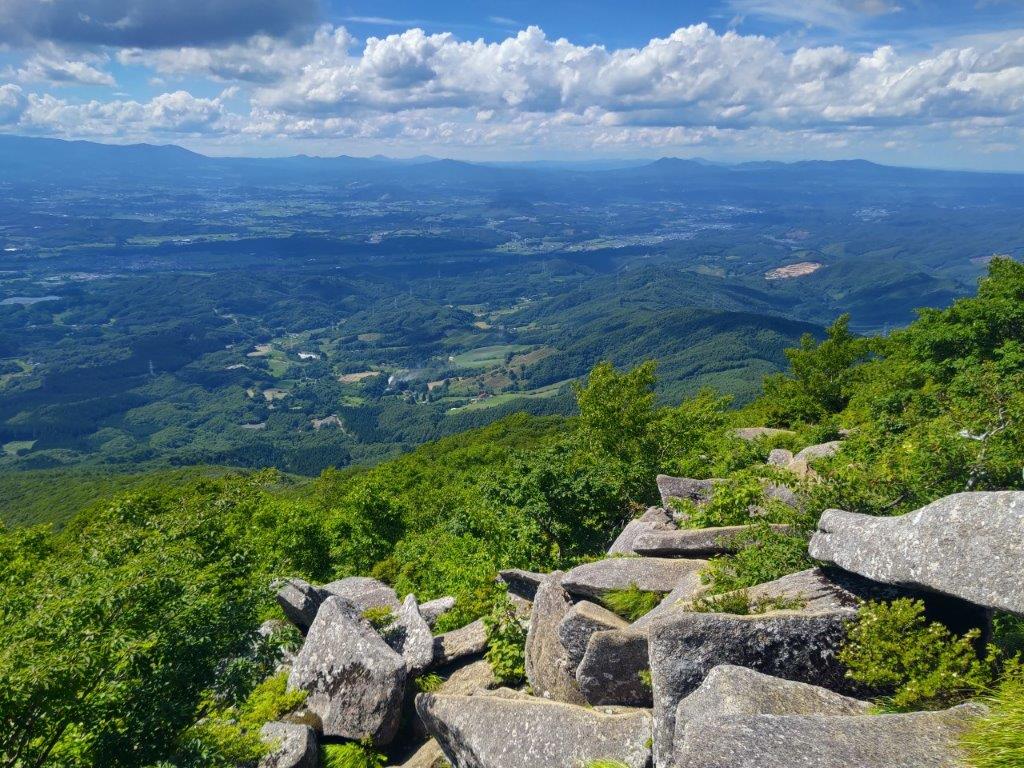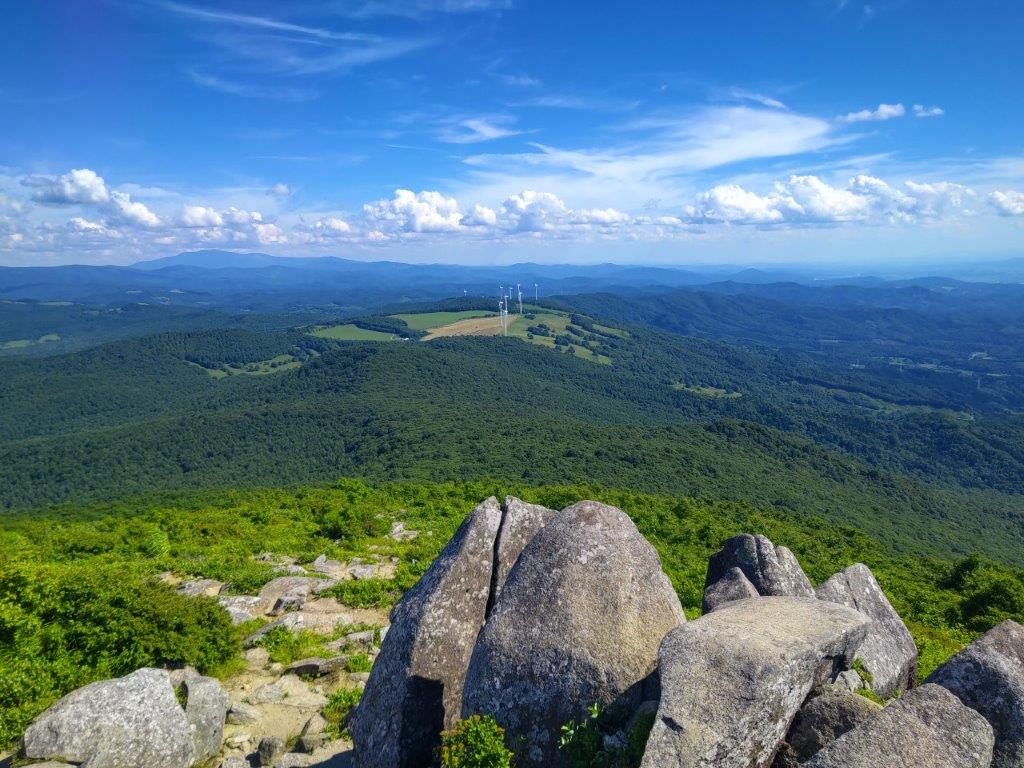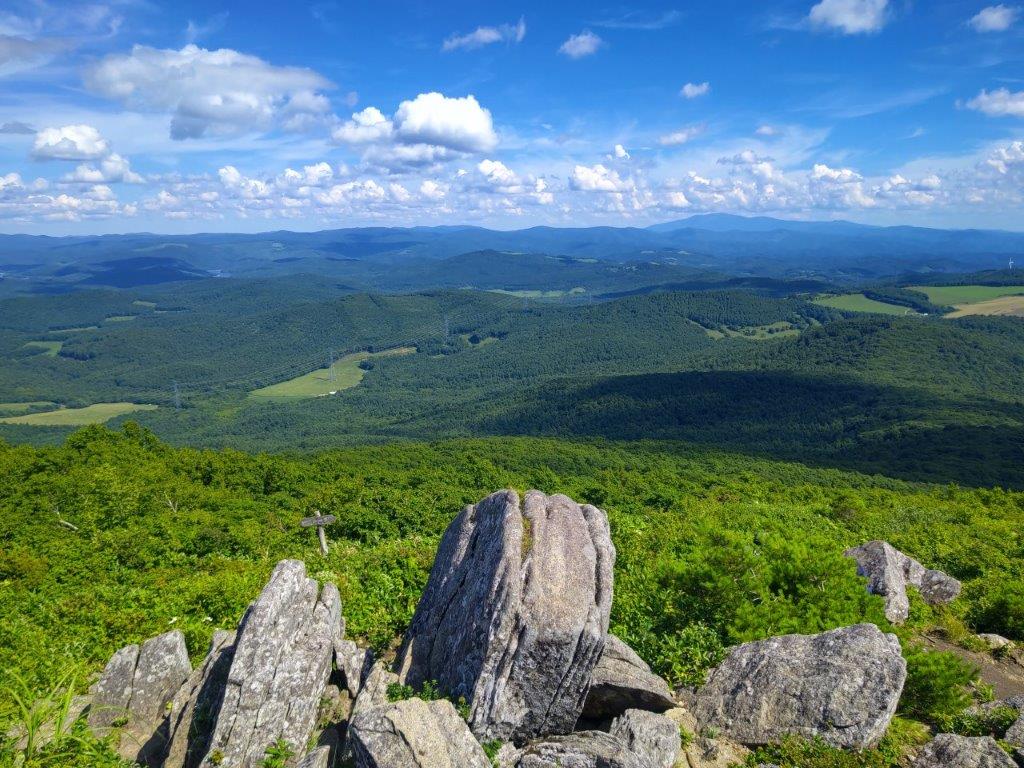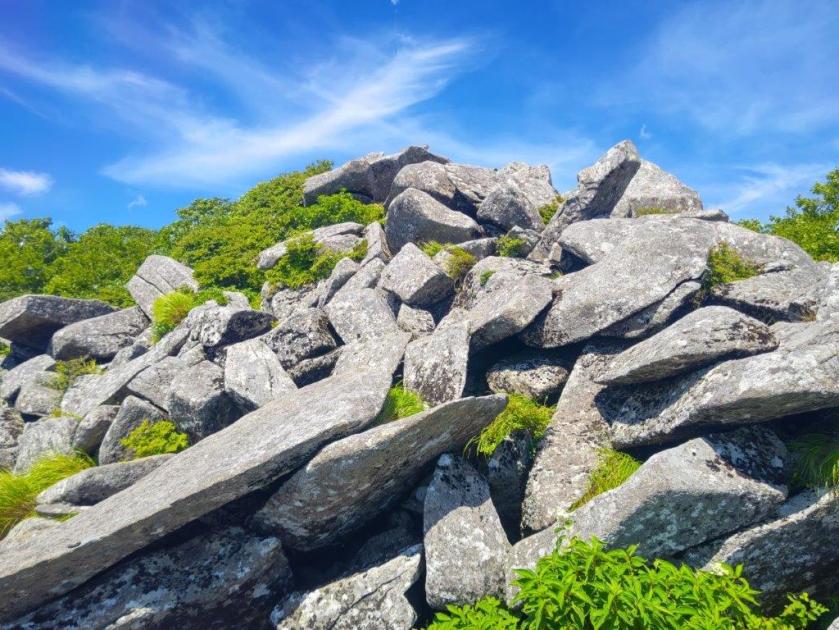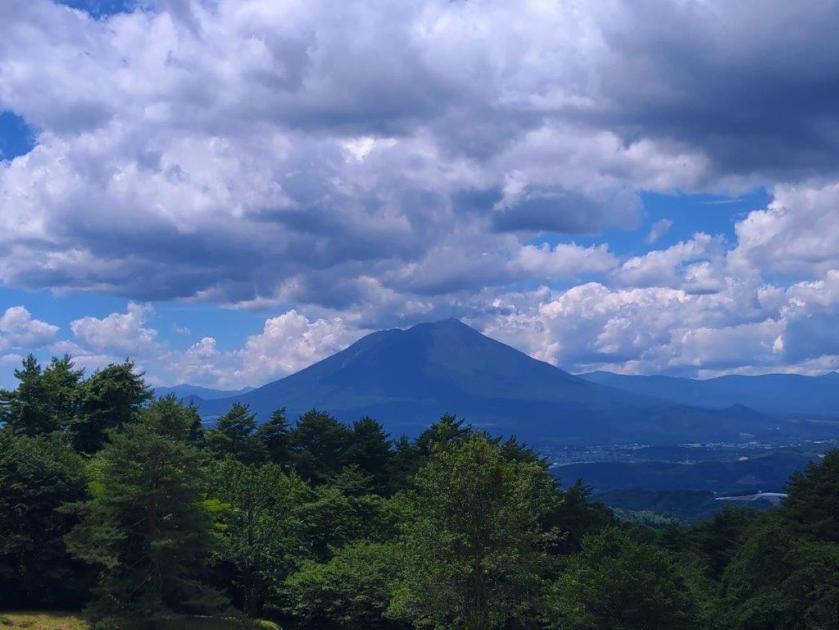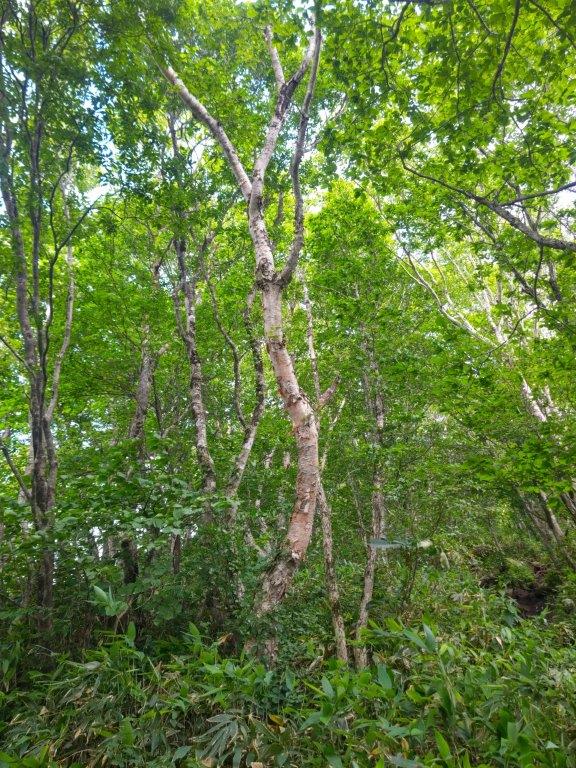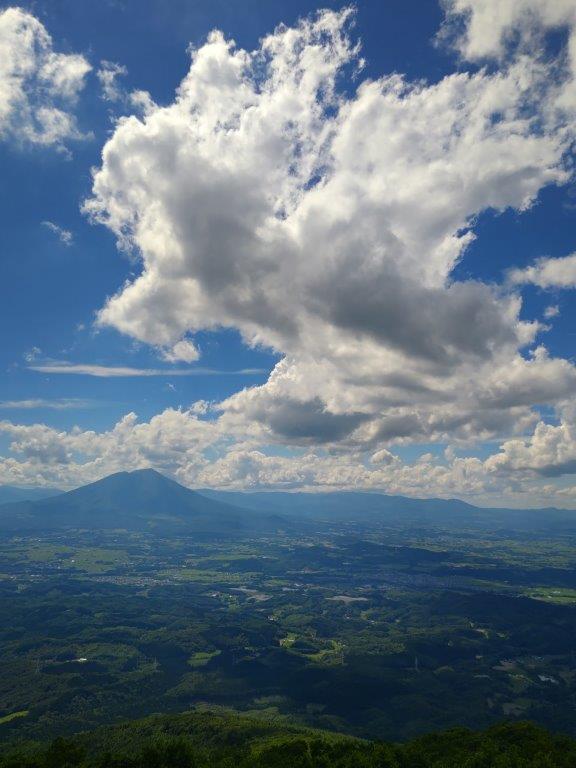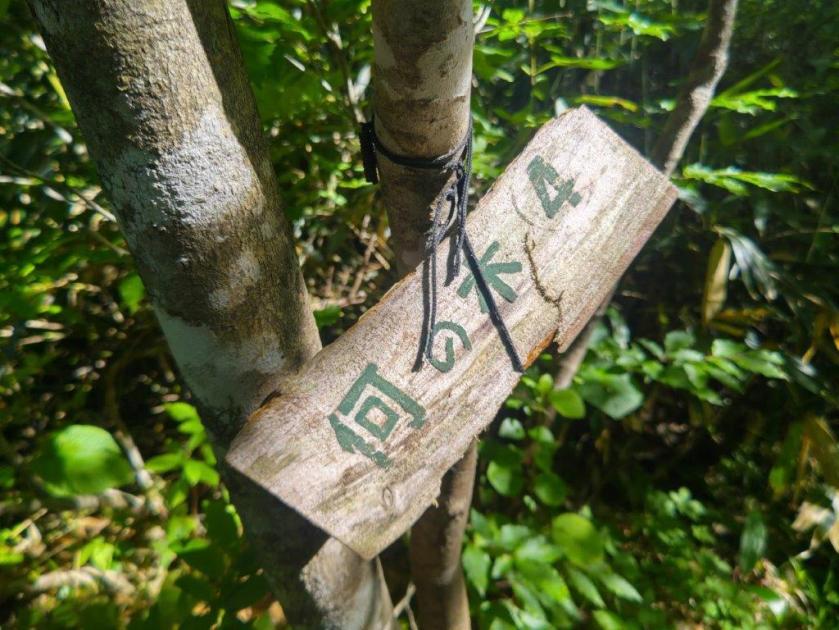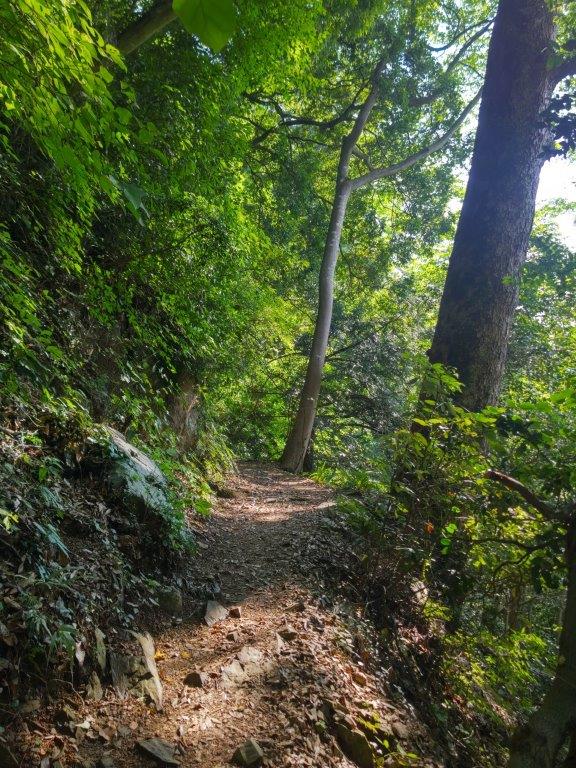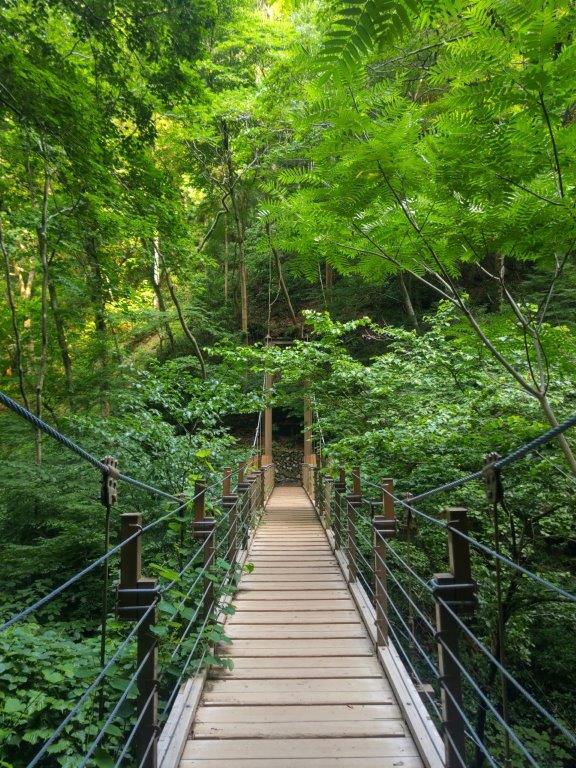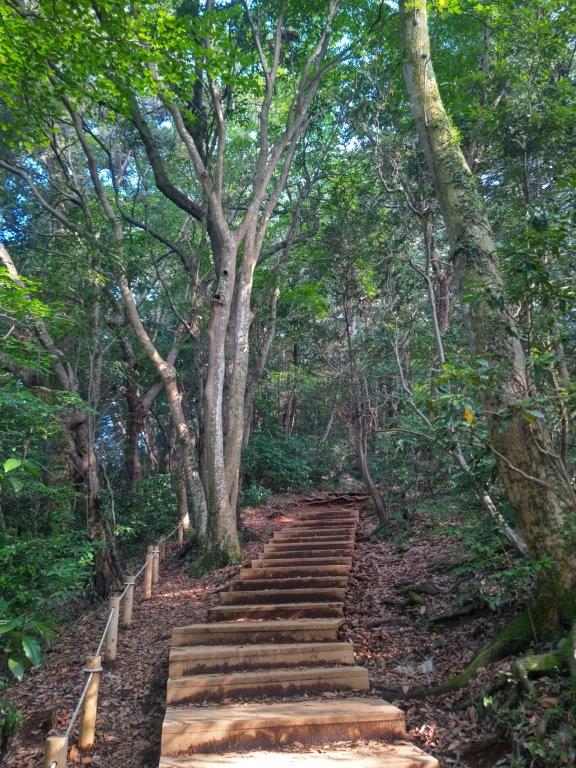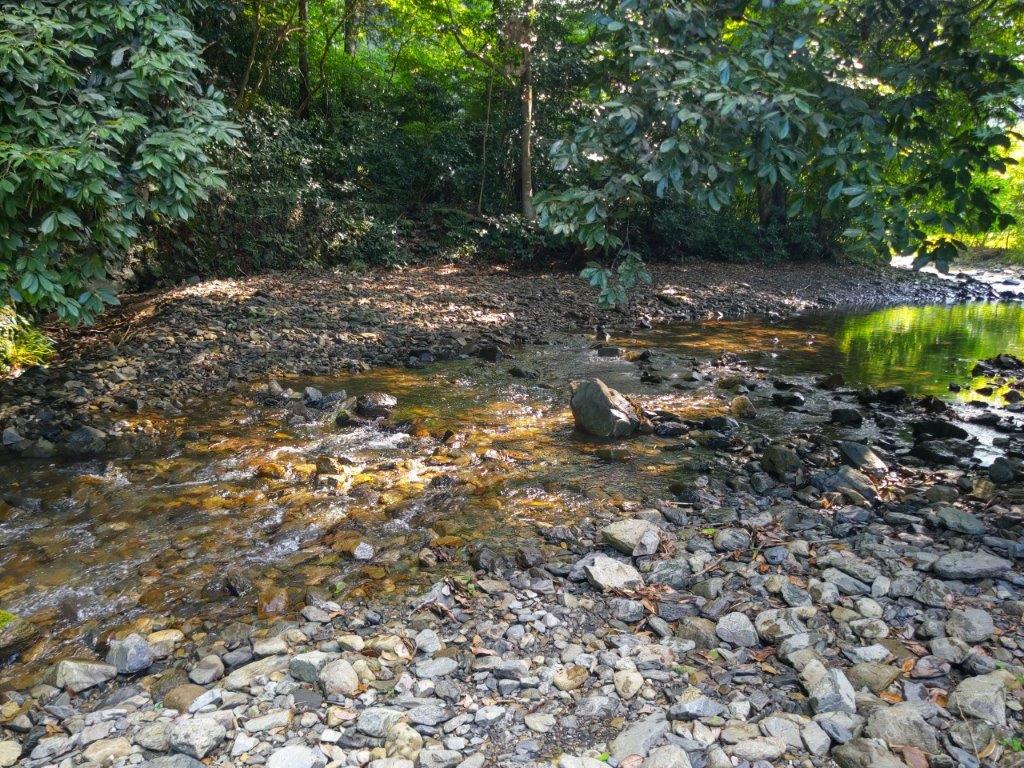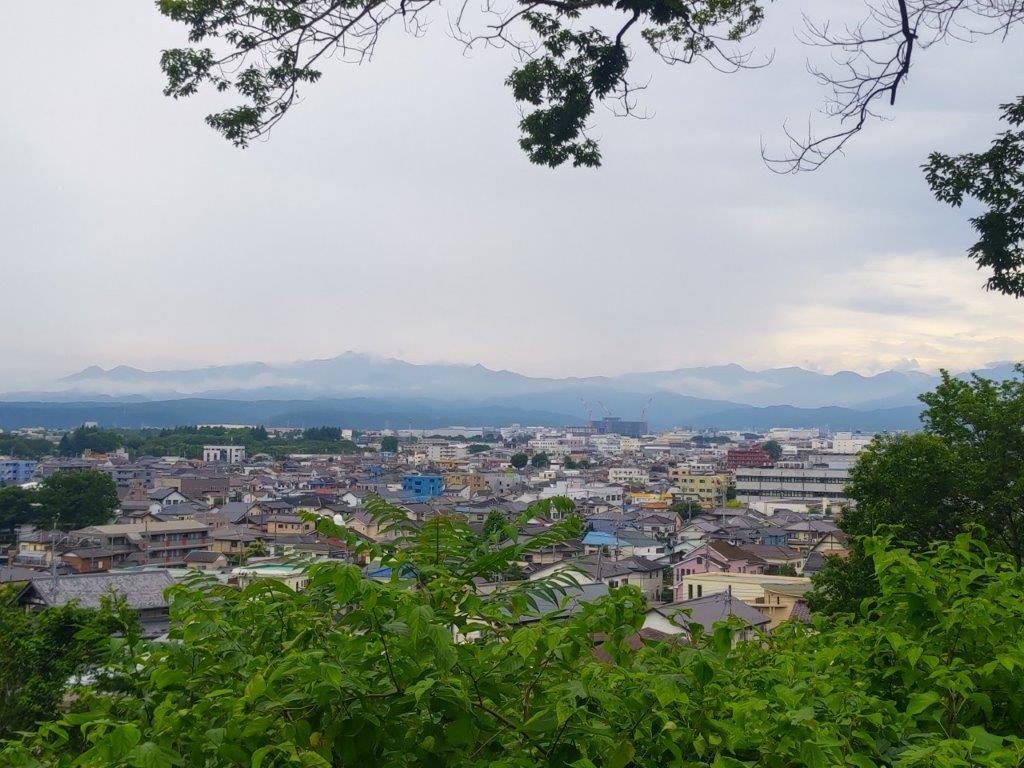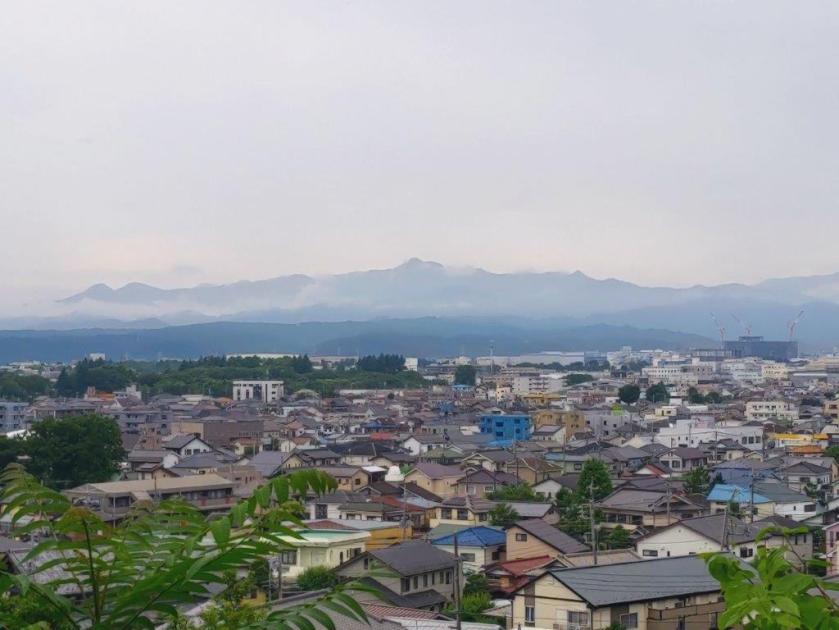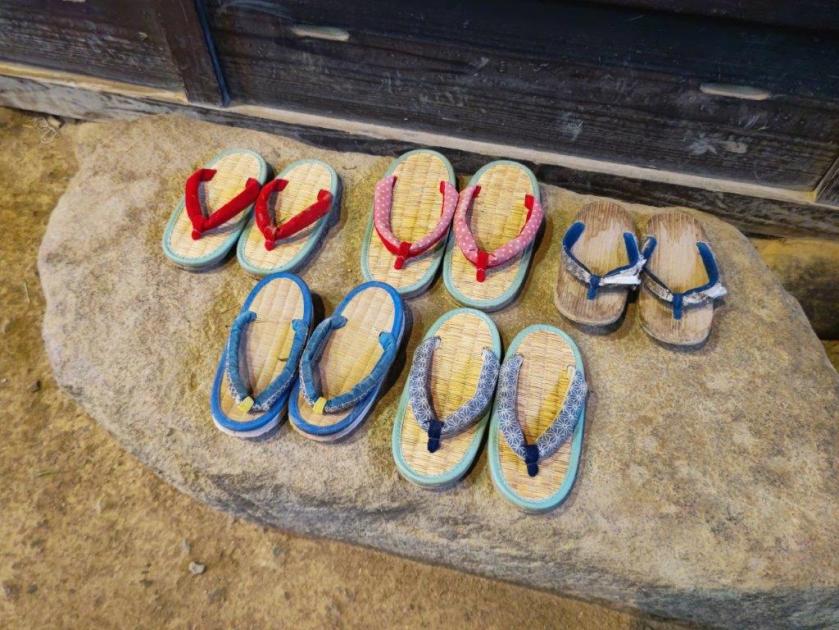
Noyamakita-Rokudoyama Park (Highest Point 194m), Higashi-Murayama City and Mizuho Town, Tokyo Prefecture, Sunday, June 15, 2025

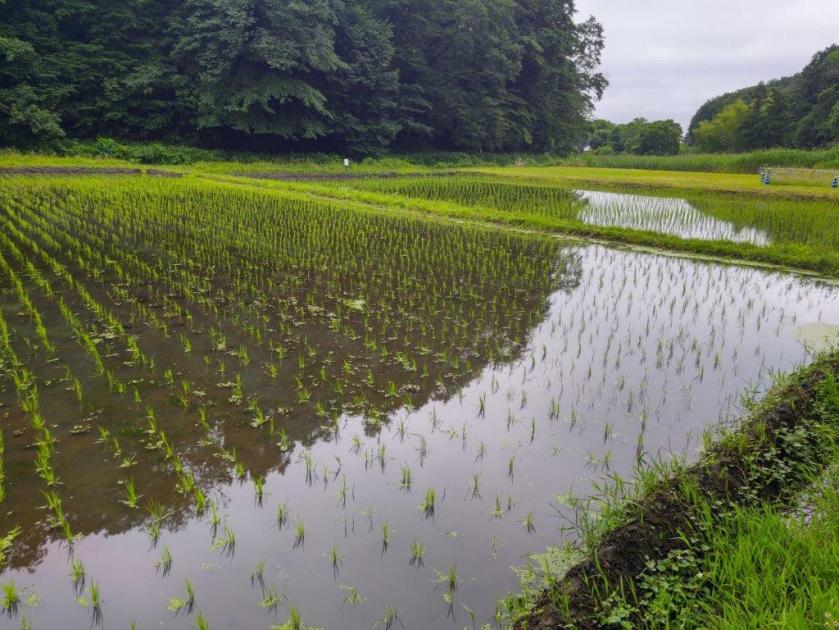
I’d been wanting to explore more of Tokyo largest park since my last visit a couple of years ago. I especially wanted to visit later in Spring to see the Kishi rice fields after planting; I also wanted to check out the “Satoyama Minka”, a traditional farmhouse; finally, I wanted to get a view from one of the several observation points on the western edge of the park. It would be a short hike which I could extend by making one or two detours along the park’s many footpaths.

Hiking in the Sayama Hills 狭山丘陵

To get there, I’d ride the Laview limited express to Hanno, and then take a local train one stop to Higashi-Hanno. There, I’d transfer to the Hachiko line for just two stops and get off at Hakonegasaki station, where a bus would take me to a stop near the park entrance. For the return, I could walk back to Hakonegasaki and do the same route in reverse. The weather was supposed to be cloudy but dry; I’d have to be careful of the muddy, slippery trails after heavy rain the previous day. I was looking forward to a relaxing hike near the center of Tokyo.

Find Japan Hiking Maps on Japanwilds and subscribe to our newsletter

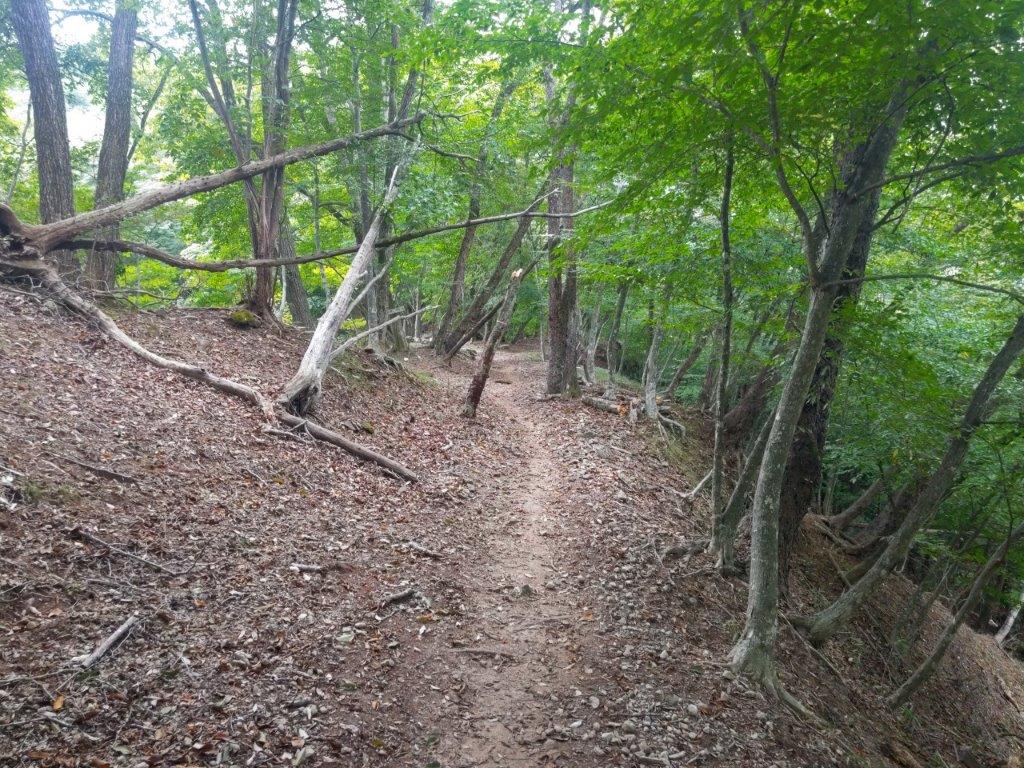
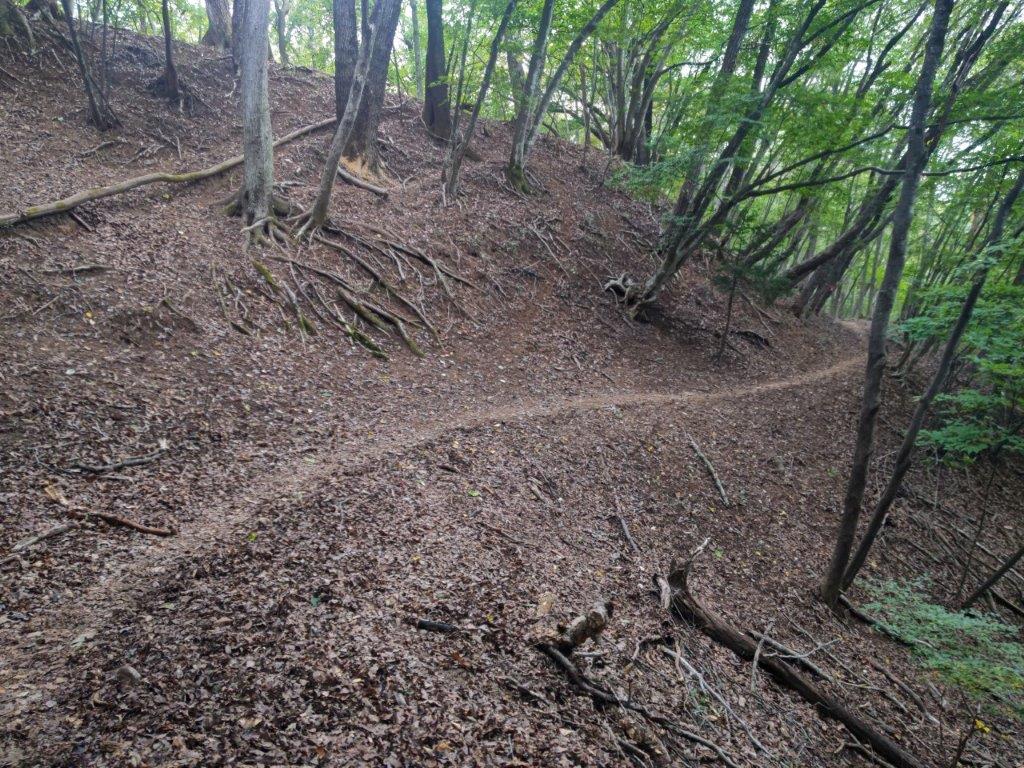
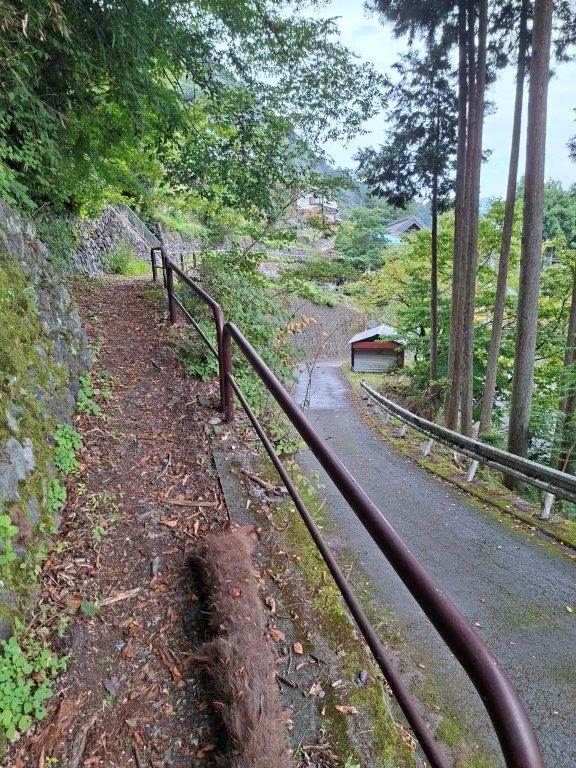
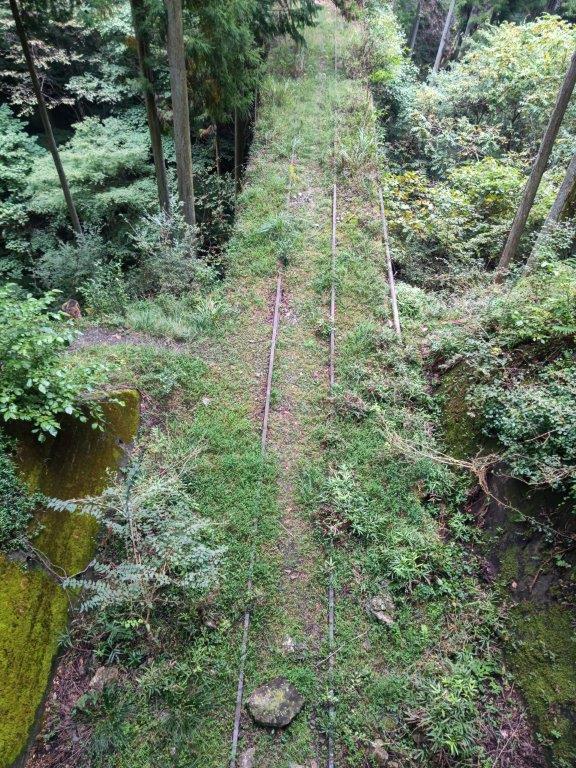
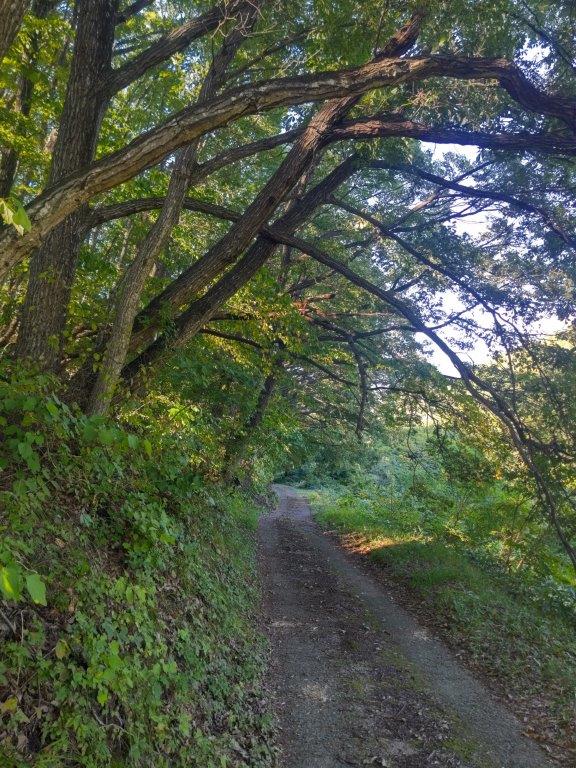
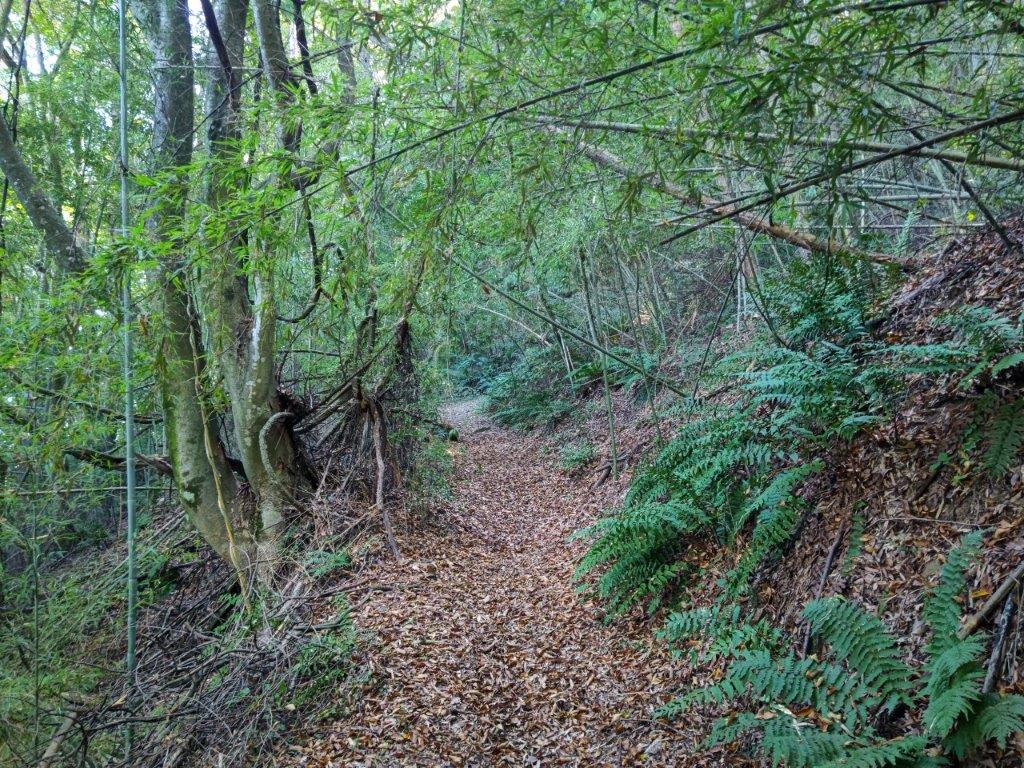
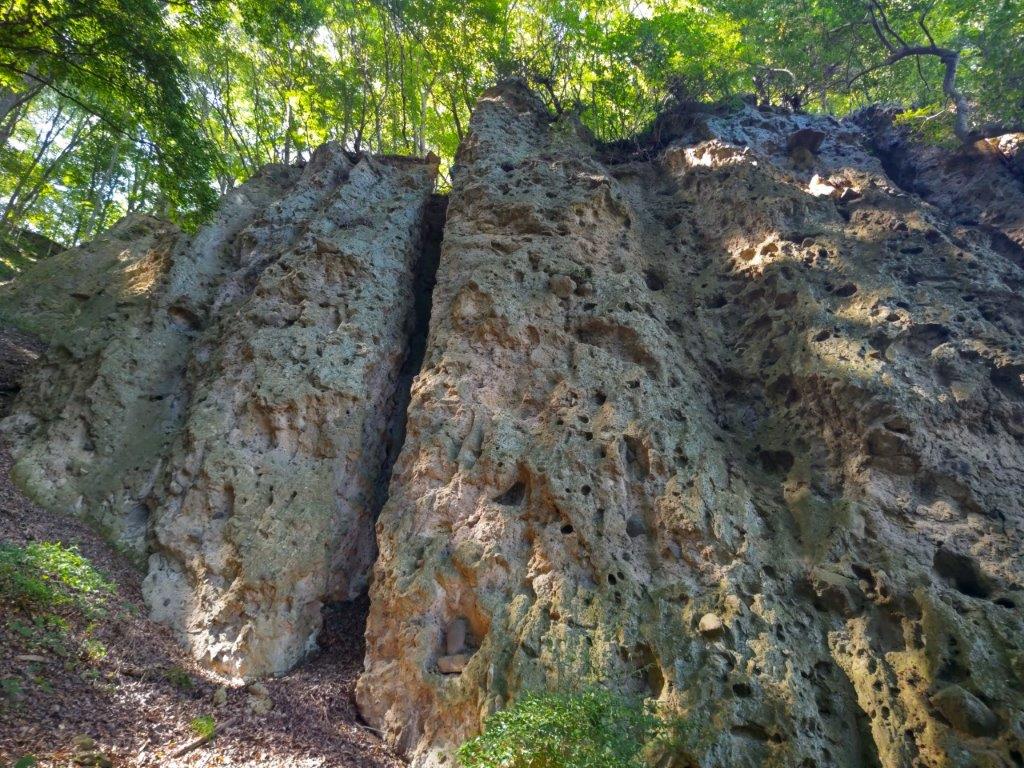
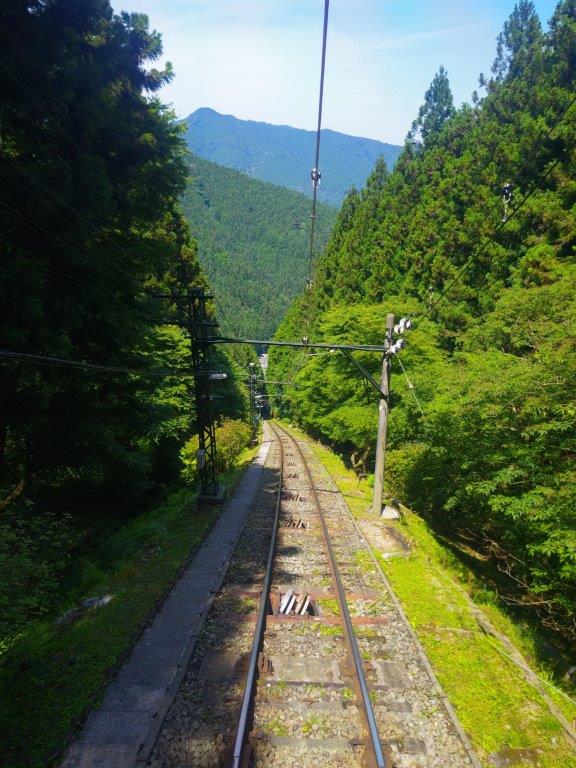
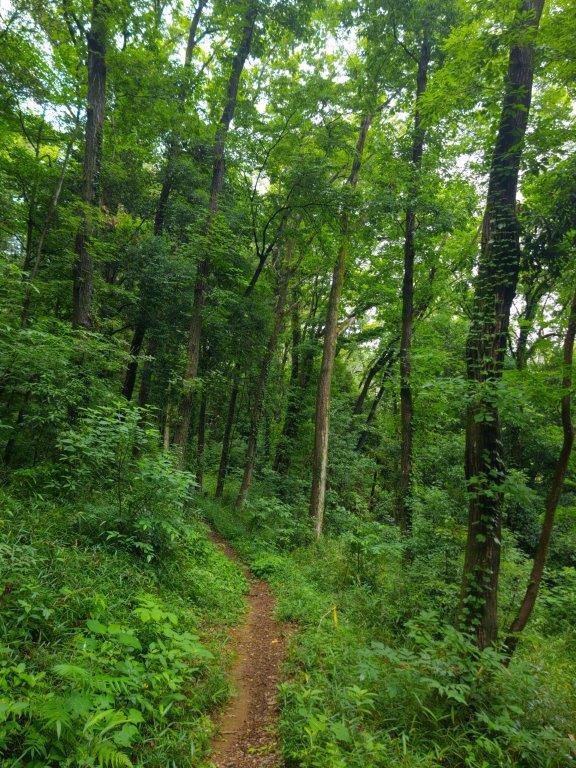
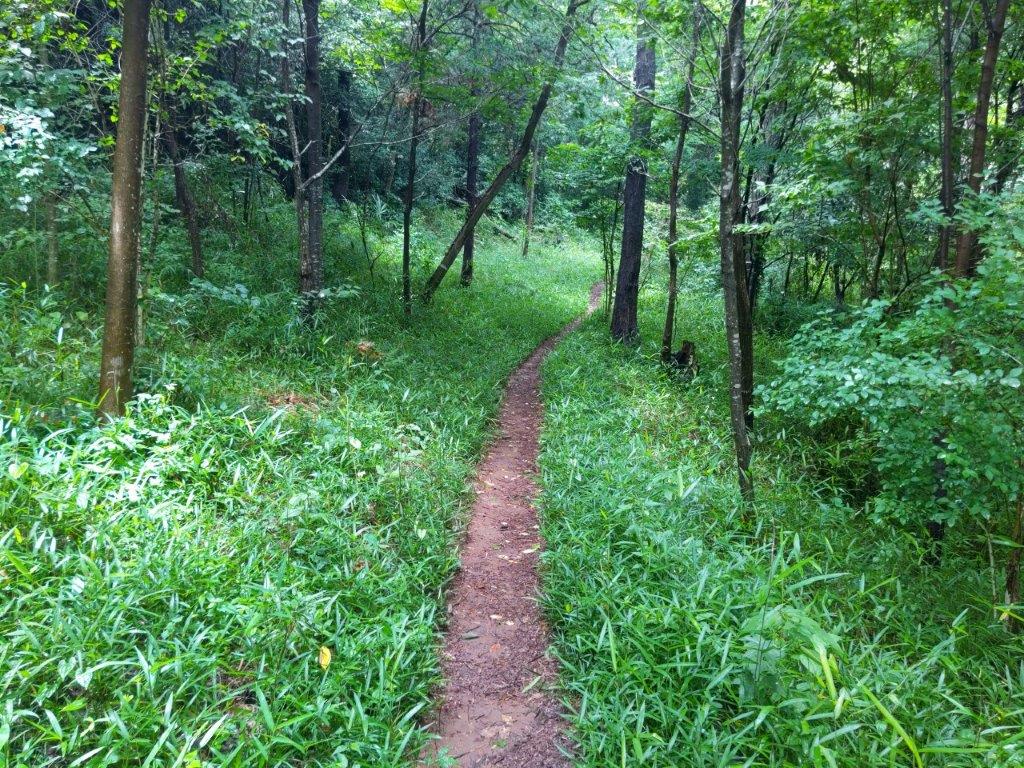
Start of the hike (left) Trail on Maruyama (right)

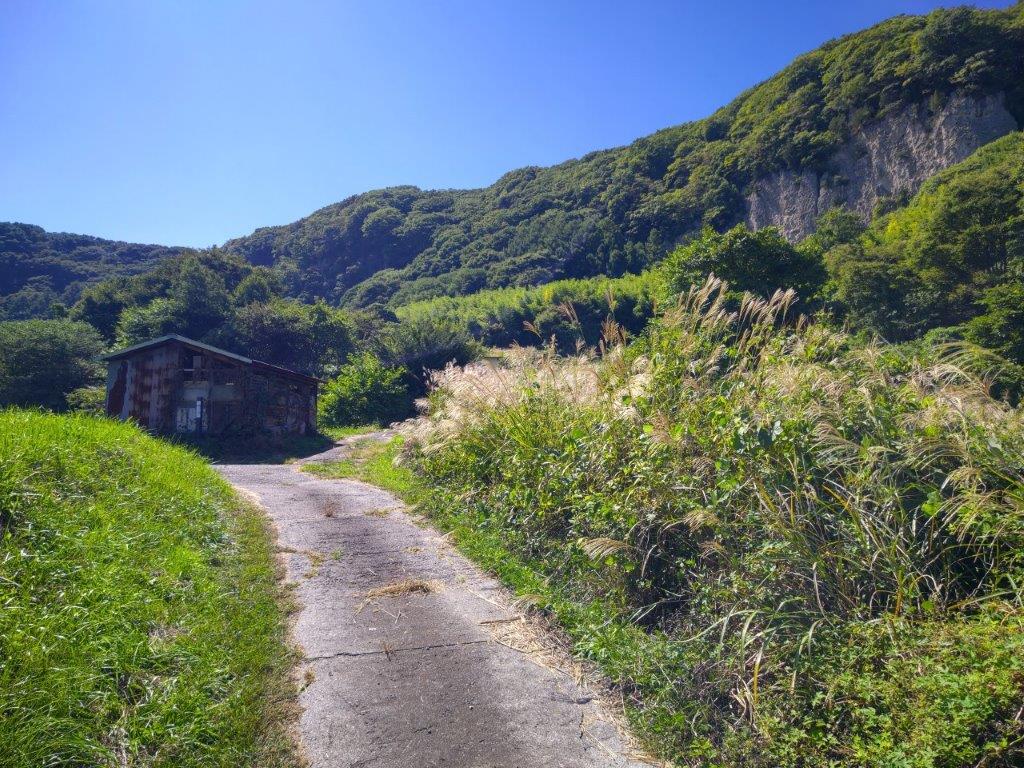
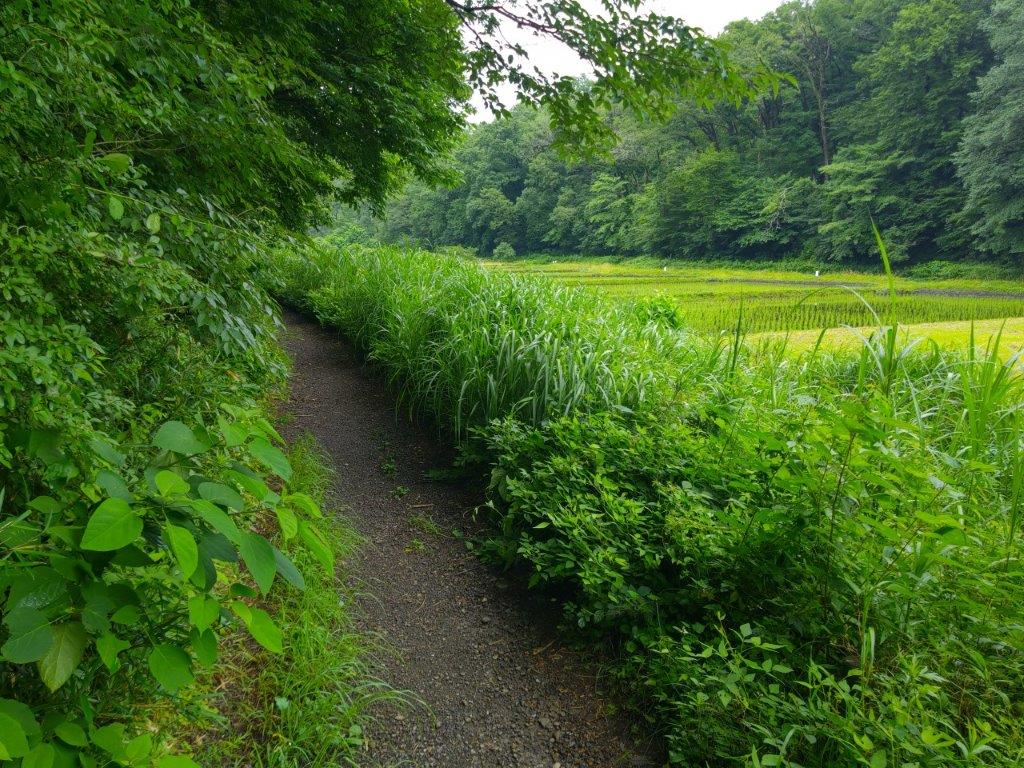
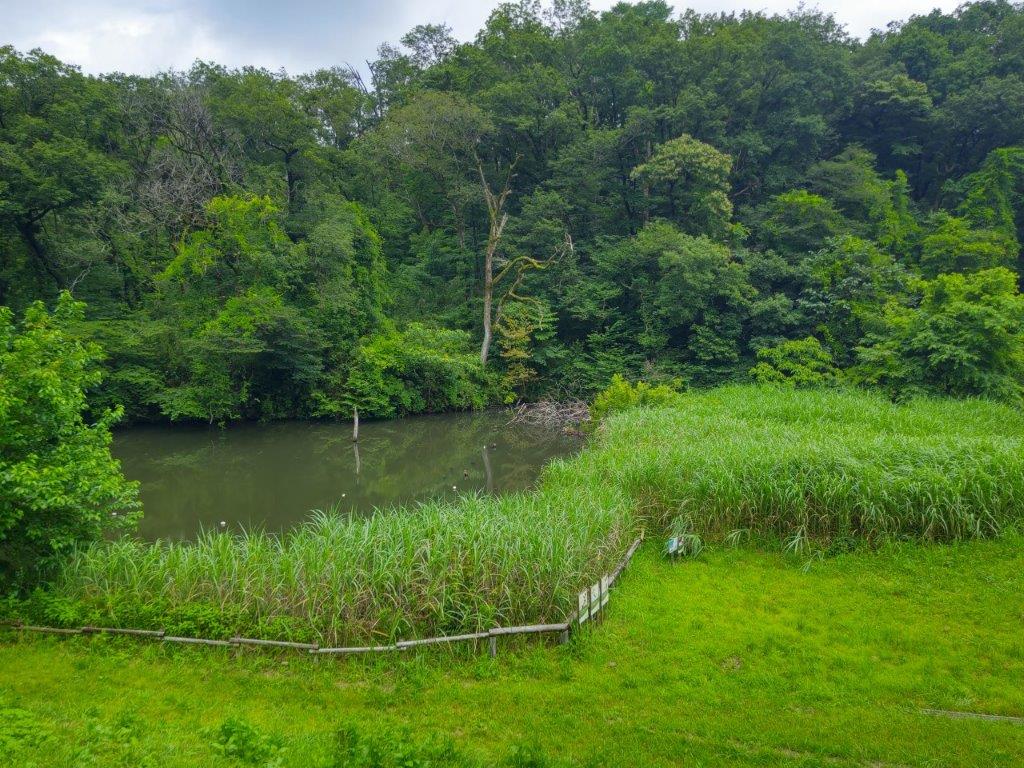
Path for Kishi Rice Fields (left) Path for Sakurazawa Pond (right)

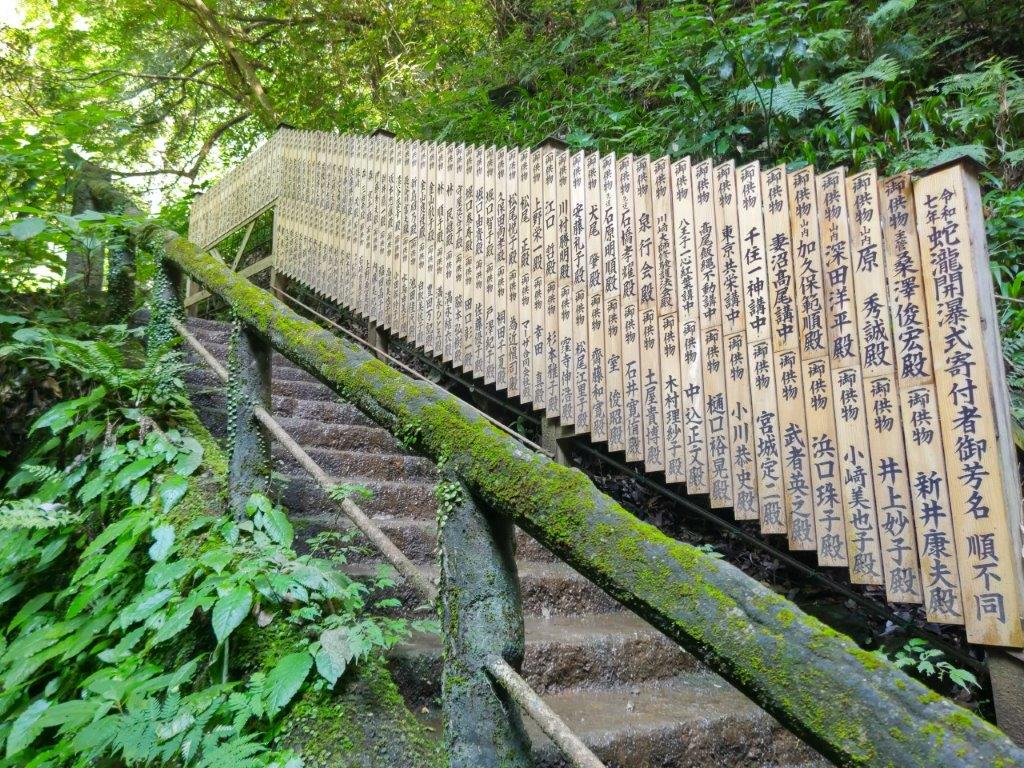
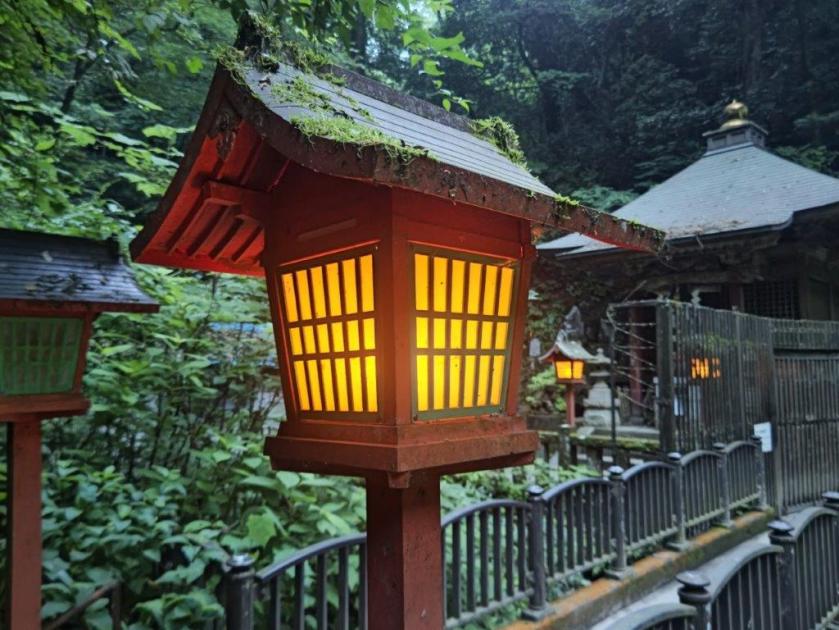
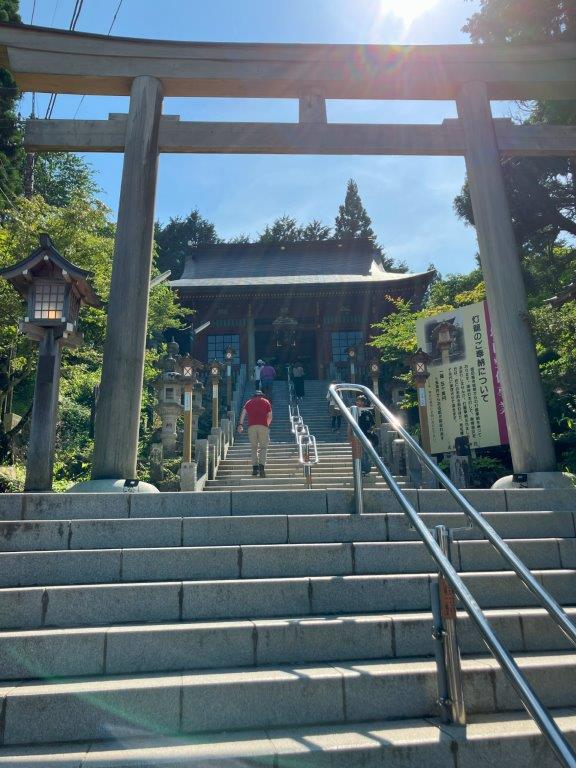
I had chosen a roundabout way to get to the start of today’s hike so that I could ride in comfort most of the way; thick clouds during the entire trip made me wonder about the wisdom of going out on such a day. The bus ride to Kishi bus stop was only a few minutes but saved me from walking along the busy Ome-kaido avenue. After a short walk through a residential neighbourhood I arrived at a staircase leading up to Suga Shrine ( 須賀神社) at the edge of Noyamakita-Rokudoyama Park (野山北・六道山公園). Past the shrine was a lane leading to Satoyama-Minka (里山民家), fronted by a small marsh, alive with the sound of croaking frogs.

Hiking Trail along the Rice Fields

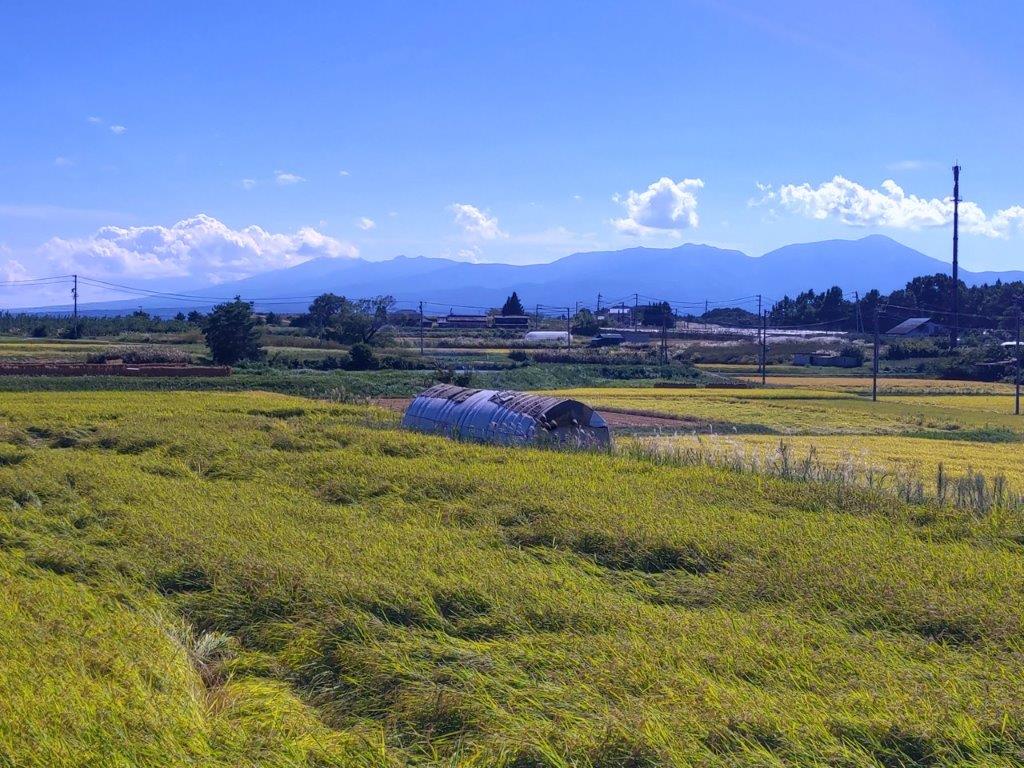
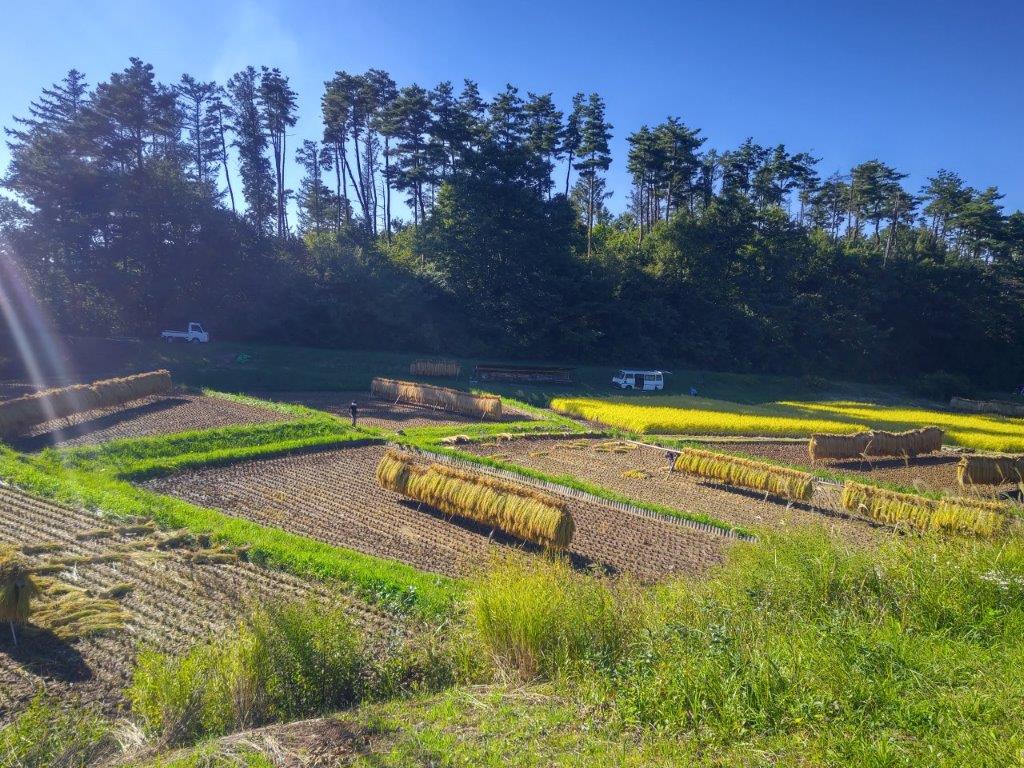
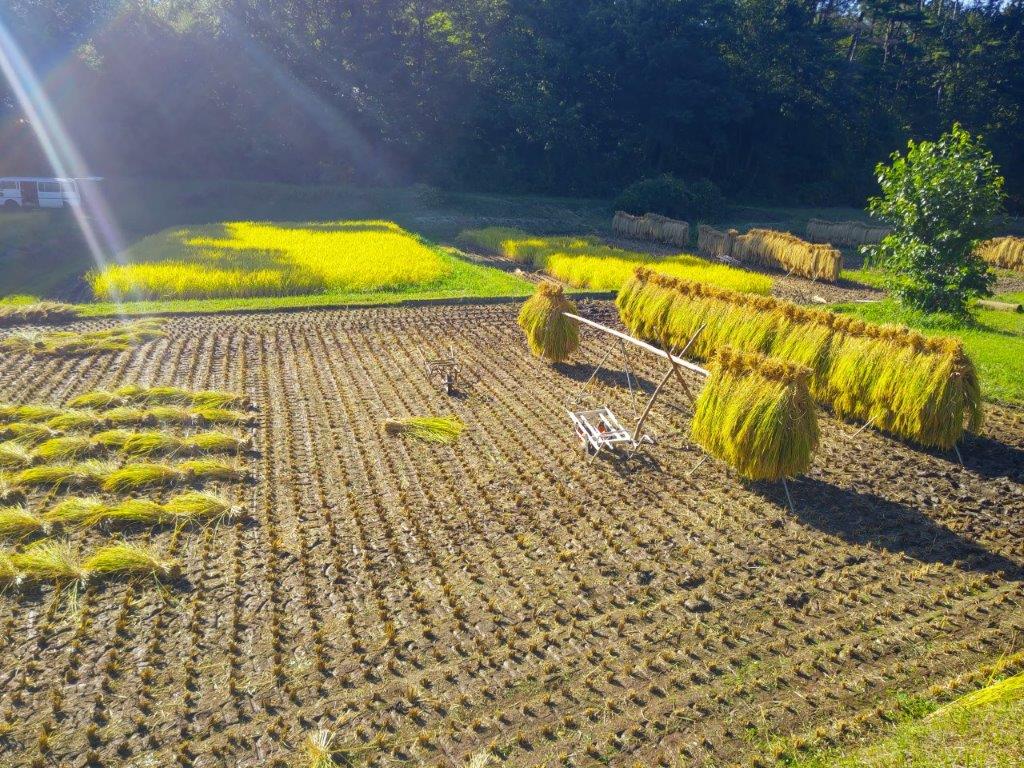
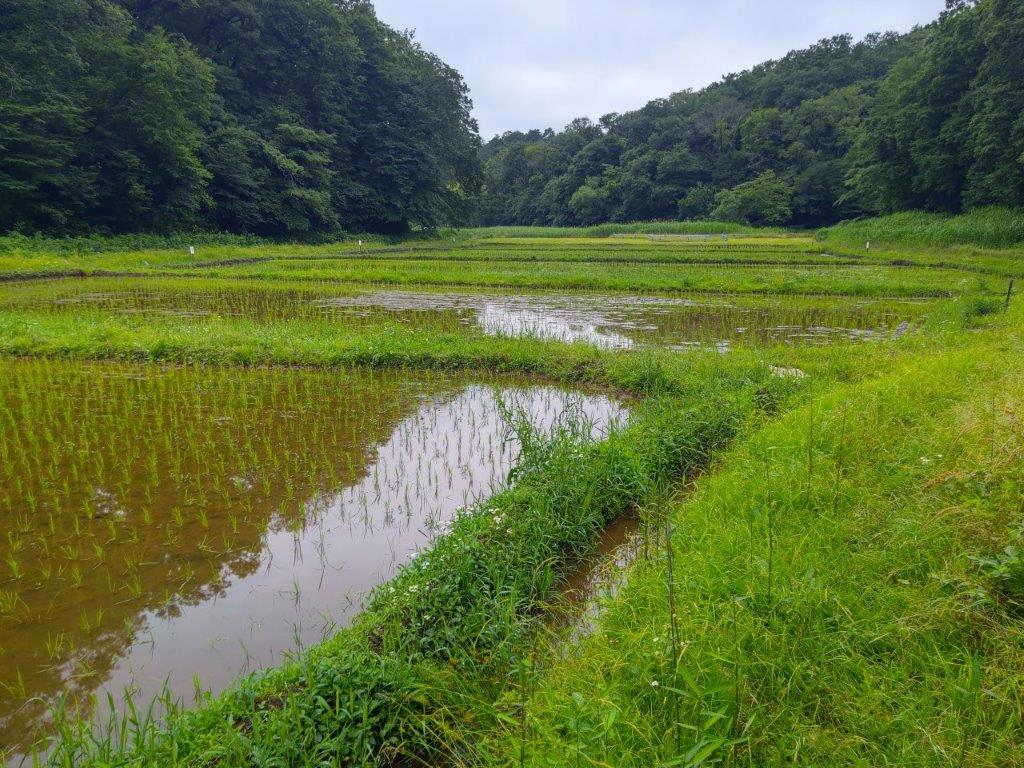
The Freshly Planted Kishi Fields

I was amazed by the quick transition from city to nature, all buildings, except the farmhouse with its thatched roof, hidden by the trees. The visit of the interior only took a short time, the rustic atmosphere recreated by the crackling fire in the sunken hearth (“irori”). After quickly walking the path circling the marsh, I headed over to the freshly planted Kish rice fields (岸田んぼ). I made my way up the left side but soon had to head back due to a trail closure. I crossed between two fields to the right side and headed back to the entrance of Maruyama (丸山), a small hill with several hiking trails. I hadn’t had time to explore it on my last visit so I eagerly made my way up the small path into the green forest, the first of my planned detours.

Looking back towards the Satoyama Farmhouse

Walking through Maruyama

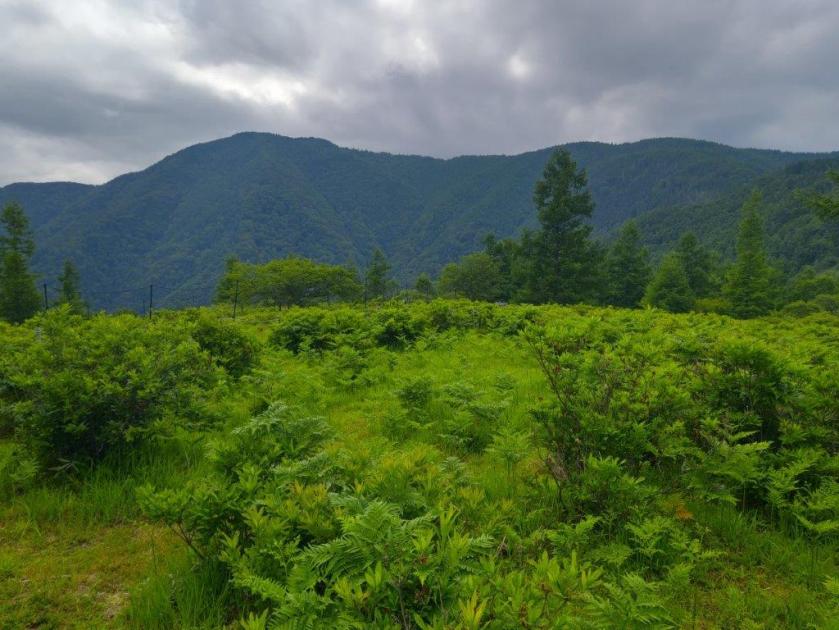
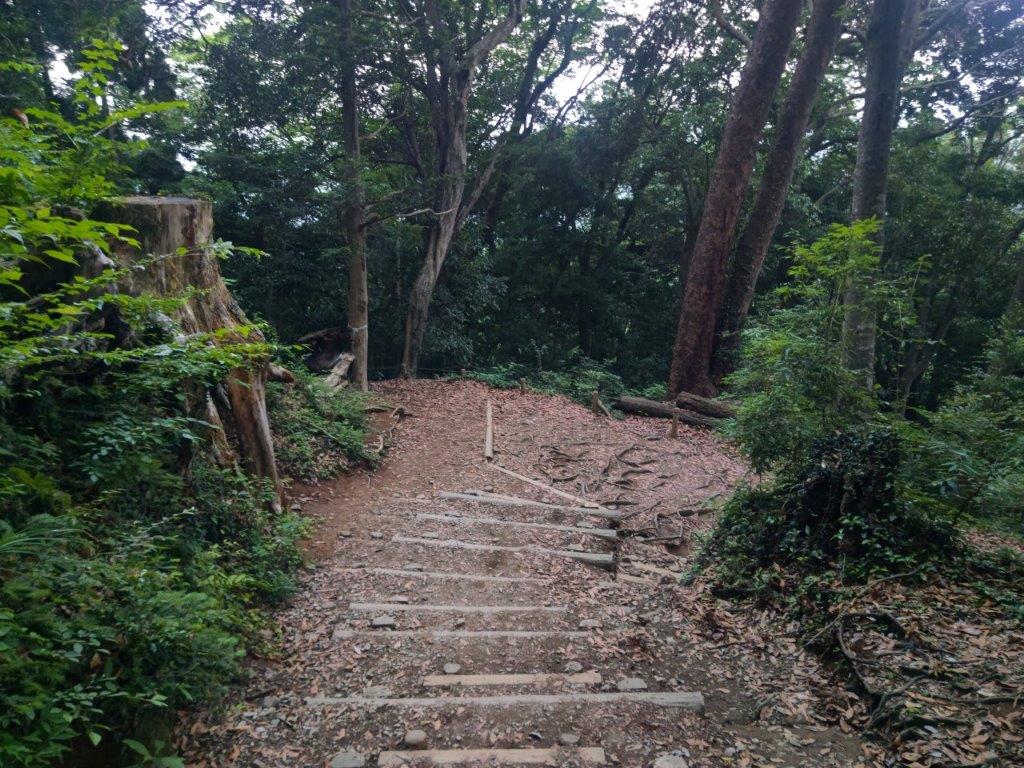
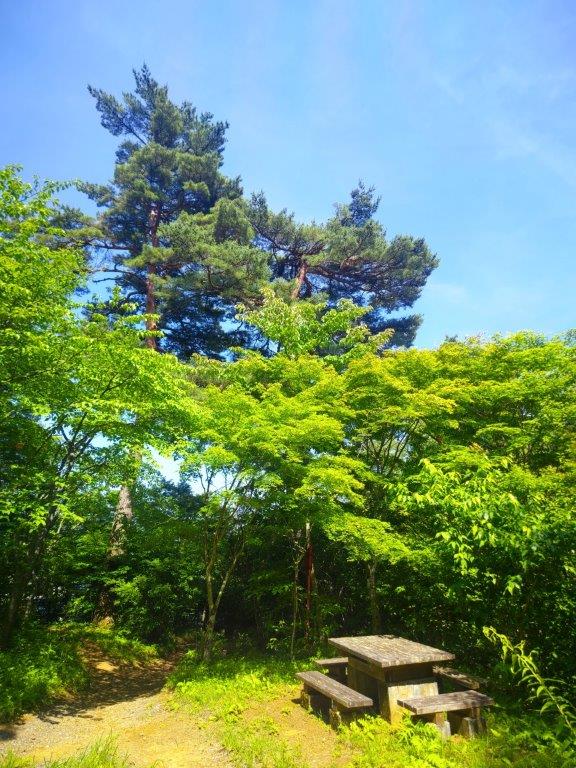
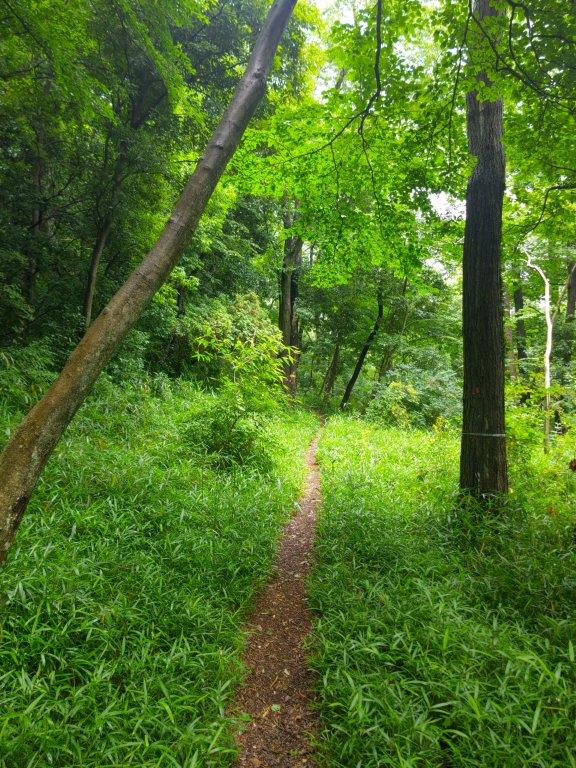
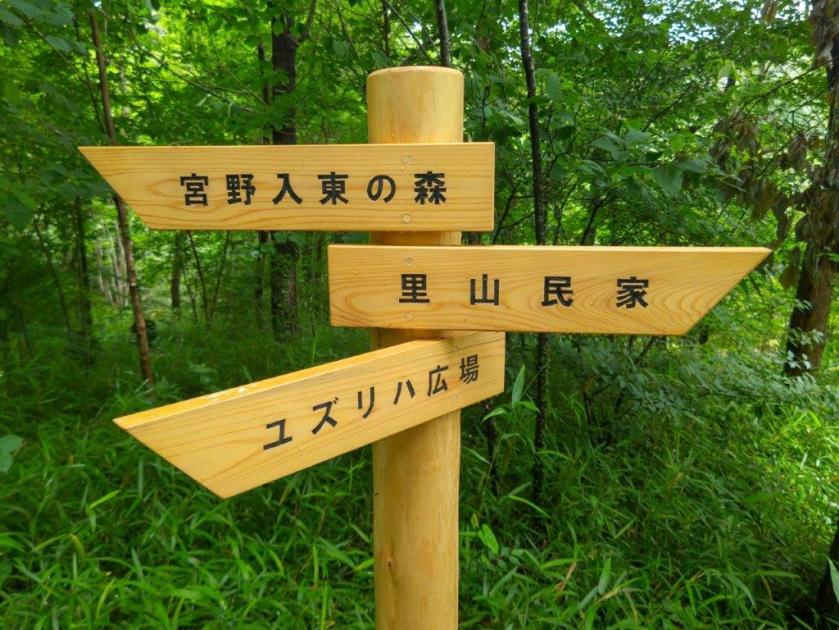
I was surprised by the well-maintained trails and relatively new signposts, although since the trail soon reached a dead-end at Yuzuriha Square (ユズリハ広場), a level space with a couple of benches surrounded by forest. I retraced my steps to a junction and followed the ridge north. I was the only person hiking these trails on what was so far a muggy, overcast day but fortunately I had the company of some very musical birds. I had to be careful not to step off the trail as the ankle-hike grass lining it was still wet from last night’s rain. After a short descent, I arrived back at the Kishi rice fields, just before noon. Instead of following the trail up to Mt Rokudo, which I had done before, I decided to cross the fields again and head up the ridge on the left side.

Heading North along Maruyama

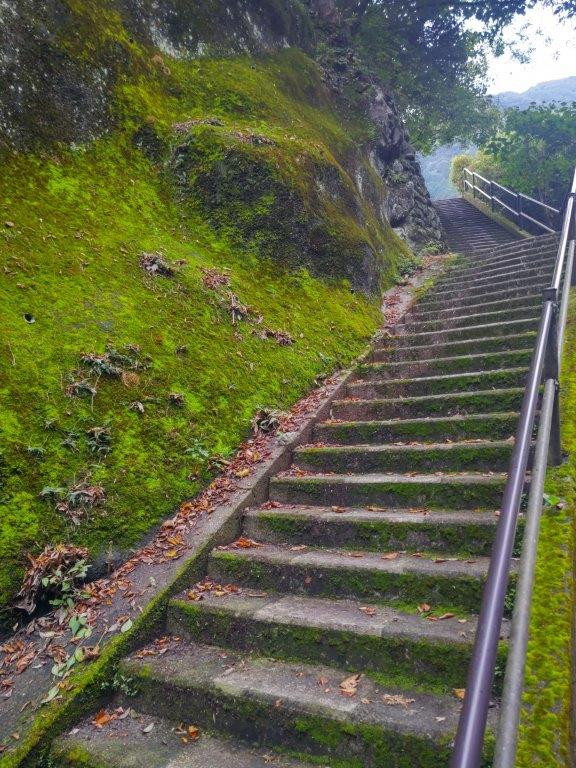
Steps for Sakurazawa Pond

Soon after passing a pond with a tortoise swimming in the middle, I turned left and followed the path up a slope till it merged with the Obikiyama walking trail (尾引山遊歩道) where I turned right. I soon left this level ridge trail for some steep steps heading down on the right side, my second detour of the day. I was fascinated by the surrounding forest, tall trees wrapped by a species of vine . Here I finally met the first people of the day, solitary walkers enjoying some time in nature. At 12h30, I reached Sakurazawa Pond (桜沢池) where I was greeted by a new outburst of birdsong.

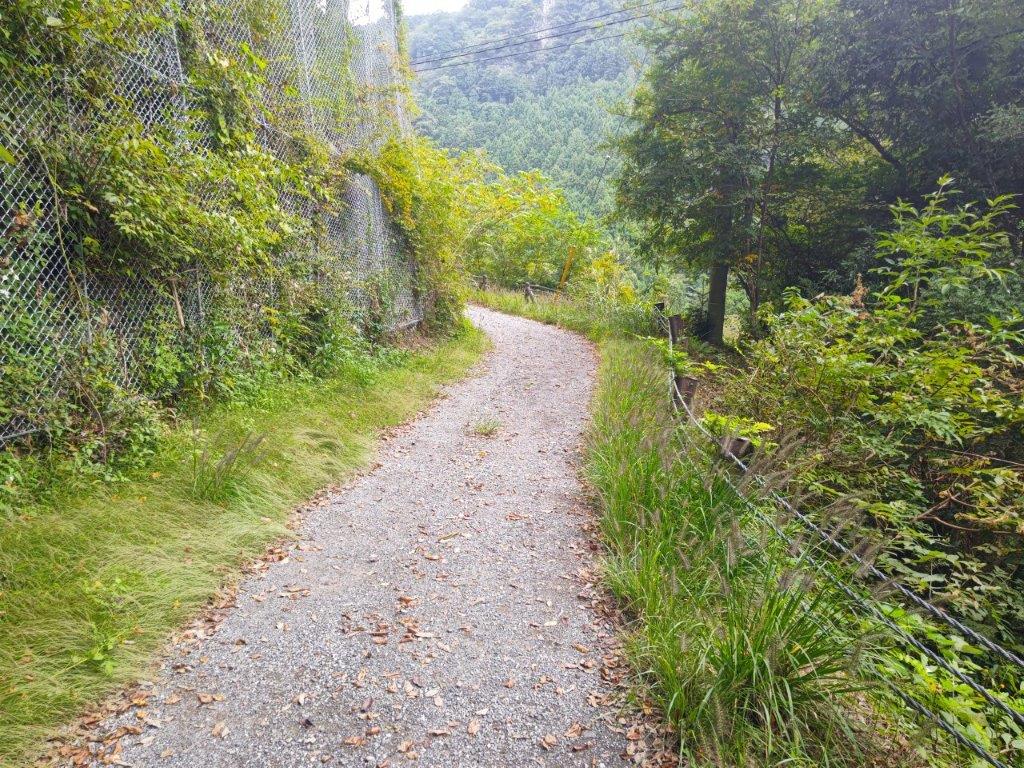
Path along Sakurazawa Pond

Some Blue Sky near Sakurazawa Pond

After heading up some steps to a wooden observation deck opposite the pond, I turned around and saw patches of blue sky for the first time of the day, giving me hope for the afternoon. I now followed another trail that soon merged with the Obikiyama trail from before. I was intrigued by the old worn-out signposts on this side of the valley, possibly because they were still in the middle of replacing the park signs. A little before 1pm, I arrived at the observation tower on top of Mt Rokudo (六道山 194m), my fourth time there.

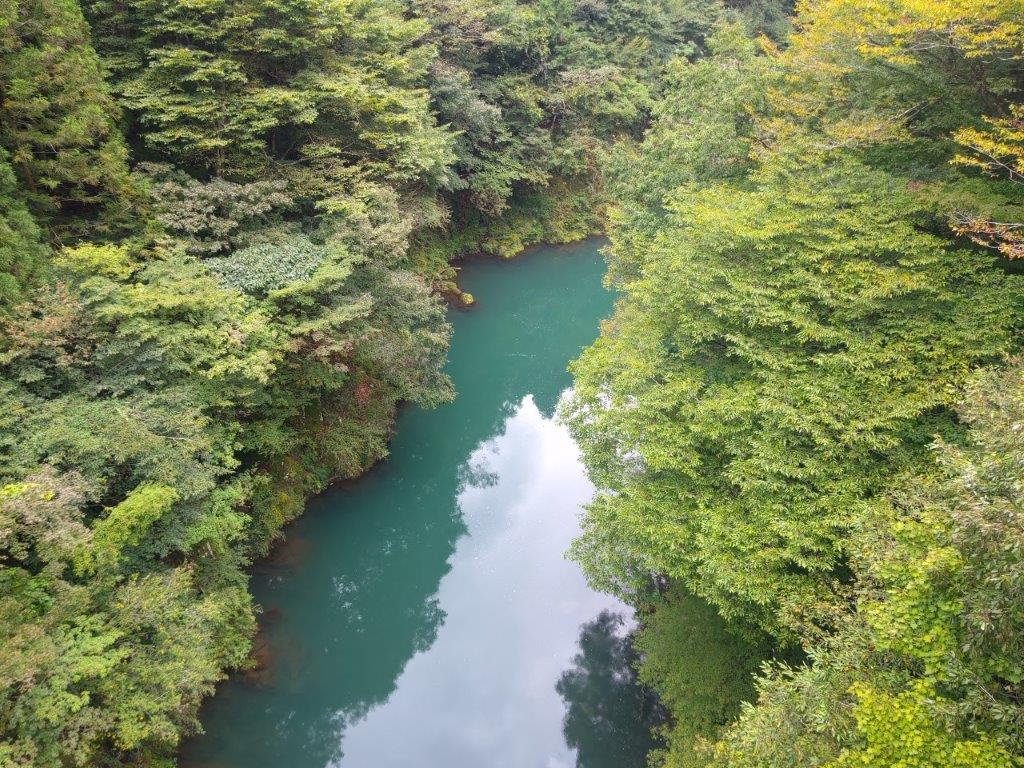
Looking down at Sakurazawa Pond

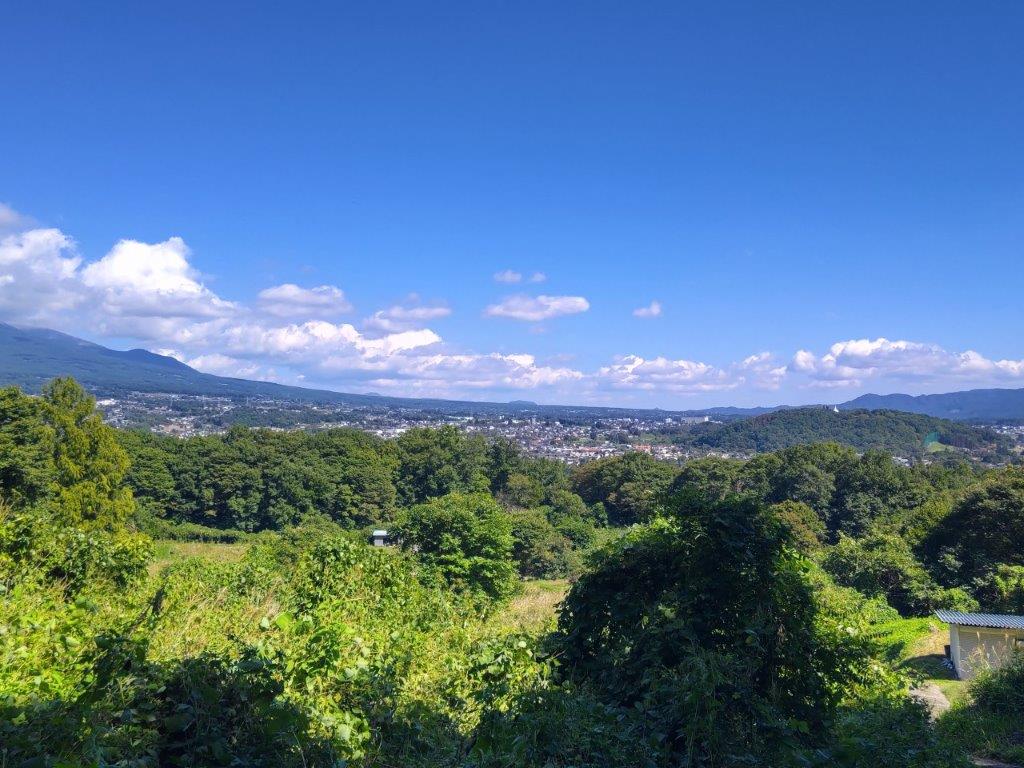
Blue Sky from the Top of the Mt Rokudo Observation Tower

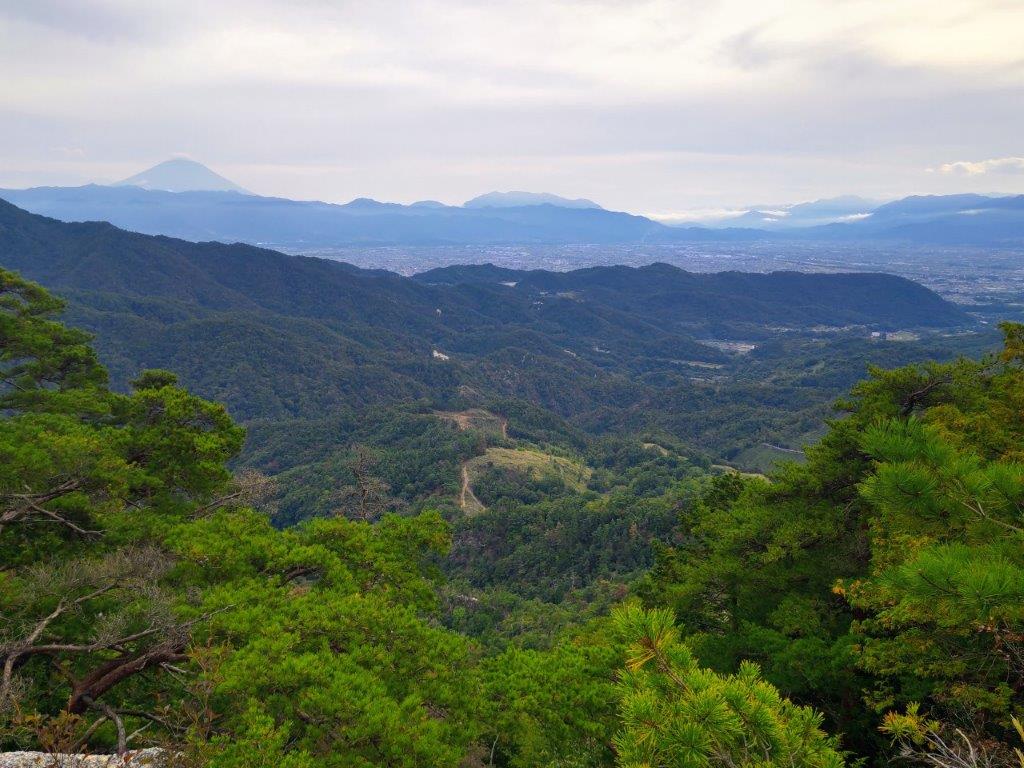
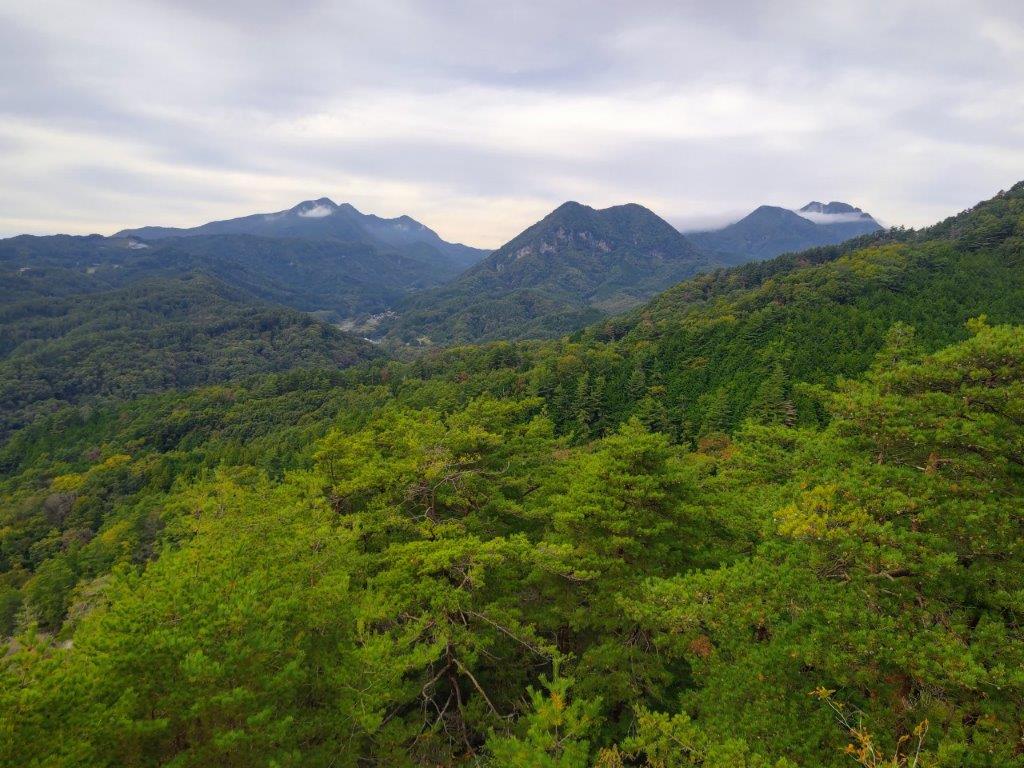
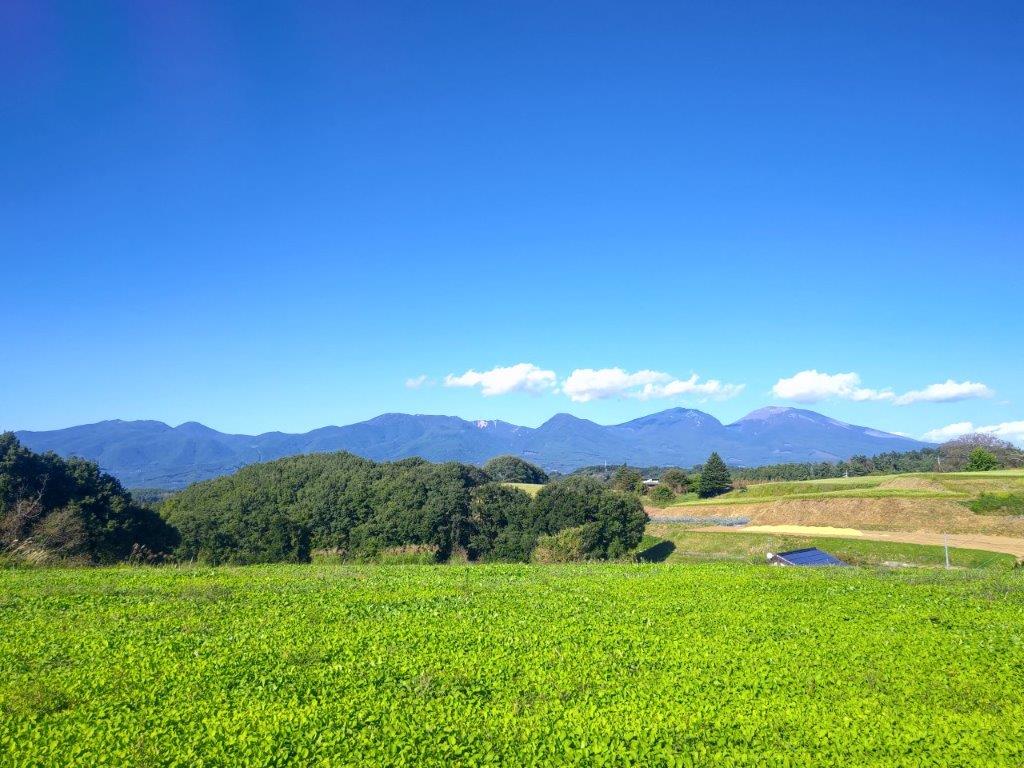
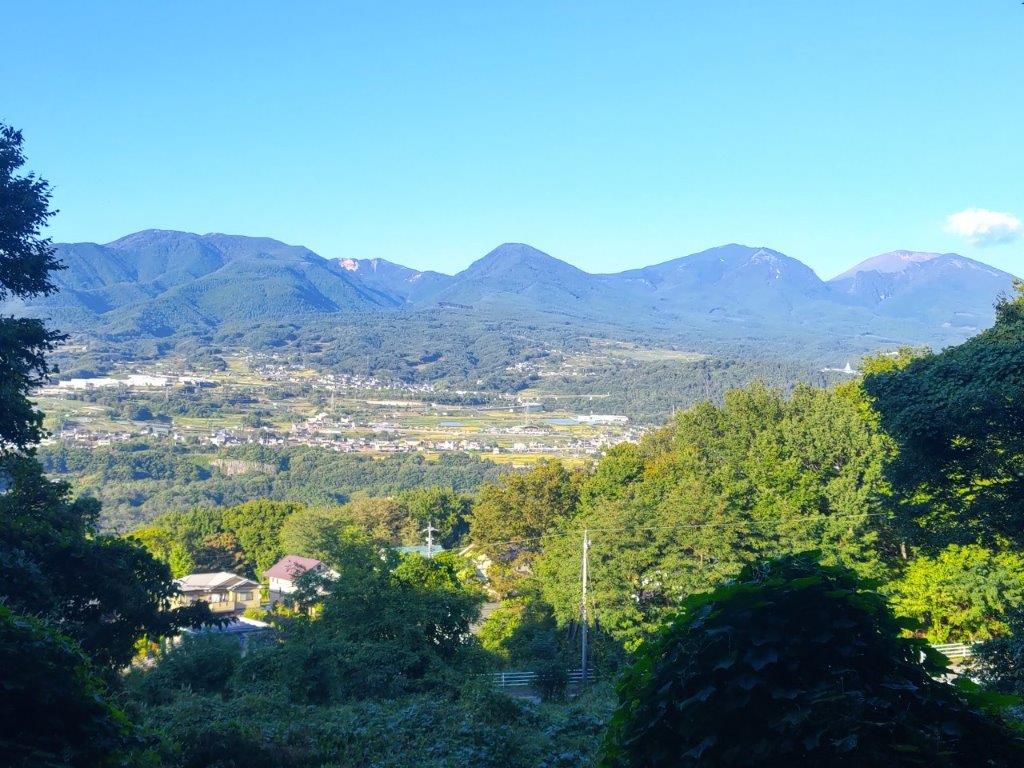
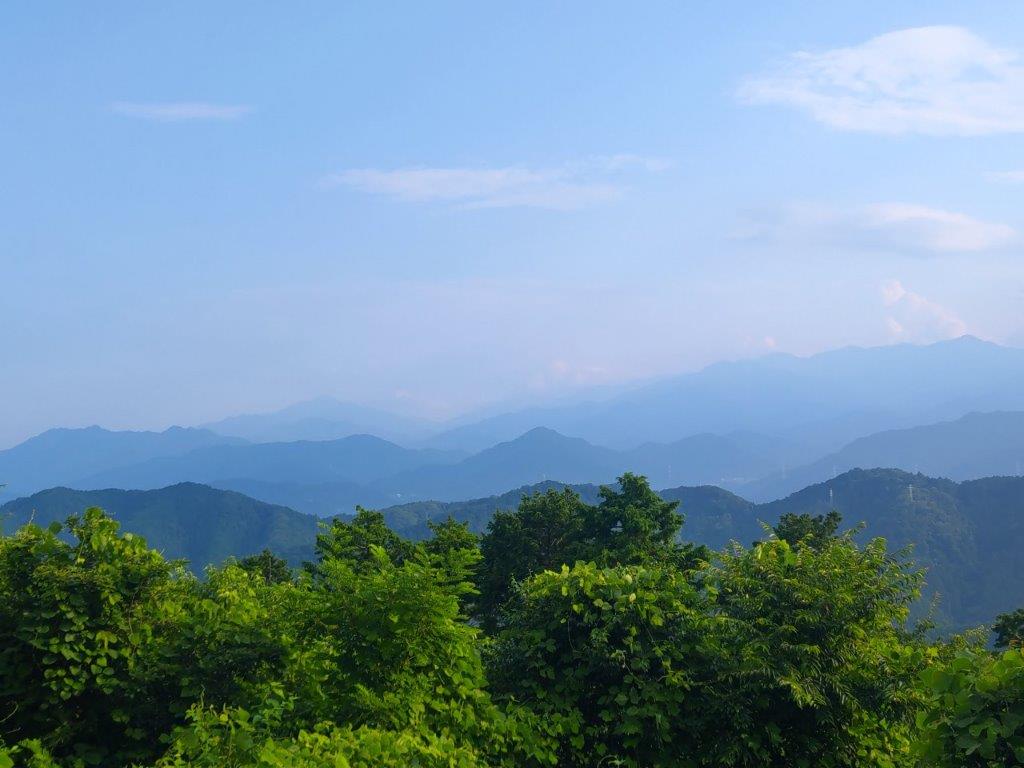
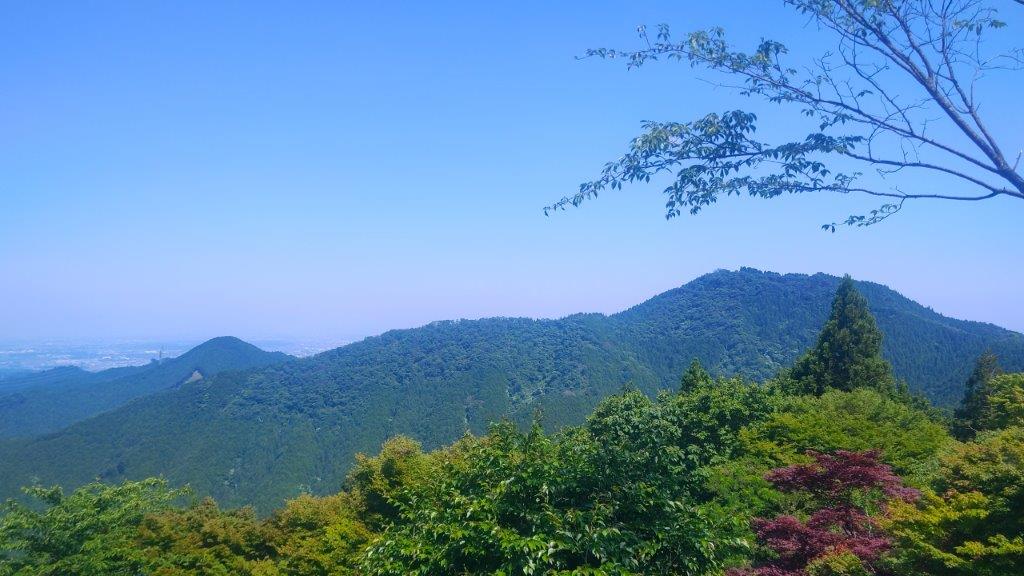
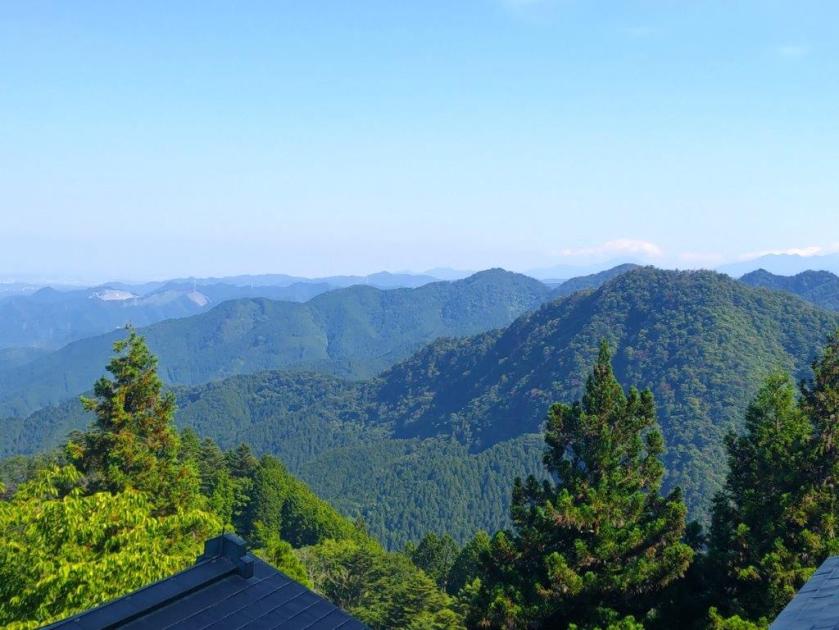
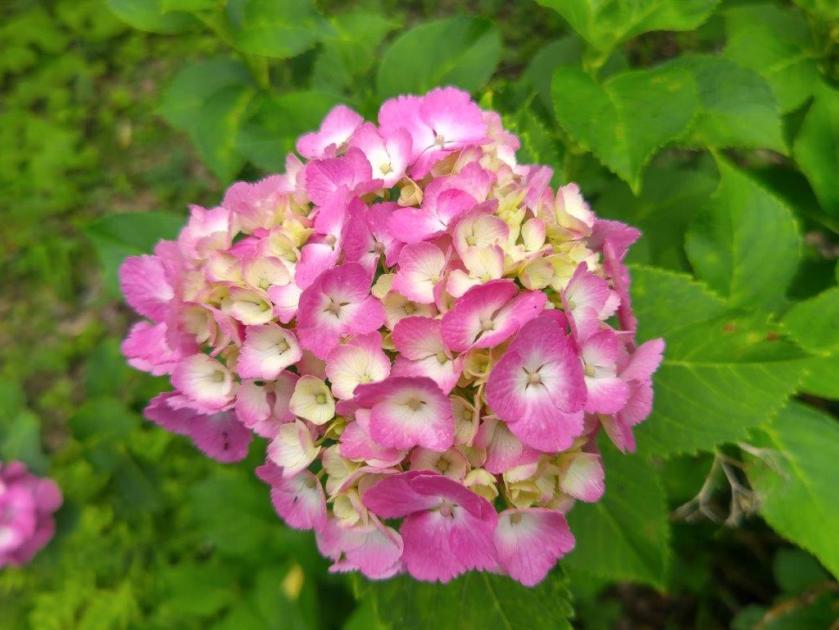
I could barely make out the Okutama and Tanzawa mountains from the top of the tower, Mt Fuji completely hidden behind the clouds. On the other hand, yesterday’s rain had thoroughly cleaned the air of smog, creating a surreal vision of the clouds above, their outline sharp and clear against the ever-expanding blue sky. I soon made my way back down the tower and followed a paved road towards Fujimidai square (富士見台広場), admiring purple and pink azaleas along the way. After reaching the wide grassy area of the square, I was faced with a choice of three trails for the final part of today’s hike.

Heading down to Yuhidai Playground

End of the Hike on the Tennozan Walking Trail

I opted for the middle one, the only one that was an actual hiking path, the Tennozan walking trail (天王山遊歩道); the other two, Daisaka (台坂) and Dainichiyama (大日山), were along paved roads. After passing another Suga Shrine (須賀神社), I followed some log steps down the mountain side; it abruptly ending at a steep embankment ramp, but luckily some steps on the left side, saved me the effort of having to rappel using the fixed rope. I had stumbled into the Yuhidai play equipment square (夕日台遊具広場), a kind of adventure playground, deserted on this warm humid day. Next up was a zip line, followed by a rope bridge, both looking eerily out of place in the middle of the forest.

Observation Square on the Tennozan Walking Trail

View of the Okutama Mountains with Mt Odake on the left

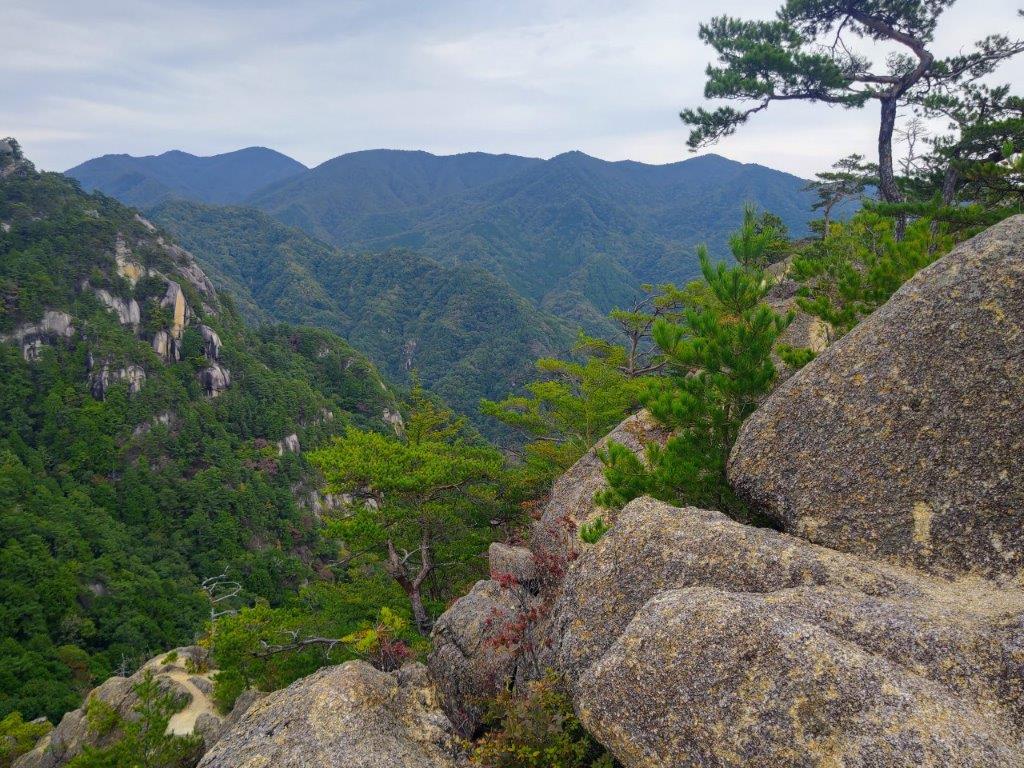
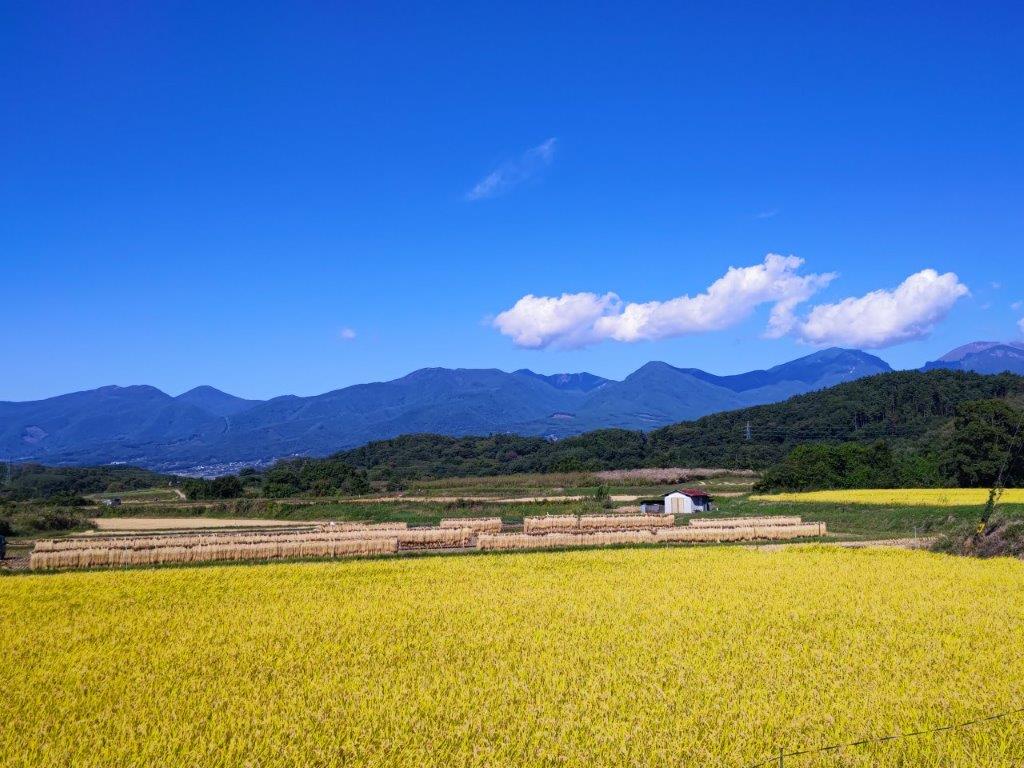
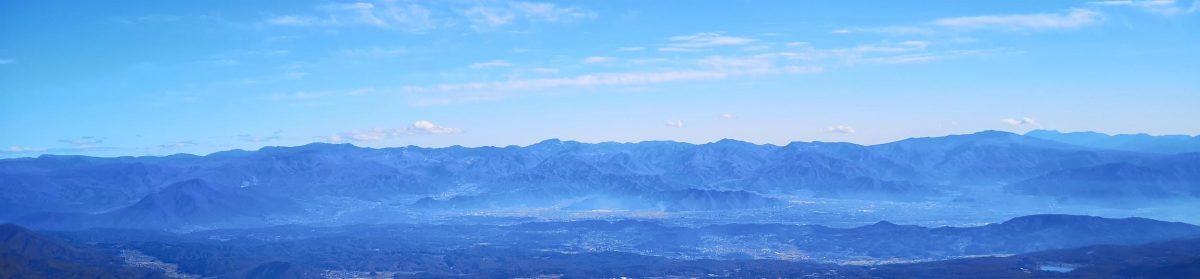
I suddenly emerged into a wide grassy space at the base of the hills. Making my way through the damp tall grass, I rejoined another section of the Tennozan trail but soon turned left up a log staircase ending at an Observation square with a view southwest. Through the mist, I could still make out the outline of Mt Odake and Mt Mitake. It was past 3h30, so I hurried down the road on the left side. I was soon walking among houses, and at 4pm, I was back at the station. While riding the Hachiko line to Hanno, the weather cleared up somewhat, giving me a closeup view of the Okutama mountains on the west side, a fitting end to today’s hike.

Watch a Video of the Hike

See a Slideshow of More Pictures of the Hike

Mt Teppogi (1291m) & Mt Takazasu (1174m), Oyama Town & Yamanakako Village, Shizuoka & Yamanashi Prefectures, Saturday, June 7, 2025

I found out about this mountain in one of my guidebooks. I had hiked Mt Ishiwari and Mt Mikuni, north and south of it respectively, but never the section in-between. Looking at my map, I saw that I could traverse from Myojin Pass in Shizuoka to Yamanaka lake in Yamanashi. For the first part, I’d follow my 2019 hike but I’d skip Mt Mikuni, entirely in the trees, by following a road to Mikuni Pass. From there, I would head north, passing 3 peaks, before heading down into the Fuji Five Lake Area; Once I reached the end of the trail, I’d follow another road and end the hike at Ishiwarinoyu hot spring.

Hiking in the Fuji-Hakone-Izu National Park

富士箱根伊豆国立公園

Start of the Hike (left) Road for Mikuni Pass (right)

Trail for Mt Teppogi (left) Trail for Mt Takazasu (right)

To get to the start of the hike, I’d ride the first “Mt Fuji” limited express from Shinjuku to Suruga-Oyama, and there catch a Fujikyu seasonal bus for Myojin Pass. For the return, Google Maps suggested going through Kawaguchiko, but I knew from past experience that the Fuji excursion limited express trains would be fully booked far in advance. Instead, I decided to use a taxi to get to Asahigaoka where I could catch a bus for Gotemba station and ride the last “Mt Fuji” limited express back to Shinjuku. The weather was supposed to clear in the morning, turning cloudy in the afternoon, in tune with my early start and early finish plan. I was looking forward to a hike far from Tokyo and hoped I’d get a view of Mt Fuji before it vanished in the clouds.

Find Japan Hiking Maps on Japanwilds and subscribe to our newsletter

View of Hakone from near Myojin Pass

Trail between Myojin Pass and Mt Mikuni

The sun was already high in the sky at 7am as the limited express made its way through Tokyo. After getting off at Suruga-Oyama station at 8am, I hurried to the bus stop but still found myself standing for the 3o-minute ride to the pass, as many people had arrived just before me on the local train. Surprisingly, I had the trail mostly to myself after starting out from Myojin Pass (明神峠 900m) at 9am, since most people first headed to nearby Mt Yubune (I had done the same 6 years ago).

Road leading to Mikuni Pass

View of the Tanzawa Mountains

I soon had a view on Mt Ashitaka and the Hakone mountains through the trees on the left side. It was already quite warm but fortunately most of this section was in the tree shade. At 9h30, I reached a paved road beyond which the trail for Mt Mikuni rose steeply through the forest. A signpost with a small metal figure of Kintaro perched on top told me I was at the halfway point between the Myojin and Mikuni passes. I turned right onto the paved road, now entering Kanagawa prefecture.

Looking ahead at Mt Teppogi

Looking back at Mt Mikuni

Almost immediately, I got a view of the Tanzawa mountains on the right side, my first time to see them from this angle. Further along, the view was lost behind trees; I picked up the pace to get this boring section quickly behind me, unexpectedly busy with cars and motorcycles. Half an hour later, I reached a huge parking lot at Mikuni Pass (三国峠 1164m), completely filled with cars; apparently this is a popular spot for hiking and escaping the early summer heat. Here, I left the road and turned right onto a trail, now entering Yamanashi prefecture as well as the Fuji-Hakone-Izu National Park.

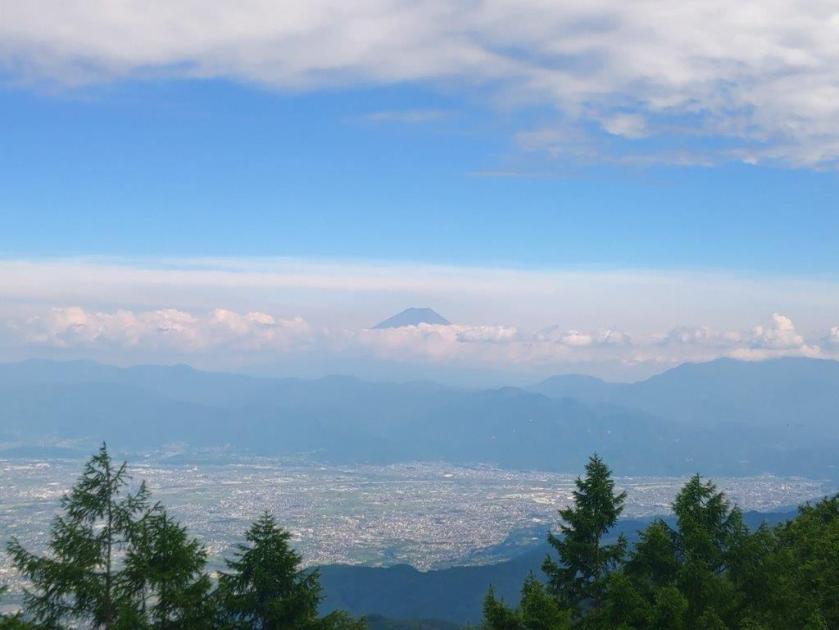
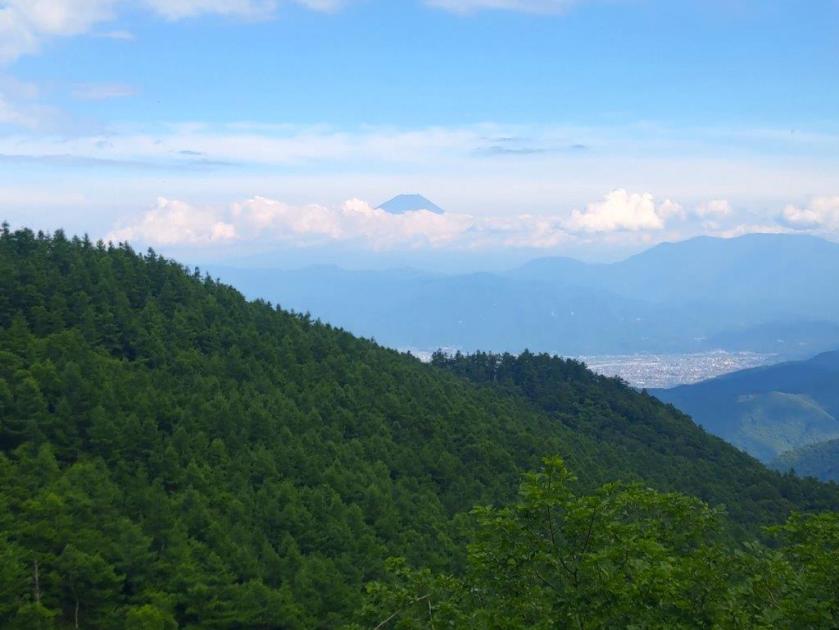
First View of Mt Fuji above Mikuni Pass

The Climbing Season Starts Soon

After a few minutes, I had my first Fuji view of the day, as I left the forest for a grassy area that continued all the way up the mountainside. Mt Fuji was mostly bare of snow with only a few white streaks around the summit crater, the climbing season less than a month away. I headed up the dirt path as it went straight up, getting steeper and steeper, passing several people on their way down. The grassy surroundings, due to past volcanic eruptions, offered plenty of wonderful views of the Fuji Five Lake Area. Less than half an hour after leaving Mikuni Pass, I reached the summit of Mt Teppogi (鉄砲木ノ頭 てっぽうぎのあたま teppougi-n0-atama also known as Mt Myojin 明神山), marked by a stone shrine; instead of “Mt” the Japanese name uses “head”, an apt description of the wide and slight rounded summit area.

Heading straight up Mt Teppogi

View of Mt Fuji and Yamanaka Lake

The panoramic view was stunning, one of the best I had seen in a while; I was glad I had woken up early today to travel so far. The high-altitude clouds that had appeared one hour ago were getting blown away by high-altitude winds, creating fantastic patterns in the sky above Fuji. On the south side was Mt Mikuni, covered in green forest; looking west, I could see Mt Fuji and Yamanaka Lake with the white peaks of the South Alps visible in the distance; to the north was Mt Ishiwari, with behind it, Mt Mitsutoge and Mt Mishotai, left and right respectively. It was too early for a lunch break, only 11am, so after enjoying the view, I set off again.

View from the Summit of Mt Teppogi

A Popular Spot to See Mt Fuji

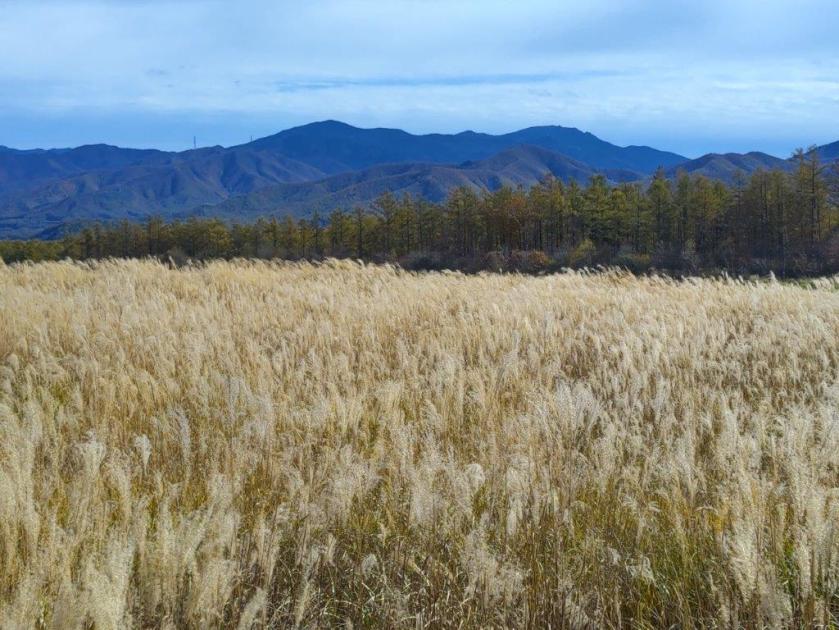
The path headed straight down, through thick forest covering the east side. I moved quickly with no views to distract me, and half an hour later, passed Kiridoshi Pass (切通峠 1050m), after which the path started to climb gently. The trees thinned, allowing some green grass and blue sky to gradually reappear. I was now walking along the Tokai Nature Trail (東海自然歩道), which I had last followed just 6 months ago. As the noon chime started to play through the valley, I arrived at Mt Takazasu (高指山 たかざすやま takazasu-yama). The view on the west side, beyond dried stalks of pampas grass (“susuki“), was similar to the previous one, although with more clouds. Since it was noon, I sat on the shaded side of a wooden platform for an early lunch break.

Mt Ishiwari (Center), Mitsutoge (back left) & Mt Mishotai (back right)

Clouds Spreading through the Sky

After setting off again, I found myself walking through more thick forest, along a mostly level path; although I was deprived of views in all directions, I was glad to be in shade at the hottest time of the day. Very soon, I reached the third and final summit of the day, Fujimisaki-daira (富士岬平 1170m); this time, the “Mt” was replaced by “plateau”, indicating its relatively small prominence along the ridgeline. By now, puffs of cloud were covering the highest part of Mt Fuji, giving it kind of retro hairstyle. After a short break, I headed down a path on west side, leaving behind the Tokai Nature Trail.

Mid-morning Blue Skies

Grass Reappearing below Mt Takazasu

The path was steep and eroded making this descent the toughest part of today’s hike. Fortunately, I soon reached a road leading through an area of mostly deserted villas. I always enjoy walking past holiday homes, trying to imagine what it must be like to spend a summer weekend there. I eventually reached a main road where I turned left. After a 15-minute walk, I reached the entrance to the hot spring and was disappointed to find out that it was closed. Apparently they were doing some temporary renovations, which wasn’t the case when I first planned the hike a few weeks ago. I was confident I could find some alternative and marched on under the hot sun to the Yamanakako Hirano tourist office.

View from Mt Takazasu

The Clouds have Reappeared

I was delighted when the lady from the tourist office told me there was a a hot spring hotel just down the street that accepted day trippers. Although it didn’t have an outdoor bath, I was happy to be able to wash off the sweat and change into some fresh clothes. At 2pm, I had the bath to myself, with a view of the ridge I had just hiked on the west side. One hour later, a taxi dropped me off at the Asahigaoka bus terminal. Although, the bus for Gotemba showed up late, typical for the Fuji Five Lake area, I still arrived at the station with plenty of time to spare, and a little before 5h30, I boarded the limited express for the comfortable ride back to Shinjuku.

Trail between Mt Takazasu and Fujimisaki-daira

Mt Fuji in the Clouds

In total this hike took about 5 hours, with little ascending and descending, although including travel time, it was nearly a 14-hour outing. This was mainly because I took a longer way back to avoid the masses of tourists heading back from Kawaguchiko, and also because of my preference for limited express trains and post-hike hot spring baths. Catching the seasonal bus to Myojin Pass was also a great way to get to the area, although it requires a very early departure (in my case, 6am); in this case I was rewarded with great views that I may not have gotten with a later departure. Hopefully, I can redo this hike, or a variant, in a different season when the Ishiwariyu hot spring is open.

Watch a Video of the Hike

See a Slideshow of More Pictures of the Hike

Mt Sengen (235m) & Mt Daicho (192m), Ome & Akiruno Cities, Tokyo Prefecture, Sunday, June 1, 2025

I was looking for another hike close to home as the Spring weather continued to be unsettled. Thanks to Japanwilds, I was reminded of a small peak in Western Tokyo I had recently spotted on my hiking map, along the Hamura Kusabana hills hiking trail (羽村草花丘陵ハイキングコース). Since it was on the short side for a full day outing, I decided to start near Akaboko in Ome, and then head west through the hills south of Tama river. Along the way, I’d pass a second peak with a view from a shrine on its north side.

For subscribers, read this Post on Hiking Around Tokyo for a better viewing experience and the latest updates

To get to the start of the hike, I’d ride the Chuo and Ome lines from Shinjuku to Ome station, and there board a bus for the ten-minute trip to Meijibashi, a short distance from the trail entrance. For the return, I’d catch a bus from Shimo-kusabana, a few stops from Fussa station down the Ome line. The weather was supposed to be mostly cloudy, with a chance of sun in the afternoon. I was looking forward to exploring new trails inside the capital and hoping the weather would allow me to complete my planned route.

Find Japan Hiking Maps on Japanwilds and subscribe to our newsletter

Trail past Futatsu-zuka (left) & Before Manji (right)

Walking next to Fences (left) & through Forest (right)

I rode the comfortable and nearly empty Green car to Ome station, arriving there at 11am. I got off the bus one stop early so I could stock up at a nearby convenience store. As I set off for the trail entrance, I noticed that more and more blue sky was appearing overhead, a trend I hoped would continue. At 1130, I reached the Mahiki-zawa forest road (馬引沢林道), and very soon, found myself surrounded by nature walking next to a rushing stream.

Steps past Mt Sengen (left) & Inside a Bamboo Grove (right)

Forested (left) & Open Sections (right) on Mt Daicho

I was delighted by this unexpected river walk, mossy rocks occasionally lit up by stray sun rays. Sturdy, well-made signposts, like those of the “Fureai no Michi”, told me I was following the “Ome! Water and Nature and Plum Road” (Ome! Mizu to Midori to Ume no Michi 青梅! 水と緑と梅の道). At noon, I reached a clearing from where I could see that the patches of blue had turned into a mostly blue sky. Feeling hopeful for the day ahead, I picked up the pace, as the path started to climb gently. Shortly after, I arrived at Mahiki-zawa Pass (馬引沢峠), where I turned left, merging with the Mt Nagabuchi Trail (長淵山ハイキングコース), as well as my Akaboko hike.

Start of the Hike on the Mahiki-zawa Forest Road

…next to a Rushing Stream

I made good time along the ridge trail, passing other hikers for the first time of the day and glancing at the instructive tree name signs along the way. At 1230, I reached another junction at the Old Futatsu-zuka Pass (旧二ッ塚峠 355m, the highest point of the hike); here I turned right, leaving behind the route of my previous hike. The path soon became narrow, the vegetation crowded in on both sides and the quality of the signposts dropped. I suddenly popped onto a paved road and it took me a few seconds to pick up the narrow trail on the other side. A handful of minutes later I reached the top of a cleft in the ridge allowing for the passage of a road connecting the Tama and Akigawa river valleys, the steep mountain sides covered in cement to prevent collapses. After a short descent, I darted across the road, made my way up the other side, and plunged back into the forest.

Blue Sky from the Forest Road

Fenced Section on the Way to Manji Pass

This was probably the most beautiful part of the hike and it was hard to believe that the busy city lay beyond the green forest. On top of the Spring green and scattered birdsong, I spotted translucent white “Snow Fungus” (Tremella fuciformis), orange-coloured mushrooms, and a ghostly Luna Moth flapping its wings very slowly (it seemed to be dying). I passed almost no one on this section, possibly because most people prefer this area in the colder months. Fortunately, today’s temperature, under 25°, was somewhat cool for June, and I was glad I could enjoy hiking here in this season. At 2pm, a fence appeared on the right of the trail; to it was attached a sign saying “Beware of the Mamushi”(マムシ注意), the Japanese Pit Viper, one of the most venomous Japanese snakes.

Footpath beyond Manji Pass

First View of the Day from Sengen Shrine

I started to worry about a snake encounter, the dense green vegetation on the left the perfect hiding spot. I walked as fast as I could, exposed to the strong June sun now high in the sky. At one point I spotted a green slender shape: webbed feet revealed it to be a lizard basking in the afternoon sun. I felt relieved when the trail finally took me back into the forest, leaving the fence behind. After a short descent, I passed Manji Pass (満地峠), sturdy well-made signposts suddenly making a comeback. At the top of some steps, a waist-high wall appeared on the right side, marking the boundary of a religious organisation. I headed down some steps leaving the wall behind and entered another section of dense and lush vegetation. Shortly after, I found myself walking with a golf green on the right side. After ascending some steps, I emerged onto the flat summit of Mt Sengen (浅間岳 せんげんだけ sengen-dake), completely in trees; since it was nearly 3pm, I sat on one of the benches for a late lunch.

Viewpoint between Mt Sengen & Mt Daicho

In the Distance, the Sayama Hills

Looking up, I noticed thick dark clouds fully covering the sky on the north side. I started to worry about rain and set off quickly. First, I made a short detour to the nearby Hamura Shrine (羽村神社) from where I had a view on the north side of Tama river with the Kaji Hills in the background; looking east, I could see the low outline of the Sayama Hills; looking west, I could see the somewhat higher hills of Oku-musashi; on the north side, I spotted the much higher Okutama mountains though a gap in the vegetation; looking down, I realised I was standing at the edge of a cliff, a sturdy fence preventing any unfortunate accidents. I set off again, following the up and down trail westwards, now signposted at the Hamura Kusabana Hills Hiking Trail, and a little before 4pm, reached another viewpoint. Just then, it started to rain lightly.

Central Tokyo under Dark Clouds

Bamboo Grove on Mt Daicho

Fortunately the viewpoint was sheltered by trees so I sat on one of the two log benches to wait out this patch of bad weather. The rain strengthened and although I was mostly dry, I started to consider whether I should escape to the nearby Hamura station. Directly ahead lay the Sayama Hills, from this distance a flat green line extending across the north horizon; to the east, I could see the skyscrapers of Central Tokyo; directly below was the Tama River spanned by two bridges. After 4pm, the rain let up and I dashed off at once. After crossing two roads and a short forested section, I arrived at the base of today’s main mountain.

Trail before Mt Daicho

Trail after Mt Daicho

I soon found myself walking through a beautiful bamboo grove. Unfortunately, the short rain from before had brought out the first mosquitoes of the season; I made a mental note to bring anti-bug repellent on my next hike. At 4h30, the trail levelled as it passed through a section cleared of trees; above the treetops, I could see the rain clouds moving eastwards. At the top of some steps, I reached an open shelter and the top of Mt Daicho (大澄山 だいちょうざん daichou-zan). The summit was free of trees but lacked enough prominence to allow me to see past most of the surrounding forest; a gap on the north side showed a small section of the Sayama Hills beyond the city buildings.

Looking back at the Top of Mt Daicho

View South of the Tanzawa Mountains

I was delighted by this open space cut off from the surrounding city. I took a short break at the summit picnic table to enjoy the solitude and then followed a trail southwards between tall pines. I soon had a view of the Tanzawa mountains, forming a protective wall south of the city. Halfway down I came upon the small Kusabana Shrine on a terraced area; I had a wide view from Mt Mito in the Okutama mountains to Mt Oyama in the Tanzawa mountains, the background lit up yellow by the late afternoon sun. It was past 5pm, so I hurried down the steep shrine steps to the residential area at the base of the mountain. A short walk brought me to the bus stop and by 5h30 I was comfortably seated in the green car for the 45-minute ride back to Shinjuku.

Watch a Video of the Hike

Watch the Video of the Hike on YouTube

See a Slideshow of More Pictures of the Trail

See a Slideshow of More Pictures of the Hike Views

Mt Gojo (305m) & Mt Nagaone (273m), Hanno City, Saitama Prefecture, Saturday, May 24, 2025

I needed to find another short hike near Tokyo while I waited for the return of the sunny days of May, better suited for long day trips. I decided to tackle a couple of minor, unclimbed peaks along a ridge running parallel to the Mt Fukuzawa one. Instead of starting from Kamakita lake on the north side, I’d approach it from the west via Yugate. Although it promised no new views, I hoped to have the latter part of the trail to myself.

For subscribers, read this Post on Hiking Around Tokyo for a better viewing experience and the latest updates

Hiking in Oku-musashi 奥武蔵

To get to the start of the hike, I’d ride the Laview limited express to Hanno, and there, change to the Chichibu line for the short ride to Higashi-agano station. I could use the same route for the return, catching the train from Musashi-yokote station, one stop up on the same line. The weather was supposed to be cloudy all day with temperatures almost cool for the season, although rain was forecast in the late afternoon. I was looking forward to exploring new peaks in a frequently visited place.

Find Japan Hiking Maps on Japanwilds and subscribe to our newsletter

Start of the Hike (left) Bamboo Grove past Yugate (right)

Trail along the 3rd clearing (left) Re-entering the Forest (right)

I got off the train at Higashi-Agano station under grey skies at 1130; on the bright side, it was the perfect temperature for hiking. After crossing a busy main road, I climbed some stone steps to get to Agana Shrine (吾野神社) and then headed up the Hikyaku Trail (飛脚道 meaning courier trail) to the right of the main shrine building. A little past noon, I reached a spot where the forest had been cleared to allow for the passage of an electric power line.

Plank Bridge over a Stream (left) Level Section through Ferns (right)

Ridge before (left) and after (right) Mt Gojo

I was glad to get a view early on in the hike, although I had been past this spot before. Looking left, I could see the Hanno Alps directly opposite; further in the distance, I could just make out Mt Izugatake and Mt Buko, half-hidden by low clouds. I soon moved on, and after an up and down, arrived at the top of Mt Hashimoto (橋本山 321m) where a similar view awaited me on the west side. I quickly moved on, and after a short descent, I followed a wide track that led me to the fields and gardens of Yugate Village (ユガテ 290m); looking up, I could see a second set of power lines stretching across the sky.

Looking West towards Izugatake and Buko-san

The Hanno Alps from the First Clearing

I was lucky to get the last free table under a large tree, although many benches were empty. It was nearly one o’clock so I decided to have an early lunch. I set off again a little past 1pm, now following the Oku-musashi Long Trail (奥武蔵ロングトレイル). After passing through a bamboo grove, I followed a winding path hugging the mountain side. Beyond a stream, the path started to climb, then became level at a clearing for the power line passing over Yugate. Shortly after crossing a second stream on a bridge made of two wooden planks, I arrived at Tsuchiyama Pass (土山峠), intersecting with my Fukuzawa hike.

Nearing the Top of Mt Hashimoto

View of the Hanno Alps from Mt Hashimoto

As I stood next to the charming carved wood figure sitting on top of a signpost, I decided to explore the trail heading straight as I was ahead of schedule, leaving the more usual route over Mt Omine to the right. Here, I also left the Oku-musashi Long Trail as it headed left to Kitamukijizo (北向地蔵). After a short and pleasant level section through cedars and green ferns, I popped onto a paved road past a small cemetery around 2pm. I turned right and soon spotted a faint un-signposted trail into the woods, opposite a solitary house.

Empty Benches at Yugate

Level Trail Hugging the Mountain Side

The trail was rough at first, as it followed the contour of the mountain side. Using my phone GPS, as well as the odd strip of pink tape stuck to tree branches, to guide me, I soon reached a wider and easier to follow section, eventually merging with the main trail from Tsuchiyama Pass. In total, this interesting detour around the summit of Mt Omine took me half an hour. Almost immediately, I reached a fork; here, I headed down the left branch, this time leaving the Mt Fukuzawa ridgeline for good.

Path between Yugate and Tsuchiyama-toge

Nice Path along the Oku-musashi Long Trail

I had only just started down this separate ridge that I spotted a small handwritten sign warning hikers of the up and down nature of the trail ahead; it was good news to me, since I wanted a good workout. My only concern was the threat of a downpour as I could smell rain in the air. I quickened my pace and in no time reached the top of Mt Gojo 五常山(ごじょうやま), a minor peak completely in the trees. I continued without a break, quickly passing over a couple of equally minor ups and downs.

Taking a Detour around Mt Omine

Walking through Cedars and Ferns

I enjoyed the solitude of the narrow forested ridgeline, on a well-defined trail with no other hikers. After passing another clearing for a third power line, I reached the base of a steep slope. It was the toughest climb of the day but I soon reached the top of Mt Nagaone (長尾根山 ながおねやま meaning long ridge), also completely in the trees; a log bench provided me with an excuse to take a short break and relax in the peaceful surroundings of this seemingly isolated summit. Surprisingly, it equaled the record of Mt Raiden for most summit markers: I counted up to five different ones.

Clearing near the Third Electric Power Line

Steep Slope before Mt Nagaone

At 3pm, I headed down the south side, the steepest section of today’s hike, lined with rope for safety. No sooner had the trail leveled, that I turned left down some logs steps, choosing an alternative to the main route that continued straight. I passed another clearing for a power line, the one I had passed at the very start of the hike. The trail became hard to follow, apparently little used these days, but I stayed on track thanks to my phone GPS. Shortly after passing a “Toro“, or “stone lantern”, and other signs of temple grounds, I reached a paved road at the bottom of some stone steps. At 3h30, I reached Musashi-Yokote station, well before the start of the rain.

Watch a Video of the Hike

Watch the Video of the Hike on YouTube

See a Slideshow of More Pictures of the Hike

Mt Onita (505m) & Mt Atago (412m) Hanno City, Saitama Prefecture, Sunday, May 11, 2025

I passed by Mt Onita about four years ago, at the end of a long traverse from Okutama. At the time, I’d noticed another trail heading down from the top and thought I could return one day and use it for a short loop hike on the same mountain. Looking at Google Maps, I saw that this trail went by another peak, the summit of which had recently been cleared of trees on the east side and thus opening up a view. As an added bonus, it was also part of the Oku-musashi long trail.

For subscribers, read this Post on Hiking Around Tokyo for a better viewing experience and the latest updates

Hiking in Oku-musashi 奥武蔵

The weather forecast called for clouds and warm temperatures for most of the weekend so I decided it was a good time for some more exploring of the nearby Oku-musashi hills. To get there, I would ride the Laview Limited express to Hanno, and then, board a local bus for the thirty-minute ride to the trailhead; for the return, I’d catch the same bus, three stops up the line. I was looking forward to checking out some new trails in a familiar area.

Find Japan Hiking Maps on Japanwilds and subscribe to our newsletter

Start of the Hike (left) Heading up the Ridge (right)

Level (left) and Downhill (right) sections past Mt Onita

It was a grey, overcast day as I rode the limited express to Hanno, more like June weather than the beginning of May. I got off the nearly empty bus at noon, and after crossing a bridge over the Iruma river, headed up a trail on the left side, past a weather worn sign warning of a bear sighting ten years ago . I felt excited to be back in nature as I followed a footpath through an open grassy space surrounded by talls cedars, all signs and sounds of civilisation instantly gone.

Level Section Before (left) and After (right) Mt Atago

Open (left) and Forest (right) Sections on the way to the Power Station

My enthusiasm was quickly dampened as all signs of the trail completely vanished under rampant bamboo grass; when I had descended this way in the winter, the trail had been easy to follow. After a slight detour and some help from my phone GPS, I was soon back on an easy to follow trail. A little later, I started to climb a steep and root-riddled ridge through mixed forest. I had rushed down this section in semi-darkness back in 2021 so it felt like it was first time to walk this trail.

Open Grassy Space at the Start of the Hike

Climbing a Steep and Root-riddled Ridge

It was surprisingly humid for this time of the year; I regretted not bringing a change of clothes for the return as I started to feel that sticky sensation one usually gets in the rainy season. One hour after setting off, I was standing on the top of Mt Onita (大仁田山 おおにたやま oonita-yama) for the second time. The view was less impressive than I had remembered: only a narrow section of central Tokyo around the Sky Tree could be seen between two tree trunks. I continued without a break, hoping for a better view at the next summit, now leaving the route followed on my previous hike.

View South near Ibotori Jizo

View East from the Top of Mt Atago

Almost at once, I got disoriented by the twisting nature of the hilly terrain, compounded by local trails and signposts for places not shown on my map. I was surprised by how much geographical complexity could be packed in such a tiny wooded area. I was equally surprised by the variety of signs competing for my attention, ranging from the beautiful Oku-musashi Long Trail ones to some crude homemade efforts. Relying on my GPS again, I eventually got back on track. At 2pm, I reached a crossroads at Ibotori Jizo (いぼとり地蔵). Although my route turned left, I decided to check out the trail going straight. Very soon, I reached a view on the south side at the top of some log steps.

Summit Table on Mt Atago

Path around the Top of Mt Atago

I could see the undulating ridgeline extending east from Mt Honita, part of the Nariki Ridge Hiking Trail (成木ハイキングコース) which I hope to do one day. Closer by, I could see the red banners for the small red Inari shrine situated a few meters below. After enjoying this unexpected view and observing a butterfly suck up nectar of some purple Azalea (“tsutsuji”), I headed back to the crossroads and turned right along a level path. I soon arrived at a fork where I headed up a steep unmarked track on the left, ignoring the other branch hugging the mountain side. After a short climb, I reached the top of Mt Atago (愛宕山 あたごやま atago-yama), a common mountain name in Japan.

Looking Down at the Iruma River Valley

Oku-musashi Mountains in the Background

I was glad to have the top to myself although at this precise moment I heard voices float up from below, followed shortly after by the apparition of a couple of hikers, the first and only other hikers I saw all day. They didn’t dwell and a little later I was by myself again. Directly ahead, I could see the Kanto Plain and the tall buildings of Tokyo, flanked by the green hills of Oku-musashi on each side. It was past 2pm, so I sat at the summit table and had a late lunch with a view and birdsong in the background. Half an hour later, I set off again. After a short descent, I merged with the level trail left earlier, following my GPS down the mountain, rather than the signs.

River Valley near the End of the Hike

Crossing the Iruma River at the End of the Hike

I made one exception near the end of the hike: since I was ahead of schedule, I made a round-trip along a trail signposted for “Hendenjo” (変電所), a Tepco power station according to Google Maps. I only went as far as a viewpoint of the Iruma River Valley near an electric pylon before turning back. At 3h30, I reached a stream at the valley bottom, and shortly after, emerged from the forest at a spot called Shijuuhachi-magari (48 turns), helpfully indicated by the solidly built Oku-muashai Long Trail post. After a short walk through a residential area, I reached a bridge over the Iruma river, beyond which was the bus stop. Less than an hour later, I was comfortably seated on the practically empty Laview limited express for the forty-minute ride back to Ikebukuro.

Watch a Video of the Hike

Watch the Video of the Hike on YouTube

See a Slideshow of More Pictures of the Hike

Nanao Hills (Highest Point 173m), Hachioji and Hino Cities, Tokyo Prefecture, Thursday, May 8, 2025

I had already done this short hike in Western Tokyo on a cold winter day more than ten years ago. Since I had a chance to go hiking on a weekday morning, I thought it would be nice to redo it and see the new Spring green in the middle of Tokyo. It would also be a continuation of my recent hike between Aihara and Naganuma. Although there are no summits along the trail, I would pass by an observation deck inside Hirayamajoshi park. This hilly trail would also pass next to the Tama Zoological Park with a chance to glimpse some exotic animals.

For subscribers, read this Post on Hiking Around Tokyo for a better viewing experience and the latest updates

Start of the Hike (left) Log Steps inside the Park (right)

To get to the start of the hike, I’d ride the Keio line from Shinjuku to Hirayamajoshi-koen Station. Depending on the time, I could catch a return train from Takahatafudoson station or the closer Minami-daira station, both on the Keio line. I was hoping to see the colourful Takahata Fudoson Temple but since the section around it is through the city, I didn’t mind giving it a miss. The weather was supposed to be sunny and warm and I was looking forward to revisiting a green area inside the city of Tokyo.

Find Japan Hiking Maps on Japanwilds and subscribe to our newsletter

Steps for an Observation Deck (left) Path between Park and Zoo (right)

I got off the train at 9am, and after a short walk through a residential neighbourhood, I reached the start of the Nanao Hills walking path (七生散策路), marked by a signpost half-hidden by vegetation. A footpath led me up a grassy slope into the trees; I soon found myself climbing through forest along a well-defined path with wooden handrails, surprised by the sudden full-immersion into nature. A little before 10am, I reached a level open space with a view on the west side, in front of the houses of Hirayama-nichome.

Walking in Nanao Park (left) Walking next to Tama Zoo (right)

Walking on Top of (left) and Down (right) Nanao Hills

I was delighted by this unexpected view so early in the hike. Directly ahead, I could see the Okutama mountains, with Mt Odake, Mt Gozen and Mt Mito in the center; on each side, the Chichibu and Tanzawa mountains extended north and south, respectively; closeby, I could see the Southern Sky Tower next to Hachioji station; finally, on one side of the clearing, I spotted a huge Flowering Dogwood. I soon moved on, and after a short section on a paved road, reached a wooden signpost sending me up a series of steep steps on the left, leading back into the forest.

Open Space with a View at Hirayama-nichome

View of the Okutama Mountains

I was surprised by the constant birdsong, a sharp contrast to my previous hikes north of Tokyo. I soon reached a small shrine, purple azalea adding a dash of colour to the grey stone of its “torii“. From there, a level path led to the entrance of Hirayamajoshi park (平山城址公園), also the highest point of today’s hike. As I crossed the park from west to east, I marvelled at the abundance of green in every direction, more like an urban forest than a city park.

Close-up View of the Mountains surrounding Tokyo

Walking through the West Part of Hirayamajoshi Park

I could only see blue sky above the trees instead of buildings and I could only hear the song of birds, instead of city noises, since the park straddled one of the highest points of the hills. After some ups and down via log steps, I reached an observation deck in the eastern part of the park. Looking west, I could see Mt Gonzen, Mt Odake, Mt Mitake and Mt Hinode, although this view was less clear than the previous one. A little after 11am, I exited the park, and followed a connecting path between two fences, thoughtfully painted in green to match the scenery.

Walking through the East Part of the Hirayamajoshi Park

Hidamari “Sunny Spot” Platform in Hirayamajoshi Park

I was happy I could continue walking through nature, even if it was only a narrow section. I soon reached an open space above a cemetary, the Tama memorial garden, from where I had a view of the Tanzawa mountains to the south. I next followed a road for a short while, feeling quite hot under the midday sun, to a grassy path leading into Nanao Park. After some more ups and downs through beautiful greenery, the path always well-signposted, I reached a section with a chain-link fence on the right side; I knew that the Tama Zoological Garden was somewhere on the other side.

Log Steps inside Hirayamajoshi Park

Green Fence along the Connecting Path

I soon started hearing noises made by various animals although none could be seen through the vegetation. One exception was the Orangutan Forest: I was able to spot an orange lump lounging on one of the elevated platforms. This was probably the nicest section of the day as I was now following a real hiking trail, instead of a path inside a park. At one point, I had a view of the city through a gap in the vegetation on the left side. At noon, I reached a junction for Minami-daira station: here I decided to turn left and make my way back to the train station.

View of the Tanzawa Mountains from the Tama Memorial Garden

Approaching Tama Zoo

I was amazed by the steepness of the steps leading down the hillside; even though I was well inside the city, the angle of descent matched that of the mountains surrounding the Kanto Plain. Halfway down, I reached a small observation platform where I had a view of the flat city landscape extending northwards. Eventually I emerged onto a road from where it was a ten-minute walk to Minami-daira station, a forty-minute train ride back to Shinjuku.

View North Halfway down the Nanao Hills

End of the Nanao Hills Hike

I was glad I’d decided to redo this hike in Spring as the impression was quite different from my previous visit. Although the views might be better in winter, the new green scenery was stunning; the trails sections outside the parks were surprisingly well maintained and sign-posted; finally, even though the elevation is relatively low, the hilly nature of the trail made for an excellent workout. In the future, I hope to return and visit the Tama Zoo, as well as the Botanical Gardens of the Tokyo university of pharmacy and life sciences located right next to Hirayamajoshi Park.

Watch a Video of the Hike

Watch the Video of the Hike on YouTube

Mt Amagoi (1068m), Numata City, Gunma Prefecture, Monday, May 5, 2025

I found out about this mountain, situated between Mt Hotaka and Mt Akagi, while contributing to the Japanwilds hiking map for Tanbara Highland. Apparently most hikers go up and down the same route from the parking on the south side, but looking online, I saw it was possible to descend on the west side and end at Kawaba Den-en Plaza, one of the most famous roadside stations in Japan. Although the hike seemed somewhat short, the panoramic view from the summit motivated me to travel to a faraway and yet unexplored area.

For subscribers, read this Post on Hiking Around Tokyo for a better viewing experience and the latest updates

Start of the Hike (left) Entering the Forest (right)

Walking under the New Green (right) End of the Hike (right)

To get there, I’d ride the Joetsu Shinkansen to Jomon Kogen, and from there, ride a bus to a stop located one hour on foot from the trail entrance. For the return, I could catch a bus from the roadside station for Numata station, and there, ride the local Joetsu line to Takasaki station where I could catch a shinkansen for the short ride back to Tokyo. If time allowed, I could take a hot bath at Kawaba Den-en Raku Raku onsen before heading back. The weather was supposed to be sunny and warm, typical weather for May. I was looking forward to a relaxing Golden Week Hike and getting some new views.

Find Japan Hiking Maps on Japanwilds and subscribe to our newsletter

Dirt Road at the Start of the Hike

Heading to the Sky

It was already quite warm as I got off the bus in the middle of the countryside. Since it was 11am, I started almost right away, up a winding road through fields and then forest. Half an hour later, I passed Ishiwari-zakura (石割桜), a massive cherry blossom tree I had hoped to catch in full bloom, but was already well into green leaves stage. After passing a junction where a steep road led down to a parking lot on the left side, I arrived at the official start of today’s hike, a dirt road hugging a deforested mountain side.

Mt Akagi’s Western Flank

A Pleasant Start to the Hike

I was excited to get a sweeping view at such an early stage: to the left was Mt Akagi, it’s long western flank clearly visible from this angle; on the right side, I could see Mt Komochi, surrounded by Mt Haruna and Mt Okono in the back, bring back good memories from hikes from over ten years ago. After a pleasant panoramic along a mostly level road, reminiscent of alpine hikes, I re-entered the forest around 1230, passing between a couple of towering red pines.

Mt Komochi (center), Mt Haruna (back left) & Mt Okono (back right)

Looking back at Mt Haruna before Entering the Forest

I was stunned by the profusion of the new green of Spring in all directions; at one point, I witnessed a flurry of white blossoms blowing across the path, coming from some unseen mountain cherry tree. After a short switchback section, I reached a flat section along a saddle on the mountain. Although I was now completely in the forest, I enjoyed the peaceful surroundings, few hikers venturing on this not so famous peak.

A Level Trail through a Peaceful Forest

The Flat Top of Mt Mitsumine with the the Peaks of Joshin’Etsu in the Back

After a short climb, I arrived at a flat space, mostly free of vegetation on the southwest side, the top of Mt Amagoi (雨乞山 あまごいやま amagoi-yama), a fairly common mountain name in Japan, meaning “begging for rain”, something I definitely didn’t want to do, today being a perfect blue-sky day. Mt Akagi took up most of the south side; southwest was Mt Komochi again; I now had a new view on the west side where I could see the flat top of Mt Mitsumine, with behind, the highest peaks of the Joshin’Etsukogen National Park, most of them still in their winter clothes. Mitsumine is a popular paragliding spot and I happened to see a paraglider drift through the sky. It was exactly 1pm, so I sat on a bench and enjoyed lunch with a view.

The Tanigawa Range from the Top of Mt Amagoi

Mt Mitsumine, a Popular Paragliding Spot

After lunch, I tried to match all the Joshin’Etsu mountains using the summit information board, since only the Tanigawa range on the very right was instantly recognisable ; apparently on clear winter days, one can also see the Chichibu Mountains, the South Alps and Yatsugatake. Although trees blocked the views in other directions, I was able to spot the still snowy top of Mt Hodaka through some bare branches on the north side, a preview of my upcoming descent. A little before 2pm, I set off again, down a steep path on the west side.

Sideways View of Mt Akagi from the Top of Mt Amagoi

Heading down the Western Side of Mt Amagoi

Here, the trail was buried under dead leaves and would have been hard to follow, if it weren’t for rope attached to nearby trees. I soon emerged from the trees and was greeted with a spectacular view on the northwest side. To my right, I had a better view of the snowy summit of Mt Hotaka, framed by mountain cherry trees. On the west side, I could once again see Mt Mitsumine and Mt Tanigawa. As I descended this valley surrounded by snow-capped mountains, I almost felt like I was walking in the Swiss Alps.

Emerging from the Trees on the Northwest Side

Mt Mitsumine (left) & Mt Tanigawa (right)

I was following a narrow ridge with tall red pines on my left and a deforested area on my right, allowing for plenty of views along the descent. I soon turned left, onto a path between two rows of fir trees, the end of the scenic descent. After a short while, I entered a mixed forest, and after a short section where the only trace of a path was again a helpful rope hung between trees, I reached a winding forest road heading down through tall cedars.

View of the Tanigawa Range while Descending Mt Amagoi

Mt Hotaka and Mountain Sakura

A little before 3pm, I reached the valley bottom next to a small stream. From this point, the level trail headed west in a straight line through forest. Very soon, I reached a wildlife net and a paved road where I turned left, heading south, through orchards and fields. As I approached a busy road, I had some good side views of today’s mountain, on the left side.

Red Pines on the Left and Views on the Right

Walking along the Valley Bottom

During the entire descent, I saw no other hikers, as most people seem to visit this mountain by car. At 3h30, I reached Rakuraku onsen, meaning “comfortably”; one hour later, after a quiet hot soak, as most people seemed to prefer to spend their time at the neighbouring roadside station, I hopped on the nearly empty bus for Numata station. I was grateful to have found this hike, and to have been able to visit in this season; it is certainly one of the hidden gems of Gunma.

Watch a Video of the Hike

Watch the Video of the Hike on YouTube

See a Slideshow of More Pictures of the Hike

Mt Katsuro (1123m), Nikko City, Tochigi Prefecture, Sunday, April 27, 2025

Ever since climbing Mt Gassan, I had been hoping to do another hike along the Aizu-Kinugawa line, deep inside the Nikko National Park but well off the tourist trail. Looking through my guidebook, I found a suitable mountain, its trail entrance near a train station. Although the summit was in the trees and mostly up and down the same way, the path seemed to be well-maintained with no tricky sections; along the way, it was possible to get views of 3 different lakes.

For subscribers, please go to Hiking Around Tokyo to see the slideshows as they do not play in Gmail

Initially, I had planned to go in the Autumn since apparently the leaves are quite spectacular, but online reports of leeches in that season made me switch to Spring. While researching the itinerary, I was delighted to find out that Tobu railways was running an extra return train in the afternoons during Golden week, the “Skytree Train”; this gave me an extra hour to enjoy my time in a destination far away from Tokyo.

Hiking in the Nikko National Park 日光国立公園

Find Japan Hiking Maps on Japanwilds and subscribe to our newsletter

Start of the Hike (left) a Well-maintained Trail (right)

A Mix of Flat Sections (left) and Log Staircases (right)

To get to the start of the hike, I’d ride the Tobu limited express “Revaty” from Kita-senju directly to Yunishigawa-onsen, famous for its snow house festival in the winter. For the return, I decided to ride the Skytree train only as far as Shimo-imaichi, and then switch to the Revaty coming from Nikko, since looking online, I noticed that the latter had more comfortable seats.

Spring Green Lower down (left) Bare Branches Higher up (right)

Below the Summit Ridge (left) Heading up to the Ridge (right)

The weather was supposed to be mostly sunny all day, with slightly cool temperatures, perfectly normal considering I’d be nearly 150 km north of Tokyo. If I finished on schedule, I could relax in a hot spring bath at Yunosato onsen on the 2nd floor of the roadside station connected to the train station. I was looking forward to revisiting the mountains north or Kinugawa after a 3 year interval, and curious to see whether the new green of Spring had finally arrived.

Spring Green at the Start of the Hike

Ridgeline Leading to the Summit Area

As I stepped off the train, I was surrounded by darkness, since Yunishigawa-onsen station (湯西川温泉駅) is located inside a tunnel running under today’s mountain. After riding an elevator to the surface, I got ready inside the Yunishigawa-onsen Roadside station, and at 12h30, started up the hiking trail at the far side of the parking area. After half an hour of climbing via a series of log staircases, I reached an electric pylon with views on both sides.

View South of Mt Takahara and Umijiri Bridge

Flat Section Half Way Up

I was grateful to get a good view so early in the hike: looking south, I could see Umijiri Bridge spanning Ojika River, and in the back, Mt Keicho, one of the summits of Mt Takahara; on the north side, was Yunishikawa Lake, with Mt Takase rising behind it; in the far distance was Mt Arakai. I soon continue along a well-defined path, passing an open shelter on the left side. I was surrounded by the bright green of new Spring, but as I gradually gained altitude, I reentered an area of bare branches, creating fantastical shapes against the blue sky. Branches swaying in the light breeze created the only sounds, as birds had not yet returned from their migratory trips.

Walking under Leaning Trees

Walking along a Well-Defined Path

Here and there, I glimpsed distant snowy peaks through the branches, and was glad I had chosen to visit in this season. Although it was officially the start of the Golden Week, I saw only one other hiker on the mountain, perhaps because most people prefer to visit in May, when the whole mountain is covered in new green. At a bend on the east side, I glimpsed the white ski runs of Hunter Mountain, open till the end of Golden Week. I was now following a nearly level trail heading westwards through silent forest. Shortly after reaching the summit ridge, a view on the south side opened up above some green larches.

View South of the Tochigi Mountains

Nearly at the Summit

I took a moment to enjoy the view of the mountains of Tochigi, the only recognisable peak being Mt Gassan on the right side. One of the interesting aspects of this hike is the sight the of the wooden figures of the 7 Lucky Gods (“shichifukujin” 七福神) placed along the trail. I now passed Daikokuten (大黒天), the God of Wealth, one of the more popular ones. A few minutes later, just before 2pm, I reached an open shelter at the top of Mt Katsuro (葛老山 かつろうやま katsurou-yama), a 100 famous mountain of tochigi. Through the branches on the west side, I could see Mt Tashiro; on the north side, I had a double lake view, Yunishigawa lake on the left side, and Ikari lake on the right side; to the northeast, I had a good view of Mt Hiruga. I sat next to the statue of Jurojin (寿老人), the God of Longevity, for a late lunch.

Log Steps above the First Shelter

Mt Takase from near the Electric Pylon

Afterwards, I decided to explore the ridge extending southwest as I was ahead of schedule. I was rewarded with glimpses of Yashio Lake and Mt Nyoho, one of the Oku-Nikko peaks. A little after 2h30, I started to head down the same way, spotting new details such as Magnolia flowers (“kobushi“) and mountain cherry trees (“yama-zakura“). Shortly after 3pm, I arrived back at the viewpoint at the electric pylon. Here, I turned left, for an alternative descent suggested by my guidebook. After heading down a short way, I reached another pylon, where I had a view of the foothills of Mt Takahara on the east side.

Mountain Sakura and Mt Takase

Yunishi River near Yunishigawa Station

Directly ahead on the north side, I had the best view of the day, Mt Takase and Yunishigawa Lake. The path became a little rough and I encountered the first and only tricky section of the day, a short but steep descent into a gully, thankfully roped for safety. After ascending the other side, I popped out onto a road next to Nishikawa-danchi, a group of houses on the mountain side. I then followed a road to its junction with a main road, where I turned right. After crossing a tunnel, I arrived back at the roadside station at 4pm, roughly one hour before my return train. I had a leisurely hot soak, practically by myself, and shortly after 5pm, I waited on the dark platform for the Skytree train to appear out of the darkness.

Watch a Video of the Hike

Watch the Video of the Hike on YouTube

See a Slideshow of More Pictures of the Hike

Odoriko Trail (highest point 719m), Izu City, Shizuoka Prefecture, Saturday, April 19, 2025

I wanted to visit the Izu Peninsula again since it had been a year and a half since my last hike there. I decided to explore the other half of the Odoriko trail (踊子山道), south of Amagi Pass, hoping that in this season I could finally catch the new green of Spring. Looking at my map, I saw that, although there were no summits along the way, the trail included several interesting sights: the Old Amagi tunnel, Namesawa Gorge, Tarosugi Cedar and Joren Falls.

For subscribers, read this Post on Hiking Around Tokyo for a better viewing experience and the latest updates

Hiking in the Fuji-Hakone-Izu National Park

富士箱根伊豆国立公園

To get to the start of the hike, I’d ride the shinkansen from Tokyo to Mishima, and there, change to the Izuhakone railway Sunzu line. At Shuzenji, I’d board a Tokai bus for Kawazu, and get off at Nikai waterfall, just past Amagi pass. For the return, I could catch a bus for Shuzenji from Joren Falls. If time allowed, I could get off at Yugashima onsen and drop by Kajika no Yu, a public bathhouse. The weather was supposed to be sunny but warm for the season, and I hoped I could keep cool walking under the tree leaves and next to rushing water.

Find Japan Hiking Maps on Japanwilds and subscribe to our newsletter

Taro Cedar (left) Joren Falls (right)

Upper (left) & Lower (right) Namesawa Gorge

The start of the hike was the same as when I climbed Mt Noborio a couple of years ago. After checking out Nikai Waterfall (二階滝), the amount of water seemingly the same as before, I continued past the entrance of the Kanten forest road (寒天林道), and after about 30 minutes of mostly level walking along a paved road, I reached the entrance to the Old Amagi Tunnel (旧天城トンネル), just past 1130. Built in 1905, and nearly half a kilometer long, it’s one of the 100 famous road sections in Japan.

See a Slideshow of pictures of the Trail

Fortunately, the tunnel was equipped with some lighting (not always the case) and I didn’t need to use my headlight, which I had brought just in case. Still, it was dark enough to feel a little spooky, on top of the steady drip-drip of water from the ceiling. Once out of the tunnel, I continued along a gravel road, now heading slightly downhill. Everywhere I looked, the new green was in full effect, with even some mountain sakura in full bloom dotting the opposite ridge. A little past noon, I arrived at Suishhochi (水生地), a place I had been through before on my way down from Hatcho Pond.

Walking between Kanten Forest Road and the Old Amagi Tunnel

Entrance of the Old Amagi Tunnel

Since today was a leisurely hike and I had ample time till my return bus, I decided to make a short round trip to Namako rock (なまこ岩). Although the rock itself was nothing special, I enjoyed the walk up and down the narrow valley, alongside a rushing stream, surrounded by moss-covered rocks and mitsumata flowers (ミツマタ), slightly past their prime. At 1pm, I reached the Suishochi parking lot and headed down some steps leading from the road to a trail next to a river. I had good views of the fast-flowing water on the left side, bright green wasabi fields covering the opposite bank. After a short while, I crossed the river over a metal bridge. The trail then headed into the forest and hugged the steeped forested mountain ridge. At 1h30, I came to a wide-open space called Yuyu-no-mori (遊々の森).

Walking through the Old Amagi Tunnel

Walking between the Old Amagi Tunnel and Suishochi

Since there was a bench in the shade of a towering cedar tree in one corner, I decided to take a break for lunch. Opposite was a rusty old train on display, a reminder of a time when a railway ran through the valley; behind me, I could hear the rushing water of the river; on my right, I could see the white bell-shaped flowers of the “Dodan Tsutsuji” (ドウダンツツジ) bobbing in the breeze. At 2pm, I set off again. I soon recrossed the river, and was once again walking along its right bank, arguably its best side, occasionally stopping to admire small waterfalls, slowing the rapid flow of water. As I had expected it remained pleasantly cool, despite temperatures being in the high twenties.

View of the River from the First Crossing

Following the Right Bank of the River

This was probably the best part of the today’s hike. The trail was well-maintained and easy to follow, thanks to the numerous and easy to spot “Odoriko Trail” signposts, as well as the detailed information boards. I was surprised to see few other hikers, probably because it was still early in the season. At 2h30, after crossing another bridge, I arrived at the start of Namesawa Gorge (滑沢渓谷). Here I made another round-trip up a hiking trail on the left side. It criss crossed a road a few times, but mostly followed a tributary stream. Here I spotted someone flying a drone over the gorge, most likely getting some spectacular footage.

Small Bridge along the Odoriko Trail

Third Bridge Crossing over the River

By this time of the day, the valley, oriented north-south, was in the shade. However, as I made my way up the mountain side, some sunlight finally filtered over the east ridge, lighting up the frothing water in a spectacular manner. After a while the trail merged with a forest road, and soon after, I reached my objective, Tarosugi (太郎杉), a giant cedar, 450 years old and 53m high. It’s also one of the 100 famous trees of Japan (3rd highest in the list, the highest being a tree in Akita, 58m). It stood to the right of the trail, in a small clearing at the top of a log staircase.

Wasabi Fields between Namesawa Gorge and Tarosugi

Looking up at Tarosugi

I was totally stunned by the view of this ancient giant, the effect amplified by looking up at it from below, as well as no other tree in the vicinity coming close to its majestic height. I had already visited the giant cedars in Yakushima, but there, every tree towers above you and it’s hard to grasp how tall they really are. On the way up, I had been wondering if it would be worth it, and I was definitely very happy I had made the effort. Although the tree was surrounded by a fence, it was possible to walk around it, and thus I could check out this marvel of nature from every angle. Once done, I legged it back to the entrance of the gorge, as I had now fallen slightly behind schedule. A little past 3pm, I reached the roadside station Amagi-goe (道の駅 天城越え) where I crossed the road.

Rapids along Namesawa Gorge

One of the Few Mountain Views of the Hike

The final part of the hike followed a path up and down through forest before reaching a paved road at the top of a wooden staircase, a calming stroll after an exciting moment. The road led me through a somber cedar forest and then through a residential area. The elevation had dropped from over 700m around the pass, to about 300m, and for the first time today, I felt quite hot under the afternoon sun. I arrived back at the main road just before 4pm, and after recrossing it, headed down a long flight of steps. At the base of the steps, past yet another wasabi field, I arrived at the last highlight of the day, Joren Falls (浄蓮の滝), 25 meters high and the largest waterfall on Mt Amagi, as well as one of the 100 famous waterfalls of Japan.

Wooden Staircase near the End of the Hike

Joren Falls Surrounded by the New Spring Green

I admired the thundering water, as it crashed into a blue-green pool, surrounded by bright green leaves, and then made my way back up the steps. It was a short bus ride, followed by a short walk to Kajika-no-yu (河鹿の湯) in Yume-ga-shima Onsen (島温泉郷) , and although there was no outside bath, I had the indoor pool mostly to myself. I caught another bus closer to the public bath and at 5h30, I was back at Shuzenji station. There, I boarded the anime-themed train for the half an hour ride back to Mishima, from where it was less than an hour by shinkansen to Tokyo station.

Watch a Video of the Hike

Watch the Video of the Hike on YouTube

See a Slideshow of More Pictures of the Hike

Mt Tsuchi (599m), Takahagi City, Ibaraki Prefecture, Saturday, April 12, 2025

I wanted to do another hike on the Abukuma Plateau in northern Ibaraki, as it had been more than one year since my last visit. Looking at my guidebook, I found a suitable mountain north of the Hitachi Alps. The trail went up and down the same way, but I didn’t mind since the summit had an observation tower with an unobstructed view on the south side. It was also a long way to travel for a relatively short hike, but again, I was happy to explore a new place in a little-visited part of Japan. Finally, I could combine it with a visit to the nearby Hananuki Gorge with its suspended bridge and waterfalls.

For subscribers, read this Post on Hiking Around Tokyo for a better viewing experience and the latest updates

Hiking in the Abukuma Mountains

阿武隈高地

I’d ride the Hitachi limited express from Ueno to Mito, and there, switch to a share car since no buses ran to the start of the hike. I’d drive along the Green Furusato line, allowing me to stop for a pre-hike soba lunch at Iriyoma. For the return, I’d use the faster Joban Expressway. While waiting for the train for Ueno, I could sample some local sake inside Mito station. The weather was supposed to be sunny but cooler than Tokyo, 100km to the south. Looking at online reports, I saw that it had snowed there less than 3 weeks ago, and so I wondered if by now the new green of spring had arrived.

Find Japan Hiking Maps on Japanwilds and subscribe to our newsletter

Start of the Hike (left) Entering the forest (right)

Walking the Top Ridge (left) Heading Down in the Late Afternoon (right)

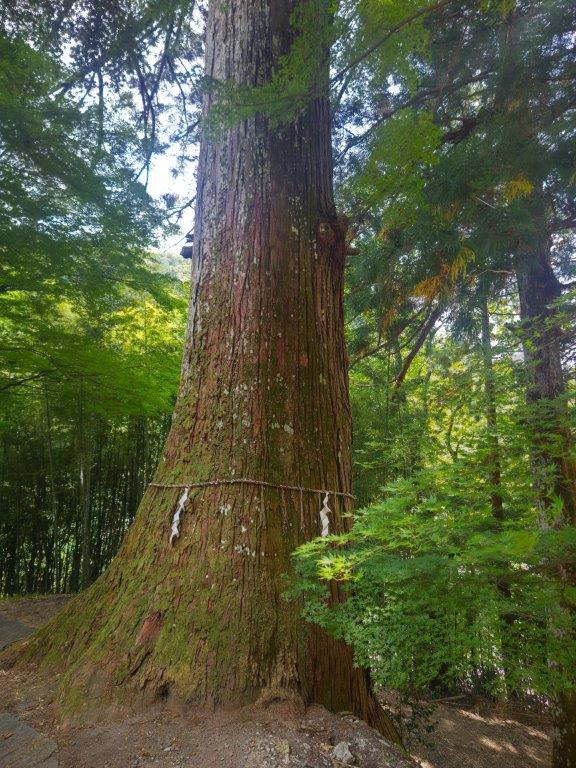
I arrived at the Iriyoma Soba around noon only to find out that there were ten groups ahead of me. While waiting, I popped over to the nearby Oiwa Shrine 御岩神社 to check out its 50-meter high, three-trunk giant cedar (see slideshow at the bottom of the post). I got back to the restaurant just as my name was being called, and after a satisfying meal of cold soba noodles and an enormous “kakiage“, I continued my drive, arriving at the parking for the free Kotakizawa Campground 小滝沢キャンプ場 at 2pm. Half an hour later, I started up a wide trail bathed in the early afternoon sunshine.

Midway up the Steep Climb in the First Half of the Hike

Trail past Nanatsuiwa

I soon entered a dark cedar forest, and after a couple of turns, reached the base of a steep, straight climb. I cautiously made my way over the huge rocks embedded into the higher part of the slope, one rocky bit even had an attached rope for safety. A little past 3pm, I reached the top ridge, from which point the path was mostly level, save for a short up and down section. I soon arrived at the turnoff for Nanatsuiwa (七ツ岩), a spot with several moss-covered boulders and a view on the east side of Takahagi city and the Pacific ocean through the still bare tree branches.

View South of the Hitachi Alps (left) and Mt Tsukuba (right)

Mt Tatsuware, a 100 Famous Mountain of Kanto

Shortly past 3h30, I arrived at the fairly new-looking observation tower on the summit of Mt Tsuichi (土岳 つちだけ tsuichidake), meaning Mt Dirt, although the summit was mostly lawn grass, with several pine trees blocking the view on the north side. To the south I could see Mt Kamine, as well as Mt Takasazu with its TV antennas, 2 prominent peaks of the Hitachi Alps; nearby, on the west side, was the long flat summit of Mt Tatsuware; in between and much further away, I could just make out Mt Tsukuba, nearly lost in the haze. According to the signboard near the summit marker, with the right conditions, one can see the Nikko Mountains, Mt Adatara, Mt Bandai and even Mt Fuji.

Mt Kamine (left) & Mt Takasuzu (right)

Observation Tower at the Top of Mt Tsuichi

At 4pm, I headed back, enjoying the soft late afternoon light still reaching the summit ridge through the leafless trees. The new green hadn’t arrived yet but the silver lining was that I was mostly in the sun on a slightly cold day and had glimpses of the views in other directions. During the steep descent, I happened to notice a group of small white flowers, Nippon Bells (イワウチワ) which I had missed on the way up. At the base of the slope, I was suddenly plunged into the shade, the sun now too low for it to reach the valley bottom. At 5pm, I was back at the campground parking, and after a short drive, reached the Hananuki Gorge (花貫渓谷) parking area, with a superb sakura tree in full bloom in one corner.

View North Between the Trees

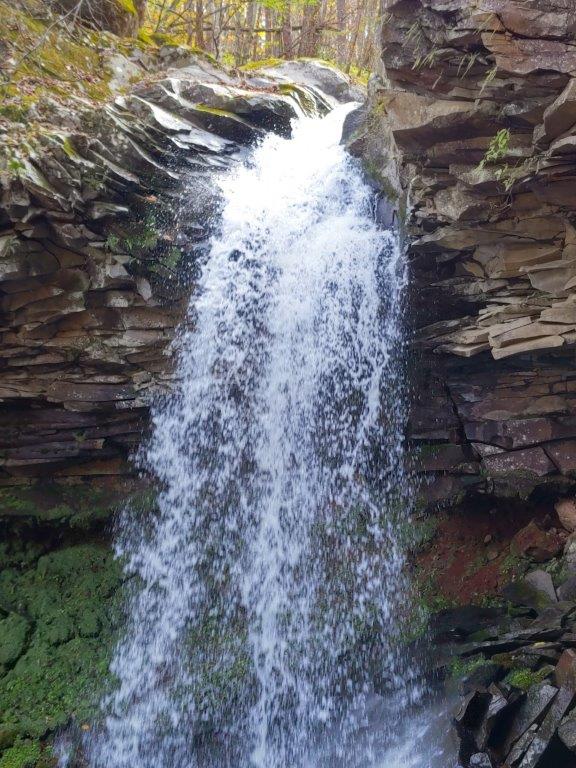
Otome Falls in Hananuki Gorge

I made my way to the small path along Hatanuki River, the only visitor at this late hour. I first passed Fudo Falls (不動滝), before arriving at the bigger Otome Falls (乙女滝). After enjoying the sight of the falls surrounded by moss-covered rocks, I made my way back to my car. After a one-hour drive, I was back at Mito station where I had half an hour to check out various Ibaraki Japanese sake using a coin operated “sake server”. At 7h30pm, I boarded the Hitachi Limited Express for the 80-minute ride back to Tokyo.

Watch a Video of the Hike
Watch the Video of the Hike on YouTube
See a Slideshow of More Pictures of the Hike