Mt Nakimushi (1103m), Nikko City, Tochigi Prefecture, Friday, January 3, 2020

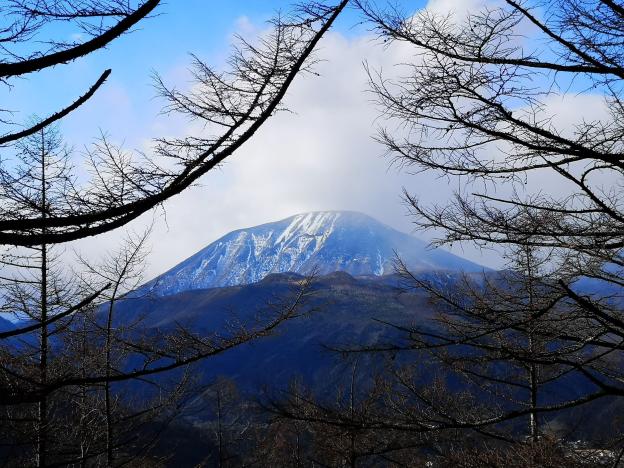
Mt Nyoho in a veil of clouds

For my first hike of 2020, I decided to head to Nikko. Not only is access easy thanks to the JR Nikko line, but since it’s a major sightseeing spot with a famous shrine, most places are open during the Japanese new year. The mountain I chose can be reached on foot from the train station, so I didn’t need to depend on any buses. Sadly, a French woman disappeared while hiking it a few years ago, and I saw several missing posters during the hike.

A glimpse of Mt Nantai through the trees

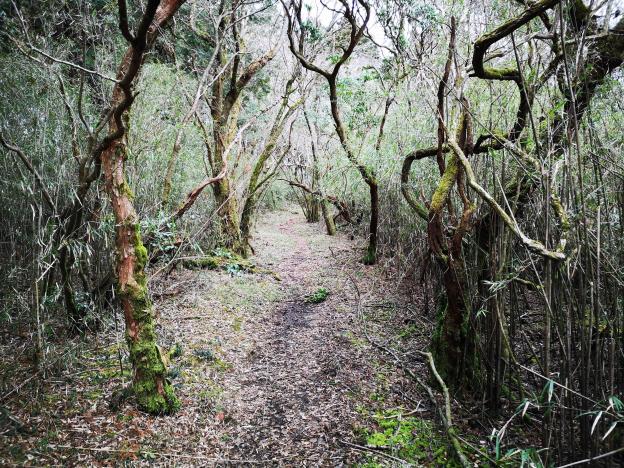
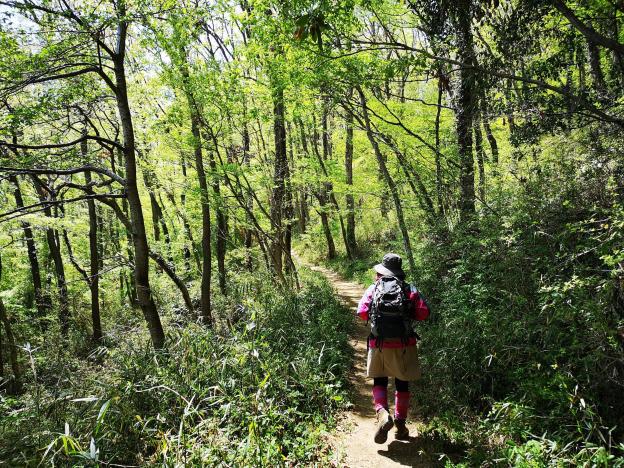
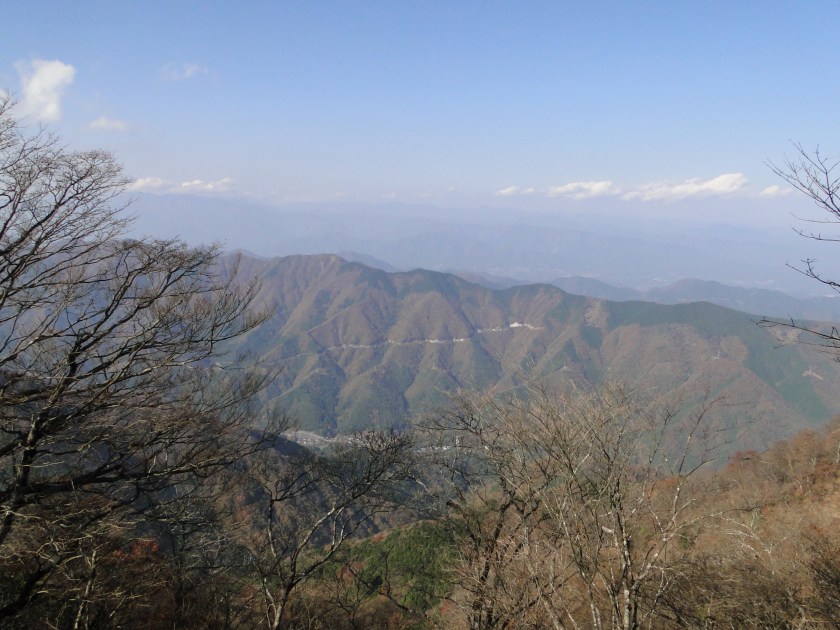
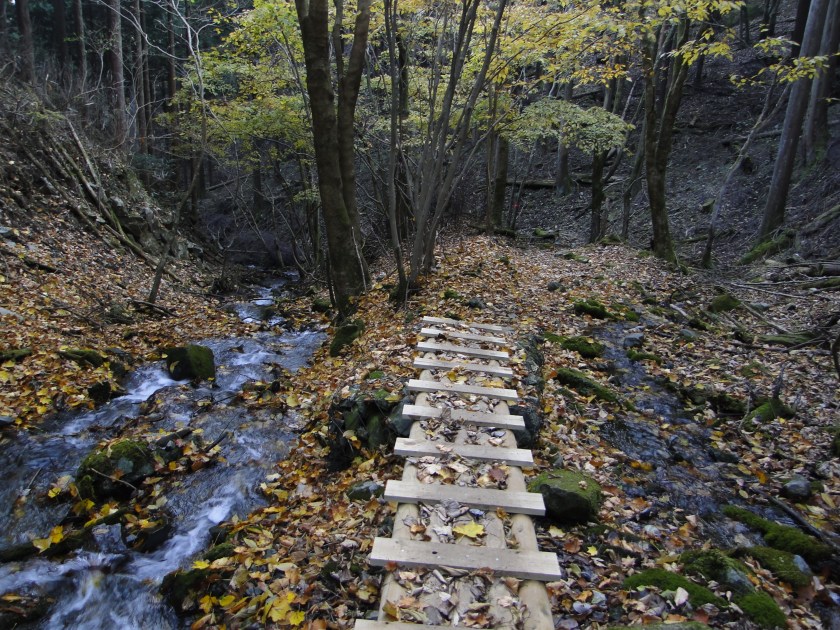
I arrived in Nikko at 10am, but since it was a short hike, I took my time getting ready, and only set off a little before 11am. It was a nice day and the view of Kirifuri Highland covered in the snow from Nikko city was quite spectacular. The start of the hike climbed relentlessly through thick forest. Less than an hour later, I reached the minor peak of Mt Konosu 神ノ主山 (842), and there was a glimpse of the surrounding mountains through a break in the trees.

A steep climb just before the top (left) and a steep descent just after (right)

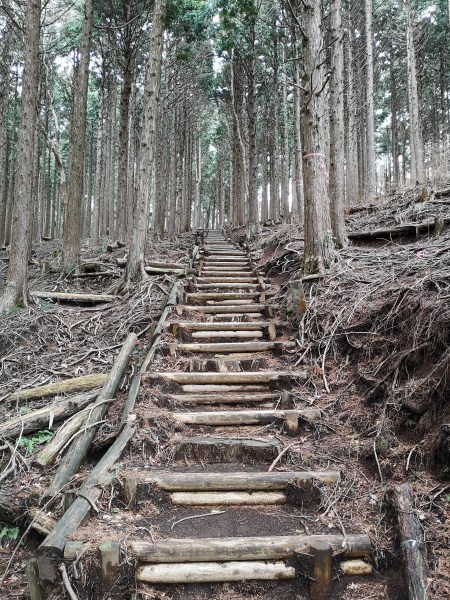
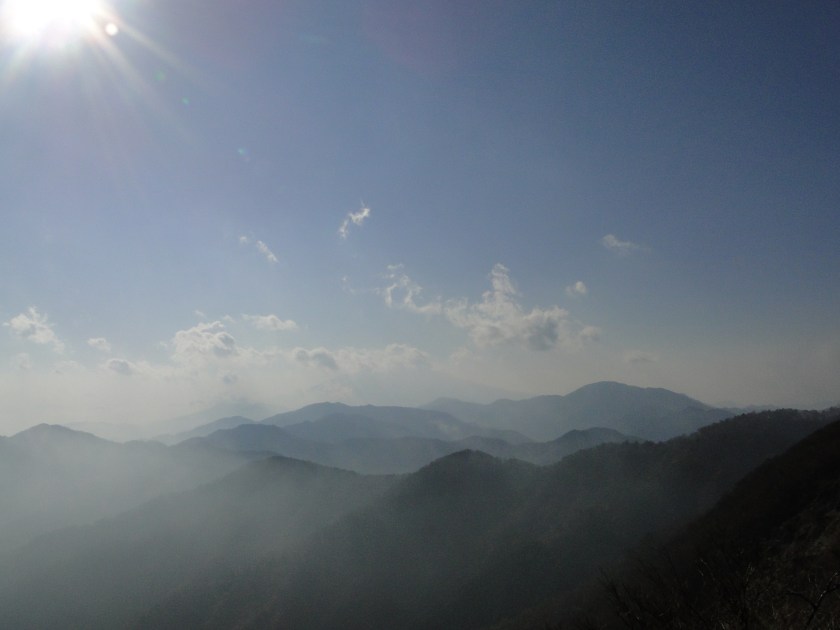
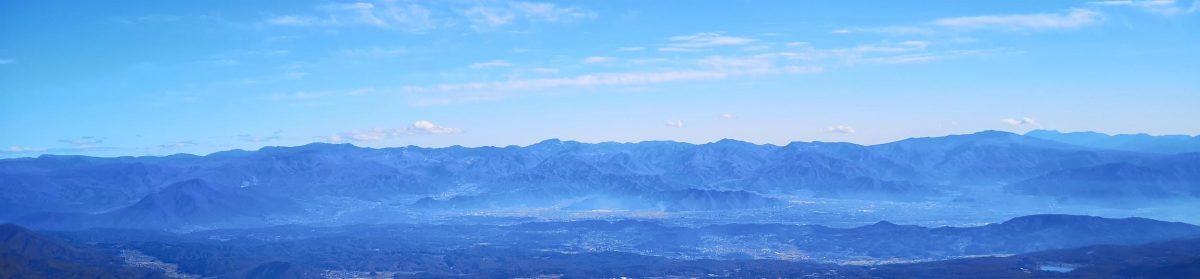
It took me another hour of determined climbing to reach the top of Mt Nakimushi 鳴虫山 (meaning crying insect). There should have been a good view of the main peaks of Nikko from the top, but today they were hidden behind the clouds. It was pretty cold at the top – despite the sunny weather, a few snowflakes floated down. After a quick lunch, I started to head down a steep staircase on the other side of the mountain just after 1pm.

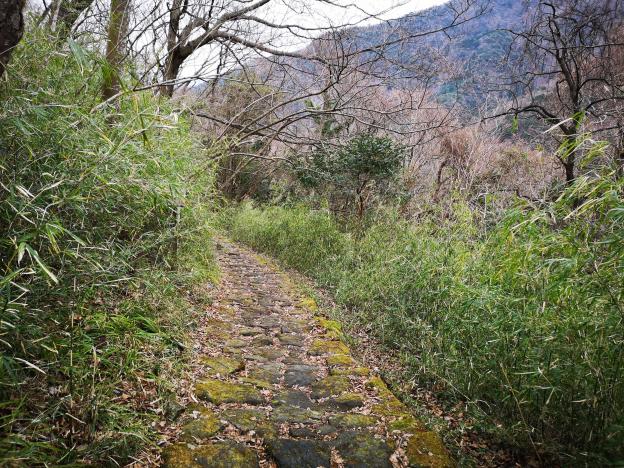
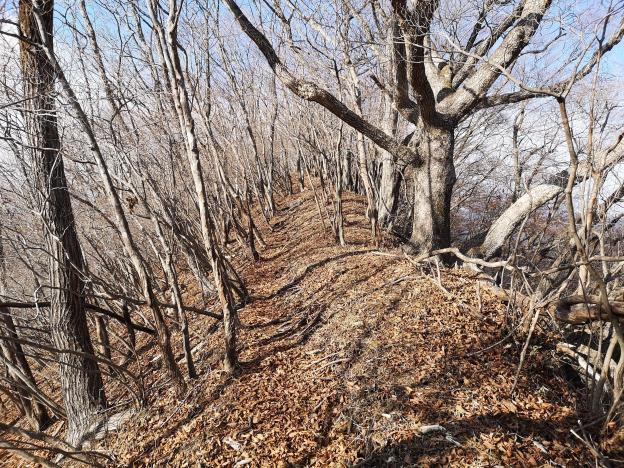
Sunny ridge on the way down

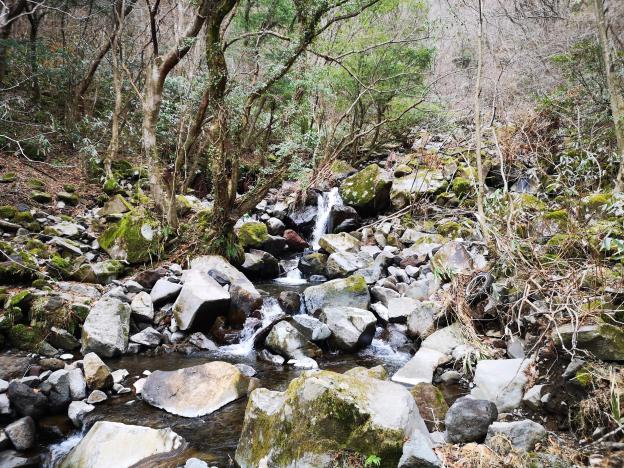
It took me about an hour and a half to reach the base of the mountain. I saw few people during the hike, and it was very quiet and peaceful. Although it’s not a difficult hike, the mountain is very steep on both sides of the path. Also, there are many points where one can easily lose the trail. There were warnings in Japanese and English, but they seemed fairly new. Having hiked the path myself, I can understand a little better how someone could go missing there.

Returning to Nikko station along the Daiya river

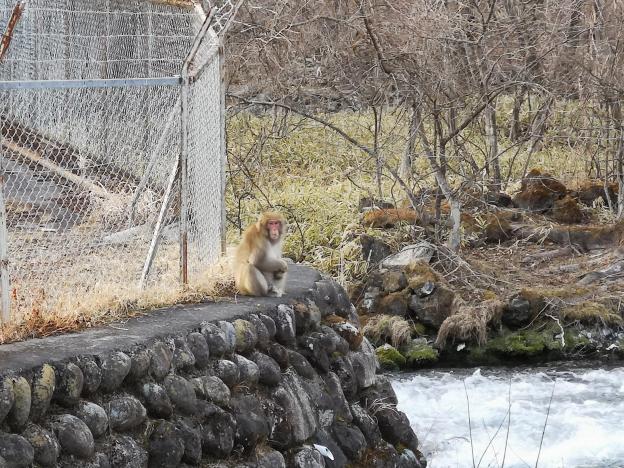
After reaching the base of the mountain, I walked along a narrow road to the nearby Yashio Hot Spring. I saw a monkey on the way. I am not sure if that brings good luck, but I’d like to think so. After a nice hot bath, I decided to walk back to Nikko station since it was still early. It took less than an hour following the river, and by 5pm I was on the express train back to Tokyo.
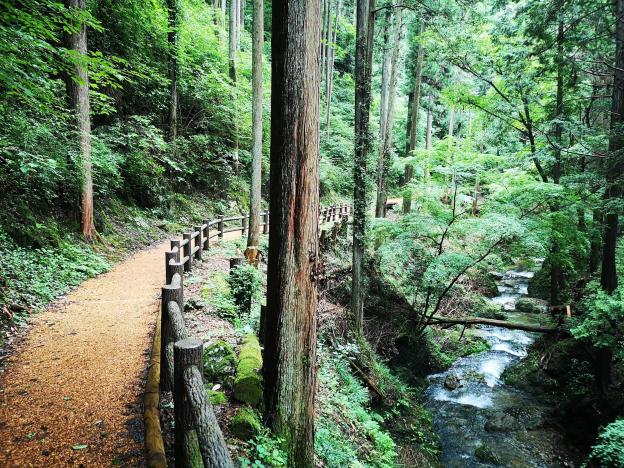
First monkey sighting of 2020

Watch a video of a wild monkey in Nikko

NEXT UP: Mt Ozawa in Gunma

Toryu Valley & Mt Omine (1062m), Chichibu City, Saitama Prefecture, November 2019

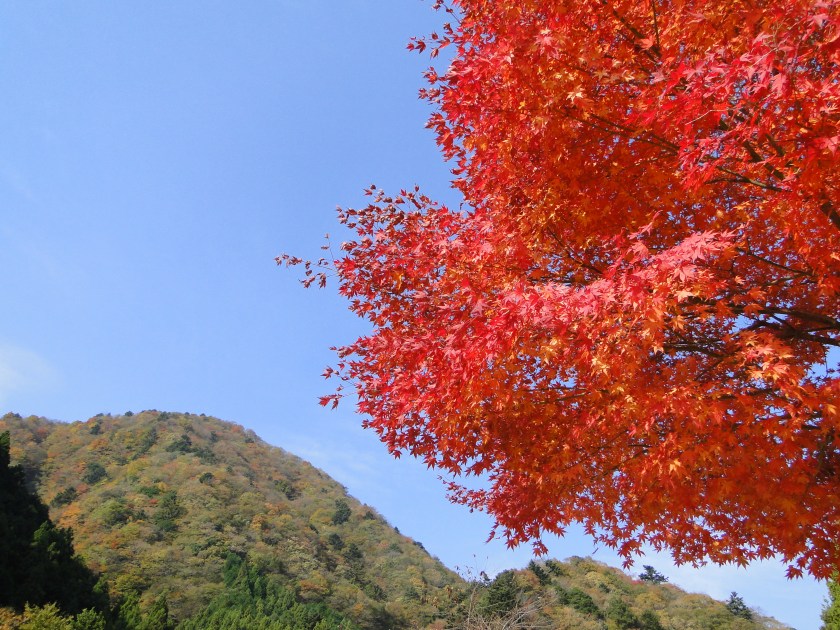
Autumn colours along Toryu-Kei

In mid-November, I went on a day-trip to check out the autumn colours in the Oku-Chichibu area. It had been one month since the devastation brought by Typhoon Hagibis, also known as Typhoon #19, and there was a risk that some trails would be damaged or even closed. However, there are many great places to visit in the area, and I was confident I would find somewhere to walk among the autumn leaves.

IMG_20191114_112648

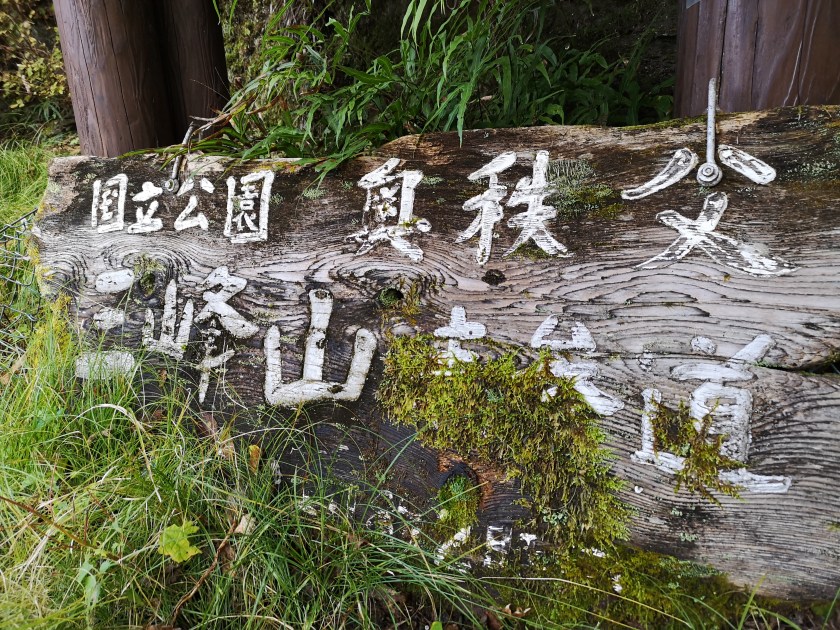
Sign reminding me that I was inside the Oku-Chichibu National Park

I drove from Seibu-Chichibu station, past Mitsumine-Guchi station, to Toryu Bridge 登竜橋 where I left the car. Past the bridge, it’s possible to walk along the Arakawa river in both directions. I first headed downstream; the path had been partly washed away in several places, and was also obstructed by several fallen trees. Since the path was a dead-end, I quickly gave up, walked back past the bridge, and followed the river upstream.

View from Toryu Bridge

First, I followed a gently climbing road past some ancient gravestones. After a few minutes there was a sign for a trail through the forest on the right. This led back down to the river, round a cliff on a wooden walkway, and finished at Ryumon Waterfall 竜門の滝. I retraced my steps to the start of the wooden walkway, and then followed another path further upstream, a few meters above the rushing river. There was a lot of damage here due to the typhoon. The trail was so washed away, that I soon gave up again. In conclusion, it’s impossible to hike along most of the Toryu valley at the moment. On the way back, I followed the road a little further, and it led to the start of the trail to Mitsumine Shrine. Apparently, this trail is open and undamaged.

Entrance to the trail for Mitsumine Shrine

Afterwards, I drove another twenty minutes, past the turn-off for Mitsumine Shrine, all the way to the Irikawa river valley. I was going to leave the car at the Irikawa Camping Ground and explore the river upstream. However, the access road was closed due to typhoon damage, and it wasn’t possible to reach the start of the trail. I had to fallback on plan C: completely avoid river valleys, and drive to nearby Tochimoto Plaza 栃本広場 where I could hike Eastwards along a low ridge sandwiched between two lakes.

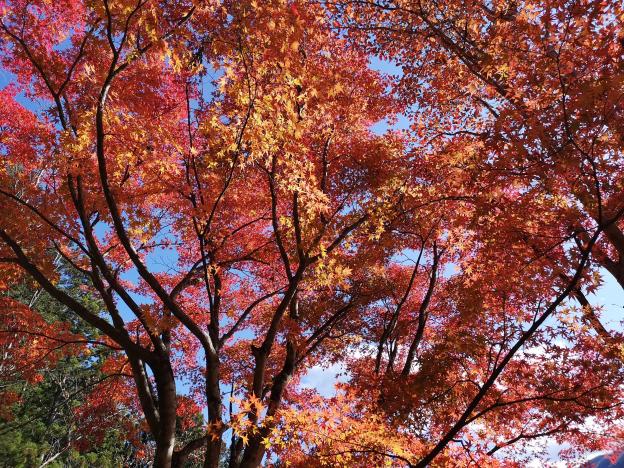
Beautiful autumn colours in “deep Chichibu”

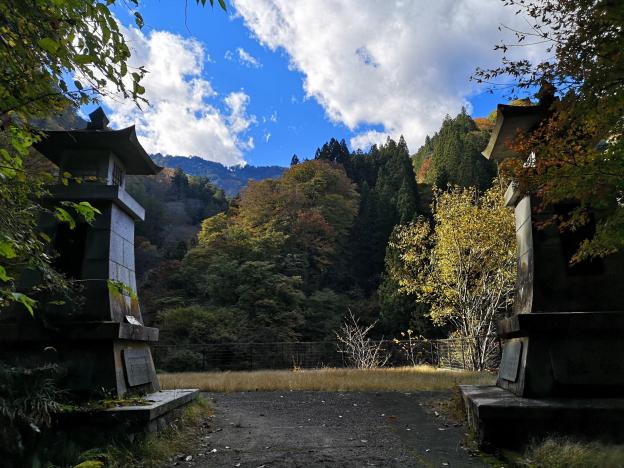
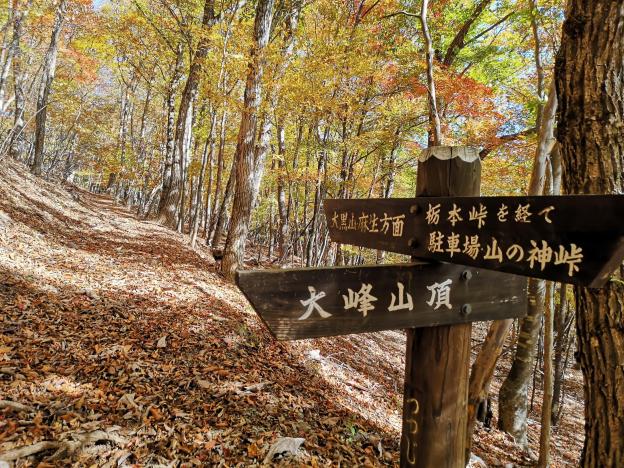
This time I was lucky. The path was easy to hike with no damage at all; the autumn leaves were still at their peak. It took me about thirty minutes to reach the top of Mt Omine 大峰山 completely in by trees. Even the little viewing platform wasn’t high enough to see over them. The path continued along the ridge, but since it was now downhill through a thick cedar forest, and I had get back to the car, I decided not to go any further. Luckily, it was possible to take a slightly different path back, with occasional glimpses of Oku-Chichibu-Momiji lake through the trees.

Easy hiking through the forest

I drove a different way back, following a very picturesque road with good views towards Mt Wanakura. I got back to Seibu-Chichibu station before 4pm where I was able to enjoy a nice hot bath, and taste some local sake inside the station, before taking the brand new and futuristic looking Laview Limited Express train back to Tokyo. After the heavy rains and strong winds that hit the Kanto area last October,  I think that most hiking trails in Tokyo, Saitama and Tochigi prefecture are still hikable, except the ones following river valleys. Those ones may be closed for a while, but hopefully they’ll be restored sometime in the future.

View of Mt Wanakura in the late afternoon

Hossawa Falls to Musashi-Itsukaichi Station, Hinohara Village, Tokyo Prefecture, Friday, July 5, 2019

Despite the long rainy season this year, I managed to squeeze in a short hike on a cloudy, rain-free day. Although the elevation of the walk was relatively low – between 400m and 200m – the temperature and humidity were also low for July, so conditions were quite pleasant throughout the day. In general, this hike is best attempted in the spring and autumn.

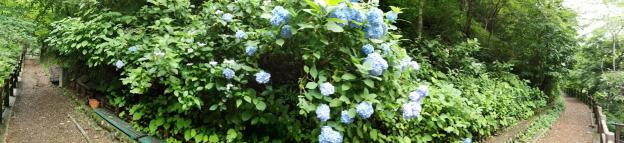
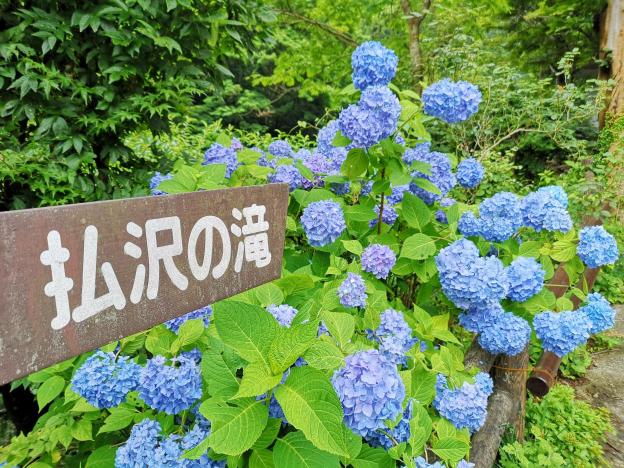
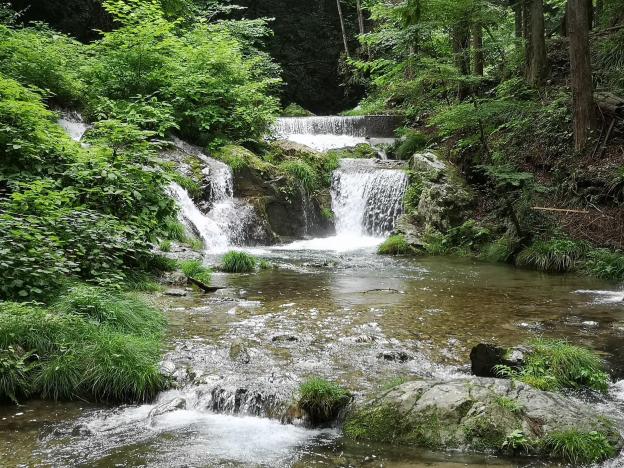
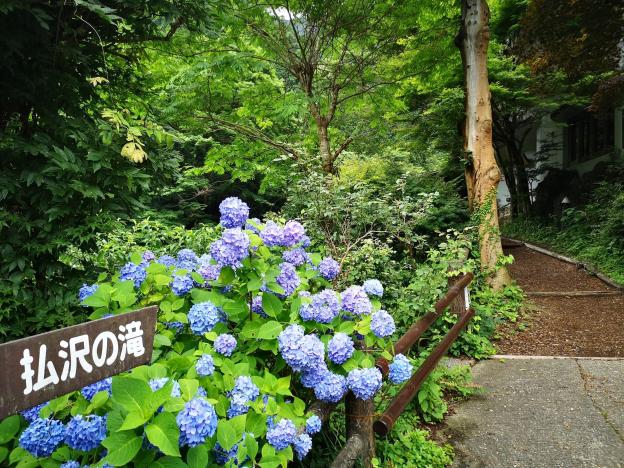
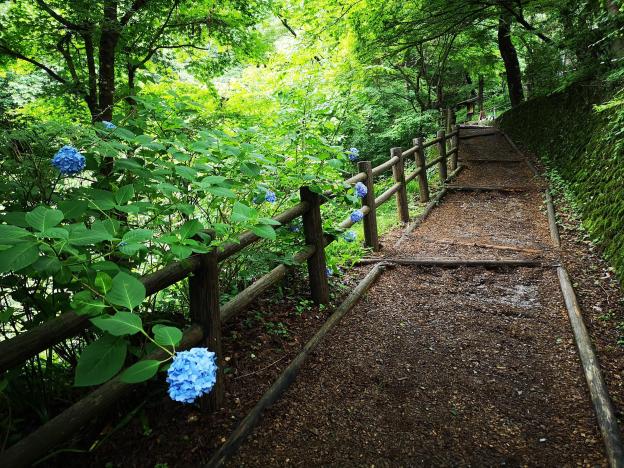
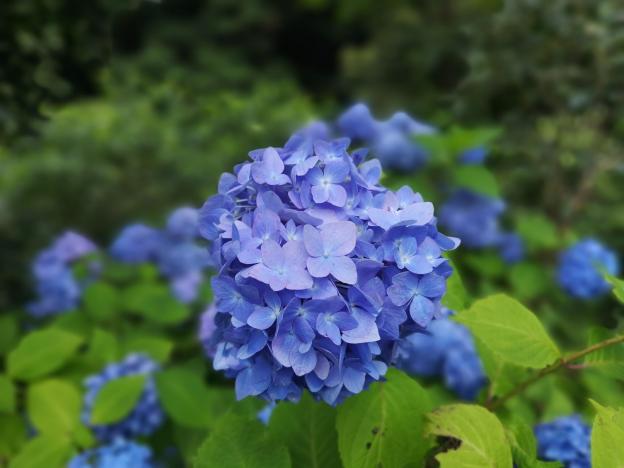
I had last been to Hossowa falls 払沢の滝, one of the hundred famous waterfalls in Japan, located inside the Chichibu-Tama-Kai National Park, after hiking Mt Sengen 浅間山 a few years ago. Then, Autumn was in full swing and I got to see some beautiful autumn leaves along the short trail to the waterfall. This time, the surrounding trees were lush with green leaves, and hydrangea flowers (ajisai アジサイ) were still in full bloom. The river and small falls leading up to the waterfall were wider and bigger that I had remembered, perhaps due to the high amount of rain that had fallen in recent weeks.

Smaller falls on the way to the main attraction

I had set off late and so I arrived at the Hossawa Falls entrance bus stop 払沢の滝入口, just after noon, and promptly started up the narrow climbing road to the left of Hinohara Tofu – their tofu donut makes an excellent snack! I soon reached an information board that showed the details of the whole area, and another one showing the location of 13 (!) waterfalls in the area of Hinohara Village, Hossawa falls being the most impressive one.

Entrance to the path to the waterfalls

Hossowa waterfall is located at the Eastern base of a narrow ridgeline wedged between the Kita Aki river to the North, and the Minami Aki river to the South. The latter is the longer of the two, and takes its source at the base of Mt Mito. The Kita Aki river joins the Minami Aki river just before the falls. Further downstream, it joins up with the Yozowa river (coming down from Mt Mitake to the North), and finally becomes the Akigawa river (which later merges with the Tamagawa further East).

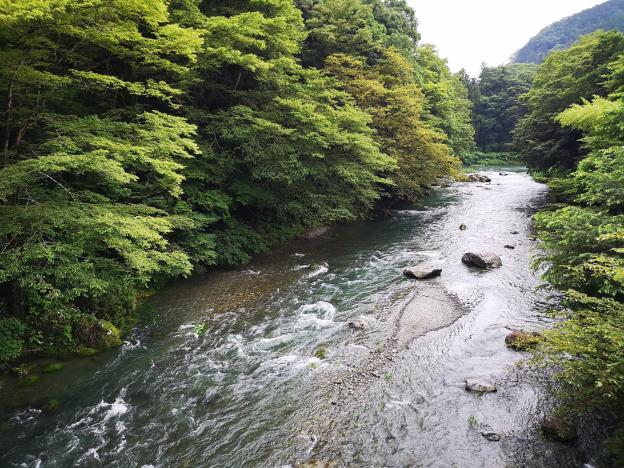
The Minami Aki river after merging with the Kita Aki river

Since I was taking many photos of the river and flowers, it took me nearly half an hour to reach the waterfall, along an easy-to-walk path with no steep inclines. Along the way there were good views of the rushing stream below.

Not a real hiking trail but more of a walking path

On the left, a ravine, on the right, a cliff

There is a wooden sloping section that can get slippery when wet – someone took a tumble just as I was approaching! According to Wikipedia, the total length of the falls is 60m, divided into four sections – it was indeed an impressive sight to behold. You can get relatively close to the base pool, but the best shots can be obtained next to the stream, a little further away. After comparing with photos from my previous visit, I can confirm the falls are much bigger in the rainy season than in the autumn.

You can even feel the wind blowing from the force of the falling water

The return was much faster, and it only took me 15 minutes to get back to the main road. There were few people on a weekday, but I expect there would be a lot more people visiting on the weekend. There is also a cafe at the start of the path but it was closed on Friday.

Racing the stream on the return

Watch out for this interesting chap on the way back

Once back at the Tofu shop, I made my way back to Musashi-Itsukaichi station, sometimes following the main road, and sometimes following smaller and quieter roads on the other side of the river. The various bridges offered nice views of the Minami Aki river. The parts on the left side of the river made for a pleasant ramble through nice countryside with occasional glimpses of the river through the trees.

The sign says “Have a seat!”

Just before Sawato Bridge 沢戸橋, about two kilometers from the station, I stumbled upon a small path heading down on the right. According to the information board, it was the Akigawa Kyuryo Trail 秋川丘陵コース, a very nice discovery! I crossed the Bonbori river on a small wooden bridge, and then followed a very nice hiking path along the right side of the Akigawa river.

Careful not to take a tumble into the river!

Too soon the path joined up with the road again. There a small detour away from the river was needed, but soon I was walking next to the Akigawa again with good views of the surrounding hills. I reached the train station just after 5pm. Hopefully, I’ll be able to return sometime and continue hiking East along the Akigawa!

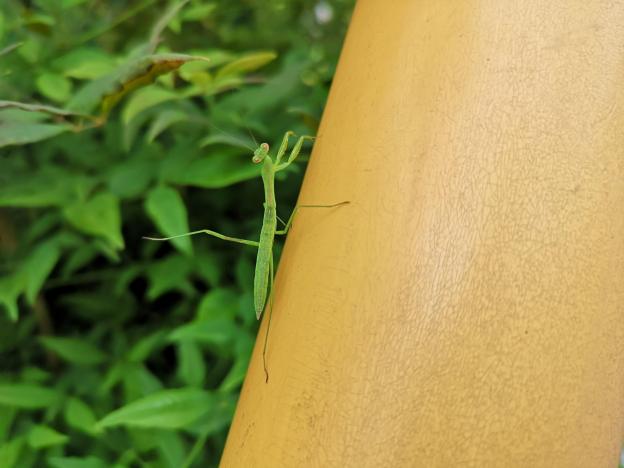
I found this little fella along the path

The “ajisai”, the symbol of Japan’s rainy season

Check out the power of water

Mt Sengen (299m) & Ranzan River Valley, Ogawamachi City, Saitama Prefecture, Saturday April 20, 2019

I had been to Mt Sengen in May 2016 as a half day hike, and to Ranzan in December 2016 as a short bike ride. Since then, the hiking trail has been lengthened to connect both areas so it seemed like a good idea to return to there. I believe that Ogawamachi town makes an excellent base for hiking due to its close location to Tokyo (70 minutes by direct train from Ikebukuro) and proximity to the Higashi-Chichibu mountain area.

The hike starts from behind the Mt Sengen Miharashi no Oka Koen (view hill park) that is best reached by a short taxi ride (about 1200 yen) from the station. Otherwise it’s nearly a one hour hike. Before leaving, make sure to try a tofu donut from the small store opposite the station. The park has an observation tower with great views, and a roller slide.

View of Ogawamachi from Mt Sengen View Hill Park

The path to Mt Sengen (仙元山) follows the top ridge through beautiful forest with occasional views of Tsuki River on the left. The summit marker is reached soon after passing a jump off spot for paragliders. It’s a mostly flat place in the forest with an opening to the West. Afterwards the hike continues southwards with a number of small ups and downs. Along the way are the ruins of Aoyama castle – there isn’t much to see but you can imagine that a fine castle must have existed in such a good location.

Beautiful forest on the approach of Mt Sengen

The well-marked path first continues South, then bends to the East, passing several minor peaks along the way, eventually reaching Okura castle ruins. As before there isn’t much left to see, but there is a good lunch spot with log seats and an Eastward view, on top of the slight rise on the right side. Beyond that, the path gradually descends before reaching a road, where one needs to go left for the bridge over Tsuki river and the entrance path to the path for the Ranzan river valley.

Walking the path to Ranzan Keikoku

After crossing the bridge, there is a small trail that leads right down to the river on the right side. It’s worth heading over there since the views up and down the river are very pretty. However it’s a dead end so – the path to Ranzan is above, behind the parking area. It’s an easy-to-walk straight path that leads to the base of Mt Ohira, a short climb with a nice view. However it’s worth continuing straight along the path till reaching the river side – this is the highlight of the Ranzan river valley 嵐山渓谷. It’s a nice place to take a break.

A peaceful place to take a break

To finish the hike, take the path heading eastwards following the river downstream. Eventually it leads to a road – Musashi-Ranzan train station on the Tobu line is less than 30 minutes away. It’s also possible to catch a bus back (use Google maps).

See what it is like going down a roller slide with a view!

Mt Nemoto (1199m) & Mt Kumataka (1169m), Kiryu City, Gunma Prefecture

This was my very first visit to Kiryu City – I returned a couple more times last year in the autumn. However I had hiked in the Ashio mountains 足尾山地 several times before. I was again the only person on the bus, and when I got off at the last stop, I was surprised that it cost only 200 yen – probably the cheapest bus ride I’ve ever done in Japan. I had to walk another thirty minutes along the road, but I didn’t mind since it followed the beautiful Kiryu river.

Kiryu river, one of the top 100 forested valleys in Japan

I reached the start of the trail around noon – there was a well-made sign in Japanese and English explaining that the Kiryu River had been selected as one of the top 100 forested valleys in Japan – I wasn’t aware that such a list even existed! There are two trails up the mountain – the one on the left follows a small mountain stream, and is more challenging. I took the more direct trail going up the ridgeline. This trail had its share of fun, with rocky sections lined with ropes for safety – it’s not really dangerous, but it isn’t for beginners either.

The autumn colours made up for the gloomy weather

The autumn colours were still at their peak, and a little before 1h30, I reached the top of Mt Nemoto 根本山 (meaning “tree root”), a Gunma 100 famous mountain. There was no view, but there was a brand new sign. The weather had been sunny and cloudy all morning, but now it was completely overcast, with a cold wind. It felt like it might snow at any moment.

Mt Akagi, looking somber

I continued along the ridgeline, circling the source of the Kiryu river, clockwise. Soon, I was walking South along an easy trail, and I arrived at Mt Kumataka 熊鷹山 less than an hour later. There was a small observation tower with a 360° view of the surrounding mountains. I could make out Mt Koshin and Mt Kesamaru to the North, where there was some sun, and Mt Akagi under a dark cloud to the West. In the East, it seemed like it was raining.

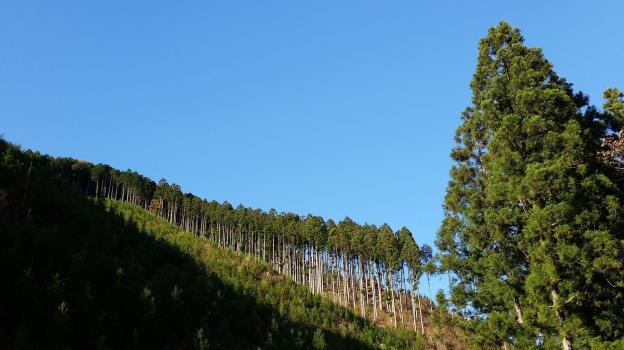
Trees marching up the side of the mountain – blue skies returned at the end of the hike

After enjoying the view and before my hands froze, I started to head down the mountain. The hiking trail quickly became a forest road, and the sun came out again. Soon, I was walking next to the Kiryu river again under blue skies. I was back at the start of the trail before 4pm, and half an hour later I was riding the last bus back to Kiryu City.

Kiryu river, also one of the 100 top forested water sources

Mt Omuro (1587m) & Mt Kanyudo (1418m), Sagamihara City, Kanagawa Prefecture

These mountains are located in the Western half of the Tanzawa mountains, and harder to access than those in the Eastern half like Mt Tanzawa and Mt Oyama. I  rode the bus from Shin-Matsuda station for over an hour, past Tanzawa lake, all the way to the last stop, the Nishi-Tanzawa Visitor Center 西丹沢ビジターセンター, a great starting or ending point for hikes in the area. It was the second week of November, which was rather late in the season; the autumn colours had already crept down the mountain sides into the valley. I was told by the staff at the visitor center to start heading down by 1pm at the latest, to avoid getting caught in the dark.

Hiking in the Tanzawa Mountains

丹沢山地

Ask for a hiking map for Mt Omuro

In the back hidden in the clouds is Mt Fuji

I set off at 10am under blue skies. The first part of the hike was along a small road that followed the river valley past a couple of camping sites. At the first junction, I headed right – I would be descending via the left junction. Here I finally entered the hiking trail proper, also part of the Tokai Nature Trail 東海自然歩道. I followed a narrow valley alongside a rocky river. Looking up, I could admire autumn colours in all directions. After an hour of climbing, I reached a pass, an Emergency hut, and the first views. However by now, grey clouds had rolled in hiding the ridgelines.

The brilliant red of the “momiji” tree

Climbing up through a “koyo” tunnel

I still needed another hour an hour of tough climbing to reach the summit of Mt Omuro (大室山 oomuroyama), a 100-famous mountain of Yamanashi and the 3rd highest peak of the Tanzawa mountains. Here, the trees were already bare of leaves, a strong hint that winter was just around the corner. I was now mostly above the clouds that had gathered on the Southern side, with just a few milky strands of mist left. I had great views North of Doshi Valley and the Doshi Sankai mountains. Since it was nearly 1pm, I had a quick lunch, and made my way Westwards along the ridgeline to the next peak Mt Kanyudo (加入道山 kanyuudouyama).

Mist and leafless trees near the summit

Doshi valley and Doshi mountains

There was another emergency hut here, but fortunately I still had enough time to descend safely.  Soon, I was walking on a wooden path alongside a beautiful mountain stream with a carpet of colourful fallen leaves on both sides. Suddenly the path and the stream parted ways. A few minutes later, I caught a glimpse of an impressive waterfall to my right. By now the clouds had disappeared and the blue skies were back. The sun had already disappeared behind the mountain ridge behind me. I emerged into a river valley with rocky banks, which I crossed several times on small wooden bridges, and finally got back to the visitor center by 4pm.

Easy walking on the way down

Ask for a hiking map for Mt Omuro