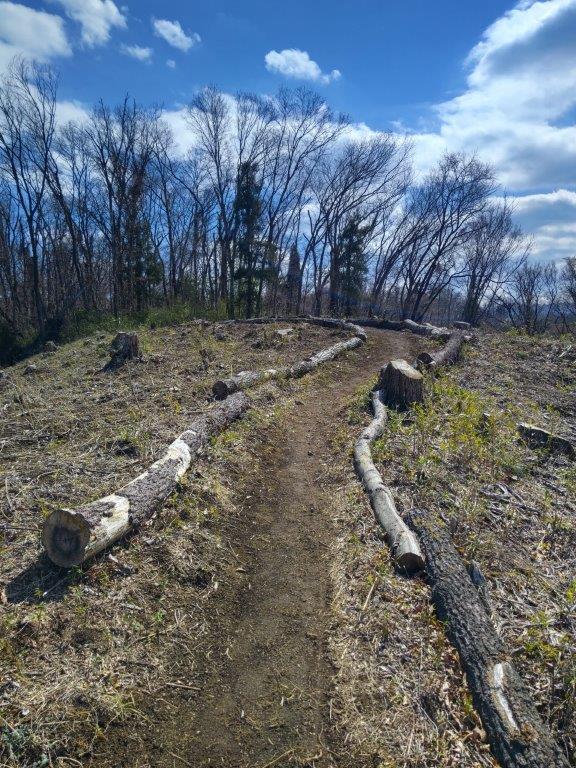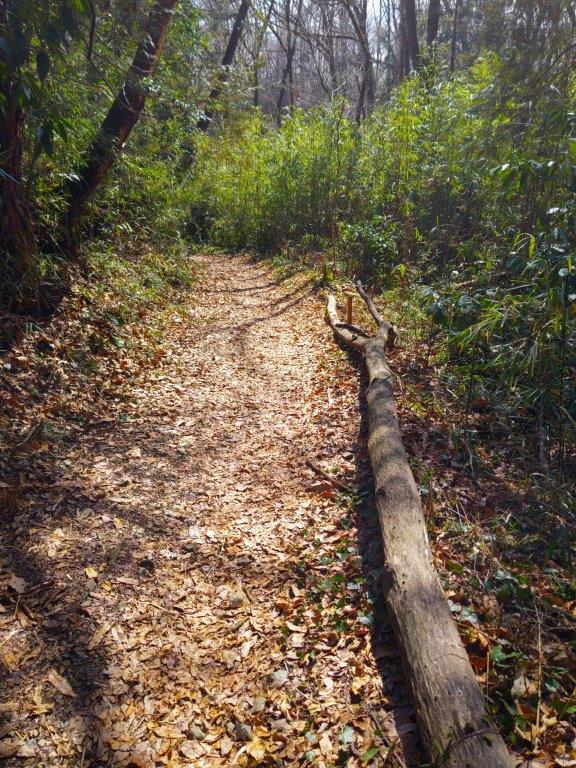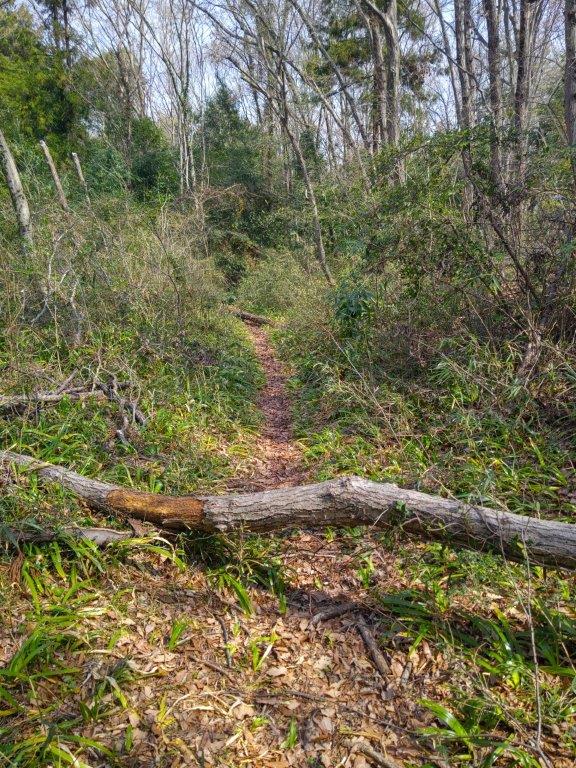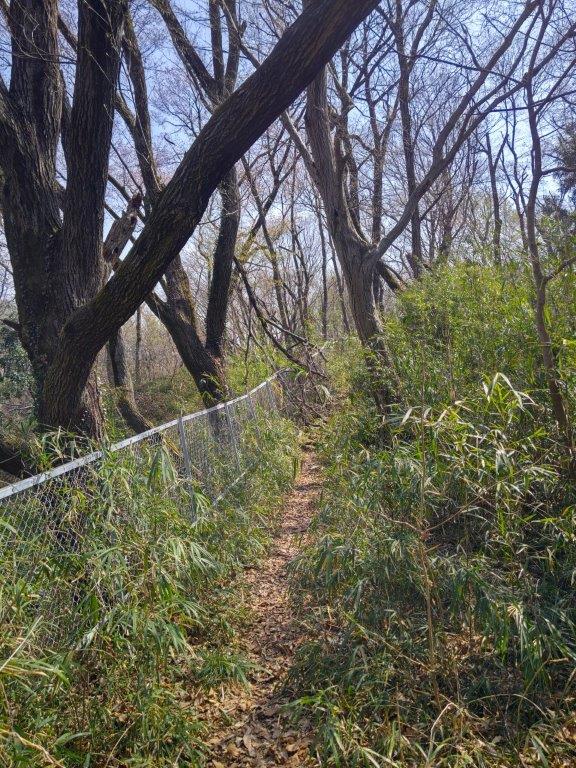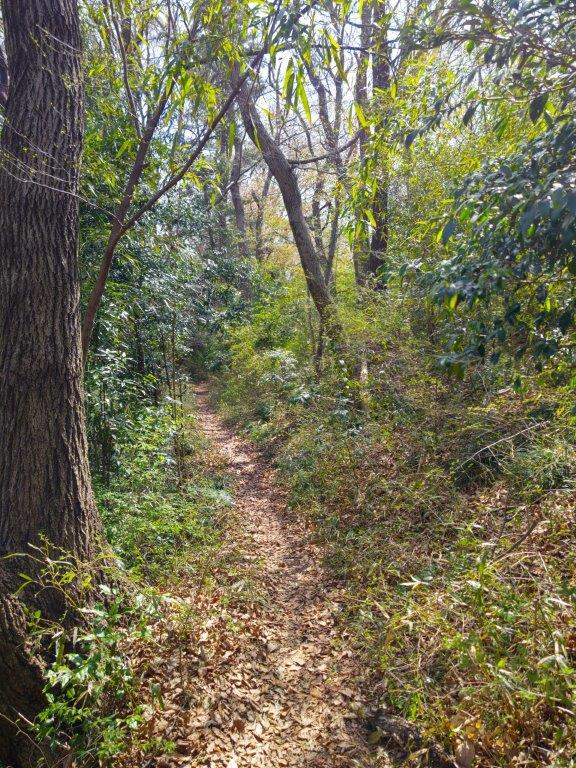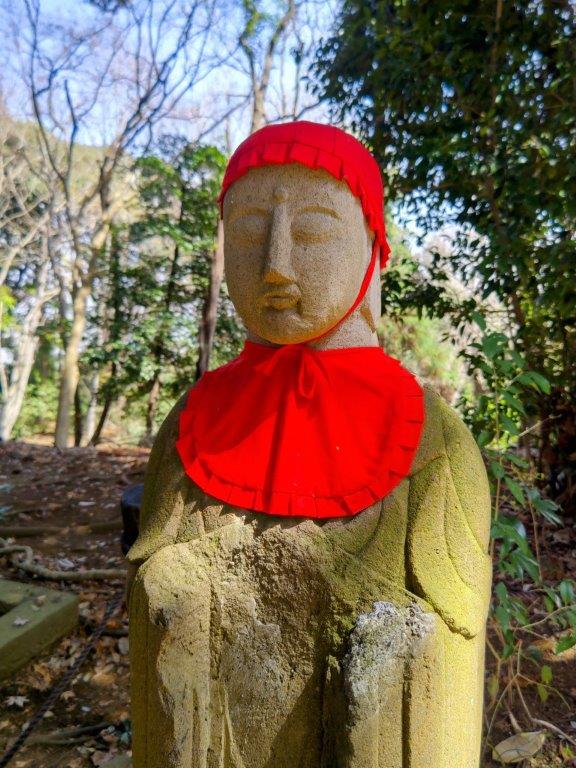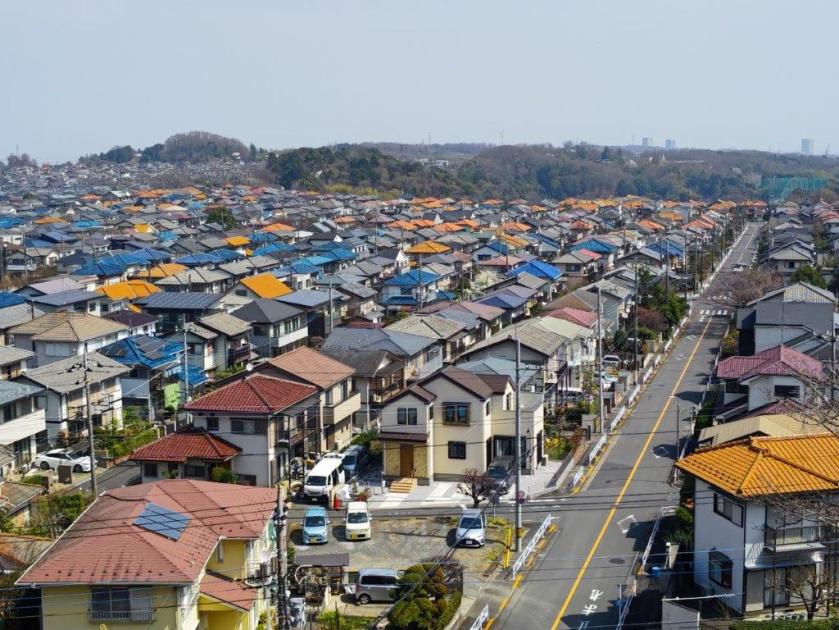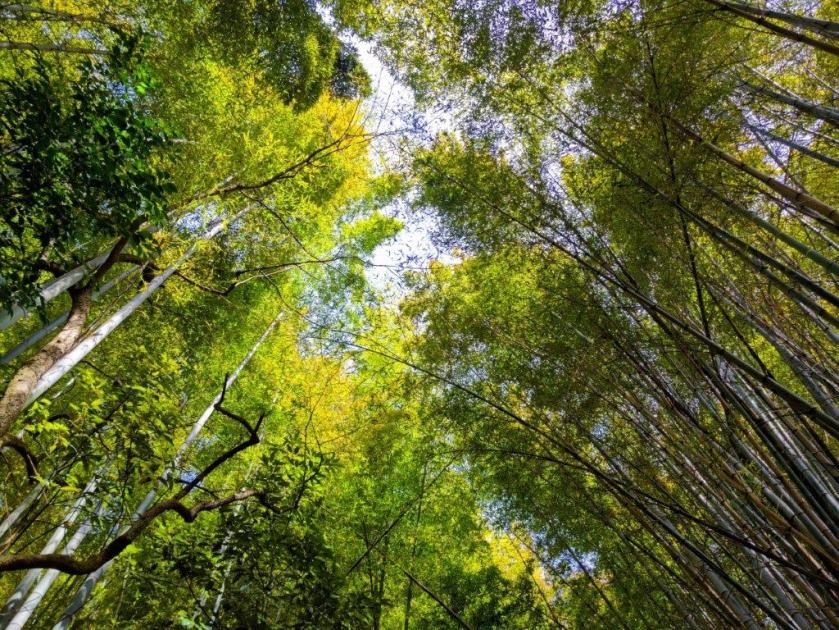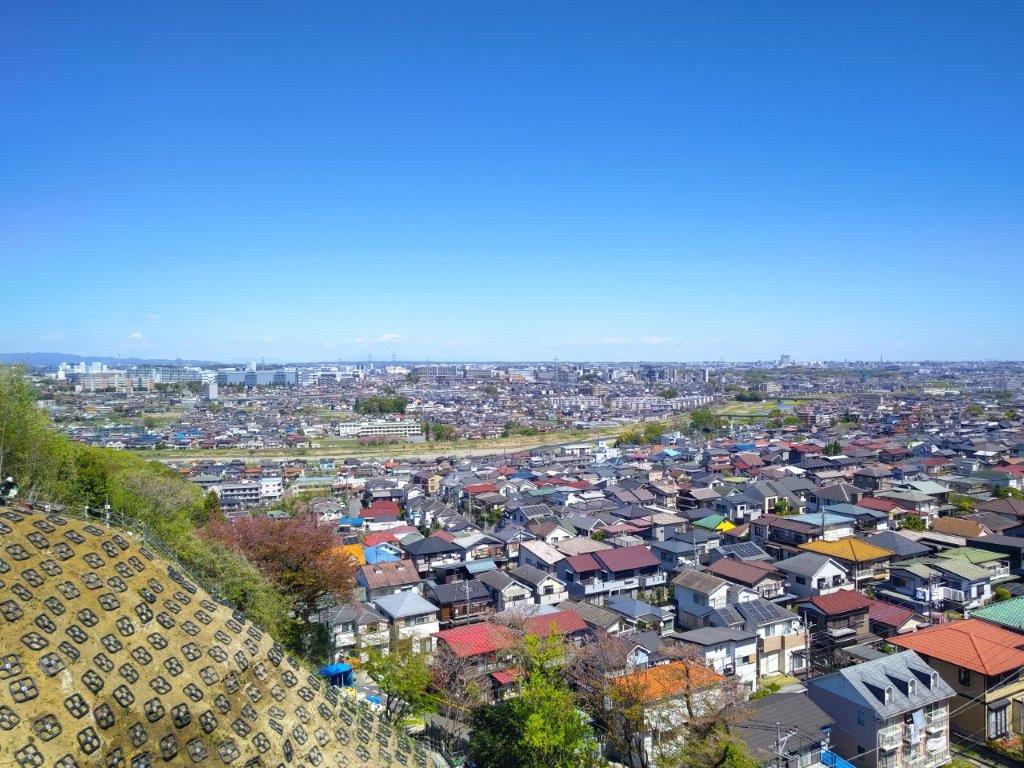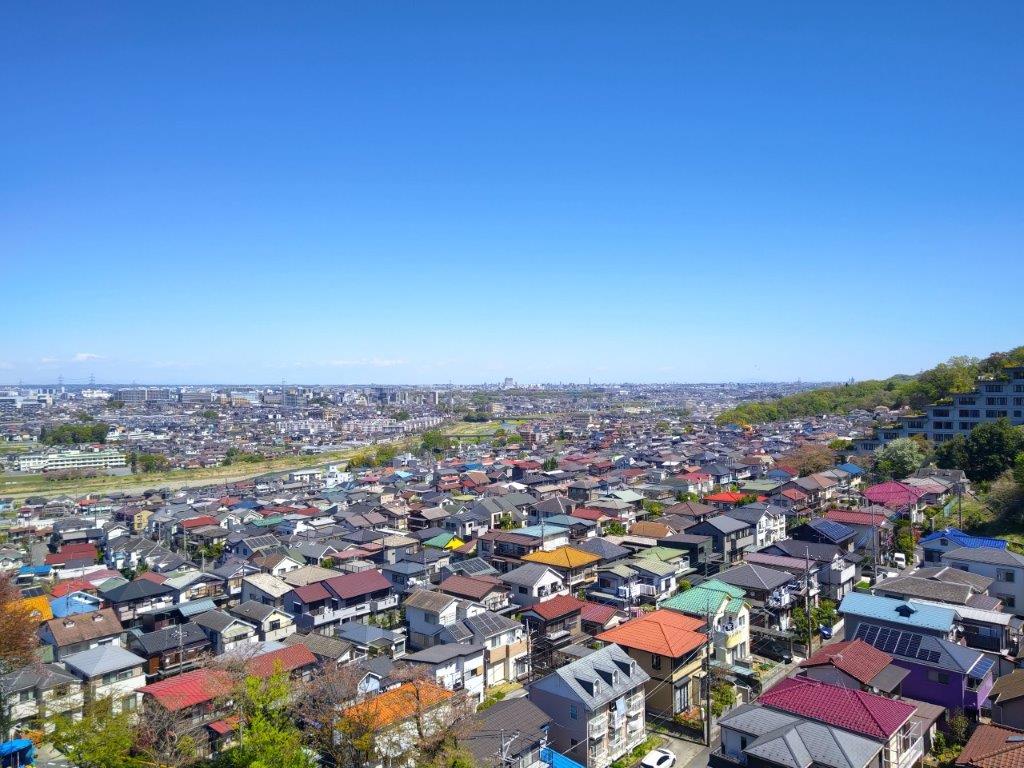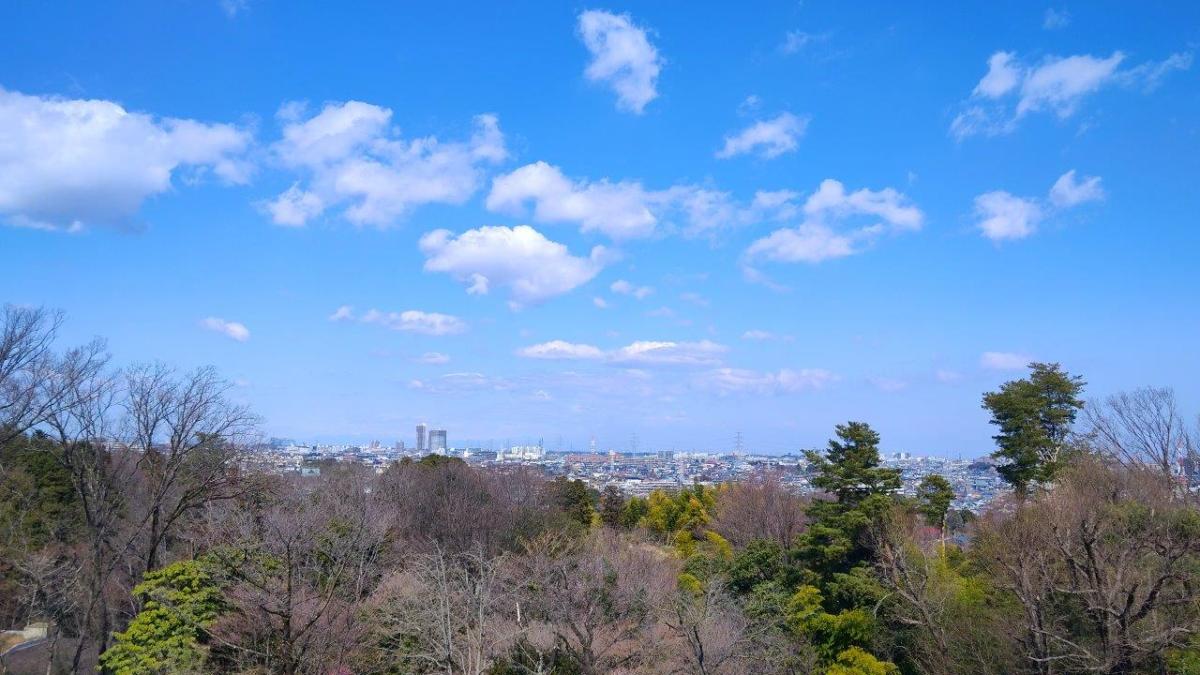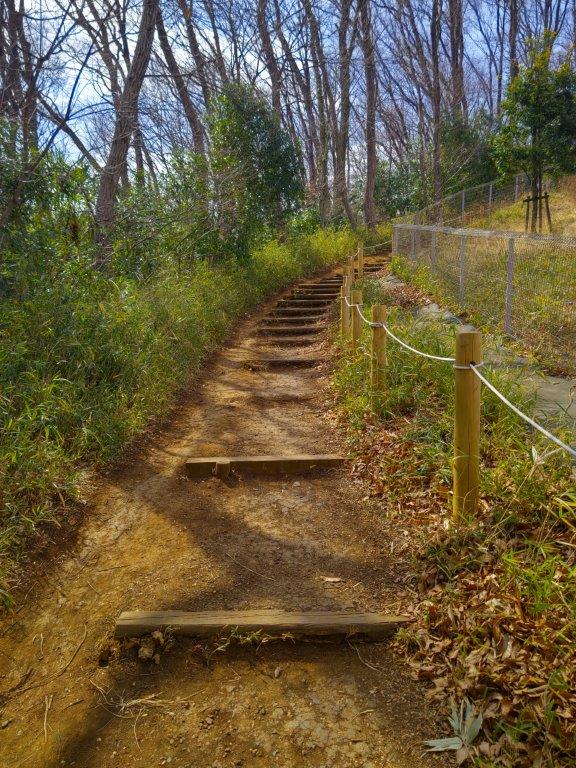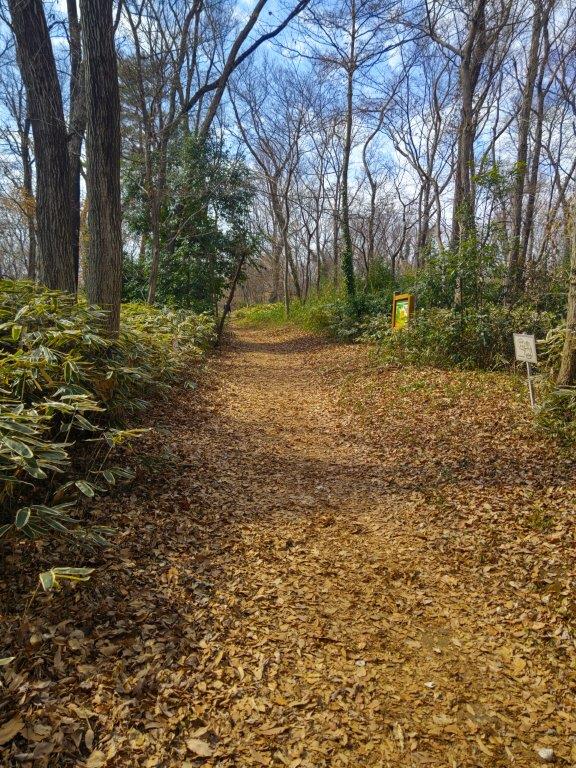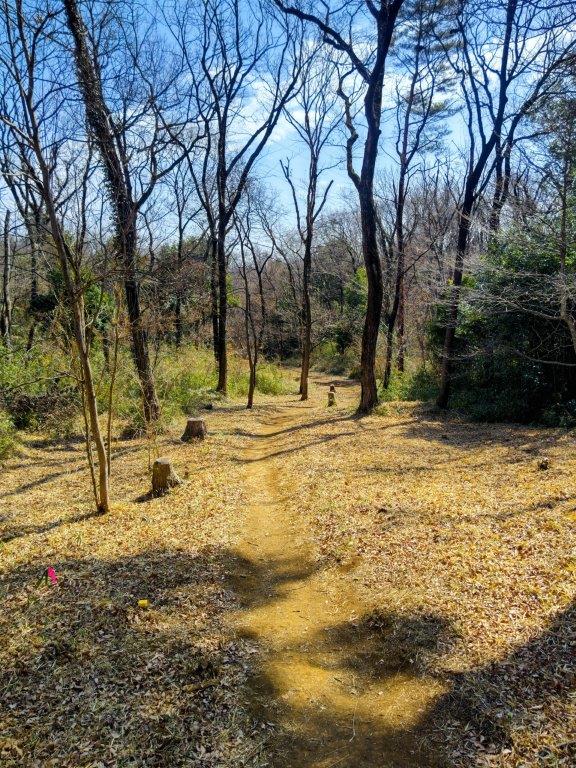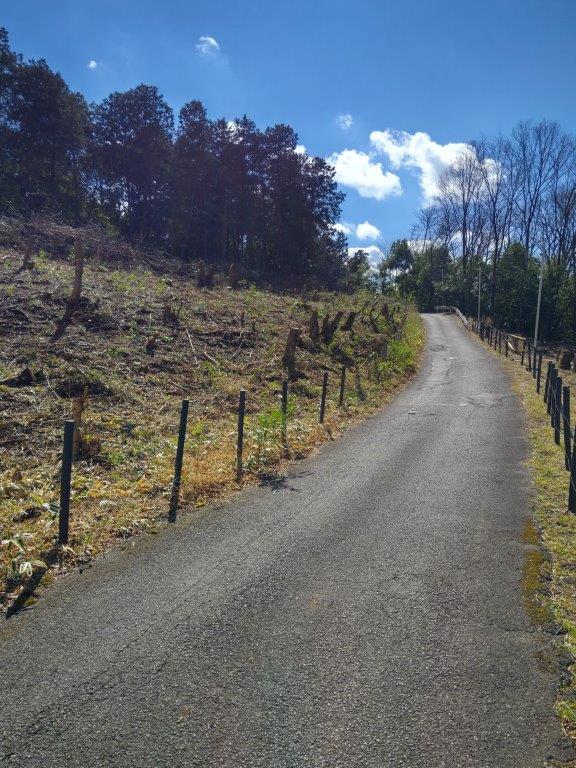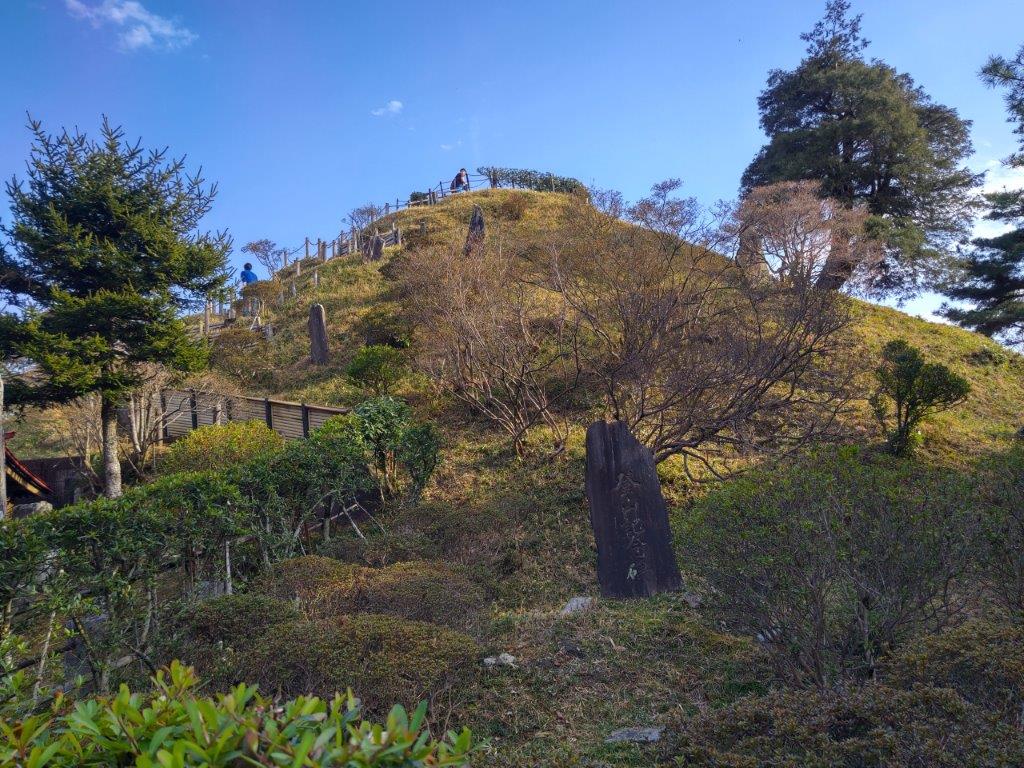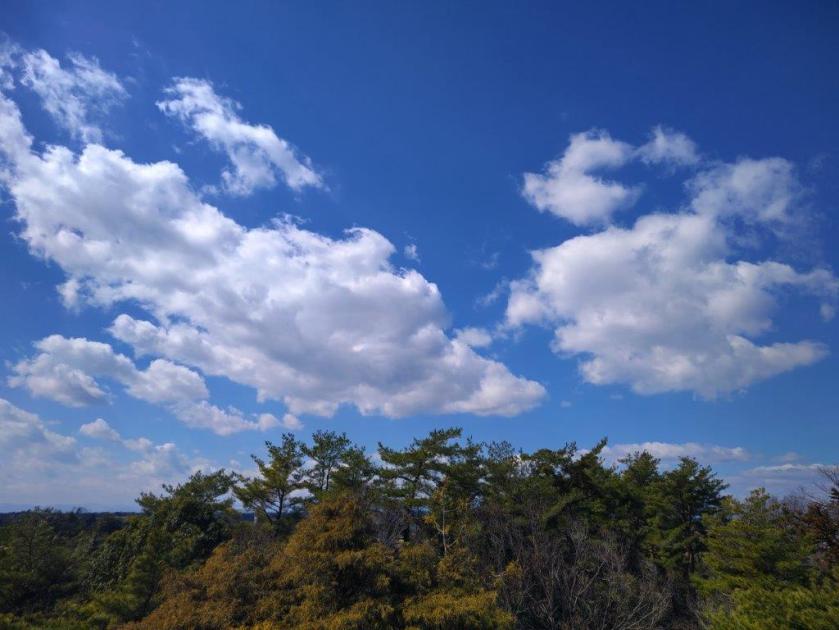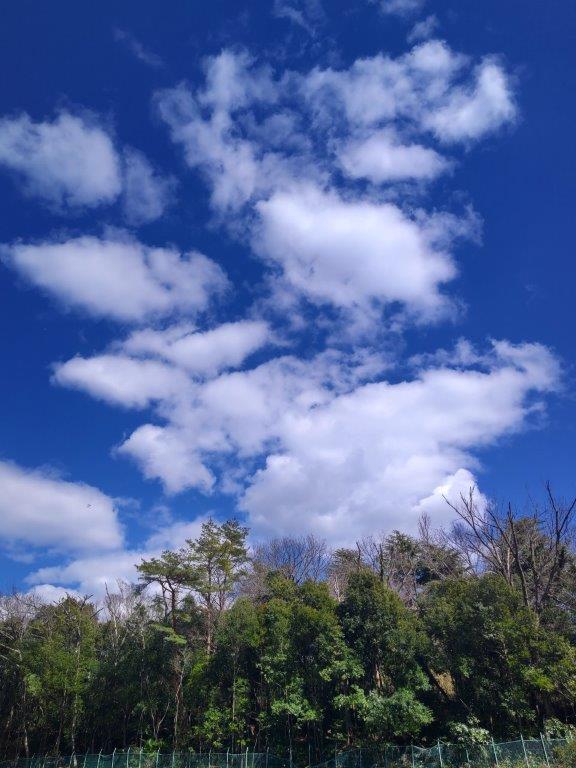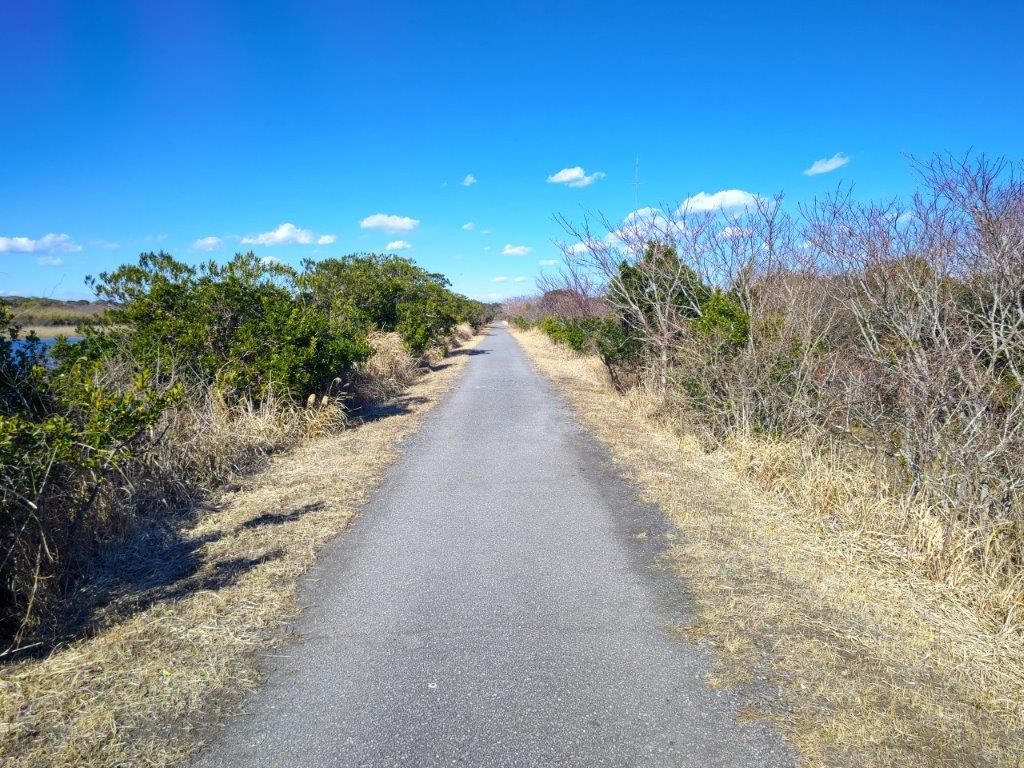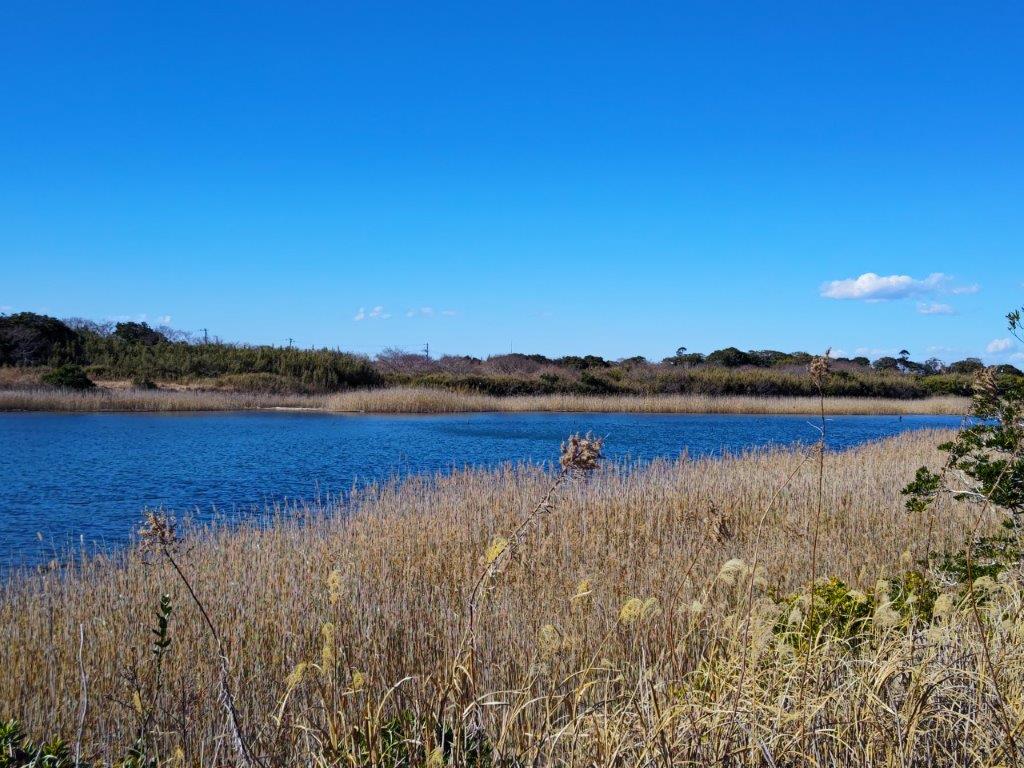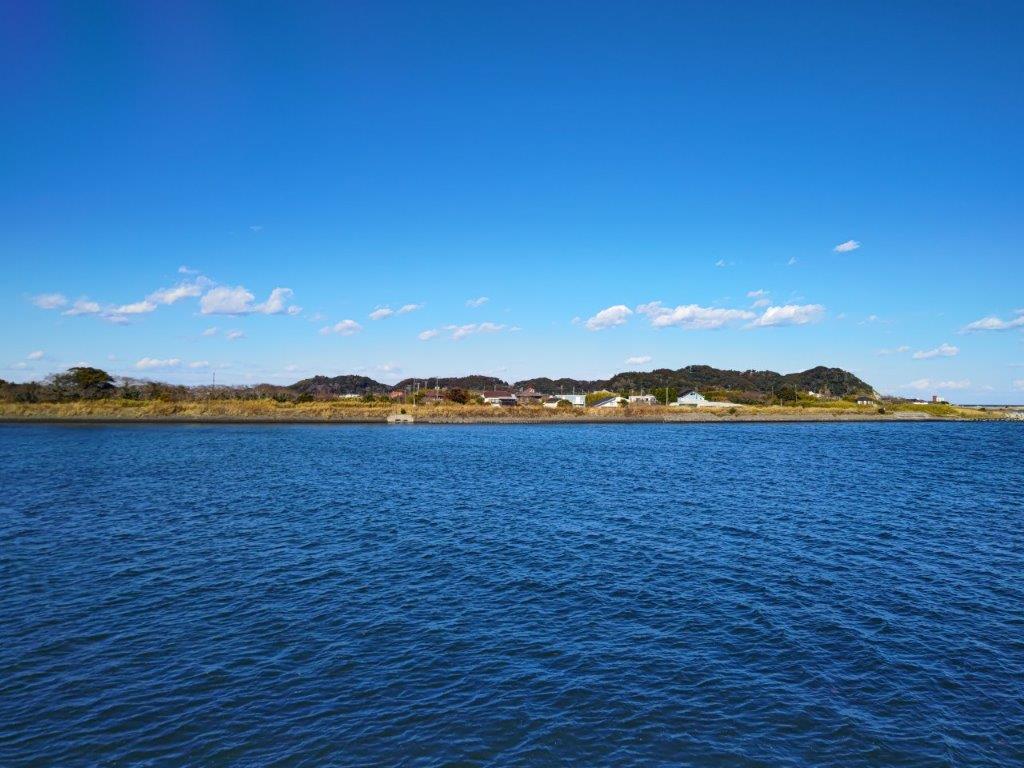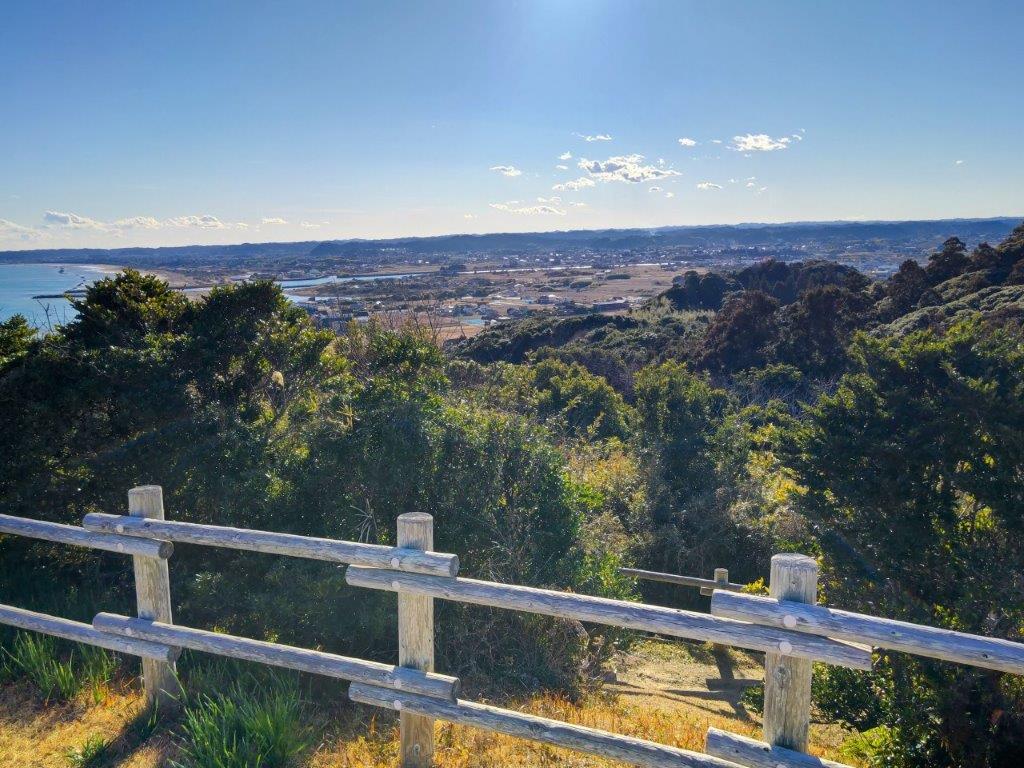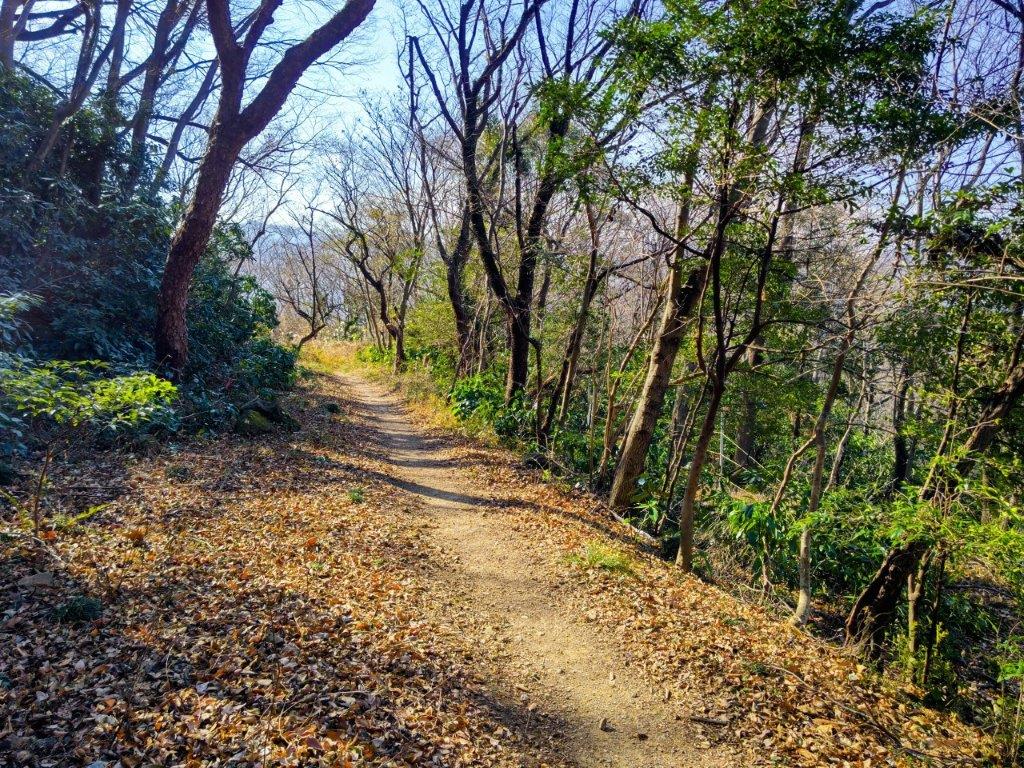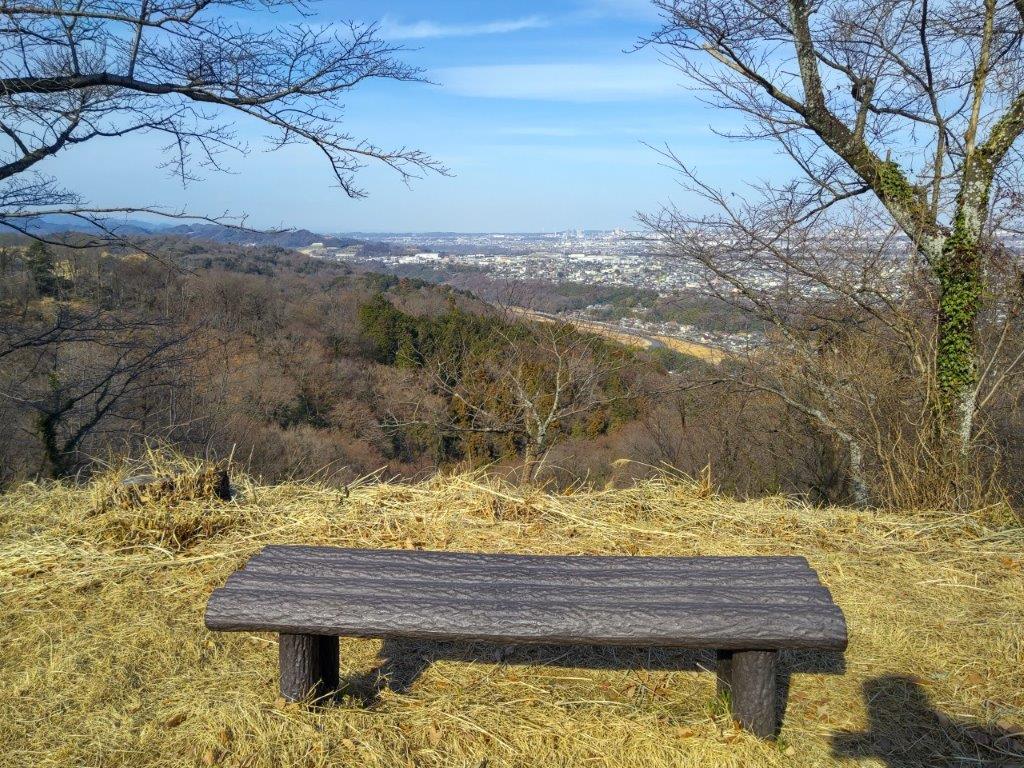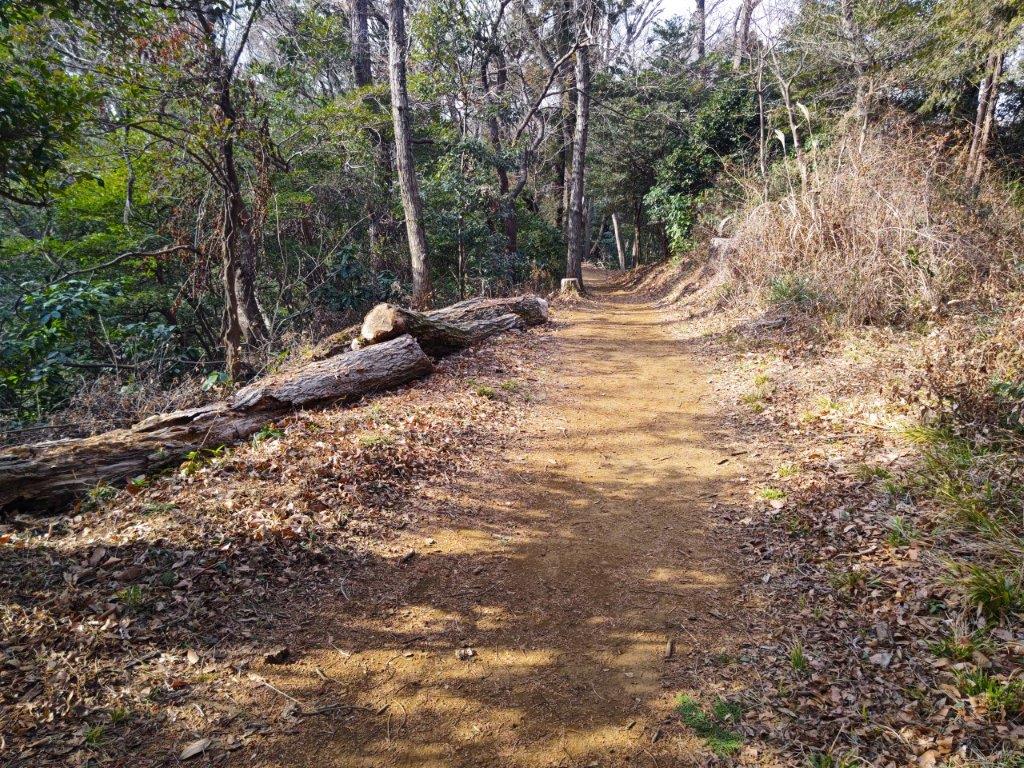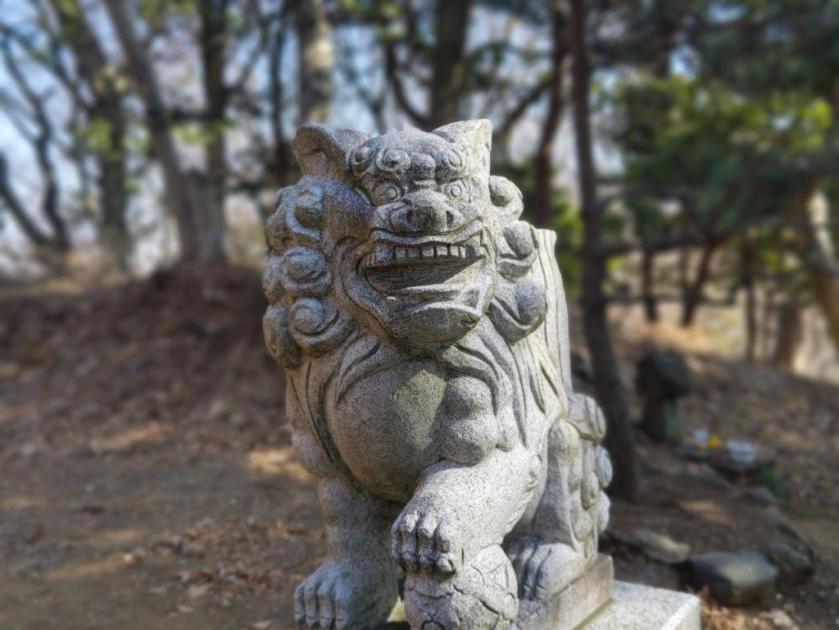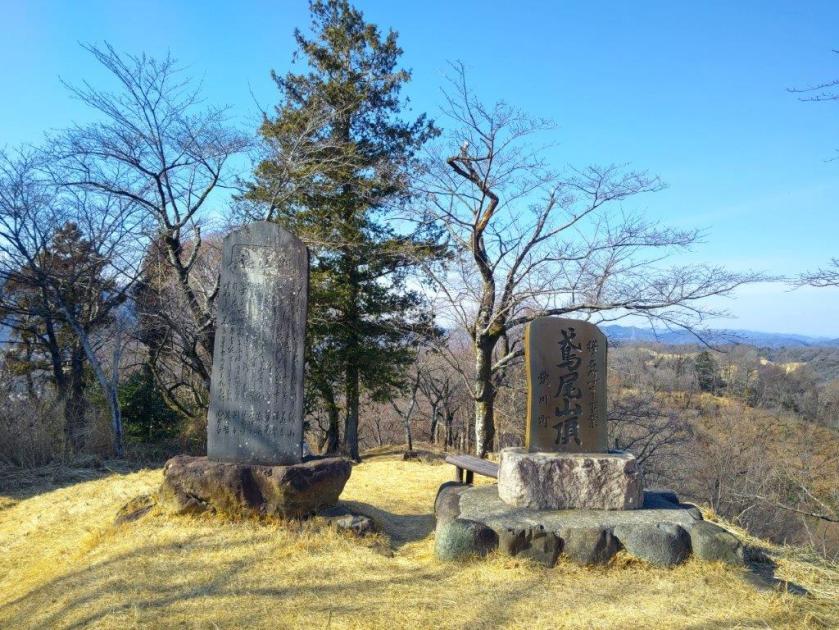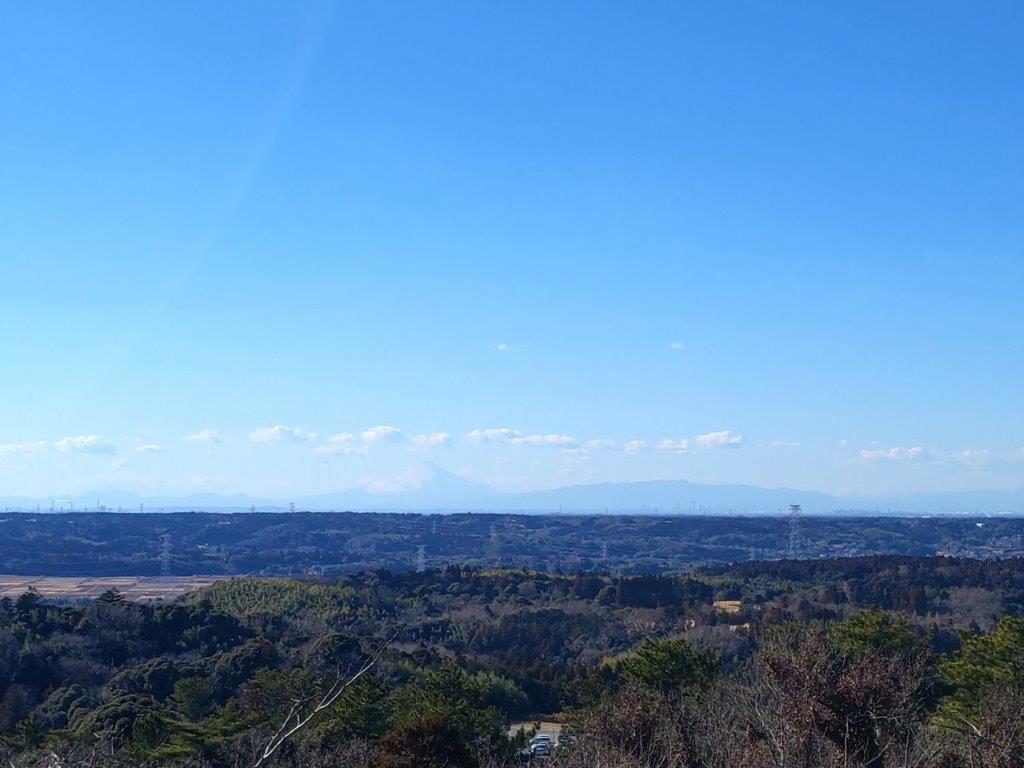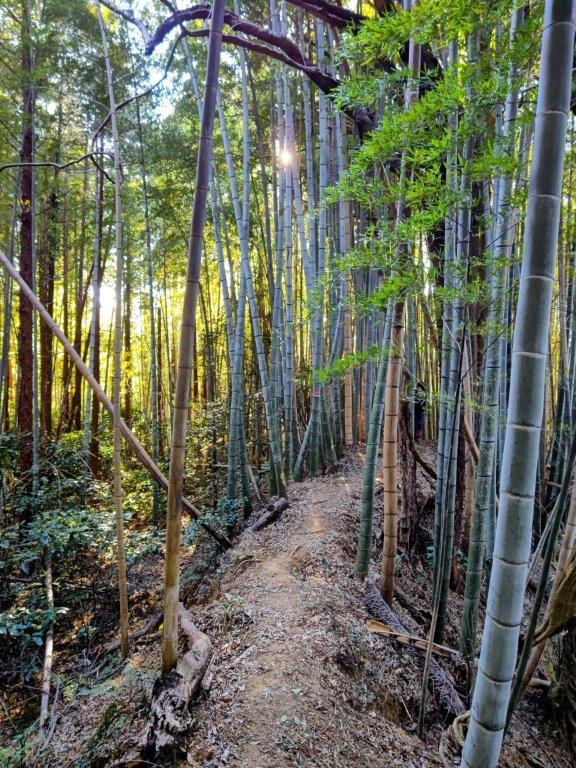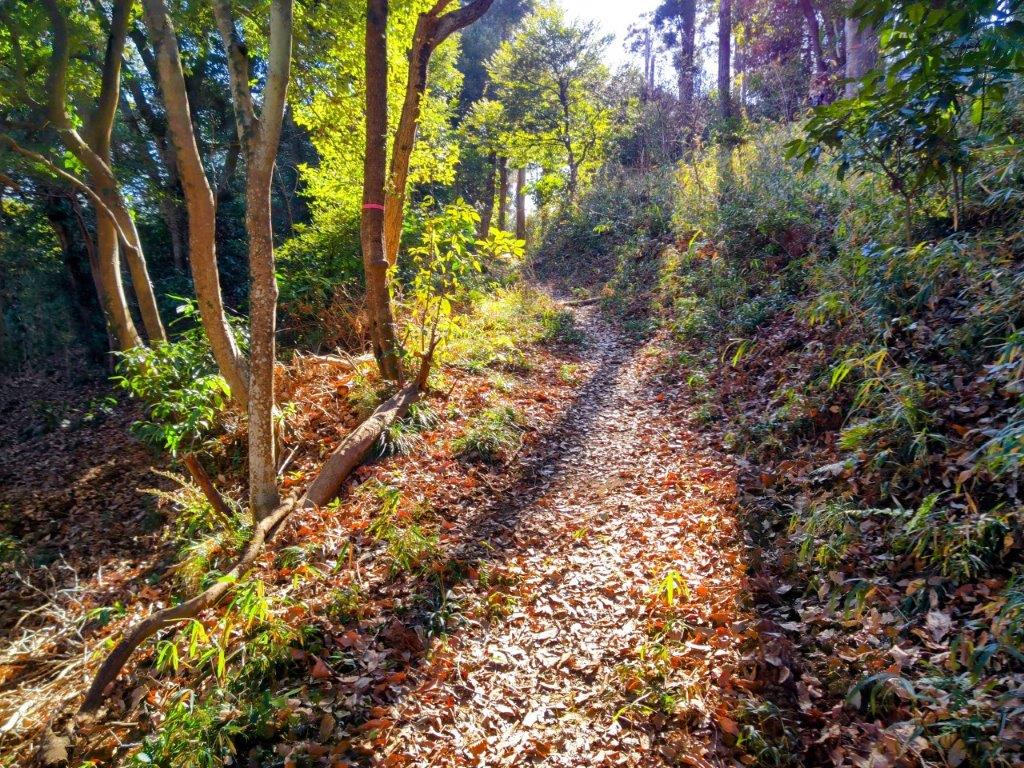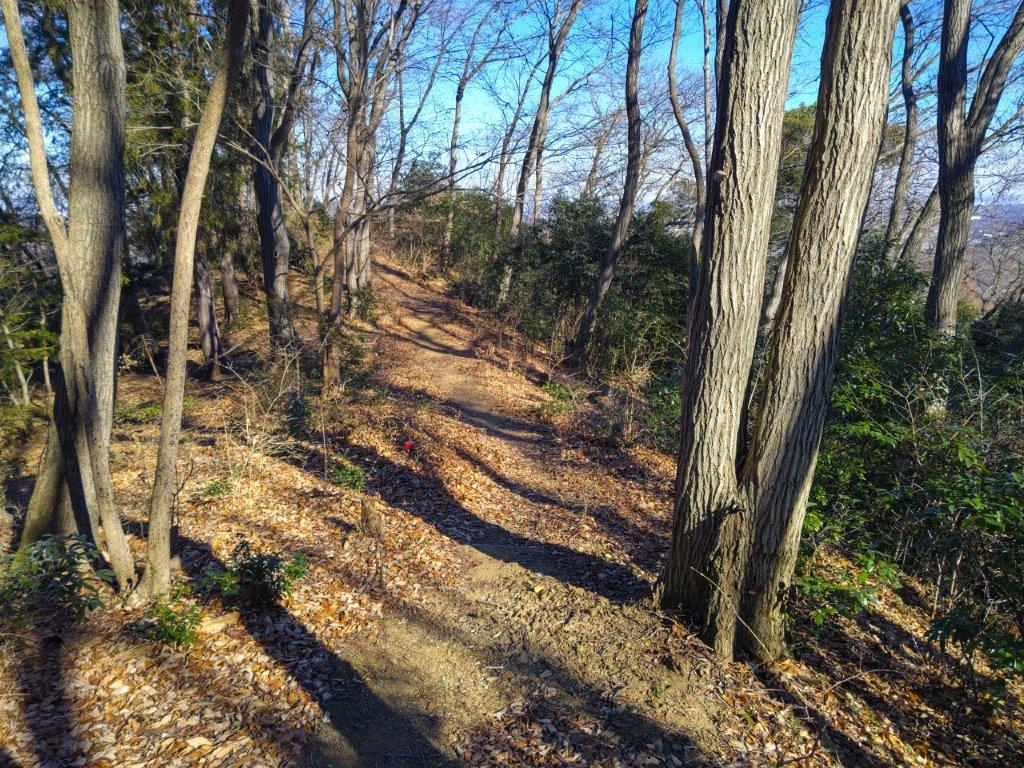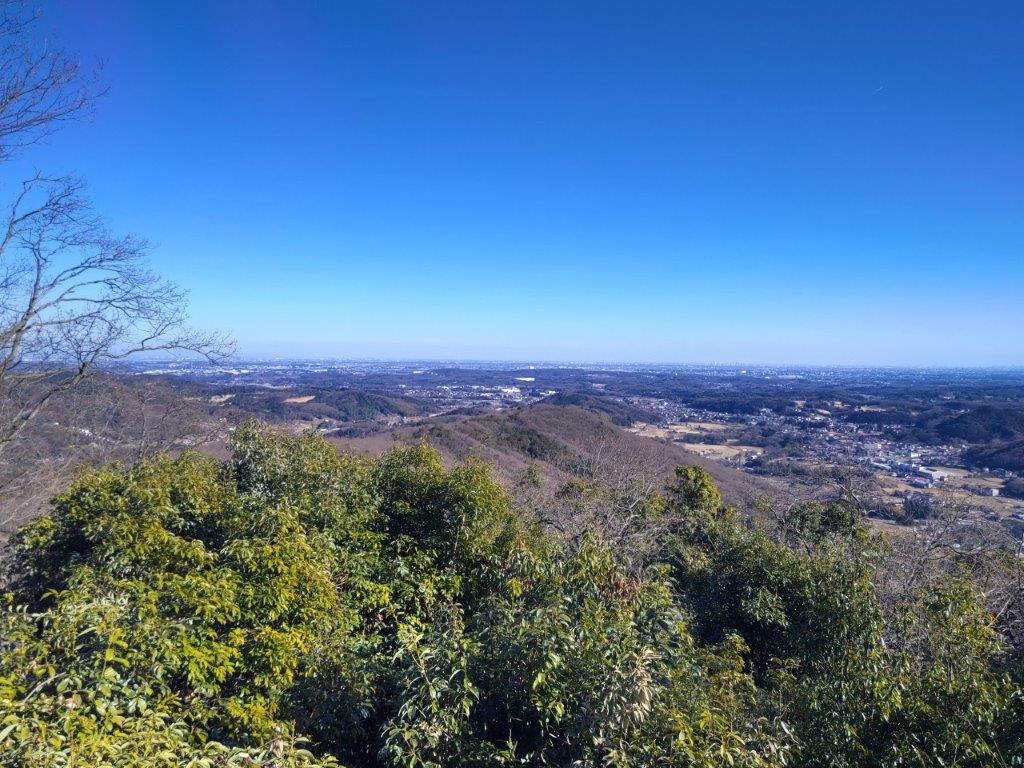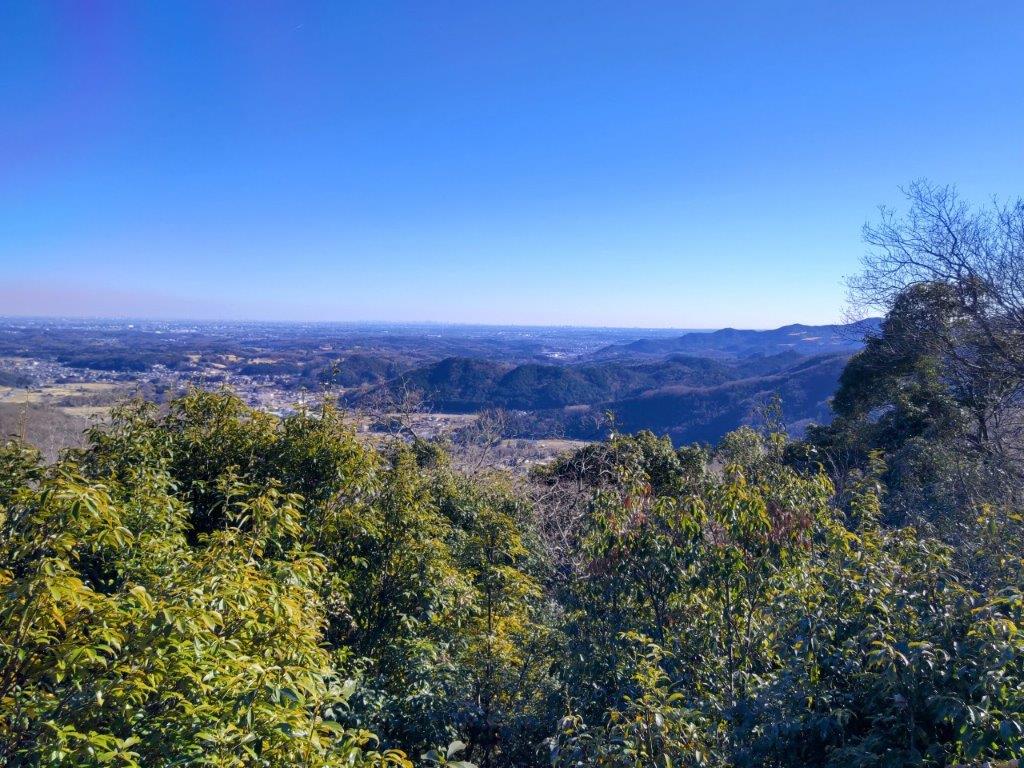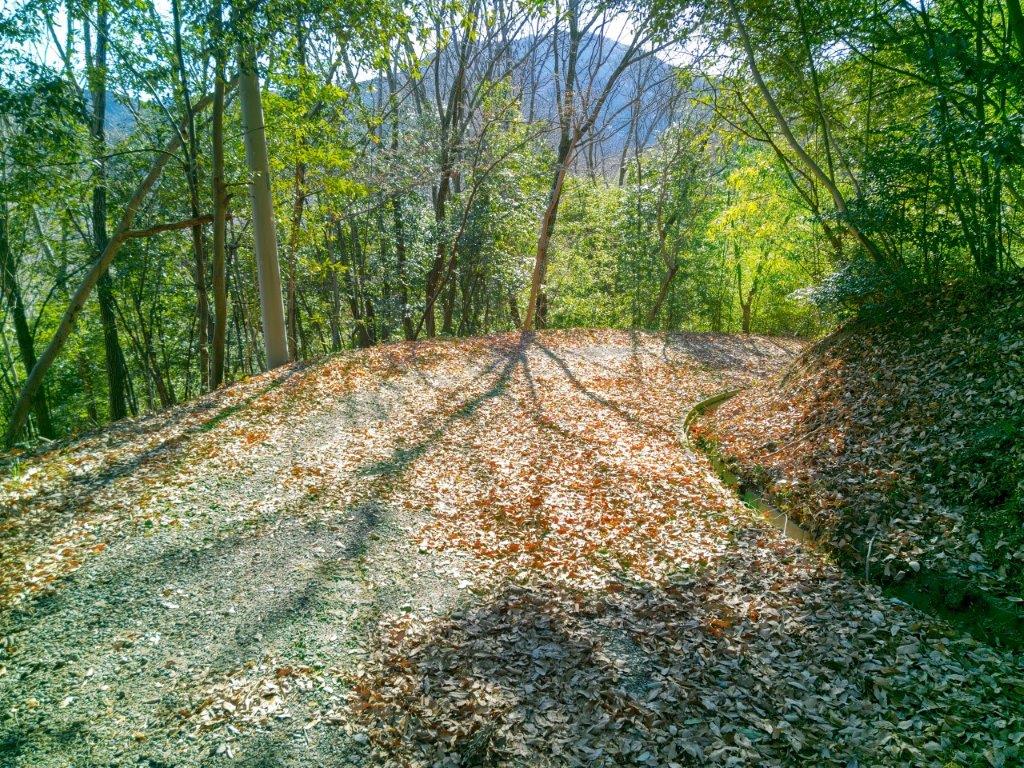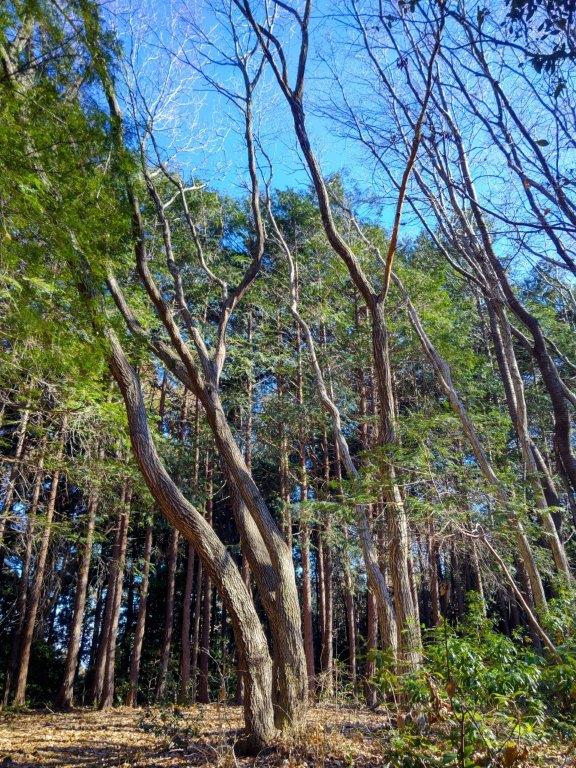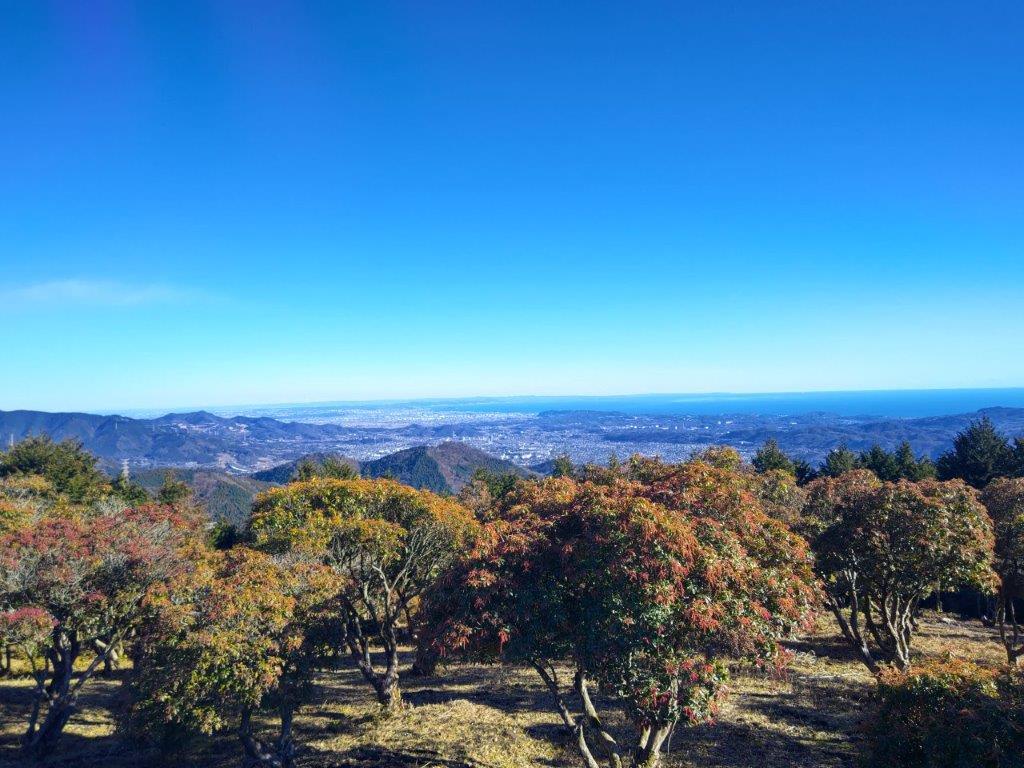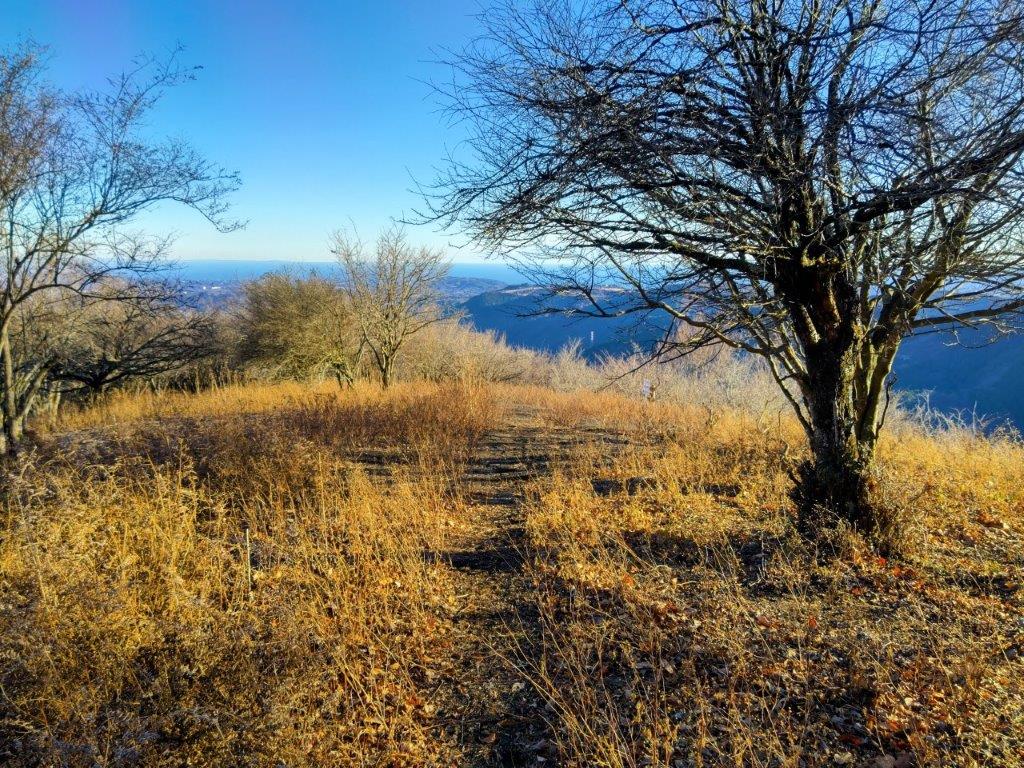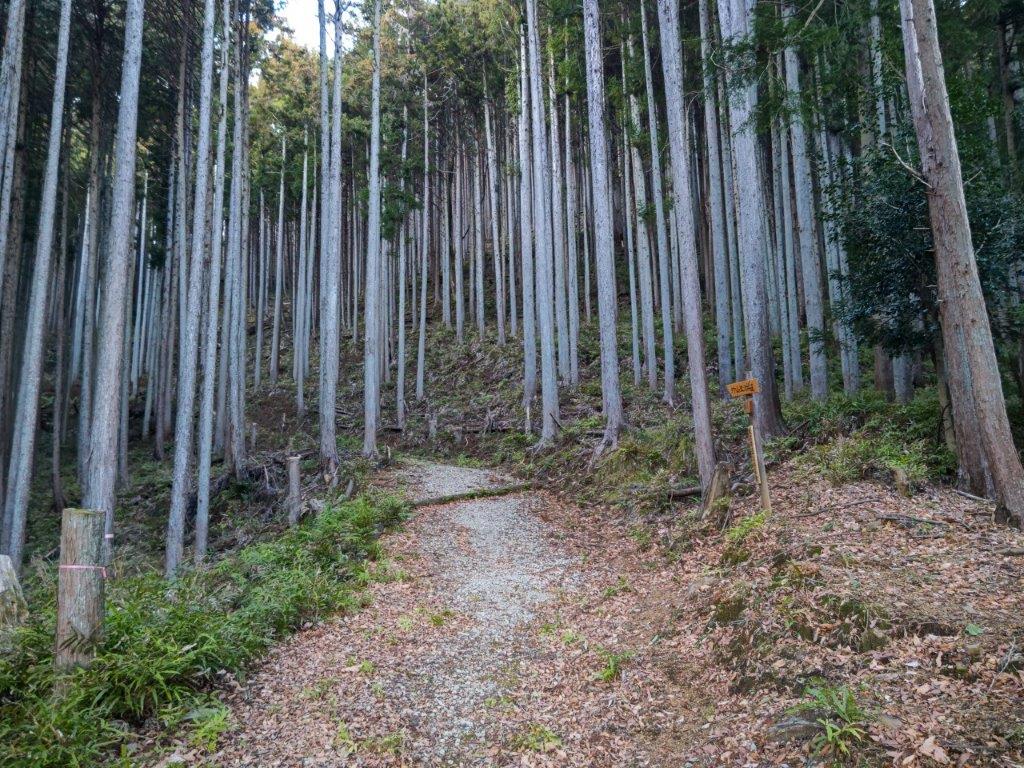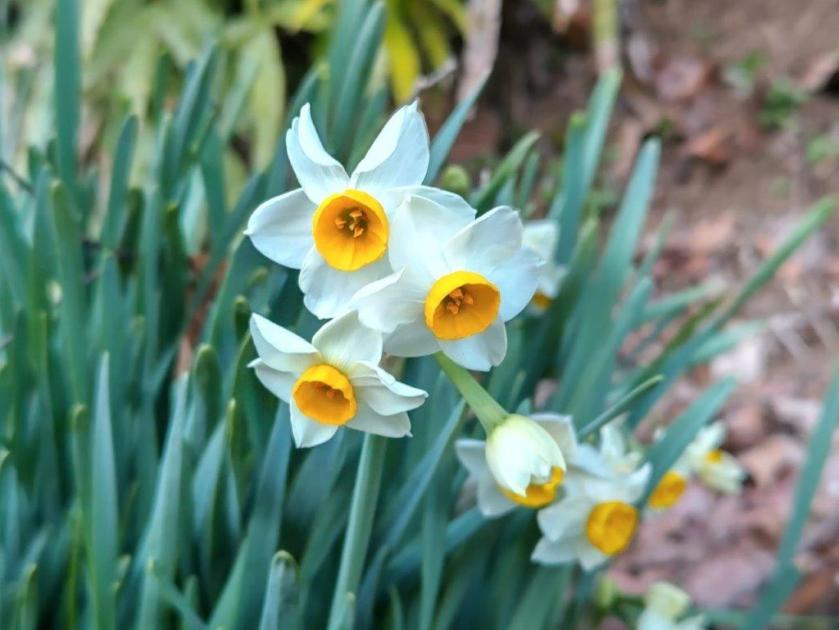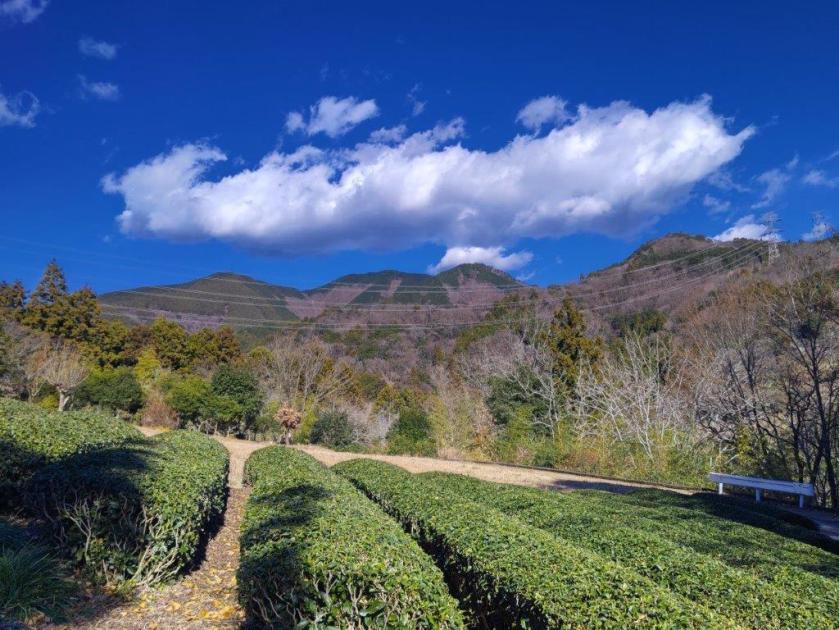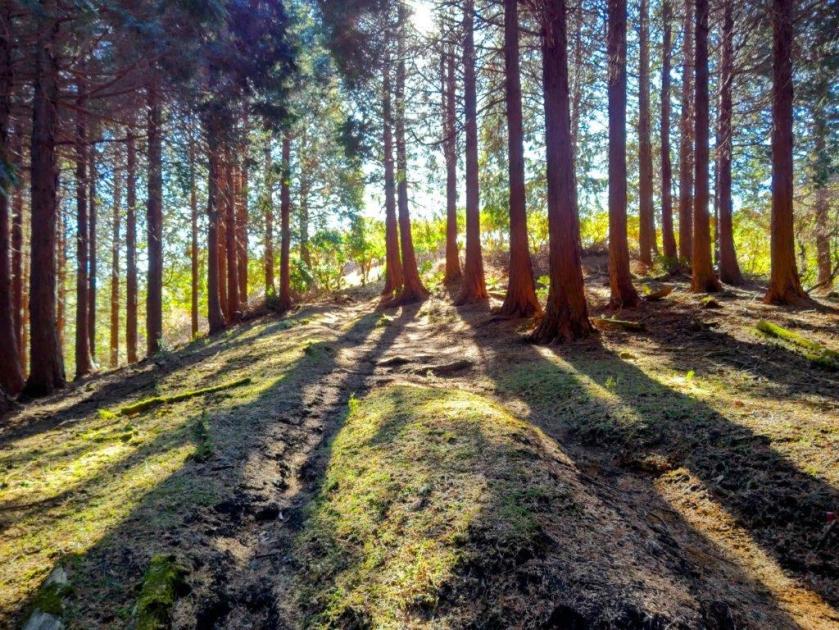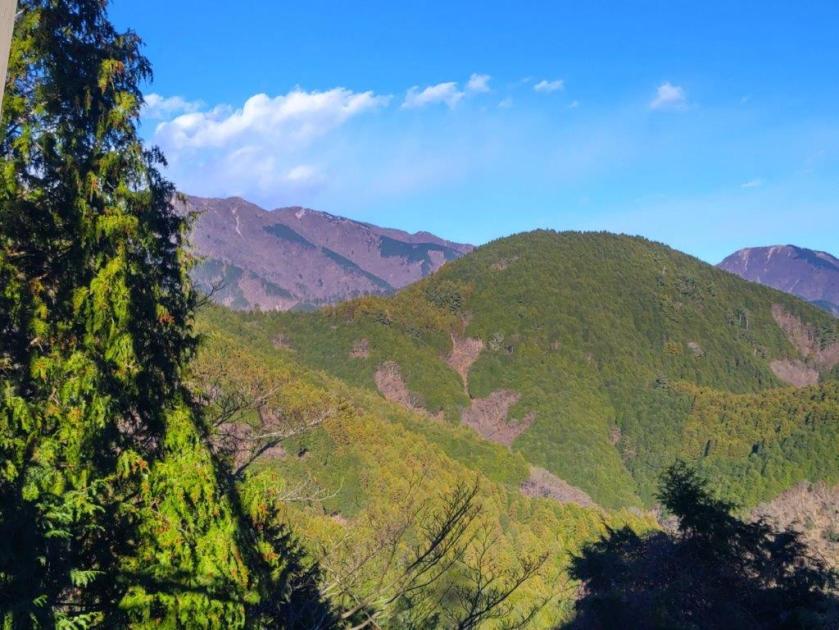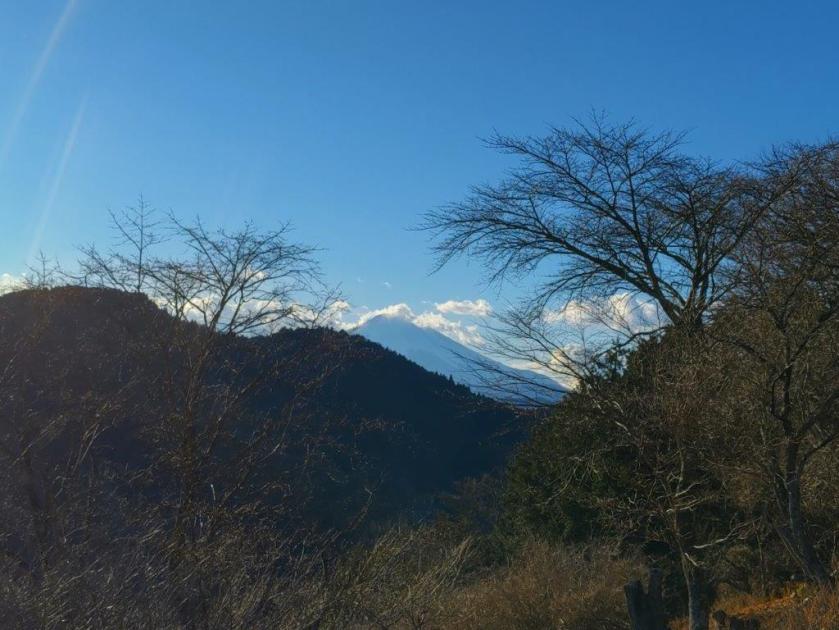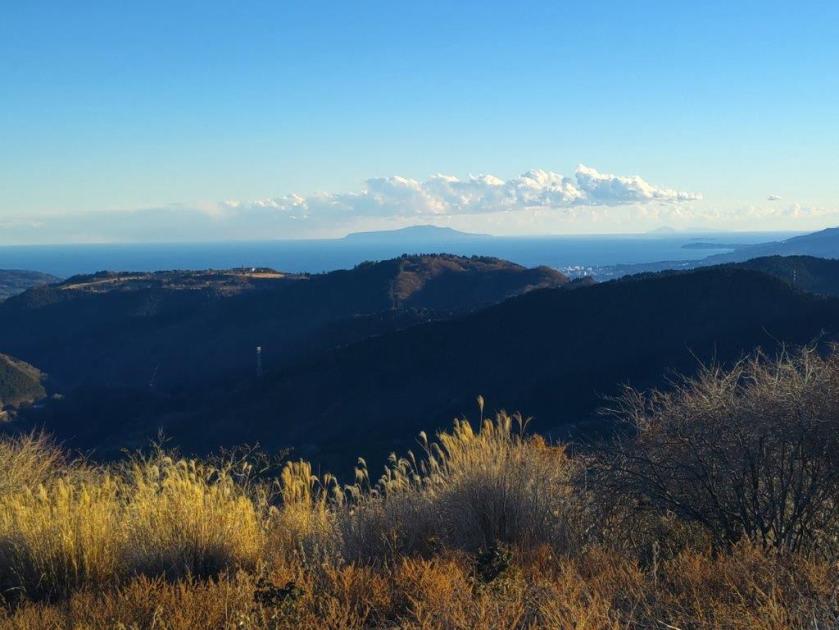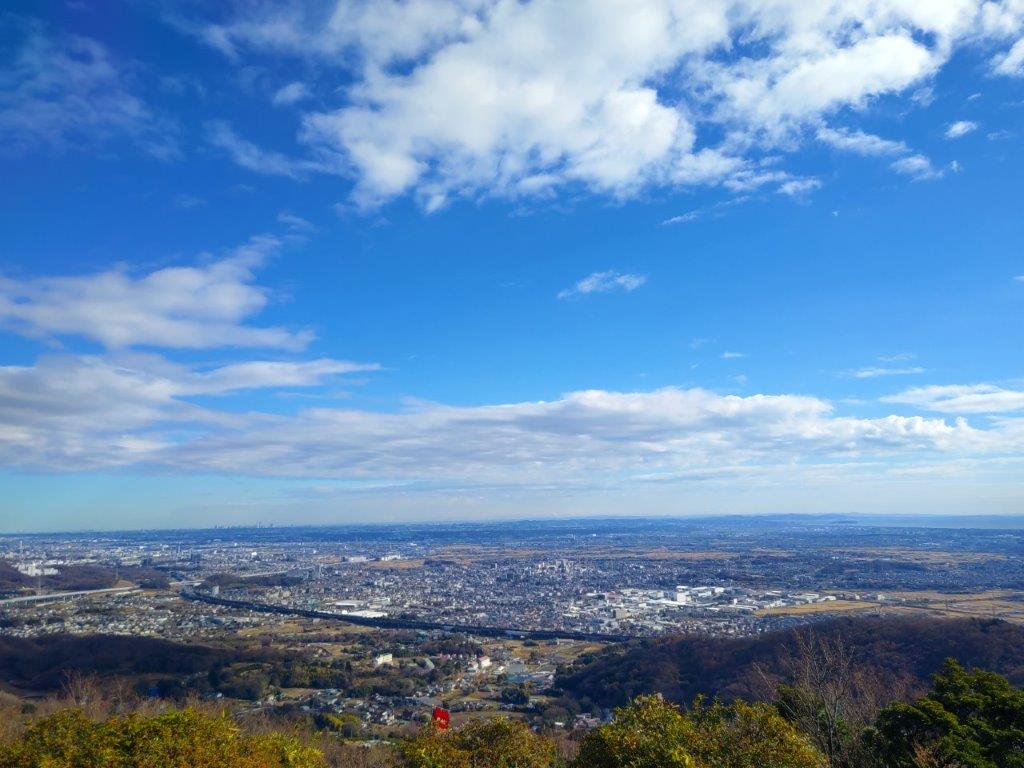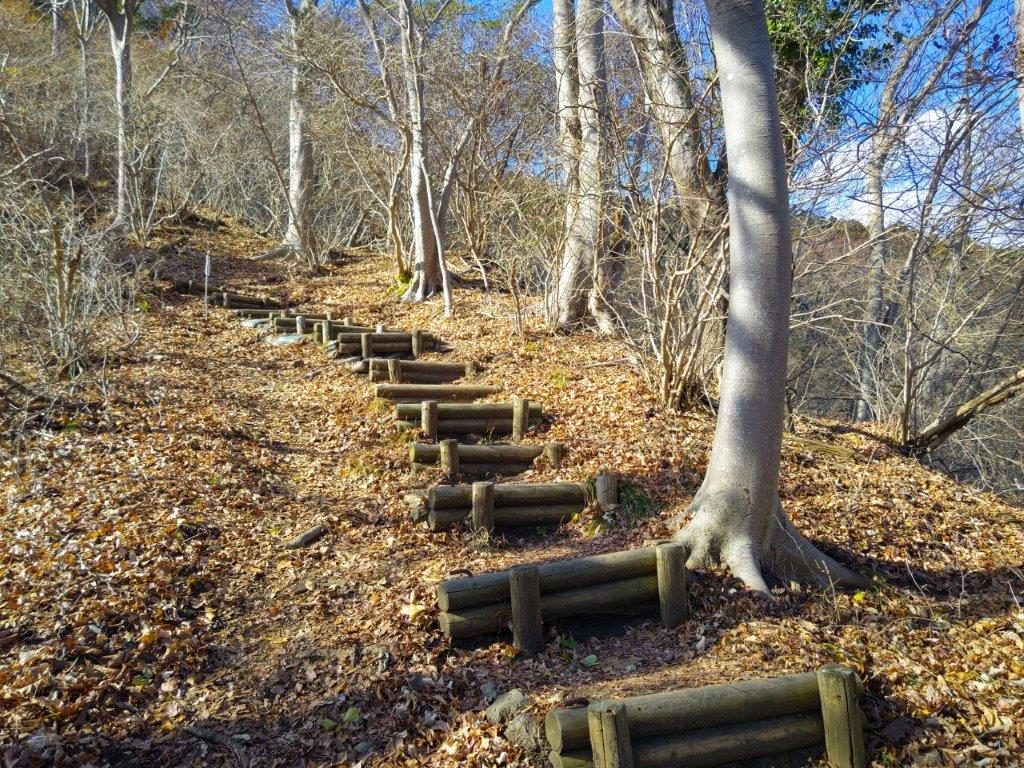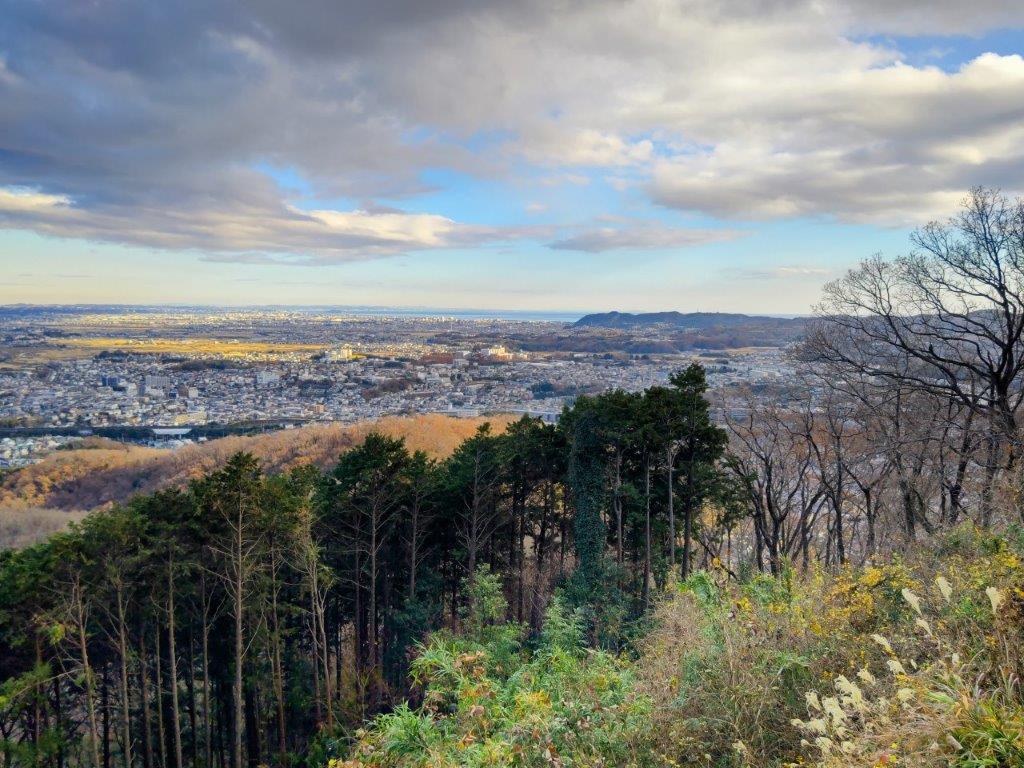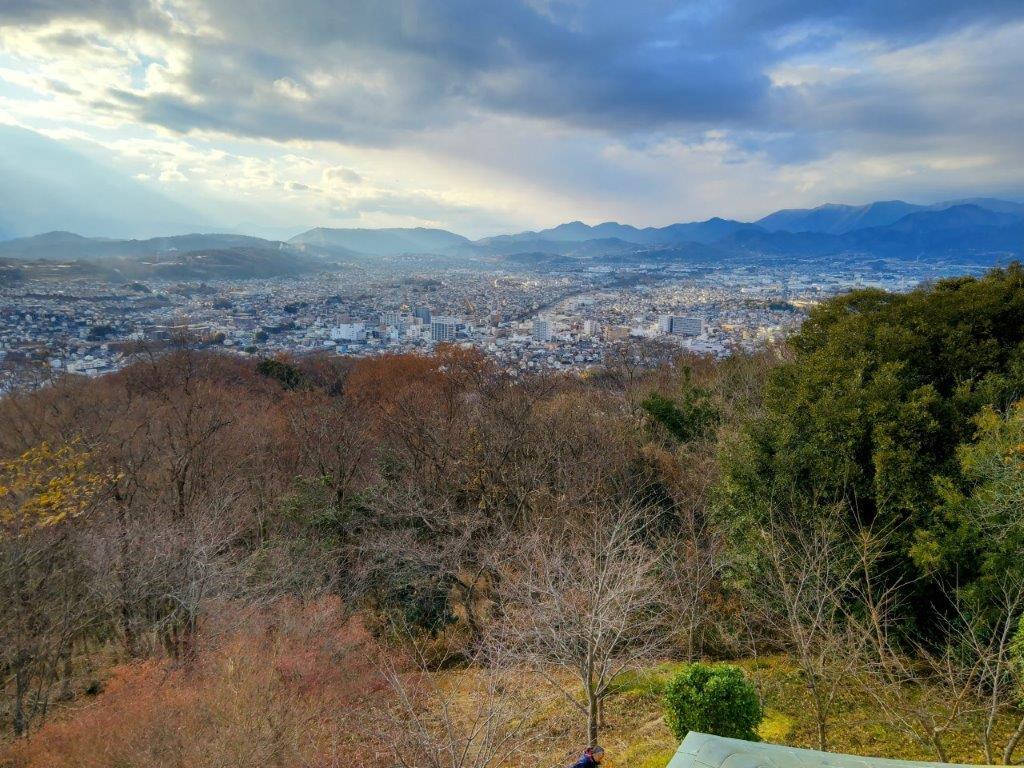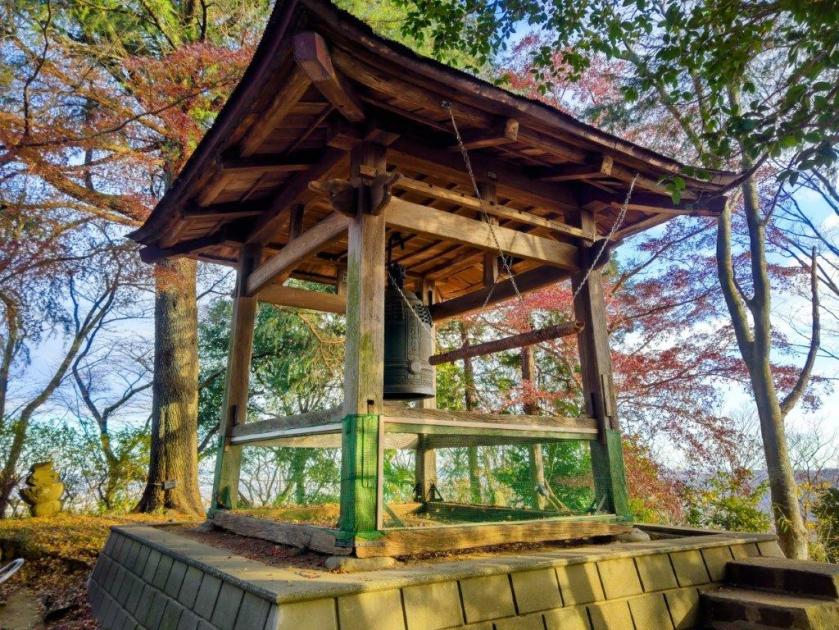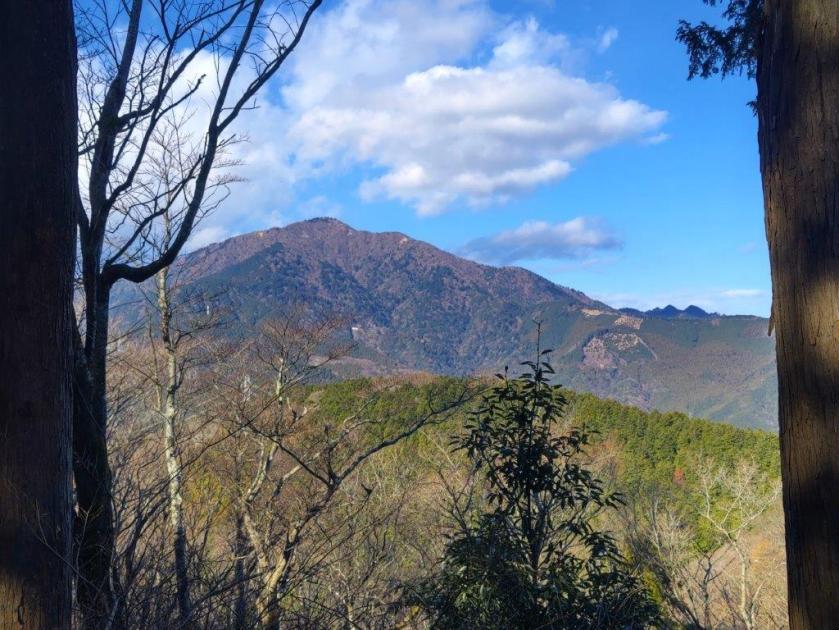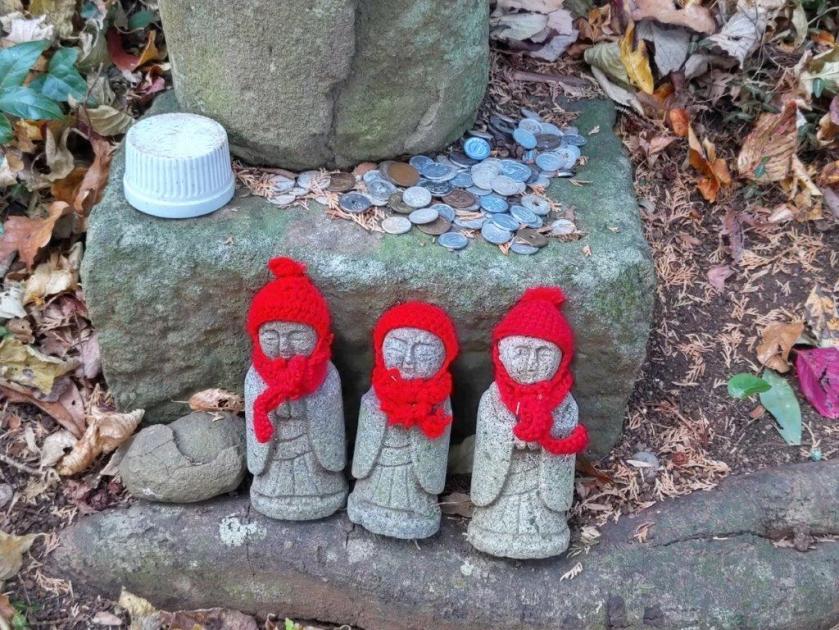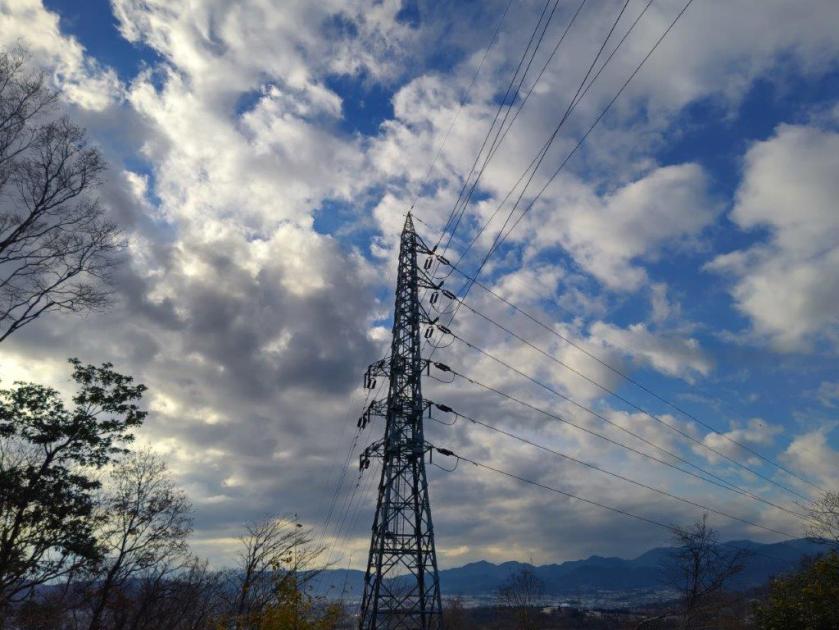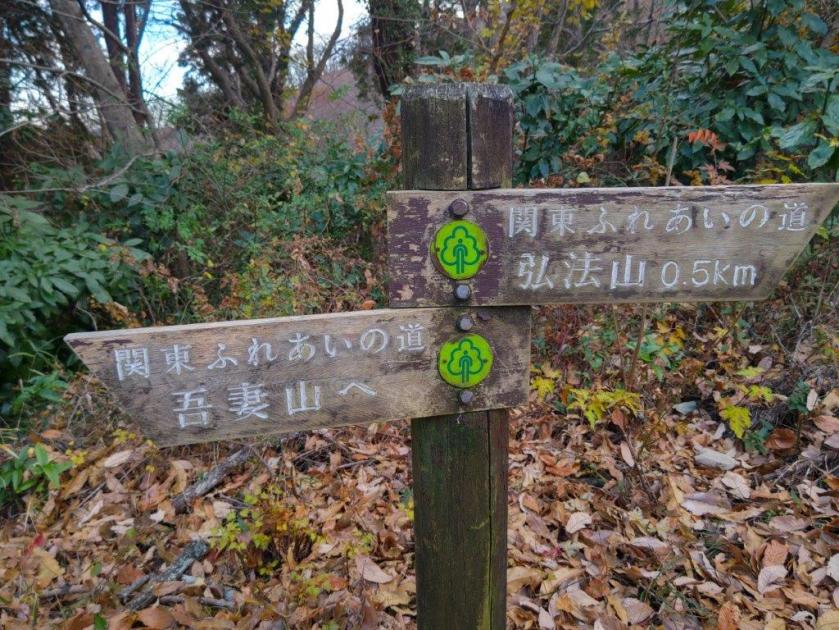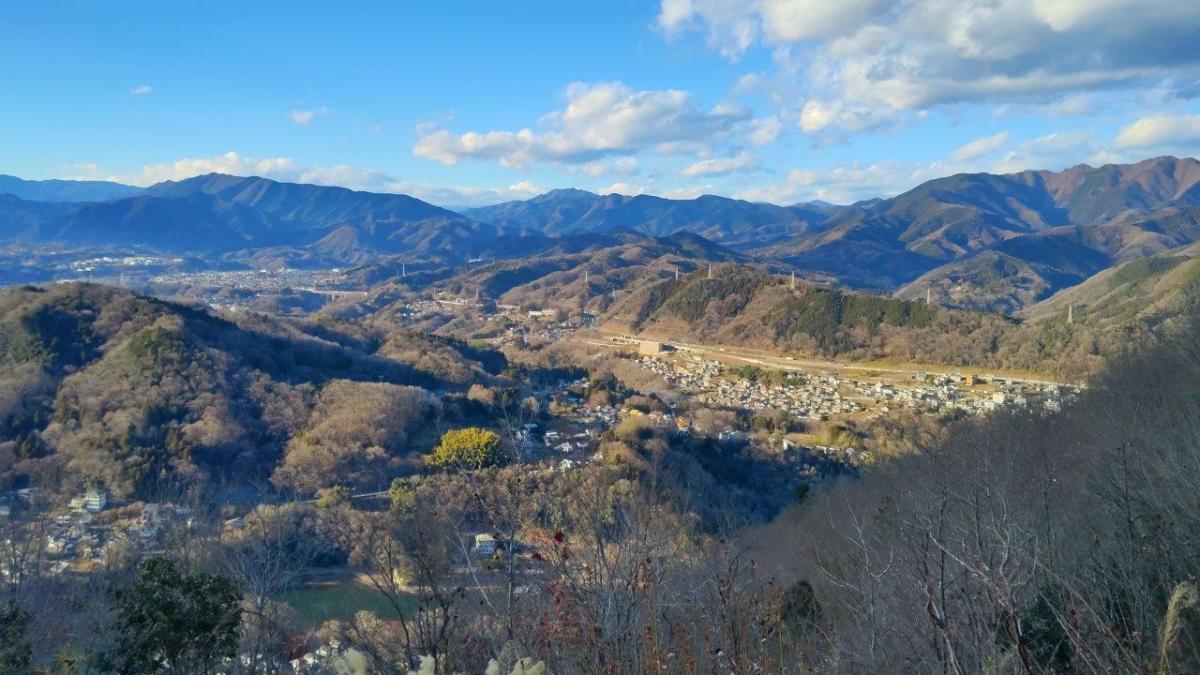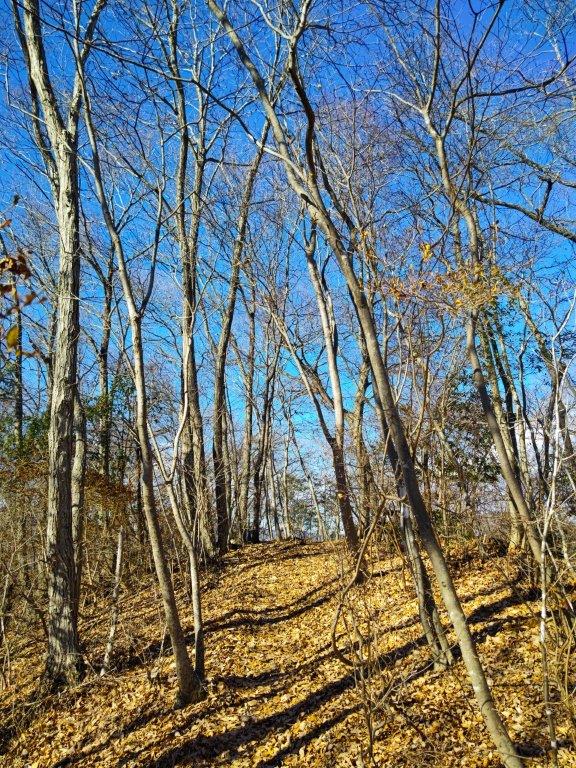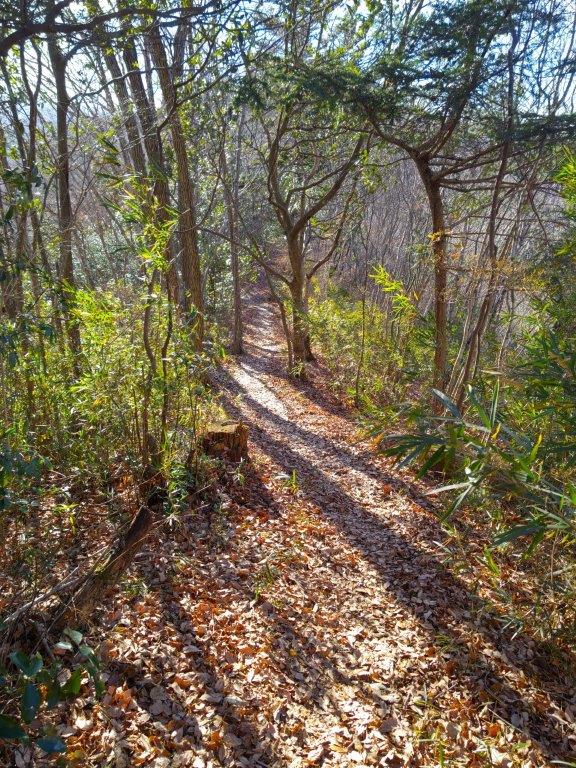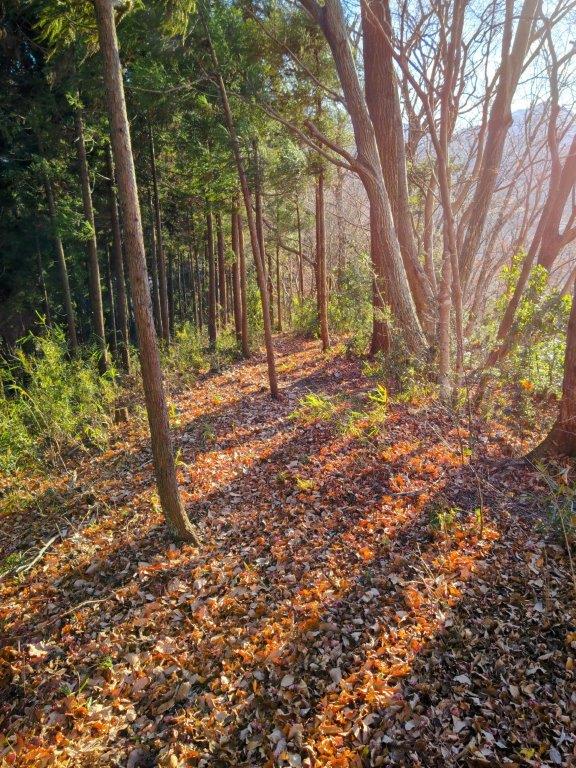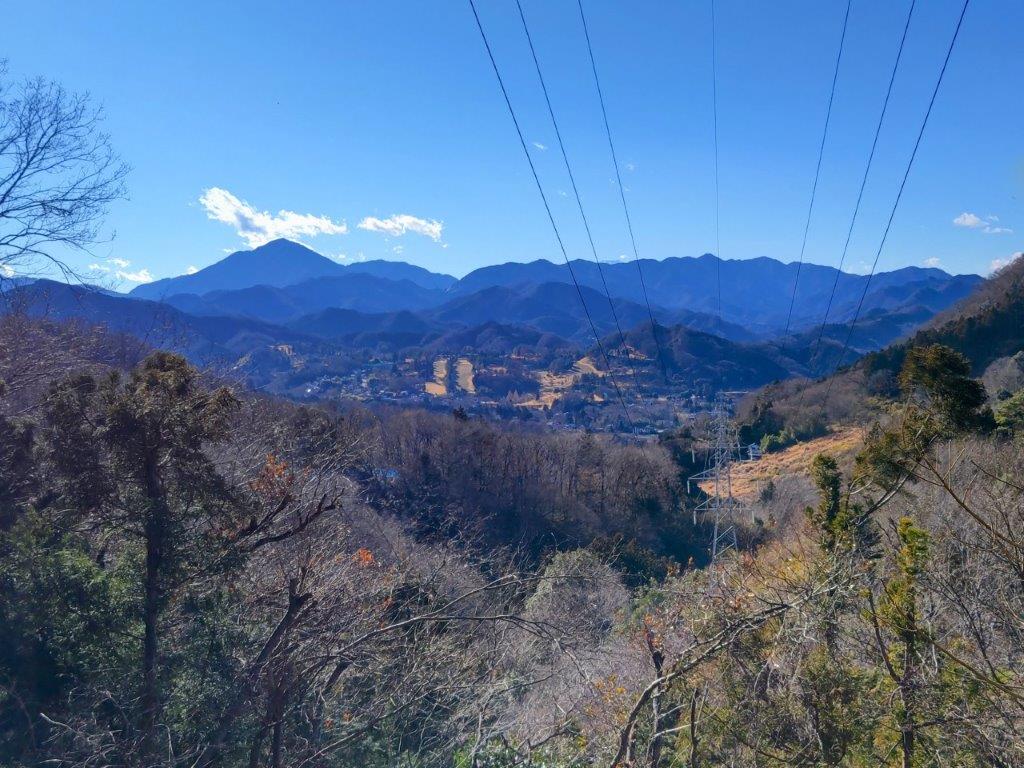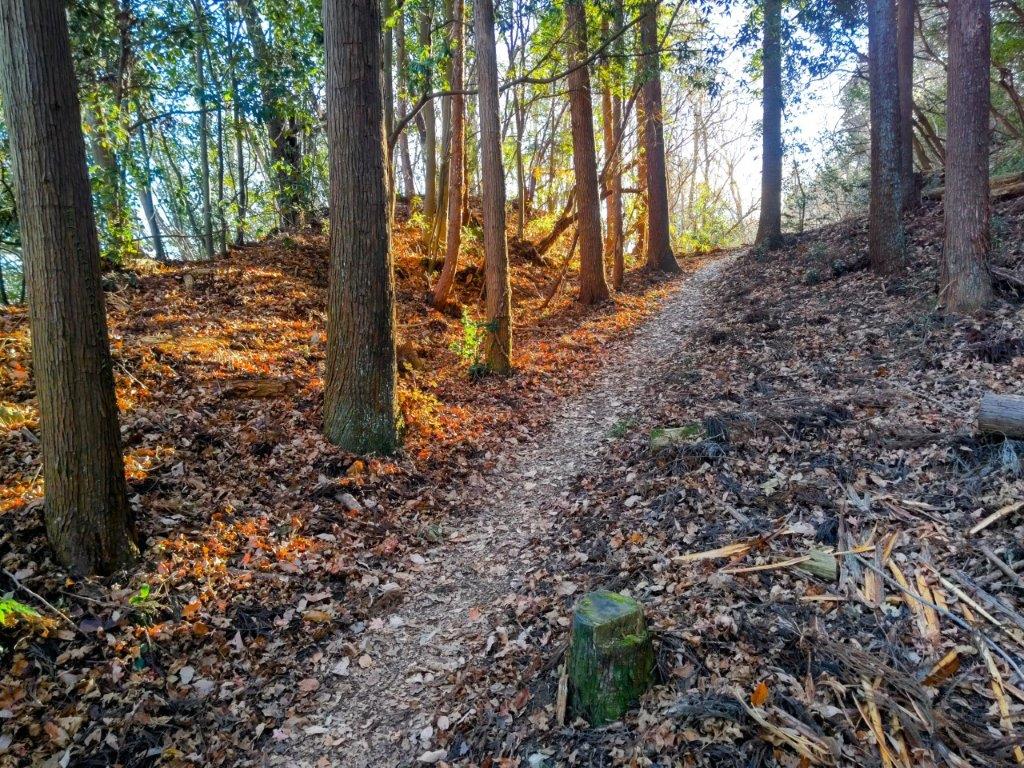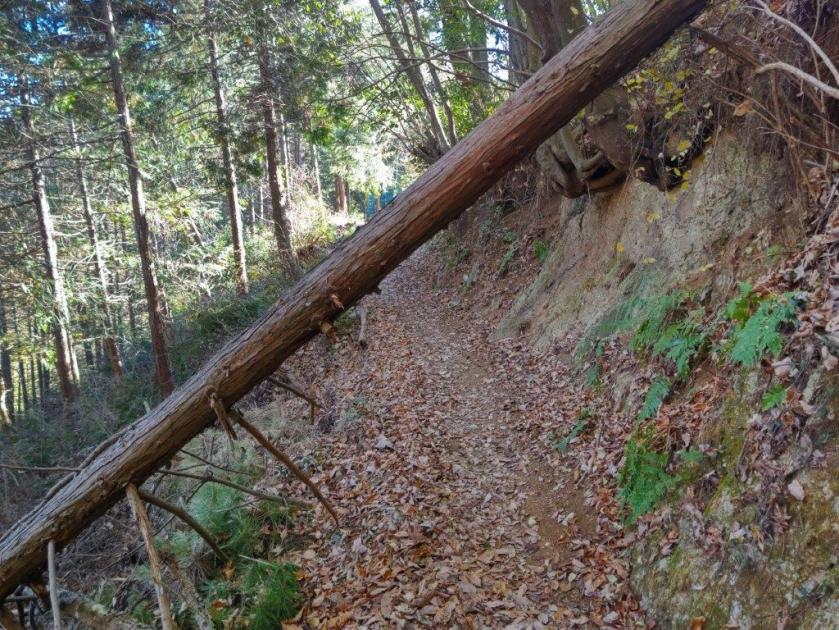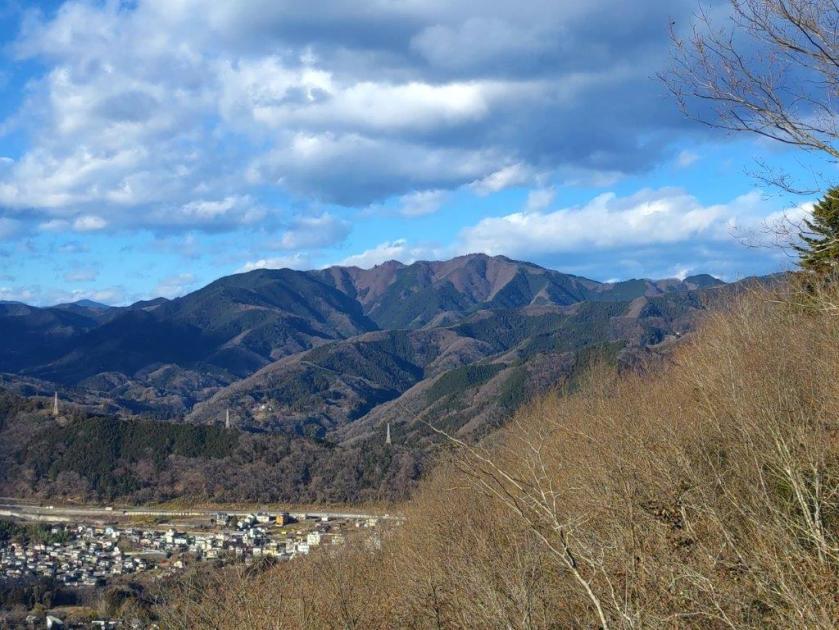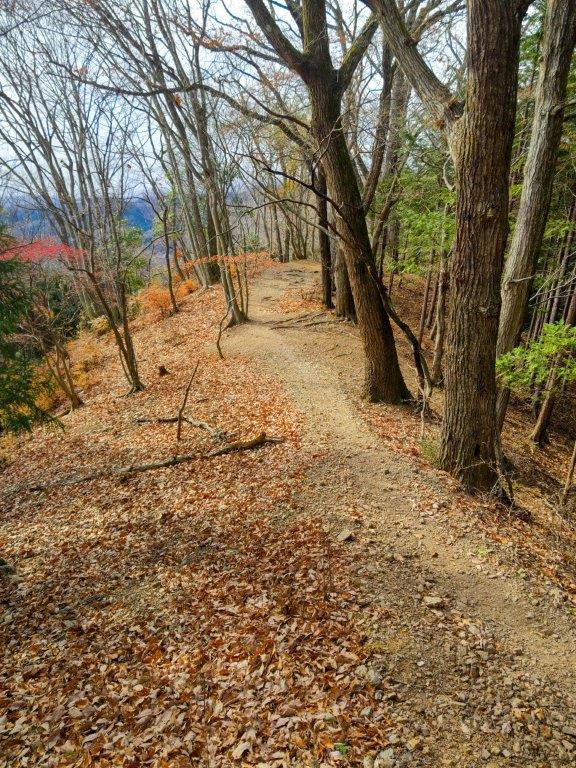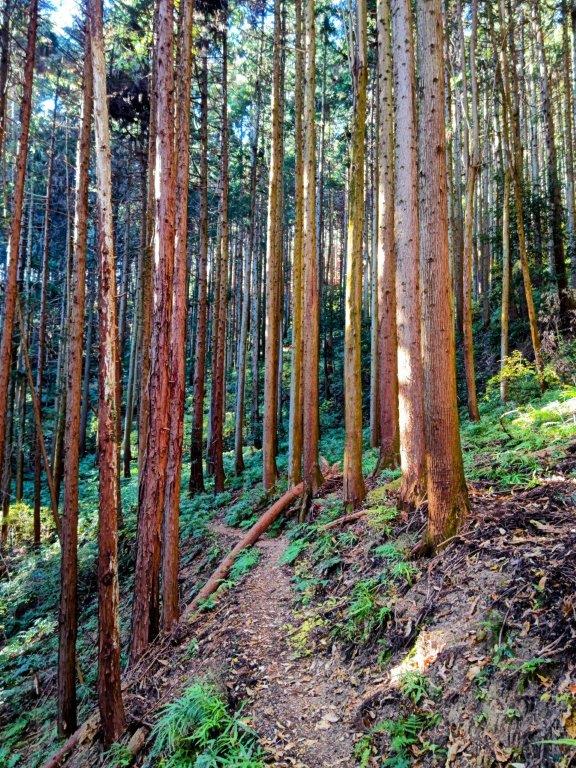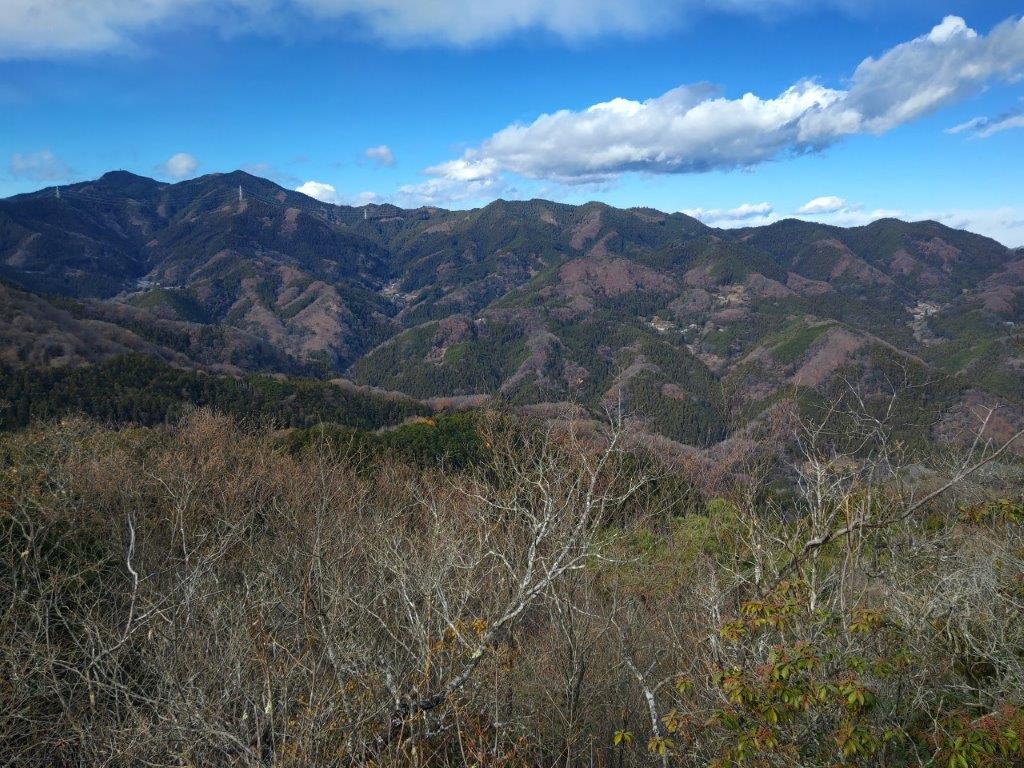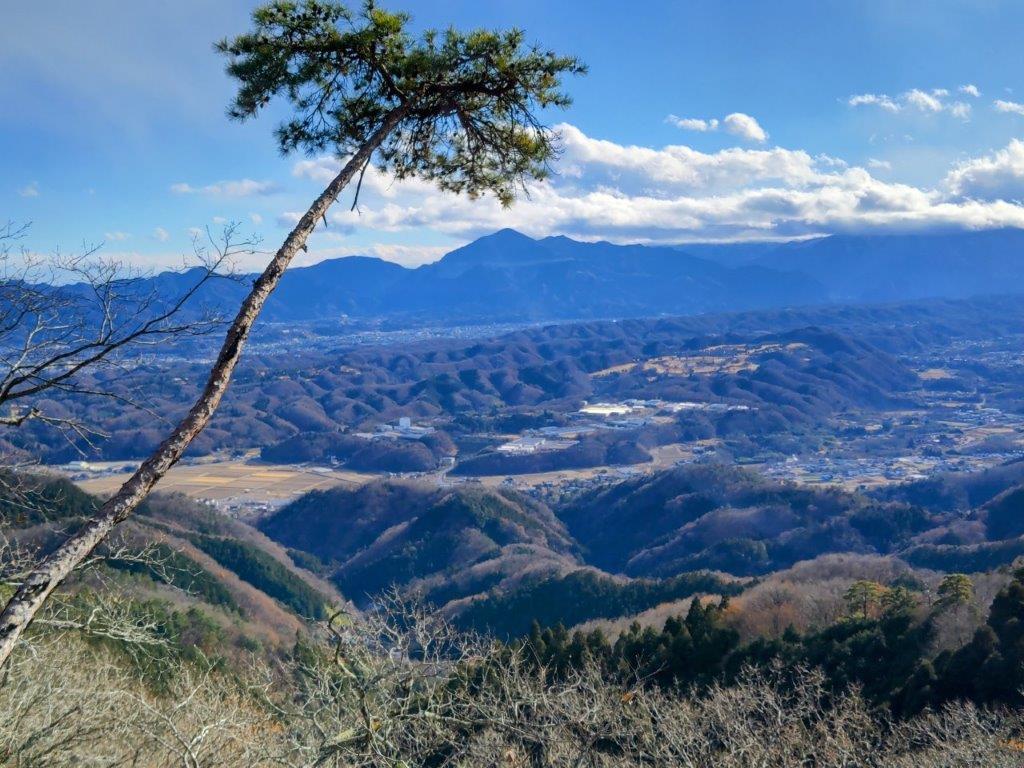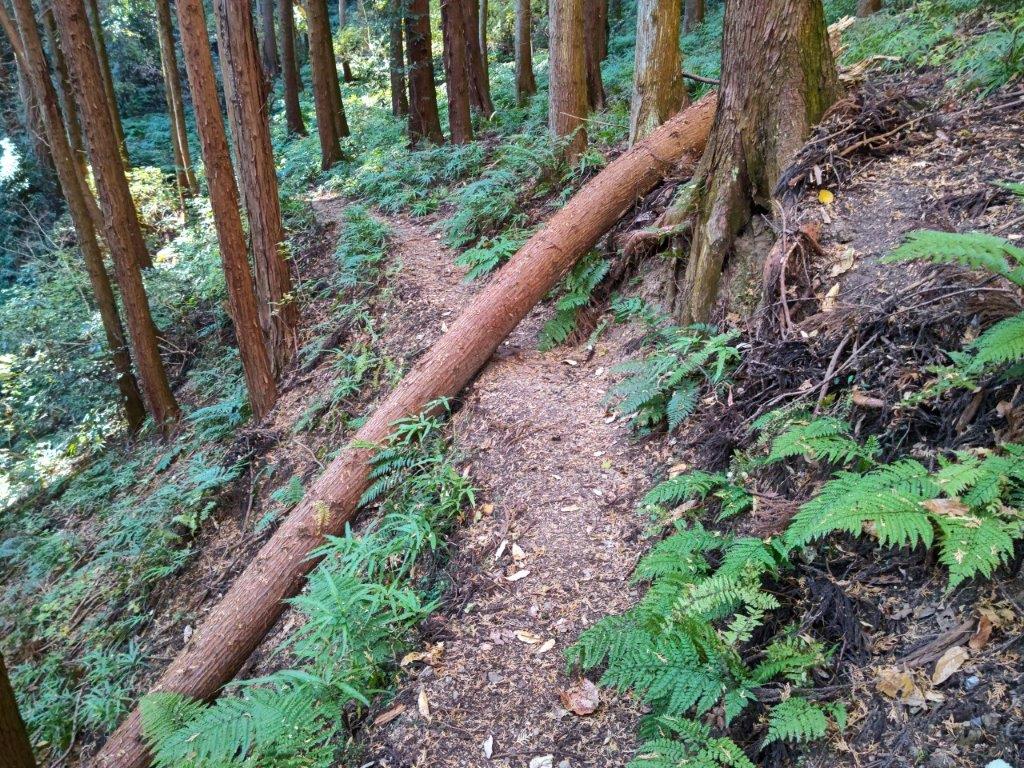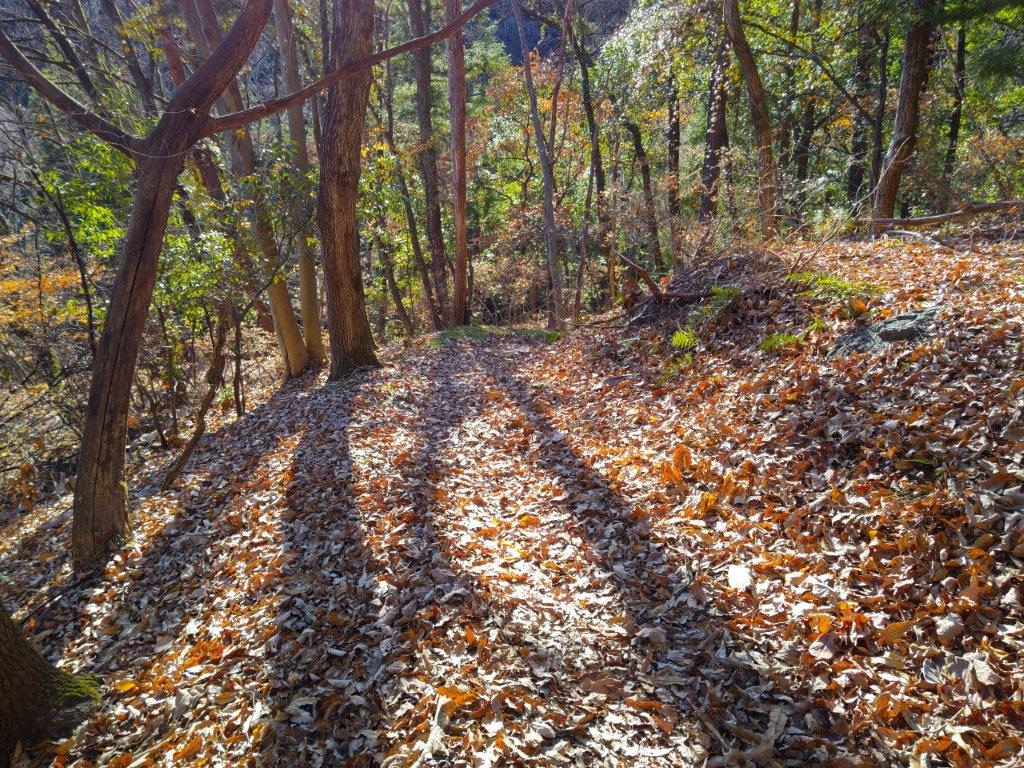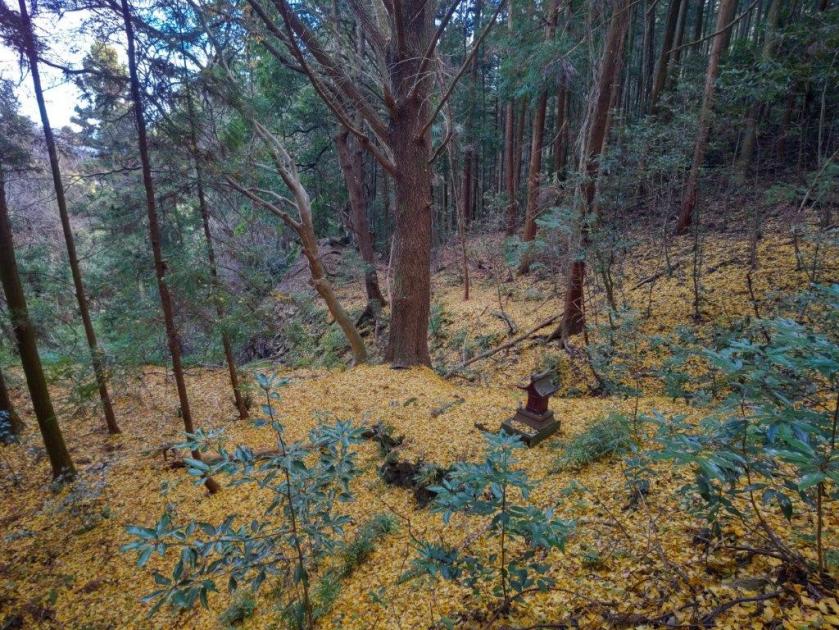
Mt Otsuka (213m), Machida & Hachioji Cities, Tokyo Prefecture, Thursday, March 20 & 27, 2025

I was looking for an easy hike for the Spring Equinox, since I planned to go hiking again a few days later on the weekend. It had snowed the day before in the mountains around Tokyo so I decided to explore some more parks inside the capital, which I hoped were mostly snow-free. Looking at my map, I noticed that Machida seemed to have a lot of green areas so it felt like a good place to start. I also saw that many trails started and ended at train stations so it seemed relatively easy to make a station to station hike.

For subscribers, read this Post on Hiking Around Tokyo for a better viewing experience and the latest updates

Find Japan Hiking Maps on Japanwilds and subscribe to our newsletter

To get to the start of the hike, I’d ride the Chuo line from Shinjuku to Hachioji station, enjoying the comfort of the newly added green (1st class) cars. There, I’d transfer to the JR Yokohama line and ride 3 stops to Aihara station. I’d end at Naganuma station on the Keio line which, after a transfer to the express at Takahatafudo station, I could ride all the way back to Shinjuku. Although Aihara is geographically far from Machida station (13km), it is connected to Machida city via a narrow neck extending westwards.

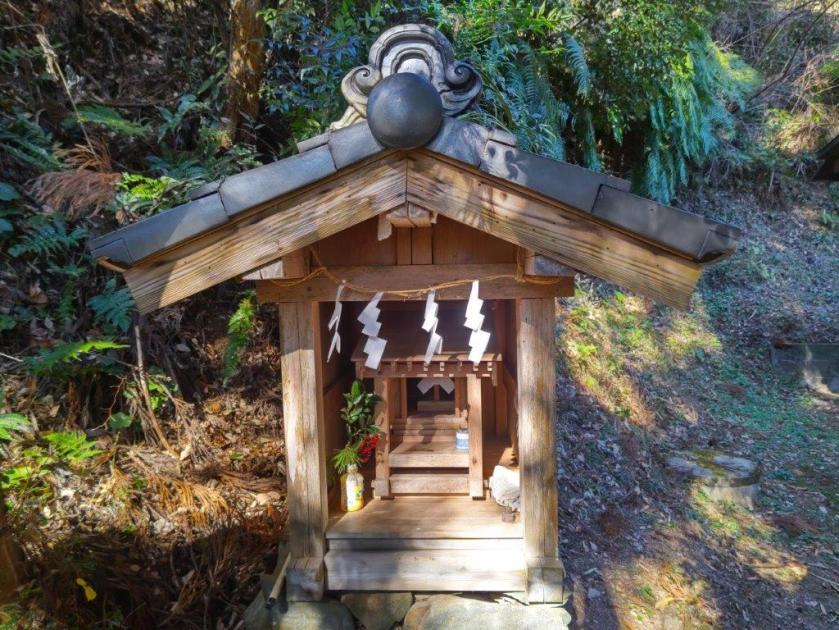
From the station, I’d head west along Machida-Kaido Avenue to the start of the Nanakuni Pass Promenade (七国峠遊歩道 nanakoku-toge yuhodo), an ancient road that used to run to Tsukui; I’d follow it north past Dainichido Shrine (大日堂 223m), the highest point of the hike, and Nanakuni Pass, where I’d turn eastwards along the north side of Aihara Central Park (相原中央公園). On the way, I hoped to get a view of the Okutama mountains on the west side from the Nanakuni Ridge Viewpoint (七国尾根見晴台).

After crossing Hachioji-kaido Avenue near Goten Pass (御殿峠 206m), I’d continue eastwards along another path, hugging the north side of a university campus; past a bridge over Hachioji bypass, I’d be standing at Yarimizu Pass (鑓水峠), just below the top of Mt Otsuka (大塚山 おおつかやま ootsukayama), also the site of Doryado Ruins (道了堂跡), a famous haunted spot. It’s also on the historical Silk road, between Hachioji and Yokohama, which I’d only follow for a short section before turning left. I’d then walk a few minutes down a paved road leading to the Kitanodai residential neighbourhood, and rejoin another hiking trail, on the south side of a small park.

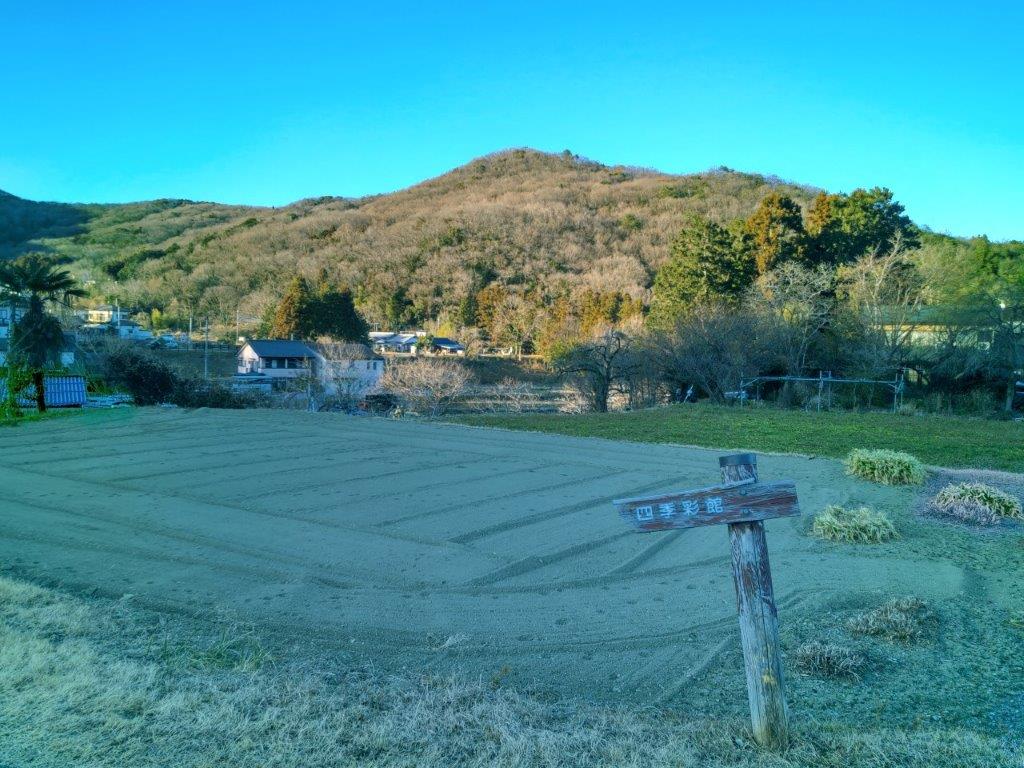
After passing through forest, countryside and farmland in the Nakayama locality, and then crossing the Kaien-kaido Avenue, I’d finally arrive at Naganuma Park (長沼公園), a forested area occupying a steep slope south of Asakawa river, a tributary of Tama river. I’d descend to the park entrance via Tonoyato Path (殿ヶ谷戸の道), and from there it was a short walk through Naganuma Town to get to the train station. The weather was supposed to be cloudy in the morning turning sunny in the afternoon. I was looking forward to doing a rare hike within the city of Tokyo and getting views of the city as well as the surrounding mountains.

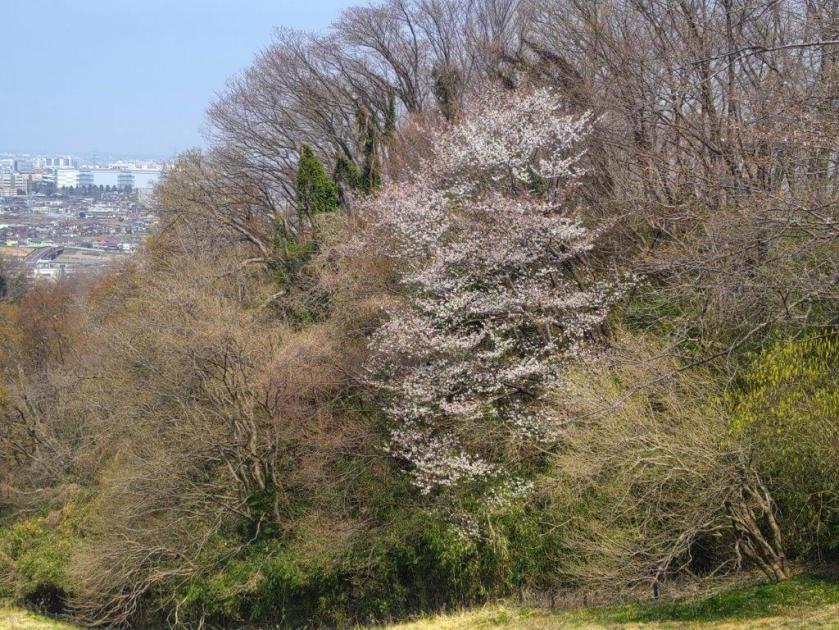
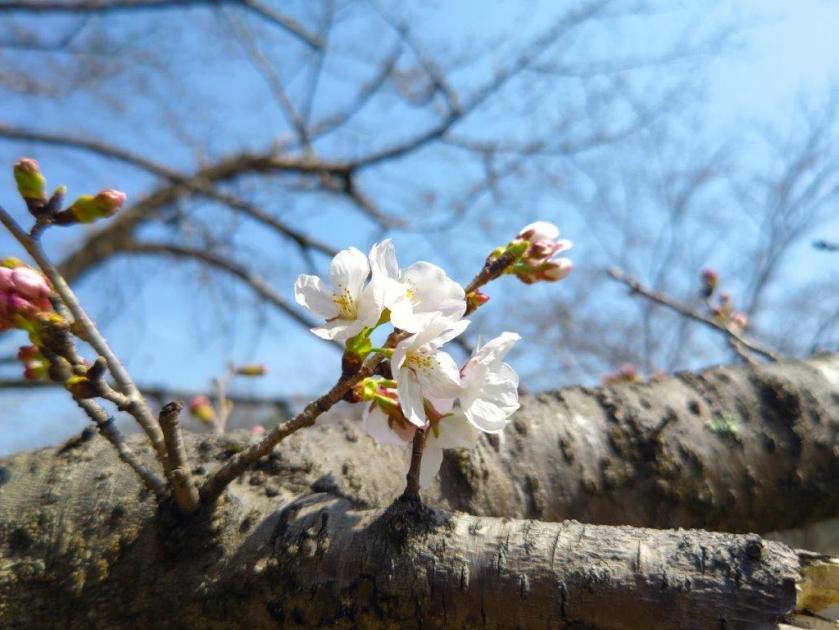
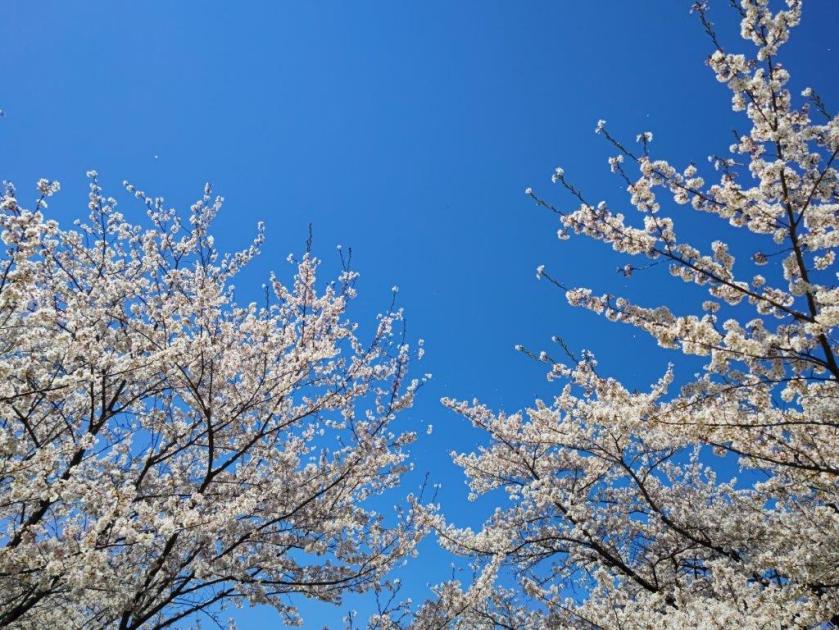
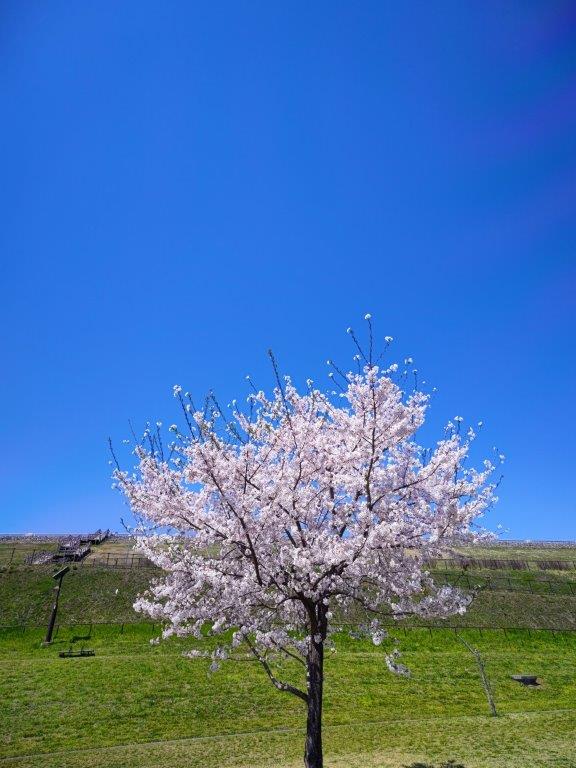
In the end, I decided to cut the hike short at Goten Pass, and head north to Katakura Station on the Yokohama line, one stop from Hachioji. The next Thursday, I returned to Aihara station, and after following a shorter route to Goten Pass, picked up where I had left off a week before. I reached Naganuma station around lunchtime, thus completing the planned hike. The one week delay gave me a chance to see the first cherry blossom trees in full bloom of the season.

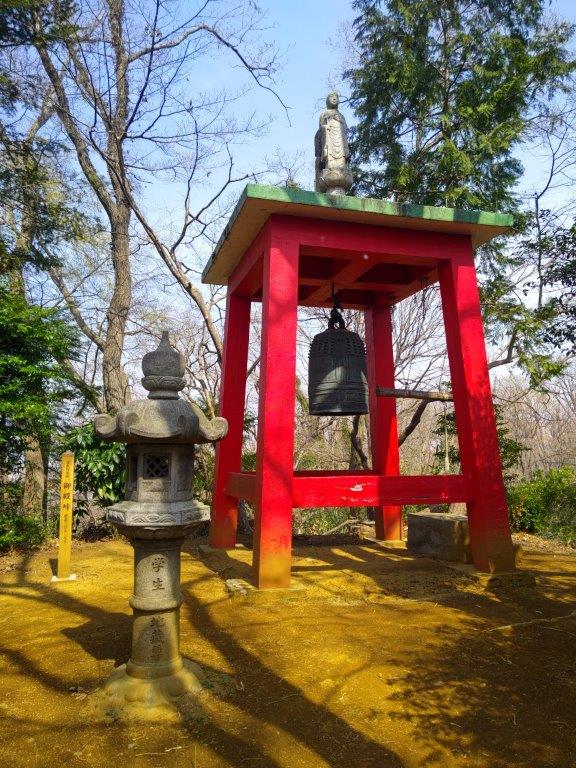
Donichido Shrine (left) Bell near Goten Pass (right)
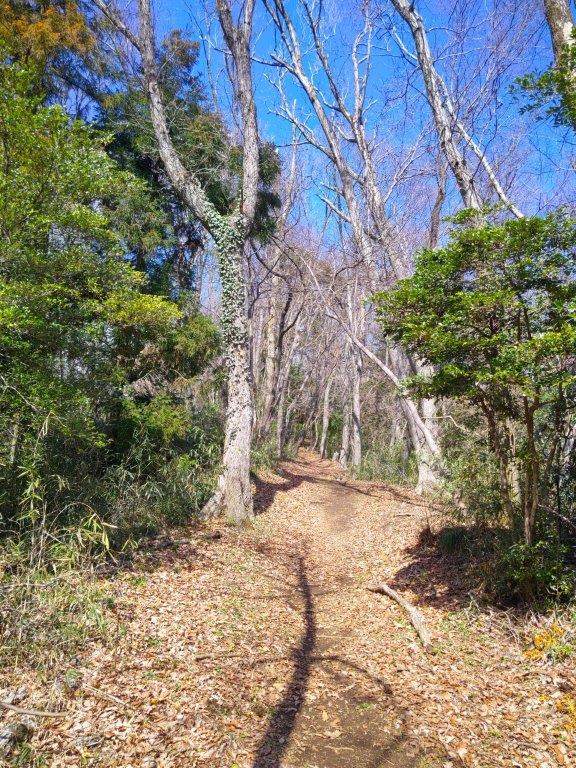
See a Slideshow of pictures of the Trail
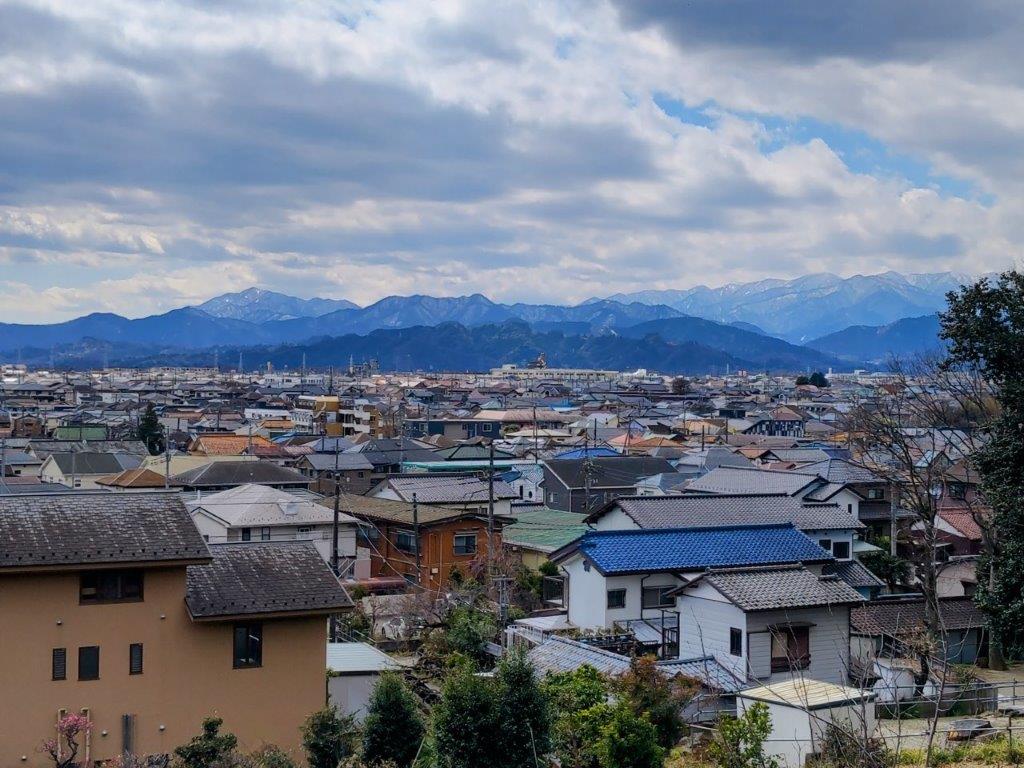
Snowy Tanzawa mountains near Aihara station
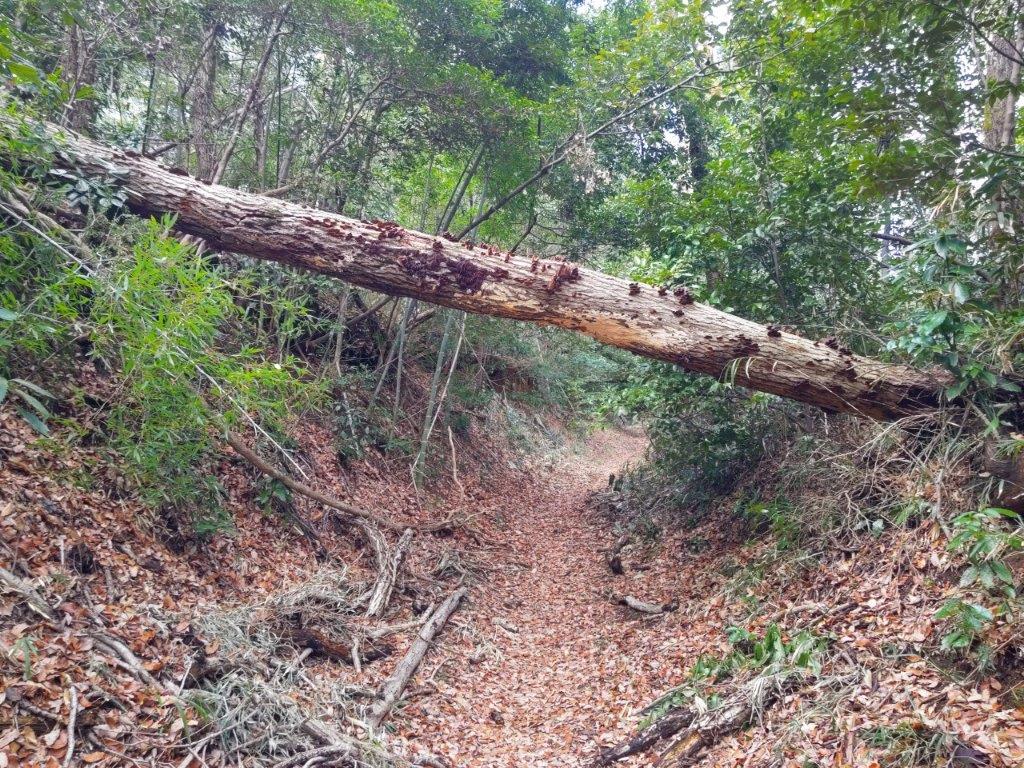
Fallen Tree on the Nanakuni Pass Promenade
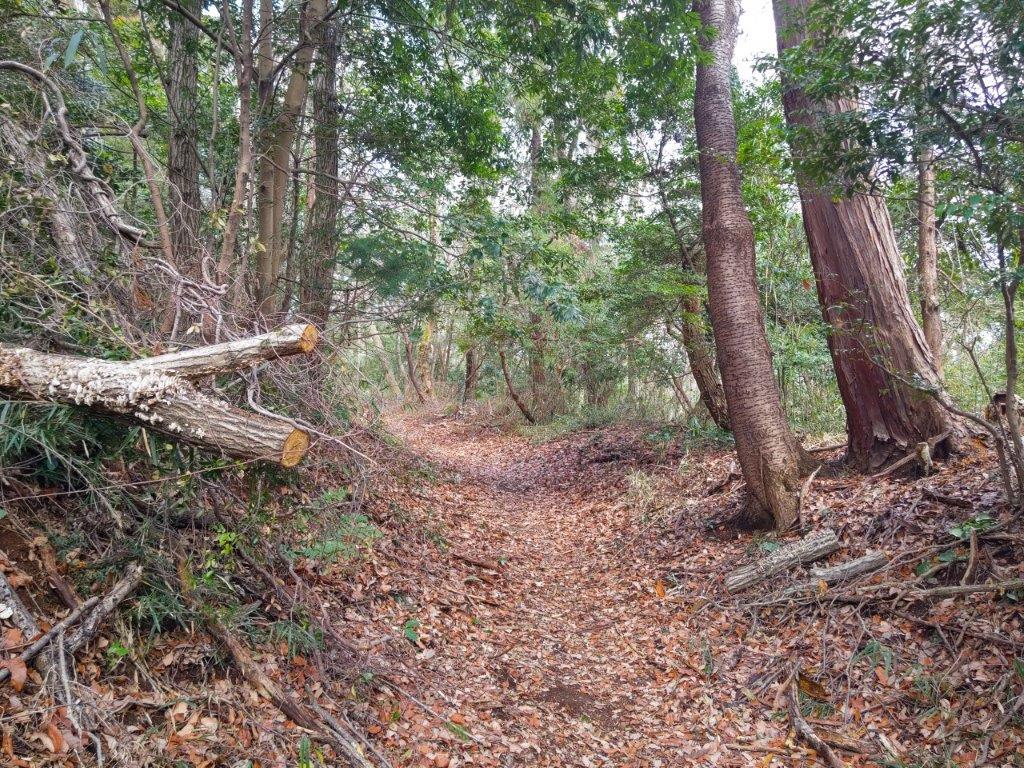
Gentle Climbing on the Nanakuni Pass Promenade
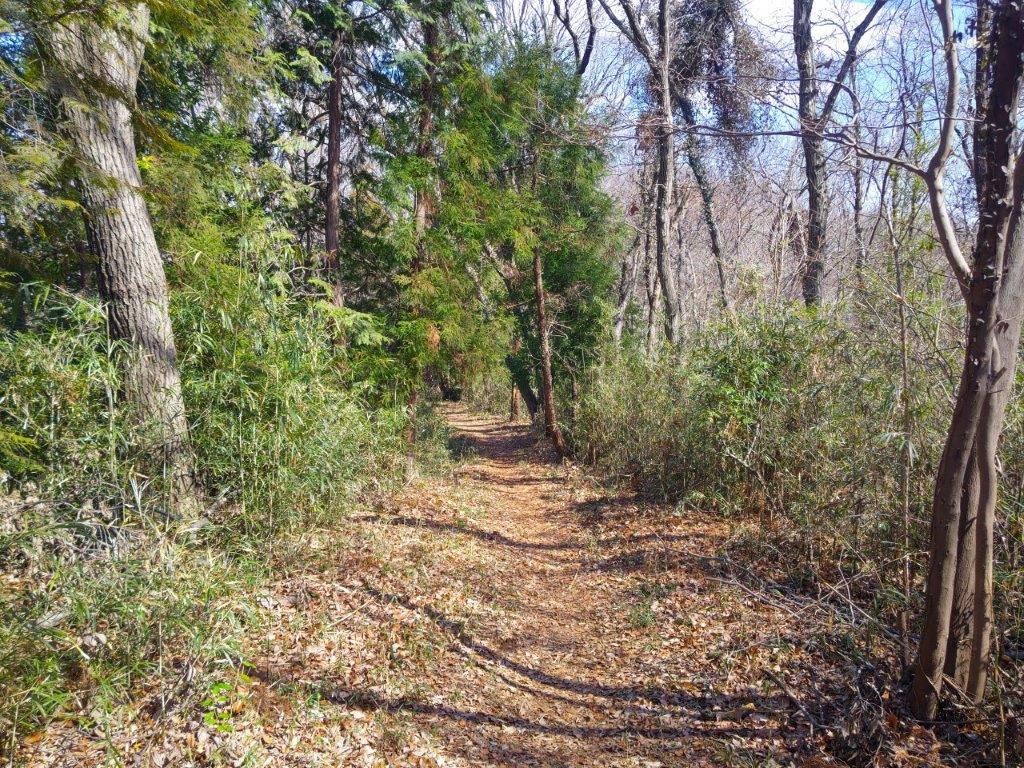
Trail on the North Side of the Aihara Central Park
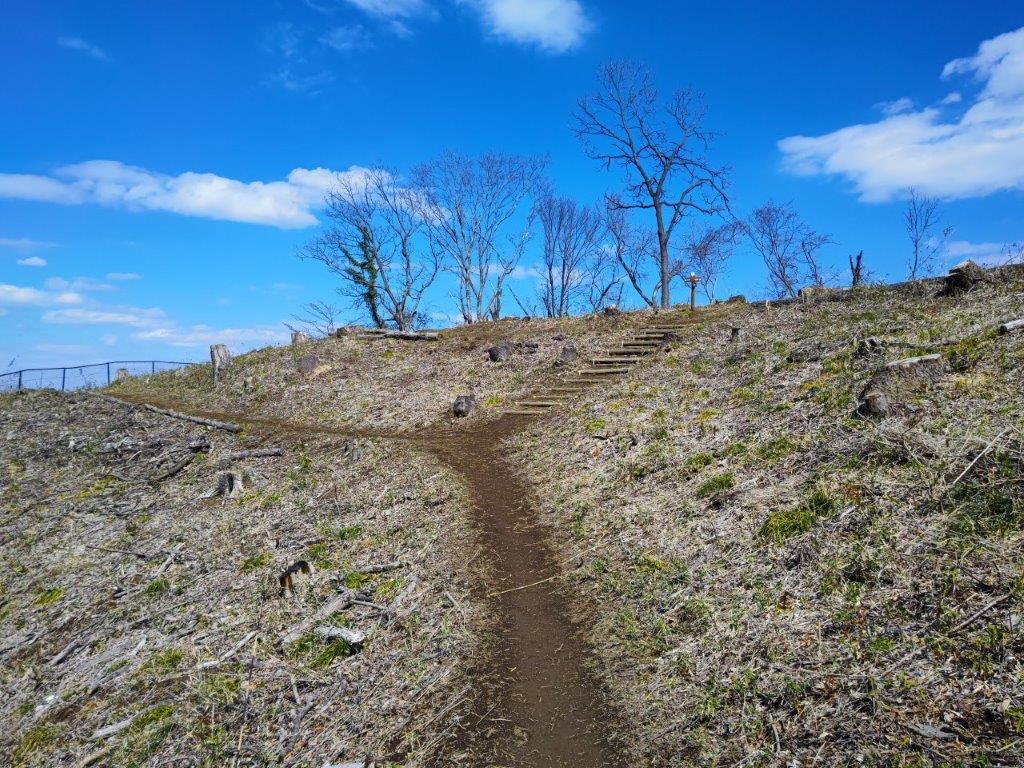
Path heading up Nanakuni Ridge Green Space
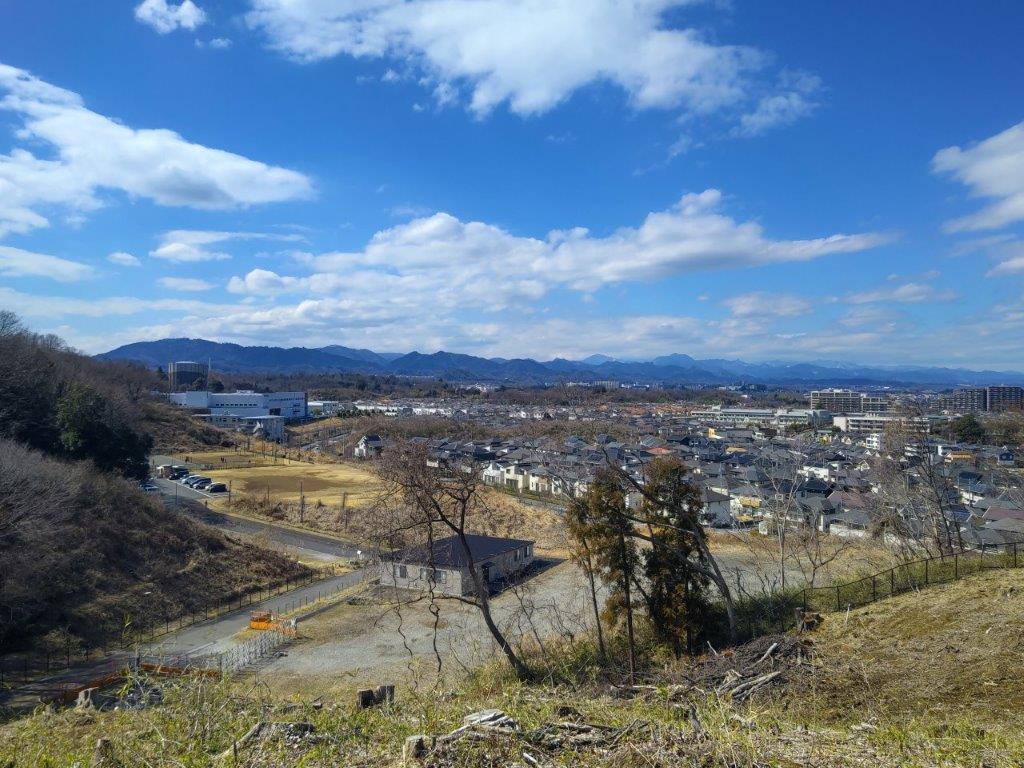
View West of Okutama from the Nanakuni Ridge Viewpoint

Trail heading inside Aihara Central Park
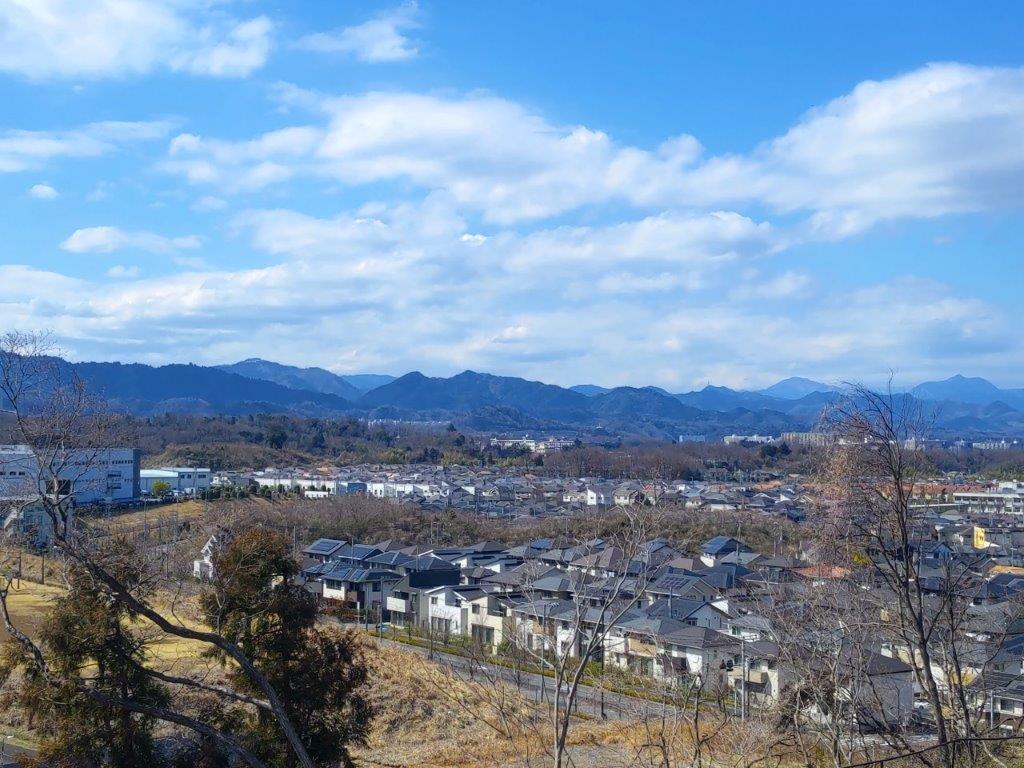
Mt Takao (center front), Mt Goten & Mt Odake (right back)

Trail Past the Nanakuni Ridge Viewpoint

Trail Past Goten Pass

Bridge over Hachioji Bypass
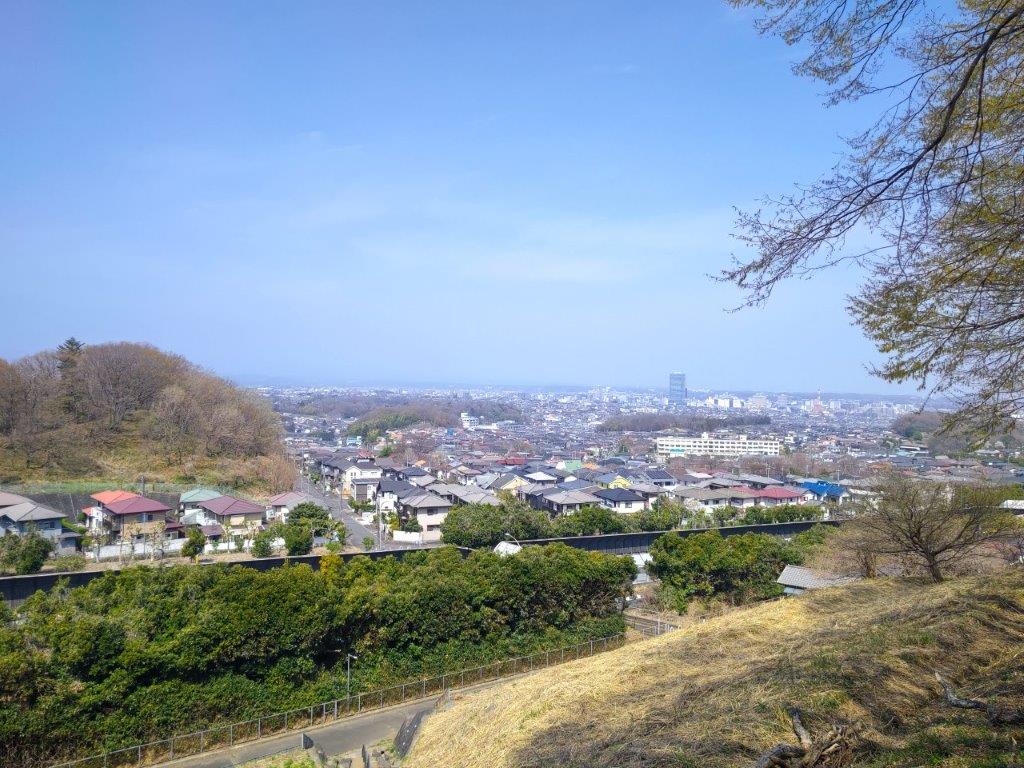
View of Western Tokyo from Yarimizu Pass
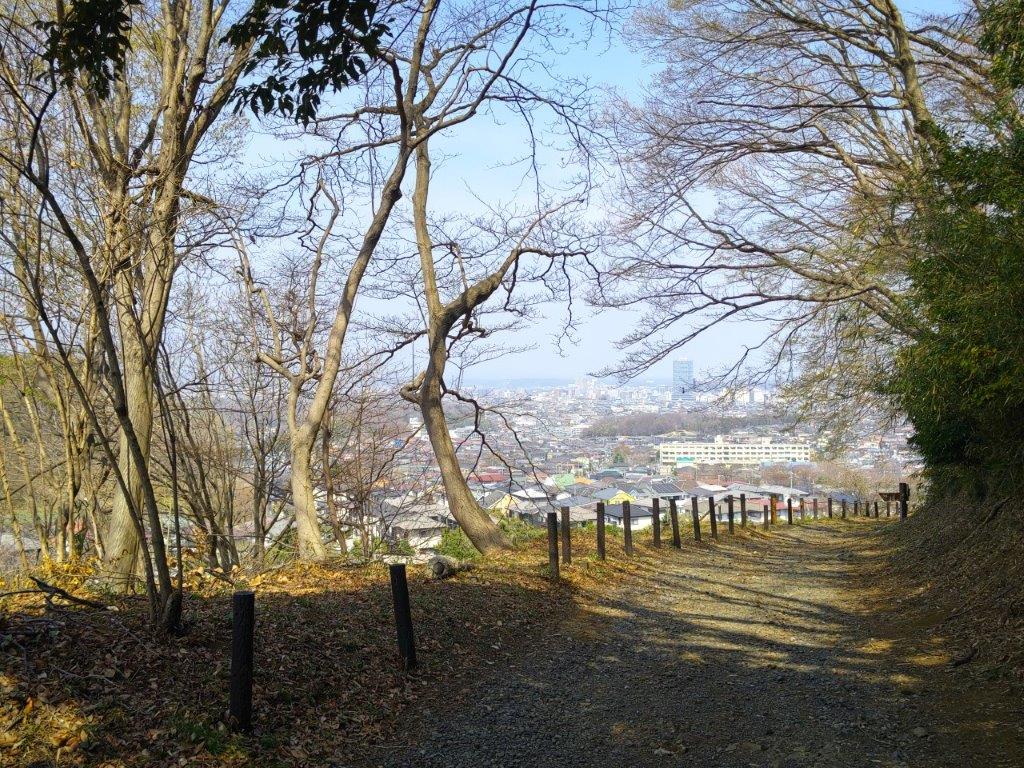
Looking back at Yarimizu Pass on the Silk Road
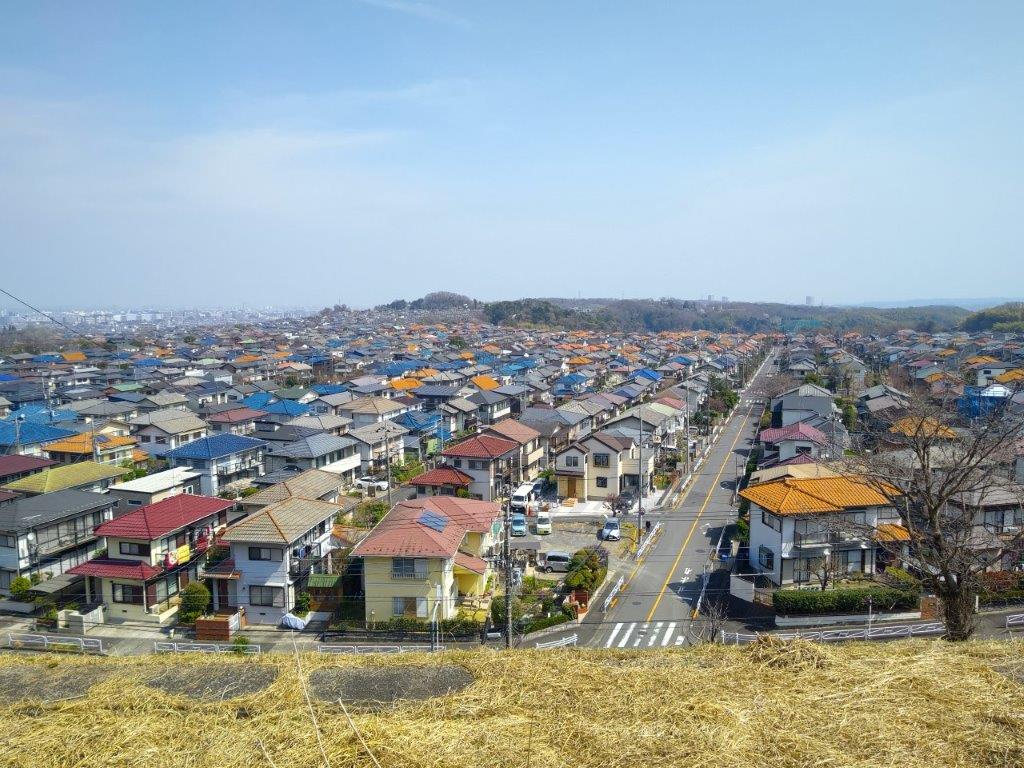
Looking down at the Kitanodai Residential Neighbourhood
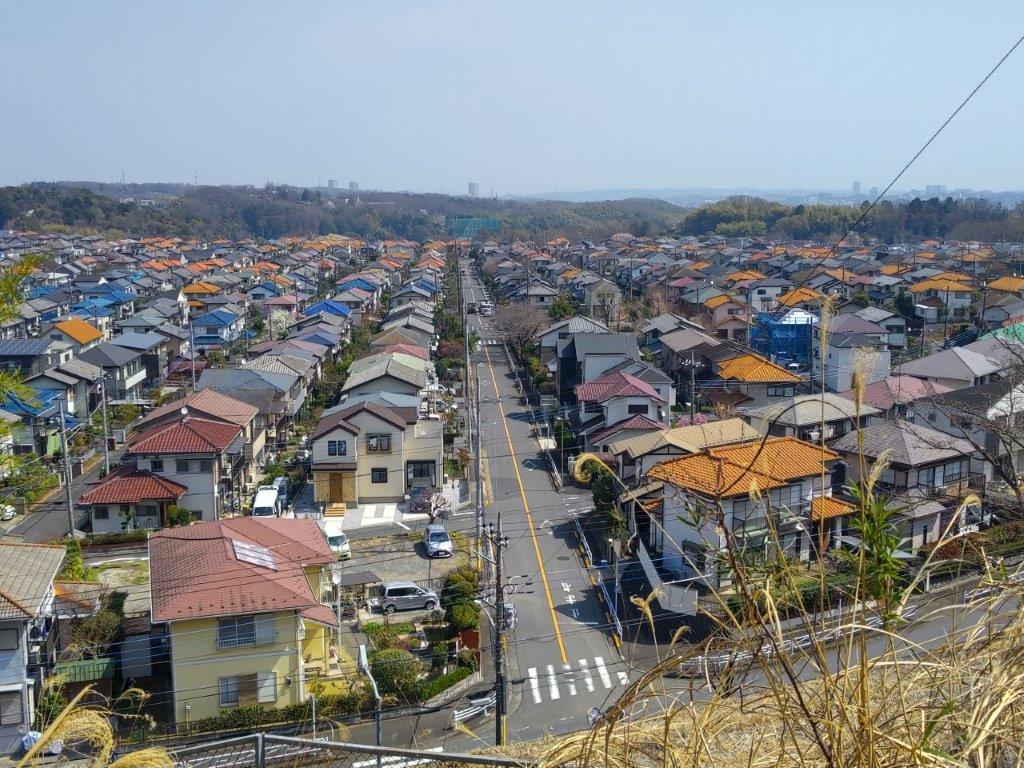
On the Other Side, Naganuma Park

Back on a Hiking Trail in Nakayama

Beyond the Farmland, the High Rises of Tama Center
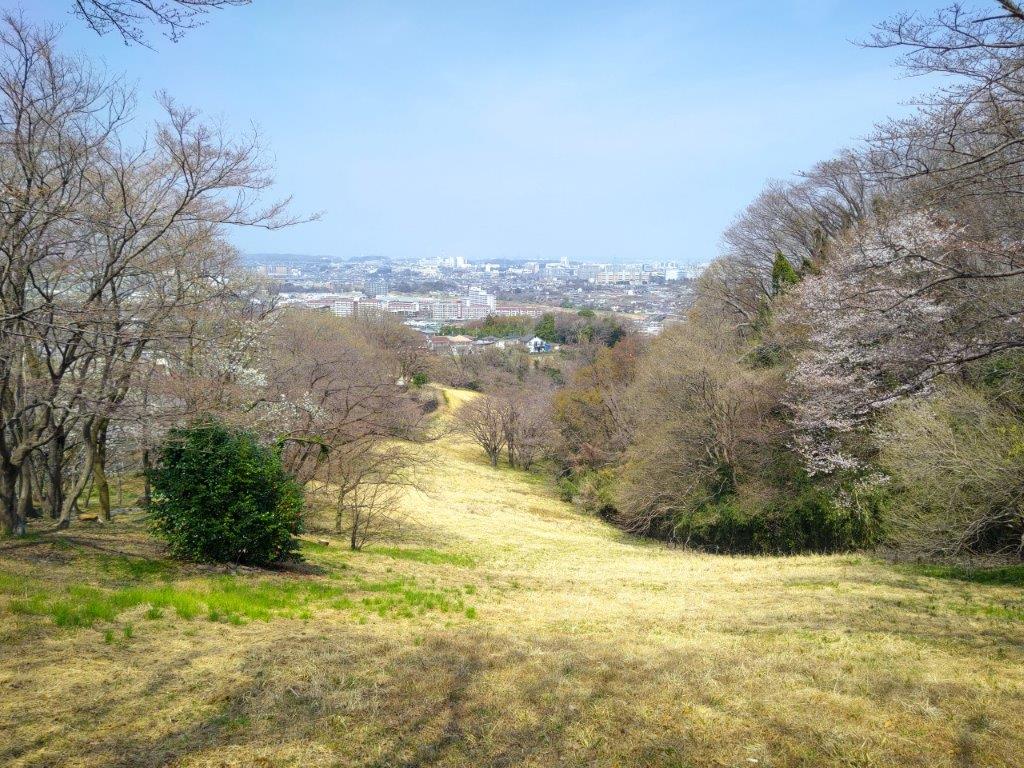
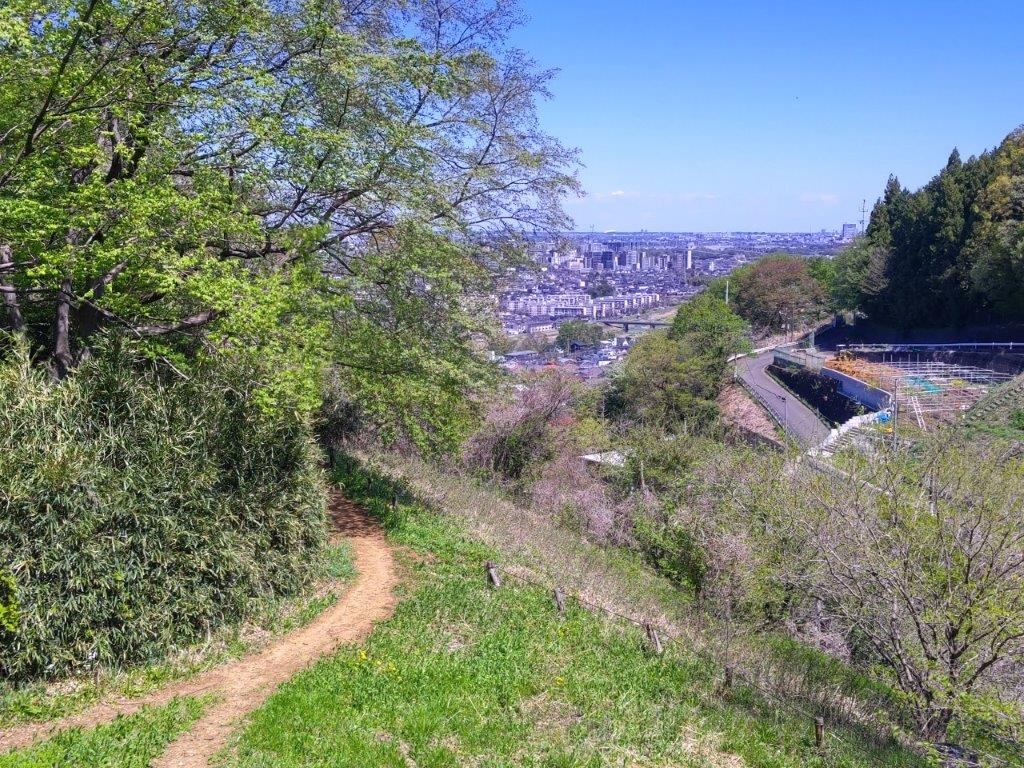
View of West Tokyo from the Top of Naganuma Park
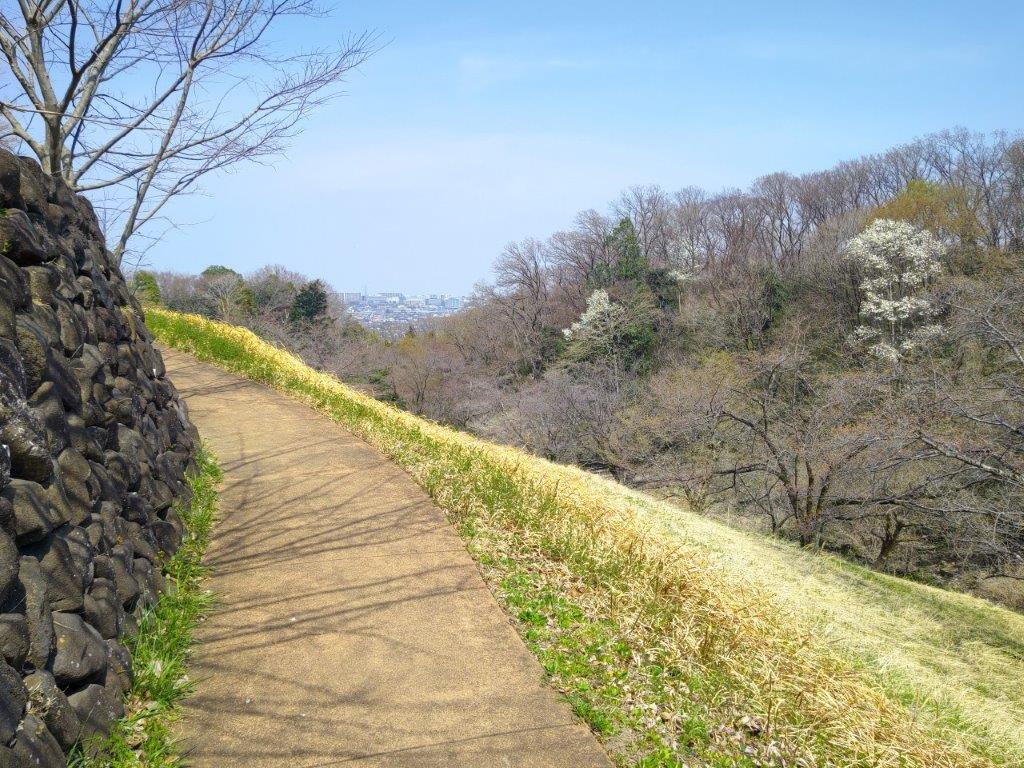
Walking along the Tonoyato Path

Early Sakura at Rokushagu Shrine

Watch a Video of the Mt Otsuka Hike

Watch the Video of the Hike on YouTube

See a Slideshow of More Pictures of the Hike

This Blog Post Continues a Little Longer…

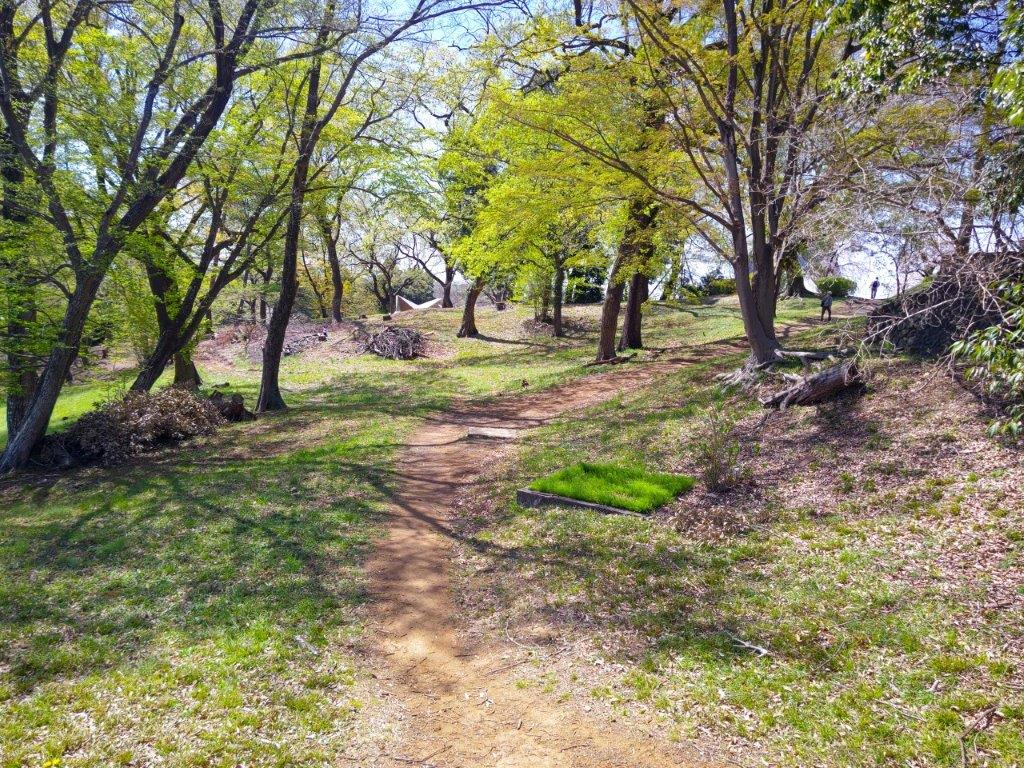
I was so taken by Naganuma Park that I decided to return on the third Wednesday of April for some more exploring. This time, I’d ride the Chuo line limited express from Shinjuku to Hachioji, and from there, take the Tama Monorail to Takahatafudo, 3 stops from Naganuma station on the Keio line. I chose this slightly longer way to enjoy the view of Mt Fuji from the right side of the Monorail. For the return, I’d simply ride the Keio line from Naganuma station back to Shinjuku.

A short walk from the station would bring me back to Rokushagu shrine (六社宮). There, I’d follow the West ridge (西尾根) trail to the top of the park (頂上園地 chojo-enchi), then walk a short way to the Naganuma Park Observation Point, an open shelter with a view of West Tokyo and the Okutama mountains. I’d then head down the Tochimoto Ridge (栃木尾根) on the east side of the park. After that, if time allowed, I’d head up the Chosenji Ridge trail (長泉寺尾根), and then, halfway up the park, head down the connecting Western Chosenji Ridge Trail (西長泉寺尾根). After descending once again to the base of the park, I’d make my way back to the nearby Naganuma station.

I was looking forward to getting some more views of western Tokyo, as well as the Tanzawa and Okutama mountains. Blue skies were forecast all day, and in this season, I’d also get to enjoy the new green of Spring, as well as the pleasing melody of birdsong, especially the distinctive call of the Uguisu, the Japanese bush warbler, a sure sign that Spring has arrived.

New green at the Top of the Park (left) and on the Chosenji Ridge (right)

Rokushagu Shrine without Cherry Blossoms

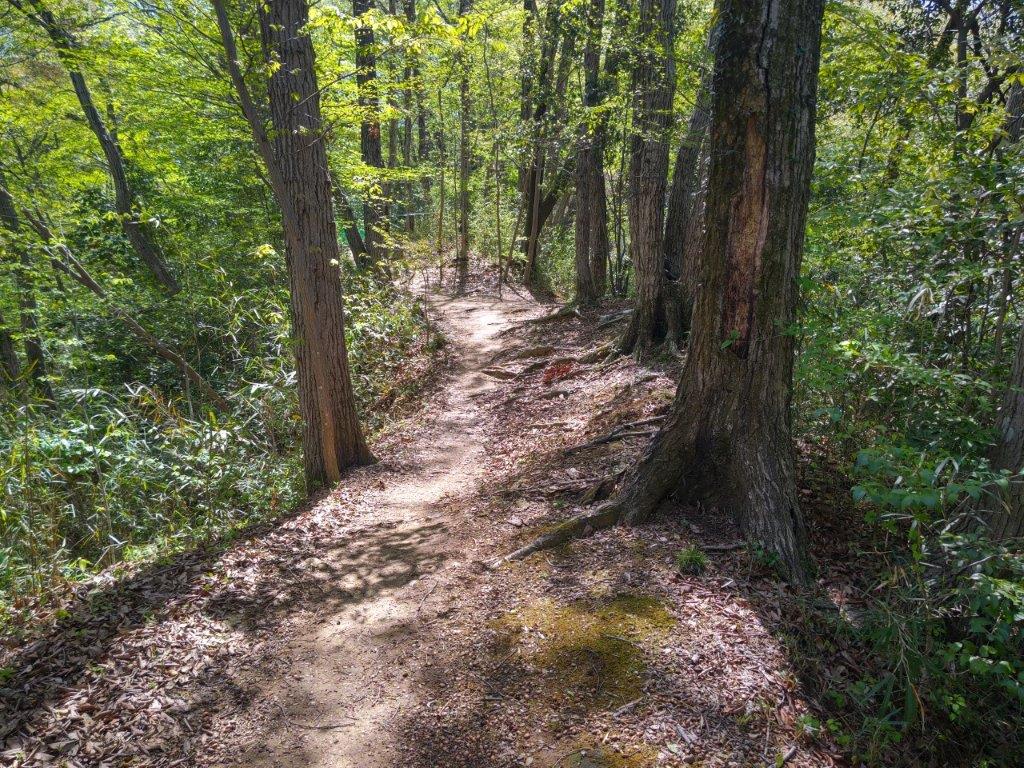
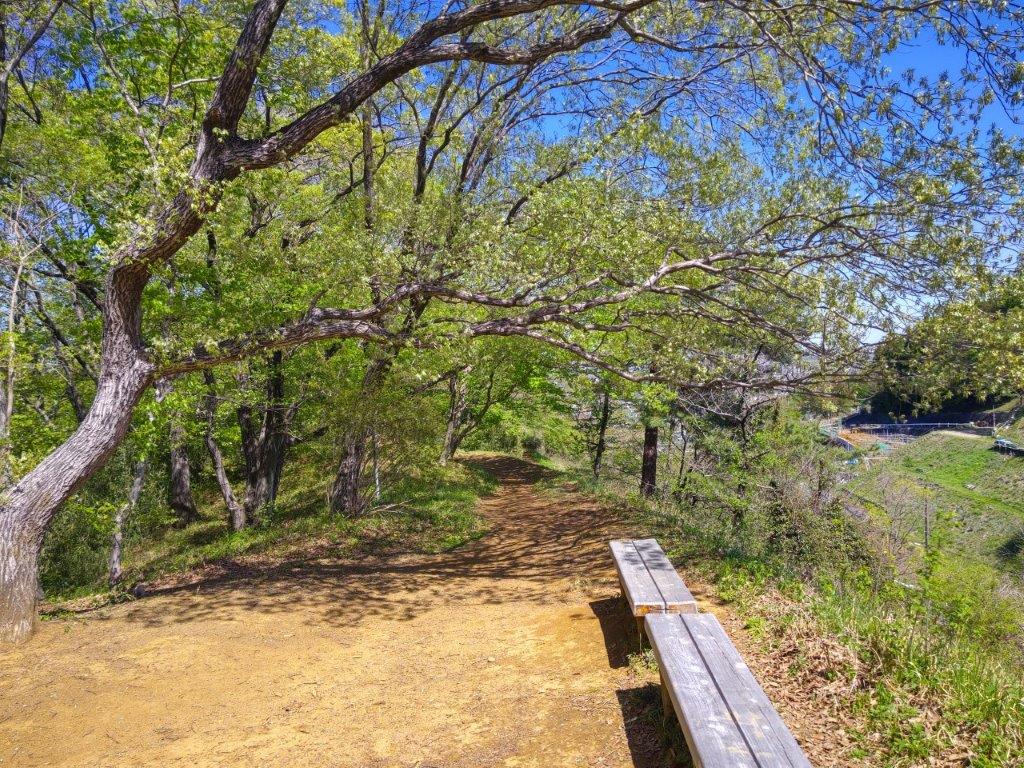
Hiking the West Ridge Trail

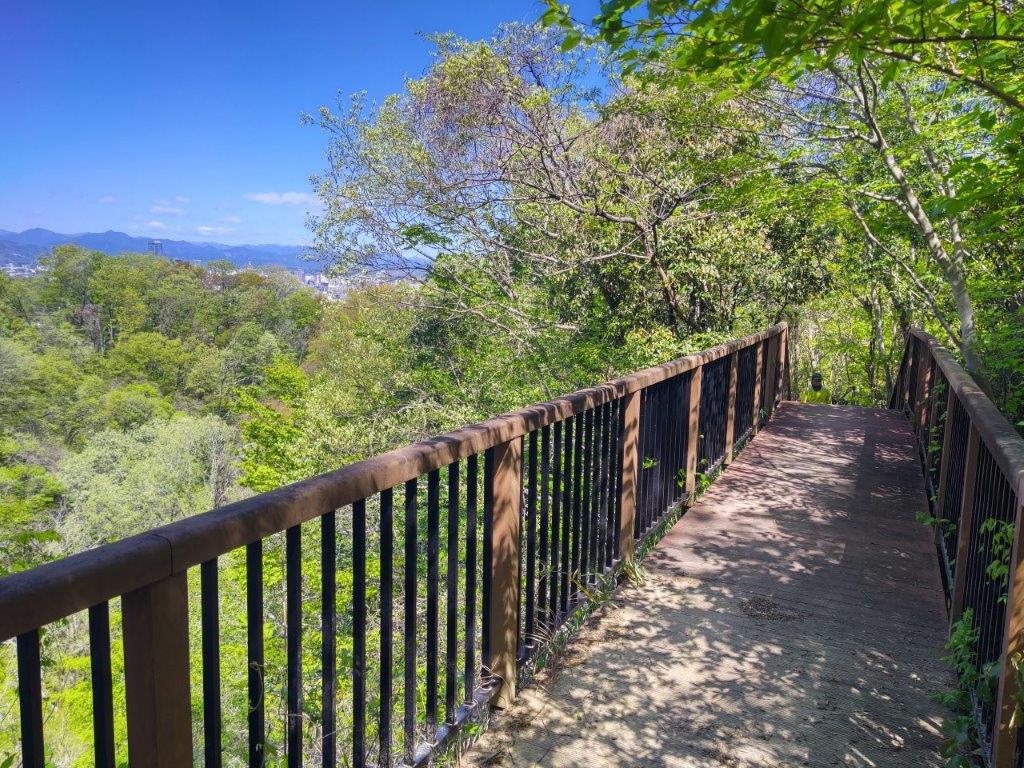
Bridge with a View near the Top of the Park

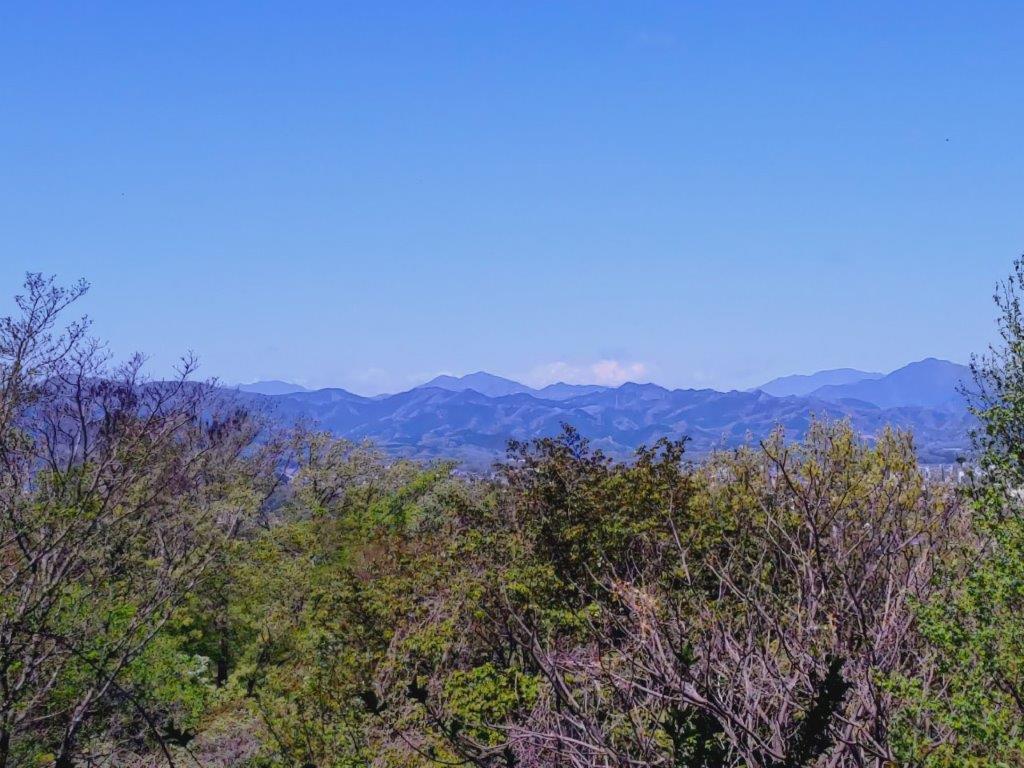
Mt Gozen (left), Mt Odake & Mt Mitake (center), Chichibu Mountains (right)

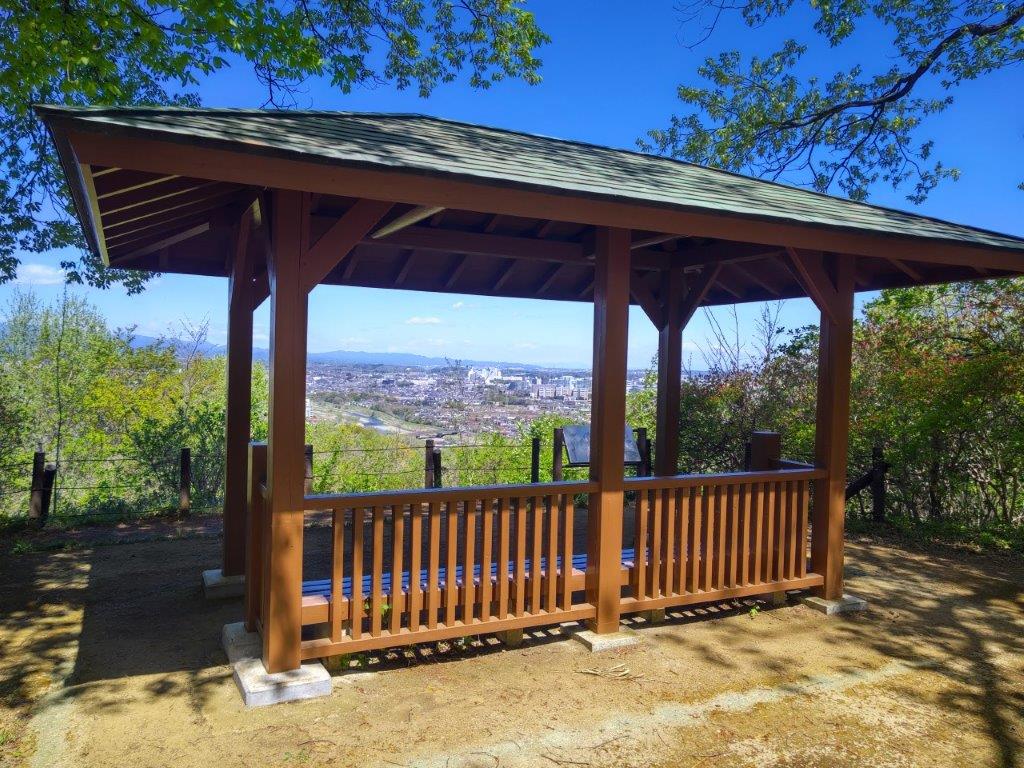
The Naganuma Park Observation Point

West Tokyo and Surrounding Mountains

Mt Mito (center) & Mt Kumotori behind Mt Odake (right)

Top of the Tochimoto Ridge Trail

Heading down the East Side of the Park

View of the Nikkei Housing Complex

In the Distance, the High Rises of Tachikawa

Watch a Video of Naganuma Park

Arahata-Fuji (119m), Tokorozawa, Higashi-Murayama & Higashi-Yamato Cities, Saitama & Tokyo Prefectures, Sunday, March 2 & 9, 2025

I was looking for a low-altitude hike near Tokyo to stay clear of the snow that usually covers the mountains surrounding the Kanto area in this season. I also wanted something relatively easy and straightforward to help me get back in shape after being out sick for a couple of weeks. I had explored the parks surrounding the Sayama and Tama lakes by bicycle many years ago. I thought it would be a good chance to revisit them on foot and have a closer look at the sights along the way.

For subscribers, read this Post on Hiking Around Tokyo for a better viewing experience and the latest updates

To get to the start of the hike, I’d ride the Seibu Laview Limited Express to Tokorozawa, and from there, walk half an hour to the entrance of Hachikoku-yama Park (八国山緑地). After traversing the park, I’d make a short detour to Hatomine Park (鳩峯公園) to visit one of the many Totoro forests in the area, as well as Hachiman Shrine (八幡神社) at its eastern end. I’d then head over to Arahata Citizen’s forest (荒幡富士市民の森) where I could “climb” Arahata-Fuji (荒幡富士), an artificial Mt Fuji with 10 real stations. After checking out the view from the summit, I could drop by the nearby Sayama Hills Flora & Fauna Interaction Center (狭山丘陵いきものふれあいの里センター) to learn more about the plants and animals that grow and live in the surrounding forest.

Hiking in the Sayama Natural Park 都立狭山自然公園

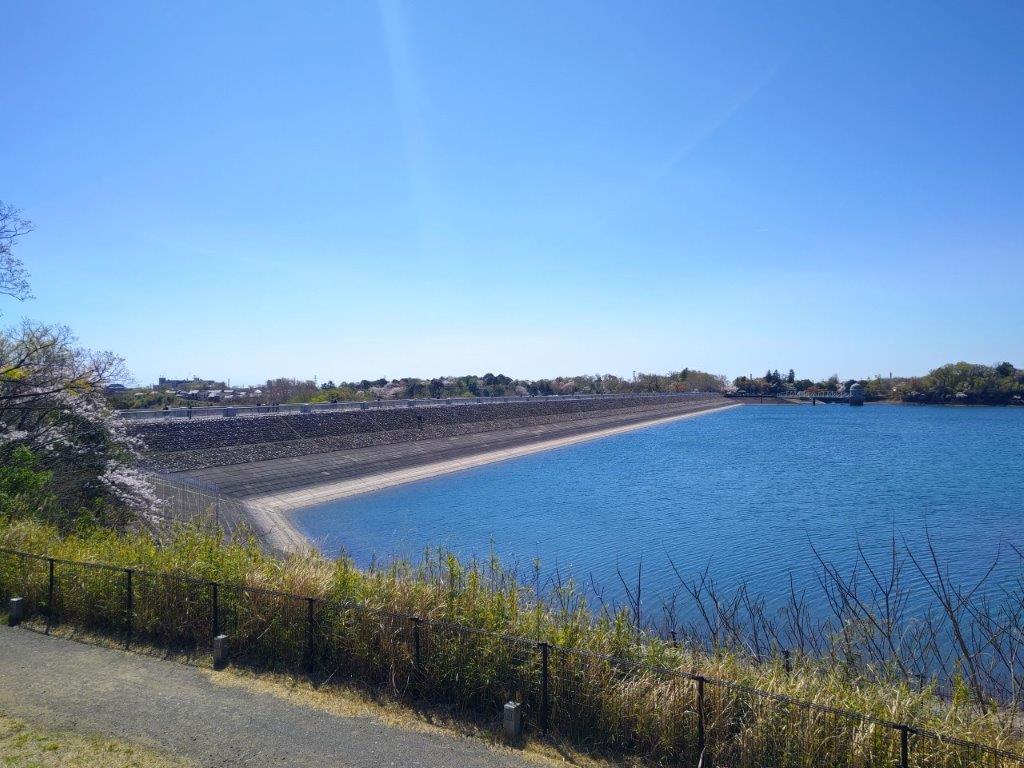
If time and energy allowed, I’d then cross over to Tama Lake (多磨湖), next to Seibuen Theme park. After admiring the view of the Okutama mountains, and hopefully Mt Fuji, from Murayama-shita Dam (村山下ダム), I’d walk clockwise around the lake to Higashi-Yamato Green Space (東大和市立狭山緑地) which promised a view of the Tanzawa mountains on its south side. I’d then double-back to Higashi-Yamato Park (東大和公園), making sure to visit the Higashiyamato City Local History Museum (東大和市立郷土博物館) on the way. Next, I’d head to Sayama Park (狭山公園), just below Tama Lake and its dam.

Find Maps & Blogs on Japanwilds & subscribe to our newsletter

Finally, if I made good time, I could explore the nearby and relatively short Seseragi road (せせらぎの道), and the equally short Megurita Greenway (廻田緑道), after which I’d follow the Yanase river to Kitayama Park (北山公園), a park famous for its flowers, although probably none in this season. This final park in my tour sits opposite Hachikoku-yama park, the forested area divided by the Seibuen line and its yellow train cars. From the bridge at the eastern end of the park, I could walk 15 minutes to Higashi-Murayama station, one stop from Tokorozawa on the Seibu-Shinjuku line. The weather was supposed to be clear in the morning, turning cloudy in the afternoon. I was looking forward to revisiting one of the closest nature spots to the center of Tokyo.

In the end, I decided to cut the hike short after visiting the Sayama Hills Flora & Fauna Interaction center, and headed home using the nearby Shimo-yamaguchi station on the Seibu Sayama line, a couple of stops from Tokorozawa. The next week I returned to the same station to pick up where I had left off, after making a second visit to Arahata-Fuji. Once again, I decided to skip the last part of the hike, and so after Sayama Park, I made my way back via Seibuen station on the Seibuen line.

Above is a slideshow showing the wide variety of trails within the many parks surrounding Tama Lake

Steps heading down in Hachikokuyama Ryokuchi Park

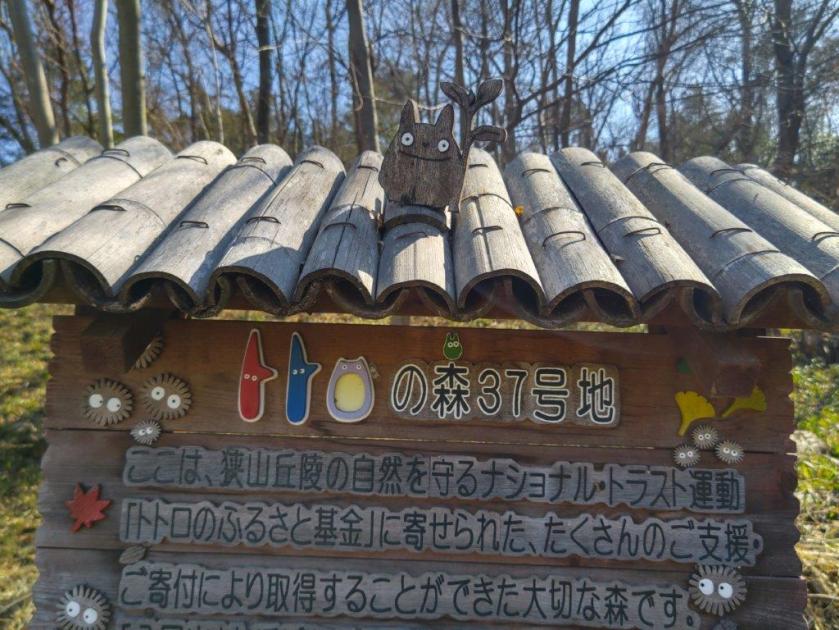
Totoro Forest #2 in Hatomine Park

Arahata-Fuji and its 10 stations

Leaving Arahata Citizen’s Forest

Re-entering Arahata Citizen’s Forest the Following Week

View North from the Top of Arahata-Fuji

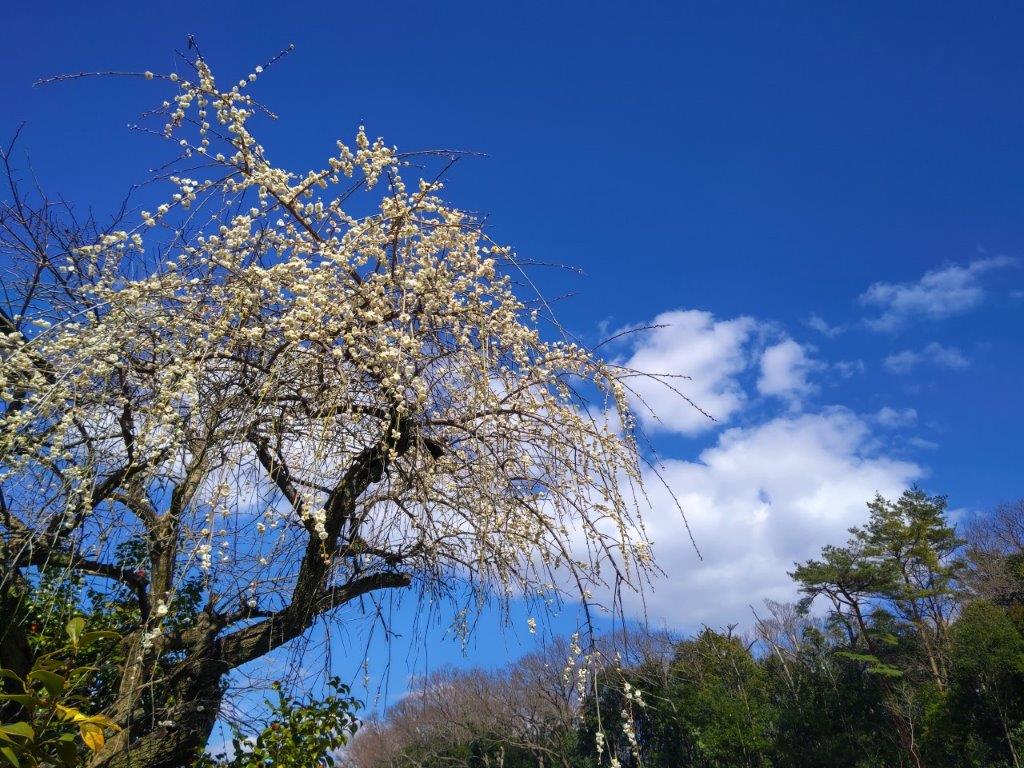
Weeping Plum Blossom Tree on the Way to Tama Lake

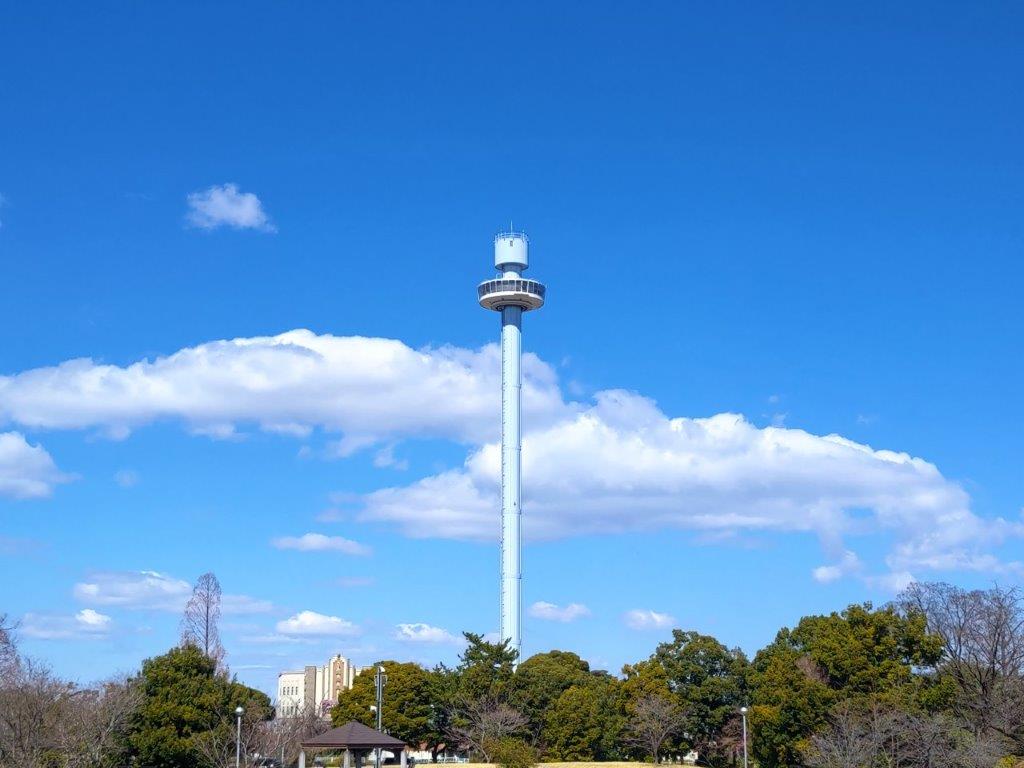
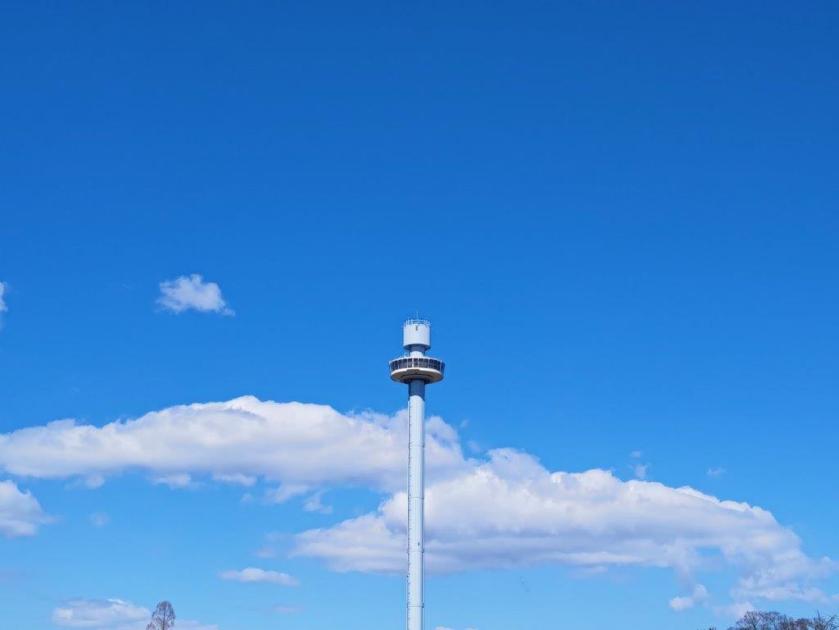
Fujimi “Periscope Tower” in Seibuen Park

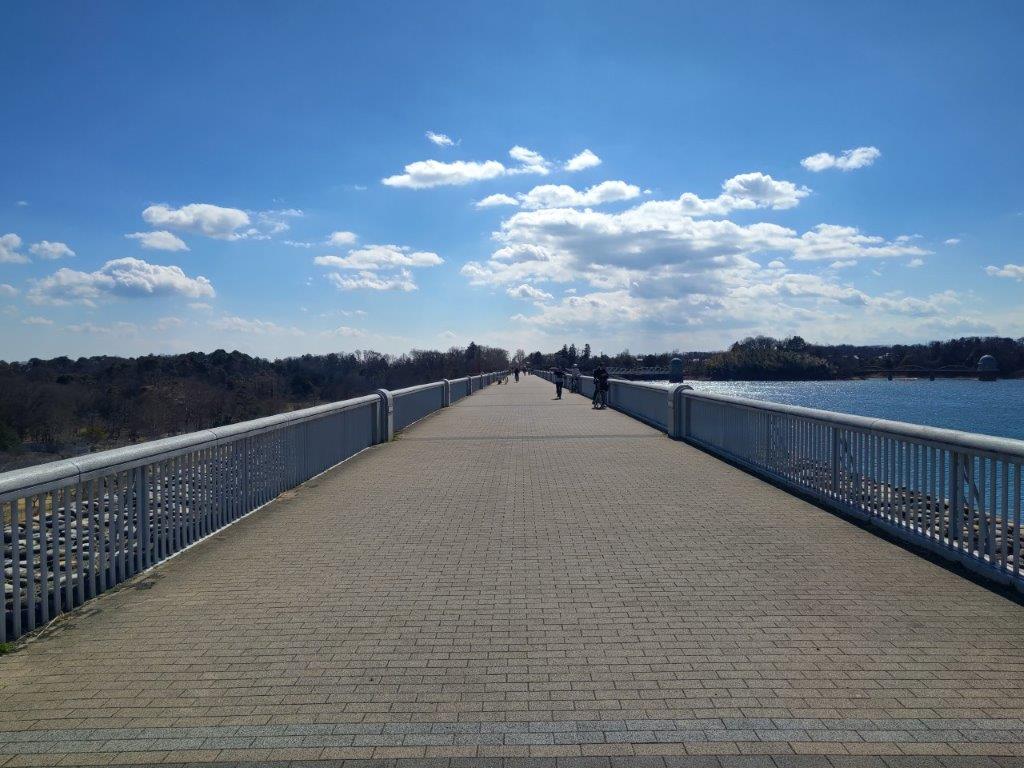
Murayama-shita Dam on Tama Lake

Few People Walking the Dam

…on a Cold Winter Day

View East of Higashi-Murayama City & Hachikokuyama Park

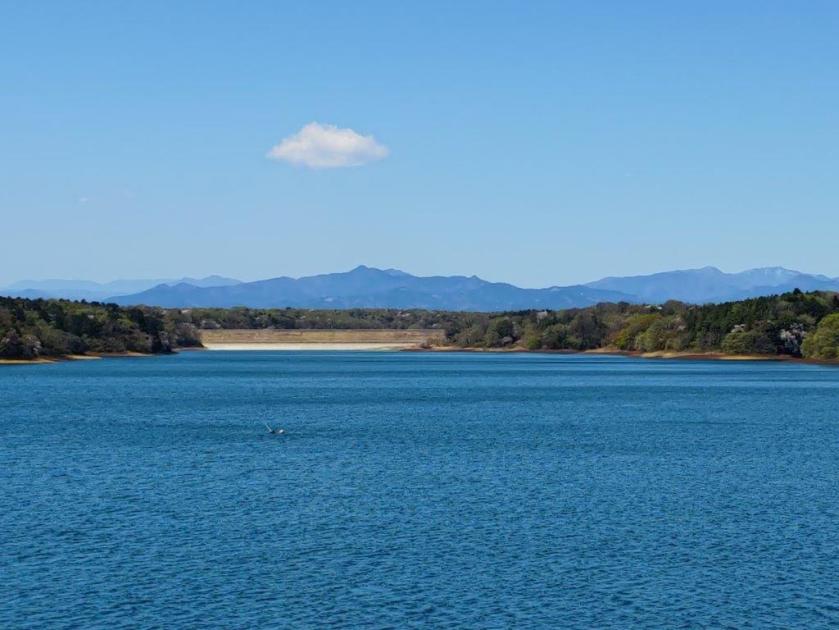
View West of the Okutama Mountains

Mt Fuji was in the Clouds but Seibu Dome was visible on the right

Wooden Walkway in Higashiyamato Sayama green space

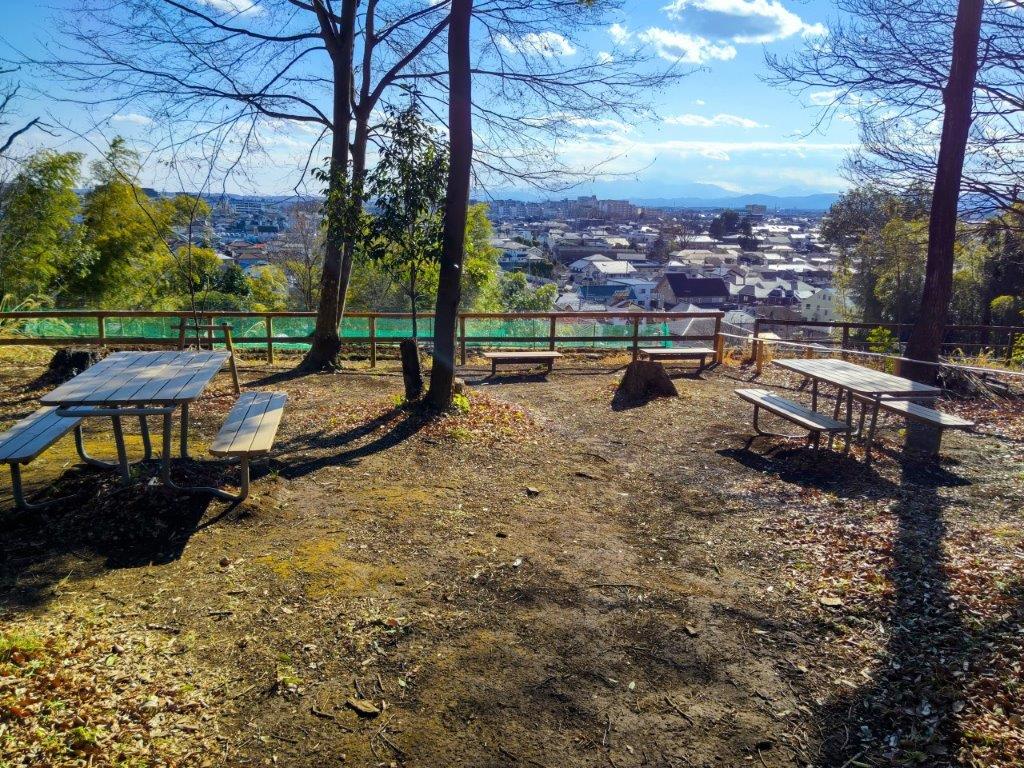
Observation Plaza in Higashiyamato Sayama green space

Heading to one more viewpoint on the Southwestern Side of the Park

Tanzawa Mountains (left) and Okutama Mountains (right)

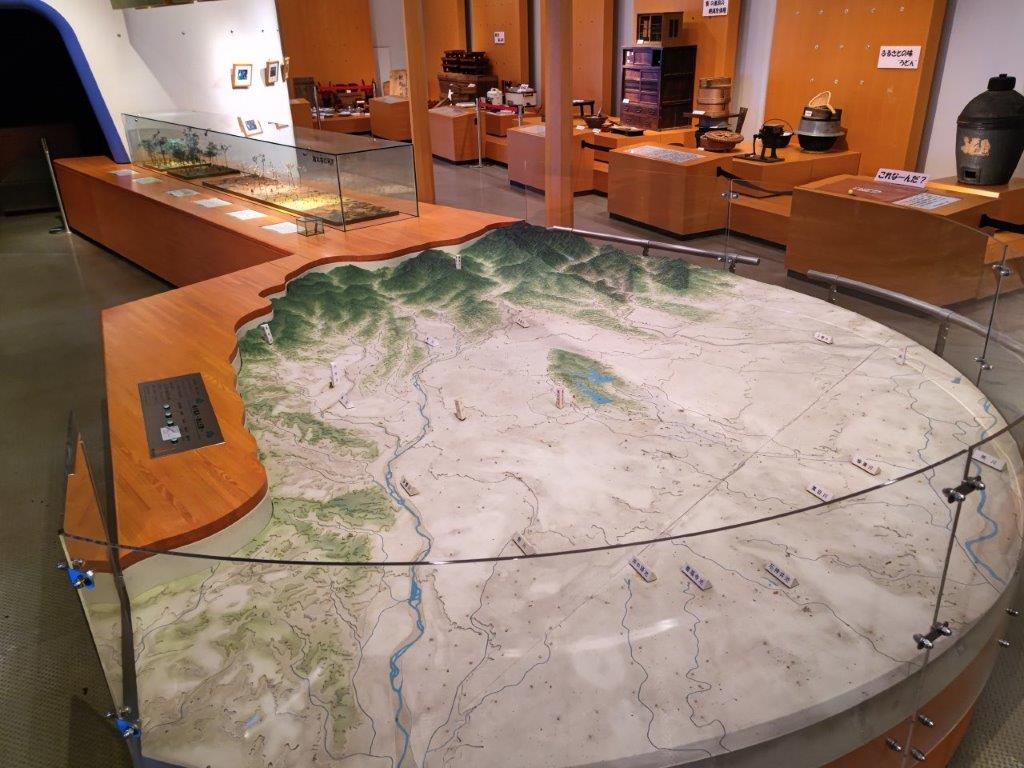
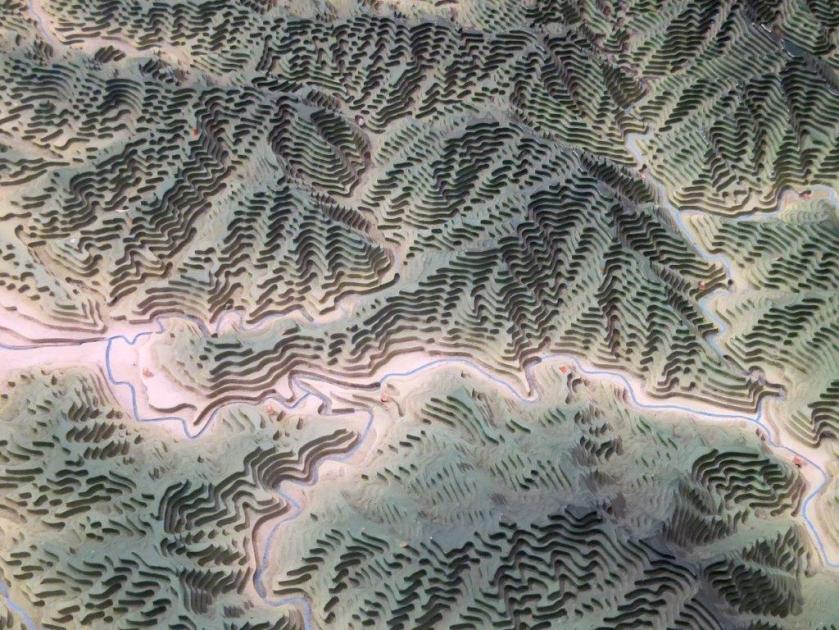
Diorama of the Mountains around Tokyo in Higashiyamato City Museum

Unsho-ji Temple on the way to Higashi-Yamato Park

Watch a Video of the Arahata-Fuji Hike

Watch the Video of the Hike on YouTube

See a Slideshow of More Pictures of the Hike

This Blog Post Continues a Little Longer…

I wanted to return to Tama Lake to complete my originally planned hike. I finally had an opportunity for a short morning hike on the second Wednesday of April. The cherry blossom season had started later than usual due to unseasonably cold weather at the beginning of the month, and I was hoping to still see some sakura in full bloom, as well as the new green, inside Sayama Park.

I would ride the Laview Limited Express to Tokorozawa, then change to the Seibu Shinjuku line for the one stop ride to Higashi-Murayama, and change again to the Seibuen line for another one stop ride to Seibuen station, the whole trip possible in one hour thanks to short connection times. The weather was supposed to be warm and sunny and so I hoped to get my third view of Fuji of the year.

Seibuen Fujimi “Periscope Tower” Surrounded by Sakura

New Green at the North Side of Sayama Park

View of Mt Fuji from Tama Lake

Murayama-Shita Dam under the Morning Sun

Clear View of the Okutama Mountains (Mt Odake on the left side)

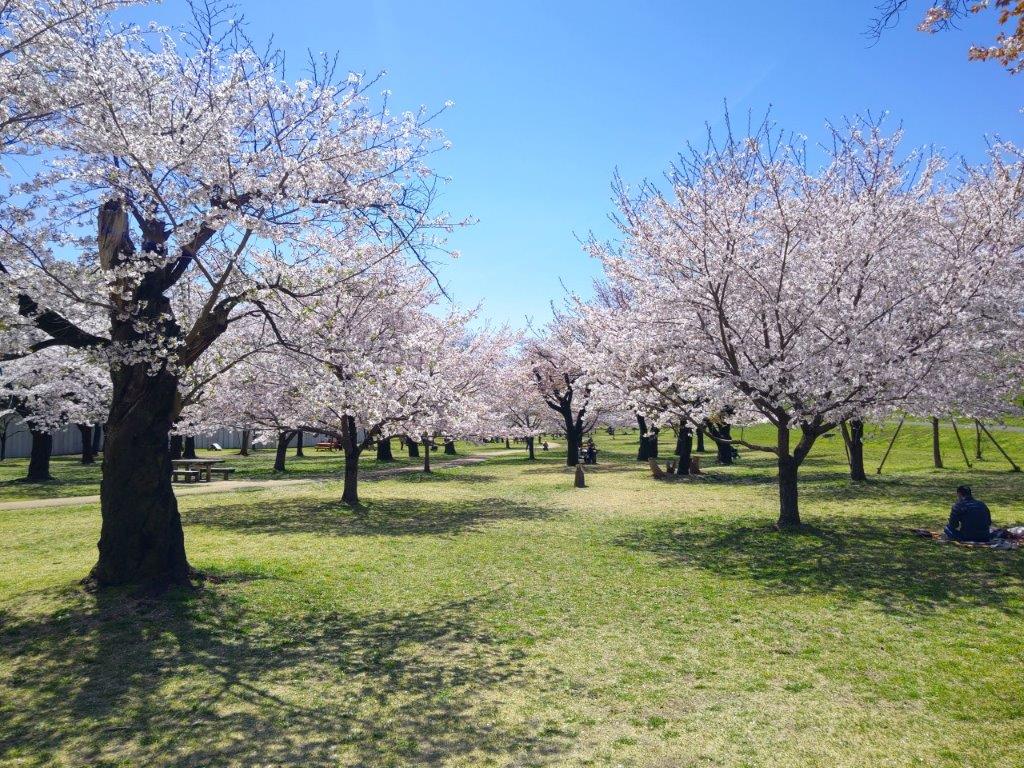
Cherry Blossom Trees in Sayama Park

A Good Spot for Hanami

Wooden Steps Connecting the Dam and the Park

Walking among the Sakura in Sayama Park

Following Seseragi Road in Higashi-Murayama

Observation Deck on Megurita Greenroad

Walking on Sakura Promenade at the End of Megurita Greenroad

Another Good Place for Hanami

Two People Enjoying a Break under a Huge Sakura Tree

Group of Huge Cherry Blossom Trees in Kitayama Park

Kitayama Park in the Early Spring

Pair of Weeping Cherry Blossom Trees in front of Higashi-Murayama Station

Watch a Video of the Final Part of the Arahata-Fuji Hike

See a Slideshow of some more Pictures of the Hike

Ohara to Taito Beach (Highest Point 63m), Isumi City, Chiba Prefecture, Sunday, February 9, 2025

I wanted to do one more hike in Chiba. I also wanted to get there and back via public transport. Finally, I wanted to explore more of the Chiba Kanto Fureai no Michi. I decided to combine two of its shorter sections, heading south to north from Ohara Beach to Taito beach, the latter also the starting point of the 90 kilometer long Kujukuri Beach. Although I wouldn’t be standing on any peaks, I’d be walking nearly 20 kilometers with a view of the Pacific ocean for most of the way.

For subscribers, read this Post on Hiking Around Tokyo for a better viewing experience and the latest updates

Hiking along the Kanto Fureai no Michi 関東ふれあいの道


To get to the start of the hike, I’d ride the Wakashio Limited Express from Tokyo station to Ohara station. For the return, I could ride the Sotobo line just one stop from Torami to Kazusa-Ichinomiya, and there change to the Wakashio Limited Express for Shinjuku. The weather was supposed to be cold and sunny all day, a typical Japanese winter day. I was looking forward to a long day of mostly level walking along the Pacific Ocean.

Find Japan Hiking Maps on Japanwilds

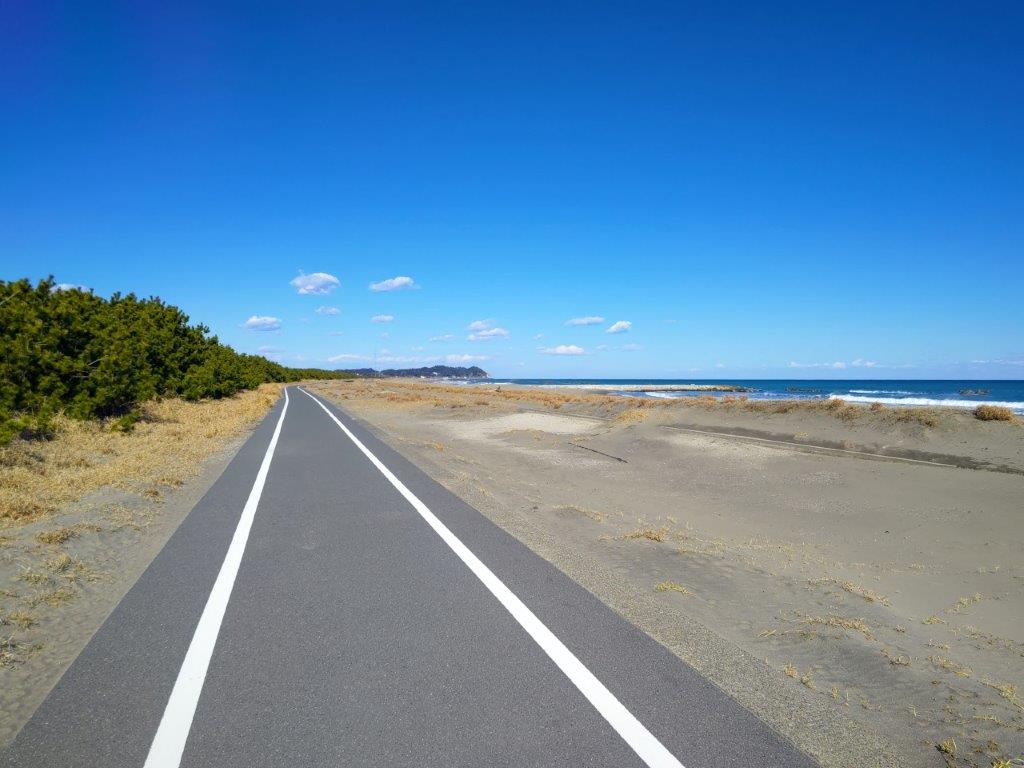
Following Niida River to Ohara Beach

Cycling road along Ohara Coast

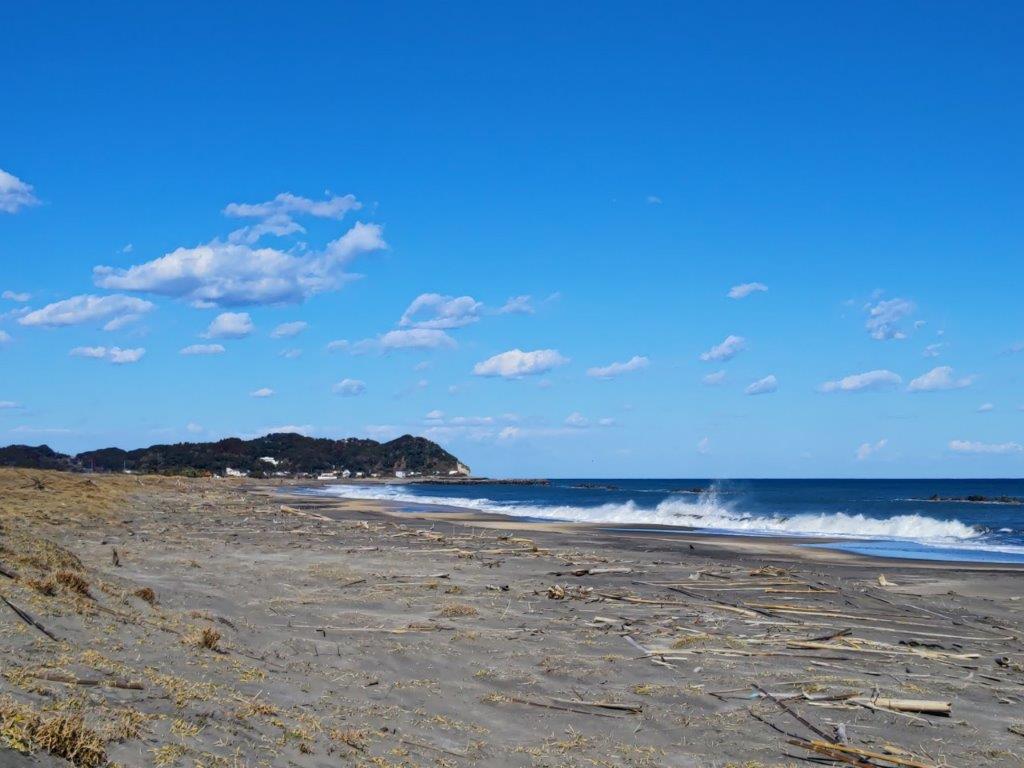
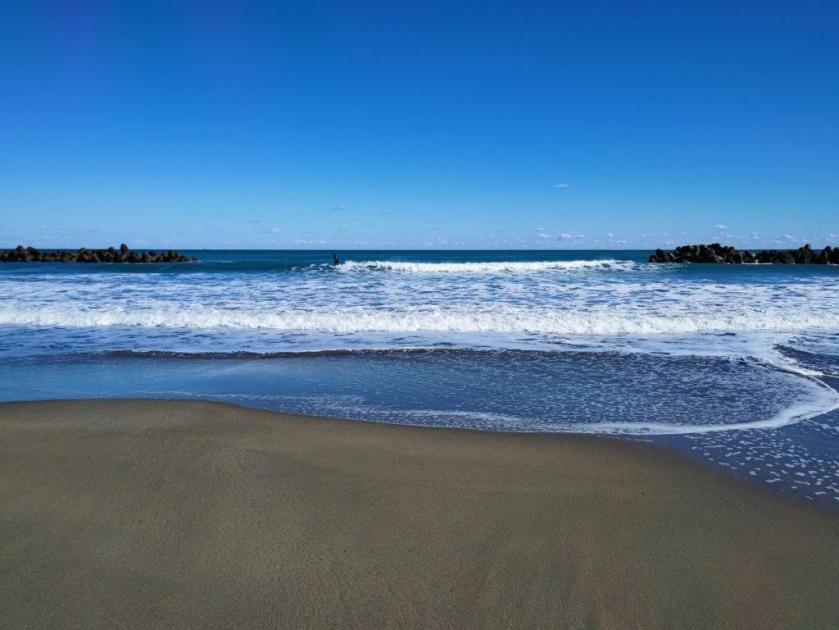
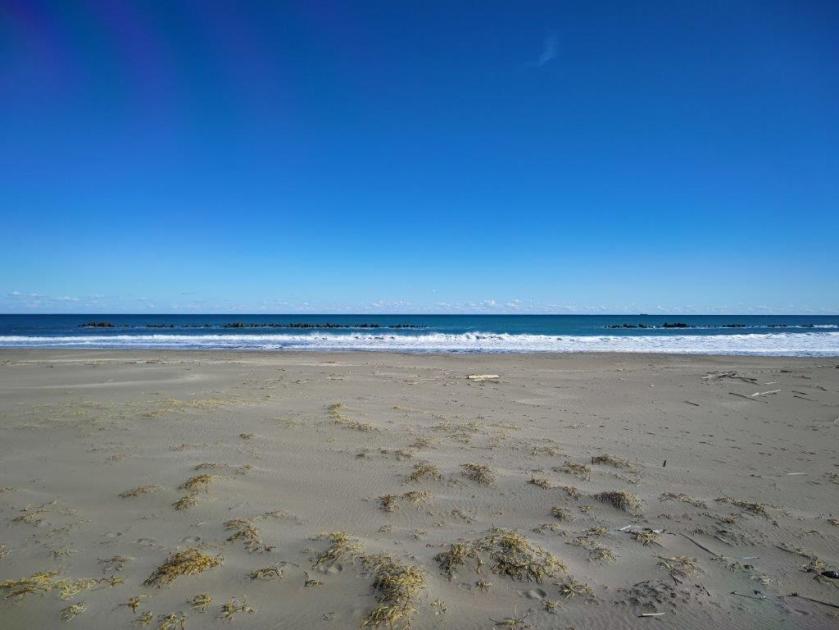
After a pleasant train ride under blue skies, I arrived at Ohara station a little before noon. After getting ready, I followed the signs for the Kanto Fureai no Michi to Niida river, where I turned right along a pedestrian path. At 1230, I spotted a palm tree, a sign that I was getting close to a beach area. Soon after, I could see the ocean, waves rolling in at regular intervals. I turned left, now walking in the sand along Ohara beach (大原海岸).

Looking back at Hachiman Cape

Looking forward to Taito Cape

I was surprised to see a couple of surfers on this cold winter day. Eventually, I made my way to the cycling path running parallel to the beach, easier to walk than the sandy beach. Directly ahead, I could see Taito cape, the halfway point of today’s walk. Just before 1h30, I reached the end of the beach; the path turned left and right, heading straight alongside a reedy inlet.

Heading straight….

…alongside a Reedy Inlet

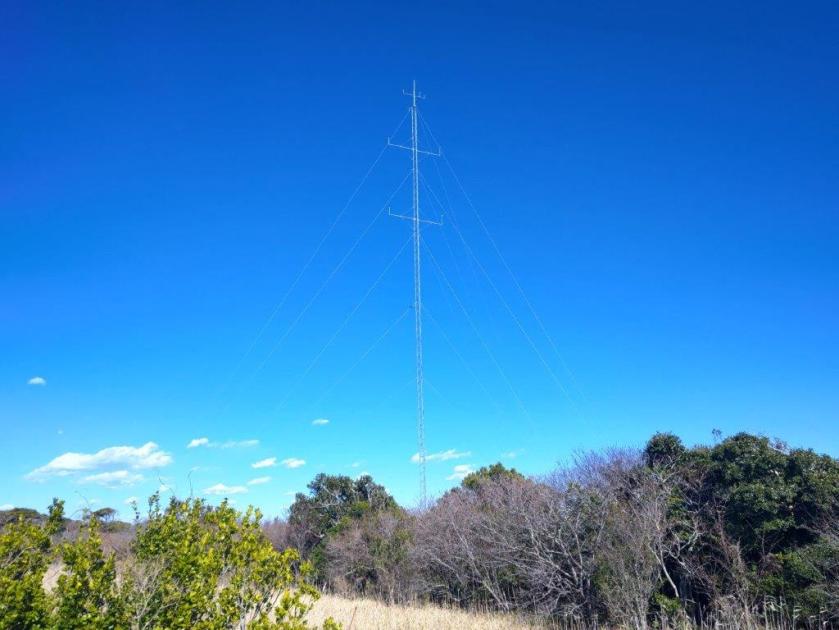
The quiet waters of the inlet created a nice contrast with the crashing waves of the ocean, waterfowl lazily floating on the calm surface. After passing a couple of slender antennas, I reached Izumiura Beach (和泉浦海岸) where I turned left along the Isumi river. Looking left across the fields, I could see a series of low hills, a hint of the hilly interior of the boso peninsula. I turned right at Koto Bridge and then followed small roads through the fields, ending at Taito Seaside (Taito-Kaihin 台東海浜) at the base of Taito cape.

Approaching Taito Cape

Walking next to Isumi River

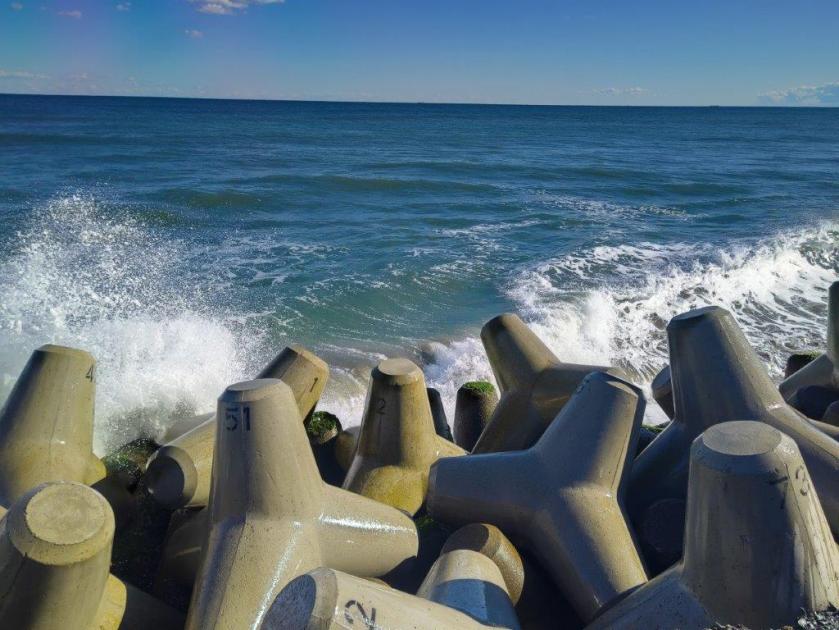
I observed the waves crash onto the waves breakers for a short while, and then headed inland, following the familiar Fureai no Mich signposts. A little after 2h30, I arrived at Taisho Dam, where I turned right, heading uphill for the first time today. At 3pm, I arrived at Taito Cape Lighthouse (太東崎灯台), the highest point of the day.

Taito Cape from Isumi River

Walking through the Fields

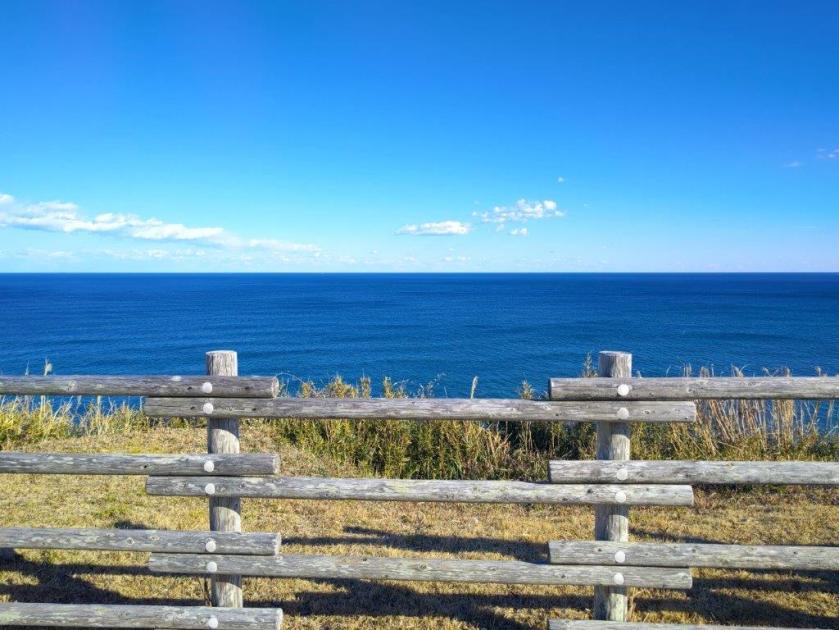
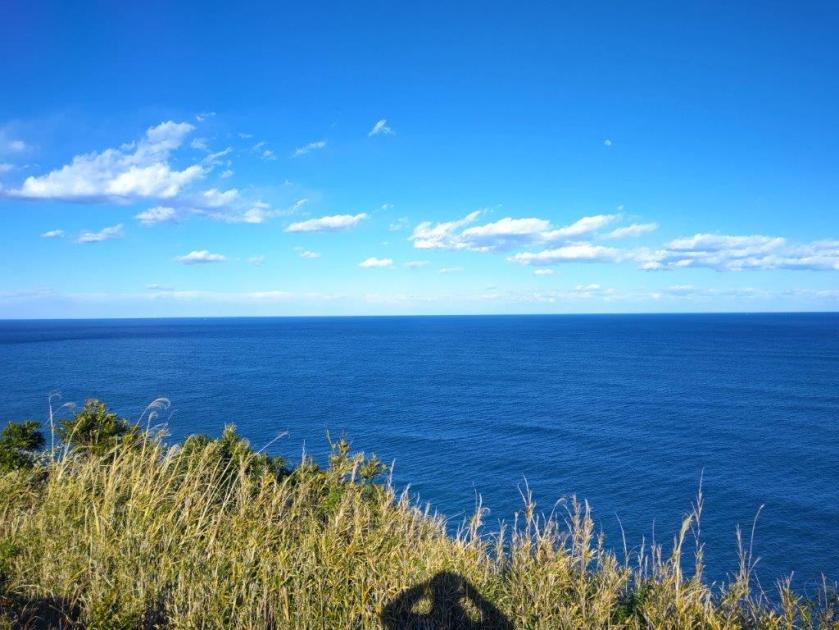
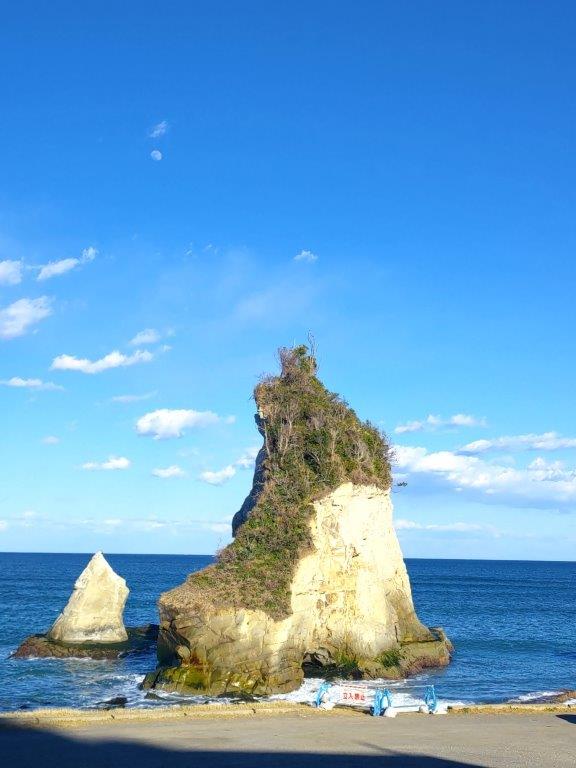
I was delighted by the vast expanse of blue ocean under a cloudless sky on the east side. Looking south, I had a bird’s-eye view of Izumiura Bay and Isumi river. I sat on one of the many benches for a late lunch with a view. I realised that my pace had been too leisurely up to now, so I soon moved on, retracing my steps down to sea level. Heading northwards at a quick pace, I came upon Suzume-jima (雀島 meaning swallow island) at 3h30, much faster than I had expected.

Taito Cape from Taito Seaside

Taisho Dam near Taito Cape

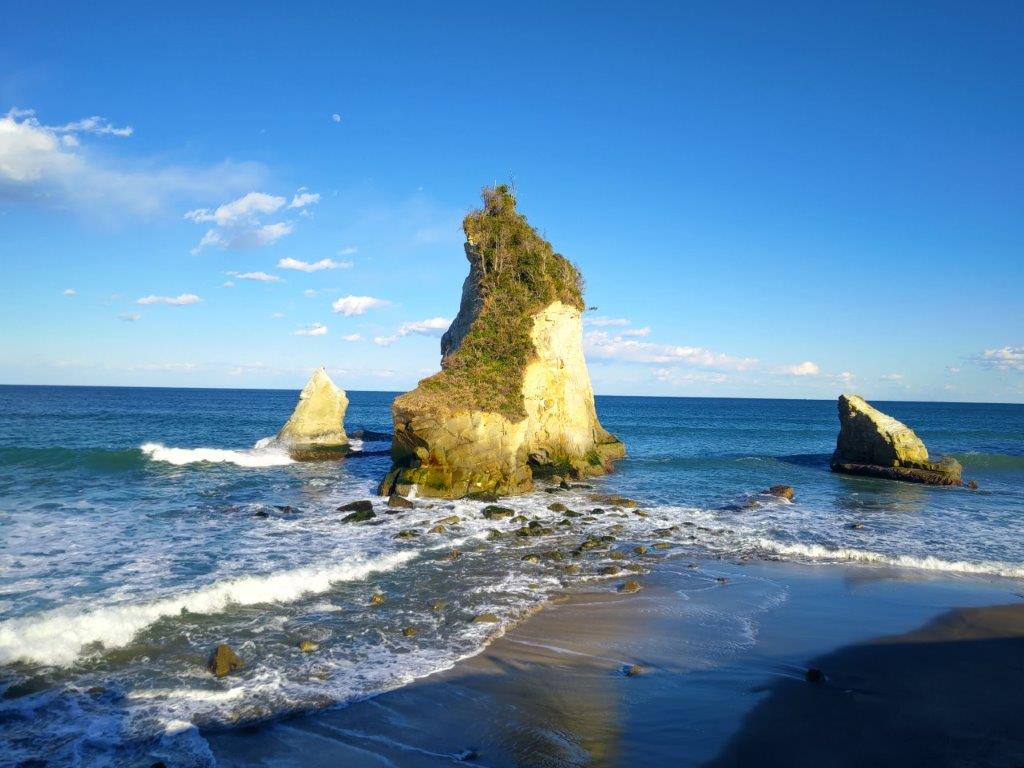
I was lucky to reach this photogenic rocky island while it was till bathed in sunlight. After enjoying the view of the yellow cliffs surrounded by blue sea, I continued northwards, and past a tunnel and a seaside resort, reached the entrance of the Taito Hiking Trail (太東ハイキングコース). Sadly this side of the trail had become overgrown and was now permanently closed. I followed the road till it merged with a busy thoroughfare, but soon turned right, heading towards Taito Beach (太東海岸). Very soon, I spotted the other end of the hiking trail, a series of steps leading up a bluff on the right side.

View of Izumiura Bay and Isumi River from Taito Cape

Deep Blue Pacific Ocean from Taito Cape

I was excited to be finally walking on an actual hiking trail. At the top of the steps, I crossed a wide, level grassy space ending at another series of steps. Between the vegetation on the left side, I had glimpses of Kujukurihama beach, today’s final destination. At 4pm, I popped out onto the Taito Hiking Trail Observation Point (太東ハイキングコース展望台 47m) where I once again had a wide view of the Pacific Ocean on the east side.

Swallow Island past Taito Cape

Hiking Trail for the Observation Point

Suddenly, I noticed a bird of prey circling overhead, always a pleasure to observe wildlife on a hike. After a short break, I made my way back down to the base of the bluff and continued along the main road. It was getting late so I decided to skip the last part along the beach, having visited it in the past, and head straight for the station.

Taito Beach at the Start of Kujukurihama

Heading Back from the Observation Point

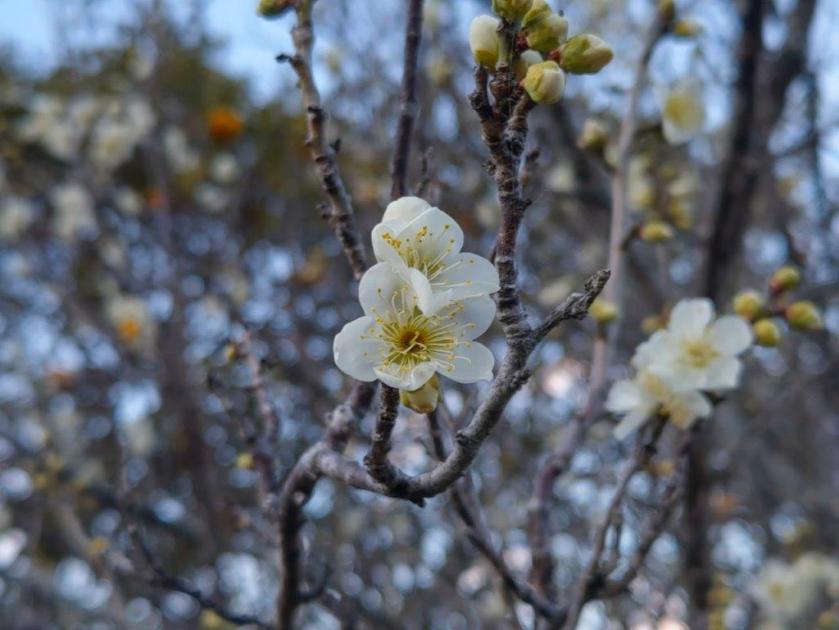
Along the way I was rewarded with some very early plum blossoms, probably due to the mild seaside climate. A little before 5pm, I reached Torami Station, one of the most undeveloped stations I had ever been to. After riding one stop to Kazusa-Ichinomiya station, I hopped onto the limited express for the one hour ride back to Shinjuku. The Kanto Fureai Michi continues past Torami and connects with the Kasamori Green Path, so one day I hope to return to continue my exploration of this network of trails surrounding the Tokyo area.

Watch a video of the Ohara to Taito Beach Hike

Watch the Video of the Hike on YouTube

See a Slideshow of More Pictures of the Hike

Mt Tobio (234m), Atsugi City, Kanagawa Prefecture, Saturday, February 1, 2025

I found this hike, through the low hills at the edge of western Tanzawa, in one of my guidebooks; in addition to a view from the highest point, it also passed by an observation tower, seemingly a characteristic of the area. It was a little on the short side, but looking at maps online, I saw it was possible to extend it northeast and also include one more observation tower.

For subscribers, read this Post on Hiking Around Tokyo for a better viewing experience and the latest updates

Hiking in the Tanzawa Mountains 丹沢山地

To get to the start of the hike, I’d ride the Odakyu line limited express to Atsugi, and then board a bus for the Tobio locality, at the southern end of the hills. For the return, I’d catch a bus back to Atsugi near the northern end. The weather was supposed to be sunny in the morning, turning cloudy in the afternoon. I was looking forward to a relaxing winter hike with views of the Tanzawa mountains and the Kanto Plain.

Find Japan Hiking Maps on Japanwilds

Trail at the Start of the Hike (left) Trail past the Tower (right)

Steep Climb before Mt Tobio (left) Road for Mt Hasuge (right)

I sped south under blue skies comfortably seated on the “Romance Car”, arriving at Atsugi a little before 1030. There, I boarded a half-full bus for the half-hour ride to Tobio Danchi. After a short walk through a residential neighbourhood, I reached the start of the hiking trail at 1130 at the top of a long staircase. After following a level trail for a short while, I arrived at Sannosha (山王社), a Shinto Shrine at the edge of the forest with a view of the Kanto Plain on the eastern side.

View of the Kanto Plain from Sansho Shrine

Trail between Sannosha and Konpirasha Shrines

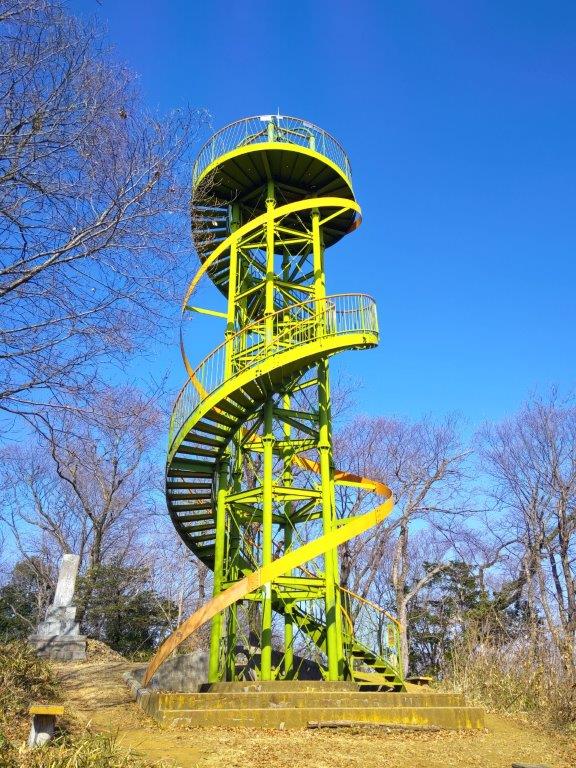
I was delighted to get a view so soon, even only of a flat urbanscape. After quickly checking out the shrine, I continued on my way, and soon arrived at Konpirasha (金毘羅社), another Shinto shrine, this one with a photogenic red “torii” or “Shinto gate”. It was completely in the forest, but a little further along the trail, I came upon the equally photogenic yellow konpirasan Observation Tower (金比羅山展望台 also known as the Mt Tobio Observation Tower).

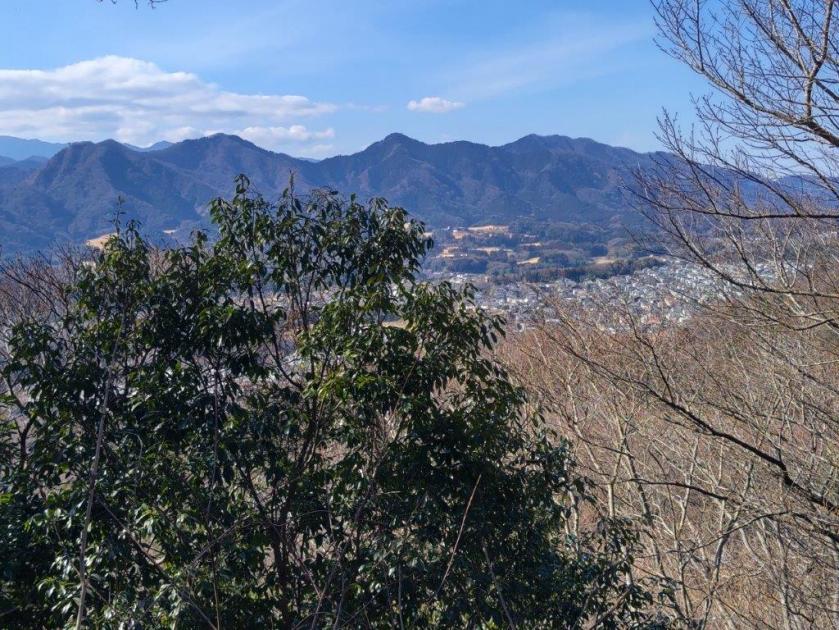
View Southeast of Kanagawa from the Observation Tower

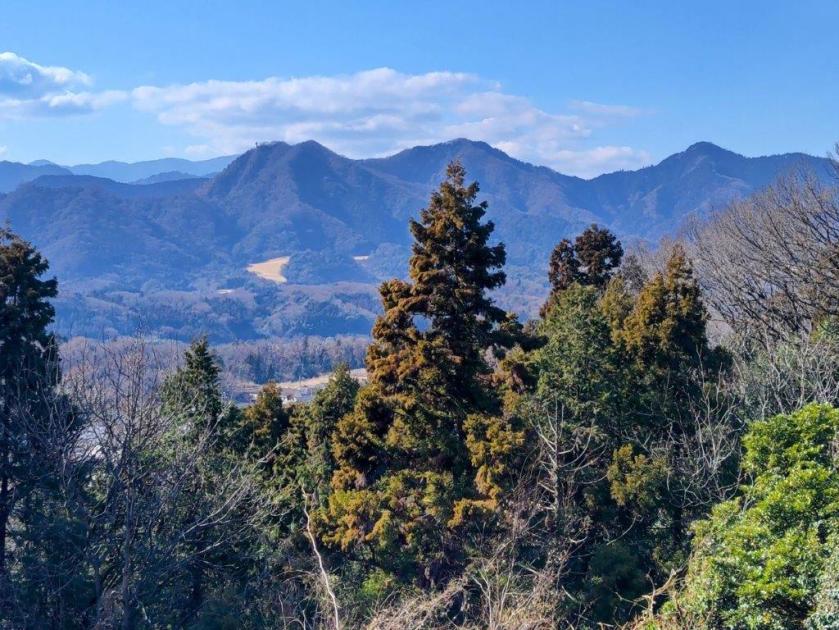
View Northeast of Tokyo from the Observation Tower

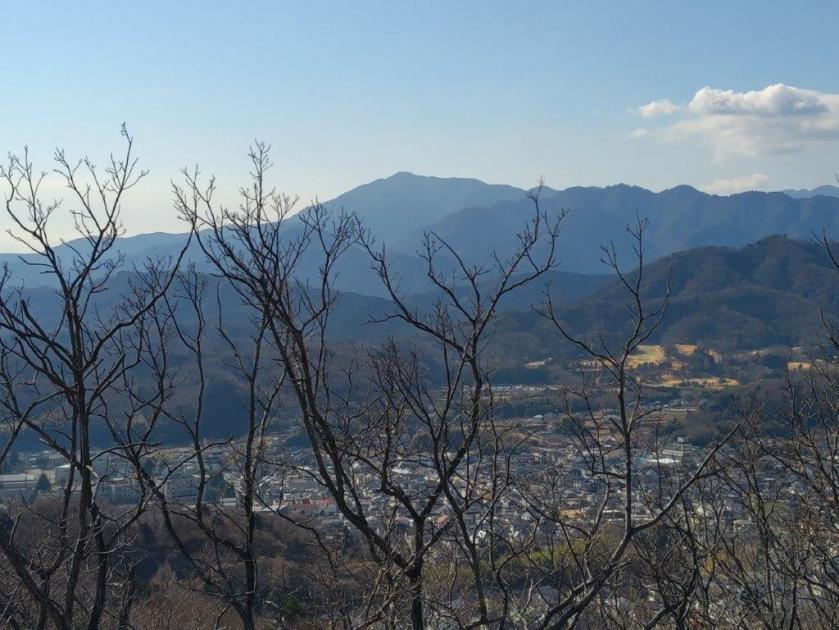
It was one of the tallest observation towers I’d ever been up; unfortunately, bare branches still reached high enough to partly interfere with the view of the Tanzawa mountains on the western side; I could still make out the triangular summit of Mt Oyama, as well as Mt Kyogatake, Mt Bukka and Mt Takatori; on the eastern side was the flat Kanto plain, Tokyo’s skyscrapers lost in the haze. Looking south, I could see the elevated plateau stretching from Shonan Daira to Hadano city. To the north, I could observe the entire length of the hills I’d be hiking today.

View of Western Tanzawa from the Observation Tower

Mt Oyama from the Observation Tower

This was probably the best view of the day, and once satisfied, I headed down the stairs to continue my hike. The trail first went downhill, then became level near a rock mining area, before climbing steeply. Before I could break a sweat, I found myself at the top of Mt Tobio (鳶尾山 とびおさん tobio-san), known for its cherry blossoms trees, although in this season the branches were still bare. I had a view once again of the Kanto plain; northwards were the Okutama mountains, the distinctive shape of Mt Odake clearly visible in the far distance. Since it was just past 1pm, I sat on a sunny bench for lunch with a view. Once done, I set off again.

Trail past the Observation Tower

Level Section before Mt Tobio

I followed a level trail surrounded by mixed forest, the most pleasant part of the hike so far, hiding the nearby city for a short while. I eventually reached a paved road at Yanami Pass (やなみ峠), the end of the Mt Tobio Hiking Trail. Here, I turned right onto the road as it descended gently through the forest. Just past a small creek at a bend, I spotted a series of log steps heading steeply up the mountain side. Clouds had covered the entire sky at an astonishing speed bringing a chill to what had been so far a pleasant winter day. I quickly made my way up the steps to warm my chilled body.

Bench at the Top of Mt Tobio

View of the City from Mt Tobio

I was glad to be back on a hiking trail, even for a short while. At 2h30, I arrived at the the top of Mt Hasuge (八菅山 200m) and the Mt Hasuge Observation Tower (八菅山展望台), about half the height of the previous one. The view, only on the east side, was also less spectacular, possibly due to the white cloud cover and lower elevation. After checking out the nearby Hasuge Shrine (八菅神社), I continued northwards, now on a wide, level dirt track, trees on both sides. After a while, I reached a fence on the west side, beyond which I could see a golf course, the Nakatsugawa Country Club.

Trail past Mt Tobio

Tanzawa Mountains beyond the Green

Beyond the green, I could see the dark outline of the Tanzawa mountains under grey clouds. A little further, I reached a road and an electric pylon at the top of the country club. Here, I turned left, descending between the greens, passing the club house and its huge parking lot. At 3h30 I reached the base of the mountain and after a short walk through the countryside, arrived at a bus stop on a busy road. Here and there, I could see the first plum blossoms of the season. A little later, I was on the bus for Atsugi, and at 5pm I boarded the Romance car for the one hour trip back to Tokyo.

Watch a Video of the Mt Tobio Hike

Watch the Video of the Hike on YouTube

See a Slideshow of More Pictures of the Hike

Ojuhacha (162m), Mt Tanuki (139m) & Mt Kitsune (153m), Ichihara City, Chiba Prefecture, Sunday, January 26, 2025

I was looking for an easily accessible hike in Chiba. Looking at my map, I found a suitable loop hike inside Yonezawa Forest, in the northern half of the Bozo peninsula. It was a short walk from Kazusa-Ushiku station on the Kominato line, as well as a short drive from Mobara station. I chose to go by car to take advantage of the Sotobo line limited express. The route included 3 minor peaks, Mt Fuji apparently visible from the first one on clear weather days.

For subscribers, read this Post on Hiking Around Tokyo for a better viewing experience and the latest updates

Hiking on the Boso Peninsula 房総半島

To get to the start of the hike, I’d ride the Wakashio Limited Express from Tokyo station to Mobara station, and there, switch to a share car; for the return, I’d use the Wakashio bound for Shinjuku station. Before the hike, I’d stop by Nagara Chosei An for an early Soba Lunch. The weather was supposed to be sunny all day and I was looking forward to visiting a new spot on the Boso Peninsula, as well as getting my first proper view of Fuji of the year.

Find Japan Hiking Maps on Japanwilds

Start of the Hike (left) Entering the Bamboo Grove (right)

Inside the Bamboo Grove (left) Walking through Ferns (right)

It was another perfect winter day as I rode the limited express from Tokyo Station, arriving at Mobara around 11am. After finding my share car, I drove to Nagara Taiyo Farm, situated on a tableland, also the location of the soba restaurant. After lunch, I walked a short way to the nearby Nagaiki Observation Deck (長生き展望台 meaning long life), perched at the edge of a steep incline; from a modest elevation of about 100 meters, I had a stunning view to the east of the forested coastal plain extending north to south.

Looking East from the Nagaiki Observation Deck

Looking North from the Nagaiki Observation Deck

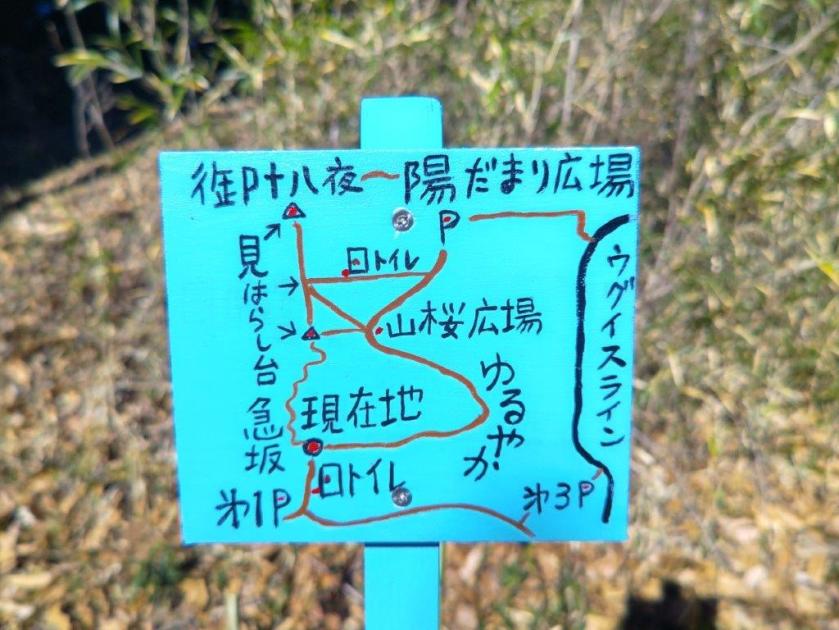
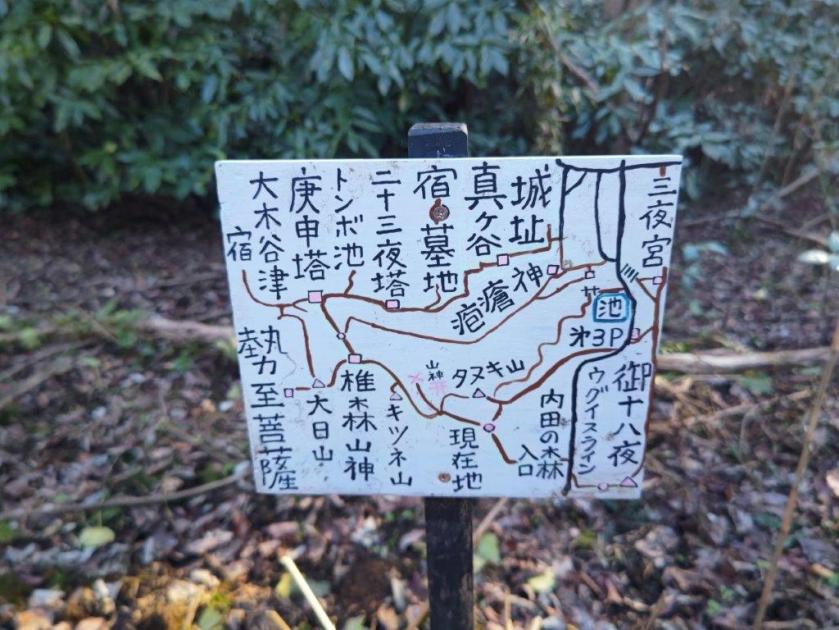
Cold gusts soon forced me to retreat to my car, and after a short drive, I reached the Yonezawa-no-mori #3 parking lot, along the Uguisu line (meaning Japanese Nightingale), one of the entrances to Yonezawa forest (米沢の森). After getting ready, I set off just after 1pm, up a gentle incline. I soon arrived at a junction on a ridge where I turned right. After following a pleasant path through the forest, I got to another junction where I turned right again. Here and there, helpful hand drawn signs along the trail kept me on the right track. At 1h30, I arrived at Ojuhacha (御十八夜 おじゅうはっちゃ ojuuhaccha), the highest point of today’s hike, also the location of a relay station, with a wide view on the west side.

Sun Filtering through the Foliage

Approaching the Turnoff for Mt Kitsune

I was delighted by the view of white-capped Fuji, visible through the haze, on the other side of Tokyo Bay, with the Hakone mountains to its right, and Southwest, I spotted the prominent plateau of Mt Kano, also the location of Mother Farm, with the outline of the Miura peninsula on its right side; further south were the countless low mountains of Minamiboso. Looking northwest, I could make out the skyscrapers of Tokyo. I was tempted by a bench next to the relay building but it was too soon for a break. I headed downhill, glimpses of a golf course on my left side, and after a short while, reached the Uguisu line, but soon rejoined another hiking trail on the other side.

View west towards Tokyo Bay from Ojuhacha

Looking up the Bamboo Stalks

It was great to be walking through the evergreen trees that cover most of the Boso peninsula; some leaves were bright green, turning winter into a distant memory. After some ups and downs, I reached the top of Mt Tanuki (たぬき山 たぬきやま tanuki-yama meaning Mt Raccoon); it was completely in the trees, and despite the tanuki’s reputation for possessing people, I didn’t feel compelled to stick around.

Path Leading into the Bamboo Grove

Walking Through the Bamboo

At 2h30, after some more ups and downs, typical of hiking in Boso, I arrived at the third and last peak of the day, Mt Kitsune (きつね山 きつねやま kitsune-yama meaning Mt Fox), slyly tucked away down a side path off the main trail, also surrounded by trees. I resumed my hike, following a slightly descending ridgeline straight through the forest, ignoring several tracks on the left side, and at 3pm, arrived at the edge of a bamboo grove.

An Easy to Walk Trail

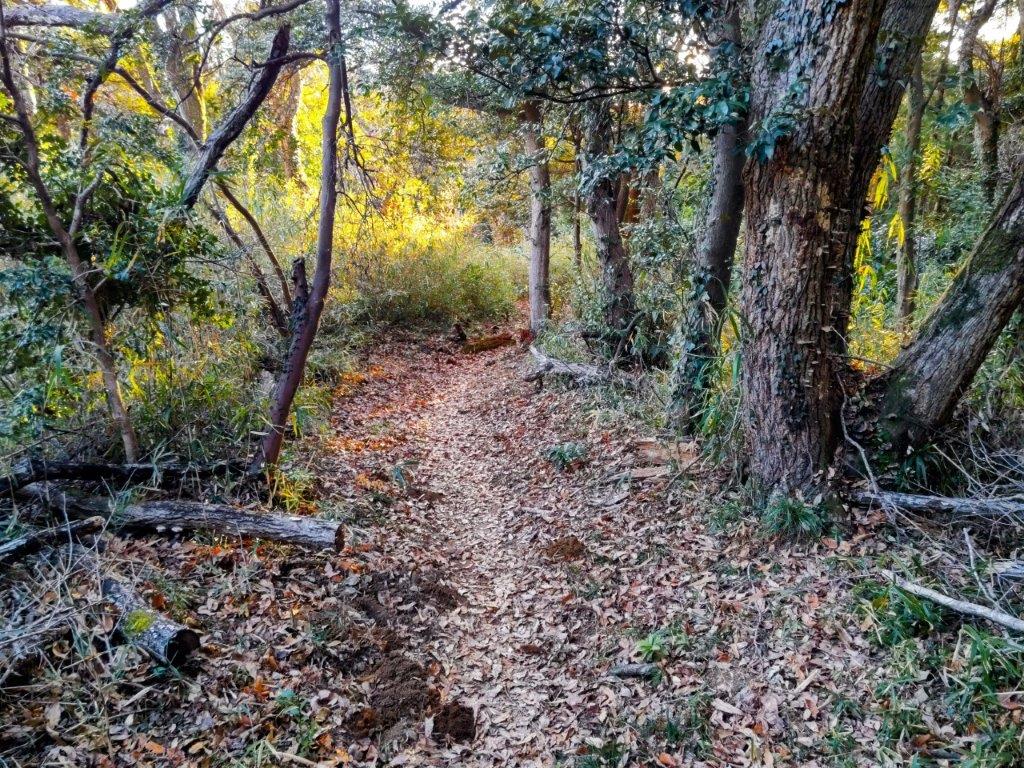
A Level Trail Through an Evergreen Forest

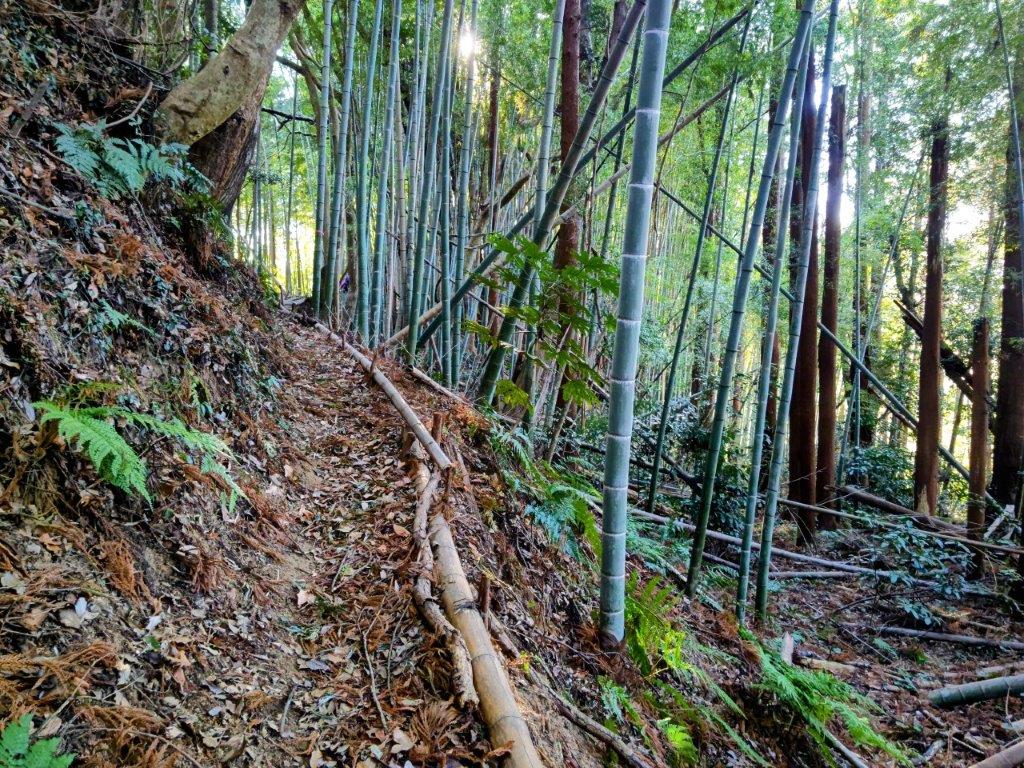
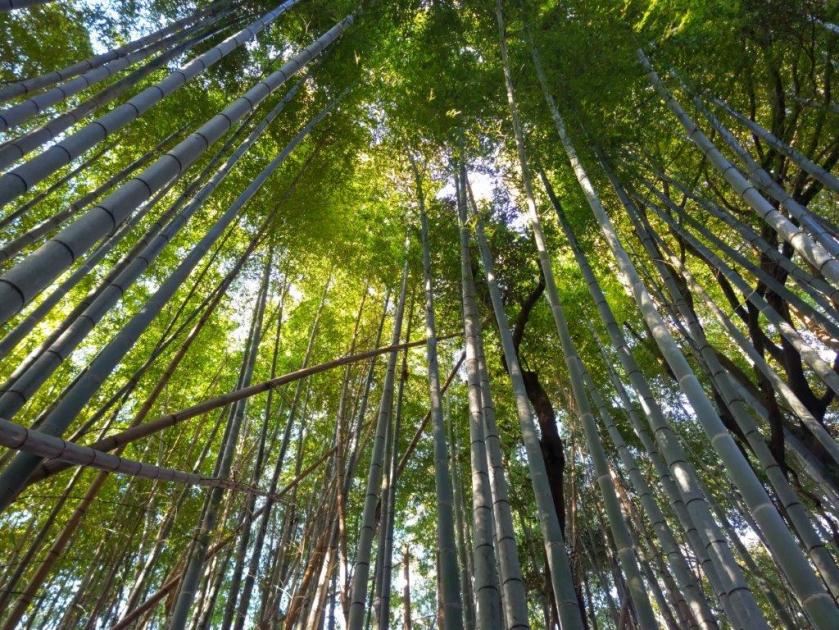
I was excited to be walking through bamboo, the tall stalks swaying and cracking in the breeze. After exiting the grove, I descended a fern-lined path ending at some houses along a road; here I turned left and soon crossed the Uguisu line again. After a short walk under the afternoon sun through the Yonezawa locality, I turned right, up a road leading back into the forest. The road leveled and turned into a path, in the shade of tall cedars. I passed a wooden “torii” (Shinto gate) on the right side, the entrance to Awasu Shrine. I continued straight ahead, thick vegetation crowding in on both sides, blue sky now reappearing above.

Mt Fuji & Hakone from Ojuhacha

Mt Tanuki from above the Uguisu Parking Lot

I had an unexpected view of Mt Tanuki through a break in the vegetation on the right, the rounded tree-covered summit area bathed in the late afternoon light. Shortly after, I arrived at the turn-off for the parking lot, and by 4pm I was back at my car. I felt I had only walked a small part of the network of trails through Yonezawa forest but felt happy to have finally seen the full shape of Mt Fuji for the first time of the year. I returned the car at 5pm and then boarded the limited express; after enjoying the sunset from my seat, I settled in for the one hour ride back to Tokyo.

Watch a Video of the Ojuhacha Hike

Watch the Video of the Hike on YouTube

See a Slideshow of More Pictures of the Hike

Mt Raiden (418m), Tokigawa Town, Saitama Prefecture, Saturday, January 18, 2025

I was looking for a short, low-altitude, and relatively easy hike near Tokyo, with some good views, as well as a hot spring bath at the end, to take full advantage of the clear skies of the cold winter days. Poring over my map, I spotted a peak in the Tokigawa area, overlooked up to now, but which checked all the boxes. The summit was supposedly in the trees, but the shoulder beneath it was described online as a “Scenic ridge”. As an added bonus, I could check out the Sanba Gorge on the Toki river before heading to the nearby Toki no Yu hot spring.

For subscribers, read this Post on Hiking Around Tokyo for a better viewing experience and the latest updates

To get to the start of the hike, I’d rode a Tobu-Tojo express train from Ikebukuro directly to Ogawamachi, and there, hop on a local bus for the short ride to Suzume Dam. After a hot spring bath at the end of the hike, I’d walk a short way to the Seseragi Bus center. There, I’d catch a bus for Musashi-Ranzan station, and then board a Tobu line train for the trip back to Ikebukuro. The weather was supposed to be cold and sunny all day, and I was looking forward to a relaxing hike in the hilly countryside of Oku-Musashi.

Hiking in Oku-Musashi 奥武蔵

Find Japan Hiking Maps on Japanwilds

Suzume River and Dam

Trail past the Summit of Mt Raiden

It was another splendid winter day as I rode the express train to Ogawamachi, arriving there around 11am. After a short ride on a diminutive bus filled to capacity, I got off at the Suzume Dam entrance (雀ダム入口) in Hikage, actually a 10-minute walk to the dam itself. Along the way, I passed Hikage Shrine, its “shide” (zigzag-shaped paper streamers) swaying gently in the breeze. At the top of a slope, I reached the parking of a park, descriptively name the Suzume river dam erosion control park (雀川ダム砂防公園). A short climb up a steep staircase brought me to the top of the dam wall.

Sunny Hiking on a Winter Day

Following the Panoramic Ridgeline

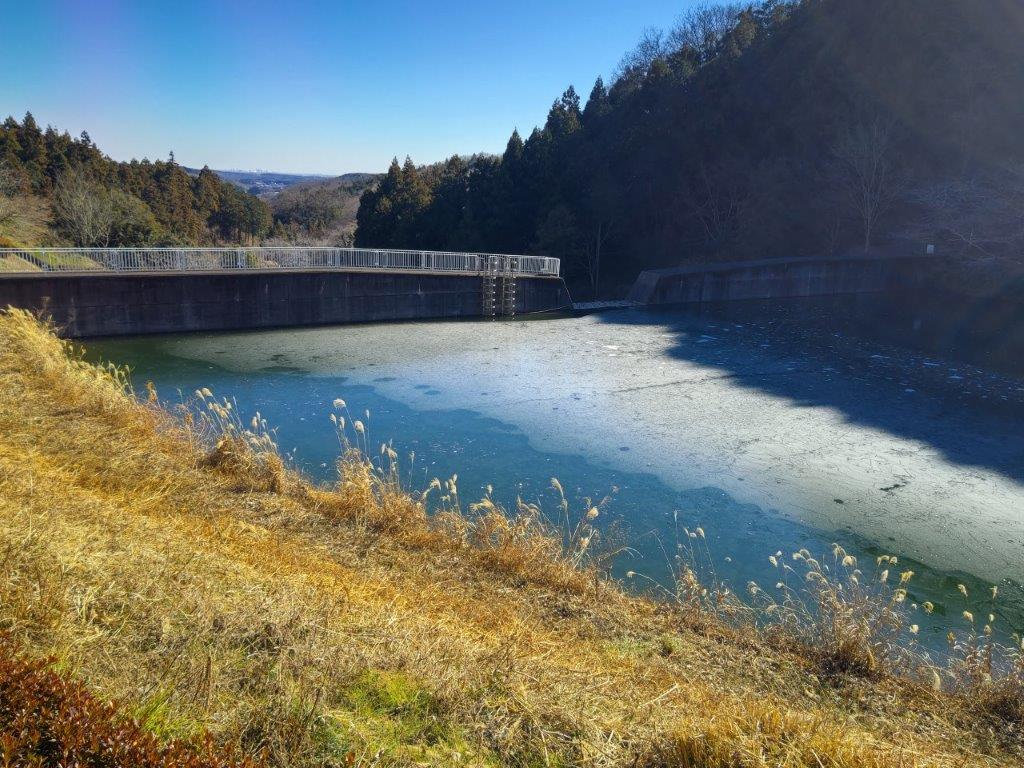
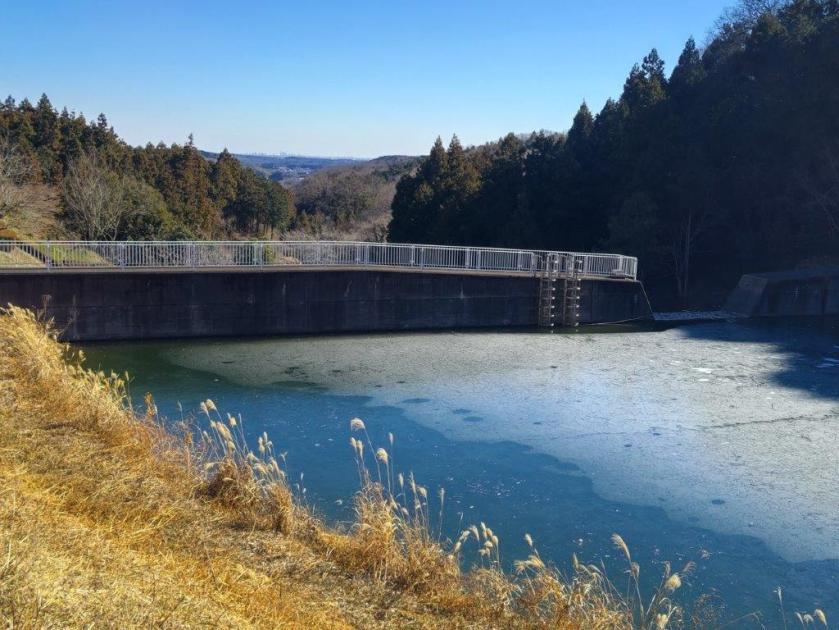
Surprisingly, the water behind the dam was half frozen, sparkling white under the morning sun; yellow Japanese Pampas grass (“susuki“) in the foreground completed the scenery. In the far distance beyond the top of the dam, I could see the skyscrapers of Tokyo. I followed the road into the forest, and past a bend, reached a signpost marking the trail entrance on the right, shortly after noon.

View Southeast of Tokigawa Town

View East of Mt Doyama

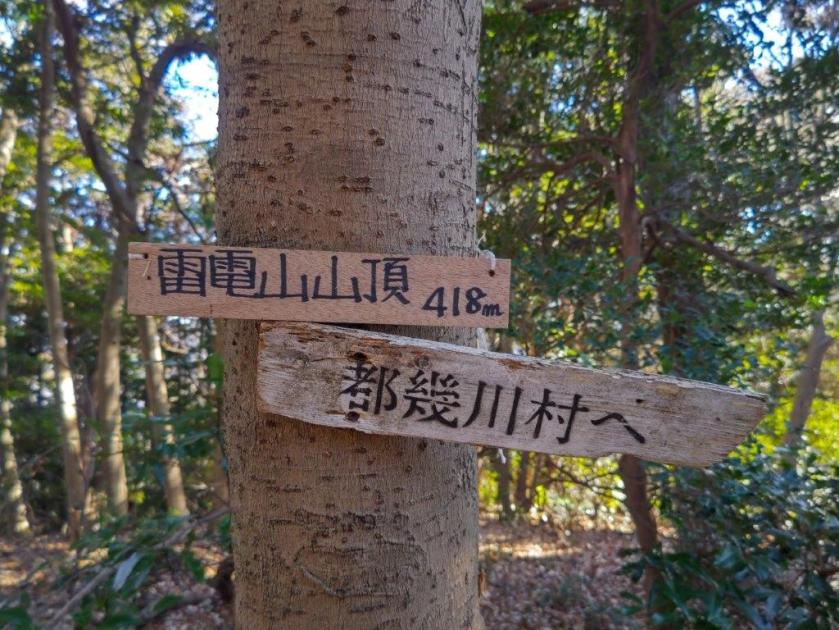
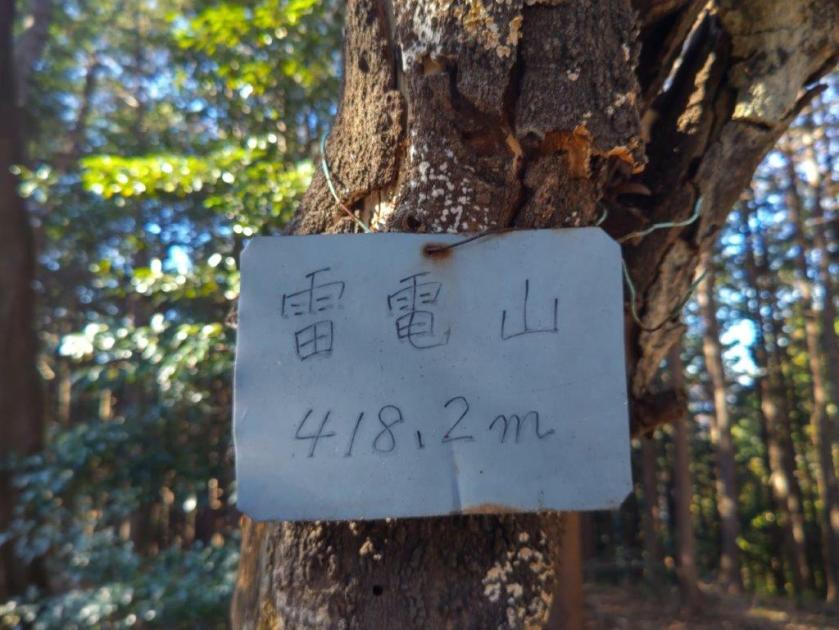
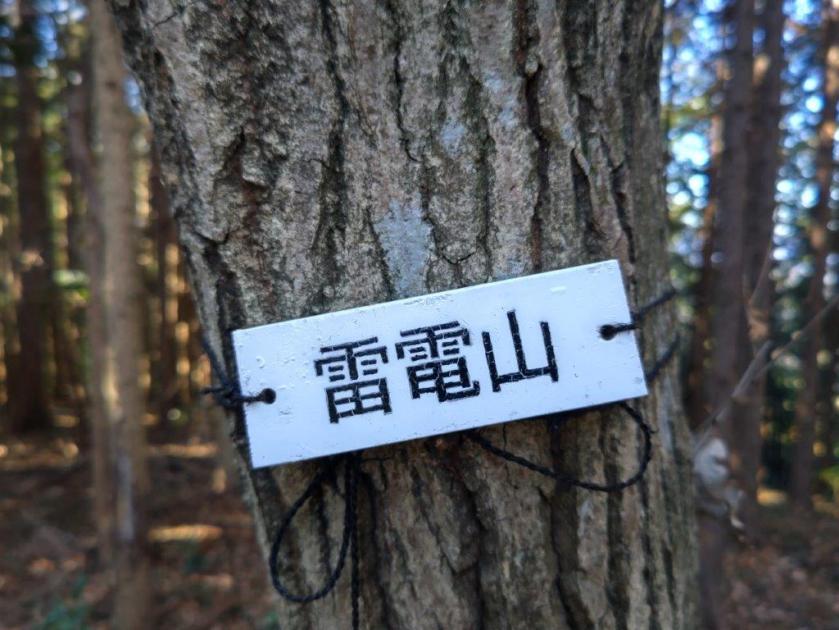
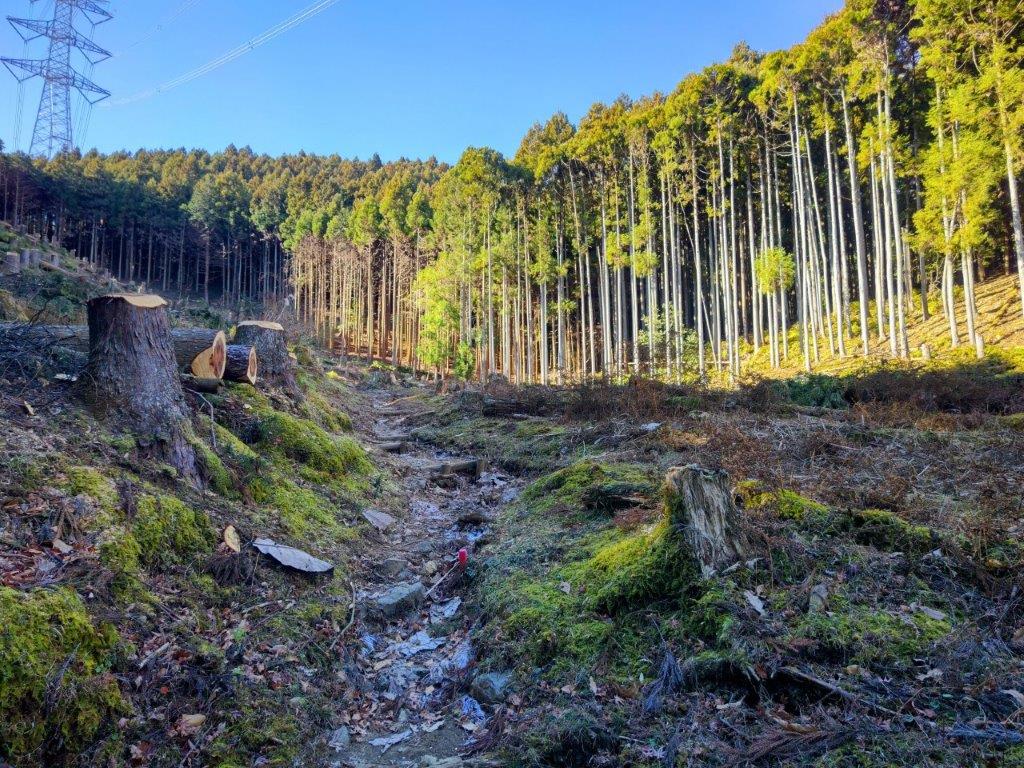
It was a pleasant climb up a gentle slope through a mixed forest, the warm sunlight filtering through the leafless trees. Less than an hour later, I arrived at the small shrine marking the summit of Mt Raiden (雷電山 らいでんやま raiden-yama meaning thunder and lightning). This peak might hold the record for the most summit markers: I counted five different ones. It was completely in the trees, so after a short break, I headed down a trail on the east side.

View South of Mt Yumidate

Trail for Mt Doyama

I felt relieved that the trail was easy to walk and well-maintained, just what I had been hoping for. I saw no other hikers so I was also able to enjoy it in near complete silence in this season, before the return of the birds and insects. After a couple of turns, I reached the scenic ridge, although all I could see were the trees on both sides. Suddenly, at the top of a gentle slope and just before a steep descent, a view opened up on the right side.

Trail past Mt Doyama

Road near the End of the Hike

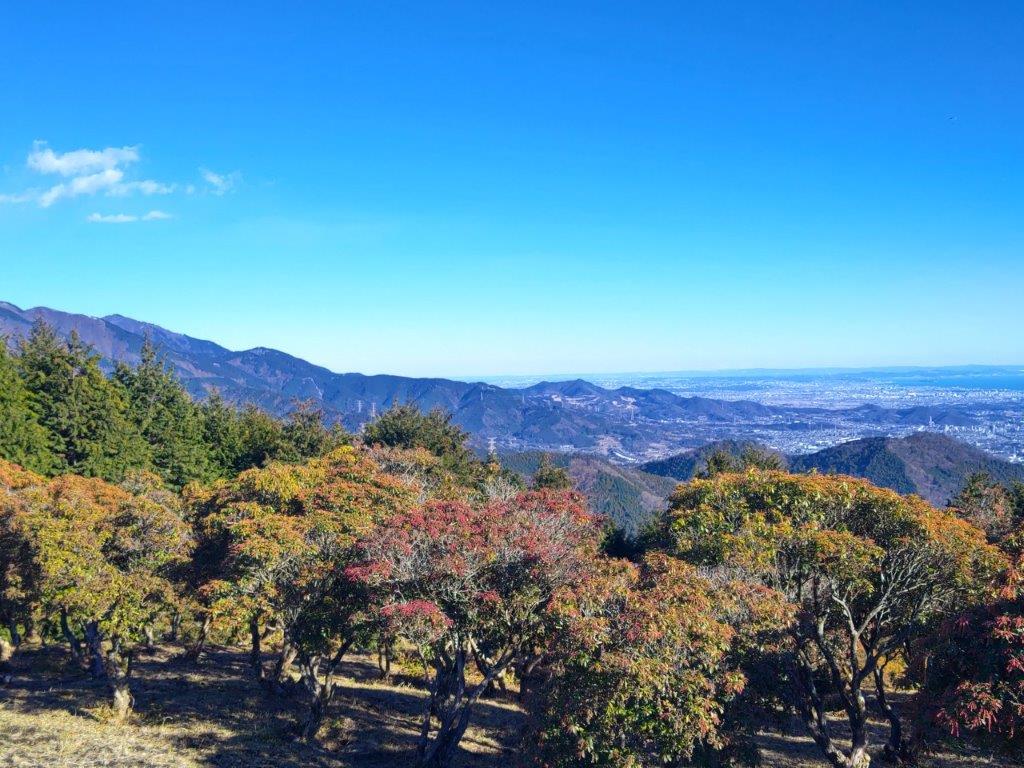
I was delighted to finally get a view, especially on such a beautiful day. Looking southeast, I could see Tokigawa Town, and beyond, the Kanto plain with the skyscrapers of central Tokyo in the distance. On the south side was Mt Yumidate, and below on the east side, the next part of the ridge. Since it was 1h30, I sat on a tree root at the side of the trail and had lunch with a view. Once done, I set off again, ready to tackle the steep section head.

Sanba Gorge on the Toki River

Looking back at Mt Doyama

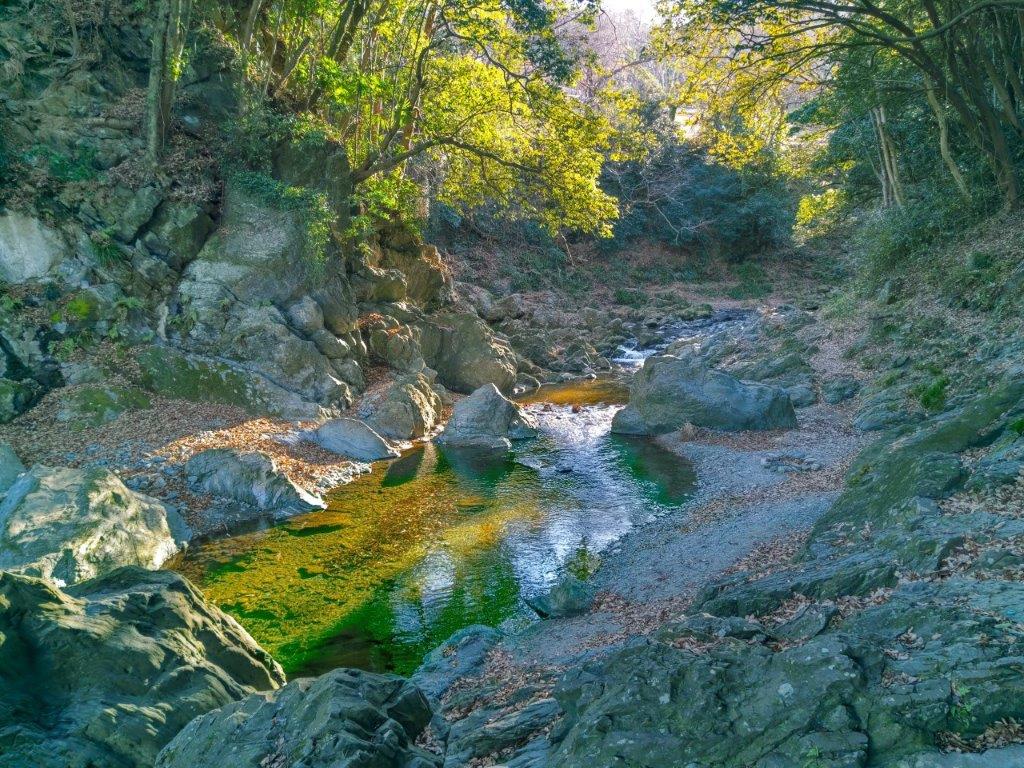
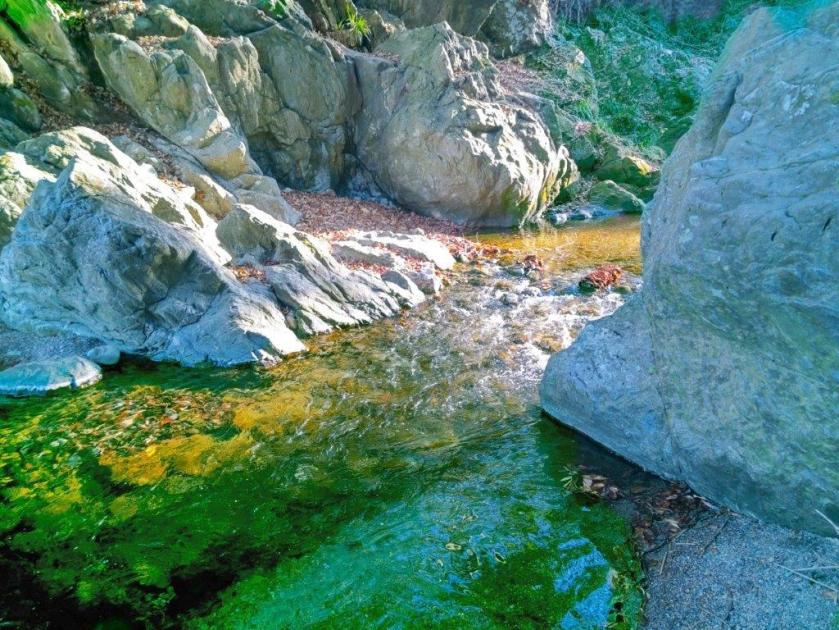
This was the trickiest section of the hike, dead leaves making it especially slippery. I made good use of the attached rope, and once past it, the trail was mostly level. Thirty minutes later, I passed the minor peak of Mt Doyama 堂山 (どうやま 250m), and there, turned left down a pretty trail through green ferns. At 2h30, I exited the forest and reached a road along the Toki river which I followed to the entrance of Sanba Gorge (山波渓谷). I was lucky to catch the last rays of sun on the cascading, rushing water. After exploring the rocky riverbed for a while, I headed to nearby Toki no Yu at. After a relaxing bath, I walked to the bus center where I boarded another diminutive bus for the short ride to Musashi-Renzan station.

Watch a video of the Mt Raiden Hike

Watch the Video of the Hike on YouTube

See a Slideshow of More Pictures of the Hike

Mt Shidango (758m) & Mt Take (710m), Matsuda Town, Kanagawa Prefecture, Saturday, January 11, 2025

I wanted to do another hike in the Tanzawa mountains, winter being the best time to explore the area. Looking through my guidebook, I found a couple of nearby mountains I had yet to climb, along a river valley north of Matsuda station. The summit of the first peak was out of the trees; the second was in the forest, but with a viewpoint below it on the east side. Combining the two, I expected the hike to take about 4 hours, meaning I could leave mid-morning and take advantage of the “Mt Fuji Romancecar”, the only limited express train to stop in Matsuda.

For subscribers, read this Post on Hiking Around Tokyo for a better viewing experience and the latest updates

Hiking in the Tanzawa-Oyama Quasi-National Park

丹沢大山国定公園

To get to the start of the hike, I’d ride the Odakyu “Fuji-san” limited express from Shinjuku to Matsuda station, and from there, ride a Fujikyu bus to the last stop on the line. For the return, I’d catch the same bus several stops before the end of the line, and then ride the “Fuji-san” back to Tokyo. Apparently Mt Fuji can be seen from both summits, and since the weather was supposed to be sunny all day, I was looking forward to getting a second chance at my first Fuji sighting of 2025.

Find Japan Hiking Maps on Japanwilds

Paved road between Yadoriki and the Wildlife Gate

Powerline Clearing on the Way to Mt Shidango

It was a relaxing ride under light blue skies to Matsuda station. After getting off the train just before noon, I made my way to a bus stop in front of the nearby Shin-Matsuda station. I was surprised to find myself at the back of a line of teenagers, on their way to play a football match in the same place I was headed. Half an hour later, we all got off the bus in Yadoriki (寄). Leaving them to their ball game, I crossed a bridge over the Nakatsu River and followed signs for today’s mountain, past tea fields and up a steep road ending at a wildlife gate at the edge of the forest; beyond it was the start of the hiking trail.

View of Mt Kobo from Mt Shidango

View of Shonan Bay from Mt Shidango

I was glad to be walking through the forest, the cool shade contrasting sharply with the warm sun from moments before; walking up a series of log steps, I soon warmed up again. I soon reached a clearing allowing for the passage of a power line. Beyond it, I resumed my walk under the dark cedars. One hour after setting off, the path suddenly went straight up the mountain side, gnarly tree roots forming natural steps, and just before 2pm, I broke through the trees to reach a small shrine, also the top of Mt Shidango (シダンゴ山 しだんごやま shidango-yama), named after a hermit (“sennin“) called Shidagon who lived on this mountain top about 1300 years ago.

View of Mt Shidango on the Way to Mt Take

Fuji Viewing Platform below Mt Take

I was surprised to be the only person on the summit, since other nearby peaks usually have a lot of traffic. On the east side was the long ridgeline starting from Mt Oyama and ending at Mt Kobo, where I’d been one week ago. Directly ahead to the south was Sagami Bay. In between, I could make out the Miura Peninsula, and beyond it in the far distance, the Boso peninsula. On the west side, sandwiched between the next mountain and puffy clouds, I could see the white snows of Mt Fuji. The flat summit had a seating platform so I settled down for a late lunch with a view. At 2h30, I set off down some log steps, again under the cedars, heading westwards, and soon reached a paved road closed to traffic and hugging the mountain side. Here, ignoring a metal staircase heading straight up the opposite slope, I turned left along the road.

Mt Tono & Mt Oyama from near Mt Take

Walking through a Thicket of “Aburachan”

It was nice to walk on a level road for a short while, with views occasionally popping up on the east side through gaps in the vegetation. At 3pm, I reached the start of the trail for today’s second mountain. From this point, all signposts were in double, old wooden ones and newer metallic ones, provided by a local association. I appreciated how they felt the need to have sturdier and more functional signs while at the same time keeping the more fragile original ones. From this point, I also saw many warnings about leeches, as well as small salt containers (attached to most signposts) for their disposal (actively encouraged). I followed a path southwards and soon reached an electric pylon at the base of a steep slope.

The Tanzawa Mountains from the Mt Take Observation Platform

Mt Shidango (front), Mt Hiru (left), Mt Nabewari (middle), Mt Tono (right)

I took a few minutes to enjoy the unexpected view provided by the passage of the powerline. On the east side was Mt Fuji again, perfectly aligned with the next pylon; on the west side was the rounded green top of Mt Shidango. Behind, I could see Mt Tono to its left, and Sannoto to its right; in the far distance, I could just make out the pointy summit of Mt Oyama. After a little more climbing, I reached the top of Mt Take (タケ山 たけやま take-yama), another peak without Chinese characters. It was completely in the forest, one ray of sunlight fortuitously lighting up the summit marker (the wooden one). I soon moved on and reached blue skies at the edge of the forest.

Mt Tono (left) & Sannoto (right)

Sannoto (left), Mt Oyama & Mt Kobo (right)

Looking up, I could see the full moon, already high in the sky. Walking a little further, I reached a wide viewpoint on the east side: the Mt Take Fuji Viewing Platform (タケ山富士見台). Looking excitedly to my right, the east side, I could see Mt Fuji now mostly free of clouds but against the sun at this time of the day. To its left, I could see the Hakone mountains, reaching all the way to Sagami Bay. On the west side, I had an excellent view of Sannoto and Mt Odake. To the south, under huge puffy clouds, was Oshima island; beyond, in the far distance, I could make out Toshima and Nijima islands. I took a short break on a bench to enjoy the view, as well as the late afternoon sun, before continuing on my way.

Hadano & Isehara Cities

Descending through “Aburachan” Shrubs

I was now walking inside a thicket of bare shrubs, affectionately called “Aburachan” in Japanese (February spicebush in English). The trail was vanishingly faint under a carpet of dead leaves but fortunately I soon popped into another clearing with another wide view on the east side: the Mt Take Observation Platform (タケ山展望台), where I had the best view of the day. On the west side, I had a spectacular vista of the Tanzawa mountains, from Mt Hiru, its highest point, all the way to Mt Oyama, with the full moon hanging above; Mt Nabewari was also visible, directly behind Mt Shidango. Further south, Hadano and Isehara cities spread out on each side of Mt Kobo. As before, the Shonan Bay, Oshima island and the Hakone mountains could be seen on the south side, only Mt Fuji now missing from the panorama.

Descending under the Cedars

End of the Mt Take Trail

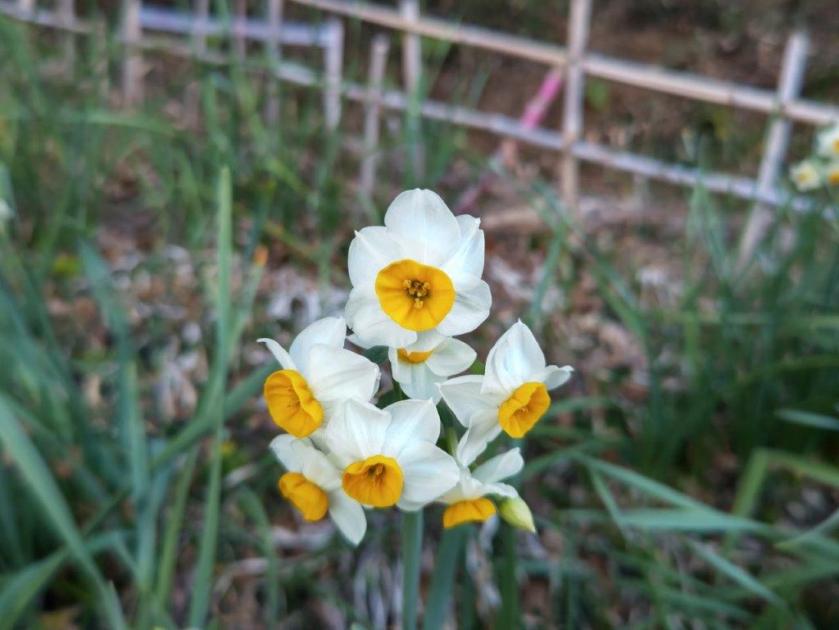
I was once again the only person to enjoy this glorious view, partly because it’s on a local trail but also partly due to the late time of the day. It was nearly 4pm so I set off at a quick pace down a switchback trail, first through another “Aburachan” thicket, coloured orange in the late afternoon light, then through a dark forest of tall cedars. Half an hour later, I reached a small park at the end of the trail, here and there “suisen” (daffodils) in full bloom. From this point, I followed a road along a terraced river. At the confluence with the Nakatsu river, I turned left, and after crossing a bridge, with one last view of a pink-tinged ridgeline on the north side, reached a wooden bus shelter. When the bus arrived, I was reunited with the soccer team from before; luckily I was able to sit, and a little after 5pm, was back at Matsuda station. There, I boarded the Romancecar limited express for the 80-minute ride back to Shinjuku.

Watch a Video of the Mt Shidango Hike

Watch the Video of the Hike on YouTube
See a Slideshow of More Pictures of the Hike

Mt Hijiri (380m), Mt Takatori (556m) & Mt Kobo (235m), Isehara & Hadano Cities, Kanagawa Prefecture, Saturday, January 4, 2025

Like for the last outing of 2024, I needed a straightforward hike close to Tokyo to ensure a smooth start to the new year. I decided to head to the Tanzawa foothills, notorious for its leeches in the warmer months, but pest-free at this time of the year. I had already walked from the top of the Oyama cable car to Mt Takatori, as well as from Mt Kobo to Tsurumaki Onsen. This time, I’d explore the southern ridgeline between Mt Takatori and Mt Kobo. I knew I could get a good view of Mt Fuji past Mt Kobo, and also finish the hike at Manyu no Yu, two reasons for making this the first hike of 2025.

For subscribers, read this Post on Hiking Around Tokyo for a better viewing experience and the latest updates

Hiking in the Tanzawa Mountains  丹沢山地

To get to the start of the hike, I’d ride the local Odakyu line to Isehara station, and then board a local bus for a stop near a city park, a short distance from the trail Entrance. For the return, I could walk from the hot spring to Hadano station, and there, board the Odakyu Limited Express for Shinjuku. The weather was supposed to be sunny in the morning, turning cloudy in the afternoon, putting a question mark on my new year rendezvous with Mt Fuji. Still, I was looking forward to exploring new trails in a familiar area.

Find Japan Hiking Maps on Japanwilds

Steps for Mt To (left) Road for Mt Hijiri (right)

Leaving Mt Hijiri (left) Steps up Mt Takatori (right)

It felt quite cold as I stepped off the bus in the midst of a residential neighbourhood of Isehara city, a little before 10am. Thankfully, the sun was high enough to warm me up while I made my way to Tonoyama Park (塔の山公園), a wooded area surrounding a small mountain. After a short climb up a wide path, I reached some benches from where I already had a view of the flat coastal area reaching to Shonan Bay. After a late breakfast I set off at 1030, and soon after, reached the top of Mt To (塔ノ山 とうのやま tonoyama 202m, meaning “Mt Tower”), from where I had a view of summit of Mt Ooyama on the north side.

Trail past Mt Nenbutsu (left) Trail for Zenba Pass (right)

Steps past Mt Gongen (left) Steps past Mt Sengen (right)

I continued along the ridgeline, heading down through leafless trees, and soon arrived at a road on the north side of the mountain. I turned right, heading south, past the main park entrance, then turned left, following a sign for Hokokuji Temple, and shortly after, came upon a signpost for today’s next mountain. After a few more turns along back roads, I reached the Mt Hijiri trail entrance (聖峰登山口), another paved road but this one closed to vehicles. After passing through a wildlife gate, I continued straight, ignoring the shortcut on the left side, and a little before noon, reached the top of Mt Hijiri (聖峰 ひじりみね hijiri-mine meaning “sacred peak”), also the site of a small Buddhist temple.

View East from Hijiri-mine of the Miura and Boso Peninsulas

View South from Hijiri-mine of Shonan Bay and Shonan-daira

I was delighted to have such a wide view on my first hike of the year. Looking north, I could see the skyscrapers of Yokohama and central Tokyo; eastwards, I could make out the low rounded mountains of the Miura and Boso peninsulas; to the south was the level-topped Shonan-daira with Shonan Bay in the background. While I was admiring the view, a pickup truck pulled up, and a man went to open the temple building, called Hijiri-mine Fudoson (聖峰不動尊), giving myself, and two other people who happened to be there, a chance to peer at the Buddhist altar inside; we even got to touch a small snake statue (2025 is the year of the snake); finally, we each received a paper stamped with its “goshuin“, a red seal proving one’s visit to the place. After carefully placing it inside my pack, I set off again, along a level trail through tall cedars, and soon reached a series of log steps where the ridgeline rose steeply.

Steps Leading to Mt Takatori

View South from below Mt Takatori

I broke a sweat for the first time of the day, only pausing briefly to take in a view that had appeared through a gap in the trees. Looking south, I could see the ridge I’d be following on the next part of the hike; curving northwards was the ridge I’d just ascended, green cedars crowning the top of Mt Hijiri. I reached a junction where the two ridges merged; I turned right, and after a little more climbing, reached the top of Mt Takatori (高取山 たかとりやま takatori-yama), also the site of an NTT relay tower. It was surrounded by trees except on the north side, where Mt Oyama’s pyramidal summit fit snuggly between two tree trunks. I retraced my steps to the junction and continued along the south ridge.

View towards Mt Hijiri and its “green crown”

Framed View of Mt Oyama from Mt Takatori

I was surprised by how steep and rocky the trail suddenly became, forcing me to slow my pace. I was relieved when the trail soon became more or less level again, and one hour after leaving Mt Takatori, I arrived at Mt Nenbutsu (念仏山 357m) where there was bench and a view on the south side. The name is a Buddhist term meaning visualizing a Buddha. By now, the clouds had covered the southern half of the sky forcing me to imagine most of the view as well. Since it was nearly 2pm, I had a late lunch break before continuing my way.

Trail between Mt Nenbutsu and Mt Kobo

View of the Tanzawa Mountains from the Fureai no Michi Junction

This was probably the nicest part of the hike, an easy to follow and slightly descending trail through an evergreen forest. At 2h30, I reached Zenba Pass (善場峠), and a little further, I emerged onto a road with a view of the Tanzawa mountains to the north, seemingly still free of snow. I crossed the road and headed up a trail on the other side, now inside Koboyama Park (弘法山公園) and also on the Kanto Fureai no Michi. After a short climb, I reached the top of Mt Kobo (弘法山 こうぼうやま koubou-yama), named after Kobo-daishi who is said to have trained in this place (he is also connected to Mt Mitsumine). Since my last visit in April 2016, a viewing platform had been erected on the east side. Like from Mt Hijiri, I had a view of the Shonan coastline, the Miura Peninsula and Shona-daira, but it looked quite different under a cloudy afternoon sky.

Final Steps before the Top of Mt Kobo

Viewing Platform on the East Side of Mt Kobo

I admired the constantly changing patchwork of light and dark patches in the landscape below. On the south side, the bell tower sitting directly in the sun’s path lit golden. I now followed Babamichi road (馬場道) meaning “riding ground”, indeed wide enough for riding a horse, to the next summit, Mt Gongen (権現山 ごんげんやま 243m), a flat, grassy area with an observation tower on the east side. From its top, I hoped to finally have a glimpse of Mt Fuji, but those hopes were dashed by the thick, dark clouds massed on the south side. A ray of sunlight managed to squeeze through, illuminating the urban sprawl of Hadano City, providing the proverbial silver lining. On the east side, I could look down on the Soga Hills, a range of low hills stretching from Matsuda town to Kozu station on the Shonan Coast.

Patches of Light and Dark from Mt Kobo

Shonan Coast and Shonan-daira from Mt Kobo

I was surprised to see a few snowflakes fall gently and thought perhaps a snowstorm was on its way; fortunately, there was no follow-up, bits of blue sky still appearing overhead. At 3h30, I headed down steep steps on the south side, leaving the Fureai no Michi as it headed east to connect with my last year’s hike to Mt Takatori. After crossing a road, I passed by Mt Sengen (浅間山 せんげんやま  196m). It was more of a shoulder that a summit but what it lacked in prominence was made up by the prominence of its beautiful wood-carved summit marker. On my last visit, the scenery was white from the cherry blossom trees covering the “shoulder”; today it was bathed in yellow from the late afternoon sun.

View of the Soga Hills from Mt Gongen

View from Mt Gongen of Mt Hadano under a Ray of Sun

The final descent of the day was surprisingly pleasant: a switchback trail delightfully easy on tired knees, late afternoon sun shining through evergreen trees, and no one but me on the mountain. Just before 4pm, I reached the trail entrance and a busy road where I turned left. On Kobo bridge across the Kaname River, I had one last look at Mt Kobo, firmly under blue skies now, before heading to the nearby Man-no-yu Hot Spring. I reflected on how most of today’s mountains names are common mountain names in Japan and how unusual it was to find all along one ridgeline. After a satisfying hot spring soak, I walked the final 15 minutes to Hadano station, where I caught the Romance Car limited express for the one hour trip back to Shinjuku.

Watch a Video of the Mt Hijiri to Mt Kobo Hike

Watch the Video of the Hike on YouTube
See a Slideshow of More Pictures of the Hike

Mt Takara (374m), Mt Hizure (382m), Mt Hachioka (460m), Mine (423m) & Mt Kongo (420m), Sagamihara City, Kanagawa Prefecture, Sunday, December 29, 2025

For the final outing of 2024, I was looking for a hike close to Tokyo, something straightforward to ensure I could end the year safely. I also wanted to finish at a hot spring, the cold months of winter being the best time to indulge in one of my favourite activities. A few weeks ago, I found out about the Hizure Alps, and I thought it might be the perfect time to explore this up and down route along four minor peaks south of Sagami lake; since the hiking time was just over 3 hours, I could extend it with a round-trip to a 5th peak on the south side.

For subscribers, read this Post on Hiking Around Tokyo for a better viewing experience and the latest updates

Hiking the Hizure Alps 日連アルプス

I would ride the Chuo line to Fujino station, and from there, walk to the trail entrance on the east side of the “Alps”. I would finish at a trail entrance on the west side, where I could catch a bus for Yamanami Onsen. After a hot bath, I could take the bus in the opposite direction, back to Fujino station. I knew that the Chuo line had recently added green cars so I was hoping to use one on the return. The weather was supposed to be sunny and cold, usual for this time of the year, and I was looking forward to an enjoyable last hike of 2024.

Find Japan Hiking Maps on Japanwilds

Hike in the Shade (left) Hiking in the Sun (right)

Late Afternoon sun near Mine (left) and Mt Kongon (right)

It was a beautiful sunny winter day as I stepped off the Chuo line at Fujino station. After getting ready, I made my way down to Hizure Ohashi Bridge. While crossing the Sagami river, I could already see the Hizure Alps on the other side. Although the nearest entrance was right up the road, I turned left past a supermarket, and followed back lanes eastwards till I reached the Hizure Alps Trailhead (日連アルプス登山口) shortly before noon. On the way, I passed a charming little shrine with red banners flapping in the wind.

Sagami River from Hizure Ohashi Bridge

View North on the way to the Trailhead

I patiently followed the trail as it hugged the mountain side instead of climbing right away. Just as it reached the eastern end, it suddenly made a right turn and headed up at a steep angle. After hauling myself up, the trail soon regained a more reasonable angle and was in the sun again. At 1230, I arrived at a picnic table on the summit of Mt Takara (宝山(たからやま takara-yama meaning treasure). Framed between 2 trees on the south side was a view of Mt Jinba. I continued on my way, and soon after, reached another picnic table at the top of Mt Hizure (日連山 ひづれやま hizure-yama); it was completely in the trees so I continued without a break.

Walking in the Sun Past Mt Hizure

Mt Omuro (left) & the Doshi Mountains (right) on the way to Mt Hachioka

The trail was mostly level with some slight ups and downs, mostly in the sun thanks to the bare trees, and mostly free of people thanks to the Japanese year-end holidays. At 1pm, I reached a third bench at a fork in the trail. I went left, leaving the Alps momentarily to head along a southern spur. This change of direction also exposed me to strong winds blowing from the west. I soon arrived at an electric pylon with an open space on the west side. I gazed at the pyramidal summit of Mt Omuro for a short while before being chased away by the wind. After a short slippery climb over dead leaves, I reached the top of Mt Hachioka (鉢岡山はちおかやま hachioka-yama), one of the 15 famous mountains of Fujino town, and also the site of a TV antenna. Despite the lack of view, it was sunny and quiet, so I settled down on a log for a lunch break. Once done, I retraced my steps to the Alps.

Windy Section of the Trail on the Way to Mt Hachioka

Viewpoint at the Top of Mine

The next section was probably the nicest part of the entire hike, heading southwest into the afternoon winter sun, the surrounding vegetation reflecting its soft light. It was only 2pm, but I seemed to be the last person left on the mountain. At one point, I had a view on the south side of Mt Sekiro and Mt Hachioka, side by side. A little before 2h30, I turned right at another fork, this time following a spur northwards, and a few minutes later, arrived at the top of Mine (峯 みね). I had a stunning view of Uenohara and the surrounding mountains on the west side: from left to right, I could see Mt Ogi, Mt Gangaharasuri, Mt Gongen, Mt Mito and Mt Jimba.

Mt Ogi (right), Mt Gangaharasuri (center) & Mt Gongen (right) from Mine

Mt Gongen (left), Mt Mito (center) & Mt Jinba (right) from Mine

I took my time taking in the view, trying to spot the smaller peaks I had hiked in the area such as Mt Yae, Mt Furo and Mt Yogai. The wind had pushed in some clouds from the west, testing my patience as various areas alternated between sun and shade. Once satisfied, I left my pack and trotted further down the ridge to the nearby Mt Yasaka (八坂山 やさかやま 420m), in the forest and thus less famous. After collecting my pack, I returned to the junction and continued to the final peak of the day only a short distance away. Mt Kongo (金剛山 こんごうざん kongo-zan), named after a Buddhist term meaning “something indestructible”, was the site of a small shrine surrounded by cedars.

View of the Uenohara Area from the the Top of Mine

Heading to Mt Kongo

A couple of picnic tables in the shade made it seem like the ideal place for a break on a warm day. However, it was already past 3pm, so I started down a steep path on the south side. No rain for the past few weeks meant the trail was dusty and slippery and I made ample use of the attached rope to keep my balance. Half an hour later, I popped onto a road at the Hizure Alps Entrance (日連アルプス入口) and a few minutes later, caught a bus for Yamanami Onsen. After a quick but restorative hot bath, I hopped back on the bus for the short ride to Fujino station. There I boarded the Chuo line green car for the first time (free of charge till the Spring) for the one hour ride back to Shinjuku.

Watch a Video of the Hizure Alps Hike

Watch the Video of the Hike on YouTube
See a Slideshow of More Pictures of the Hike

Mt Happu (626m) & Mt Omae (653m), Minano Town & Chichibu City, Saitama Prefecture, Sunday, December 22, 2024

I had hiked Mt Happu about a year ago but wanted to return to explore some more trails on this up and down ridge, also known as the Minano Alps. Its relatively easy access and low elevation made it the perfect place for an outing during the cold, short days at the end of December. Finally, I was eager to try out our Japanwilds Happu-san Hiking Map, published in March 2024, by making sure to download the free map in Avenza before heading out.

For subscribers, read this Post on Hiking Around Tokyo for a better viewing experience and the latest updates

To get to the start of the hike, I’d ride a bus from Minano station and get off on the north side, just past Mangan no Yu. I’d follow the Kanto Fureai no Michi to the summit, then continue to Fudatachi Pass, and from there, follow the Edo Old Pilgrimage Trail down the south side. At the base of the mountain, it was a one-hour walk through the countryside to Seoto no Yu. After a hot bath, I could use their free shuttle bus to get back to Minano station.

Hiking the Minano Alps 皆野アルプス

Hiking in Chichibu 秩父

If time allowed and the weather was clear, I’d do a round-trip to one of the viewpoints along the ridge beyond Fudatachi Pass; I could also do another round-trip to Temple #33 on the Kannon Temple Circuit, about ten minutes on foot from the hot spring at the end of the hike. The weather was supposed to be sunny but cold for the season. I was looking forward to exploring new trails on a well-trodden mountain.

Get a map of the Mt Happu hike

Find Japan Hiking Maps on Japanwilds

Trail before Saru Rock (left) Trail between Mt Happu & Fudatachi Pass (right)

It was a beautiful, sunny day as I rode the Laview Limited Express from Ikebukuro. After transferring to the local Chichibu line in Yokote, I got off at Minano station around 10am. The sun had mischievously vanished behind thick clouds rolling in from the surrounding mountains; I checked the updated forecast for the day, and it seemed the sun would return in the early afternoon. I walked to the nearby bus stop and also noticed that the departure time had been pushed back slightly since last year, meaning I had to wait a little longer out in the cold.

Walking along Nyokin Ridge (left) Walking the Old Pilgrimage Road (right)

I felt a little warmer after getting off the heated bus at Futto Iriguchi (風戸入口). I was the sole passenger and, considering the gloomy weather conditions, I wondered if I might be the only person on the mountain today. At 11am, I started up the Kanto Fureai no Michi, behind an “Onsen Stand“; this is like a petrol station, but instead of petrol, people pay a small fee to fill plastic containers with hot spring water for home use; while I was getting ready a couple cars pulled up, so it seemed a more popular activity than hiking on a cold day. After barely a few minutes, the trail ended at the road bend, which I followed up and through a village. I opened the Avenza app on my smartphone and loaded the Happu-san Hiking map, a blue dot tracking my progress along a green line showing the trail.

Start of the Trail Near Futto

Looking up, I was delighted to see patches of blue in the sky, a hopeful sign for the rest of the day. I passed an ancient “kura“, or storehouse, encircled by vegetation, slender bamboo on one side and evergreen trees on the other, the bright green contrasting with the deep blue sky; gusts of wind rustled through the leaves, contributing to the this enchanting sight, as well as pushing the remaining clouds further away. At 1130, I reached an open shelter with a view of Mt Hodo to the north. Here, the hiking trail resumed, clearly indicated by the familiar wooden Kanto Fureai no Michi (関東ふれあいの道) signposts. At the top of some log steps, I entered the forest.

View North from the Summit of Mt Happu

I was surprised to see a carpet of golden leaves covering the path ahead and the nearby forest floor. Looking left, I spotted a tall, leafless ginko with a small shrine at its foot: what a magnificent sight it must have been earlier in the month. Autumn was still hanging on in Tokyo but here in the mountains winter had arrived. After a short climb through the forest, I arrived at the Kasato junction (another reading of “Futto”) and turned right along the main ridgeline of the Minano Alps, now following last year’s hike, but in reverse. At noon, I arrived at Saru-iwa (猿岩 meaning “monkey rock”), a huge yellow-coloured rock protruding dramatically from the narrow ridge.

View of the Chichibu Basin from Nyokin Ridge

I was glad to see it properly this time as I had somehow missed it on my last visit, possibly because it was hidden by the foliage which had now fallen; it was also clearly labeled on the Japanwilds Hiking Map, so I was sure to see it, foliage or not. Apparently, the rock resembles the face of a monkey looking up, but before I had time to turn my own face up to confirm this, a big group suddenly arrived from the other direction, and I quickly departed (the face can be discerned in the slideshow picture at the end of this blog post). Shortly after, I arrived at the top of Mt Happu (破風山 はっぷさん happu-san), my third time to stand on the top.

Pine Tree and Mt Buko below the Top of Mt Omae

The breathtaking view of the Chichibu basin and the Oku-Chichibu mountains on the south side was dulled by the lingering, low grey clouds, while the more muted view on the north side was nearly clear of clouds. As more people arrived, I set off without a break, down the steeper trail on the east side. At 1230, I reached Fudatachi Pass, earlier than expected, so I pushed ahead along the ridge, feeling optimistic as the weather was slowly but surely improving. After some easy walking through the forest, now off the Kanto Fureai no michi, I reached Nyokin Ridge.

View of the Oku-Chichibu Mountains from the Musashi Observatory

From this point, I found myself scrambling over some rocky sections, chains attached for safety; I also had to navigate a narrow ledge with drops on both sides, lined with a rope to prevent any mishaps. I was surprised how quickly I had to change my walking style from carefree rambling to a cautious advance. I still made good time and soon reached the Musashi Viewpoint, on top of a prominent rock with a couple of twisted pine trees, like two hairs on a bald head. By now, the clouds on the south had mostly retreated, with most of the basin bathed in sunlight.

View North of the Nagatoro Alps from Musashi Observatory

The view had considerably improved in the space of one hour, although the triangular peak of Mt Buko was still the only easily recognizable mountain. Blue skies continued to rule on the north side, and I could see Mt Hodo, with the Nagatoro Alps behind, and even further behind were the Hachioji Hills (no relation to Hachioji city), beyond a narrow neck of the Kanto Plain. I decided to continue a little further, and after a short climb, arrived at Mt Omae (大前山 おおまえやま oomae-yama), also the location of a small statue. It was surrounded by trees but a few meters away, on the south side, was a ledge with a view.

Fallen Tree along the Old Pilgrimage Road

I kept my distance from the edge as the mountain side dropped away steeply, offering a remarkable bird’s eye view of the wrinkled terrain far below. Since it was past 1pm, I found a tree root that could double as a seat and settled down for lunch with a view. Looking to my right, I could see Mt Tengu, the highest peak of the Minano Alps: it looked deceptively close but I knew from previous experience that the next valley would take time and energy, the ridge really starting to deserve its Alps nickname, and the views wouldn’t be worth it.

Fallen Leaves and Afternoon Sun on the Old Pilgrimage Road

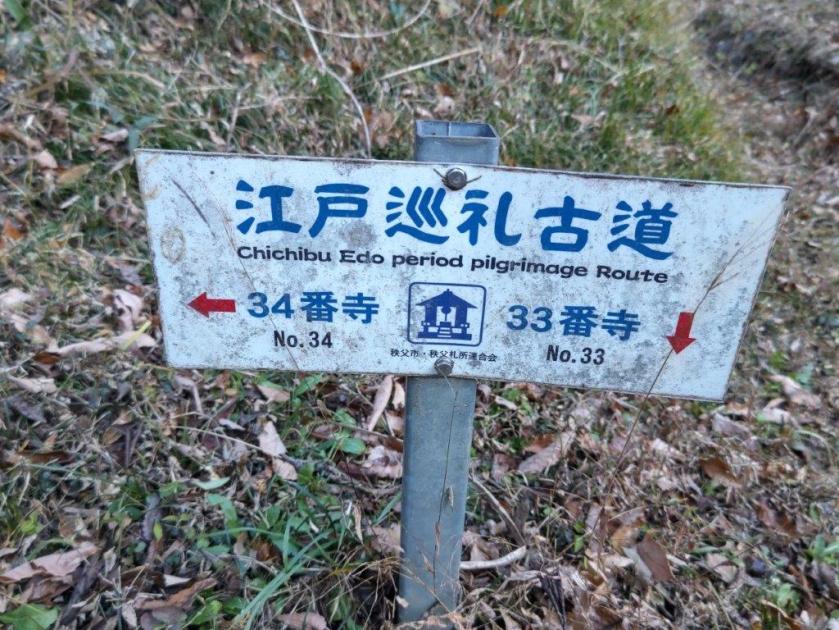
I made my way back at a swift pace, taking care when traversing Nyoho ridge, arriving back at the crossroads at Fudatachi Pass at 2pm; there, I turned right onto a narrow but well-defined trail. I was now following signs for Fudasho #33 Kikusui-ji Temple (札所33番 菊水時), along the Edo Old Pilgrimage road (江戸巡礼古道), heading eastwards and hugging the mountainside. Judging from my lunch spot perch, I expected a steep gradient but so far I was enjoying a gentle, almost level descent. I was making good time, except for some maneuvering around a couple of fallen trees; on the other hand, the fallen leaves, rather than being a nuisance, shone brightly under the sun, as the sky was back to its morning blueness.

Watch a Video of the Mt Happu Hike

Watch the Video of the Hike on YouTube

The path abruptly ended at a road, which I followed for a short while before rejoining the trail on the right side. At 3pm, I popped onto another road, leading me to a temple and a main road at the base of the mountain. Following the signs for Temple #33, as well as Google Maps since I was now off the Japanwilds Hiking Map, I turned right and followed back lanes past the “Michi no Eki” Ryusei Kaikan, till I found myself beside the Akahira river. The sun had already sunk below the rim of the Chichibu Basin, and so I had to save my visit to Temple #33 for another time. I reached Seoto no Yu just before 4pm, my 2nd time to this charming hot spring. At 5pm, I was the only person to board the free shuttle, the last of the day, and less than a hour later, I was at Seibu-Chichibu station, sampling some local sake from their convenient self-serving sake machine (“sake server”) while waiting to board the Laview Limited Express for the comfortable ride back to Ikebukuro.

See a Slideshow of More Pictures of the Hike