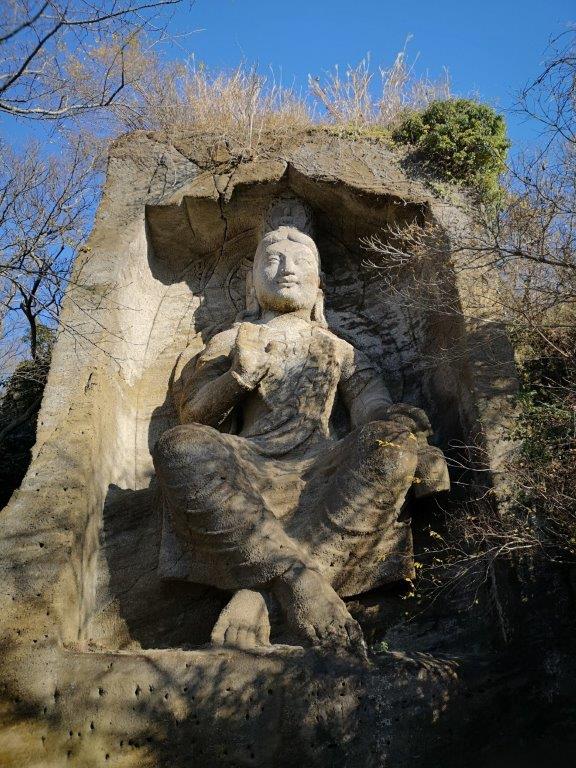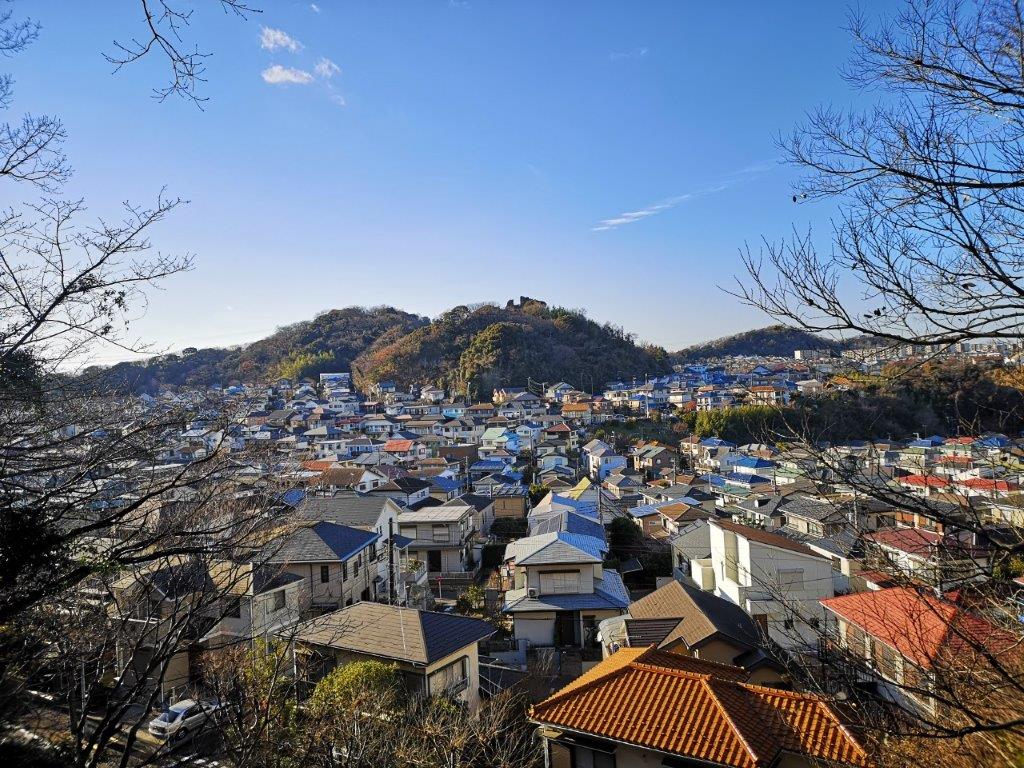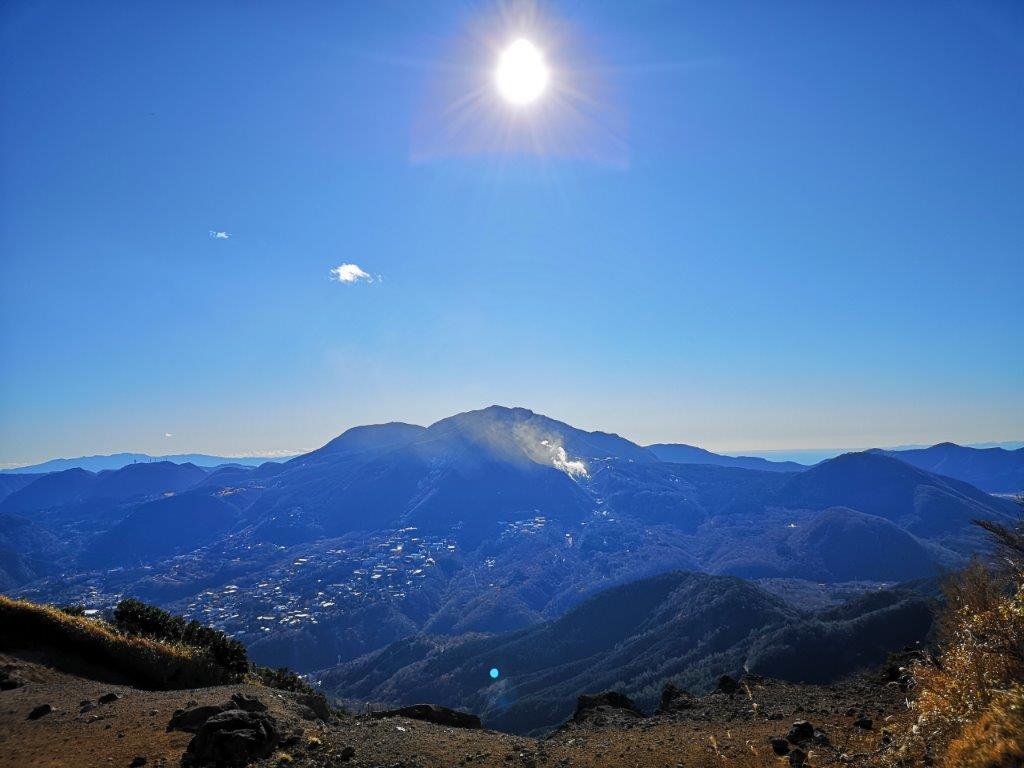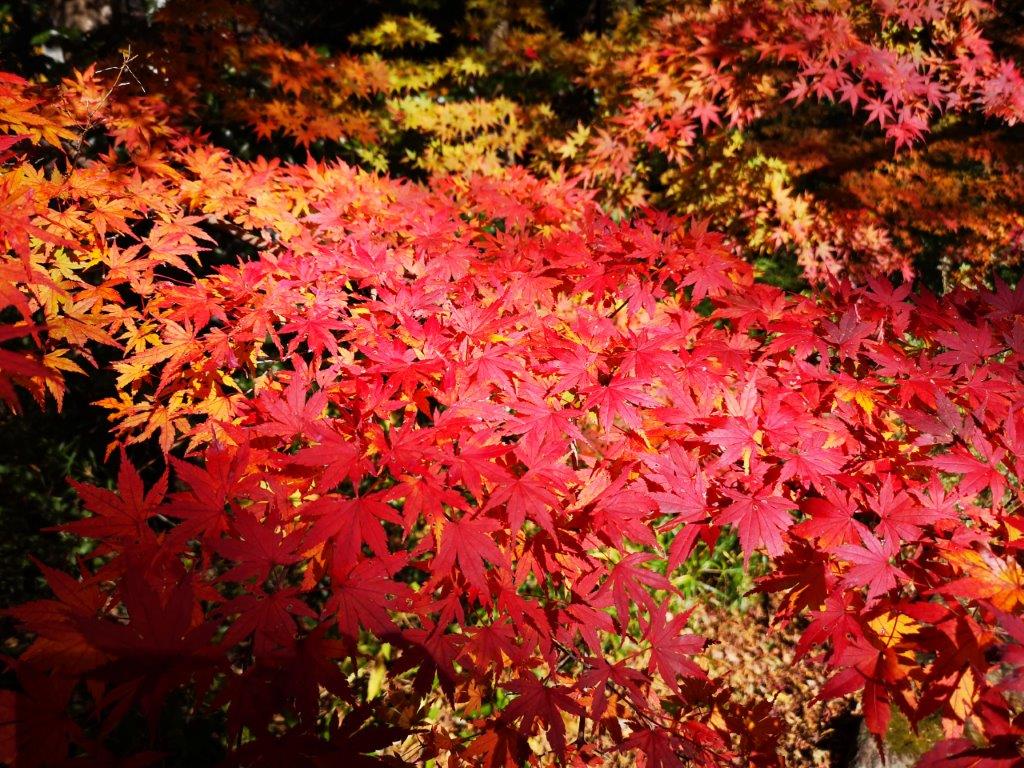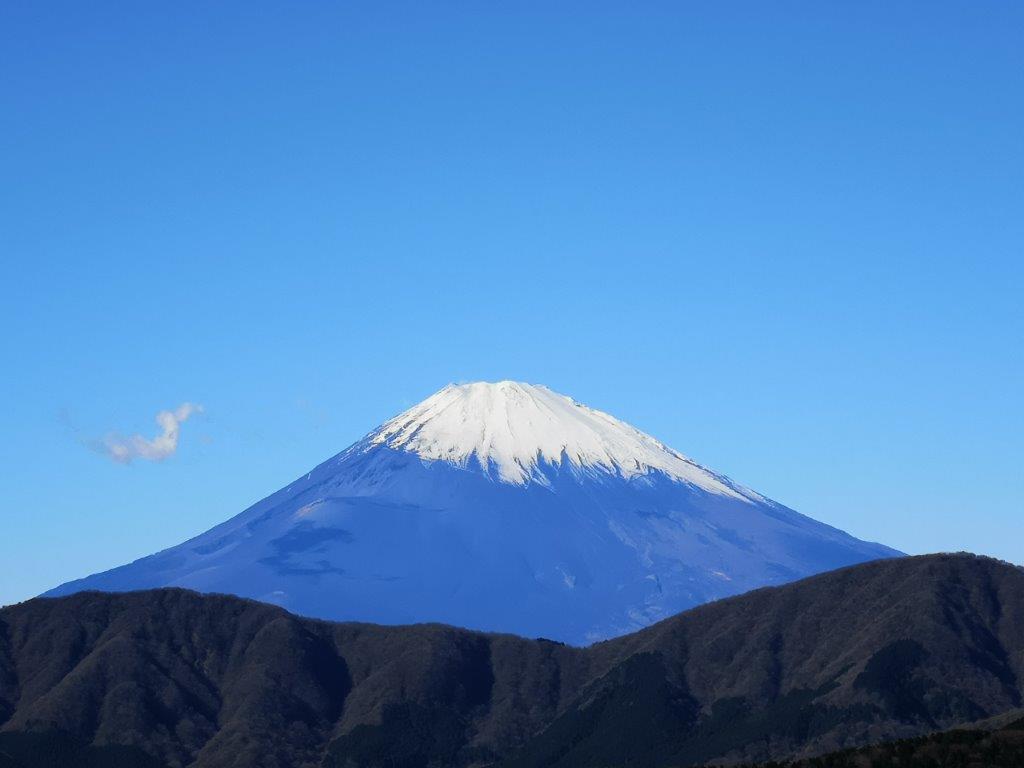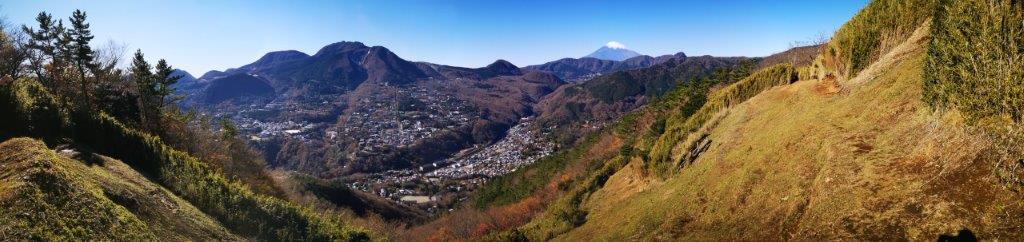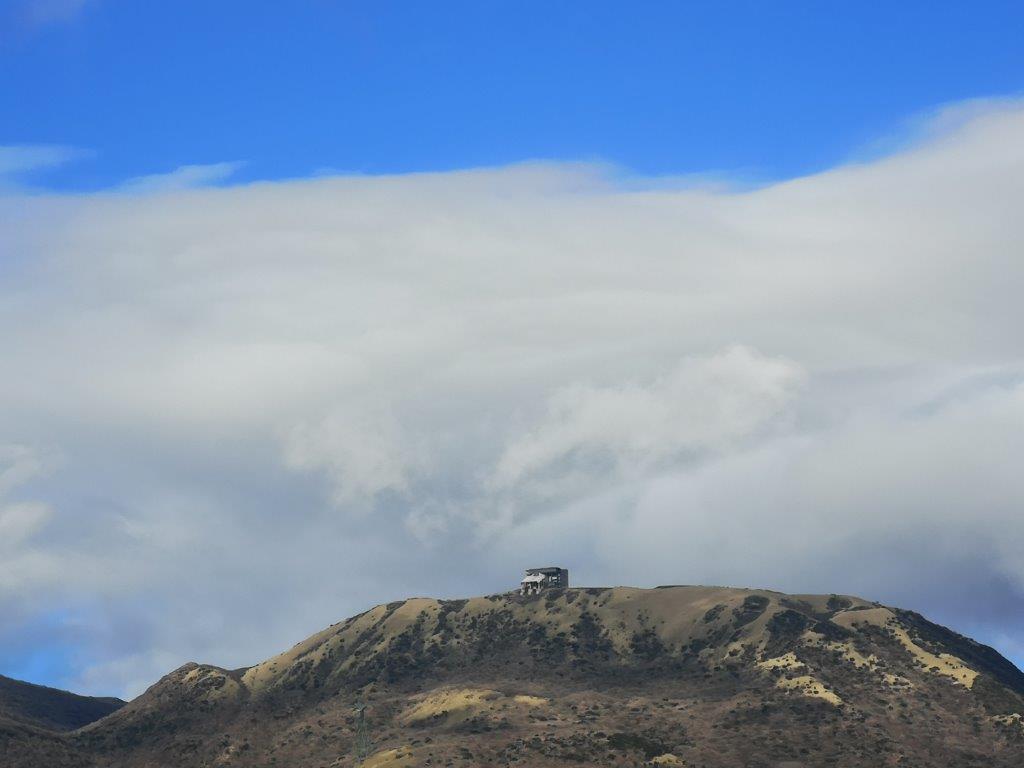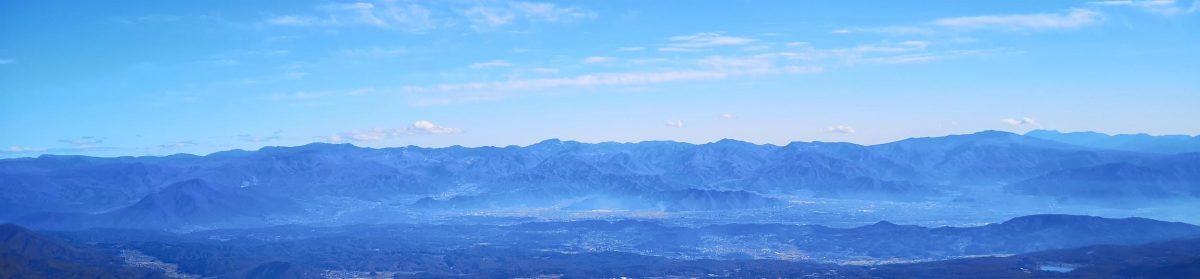
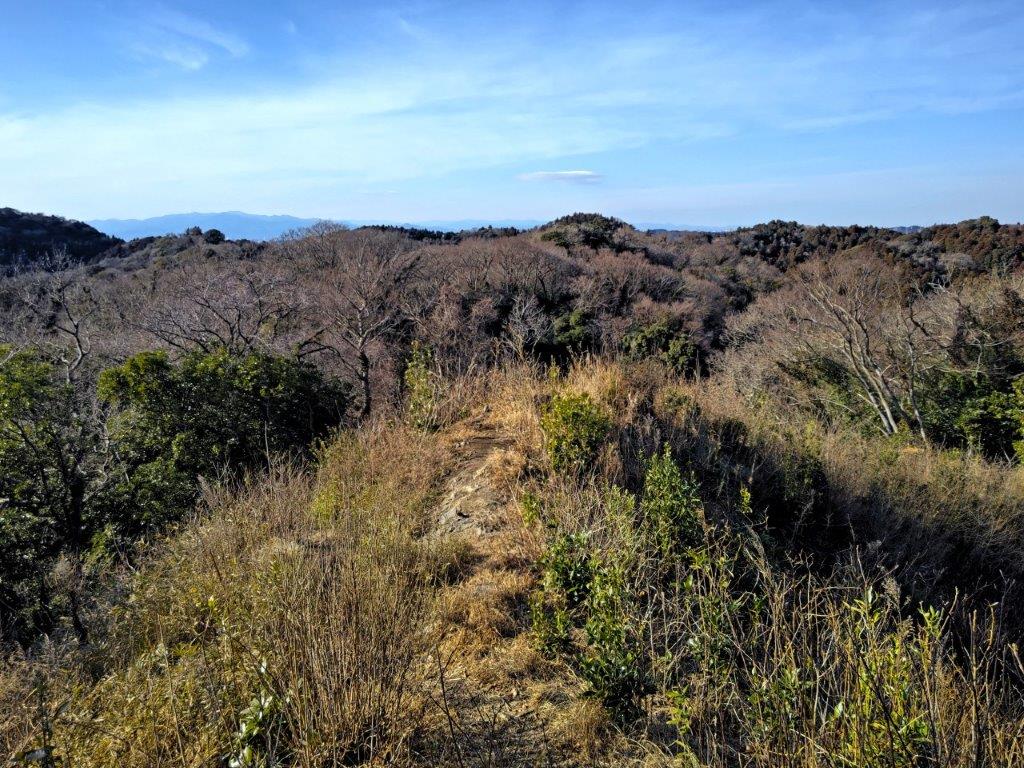
Mt Hatake (205m), Mt Nyuto (202m) & Mt Futako (209m), Hayama Town & Zushi City, Kanagawa Prefecture, Saturday, February 11, 2023

Hiking the Miura Alps 三浦アルプス

I had hiked the Miura Alps four year ago, but looking at my mountains of Kanagawa guidebook, I realised there was more hiking to be done in the area. Previously, I had started on the southwest side and ended on the northeast side. This time, I would start on the southeast side, close to the end of the Mt Ogusu hike, and finish on the northwest side, intersecting only at one point; I could take a bus from Zushi station to the start, and then return by the same bus to the same station. I was looking forward to exploring a new trail through a familiar area, and hoping for some good views on both sides of the peninsula.
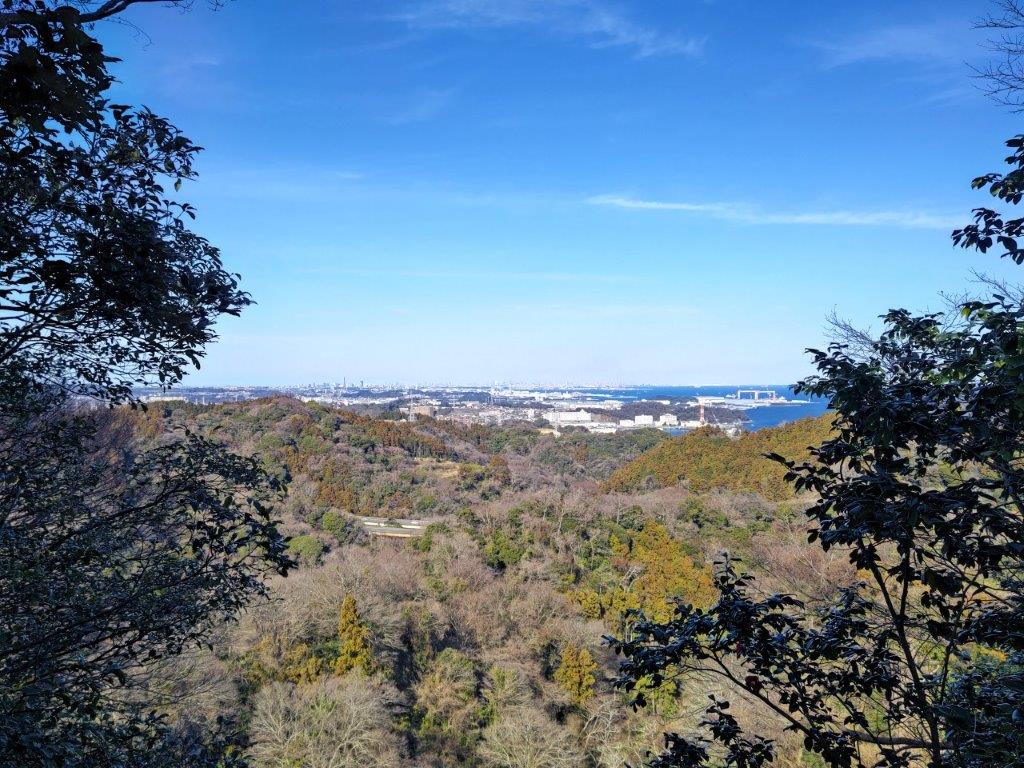
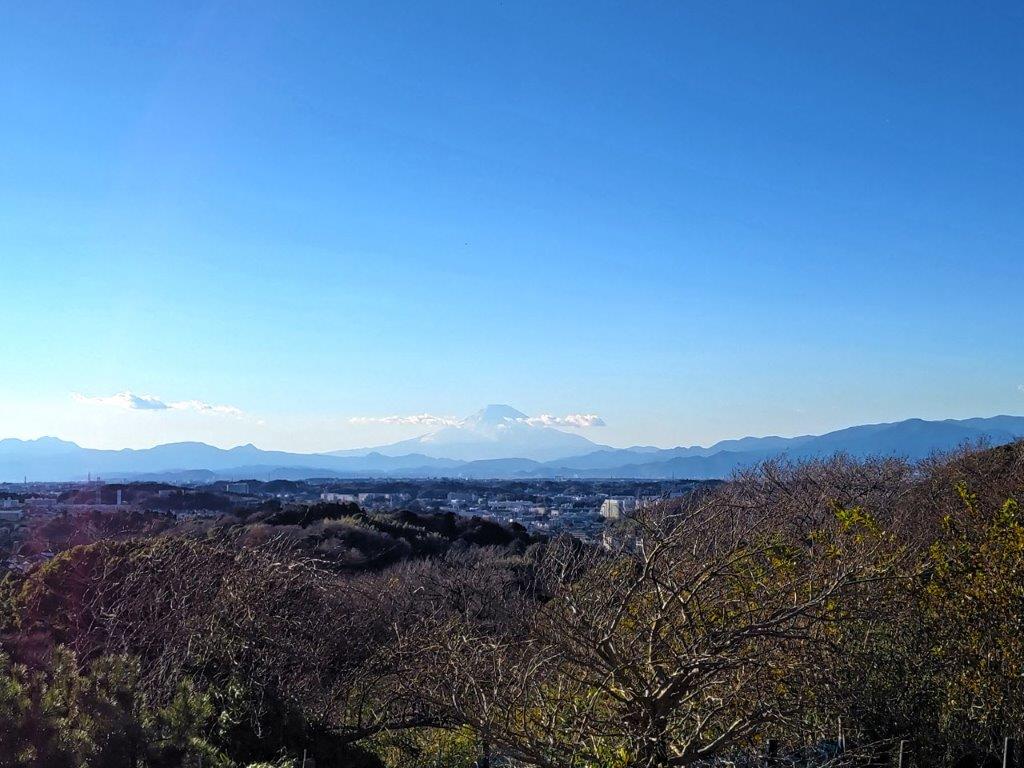
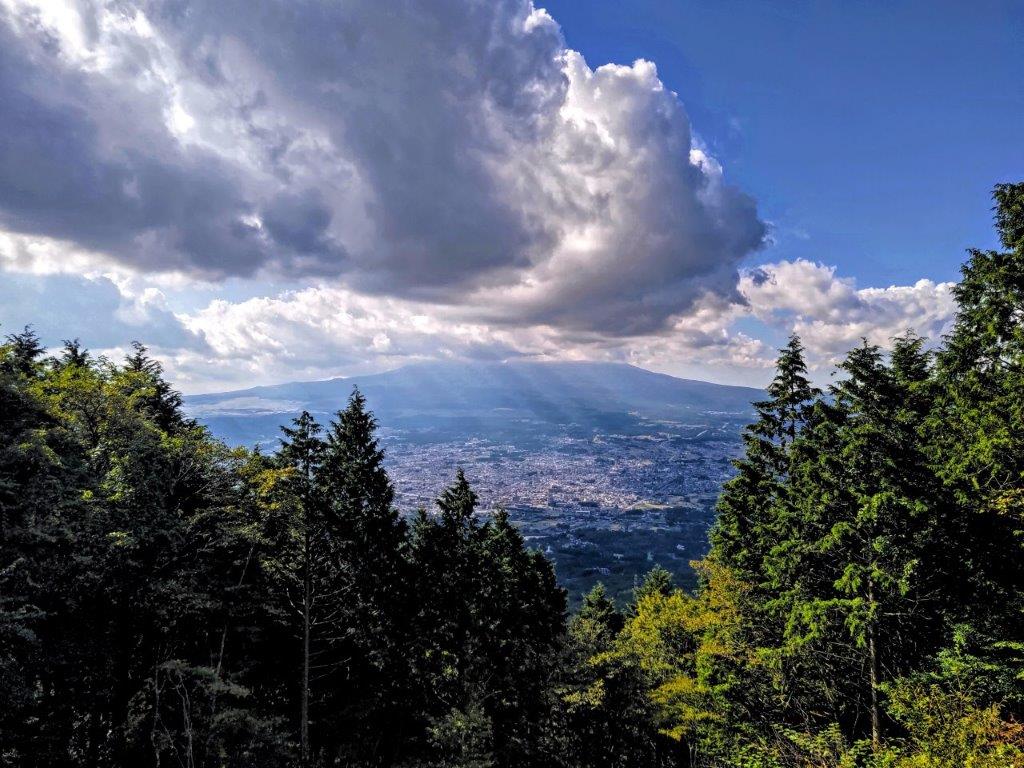
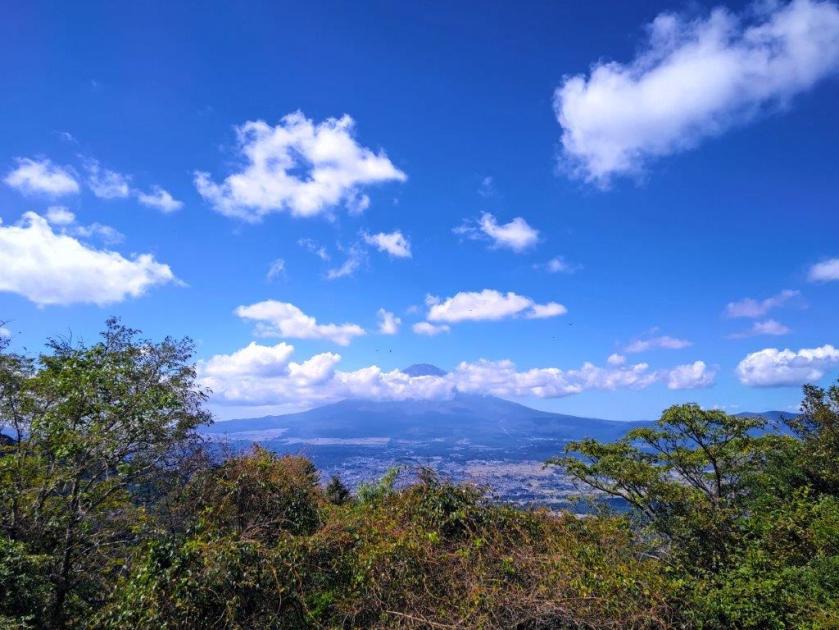
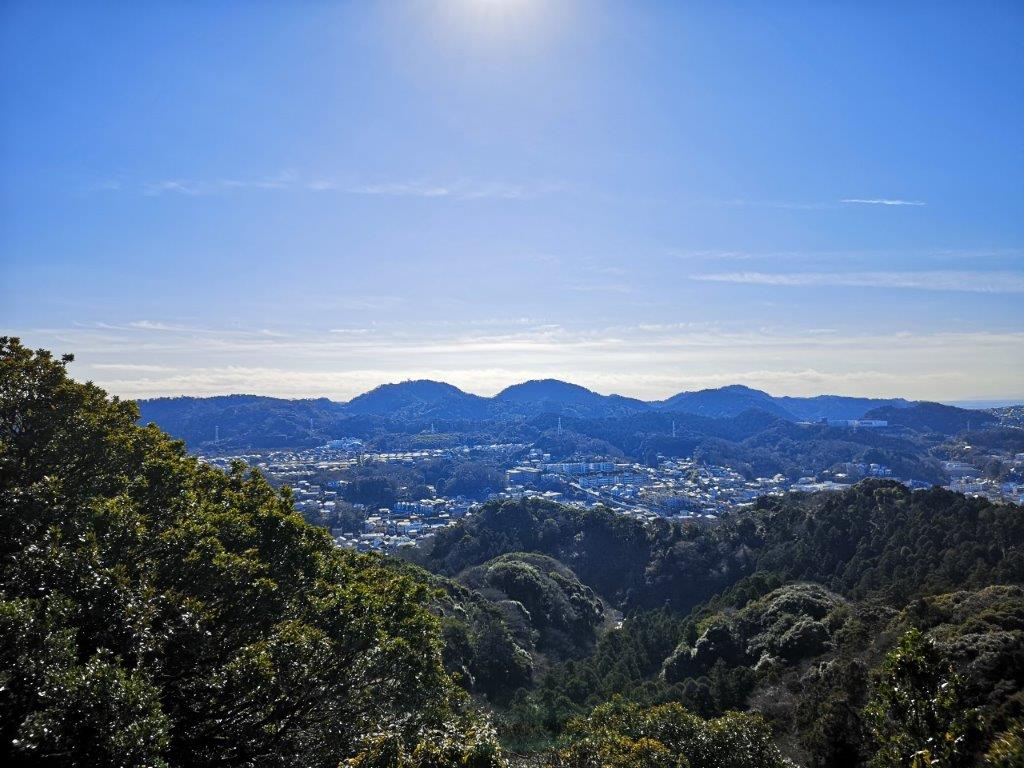
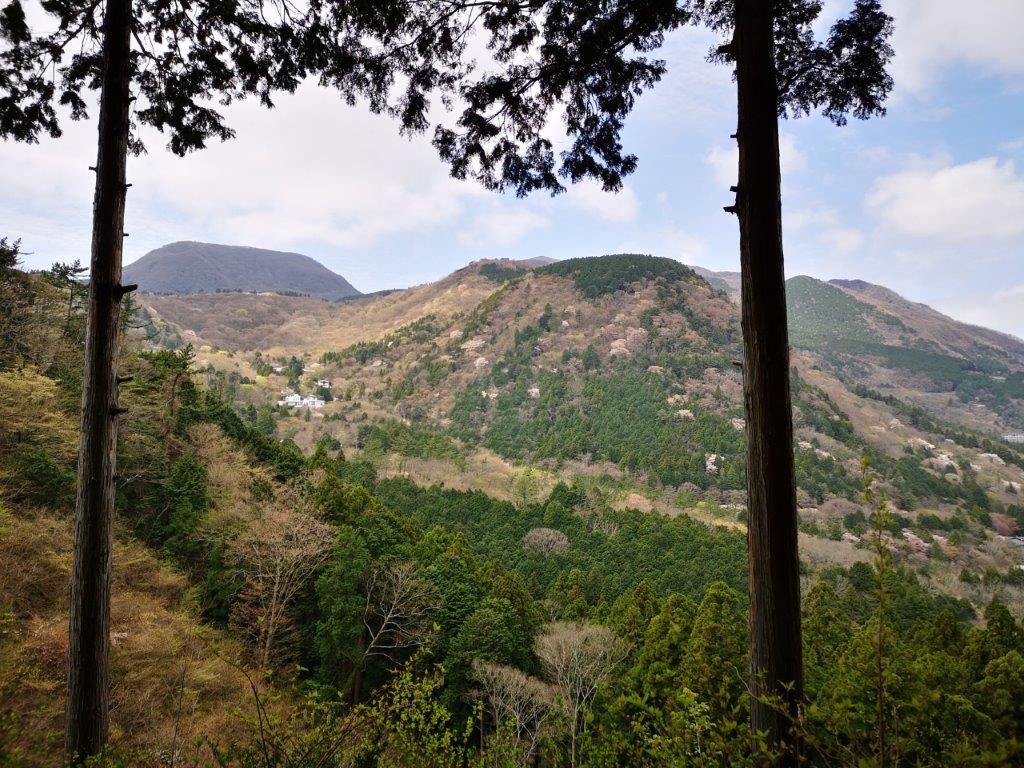
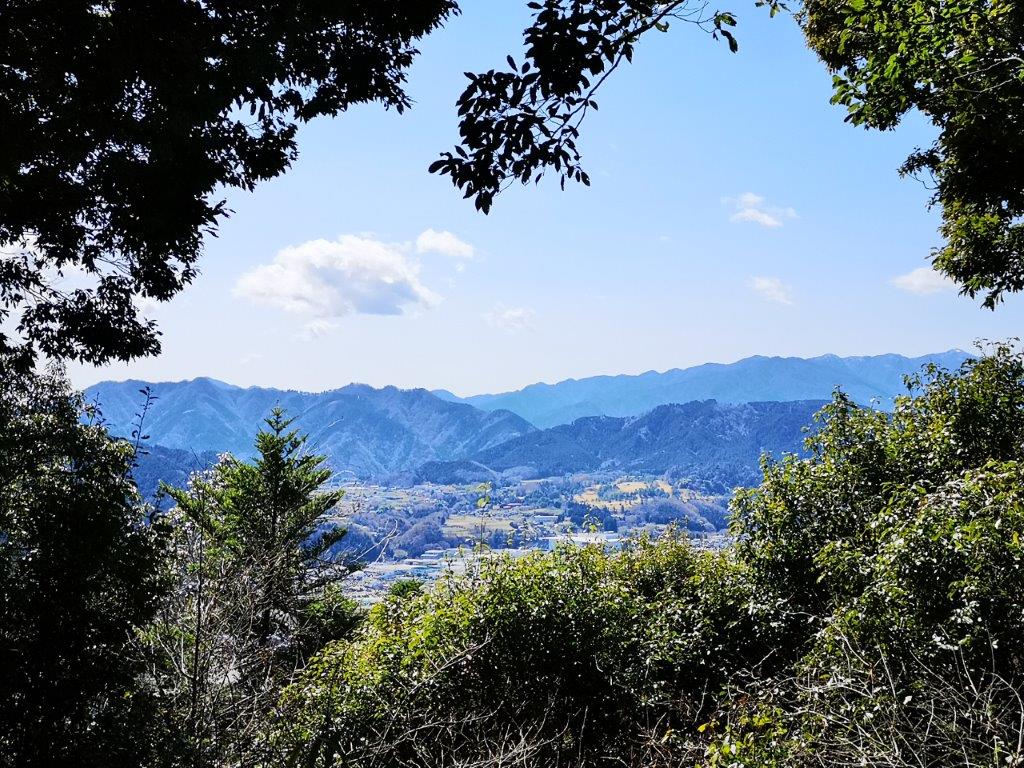
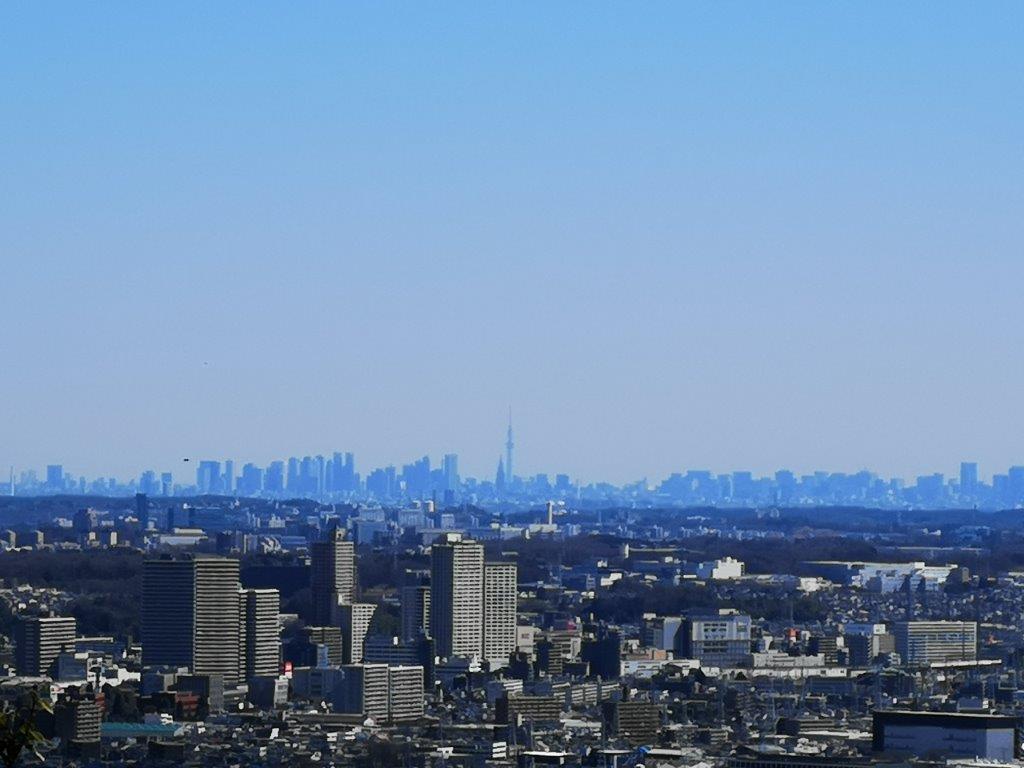
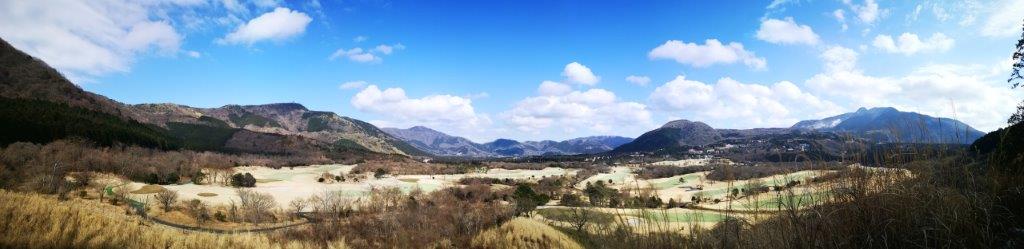
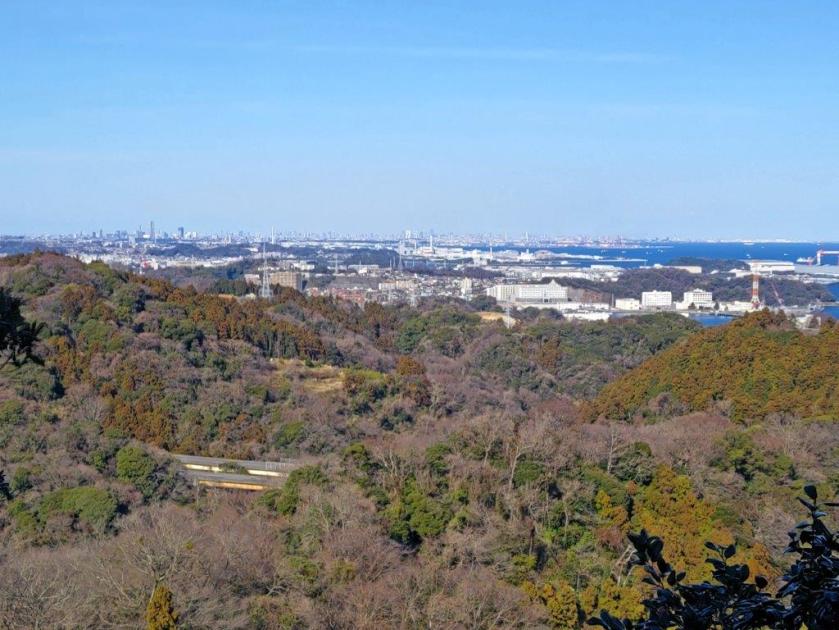
View towards Yokohama between Mt Hatake and Mt Nyuto

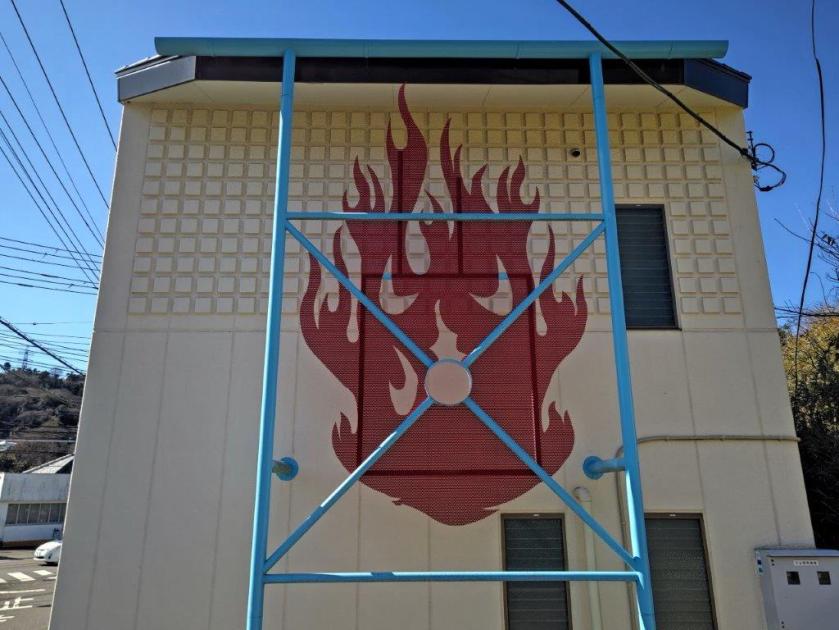
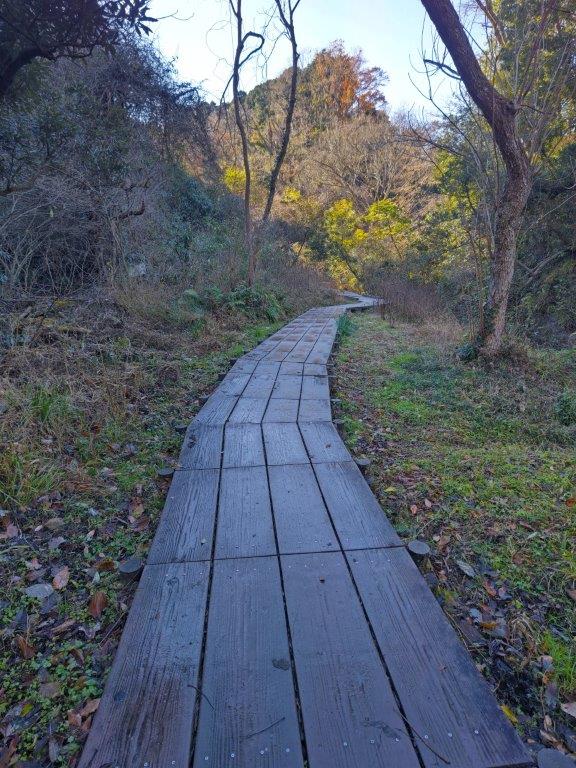
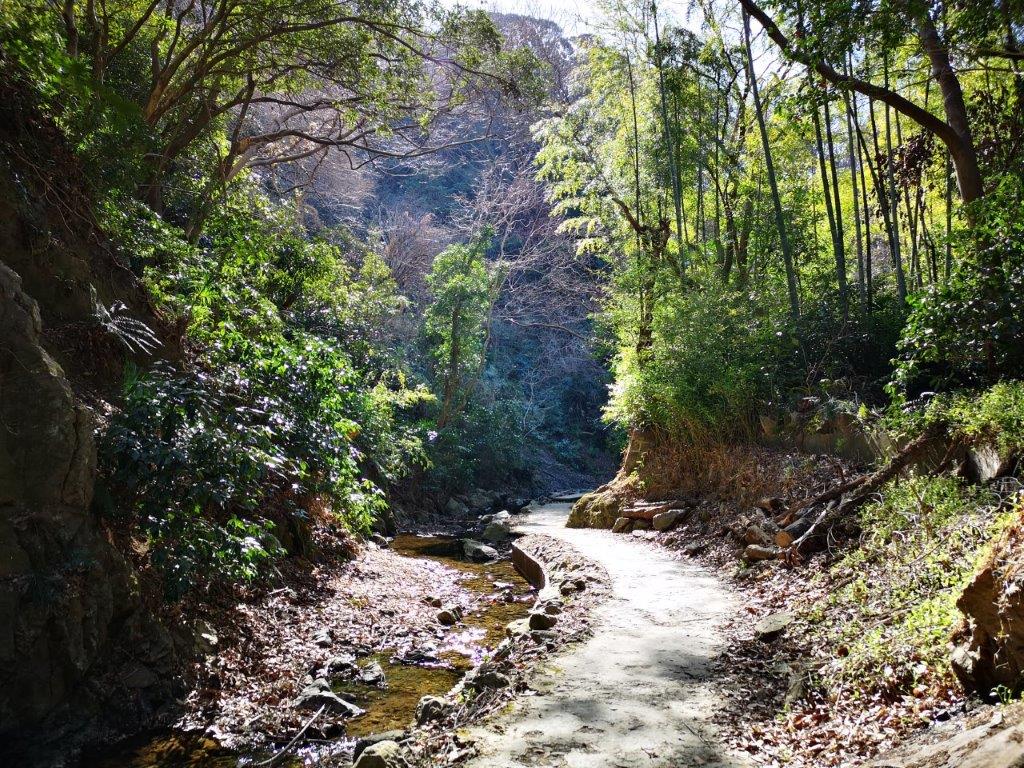
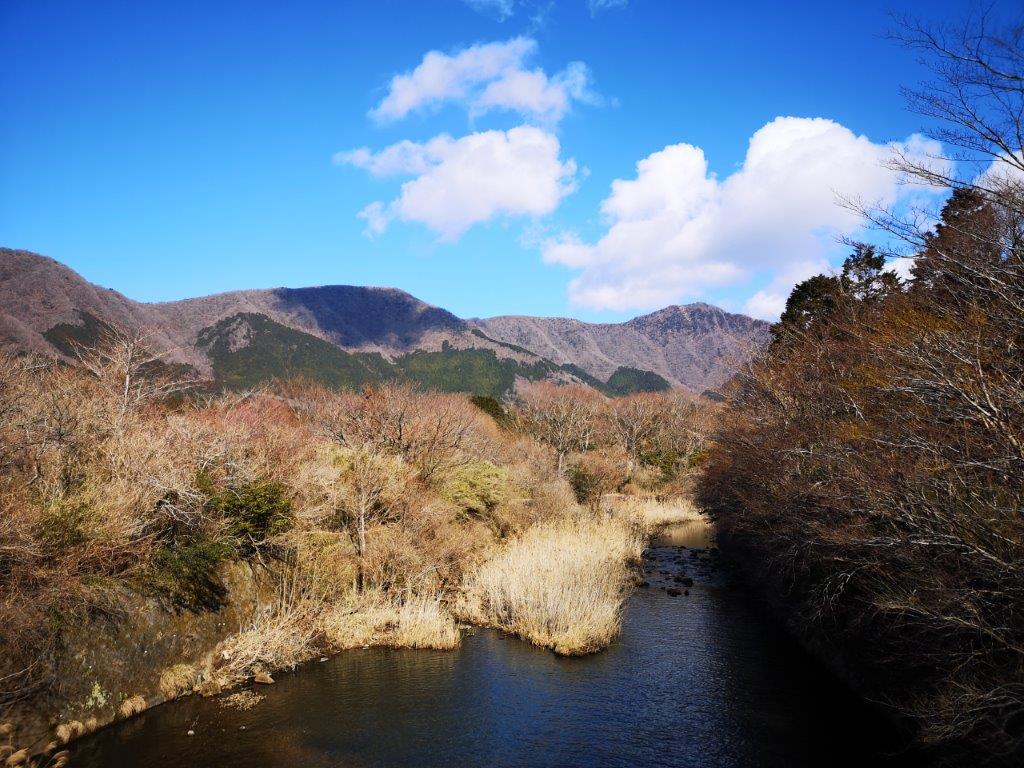
It was a sunny winter day, as I arrived at Zushi station at around 11am. After a short bus ride, I got off under an elevated highway, near a river and a small fire station. Just after noon, I set off up a small paved road, and soon after reached the trail entrance on the right. Almost immediately, I was walking through bamboo trees, swaying slowly in the wind.
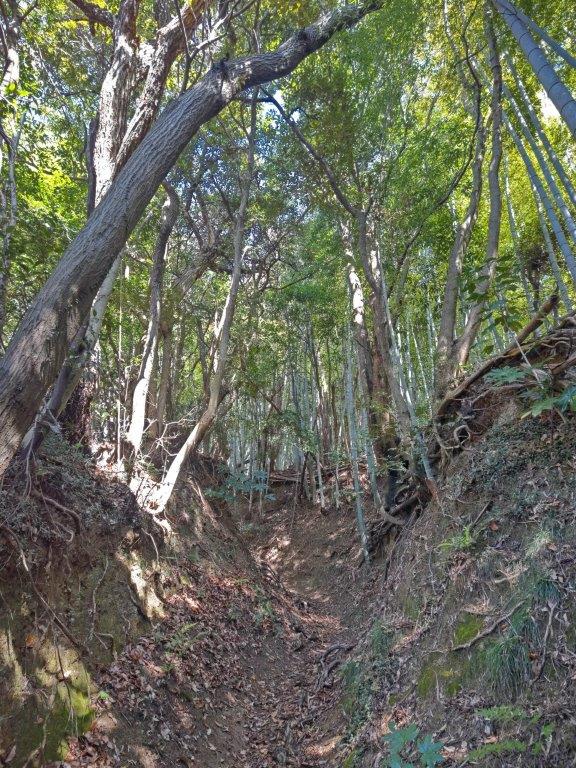
Start of the trail (left) Walking through the bamboo (right)

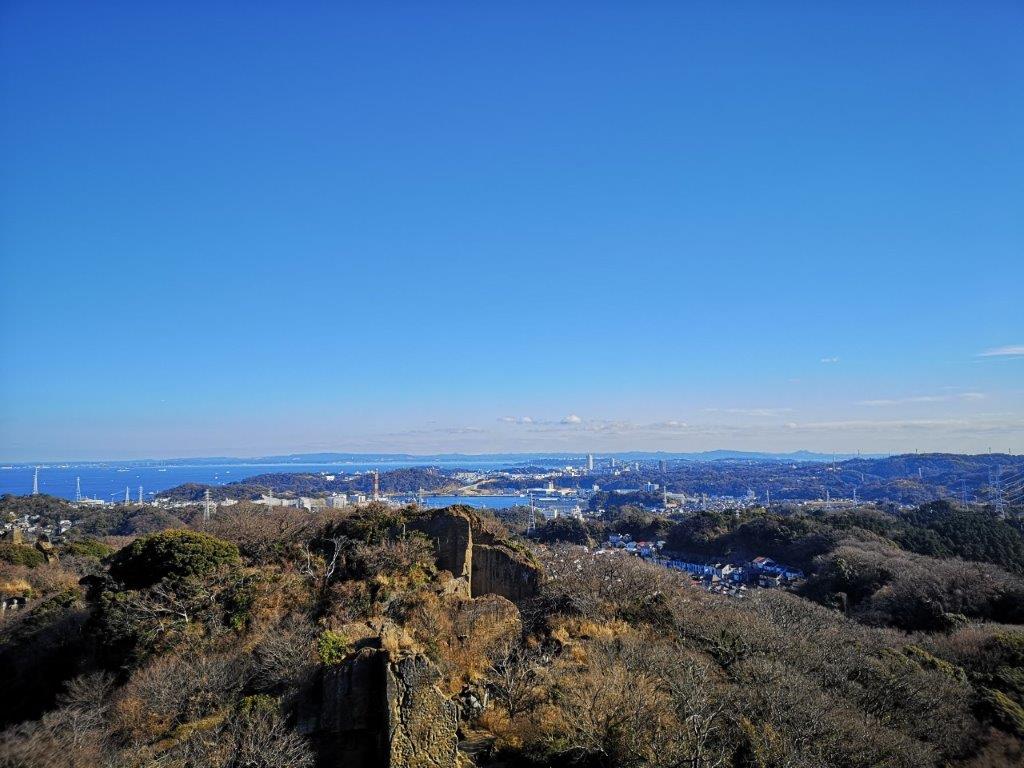
View of Tokyo Bay through the trees

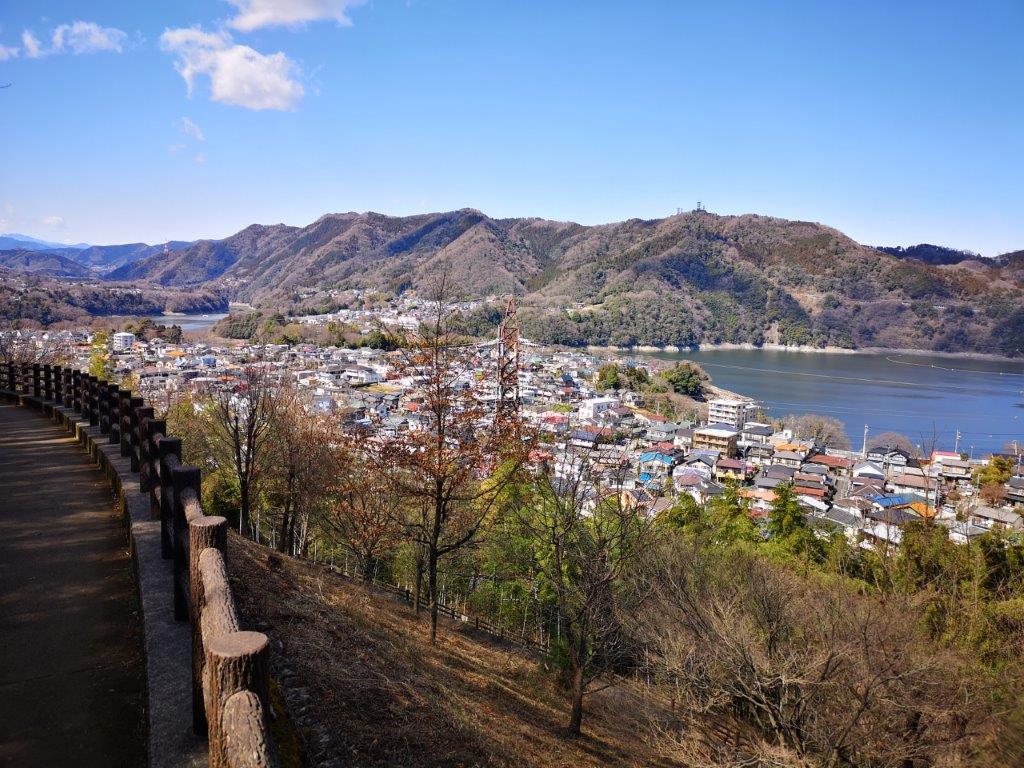
I was fascinated by the interplay of light and sound, an experience quite unique to this side of the world. At 1230, I exited the bamboo forest and followed a trail up the mountain side. Half an hour later, I reached the top of Mt Hatake (畠山 はたけやま hatake-yama), its summit marker, a simple name plate hanging from a tree branch. On the east side, I had a view of Tokyo Bay and the southern half of the Miura peninsula. After a short break, I moved on.

Short detour along the Nakaone Trail

The start of the Nakaone Trail had good views

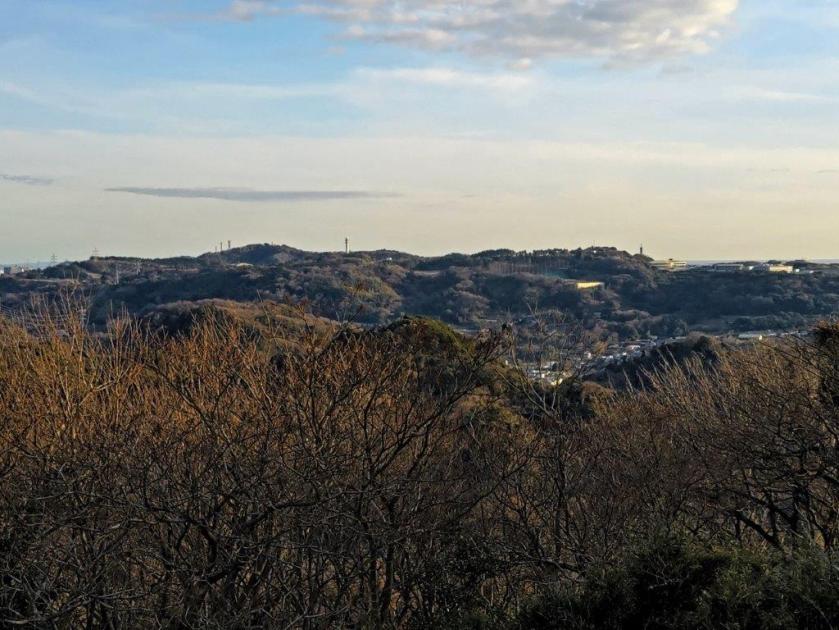
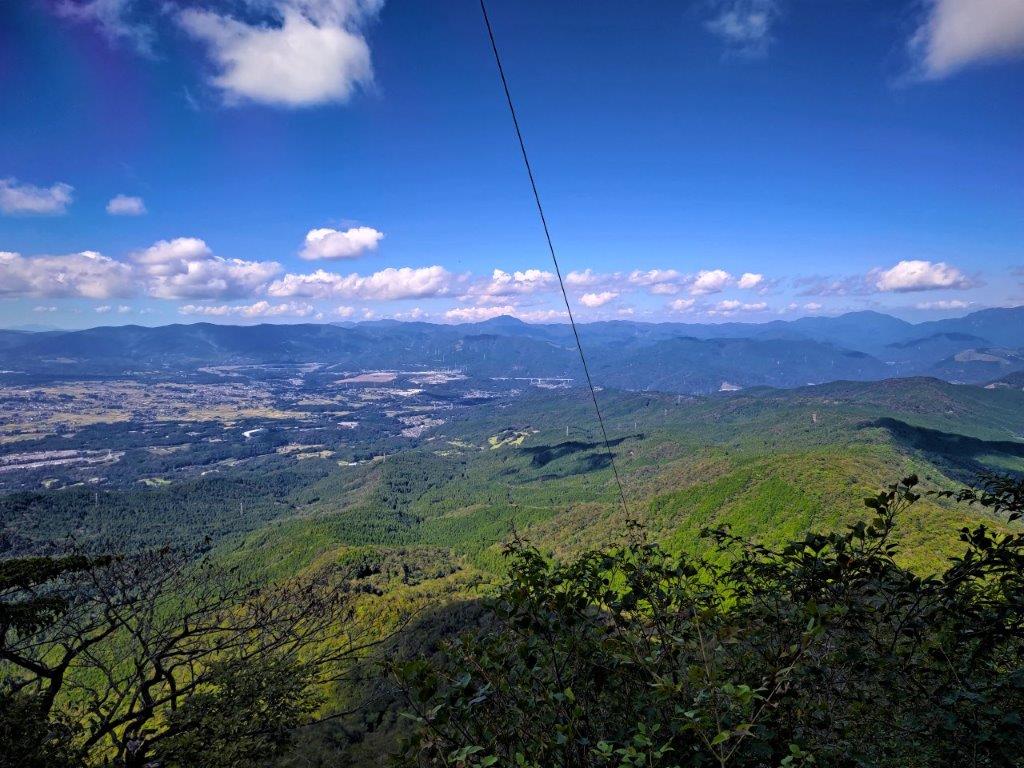
I reached another view through the trees, after 30 minutes of mostly level walking; this time I was looking north towards Yokohama. Soon after, I merged with the trail of my previous hike, and at 2pm, was standing on the narrow summit of Mt Nyuto (乳頭山 にゅうとうさん nyuto-san) for the second time. Once again, I had a view on the dark blue wayers of Tokyo bay and the gleaming white skyscrapers of Yokohama. Just below, was a junction and a decided to check out the left branch, the Nakaone trail, off today’s hike.
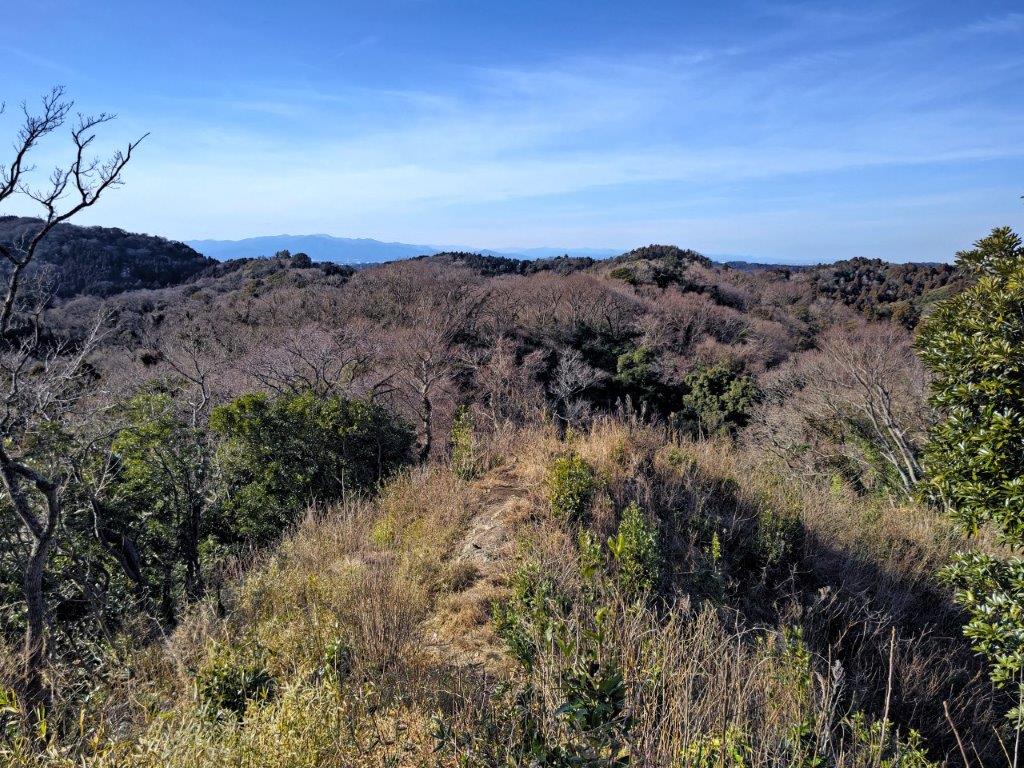
Tanzawa mountains in the background
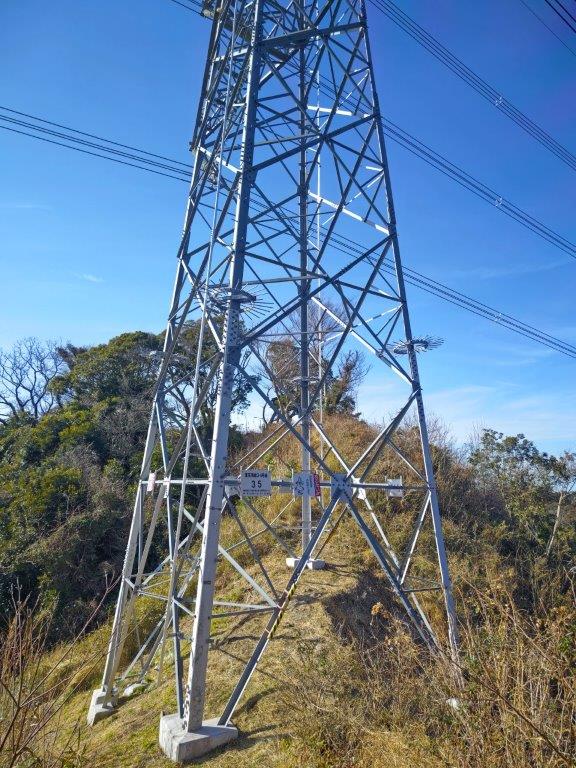
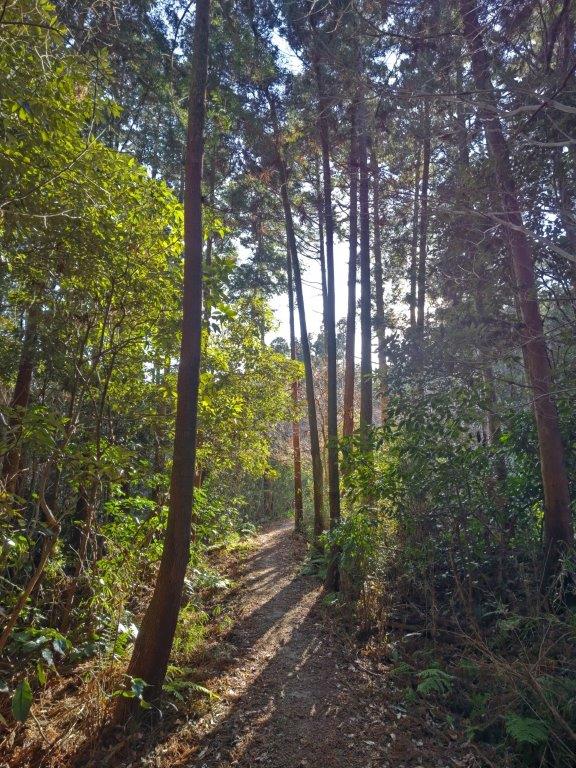
On the Nakaone Trail (left) On the way to Mt Futako (right)

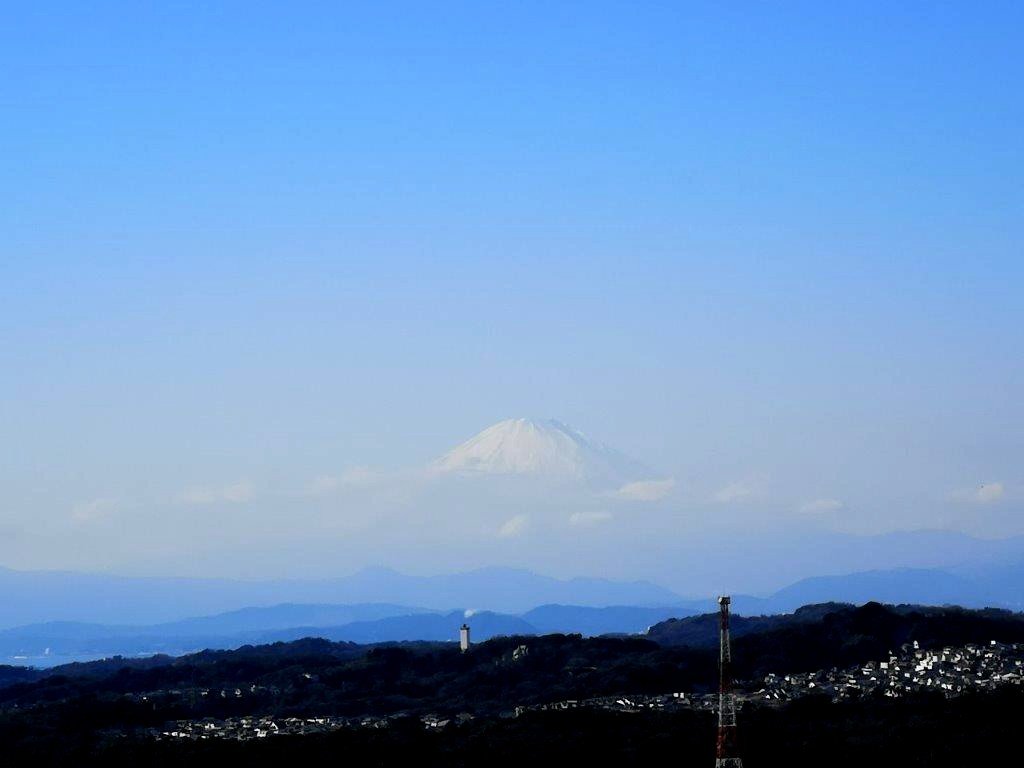
I was rewarded with a view on the west side of the Tanzawa mountains, on a treeless ridge, just past a couple of electric pylons. The city was almost invisible and it felt like I was in the middle of the wilderness, despite being just a few kilometers from the biggest city in the world. I found a spot to sit for quick lunch break. At 3pm, I was back on the main trail, and a little after, I took a right turn, leading away from Higashi-Zushi station and Mt Takatori.

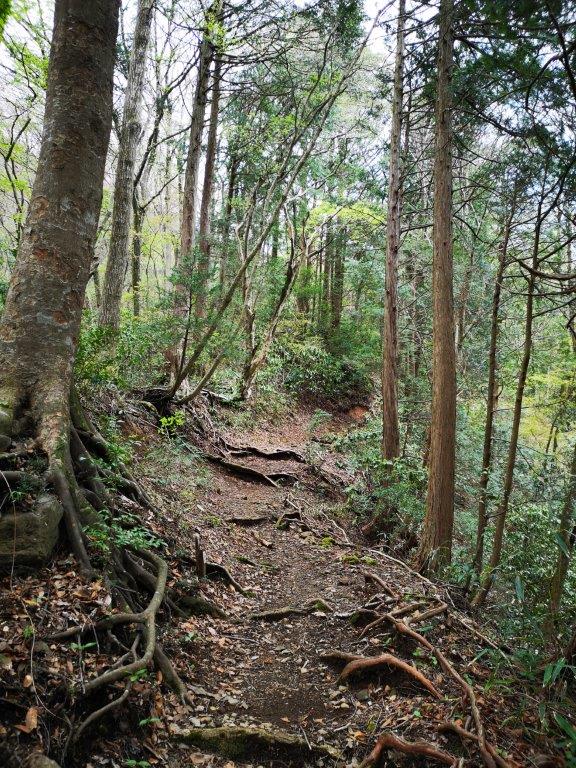
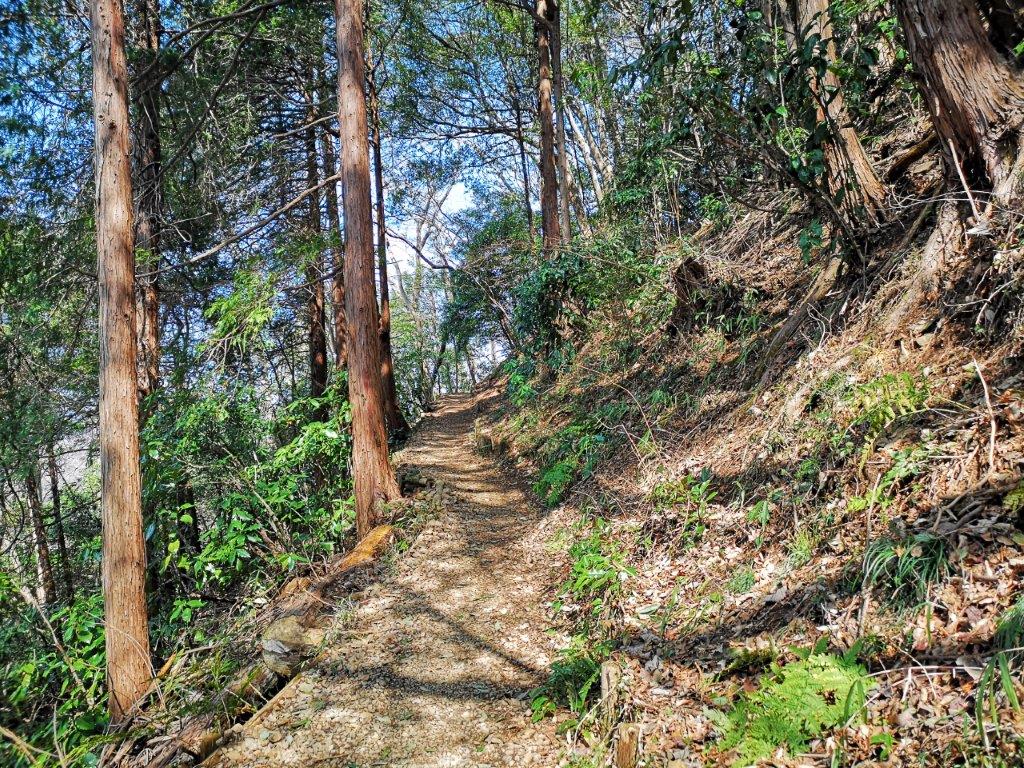
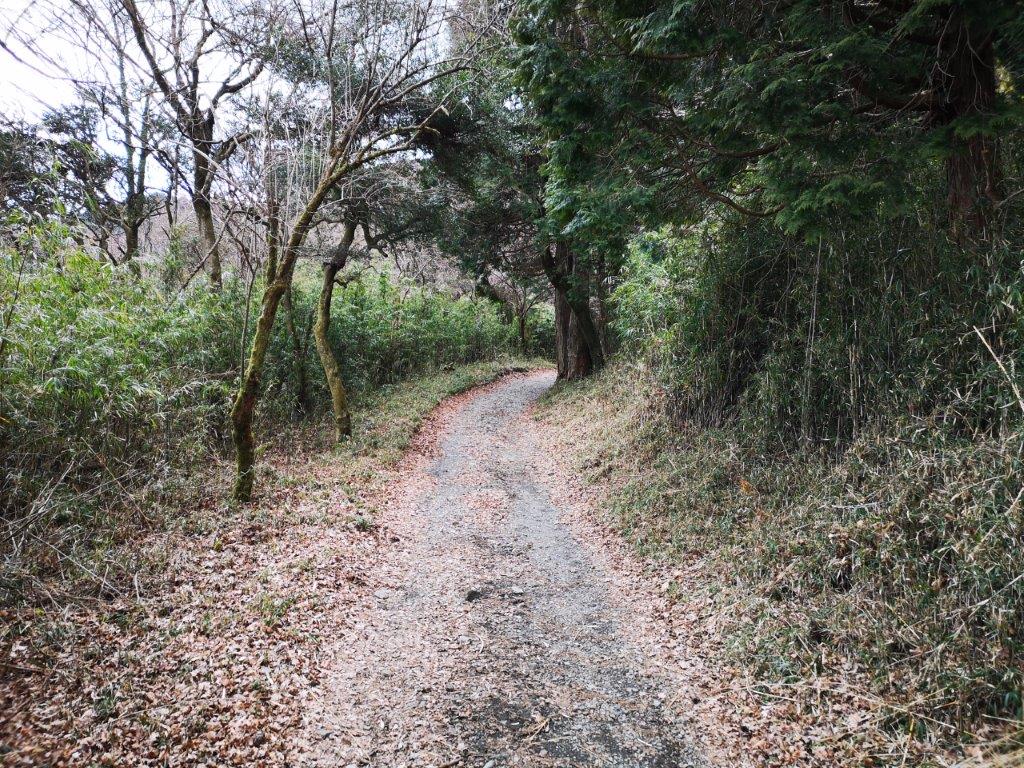
A relatively easy trail to walk

View of Mt Ogusu from the top of Mt Futako

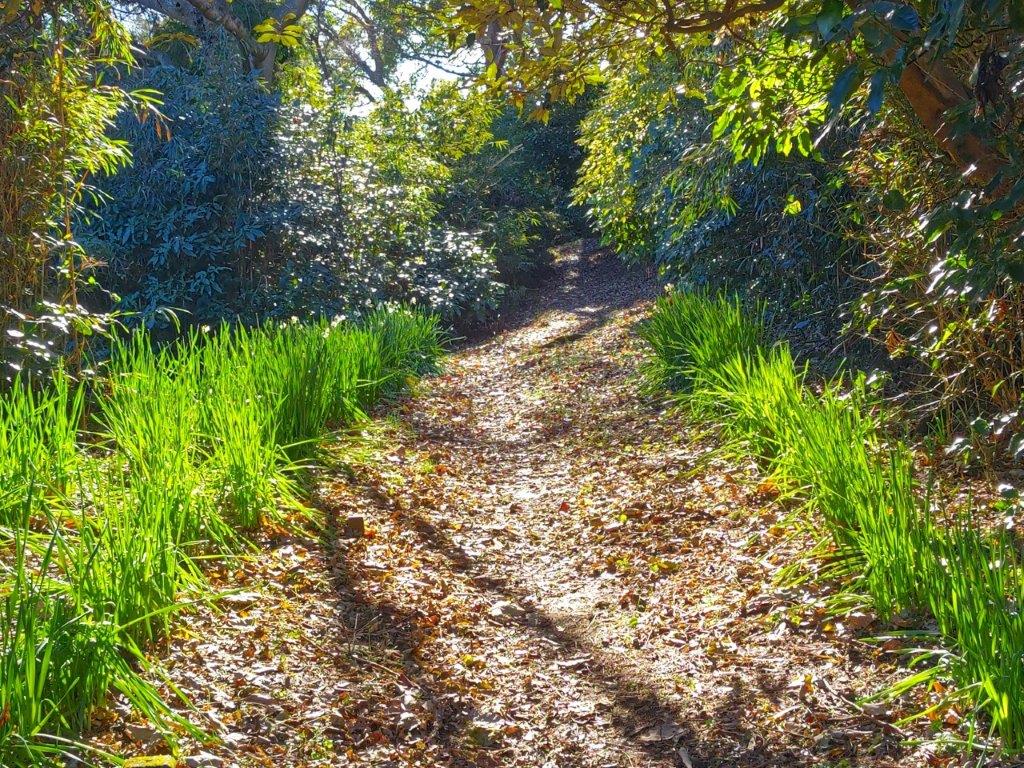
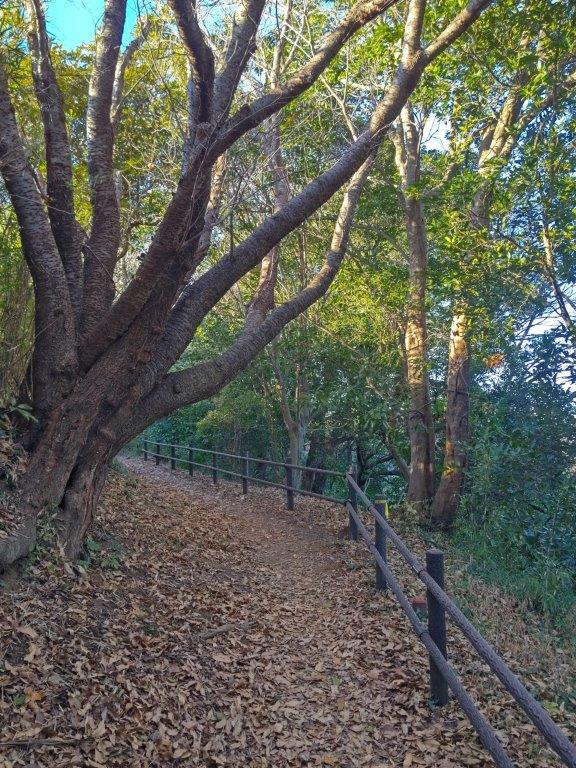
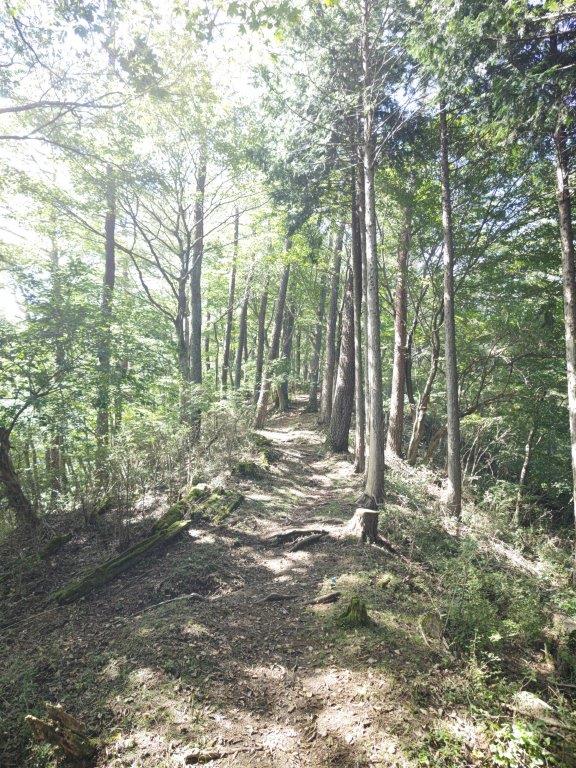
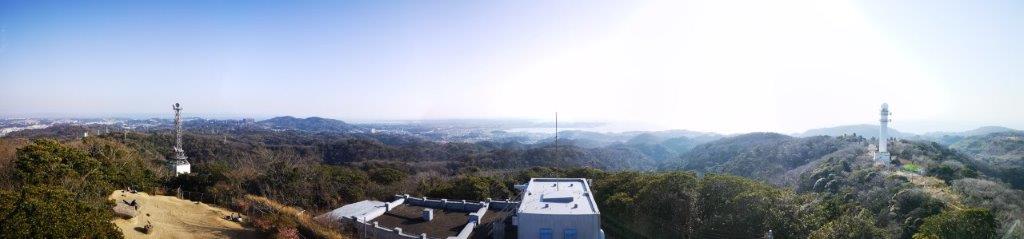
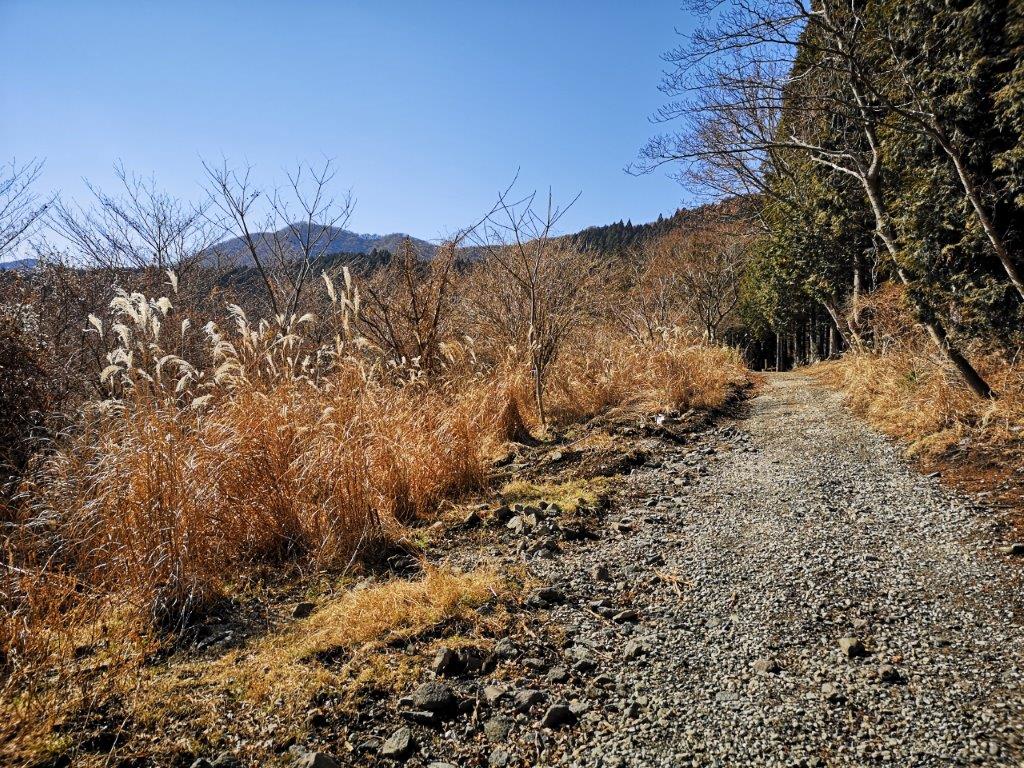
I was now walking along the most peaceful section of the hike, invisible squirrels scampering along the tree branches, soft light filtering through the leaves. At 4pm, the trail merged with a gravel road winding up hill side. A few minutes later, I reached a wooden observation platform on top of Mt Futako 二子山ふたこやま futako-yama), a common name meaning “twins”. I had a wide view on the east side, including Yokohama City, Tokyo Bay, and the Miura Alps on the south side. The sun was setting soon, forcing me to continue moving.

View of Enoshima Island from near the top of Mt Abekura
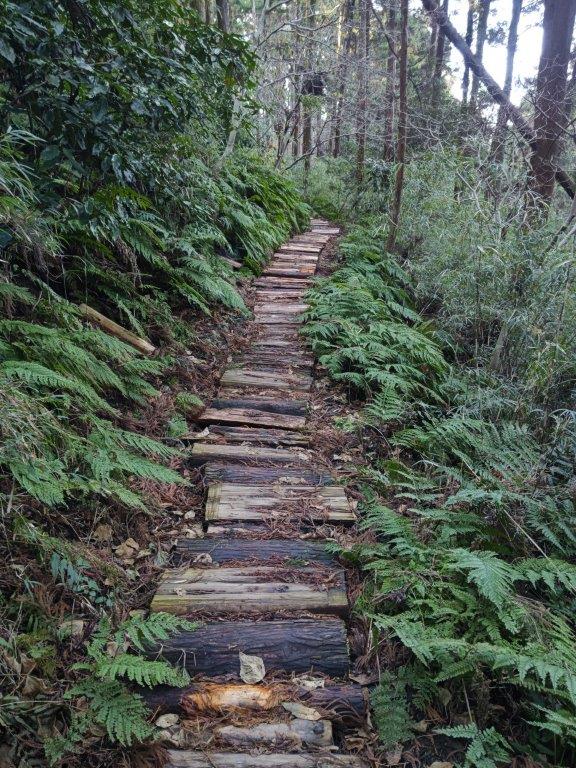
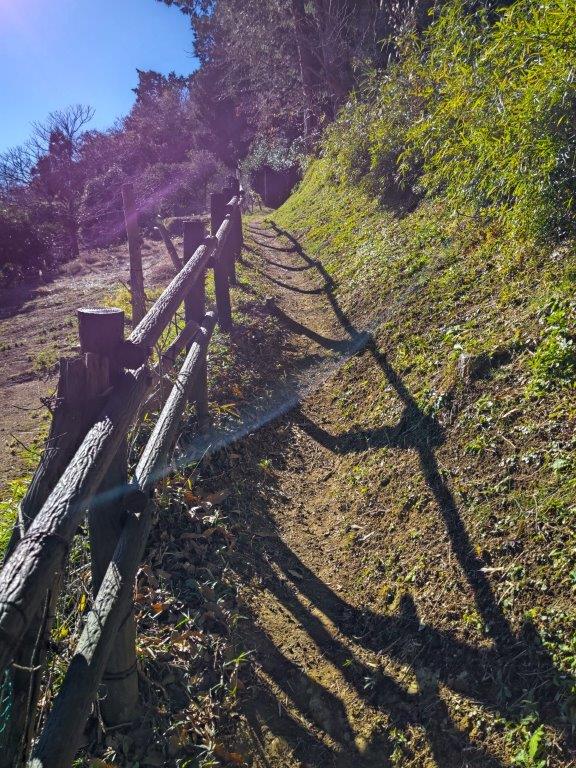
Trail near Mt Futako (left) Heading down from Mt Abekura (right)

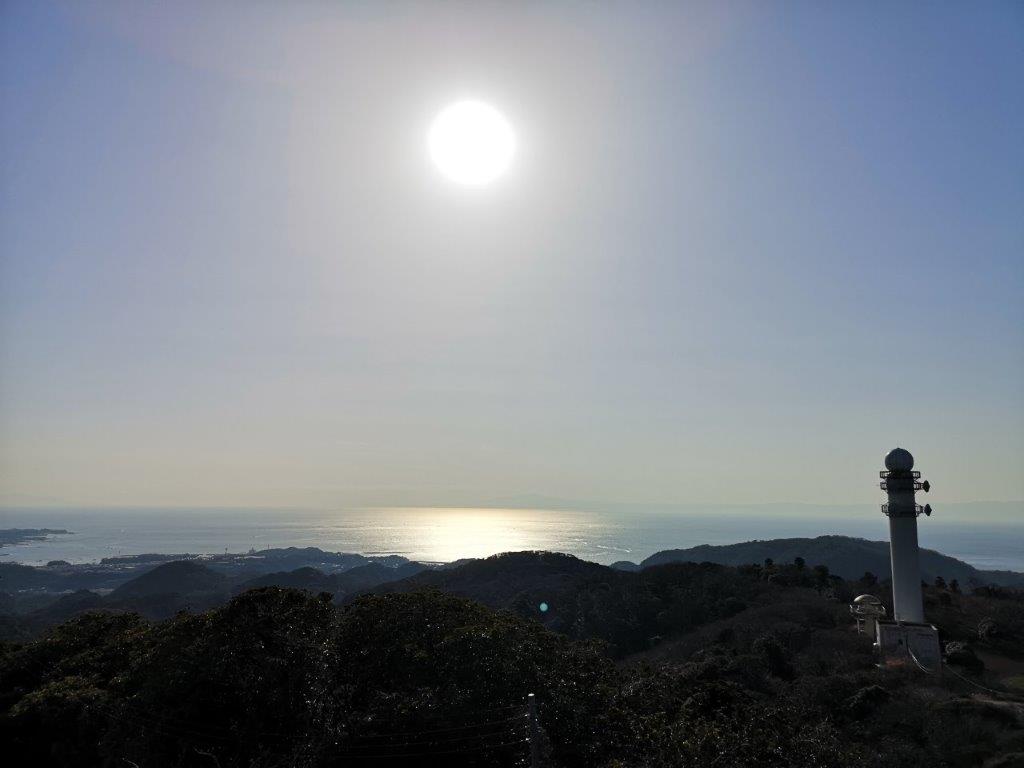
I hurried down the steepest section of today’s hike, fitted with rope for safety, surprising on such a low mountain. Soon the narrow path climbed again, and half an hour later, I reached the top of Mt Abekura (161m 阿部倉山 あべくらやま). It was a minor peak, slightly off the trail, but with a viewpoint of Sagami Bay and Enoshima island on the west side, the sky behind lit orange. It was called Sakura Terrace, and although the trees were bare, it must be beautiful in the spring. I made my way down and arrived at a road just after the 5pm chime. From the nearby bus station, it was a short ride back to Zushi, where I caught the Shonan-Shinjuku line for the one hour trip to Tokyo.

See a video of the Mt Hatake, Mt Nyuto and Mt Futako hike
See a slideshow of more pictures of the hike
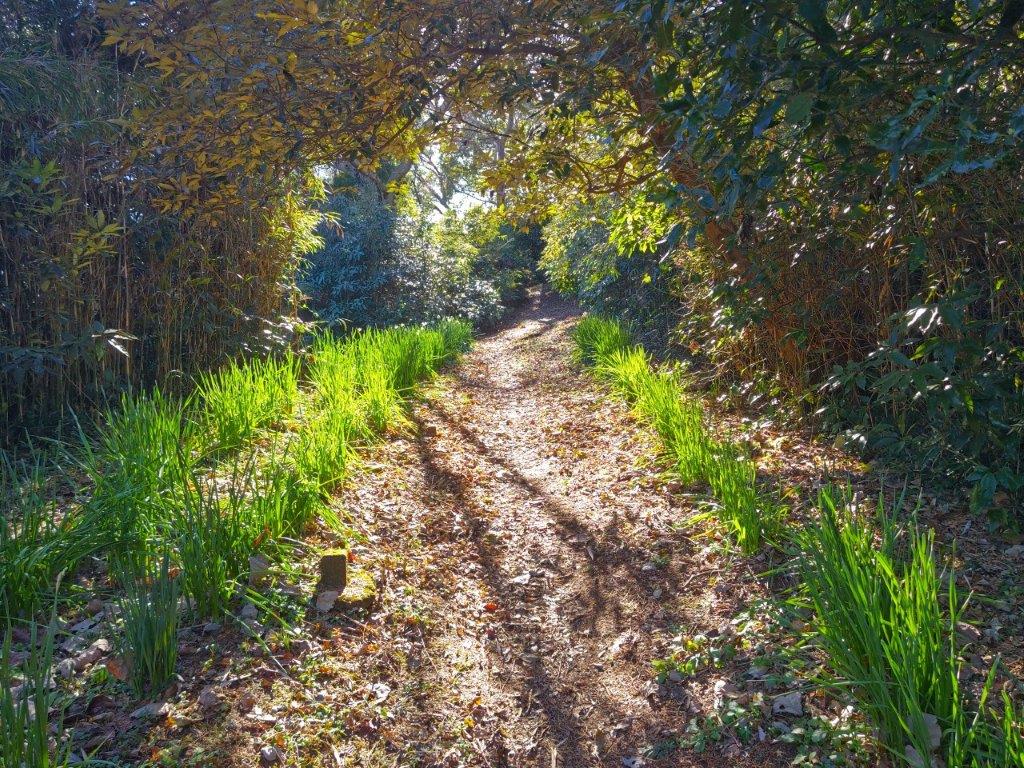
Hitorizawa & Segami Community Woods Hiking (highest point 130m), Yokohama City, Kanagawa Prefecture, Tuesday, December 27, 2022

This was my 3rd hike in the southern part of Yokohama city. This wooded, hilly area offers some of the best hiking close to Tokyo and is well-suited for short winter walks. I had already hiked through the Yokohama Nature Sanctuary, the Kanazawa Nature Park, as well as the Kanazawa, Segami and Kamariya woods; this time, I wanted to explore the Hitorizawa woods on the northeastern side, and check out some more trails in the Segami woods.

Sunny spot at the start of the Hitorizawa trail

I would take a bus from Yokodai station on the Negishi line to the trailhead; rather than finish at Konandai station on the same line, I could take another bus to Ofuna station on the convenient Shonan-Shinjuku line, less than an hour from Ikebukuro. Although I wouldn’t be summiting any mountains, I could expect a view of Mt Fuji from Isshindo plaza at the mid-way point. I was looking forward to a short relaxing walk through the woods on a sunny winter day.

Nearing the Nabana rest area (left) / Hitorizawa creek (right)
After getting off the bus on a busy road near Hitorizawa Shrine (氷取沢神社), I followed the signposts through some backstreets, reaching the start of the trail Hitorizawa Community woods trail (氷取沢市民の森ルート) at 1pm. At the top of a staircase, I was pleased to discover a wide, level path leading through the forest. I soon reached the first viewpoint of the day at the Nabana rest area (なばな休憩所) above a road and a toll gate. Looking southeast, I could see the low-lying Miura peninsula, and behind, Mt Kano and Mt Nokogiri on the Boso peninsula.

Wooden causeway near Oyato plaza (left) / Climbing made easy (right)

I continued along the path as it descended into a small valley. I soon arrived at a bridge over the Hitorizawa creek (氷取沢小川) and a junction: the path on the left led to Kanazawa zoo, and the one on the right followed the creek back to the bus store. I went straight, and after going through some fields and under a highway bridge spanning the valley, arrived at Oyato Plaza (おおやと広場). I was now walking on wooden causeway along a cool, shaded valley, parallel to the creek.

View of Mt Fuji from Isshindo Plaza

Very soon, I was back on a trail leading up through the woods, but still easy to walk thanks to the use of wooden logs. At 2h30, I left the Hitorizawa woods and arrived at Isshindo Plaza (いっしんどう広場 130m), the highest point of the hike. As on my two previous hikes, Mt Fuji, Hakone and the Tanzawa mountains were clearly visible on the west side. After enjoying a late lunch, I followed the ridge trail (尾根道) south, towards the sun.

View south towards Kamakura

After a few minutes, I turned right, down the hillside, and passed the Bato-no-oka rest area (馬頭の丘休憩所 meaning “horse head”). Although I was at the edge of the city, the rooftops of the houses visible above the trees, I could hear, and sometimes see, squirrels scampering along the trees branches in the late afternoon sun. At 3h30, I reached a junction before the Uma-no-se rest area (馬の背休憩所 meaning “horse back”), and took the smaller branch to the right.

Following the ridge trail (left) / Between the horse’s head and back (right)

I followed the winding trail as it descended into another wooded valley inside the Segami Community Woods (瀬上市民の森), the sun now only reaching the top ridge. At the base of a staircase, I finally arrived at the peaceful Segami pond (瀬上池). From there, I followed a dirt road alongside the Segami creek (瀬上小川) through a habitat for dragonflies and fireflies, although none could be seen in this season. At 4h30, just as the sun was setting, I reached the bus stop for Ofuna station next to the Hongo bus depot, from where it was short train ride back to the city center.

The peaceful Segami lake near the end of the hike

See a short video of the Hitorizawa Creek

Mt Kintoki (1212m), Minami-Ashigara City, Kanagawa Prefecture, Saturday, October 1st, 2022 [Yuhi Waterfall to Otome Pass route]

Hiking in the Fuji-Hakone-Izu National Park

富士箱根伊豆国立公園

I was looking for a hike close to Tokyo, high enough to escape the late summer heat and strenuous enough to maintain my regained form. I decided to revisit a mounatin I climbed ten years ago, which I could traverse north to south via a different route that would include a famous waterfall, as well as views of Mt Fuji. The trail up from Ashigara in Kanagawa, connected by local bus from Matsuda station, had been closed for a while due to typhoon damage; however looking online, it seemed to be in use again. I also saw that the final section was quite steep, a good test of my current physical ability. The trail down ended at a hot spring near Gotemba in Shizuoka, connected to the station by shuttle bus. The weather was supposed to be mostly sunny and warm, with few clouds and little wind, ideal conditions conditions for hiking. I was looking forward to climbing a familiar mountain via a new, challenging route and getting some good views of Mt Fuji in the autumn.

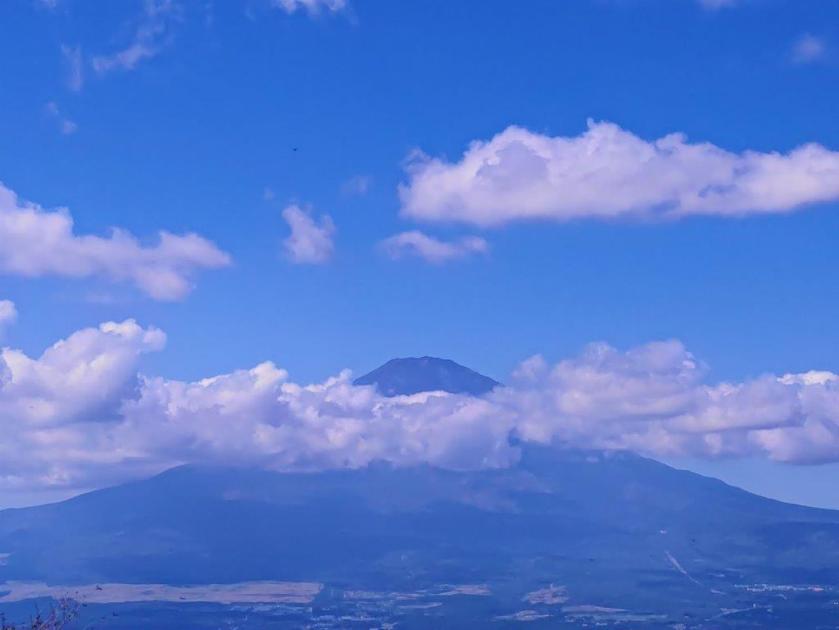
Mt Fuji before it got engulfed in the clouds

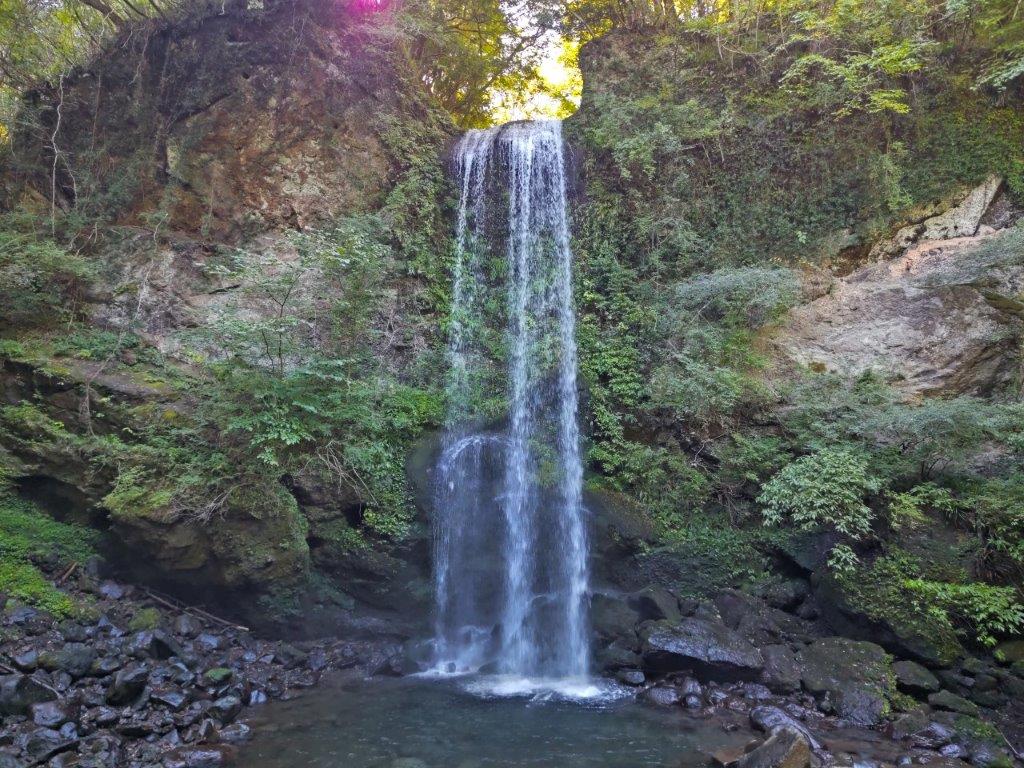
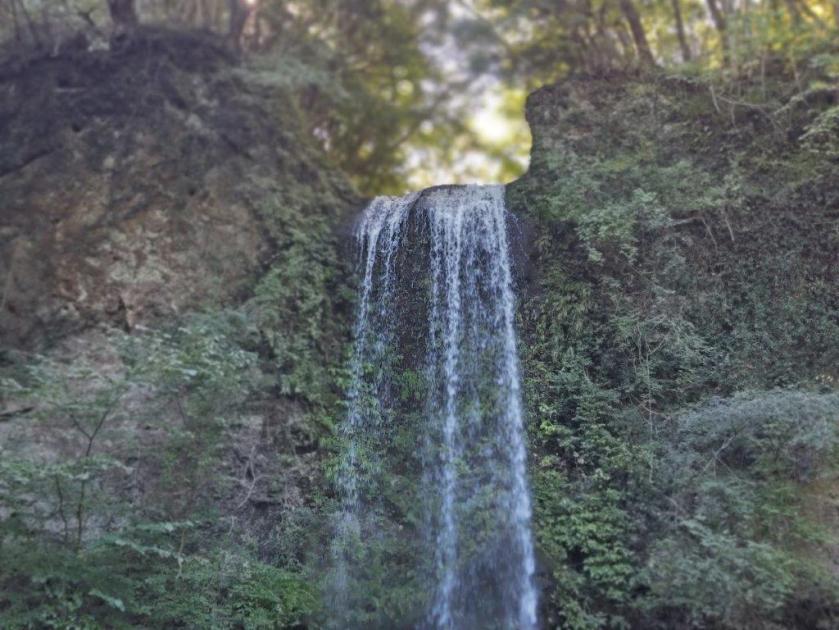
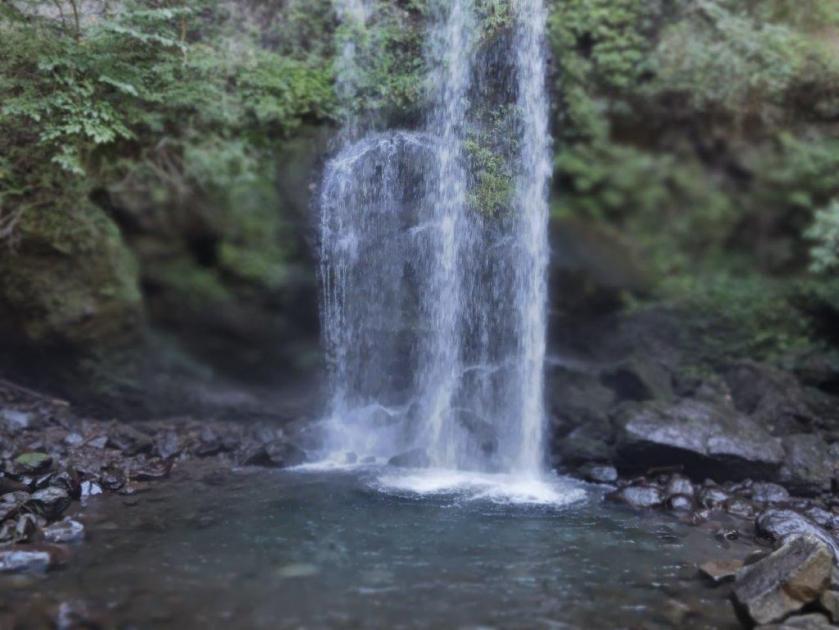
Yuhi waterfall, a famous purification spot

A cloudy cover still lingered in the early morning sky, as I rode the Odakyu Romance limited express train to Shin-Matsuda station. There, I boarded a full bus and rode it all the way to Jizodo (地蔵堂), the last stop. I had been there once before on my Yamabushi-daira hike. This time, I continued on foot along a small paved road up a pleasant, green valley. The sun was now shining above, and although it was only 9h30am, it already felt quite warm; despite that, the cosmos flowers were out, a sure sign of autumn.

A 23 meter drop (left) Climbing up the Ashigara Pass trail

Moth spotted near the start of the hike

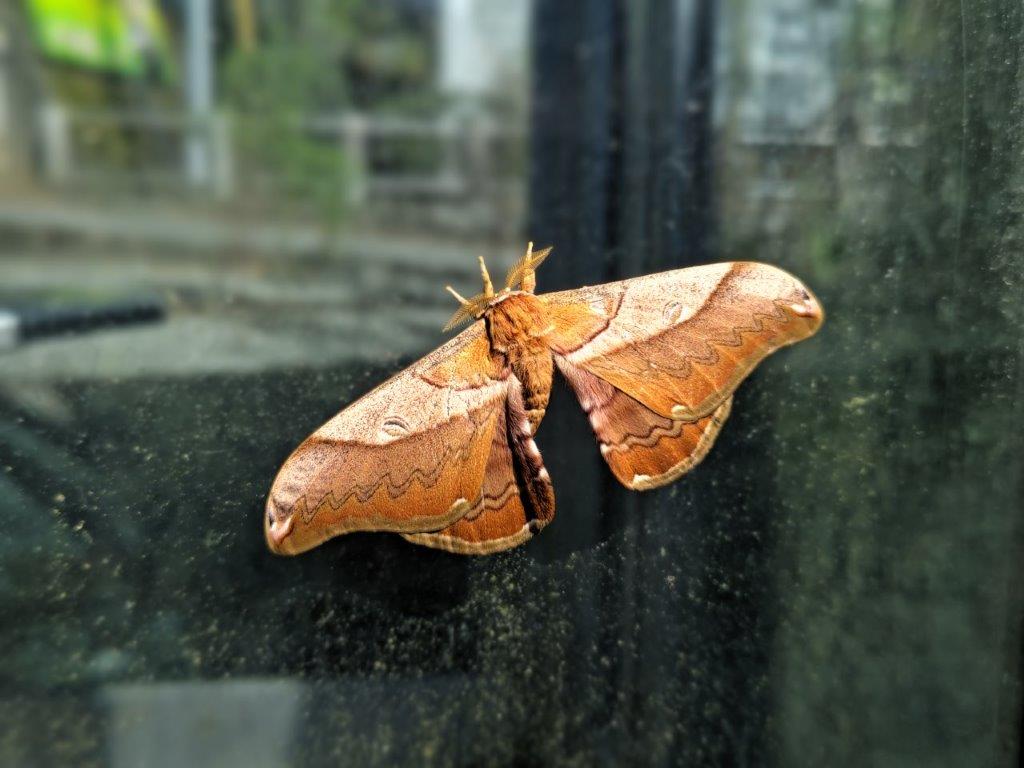
I was delighted to spot a beautiful yellow moth on a phone booth, possibly a Japanese silk moth. At 10am, I reached the entrance for the short trail to the waterfall, next to a campground. A few minutes later, I was standing in front of the thundering Yuhi waterfall (夕日の滝). The water falls from a height of 23 meters, and apparently it’s a popular place for people to stand under to get purified. At 10h30, I started up the Kintoki trail (金時コース), a gently climbing trail through cedars. After passing an open shelter, the trail went up a shady valley next to a mountain stream.

Easy hiking along the Ashigara Pass trail

The summit of Mt Kintoki, a tough climb via the north side

I was happy to be walking next to a river again, the rushing water like music to my ears. The rocky terrain made it difficult to see the path, but pink ribbons attached to branches, as well as the occasional signpost, led the way. At 11am, the trail left the river and went up a steep ridge. I met no one along this section, adding to the sense of peace and quiet. Half an hour later, after getting a glimpse of today’s summit through a gap in the trees, I reached a level dirt road, also the Ashigara Pass Trail (足柄峠コース). I turned left, and 3o minutes later, arrived at a viewpoint of Mt Fuji.

Mt Fuji slowly disappearing into the clouds

The western part of the Tanzawa mountains

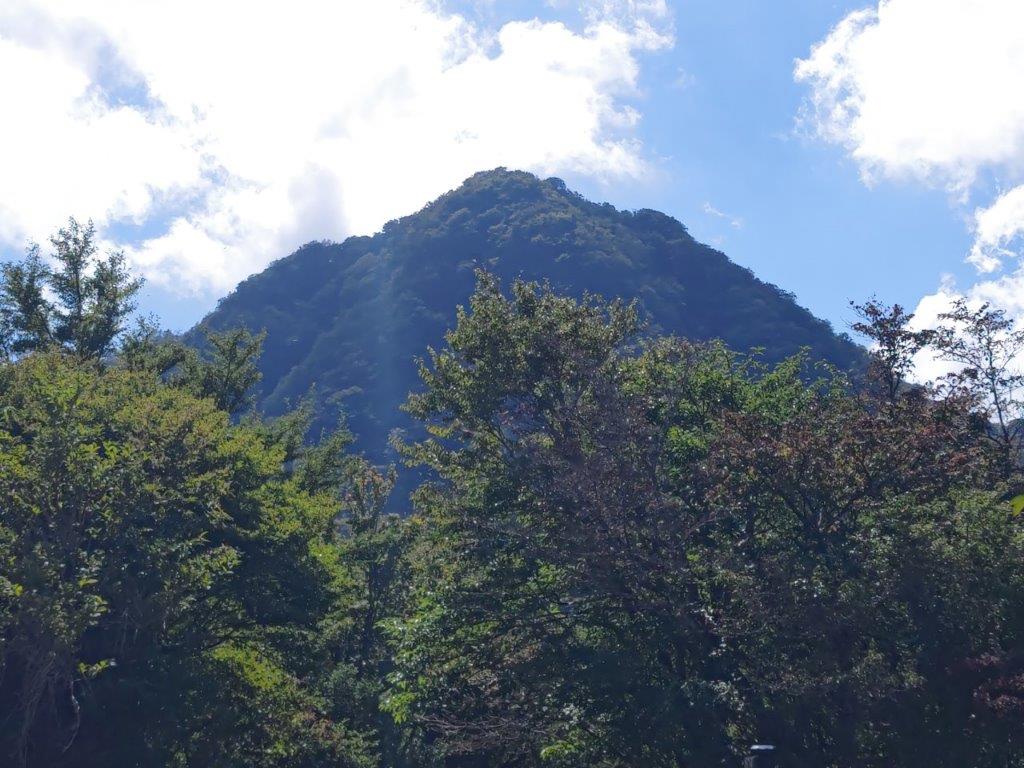
I was lucky that the summit was free of clouds; just a few minutes later some clouds rolled in and refused to budge for the rest of the day. According to my map I was at the remains of the Inohara Fort (猪鼻砦跡 962m), a few stone blocks making a good place to sit and have an early lunch while enjoying the view. Directly ahead loomed the triangular-shaped summit of today’s mountain, looking steep and menacing. I soon set off again, the path now climbing straight up the mountain side, equipped with ropes and ladders for safety.

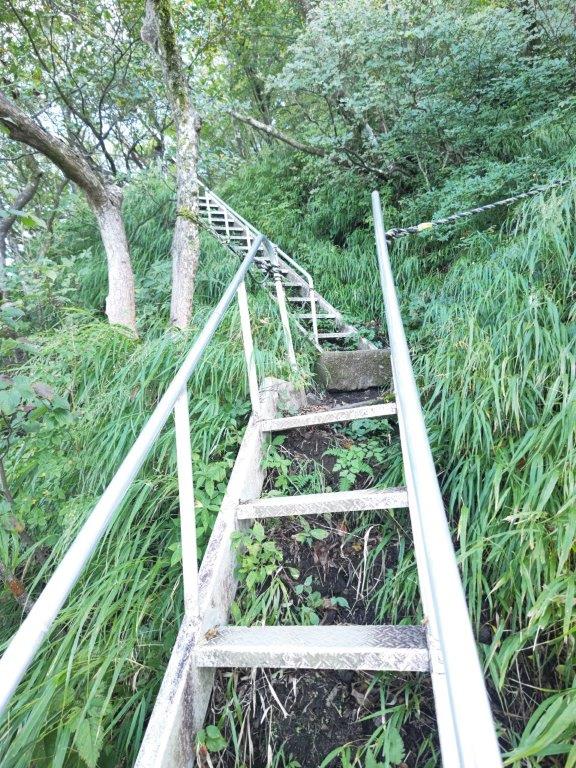
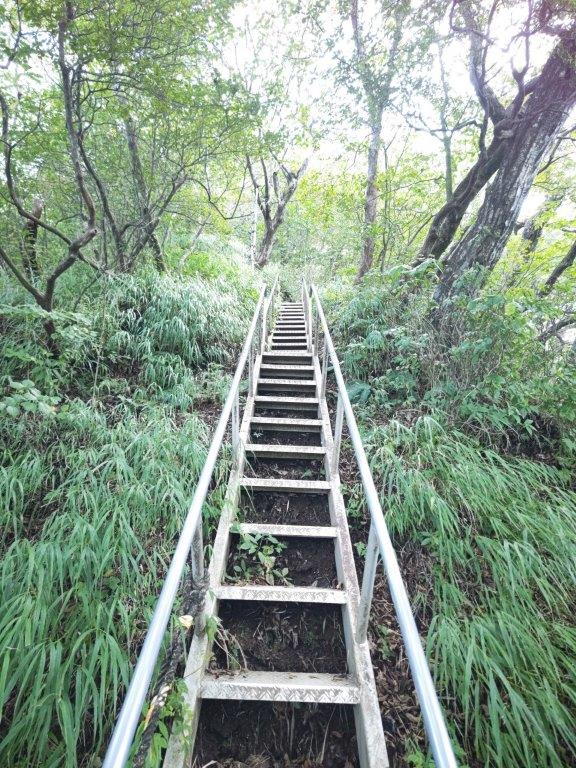
Lots of ladders to assist the hiker

Mt Hakone at the center of Hakone Volcano

I was surprised to find such a thrilling ascent so close to Tokyo; halfway up, the view through the trees to the northwest made me feel like I was hanging from a cliff. To the left, Mt Fuji was now completely in the clouds, to the right, I could see the green Tanzawa mountain range. I met several people on their way down, and had to find “passing spots” to let them by. At 1pm, I emerged onto the top of Mt Kintoki (金時山 きんときやま kintoki-yama). I had a fantastic view of the entire Hakone area; beyond the outer caldera, I could see Mt Ashitaka, Suruga bay, and a big cloud where Mt Fuji was supposed to be. As on my previous visit, the summit area was fairly crowded so I quickly moved on.

Viewpoint between Mt Kintoki and Mt Nagao

View of Mt Fuji and Gotemba city from Otome Pass

I made my way down a steep path through forest, counter-clockwise along the outer caldera rim, and now inside the Hakone part of the Fuji-Hakone-Izu National Park. Half an hour later, I passed the flat summit of Mt Nagao (長尾山 1150m), surrounded by trees. After some more descending I arrived at Otome Pass (乙女峠 1004m). From a small wooden observation platform, I could see the lower half of Mt Fuji and Gotemba city spread out around its base. At 3pm, I reached a bus stop next to Otome Tunnel; I hopped on the next bus and got off at the nearby Fuji Hakkei no Yu. After a relaxing hot spring bath, I took the shuttle bus to Gotemba station, where I boarded the Odakyu Fujisan limited express for the 100-minute trip back to Shinjuku.

See and hear the sounds and sights of the Yuhi waterfall and Mt Kintoki hike

Mt Jinmuji (134m) & Mt Takatori (139m), Zushi & Yokosuka Cities, Kanagawa Prefecture, Monday, January 3, 2022

I was looking for a relaxing hike for my first outing of the year. I found inspiration in a manga I had recently started reading called “The Climber“; it featured a mountain I knew from my hiking guide, but hadn’t attempted yet, as it seemed too short for a day trip. Using Google Maps, I discovered trails extending in several directions from the summit, along narrow forested ridges, similar to the ones I had previously hiked north of Kamakura. I decided to start from Keikyu-Jinmuji station and finish at Keikyu-Taura station, crossing the neck of the Miura Peninsula from west to east. The weather was supposed to be cold and sunny, typical for this time of the year. I hoped to enjoy a nice hike through the low hills south of Yokohama and get some good views of Tokyo and Sagami bays.

The rock climbing area featured in “The Climber” manga

View south from the top observatory

I rode the Shonan-Shinjuku line under blue skies to Yokohama where I changed to the Keikyu line. I got off at Jinmuji station a little after 11am and walked ten minutes along a road to reach the start of the trail. I soon arrived at a path along a small stream leading up the mountain. Along the way, I could hear squirrels scampering away in the nearby trees. It was nearly noon and the sun was shining down into the narrow valley, creating a magical scenery.

Path leading to Jinmu-ji Temple

Start of the path for Jinmu-ji (left) Gate leading to the temple (right)

It took only 15 minutes to reach Jinmu-ji Temple (神武寺). I saw relatively few people doing “hatsumode“, the first temple visit of the year, perhaps because it was still early in the day. I climbed some stone steps and then followed a level path for a short while. A small path leading up on the right took me to my first viewpoint of the day and the top of Mt Jinmuji (神武寺山). I had a view or the Miura Alps and Shonan bay. I found a good place to sit and had an early lunch.

View of the Miura Alps from the top of Mt Jinmuji

View of Chiba’s Boso peninsula beyond Tokyo bay

The next part followed a wide and mostly level path along the top of a ridge. Along the way, I had a view of Mt Fuji to the west and Yokohama to the north. Just after 1pm, I had a glimpse of a rock climber (see video); I had arrived at the climbing area. I walked around the base of the cliffs to a staircase leading to the top of Mt Takatori (鷹取山 たかとりやま takatori-yama). From the observatory, I could see Yokosuka city and Tokyo Bay to the east; to the south lay the Miura peninsula; directly below, children were flying kites at the base of the cliffs. After enjoying the view, I headed down at 2pm.

The observatory at the top of Mt Takatori

The rock climbing cliff (left) The Takatoriyama Buddha (right)

I made my way to an impressive Buddha carved into a cliff face, past several more climbing areas. I then turned right onto a path heading down a forested ridge and above a residential area. Half an hour later, I reached a junction where I took the left branch, and soon after, I found myself walking among the houses towards Taura station. At 3pm, I boarded a local train for Yokohama station where I changed to the Shonan-Shinjuku line for the one-hour ride back to Tokyo.

Walking above the suburbs

See the views of Mt Takatori

Mt Myojo (924m) & Mt Myojin (1169m), Hakone Town, Kanagawa Prefecture, Sunday, November 28, 2021 [Map Available]

This was a hike that I had done over ten years ago but in reverse. Back then, the visibility hadn’t been so good, so I wanted to redo it in clearer weather. I had climbed Mt Myojin one year earlier, but I was hoping that this time the wind wouldn’t be so cold and Mt Fuji would have its winter coat. I would also be able to ride the Hakone Tozan railway, for the second time this year, to Gora station, near the start of the trail. I would finish at Daiyuzan Saijoji Temple, from where it’s a short bus ride to Daiyuzan station. The weather was supposed to be sunny all day, meaning I could look forward to some great views inside the Fuji-Hakone-Izu National Park.

Hiking inside the Fuji-Hakone-Izu National Park

富士箱根伊豆国立公園

Download a map of the Mt Myojo and Mt Myojin hike

This map was developed for Japanwilds with the Hokkaido Cartographer

Find more Japan hiking maps on Avenza

View of Mt Fuji from Daimonji-Yaki

View of Mt Fuji from the top of Mt Myojin

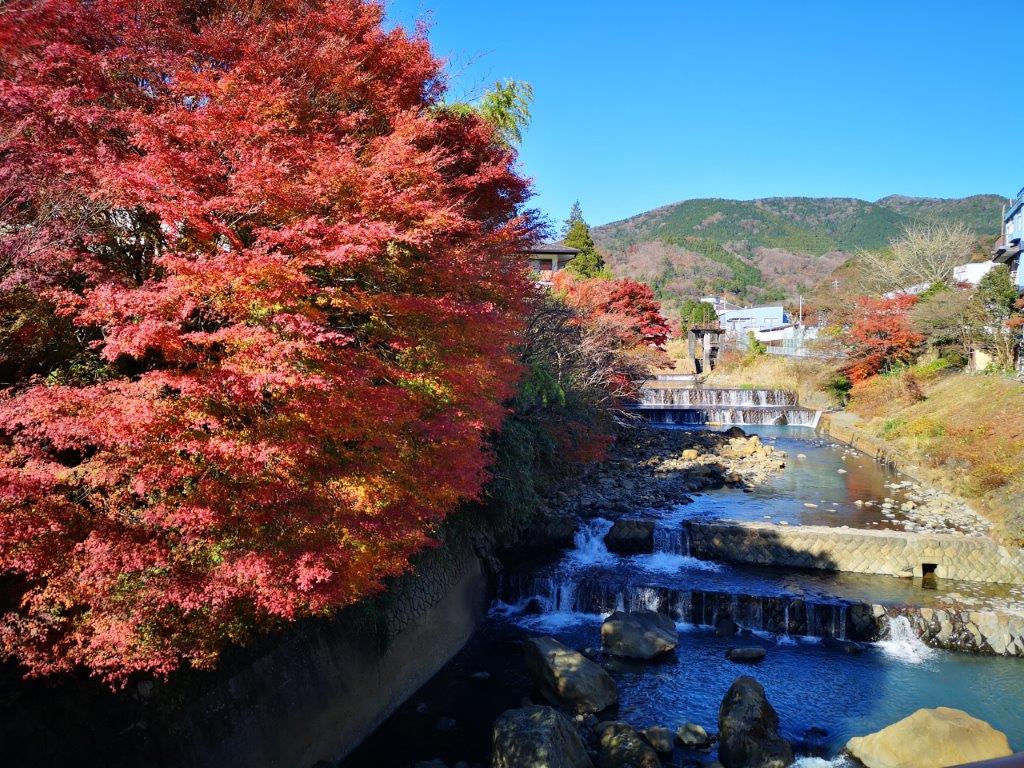
The day was clear and sunny and I could see Mt Fuji while riding the Romance car limited express to Hakone-Yumoto. I arrived a little before 9h30, just in time for the transfer to the Hakone Tozan railway. As the train made its way up the valley via a series of switchbacks, I was able to admire the autumn trees dotting the mountainsides. After getting off at Gora station around 10am, I headed down a series of staircases to a bridge over the Haya river, and then followed a road up the other side of the valley to the start of the hiking trail.

Autumn leaves next to Haya river

Gora and Mt Hakone

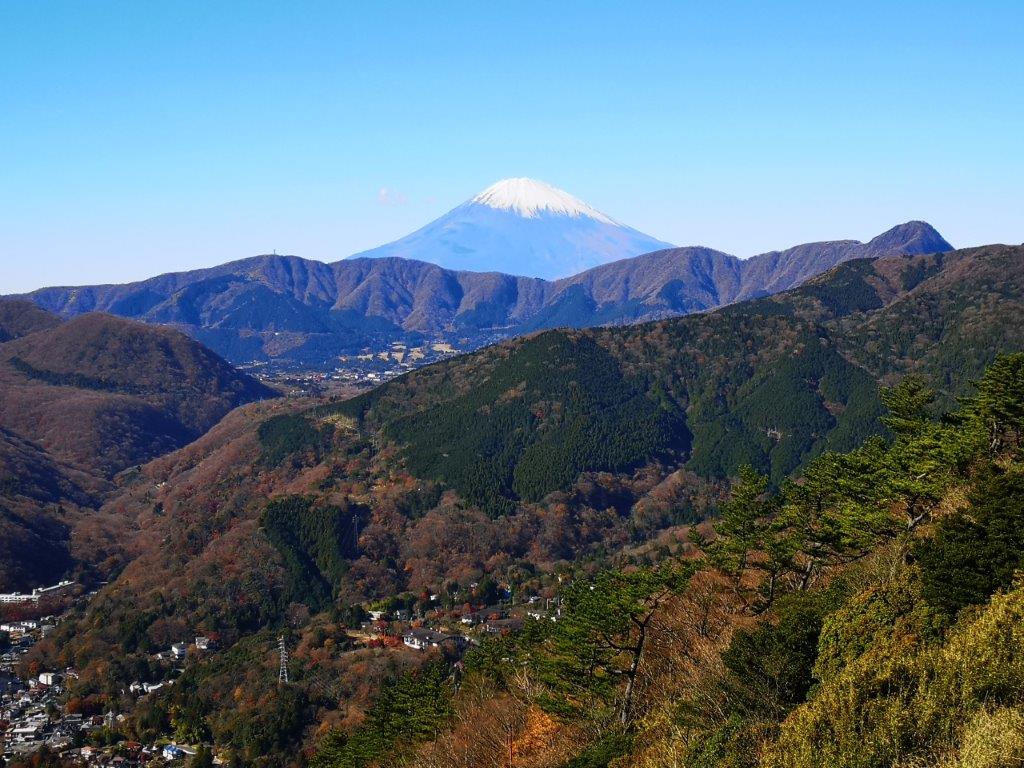
It was a windless day and it felt pleasantly warm in the late autumn sun. I started climbing at 11am up a zigzag trail. Half an hour later, I reached Hakone Daimonji Yaki (箱根大文字焼き meaning “big burning character”) where I got a wide view of the valley below. Directly ahead was Mt Hakone and the smoking Owakudani; on the right side, to the west, I could see white-capped Mt Fuji, completely clear of clouds. It took another twenty minutes to reach the top ridge, and a few minutes later, at noon, I was standing on the top of Mt Myojo (明星ヶ岳 みょうじょうがたけ myoujougatake meaning “Morning star”). It didn’t feel like a summit and the trees blocked the view in all directions.

Mt Fuji and its winter cap

Walking between the bamboo grass

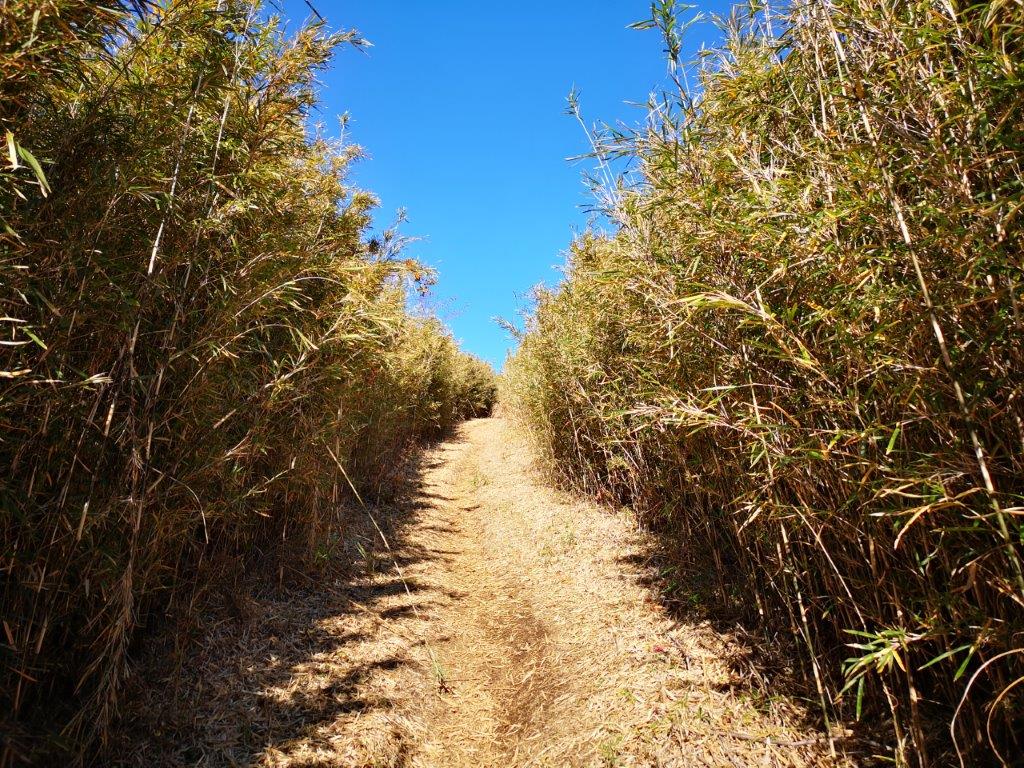
I continued without a break along the ridge heading west, towards Fuji, and downhill, through a tunnel of bamboo grass. Eventually, I reached a flatter section from where I could see the climb towards Mt Myojin. I passed many hikers on the way, and I was glad to see other people enjoying the perfect weather and the great views. The visibility was excellent and, looking East, I could see Oshima and other Tokyo islands. At 1h30, I reached the top of Mt Myojin (明神ヶ岳 みょうじんがたけ myoujingatake), a Kanto 100-famous mountain. It wasn’t as cold as last time but it was more crowded; this time the visibility was so good that I could even see the snowy peaks of the Minami Alps, nearly 100 kilometers away. I kept my lunch break short, and set off again before 2pm.

The fumes of Owakudani

Sagami bay and the Shonan coast

I met no other hikers on the gentle descent to Saijoji Temple. The path followed an area cleared of the trees because of a disused chairlift, which enabled me to have good views of the Tanzawa mountains and Sagami bay to the north. Lower down, I could still see some yellow and orange Japanese maple leaves. Although I was now outside the National Park boundaries, the trail went through beautiful forest. At 3h30, I arrived at the Saijoji temple complex in the midst of giant cedar trees.

Looking north towards Tokyo

Pleasant hiking on the way down

Since the sun had already dipped behind the mountains, I decided to skip a visit of the temple grounds and head directly to the Only You hot spring resort (a play on words: “you” sounds like the Japanese word “yu” for hot water”). After a relaxing hot bath, I took the free shuttle bus to the nearby Daiyuzan station. There, I rode a local train to Odawara station and then transferred to the limited express for the one hour trip back to Tokyo.

See the views between Mt Myojo and Mt Myojin

Yamabushi-Daira (710m), Minami-Ashigara City, Kanagawa Prefecture

I had been up Mt Kintoki and Mt Yagura before. Back then, I hadn’t known that a bus went up to the park near the pass between the two mountains. Studying my hiking map, I saw that I could ride this bus there and then walk down to a train station at the bottom of the valley. I was mostly interested in trying out a new bus line and getting some good views, even though I wouldn’t summit any mountains; I would also get to ride the Daiyuzan railway line to get there, a railway I had only taken twice before. Since this hike was on the short side, I could leave later in the day and have a soba lunch beforehand. The weather forecast predicted it would be sunny day with some clouds – not a bad thing on a warm spring day.

Hiking between Hakone and Tanzawa

After a comfortable ride on the Romance Car, I arrived at Odawara station around noon. I switched to the Daiyuzan line and got off at the last stop. After an excellent soba lunch at Hatsu Hana Soba, I caught the last bus of the day for Ashigara Manyo Park (足柄万葉公園). It was an interesting ride up a narrow winding road which also doubles as a hiking path.

An easy start to the hike

At 2h30, I was walking northwards along a flat and easy trail along the ridgeline. On the way, I spotted an interesting moth – I found out later that it was the Japanese version of the American Luna moth. Through a break in the trees, I could see the rounded top of Mt Yagura ahead to the northwest. At 3h30, after a short climb, I reached Yamabushi-Daira (山伏平) in the middle of the forest.

A rare moth in the daytime

There was no view so I continued without a break, heading down the other side of the mountain. Half an hour later, I crossed a small stream. After some descending, I reached a forest road following the mountain side. At 4h30, I arrived at the 21st Century forest (21世紀の森), although nothing about it made me think of the current century.

Mt Fuji through the late afternoon haze

A few minutes later, I reached a lookout point; it was rather small and the view wasn’t as great as I had hoped for. Looking west, I could see Mt Fuji, only a dim outline visible in the later afternoon haze. To the north, I could make out the peaks of western Tanzawa just above the treetops. I took a short break before setting off again, on a level gravel road.

Still some way down

Along the way, I had a view of Sagami Bay to the east, soon followed by a view of the Central Tanazawa mountains to the north, this time clear of trees, with the bare top of Mt Ono in the middle. Suddenly, the path swerved to the left and headed down a steep log staircase through the forest. At 5h30, I reached a little traveled forest road in dire need of maintenance.

The Tanzawa mountains

As the road wound round the mountainside, I got a wide view of the valley through which the Gotemba trail line passes, and Yamakita town, my final destination; it was easily the best view of the day. It still looked a long way down so I had to hurry up. I had a brief glimpse of a deer before it bounced away through the trees. I soon arrived at a paved road, which went steeply down via a series of switchbacks.

The Iris Japonica

The road was lined with Iris flowers (シャガ shaga) in full bloom, and it was a very peaceful walk at the end of the day. At 6pm, I arrived at the entrance for the Shasui falls (洒水の滝) and the end of the hiking path. I had been to the falls before, so I continued through the town, reaching Yamakita station at 6h30, just before dark. It was a short train ride to Matsuda station, where I changed to the Fujisan Limited Express (part of the Romance Car series) for the one hour ride back to Shinjuku.

Mt Sengen (804m), Chisuji and Hiryu Waterfalls, Hakone Town, Kanagawa Prefecture, April 2021

I felt it was time to visit Hakone again since I wanted to redo last year’s river hike in the new green of spring. I was also hoping to see more water flow through Hiryu waterfall. Studying my Hakone map, I saw that I could start with another waterfall nearby, climb Mt Sengen via a different route, and then walk down the river and past the waterfall, effectively doing a shorter version of the original hike in reverse. I could easily extend it by walking some more of the old Hakone highway. An added bonus was that I could get to the trail entrance using the Hakone Tozan Railway, the steepest railway in Japan featuring three switchbacks. On the return, I could take one of the frequent buses crisscrossing the area. The weather was supposed to be sunny again but chilly for the season, ideal conditions for a spring hike.

Hiking inside the Fuji-Hakone-Izu National Park

富士箱根伊豆国立公園

The upper section of Hiryu waterfall, the highlight of the hike

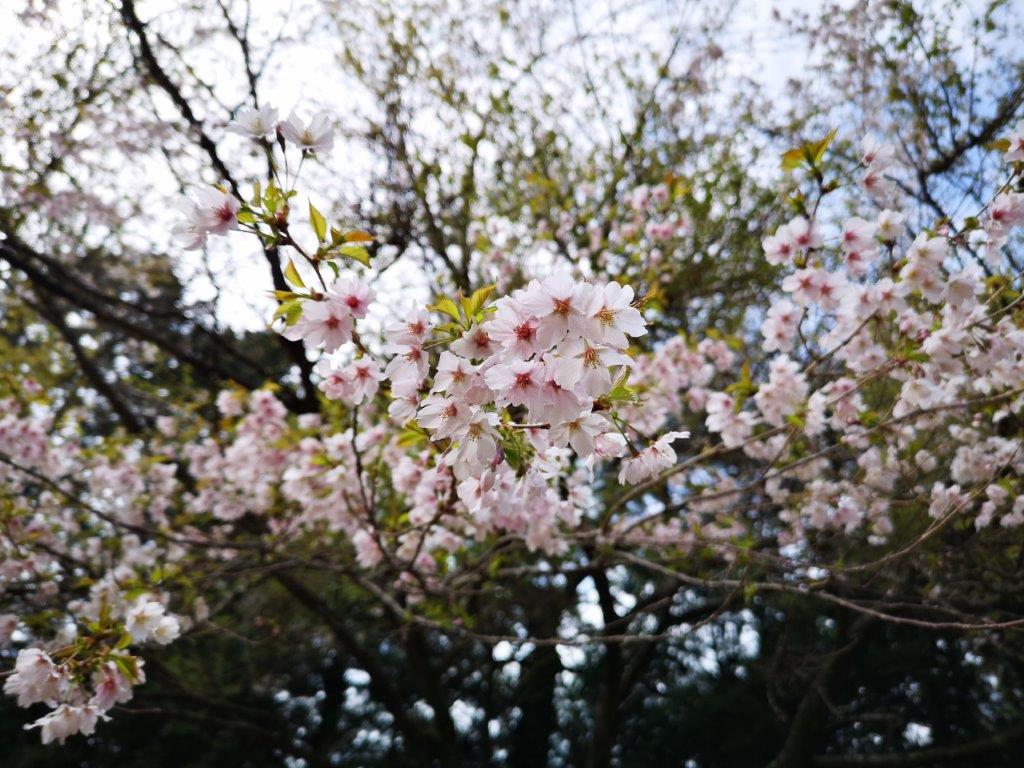
After a smooth ride with the Romance Car Limited Express, I arrived at Hakone-Yumoto station a little after 10am. As with my last few hikes, the sky was a disappointing white instead of the expected blue. I transferred to the colourful Hakone Tozan Railway for the eventful ride up. The mountain sides were peppered with Mountain Cherry trees (“yamazakura“) in full bloom. Announcements in Japanese and English noted the various highlights along the way. At 11am, I got off at Kowakidani (523m), two stops before the end station of Gora.

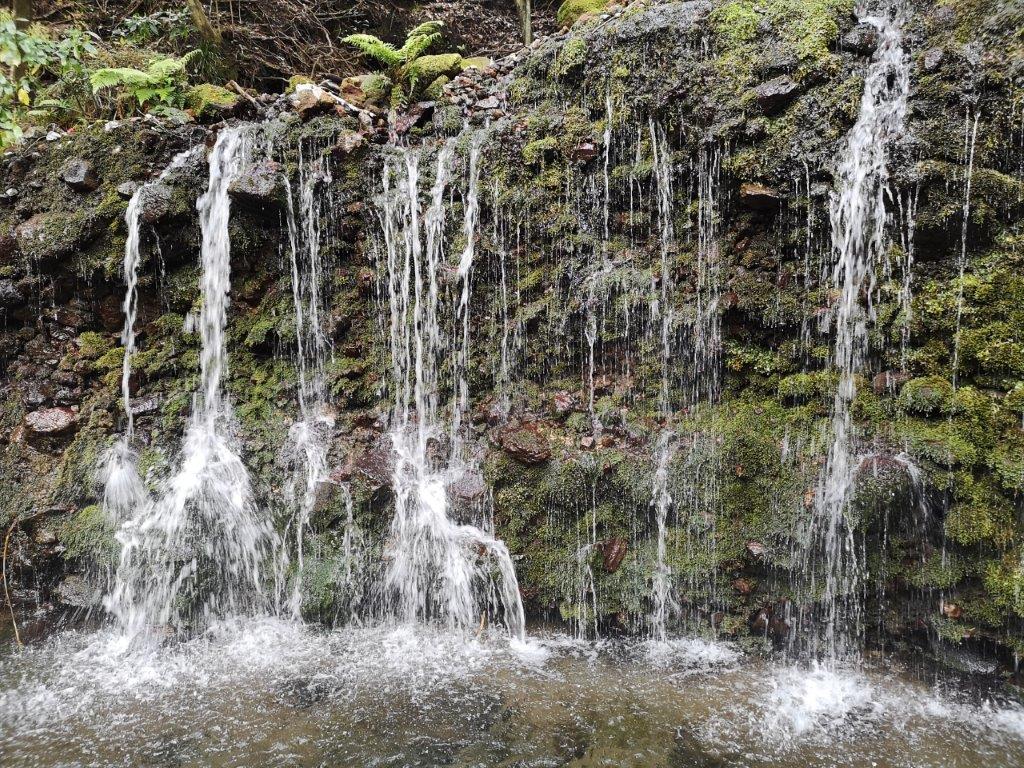
The white thread-like falling water of Chisuji waterfall

Looking downstream from the bridge near the start of the hike

A ten-minute walk brought me to the start of the hiking trail and Chisuji waterfall (千条の滝 chisujinotaki). Thin white threads of water tumbled into a small pond, reminding me of the pitter-patter of rainfall; I took a short break to listen to the soothing sounds. At 11h30, I crossed a wooden bridge and started up the hiking path through the forest, leaving the river behind. The surrounding mountains shielded the noise of traffic and birdsong reverberated among the bright green leaves; I could really feel that I was hiking inside the Fuji-Hakone-Izu National Park.

Views of the the Futago (twin) mountains of central Hakone

Hiking up to Kowakidani junction (left) Hiking up to Takanosu (right)

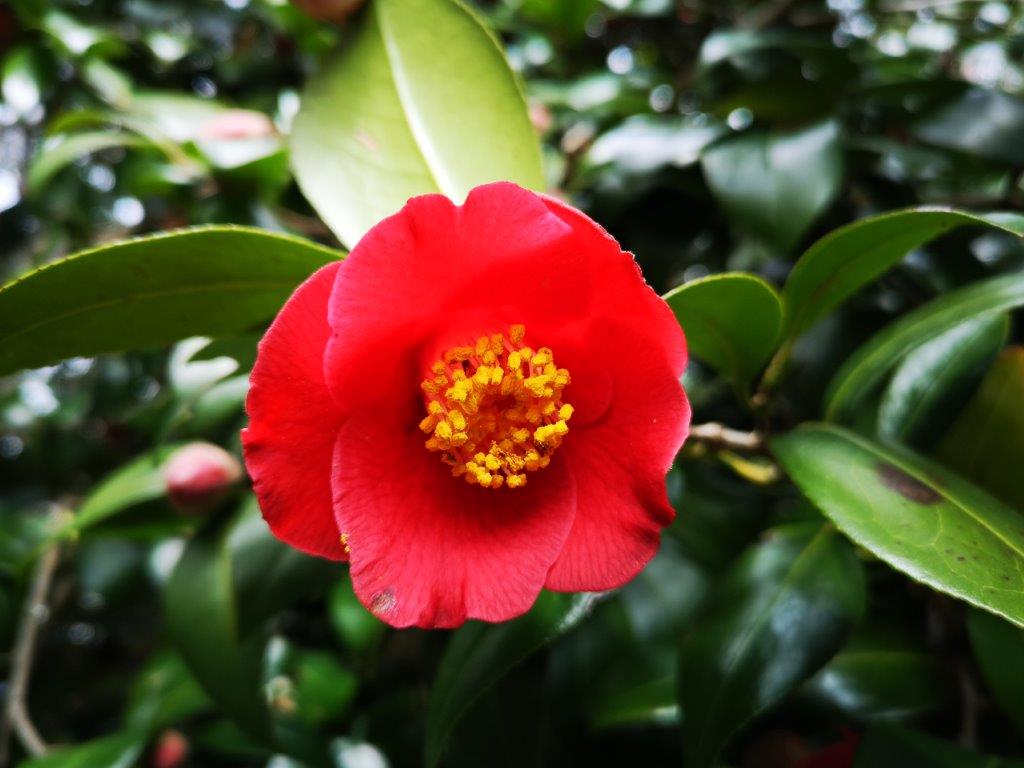
Through a break in the cedar trees, I had my first views of the day; I could see the small rounded hills, the heart of Hakone, dotted here and there with white “yamazakura“. A few minutes later, I reached the ridgeline, rejoining the last year’s hike. Although the hike continued to the right, I first turned left for the twenty-minute round-trip to Mt Sengen, along a path lined with Tsubaki trees, their flowers just past their prime. There was no view, but several cherry trees were still in full bloom, making it a nice place for a break. I then retraced my steps and walked up the other side to the ruins of Takanosu castle.

Easy walking under the cherry blossoms

Walking through the light new green of spring

I was glad to see that the next part of the trail had been completely fixed, and was now easier to walk. At 1h30, I reached Hiryu waterfall (飛龍の滝 hiryunotaki). This time, a lot more water was flowing through the jumble of rocks and boulders. I discovered another viewpoint on the other side that I had completely missed last time. I could fully feel the arrival of spring while walking down the narrow mountain path, surrounded by the bright green leaves on all sides and with the sound of the rushing river below. At 2pm, I reached Hatajuku where I caught a bus for Moto-Hakone.

The weather improved in the afternoon

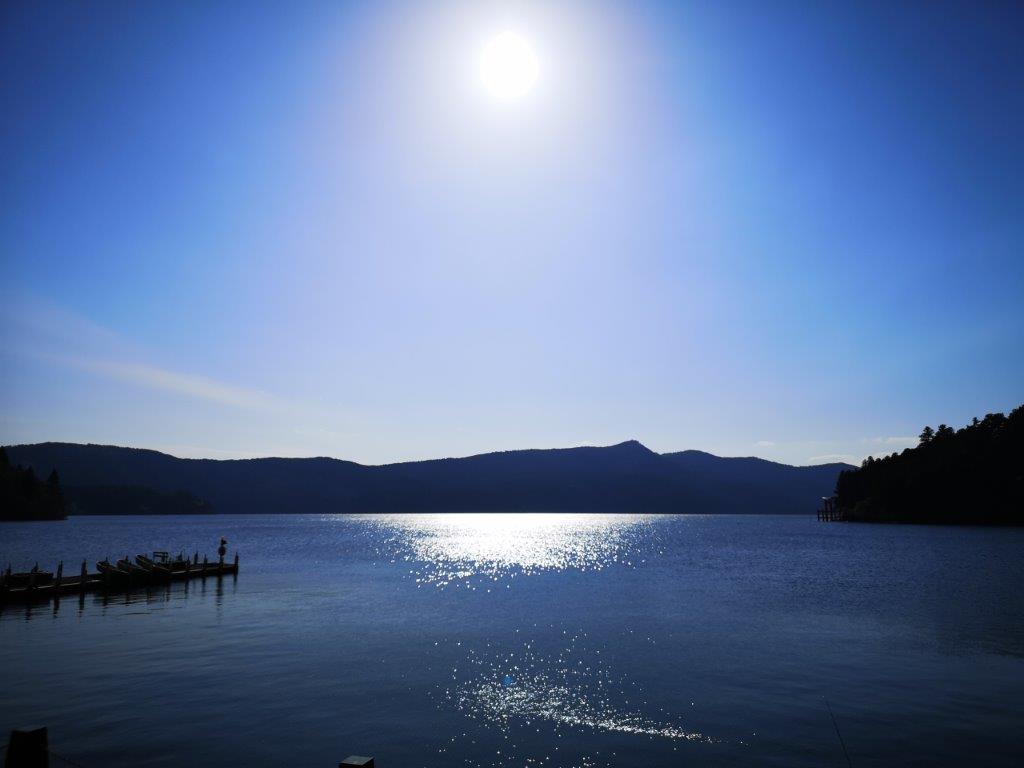
Perfect weather at Ashi Lake

By now, the weather had improved and I arrived at Lake Ashi under a cloudless sky. Looking up at Mt Koma, I could see the ropeway going up the mountain. However, I was headed back down, along the old Hakone Highway. Even in dry, sunny weather, it was tough to walk on the wide uneven cobblestones, and it was with some relief that I arrived at the Amazake Teahouse at 4pm. After a snack of mochi and green tea, I caught the bus back to Hakone-Yumoto station, where I transferred to the Romance Car for the 90 minute ride back to Shinjuku.

See and hear the waterfalls of Hakone

Mt Tsukui-Shiro (375m) and Mt Amagoi (429m), Sagamihara City, Kanagawa Prefecture

I found this mountain in my Kanagawa guidebook; apparently, the view from the top was quite spectacular, despite its low altitude. The hike itself was relatively short, under two hours, but once again the “Kanto Fureai no Michi” came to my rescue. I had the choice of extending my hike to the north towards Mt Takao, or south. In the end, I chose the latter since it included less road walking. This time, I would be hiking only 40 kilometers from Tokyo, just a short bus ride away from the last stop on the Shinjuku subway line. On the other hand, I wondered how immersed in nature I would be, so close to the big city. The weather was supposed to be sunny all day, and I was looking forward to climbing a new mountain at the edge of Tokyo.

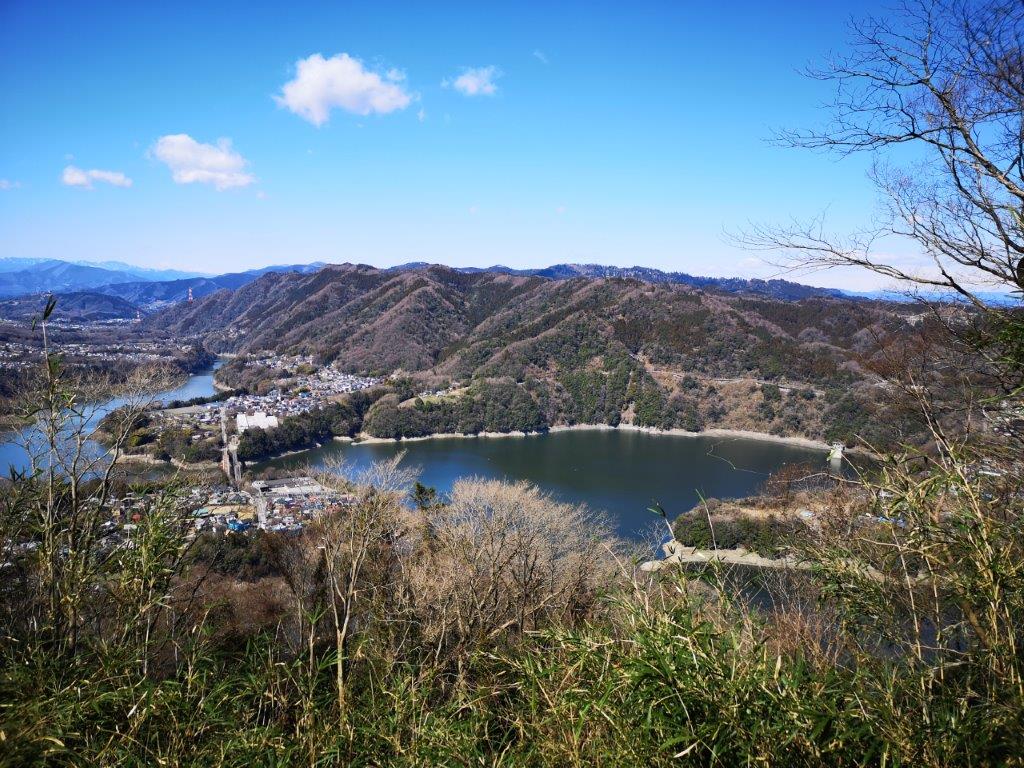
View of Tsukui lake from the top of Mt Shiro

I arrived at Motohashi station under blue skies around 8:30. About an hour later, the bus dropped me off on a busy prefectural road. I crossed to the other side via a pedestrian bridge and entered the Lake Tsukui Shiroyama Park (津久井湖城山公園). Almost immediately, I was walking on a wooden walkway surrounded by trees at the bottom of a small valley – quite an impressive transition! After one hundred meters, I turned right up a small path leading to the Mt Jubei viewpoint (十兵衛山展望台). Looking south beyond Sagami river, I could see the high-rise buildings of Atsugi city. There was a bench, so I sat down for some breakfast under the warm morning sun. At 10am, I set off again.

Hiking inside Shiroyama park

The Mt Jubei viewpoint

I was now walking along the “man’s slope” (男坂). At first, it was relatively easy but it soon turned surprisingly steep and narrow; occasionally, I steadied myself with the chains lining the left side of the path, while catching glimpses of Tsukui lake through the trees to the right. I never thought I would have such a tough climb so close to Tokyo! It took me nearly half an hour to reach the junction with the woman’s slope, from where it was just a few minutes of gentle climbing to reach Takauchi-Ba (鷹射場 meaning “hawk launching spot”). Looking east, I could see the skyscrapers of Shinjuku, as well as the Tokyo Sky Tree. To the south, I could make out the buildings of Yokohama, and the hills of the Boso peninsula behind.

Tough climbing up the man’s slope

A view of the Tokyo skyline

A few more minutes of hiking brought me to another good viewpoint, from where I could see the Tanzawa mountains to the south. Just above, and among the trees, there was the small Izuna Shrine (飯綱神社). At 11h30 I finally arrived at the top of Mt Tsukui-Shiroyama (津久井城山 つくいしろやま tsukuishriroyama). I sat down for lunch on a bench on the south side, enjoying a view of Mt Hiru framed by the trees. However, the best view of the day was to be had on the north side: west of Tsukui lake, I could see the long ridge culminating in Daibosatsurei with a dab of snow on the top. In the foreground was Mt Momokura and Mt Ogi. Through a break in the mountains, I could see Mt Kita-Okusenjo, the highest peak of the Chichibu-Tama-Kai National Park, still fully covered in snow.

Izuna shrine, half-way up the mountain

The Tanzawa mountains

There were several trails down and I decided to take the level “woman’s slope”, which wound around the mountain top. It was a good decision as it was easy to walk and went through some pretty forest – the best trail of the day so far. Fifteen minutes later, I reached a pedestrian road coming from the entrance of the park on the north side. Walking down it for a few minutes, I reached a nice viewpoint of the lake and the mountains of Yamanashi to the west. I then walked in the opposite direction, along a nice, wide wooden walkway. It was equipped with brooms and explanations on how to sweep the deck – an interesting way of making a labourious activity seem fun!

Sagami river heading into Yamanashi prefecture

The Oku-Chichibu mountains, topped with spring snow

I soon reached a good viewpoint of the Tanzawa area to the south. I could see Mt Bukka and Mt Takatori,which I had climbed about a year ago. I continued straight on past the end of the road, and along a small path leading out of the park and onto the same busy road I had left over 3 hours ago. This time, I used a staircase passing under it to get to the other side. After following a parallel but smaller road for about ten minutes, I reached the “Fureai no Michi” and the start of the hiking trail for the next mountain of the day. After a short climb through a forest, I reached a flat area of fields with goods views south of the mountain I had just come from. After crossing a village and some more fields, I reentered the forest and the hiking trail.

Easy walking down the woman’s slope

A good viewpoint at the base of the mountain

After some gentle climbing through a mixed forest, I reached the top of Mt Amagoi (雨乞山 あまごいやま amagoiyama meaning “pray for rain”) at 1h40. There was no view and nowhere to sit, so I continued down the other side without a break. Barely a few minutes later, I reached a junction and a bench. There was still no view but I sat down for a late lunch anyway. Although the trail continued along the ridge, I decided to follow the “Fureai no Michi” down the mountain and back into the valley. Once out of the forest and back on a paved road, I had finally had some good views; the green fields and the towering Tanzawa mountains in the background reminded me strongly of Switzerland.

Some more easy hiking along the Fureai no Michi

A glimpse of Switzerland in Kanagawa prefecture

Since it was only about 3h30, I decided to drop by a local sake brewery called Kubota Shuzo, better known for their Sagaminada brand. I was in luck – they were selling a new brew of sake made with Miyama Nishiki rice. After buying a couple of bottles, I hopped on the bus for Motohashi station where I transferred to the subway for Shinjuku, less than an hour away. Overall, I was quite impressed with the greenery and the views in Tokyo’s backyard (technically Kanagawa)…as well as the sake which tasted great!

Mt Ogusu (241m), Yokotsuka City, Kanagawa Prefecture

I had climbed this mountain once before in 2014, hiking up and down the western side. This time, I wanted to cross over to the other side; I would go up the trail I had descended the previous time, as it is the better of the two. Hopefully, the trail on the other side would be just as nice. Since trains and buses run frequently this close to Tokyo, access would be straightforward. The weather was supposed to be good again, and I was also hoping for a glimpse of Mt Fuji across Sagami bay.

The peaks of Mt Hodai and Mt Miura-Fuji near the heel of the Miura peninsula

I rode the Shonan-Shinjuku line directly to the seaside resort of Zushi, where I caught one of the frequent buses heading south along the western coast of the Miura peninsula. I could already see Mt Fuji from the bus; after getting off, I backtracked for a few minutes to “Bonten no Hana” (梵天の鼻 meaning the Brahma’s nose), a rocky promontory from where I snapped some pictures of Japan’s most famous mountain. On its right, I could see the Tanzawa mountains, and to the left, the Hakone mountains.

Mt Fuji from the Brahma’s nose

Sun along the Maeda River Promenade

Before starting my hike, I had an early lunch at nearby Soba Okeya, so I only reached the Maeda River Promenade entrance (前田川遊歩道 maedagawa-yuhodo) at 1pm (also part of the Fureai no michi). It was a small river but enjoyable to walk along in the sunny winter weather, and I shared the trail with many locals. Twenty minutes later I reached the end of the promenade and the start of the hiking trail. First, it followed a long curving log staircase up the mountain side, then alternated between flat and climbing sections. The surrounding forest reminded me of hiking in Kamakura.

Start of the hiking trail up Mt Ogusu

One of the level sections of the trail

One hour later, I arrived at a tall white tower; it looked quite spectacular against the blue sky. From the top, I had good views of the entire Miura peninsula; directly west, Mt Fuji was still faintly visible; looking north, I could see the hills of the Miura Alps with the skyscrapers of Yokohama in the background. However this wasn’t the summit yet. It took another ten minutes to reach the the top of Mt Ogusu (大楠山 おおぐすやま oogusu-yama), the highest point of the Miura peninsula, and a hundred famous mountain of Kanto.

The white tower on the way to the summit

View towards Sagami bay from Mt Ogusu

There was another tower here, just as tall as the previous one but made of metal. From the top, I had an excellent view to the south of the flat boot-shaped extremity of the Miura peninsula. Westwards was Yokotsuka city and its port. Directly above, a black kite bird (“tobi” in Japanese) was circling in the sky. It was already past 3pm and time to head down. At first, I walked down a steep staircase at the bottom of which I turned sharply left and hugged the mountain side. At one point, I passed next to a golf course and through a tunnel made of a protective netting similar to the one near Miyazawa Lake.

The southern part of the Miura peninsula

The Miura Alps with Yokohama behind

Just past the golf course, I reached a fork in the trail. As I was confirming the way in my hiking book, I suddenly turned around, and saw a cat watching me from the path; halfway up a mountain was certainly an odd place for a cat to be. The trail now descended to the bottom of the valley through the forest. I was near the center of the Miura peninsula, and it was easy to forget that I was only 20 kilometers away from Yokohama. There were no other hikers here and I could enjoy the tranquility of nature. As when I had hiked the Rokoku pass, I was occasionally spooked by the many squirrels scampering up and down the tree branches (could be the reason for the cat).

Pleasant hiking on the Miura peninsula

Few hikers but a well-maintained trail

At 4pm, I reached the stream at the bottom of the valley. After crossing two small concrete bridges, I was back on a countryside road. A few minutes later, I was walking through the suburbs of Yokotsuka city; I spotted a few more cats, as well as many daffodils which flower at this time of the year. Thirty minutes later, I reached a bus stop on a busy road which cuts through the center of the peninsula. After a short ride, I was back at Zushi station where I boarded the Shonan-Shinjuku line for the one hour train ride back to Tokyo.

See the view from the highest point of the Miura peninsula

The Sengoku-Hara Kojiri Nature Trail and Ashi Lake West Shore Trail, Hakone Town, Kanagawa Prefecture

This would be my third hiking trip to Hakone in the past year (8th overall). I enjoy going there because it’s close to Tokyo and has good public transport access. This time, instead of climbing one of the many peaks of this active volcano, I would walk along the west shore of Lake Ashi, and thus avoid snow and cold winds of the higher elevations. On the other hand, I would not get any Mt Fuji views, although I would still be able to see many of the mountains surrounding the twin calderas of Hakone. Since the lakeside trail would take less than 4 hours, I decided to start with a nature trail that went through the Sengoku plain. I didn’t need to look up the bus times since I would use the same bus as for my hike up Mt Myojin. The weather forecast was good, but since Mt Hakone, the highest peak in the area, is a cloud magnet, it was always possible that the weather would turn cloudy.

Hiking in the Fuji-Hakone-Izu National Park

View of the Sengoku plain from the Sengoku-Hara Kojiri Trail

On the right, the highest point of the Hakone area

I rode the comfortable Romance car from Shinjuku and transferred to the Hakone Tozan bus at Odawara, arriving at Sengoku at 9h30. It took about 20 minutes to reach the start of the Sengoku-Hara Kojiri Nature Trail (仙石原湖自然歩道) connecting Sengoku with Ashi Lake. The trail took me to a bridge over Haya river, then followed it upstream for a short while. I found a nice sunny bench and sat down for a late breakfast. Looking south, I could see the pointed top of Mt Kintoki. The trail soon left the river and crossed a small road; I was now following a forest road at the edge of the plain and I had good views of the outer crater rim to the south, as well as Mt Hakone in the center.

Haya river with Mt Kintoki directly behind

Hiking the Sengoku-Hara Kojiri Nature Trail

The trail went in and out the woods. Although it was the middle of winter, there was little wind and it wasn’t too cold. At 12h15, I arrived at the Kojiri water gate (湖尻水門) at the northern end of Ashi lake. The water gate was unexpectedly picturesque, like something you might see in Europe. I settled down on one of the benches facing the lake, and despite the strong cold wind, had an early lunch, listening to the wavelets lap against the stony beach. The sun was playing hide and seek with the clouds, and I was starting to get cold; soon I was back on the hiking trail.

Kojiri water gate with Mt Hakone behind

Hiking the Ashi Lake West Shore Trail

It was now completely overcast and I was hoping it wouldn’t start raining. I was now walking the Ashi Lake West Shore trail (芦の湖西岸歩道). Like the nature trail, it followed a forest road closed to traffic. There were few viewpoints, but I saw no other hikers and enjoyed some quiet and easy hiking. At one point, I observed a fairly big bird of prey making circles above the lake (see video). Half an hour later, the forest road suddenly narrowed and became a proper hiking trail. I spotted an unoccupied nest in a bush just next to the road, a testimony to how few people pass through here.

The only clouds remaining in the afternoon were above Mt Koma

Good view from the west shore of Lake Ashi

Another hour of hiking brought me to an excellent viewpoint of Lake Ashi, Mt Hakone, Mt Koma and the Moto-Hakone port at the southern end of the lake. It was sunny again, except for the top of the Mt Koma ropeway, which was disappearing in and out of the clouds (see video). Suddenly, another “bird”, an artificial one, flew by overhead; probably a helicopter belonging to the Japanese self-defense force. I arrived at Hakonemachi at 3h30, completely deserted by this time, and caught the 4pm express bus for Hakone Yumoto. There I hopped on the romance car for the 90 minute trip back to Shinjuku.

Hiking the west side of Lake Ashi