Mt Komayumi (1223m), Aoki Village, Nagano Prefecture, Sunday, December 5, 2021 [Map Available]

I was hoping to do one last hike in Nagano before the start of the ski season and I was also keen on exploring the Ueda area some more. I found another mountain in my guidebook that I could reach with a short bus ride from the station. Buses ran frequently so I could be flexible with the departure time. I would go up and down different routes, but I would end up on the same bus line. The forecast called for sun and above freezing temperatures, so I was hoping to get a good view of the North Alps covered in snow.

Download a map of the Mt Komayumi hike

This map was developed for Japanwilds with the Hokkaido Cartographer

Find more Japan hiking maps on Avenza

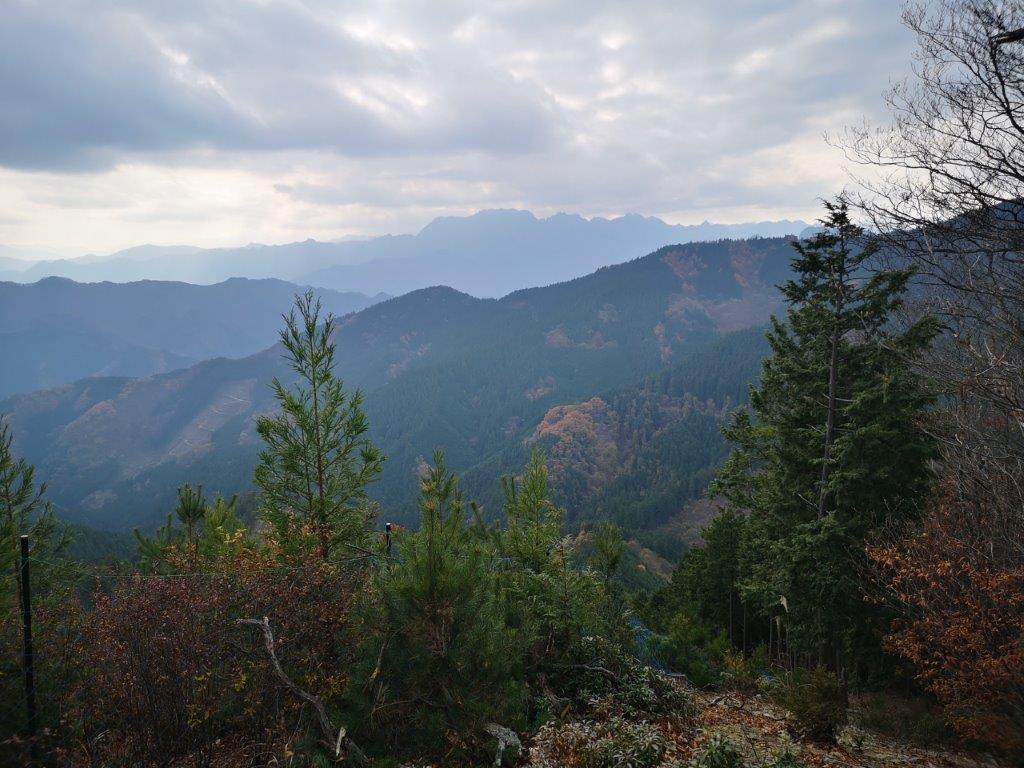
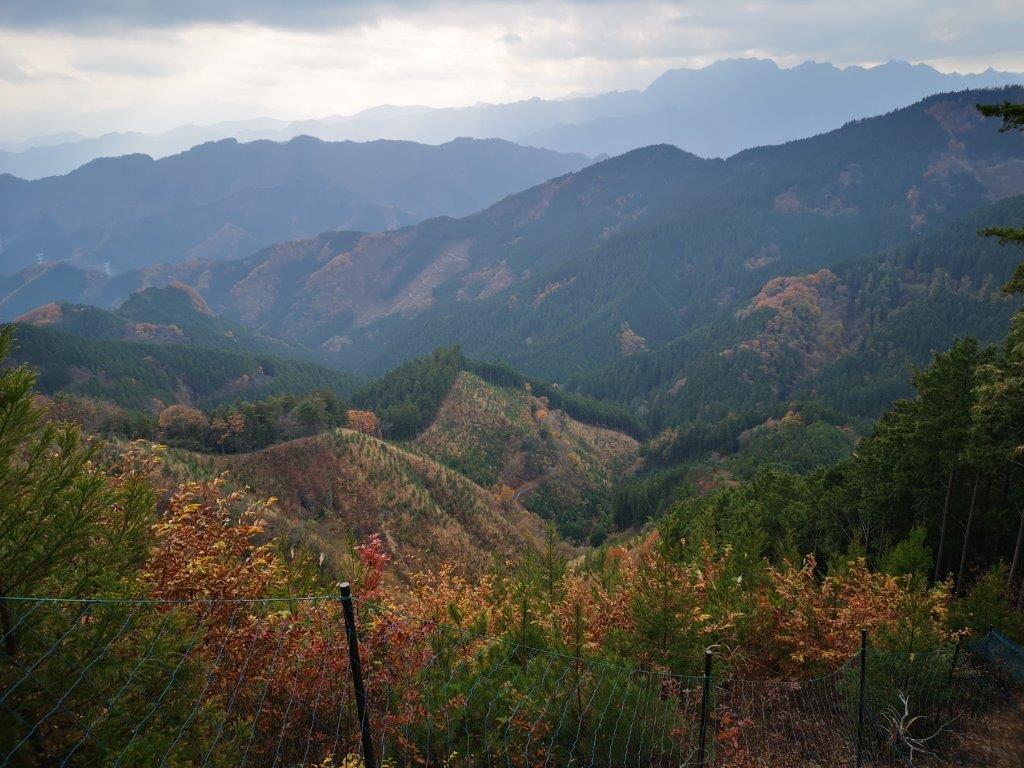
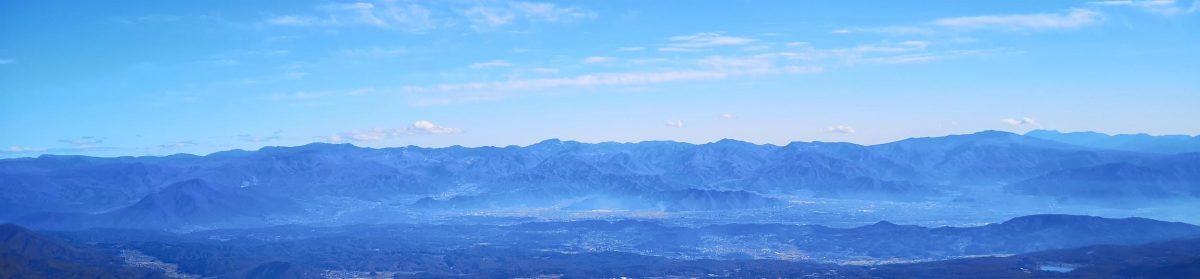
View of the Chikuma river valley from the summit
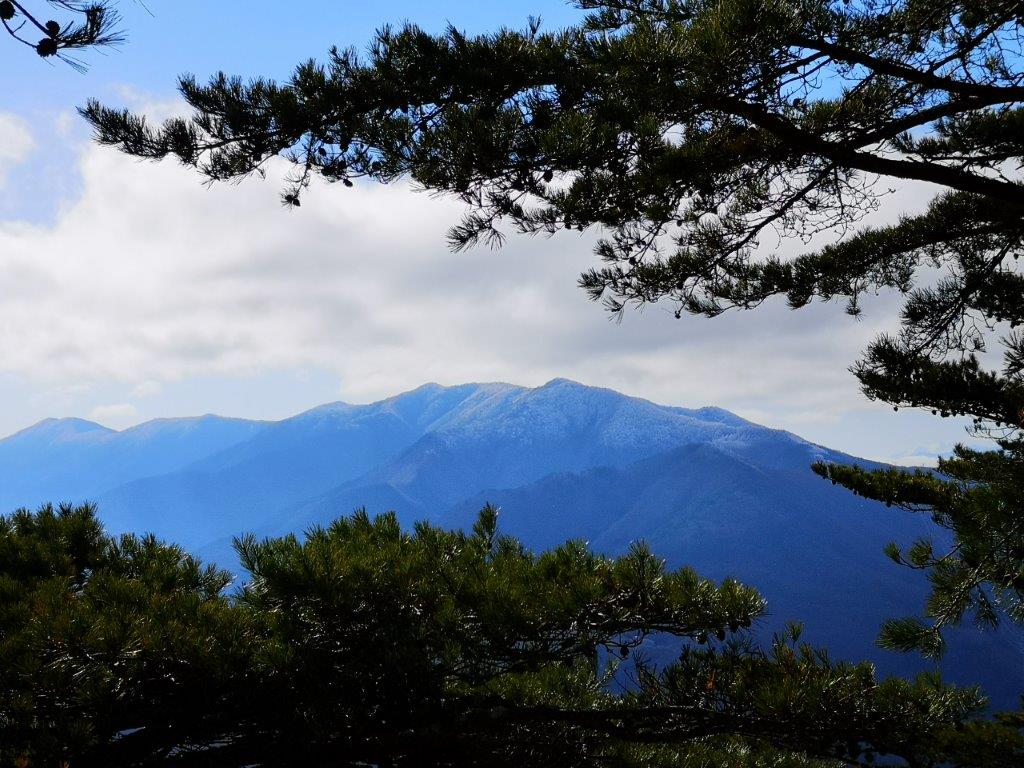
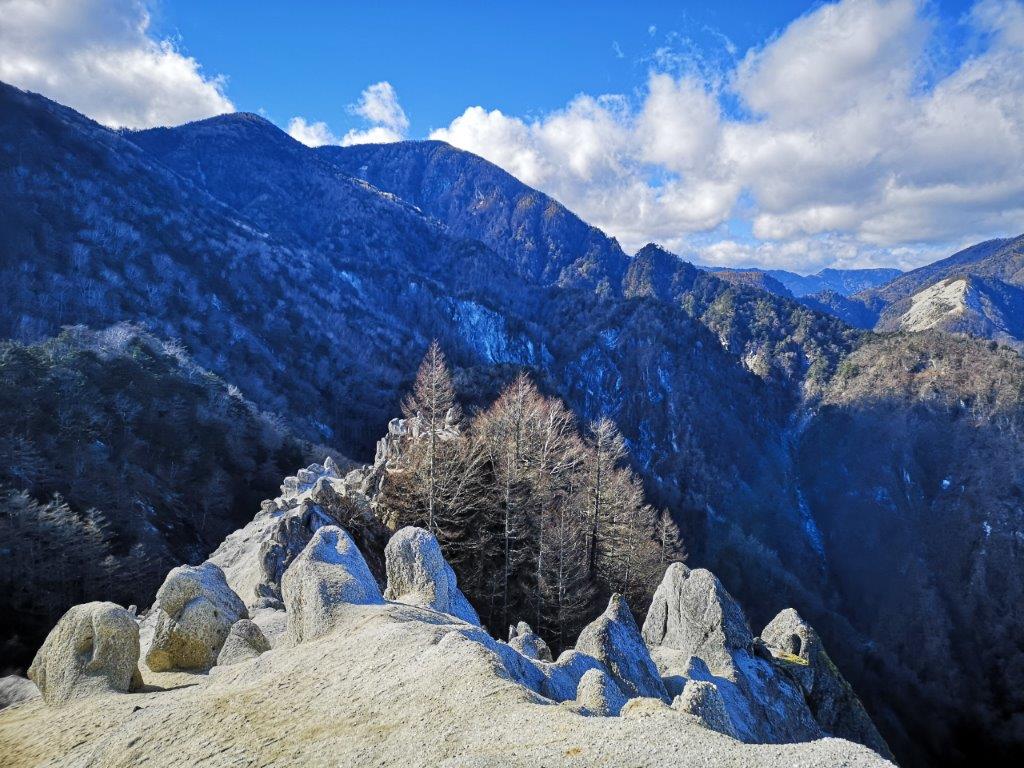
Frost-covered trees on nearby summits

I enjoyed the views of the mountains of Gunma from the Hokuriku shinkansen on a cloudless day. After emerging from the tunnels around Karuizawa, I was greeted by dull, grey skies. Outside Ueda station, I had a little sun while waiting for the bus, but after getting off in Aoki village at 10am, the weather was again cold and miserable; it almost felt like it was going to snow. Trusting in the forecast, I set off through the village and reached the start of the trail a little after 10h30.

First view of the summit
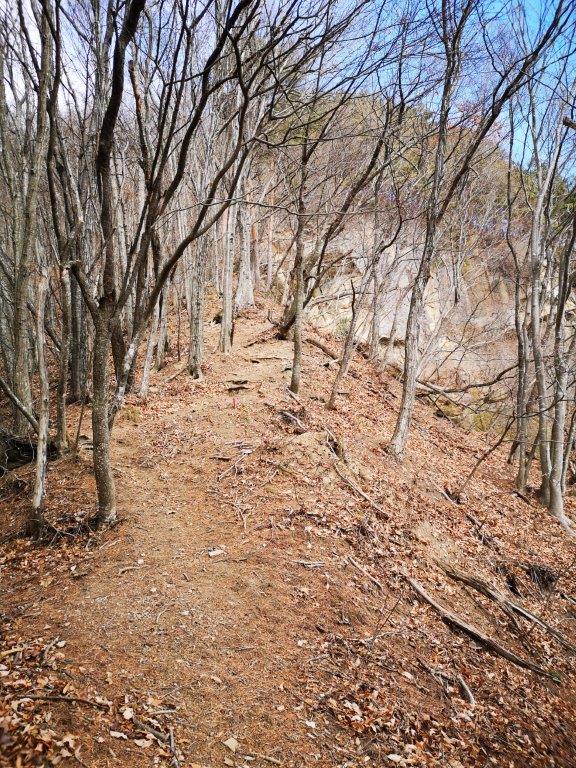
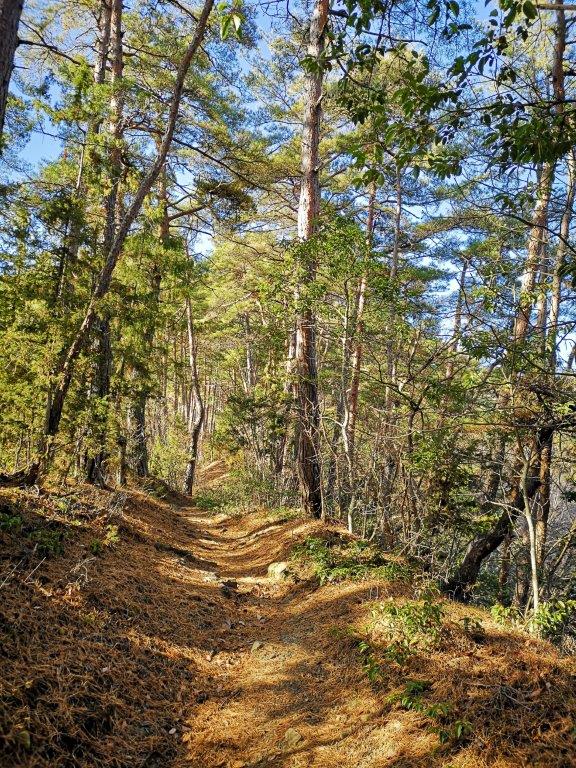
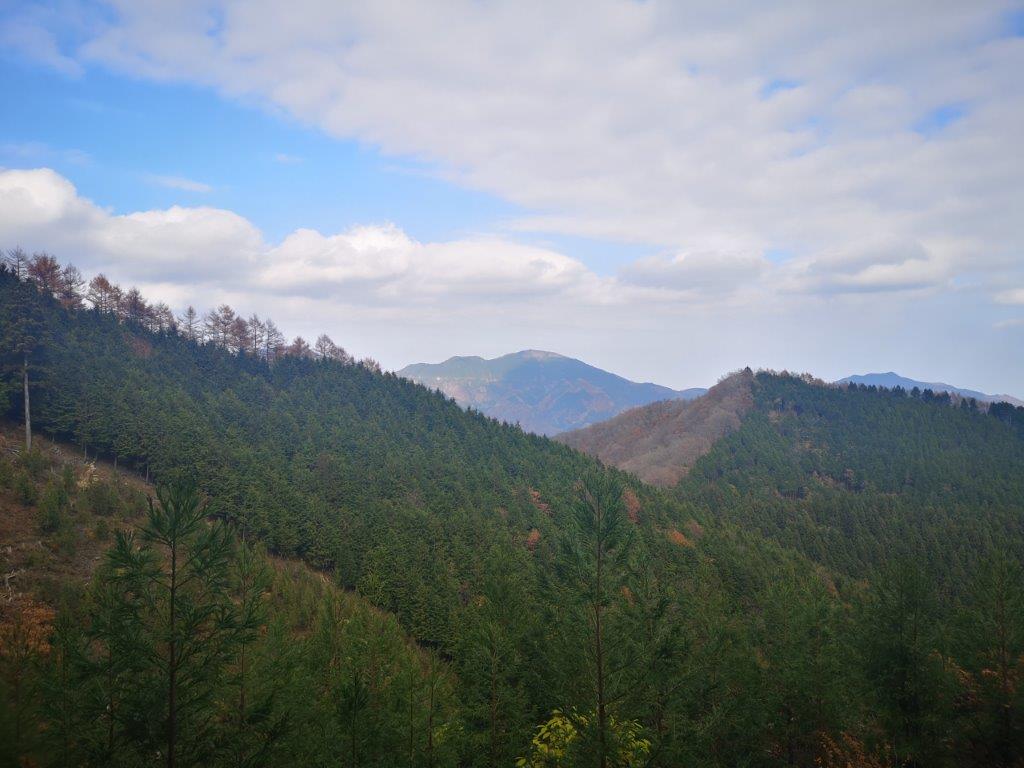
Leafless trees going up, green pines going down

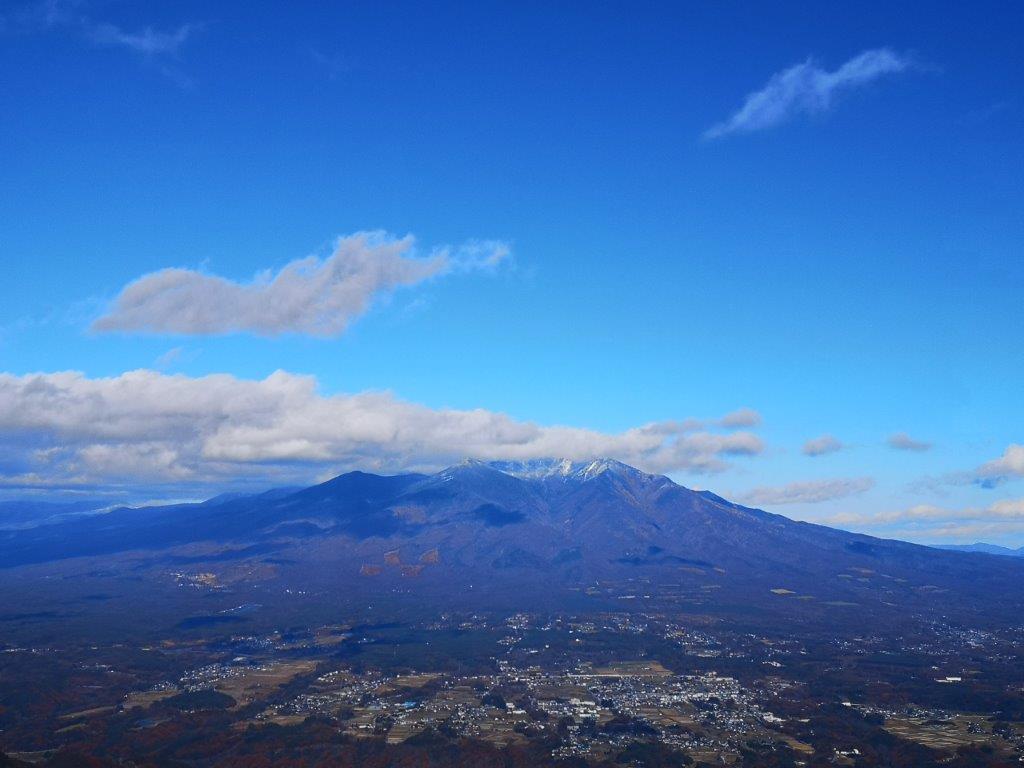
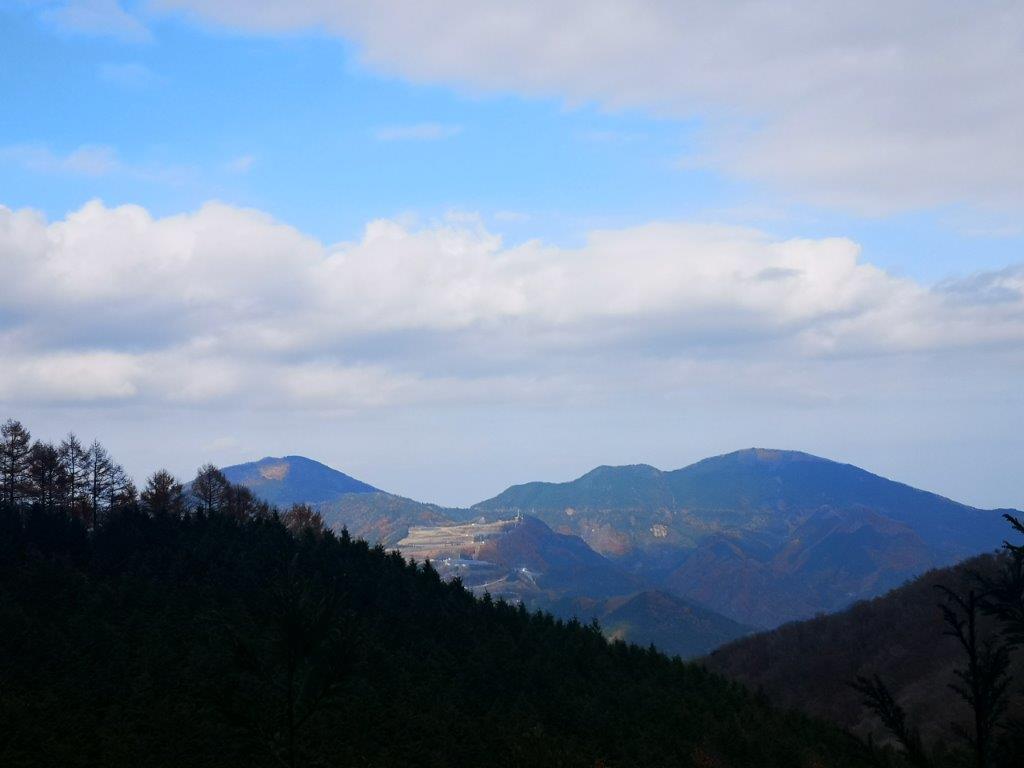
At 11am, I had the first views of today’s mountain: a rounded peak, with a rocky base and pine trees lining the top. Shortly after, I made my way up a steep slope through leafless trees, leading to my first views of the valley, below the rocky base. The sun suddenly came out, as the clouds moved swiftly south, leaving behind a solid blue sky. I could now see the surrounding mountains, the trees on the higher sections covered by frost. At 11h30, I reached a viewpoint on a shoulder from where I could see Mt Asama in the distance, cloud-free and its summit crater white with snow.
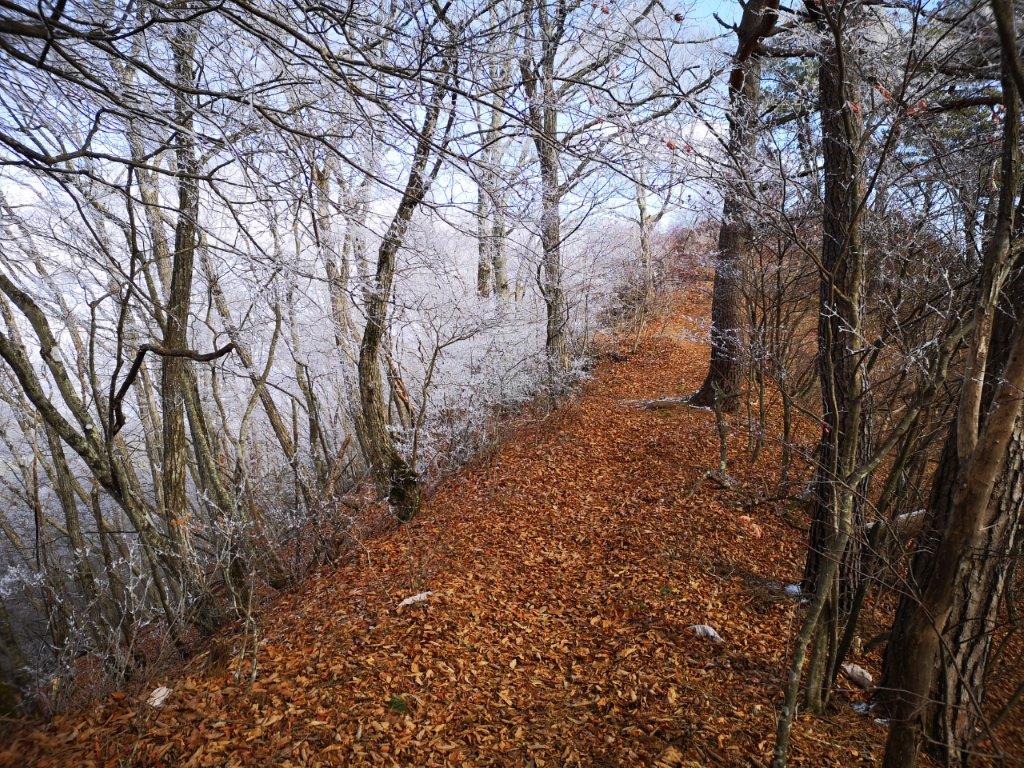
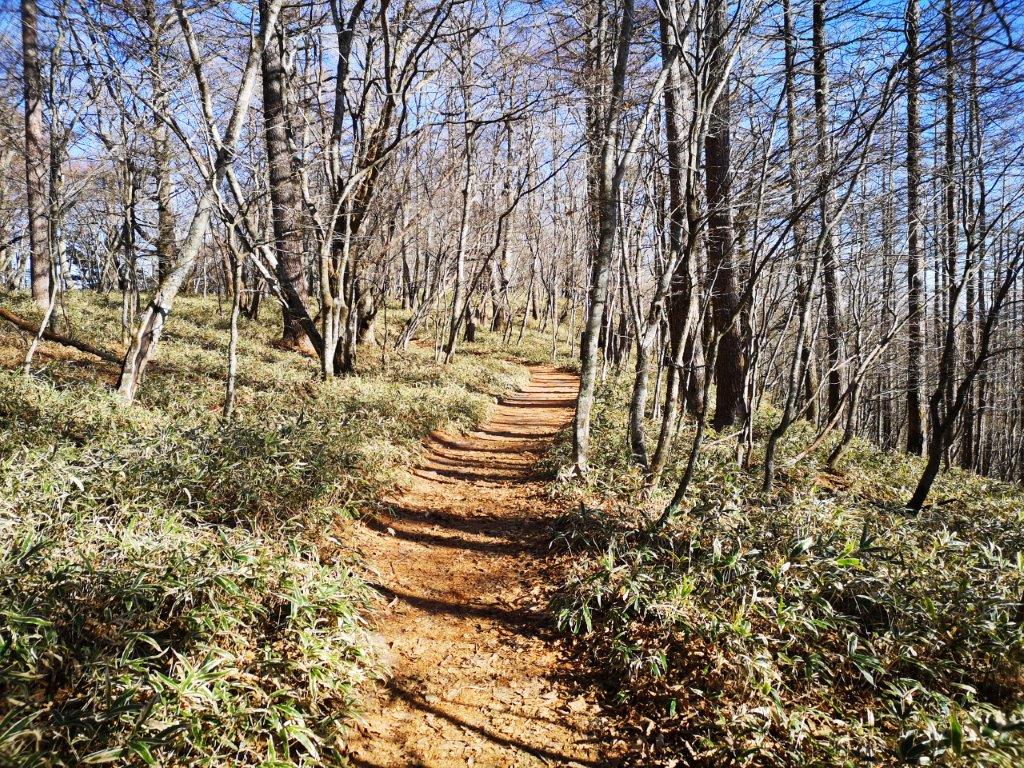
Frosty wonderland near the summit

Looking down towards Aoki village

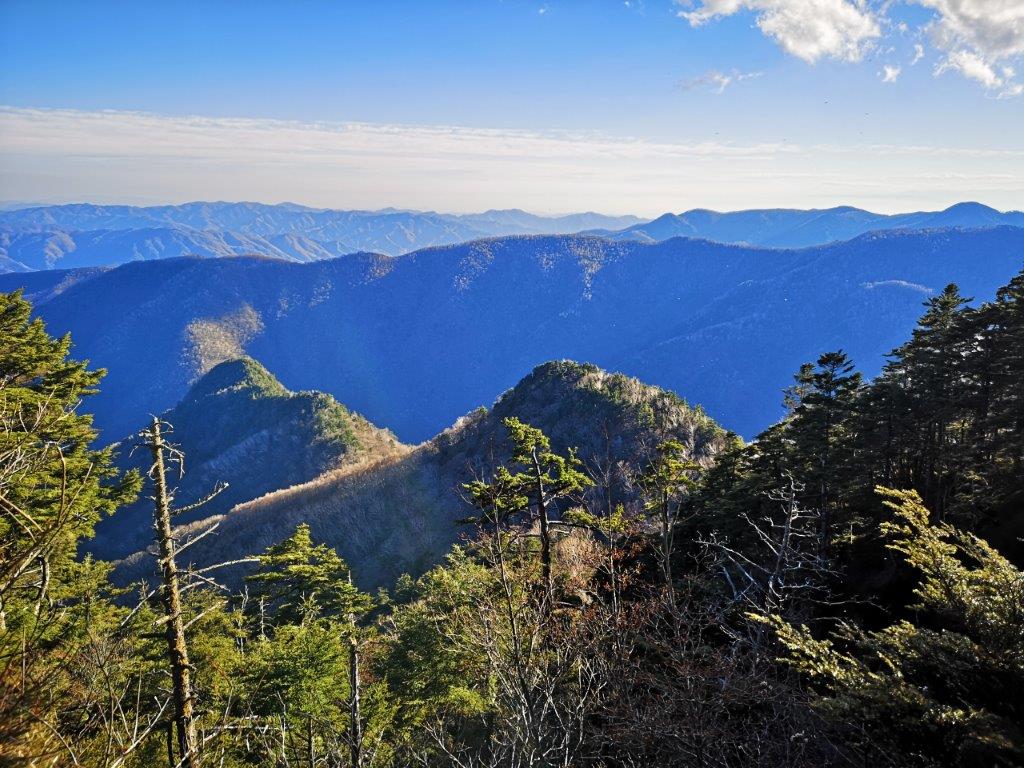
I was surprised to see snowflakes falling gently as I reached the summit ridge. The trees were covered in frost and the surrounding scenery felt magical. At noon, I was standing on the top of Mt Komayumi (子檀嶺岳 こまゆみだけ komayumi-dake). Below, the wide valley of the Chikuma river at the foot of Mt Asama stretched from east to west. The snow had stopped falling, and the clouds were slowly melting away from the highest peaks of Nagano: east, I could see the rounded top of Mt Tateshina, to the west were the double peaks of Mt Azumaya, and looking south, I could make out the the white snows of the North Alps, shining between layers of clouds.
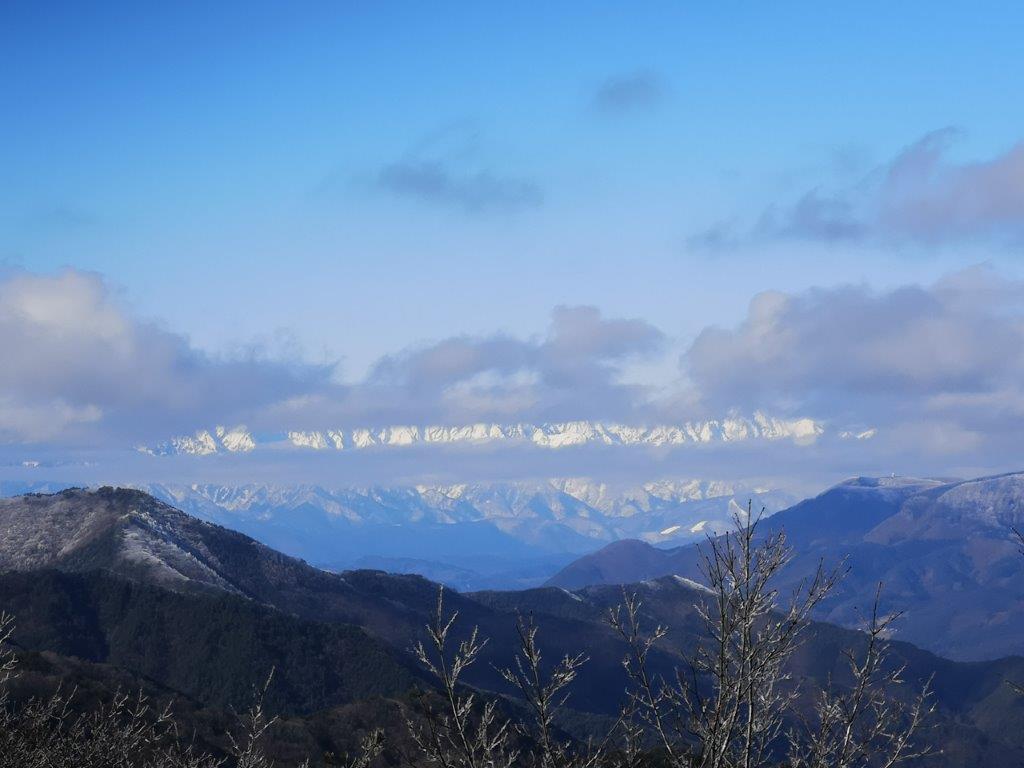
The North Alps, visible between the clouds

A pleasant descent through a sunny pine forest

I decided to head down earlier than planned, after the narrow summit had suddenly become packed with other hikers. At first, the path was covered with a thin layer of snow, forcing me to proceed carefully. I was walking on the north side, out of the sun and through a bare forest; soon after, I was back on the east side, walking under the warm winter sun through a green pine forest. At 2pm, I arrived at a paved road and a village, and half an hour later, I got to a bus stop on a busy road. It was a short ride to Ueda station, from where I caught the shinkansen for the one hour ride back to Tokyo.

See the snow falling on the summit of Mt Komayumi

Mt Myojo (924m) & Mt Myojin (1169m), Hakone Town, Kanagawa Prefecture, Sunday, November 28, 2021 [Map Available]

This was a hike that I had done over ten years ago but in reverse. Back then, the visibility hadn’t been so good, so I wanted to redo it in clearer weather. I had climbed Mt Myojin one year earlier, but I was hoping that this time the wind wouldn’t be so cold and Mt Fuji would have its winter coat. I would also be able to ride the Hakone Tozan railway, for the second time this year, to Gora station, near the start of the trail. I would finish at Daiyuzan Saijoji Temple, from where it’s a short bus ride to Daiyuzan station. The weather was supposed to be sunny all day, meaning I could look forward to some great views inside the Fuji-Hakone-Izu National Park.

Hiking inside the Fuji-Hakone-Izu National Park

富士箱根伊豆国立公園

Download a map of the Mt Myojo and Mt Myojin hike

This map was developed for Japanwilds with the Hokkaido Cartographer

Find more Japan hiking maps on Avenza

View of Mt Fuji from Daimonji-Yaki

View of Mt Fuji from the top of Mt Myojin

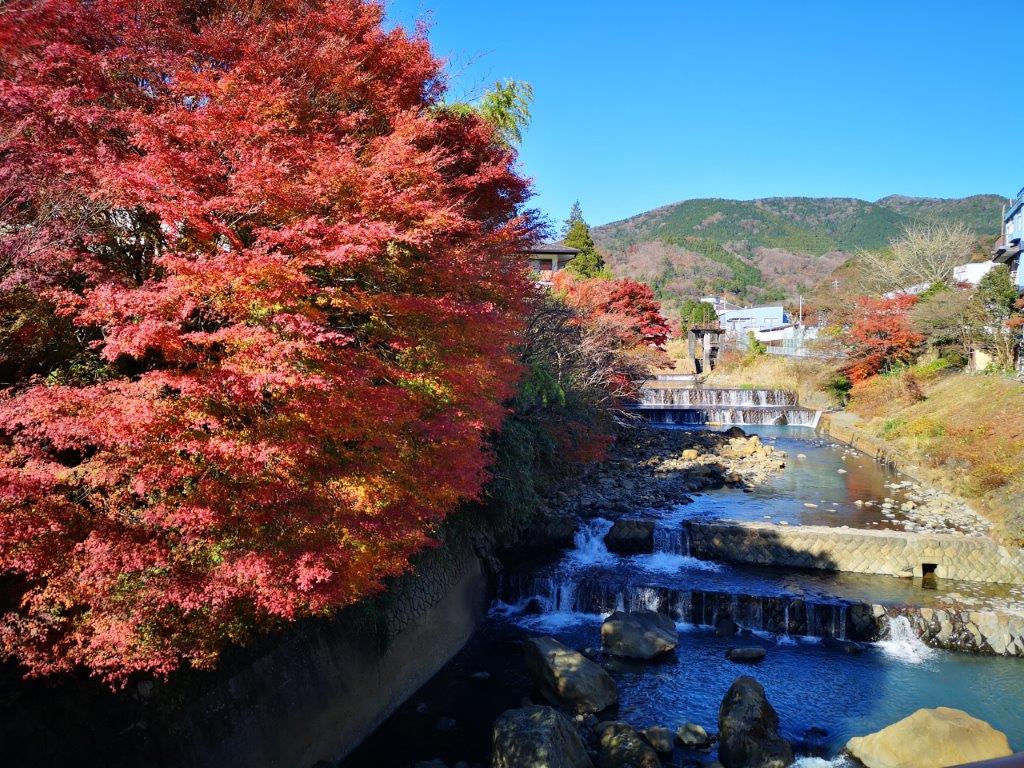
The day was clear and sunny and I could see Mt Fuji while riding the Romance car limited express to Hakone-Yumoto. I arrived a little before 9h30, just in time for the transfer to the Hakone Tozan railway. As the train made its way up the valley via a series of switchbacks, I was able to admire the autumn trees dotting the mountainsides. After getting off at Gora station around 10am, I headed down a series of staircases to a bridge over the Haya river, and then followed a road up the other side of the valley to the start of the hiking trail.

Autumn leaves next to Haya river

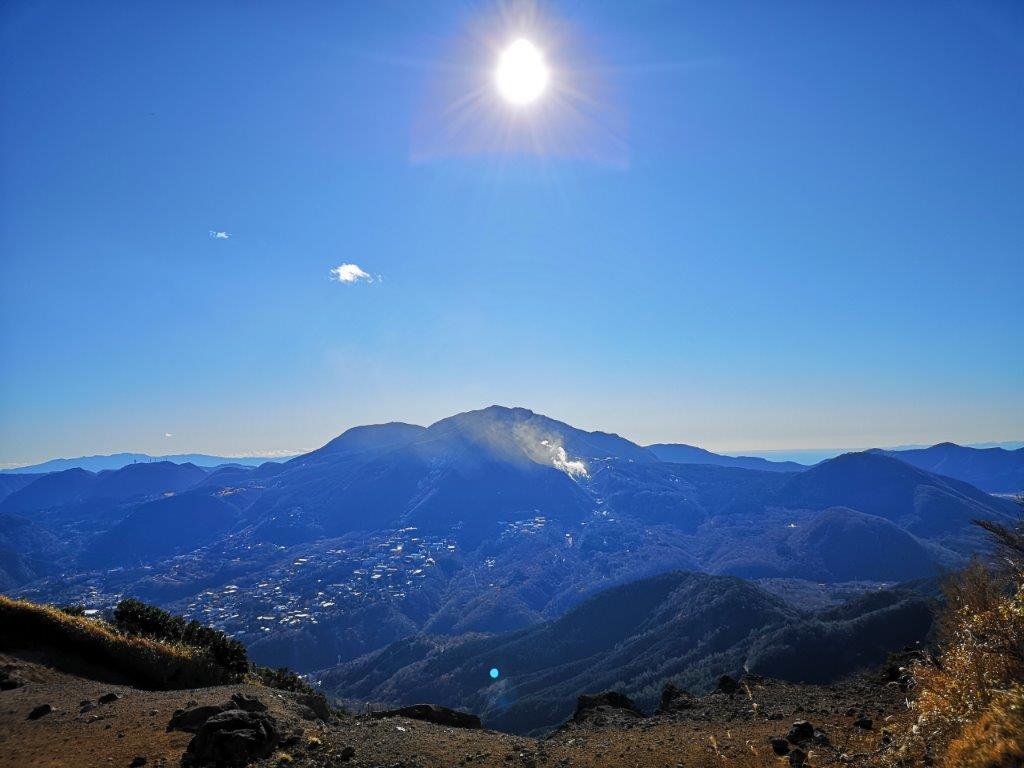
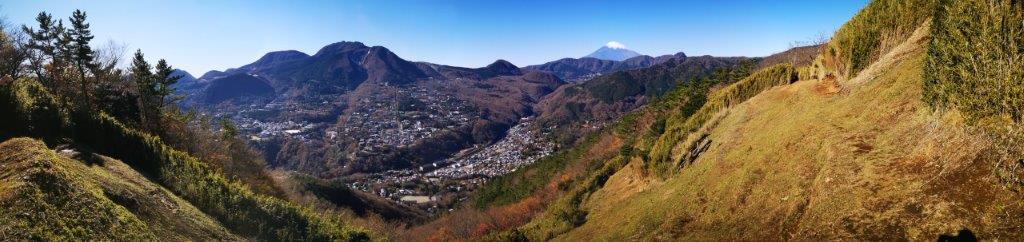
Gora and Mt Hakone

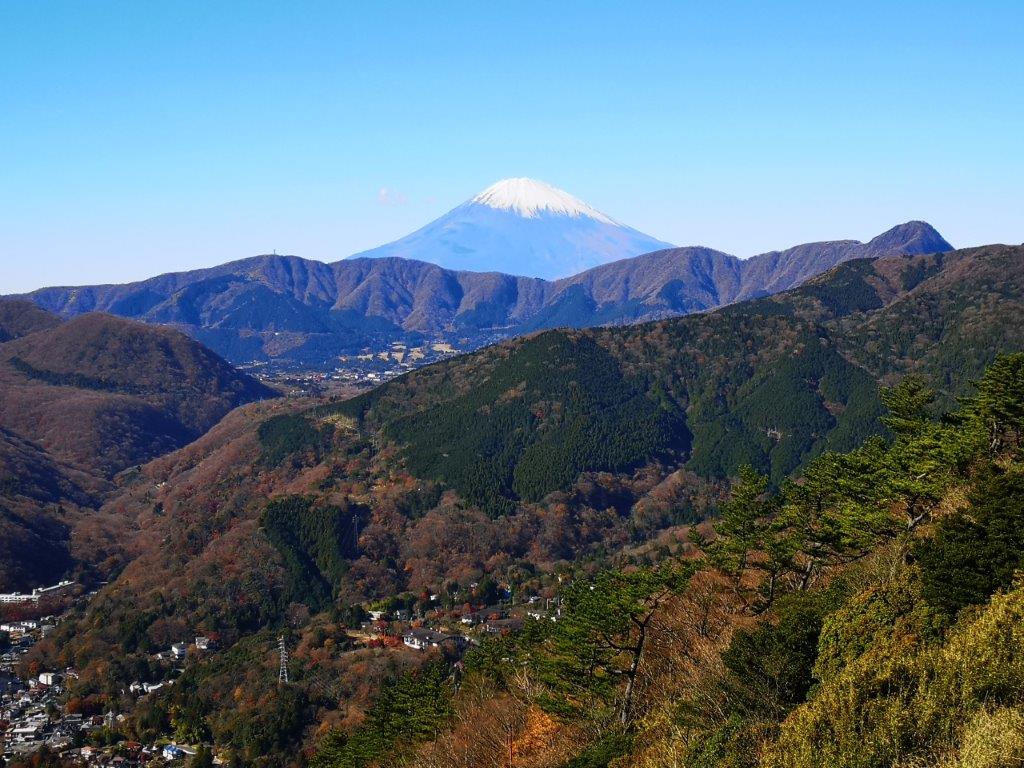
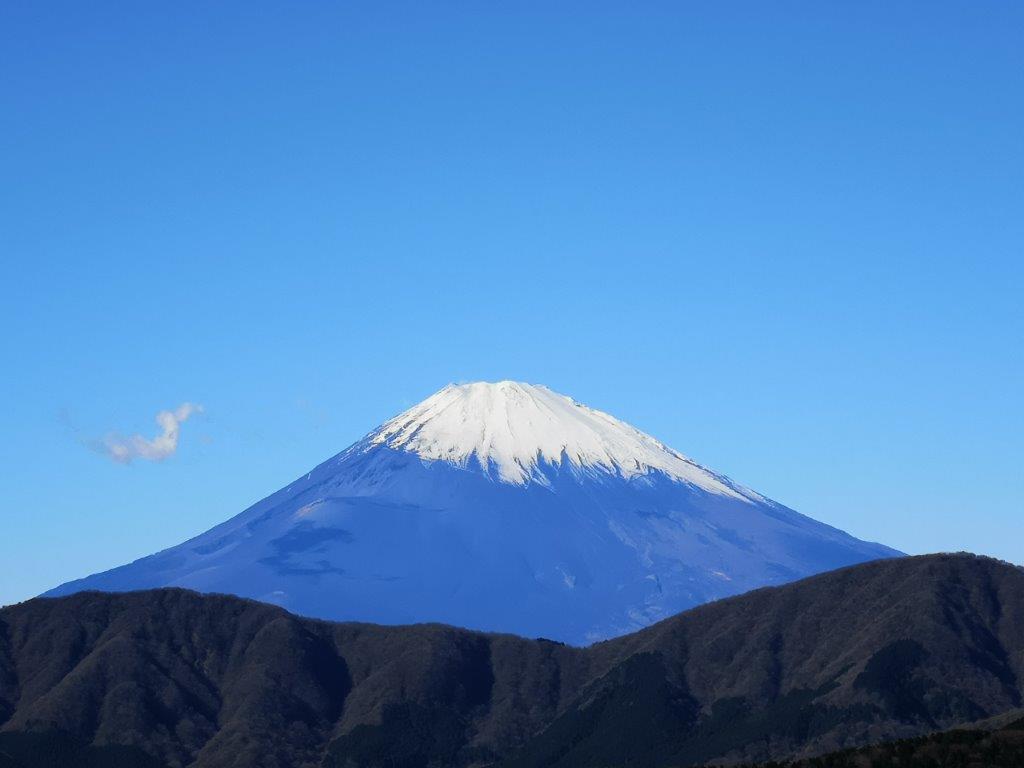
It was a windless day and it felt pleasantly warm in the late autumn sun. I started climbing at 11am up a zigzag trail. Half an hour later, I reached Hakone Daimonji Yaki (箱根大文字焼き meaning “big burning character”) where I got a wide view of the valley below. Directly ahead was Mt Hakone and the smoking Owakudani; on the right side, to the west, I could see white-capped Mt Fuji, completely clear of clouds. It took another twenty minutes to reach the top ridge, and a few minutes later, at noon, I was standing on the top of Mt Myojo (明星ヶ岳 みょうじょうがたけ myoujougatake meaning “Morning star”). It didn’t feel like a summit and the trees blocked the view in all directions.

Mt Fuji and its winter cap

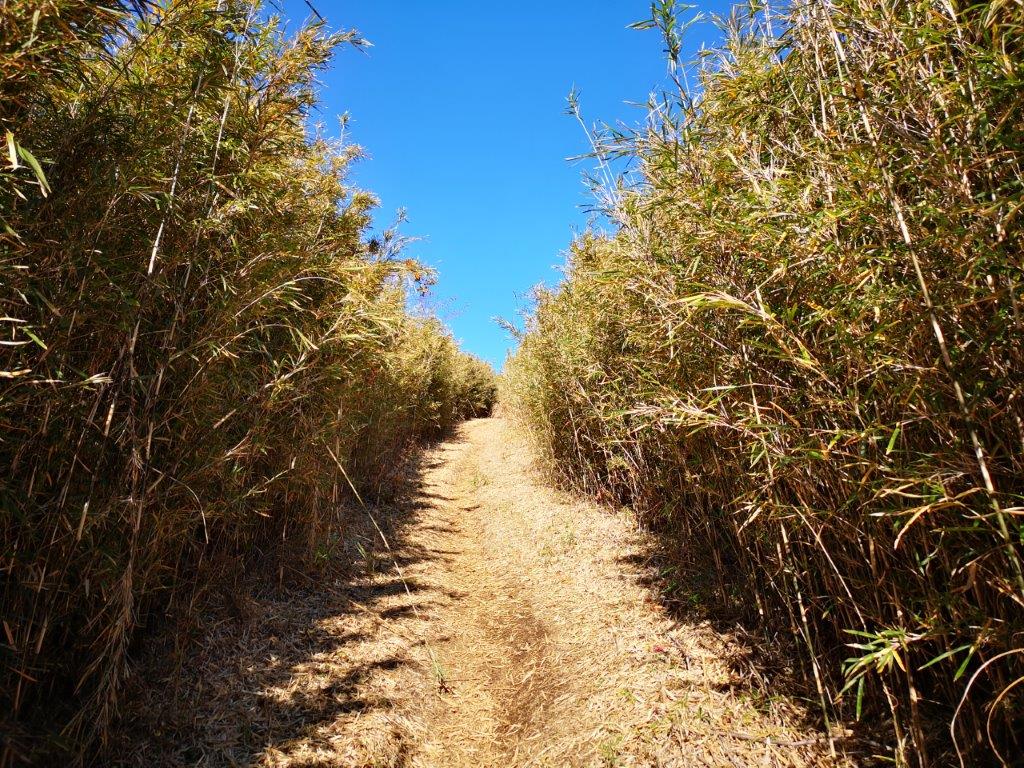
Walking between the bamboo grass

I continued without a break along the ridge heading west, towards Fuji, and downhill, through a tunnel of bamboo grass. Eventually, I reached a flatter section from where I could see the climb towards Mt Myojin. I passed many hikers on the way, and I was glad to see other people enjoying the perfect weather and the great views. The visibility was excellent and, looking East, I could see Oshima and other Tokyo islands. At 1h30, I reached the top of Mt Myojin (明神ヶ岳 みょうじんがたけ myoujingatake), a Kanto 100-famous mountain. It wasn’t as cold as last time but it was more crowded; this time the visibility was so good that I could even see the snowy peaks of the Minami Alps, nearly 100 kilometers away. I kept my lunch break short, and set off again before 2pm.

The fumes of Owakudani

Sagami bay and the Shonan coast

I met no other hikers on the gentle descent to Saijoji Temple. The path followed an area cleared of the trees because of a disused chairlift, which enabled me to have good views of the Tanzawa mountains and Sagami bay to the north. Lower down, I could still see some yellow and orange Japanese maple leaves. Although I was now outside the National Park boundaries, the trail went through beautiful forest. At 3h30, I arrived at the Saijoji temple complex in the midst of giant cedar trees.

Looking north towards Tokyo

Pleasant hiking on the way down

Since the sun had already dipped behind the mountains, I decided to skip a visit of the temple grounds and head directly to the Only You hot spring resort (a play on words: “you” sounds like the Japanese word “yu” for hot water”). After a relaxing hot bath, I took the free shuttle bus to the nearby Daiyuzan station. There, I rode a local train to Odawara station and then transferred to the limited express for the one hour trip back to Tokyo.

See the views between Mt Myojo and Mt Myojin

Mt Hinata (1660m) & Ojira River Valley, Hokuto City, Yamanashi Prefecture, Tuesday, November 23, 2021 [Map Available]

This is a mountain that I’ve wanted to climb since I saw it from the top of Mt Amagoi last year; although it’s quite a bit lower, its white summit caught my eye. I found out that by taking a bus from Nirasaki sation on the Chuo line, I could get quite close to the start of the hiking trail and could use the same bus for the return. The trail seemed straightforward: up and down the same way, without any steep sections. The weather was supposed to be sunny but cold. If I had enough time, I would also try to visit the nearby Ojiragawa ravine. Although the autumn colours would be past their peak, I was looking forward to doing a new hike in the Minami Alps.

Download a map of the Mt Hinata hike

This map was developed for Japanwilds with the Hokkaido Cartographer

Find more Japan hiking maps on Avenza

The white rocks of Mt Hinata

Mt Amagoi, climbed in June 2020

After a comfortable ride on the Chuo line limited express, I arrived at Nirasaki station around 8h30. I was the sole passenger on the bus and got off at the Hakushu roadside station (白州道の駅) a little before 9h30. I walked along a straight road heading towards the Minami Alps at a right angle, and noticed that snow had fallen on the highest peaks. I finally reached the start of the hiking trail around 10h30.

Some autumn leaves could still be seen at the start of the trail

The trees near the upper part of the trail were completely bare

Most of the leaves had already fallen and the path was a patchwork of colors. The lower part of the trail had many intersections but the way to the top was always clearly signposted; the higher part zigged-zagged up the mountain side through a forest of bare larch trees. At noon, I had a view of Mt Fuji to the east through the bare branches. Although it was a sunny day, the wind felt bitterly cold, and I took a short break to add a layer of clothing.

Mt Yatsugatake with the first snow of the season

A beautiful but cold day

At 12h30, I reached a level section within the forest. At the edge of the trees on the west side, I found the summit marker for Mt Hinata (日向山 ひなたやま hinata-yama meaning facing the sun), a Yamanashi 100 famous mountain. Directly ahead I could see the long ridge leading to the summit of Mt Amagoi. North was the extensive bulk of Yatsugatake with a fresh layer of snow, its highest peaks hidden in the clouds. Walking south along the sandy summit, I could admire the dramatic rocky peak of Mt Kaikoma, popping in and out of the clouds.

Mt Kaikoma, one of the highest peaks of the South Alps

The summit has a good view of Mt Fuji

I walked as far as I dared along the ridge before turning back. On the east side, I could see the elongated profile of Mt Hou, as well as Mt Fuji in its winter cap. The sandy summit was buffeted by strong gusts of icy wind forcing me to retreat into the cover of the trees. After a quick lunch, I started to head down at 1h30. It soon felt much warmer and I could remove a layer of clothing. I walked down the same way and reached the base of the mountain before 3pm.

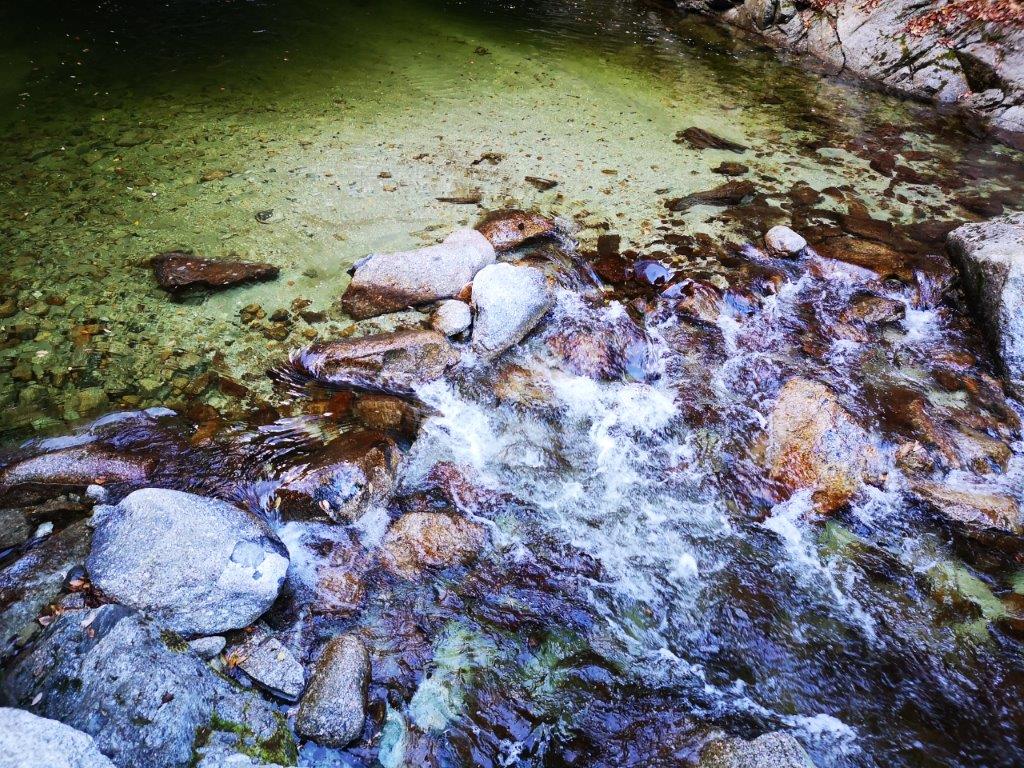
The light green colour of Senga Pool

The pool leads into the fast-flowing Ojiragawa river

It was still early so I had time to quickly check out Ojiragawa Keikoku (尾白川渓谷 ojiragawa-keikoku). I went only as far as Sen-ga-buchi (千ヶ淵) and back. I was impressed by the green colour of the pool at its base. The trail continued further up the valley, and I hope one day to hike it in its entirety. On the way back to the bus stop, I dropped by Ojira no yu hot spring at 4pm for a quick hot bath. Once back at Nirasaki station, I boarded the limited express for the two-hour trip back to Tokyo.

See the sands of Mt Hinata and the turbulent waters of the Ojira river

Mt Tetemiezu (1047m) & Mt Okubo (980m), Kanna Town, Gunma Prefecture, Saturday, November 20, 2021

I had climbed this remote mountain four years ago but had missed the main viewpoint, slightly off the main trail; the weather hadn’t been at its best either. I decided to give it another try, but this time from the Gunma side, so that I could go up and down via a different route. If I had enough time, I would make a roundtrip to the next peak along the ridgeline. I knew how to get there since I had visited the area twice before this year; however it would be the first time to ride the pass so far down the Kanna river valley. It was supposed to be a sunny day, usual for this time of the year. I hoped to enjoy a peaceful walk along the border of Saitama and Gunma, and perhaps catch the last of the autumn leaves.

View of Mt Ryokami under the dark clouds

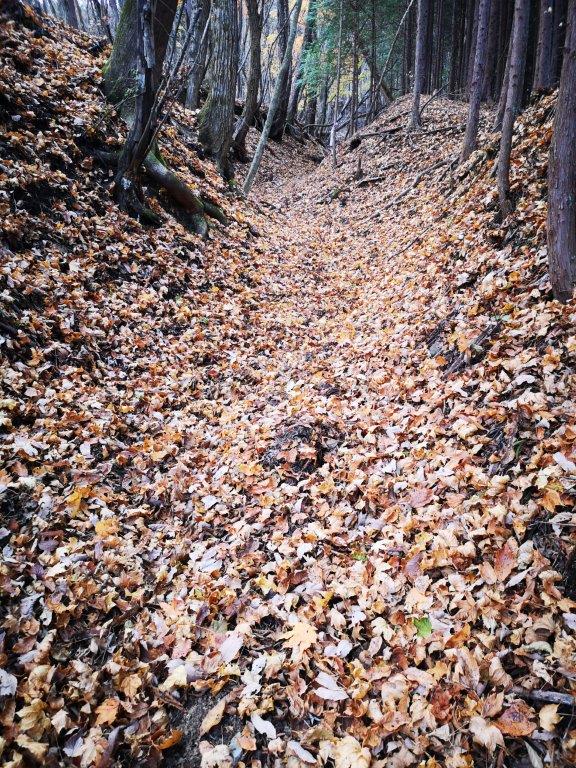
I arrived at Shinmachi station before 8h30 and boarded a comfortable minibus bound for Ueno village, about 3 hours away. I got off at a bus stop just past Manba Village, after a nearly two-hour picturesque ride up a remote river valley. The weather had been sunny up to this point, but as I crossed the Kanna river, the sun disappeared behind some clouds and didn’t reappear fully till the late afternoon. I soon reached the trail entrance, covered by a blanket of fallen yellow leaves.

Most of the autumn leaves had already fallen

The trail presented no particular difficulties

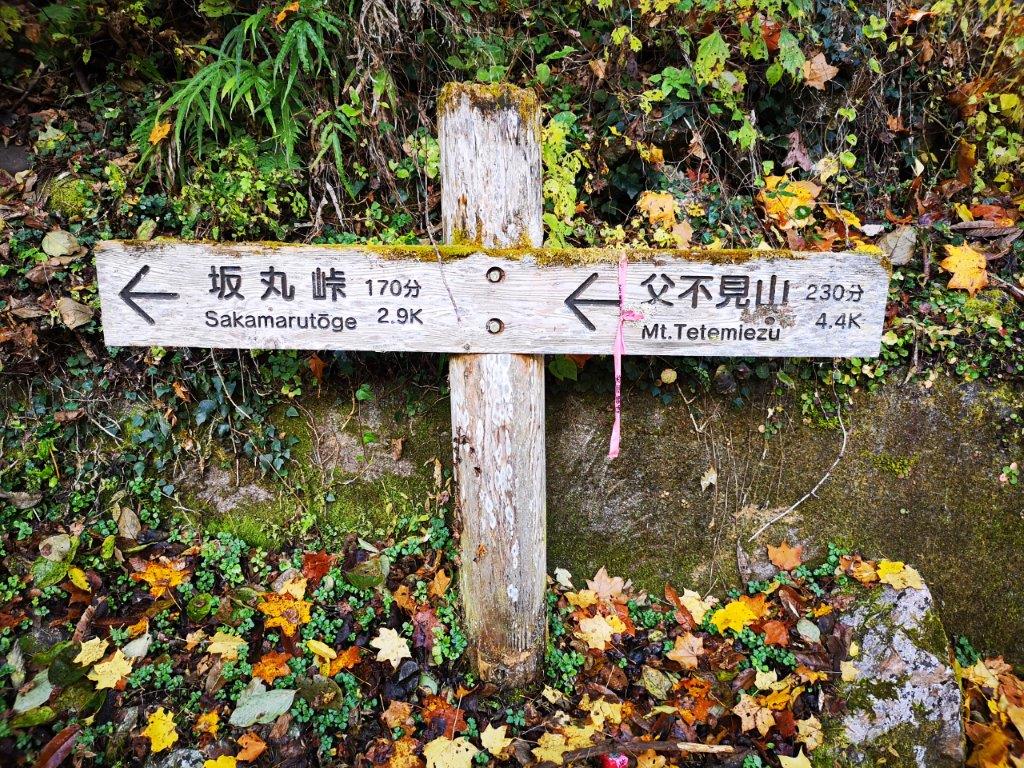
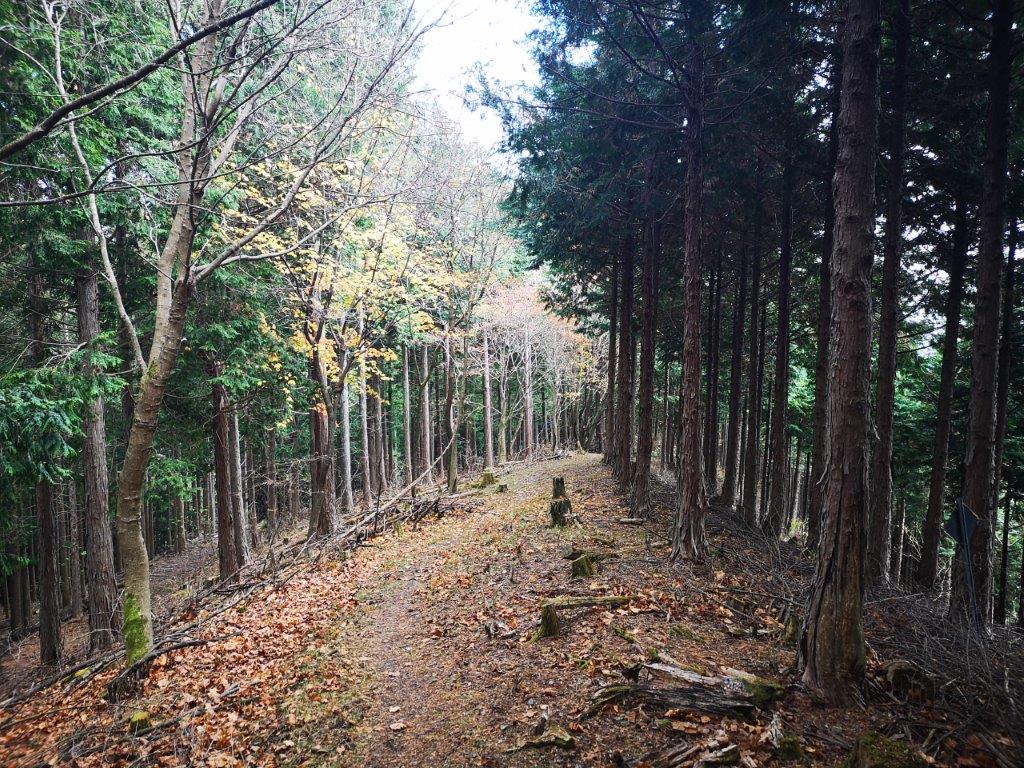
I had occasional glimpses of the valley below through the trees, now bare of leaves, as I followed the path up the mountain side. I encountered several forks but the hiking trail was always clearly signposted. It took about an hour to reach Sakamaru Pass (坂丸峠 858m). There, I turned left along a level path through tall cedar trees, below the ridgeline on the Saitama side, looking familiar from my previous hike on this mountain. After a short, steep climb I reached Nagakubo Head (長久保の頭 ながくぼのあたま nagakubo-atama).

Left back, Mt Jomine, right front, Mt Okubo

Soon arriving at Sugi pass

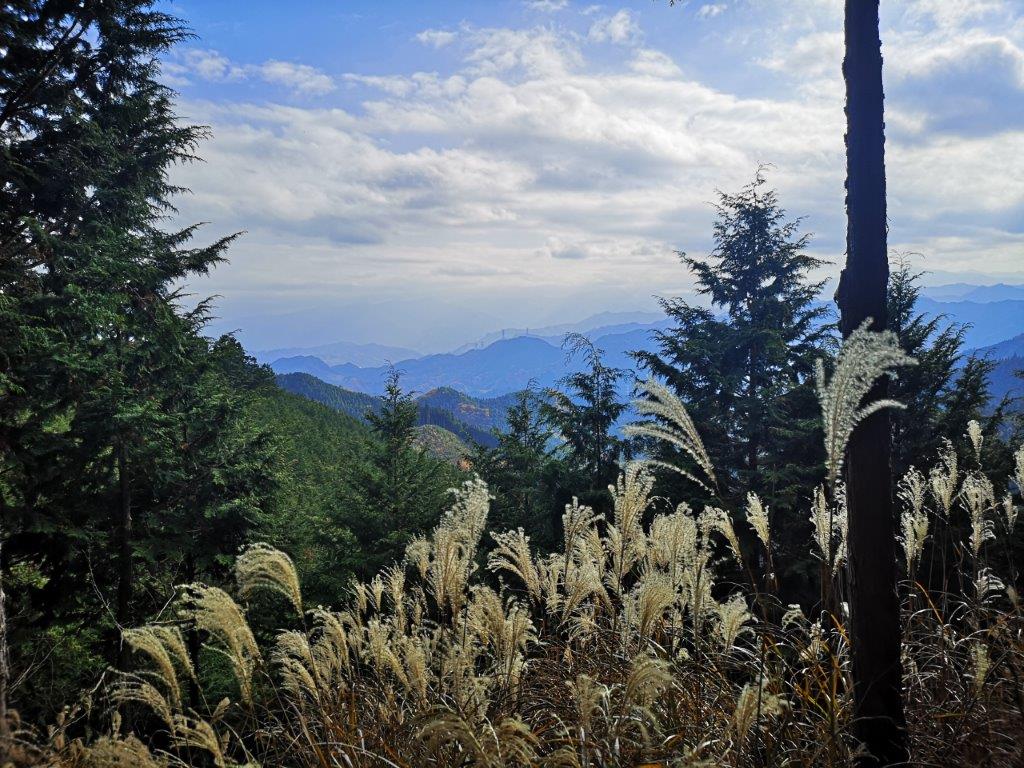
Even though, at 1066m, it was the highest point of the hike, it wasn’t today’s summit. At first glance, it seemed totally surrounded by pine trees, but this time I was able to find a viewpoint of Chichibu above a deforested area on the south side. Since it was past noon, I found a tree stump and sat down for lunch. The clouds were in and the views weren’t as great as I had expected. South, I could see the triangular summit of Mt Buko; looking west, I spotted the flatter triangular peak of Mt Jomine. After lunch, I walked along the edge of the open area, and turning around, I saw the double rounded peaks of nearby Mt Mikabo, with some blue sky in the background.

Gazing at Chichibu past the Suzuki

The narrow ridge leading to Mt Okubo

It started to feel cold so I retraced my steps and continued my hike. I saw a handful of other hikers, as opposed to no one on my previous visit, and I was glad this mountain enjoyed some popularity. Ten minutes later, after a short up and down, I reached the summit of Mt Tetemiezu (父不見山 ててみえずやま tetemiezu-yama), a Kanto and Gunma hundred famous mountain. Slightly lower than the other peak, it had no view at all. Since I wanted to avoid cooling down, I moved on without a break. After some descending, I arrived at a crossroads under a lone cedar tree, aptly named Sugi Pass (杉の峠 sugi-no-toge meaning cedar tree pass). On my previous trip I had gone down via the path on the right; this time I would need to go left.

Mt Ryokami, a Japan hundred famous mountain

Some sun near the summit of Mt Okubo

Since it was only 1h30, I had time for the one hour round-trip to the next peak. It wasn’t an official trail, just red strips attached to branches along the way, and so it required some path finding. After turning slightly left down a slope through dark forest, I found myself climbing a narrow rocky ridge. It was definitely the most exciting part of the hike. Fifteen minutes later I reached the top of another deforested area and the summit of Mt Okubo (大久保山(おおくぼやま ookubo-yama), where I had my best views of the day, as well as some sun. To the south, I could see jagged outline of Mt Ryokami, looking menacing under dark clouds.

The view from the summit of Mt Okubo

Some autumn leaves could still be seen

After a short break, I headed back the same way and reached Sugi pass a little after 2h30. I followed a gently sloping forest road for about an hour, and then a road for about ten minutes, and arrived at a bus stop on the same road I had used in the morning, just as the sun dipped below the mountain ridge. After getting on the bus, I deciced to get off halfway to take a quick hot bath at Sakurayama hot spring, which I had visited once before after hiking Mt Sakura. I finally arrived back at Shinmachi station at 6h30pm, where I boarded the shonan-shinjuku line for the two-hour ride back to Tokyo.

See the views on the border of Saitama and Gunma

The double-rounded top of Mt Mikabo

Mt Koshin (1892m), Nikko City, Tochigi Prefecture, Sunday, November 14, 2021

This mountain had been on my to-climb list for the past few years. I needed to go by car and be physically fit to be able to do it it as a daytrip; good weather was also a requirement to justify the expense of the trip and the effort of the climb. The drive from Nikko station and back seemed straightforward, although I would need to skip the after-hike hot spring bath if I wanted to be back before dark. The beautiful autumn weather was supposed to continue for a few more days. However, due to the higher elevation, I had little hope of seeing any autumn leaves. My only concern was about the trail itself, since it went through an extensive rocky area, equipped with ladders and chains; it looked fun but I needed to be careful. Finally, I was looking forward to hiking inside the southern part of the Nikko national park and seeing some great views.

View of Mt Sukai from near the summit of Mt Koshin

Koshin Lodge with the cliffs of Mt Koshin in the background

I arrived in Nikko around 9h30 under a mostly cloudy sky. By the time I reached my car, I noticed a blue patch slowly expanding from the east, and after I arrived at the Ginzan-Daira parking area (銀山平駐車場) a little after 11am, the sky was entirely blue above. At 1130, I was walking a long a flat road closed to traffic and hugging the mountainside above a steep river valley; one hour later I reached the red shinto gate at Ichi-No-Tori (一の鳥居) marking the start of the hiking trail.

The forest road leading to the start of the hiking trail

The first part of the trail was fairly easy to hike

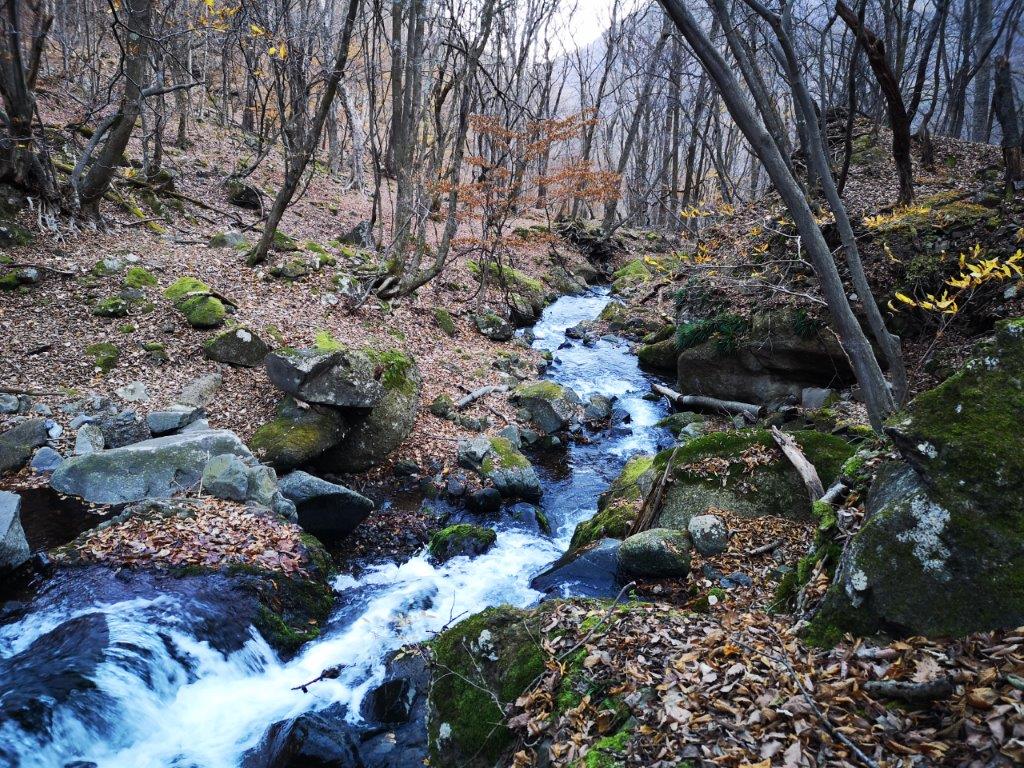
I followed a beautiful mountain stream up a gently sloping path. On the way, I crossed a couple of wooden bridges and passed several huge rocks with various names. A little after 1pm, I reached Koshin lodge (庚申山荘), where most hikers spend the night, and then hike to Mt Sukai and back the next day. Rising dramatically behind it, I could see the cliffs through which somehow a trail led to the summit. I took a short break and set off again, reaching the rocky base about ten minutes later.

The trail followed a lively mountain stream

Climbing steeply from here

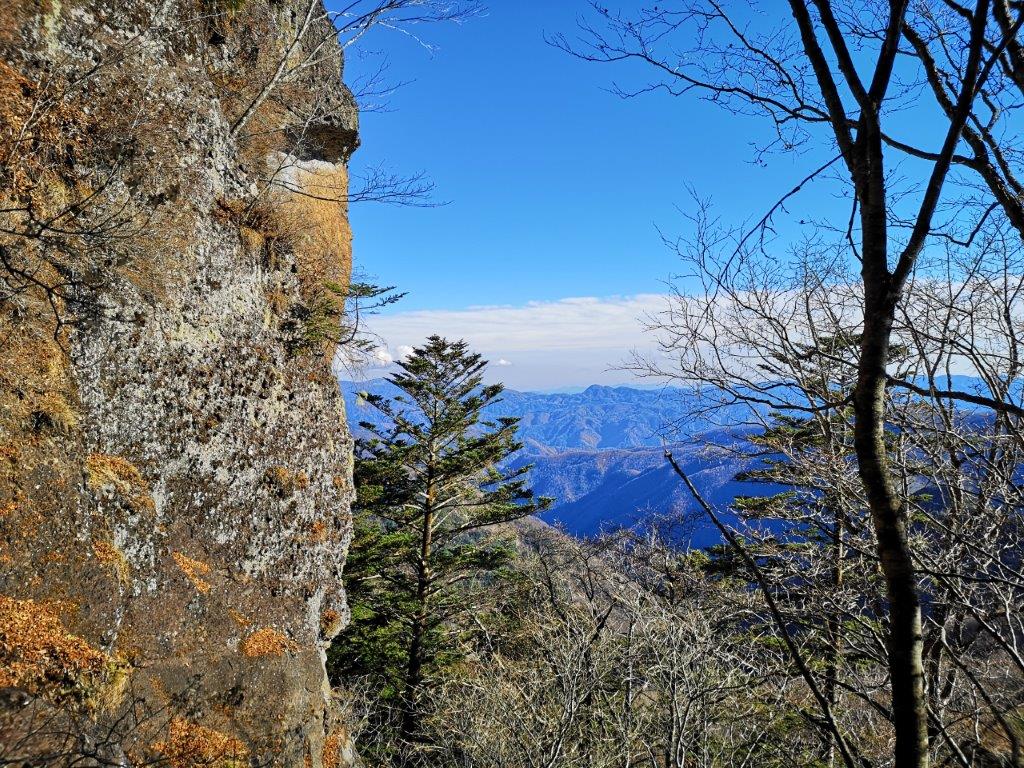
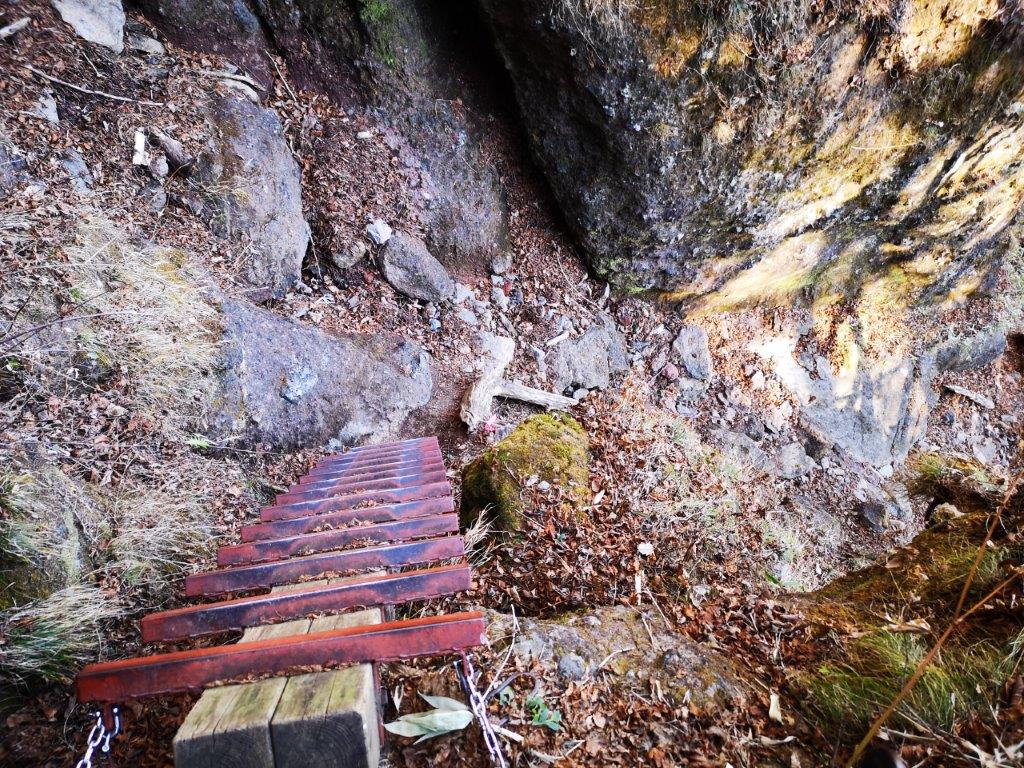
I was the only person on the trail so I resolved to be doubly cautious as I made my way up through the rocks. I was amazed that anybody would think of creating a path up what was almost a rocky cliff, and I would only recommend it to surefooted hikers. I moved quickly, soon reaching the cliff top and a view point from where I could see the low mountains of southern Tochigi. I continued through a thick pine forest along a gentler sloping trail. At 2pm, I reached the top of Mt Koshin (庚申山 こうしんざん koshinzan), a hundred famous mountain of Tochigi.

Halfway up the rocky area

Surefootedness is a must here

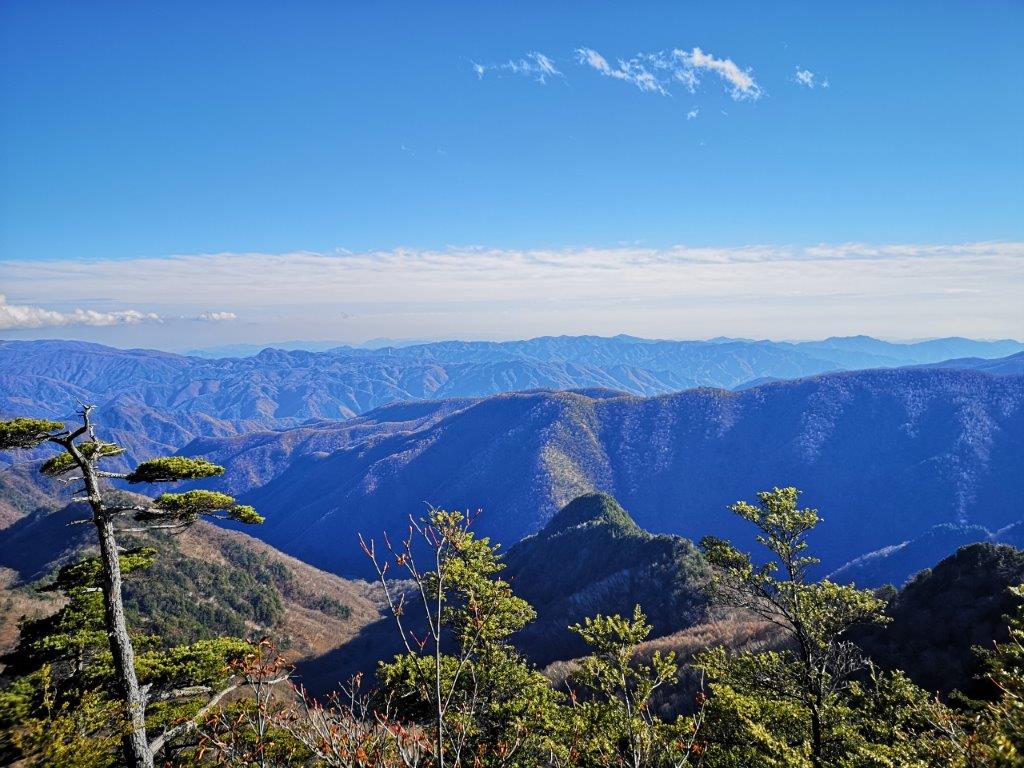
It was completely in the trees but after walking a few minutes along the ridgeline, I reached a break in the trees and a fantastic view. Directly opposite, I could see Mt Nokogiri and Mt Sukai. To the north was Mt Shirane and Mt Nantai. I was the only person enjoying this glorious panorama on a peaceful windless day. I wanted to stay longer but I needed to head back before it started to get dark. I went down the same way, although now it was mostly in the shade.

Gazing upon the mountains of Tochigi from above the cliffs

View of the Nikko national park from near the summit

It took me an hour a half to get back to the trail entrance. Since I was on schedule, I had a quick look at the nearby 7 waterfalls of Koshin (庚申七滝), although access to some of the falls was currently closed. I reached the parking area just before 4h30 and left soon after. As I drove along the Watarase river valley, I came upon a troop of monkeys crossing the road. I reached Nikko station at 5h20 and then hopped onto the Kegon limited express for the ninety-minute ride back to Tokyo.

Follow the mountain stream to the top of Mt Koshin

Mt Mino (587m), Chichibu City, Saitama Prefecture, Thursday, November 11, 2021 [Monkeys]

I had already climbed this mountain a few years ago, but I wanted to return on a crisp autumn day hoping to get better views. I also wanted to explore the park covering the mostly flat summit area. Finally, I was looking forward to catching the last autumn leaves of the season. Although this mountain is easily accessible by train, I decided to go by car as it would allow me to visit another sightseeing spot on the same day.

View from the one of the summit observation platforms

It was a perfect autumn day as I rode the Laview limited express to Chichibu station, where I switched to a rented car. It was a short drive to the parking lot below Minoyama Park, and an even shorter stroll to the highest point of Mt Mino (蓑山 みのやま minoyama). It’s also known as “Utsukushi no Yama” (美の山) meaning “beautiful mountain”, perhaps referring to its round, regular shape, or perhaps to the springtime views, when the many cherry trees are in full bloom.

The hills of Eastern Chichibu

The broken summit of Mt Ryokami

I checked out the view from each of the 3 observation platforms facing south-west, west and east. West, I could see the wide Chichibu valley surrounded by the Oku-Chichibu mountains and flanked by the triangular summit of Mt Buko on the left, and the jagged top of Mt Ryokami on the right. East, I could see the low mountains of Higashi-Chichibu with Chichibu Highland Farm directly opposite, and in the distance, Mt Akagi and Mt Nantai.

Walking through Minoyama Park

A beautiful day at the end of the autumn season

It took less than an hour of easy hiking to complete the loop of Minoyama Park. Along the way, I came across another observation deck on the north side with a good view of Mt Happu, as well as a maple tree with fiery red autumn leaves. At 12h30, I was back at the parking lot. I drove the winding road down to the bottom of the valley and dropped by Miyabi An (みやび庵) for a tasty soba lunch. Next, I decided to check out the nearby Urayama dam (浦山ダム) and Chichibusakura lake.

Chichibusakura lake from Urayama Dam

View of Mt Jomine from Urayama Dam

I spotted movement in the trees next to the road after getting out of the car at the dam parking. Peering into the forest I saw a troupe of Japanese macaques foraging for food. I was excited to see monkeys not having encountered any for a long time and spent some time observing them (see video). After a quick tour of the dam, I drove back a short way to Jurin’s Geo coffee shop for a quick break around 3pm, before heading back to Chichibu station and the eighty-minute ride by limited express train back to Tokyo.

See the views from Mt Mino and the monkeys of Chichibu

This is the 200th blog post on Hiking Around Tokyo