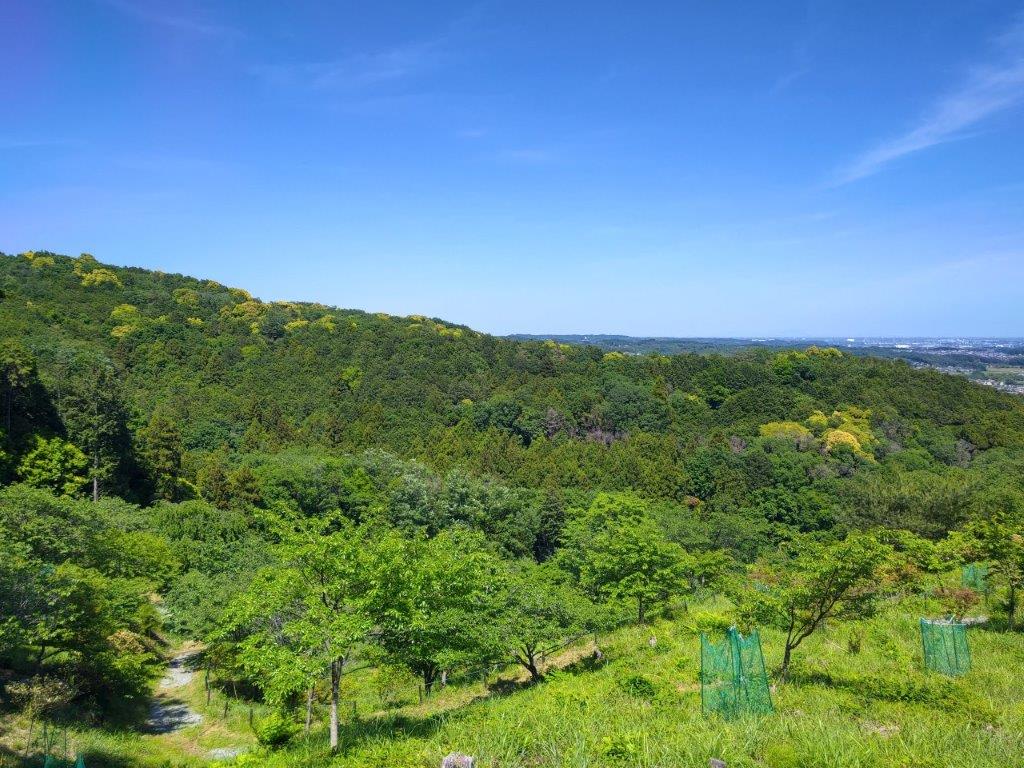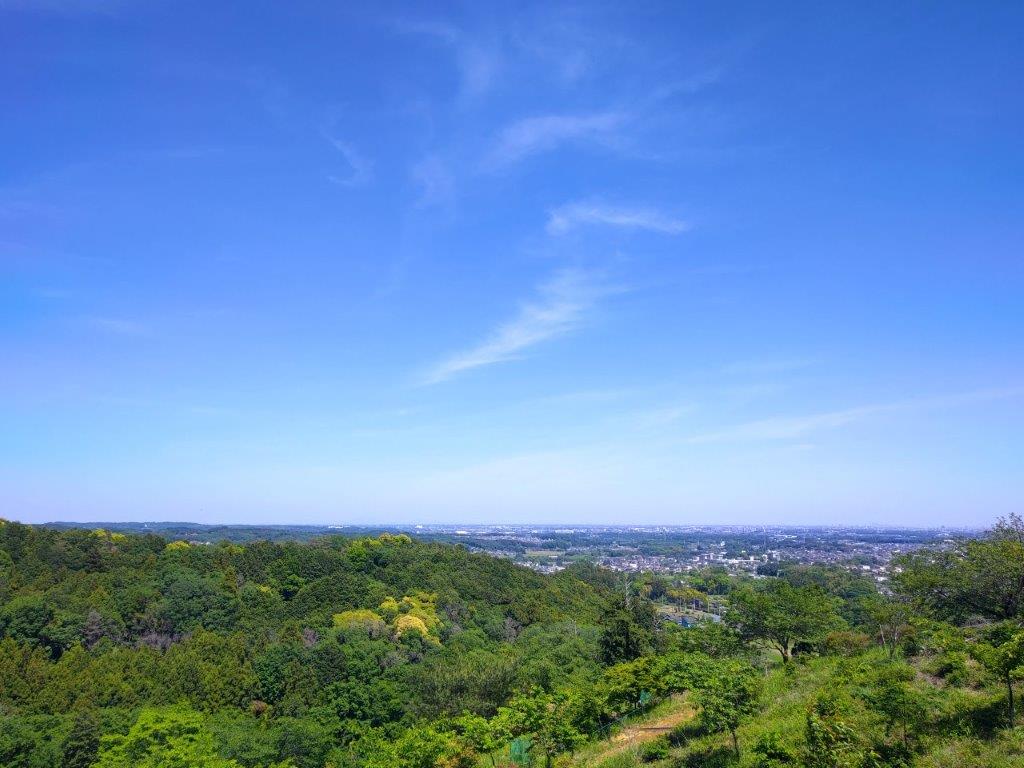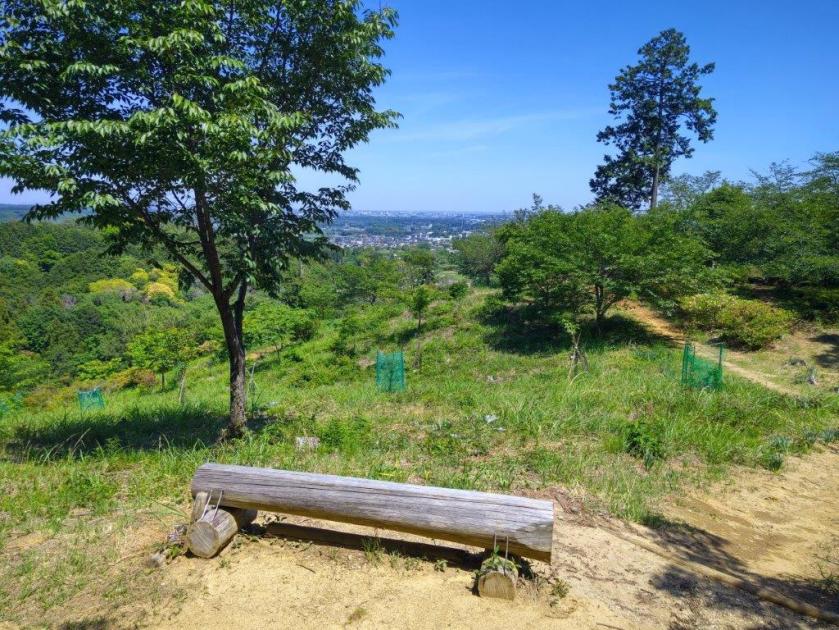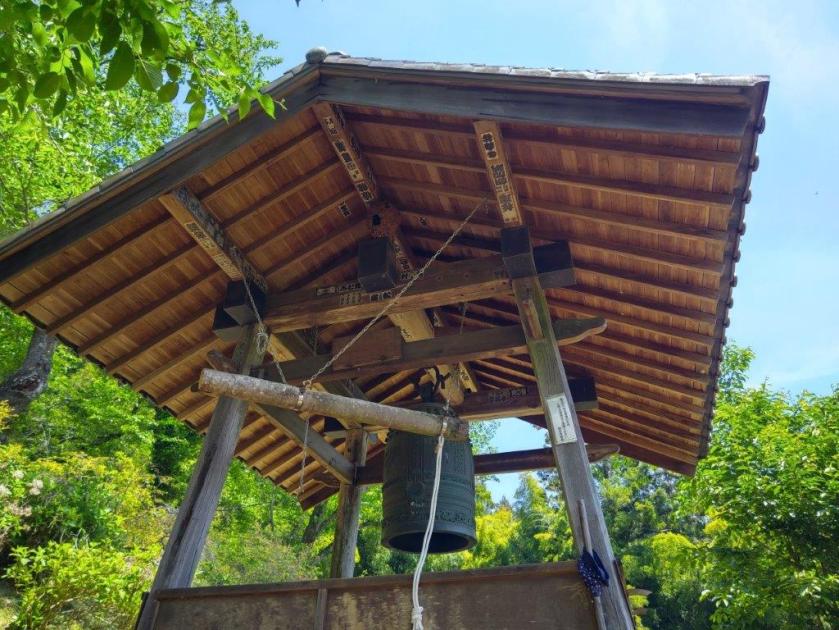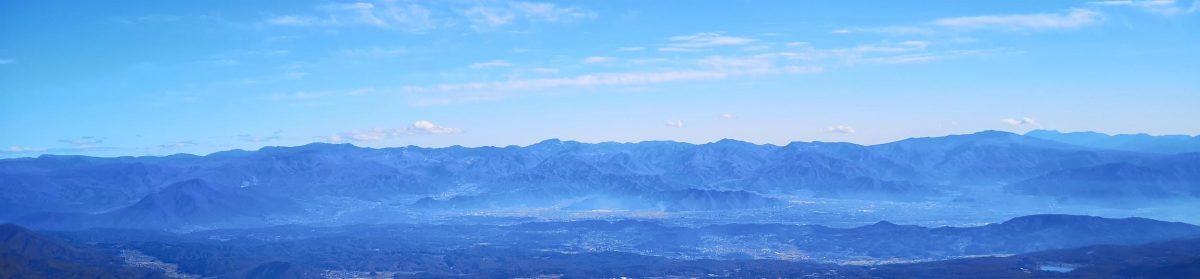
Mt Takao (599m), Hachioji City, Tokyo Prefecture, Sunday, June 9, 2024

I wanted to do a late afternoon hike to take advantage of the longer days of June. I decided to head to Mt Takao in the hope that most people would be on the way home by then. It would be my first visit in a while since lately I’ve preferred the less popular peaks. Although I’d been to the top about a dozen times it would be my first time in June. Looking at the English map on the Mt Takao official site, I chose to go up Trail 6 and down Trails 4, 2 & 1. If I finished early enough, I could enjoy a hot spring bath before heading back.

Hiking in the Meiji no Mori Takao Quasi-National Park

明治の森高尾国定公園

I would ride the Keio line limited express from Shinjuku to Takaosan-guchi, and use the same train for the return. The weather was supposed to be overcast and dry with temperatures cool for the season but comfortable for hiking. I was looking forward to my first late afternoon hike in 2 years and revisiting a familiar place. The cloudy weather meant views would be scarce but I hoped the new green of spring would make the trip worthwhile.

As of july 2025, the Inariyama trail is closed for repair. Consequently, trail #6 (described in this post) has been changed to a one-way ascending-only trail to prevent accidents and traffic jams due to overcrowding. This restriction in in place all day; trail running (in either direction) is also prohibited. In other words, it’s not possible to hike down this trail for the time being (no end date to the restriction has been given). Multiple signs in Japanese and English have been placed at the bottom and top of the trail, as well as long other trails. Please take this into account when planning your hike.

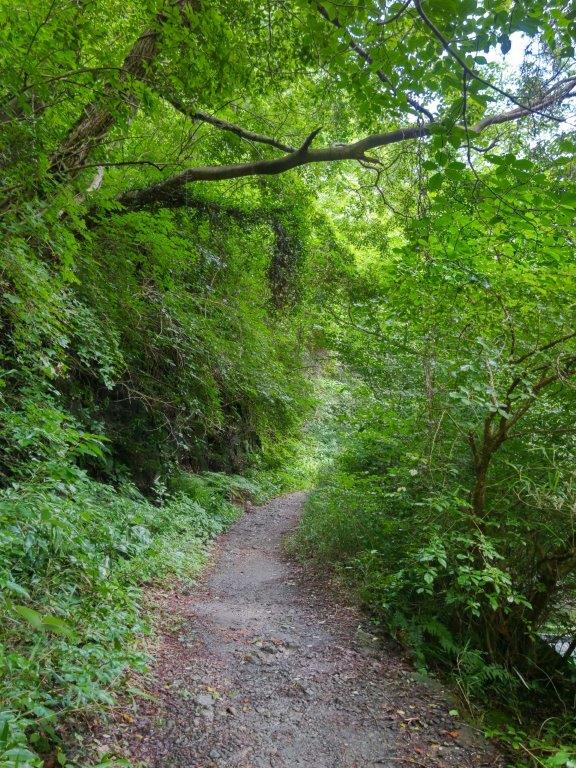
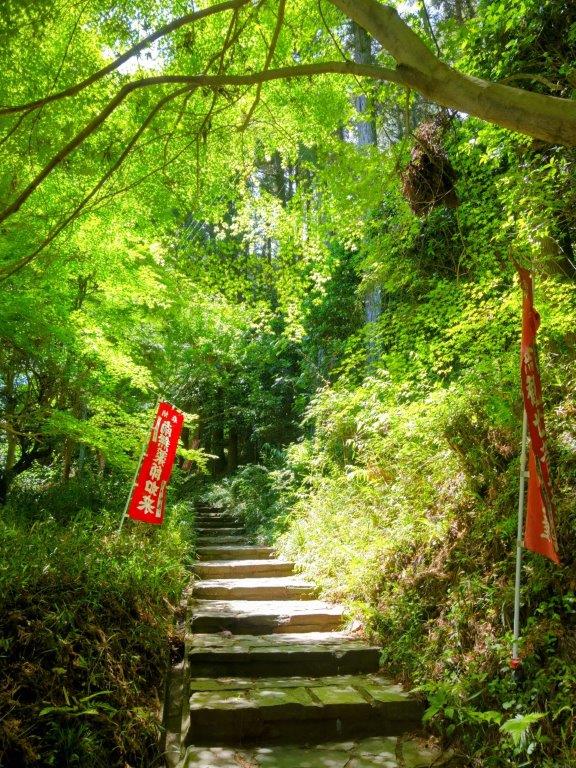
Start of Trail #6 (left) Before the Inariyama Trail Connecting Path (right)

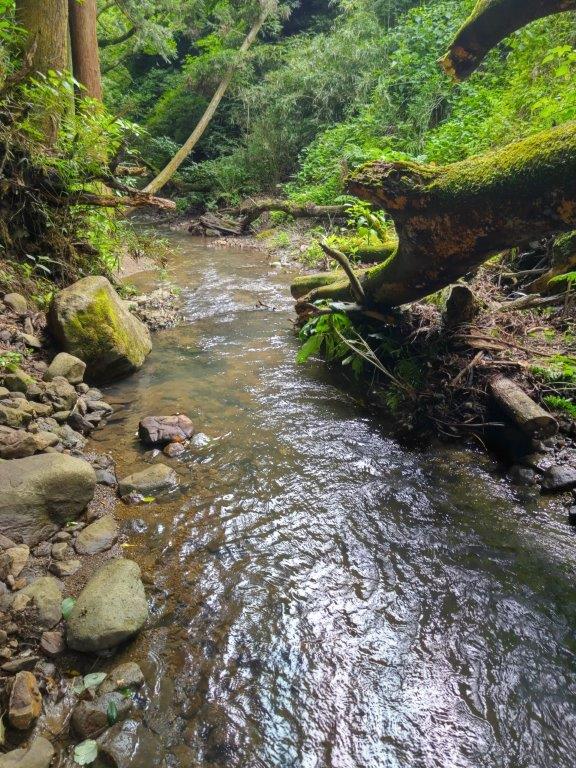
Walking on Water past the Inariyama Trail Connection Path (left & right)

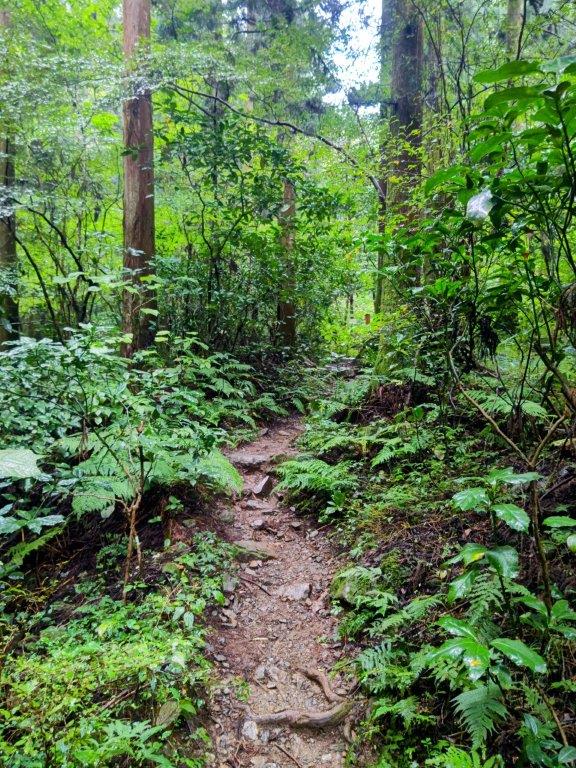
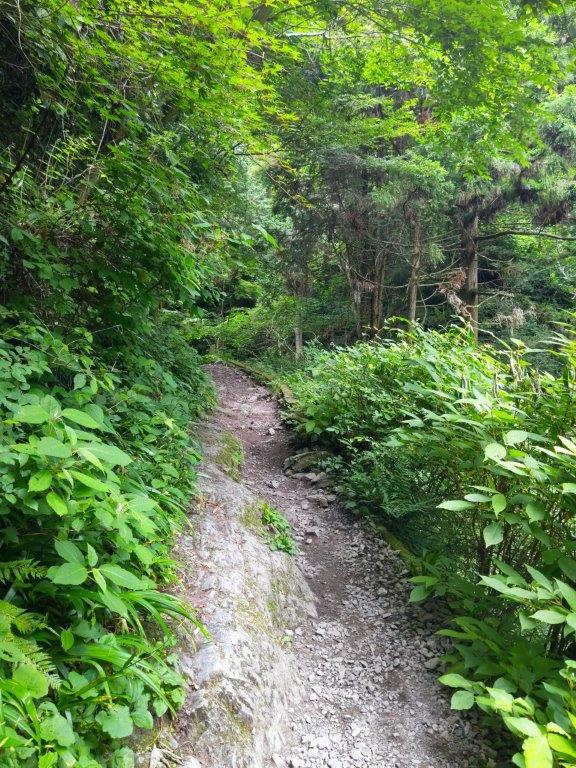
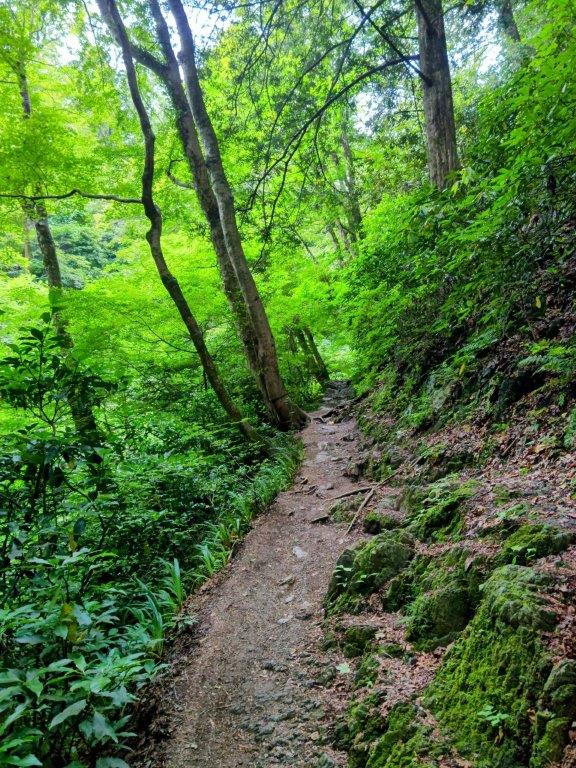
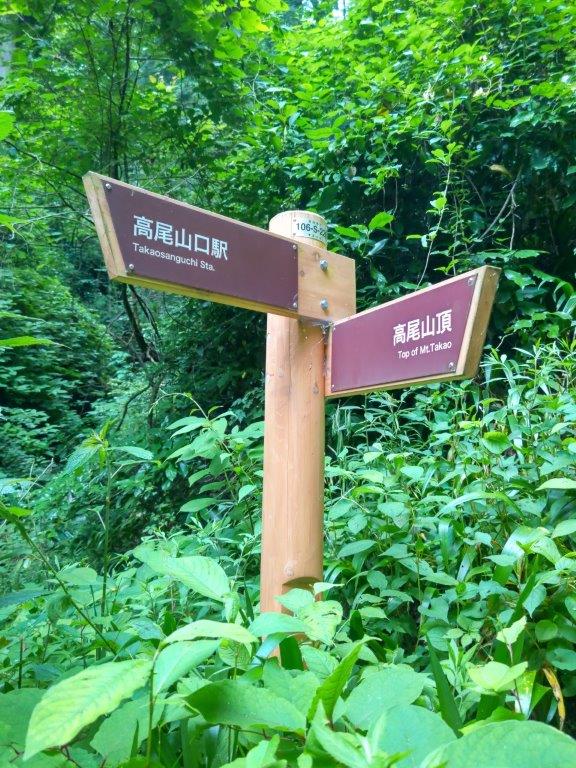
It was a grey day as I rode the mostly empty limited express from Shinjuku, arriving at Takoasan-guchi station a little after 4pm. I passed countless people heading home as I made my way from the train station to the cable car station, the starting point for most of the hiking paths. As I started up trail #6 on a paved road alongside a river, the cable car thundered by overhead; I would not be riding it today as the last one was scheduled for 6pm, well before the end of today’s hike.

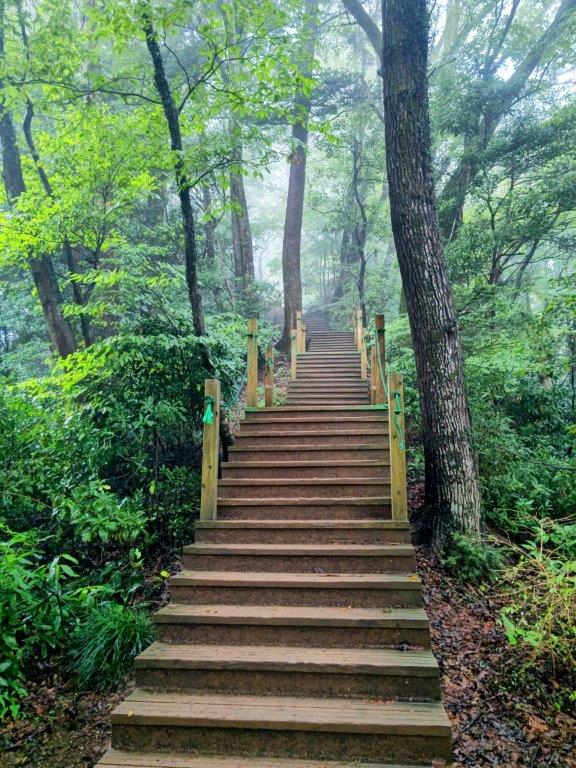
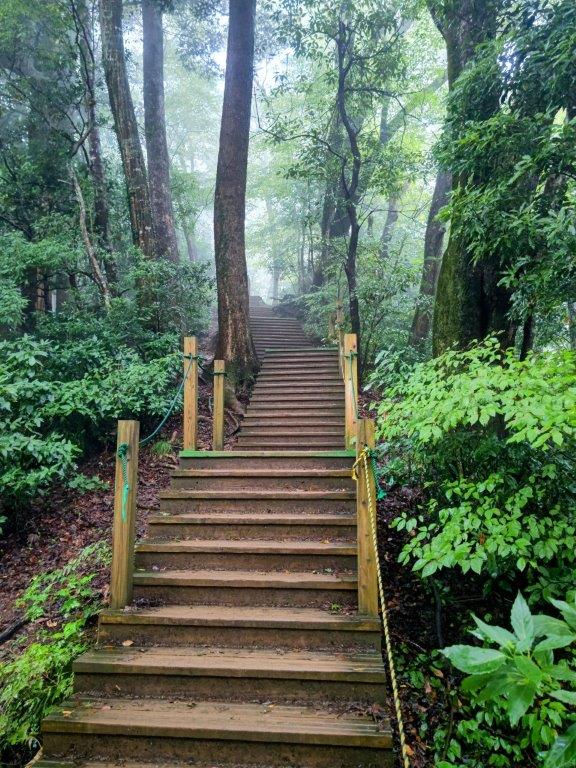
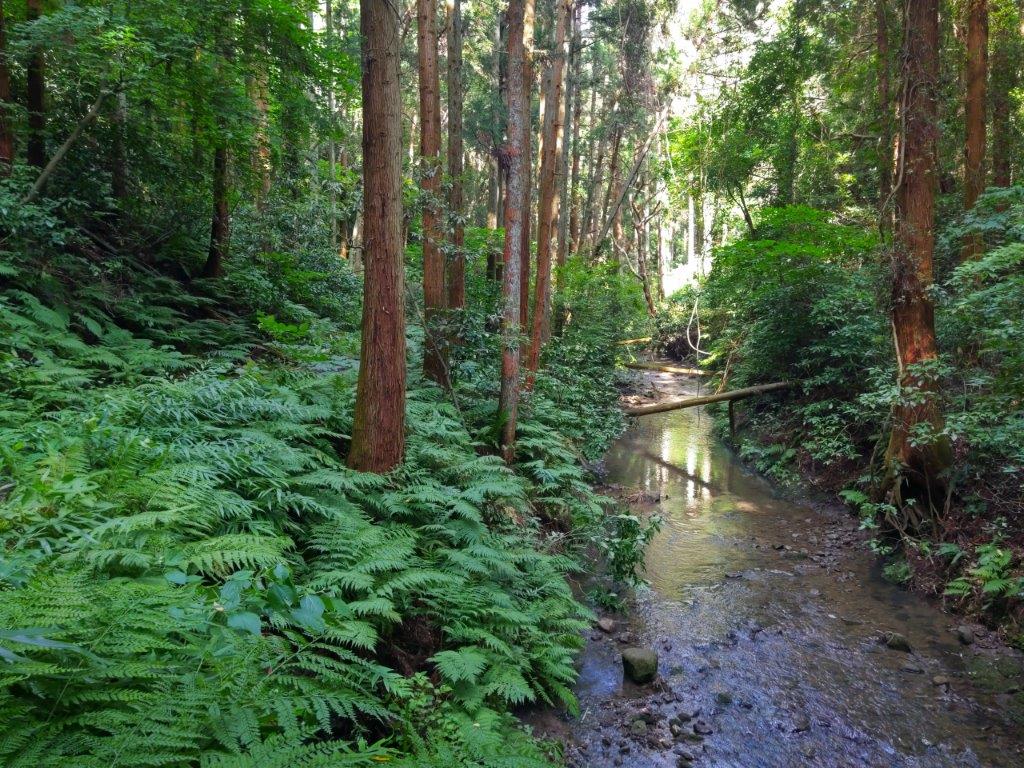
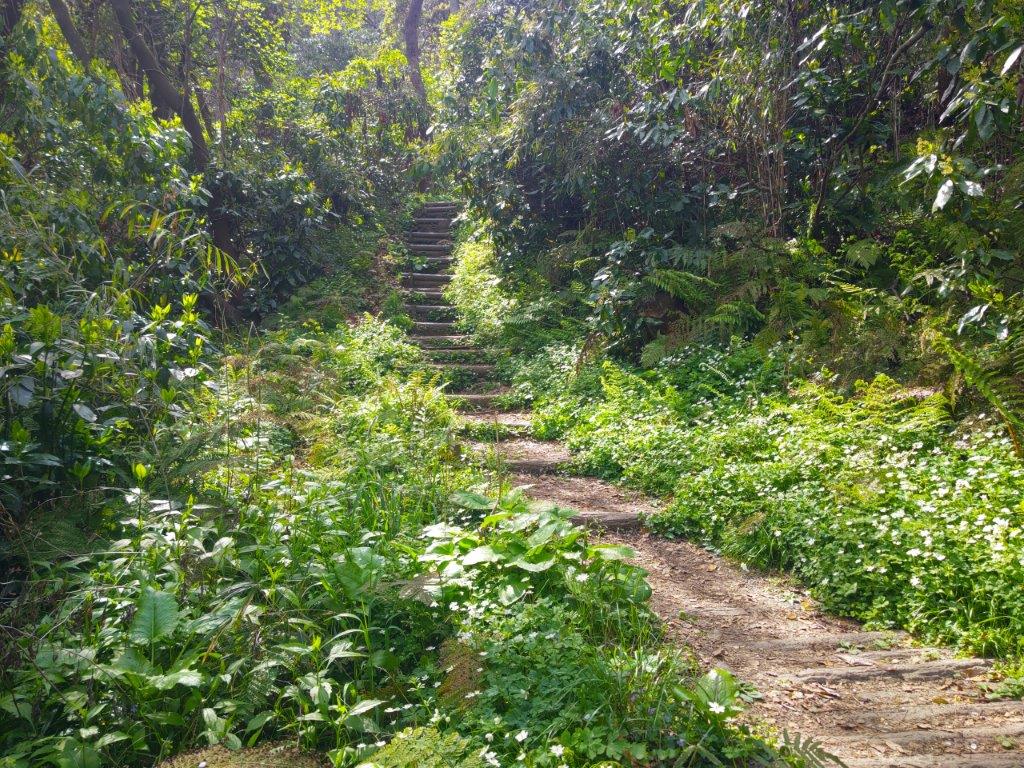
River Section of Trail #6 (left) Steps at the Top of Trail #6 (right)

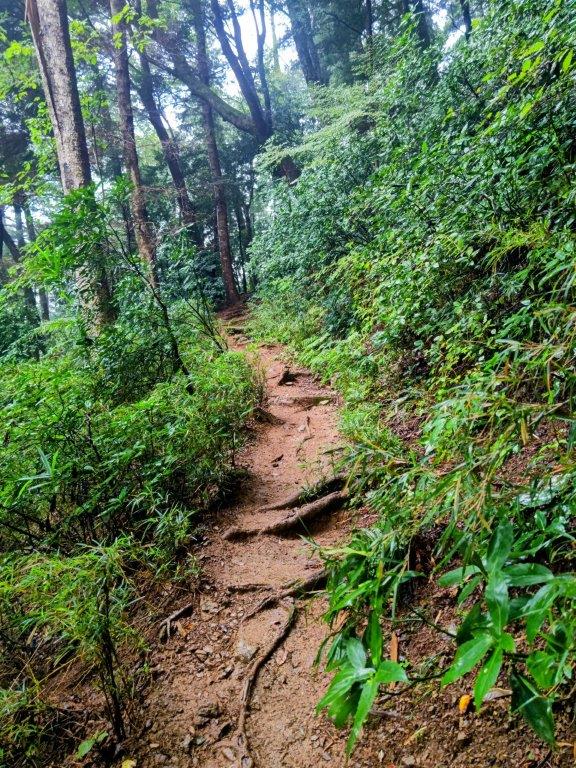
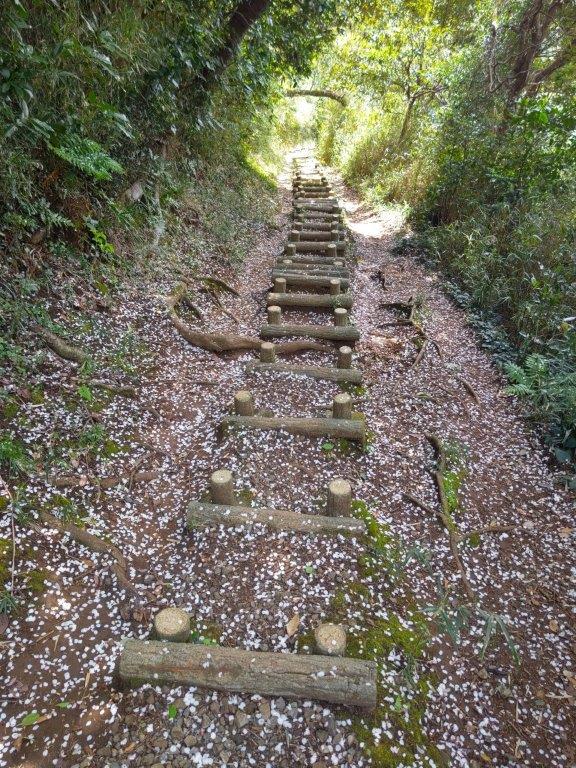
Looking Back at the Steps of Trail #6 (left) Heading Down Trail #4 (right)

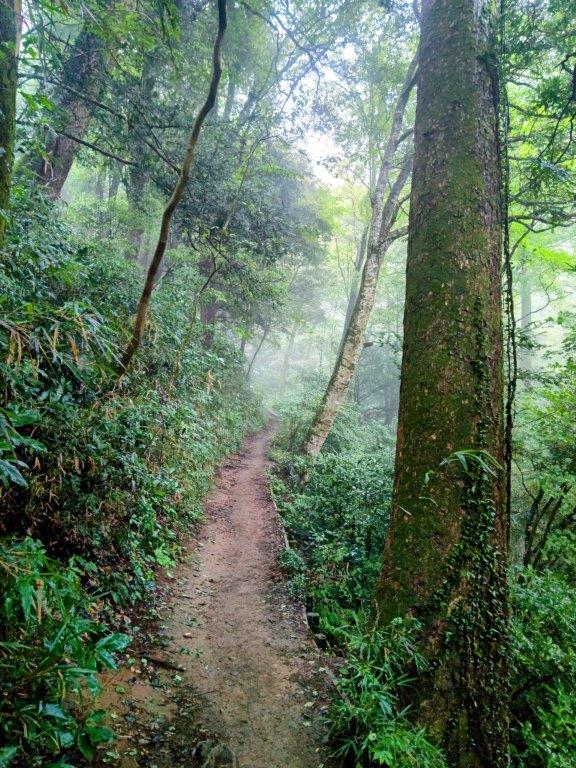
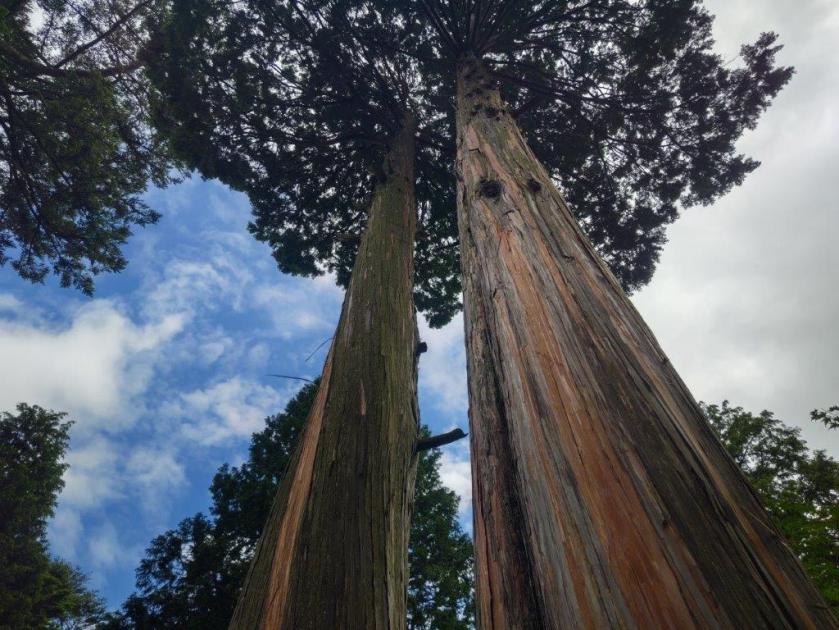
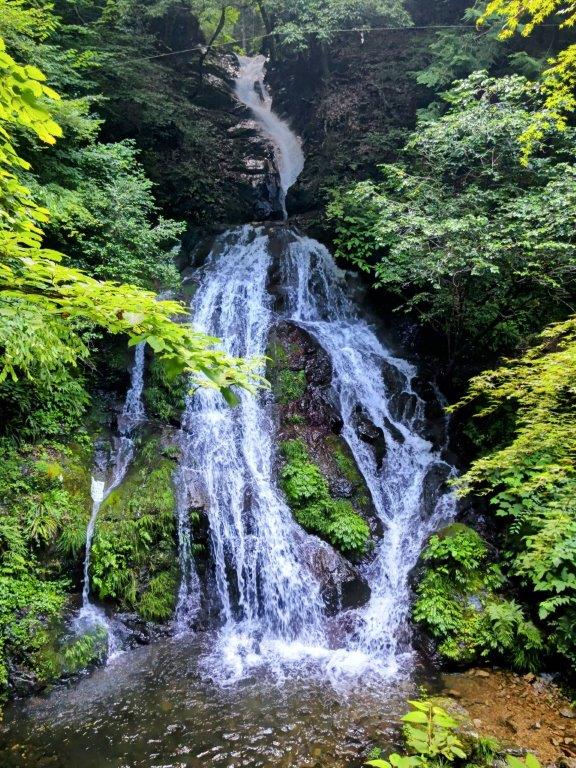
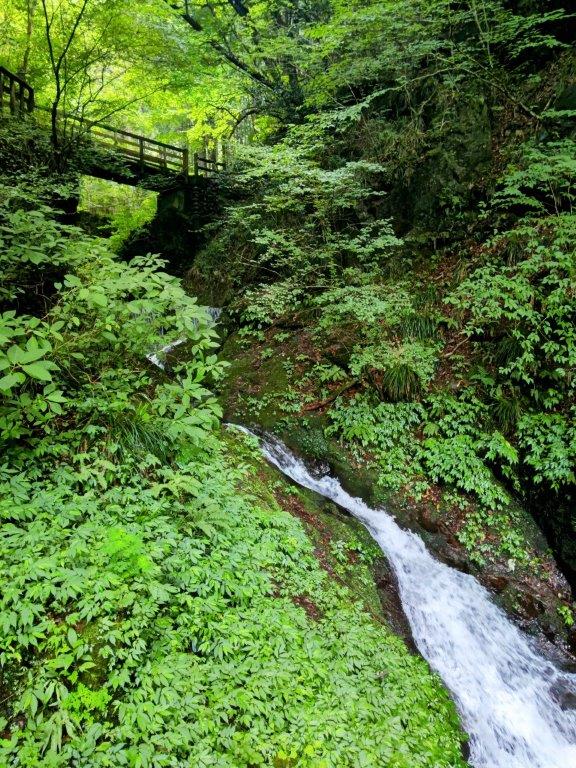
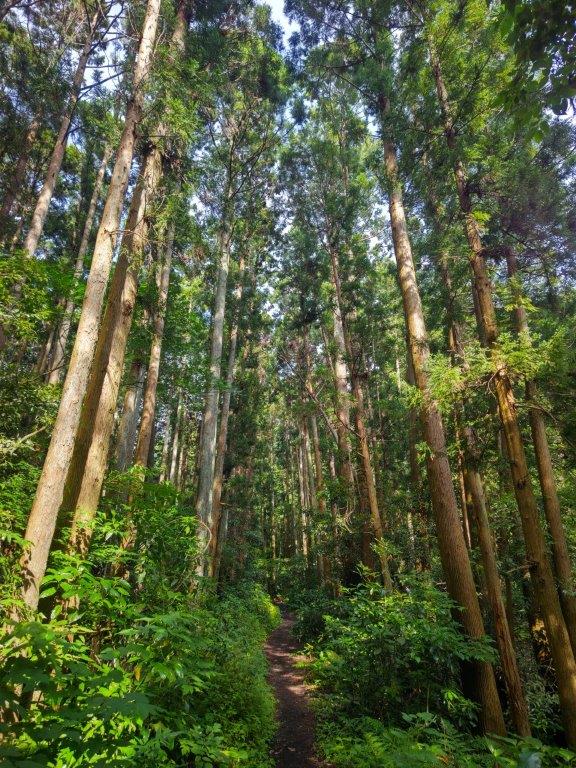
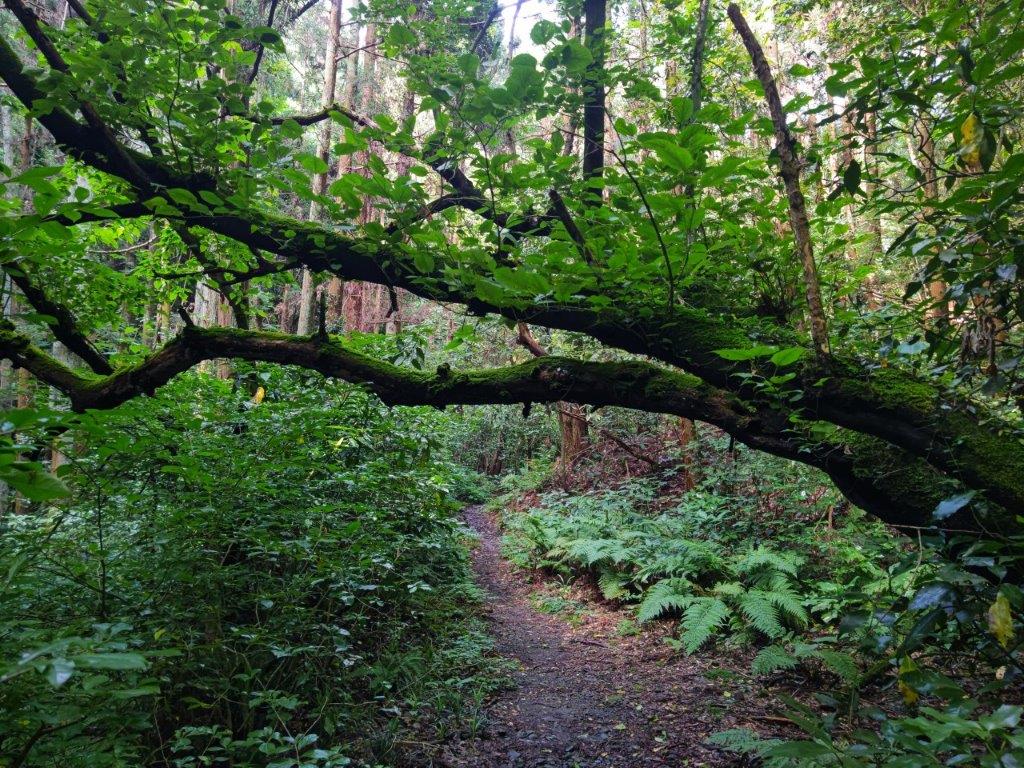
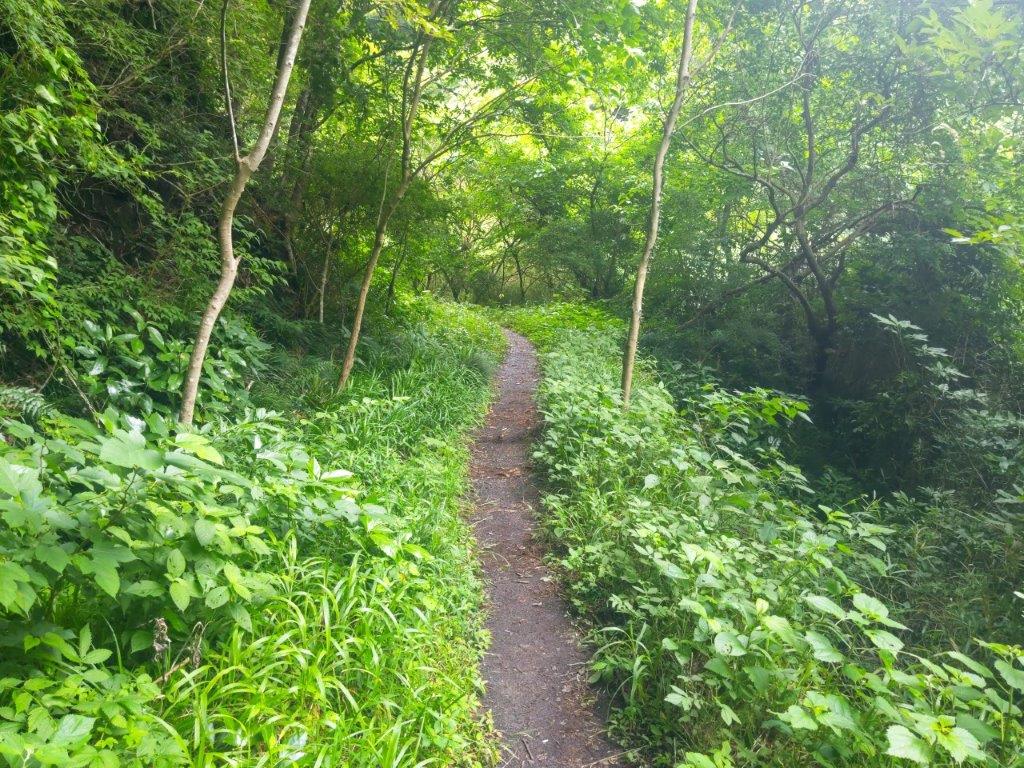
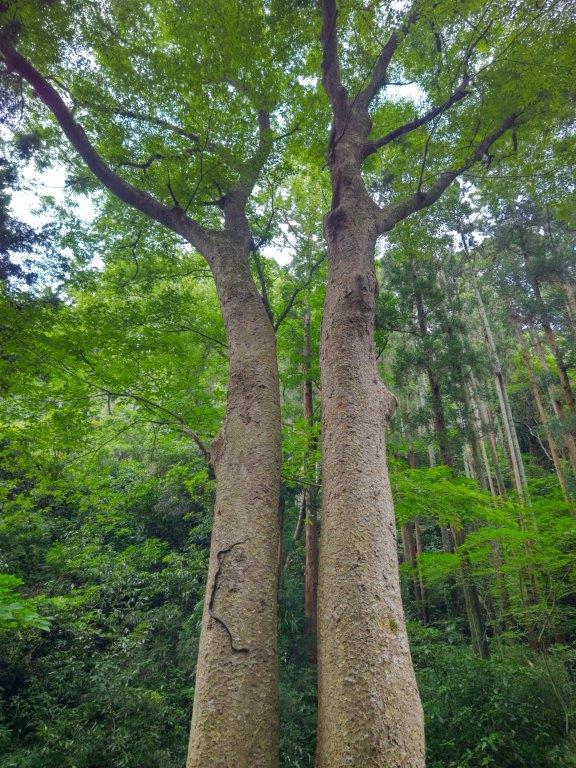
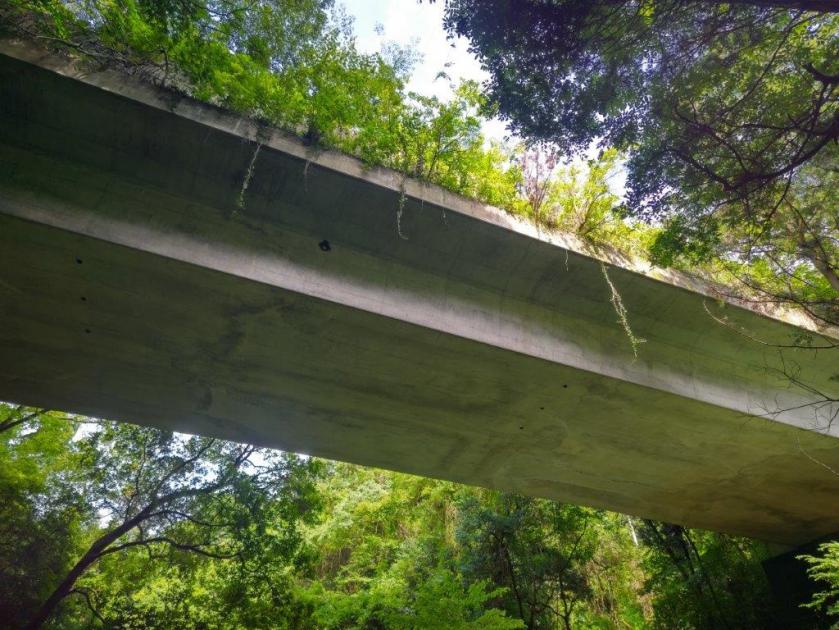
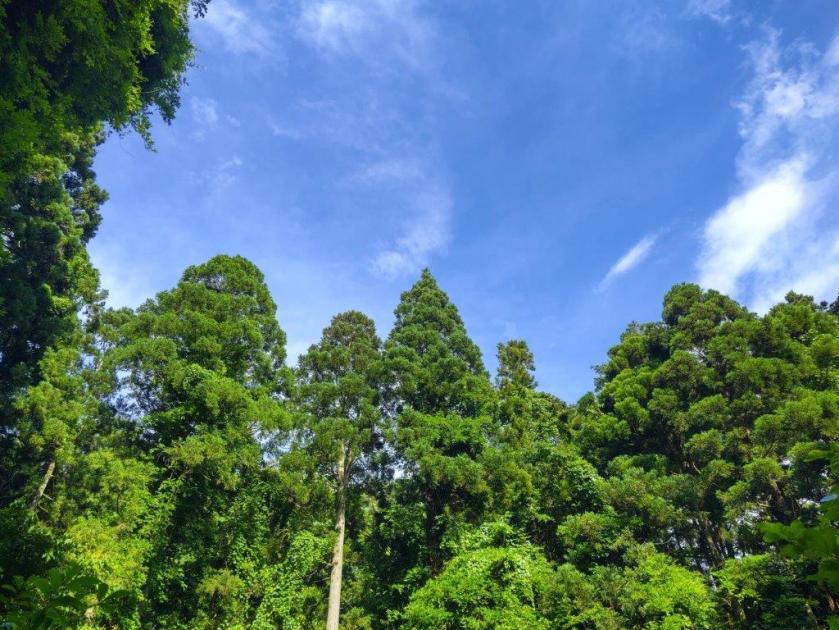
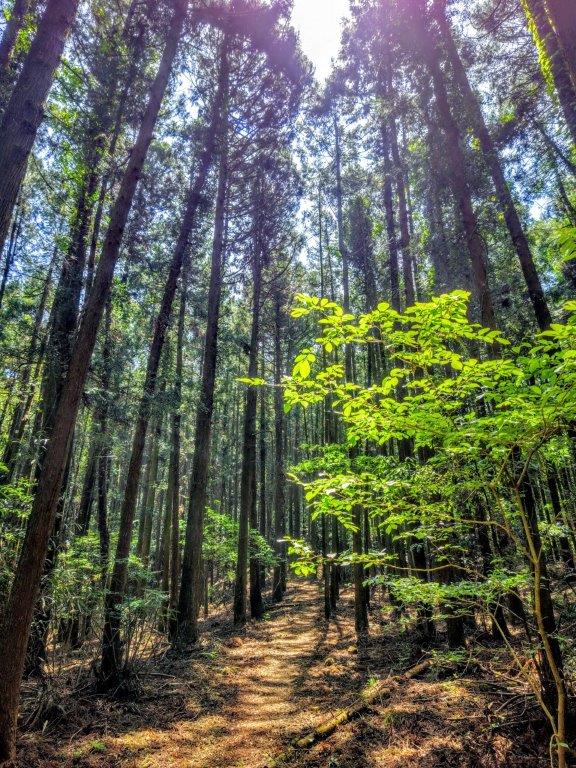
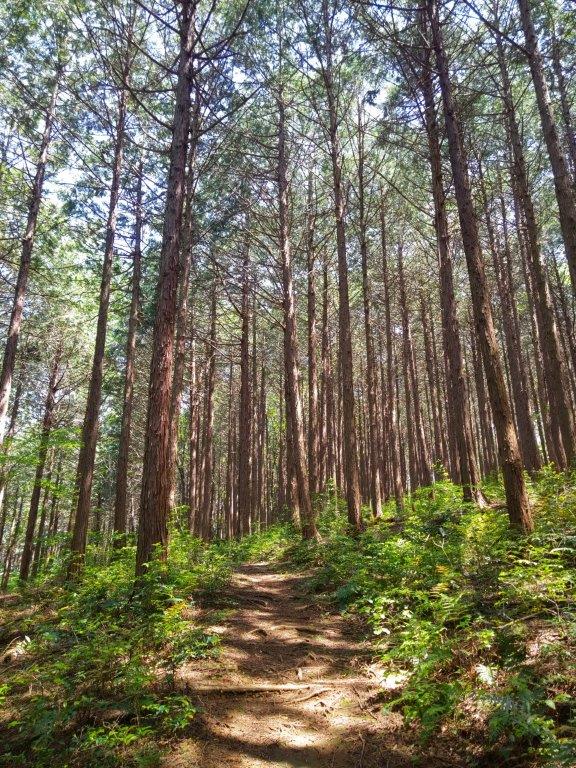
I was surprised by the volume of water in the river, considerably more than during my previous visit in the winter months. The number of descending hikers became less and less, and past Oyama Bridge, I had the trail mostly to myself. I was impressed by the height of the cedar trees along the river valley, a reminder that I was inside the Meiji no Mori Takao Quasi-National Park. Shortly after 5pm, I reached a connecting path with the Inariyama Trail (#1) but continued straight along trail #6.

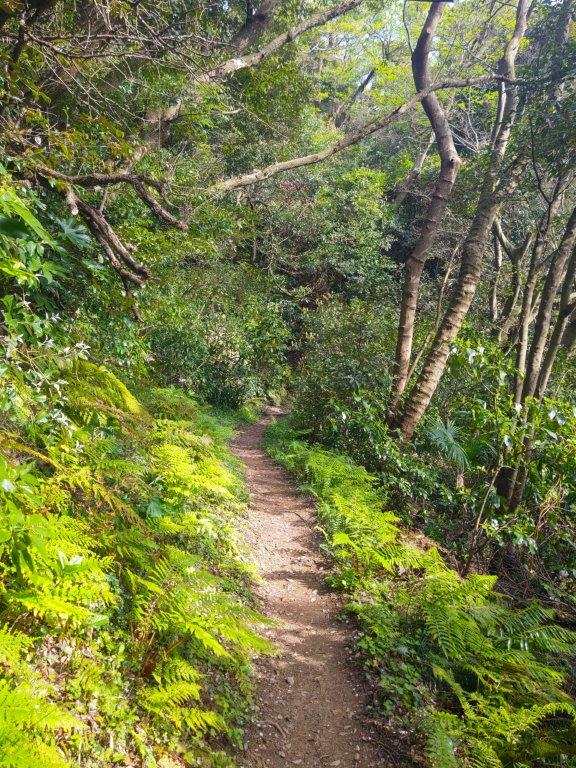
Walking Down Trail #4 (left) Steps Down Trail #4 (right)

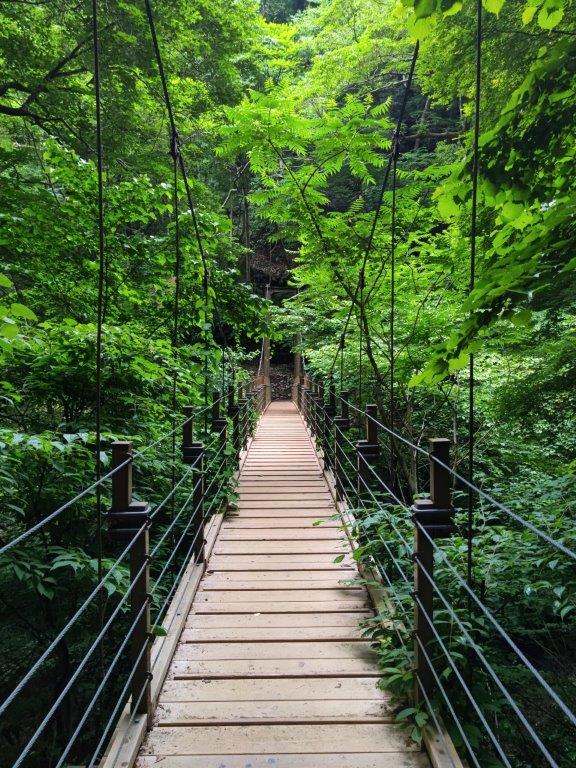
Crossing the Suspension Bridge (left) Near the End of Trail #4 (right)

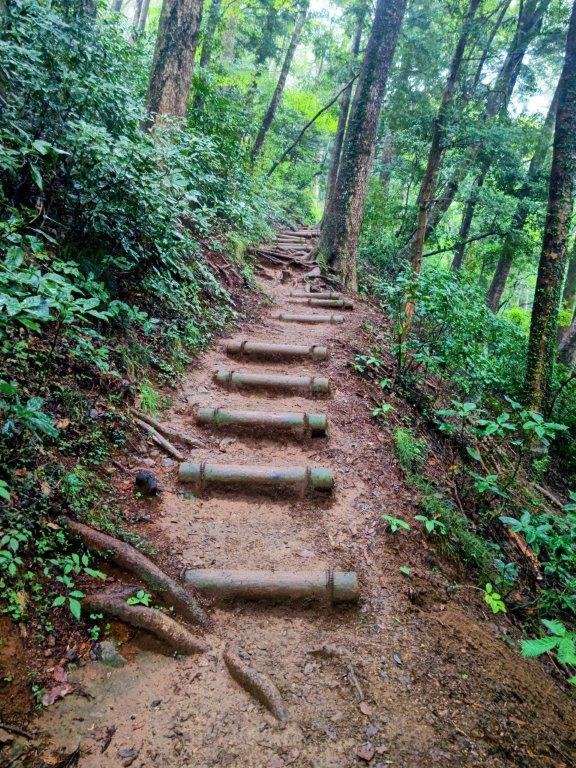
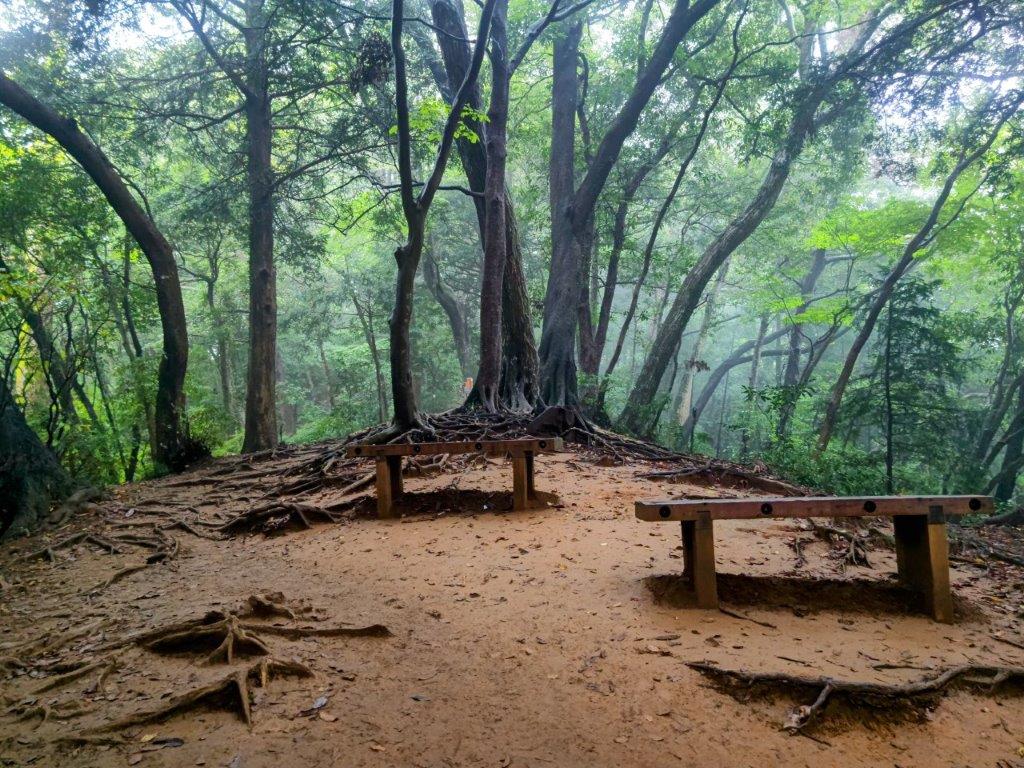
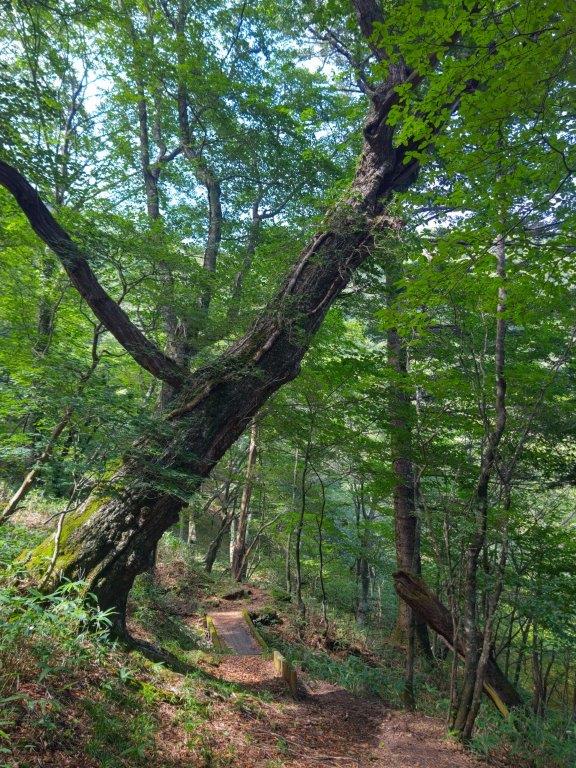
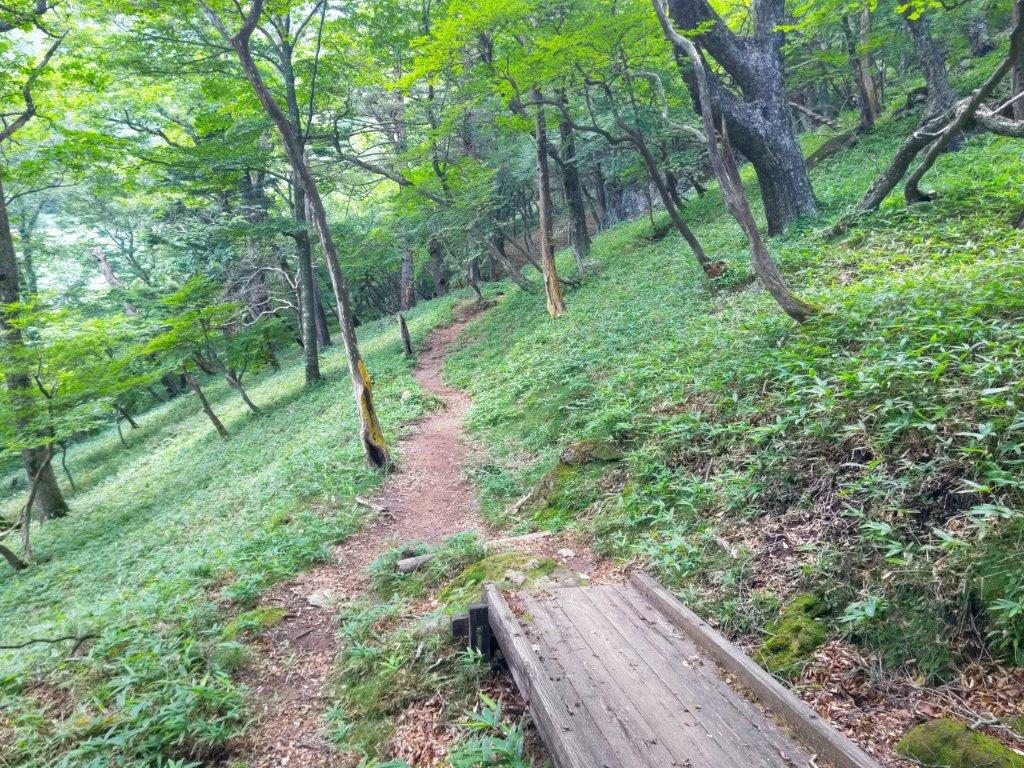
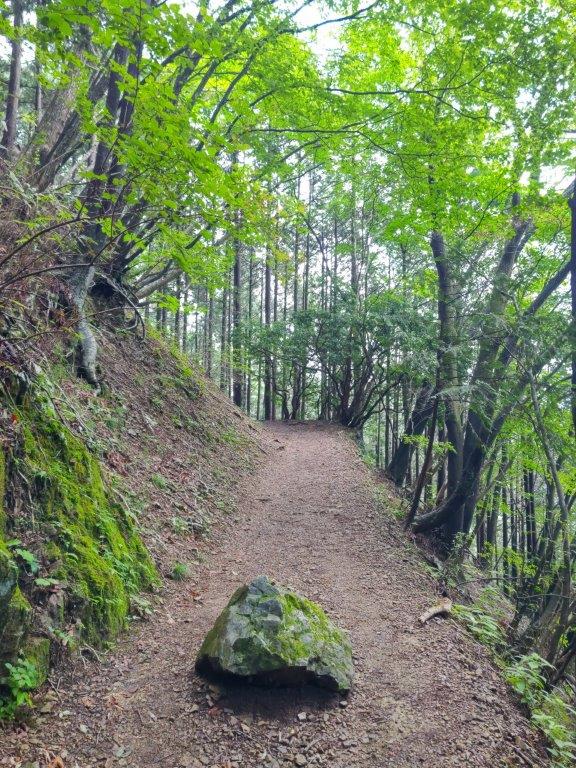
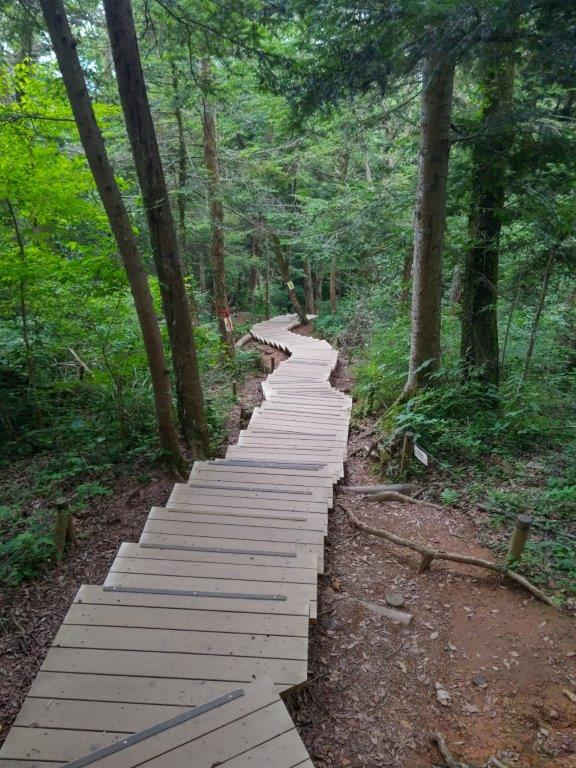
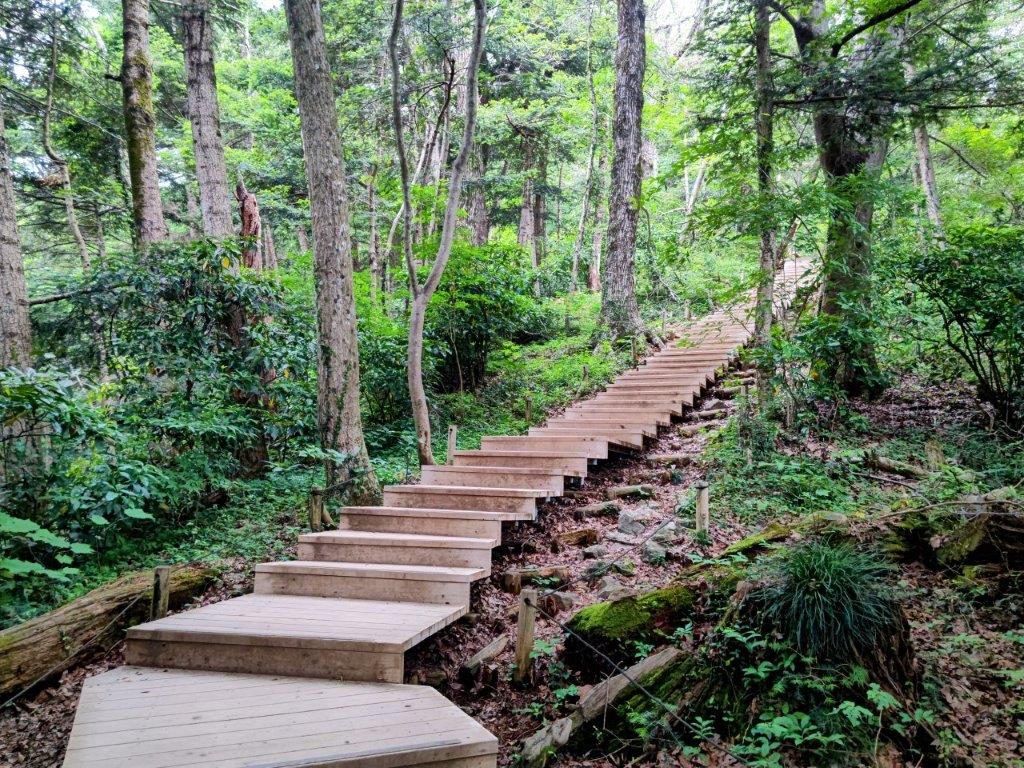
The trail turned into a stream without warning, the overflow probably due to the heavy rain from the previous days. I hadn’t expected to be walking in water and it was hard to believe I was right at the edge of Tokyo. Eventually, the trail left the river valley, heading straight up the mountain side. The steep ascent was aided by wooden steps, a fairly recent addition. Soon I reached a flat area just before trail #5, a short path encircling the summit. At 5h30, I was standing on the top of Mt Takao, eerily quiet in the early evening.

Wooden Steps on the Higher Sections of Mt Takao

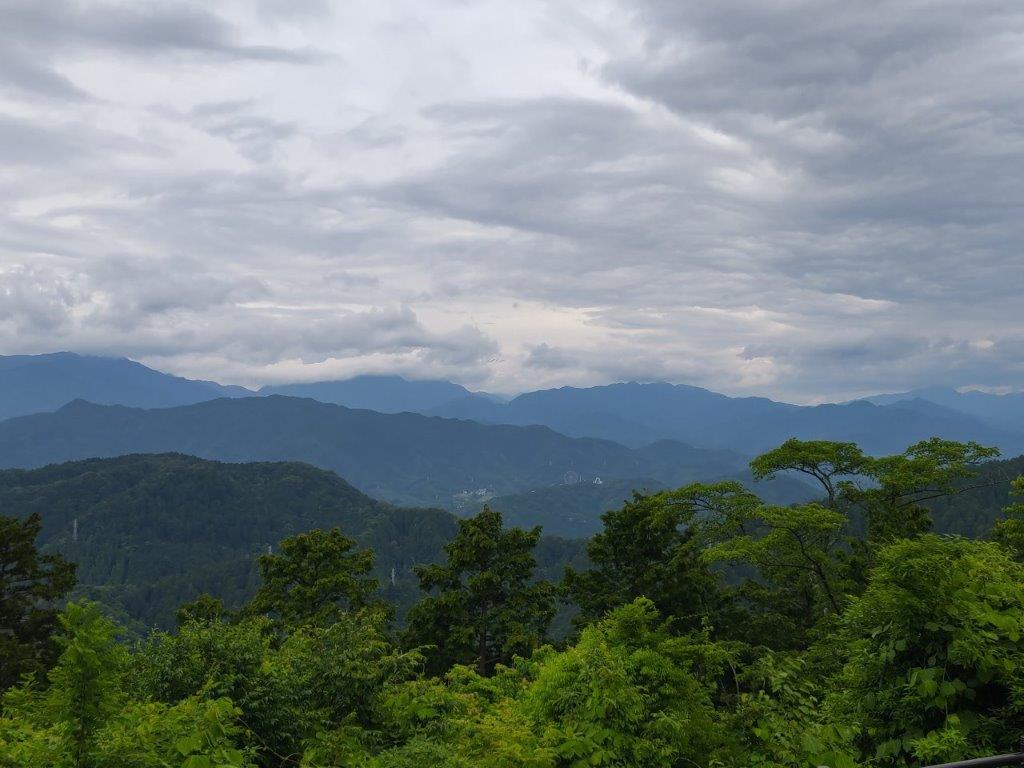
Mt Fuji hidden in the Clouds

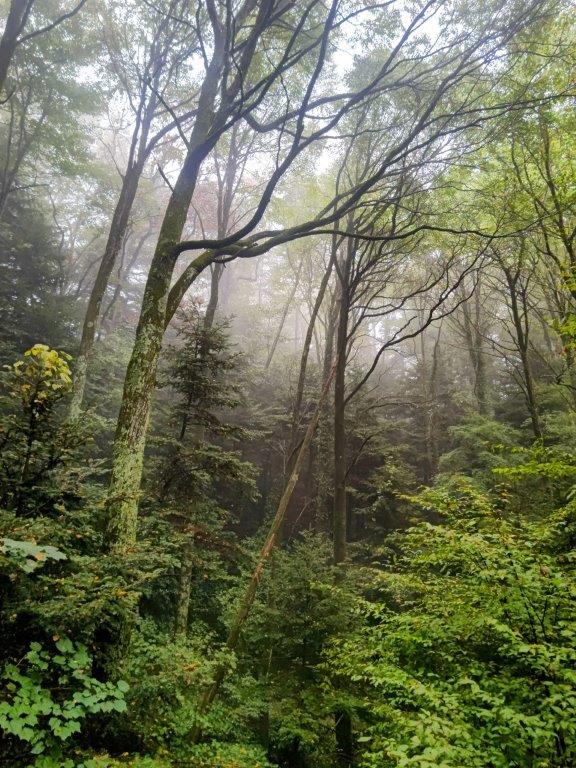
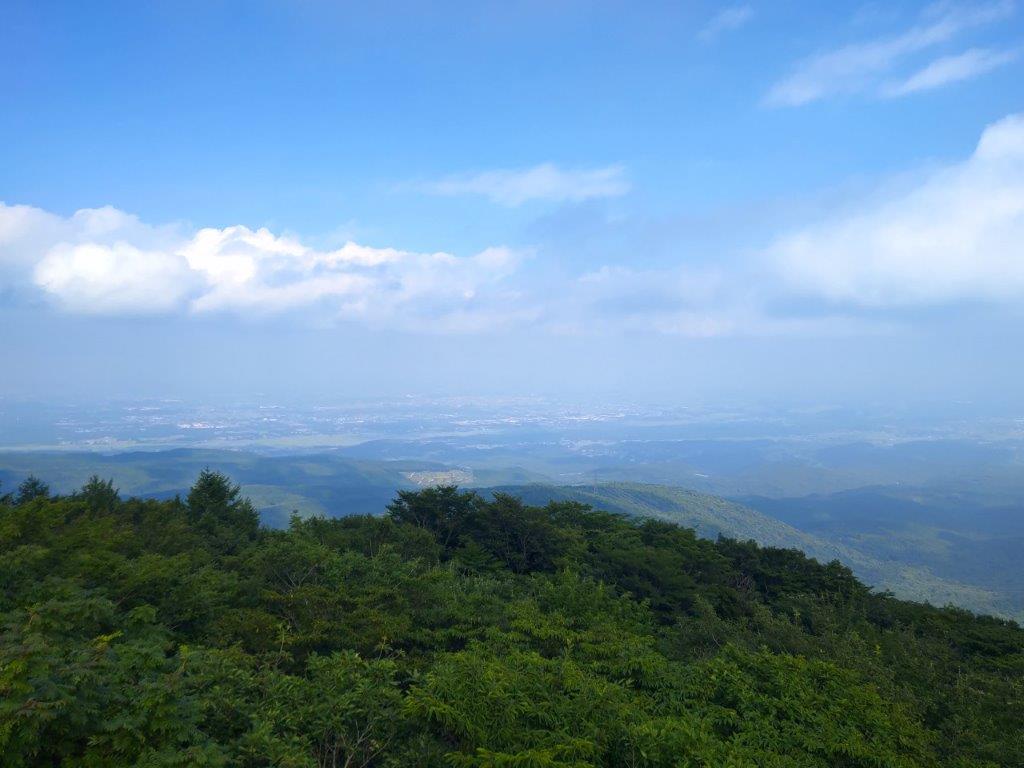
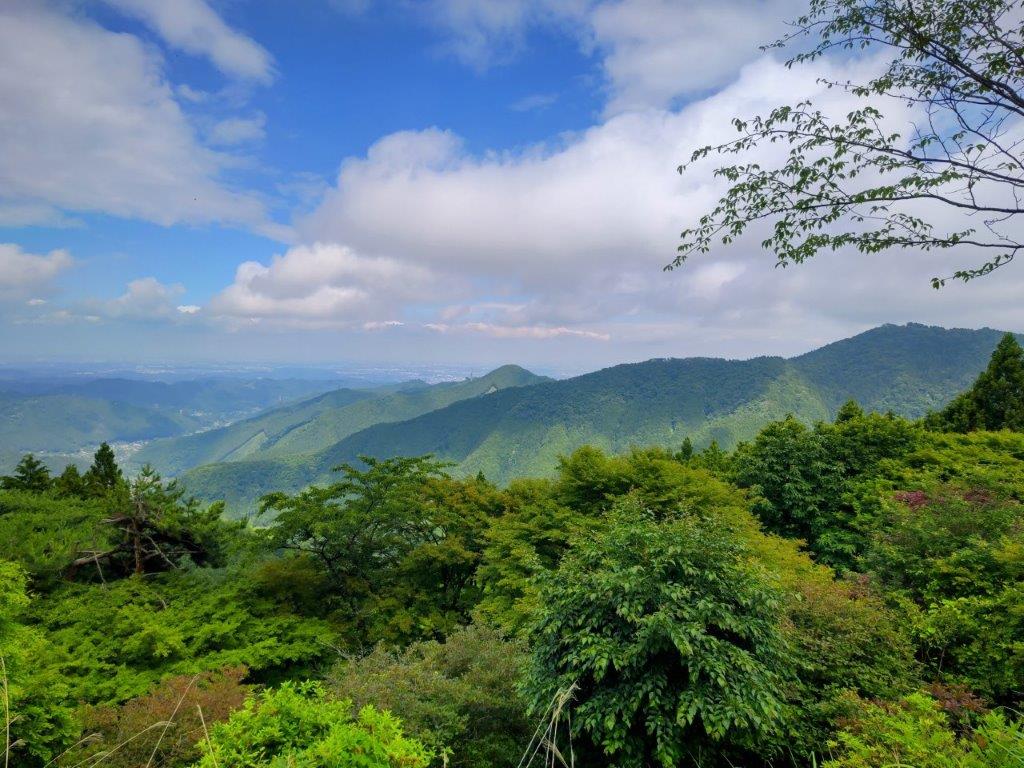
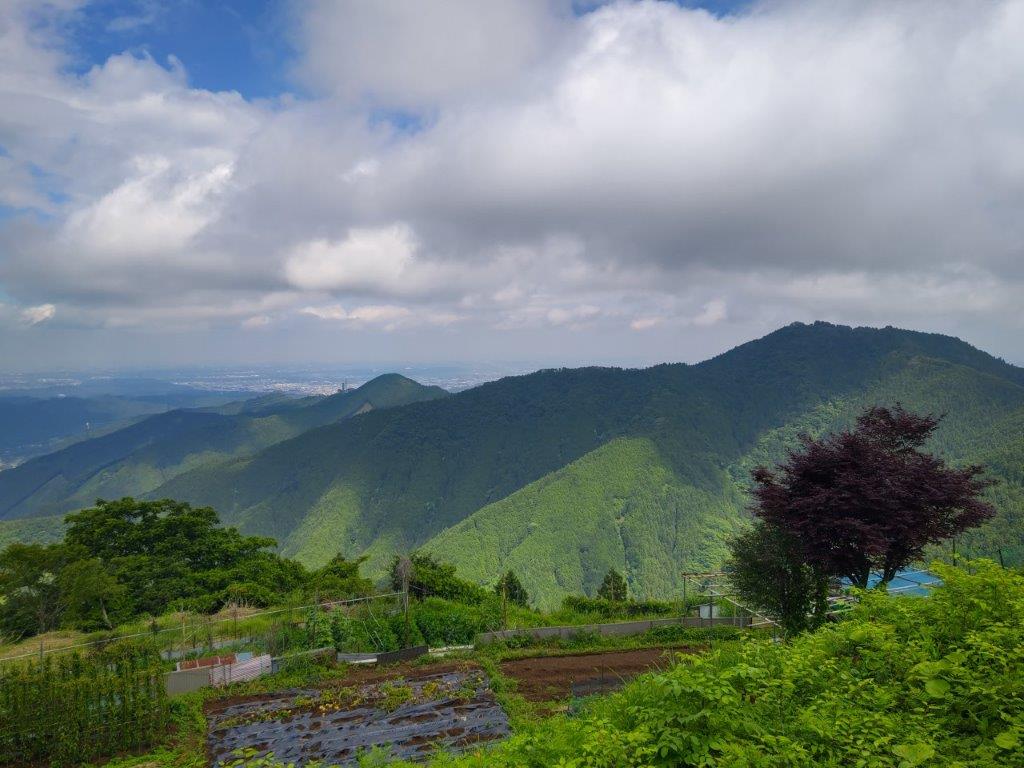
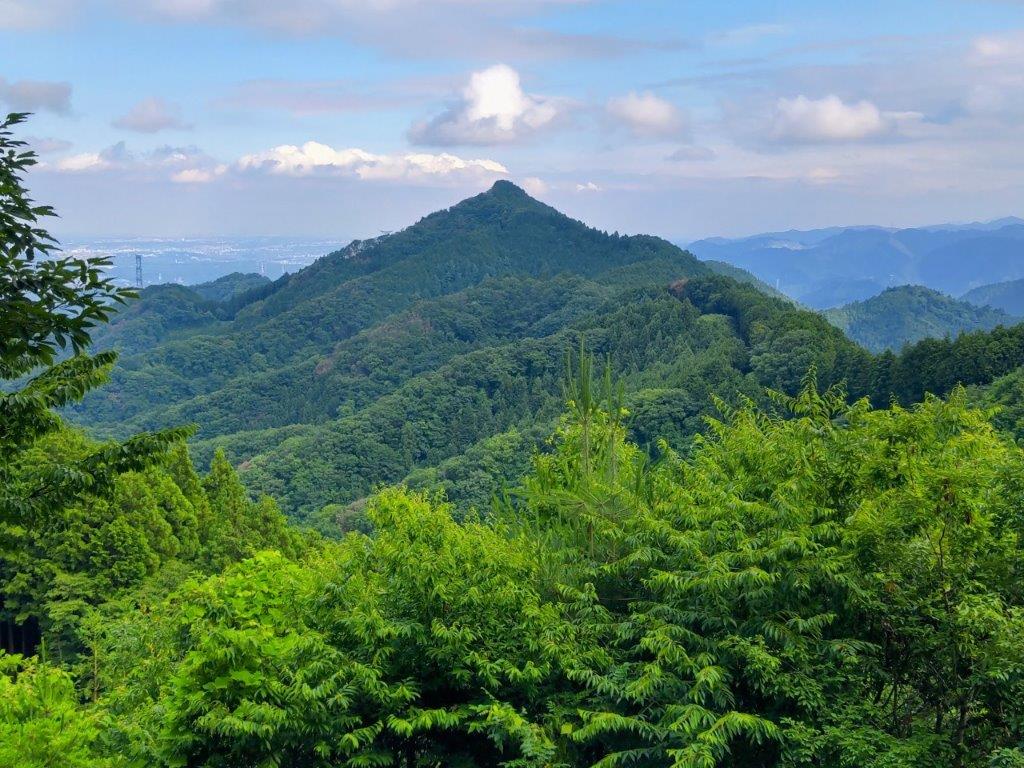
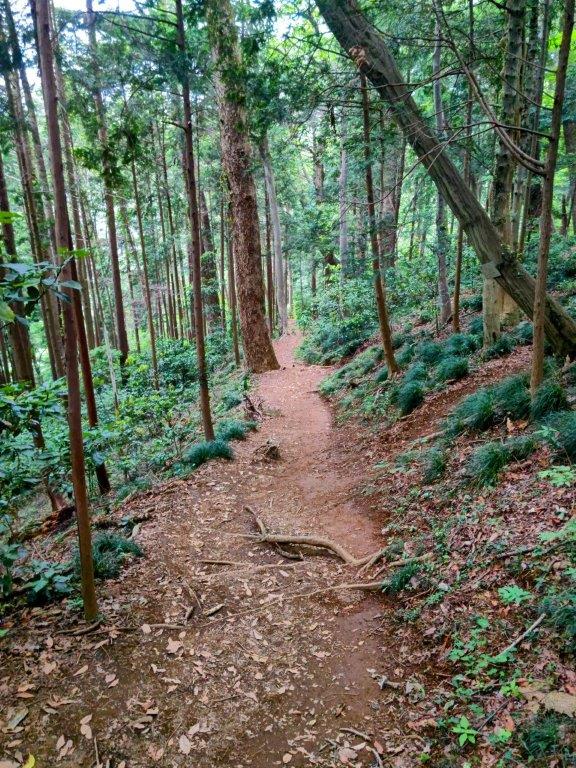
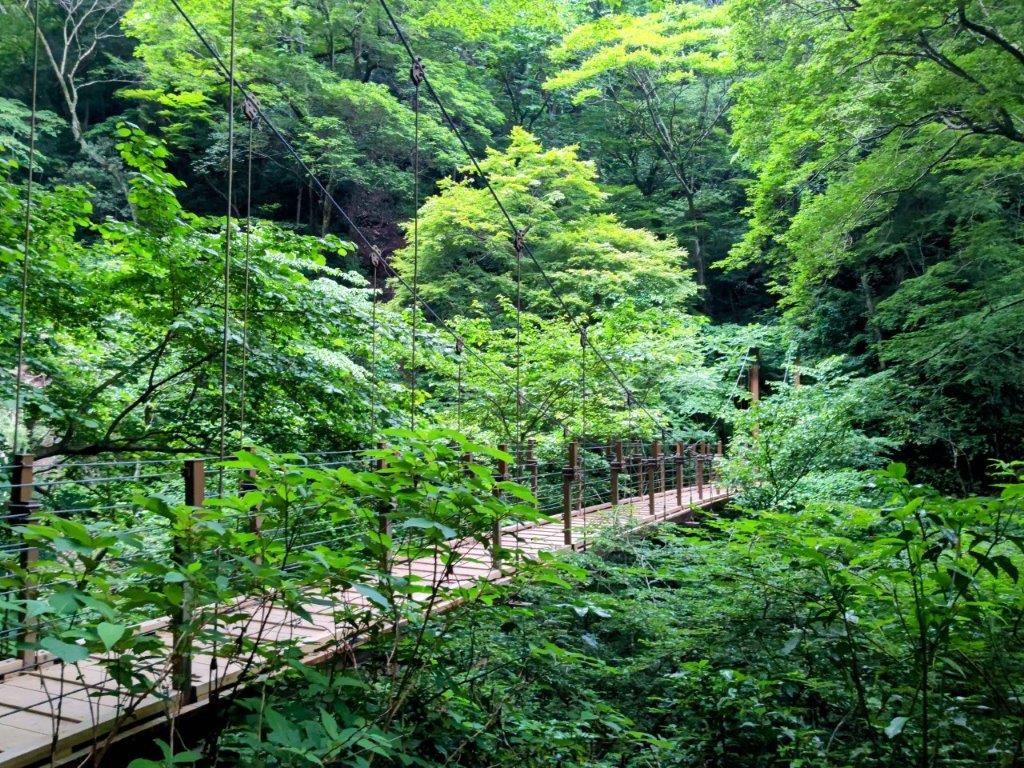
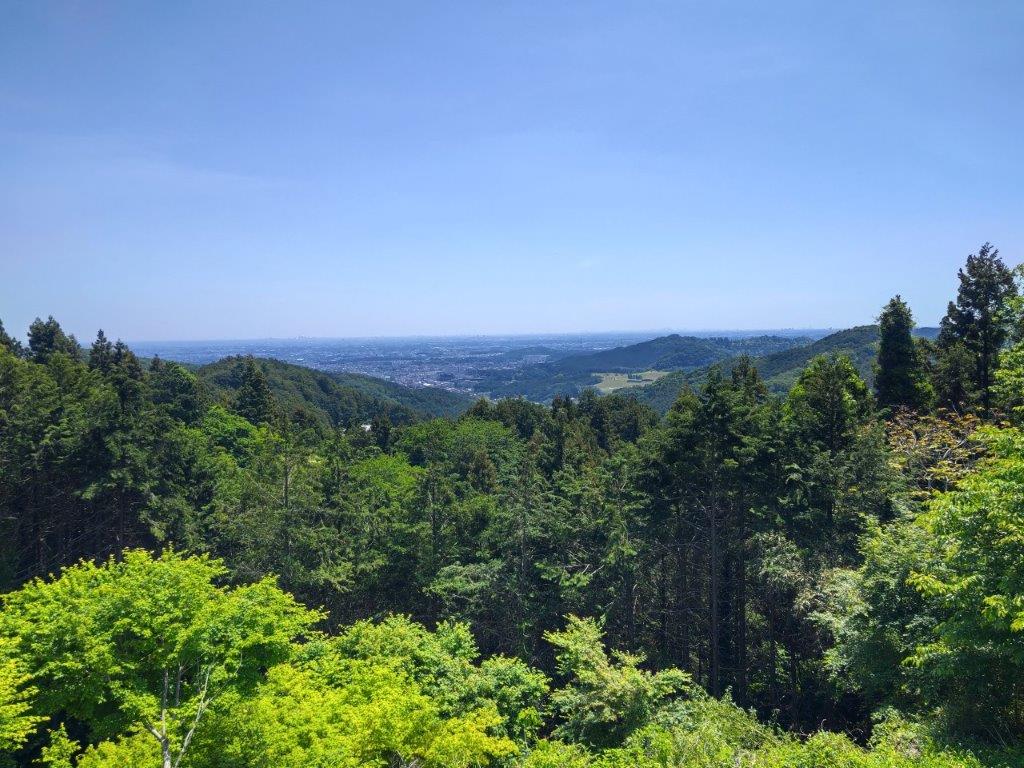
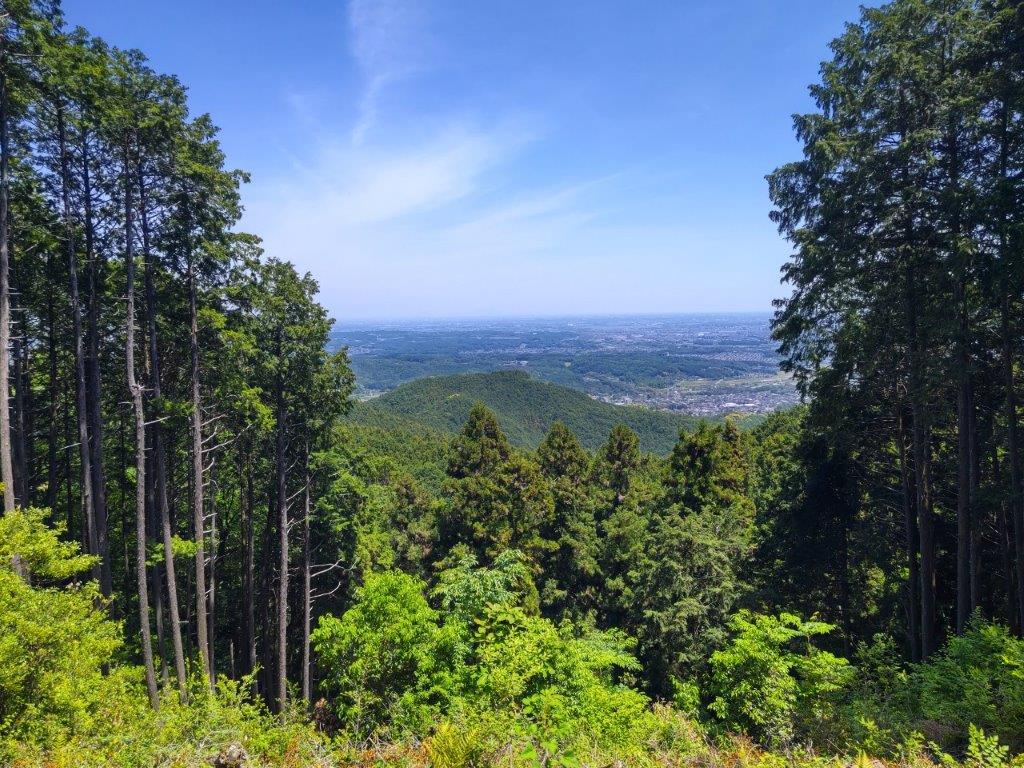
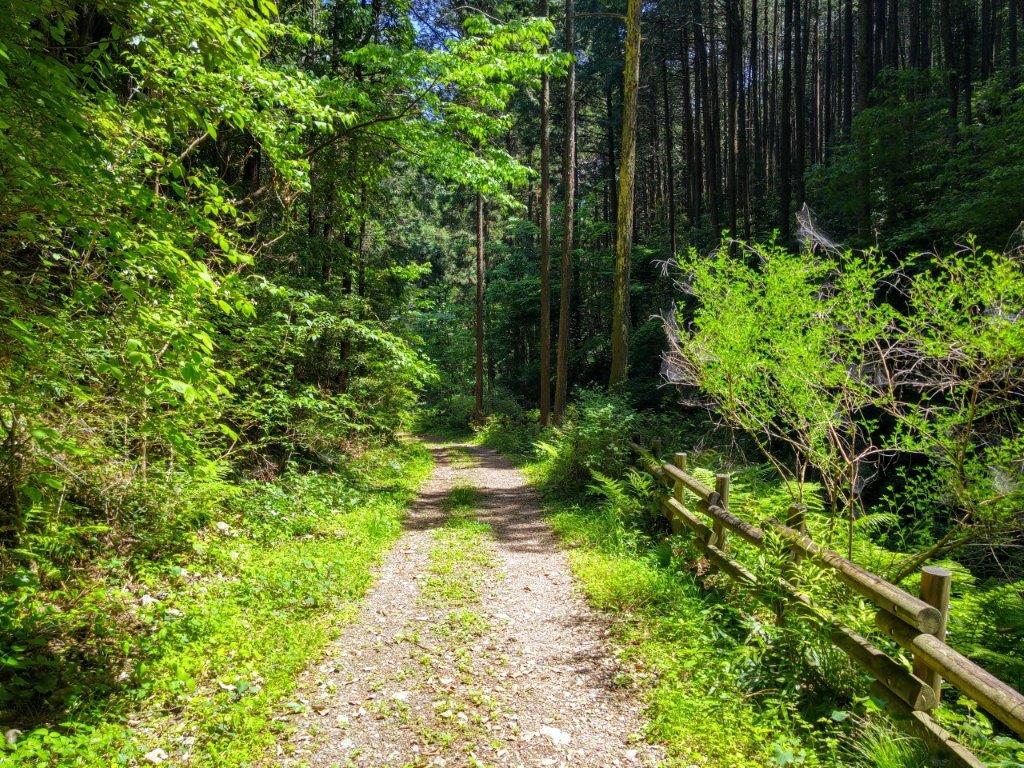
It was a rare sight to see the top of Mt Takao empty of people. I made my way to the viewpoint on the south side but today Mt Fuji was mostly hidden in the clouds. After a short break, I made my way down Trail #4 on the other side of the mountain. Many sections were fitted with steps making it easy to walk even as the daylight was swiftly fading. At 6pm, I arrived at a suspension bridge, partially hidden by green tree branches. Before the junction of Trail #4 with the road leading down from the summit, I ducked down Trail #2 for some more forest walking. At 6h30, I reached the now deserted top station of the Takao cable car.

Suspension Bridge Hidden by Tree Branches

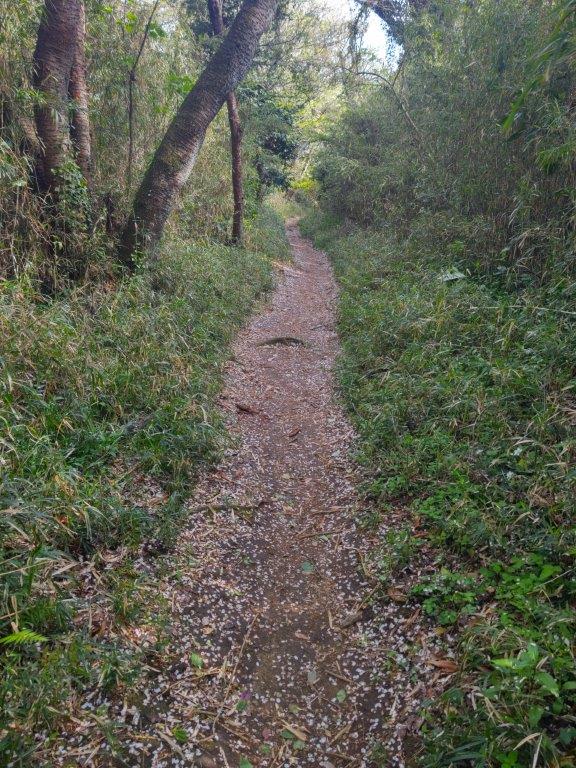
Walking a Level Section of Trail #4

I spent a few moments enjoying the quiet atmosphere of what is usually a very busy place, before heading down trail #1, a steep road shared with authorized cars. I walked at a fast pace, overtaking the few people still left, and less than half an hour later, was back at my starting point. At 7pm, I entered the Keio Takaosan Onsen Gokurakuyu (京王高尾山温泉極楽湯), right next to train station and last visited in December 2023. After a refreshing hot spring bath, I hopped onto the Keio limited express train for the one-hour ride back to Shinjuku.

Watch a Video of the Mt Takao Hike

Watch the Video of the Hike on YouTube

See a Slideshow of More Pictures of the Hike

Mt Toki (463m), Mt Yasuyo (462m), Mt Kana (539m) & Mt Shiho (290m), Tokigawa and Ogawa Towns, Saitama Prefecture, Saturday, May 25, 2024

I wanted to some more hiking in the low hills of northwest Tokyo before the arrival of the rainy season. I was also looking for something short and easy after a 2-week break. Looking at my map, I saw I could walk from Jiko-ji temple in Tokigawa to Matsuoka Sake Brewery in Ogawa. After checking out the temple, I would head westwards to the highest point of the hike, then descend northeast along a ridge, and finish near the end of my hike on Mt Kannookura one year ago. If I got there before 5pm, I would be able to drop by the small shop inside the brewery and maybe even sample some Japanese sake.

Hiking in Oku-Musashi 奥武蔵

I would ride an express train from Ikebukuro to Ogawamachi, and from there, take a taxi to the parking below the temple. To get back to the station, I could catch a bus from a stop close to the brewery. The weather was supposed to be sunny all day with temperatures under 25 degrees, significantly cooler than the previous few weekends. Most of the route was downhill along a rough trail through the forest; I could expect few views but also few people. I was looking forward to a solitary ramble through the hills of Oku-Musashi.

For subscribers, read this Blog Post on Hiking Around Tokyo for a better viewing experience and the latest updates

Steps Leading to Jiko Temple (left) Start of the Hiking Path (right)

Path before Mt Toki (left) Path before Mt Yasuyo (right)

It was a perfect spring day as I rode the Tobu-Tojo line for the one-hour trip to Ogawamachi Station, arriving there at 11am. After buying some Okara donuts from Shimizuya opposite the station, I hopped into a taxi for the 20-minute ride to Jiko-ji temple (慈光寺), part of the Bando 33 Kannon Pilgrimage. After getting ready, I set off at 1230 and headed up some stone steps surrounded by the new green of spring, soon arriving at Kannon-do (観音堂).

Trail past Mt Kana (left) Descending to the Road Crossing (right)

Passing near a Rocky Outcrop (left) Following a Narrow Ridge (right)

After admiring the elaborate wooden carvings of the Kannon temple, I located the start of the trail, leading into the forest behind the building. I was now on the Tokigawa Trekking Route (ときがわトレッキングコース), hiked in 2017, but soon left it, taking an unmarked trail on the right. After a short climb through the cedars, I reached the top of Mt Toki (都幾山 ときさん toki-san). I quickly moved on and after some level walking, arrived at the top of Mt Yasuyo (育代山 やすよやま yasuyo-yama). I continued without a break, and after some more climbing, reached the top of Mt Kana (金嶽 かなたけ kana-take), the highest point of the hike. There, I turned right, heading down the mountain side.

Stone steps through the New Green of Spring

Kannon-do Temple within the Jiko Temple Grounds

I was relieved to be following a clear path through the forest, although I couldn’t spot any signs indicating the way. At 1h30, I arrived at a road crossing, beyond which the trail became faint; fortunately from this point, I could count on pink ribbons to confirm the way, in addition to my phone GPS. As expected, I saw no other hikers on this up and down trail along a narrow ridgeline. At 2h30, I passed under an electric pylon where I had a view of Mt Kasa to the northwest. Soon after, I arrived at the top of Mt Shiho (士峰山 しほうざん shihou-zan), marked by a small shrine. I took a break for lunch, enjoying an Okura donut for dessert. From this point the trail suddenly became harder to walk and follow.

View Southeast from the Electric Pylon

Countryside View at the End of the Hike

I proceeded with caution, picking the most walkable parts among the rocks and bushes. At 3h30, I passed another minor summit (古寺山 280m). From this point, the trail condition improved, although it had suddenly become quite windy. I started to descend quickly, and half an hour later, emerged onto a small lane. I had finished earlier than expected so I headed over to the nearby Matsuoka Sake Brewery and was able to sample their Mikado Matsu brand from their handy sake server. After buying a bottle for home, I set off for the bus stop, and after a short ride, was back at Ogawamachi station just before 5pm.

Watch a Video of the Mt Kana Hike

Watch the Video of the Hike on YouTube
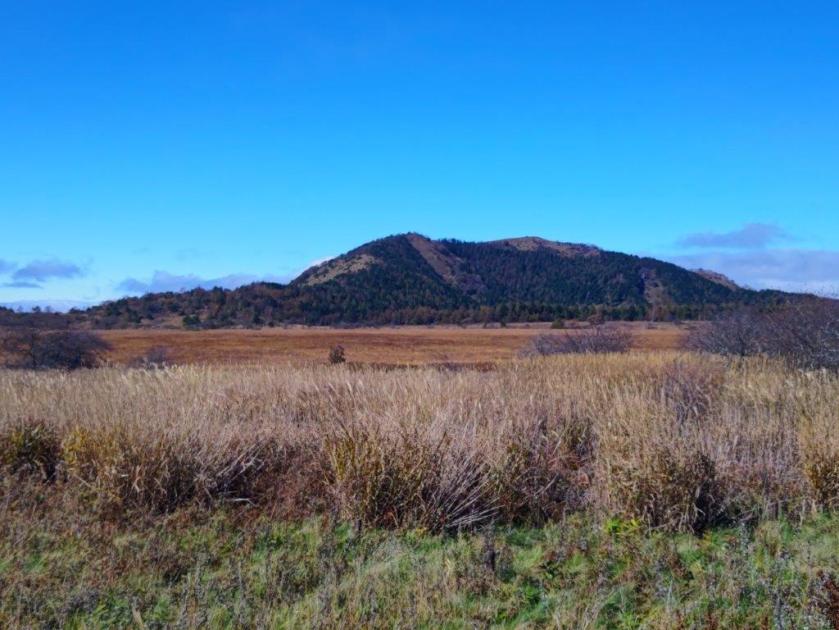
Mt Otakatori (376m), Ogose Town, Saitama Prefecture, Saturday May 11, 2024

I wanted to do a short morning hike close to Tokyo to beat the early summer heat that was forecast for the weekend. I decided to head to Mt Otakatori in the Ogose Alps, last climbed two years ago. Looking at my map, I spotted a trail on its west side leading to an observation deck on the top ridge. From there, I’d follow the ridgeline north to the highest point. I’d then descend a valley on the east side and check out a minor peak protruding from the forested foothills. I’d end the hike at a park at the foot of the mountain, a short walk from the station.

Hiking in Oku-Musashi & the Ogose Alps

奥武蔵 ・  越生アルプス

Start of the Kami-Daima Trail (left) Sun Shining on the New Green (right)

Walking under Fallen Trees (left) and between the Ferns (right)

To get to the start of the trail, I would ride the Tobu express train from Ikebukuro to Sakado and then change to a Tobu local train ending at Ogose station. From there, I’d catch a bus for Kuroyama and get off a few stops before the end of the line. The forecast called for blue skies and temperatures in the high twenties; I hoped I’d be able to wrap up my hike by the early afternoon. I was looking forward to exploring new trails on a familiar mountain and getting some good views on an early summer day.

For subscribers, read this Blog Post on Hiking Around Tokyo for a better viewing experience and the latest updates

Passing by Nishi-Daimon Orchards (left) Path for Kokuzoson (right)

Wide Trail (left) and Narrow Footpath (right) for Nishi-Yamafuji

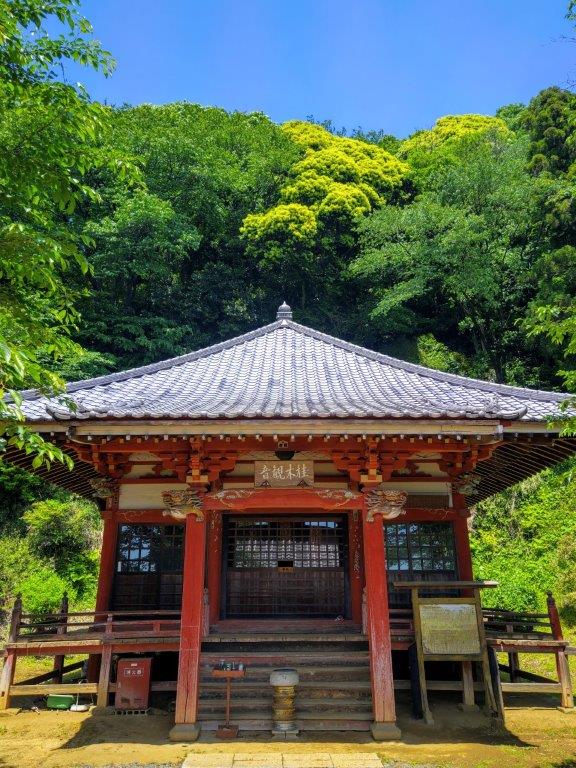
It was a beautiful spring morning as I rode the train out of the city, glad that I could sit all the way. After arriving at Ogose station shortly after 9am, I boarded the bus for the short ride to Kami-Daima stop near a bridge over a river. After getting ready, I quickly located the start of the trail, an unmarked footpath to the right of a gravel driveway, and by 10am was walking in the cool shade of the cedars. Less than an hour later, I emerged from the forest onto a road at Nishi-Daimon Orchards (西大門農園), a short distance from the Katsuragi Kannon observation deck (桂木観音展望台), which I reached just before 11am.

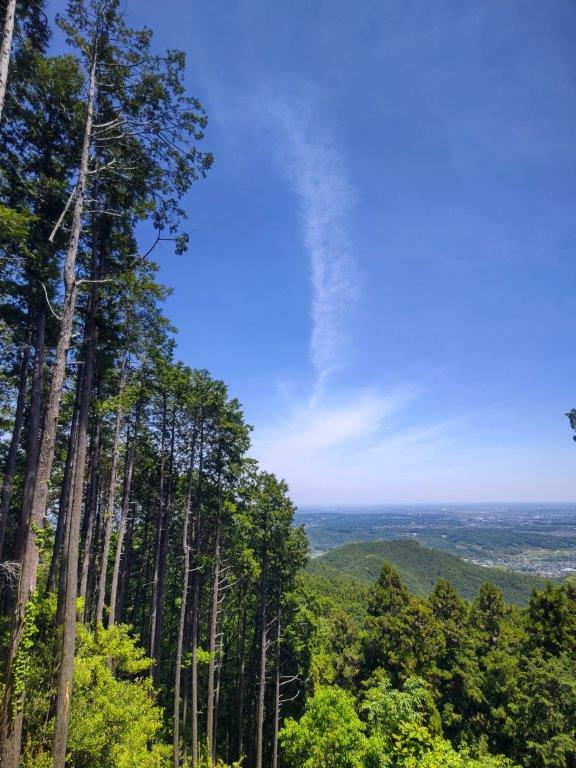
View Southeast from the Katsuragi Kannon Observation Deck

View Northeast from the Top of Mt Otakatori

I enjoyed the view, the new green of spring contrasting nicely with the bright blue sky; in the distance I could see the flat Kanto Plain and the skyscrapers of Tokyo. I went up a series of stone steps starting directly behind the deck and ending at Katsuraki Kannon temple, the hiking trail continuing on the left. Very soon, I passed the minor summit of Mt Katsuragi (桂木山 かつらぎさん katsuragi-san 376m), completely within the trees. Soon after, I arrived at a large crossroads in the middle of the forest where I continued straight, reaching the summit of Mt Otakatori (大高取山 おおたかとりやま otakatori-yama) soon after.

View of the Ogose Alps from Mt Otakatori

Closeup of the section between Mt Ogose and Kanhashu

Some trees had been cut on the west side, opening up a superb view of the Ogose Alps (越生アルプス): I could see all the way from Mt Ogose on the left to Kanhashu on the right. I then turned to face the more familiar view on the west side: between a gap in the trees, I could see the rounded top of Mt Nishi-Takatori lower down and Ogose Town and the Kanto Plain beyond. It was already 1130 and time to head down; a little after noon, I turned right onto a path for Kokuzon (虚空蔵尊), taking me away from the busy main trail up and down the mountain.

Few People at the Summit on this Beautiful Day

Forest Road leading to Kokuzon Sakura Park

I was delighted to be have the trail to myself again, walking down a green valley alongside a bubbling stream. Half an hour later, I reached a forest road but soon turned right up a trail next to a brooklet, a tributary of the stream from earlier. The path curved in a counter-clockwise direction and I was soon heading east again. I made a short roundtrip to the top of Nishi-Yamafuji (西山富士 にしやまふじ nishi-yamafuji 190m), a peaceful spot in the middle of the forest. Back on the main trail, I soon exited the forest and arrived at a viewpoint and a couple of log benches, also the top of Mt Kokuzon Sakura (虚空蔵尊さくら山 170m), the highest point of the Kokuzon Sakura Park.

East Ridge of Mt Otakatori from Mt Kokuzon Sakura

View of the Kanto Plain from Kokuzon Sakura Park

I was pleasantly surprised by this beautiful view, not shown on any of my maps. I could see the eastern ridge of today’s mountain, freckled with light green, as well as the flat Kanto plain stretching away under the light blue sky streaked with white cirrus clouds. After a short break, I set off again, heading down one of the many paths through the park and arriving at the mountain base at about 1h30. I made my way back to Ogose station as fast as I could; although the surrounding countryside was pleasant, I was now out of the forest and fully exposed to the hot afternoon sun. By 2pm, I was glad to be sitting again in the cool interior of the train bound for Tokyo.

Watch a Video of the Mt Otakatori Hike

Watch the Video of the Hike on YouTube

See a Slideshow of More Pictures of the Hike

Tsuzura, Oyado & Nishi-Kubo Marshes, Tokorozawa City, Saitama Prefecture, Saturday, May 4, 2024

I was looking for an easy hike to get back in shape after a three-week break. Considering the Golden Week crowds, I settled on a morning stroll through the Sayama Hills, last visited one year ago. Looking at Google Maps, I found a new trail to explore: it was through a block of adjacent “Totoro’s Forests” surrounding a marsh at the eastern end of the hills. I could then follow the Sayama Lake Perimeter Road to the Saitama Green Forest Museum, and from there revisit two more wetlands on the northern side of the lake.

Hiking in the Sayama hills 狭山丘陵

I would ride the Seibu line to Kotesashi Station, and there, catch a bus for the 15-minute ride to “Waseda Daigaku”, the end of the line and next to several parcels of Totoro’s forest. From the final marsh, I could walk a short way to Miyadera-Nishi bus stop, the end of the line and a thirty-minute ride back to Kotesashi station. The forecast called for blue skies and temperatures approaching 30 degrees. I was looking forward to walking through green forests and wetlands on Greenery Day, and hoped they would keep me cool on an early summer day.

For subscribers, read this Blog Post on Hiking Around Tokyo for a better viewing experience and the latest updates

Start of the hike near Waseda University (right) Log steps for Totoro Forest #33 (left)

Path next to Totoro’s Forest #5 (left) Dirt Road around Sayama Lake (right)

I was glad to be comfortably seated on the half empty local line for the one-hour trip to Kotesashi station, most people preferring further destinations for the holidays. The bus for Waseda University was completed deserted on the weekend (also a holiday) but I could imagine it being packed on a class day. After getting ready and having a late breakfast on the shaded circular bus stop bench, I set off around 1030, already feeling quite warm under the mid-morning sun.

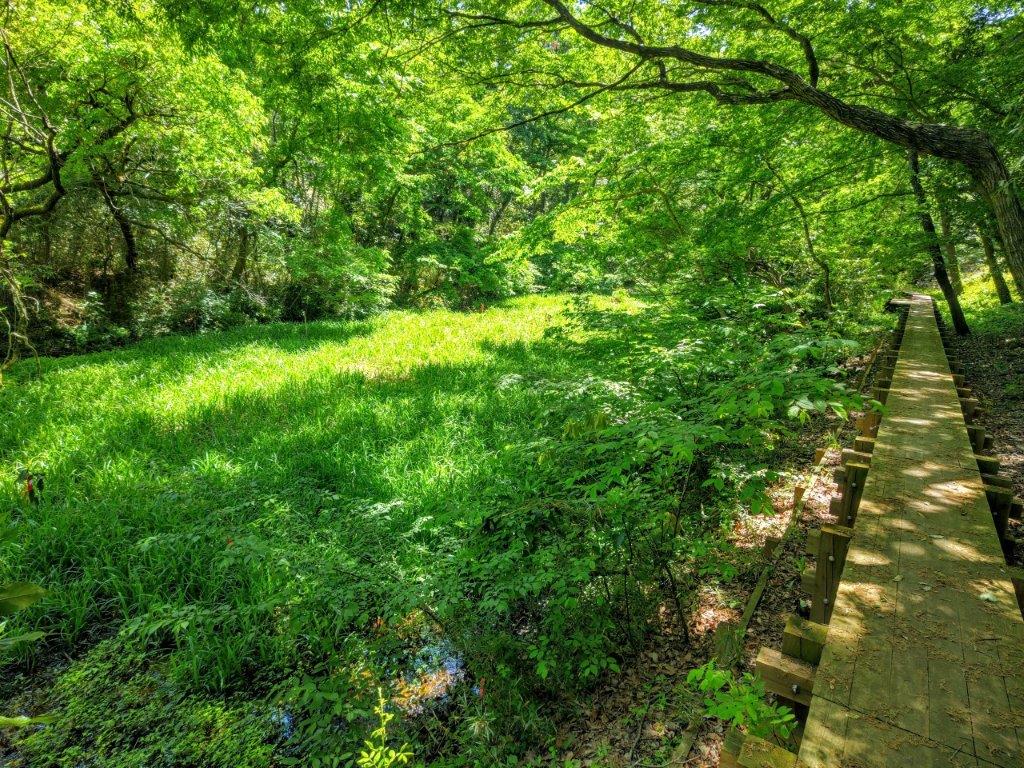
Boardwalk along Totoro’s Forest #51

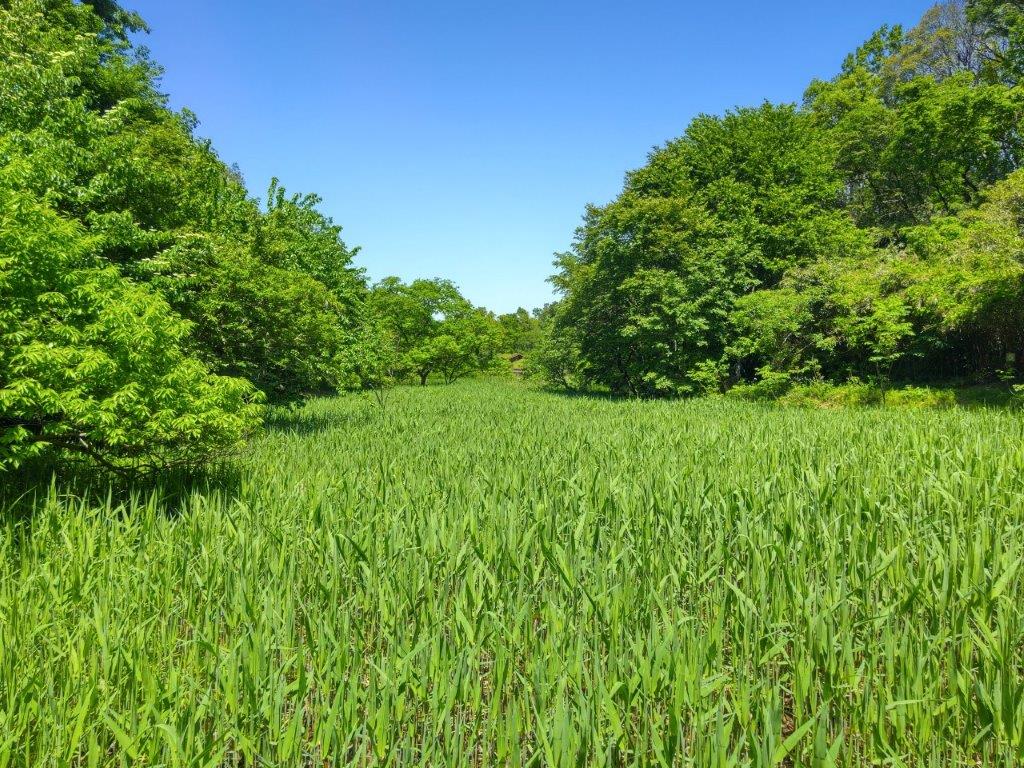
Grassy Field at the end of Tsuzura Marsh

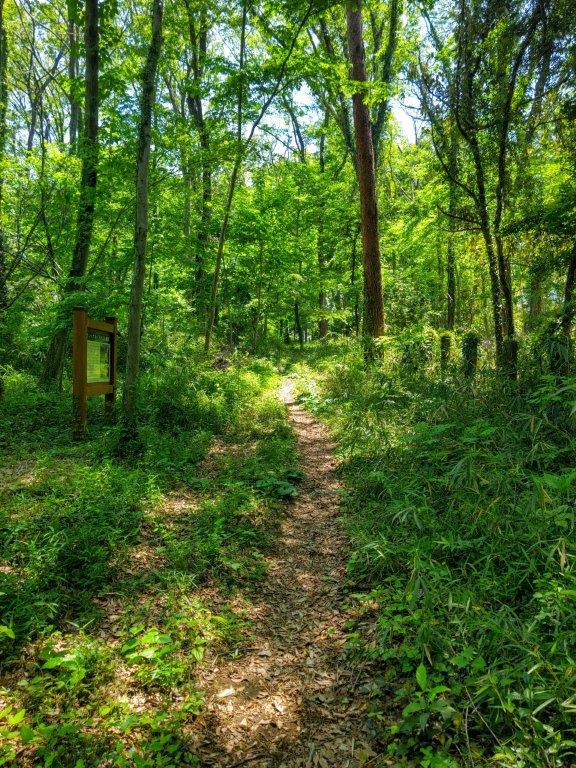
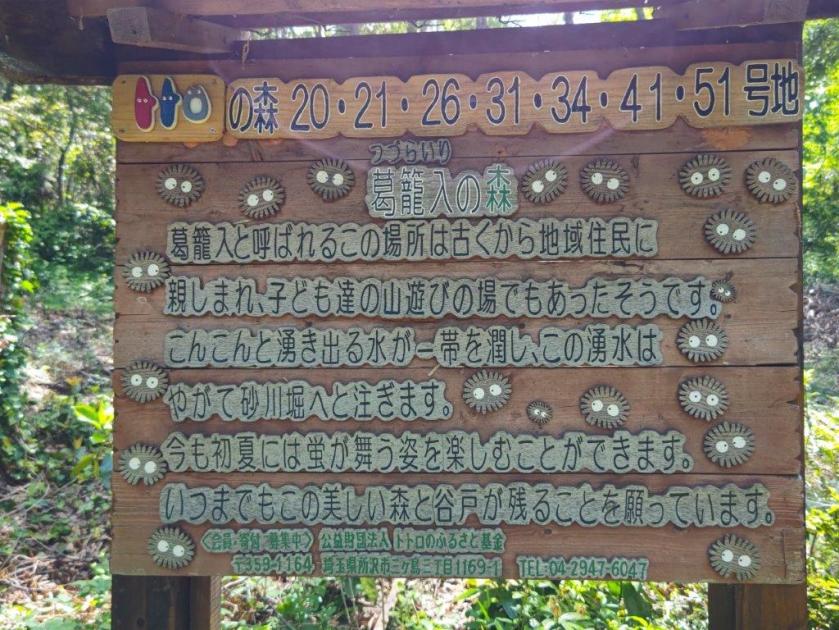
I was amazed to find a path leading into the forest directly opposite the bus stop, possibly the shortest distance between public transport and full-nature immersion in the area. As I passed Totoro’s Forests #20, 21, 26, 31, 33 & 41, it felt wonderful to be wandering through this nature preserve within the confines of Greater Tokyo. After some ups and downs I reached a wooden bridge spanning Tsuzura Marsh (葛籠湿地), also Totoro’s Forests #51 & 34, where I turned left along a boardwalk and then onto a footpath disappearing into a field of tall grasses at the head of a valley.

Bug Catching Family Walking through Oyado Marsh

Nothing but Green at the Edge of Dragonfly Swamp

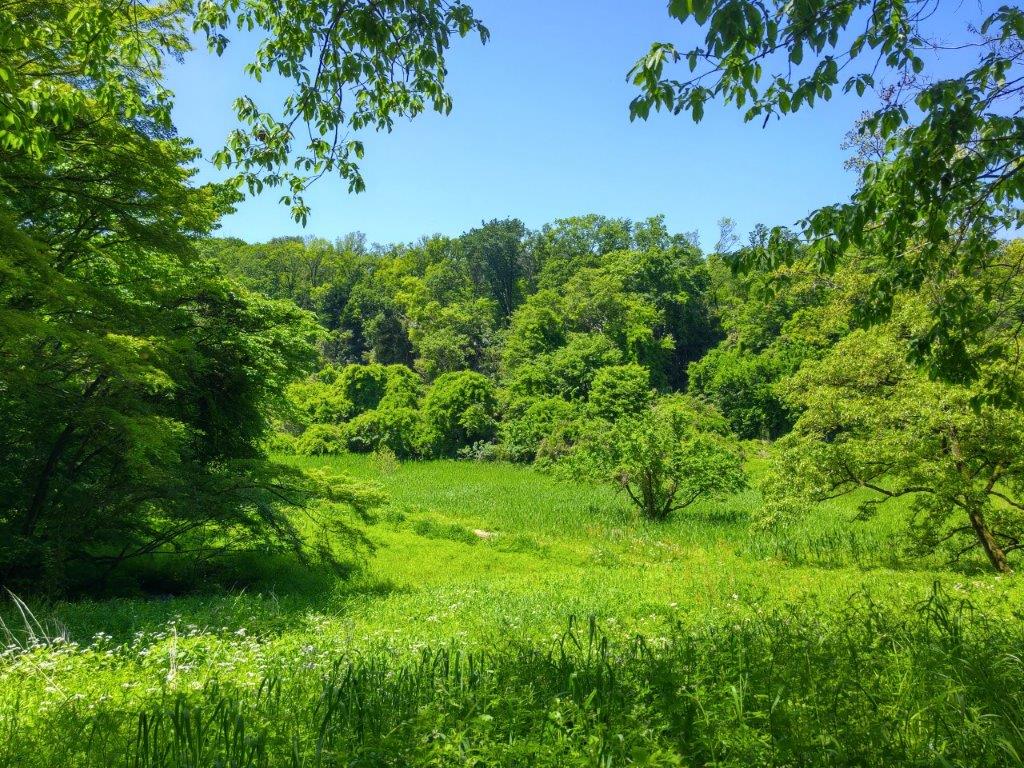
I marvelled at being surrounded by green grass in every direction, forming a nice contrast with the blue sky overhead. After carefully treading a path of trampled grass around the field I retraced my steps to the bridge. There I took a path going up on the left but soon turned right and down some log steps into Wako Forest (和幸の森). At the top of a slope I followed a straight path along Totoro’s Forest #5. At 11h30 I reached the Sayama Lake Perimeter Road, following it in a counter-clockwise direction. Less than half an hour later I hopped back onto a path leading to the Forest Museum and Oyado Marsh (大谷戸湿地) where I overtook a net-wielding family hunting for bugs.

Grassy Path near Nishi-Kubo Marsh

One of the Hills of Sayama-Kyuryo

I was pleased to have the trail to myself again as a walked along the left side of the marsh, the muddy waters hidden by tall grasses. At Dragonfly Swamp (トンボ湿地) the path curved right as it reentered the forest; at the next junction I turned left, now merging with my previous hike. After a short climb followed by a descent I reached Nishi-kubo Marsh (西久保湿地), a lovely spot with ponds and a stream wedged between hills and houses. As I was ahead of schedule I spent some time observing clusters of tadpoles happily wiggling in sunny shallow ponds, as well as a grey heron take off and fly away.

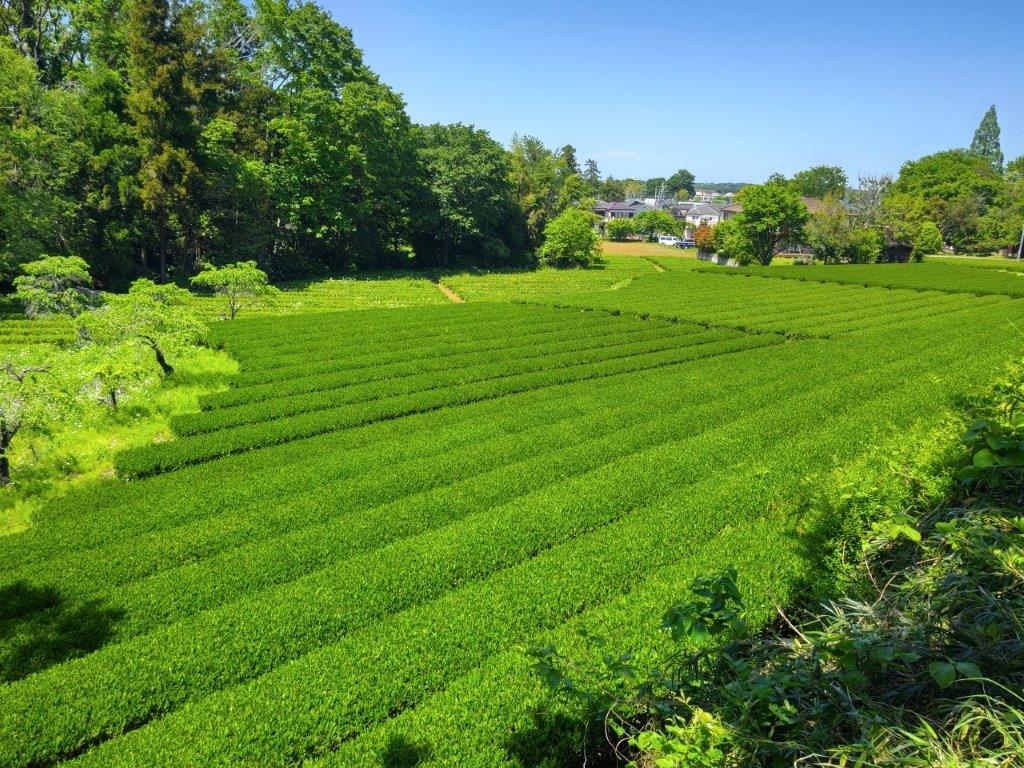
Tea Fields surrounding Nishi-Kubo Marsh

View of the Hills of Okumusashi from near Nishi-Kubo Kannon Temple

I suddenly noticed a small, furry creature trotting along the edge of the marsh, either a tanuki or a weasel, but it soon scampered off into the forest. Other trails around the marsh were closed due to typhoon damage and this may account for the absence of people and presence of wildlife. My bus was due soon so I left the marshes behind and after a pleasant walk along lanes and fields, I arrived at Miyadera-Nishi just after 1pm. It was starting to feel hot under the midday sun and I was relieved to be sitting inside the cool bus for the ride back to Kotesashi station.

Watch a video of the Totoro Forest Hike

Watch the Video of the Hike on YouTube
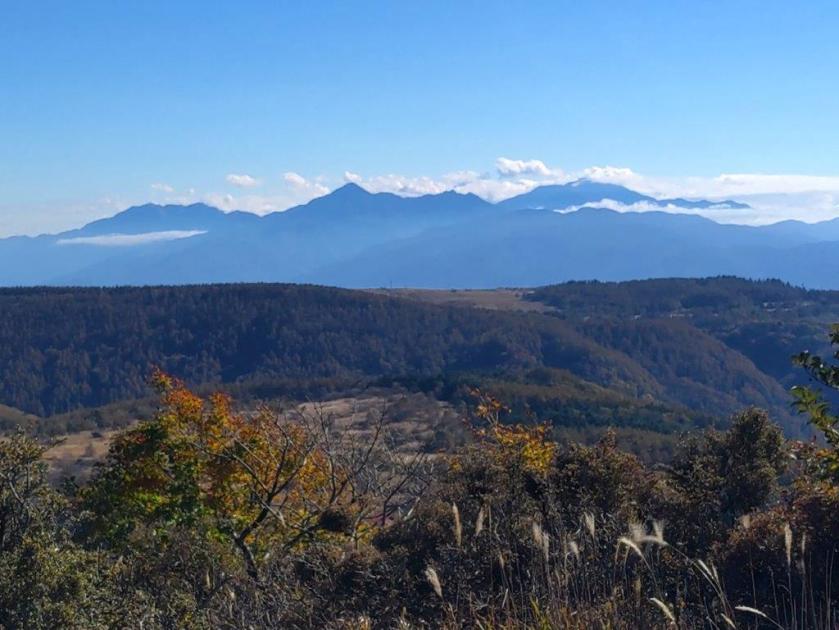
See a Slideshow of More Pictures of the Hike

Mt Kinugasa (134m) & Mt Ogusu (241m), Yokotsuka City, Kanagawa Prefecture, Saturday, April 13, 2024

I wanted to do another hike using the newly published Miura/Boso hiking map. Looking over the Miura section, I found a new peak to climb on the Tokyo Bay side. It was a little short but it seemed possible to continue along a hiking trail and go up the back side of Mt Ogusu (climbed in winter 2021). From the top, I would head down the main trail, ending on the Sagami bay side of the peninsula. It would be my first time to hike in this area in the spring and I hoped to catch the last cherry blossoms of the season

For subscribers, read this Blog Post on Hiking Around Tokyo for a better viewing experience and the latest updates

Steps going up (left) and down (right) in Kinugasa-yama Park

Connecting Path to Mt Ogusu (left) Alternative Trail up Mt Ogusu (right)

Hiking on the Miura Peninsula 三浦半島

To get to the start, I would take the Shonan-Shinjuku line to Zushi, and then ride the Yokotsuka line a few stops to Kinugasa station, a short distance on foot from the trailhead. For the return, I could catch one of the many buses for Zushi station, my only concern being the heavy weekend traffic around Hayama Town. The weather was supposed to be sunny most of the day and cooler near the ocean than on the mainland. Since each peak had its own observatory, I was looking forward to getting some good views of the Miura peninsula.

Hiking the Kanto Fureai no Michi 関東ふれあいの道

Rear Side Ridge (left) and Front Side Ridge (right) on Mt Ogusu

Walking in the Afternoon Sun (left) and along the River (right)

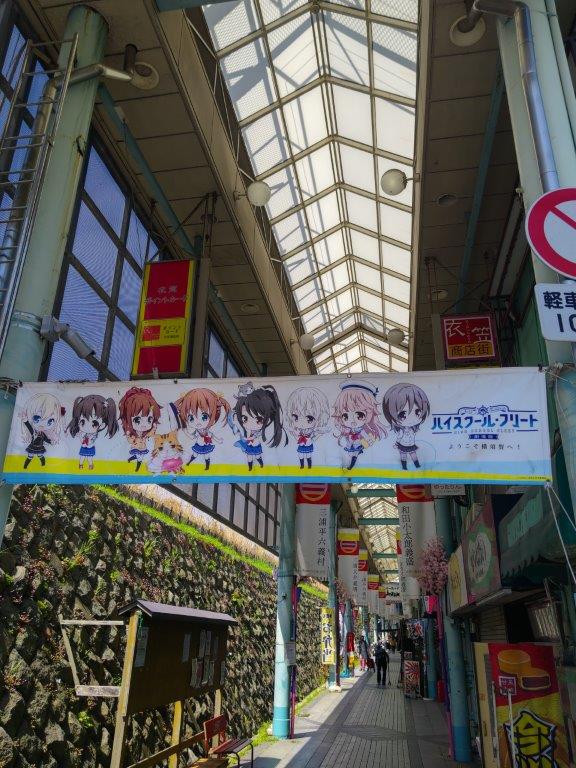
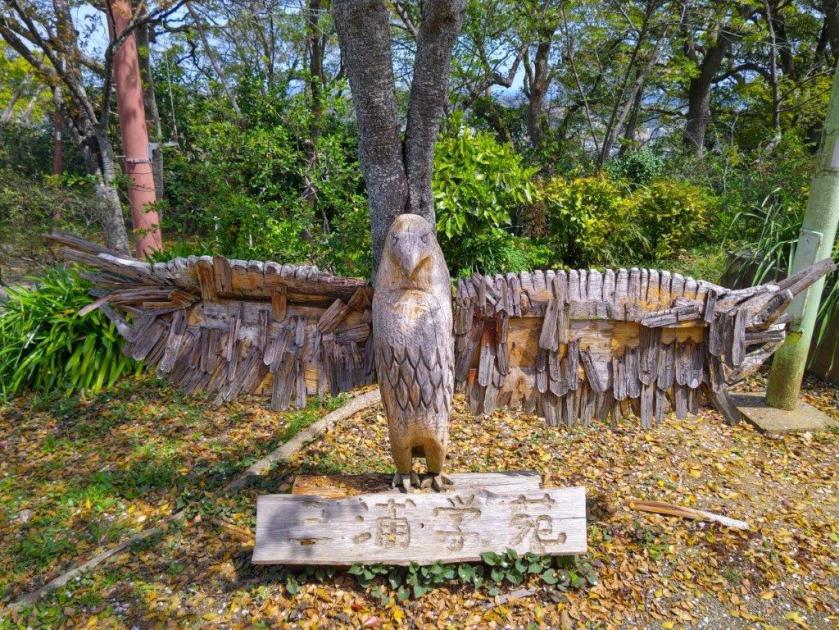
It was a fine spring day as I got off the train at Kinugasa Station around 10am. After a stroll through a shopping arcade, I reached Kinugasa-yama Park (衣笠山公園) and the start of the trail at 1030. Almost at once, I found myself walking through beautiful nature, no other hikers in sight. I soon arrived at a stone staircase where I turned left. At the top, I turned left again, now walking up a paved road, leading to a flat open space at the top of Mt Kinugasa (衣笠山 きぬがさやま kinugasa-yama). The view from the observation deck was partially hidden by cherry blossoms trees, so I quickly moved on to a taller observation tower a few minutes away.

Walking through the lower half of Kinugasa-yama Park

Walking through the higher half of Kinugasa-yama Park

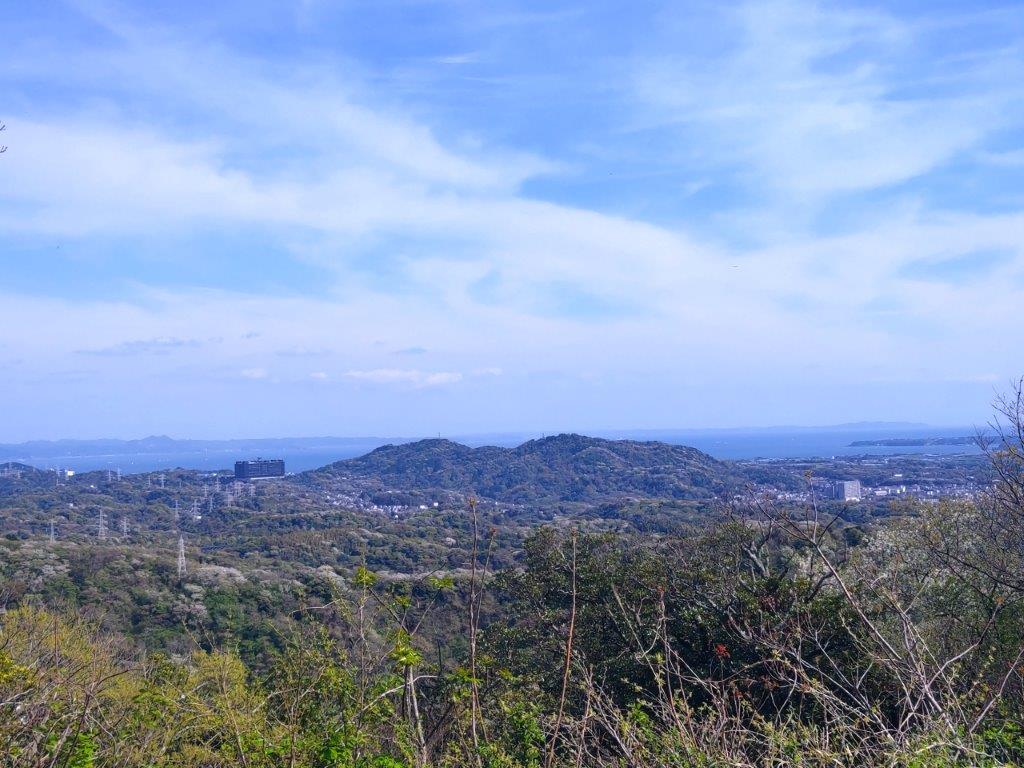
I was impressed by the view from the top of this low mountain, as I could see most of the peaks of the Miura peninsula, Tokyo Bay and the western coast of the Boso peninsula. To the south, I spotted Mt Hodai and Mt Miura-Fuji past the treetops; directly west was Mt Ogusu, the highest peak in the area; finally, the Miura Alps extended across the neck of the peninsula on the north side. Cherry blossom trees surrounded the tower but were already past their prime. I continued my hike, walking down log steps sprinkled with fallen petals. Just before noon, I reached a busy road at the base of the mountain. I followed it for a short while but soon left it to follow a lane up a steep slope. Just beyond a staircase leading to a shrine, the lane ended at another hiking trail.

View of Mt Ogusu from the top of Mt Kinugasa

View of Tokyo Bay from the top of Mt Kinugasa

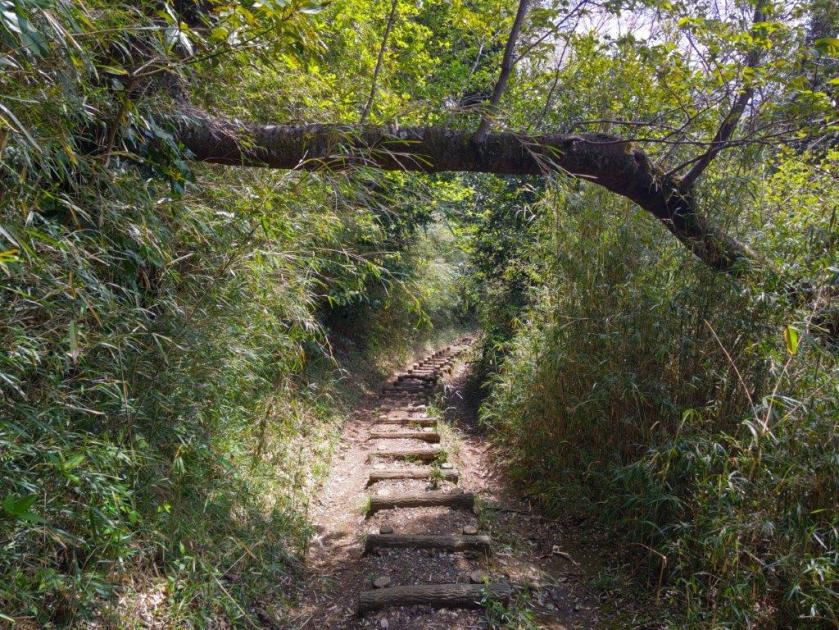
I was delighted to be back on a hiking path, surrounded by the forest and free of people. The trail was mostly level, a fallen tree trunk providing the only difficulty. Shortly before 1pm, I reached a bridge over a highway, picking up the trail on the other side. After a short climb, I arrived at a road free of traffic leading to a recycling center. After observing a couple of cats strut around, I made my way up some steps leading to the next part of the hiking route. After some easy climbing along a well-maintained path, I reached a ridgeline at 1h30, and continued straight, ignoring a trail on the left side.

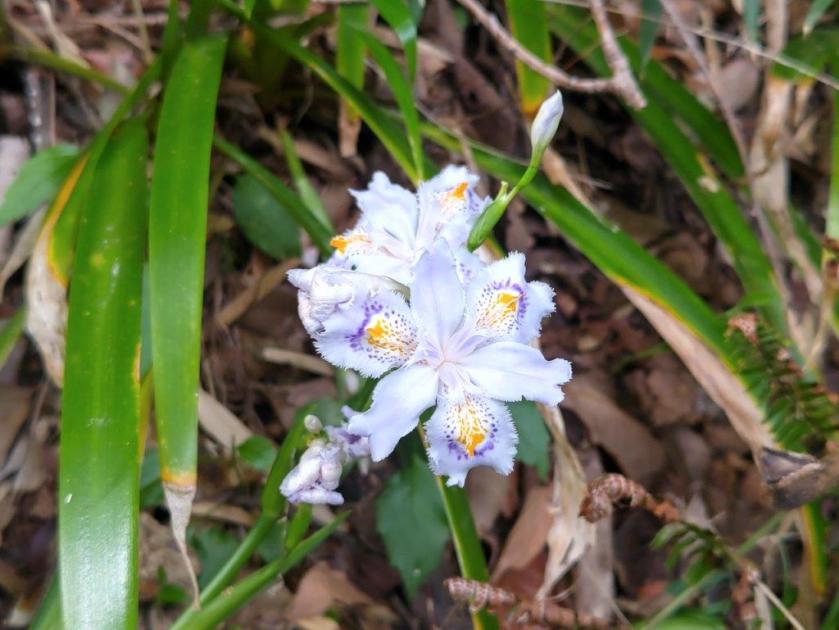
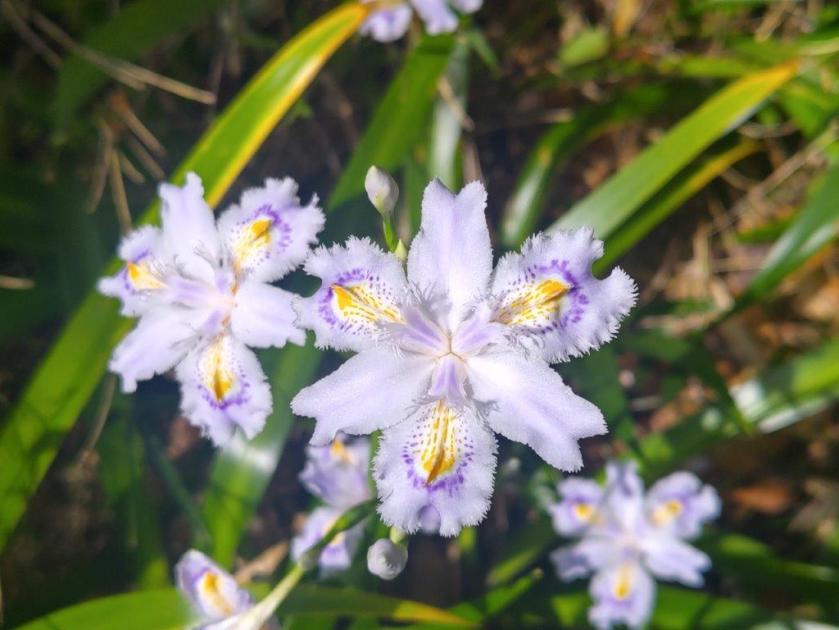
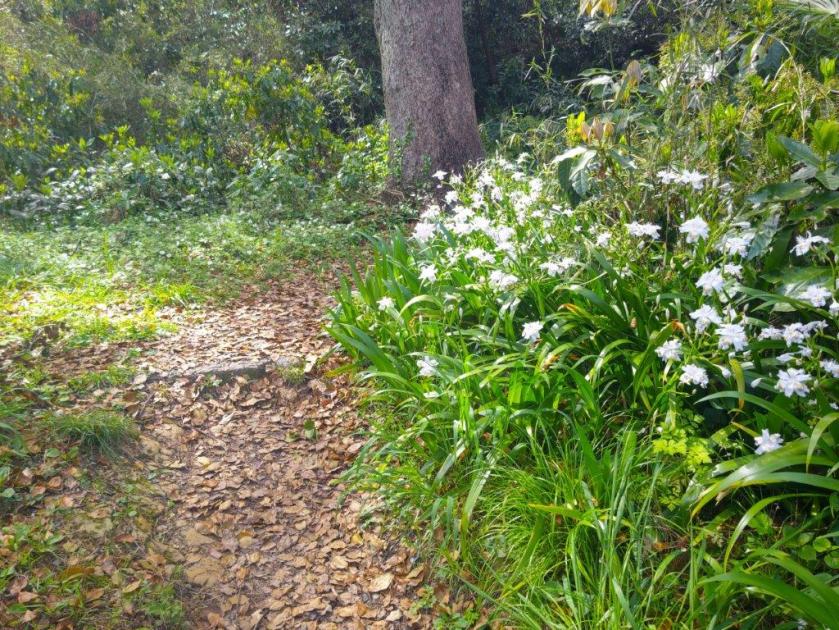
Irises lining the path

Many steps up Mt Ogusu

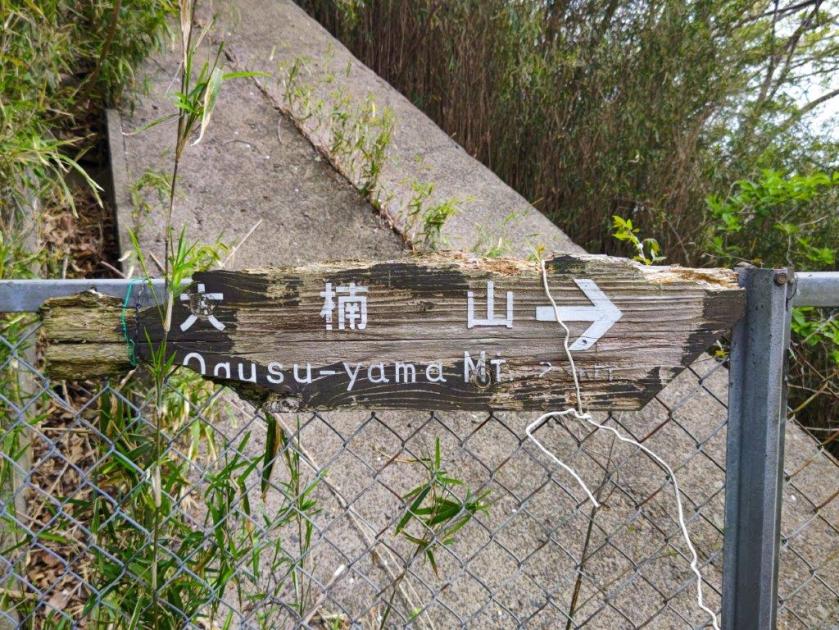
The many iris flowers lining both sides of the path made this the most pleasant part of the hike. The forest retreated to allow for a power line, revealing blue skies splashed with white cirrus clouds. Very soon I arrived at the junction of my previous hike here. From this point, I followed a series of log steps through the new spring green all the way to the top of Mt Ogusu (大楠山 おおぐすやま oogusu-yama), a Kanto 100 famous mountain. Since it was 2h30, I sat down for a late lunch. The main observation tower was closed but another one a short distance way provided good views of the Miura Peninsual to the south and the Miura Alps to the north.

View of Mt Hodai and Mt Miura-Fuji from the top of Mt Ogusu

“Half Blossoms” and “half Miura” from the the Observation Tower

I was glad to see more cherry blossoms trees around the tower, half the petals still hanging on. I now headed down the Maedabashi route (前田橋コース), also the Kanto Fureai no Michi, passing relatively few people on the way. Half an hour later, I arrived at the start of the Maedagawa Promenade (前田川遊歩道). I had done it twice before but the water level had been lower than now, and it was a lot more impressive in this season. I wanted to linger to enjoy the sound of rushing water but I had a bus to catch. By 4pm, I was on my way back to Zushi station, reached after a slight delay due to the expected traffic jams. There, I boarded the Shonan-Shinjuku line for the one hour ride back to Tokyo.

Watch a video of the Mt Ogusu Hike

Watch the Video of the Hike on YouTube

See a Slideshow of More Pictures of the Hike

Mt Amamaki (533m) & Mt Mitsutoya (433m), Mashiko Town, Tochigi Prefecture, Saturday, March 2, 2024

I wanted to revisit a mountain in Ibaraki I had climbed six years ago. According to my guidebook, a network of trails existed on the other side, in Tochigi, allowing me to create a loop hike. I could combine it with another peak on the same ridge. Since no buses run in the area, I would need to drive a car from Mito station, one hour away. The hike was on the short side, so I could get an early lunch at one of the many soba restaurants dotted throughout the countryside, and then start walking from the early afternoon. The weather was supposed to be mostly sunny but cold for the season, with temperatures slightly above freezing at the highest point. I was looking forward to visiting a hard to access, but rewarding hiking area close to Tokyo.

For subscribers, read this Blog Post on Hiking Around Tokyo for a better viewing experience and the latest updates

Walking the Summit Ridge (left) A well-maintained Trail (right)

Trail Before (left) and After (right) Mt Mitsutoya

I got a good look at the plum blossoms of Kairakuen Park in full bloom, as the Hitachi limited express approached Mito station just before 10am. Shortly after getting off the Kita-Kanto expressway, I reached Donjuan (呑珠庵) where I enjoyed one of the best soba lunches in a long while. After driving a little further, I arrived at the Okawado parking lot (大川戸登山口駐車場) and was finally ready to start hiking just before 1am. The weather was cloudier than forecast, although the sun was shining as I followed a forest road up a river valley and through a cedar forest.

Trail just below the Summit of Mt Amamaki

Summit of Mt Amamaki

I was delighted to be hiking alongside a stream, the noise of the water rushing over rocks was like music to my ears. Eventually, the forest road turned into a rocky trail. Thirty minutes after setting out, I arrived at a fork where I turned right, onto the Mt Amamaki Ridge Route (雨巻山尾根コース). After a short, steep climb up a well-maintained path, I reached the ridgeline. There, I turned left, and after some gentle climbing surrounded by bare trees, arrived at the summit of Mt Amamaki (雨巻山 あままきやま amamaki-yama), a Tochigi and Kanto 100-famous mountain, a little after 2pm. On the west side, I could see Mt Takamine, Mt Bucho, and further away Mt Yakimori and Mt Keisoku.

View from the Top of Mt Amamaki

The Rounded Summit of Mt Bucho

I was surprised to find the summit completely deserted despite the nearly full parking lot at the base. I sat at one of the benches for a short break before heading back the same way. I continued past the top of the Ridge Route, now following the Mt Mitsutoya Ridge Route (三登谷山大根コース), a mostly level path through the trees. I soon reached a bench with a view of the Ashio mountains on the west side: I could see the highest peaks of Oku-Nikko, the pointy top of Mt Sukai, and the many summits of Mt Akagi. Another half an hour of walking brought me to one more viewpoint, this time on the south side. I could see the Ogodo Alps directly ahead, as well as Mt Tsukuba in the distance.

View West of the Ashio Mountains

Late Afternoon Sun and the Ogodo Alps

I was mesmerized by the colours of the late afternoon sun rays, piercing the clouds on the south side. Soon after, I arrived at Mt Mitsutoya (三登谷山 みつとやさん mitsutoya-san). Westwards, I could see the Oku-Nikko mountains, Mt Takahara and Mt Nasu; directly ahead, and much closer was Mt Takadate. After some descending, I turned right, off the ridge and into the valley through an evergreen forest, eventually rejoining the forest road taken earlier in the day. By now, the clouds had completely covered the sky, making the sun a distant memory. My car was almost the last one left, and by 5pm, I was on the road. At Mito station, I tried some local sake at Ibaraki Jizake Bar before boarding the limited express train for the comfortable ride back to Ueno.

Watch a Video of the Mt Amamaki Hike

Watch the Video of the Hike on YouTube
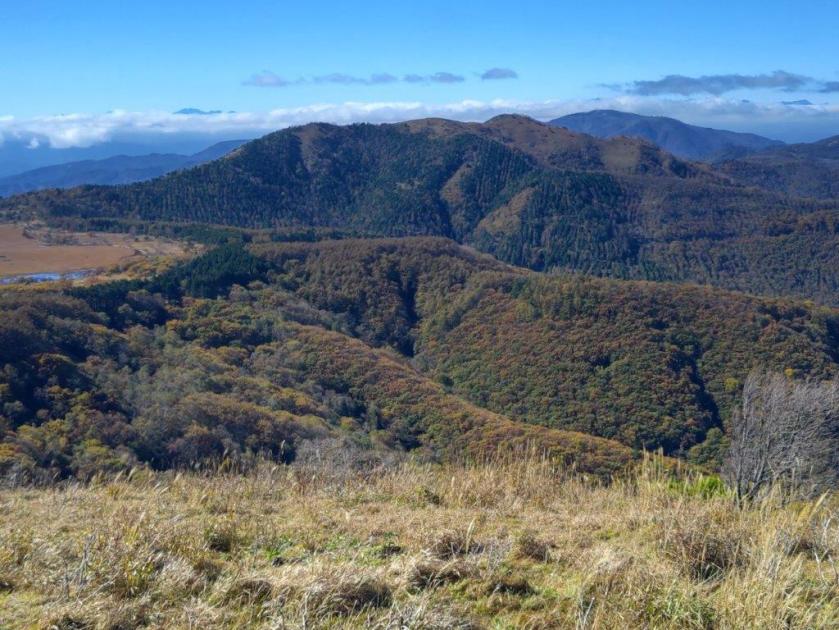
See a Slideshow of More Pictures of the Hike

Mt Yamatsuri (383m) & Mt Hiyama (510m), Yamatsuri Town, Fukushima Prefecture, Sunday, February 18, 2024
I wanted to do another hike on the Abukuma Plateau after seeing it from afar on my previous hike. Looking at my Mountains of Fukushima guidebook, I found two short loop hikes on opposite sides of the Kuji river, just across the border with Ibaraki prefecture. It was similar to a hike I had done in 2019, but somewhat further up the valley. Looking online, it seemed I could get some great views of the whole area; at the end, I could visit a nearby waterfall, if time allowed.

Hiking in Tohoku 東北

I would ride the Hitachi Limited Express from Ueno to Mito, and there transfer to the Suigun line, getting off at Yamatsuri station, two stops past Hitachi-Daigo. For the return, I could continue along the same line, all the way to Koriyama, the last station, from where I could catch the shinkansen back. The weather was supposed to be sunny and cloudy, with temperatures above average for the season. I was looking forward to riding the entire length of the Suigun line for the first time, and getting some new views of the Abukuma Mountains.

For subscribers, read this Blog Post on Hiking Around Tokyo for a better viewing experience and the latest updates

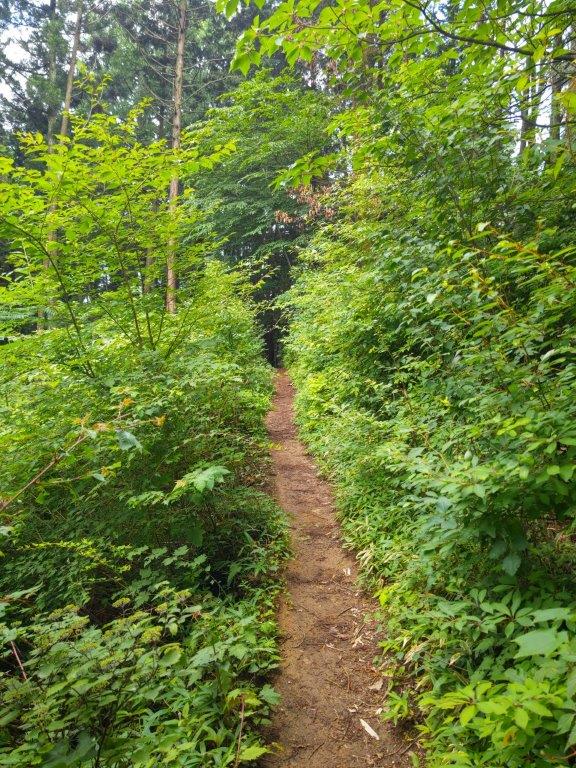
Start of the hike (left) Near the Top of Mt Yamatsuri (right)
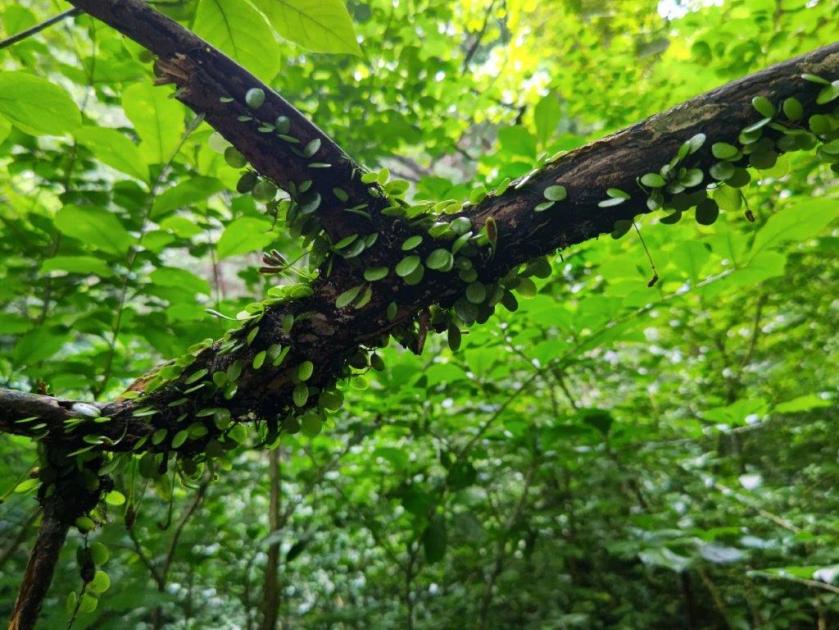
Heading Down Mt Yamatsuri (left) and Mt Hiyama (right)

It was a blue sky day as I got off the colourful train car just before 11am, the other cars having been left behind a few stations back. I immediately headed to the nearby trail entrance, and soon reached the first viewpoint of the day, on a rocky ridge slightly off the main path. After taking in the views of the river valley below, I made my way up some log steps leading to a paved path. Shortly after a viewpoint of Hizuki Rock (日月岩 hizuki-iwa) to the south, I reached the start of the hiking trail on the right. In almost no time I reached a treeless ridgeline, from where I had a view of the Abukuma plateau to the north.

View North of Abukuma-kochi from below Mt Yamatsuri

View North of Abukuma-kochi from Tendozuka

I was amazed by the bird’s-eye view of the valley and hills below, especially since my elevation was relatively low. A few minutes later, I arrived at the summit of Mt Yamatsuri (矢祭山 やまつりやま yamatsuri-yama). Northeast, I could see Mt Yamizo. The clouds had started to roll in, creating alternating patches of light and dark on the scenery. I quickly moved on, and after a short up and down, reached the flat top of Tendozuka (402m 天道塚 てんどうづか) from where I had a nearly 360° view of the entire area.

Looking down from Hizuki-iwa

Looking East towards Mt Hiyama

I was stunned by the vast panorama, most of the surrounding mountains new to me; apparently even Mt Fuji could be seen, although not today. It was just past noon so I had sat on one of the many benches for an early lunch. At 12h30, I started to head down. On the way, I passed a viewpoint on the side of Hizuki Rock. From the rocky outcrop, I could see the meandering Kuji river below. The trail now hugged steep mountain side, mostly out of the trees, and it felt very warm under the sun. At 1pm, I reached the base, and after crossing a red hanging bridge, headed up a trail through the cedars. I soon turned left onto a forest road which I followed for a while, before leaving it for a path on the right.

Red Hanging Bridge over Kuji River

View North of the Kuji River Valley

At 2pm, I reached a level area with a bench and a wide view. Directly ahead, the Kuji river valley extended northwards. On the west side, I was looking down at the loop hike I had walked earlier in the day, with the bulk of Mt Yamizo spreading out in the background. A few more minutes of walking brought me to the top of Mt Hiyama (檜山 ひやま hiyama) where I finally a had a good view on the south side. I could see the rugged outline of Mt Nantai, the most famous peak in the area. After a short break, I headed back down the same way. Since I was on schedule, I made a detour via Muso Taki (夢想滝 dream waterfall), which I reached at the end of a narrow ravine.

Mt Nantai (left) from the top of Mt Hiyama

In the foreground, Mt Yamatsuri, in the background, Mt Yamizo

Although the waterfall in this season was rather small, I was impressed with the huge overhanging cliff right next to it. It was nearly 3h30 so I made my way back to the station to catch one of the few afternoon trains for the one hour and a half ride to Koriyama. Along the way, I enjoyed some views of the higher mountains of Fukushima prefecture on the west side. After arriving in Koriyama, I boarded the shinkansen for the one hour ride back to Tokyo. I saw few people and had lots of great views on today’s hike so I was glad I had gone all the way to a little visited in area northeastern Japan.

Watch a Video of the Mt Yamatsuri & Mt Hiyama Hike

Watch the Video of the Hike on Youtube

See a Slideshow of More Pictures of the Hike

Haga-Fuji (271m), Motegi Town, Tochigi Prefecture, Saturday, February 10, 2024

I wanted to explore more of the Kanto Fureai no Michi, its trails being well-suited for winter hiking. I decided to do a section between Motegi and Nanai stations in eastern Tochigi, mostly following back lanes through an area of low hills, at the southern edge of the Abukuma Plateau. It had snowed heavily a few days before so this felt like a safe choice. At the halfway point was another local “Fuji”, with supposedly good views from the top, although I hoped no snow would be left on the steep climb.

Hiking the Kanto Fureai no Michi

関東ふれあいの道

I would ride the Utsunomiya line to Oyama Station, and then the Mito line to Shimodate station. There, I would transfer to the private Mooka line (pronounced “mo-oka”) and get off at the last station. For the return, I could get catch a bus for Utsunomiya, and then ride the shinkansen back to Tokyo. The weather was supposed to be sunny and cold, but not freezing. I was looking forward to a relaxing station to station hike and getting some new views in a little-visited area.

For subscribers, read this Blog Post on Hiking Around Tokyo for a better viewing experience and the latest updates

Heading up (left) and down Haga-Fuji (right)

A Well-Maintained Trail on Haga-Fuji (left) with Views through the Trees (right)

It was a beautiful blue-sky day as I stepped off the train at Motegi just before 11am. I was surprised by how few people visit this charming riverside town in the hills, although it might be due to the winter season. I set off half an hour later and followed a promenade along the Sakasa river. On the way, I passed the quiet “Cat Store” (猫の雑貨屋), a small shop and cafe selling cat-related goods, and the busy “Motegi Roadside station” (道の駅もてぎ), from where I got a glimpse of the steam locomotive (SL) that runs on the Moka line on weekends.

Promenade along the Sakasa River

Walking through the Tochigi Countryside

It was a day for sights in the sky: white herons taking off above the river, wispy cirrus clouds moving quickly overhead, a helicopter whizzing by, power lines spanning the sky between pylons, and even a couple of circling hang-gliders which I first mistook for birds of prey. After a short bit on a busy road, I crossed a bridge and left the Sakasa river for a short detour by Anraku-ji temple (安楽寺) and its 600-year-old Zelkova tree (“keyaki“), from where I had my first glimpse of the conical top of today’s mountain. Thirty minutes later, I passed some terraced rice fields, one of the 100 rural landscapes of Tochigi, still covered in snow. Soon after, I reached the entrance to the hiking trail on the left.

Mt Yakimori & Mt Keisoku from near the top of Haga-Fuji

Mt Amamaki & Mt Takamine from halfway down Haga-Fuji

I was surprised to see the path covered in snow, with only one set of footsteps. Luckily, once it entered the forest, the snow all but disappeared. After a steep but short climb through cedars, I reached a dirt track with a wide view on the east side. I could see Mt Yakemori and Mt Keisoku, as well as the other Mt Fuji in the area. One final effort brought me to the highest point of Haga-Fuji (芳賀富士 はがふじ), a 100 famous mountain of Tochigi. The view was mostly blocked by trees; through a gap on the southwest side was a view of the real Fuji, although today it was lost in the haze. It was 2pm so I sat on one of the benches for a late lunch. After half an hour, I headed down a switchback trail on the south side.

Snowy Section of the Fureai no Michi

Looking back at Haga-Fuji

This was by far the most pleasant part of the hike. Halfway down and slightly off the trail, I had a view to the south of Mt Amamaki and Mt Takamine, as well as the Ogodo Alps. I soon reached the base, and after passing Kumano shrine and Anzen-ji temple (安善寺), was back on countryside lanes. Turning around at the top of a slope, I could admire the conical shape of today’s peak. Another hour of uneventful walking brought me to a bus stop near Nanai station; a little after 4pm I boarded the bus for Utsunomiya, where I hopped on the shinkansen for the short trip back to Tokyo.

View a Video of the Haga-Fuji Hike

Watch the Video of the Hike on Youtube

See a Slideshow of More Pictures of the Hike

Mt Takatori (219m), Oiso Town, Kanagawa Prefecture, Saturday, February 3, 2024

I was looking for a suitable winter hike in the Tokyo area. While checking my map, I spotted a section of the Kanagawa Kanto Fureai no Michi I had yet to explore, connecting the Tokaido line with the Odakyu line. Although it mostly followed back roads through the countryside, the first section was up a minor peak on a forested plateau, from the top of which I hoped to get some views.

Hiking the Kanto Fureai no Michi

I would ride the Shonan-Shinjuku line from Ikebukuro to Ninomiya station on the Shonan coast, and then take a bus to a stop near the start of the trail, skipping a one-hour section through Oiso Town. For the return, I could catch a bus for Hadano Station near Kaname River, since I had already done the next section for Mt Koubou, and then ride the Romancecar limited express back to Tokyo. If had time, I’d be able to get a hot bath at the nearby Manyo-no-Yu.

関東ふれあいの道

The weather was supposed to be sunny in the morning and overcast in the early afternoon; although it was a short hike, I decided to get an early start to take advantage of the good weather. I was looking forward to a relaxing hike through a new area close to home.

For subscribers, read this Blog Post on Hiking Around Tokyo for a better viewing experience

Bamboo forest (left) and steep slope (right) at the start of the hike

Walking on the top ridge (left) and up the steps (right)

Walking down to (left) and up from Kirifuri Keiryu (right)

It was a 90-minute train ride under clear blue skies to Ninomiya station where I boarded a bus for the short ride to Higashi-no-Ike (東の池), a reedy pond with a shrine on an islet. After getting ready, I located a sign for the Fureai no Michi and set off, a little before 11am, through a residential neighbourhood. Past a bamboo forest, the road rose sharply, and after a few minutes of climbing under tall cedars, I reached the ridge top, where I turned right, onto a level hiking path through the forest.

Clearing at the Top of Kirifuri Keiryu

View East towards Yokohama and the Miura Peninsula

I was amazed to be on such a lovely trail, reminding me of Kamakura, but minus the crowds. It was mostly in the trees but I did get a glimpse of Hakone through a gap on the west side. At 1130, I passed under a stone Shinto gate and made my way up a series of log steps, at the top of which I arrived at Takatori Shrine (鷹取神社). A little beyond, and slightly off the trail on the left side, was the top of Mt Takatori (鷹取山 たかとりやま) surrounded by forest. I couldn’t see a summit marker but my GPS confirmed the spot. I sat down on a sunny tree trunk for a short break.

View North from Yurugi Hill

Tanzawa from Yurugi Hill

I basked in the sunshine and listened to the birdsong, before setting off again at noon, down a dirt road leading to a turn-off for Kirifuri Stream (霧降渓り流 kirifuri-keiryu). I decided to check it out since according to my map, I could do a short loop along a river valley (the full trail continues to Shonan-Daira). I soon arrived at a clearing around an electric pylon, and was rewarded with a view of Yokohama and the Miura peninsula to the east. A little further, I turned righ, descending steeply into the valley, and then took another path on the left, leading up to some fields on top of Yurugi Hill (ゆるぎの丘 yurugi-no-oka).

Mt Oyama and Plum Blossoms from the Fureai no Michi

Mt Nabewari (left), Mt Tono (middle) and Mt Oyama (right)

It was the best view of the day, and would have made a great lunch spot if there had been a place to sit. To the north, I could see the Tanzawa mountains, with the triangular top of Mt Oyama at the very right. I turned left again and soon arrived back at the clearing, thus completing my loop. Minutes later, I was back on the Fureai no Michi. From then on, I followed peaceful back roads meandering through the countryside. I had occasional views of the Tanzawa range, including one from a roadside bench where I had lunch at 1h30. The clouds had started to roll in from the west, and although, they hadn’t yet reached the sun, I quickened my pace.

View of the Tanzawa Range Extending Westwards

Bright Red Shinto Gates at Myoen-ji Temple

I was surprised by the many plum trees in full bloom, very early for the season. At 2pm I reached the photogenic Myoen-ji Temple (妙圓寺) with its flapping banners and bright red “torii” catching the last of the sun. Before moving on, I ventured into a small cave within the temple grounds and followed an underground passage till it became too low to continue. After passing Daijoin Temple, with its huge plum tree in full flower, I arrived at Nanpei Bridge (南平橋) at 3pm, where I caught one of the frequent buses for Hadano station. I had enough time for the hot spring bath, so I was refreshed for the one-hour trip back to Shinjuku.

Watch a Video of the Mt Takatori Hike

Watch the Video of the Hike on Youtube

See a Slideshow of More Pictures of the Hike

Mt Fuji (220m) & Shirogane-Daira (195m), Hidaka City, Saitama Prefecture, Tuesday, January 30, 2024

I wanted to do a short hike to get back into shape after a three-week break. I settled upon going on a weekday morning, as other commitments and poor weather had prevented me from going the previous weekend. I decided to do a hike up a minor peak on the eastern edge of the Oku-Musashi hills, planned last year and kept in reserve for a cold winter day. Although it shared a name with Japan’s most famous volcano due its conical summit, the climb would be a lot less arduous. I was more interested in the nearby observation deck and its view of the Kanto plain. To round out the hike, I would make a short roundtrip to a nearby waterfall. I would take the Laview limited express to Hanno, and there, ride a bus north towards Hidaka City. I would then make my way to Koma station on the Seibu-Chichibu line, from where I could catch a train for Hanno. The weather forecast was sunny and warmer than the previous days, which was good news since I would be starting earlier in the day. I was looking forward to a morning hike in the forested hills close to Tokyo after a few weeks off.

Hiking in Oku-Musashi 奥武蔵

For subscribers, read this Blog Post on Hiking Around Tokyo for a better viewing experience

Start of the Hike (left) Trail past Shirogane-Daira (right)

Trail past Takizawa Falls

It was sunny, cold day as I rode the limited express train to Hanno. After a 40-minute bus ride, roughly the same duration as the train ride, I got off at a stop a little after 9am, a few minutes on foot from Ten Shrine (天神社) and the start of the hike. After getting ready and quickly checking out shrine, I set off around 9h30. I headed up a paved road leading past Komagawa Country Club and took a left at a signboard of today’s hiking route, featuring the birds “Kurikka” and “Kurippi”, Hidaka City’s mascots.

Walking up Mt Fuji

The Shirogane-Daira Observation Deck

I was delighted to be walking in nature, tall pines on both sides, the sun shining down from above; to my right was the Komagawa golf course, a low fence protecting me from stray balls. At 10am, I reached the hiking trail, beyond a stone “torii” (shinto gate). Very soon the path rose steeply, but I had barely broken a sweat when I emerged onto the sunny top of Mt Fuji (富士山 ふじやま fujiyama). Despite being in the sun, the top area was surrounded by trees. As I took a break next to the small summit shrine, a helicopter darted across the sky, probably headed to the nearby Tokorozawa airfield.

View Northeast of the Kanto Plain from Shirogane-Daira

View East of the Kanto Plain from Shirogane-Daira

I set off down a steep series of steps, at the end of which I turned left along a level path, and soon reached the Observation Deck at Shirogane-Daira (白銀平 しろがねだいら), at 10h30. From the top of the white, square structure, I had a view of the Kanto plain on the east side. Apparently Mt Tsukuba, Mt Nantai, Mt Akagi, the Tanzawa mountains and even Mt Fuji are visible, but I couldn’t make them out despite the clear skies. However, I could see the Tokyo skyscrapers, as well as Seibu dome; turning around I could see Mt Hiwada and Mt Monomi above the trees on the west side. After a late breakfast, I retraced my steps and followed a path along the mountain side.

Trail between Shirogane-Daira and Takizawa Falls

Wooden Carved Pillars outside Koma Station

I was surprised to see such beautiful forest so close to the big city. All too soon, I reached a paved road next to another golf course. I turned right, and shortly after, rejoined the trail on the left, taking me to the turnoff for the Takizawa Falls (滝沢の滝). I had seen more impressive waterfalls, although the dry winter season might be to blame, and quickly headed back to the main trail. After a short up and down along a sunny trail, I popped onto a pleasant countryside lane, ending at a busy road for Koma station, where I arrived shortly after noon. After admiring the two demon pillars guarding the station building, I hopped onto the local train for Hanno, just 2 stops away, and then boarded the express train for Ikebukuro.

Watch a Video of the Mt Fuji Hike

Watch the Video of the Hike on Youtube

See a Slideshow of More Pictures of the Hike