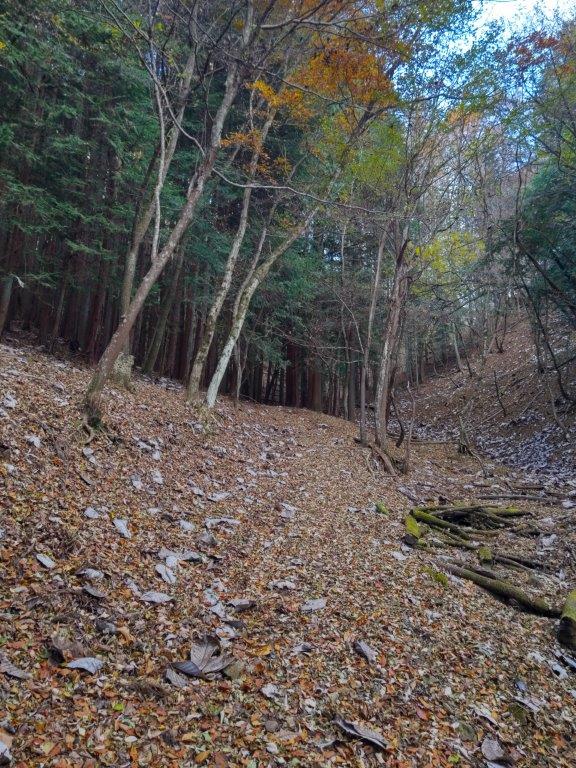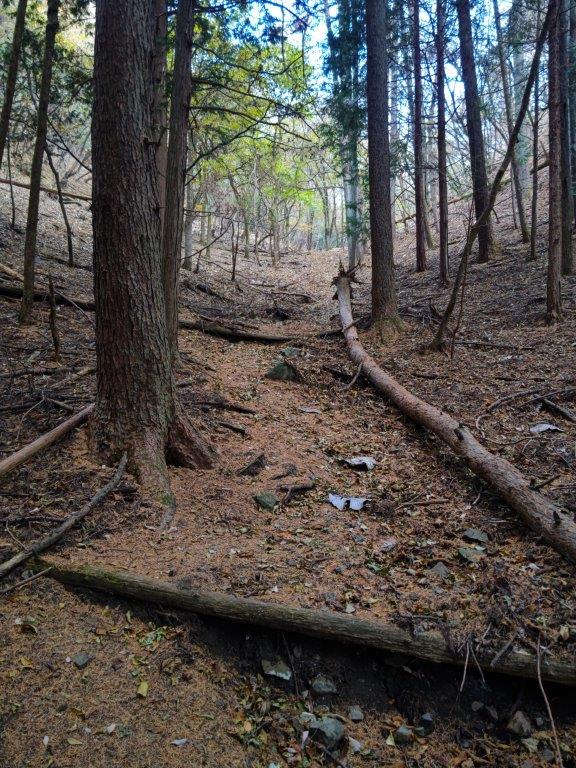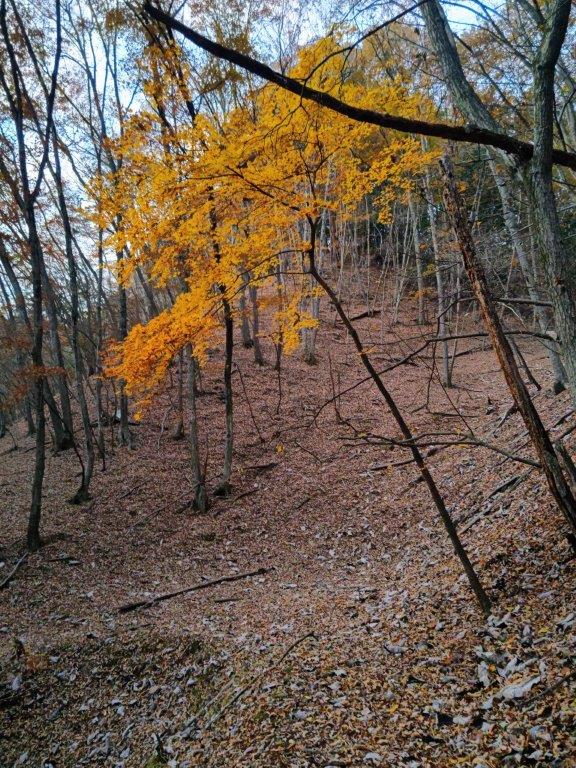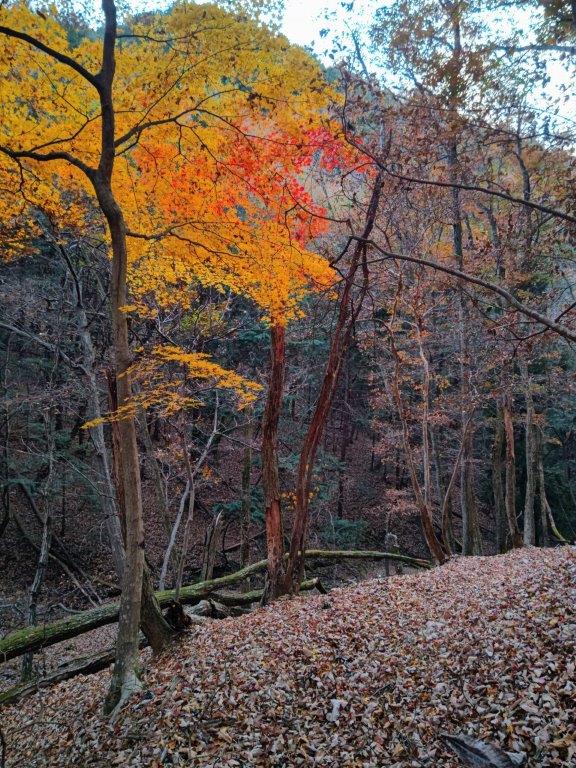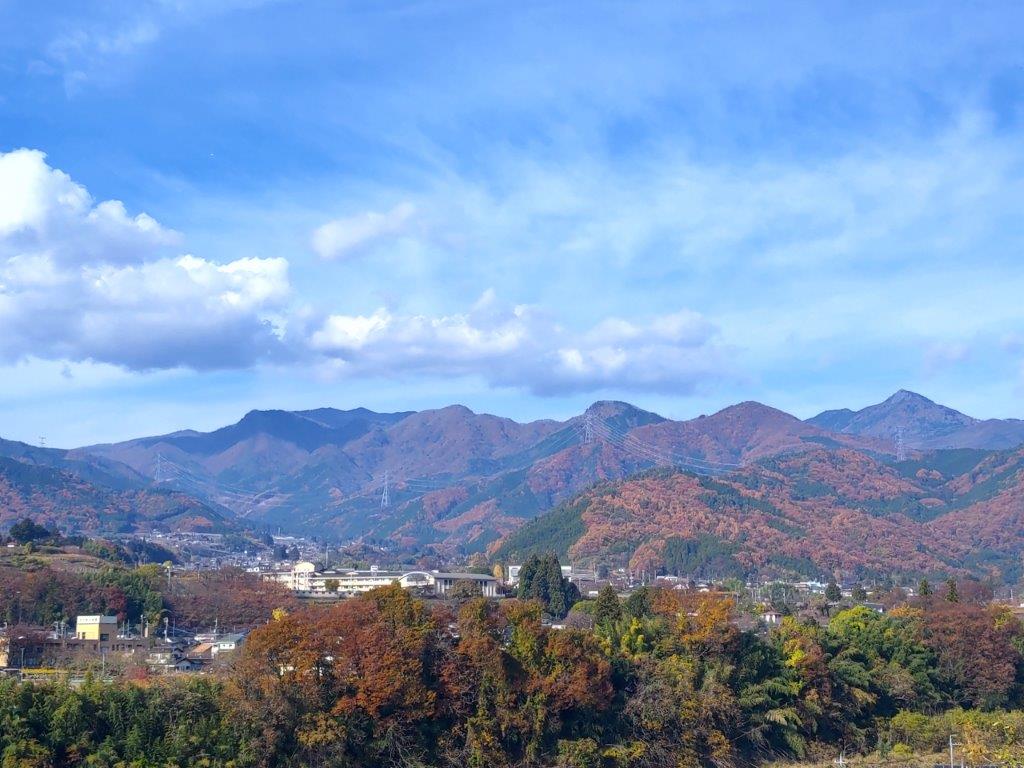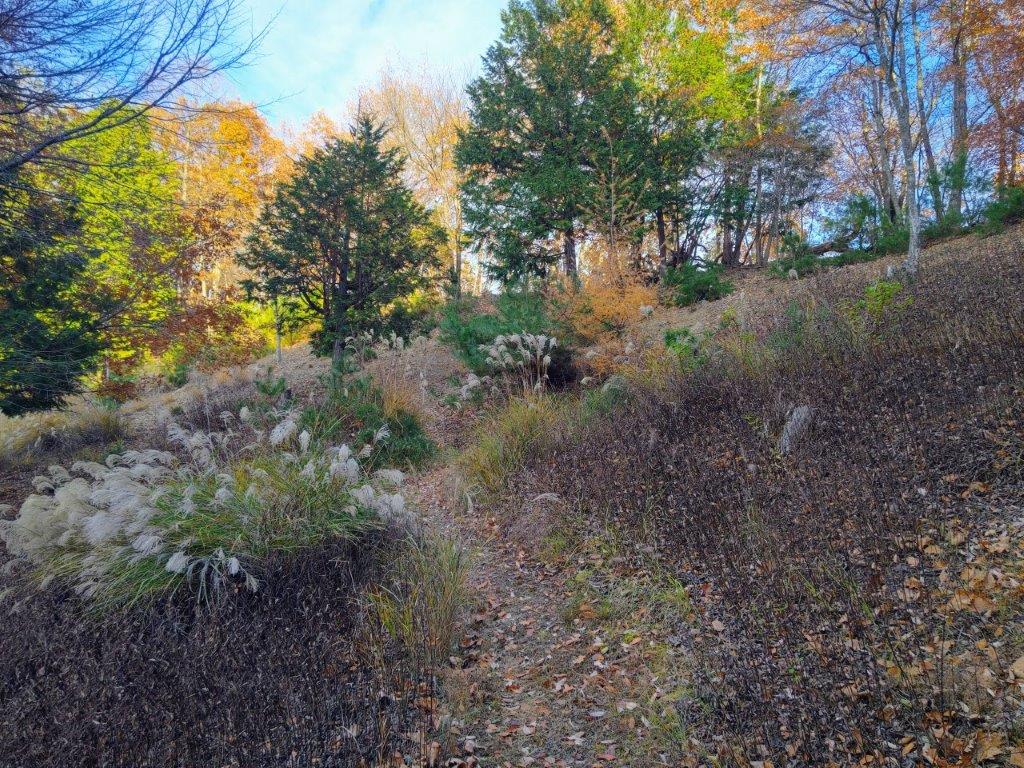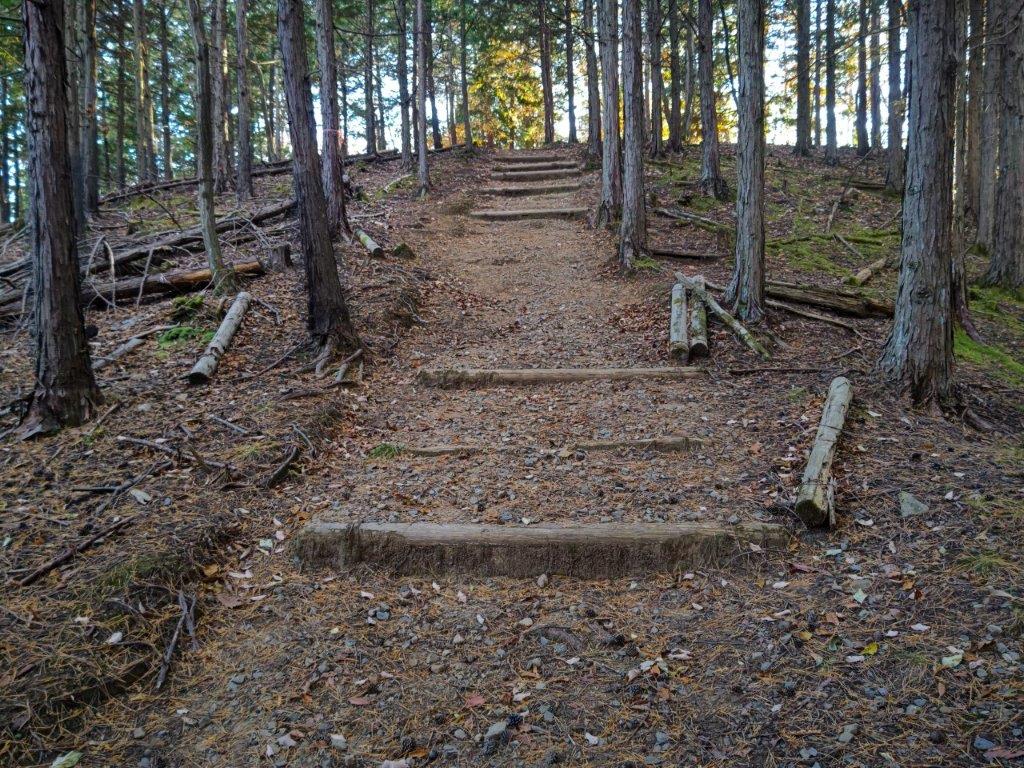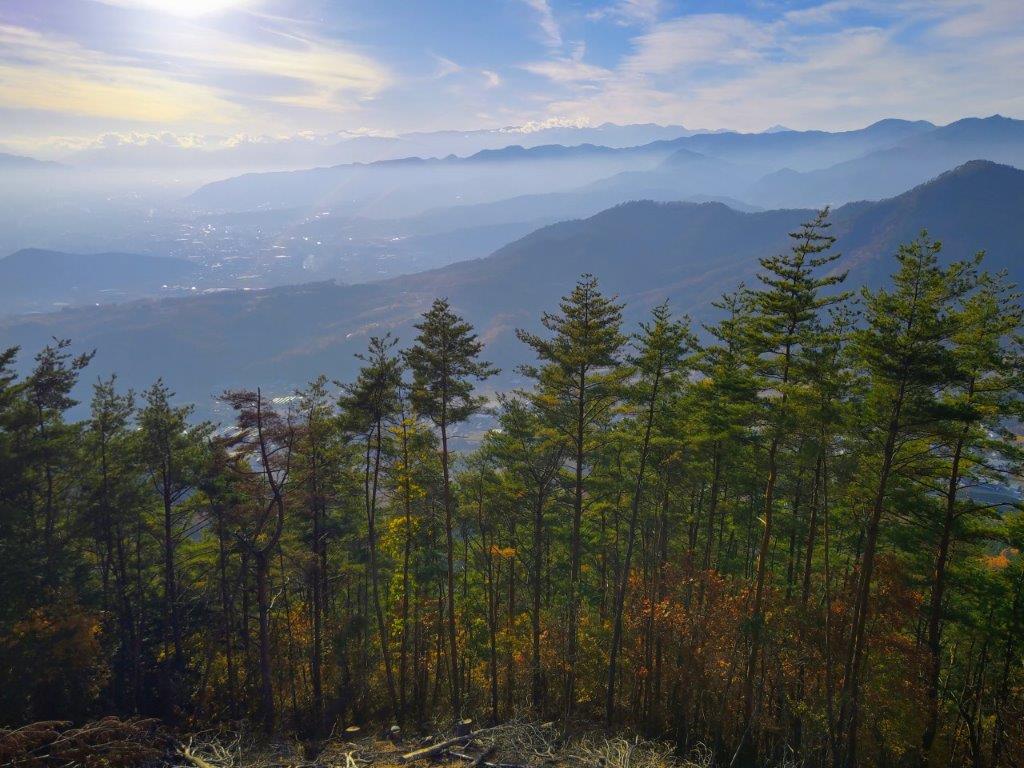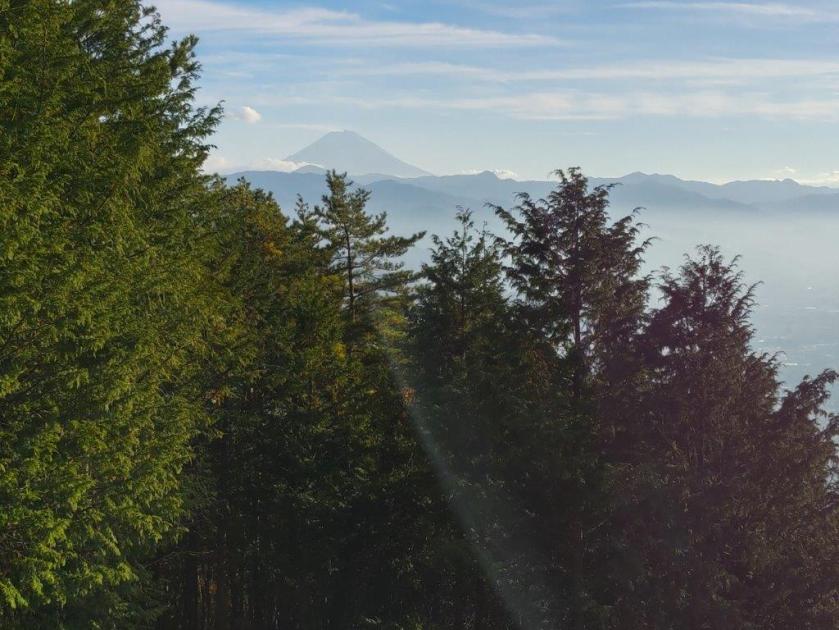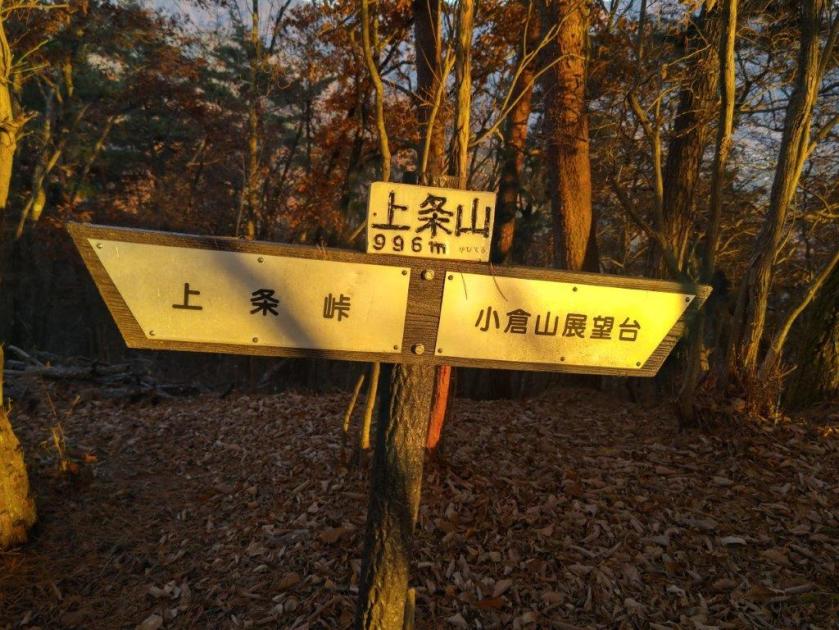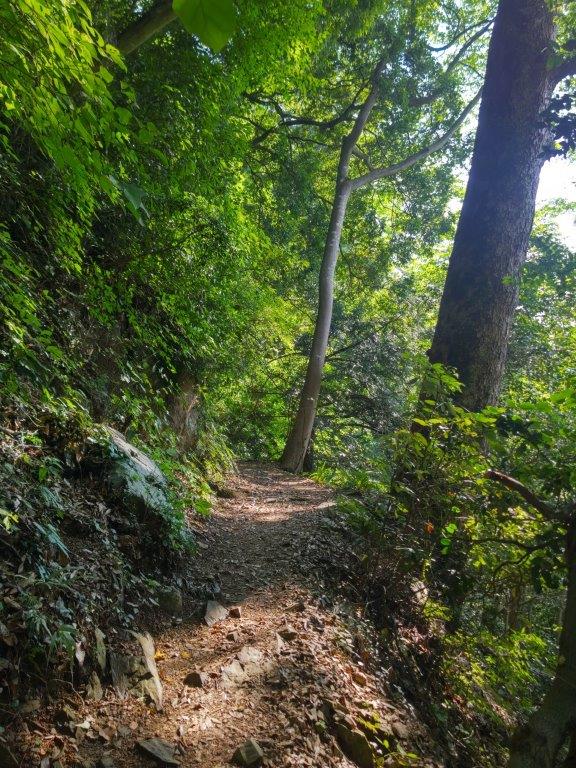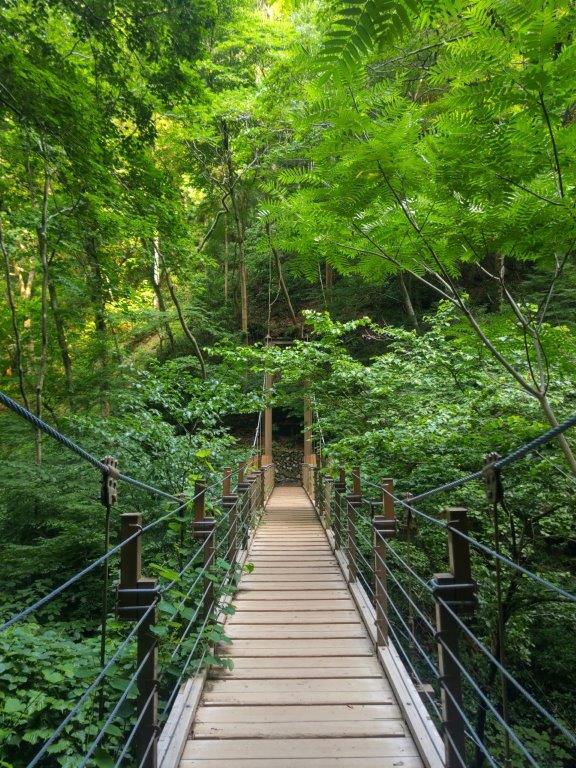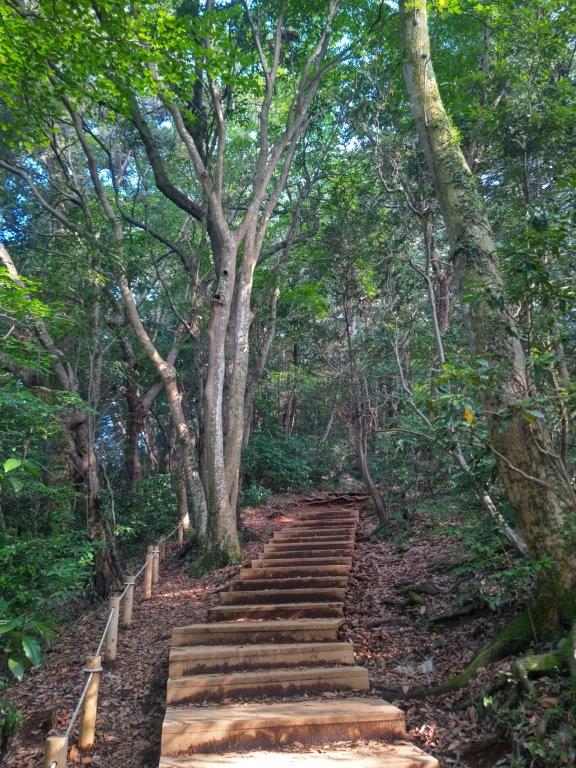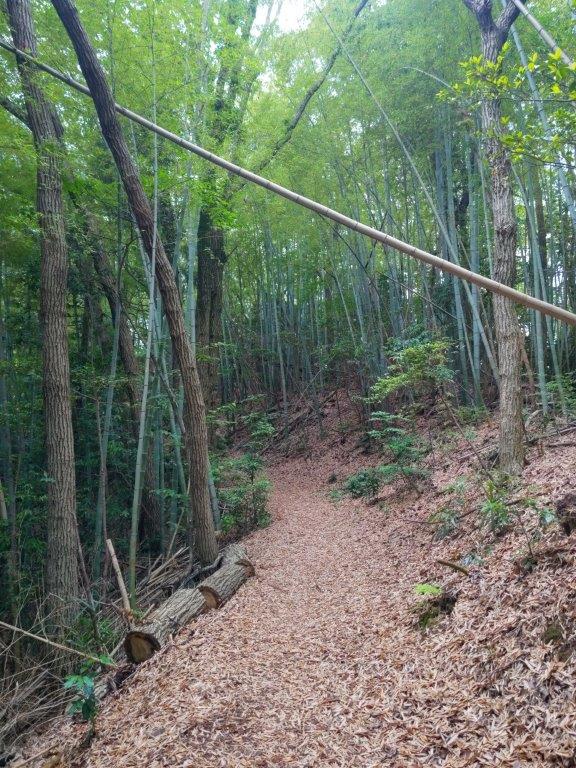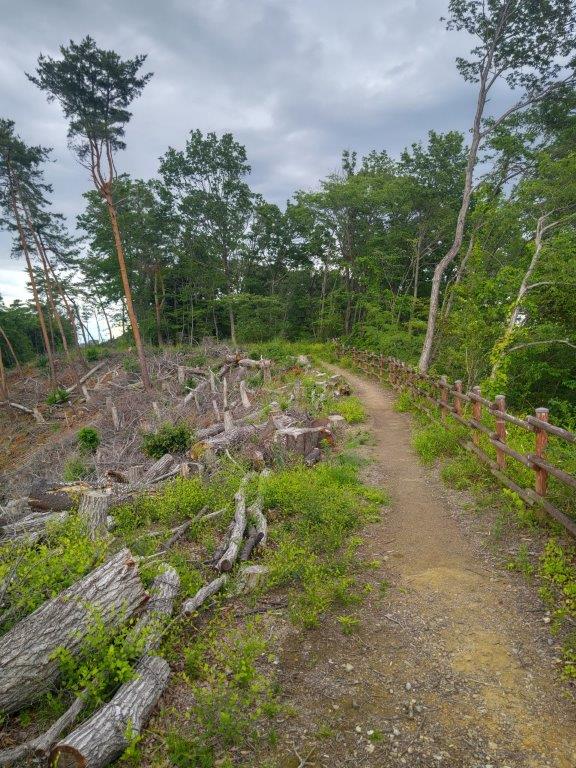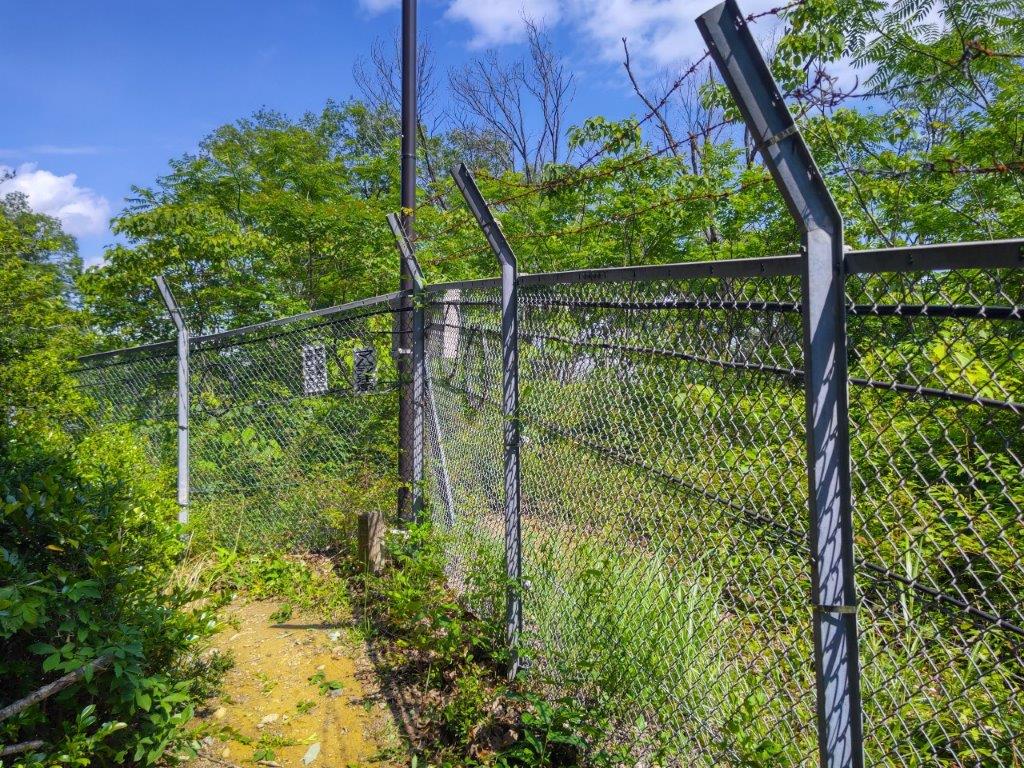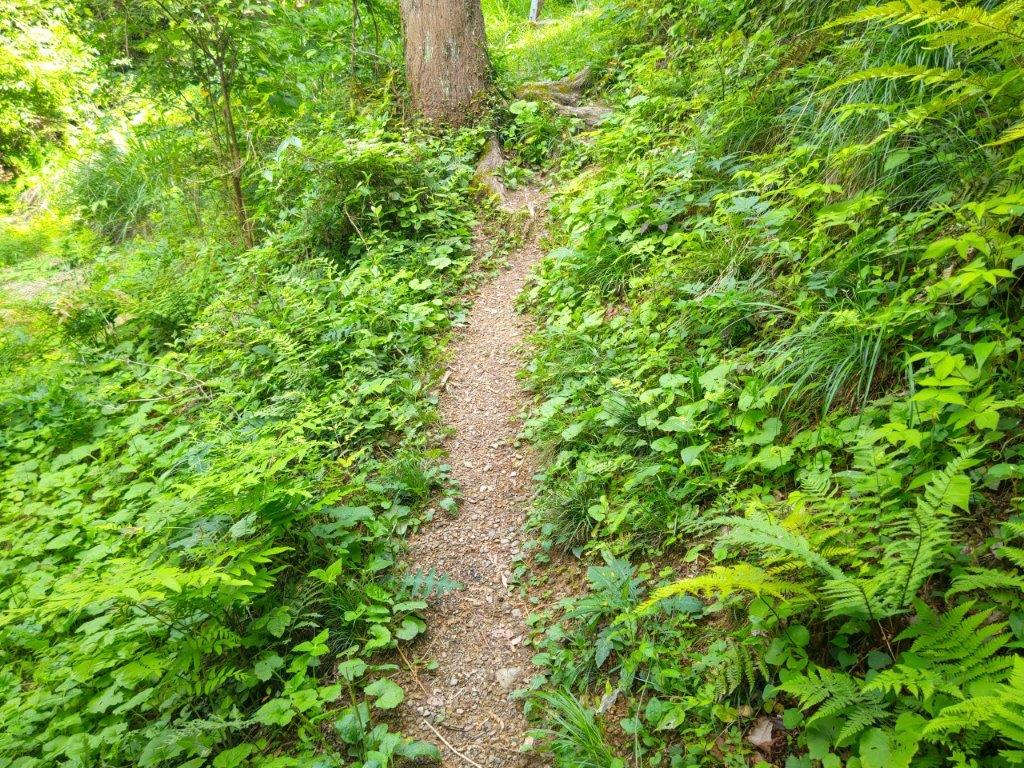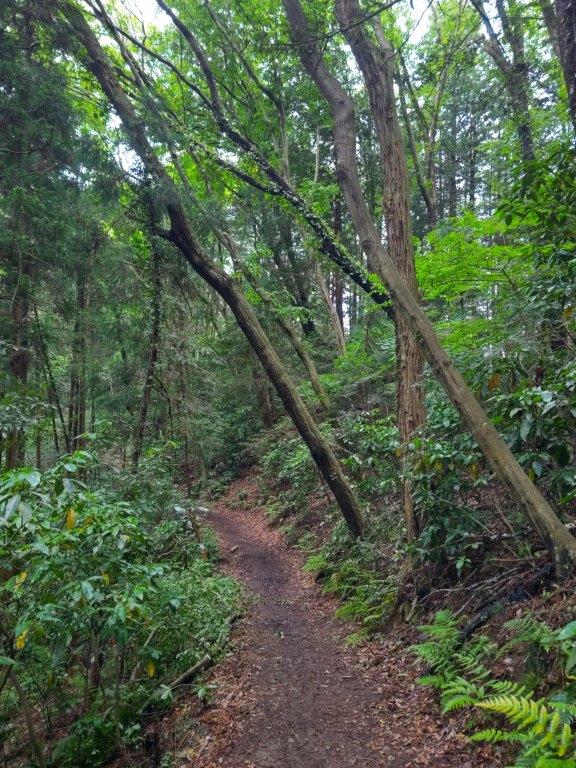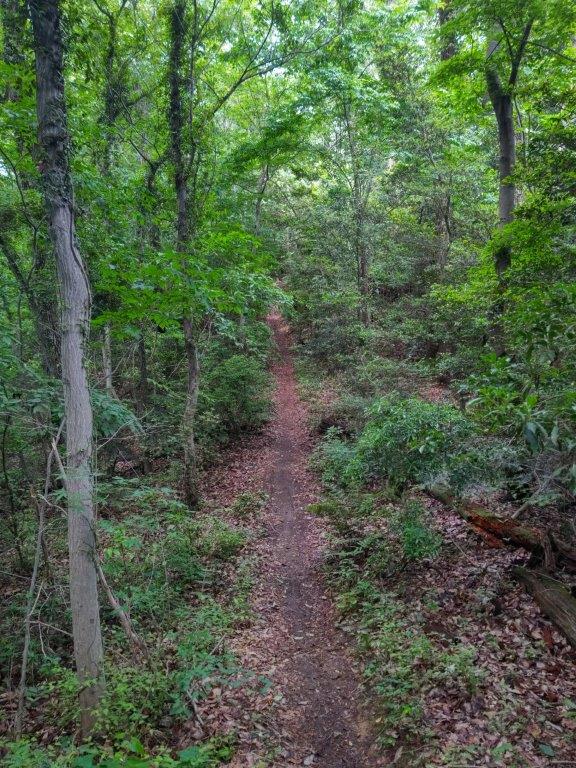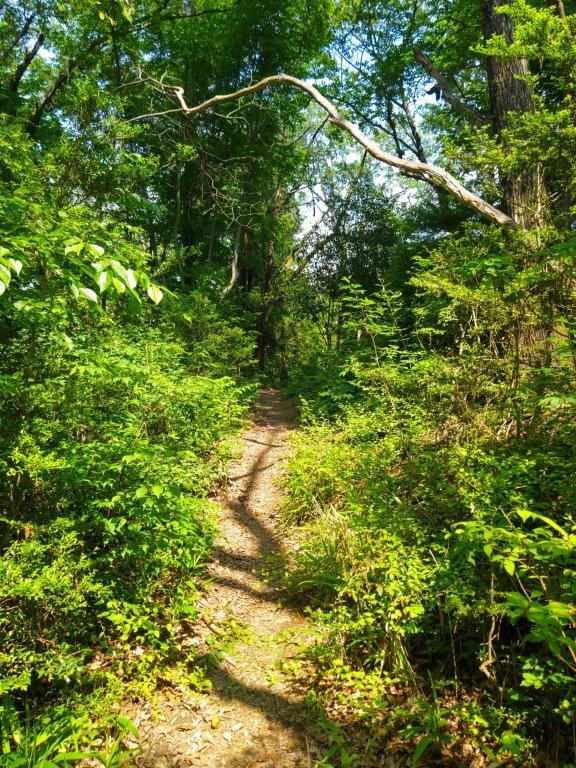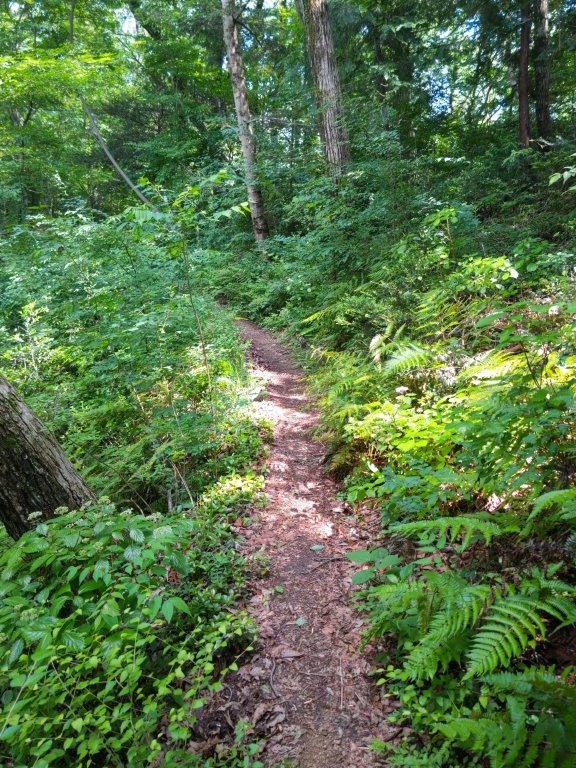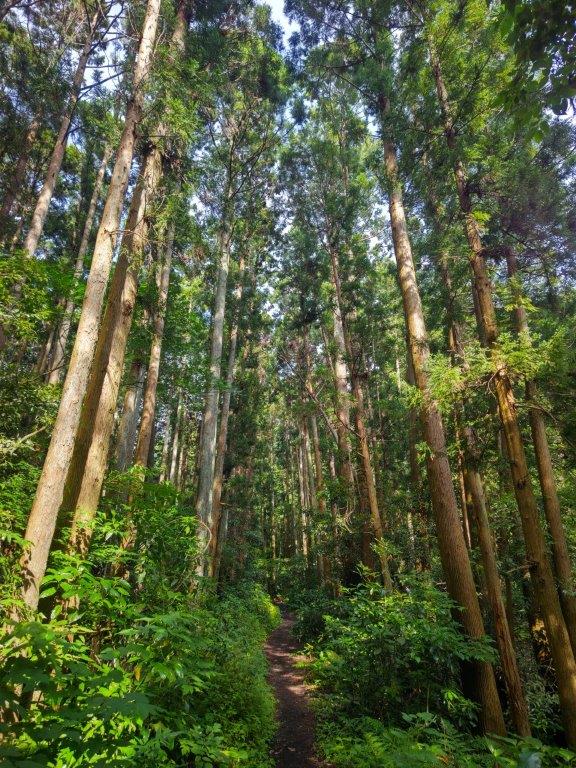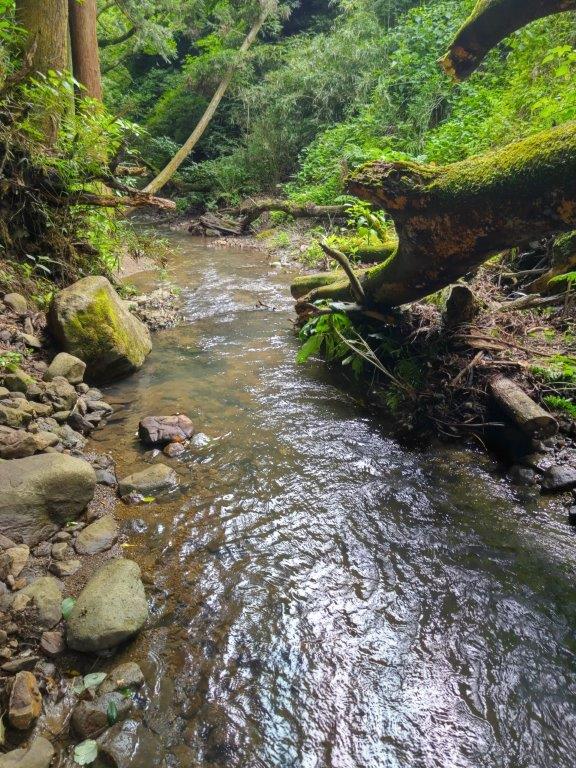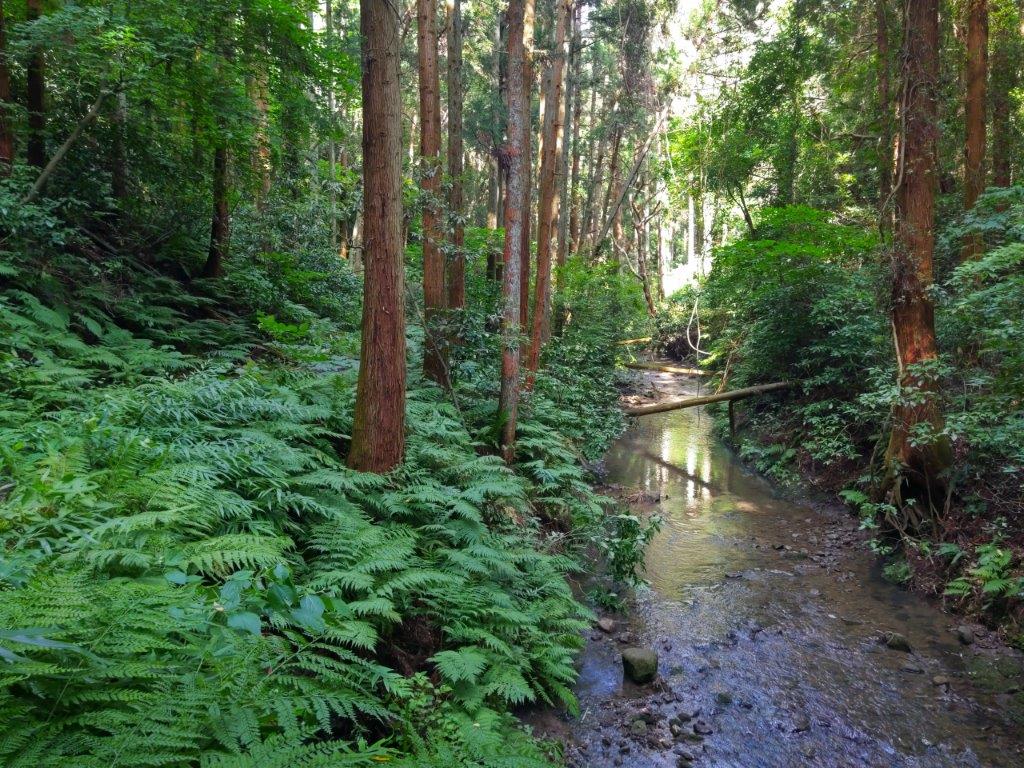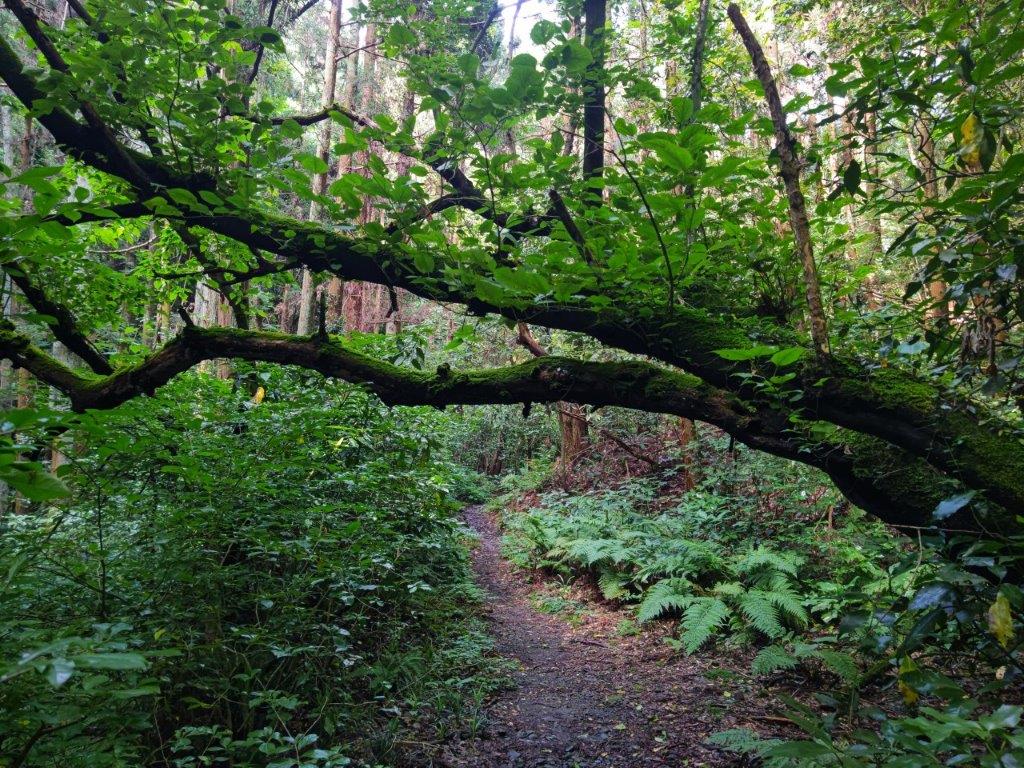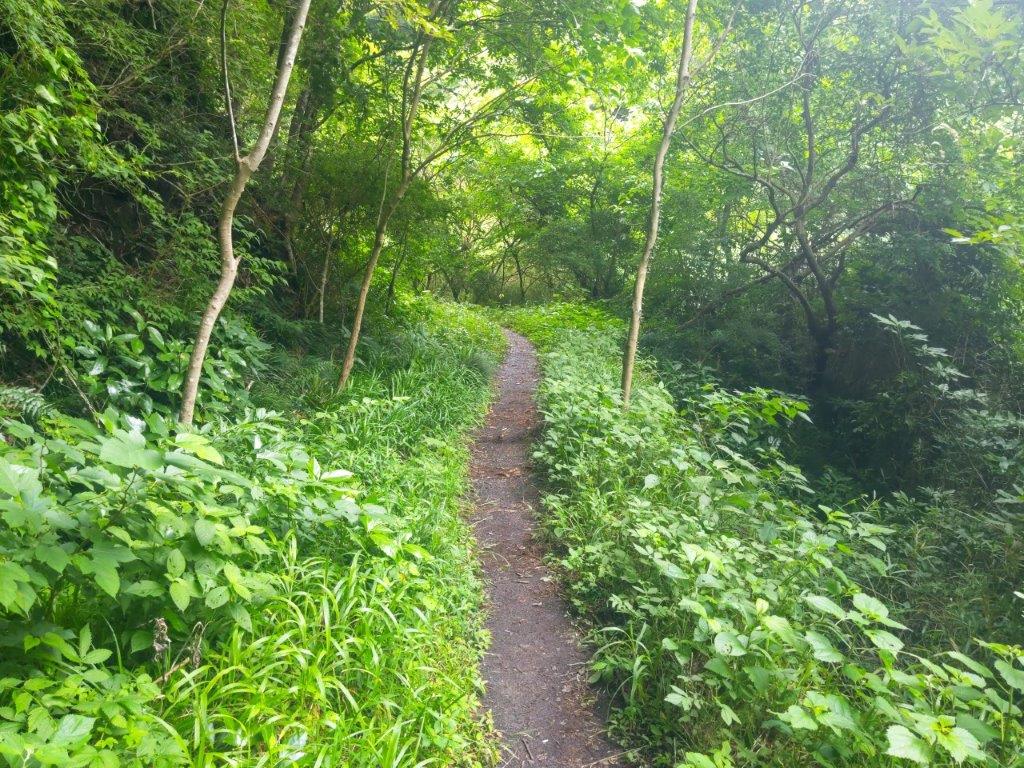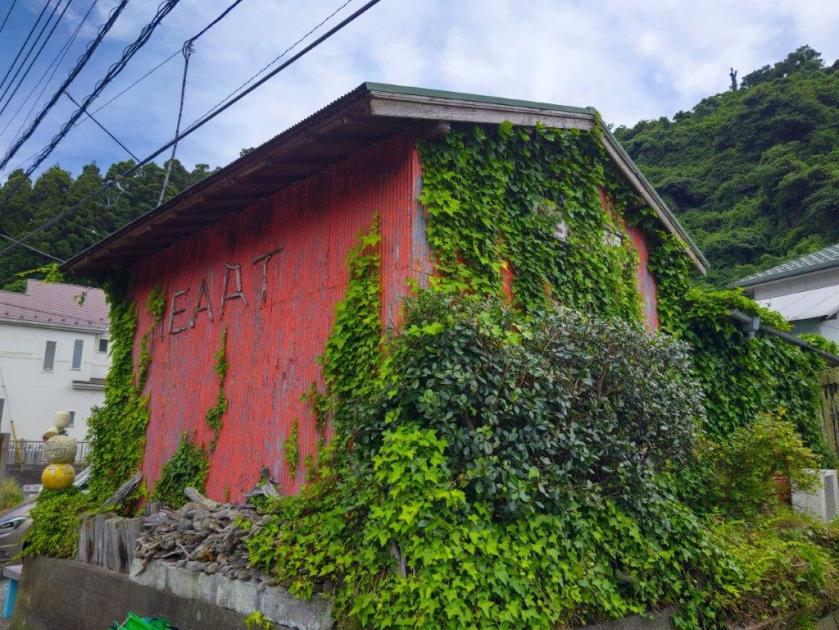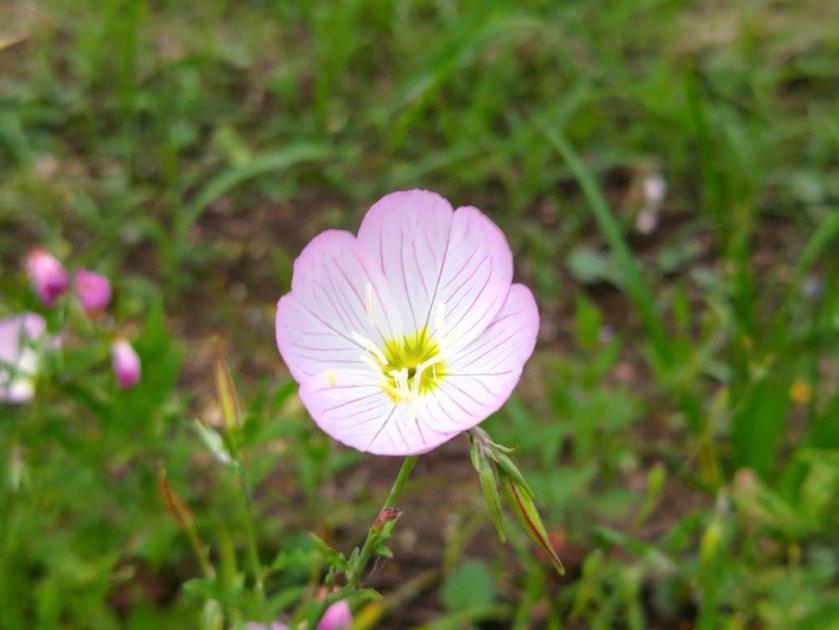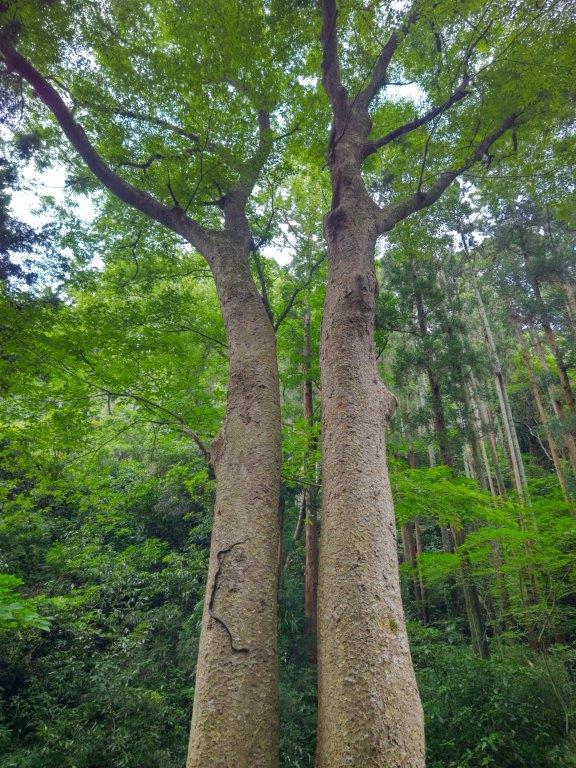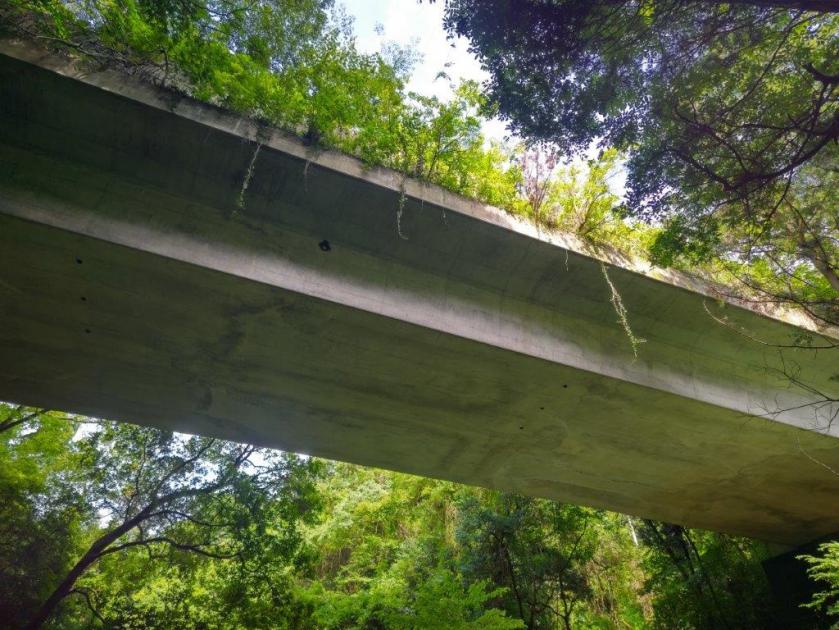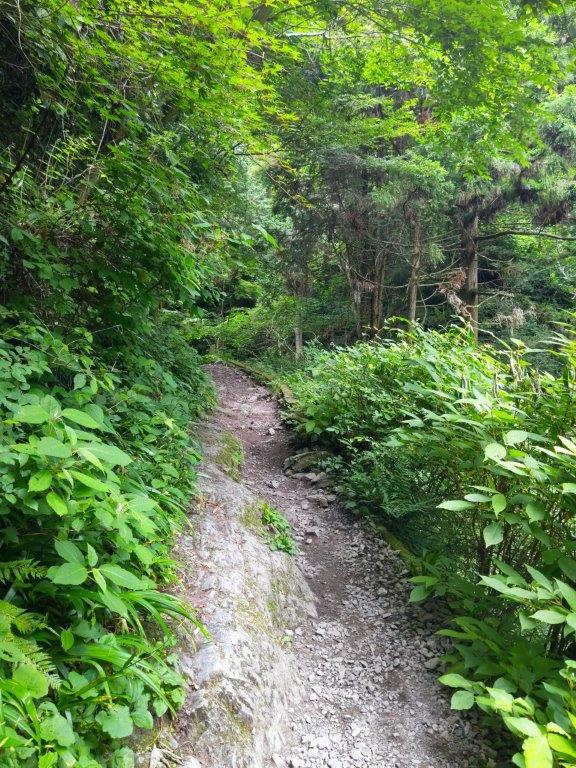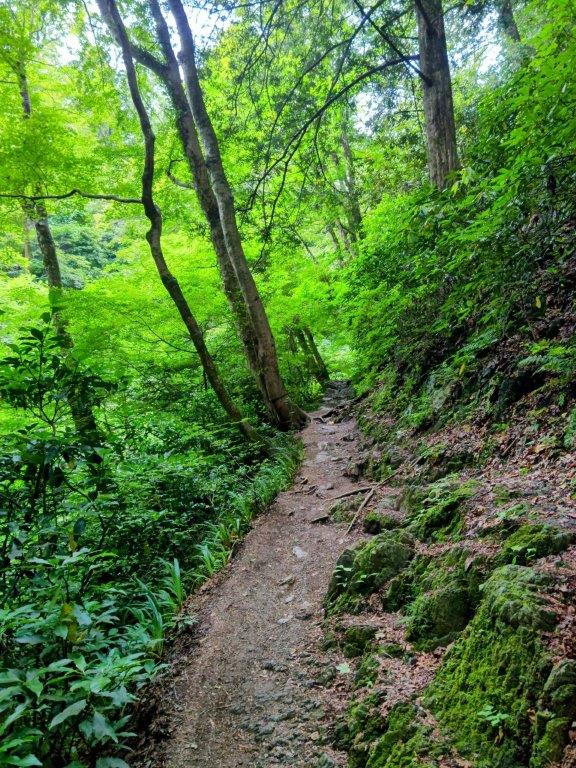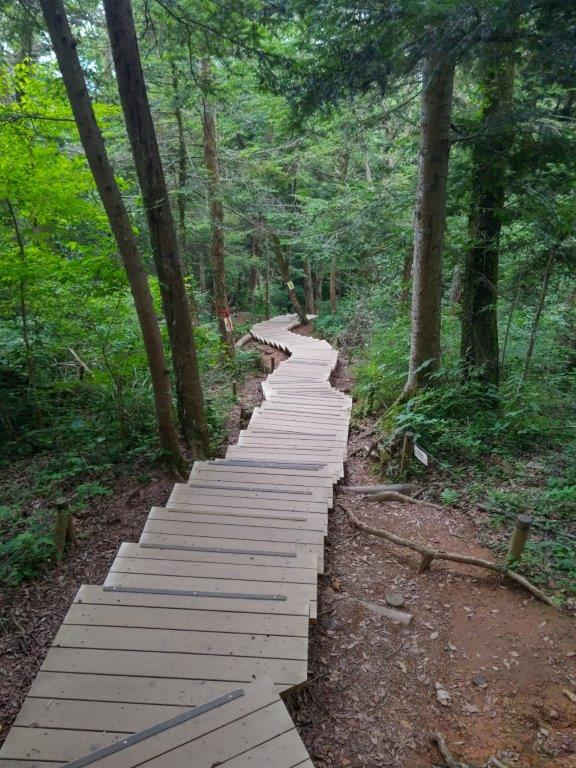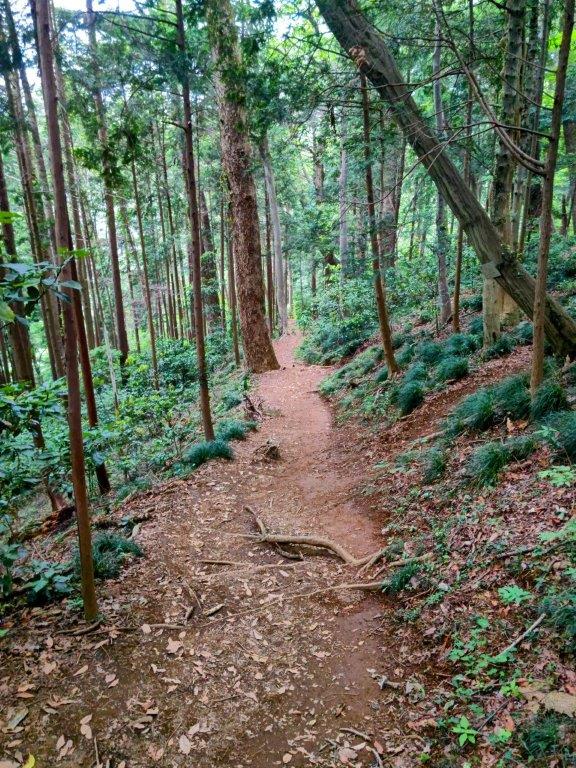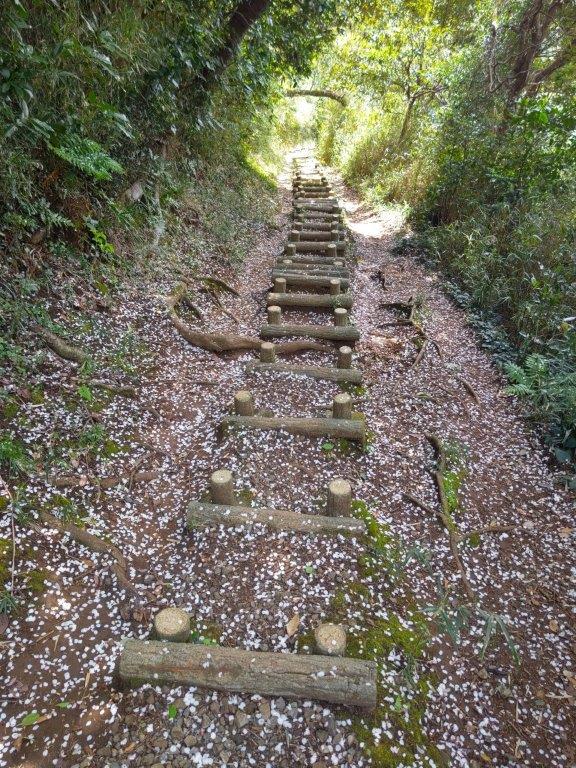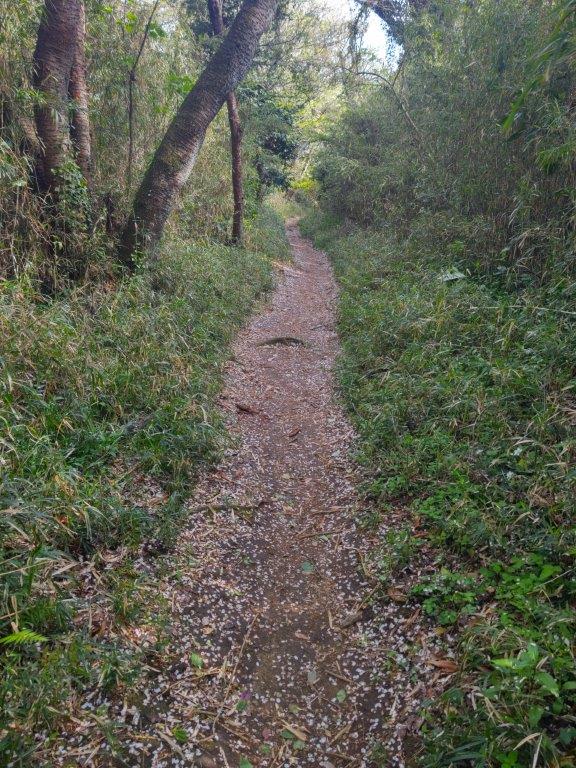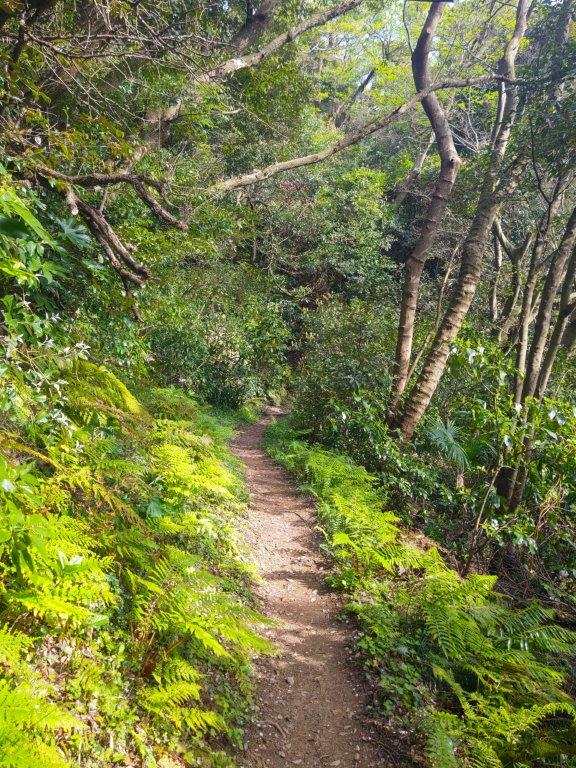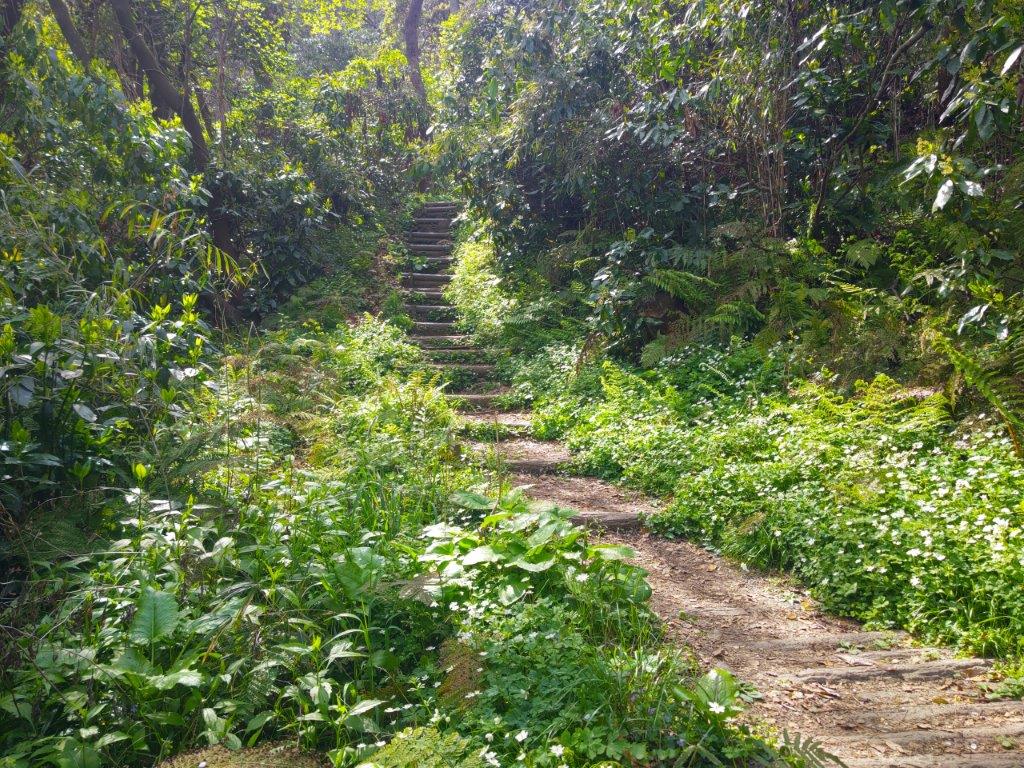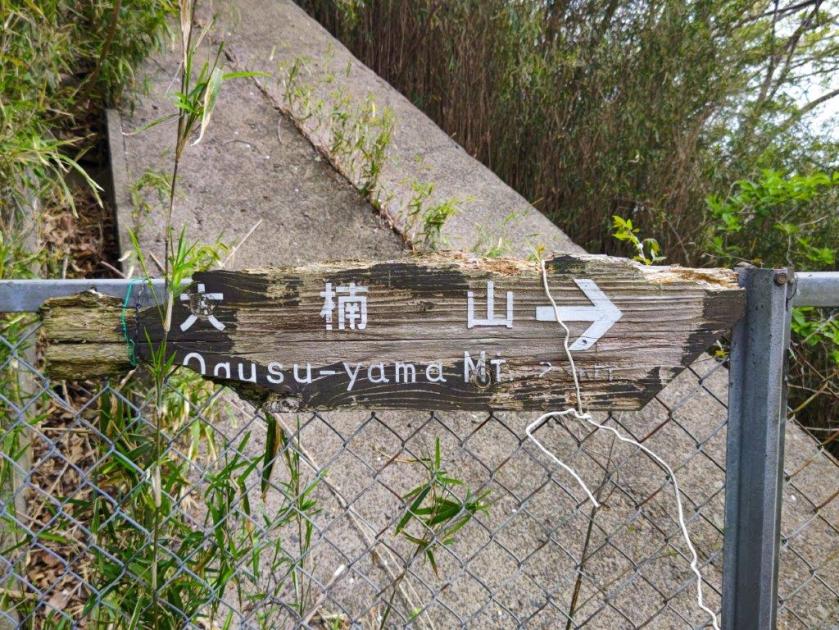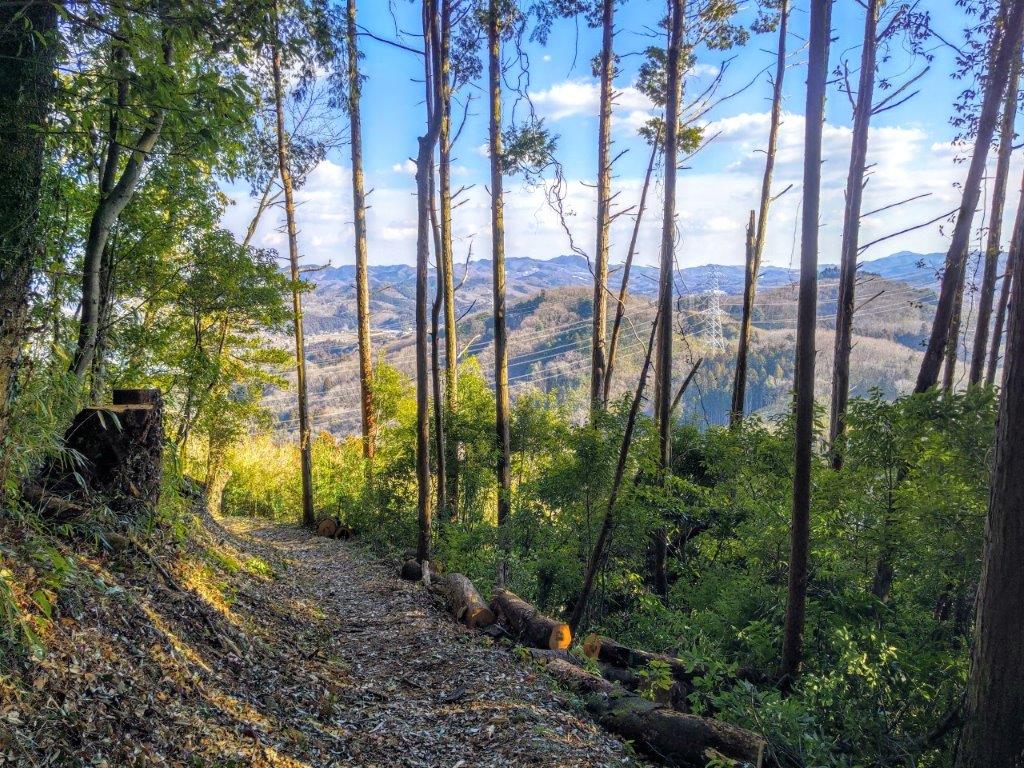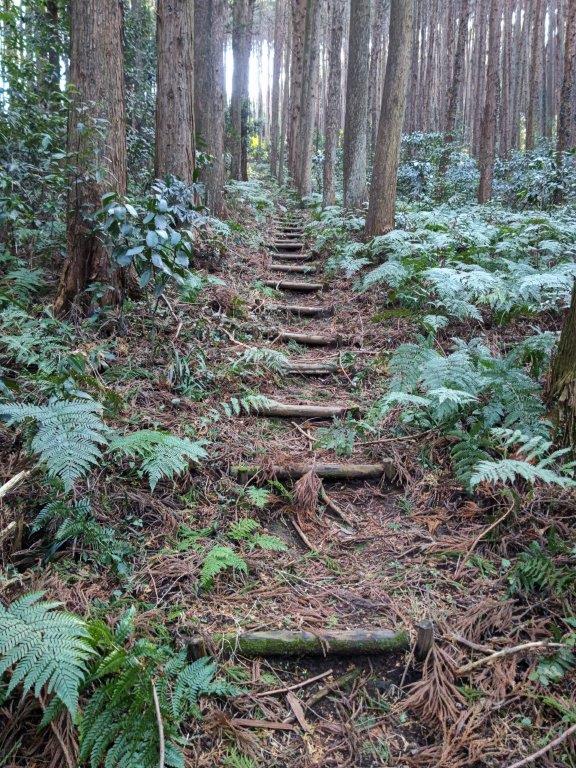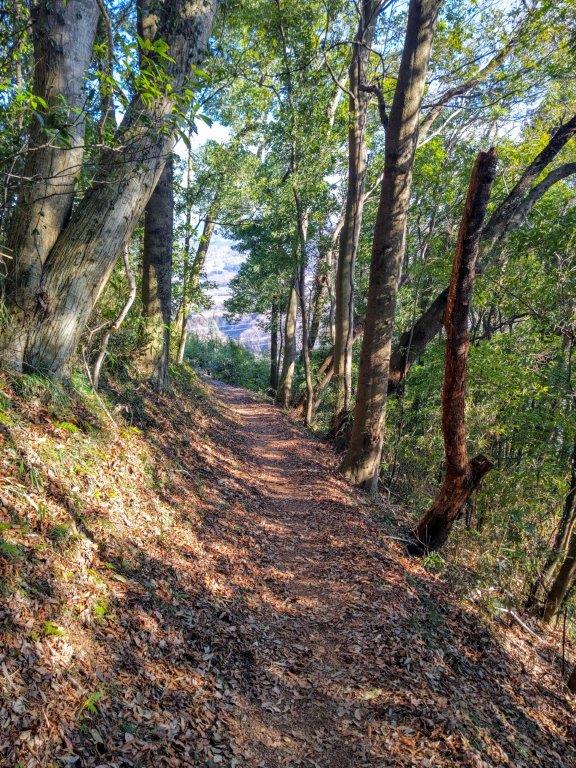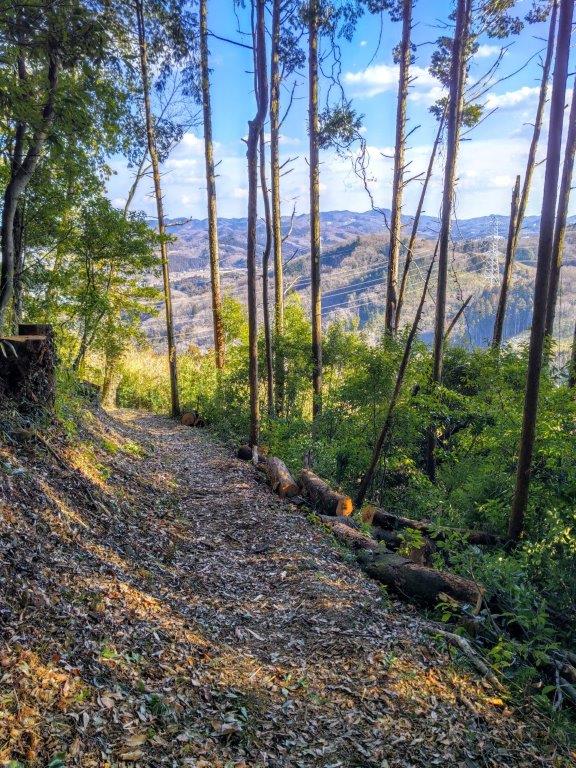
Mt Takao (599m), Hachioji City, Tokyo Prefecture, Saturday, July 5, 2025 [Jataki to Biwa Falls]

I had been to Mt Takao less than a year ago but wanted to return for several reasons. First, the recently introduced “green cars” on the Chuo line, would allow me to ride to Takao station and back in comfort; next, its proximity to the city and public transport meant it was ideal for a late afternoon hike, allowing me to avoid the intense daytime heat in this season; finally, I could wash off the sweat at Gokuraku-yu conveniently located next to Takaosanguchi station.

Hiking in the Meiji no Mori Takao Quasi-National Park

明治の森高尾国定公園

I decided to go up the Jataki falls trail, the only trail I had yet to walk on the mountain; after a quick visit to the summit via the Suspension Bridge Trail, I had originally planned to descend via the Biwa waterfall trail. However, due to the current restriction (see below), I decided to head down the Katsura Forest trail instead; from the ropeway top station, I’d then follow a connecting trail down to Biwa Falls, allowing me to complete a waterfall to waterfall hike.

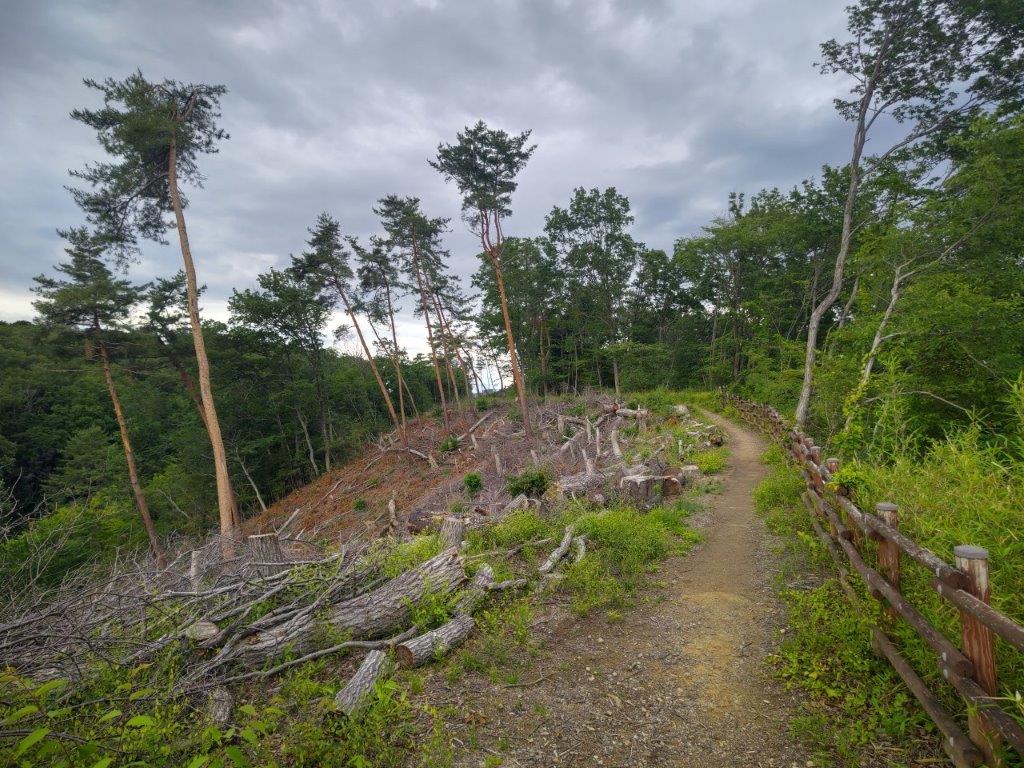
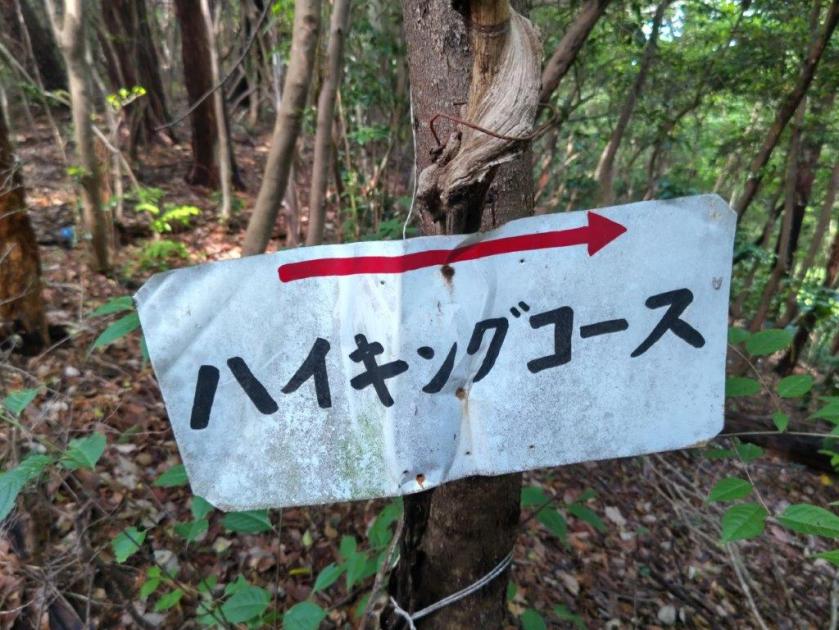
As of july 2025, the Inariyama trail is closed for repair. Consequently, the Biwa Falls trail has been changed to a one-way ascending-only trail to prevent accidents and traffic jams due to overcrowding. This restriction is in place all day; trail running (in either direction) is also prohibited. In other words, it’s not possible to hike down this trail for the time being (no end date to the restriction has been given). Multiple signs in Japanese and English have been placed at the bottom and top of the trail, as well as along the other trails. Please take this into account when planning your hike.

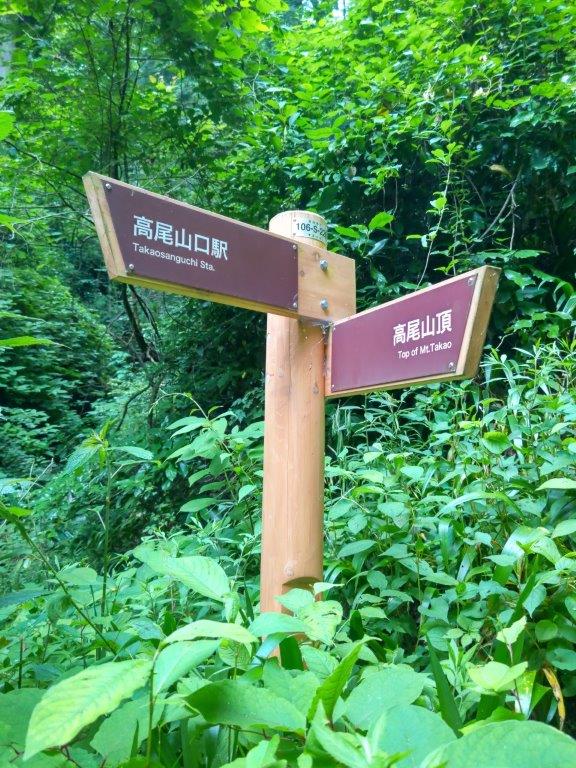
To get to the start of the hike, I’d ride the Chuo line to Takao station; from there I’d catch one of the frequent buses for Kobotoke (小仏) and get off at Jataki-guchi (蛇滝口), a short distance away. For the return, I could ride the Keio line one stop to Takao station and there transfer to the Chuo line. Although the weather was supposed to be quite hot again, I hoped it would start to get cooler after 3pm. I also hoped I could get a glimpse of Mt Fuji from the top, on my third visit in three years.

Find Japan Hiking Maps on Japanwilds and subscribe to our newsletter

Looking back towards Jataki Falls (left) Jataki Trail (right)

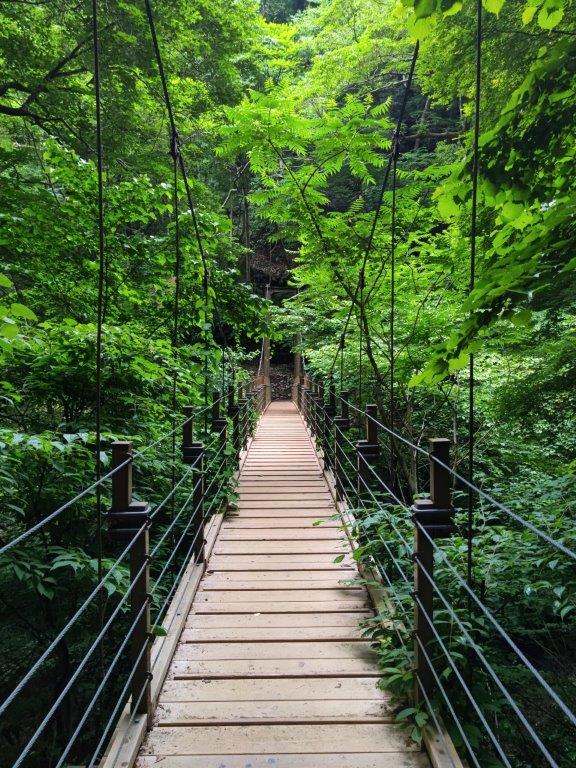
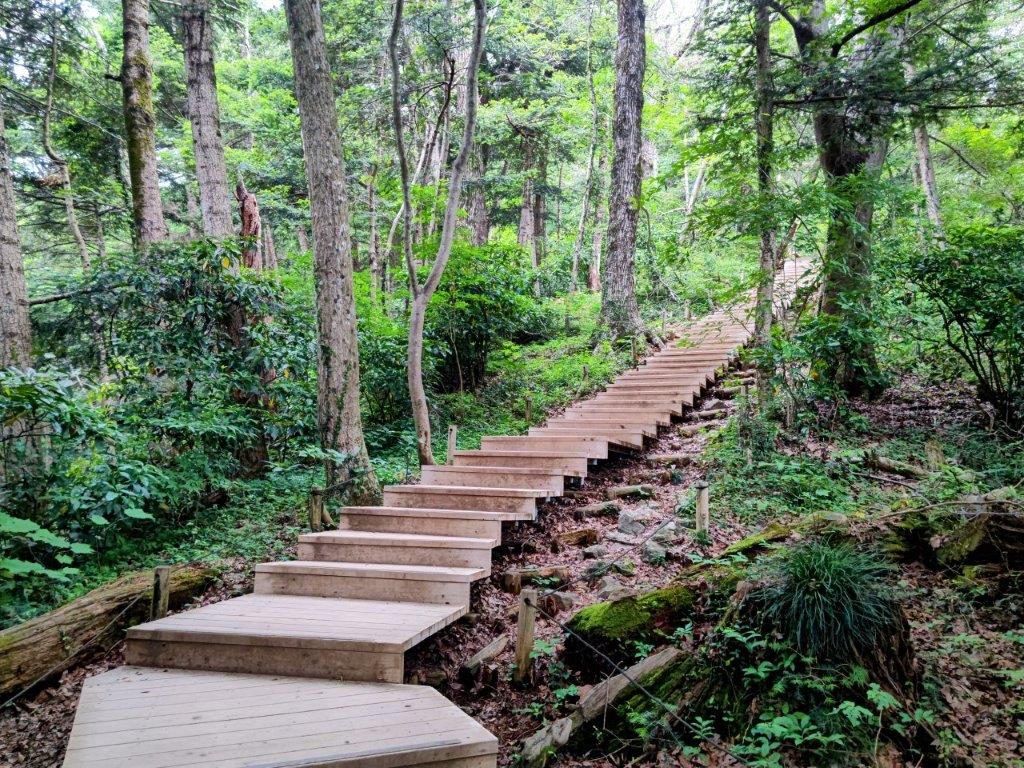
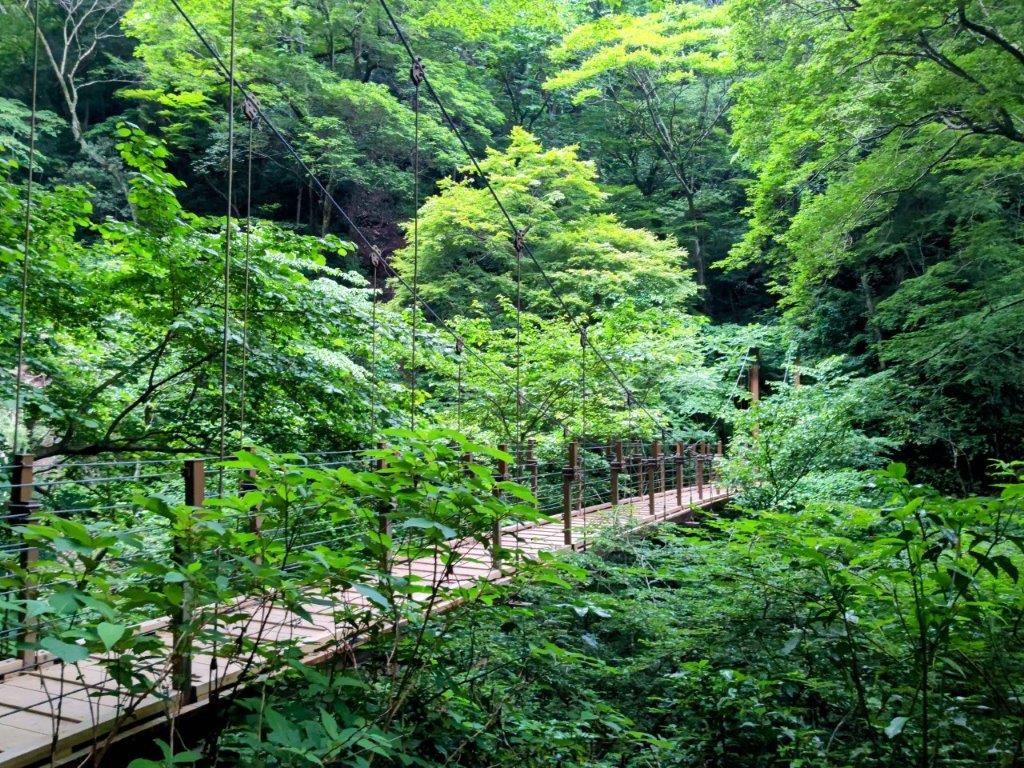
Looking back at the Suspension Bridge (left) Suspension Bridge Trail (right)

It still felt way too hot for any outdoor activity after arriving at Takao station just before 2pm. I decided to hang out for a short while at Ichigendo, the small cafe attached to the station. Even with the added delay, I started to have doubts about today’s hike as I walked up the Old Koshu Highway (旧甲州街道), the Ura-Takao bridge (裏高尾橋) providing the only shade from the punishing sun. I reached the trail entrance a little before 3pm; to further delay the start of my hike, I decided to check out the Ura-Takao Stream Path (裏高尾渓流線歩道) along the Kobotoke River.

Ura-Takao Bridge from near the Bus Stop

Walking under the Ura-Takao Bridge

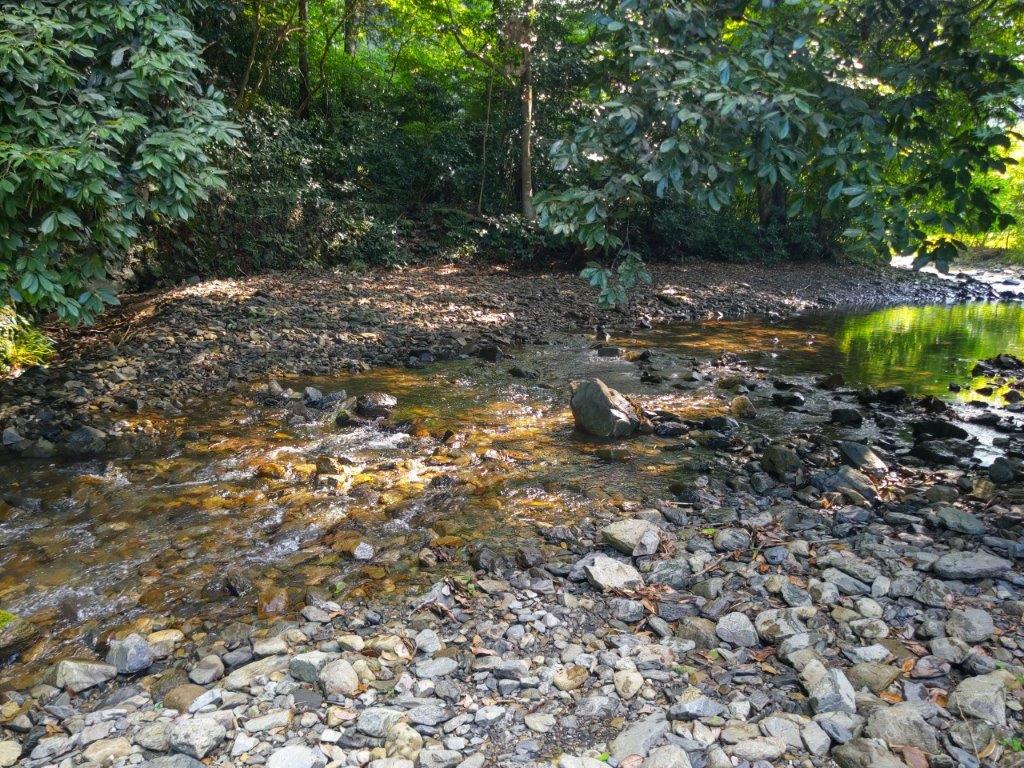
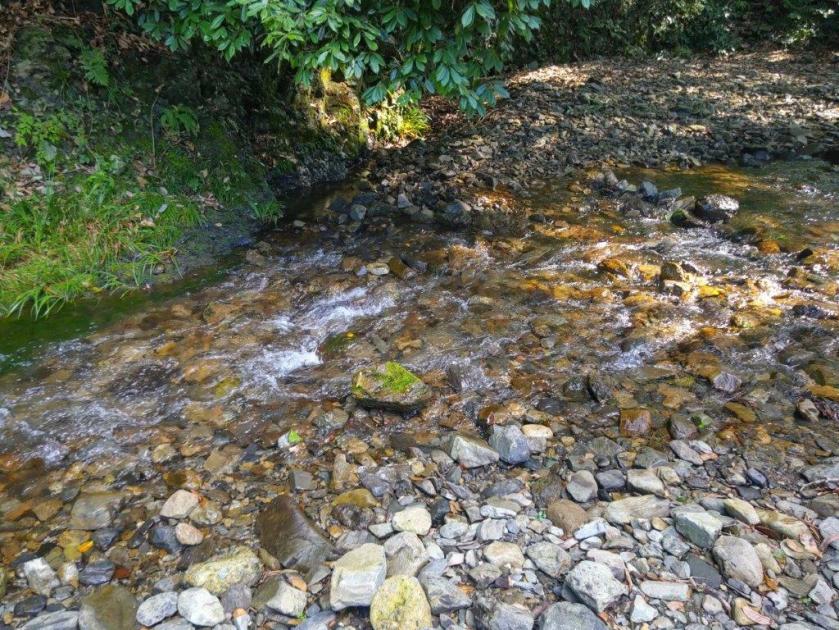
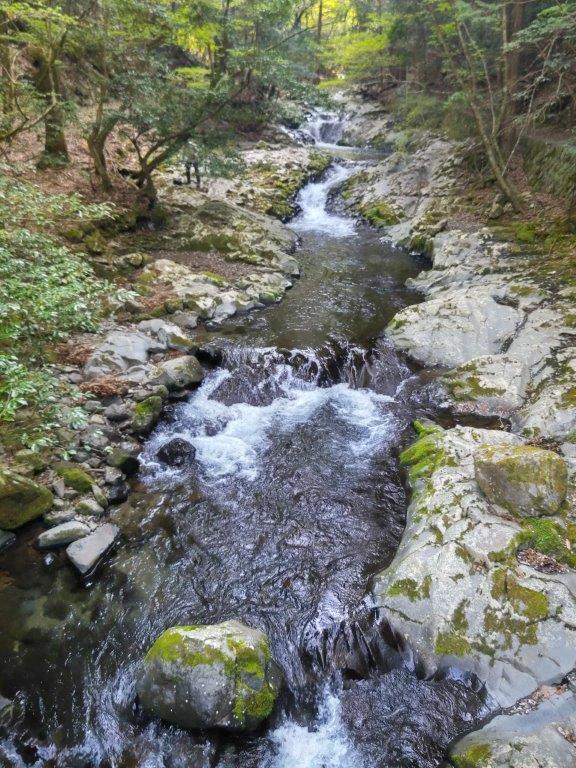
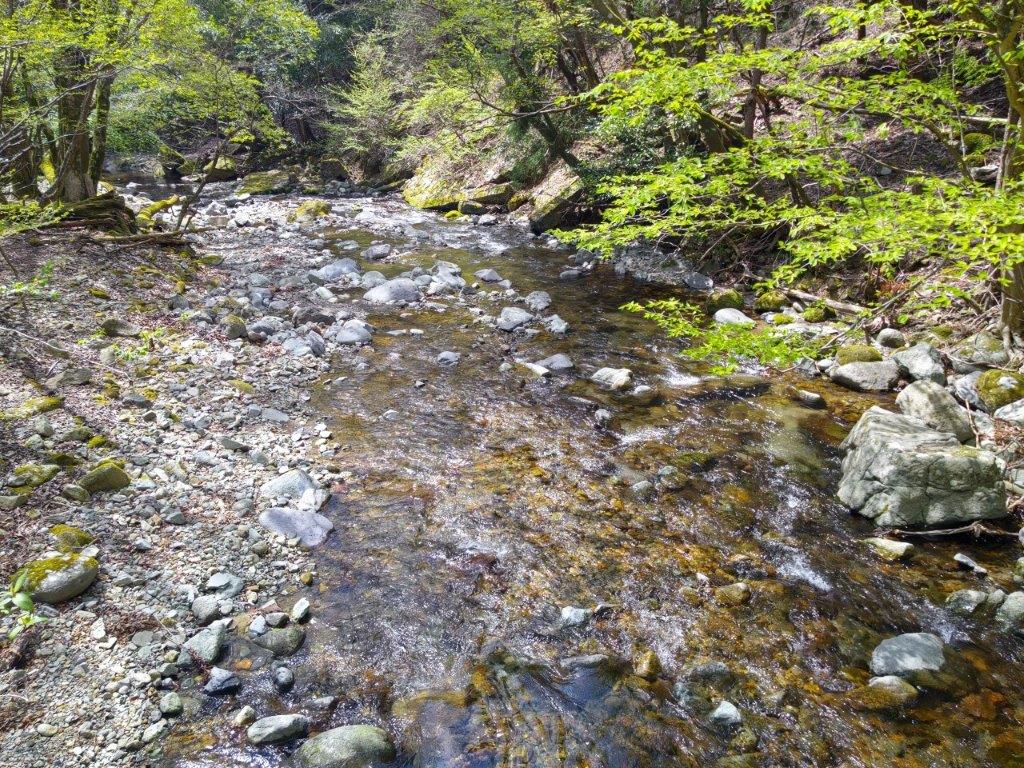
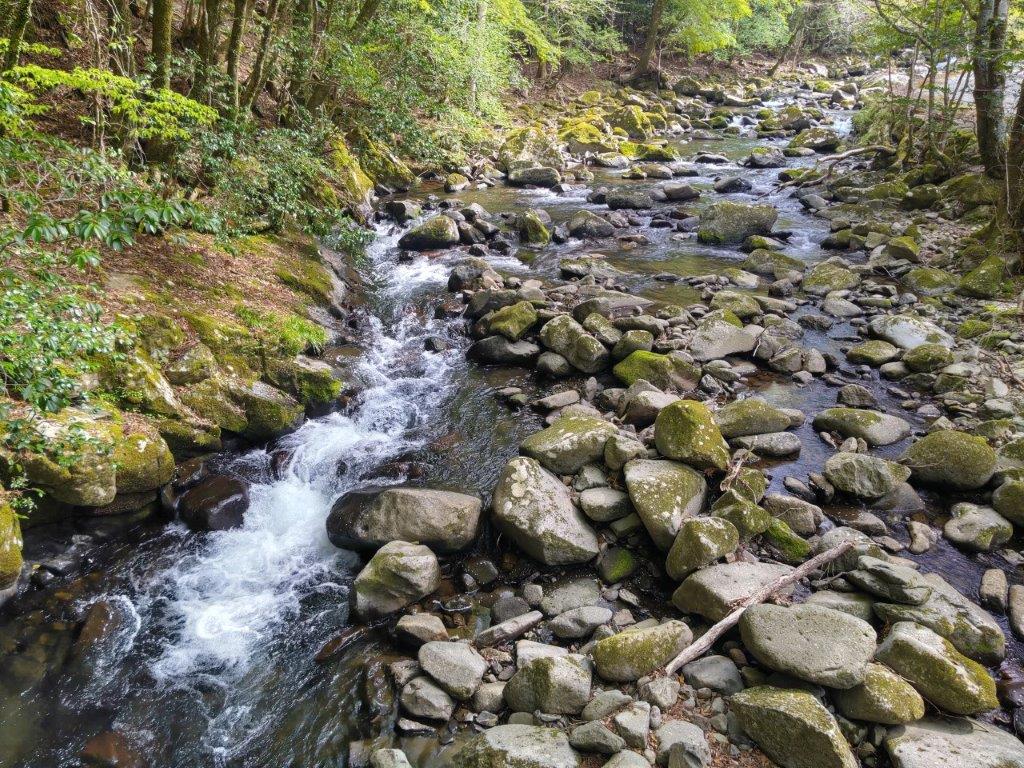
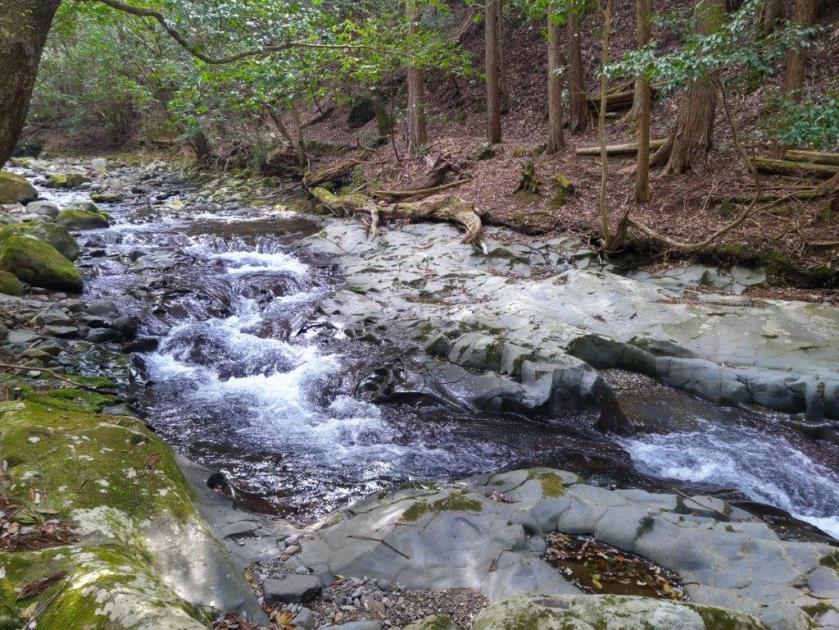
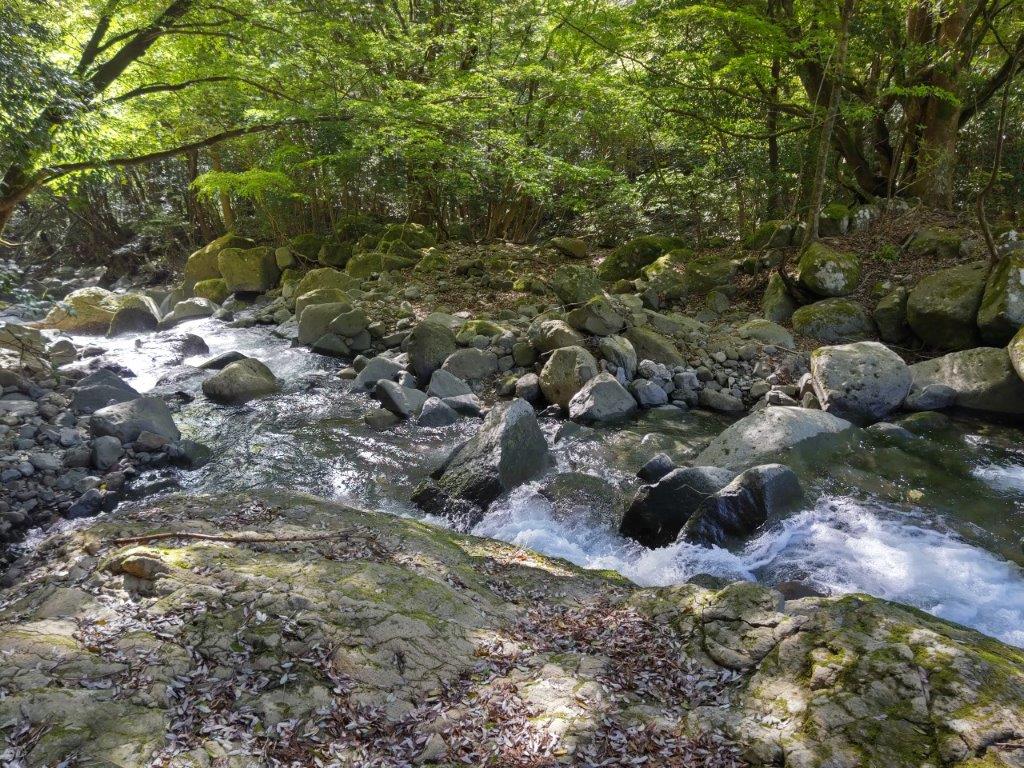
I was surprised to see such a clean river close to the city. At one point, a group of children were noisily playing in the water; nearby a couple of adults were lying in a deeper, narrow section, completely submerged by the cool rushing water. A little further, I reached a bridge where I had a good view of the river itself. As I continued along the trail on the other side, a green-coloured snake slowly slithered away into the bushes. At this point I decided to turn back, and a little after 3pm, I found myself slowly making my way up a paved incline, the start of the 蛇滝線線歩道 (the Jataki trail).

Kobotoke River from the Ura-Takao Stream Path

A popular Spot for Cooling Off in the Summer

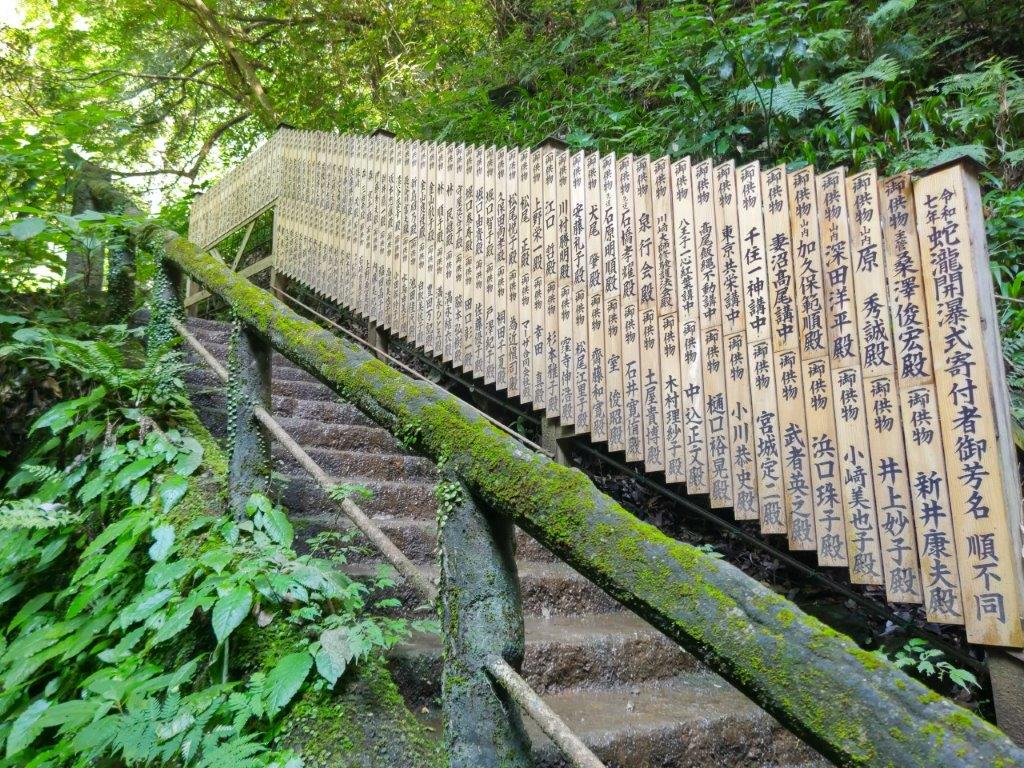
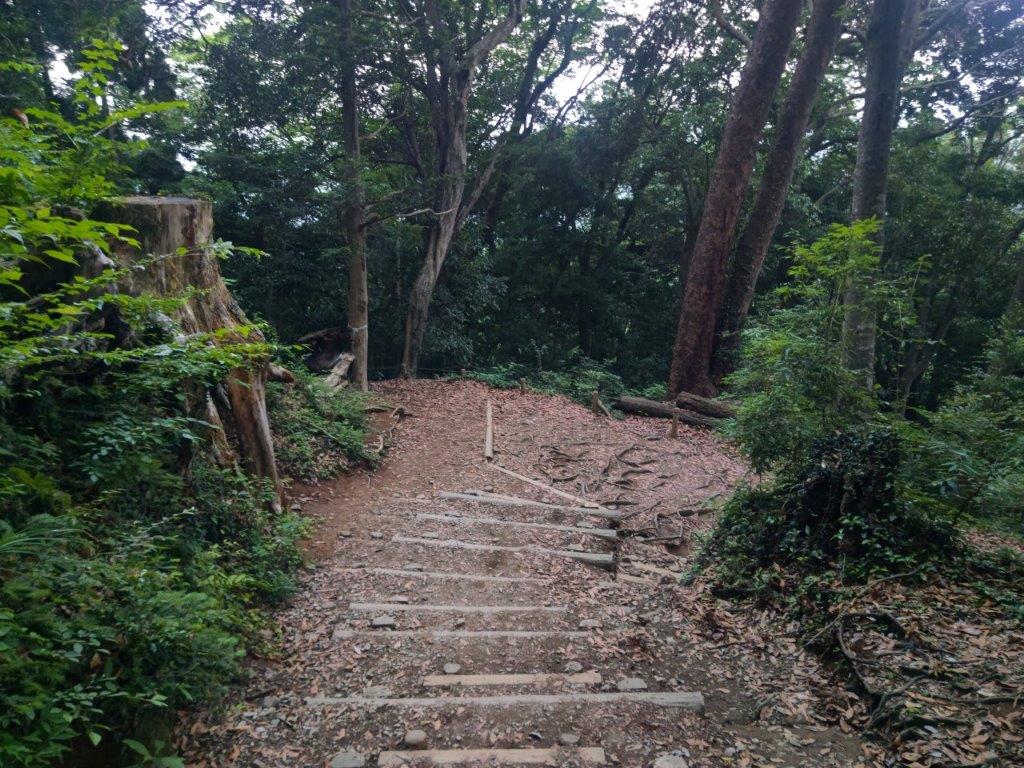
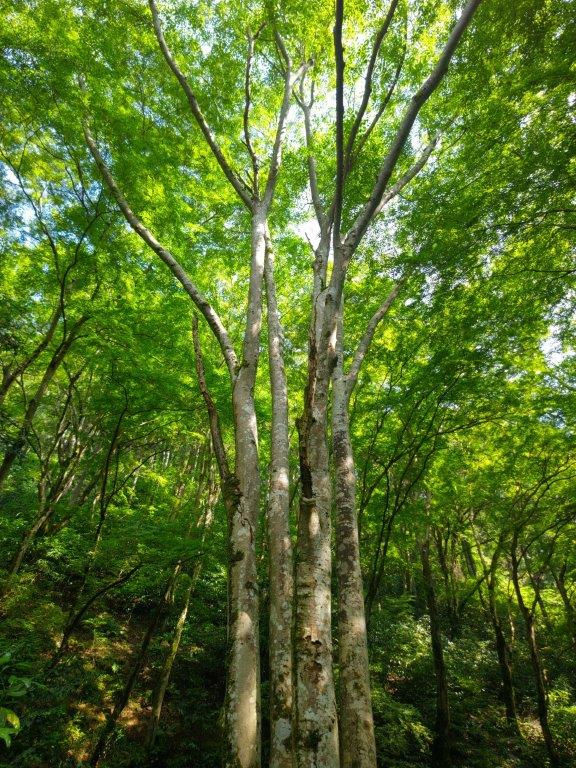
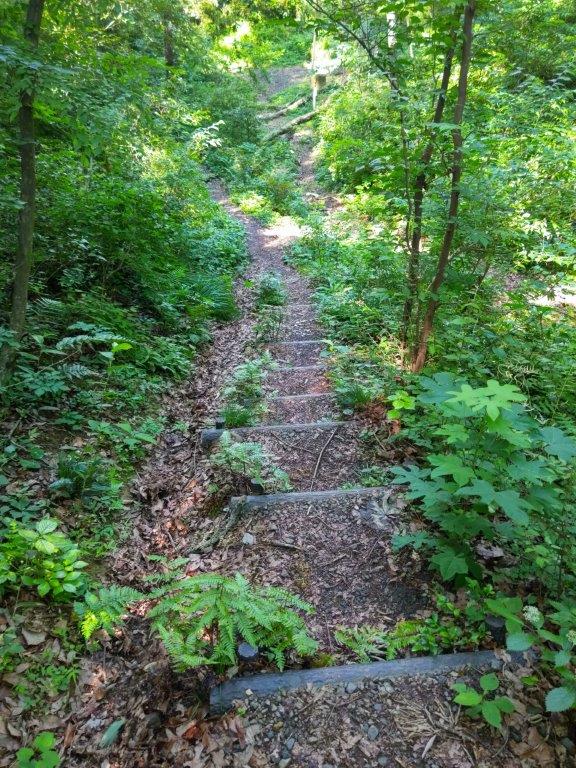
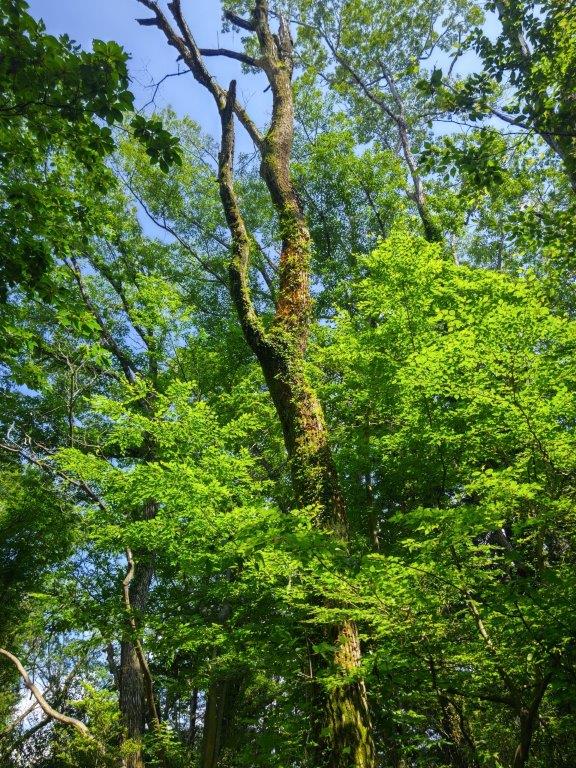
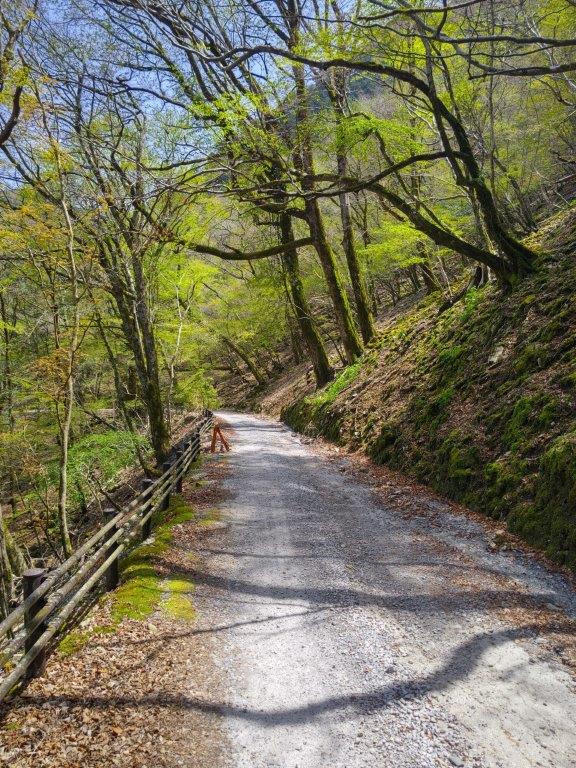
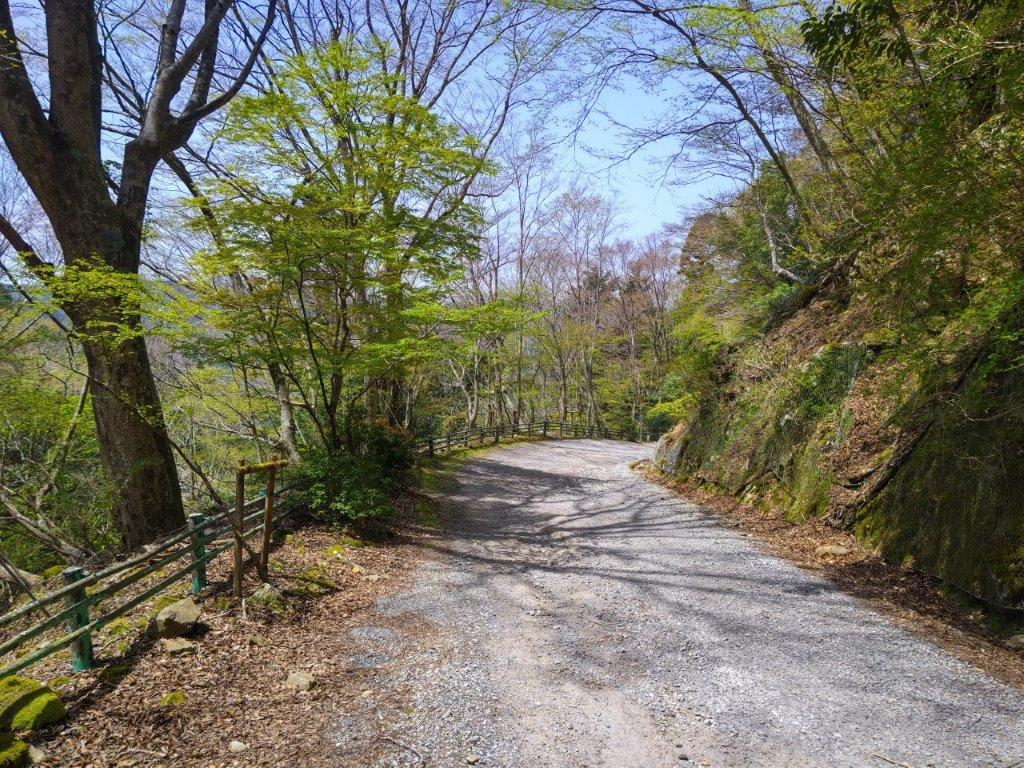
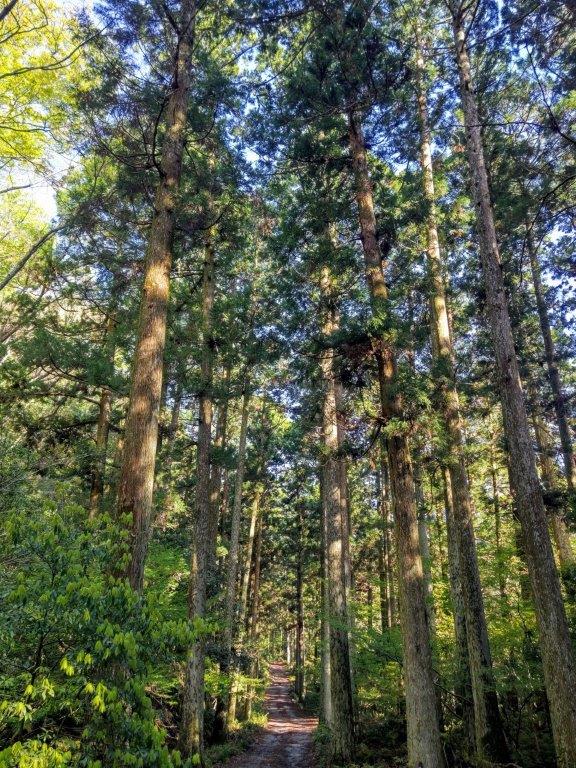
Fortunately this section was in the shade and a small brook running parallel to the road also had, I hoped, a cooling effect; here and there tall birches reached upwards, reminding me I was now inside the Meiji no Mori Takao Quasi-National Park. I soon reached a series of stone steps leading to a small Inari shrine near Jataki Falls (蛇滝 meaning “snake waterfall”). I was unable to spot the falls, most likely hidden by the mountain side and seemingly off limits to hikers. On the other hand, it seemed like a peaceful spot off the beaten trail, lush vegetation crowding in from all sides. Around now, I was starting to feel the effect of the heat so I soon continued on my way, slowly following the switchback trail up the north side of the mountain.

Stone Staircase past Jataki Falls

View South from the Monkey Park

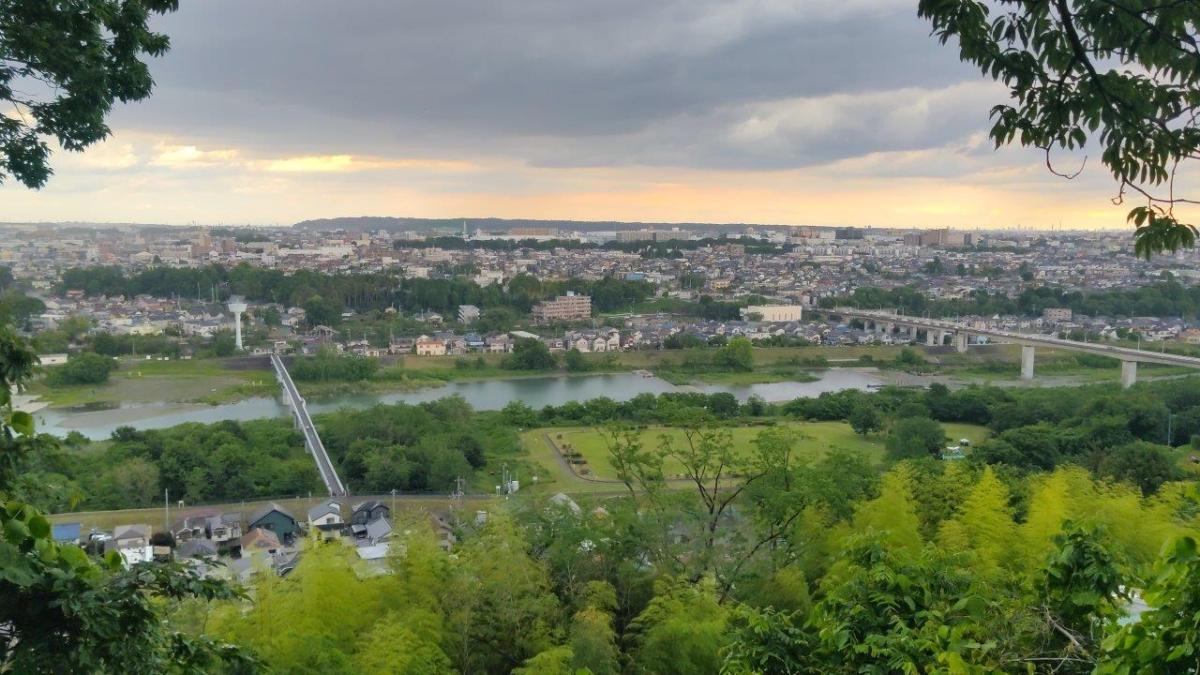
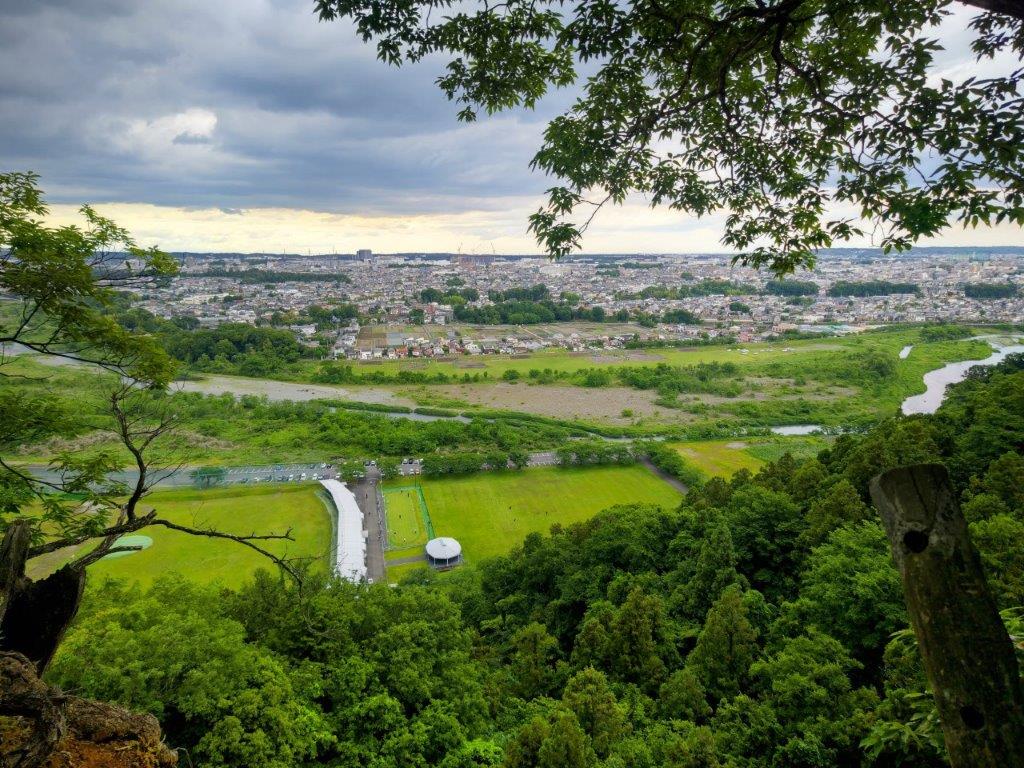
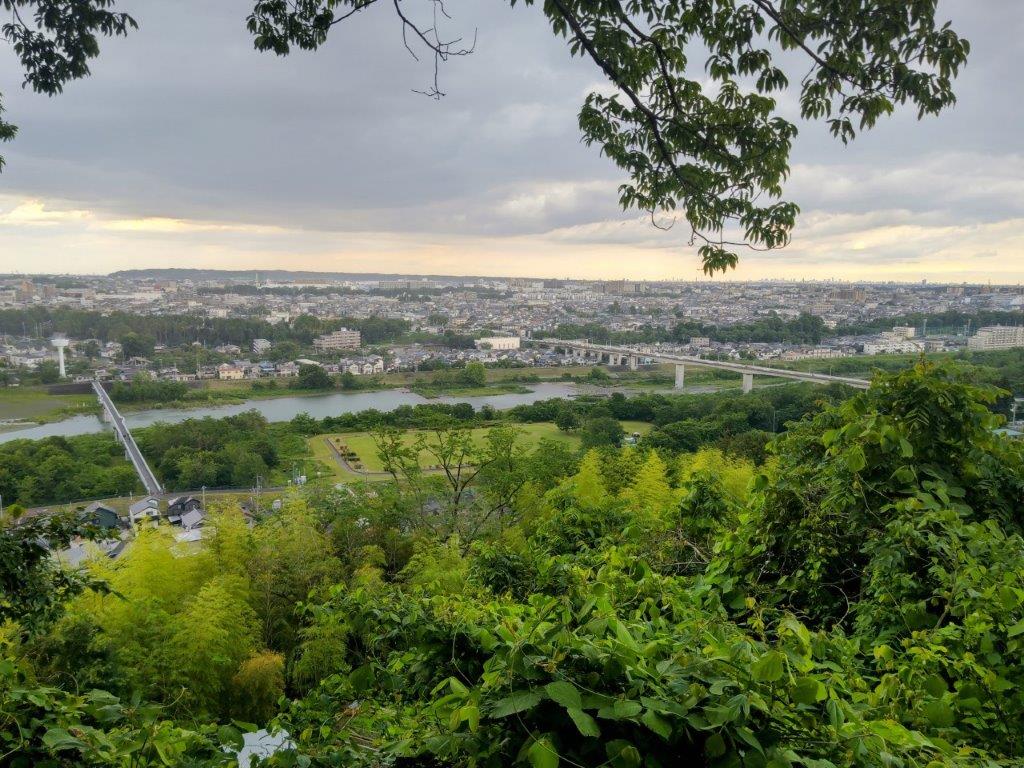
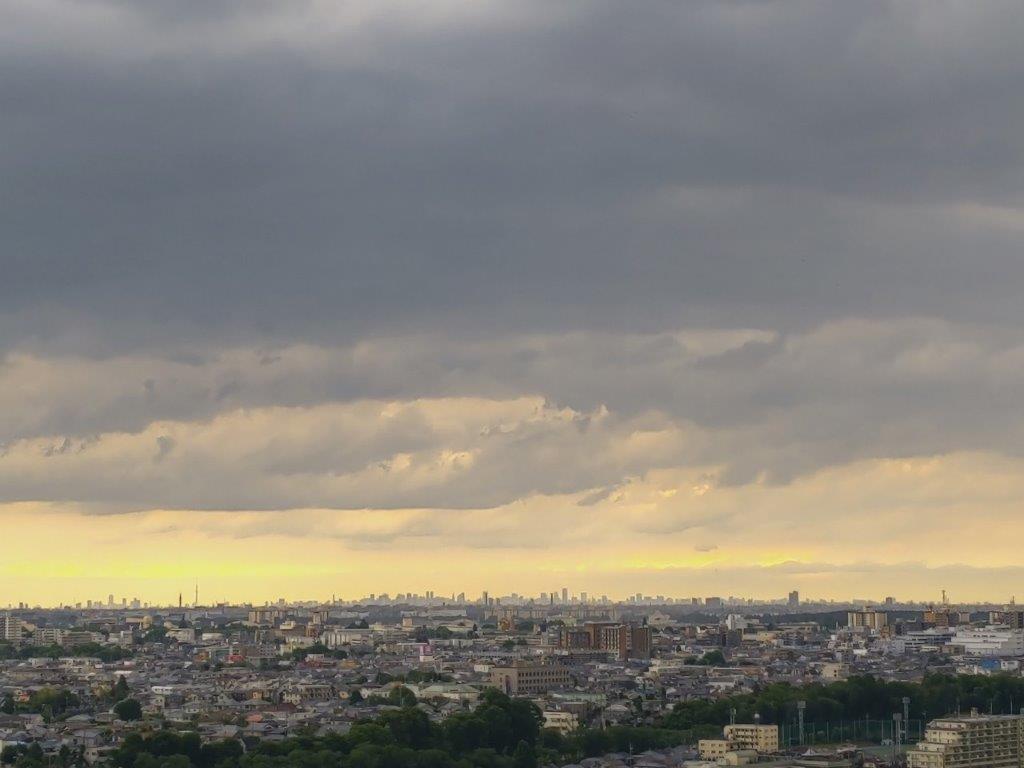
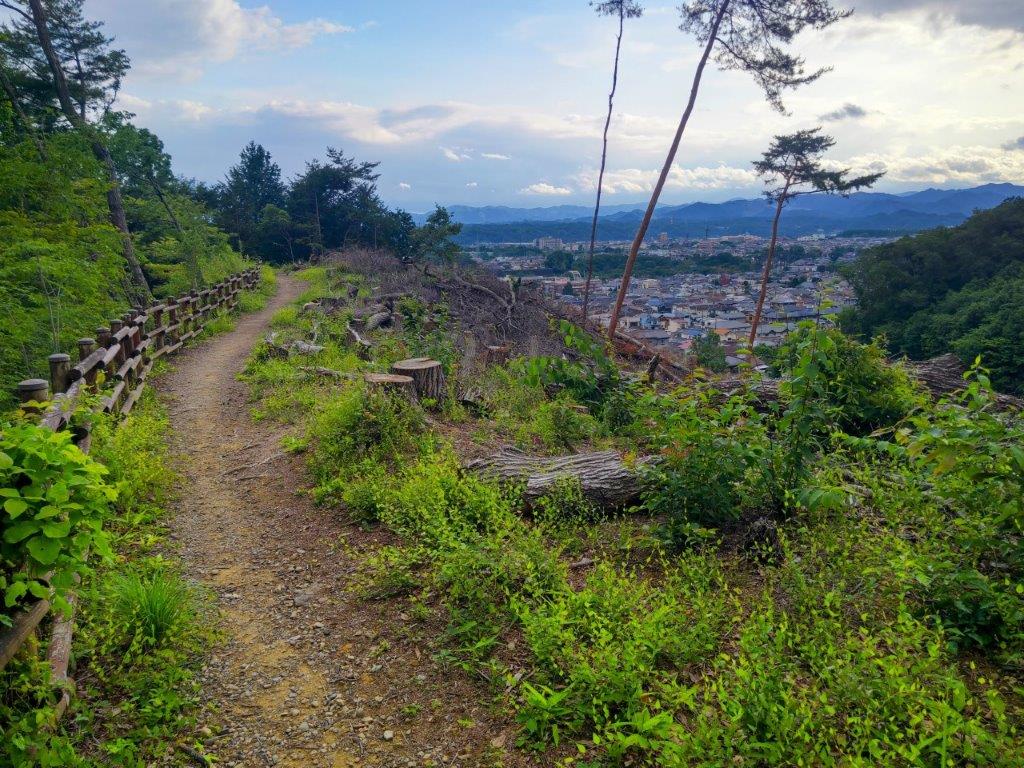
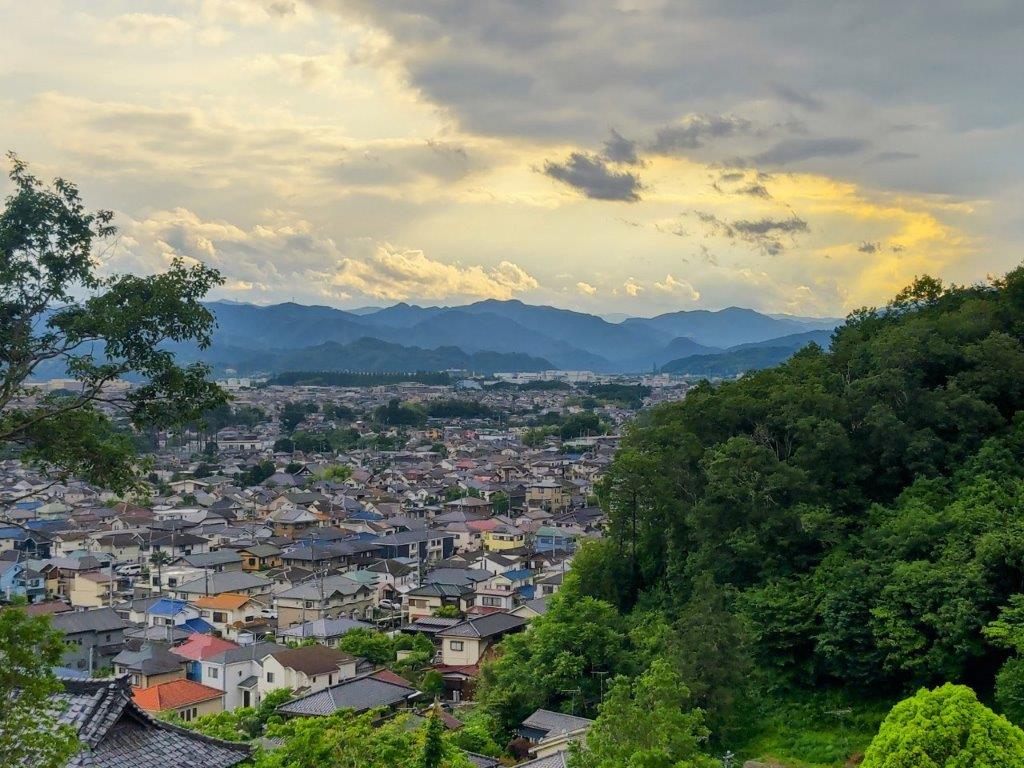
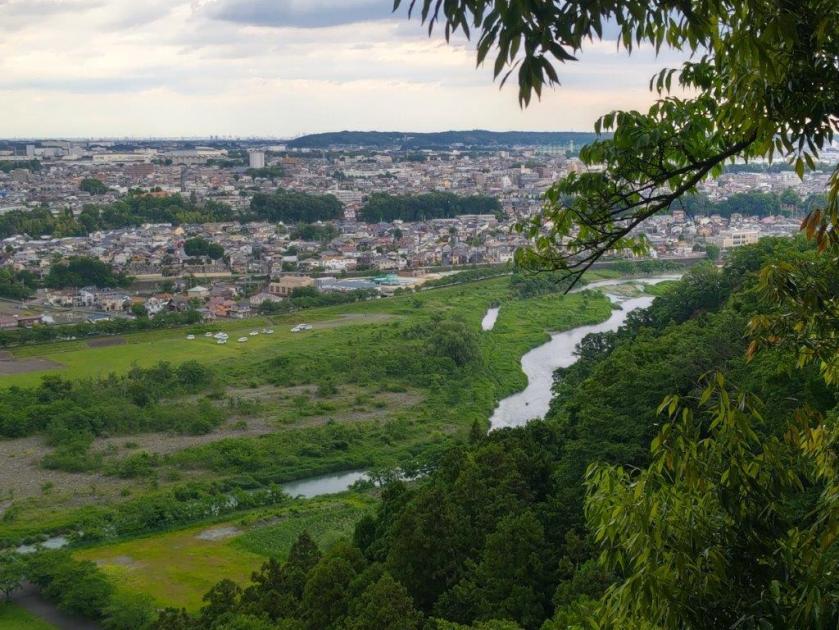
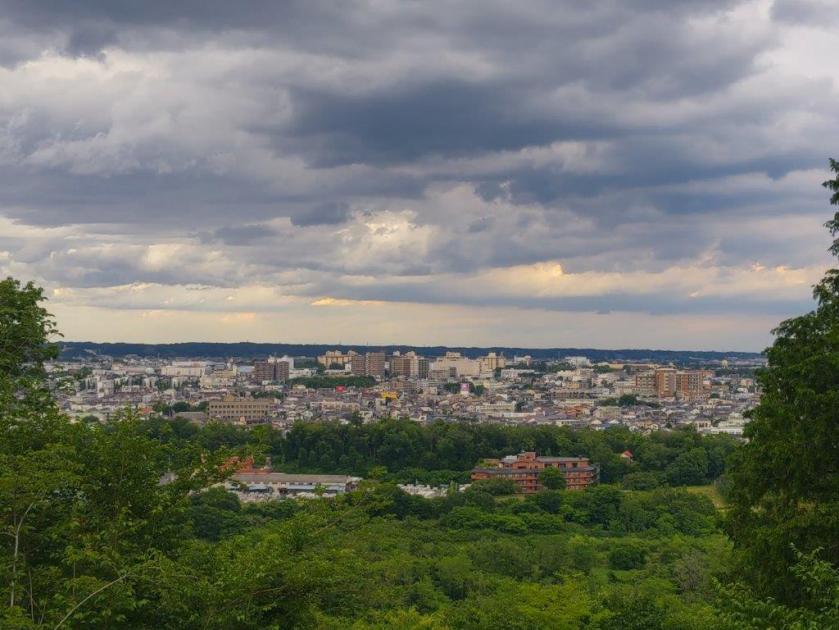
I was relieved when I emerged onto the main ridge near the top station of the ropeway. I went straight to the restrooms to pour some cold water over my head. Feeling better I headed up the Kasumidai Loop and soon arrived at the entrance of the Takao Monkey Park. Although I prefer to see monkeys in the wild, I felt I needed another delay to allow the sun to get closer to the horizon. Inside, I was rewarded with a view south from the observation deck on top of the monkey house, as well as a surprising number of monkeys. After a short walk through the wildflower garden, I resumed my hike, now following the Suspension Bridge Trail. It was past 4pm, and for the first time of the day, the temperature felt bearable, as the sun sunk below the clouds on the horizon.

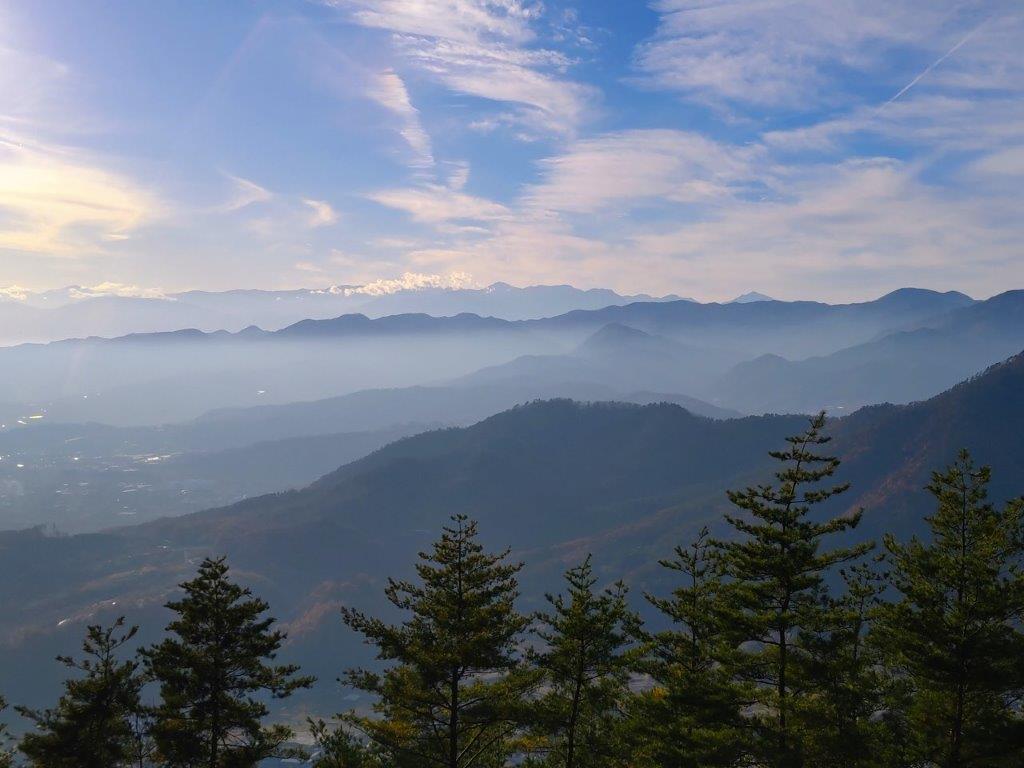
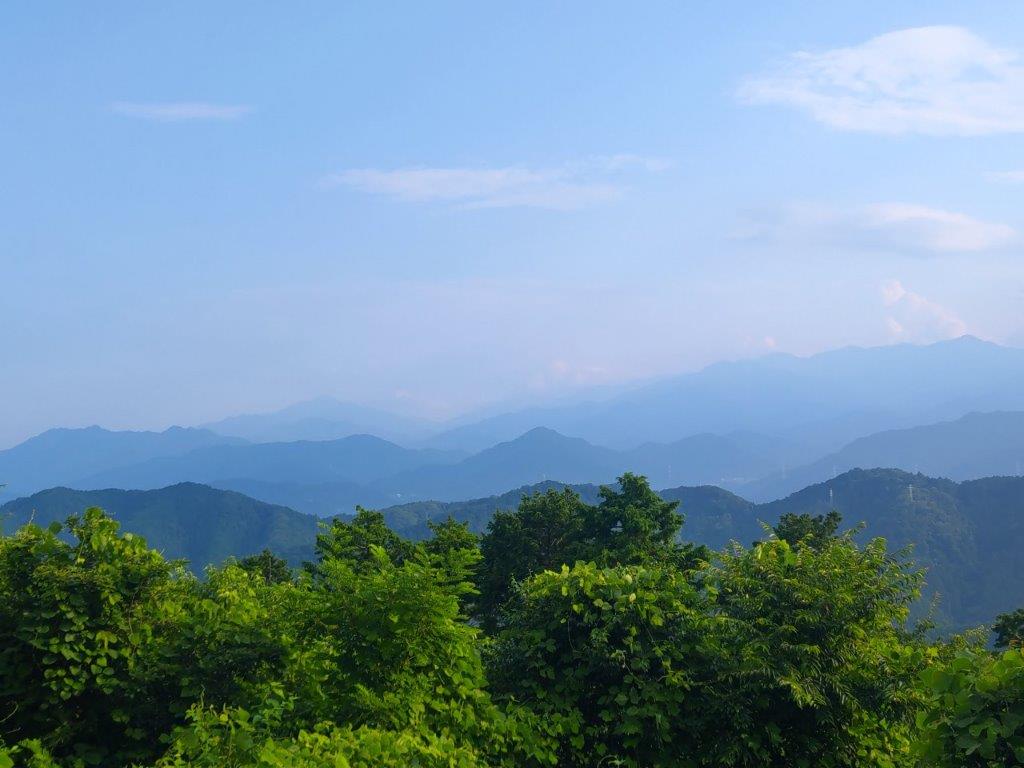
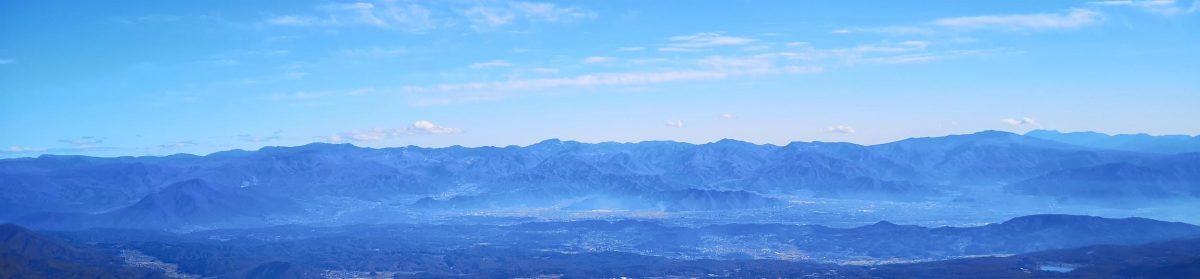
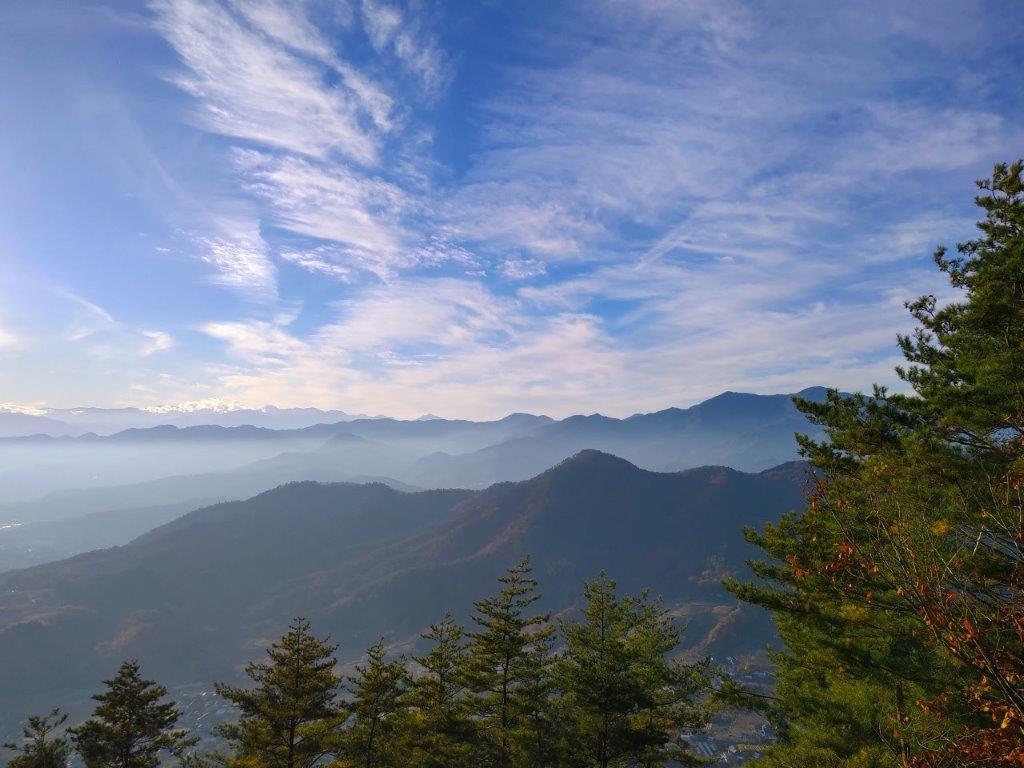
View of the Tanzawa Mountains from the Top of Mt Takao

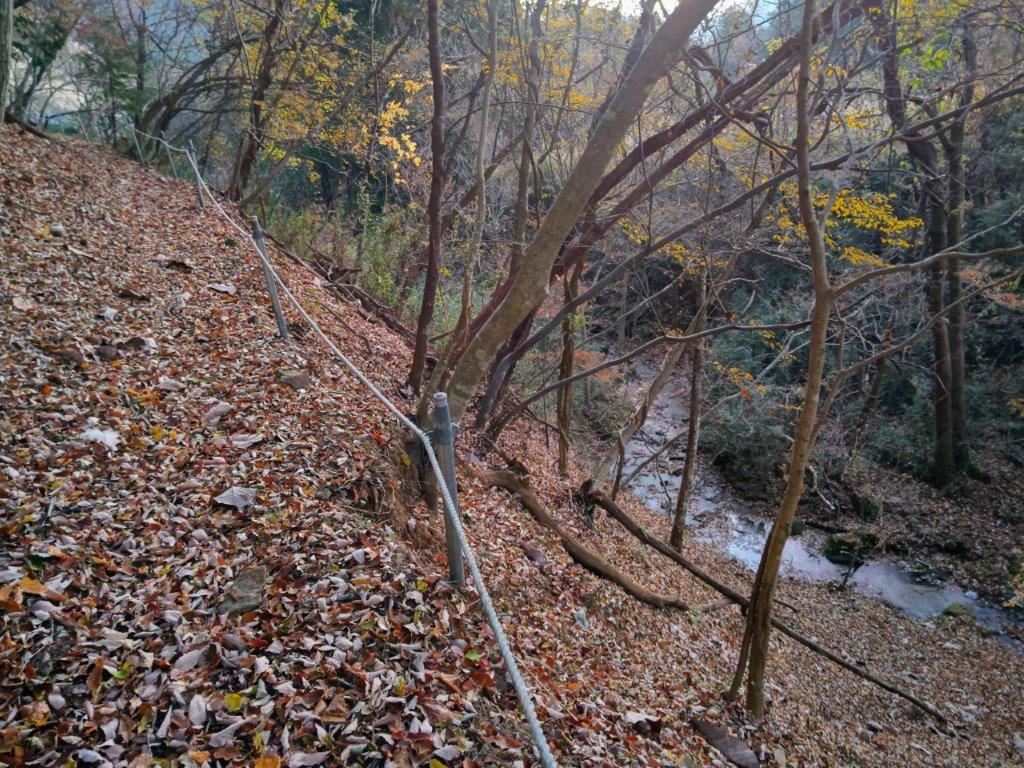
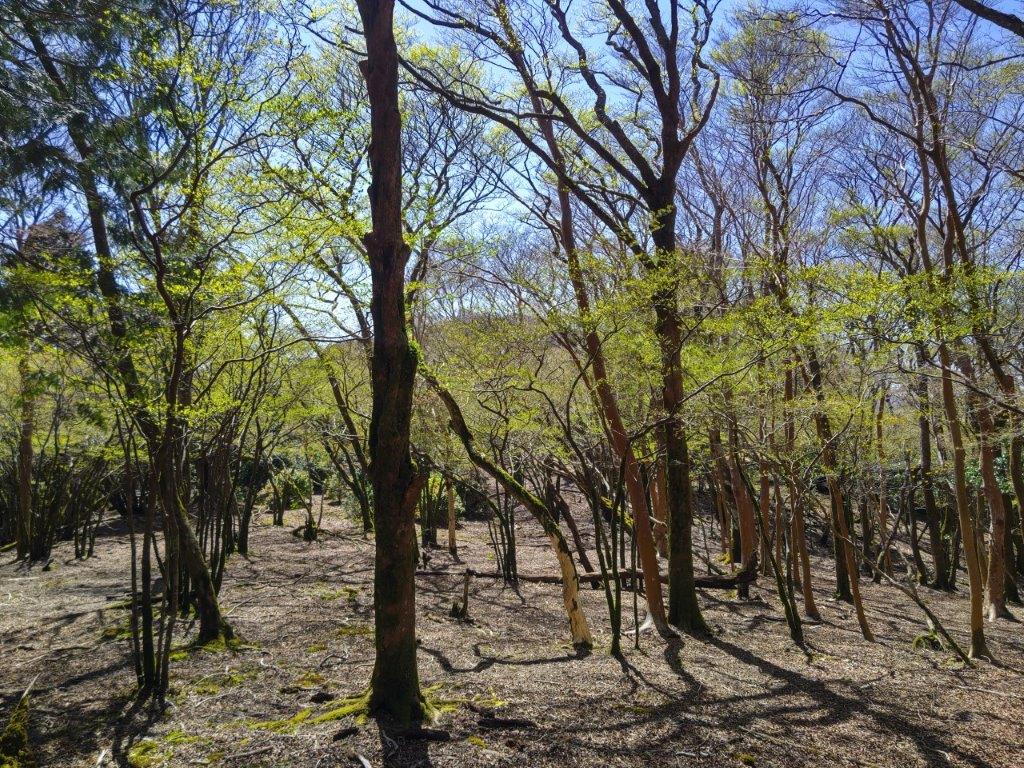
Walking along the Katsura Forest Trail

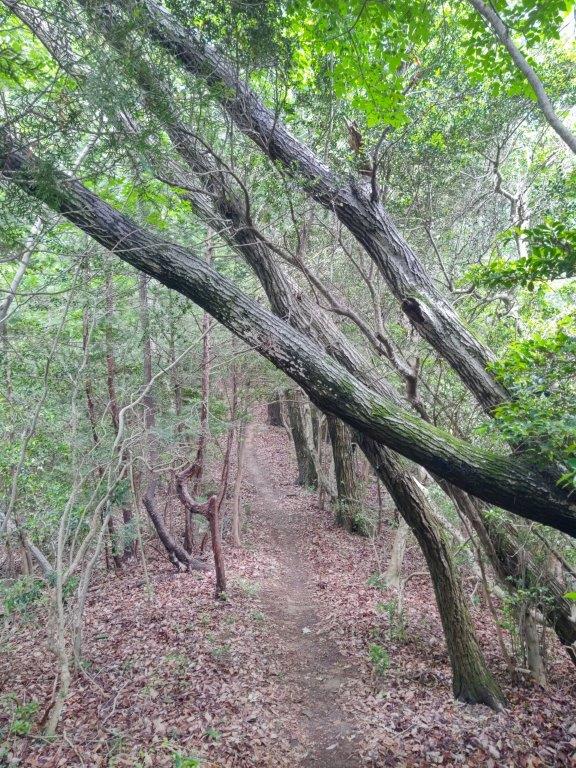
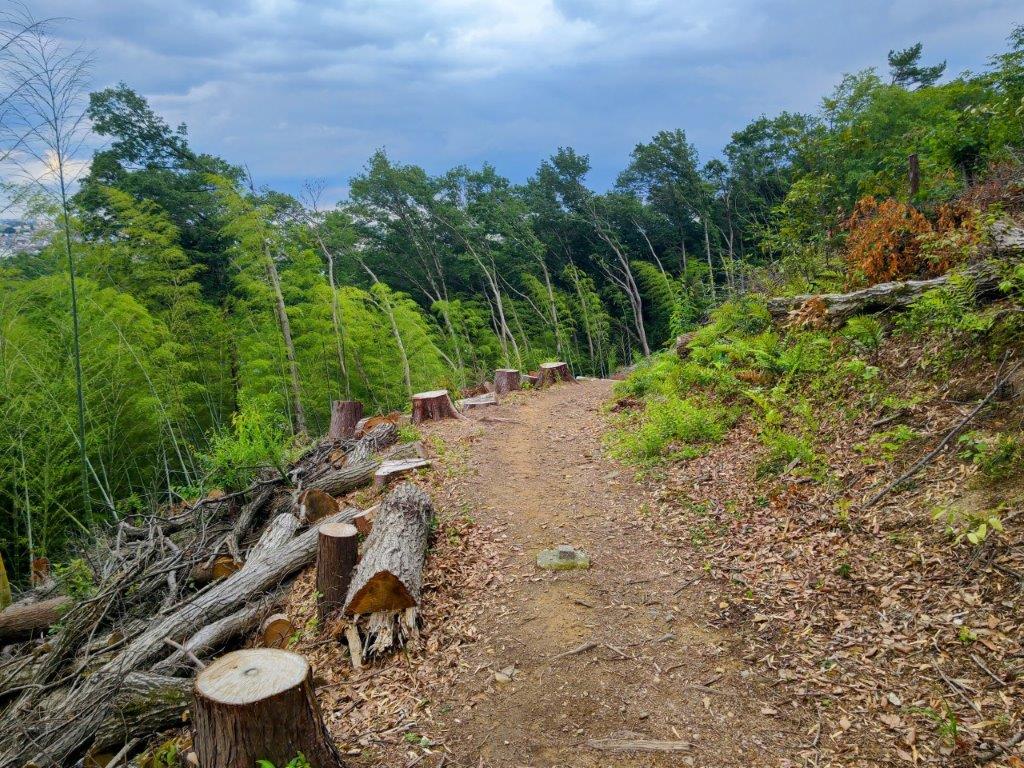
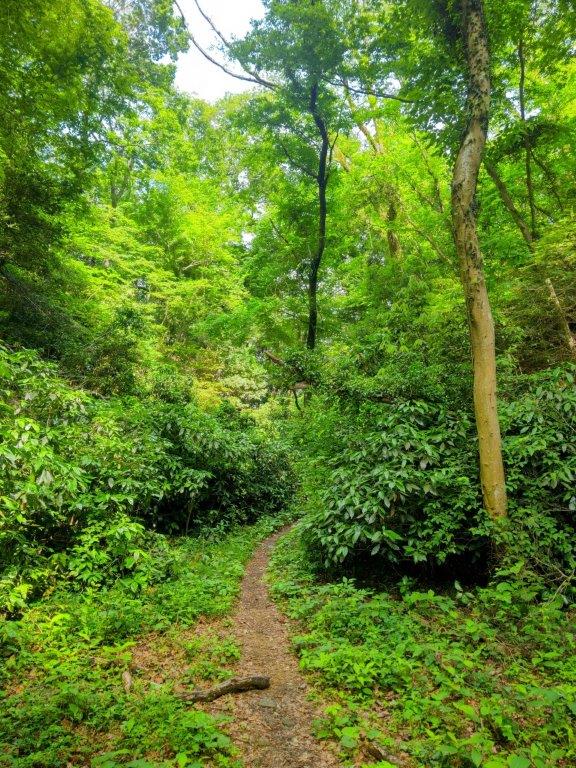
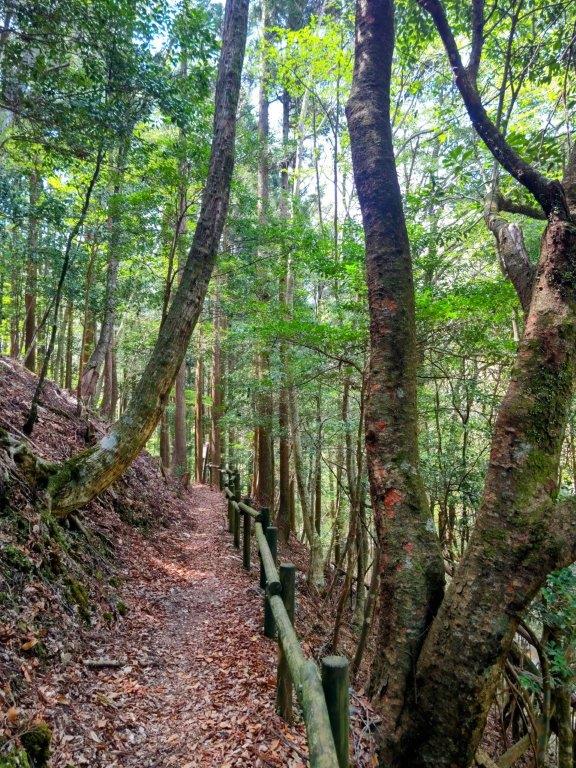
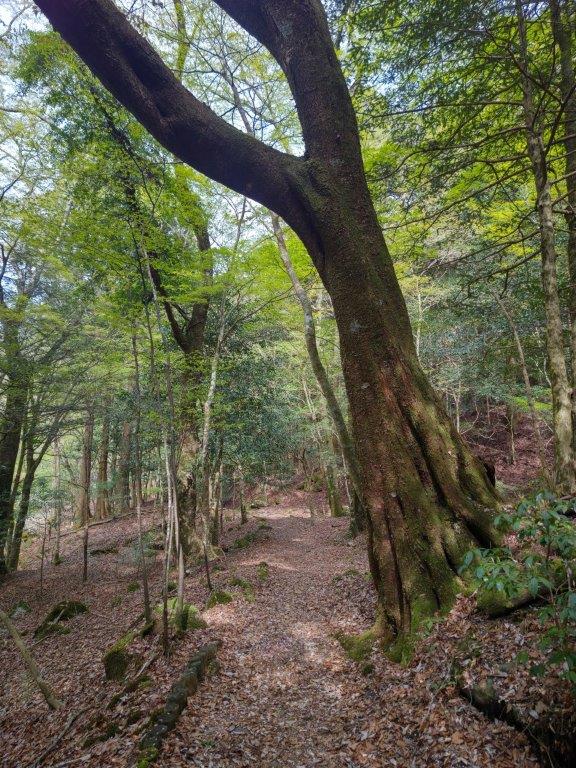
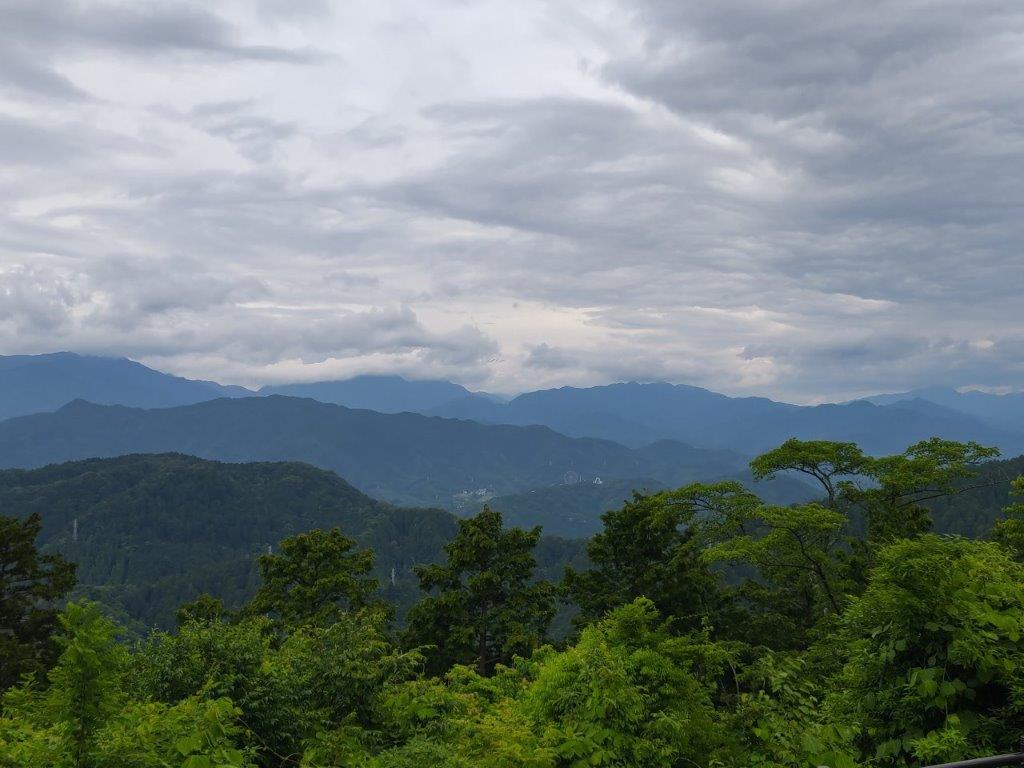
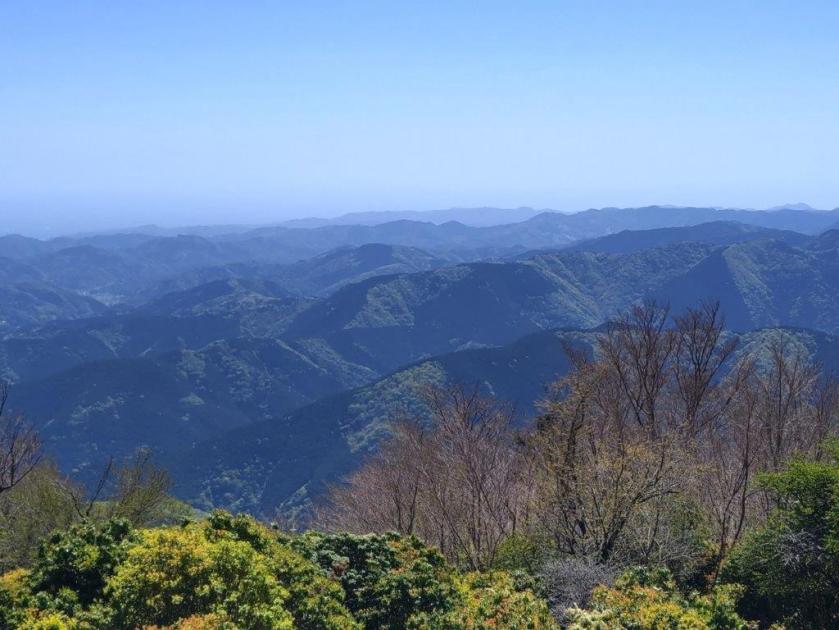
So far I had seen few people but this section was surprisingly crowded, probably because of the current trail closures. A little before 5pm, I reached the top of Mt Takao (高尾山 たかおさん takao-san) for the tenth time. Clouds had already swallowed up Mt Fuji to the southwest but I still had a view of the Tanzawa mountains, an improvement over my last visit. After a short break, I started to head towards the entrance of the Katsura Forest Trail. Although the sun wouldn’t set for another two hours, it was surprisingly gloomy under the cover of the forest canopy, almost a repeat of my previous experience on this path. I quickened the pace, stopping briefly to observe a hairy caterpillar crawl across the trail. I was relieved again to be back on the Kasumidai loop and without hesitation, darted down a wide path signposted for Biwa Falls.

One of the several Bridges on the Katsura Forest Trail

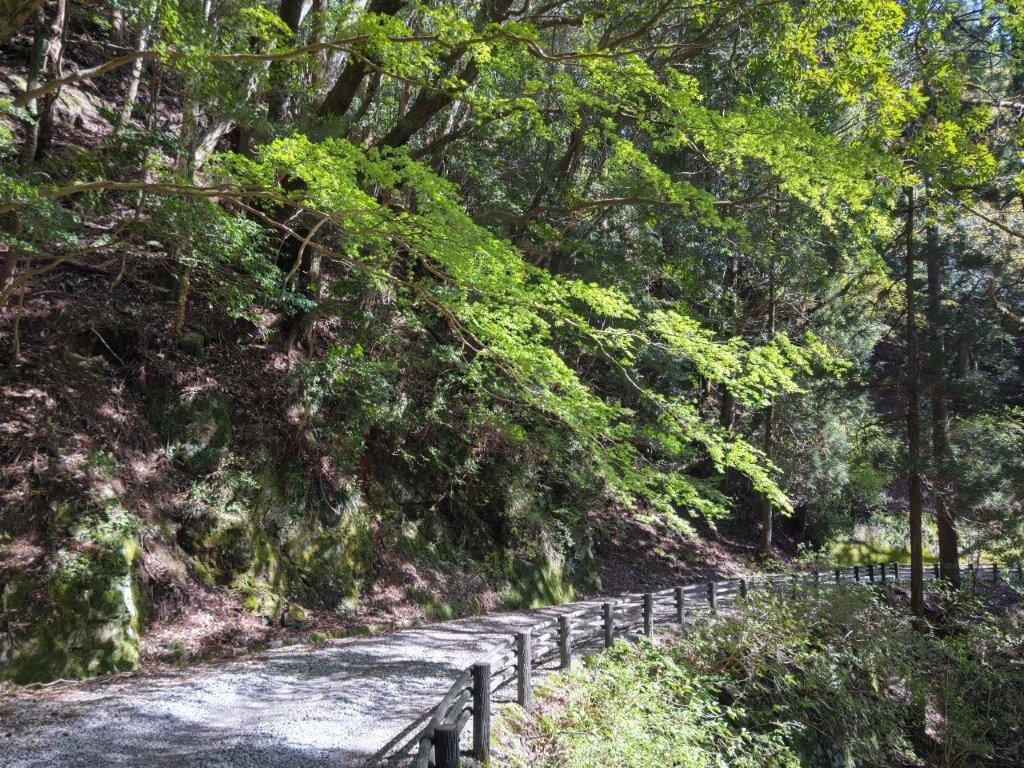
Wide Path down to Biwa Falls

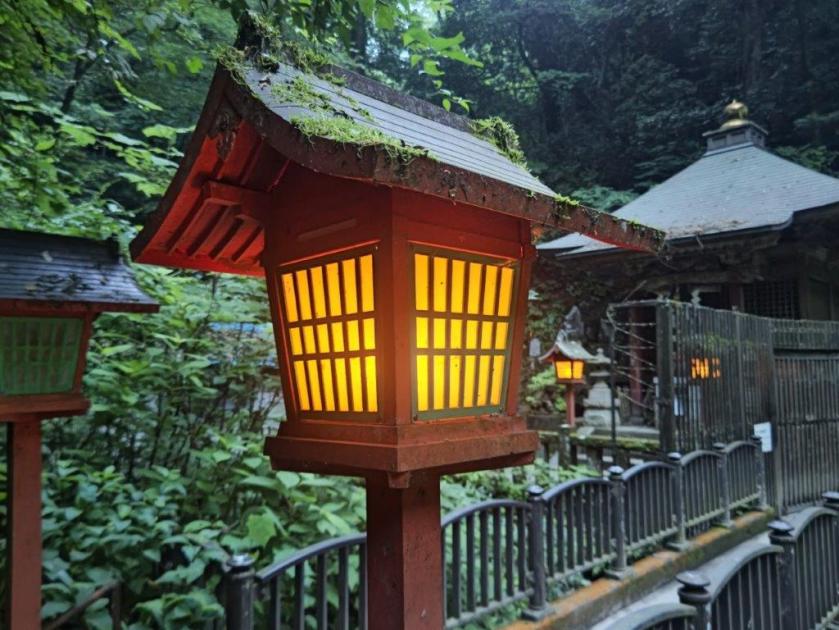
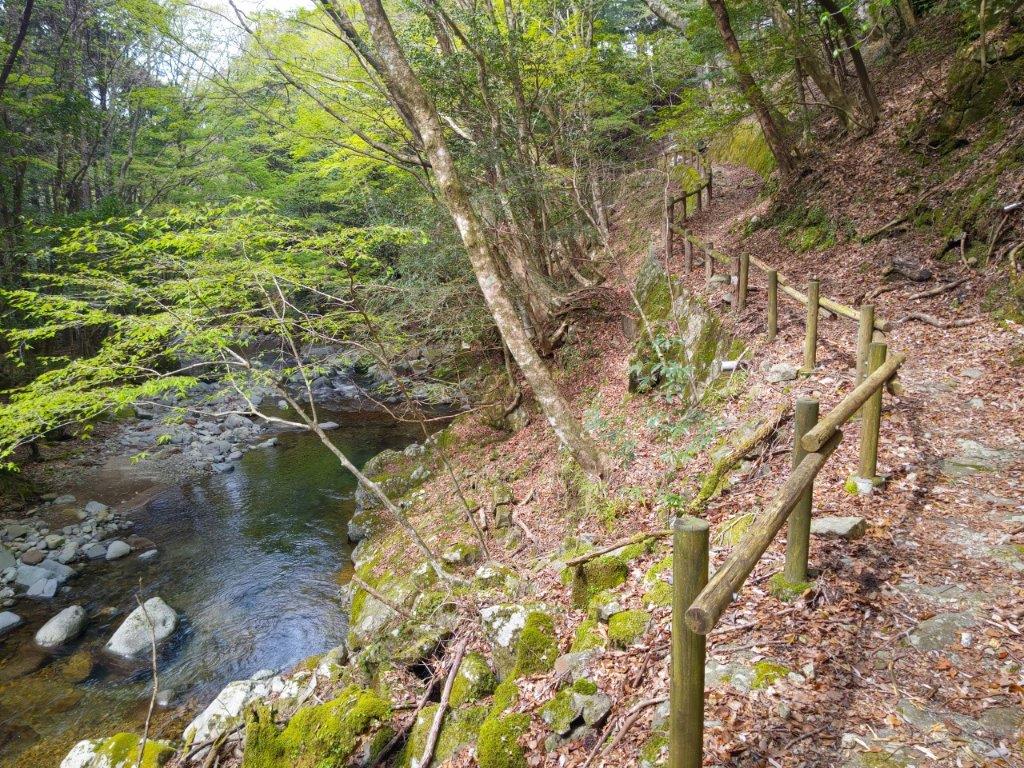
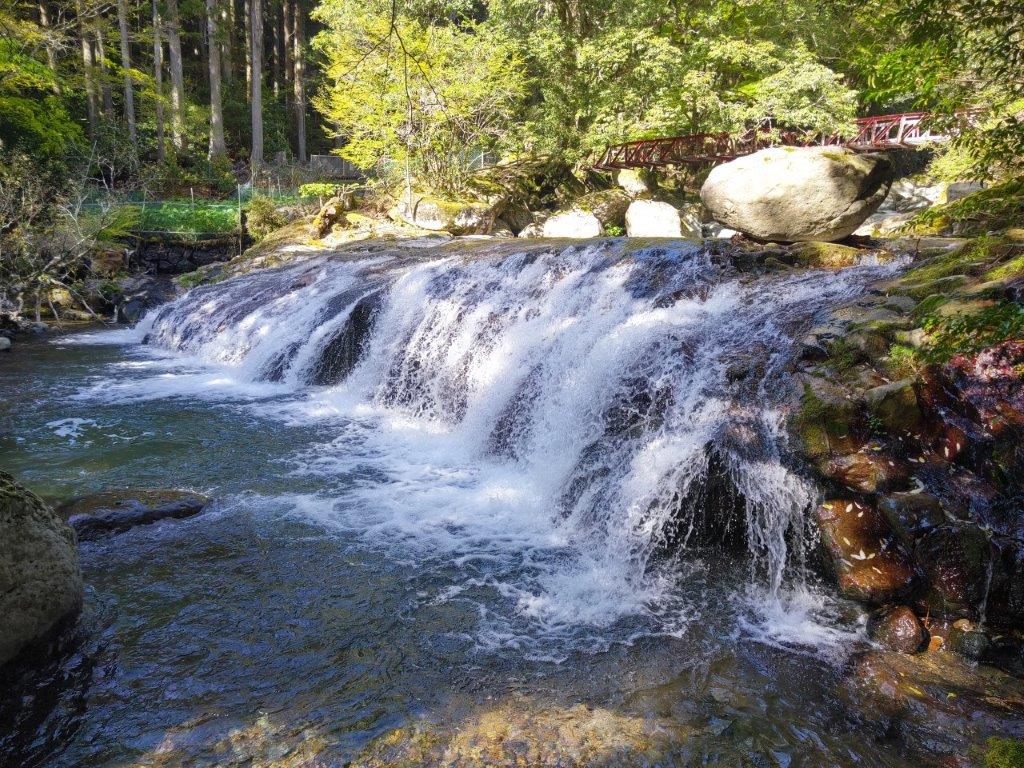
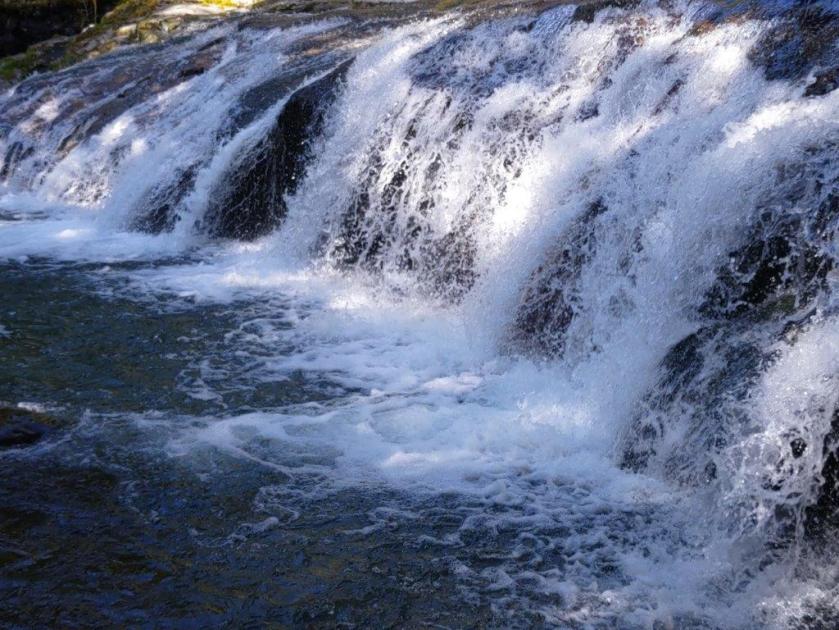
I was glad this section had better visibility, pieces of sky now visible overhead. The trail turned rocky and forced me to slow my pace. Once or twice I spotted a brief pinpoint of light, possibly fireflies since a stream was nearby. At 6h30, I reached Biwa Falls (琵琶滝), the lit-up red-coloured lanterns an indication of the late hour. Since it was truly getting dark, I completed the final section at top speed, reaching Gokuraku-yu exactly at 7pm. While I was enjoying a hot bath, a tremendous downpour started; towards the end, I had passed a few people heading up in the semi-darkness and wondered if they would be alright. At 7h30, I boarded the train for the one-hour ride back to Shinjuku.

Watch a Video of the Hike

See a Slideshow of More Pictures of the Hike

Mt Sengen (235m) & Mt Daicho (192m), Ome & Akiruno Cities, Tokyo Prefecture, Sunday, June 1, 2025

I was looking for another hike close to home as the Spring weather continued to be unsettled. Thanks to Japanwilds, I was reminded of a small peak in Western Tokyo I had recently spotted on my hiking map, along the Hamura Kusabana hills hiking trail (羽村草花丘陵ハイキングコース). Since it was on the short side for a full day outing, I decided to start near Akaboko in Ome, and then head west through the hills south of Tama river. Along the way, I’d pass a second peak with a view from a shrine on its north side.

For subscribers, read this Post on Hiking Around Tokyo for a better viewing experience and the latest updates

To get to the start of the hike, I’d ride the Chuo and Ome lines from Shinjuku to Ome station, and there board a bus for the ten-minute trip to Meijibashi, a short distance from the trail entrance. For the return, I’d catch a bus from Shimo-kusabana, a few stops from Fussa station down the Ome line. The weather was supposed to be mostly cloudy, with a chance of sun in the afternoon. I was looking forward to exploring new trails inside the capital and hoping the weather would allow me to complete my planned route.

Find Japan Hiking Maps on Japanwilds and subscribe to our newsletter

Trail past Futatsu-zuka (left) & Before Manji (right)

Walking next to Fences (left) & through Forest (right)

I rode the comfortable and nearly empty Green car to Ome station, arriving there at 11am. I got off the bus one stop early so I could stock up at a nearby convenience store. As I set off for the trail entrance, I noticed that more and more blue sky was appearing overhead, a trend I hoped would continue. At 1130, I reached the Mahiki-zawa forest road (馬引沢林道), and very soon, found myself surrounded by nature walking next to a rushing stream.

Steps past Mt Sengen (left) & Inside a Bamboo Grove (right)

Forested (left) & Open Sections (right) on Mt Daicho

I was delighted by this unexpected river walk, mossy rocks occasionally lit up by stray sun rays. Sturdy, well-made signposts, like those of the “Fureai no Michi”, told me I was following the “Ome! Water and Nature and Plum Road” (Ome! Mizu to Midori to Ume no Michi 青梅! 水と緑と梅の道). At noon, I reached a clearing from where I could see that the patches of blue had turned into a mostly blue sky. Feeling hopeful for the day ahead, I picked up the pace, as the path started to climb gently. Shortly after, I arrived at Mahiki-zawa Pass (馬引沢峠), where I turned left, merging with the Mt Nagabuchi Trail (長淵山ハイキングコース), as well as my Akaboko hike.

Start of the Hike on the Mahiki-zawa Forest Road

…next to a Rushing Stream

I made good time along the ridge trail, passing other hikers for the first time of the day and glancing at the instructive tree name signs along the way. At 1230, I reached another junction at the Old Futatsu-zuka Pass (旧二ッ塚峠 355m, the highest point of the hike); here I turned right, leaving behind the route of my previous hike. The path soon became narrow, the vegetation crowded in on both sides and the quality of the signposts dropped. I suddenly popped onto a paved road and it took me a few seconds to pick up the narrow trail on the other side. A handful of minutes later I reached the top of a cleft in the ridge allowing for the passage of a road connecting the Tama and Akigawa river valleys, the steep mountain sides covered in cement to prevent collapses. After a short descent, I darted across the road, made my way up the other side, and plunged back into the forest.

Blue Sky from the Forest Road

Fenced Section on the Way to Manji Pass

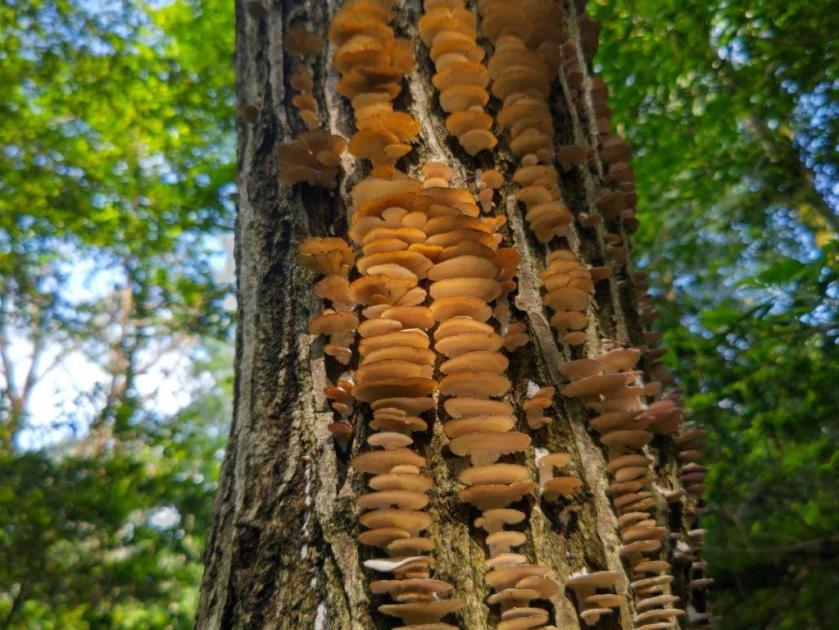
This was probably the most beautiful part of the hike and it was hard to believe that the busy city lay beyond the green forest. On top of the Spring green and scattered birdsong, I spotted translucent white “Snow Fungus” (Tremella fuciformis), orange-coloured mushrooms, and a ghostly Luna Moth flapping its wings very slowly (it seemed to be dying). I passed almost no one on this section, possibly because most people prefer this area in the colder months. Fortunately, today’s temperature, under 25°, was somewhat cool for June, and I was glad I could enjoy hiking here in this season. At 2pm, a fence appeared on the right of the trail; to it was attached a sign saying “Beware of the Mamushi”(マムシ注意), the Japanese Pit Viper, one of the most venomous Japanese snakes.

Footpath beyond Manji Pass

First View of the Day from Sengen Shrine

I started to worry about a snake encounter, the dense green vegetation on the left the perfect hiding spot. I walked as fast as I could, exposed to the strong June sun now high in the sky. At one point I spotted a green slender shape: webbed feet revealed it to be a lizard basking in the afternoon sun. I felt relieved when the trail finally took me back into the forest, leaving the fence behind. After a short descent, I passed Manji Pass (満地峠), sturdy well-made signposts suddenly making a comeback. At the top of some steps, a waist-high wall appeared on the right side, marking the boundary of a religious organisation. I headed down some steps leaving the wall behind and entered another section of dense and lush vegetation. Shortly after, I found myself walking with a golf green on the right side. After ascending some steps, I emerged onto the flat summit of Mt Sengen (浅間岳 せんげんだけ sengen-dake), completely in trees; since it was nearly 3pm, I sat on one of the benches for a late lunch.

Viewpoint between Mt Sengen & Mt Daicho

In the Distance, the Sayama Hills

Looking up, I noticed thick dark clouds fully covering the sky on the north side. I started to worry about rain and set off quickly. First, I made a short detour to the nearby Hamura Shrine (羽村神社) from where I had a view on the north side of Tama river with the Kaji Hills in the background; looking east, I could see the low outline of the Sayama Hills; looking west, I could see the somewhat higher hills of Oku-musashi; on the north side, I spotted the much higher Okutama mountains though a gap in the vegetation; looking down, I realised I was standing at the edge of a cliff, a sturdy fence preventing any unfortunate accidents. I set off again, following the up and down trail westwards, now signposted at the Hamura Kusabana Hills Hiking Trail, and a little before 4pm, reached another viewpoint. Just then, it started to rain lightly.

Central Tokyo under Dark Clouds

Bamboo Grove on Mt Daicho

Fortunately the viewpoint was sheltered by trees so I sat on one of the two log benches to wait out this patch of bad weather. The rain strengthened and although I was mostly dry, I started to consider whether I should escape to the nearby Hamura station. Directly ahead lay the Sayama Hills, from this distance a flat green line extending across the north horizon; to the east, I could see the skyscrapers of Central Tokyo; directly below was the Tama River spanned by two bridges. After 4pm, the rain let up and I dashed off at once. After crossing two roads and a short forested section, I arrived at the base of today’s main mountain.

Trail before Mt Daicho

Trail after Mt Daicho

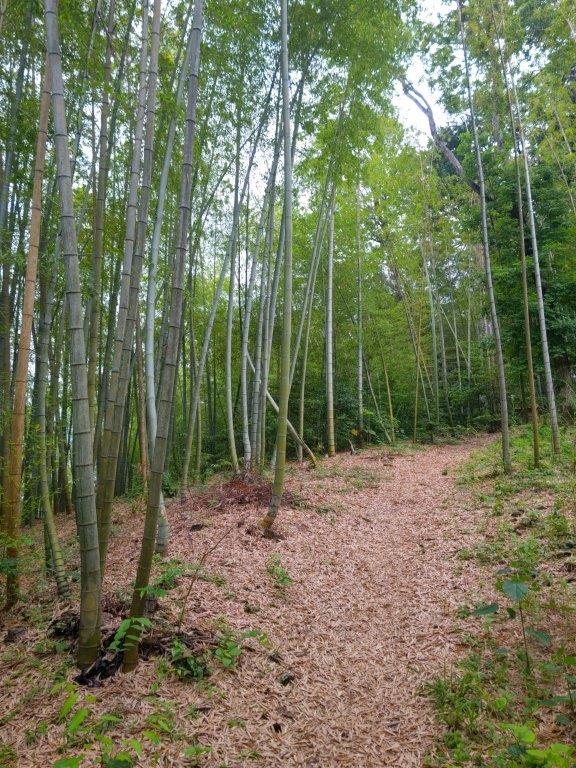
I soon found myself walking through a beautiful bamboo grove. Unfortunately, the short rain from before had brought out the first mosquitoes of the season; I made a mental note to bring anti-bug repellent on my next hike. At 4h30, the trail levelled as it passed through a section cleared of trees; above the treetops, I could see the rain clouds moving eastwards. At the top of some steps, I reached an open shelter and the top of Mt Daicho (大澄山 だいちょうざん daichou-zan). The summit was free of trees but lacked enough prominence to allow me to see past most of the surrounding forest; a gap on the north side showed a small section of the Sayama Hills beyond the city buildings.

Looking back at the Top of Mt Daicho

View South of the Tanzawa Mountains

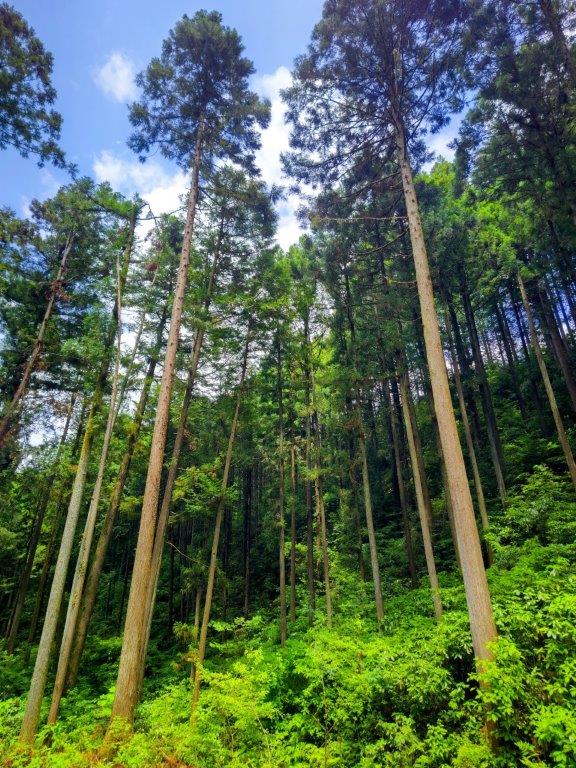
I was delighted by this open space cut off from the surrounding city. I took a short break at the summit picnic table to enjoy the solitude and then followed a trail southwards between tall pines. I soon had a view of the Tanzawa mountains, forming a protective wall south of the city. Halfway down I came upon the small Kusabana Shrine on a terraced area; I had a wide view from Mt Mito in the Okutama mountains to Mt Oyama in the Tanzawa mountains, the background lit up yellow by the late afternoon sun. It was past 5pm, so I hurried down the steep shrine steps to the residential area at the base of the mountain. A short walk brought me to the bus stop and by 5h30 I was comfortably seated in the green car for the 45-minute ride back to Shinjuku.

Watch a Video of the Hike

Watch the Video of the Hike on YouTube

See a Slideshow of More Pictures of the Trail

See a Slideshow of More Pictures of the Hike Views

Odoriko Trail (highest point 719m), Izu City, Shizuoka Prefecture, Saturday, April 19, 2025

I wanted to visit the Izu Peninsula again since it had been a year and a half since my last hike there. I decided to explore the other half of the Odoriko trail (踊子山道), south of Amagi Pass, hoping that in this season I could finally catch the new green of Spring. Looking at my map, I saw that, although there were no summits along the way, the trail included several interesting sights: the Old Amagi tunnel, Namesawa Gorge, Tarosugi Cedar and Joren Falls.

For subscribers, read this Post on Hiking Around Tokyo for a better viewing experience and the latest updates

Hiking in the Fuji-Hakone-Izu National Park

富士箱根伊豆国立公園

To get to the start of the hike, I’d ride the shinkansen from Tokyo to Mishima, and there, change to the Izuhakone railway Sunzu line. At Shuzenji, I’d board a Tokai bus for Kawazu, and get off at Nikai waterfall, just past Amagi pass. For the return, I could catch a bus for Shuzenji from Joren Falls. If time allowed, I could get off at Yugashima onsen and drop by Kajika no Yu, a public bathhouse. The weather was supposed to be sunny but warm for the season, and I hoped I could keep cool walking under the tree leaves and next to rushing water.

Find Japan Hiking Maps on Japanwilds and subscribe to our newsletter

Taro Cedar (left) Joren Falls (right)

Upper (left) & Lower (right) Namesawa Gorge

The start of the hike was the same as when I climbed Mt Noborio a couple of years ago. After checking out Nikai Waterfall (二階滝), the amount of water seemingly the same as before, I continued past the entrance of the Kanten forest road (寒天林道), and after about 30 minutes of mostly level walking along a paved road, I reached the entrance to the Old Amagi Tunnel (旧天城トンネル), just past 1130. Built in 1905, and nearly half a kilometer long, it’s one of the 100 famous road sections in Japan.

See a Slideshow of pictures of the Trail

Fortunately, the tunnel was equipped with some lighting (not always the case) and I didn’t need to use my headlight, which I had brought just in case. Still, it was dark enough to feel a little spooky, on top of the steady drip-drip of water from the ceiling. Once out of the tunnel, I continued along a gravel road, now heading slightly downhill. Everywhere I looked, the new green was in full effect, with even some mountain sakura in full bloom dotting the opposite ridge. A little past noon, I arrived at Suishhochi (水生地), a place I had been through before on my way down from Hatcho Pond.

Walking between Kanten Forest Road and the Old Amagi Tunnel

Entrance of the Old Amagi Tunnel

Since today was a leisurely hike and I had ample time till my return bus, I decided to make a short round trip to Namako rock (なまこ岩). Although the rock itself was nothing special, I enjoyed the walk up and down the narrow valley, alongside a rushing stream, surrounded by moss-covered rocks and mitsumata flowers (ミツマタ), slightly past their prime. At 1pm, I reached the Suishochi parking lot and headed down some steps leading from the road to a trail next to a river. I had good views of the fast-flowing water on the left side, bright green wasabi fields covering the opposite bank. After a short while, I crossed the river over a metal bridge. The trail then headed into the forest and hugged the steeped forested mountain ridge. At 1h30, I came to a wide-open space called Yuyu-no-mori (遊々の森).

Walking through the Old Amagi Tunnel

Walking between the Old Amagi Tunnel and Suishochi

Since there was a bench in the shade of a towering cedar tree in one corner, I decided to take a break for lunch. Opposite was a rusty old train on display, a reminder of a time when a railway ran through the valley; behind me, I could hear the rushing water of the river; on my right, I could see the white bell-shaped flowers of the “Dodan Tsutsuji” (ドウダンツツジ) bobbing in the breeze. At 2pm, I set off again. I soon recrossed the river, and was once again walking along its right bank, arguably its best side, occasionally stopping to admire small waterfalls, slowing the rapid flow of water. As I had expected it remained pleasantly cool, despite temperatures being in the high twenties.

View of the River from the First Crossing

Following the Right Bank of the River

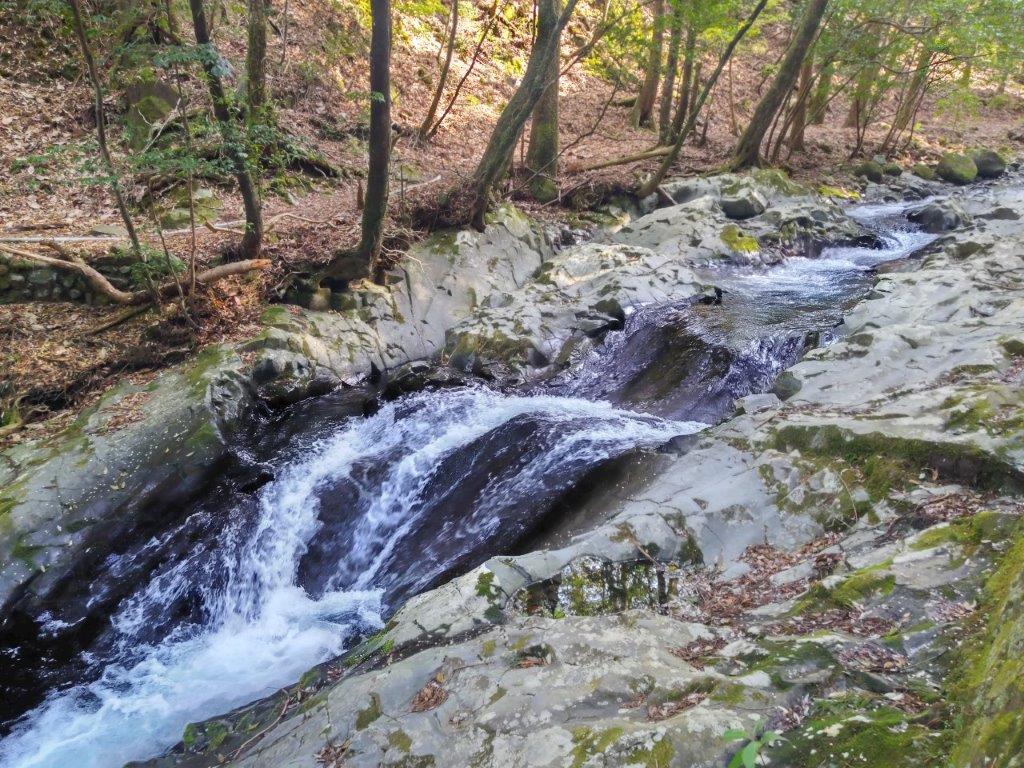
This was probably the best part of the today’s hike. The trail was well-maintained and easy to follow, thanks to the numerous and easy to spot “Odoriko Trail” signposts, as well as the detailed information boards. I was surprised to see few other hikers, probably because it was still early in the season. At 2h30, after crossing another bridge, I arrived at the start of Namesawa Gorge (滑沢渓谷). Here I made another round-trip up a hiking trail on the left side. It criss crossed a road a few times, but mostly followed a tributary stream. Here I spotted someone flying a drone over the gorge, most likely getting some spectacular footage.

Small Bridge along the Odoriko Trail

Third Bridge Crossing over the River

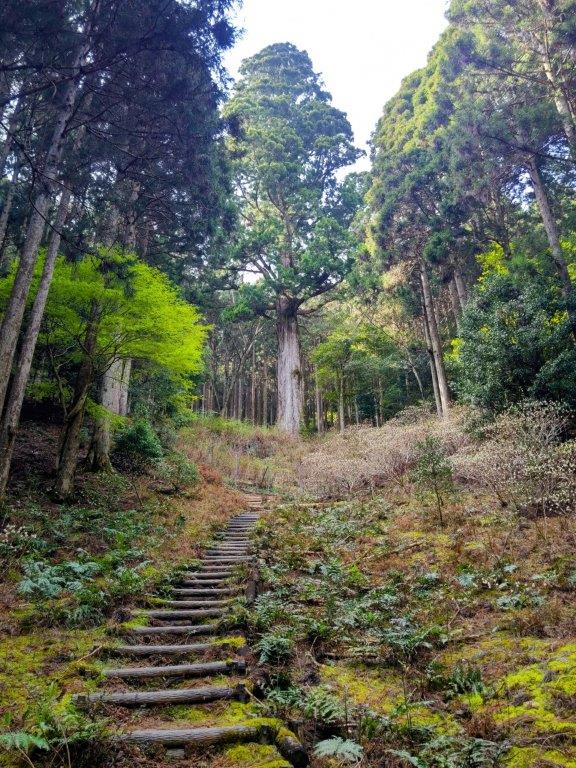
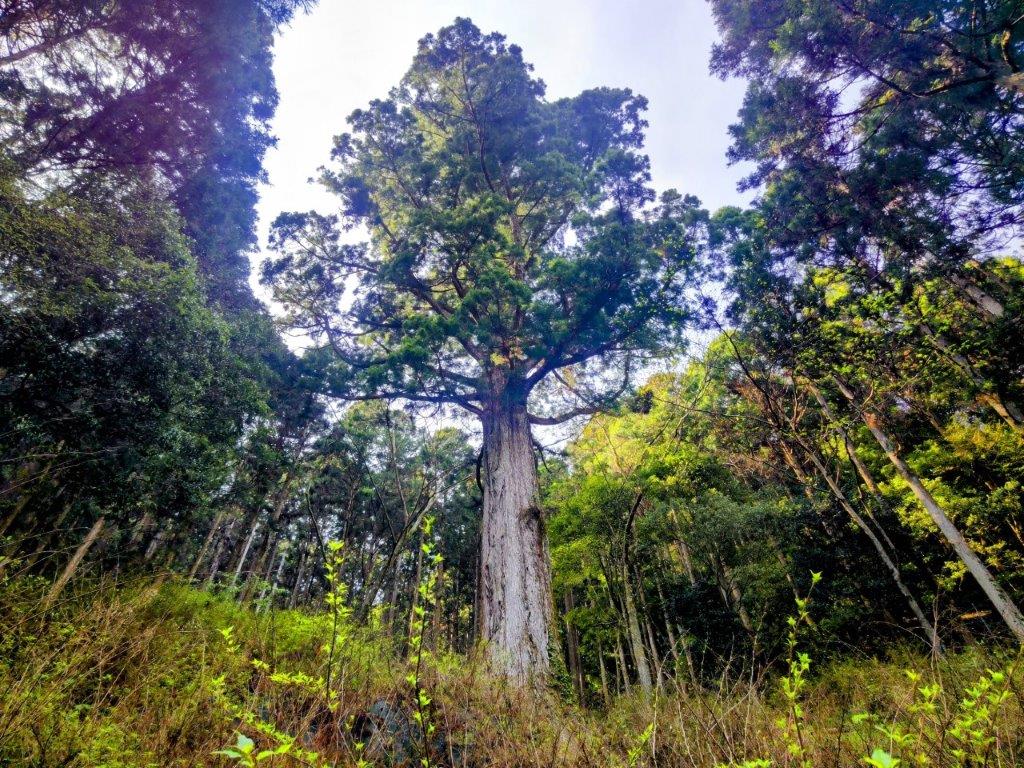
By this time of the day, the valley, oriented north-south, was in the shade. However, as I made my way up the mountain side, some sunlight finally filtered over the east ridge, lighting up the frothing water in a spectacular manner. After a while the trail merged with a forest road, and soon after, I reached my objective, Tarosugi (太郎杉), a giant cedar, 450 years old and 53m high. It’s also one of the 100 famous trees of Japan (3rd highest in the list, the highest being a tree in Akita, 58m). It stood to the right of the trail, in a small clearing at the top of a log staircase.

Wasabi Fields between Namesawa Gorge and Tarosugi

Looking up at Tarosugi

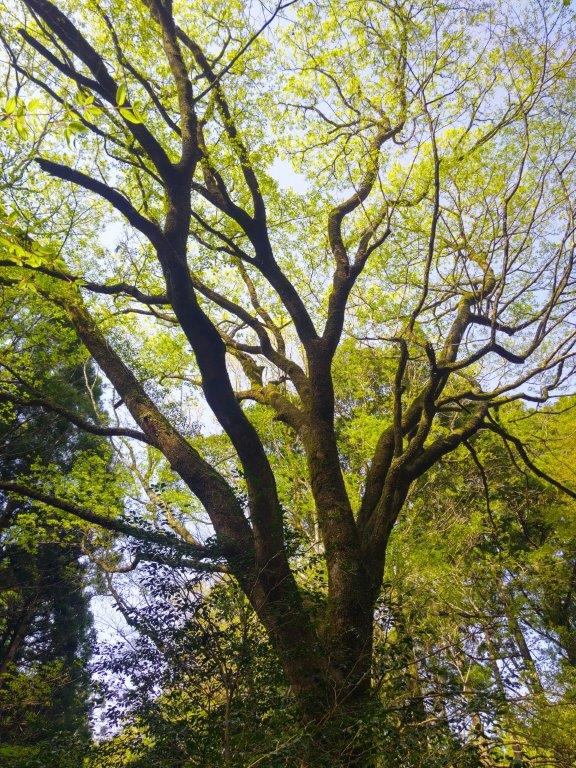
I was totally stunned by the view of this ancient giant, the effect amplified by looking up at it from below, as well as no other tree in the vicinity coming close to its majestic height. I had already visited the giant cedars in Yakushima, but there, every tree towers above you and it’s hard to grasp how tall they really are. On the way up, I had been wondering if it would be worth it, and I was definitely very happy I had made the effort. Although the tree was surrounded by a fence, it was possible to walk around it, and thus I could check out this marvel of nature from every angle. Once done, I legged it back to the entrance of the gorge, as I had now fallen slightly behind schedule. A little past 3pm, I reached the roadside station Amagi-goe (道の駅 天城越え) where I crossed the road.

Rapids along Namesawa Gorge

One of the Few Mountain Views of the Hike

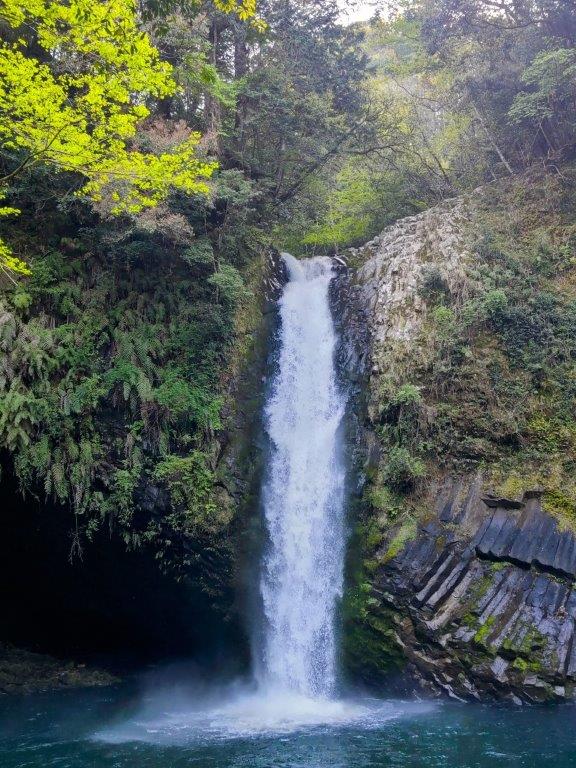
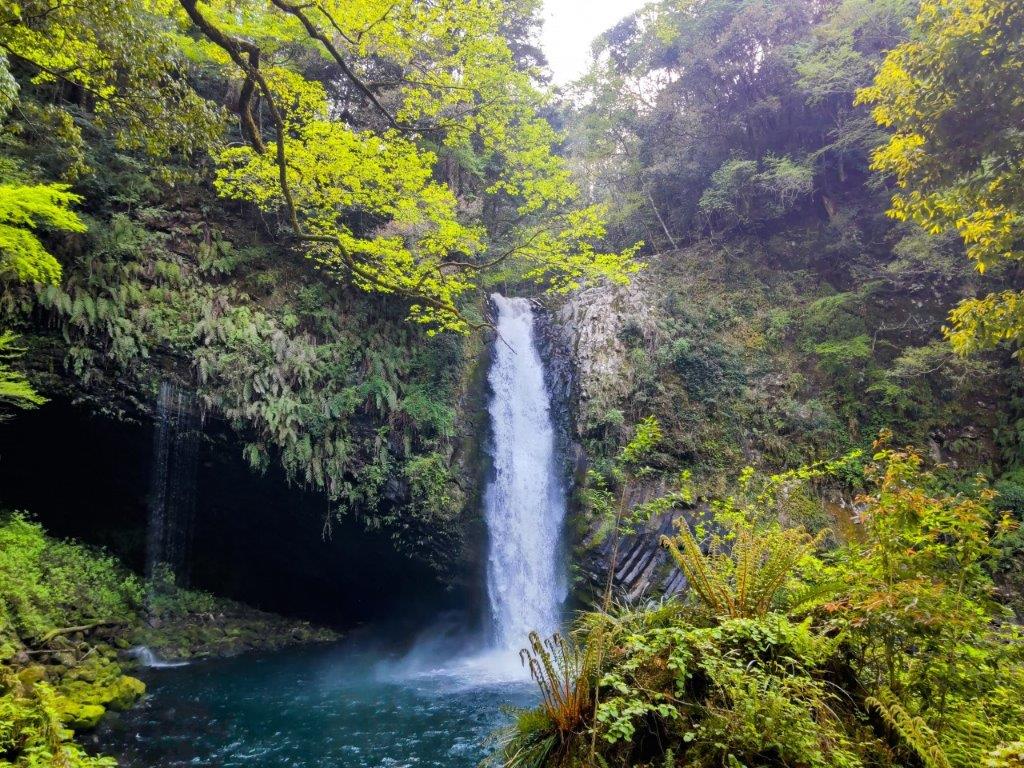
The final part of the hike followed a path up and down through forest before reaching a paved road at the top of a wooden staircase, a calming stroll after an exciting moment. The road led me through a somber cedar forest and then through a residential area. The elevation had dropped from over 700m around the pass, to about 300m, and for the first time today, I felt quite hot under the afternoon sun. I arrived back at the main road just before 4pm, and after recrossing it, headed down a long flight of steps. At the base of the steps, past yet another wasabi field, I arrived at the last highlight of the day, Joren Falls (浄蓮の滝), 25 meters high and the largest waterfall on Mt Amagi, as well as one of the 100 famous waterfalls of Japan.

Wooden Staircase near the End of the Hike

Joren Falls Surrounded by the New Spring Green

I admired the thundering water, as it crashed into a blue-green pool, surrounded by bright green leaves, and then made my way back up the steps. It was a short bus ride, followed by a short walk to Kajika-no-yu (河鹿の湯) in Yume-ga-shima Onsen (島温泉郷) , and although there was no outside bath, I had the indoor pool mostly to myself. I caught another bus closer to the public bath and at 5h30, I was back at Shuzenji station. There, I boarded the anime-themed train for the half an hour ride back to Mishima, from where it was less than an hour by shinkansen to Tokyo station.

Watch a Video of the Hike

Watch the Video of the Hike on YouTube

See a Slideshow of More Pictures of the Hike

Morito River Valley, Hayama Town & Zushi City, Kanagawa Prefecture, Saturday, June 22, 2024

I wanted to do a river walk to take advantage of the increased water flow during the rainy season, as experienced on my last outing. I found a suitable river valley cutting the Miura Alps in half. Looking online, I saw that the riverside path, also a popular birdwatching spot, was easy to navigate but the trails leading out of the valley were steep and rough, especially tricky after rain. As it had rained heavily the previous day, I decided to forego a loop hike over the top of Mt Futago (also spelled Mt Futako) on the south side and settle for the less adventurous roundtrip up and down the river valley.

Hiking on the Miura Peninsula 三浦半島

To get to the trail entrance, I’d drive a rental car from Yokosuka-Chuo Station, 30 minutes from Yokohama station on the Keiyu line so I could skip walking under the midday sun from the nearest bus stop; I’d also be able to have lunch at a soba restaurant on the way. After returning the car, I could ride the train two stops to Hemi station and check out the fireflies at Hotaru no Sato. The weather was supposed to be sunny in the morning and cloudy in the afternoon, with temperatures around 27°C; rain was forecast later in the evening. I hoped the cooler climate of the river valley would make for bearable hiking conditions and that the rain would hold off till after my firefly spotting session.

For subscribers, read this Blog Post on Hiking Around Tokyo for a better viewing experience and the latest updates

Start of the Morito River Path (left) Flat and Easy to Walk (right)

Cedars Past the Halfway Point (left) View down the Morito River (right)

The sun was already quite warm at 11am as I exited Yokosuka-Chuo station. I found my rental car on other side of Mikasa shopping arcade, and after a short drive, arrived at Wakana at 1230, the parking already nearly full. After a delicious lunch of fresh handmade soba and crispy tempura, I drove a short distance to Hayama station, a roadside station selling local food products, a handy place to park my car. After getting ready, I set off at 2h30 as thin clouds raced across the sky, and reached a gate marking the entrance of the Morito river forest path (森戸川林道 moritogawa-rindo) shortly after.

Walking Under Sun Rays (left) and Next to Running Water (right)

River Crossing (left) and River Walking (right) Past the End of the Forest Path

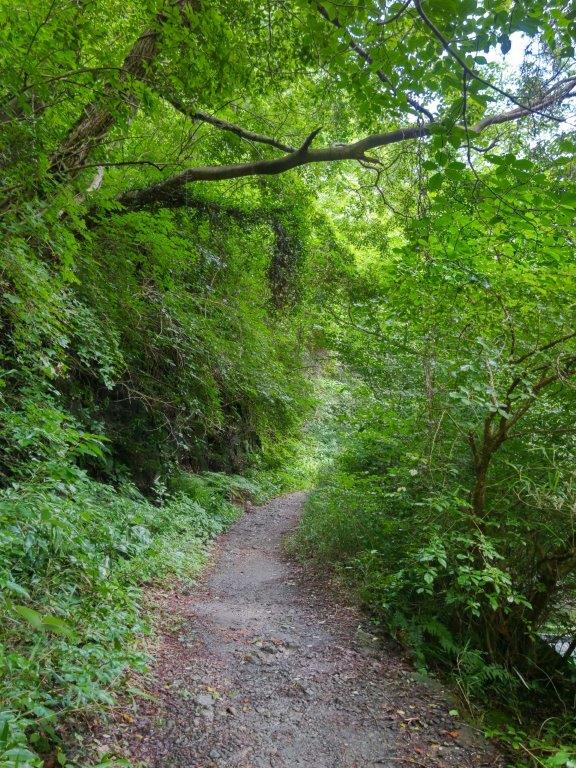
I was stunned by the rapid transition from the countryside to a scenery reminding me of the rainforest. The abundant vegetation pushed in on both sides, creating walls of green, and even organic tunnels. At first, I could also deduce the existence of the river from the noise trickling through the thick foliage. At one point I overtook a group of birdwatchers excitedly whispering and pointing out something invisible on some branch; I dared not ask what they were looking at and quickly moved on. A short distance away, it was my turn to spot something exciting: a snake tentatively making its way down a vertical tree trunk (see video below).

Thick Vegetation at the Start of the Morito River Forest Path

Getting a Closer Look at the Morito River

I was mesmerised, almost charmed, by this unexpected sight. The group of birdwatchers caught up but couldn’t say what the snake was called, claiming it was outside their area of expertise. A little further on, I dived down a side path leading to a rocky beach, giving me my first good look at Morito River. It seemed remarkably wide, originating from such a low-altitude range of hills, although I surmised it was temporary and caused by the recent start of the rainy season. I returned to the main trail, and after overtaking smaller and smaller groups of birdwatchers, spotted an overhead bridge through the tree branches, marking the halfway point of the Moritogawa Rindo.

Fallen Tree Spanning the Morito River and Forest Path

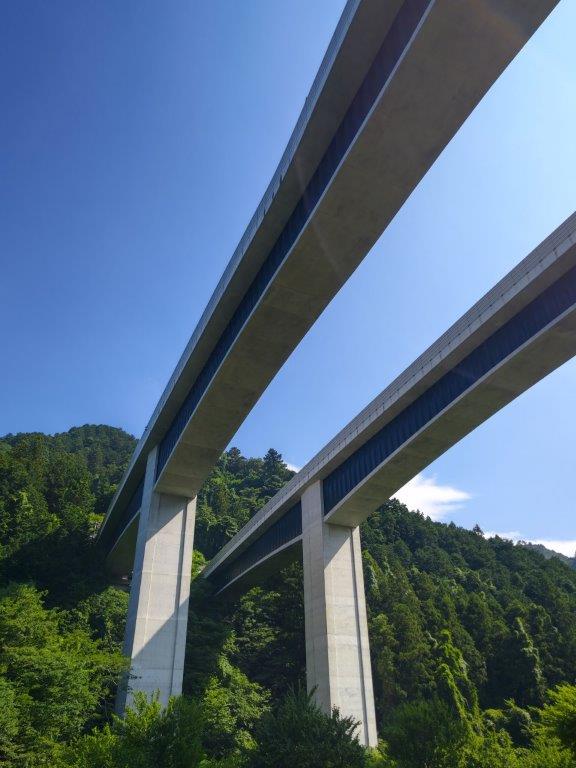
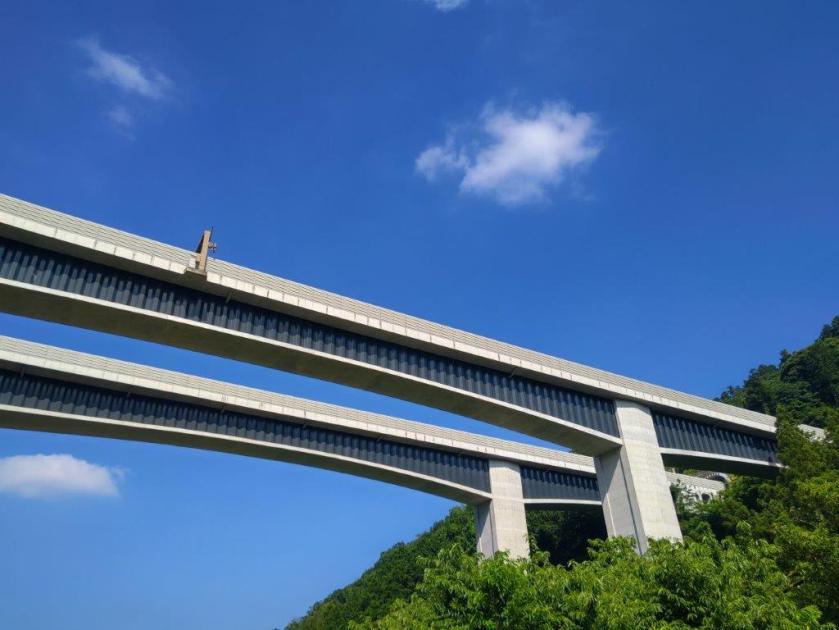
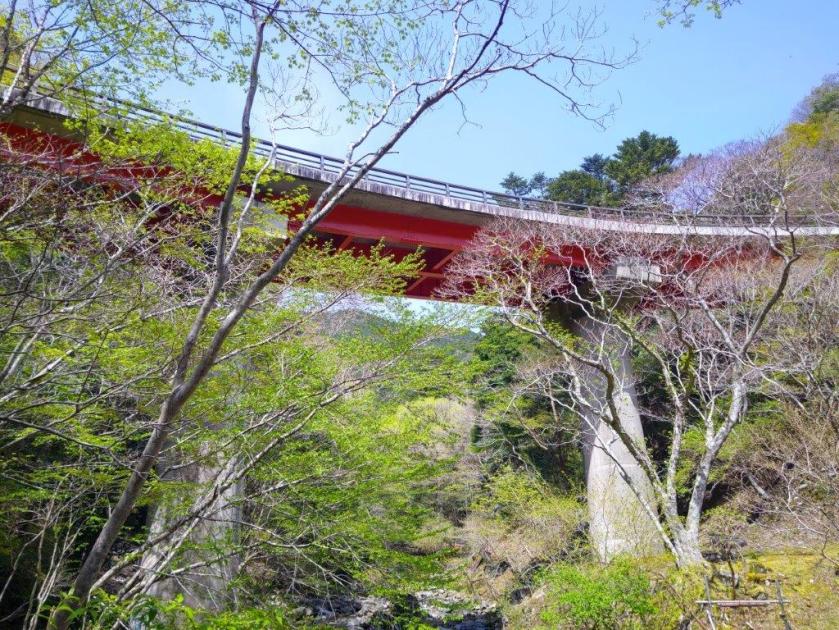
Overhead Road Spanning the Morito River Valley

I was impressed by this striking structure, more reminiscent of ancient jungle ruins than modern infrastructure; in fact I had driven over this very bridge on my way to the hike. After passing under it, I entered a more open forest of cedars and ferns, giving me an uninterrupted view down a straight section of the river. I could also see blue sky above the treetops; fortunately, the valley remained cool in the shade and next to running water. After walking down an avenue of towering cedars, I reentered lower and denser forest. For a brief while, the path became one with a brooklet before going their own way. At 4pm, I arrived at a clearing at the end of the Moritogawa Rindo and continued straight, following the signs for the Futagoyama Hiking Trail (二子山ハイキングコース), one of the three rugged trails leading out of the valley.

Viewpoint of Morito River

Ducking under a Tilting Tree

The path disappeared into the river almost at once, although it seemed possible to walk along the rocky banks in the drier months. The water wasn’t even ankle deep but I decided this was the right moment to head back. I picked up the pace but still took time to stop and admire some fantastically shaped tree trunks and a couple of ephemeral waterfalls. The snake had completed its descent meaning it was now slithering out of sight through the undergrowth. At 5pm I passed through the gate and a little later was back at my car. I rewarded myself with a soft ice from Hayama Station before driving back.

Still lots of Water on the Upper Section of Morito River

A Tame Path through Wild Vegetation

Night had already fallen as I got off the train at Hemi station a little after 7pm. After a 15 minute walk, I reached Firefly Village (Hotaru no Sato ホタルの里), the many signposts along the way making it easy to find even in the dark. A small crowd of people had already gathered along the riverside, mostly shadows in the darkest spots under the trees. At 7h30, the first pinpoint of light magically appeared above our heads. Gradually more and more bright spots appeared, flying in zigzag, finding and missing each other. As I ventured further up the river, away from the town lights, I was able to spot more and more fireflies. At the same time the grassy path became treacherous in the pitch-black darkness and I eventually retreated to safer grounds. At 8pm, I headed back to the station satisfied to have seen one of nature’s wonders.

Watch a Video of the Morito River Valley Hike

Watch the Video of the Hike on YouTube

See a Slideshow of More Pictures of the Hike

Mt Takao (599m), Hachioji City, Tokyo Prefecture, Sunday, June 9, 2024

I wanted to do a late afternoon hike to take advantage of the longer days of June. I decided to head to Mt Takao in the hope that most people would be on the way home by then. It would be my first visit in a while since lately I’ve preferred the less popular peaks. Although I’d been to the top about a dozen times it would be my first time in June. Looking at the English map on the Mt Takao official site, I chose to go up Trail 6 and down Trails 4, 2 & 1. If I finished early enough, I could enjoy a hot spring bath before heading back.

Hiking in the Meiji no Mori Takao Quasi-National Park

明治の森高尾国定公園

I would ride the Keio line limited express from Shinjuku to Takaosan-guchi, and use the same train for the return. The weather was supposed to be overcast and dry with temperatures cool for the season but comfortable for hiking. I was looking forward to my first late afternoon hike in 2 years and revisiting a familiar place. The cloudy weather meant views would be scarce but I hoped the new green of spring would make the trip worthwhile.

As of july 2025, the Inariyama trail is closed for repair. Consequently, trail #6 (described in this post) has been changed to a one-way ascending-only trail to prevent accidents and traffic jams due to overcrowding. This restriction in in place all day; trail running (in either direction) is also prohibited. In other words, it’s not possible to hike down this trail for the time being (no end date to the restriction has been given). Multiple signs in Japanese and English have been placed at the bottom and top of the trail, as well as long other trails. Please take this into account when planning your hike.

Start of Trail #6 (left) Before the Inariyama Trail Connecting Path (right)

Walking on Water past the Inariyama Trail Connection Path (left & right)

It was a grey day as I rode the mostly empty limited express from Shinjuku, arriving at Takoasan-guchi station a little after 4pm. I passed countless people heading home as I made my way from the train station to the cable car station, the starting point for most of the hiking paths. As I started up trail #6 on a paved road alongside a river, the cable car thundered by overhead; I would not be riding it today as the last one was scheduled for 6pm, well before the end of today’s hike.

River Section of Trail #6 (left) Steps at the Top of Trail #6 (right)

Looking Back at the Steps of Trail #6 (left) Heading Down Trail #4 (right)

I was surprised by the volume of water in the river, considerably more than during my previous visit in the winter months. The number of descending hikers became less and less, and past Oyama Bridge, I had the trail mostly to myself. I was impressed by the height of the cedar trees along the river valley, a reminder that I was inside the Meiji no Mori Takao Quasi-National Park. Shortly after 5pm, I reached a connecting path with the Inariyama Trail (#1) but continued straight along trail #6.

Walking Down Trail #4 (left) Steps Down Trail #4 (right)

Crossing the Suspension Bridge (left) Near the End of Trail #4 (right)

The trail turned into a stream without warning, the overflow probably due to the heavy rain from the previous days. I hadn’t expected to be walking in water and it was hard to believe I was right at the edge of Tokyo. Eventually, the trail left the river valley, heading straight up the mountain side. The steep ascent was aided by wooden steps, a fairly recent addition. Soon I reached a flat area just before trail #5, a short path encircling the summit. At 5h30, I was standing on the top of Mt Takao, eerily quiet in the early evening.

Wooden Steps on the Higher Sections of Mt Takao

Mt Fuji hidden in the Clouds

It was a rare sight to see the top of Mt Takao empty of people. I made my way to the viewpoint on the south side but today Mt Fuji was mostly hidden in the clouds. After a short break, I made my way down Trail #4 on the other side of the mountain. Many sections were fitted with steps making it easy to walk even as the daylight was swiftly fading. At 6pm, I arrived at a suspension bridge, partially hidden by green tree branches. Before the junction of Trail #4 with the road leading down from the summit, I ducked down Trail #2 for some more forest walking. At 6h30, I reached the now deserted top station of the Takao cable car.

Suspension Bridge Hidden by Tree Branches

Walking a Level Section of Trail #4

I spent a few moments enjoying the quiet atmosphere of what is usually a very busy place, before heading down trail #1, a steep road shared with authorized cars. I walked at a fast pace, overtaking the few people still left, and less than half an hour later, was back at my starting point. At 7pm, I entered the Keio Takaosan Onsen Gokurakuyu (京王高尾山温泉極楽湯), right next to train station and last visited in December 2023. After a refreshing hot spring bath, I hopped onto the Keio limited express train for the one-hour ride back to Shinjuku.

Watch a Video of the Mt Takao Hike

Watch the Video of the Hike on YouTube

See a Slideshow of More Pictures of the Hike

Mt Kinugasa (134m) & Mt Ogusu (241m), Yokotsuka City, Kanagawa Prefecture, Saturday, April 13, 2024

I wanted to do another hike using the newly published Miura/Boso hiking map. Looking over the Miura section, I found a new peak to climb on the Tokyo Bay side. It was a little short but it seemed possible to continue along a hiking trail and go up the back side of Mt Ogusu (climbed in winter 2021). From the top, I would head down the main trail, ending on the Sagami bay side of the peninsula. It would be my first time to hike in this area in the spring and I hoped to catch the last cherry blossoms of the season

For subscribers, read this Blog Post on Hiking Around Tokyo for a better viewing experience and the latest updates

Steps going up (left) and down (right) in Kinugasa-yama Park

Connecting Path to Mt Ogusu (left) Alternative Trail up Mt Ogusu (right)

Hiking on the Miura Peninsula 三浦半島

To get to the start, I would take the Shonan-Shinjuku line to Zushi, and then ride the Yokotsuka line a few stops to Kinugasa station, a short distance on foot from the trailhead. For the return, I could catch one of the many buses for Zushi station, my only concern being the heavy weekend traffic around Hayama Town. The weather was supposed to be sunny most of the day and cooler near the ocean than on the mainland. Since each peak had its own observatory, I was looking forward to getting some good views of the Miura peninsula.

Hiking the Kanto Fureai no Michi 関東ふれあいの道

Rear Side Ridge (left) and Front Side Ridge (right) on Mt Ogusu

Walking in the Afternoon Sun (left) and along the River (right)

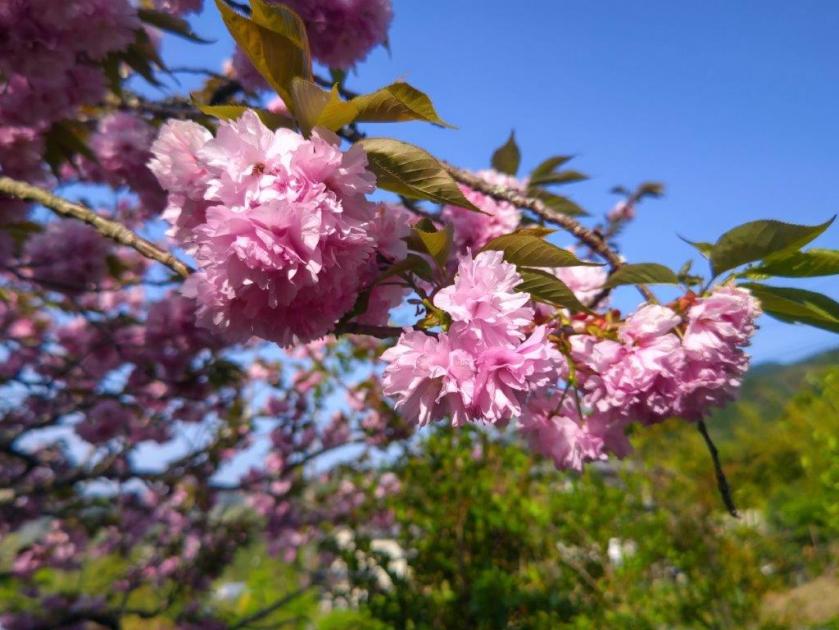
It was a fine spring day as I got off the train at Kinugasa Station around 10am. After a stroll through a shopping arcade, I reached Kinugasa-yama Park (衣笠山公園) and the start of the trail at 1030. Almost at once, I found myself walking through beautiful nature, no other hikers in sight. I soon arrived at a stone staircase where I turned left. At the top, I turned left again, now walking up a paved road, leading to a flat open space at the top of Mt Kinugasa (衣笠山 きぬがさやま kinugasa-yama). The view from the observation deck was partially hidden by cherry blossoms trees, so I quickly moved on to a taller observation tower a few minutes away.

Walking through the lower half of Kinugasa-yama Park

Walking through the higher half of Kinugasa-yama Park

I was impressed by the view from the top of this low mountain, as I could see most of the peaks of the Miura peninsula, Tokyo Bay and the western coast of the Boso peninsula. To the south, I spotted Mt Hodai and Mt Miura-Fuji past the treetops; directly west was Mt Ogusu, the highest peak in the area; finally, the Miura Alps extended across the neck of the peninsula on the north side. Cherry blossom trees surrounded the tower but were already past their prime. I continued my hike, walking down log steps sprinkled with fallen petals. Just before noon, I reached a busy road at the base of the mountain. I followed it for a short while but soon left it to follow a lane up a steep slope. Just beyond a staircase leading to a shrine, the lane ended at another hiking trail.

View of Mt Ogusu from the top of Mt Kinugasa

View of Tokyo Bay from the top of Mt Kinugasa

I was delighted to be back on a hiking path, surrounded by the forest and free of people. The trail was mostly level, a fallen tree trunk providing the only difficulty. Shortly before 1pm, I reached a bridge over a highway, picking up the trail on the other side. After a short climb, I arrived at a road free of traffic leading to a recycling center. After observing a couple of cats strut around, I made my way up some steps leading to the next part of the hiking route. After some easy climbing along a well-maintained path, I reached a ridgeline at 1h30, and continued straight, ignoring a trail on the left side.

Irises lining the path

Many steps up Mt Ogusu

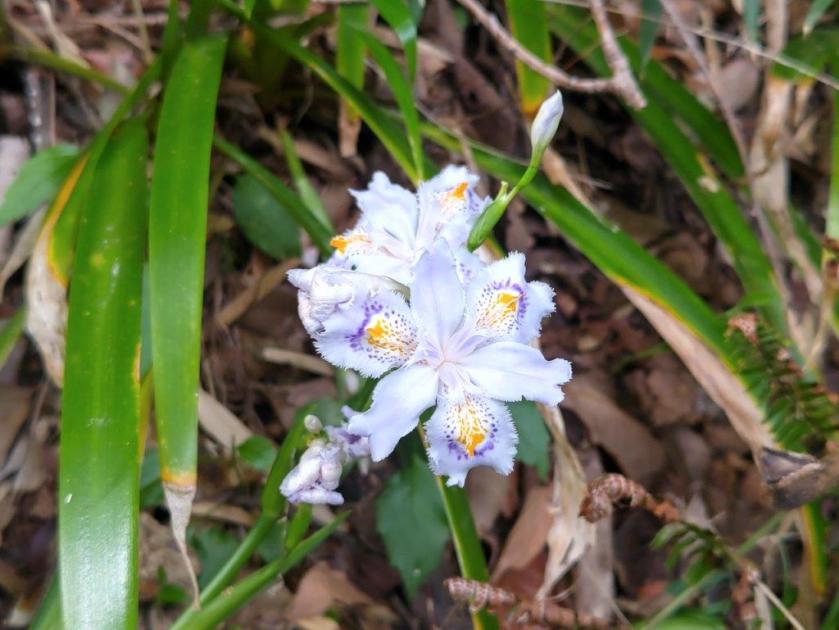
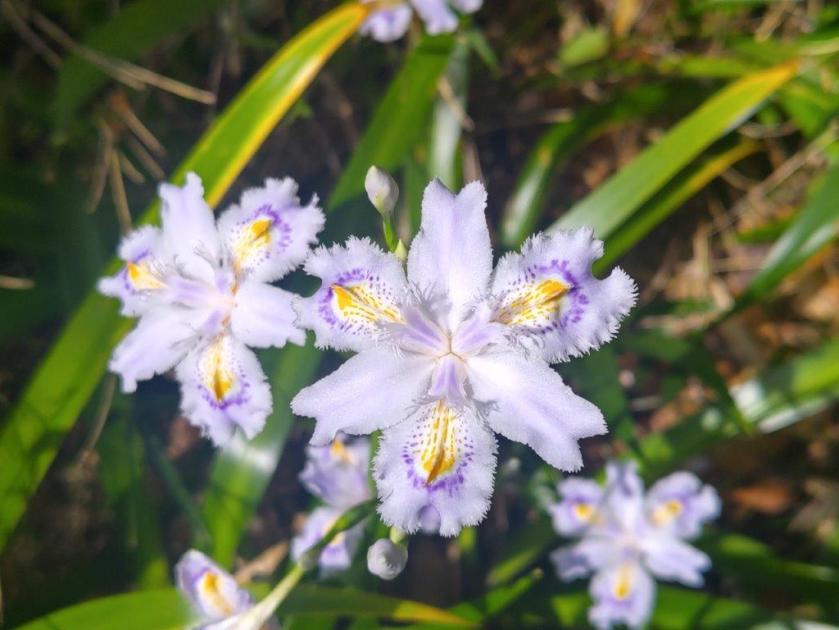
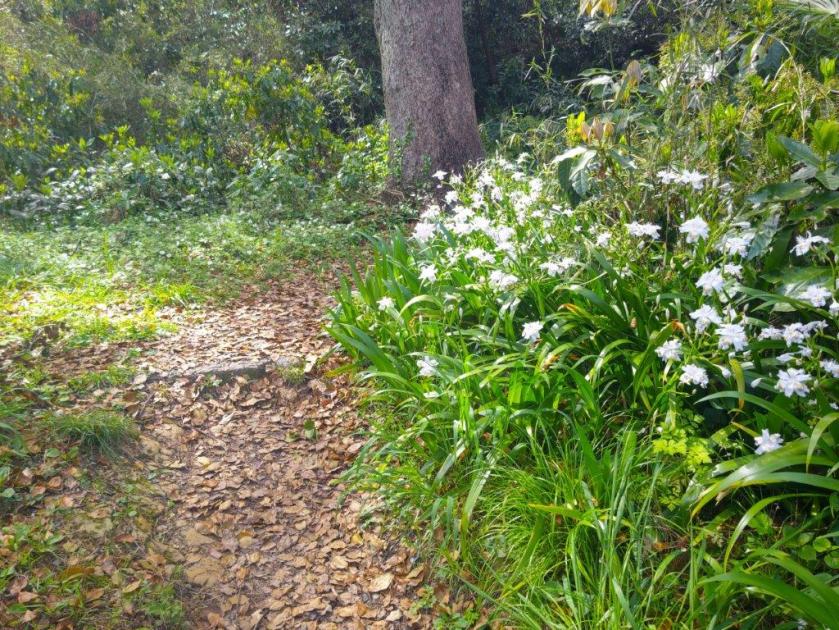
The many iris flowers lining both sides of the path made this the most pleasant part of the hike. The forest retreated to allow for a power line, revealing blue skies splashed with white cirrus clouds. Very soon I arrived at the junction of my previous hike here. From this point, I followed a series of log steps through the new spring green all the way to the top of Mt Ogusu (大楠山 おおぐすやま oogusu-yama), a Kanto 100 famous mountain. Since it was 2h30, I sat down for a late lunch. The main observation tower was closed but another one a short distance way provided good views of the Miura Peninsual to the south and the Miura Alps to the north.

View of Mt Hodai and Mt Miura-Fuji from the top of Mt Ogusu

“Half Blossoms” and “half Miura” from the the Observation Tower

I was glad to see more cherry blossoms trees around the tower, half the petals still hanging on. I now headed down the Maedabashi route (前田橋コース), also the Kanto Fureai no Michi, passing relatively few people on the way. Half an hour later, I arrived at the start of the Maedagawa Promenade (前田川遊歩道). I had done it twice before but the water level had been lower than now, and it was a lot more impressive in this season. I wanted to linger to enjoy the sound of rushing water but I had a bus to catch. By 4pm, I was on my way back to Zushi station, reached after a slight delay due to the expected traffic jams. There, I boarded the Shonan-Shinjuku line for the one hour ride back to Tokyo.

Watch a video of the Mt Ogusu Hike

Watch the Video of the Hike on YouTube

See a Slideshow of More Pictures of the Hike

Haga-Fuji (271m), Motegi Town, Tochigi Prefecture, Saturday, February 10, 2024

I wanted to explore more of the Kanto Fureai no Michi, its trails being well-suited for winter hiking. I decided to do a section between Motegi and Nanai stations in eastern Tochigi, mostly following back lanes through an area of low hills, at the southern edge of the Abukuma Plateau. It had snowed heavily a few days before so this felt like a safe choice. At the halfway point was another local “Fuji”, with supposedly good views from the top, although I hoped no snow would be left on the steep climb.

Hiking the Kanto Fureai no Michi

関東ふれあいの道

I would ride the Utsunomiya line to Oyama Station, and then the Mito line to Shimodate station. There, I would transfer to the private Mooka line (pronounced “mo-oka”) and get off at the last station. For the return, I could get catch a bus for Utsunomiya, and then ride the shinkansen back to Tokyo. The weather was supposed to be sunny and cold, but not freezing. I was looking forward to a relaxing station to station hike and getting some new views in a little-visited area.

For subscribers, read this Blog Post on Hiking Around Tokyo for a better viewing experience and the latest updates

Heading up (left) and down Haga-Fuji (right)

A Well-Maintained Trail on Haga-Fuji (left) with Views through the Trees (right)

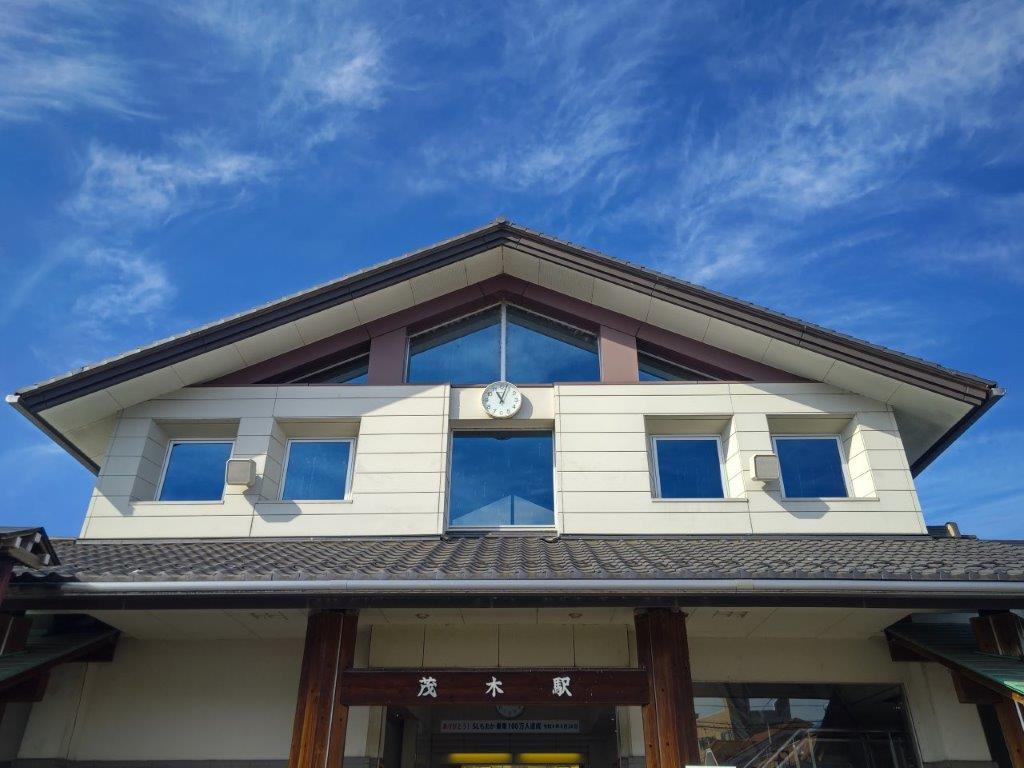
It was a beautiful blue-sky day as I stepped off the train at Motegi just before 11am. I was surprised by how few people visit this charming riverside town in the hills, although it might be due to the winter season. I set off half an hour later and followed a promenade along the Sakasa river. On the way, I passed the quiet “Cat Store” (猫の雑貨屋), a small shop and cafe selling cat-related goods, and the busy “Motegi Roadside station” (道の駅もてぎ), from where I got a glimpse of the steam locomotive (SL) that runs on the Moka line on weekends.

Promenade along the Sakasa River

Walking through the Tochigi Countryside

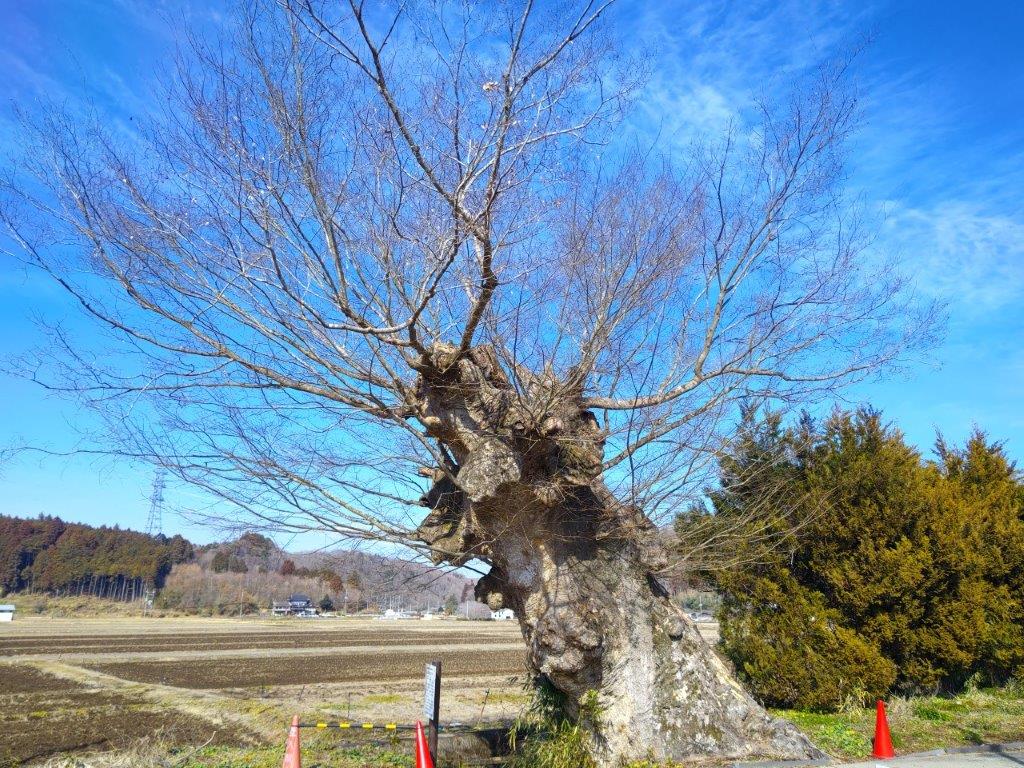
It was a day for sights in the sky: white herons taking off above the river, wispy cirrus clouds moving quickly overhead, a helicopter whizzing by, power lines spanning the sky between pylons, and even a couple of circling hang-gliders which I first mistook for birds of prey. After a short bit on a busy road, I crossed a bridge and left the Sakasa river for a short detour by Anraku-ji temple (安楽寺) and its 600-year-old Zelkova tree (“keyaki“), from where I had my first glimpse of the conical top of today’s mountain. Thirty minutes later, I passed some terraced rice fields, one of the 100 rural landscapes of Tochigi, still covered in snow. Soon after, I reached the entrance to the hiking trail on the left.

Mt Yakimori & Mt Keisoku from near the top of Haga-Fuji

Mt Amamaki & Mt Takamine from halfway down Haga-Fuji

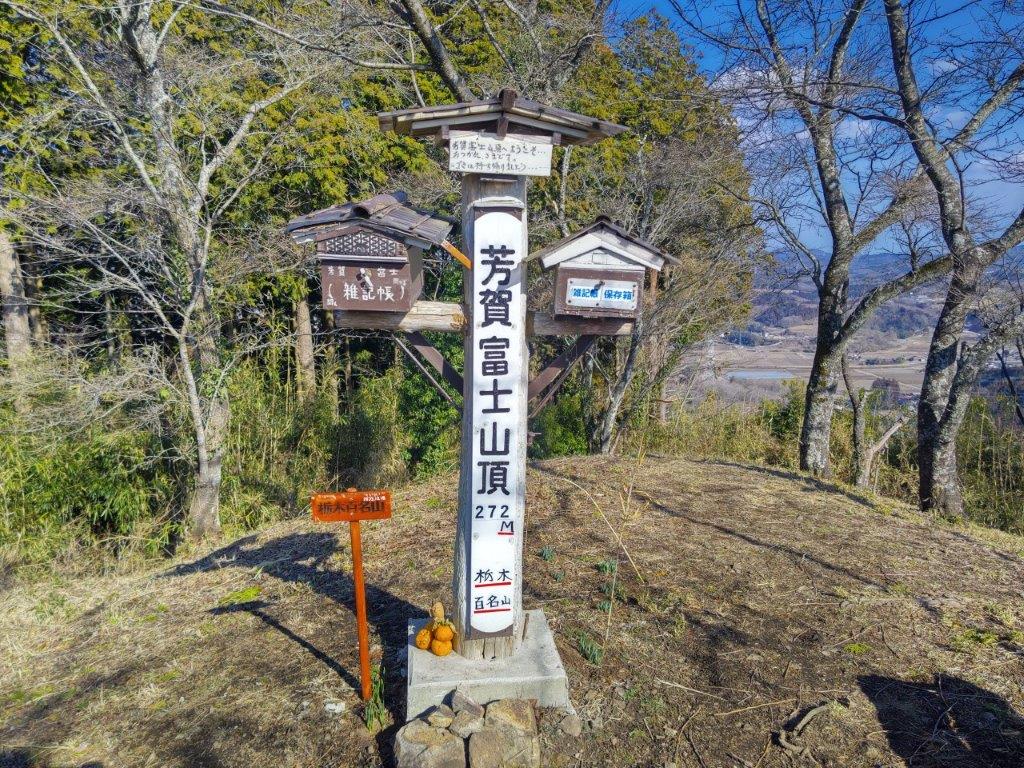
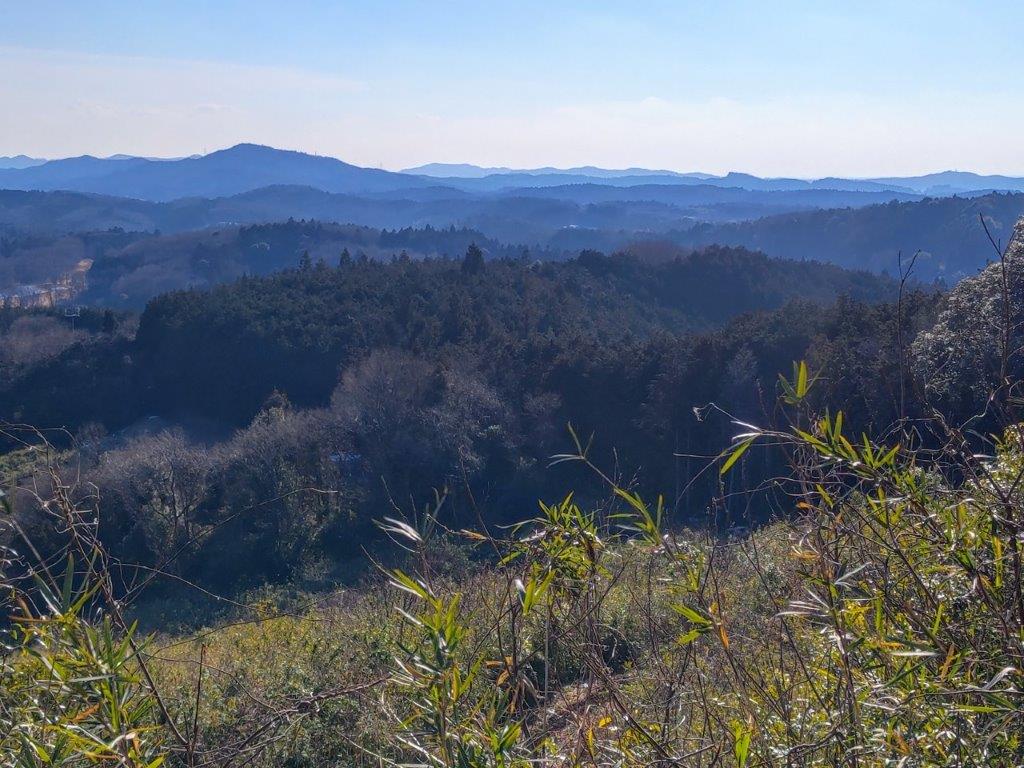
I was surprised to see the path covered in snow, with only one set of footsteps. Luckily, once it entered the forest, the snow all but disappeared. After a steep but short climb through cedars, I reached a dirt track with a wide view on the east side. I could see Mt Yakemori and Mt Keisoku, as well as the other Mt Fuji in the area. One final effort brought me to the highest point of Haga-Fuji (芳賀富士 はがふじ), a 100 famous mountain of Tochigi. The view was mostly blocked by trees; through a gap on the southwest side was a view of the real Fuji, although today it was lost in the haze. It was 2pm so I sat on one of the benches for a late lunch. After half an hour, I headed down a switchback trail on the south side.

Snowy Section of the Fureai no Michi

Looking back at Haga-Fuji

This was by far the most pleasant part of the hike. Halfway down and slightly off the trail, I had a view to the south of Mt Amamaki and Mt Takamine, as well as the Ogodo Alps. I soon reached the base, and after passing Kumano shrine and Anzen-ji temple (安善寺), was back on countryside lanes. Turning around at the top of a slope, I could admire the conical shape of today’s peak. Another hour of uneventful walking brought me to a bus stop near Nanai station; a little after 4pm I boarded the bus for Utsunomiya, where I hopped on the shinkansen for the short trip back to Tokyo.

View a Video of the Haga-Fuji Hike

Watch the Video of the Hike on Youtube

See a Slideshow of More Pictures of the Hike

Ido Marsh (1278m), Kanuma City, Tochigi Prefecture, Sunday, May 21, 2023

I discovered this spot in Mae-Nikko on a hike in December 2018, and since then, had wanted to visit again, but in a different season. However, as it took 4 hours of uphill walking to reach from the closest bus stop at Furumine Shrine, this time I decided to go by car; I could park at the Mae-Nikko Highland lodge, just a short distance from the trail entrance. As the loop of the marsh was relatively short, I also decided to combine it with lunch at a famous soba restaurant in the area. I would take the Utsunomiya line to Oyama station, and there change to the Ryoma line for the short ride to Tochigi station, where I would switch to a share car. It was supposed to be a sunny and warm spring day, and so I was looking forward to an easy, relaxing hike in a secluded area deep in the mountains of Tochigi.

View this Blog Post on Hiking Around Tokyo

View of Ido Marsh from the South Side

Walkway Through the Marsh

I drove for about an hour under grey skies, reaching Kamiyama, a soba restaurant situated at the end of a valley, far from any populated areas. Despite its remote location, a line of people was already waiting outside at 11h30; it took nearly an hour before I was seated. Fortunately it was worth the wait: I enjoyed some of the best soba I had ever had. At 1pm, I drove back down the valley, and then up a parallel one towards Kasuo Pass (粕尾峠), hoping that the sun would come out soon.

Gravel Path Through Mae-Nikko Highland

Bright Red Azalea on the way to Ido Marsh

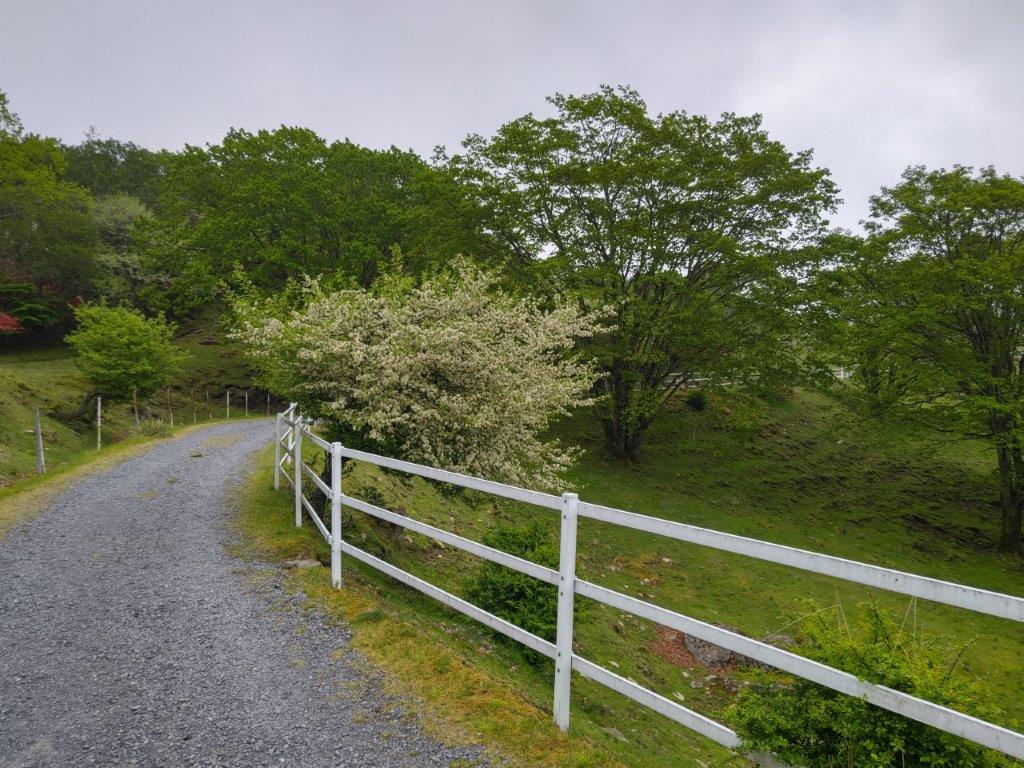
Mist blocked the view in every direction, as I parked the car at the Mae-Nikko Highland Lodge’前日光ハイランドロッジ) parking just after 2pm; I was grateful that I had had clear weather on my last visit. I strolled along a gravel road, pastures on each side, no cows in sight though; after passing an open shelter, I arrived at the trail entrance on the left side around 3pm.

Walkway Leading to Godan-no-Taki Falls

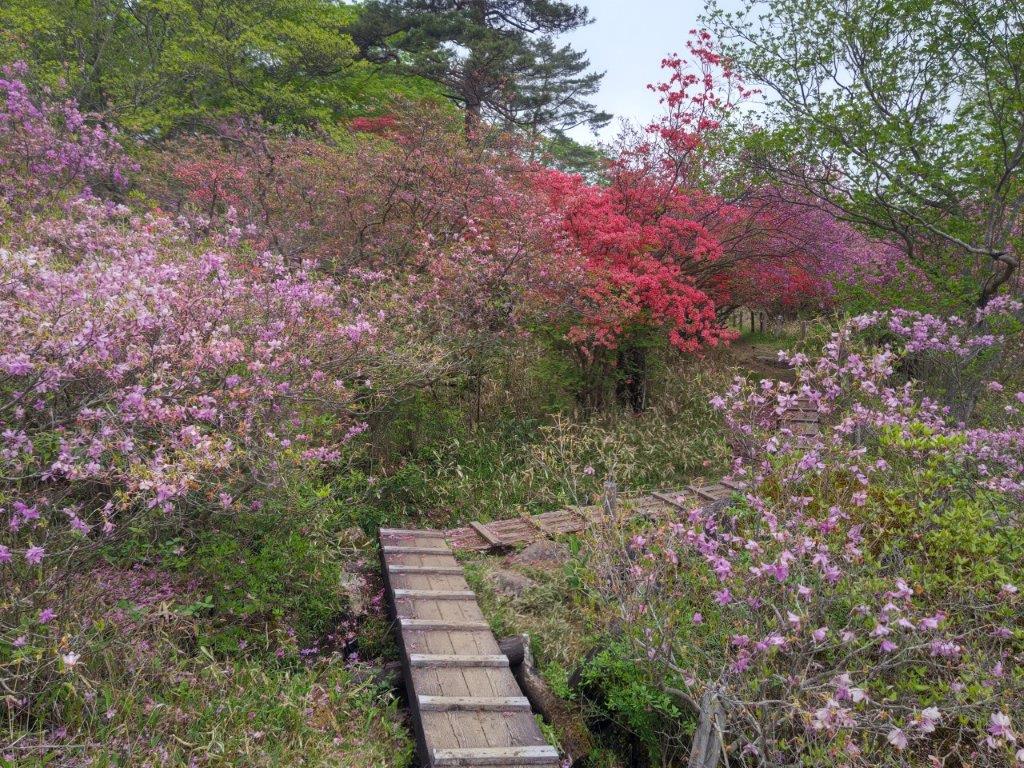
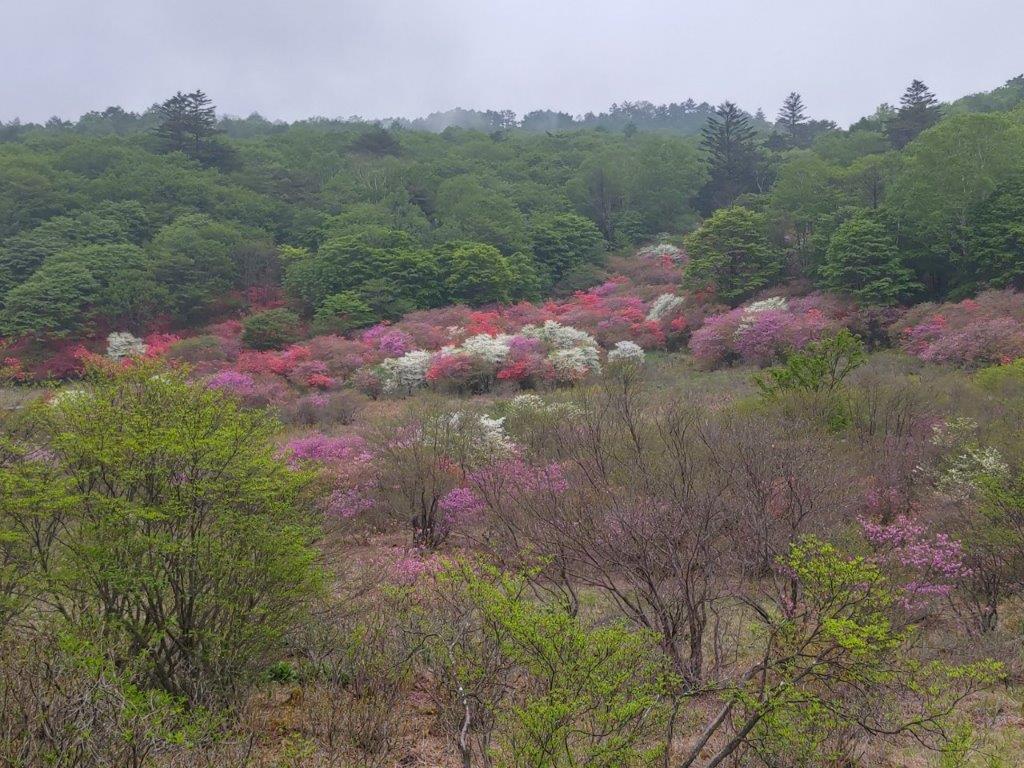
Tsutsuji Flowers of Every Colour

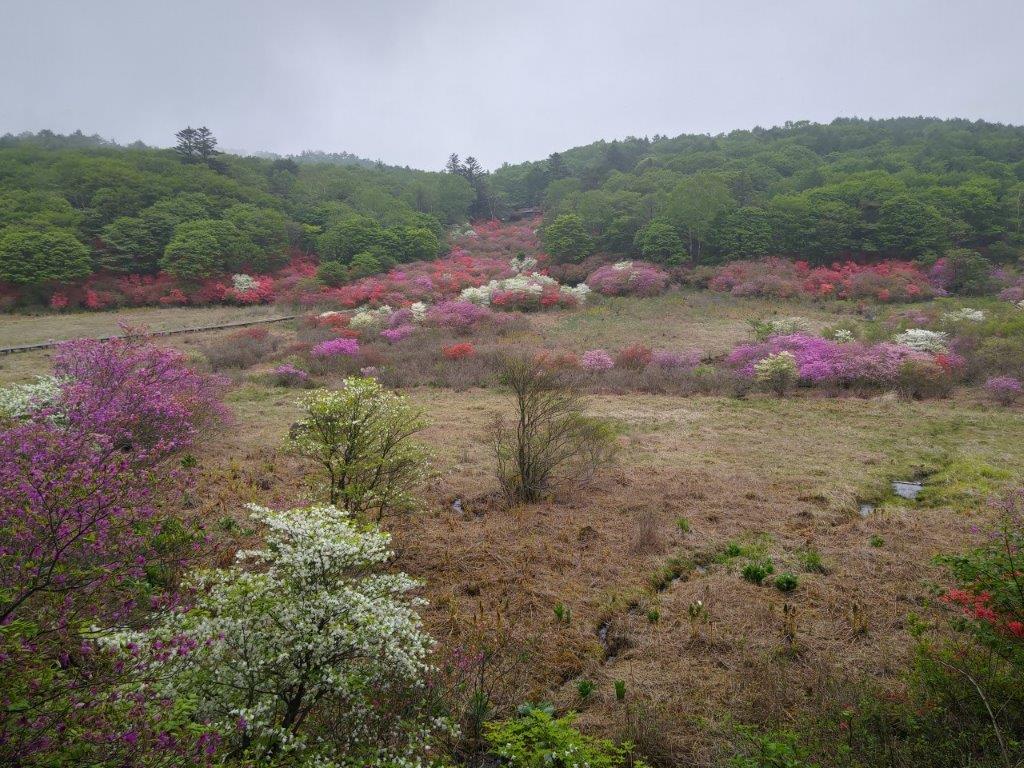
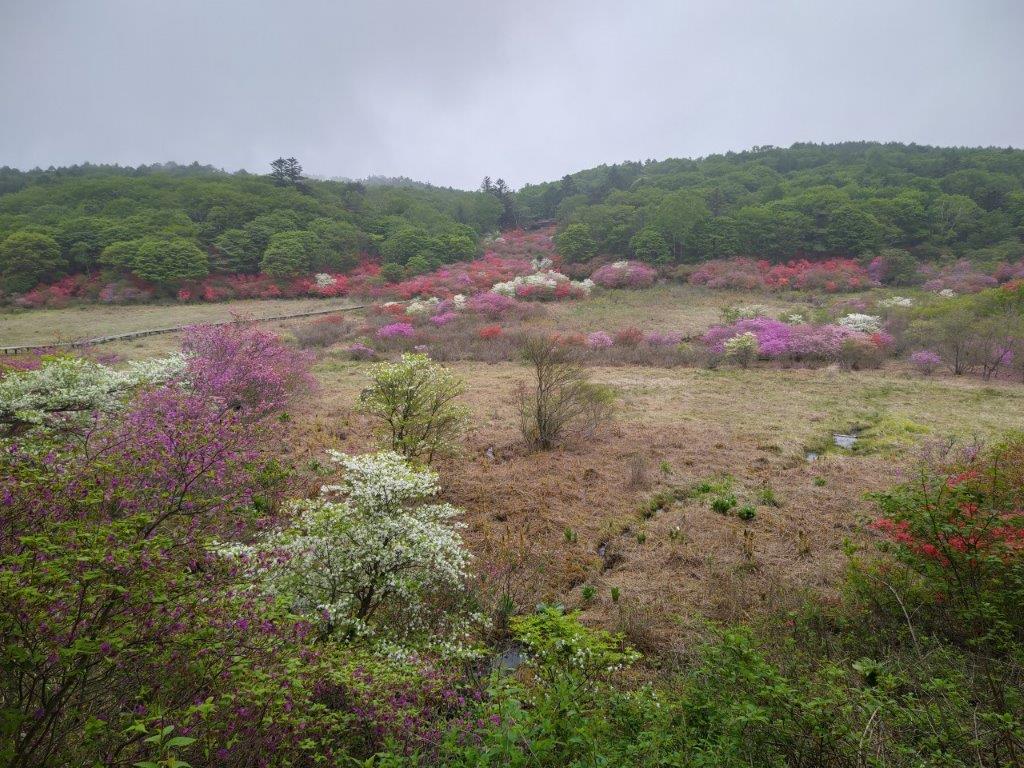
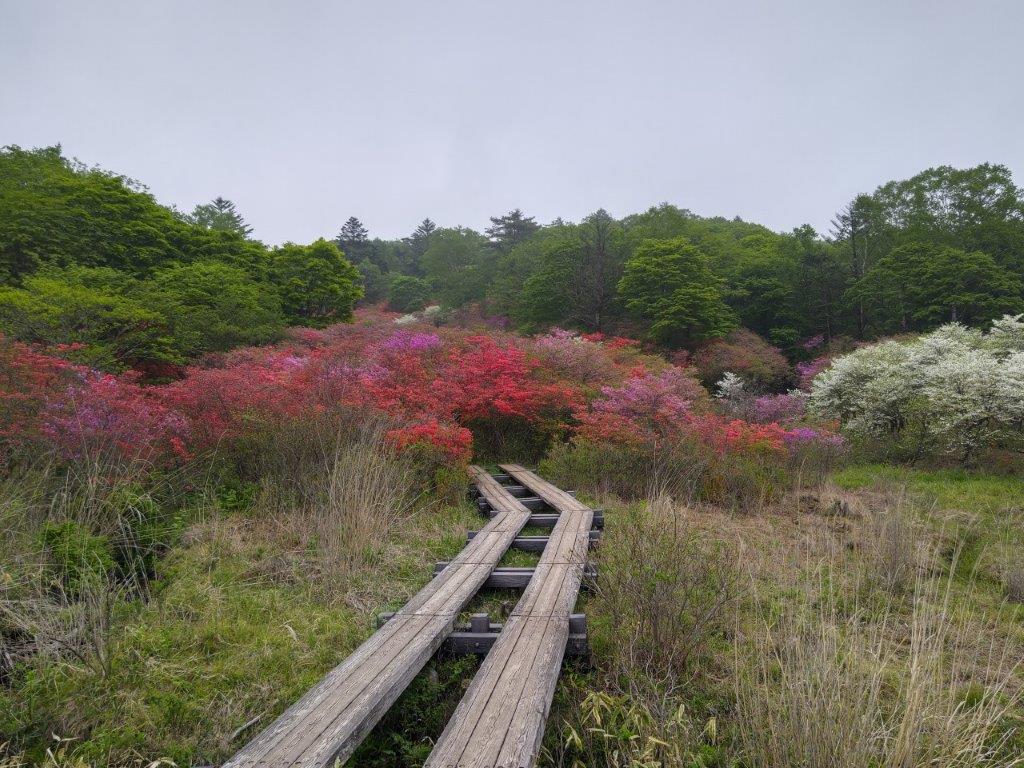
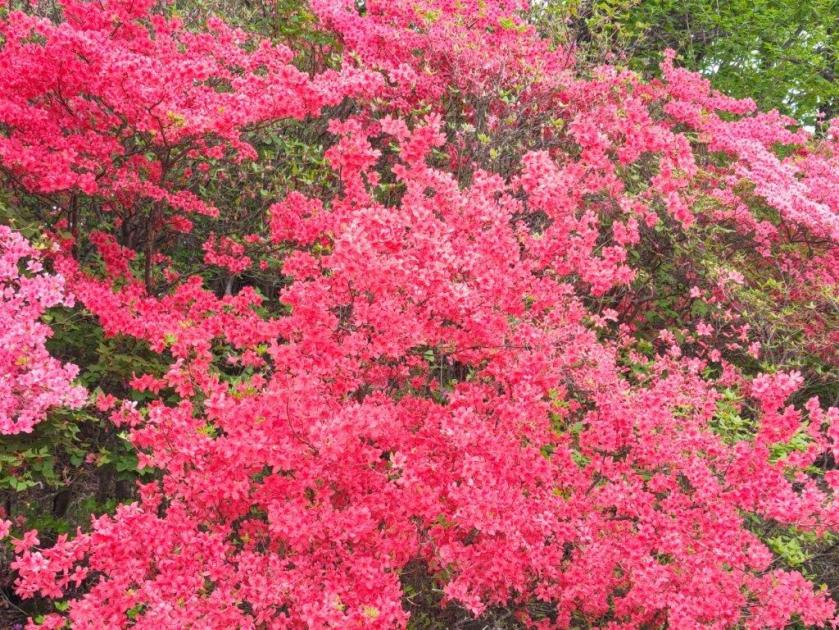
I was stunned by the azelea (tsutsuji) in full bloom; until now I had never realised that they existed in such a wide range of colors, from white to pink to bright red. The trail soon started to descend; after crossing a stream, I had my first glimpse of the day of Ido Marsh (井戸湿原 ido-shitsugen), next to another open shelter. It felt like I had entered a colourful, magical fantasyland, and I could only imagine what this fantastic scenery would be like on a sunny day.

View of Ido Marsh from the South Side

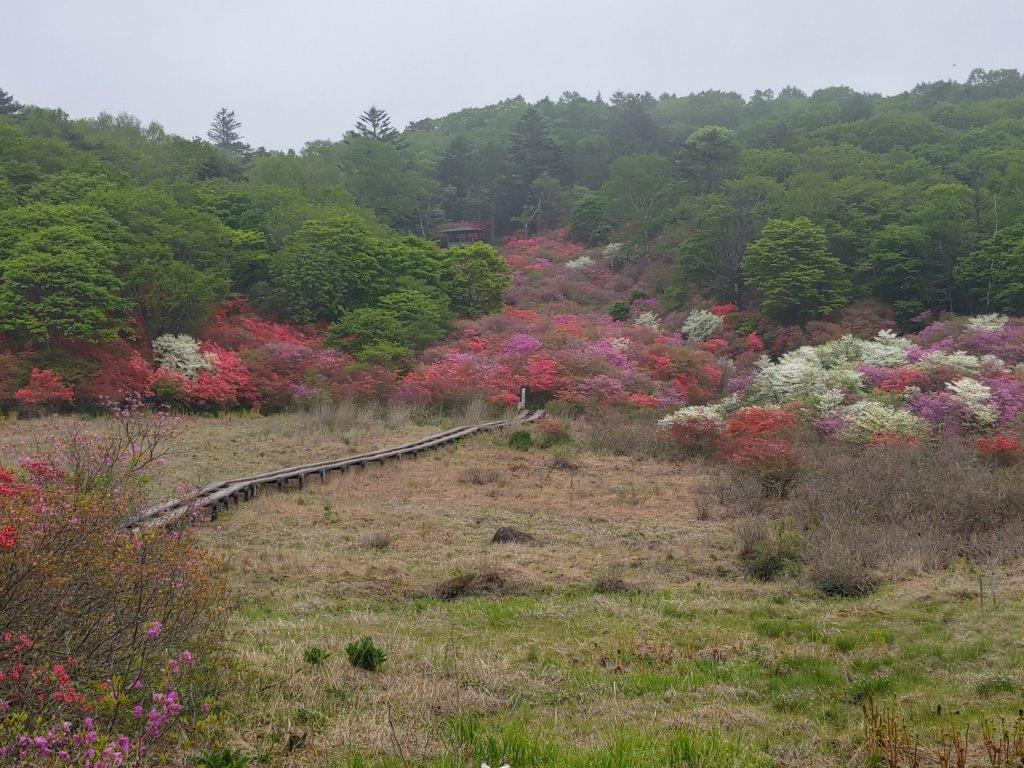
Walkway Crossing the Marsh

I was surprised by how few people were on the trail, as I made my way clockwise around the marsh. Around 3h30, I reached Godan-no-taki (五段の滝), a small waterfall with 5 “steps”, and the lowest point of today’s hike. After a short climb, I reached a section free of trees on the south side of the marsh, from where I had some best views of the day. At 4pm, I reached a wooden walkway cutting across the marshland; I decided to head back along it, rather than continue to the Zoonohana observation deck (象の鼻展望台 meaning the elephant’s trunk) as no would view would be had today.

A Secret Spot of Mae-Nikko

Most of the Hike is on Walkways (left) Entrance of Ido Marsh (right)

I was able to enjoy the splendour of the azaleas again, as I did the trail in reverse, sometimes passing through actual tunnels of flowers, the surrounding mist enhancing the magical atmosphere. At 4h30, I was back at the parking lot, my car being one of the last left. I decided to return via a different route, past Furumine shrine, and was rewarded with a view of a monkey walking near the road; on the way up, I had also spotted a racoon crossing the road. At 6pm, I was back at Tochigi station, from where it was a one hour ride back to Ikebukuro with the Tobu Revaty limited express train.

Nearing the End of the Hike

Entrance to the “Azalea Tunnel

At around two hours, this was one of my shorter hikes, and even if I had included the observation desk, it would not have been much longer. Even though the mist was in, hiding the view of the Oku-Nikko mountains, the flowers in full bloom made the 3 hour trip each way worthwhile. I’d like to return in the future to do the “fureai no michi” trail that passes through the area, as well as check out another local soba restaurant.

Watch a Video of the Ido Marsh Hike

See the video of the hike on Youtube

See a Slideshow with more Pictures of the Ido Marsh Hike

Noborio (1056m) & the Odoriko Trail, Kawazu Town, Shizuoka Prefecture, Sunday, April 16, 2023

During my Shimoda trip, I was reminded of the Odoriko Trail in Kawazu, inspired by the Dancing Girl of Izu novel. Although I was interested in hiking its entire length (18.5 km), I also wanted to climb a summit in the area. I had found a nearby peak in my mountains of Shizuoka guidebook, which I could combine with part of the Dancing Girl Trail. Apparently the upper part of the trail was hard to follow, so I would need to rely on my phone GPS to stay on track; on the other hand, the Odoriko trail was supposed to be well signposted and easy to follow. After riding the Shinkansen to Mishima, and then a local train line to Shuzenji, I would take a bus to a stop just past the Amagi Pass Tunnel, and then walk up a road towards Hatcho Pond to the trail entrance. After reaching the summit and heading back along the same path, I would follow the Odoriko Trail to Kawazu Nanadaru, or the 7 waterfalls of Kawazu, from where I could catch the same bus back to Shuzenji. The weather was supposed to perfect all day so I was looking forward to a relaxing hike in a familiar area.

Hiking in the Fuji-Hakone-Izu National Park

富士箱根伊豆国立公園

First glimpse of Noborio

View of the Izu Peninsula from near the Summit

It was a blue-sky spring day as I rode the empty bus up towards Amagi Pass tunnel. The stop was next to a parking with an open shelter, so I could sit down and get ready for my hike. At 11am, I headed up some steps through the forest and soon reached a minor road, part of the Odoriko trail. There, I turned left, and after a few minutes, arrived at Nikai Waterfall (二階滝). It was hard to see it well even with the observation deck, so I quickly moved on, reaching Kanten bridge and the road for Hatcho Pond shortly after.

Past Kanten Bridge (left) Under the Cedars (right)

View of Noborio from the Road to Hatcho Pond

It was an enjoyable walk, alongside a rushing river, surrounded by trees covered in new green, and occasionally passing under tall cedars swaying in the spring breeze. Just before noon, at a bend in the road, I had my first views of today’s peak, at the end of an undulating ridgeline, part of Amagi Volcano. Shortly after, I spotted a signpost for the start of the trail on the right. After crossing the river on a small wooden bridge, I headed straight up the mountain through the cedars, and upon reaching a pass, turned right along the wide ridgeline.

View of the Noborio Summit Ridge

River Crossing near the Trail Entrance

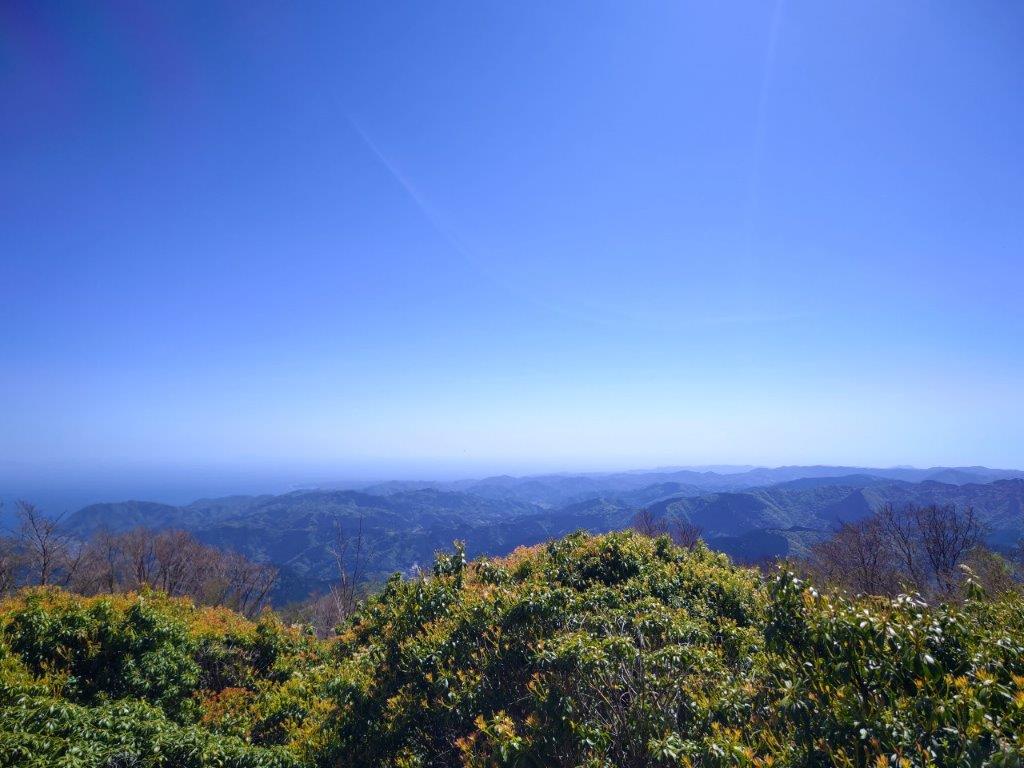
From this point, the trail became faint, requiring me to rely on my phone GPS. The wind started to blow in gusts, and although the sun was shining directly above, it actually felt a bit chilly. From time to time, I had glances of the Pacific ocean through the cedars on the east side; further on, I had a glimpse of Mt Fuji, through trees still bare of leaves to the west. A little before 1pm, I reached the top of Noborio (登り尾 のぼりお), a 100 famous mountain of Shizuoka. It was completely in the trees, but a short distance from the summit marker, I found a viewpoint on the southeast side.

Some Trail-finding needed along the Ridgeline

View of Kawazu and Eastern Izu

I had an stunning view of southeastern Izu, rows of green ridges ending at the Pacific ocean. Directly below, I could see the Kawazu Nadadaru Loop Bridge, close to the end of today’s hike; far away to the south, I could make out the top of Mt Nesugata. After a break, I headed back the same way, faster now, since I knew the way. I enjoyed the peace and quiet of the surrounding forest, within the confines of the Fuji-Hakone-Izu National Park; no other hikers had ventured along this lonely ridgeline. At 2pm, I was back on the road, and half an hour later, was finally walking along the Odoriko Trail, the road soon turning into a wide gravel path.

Walking the Odoriko Trail

Hiraname Falls along the Odoriko Trail

It was a pleasant ramble in the shade, welcome on a warm day, the path lazily hugging the valley side. Suddenly, the trail turned right, crossed the Shuzenji-Kawazu road, and after a short descent through the forest, arrived at the impressive Hiraname Falls (平滑の滝) on the Kawazu river. It was a little past 3pm and I was right on schedule, so I stopped for a break in this sunny, secluded spot. I soon set off again and crossed a wooden bridge, passing above fenced wasabi fields along the river. The next part was more adventurous, following the steep valley side along metal walkways and wooden staircases. At 4pm, I was walking on a straight path under towering cedars.

Kawazu River from the Odoriko Trail

Nameless Waterfall along the Kawazu River

It felt like I was walking down an ancient avenue, perhaps the part of the hike that most reminded me of the Dancing Girl of Izu story. After rounding a bend, I arrived at the top of a long wooden staircase taking me down to Saruta Depth (猿田淵), a deep pool of water on the Kawazu river, a foretaste of the seven falls to come. Further downstream, I reached a junction for the thundering Kama-daru fall (釜滝). I only had a little time before my bus back and since I had seen all 7 falls on a previous trip, I erred on the side of caution. I turned left, up the steps leading out of the deep valley, arriving at the bus stop at 4h30. Two hours later, I was back in Mishima, a one hour ride with the Kodama shinkansen back to Tokyo.

Walking the Odoriko Trail between Kaname Falls and Kawazu

Walking down to Saruta Depth

The whole hike took less than 6 hours, which is about as long as one could hope for considering the the distance and travel time from Tokyo. If I had been a bit faster, I could have walked past the seven waterfalls, about 1km, and caught the bus further down the road; it would have brought the total tally of waterfalls on the hike to ten. The hike up and down the Noborio ridge was a pleasant surprise; it’s hard to imagine one getting lost on the short section without a proper trail, but the GPS ensured it went smoothly. Another surprise is that I saw no other hikes all day, even along the Odoriko trail. I hope to return one day to explore the other half, through the Old Amagi tunnel (headlight required) although I doubt I will get to see as many falls as today.

Watch a Video of the Mt Noborio and Odoriko Trail

See a Slideshow of More Pictures of the Hike

Hitorizawa & Segami Community Woods Hiking (highest point 130m), Yokohama City, Kanagawa Prefecture, Tuesday, December 27, 2022

This was my 3rd hike in the southern part of Yokohama city. This wooded, hilly area offers some of the best hiking close to Tokyo and is well-suited for short winter walks. I had already hiked through the Yokohama Nature Sanctuary, the Kanazawa Nature Park, as well as the Kanazawa, Segami and Kamariya woods; this time, I wanted to explore the Hitorizawa woods on the northeastern side, and check out some more trails in the Segami woods.

Sunny spot at the start of the Hitorizawa trail

I would take a bus from Yokodai station on the Negishi line to the trailhead; rather than finish at Konandai station on the same line, I could take another bus to Ofuna station on the convenient Shonan-Shinjuku line, less than an hour from Ikebukuro. Although I wouldn’t be summiting any mountains, I could expect a view of Mt Fuji from Isshindo plaza at the mid-way point. I was looking forward to a short relaxing walk through the woods on a sunny winter day.

Nearing the Nabana rest area (left) / Hitorizawa creek (right)

After getting off the bus on a busy road near Hitorizawa Shrine (氷取沢神社), I followed the signposts through some backstreets, reaching the start of the trail Hitorizawa Community woods trail (氷取沢市民の森ルート) at 1pm. At the top of a staircase, I was pleased to discover a wide, level path leading through the forest. I soon reached the first viewpoint of the day at the Nabana rest area (なばな休憩所) above a road and a toll gate. Looking southeast, I could see the low-lying Miura peninsula, and behind, Mt Kano and Mt Nokogiri on the Boso peninsula.

Wooden causeway near Oyato plaza (left) / Climbing made easy (right)

I continued along the path as it descended into a small valley. I soon arrived at a bridge over the Hitorizawa creek (氷取沢小川) and a junction: the path on the left led to Kanazawa zoo, and the one on the right followed the creek back to the bus store. I went straight, and after going through some fields and under a highway bridge spanning the valley, arrived at Oyato Plaza (おおやと広場). I was now walking on wooden causeway along a cool, shaded valley, parallel to the creek.

View of Mt Fuji from Isshindo Plaza

Very soon, I was back on a trail leading up through the woods, but still easy to walk thanks to the use of wooden logs. At 2h30, I left the Hitorizawa woods and arrived at Isshindo Plaza (いっしんどう広場 130m), the highest point of the hike. As on my two previous hikes, Mt Fuji, Hakone and the Tanzawa mountains were clearly visible on the west side. After enjoying a late lunch, I followed the ridge trail (尾根道) south, towards the sun.

View south towards Kamakura

After a few minutes, I turned right, down the hillside, and passed the Bato-no-oka rest area (馬頭の丘休憩所 meaning “horse head”). Although I was at the edge of the city, the rooftops of the houses visible above the trees, I could hear, and sometimes see, squirrels scampering along the trees branches in the late afternoon sun. At 3h30, I reached a junction before the Uma-no-se rest area (馬の背休憩所 meaning “horse back”), and took the smaller branch to the right.

Following the ridge trail (left) / Between the horse’s head and back (right)

I followed the winding trail as it descended into another wooded valley inside the Segami Community Woods (瀬上市民の森), the sun now only reaching the top ridge. At the base of a staircase, I finally arrived at the peaceful Segami pond (瀬上池). From there, I followed a dirt road alongside the Segami creek (瀬上小川) through a habitat for dragonflies and fireflies, although none could be seen in this season. At 4h30, just as the sun was setting, I reached the bus stop for Ofuna station next to the Hongo bus depot, from where it was short train ride back to the city center.

The peaceful Segami lake near the end of the hike

See a short video of the Hitorizawa Creek