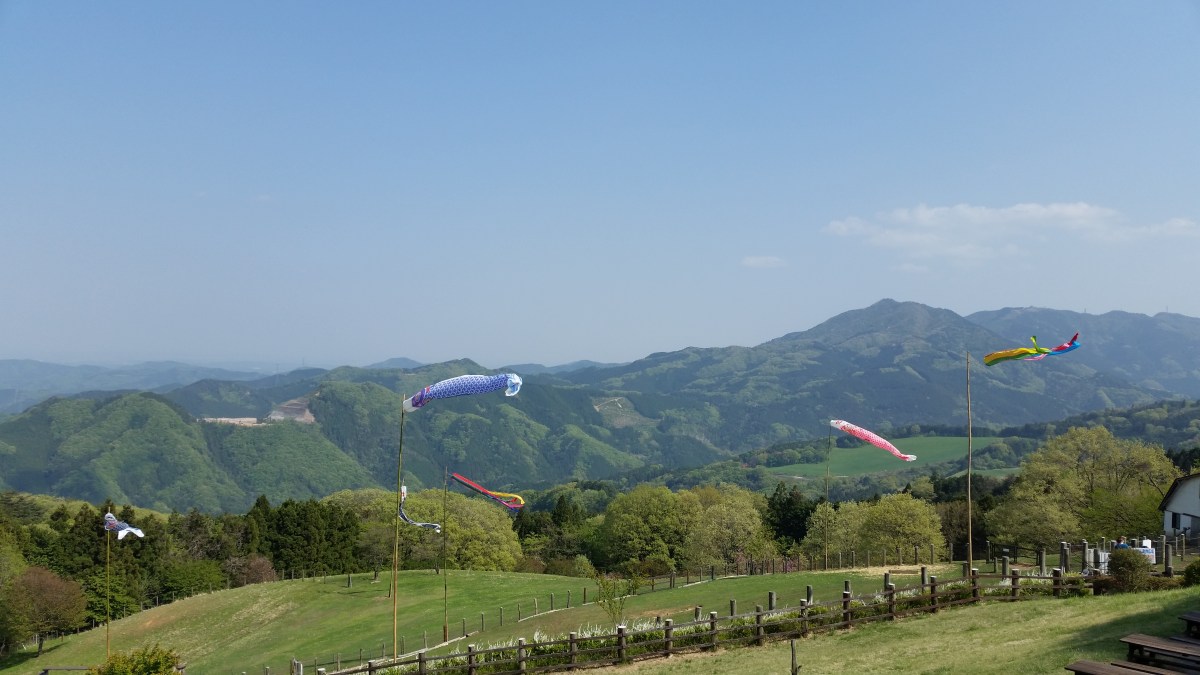
Mt Mino (587m), Minano Town, Saitama Prefecture (Utsukushii no Yama)

This was another short hike, about one hour up and one hour down, less than two hours by train from Tokyo. Once again, by studying the Chichibu hiking map, I found a way to extend it, through Eastern Chichibu and ending at Yorii station; I hoped it would make a great station to station hike. Also, the trails I had picked followed the Kanto Fureai no Michi for nearly the entire way, so I was almost certain that the path would be well signposted and easy to walk.

20150426_100306

Hiking up Utsukushii no yama or “Beautiful Mountain”

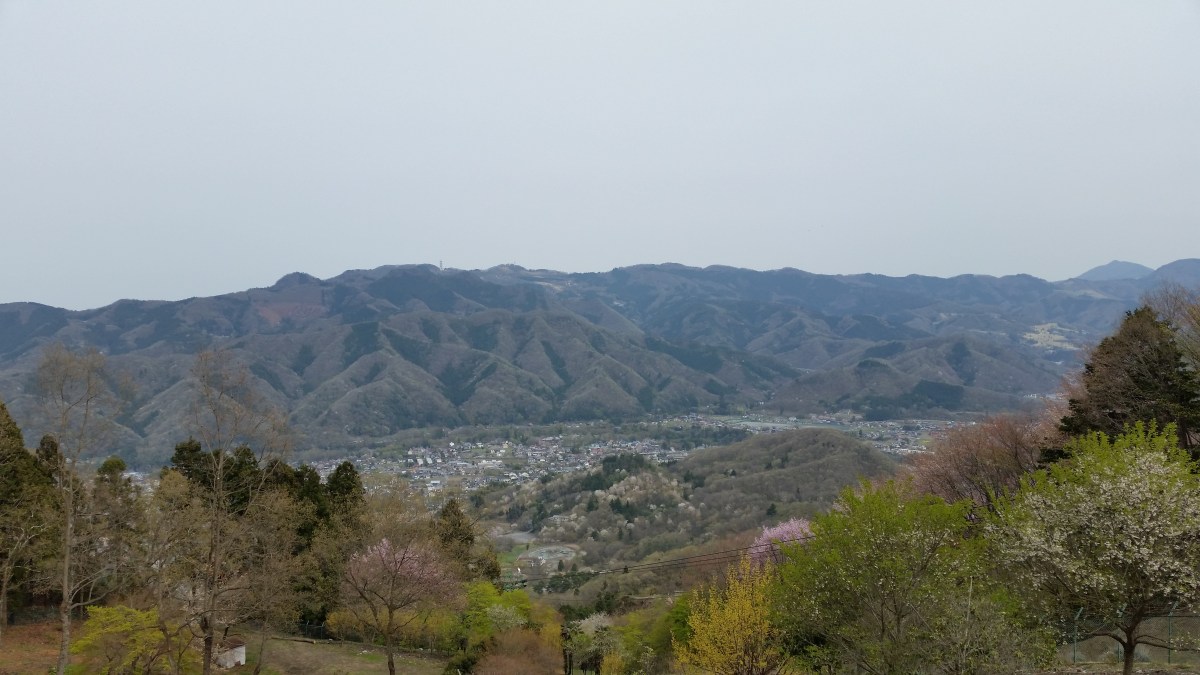
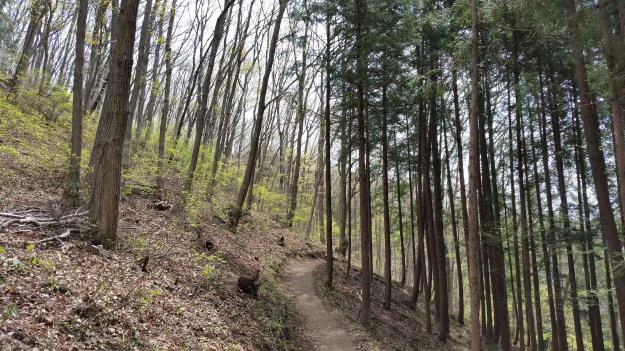
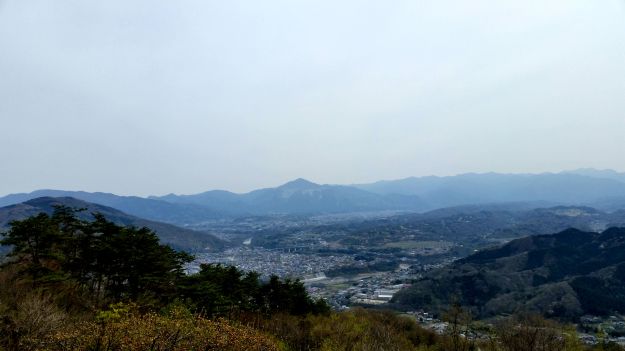
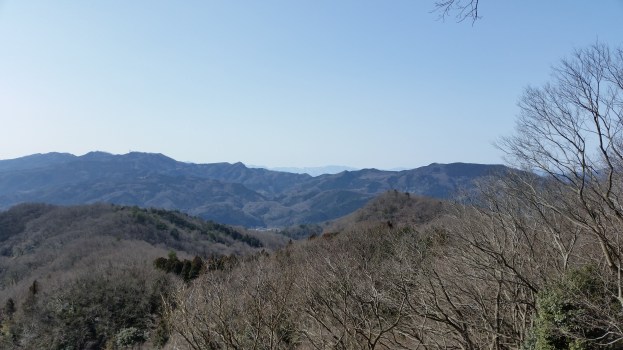
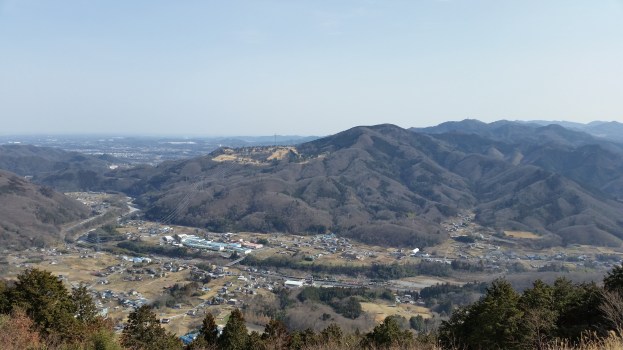
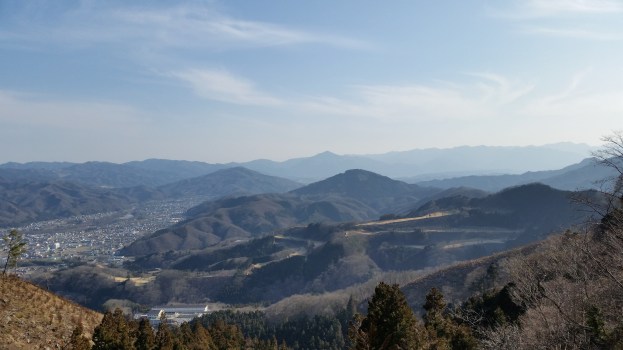
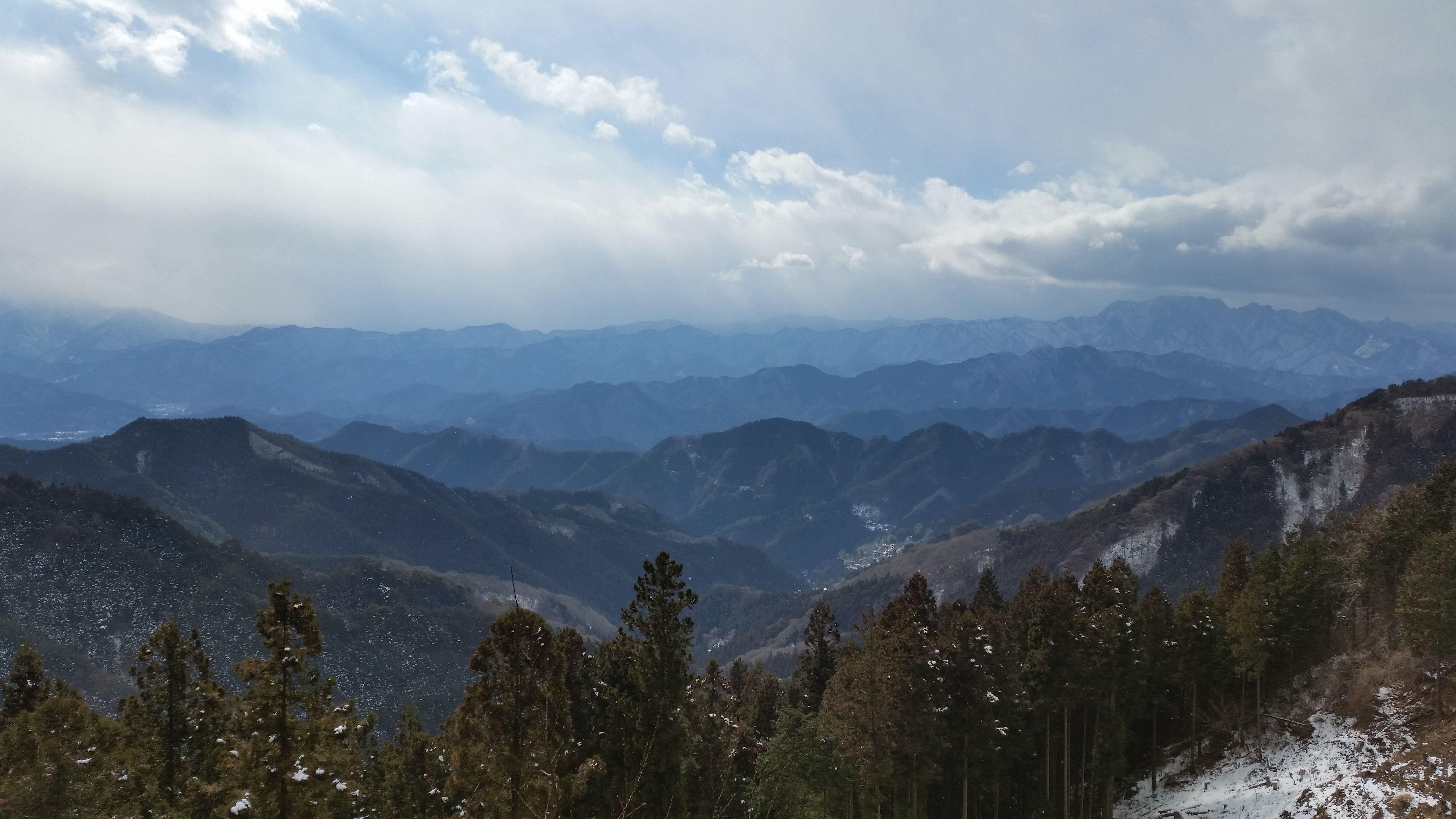
I got off the train at Oyahana station on the Chichibu line around 9 am on a beautiful spring morning. The walk up through the new green forest was one of the easiest I had ever done; it’s also possible to drive up. At the top of Mt Mino 蓑山 (Minoyama) there was a small observation tower with a 360 degree view. The view to the East of the nearby mountains of Higashi Chichibu was better than the view to the West of the much further Oku-Chichibu mountains, lost in the late morning haze. By the way, this mountain’s name means “straw raincoat”, but it’s also known as Utsukushii no Yama, or “Beautiful Mountain”.
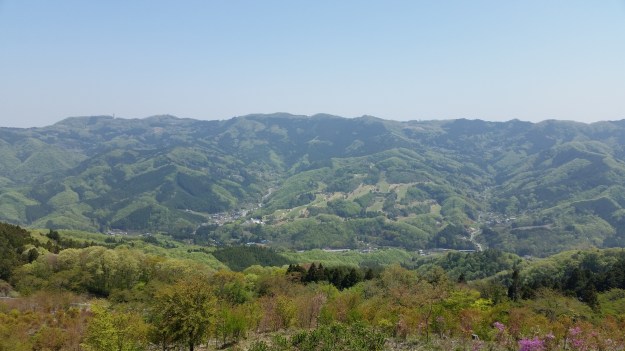
20150426_105613

View of Eastern Chichibu from the summit of Mt Mino

After taking in the view, I started down on the opposite side. I saw no one on the way down; I even surprised some Japanese pheasants or “hiji”, which flew away in fright as I approached. I arrived at Asama Jinja Shrine around noon. The local priest was very friendly and offered me some cold tea, very welcome on this warm day. After reaching the base of the mountain, I crossed a busy road, walked up a smaller one with fields on either side, and arrived at the Chichibu Highland Farm or Chichibu Kogen Bokujo around 2pm. There, I had some of the best views of the hike.

20150426_153707

Hiking the seven peaks of outer Chichibu

The next part of the hike was quite easy, as it followed the wide ridgeline to the North. I passed by the minor peaks of Mt Atago 愛宕山 (Atagoyama) 655m and Mt Misuzu 皇鈴山 (Misuzuyama) 679m. A little beyond that last peak, I got some great views of the Kanto Plain to the East. By the way, this trail is known as the “Outer Chichibu 7 Peaks Traverse” (外秩父七峰縦走).
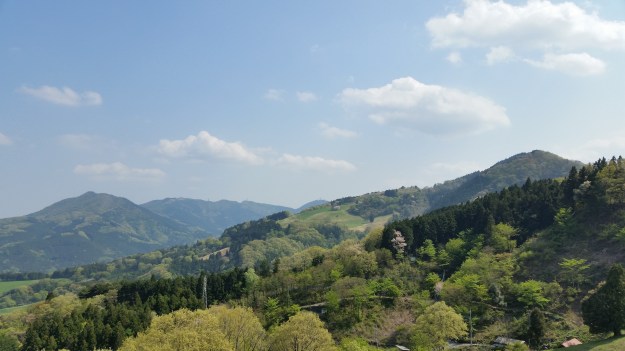
20150426_140100

View West from the Chichibu Highland Farm

At 4pm, I arrived at Mt Kamabuse 釜伏山 (Kamabuseyama) 582m, a short roundtrip off the main trail. Here, I left the Fureai no Michi, which went left towards Nagatoro, and headed right, along a road, the most direct route down the mountain. I reached Yorii station a little before 6pm, after nine hours of hiking, but not too exhausted since the hike consisted mostly of gentle slopes and flat ridges.
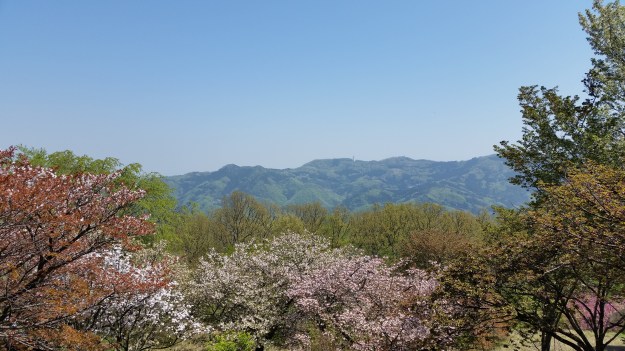
20150426_101851

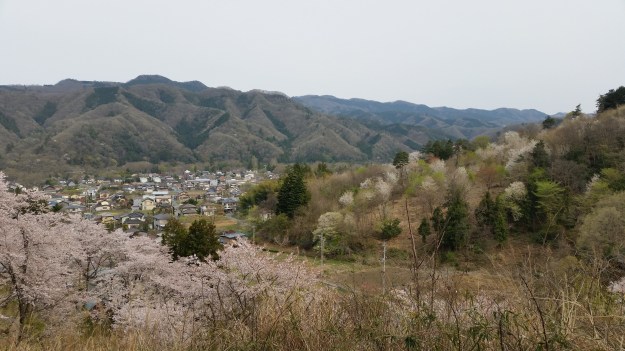
The park at the top of Mt Mino has many cherry blossom trees

Koinobori at Chichibu Highland Farm

20150426_150631

Mt Hodo (497m), Nagatoro Town, Saitama Prefecture

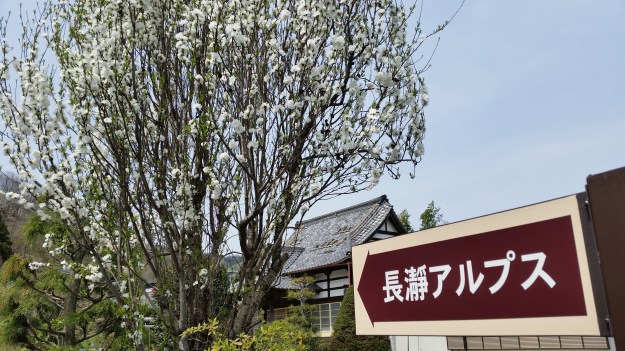
At first, I wasn’t too excited about climbing this peak in the Chichibu area. It was a short hike accessible via a ropeway, so the trails and summit were bound to be crowded. However, it was a station to station hike and easily accessible from Ikebukuro via a direct train. I was also curious to see the views from the summit. By studying my hiking map, I saw that I could lengthen the hike by starting from Nogami station and following the Nagatoro Alps hiking trail (長瀞アルプス) so called because of its up and down nature.

20150412_144557

View from near the end of the hike

Since the direct train ended at Nagatoro station, one stop before Nogami, I had to walk a few kilometers along back roads to reach the start of the trail. This turned out to be a blessing in disguise since Spring was in full swing; there were many cherry blossom trees in full bloom, including a couple of cherry blossom tunnels, as well as all sorts of other colourful flowers. I had good views of the Arakawa river gorge, and even saw people doing kayaking and rafting. I took so much time taking photos that I arrived at the start of the hiking trail around 11h30, two full hours after getting off the train.

20150412_113236

Start of the Nagatoro Alps

The trail was straightforward and much easier to walk than the name would suggest. I saw few people as the trail headed Southwards while slowly rising. It was mostly in the forest and there were few views. After about an hour, I reached a short flat section along a forest road, followed by a series of log staircases heading straight up. This marked the final ascent, and at 1pm I was standing on the wide flat top of Mt Hodo 宝登山 hodosan. By the way, the name can be read as “Treasure Climb”. I found a free spot on one of the benches next to a big group, and settled down for lunch; later on one of the members kindly offered me some freshly brewed coffee.

20150412_121537

An easy and relaxing hike up Mt Hodo

The views were better than expected, even though the blue skies from the morning had been replaced by a thick white blanket. From East to West, I could see Mt Jomine, Mt Ryokami, Mt Happu, Mt Buko and Mt Mino. At 2pm, I set off again. The top of the Hodosan Ropeway was a few minutes away, and from there it was possible to walk down along a wide dirt road that switched back and forth so that it never got too steep. This part of the hike was a pleasant surprise: there were great views of the Arakawa valley, and the side of the mountain had many cherry blossoms, all the way down to the bottom of the valley.

20150412_132708b

View South of Chichibu City and Mt Buko

It took me less than an hour to reach the base of the ropeway and a road. A little further on, I arrived at a small park filled with cherry blossom trees, with in the middle a small mountain called Mt Notsuchi (209m) 野土山. I reached my starting point of Nagatoro station after 3pm, six hours after setting off, just in time to catch the direct train back to Ikebukuro. It turned out to be a very satisfying hike, and I look forward to returning one day in a different season.

20150412_141853

The Nagatoro area of Chichibu

Rafting and boating on the Arakawa River

Riding the Chichibu Railway

DSC09212

Mt Kanetsukido (330m), Yorii Town, Saitama Prefecture

There were two good reasons for climbing this mountain: it was a kanto hundred famous mountain, and it was less than two hours from Tokyo. On the flip side, it was only a two hour hike. By looking at my Chichibu hiking map, I saw that I could extend it by following the ridge to the Southwest, above the Arakawa river valley.  I was curious whether it would make a satisfactory hike with good views.

20150228_101132

Today’s hike follows this ridge

I arrived at Yorii station at 9am, and from there walked about 30 minutes through the town to the start of the trail. The trail climbed gently through the forest, and was easy to walk, except just for the steep staircase below the summit. I reached the top of Mt Kanetsukido 鐘撞堂山 (Kanetsukido-zan) around 11am. The name means “bell tower”, and it was easy to understand why since there was a great view of the Kanto plan; apparently it’s a good spot for seeing the sunrise. I could also make out Mt Haruna, the top snow-covered crater of Mt Asama, as well as the other mountains from today’s hike.

Staircase before Mt Kanetsukido (left) and the one after (right)

To reach the next mountain, I had to hike back down the other side, cross a road, and walk up again. Another staircase took me to the top of the ridge; there was an arbour, but not much of a view. After that, the trail followed the ridge Westwards. Flat bits alternated with some ups and down, but overall it was an easy to follow trail. I reached the summit of Mt Jinmi 陣見山 (Jinmiyama) 531m, and a small TV antenna, at noon.

20150228_140855

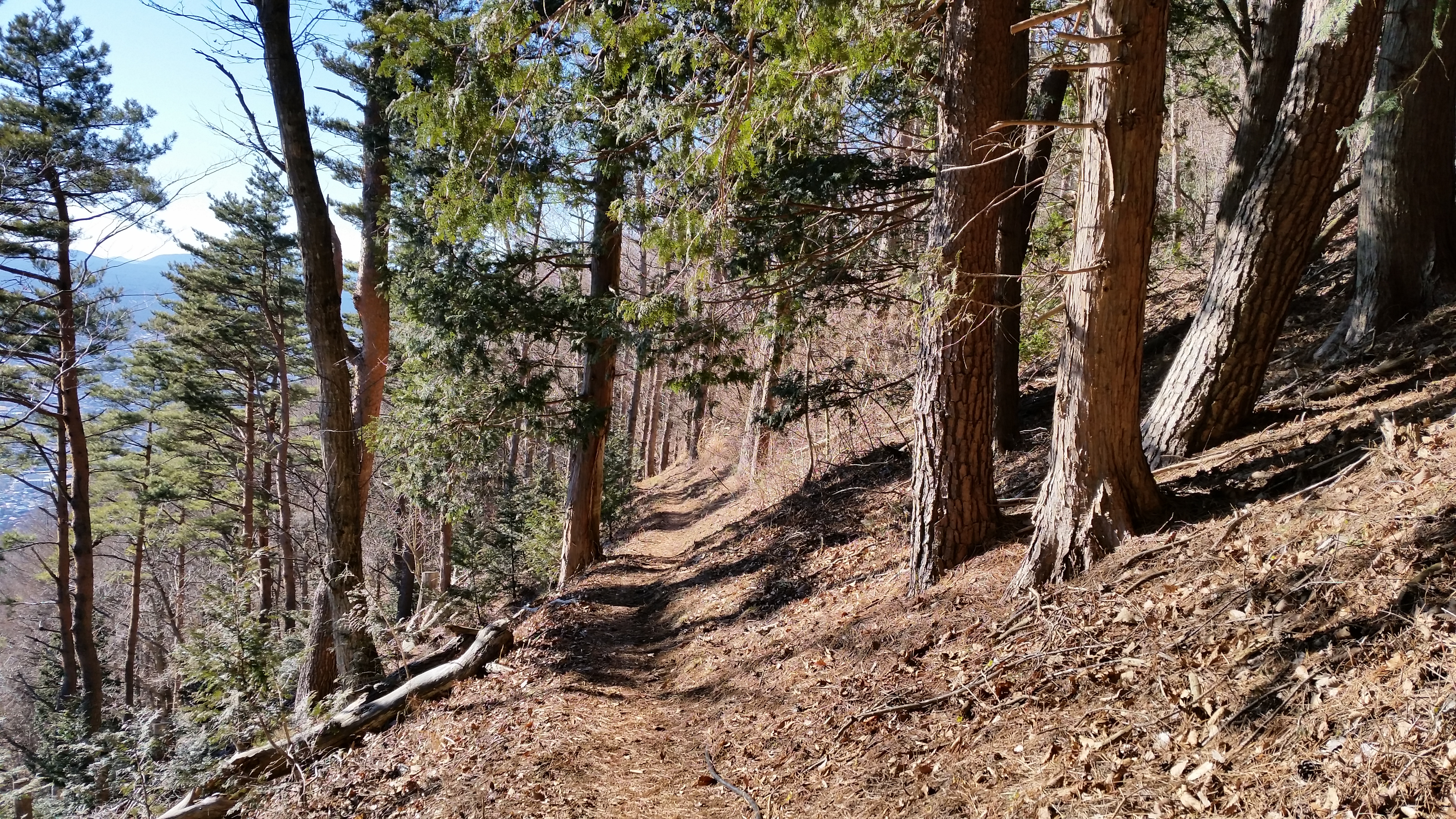
A lot of the trail was like this: flat, easy walking

I quickly moved on. Half an hour later, I had some good views Southwards of the Arakawa river valley through the trees. The trail merged with a forest road for a while, and at 1h40, I reached the top of Mt Amagoi 雨乞山 (Amagoi-yama) 510m, no doubt the highlight of the hike. I didn’t expect such breathtaking views of the Arakawa river valley and the surrounding mountains. It was also a a jump-off spot for paragliding, although nothing was happening during my visit. By the way, the mountain name can translate as “praying for rain”; fortunately, there were no rain clouds in sight!

20150228_134616

The best view of the hike from Mt Amagoi: the Arakawa river valley

After admiring the views, I set off again. The path continued to be really easy to hike, with few steep or narrow sections. At 3pm, I reached the summit of Mt  Fudo 不動山 (Fudou-yama) 549m, meaning steadfast. There was another excellent viewpoint here, especially since around now the sun was behind my back. I could see Nagatoro town, Mt Buko, Mt Haruna and Mt Asama.

20150228_152233

View of the Chichibu mountains from Mt Fudo

It was 3h30 and time to start heading down. The last part of the hike took me past an interesting religious site, with many small wooden swords all over the place, something I had never seen before. On the most recent map, this path has become dotted, so I am not sure whether it can still be used. The last part was along a road, and I reached Nogami station around 5h30pm. I was quite pleased that I managed to turn a two-hour hike into eight-hour one, and I was satisfied with all the great views along the way.

20150228_153510

Wooden Swords at the mysterious religious site on the way down

20150228_152142


Mt Iyo (336m) & Mt Tomi (349m), Minamiboso City, Chiba Prefecture, Sunday, January 18, 2015

Mt Iyo and Mt Tomi are two peaks with amazing views belonging to the Mineoka Mountain Range in south Boso. They first came to my attention while I was hiking the Kanto Hundred Famous Mountains, and since they were relatively near each other, I decided to combine them as a day trip from Tokyo. Both mountains are featured in my Mountains of Chiba guidebook and thus I followed the accompanying hike descriptions.

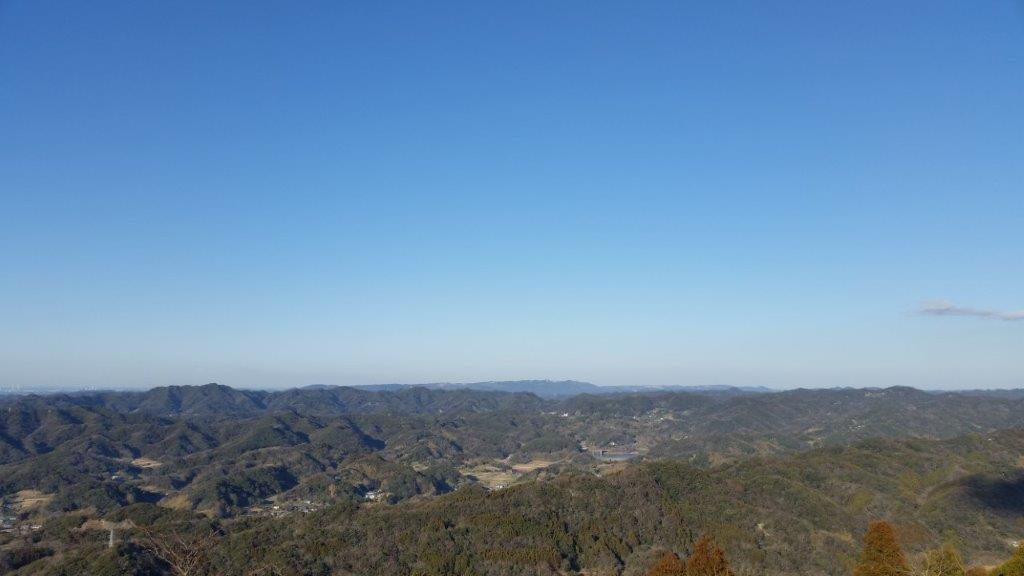
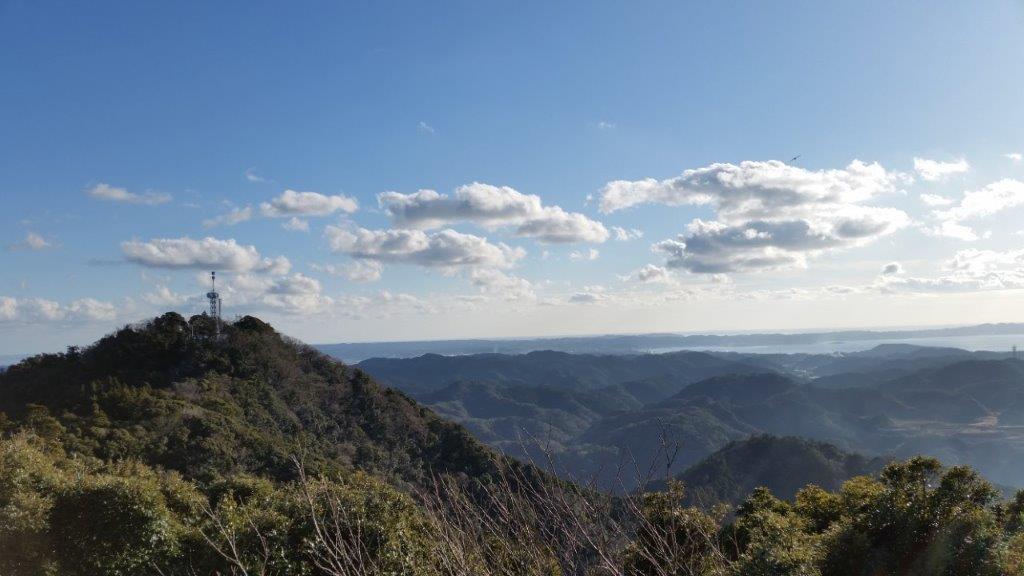
Mt Atago (left), Mt Karasuba (center) & Mt Goten (right)

Mt Tomi from the Top of Mt Iyo

Both trail entrances are a short bus ride on the Minamiboso city bus Tomi line (南房総市営路線バス富山線) from Iwai station (岩井駅), itself a stop on the JR Sazanami limited express, a couple of hours from either Tokyo or Shinjuku station. It’s important to note that advance phone reservation is required for the Mt Iyo trailhead. Since buses are infrequent making it tough to combine both using public transport, I decided to go by car via the Tokyo Bay Aqua line between Kawasaki and Kisarazu Cities. On the way there (and back), I could also check out the view of Tokyo Bay and Mt Fuji from the Umihotaru Rest Area (meaning Sea Firefly) at the halfway point of the line.

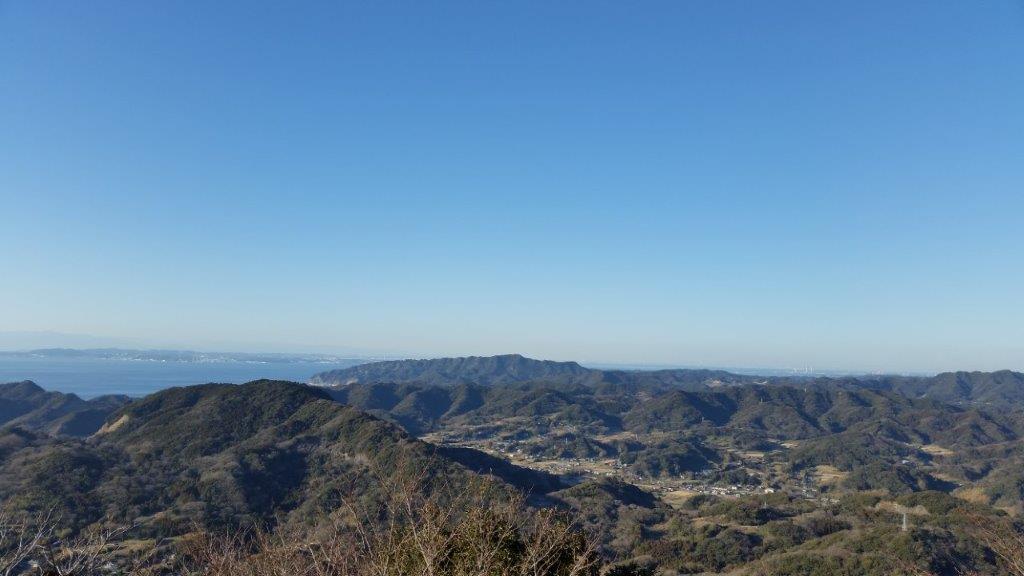
Mt Saga (left), Mt Kano (center back) & Mt Hitobone (right)

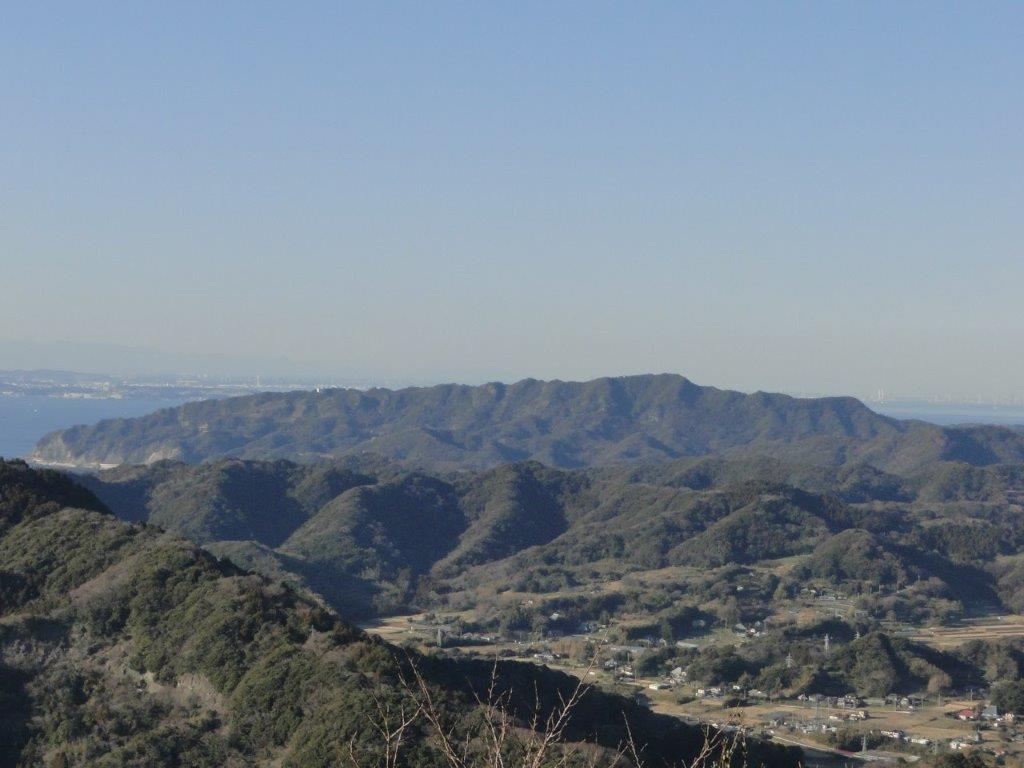
Tokyo Bay and Mt Nokogiri from Mt Tomi

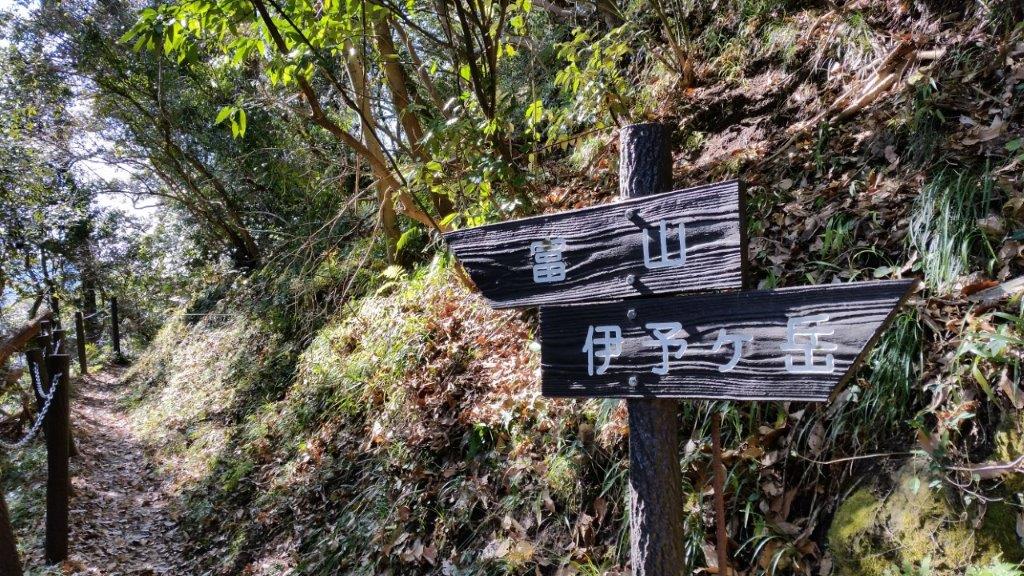
Mt Iyo (伊予ヶ岳 いよがたけ iyogatake)

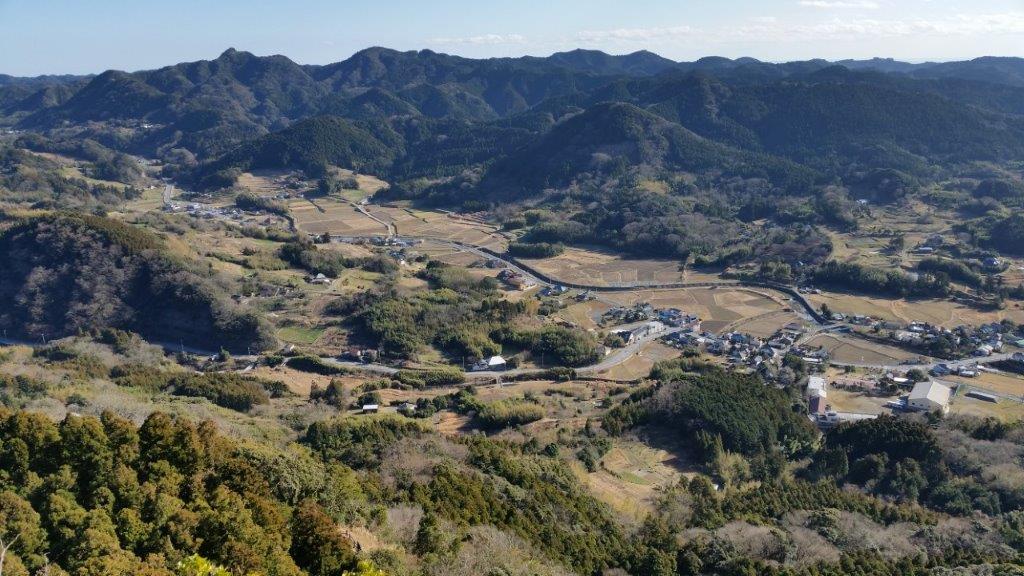
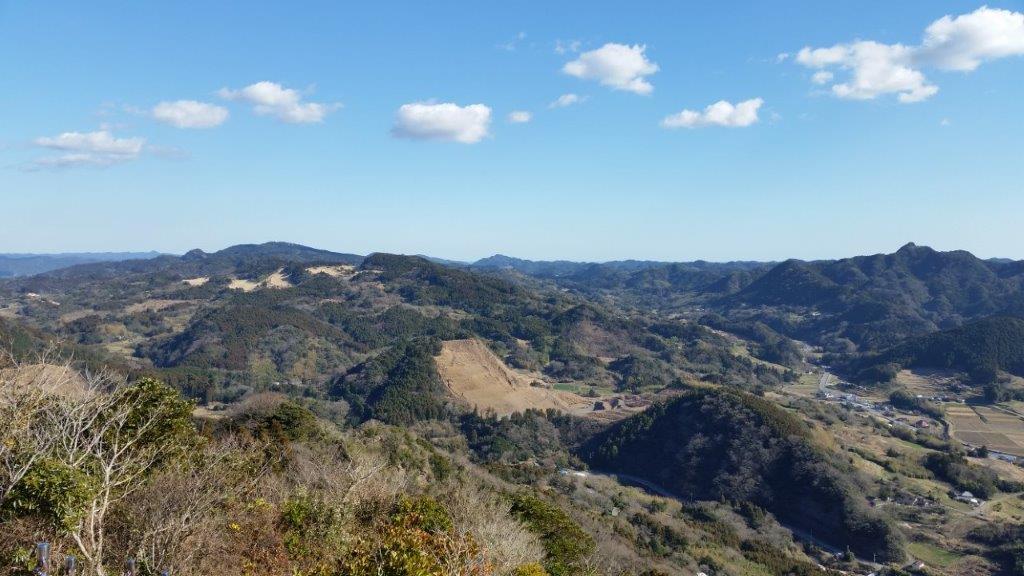
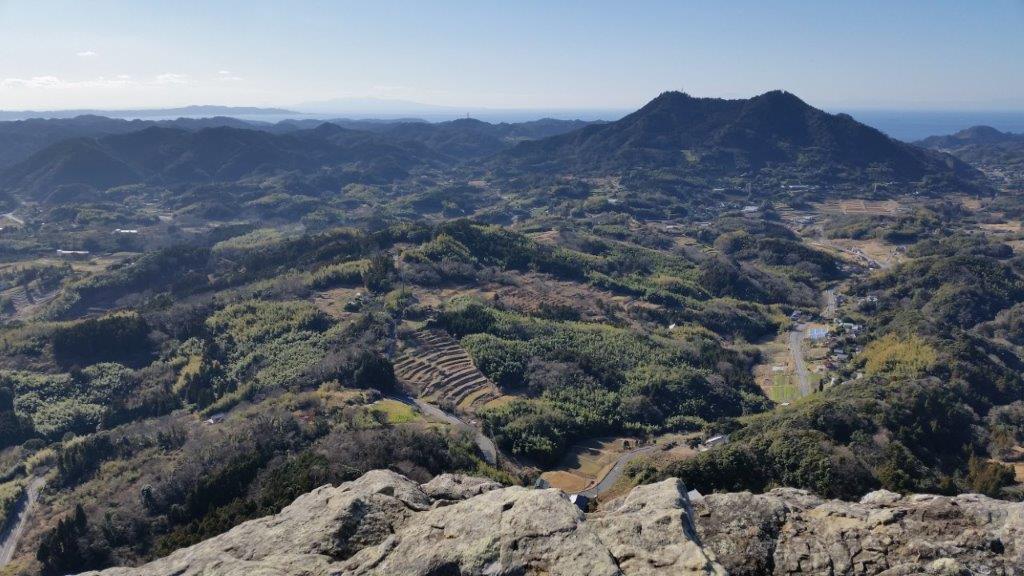
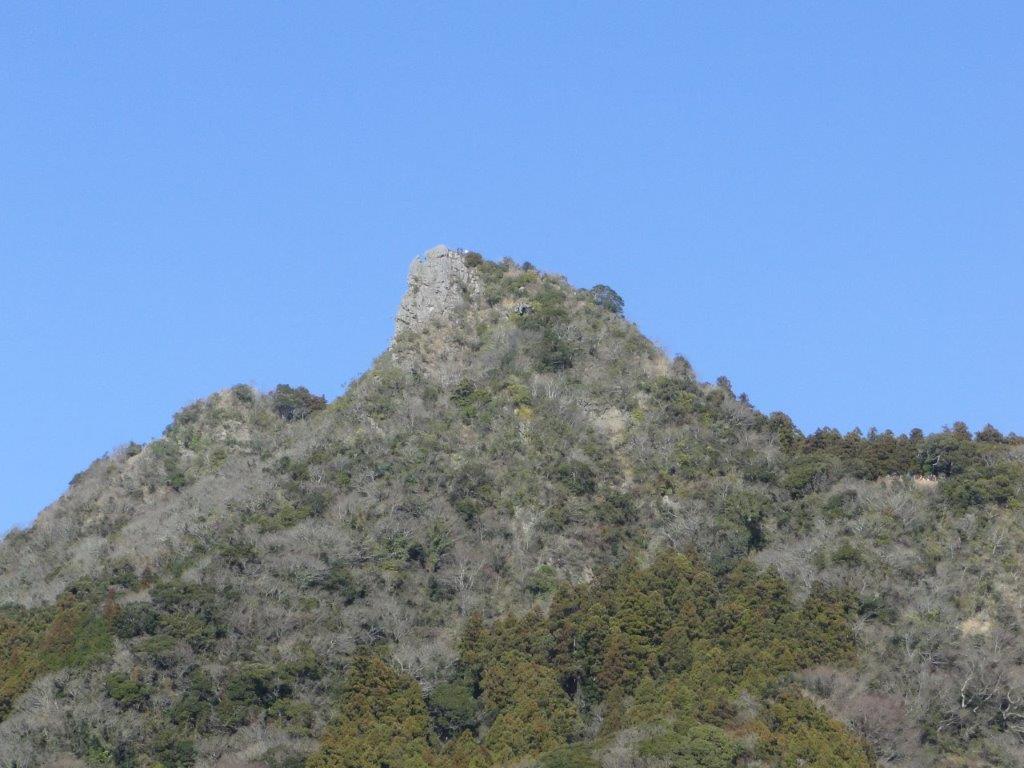
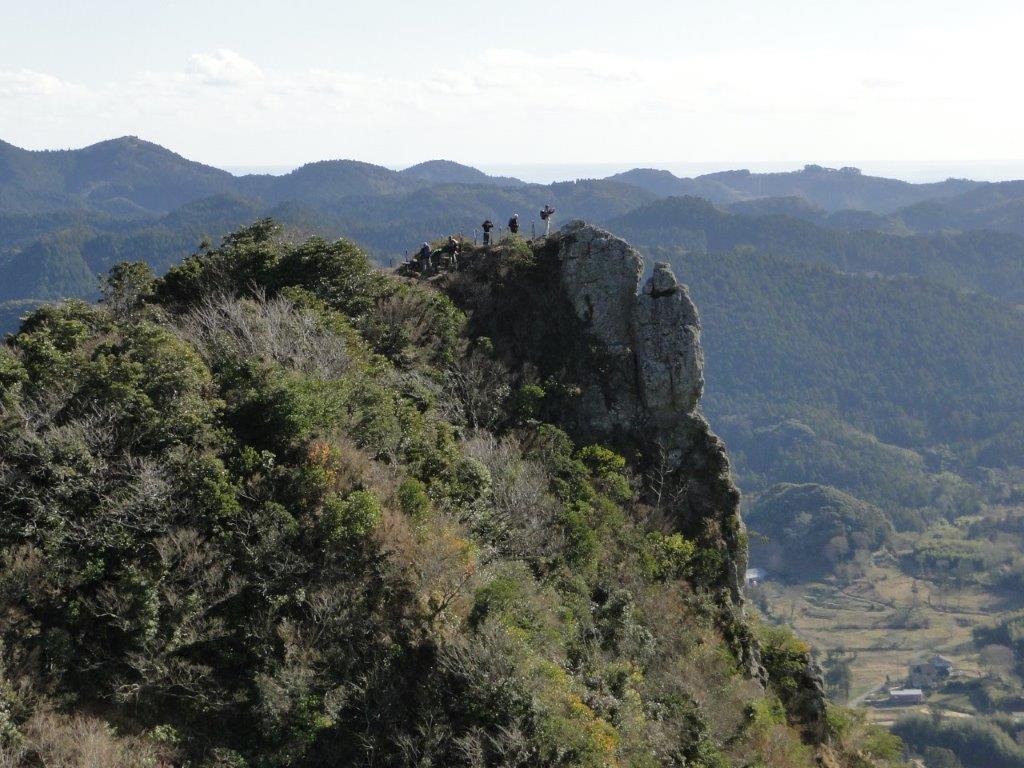
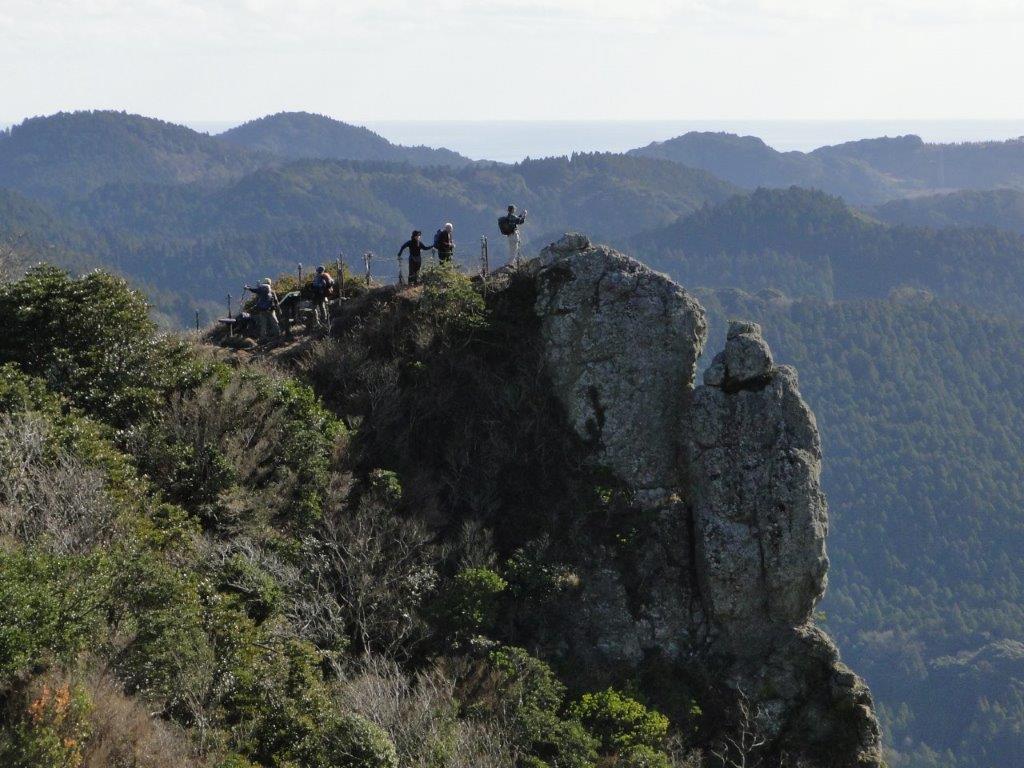
Mt Iyo is a rare rocky summit on the Boso peninsula and is the only one with the character “岳” (“take” meaning “high mountain”) in its name. The hike is a 2-hour loop from the Tenjingo (天神郷) bus stop and parking area near Heguri Ten Shrine (平群天神社), including a short round-trip between the north and south peaks. The narrow south peak (南峰) has a spectacular 360° view that includes Mt Atago, Mt Karasuba, Mt Goten, Mt Tomi, Mt Nokogiri, Oshima Island, as well as Mt Fuji; from the north peak (北峰) one can appreciate the precipitous south summit protruding from the mountainside.

Mt Iyo South Summit from Below

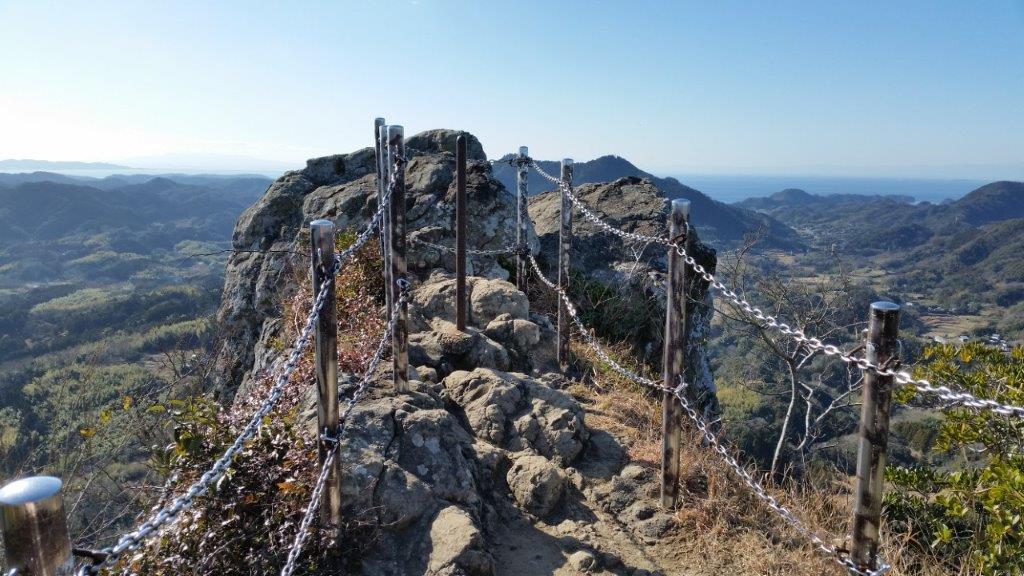
The Precipitous South Summit of Mt Iyo

The higher sections of the Mt Iyo trail include steep, rocky sections fitted with rope and chains for safety. This hike is rated intermediate level, despite the low-elevation and short hiking time; surefootedness, upper body strength and a head for heights are recommended. The lower trail sections inside the forest follow well-maintained and easy to walk paths, including a short section along a paved road.

Safety Chains on the South Summit of Mt Iyo

View of Minamiboso from Mt Tomi

Mt Tomi (富山 とみさん tomi-san)

Mt Tomi is a standalone peak closer to the coastline and the 7th highest mountain of the Boso Peninsula; it’s situated inside the Tomisan Prefectural Natural Park (県立富山自然公園). The trailhead can be reached from the bus stop at the Furari Road Station (道の駅 富楽里); for the return, one can walk through the countryside back to Iwai station. This hike is a 3-hour loop along well-maintained trails, the steeper sections fitted with log steps. The highlight is the wooden observation deck on the north summit (北峰), a short roundtrip from the main trail, with a wide view on the east side of Mt Nokogiri, Mt Kano & Mt Hitobone; Tokyo Bay, the Miura peninsula, Oshima island, and Mt Fuji are also visible. Although Mt Tomi consists of two peaks, the south peak is off the trail and within the forest.

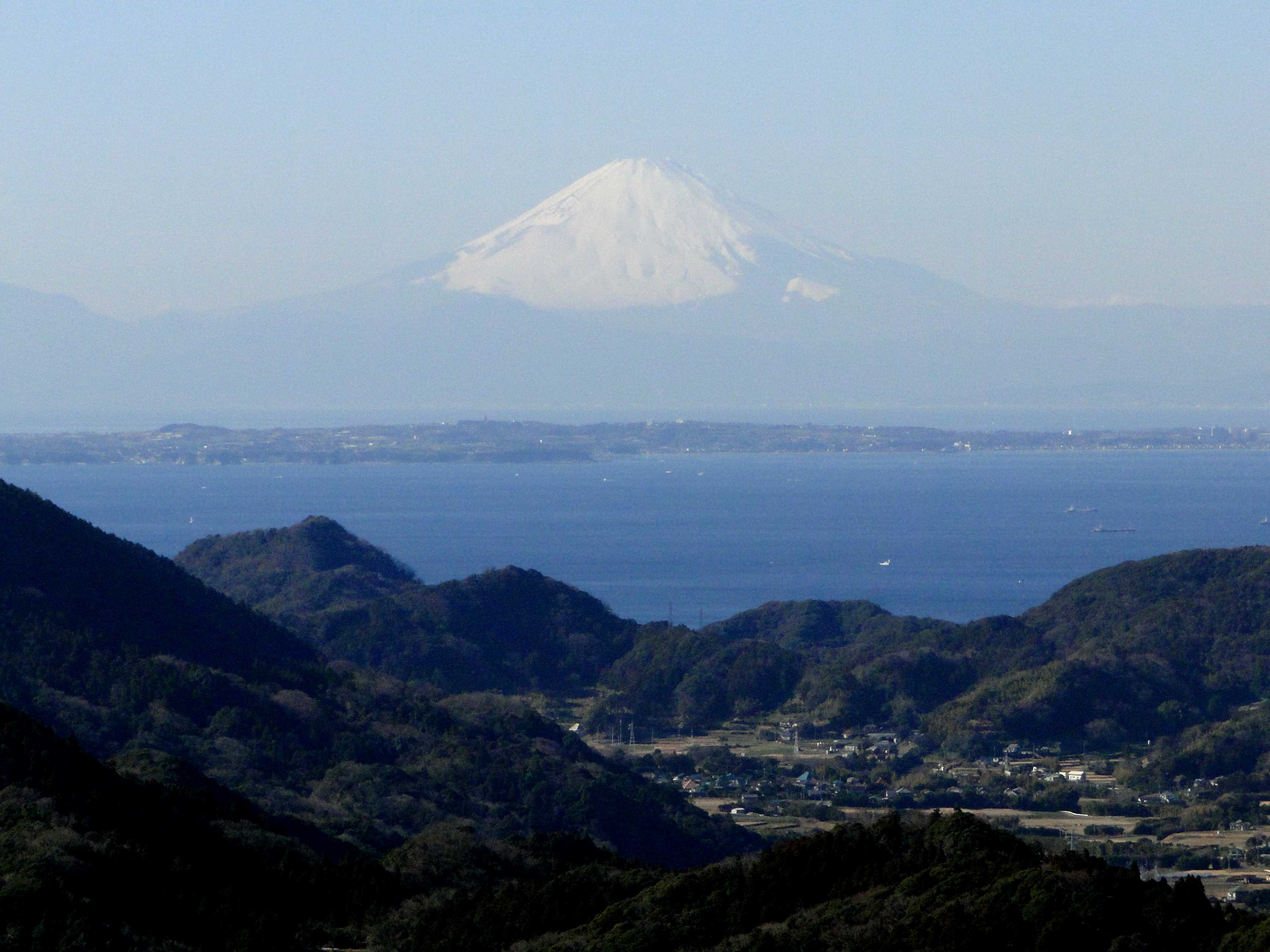
Mt Fuji from Mt Iyo

Mt Nokogiri from Mt Tomi

To make the best of the panoramic views, it’s best to attempt both hikes during the cold, clear days of winter, although each can be comfortably done between October and June; both hikes are unsuitable during the hot and humid months of summer. After a late start at Mt Iyo at noon, I was back at the car before 2pm. I then drove to the Fusehime-roketsu Parking Lot (伏姫籠穴駐車場), and headed up Mt Tomi around 2h30. I walked fairly quickly and was back at my car at about 4pm. On the way back, I was able to enjoy the sunset, as well as the night view of Tokyo City from the Umihotaru in the middle of Tokyo Bay.

Watch a Video of the Hike

Mt Jomine (1038), Chichibu City, Saitama Prefecture, January 2015 [Omotesando Route]

This is a good mountain to climb in the spring and the autumn, especially when the days are shorter as this isn’t a long hike. Since the Kanto Fureai no Michi passes by the summit, some sections are guaranteed to be easy to walk. Finally, there is a 360 degree view of the Chichibu mountains from the top, so it’s worth doing this one in clear weather.

20160521_152103b

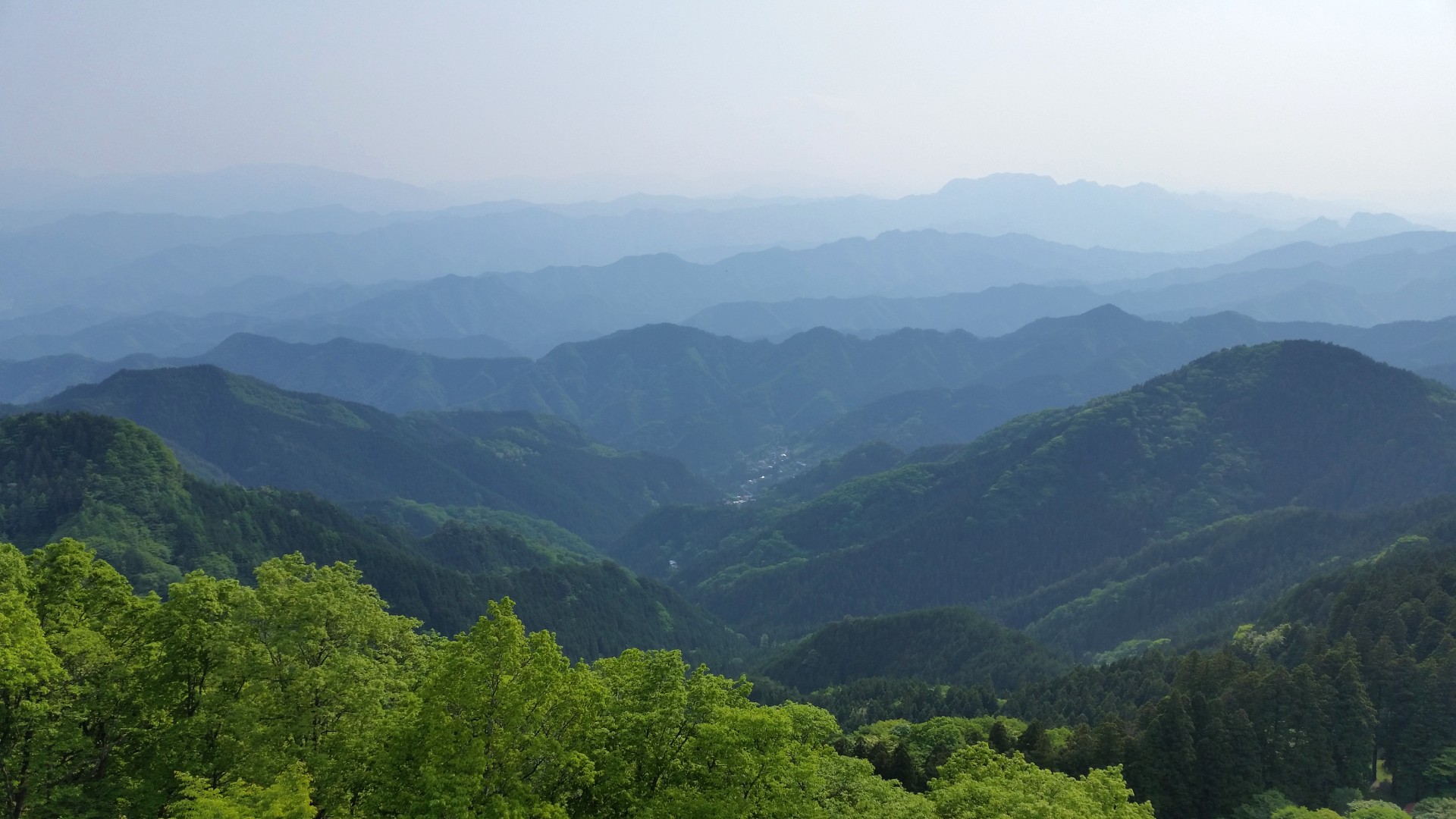
Endless mountains from the top of the observation tower 

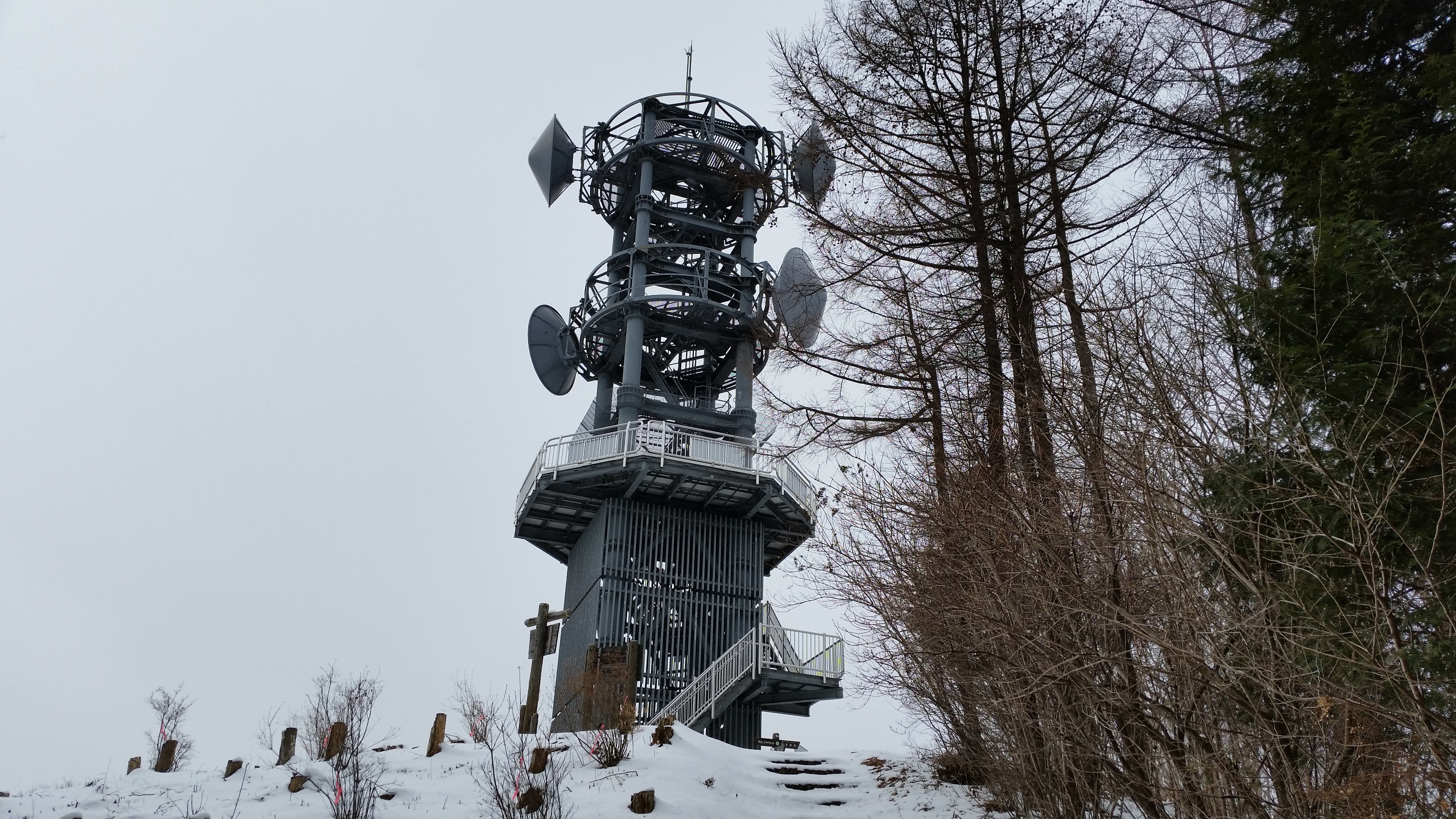
The bus from Minano station on the Chichibu railway takes about half an hour to get to the start of the Fureai no Michi. From the bus stop, the trail follows the road for a bit, before turning right, and heading up the mountain side through thick forest. The steeper parts of the climb are made easier by several log staircases. It should take less than two hours to reach the observation tower at the top of Mt Jomine (城峰山), a Kanto Hyakumeizan. Among the dozens of mountains, it should be easy to pick out the massive craggy top of Mt Ryokami on the West side.

20150117_115650

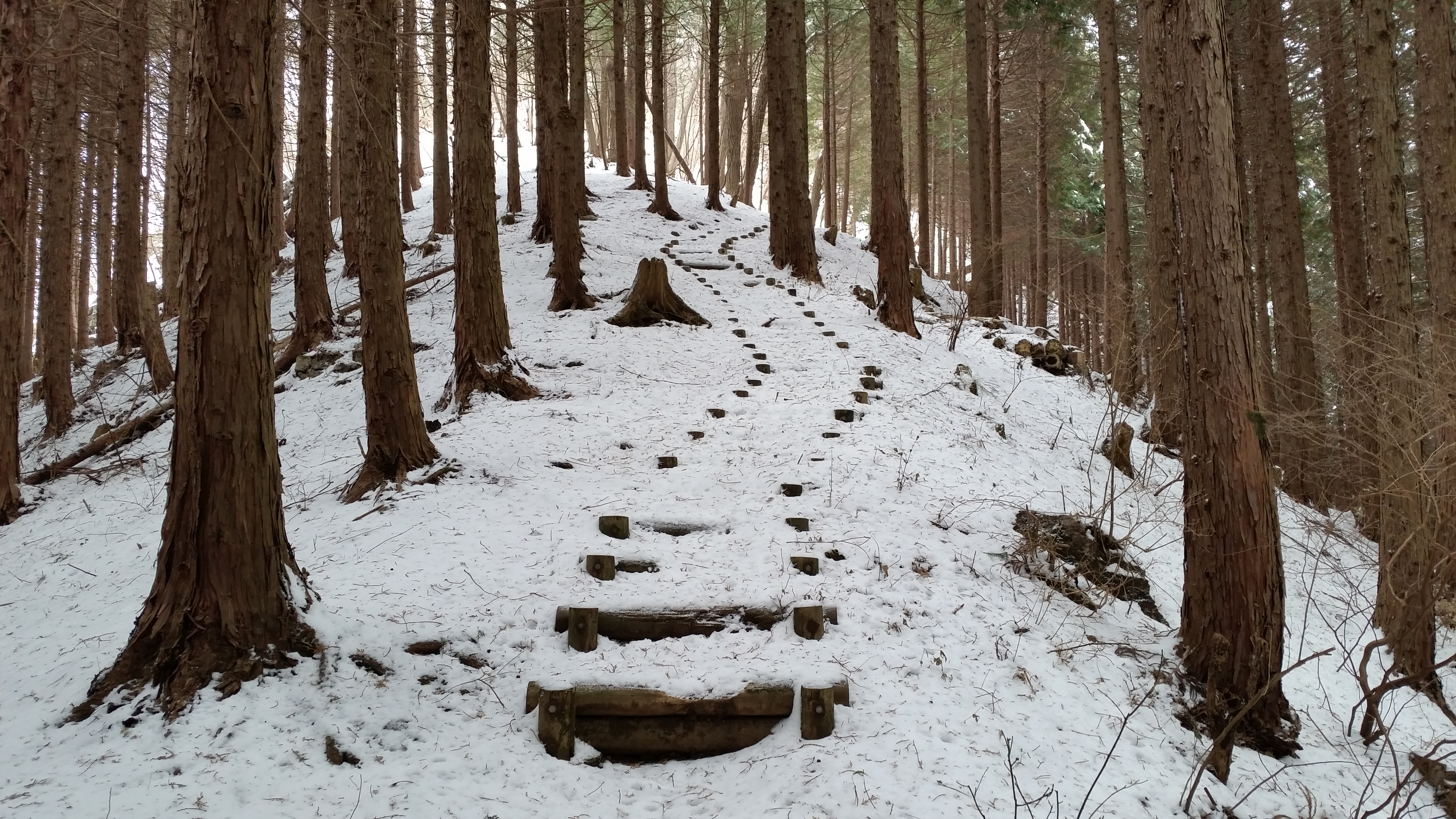
Log staircase barely visible under the snow in the middle of January

Walking down fifteen minutes, the trail leads to Jomine Shrine, where there is another good view Westwards. It should take another hour down the Omotesando trail to reach the trailhead, along a narrow forested valley. From there it’s another 90 minute walk along the road to the nearest bus stop. The road follows a river past charming countryside dwellings. The bus goes all the way to Seibu-Chichibu station with it’s onsen, food hall, sake shop and direct train connection to Tokyo.

20150117_125508

At the very right, the craggy bulk of Mt Ryokami

I did this hike on a snowy winter day, so I made another trip on a sunny Spring day to see the view. I drove to the top, something I don’t recommend since the road is long and narrow; fortunately, I didn’t meet any other cars going up or down. I returned a third time, once again climbing via the Fureai no Michi, but this time going down the South Ridge trail (南尾根コース). This was a more interesting and adventurous way to descend the mountain, the narrow trail following the ridgeline through the forest. I ended up on the road same road as on the first hike, but less than half the distance from the bus stop.

20150117_122309

The observation tower which seems to double as a telecommunication antenna

Mt Kurami (1256m), Tsuru City, Yamanashi Prefecture [Map Available]

This was my first day hike of 2015, and since it was during the Japanese New Year or “shogatsu“, I wanted to have some good views of Mt Fuji, do a station to station hike (buses run on special schedules during that time), and, if it wasn’t too much to ask, end the hike at a nice onsen. I want all hikes to be good hikes, but the first one of the year should be special.

Get a Map of the Mt Kurami Hike

This map was developed for Japanwilds with the Hokkaido Cartographer

Find more Japan Hiking Maps on Avenza

20150103_130713

The city of Kawaguchiko at the base of Mt Fuji

I took a train to Mitsutoge station: I hadn’t been there since I first climbed Mt Mitsutoge several years before, and I had completely forgotten that there was a fantastic view of Mt Fuji from just outside the station. This time, however, I was climbing a mountain on the other side of the railway line. The trail started next to Yaku Shrine, 15 minutes from the station. However, I accidentally went down another trail that was level instead of going up. Once I realised my mistake, I cut through the forest up the side of the mountain to reconnect with the correct trail.

20150103_130733

The Kawaguchi toll road snaking down the valley

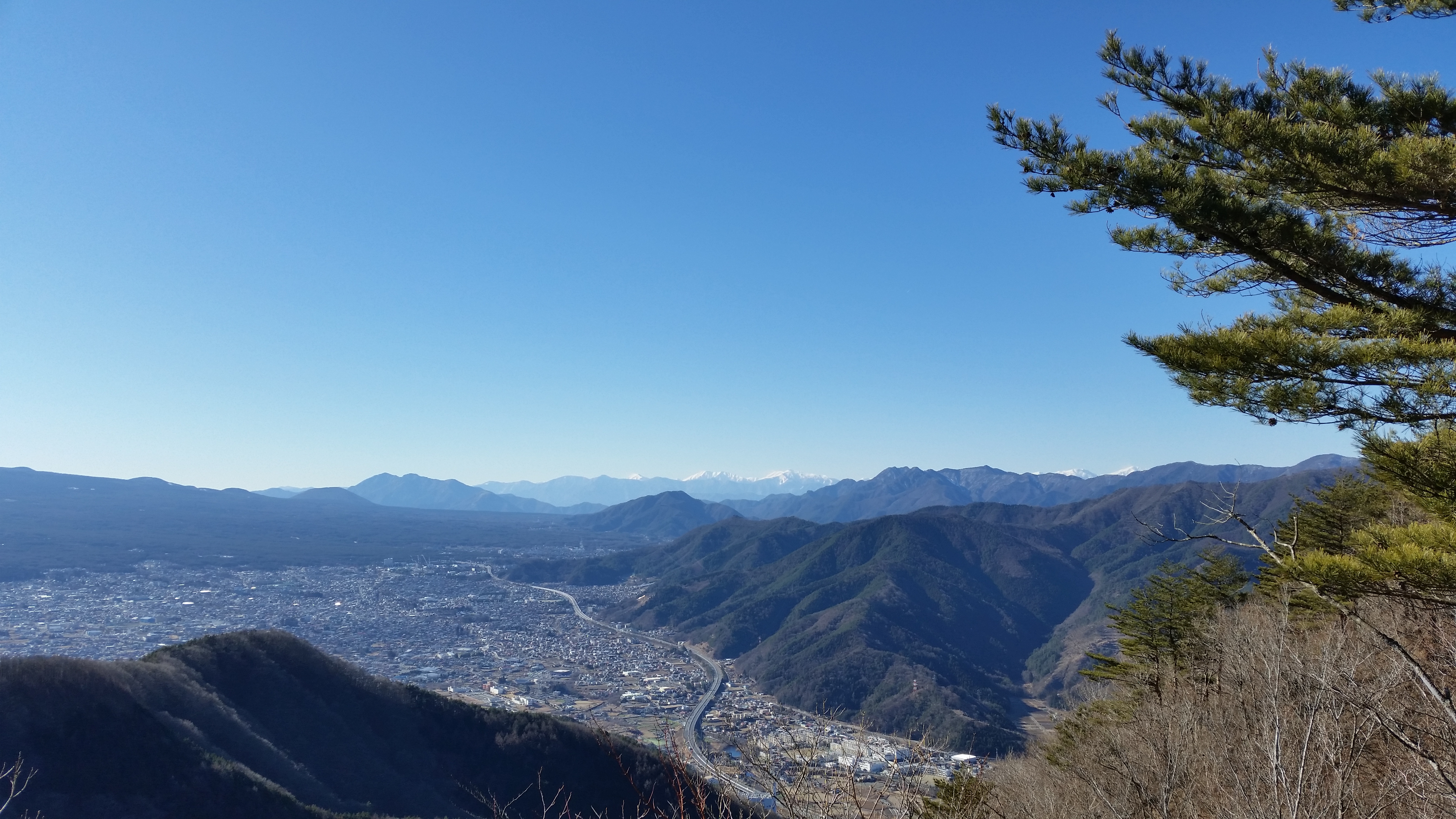
I soon started getting some good views up and down the valley connecting Kawaguchiko and Otsuki cities. It was a fairly relaxing climb, the only steep bit came at the end, going up the small pyramidal summit. I reached the top of Mt Kurami  (Kuramiyama 倉見山) after about 90 minutes, around noon. There was an excellent view of Mt Fuji, resplendissant in its winter coat. I could also see Mt Mitsutoge, the cliffs below the summit area making it look like an impregnable fortress. Looking North, I could spot the peaks of the Oku-Chichibu mountains. Looking South, I could gaze on the vast urban sprawl of Kawaguchiko City. On this clear sunny day, the snowy peaks of the Minami Alps were clearly visible.

20150103_134200

Easy hiking on the way down

The descent, through a beautiful pine forest, took another ninety minutes. The trail was very easy to walk, and offered many good views along the way. It often felt like I was flying above the small houses in the valley below. The sun was now slightly behind Mt Fuji, so the side facing me was in the shadows, less good for taking photos. I reached the bottom of the valley just past 3pm. I then walked another 30 minutes to Yoshinoike Onsen 葭之池温泉 for a quick hot spring bath, before taking the train from the nearby station back to Tokyo.

DSC07472

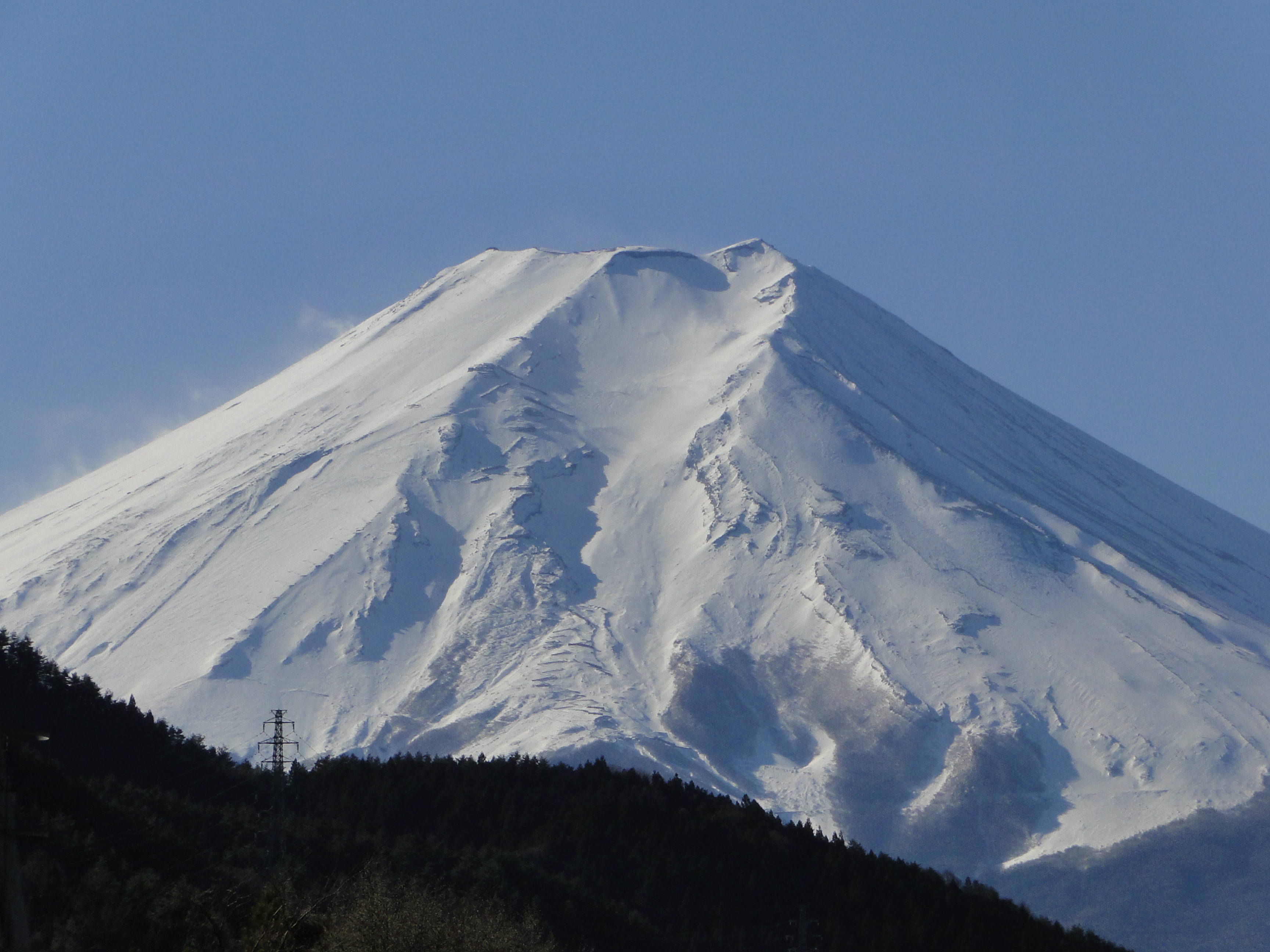
 Mt Fuji view from Mitsutoge station (using camera zoom)

Mt Kitayoko (2480m) & Mt Tateshina (2531m), Chino City, Nagano Prefecture, Sunday, November 11, 2014 [Map Available]

This was the main purpose of my overnight trip to the northern section of the Yatsugatake mountain range. Taking advantage of the ropeway, I could avoid a huge climb and also stay at the quieter Shimagare lodge, although I would end up with a longer but more scenic hike. On the first day, I did a loop via Mt Shimagare and Mt Chausu on the south side. On the second day, I would head head north, passing five huts, 3 peaks and three ponds. After the last summit, I would head straight down the southwest side to a road and parking lot, from where I could walk back to the base of the ropeway and the bus stop for the train station. The clear weather was supposed to hold for both days, so I was looking forward to some more amazing views, and also finding out more about the earthquake that struck the area the previous night.

Hiking on Yatsugatake 八ヶ岳

Download a map of the Mt Tateshina hike

This map was developed for Japanwilds with the Hokkaido Cartographer

Find more Japan hiking maps on Avenza

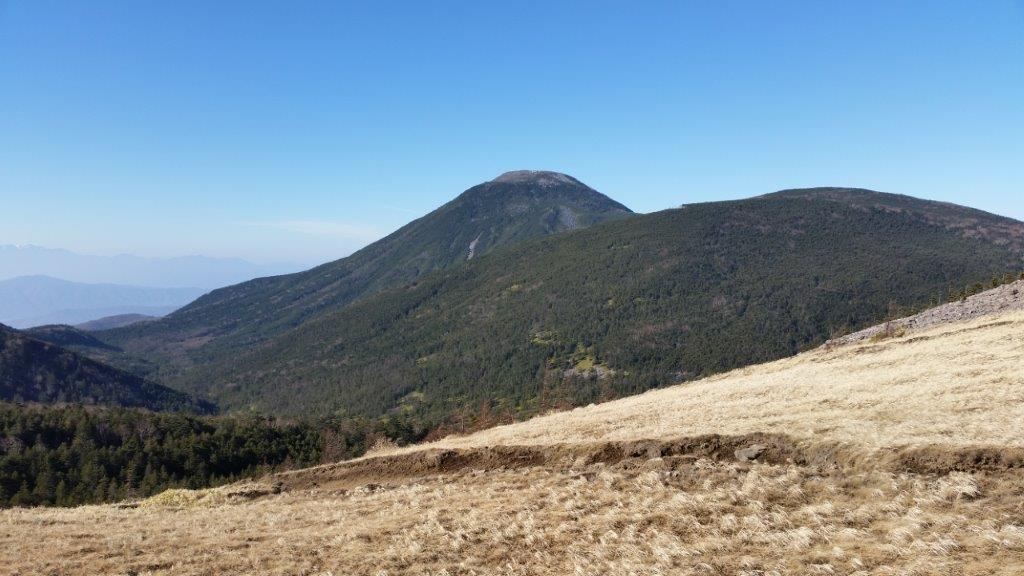
Mt Tateshina from near Mt Futago

Looking back at the route hiked so far

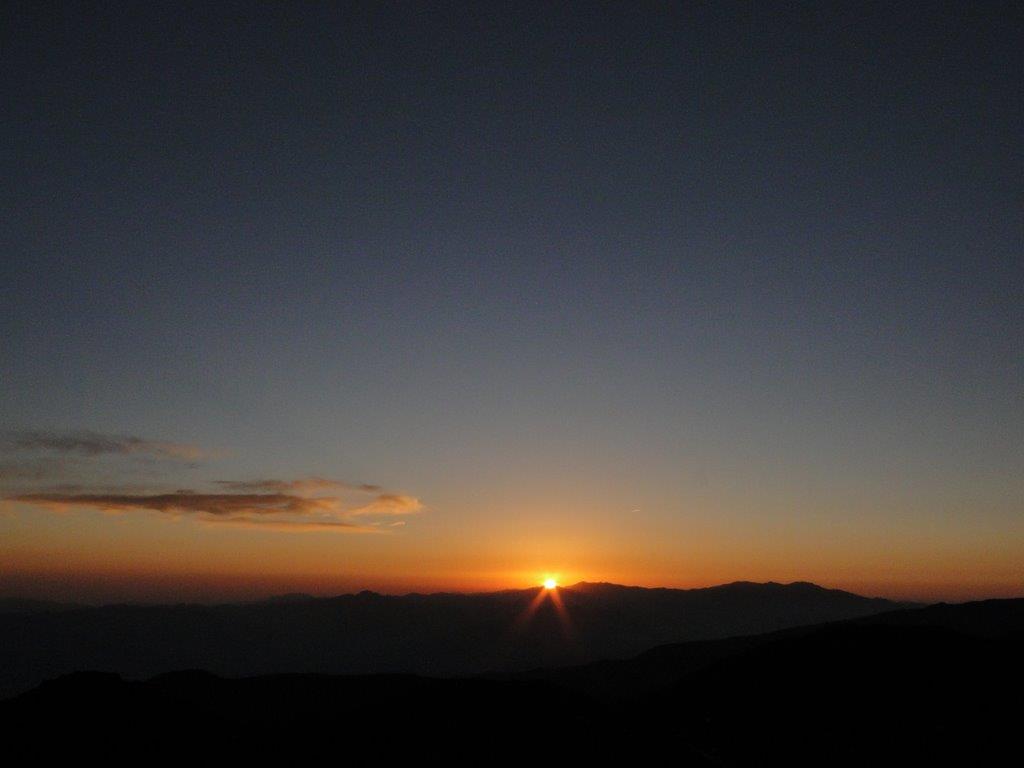
I awoke before dawn, relieved not to feel my muscles aching, which was lucky since I had a long day ahead. I walked as fast as I dared on the icy walkway, lit up by my headlight, and shortly after passing the Kitayoko-dake hut, reached the top of Mt Kitayoko (北横岳 きたよこだけ kitayoko-dake). It was 6h30 and the sun was rising above the Oku-Chichibu mountains. As it grew lighter, I had a superb view of the peaks of Southern Yatsugatake and the South Alps; turning around, I could see the rounded top of today’s mountain, looking deceptively close. It also looked like it would be another beautiful day, so I would definitely be getting my views.

Early morning Yatsugatake

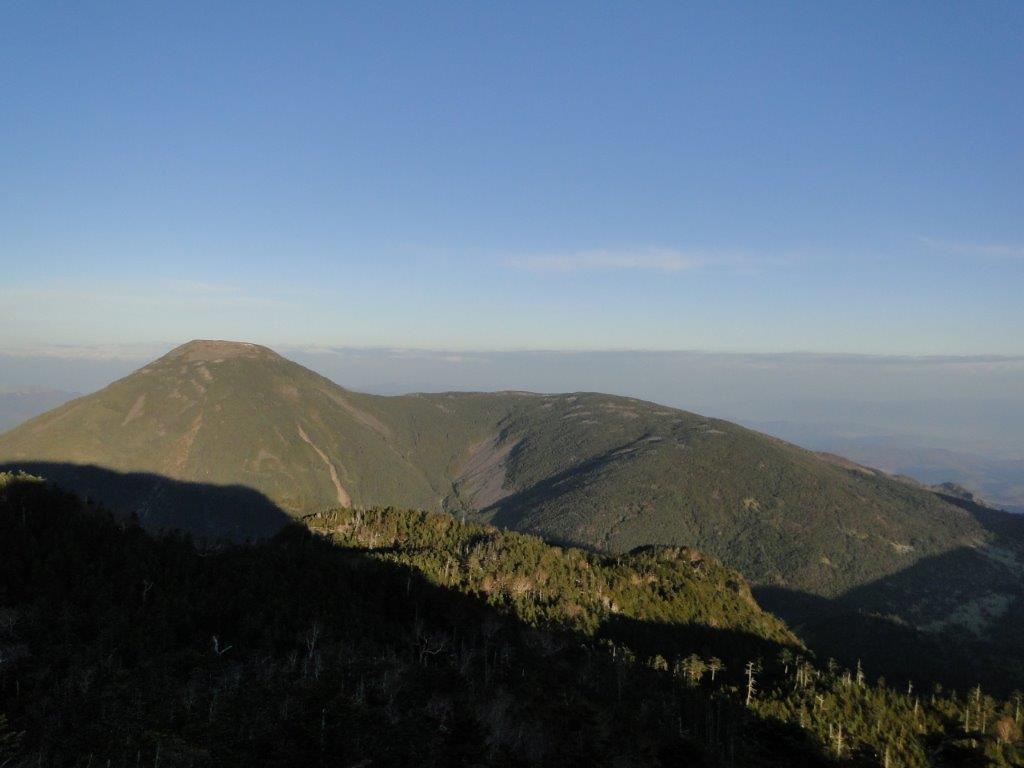
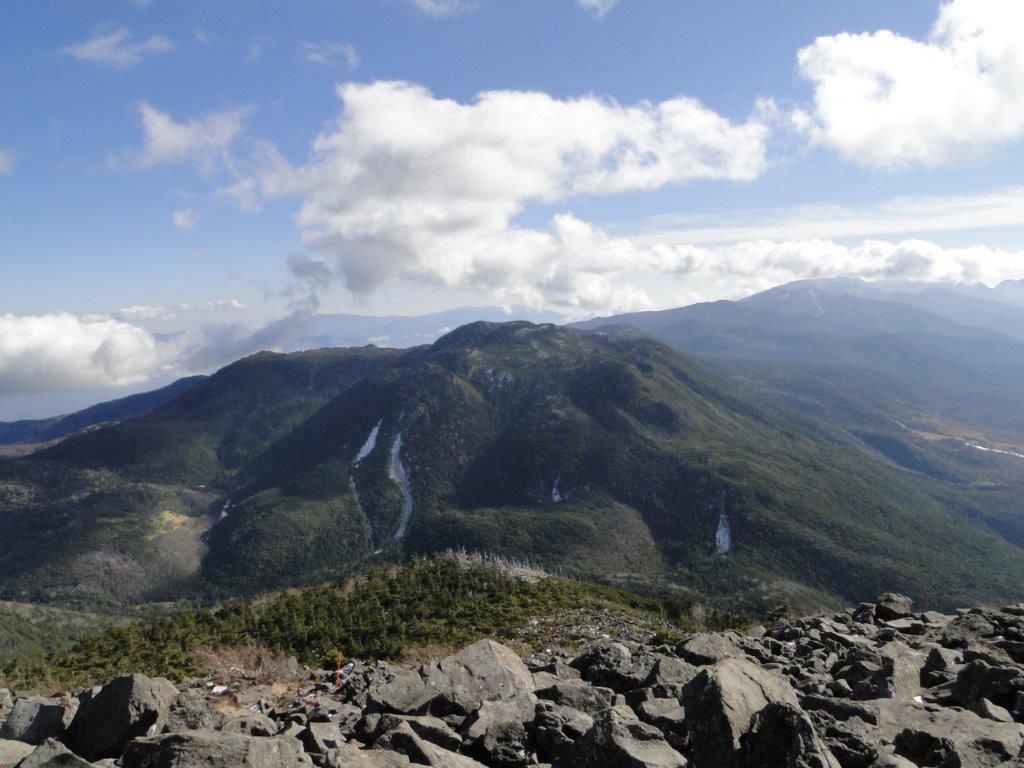
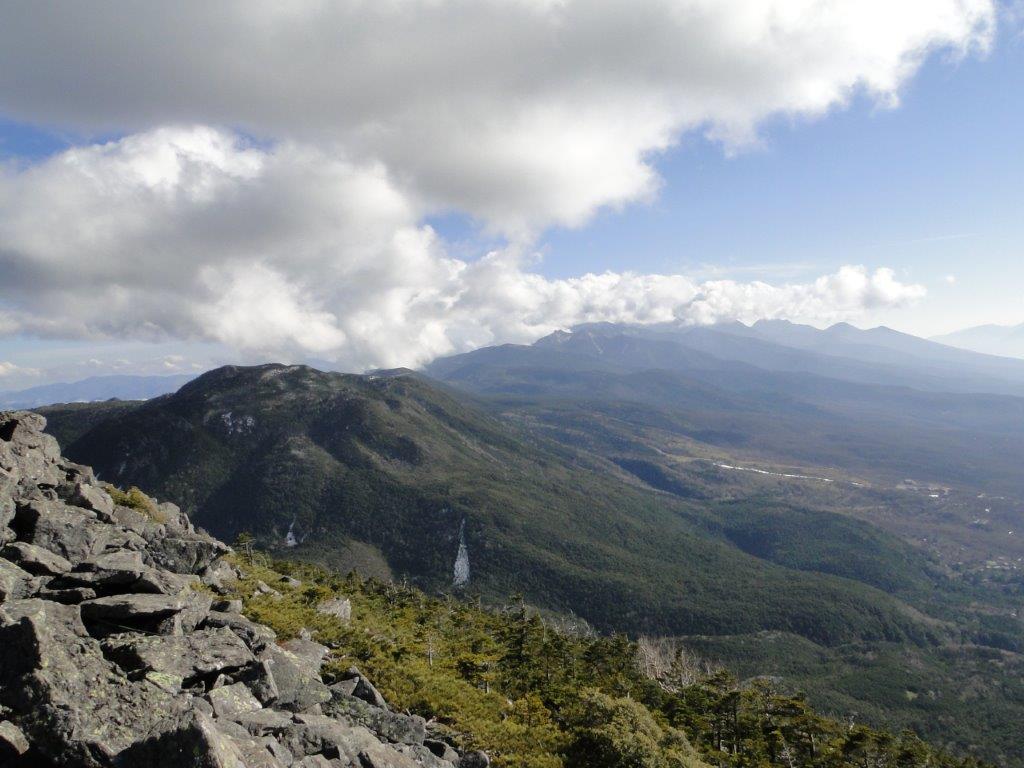
The rounded top of the Tateshina volcano from Mt Kitayoko

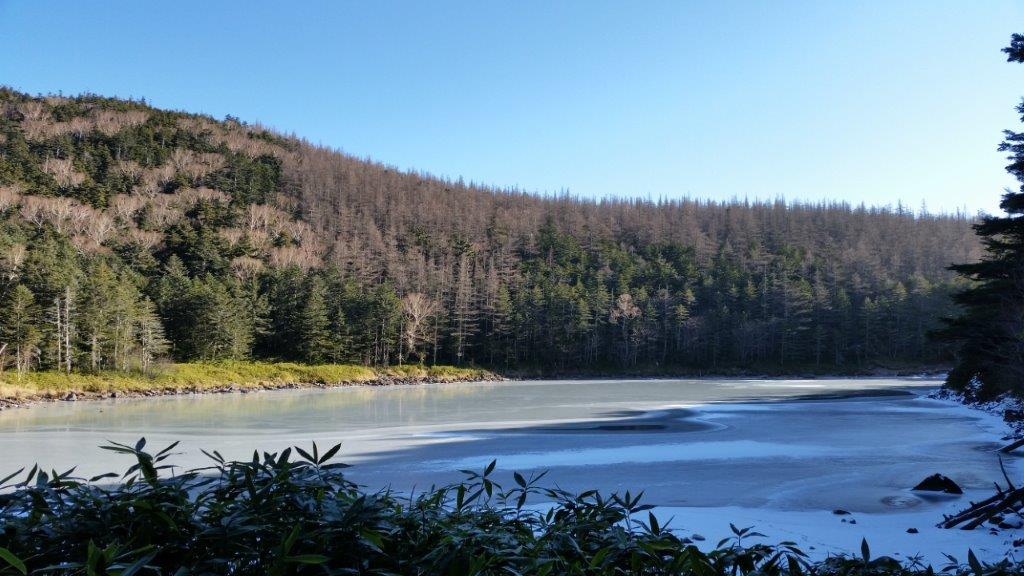
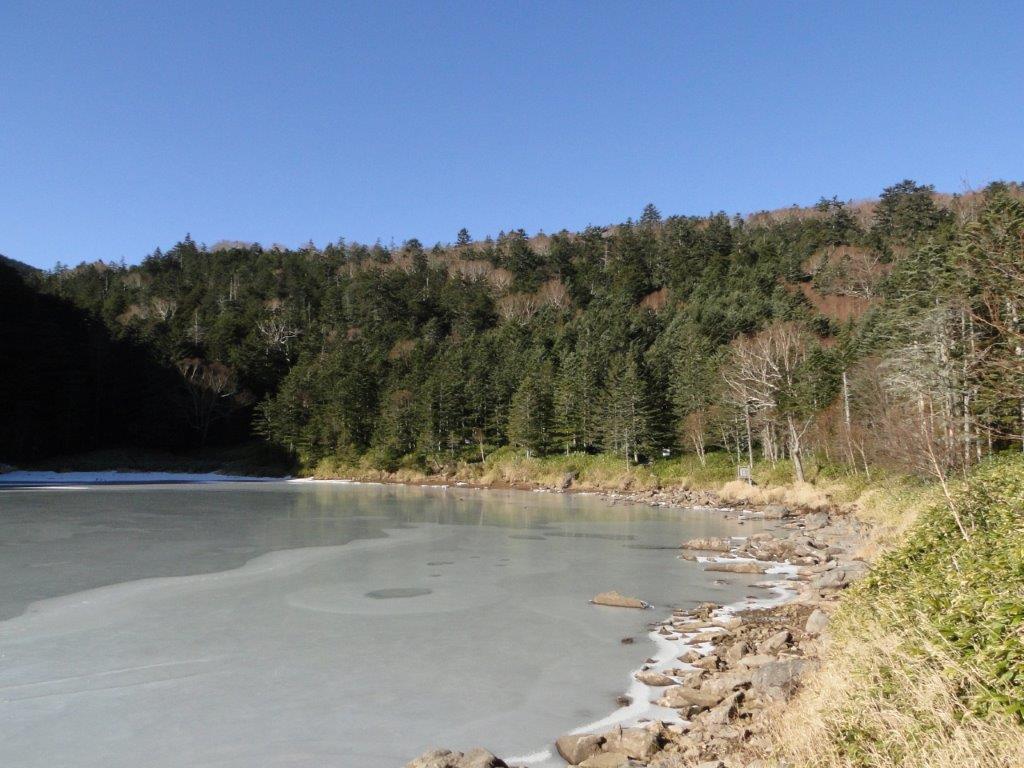
I was now back within phone range so I checked for news about the earthquake and saw that the epicenter was in Hakuba, less than a 100 kilometers away; fortunately damage seemed relatively minimal. At 7am, I headed down into the valley separating the two peaks, along a snowy trail through a pine forest. Progress was slow since the snow here was deeper and more slippery than the previous day. One hour later, I arrived at Kiko pond (亀甲池), surrounded by trees and completely covered in ice. After a short flat section, I reached Futago pond (双子池), meaning twin pond, and actually formed by two ponds, with the Futago-ike hut between them.

One of the twin lakes of Futago-ike

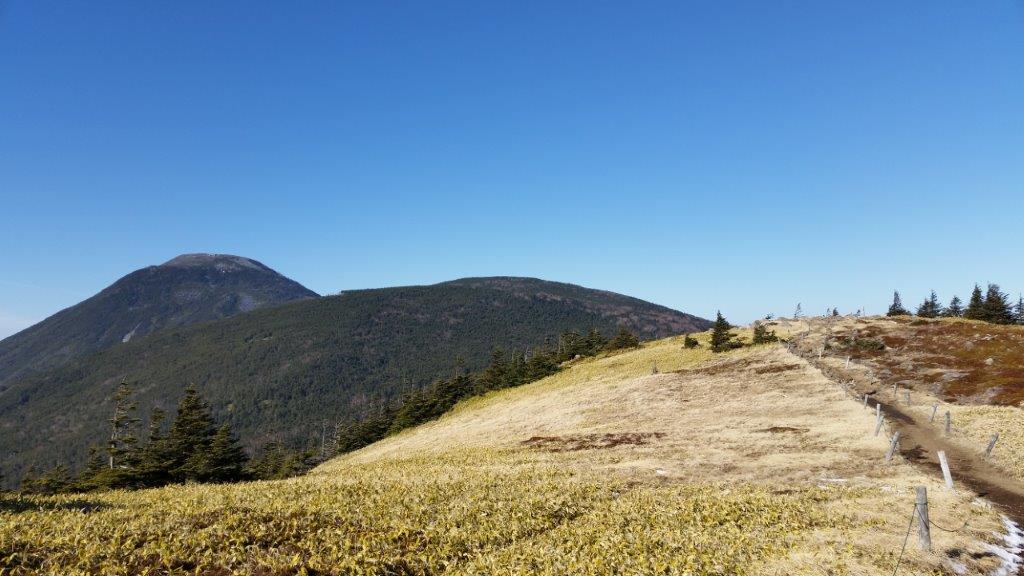
The wide open summit of Mt Futago

The twin ponds were also frozen, but the sun was now shining above, so I stopped for a short break. At 9am, I started going up the other side of the valley, and half an hour later arrived at a flat open space, the top of Mt Futago (双子山 ふたごやま futago-yama), with a view of the highest point of today’s hike directly ahead. After passing the Ogawara hut, the trail became rocky and snowy again as it reentered the forest for the final climb towards the summit. I was stunned by the contrast of the white trunks of the green pine trees against the light blue sky. At noon, after passing the Tateshina lodge and the Tateshina Summit hut, I was finally standing on top of Mt Tateshina (蓼科山 たてしなやま tateshina-yama), a volcano and a hundred famous mountain of Japan.

Walking among the pine trees

Mt Kitayoko from where I saw the sunrise

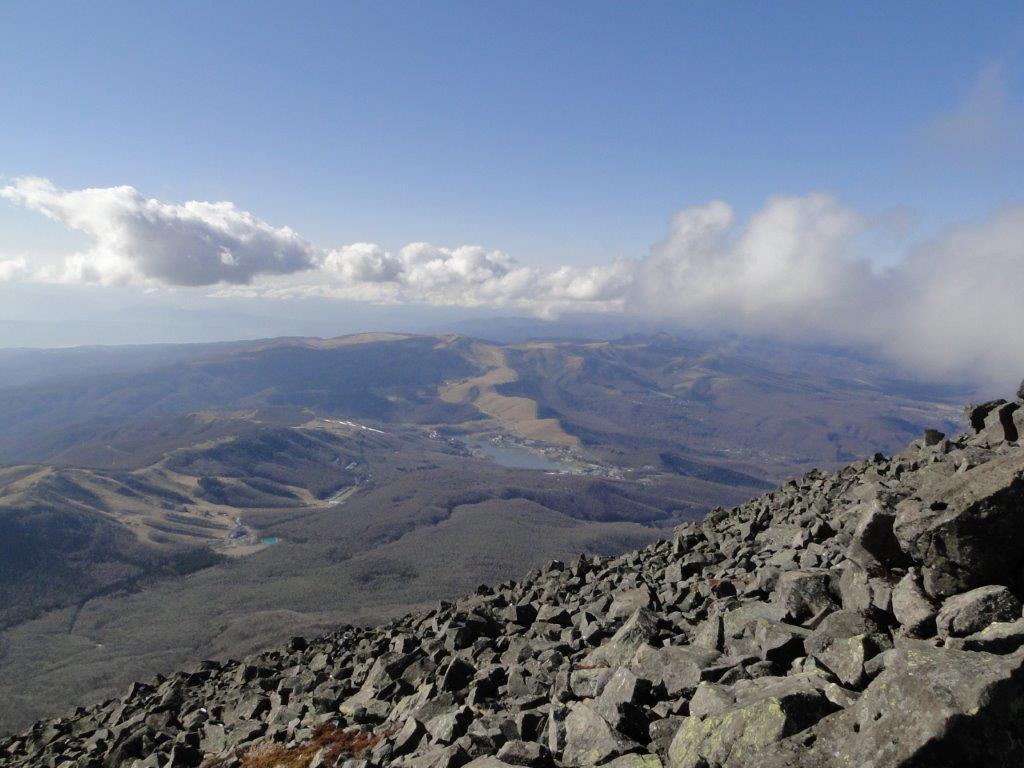
The summit was relatively wide, which was good, since for the first time on my trip, I had the company of other hikers; I guessed they had climbed via “nanagome” (七合目), the shortest route. I could see a red shinto gate a short distance from the summit, part of the Tateshina shrine complex. The summit area was covered by grey volcanic rocks, so I found a reasonably flat one and sat down for lunch. Some clouds had rolled in but couldn’t spoil the panoramic view: directly below I could see Shirakaba lake, as well as Mt Kuruma, another 100 famous mountain.

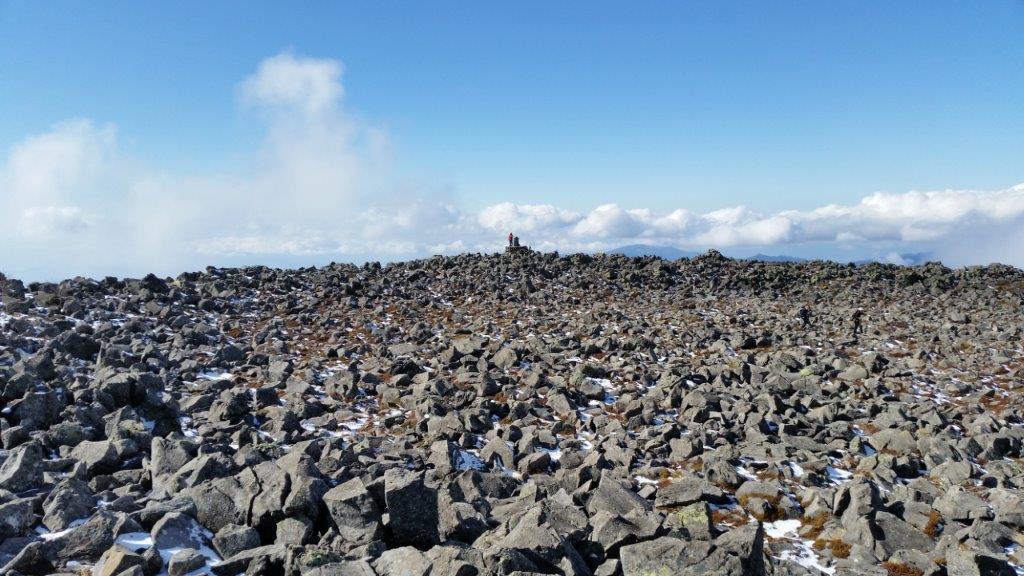
The wide, rocky summit of Mt Tateshina

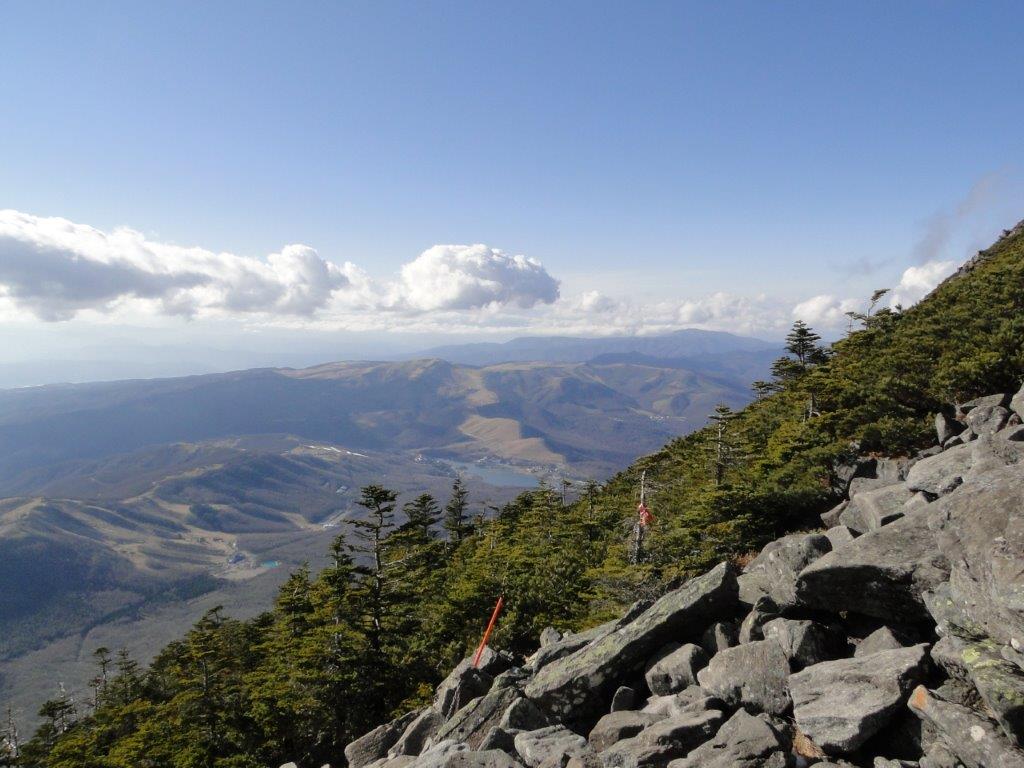
A stunning scenery of white tree trunks against a blue sky on the way down

At 1h30, I tore myself away from the view and started to head down a steep, rocky path, with a bird’s eye view of the Tateshina highland before re-entering the forest of pine trees with their stunning white trunks. One hour later, the trail became level and easier to walk on. After arriving at the Tateshina mountain trail entrance, a kind couple offered to drop me off at the ropeway bus stop, meaning I was able to catch an earlier bus for Chino, where I boarded the limited express for the two-hour ride back to Tokyo, after a successful two-day hike on Yatsugatake.

Mt Shimagare (2403m) & Mt Chausu (2384m), Chino city, Nagano Prefecture, Saturday, November 22, 2014 [Map Available]

My plan was to climb Mt Tateshina but since it was tricky to do from Tokyo in one day, I decided to spend one night at a lodge and turn my trip into two separate hikes. The weather was supposed to be good both days so this seemed like the best choice. Looking at my map, I saw I could head south, passing my two minor summits with viewpoints, and circle back clockwise to my starting point. I was going at the end of the season and expected a little snow on the trails, although nothing technical. I could get to the lodge and start of the first hike by limited express train, local bus and ropeway. I was looking forward to hiking through the alpine landscape of the northern Yatsugatake mountain range, getting some good views of the surrounding peaks and, hopefully, seeing the sunset and the sunrise.

Hiking on Yatsugatake 八ヶ岳

Download a map of the Mt Shimagare & Mt Chausu hike

This map was developed for Japanwilds with the Hokkaido Cartographer

Find more Japan hiking maps on Avenza

View from between the two summits

It was a beautiful autumn day as I rode the Chuo line limited express from Shinjuku to Chino station, where I switched to an Alpico group bus for the one hour ride to the Kita-Yatsugatake ropeway (北八ヶ岳ロープウェイ). I was happy to see few people waiting to go up, which meant I could quickly get to the top station, 2230 meters high. I walked for twenty minutes along a level walkway covered in a thin layer of snow, reaching the Shimagare hut (縞枯山荘) around noon. After checking in, I quickly set off again; wisps of clouds had appeared in the northern sky, making me worry that the good weather might not hold.

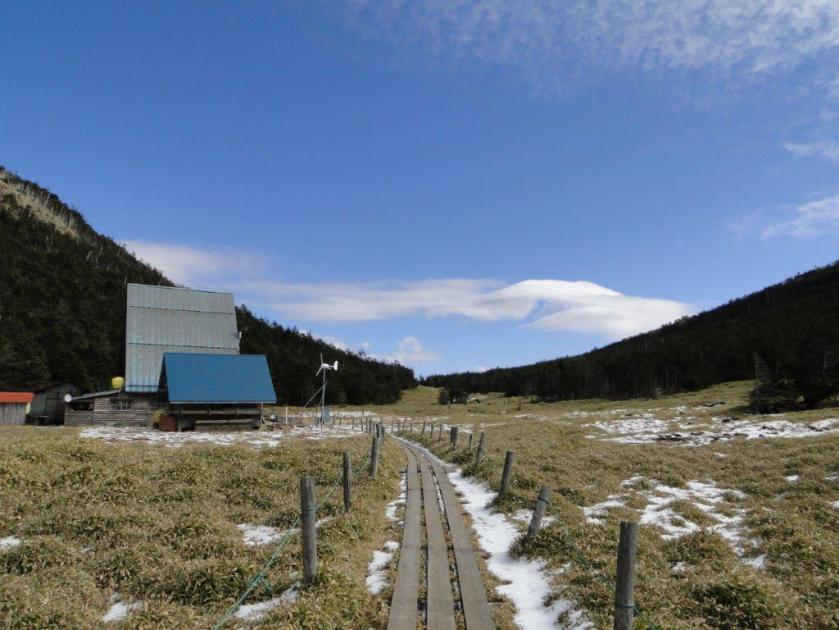
Hiking from the ropeway to the lodge

Dusk view near the end of the loop hike

I continued along the walkway, now in the sun and free of snow, and soon reached a junction where I turned right up a rocky path through a pine forest. The trail had snow, but not ice, so crampons weren’t needed. Half an hour later, I reached the top of Mt Shimagare (縞枯山 しまがれやま shimagare-yama). Next, I passed through several clearings with views in different directions: the entire range of Yatsugatake was visible, extending north to Tateshina, and south to Mt Aka; further away, I could see Mt Asama (north), the North and Central Alps (west), the South Alps (south) and the Oku-Chichibu mountains (east). At 2pm, I reached the top of Mt Chausu (茶臼山 ちゃうすやま chausu-yama).

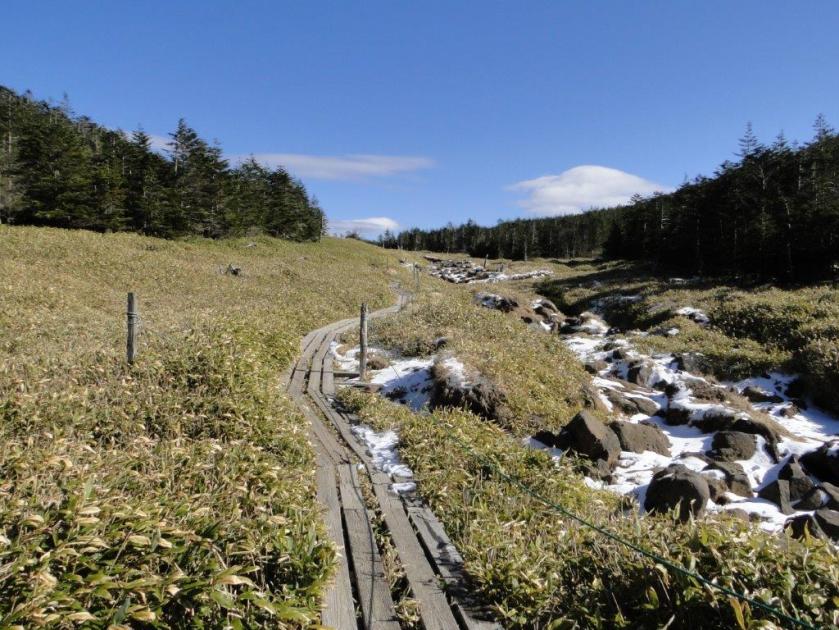
Some snow on the trail but nothing technical

I had the best view of the day from a rocky area near the summit marker (called the Mt Chausu viewpoint 茶臼山展望台). By now, most clouds, and snow, had vanished; it was quite windy but no one else was around, so I felt I had been lucky with the timing of my trip. I was now at the furthest point from the hut and had to get back before the sun set in less than 2 hours. I walked down and around the south side of the rounded peak and was soon walking in the forest again. As the path led northwards, I encountered snow again; luckily the walkway also reappeared making the trail easy to follow.

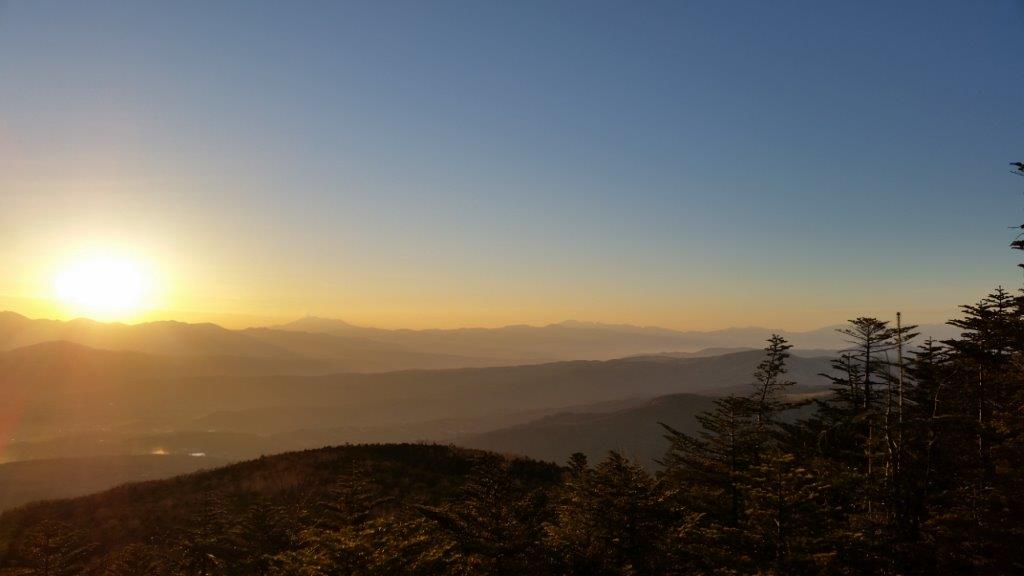
Sun setting behind the Chuo Alps

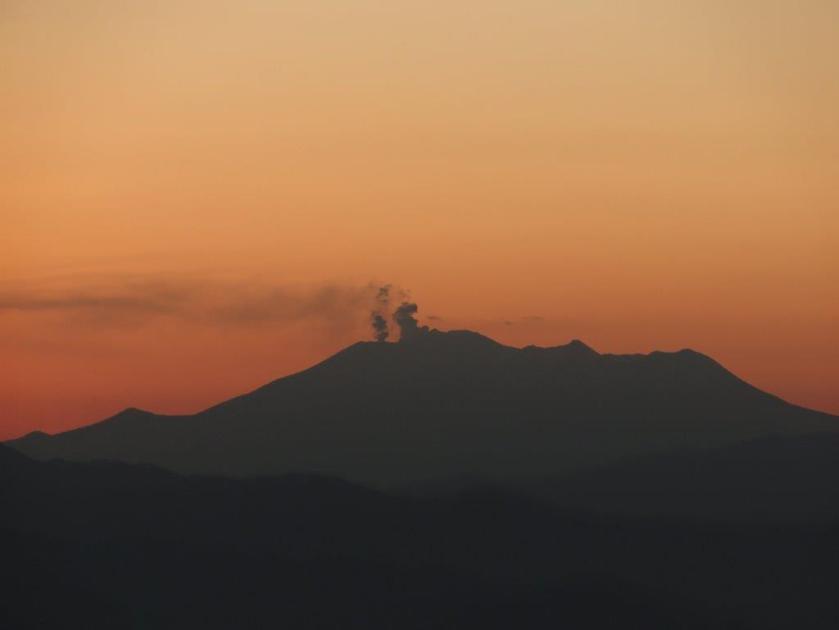
Mt Ontake, still smoking one month after the eruption

At 4h30, I reached the top of the ropeway just as the sun was dipping beyond the Chuo Alps; to the right, I could see the impressive outline of Mt Ontake, smoke rising from its summit crater, a vivid reminder of its deadly eruption less than a month earlier. By 5pm, I was back inside the warm and comfy Shimagare hut. One more event marked this first day: unable to sleep, I went down to the main room around 10pm, to read, and shortly after, I felt some strong shaking. Fortunately, the hut was solidly build and all was OK. I was outside phone coverage, and so, as I drifted into sleep, I wondered whether this was a local quake or a more distant and powerful one.

Experience the hike on Mt Shimagare and Mt Chausu

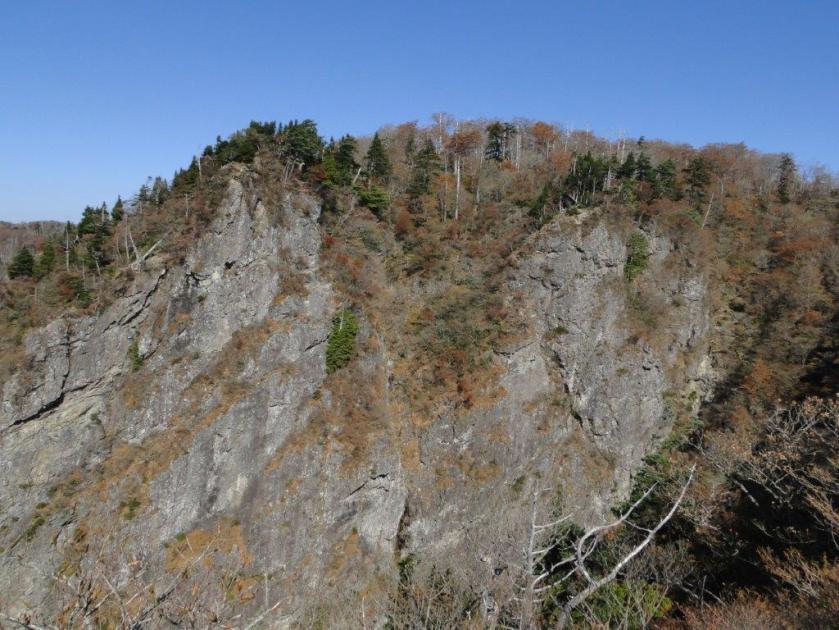
Mt Omine (1915m) & Mt Odaigahara (1695m), Nara & Mie Prefectures, October 2014 [Maps Available]

Hiking the hundred famous mountains of Japan 日本百名山

Hiking in the Yoshino Kumano National Park 吉野熊野国立公園

大峰山(おおみねさん omine-san)八経ヶ岳 (はっきょうがたけ hakkyou-dake)

大台ヶ原山(おおだいがはらやま odaigahara-yama

Download a map of the Mt Odaigahara hike

Download a map of the Mt Omine hike

These maps were developed for Japanwilds with the Hokkaido Cartographer

Find more Japan hiking maps on Avenza

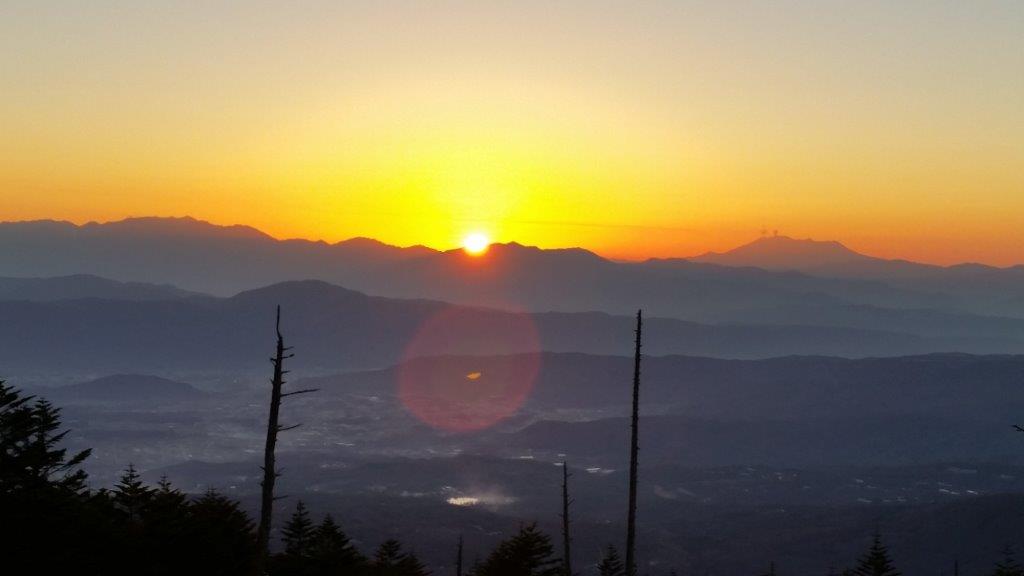
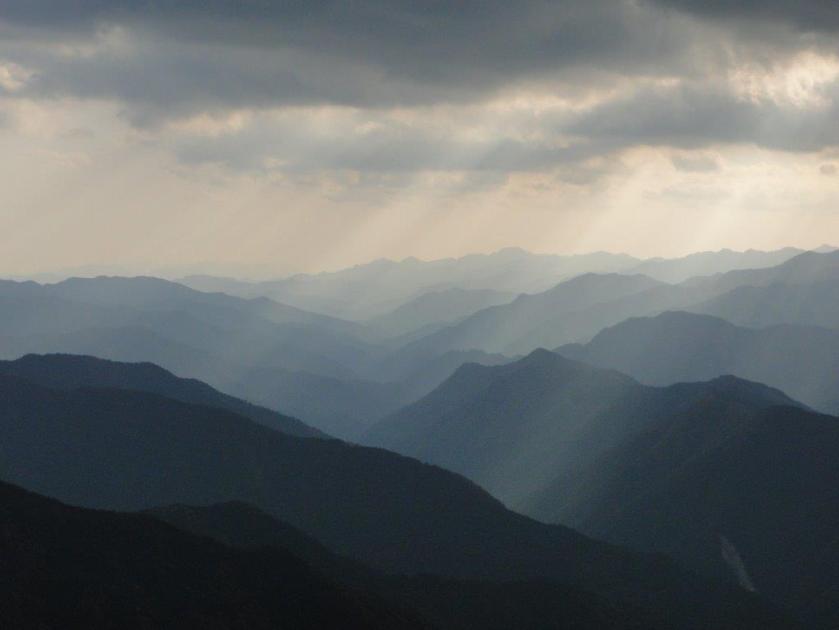
Dusk on Mt Omine

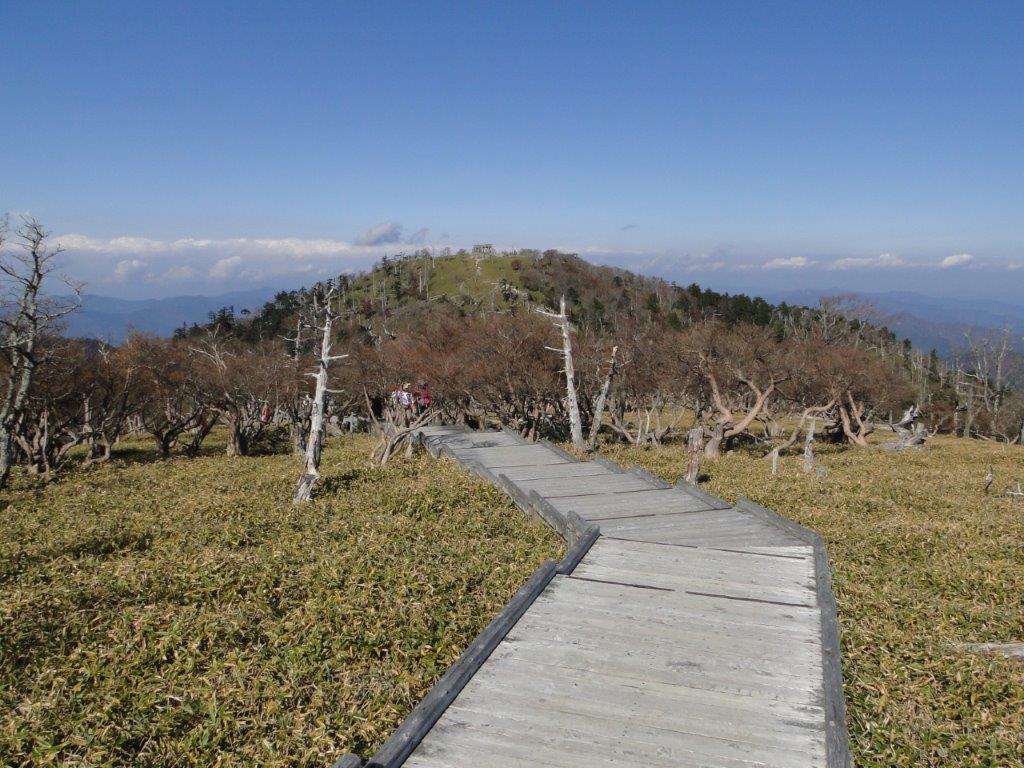
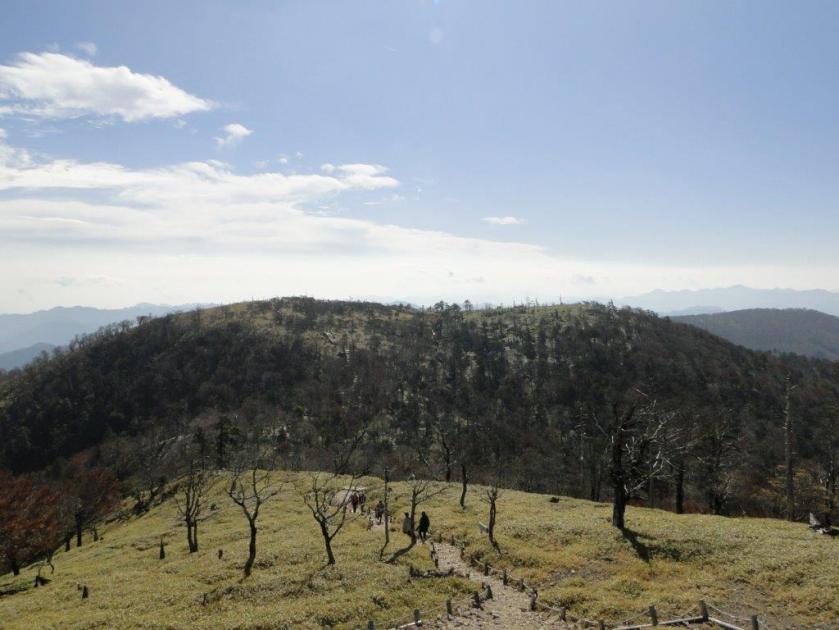
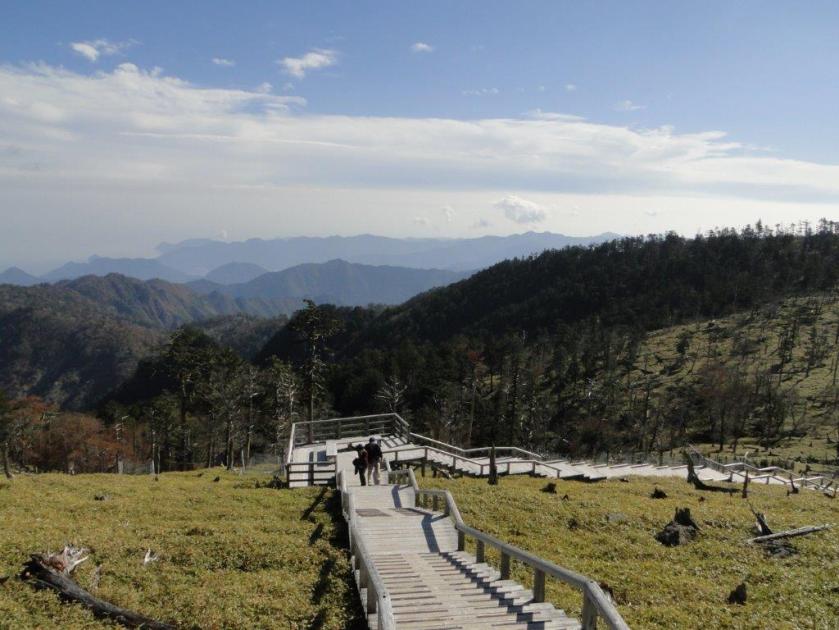
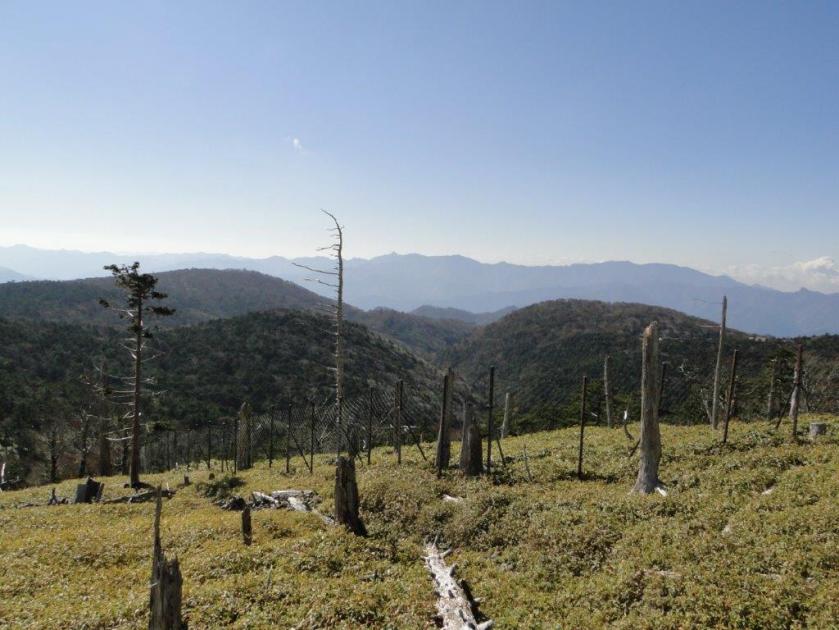
Walking down from Mt Hide, the highest point of Odaigahara

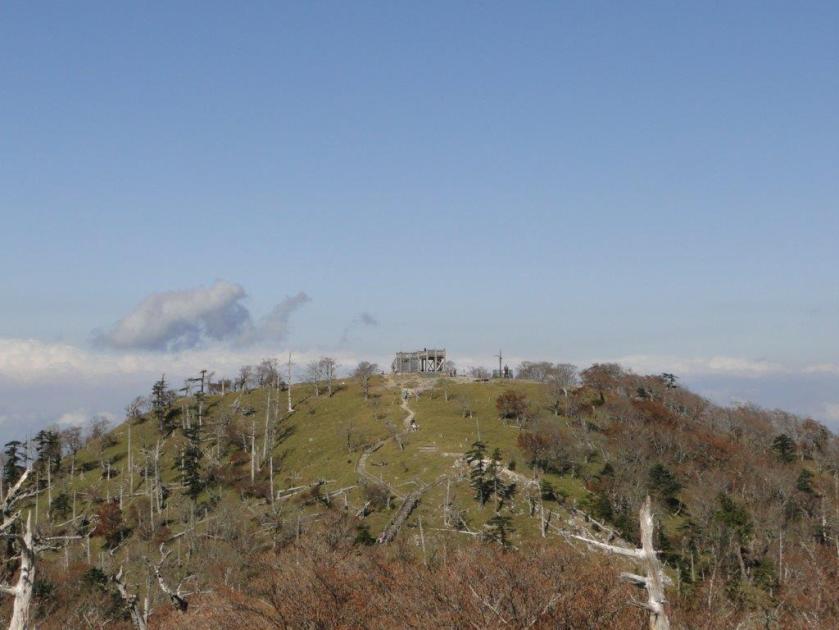
See the views from the observation platform on top of Mt Hide

Hiking Mt Odaigahara (slideshow)

Sunset from near the summit of Mt Kyo, on Omine-san