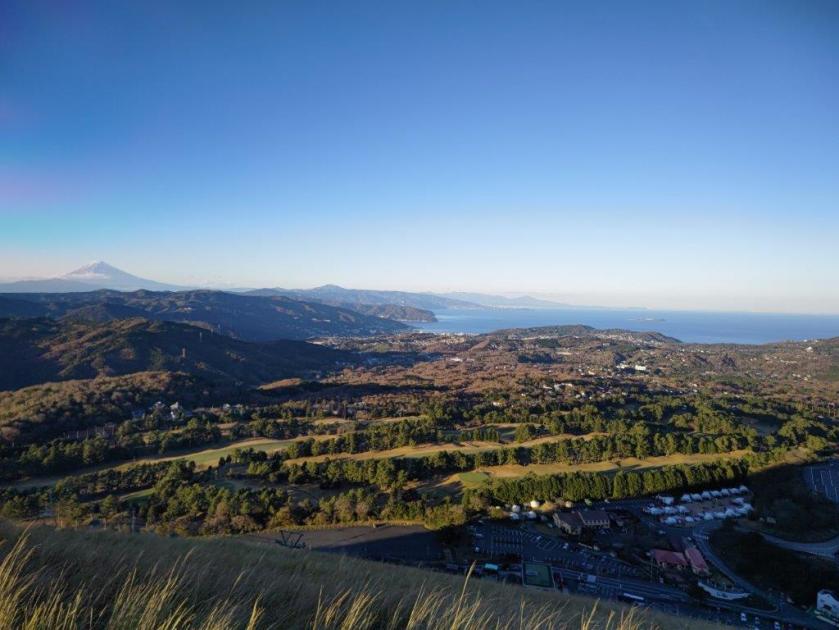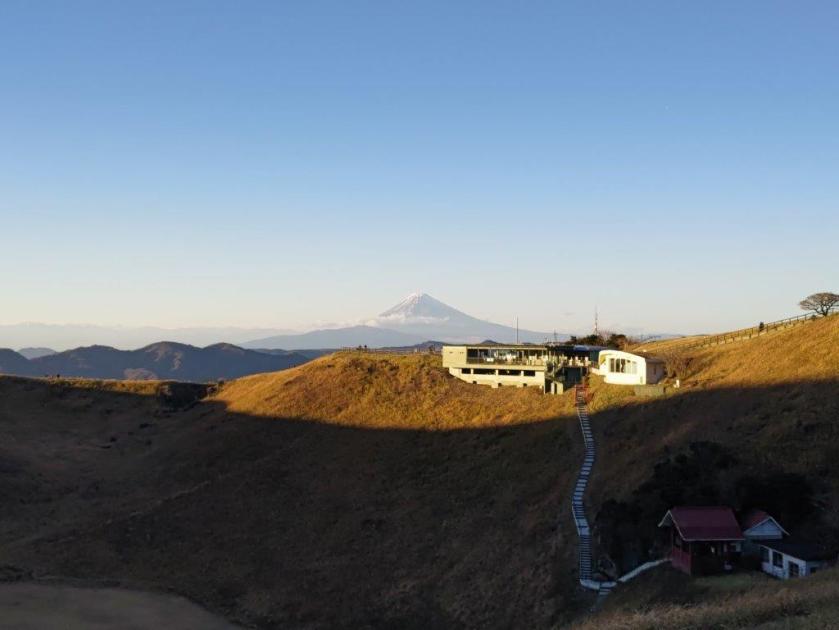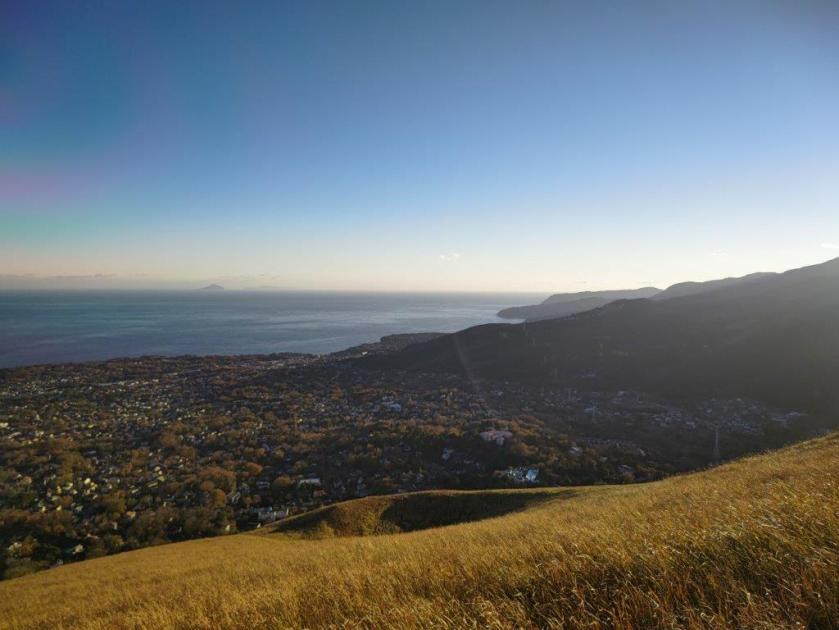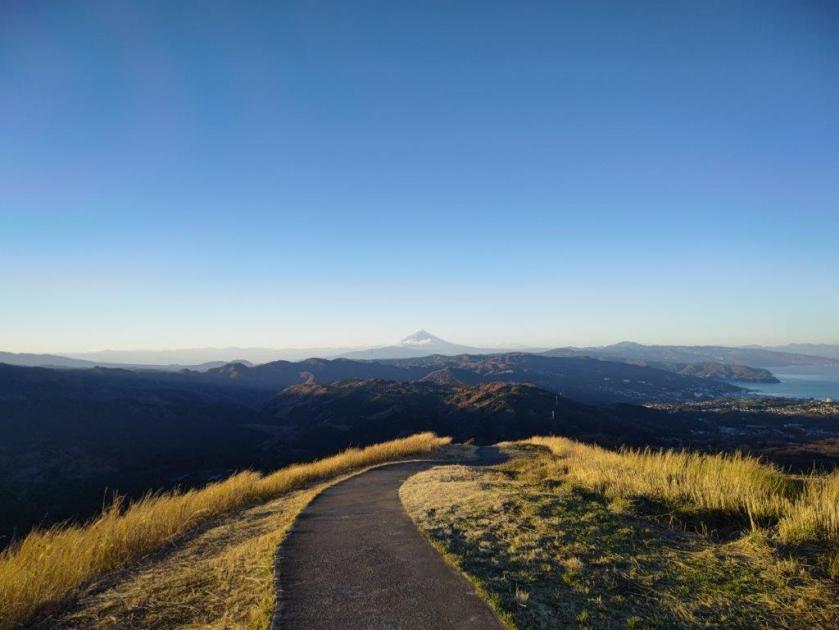
Skiing in Niigata: Myoko Kogen (800m-1800m)

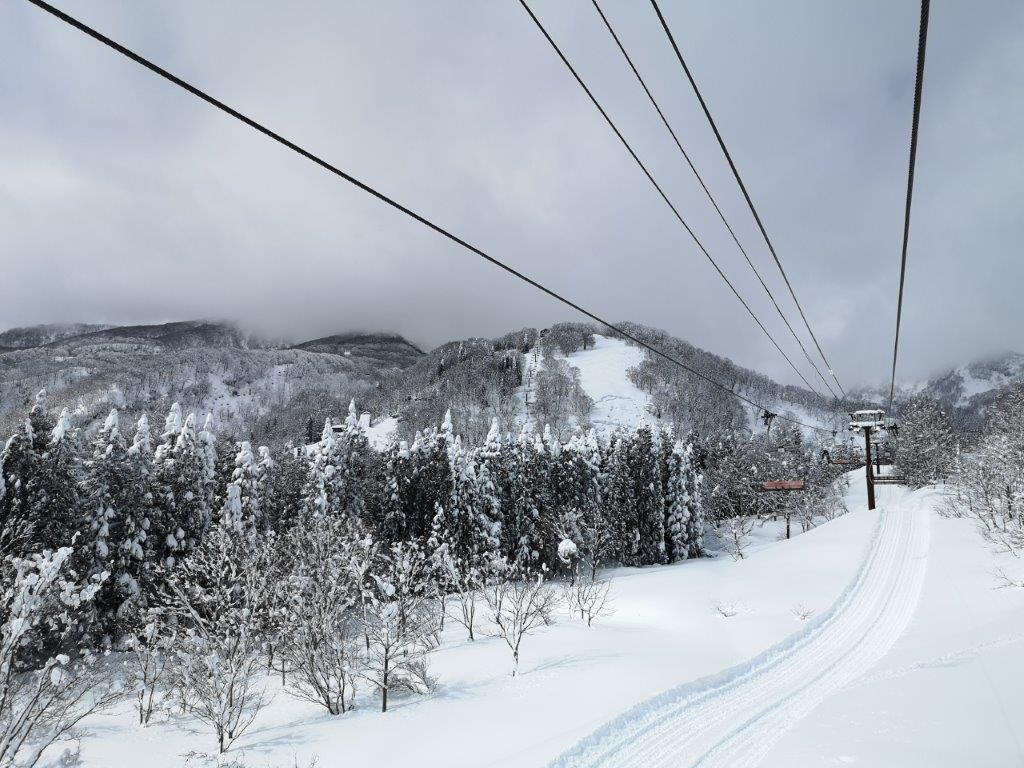
Since the start of the season, this ski resort had been at the back of my mind as a potential day-trip. Famous for getting lots of snow and having a very long season, it’s nearly 200 km from Tokyo, and would be the furthest resort for me so far. Most people take a local train from Nagano station, about 30 kilometers south. Since I was using the Welcome Japan JR East rail pass, I decided to ride the shinkansen to the new Joetsu-Myoko station, 20 kilometers north; there, I would catch a bus for Akakura Onsen (赤倉温泉), part of the Myoko-Kogen Ski Resort. Although I needed to leave before 6am, I would arrive before 10am; for once, I would be able to hit the slopes early. The weather was supposed to be overcast in the morning, before turning sunny after lunchtime. I had climbed Mt Myoko (2454m) several years ago in thick mist, so I was looking forward to finally seeing the views from the slopes of a hundred famous mountain of Japan.

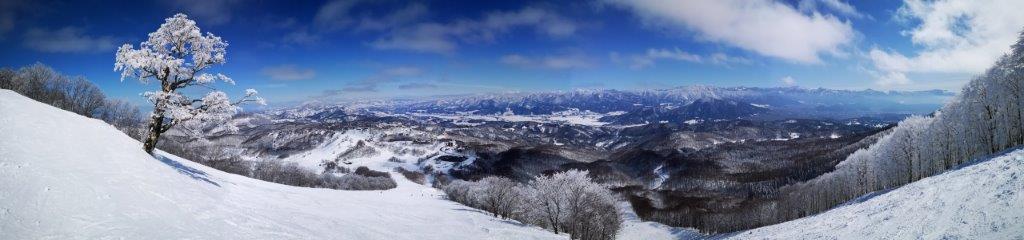
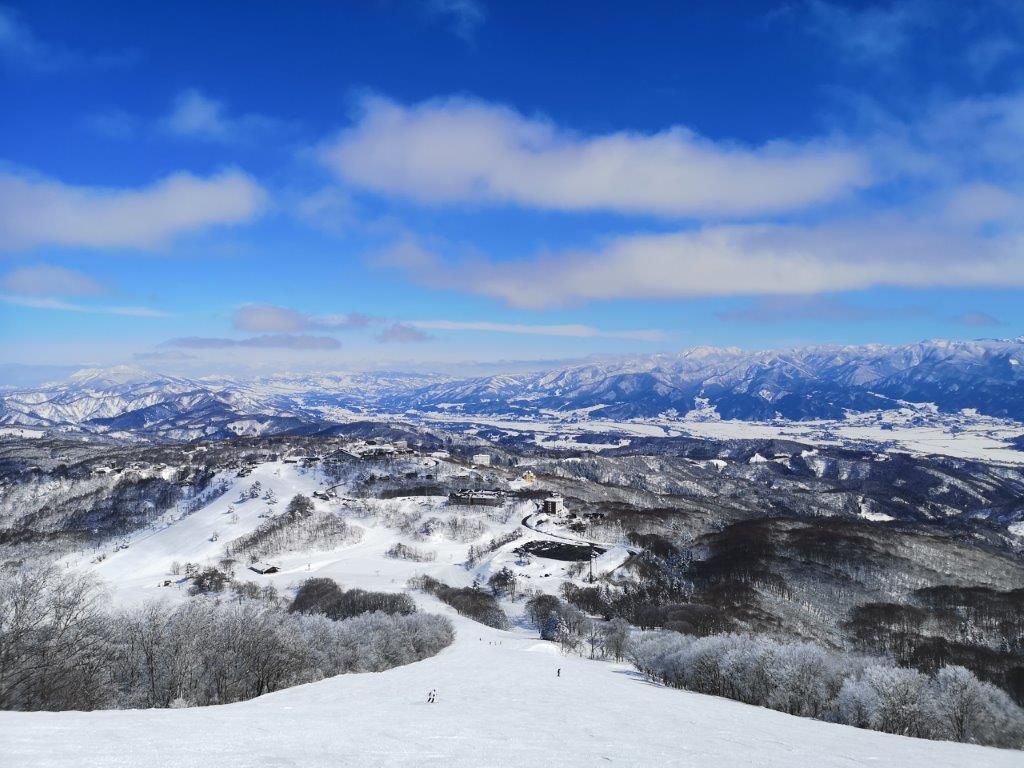
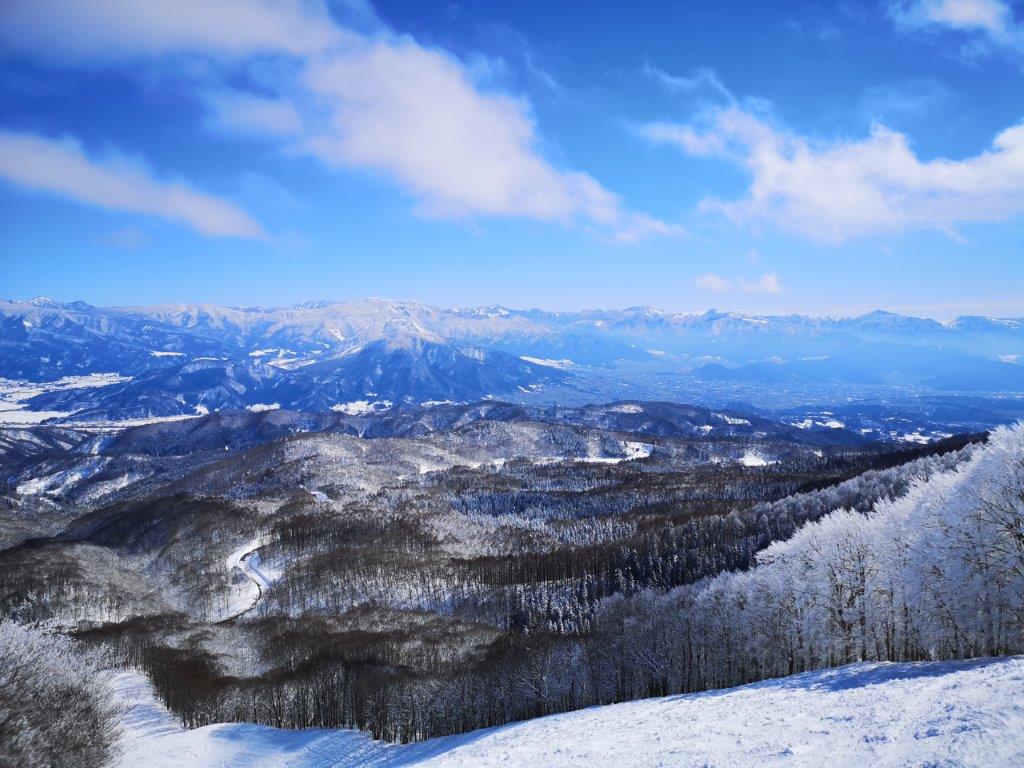
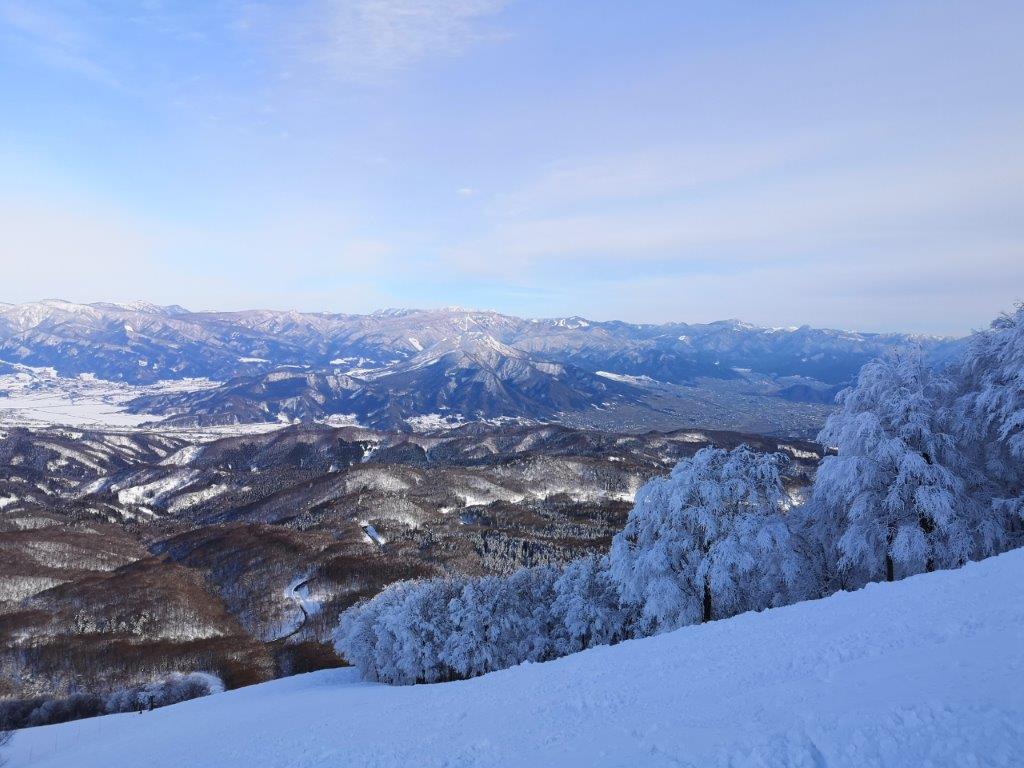
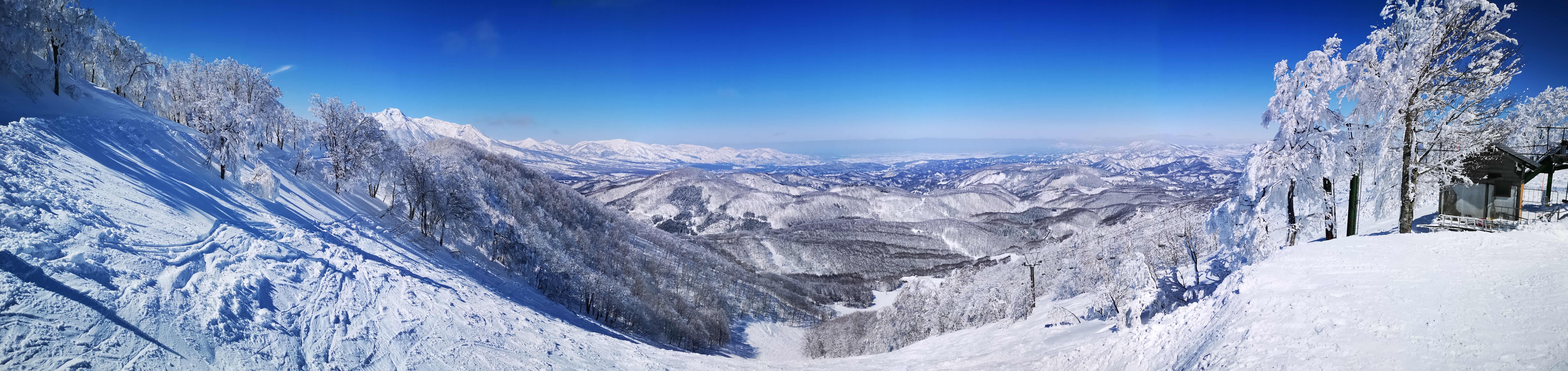
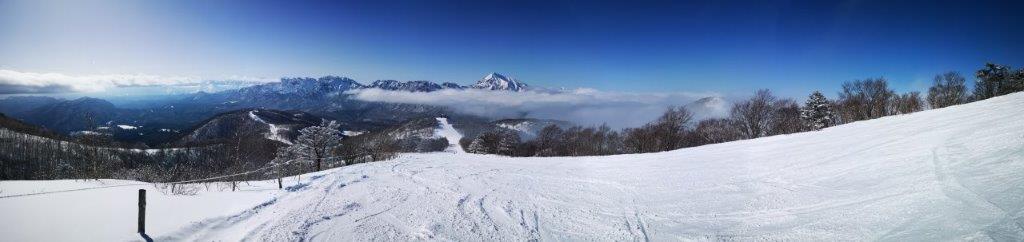
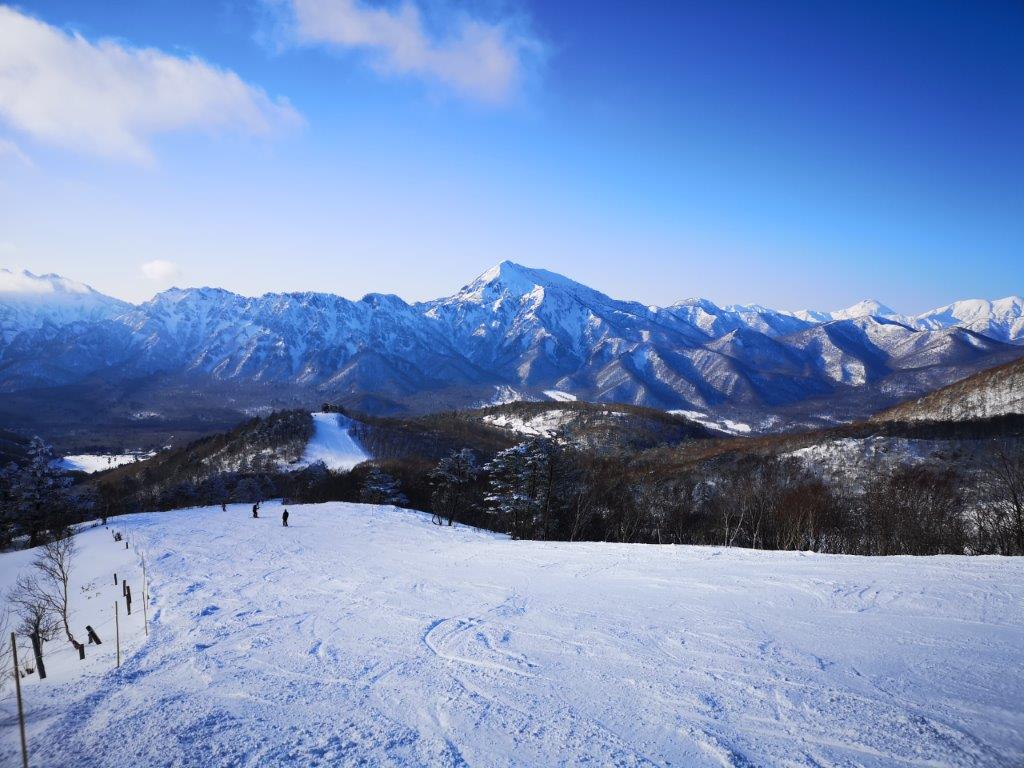
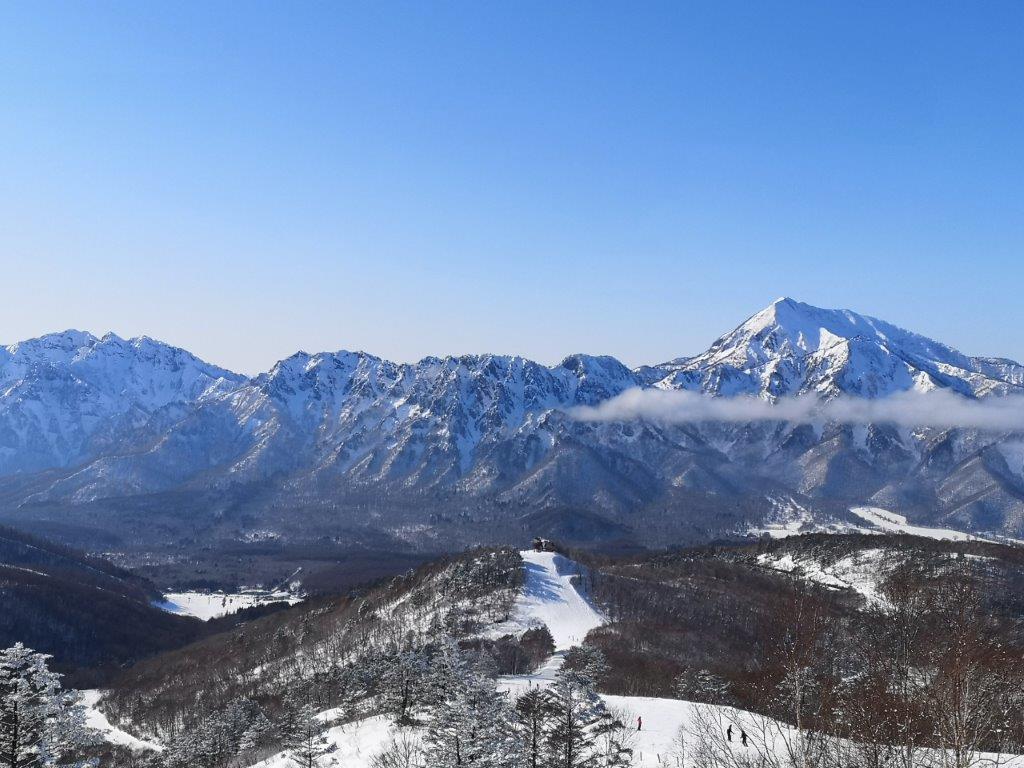
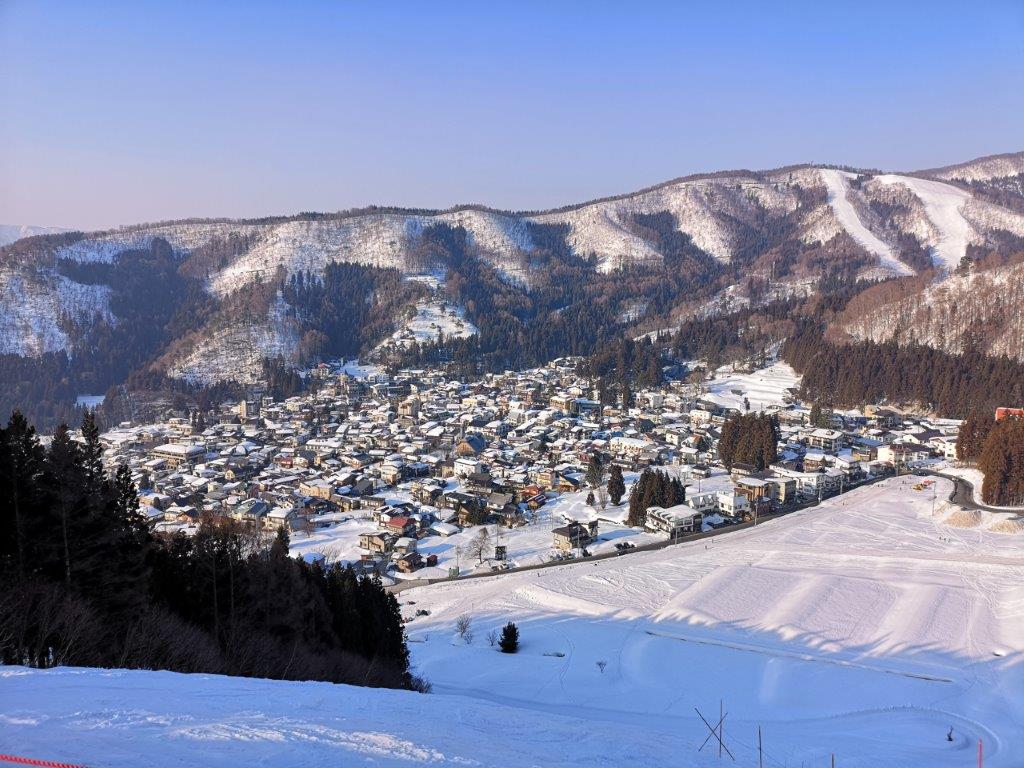
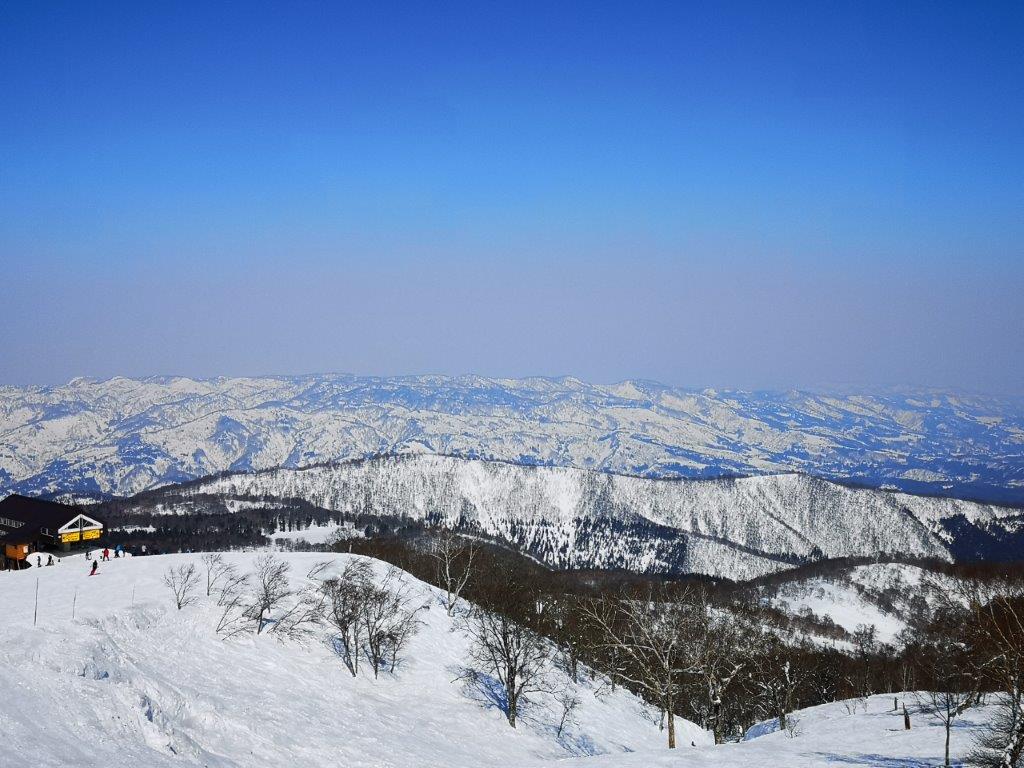
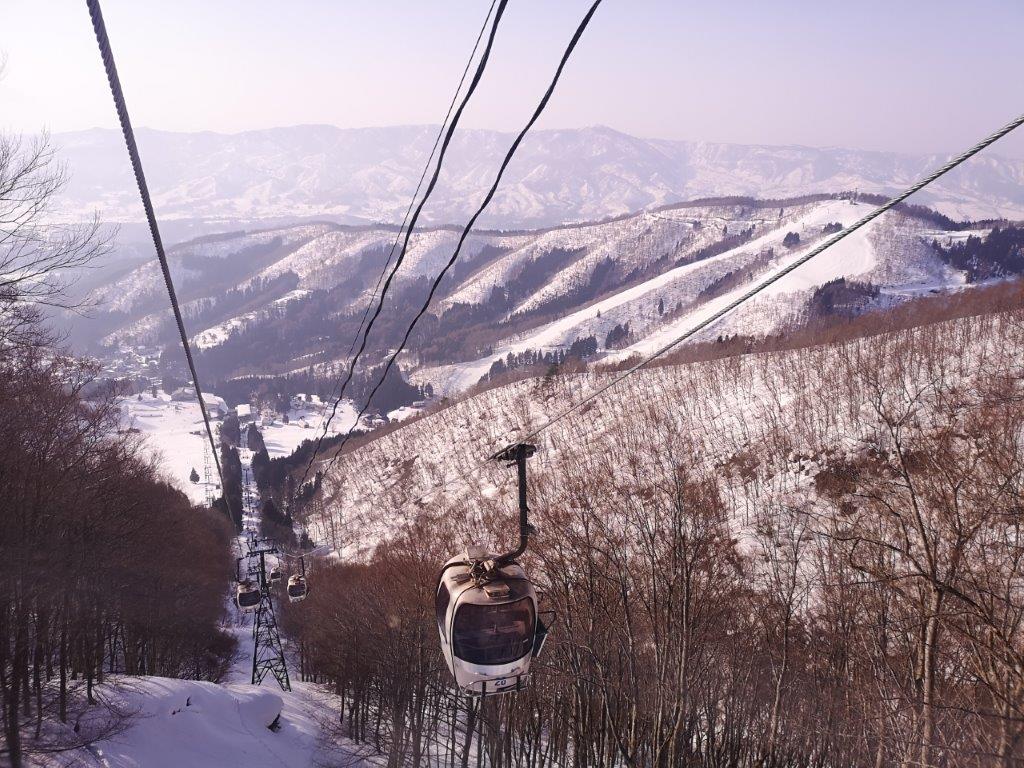
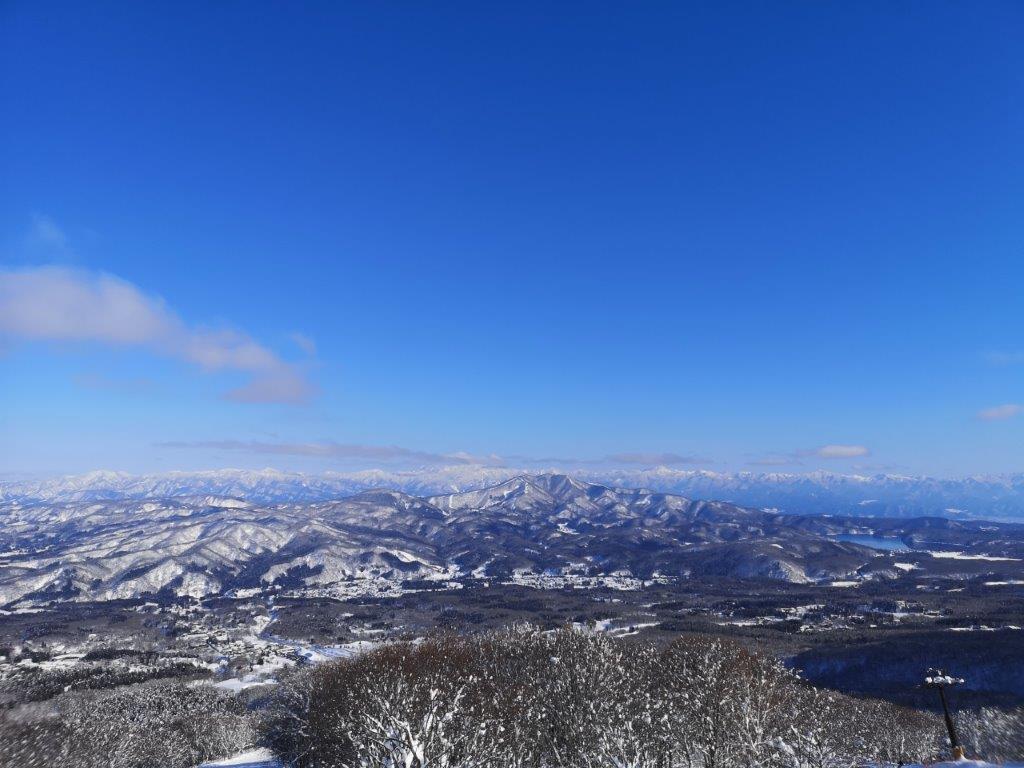
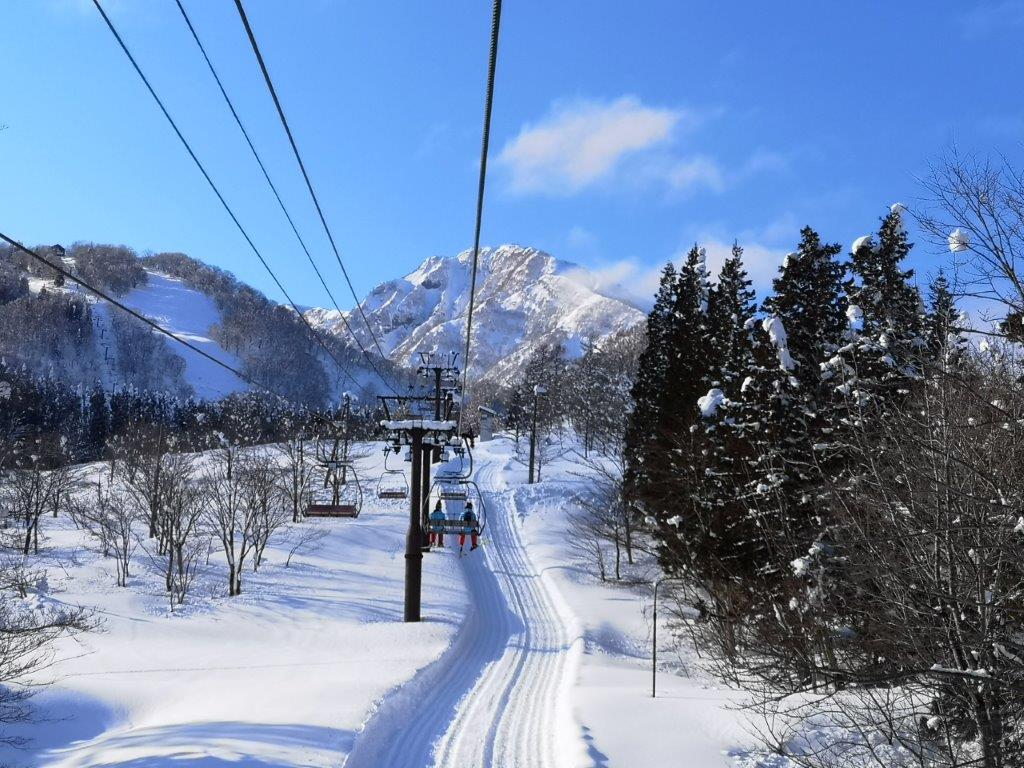
View from the top of the Akakura Kanko ski resort

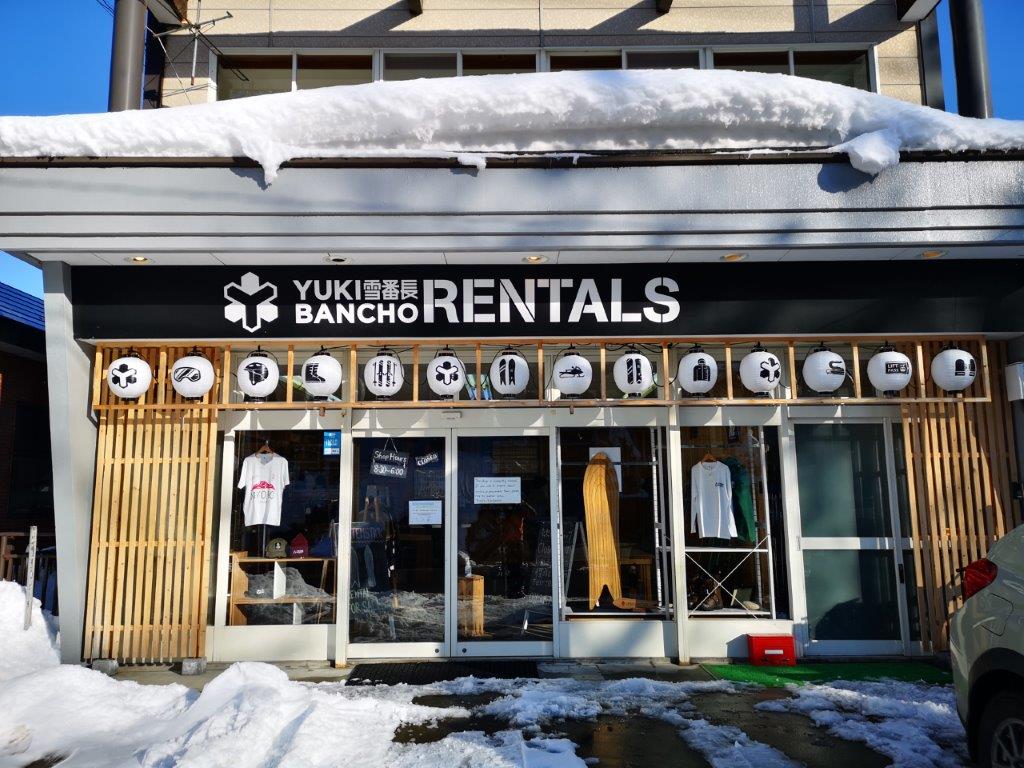
At 8h30, I arrived at Joetsu-Myoko station in Japan’s snow country (“yukiguni“). There was over a meter of snow and little sprinklers placed on the roads were preventing them from freezing (see video). I boarded the bus outside the station, and arrived at Akakura Onsen at 9h30, just as the sun was coming out. I headed at once for Yukibancho rentals on the main street. Erika, from Australia I think, set me up with skis and boots; I appreciated the explanations about my gear, which I had never gotten before. As I was about to walk out of the store, I realised that I had mistakenly brought two left-hand gloves. Without hesitation, she lent me a pair for the day – I was glad I didn’t have to start my day with a shopping trip!

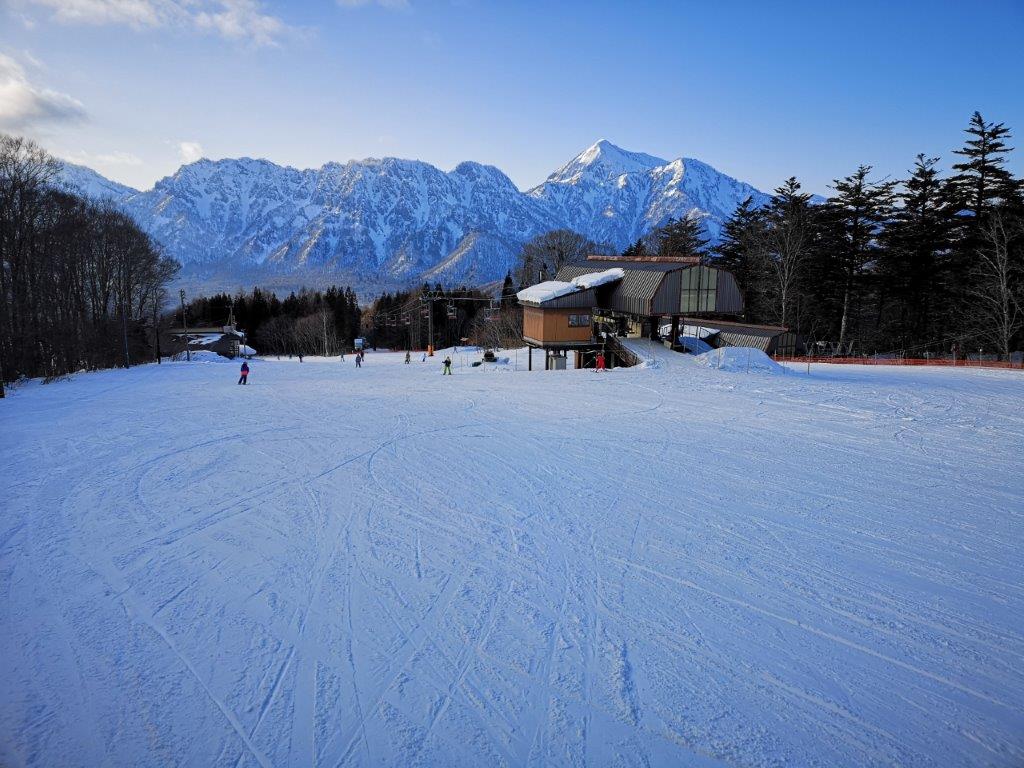
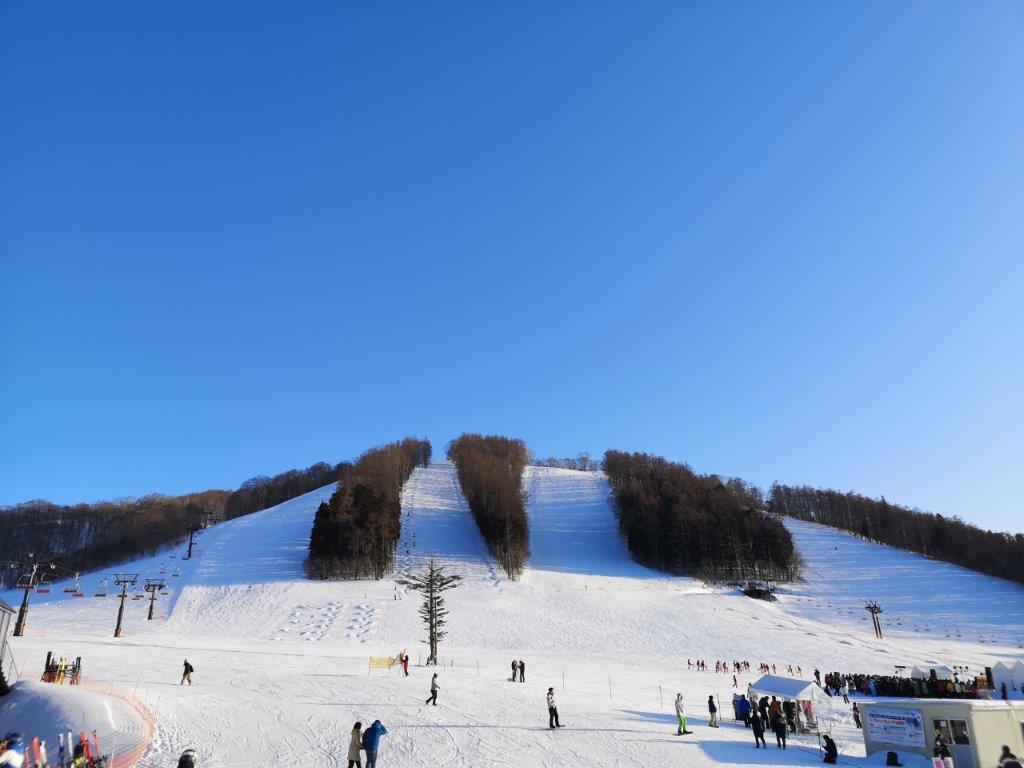
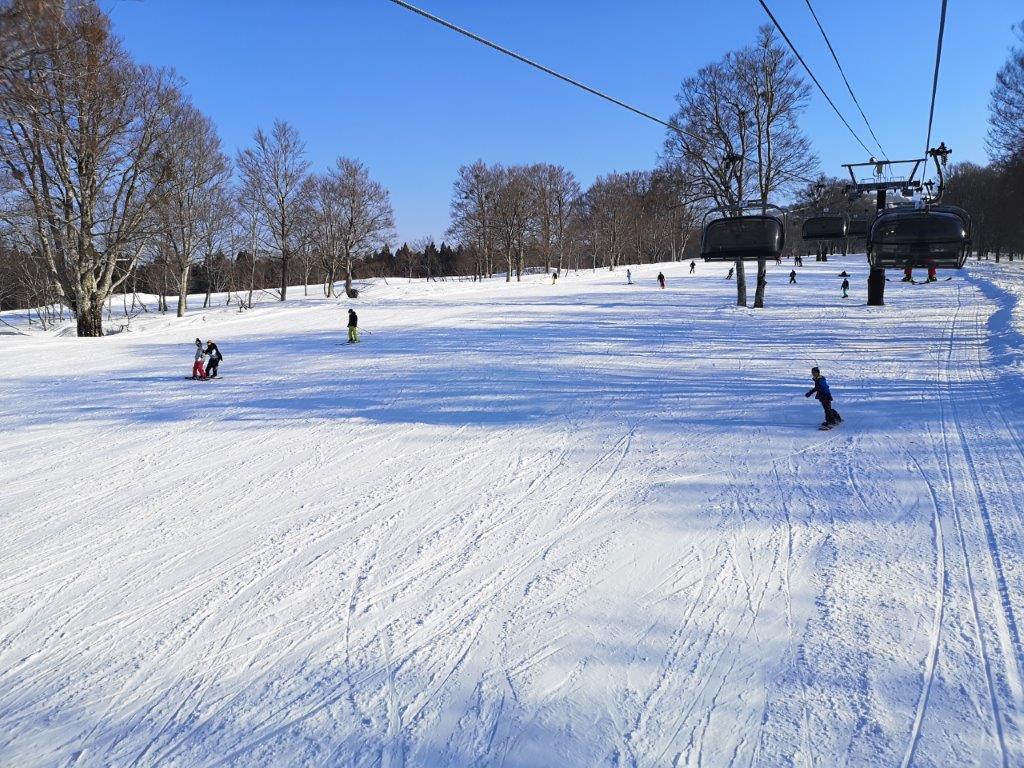
The start of the Akakura Onsen ski resort

First stop: the ski rental shop

The Akakura Onsen ski area was just a few minutes down the road. For an extra 1000 yen, I bought a combined ticket that included the neighbouring Akakura Kanko ski area. I then stepped onto a short moving belt that took me through a tunnel to my first chairlift of the day. I decided to move to Akakura Kanko (赤倉観光) as soon as possible, ski over there for a while, then move back to Akakura Onsen and finish the day there. I had learned from my Shiga Kogen experience that moving between areas inside the same resort can be confusing and time-consuming!

Still overcast in the morning

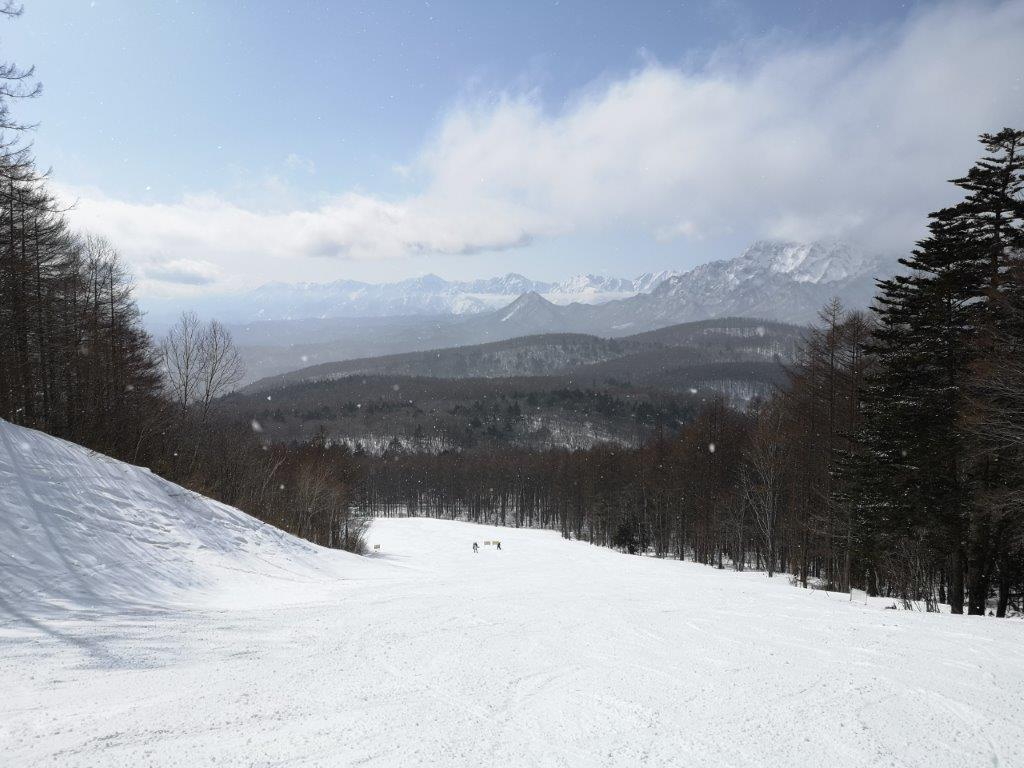
…but starting to clear later in the day

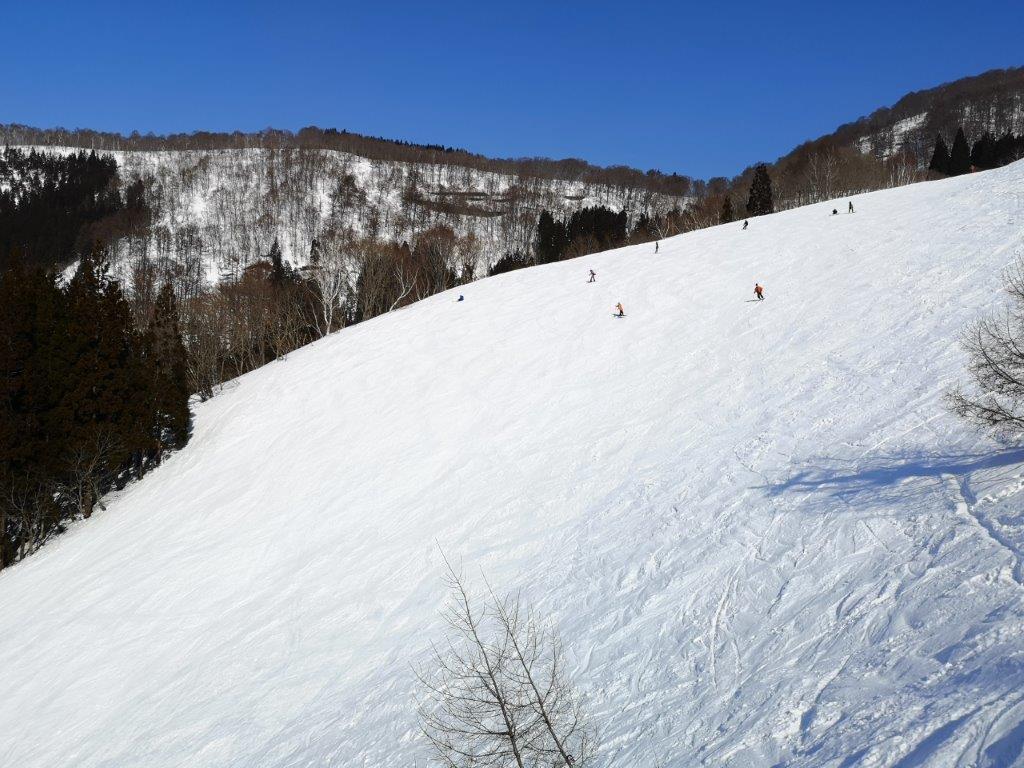
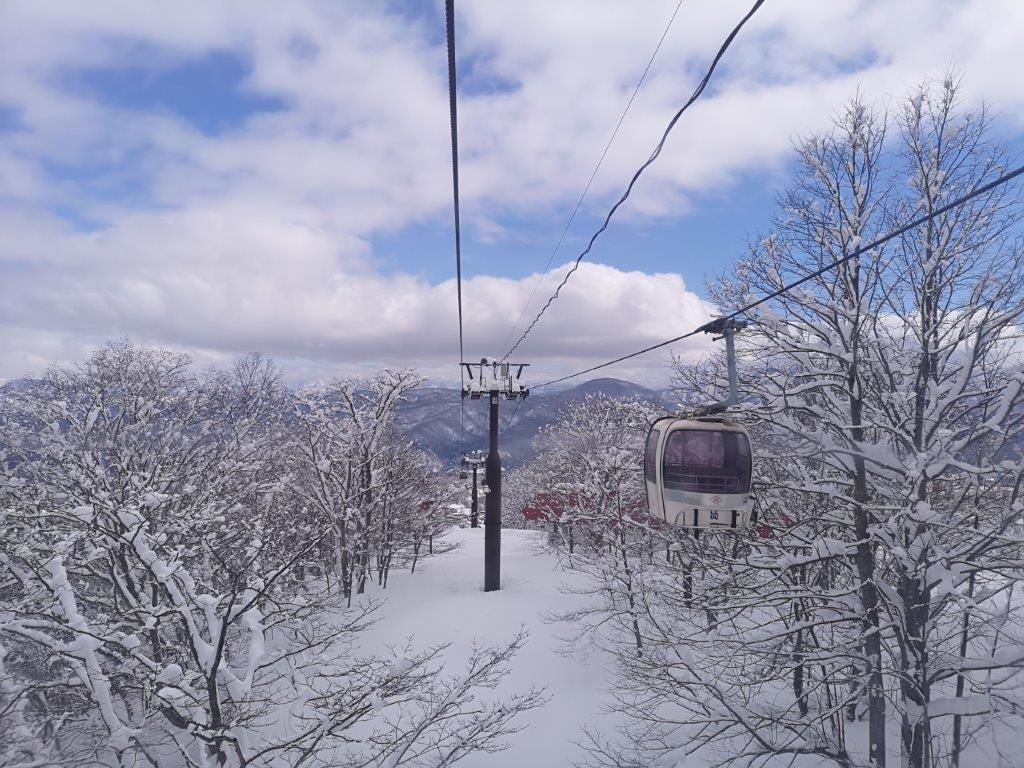
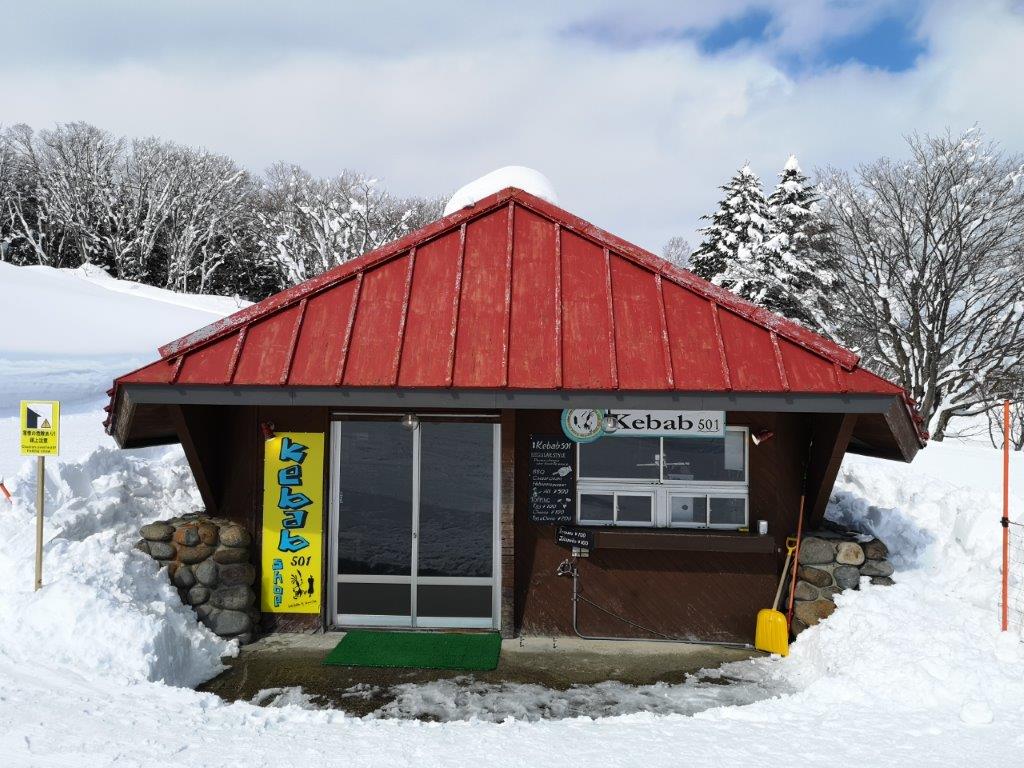
I soon felt that Akakura Kanko was the better of the two areas. Not only did it have the resort’s sole gondola lift, it also had the highest lift and longest run. Getting to the highest point, however, required some maneuvering. First, I had to take the gondola; then ski down one third of the way to a chairlift; after that, ski down a few seconds to another chairlift that would finally take me to the top. After two hours of skiing, I stopped for lunch at Burnet, a kebab place right on the slopes. I was surprised to see a huge cone of meat behind the counter, and even more surprised to see the Japanese guy serving the food wearing a tall turban. I had a satisfying “kebaboo” with “caesar cream” topped with egg and tomato for 7oo yen.

A quick stop for lunch

Great weather in the afternoon

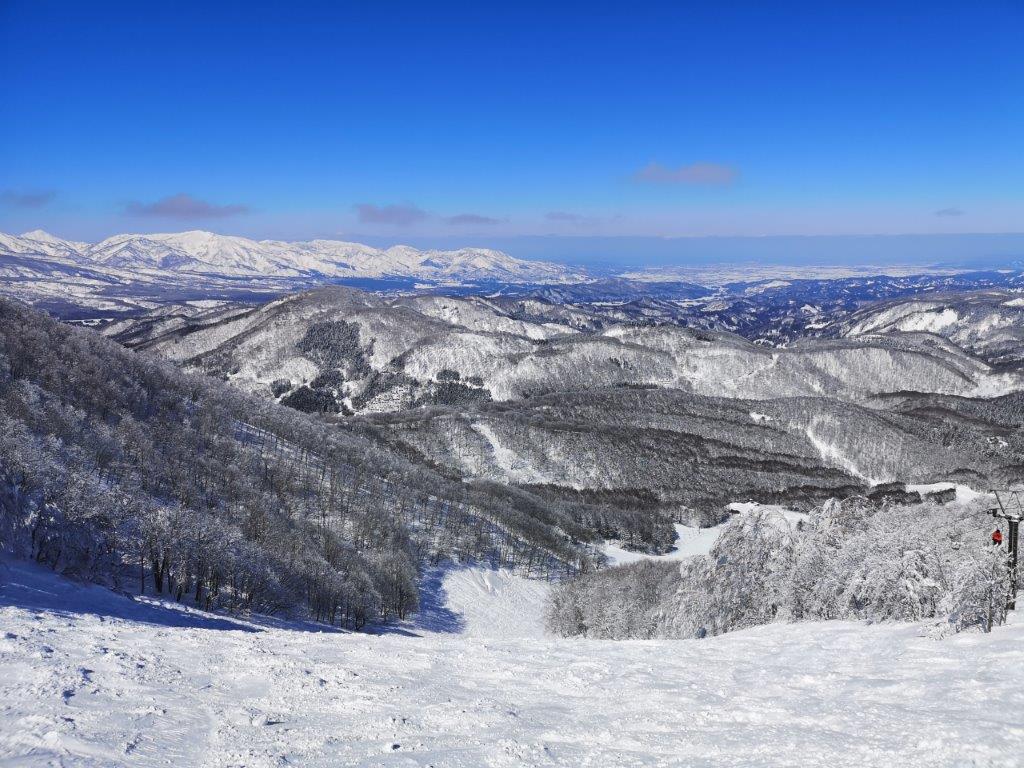
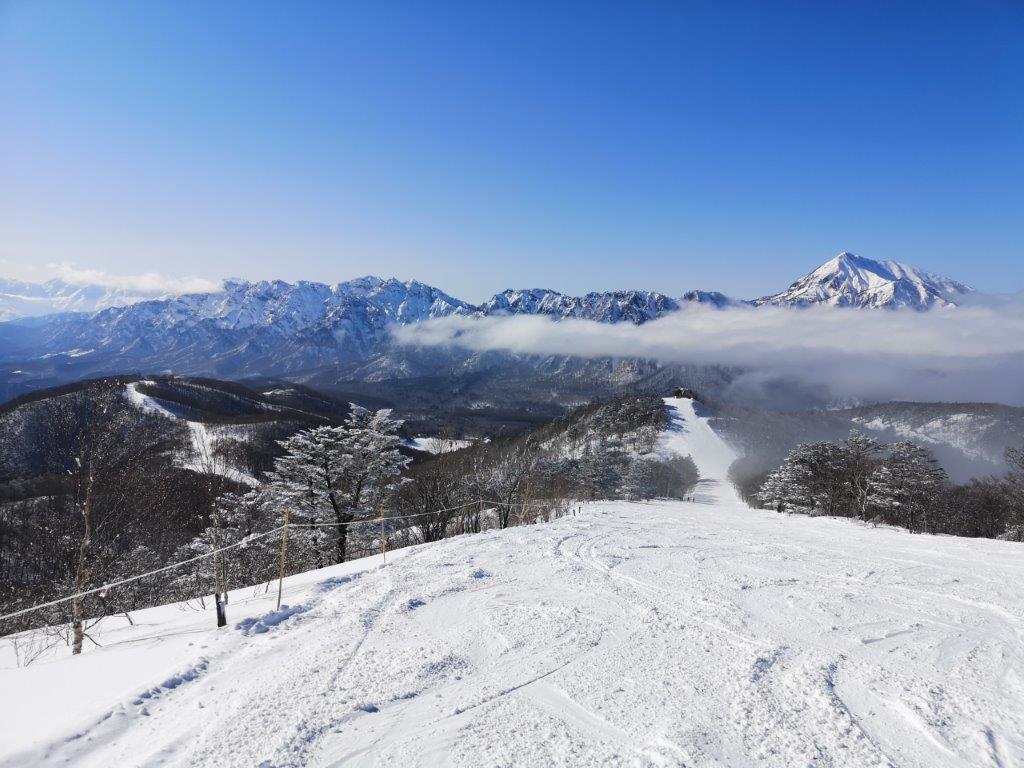
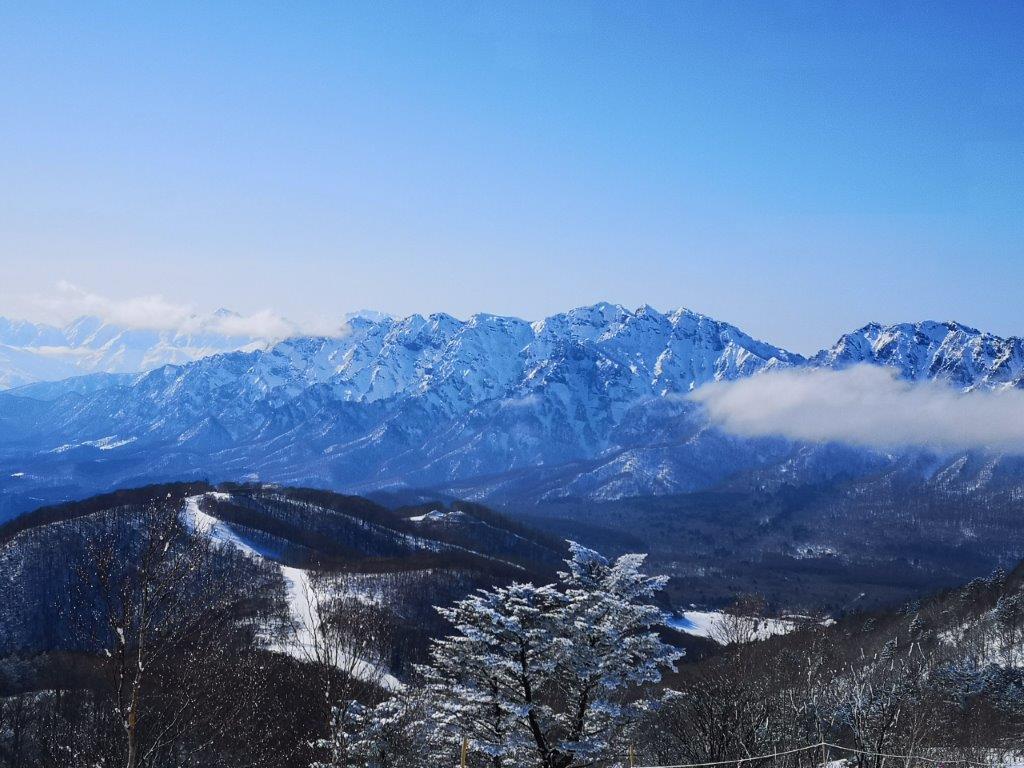
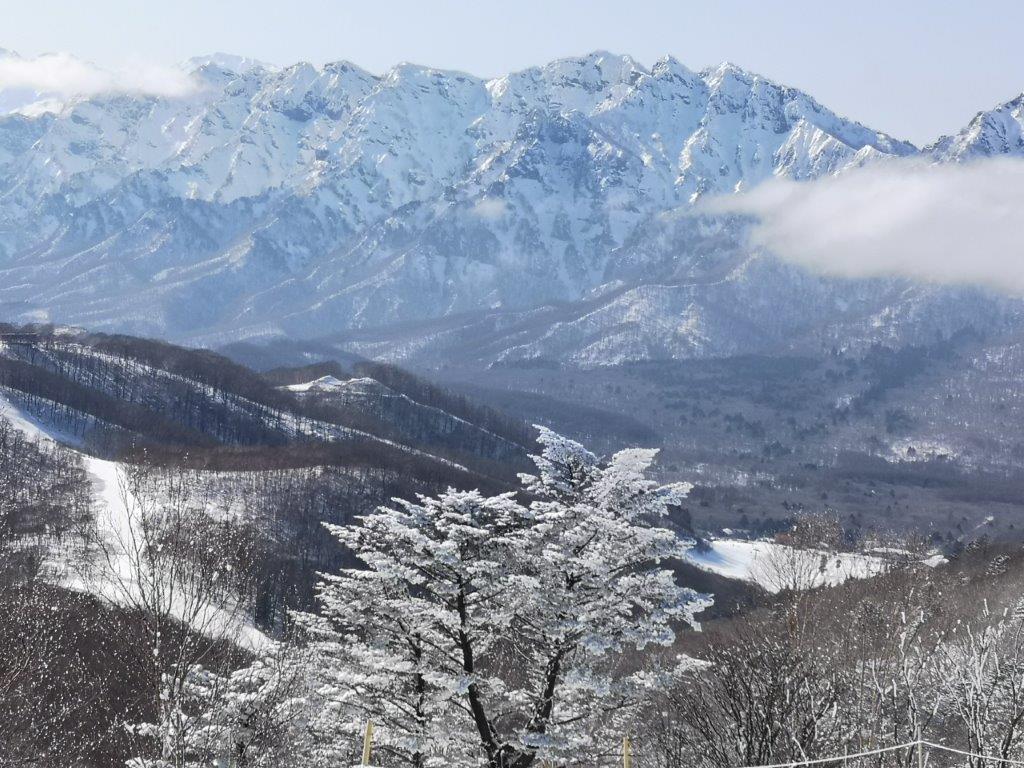
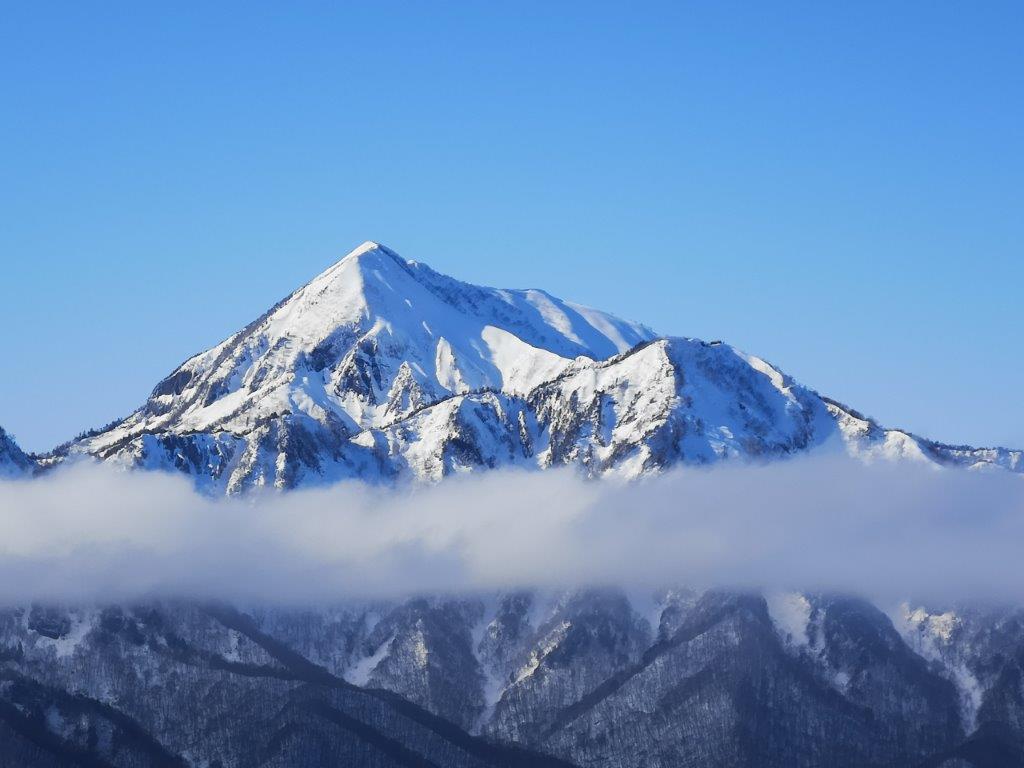
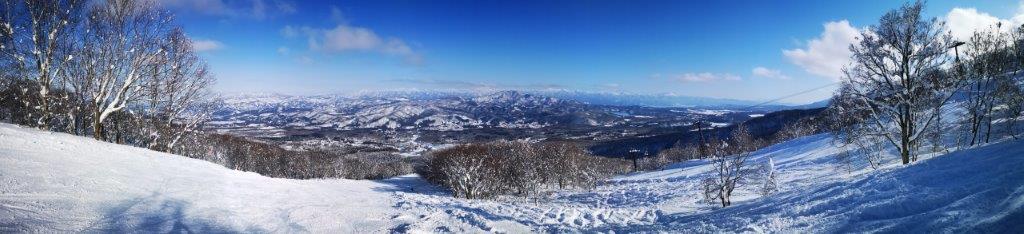
At 1pm, the sun had come fully out of the clouds, and I was ready to hit the slopes again. Now that the morning clouds had lifted, I was able to enjoy some amazing views. Northwards was the flat coastal plain of Niigata; westwards, I could see the mountains of the Joshin-Etsu Kogen National Park in the background, and Mt Madarao and lake Nojiri in the foreground; behind me, was Mt Myoko, one of the highest peaks of the Myoko-Togakushi Renzan National Park. I had been to the area several times before, but this was the first time I saw the snow-covered mountains in clear weather.

The Akakura Kanko hotel

The mountains of Joshin-Etsu

At 2h30, I dropped by the bakery at the Akakura Kanko hotel; there, I had an amazing chocolate “melon pan“, a type of sweet bun. I suddenly realised that it was already 3 pm, and I had less than an hour to catch the bus back. I had been having such a fun time skiing in the Kanko area that I hadn’t left any time for the other half of the resort. I crossed over, and managed one more run before it was time to return the skis. At 5pm, I was back at Joetsu-Myoko station, where I checked out their well-stocked Japanese sake shop while waiting for my high-speed ride back to Tokyo.

See what it is like to ski at Myoko Kogen

Mt Atago (394m), Akaboko (409m) & Kasumi Hills, Ome City, Tokyo Prefecture, Saturday, February 1, 2020


While trying to find some new hikes to do in the Tokyo area, I came across the Kasumi Hills (kasumi kyuryo 霞丘陵) in my guidebook. Starting from Higashi-Ome station, it ended at Iwakura Onsen 岩蔵温泉, halfway between Ome and Hanno cities. It seemed like the perfect hike except that it was only three hours long. After studying my Okutama hiking map, I saw that it was possible to extend it by hiking some minor peaks South of Ome city.

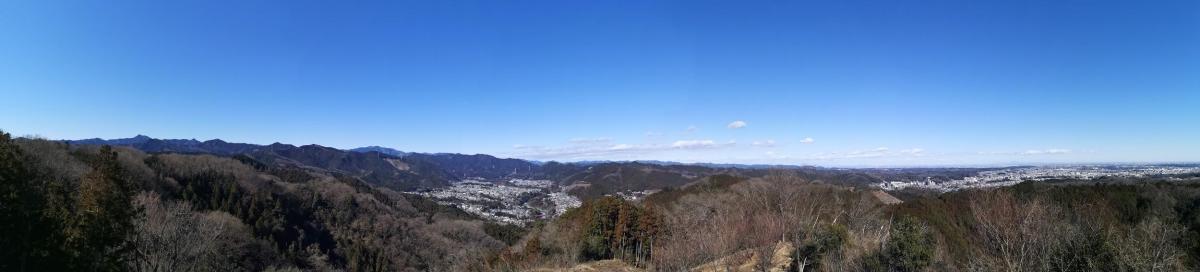
Ome city and the Okutama mountains

At 9am on a sunny morning, I got off at Miyanohira station on the Ome line. Each carriage was decorated with a Flying Squirrel or musasabi ムササビ theme. The hiking trail started on the other side of the Tama river, across Wada bridge, and was indicated by a signpost. Soon, I was walking along a path that went through a thick bamboo forest alongside a small creek, then climbed to the top of a low ridge. There, another signpost told me to turn right. Before that, I decided to investigate the path heading left. It turned out to be a very nice, not-on-my-map, alternate start to the hike, from Shinmei Shrine 神明神社.

Another path leading to the start of the hike

I retraced my steps and started to head up the ridge. Very soon, I reached another junction and a viewpoint of the Okutama mountains. The main trail continued to the left. I turned right instead, going downhill, then back up, reaching the top of Mt Atago 愛宕山 at 10h30. This section isn’t signposted, and I had to figure it out from Google Maps. The view is mostly obstructed by trees – even standing on a tree stump I couldn’t make out much.

Top of Mt Atago marked by a huge tree

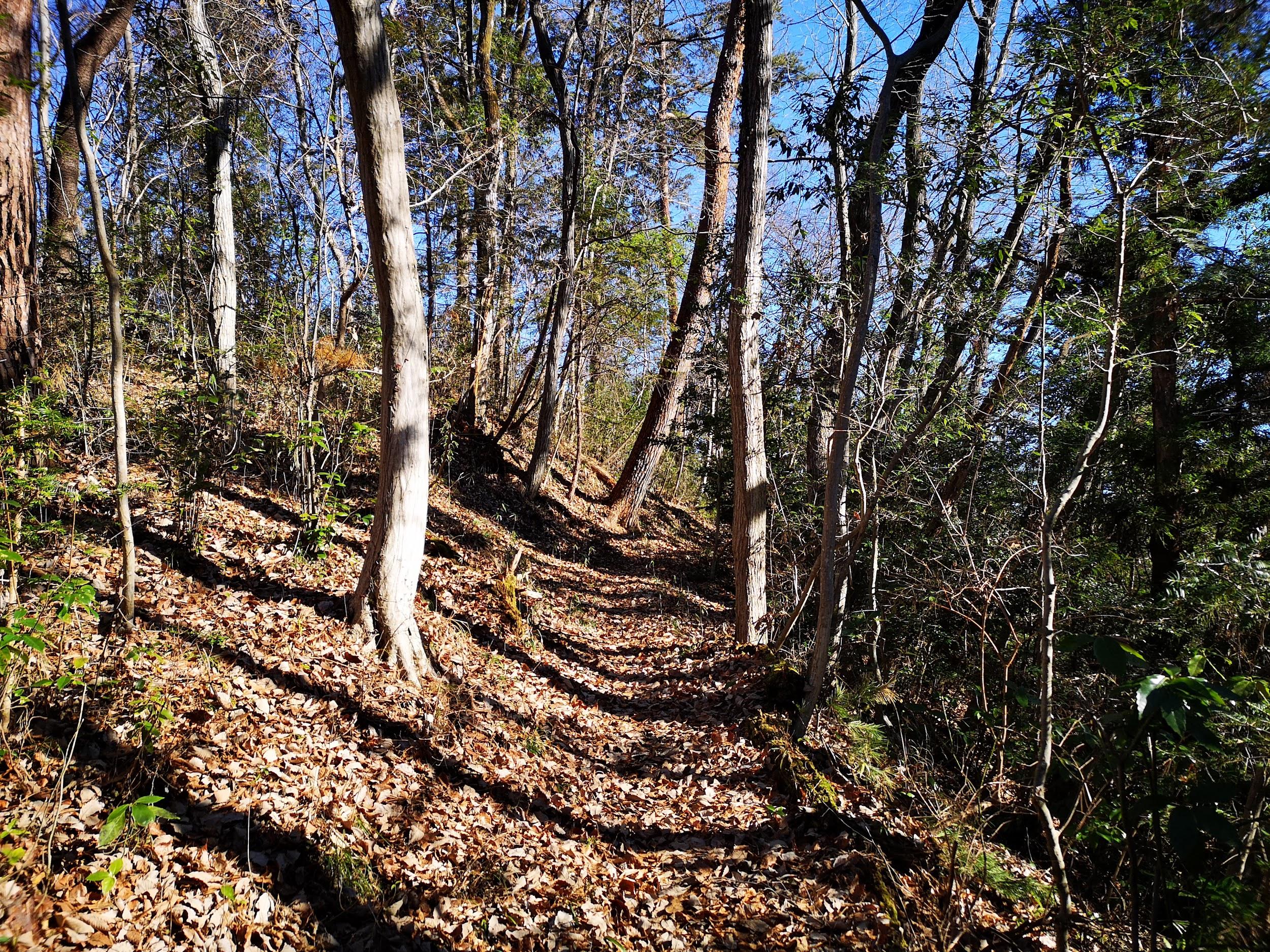
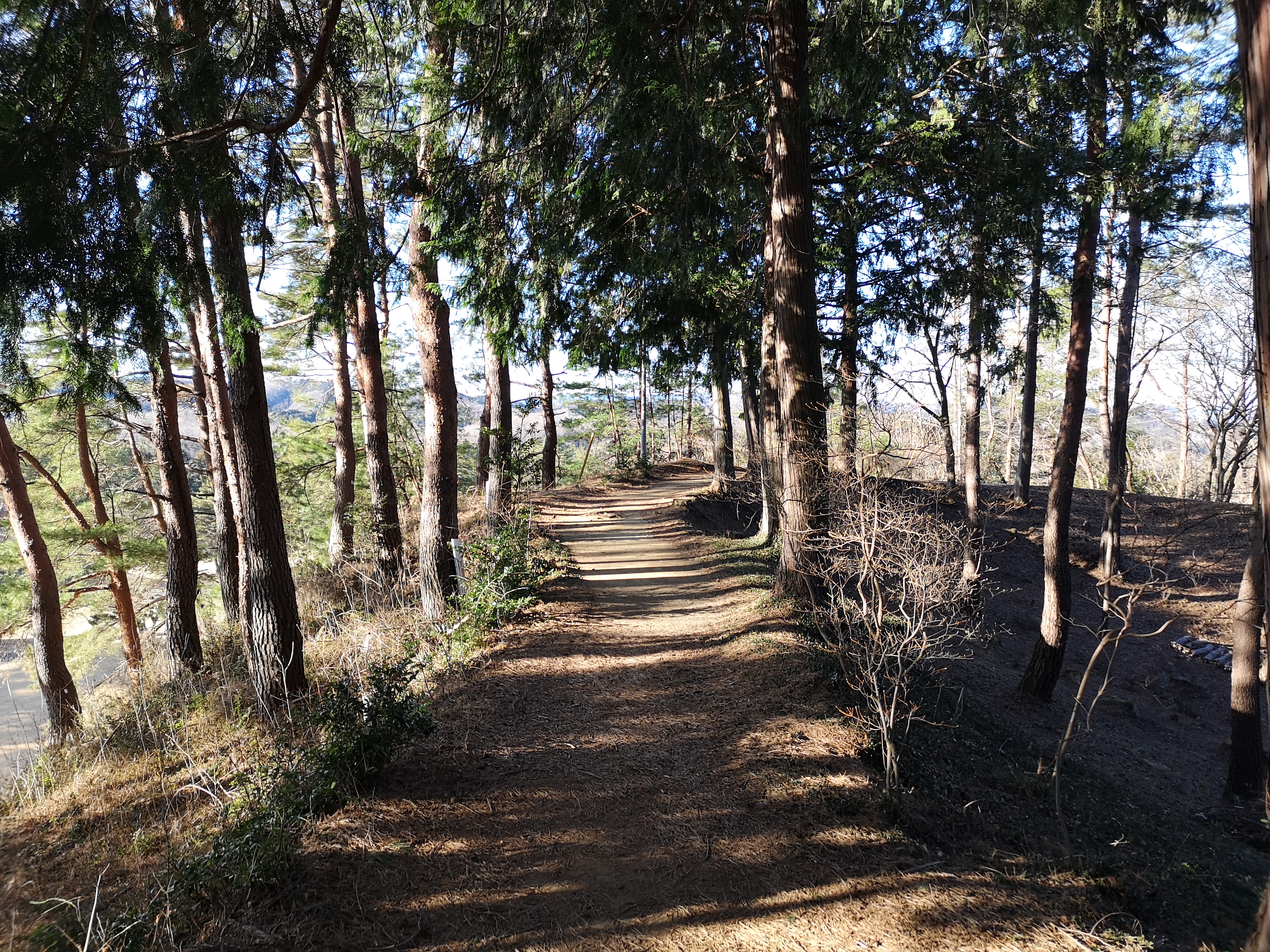
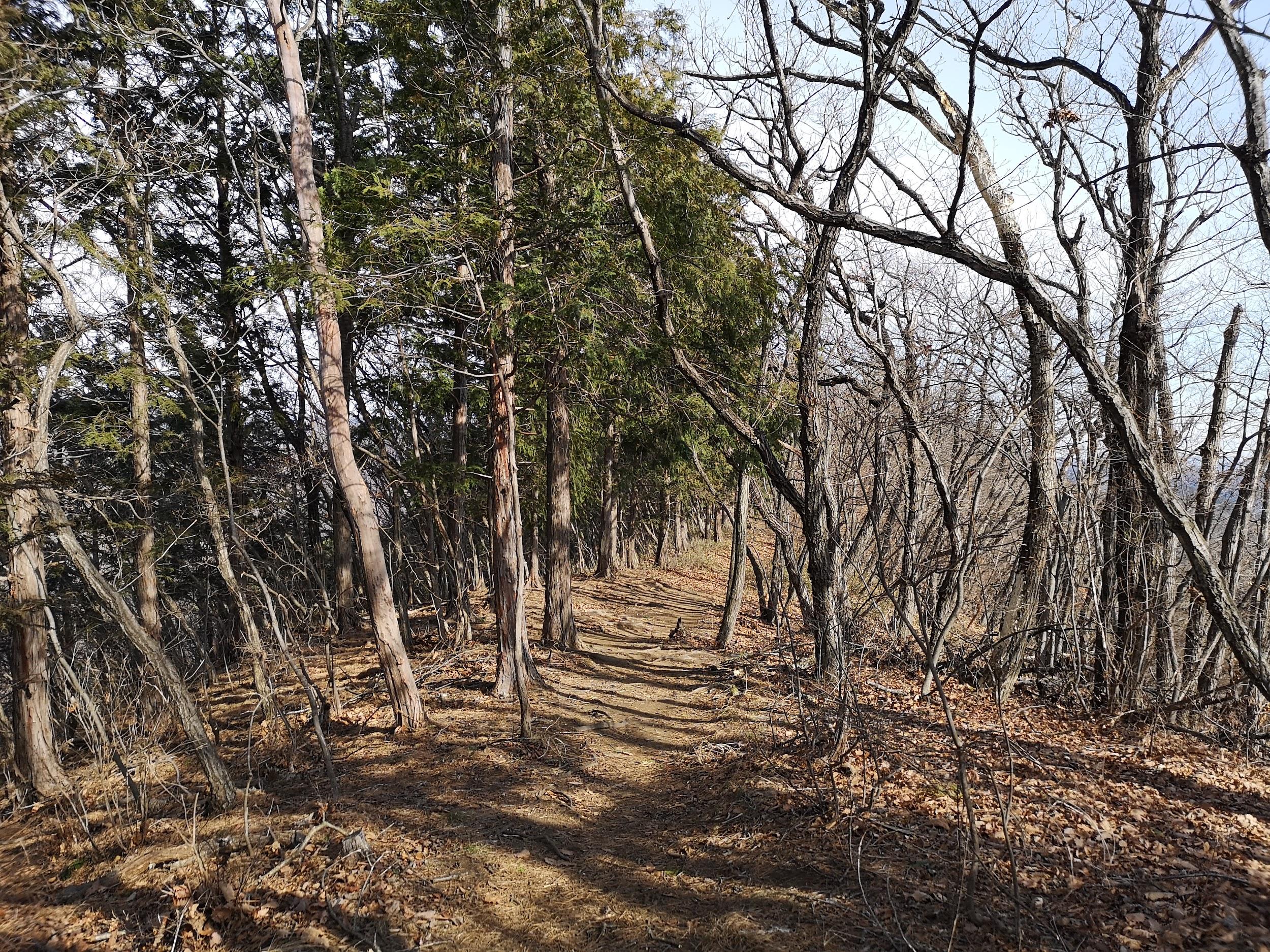
Although the path continued down towards Ume no Koen, I returned to the previous junction, and took the path heading left. I was a little behind schedule so I picked up the pace and, consequently completely missed a great viewpoint that was indicated on my map. The path continued through beautiful and peaceful forest. It was hard to believe I was still inside Tokyo prefecture.

Beautiful scenery at the edge of Tokyo

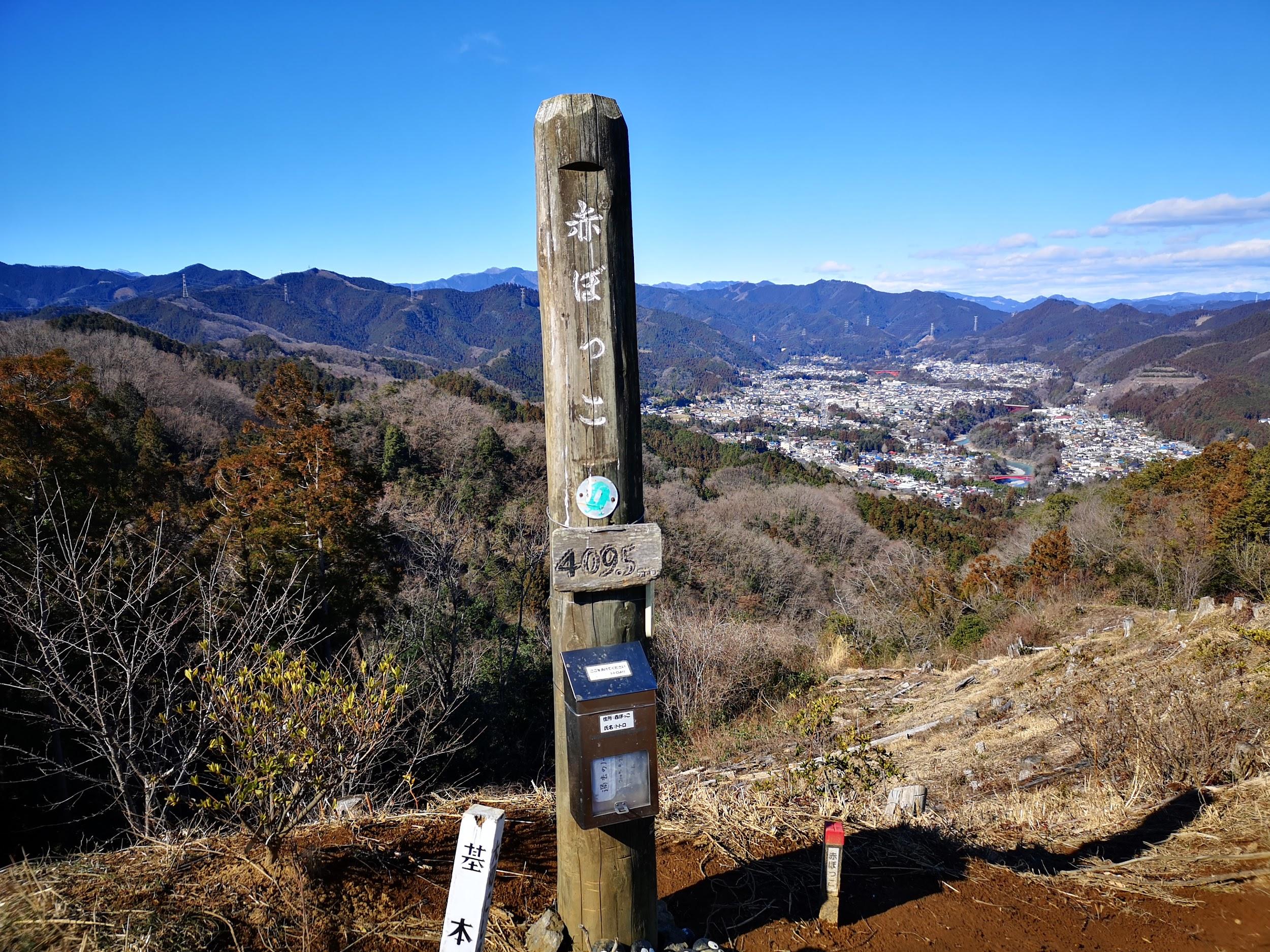
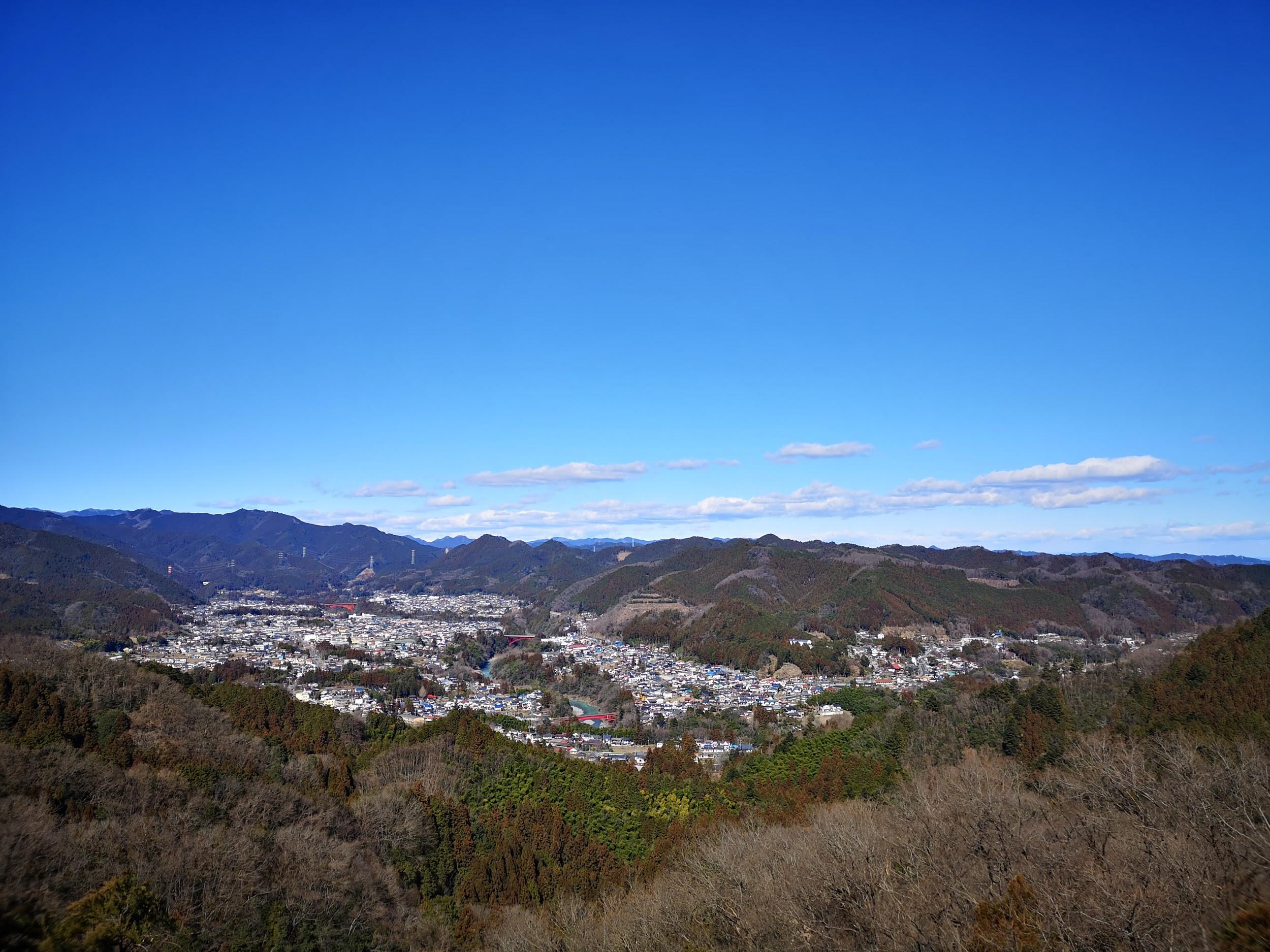
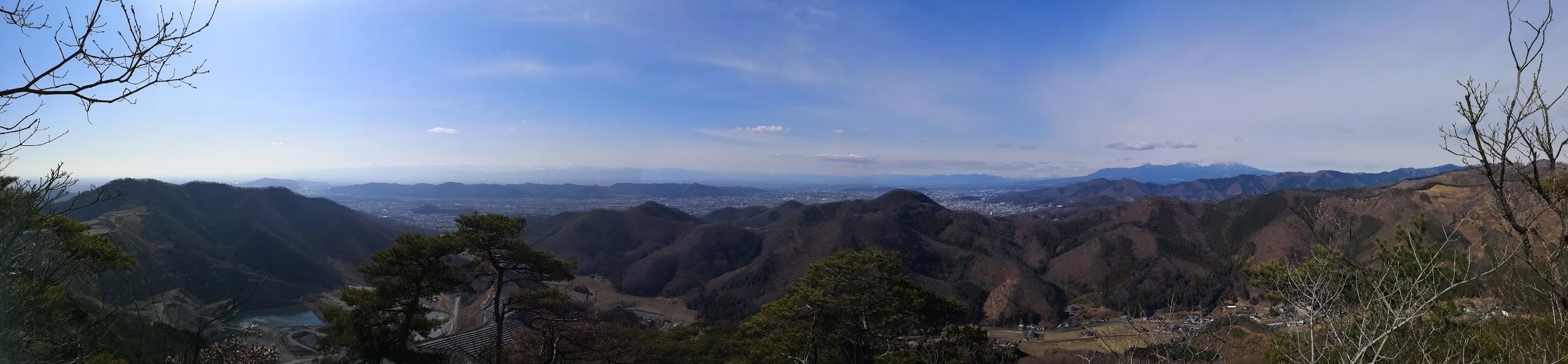
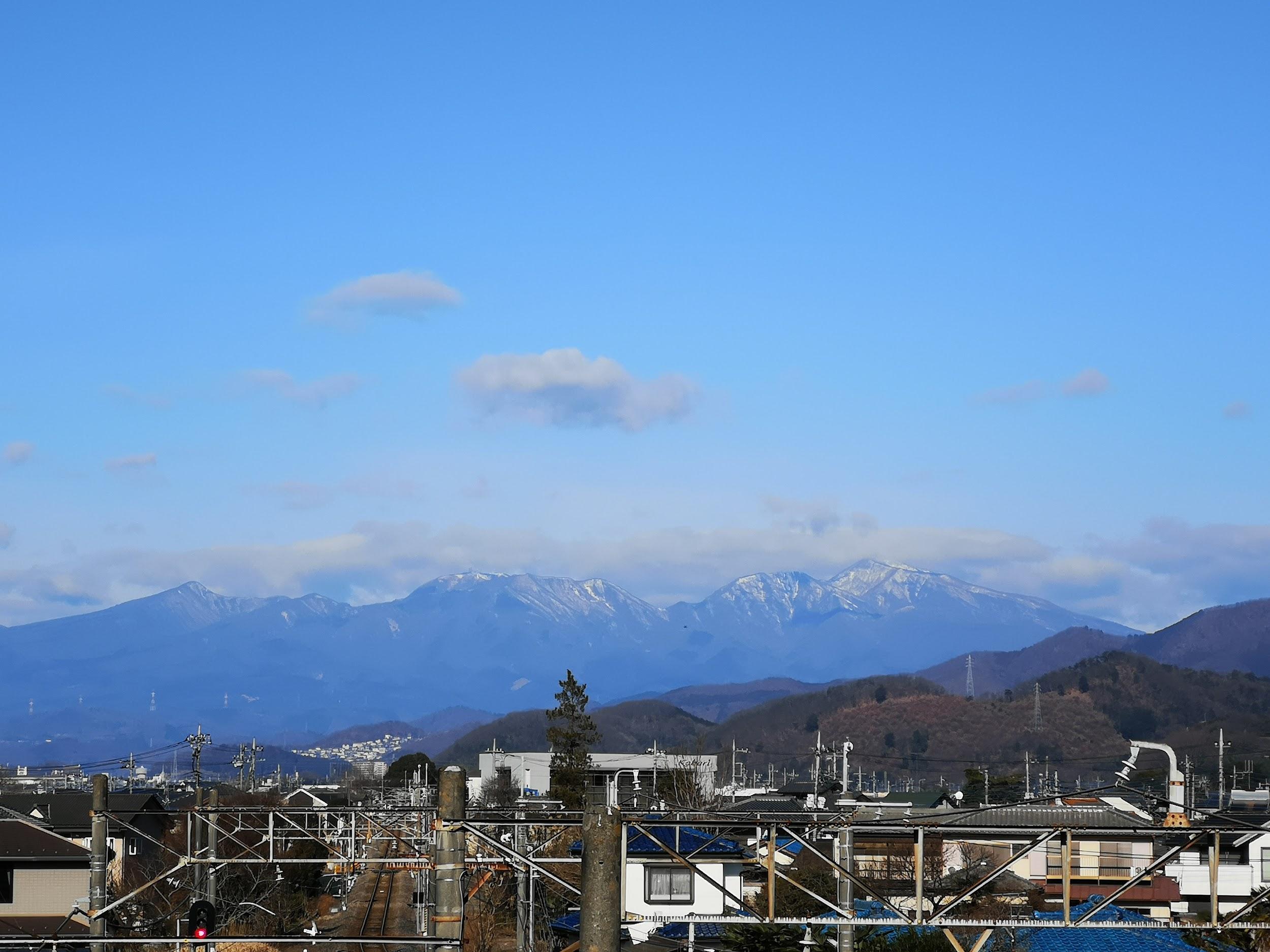
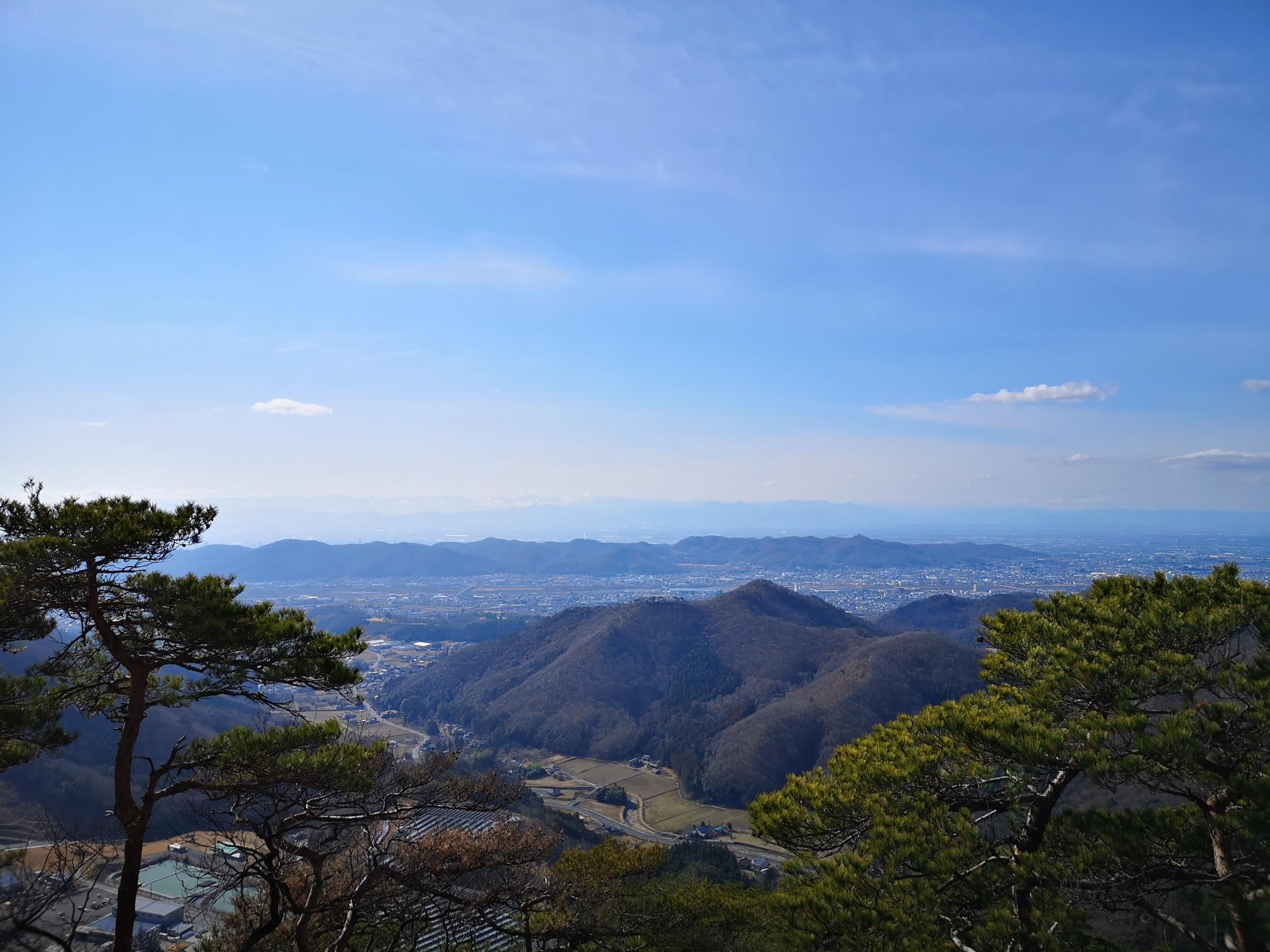
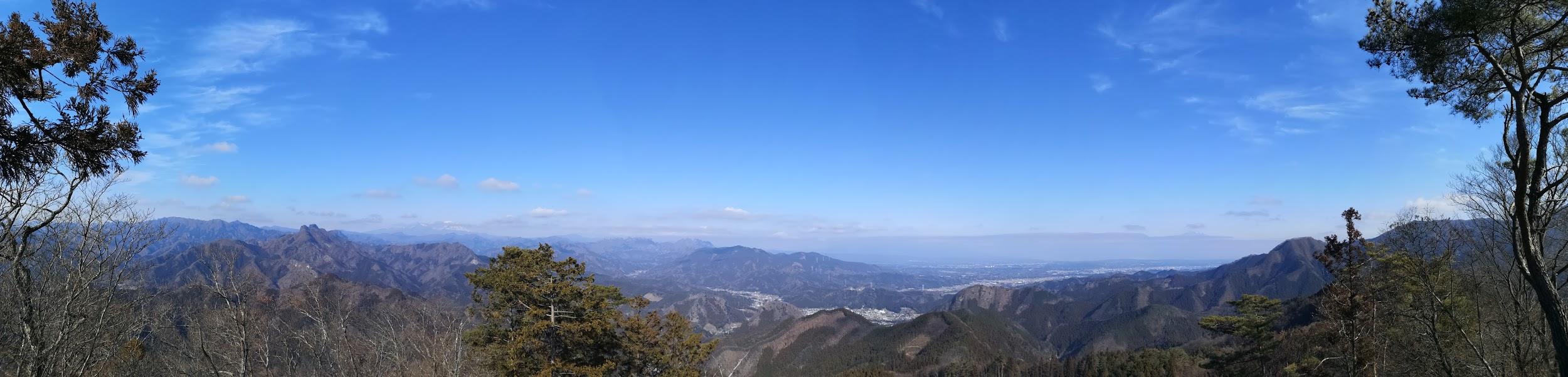
It took me less than an hour to reach Tengu Rock or Tengu-iwa 天狗岩 , a spectacular viewpoint of the Tama river valley and Ome city. It was also the perfect place for an early lunch. No sooner had I set off again, that I reached another amazing viewpoint, Akaboko 赤ぼっこ. I could see the Okutama mountains to the left, the Oku-Musashi mountains in the center, and the skyscrapers of central Tokyo to the right.

This slideshow requires JavaScript.

View from Akaboko

I resumed hiking at 12h45, now very much behind schedule. I had planned to reach Ome city, and start the second half of my hike around 1pm. I half walked, half ran down the mountain; fortunately the trail was wide and not too steep. I recrossed the Tama river at 13h45. It took me another hour of road walking to reach Shiofune-Kannon-ji Temple, famous for its Azalea flowers in May.

This popular flower garden was almost empty in the middle of winter

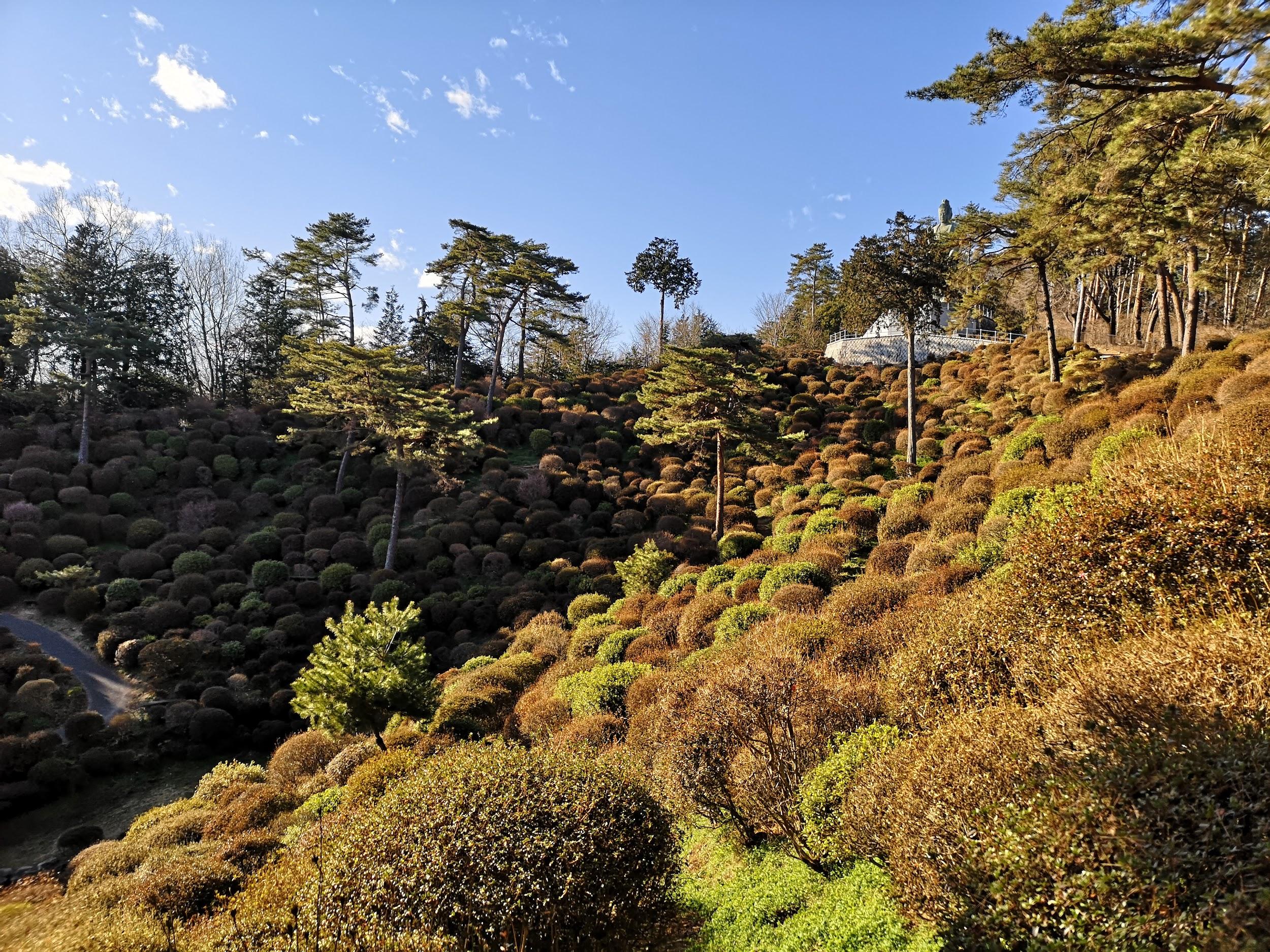
Even in winter, it’s worth a visit. I saw a couple of giant cedars, the tallest one rising up to 43m high! All the buildings had impressive thatched roofs. There is also a huge statue of Kannon at the highest point of the park. I made my way up there, and was rewarded with a view of Mt Fuji, just before it wrapped itself up in clouds. The Kasumi Hills 霞丘陵 hiking trail started just behind the statue, sandwiched between Ome Golf Club and Ome City. I had lost track of time and it was already 3h30.

IMG_20200201_152413

Start of the Kasumi Hills hiking trail

I jogged along the easy to follow and well signposted path. I soon reached a road near an athletic park, which took me to Iwakura-kaido Avenue. I needed another hour to do the last part of the hike through Shichikoku-toge 七国峠 (meaning “seven country pass”), but since the onsen was closed to day-trippers after 5pm, I decided to leave it for another day, and follow the road directly to the hot spring. I was able to take a hot bath at the very charming Mamada Ryokan before heading back home.

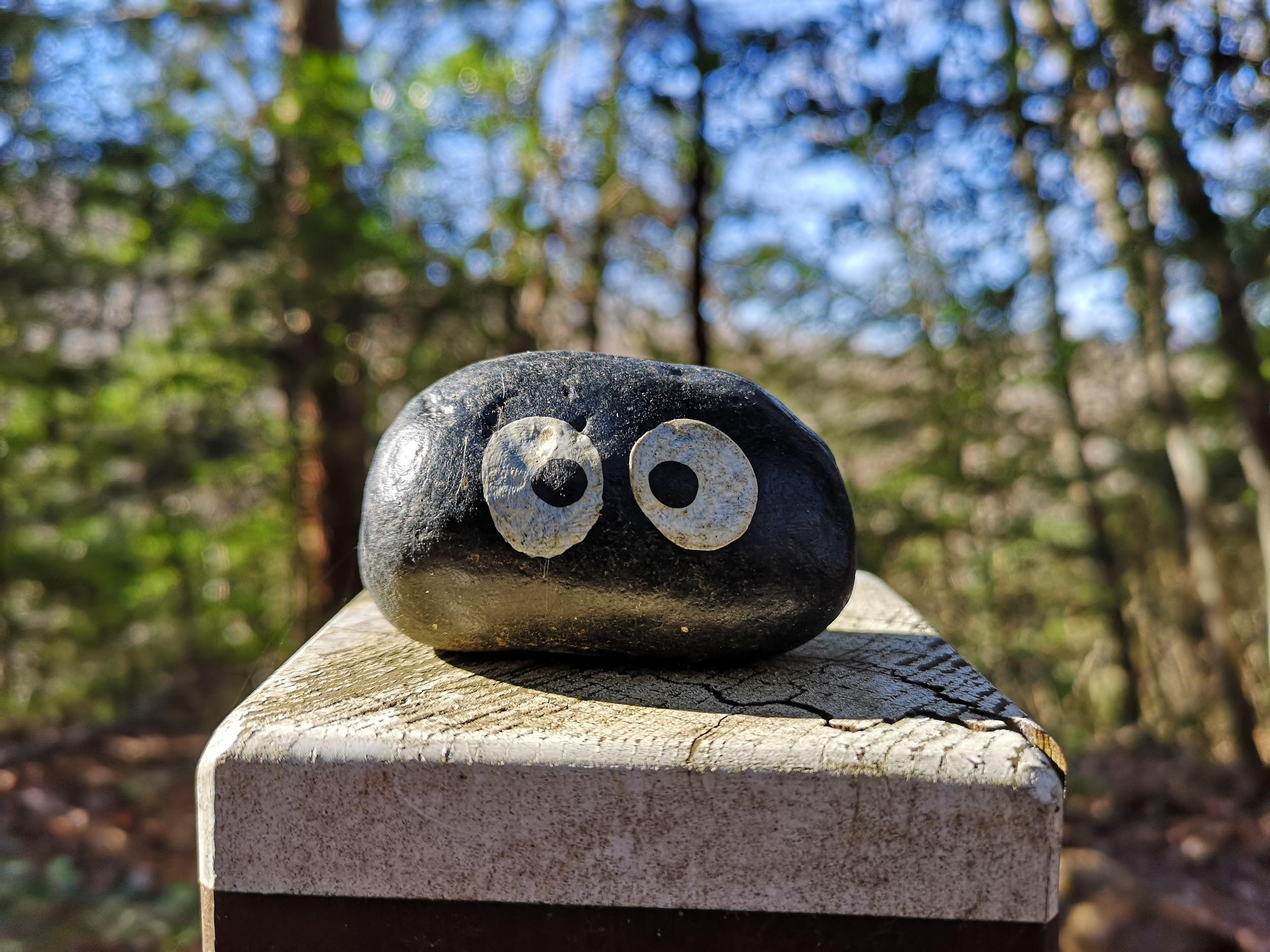
The signposts were decorated with these painted stones

Mt Sekison (486m) & Mt Shinko (506m), Ashikaga City, Tochigi Prefecture, Sunday, January 19, 2020

This was a short hike with easy access from Tokyo, perfect for the winter season. I took a train to Omata station on the Ryomo line, from where I walked about 45 minutes to the start of the trail, since there were no suitable buses in the morning. It was mostly straight ahead, with a view of today’s mountain: a long thin rocky ridge stretching Southwest to Northeast.

View of Mt Akagi from Omata station

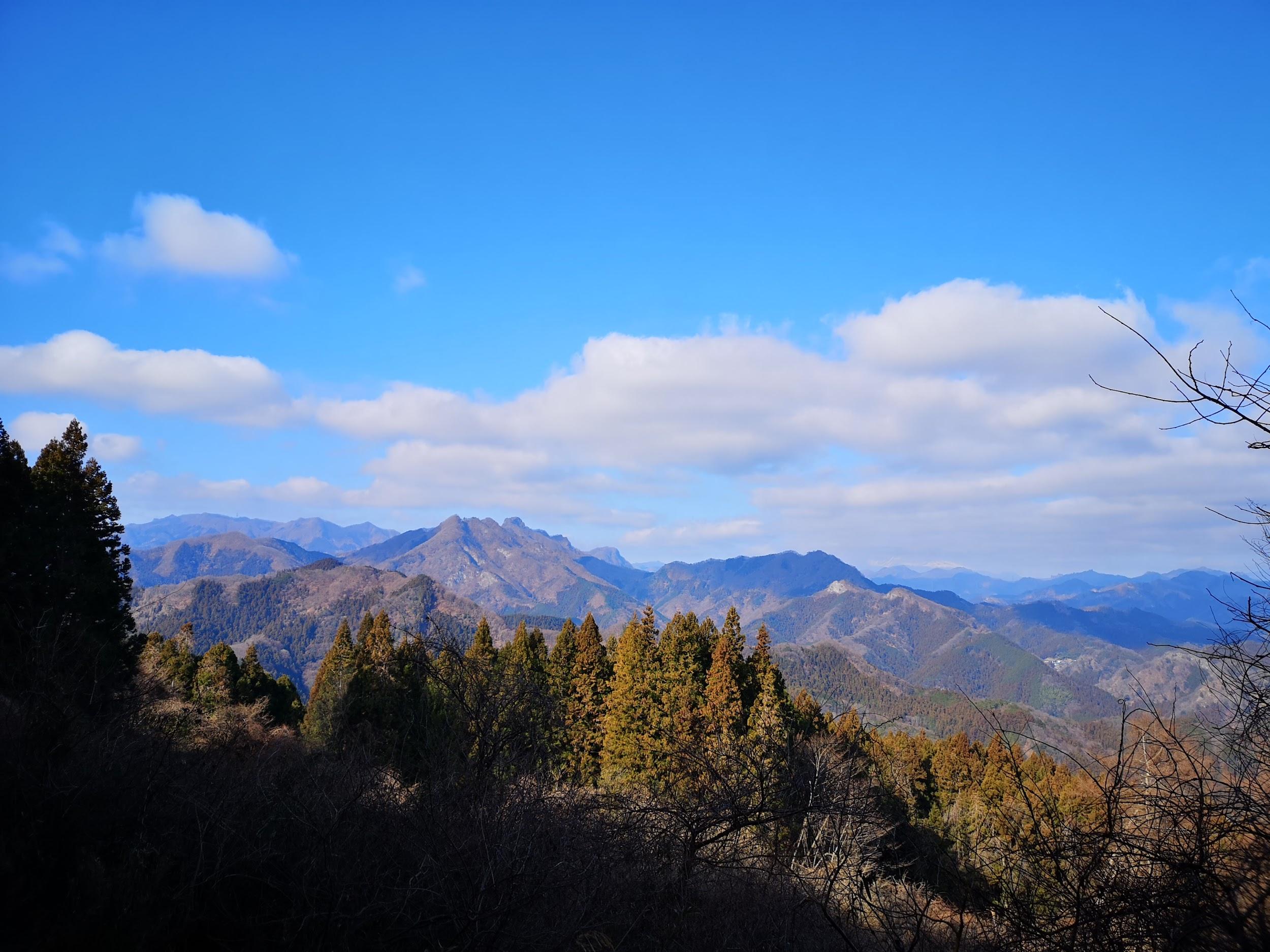
The start of the trail was near a small shrine, and I set off quickly since it was already past 11am. There was a notice saying that one of the trails down nearby Mt Senjin was closed due to fallen trees – I had walked that down path in 2018 and it was indeed nearly impassable! The climb up was through nice forest. Soon, it became steep and rocky. Turning around, I got some nice views of the Hachioji Hills and Mt Asama. Northwards, I could see Mt Akagi with snow on the upper reaches.

Steep climbing near the top

These were the only views I would get during the hike. If I had known, I would have sat down on those rocks and had an early lunch there. Further on, I could only get fleeting glances through the bare branches of the trees, even though my guidebook promised good views. The climb ended at a small shrine, and a nice flat area with a bench. It was already occupied by a group, so I continued along a level path.

View of the Hachioji Hills halfway up the mountain

From this point the hike was fairly easy. I reached the top of Mt Sekison 石尊山, a combination of the characters for rock and respect, just after noon. Trees obstructed most of the view. Even though they were bare of leaves, it was impossible to take any good photos. I found a sunlit rock and sat down to have some lunch. It took me another thirty minutes along the summit ridge to reach the top of Mt Shinko 深高山, a combination of the characters for deep and high, another viewless summit.

View of Mt Akagi from the steep and rocky climb

I found another rock in the sun to sit on, and finished my lunch. From here, the trail went down steeply for a while, before becoming level again. Just before 2pm, I reached a crossroads above Inoko tunnel, very close to the end of the hike. There were two options for finishing the hike, to the left and the right, both about the same distance. I was headed right towards Matsuda, to the right, since there was a bus in about one hour. Since it was only 30 minutes away, I decided to check out the connecting trail for Mt Senjin which was straight ahead.

Mostly easy hiking on Mt Sekison

I hadn’t realised I could cross over to Mt Senjin, and I might have attempted it, if it had been earlier in the day. The path climbed steeply and I was hoping for some views. However, they didn’t materialise, and I finally turned back. Hopefully I can hike this trail in the future. I retraced my steps and took the path for Matsuda. At 2h30 I was out of the forest and on a road, and I reached the bus stop with time to spare. By the way, buses in the Ashikaga area costs a flat fee of 200 yen – a very good deal for hikers!

IMG_20200119_115443b

Mt Asama with its winter coat

NEXT UP: Tengu Rock & Akaboko in Tokyo

Mt Kongogaya (788m) & Mt Ozawa (1089m), Nanmoku Village, Gunma Prefecture, Saturday, January 11, 2020

I hadn’t been to Shimonita for a whole year so it was time to visit again. Since it was a 3-day weekend, I bought the Tokyo Wide Pass, and used the shinkansen to get an early start. My target mountain wasn’t enough for a whole day hike, so I decided to climb another small peak on the way. I had to walk thirty minutes to the start of the trail since I wasn’t there early enough to get the bus connection – it’s also possible to go by taxi.

Ridge trail leading to the summit

I started climbing around 10am along a forest road that went back and forth up the mountain. Along the way, I had some nice views of Mt Myogi to the North. I soon reached the summit ridgeline, turned right, and followed the narrowest of trails to the highest point of Mt Kongogaya 金剛萱. The summit was crowded with buddhist statues, but since I was the only person there, I had enough space for myself.

The summit was pretty crowded

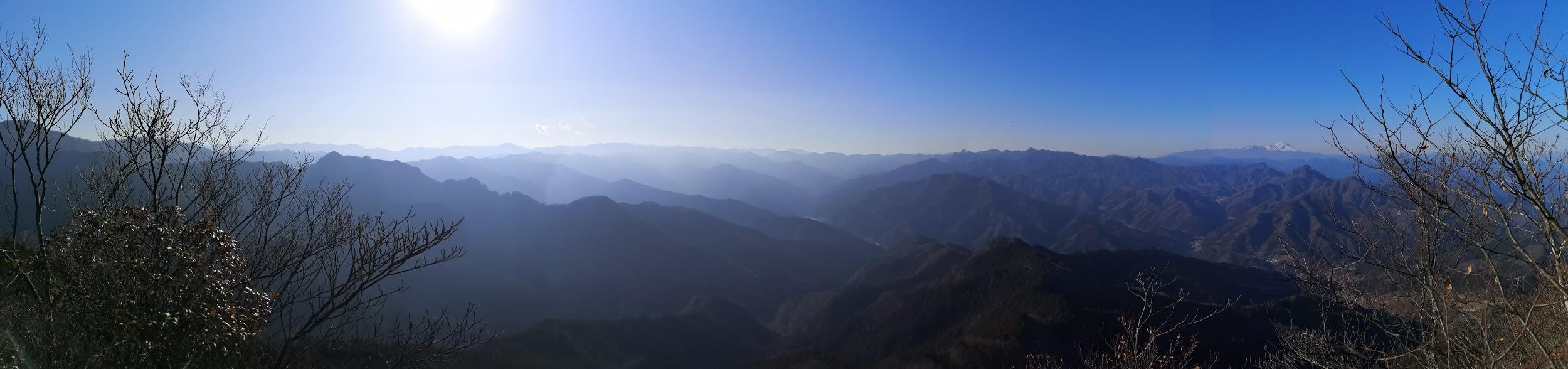
I had an excellent view of the mountains of Western Gunma or the “Nishijoshu” 西上州. In the background, Mt Asama was flirting with the clouds. To the South, against the sun, loomed the Oku-chichibu mountains, and deep dramatic valleys. I had reached the summit after 11am, later than I had planned, so after a late breakfast, I hurried down the other side.

Southwards are the Oku-chichibu mountains

This slideshow requires JavaScript.

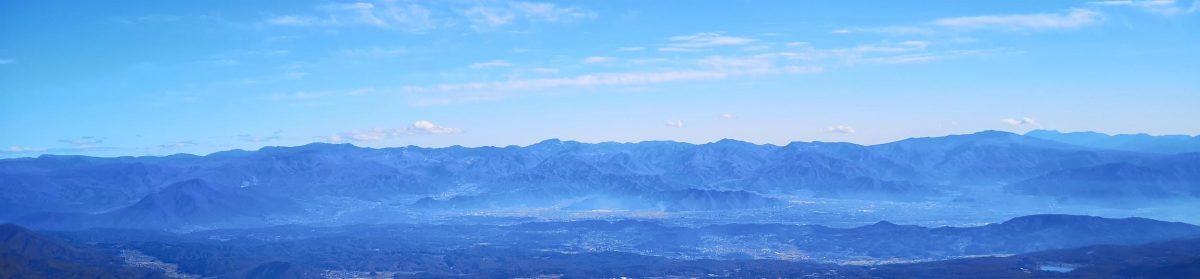
Panoramic view from the top of Kongogaya

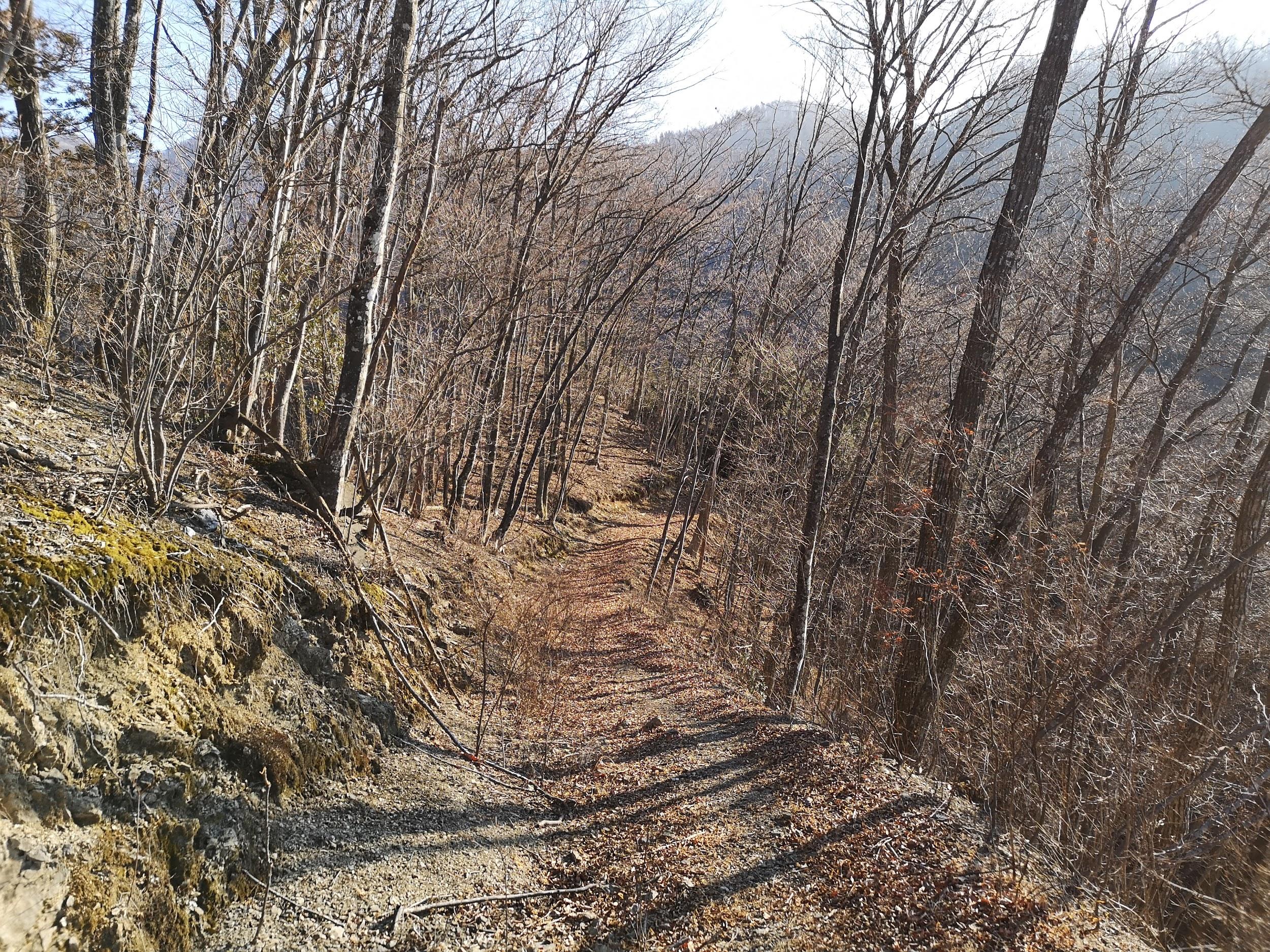
The path was steep and at times hard to follow – my map sensibly recommended to only use it for descending. I finally reached a level forest road, which, after a lot of switchbacking, got me back to the road at the base of the mountain, but too late to catch the bus to my next destination.

I walked one hour to reach a smaller road, along a beautiful river valley, with towering cliffs on the opposite side. It took me another 45 minutes to reach the actual start of the trail, another forest road. Here there was some damage caused by last year’s powerful typhoons, and for a short section, the trail was difficult to walk.

Some of the trail was damaged due to last year’s typhoons

The forest road started to climb, and soon I reached a pass. To the right, was the start of a proper hiking path that headed South along a ridge. There were good views of the valley I had just walked up. To the right, I could also make out the summit of Mt Inafukumi, climbed just one year ago. The path went up and down along several minor peaks, and as I slowly gained elevation, I started to feel the freezing cold of January. After one last uphill scramble, I finally emerged onto the summit of Mt Ozawa 小沢岳 just after 2pm.

On the right, Mt Inafukumi, one of the highest mountains in the area

The view South near the summit marker was a little obstructed by the top of the trees, but once I moved, with extreme caution, close to the edge of a cliff on the West side, I could clearly see the many ridges and valleys of Western Gunma. Nestled deep below was the small village of Nanmoku. Mt Asamaya was now totally clear of clouds. I could also see the summit of Yatsugatake to the West. I could even see the North Alps through a gap of the mountains. Although it felt chilly while climbing through the shady forest, it was nice and warm in the sun. There was almost no wind and It was very silent. I sat down, laid back, and enjoyed the peace and quiet for a short while.

Mt Asama, a magnificent volcano straddling Gunma and Nagano prefectures

This slideshow requires JavaScript.

Some of the views from the top of Mt Ozawa

It was nearly 3pm, and it was time to head down. I had given up on catching the last bus back, and I would have to walk one hour back to the station along the road. I started to jog back down the same way, since there was no other path on the mountain. However, there was a forest road running parallel to the ridge trail, so I decided to follow that for some variety. The road had partially collapsed at one point, and some parts were covered with brambles, so I couldn’t go as fast as I wanted.

Nice view of Mt Asama from the alternate return via the neglected forest road

Most parts of the forest road were quite walkable

The return was uneventful, and I was back on the main road by 4pm. This was one of those rare hikes where I met no other hikers. I didn’t even encounter any animals. Thirty minutes later I passed in front of a factory that looked like something out of Ghibli animation. Shortly after, I got picked up by a passing car. The driver kindly offered to drive me to the train station, even though it was a small detour for him – not the first time I have encountered the kindness of the people of Gunma Prefecture. The driver was employed at the factory, so we had an interesting chat about that. Thanks to him, I was back on a train bound for Takasaki by 5pm.

Dramatic view of Mt Asama the top of Mt Ozawa

NEXT UP: Mt Sekison in Tochigi Prefecture

Mt Nakimushi (1103m), Nikko City, Tochigi Prefecture, Friday, January 3, 2020

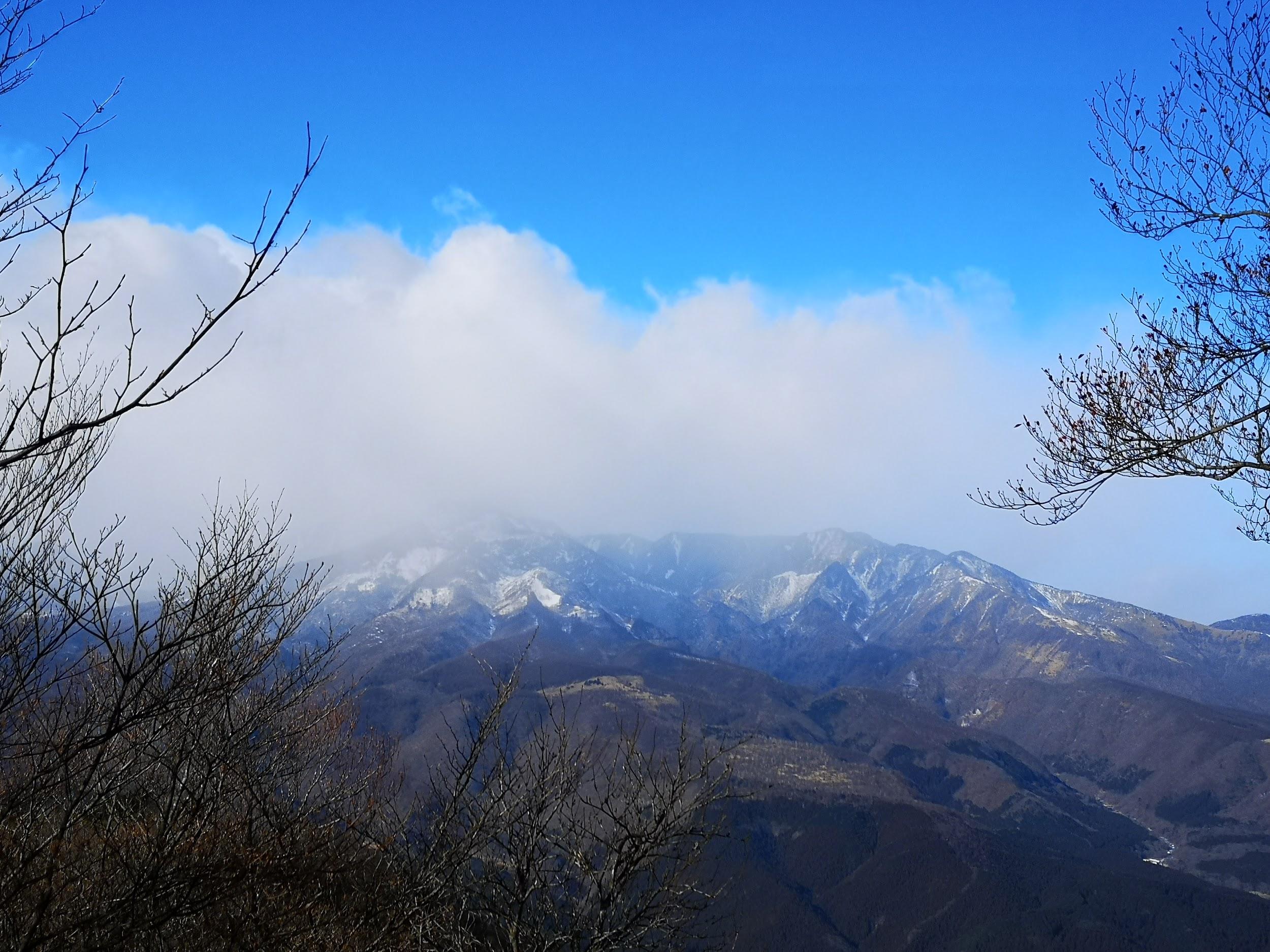
Mt Nyoho in a veil of clouds

For my first hike of 2020, I decided to head to Nikko. Not only is access easy thanks to the JR Nikko line, but since it’s a major sightseeing spot with a famous shrine, most places are open during the Japanese new year. The mountain I chose can be reached on foot from the train station, so I didn’t need to depend on any buses. Sadly, a French woman disappeared while hiking it a few years ago, and I saw several missing posters during the hike.

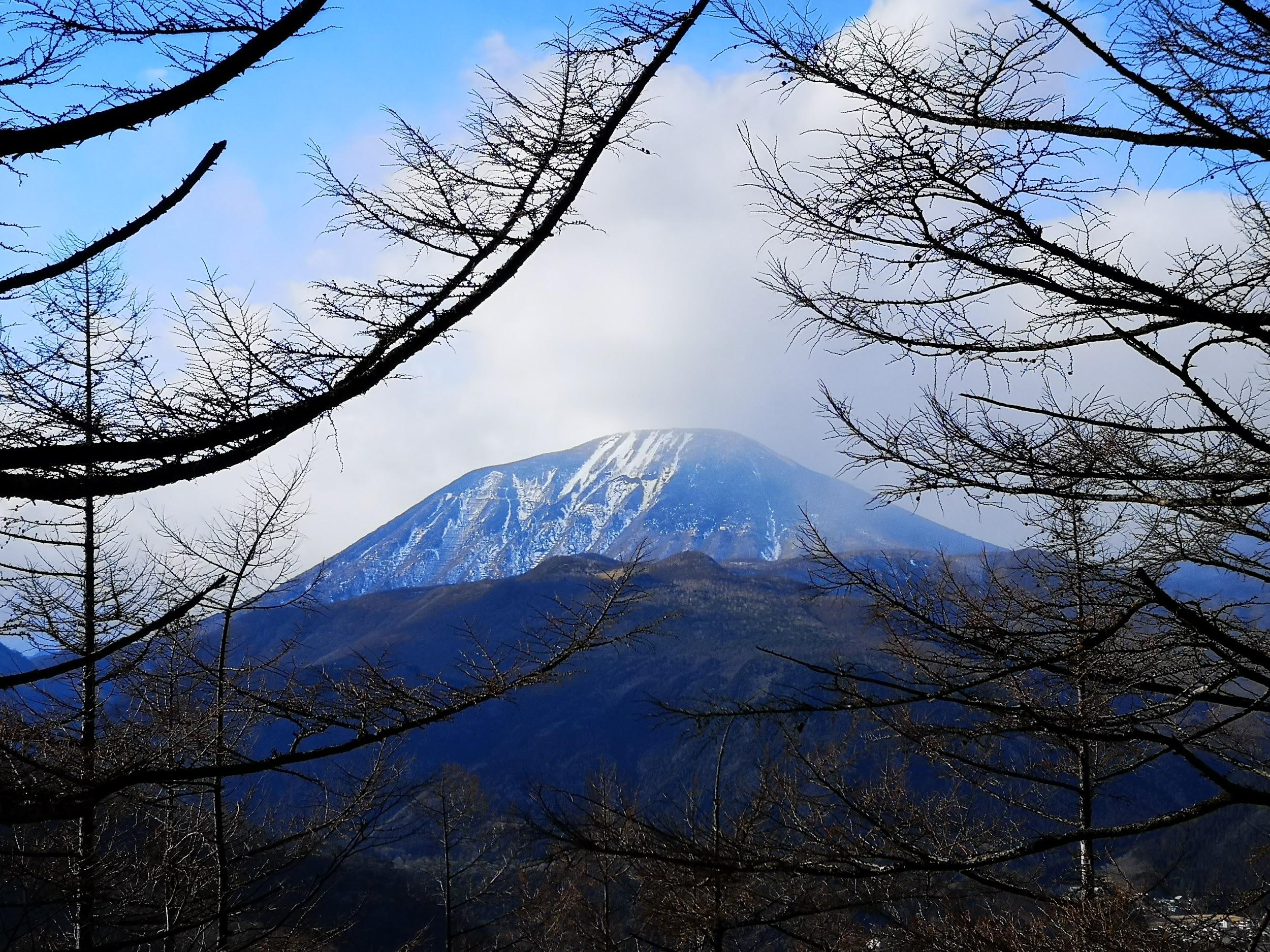
A glimpse of Mt Nantai through the trees

I arrived in Nikko at 10am, but since it was a short hike, I took my time getting ready, and only set off a little before 11am. It was a nice day and the view of Kirifuri Highland covered in the snow from Nikko city was quite spectacular. The start of the hike climbed relentlessly through thick forest. Less than an hour later, I reached the minor peak of Mt Konosu 神ノ主山 (842), and there was a glimpse of the surrounding mountains through a break in the trees.

A steep climb just before the top (left) and a steep descent just after (right)

It took me another hour of determined climbing to reach the top of Mt Nakimushi 鳴虫山 (meaning crying insect). There should have been a good view of the main peaks of Nikko from the top, but today they were hidden behind the clouds. It was pretty cold at the top – despite the sunny weather, a few snowflakes floated down. After a quick lunch, I started to head down a steep staircase on the other side of the mountain just after 1pm.

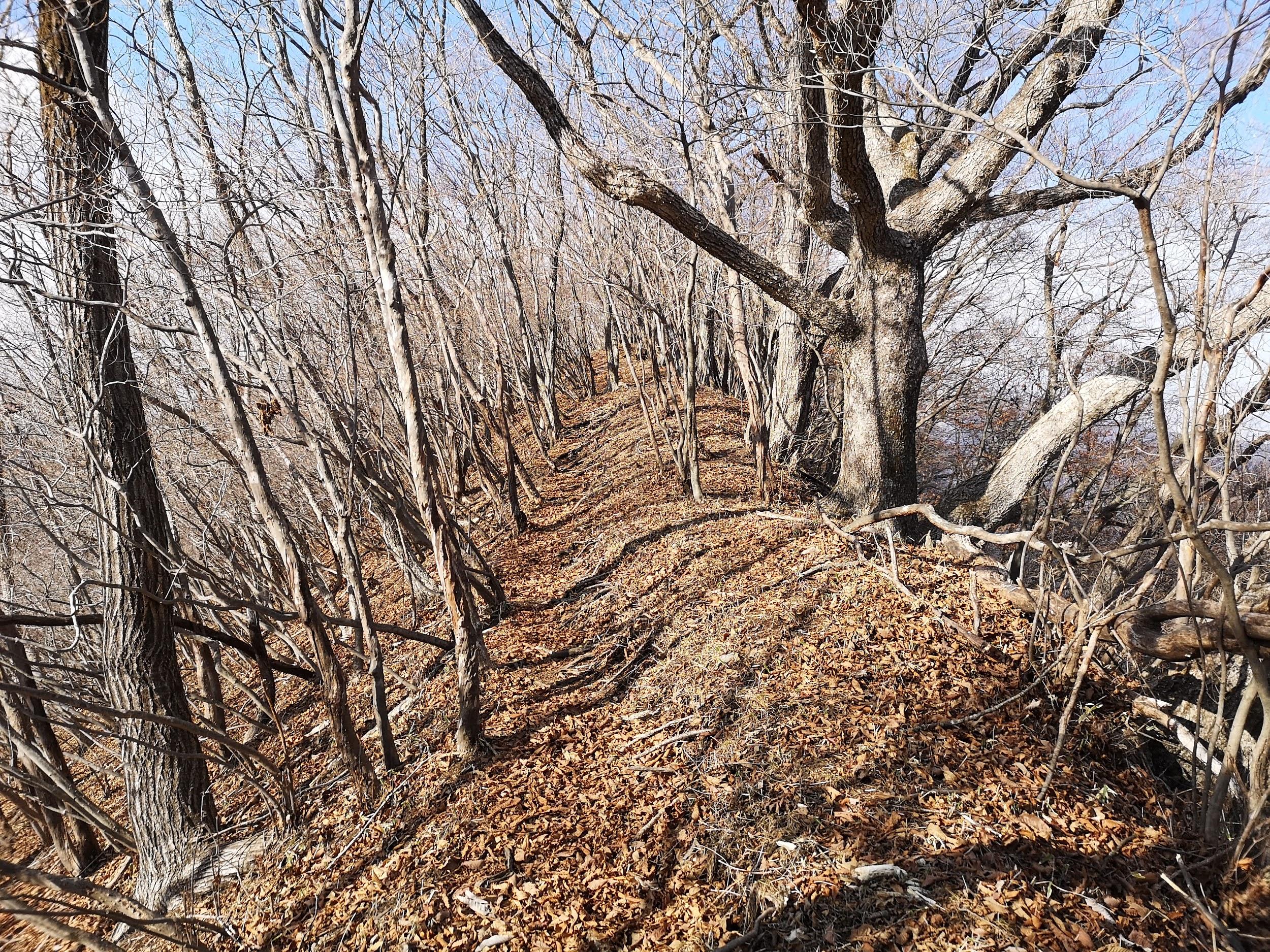
Sunny ridge on the way down

It took me about an hour and a half to reach the base of the mountain. I saw few people during the hike, and it was very quiet and peaceful. Although it’s not a difficult hike, the mountain is very steep on both sides of the path. Also, there are many points where one can easily lose the trail. There were warnings in Japanese and English, but they seemed fairly new. Having hiked the path myself, I can understand a little better how someone could go missing there.

Returning to Nikko station along the Daiya river

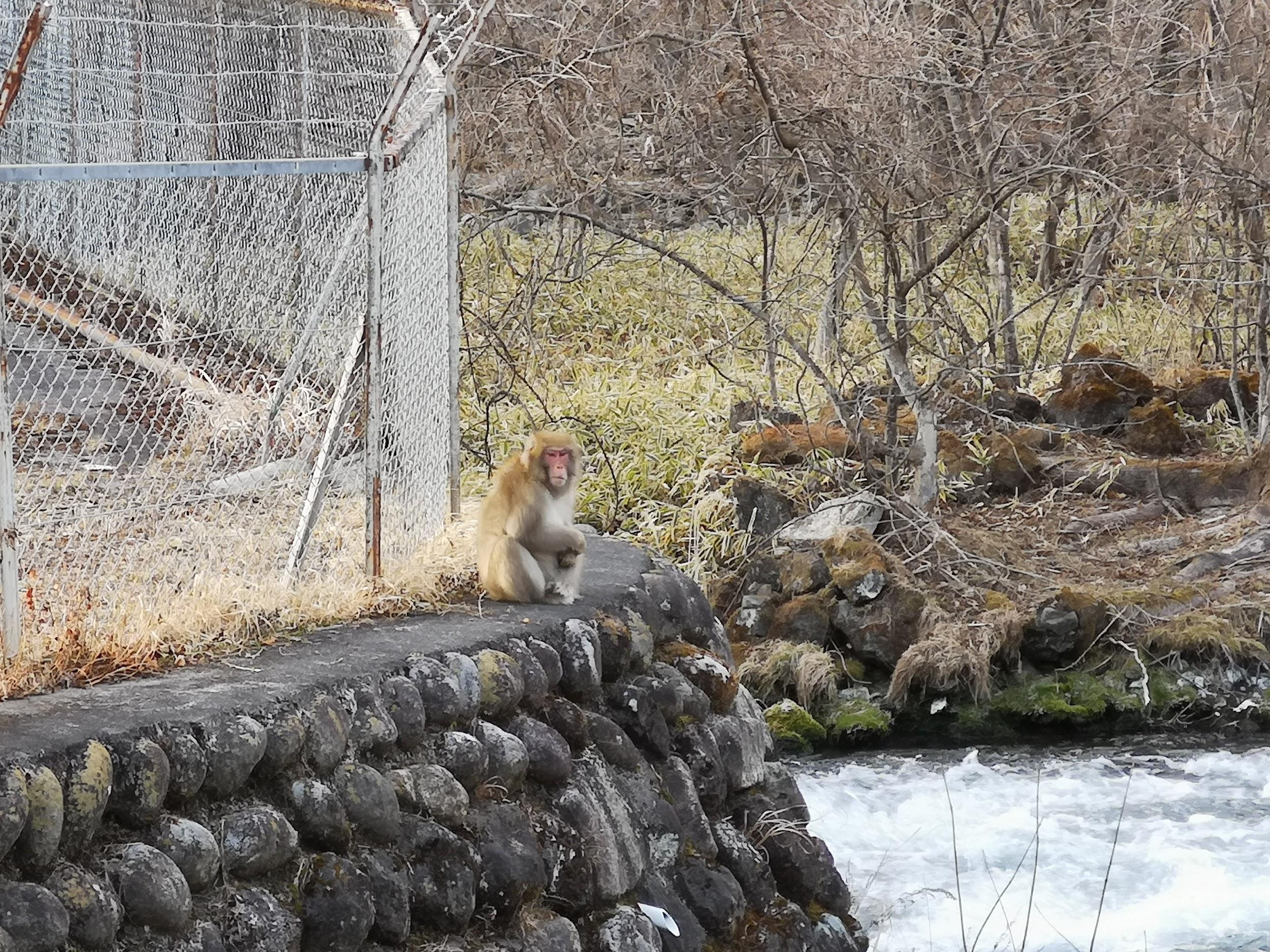
After reaching the base of the mountain, I walked along a narrow road to the nearby Yashio Hot Spring. I saw a monkey on the way. I am not sure if that brings good luck, but I’d like to think so. After a nice hot bath, I decided to walk back to Nikko station since it was still early. It took less than an hour following the river, and by 5pm I was on the express train back to Tokyo.

First monkey sighting of 2020

Watch a video of a wild monkey in Nikko

NEXT UP: Mt Ozawa in Gunma

Mt Kyogatake (633m), Mt Bukka (747m) & Mt Takatori (706m), Aikawa Town, Kanagawa Prefecture, Sunday, December 29, 2019

Hiking in the Tanzawa Mountains 丹沢山地

For my last hike of 2019, I chose 3 small peaks along a narrow mountain range, squeezed between the Tanzawa mountains and the urban sprawl of Tokyo. This hike is right next to the city, and it’s possible to get to the start of the trail in under two hours. I had been to the area a few years ago, but this time I used different routes up and down. From afar, these mountains can seem deceptively high, however the trail inclination is mostly slight to average.

The highest part of the hike follows a gentle ridgeline

I took the Romance car to Atsugi station, technically still within the Tokyo area, where I transferred to one of the frequent buses heading out to Miyagase Lake 宮ヶ瀬湖. At 10am, I was ready to start hiking under blue skies and near freezing temperatures. The first part followed a section of the Kanto Fureai no Michi 関東ふれないの道. Like other portions of this long-distance trail, it was well-maintained and well-signposted; the surrounding forest was pretty and quiet, making this a good start to the last hike of the year.

Following the Kanto no Fureai Michi trail

Soon, I was getting my first views of Tokyo. With the zoom of my smartphone camera, I could make out the row of skyscrapers in the city center, as well as the Skytree. Later on, I had glimpses of the ridges and peaks of the Tanzawa range in the opposite direction. I arrived at the top of Mt Kyogatake 経ヶ岳 at 11h30, where I had a magnificent view of Mt Oyama, Mt Tono and Mt Tanzawa, their peaks white with snow. A few minutes before the summit, there was a local trail heading left to the next mountain in the opposite direction – a hike for another day maybe.

Lunch with a view of the Tanzawa mountains

Mt Oyama, with its distinctive pyramidal summit

After a quick bite, I set off again. Some clouds had appeared over the Tanzawa mountains, but overall it remained a sunny day. The path descended steeply, crossed a road, and ascended steeply again. The climb was made easier thanks to steps built into the path, a common feature in the Tanzawa area. I reached a level section, soon merging with a path coming up from the left, the one I had used on my previous hike here.

The trail is well-maintained, as in the other parts of the Tanzawa mountains

The path immediately started rising again, via another series of steps, and turned into a narrow ridge with spectacular views of the Tokyo metropolis on the right, and Tanzawa mountains and Miyagase lake on the left. Up to this point, the hike had been relatively easy, but this section required some surefootedness. Although I had hiked this part before, it all seemed new to me, and I spent a lot of time taking photos. Enjoying the dual view of the mountains and the city from above is one of the aspects I like the most about hiking in the Kanto area.

In winter, the trail is often in the sun

Approaching the highest point of the hike

I reached the top of Mt Bukka 仏果山 just before 1h30 pm. The summit is completely in the trees, but someone thoughtfully built an observation tower so hikers can enjoy panoramic views of the entire area; the next peak has a similar tower. Despite being artificial structures, they make the hike worthwhile. They offer some of the best views in the Kanto area. I could see the entire Southern side of the Oku-chichibu mountains stretching from East to West, from Mt Takao to Mt Kinpu; in the foreground was Mt Sekiro. Unfortunately, Mt Fuji was hidden from sight, despite being quite close.

The observation tower rising above the trees…

…offers a great viewpoint of Tokyo

Without the protection of the trees from the icy wind, it was very cold at the top. I had left my backpack with my gloves at the base of the tower, so I soon went back down, and continued to the next peak. This section was short and easy, and I reached Mt Takatori 高取山 just fifteen minutes later. From the top of this second tower, the view was similar, except for a person dabbling in amateur radio; he had deployed quite a big antenna on one side.

Amateur radio antenna and Mt Oyama

This slideshow requires JavaScript.

Panorama of Tanzawa and Miyagase lake

I had the second half of my lunch, and after I had my fill of food and views, I climbed down the tower, and started to descend towards Aikawa town. It was nearly 3pm and at this time of the year, it would be getting dark soon. The path down was easy to hike; there were a number of other trails, but I just followed the signs for Fureai no Mura ふれあいの村, and it took me less than an hour to reach the bus stop for Atsugi. It was a short ride back to the station. I hopped on the romance car back to Tokyo, and started to think of all the great hikes I would do in 2020.

Trees pointing in the wrong direction

A view of Aikawa town through the trees

Panoramic view from the top of Mt Takatori (you can hear the amateur radio user in the background)

Skiing in Nagano: Shiga Kogen (1300m-2300m)

After my successful trip to Madarao Kogen Ski Resort, I decided to try something more ambitious. Shiga Kogen would be my largest ski resort so far (64 lifts, divided into 10 areas), as well as the highest. Access was via a winter-only express bus; as the last bus back was fairly early, I would only have five hours to explore this huge resort. I was wondering whether it would be worth it, but since the weather was supposed to be sunny all day, it made sense to go. For once, I could look forward to skiing many different slopes in one day in ideal conditions.

Looking down from the top of the Ichinose Family area

I arrived at Nagano station before 9am and headed directly to the bus stop outside the station. There was a small booth on the pavement where I could pay for my ticket (where do they sit in bad weather?) It was a beautiful blue-sky day, and as I waiting, the sun shining in my face, a long line formed behind me. During the 70-minute bus ride, I had fine views of the mountains of Togakushi Kogen on the left side, and Mt Kosha straight ahead (see video). We passed the entrance to the Jigokudani monkey snow park, and a little later, I saw a few monkeys enjoying the fine weather in the snow next to the road.

A beautiful day for skiing

Despite its high altitude, the resort is entirely below the tree line

I had reserved my skiing gear the day before with Alpina Sports inside Shiga Kogen Yama no Eki (志賀高原 山の駅); I got off there at 10:25, the bus continuing to Oku-Shiga at the top of the valley. The ski shop seemed brand new; the staff were super efficient: I had all my gear in less than 10 minutes. I could also buy my ski pass there, and I chose one for the entire area, 600 yen more than for the central area. It was impossible to visit the whole resort in 5 hours, but at least I could try. By 11am, I was ready to ski, and I headed towards the gondola next to the shop.

The northern half of the North Alps and Togakushi Kogen

View from the top of the Terakoya area

I was surprised that my first ride of the day was down instead of up. Apparently there was no way to ski down to the start of the central area. Luckily it was a short ride. From there, I decided to up the mountain to the higher areas, leaving the smaller and lower Sun Valley area for later. I was keen to see the views from the top of the resort before the afternoon haze set in. It me took one gondola and two chairlifts to reach the Terakoya (around 2100m) at noon. Incredibly, I had spent the first hour of my short skiing day just sitting on lifts!

Ichinose Diamond area on the other side of the valley

Looking north towards Niigata prefecture

There wasn’t a cloud in sight from the highest point of the central area (around 2100m). I could see the northern part of the North Alps, as well as Mt Iizuna, Mt Kurohime and Mt Myoko (also a ski resort). This was where I had ended my summer hike in Shiga Kogen last July but I could barely recognise it. I did a couple of short runs and then decided to stop for a quick lunch at Terakoya, a restaurant serving Japanese and Western dishes. I then skied along a blue connecting slope through the forest to the top of the Ichinose Family area.

Ski lift and ski slope at right angles

Matching ski wear on a chairlift to Higashi-Tateyama

From there, I had the most impressive view of the day: I could see most of the vast resort, spread over both sides of the valley. Since it was already past 1pm, I thought it would be better to continue to the opposite side (called Ichinose Diamond). Once there, I realised that I couldn’t just take a lift to the top, and then ski diagonally across the mountain; I had to follow the various lifts as they zigzagged across the mountain side. I found that Shiga Kogen was a hard resort to understand (and probably to explain); it made no difference whether I was looking at the map or looking around with my eyes.

In the center back, Mt Myoko

Mt Iwasuge, a mountain I hope to climb this summer

After making one such zig-zag, I reached the top of the Yakebitai area (around 2000m) at the end of a gondola lift. I was now outside the central area, and I was glad I had bought the all area pass. To my right, I could see the Oku-Shiga area, at the northern end of the resort. It was now 2pm – could I continue all the way there, and still make it back to the ski rental shop and bus stop by 4pm? after estimating that it would take at most one hour and a half to get back, I set off, skating at a brisk pace along the short connecting slope between the two areas.

Waiting to get on the gondola in the Yakebitai area

View from the top of the Oku-Shiga Kogen area

I was enjoying the amazing views of the mountains of the Joshin-Etsu Kogen National Park from the top of the Oku-Shiga Kogen Gondola, when I realised that it was already past 3pm. I quickly crossed back to the Yakebitai area and immediately skied down the Panorama course, stopping at several viewpoints on the way for some quick photos. Doing the zigzag in reverse, I eventually arrived at the road separating the Ichinose Diamond and Ichinose Family areas, halfway back to my starting point.

Top of the Oku-Shiga gondola

Few people on the slopes on this side of the mountain

This was where things suddenly went horribly wrong. I was unable to find the middle part of my next zigzag and had to ask a ski lift operator for directions. At the top of the lift, I discovered that I had dropped a glove while we were talking, and I had to ski back down to get it. I was starting to seriously fall behind schedule; there seemed to be no end to the zigzags. At 4pm, I was at the top of the Higashi-Tateyama area (2000m), mournfully looking down towards Yama no Eki five hundred meters below, where the last bus back to Nagano station was leaving in less than half an hour.

Riding the Ichinose quad lift

The classic Shiga Kogen view

Determined not to give up, I raced down the mountain, following a long winding blue slope. Ironically, this was the longest run of the entire day. I arrived at the final gondola with about 10 minutes to spare, only to see that it was stopped. It was an agonizing wait while it slowly started up again. I arrived at the rental shop with only 5 minutes to spare. I returned my gear in record time, thanks again to to the efficient staff, and collected my belongings from the coin locker at the back. The bus was waiting patiently outside – it was the starting point for the return – so I hopped aboard and settled in for the ride, relieved that I had made it back on time. Less than 2 hours later, I was seated comfortably on the shinkansen for the 90 minute ride back to Tokyo.

Check out the skiing conditions at Shiga Kogen Ski Resort

Skiing in Nagano: Madarao Kogen (900m-1300m)

Over the years, I’ve done relatively little skiing in Japan. The resorts are quite small compared to Europe, and although the snow quality is great, the weather is usually horrible. So I decided to apply the same system I use for hiking: go by shinkansen on one day trips when the weather forecast is favourable. Thanks to the Tokyo Wide Pass, and the JR East Welcome Japan Pass, many resorts in Nagano, Niigata and the Tohoku region became easily accessible. One year ago, I had a great time skiing on Hunter Mountain in Tochigi. This year, I decided to return to a mountain I had climbed a few weeks ago. Getting to the Madarao Kogen Ski Resort seemed fairly straightforward: I would ride the shinkansen to Iiyama station in Nagano, and from there catch a shuttle bus to the resort. The weather forecast wasn’t great, but it wasn’t terrible either; I could even expect a little sunshine in the afternoon. Finally, the ski resort covered two sides of the mountain, so I was hoping that would be enough ski slopes to keep me busy the whole day.

View of the slopes from Madarao Kogen

I left Tokyo under clear blue skies. I had fantastic views of the mountains of northern Kanto, tipped in white. In Nagano, however, I was greeted by snow, mist and clouds. The weather seemed to be improving, but not quite fast enough. At least there seemed to be enough snow for skiing. After getting off at the new and compact Iiyama station (built in 2015), I headed straight for the bus stop. A nice lady came over and redirected me to a ticket vending machine inside the station which I had missed. My ticket bought, I went back to wait for the bus. As the snow flakes floated down before me, I wondered what the conditions were like up on the mountain.

View of Madarao Kogen from the slopes

I was amazed to see how much the landscape had changed in just two months, during the thirty minute bus ride to Madarao Kogen hotel. It was still snowing when I got off the bus, but it wasn’t windy and it didn’t feel too cold. This was good news since there were no gondolas here, only chairlifts. Visibility was good, except for the top of the mountain, hidden in the clouds. I was glad it wasn’t whiteout conditions, and I was optimistic about the weather improving later in the day.

Good conditions for skiing lower down

I wandered into the hotel to get cover from the snow, and stumbled upon their ski rental shop. Originally, I had planned to go to the rental shop next to the ski slopes just a little further away. However, seeing that this shop was deserted, I decided to save some time and get my gear here instead. The staff was helpful and efficient, and I had all my gear in a matter of minutes. They also allowed me to use the hotel’s changing room downstairs. Once I was ready, I headed to the ticket center, next to the Shirakaba restaurant.

Less good conditions for skiing higher up

I decided to buy the Mountain Pass, valid for the Madarao Kogen Ski Resort and Tangram (on the other side of the mountain), since it was only 500 yen more. If I returned it at the end of the day, I could get 500 yen back. At 11am, I was finally ready to start skiing. I put on my skis and skated towards the ski lift, and I was surprised that the slope went down instead of up. I then realised that Shirakaba (and Madarao Kogen Hotel next to it) was on a rise separated from Mt Madarao by a small valley. I had to ski down a short slope to reach the main chairlifts.

In the afternoon, the weather improved

I started with the Superquad lift which took me two thirds up the mountain. It was fast, and had a cover that shielded me from the cold. I used it a couple of times, and found that I preferred the right side slope for going down. Then, I headed to the Tangram side, where I had been hiking last November. I could either ride to the highest point of the the mountain and take a black down. I wasn’t too keen, as the top was still in the mist. Instead, I took lift #15 halfway up, and used a gentler blue (marked green on the maps) through the forest . I remembered walking along it, and it felt funny to be zipping by on skis.

Sunny conditions on the Tangram side

At 1h30, the sun suddenly came out and blue skies appeared overhead. I enjoyed nearly an hour of sunny skiing before the clouds charged back. Even though there were only four chairlifts (Madarao Kogen had 9), only one of them had a bar for resting the skis on. This is a curious thing about Japanese ski chairlifts: they almost never have that bar, so your legs are dangling in the air for the whole ride, which I find uncomfortable and dangerous. At 2h30, I made my way back to Madarao Kogen to have lunch. To avoid skiing a black in whiteout conditions, I used a blue to ski to the base of the resort. Oddly enough, it ended at the parking, and I had to skate a hundred meters over flat terrain to reach the lifts.

Mushroom & bacon Pizza at Aki’s Pub and Cafe

I had an excellent pizza at Aki’s Pub & Cafe. I had to use Google Maps to locate it, since it stood apart from other buildings halfway down the small slope between Shirakaba restaurant and Mt Madarao. At 3h30, I was back on the slopes. The clouds were still in although it wasn’t snowing anymore. I had one hour of skiing left, but it didn’t seem that the sun would return. I chose to stick to the Superquad for my last runs. At 4pm, as I stood at the top of the lift before the final run of the day, the clouds suddenly parted and I had a glorious view of the valley below, including Shiga Kogen opposite.

Great views at the end of the day

I now had the slopes entirely to myself as most people had already finished for the day. I took my time even though the ski patrol was on my heels, stopping here and there to take photos. I returned my rental gear at 4h30 after five hours of satisfactory skiing. I’ve always had problems with ski shoes, but, these ones were quite comfortable. I had a quick hot spring bath inside Madarao Kogen Hotel before catching the 17:20 bus back to Iiyama station, where I hopped on the shinkansen for the under two-hour trip back to Tokyo.

A little unusual – finishing the day going up

Check out the conditions at Madarao Kogen Ski Resort

Madarao Kogen Ski Resort at closing time

From the Archives: Tokyo Day Hikes, December 2017

Here are two hikes from a couple of years ago in December that had one thing in common: great views of snow-covered volcanoes, on opposite sides of the Kanto plain, separated by 120 kilometers. One was the famous Mt Fuji, and the other one was the lesser-known, but currently active, Mt Asama.

Mt Settou (1736m), Mt Junigadake (1683m) Kawaguchiko Town, Yamanashi Prefecture, Sunday December 3, 2017

I had already hiked parts of the Misaka mountains – the mountainous area between Mt Fuji and the Oku-Chichibu mountains (for example Mt Ou to Mt Oni). However, I had never hiked the central part, between Kawaguchi and Saiko lakes. I decided to approach from Ashigawa valley on the North side, and finish at lake Saiko, on the South side. I took the Chuo line to Isawa Onsen station, and then the bus to the farmer’s market in Ashigawa 芦川. I had a very good impression of the place since they offered me free tea while I got ready for my hike!

The Fujikyu bus from Isawa Onsen to Ogossoya (the Ashigawa farmer’s market) was discontinued in 2024. Access is now via car, or by bus from Kawaguchiko Station. However, since 2024, a free shuttle bus runs on weekends between Ogossoya and Suzuran.

Kawaguchiko City surrounded by nature

I started out after 10am, and walked along the road for about 20 minutes to the start of the trail, which then went straight up the side of the mountain, through trees completely bare of leaves. I reached Oishi pass (1515m) 大石峠 around noon. I had been there once before when hiking from Mt Kuro further to the East. This time I turned right and continued Westwards along the ridge.

Kofu valley and beyond the Oku-chichibu mountains

The hiking path went up and down a wide ridge through beautiful evergreen forest. I had occasional views of Mt Fuji to my left, lake Kawaguchi behind me, and the Ashigawa valley to my right. I soon reached the top of Mt Settou 節刀ヶ岳 the third highest mountain along the ridge, after Mt Mitsumine and Mt Oni. From there I could see all the way to the Southern Alps, and the Kofu valley.

Against the sun, looking back towards Minobu

After admiring the view, I started to head down towards Saiko lake. Soon, I had to negotiate a slightly tricky bit involving some rocks and chains. After that, I arrived at the top of Mt Junigadake 十二ヶ岳 which translates simply as “Peak 12”, from where I had some more great views of Mt Fuji ahead of me. I now had two options. The path to the left was an exciting ridge including suspended bridges. Alternatively, I could head straight down to Izumi no Yu, a hot spring on the side of Saiko Lake. Since it was already 3pm, I decided to head down, and leave the exciting ridge for another hike.

Mt Asamakakushi (1757m), Takasaki City, Gunma Prefecture, Saturday December 9, 2017

For this hike, I drove a rental car from Takasaki city to a small parking area near the entrance of the trail to the mountain. Starting from an elevation of 1450m at 11am, the hike to the top took only one hour. Although the top of Mt Asamakakushi 浅間隠し, meaning “Hidden Asama” was similar to that of my previous hike, it was a lot colder, since I was further North.

Yatsugatake in the background

The view of snow covered Asamayama to the West was breathtaking. I could also see the entire Joshin-Estsu mountains forming the Northern edge of the Kanto plain; there are just too many mountains to list here. Southwards, I could make out the Yatsugatake range, Karuizawa and the Oku-Chichibu mountains. Finally the three holy mountains of Gunma – Myohgi, Haruna and Akagi – were all visible in the same panorama.

The Joshin-Estsu mountains

After an hour taking pictures and eating lunch in near freezing temperatures, I made my way down the same way I had come up. Once back to the car, I drove to the onsen at Hamayu Sanso at the base of the mountain. I got there just before 2pm and I was able to warm myself up, before driving back to Takasaki station.

20171209_121926

Mt Nodake (543m) & Mt Yaeyama (531m), Uenohara City, Yamanashi Prefecture, Tuesday, December 24, 2019

This was a short hike – about 3 hours – I did along the Chuo line. I decided to add it for a couple of reasons. First the views, including Mt Fuji, were amazing. Second, the signs – in Japanese and English – were excellent, and made this an easy-to-follow hike. It had snowed in the area 3 days earlier, but it seemed that crampons wouldn’t be needed.

I took the train to Uenohara station, about an hour from Shinjuku, from where it was another hour of walking to the start of the trail. In reality it takes a bit longer, but I was able to catch a bus midway. The buses in the area are infrequent and hard to figure out so I was lucky to catch one near a bus stop. It’s another ten minutes from the last stop to the start of the trail.

Start of the hiking trail

Beautiful forest just around the corner

I started up the hiking trail just past 10am, and in less than ten minutes, I reached a viewpoint where I could see Mt Fuji. After taking a few pictures, I turned around, and saw that the path was covered in snow! However, I happened to be there at the same time as another hiker on his way down, and he assured me that there wasn’t much snow higher up.

Snow on the trail, but mostly on the North side

The path turned along the side of the mountain, and once it faced southwards, the snow did indeed disappear. It reappeared here and there further on, but it was never an issue. I was soon walking on the summit ridge, and after a couple of ups and downs, I reached the top of Mt Nodake 能岳 before 11am. The view of the Katsura river valley below with Mt Fuji in the background was outstanding.

View from the top of Mt Nodake

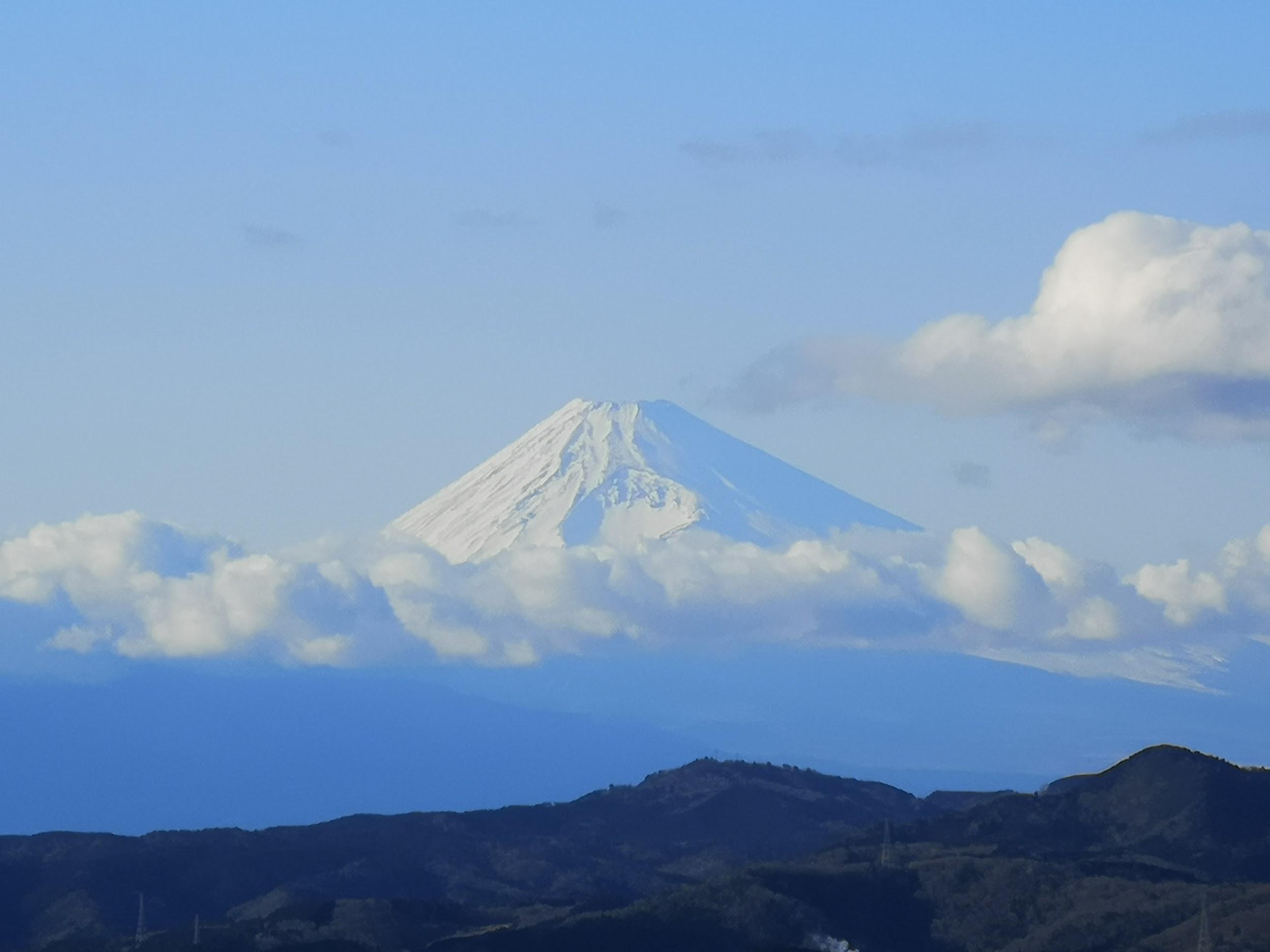
Closeup of Mt Fuji

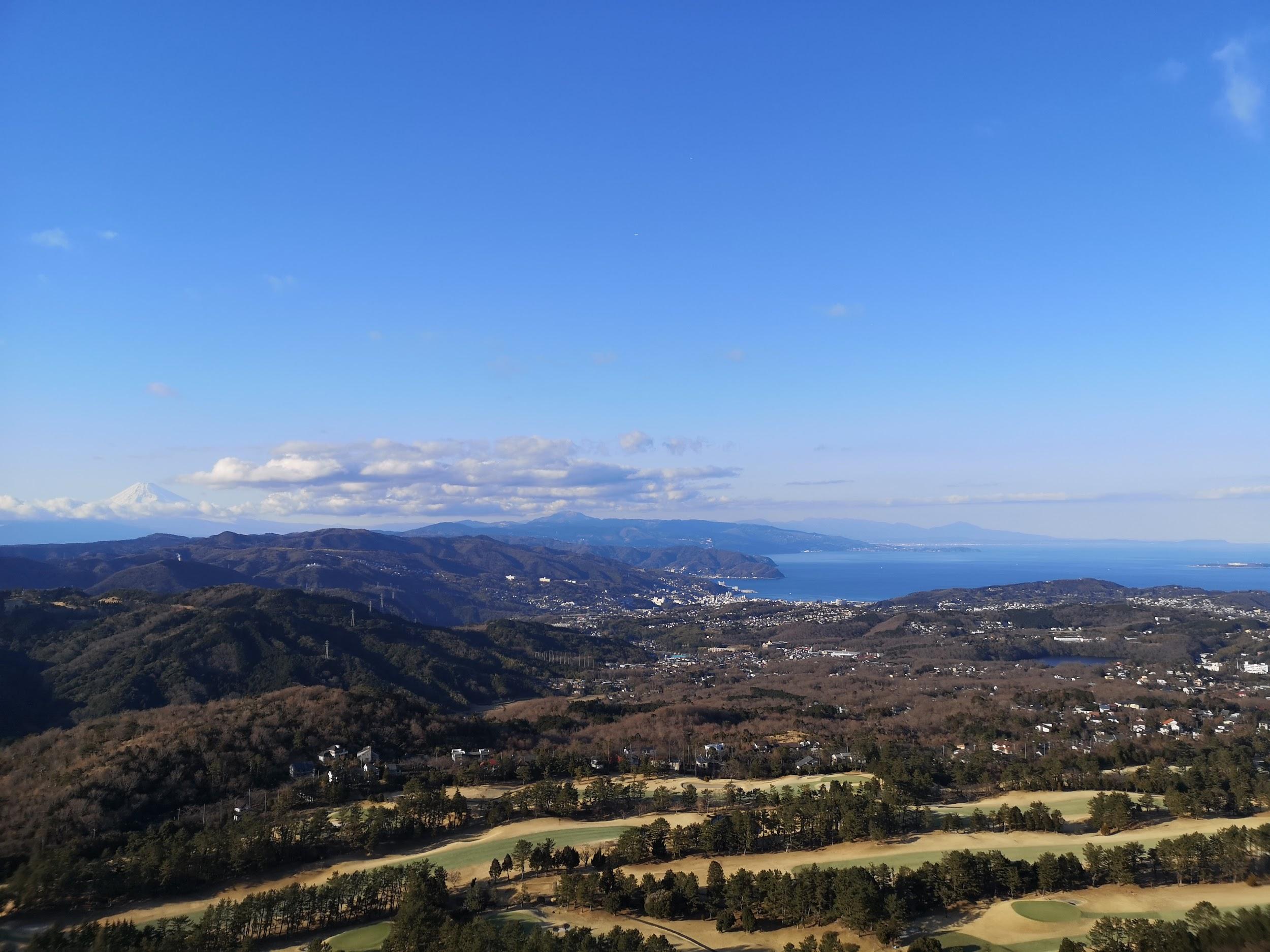
After a quick bite, I set off again. It took me only ten minutes to reach the top of Mt Yaeyama 八重山. There was a small arbour, but the view was somewhat obstructed by trees. I started walking down, and less than ten minutes later I came to another arbour and lookout point. Here, the view was top notch; arguably one of the best in the Tokyo area. From left to right, I could see the Tanzawa mountains, Mt Fuji, Mitsutoge, Mt Ogiyama and Mt Gongen.

View to the West of Mt Ogiyama and Mt Gongen

View from the Mt Yaeyama observatory

I left the viewpoint at 11h30. There are several paths down the mountain, but they all meet up lower down; some were closed due to typhoon damage. Once I reached the base of the mountain, the path followed a stream through the forest. At times, the sunlight filtering through the trees was magical. Very soon, I reached a road, and it took me another 45 minutes to get back to Uenohara station.

Magical forest at the end of the hike

NEXT UP: Mt Bukka (Tanzawa Mountains) in Kanagawa