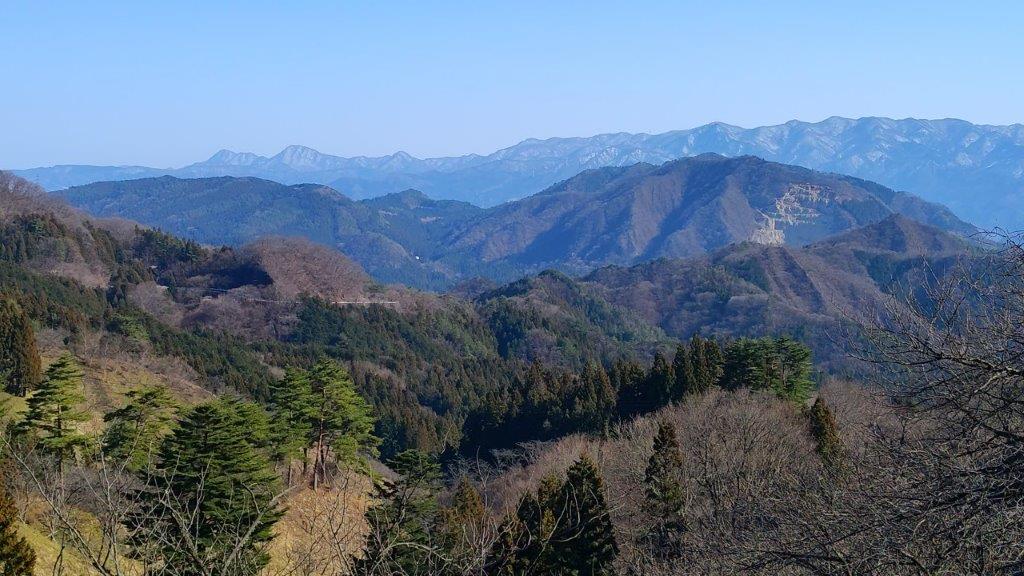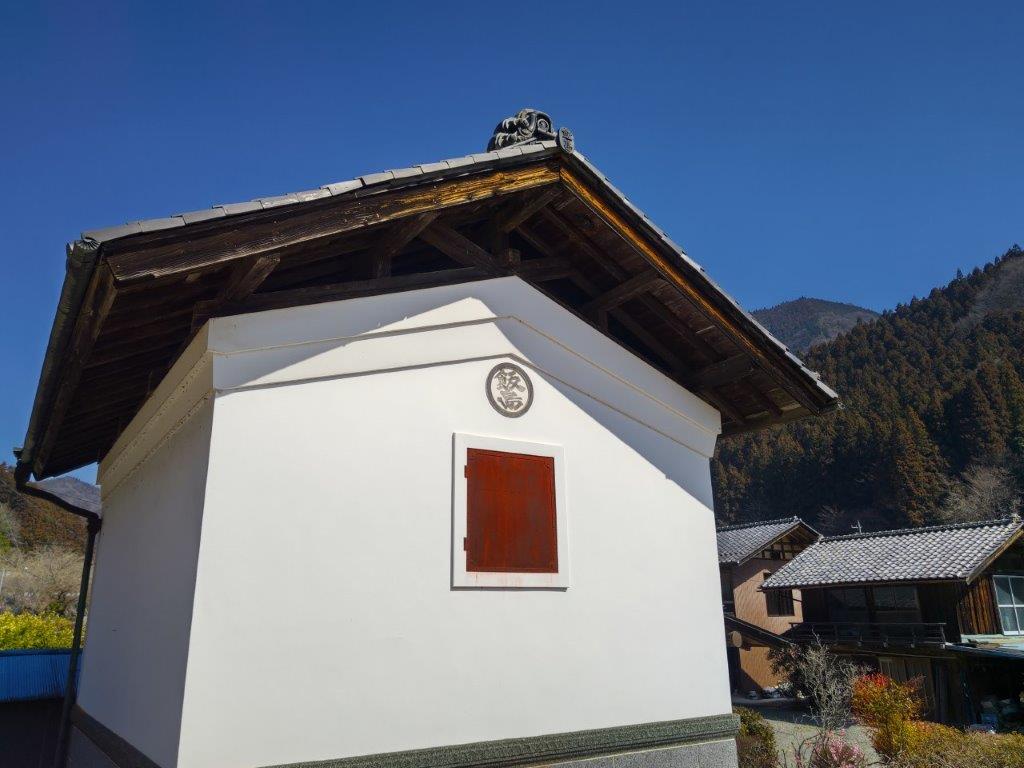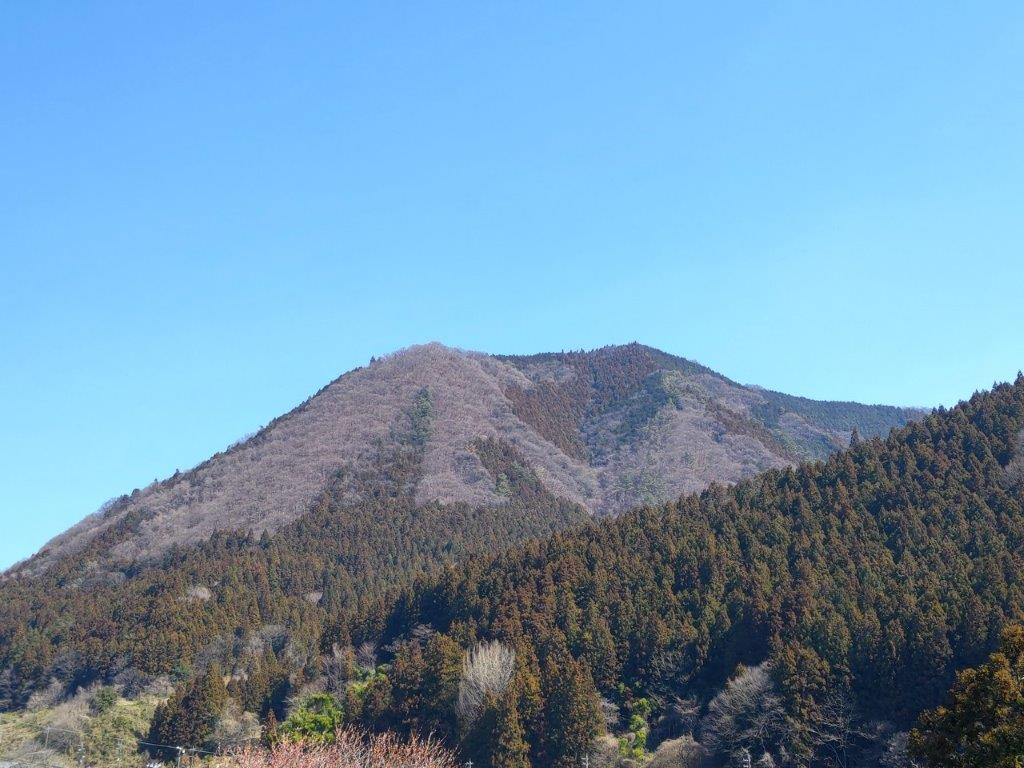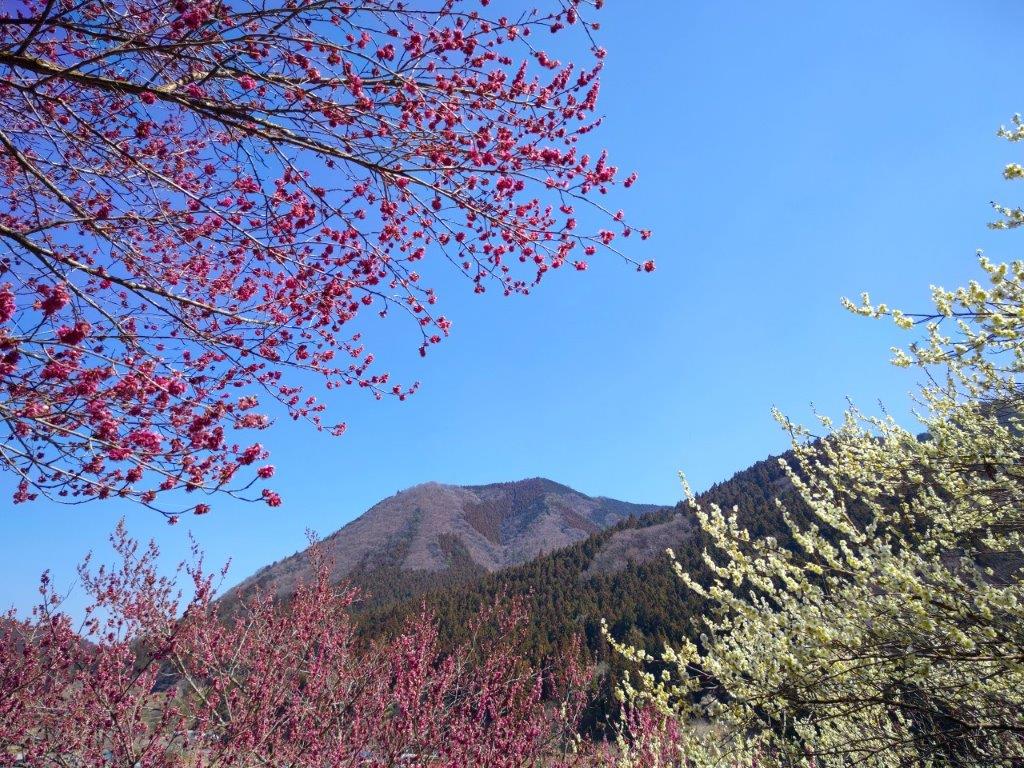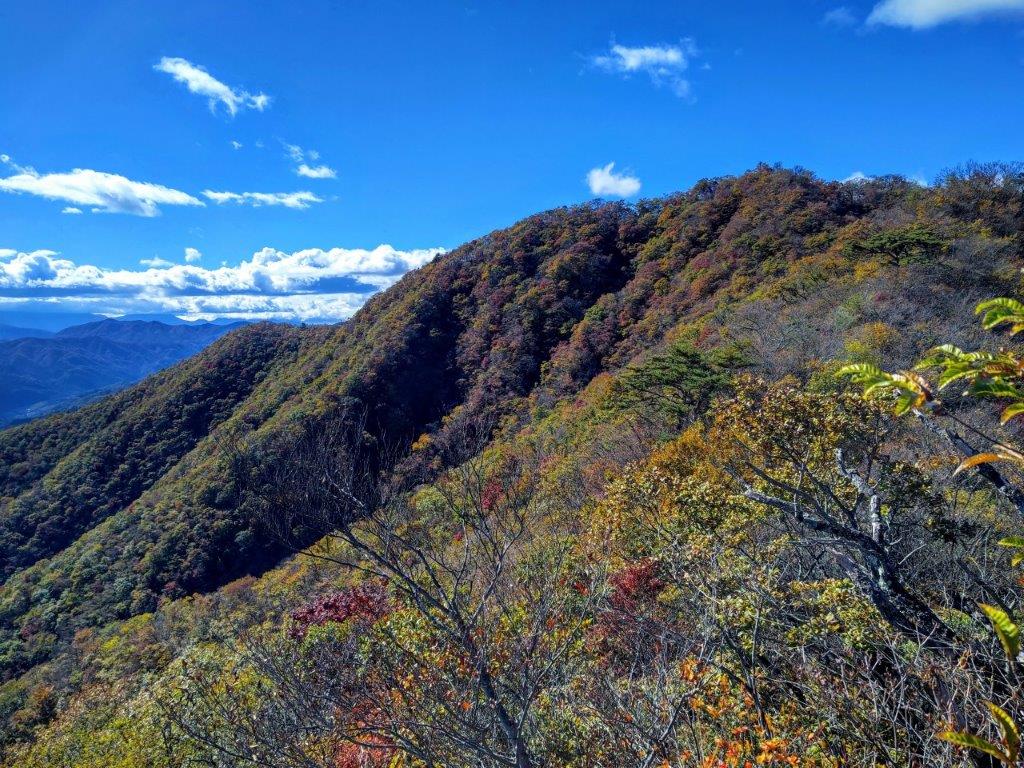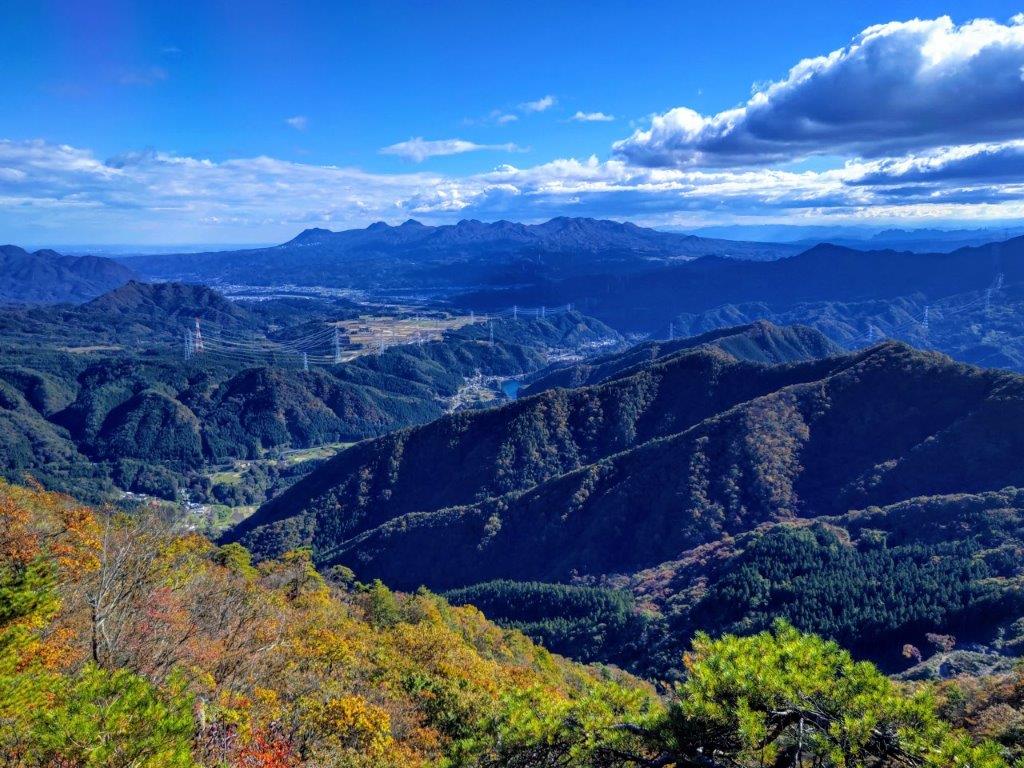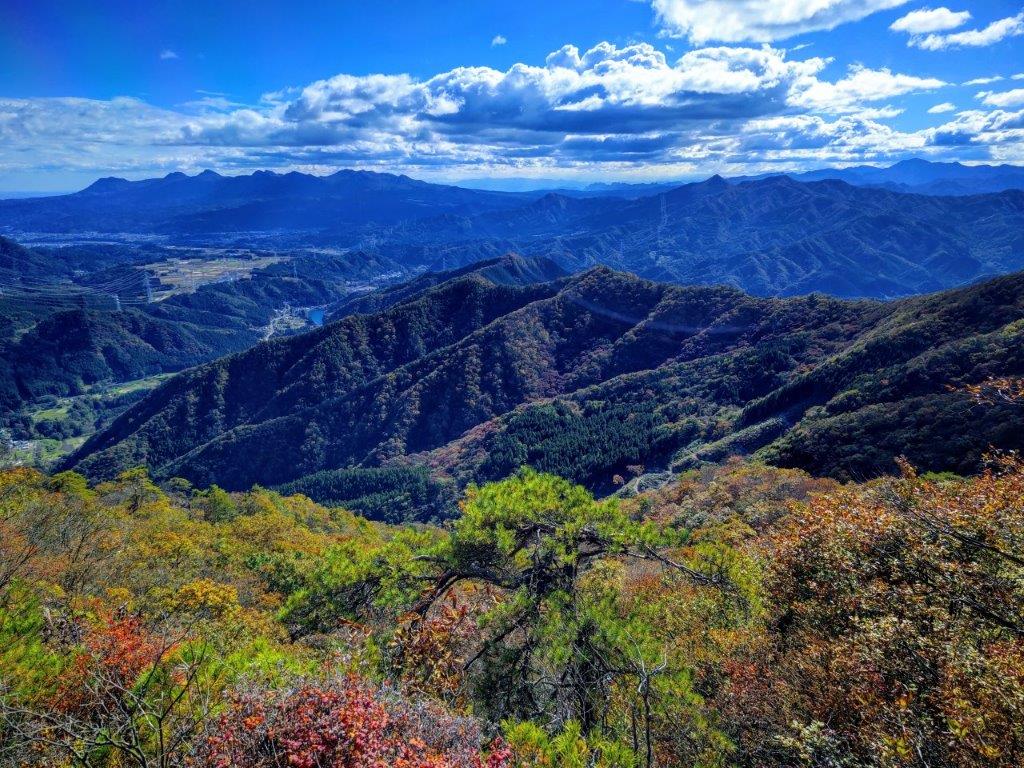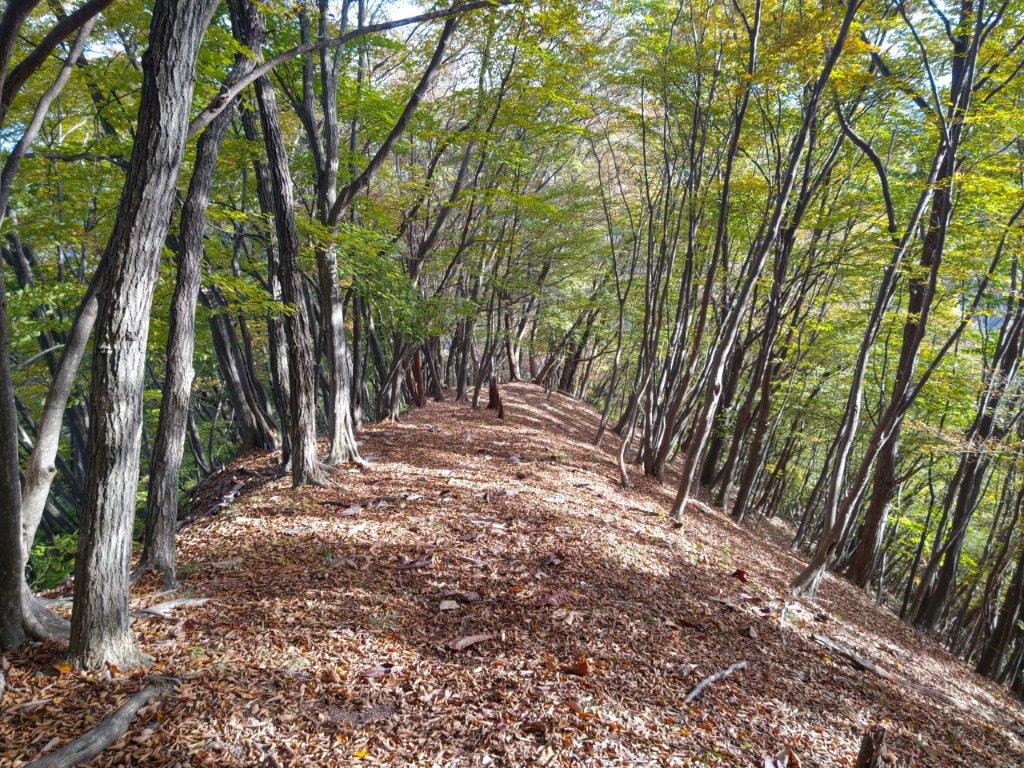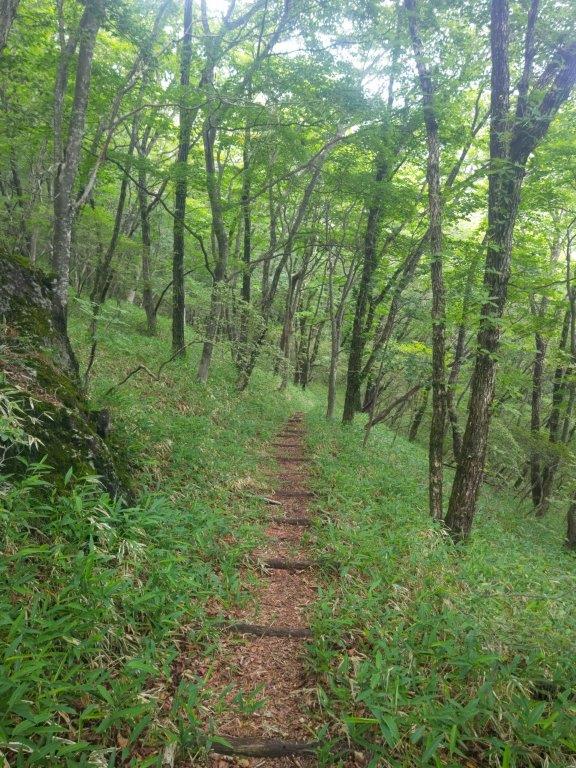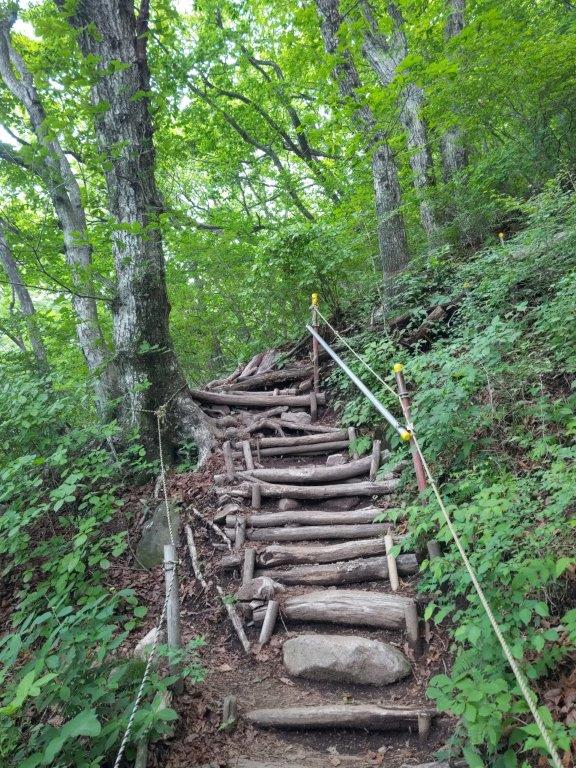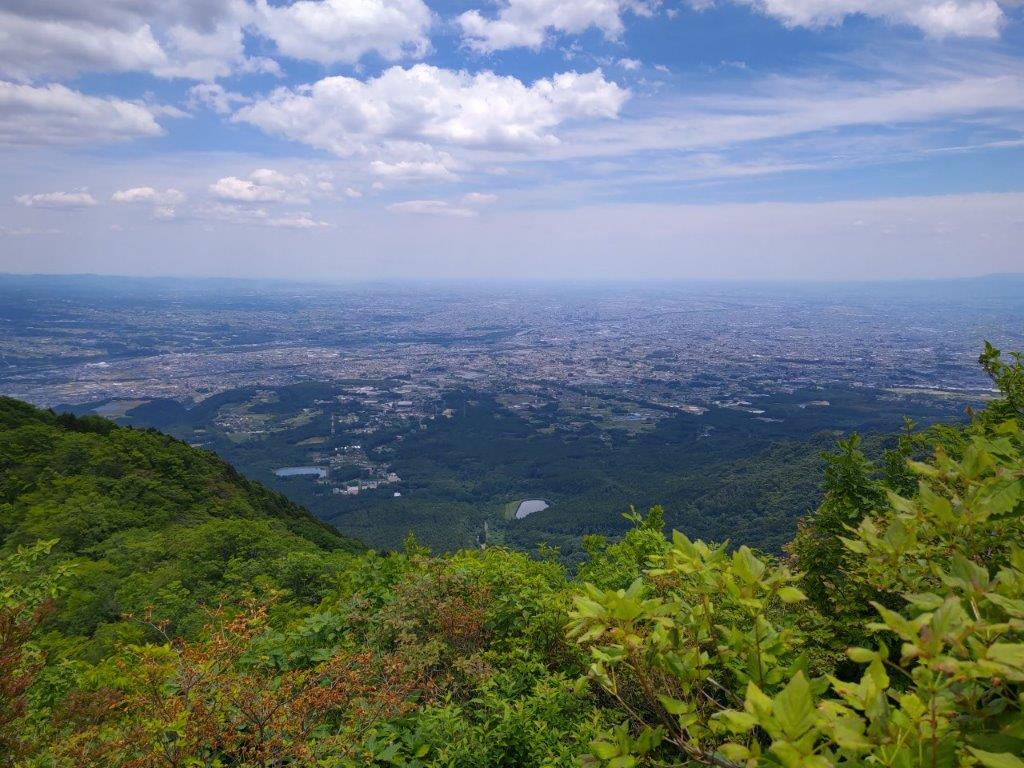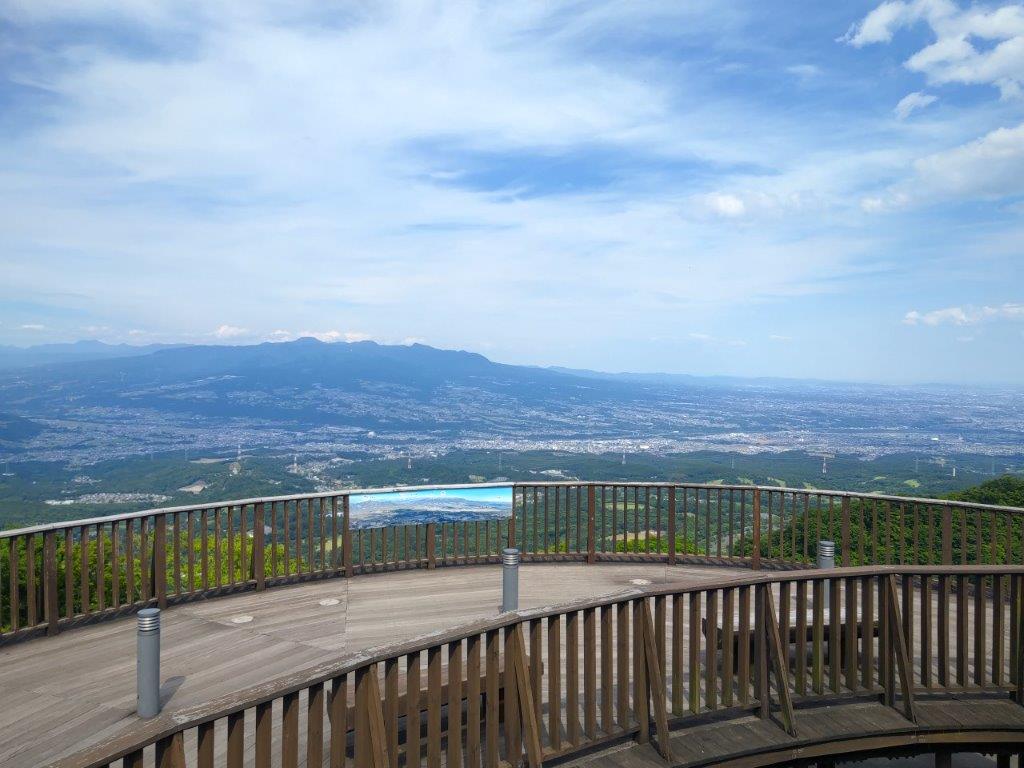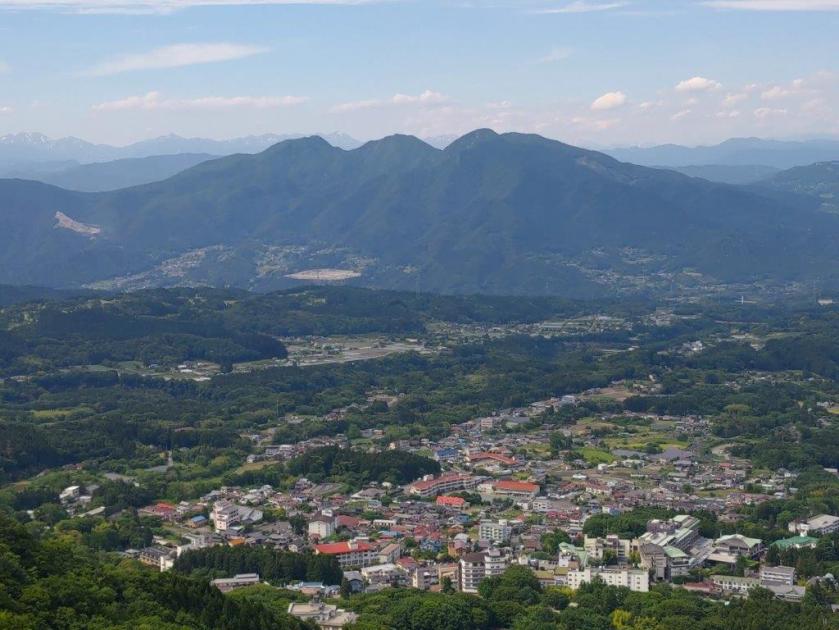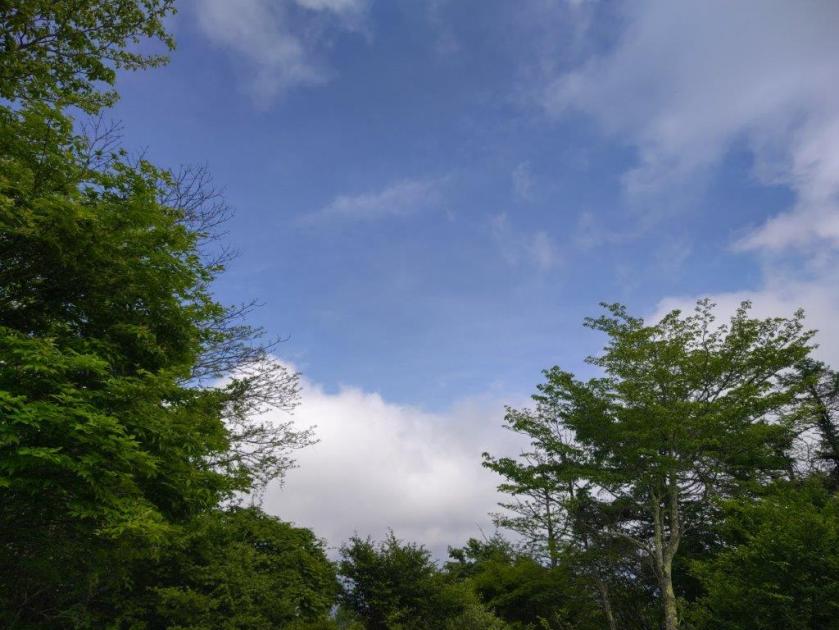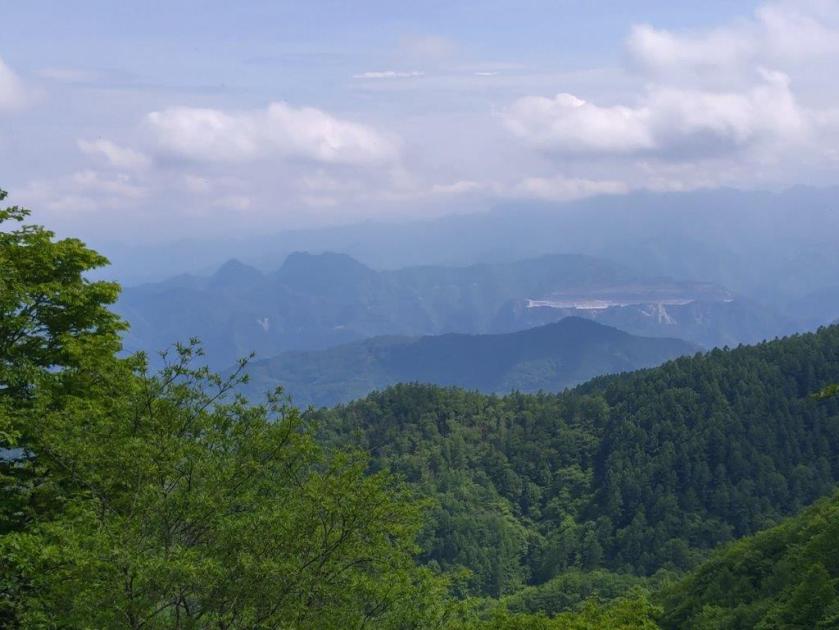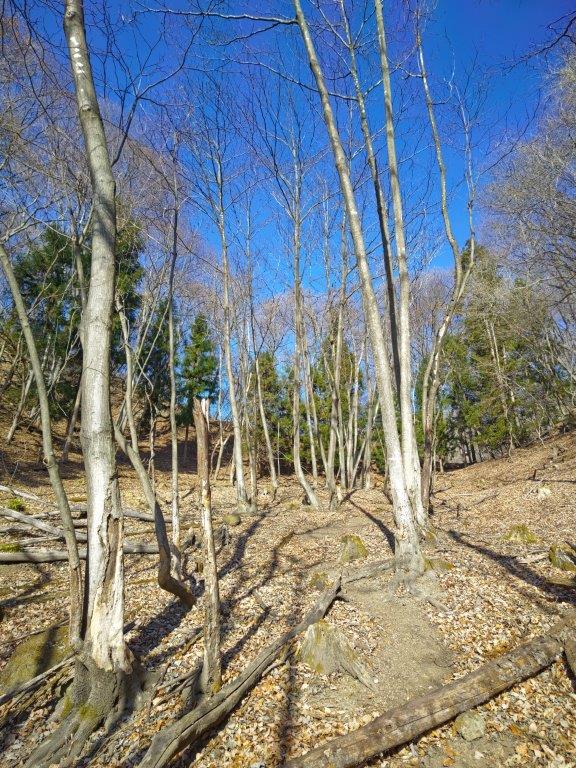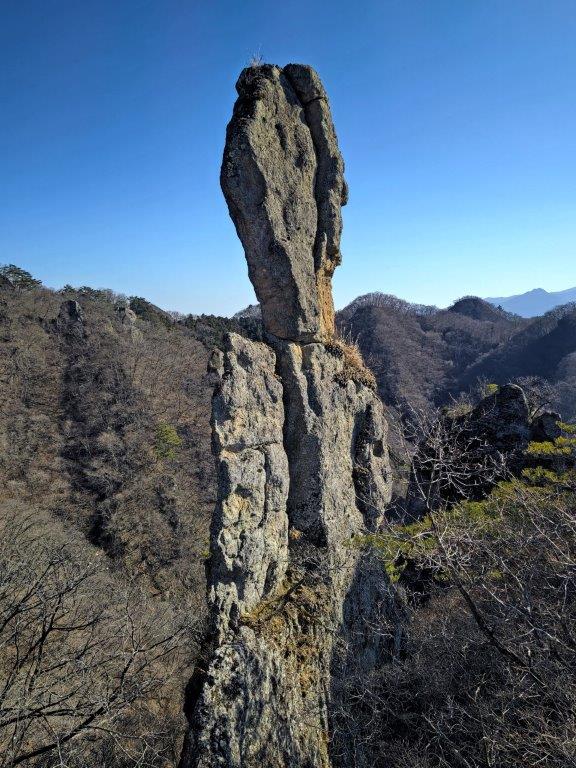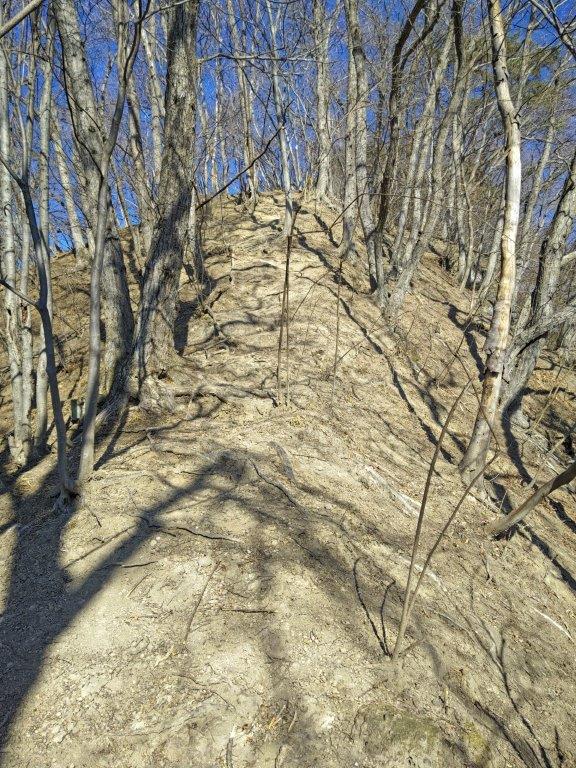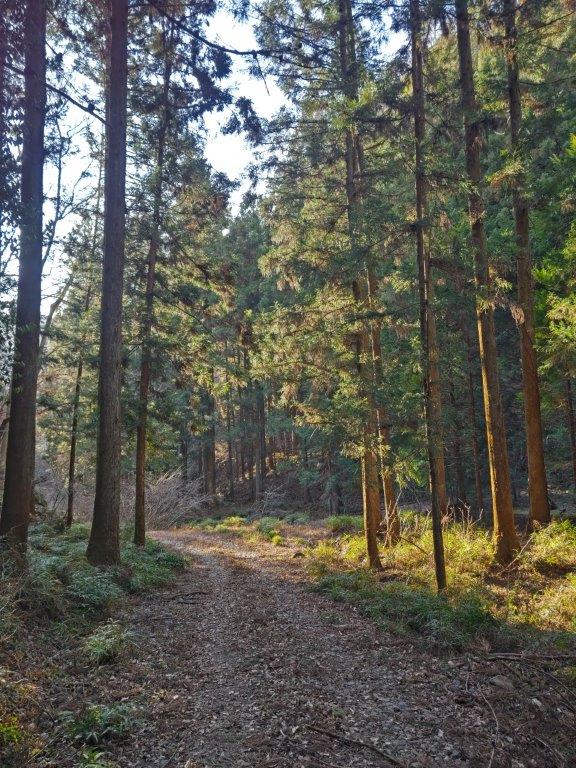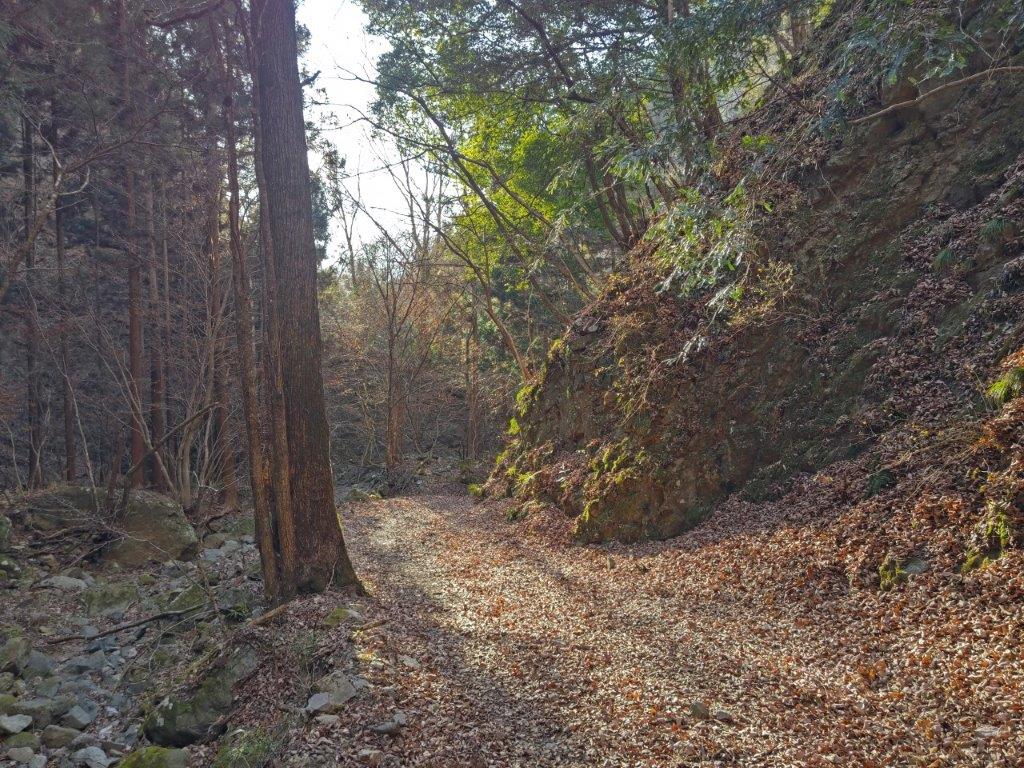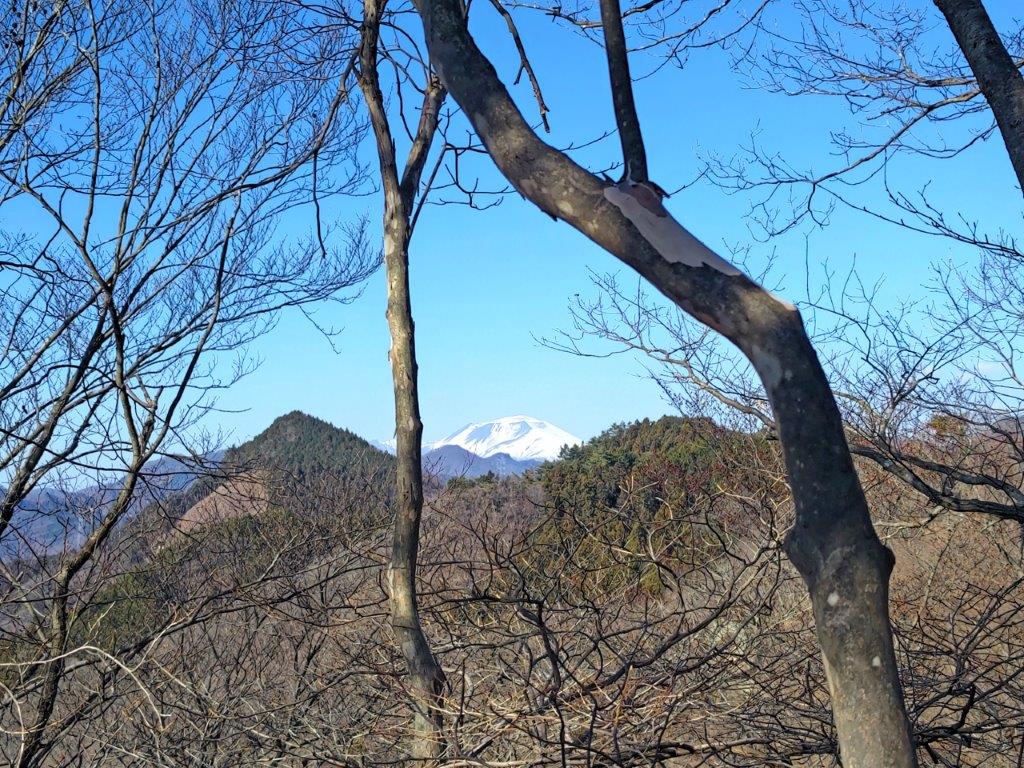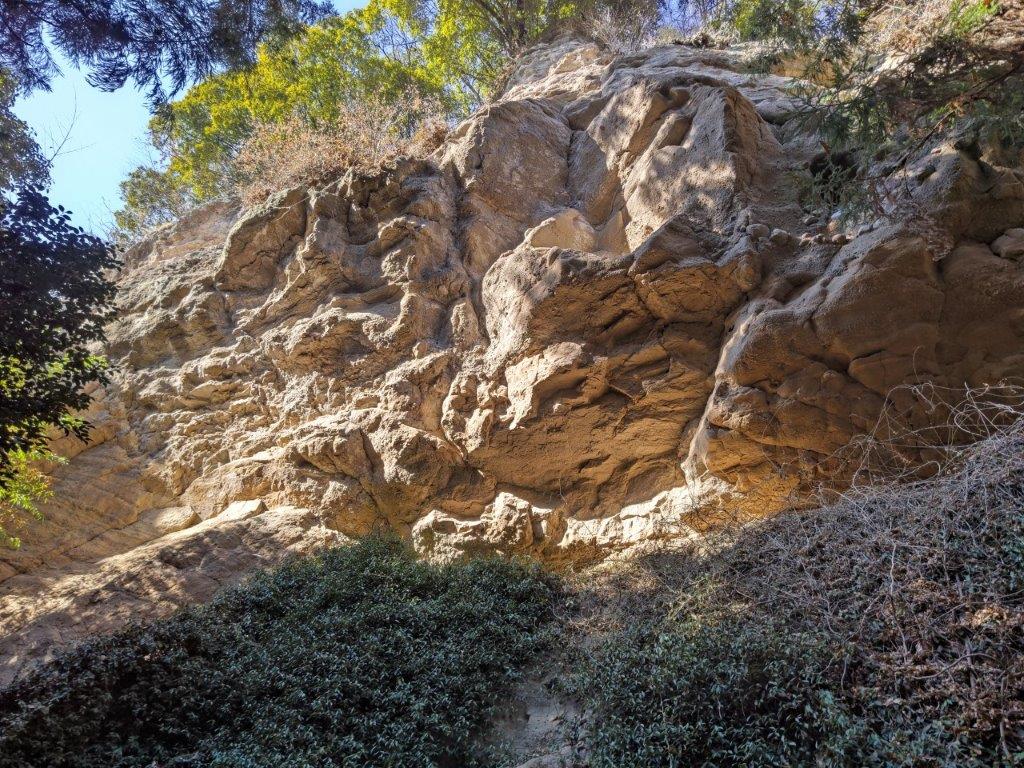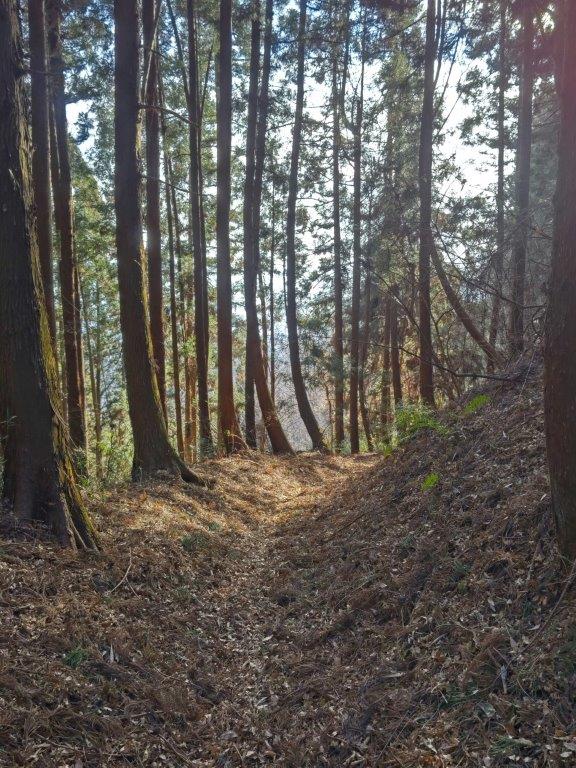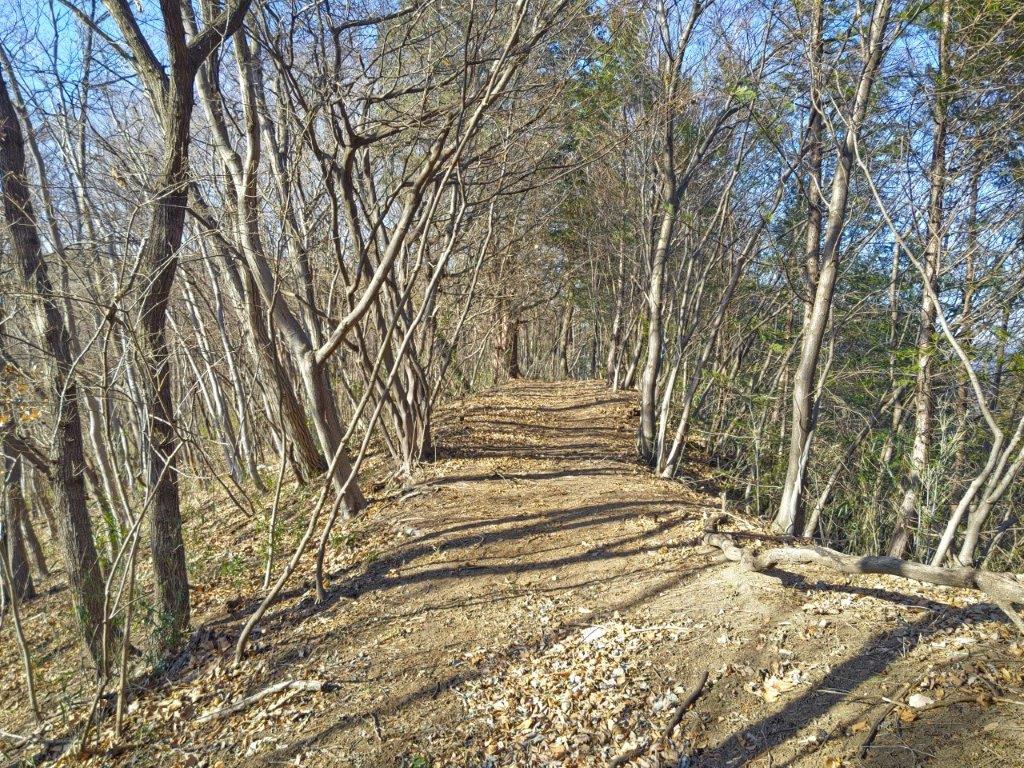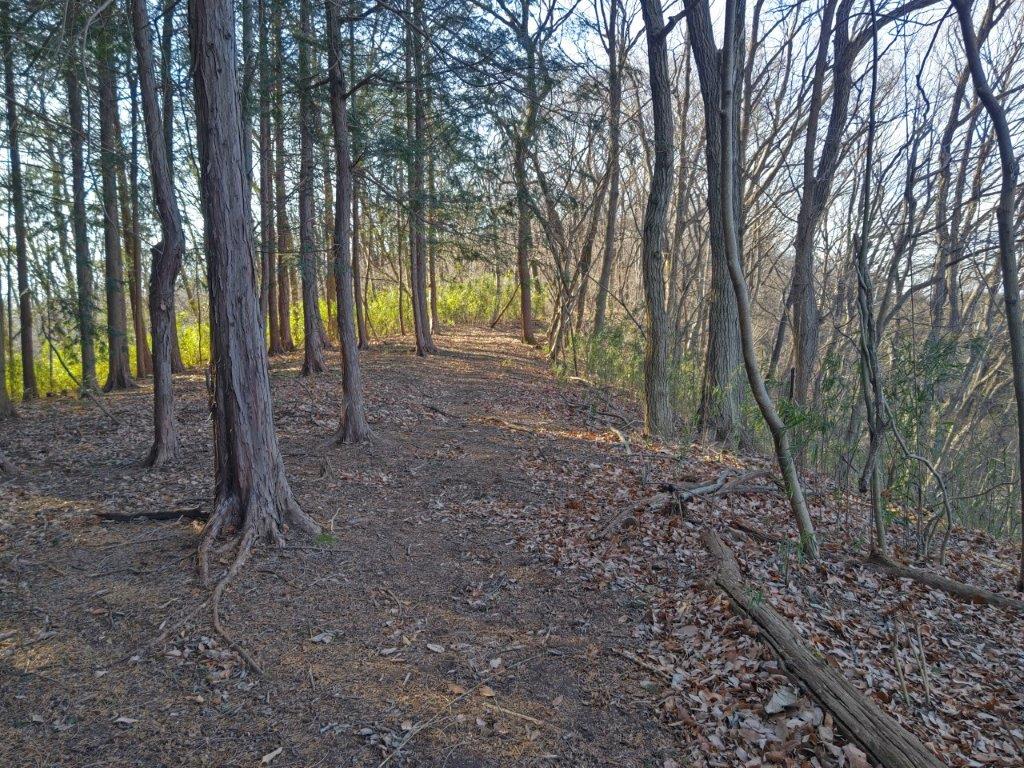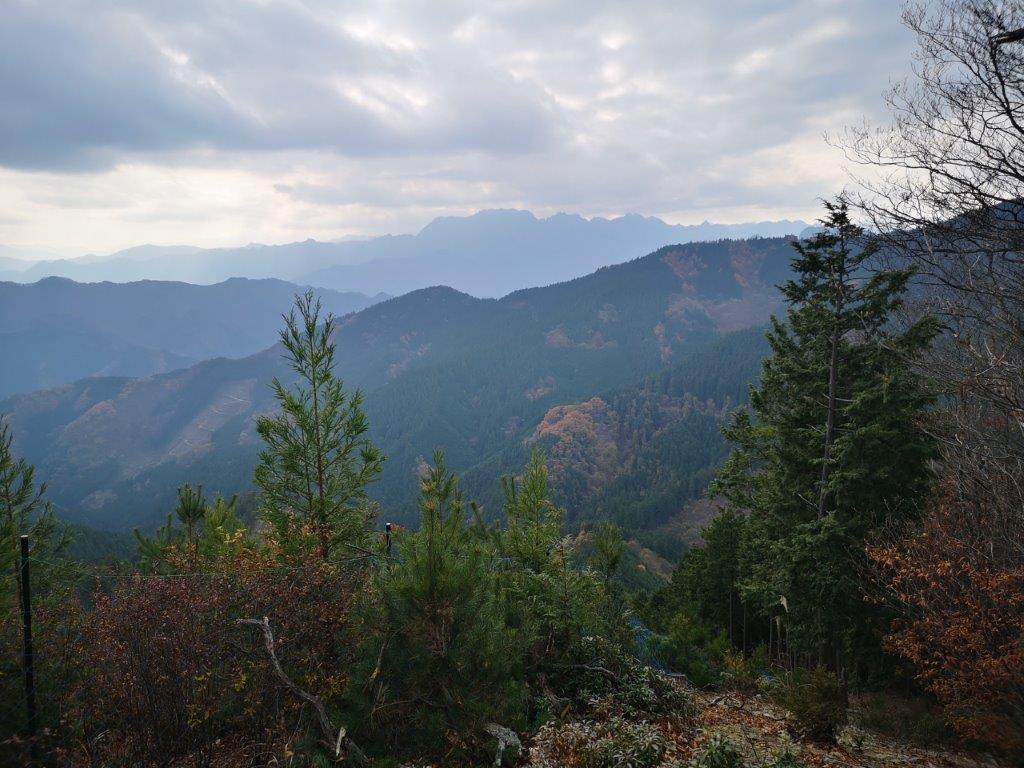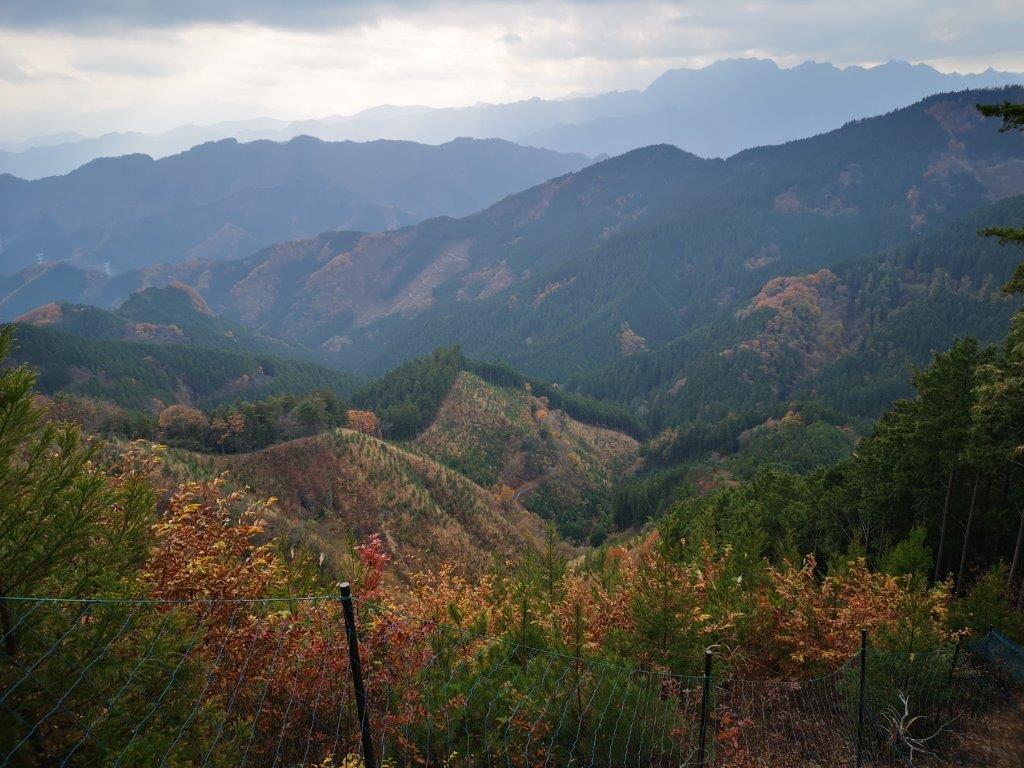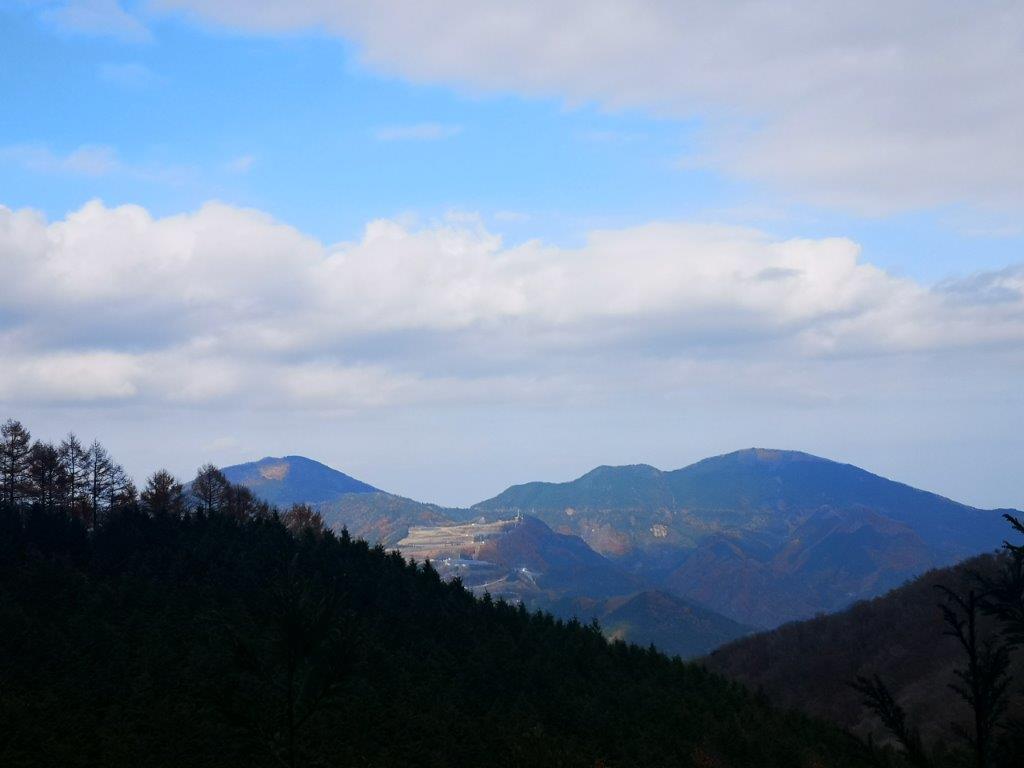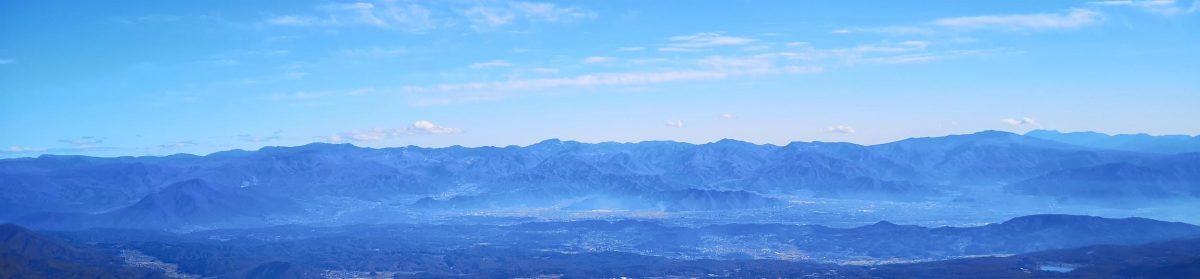
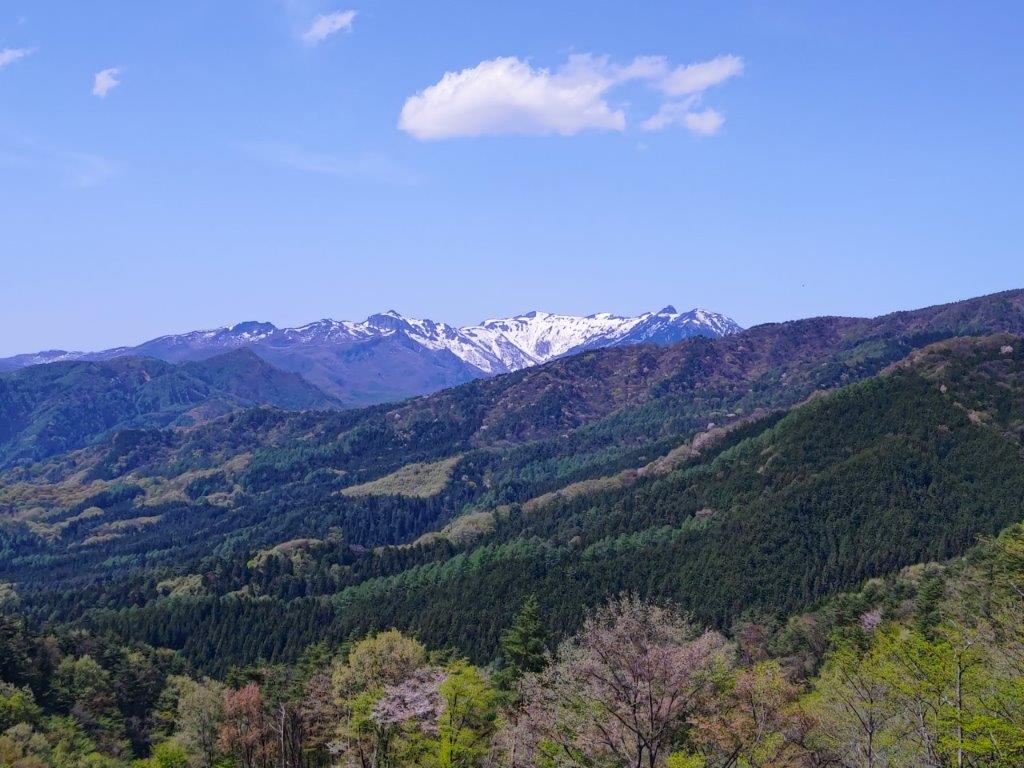
Mt Amagoi (1068m), Numata City, Gunma Prefecture, Monday, May 5, 2025

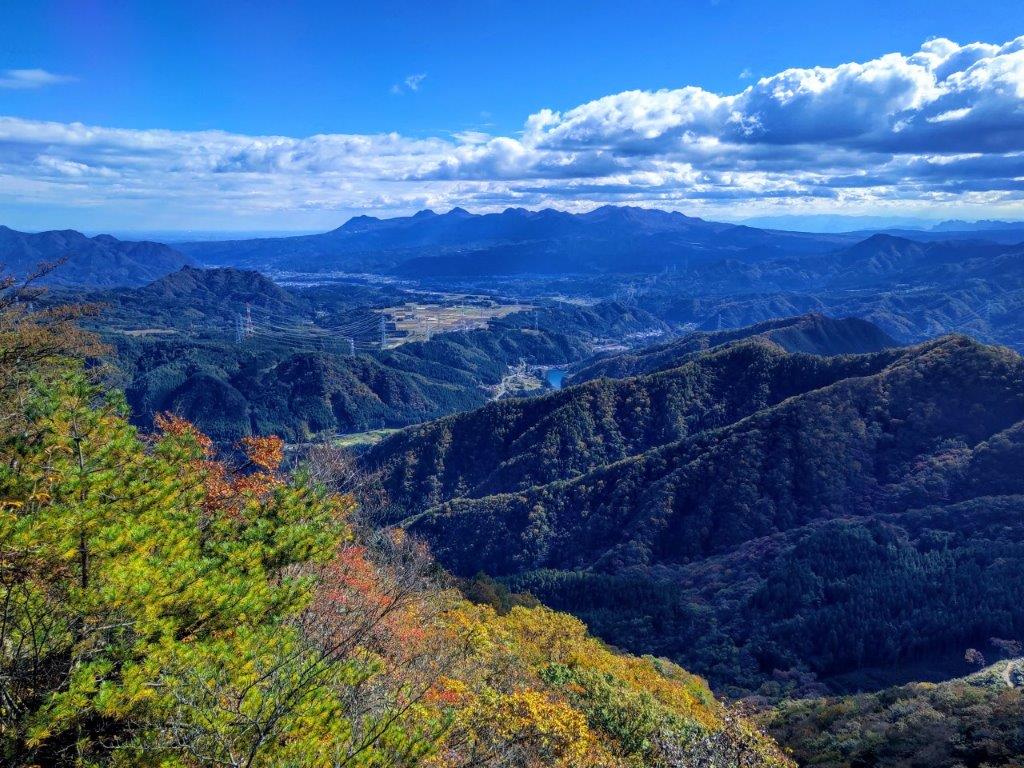
I found out about this mountain, situated between Mt Hotaka and Mt Akagi, while contributing to the Japanwilds hiking map for Tanbara Highland. Apparently most hikers go up and down the same route from the parking on the south side, but looking online, I saw it was possible to descend on the west side and end at Kawaba Den-en Plaza, one of the most famous roadside stations in Japan. Although the hike seemed somewhat short, the panoramic view from the summit motivated me to travel to a faraway and yet unexplored area.

For subscribers, read this Post on Hiking Around Tokyo for a better viewing experience and the latest updates
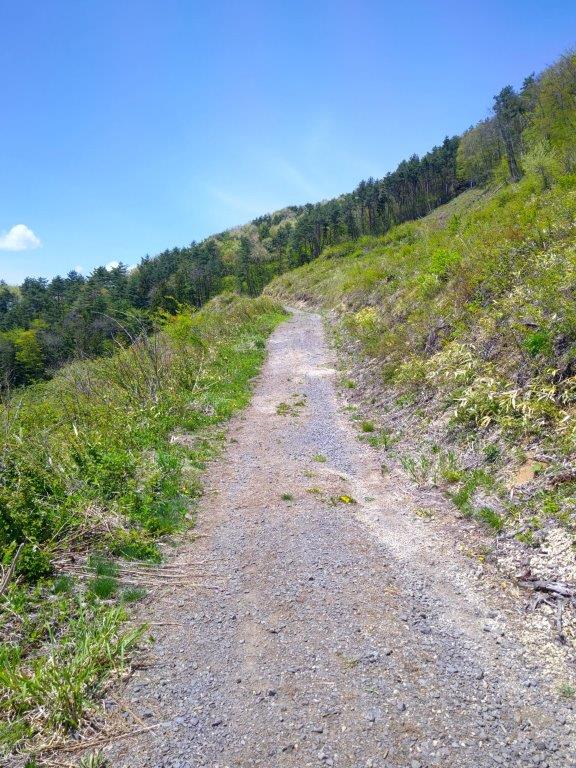
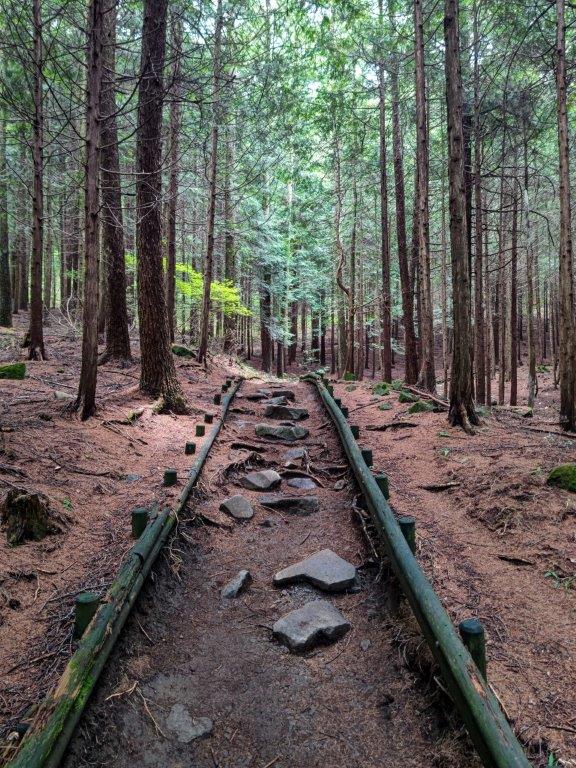
Start of the Hike (left) Entering the Forest (right)

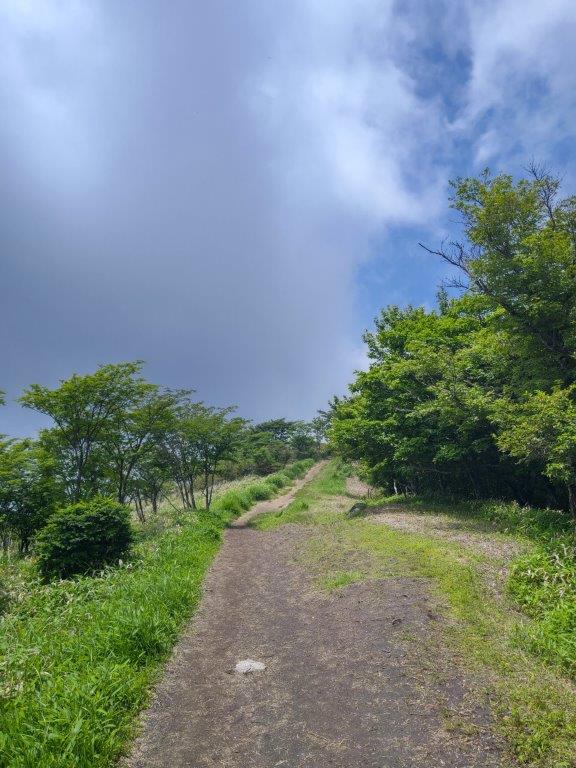
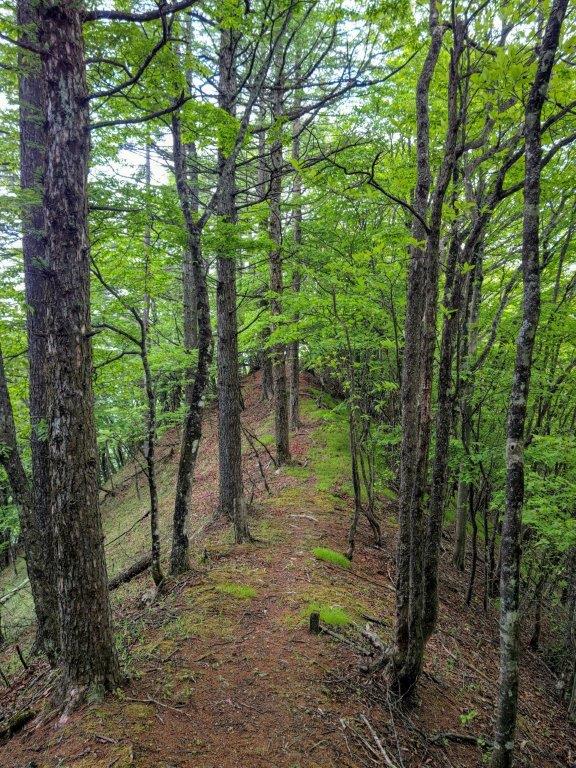
Walking under the New Green (right) End of the Hike (right)

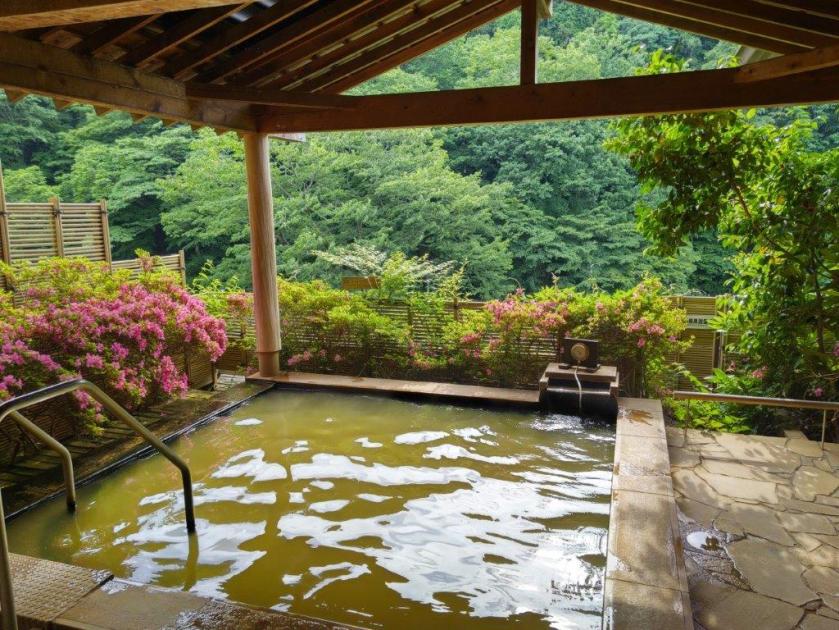
To get there, I’d ride the Joetsu Shinkansen to Jomon Kogen, and from there, ride a bus to a stop located one hour on foot from the trail entrance. For the return, I could catch a bus from the roadside station for Numata station, and there, ride the local Joetsu line to Takasaki station where I could catch a shinkansen for the short ride back to Tokyo. If time allowed, I could take a hot bath at Kawaba Den-en Raku Raku onsen before heading back. The weather was supposed to be sunny and warm, typical weather for May. I was looking forward to a relaxing Golden Week Hike and getting some new views.

Find Japan Hiking Maps on Japanwilds and subscribe to our newsletter

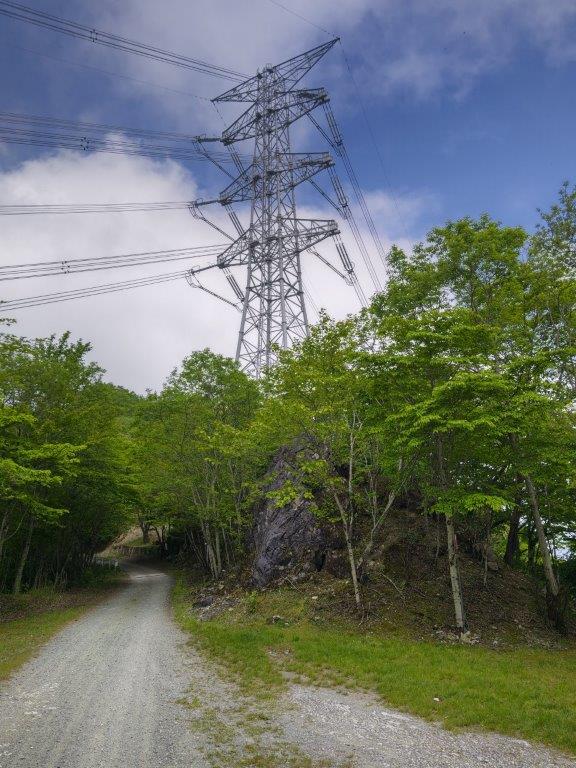
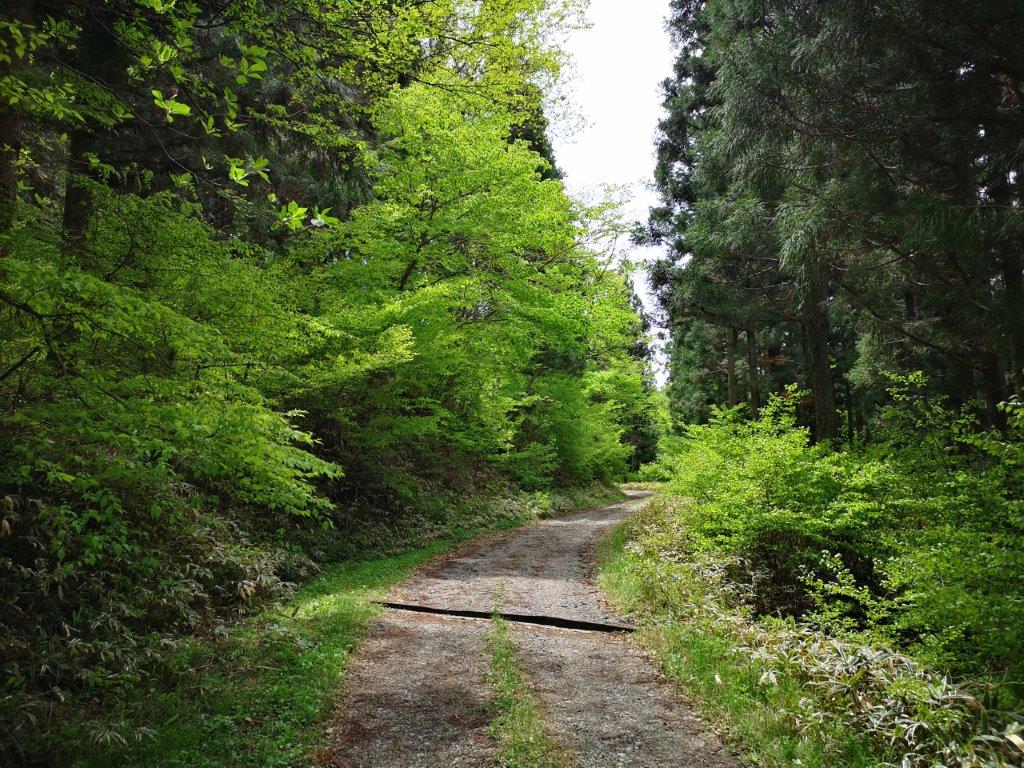
Dirt Road at the Start of the Hike

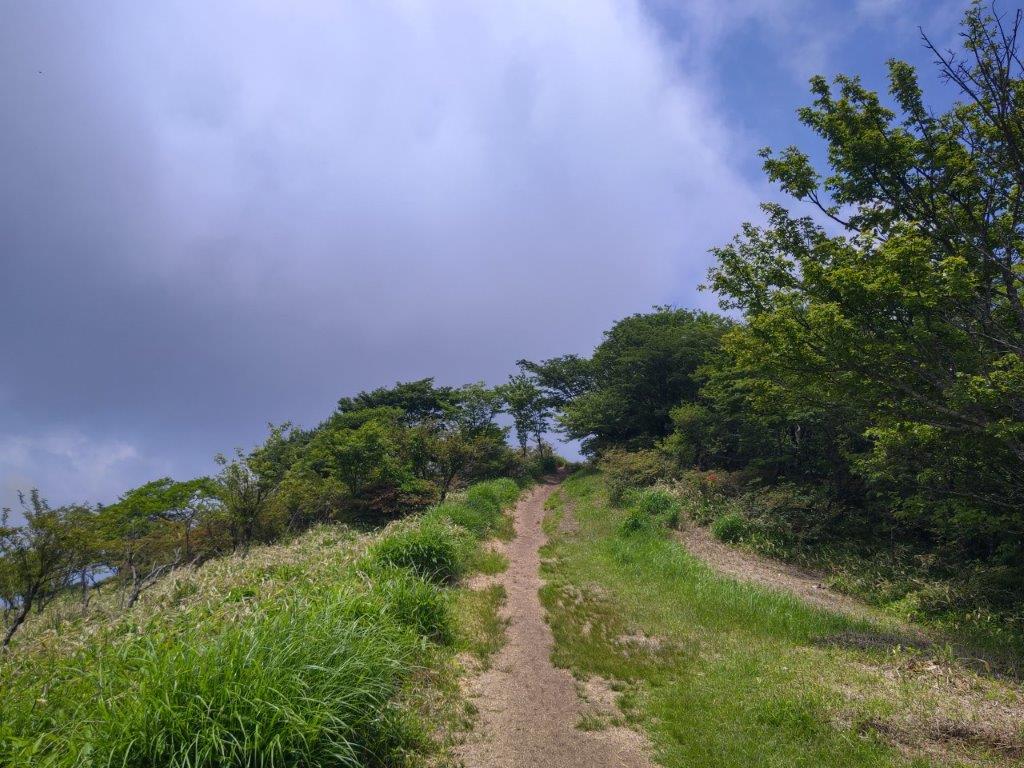
Heading to the Sky

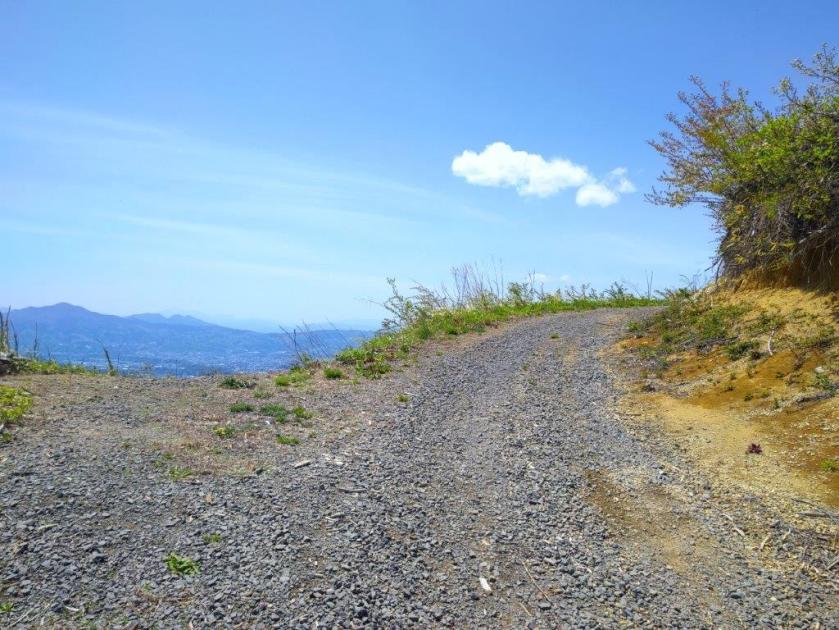
It was already quite warm as I got off the bus in the middle of the countryside. Since it was 11am, I started almost right away, up a winding road through fields and then forest. Half an hour later, I passed Ishiwari-zakura (石割桜), a massive cherry blossom tree I had hoped to catch in full bloom, but was already well into green leaves stage. After passing a junction where a steep road led down to a parking lot on the left side, I arrived at the official start of today’s hike, a dirt road hugging a deforested mountain side.
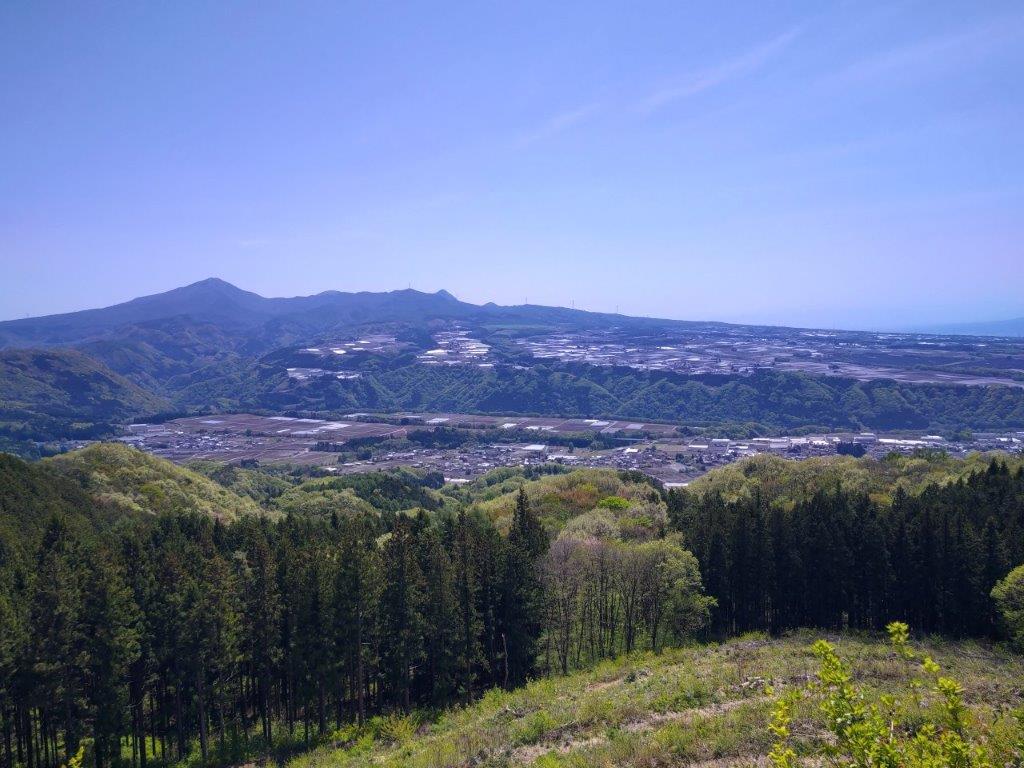
Mt Akagi’s Western Flank
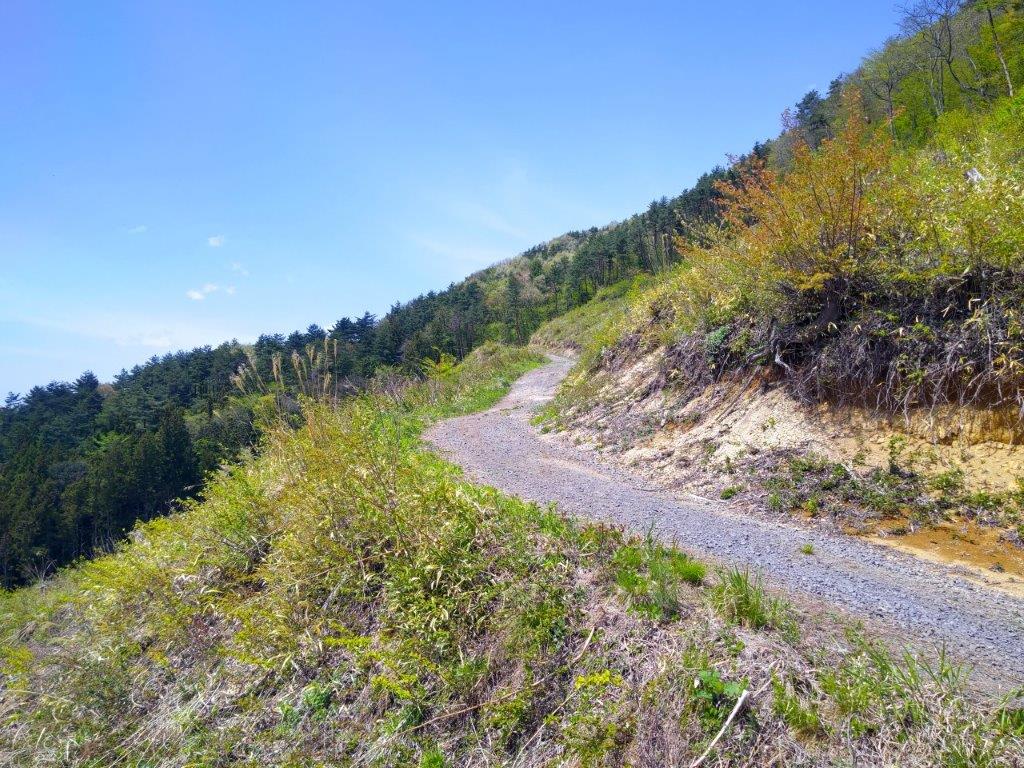
A Pleasant Start to the Hike

I was excited to get a sweeping view at such an early stage: to the left was Mt Akagi, it’s long western flank clearly visible from this angle; on the right side, I could see Mt Komochi, surrounded by Mt Haruna and Mt Okono in the back, bring back good memories from hikes from over ten years ago. After a pleasant panoramic along a mostly level road, reminiscent of alpine hikes, I re-entered the forest around 1230, passing between a couple of towering red pines.

Mt Komochi (center), Mt Haruna (back left) & Mt Okono (back right)

Looking back at Mt Haruna before Entering the Forest

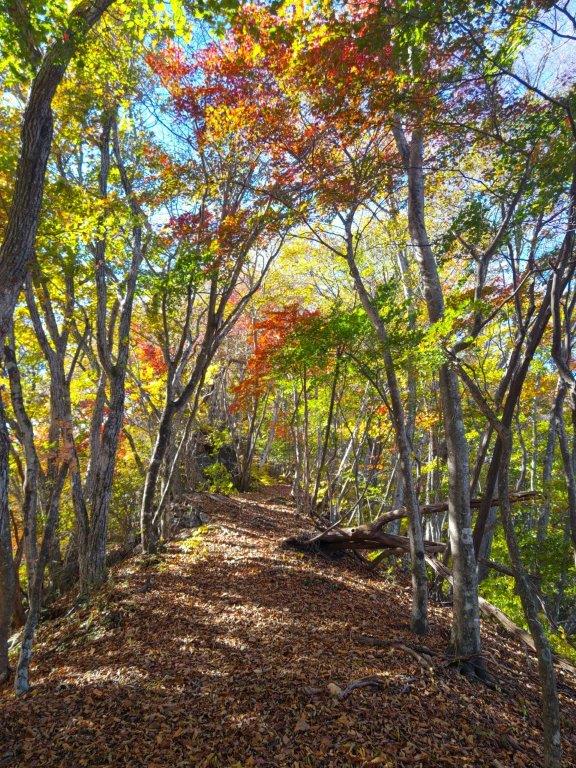
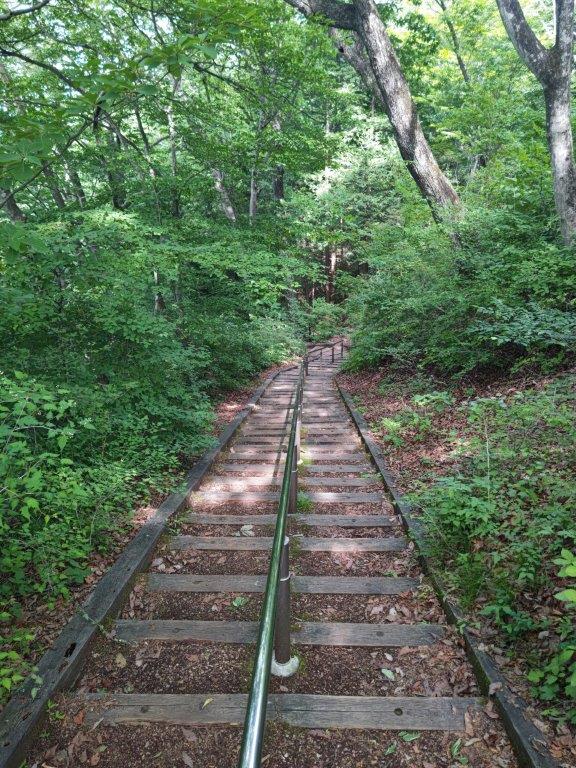
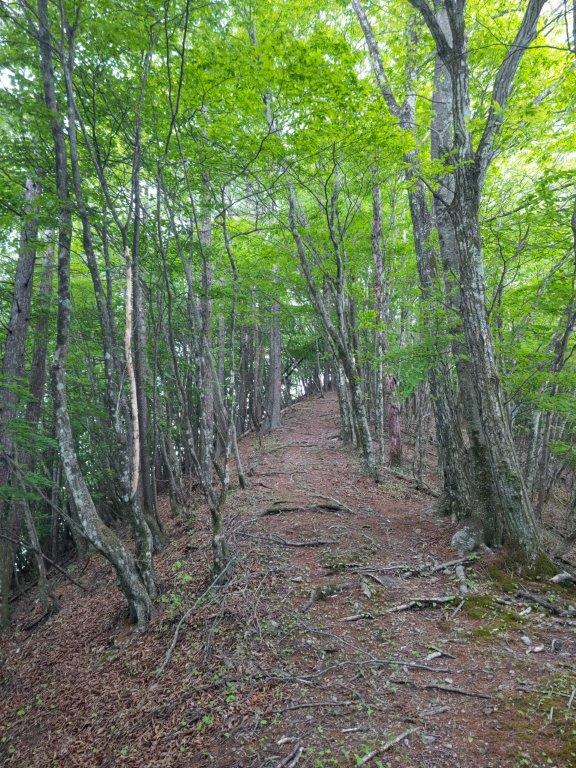
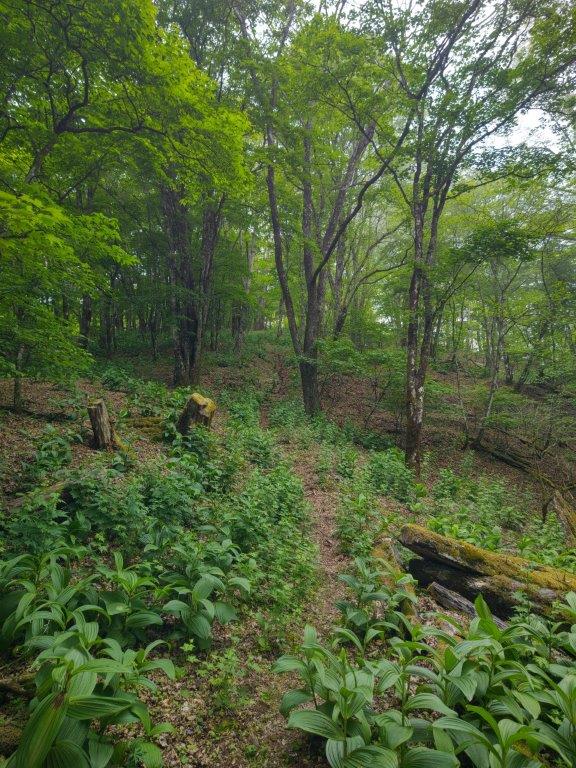
I was stunned by the profusion of the new green of Spring in all directions; at one point, I witnessed a flurry of white blossoms blowing across the path, coming from some unseen mountain cherry tree. After a short switchback section, I reached a flat section along a saddle on the mountain. Although I was now completely in the forest, I enjoyed the peaceful surroundings, few hikers venturing on this not so famous peak.

A Level Trail through a Peaceful Forest

The Flat Top of Mt Mitsumine with the the Peaks of Joshin’Etsu in the Back

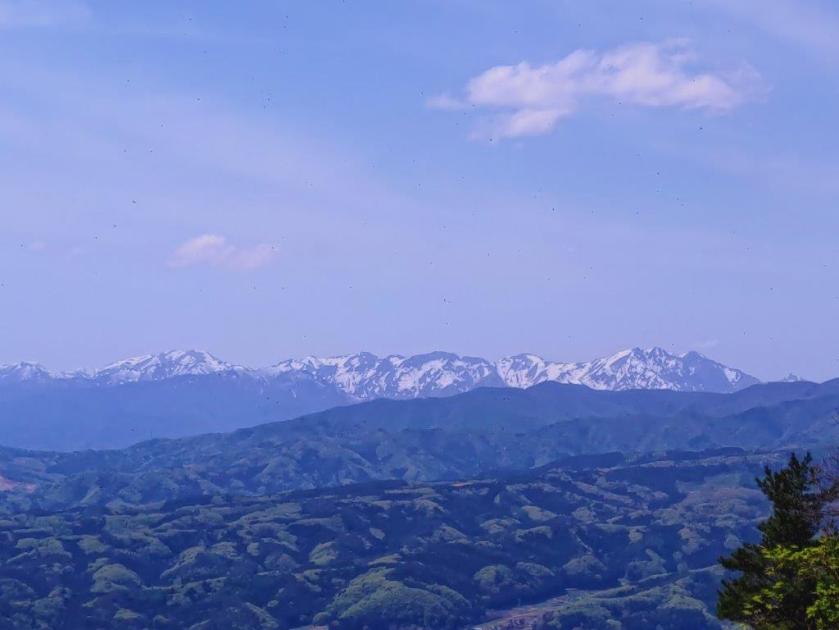
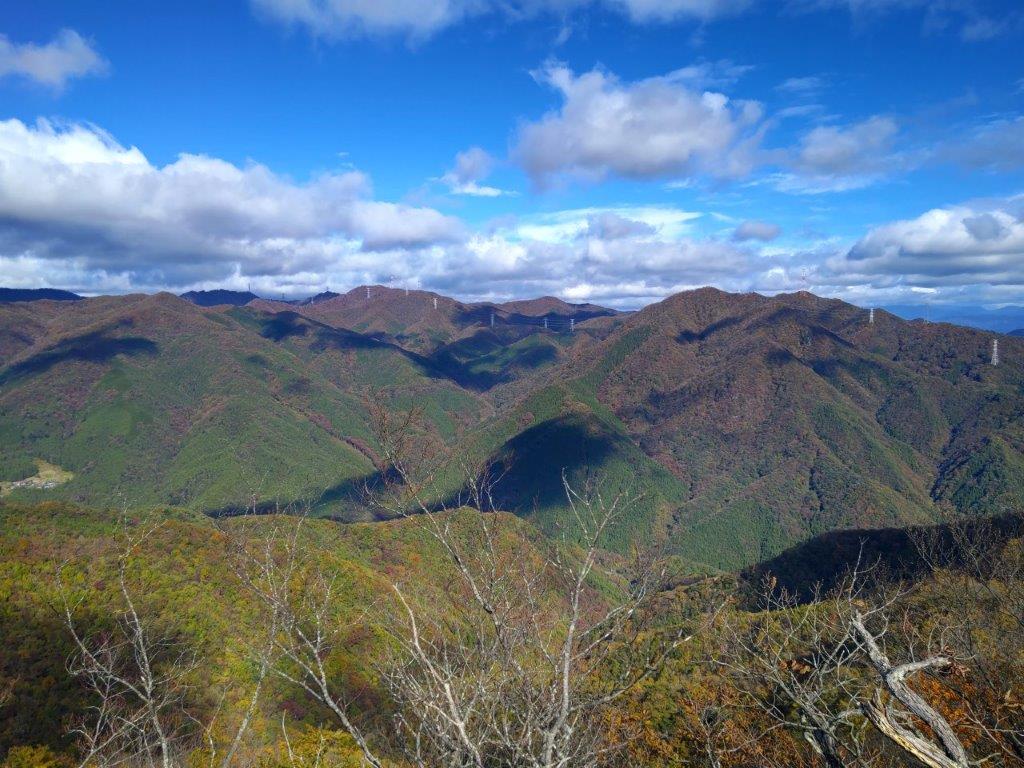
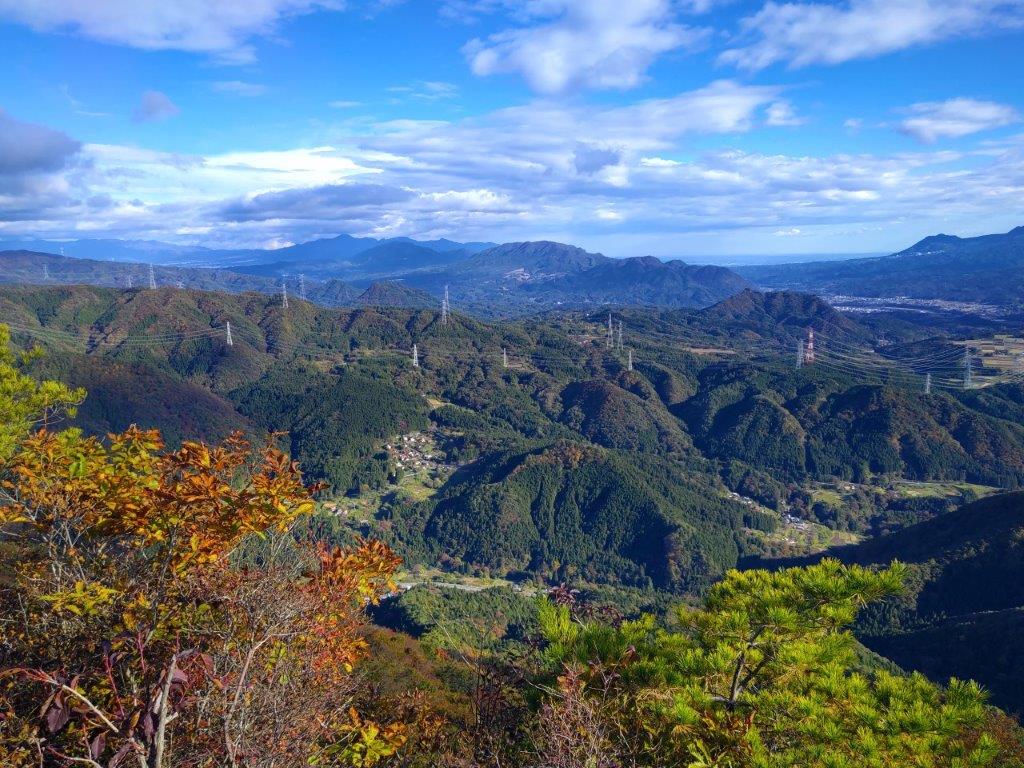
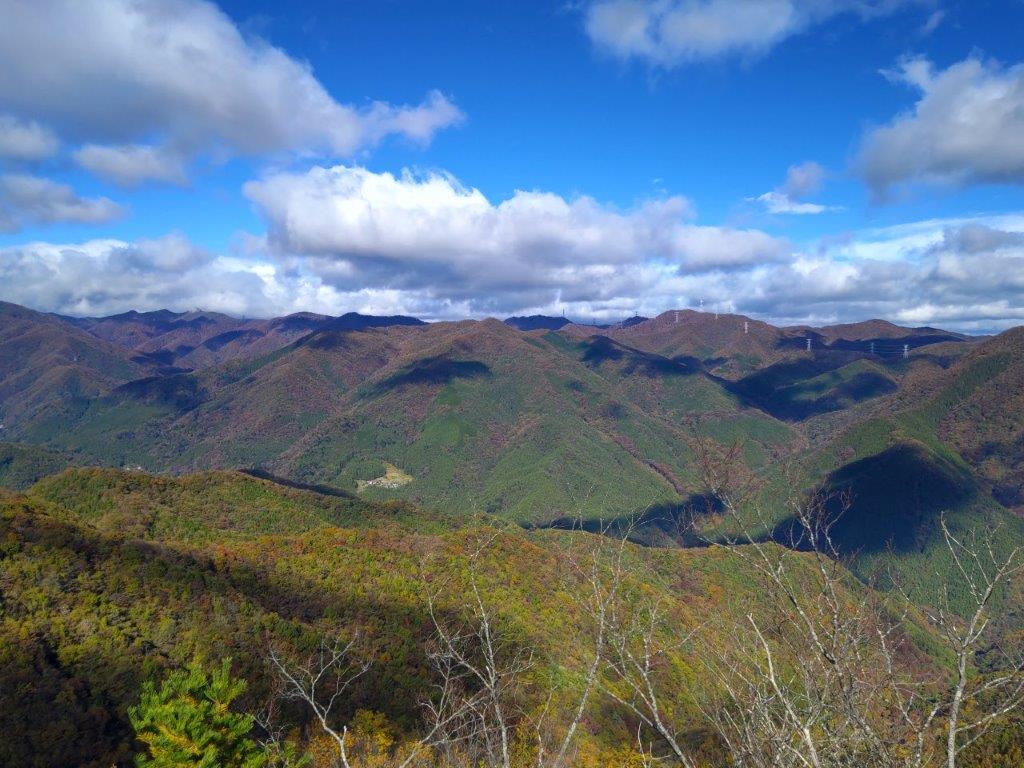
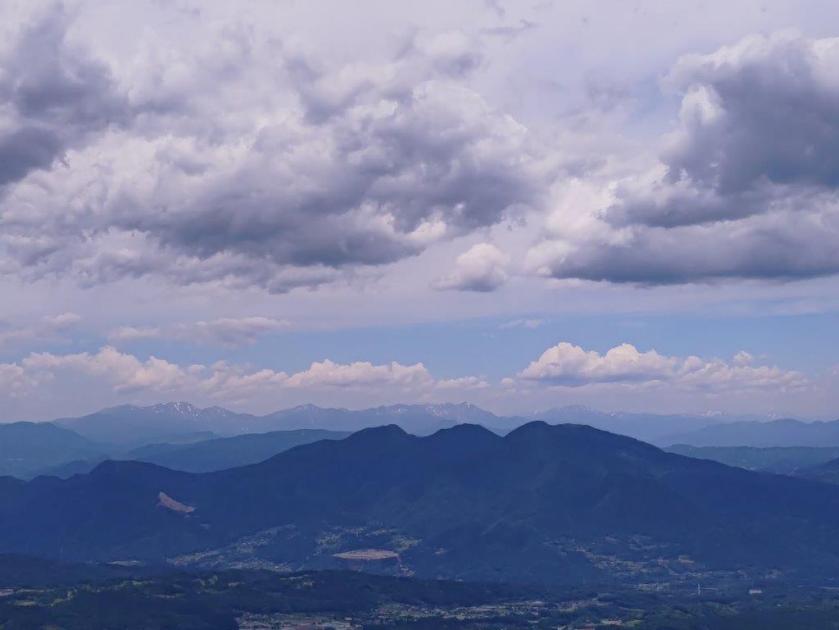
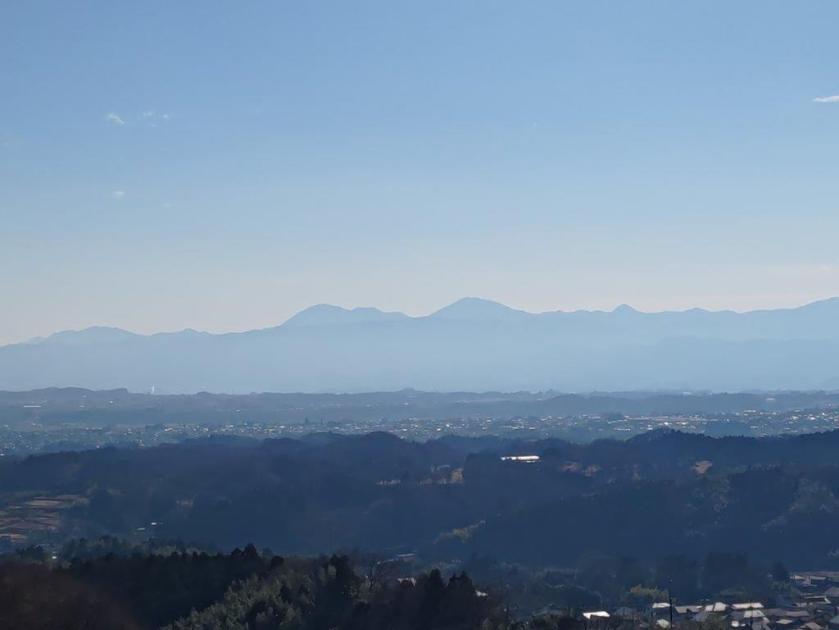
After a short climb, I arrived at a flat space, mostly free of vegetation on the southwest side, the top of Mt Amagoi (雨乞山 あまごいやま amagoi-yama), a fairly common mountain name in Japan, meaning “begging for rain”, something I definitely didn’t want to do, today being a perfect blue-sky day. Mt Akagi took up most of the south side; southwest was Mt Komochi again; I now had a new view on the west side where I could see the flat top of Mt Mitsumine, with behind, the highest peaks of the Joshin’Etsukogen National Park, most of them still in their winter clothes. Mitsumine is a popular paragliding spot and I happened to see a paraglider drift through the sky. It was exactly 1pm, so I sat on a bench and enjoyed lunch with a view.
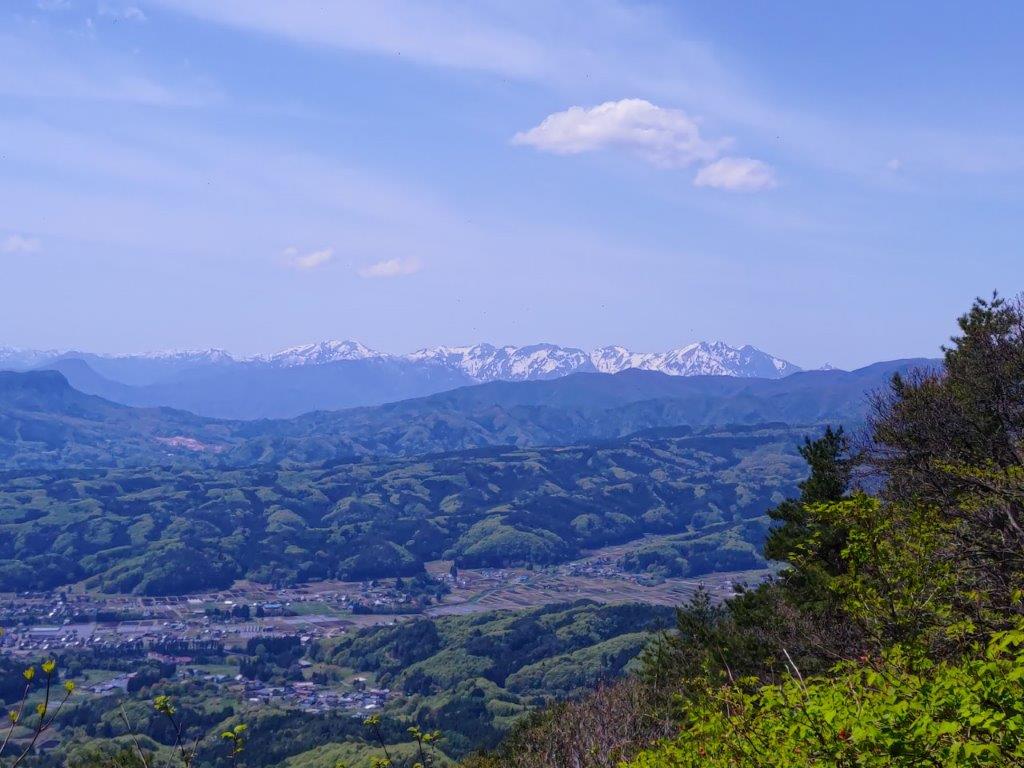
The Tanigawa Range from the Top of Mt Amagoi

Mt Mitsumine, a Popular Paragliding Spot

After lunch, I tried to match all the Joshin’Etsu mountains using the summit information board, since only the Tanigawa range on the very right was instantly recognisable ; apparently on clear winter days, one can also see the Chichibu Mountains, the South Alps and Yatsugatake. Although trees blocked the views in other directions, I was able to spot the still snowy top of Mt Hodaka through some bare branches on the north side, a preview of my upcoming descent. A little before 2pm, I set off again, down a steep path on the west side.
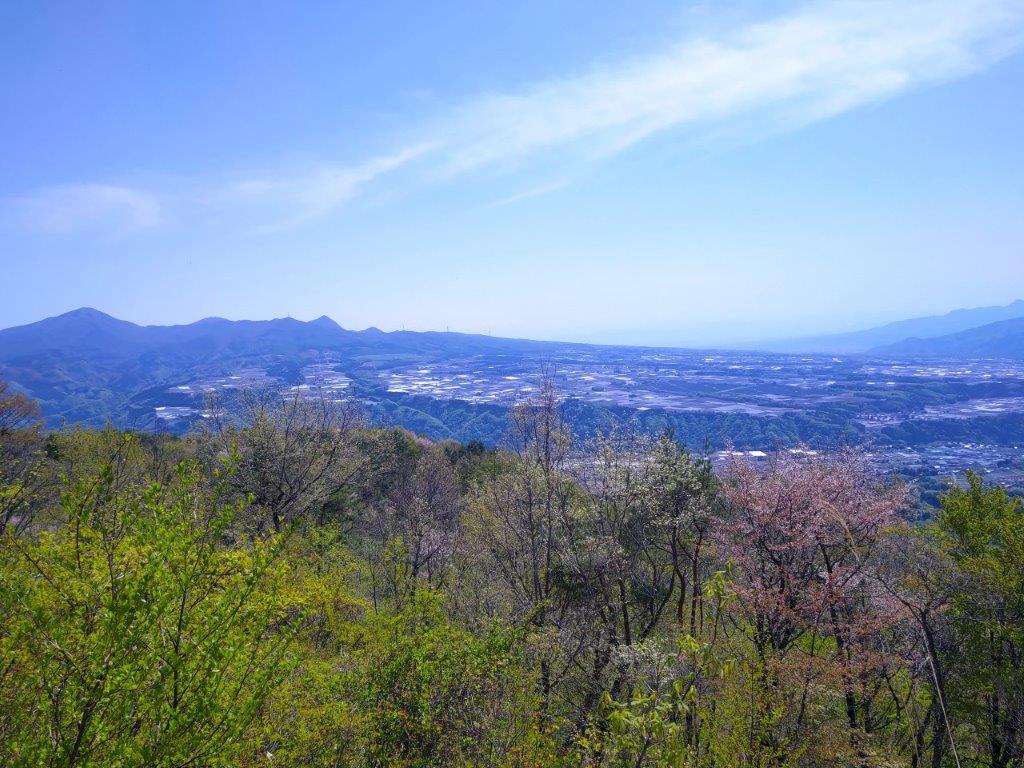
Sideways View of Mt Akagi from the Top of Mt Amagoi

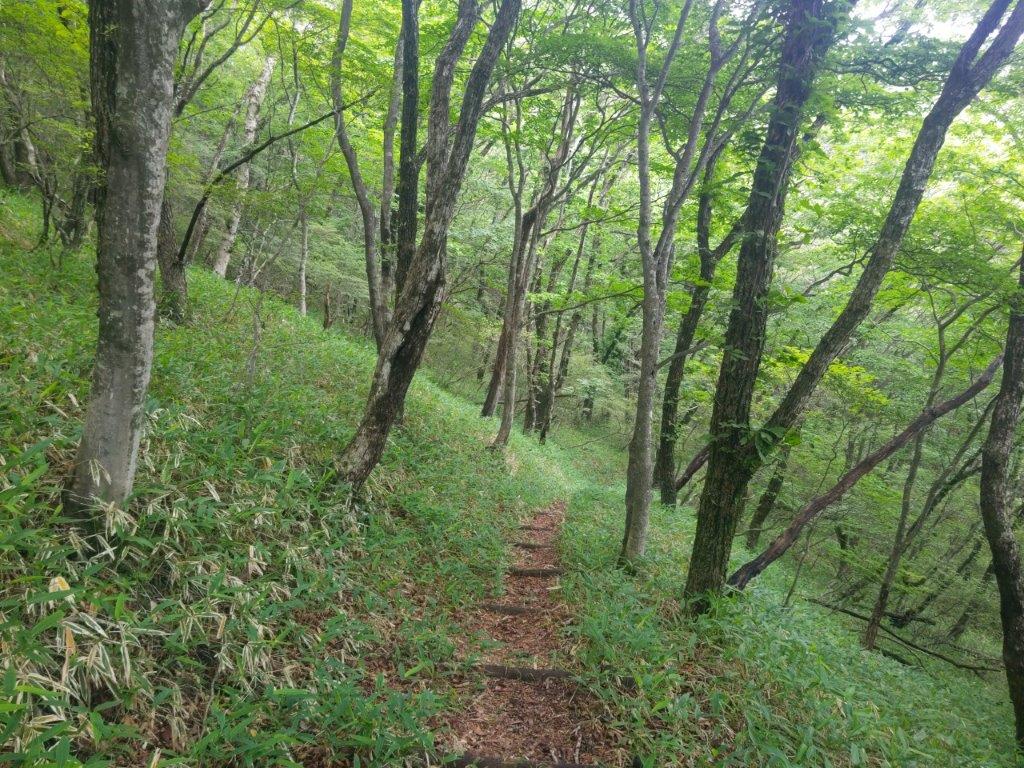
Heading down the Western Side of Mt Amagoi

Here, the trail was buried under dead leaves and would have been hard to follow, if it weren’t for rope attached to nearby trees. I soon emerged from the trees and was greeted with a spectacular view on the northwest side. To my right, I had a better view of the snowy summit of Mt Hotaka, framed by mountain cherry trees. On the west side, I could once again see Mt Mitsumine and Mt Tanigawa. As I descended this valley surrounded by snow-capped mountains, I almost felt like I was walking in the Swiss Alps.

Emerging from the Trees on the Northwest Side
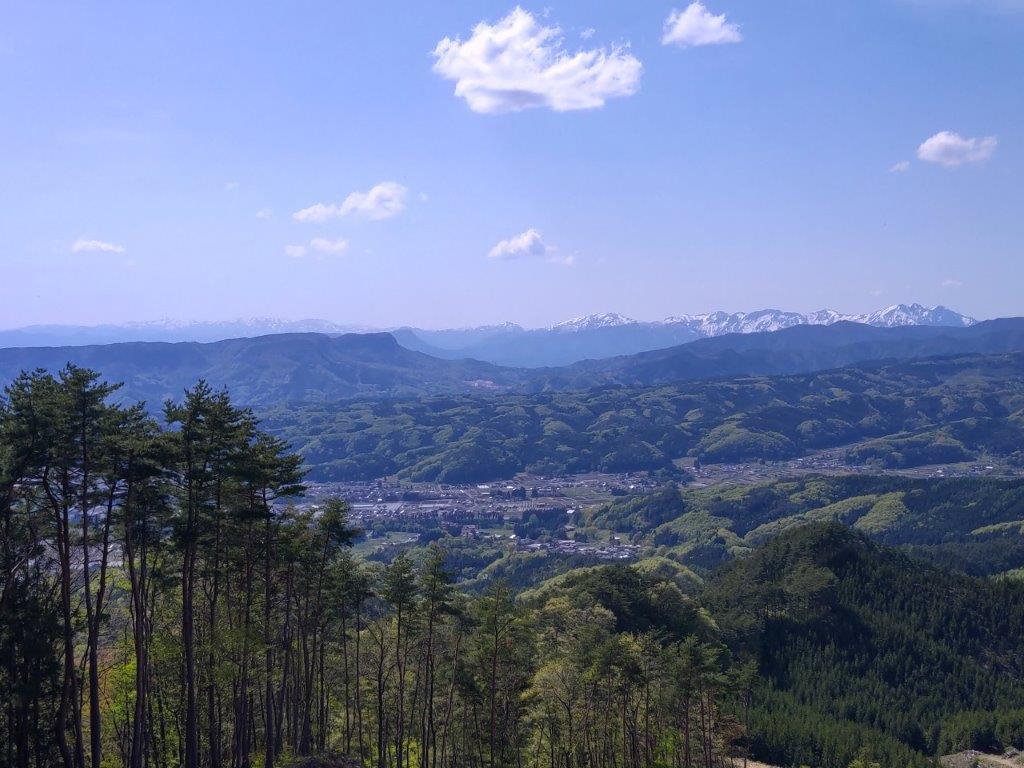
Mt Mitsumine (left) & Mt Tanigawa (right)

I was following a narrow ridge with tall red pines on my left and a deforested area on my right, allowing for plenty of views along the descent. I soon turned left, onto a path between two rows of fir trees, the end of the scenic descent. After a short while, I entered a mixed forest, and after a short section where the only trace of a path was again a helpful rope hung between trees, I reached a winding forest road heading down through tall cedars.
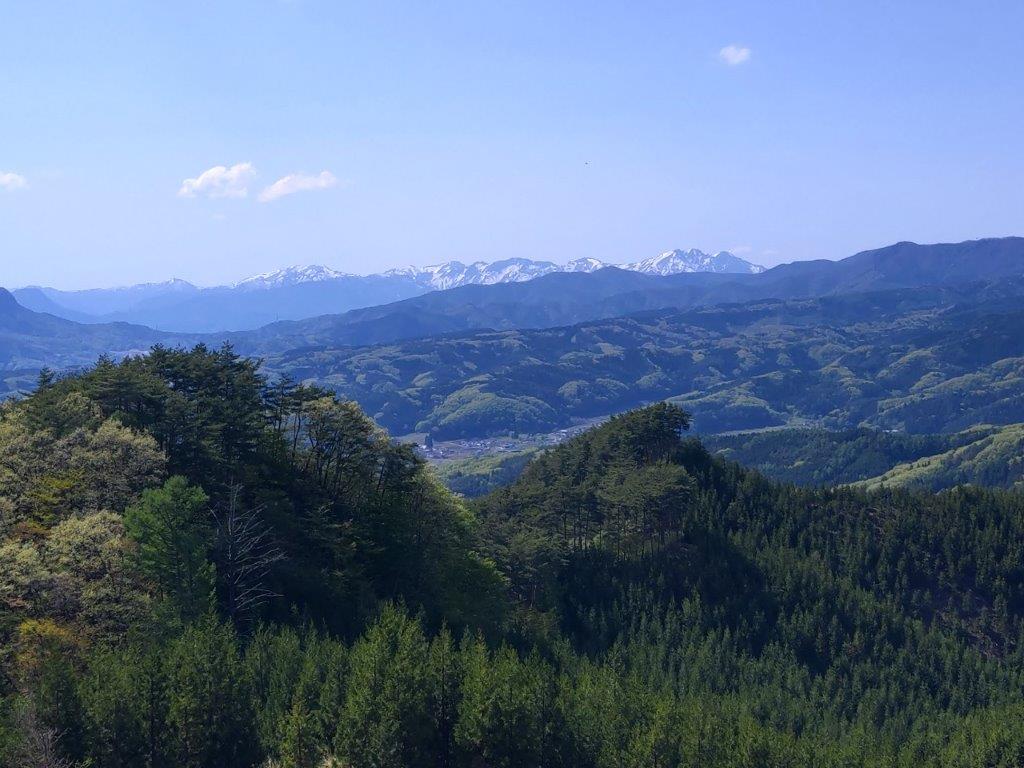
View of the Tanigawa Range while Descending Mt Amagoi
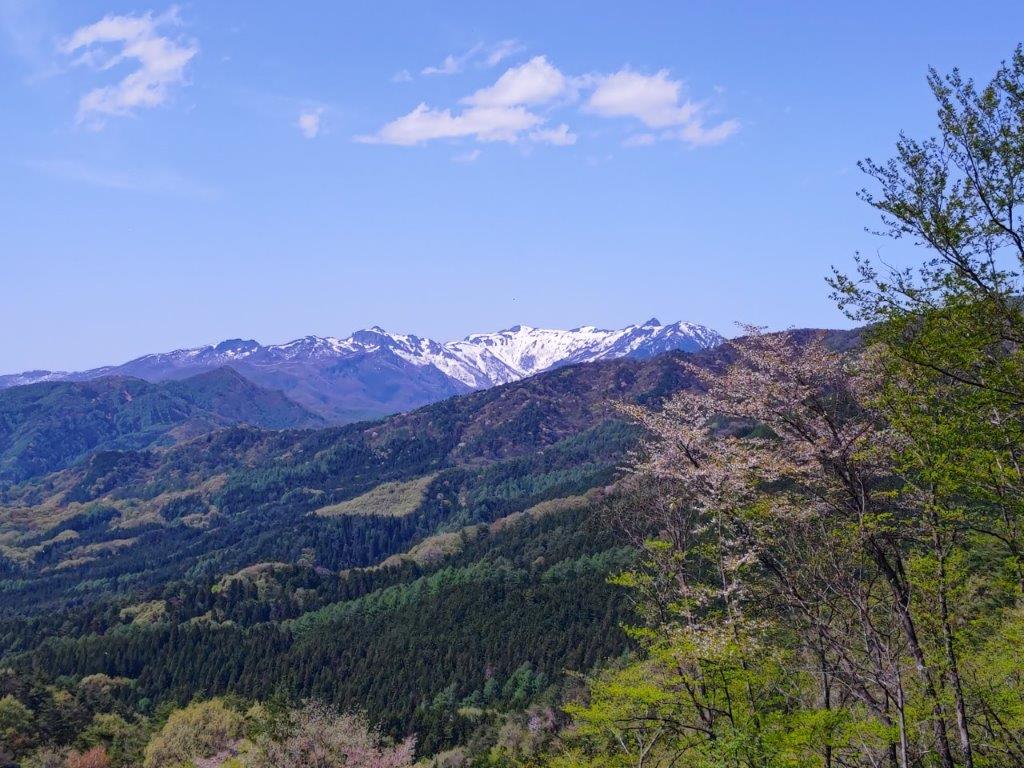
Mt Hotaka and Mountain Sakura

A little before 3pm, I reached the valley bottom next to a small stream. From this point, the level trail headed west in a straight line through forest. Very soon, I reached a wildlife net and a paved road where I turned left, heading south, through orchards and fields. As I approached a busy road, I had some good side views of today’s mountain, on the left side.

Red Pines on the Left and Views on the Right

Walking along the Valley Bottom

During the entire descent, I saw no other hikers, as most people seem to visit this mountain by car. At 3h30, I reached Rakuraku onsen, meaning “comfortably”; one hour later, after a quiet hot soak, as most people seemed to prefer to spend their time at the neighbouring roadside station, I hopped on the nearly empty bus for Numata station. I was grateful to have found this hike, and to have been able to visit in this season; it is certainly one of the hidden gems of Gunma.

Watch a Video of the Hike

Watch the Video of the Hike on YouTube

See a Slideshow of More Pictures of the Hike

Sakura no Sato (700m), Mt Myogi, Shimonita Town, Gunma Prefecture, Saturday, March 16, 2024

I had been planning to do this section of the Gunma Fureai no Michi for a while but kept on putting it off since the second half, done more than ten years ago, was closed due to rockfall. As with my previous hike, it was becoming clear that the closure might be permanent so I decided to head out anyway, and just follow the road for the last part. Although I wouldn’t be passing any summits on the way, I hoped to to get a view of the mountains of western Gunma from a park located on the southern flanks of Mt Myogi.

Hiking on the Kanto Fureai no Michi 関東ふれあいの道

Hiking in Nishi-Joshu 西上州

To get to the start of the hike, I would ride the shinkansen to Takasaki and then transfer to the Joshin railway for the one-hour ride to Shimonita. There, I would ride a taxi to a nearby plum blossom garden. I would end the hike at a hot spring facility at the northern edge of Mt Myogi; after a refreshing dip, I could take a taxi to Matsuida station on the Shin-Etsu line, a few stops from Takasaki. The weather was supposed to be sunny, as well as warm for the season. I was looking forward to getting some close up views of one of the three famous mountains of Gunma.

For subscribers, read this Blog Post on Hiking Around Tokyo for a better viewing experience and the latest updates

Going up through the Sakura no Sato Park

View of Hitto Rock (left) Path for Myogi Shrine (right)

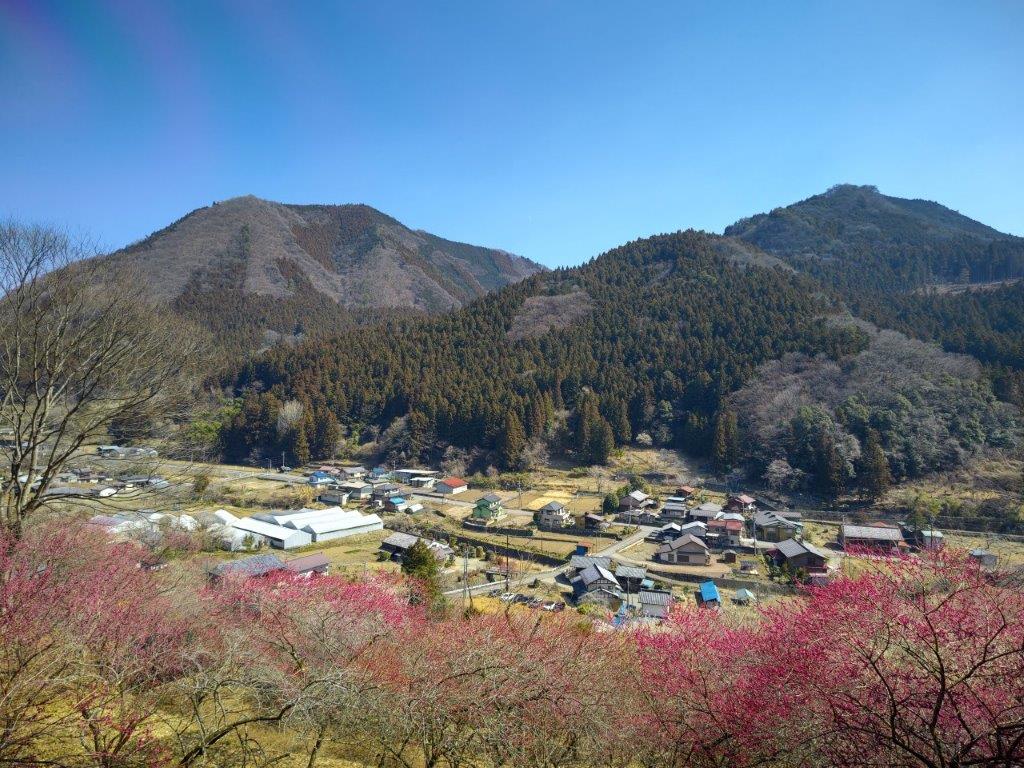
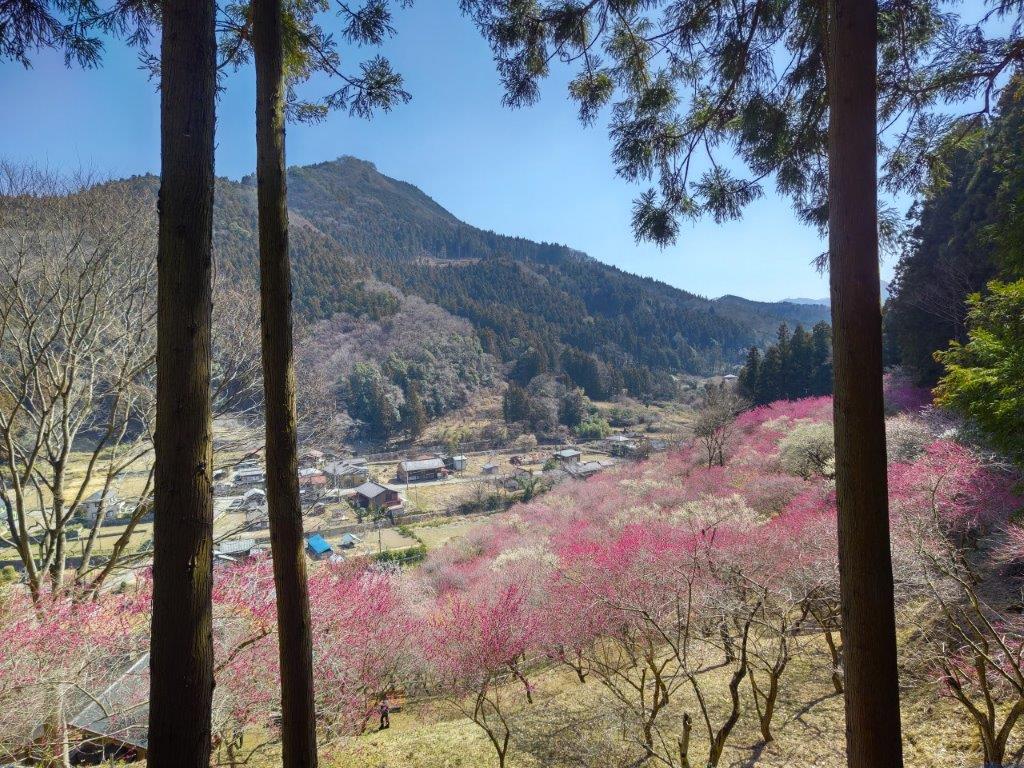
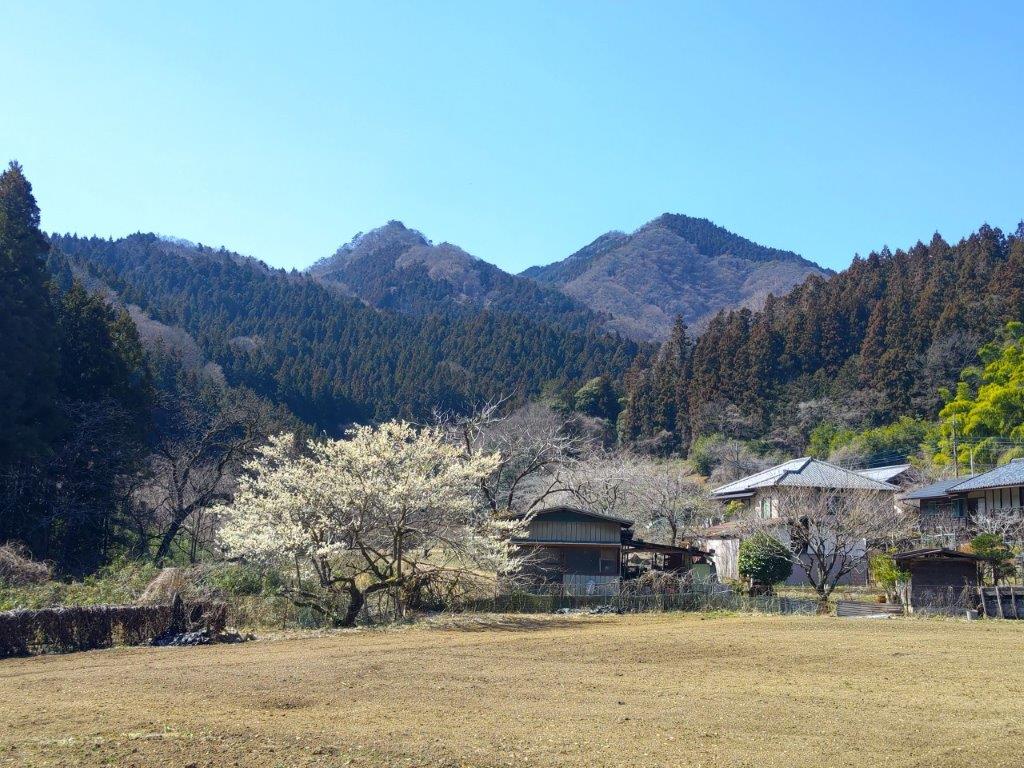
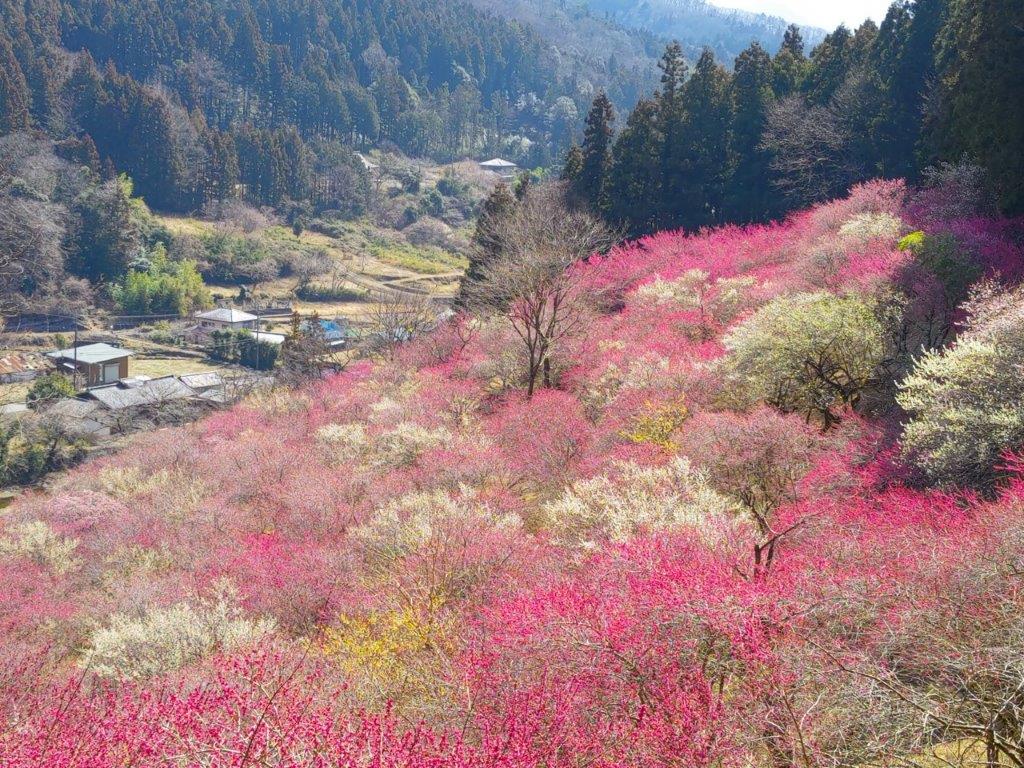
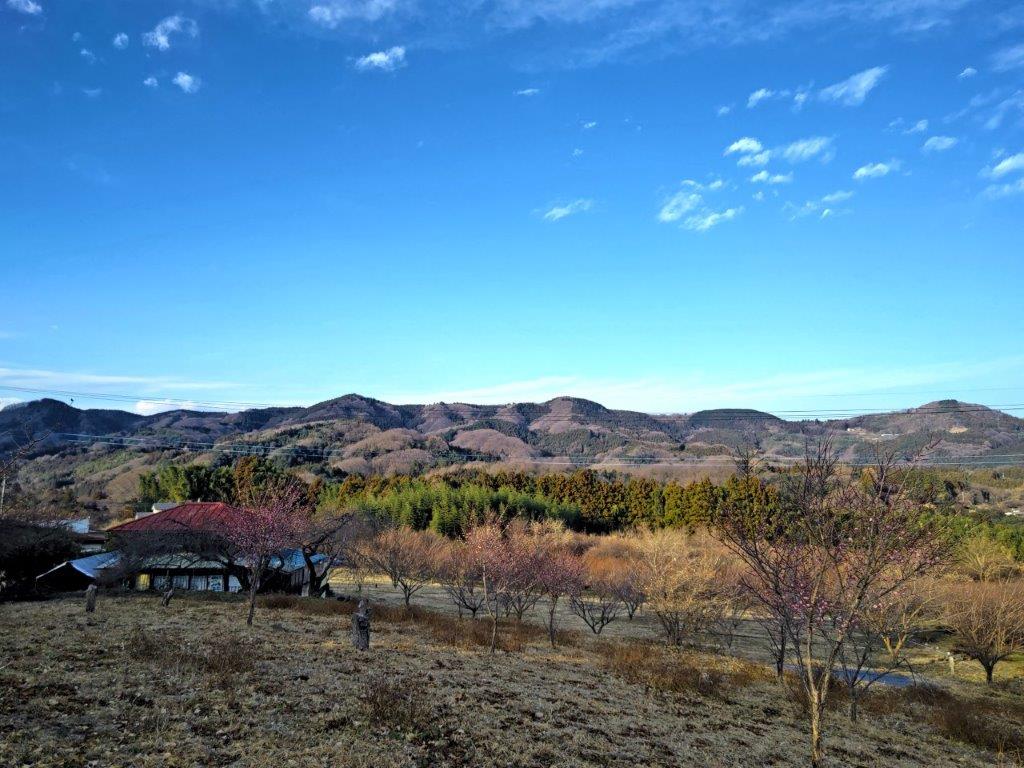
Surprisingly, almost all seats on the Joshin Electric line were taken upon leaving Takasaki station, although most passengers got off well before Shinomita, the final station on the line. After a short taxi ride, I was at the entrance of Fukujuso no Sato (寿草の里), a little past 10am. After getting reading for hiking, I made a small donation at the front gate and entered the plum blossom garden, the last day of the year it was open to the public. I made my way along a path under white and red blossoms, slowly heading up the mountain side; at 11am, I reached a viewpoint at the highest point of the garden.

View of Mt Ogeta (right) from Fukujuso no Sato

View of the Plum Blossoms from the Highest Point

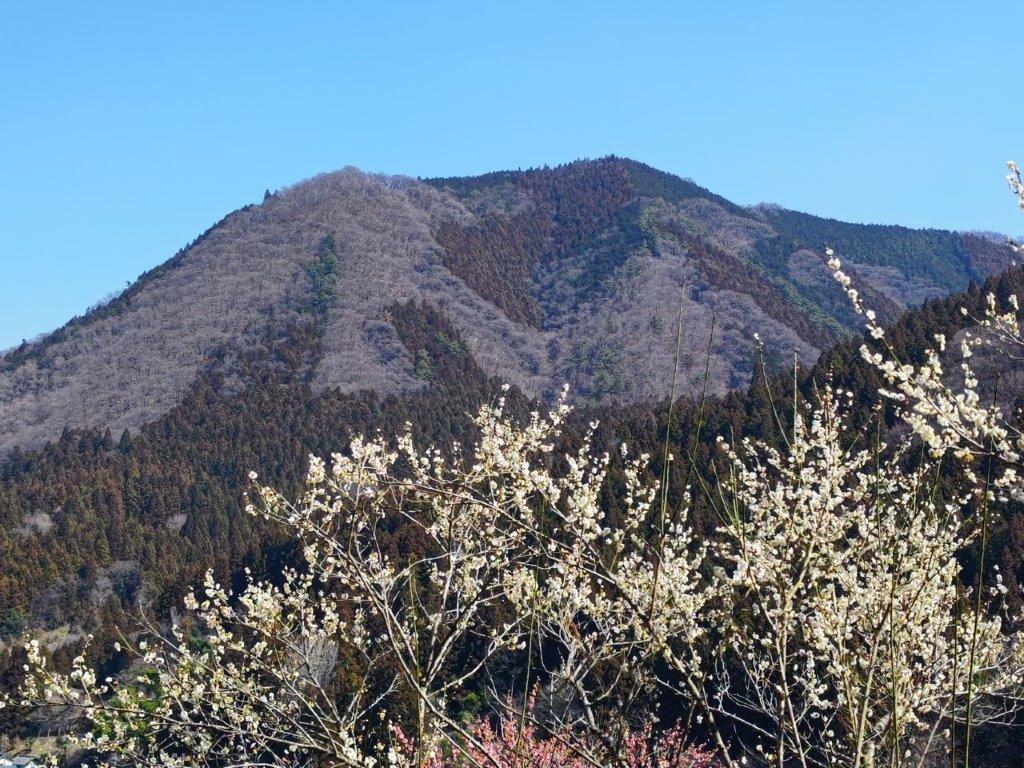
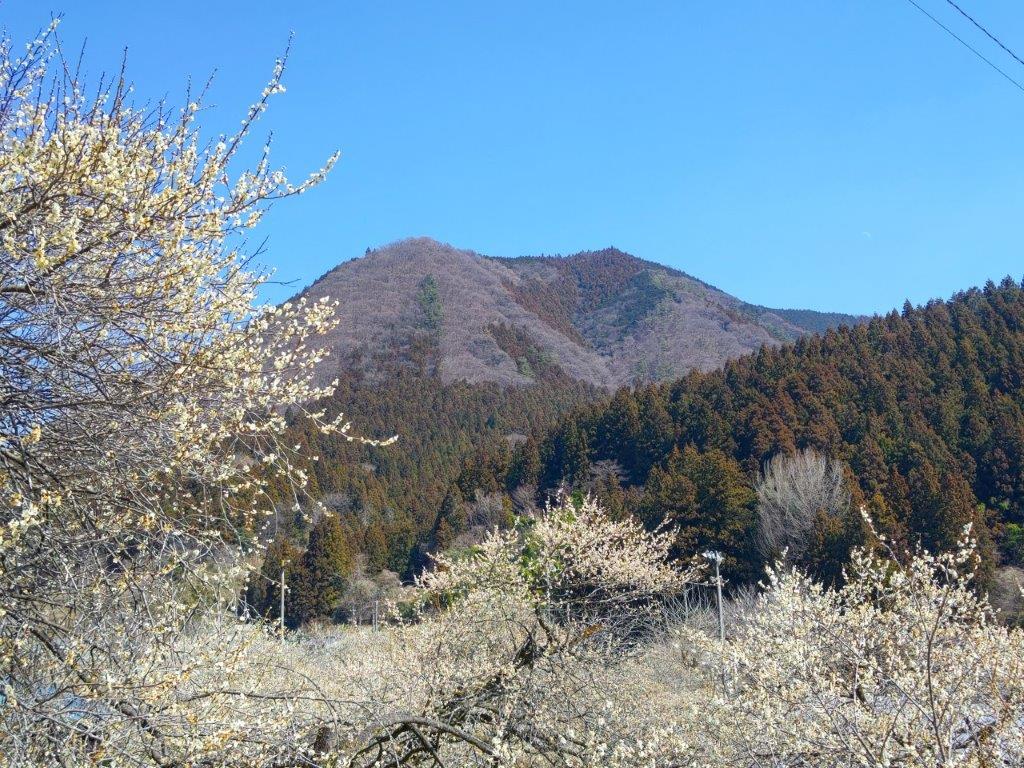
I was amazed by the sea of pink spreading down into the valley. Opposite was Mt Ogeta; on the south side, I spotted the triangular shape of Mt Inafukumi, and northwards, I could make out one of Mt Myogi’s many peaks. After a short break, I headed down via a different path, and half an hour later, joined up with the Fureai no Michi, descending from Mt Ogeta on the right. I was now heading north along a road connecting Shimonita with Matsuida, but soon turned left onto a smaller road leading up a valley. On the left side, beyond a stream, I could see the higher slopes of Mt Mido. At noon, I arrived at the Nakamura bus stop, where I turned right, heading up a small mountain road with almost no traffic.

View of Mt Mido from the Fureai no Michi

View of Mt Myogi from the Fureai no Michi

Along the way, I enjoyed the view of plum blossoms trees in full bloom, whetting my appetite for the approaching cherry blossom season. As the road climbed higher and higher, I noticed patches of melting snow in the shade, a reminder of the winter weather that had only just loosened its grip a few days ago. At 1pm, I reached a trail at the base of the Sakura no Sato Prefectural Forest Park (県立森林公園 さくらの里), meaning “Sakura Village” and famous for its many cherry blossom trees, supposed to reach full bloom in a few weeks. A short climb took me above the tree tops, their buds firmly closed, and at a fork in the path I stopped to turn around.

View of Western Gunma from Sakura no Sato

Nearing the Open Shelter and Mt Myogi Viewpoint

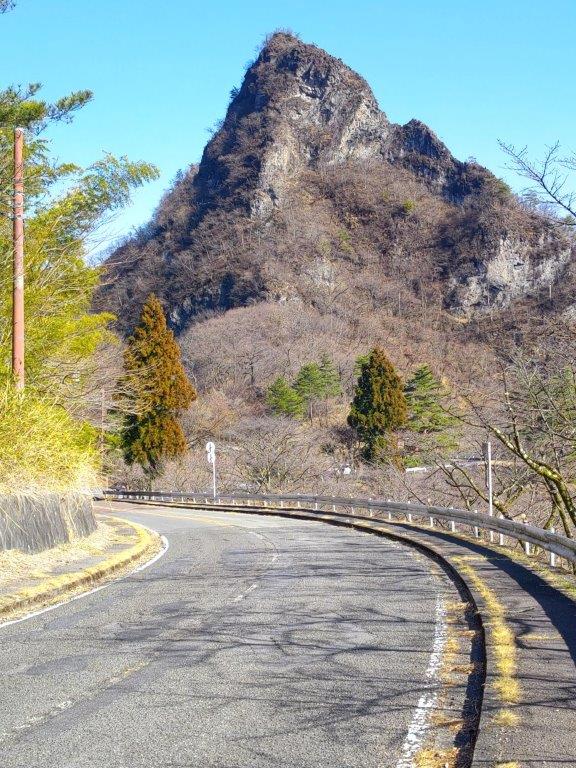
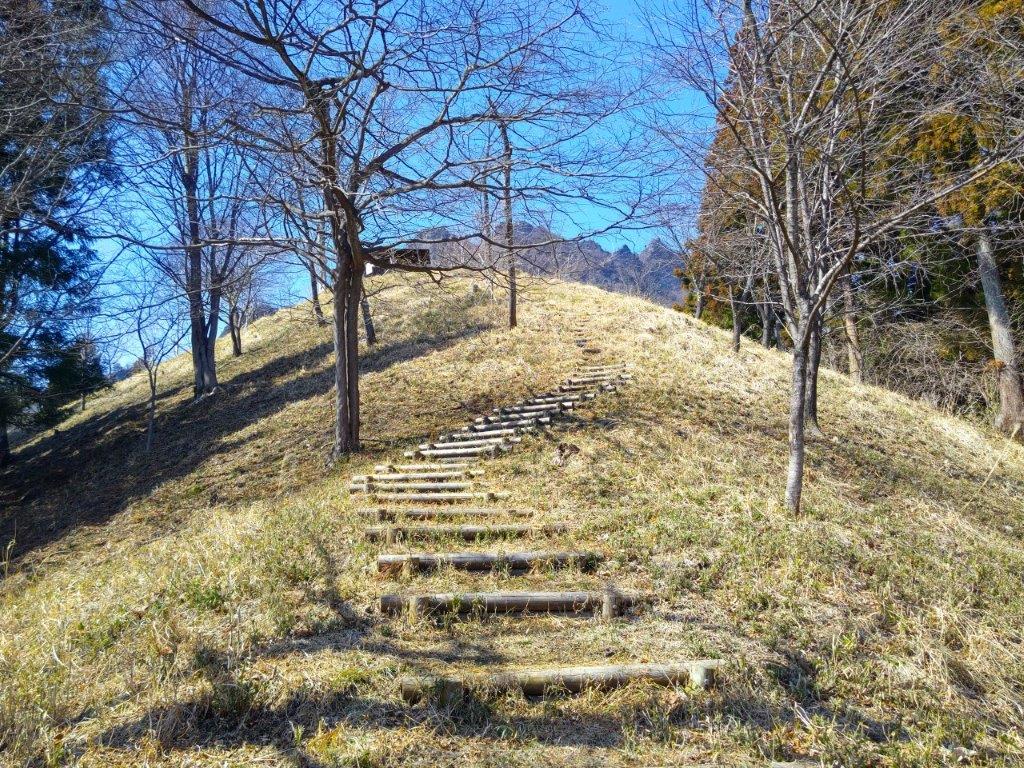
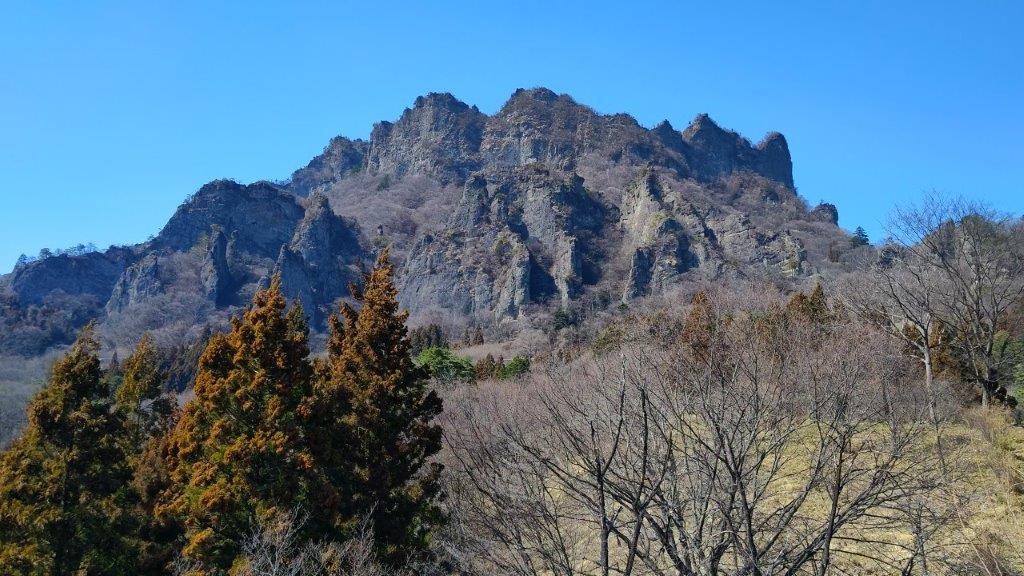
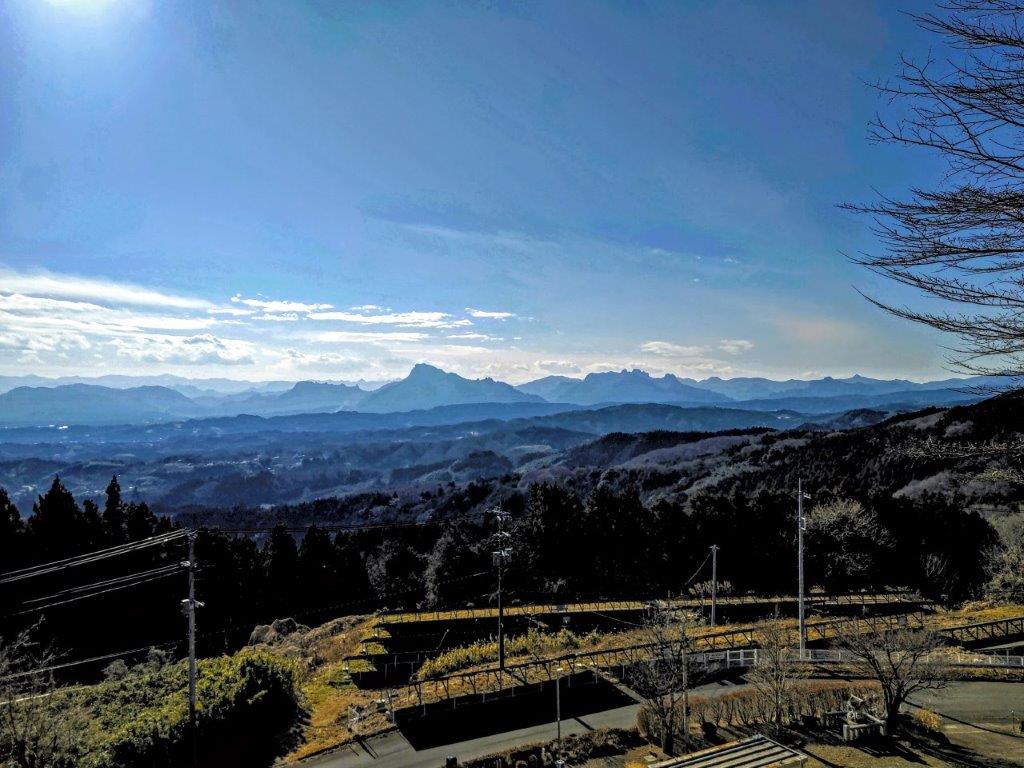
I was stunned by the impressive view of the long mountain ridge separating Gunma and Saitama, still covered in snow; I had climbed many of these peaks, including the highest one, Mt Akaguna; in the foreground, I could see Mt Ogeta and Mt Mido. A few more minutes up some log steps brought me to an open shelter with a dramatic view of Mt Kondo, the north side of Mt Myogi. Since it was just past 1pm, I settled down for lunch. At 2pm, I resumed my hike and made my way to the rest house at the highest point of the park. Along the way, I had some excellent views of the nearby Hitto-Iwa (筆頭岩 826m), a mini-version of the Matterhorn. Although the trail to the summit is closed, I could follow it all the way to the base of the rocky summit.

Mt Kondo from Sakura no Sato

In the background, Mt Mikabo (left), Mt Inafukumi (center) and Mt Akaguna (right)

I was rewarded with a striking view of Mt Souma, the south side of Mt Myogi and its highest peak, the best view of the day. Since I was on schedule, I took some time to walk along the road above the park to get some more views of the mountains of Nish-Joshu; I could see all the way from Mt Mikabo on the eastern side to Mt Arafune on the western side. At 3pm, after crossing the road, I was back on a hiking path for Myogi Shrine along the Fureai no Michi, heading down a steep, rocky trail, now in the afternoon shade. Very soon, I reached another viewpoint of Mt Souma, this time from below; fortunately, the rocky face was sill bathed in the late-afternoon sunlight.

The Matterhorn lookalike Hitto Rock from Sakura no Sato Park

Mt Souma from the Fureai no Michi

I admired the ragged summit, tantalizingly close but beyond the reach of the casual hiker. Some more descending brought me back to the road I was on earlier; it had taken a long detour around Hitto-Iwa. From this point it was a thirty-minute walk to Momiji-no-yu Hot Spring, which I reached around 4pm. Before hopping into the outdoor bath with a view of Mt Akagi, a made a quick visit to the neighbouring Visitor Center where I was able to examine a couple of relief models of Mt Myogi. The onsen staff were kind enough to arrange a taxi for me, and by 5h30, I was at Matsuida station waiting for the train for Takasaki. Although roughly half of this six-hour hike was on paved roads, I met no other hikers, saw plenty of plum blossoms and had some amazing views of the mountains of Gunma.

Watch a Video of the Sakura no Sato Mt Myogi Hike

Watch the Video of the Hike on YouTube
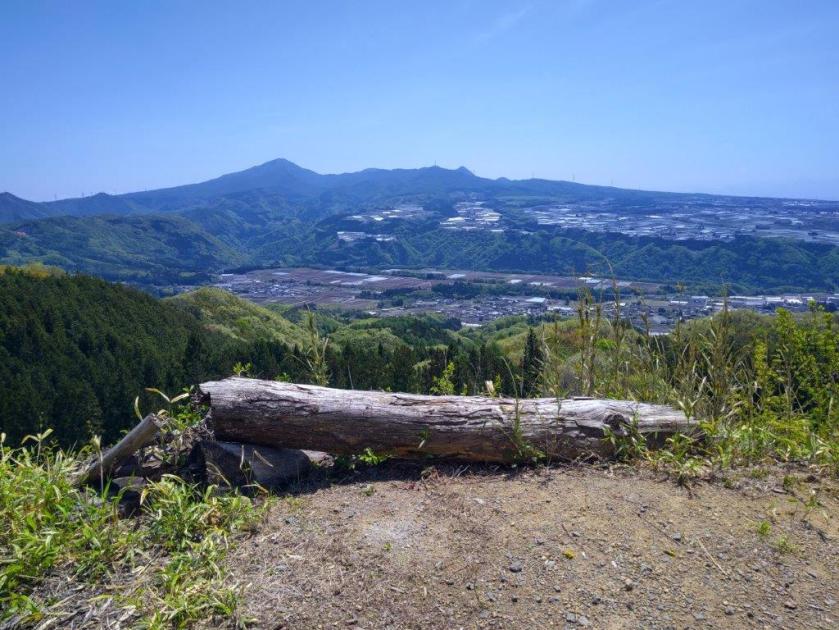
See a Slideshow of More Pictures of the Hike
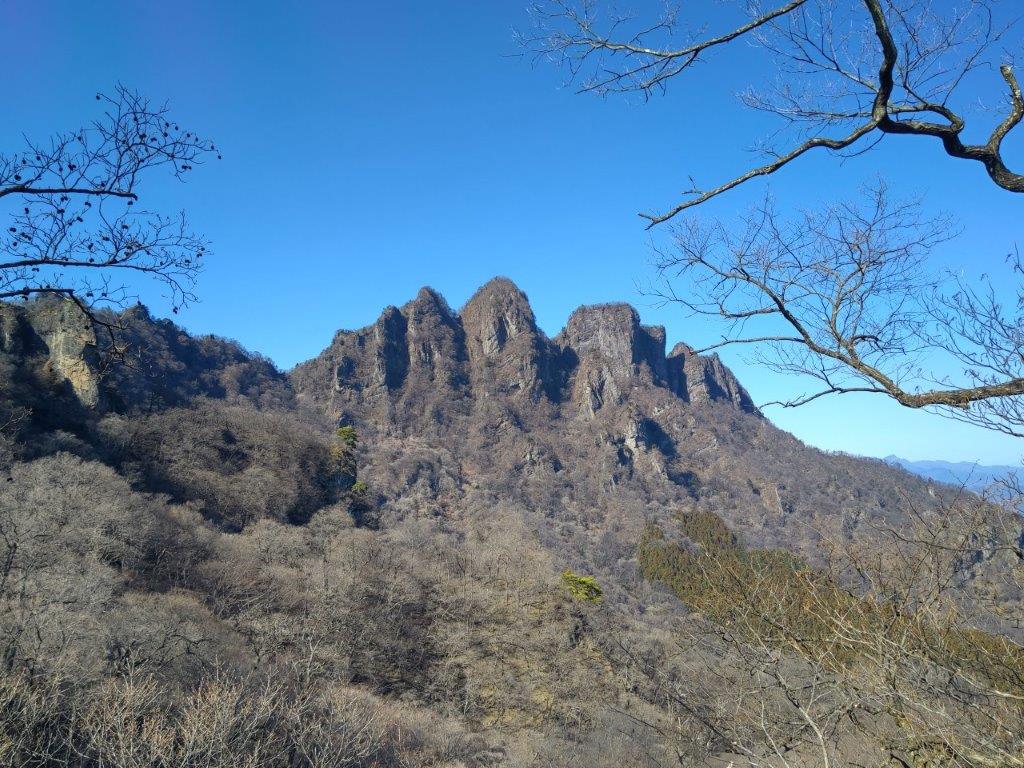
Mt Sekison (1049m) & Mt Takada (1212m), Nakanojo Town, Gunma Prefecture, Sunday, October 29, 2023

I wanted to see some autumn colours, and also do a more challenging hike than the previous week. I chose a pair of minor peaks in the Nakanojo area, last visited a year and a half ago, not mentioned in my guidebook, nor shown on my hiking map. I knew about them thanks to a hiking pamphlet I had picked up during my stay at Shima Onsen in 2019. Although it wasn’t a long hike, it started from the valley bottom and seemed to go high enough to satisfy both my conditions. After riding the shinkansen to Takasaki, and then the Agatsuma line to Nakanojo station, I would catch the bus for Shima Onsen to the start of the trail. If I finished early enough, I could get the bus connecting with the Kusatsu limited express, direct for Ueno on the return; otherwise, I would use the same route as in the morning. I was a little concerned about the weather forecast: sunny in the morning but cloudy in the afternoon. I was looking forward to a peaceful hike on a quiet mountain and seeing the first autumn leaves of the season.

Get a Map of the Mt Sekison Hike

This map was developed for Japanwilds with the Hokkaido Cartographer

Find Japan Hiking Maps on Japanwilds

Read this Blog Post on Hiking Around Tokyo

View north towards the Joshin-Etsu Mountain Range

View of Mt Juni, Mt Komochi and Mt Akagi

It was a sunny day with few clouds as I got off the bus around 1030. After getting ready, I found the trail entrance behind Komaiwa village, and started hiking from 11am; according to the locals, I was 3rd person of the day to head up. I followed a gently sloping forest road through the cedars, before reaching a stone “torii” (shinto gate) and the start of a steep slope half an hour later.

First Autumn Colours

I got my wish for a workout as I followed the switchback trail up the mountain side through mixed forest. The leaves hadn’t changed yet this low down, but would probably look spectacular in a couple of weeks. With relief, I reached the top of the long climb just before noon. The trail then curved around the mountain, becoming faint at times, so that the final approach was along a ridge on the north side, buffeted by a cold wind.

Directly opposite, Mt Suisho and Mt Buno

Bird’s-eye view from the Top of Mt Sekison

I spotted the first autumn colours of the day on a bright red “momiji” (Japanese maple), to the right of the trail, as I followed the narrow ridgeline, now heading west. Very soon, I was walking under oranges and yellows, and after scrambling up a short steep bit, I emerged onto the top of Mt Sekison (石尊山 せきそんさん sekison-san), just before 12h30. The narrow summit was mostly free of trees, so I settled down for an early lunch.

View North from the Mt Sekison Summit

Mt Takada seen from Mt Sekison

I was surprised that such a little-known summit had such a great view: on the north side, I could see the foothills of the Joshin-Etsu mountain range; to the south was Mt Haruna; southwest was the pointed shape of Mt Asamakakushi, and behind, Mt Asama, sitting under a dark cloud; looking east, Mt Akagi, Mt Komochi and Mt Juni were lined up; directly below, I had a bird’s-eye view of the mountains and valleys of Nakanojo. At 1pm, I set off for the next summit, looking tantalizingly close further along the ridgeline.

The Mountains and Valleys of Nakanojo

View towards the Joshin-Etsu Kogen National Park

I hadn’t expected the next part to be so challenging: the trail kept on going up and down, and included a short rocky section fitted with rope; on the other hand there were good views to be had in both directions at various points. It took a full half hour to reach the top of Mt Takada (高田山 たかだやま takada-yama). Since it was mostly in the trees, I turned around at once and headed back along the up-and-down ridge, arriving at Mt Sekison around 2pm.

In the background, Mt Haruna

In the foreground, Mt Takeyama

I was amazed by how pleasantly warm it was, the sunny weather outperforming the forecast; since it was now too late to catch the earlier bus, I spent another thirty minutes enjoying the panoramic view. I had the summit to myself, having passed the two other hikers earlier in the day. After descending at a relaxed pace, I was back at the bus stop a little before 4pm.

On the right side, the Agatsuma River Valley and Mt Asamakakushi

Heading down through the Forest

The toughest part of this 4h1/2 hike was without doubt the roundtrip ridge walk between the two peaks: the views were superb but it required surefootedness due to the steep slopes on each side. If I had been faster, I could have enjoyed a comfortable train ride directly back to Tokyo, but since the good weather held throughout the day, it was worth spending more time on the mountain itself. Going a little later in the season, I could have seen more autumn leaves but I was glad I had gone when few other people were on the trail.

Watch a Video of the Mt Takada & Mt Sekison Hike

Watch the Video of the Hike on Youtube

Mt Nabewari (1332m), Maebashi City, Gunma Prefecture, Sunday, June 25, 2023

I wanted to do one last hike before the hot and humid summer. I found a peak I had never climbed before on Mt Akagi, last visited three years ago. It promised good views, but the roundtrip to the summit was on the short side. I saw on my map that I could combine it with the Kanto Fureai no Michi and end at Fudo-daki waterfall. Since it was mostly along a level trail on the south side of the volcano, it seemed ideal for a warm summer day. I would take a bus from Maebashi station for the Akagi Visitor Center and get off at a stop half way up the mountain. For the return, I planned to use the “furusato basu” to get to the nearest train station, an on-demand bus system requiring me to request a pickup before the end of my hike. I had never used such a system before, and if for some reason it didn’t work, I would have to call an expensive taxi instead. The weather was supposed to be overcast in the morning, then sunny in the afternoon, the temperatures comfortable enough for hiking. I wasn’t sure I would get any views this time, but I hoped to have one last satisfying hike before the long summer break.

Hiking on Mt Akagi and the Fureai no Michi

赤城山 ・ 関東ふれあいの道

Read this Blog Post on Hiking Around Tokyo

View Towards Mt Akagi on the Way Back from Mt Nabewari

Start of the Ridge Leading to Mt Nabewari

It was a cloudy morning as I got off the train at Maebashi station around 9am. I was surprised how few people boarded the bus for the one hour ride to Akagi mountain, although the parking lot next to the trail entrance was packed with cars. I set off a little before 11am, up a wide, gently sloping trail through the forest; rays of sunshine pierced the clouds, a sign of improving weather. Half an hour later, I reached Arayama Highland (荒山高原). To the south, I had a view of the head of the ridge leading to today’s summit. Many hikers were taking a break, so I quickly moved on. After a short climb, I reached a level path along a bare ridgeline.

Start of the Hike (left) Easy Walking through the Forest (right)
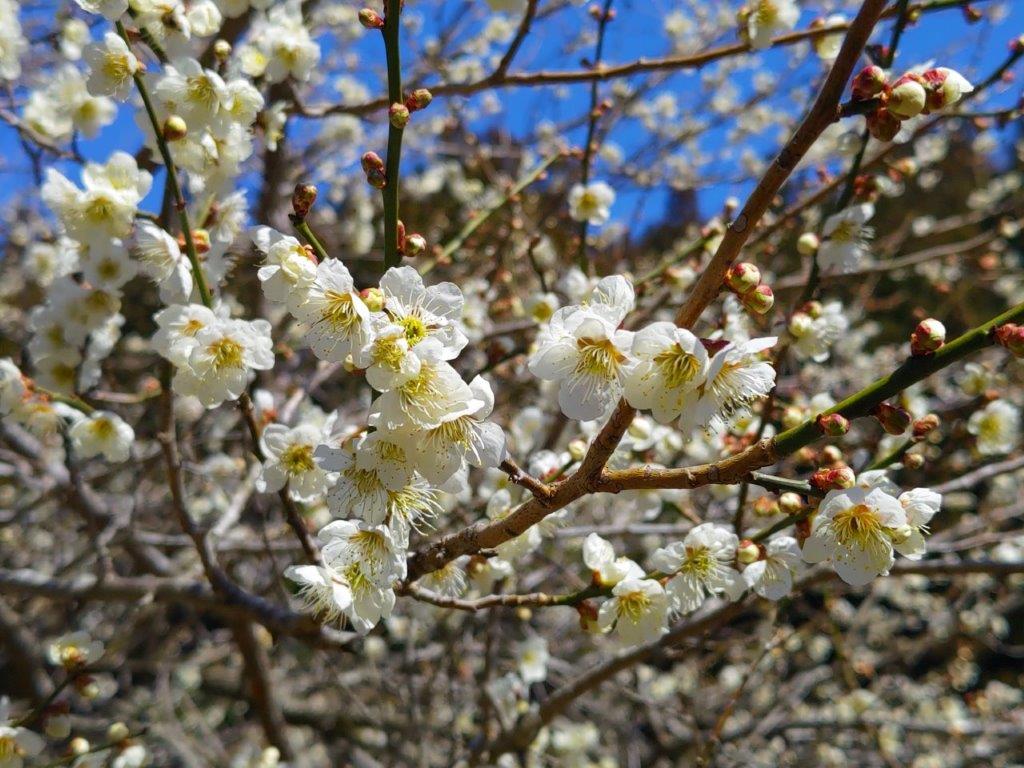
Near the Top of the Ridge (left) Just Before the Summit (right)

I was amazed to find such an exposed ridgeline at a relatively low altitude, although the surrounding views were hidden by the clouds. After passing two minor summits, Mt Hiokoshi (火起山) and Mt Kamado (竈山), the path reentered the forest and descended for a short while, before reaching another section of the ridgeline out of the trees. At noon, I arrived at the top of Mt Nabewari (鍋割山 なべわりやま nabewari-yama). Looking south, I could barely make out the Kanto plain through the haze; in clear weather, one can see Mt Fuji, Tanzawa, Oku-Chichibu, the South Alps and Yatsugatake. Patches of blue sky above gave me hope for the rest of the day. I sat on a bench for some lunch, before retracing my steps half an hour later.

Jumble of Rocks on the way to Arayama Kogen

Walking the Exposed Ridgeline

I was lucky to get some views on the return on the north side: I could see the long ridgeline on the west side of the volcano, ending at the rounded peak of Mt Suzu. Directly ahead, I could see Mt Ara and Mt Jizo, two other peaks of Mt Akagi (climbed in September 2015), slowly emerging from the mist. On a clear day, it would have been possible to see the North Alps, Mt Asama, Mt Azuma, Mt Kusatsu-Shirane, Mt Naeba, Mt Tanigawa, and Mt Hotaka. At 1pm, I was back at Arayama Kogen, where I joined the “Fureai no Michi”, heading west through the forest. From this point, I saw no other hikers, the sound of voices replaced by the buzzing of insects.

Some Blue Sky Above

On the Right, Mt Suzu

This was by far the best part of today’s hike, as I could totally immerse myself in the surrounding nature. The sun had finally come out but it remained tolerably cool under the tree shade. It took me about three hours of pleasant hiking to reach the trail entrance for Fudo-daki waterfall (不動滝).

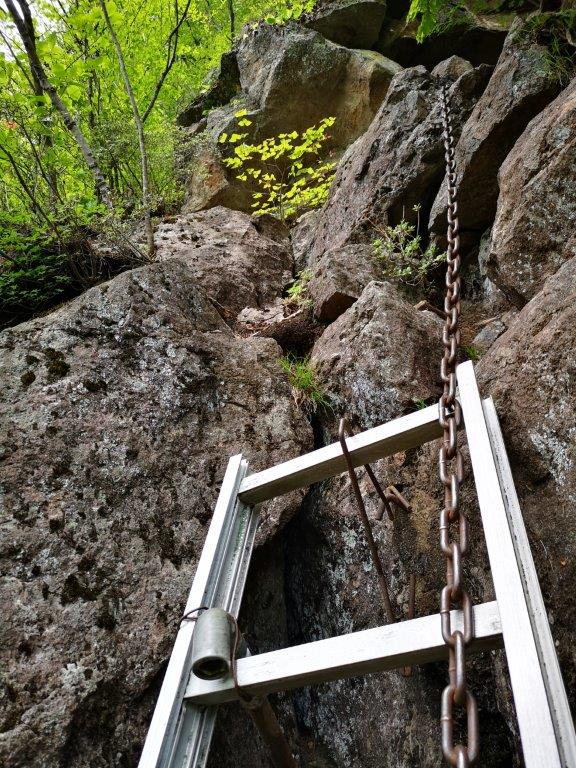
I checked it out myself: it was indeed impassible, but I was rewarded with a close-up encounter with a deer. The short trail to the waterfall followed a rushing river, requiring some surefootedness along a rocky section, equipped with a small ladder for safety.

Heading back to Arayama Highland

Following the Fureai no Michi

I was stunned by how high this waterfall was, as it suddenly appeared past a rocky cliff in a bend in the river; according to a nearby information board, it was 32 meters tall. I got as close as I could to the thundering water, the cold splashing water welcome on this warm summer day. At 4h30 I turned back, and after reaching the road at the trail entrance, turned left. From here, it was about an hour walk down the mountain. As soon as I was back within phone range, I dialed the “furusato bus” number. After several long rings, my call was answered. I requested to be picked up from Nakanosawa Museum, the closest stop to the mountain.

Walking in the shade (left) Staircase at the End of the Fureai no Michi (right)

First view of Fudo-daki Waterfall (left) Close-up view of the Waterfall (right)

I was relieved when my request was accepted without any hesitation. I arrived at the museum just before 5h30, and a few anxious minutes later, a minibus arrived, dot on time. After a short ride through the countryside (total cost 210 yen), I was dropped off at Ogo station on the Jomo railway, a 15 minute train ride from Chuo-Maebashi station, which in turn is a ten minute bus ride from Maebashi station. I was glad I could experience a new form of transport, although on a busier day it would have taken longer to accommodate more passengers. I hope to redo this hike one day on a clear winter day so I can see all the views along the ridgeline and from the summit.

Watch a Video of the Mt Nabewari Hike

Watch the Video of the Hike on Youtube
Mt Mizusawa (1194m), Shibukawa City, Gunma Prefecture, Monday, June 5th, 2023

I had a chance to go hiking on a weekday, so for once, I wanted to visit a popular mountain. I decided to redo one of the peaks on Mt Haruna, first climbed during Golden Week 2016, via a different route. Back then, it was a short roundtrip off the main trail between Mt Soma, the 2nd highest peak, and Ikaho Hot Spring. This time, I would start from Mizusawa-dera Temple, on the east side of the volcano, and finish again at Ikaho Onsen, since I could get a hot spring bath before heading back. I would take the shinkansen to Takasaki station, and there catch a bus to the temple, my first time to use this bus line. For the return, I could take a bus to Shibukawa station, from where I could catch the Kusatsu Limited Express for Ueno, also my first time to return this way. The weather was supposed to be sunny with some clouds, warm but not too hot, typical for this time of the year. I was looking forward to my first visit to Mt Haruna in nearly 4 years, and what would probably be my last hike before the start of the rainy season.

Hiking on Mt Haruna 榛名山

Read this Blog Post on Hiking Around Tokyo

View of Mt Komochi (left) and Mt Akagi (right) from near the Summit

Side view of the Steep climb up Mt Mizusawa

It was already very warm as I got off the nearly empty bus at 10am, after a one hour ride from Takasaki. I quickly walked past some Udon restaurants and up a steep staircase. I was impressed by the massive Buddhist gate leading to the 1300 year-old Mizusawa-dera 水沢寺, quite busy with sightseers despite the mid-morning heat. I sat on a bench next to a ancient cedar and got ready for my hike. At 10h30, I ducked under a small red Shinto gate and climbed another steep staircase, as chanting from some Buddhist ceremony drifted up from below.

Walking under Towering Cedars (left) Climbing Log Steps (right)

Steps Difficulty Level 2 (left) Steps Difficulty Level 3 (right)

I followed a path in the shade of towering cedars before finally reaching the start of the trail. At first the logs steps were easy to climb, but they gradually got more chaotic as I reached the steepest part of the climb. However, it never got so tough that I couldn’t enjoy the green spring forest. Just past 11h30, I reached the first viewpoint of the day, on the east side, near a row of small Buddhist statues.

Transition between Levels 1 and 2

Viewpoint near the Buddhist Statues

I had a bird’s-eye view of the wide valley between Mt Haruna and Mt Akagi. On the left side, I could also see Mt Onoko (climbed in January 2016), Mt Komochi, and behind it, Mt Hodaka (climbed in September 2015). After a short break, I continued my hike. Although I passed several people on the way up, I still had long stretches of the trail to myself. I soon passed another viewpoint on the south side, the flat Kanto plan stretching away into the distance; after a short scramble up a rocky section, equipped with ropes for safety, I reached one more viewpoint on the north side, near a pair of tiny shrines.

The Kanto Plain Stretching South

Looking down at the Shoulder

In the distance, I was surprised I could make out Mt Sennokura and Mt Tanigawa, still wearing their winter coats, the haze having already returned just two days after heavy rain. A little further, I reached the top of Mt Mizusawa (水沢山 みずさわやま mizusawa-yama), its prominence barely noticeable along the ridgeline, but with a spectacular 360° panorama. Directly ahead on the west side, I could see the highest peaks of Mt Haruna. To the southwest, were the Chichibu mountains, and to the southeast were Mt Kusatsu-Shirane, Mt Shirasuna and Mt Naeba (climbed in June 2015), its white, flat peak only just visible. It was past noon, so I sat down for some lunch.

The Chichibu Mountains on the Southwest Side

The Highest Peaks of Mt Haruna

After I had my full of the spectacular view on this sunny day, I set off again, around 1h30. After some descending along the forested, rocky ridge, I reached a paved road, and there, turned right along the path for “Tsutsuji-ga-oka”, or Azalea hill, although they were now out of season and no flowers could be seen. I soon reached an open shelter before another road crossing, where I had an impressive side view of the peak I had just climbed. I continued along the easy-to-walk trail, and at 2h30, arrived at the “Tokimeki Deck”, a wooden observation deck near the top of the Haruna Ropeway.

View of Mt Akagi from the Tokimeki Observation Deck

View of Mt Mizusawa from the Tokimeki Observation Deck

I enjoyed this view more than during my two previous visits, since not only had I now crossed the entire Mt Mizusawa ridge on the south side, but also many of the other peaks in the area. Looking north, I could see the hot spring town of Ikaho Onsen, nestled at the base of the mountain. I skipped the ropeway and followed the Fureai no Michi for the last part of the hike. At 3pm, I reached Ikako Shrine, at the top of the famous stone steps that cross the entire town. Almost immediately, I found a hot spring accepting day trippers. After a relaxing bath, I boarded the bus for the short ride to Shibukawa station, where I caught the limited express for the 100-minute comfortable ride back to Tokyo.

Trail past Tsutsuji-ga-oka (left) Staircase leading to Haruna-jinja (right)

Looking down at Ikaho Onsen from Tokimeki Deck

I was glad I could squeeze in this short hike, around 4 hours, just before the start of the rainy season. Although many people were hiking up and down the east side of Mt Mizusawa, there were a lot less people on the west side, so the second half of the hike was more peaceful. I’d like to return in the future to try some more hikes on Mt Haruna, especially now that I discovered the bus from Takasaki and the limited express from Shibukawa; however, whatever route I choose, I am sure I’ll always end with a hot spring bath at Ikaho Onsen.

Watch a Video of the Mt Mizusawa Hike

Watch a Slideshow of more Photos of the Mt Mizusawa Hike

Watch the Video of the Hike on Youtube

Mt Akaguna (1523m), Kanna Town, Gunma Prefecture, Sunday, May 28, 2023 [Mikabo Super Forest Road]

I had been wanting to climb this mountain for a several years, but couldn’t figure out a way to do it as a day trip by bus; even using a share car to reach the trailhead at the Hayataki car park meant a long hike combined with a long drive. In the end, I decided to approach via the “Mikabo Super Rindo”, a 67km forest road that follows the ridgeline from east to west, and passes just below the summit, on the north side. Looking at my hiking map, I noticed I could return via a logging road road on the south side, and thus do a loop hike; it seemed a bit adventurous, requiring me to reply on my GPS. I would take the Takasaki line to Honjo station, where I would switch to a car, and then drive to Shiozawa Pass; I would return via the same route. The weather was supposed to be cloudy most of the day; since no rain was forecast, I still hoped to get some good views. I was looking forward to doing some more exploring of one of the less accessible hiking areas around Tokyo.

First View of Mt Akaguna from the Hiking Trail

Hiking through Green Forest below the Summit

The weather was definitely cloudy as I got off the train at Honjo station around 9am, dashing any hope of sun. Despite the gloomy skies, I enjoyed the drive through Onishi Town and past Kanna Lake, places I had visited on previous hikes. I passed the trail entrances for Mt Mikabo and Mt Tetemiezu, reflecting on how the weather had also been poor on those two hikes. After Kanna Town, I turned right, onto a smaller road leading up the mountain, and parked my car at Shiozawa Pass (塩沢峠), near the junction with the Mikabo Super Rindo (御荷鉾スーパー林道).

The Mikabo Super Forest Road near Mt Akaguna

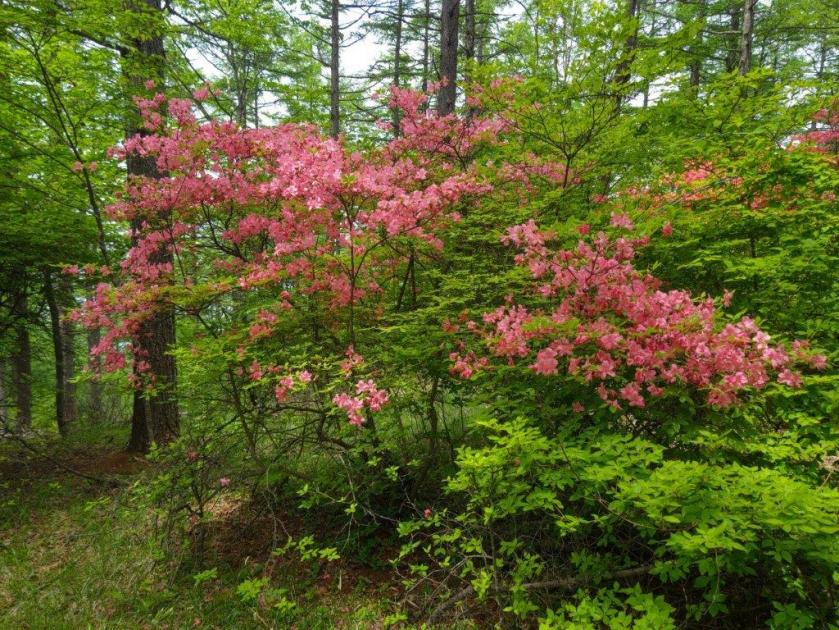
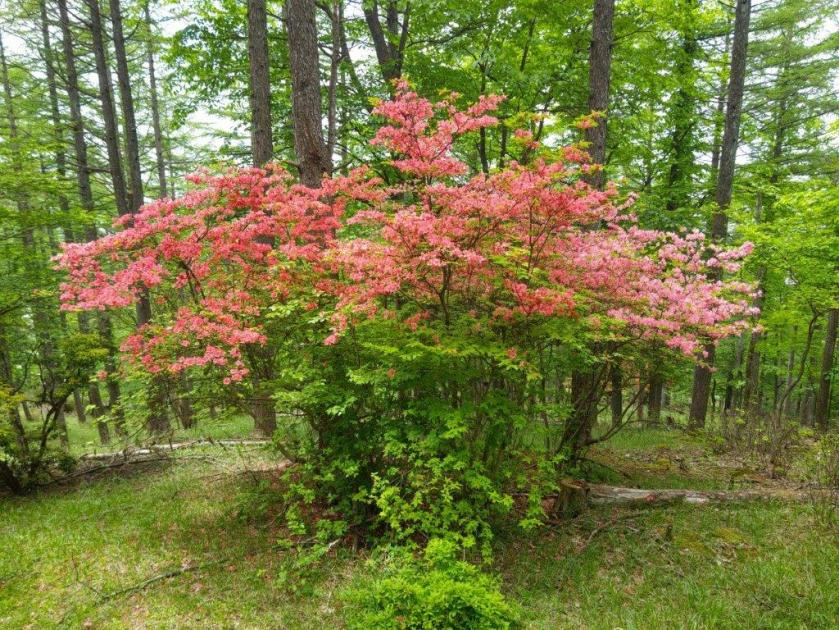
Green Path and Pink Flowers

I enjoyed the wide view across the valley on the south side: I could see the rounded top of Mt Tetemiezu and the twin peaks of Mt Futago, both on the border of Gunma and Saitama; behind Mt Futago, the summit ridge of Mt Ryokami was hidden in the clouds. I set off at 11h30, and and soon reached the turnoff for the “super-rindo” on the left side. I was glad I had opted to leave my car at the pass; although I could have parked closer to the summit, this gravel road was better suited to walking, bicycling or motorcycling. At noon, I arrived at the trail entrance on the left, as well as an open shelter with a viewpoint.

Light Green Above (left) Light Green Below (right)

Following a Narrow Ridge (left) Walking among the Birches (right)

The view of the Kanto Plain to the east was completely in the clouds; I could only imagine what it looked like on a clear day. I followed the up and down ridge trail westwards, through light green forest; occasionally the vroom of a motorcycle interrupted the background noise of buzzing insects, a reminder of the nearby forest road, mostly hidden by the trees. At the top of a grassy slope, I stumbled upon a cluster of bright red azalea (“tsutsuji“), always a nice surprise, even though I had seen hundreds the previous week.

View of the Top of Mt Akaguna from the Forest Road

Pylon next to the Forest Road (left) Surrounded by Green (right)

I reached the best viewpoint of the day just before 1pm, as I passed through an area clear of trees on the south side. The clouds had thinned and the sun was now shining on the rolling, forested mountains; Mt Ryokami’s ragged ridgetop was now visible; a power line stretched down into the valley, suspended between giant pylons, creating a dramatic effect from where I stood; directly ahead, at the end of a long ridge, was the tree-covered top of Mt Akaguna. Past a pylon, the trail merged with the forest road, but after a short distance, headed up the ridgeline again, along the East Route (東コース).

Power Line Diving into the Valley

Ridgeline Leading to the Summit of Mt Akaguna

This was by far the nicest section of today’s hike, the trail alternating between level and gently climbing portions, giving me ample time to take in the surrounding scenery. After a steep section, the trail merged with the North Route (北コース); a few minutes later, I reached the summit of Mt Akaguna (赤久縄山 あかぐなやま akaguna-yama), a Gunma and a Kanto 100 famous mountain. It was about 1h30, so I sat on a low bench for some lunch; although there was no view, looking up, I could see a huge patch of blue sky. At 2pm, I headed back down the West Route, and then followed the Forest Road till the start of the alternate trail back to Shiozawa Pass.

The Usual Hiking Trail is along this Ridge

Walking through a Green Wonderland

It was a challenge to find the main logging road after leaving the Super-Rindo, even with using the GPS on my phone, as many minor offshoots crisscrossed the mountain side. I was relieved when I finally reached one with a signpost for Shiozawa Pass, a little before 3pm. After an easy, slightly downhill stroll, I was back at my parked car, less than half an hour later. As it was still early, I drove a short way to the start of the trail of Mt Odoke (オドケ山). It took 30 minutes to complete the loop hike; although the summit was in the trees, I was impressed by the fancy new, bright red signposts. At 4pm, I set off for the return drive, arriving back at Honjo station just before 6pm.

Walking back along the Mikabo Super Forest Road

One of the many Logging Roads in the Area

I was glad to be able to check this mountain off my to-climb list after so many years, even though I had to settle for a 3h30 hike, about half the time it would have taken from the trailhead at the base; maybe one day I’ll return to do the whole hike, although it would require an overnight stay. I’d also like to explore more of the Mikabo Super Forest Road, on foot or by bicycle, as there are many viewpoints along the way. Hopefully I can do this on a blue sky day.

Watch a Video of the Mt Akaguna Hike
See a Slideshow of More Photos of Mt Akaguna

Mt Mido (878m), Shimonita Town, Gunma Prefecture, Monday, January 9, 2023 [Map Available]

After my Annaka to Annaka hike, I needed to find another mountain I could climb in the winter using the Tokyo Wide Pass. I decided to visit the Nishi-Joshu area, since my last hike there was nearly 3 years ago. I found a suitable peak in my mountains of Gunma guidebook, low enough to be still free of snow, and short enough so I could catch the mid-afternoon bus back. To give myself some extra time, I would get to Shimonita station an hour before the morning bus and take a taxi to the trailhead. Although the hike went up and down the same path, I could check out a couple of viewpoints on the way, as well as this peak’s claim to fame: two tall rock pillars perched on the mountain side. I was looking forward to revisiting Nishi-Joshu after a long interval and getting some new views of the area.

Hiking with the Tokyo Wide Pass

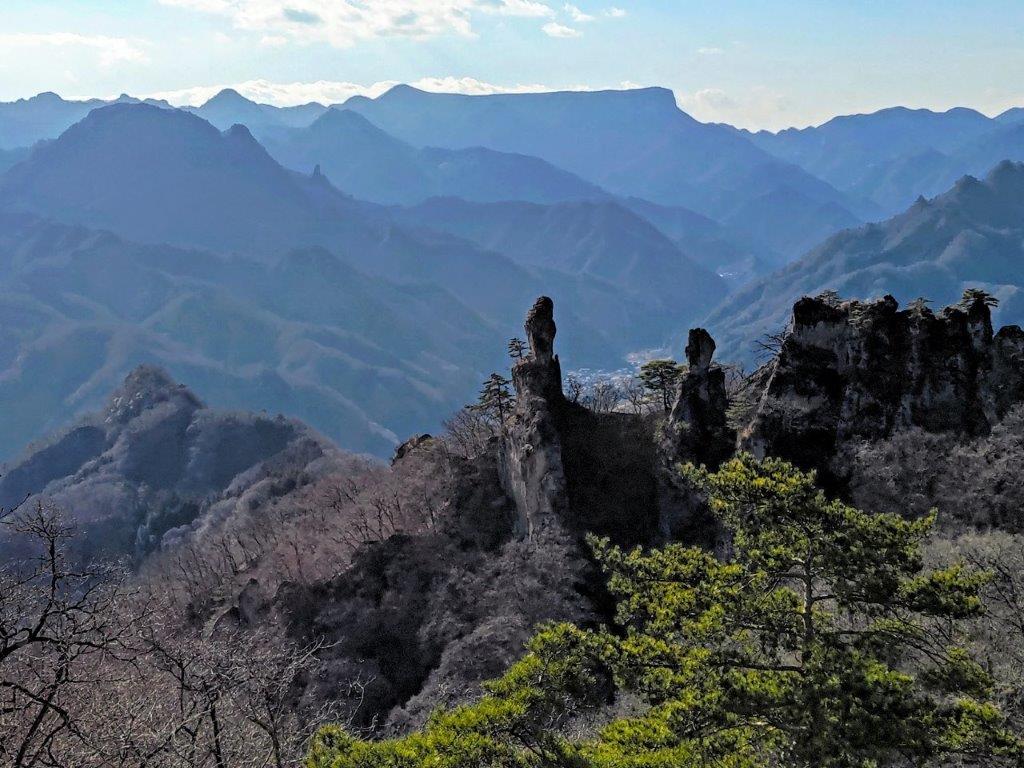
“Old Man Old Woman Rock” the highlight of the hike

Get a map of the Mt Mido hike

This map was developed for Japanwilds with the Hokkaido Cartographer

Find more Japan hiking maps on Avenza

View of flat-topped Mt Arafune from Jijiiwa-Babaiwa

I rode the shinkansen to Takasaki on a sunny, cloudless day and then transferred to the Joshin line for Shimonita, arriving there a little after 10am. It took about ten minutes by taxi to reach the trail entrance, and after getting ready, I set off along a forest road through the cedars. I soon passed the end of the forest road, and by 11am, was walking up a rocky valley; I was finally starting to warm up, thanks to the sun, shining through the bare trees.

Walking among the cedars (left) Mi-n0-Taki waterfall (right)
View of Mt Myogi from the summit

I was extra careful to check for hidden holes, the path being covered in a layer of dead leaves. At 11h30, I reached Mi-no-Taki waterfall, barely a trickle at this time of year. It was also the trickiest part of the hike, requiring a quick scramble up a rocky face, fitted with a rope for safety. Next, a short, steep climb brought me to an intersection at the top of the valley. Here, I dropped my pack and headed left for the short roundtrip to the first viewpoint.

Steep section at the top of the valley (left) Old Woman Rock (right)

Looking down at Jijiiwa-Babaiwa from the second viewpoint

I followed a narrow ridge passing by the base of a rocky outcrop, and after a few minutes, reached a level, rocky ledge, opposite “Jjji-iwa Baba-iwa” (じじ岩ばば岩) meaning “Old man rock old woman rock”), two impressive stone pillars perched at the end of the ridge. Turning around, I had a bird’s-eye view of a deep valley, with flat-topped Mt Arafune in the background. Since it was nearly noon, I found a spot to sit and had an early lunch. After enjoying the view, I made my way back to the intersection and continued along the right branch.

Looking south towards the Mikabo Super forest road

View southeast of Mt Ogeta

I was surprised by how dry everything was, dust flying up from the trail at every gust of wind. After some more climbing along the narrow, twisting ridgeline, I reached the summit of Mt Mido (御堂山 みどうやま mido-yama), a Gunma 100-famous mountain, a little before 1am. It was mostly in the trees, but I could make out the jagged summit of Mt Myogi, as well as the snowy top of Mt Asama, both on the north side. After a short break, I retraced my steps to a turn-off for the nearby “Jitoba-ura-tenbosho”, the rear viewpoint of the stone pillars.

Climbing the narrow ridgeline (left) Walking back along the forest road (right)

Late afternoon light filtering down into the deep valley

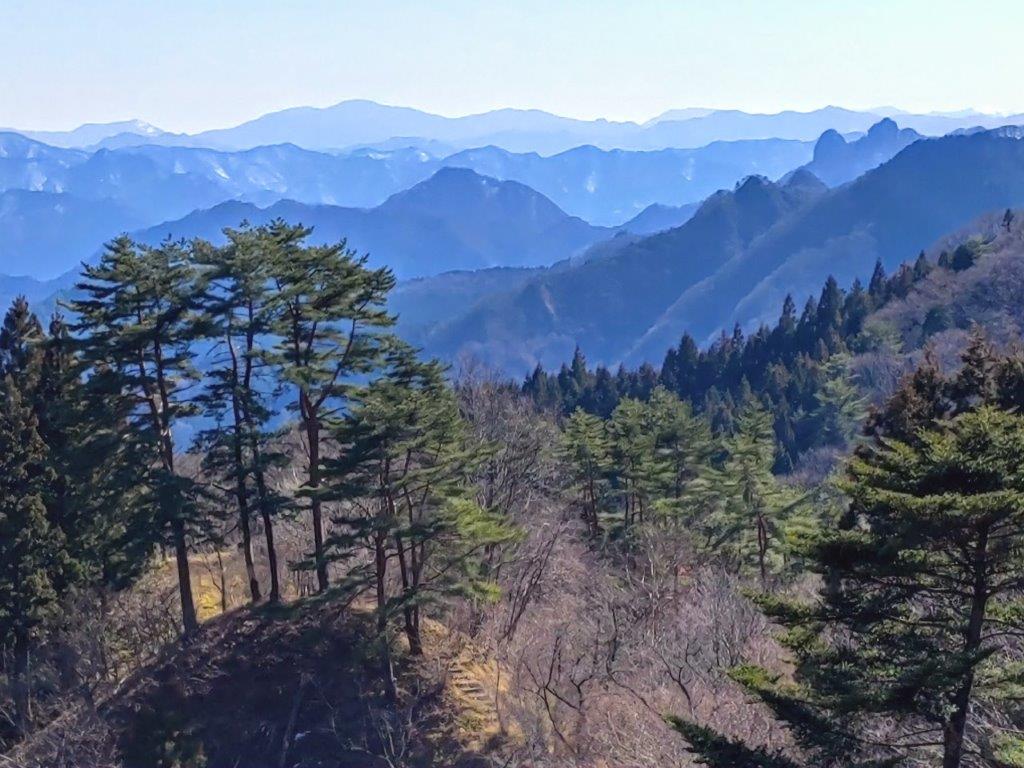
Standing next to a rocky outcrop, I had a fantastic view of “Jijiiwa-babaiwa”. I continued a little further to the end of the path, where I had a view of Mt Ogeta and the Kanto plain on the west side, and Mt Akaguna and the Mikabo Super forest road on the south side. I found a place to sit and finished the second half of my lunch. It was now past 2 pm so I quickly made my way back down the same way, carefully navigating the descent down Mi-no-taki waterfall, reaching the bus stop just in the time for the 3h30 bus. Back at Shimonita, I boarded the Joshin line for the one-hour trip back to Takasaki, where I transferred to the Shinkansen for Tokyo.

See a video of the Mt Mido hike

Mt Sekison (571m), Annaka City, Gunma Prefecture, Saturday, January 7, 2023

I wanted to use the Tokyo Wide Pass for the long first weekend of 2023. I searched my maps for some low-altitude mountains near a shinkansen station and finally found a series of minor summits, part of the Annaka Alps, north of Annaka-Haruna station, one stop from Takasaki on the Hokuriku line. I had often passed through this station on the way to and from Karuizawa, so I was glad for a chance to finally get off there. The hike through these hills was relatively short, but could be extended by following the Kanto Fureai no Michi, as it headed south from Mt Haruna. Upon reaching a road, I could catch a bus back to Annaka station on the Shin-Etsu line, therefore completing an “Annaka to Annaka hike” of my own creation.

Hiking with the Tokyo Wide Pass

Hiking the Kanto Fureai no Michi 関東ふれあいの道

Hiking the Annaka Alps 安中アルプス

View of the hike from Kanbai Park

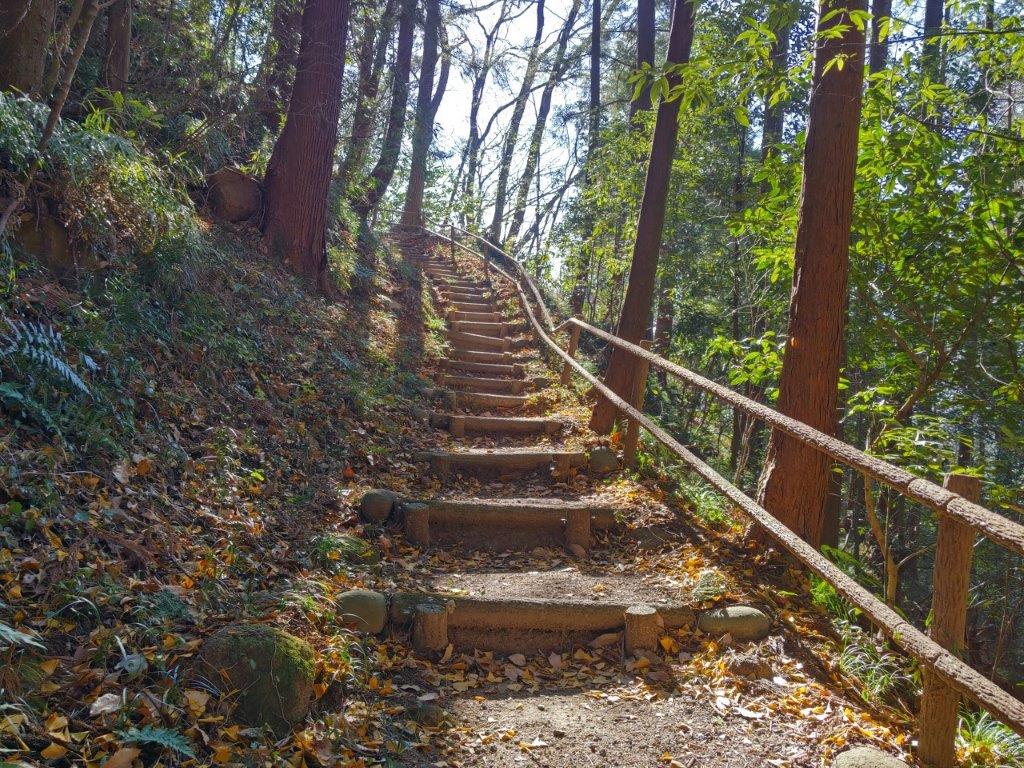
I reached the Annaka-Haruna at 11am on a sunny winter day and was stunned by the clear view of Mt Myogi from outside the station. Half an hour later, I was walking up a road on the north side, and soon spotted a signpost for a trail on the right. I followed a narrow path as it went through a bamboo forest, then merged with a forest road, before reaching a parking lot at the end of a paved road. On the other side, the trail continued up a series of log steps through beautiful forest.

View of Mt Myogi from Annaka-Haruna Station

Start of the trail leading to the “47 statues”

I suddenly found myself walking under a cliff, and felt nervous about rockfall, something I hadn’t expected on today’s hike. I had arrived at a historical site called “The statues of the 47 loyal retainers of Ako-Gishu” (赤穂義士四十七士石像), in memory of the 47 Ronin. After quickly confirming that there were indeed 47 statues along the base of the cliff, I set off again, up a steep trail winding around the back of the rocky outcrop.

A log staircase going up through sunny forest

The trail passes near the base of a rocky outcrop

As I neared the top, I stepped into a hole hidden by dead leaves and banged my knee on a rock; fortunately, it was more fright than harm. A few minutes later, I reached the summit of Mt Goten (御殿山 400m); it was completely in the trees so I soon moved on. I followed a mostly level trail through a dark cedar forest till it ended at a dirt road. Using my map, I quickly picked up the trail again, as it led to the top of a hill.

The hike alternated between sunny and shady sections

Hiking through the winter woods

I was now walking on a sunny level path, with glimpses of Mt Haruna on the north side, through leafless trees. At 1pm, I arrived at the summit of Mt Sekison (石尊山 せきそんさん sekison-san), a gunma 100-famous mountain, and rested on a bench with a narrow view to the south. After lunch, I followed a path down the other side, and after crossing a road, walked up the next hill. I soon passed the summit of Mt Toya (605m 戸谷山 とややま), in the trees, and headed down the other side, arriving at the Kanto Fureai no Michi at 2pm, where I turned left.

Most of the trail was easy to walk

The entire hill range is known as the Annaka Alps

I followed a pleasant trail, downhill through sunny forest, with occasional views of the Joshu mountains, reaching a road and a bus stop at around 3pm. I decided to check out the Akima Plum Grove (秋間梅林), a short distance away. From the highest point of Kanbai Park (観梅公園), I was rewarded view of the hills I had just hiked, as well as some early pink plum blossoms. I followed a different path through the park back to the road. There, I got on a bus for Annaka station, just 3 stops from Takasaki station, from where I could catch the shinkansen for the 40-minute ride to Tokyo.

See the views along the Mt Sekison hike

See more pictures of the Mt Sekison hike

Mt Arikasa (873m), Nakanojo Town, Gunma Prefecture, Sunday, May 8, 2022

I wanted to squeeze in one more hike before the end of Golden week after recovering from the three previous ones. I decided to visit Nakanojo in Gunma, as it was an area I was interested in exploring more. I found a three-hour loop in a booklet I picked up on my last visit; this mountain wasn’t in my guidebook, nor shown on any of my maps, so I had to rely on information online. I would ride the shinkansen to Takasaki, where I would transfer to the Agatsuma line. After getting off at Nakanojo, I could catch a bus for Sawatari Onsen, the last stop on the line. The hike itself went around a rocky, isolated peak, also a popular climbing area, with a short round-trip to the flat top on the south side. I was concerned about that part, as it included chains and ladders; I would have to proceed with caution going up, and even more on the way down. The weather was supposed to be clear and not too hot. I was looking forward to going to Nakanojo again and visiting a new hot spring town hidden in the mountains of Gunma.

View west from below “The Ladder”

Bus heading back to Nakanojo with Mt Arikasa in the background

It was a blue sky day as I rode the shinkansen, and then the local train, to Nakanojo. Around 10h30, I boarded a bus for Sawatari Onsen (沢渡温泉), my first time to ride this line. I got off at the last stop, just past the hot spring town, near a bridge over the Sawatori river. Straight ahead, I had a good view of today’s mountain, an isolated peak jutting straight up out of the green forest. As I got ready at the nearby Seseragi Park (せせらぎ公園), I wondered how the trail would get to the top of the rock. At 1130, I set off along a road, and half an hour later, just before another bridge over the river, I turned left onto a forest road.

Forest road leading to the West Entrance

Interesting rock formation in the middle of the forest

I had some more impressive views of today’s climb, after arriving at a fork in the road. I took the right branch for the West Entrance (西口), which I reached a little after noon. I followed the trail straight up the mountain side and soon reached an open shelter in the middle of the forest. I took a short break and then continued on my way. At 12h30, I reached a turnoff for a natural rock formation, resembling a dolmen, visible through the trees on the right. After circling it and peering through the gap in the middle, I resumed my climb.

The funny “Hahaha” sign (left) / Climbing “The Ladder” (right)

Start of the climb up “The Ladder”

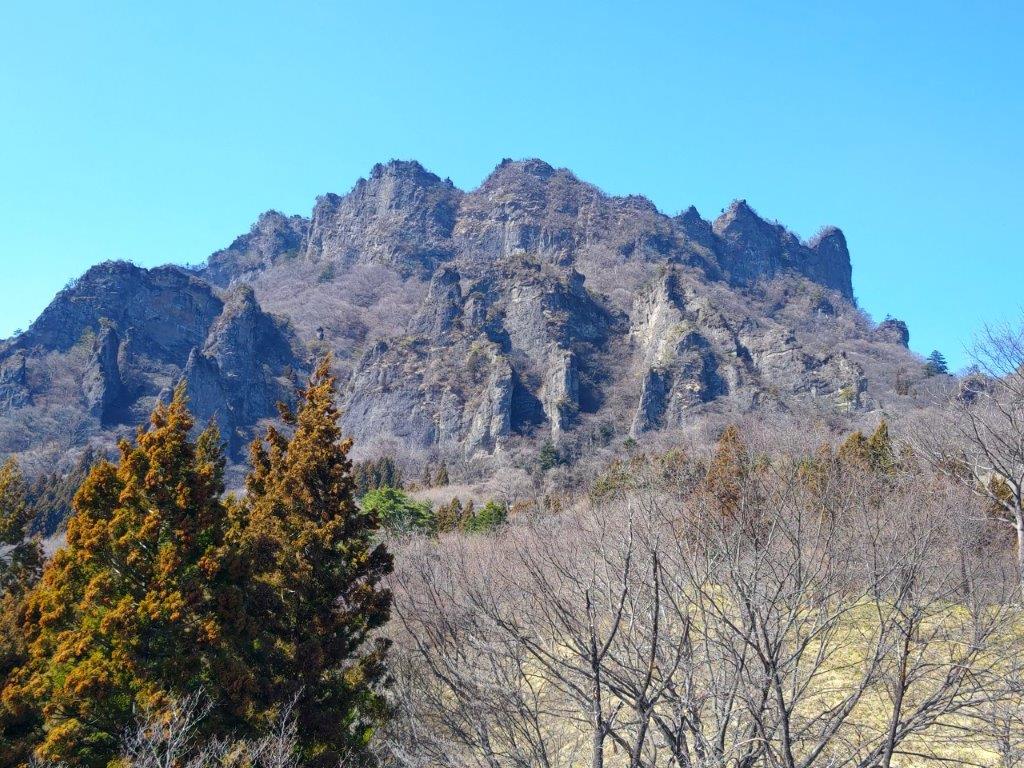
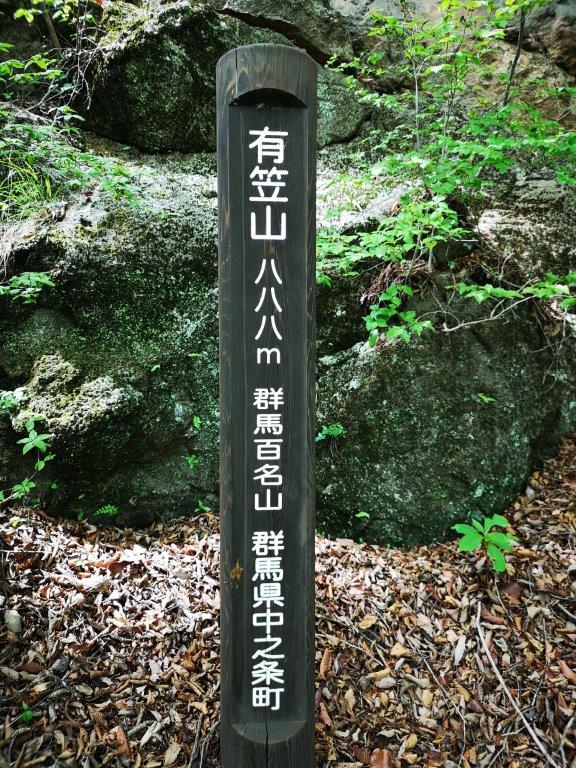
The path turned right under some cliffs, the higher parts hidden by the green canopy of the trees ; here and there, I spotted chains used by rock climbers. At 1pm, I arrived at the East Entrance (東口) trail junction and the start of the roundtrip for the summit; I followed the path as it wound clockwise around the steep summit and passed a funny sign informing me that I was at an elevation of 888 meters, read as “Hahaha” in Japanese (ハハハ). Very soon, I was walking through a rocky area with views to the west through the trees; looking down, I realised I was at the edge of a cliff.

View south from the rocky outcrop

The very green East Entrance

I had also reached the chain and ladder section, called “The Ladder” (梯子); I climbed with care, but near the end I couldn’t advance while keeping three points of contact at all times; after some consideration, I finally found a way, and after fixing it in my mind for the return, continued with the ascent, now in a counter-clockwise direction. A few minutes later, I reached a rocky outcrop from where I had a view south of forested hills. Soon after, I arrived at the flat top of Mt Arikasa (有笠山 ありかさやま arikasayama), a Gunma 100 famous mountain. I couldn’t see anything through the trees, so I headed back almost at once; I got down “The Ladder” safely, and since it was 1h30, found a good place to sit for lunch, at a safe distance from the cliff edge. Afterwards, I continued along the trail, now heading downhill towards the East entrance.

The well-maintained “promenade” above Sawatari Onsen

View of Sawatari onsen, a secret hot spring resort in Gunma

As I passed under the cliffs, I could hear the voices of climbers echoing above. I walked along the forest road to the junction I had passed earlier in the day, and then made my way back to Seseragi Park. Since it was just past 3pm, I decided to follow a “promenade” (遊歩道), a short, well-maintained trail on the hillside above the hot spring resort. It took me past a small shrine surrounded by bright red Azalea, with good views of Mt Arikasa and Sawatari Onsen. At 4pm, I dropped by Ryumeikan (龍鳴館), for a quick hot bath before catching the bus back to Nakanojo. Once back in Takasaki, I rode the green car of the Shonan-Shinjuku line back to Tokyo, bringing to an end a series of successful golden week hikes.

See the views along the Mt Arikasa hike

Mt Tetemiezu (1047m) & Mt Okubo (980m), Kanna Town, Gunma Prefecture, Saturday, November 20, 2021

I had climbed this remote mountain four years ago but had missed the main viewpoint, slightly off the main trail; the weather hadn’t been at its best either. I decided to give it another try, but this time from the Gunma side, so that I could go up and down via a different route. If I had enough time, I would make a roundtrip to the next peak along the ridgeline. I knew how to get there since I had visited the area twice before this year; however it would be the first time to ride the pass so far down the Kanna river valley. It was supposed to be a sunny day, usual for this time of the year. I hoped to enjoy a peaceful walk along the border of Saitama and Gunma, and perhaps catch the last of the autumn leaves.

View of Mt Ryokami under the dark clouds

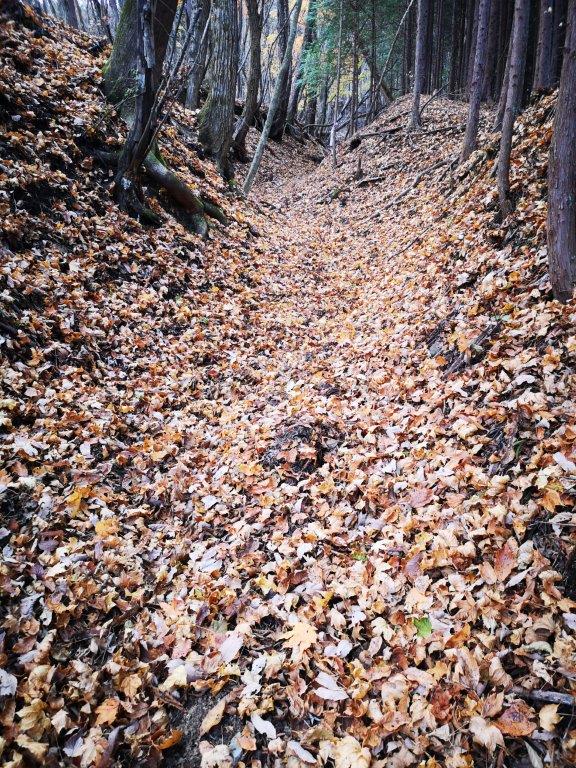
I arrived at Shinmachi station before 8h30 and boarded a comfortable minibus bound for Ueno village, about 3 hours away. I got off at a bus stop just past Manba Village, after a nearly two-hour picturesque ride up a remote river valley. The weather had been sunny up to this point, but as I crossed the Kanna river, the sun disappeared behind some clouds and didn’t reappear fully till the late afternoon. I soon reached the trail entrance, covered by a blanket of fallen yellow leaves.

Most of the autumn leaves had already fallen

The trail presented no particular difficulties

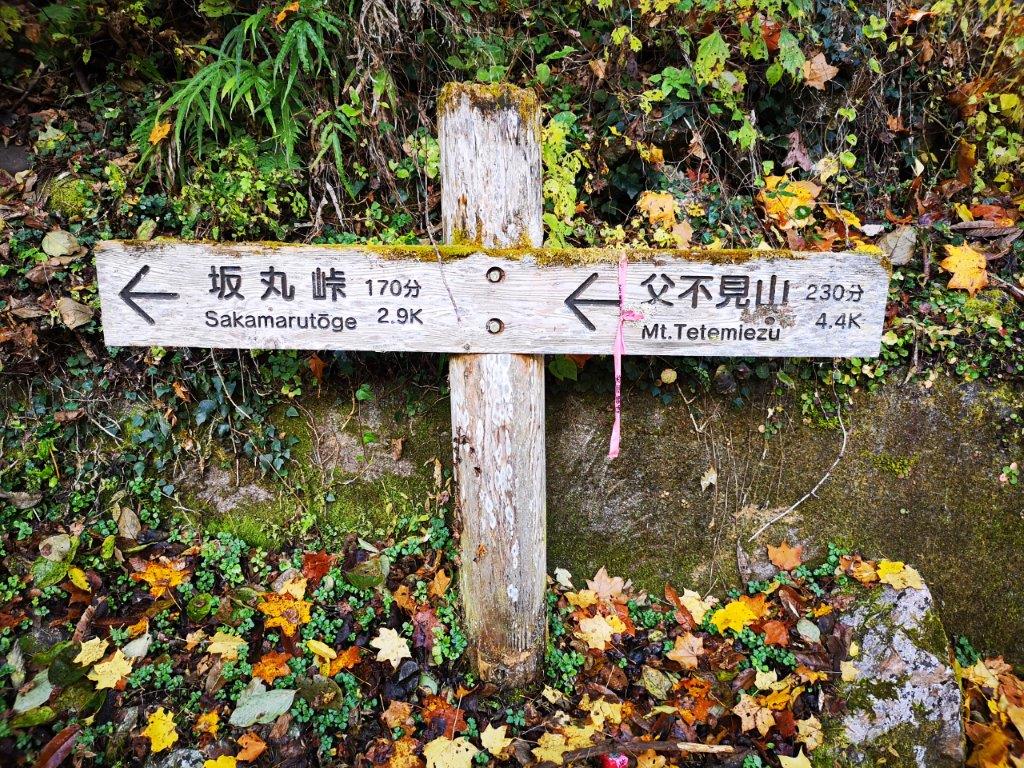
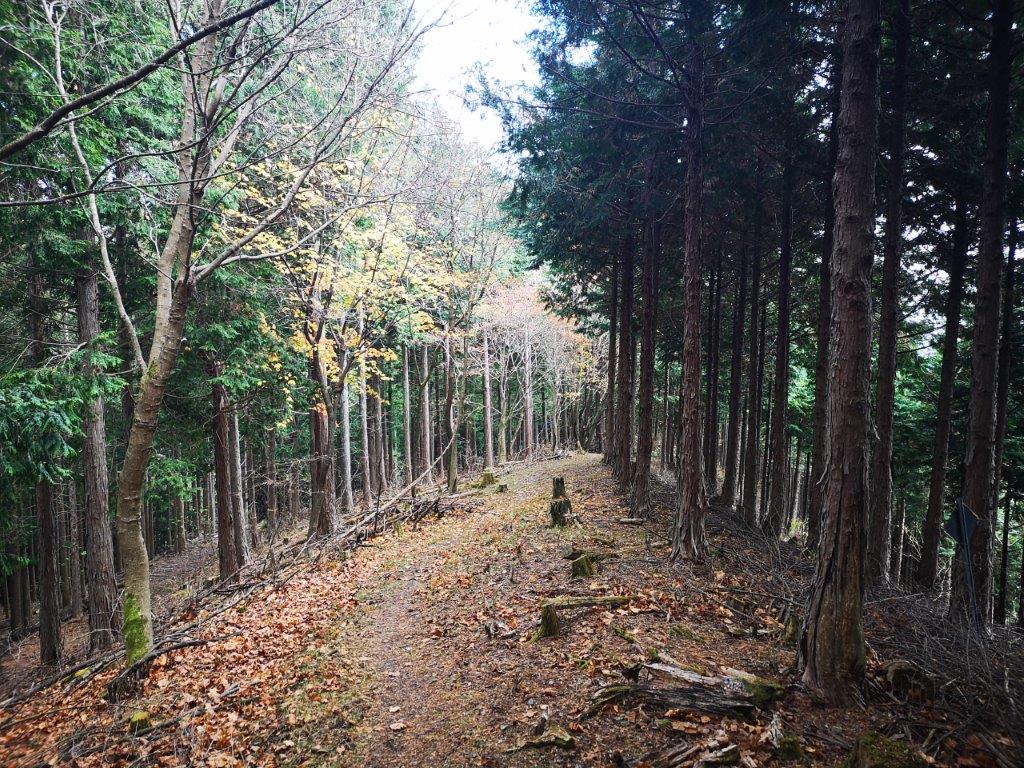
I had occasional glimpses of the valley below through the trees, now bare of leaves, as I followed the path up the mountain side. I encountered several forks but the hiking trail was always clearly signposted. It took about an hour to reach Sakamaru Pass (坂丸峠 858m). There, I turned left along a level path through tall cedar trees, below the ridgeline on the Saitama side, looking familiar from my previous hike on this mountain. After a short, steep climb I reached Nagakubo Head (長久保の頭 ながくぼのあたま nagakubo-atama).

Left back, Mt Jomine, right front, Mt Okubo

Soon arriving at Sugi pass

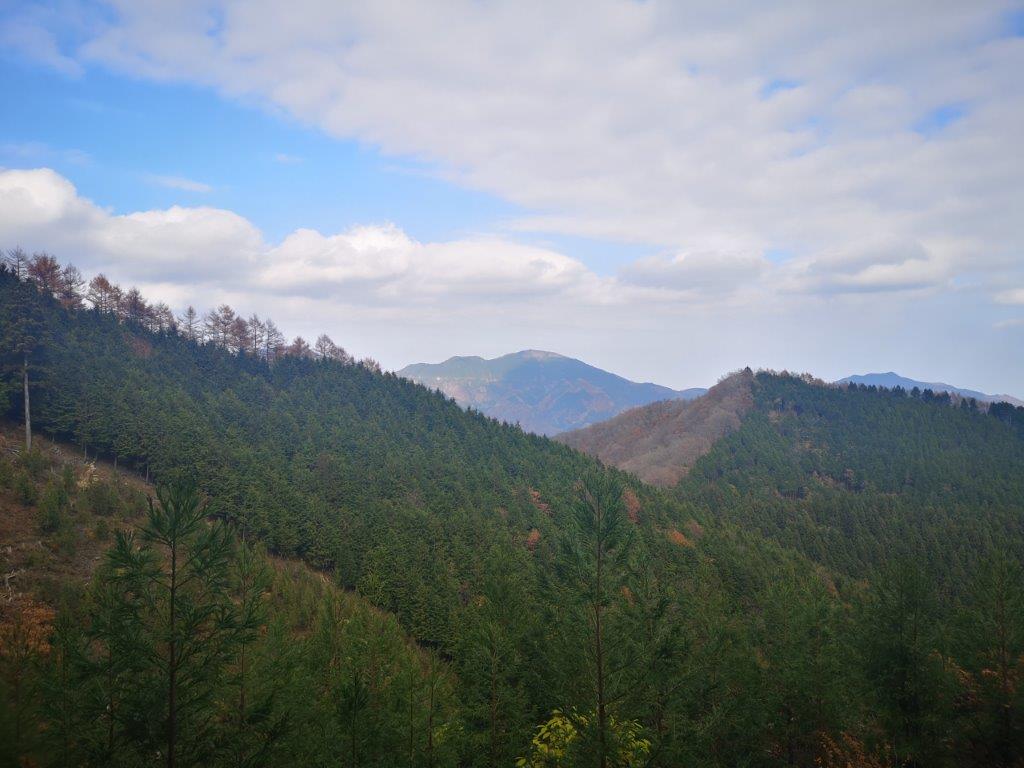
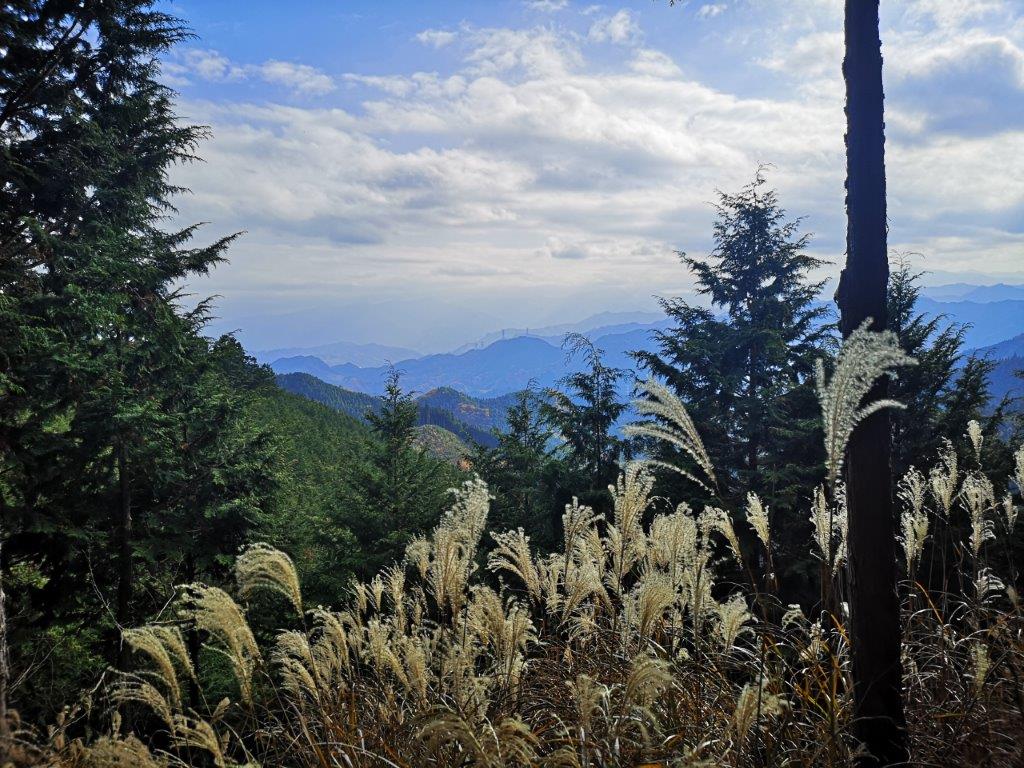
Even though, at 1066m, it was the highest point of the hike, it wasn’t today’s summit. At first glance, it seemed totally surrounded by pine trees, but this time I was able to find a viewpoint of Chichibu above a deforested area on the south side. Since it was past noon, I found a tree stump and sat down for lunch. The clouds were in and the views weren’t as great as I had expected. South, I could see the triangular summit of Mt Buko; looking west, I spotted the flatter triangular peak of Mt Jomine. After lunch, I walked along the edge of the open area, and turning around, I saw the double rounded peaks of nearby Mt Mikabo, with some blue sky in the background.

Gazing at Chichibu past the Suzuki

The narrow ridge leading to Mt Okubo

It started to feel cold so I retraced my steps and continued my hike. I saw a handful of other hikers, as opposed to no one on my previous visit, and I was glad this mountain enjoyed some popularity. Ten minutes later, after a short up and down, I reached the summit of Mt Tetemiezu (父不見山 ててみえずやま tetemiezu-yama), a Kanto and Gunma hundred famous mountain. Slightly lower than the other peak, it had no view at all. Since I wanted to avoid cooling down, I moved on without a break. After some descending, I arrived at a crossroads under a lone cedar tree, aptly named Sugi Pass (杉の峠 sugi-no-toge meaning cedar tree pass). On my previous trip I had gone down via the path on the right; this time I would need to go left.

Mt Ryokami, a Japan hundred famous mountain

Some sun near the summit of Mt Okubo

Since it was only 1h30, I had time for the one hour round-trip to the next peak. It wasn’t an official trail, just red strips attached to branches along the way, and so it required some path finding. After turning slightly left down a slope through dark forest, I found myself climbing a narrow rocky ridge. It was definitely the most exciting part of the hike. Fifteen minutes later I reached the top of another deforested area and the summit of Mt Okubo (大久保山(おおくぼやま ookubo-yama), where I had my best views of the day, as well as some sun. To the south, I could see jagged outline of Mt Ryokami, looking menacing under dark clouds.

The view from the summit of Mt Okubo

Some autumn leaves could still be seen

After a short break, I headed back the same way and reached Sugi pass a little after 2h30. I followed a gently sloping forest road for about an hour, and then a road for about ten minutes, and arrived at a bus stop on the same road I had used in the morning, just as the sun dipped below the mountain ridge. After getting on the bus, I deciced to get off halfway to take a quick hot bath at Sakurayama hot spring, which I had visited once before after hiking Mt Sakura. I finally arrived back at Shinmachi station at 6h30pm, where I boarded the shonan-shinjuku line for the two-hour ride back to Tokyo.

See the views on the border of Saitama and Gunma

The double-rounded top of Mt Mikabo