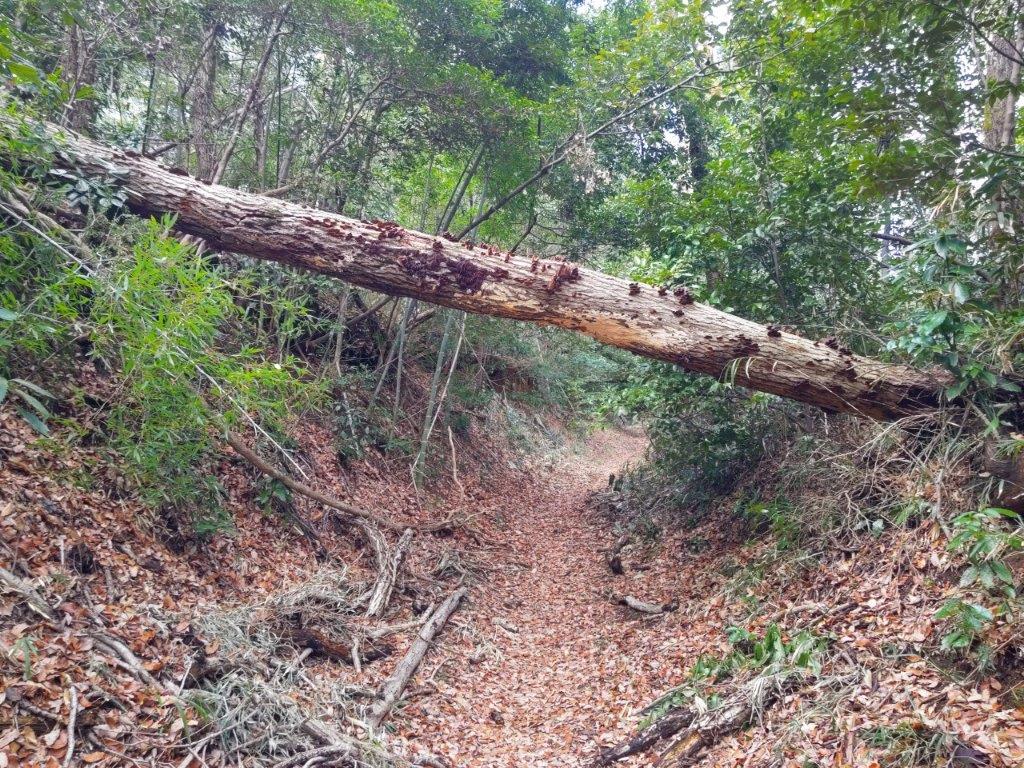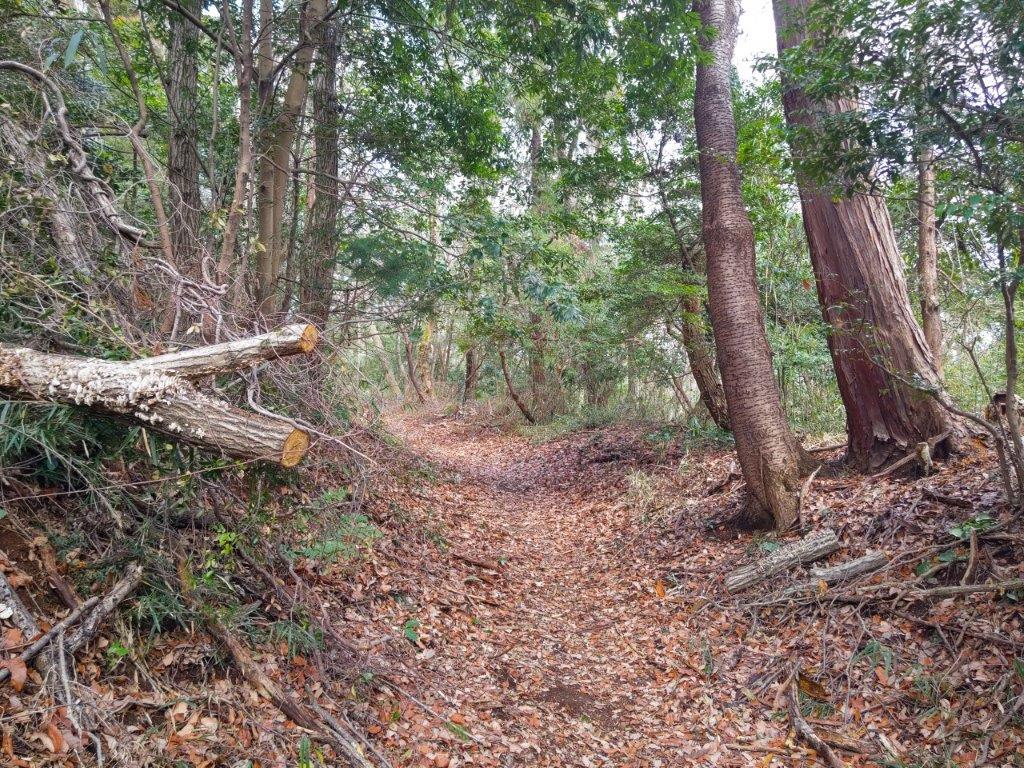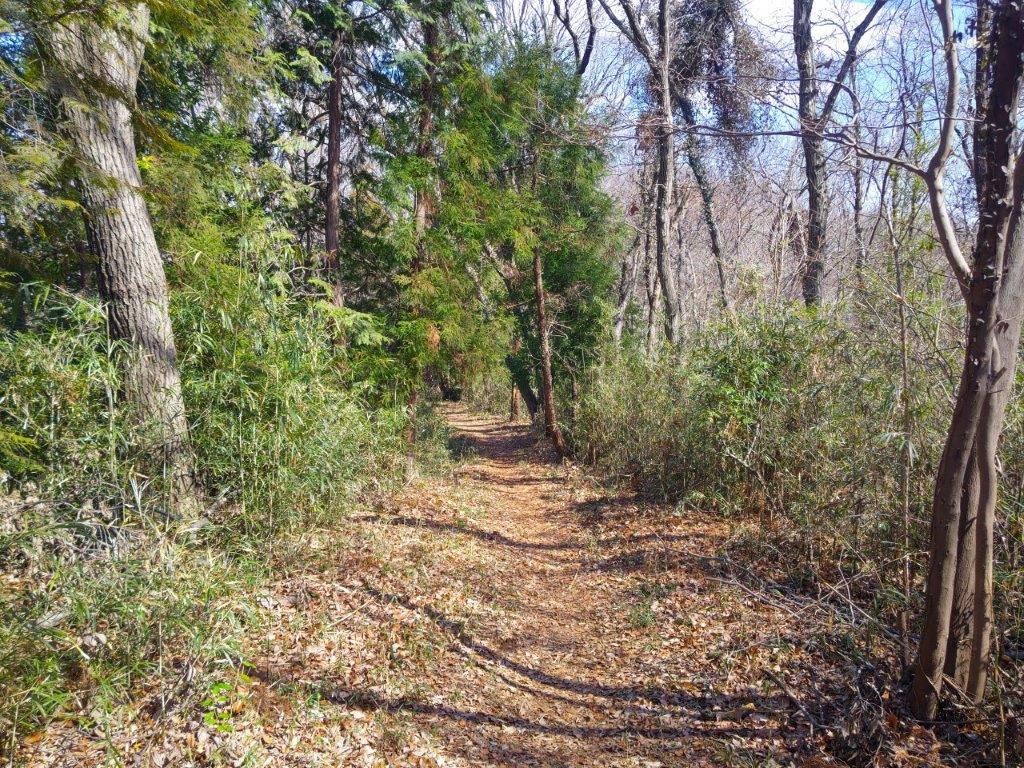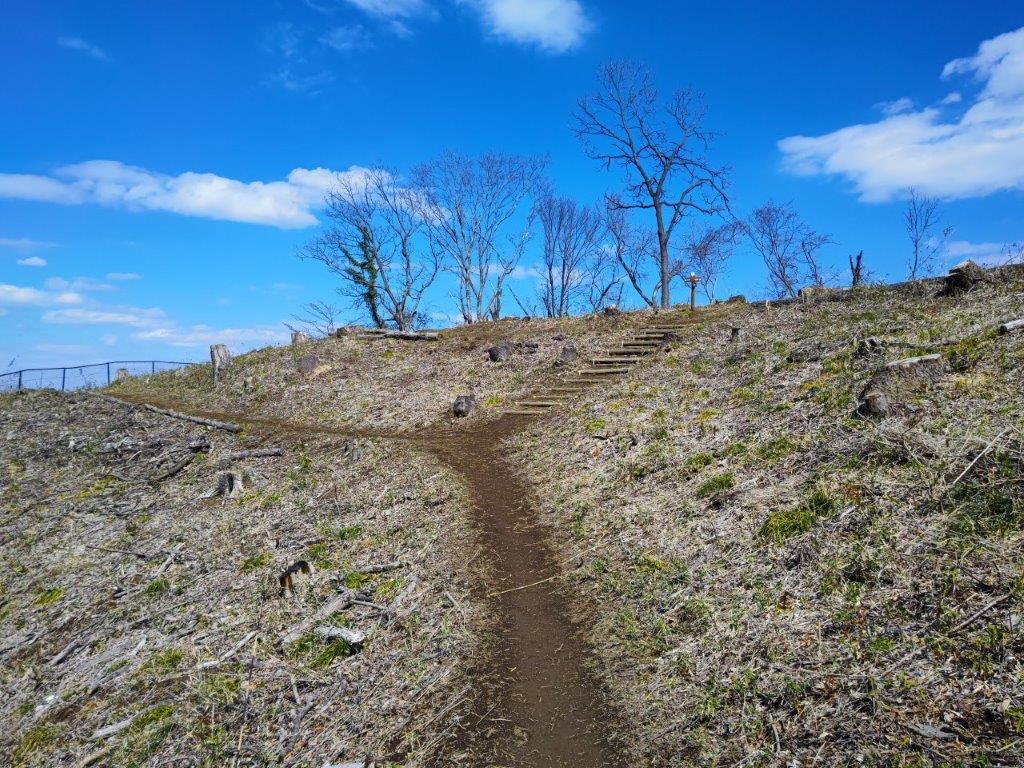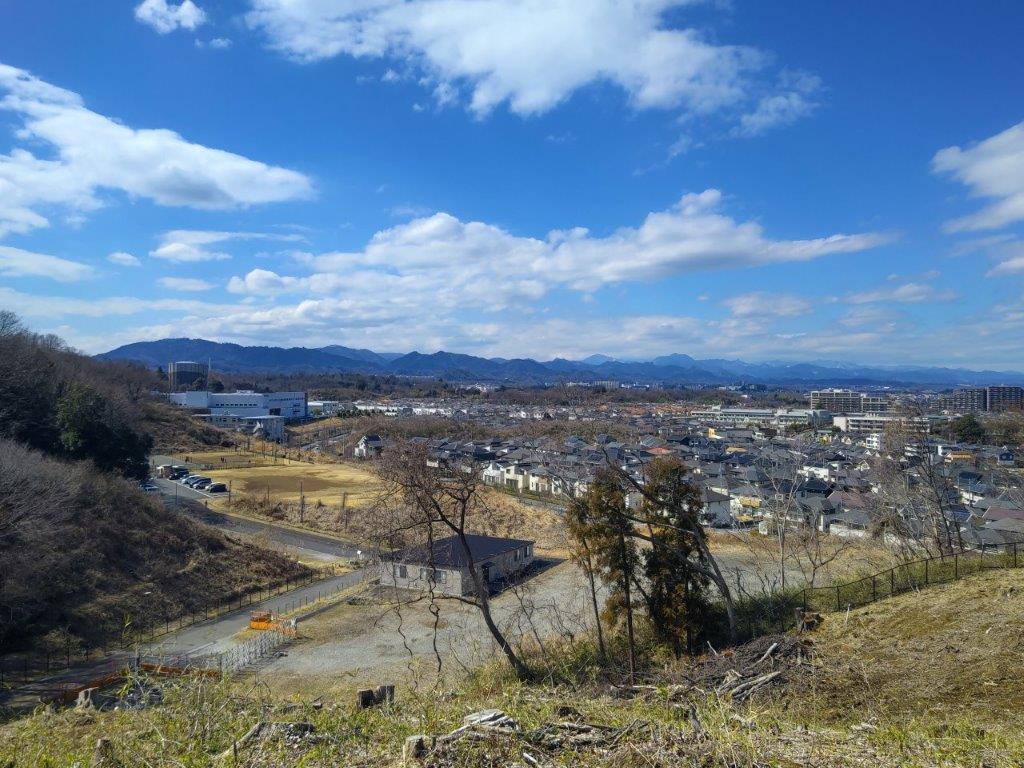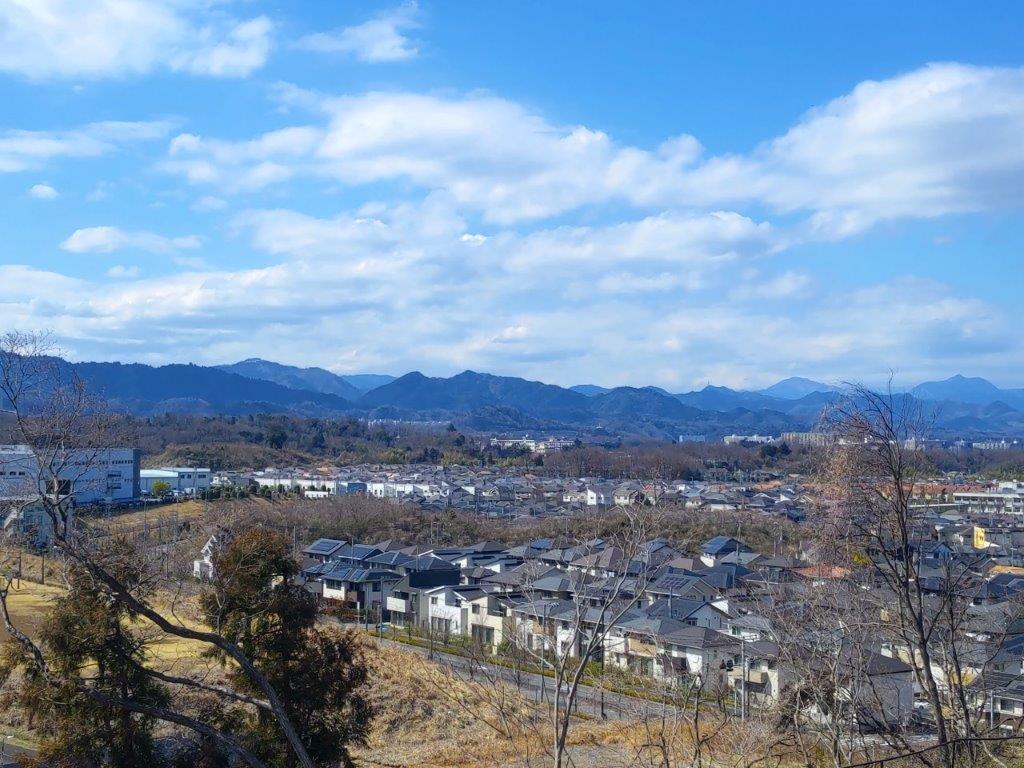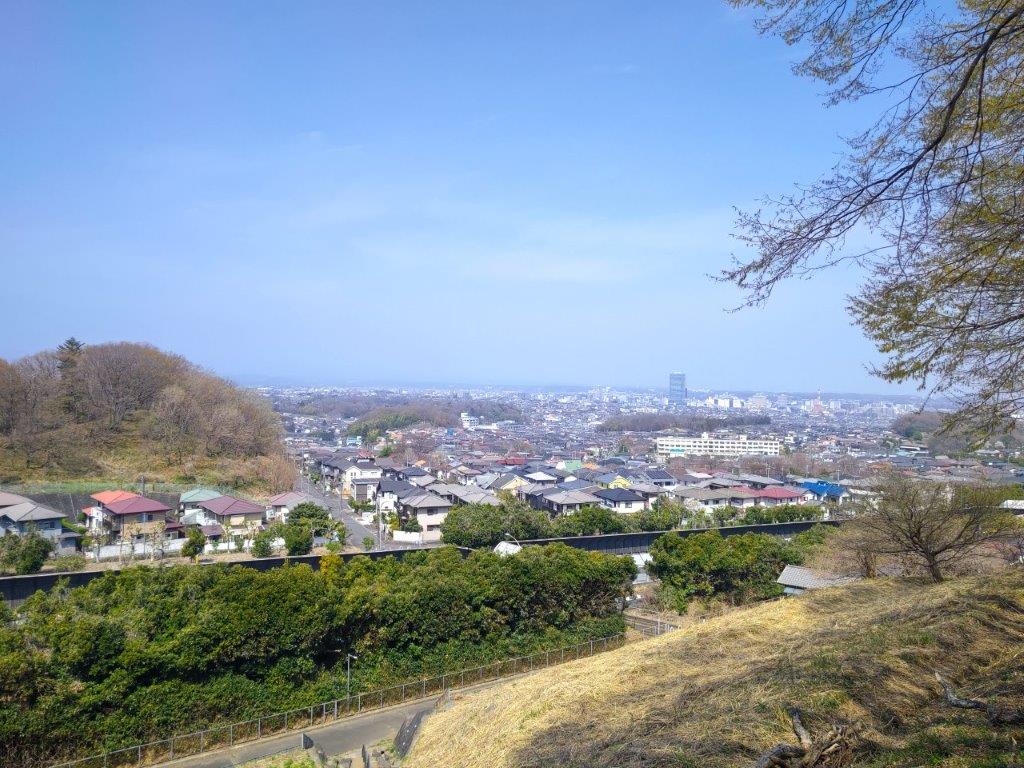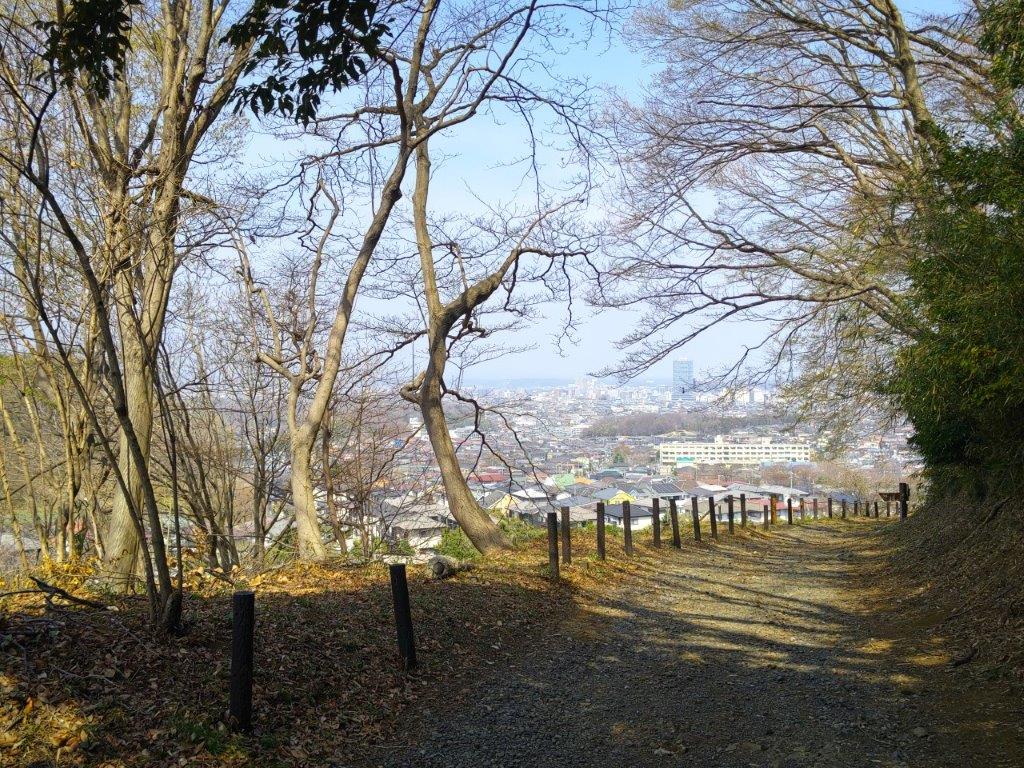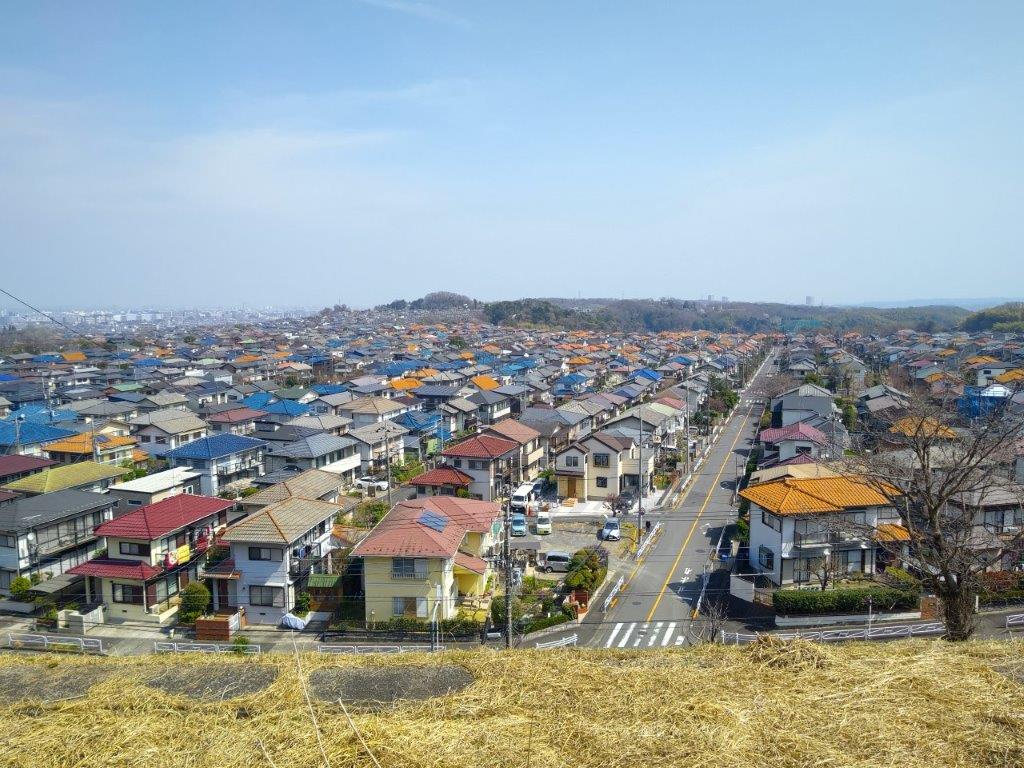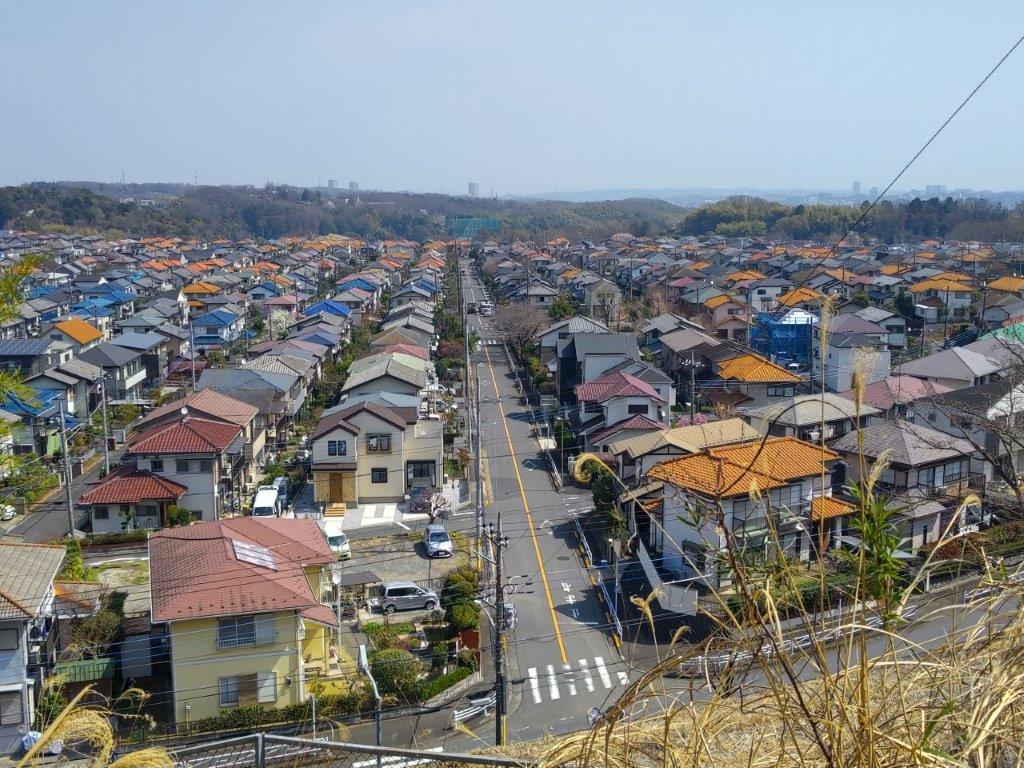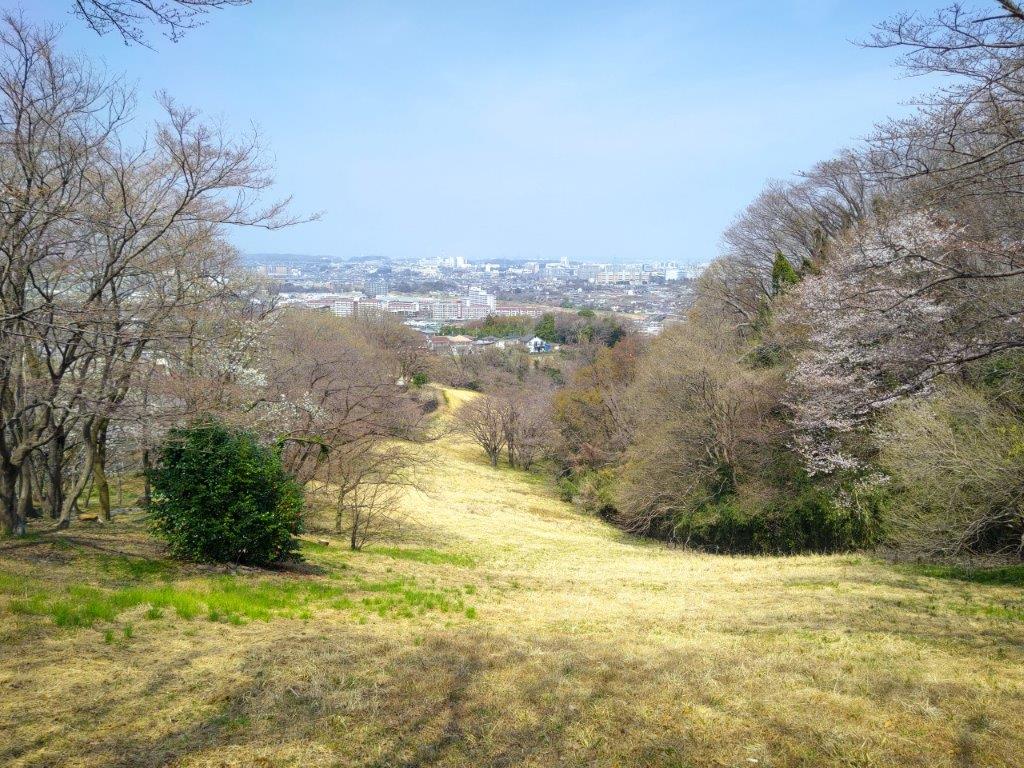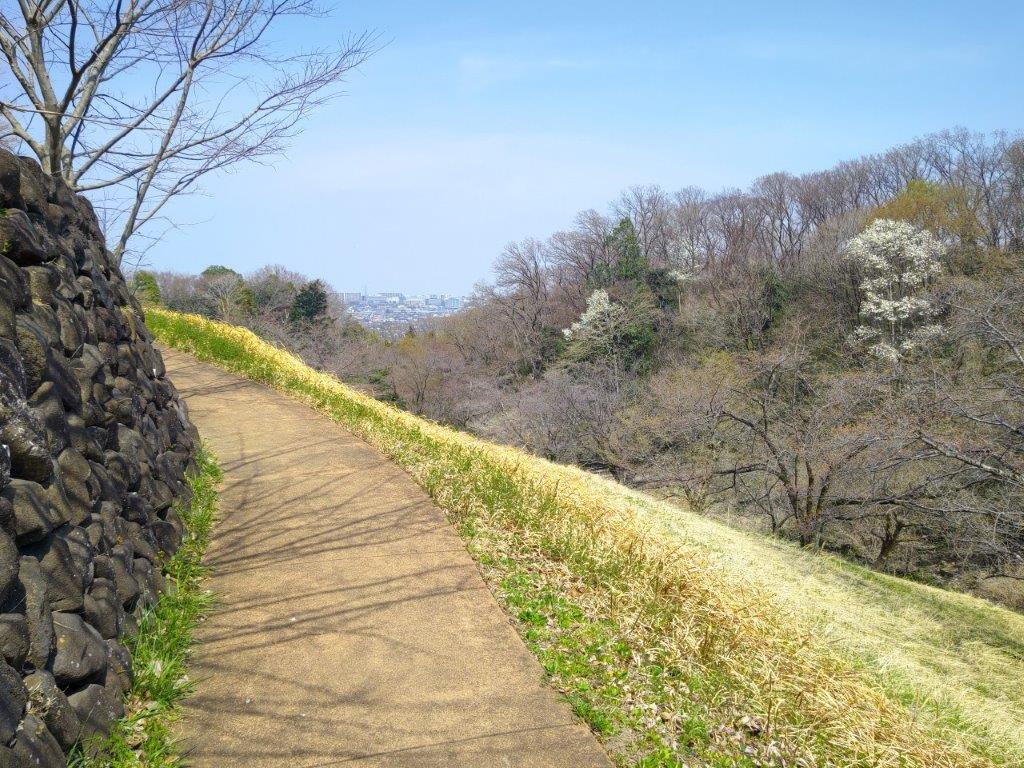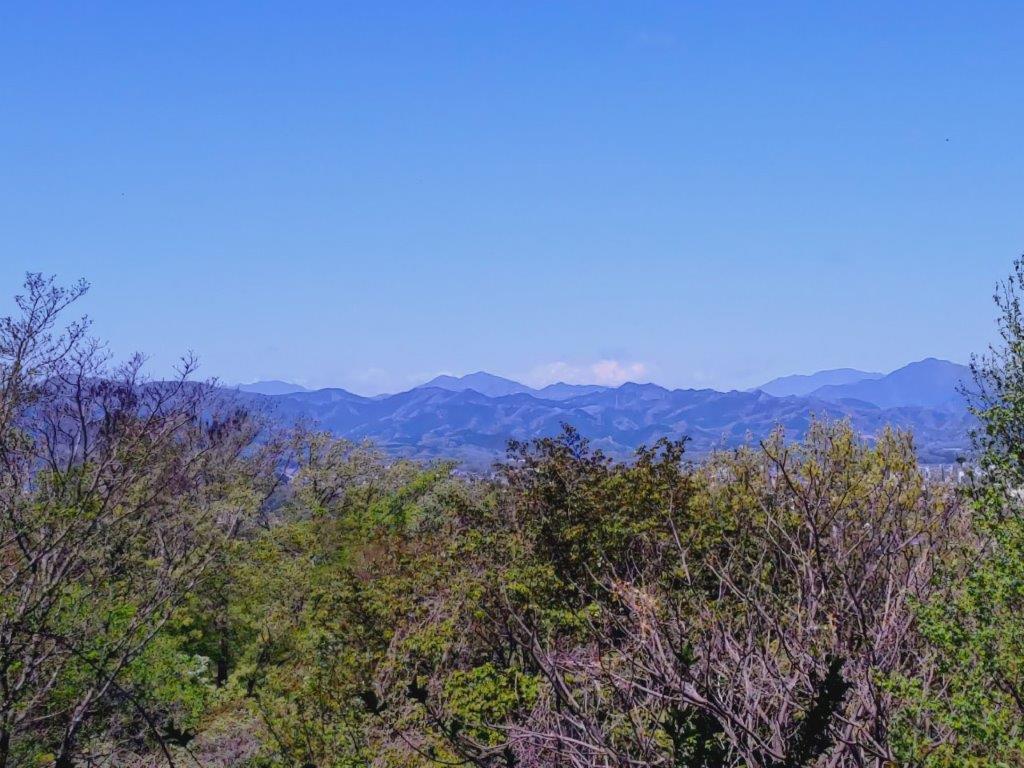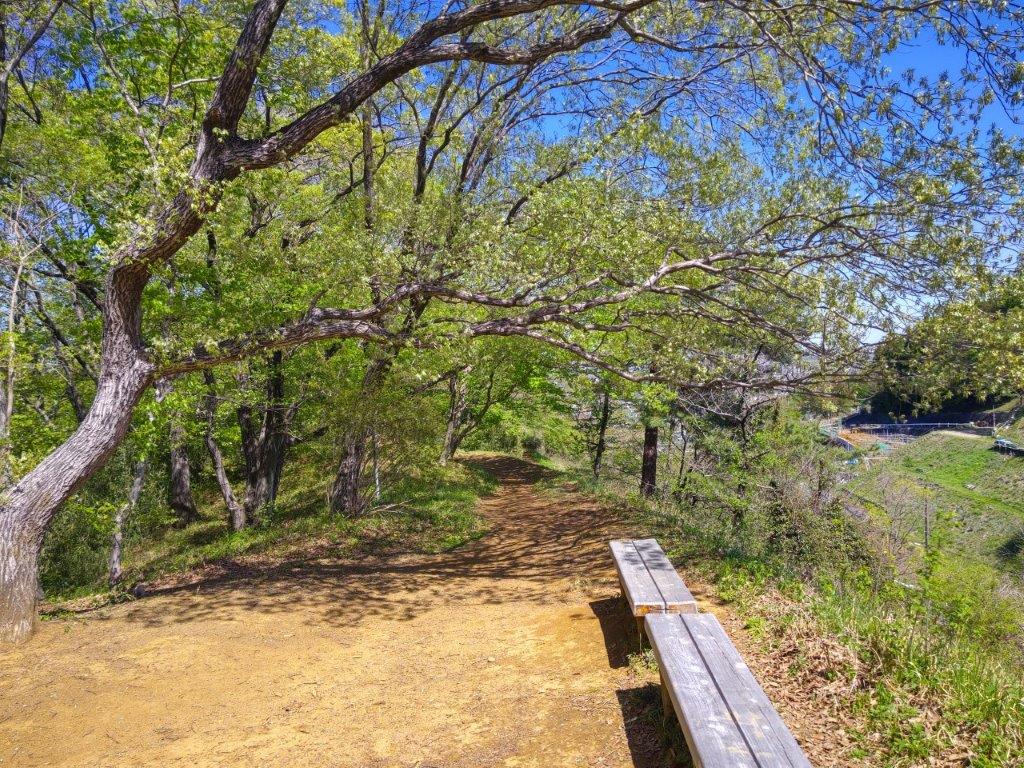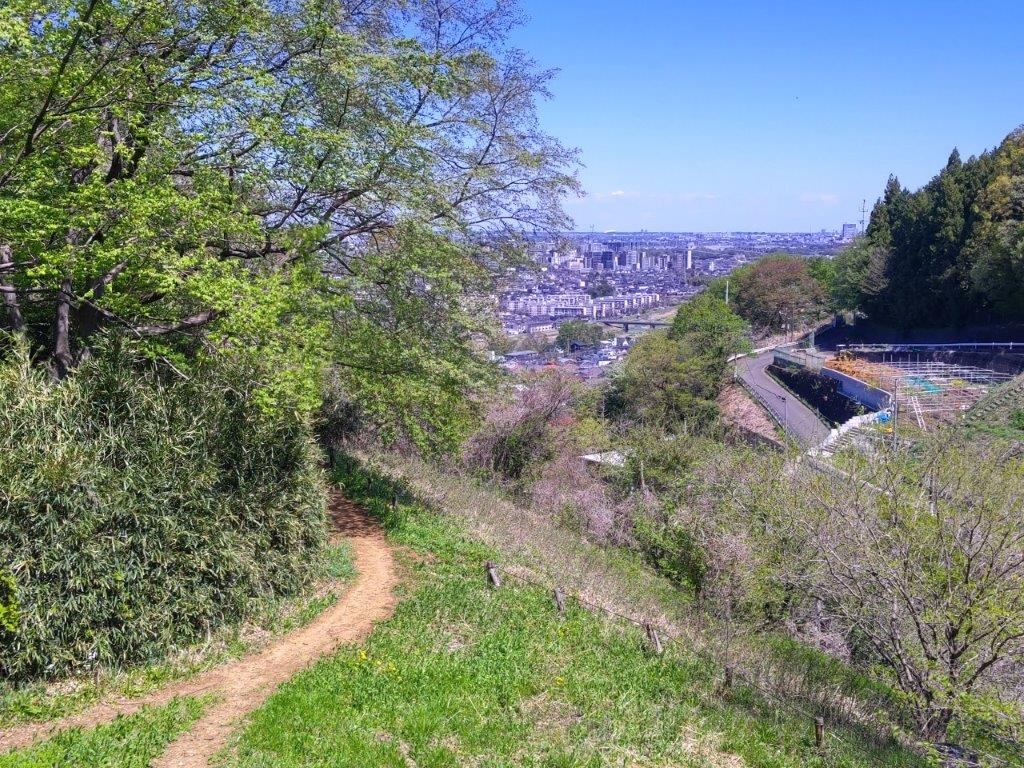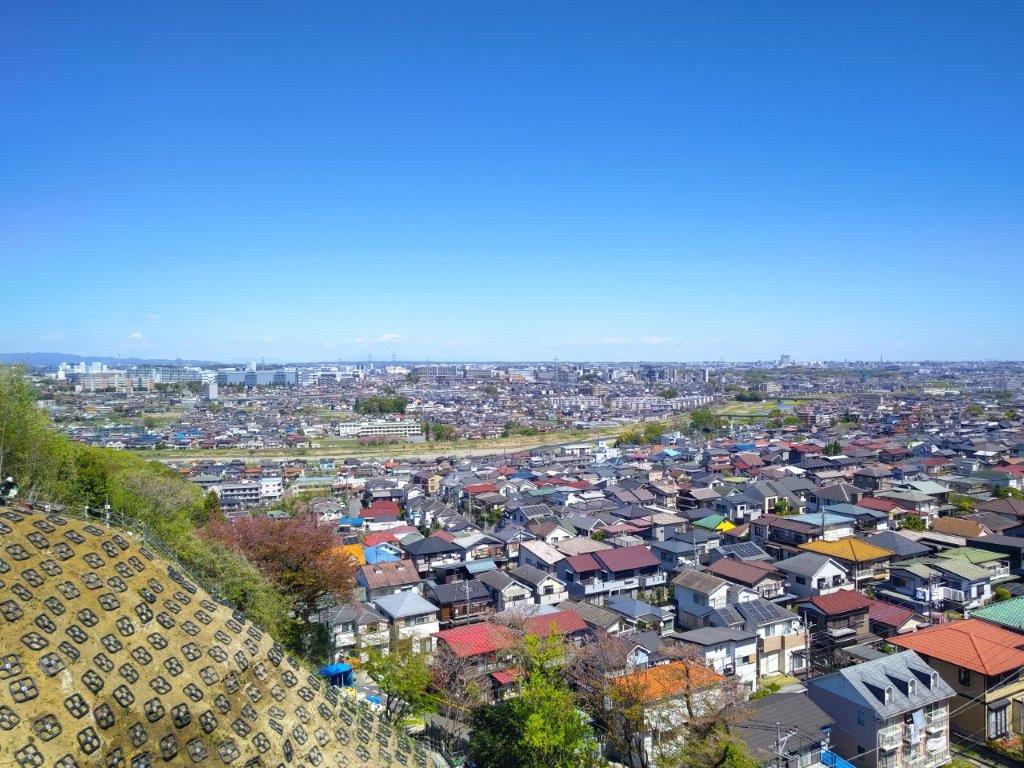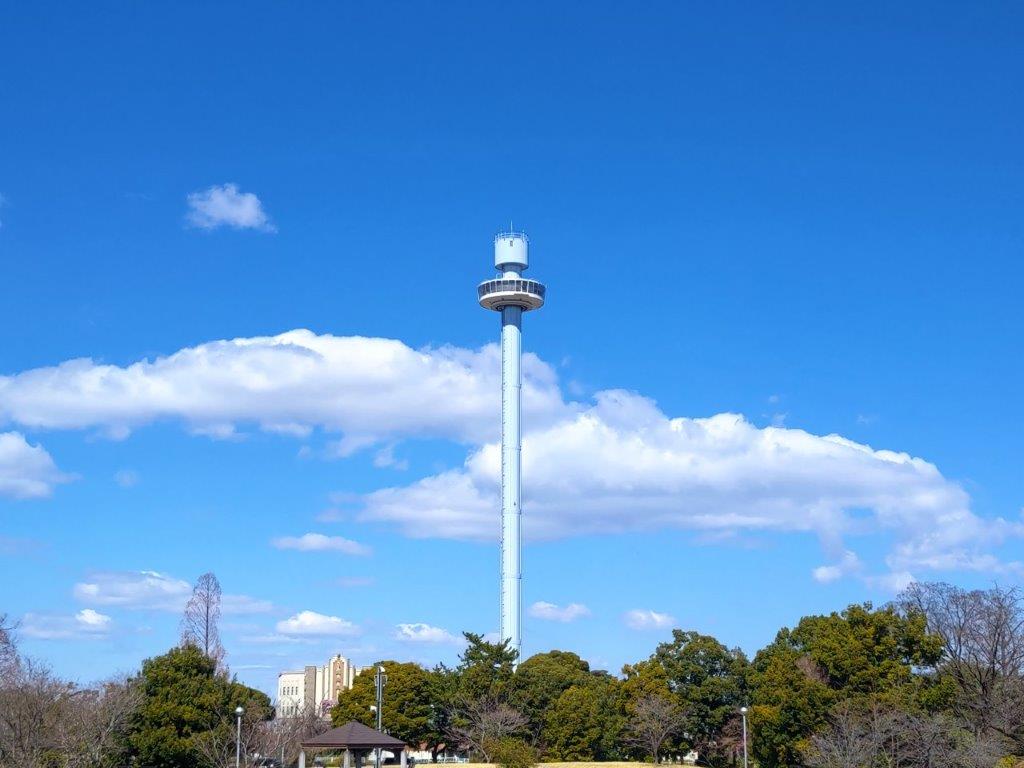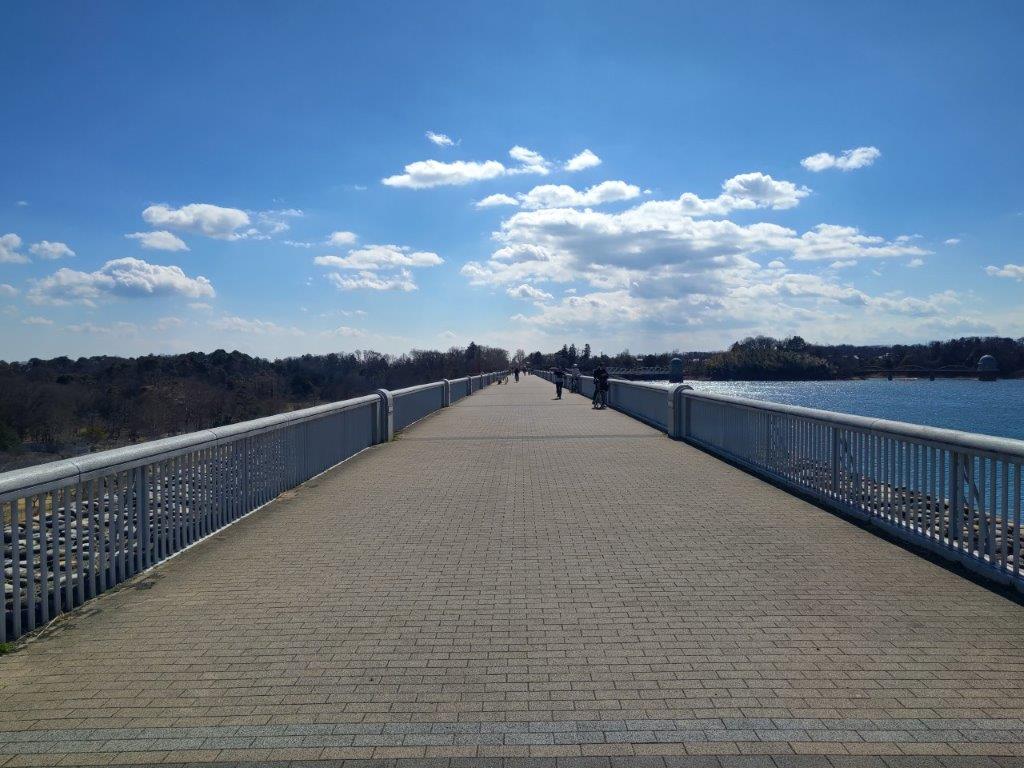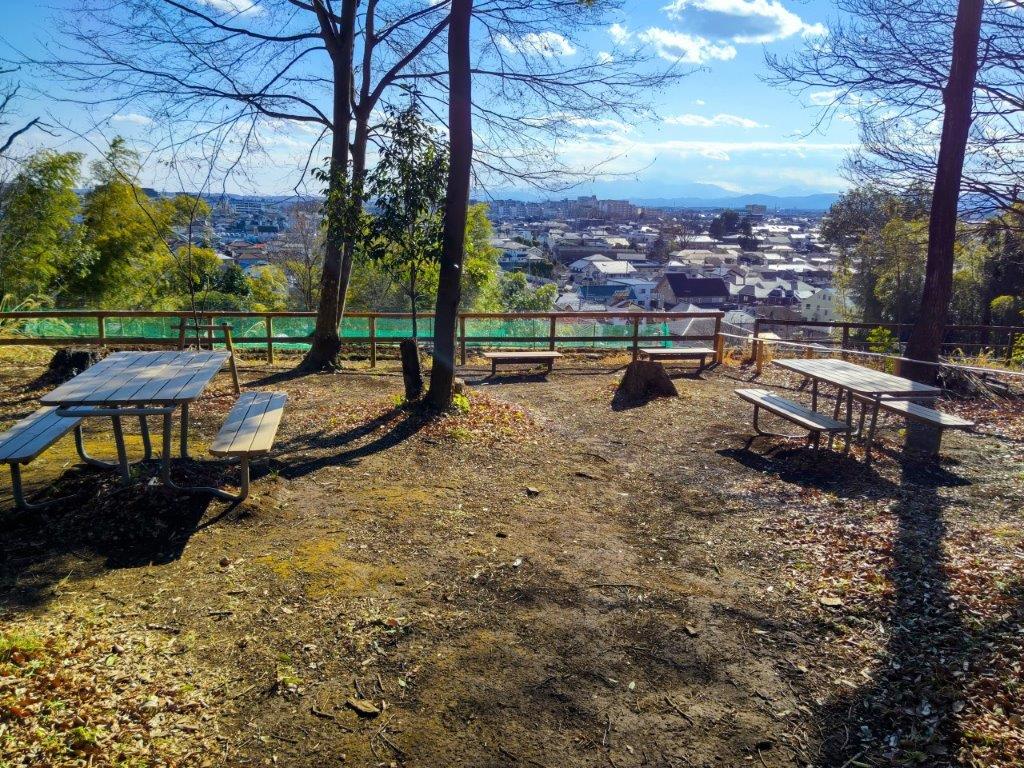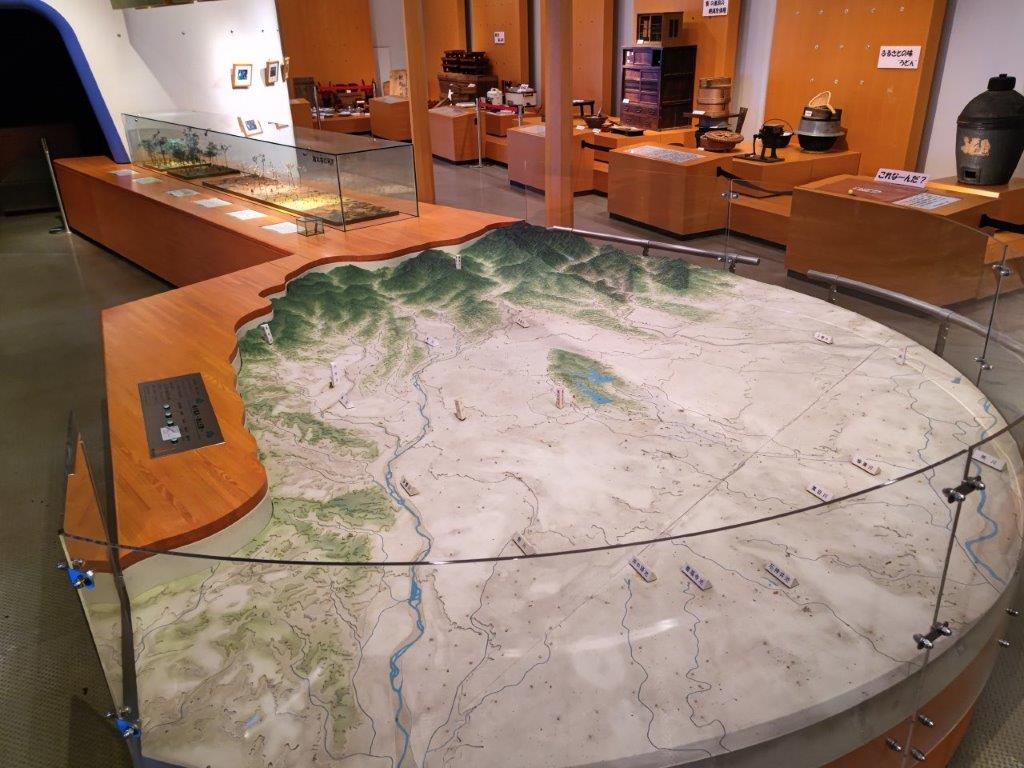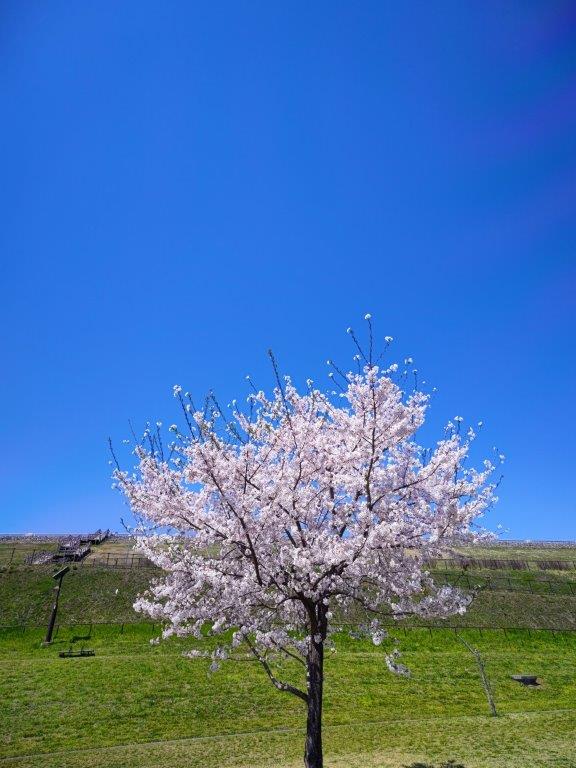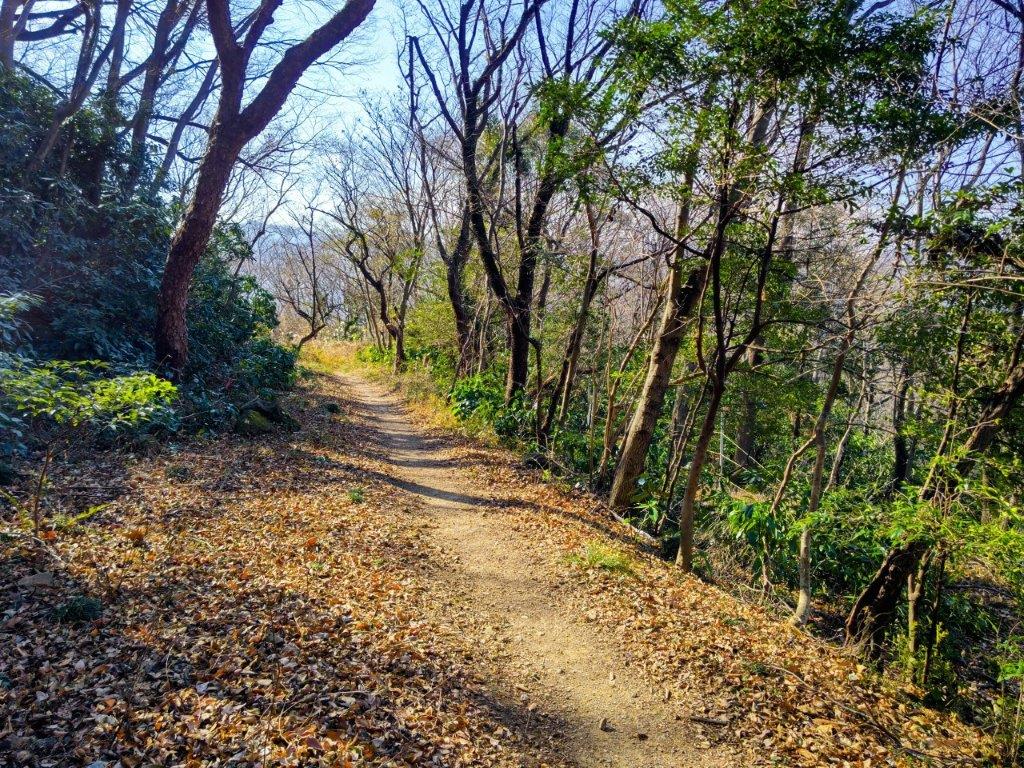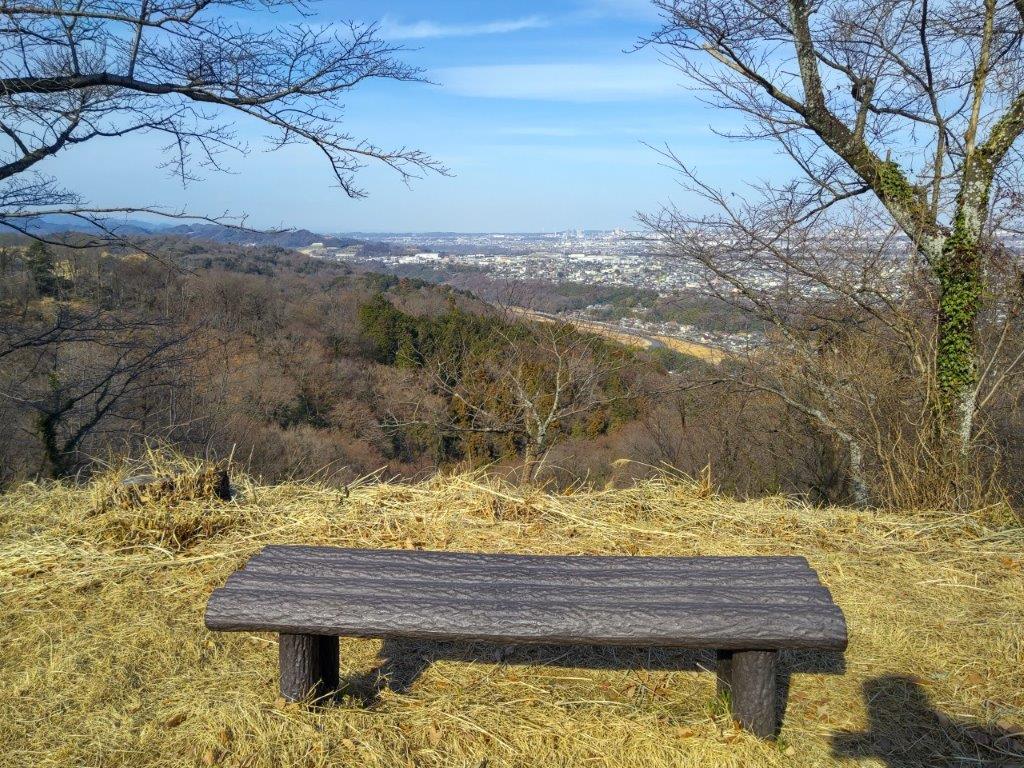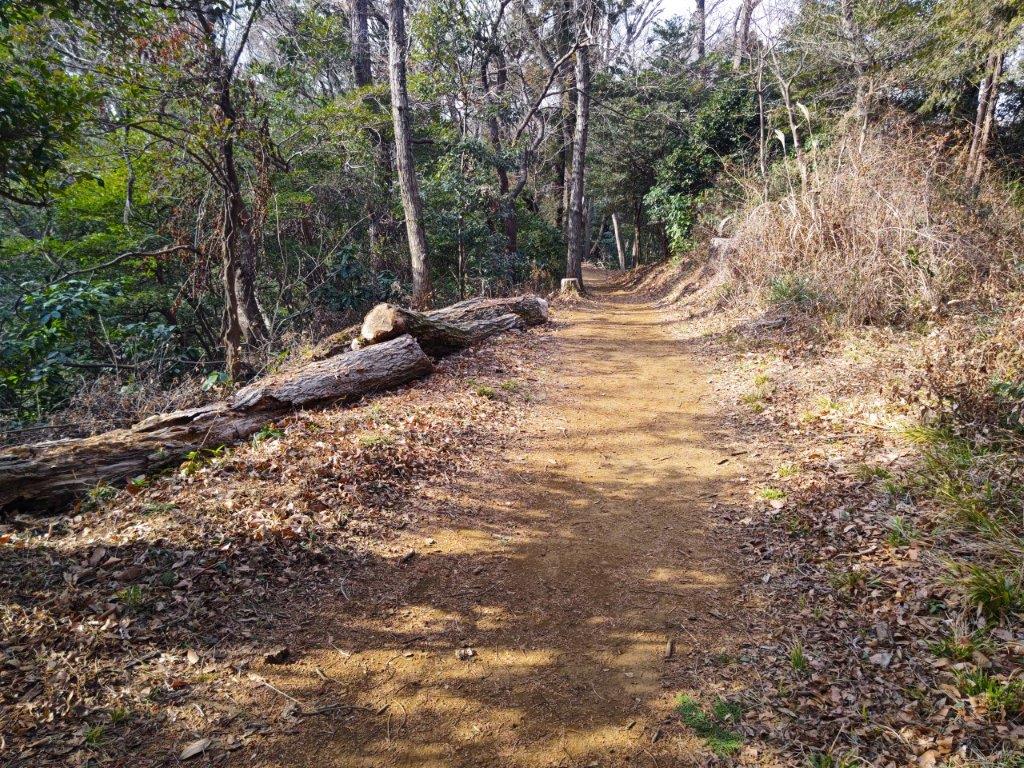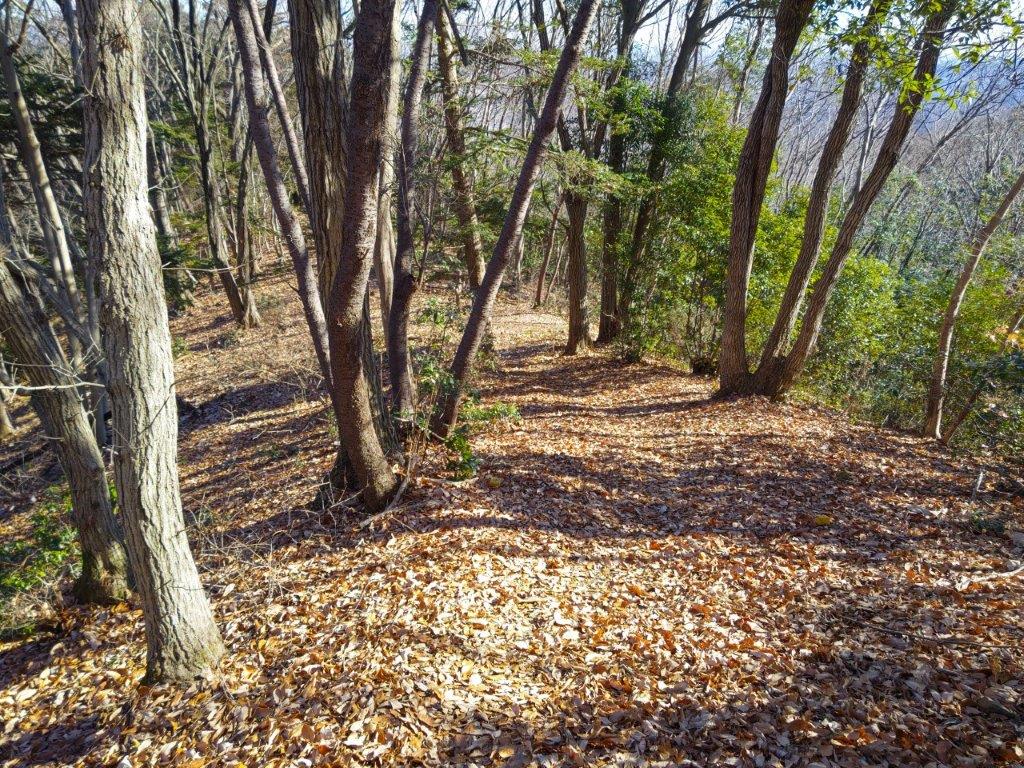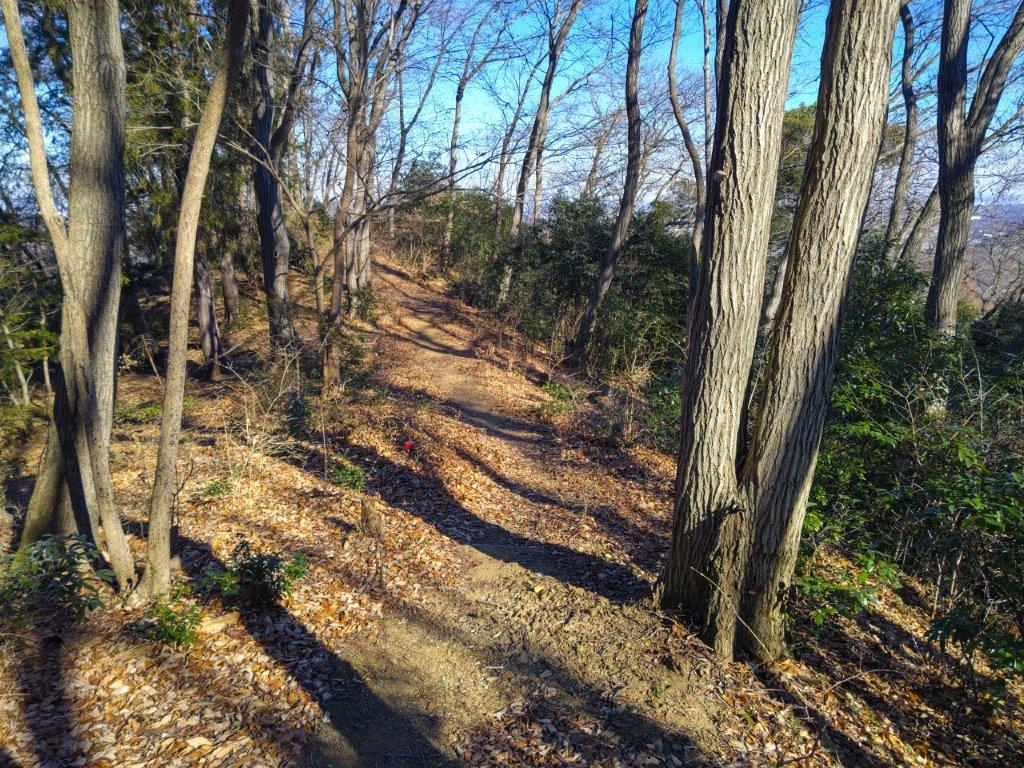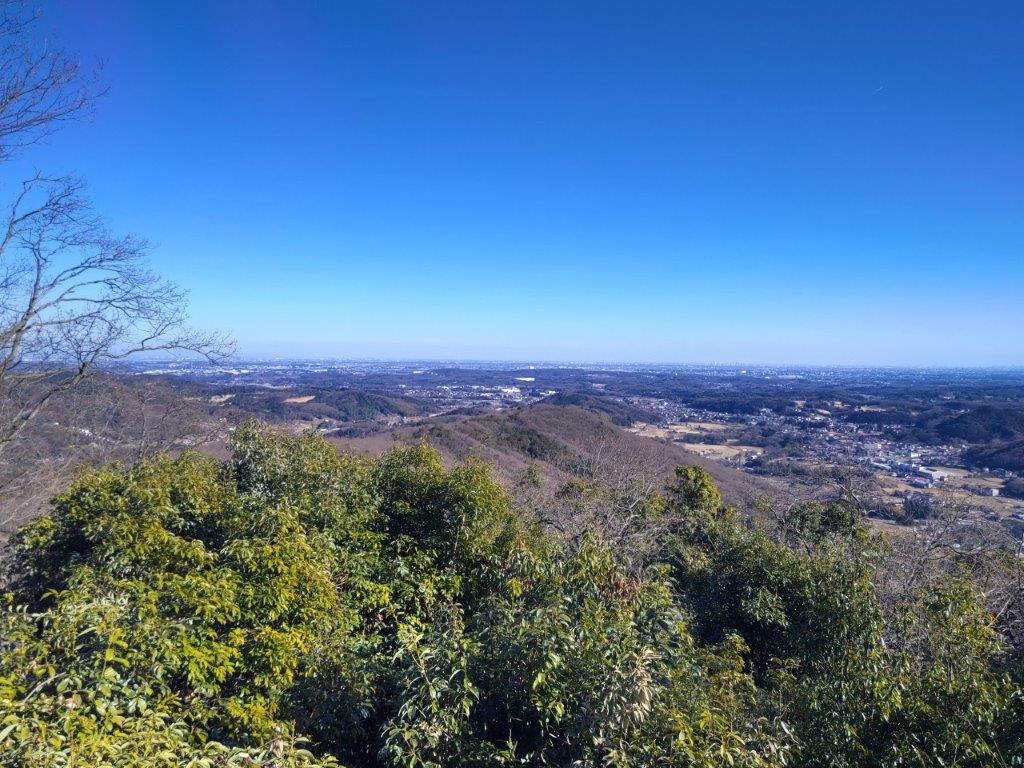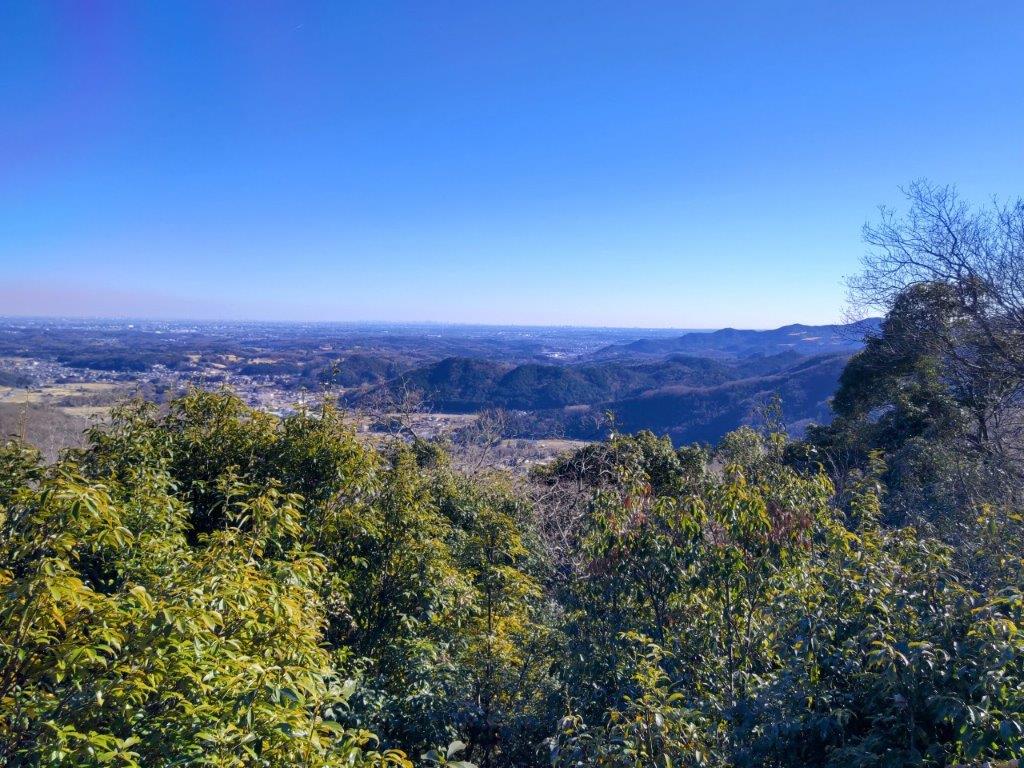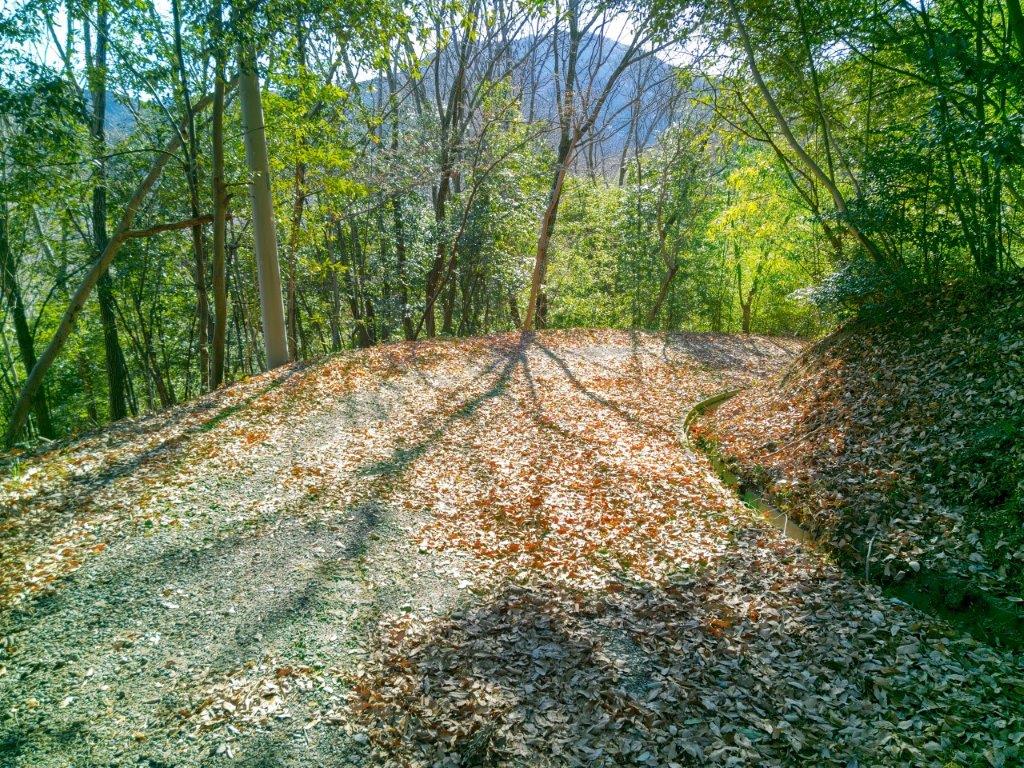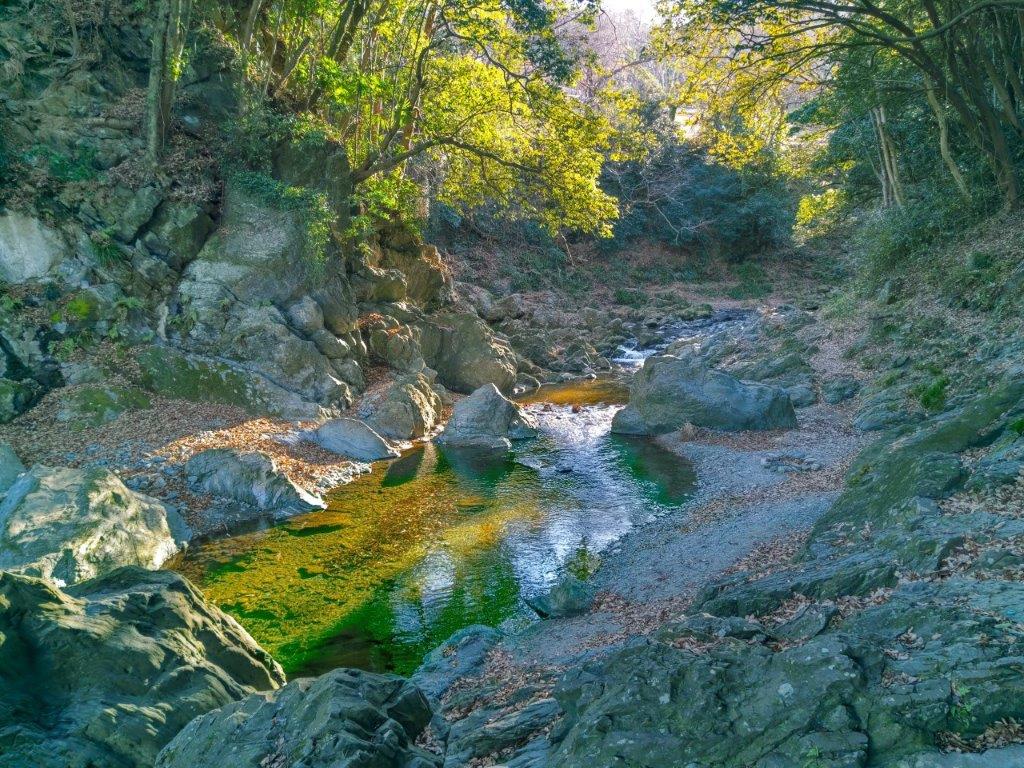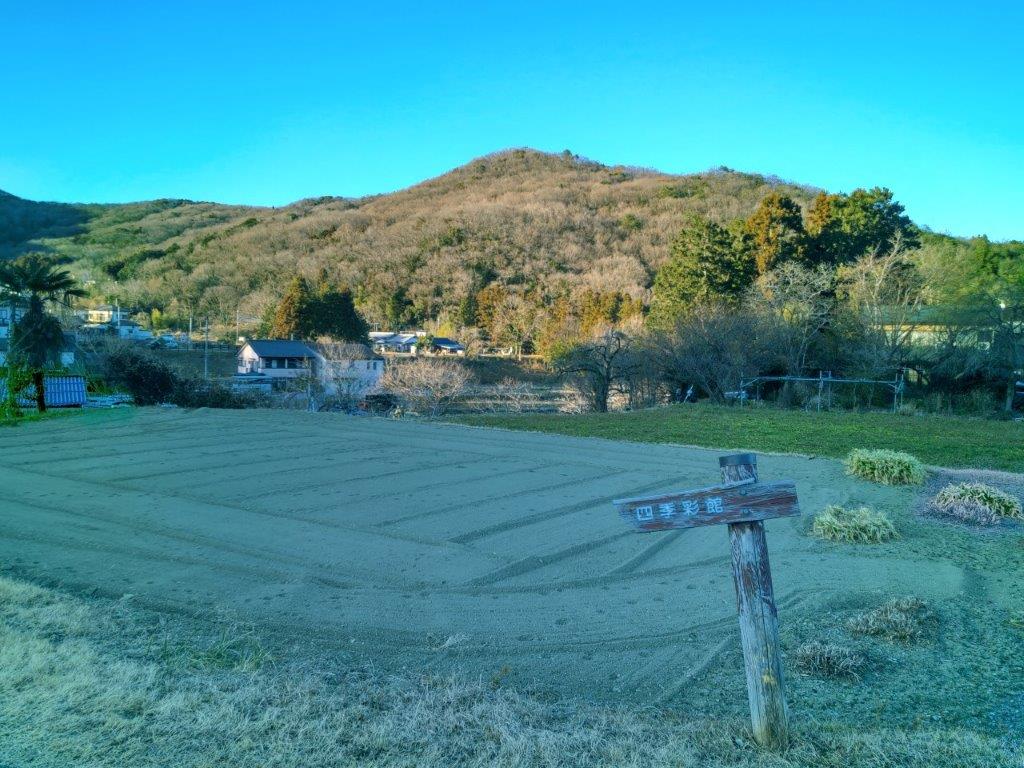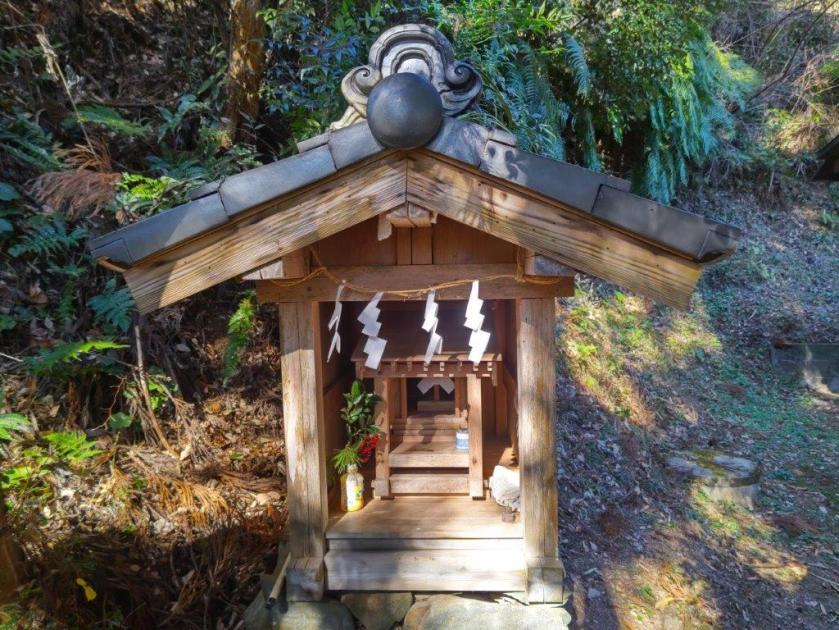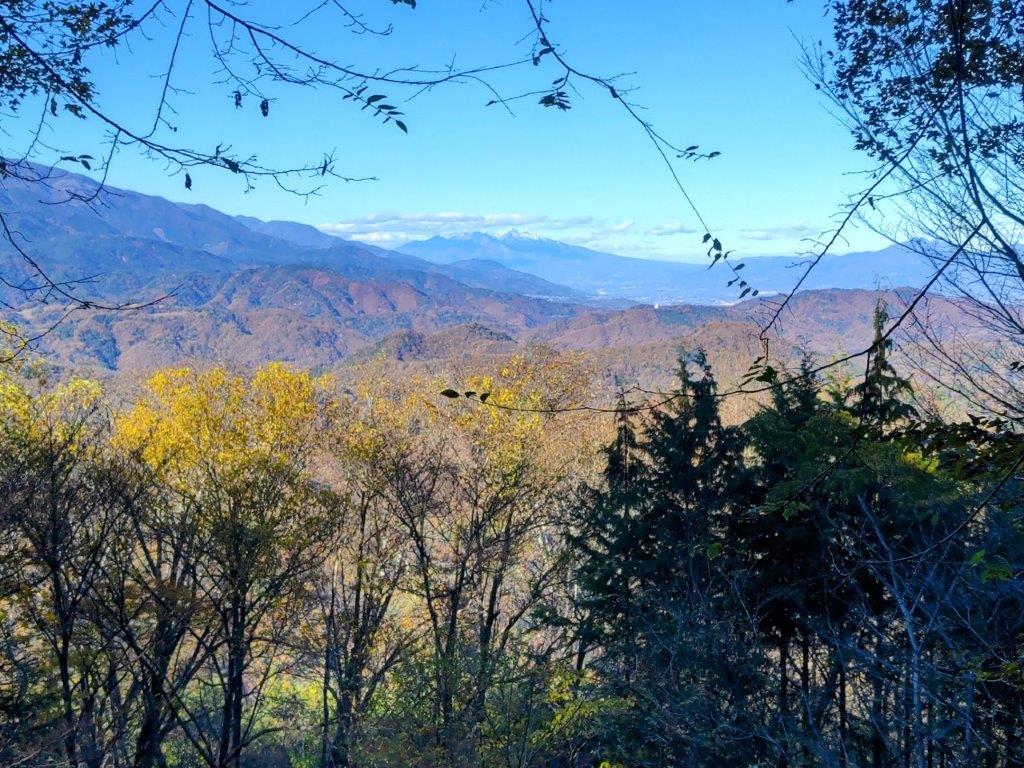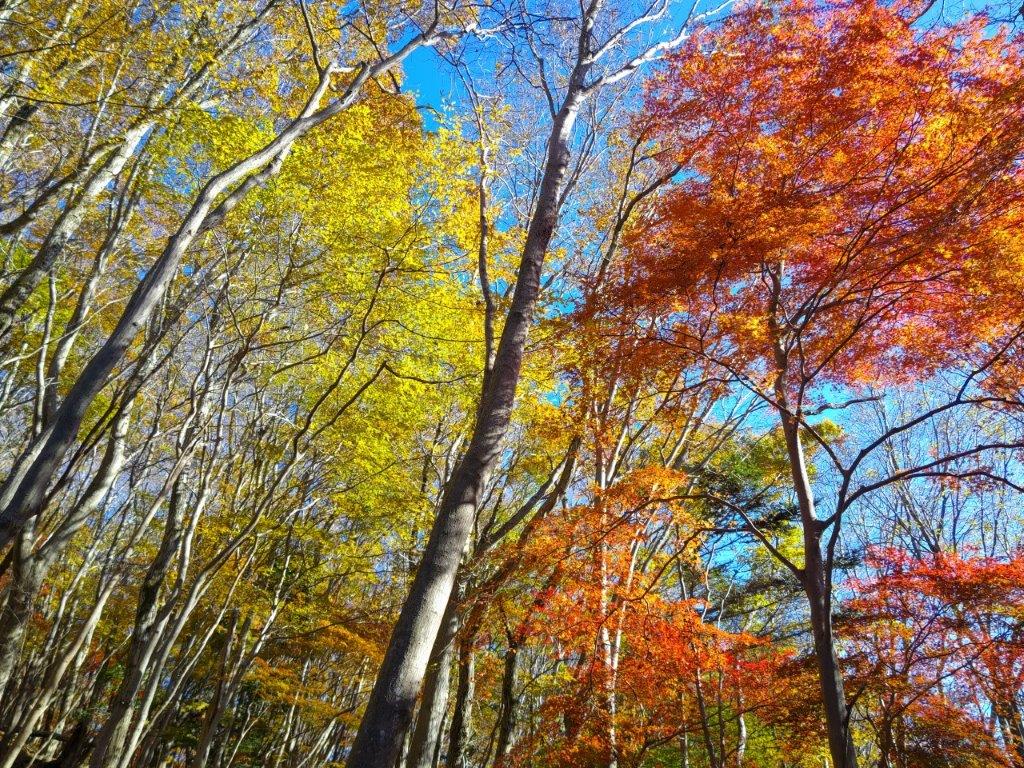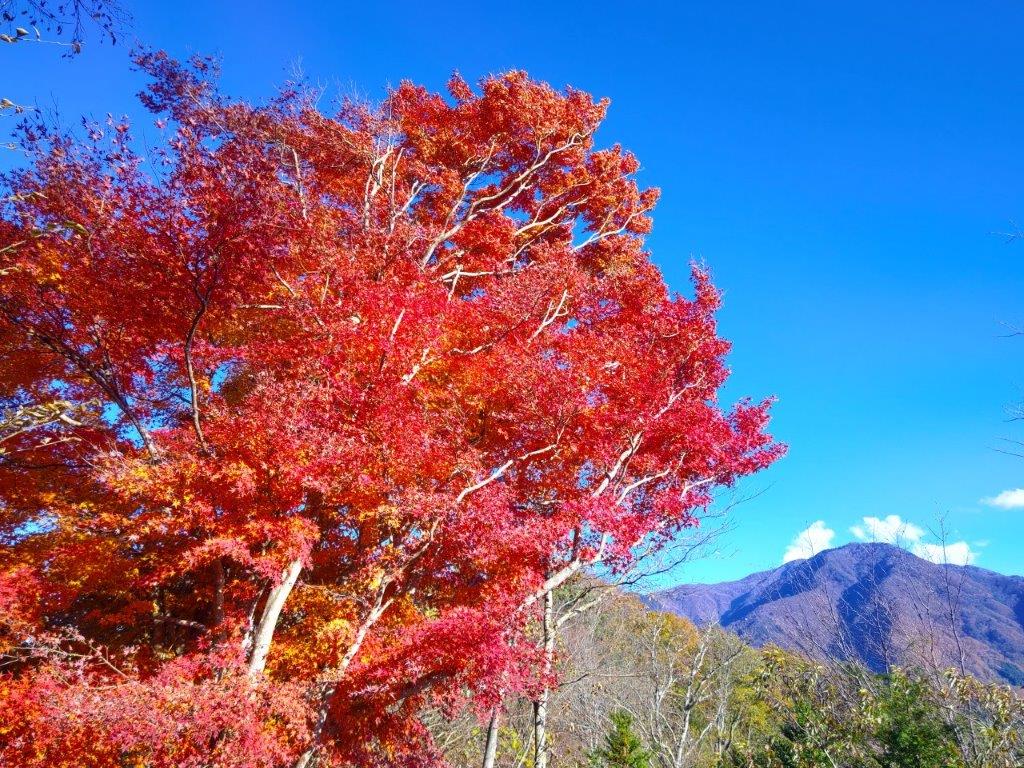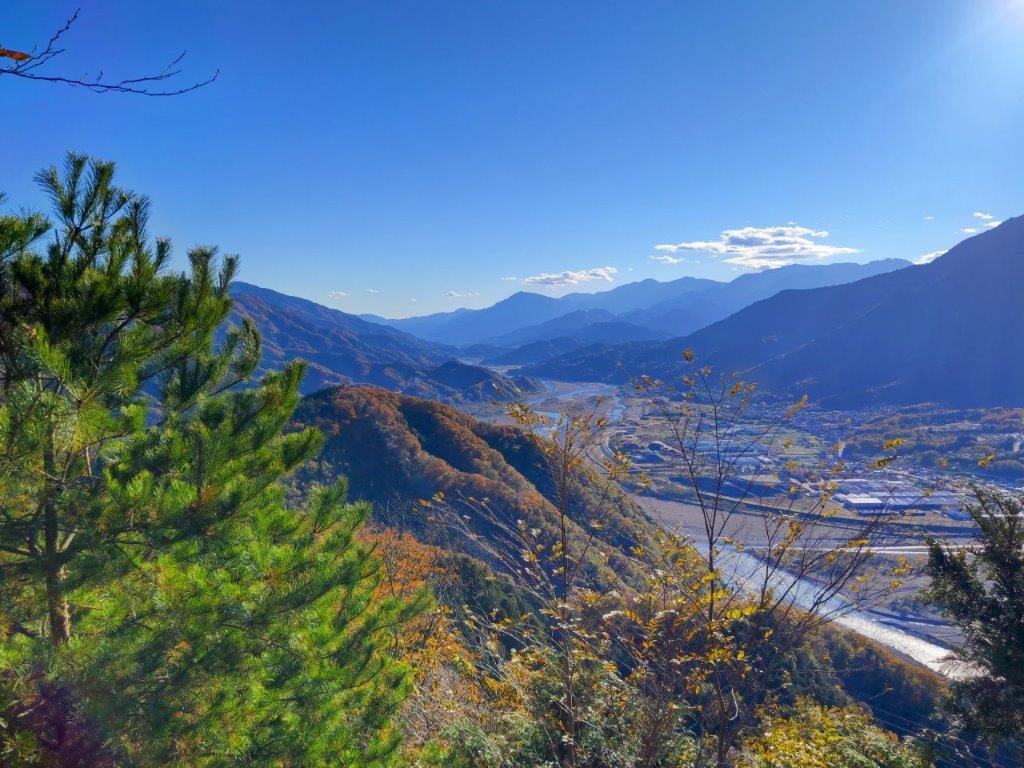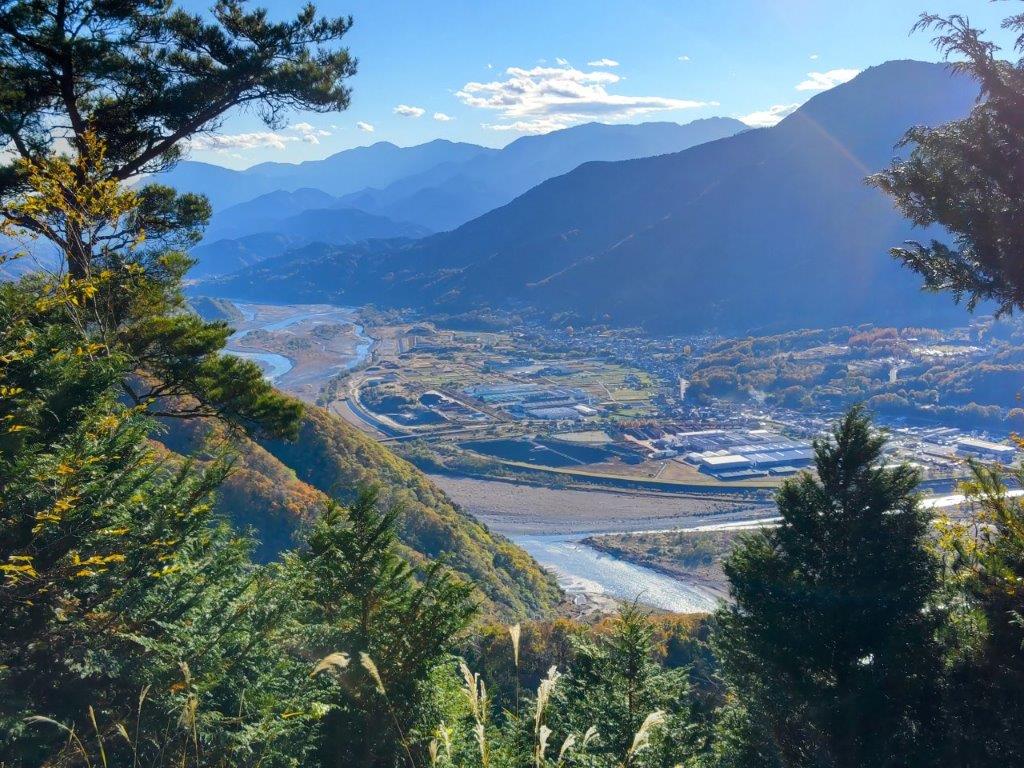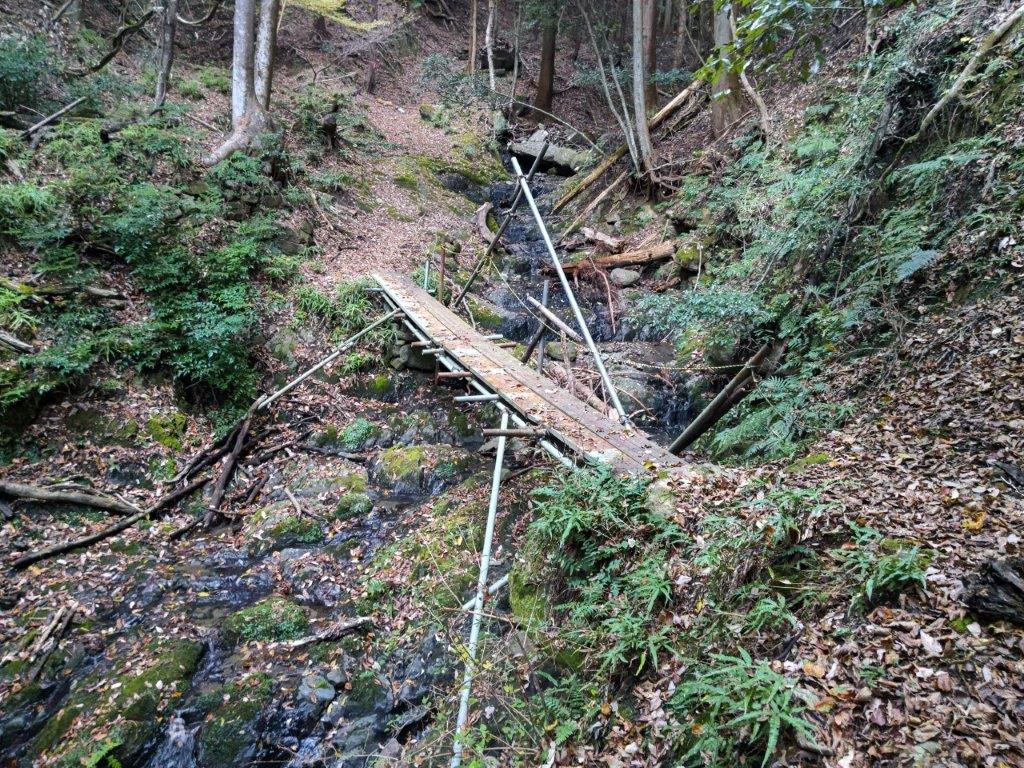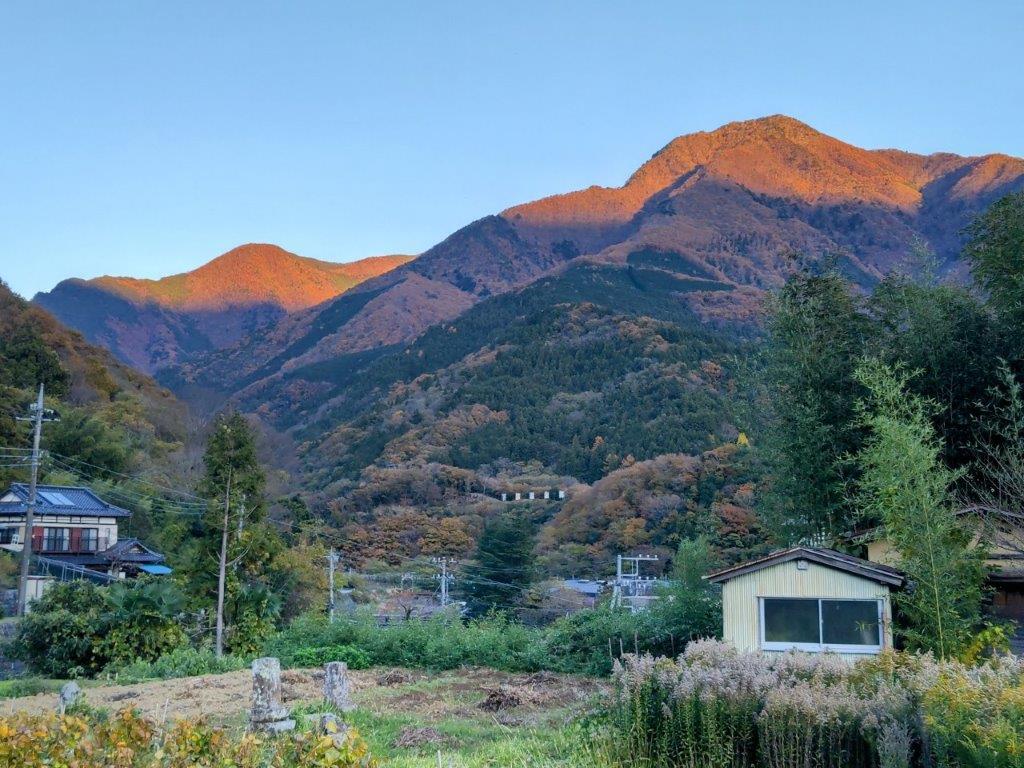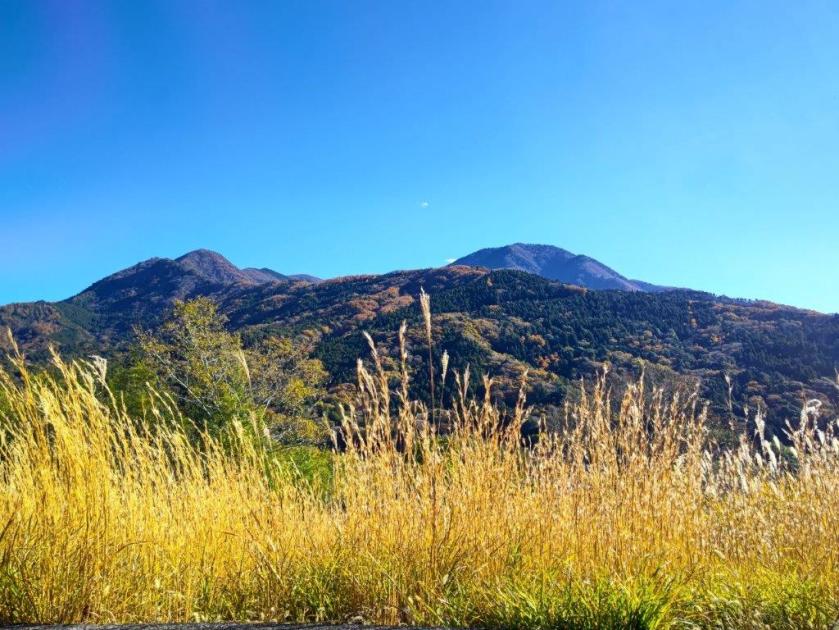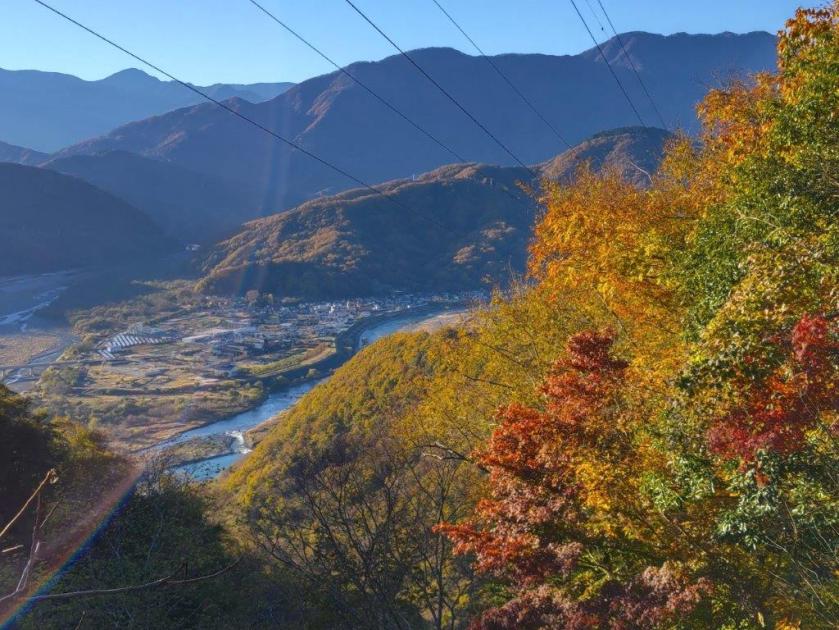
Mt Shidango (758m) & Mt Take (710m), Matsuda Town, Kanagawa Prefecture, Saturday, January 11, 2025

I wanted to do another hike in the Tanzawa mountains, winter being the best time to explore the area. Looking through my guidebook, I found a couple of nearby mountains I had yet to climb, along a river valley north of Matsuda station. The summit of the first peak was out of the trees; the second was in the forest, but with a viewpoint below it on the east side. Combining the two, I expected the hike to take about 4 hours, meaning I could leave mid-morning and take advantage of the “Mt Fuji Romancecar”, the only limited express train to stop in Matsuda.

For subscribers, read this Post on Hiking Around Tokyo for a better viewing experience and the latest updates

Hiking in the Tanzawa-Oyama Quasi-National Park

丹沢大山国定公園

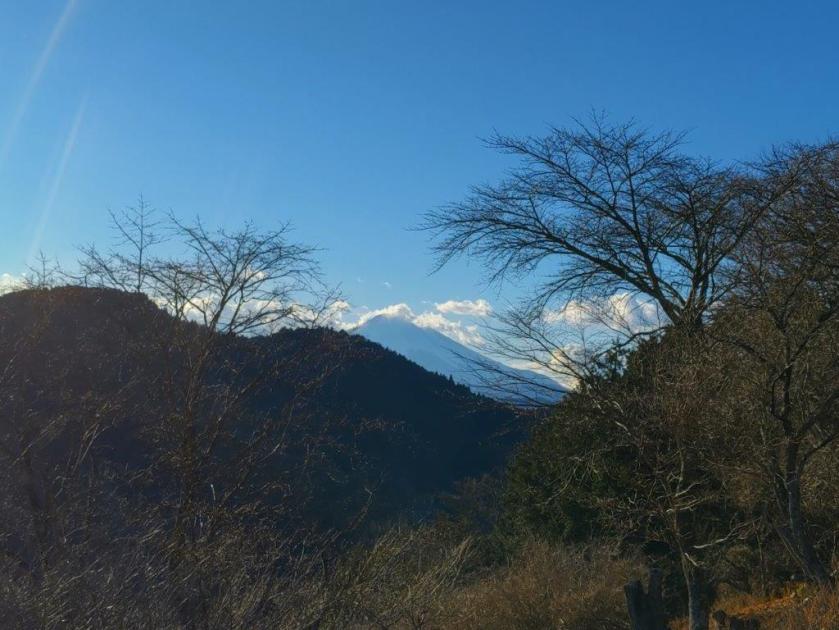
To get to the start of the hike, I’d ride the Odakyu “Fuji-san” limited express from Shinjuku to Matsuda station, and from there, ride a Fujikyu bus to the last stop on the line. For the return, I’d catch the same bus several stops before the end of the line, and then ride the “Fuji-san” back to Tokyo. Apparently Mt Fuji can be seen from both summits, and since the weather was supposed to be sunny all day, I was looking forward to getting a second chance at my first Fuji sighting of 2025.

Find Japan Hiking Maps on Japanwilds

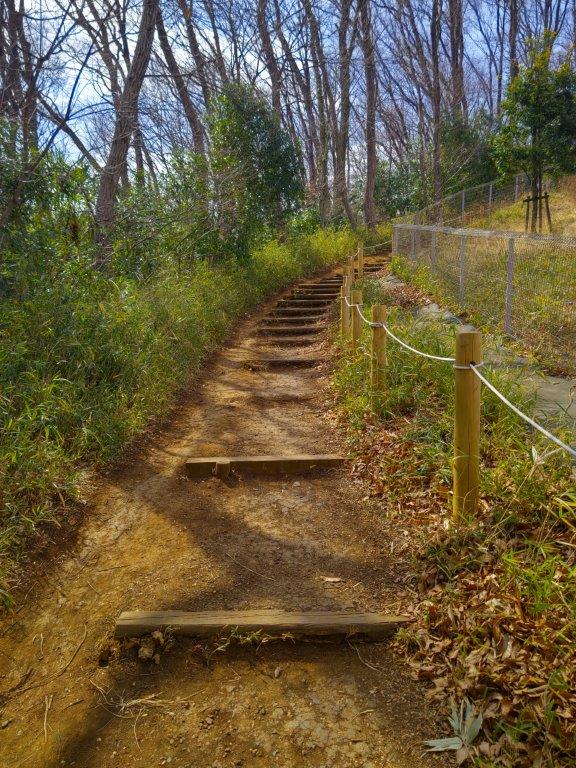
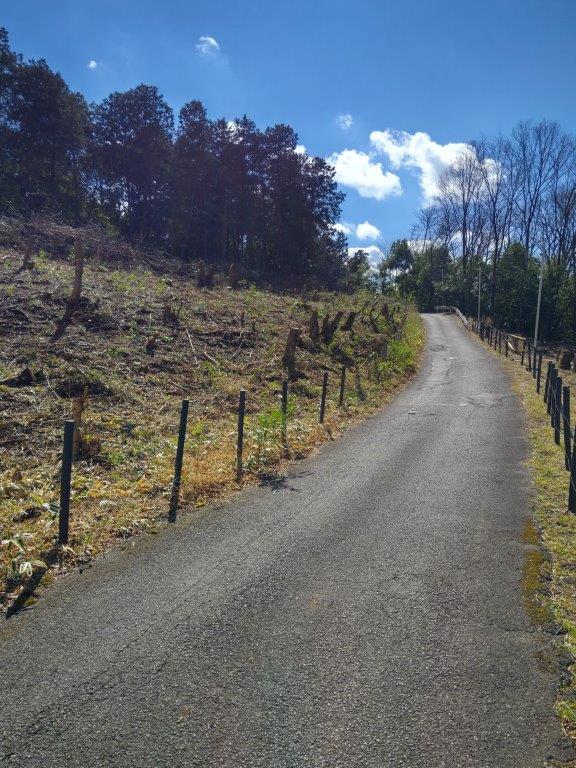
Paved road between Yadoriki and the Wildlife Gate

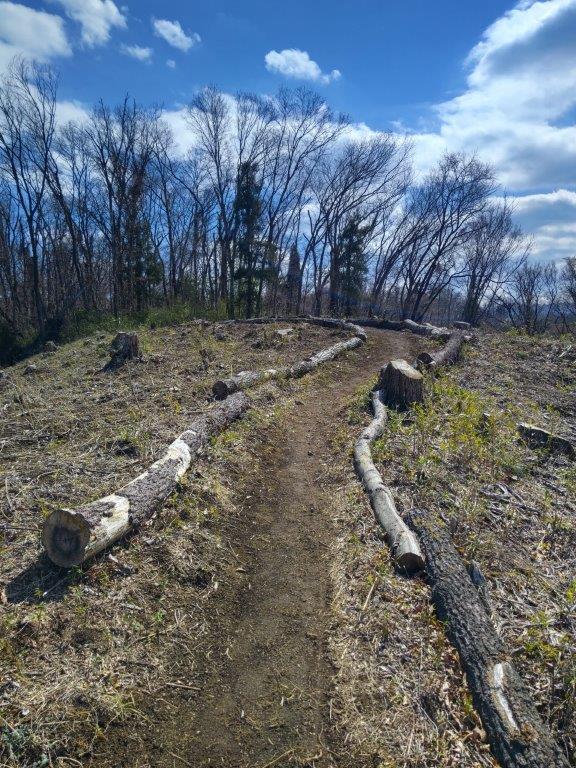
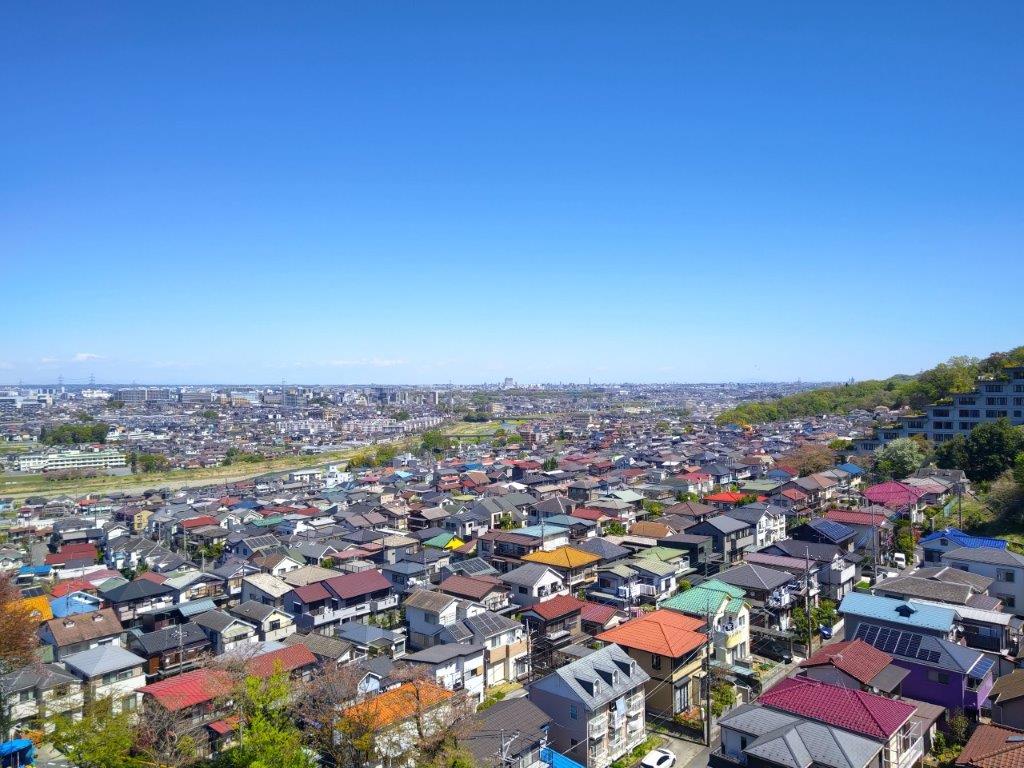
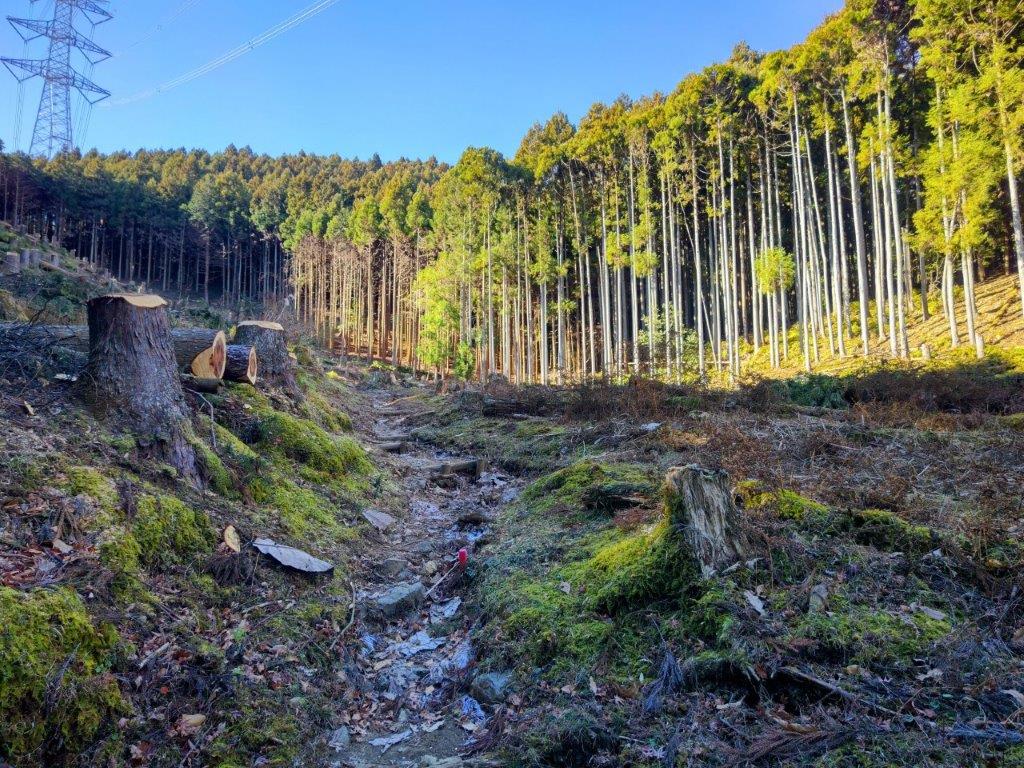
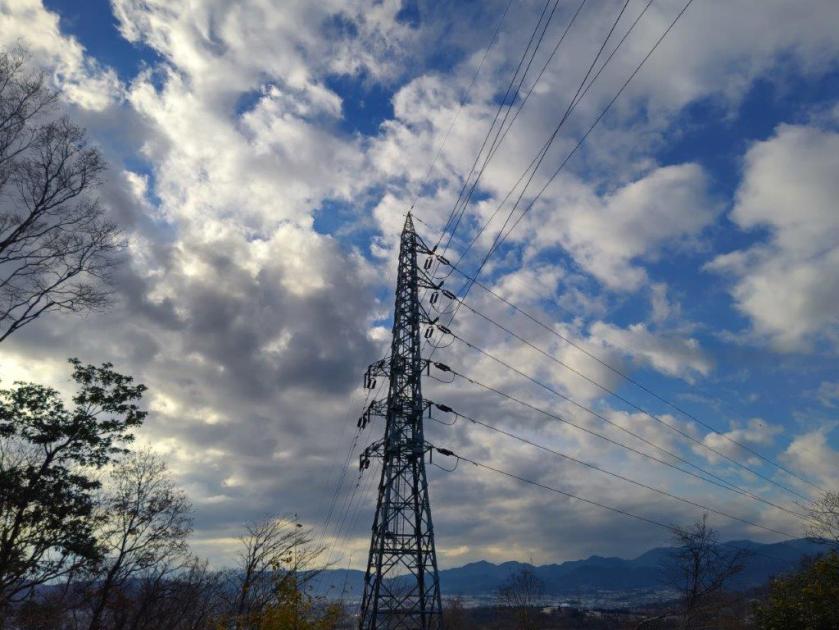
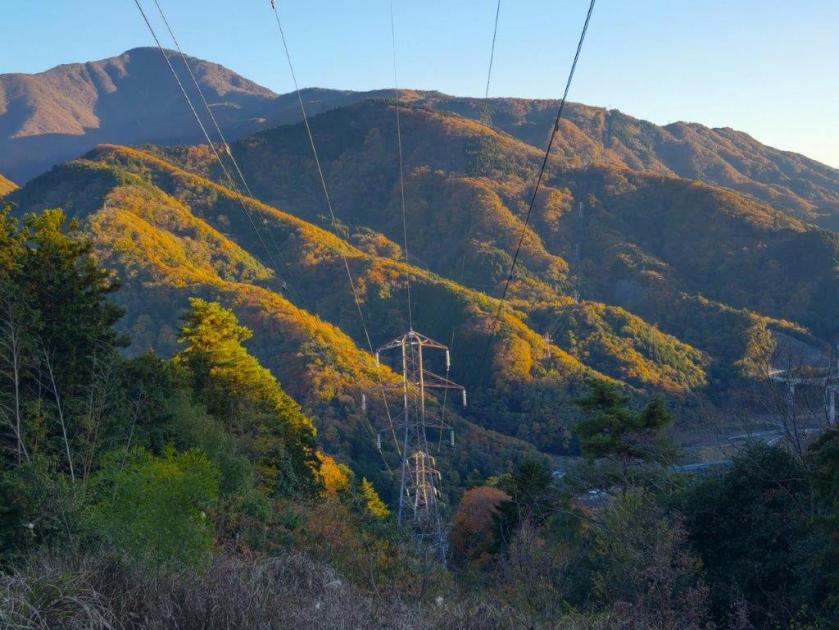
Powerline Clearing on the Way to Mt Shidango

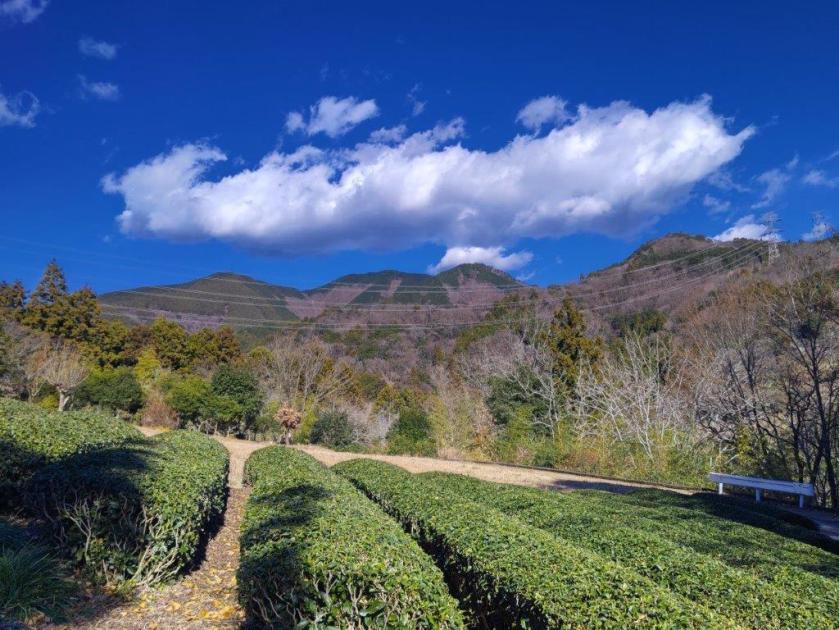
It was a relaxing ride under light blue skies to Matsuda station. After getting off the train just before noon, I made my way to a bus stop in front of the nearby Shin-Matsuda station. I was surprised to find myself at the back of a line of teenagers, on their way to play a football match in the same place I was headed. Half an hour later, we all got off the bus in Yadoriki (寄). Leaving them to their ball game, I crossed a bridge over the Nakatsu River and followed signs for today’s mountain, past tea fields and up a steep road ending at a wildlife gate at the edge of the forest; beyond it was the start of the hiking trail.

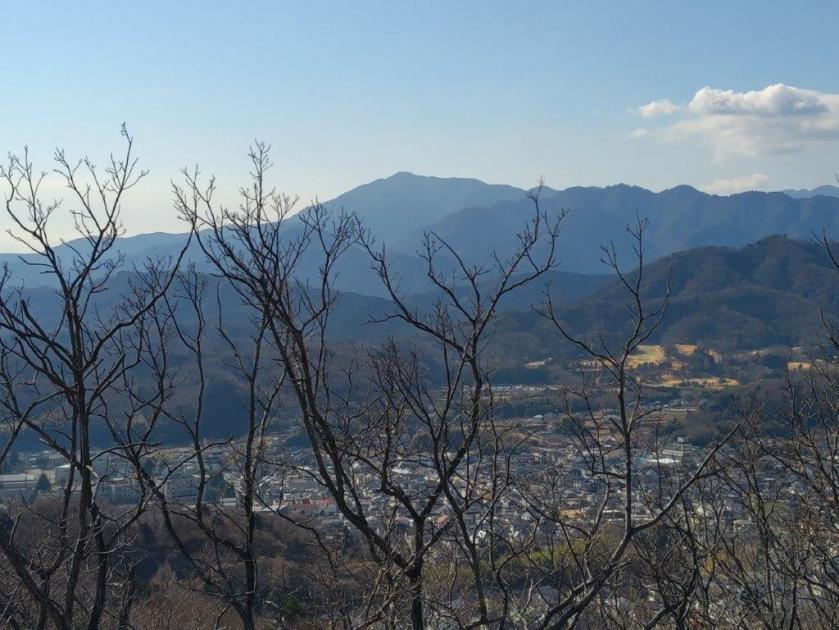
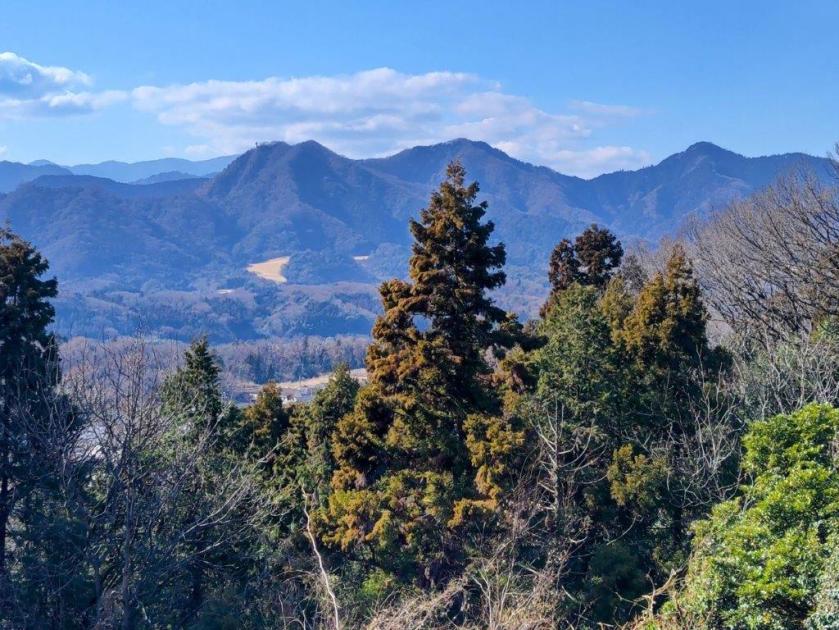
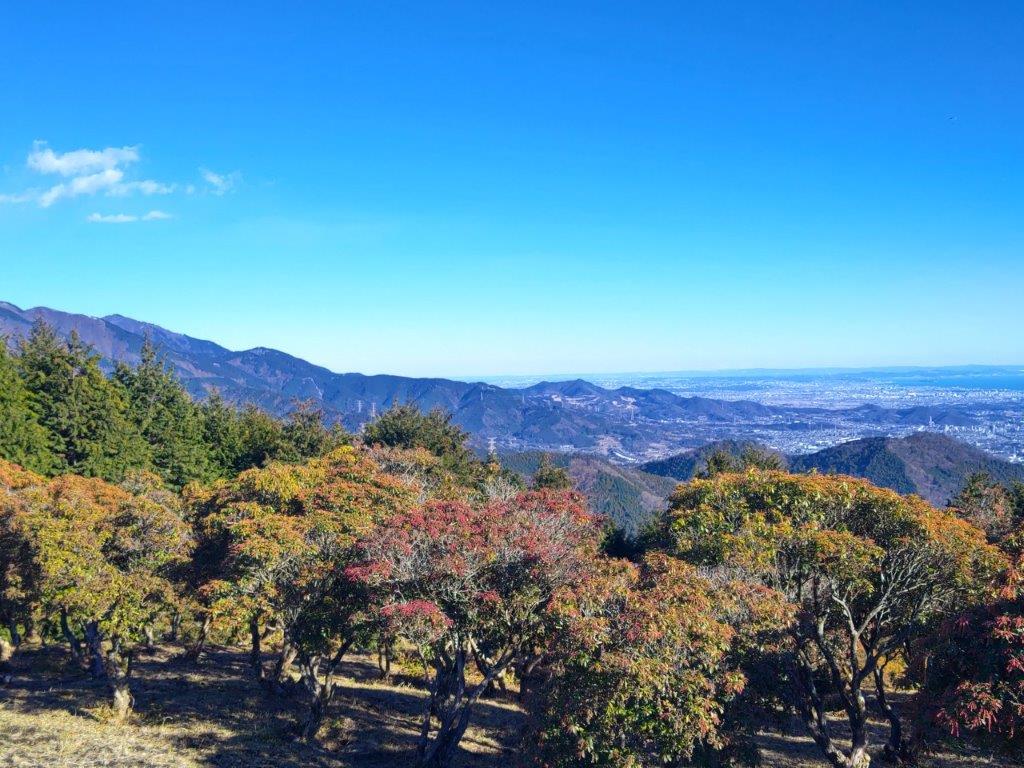
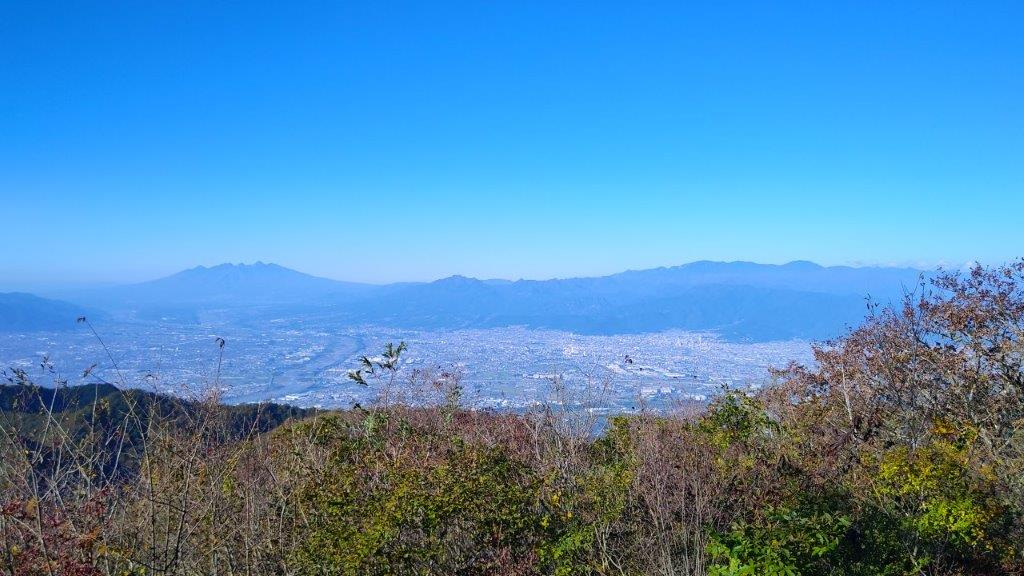
View of Mt Kobo from Mt Shidango

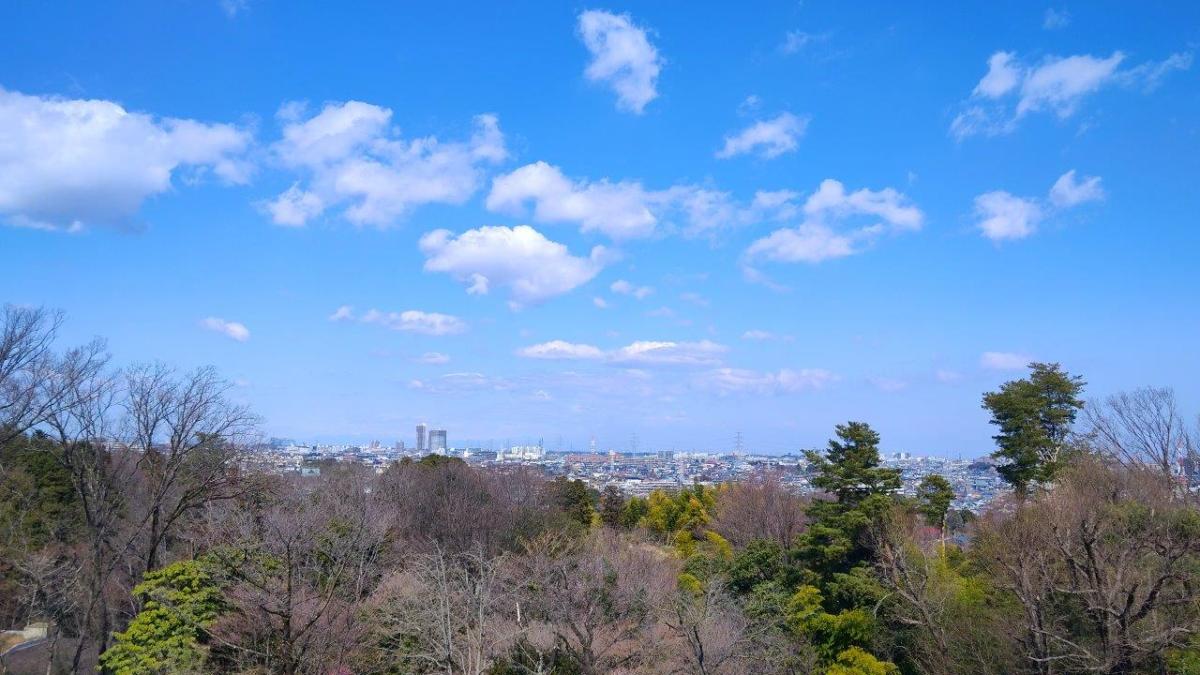
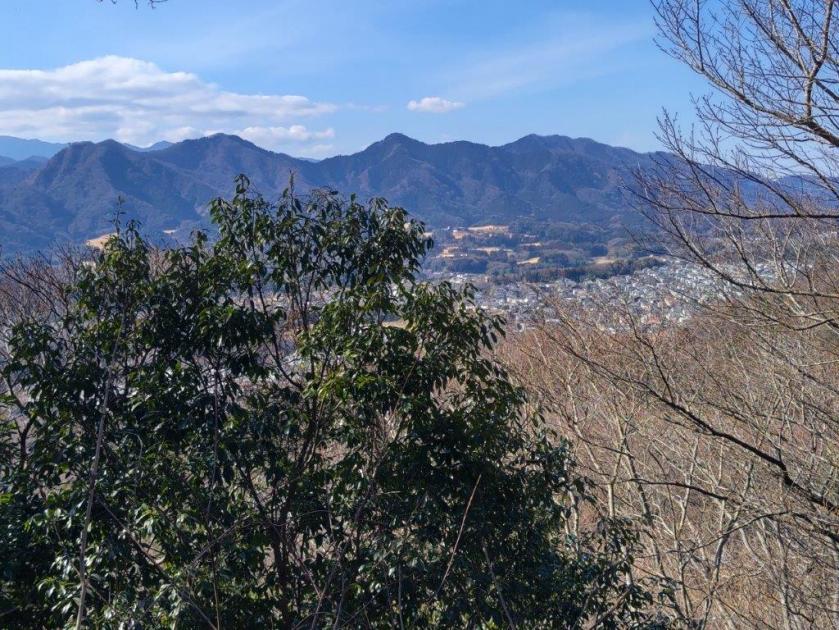
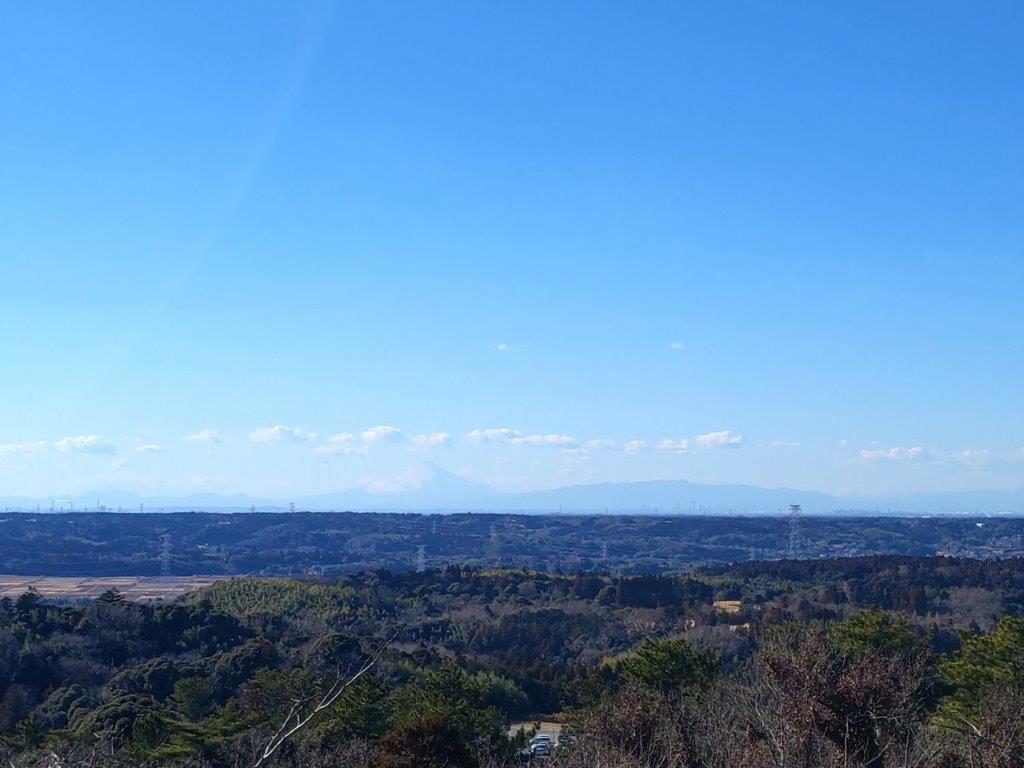
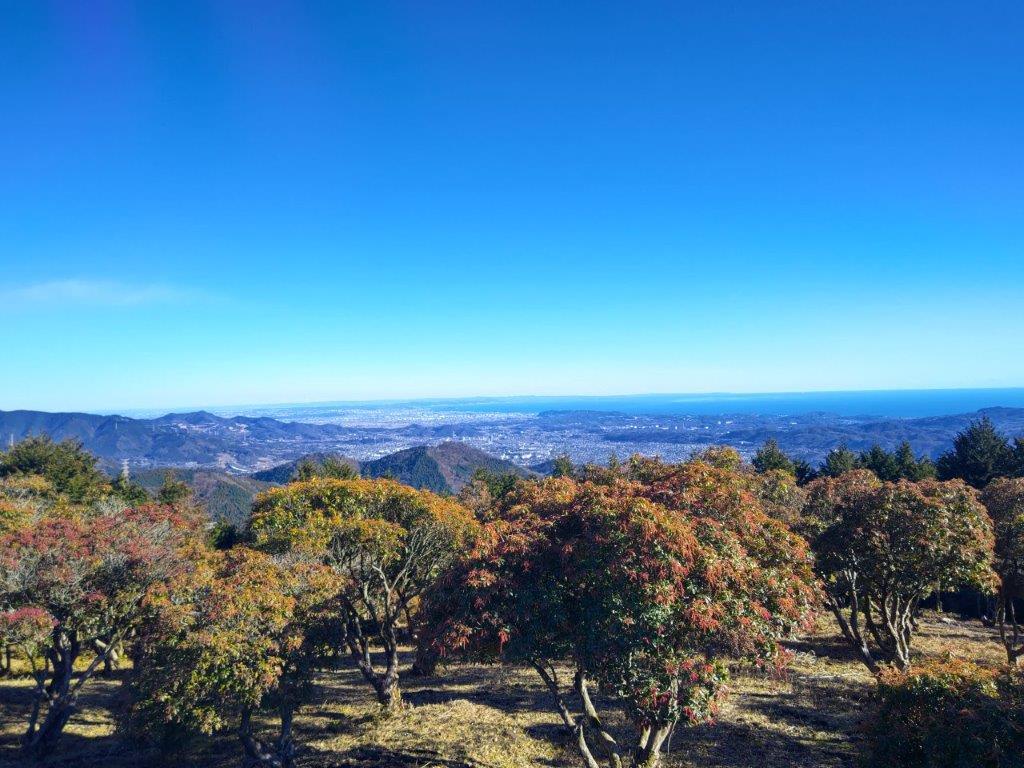
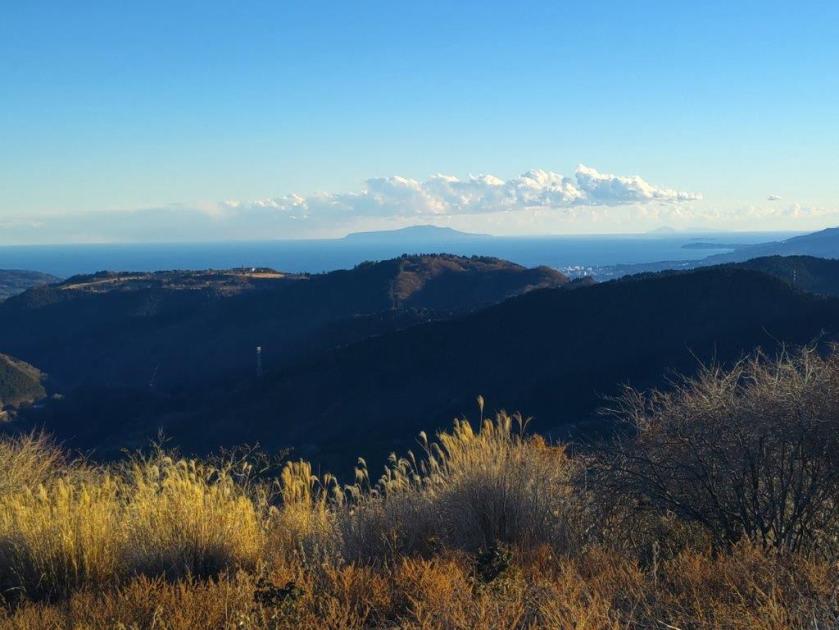
View of Shonan Bay from Mt Shidango

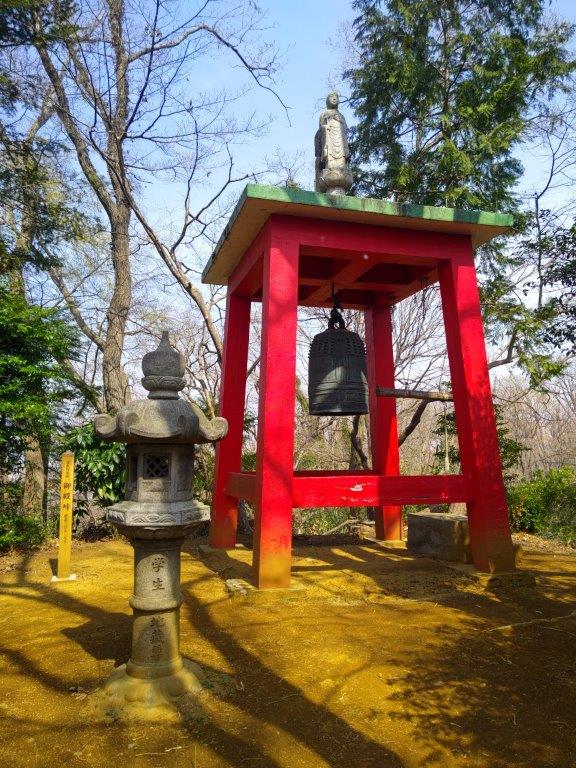
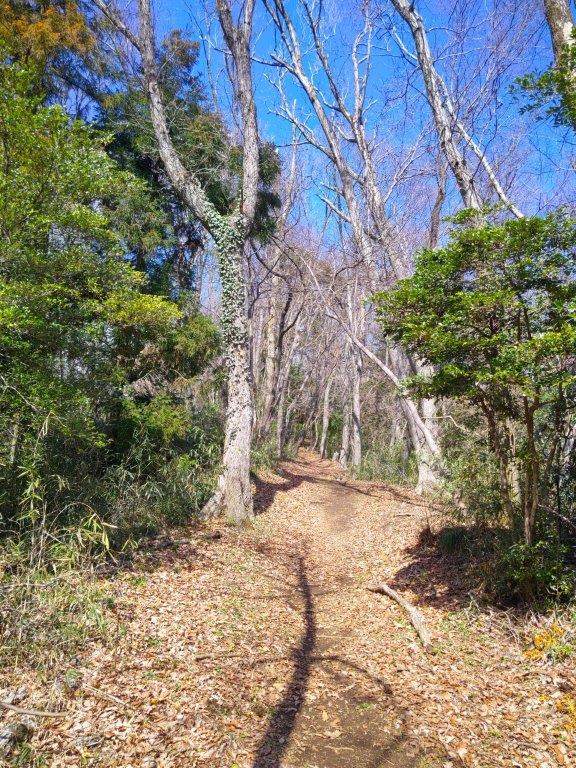
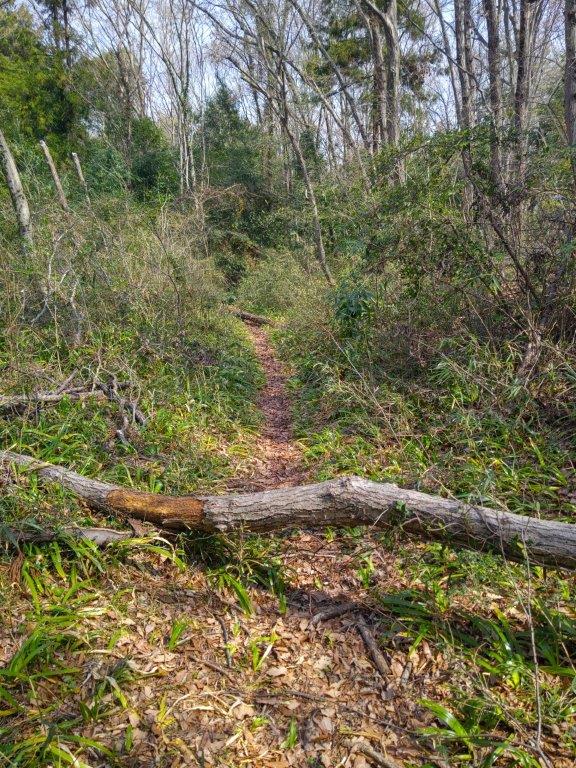
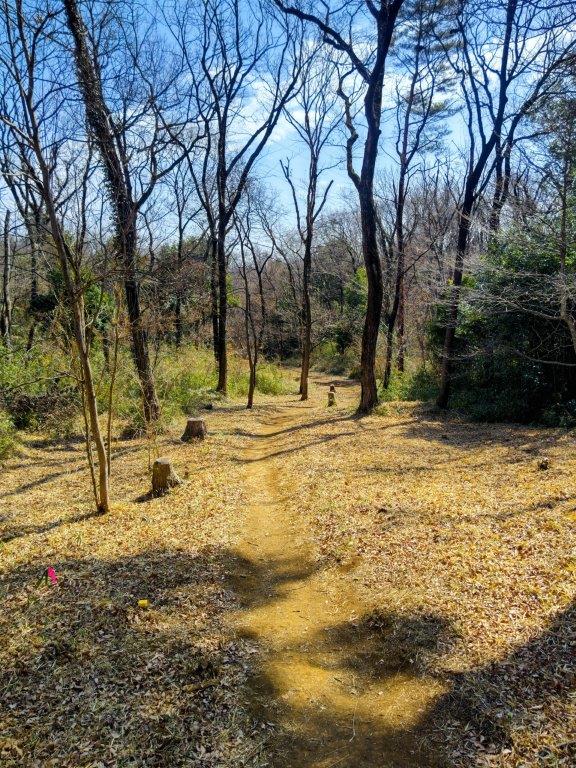
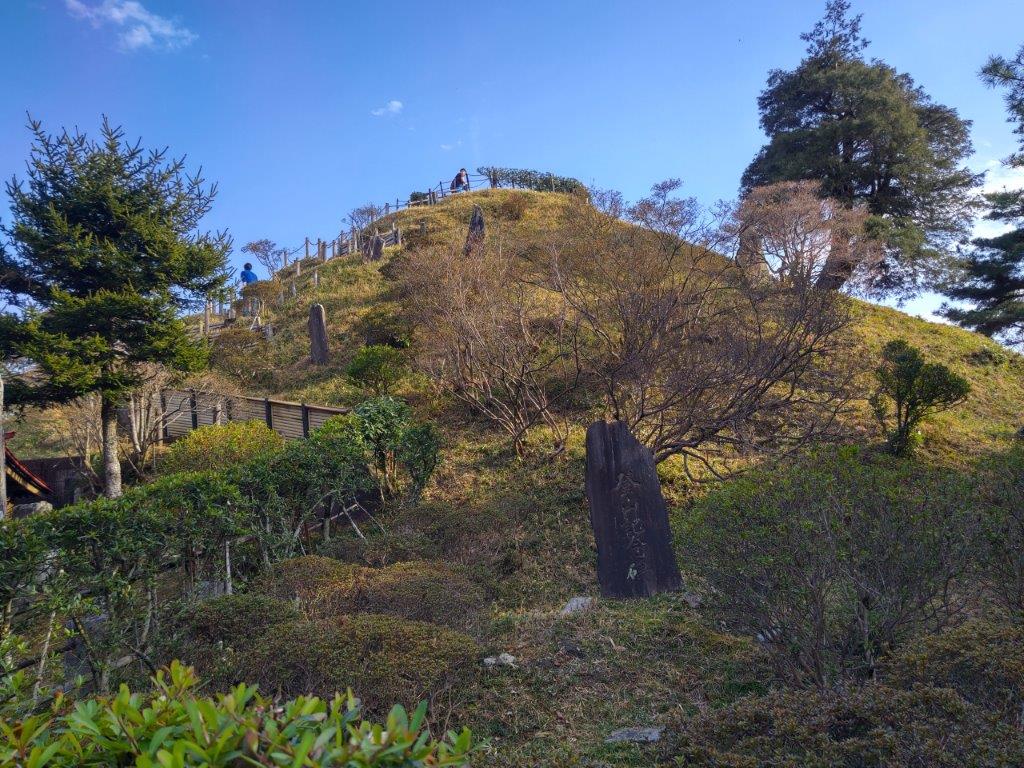
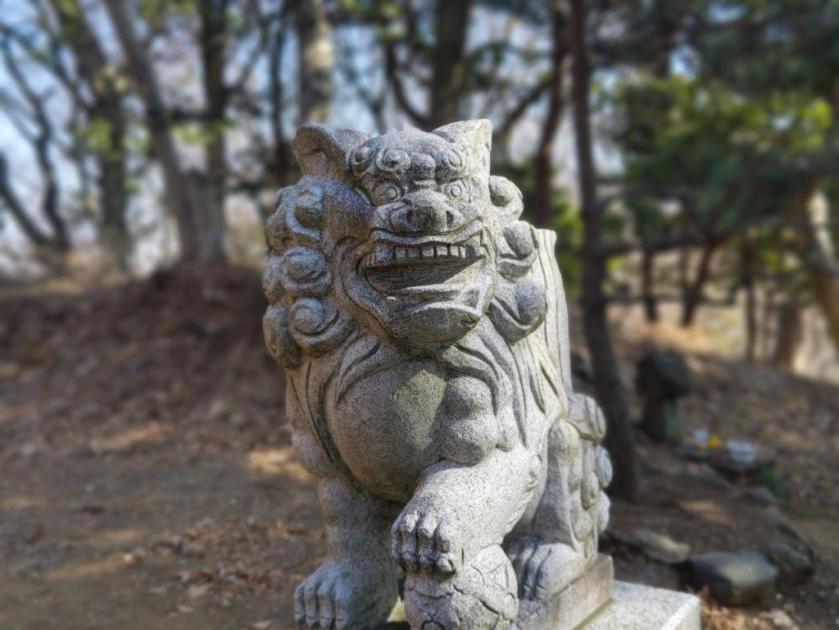
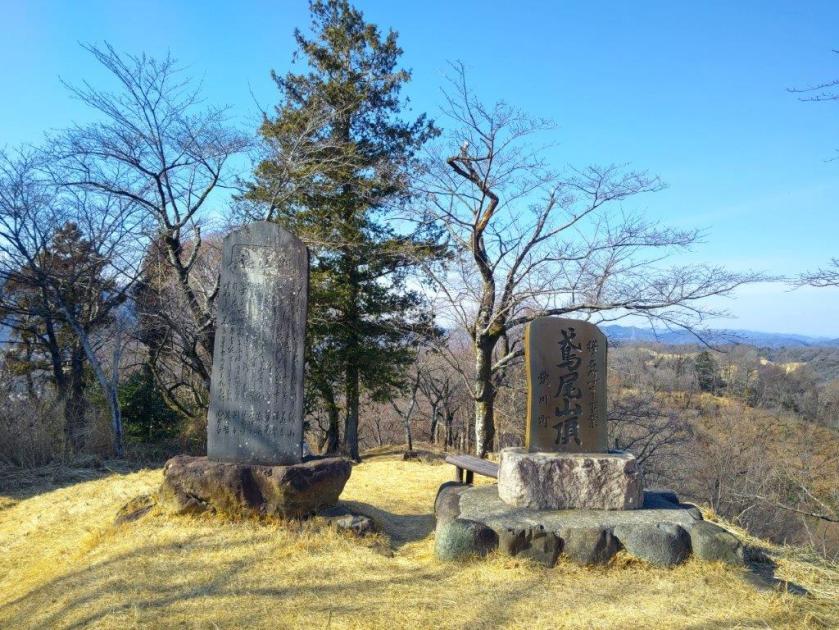
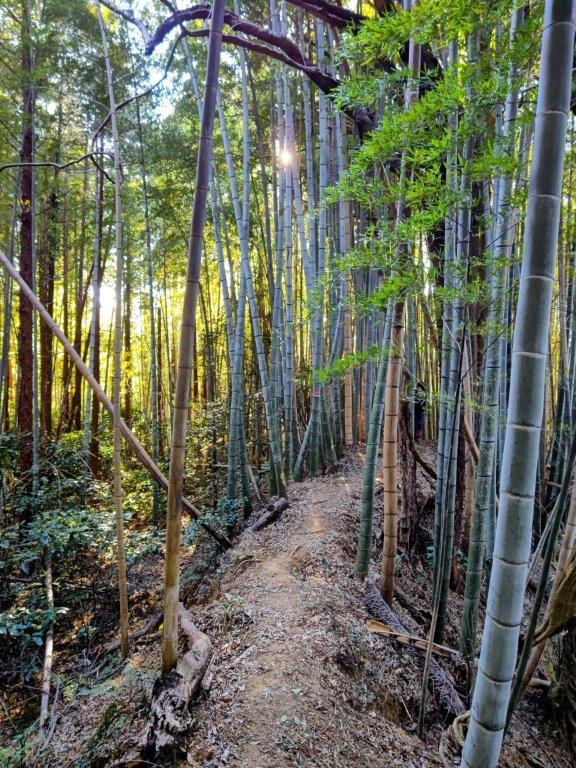
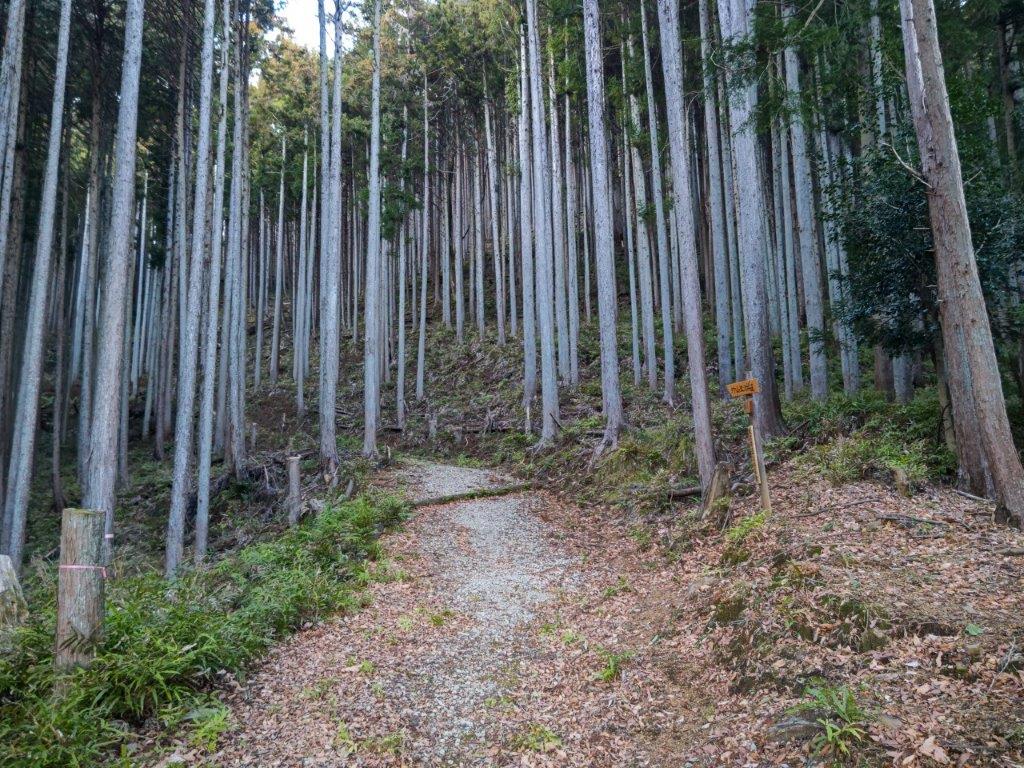
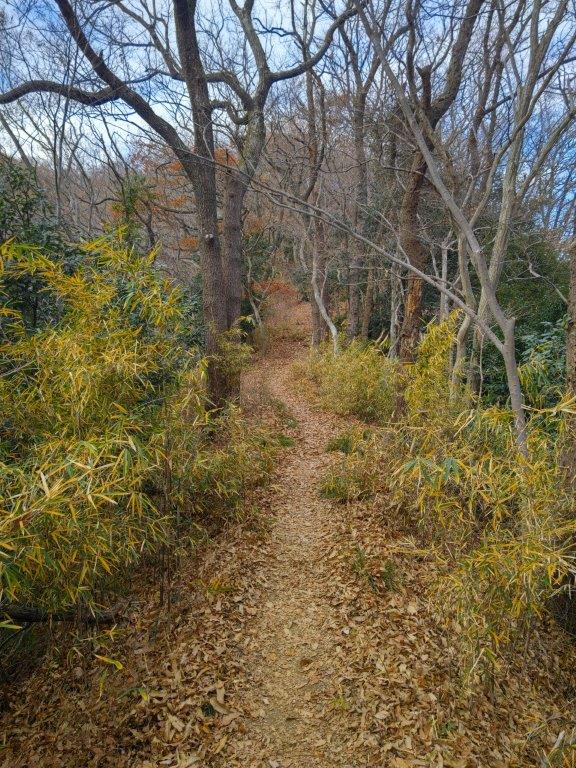
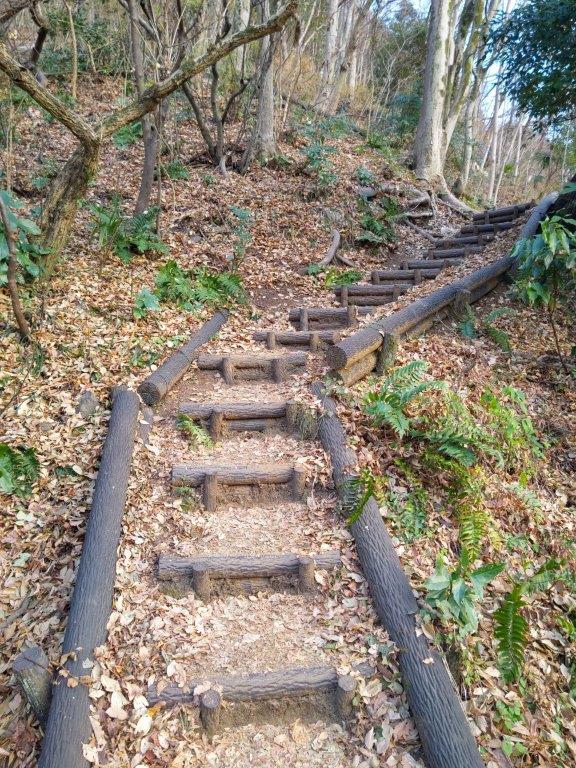
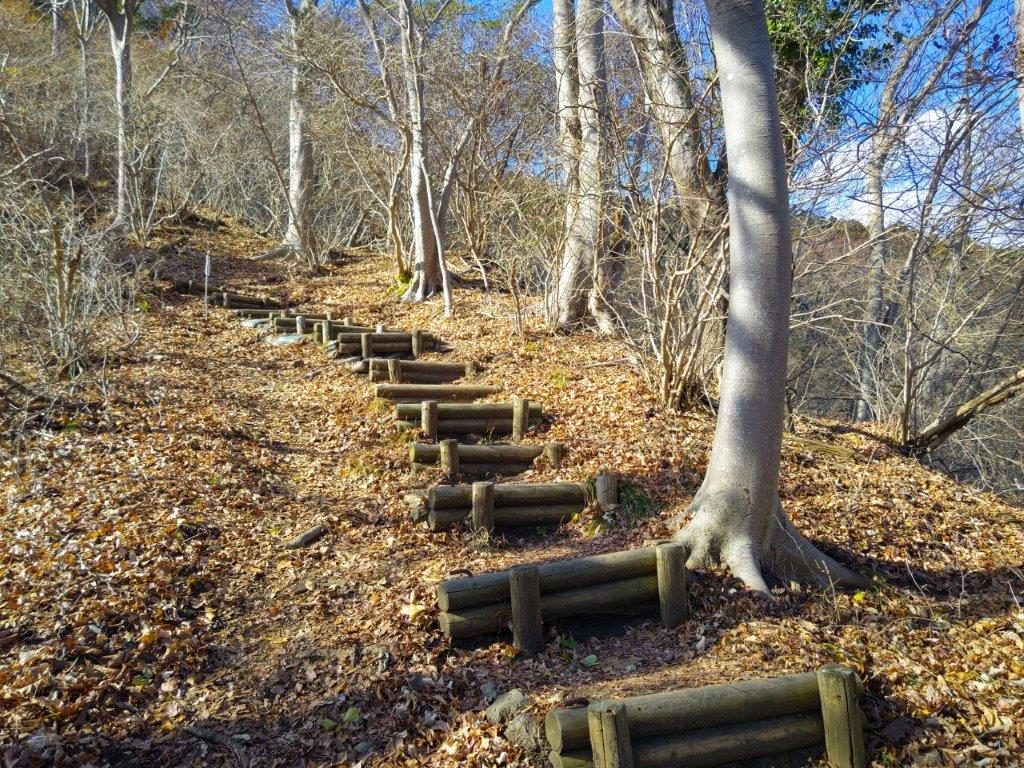
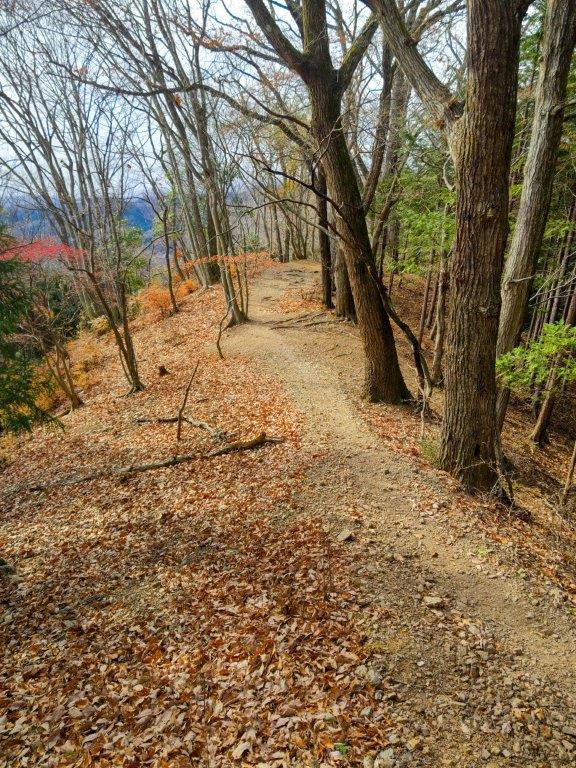
I was glad to be walking through the forest, the cool shade contrasting sharply with the warm sun from moments before; walking up a series of log steps, I soon warmed up again. I soon reached a clearing allowing for the passage of a power line. Beyond it, I resumed my walk under the dark cedars. One hour after setting off, the path suddenly went straight up the mountain side, gnarly tree roots forming natural steps, and just before 2pm, I broke through the trees to reach a small shrine, also the top of Mt Shidango (シダンゴ山 しだんごやま shidango-yama), named after a hermit (“sennin“) called Shidagon who lived on this mountain top about 1300 years ago.

View of Mt Shidango on the Way to Mt Take

Fuji Viewing Platform below Mt Take

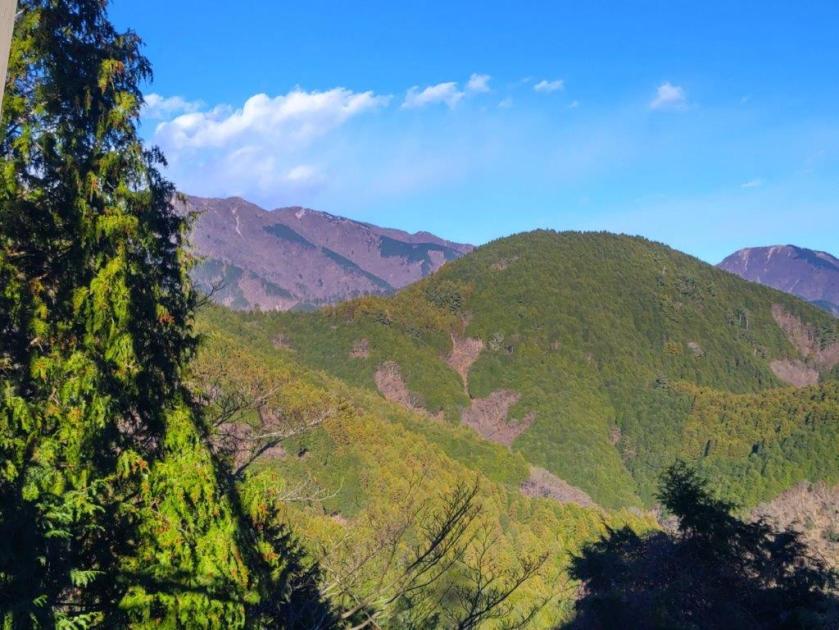
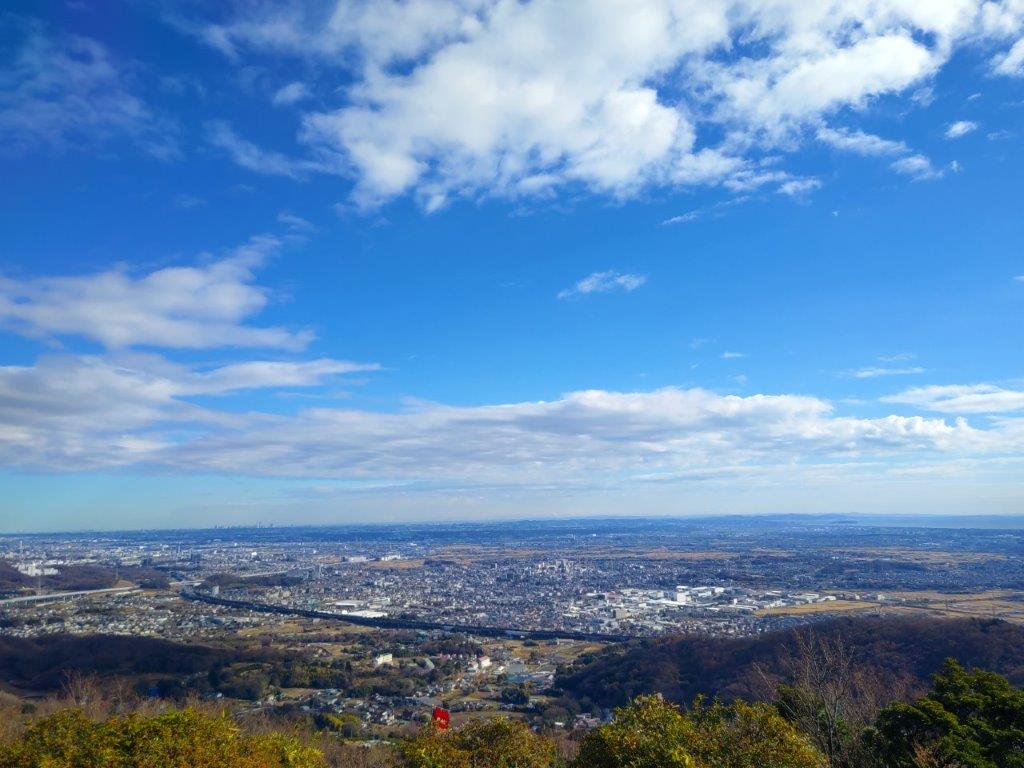
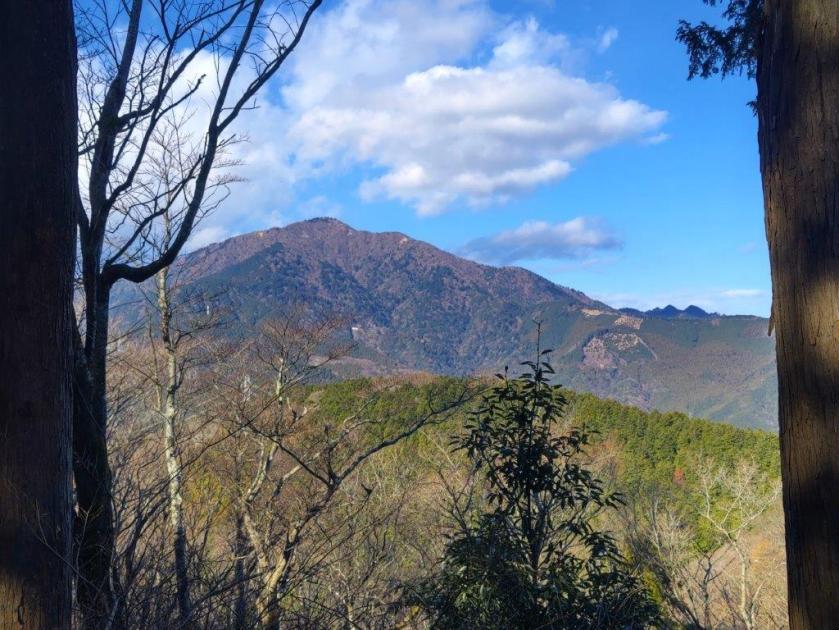
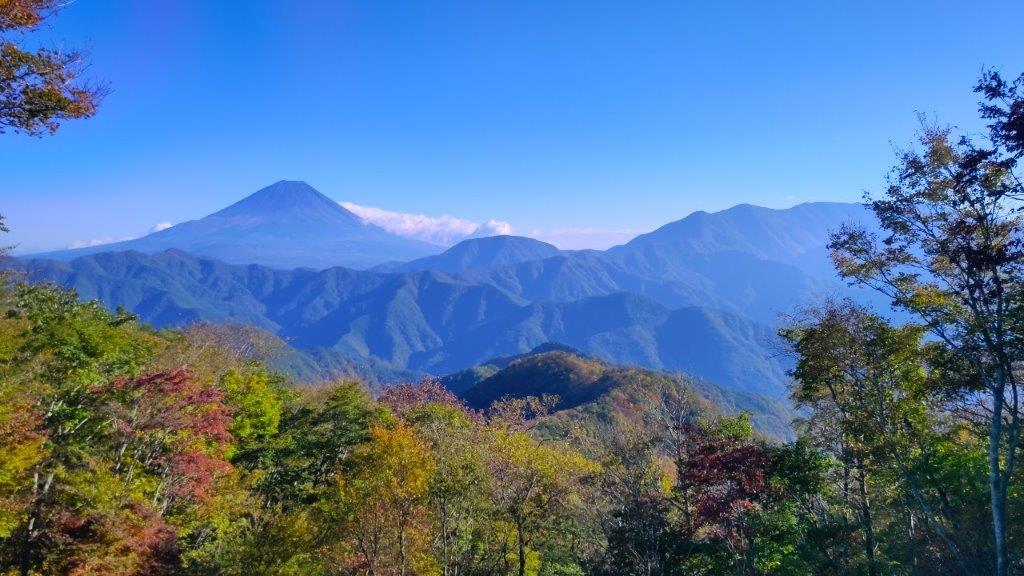
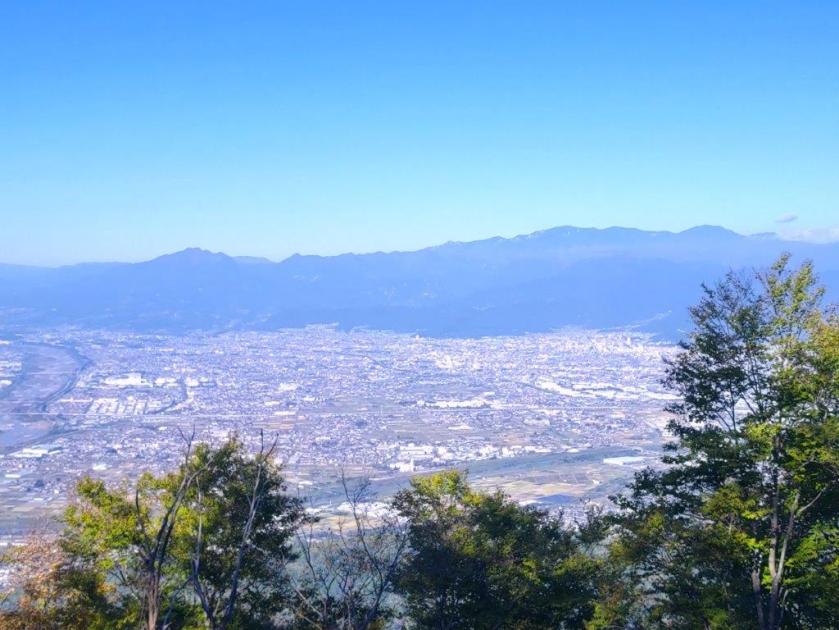
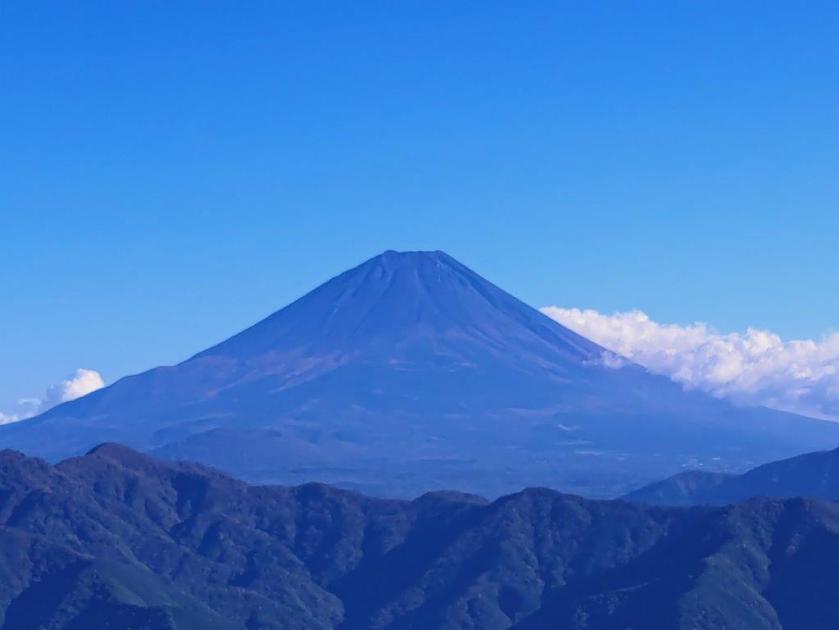
I was surprised to be the only person on the summit, since other nearby peaks usually have a lot of traffic. On the east side was the long ridgeline starting from Mt Oyama and ending at Mt Kobo, where I’d been one week ago. Directly ahead to the south was Sagami Bay. In between, I could make out the Miura Peninsula, and beyond it in the far distance, the Boso peninsula. On the west side, sandwiched between the next mountain and puffy clouds, I could see the white snows of Mt Fuji. The flat summit had a seating platform so I settled down for a late lunch with a view. At 2h30, I set off down some log steps, again under the cedars, heading westwards, and soon reached a paved road closed to traffic and hugging the mountain side. Here, ignoring a metal staircase heading straight up the opposite slope, I turned left along the road.

Mt Tono & Mt Oyama from near Mt Take

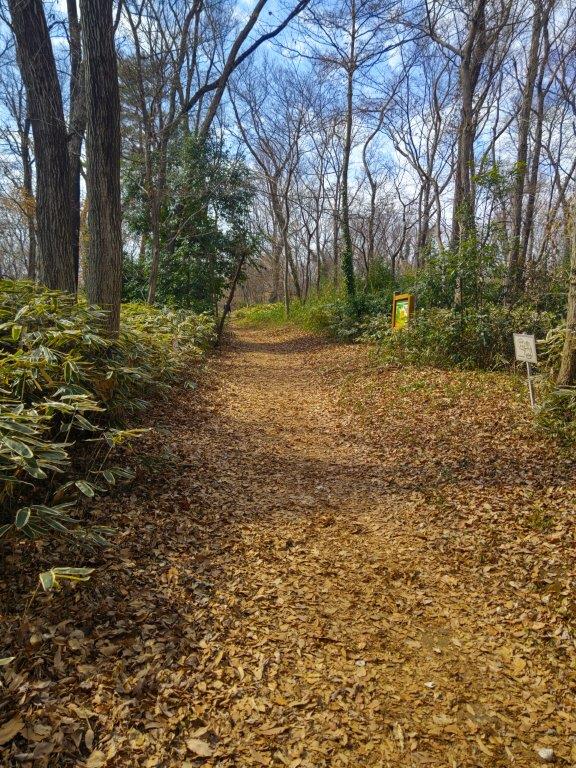
Walking through a Thicket of “Aburachan”

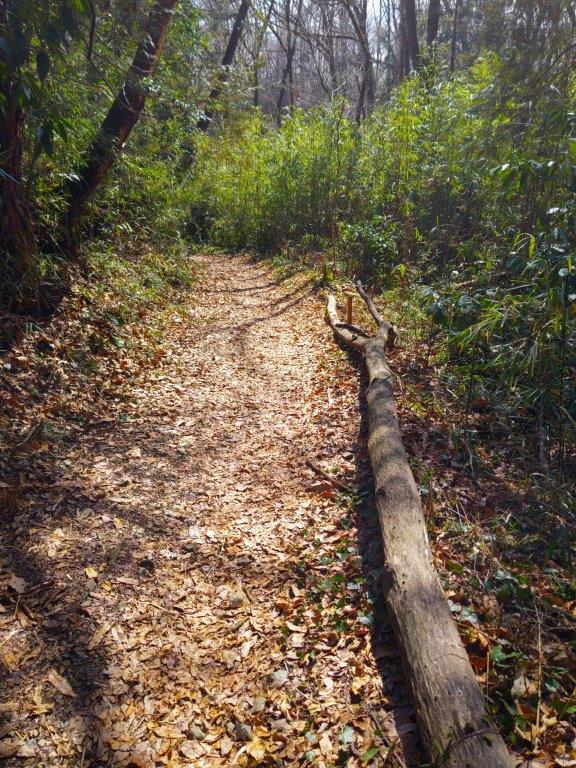
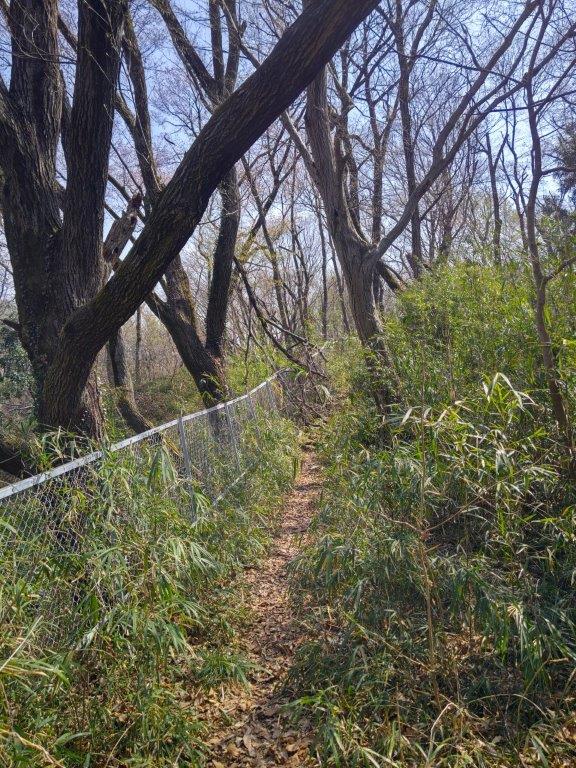
It was nice to walk on a level road for a short while, with views occasionally popping up on the east side through gaps in the vegetation. At 3pm, I reached the start of the trail for today’s second mountain. From this point, all signposts were in double, old wooden ones and newer metallic ones, provided by a local association. I appreciated how they felt the need to have sturdier and more functional signs while at the same time keeping the more fragile original ones. From this point, I also saw many warnings about leeches, as well as small salt containers (attached to most signposts) for their disposal (actively encouraged). I followed a path southwards and soon reached an electric pylon at the base of a steep slope.

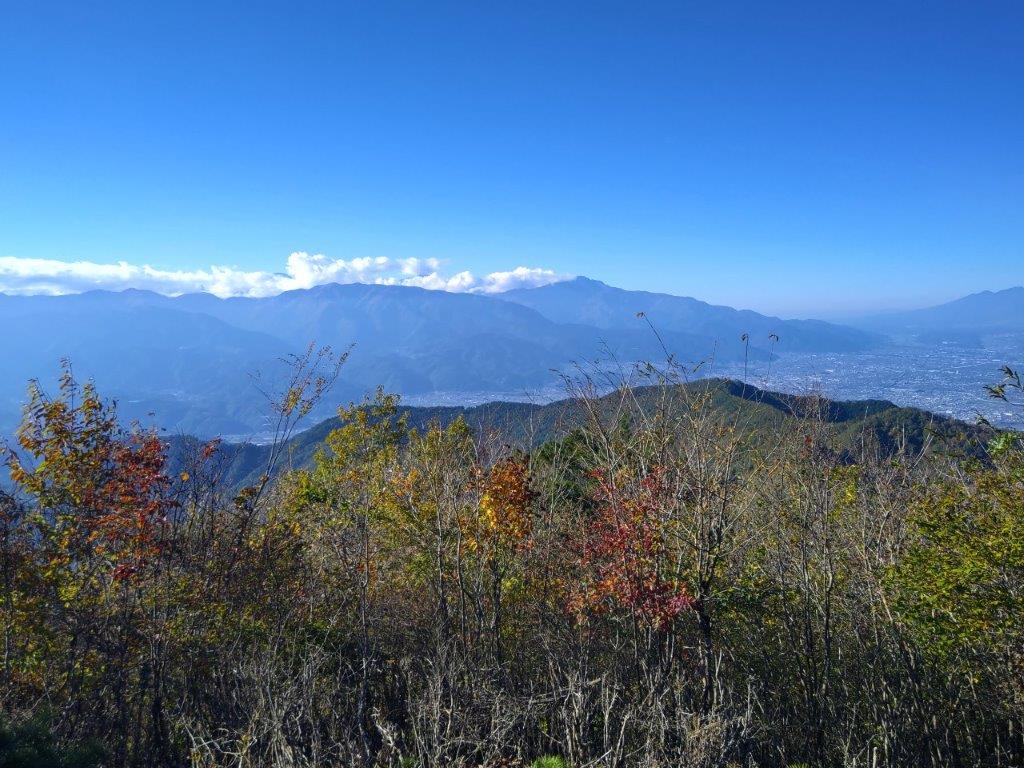
The Tanzawa Mountains from the Mt Take Observation Platform

Mt Shidango (front), Mt Hiru (left), Mt Nabewari (middle), Mt Tono (right)

I took a few minutes to enjoy the unexpected view provided by the passage of the powerline. On the east side was Mt Fuji again, perfectly aligned with the next pylon; on the west side was the rounded green top of Mt Shidango. Behind, I could see Mt Tono to its left, and Sannoto to its right; in the far distance, I could just make out the pointy summit of Mt Oyama. After a little more climbing, I reached the top of Mt Take (タケ山 たけやま take-yama), another peak without Chinese characters. It was completely in the forest, one ray of sunlight fortuitously lighting up the summit marker (the wooden one). I soon moved on and reached blue skies at the edge of the forest.

Mt Tono (left) & Sannoto (right)

Sannoto (left), Mt Oyama & Mt Kobo (right)

Looking up, I could see the full moon, already high in the sky. Walking a little further, I reached a wide viewpoint on the east side: the Mt Take Fuji Viewing Platform (タケ山富士見台). Looking excitedly to my right, the east side, I could see Mt Fuji now mostly free of clouds but against the sun at this time of the day. To its left, I could see the Hakone mountains, reaching all the way to Sagami Bay. On the west side, I had an excellent view of Sannoto and Mt Odake. To the south, under huge puffy clouds, was Oshima island; beyond, in the far distance, I could make out Toshima and Nijima islands. I took a short break on a bench to enjoy the view, as well as the late afternoon sun, before continuing on my way.

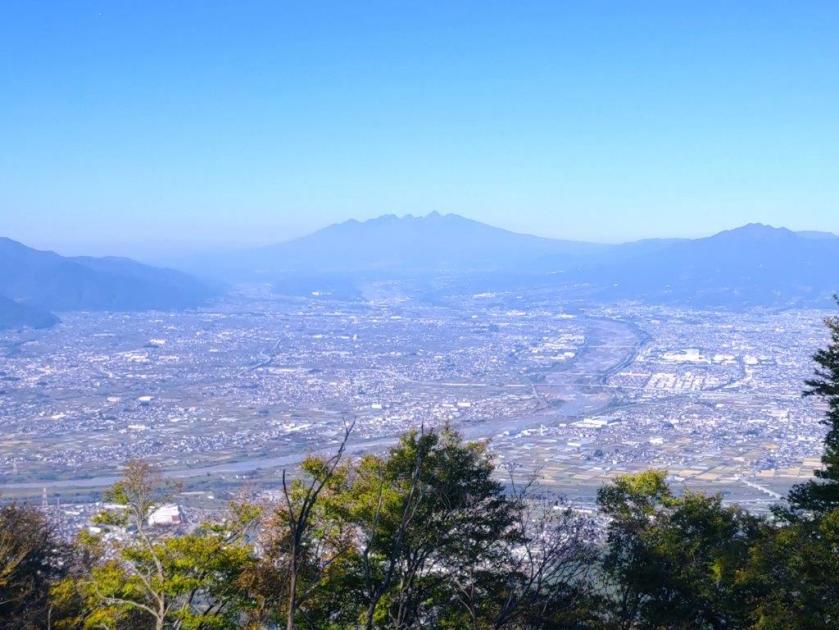
Hadano & Isehara Cities

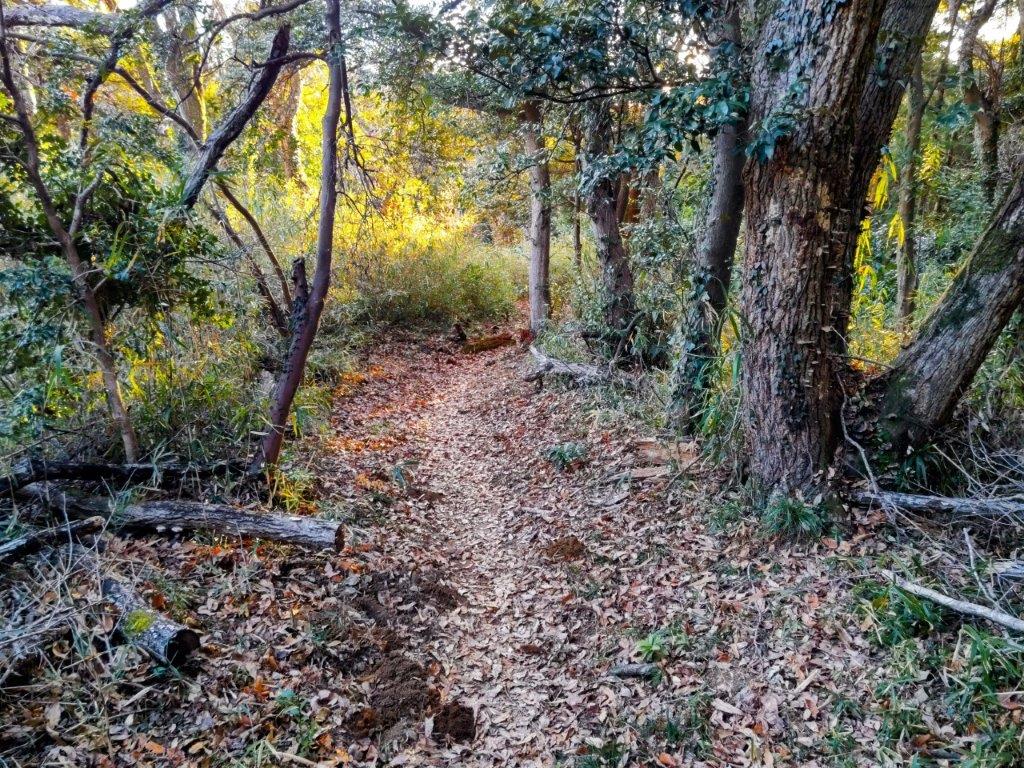
Descending through “Aburachan” Shrubs

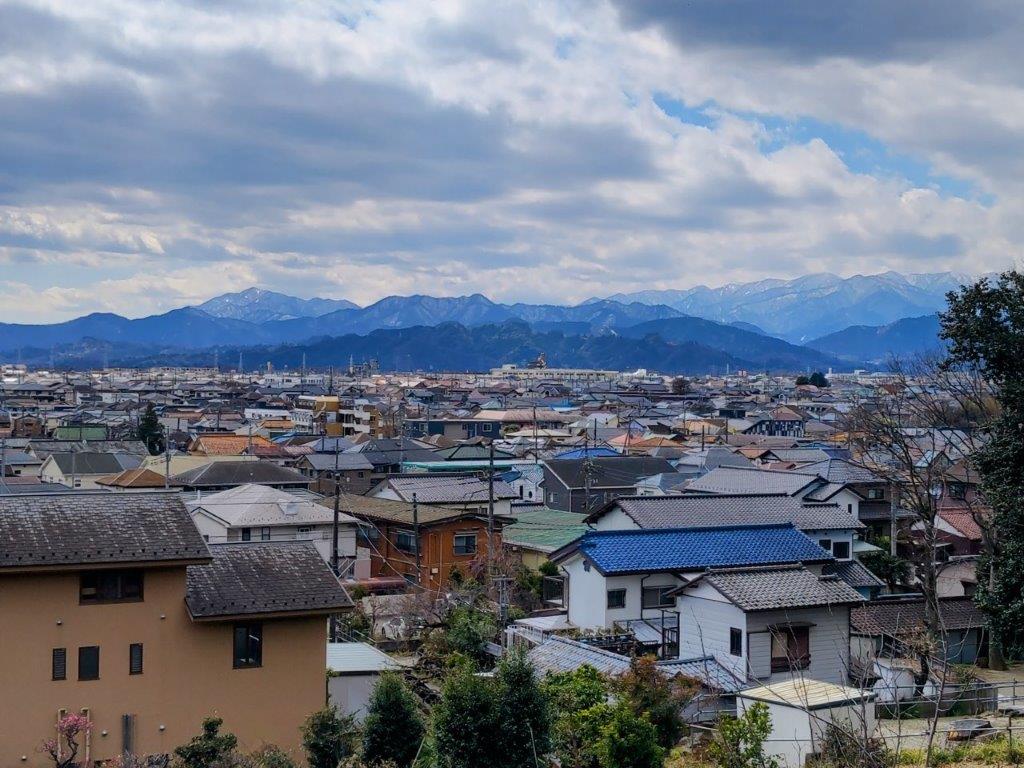
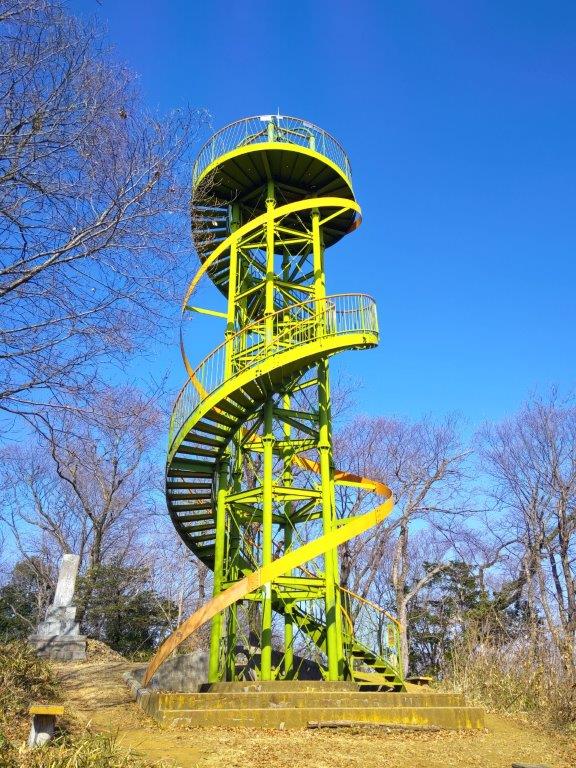
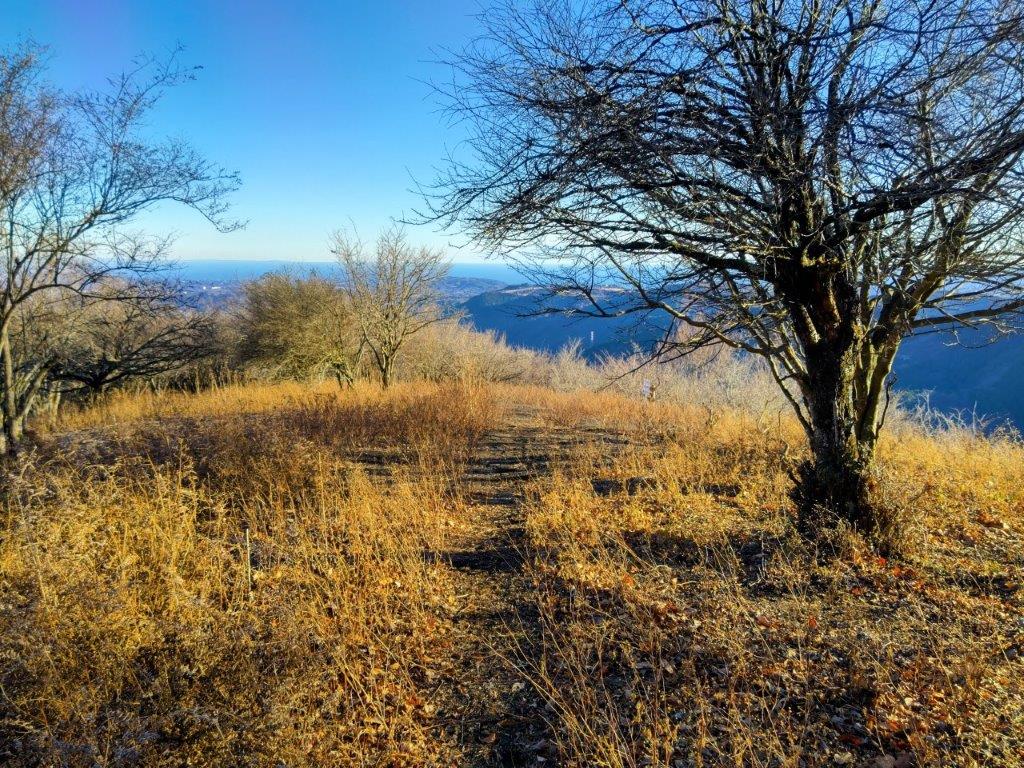
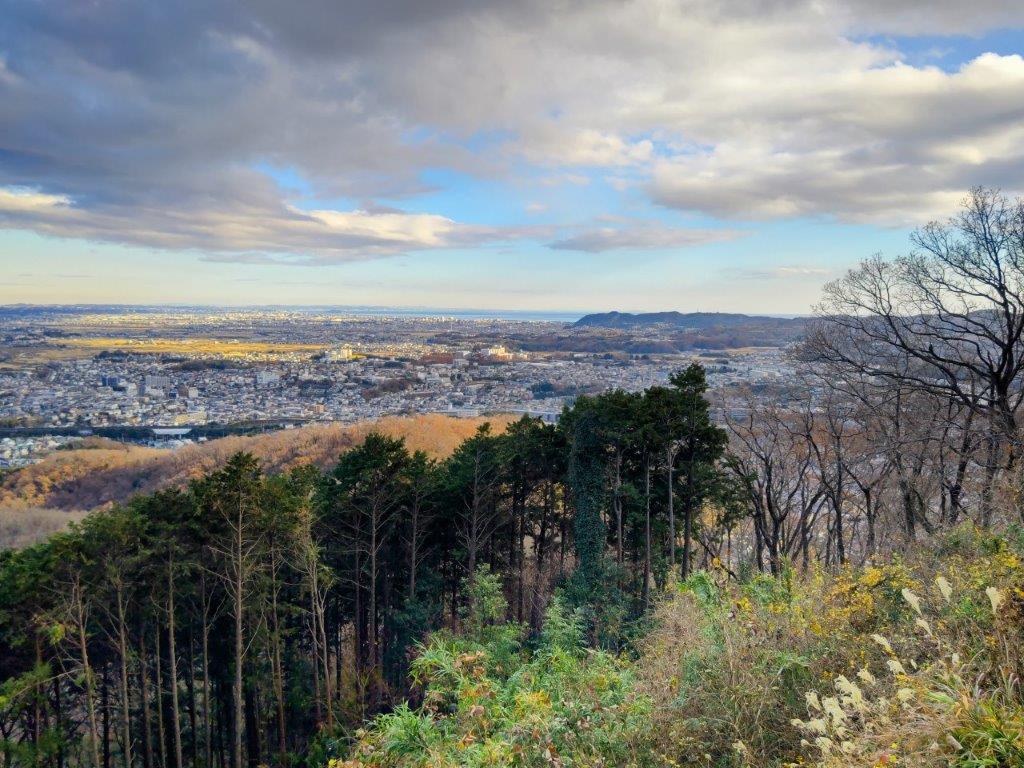
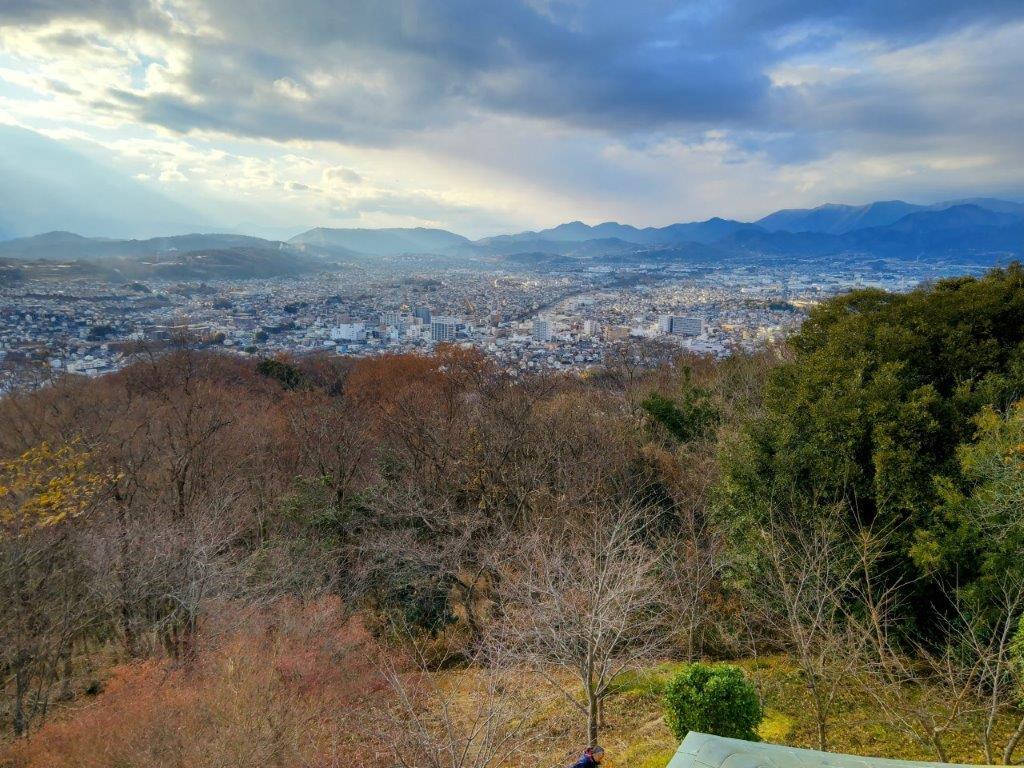
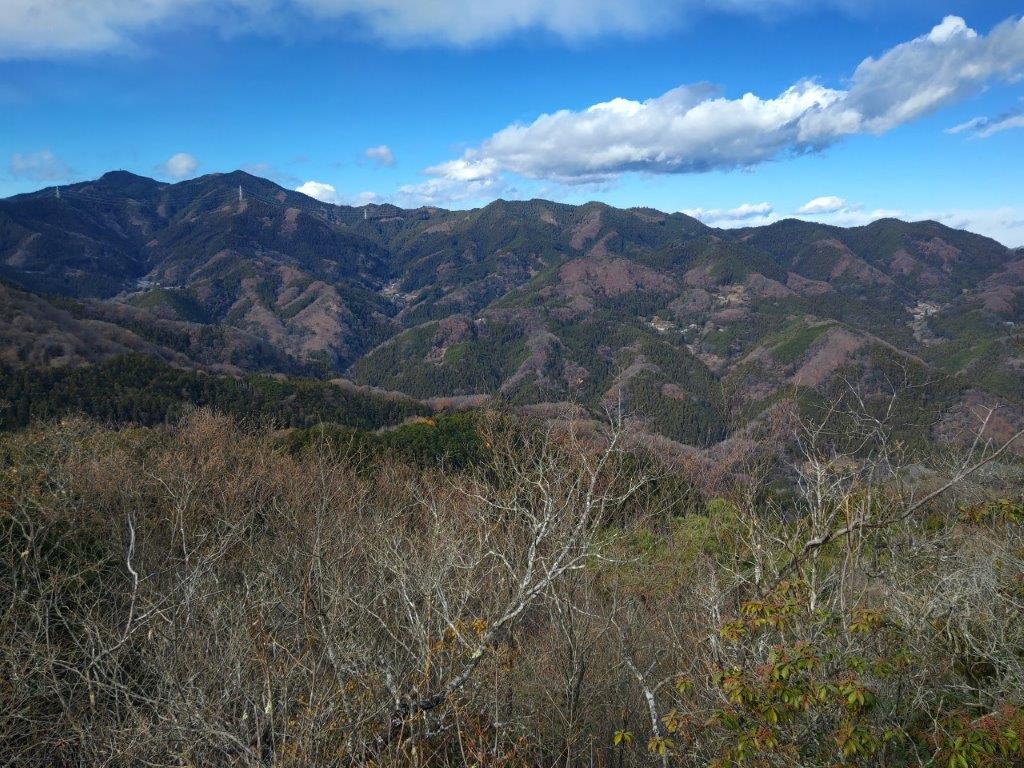
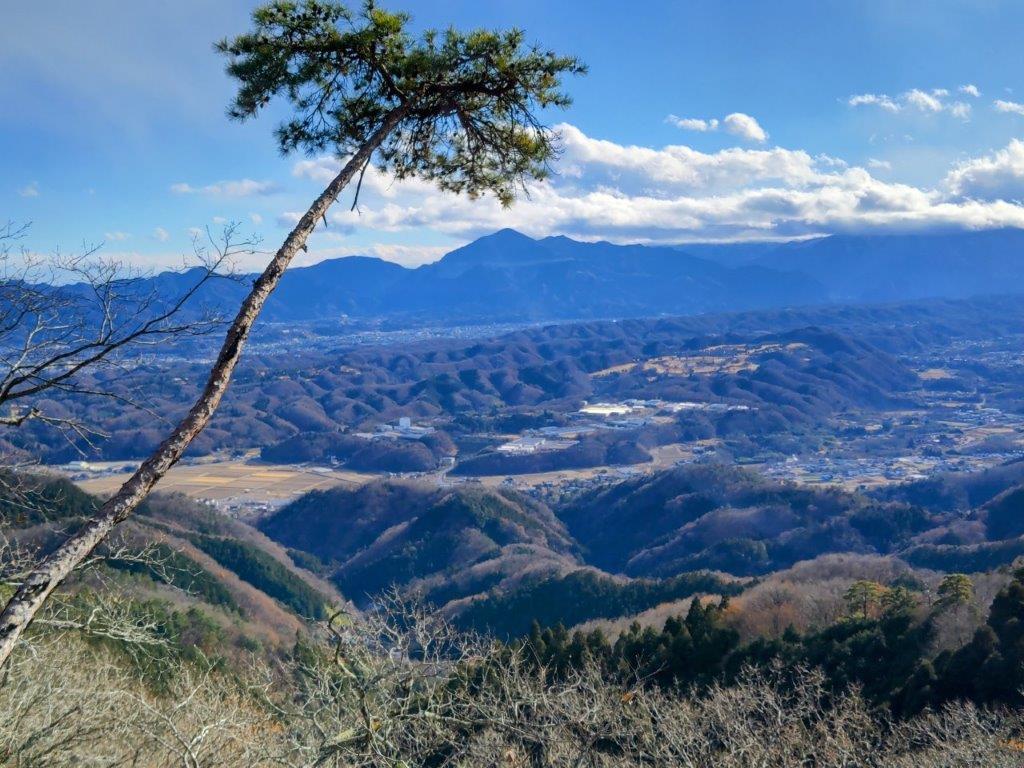
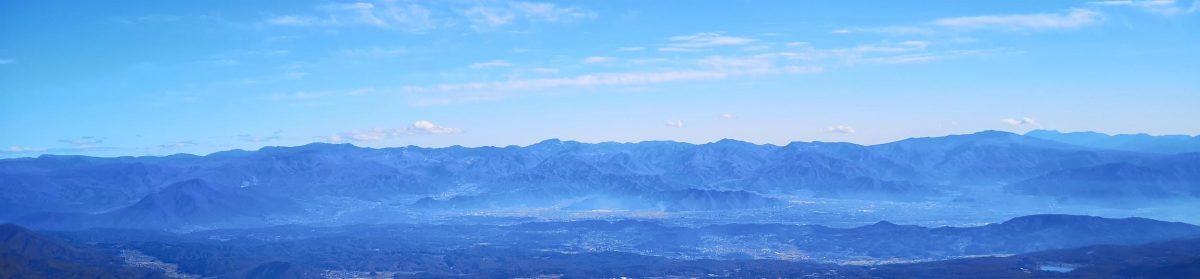
I was now walking inside a thicket of bare shrubs, affectionately called “Aburachan” in Japanese (February spicebush in English). The trail was vanishingly faint under a carpet of dead leaves but fortunately I soon popped into another clearing with another wide view on the east side: the Mt Take Observation Platform (タケ山展望台), where I had the best view of the day. On the west side, I had a spectacular vista of the Tanzawa mountains, from Mt Hiru, its highest point, all the way to Mt Oyama, with the full moon hanging above; Mt Nabewari was also visible, directly behind Mt Shidango. Further south, Hadano and Isehara cities spread out on each side of Mt Kobo. As before, the Shonan Bay, Oshima island and the Hakone mountains could be seen on the south side, only Mt Fuji now missing from the panorama.

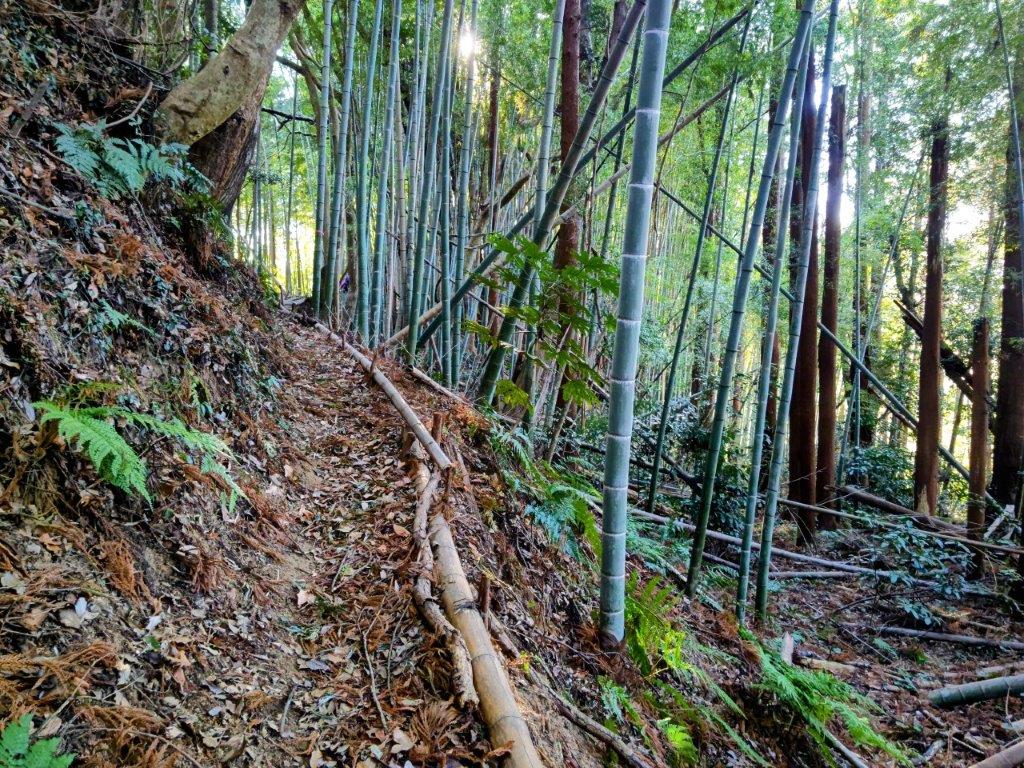
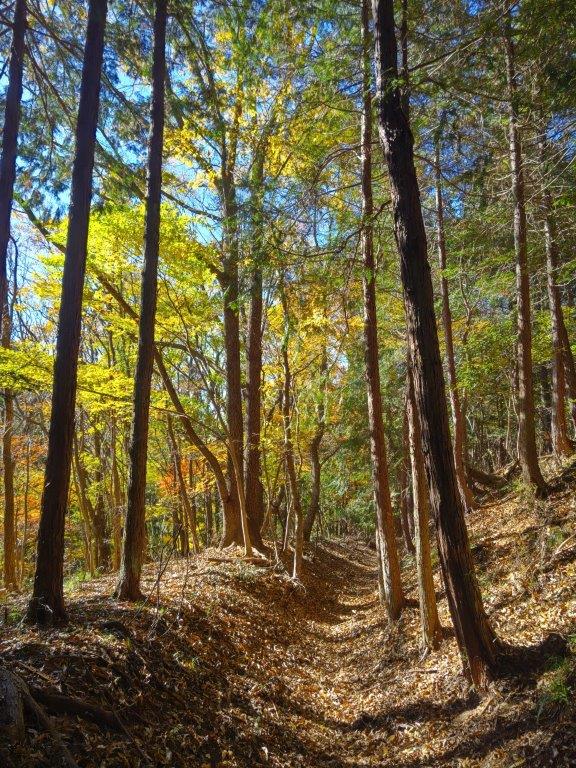
Descending under the Cedars

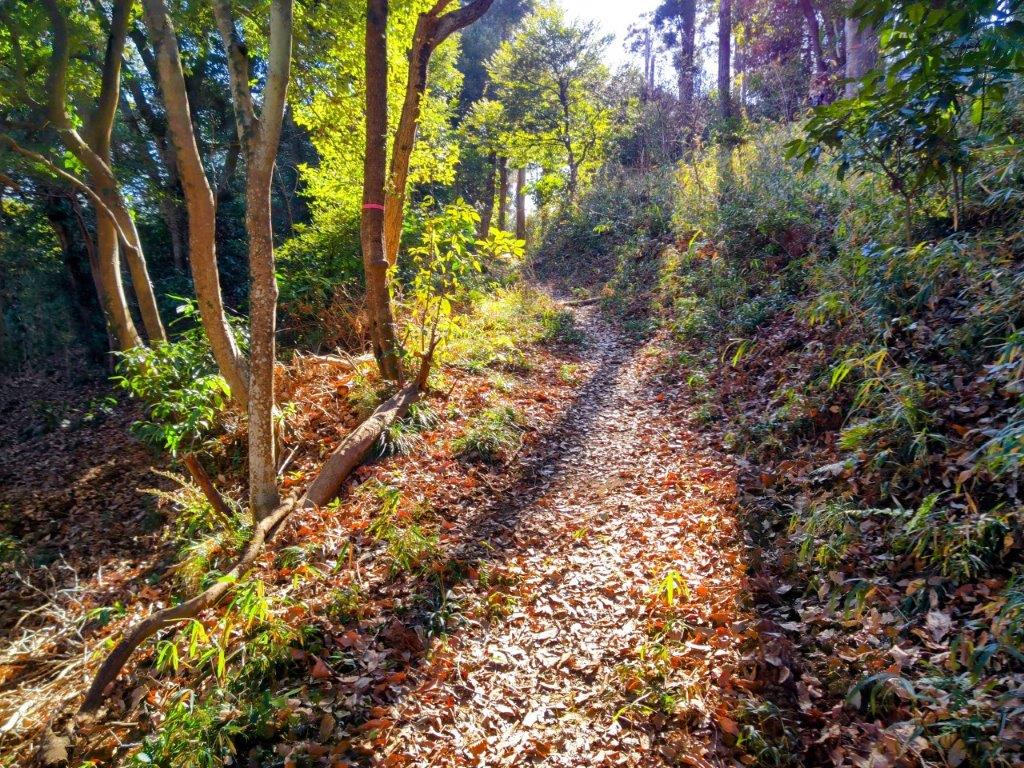
End of the Mt Take Trail

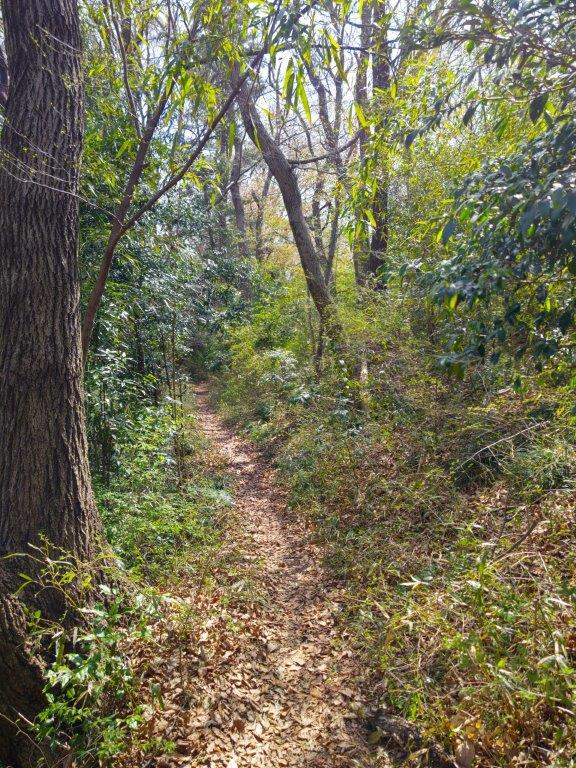
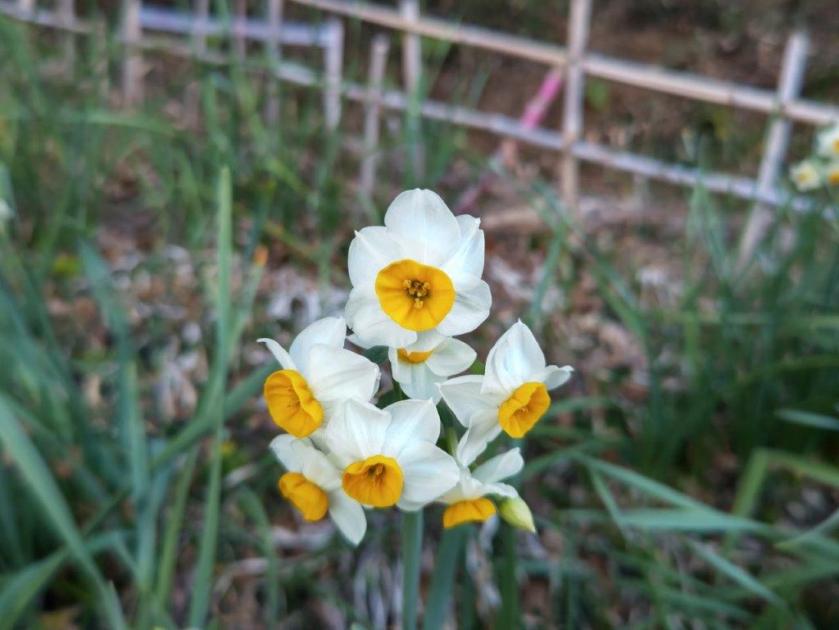
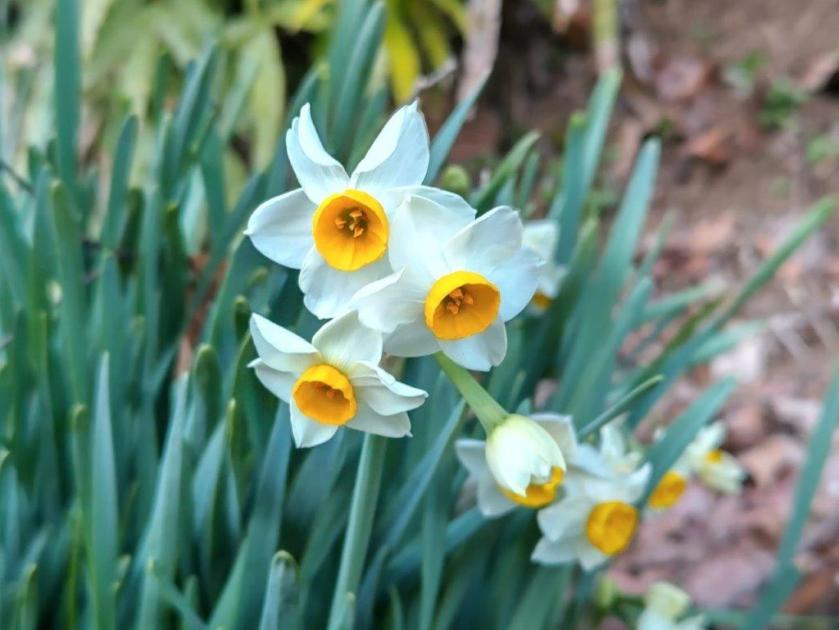
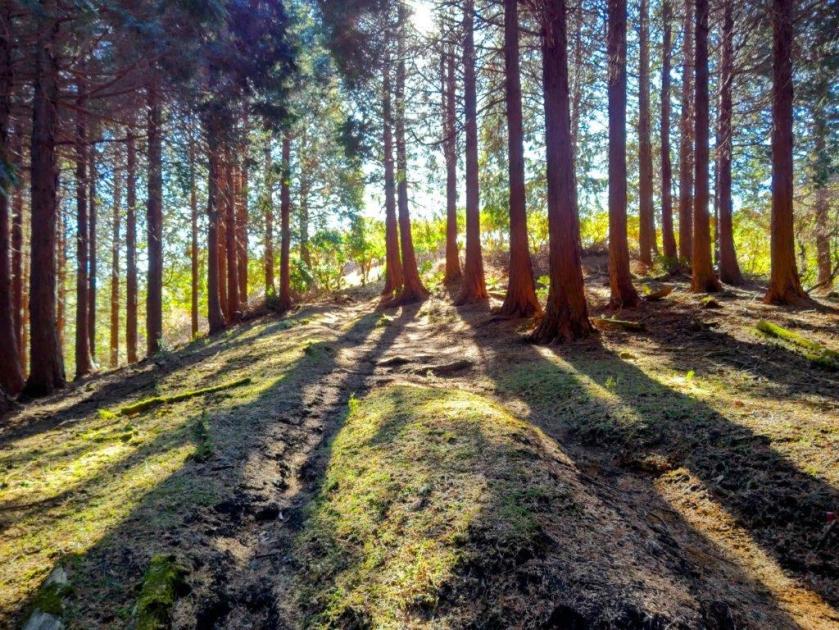
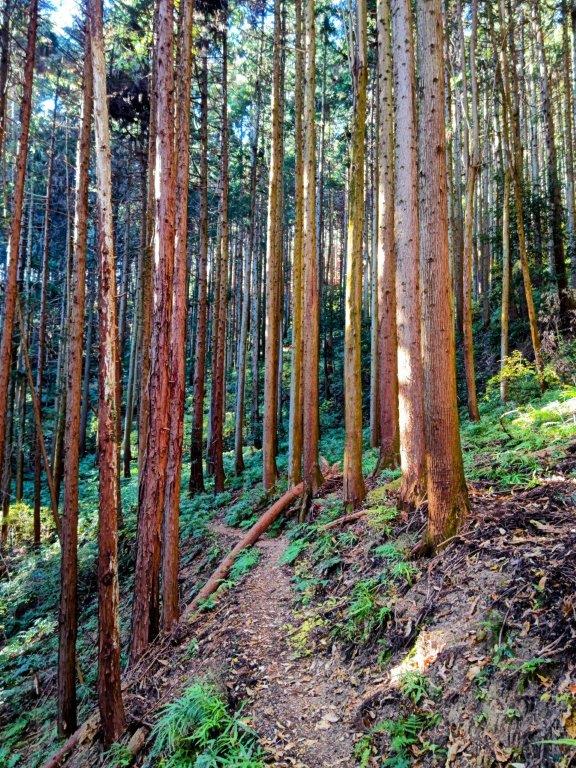
I was once again the only person to enjoy this glorious view, partly because it’s on a local trail but also partly due to the late time of the day. It was nearly 4pm so I set off at a quick pace down a switchback trail, first through another “Aburachan” thicket, coloured orange in the late afternoon light, then through a dark forest of tall cedars. Half an hour later, I reached a small park at the end of the trail, here and there “suisen” (daffodils) in full bloom. From this point, I followed a road along a terraced river. At the confluence with the Nakatsu river, I turned left, and after crossing a bridge, with one last view of a pink-tinged ridgeline on the north side, reached a wooden bus shelter. When the bus arrived, I was reunited with the soccer team from before; luckily I was able to sit, and a little after 5pm, was back at Matsuda station. There, I boarded the Romancecar limited express for the 80-minute ride back to Shinjuku.

Watch a Video of the Mt Shidango Hike

Watch the Video of the Hike on YouTube

See a Slideshow of More Pictures of the Hike

Mt Hijiri (380m), Mt Takatori (556m) & Mt Kobo (235m), Isehara & Hadano Cities, Kanagawa Prefecture, Saturday, January 4, 2025

Like for the last outing of 2024, I needed a straightforward hike close to Tokyo to ensure a smooth start to the new year. I decided to head to the Tanzawa foothills, notorious for its leeches in the warmer months, but pest-free at this time of the year. I had already walked from the top of the Oyama cable car to Mt Takatori, as well as from Mt Kobo to Tsurumaki Onsen. This time, I’d explore the southern ridgeline between Mt Takatori and Mt Kobo. I knew I could get a good view of Mt Fuji past Mt Kobo, and also finish the hike at Manyu no Yu, two reasons for making this the first hike of 2025.

For subscribers, read this Post on Hiking Around Tokyo for a better viewing experience and the latest updates

Hiking in the Tanzawa Mountains  丹沢山地

To get to the start of the hike, I’d ride the local Odakyu line to Isehara station, and then board a local bus for a stop near a city park, a short distance from the trail Entrance. For the return, I could walk from the hot spring to Hadano station, and there, board the Odakyu Limited Express for Shinjuku. The weather was supposed to be sunny in the morning, turning cloudy in the afternoon, putting a question mark on my new year rendezvous with Mt Fuji. Still, I was looking forward to exploring new trails in a familiar area.

Find Japan Hiking Maps on Japanwilds

Steps for Mt To (left) Road for Mt Hijiri (right)

Leaving Mt Hijiri (left) Steps up Mt Takatori (right)

It felt quite cold as I stepped off the bus in the midst of a residential neighbourhood of Isehara city, a little before 10am. Thankfully, the sun was high enough to warm me up while I made my way to Tonoyama Park (塔の山公園), a wooded area surrounding a small mountain. After a short climb up a wide path, I reached some benches from where I already had a view of the flat coastal area reaching to Shonan Bay. After a late breakfast I set off at 1030, and soon after, reached the top of Mt To (塔ノ山 とうのやま tonoyama 202m, meaning “Mt Tower”), from where I had a view of summit of Mt Ooyama on the north side.

Trail past Mt Nenbutsu (left) Trail for Zenba Pass (right)

Steps past Mt Gongen (left) Steps past Mt Sengen (right)

I continued along the ridgeline, heading down through leafless trees, and soon arrived at a road on the north side of the mountain. I turned right, heading south, past the main park entrance, then turned left, following a sign for Hokokuji Temple, and shortly after, came upon a signpost for today’s next mountain. After a few more turns along back roads, I reached the Mt Hijiri trail entrance (聖峰登山口), another paved road but this one closed to vehicles. After passing through a wildlife gate, I continued straight, ignoring the shortcut on the left side, and a little before noon, reached the top of Mt Hijiri (聖峰 ひじりみね hijiri-mine meaning “sacred peak”), also the site of a small Buddhist temple.

View East from Hijiri-mine of the Miura and Boso Peninsulas

View South from Hijiri-mine of Shonan Bay and Shonan-daira

I was delighted to have such a wide view on my first hike of the year. Looking north, I could see the skyscrapers of Yokohama and central Tokyo; eastwards, I could make out the low rounded mountains of the Miura and Boso peninsulas; to the south was the level-topped Shonan-daira with Shonan Bay in the background. While I was admiring the view, a pickup truck pulled up, and a man went to open the temple building, called Hijiri-mine Fudoson (聖峰不動尊), giving myself, and two other people who happened to be there, a chance to peer at the Buddhist altar inside; we even got to touch a small snake statue (2025 is the year of the snake); finally, we each received a paper stamped with its “goshuin“, a red seal proving one’s visit to the place. After carefully placing it inside my pack, I set off again, along a level trail through tall cedars, and soon reached a series of log steps where the ridgeline rose steeply.

Steps Leading to Mt Takatori

View South from below Mt Takatori

I broke a sweat for the first time of the day, only pausing briefly to take in a view that had appeared through a gap in the trees. Looking south, I could see the ridge I’d be following on the next part of the hike; curving northwards was the ridge I’d just ascended, green cedars crowning the top of Mt Hijiri. I reached a junction where the two ridges merged; I turned right, and after a little more climbing, reached the top of Mt Takatori (高取山 たかとりやま takatori-yama), also the site of an NTT relay tower. It was surrounded by trees except on the north side, where Mt Oyama’s pyramidal summit fit snuggly between two tree trunks. I retraced my steps to the junction and continued along the south ridge.

View towards Mt Hijiri and its “green crown”

Framed View of Mt Oyama from Mt Takatori

I was surprised by how steep and rocky the trail suddenly became, forcing me to slow my pace. I was relieved when the trail soon became more or less level again, and one hour after leaving Mt Takatori, I arrived at Mt Nenbutsu (念仏山 357m) where there was bench and a view on the south side. The name is a Buddhist term meaning visualizing a Buddha. By now, the clouds had covered the southern half of the sky forcing me to imagine most of the view as well. Since it was nearly 2pm, I had a late lunch break before continuing my way.

Trail between Mt Nenbutsu and Mt Kobo

View of the Tanzawa Mountains from the Fureai no Michi Junction

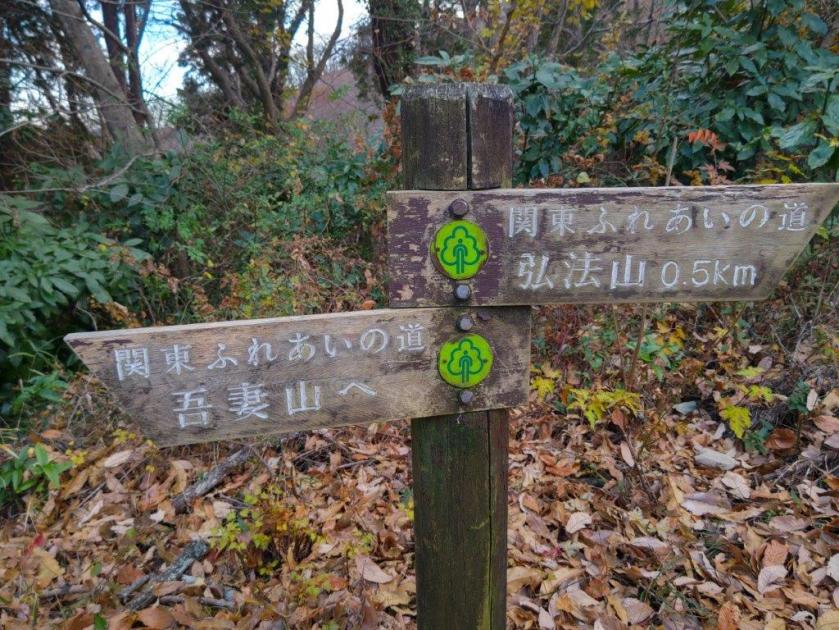
This was probably the nicest part of the hike, an easy to follow and slightly descending trail through an evergreen forest. At 2h30, I reached Zenba Pass (善場峠), and a little further, I emerged onto a road with a view of the Tanzawa mountains to the north, seemingly still free of snow. I crossed the road and headed up a trail on the other side, now inside Koboyama Park (弘法山公園) and also on the Kanto Fureai no Michi. After a short climb, I reached the top of Mt Kobo (弘法山 こうぼうやま koubou-yama), named after Kobo-daishi who is said to have trained in this place (he is also connected to Mt Mitsumine). Since my last visit in April 2016, a viewing platform had been erected on the east side. Like from Mt Hijiri, I had a view of the Shonan coastline, the Miura Peninsula and Shona-daira, but it looked quite different under a cloudy afternoon sky.

Final Steps before the Top of Mt Kobo

Viewing Platform on the East Side of Mt Kobo

I admired the constantly changing patchwork of light and dark patches in the landscape below. On the south side, the bell tower sitting directly in the sun’s path lit golden. I now followed Babamichi road (馬場道) meaning “riding ground”, indeed wide enough for riding a horse, to the next summit, Mt Gongen (権現山 ごんげんやま 243m), a flat, grassy area with an observation tower on the east side. From its top, I hoped to finally have a glimpse of Mt Fuji, but those hopes were dashed by the thick, dark clouds massed on the south side. A ray of sunlight managed to squeeze through, illuminating the urban sprawl of Hadano City, providing the proverbial silver lining. On the east side, I could look down on the Soga Hills, a range of low hills stretching from Matsuda town to Kozu station on the Shonan Coast.

Patches of Light and Dark from Mt Kobo

Shonan Coast and Shonan-daira from Mt Kobo

I was surprised to see a few snowflakes fall gently and thought perhaps a snowstorm was on its way; fortunately, there was no follow-up, bits of blue sky still appearing overhead. At 3h30, I headed down steep steps on the south side, leaving the Fureai no Michi as it headed east to connect with my last year’s hike to Mt Takatori. After crossing a road, I passed by Mt Sengen (浅間山 せんげんやま  196m). It was more of a shoulder that a summit but what it lacked in prominence was made up by the prominence of its beautiful wood-carved summit marker. On my last visit, the scenery was white from the cherry blossom trees covering the “shoulder”; today it was bathed in yellow from the late afternoon sun.

View of the Soga Hills from Mt Gongen

View from Mt Gongen of Mt Hadano under a Ray of Sun

The final descent of the day was surprisingly pleasant: a switchback trail delightfully easy on tired knees, late afternoon sun shining through evergreen trees, and no one but me on the mountain. Just before 4pm, I reached the trail entrance and a busy road where I turned left. On Kobo bridge across the Kaname River, I had one last look at Mt Kobo, firmly under blue skies now, before heading to the nearby Man-no-yu Hot Spring. I reflected on how most of today’s mountains names are common mountain names in Japan and how unusual it was to find all along one ridgeline. After a satisfying hot spring soak, I walked the final 15 minutes to Hadano station, where I caught the Romance Car limited express for the one hour trip back to Shinjuku.

Watch a Video of the Mt Hijiri to Mt Kobo Hike

Watch the Video of the Hike on YouTube

See a Slideshow of More Pictures of the Hike

Mt Happu (626m) & Mt Omae (653m), Minano Town & Chichibu City, Saitama Prefecture, Sunday, December 22, 2024

I had hiked Mt Happu about a year ago but wanted to return to explore some more trails on this up and down ridge, also known as the Minano Alps. Its relatively easy access and low elevation made it the perfect place for an outing during the cold, short days at the end of December. Finally, I was eager to try out our Japanwilds Happu-san Hiking Map, published in March 2024, by making sure to download the free map in Avenza before heading out.

For subscribers, read this Post on Hiking Around Tokyo for a better viewing experience and the latest updates

To get to the start of the hike, I’d ride a bus from Minano station and get off on the north side, just past Mangan no Yu. I’d follow the Kanto Fureai no Michi to the summit, then continue to Fudatachi Pass, and from there, follow the Edo Old Pilgrimage Trail down the south side. At the base of the mountain, it was a one-hour walk through the countryside to Seoto no Yu. After a hot bath, I could use their free shuttle bus to get back to Minano station.

Hiking the Minano Alps 皆野アルプス

Hiking in Chichibu 秩父

If time allowed and the weather was clear, I’d do a round-trip to one of the viewpoints along the ridge beyond Fudatachi Pass; I could also do another round-trip to Temple #33 on the Kannon Temple Circuit, about ten minutes on foot from the hot spring at the end of the hike. The weather was supposed to be sunny but cold for the season. I was looking forward to exploring new trails on a well-trodden mountain.

Get a map of the Mt Happu hike

Find Japan Hiking Maps on Japanwilds

Trail before Saru Rock (left) Trail between Mt Happu & Fudatachi Pass (right)

It was a beautiful, sunny day as I rode the Laview Limited Express from Ikebukuro. After transferring to the local Chichibu line in Yokote, I got off at Minano station around 10am. The sun had mischievously vanished behind thick clouds rolling in from the surrounding mountains; I checked the updated forecast for the day, and it seemed the sun would return in the early afternoon. I walked to the nearby bus stop and also noticed that the departure time had been pushed back slightly since last year, meaning I had to wait a little longer out in the cold.

Walking along Nyokin Ridge (left) Walking the Old Pilgrimage Road (right)

I felt a little warmer after getting off the heated bus at Futto Iriguchi (風戸入口). I was the sole passenger and, considering the gloomy weather conditions, I wondered if I might be the only person on the mountain today. At 11am, I started up the Kanto Fureai no Michi, behind an “Onsen Stand“; this is like a petrol station, but instead of petrol, people pay a small fee to fill plastic containers with hot spring water for home use; while I was getting ready a couple cars pulled up, so it seemed a more popular activity than hiking on a cold day. After barely a few minutes, the trail ended at the road bend, which I followed up and through a village. I opened the Avenza app on my smartphone and loaded the Happu-san Hiking map, a blue dot tracking my progress along a green line showing the trail.

Start of the Trail Near Futto

Looking up, I was delighted to see patches of blue in the sky, a hopeful sign for the rest of the day. I passed an ancient “kura“, or storehouse, encircled by vegetation, slender bamboo on one side and evergreen trees on the other, the bright green contrasting with the deep blue sky; gusts of wind rustled through the leaves, contributing to the this enchanting sight, as well as pushing the remaining clouds further away. At 1130, I reached an open shelter with a view of Mt Hodo to the north. Here, the hiking trail resumed, clearly indicated by the familiar wooden Kanto Fureai no Michi (関東ふれあいの道) signposts. At the top of some log steps, I entered the forest.

View North from the Summit of Mt Happu

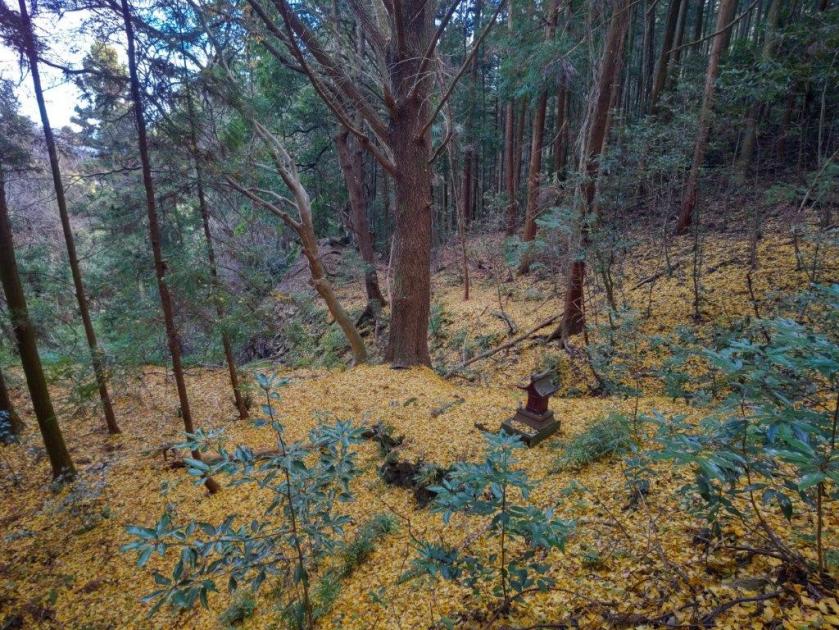
I was surprised to see a carpet of golden leaves covering the path ahead and the nearby forest floor. Looking left, I spotted a tall, leafless ginko with a small shrine at its foot: what a magnificent sight it must have been earlier in the month. Autumn was still hanging on in Tokyo but here in the mountains winter had arrived. After a short climb through the forest, I arrived at the Kasato junction (another reading of “Futto”) and turned right along the main ridgeline of the Minano Alps, now following last year’s hike, but in reverse. At noon, I arrived at Saru-iwa (猿岩 meaning “monkey rock”), a huge yellow-coloured rock protruding dramatically from the narrow ridge.

View of the Chichibu Basin from Nyokin Ridge

I was glad to see it properly this time as I had somehow missed it on my last visit, possibly because it was hidden by the foliage which had now fallen; it was also clearly labeled on the Japanwilds Hiking Map, so I was sure to see it, foliage or not. Apparently, the rock resembles the face of a monkey looking up, but before I had time to turn my own face up to confirm this, a big group suddenly arrived from the other direction, and I quickly departed (the face can be discerned in the slideshow picture at the end of this blog post). Shortly after, I arrived at the top of Mt Happu (破風山 はっぷさん happu-san), my third time to stand on the top.

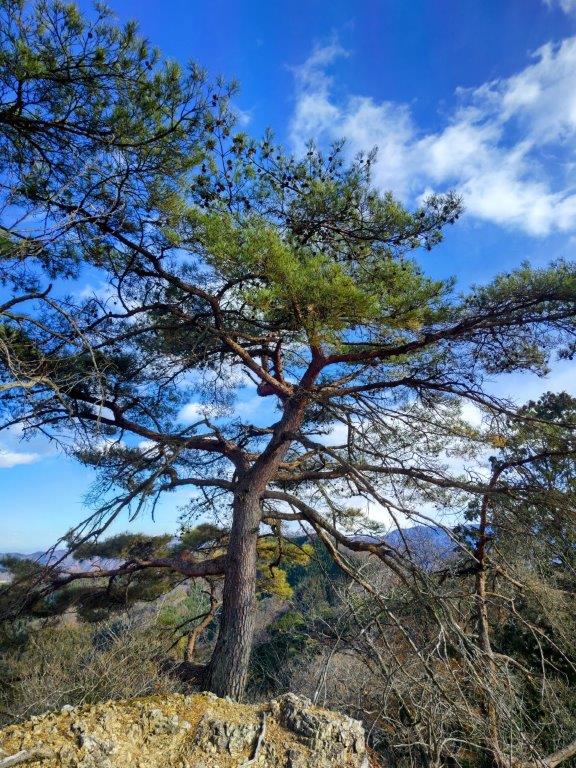
Pine Tree and Mt Buko below the Top of Mt Omae

The breathtaking view of the Chichibu basin and the Oku-Chichibu mountains on the south side was dulled by the lingering, low grey clouds, while the more muted view on the north side was nearly clear of clouds. As more people arrived, I set off without a break, down the steeper trail on the east side. At 1230, I reached Fudatachi Pass, earlier than expected, so I pushed ahead along the ridge, feeling optimistic as the weather was slowly but surely improving. After some easy walking through the forest, now off the Kanto Fureai no michi, I reached Nyokin Ridge.

View of the Oku-Chichibu Mountains from the Musashi Observatory

From this point, I found myself scrambling over some rocky sections, chains attached for safety; I also had to navigate a narrow ledge with drops on both sides, lined with a rope to prevent any mishaps. I was surprised how quickly I had to change my walking style from carefree rambling to a cautious advance. I still made good time and soon reached the Musashi Viewpoint, on top of a prominent rock with a couple of twisted pine trees, like two hairs on a bald head. By now, the clouds on the south had mostly retreated, with most of the basin bathed in sunlight.

View North of the Nagatoro Alps from Musashi Observatory

The view had considerably improved in the space of one hour, although the triangular peak of Mt Buko was still the only easily recognizable mountain. Blue skies continued to rule on the north side, and I could see Mt Hodo, with the Nagatoro Alps behind, and even further behind were the Hachioji Hills (no relation to Hachioji city), beyond a narrow neck of the Kanto Plain. I decided to continue a little further, and after a short climb, arrived at Mt Omae (大前山 おおまえやま oomae-yama), also the location of a small statue. It was surrounded by trees but a few meters away, on the south side, was a ledge with a view.

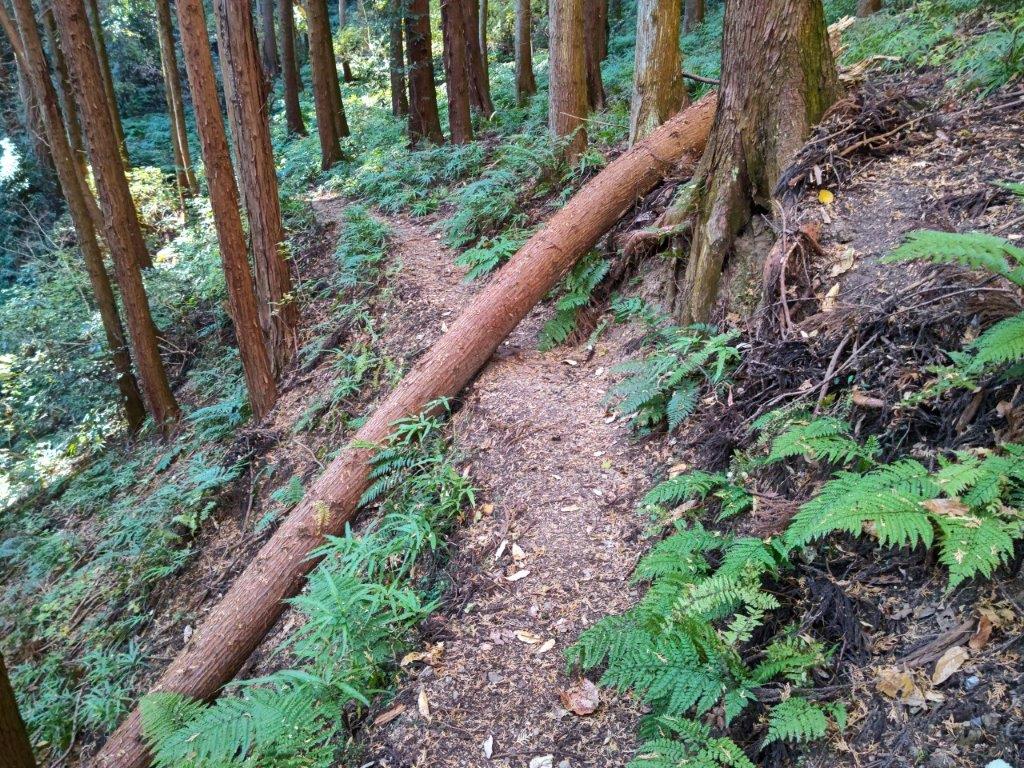
Fallen Tree along the Old Pilgrimage Road

I kept my distance from the edge as the mountain side dropped away steeply, offering a remarkable bird’s eye view of the wrinkled terrain far below. Since it was past 1pm, I found a tree root that could double as a seat and settled down for lunch with a view. Looking to my right, I could see Mt Tengu, the highest peak of the Minano Alps: it looked deceptively close but I knew from previous experience that the next valley would take time and energy, the ridge really starting to deserve its Alps nickname, and the views wouldn’t be worth it.

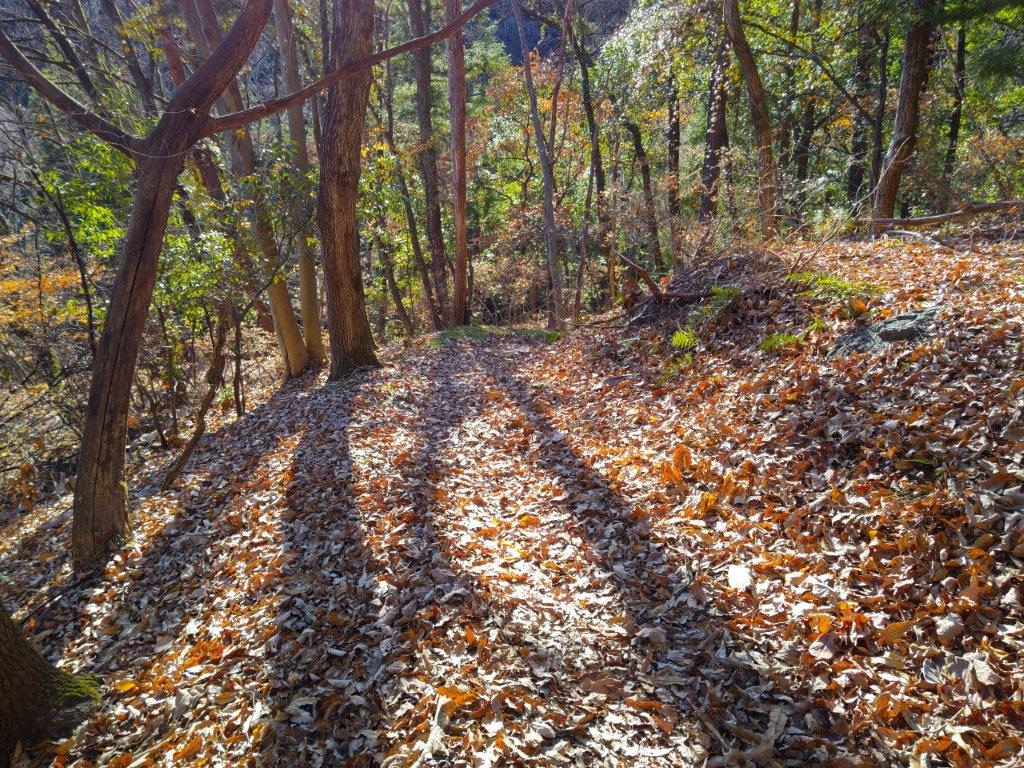
Fallen Leaves and Afternoon Sun on the Old Pilgrimage Road

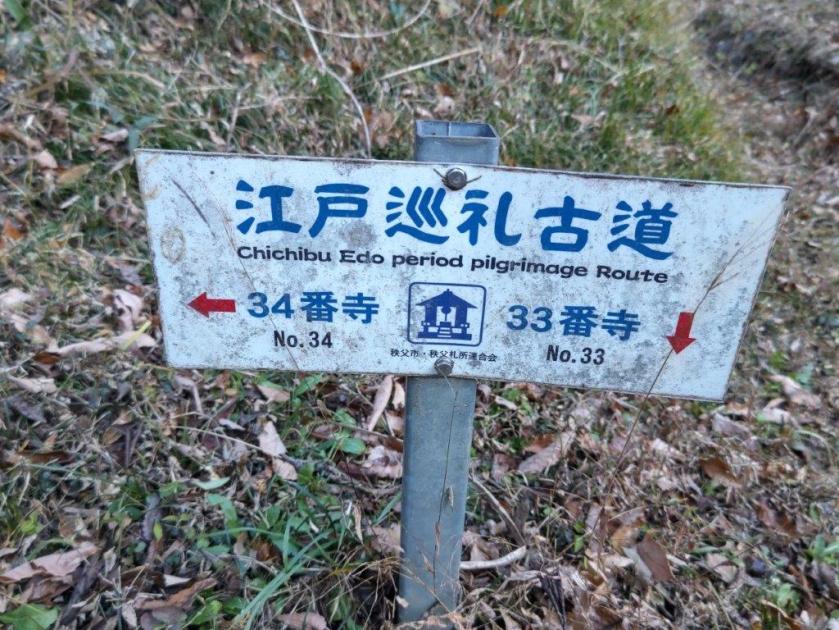
I made my way back at a swift pace, taking care when traversing Nyoho ridge, arriving back at the crossroads at Fudatachi Pass at 2pm; there, I turned right onto a narrow but well-defined trail. I was now following signs for Fudasho #33 Kikusui-ji Temple (札所33番 菊水時), along the Edo Old Pilgrimage road (江戸巡礼古道), heading eastwards and hugging the mountainside. Judging from my lunch spot perch, I expected a steep gradient but so far I was enjoying a gentle, almost level descent. I was making good time, except for some maneuvering around a couple of fallen trees; on the other hand, the fallen leaves, rather than being a nuisance, shone brightly under the sun, as the sky was back to its morning blueness.

Watch a Video of the Mt Happu Hike

Watch the Video of the Hike on YouTube

The path abruptly ended at a road, which I followed for a short while before rejoining the trail on the right side. At 3pm, I popped onto another road, leading me to a temple and a main road at the base of the mountain. Following the signs for Temple #33, as well as Google Maps since I was now off the Japanwilds Hiking Map, I turned right and followed back lanes past the “Michi no Eki” Ryusei Kaikan, till I found myself beside the Akahira river. The sun had already sunk below the rim of the Chichibu Basin, and so I had to save my visit to Temple #33 for another time. I reached Seoto no Yu just before 4pm, my 2nd time to this charming hot spring. At 5pm, I was the only person to board the free shuttle, the last of the day, and less than a hour later, I was at Seibu-Chichibu station, sampling some local sake from their convenient self-serving sake machine (“sake server”) while waiting to board the Laview Limited Express for the comfortable ride back to Ikebukuro.

See a Slideshow of More Pictures of the Hike

Mt Daigo (635m) & Mt Nishi (487m), Minobu Town, Yamanashi Prefecture, Sunday, December 1, 2024

I had spotted this station to station trail the previous year while searching online maps for new hikes; although mostly in the forest, it had one good viewpoint of the Southern Alps on the west side. Online reports showed that the Autumn leaves had reached their peak in the area, and with the excellent weather forecast for Sunday, sunny with little wind, I decided it was time to make the long trip to this remote corner of Yamanashi prefecture, last visited in 2019.

For subscribers, read this Blog Post on Hiking Around Tokyo for a better viewing experience and the latest updates

To get to the start of the hike, I’d once again ride the Chuo line Limited express to Kofu, and there, transfer to the infrequent Minobu line. I’d arrive around noon, but this was fine since the hike was on the short side and ended at Shimobe Onsen, where I could relax in a hot bath while waiting for the train back to Kofu. Incidentally, Minobu Town is where Yuru Camp mostly takes place, so I was looking forward to revisiting an area I’d become familiar with through the Yuru Camp manga and anime.

Find Japan Hiking Maps on Japanwilds

Near the Start of the Hike (left) Past the Mt Goro Viewpoint (right)

Early Afternoon light (left) Leaning Trees (right)

It was another blue-sky day as I rode the limited express in a straight line westwards, from the Kanto Plain to the Kofu Basin. After transferring to a local train on the Minobu line, it was another one hour ride, this time southwest and then south, the railway following the Kamanashi river, as it squeezes between the Southern Alps and the Misaka Mountains. I was the only passenger to get off at the unmanned Kai-Tokiwa station around noon. I quickly found my bearings and followed a road westwards, to a small graveyard with a Kannon Statue.

View of the Tokiwa Area and Mt Goro from the Kannon Statue

Afternoon Sun and Autumn Leaves

Turning around, I enjoyed the first view of the day: the Tokiwa area with the summit of Mt Goro (五老峰 goroubou) rising behind. I located the start of the hiking trail and headed up the mountain side through the forest. The trail soon leveled and was bathed in the afternoon sun, enhancing the yellow colours of the surrounding Autumn leaves. I wondered why no one else was walking this path as it seemed like the perfect time of the year for this hike. I soon passed Hatouchi Pass (鳩打峠), and at 1pm, arrived at a bench with a view on the east side.

View of Mt Goro past Hatouchi-toge

View of Yatsugatake below the Summit of Mt Daigo

From this higher vantage point, I now had a proper view of Mt Goro. For such a local trail, I was surprised to see how well-maintained it was, with good quality signposts, panels with tree names and even distance markers to the top. I heard deer sounds nearby but never saw any, an indication of how few people pass through. I had another view, southwards this time, of the foothills of the Southern Alps, Yatsugatake, its highest peaks white with snow, and Mt Kaya. After a steep but short climb, I reached the top of Mt Daigo (醍醐山 だいごやま daigo-yama), a Buddhist term meaning nirvana.

Yellow and Red Leaves near the Summit of Mt Daigo

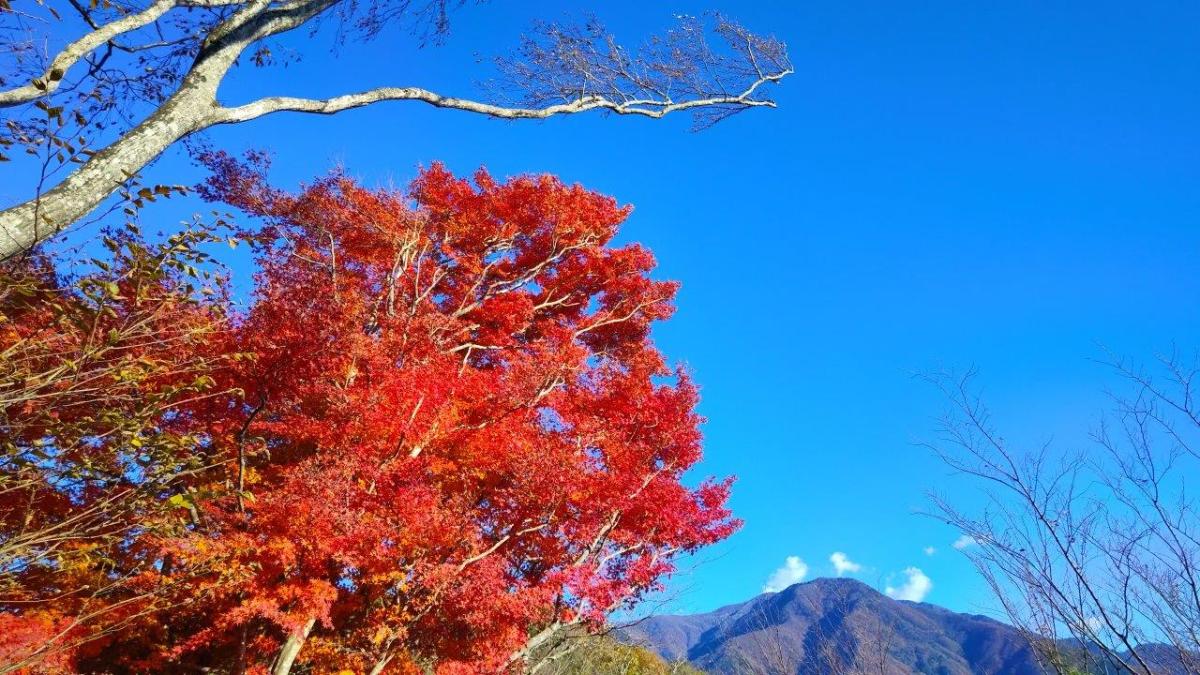
Red Maple & Mt Goro near the Mt Daigo Viewpoint

Standing on top of “Mt Nirvana”, I didn’t feel especially enlightened, under the shade of trees with not even a hint of a view. I was delighted by the signboard showing a hand-drawn bird’s-eye view of Mt Daigo (also online, Japanese only). Following the signs for the observatory, I walked downhill in a westward direction, surrounded by stunning autumn leaves, the reds and yellows swaying in the breeze. I reached a narrow ridge, the vegetation shrinking away on both sides and letting the sunlight through. I stopped near a huge “momiji” (Japanese maple) and turned around.

View of Mt Minobu (left) & Mt Shichimen (right) from the Mt Daigo Observatory

View of the Fuji River Valley from the Mt Daigo Observatory

I had probably the best view of the day, the vivid red leaves sharply contrasting with the light blue sky, the now familiar triangular summit of Mt Goro in the background. I moved further along the ridgeline till I reached a signboard next to a gap in the vegetation on the south side, the Mt Daigo Observatory (醍醐山展望台), in truth more of a viewpoint. Directly ahead was Mt Minobu with the massive bulk of Mt Shichimen lurking behind; on the west side was Mt Zaru, the highest peak in the vicinity; far away to the south, I could just make out the top of Mt Takadokkyo. It was already 2pm, so I settled on a comfortable rock for a lunch break.

View South of the Japanese Southern Alps

View Northwest of Mt Fujimi from Daigo-toge

I enjoyed the view of the Fuji river sparkling under the sun, as it snaked its way towards Suruga Bay. Sadly, Mt Fuji was missing, so close yet invisible, one of the rare blind spots in the area. I was only halfway through my hike so at 2h30, I set off again, retracing my steps to the summit and heading down a faint path on the south side. The descent turned steep, down log steps half buried in dead leaves, rope attached to adjacent trees for safety. A little after 3pm, I reached the lonely Yama-jinja shrine, its access blocked by the huge trunk of a fallen tree. This was also the junction for the second mountain of the day; I went right, along a path through some bamboos, leading to Daigo Pass (醍醐峠) and the final viewpoint of the day.

Mt Daigo in Orange near Mt Nishi

Looking north, I had an amazing view of the orange-coloured mountain side of Mt Daigo with the dark shape of Mt Fujimi rising like a wall in the background; in the valley below, houses filled the narrow space between the Fuji river and the foothills. To the south was Mt Goro again, small puffy clouds passing over its summit. I dived back into the forest, and soon reached the flat top of Mt Nishi (西山 にしやま nishi-yama), completely in the trees. It was 3h30, just one hour to sunset, so I hurried back to the junction and headed down, past an abandoned house, down a switchback path through a dark forest, along a stream over a couple of wobbly bridges and out through an electric gate. At 4pm, I emerged onto a road where I turned left, soon walking through an inhabited area.

Spooky Bridge near the End of the Hike

Today’s “beacon”, Mt Goro near Shimobe Onsen

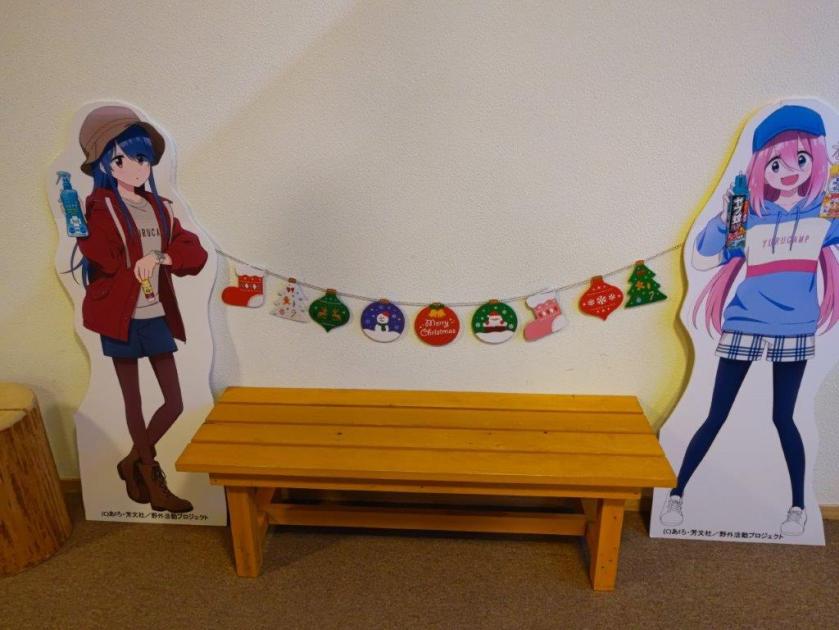
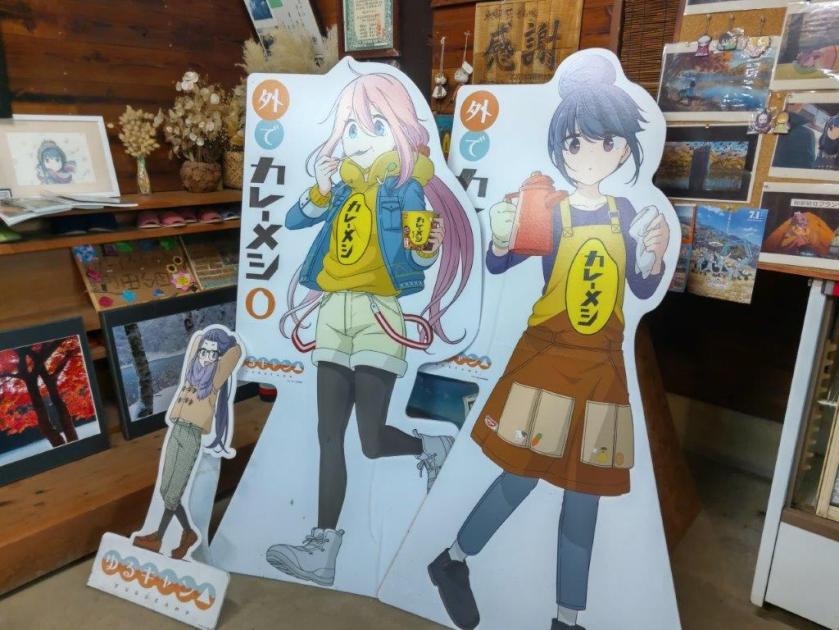
I was now walking straight towards Mt Goro, its tip lit up light red in the last light of the day, looking very much like the beacon that had guided me throughout the day. I turned left onto a main road, and after crossing a bridge over the Fuji river, arrived at Shimobe onsen, where I indulged in a hot spring bath at the modern Shimobe no Yu, just across the tracks from the train station. As I exited the hot spring facility, I was delighted to see life-size cutouts of characters from Yuru Camp. A little after 5pm, I boarded the faster express train for Kofu, and there, transferred to the limited express for the 90-minute ride back to Shinjuku.

Thank you for reading – make sure to check out the Japanwilds website for more hiking blogs and maps

Watch a Video of the Mt Daigo Hike

Watch the Video of the Hike on YouTube

See a Slideshow of More Pictures of the Hike

Mt Obatake (1117m) & Mt Hiru (1280m), Ichikawa-misato Town, Yamanashi Prefecture, Sunday, November 3, 2024

I had wanted to visit Shibireko Lake ever since I’d found out about it from the Yuru Camp anime. Looking online, I recently found out that it was possible to hike from the lake to a nearby mountain with a view of Mt Fuji. Along the way, it was also possible to make a short detour to another summit with a view of the Kofu basin. Outside these two viewpoints, the hike was mostly in the trees, perfect for seeing the autumn leaves, hopefully at their peak. The hike, up and down the same way, was on the short side, ideal for the shorter days of Autumn.

Hiking in the Misaka Mountains 御坂山地

To reach the start of the trail, I’d ride the Chuo line Limited Express to Kofu, and then drive the rest of the way, as there is no public transport to the lake. The weather was supposed to be sunny all day with temperatures warm for the season. I was looking forward to seeing Mt Fuji with new snow on its summit and hoped that, although the lake was no longer a secret due to the recent camping boom, the trail would still be relatively unknown.

For subscribers, read this Post on Hiking Around Tokyo for a better viewing experience and the latest updates

Get a Map of the Mt Hiru Hike

This map was developed for Japanwilds with the Hokkaido Cartographer

Find Japan Hiking Maps on Japanwilds

Minami Alps (left), Yatsugatake (back center) & Kofu Basin from Mt Obatake

Yatsugatake (left), Oku-Chichibu (right) & Kofu Basin from Obatakeyama

It was a beautiful Autumn day as I rode the limited express, arriving at Kofu station at 1030. By 11am, I was driving south, towards the South Alps, still completely free of snow. Shortly after noon, I pulled into the large parking lot belonging to Sumeiso Lodge, also available to day-trippers for a small fee; I had passed almost no cars during the drive up the two-lane Shibireko-koen line, a good sign for today’s hike. After getting ready, I set off at 1230, walking up the mountain side and away from the lake, hidden from view by the thick forest.

Narrow Section of the Hirugatake Trail

Sun Shining through the Trees Halfway to Hirugatake

It was a steep but short climb to the ridgetop, where I turned left along a level trail. At 1pm, I emerged onto the flat top of Mt Obatake (大畠山 oobatakeyama), with a bench and a view on the west side, as well as a telecommunication tower. I could see the South Alps, Yatsugatake and the Oku-Chichibu mountains; directly below, was the triangular-shaped Kofu Basin (kofu-bonchi), the urban sprawl running right up to the base of the mountains and the blue ribbon of the Kamanashi river splitting it in half. I settled on the summit bench for a thirty-minute lunch break then retraced my steps to the ridgetop intersection.

Snowless Fuji from the Summit of Hirugatake

Mt Fuji (left), Mt Ryu (center) & Mt Kenashi (right) from Hirugatake

I was relieved to see that this trail was still a well-kept secret as I saw few hikers along the way. The trail alternated between level and gently climbing sections; a couple of narrow traverses required careful walking. The Autumn leaves were still turning at this elevation but the surrounding forest was beautiful. A little after 2pm, I reached Nishikata Pass (西肩峠) where I turned left for the final climb to the summit. At 2h30, I was standing at the top of Mt Hiru (蛾ヶ岳 ひるがたけ hirugatake meaning Mt Moth), a Yamanashi 100-famous mountain. Although the name sounds the same as the highest peak of the Tanzawa mountains, it’s written with a different Chinese character.

Closeup of Mt Fuji from Hirugatake

Autumn Colours at their Peak around the Top of Hirugatake

I was stunned to see that Mt Fuji still was completely snowless. However, its perfect cone on a blue sky background was beautiful even without its trademark white cap. To its right, I could see Mt Ryu and the long summit ridge of Mt Kenashi, with splendid autumn colours in the foreground; on the west side, I had a view similar to the one from the previous peak, but from a higher vantage point; I could also see the ridgeline I had walked between today’s two mountains. After a short break on the summit bench, enjoying the gorgeous view all by myself, I headed back down the same way.

Mt Kenashi from Hirugatake

The Minami Alps from Hirugatake

I enjoyed the solitary stroll back through the forest, the scenery looking slightly different in reverse. Through gaps in the trees, I had views of the Misaka mountains on the north side. One hour later, I was back at the nearly empty parking lot. Since I still had half an hour before sunset, I decided to quickly walk around Shibireko Lake (四尾連湖) before heading back.

Walking back to Shibireko Lake

Walking around Shibireko Lake

I was surprised to see that the campsite extended around the entire south half of the lake; some spots almost felt like wild camping. Even at dusk, people were still rowing boats across the lake. Half an hour later, I had completed my tour. After checking out the Yuru Camp related exhibits inside Sumeiso Lodge, I hurried back to my share car for the one hour drive back to Kofu station. There I boarded the limited express for the 90-minute ride back to Tokyo.

Shibireko Sumeiso Lodge

After Sunset at Shibireko Lake

The entire hike, including the lake loop, took about 4 hours. The view from the top of Mt Hiru was much better than I had imagined and deserves a place among the best mountain tops to view Mt Fuji. The hiking trail extends west from Mt Obatake and east from Mt Hiru and I hope to explore them one day in the future. This was my third Yuru Camp inspired hike, the first two being Takapotchi Highland and Hottarakashi Onsen. This was also my first proper sighting of Mt Fuji since Mt Sasagogangaharasuri in January of this year, and hopefully not the last one!

Watch a Video of the Mt Obatake & Mt Hiru Hike

Watch the Video of the Hike on YouTube

See a Slideshow of More Pictures of the Hike

Mt Zebra (1776m) & Mt Washi (1798m), Shimosuwa town, Nagano Prefecture, Sunday, October 20, 2024

I had been to the Kirigamine Highlands about eight years ago so I felt it was time for another visit. Back then, I had rented a car from Kofu and summited the highest point, Mt Kuruma, a 100 famous mountain of Japan; this time, I decided to go by bus and up a couple of minor peaks on both sides of the Yashimagara Marsh. I was hoping to catch the autumn colours at their peak, at the risk of encountering crowds of people.

For subscribers, read this Blog Post on Hiking Around Tokyo for a better viewing experience and the latest updates

To get the start of the hike, I’d ride the Chuo line limited express to Kami-Suwa, a little over 2 hours from Shinjuku, and there, catch an Alpico bus for Kuruma Highland; I’d use the same bus for the return. The weather was supposed to be sunny all day but cold for the season. On top of the autumn scenery, I was looking forward to getting some good views of the mountains of Nagano.

Hiking in the Kirigamine Highlands

霧ヶ峰高原

Hiking in the Yatsugatake-Chūshin Kōgen Quasi-National Park 八ヶ岳中信高原国定公園

Autumn Colours at Yashima-ga-Hara Marsh

View towards Kuruma Kogen

It was a surprisingly cloudy day as I rode the limited express towards Nagano, although the updated weather forecast announced that the clouds would melt away by noon. It felt really cold as I got off at Yashimagara-shitsugen (八島ヶ原湿原), after a 45-minute ride on a packed bus. I popped into the Yashima Visitor Center to check out the exhibits and warm up, before heading to the wooden walkway circling the marshland at 11am, under leaden skies.

Kuruma Kogen from Mt Zebra

Yashima-ga-Hara Marsh from Mt Zebra

I was glad to see that autumn colours were on schedule, despite the warmer than average temperatures of the past few weeks, somewhat muted due to the overcast sky. I set off at a brisk pace to warm up, counter-clockwise around the marshland; I passed by the Okugiri Hut around noon, now walking under blue skies. I followed the main trail for Mt Kuruma for a short while before turning left onto a small path leading to today’s first summit.

Heading back to Yashima-ga-Hara Marsh

Heading towards Mt Washi

I felt energised by the shining sun, enabling me to keep a fast pace up the mountain, reaching the top of Mt Zebra (ゼブラ山 zebura-yama also known as Mt Omekura 男女倉山 おめくらやま) at 12h30. Apparently melting snow in the spring looks likes Zebra stripes. I could see the crown of Mt Tateshina rising above the grasslands of Kuruma Highland; looking north, I could see the flat top of Utsukushigahara, and the long ridgeline connecting it to Kirigamine. Looking south, I could see the highest points of Mt Ontake, the Central and South Alps floating above the clouds; directly below, was Yashimagahara Marsh.

Approaching Kama Pond on Yashima-ga-Hara

Oni-no-sensui Pond on Yashima-ga-Hara Marsh

I was stunned by the bird’s eye view of the rusty red marsh. I hurried down the same way, feeling warm under the midday sun, and was soon back on the marsh-side walkway. After passing Kama and Oni-no-sensui Ponds, I reached an open area with a view of the entire marsh, as well as the rolling hills of Kuruma Highland in the background. At 1h30, I turned left onto a hiking trail, leaving the marsh behind. After a short climb, I reached the trailhead for today’s second peak.

Yashima-ga-Hara Marsh and Kuruma Kogen

Start of the Hike for Mt Washi

I was surprised by the alpine beauty of the surrounding landscape as I made my way up the rocky path though pines, especially since I was on a day trip from Tokyo. Very soon, I had another bird’s eye view of the marsh, this time with the highest peaks of the Yatsugatake range visible in the background. To its right was the Yashima Visitor Center, and looming up directly behind it, was the outline of the South Alps, now nearly completely free of clouds.

View of Yashima-ga-Hara Marsh from the Mt Washi Trail

The Yashima Visitor Center and the South Alps

It was short but pleasant hike along the top ridge with sweeping views on both sides. Shortly after 2pm, I arrived at the summit of Mt Washi (鷲ヶ峰 わしがみね washigamine). The name could translate as “Eagle Peak” and the panorama certainly made me feel like an eagle soaring high in the sky. Looking north, I could now see the rounded top of Mt Asama, as well as the flat top of Mt Arafune; westwards, in addition to Utsukushigahara, I could also see Mt Hachibuse, and in the far distance, poking out of the clouds, Mt Hotaka, Mt Tsurugi and Mt Shirouma, three famous peaks from the North Alps.

Mt Tateshina from the Mt Washi Trail

Ridgeline leading to Mt Washi

Looking south, I was most impressed by the view of Suwa lake with the Central Alps in the background, against the sun so challenging to take in photo. Suwa lake inspired the lake in the Your Name movie so I was glad to see it from above. Between the Yatsugatake range and the South Alps, I was surprised to spot the conical summit of Mt Fuji, rising from the clouds. After a short lunch break, I headed back the same way.

View of Suwa Lake from Mt Washi

Yatsugatake from Mt Washi

Mt Fuji between Yatsugatake and the South Alps

I had fantastic views of the entire range of the Yatsugatake range doing the path in reverse. After one last look at the triangular shape of Yashimagahara Marsh, I made my way down the last part of the trail, arriving back at the Yashima Visitor Center a little before 3h30, well on time for the return bus. One hour later, I was at Suwa station where I could take a foot bath directly on the platform while waiting for the limited express that would whisk me back to Tokyo.

Heading back to the Yashima Visitor Center

Yashima-ga-Hara Marsh and Yatsugatake

This hike took about 4 hours, shorter than expected, giving me plenty of time to enjoy the stunning views. I passed fewer people than expected, maybe because the area is more famous for its spring and summer flowers. I felt lucky with the timing of the Autumn leaves and the excellent weather. I’d like to return to the area in the future to hike more of the ridgeline towards Utsukushigahara, although I’d probably have to rent a car for this.

Watch Video of the Mt Zebra and Mt Washi Hike

Watch the Video of the Hike on YouTube

See a Slideshow of More Pictures of the Hike

Mt Takao (599m), Hachioji City, Tokyo Prefecture, Sunday, October 6, 2024 [Iroha & Katsura Forest Trails]

I wanted to do another afternoon hike on Mt Takao and explore more of its many trails. As the weather was supposed to be cloudy all day, it seemed like a good chance to do a hike close to home. The well-beaten tracks also meant that the path would be clear of spiders and spider webs. Finally, the cable car would be running past 6pm because of the summer beer garden, although I’d most likely be done before since it would be getting dark around 5pm.

Hiking in the Meiji no Mori Takao Quasi-National Park

明治の森高尾国定公園

I’d take a local JR train from Shinjuku to Takao station; there, I’d board the bus for Kobotoke, at the back of the mountain, and then go up the Iroha Forest trail, leading all the way to the summit. I’d go down the Katsura Forest Trail, ending at the cable car top station. Before heading back, I could enjoy a hot spring bath at the Keio Takao-san Onsen, right next to the Takaosanguchi station. Although I knew I wouldn’t get any views, I hoped I could enjoy Tokyo’s most famous mountain minus the crowds.

For subscribers, read this Blog Post on Hiking Around Tokyo for a better viewing experience and the latest updates

Hikage Stream (left) Iroha Forest Trail (right)

Gaining Altitude (left) Reaching the Mist (right)

A few raindrops fell as I got off the train at Takao station just past 2pm, but fortunately nothing was falling as I got off at Hikage (日影), ten minutes away on a mostly empty bus. I continued up the main road for a few minutes before turning left and passing over a bridge; I then followed a narrow road alongside Hikage-sawa stream (日影沢). The pleasing rushing sound of the water made up for the gloomy skies overhead. At the Hikagezawa Camping Ground, I turned left onto the Iroha Forest Trail (いろはの森コース). Soon the path started to climb through thick forest, the sound of water slowly fading.

Halfway to the Top (left) Just before the Suspension Bridge Trail (right)

Walking up Wooden Steps (left) and Through the Mist (right)

I was surprised by how humid it still was, as I didn’t expect to break a sweat in such a short time. At 3pm, I reached a flatter section on a shoulder of the mountain, the surrounding forest shrouded in mist. Soon I was climbing again, the trail wet and slippery because of yesterday’s rain. I arrived at the intersection with the Suspension Bridge Trail (trail #4), explored four months ago. I continued along the Iroha Forest Trail, making my way up a series of wooden staircases, eventually merging with the Omotesando Trail (trail #1). I now had to share the path with dozens of other people, as well as huge Jorogumo spiders, hanging from immense webs on both sides of the trail. At 3h30, one hour after setting off, I reached the top of Mt Takao (高尾山 たかおさん takao-san), the view consisting entirely of white space.

Exploring Ura-Takao (left) The Path for Momijidai (right)

The Summit Loop Trail (left) The Katsura Forest Trail (right)

I was surprised to see many people on the summit despite the poor weather. I found an empty spot at a bench for a late lunch. At 4pm, I decided to make a short roundtrip to Momijidai, on the backside of Mt Takao (裏高尾 ura-takao), as I was ahead of schedule. It took half an hour during which I only saw a small snake slither off the trail, and of course more spiders. It was starting to get gloomy so I upped the pace, following the Summit Trail (#5) back to the main side of the mountain, and quickly headed down the Katsura Forest Trail (#3, meaning Japanese Judas Tree). It was a solitary walk through the Meiji no Mori Takao Quasi-National Park, the misty silence broken by the cries of birds.

Rest spot near the intersection of the Iroha Forest and Suspension Bridge Trails

Reaching the End of the Katsura Forest Trail

This part took longer than expected as it hugged the mountain side, winding in and out of tiny valleys. Luckily, it was mostly flat and easy to walk, although I had to be careful of the steep drop on the right side and the slippery surface of a couple of wooden bridges. Just as I thought I’d have to take out my headlight, I reached the Kasumidai Trail (#2) at 5pm, and a few minutes later, I emerged into an open space near the cable car, city lights barely visible though the mist. I was tempted to head down the Biwa waterfall trail to avoid the crowds but I knew it would be a tricky descent at this time of the day. Soon after, I was enjoying a nice hot soak at Takaosan Onsen, before hopping on the train for the one hour ride back to Tokyo.

Watch a Video of the Mt Takao Hike

Watch the Video of the Hike on YouTube
See a Slideshow of More Pictures of the Hike

Mt Mitsumochi (1248m), Yaita City, Tochigi Prefecture, Saturday, August 3, 2024

I wanted to do at least one summer hike this year, as it had been 5 years since my previous one. I decided to visit Mt Takahara, a 200-famous mountain climbed during Golden Week 2018. This time, I would not head to the highest point, but instead hike on the high plateau that likely inspired the name of this ancient stratovolcano. Looking through my newly purchased “150 Best Tochigi Mountains” guidebook, I found a short and easy loop hike passing by a minor summit at the edge of the plateau, ideal for a hot August day.

Hiking on Mt Takahara and in the Nikko National Park

高原山  日光国立公園

I would get to the trail entrance by car from Utsunomiya since no buses run all the way to the plateau. As the hike was relatively short, I could stop at a restaurant on the way for an early soba lunch. The weather was supposed to be mostly sunny, and less hot and humid than the previous weeks, although thunderstorms still threatened. The path was through a beech and oak forest, with a view of the Kanto Plain at the halfway point; after a one month break, I was looking forward to a relaxing stroll in nature and getting a nice view .

For subscribers, read this Blog Post on Hiking Around Tokyo for a better viewing experience and the latest updates

Steps at the Start of the Hike (left) Level Path for Most of the Way (right)

Looking Back at a Leaning Oak (left) Mistumochi Observation Tower (right)

At 10am, it already felt very hot under the sun as I walked through the streets of Utsunomiya towards my share car. After a one-hour drive, I arrived at Dattan Soba Juan (ダッタン蕎麦 寿庵) as it opened at 1130, and was lucky to snag the very last table. After a delicious meal of handmade soba and the biggest kakiage ever, I set off again, driving up a winding road through thick forest, arriving at the Omamadai Parking (大間々台) on Happogahara (八方ヶ原) at 1h30. I was surprised to see few cars, probably because the mountain is more popular in the spring and autumn months.

View of Forest and Clouds from the Omamadai Observation Tower

Mostly Gentle Slopes on this Hike

I was amazed by all the dragon flies buzzing around, using my car antenna as a handy perch. At 1280m, it felt cooler than the low-lying plain, although at nearly 25°C it was still above my comfort zone for physical activity. I checked out the view from the parking Observation tower, but Mt Shaka, the highest point of Mt Takahara, was hidden by a thick layer of clouds. I located the start of the Yashio Route (やしおコース), branching left from the main trail up the mountain; for a short while it headed down before becoming level. It felt refreshing to be walking under the tree shade inside the Nikko National Park; I met few people although insects were out in great numbers.

View of the Kanto Plain from the Mt Mitsumochi Observation Deck

Cumulus Cloud Floating through the Summer Sky

I was interested in the many bilingual information boards along the trail, allowing me to learn more about the surrounding nature, although they didn’t prepare me for the discovery of a brown toad sitting in the bamboo grass (I spotted one more at the summit). After a short climb, I reached a new-looking wooden observation tower a little before 2pm, also the top of Mt Mitsumochi (ミツモチ山 mitsumochi-yama). From the top of the tower, I gazed upon the Kanto plain below, the view probably more impressive in the cooler days of Spring and Autumn. After a short break, I continued along the Aozora trail (青空コース meaning “blue skies”), a wider track circling clockwise back to my starting point.

Open section along the Aozora Route

Passing Between Three Beeches

I soon figured out that the trail name referred to the sky now visible through the trees overhead, rather than to any panoramic views. Fortunately, thick clouds had spread over the entire sky shielding me from the blazing sun; on the other hand I was now worried about thunderstorms. I picked up the pace, and after passing through an open grassy space, the trail climbed gently, merging with the main trail at 3pm, near an old wooden shinto gate. At one point, a startled deer jumped out of the trees, dashed across the trail and dived into the forest on the other side. Soon after, I was back at the parking lot, and after checking out the Yama-no-eki Takahara, drove back to Utsumomiya station where I boarded the shinkansen for the short ride back to Tokyo.

Mt Hinode (902m) & Mt Aso (794m), Tokyo Prefecture, Ome City & Hinode Town, Saturday, June 29, 2024

I was looking for another afternoon hike to make the most of the longer days of June. I also wanted to include a river section as it had rained a lot recently. I decided to head to Mt Mitake and follow the Kanto Fureai no Michi to Mt Hinode last visited ten years ago. From there I would follow a ridgeline to a minor peak I had to yet to climb; according to online reports, it had a wide view on the east side. I’d then follow the Shiraiwa-Taki hiking trail westwards to Shiraiwa waterfall, a short distance from the end of the trail. If time allowed, I could drop by nearby Tsuru Tsuru Onsen for a wash and a soak before heading back.

Hiking in the Chichibu-Tama-Kai National Park

秩父多摩甲斐国立公園

Hiking in Okutama 奥多摩

Hiking the Kanto Fureai no Michi 関東ふれあいの道

To get to Mt Mitake, I’d ride the Chuo line from Shinjuku, change to the Ome lime in Tachikawa, change again to the Okutama line in Ome, and get off at Mitake station, a short bus ride from the Mitake cable car. For the return, I’d ride the bus from the hot spring to Musashi-Itsukaichi station, then take the Itsukaichi line to Tachikawa and finally transfer to the Chuo line for Shinjuku. The weather was supposed to be cloudy with temperatures in the mid-twenties. I hoped the higher humidity would still allow for comfortable hiking. I was looking forward to exploring new trails, getting some good views and seeing lots of rushing water.

For subscribers, read this Blog Post on Hiking Around Tokyo for a better viewing experience and the latest updates

Fureai no Michi past Mitake Village (left) on the way to Mt Hinode (right)

Mt Hinode Trail Before the Summit (left) and Past the Summit (right)

It was a cloudy day as I rode the train from the tall, shiny skyscrapers of Shinjuku to the low, green hills of Ome. As I had left around noon, I was rewarded with sitting space on the trains, as well as on the cable car shuttle bus and the cable car itself, my first time to be comfortably seated after half a dozen trips to the area. It was also my first time to visit in June, the green of spring in full swing, white and purple Hydrangea (ajisai) lining the road.

Trail between Mt Hinode and Mt Aso (left) Shiraiwa-Taki Hiking Trail (right)

Falls (left) and Wooden Walkway (right) along the Shiraiwa-Taki Hiking Trail

It felt pleasantly cool felt as I exited the cable car top station just before 2pm. I was relieved that few people had chosen to visit in the rainy season. After getting ready and checking the view of today’s two peaks from Mitakedaira, I made my way up some steps to an observation deck from where I had a slightly better view of the area. I decided to make a quick detour via Ubuyasu Shrine (産安社), a peaceful spot with some impressive cedars, reminding me that I was inside the Chichibu-Tama-Kai National Park. I then headed down a different path taking care not to slip, the ground still wet from yesterday’s rain, arriving at the Mitake Visitor Center at 2h30, also the junction with the Kanto Fureai no Michi.

View of Mt Aso (left) and Mt Hinode (right) from Mitakedaira

View of Mt Aso (left) and Mt Hinode (right) from the Observation Deck

I suddenly felt quite warm as the sun had came out from behind the clouds. After crossing Mitake Village, I found myself on a level path through cedars, arriving at a junction past a Shinto gate at 3pm. I took the left path heading up the mountain side, and less than half an hour later, arrived at the top of Mt Hinode (日の出山 ひのでやま hinodeyama), a Tokyo 100 famous mountain, the name translating as “sunrise mountain”. Looking north, I could see the Okutama Mountains, and to the south, the Tanzawa mountains; straight ahead was the Kanto Plain and Tokyo.

Steps leading to the Observation Deck and Ubuyasu Shrine

View of Tokyo and Kanto Plain from the top of Mt Hinode

I was slightly worried about rain as thick clouds had appeared on the west side, hiding the summit of Mt Mitake. After a break, I set off down a steep trail on the south side, the descent made easier by log steps. Just before 4pm, I reached a T-junction: to the left was the shortest path for Tsurutsuru onsen, favoured by the few remaining hikers; however, I turned right, now following a narrow path, with views of the triangular summit of today’s next mountain on the left side through gaps in the vegetation; I soon left the Fureai no Michi as it descended into the valley on the right. At 4h30 I was standing on the top of Mt Aso (麻生山 あそうさん aso-san), feeling quite sweaty despite the short climb.

View of the Triangular Summit of Mt Aso

Second Viewpoint of Mt Aso

I was stunned by breathtaking view of the Kanto plain, the east side completely free of trees and mountains. I was a little behind schedule so instead of taking a breather on one of the several benches, I headed west, now following the Shiraiwa-Taki Hiking Trail (白岩滝ハイキングコース). As I walked down a dark valley, I could hear the bark of deer but never saw any. Very soon, I was walking beside a small charming stream, my hopes for the day fulfilled. A little after 5pm, I arrived at a trail junction, where I went right, sticking close to the rushing water. I passed several small falls before arriving at a point where the trail had collapsed.

View of Mt Mimuro from Asodaira

Trail leading to Shiraiwa-no-Taki Waterfall

I thought I’d have to turn back but then noticed some rope leading down into and then up and out of the jumble of rocks and sand. Proceeding carefully and using the rope, I safely crossed to the other side and was soon walking again on a normal, but slippery trail. Shortly after, I arrived at the highlight of the hike, Shiraiwa waterfall (白岩ノ滝 shiraiwa-no-taki). The path took me right next to the falls, the sound water roaring in my ears; at the base, I crossed a bridge and made my way to a an observation platform on the opposite side.

Preliminary Waterfall near the Collapsed Part of the Trail

View of Shiraiwa Waterfall from the Observation Platform

I gazed in wonder at the thundering falls, wondering how much of the water was due to the recent rainfall. I was also amazed I had the place entirely to myself, although this may have been due to the late hour. I eventually pulled myself away from the view, and at 6pm, arrived at a bus stop at the end of the trail. After a short wait I boarded a bus for the short ride to Tsurutsuru Onsen, at the end of the line. After a refreshing bath, I boarded the bus again for the 30 minute ride to Musashi-Itsukaichi station where I boarded the 8pm train, finally arriving back in Shinjuku about an hour later.

See a video of the Mt Hinode Hike

Watch the Video of the Hike on YouTube
See a Slideshow of More Pictures of the Hike

Morito River Valley, Hayama Town & Zushi City, Kanagawa Prefecture, Saturday, June 22, 2024

I wanted to do a river walk to take advantage of the increased water flow during the rainy season, as experienced on my last outing. I found a suitable river valley cutting the Miura Alps in half. Looking online, I saw that the riverside path, also a popular birdwatching spot, was easy to navigate but the trails leading out of the valley were steep and rough, especially tricky after rain. As it had rained heavily the previous day, I decided to forego a loop hike over the top of Mt Futago (also spelled Mt Futako) on the south side and settle for the less adventurous roundtrip up and down the river valley.

Hiking on the Miura Peninsula 三浦半島

To get to the trail entrance, I’d drive a rental car from Yokosuka-Chuo Station, 30 minutes from Yokohama station on the Keiyu line so I could skip walking under the midday sun from the nearest bus stop; I’d also be able to have lunch at a soba restaurant on the way. After returning the car, I could ride the train two stops to Hemi station and check out the fireflies at Hotaru no Sato. The weather was supposed to be sunny in the morning and cloudy in the afternoon, with temperatures around 27°C; rain was forecast later in the evening. I hoped the cooler climate of the river valley would make for bearable hiking conditions and that the rain would hold off till after my firefly spotting session.

For subscribers, read this Blog Post on Hiking Around Tokyo for a better viewing experience and the latest updates

Start of the Morito River Path (left) Flat and Easy to Walk (right)

Cedars Past the Halfway Point (left) View down the Morito River (right)

The sun was already quite warm at 11am as I exited Yokosuka-Chuo station. I found my rental car on other side of Mikasa shopping arcade, and after a short drive, arrived at Wakana at 1230, the parking already nearly full. After a delicious lunch of fresh handmade soba and crispy tempura, I drove a short distance to Hayama station, a roadside station selling local food products, a handy place to park my car. After getting ready, I set off at 2h30 as thin clouds raced across the sky, and reached a gate marking the entrance of the Morito river forest path (森戸川林道 moritogawa-rindo) shortly after.

Walking Under Sun Rays (left) and Next to Running Water (right)

River Crossing (left) and River Walking (right) Past the End of the Forest Path

I was stunned by the rapid transition from the countryside to a scenery reminding me of the rainforest. The abundant vegetation pushed in on both sides, creating walls of green, and even organic tunnels. At first, I could also deduce the existence of the river from the noise trickling through the thick foliage. At one point I overtook a group of birdwatchers excitedly whispering and pointing out something invisible on some branch; I dared not ask what they were looking at and quickly moved on. A short distance away, it was my turn to spot something exciting: a snake tentatively making its way down a vertical tree trunk (see video below).

Thick Vegetation at the Start of the Morito River Forest Path

Getting a Closer Look at the Morito River

I was mesmerised, almost charmed, by this unexpected sight. The group of birdwatchers caught up but couldn’t say what the snake was called, claiming it was outside their area of expertise. A little further on, I dived down a side path leading to a rocky beach, giving me my first good look at Morito River. It seemed remarkably wide, originating from such a low-altitude range of hills, although I surmised it was temporary and caused by the recent start of the rainy season. I returned to the main trail, and after overtaking smaller and smaller groups of birdwatchers, spotted an overhead bridge through the tree branches, marking the halfway point of the Moritogawa Rindo.

Fallen Tree Spanning the Morito River and Forest Path

Overhead Road Spanning the Morito River Valley

I was impressed by this striking structure, more reminiscent of ancient jungle ruins than modern infrastructure; in fact I had driven over this very bridge on my way to the hike. After passing under it, I entered a more open forest of cedars and ferns, giving me an uninterrupted view down a straight section of the river. I could also see blue sky above the treetops; fortunately, the valley remained cool in the shade and next to running water. After walking down an avenue of towering cedars, I reentered lower and denser forest. For a brief while, the path became one with a brooklet before going their own way. At 4pm, I arrived at a clearing at the end of the Moritogawa Rindo and continued straight, following the signs for the Futagoyama Hiking Trail (二子山ハイキングコース), one of the three rugged trails leading out of the valley.

Viewpoint of Morito River

Ducking under a Tilting Tree

The path disappeared into the river almost at once, although it seemed possible to walk along the rocky banks in the drier months. The water wasn’t even ankle deep but I decided this was the right moment to head back. I picked up the pace but still took time to stop and admire some fantastically shaped tree trunks and a couple of ephemeral waterfalls. The snake had completed its descent meaning it was now slithering out of sight through the undergrowth. At 5pm I passed through the gate and a little later was back at my car. I rewarded myself with a soft ice from Hayama Station before driving back.

Still lots of Water on the Upper Section of Morito River

A Tame Path through Wild Vegetation

Night had already fallen as I got off the train at Hemi station a little after 7pm. After a 15 minute walk, I reached Firefly Village (Hotaru no Sato ホタルの里), the many signposts along the way making it easy to find even in the dark. A small crowd of people had already gathered along the riverside, mostly shadows in the darkest spots under the trees. At 7h30, the first pinpoint of light magically appeared above our heads. Gradually more and more bright spots appeared, flying in zigzag, finding and missing each other. As I ventured further up the river, away from the town lights, I was able to spot more and more fireflies. At the same time the grassy path became treacherous in the pitch-black darkness and I eventually retreated to safer grounds. At 8pm, I headed back to the station satisfied to have seen one of nature’s wonders.

Watch a Video of the Morito River Valley Hike

Watch the Video of the Hike on YouTube
See a Slideshow of More Pictures of the Hike