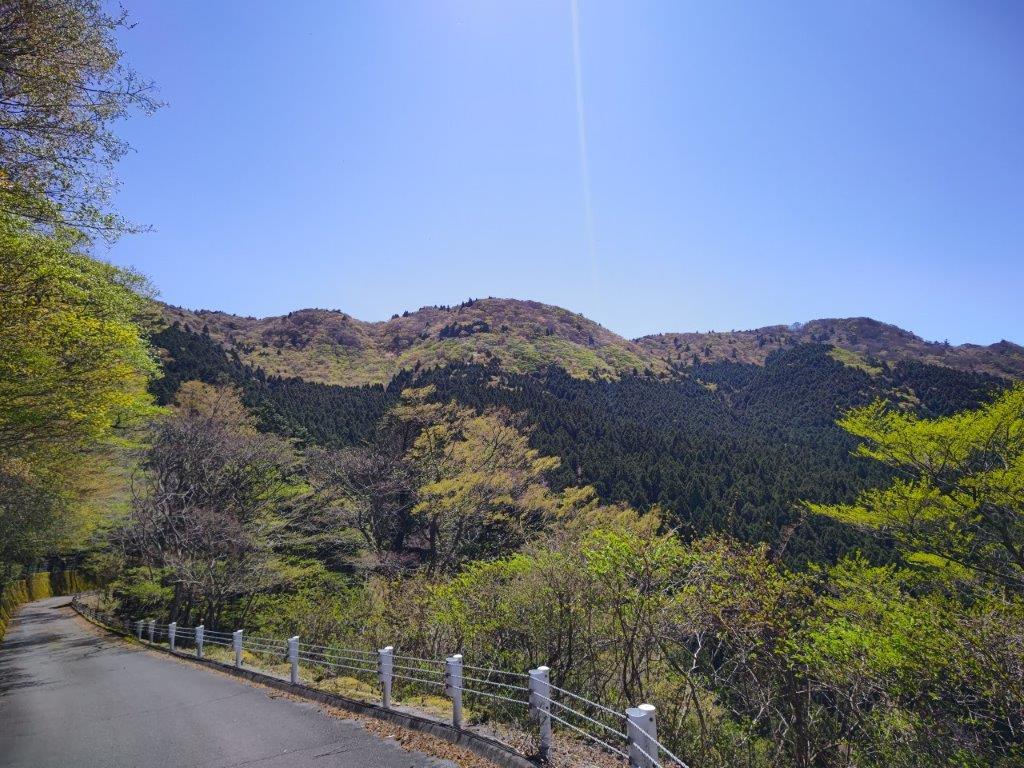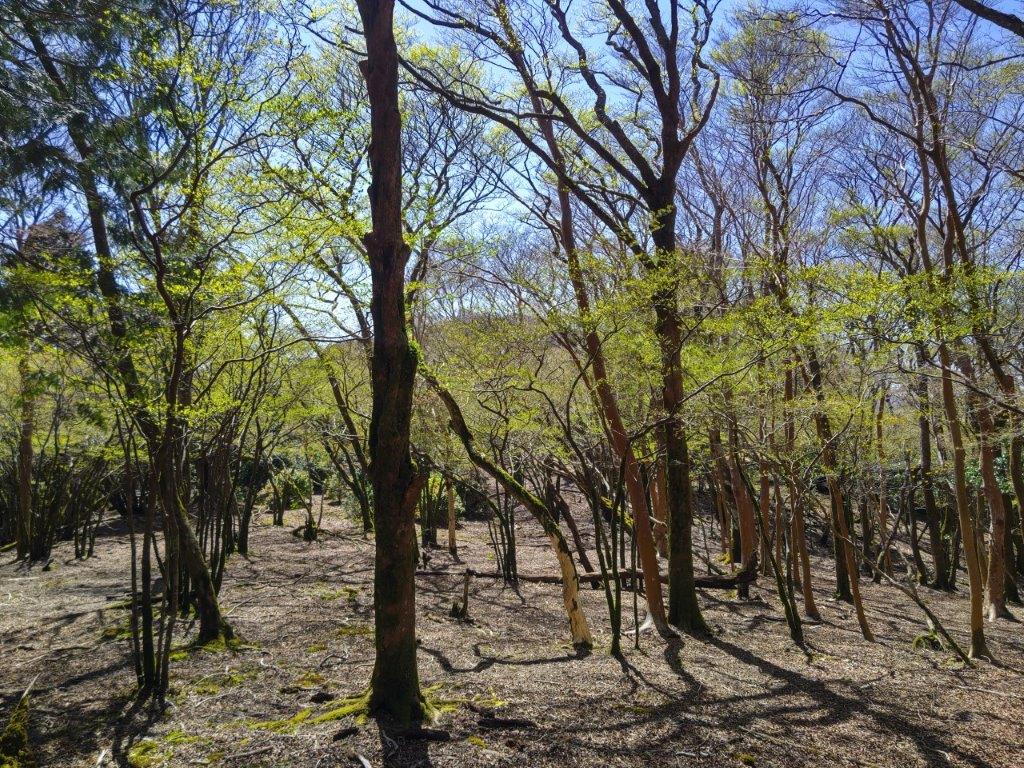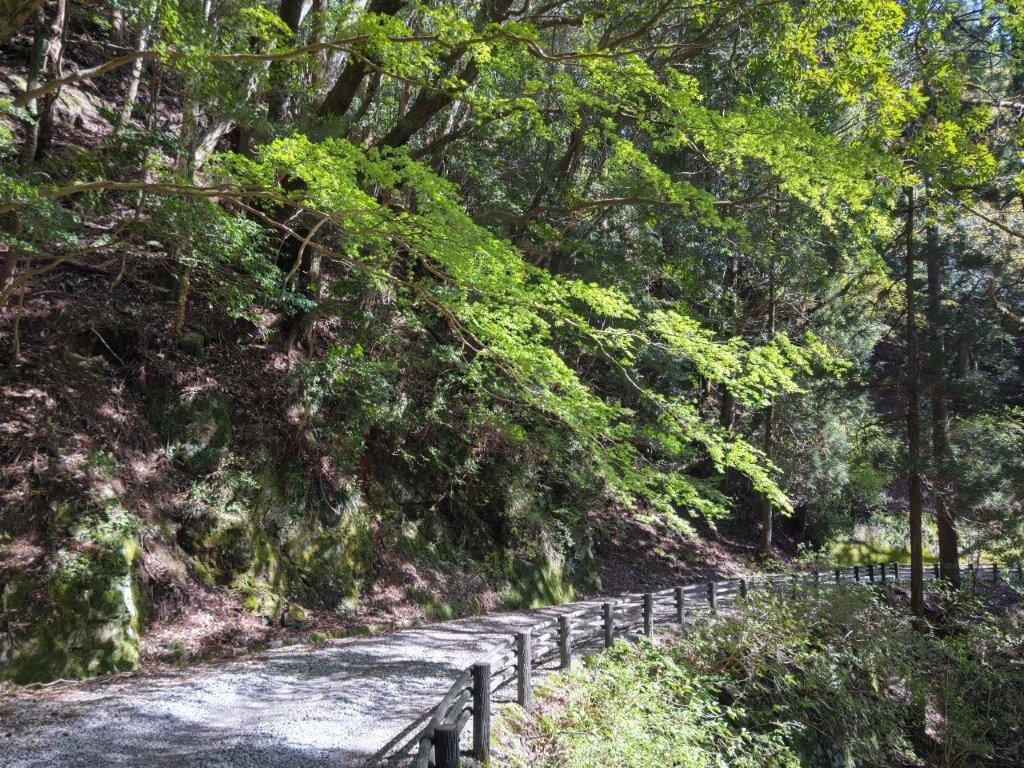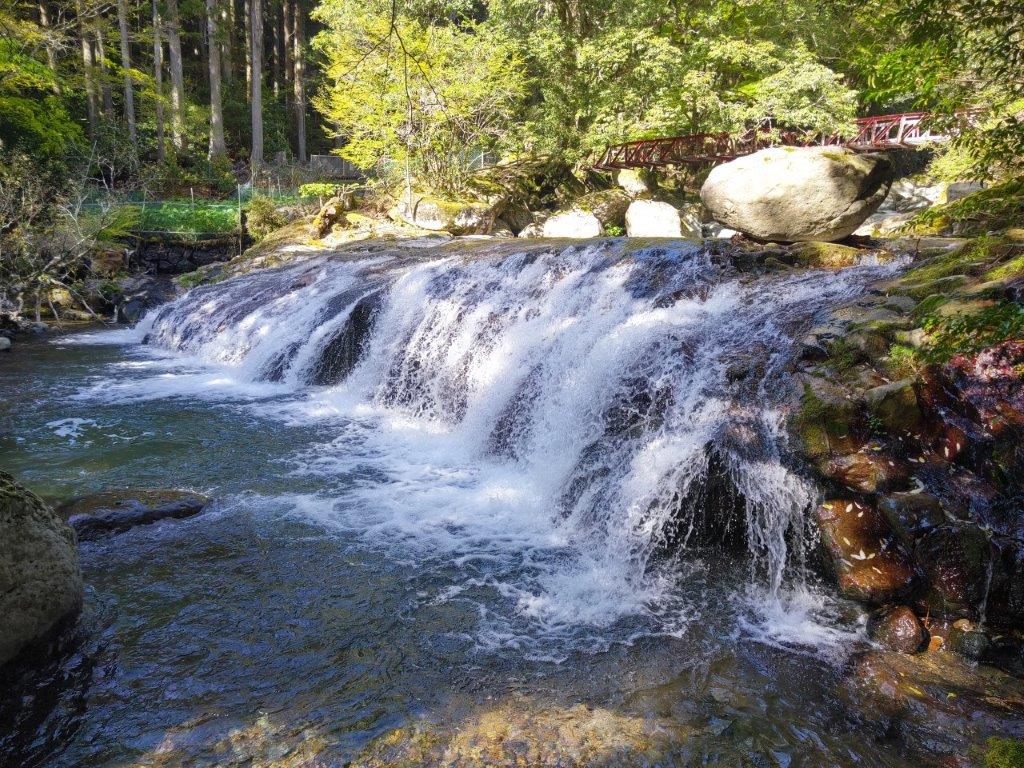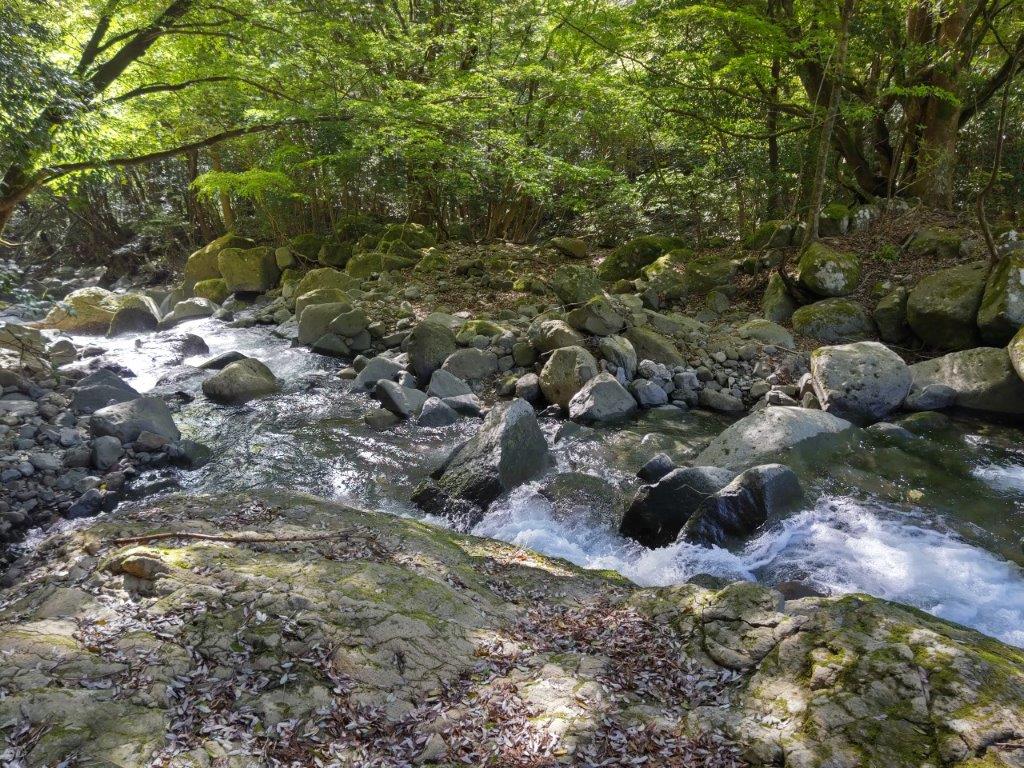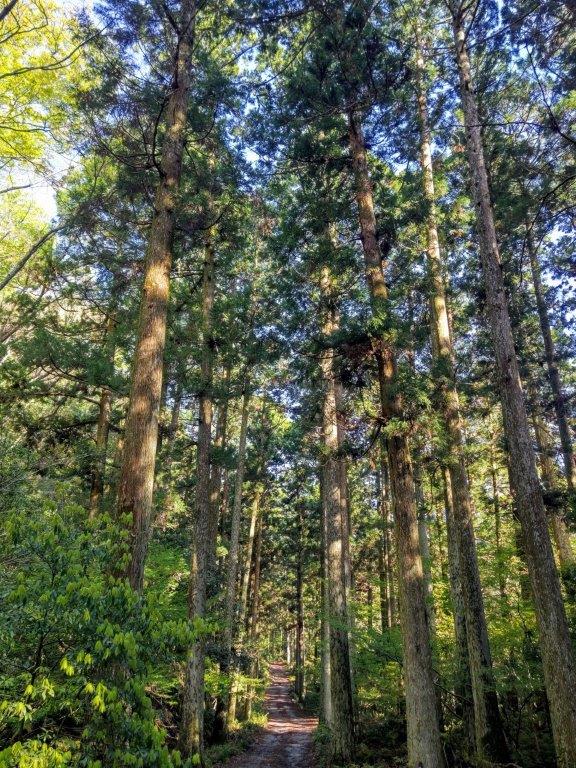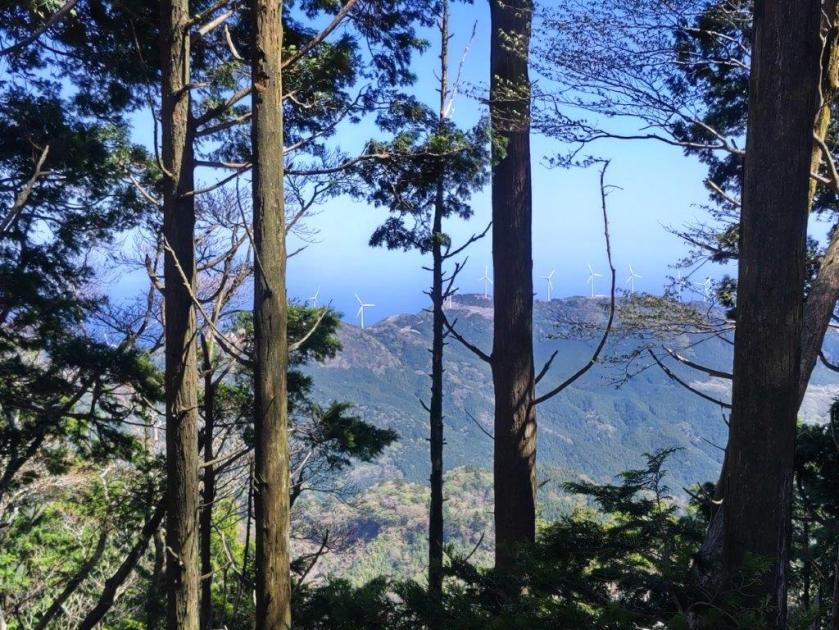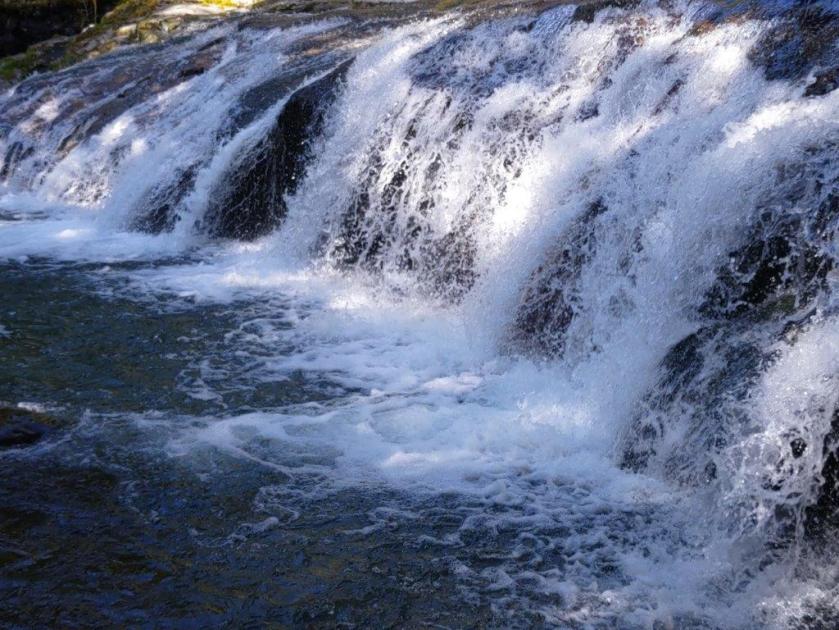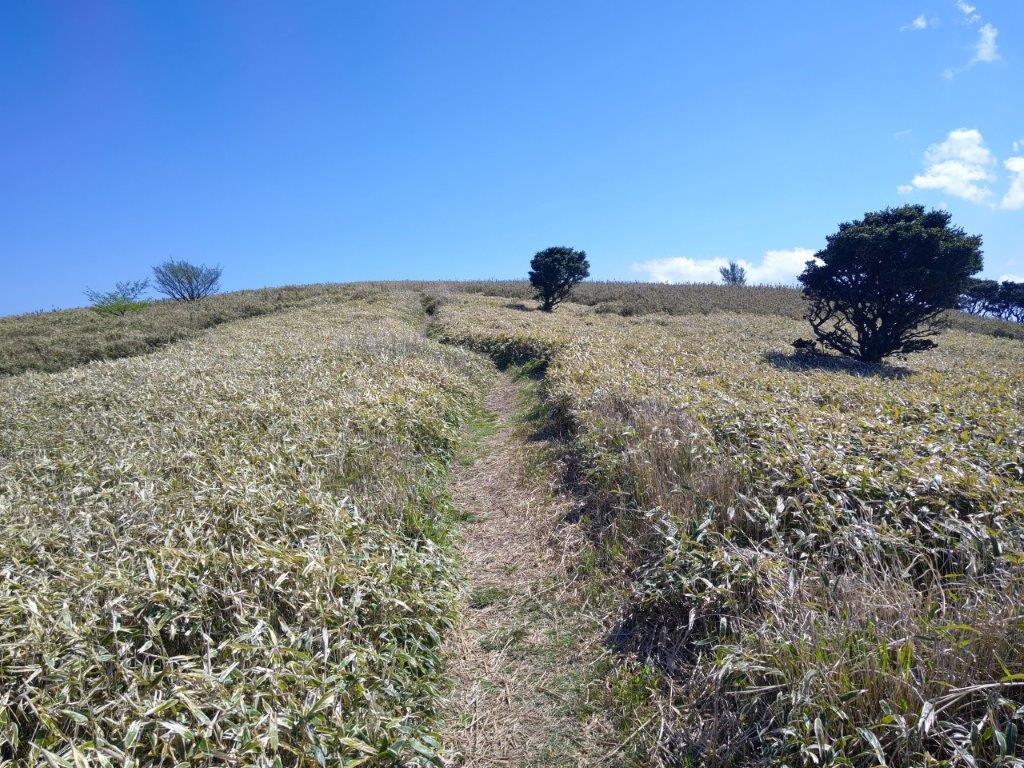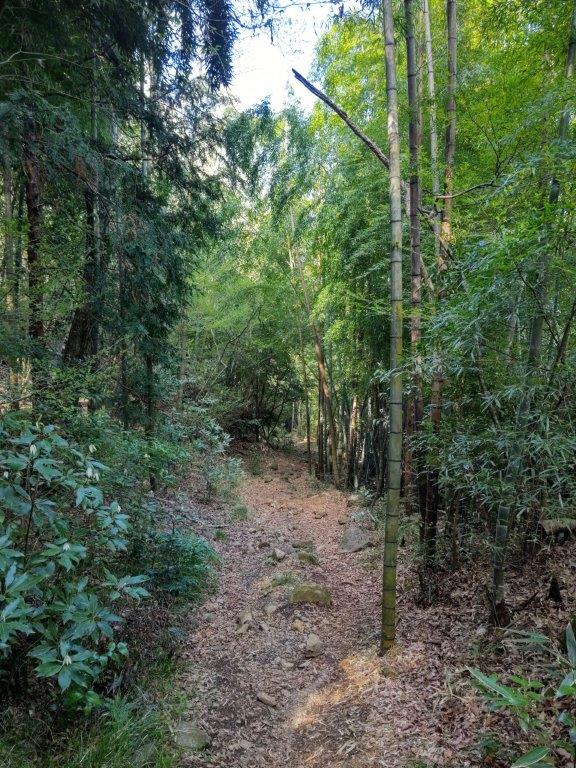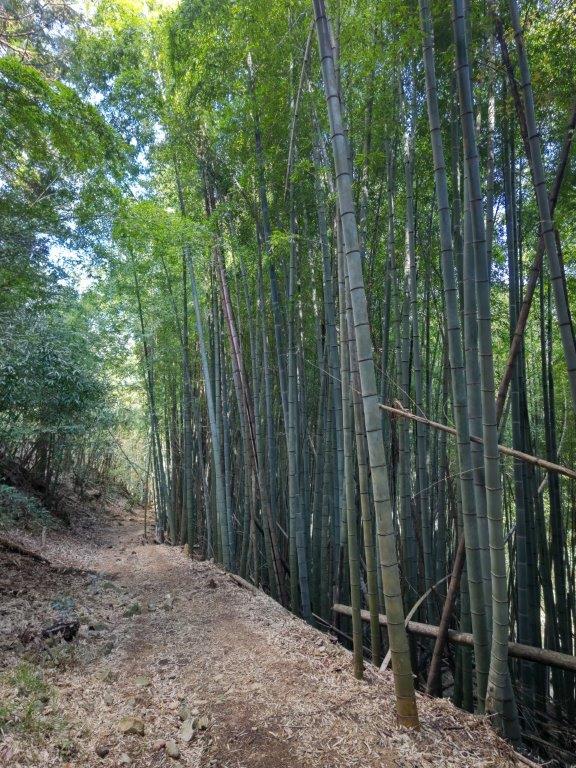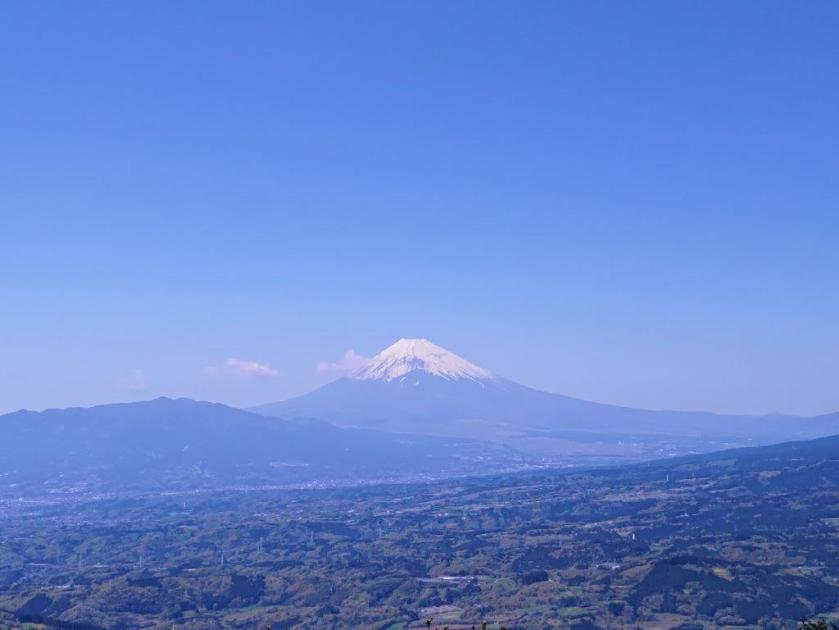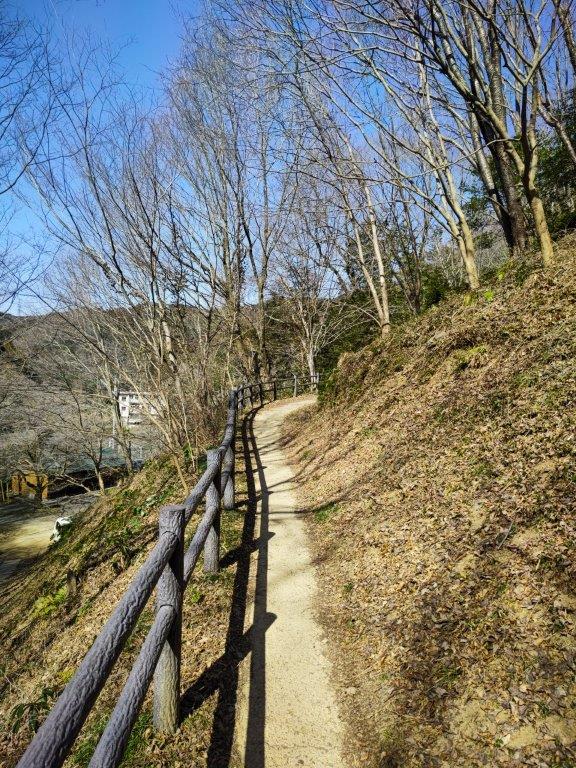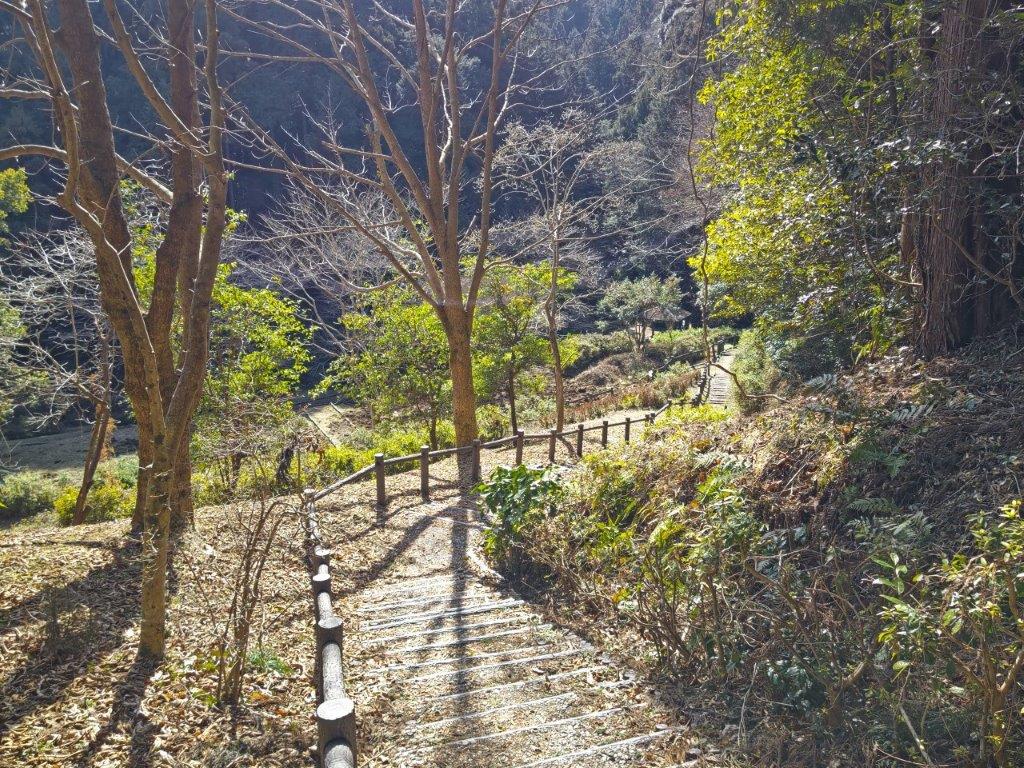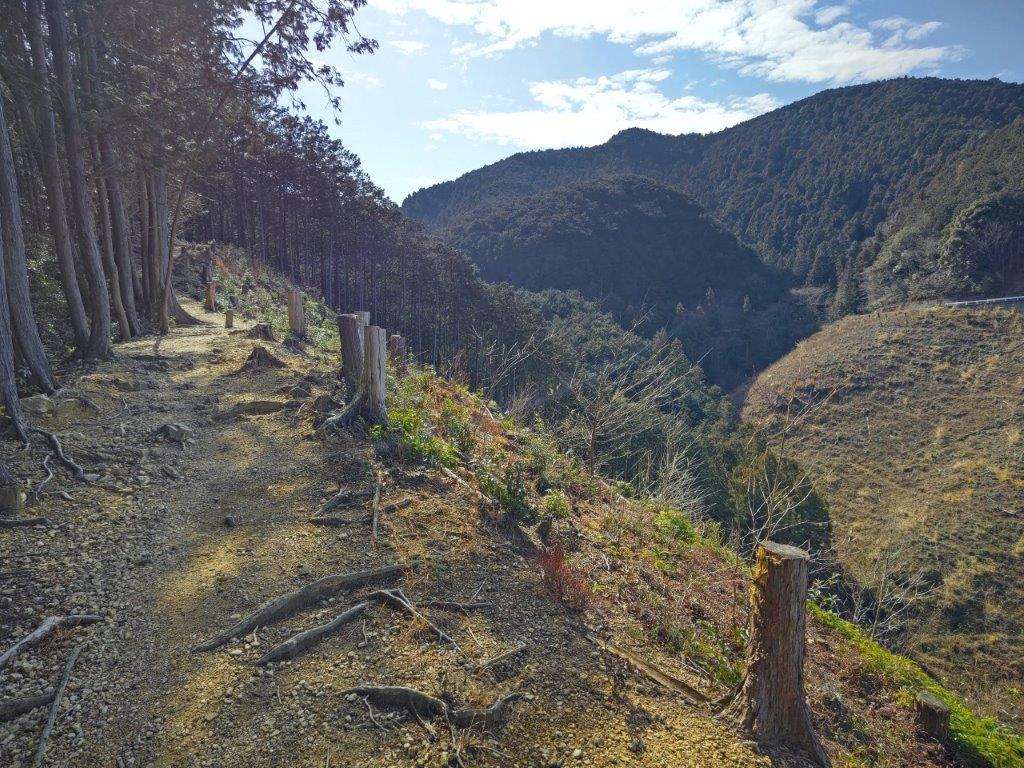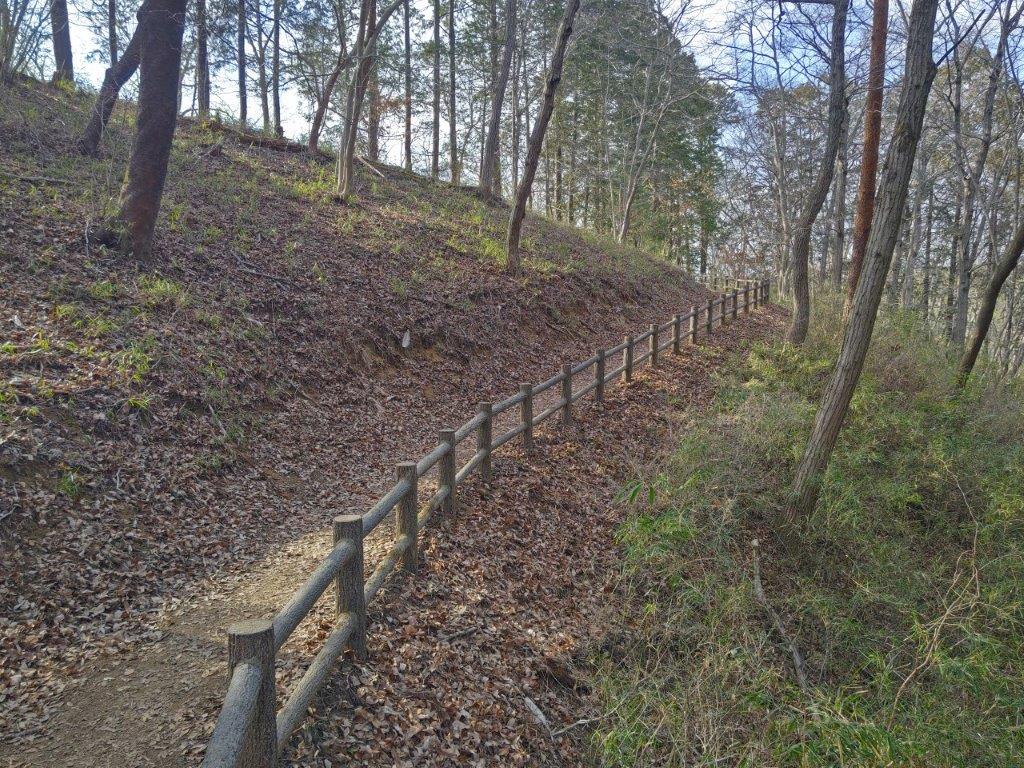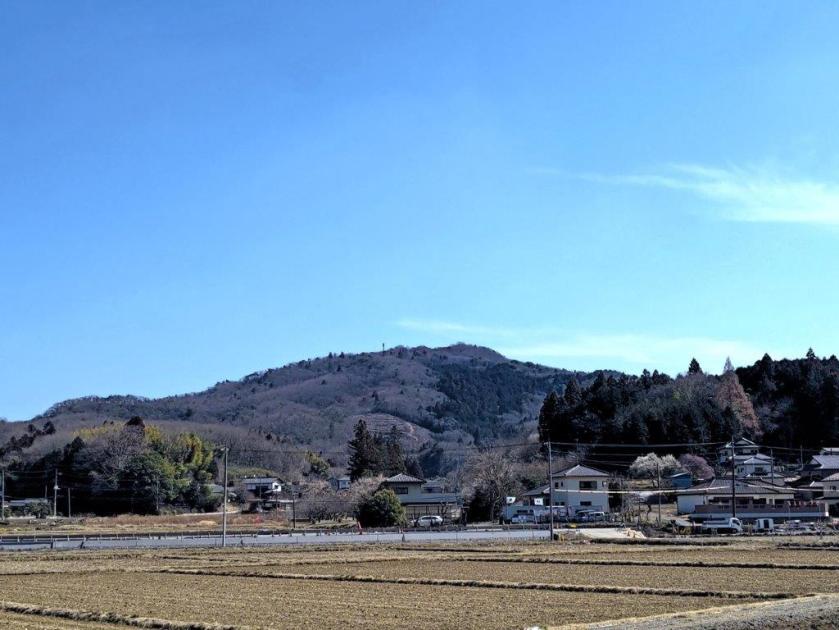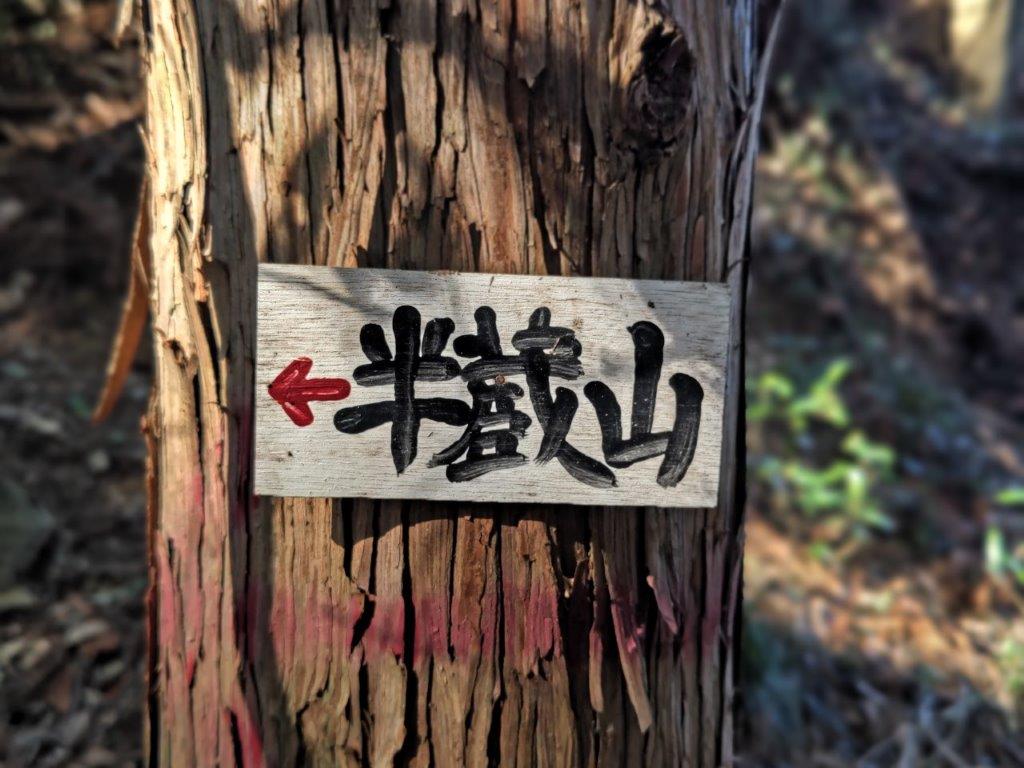
Mt Usuiri (421m), Mt Kannokura (344m) & Mt Sekison (344m), Higashi-Chichibu Village & Ogawa Town, Saitama Prefecture, Saturday, April 29, 2023

I wanted to take advantage of the comfortable spring weather to do a short hike close to Tokyo. I had already climbed Mt Kannokura and Mt Sekison in 2016, going up via Tennou Pond, and then down past Kitamuki-fudo, both on the north side. Looking at my hiking map, I saw I could approach them again via a different route: along the ridge on the west side, and then head back down on the south side, creating a slightly longer hike. I would take a bus from Ogawamachi station on the Tobu line to a stop close to the trail entrance; from the end of the hike, I could catch the same bus back from a stop closer to the station. The weather was supposed to be overcast with sun from time to time, and so I was looking forward to some easy hiking near home.

View this Blog Post on Hiking Around Tokyo

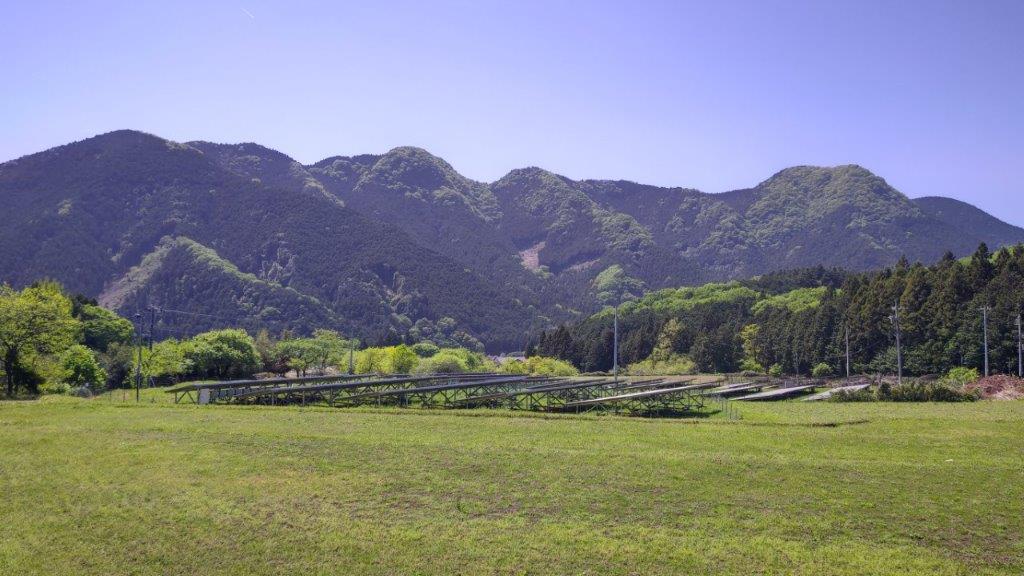
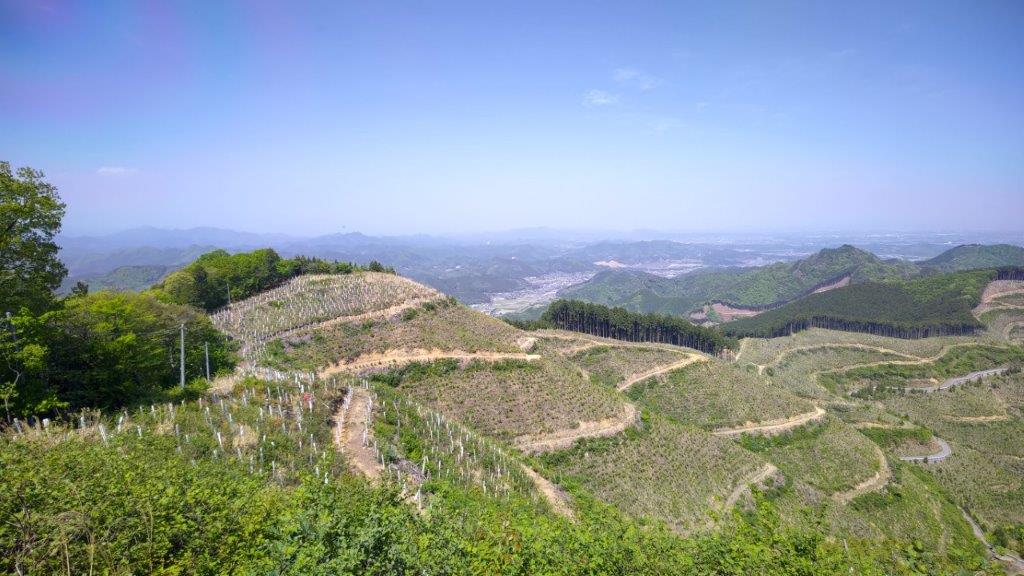
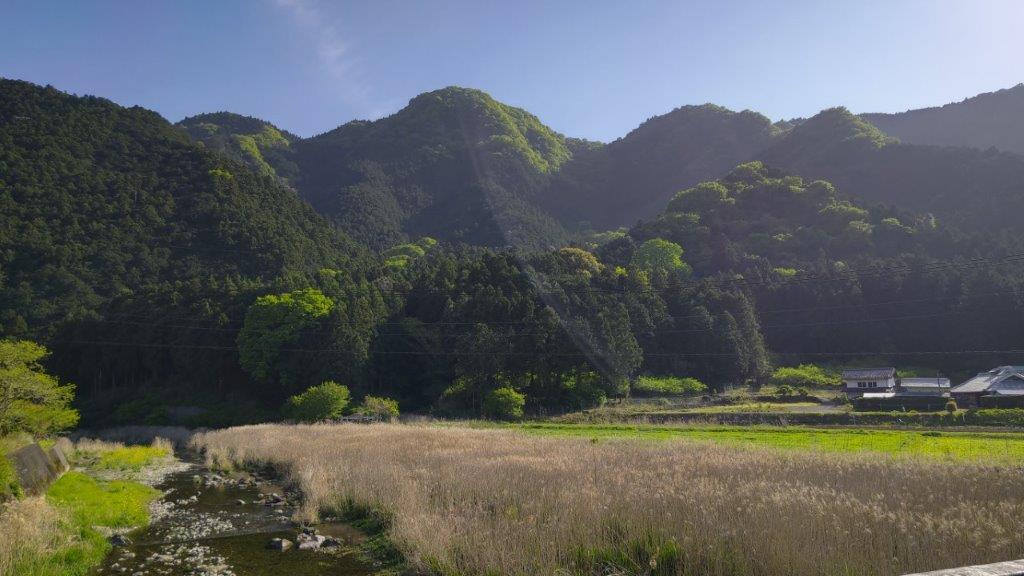
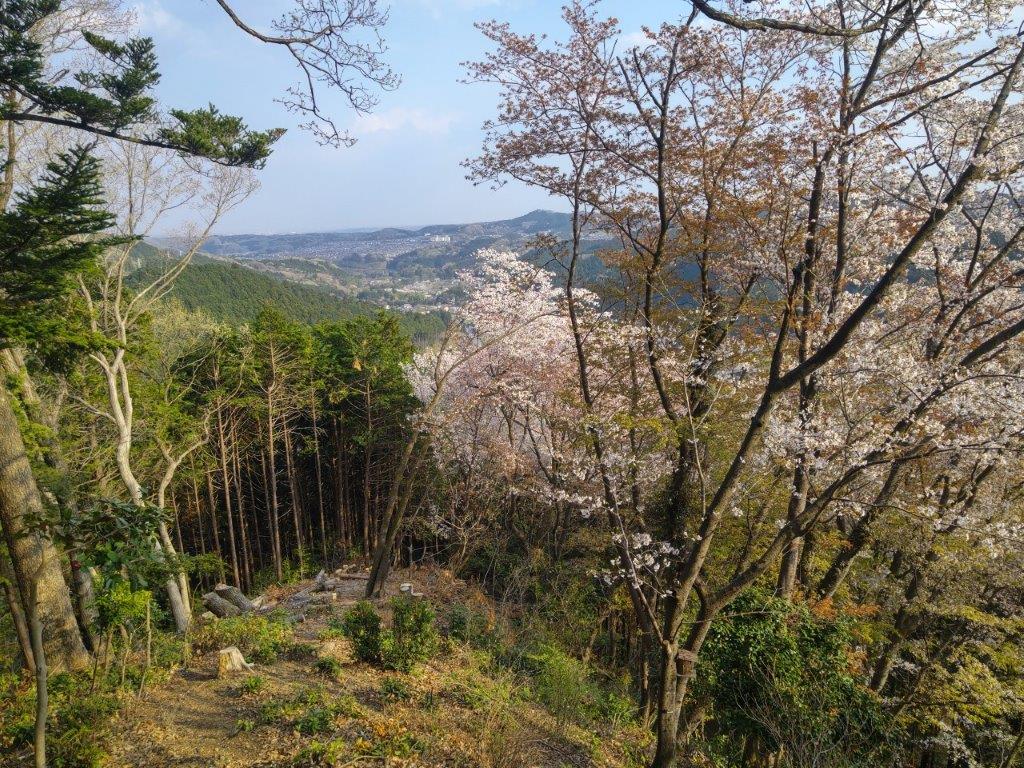
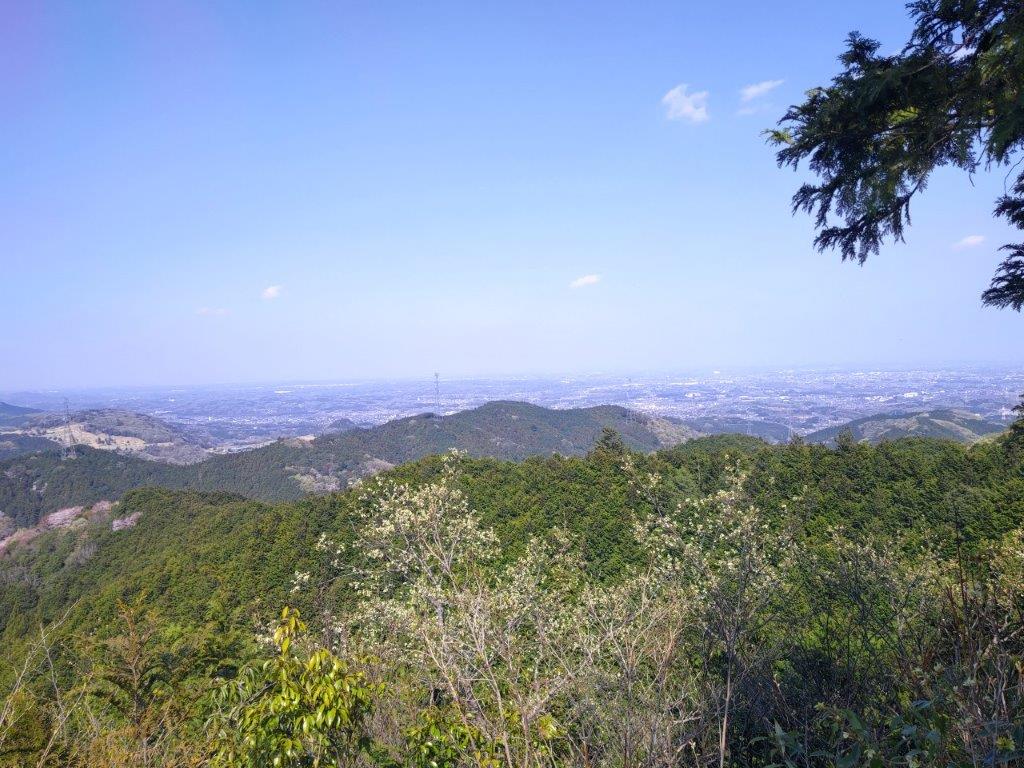
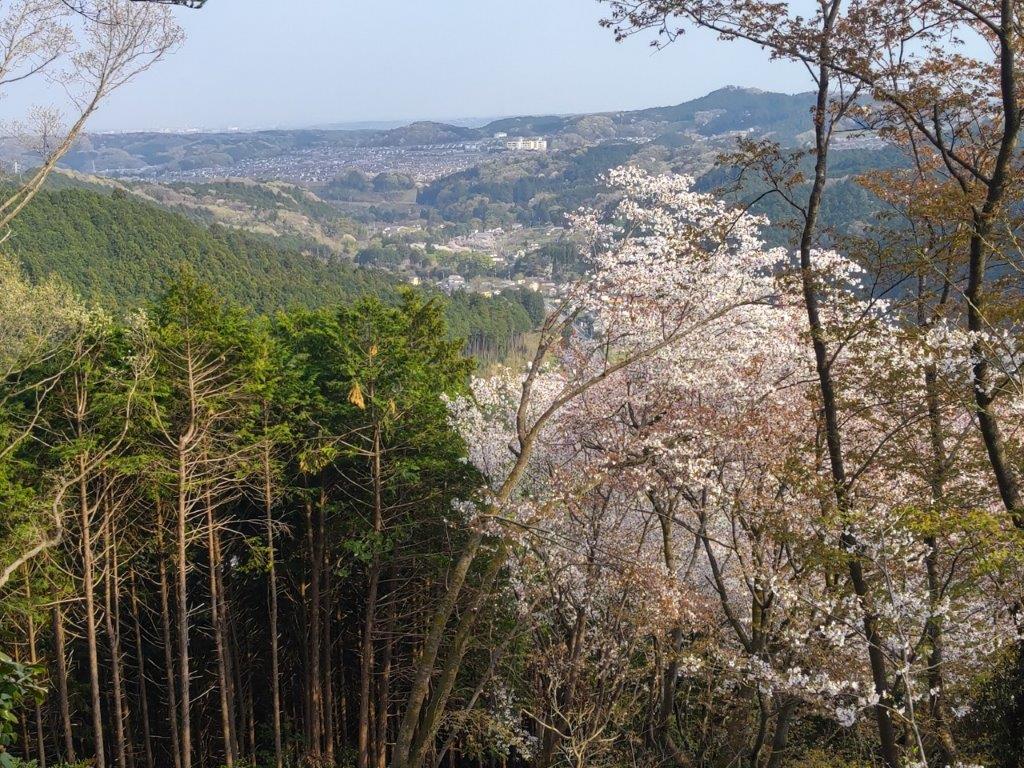
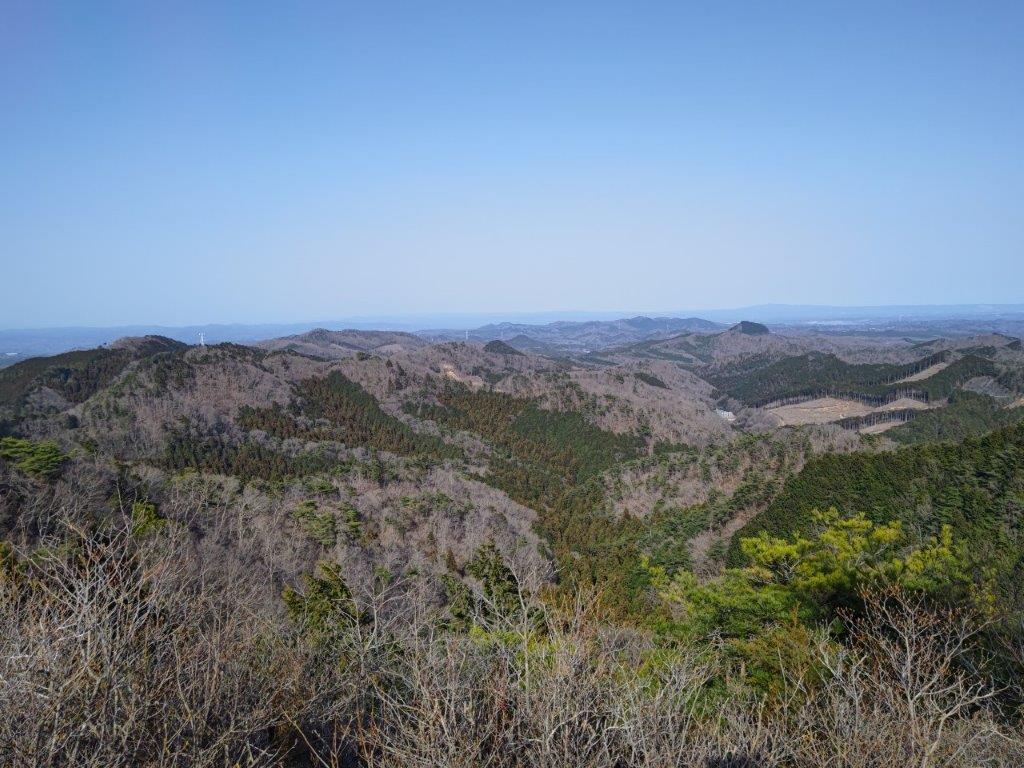
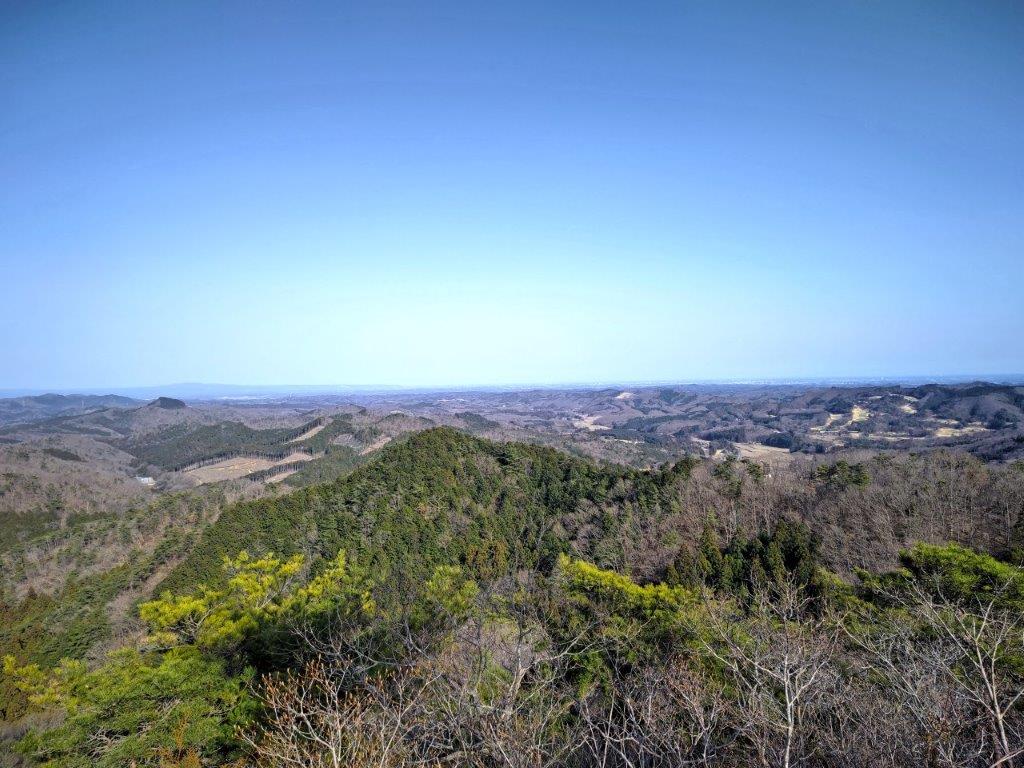
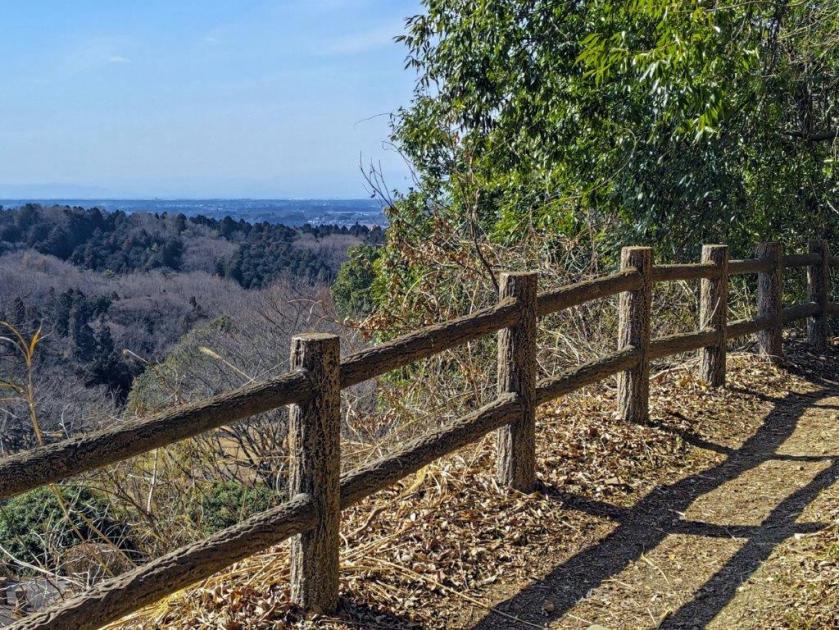
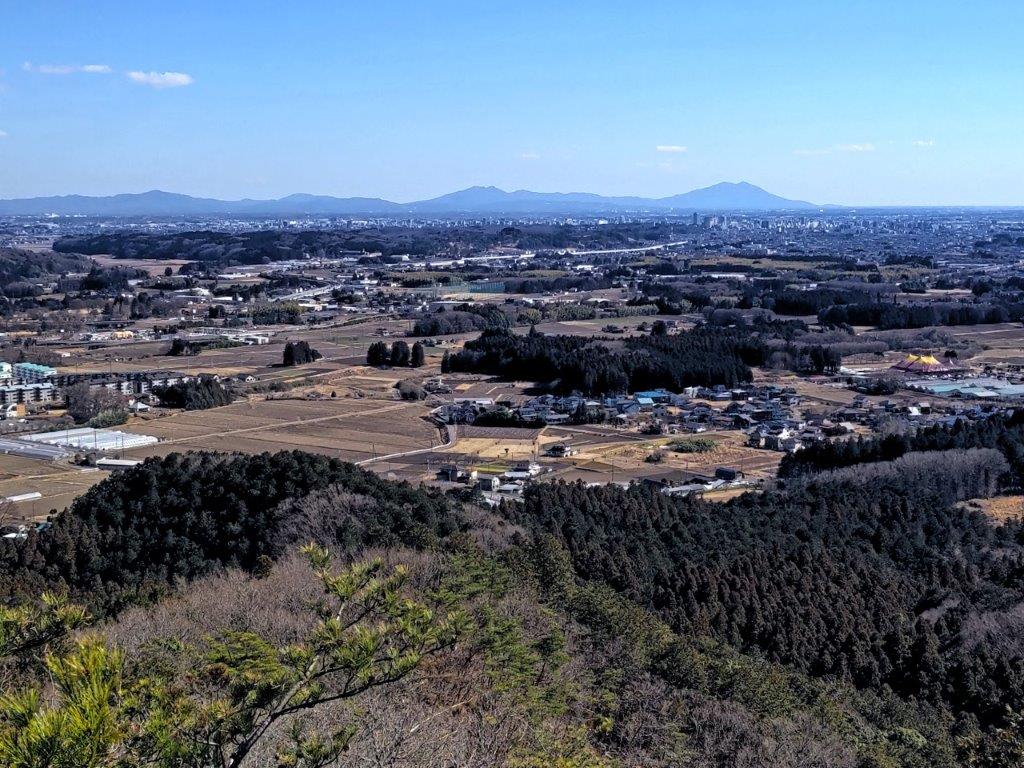
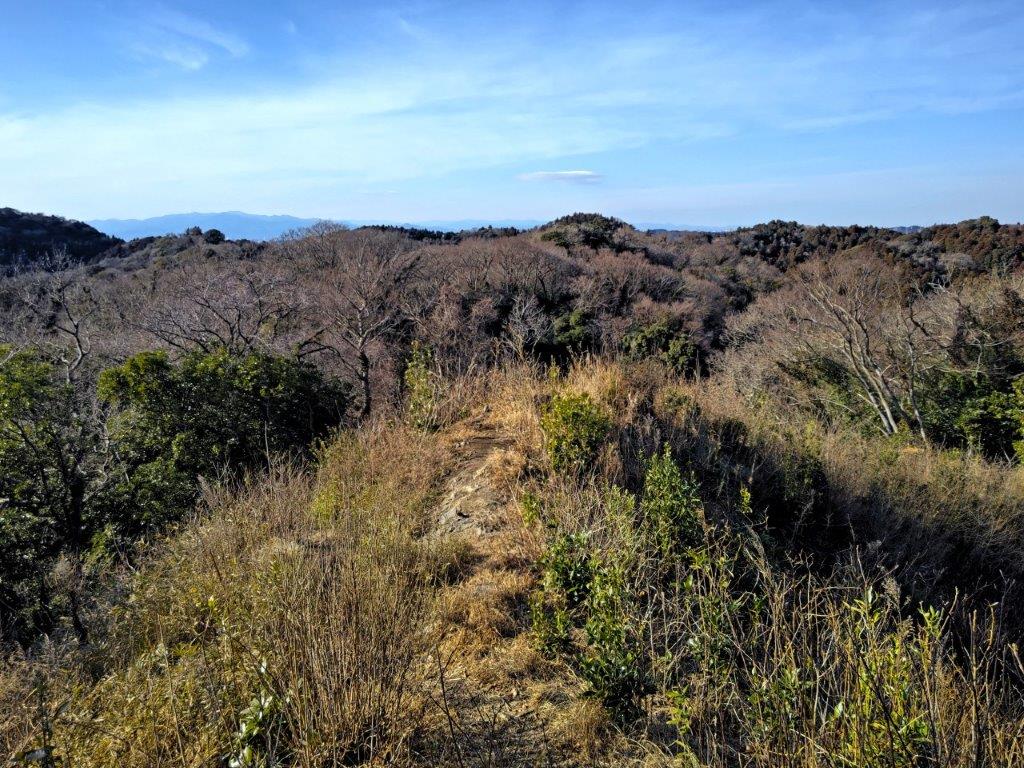
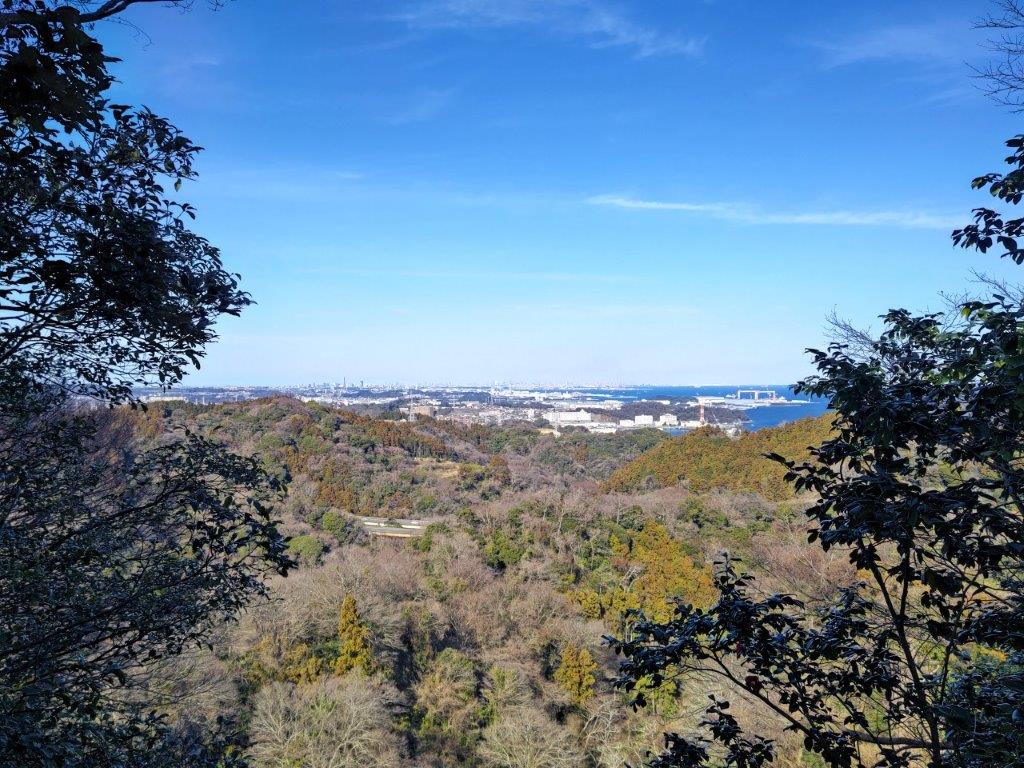
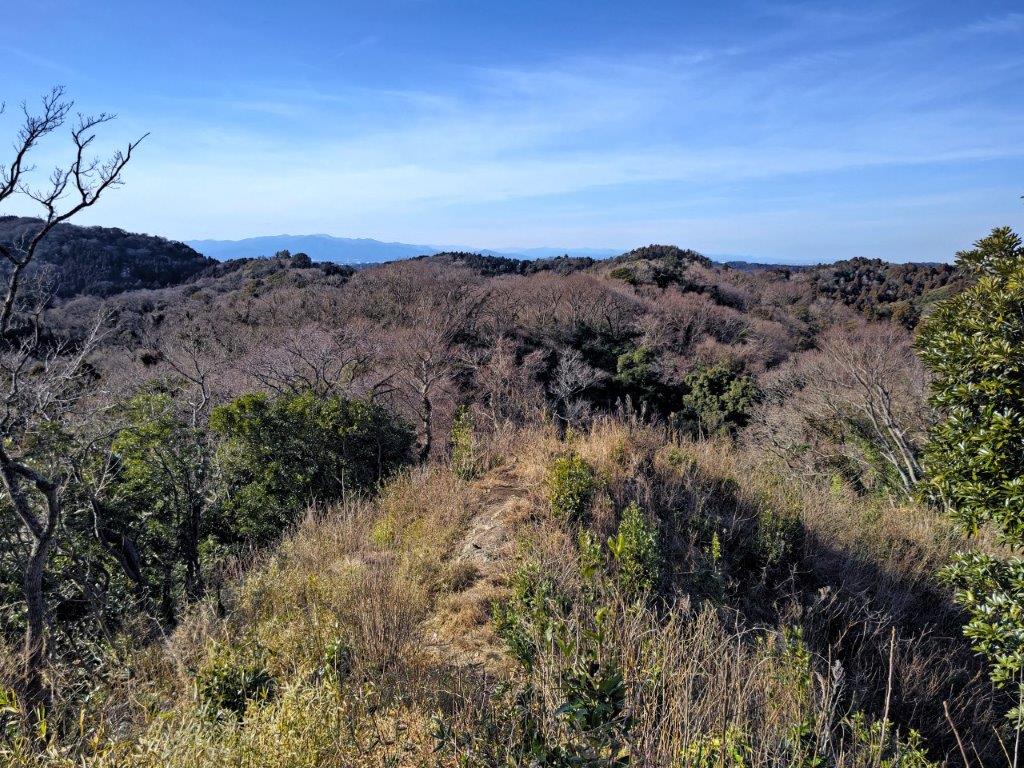
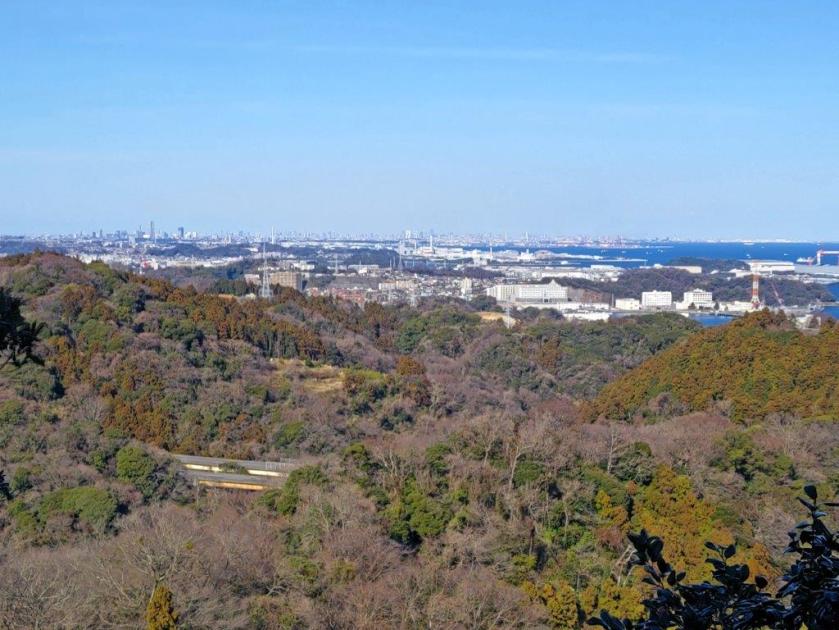
View north of the Kanto Plain Near Mt Usuiri

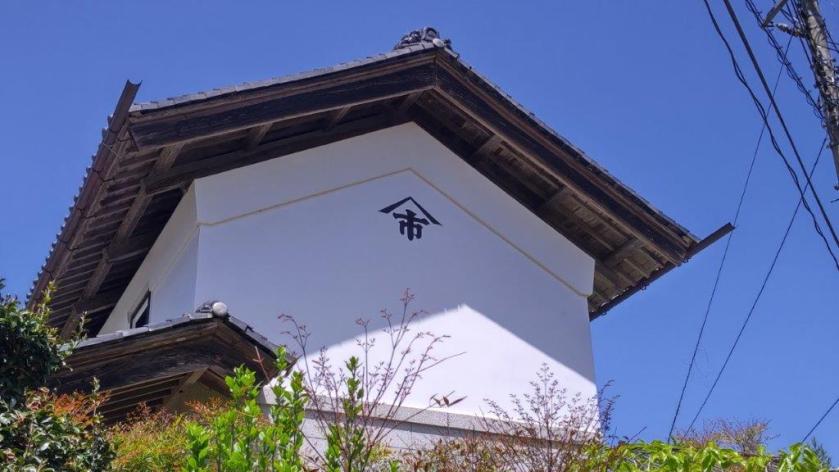
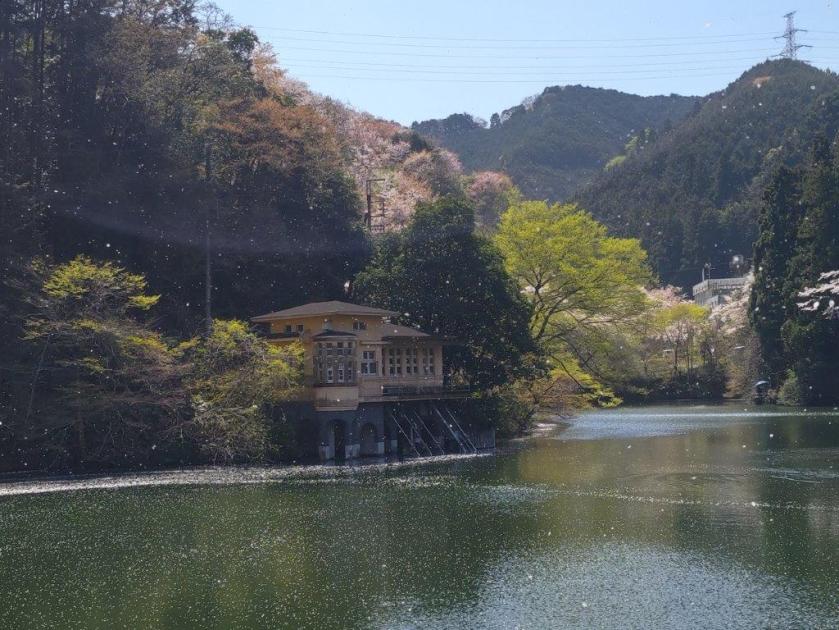
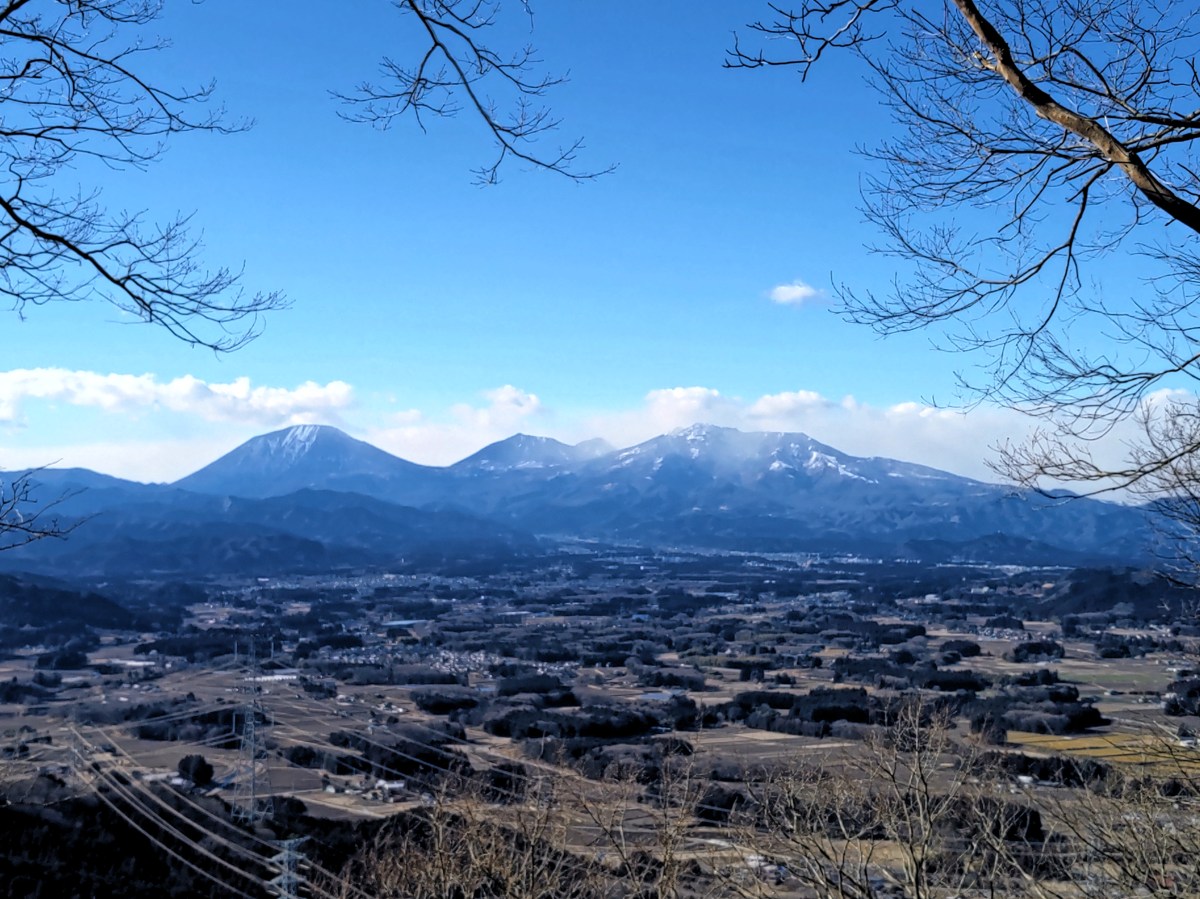
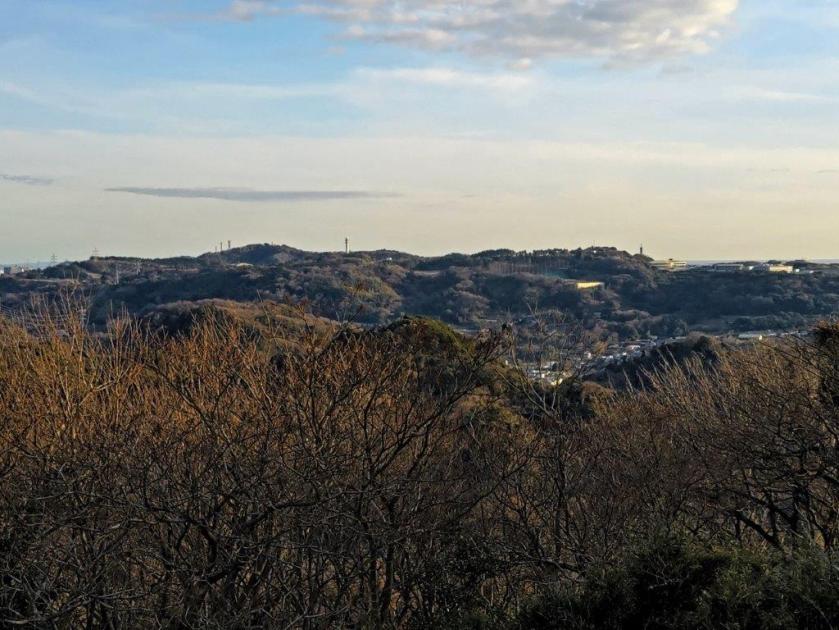
Mt Sekison from Mt Kannokura (June 2016)

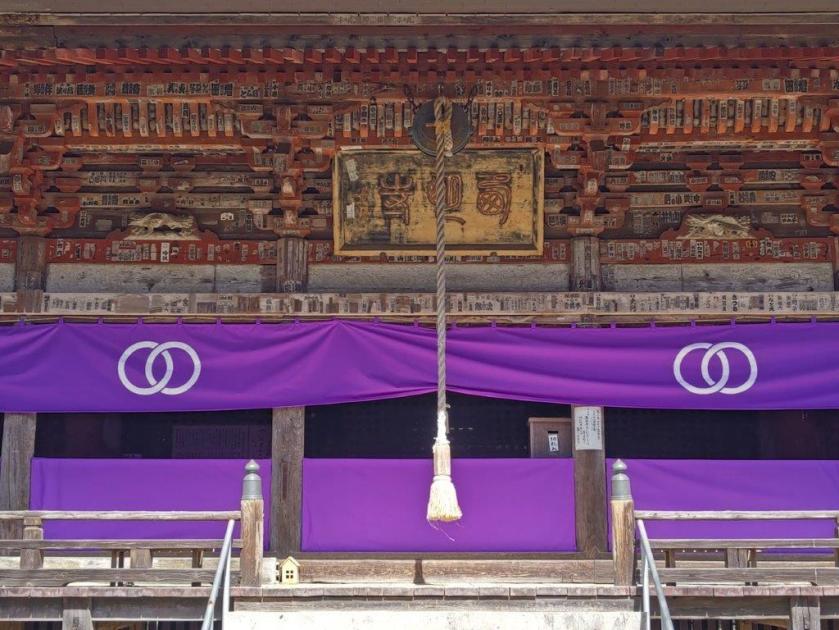
Grey clouds hung overhead as I got off the bus near the Higashi-Chichibu Village Hall a little after 10h30. After getting ready, I made my way to a stone Shinto gate and staircase leading to Okusawa Shrine, which I reached a little after 11am. It was surrounded by bamboo, but on the left side, I found the trail entrance, marked by a light blue metallic signpost.

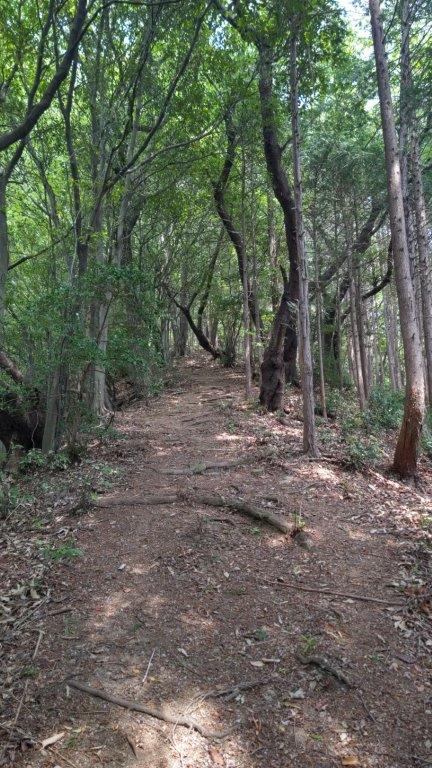
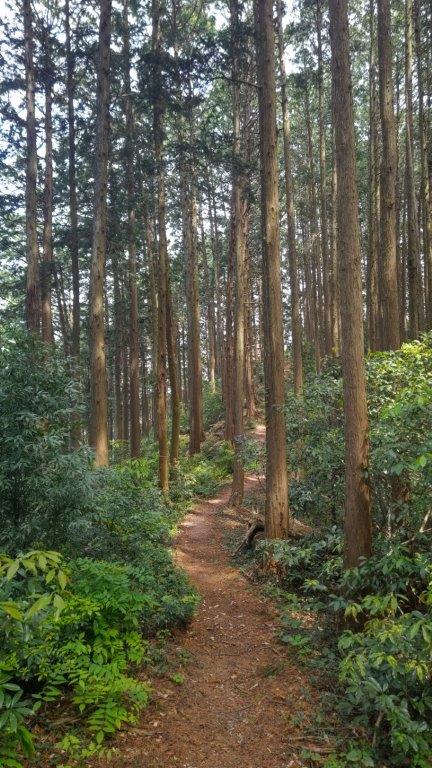
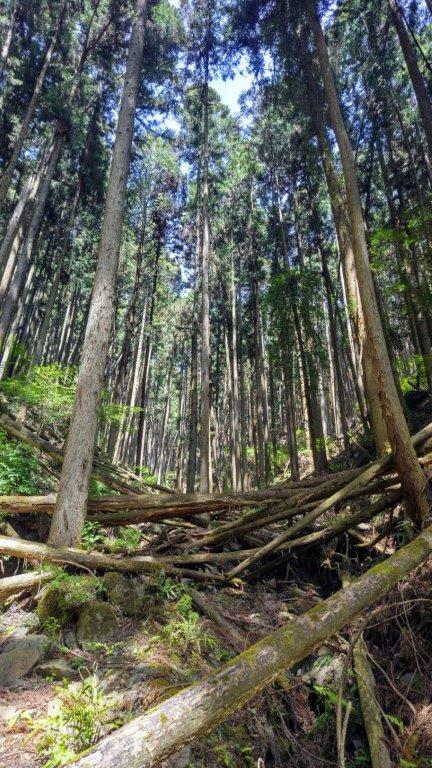
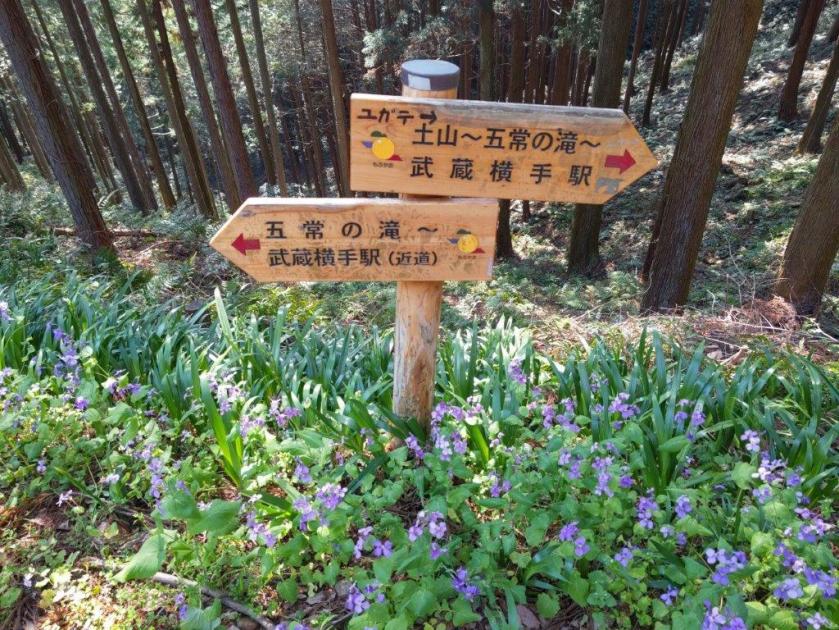
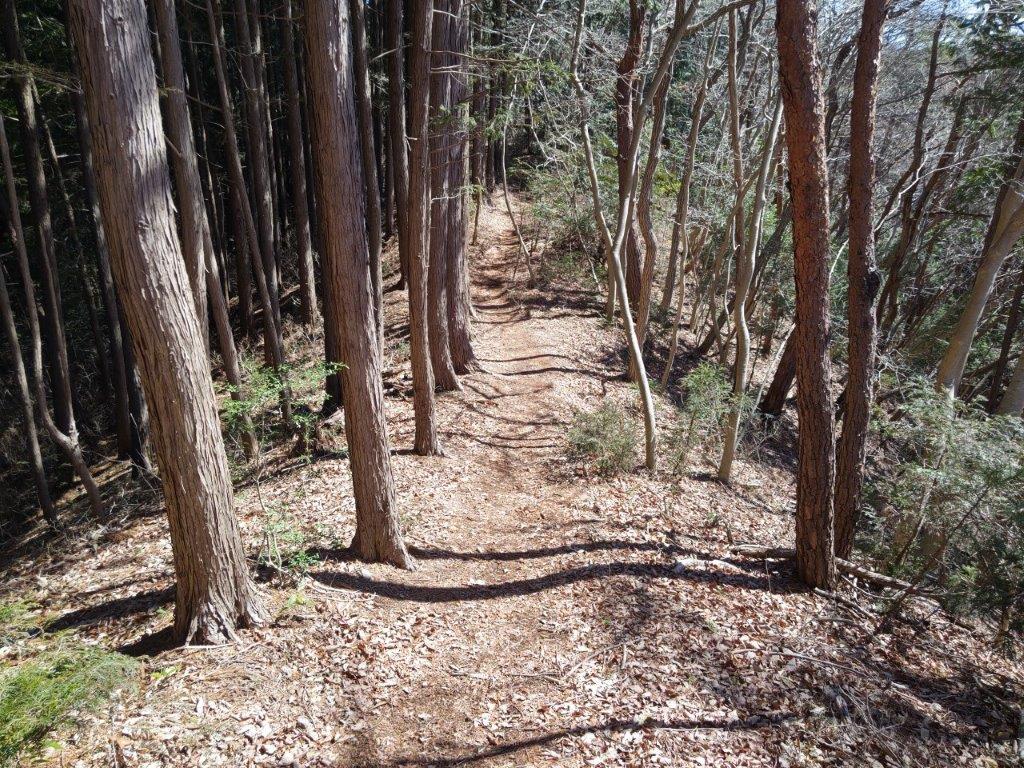
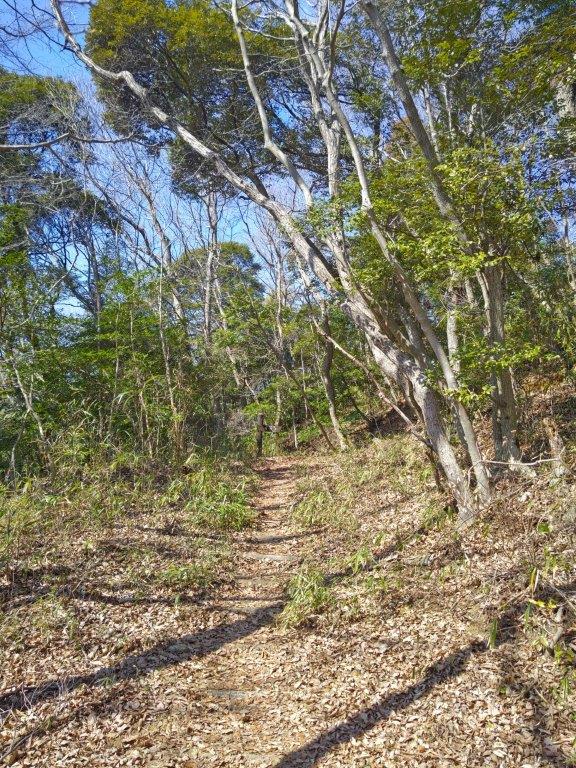
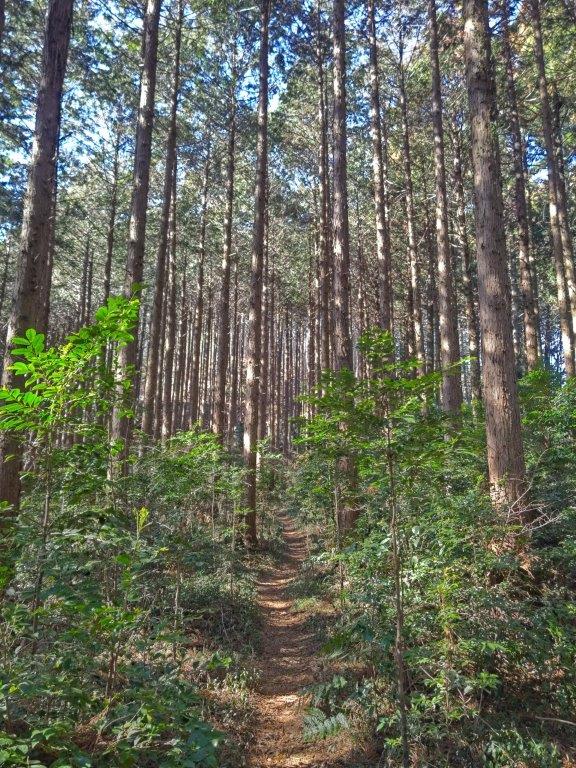
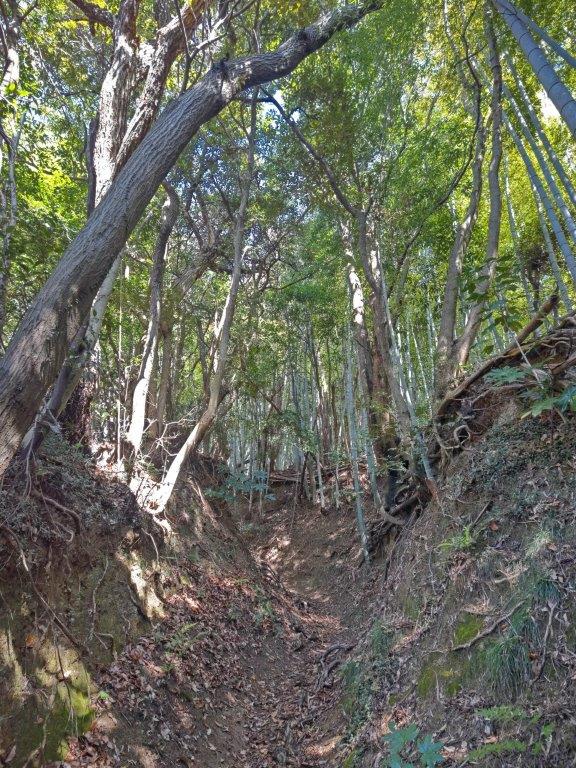
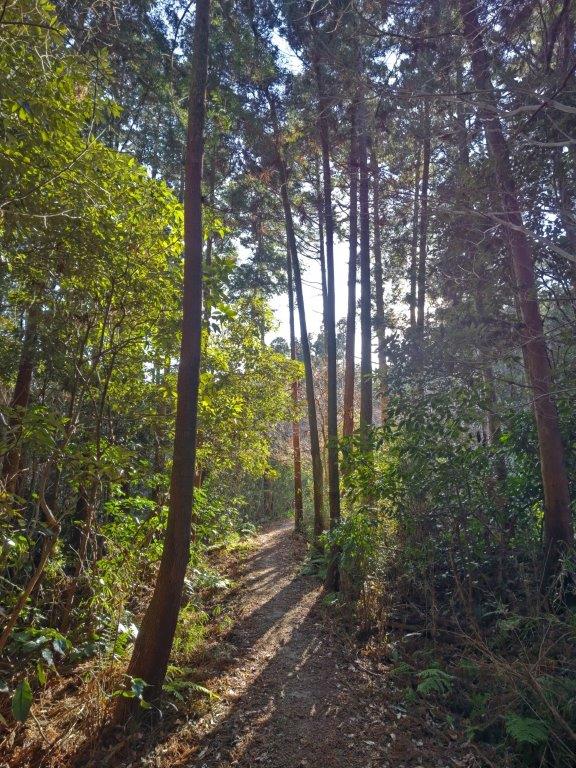
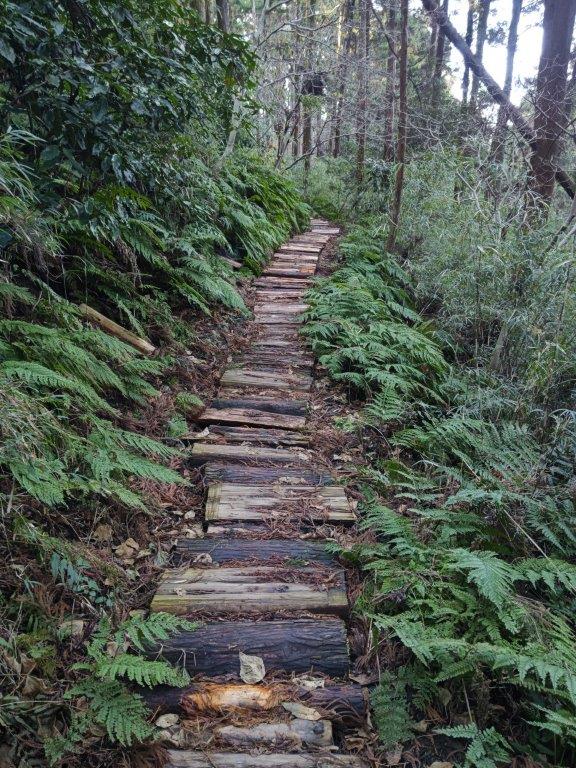
Trail leading up to Mt Usuiri
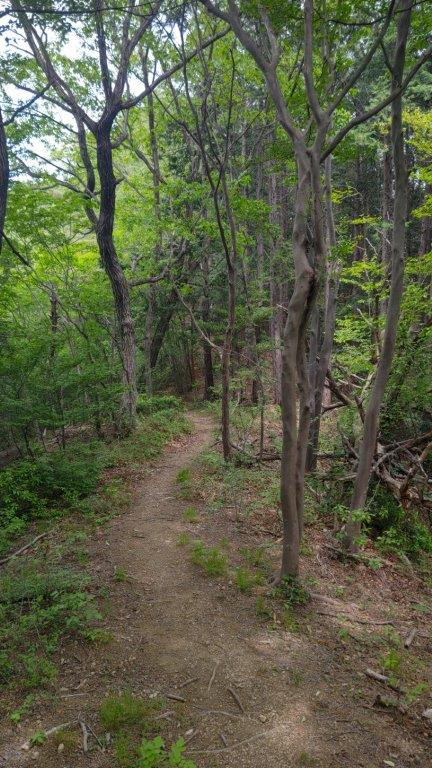
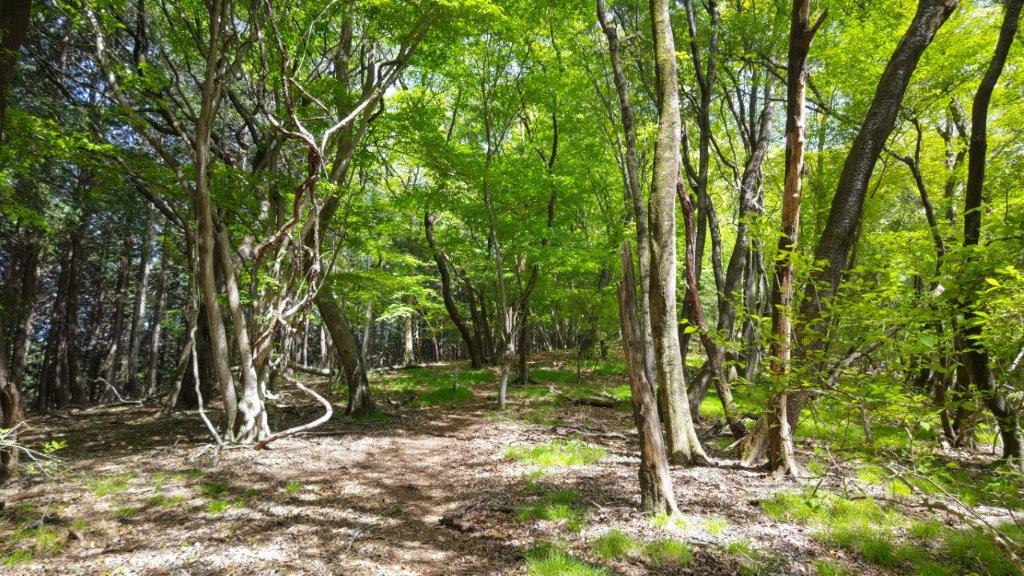
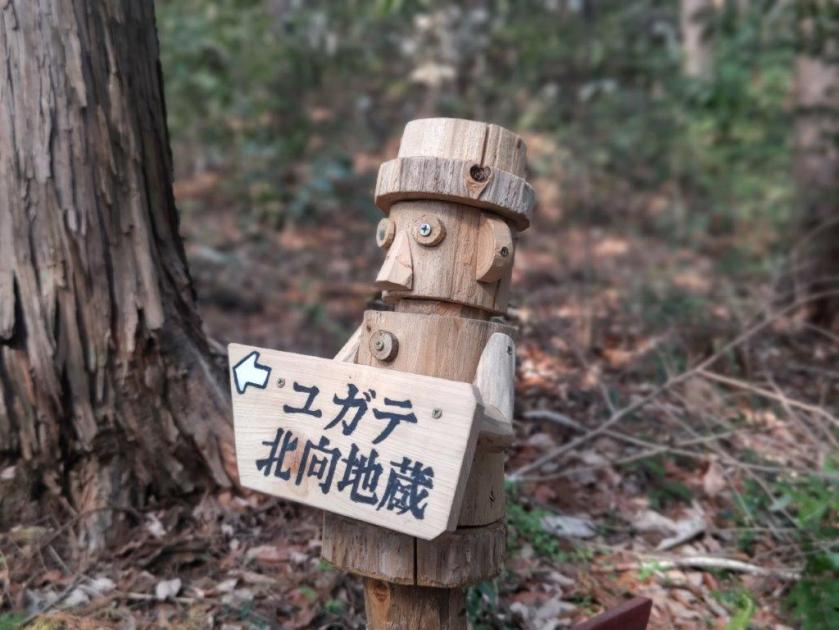
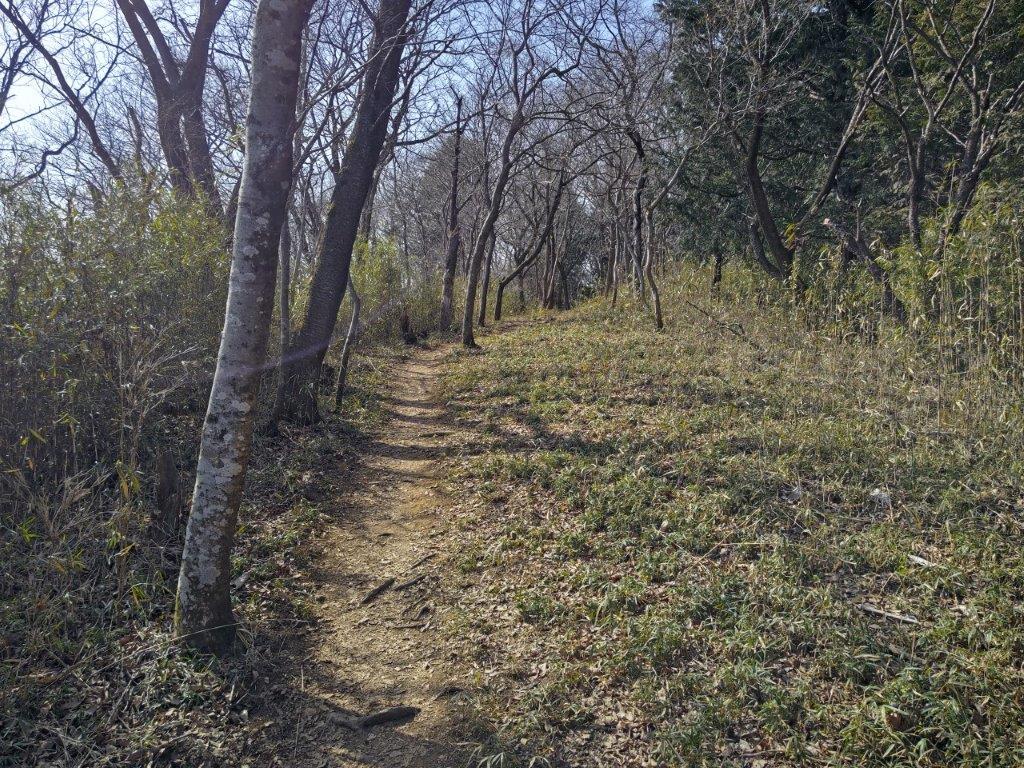
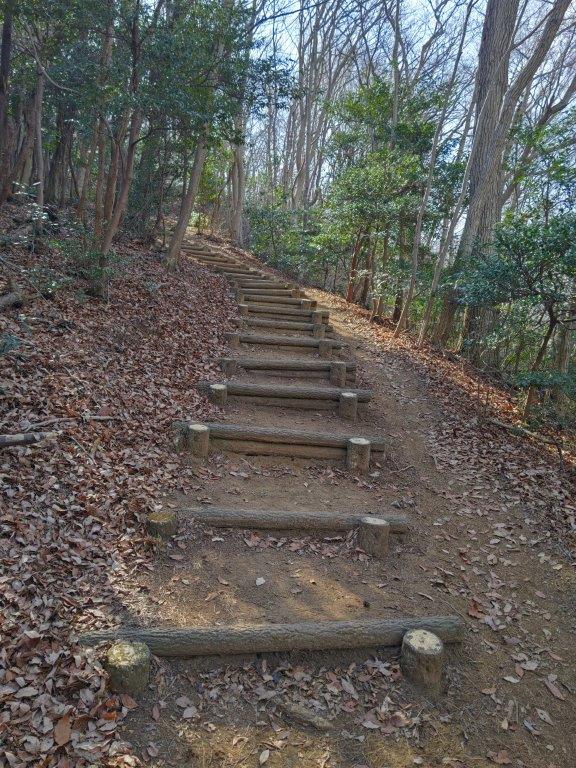
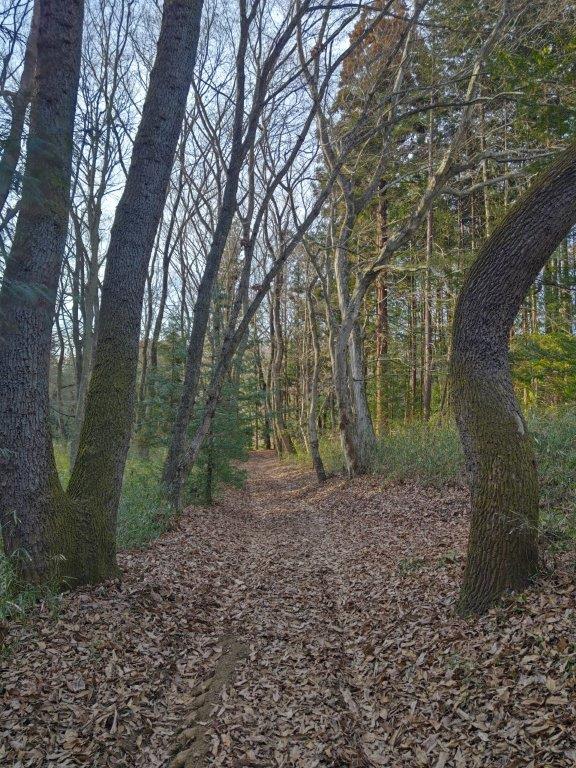
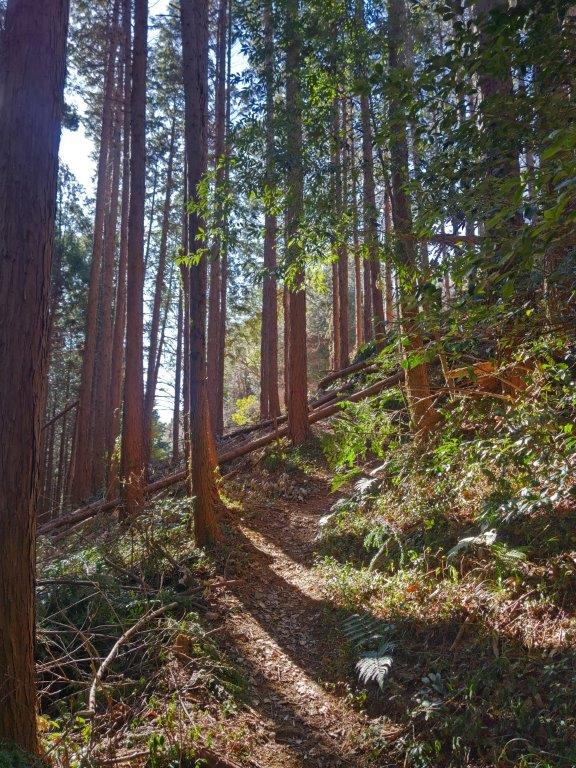
Near the top of Mt Usuiri (left) On the way to Mt Kannokura (right)

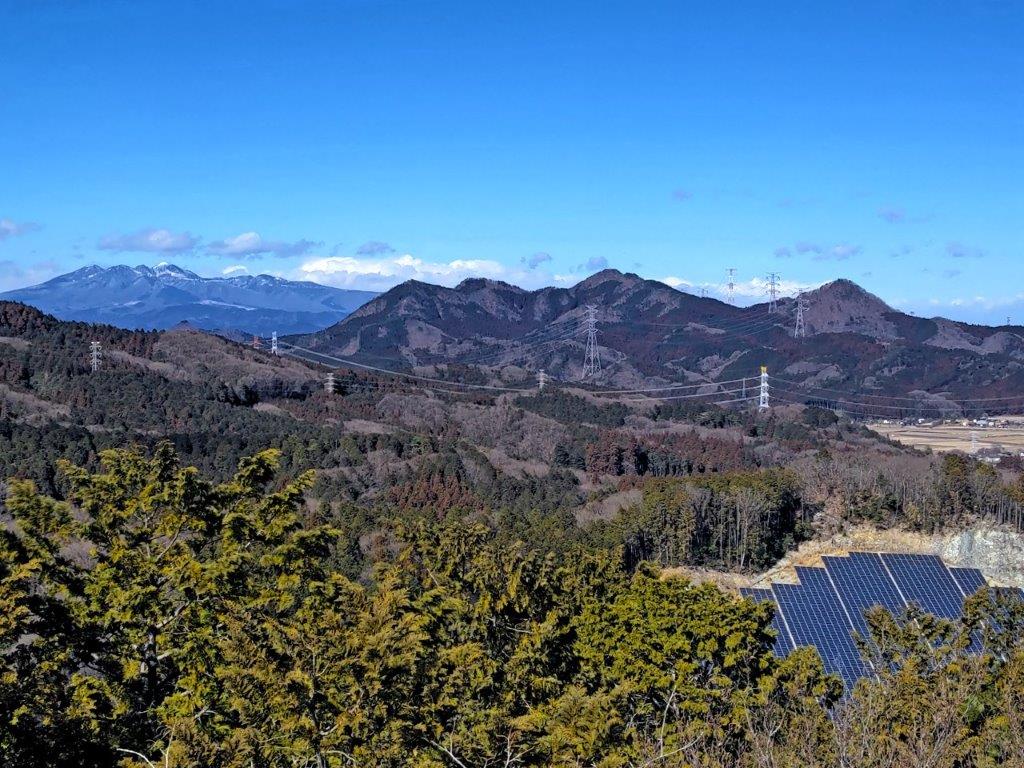
I was excited to find a new hiking trail so close to Tokyo. The path climbed steadily through mixed forest; shortly before noon, I arrived at the summit of Mt Usuiri (臼入山 うすいりやま usuiriyama). Through the trees on the west side, I had a partial view of the ridgeline between Mt Oogiri and Mt Toya in eastern Chichibu. After a short break, I followed the trail through the cedars, down the east side of the summit.

Looking back at Mt Usuiri
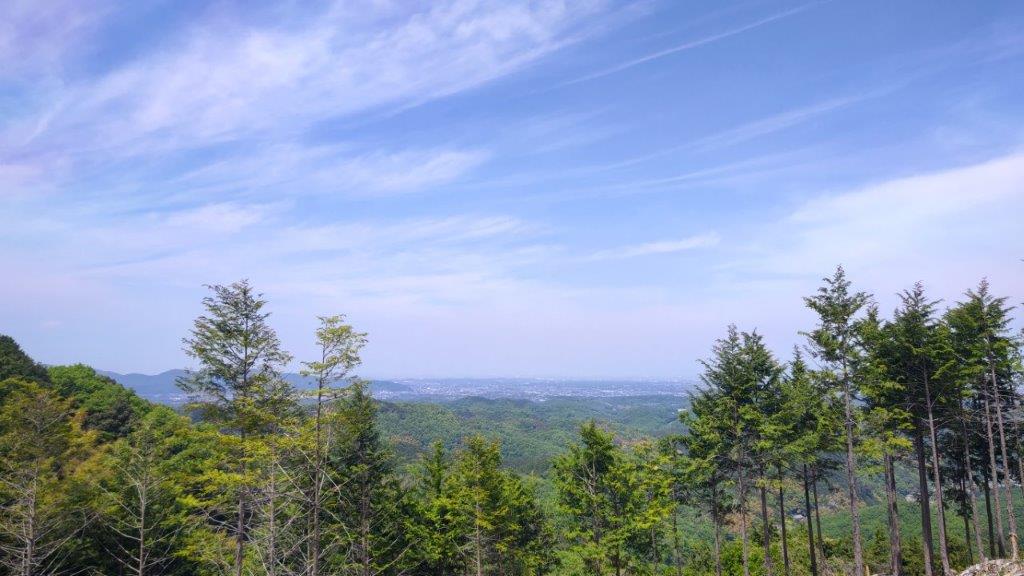
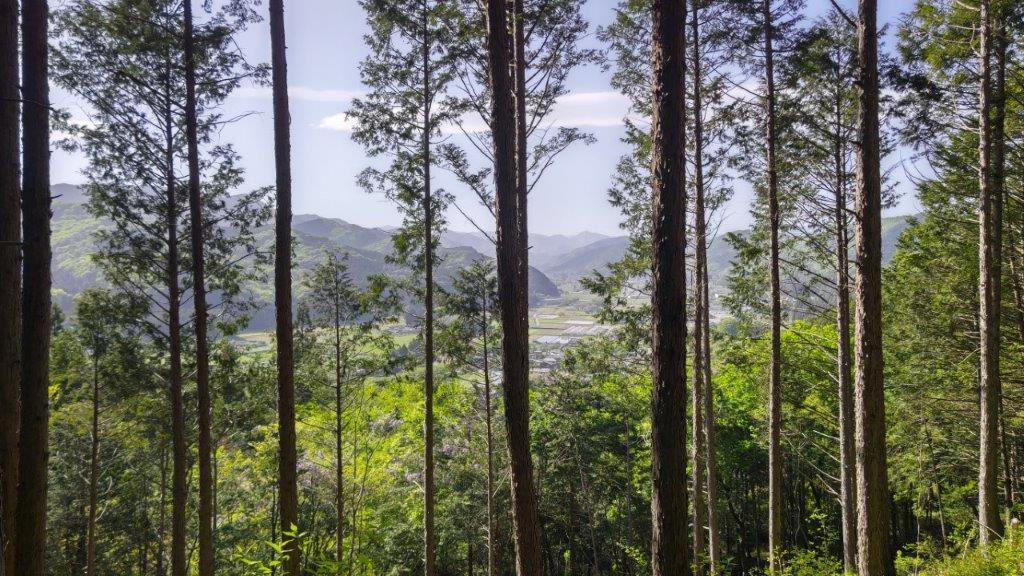
View North from a Clearing past Mt Usuiri

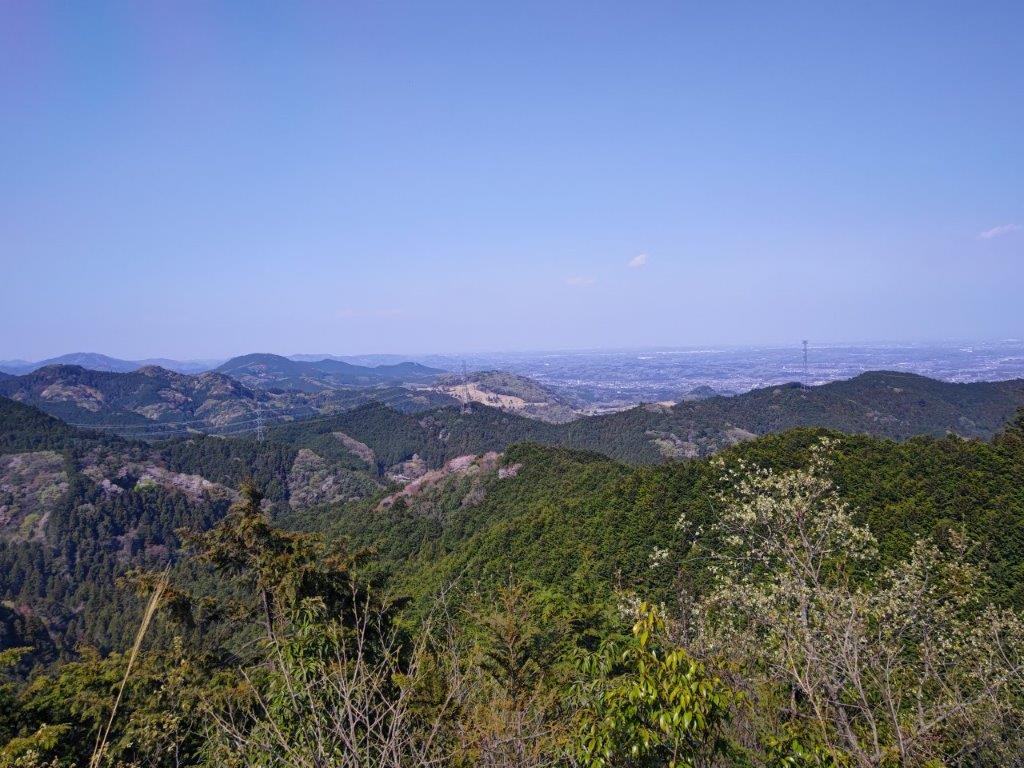
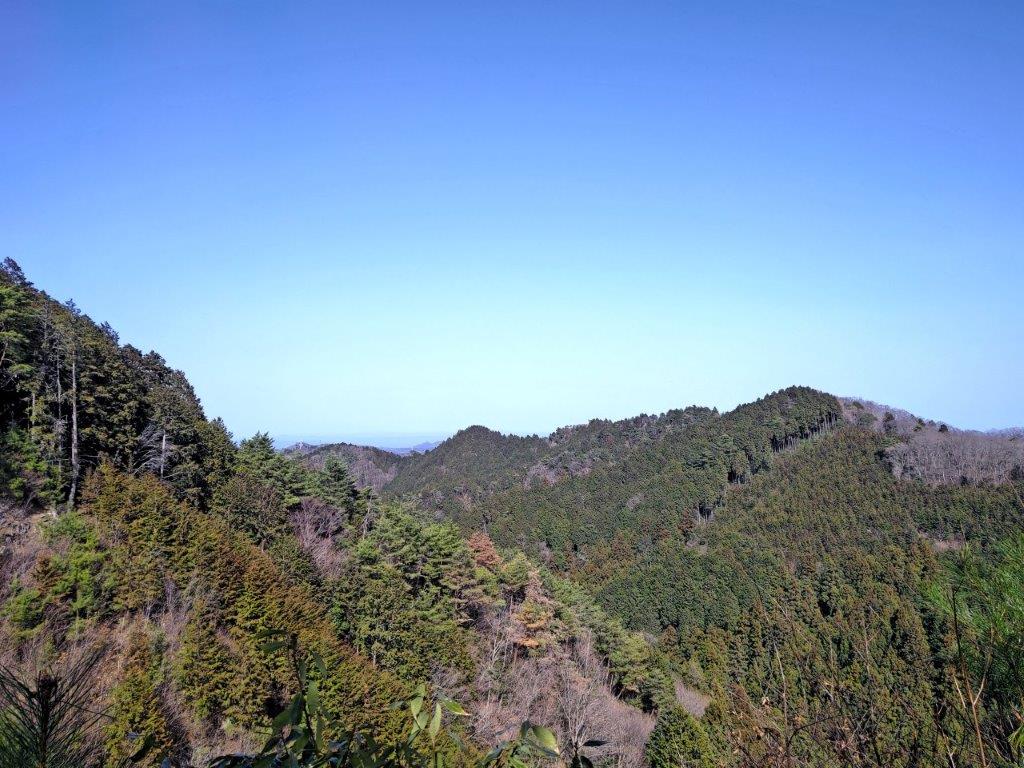
I reached the first good viewpoint of the day about half an hour later. It was a deforested area next to a road over a pass. The clouds had dissipated and blue sky was visible again. On the north side, I could see the long ridge extending east beyond Mt Kanetsukido. I sat down on some tree trunks for some lunch in the sun and with a view. At 1pm, I set off again, crossing the road and up a short steep slope.

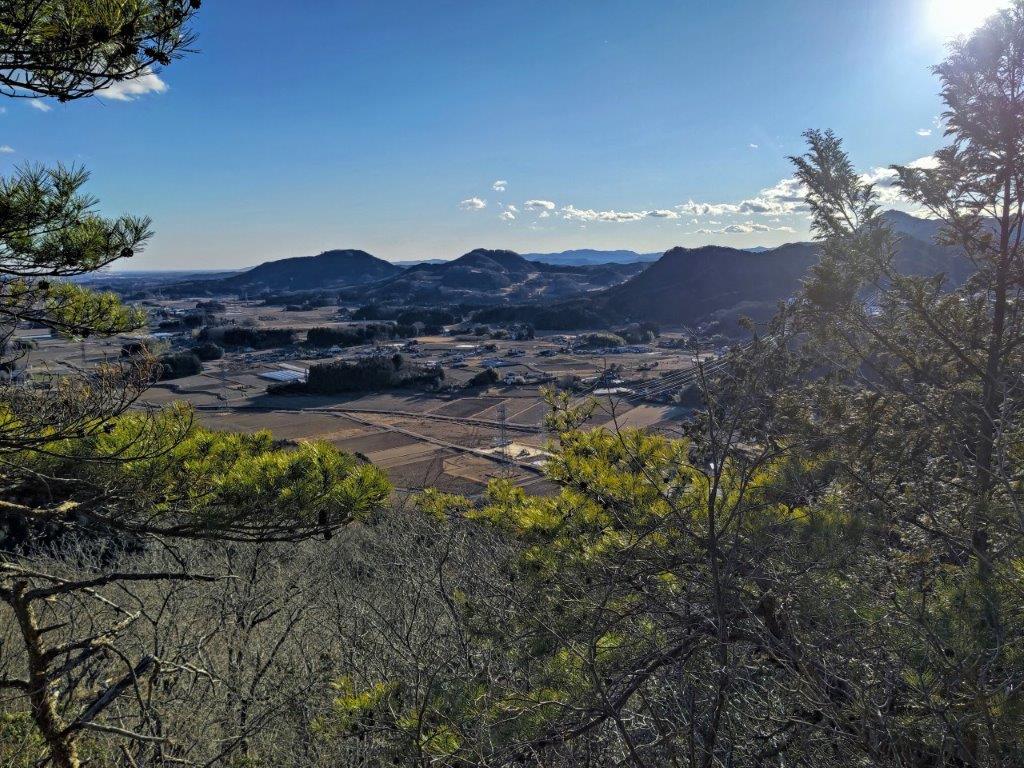
View North of Chichibu Past Mt Usuiri
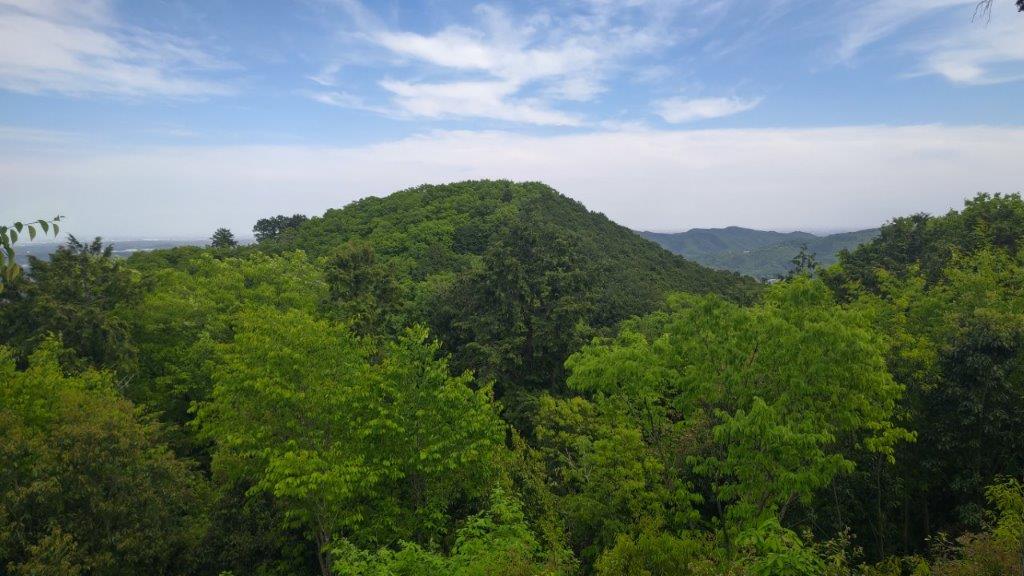
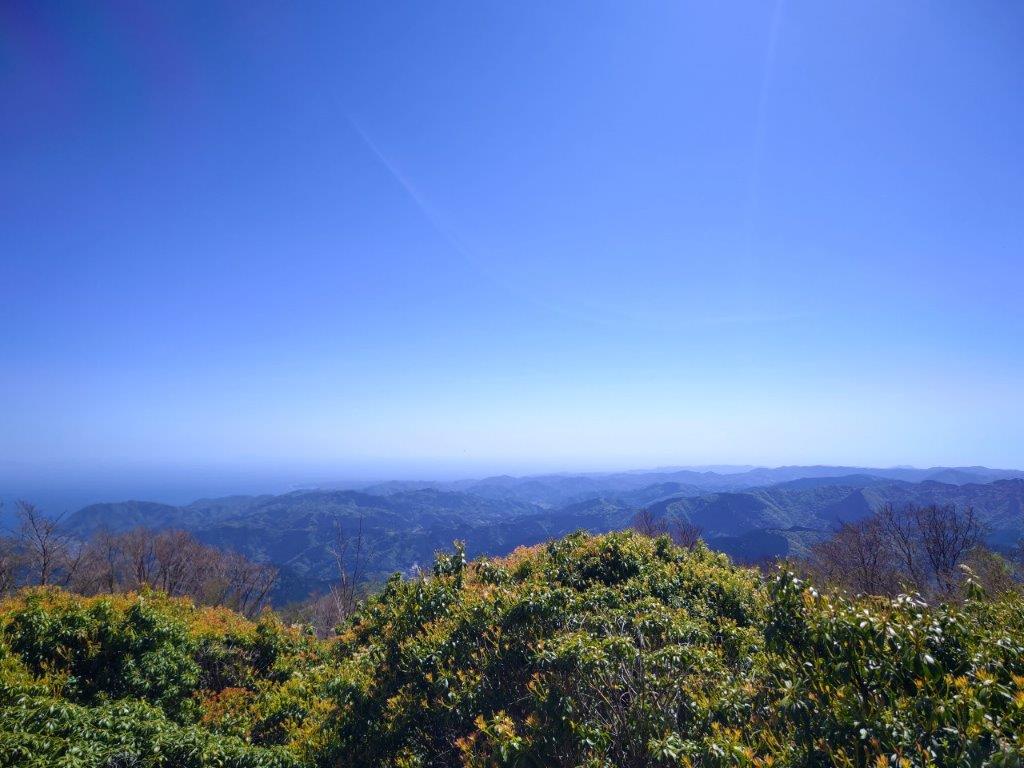
View of Mt Sekison from Mt Kannokura

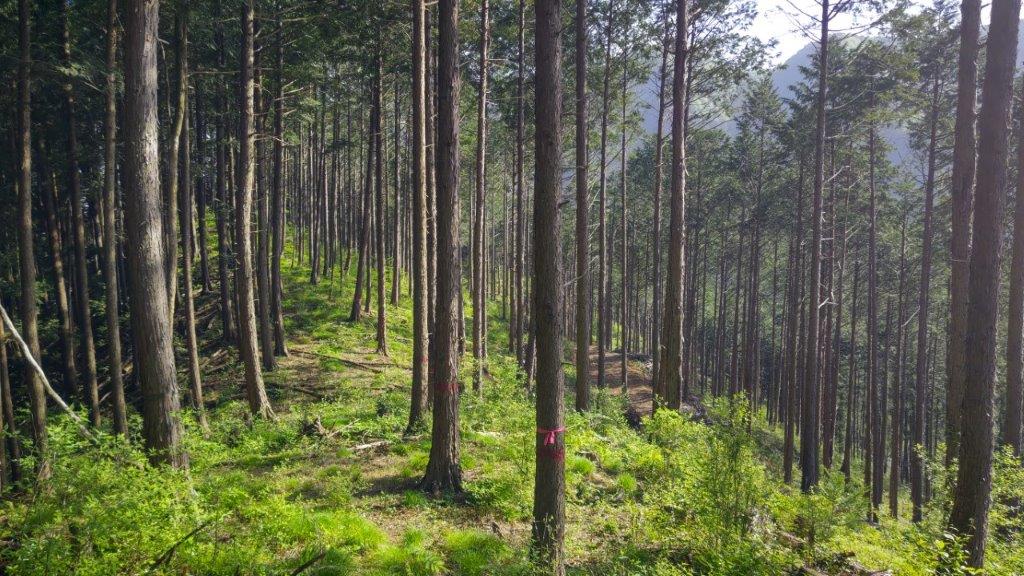
It felt very peaceful as I followed the up and down ridgeline trail, completely in the trees. At 1h30, reached the junction with my previous hike. From there, it was a short climb to the top of Mt Kannokura (官ノ倉山 かんのくらやま kannokura-yama). The clouds had reappeared and the view wasn’t as good as during my last visit. On the north side, I could see the Chichibu mountains and the Kanto Plain; directly ahead was the rounded peak of today’s final summit.
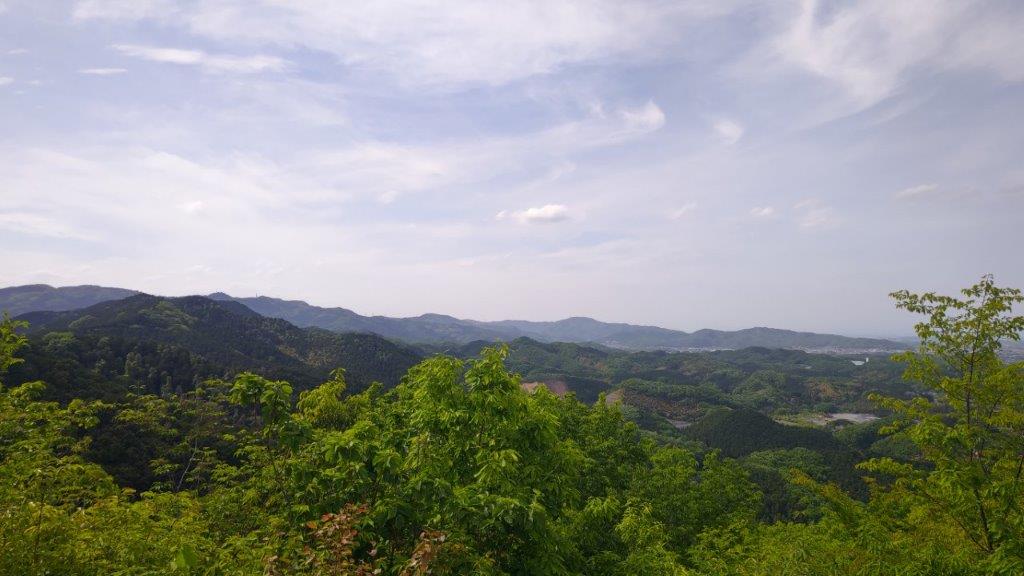
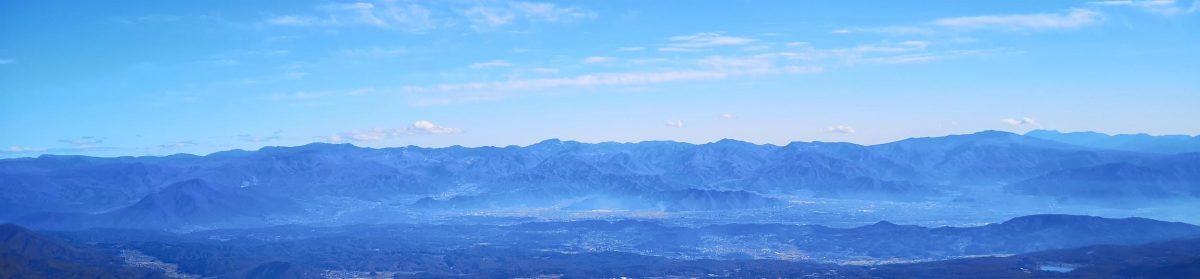
View North of Chichibu from Mt Kannokura

View of Chichibu and the Kanto Plain from Mt Kannokura

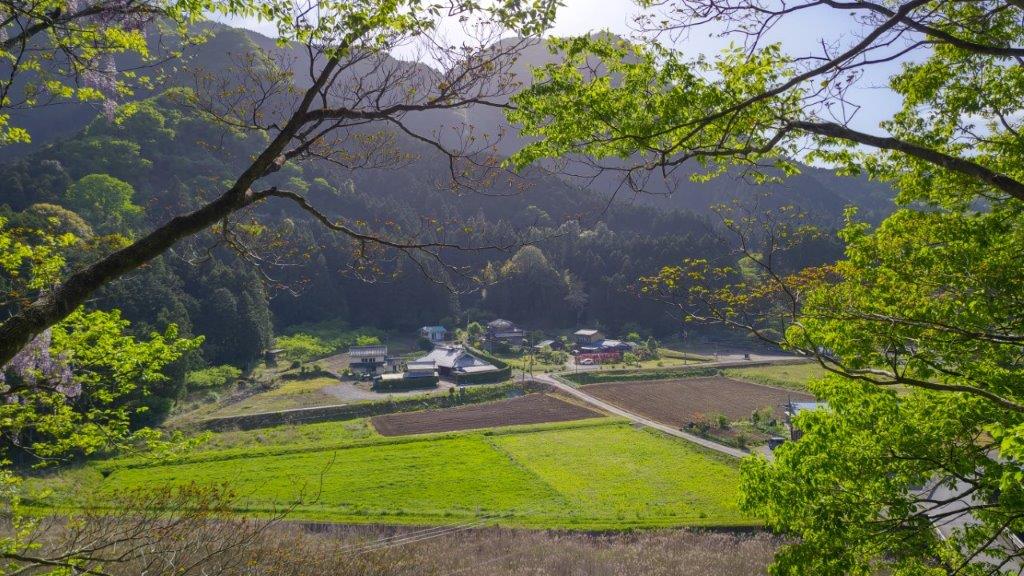
After a short descent, followed by an equally short ascent, I reached the top of Mt Sekison (石尊山 せきそんさん sekison-san) around 2pm. The view on the north side was similar to before, but now, I also had a view of Ogawa Town to the south. There were more hikers here so I quickly moved on. On my last hike, I had continued along a trail past the summit. This time, I retraced my steps a short way, and took a path heading down on the left side; although it wasn’t properly signposted, the trail was in good condition.
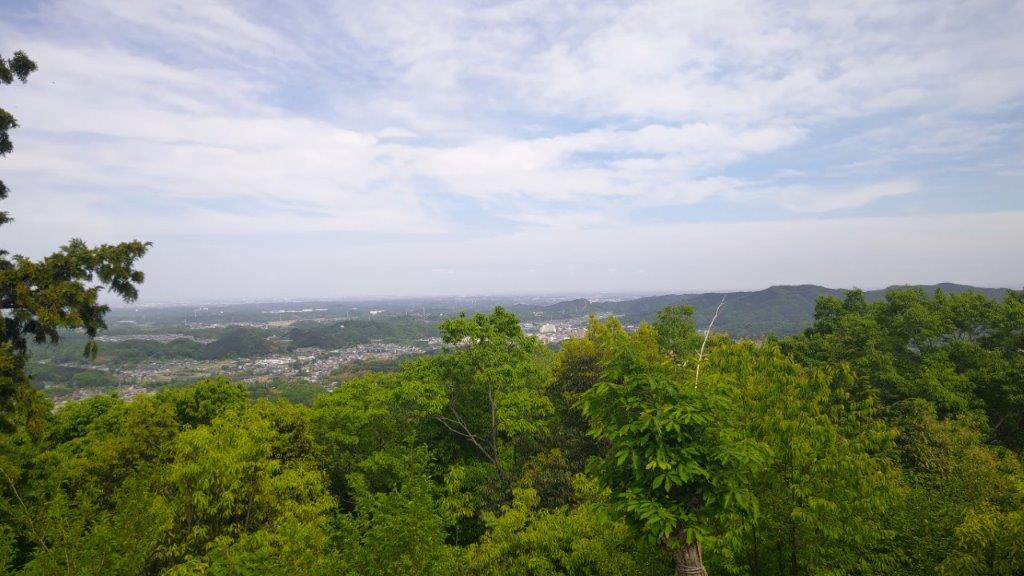
View of Ogawa Town from Mt Sekison

Hiking Down from Mt Sekison

Half way down, I passed through what seemed like a hidden valley: a grassy, flat area surrounded by trees, only the blue sky visible overhead. It was an interesting spot that wasn’t marked on the map. A short way beyond, I passed the ruins of an old fort, its access unfortunately closed off for some reason. I then descended a narrow valley with many Irises (“shaga”) along the way, and emerged onto a road just before 3h30. The bus stop was a short distance away; once back at Ogawamachi station, I caught the express train for the one hour ride to Ikebukuro.

A Hidden Valley on the Way Down from Mt Sekison
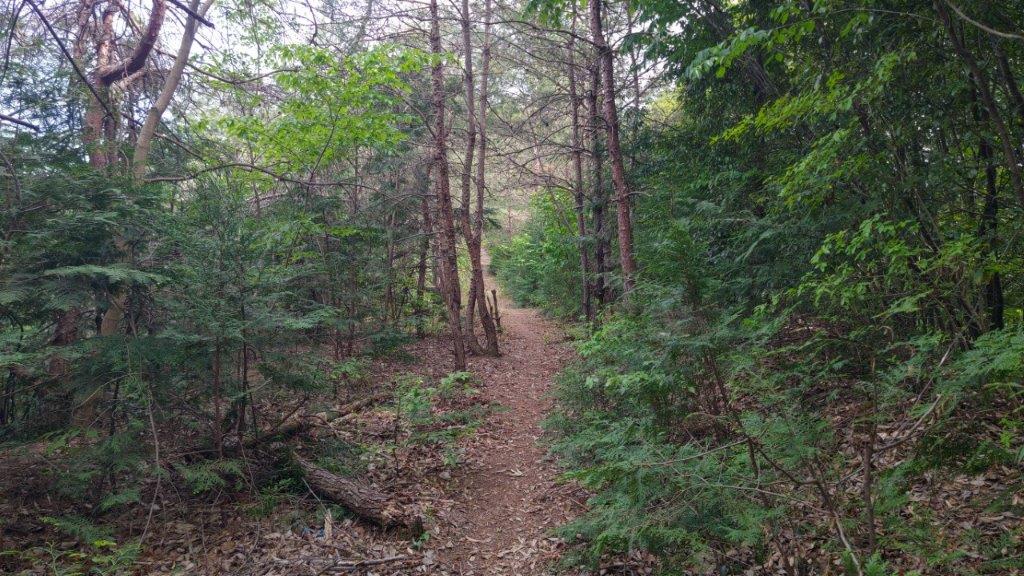
Easy Hiking Near the End of the Hike

I was glad to redo these mountains via a different route although the weather wasn’t as good as the first time, when I could see as far as Mt Akagi and Mt Haruna. Since it’s less than 4 hours, it’s a really short hike that can’t be stretched any longer without heading up another ridgeline; going up and down the route on the north side is even shorter, less than 2 hours. Next time, it might be interesting to head up in the winter for a clearer view, and also check out the nearby Michi no Eki, Washi-no-sato, as well as a local soba shop.

See a Video of the Mt Usuiri, Mt Kannokura and Mt Sekison Hike

See the video of the hike on Youtube

See a Slideshow of Some More Pictures of the Mt Sekison Hike
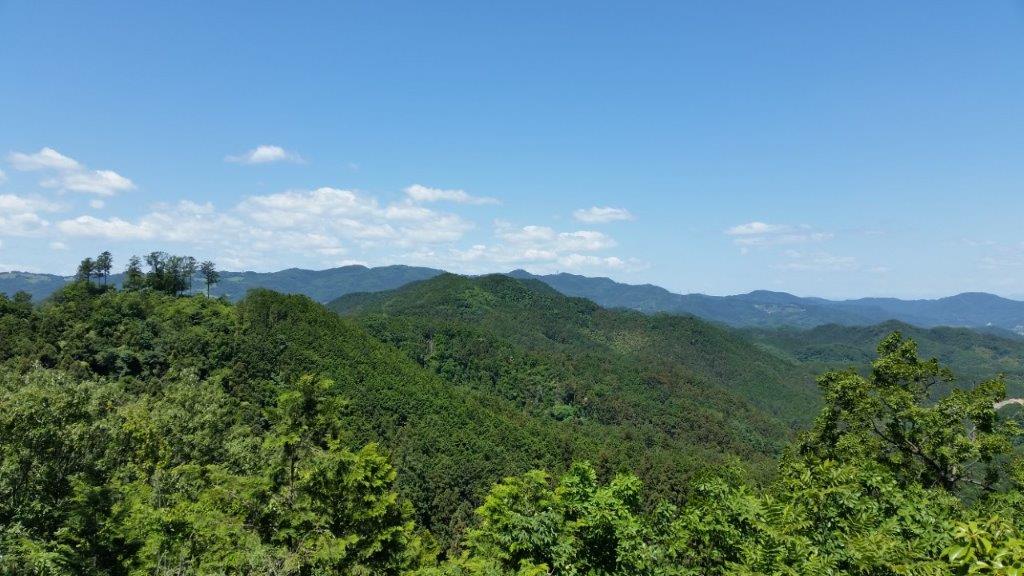
Mt Usuiri from Mt Kannokura (June 2016)

East Chichibu from Mt Kannokura (June 2016)
Mt Yagura (599m), Kanuma City, Tochigi Prefecture, Saturday April 22, 2023

Exactly five years ago, I had climbed Mt Mitsumine, a hike recommended in my mountains of Tochigi guidebook. Looking at my hiking maps, I noticed another peak directly opposite, not featured in my guidebook. Further research showed that the trail wasn’t in optimal condition, but since I was eager to revisit the area, I thought I would give it a go. I would take the Nikko line from Ikebukuro to Tochigi station, and from there, a bus to the Hoshino Archaeological site. I would take the most direct way to the summit, up the valley, and then return via the longer ridge route on the north side. For the return, I could take the same bus and train back. The weather was supposed to be good once again, and I was looking forward to a peaceful hike and some good views.

View South from the Summit

Trail-finding needed during the Descent

Carp streamers were flapping in the spring breeze as I waited for the minibus bus outside Tochigi station around 1030; I was the only passenger for most of the one-hour ride. I had a quick look at the Jomon era huts of the Hoshino Archaeological site (星野遺跡), and admired the stunning view of Mt Mitsumine directly opposite, before setting off a little after 11h30. Shortly past the village, I entered the forest and soon reached the start of the trail, following a disused forest road.

Mt Mitsumine from near the Trail Entrance

Obstacle Course up the Mountain

I had to clamber over, and pass under, countless fallen trees, before the path left the narrow valley, and headed directly up a steep slope. I had rarely experienced such a challenging and adventurous start, and without my phone GPS to show me the correct way, it would have taken a lot more time. I was glad when I finally reached a flat area on the top ridge, refreshingly cool in the shade of the new green of spring.

Flat Area on the Ridgeline

Nearly at the top (left) TV Antenna on the Summit (right)
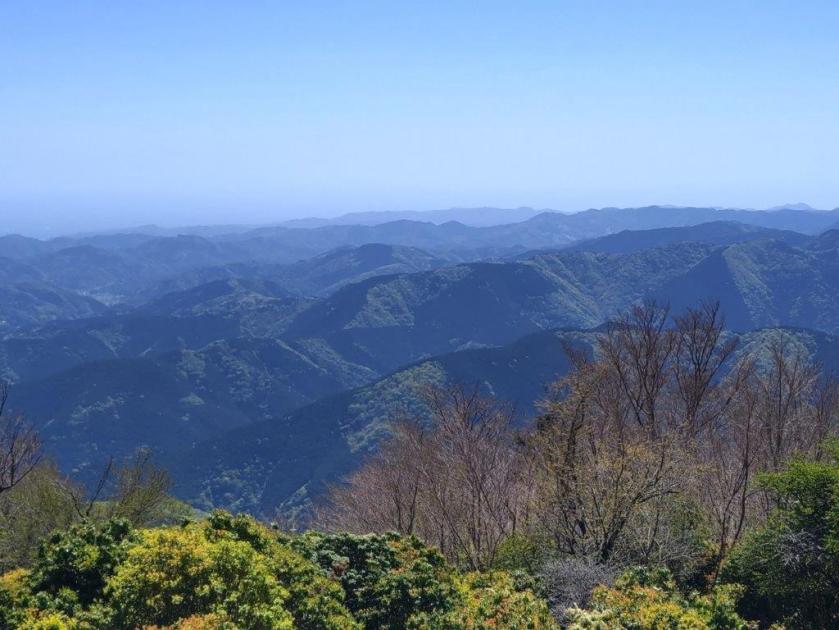
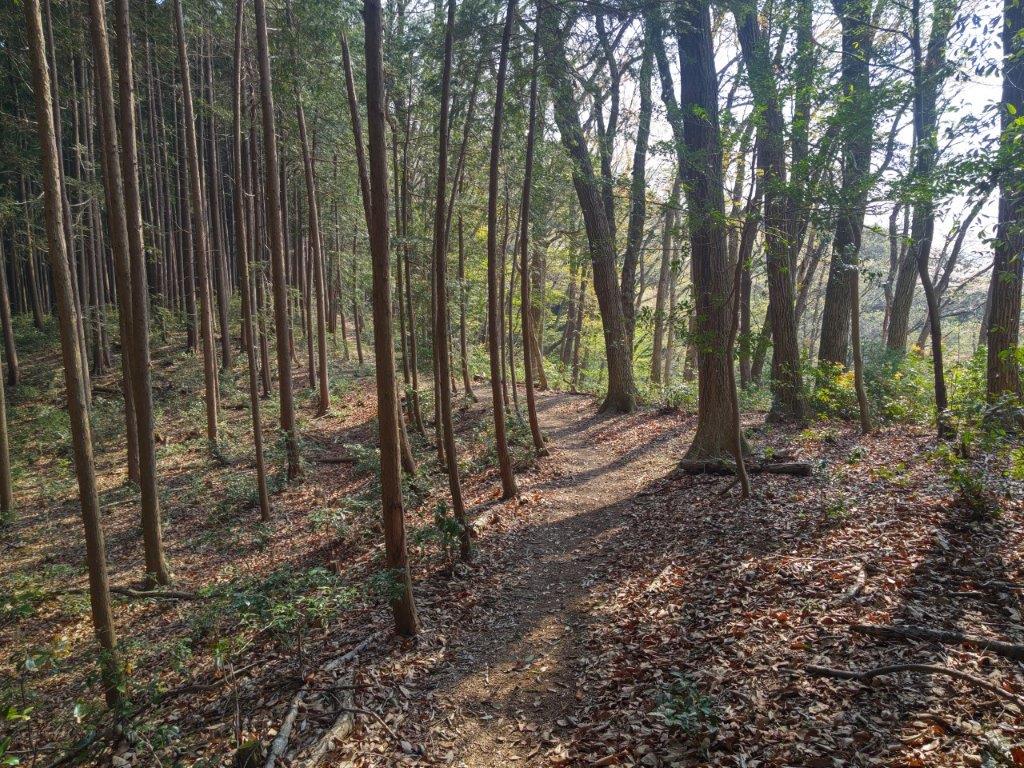
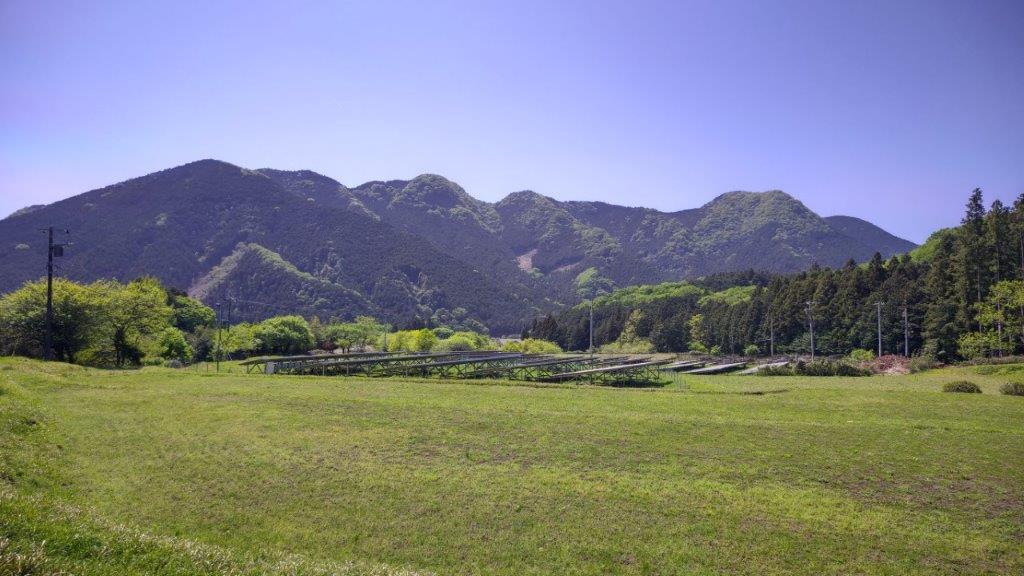
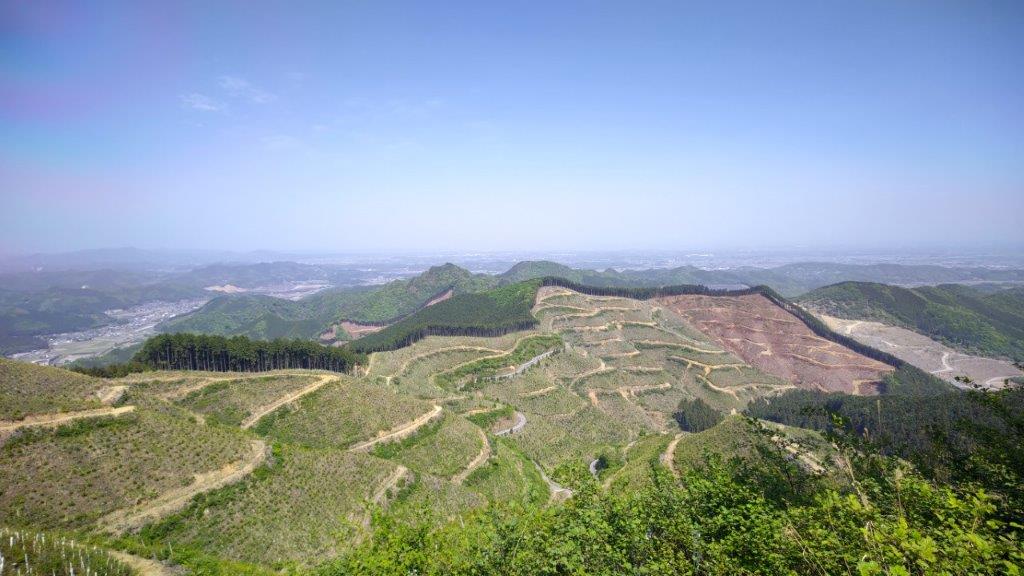
I was surrounded by bright red Azalea on both sides, as I followed the ridgeline southwards through the green forest. A little after 1pm, I reached the summit of Mt Yagura (谷倉山 やぐらさん yagura-san), a Tochigi 100 famous mountain. I dropped my pack next to the TV antenna, and went to enjoy the wide view on the other side: directly ahead, to the south, was the Kanto plain; on the east side, I could spot Mt Futamata in the distance.

View East towards Kanuma City

View West from the Summit

I was surprised to see that most of the trees on the south side had been cut down. I took a break for lunch, and at 2pm, retraced my steps past the spot I had joined the ridge, and from there continued northwards. After an up and down section, the path curved west and started to head down. Here again, the trail was hard to follow and I had to rely on my phone GPS. From time to time, I had glimpses of a flat valley and green hills on the north side through the trees. I saw no other hikers during the entire hike and it felt very peaceful.

Following the Ridgeline up and down

Walking down through the forest

I was nearly level with the base of the valley when the trail suddenly disappeared. After fighting my way through some thick bushes, I finally emerged onto a grassy path next shrine, just a few minutes from the bus stop. It was just past 3h30 and had a little time to cool down before catching the 4pm bus for Tochigi station, about an hour away from Ikebukuro by limited express.

Back in the Valley

Mt Mitsumine from the end of the Trail

Although this hike took only 4 hours, it could have taken longer without my phone GPS. It’s a shame that the trail sections near the start and finish are unmaintained and hard to find, although it does guarantee some solitary hiking. On the summit, I discovered an unmarked path following the southwest ridge, so it might be interesting to try that in the future, especially since it is relatively close to Tokyo.

Watch a Video of the Mt Yagura Hike

See a Slideshow of some more pictures of the Mt Yagura Hike

Noborio (1056m) & the Odoriko Trail, Kawazu Town, Shizuoka Prefecture, Sunday, April 16, 2023

During my Shimoda trip, I was reminded of the Odoriko Trail in Kawazu, inspired by the Dancing Girl of Izu novel. Although I was interested in hiking its entire length (18.5 km), I also wanted to climb a summit in the area. I had found a nearby peak in my mountains of Shizuoka guidebook, which I could combine with part of the Dancing Girl Trail. Apparently the upper part of the trail was hard to follow, so I would need to rely on my phone GPS to stay on track; on the other hand, the Odoriko trail was supposed to be well signposted and easy to follow. After riding the Shinkansen to Mishima, and then a local train line to Shuzenji, I would take a bus to a stop just past the Amagi Pass Tunnel, and then walk up a road towards Hatcho Pond to the trail entrance. After reaching the summit and heading back along the same path, I would follow the Odoriko Trail to Kawazu Nanadaru, or the 7 waterfalls of Kawazu, from where I could catch the same bus back to Shuzenji. The weather was supposed to perfect all day so I was looking forward to a relaxing hike in a familiar area.

Hiking in the Fuji-Hakone-Izu National Park

富士箱根伊豆国立公園

First glimpse of Noborio

View of the Izu Peninsula from near the Summit

It was a blue-sky spring day as I rode the empty bus up towards Amagi Pass tunnel. The stop was next to a parking with an open shelter, so I could sit down and get ready for my hike. At 11am, I headed up some steps through the forest and soon reached a minor road, part of the Odoriko trail. There, I turned left, and after a few minutes, arrived at Nikai Waterfall (二階滝). It was hard to see it well even with the observation deck, so I quickly moved on, reaching Kanten bridge and the road for Hatcho Pond shortly after.

Past Kanten Bridge (left) Under the Cedars (right)

View of Noborio from the Road to Hatcho Pond

It was an enjoyable walk, alongside a rushing river, surrounded by trees covered in new green, and occasionally passing under tall cedars swaying in the spring breeze. Just before noon, at a bend in the road, I had my first views of today’s peak, at the end of an undulating ridgeline, part of Amagi Volcano. Shortly after, I spotted a signpost for the start of the trail on the right. After crossing the river on a small wooden bridge, I headed straight up the mountain through the cedars, and upon reaching a pass, turned right along the wide ridgeline.

View of the Noborio Summit Ridge

River Crossing near the Trail Entrance

From this point, the trail became faint, requiring me to rely on my phone GPS. The wind started to blow in gusts, and although the sun was shining directly above, it actually felt a bit chilly. From time to time, I had glances of the Pacific ocean through the cedars on the east side; further on, I had a glimpse of Mt Fuji, through trees still bare of leaves to the west. A little before 1pm, I reached the top of Noborio (登り尾 のぼりお), a 100 famous mountain of Shizuoka. It was completely in the trees, but a short distance from the summit marker, I found a viewpoint on the southeast side.

Some Trail-finding needed along the Ridgeline

View of Kawazu and Eastern Izu

I had an stunning view of southeastern Izu, rows of green ridges ending at the Pacific ocean. Directly below, I could see the Kawazu Nadadaru Loop Bridge, close to the end of today’s hike; far away to the south, I could make out the top of Mt Nesugata. After a break, I headed back the same way, faster now, since I knew the way. I enjoyed the peace and quiet of the surrounding forest, within the confines of the Fuji-Hakone-Izu National Park; no other hikers had ventured along this lonely ridgeline. At 2pm, I was back on the road, and half an hour later, was finally walking along the Odoriko Trail, the road soon turning into a wide gravel path.

Walking the Odoriko Trail

Hiraname Falls along the Odoriko Trail

It was a pleasant ramble in the shade, welcome on a warm day, the path lazily hugging the valley side. Suddenly, the trail turned right, crossed the Shuzenji-Kawazu road, and after a short descent through the forest, arrived at the impressive Hiraname Falls (平滑の滝) on the Kawazu river. It was a little past 3pm and I was right on schedule, so I stopped for a break in this sunny, secluded spot. I soon set off again and crossed a wooden bridge, passing above fenced wasabi fields along the river. The next part was more adventurous, following the steep valley side along metal walkways and wooden staircases. At 4pm, I was walking on a straight path under towering cedars.

Kawazu River from the Odoriko Trail

Nameless Waterfall along the Kawazu River

It felt like I was walking down an ancient avenue, perhaps the part of the hike that most reminded me of the Dancing Girl of Izu story. After rounding a bend, I arrived at the top of a long wooden staircase taking me down to Saruta Depth (猿田淵), a deep pool of water on the Kawazu river, a foretaste of the seven falls to come. Further downstream, I reached a junction for the thundering Kama-daru fall (釜滝). I only had a little time before my bus back and since I had seen all 7 falls on a previous trip, I erred on the side of caution. I turned left, up the steps leading out of the deep valley, arriving at the bus stop at 4h30. Two hours later, I was back in Mishima, a one hour ride with the Kodama shinkansen back to Tokyo.

Walking the Odoriko Trail between Kaname Falls and Kawazu

Walking down to Saruta Depth

The whole hike took less than 6 hours, which is about as long as one could hope for considering the the distance and travel time from Tokyo. If I had been a bit faster, I could have walked past the seven waterfalls, about 1km, and caught the bus further down the road; it would have brought the total tally of waterfalls on the hike to ten. The hike up and down the Noborio ridge was a pleasant surprise; it’s hard to imagine one getting lost on the short section without a proper trail, but the GPS ensured it went smoothly. Another surprise is that I saw no other hikes all day, even along the Odoriko trail. I hope to return one day to explore the other half, through the Old Amagi tunnel (headlight required) although I doubt I will get to see as many falls as today.

Watch a Video of the Mt Noborio and Odoriko Trail

See a Slideshow of More Pictures of the Hike

Mt Kuro (798m), Kannami Town and Atami City, Shizuoka Prefecture, Sunday, April 9, 2023

I found out about this peak along the Izu skyline while researching my trip to Shimoda, and resolved to climb it on a future hike. Looking at my map, I saw I could traverse from west to east, starting from the side closest to Mishima city, and ending on the Atami side. It seemed like a relatively short hike, but I knew the views would be amazing on a clear weather day. I would take the shinkansen to Atami, then transfer to the Tokaido line for a couple of stops to Kannami station, and there board a Tokai bus to a stop just a short distance on foot from the trailhead. At the end, I could catch a bus back to Atami station from near the trail entrance. The forecast called for blue skies all day, and so I was looking forward to some Mt Fuji views along a relatively easy hike.

Hiking in the Fuji-Hakone-Izu National Park

富士箱根伊豆国立公園

View between Kori Pond and the Mt Kuro Viewpoint

Bench with a view close to the Mt Kuro Viewpoint

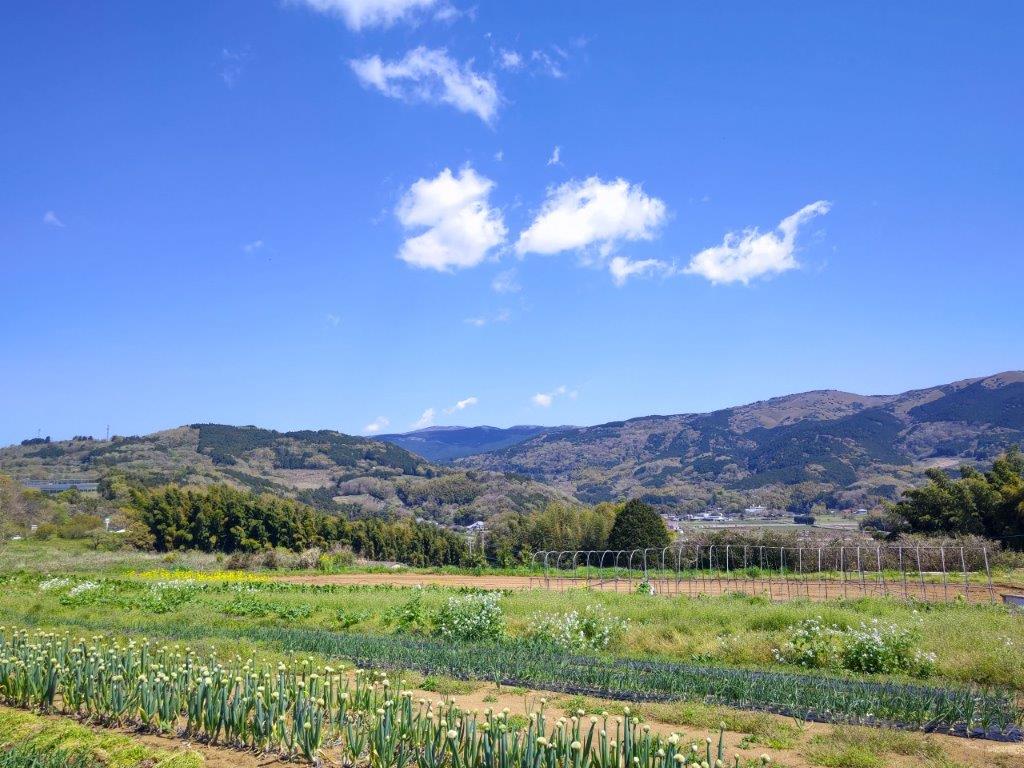
I enjoyed the view of the the cherry blossoms in full bloom while I waited for the bus at Kannami station. After a short ride, I got off at a stop in the middle of the fields, opposite an “honor system” vegetable stand, and after getting ready, set off along quiet country lanes, a little before 11am. I was in high spirits, excited to explore an area I had never been to before.

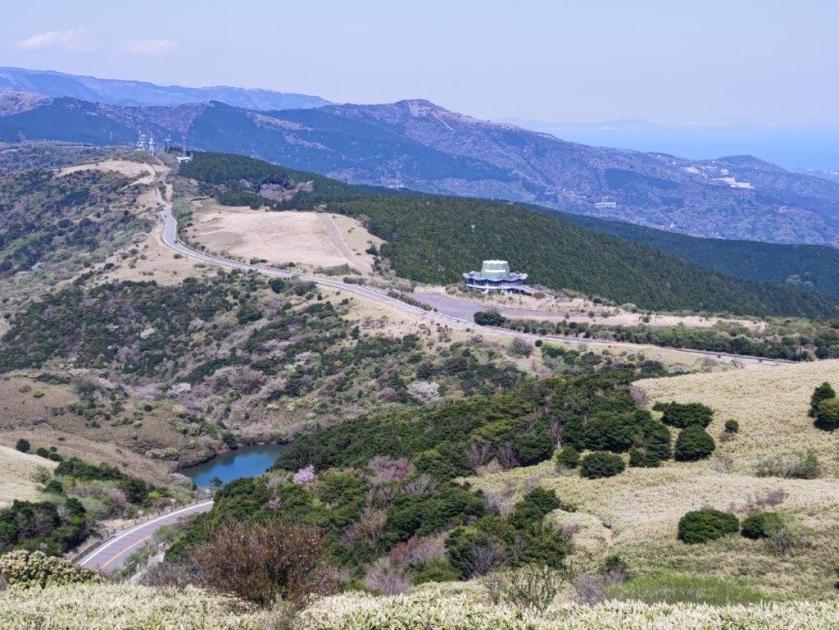
View of the Izu Skyline from near the Tanna Fault

Cherry Blossoms in Full Bloom near the Trail Entrance

On my left, I had a view of the green, undulating ridgeline along which ran the Izu skyline and which I would soon be climbing; behind me, was Mt Fuji, still wearing its snowy winter coat. I soon passed through Tanna Fault park (丹那断層公) commemorating a massive earthquake that hit the area nearly 100 years ago, a sobering reminder of nature destructive power.

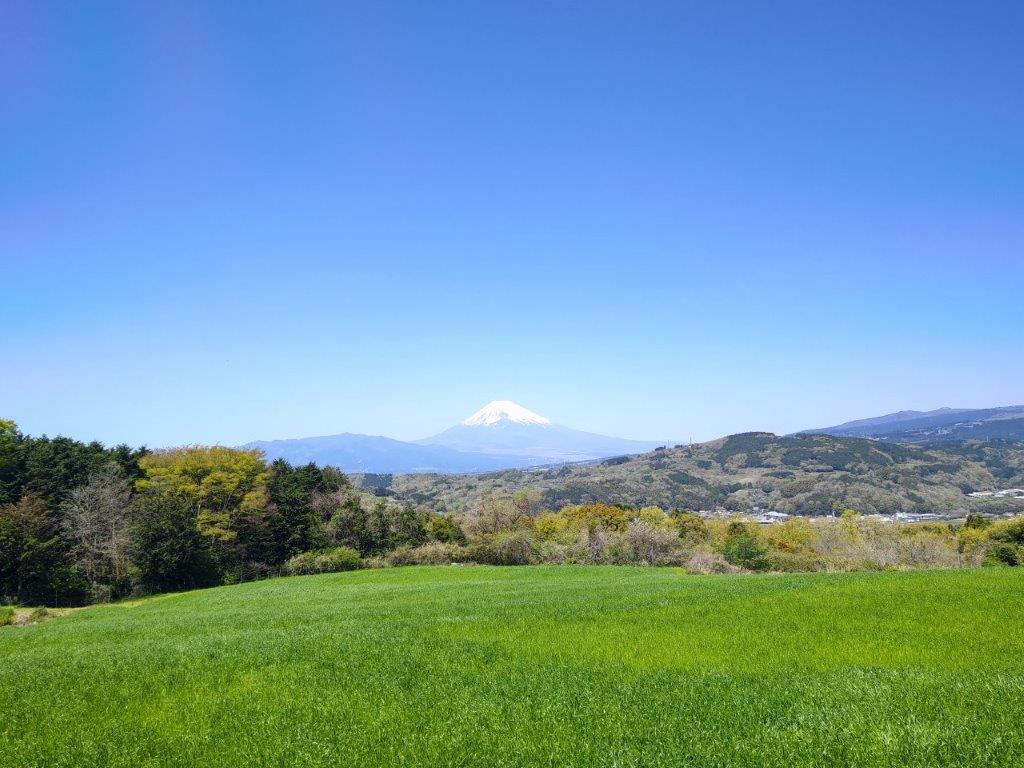
Green Meadows and White Volcanoes

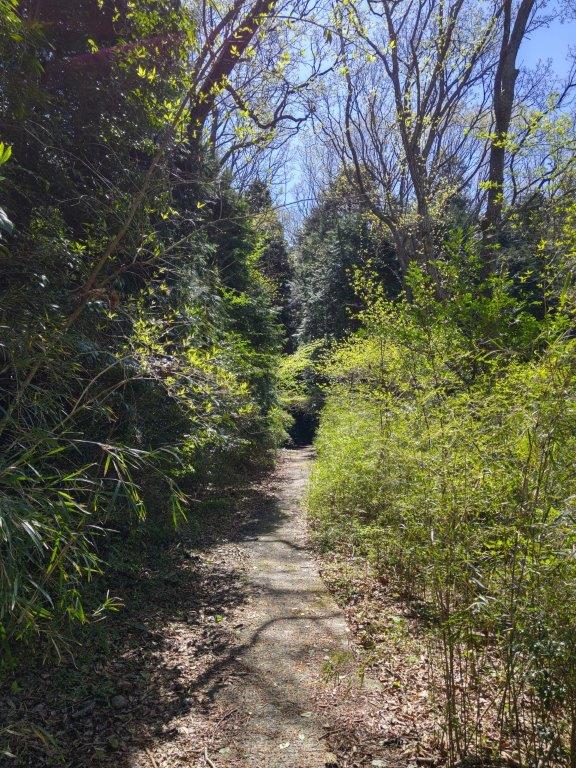
Sun & New Green (left) Tall Cedars & Shade (right)

Later, I passed some green meadows, reminding me of Switzerland, except for the solitary yaezakura (“double-layered cherry blossom tree”) in the foreground and Mt Fuji in the background. At 11h30, I reached the trail entrance, and after climbing through mixed forest, towering cedars, and finally a bamboo grass tunnel, I reached Kori pond (氷ヶ池), located under a curve of the Izu skyline.

Rocks on the Trail (left) Through the Bamboo Tunnel (right)

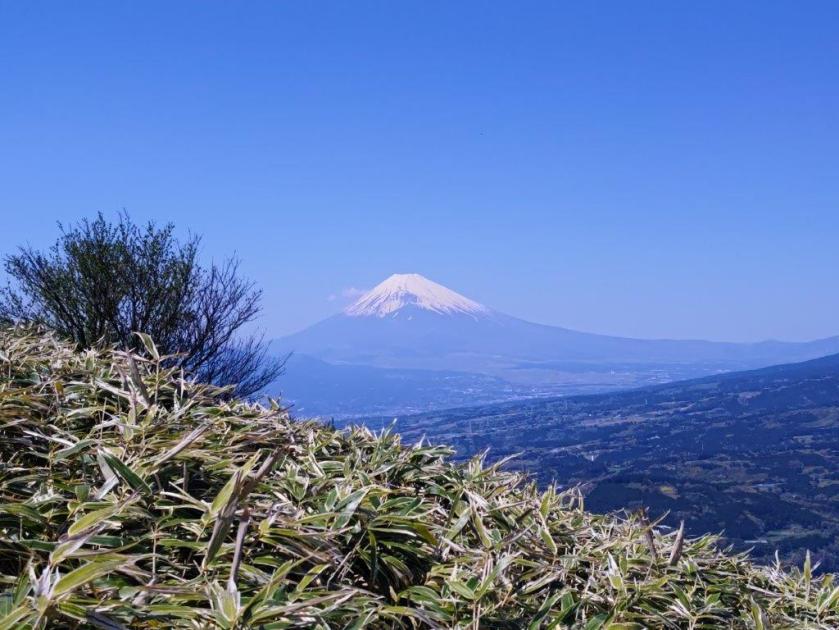
First Glimpse of the Summit

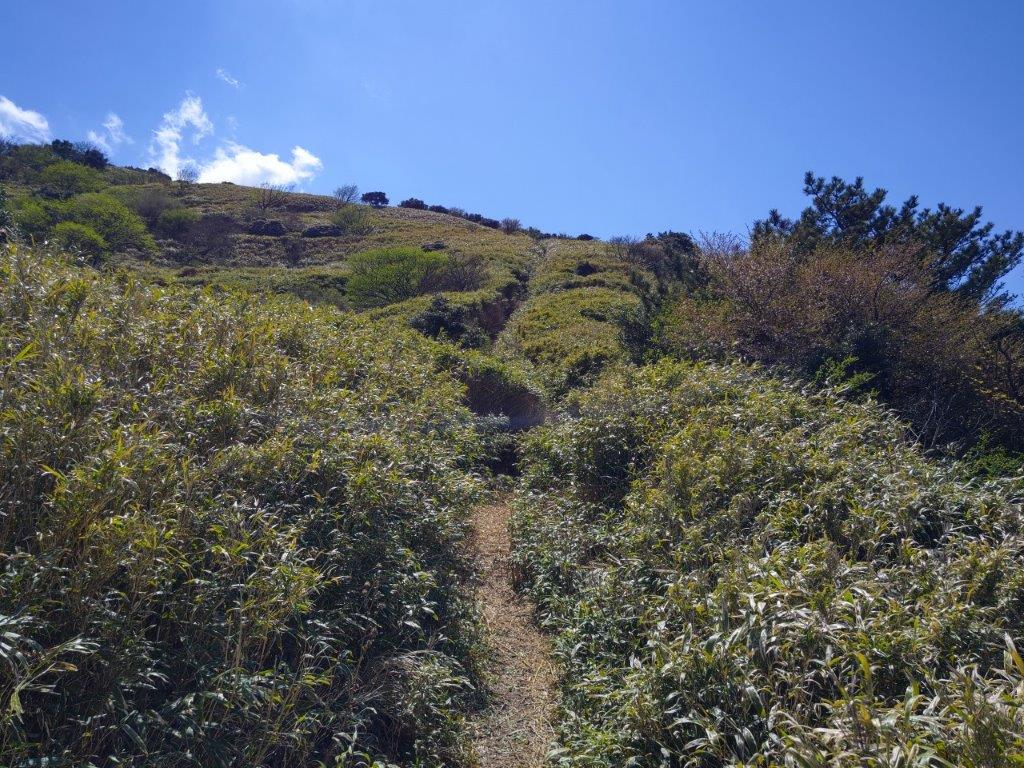
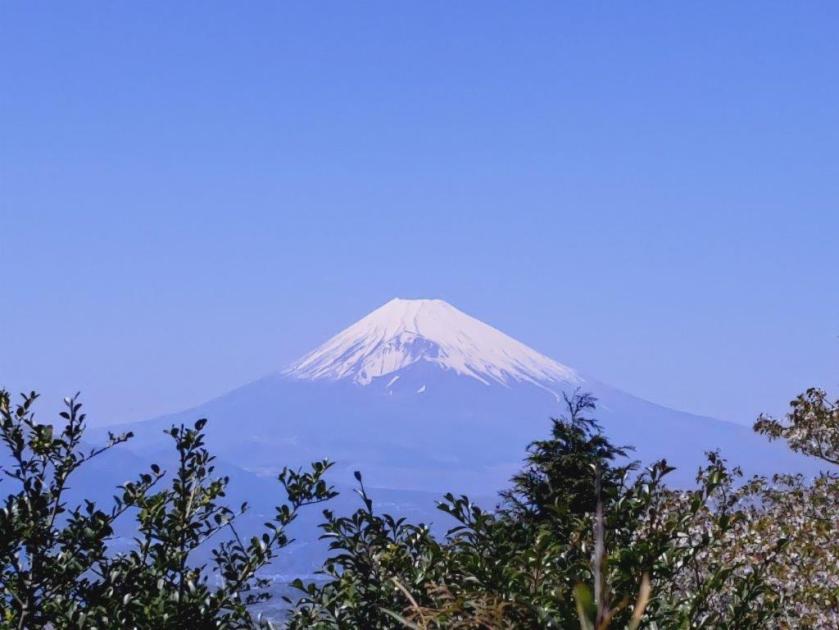
I gazed in wonder at the magical view of Mt Fuji rising above the pond. After a short break, I made my way back along the pond side to an intersection passed previously, and then up a steep path, equipped with rope for safety. The bamboo grass was much shorter now, and a panoramic view of the entire area was slowly emerging all around me. I turned around frequently to admire the view of Hakone volcano on the north side.

Mt Fuji and Kori Pond

Trail Alongside Kori Pond

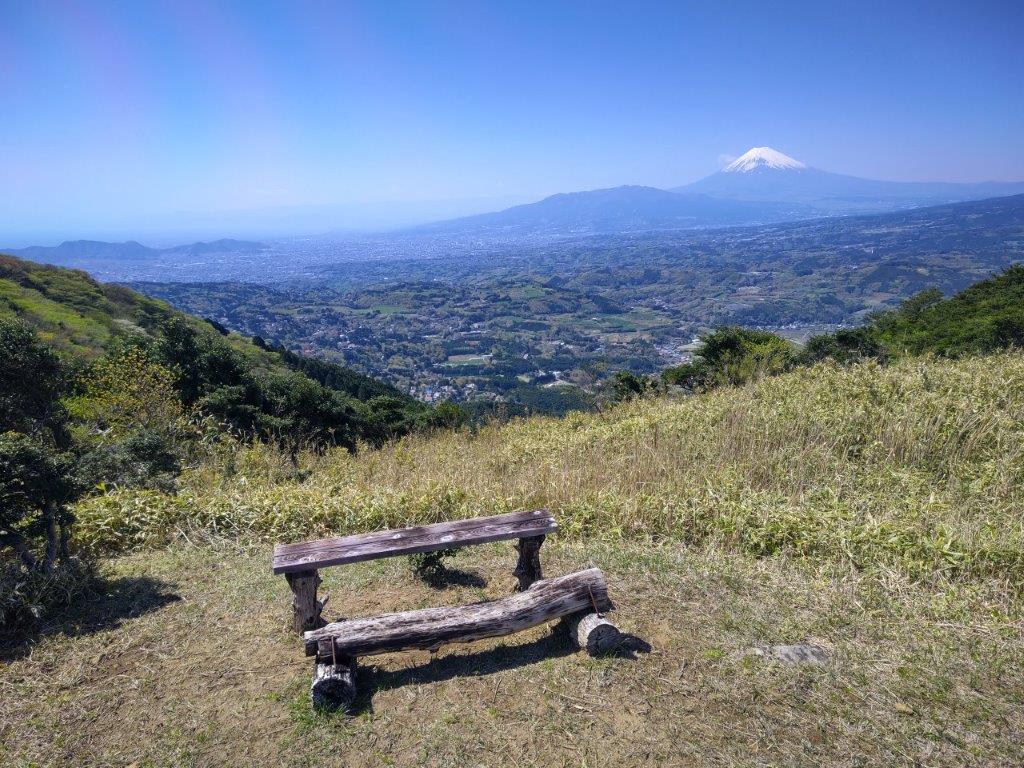
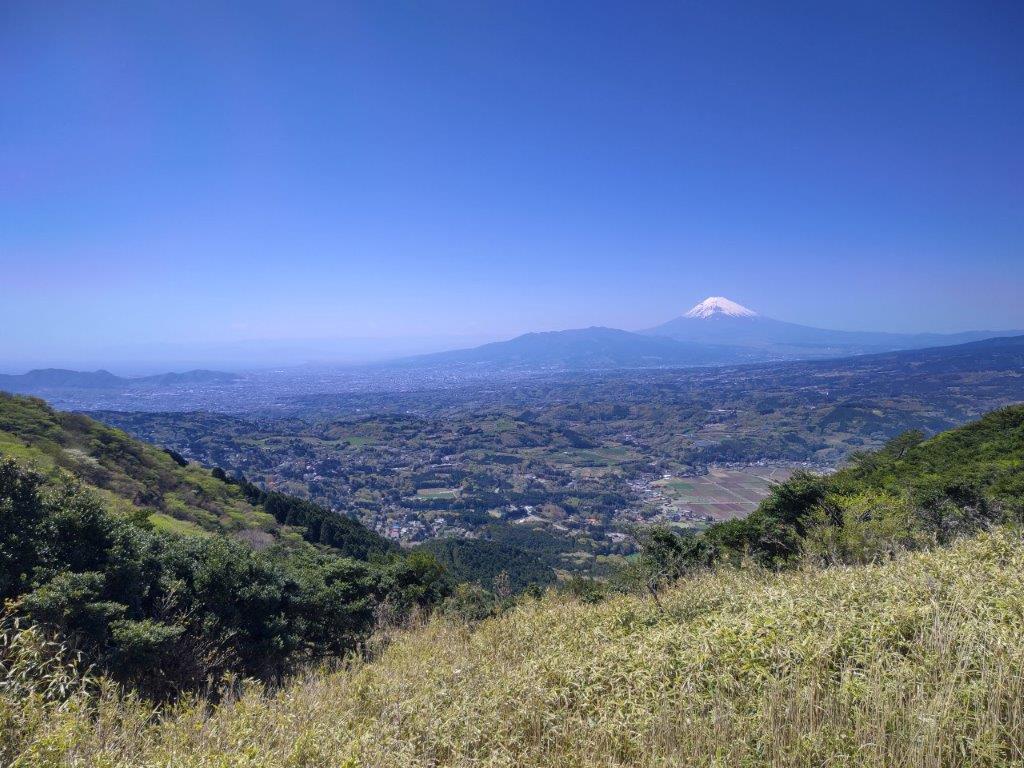
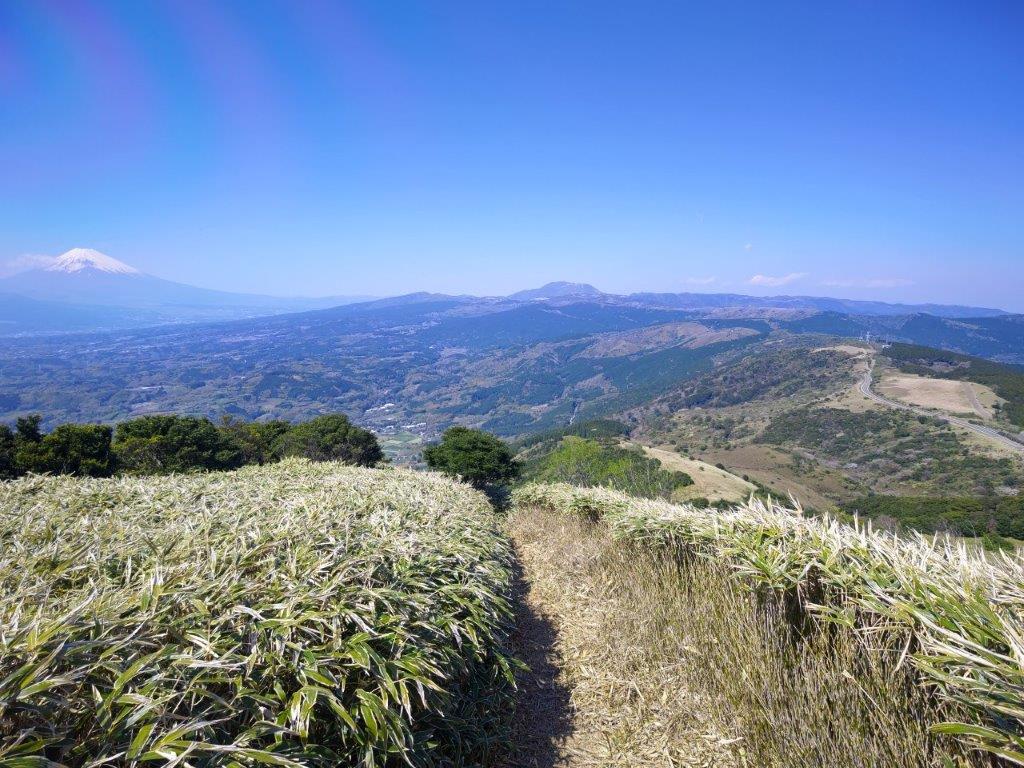
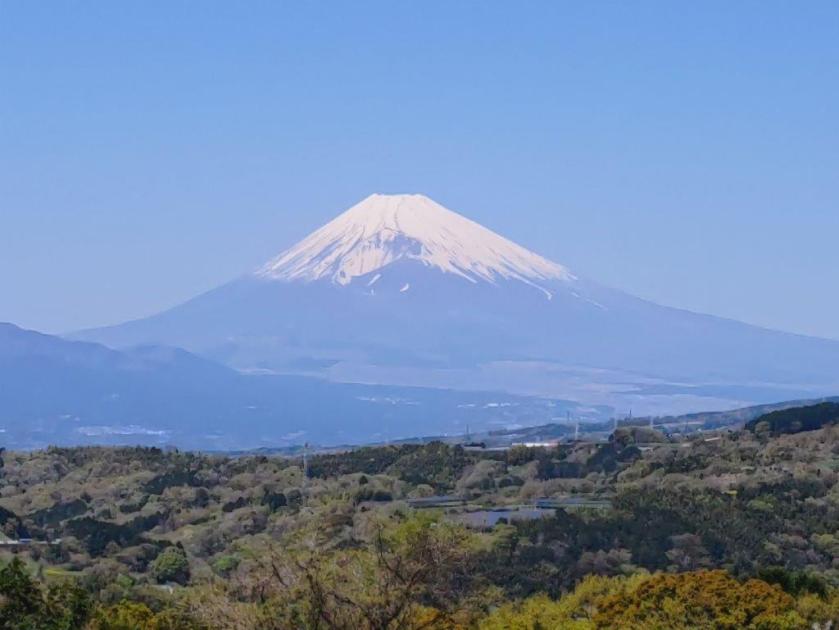
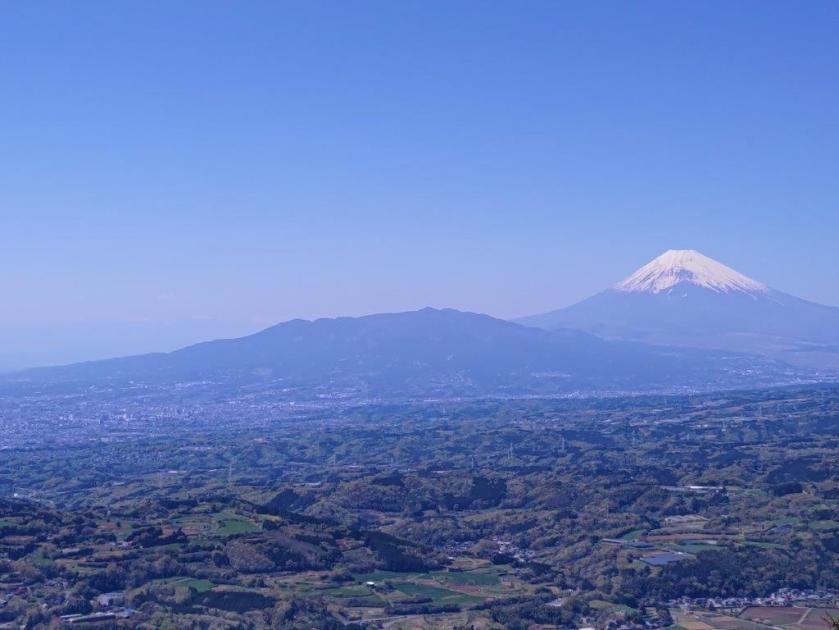
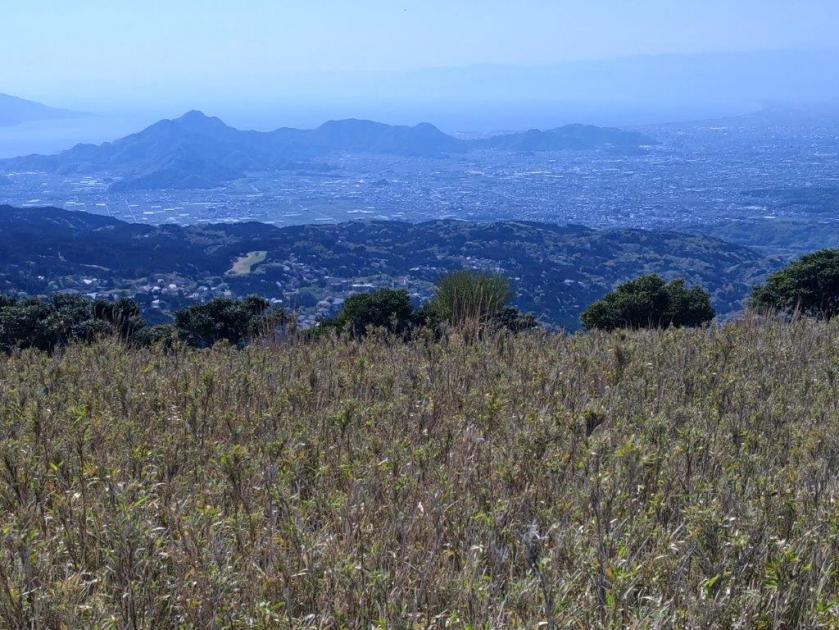
At 1pm, I reached the best view of the day: a single bench just a few minutes away from the Mt Kuro Second Viewpoint (玄岳第二展望台), which I had visited by car in the winter. Directly ahead was Mt Fuji, with Mt Ashitaka on its left, and Mt Hakone on its right; beyond was Suruga bay and the Minami Alps. Looking down, I could see the dark green lowlands stretch all the way to Numazu City.

View of Hakone Volcano above Kori Pond

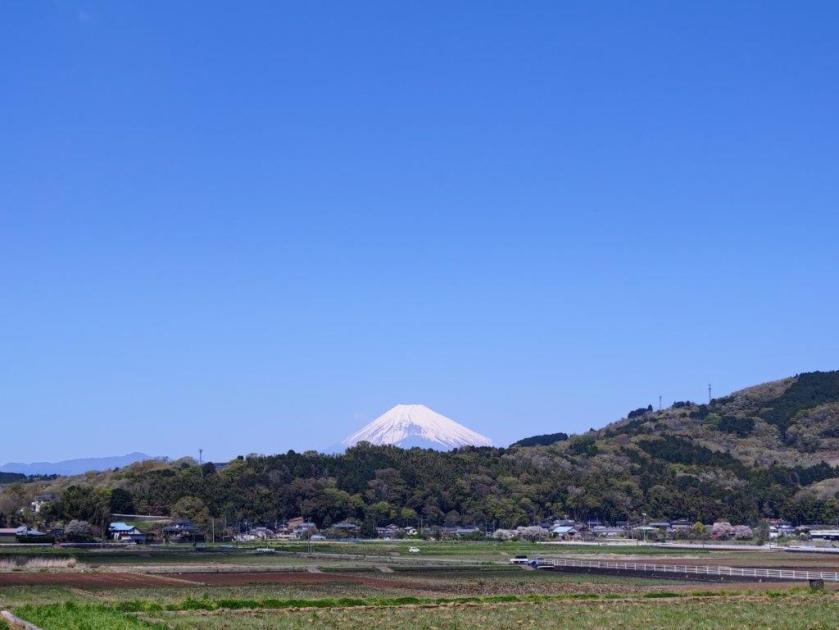
View of Mt Fuji, Mt Ashitaka (center) and the Numazu Alps (left)

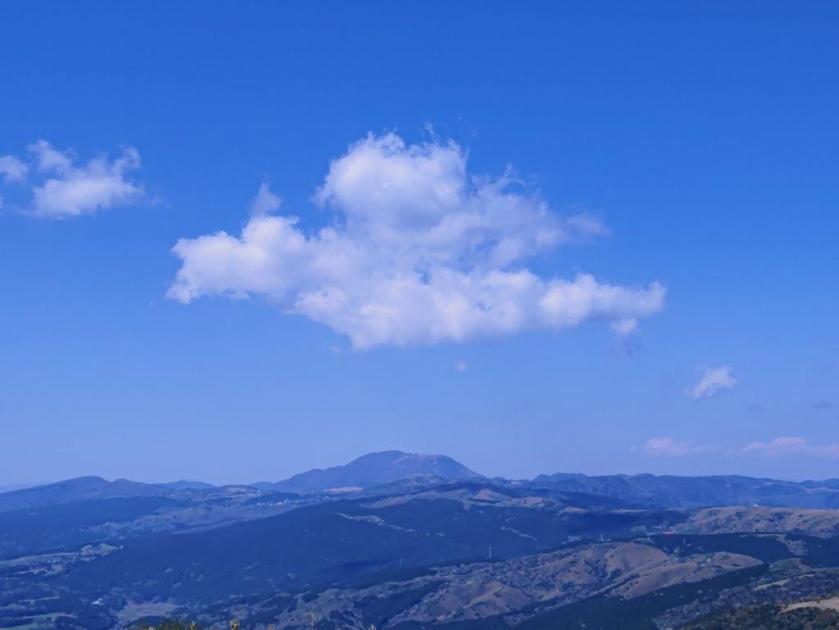
I waited for a break in the procession of roaring motorbikes before quickly crossing the skyline, and then proceeded up the final climb. As I made my way up the grassy, rounded summit, the view gradually opened up on the south side, and I could now see the Numazu Alps and the mountainous interior of Izu peninsula, culminating in Mt Amagi. At 1h30, I reached the flat top of Mt Kuro (玄岳 くろたけ kurotake), a Shizuoka 100 famous mountain.

Final Climb to the Summit

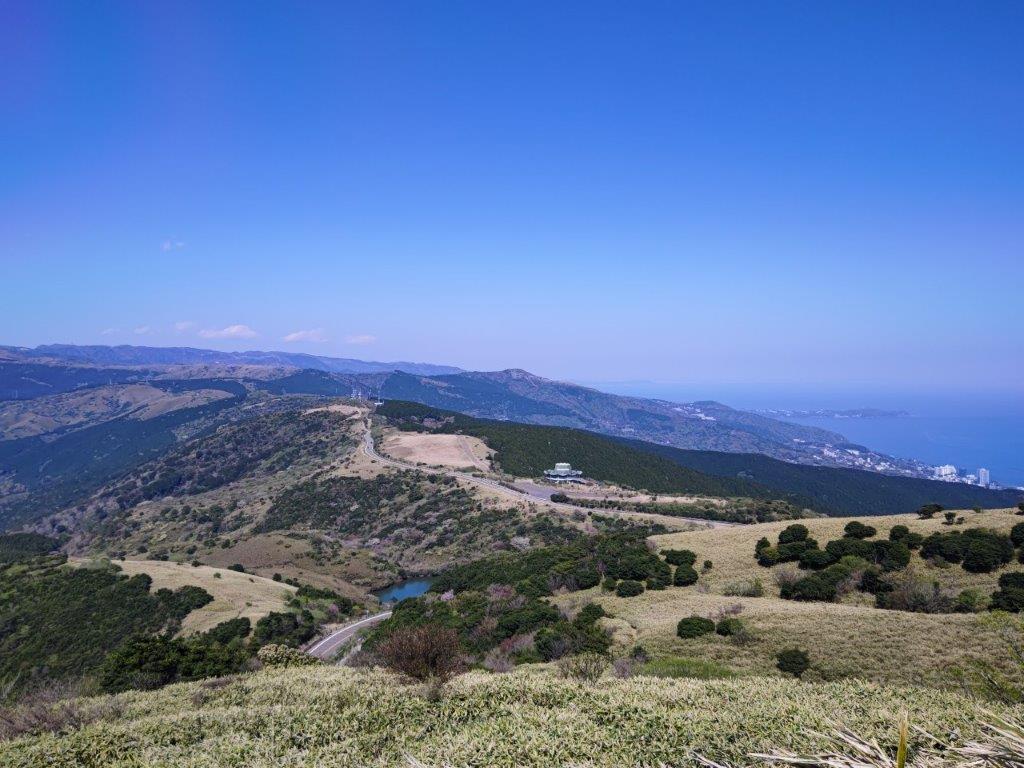
Looking Back at the Izu Skyline and Atami Resort

Curiously, the view was slightly less dramatic from the top, since I no longer had the soaring views looking down at the flat coastal area, nearly 800 meters below. I had the summit entirely to myself, most people preferring the drive the skyline and enjoy the views from the many parking areas along the way. I took a break for lunch, enjoying the picture-perfect view of Mt Fuji and the comfortable early spring weather. At 2pm, I headed down a path on the north side.

Panoramic View of the Fuji-Hakone-Izu Area

Nearly at the Top

As I walked down, I had a bird’s eye view of Atami resort and the coastline of eastern Izu. Here and there, yamazakura (mountain cherry blossom tree) in full bloom dotted the mountain side. The peace and quiet was often interrupted by the revving of engines; I picked up the pace so I could get to the quieter side of the mountain. I tarried a short while in a spot with plenty of asebi (Japanese Andromeda flower; by 2pm, I was following a trail down through mixed forest.

View of Mt Fuji and Hakone

Heading Down to Atami

I savoured the silence and relished in the new green of spring surrounding me in all directions. Just before 3pm, after passing a bamboo forest, I reached a steep downhill road at the edge of a town, which I followed into the valley, till it merged with a wider road with a bus stop. Once back at Atami station, I boarded the shinkansen for the lightening fast 45-minute trip back to Tokyo.

Easy Hiking Through Mixed Forest

Bamboo Forest at the End of the Trail

In December 2022, I drove along the Izu Skyline between Atami and Mt Amagi and was impressed by the many viewpoints on both sides. It was a good season to drive there since the weather was clear and not too cold, and there was relatively little traffic. In the future, I’d like to do it in reverse so that I can better enjoy the views of Mt Fuji.

View of Kori Pond from the Izu Skyline (Dec 2022)

View of Atami from the Izu Skyline (Dec 2022)

I was very satisfied with the hike mainly because of the great views but also because of the near total absence of other hikers. If I were to redo it, I would probably go by car and start from the Mt Kuro viewpoint, since it’s possible to do a loop hike with all the views.

Watch a video of the Mt Kuro Hike

See the View from the Izu Skyline (December 2022)

See a slideshow of other pictures from the Mt Kuro Hike

Mt Monomi (375m), Mt Sukari (435m), Mt Fukazawa (350m) & Mt Atago (250m), Moroyama Town and Hanno City, Saitama Prefecture, Saturday, April 1st, 2023

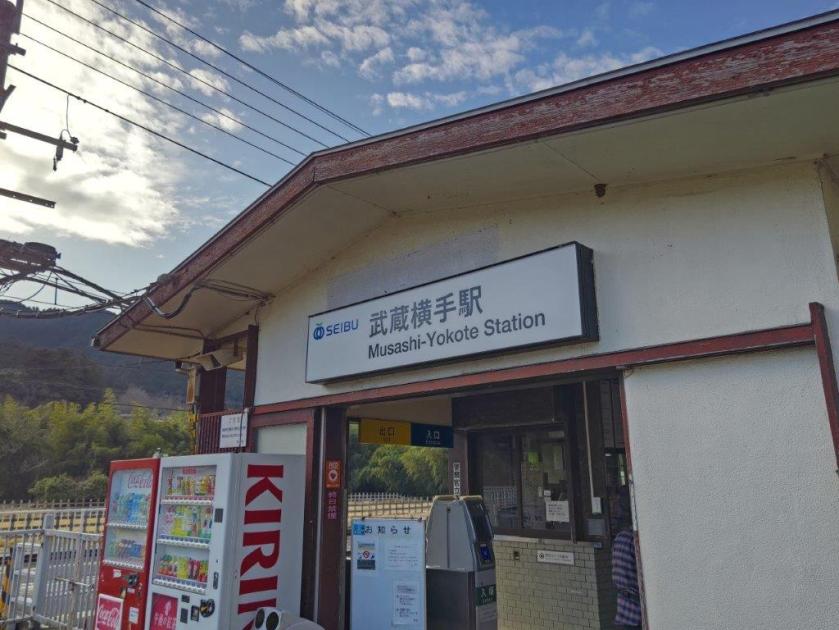
I wanted to do a hike close to Tokyo to enjoy the cherry blossoms in full bloom. I decided to go to Oku-musashi and climb Mt Monomi for a second time. The first time, I had done a roundtrip from Mt Hiwada; this time, I would do a traverse from Lake Kamakita to Musashi-Yokote Station. I could get to the start of the trail by taking the Tobu line to Higashi-Moro station, then walk to the Moro Town Hall, from where I could catch the “Moro Bus Yuzu-go 1” to the lake; for the return, I would use the Seibu-Chichibu line. Once again, the forecast called for sunny weather and comfortable temperatures, and so I was looking forward to a relaxing spring hike close to home.

Trail between Shukuya Waterfall and Mt Monomi

View from the top of Mt Sukari

I was greeted by a flurry of pink petals as I got off the yellow mini-bus at Kamakita Lake just after 11am. After enjoying the “sakura” trees in full bloom, I set off along the Shukuya-Kamakita Hiking Route (宿谷鎌北湖ハイキングコース), arriving at Shukuya Waterfall (宿谷の滝) around noon. I was impressed by the wild beauty of this river valley, especially since it was so close to Tokyo. I followed the river upstream, sunlight streaming through the treetops. I soon arrived at the Shukuya small waterfall (宿谷小滝), a local power spot. After charging up, I left the river behind, and continued up a steep ridgeline.

Cherry Blossoms next to Kamakita Lake

A secret cherry blossom spot close to Tokyo

I had my first views of the day after reaching an area cleared of trees, near the top part of the ridge. At 1pm, after crossing a road, I arrived at the top of Mt Monomi (物見山 ものみやま monomi-yama), almost completely in the trees. After a short break, I turned right onto a wider trail through the cedars, and soon reached a crossroads at Kitamukijizo (北向地蔵), intersecting with my previous hike in the area. I continued along the Oku-Musashi Green Line for a while, before taking a trail on the right, passing the top of Mt Kannon-ga-take (観音ヶ岳 425m), and then arriving at the nearby summit of Mt Sukari (スカリ山 すかりやま) around 1h30.

Trail above Kamakita Lake (left) Shukuya Waterfall (right)

Hiking the Shukuya-Kamakita Lake Trail

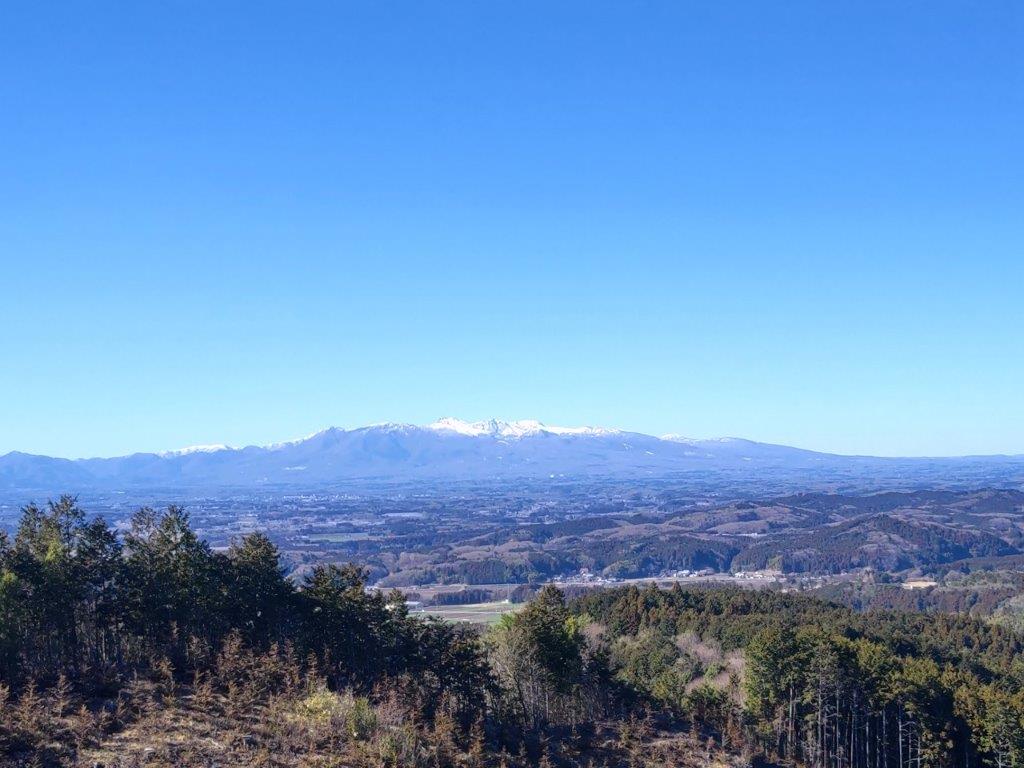
The green hills of Oku-Musashi stretched away on the north side, and the Kanto Plain extended into the distance on the east side. Trees blocked the views in other directions, but provided some welcome shade as I sat down on a bench for a late lunch. Afterwards, I retraced my steps to Kitamukijizo and headed along a mostly level path for Musashi-Yokote station. At 2h30, I passed by the minor summit of Nishi-Omine (西大峰 390m), completely in the trees, and just before 3pm, reached the top of Mt Fukazawa (深沢山 ふかざわやま fukazawa-yama), its name meaning “deep stream”, although no water could be seen or heard.

Viewpoint along the way to Mt Monomi

View of the Kanto Plain from Mt Sukari

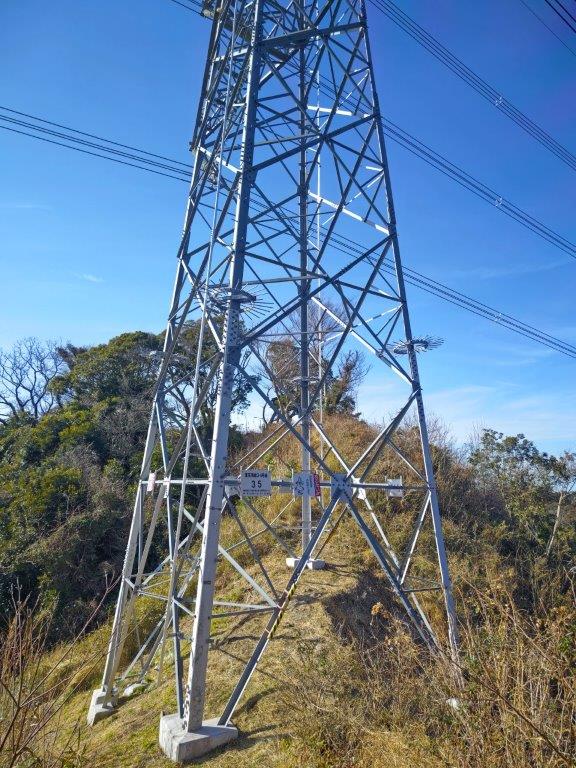
I had a view of some “yamazakura” or Mountain Cherry Trees in full bloom, growing on the forested summit, while taking a short break on a solitary bench. Since leaving the Green Line, I had seen no other hikers and was able to fully enjoy the peace and quiet of the surrounding forest. After a short steep descent, I passed by the minor summit Mt Suisho (水晶山 266m), also completely in the trees, and a little later, passed under a crossing of two electrical power lines, a modern kind of power spot.

Hiking near Nishi-Omine (left) Hiking near Mt Suisho (right)

Hiking near Mt Fukuzawa

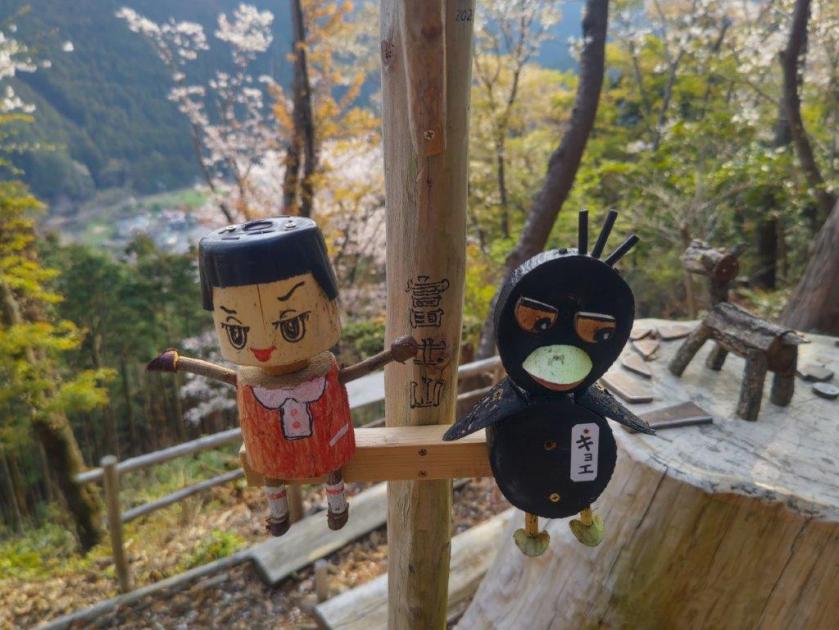
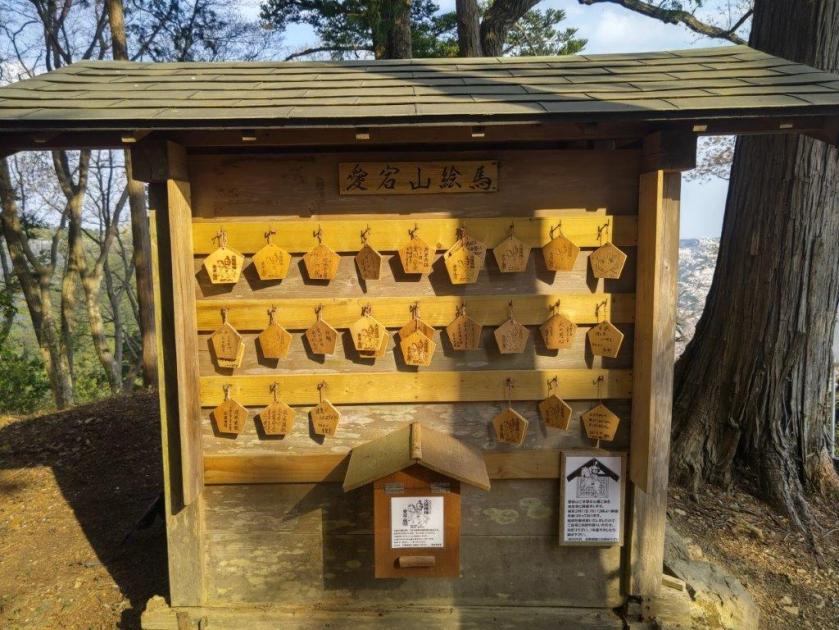
I was charmed by the many carved wood figures placed above the signs along this little known, but well-maintained trail. At 3h30, I reached the final summit of the day, Mt Atago (愛宕山 あたごやま atago-yama), also the location of a small shrine. However its most stunning aspect were the many cherry blossoms trees in full bloom on the valley side. Beyond, I could see Hanno City on the south side, and Mt Kamado across the valley on the west side. A couple of wood-carved binoculars supposedly allowed one to see the Tokyo Sky Tree and Mt Fuji, although today they were simply invisible.

View towards Hanno from Mt Atago

View of Mt Kamado from the summit of Mt Atago

After one last look at the carvings, golden in the late afternoon sunlight, I headed downhill along a steep path through cedar forest. At 4pm, I reached Chonen-ji Temple (長念寺) at the base of the mountain and next to the busy Hanno-Chichibu road. After crossing Koma river, I took a shortcut along a back lane to Musashi-Yokote station; there I boarded the Seibu-Chichibu line for the short ride to Hanno station, where I transferred to the Laview limited express for the comfortable 40-minute ride back to Ikebukuro.

Afternoon light shining on the Mt Atago Shrine

Cherry blossom trees at the end of the hike

This hike took me about five hours, but could have been shortened by one hour if I had skipped the roundtrip to Mt Sukari. I was glad to have discovered a great trail next to the Koma valley, and that I was able to do it while the cherry blossoms were still at their best. Since it’s so close to Tokyo, I hope to be able to do redo it one day in the autumn.

See a Video of the Mt Monomi, Mt Sukari, Mt Fukazawa & Mt Atago Hike

See a slideshow of more pictures of the hike

Mt Koteya (512m), Otawara City, Tochigi Prefecture, Sunday, March 19, 2023

I wanted to do some more hiking on the Abukuma Plateau, since I had a great view of it the previous week. Although, I had exhausted all day trip options from my guidebooks, I found a promising peak by examining my maps, east of Mt Takahara and southwest of Mt Yamizo. The hike was up and down the same way and the highest point was next to a road and a parking lot, meaning I wouldn’t have the summit to myself this time. I could get there by taking the shinkansen to Utsunomiya, then take the local line to Nishi-Nasuno, and there catch a bus for Otawara City; on the return, I would do the same route in reverse. The weather was once again supposed to be sunny all day long, and so I was looking forward to exploring a new area and seeing some familiar mountains from new angles.

View of Mt Takahara from the top of Mt Koteya

View of Mt Nasu from halfway up Mt Koteya

It was another perfect blue-sky day as I got off the empty bus a little after 11am. On the way to the trailhead, I stopped by a conveniently located 7/11 to buy some last minutes supplies, and was finally ready to start hiking just before noon. I went under a stone Shinto gate and walked up a long staircase, at the top of which I passed the lonely Atago Shrine on the left. I then followed the path surrounded by tall cedars, the winter sun filtering through the treetops. After some ups and downs, I reached an area clear of trees just before 1am.

Start of the trail (left) walking through the cedars (right)

An easy hike on a sunny winter day

To the west, I had a fantastic view of Mt Nasu, its highest peaks still covered in snow; looking north, I could make out the more discrete shape of Mt Yamizo, the highest peak of the Abukuma Plateau. After taking in the view, I continued along the gently climbing and easy to walk trail. Half an hour later, I emerged onto a road which I followed a short way before reentering the forest. Here, I encountered the steepest section of the hike: although short, it was a scramble, even in dry weather. A few minutes later I arrived at a open shelter.

View towards Mt Yamizo around the half way point

View towards Fukushima Prefecture

Looking west, I had an excellent view of Mt Takahara, specks of white visible on its highest points. I soon moved on, and at the top of a grassy staircase, reached the summit of Mt Koteya (御亭山 こてやさん koteyasan). I had a view on the west side, stretching from Mt Tsubasa to the Oku-Nikko mountains, their tops hidden by clouds; in between lay the vast Kanto plain; on the opposite side, I could make out Mt Yamizo, just visible above the trees. It was nearly 2pm, so I sat on one of the benches scattered around the wide grassy summit for a lunch break.

View of Mt Nasu

View of Mt Hirugatake & Mt Kurotaki (left) and Mt Nasu (right)

It was more peaceful than I had imagined with only one other person venturing to the top from the nearby parking lot. After lunch, I made my way down to the road, and after checking out another viewpoint behind the parking lot, walked back a short way along the road so that I could skip the steep slippery section just below the summit; traffic was light, and I was rewarded with extra views through the trees. Half an hour later, I was back at the clearing passed on the way up.

Last short climb to the summit

View towards Nikko from the summit

After enjoying the view again, slightly different in the afternoon light, I continued down through the forest. Shortly before Atago shrine, I took an alternative path on the right, ending at a small lane on the north side of the mountain. At 3h30 I was back at the trail entrance; since I had about 30 minutes before the return bus, I paid a a quick visit to the nearby Daiyuji Temple and its statues with various interesting facial expressions. On the way back to the bus stop, I had one last view of Mt Takahara from Yakumo shrine.

Heading back down through the forest

View of Mt Takahara from Yakumo shrine

This was another short hike, under 4 hours, but the superb views from half way up and the summit made it entirely worthwhile. It might be interesting to return one day by car to explore the area some more.

See a video of the Mt Koteya hike

Mt Yakemori (420m) & Mt Keisoku (430m), Motegi & Shirosato Towns, Tochigi & Ibaraki Prefectures, Saturday, March 11, 2023

I had this hike in mind for a while, but since it could only be reached by car, it was low down on my list. I would follow the route described in my Mountains of Ibaraki guidebook: a loop hike, with short roundtrips to each peak, at opposite ends of the top ridge. These two mountains are situated near Mt Amamaki and Mt Takadate, on the Tochigi and Ibaraki border, halfway between Utsunomiya and Mito cities, their respective capitals. I decided to rent a car from the latter, about an hour’s drive to the parking on the east side. This way I could take the comfortable Hitachi limited express to Mito station and back. Since it was a relatively short hike, I could get an early lunch at a soba restaurant on the way. The weather was once again supposed to be sunny and I was looking forward to getting more views of the low mountains of the southern end of the Abukuma plateau.

Mt Keisoku (south peak) seen on the way to Mt Yakemori

View of the Abukuma Plateau from Mt Keisoku (north peak)

I was relieved that the parking lot was practically empty when I arrived at 1pm; according to the Google Maps, it’s always full in the morning, especially at this time of the year. After getting ready, I set off up a forest road through the cedars. I soon reached a switchback trail leading to Tarumi Pass (弛み峠) on the ridgeline. There, I turned left, heading west, towards today’s first peak.

Start of the hike (left) Below the south peak of Mt Keisoku (right)

Ridge trail leading to Mt Yakemori

As I followed the undulating ridge, I had glimpses through the fir trees of today’s other peak. After navigating the rocky trail round the base of Zazen Rock (座禅岩 meaning “Zen meditation”), I arrived at the summit of Mt Yakemori (焼森山 やけもりさん yakemorisan meaning “burnt forest”) from where I had a view of Mt Takamine to the southwest and the vast Abukuma Plateau stretching into the distance on the north side. At 2h30, after a short break, I headed back to Tarumi Pass.

View of Mt Keisoku from Mt Yakemori

View northwards of the Abukuma Plateau

I followed the sunny trail up a steep slope and soon reached a junction and a bench in the sun. A signpost indicated that this was the south peak of today’s second mountain; apparently Mt Fuji can be seen through the trees, but not today. I turned left, going down for a bit, and then up again through dark forest. At 3pm, I reached the north peak of Mt Keisoku (鶏足山 けいそくさん keisokusan meaning “chicken foot”), a Tochigi 100-famous mountain, and the exact same height as the south peak.

View northeast from Mt Keisoku

The outline of Mt Nantai can be seen on the right side

The summit was free of trees and offered a wide view on the north side. At this late hour, it was also free of people. I could make out the shape of Ibaraki’s Mt Nantai to the northeast, about 30km away. I followed the trail as it continued down the north side, and a few minutes later, I arrived at Tori-iwa (鶏岩 meaning “chicken rock”), where I had a view on the east side. I quickly made my way back to the junction on the south peak, and and continued along the main trail as it curved south and started to head down the mountain.

View to the southeast from Mt Keisoku

View on the way to Niwatori Rock

It was a pleasant descent through the winter forest, bathed in the late afternoon sun. After passing the minor summit of Mt Fuji-ga-hira (富士ヶ平 340m), marked by a small shrine, the trail became rockier and steeper, slowing my pace somewhat. At 4pm, I was back at the now completely deserted parking lot. I managed to get to Mito before sunset, where I boarded the limited express for the 90 minute ride to Tokyo.

View east from Niwatori Rock

Level trail leading to Mt Fuji-ga-Hira

This was another short hike with great views, ideal for the short and clear days of the Japanese winter. I found out afterwards that there’s a spot with many Mitsumata flowers on the north side of the mountain, that were in full bloom around the time of my visit, giving me a reason to return someday in the future.

See a video of the Mt Keisoku hike

Mt Takadate (301m), Mashiko Town, Tochigi Prefecture, Saturday, March 4, 2023

Hiking the Kanto Fureai no Michi

関東ふれあいの道

I wanted to explore some more of the Kanto Fureai no Michi since winter is the best season for walking these low-altitude trails. I found another promising section between Motegi Town and the Ogodo Alps that included a 1300-year old temple, a summit view, and a 20-meter high Observation Tower. It started from Mashiko station on the Moka line, requiring two transfers to get there from Central Tokyo: the first one at Oyama station on the Utsunomiya line and the second one at Shimodate station on the Mito line; for the return from Nanai, the next station on the line, I could take a bus directly to Utsunomiya station. Blue skies were forecast for the whole day, and so I was looking forward to a relaxing walk through the countryside and getting some nice views of Tochigi prefecture.

Hiking between Gongen Daira and Mashiko no Mori

View towards Nikko from the Mashiko no Mori Observation Tower

Some Japanese trains stations are quite ordinary and some are unique; Mashiko station belonged to the latter category with its soaring twin towers. I was one of the few passengers who got off there at 10am. Since today’s hike was on the short side, I enjoyed a cup of coffee at an outdoor table in front of the Mashiko Sightseeing Association. At 11am, I set off along the busy Mashiko Main Street; following the signs for the Fureai no Michi, I soon turned right onto a quiet country lane.

Saimyoji Temple Main Building

A peaceful temple on the mountain side

Soon I had views of today’s mountain on the left side, its low, rounded summit gently rising above the level rice fields. At 12h30, I reached Saimyoji Temple (西明寺) and the start of the hiking trail. I was the sole visitor and could fully enjoy the peaceful surroundings. Less than half an hour later, I reached the Gongen Daira (権現平), a grassy area with benches and a small concrete observation platform. It wasn’t the highest point, but had a view on the west side, so I sat on a bench and had an early lunch.

Approaching Gongen Daira (left) Descending from Gongen Daira (right)

View West from the Gongen Daira Observation Platform

The flat Kanto plain stretched away ahead of me, with the Nikko mountains faintly visible in the background; just a few weeks ago, I had been hiking the Fureai no Michi trail on the opposite side. After a short break, I moved on, and after a little climbing, arrived at the true summit of Mt Takadate (高館山 たかだてやま takadateyama), a Tochigi 100-famous mountain. It was completely in the trees so without delay, I continued along a trail down the other side of the mountain. After crossing a bridge over a road, I arrived at the Mashiko Forest Observation Tower.

Easy to walk trails through the forest

Mashiko no Mori Observation Tower (right) Walking to Nanai Station

I had a 360° panoramic view from the top of this wooden construction: to the south was Mt Takadate and Mt Amamaki; on the east and north sides, I could see the low hills of the Abukuma Plateau surrounding Motegi town; looking west, I had a wide view of the Kanto Plain and the mountains of Oku-Nikko. After enjoying the views, I made my way through the Mashiko forest, passing the Ajisai Suspension Bridge and ending at Suda pond. I then followed various lanes and roads, reaching Mashiko Pan Bakery at 3h3o.

View North Towards Motegi Station

Looking back at Mt Takadate

I was back on a pleasant hiking trail through the forest, a few minutes past the bakery. Just before 4pm, I emerged onto a road again, leading past Entsuji Temple (円通寺). From there, it was a short walk to Nanai station, which looked very utilitarian, the complete opposite of this morning’s station. I was surprised to discover that the Nanai-Eki-Mae (“front of Eki Station”) bus stop was actually 10 minutes away on foot. Fortunately, I arrived with time to spare and easily made it on time for the return bus at 4h30.

Ajisai Suspension Bridge in Mashiko no Mori

Walking in Mashiko no Mori Forest

I was once again surprised by how enjoyable it was to hike along the Fureai no Michi even though it doesn’t exclusively follow hiking trails. I passed many interesting sights along the way so it really felt like I was discovering the area. Since I took my time, the hike ended up taking about five hours which I felt was ideal considering that there was little up and down.

Watch a video of the Mt Takadate Hike

See a slideshow of some pictures of the Mt Takadate Hike

Mt Otadaki (338m), Mt Hanzo (502m) & Mt Fuji (338m), Utsunomiya City, Tochigi Prefecture, Sunday, February 26, 2023

I was looking for a low-elevation hike close to Tokyo, suitable for a cold winter day. Looking at my hiking maps, I found 3 minor peaks in a hilly area northwest of Utsunomiya city, between Mt Kogashi and the Utsunomiya Alps. It was up and down the same way, except for the last part, where I could return via a different path. I could take the Utsunomiya line to Utsunomiya station and from there, ride a bus to a stop, just 15-minutes on foot from the trailhead; for the return, I could catch a more convenient bus back to Utsunomiya from a nearby roadside station. Since there was a hot spring close to the trail entrance, I could enjoy a hot bath before heading home. I was looking forward to a relaxing hike and good views at the edge of the Kanto plain.

View South of Utsunomiya City and Mt Tsukuba from near the top of Mt Otadaki

View North towards Mt Takahara (left) and the Utsunomiya Alps (right)

It was a cold, beautiful day as I arrived at the trailhead just before 1am. After a short climb through the forest, I arrived at an impressive rock pillar. After a little bit of scrambling through a rocky section, fitted with a rope for safety, I was standing on Mt Otadaki (男抱山 おただきやま otadaki-yama). From the narrow summit, I had a 360° panoramic view: directly in front was the Kanto Plain, Utsunomiya City and Mt Tsubasa; turning around, I could see the Utsunomiya Alps, snow-capped Mt Takahara, as well as the highest point of today’s hike.

Start of the trail (left) Rock pillar near Mt Otadaki (right)

From left to right: Mt Amabiki, Mt Kaba, Mt Tsukuba

I was amazed by how quickly I could reach this spectacular viewpoint. After a short break, I carefully made my way down the other side of the rocky top. I followed the narrow trail till a junction, where I took the right branch downhill, and then continued along the mostly level trail through quiet, sunlit forest. Soon the path started to climb again, and around 2h30, passed by a huge rock, called Oiwa (大岩), standing firmly in the middle of the trees.

Mt Haguro (left) and Mt Hanzo (right)

View East towards the mountains of Ibaraki

I was surprised by how easy the final climb was, along a gentle sloping forest road through the cedars. Before I knew it, I was on top of Mt Hanzo (半蔵山 はんぞうさん hanzosan), completely in the trees. I decided to continue a few minutes to Hanzo Rock (半蔵岩) where I was rewarded with a grandiose view of the Nikko mountains to the north, half hidden by mysterious misty veils. It was nearly 3pm, so I sat down for a late lunch.

View south of the Kanto Plain

Hiking through the forest to Mt Hanzo

I felt extremely cold all of a sudden, as the wind started blowing from the north. I quickly retraced by steps to the summit and headed down the same way. Less than an hour later, I was back at the previous junction and took the trail on the right, up a short rocky section equipped with rope. At 4pm, I reached the top of Mt Fuji 富士山 ふじさん fujizan), from where I had a view of Mt Tsubasa to the southeast and Mt Kogashi to the west.

View of the Oku-Nikko mountains from Hanzo Rock

Mt Nantai (left), Mt Omanago (center) and Mt Nyoho (right)

It was a peaceful spot and I wanted to spend more time, but it was getting late and I needed to head down. The trail passed by several viewpoints on the west side before reaching the bottom of the valley and merging again with the start of the hike. At 4h30m I arrived at Tadaomi Onsen, just a few minutes from the trail entrance. After a relaxing hot spring bath , I walked to the nearby Michinoeki Utsunomiya Romantic Village to catch a bus back to Utsunomiya.

View of Mt Tsukuba from Mt Fuji (of Utsunomiya)

View South on the way down from Mt Fuji (Of Utsunomiya)

This was a relatively short hike, more than half of which was along the same trail, but the easy access, various viewpoints, beautiful forest with few hikers, and a convenient hot spring at the end made it totally worthwhile.

See a video of the Mt Otadaki, Mt Hanzo and Mt Fuji hike

Mt Hatake (205m), Mt Nyuto (202m) & Mt Futako (209m), Hayama Town & Zushi City, Kanagawa Prefecture, Saturday, February 11, 2023

Hiking the Miura Alps 三浦アルプス

I had hiked the Miura Alps four year ago, but looking at my mountains of Kanagawa guidebook, I realised there was more hiking to be done in the area. Previously, I had started on the southwest side and ended on the northeast side. This time, I would start on the southeast side, close to the end of the Mt Ogusu hike, and finish on the northwest side, intersecting only at one point; I could take a bus from Zushi station to the start, and then return by the same bus to the same station. I was looking forward to exploring a new trail through a familiar area, and hoping for some good views on both sides of the peninsula.

View towards Yokohama between Mt Hatake and Mt Nyuto

It was a sunny winter day, as I arrived at Zushi station at around 11am. After a short bus ride, I got off under an elevated highway, near a river and a small fire station. Just after noon, I set off up a small paved road, and soon after reached the trail entrance on the right. Almost immediately, I was walking through bamboo trees, swaying slowly in the wind.

Start of the trail (left) Walking through the bamboo (right)

View of Tokyo Bay through the trees

I was fascinated by the interplay of light and sound, an experience quite unique to this side of the world. At 1230, I exited the bamboo forest and followed a trail up the mountain side. Half an hour later, I reached the top of Mt Hatake (畠山 はたけやま hatake-yama), its summit marker, a simple name plate hanging from a tree branch. On the east side, I had a view of Tokyo Bay and the southern half of the Miura peninsula. After a short break, I moved on.

Short detour along the Nakaone Trail

The start of the Nakaone Trail had good views

I reached another view through the trees, after 30 minutes of mostly level walking; this time I was looking north towards Yokohama. Soon after, I merged with the trail of my previous hike, and at 2pm, was standing on the narrow summit of Mt Nyuto (乳頭山 にゅうとうさん nyuto-san) for the second time. Once again, I had a view on the dark blue wayers of Tokyo bay and the gleaming white skyscrapers of Yokohama. Just below, was a junction and a decided to check out the left branch, the Nakaone trail, off today’s hike.

Tanzawa mountains in the background

On the Nakaone Trail (left) On the way to Mt Futako (right)

I was rewarded with a view on the west side of the Tanzawa mountains, on a treeless ridge, just past a couple of electric pylons. The city was almost invisible and it felt like I was in the middle of the wilderness, despite being just a few kilometers from the biggest city in the world. I found a spot to sit for quick lunch break. At 3pm, I was back on the main trail, and a little after, I took a right turn, leading away from Higashi-Zushi station and Mt Takatori.

A relatively easy trail to walk

View of Mt Ogusu from the top of Mt Futako

I was now walking along the most peaceful section of the hike, invisible squirrels scampering along the tree branches, soft light filtering through the leaves. At 4pm, the trail merged with a gravel road winding up hill side. A few minutes later, I reached a wooden observation platform on top of Mt Futako 二子山ふたこやま futako-yama), a common name meaning “twins”. I had a wide view on the east side, including Yokohama City, Tokyo Bay, and the Miura Alps on the south side. The sun was setting soon, forcing me to continue moving.

View of Enoshima Island from near the top of Mt Abekura

Trail near Mt Futako (left) Heading down from Mt Abekura (right)

I hurried down the steepest section of today’s hike, fitted with rope for safety, surprising on such a low mountain. Soon the narrow path climbed again, and half an hour later, I reached the top of Mt Abekura (161m 阿部倉山 あべくらやま). It was a minor peak, slightly off the trail, but with a viewpoint of Sagami Bay and Enoshima island on the west side, the sky behind lit orange. It was called Sakura Terrace, and although the trees were bare, it must be beautiful in the spring. I made my way down and arrived at a road just after the 5pm chime. From the nearby bus station, it was a short ride back to Zushi, where I caught the Shonan-Shinjuku line for the one hour trip to Tokyo.

See a video of the Mt Hatake, Mt Nyuto and Mt Futako hike

See a slideshow of more pictures of the hike