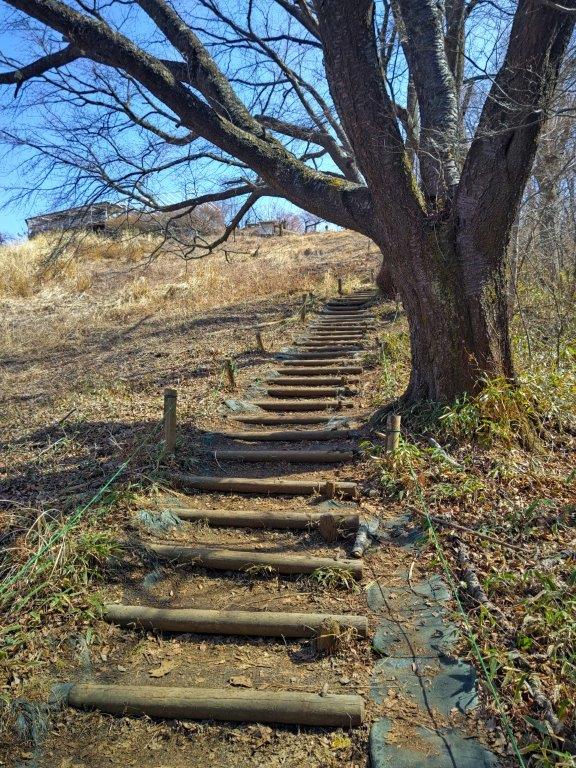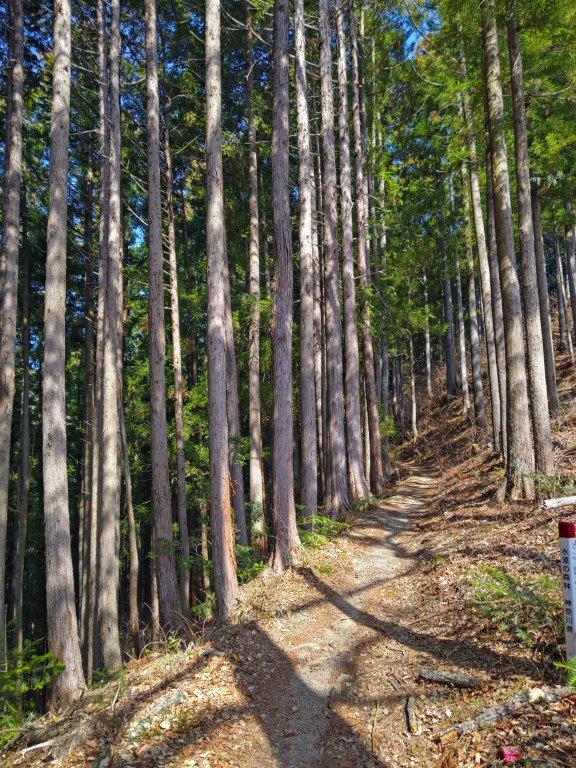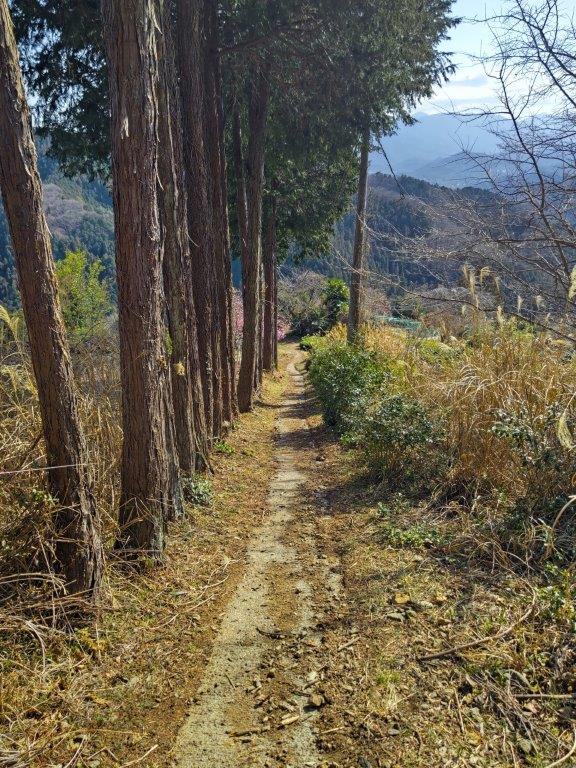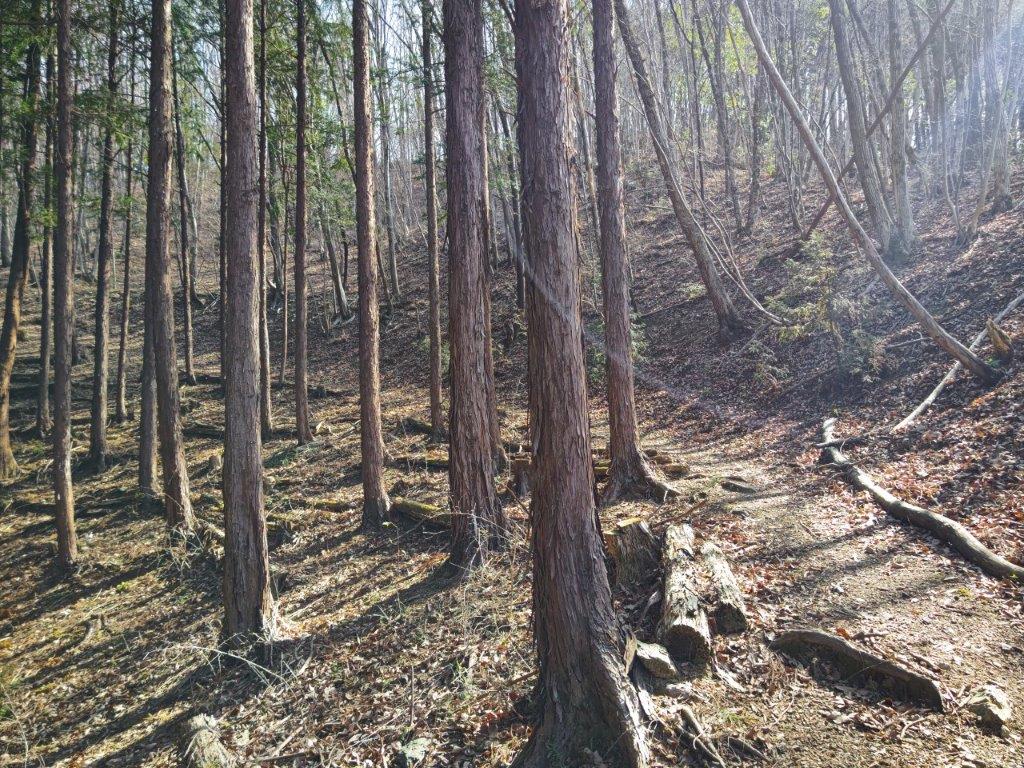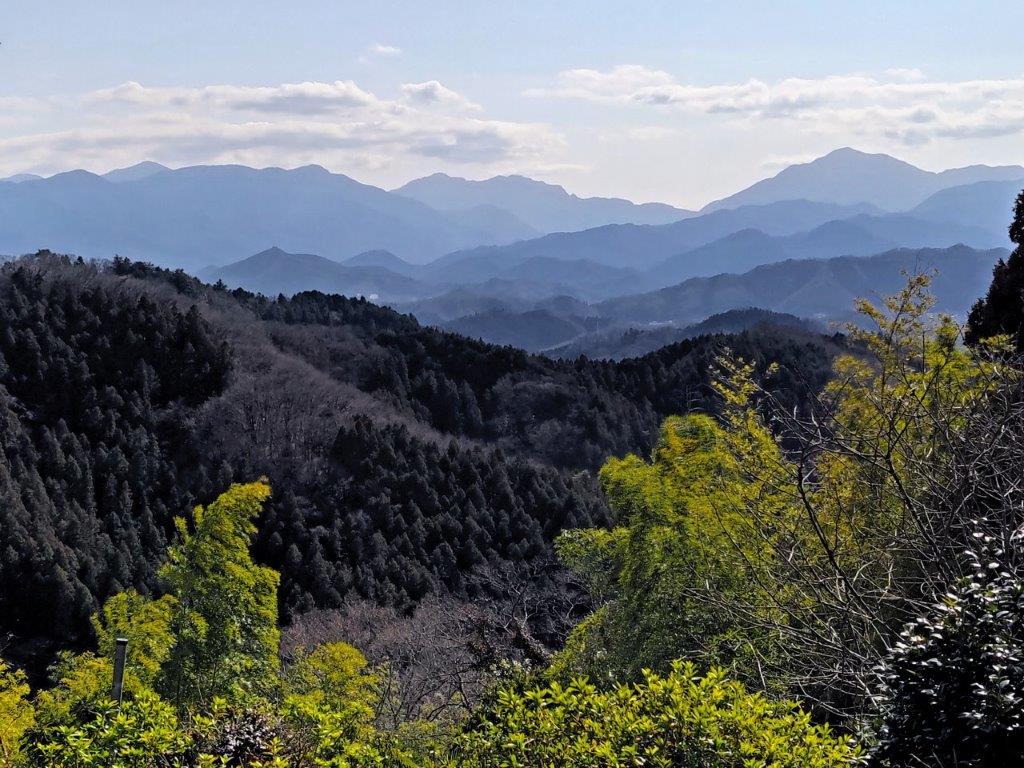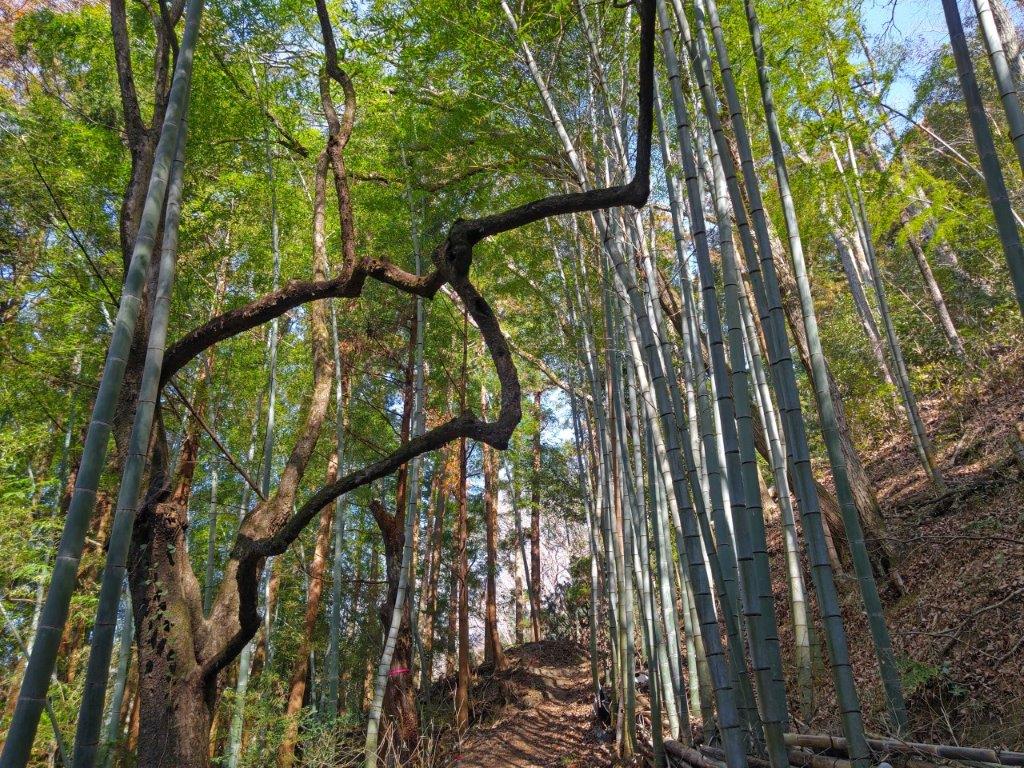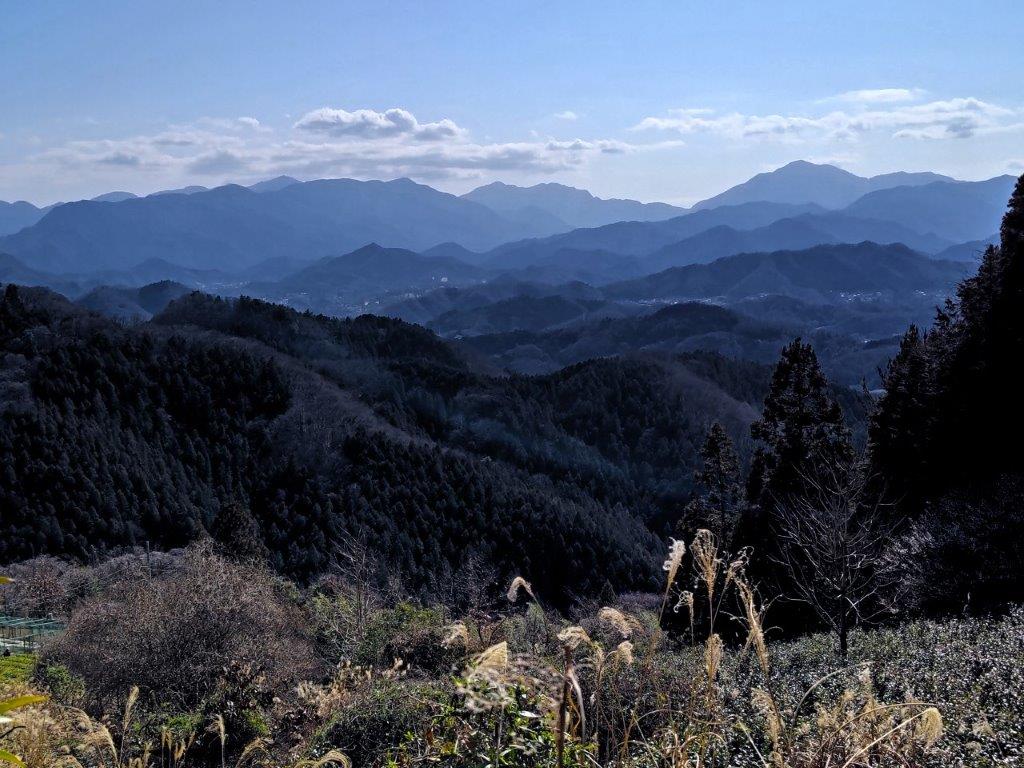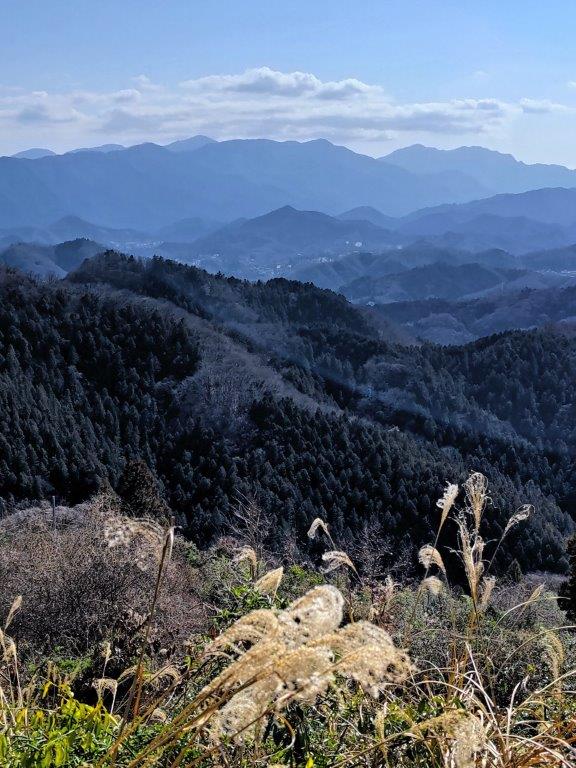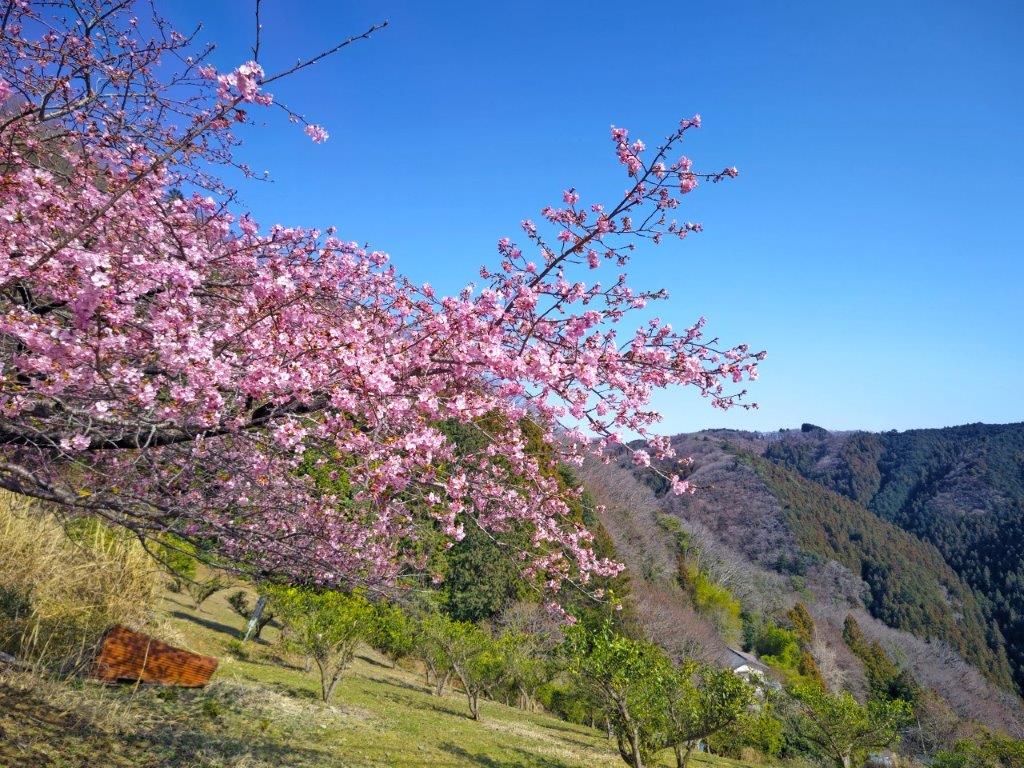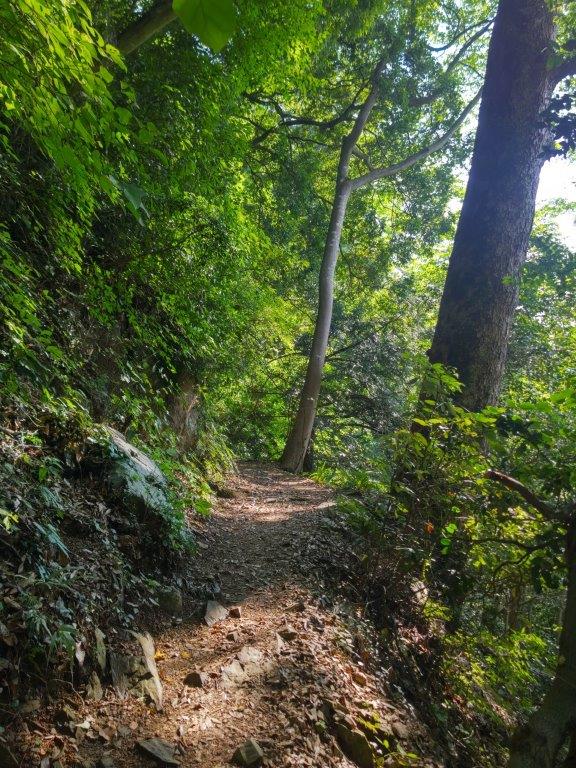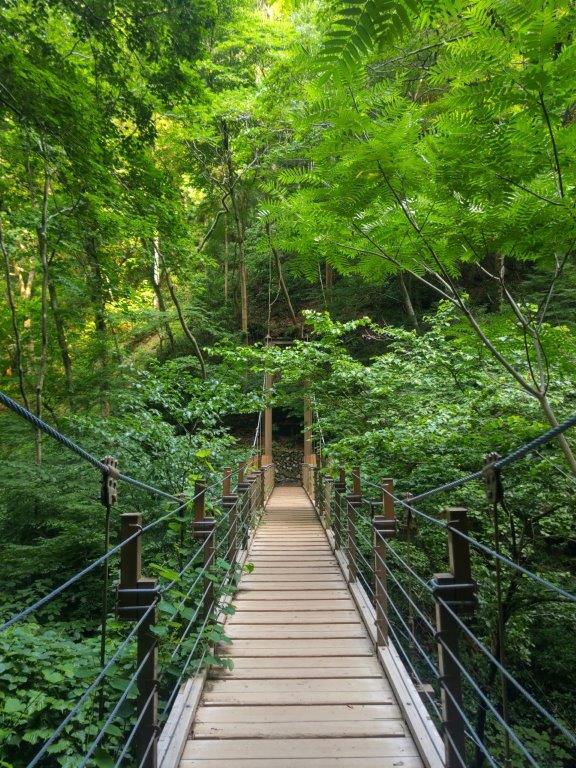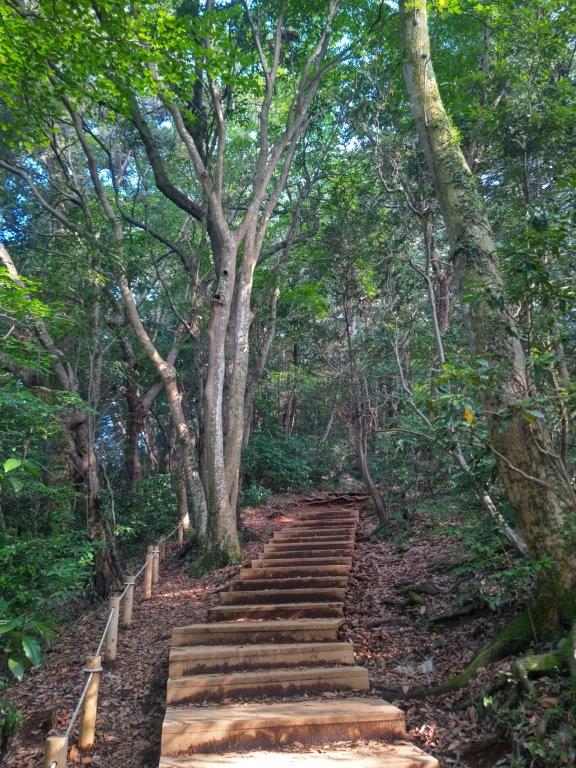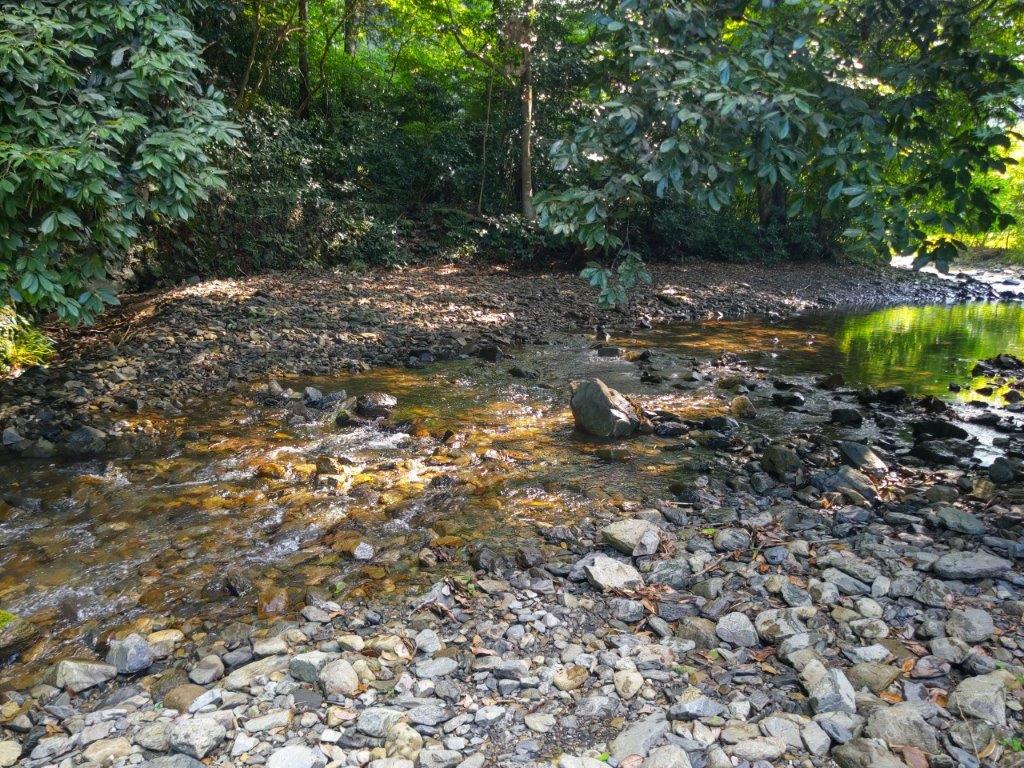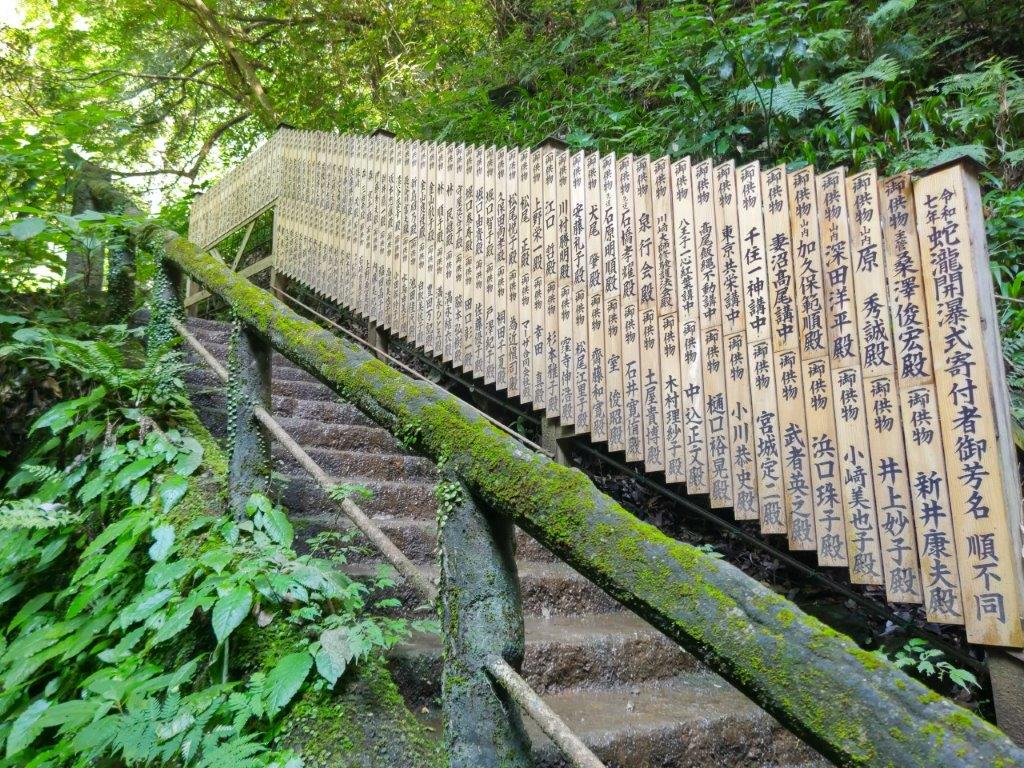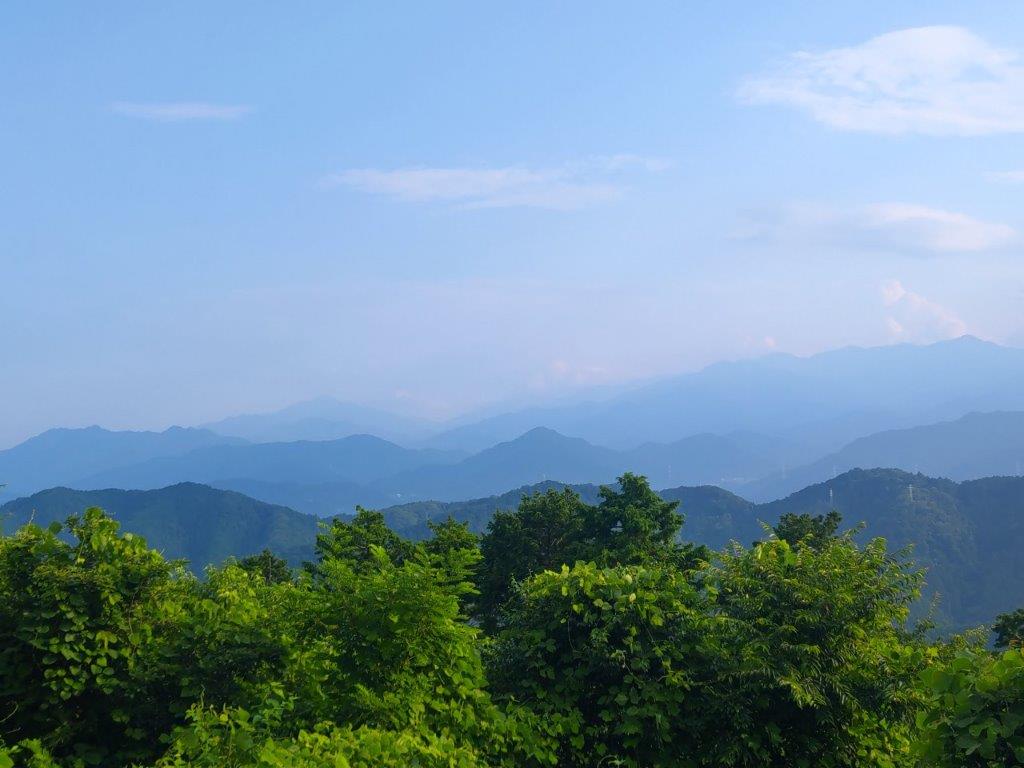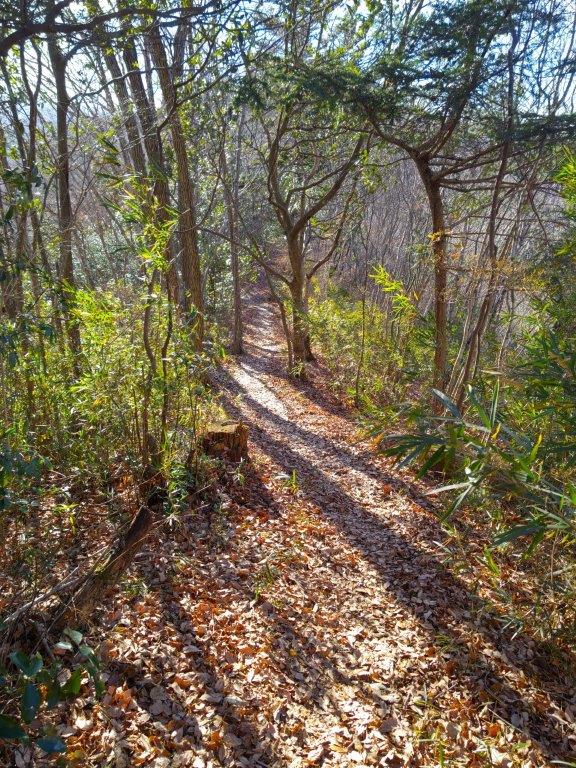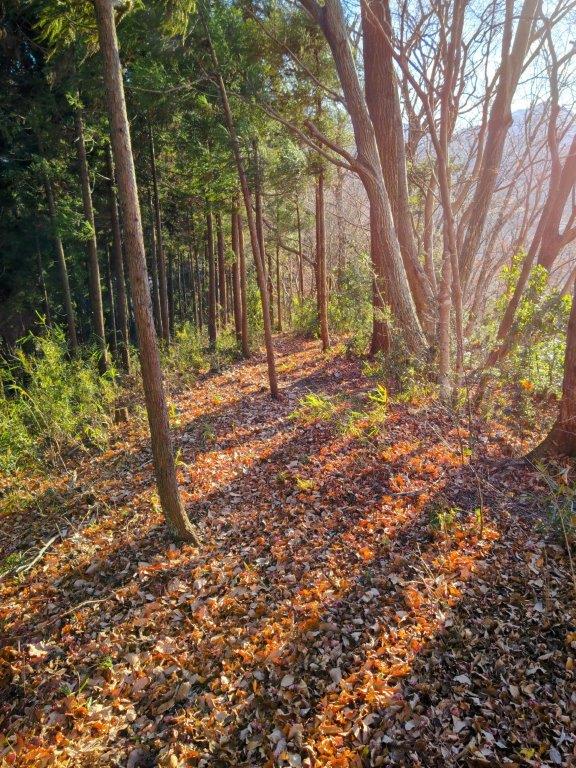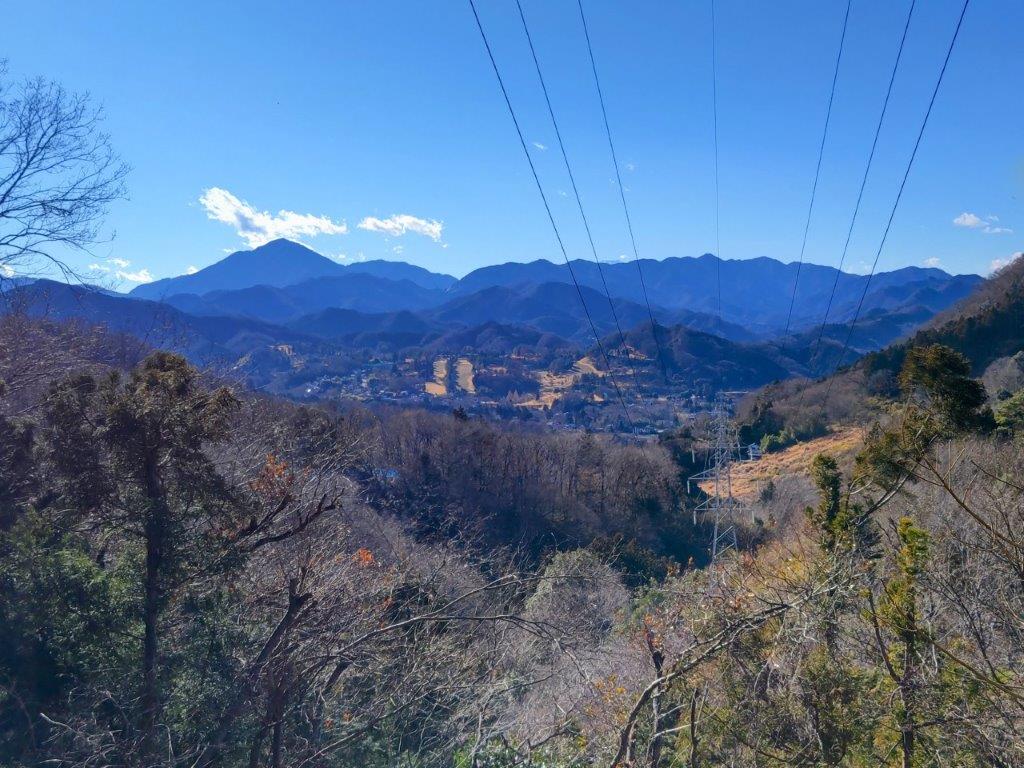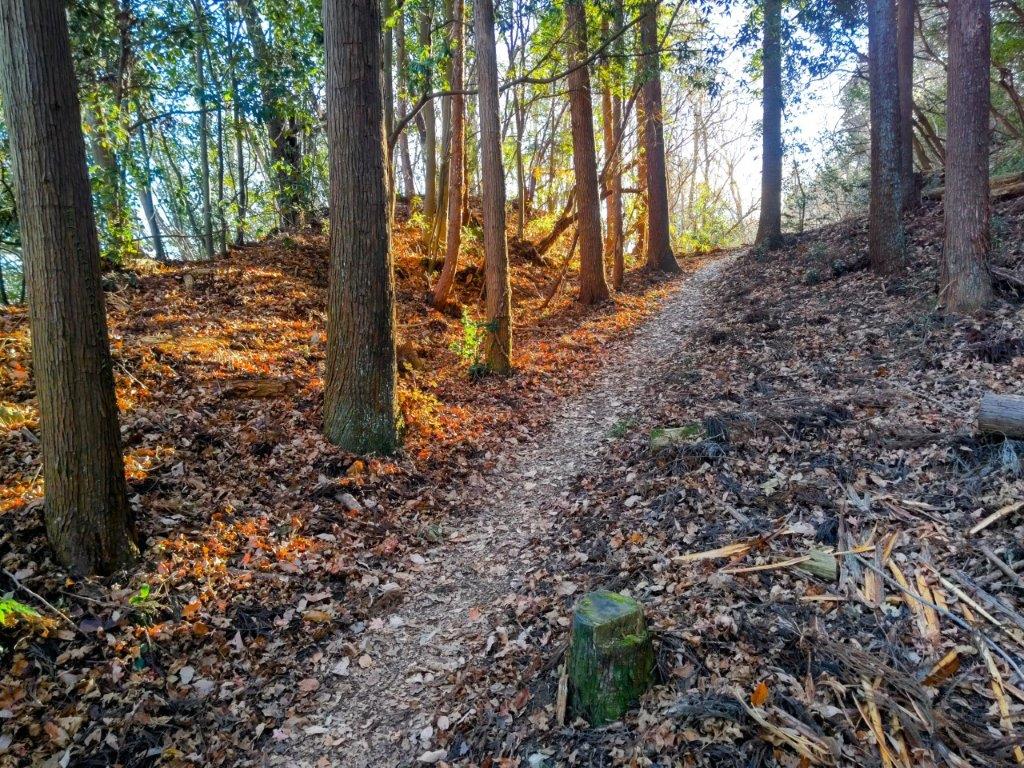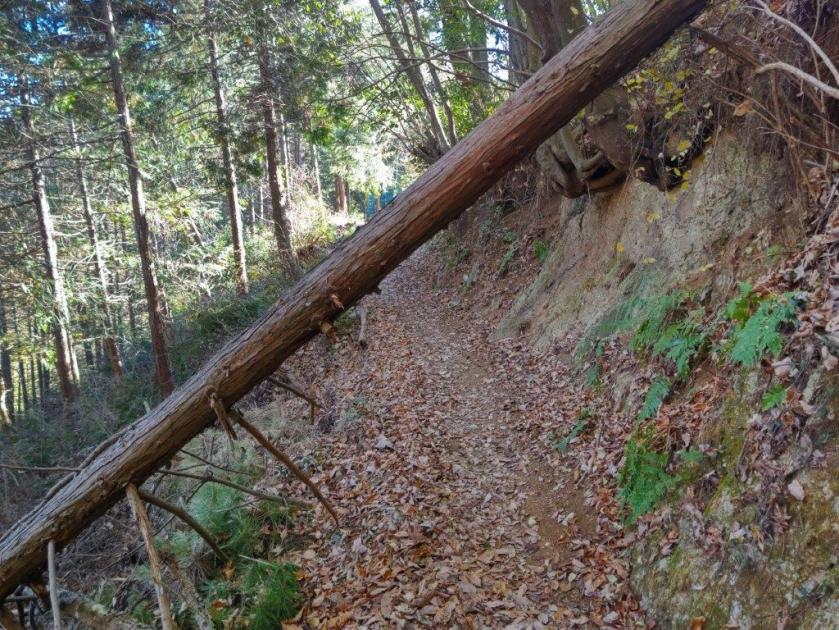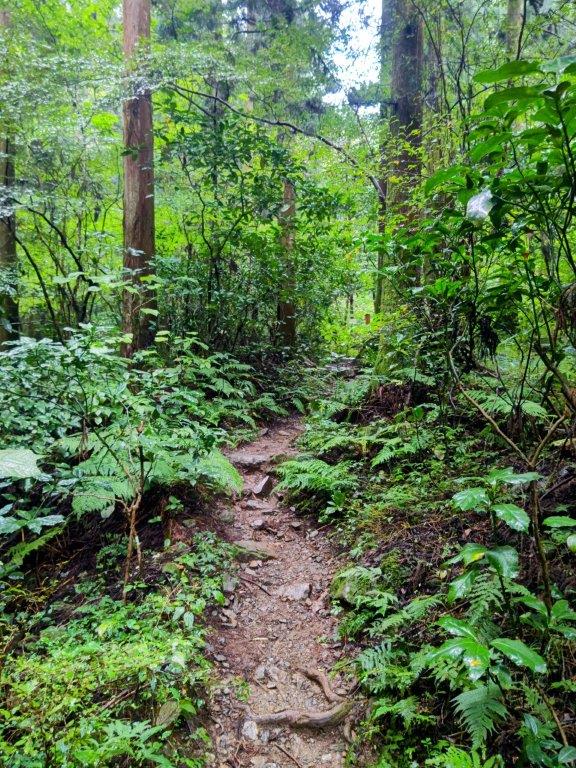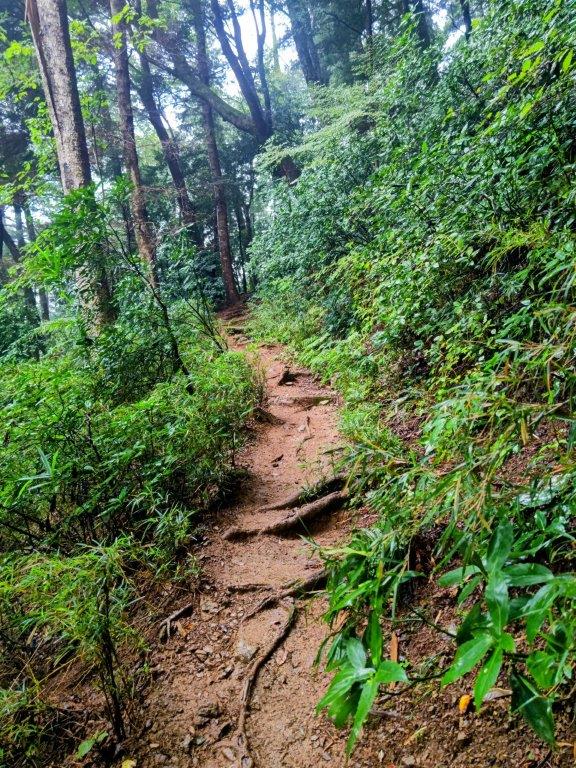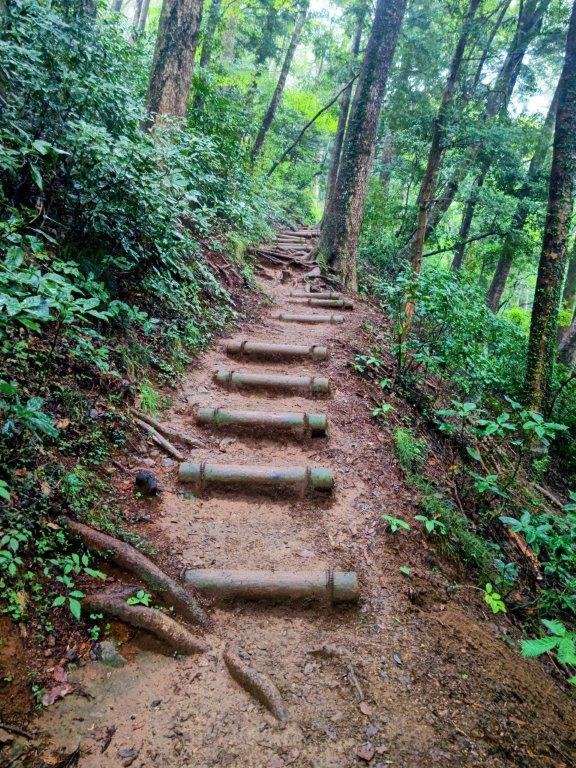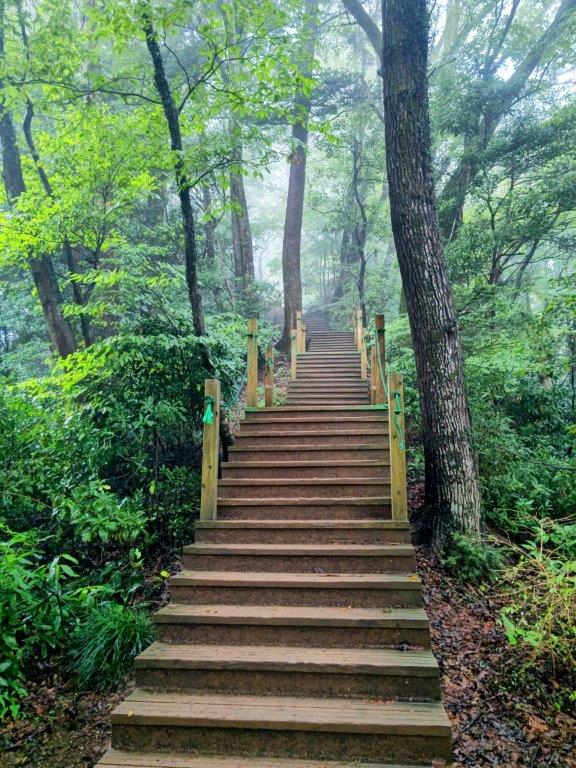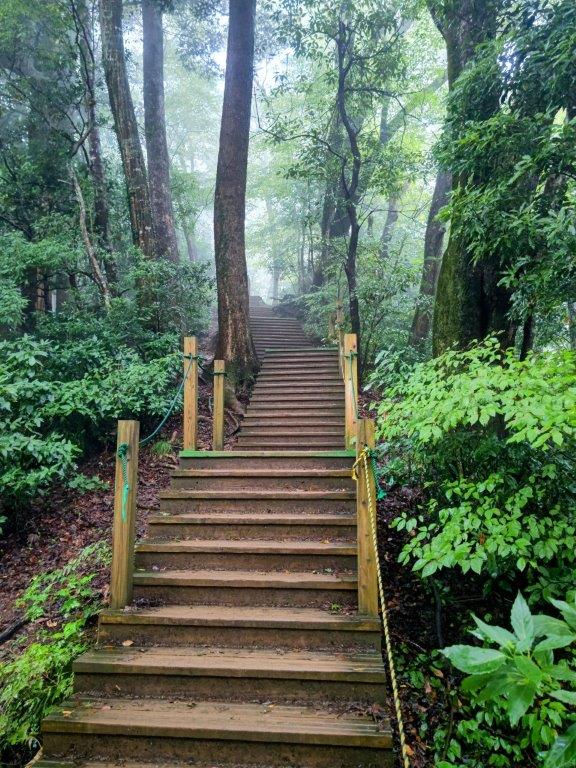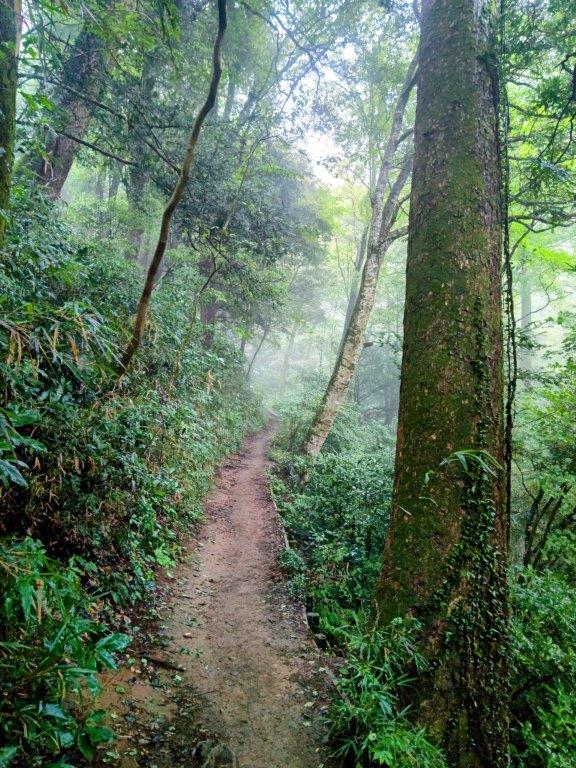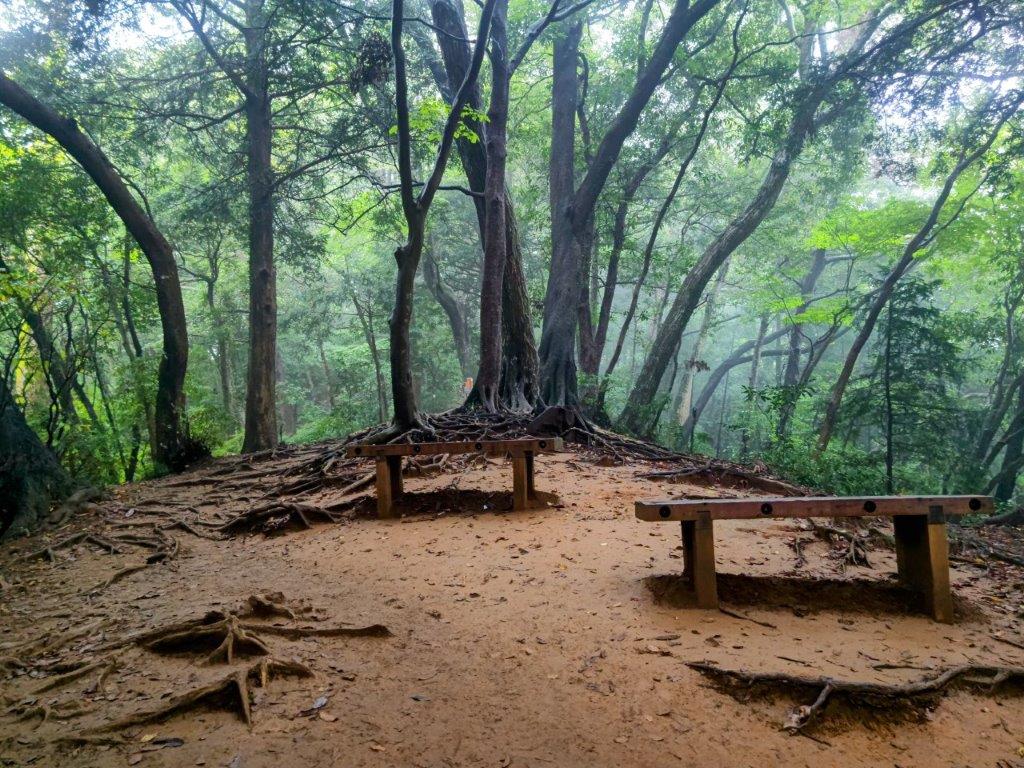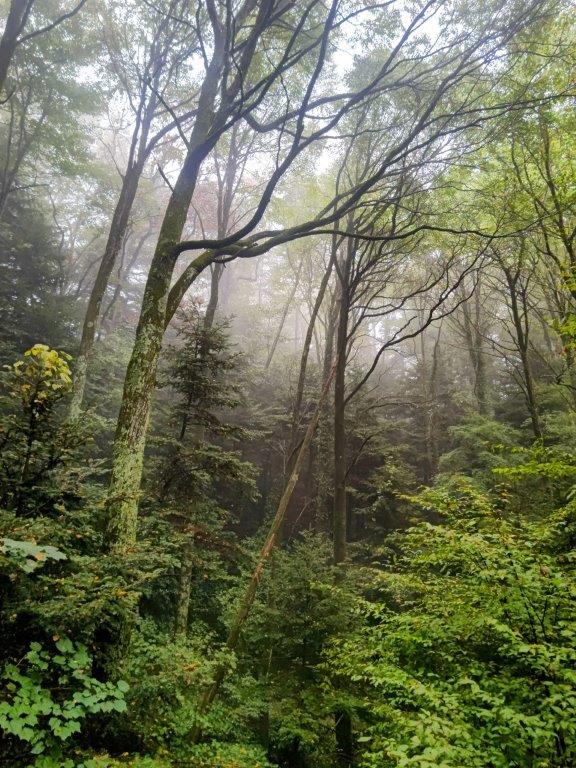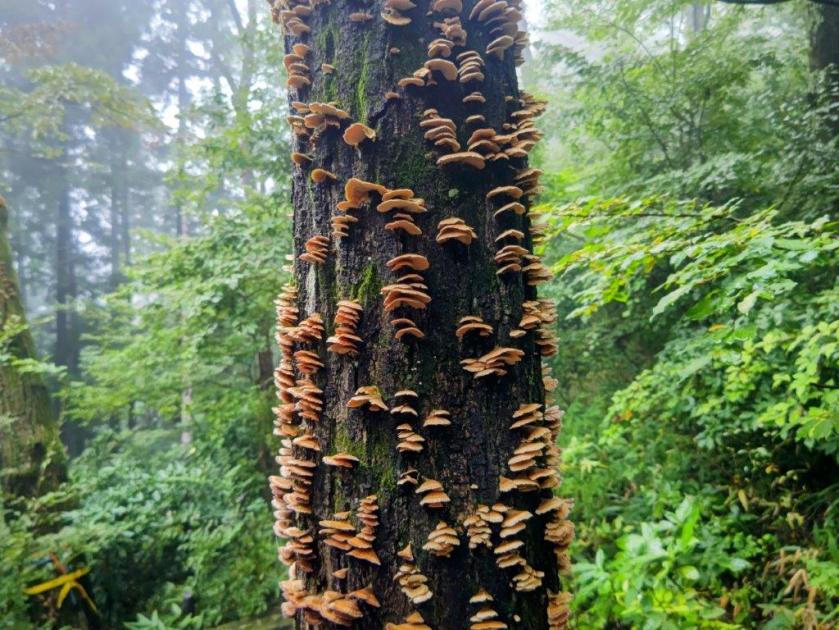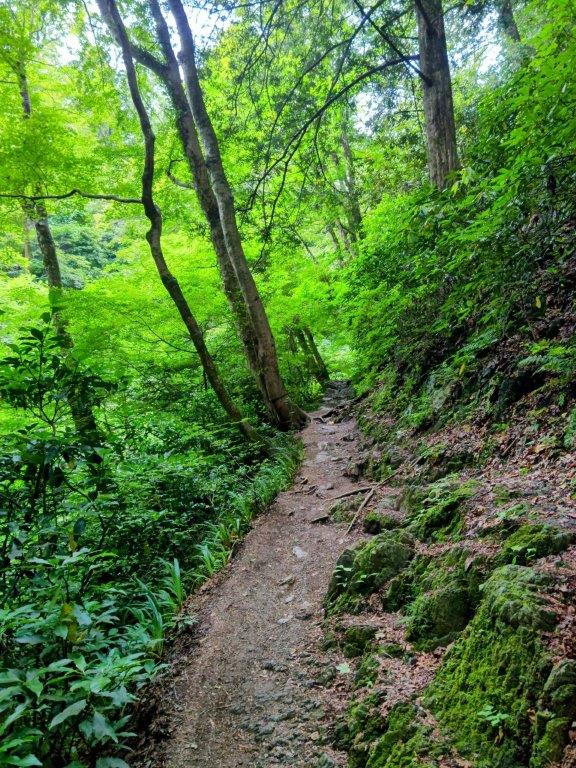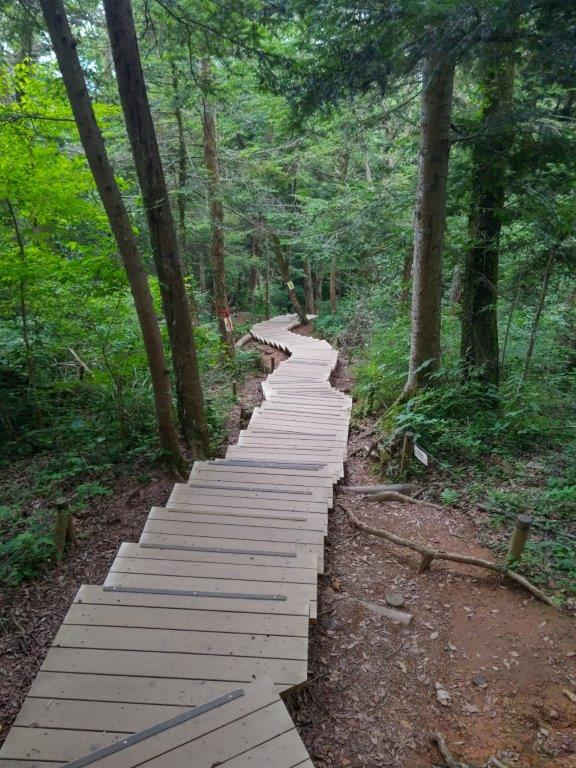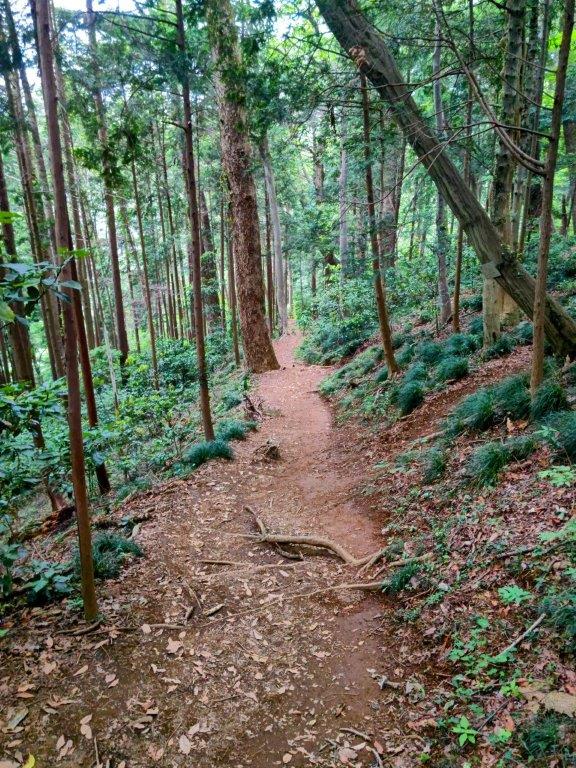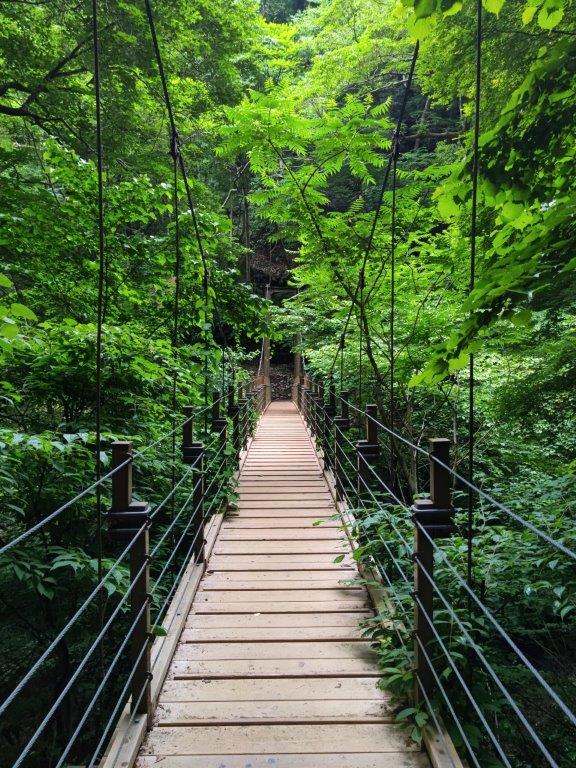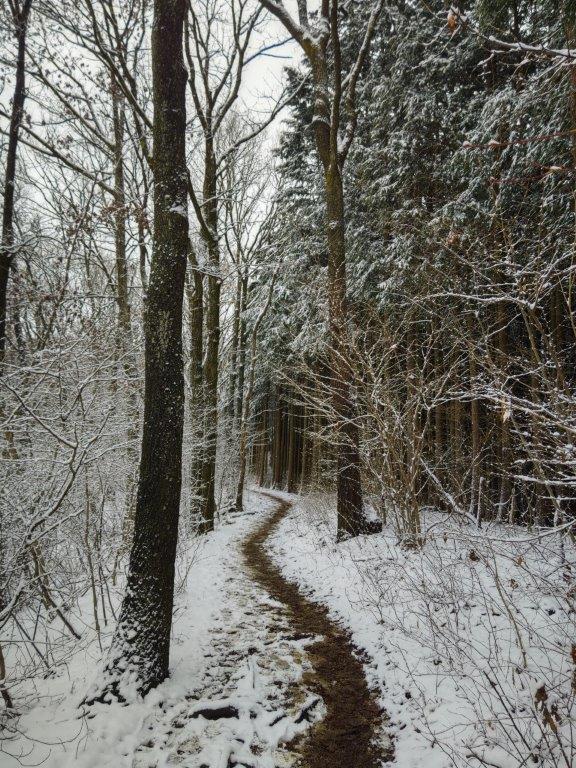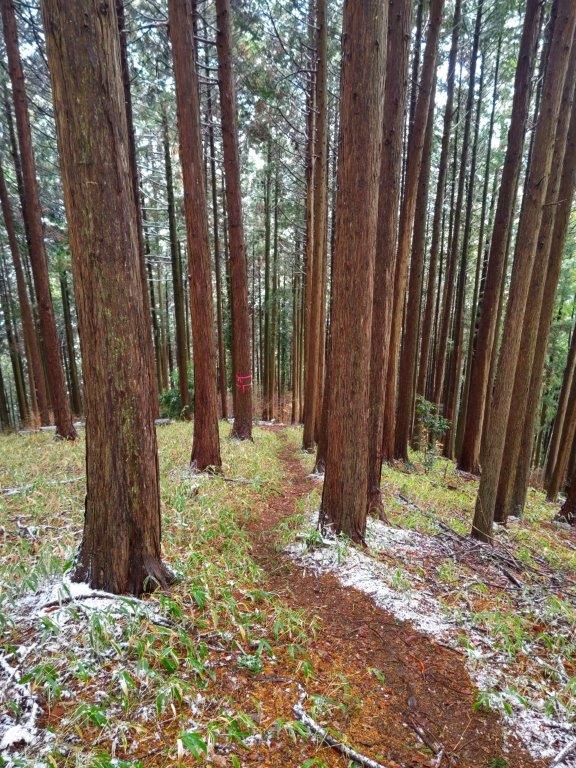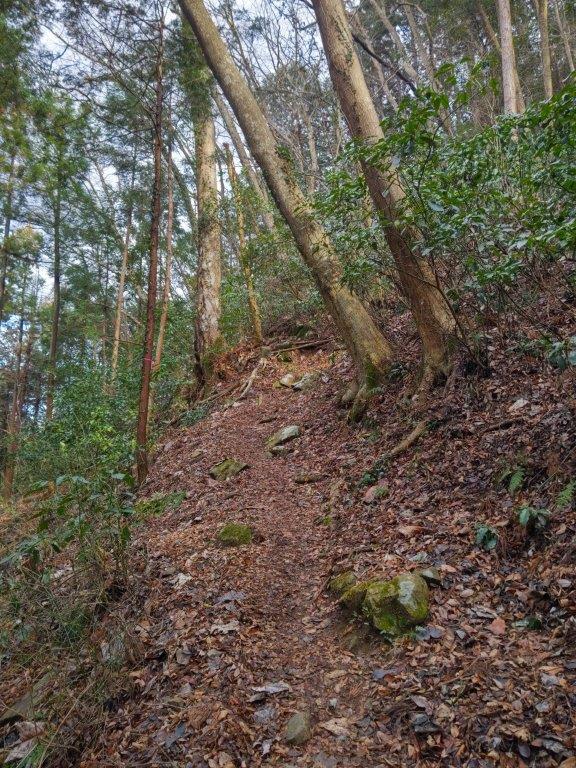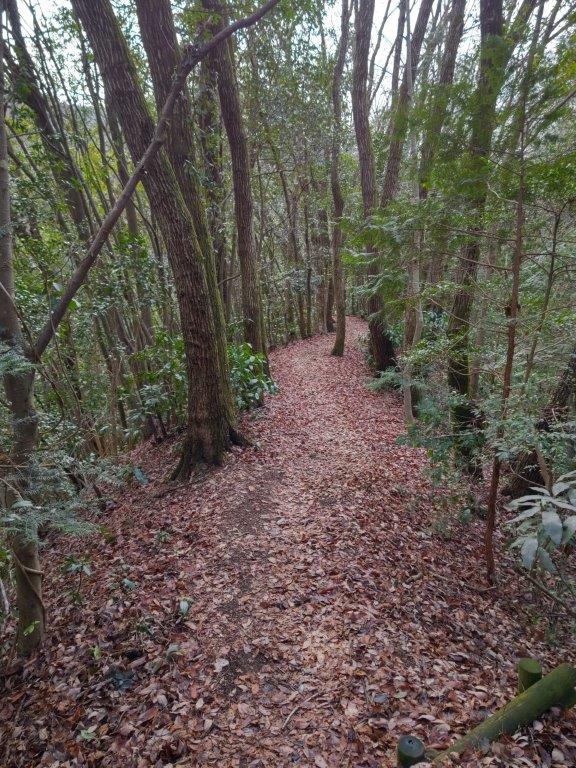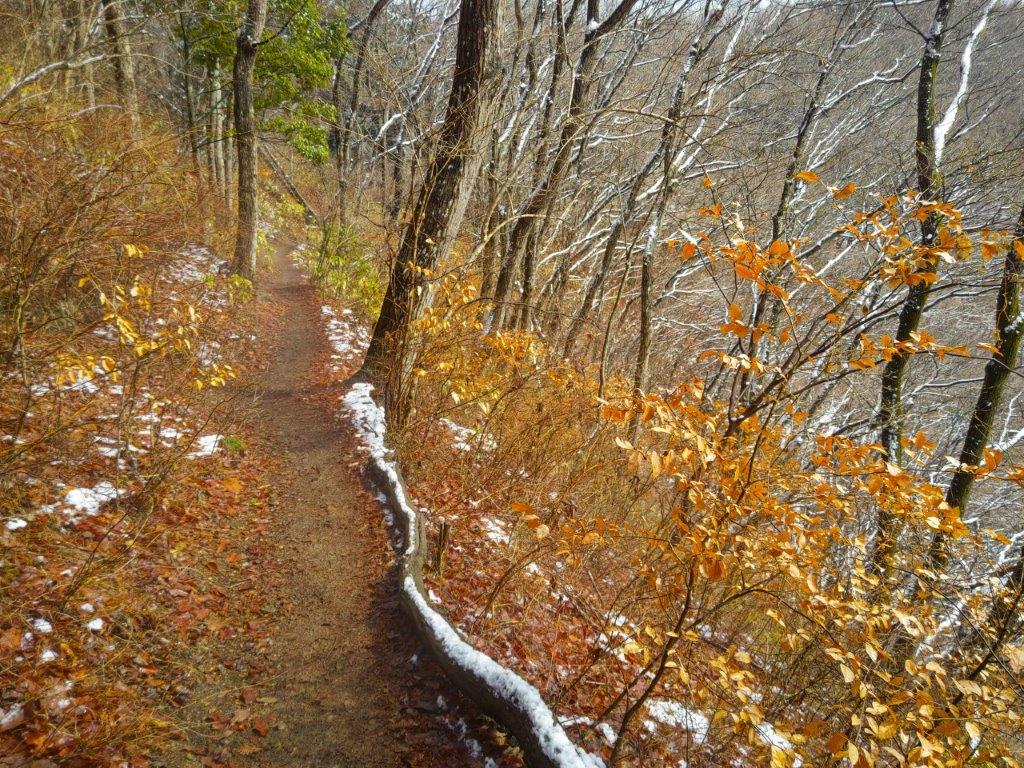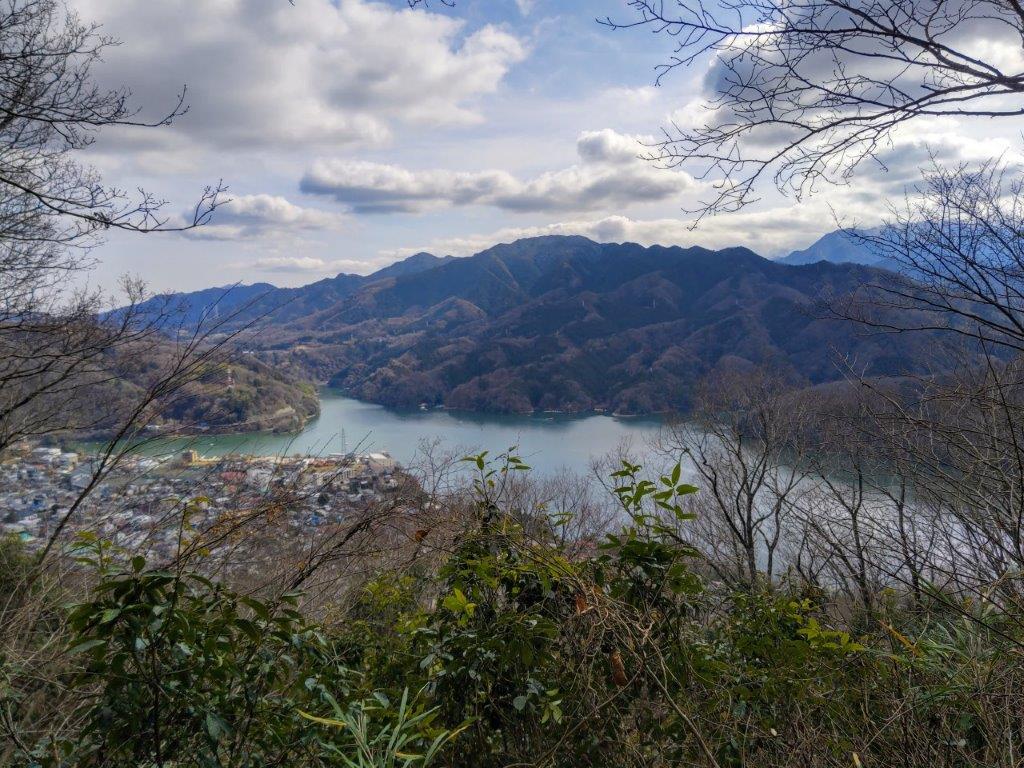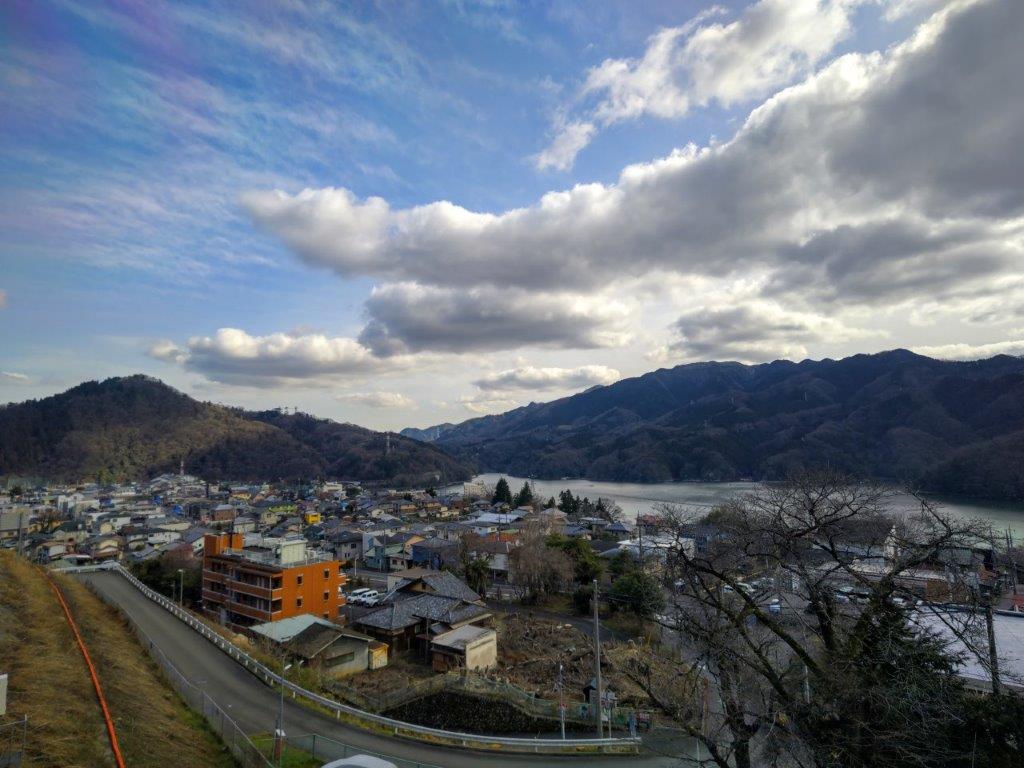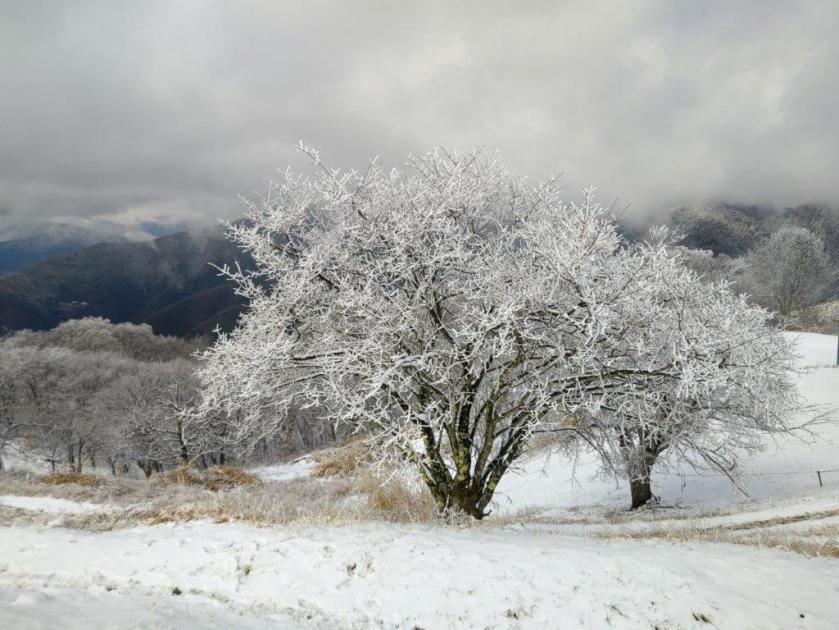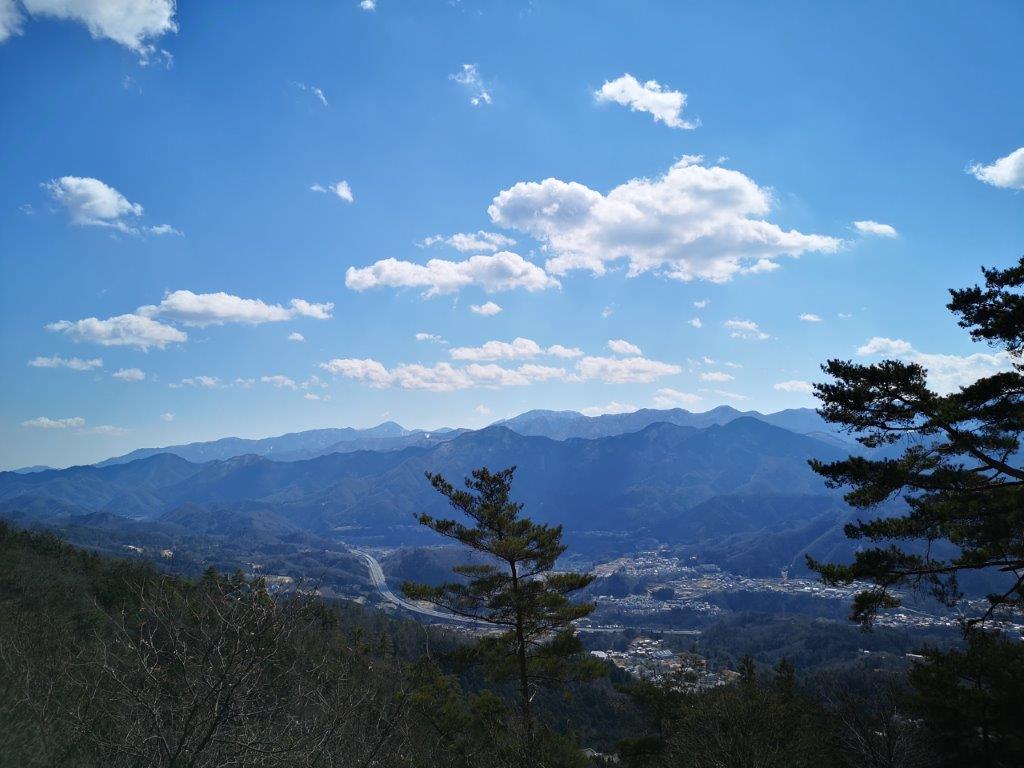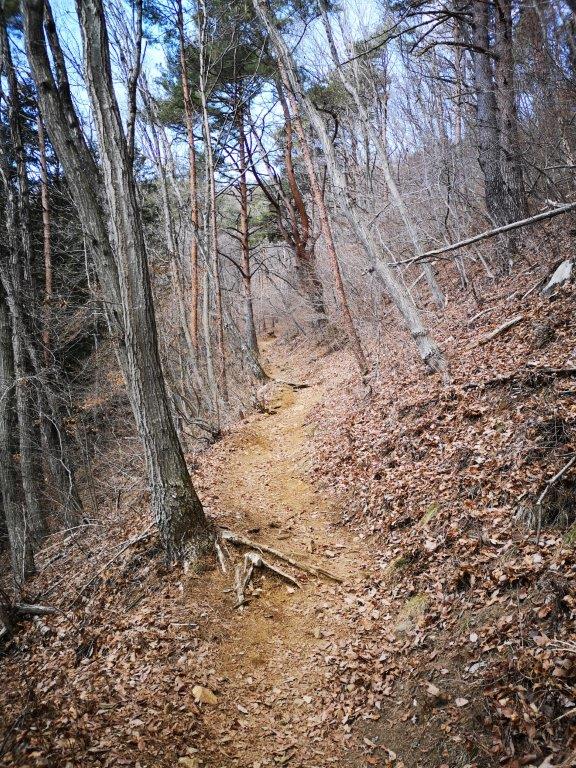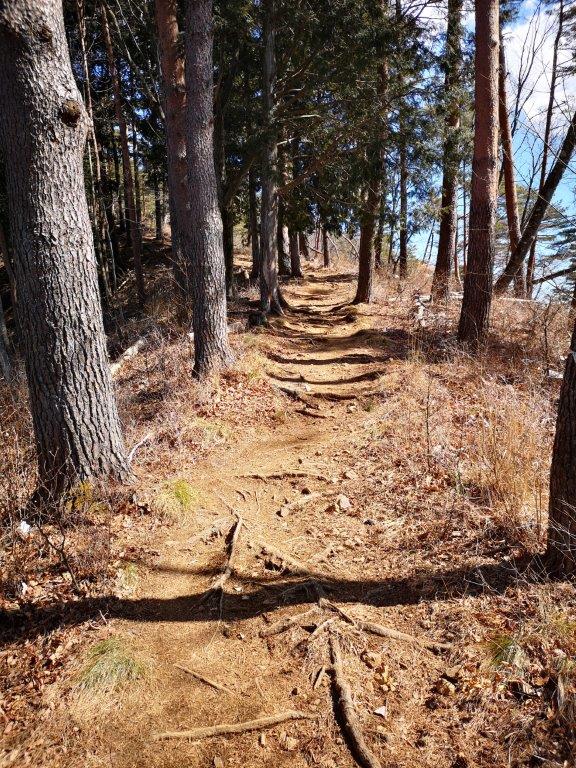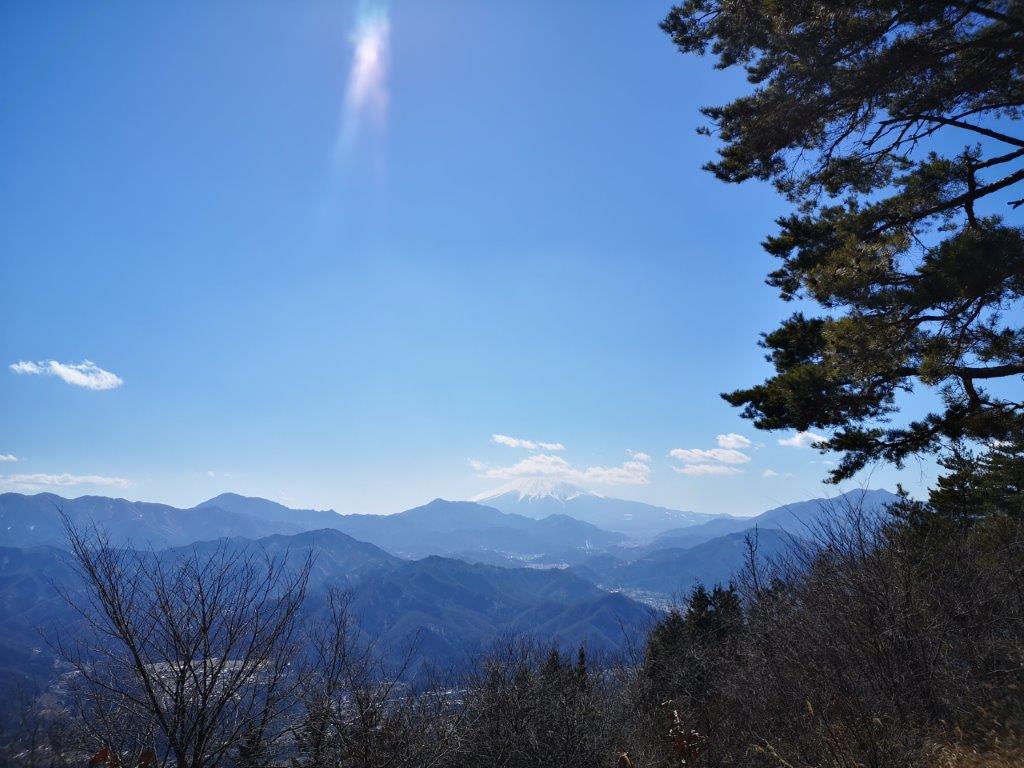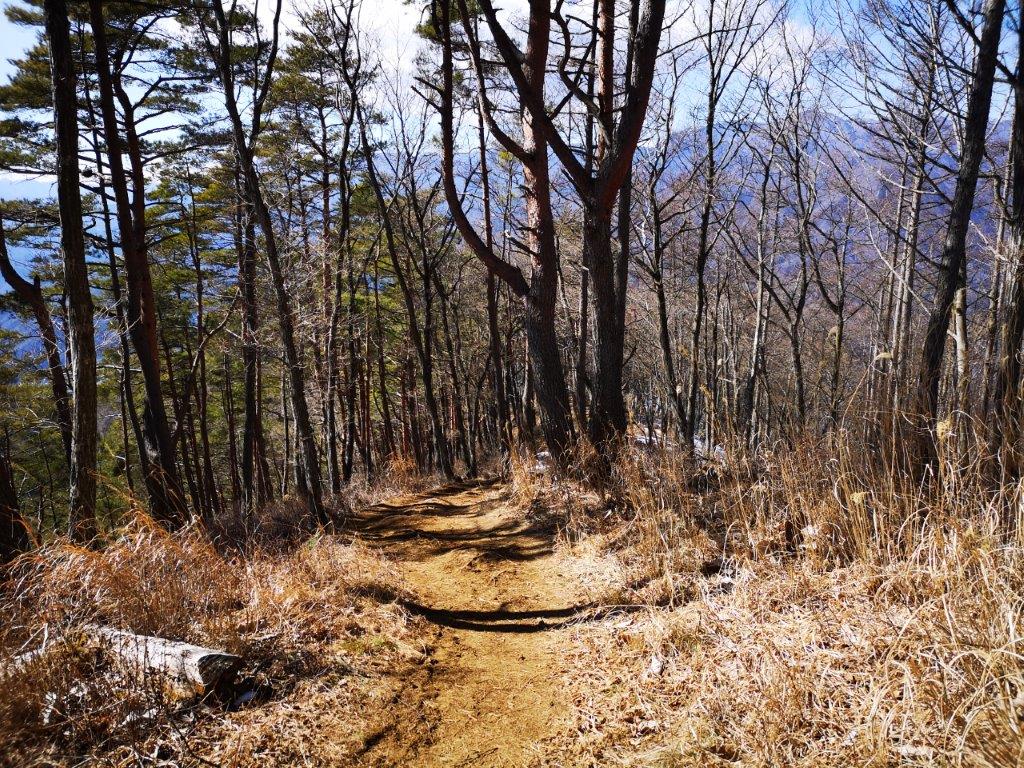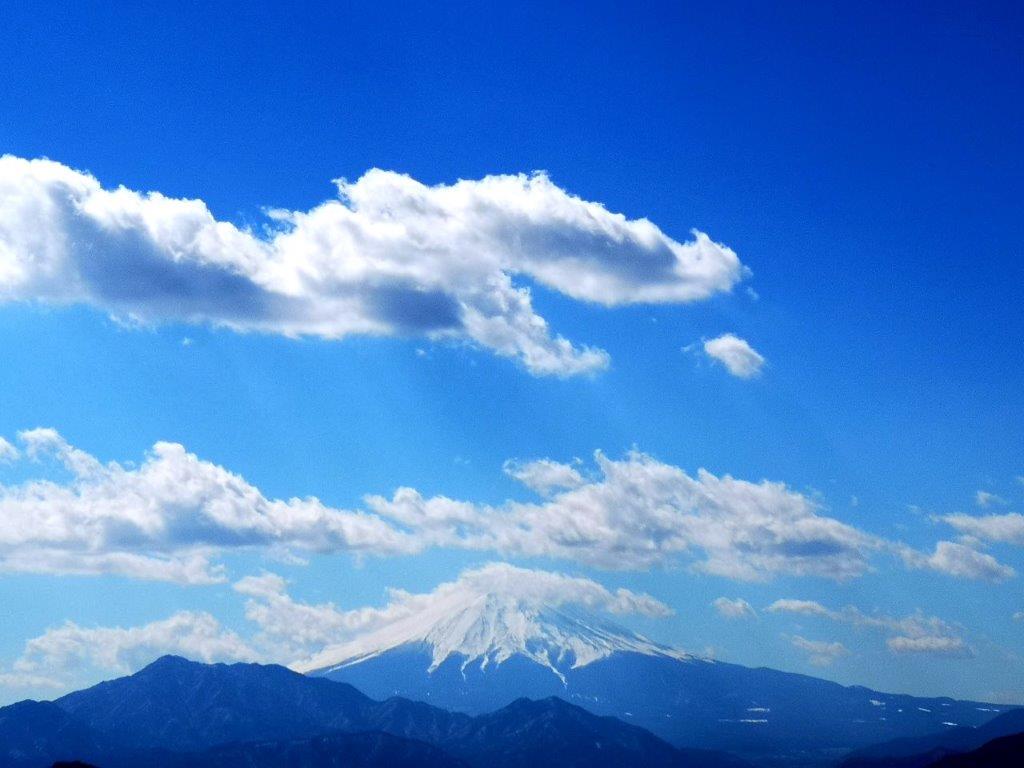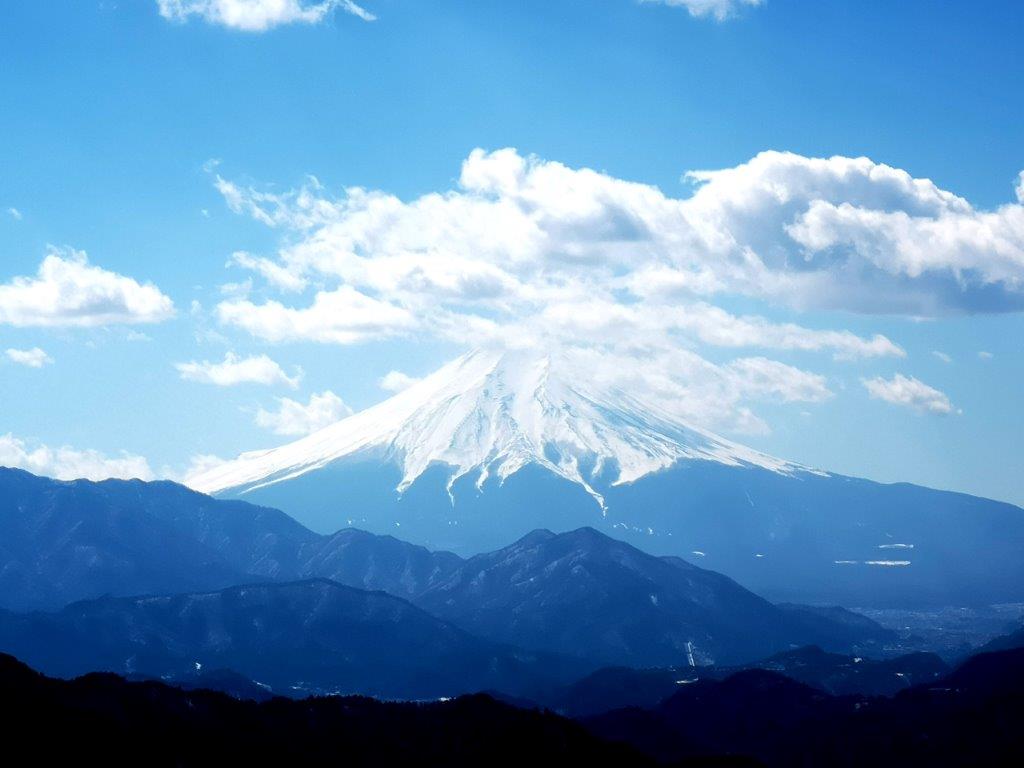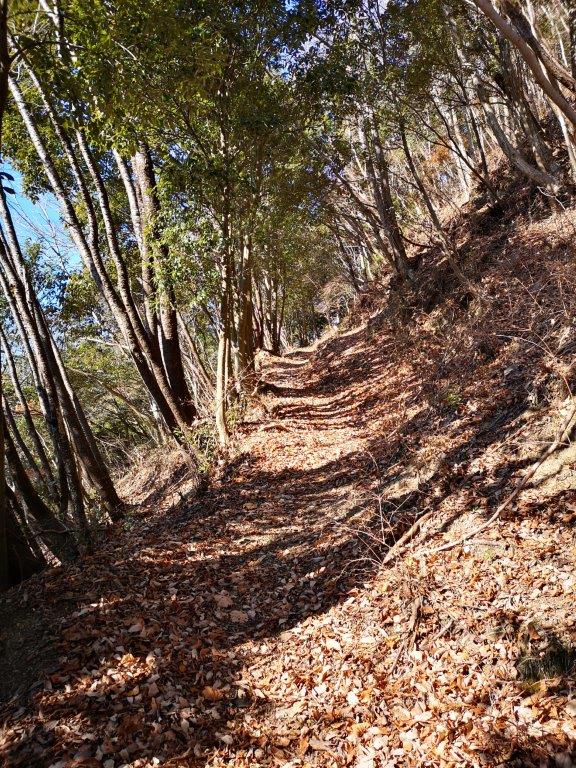
Mt Takao (599m), Hachioji City, Tokyo Prefecture, Saturday, July 5, 2025 [Jataki to Biwa Falls]

I had been to Mt Takao less than a year ago but wanted to return for several reasons. First, the recently introduced “green cars” on the Chuo line, would allow me to ride to Takao station and back in comfort; next, its proximity to the city and public transport meant it was ideal for a late afternoon hike, allowing me to avoid the intense daytime heat in this season; finally, I could wash off the sweat at Gokuraku-yu conveniently located next to Takaosanguchi station.

Hiking in the Meiji no Mori Takao Quasi-National Park

明治の森高尾国定公園

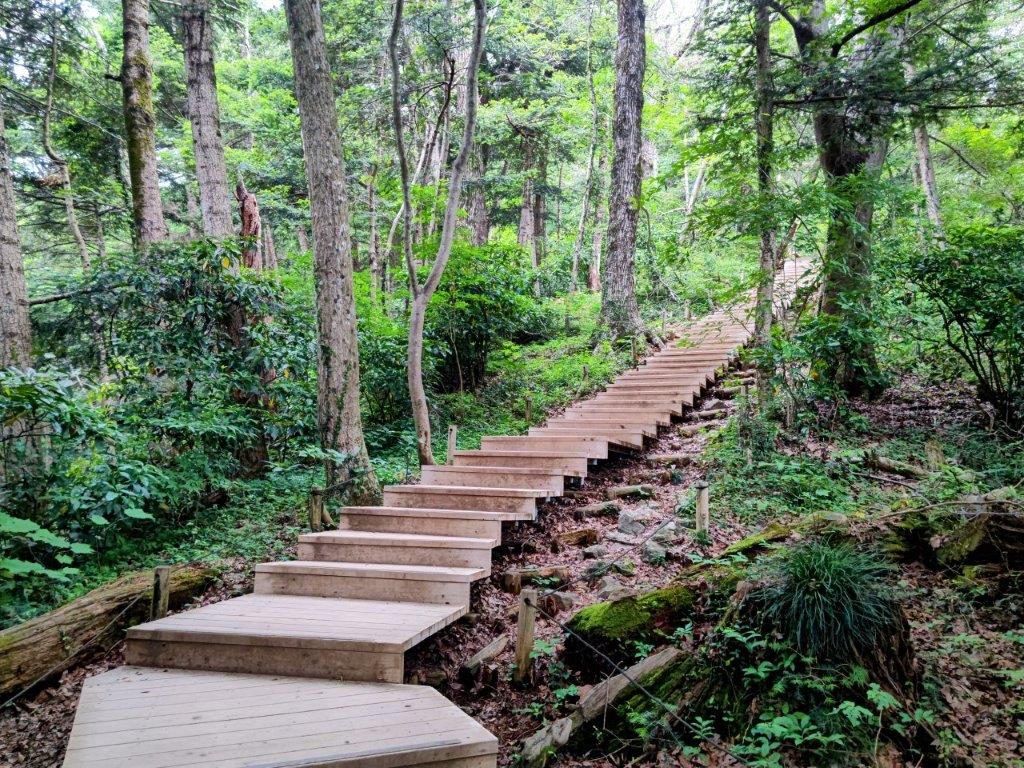
I decided to go up the Jataki falls trail, the only trail I had yet to walk on the mountain; after a quick visit to the summit via the Suspension Bridge Trail, I had originally planned to descend via the Biwa waterfall trail. However, due to the current restriction (see below), I decided to head down the Katsura Forest trail instead; from the ropeway top station, I’d then follow a connecting trail down to Biwa Falls, allowing me to complete a waterfall to waterfall hike.

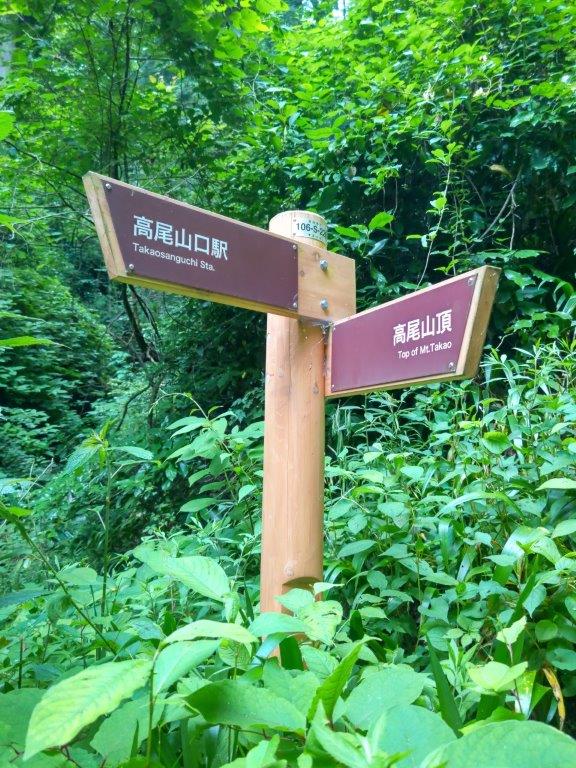
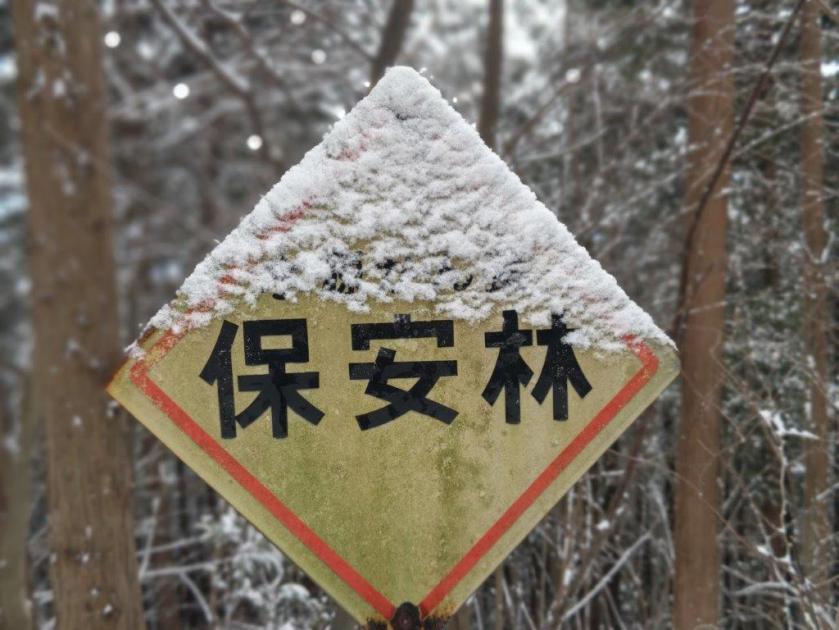
As of july 2025, the Inariyama trail is closed for repair. Consequently, the Biwa Falls trail has been changed to a one-way ascending-only trail to prevent accidents and traffic jams due to overcrowding. This restriction is in place all day; trail running (in either direction) is also prohibited. In other words, it’s not possible to hike down this trail for the time being (no end date to the restriction has been given). Multiple signs in Japanese and English have been placed at the bottom and top of the trail, as well as along the other trails. Please take this into account when planning your hike.

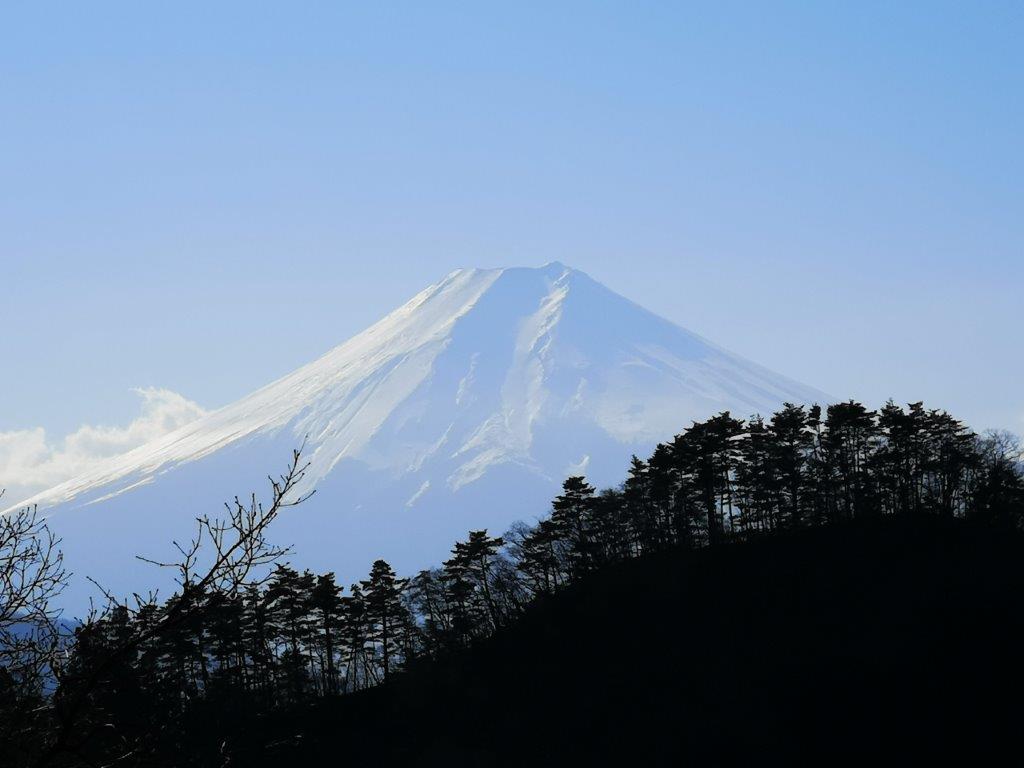
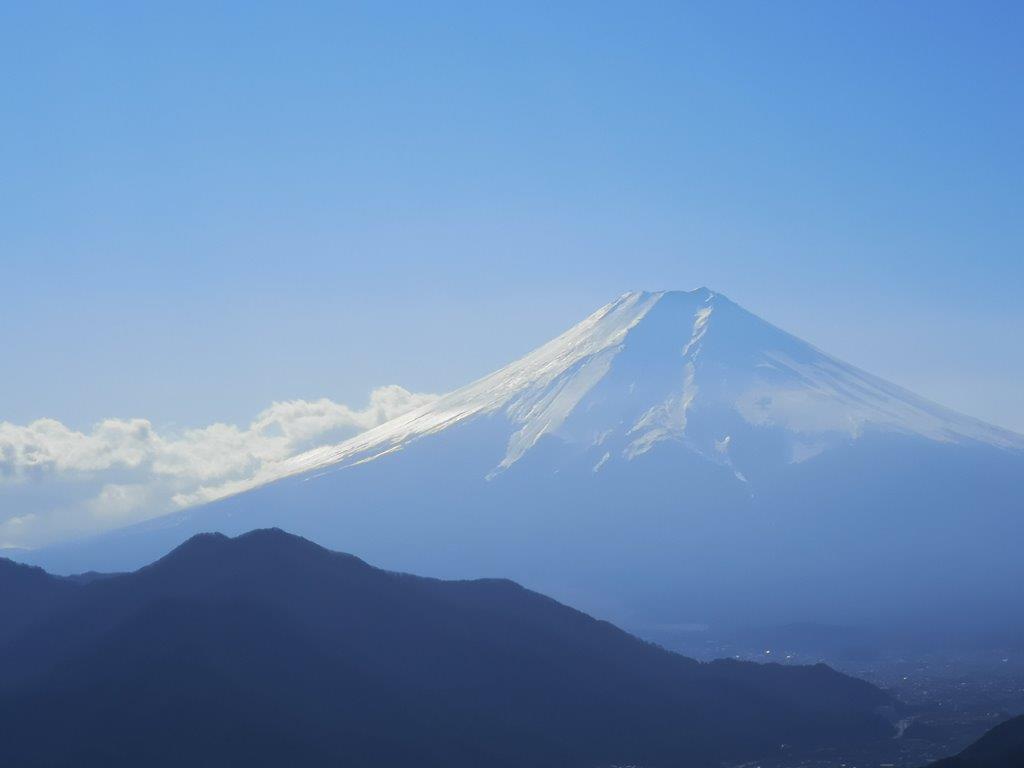
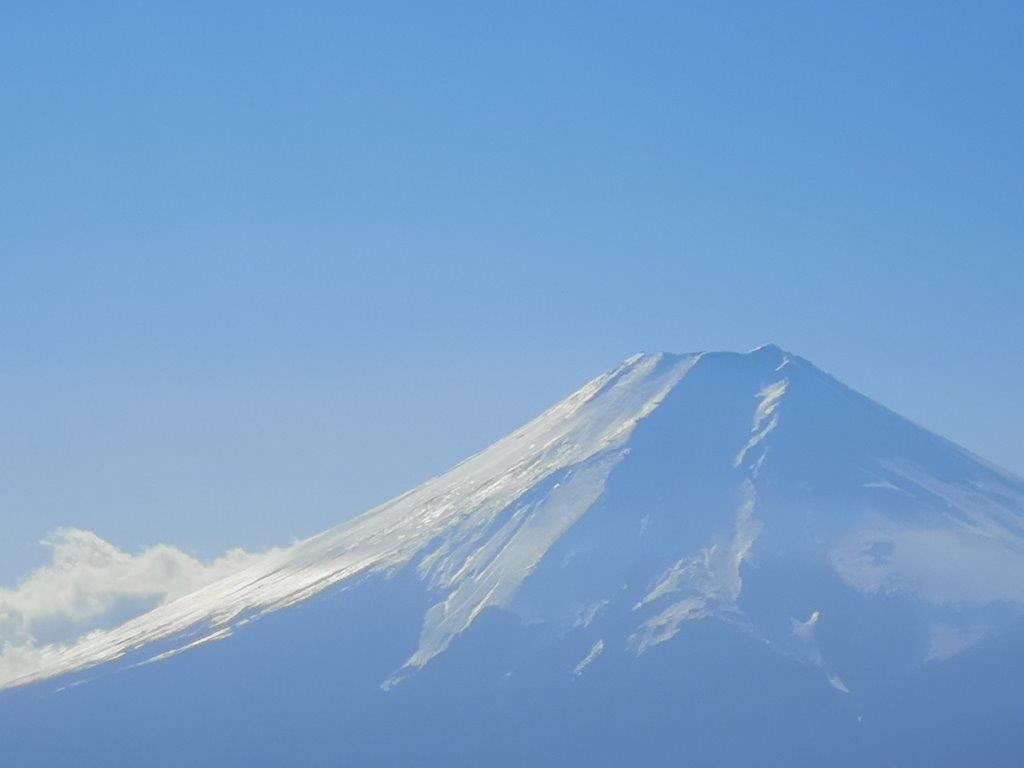
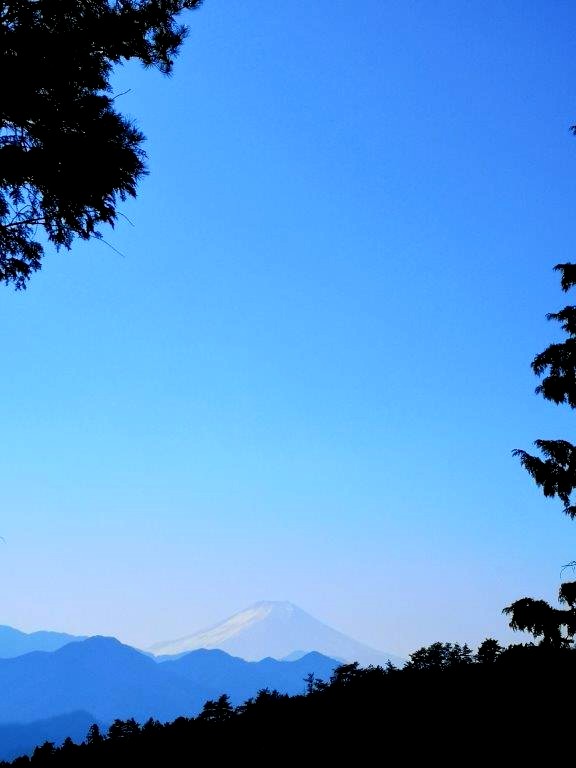
To get to the start of the hike, I’d ride the Chuo line to Takao station; from there I’d catch one of the frequent buses for Kobotoke (小仏) and get off at Jataki-guchi (蛇滝口), a short distance away. For the return, I could ride the Keio line one stop to Takao station and there transfer to the Chuo line. Although the weather was supposed to be quite hot again, I hoped it would start to get cooler after 3pm. I also hoped I could get a glimpse of Mt Fuji from the top, on my third visit in three years.

Find Japan Hiking Maps on Japanwilds and subscribe to our newsletter
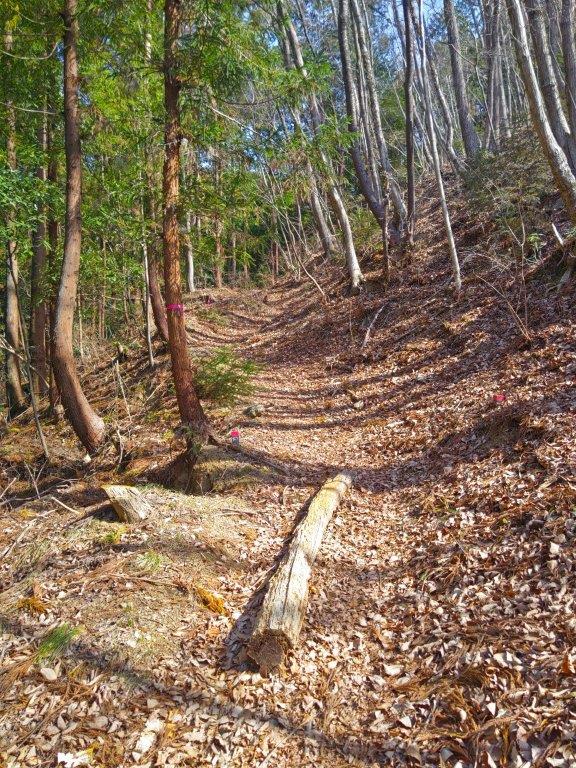
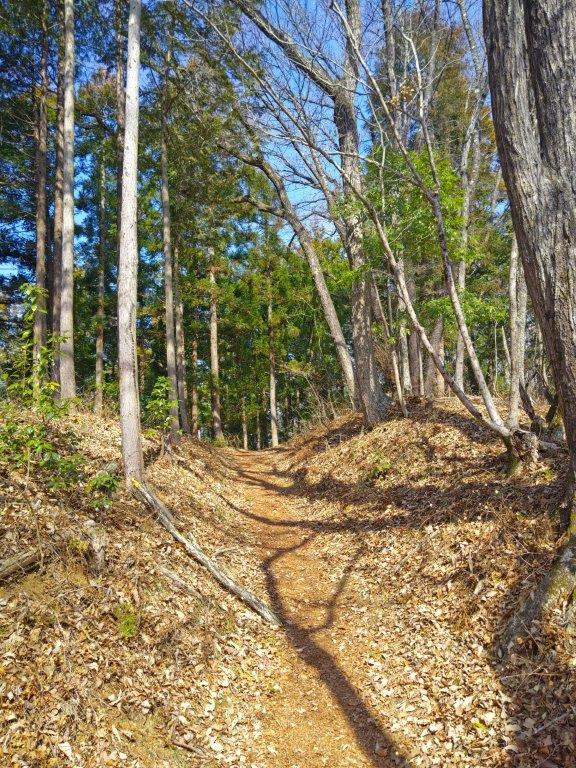
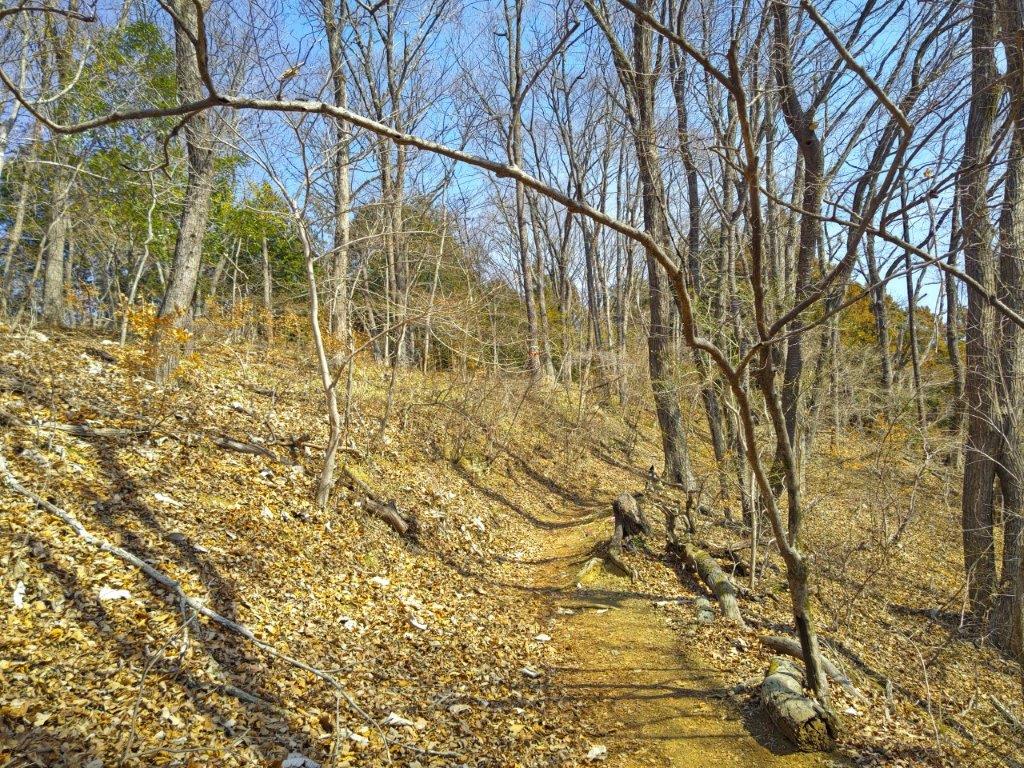
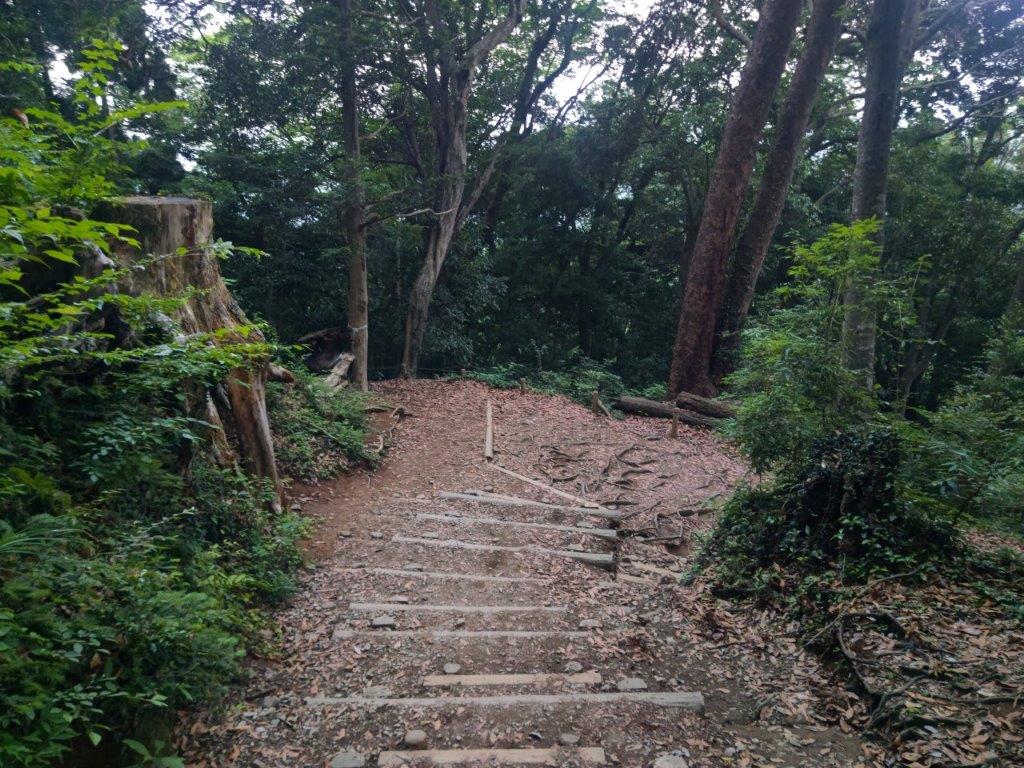
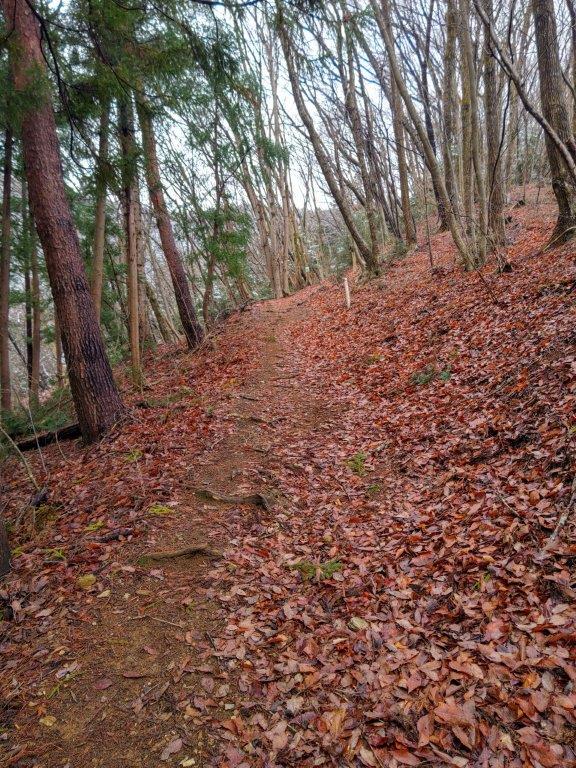
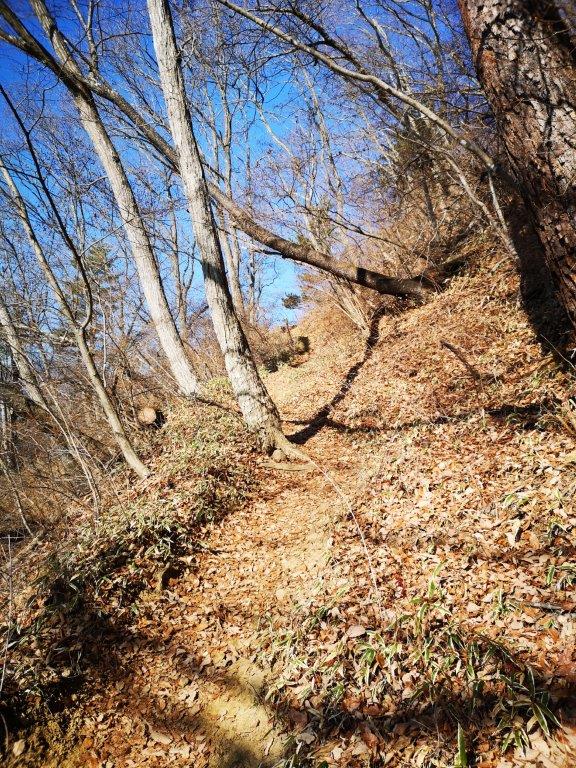
Looking back towards Jataki Falls (left) Jataki Trail (right)

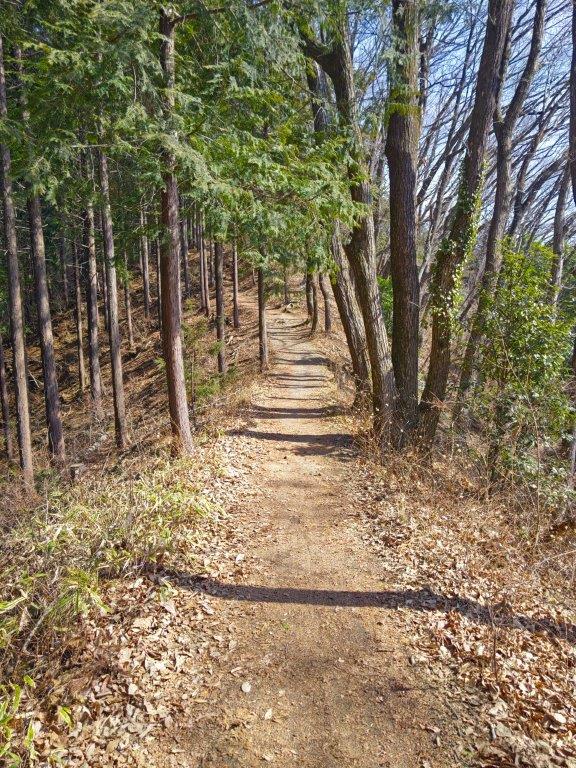
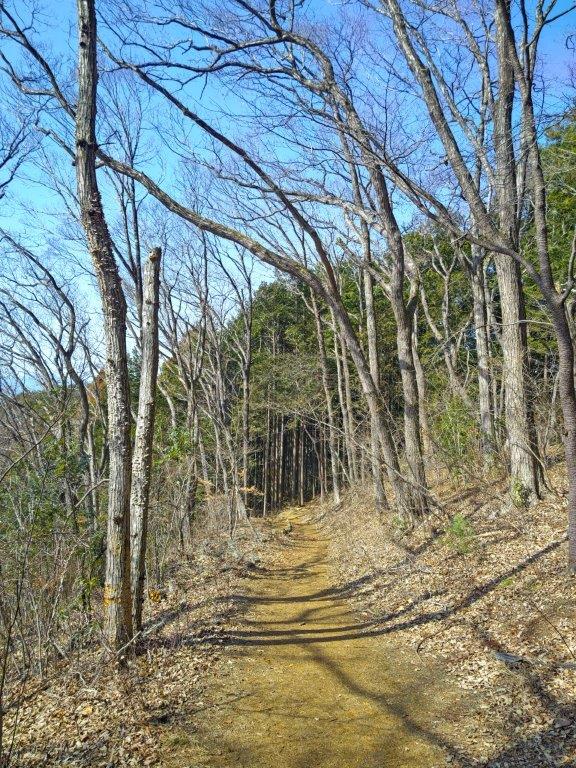
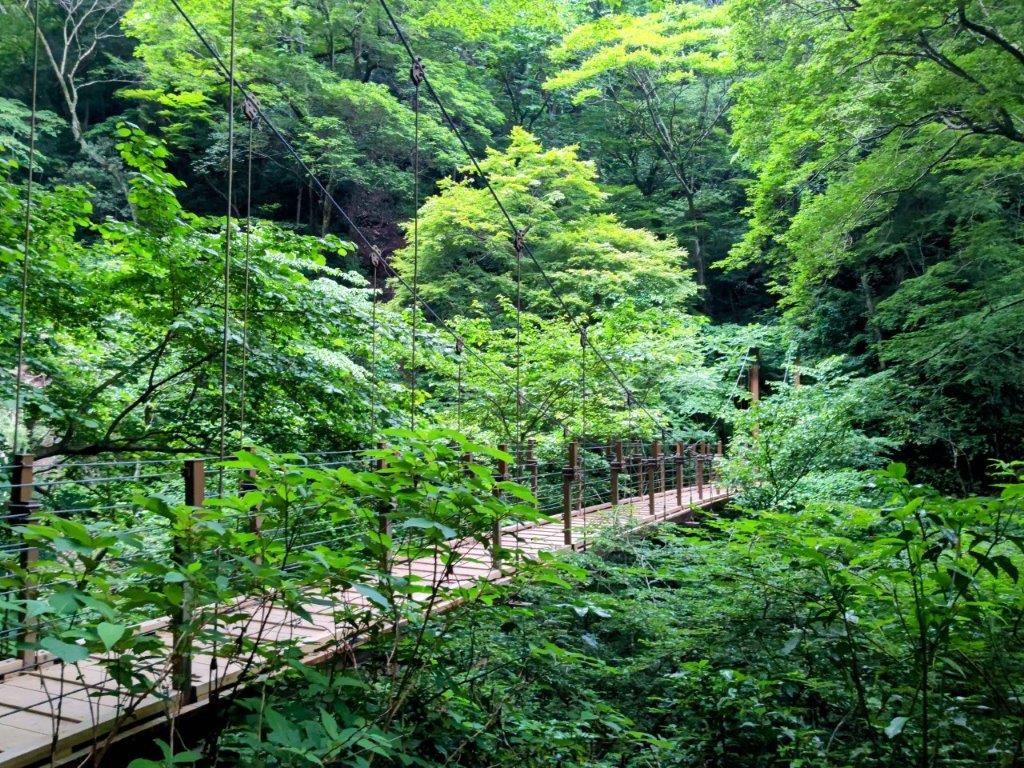
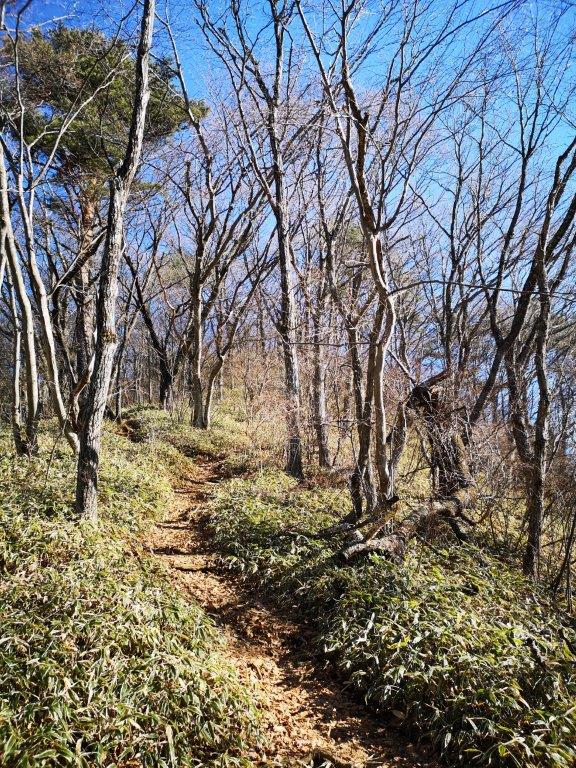
Looking back at the Suspension Bridge (left) Suspension Bridge Trail (right)

It still felt way too hot for any outdoor activity after arriving at Takao station just before 2pm. I decided to hang out for a short while at Ichigendo, the small cafe attached to the station. Even with the added delay, I started to have doubts about today’s hike as I walked up the Old Koshu Highway (旧甲州街道), the Ura-Takao bridge (裏高尾橋) providing the only shade from the punishing sun. I reached the trail entrance a little before 3pm; to further delay the start of my hike, I decided to check out the Ura-Takao Stream Path (裏高尾渓流線歩道) along the Kobotoke River.

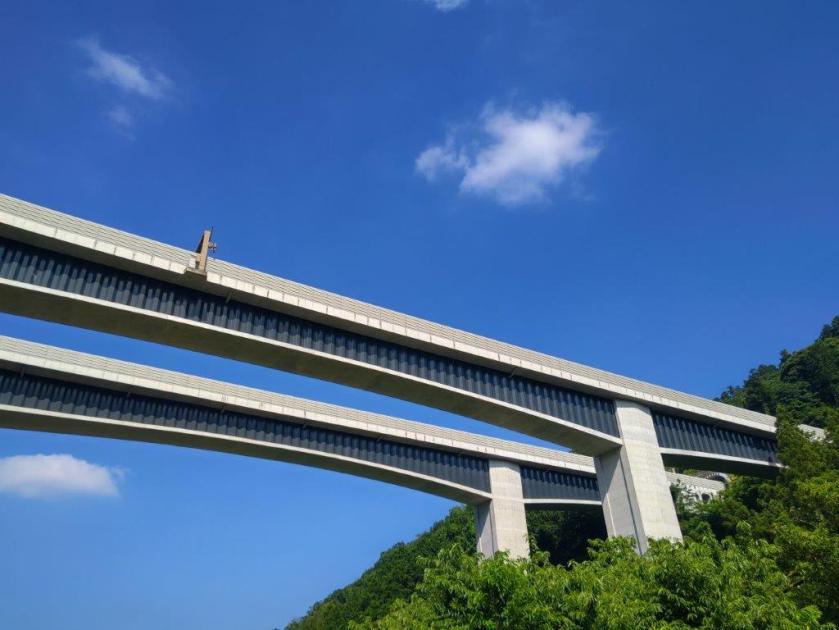
Ura-Takao Bridge from near the Bus Stop

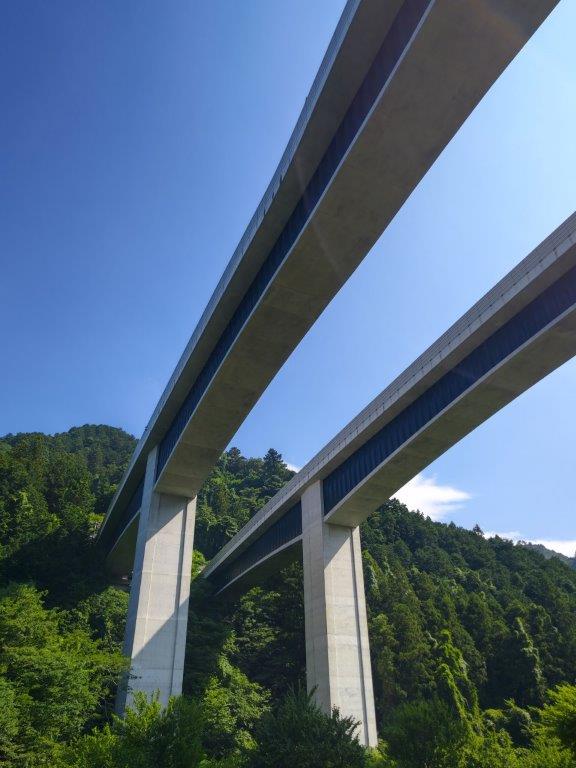
Walking under the Ura-Takao Bridge

I was surprised to see such a clean river close to the city. At one point, a group of children were noisily playing in the water; nearby a couple of adults were lying in a deeper, narrow section, completely submerged by the cool rushing water. A little further, I reached a bridge where I had a good view of the river itself. As I continued along the trail on the other side, a green-coloured snake slowly slithered away into the bushes. At this point I decided to turn back, and a little after 3pm, I found myself slowly making my way up a paved incline, the start of the 蛇滝線線歩道 (the Jataki trail).

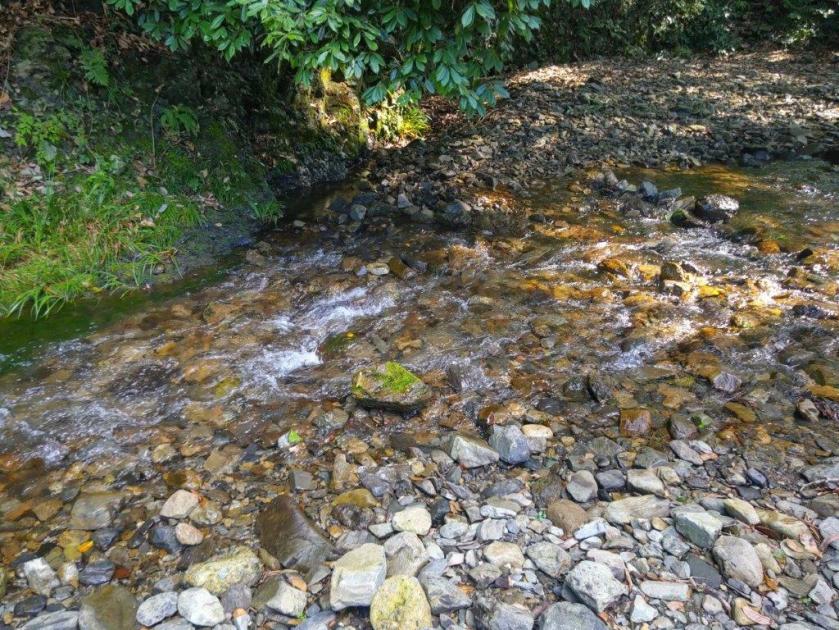
Kobotoke River from the Ura-Takao Stream Path

A popular Spot for Cooling Off in the Summer

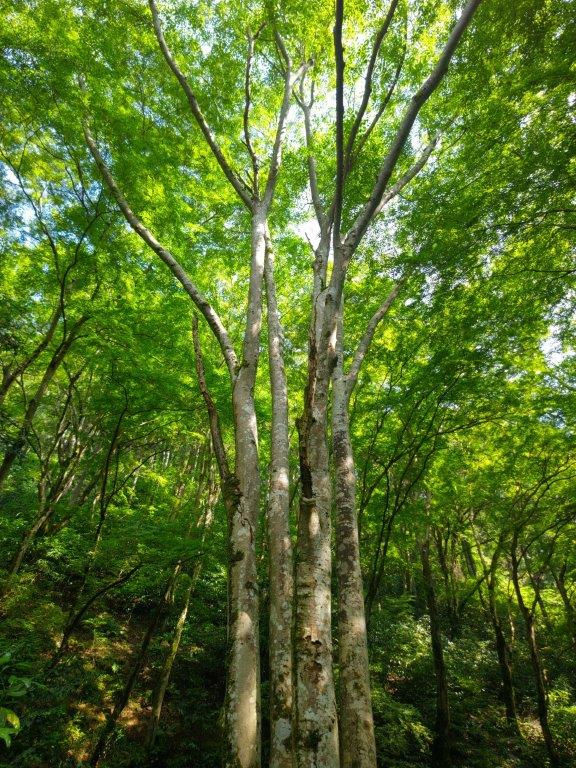
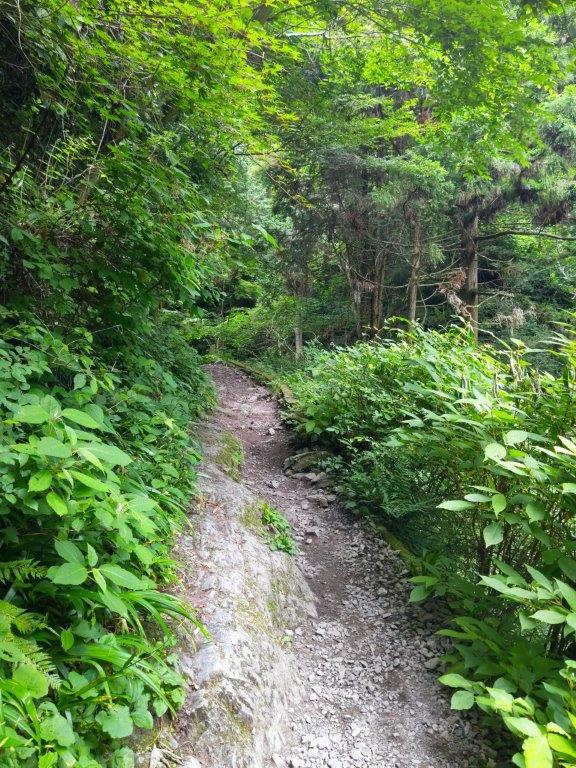
Fortunately this section was in the shade and a small brook running parallel to the road also had, I hoped, a cooling effect; here and there tall birches reached upwards, reminding me I was now inside the Meiji no Mori Takao Quasi-National Park. I soon reached a series of stone steps leading to a small Inari shrine near Jataki Falls (蛇滝 meaning “snake waterfall”). I was unable to spot the falls, most likely hidden by the mountain side and seemingly off limits to hikers. On the other hand, it seemed like a peaceful spot off the beaten trail, lush vegetation crowding in from all sides. Around now, I was starting to feel the effect of the heat so I soon continued on my way, slowly following the switchback trail up the north side of the mountain.

Stone Staircase past Jataki Falls

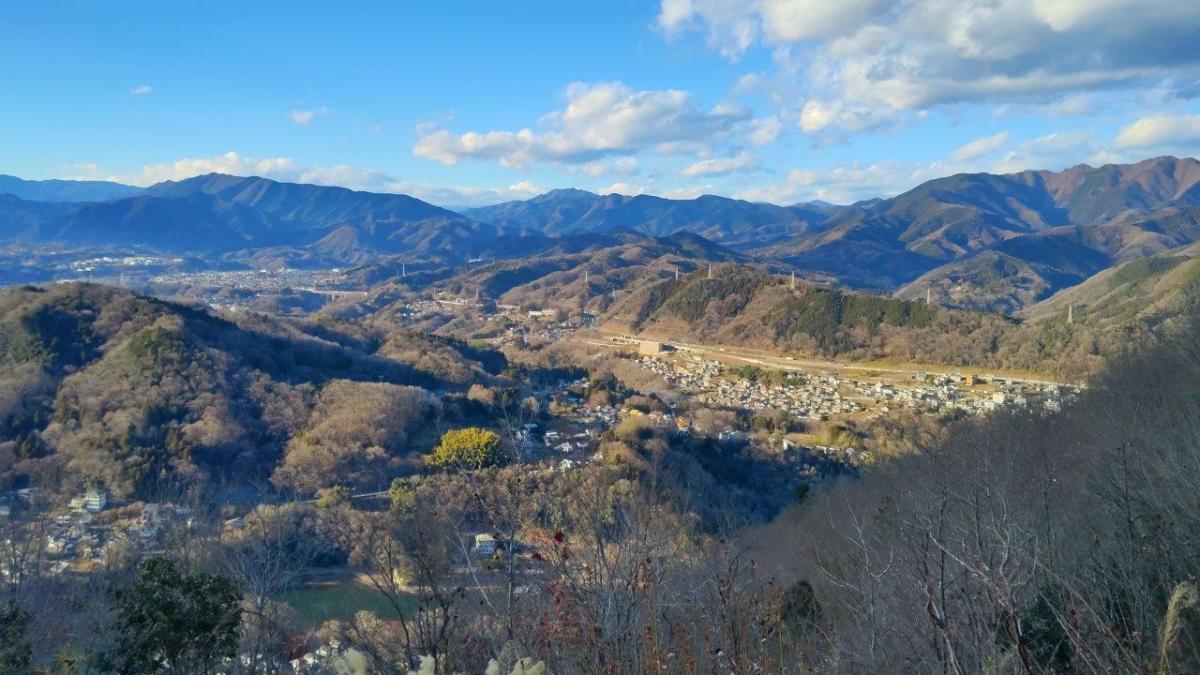
View South from the Monkey Park

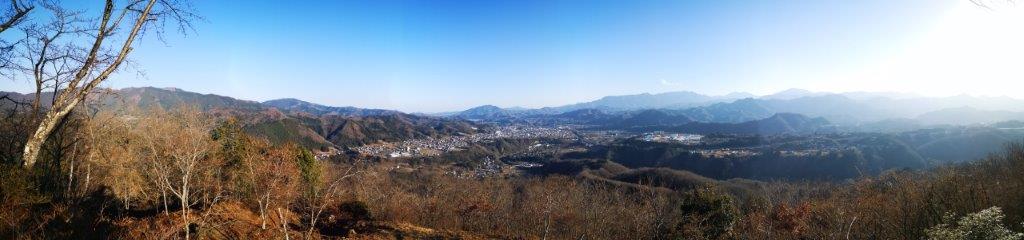
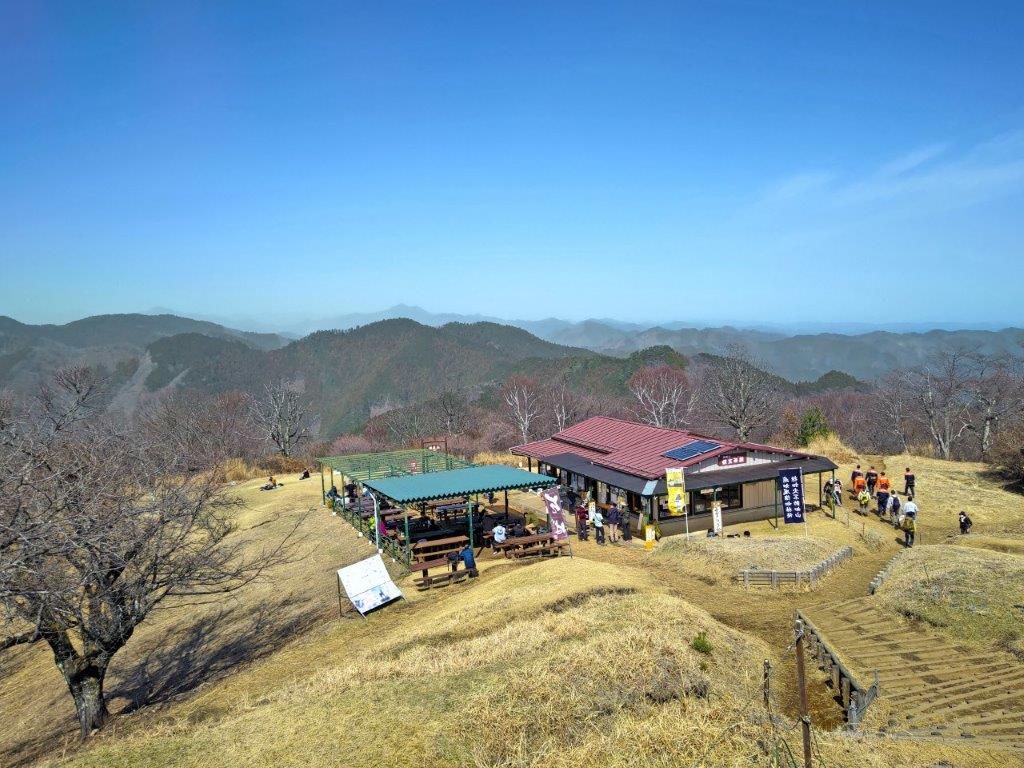
I was relieved when I emerged onto the main ridge near the top station of the ropeway. I went straight to the restrooms to pour some cold water over my head. Feeling better I headed up the Kasumidai Loop and soon arrived at the entrance of the Takao Monkey Park. Although I prefer to see monkeys in the wild, I felt I needed another delay to allow the sun to get closer to the horizon. Inside, I was rewarded with a view south from the observation deck on top of the monkey house, as well as a surprising number of monkeys. After a short walk through the wildflower garden, I resumed my hike, now following the Suspension Bridge Trail. It was past 4pm, and for the first time of the day, the temperature felt bearable, as the sun sunk below the clouds on the horizon.

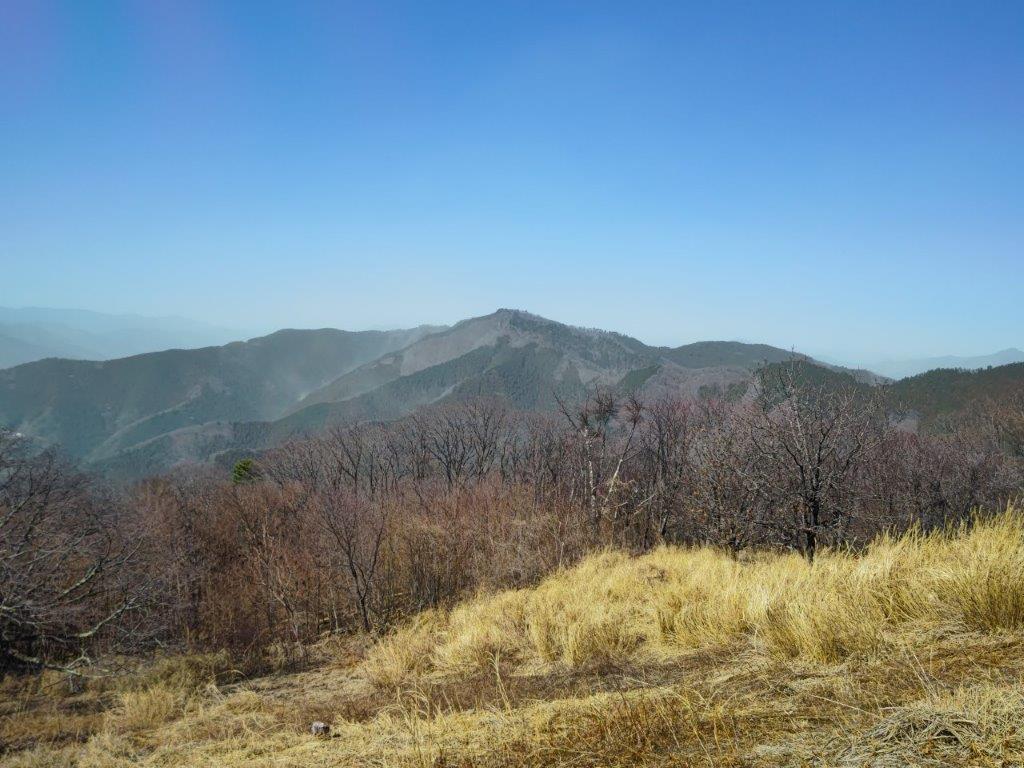
View of the Tanzawa Mountains from the Top of Mt Takao

Walking along the Katsura Forest Trail

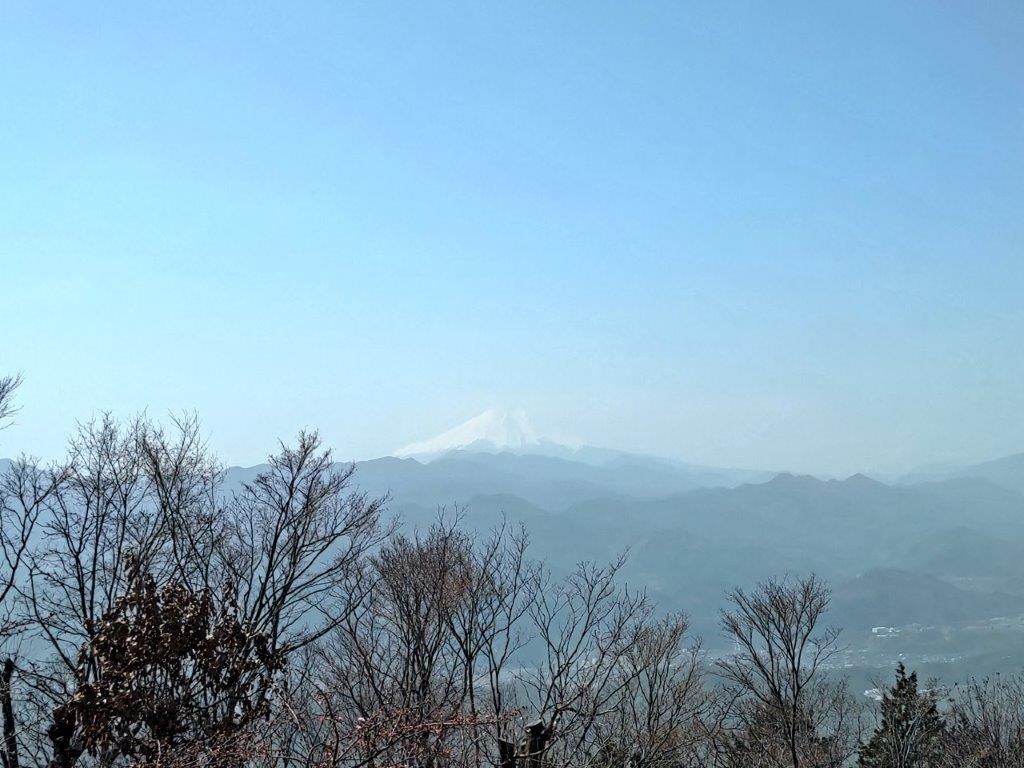
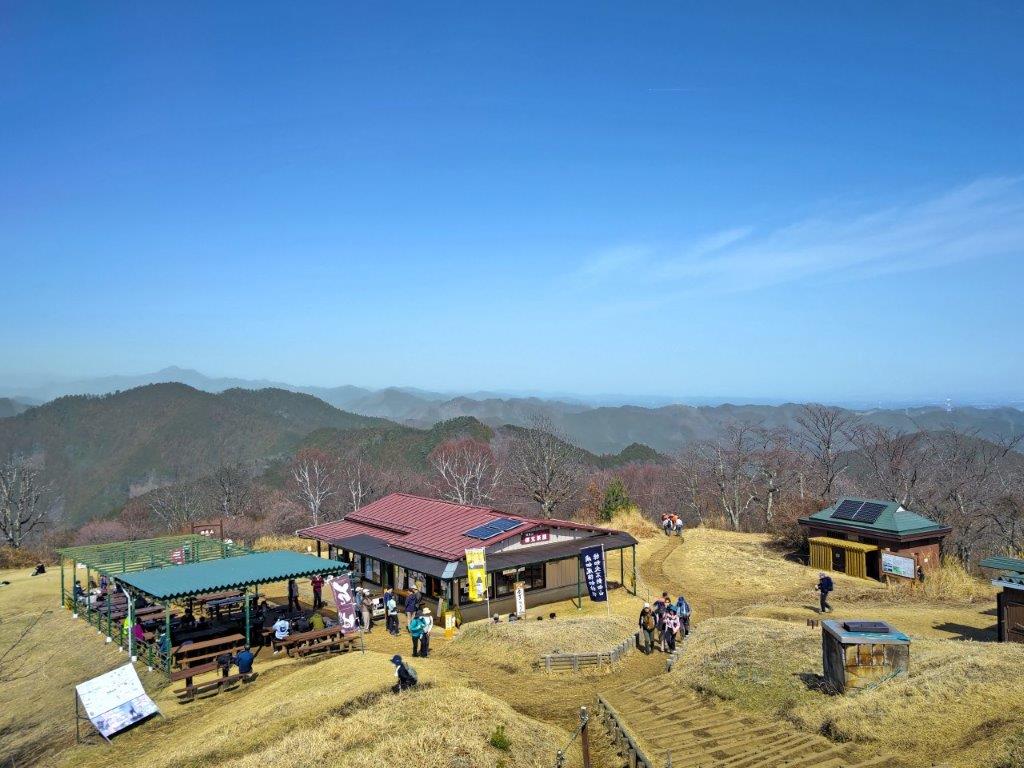
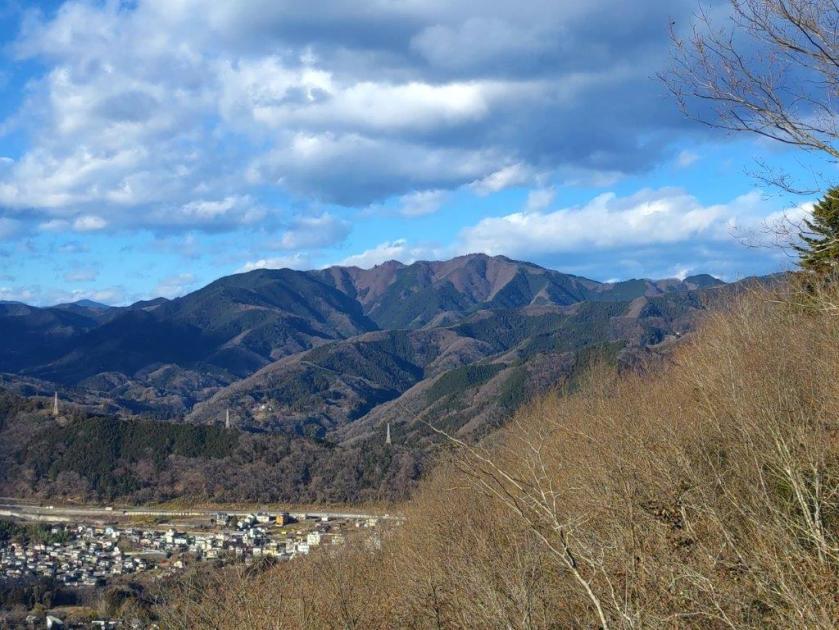
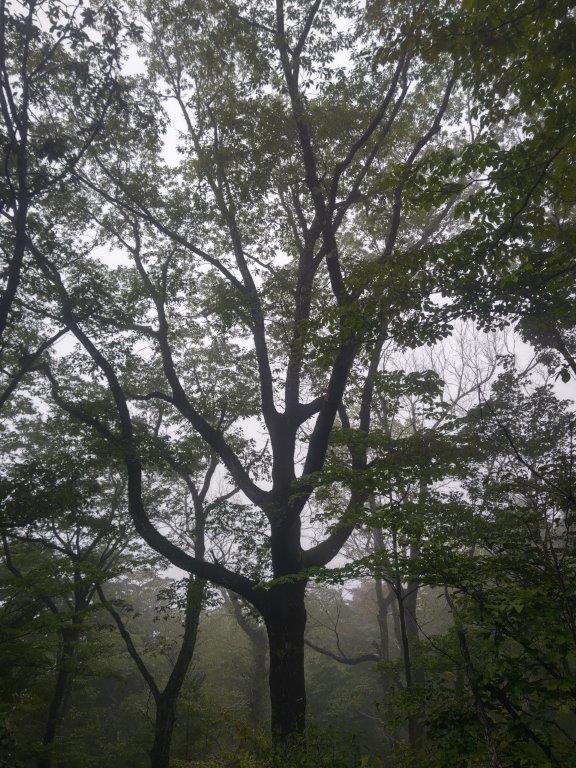
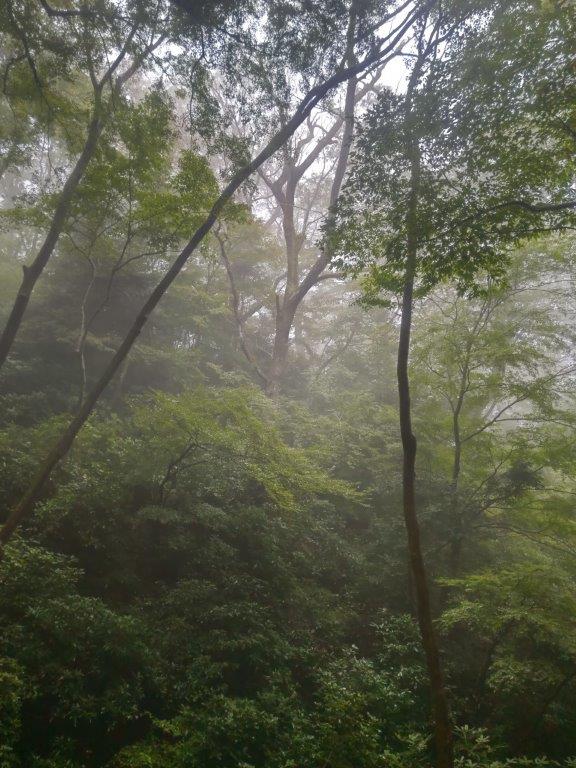
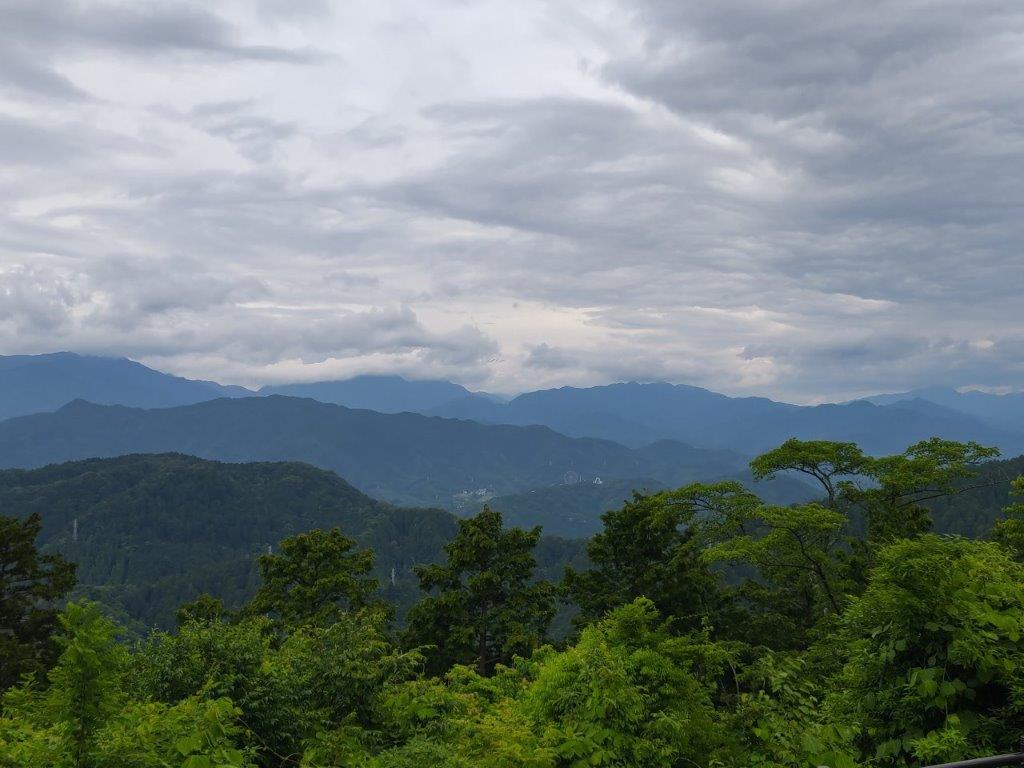
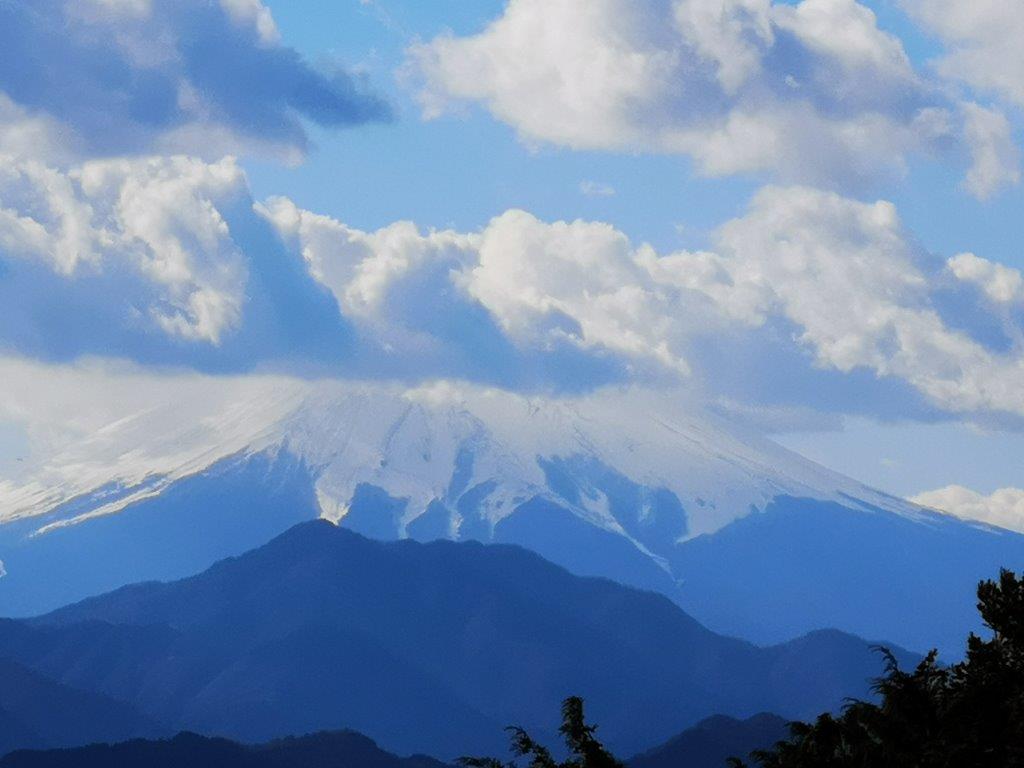
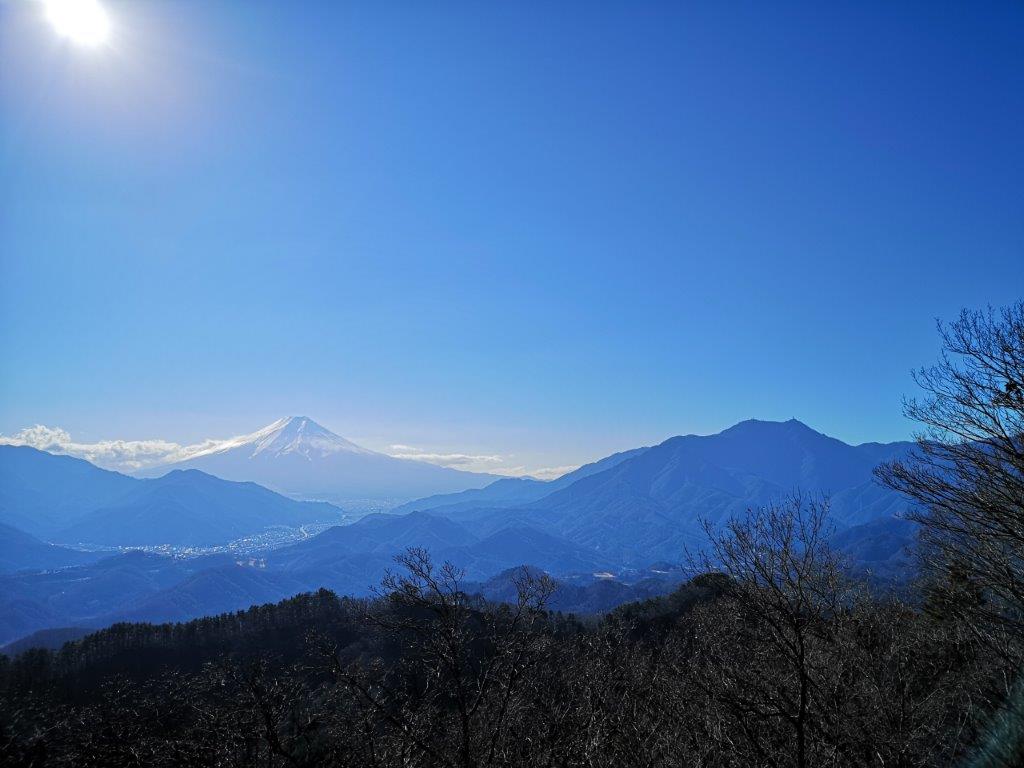
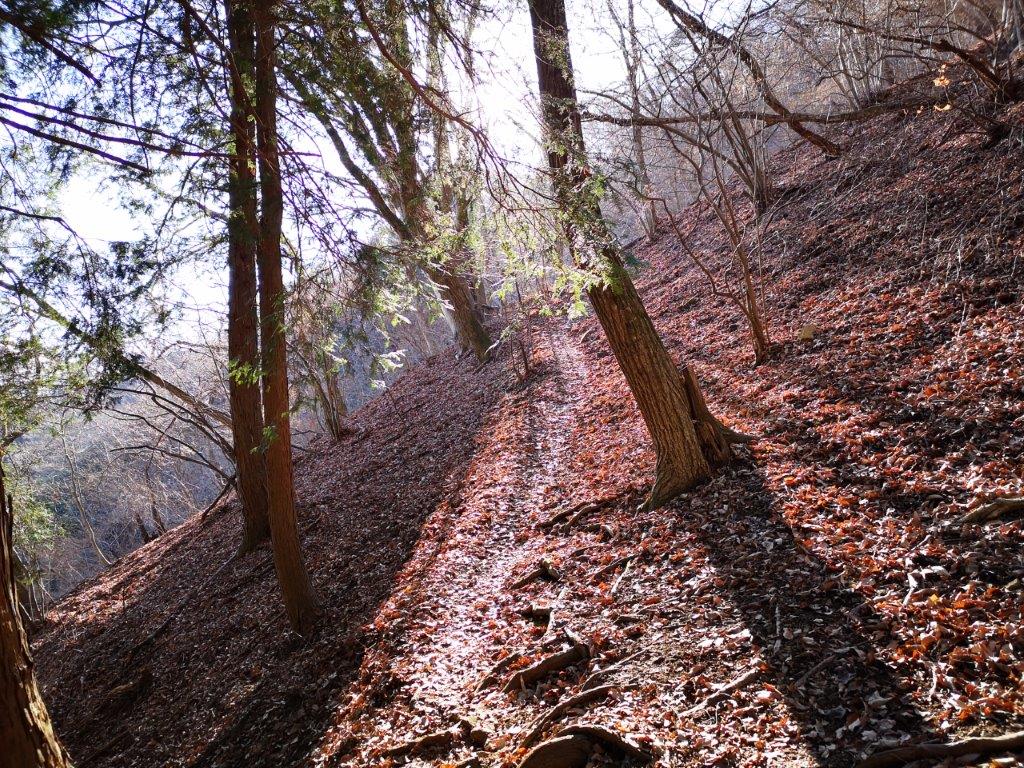
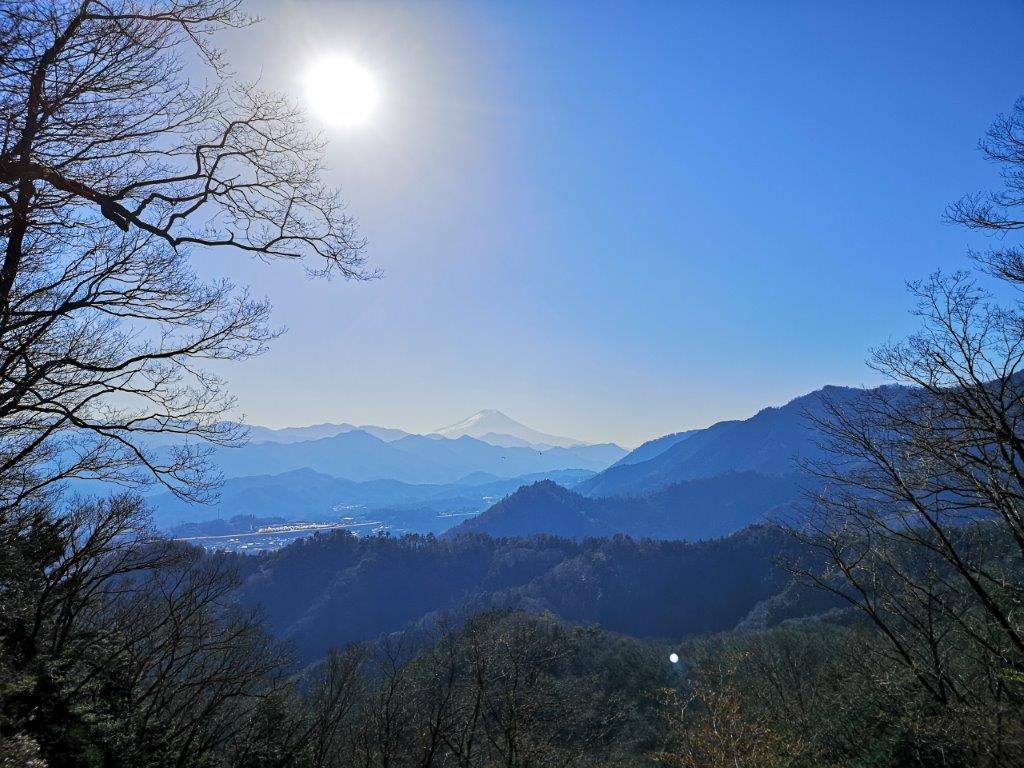
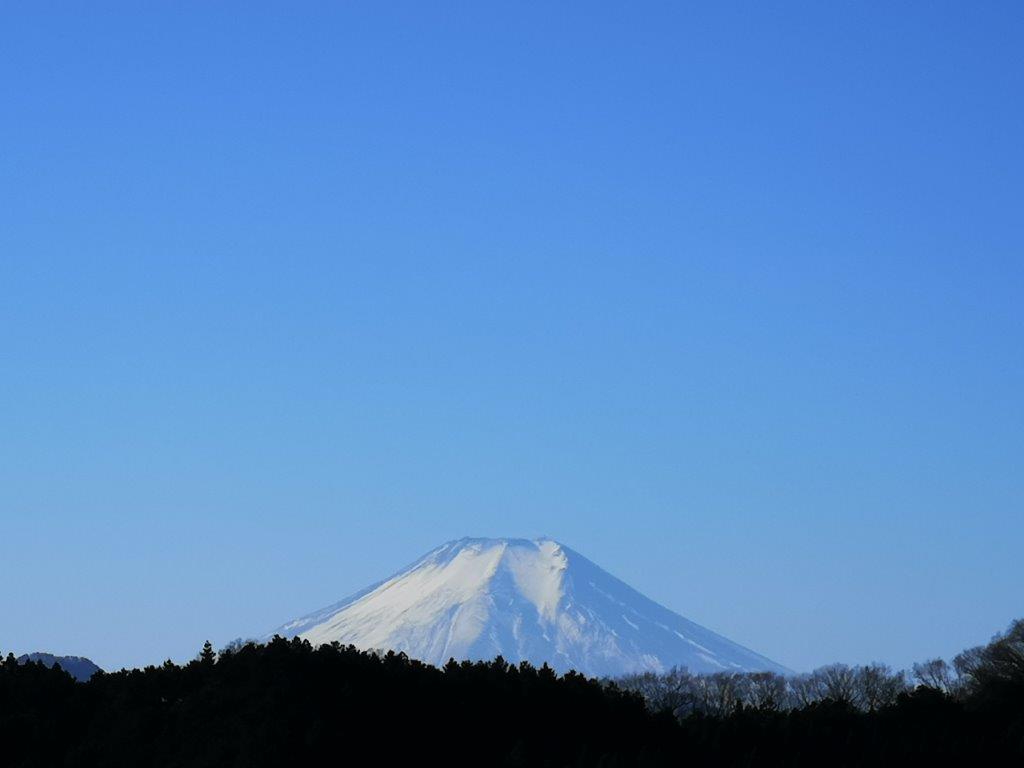
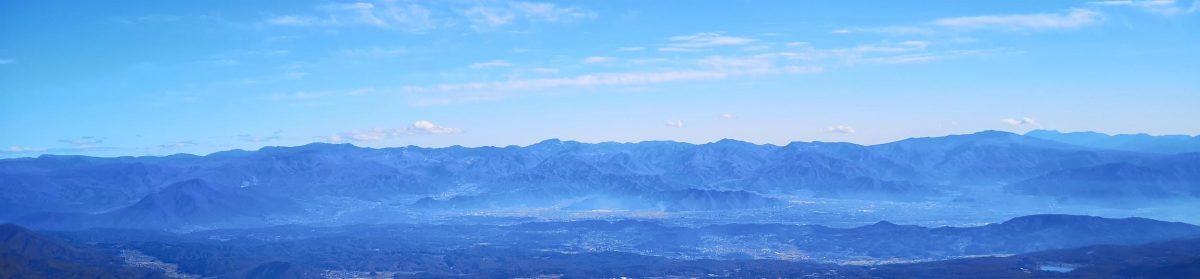
So far I had seen few people but this section was surprisingly crowded, probably because of the current trail closures. A little before 5pm, I reached the top of Mt Takao (高尾山 たかおさん takao-san) for the tenth time. Clouds had already swallowed up Mt Fuji to the southwest but I still had a view of the Tanzawa mountains, an improvement over my last visit. After a short break, I started to head towards the entrance of the Katsura Forest Trail. Although the sun wouldn’t set for another two hours, it was surprisingly gloomy under the cover of the forest canopy, almost a repeat of my previous experience on this path. I quickened the pace, stopping briefly to observe a hairy caterpillar crawl across the trail. I was relieved again to be back on the Kasumidai loop and without hesitation, darted down a wide path signposted for Biwa Falls.

One of the several Bridges on the Katsura Forest Trail

Wide Path down to Biwa Falls

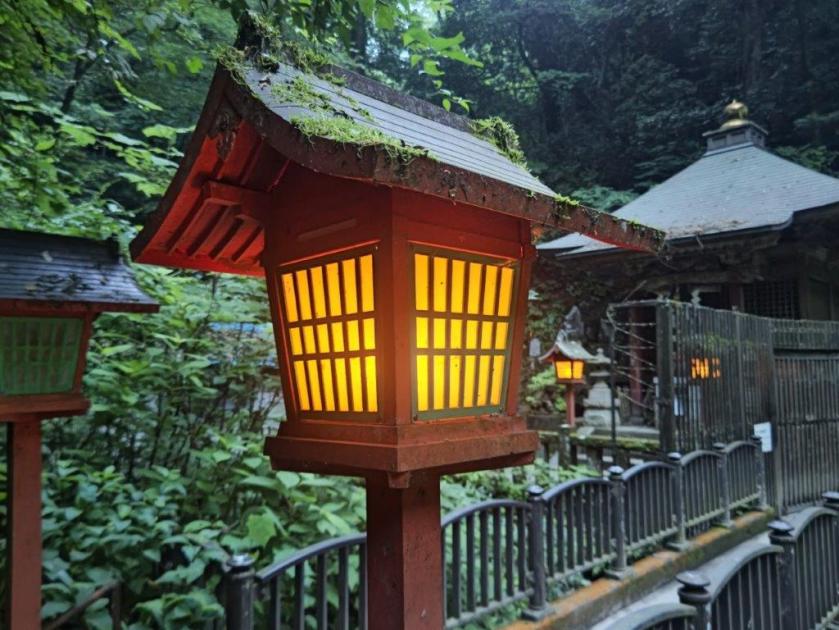
I was glad this section had better visibility, pieces of sky now visible overhead. The trail turned rocky and forced me to slow my pace. Once or twice I spotted a brief pinpoint of light, possibly fireflies since a stream was nearby. At 6h30, I reached Biwa Falls (琵琶滝), the lit-up red-coloured lanterns an indication of the late hour. Since it was truly getting dark, I completed the final section at top speed, reaching Gokuraku-yu exactly at 7pm. While I was enjoying a hot bath, a tremendous downpour started; towards the end, I had passed a few people heading up in the semi-darkness and wondered if they would be alright. At 7h30, I boarded the train for the one-hour ride back to Shinjuku.

Watch a Video of the Hike

See a Slideshow of More Pictures of the Hike

Mt Takara (374m), Mt Hizure (382m), Mt Hachioka (460m), Mine (423m) & Mt Kongo (420m), Sagamihara City, Kanagawa Prefecture, Sunday, December 29, 2025

For the final outing of 2024, I was looking for a hike close to Tokyo, something straightforward to ensure I could end the year safely. I also wanted to finish at a hot spring, the cold months of winter being the best time to indulge in one of my favourite activities. A few weeks ago, I found out about the Hizure Alps, and I thought it might be the perfect time to explore this up and down route along four minor peaks south of Sagami lake; since the hiking time was just over 3 hours, I could extend it with a round-trip to a 5th peak on the south side.

For subscribers, read this Post on Hiking Around Tokyo for a better viewing experience and the latest updates

Hiking the Hizure Alps 日連アルプス

I would ride the Chuo line to Fujino station, and from there, walk to the trail entrance on the east side of the “Alps”. I would finish at a trail entrance on the west side, where I could catch a bus for Yamanami Onsen. After a hot bath, I could take the bus in the opposite direction, back to Fujino station. I knew that the Chuo line had recently added green cars so I was hoping to use one on the return. The weather was supposed to be sunny and cold, usual for this time of the year, and I was looking forward to an enjoyable last hike of 2024.

Find Japan Hiking Maps on Japanwilds

Hike in the Shade (left) Hiking in the Sun (right)

Late Afternoon sun near Mine (left) and Mt Kongon (right)

It was a beautiful sunny winter day as I stepped off the Chuo line at Fujino station. After getting ready, I made my way down to Hizure Ohashi Bridge. While crossing the Sagami river, I could already see the Hizure Alps on the other side. Although the nearest entrance was right up the road, I turned left past a supermarket, and followed back lanes eastwards till I reached the Hizure Alps Trailhead (日連アルプス登山口) shortly before noon. On the way, I passed a charming little shrine with red banners flapping in the wind.

Sagami River from Hizure Ohashi Bridge

View North on the way to the Trailhead

I patiently followed the trail as it hugged the mountain side instead of climbing right away. Just as it reached the eastern end, it suddenly made a right turn and headed up at a steep angle. After hauling myself up, the trail soon regained a more reasonable angle and was in the sun again. At 1230, I arrived at a picnic table on the summit of Mt Takara (宝山(たからやま takara-yama meaning treasure). Framed between 2 trees on the south side was a view of Mt Jinba. I continued on my way, and soon after, reached another picnic table at the top of Mt Hizure (日連山 ひづれやま hizure-yama); it was completely in the trees so I continued without a break.

Walking in the Sun Past Mt Hizure

Mt Omuro (left) & the Doshi Mountains (right) on the way to Mt Hachioka

The trail was mostly level with some slight ups and downs, mostly in the sun thanks to the bare trees, and mostly free of people thanks to the Japanese year-end holidays. At 1pm, I reached a third bench at a fork in the trail. I went left, leaving the Alps momentarily to head along a southern spur. This change of direction also exposed me to strong winds blowing from the west. I soon arrived at an electric pylon with an open space on the west side. I gazed at the pyramidal summit of Mt Omuro for a short while before being chased away by the wind. After a short slippery climb over dead leaves, I reached the top of Mt Hachioka (鉢岡山はちおかやま hachioka-yama), one of the 15 famous mountains of Fujino town, and also the site of a TV antenna. Despite the lack of view, it was sunny and quiet, so I settled down on a log for a lunch break. Once done, I retraced my steps to the Alps.

Windy Section of the Trail on the Way to Mt Hachioka

Viewpoint at the Top of Mine

The next section was probably the nicest part of the entire hike, heading southwest into the afternoon winter sun, the surrounding vegetation reflecting its soft light. It was only 2pm, but I seemed to be the last person left on the mountain. At one point, I had a view on the south side of Mt Sekiro and Mt Hachioka, side by side. A little before 2h30, I turned right at another fork, this time following a spur northwards, and a few minutes later, arrived at the top of Mine (峯 みね). I had a stunning view of Uenohara and the surrounding mountains on the west side: from left to right, I could see Mt Ogi, Mt Gangaharasuri, Mt Gongen, Mt Mito and Mt Jimba.

Mt Ogi (right), Mt Gangaharasuri (center) & Mt Gongen (right) from Mine

Mt Gongen (left), Mt Mito (center) & Mt Jinba (right) from Mine

I took my time taking in the view, trying to spot the smaller peaks I had hiked in the area such as Mt Yae, Mt Furo and Mt Yogai. The wind had pushed in some clouds from the west, testing my patience as various areas alternated between sun and shade. Once satisfied, I left my pack and trotted further down the ridge to the nearby Mt Yasaka (八坂山 やさかやま 420m), in the forest and thus less famous. After collecting my pack, I returned to the junction and continued to the final peak of the day only a short distance away. Mt Kongo (金剛山 こんごうざん kongo-zan), named after a Buddhist term meaning “something indestructible”, was the site of a small shrine surrounded by cedars.

View of the Uenohara Area from the the Top of Mine

Heading to Mt Kongo

A couple of picnic tables in the shade made it seem like the ideal place for a break on a warm day. However, it was already past 3pm, so I started down a steep path on the south side. No rain for the past few weeks meant the trail was dusty and slippery and I made ample use of the attached rope to keep my balance. Half an hour later, I popped onto a road at the Hizure Alps Entrance (日連アルプス入口) and a few minutes later, caught a bus for Yamanami Onsen. After a quick but restorative hot bath, I hopped back on the bus for the short ride to Fujino station. There I boarded the Chuo line green car for the first time (free of charge till the Spring) for the one hour ride back to Shinjuku.

Watch a Video of the Hizure Alps Hike

Watch the Video of the Hike on YouTube

See a Slideshow of More Pictures of the Hike

Mt Takao (599m), Hachioji City, Tokyo Prefecture, Sunday, October 6, 2024 [Iroha & Katsura Forest Trails]

I wanted to do another afternoon hike on Mt Takao and explore more of its many trails. As the weather was supposed to be cloudy all day, it seemed like a good chance to do a hike close to home. The well-beaten tracks also meant that the path would be clear of spiders and spider webs. Finally, the cable car would be running past 6pm because of the summer beer garden, although I’d most likely be done before since it would be getting dark around 5pm.

Hiking in the Meiji no Mori Takao Quasi-National Park

明治の森高尾国定公園

I’d take a local JR train from Shinjuku to Takao station; there, I’d board the bus for Kobotoke, at the back of the mountain, and then go up the Iroha Forest trail, leading all the way to the summit. I’d go down the Katsura Forest Trail, ending at the cable car top station. Before heading back, I could enjoy a hot spring bath at the Keio Takao-san Onsen, right next to the Takaosanguchi station. Although I knew I wouldn’t get any views, I hoped I could enjoy Tokyo’s most famous mountain minus the crowds.

For subscribers, read this Blog Post on Hiking Around Tokyo for a better viewing experience and the latest updates

Hikage Stream (left) Iroha Forest Trail (right)

Gaining Altitude (left) Reaching the Mist (right)

A few raindrops fell as I got off the train at Takao station just past 2pm, but fortunately nothing was falling as I got off at Hikage (日影), ten minutes away on a mostly empty bus. I continued up the main road for a few minutes before turning left and passing over a bridge; I then followed a narrow road alongside Hikage-sawa stream (日影沢). The pleasing rushing sound of the water made up for the gloomy skies overhead. At the Hikagezawa Camping Ground, I turned left onto the Iroha Forest Trail (いろはの森コース). Soon the path started to climb through thick forest, the sound of water slowly fading.

Halfway to the Top (left) Just before the Suspension Bridge Trail (right)

Walking up Wooden Steps (left) and Through the Mist (right)

I was surprised by how humid it still was, as I didn’t expect to break a sweat in such a short time. At 3pm, I reached a flatter section on a shoulder of the mountain, the surrounding forest shrouded in mist. Soon I was climbing again, the trail wet and slippery because of yesterday’s rain. I arrived at the intersection with the Suspension Bridge Trail (trail #4), explored four months ago. I continued along the Iroha Forest Trail, making my way up a series of wooden staircases, eventually merging with the Omotesando Trail (trail #1). I now had to share the path with dozens of other people, as well as huge Jorogumo spiders, hanging from immense webs on both sides of the trail. At 3h30, one hour after setting off, I reached the top of Mt Takao (高尾山 たかおさん takao-san), the view consisting entirely of white space.

Exploring Ura-Takao (left) The Path for Momijidai (right)

The Summit Loop Trail (left) The Katsura Forest Trail (right)

I was surprised to see many people on the summit despite the poor weather. I found an empty spot at a bench for a late lunch. At 4pm, I decided to make a short roundtrip to Momijidai, on the backside of Mt Takao (裏高尾 ura-takao), as I was ahead of schedule. It took half an hour during which I only saw a small snake slither off the trail, and of course more spiders. It was starting to get gloomy so I upped the pace, following the Summit Trail (#5) back to the main side of the mountain, and quickly headed down the Katsura Forest Trail (#3, meaning Japanese Judas Tree). It was a solitary walk through the Meiji no Mori Takao Quasi-National Park, the misty silence broken by the cries of birds.

Rest spot near the intersection of the Iroha Forest and Suspension Bridge Trails

Reaching the End of the Katsura Forest Trail

This part took longer than expected as it hugged the mountain side, winding in and out of tiny valleys. Luckily, it was mostly flat and easy to walk, although I had to be careful of the steep drop on the right side and the slippery surface of a couple of wooden bridges. Just as I thought I’d have to take out my headlight, I reached the Kasumidai Trail (#2) at 5pm, and a few minutes later, I emerged into an open space near the cable car, city lights barely visible though the mist. I was tempted to head down the Biwa waterfall trail to avoid the crowds but I knew it would be a tricky descent at this time of the day. Soon after, I was enjoying a nice hot soak at Takaosan Onsen, before hopping on the train for the one hour ride back to Tokyo.

Watch a Video of the Mt Takao Hike

Watch the Video of the Hike on YouTube

See a Slideshow of More Pictures of the Hike

Mt Takao (599m), Hachioji City, Tokyo Prefecture, Sunday, June 9, 2024

I wanted to do a late afternoon hike to take advantage of the longer days of June. I decided to head to Mt Takao in the hope that most people would be on the way home by then. It would be my first visit in a while since lately I’ve preferred the less popular peaks. Although I’d been to the top about a dozen times it would be my first time in June. Looking at the English map on the Mt Takao official site, I chose to go up Trail 6 and down Trails 4, 2 & 1. If I finished early enough, I could enjoy a hot spring bath before heading back.

Hiking in the Meiji no Mori Takao Quasi-National Park

明治の森高尾国定公園

I would ride the Keio line limited express from Shinjuku to Takaosan-guchi, and use the same train for the return. The weather was supposed to be overcast and dry with temperatures cool for the season but comfortable for hiking. I was looking forward to my first late afternoon hike in 2 years and revisiting a familiar place. The cloudy weather meant views would be scarce but I hoped the new green of spring would make the trip worthwhile.

As of july 2025, the Inariyama trail is closed for repair. Consequently, trail #6 (described in this post) has been changed to a one-way ascending-only trail to prevent accidents and traffic jams due to overcrowding. This restriction in in place all day; trail running (in either direction) is also prohibited. In other words, it’s not possible to hike down this trail for the time being (no end date to the restriction has been given). Multiple signs in Japanese and English have been placed at the bottom and top of the trail, as well as long other trails. Please take this into account when planning your hike.

Start of Trail #6 (left) Before the Inariyama Trail Connecting Path (right)

Walking on Water past the Inariyama Trail Connection Path (left & right)

It was a grey day as I rode the mostly empty limited express from Shinjuku, arriving at Takoasan-guchi station a little after 4pm. I passed countless people heading home as I made my way from the train station to the cable car station, the starting point for most of the hiking paths. As I started up trail #6 on a paved road alongside a river, the cable car thundered by overhead; I would not be riding it today as the last one was scheduled for 6pm, well before the end of today’s hike.

River Section of Trail #6 (left) Steps at the Top of Trail #6 (right)

Looking Back at the Steps of Trail #6 (left) Heading Down Trail #4 (right)

I was surprised by the volume of water in the river, considerably more than during my previous visit in the winter months. The number of descending hikers became less and less, and past Oyama Bridge, I had the trail mostly to myself. I was impressed by the height of the cedar trees along the river valley, a reminder that I was inside the Meiji no Mori Takao Quasi-National Park. Shortly after 5pm, I reached a connecting path with the Inariyama Trail (#1) but continued straight along trail #6.

Walking Down Trail #4 (left) Steps Down Trail #4 (right)

Crossing the Suspension Bridge (left) Near the End of Trail #4 (right)

The trail turned into a stream without warning, the overflow probably due to the heavy rain from the previous days. I hadn’t expected to be walking in water and it was hard to believe I was right at the edge of Tokyo. Eventually, the trail left the river valley, heading straight up the mountain side. The steep ascent was aided by wooden steps, a fairly recent addition. Soon I reached a flat area just before trail #5, a short path encircling the summit. At 5h30, I was standing on the top of Mt Takao, eerily quiet in the early evening.

Wooden Steps on the Higher Sections of Mt Takao

Mt Fuji hidden in the Clouds

It was a rare sight to see the top of Mt Takao empty of people. I made my way to the viewpoint on the south side but today Mt Fuji was mostly hidden in the clouds. After a short break, I made my way down Trail #4 on the other side of the mountain. Many sections were fitted with steps making it easy to walk even as the daylight was swiftly fading. At 6pm, I arrived at a suspension bridge, partially hidden by green tree branches. Before the junction of Trail #4 with the road leading down from the summit, I ducked down Trail #2 for some more forest walking. At 6h30, I reached the now deserted top station of the Takao cable car.

Suspension Bridge Hidden by Tree Branches

Walking a Level Section of Trail #4

I spent a few moments enjoying the quiet atmosphere of what is usually a very busy place, before heading down trail #1, a steep road shared with authorized cars. I walked at a fast pace, overtaking the few people still left, and less than half an hour later, was back at my starting point. At 7pm, I entered the Keio Takaosan Onsen Gokurakuyu (京王高尾山温泉極楽湯), right next to train station and last visited in December 2023. After a refreshing hot spring bath, I hopped onto the Keio limited express train for the one-hour ride back to Shinjuku.

Watch a Video of the Mt Takao Hike

Watch the Video of the Hike on YouTube

See a Slideshow of More Pictures of the Hike

Mt Jinba (854m) & Mt Arashi (406m), Sagamihara City, Kanagawa Prefecture, Saturday, February 24, 2024

I wanted to hike a section of the Tokai Nature Trail close to Tokyo which I hadn’t done before. The trail started a short bus ride from Sagamihara Station and ended near a bus stop on the same line, as well as a hot spring. The hike was on the short side, so I decided to tag on a mountain I had climbed nearly ten years ago; looking at my map, I saw I could redo it via a different set of trails. I would take the shortest route up from Wada, a short bus ride from Fujino station on the Chuo line, and walk down to Sagamihara station, passing a couple of minor summits on the way.

Hiking in Okutama 奥多摩

Hiking in the Takao-Jinba Natural Park 都立高尾陣場自然公園

The whole area is a popular hiking spot with well-maintained trails, so although it had snowed the previous day, I was confident it would be easy to walk; I also knew from my previous visit that the summit had a spectacular view of Mt Fuji. The weather was supposed to be sunny, with temperatures slightly above freezing. I was looking forward to a rare winter hike with a Fuji view from the highest point and a hot spring bath at the end.

For subscribers, read this Blog Post on Hiking Around Tokyo for a better viewing experience and the latest updates

Number 2 Wada Ridge Route without (left) and with Snow (right)

Walking the Ichi-no-O Ridge Trail (left) & the Kanto Fureai no Michi (right)

Before (left) and after (right) the summit of Ya-no-Ne

Just past Ohira Hut (left) & Just before Yose Shrine (right)

Heading Up (left) and Down Mt Arashi (right)

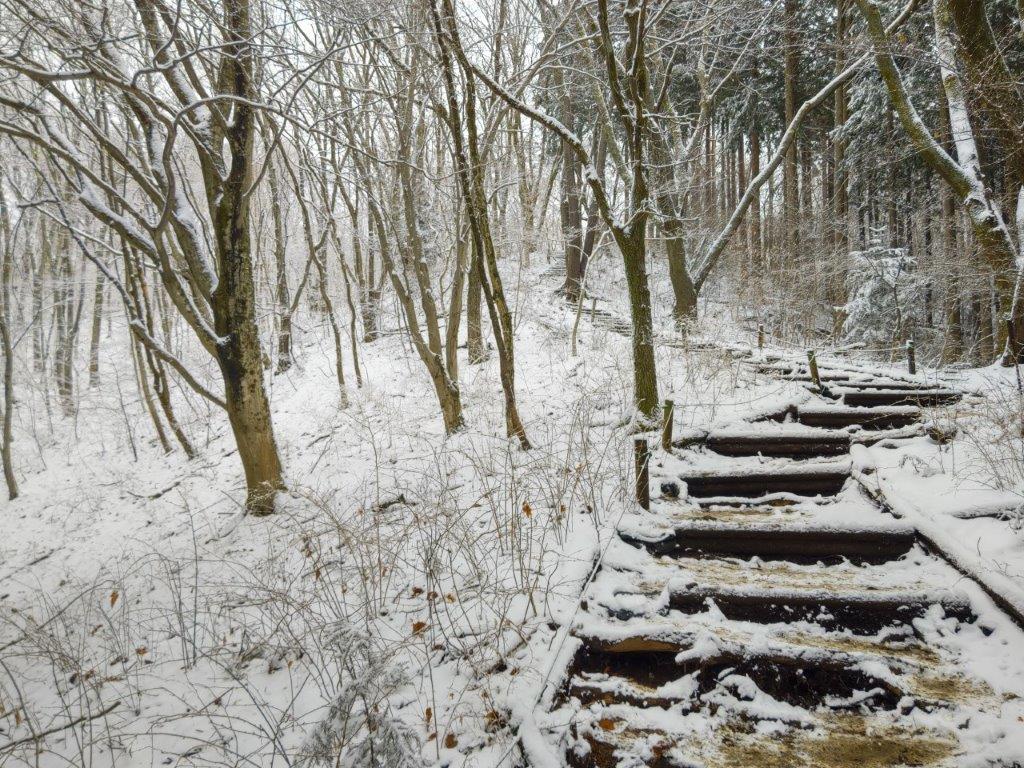
I could see patches of blue sky as I rode the almost full bus from Fujino station around 9am. Most people got off at the main trail entrance, and surprisingly, I was the only person heading up the Number 2 Wada Ridge Route (和田第二尾根コース), shortly before 10am. Looking up, I could see the higher slopes, white with snow before disappearing into the clouds. Less than half an hour later, the scenery changed from dull brown to brilliant white. Contrary to the forecast, the sun remained hidden behind a grey cloud cover, allowing the white mantle to last a little longer.

First snow on the Number 2 Wada Ridge Route

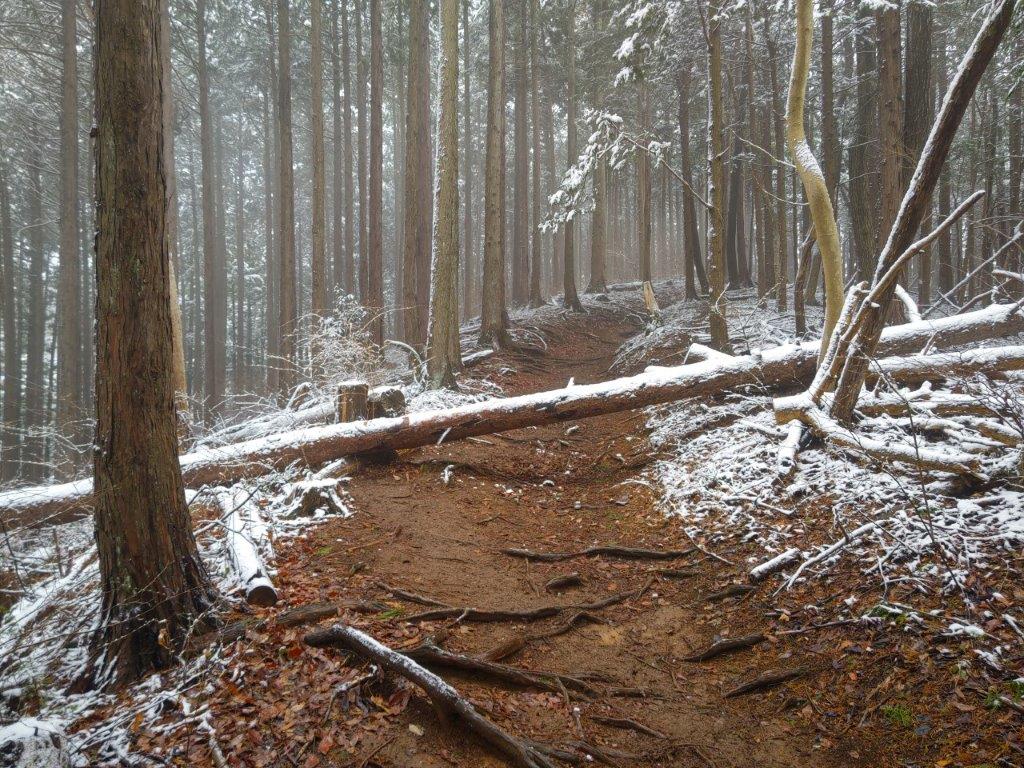
Fallen Log near the Junction with the Ichi-no-O Ridge Route

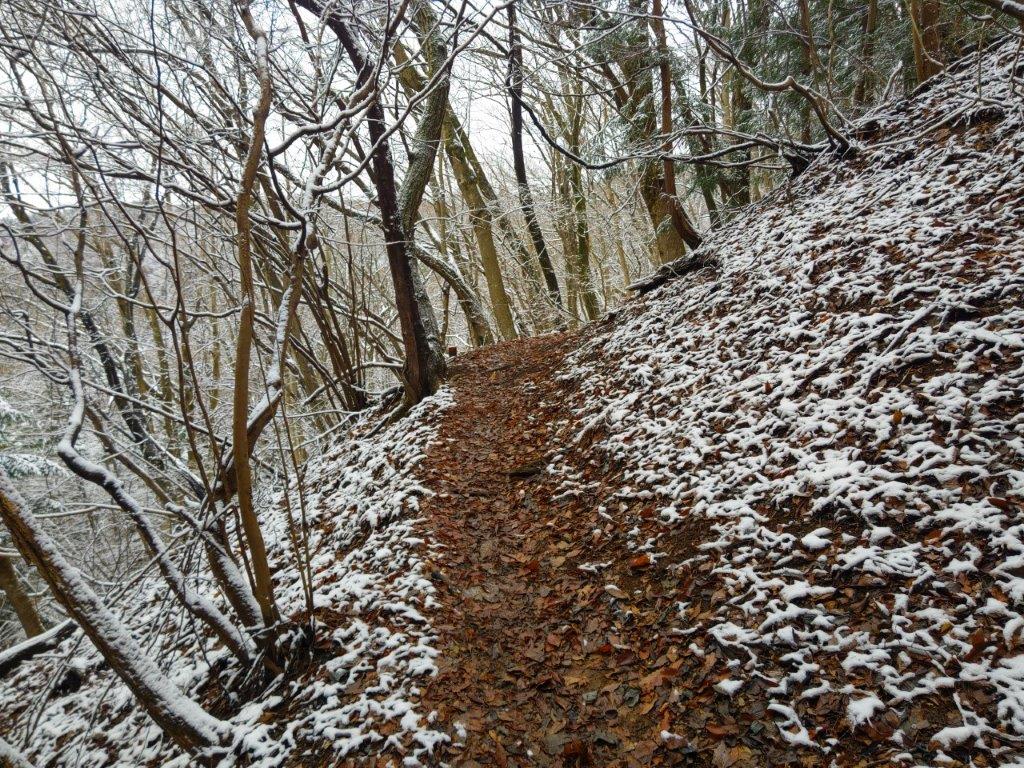
I was amazed by the beautiful wintery surroundings, the wet snow clinging to any surface that wasn’t completely vertical. Melting snow falling gently from the tree branches enhanced the effect, its falling noise reminiscent of soft rain. After merging with the Ichi-no-O Ridge Trail (一ノ尾尾根コース), I saw more people walking through this winter wonderland. At the top of a staircase, I reached the top of Mt Jinba (陣馬山 じんばさん jinba-san), a Kanto 100-famous mountain, shortly after 11am. The view of Mt Fuji on the south side was hidden by thick clouds, but the frozen landscape was compensation enough.

Walking through a Winter Wonderland

Cloudy View from the Top of Mt Jinba

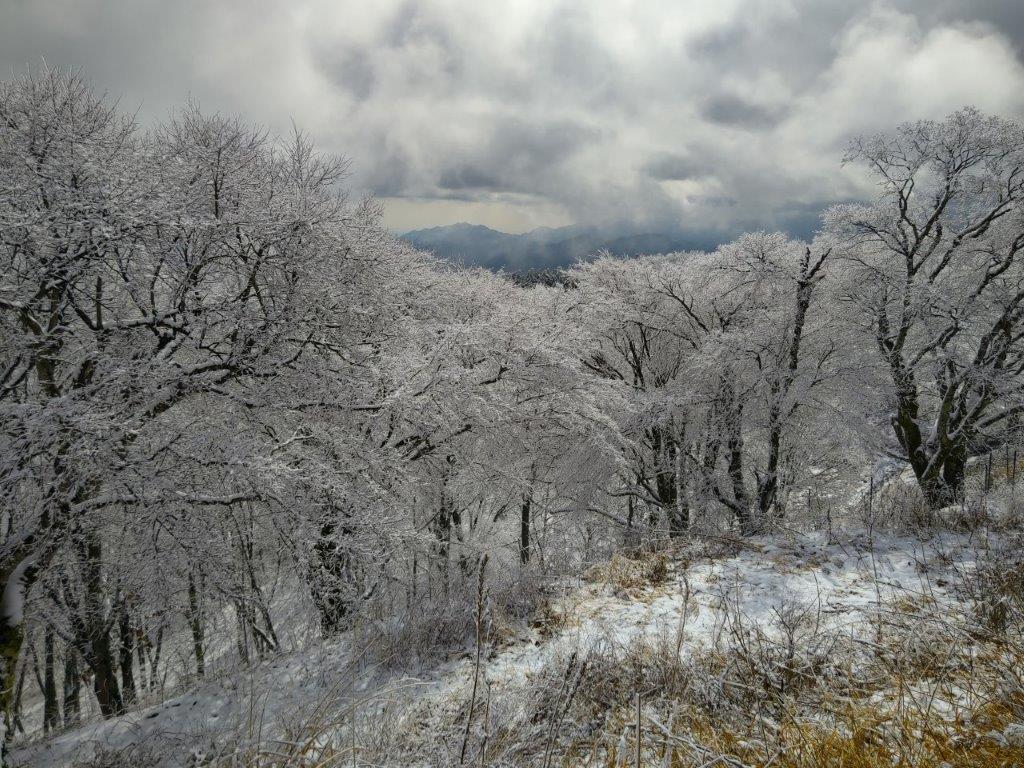
I was stunned by the nearly completely white trees on the north side of the summit. Beyond their frosty crowns, I could see the Kanto Plain, as well as the eastern edge of the Takao mountain range. After a short break, I set off again, now following the Kanto Fureai no Michi. I was walking on the snow, but since any sloping sections had steps, it always felt perfectly safe. I was glad to be wearing a wide-brim hat, as it protected me from snow falling from the trees. A little after noon, I arrived at Myou Pass (明王峠) where I left the Fureai no Michi, and headed down a series of steps southwards.

White Trees on the North Side of Mt Jinba

In the Background, the Eastern Edge of the Takao Range

I was once again walking on solid ground although snow still covered the trunks and branches of the bare trees; it was like walking through a Christmas displayed created with snow spray. Thirty minutes later, I went left at a fork in the trail. Very soon, I reached the top of Yanone (矢ノ音 633m), completely in the trees. I immediately headed down a precipitous trail on the left side, and soon reached Ohira Hut (大平小屋), actually an open shelter. After a short break, I continued on my way, on a level trail though a forest of tall cedars. On the way, I made a short detour via Mt Mago (孫山 543m). After some descending, I reached a viewpoint on the southeastern side.

A little bit of Autumn in the Wintery Landscape

Snow Coated Trees at Lower Elevations

I enjoyed the view of the majestic bulk of Mt Sekiro rising directly behind Sagami Lake; to its left, was Mt Arashi, today’s next peak, and Sagamihara City. Since it was 2pm, I had a late lunch before setting off again. I soon reached Yose Shrine, at the base of the mountain, and shortly after, Sagamiko Station. There, I hopped on a bus for the short ride to Sagamiko Bridge, a few minutes on foot from the Tokai Nature Trail. After thirty minutes of easy climbing, I arrived at the summit of Mt Arashi (嵐山 あらしやま arashi-yama), meaning Mount Storm. On the west side, I could see Mt Momokura, Mt Ogiyama and Mt Gongen, but the view was rather subdued on this cloudy, wintery day.

Descending from Mt Mago

Viewpoint of Sagami Lake and Mt Sekiro

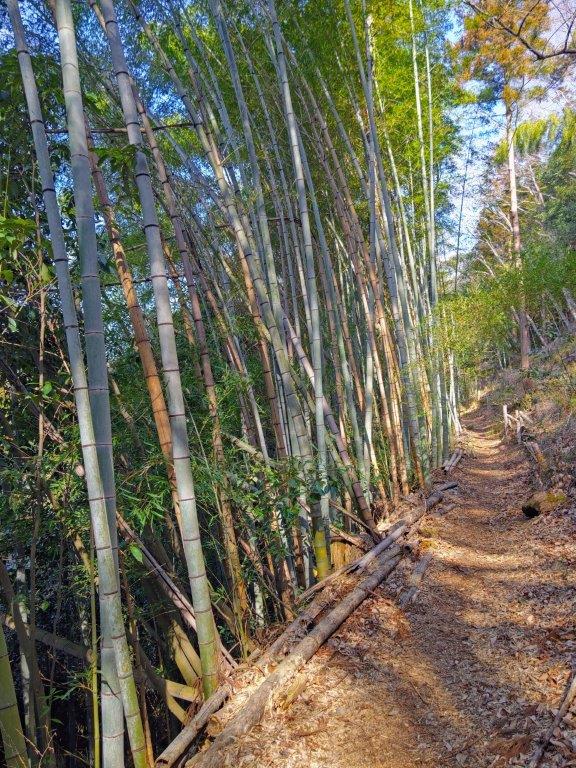
I was surprised by the up and down nature of the trail beyond the summit. I crossed tiny streams over narrow wooden bridges and scaled thin metal ladders up steep slopes. At 4pm, I crossed a dense and dark bamboo forest, always a fascinating experience for me. Less then half an hour later, I finally reached a road at the end of the trail. After a refreshing hot bath at Ururi Onsen, part of the Sagamiko Resort Pleasure Forest, I caught a bus for the ten-minute ride back to Sagamiko Station, where I boarded the Chuo line for the one-hour ride back to Shinjuku.

View of Mr Arashi (left) and Mt Sekiro (right ) from below Yose Shrine

Bamboo Forest on the Tokai Nature Trail

The hike was longer and harder than I had expected, over 6 hours, so I was glad I could recover at a hot spring at the end. On the other hand, the snowy scenery far exceeded my expectations, thanks to the cloudy cover shielding the sticky snowy tree decorations from the sun and preserving them throughout the day. The snowmelt dripping from the trees was also a new experience for me, as I was walking under sunshine and snowfall at the same time. I encountered many other hikers between Ichi-no-O Ridge and Myou Pass, but very few before and after. I hope to return in the future to explore the other trails crisscrossing the Takao mountain range.

Watch a Video of the Mt Jinba Hike

Watch the Video of the Hike on YouTube

See a Slideshow of More Pictures of the Hike

Mt Momokura (1003m), Otsuki City, Yamanashi Prefecture, Sunday, February 27, 2022 [Map Available]

After Mt Takagawa, I felt like revisiting another mountain in the area, so that I could get more views of Mt Fuji with its seasonal snowcap, especially since snowfall had been quite generous this year. On my last visit, I had combined this summit with its neighbour, Mt Oogi; this time, I was looking for something more laid-back. Studying my map, I found alternate trails leading up and down, meaning the entire hike would be new. The weather forecast was looking good, apart from strong winds threatening the higher elevations; I was more concerned about clouds forming around the top of Mt Fuji. I was looking forward to my first hike of the year above 1000 meters, as well as keeping my fingers crossed that Fuji wouldn’t be too shy.

Download a map of the Mt Momokura hike

This map was developed for Japanwilds with the Hokkaido Cartographer

Find more Japan hiking maps on Avenza

View to the south of Mt Fuji half in the clouds

View of Mt Fuji from my 2011 hike

I rode the Chuo line limited express for about an hour to Otsuki station, where I transferred to a bus, taking me close to the trail entrance. It was nearly 11am, and I felt quite warm while making my way up a steep road. I soon arrived at a fork and followed the left branch. I passed by a relatively new toilet facility (advertised as “very clean”), and had my first view of Mt Fuji, partially hidden by the clouds.

Lion-dog guarding the start of the trail

View of the Doshi and Tanzawa mountains

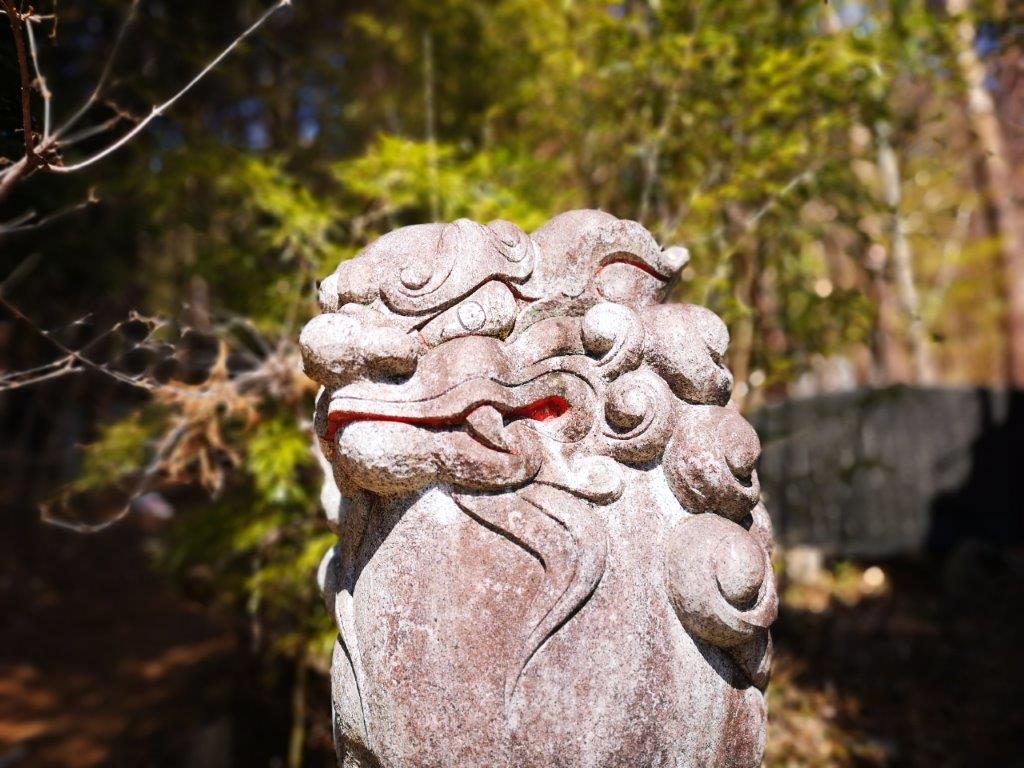
The start of the trail lay just beyond a lion-dog statue guarding a shrine entrance. After half an hour of climbing through the cool forest, I arrived at the first view of the day. On the left, I could see the Doshi and Tanzawa mountains; opposite was Mt Fuji, popping in and out of the clouds; on the right stood Mt Takagawa and Mitsutoge. I sat down on a bench to enjoy the view, but a cold wind started blowing, so I quickly set off again; ten minutes later, I reached a junction on the top ridge.

To the right of Mt Fuji, Mt Takagawa and Mitsutoge

A bench with a view

I was hit by powerful gusts of wind coming from the north side and I immediately felt very cold. I had to take shelter on the south side to add a layer of clothing. I continued towards the summit, slightly worried about falling branches. Fortunately, the wind abated somewhat once I arrived at the top of Mt Momokura (百蔵山 ももくらやま momokura-yama), a Yamanashi hundred famous mountain. Since it was 12h30, I found a grassy spot and sat down for lunch.

Fairly easy hiking all the way to the top

One of the 12 views of Mt Fuji from the Otsuki area

Mt Fuji was flirting with the clouds, but eventually I had a clear view. At 1h30, I retraced my steps to the ridge junction, and continued straight, heading west. I soon passed Mt Daido (大同山 907m) and then started down a steep descent. I encountered some snow for the first time of the day, but it was half melted and I reached the base of the slope safely. I continued along the path as it descended gently, slowly curving around to the south side. On the way, I passed Konpira-kyu, a lonely shrine in the middle of the forest.

Heading back to the ridge junction

Looking across the Kazuno river valley

At around 2h30, the path leveled and glimpses of the Kazuno river valley came into view; on the left side, I could see Mt Iwadono. It was still windy, but the biting cold of the summit ridge was now a distant memory. Fifteen minutes later, I reached a road and a bus stop near Fukusen-ji Temple. A little after 3pm, I boarded the bus for Otsuki station, and by 4pm I was back on the limited express for the one-hour ride back to Shinjuku.

See the views of Mt Momokura on a windy day

Mt Furo (839m), Mt Takasasu (911m) & Mt Sebuchi (554m), Uenohara City, Yamanashi Prefecture, Thursday, December 30, 2021

I found these three peaks north of the Chuo line and east of Otsuki station by simply examining my hiking map. They don’t belong to any famous lists, but together they form a short, easy hike with views of Mt Fuji, making it suitable for the last outing of the year. I could get to the start of the trail by riding the local Chuo line to Uenohara station, followed by a short bus ride, although I would have to leave before 7am to catch the only bus running in the morning. The weather was supposed to be sunny, with some wind, but since all tree peaks were below one thousand meters, the temperatures wouldn’t go below freezing. I was looking forward to wrapping up the year with a quiet hike and getting some new views.

Mt Fuji before its disappearance in the clouds

The Doshi mountains and the Tanzawa mountains (behind)

I arrived at Uenohara station under blue skies and quickly transferred to the Fujikyu bus. I was the sole passenger and got off at the end of the line just after 9am. I followed a paved road for a short while before reaching the start of the trail, next to a small graveyard. The path went up the mountain side in a series of switchbacks and soon reached a small shrine with a view of Mt Fuji, framed by two pine trees. After some more climbing, I reached the top of Mt Furo (不老山 ふろうさん furou-san, meaning “enduring youth”).

An easy hike up the first summit of the day

View of Mt Fuji framed by two pine trees

I had a view of the all the mountains south of the Chuo line. To the west, I could see Mt Fuji, the top now in the clouds; opposite were the Doshi mountains, with the Tanzawa mountains rising behind; eastwards, I could make out Sagami lake and Mt Tsukui-Shiro. It was nearly 11am, so I sat down on the sole bench, fortunately in the sun, for a late breakfast. Below, the Chuo expressway seemed busy with people driving to their hometowns for the new year. I set off again, and after a short, steep climb, arrived at the summit of Mt Takasasu (高指山 たかさすやま takasasu-yama).

View of the mountains south of the Chuo line

Looking through the trees towards Mt Sebuchi

The summit was entirely in the trees, and although it was also in the sun, I moved on immediately, as I had just stopped for a break. The path went downhill and became harder to follow. After some switchbacks, I reached a forest road, and soon after, an intersection. The hiking path continued behind a huge boulder, and due to some fallen trees, was a bit difficult to follow. Eventually, I arrived back on a forest road, which then turned in a steep paved road leading to a grassy summit. I found the summit marker for Mt Sebuchi (瀬淵山 せぶちやま sebuchi-yama), on a tree next to a shrine.

Looking back towards Mt Takasasu

View from the paragliding jump-off spot

The mountain is also used as a jump-off spot for paragliders; I had seen some when hiking Mt Yogai nearly a year ago. The view was similar to the one from the first summit of the day, except that I couldn’t see Mt Fuji at all; I could see the long ridgeline of Mt Nodake eastwards. It was one o’clock so I found a bench in the sun and sat down for lunch. At 1h30, I made my way back to the intersection, and from there headed down the mountain. I arrived at a bus stop on the same line I had used in the morning just before 2pm. After a short bus ride, I was back at Uenohara station, where I boarded a local train for Shinjuku station.

See the views on this three-peak hike

Mt Takagawa (976m) & the Yamanashi Prefectural Maglev Exhibition Center, Thursday, December 23, 2021 [Map Available]

I had climbed this mountain once before, about ten years ago. I remembered it mainly as an easy to reach peak with a spectacular view of Mt Fuji. On the other hand, the top had been packed with other hikers, making it difficult to get good pictures of Japan’s most famous volcano. I had a rare weekday off and, with the forecast looking good, decided to give it another shot. Studying my map, I counted seven trails leading to the summit; previously, I had gone up from Kasei station and then down to Otsuki; this time, I would start from Hatsukari station and aim to end at Takanokura station, crossing the mountain from west to east. I noticed that the Maglev Exhibition Center was located near the end of my planned route, so I decided to drop by if time allowed. I was looking forward to an easy station to station hike and getting some good, unobstructed views of snowy Fuji.

Download a map of the Mt Takagawa hike

This map was developed for Japanwilds with the Hokkaido Cartographer

Find more Japan hiking maps on Avenza

View of Mt Fuji from the summit of Mt Takagawa

I rode the Chuo line limited express for a short hour to Otsuki station, where I changed to a local train to reach Hatsukari, one station away. The weather was as forecast, and the outline of Mt Takigo, opposite the station on the north side, was clearly visible against the blue sky. I set off just after 11am, first through the town, then along a forest road. By now the sun had risen high enough in the sky to shine through the trees on the northwest side, and despite the cold temperature, it felt pleasant walking through the forest.

A mostly sunny hike to the top

First view of Fuji

Thirty minutes after setting off, I reached a trail on the left; the forest road continued along the valley, eventually turning into the “sawa” trail, but I was keen to get on a proper trail as soon as possible. In no time, I was making my way up a steep ridge and had to stop to take off a layer of clothing. I soon arrived at a fork, and with little hesitation, left the slope for a more relaxing level path, following the contour of the mountain. Fifteen minutes later, the path merged with the “sawa” trail, climbing out of the valley to the left.

On the right, Mitsutoge, where I was just 2 weeks before

Looking at the Doshi mountains

The trail doubled back and was now completely in the sun. Through the leafless trees, I had my first glimpse of Mt Fuji, its white summit rising above a ridgeline. After another fifteen minutes, I passed the top of the steep ridge I left earlier. The path turned around again and rose gently through bamboo grass and a sparse forest. A little before 1pm, I reached the top of Mt Takagawa (高川山 たかがわやま takagawa-yama), a 100 famous mountain of Yamanashi.

The Maglev tracks can be seen at the bottom of the valley, on the right

Still some sun on the way down

As I had hoped, I was the only person there to enjoy the views. I was also lucky with the weather, since on top of the blue skies, I couldn’t feel the slightest breeze. Looking south, I could see Mt Fuji, at the end of the corridor linking Otsuki with the Fuji Five Lake Area. To its right was Mitsutoge, and to its left was Mt Kurami and Mt Shakushi. Peering down on the west side, I could see the straight Maglev tracks crossing the flat valley bottom. Above the trees on the north and west sides, I could make out Mt Gangaharasuri and the northernmost peaks of the South Alps.

The Yamanashi prefecture diorama

Kofu city and its castle

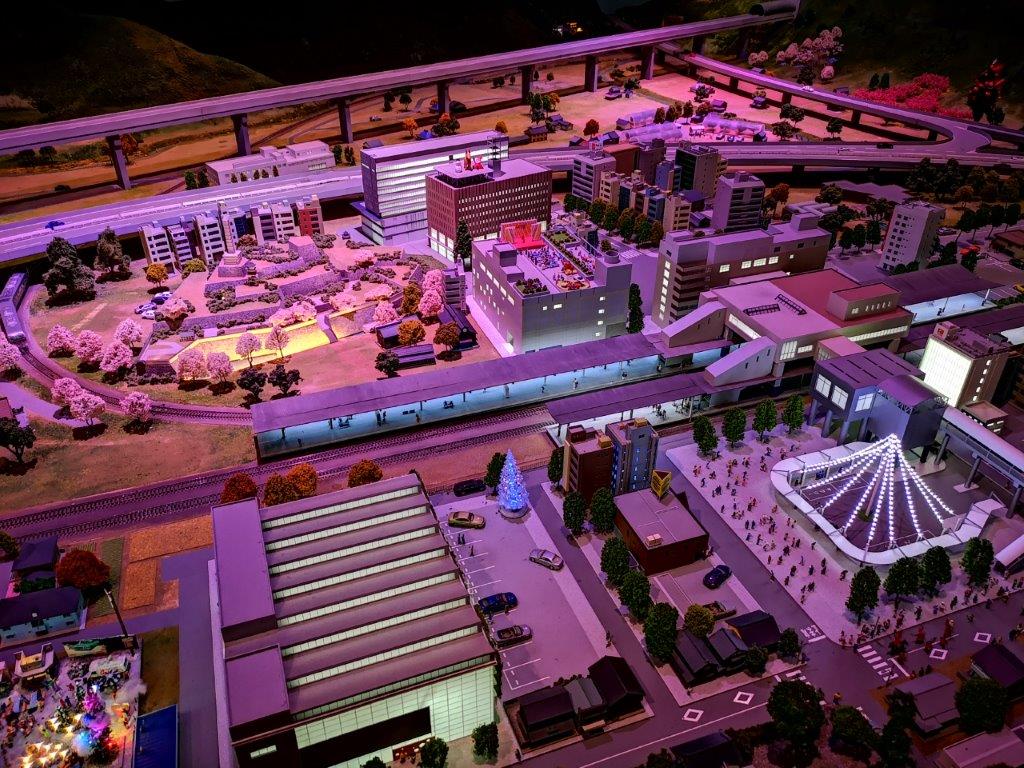
After having lunch and enjoying the fantastic views, I was ready to head down by 2pm. First, I followed a path along the north ridge, and then turned right onto a path going down the mountain in a series of zigzags. The path dipped in and out of the sun, and less than an hour later, reached a paved road. At 3pm, I was at the entrance of the Maglev Exhibition Center. I found the huge diorama of Yamanashi very interesting, as well as the demonstration of the levitation principle (see video). I also discovered I could catch a bus just outside the museum for Otsuki station; after arriving there, I boarded the limited express for the short trip back to Tokyo.

See a demonstration of the Maglev system

Mt Shomure (542m) and Mt Yogai (536m), Uenohara City, Yamanashi Prefecture, January 2021

I found these two mountains on my Takao area hiking map – they aren’t mentioned in any of my guidebooks. I was mainly interested in the second one; however, since it was too short for a day hike, I decided to tack on a small mountain just north of Mt No and Mt Yae, with a little road walking in between. One advantage of this addition was that I already knew which bus to take to the start of the trail. Since my planned hike made a loop and ended quite close to the starting point, I would be able to take the same bus back with a little more road walking. I had done several hikes in the area before, so I was wondering if I would get any new views on this trip.

Mt Fuji view from the top of Mt Koyashiro

View of the mountains south of the Chuo line

There wasn’t a cloud in sight when I arrived at Uenohara station around 9am. I rode the bus till the end of the line; after getting off, I could see the white top of Mt Fuji popping above the low mountains to the south. I continued walking along the road, and soon arrived at a small trail on the left leading to a trio of waterfalls. I decided to check them out quickly since I hadn’t had time to do so on my last visit. The path descended steeply into the valley via a series of switchbacks. I soon reached a small partly frozen waterfall, something I don’t usually see so close to Tokyo.

Mt Fuji from near the start of the hike

A good place for a short break on Mt Shomure

I reached a much higher waterfall just above a bend in the Tsuru river (see video). The path ended there, so I made my way back up; just below the road, I spotted the third waterfall through the forest. Back on the road, it took another ten minutes to reach the base of the today’s first mountain. I took the east route, heading straight up, with ropes on the side for the less sure-footed. Half-way up, I arrived at at small open space with a good view of Mt Fuji. At 11am, I reached the top of Mt Shomure (聖武連山 しょうむれやま shomure-yama). It took only 30 minutes but it was enough to work up an appetite, and I sat down for a late breakfast.

Mt Fuji from the top of Mt Shomure

The Tsuru river

I had a good view southwards of Uenohara city and Mt Fuji. I shared the summit with an NHK radio wave tower. At 11h30, I descended via the west route. This trail zigzagged down the side of the mountain and was the better of the two routes. Fifteen minutes later I was back on the same road as before; I crossed it and continued down the mountain side following the signs for Shomure Bridge. Halfway down, I came across a side trail on the left for another waterfall viewpoint. I decided to check it out since I had ample time for detours today. The path led directly to the riverside, and then turned left following it downstream.

Lots of good views of Mt Fuji in the area

A gentle slope up the mountain

I reached a tricky rocky section with chains on one side. The valley narrowed beyond and the river became a rushing torrent below high cliffs (see video). I soon reached the end of the trail with a viewpoint. On the left was another small half-frozen waterfall. Although it was winter, there were still many fallen leaves on the ground; I suppose this spot must be quite popular in the autumn. I retraced my steps, rejoined the main path and crossed the hanging bridge over Tsuru river. Walking up the other side, I had some good views of Mt Shomure. I was soon back on the main road, and a few minutes later I was at the entrance of the hiking trail for today’s second mountain at 12h40.

Looking east towards Mt No and Mt Yae

The top of Mt Koyashiro, a good place for lunch

The trail climbed gently through the forest with occasional views towards Uenohara city on the left. Thirty minutes later, I reached the top of Mt Ozuku 538m (尾続山 おづくやま ozuku-yama). To the south, I could see the top of Mt Fuji through a break in the trees. A little further, I had a good view westwards of Mt No and Mt Yae, with Mt Jinba and Mt Sekiro in the background. Twenty minutes later, I reached the summit of Mt Minashi 609m (実成山 みなしやま minashi-yama). It was the highest point of the hike but completely surrounded by trees. Ten minutes of walking along the top ridge brought me to another Fuji viewpoint and the top of Mt Koyashiro 600m (コヤシロ山 こやしろやま koyashiro-yama).

Paragliders enjoying the Mt Fuji view

An up and down trail

From here I could properly admire Mt Fuji, finally in its winter coat. Circling the valley like birds of prey, were two paragliders enjoying front row views of Japan’s most famous volcano (see video). It was now 2pm, so I sat down for a late lunch. There was almost no wind, and it felt very pleasant in the afternoon sun. At 2h30, I set off again, leaving the main ridge and following a smaller one as it curved back eastwards. At first, it descended steeply before climbing again to the top of “Kaze no Kamisama” 540m (風の神様 meaning the wind god). There, I had good views of the long flat top of Mt Gongen to the west.

Panoramic view from the top of Mt Yogai

Mt Sekiro framed by the trees

The way down followed a narrow, exciting ridgeline through mountainous terrain with lots of up and down. At 3pm, I finally reached the top of Mt Yogai (要害山 ようがいさん yogaisan meaning Mt Fortress) where I had the best view of the day. I could see the entire valley spanned by the Chuo line from east to west; this was one of the best panoramas I had ever had in the Tokyo area. Half an hour later, I headed down the mountain, and had some more good views of Uenohara before reaching a small road. At 4pm, I was back on the main road just one kilometer south of the start of the of the Yogai Hiking Trail (要害ハイキングコース). It was another 15 minutes back to the bus stop, and thirty minutes later I was on the Chuo line for Tokyo.

See the waterfalls of Tsuru river

Rapids of the Tsuru river

Mt Takahata (982m) & Mt Kuki (970m), Otsuki City, Yamanashi Prefecture

I had climbed these two peaks before, but separately and via different routes. The trail along the connecting ridge was one of the few remaining ones for me to hike in the Doshi Sankai, the mountainous area between the Tanzawa and the Oku-Chichibu mountains. Although I was guaranteed good views from each summit, I was curious whether I would get more views along the way. According to my map, the total hiking time was nearly 7 hours, so I also wondered whether I would be able to do the full hike. Finally, since it wasn’t a popular trail, I was hoping it wouldn’t be too difficult to follow.

null

One of the 12 views of Mt Fuji in the Otsuki area

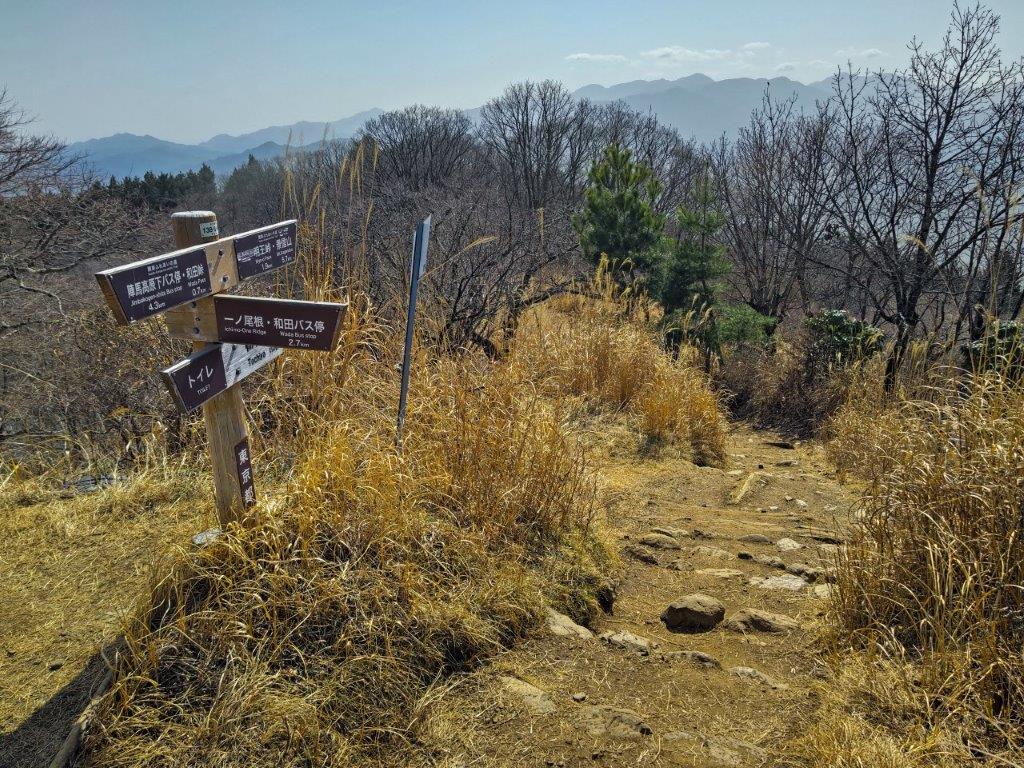
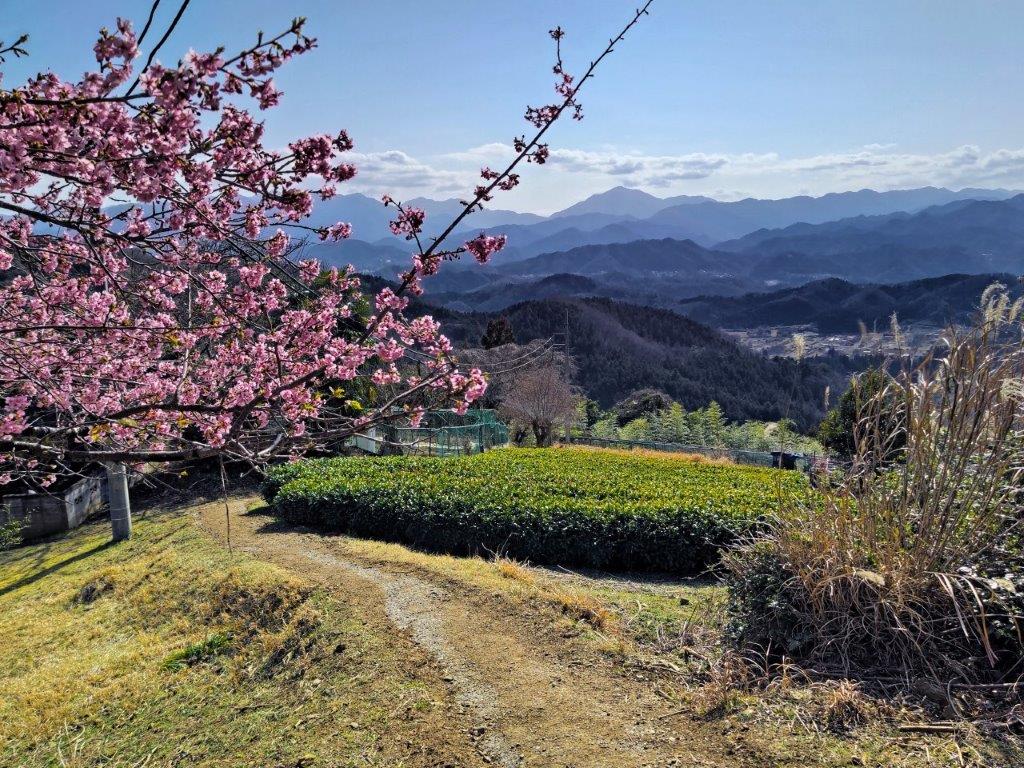
I took the local Chuo line to Uenohara, where I caught a nearly empty bus for Mushono 無生野. The fifty minute ride took me along some exciting, narrow roads through beautiful countryside, dotted here and there with cherry blossom trees in full bloom; it was like a magical hidden valley. After getting off at the last stop, I walked ten minutes on the road to get to the start of the hike, marked by a sign on the right. Past a fence for keeping wild animals out, the trail entered a thick forest of cypress trees. Here the path was hard to follow here, at one point entering a streambed for a few meters, but became easier once it started to climb. It was still winter in the mountains, and the path was sunny under the leafless trees.

IMG_20200404_090507

Bus ride through the Akiyama river valley 

null

Climbing out of the valley towards the pass

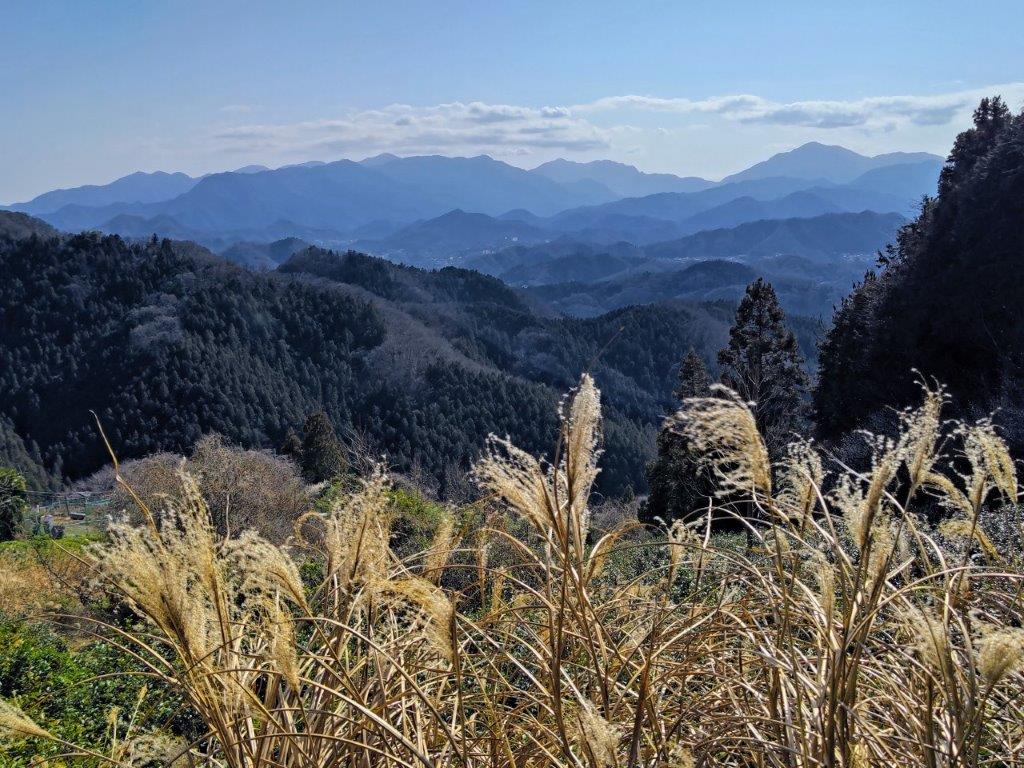
At 10h30, I reached a pass, joining up with the path for Mt Kura. I didn’t have time to do the round trip to the top, but I had been there twice before. I turned left and a few minutes later I reached the top of Mt Tenjin (876m) 天神山. There was a great viewpoint of Mt Momokura and Mt Ogi on the other side of the valley to the North. After a few quick pictures, I continued on my way. The trail went up and down, and I soon reached the top of Mt Takahata 高畑山, meaning high field. On my last visit in June 2018, Mt Fuji was completely hidden. This time around I could see Japan’s most famous volcano, all but the very top free of clouds.

null

Mt Ogi (Center) and Mt Momokura (right)

null

Mt Fuji wearing one of its “cloud caps”

It was still early for lunch, so I moved on without a break. I passed by the minor summit of Mt Okuwa (980m) 大桑, with 3 different summit markers but no view, before descending to a road. While continuing down it, I came across a green snake. It was sunning itself in the middle of the road, but once it realised I was there, it slithered away into the bushes (see video at the end of the post). The road soon joined up with the road for Saruhashi, and went uphill for a bit before reaching a pass. Here the hiking trail reappeared on the left, heading slowly up the mountain.

null

Nice ridge walking around 1000m

null

This snake is most likely an Aodaisho or rat snake

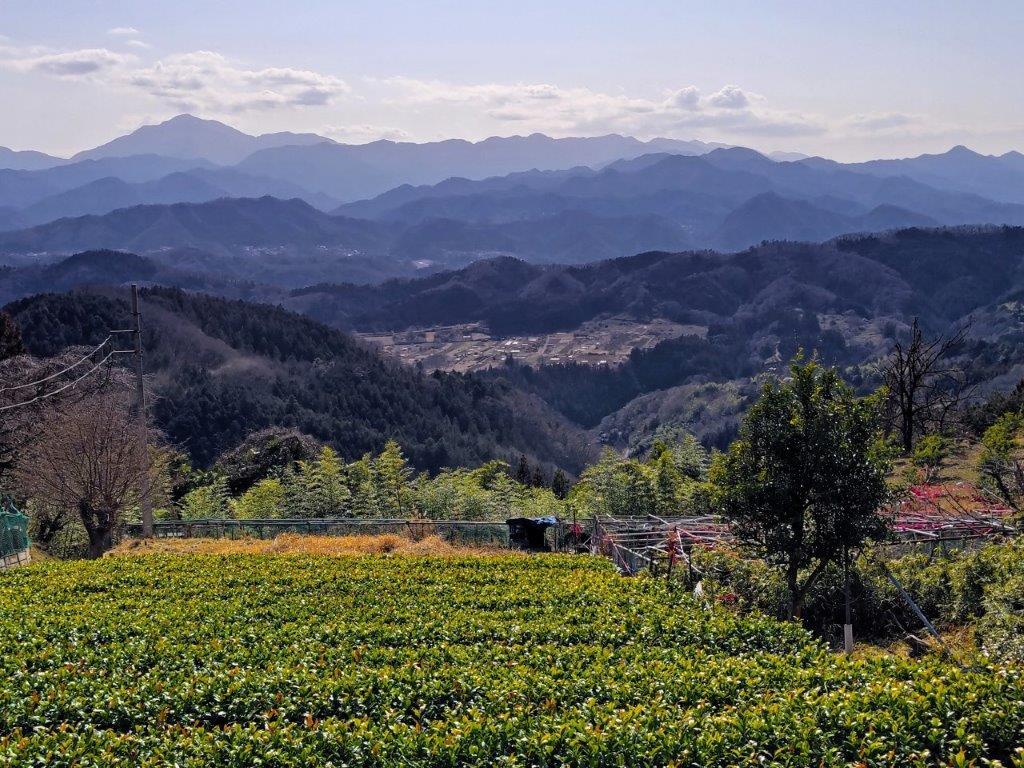
At 12h30, I arrived at the top of Mt Takasazu (860m) 高指山. Despite the lack of view, I found a sunny log to sit on, so I decided it was a good place to have lunch. Afterwards, the trail went down for a bit, before climbing again, following a fence on the right side. The surrounding trees changed from deciduous to coniferous, giving the trail an alpine feel. I had glimpses through the trees of the valley leading to Tsurishi city to the South; at the bottom lies the Maglev line that is still in construction.

null

More and more pine trees along the path

null

The Misaka mountains with Mt Takagawa on the far right

After an hour and a half, I reached a viewpoint of Mt Fuji, called Fujimidaira 富士見平, but the volcano was becoming hard to appreciate in the afternoon haze. A few minutes later, I was standing on the flat top of Mt Kuki 九鬼山, meaning nine devil mountain. On one side, through the trees, was another view of Mt Fuji, the top part now firmly in the clouds. On the West side, there was a wide view of the Misaka mountains, including Mt Mitsutoge on the left side.

1

View from Tengu Rock

null

Mt Fuji making its final appearance of the day

I was only one hour away from the train station, and largely ahead of schedule, but as the summit was in the shade, I left soon after finishing my lunch. There were several routes down, and I decided to take the Ike-no-yama one. The first part was quite steep, but after a few minutes, I spotted a sign for Tengu-iwa 天狗岩 on the left. It promised a great view only minutes away. Since I had loads of time, I decided to check it out. It turned out to be a couple of boulders in a small opening on the side of the mountain. Standing on top of them, I had the best view of the day, looking down the valley leading to Kawaguchiko City. On the right was Mt Mitsutoge, and on the left was the ridgeline between Mt Imakura and Mt Nijuroka hiked in 2016. In the back, I could just about make out the shape of Mt Fuji.

null

Walking down the Ike-no-yama route

null

Lots of views on the way down

I returned to the trail and continued down the mountain. This was by far the most pleasant section of today’s hike. On top of the occasional views to the left, I also spotted some yamazakura or mountain sakura in bloom. I reached a sign for Mt Ikenoyama 638m 池の山, meaning pond mountain, even though there was no apparent summit. The road at the end of the hiking trail was lined with sakura in full bloom, making a nice end to what was a satisfying ramble through the mountains. The walk back along the road to the charming Tanokura station took ten minutes, and I arrived there just after 4pm. After arriving at Otsuki two stops further, I caught the limited express back to Tokyo.

null

Sakura lining the road at the of the hike

null

Although there were few views between the two peaks, I was relieved that the path was easy to follow with frequent signposts. One curious aspect of the hike was that there was often two or even three types of signposts at various points, all equally worn out. Overall I was glad that I was able to complete the hike nearly one hour under the map time, and being able to get to Tokyo before sunset.

Caution: Snake on the road!