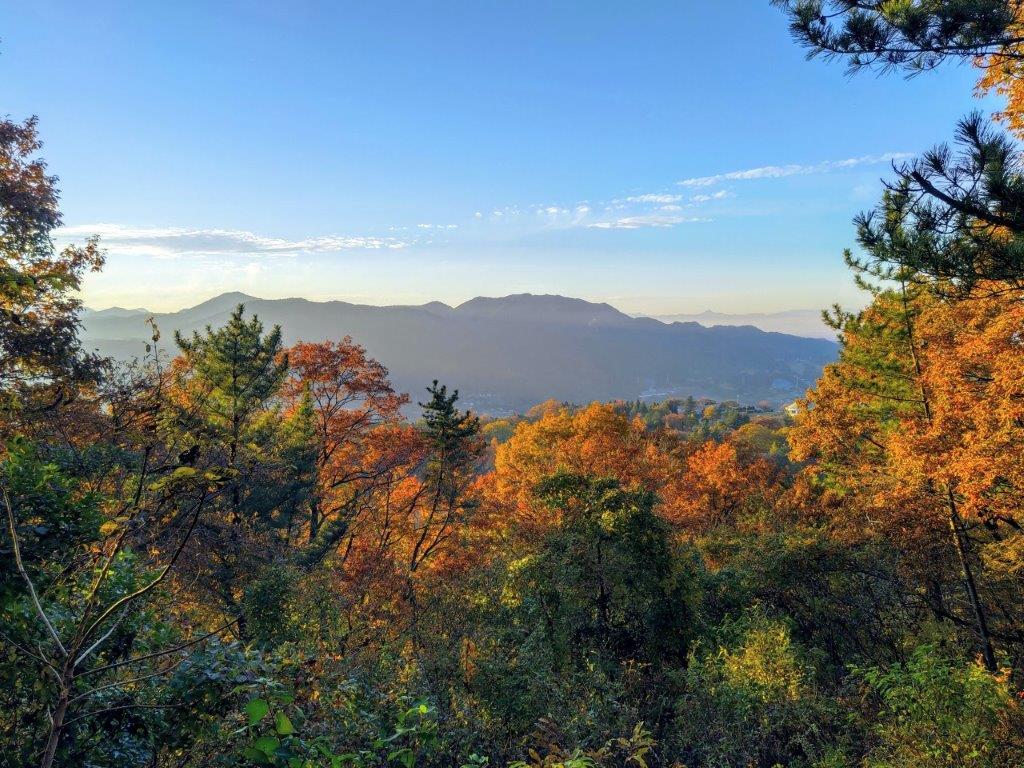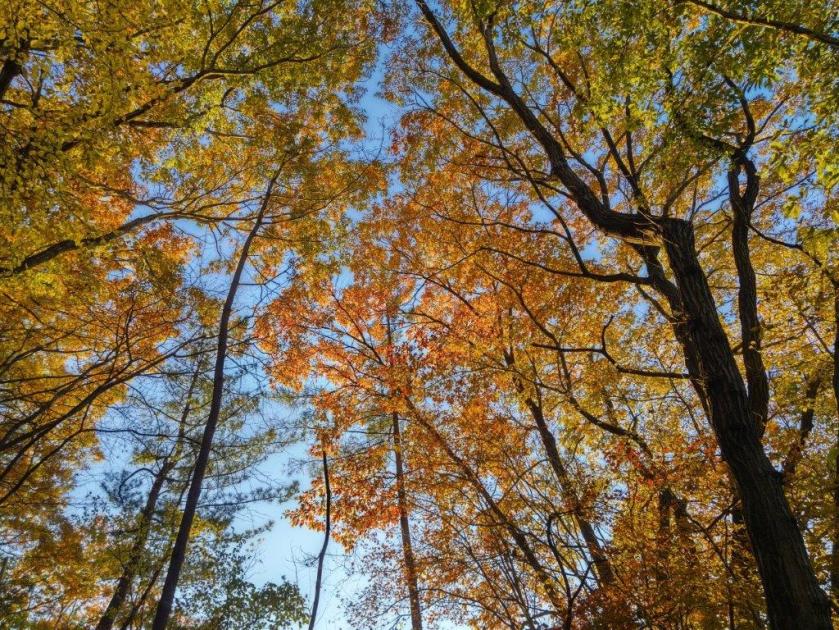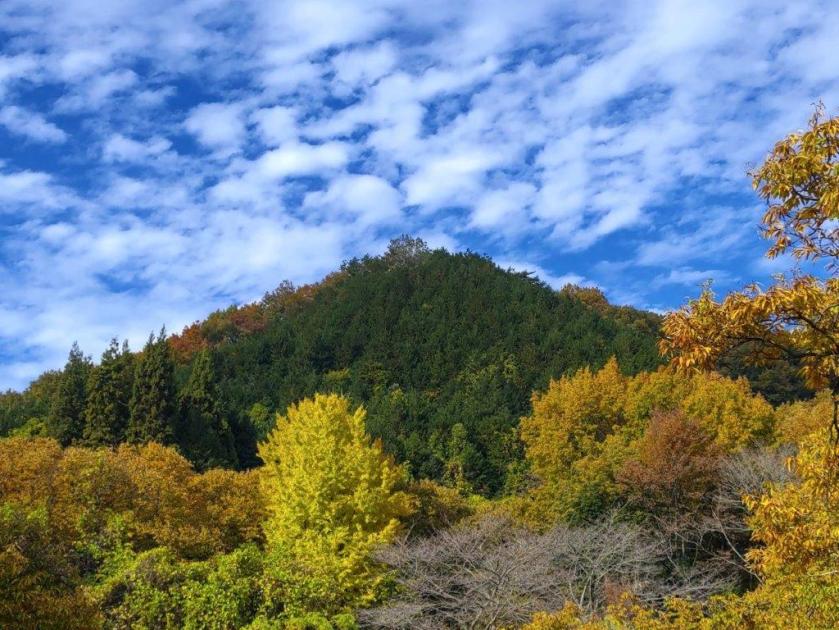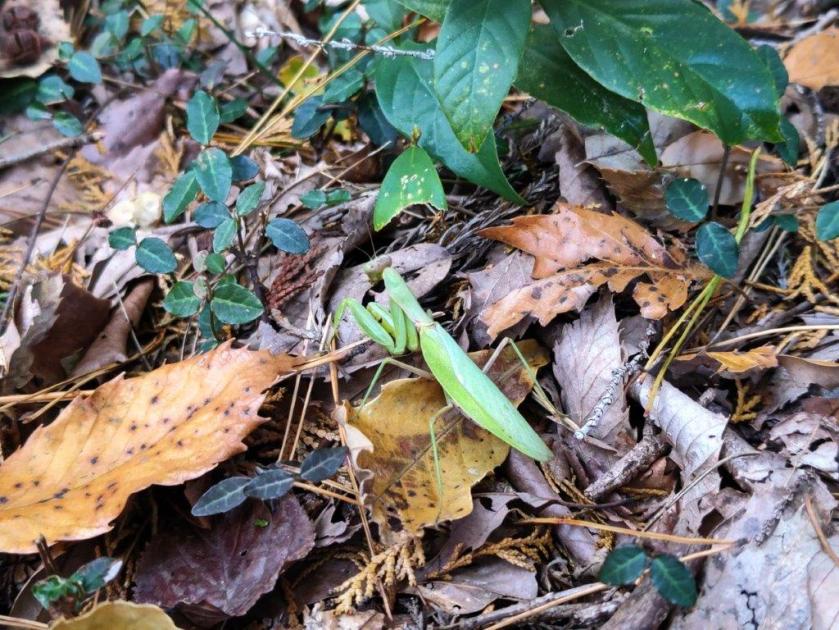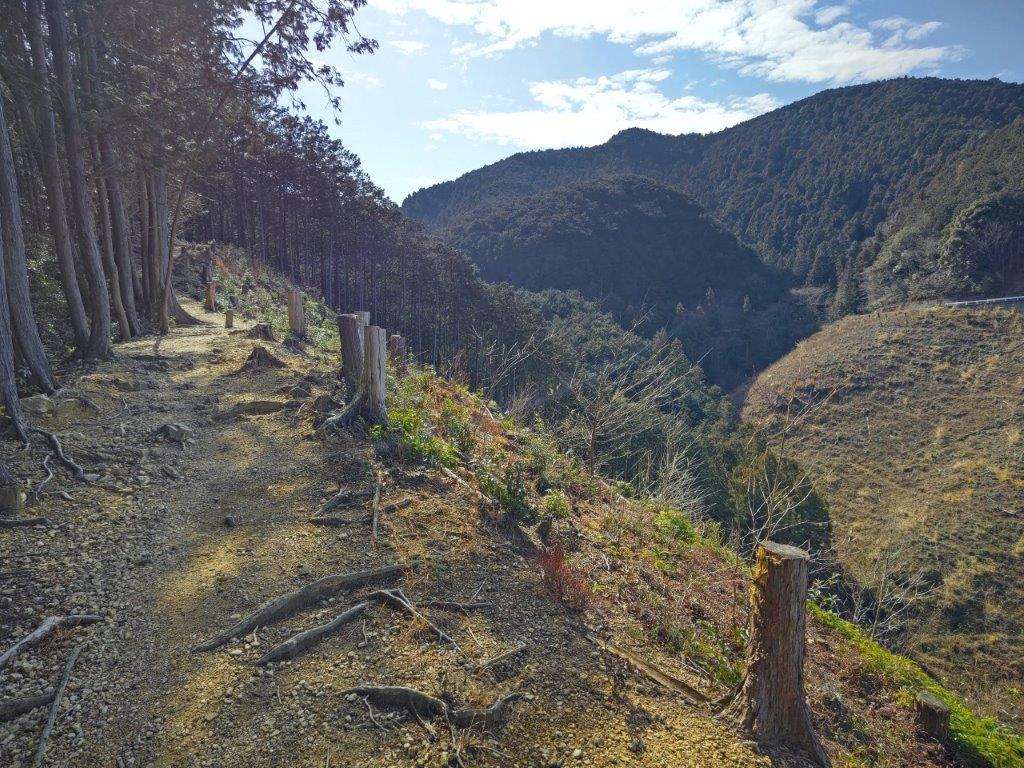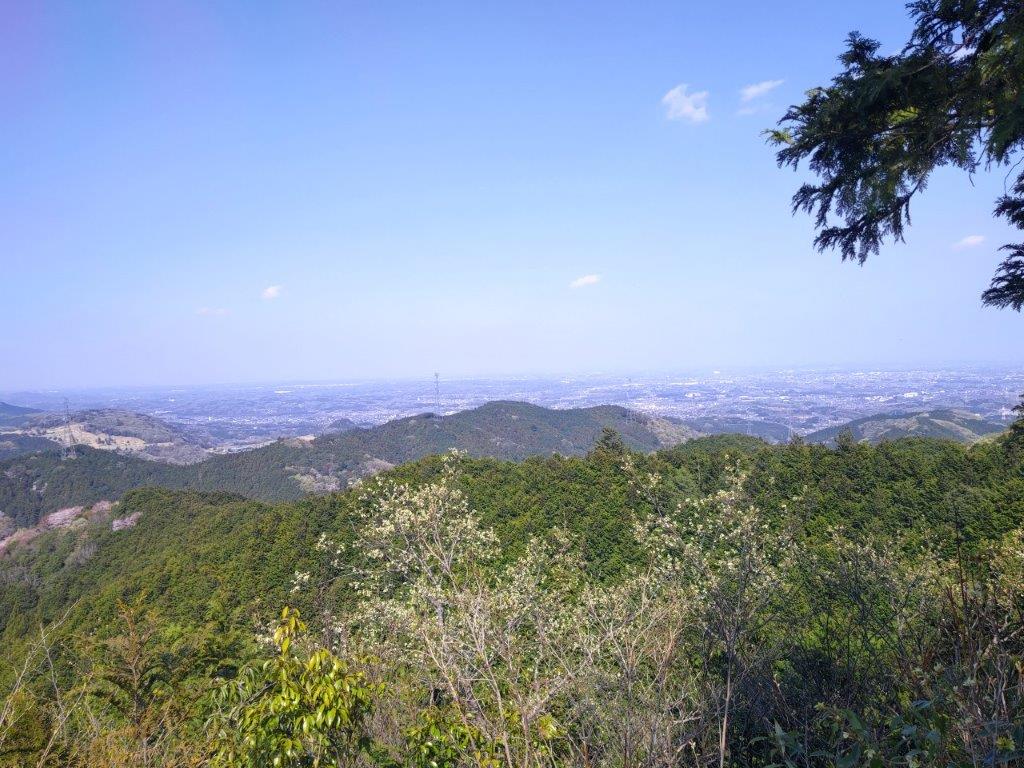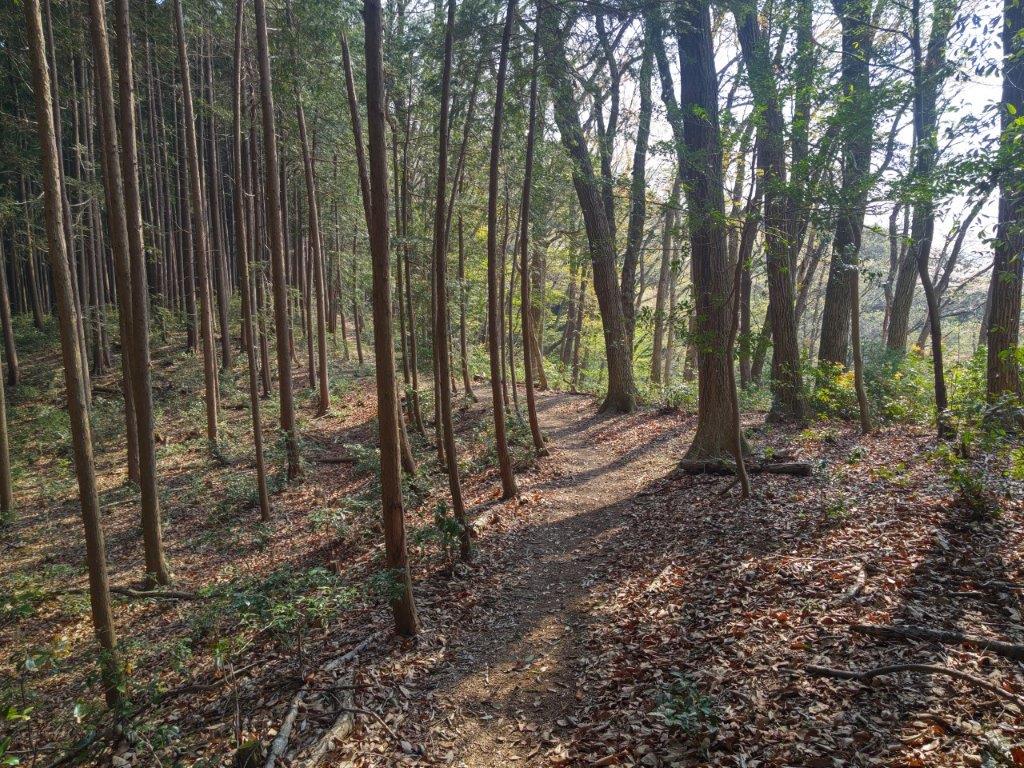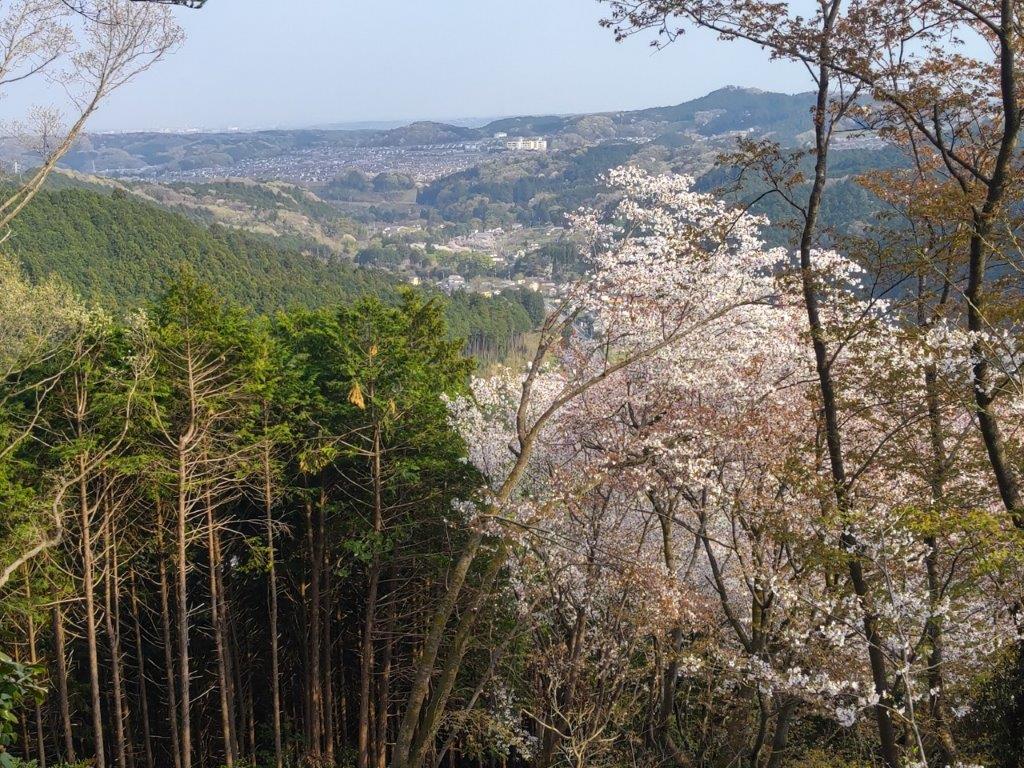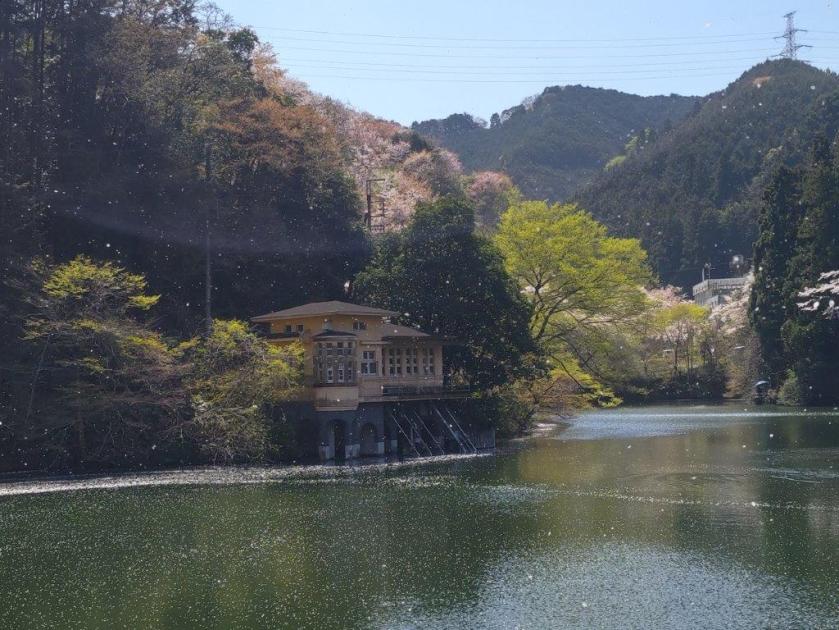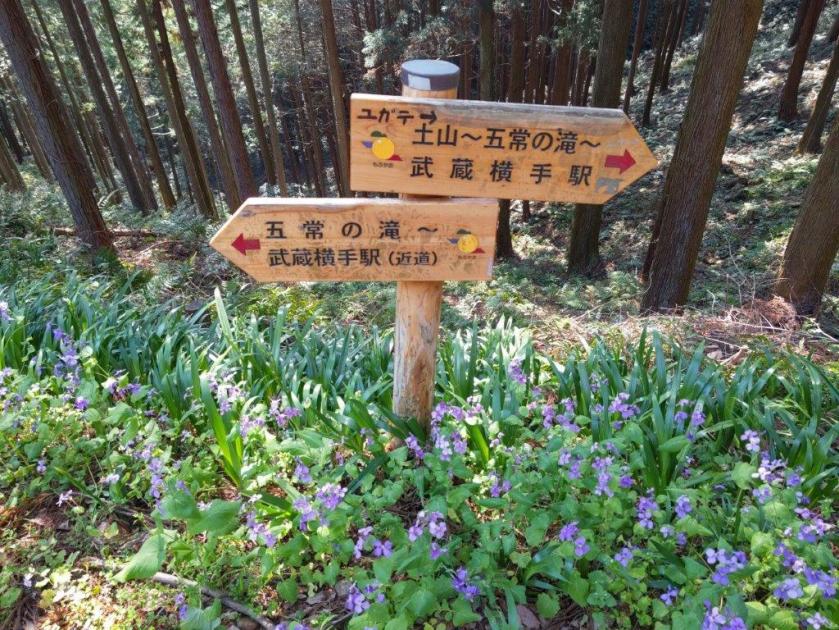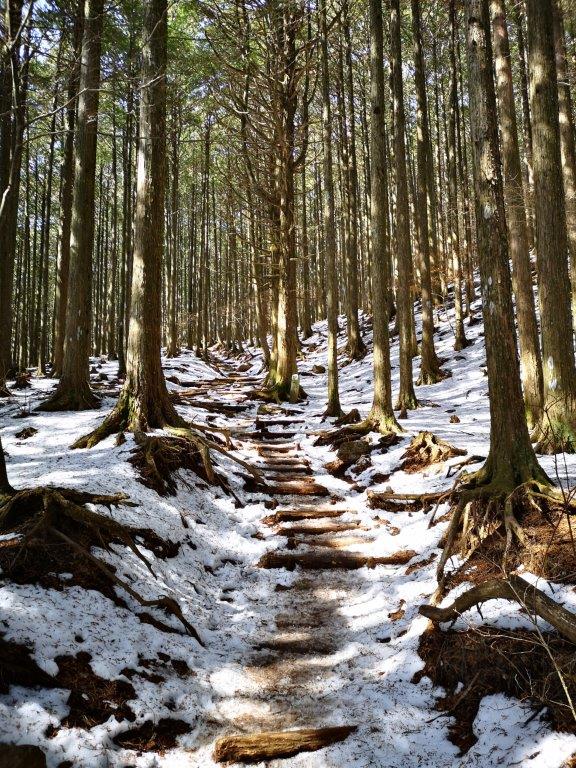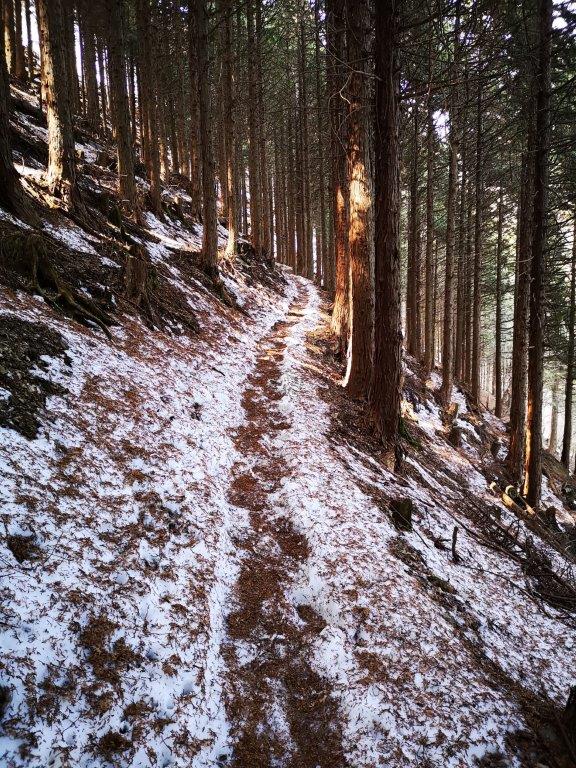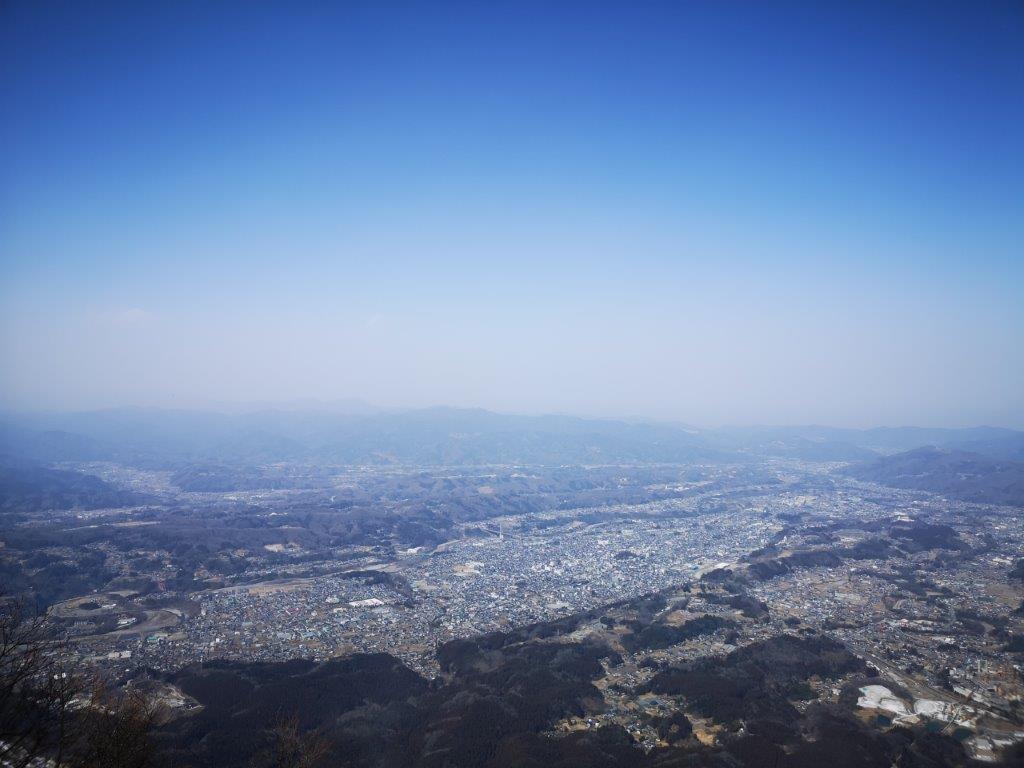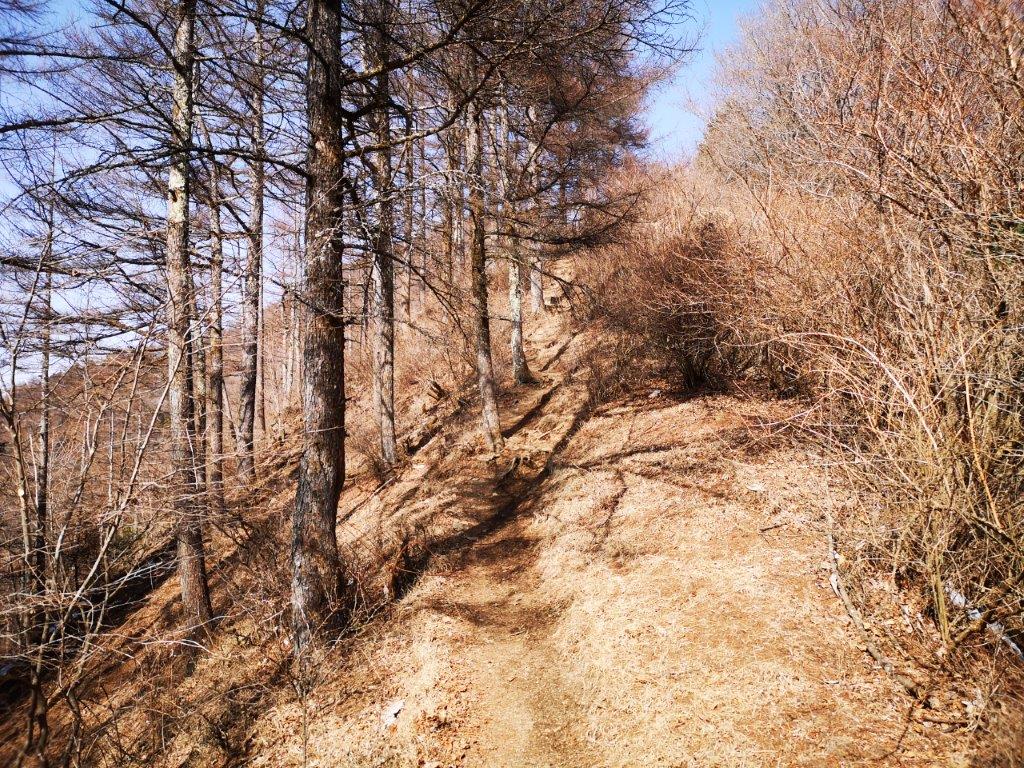
Inazawa Hiking Trail (highest point 430m), Honjo City, Saitama Prefecture, Thursday, November 23, 2023

I wanted to do a hike close to Tokyo allowing me to enjoy the autumn leaves. Looking at my hiking map, I found a short loop hike near Nagatoro town in the Chichibu mountains. It was under four hours, making it perfect for an Autumn ramble. Although the entire trail was under 500 meters, it included four different viewpoints. Since there was no public transport to the trail entrance, I would use a share car from nearby Honjo station. Before the hike, I could get lunch at a local soba restaurant. The weather was supposed to be good: some clouds in the morning but sunny later on; the temperatures would reach 20°C in the afternoon, making me wonder whether I’d get to see any Autumn colours. In any case, I was looking forwards to seeing new views in an explored corner of Chichibu.

Get a Map of the Inazawa Hiking Trail

This map was developed for Japanwilds with the Hokkaido Cartographer

Find Japan Hiking Maps on Japanwilds

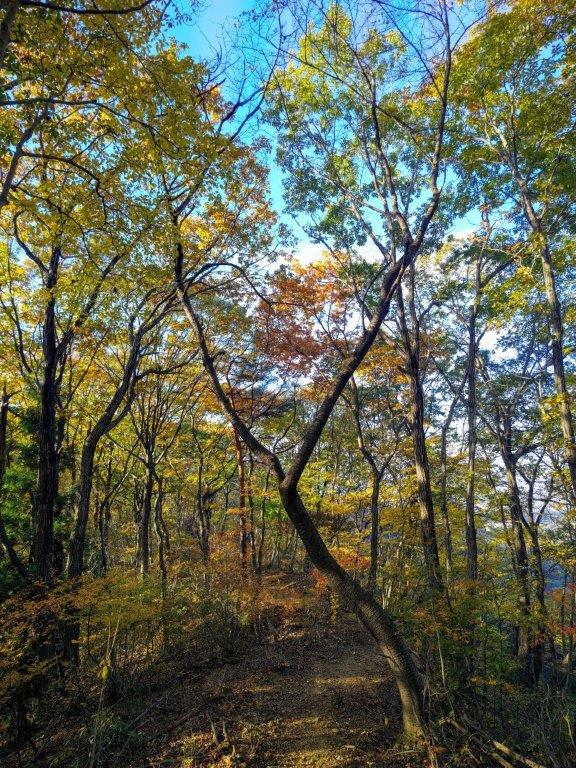
Autumn Leaves (left) and Bamboo (right) at the Start of the Hike

Walking through the Bamboo Tunnel

It was a fine autumn day as a I rode the Shonan-Shinjuku line to Honjo station. I drove for about half an hour, reaching Nishoan (二松菴) a little before noon. After a short wait, I enjoyed some delicious handmade soba with tempura. From the restaurant, it was a short drive to the small parking lot near the start of the Inazawa Hiking Trail (稲沢ハイキングコース). After getting ready, I set off just before 1h30, following a road through a small village.

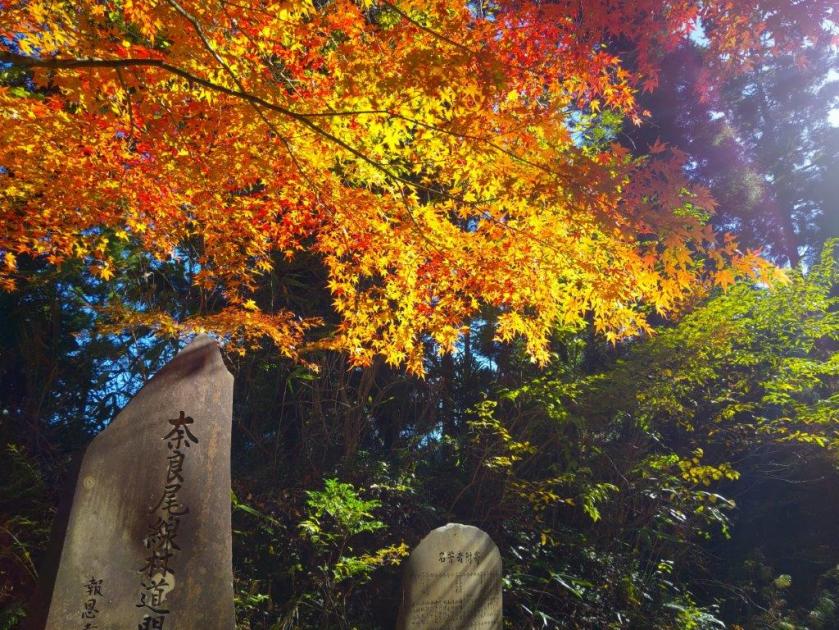
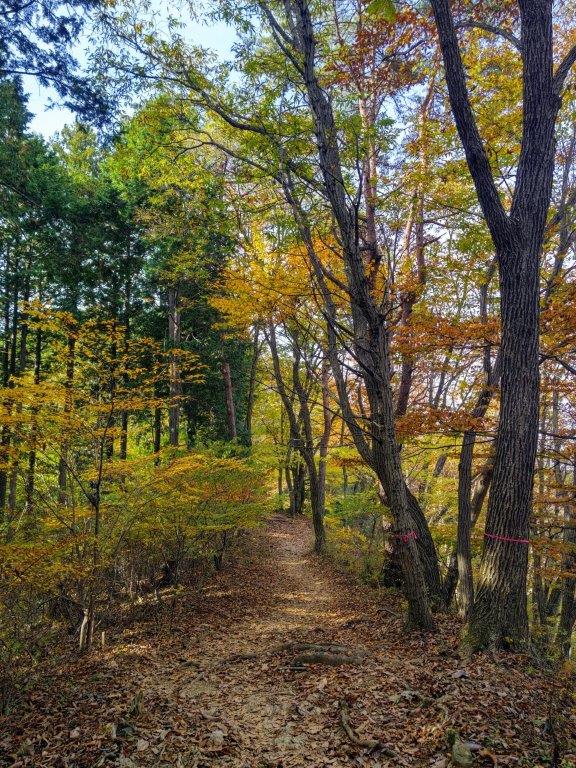
Walking under the Autumn Leaves

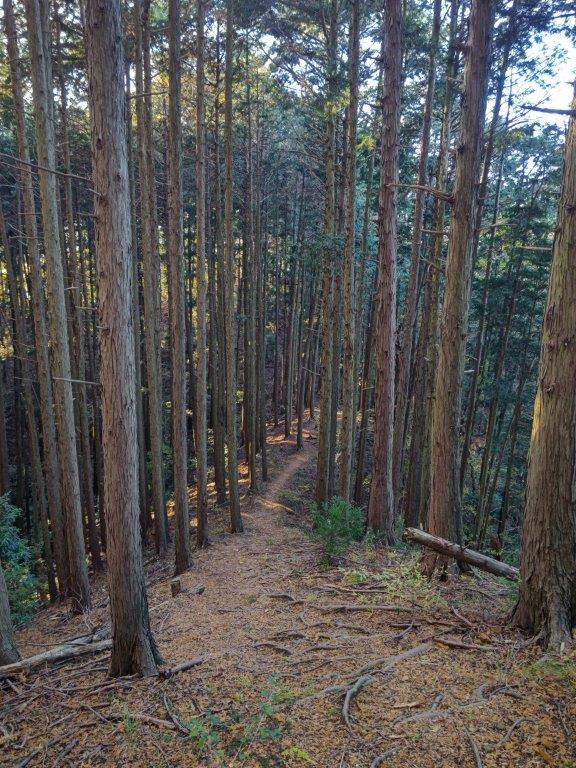
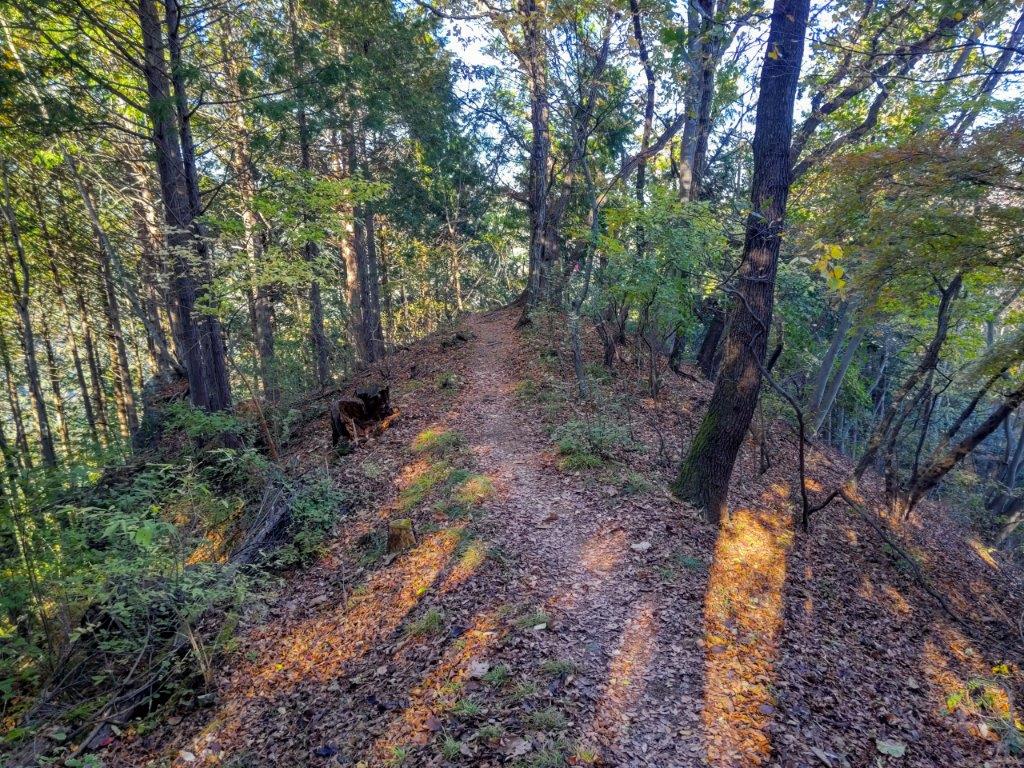
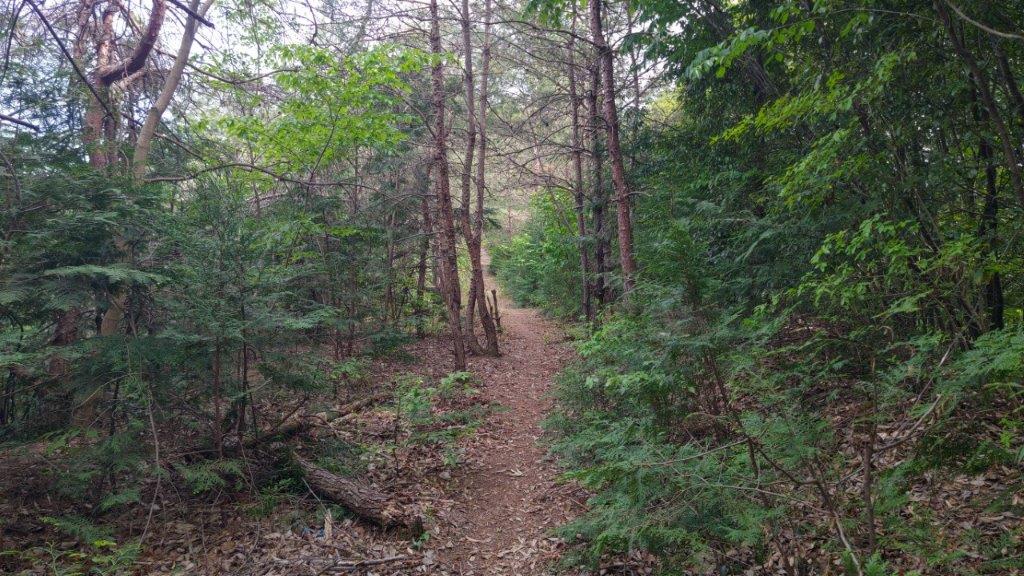
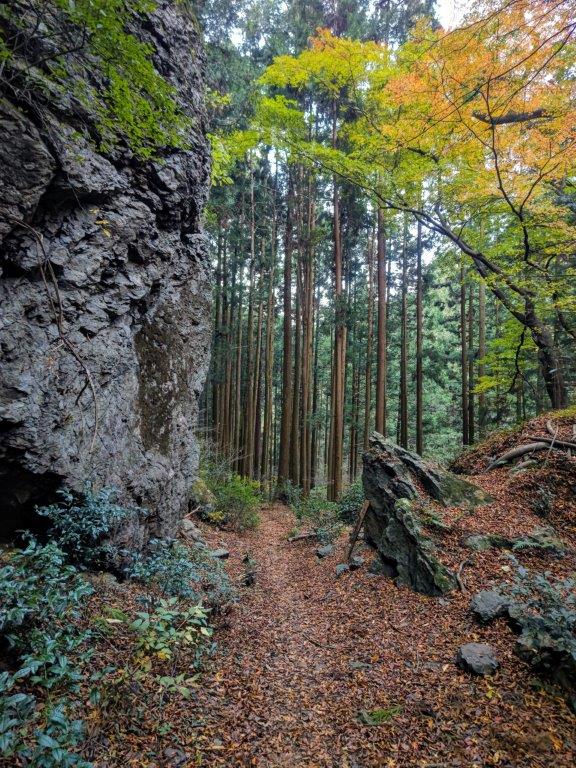
In the Shade of the Cedars (left) Late Afternoon Light (right)

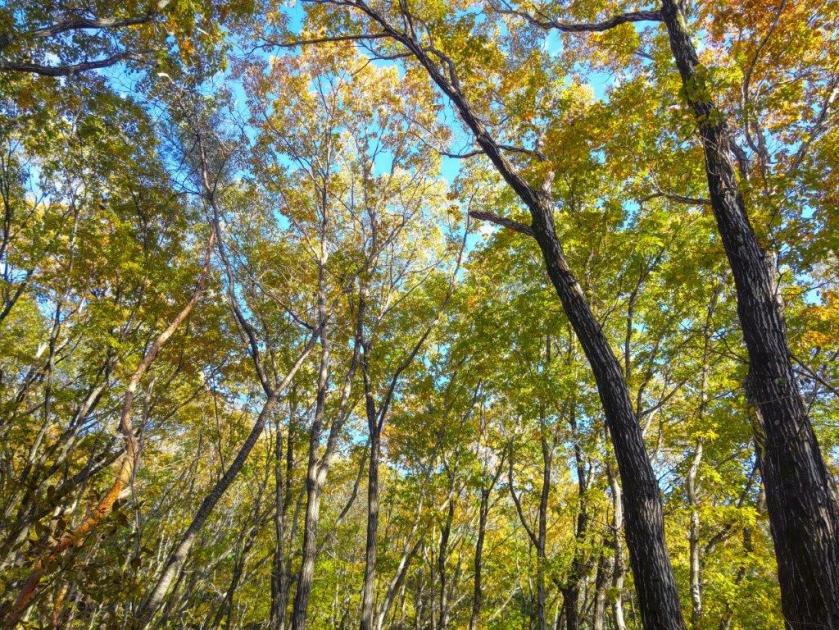
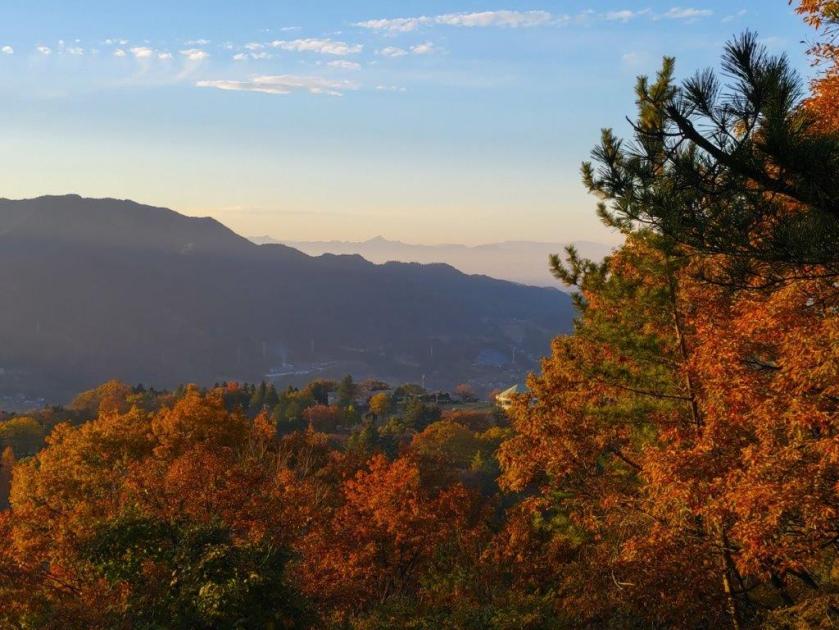
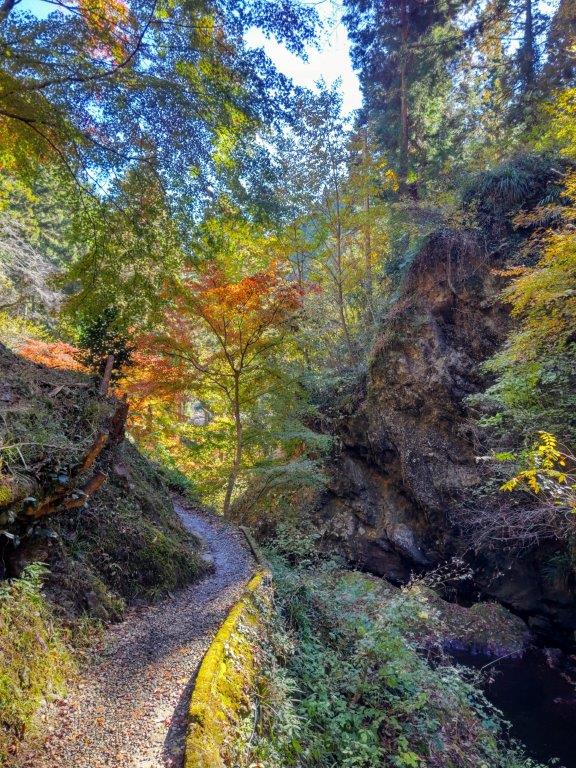
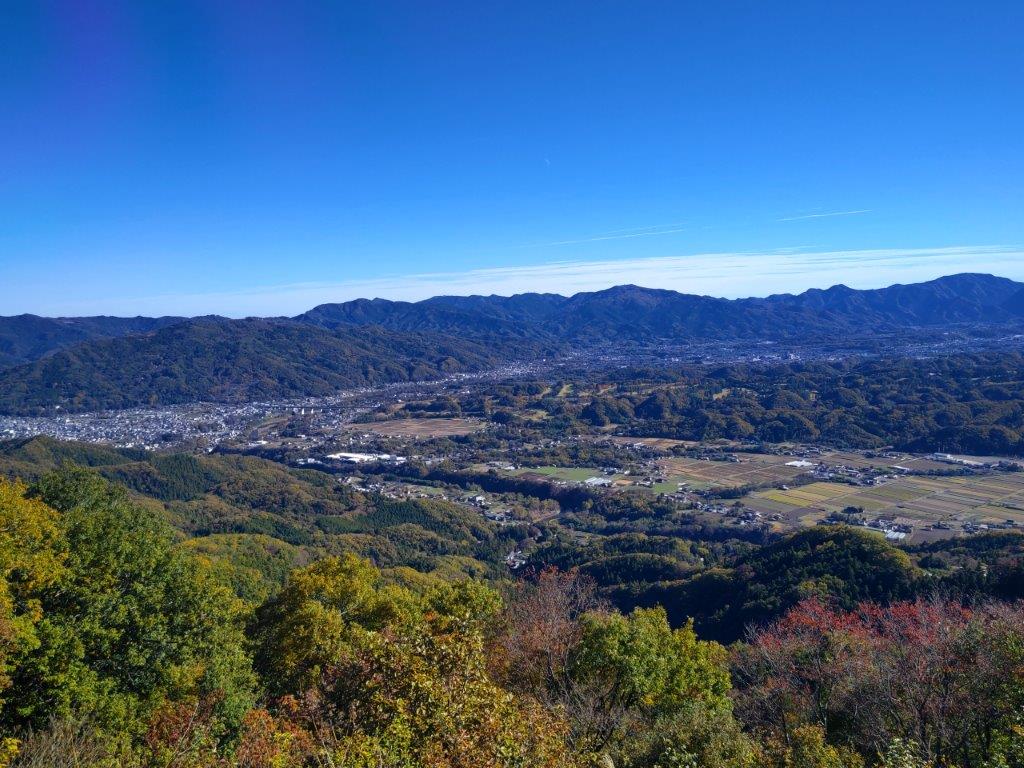
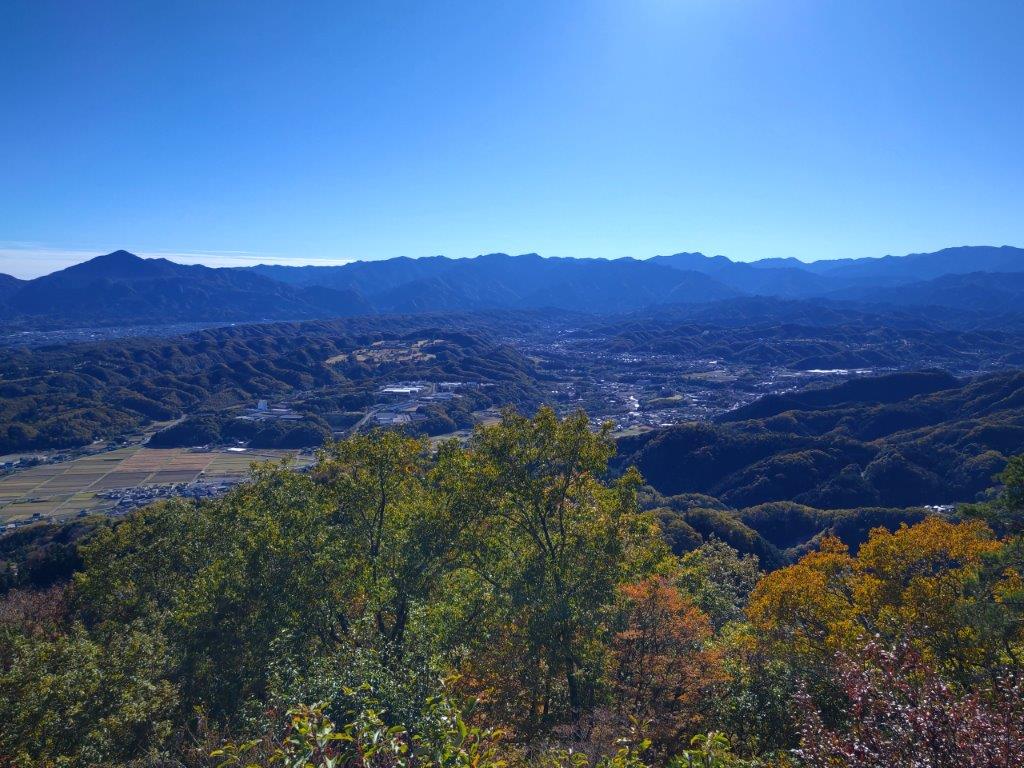
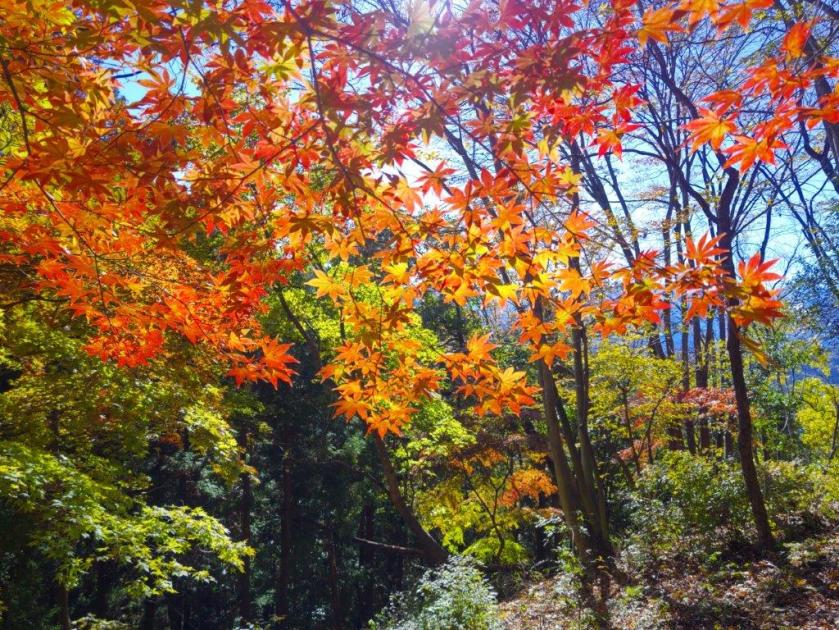
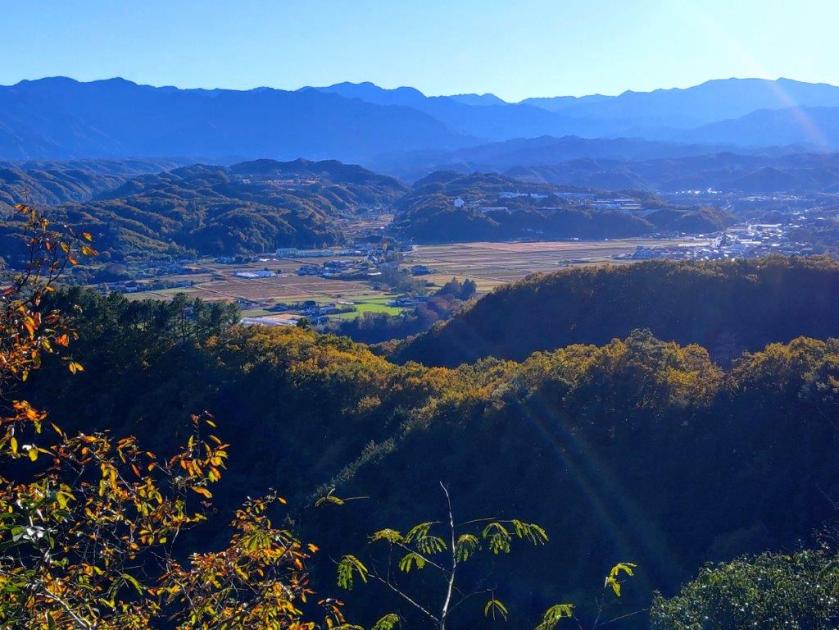
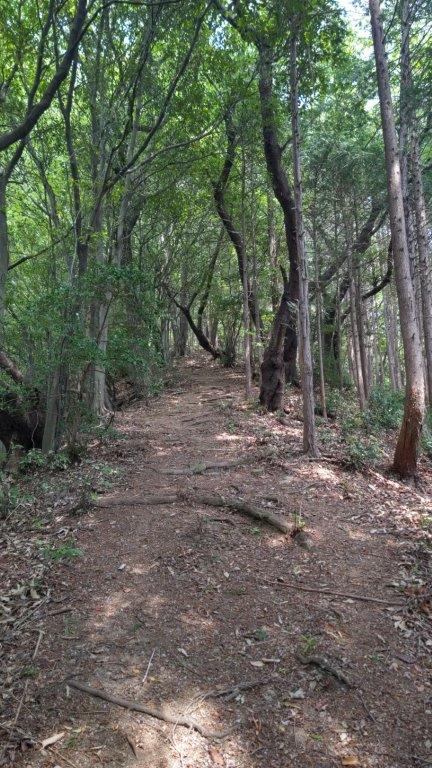
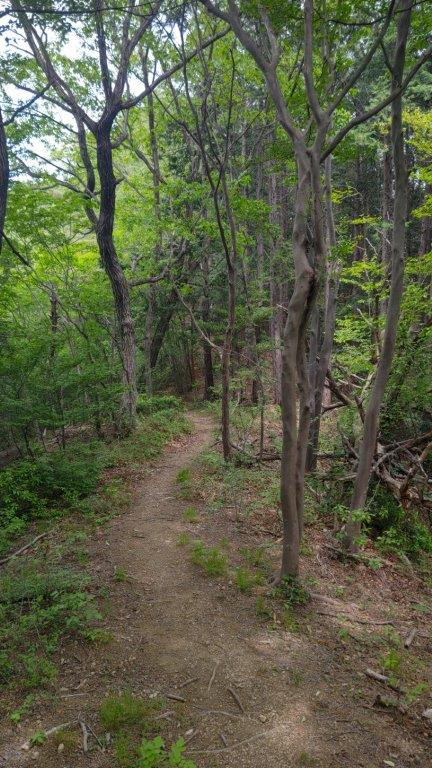
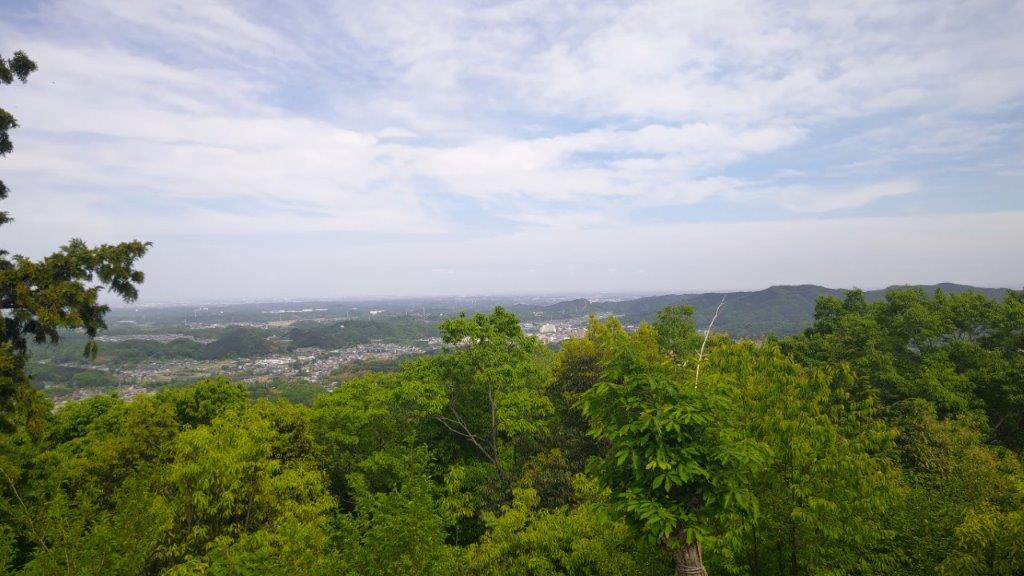
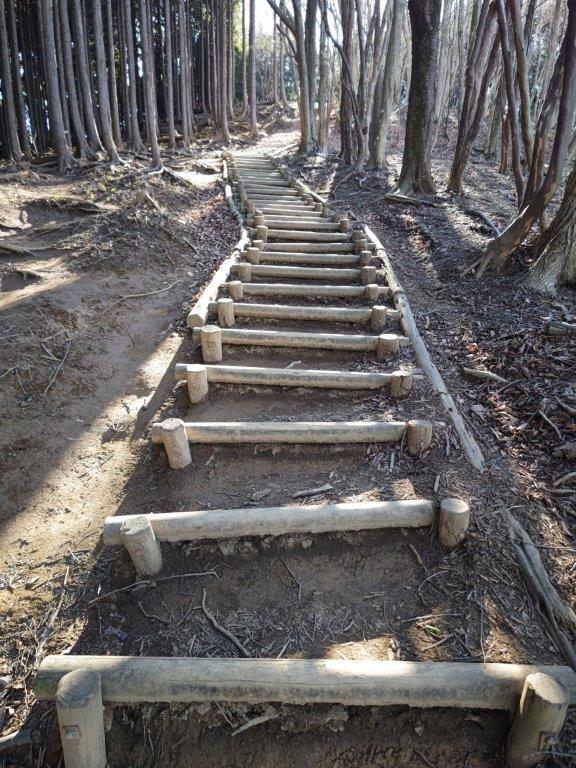
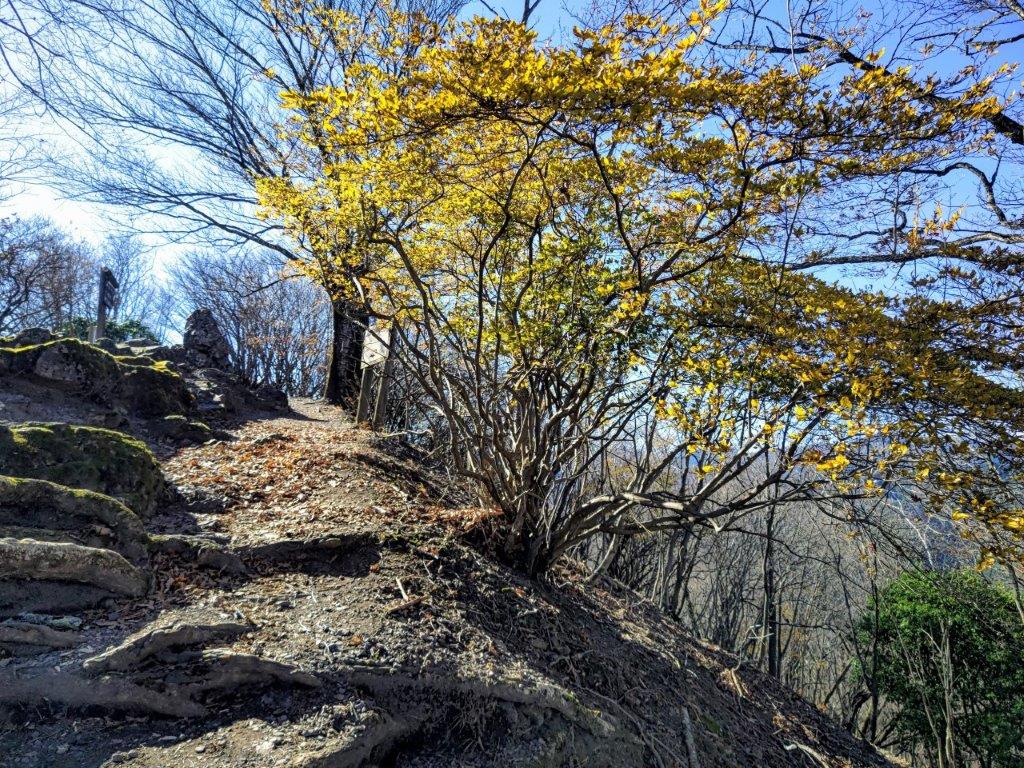
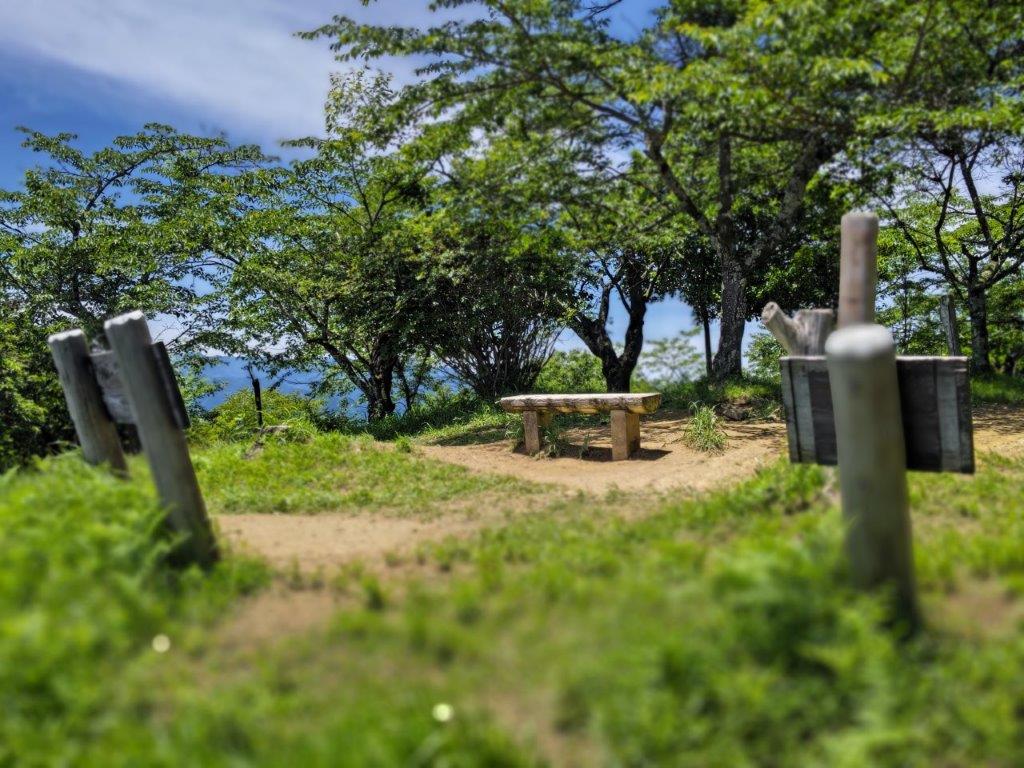
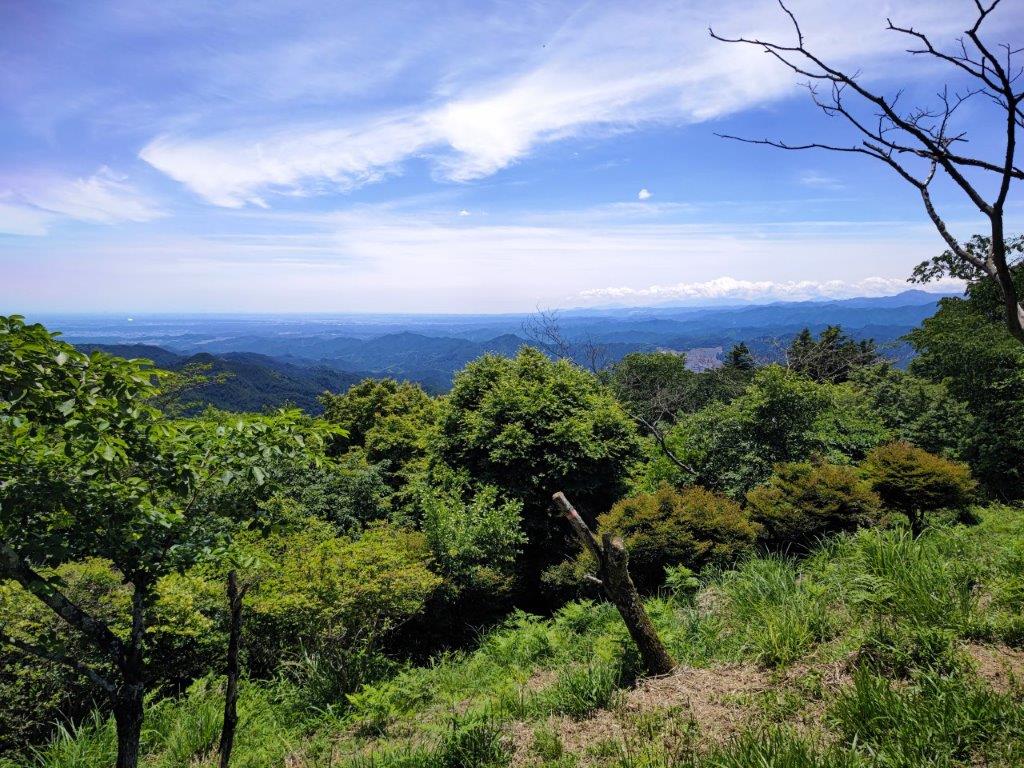
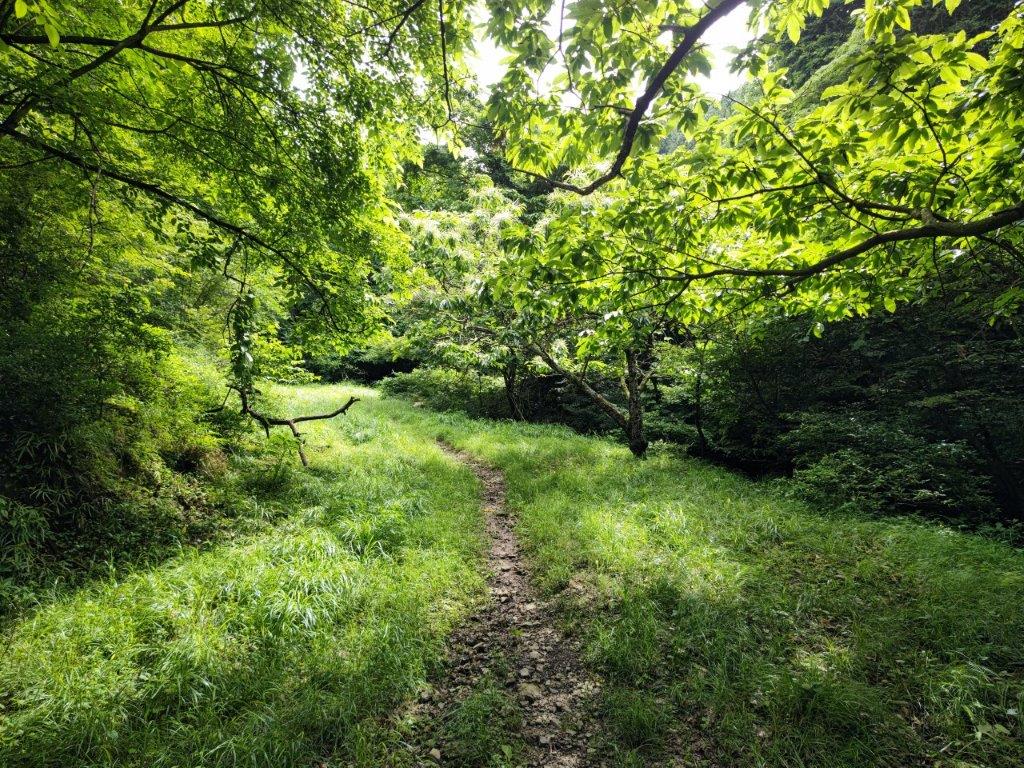
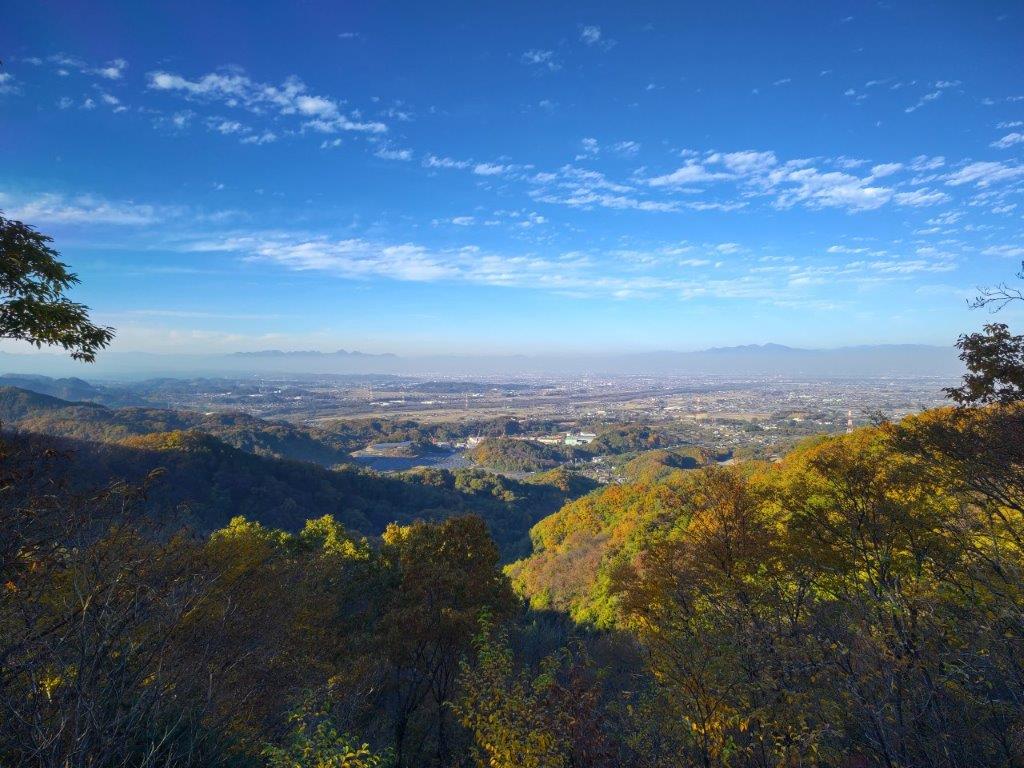
I found myself walking under coloured leaves, as soon as the last house was behind me. Shortly after, bamboo surrounded me on both sides, the tall stalks creating the effect on a tunnel. The path suddenly went straight up the mountain side, demanding a burst of effort to reach the ridgeline. On the right was an open space, turned into terraced fields; it was also the first viewpoint of the hike. On the east side, I could see the Kanto plain, its finer details lost in the haze. After some more climbing through mixed forest, I reached bench in the middle of the trees. Following the ridge a little further, I arrived at the day’s second viewpoint.

Start of the Inazawa Hiking Trail

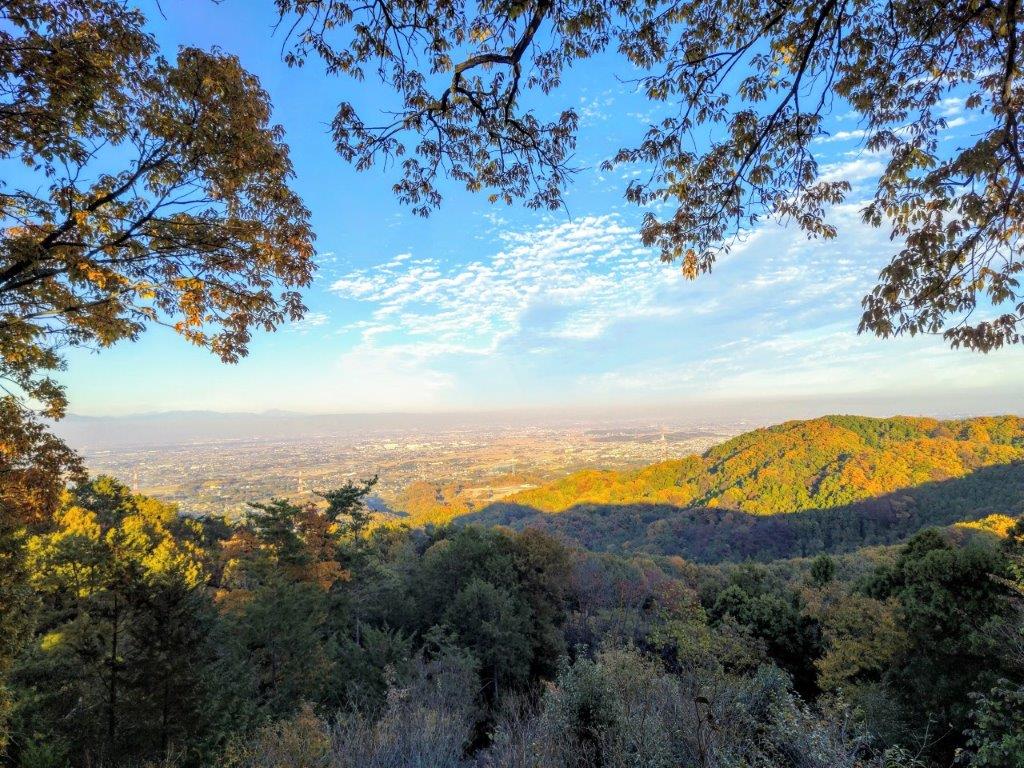
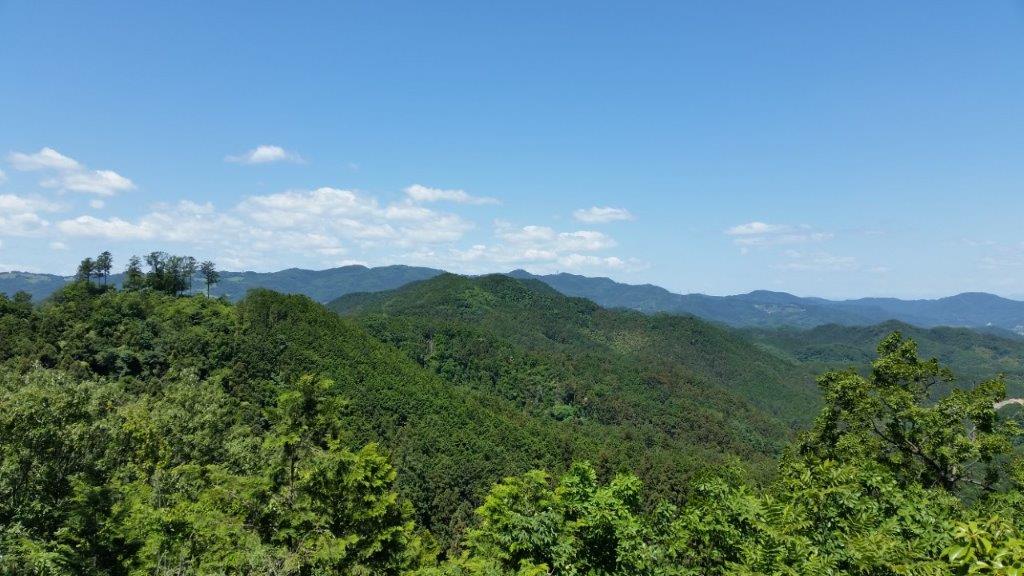
Kanto Plain from the 1st Viewpoint

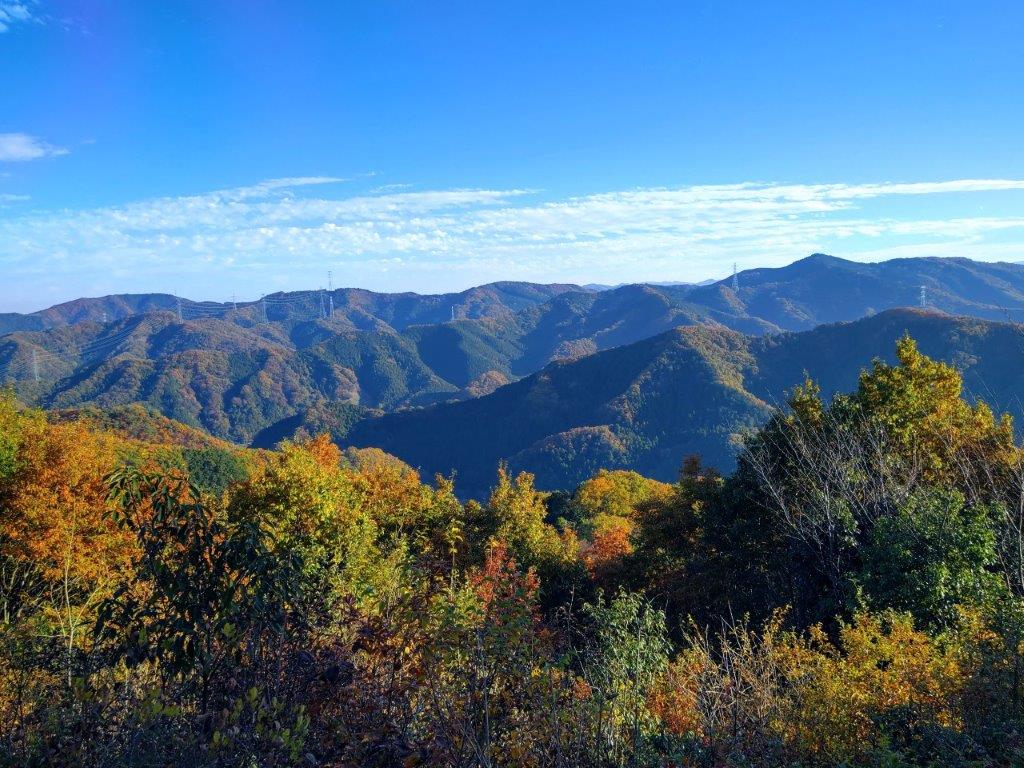
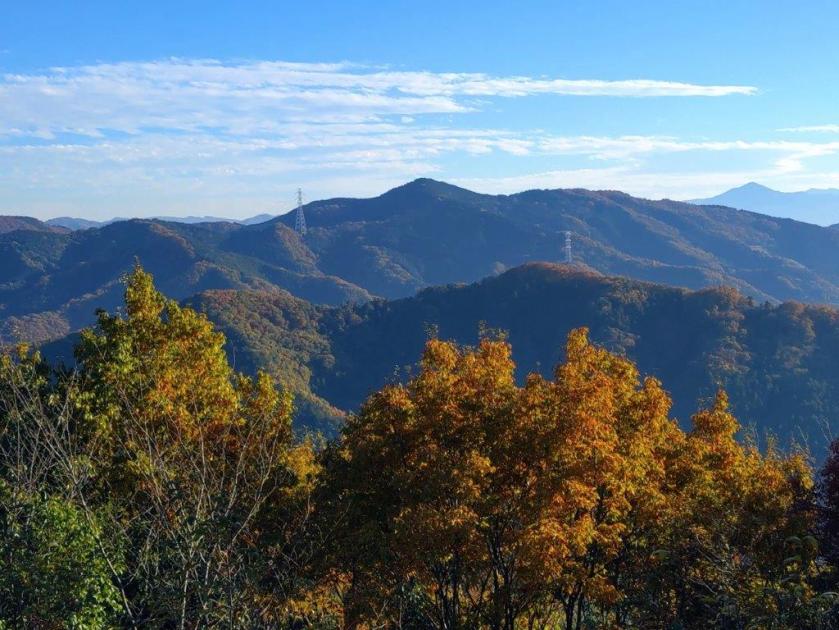
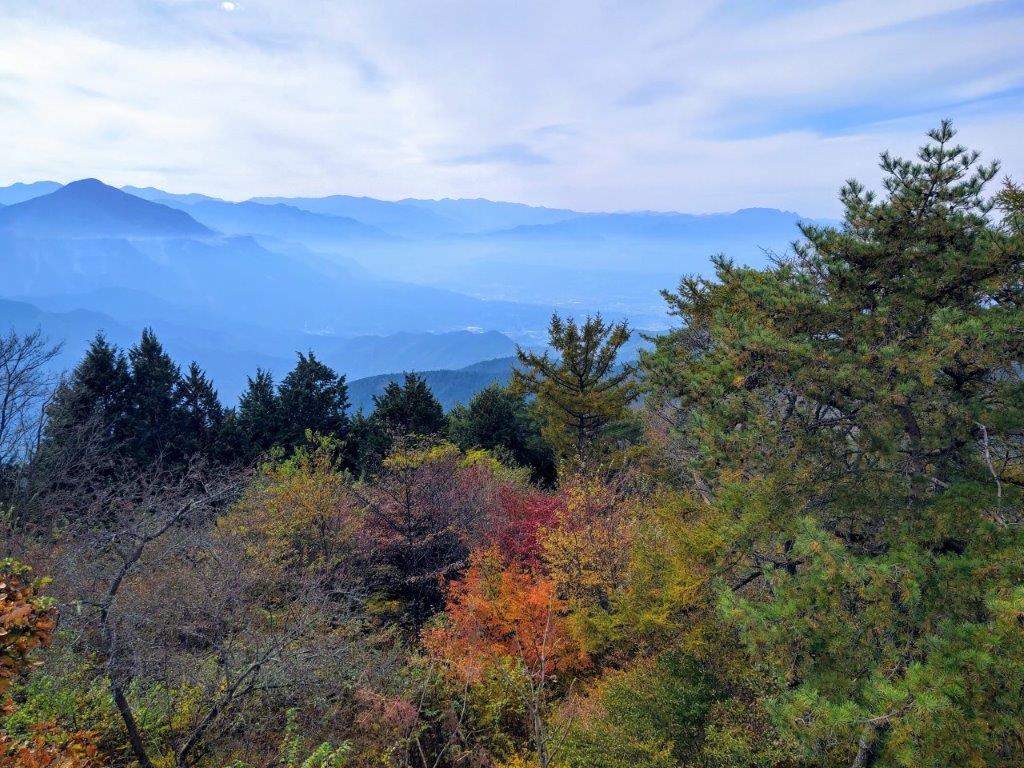
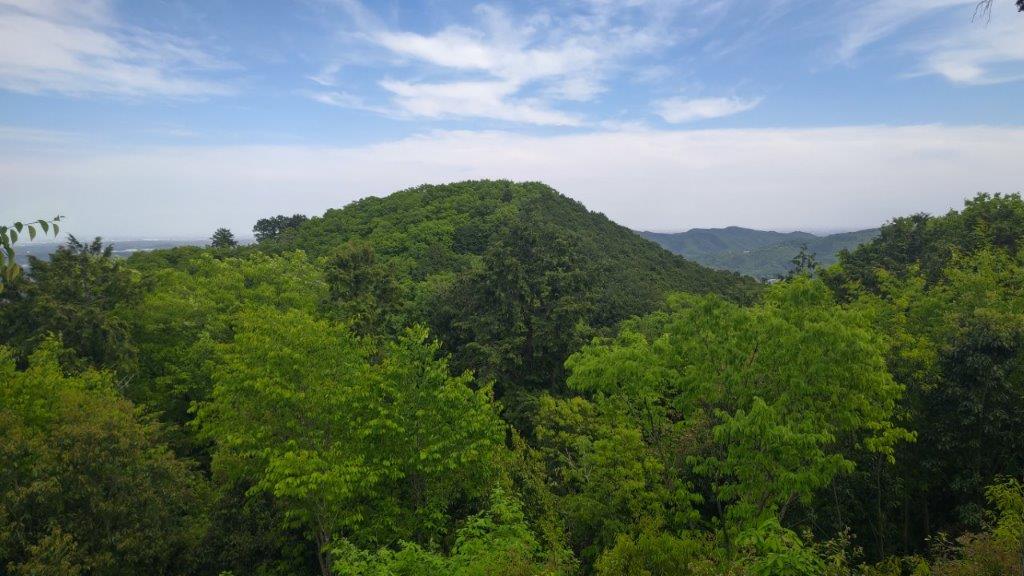
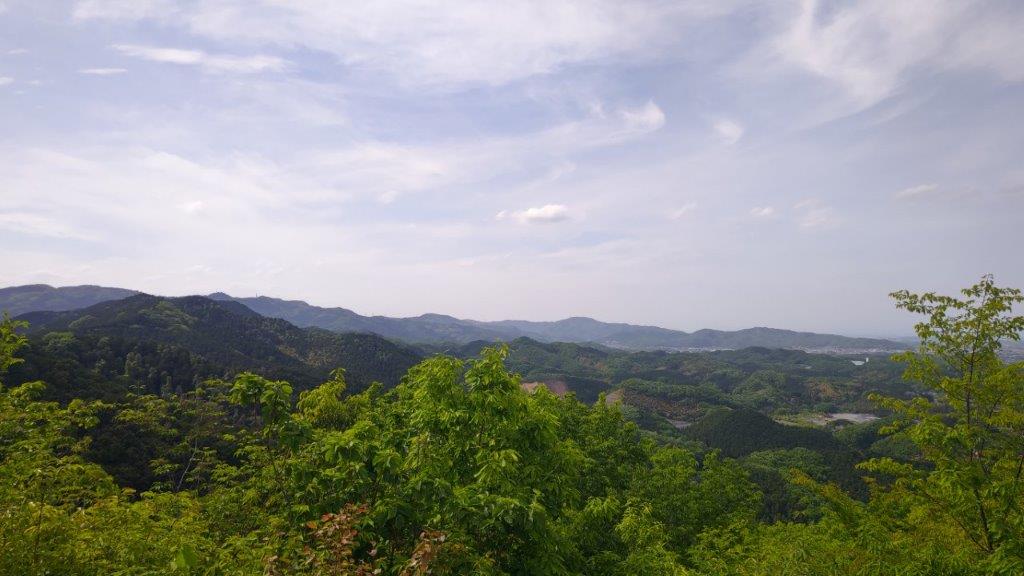
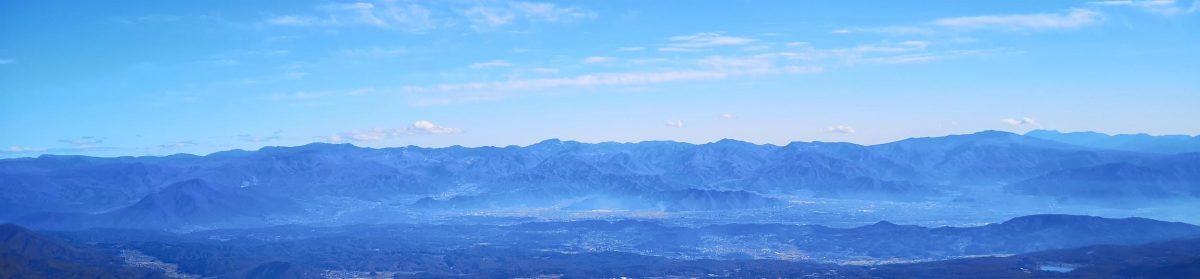
Looking north, I could see the peaks of the Mt Haruna volcano. After a short break, I set off again, passing a small shrine and its wooden Shinto gate (“torii“). The trail went down and up through the oaks, the overhead leaves golden in the afternoon sun. After a steep climb, I reached the third viewpoint, and second bench, of today’s hike just before 3pm. Looking north again, I could see both Mt Akagi and Mt Haruna. On the south side were the Nagatoro North Alps, with Mt Buko in the background. After another short break, I continued on my way.

Mt Haruna from the 2nd Viewpoint

Mt Haruna (left) and Mt Akagi (right) from the 3rd Viewpoint

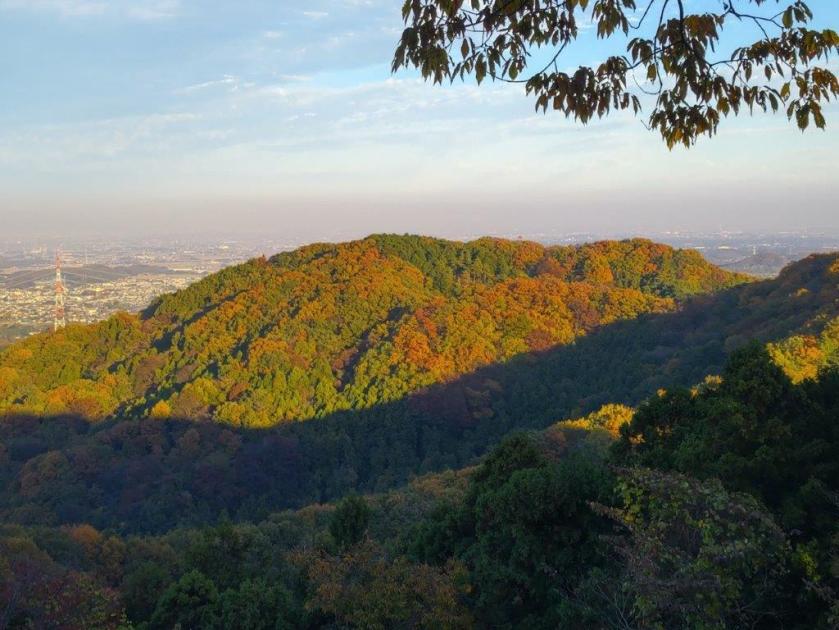
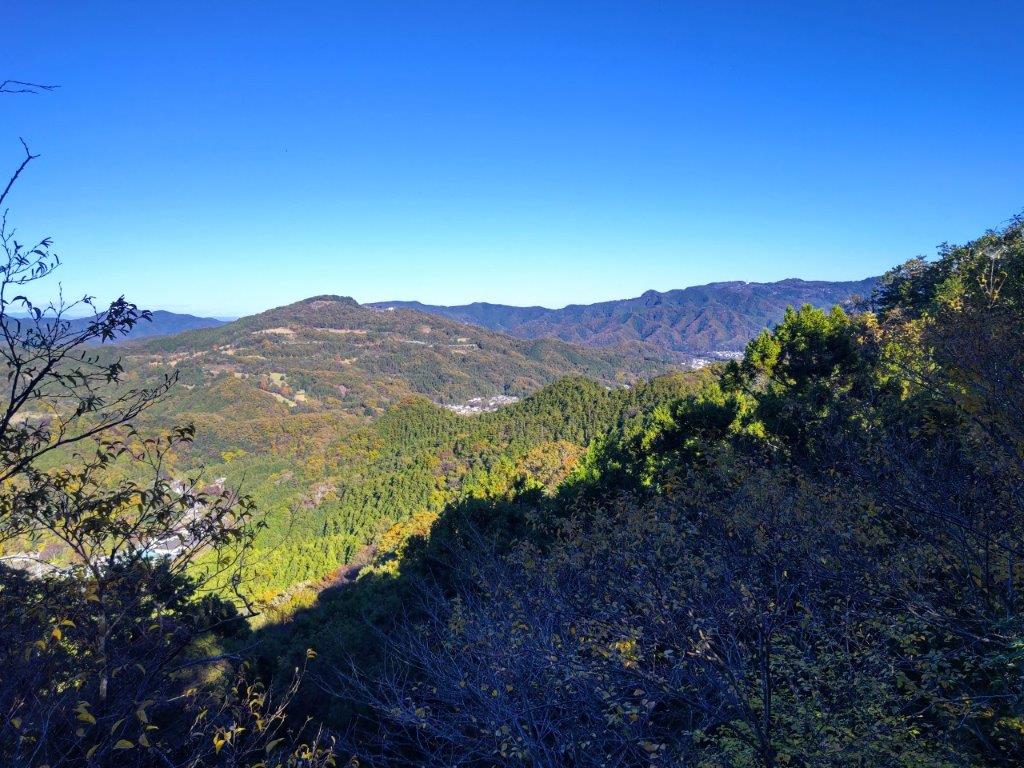
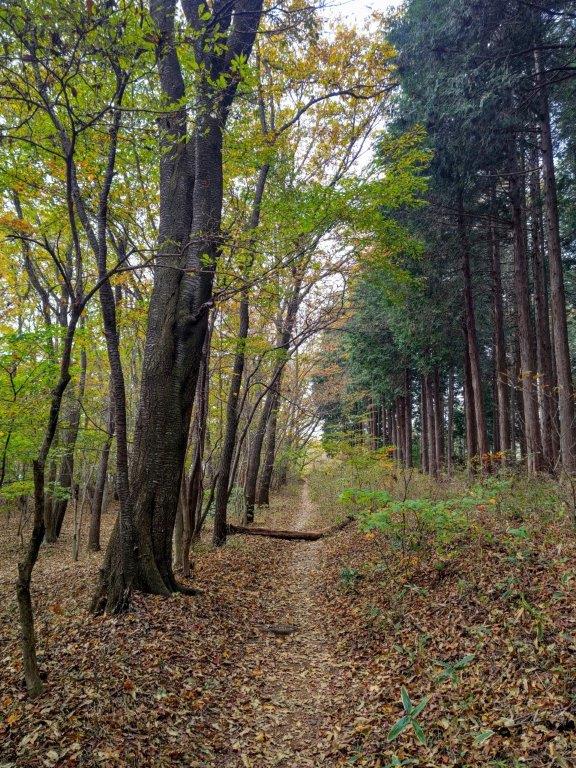
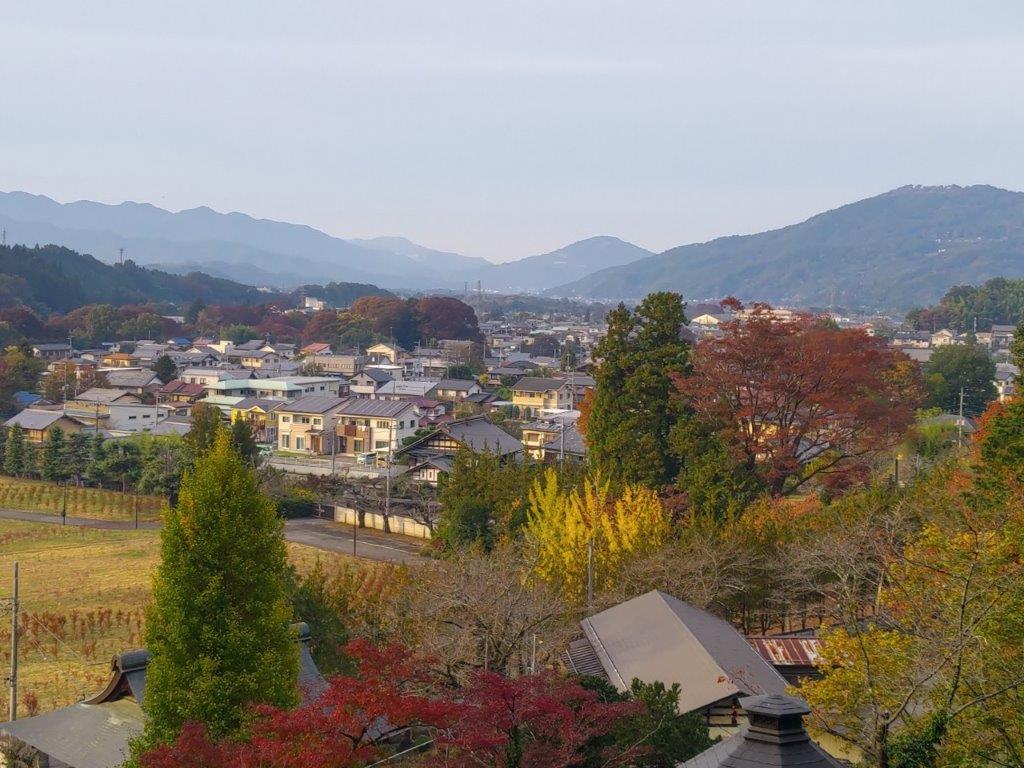
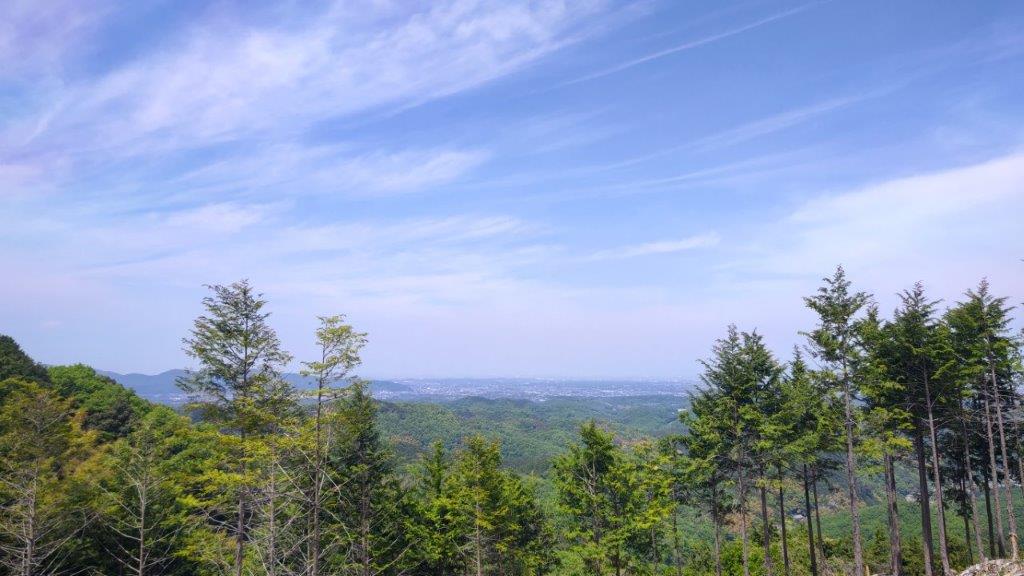
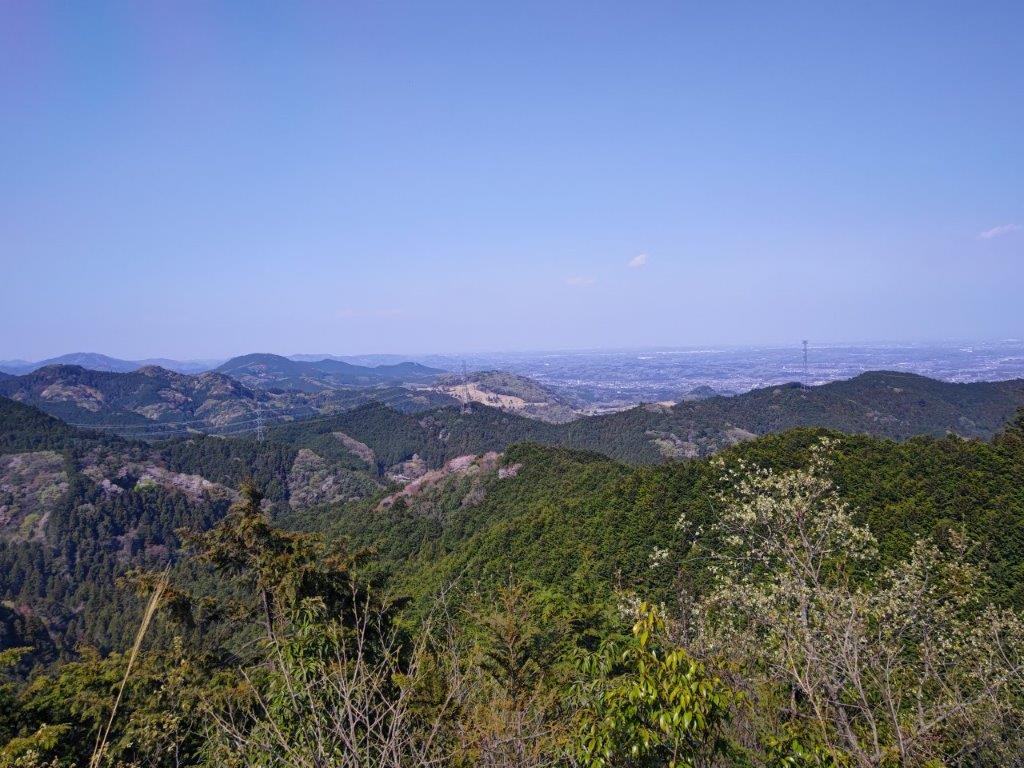
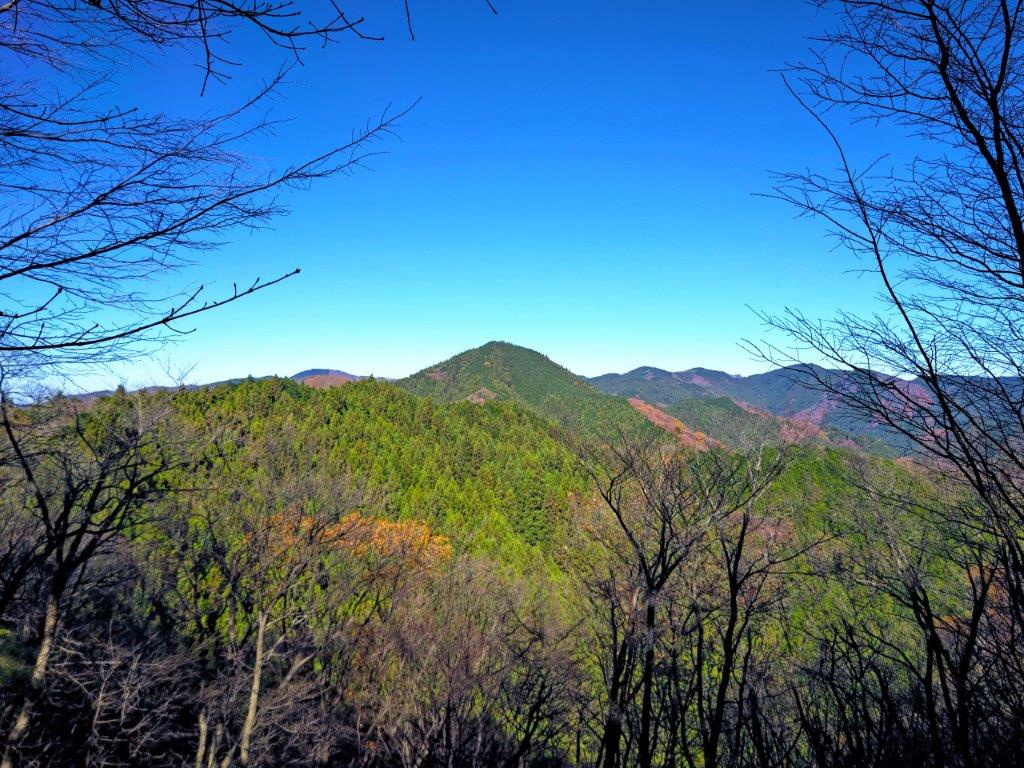
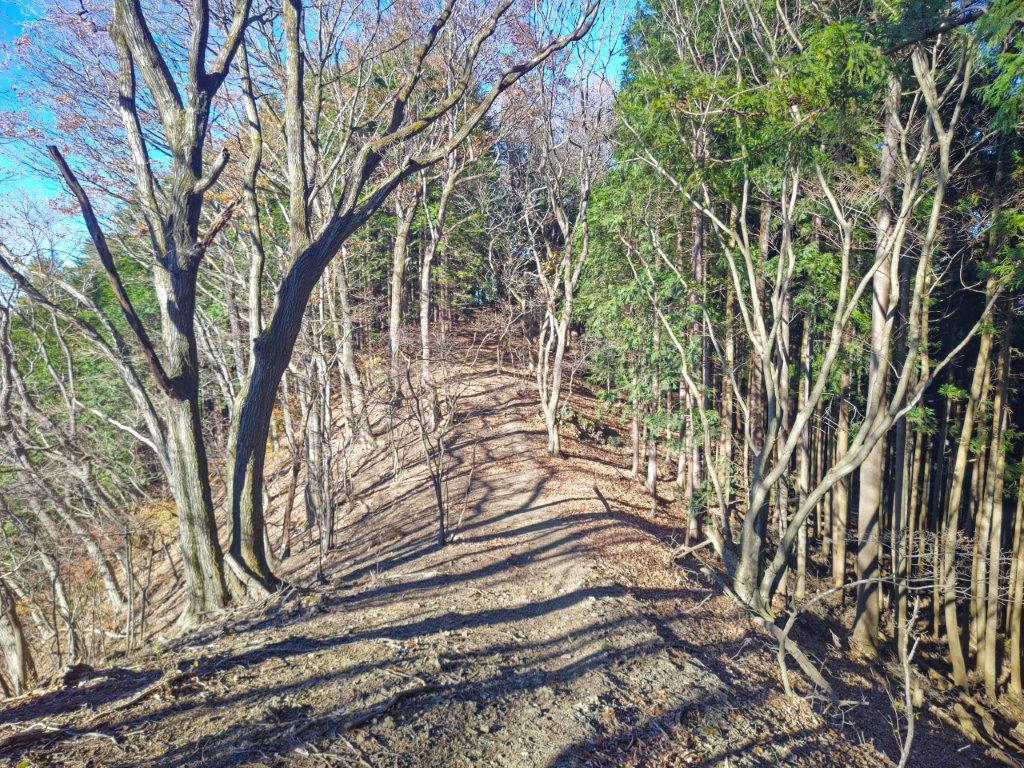
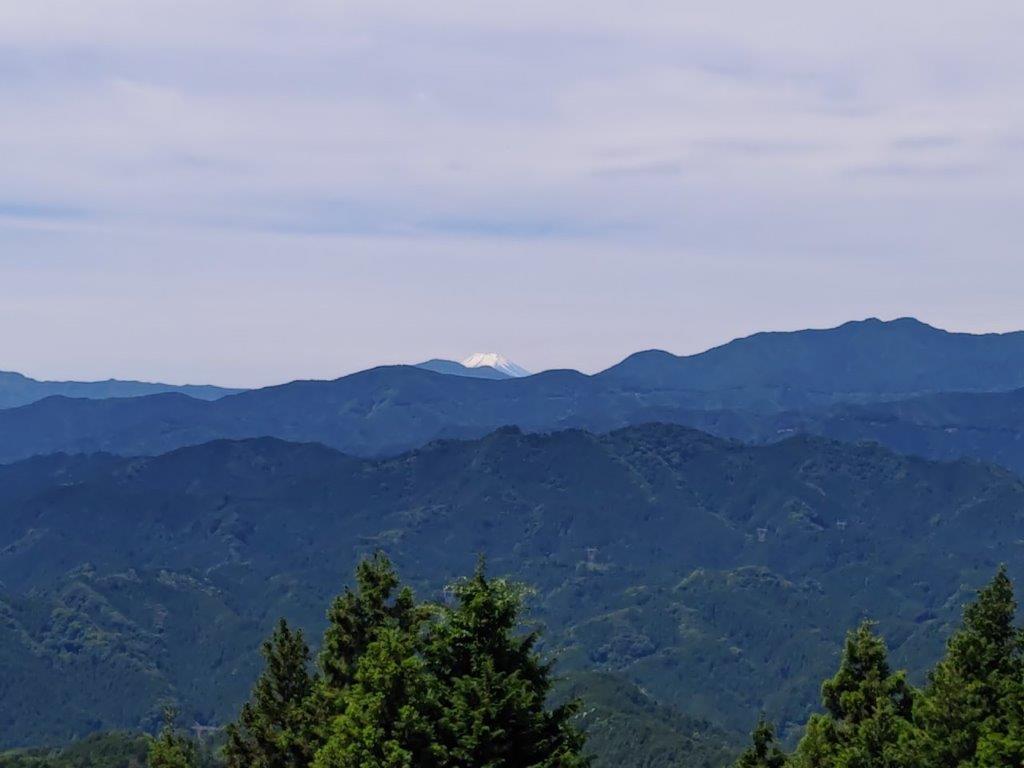
The trail continued up and down through lovely mixed forest. Half an hour later, I reached the fourth and final viewpoint. It was again on the east side, towards the Kanto plain, but this time I could observe most of the ridgeline I had just followed; in the very far distance, I could make out Mt Nantai and the snowy peak of Mt Nikko-Shirane. This spot also had a bench so I sat down to enjoy the last view of the day, the hills rust-coloured in the late afternoon light. I soon started to descend, anxious to get off the mountain before sunset.

The Nagatoro North Alps from the 3rd Viewpoint

Looking back at the Inazawa Hiking Trail

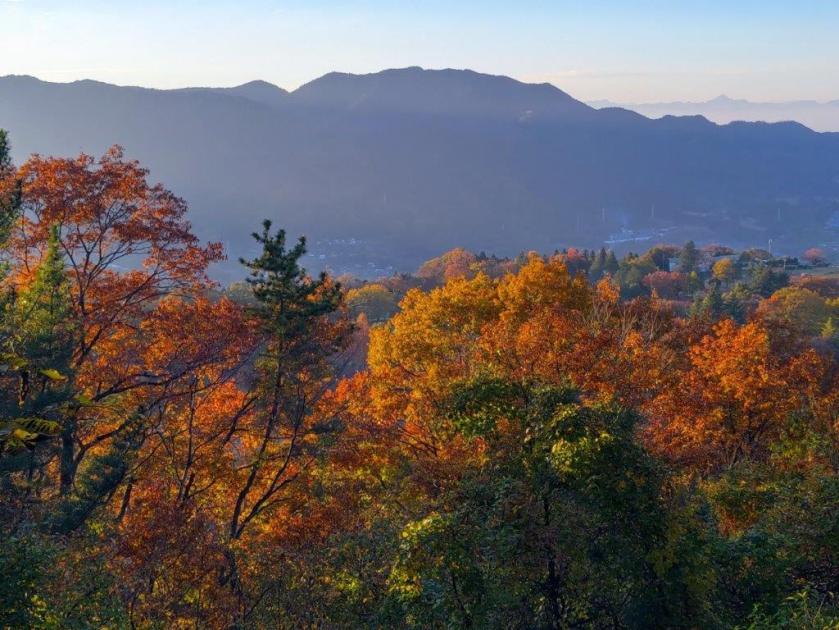
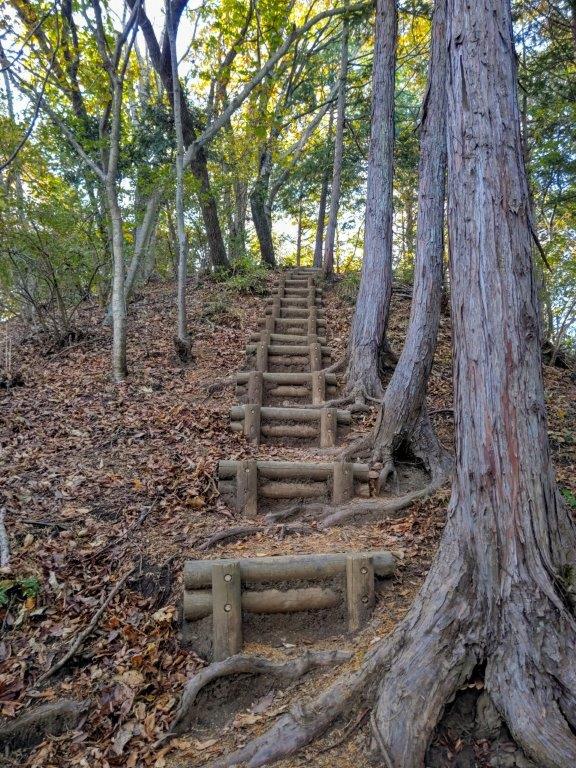
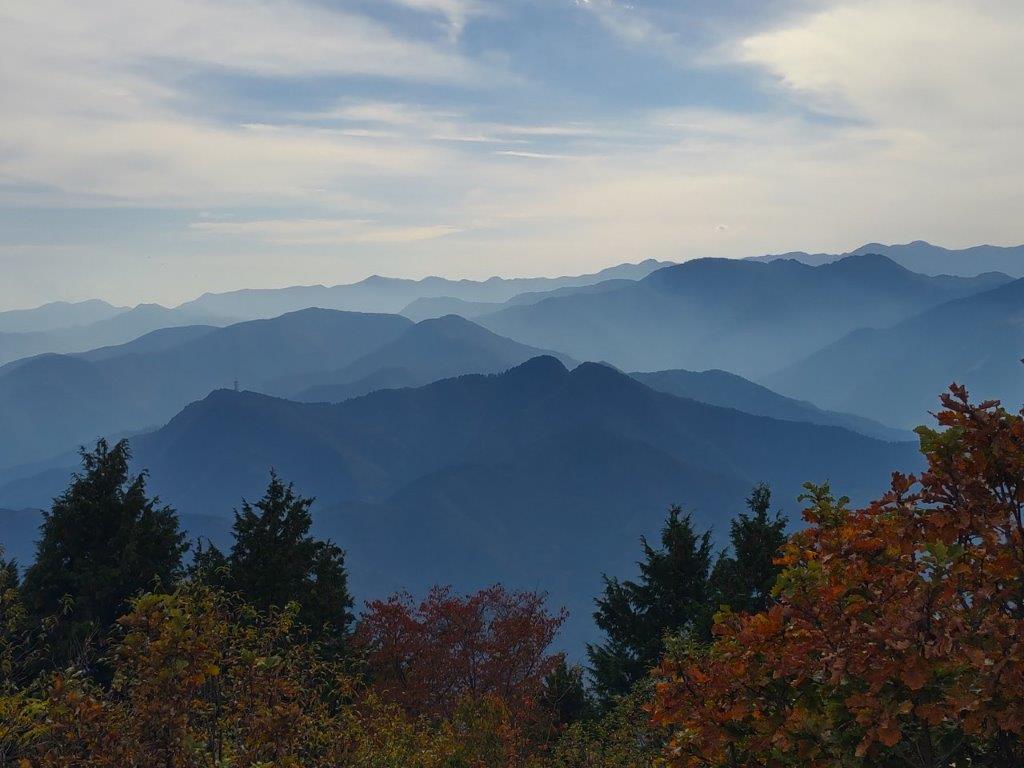
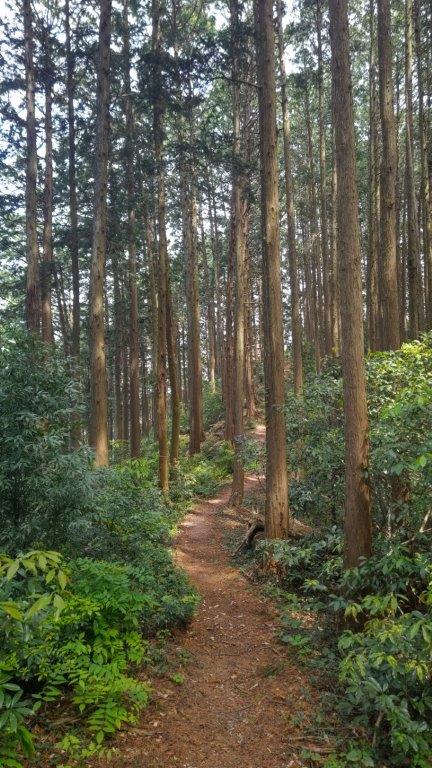
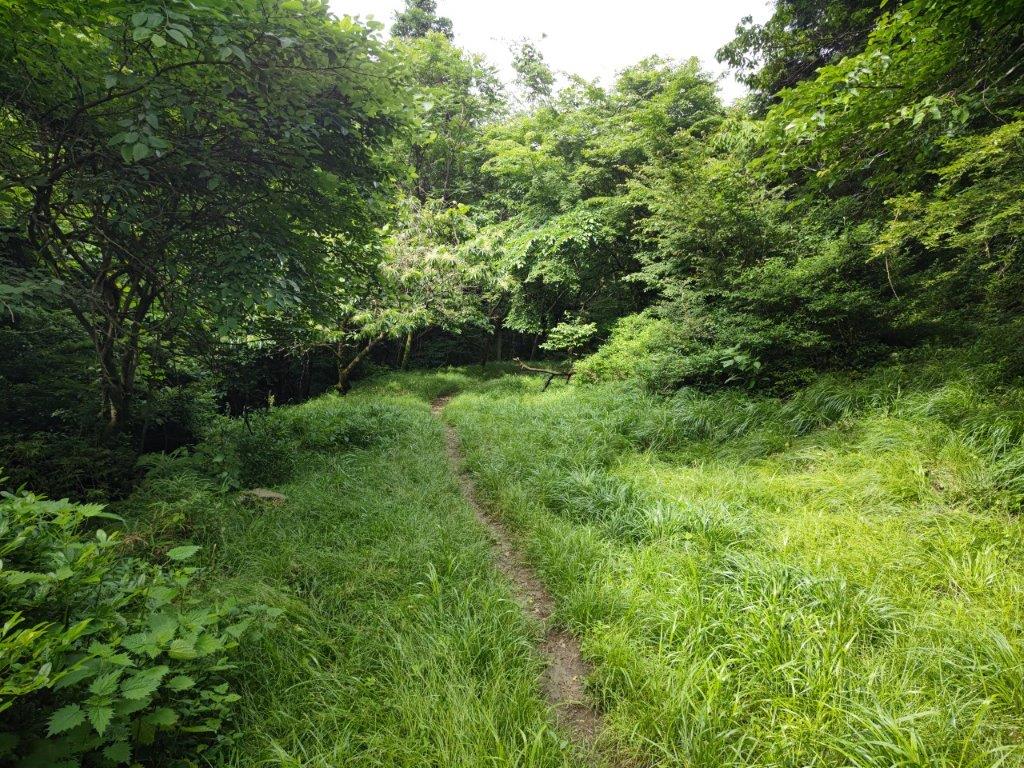
I was pleasantly surprised to get one last view between the trees of the twin peaks of Mt Mikabo, on the west side. I was now heading straight down the mountain among the cedars; the sun had disappeared behind the ridgeline and the surrounding forest had turned gloomy. After a short rocky section and a series of switchbacks, I emerged onto a forest road at the base of the mountain. After crossing three log bridges, I reached some houses on a road, where I turned left. From there, it was a short walk back to the parking lot which I reached just before 4h30, just as it was getting dark.

Kanto Plain from the 4th Viewpoint

On the West Side, the mountains of Gunma

I was delighted to have discovered this hike, created by the Honjo Mountain Association, apparently quite recently, judging from the fresh paint on the signs. The entire loop is relatively short, about three hours, and the short steep up and down sections make it fun and interesting. The views are the best part, especially since they are in all four directions; I could get a really good sense of the location of this low range of hills. It seems this hike is also popular for its cherry blossoms in the spring, so I hope to return to do it in the future in a different season.

See a video of the Inazawa Hiking Trail

Watch the video on Youtube

See a Slideshow of more Pictures of the Hike

Mt Happu (626m) & the Minano Alps, Minano Town, Saitama Prefecture, Sunday, November 19, 2023 [Map Available]

Read this Blog Post on Hiking Around Tokyo

I had hiked this mountain in November 2015, one of the hikes from my mountains of Saitama guidebook. Since then, I’d found out it was part of the “Minano Alps”. At the time, I had only hiked two thirds of it. Looking at my map, I saw I could redo it via a different set of trails; only the central part would overlap. I would start at Temple #34 on the Kannon Temple Circuit and follow the Kanto Fureai no Michi. Past the summit, I would leave the Fureai no Michi, and descend a ridgeline extending southwest, ending a short distance from Minano station.

Get a map of the Mt Happu hike

This map was developed for Japanwilds with the Hokkaido Cartographer

Find Japan Hiking Maps on Japanwilds

Path to Kegon Falls (left) / Steps for Suisen-ji Temple (right)
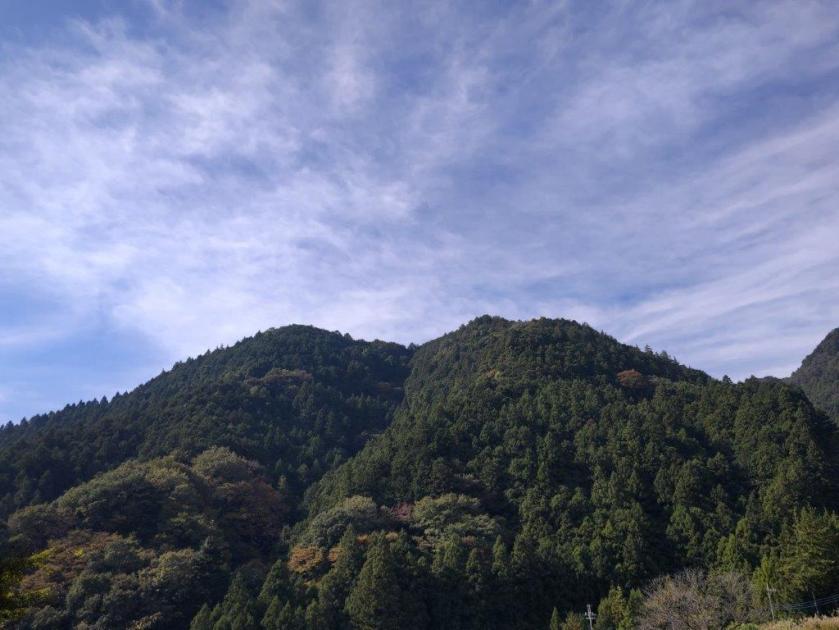
Since it was a relatively short hike, I could combine it with a visit to a waterfall, a short distance from the temple. To get there, I would take the Laview Limited Express to Yokoze station, where I’d change to the local Chichibu line. At Minano station, I’d catch a bus and get off at near the falls. At the end of the hike, I could walk back to Minano station. If time allowed, I’d drop by a local onsen before heading back. The weather was supposed to be sunny, with temperatures slightly above average for the season. On my last visit, I didn’t see many autumn leaves, so I hoped that this time around, I’d get to see plenty.

Hiking on the Kanto Fureai no Michi 関東ふれあいの道

Hiking in Chichibu 秩父

Following the Fureai no Michi up to the Ridgeline

Series of Steps (left) and Tree-Framed View (right) on the Descent

It was a blue-sky day as I stepped off the train at Minano station, a little past 10am. Although the micro-bus was full, everyone had a seat. After a 30-minute ride, I followed a paved road to the nearby entrance of the short path leading to Chichibu Kegon no Taki (秩父華厳の滝). At 10 meters high, it wasn’t the most spectacular waterfall I’d seen recently, but the Autumn foliage made it worthwhile. I made a short loop to see some more autumn colours and then walked down the road for 15 minutes to Suisen-ji Temple (水潜寺). I was the only visitor enjoying the serene atmosphere. It was nearly noon and high time for me to start my hike.

Mt Mino (front) Higashi-Chichibu (back)

In the Center, Mt Maruyama

I walked up the mountain side under the cool shade of the cedars. I was following the Kanto Fureai no Michi (関東ふれあいの道), and as usual, the trail was well-maintained and well-signposted. The trail became a series of switchbacks to tackle the steep section below the ridgetop. At Fudatate Pass (札立峠), I turned left, continuing along the Fureai no Michi. To the right is the “Nyokin” ridge route (如金峰コース) which I had taken on my last visit. After passing a beautiful Japanese maple (“momiji), I had to climb a little more to reach the top of Mt Happu (破風山 はっぷさん happusan), which could be translated as “Ripping Wind”.

Mt Buko (left) The Oku-Chichibu Mountains (right)

Mt Jomine from the Summit of Mt Happu

I was amazed to have the summit all to myself, completely free of trees on the south side. From east to west, I could see Mt Mino, Mt Dodaira, Mt Maruyama, Mt Buko and Mt Ryokami. However, just moments later a large group arrived. I retreated to the north side, from where I could see the top of Mt Jomine above the trees. It was 1pm so I sat down for lunch. I was surprised how warm it felt in the sun, even though it was the middle of November. Half an hour later, I set off again. The trail started to descend quickly, and a little after 2pm, I reached a fork. I went right, following the “Maehara Ridge” Route (前原尾根コース), leaving the Fureai no Michi as it descended into the valley.

Looking North from the Top of Mt Happu

Walking along the Fureai no Michi

I followed the trail as it went up and down, seemingly without end. I felt like I was truly hiking the “Minano Alps” (皆野アルプス), even though I was lower than the main ridge. At the top of a big rock, called Nantai-Ogami (男体拝), I had a view of Mt Hodo; in the distance, I could see snow-capped Mt Nantai. Past a short rock section, equipped with rope for safety, was a steep slope leading me lower and lower. Half an hour later, I reached a couple of rocky outcrops with good views north and south. Just before 3pm, I passed the minor summit of Mt Maehara (前原山 347m), and after one more steep slope, I emerged at the base of the mountain at Ofuchi (大淵登山口). It was still early so I walked to Bon no Yu, and after a refreshing bath, took a taxi to Minano station. By 5pm, I was at Seibu-Chichibu Station where I boarded the Laview for the 80 minute ride to Ikebukuro.

Mt Hodo from Nantai-Ogami

View from a Rocky Outcrop on the Maehara Ridge Route

At just over 3 hours this is a relatively short hike so I was glad I was able to stretch the time a little with a visit to a waterfall, a temple and an onsen. I was also glad I’d decided to revisit this mountain. At first glance, it didn’t seem like I could get an interesting hike out of it, but in the end, it was extremely satisfying. The best part was that, although I passed a few people on the higher sections, I saw almost no one on the way down. So it turned out to be a peaceful ramble relatively close to Tokyo, something that can be hard to find.

See a Video of the Mt Happu Hike

Watch the Video of the Hike on Youtube

See a Slideshow of some more Pictures of the Hike

Mt Tsutsuji (879m) & Mt Maruyama (960m), Hanno & Chichibu Cities, Saitama Prefecture, Sunday, November 4th, 2023

I wanted to go for a hike closer to home, in Oku-Musashi, an area I’ve been to many times before. I found a couple of trails I had yet to explore, and finishing in Chichibu, where I could get a hot bath before returning via the limited express. In the morning, I would take the train to Shomaru station and follow a section of the “Oku-Musashi Long Distance Trail” up to Kabasaka Pass; from there, I would make my way along the Kanto Fureai-no-Michi to the observation tower on top of Mt Maruyama. After enjoying the view, I would continue north, down into the Chichibu Basin, ending at Temple 4 on the Kannon Temple Circuit, a short bus ride from Seibu-Chichibu Station. I hoped the area would be spider-free and full of autumn colours, despite the continuing warm weather. The forecast called for clear skies in the morning, but cloudy from the afternoon. I was looking forward to a relaxing ramble along a route of my own creation.

Read this Blog Post on Hiking Around Tokyo

Hiking in Oku-Musashi 奥武蔵

Hiking on the Kanto Fureai-no-Michi 関東ふれあいの道

Going up the Oku-Musashi Trail to Kabasaka Pass

Walking through the Forest on Mt Maruyama

It was a blue sky day as I rode the Laview Limited Express to Hanno station, where I transferred to the local Seibu-Chichibu line, arriving at Shomaru station around 9:30. It felt quite warm as a I got ready for my hike, although cirrus clouds has appeared overhead. After walking along a busy road for a short while, I reached the start of the trail, a little after 10am.

Start of the Trail near Shomaru Station

First View of the Day

I followed the trail up a narrow valley under the cedars, blissfully quiet after the noisy road. A couple of steep climbs took me past the minor summits of Mt Kotsutsuji (小都津路山 770m) and Mt Otsutsuji (大都津路山 831m). I saw no one on this section, possibly because the trail is marked as difficult to follow on maps, although it was well-signposted the whole way. After a short, level section through the trees, I reached the top of Mt Tsutsuji (ツツジ山), crowned with yellow pampas grass.

Pampas Grass on the Summit of Mt Tsutsuji

View East from the Paragliding Jump-off Spot

I was stunned by the sight of a bright red Japanese maple, or “momiji” right next to the summit marker, reminding me that it was indeed autumn, despite the short-sleeve temperatures. Since it was noon, I sat down for an early lunch, facing the view on the south side through a break in the trees. I soon set off again and reached Kabasaka Pass (刈場坂峠) just before 12h30, from where I continued to Ono Pass (大野峠). I had hiked this section before, part of the Kanto Fureai no Michi. After climbing a series of steps, I reached am open space, a jump-off spot for paragliders.

Easy Hiking near Mt Maruyama

View of Mt Buko from the Maruyama Observation Tower

On the east side, I had a view down the valley towards Tokigawa Town, although the visibility was somewhat reduced by high-altitude clouds spread across the sky. I continued along an easy to walk trail through mixed forest, here and there autumn colours already visible. After a short climb, I reached the observation tower at the top of Mt Maruyama (丸山 まるやま maruyama) just before 1h30. I was my third time to visit what is one of the best viewpoints of the Chichibu area.

Hazy View of the Chichibu Basin

The Low Mountains of Oku-Musashi from Maruyama

Today’s view was slightly hazy, giving a different impression from my previous visits; on the other hand, I could clearly see I still had some way to go, so I soon moved on. I headed down some steps on the north side, now inside the Saitama Prefectural Forest. At 2pm, I passed the Forest Study Pavilion (森林学習展示館), with a view of Mt Dodaira to the East, and started on the long, gradual descent into the Chichibu Basin ending at Kinsho-ji Temple. The sun was shining again, the clouds kept in check by the Chichibu micro-climate.

Autumn Leaves on the Descent to Kinsho-ji Temple

View from Kinsho-ji: Mt Happu (left), Mt Hodo (center) & Minoyama (right)

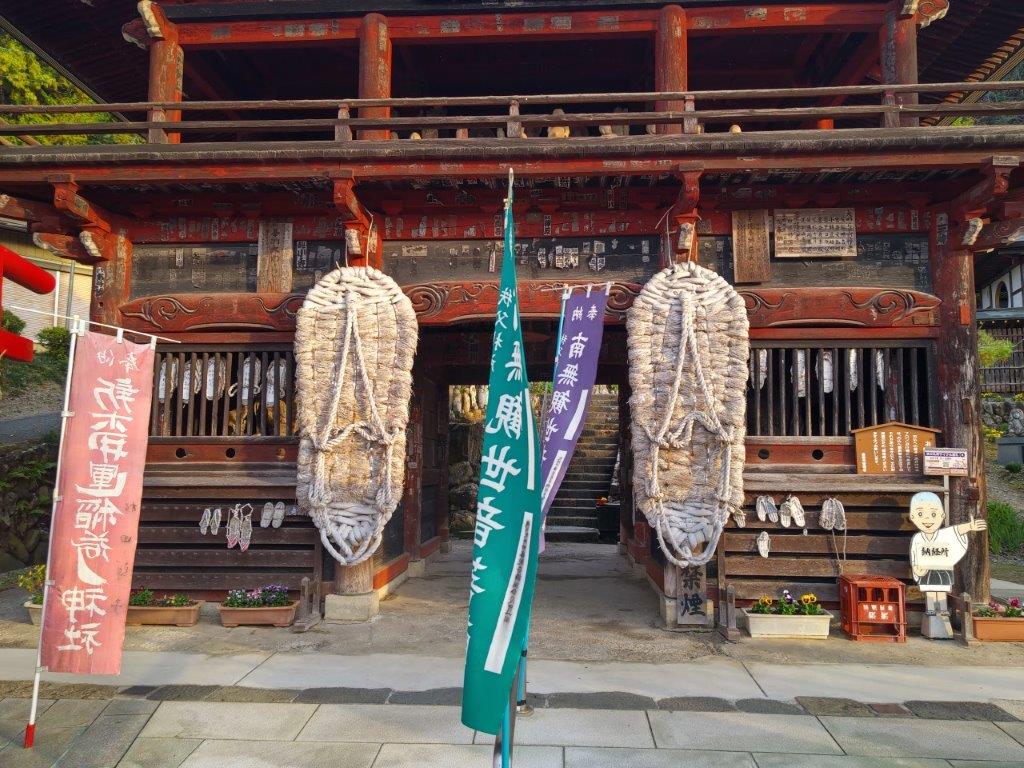
I was happy to be finally walking surrounded by the autumn leaves, the yellows dazzling in the afternoon light. One hour later, I had descended below the reach of the sun rays and was now walking on a switchback trail under the cedars; on each side of the trail, I could see empty spider webs. A little after 3h30, I emerged at Kinsho-ji Temple. I stayed a short while to gaze at its many small stone Buddha statues and huge, red maple tree, before running off to catch the 4pm bus for Seibu-Chichibu station.

Red Momiji and Buddha Statues at Kinsho-ji

Giant Straw Sandals at the Entrance Gate of Kinsho-ji

The entire hike took a little under six hours, a little longer than I would have liked, but I was thankful for the hot bath at the end. The weather was also a little warmer than I would have preferred, but as least I didn’t need to put on and take off layers at every break. Finally, I was glad that the two trails I decided to explore were easy to walk and follow, and that I had them entirely to myself. I look forward to creating more of my own Oku-Musashi hikes in the future.

Watch a Video of the Hike

Watch the Video of the Hike on Youtube

Watch a Slideshow of more Pictures of the Hike

Mt Usuiri (421m), Mt Kannokura (344m) & Mt Sekison (344m), Higashi-Chichibu Village & Ogawa Town, Saitama Prefecture, Saturday, April 29, 2023

I wanted to take advantage of the comfortable spring weather to do a short hike close to Tokyo. I had already climbed Mt Kannokura and Mt Sekison in 2016, going up via Tennou Pond, and then down past Kitamuki-fudo, both on the north side. Looking at my hiking map, I saw I could approach them again via a different route: along the ridge on the west side, and then head back down on the south side, creating a slightly longer hike. I would take a bus from Ogawamachi station on the Tobu line to a stop close to the trail entrance; from the end of the hike, I could catch the same bus back from a stop closer to the station. The weather was supposed to be overcast with sun from time to time, and so I was looking forward to some easy hiking near home.

View this Blog Post on Hiking Around Tokyo

View north of the Kanto Plain Near Mt Usuiri

Mt Sekison from Mt Kannokura (June 2016)

Grey clouds hung overhead as I got off the bus near the Higashi-Chichibu Village Hall a little after 10h30. After getting ready, I made my way to a stone Shinto gate and staircase leading to Okusawa Shrine, which I reached a little after 11am. It was surrounded by bamboo, but on the left side, I found the trail entrance, marked by a light blue metallic signpost.

Trail leading up to Mt Usuiri

Near the top of Mt Usuiri (left) On the way to Mt Kannokura (right)

I was excited to find a new hiking trail so close to Tokyo. The path climbed steadily through mixed forest; shortly before noon, I arrived at the summit of Mt Usuiri (臼入山 うすいりやま usuiriyama). Through the trees on the west side, I had a partial view of the ridgeline between Mt Oogiri and Mt Toya in eastern Chichibu. After a short break, I followed the trail through the cedars, down the east side of the summit.

Looking back at Mt Usuiri

View North from a Clearing past Mt Usuiri

I reached the first good viewpoint of the day about half an hour later. It was a deforested area next to a road over a pass. The clouds had dissipated and blue sky was visible again. On the north side, I could see the long ridge extending east beyond Mt Kanetsukido. I sat down on some tree trunks for some lunch in the sun and with a view. At 1pm, I set off again, crossing the road and up a short steep slope.

View North of Chichibu Past Mt Usuiri

View of Mt Sekison from Mt Kannokura

It felt very peaceful as I followed the up and down ridgeline trail, completely in the trees. At 1h30, reached the junction with my previous hike. From there, it was a short climb to the top of Mt Kannokura (官ノ倉山 かんのくらやま kannokura-yama). The clouds had reappeared and the view wasn’t as good as during my last visit. On the north side, I could see the Chichibu mountains and the Kanto Plain; directly ahead was the rounded peak of today’s final summit.

View North of Chichibu from Mt Kannokura

View of Chichibu and the Kanto Plain from Mt Kannokura

After a short descent, followed by an equally short ascent, I reached the top of Mt Sekison (石尊山 せきそんさん sekison-san) around 2pm. The view on the north side was similar to before, but now, I also had a view of Ogawa Town to the south. There were more hikers here so I quickly moved on. On my last hike, I had continued along a trail past the summit. This time, I retraced my steps a short way, and took a path heading down on the left side; although it wasn’t properly signposted, the trail was in good condition.

View of Ogawa Town from Mt Sekison

Hiking Down from Mt Sekison

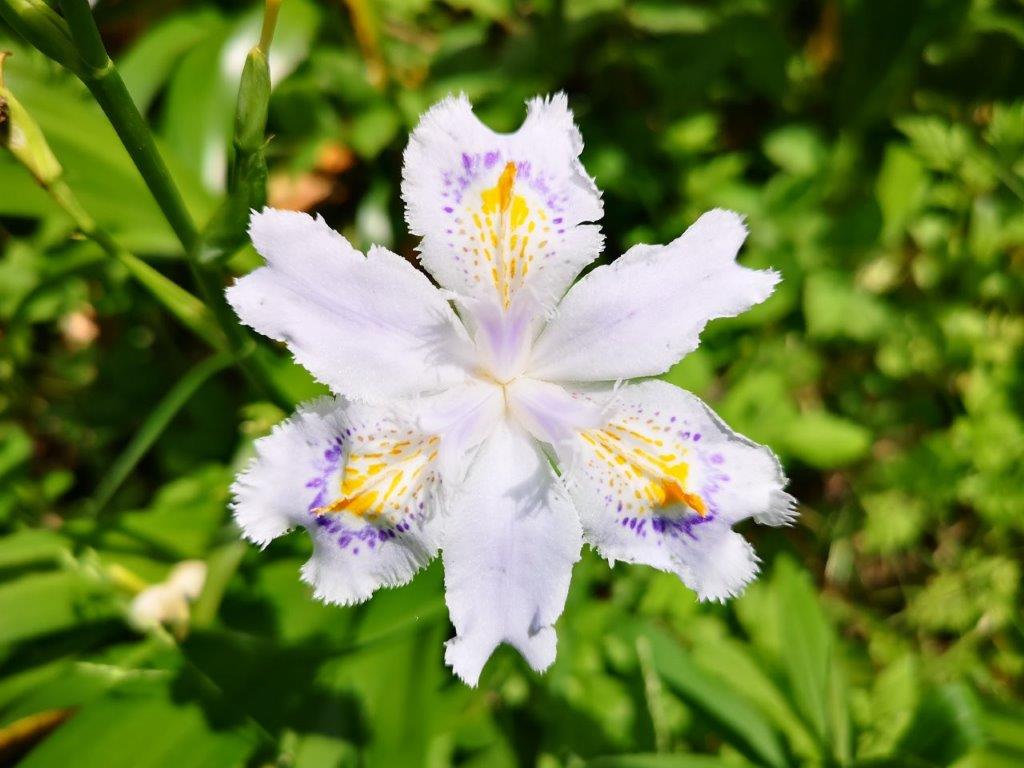
Half way down, I passed through what seemed like a hidden valley: a grassy, flat area surrounded by trees, only the blue sky visible overhead. It was an interesting spot that wasn’t marked on the map. A short way beyond, I passed the ruins of an old fort, its access unfortunately closed off for some reason. I then descended a narrow valley with many Irises (“shaga”) along the way, and emerged onto a road just before 3h30. The bus stop was a short distance away; once back at Ogawamachi station, I caught the express train for the one hour ride to Ikebukuro.

A Hidden Valley on the Way Down from Mt Sekison

Easy Hiking Near the End of the Hike

I was glad to redo these mountains via a different route although the weather wasn’t as good as the first time, when I could see as far as Mt Akagi and Mt Haruna. Since it’s less than 4 hours, it’s a really short hike that can’t be stretched any longer without heading up another ridgeline; going up and down the route on the north side is even shorter, less than 2 hours. Next time, it might be interesting to head up in the winter for a clearer view, and also check out the nearby Michi no Eki, Washi-no-sato, as well as a local soba shop.

See a Video of the Mt Usuiri, Mt Kannokura and Mt Sekison Hike

See the video of the hike on Youtube

See a Slideshow of Some More Pictures of the Mt Sekison Hike

Mt Usuiri from Mt Kannokura (June 2016)

East Chichibu from Mt Kannokura (June 2016)

Mt Monomi (375m), Mt Sukari (435m), Mt Fukazawa (350m) & Mt Atago (250m), Moroyama Town and Hanno City, Saitama Prefecture, Saturday, April 1st, 2023

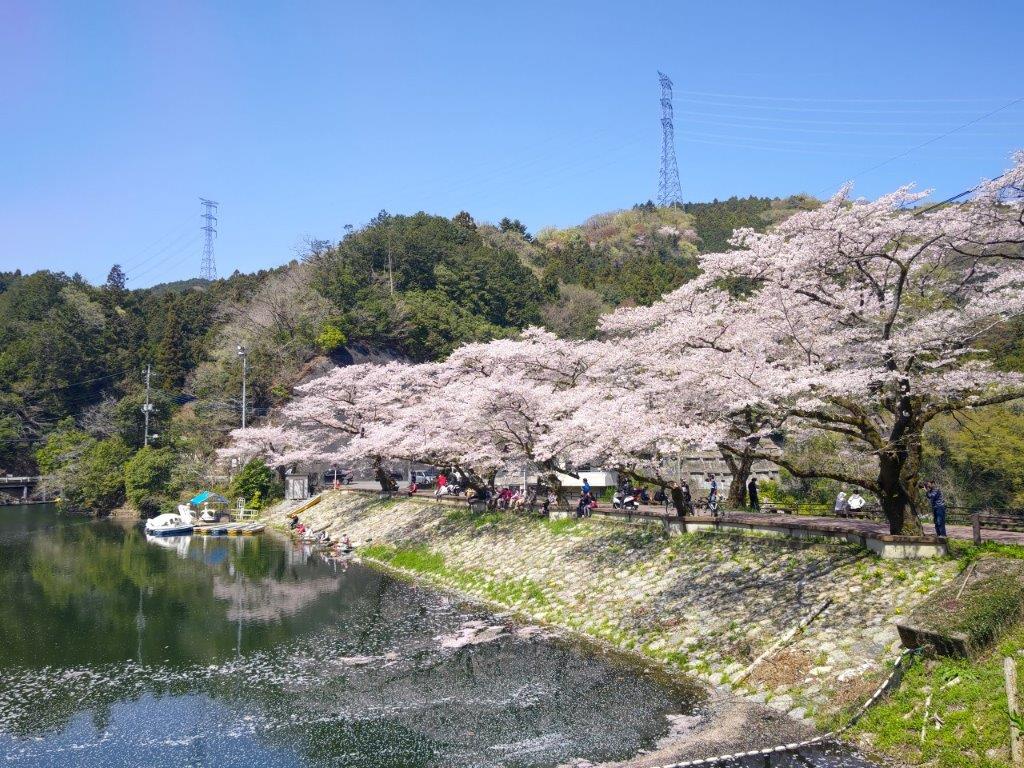
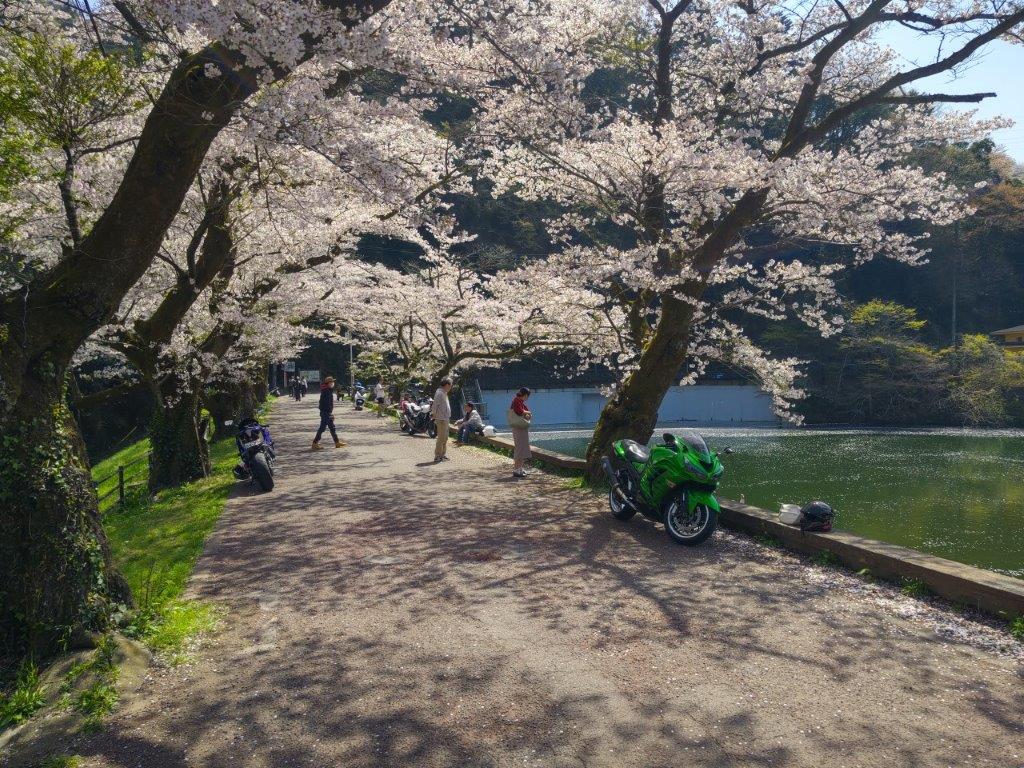
I wanted to do a hike close to Tokyo to enjoy the cherry blossoms in full bloom. I decided to go to Oku-musashi and climb Mt Monomi for a second time. The first time, I had done a roundtrip from Mt Hiwada; this time, I would do a traverse from Lake Kamakita to Musashi-Yokote Station. I could get to the start of the trail by taking the Tobu line to Higashi-Moro station, then walk to the Moro Town Hall, from where I could catch the “Moro Bus Yuzu-go 1” to the lake; for the return, I would use the Seibu-Chichibu line. Once again, the forecast called for sunny weather and comfortable temperatures, and so I was looking forward to a relaxing spring hike close to home.

Trail between Shukuya Waterfall and Mt Monomi

View from the top of Mt Sukari

I was greeted by a flurry of pink petals as I got off the yellow mini-bus at Kamakita Lake just after 11am. After enjoying the “sakura” trees in full bloom, I set off along the Shukuya-Kamakita Hiking Route (宿谷鎌北湖ハイキングコース), arriving at Shukuya Waterfall (宿谷の滝) around noon. I was impressed by the wild beauty of this river valley, especially since it was so close to Tokyo. I followed the river upstream, sunlight streaming through the treetops. I soon arrived at the Shukuya small waterfall (宿谷小滝), a local power spot. After charging up, I left the river behind, and continued up a steep ridgeline.

Cherry Blossoms next to Kamakita Lake

A secret cherry blossom spot close to Tokyo

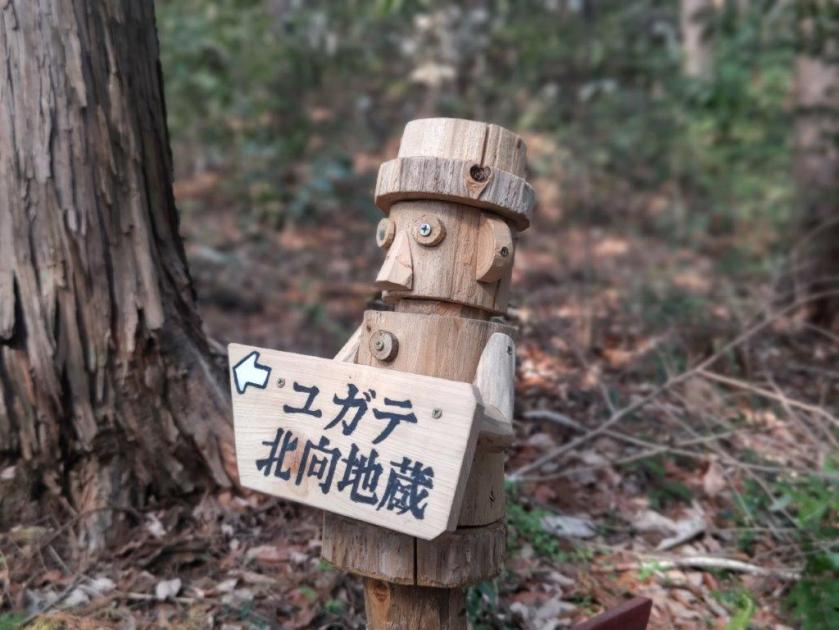
I had my first views of the day after reaching an area cleared of trees, near the top part of the ridge. At 1pm, after crossing a road, I arrived at the top of Mt Monomi (物見山 ものみやま monomi-yama), almost completely in the trees. After a short break, I turned right onto a wider trail through the cedars, and soon reached a crossroads at Kitamukijizo (北向地蔵), intersecting with my previous hike in the area. I continued along the Oku-Musashi Green Line for a while, before taking a trail on the right, passing the top of Mt Kannon-ga-take (観音ヶ岳 425m), and then arriving at the nearby summit of Mt Sukari (スカリ山 すかりやま) around 1h30.

Trail above Kamakita Lake (left) Shukuya Waterfall (right)

Hiking the Shukuya-Kamakita Lake Trail

The green hills of Oku-Musashi stretched away on the north side, and the Kanto Plain extended into the distance on the east side. Trees blocked the views in other directions, but provided some welcome shade as I sat down on a bench for a late lunch. Afterwards, I retraced my steps to Kitamukijizo and headed along a mostly level path for Musashi-Yokote station. At 2h30, I passed by the minor summit of Nishi-Omine (西大峰 390m), completely in the trees, and just before 3pm, reached the top of Mt Fukazawa (深沢山 ふかざわやま fukazawa-yama), its name meaning “deep stream”, although no water could be seen or heard.

Viewpoint along the way to Mt Monomi

View of the Kanto Plain from Mt Sukari

I had a view of some “yamazakura” or Mountain Cherry Trees in full bloom, growing on the forested summit, while taking a short break on a solitary bench. Since leaving the Green Line, I had seen no other hikers and was able to fully enjoy the peace and quiet of the surrounding forest. After a short steep descent, I passed by the minor summit Mt Suisho (水晶山 266m), also completely in the trees, and a little later, passed under a crossing of two electrical power lines, a modern kind of power spot.

Hiking near Nishi-Omine (left) Hiking near Mt Suisho (right)

Hiking near Mt Fukuzawa

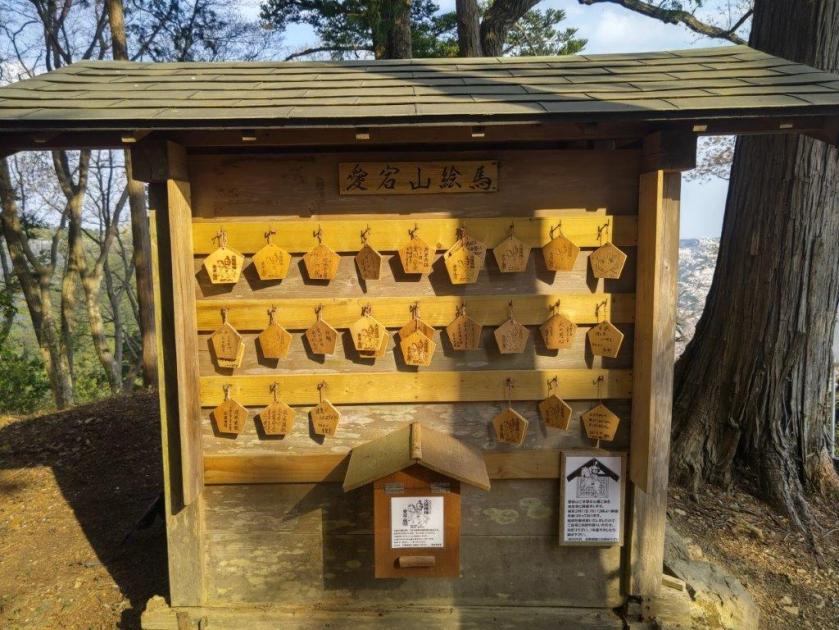
I was charmed by the many carved wood figures placed above the signs along this little known, but well-maintained trail. At 3h30, I reached the final summit of the day, Mt Atago (愛宕山 あたごやま atago-yama), also the location of a small shrine. However its most stunning aspect were the many cherry blossoms trees in full bloom on the valley side. Beyond, I could see Hanno City on the south side, and Mt Kamado across the valley on the west side. A couple of wood-carved binoculars supposedly allowed one to see the Tokyo Sky Tree and Mt Fuji, although today they were simply invisible.

View towards Hanno from Mt Atago

View of Mt Kamado from the summit of Mt Atago

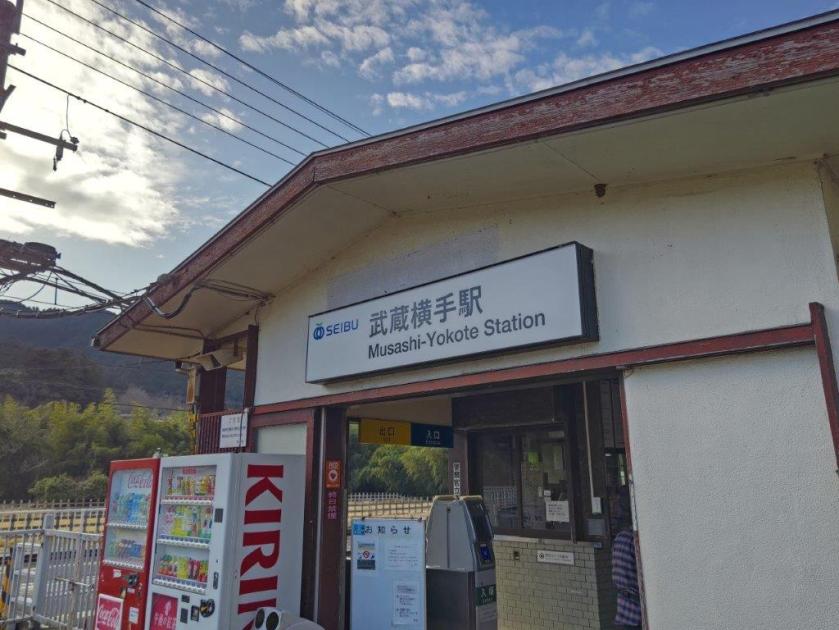
After one last look at the carvings, golden in the late afternoon sunlight, I headed downhill along a steep path through cedar forest. At 4pm, I reached Chonen-ji Temple (長念寺) at the base of the mountain and next to the busy Hanno-Chichibu road. After crossing Koma river, I took a shortcut along a back lane to Musashi-Yokote station; there I boarded the Seibu-Chichibu line for the short ride to Hanno station, where I transferred to the Laview limited express for the comfortable 40-minute ride back to Ikebukuro.

Afternoon light shining on the Mt Atago Shrine

Cherry blossom trees at the end of the hike

This hike took me about five hours, but could have been shortened by one hour if I had skipped the roundtrip to Mt Sukari. I was glad to have discovered a great trail next to the Koma valley, and that I was able to do it while the cherry blossoms were still at their best. Since it’s so close to Tokyo, I hope to be able to do redo it one day in the autumn.

See a Video of the Mt Monomi, Mt Sukari, Mt Fukazawa & Mt Atago Hike

See a slideshow of more pictures of the hike

Mt Izugatake (851m), Hanno City, Saitama Prefecture, Sunday, November 27, 2022

I had climbed this peak over ten years ago, starting at Shomaru station, passing by Nenogongen Tenryu-ji Temple and ending at Agano station. This time, I wanted to climb it again as a station to station hike on the north side, which would also include a section of the Kanto Fureai no Michi. I could also take advantage of the direct limited express to Nishi-Agano, the last one running during the autumn season.

View towards the Green line from above the Old Shomaru Pass

Doraemon’s “anywhere door”, near Shomaru station

It was a sunny autumn day as I rode the Seibu Laview from Ikebukuro. At Nishi-Agano, I transferred to the Seibu-Chichibu line for the one-station ride to Shomaru station. A little after 10 am, I set off on a paved road along a stream, and soon reached the start of the hiking trail under a massive, orange Japanese maple.

Hiking in the sun near Kame-iwa

Steps leading to Mt Gorin (left) Approaching Mt Kawagoshi (right)

I followed the narrow path as it wound up the mountain side through a dark cedar forest. Just after 11am, I passed Kame-iwa (かめ岩), now walking in the sun; soon after, I arrived at Mt Okura (大蔵山 720m), a minor peak surrounded by trees. Here, I turned left, following the ridge; after climbing some log steps, I reached the top of Mt Gorin (五輪山 770m, meaning 5 rings), also within the forest. A little beyond, I stopped at junction, below the summit of today’s mountain.

Autumn colours near the summit of Mt Izugatake

View of the Kanto plain from just below the summit

I chose the gently sloping right branch, skipping the steep, rocky path of the other approach; I had already done my first time up this peak. A little before noon, I reached the summit of Mt Izu (伊豆ヶ岳 いずがたけ izugatake). Through the trees on the east side, I could see the low hills of Oku-Musashi, and beyond the Kanto plain; on the west side, the snowy top of Mt Asama was visible in the distance. After a short break lunch, I went back the same way.

A trail marker for the Kanto Fureai no Michi

Easy walking along the ridgeline

I followed the gently undulating ridgeline, the bare forest surrendering occasional glimpses of forested hills. I was now walking on the well-maintained Kanto Fureai no Michi. At 1pm, I reached a teahouse at Shomaru Pass (正丸峠) where I had a view of the valley leading to Shomaru station. I crossed the road, rejoining the hiking trail, and passed an arbor, the surrounding view mostly blocked by the trees.

Hiking between the Shomaru and Old Shomaru passes

Steps leading to Mt Shomaru (left) Steps leading to the Old Shomaru pass

I continued on the relaxing, easy trail, the autumn sun now below the treetops; I passed the minor peaks of Mt Shomaru (正丸山 785m) and Mt Kawagoshi (川越山), and at the bottom of a long series of log steps, arrived at the Old Shomaru Pass (旧正丸峠), just before 2pm. Here, I turned right, leaving the Kanto Fureai no Michi, heading into the forest and down the mountain. After crossing a road, the trail ran alongside a small stream.

Last autumn colours of the season under a rocky outcrop

Approaching the end of the hiking trail

I passed by some trees in beautiful autumn colours, at the base of a rocky outcrop, probably the last time to see autumn leaves while hiking this year. At 3pm, I exited the forest and followed the road back to the nicely-designed Shomaru station, just a short distance away. There, I boarded the local train for the one-stop ride to Nishi-Agano and then transferred to the limited express for the one hour ride back to Ikebukuro.

See a video from the Mt Izugatake hike

Kanhashu Viewpoint (771m), Hanno City, Saitama Prefecture, Monday, June 13, 2022

I wanted to do a half-day hike near Tokyo to escape the early summer heat and humidity. Poor weather had prevented me from going as planned on the weekend but fortunately, an opportunity presented itself to go the Monday right after. I decided to visit a viewpoint in Oku-Musashi, which I had last visited about ten years ago. I could take the limited express “Laview” train to Nishi-Agano station; it made a special stop there during spring and autumn. After reaching the highest point, I could descend via a different trail to “Kyuka Mura”, where I could enjoy a hot spring bath; day trippers were only allowed on weekdays, so it was a good chance to drop by. Afterwards, I could use their free shuttle bus to get to Agano station on the Seibu-Chichibu line. The weather was supposed to be cloudy and cool in the early morning, turning sunny and warm in the mid-morning. I hoped that I could reach the top before it got too hot, and was looking forward to revisiting a favorite spot after several years.

Good visibility from the Kanhashu Viewpoint

Looking East towards the Kanto Plain

I was slightly disappointed to see that the sky was still completely overcast after arriving at the tiny Nishi-Agano station around 8h30. I walked a short way along the road to the trail entrance and surprised a black and white cat sitting in the tall grass nearby; it escaped into the forest before I could say “hi”. I followed the wide path, labeled as the “Panorama Route” on my map, up a green valley alongside a tiny brook.

An easy path to start the hike with

Although it was called the Panorama route, there were few views

At 9am, I reached an open space offering a view of the forested valley and neighbouring hills. The path narrowed and after a couple of switchbacks up a shoulder of the mountain side, entered the forest and started to climb more steeply; half an hour later, it merged with another path coming from the left and became level. I found this part of the hike very pleasant, as sunshine was now filtering through the trees and the birds had started to sing.

Mt Fuji, barely visible from Takayama

Out of the forest and through the flowers

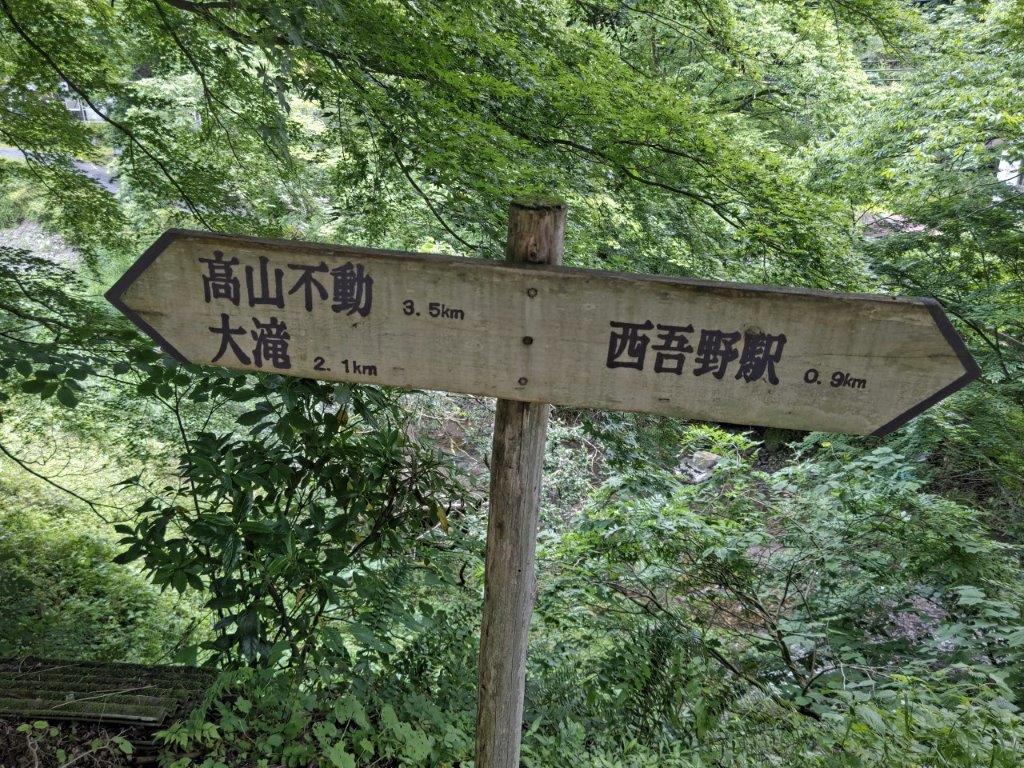
At 10am, I reached a road with a viewpoint and was excited to spot Mt Fuji in the distance. After admiring its still snowy cap, I picked up the next part of the path less than a hundred meters away, opposite a signpost for Takayama (高山), a place I would return to later; I was now on the well-trodden Kanto Fureai no Michi. After crossing the road a second time, the trail finally emerged from the forest and passed through some Kalmia bushes (カルミア) covered in white flowers.

View south towards Okutama, and lost in the clouds, Tanzawa

The Musashi hills fading into Musashi

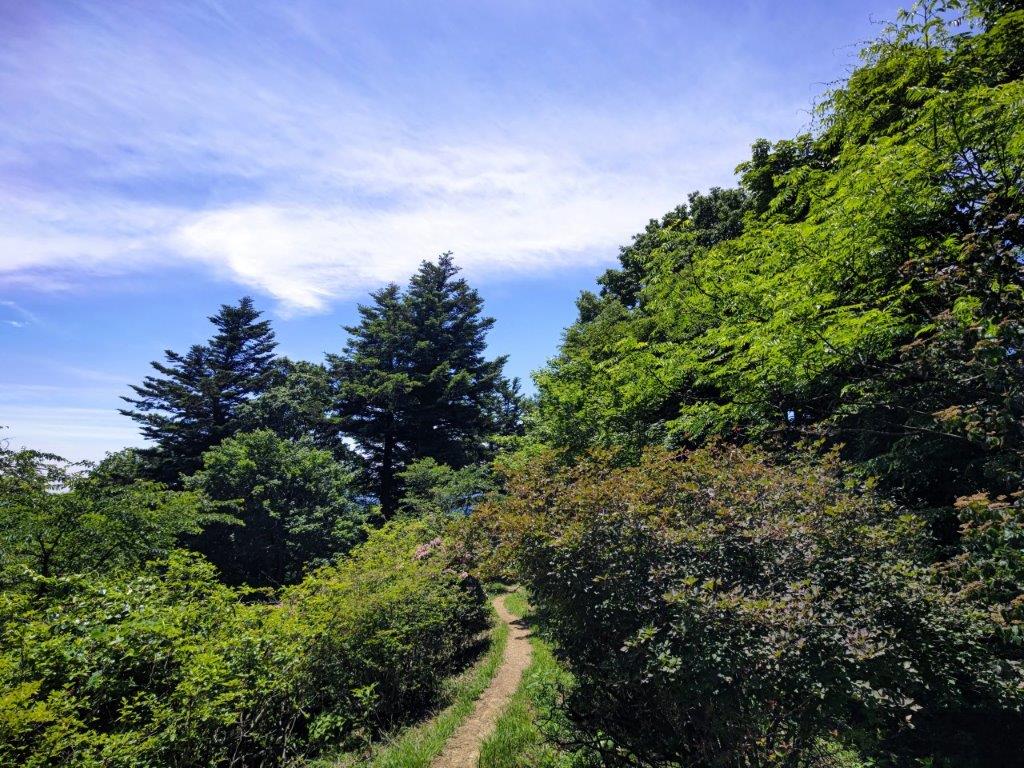
I hoped this was the last climb of the day as the sun was shining directly above and it was starting to feel quite warm. At 10h30, I was relieved to reach the Kanhashu viewpoint (関八州見晴台 かんはっしゅうみはらしだい kanhasshuu-miharashidai), which translates as the Kanto 8 provinces lookout and refers to its historical role. There was an open shelter and a number of trees providing some welcome shade. I took a break on a bench to enjoy the view and a late breakfast.

A better view of Mt Fuji from the highest point of the hike

One of the few paths with a view in Oku-Musashi

The view was better than I had remembered: to the west, the Oku-musashi hills melted into the Kanto plain; to the south, they merged with the Okutama mountains; Mt Fuji was visible behind the long flat summit of Mt Bonomine; closer by were the Hanno Alps on the other side of the Agano valley; supposedly, Mt Akagi and the peaks of Oku-Nikko could be seen on the north side, but today they were lost in the haze. At 11h30, I made my way back to Takayama and Takayama-Fudoson Temple (高山不動尊), just off the main road.

View of Oku-Musashi between Takayama and the Takayama-Fudoson Temple

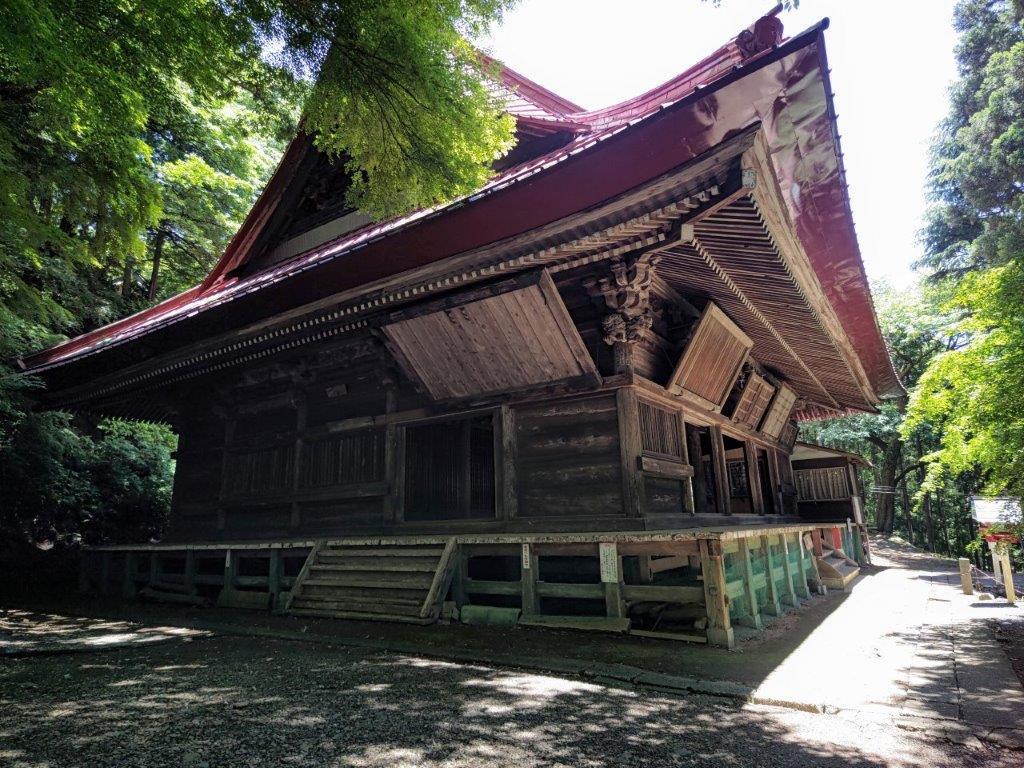
The main building of Takayama-Fudoson Temple

I was astounded to see such a magnificent structure in the middle of the forest; it’s these kind of moments that make hiking in Japan so rewarding. I returned to the road and soon rejoined the hiking trail again, leading back into the forest. After a few minutes, I reached a junction where I turned right. The path was pleasantly level for a while, but then proceeded to rush straight down the mountain, ending at a lovely stream.

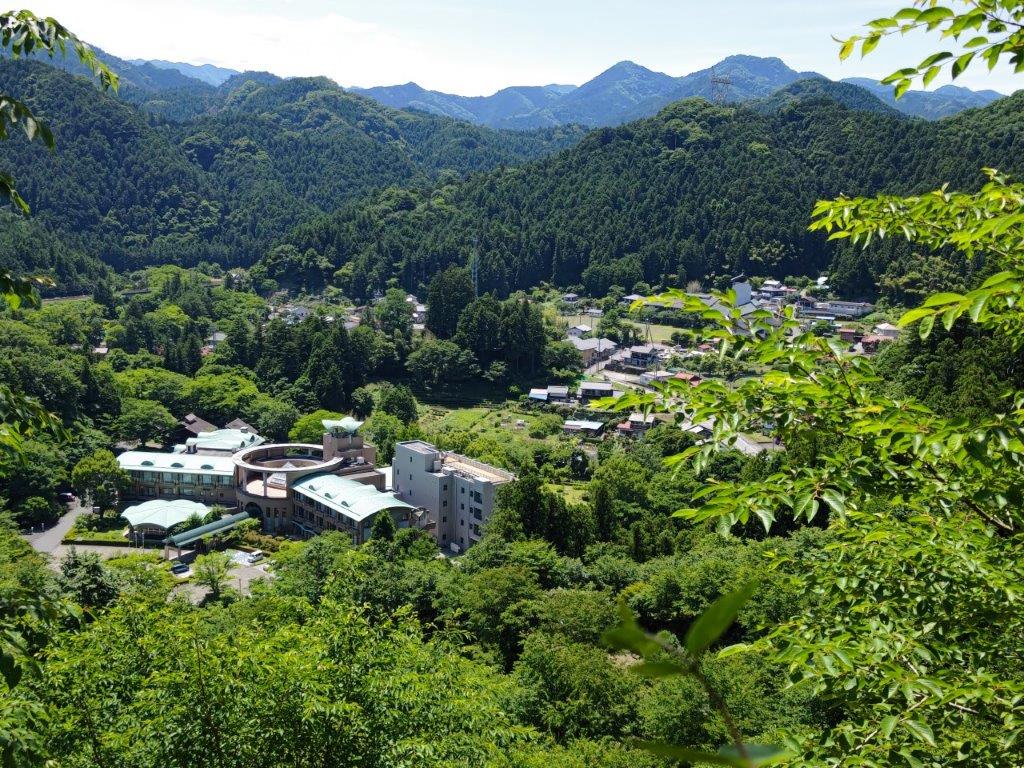
A glimpse of “Holiday Village” (on the left)

Crossing the Koma river

After crossing a rickety bridge, I emerged into a narrow, sunny valley at around 12h30. I noticed a small house on the right, meaning I was getting near the end of today’s walk. However, it took another half hour of small ups and downs, a couple more bridges and road crossings, to finally arrive at Kyuka Mura Hot Spring (休暇村 meaning Holiday Village), nestled in a bend of the Koma river. After an enjoyable hot bath, I hopped on the shuttle bus for Agano, where I boarded the local line to Hanno and then transferred to the limited express for the forty-minute ride back to Tokyo.

See the views from the Kanhashu viewpoint (in 4K)

Mt Otakatori (376m), Ogose Town, Saitama Prefecture, Sunday, May 22, 2022 [with 4K video]

I wanted to do a late afternoon hike close to Tokyo since the weather had suddenly become quite warm; I also wanted to try out the camera of my new smartphone. I chose a relatively low mountain I had climbed six years ago, which I could redo using different trails. I would take a train to Ogose in the early afternoon, have a soba lunch near the station, and finish the hike at a hot spring facility, newly opened since my previous visit; afterwards, I could use the onsen shuttle bus to return to Ogose. The weather was supposed to be sunny in the daytime and overcast in the evening. I was looking forward to doing another hike in the forests on the eastern edge of Oku-Musashi.

View from the top of Mt Otakatori

View form Nishiyama-Takatori

I arrived at Ogose station at 2pm, the hottest time of the day, and quickly made my way to Yoshiro (よしひろ), which I reached just at the end of the lunch time. After a satisfying soba meal, I walked another 15 minutes to the start of the trail inside the Go-Daison Azalea Park (五大尊つつじ公園). The flowering season was already over and the park was deserted. I found a small path through the forest, not on my map, but which led to a viewpoint of Ogose Town at the Tomb of the Unknown Soldier of the World (世界無名戦士之墓), on the 2nd floor of a gleaming white monument.

Path to the tomb of the unknown soldier of the world

View from the monument of the unknown soldier

I had an excellent view of the Kanto plain thanks to the clear May weather, despite being less than 200 meters high. Behind the monument was the start of the trail up today’s mountain. It was about 4pm and the temperature was just right for some light hiking. After a short climb, I arrived at Nishiyama-Takatori (西山高取 271m), not a summit, but a shoulder on the mountain with a view east through the trees. It was also the intersection of several paths; after checking my map, I went south down some steps, before turning right at a T-junction.

Steps leading down from Nishiyama-Takatori

A trail mostly through the forest

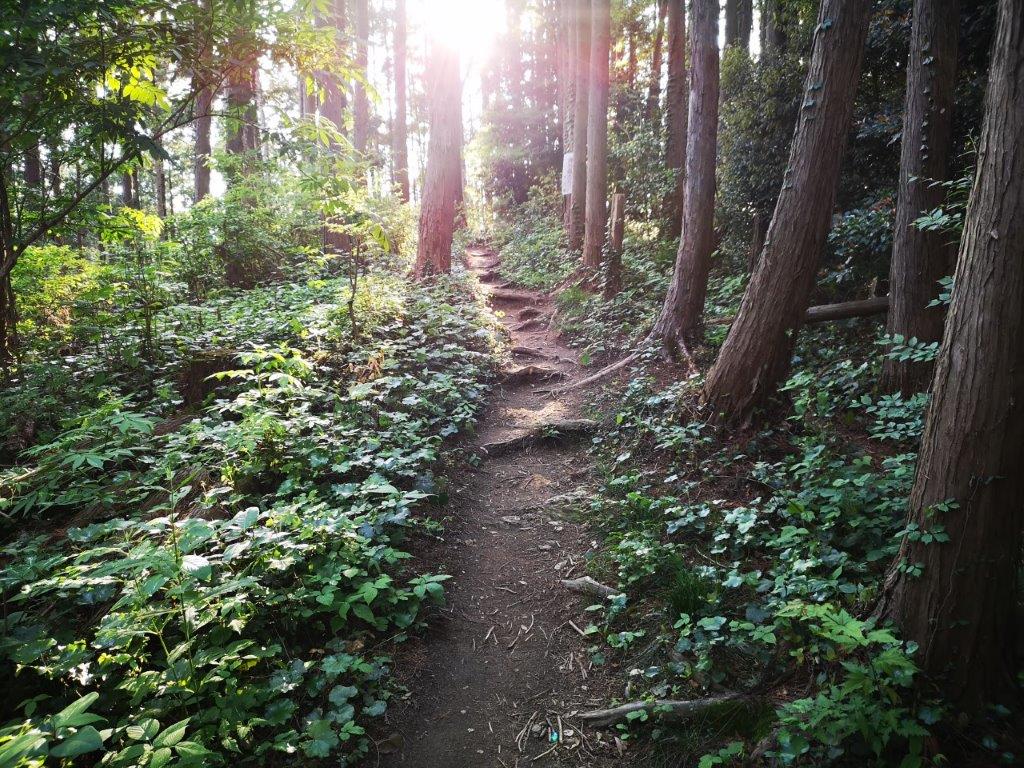
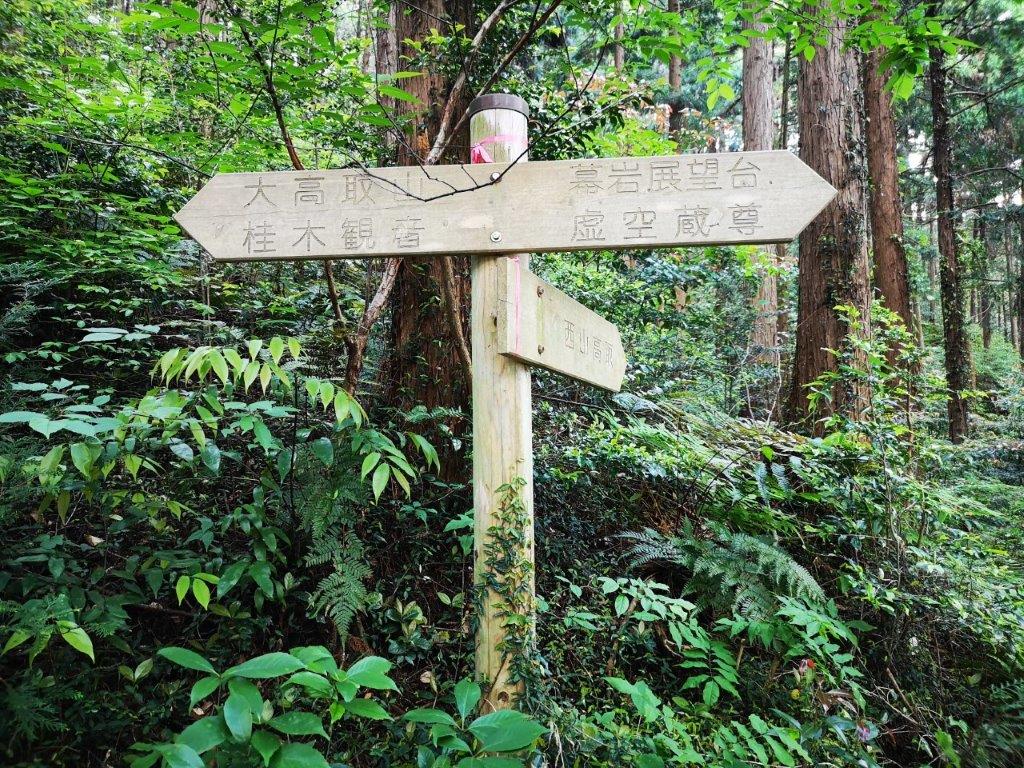
I followed a pleasant level path through the green forest, stopping now and then to listen the sound of birds singing. I passed a group of white limestone rocks (白石様 shiraishi-sama) and a minor summit named Mt Nekko (根っ子山 324m), both completely in the trees. Around 5pm, I started to climb again, and after reaching a forested ridgeline, turned left. A few minutes later I was on the top of Mt Otakatori (大高取山 おおたかとりやま ootakatoriyama), where I had a view eastwards through a break in the trees. After a short break, I continued south along the summit ridge, reaching another minor peak, Mt Katsuragi (桂木山 367m) just before 5h30.

An easy to walk trail

Late afternoon on Mt Otakatori

The gloom was starting to gather, so I took the next path down, a shortcut according to a handwritten sign. I had passed some hikers earlier, but now I was all alone, except for a large animal I heard but never saw. The path became level and easy to walk, luckily, since visibility was dropping fast. Around 6pm, I passed another viewpoint on top of a hill, but not much to see under the grey clouds. A few minutes later I emerged onto a road inside O-Park Ogose ( オーパークおごせ). After a quick hot bath, I boarded the free shuttle bus for Ogose station where I caught the Tobu line for the one hour ride back to Ikebukuro.

See the green and hear the birds of Mt Otakatori in 4K

Kaburi Pass (508m) and Amagoi Hill (574m), Hanno City, Saitama Prefecture, Sunday, May 15, 2022

I wanted to hike in the hills close to Tokyo to enjoy the the new green of Spring. I had already done most of the trails in the Oku-Musashi area, but looking at my hiking map, I found two interesting trails I hadn’t done yet; between them, was a trail I had done more than ten years ago in the autumn, which I was happy to do again in a different season. I would take a train to Moroyama and from there a taxi to Kamakita lake; I would end at Kuroyama, from where I could catch a bus back to Ogose. Since the travel time was relatively short, I wouldn’t have to leave at the crack of dawn. Although there were no summits on the way, I hoped to get some good views from the “Green Road”. The weather was supposed to be mostly clear with pleasant temperatures. I was looking forward to exploring some new trails and enjoying a relaxing Spring hike.

View of the Hanno Alps from Kaburi Pass

Spider taking a break on an Iris

I rode the Tobu line under cloudy skies and arrived at Moroyama station a little past 10am. Since the bus to Kamakita lake wasn’t running on Sundays, I took a taxi instead and was ready to hike by 11am, just as the sun was coming out of the clouds. I was surprised at how much greener everything looked since my previous visit one month ago; rather than cherry blossoms, I got to enjoy many Irises (“shaga“) on the side of the road.

The sun breaking through the clouds

A pleasant path up to the “Green Line”

At a bend in the road, I spotted the trail entrance past a stream running through grassy area dotted with irises. I followed an easy to walk path through the forest, enjoying the sound of birds singing and reached a junction with a ridge trail running parallel to the Oku-Musashi Green Line (奥武蔵グリーンライン) just after 12h30. From there, I followed a mostly level road to Kaburi Pass (顔振峠) where I had a good view of the Hanno Alps on the other side of the valley.

An easy to walk trail through the forest

Hazy view of the Kanto plain from Amagoi Hill

I followed a small trail above the pass to a viewpoint of the Kanto plain on the east side; it was also the summit of Amagoi Hill (雨乞い塚 あまごいづか amagoizuka). It was 1h3o, so I sat down on a tree stump for a late lunch. The sun had gone back into the clouds and the view was hazy. I was the only person there and it was very peaceful. At 2pm, I continued my hike and walked along the road, past Kanto Adventures, to the start of the descent towards Kuroyama. Halfway down, I passed the eerie statue of En no Gyoja at the top of some rocks in a clearing. A little further, I spotted some deer escaping into the forest.

“En no Gyoja” statue on the way to Kuroyama waterfall

A small waterfall, not part of the Kuroyama 3 waterfalls

Shortly after 3h15, I reached a stream at the base of the mountain; it led me to the 3 waterfalls of Kuroyama (黒山三滝), Tengu-Taki (天狗滝), Medaki (女滝) and Odaki (男滝), from where it was a short walk down the road to the bus stop. On the way back, I stopped off at the Ume no Yu hot spring for a refreshing bath, and then caught then next (and last) bus for the short ride to Ogose station, from where it was a one hour ride on the Tobu line to Ikebukuro.

See the flowers and hear the birdsong on the Amagoi hill hike

Mt Buko (1304m), Yokoze Town, Saitama Prefecture, Saturday, March 5, 2022 [MAP AVAILABLE]

I had climbed Mt Buko over ten years ago on a hazy June day and wanted to do it again on a clearer day. This time, I would take a taxi from Seibu-Chichibu station to the trail entrance and make a loop; this way, I could shorten the hiking time, because I needed to walk over an hour to Yokoze station at the end. Although the forecast for the next day was sunny and warm, I knew some snow and ice would be left above 1000m, so I packed my light crampons just in case. I was looking forward to revisiting this mountain and getting some great views of Chichibu from the summit.

Get a Map of the Mt Buko Hike

This map was developed for Japanwilds with the Hokkaido Cartographer

Find Japan Hiking Maps on Japanwilds

Mt Buko, taken on my 2009 hike

View from the top observatory

It felt like early spring as I stepped off the Laview Limited Express at Seibu-Chichibu station. After buying some supplies, I hopped into a taxi for short ride to “ichi-no-torii” (一ノ鳥居). By 11am, I was walking up a steep paved road next to a river; I remembered this as the toughest part of my 2009 hike. Many people were already coming down, having enjoyed the early morning view. I soon reached some log steps marking the start of the trail. I passed several interesting sights on the way: the partially frozen “fudo-taki” waterfall (“fudo” means motionless); a delicate wooden bridge for only one person at a time; a pile of white limestone rocks taken from the summit; a giant cedar tree, its crown too high to see. I was walking alone through the forest and was stunned by the silence, since the other side is forever noisy because of the mining.

Some snow on the way up (left) and down (right)

Chichibu city stretching from south to north

At noon, I was treading on snow. Fortunately, the slope never became steep enough to justify putting on crampons. The long log staircase from my previous climb had disappeared, replaced by a switchback path. Half an hour later I reached the summit shrine, bathed in sun and surrounded by trees. I made my way to the observatory on the north side, a little higher up, and the official summit of Mt Buko (武甲山 ぶこうさん bukou-san), a two-hundred famous mountain of Japan. I was almost by myself, which was lucky since the top area was narrower than I had remembered. It hadn’t rained for a while so the sky wasn’t as clear as I had hoped, but I had a good view of the Minano Alps, Mt Mino, Mt Ogiri, Mt Dodaira and Mt Maru.

Looking back at the sunny descent to Shirajikubo

Back into the sun and out of the snow

I was most impressed by the bird’s-eye view of Chichibu city, stretching south to north along the Arakawa river. It was 12h30 so I had lunch standing up, since I couldn’t find a spot to sit. At 1pm, I headed back to the shrine and down a steep trail on the south side; I was relived it was in the sun and snow-free. Pine trees on both sides made it feel like a different mountain. I soon arrived at Shirajikubo (シラジクボ), the start of the climb up Mt Komochi. Here, I turned left onto a trail hugging the east slope. It was in the shade and covered by snow, but since it was mostly level, crampons weren’t needed. I had fun walking in the snow for a while; soon I was back in the sun and walking on solid ground. After an hour of descending through the forest, I was back at the “torii“, the shinto gate at the mountain base. As I walked to the station, I passed several impressive factory buildings, working hard on a Saturday. At a little past 4pm, I boarded the limited express for the 80 minute ride back to Tokyo.

Enjoy the bird’s-eye view from the top of Mt Buko