The Tokyo Wide Pass – Why use it?

The JR Tokyo wide pass is arguably the best deal for hikers living in the Tokyo area. Unless you don’t mind shelling out a small fortune to ride the shinkansen or spending more time travelling to and from your destination than hiking there, the majority of your hikes will be limited to the Okutama, Tanzawa and Chichibu areas. That in itself is not such a bad thing – there are dozens and dozens  of excellent hikes in those areas and if you are just starting out you may not feel the urge to travel much further. However if you’ve been in Tokyo for several years and are yearning for something new, this pass will put dozens of new hikes in Gunma, Tochigi and even Niigata within striking distance.

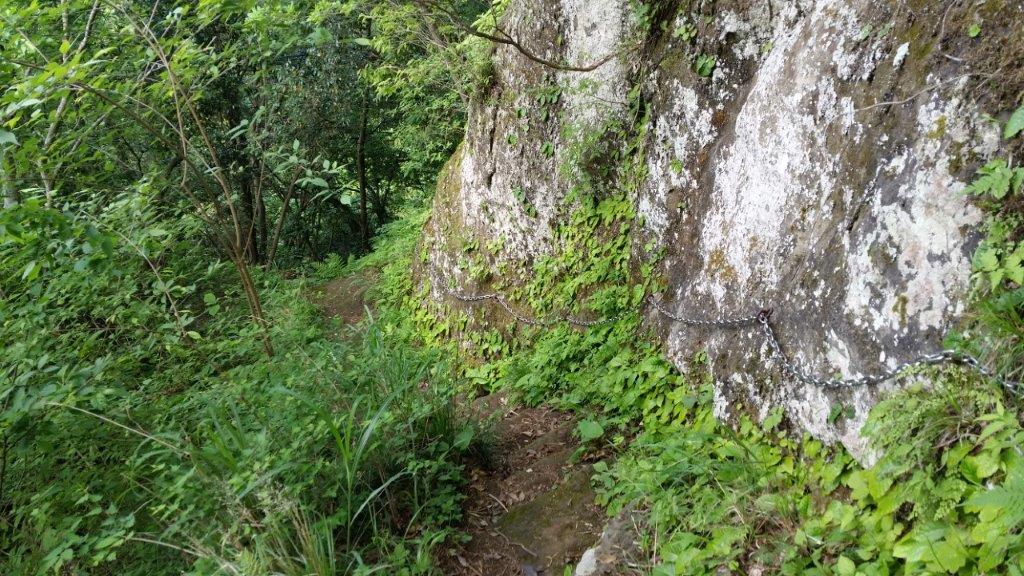
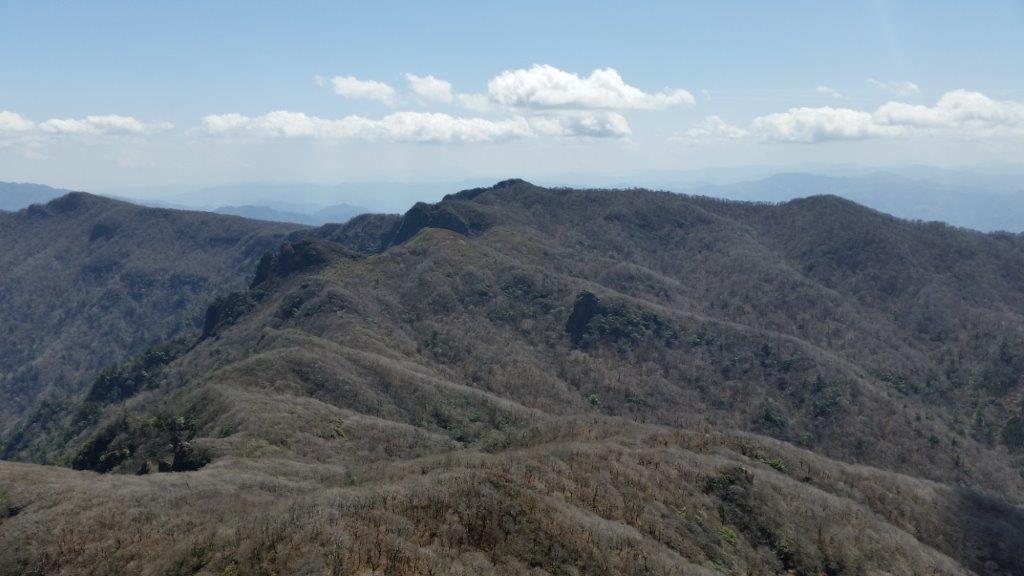
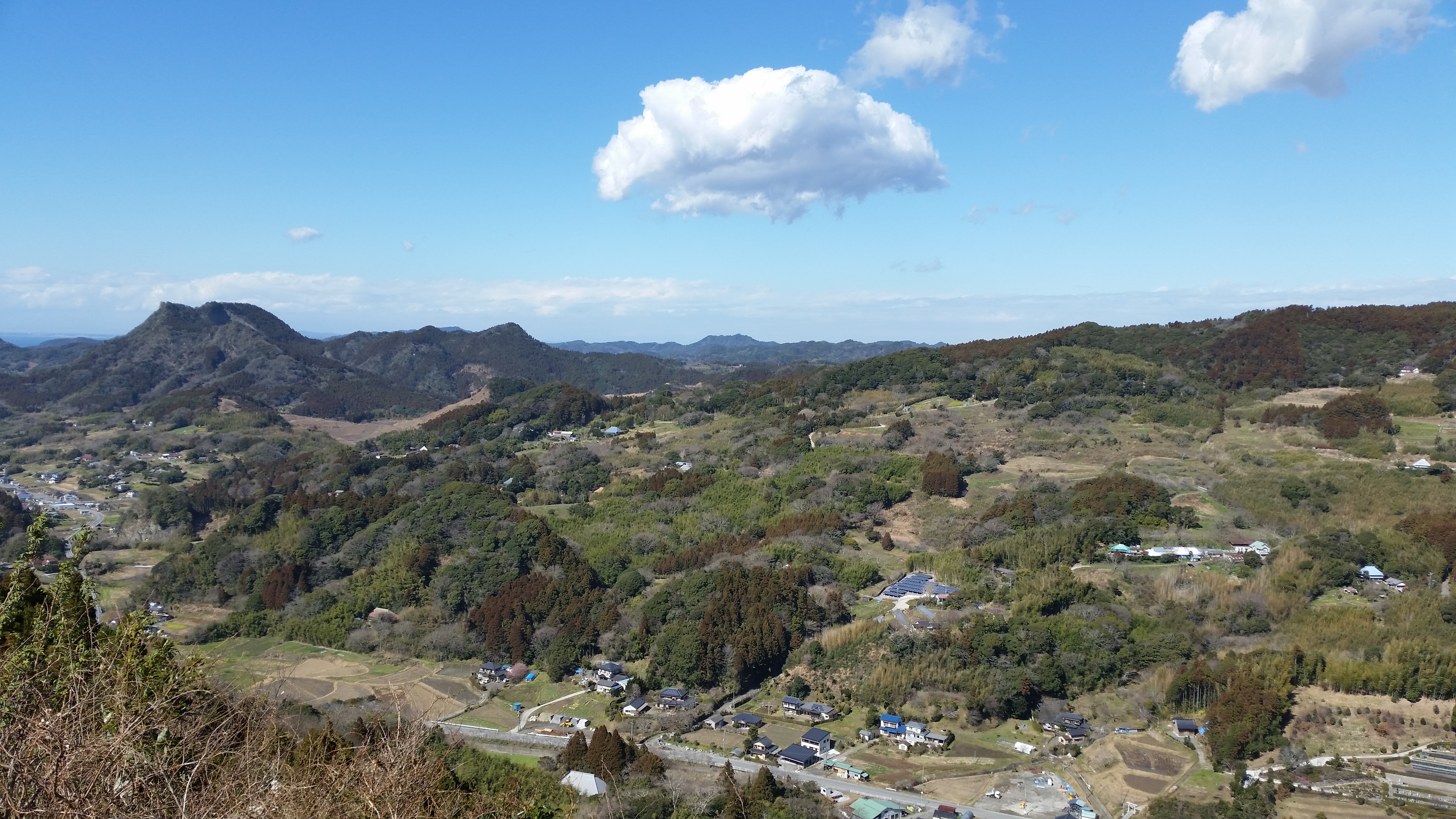
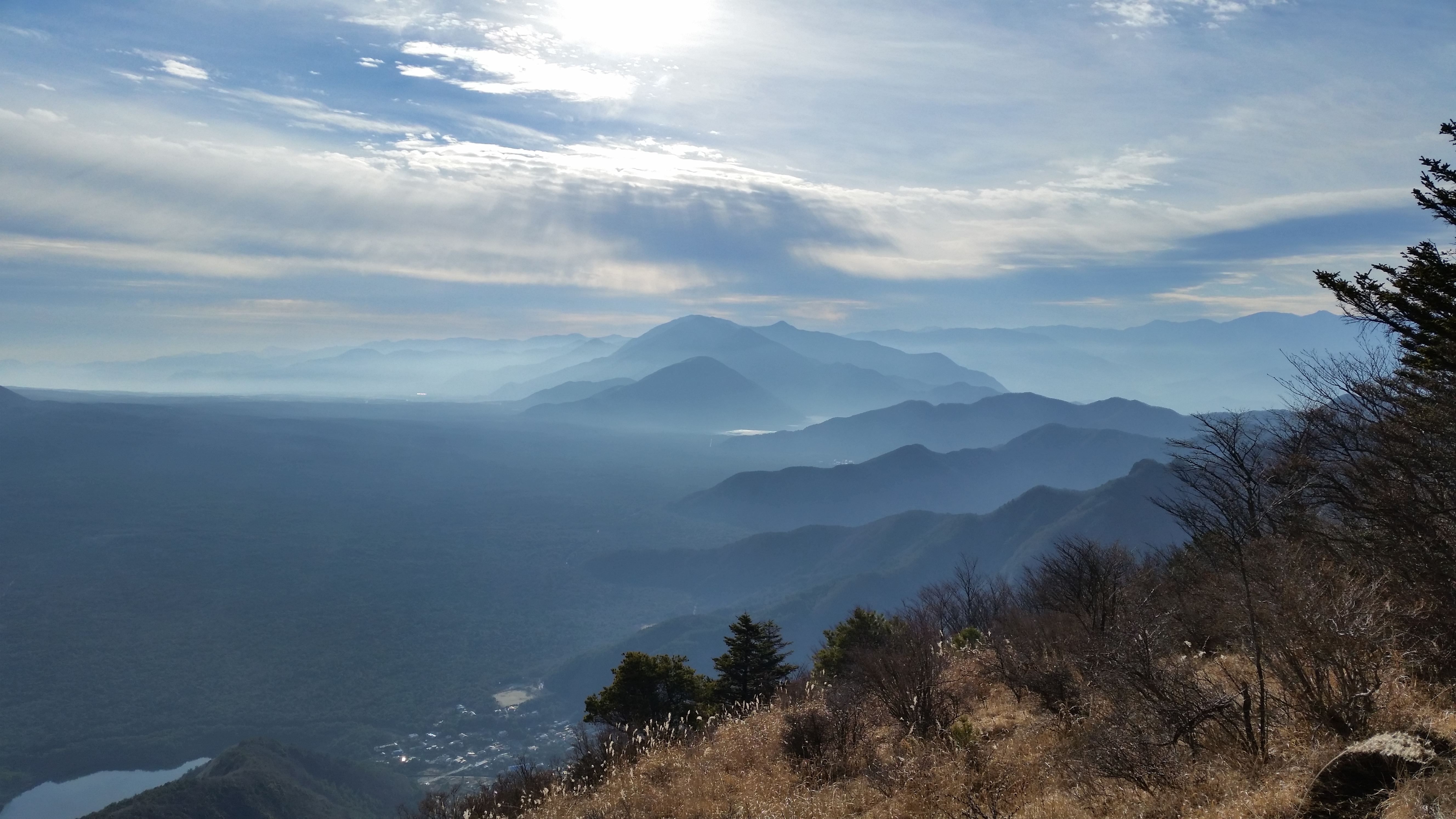
View of Haruna lake - one example of a destination that can be reached as a daytrip using the Tokyo wide pass.
View of Haruna lake – one example of a destination that can be reached as a daytrip using the Tokyo wide pass.


BACKGROUND

The pass, first introduced in 2014, was originally called the Kanto 3 day pass and cost 8300 yen. However in December 2015 it was renamed the JR Tokyo wide pass and the price was increased to 10000 yen (a nice round figure for once) but now includes the Echigo-Yuzawa shinkansen station which gives access to multiple Niigata hikes – definitely worth the extra 1300 yen (also good for skiing in the winter).

THE PROS

You can get all the details on the pass on the website but the main attraction for hikers is  3 consecutive days of unlimited use of the shinkansen in the Kanto area. Even non-Japanese residing in in Japan can purchase it, unlike the JR Pass which is for tourists only – don’t forget to bring your passport when buying it. Japanese citizens can’t buy the pass (even if they live abroad) so unfortunately there is no affordable way for Japanese friends / family members to join you on this high-speed train binge. On the plus side, it includes reserved seating, a perk that won’t go unappreciated by tired hikers on the return leg. 

The original intent of the pass is the promotion of tourism in the Kanto area by having people go out there for 2 or 3-day trips using a variety of train lines. However I recommend hikers use it for two or three 1-day trips using the shinkansen every time – it is such a great deal that even if you only use it for 2 days you will be getting your money’s worth. Using other trains even limited express doesn’t really make sense in terms of time, money, comfort and convenience.  For example, a shinkansen round-trip from Tokyo to Karuizawa  costs about 10000 yen which is the cost of the pass so two 1-day trips is equivalent to a 50% discount and if you get lucky with the weather and can go all 3 days, you would only pay one third of the price – I’ve done this more than once. 

THE CONS

As much as I love the pass and rave about it to friends and acquaintances on every occasion there are a few points for improvement. First, the Tokaido line isn’t included. I hope they can make a deal with JR West since it’s only one hour away from Tokyo and there is a lot of great hiking in Shizuoka – Izu peninsula, Gotemba area near Mt Fuji, Minami Alps. The pass includes Shimoda at the tip of the Izu peninsula in Shizuoka  and also includes a ride on a private railway company to get you there so it wouldn’t be anything radical.

Next, buses aren’t included which is a shame since a lot of popular tourist destinations (such as Ikaho and Kusatsu hot springs) require a bus connection. A round-trip bus ride can tag on about 2000 to 4000 yen onto the total price. Since some buses are operated by JR that shouldn’t be a stretch. Finally you have to choose the start date when purchasing the pass. Since hiking is weather dependent I often buy the pass at the very last minute (the day before since the most sales locations don’t open till 10am) in order to get the latest weather forecast. If you can’t go on the chosen date for whatever reason (typhoon, sudden illness) you can’t get your money back.

Overall, I believe that the pros far outweigh the cons and in the next post I’ll give some suggestions on where to hike using the Tokyo wide pass.
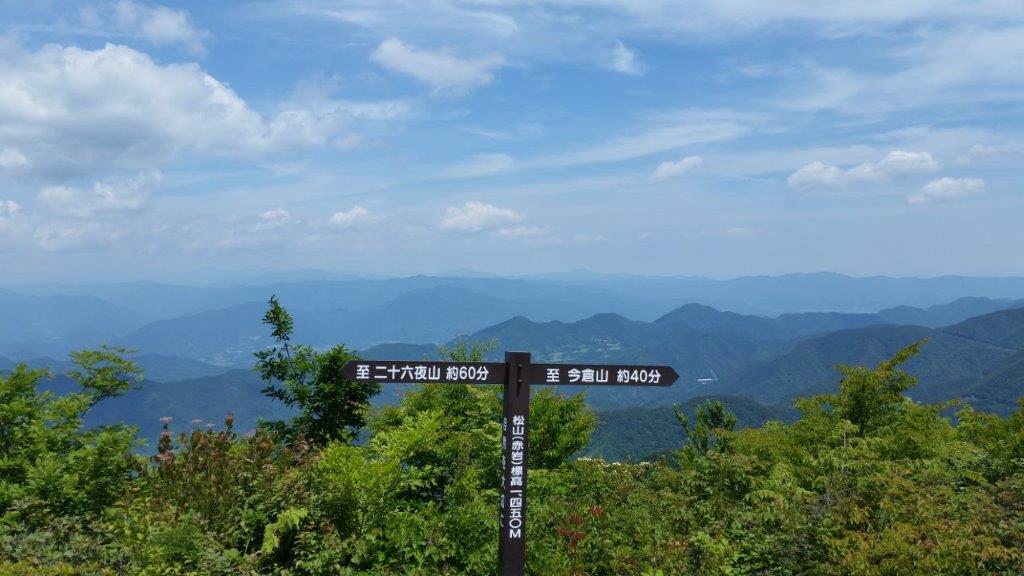
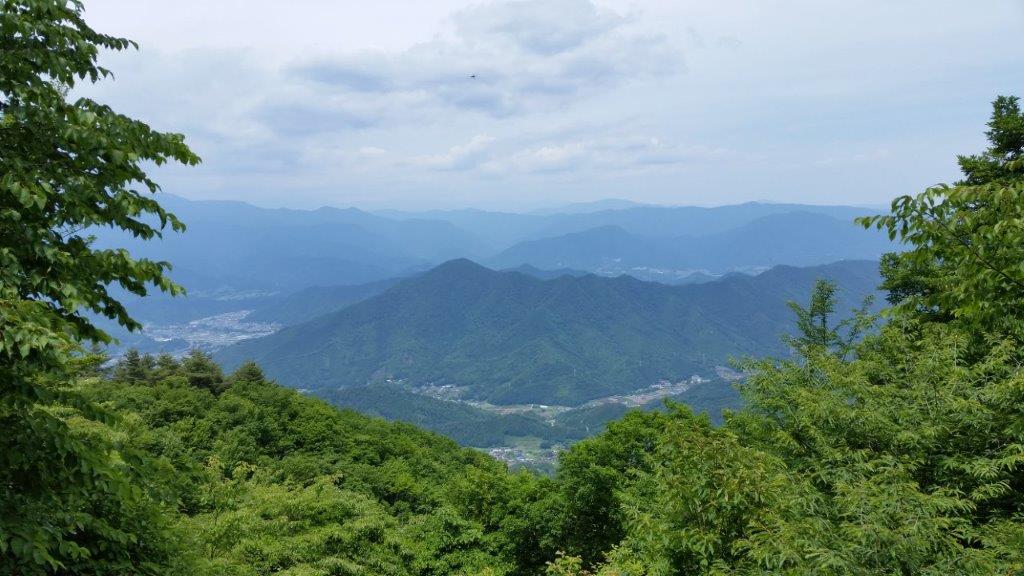
Mt Imakura (1470m) & Mt Nijurokuya (1297m), Tsuru City, Yamanashi Prefecture, Saturday, June 11, 2016

Although the rainy season had already started, the weather stayed good all day. I took a bus from Tsurushi station on the Fujikyu line, all the way to the Michizaka Zuido Iriguchi bus stop. From there, it was a steep but short climb to the top of Mt Imakura (今倉山), completely surrounded by trees, although I had some glimpses of Mt Fuji on the way up. I then headed west along the ridgeline, descending steeply at first.

The hike ends in the Valley below

There were some great views of Mt Fuji and the surrounding mountains from Akaiwa (赤岩) and Mt Nijurokuya (二十六や山). After that last peak, the path curved to the north. I headed downhill first through forest, then through pleasant countryside, finally arriving at Tsuki-machi no Yu hot spring. After a refreshing soak in the outdoor bath, I made my way to the nearby basho-tsukimachinoyu bus stop for the short ride back to Tsurushi station.

A good hike for “fuji spotting” – Mt Shakushi is on the right

Mt Takago (330m), Kimitsu City, Chiba Prefecture, Sunday, May 15, 2016 [Map Available]

Hiking on the Boso Peninsula 房総半島

Hiking along the Kanto Fureai no Michi 関東ふれあいの道

Get a map of the Mt Takago hike

This map was developed for Japanwilds with the Hokkaido Cartographer

Find more Japan hiking maps on Avenza

View of Mt Takago from Mt Ishiitaro

A hike on a hidden mountain in the middle of the Boso peninsula, I even had trouble finding it again on the map while writing this post. This time, I took a bus from Kisarazu station, then hiked along a small road, through a hamlet with many cats, and finally reached the start of the trail: log steps heading up the side of the hill. At the top, I admired the views of Mt Kano to the North, before continuing southwards. The views of central Chiba aren’t really all that amazing, but I find the sight of green rolling hills in all directions very impressive.

Rock Tunnel near the Takago Kannon

Walking the Hachirozuka Trail

It was a fairly easy hike with occasional views; the rocky top of Mt Takago (高宕山 たかごやま takagoyama), a Kanto 100 famous mountain, is the highest point in the area, with a sea of trees spreading in nearly every direction. At one point, hungry for more views, I extended the hike by doing a short there and back along a lonely ridge. After returning to the main trail, I made my way down, running and walking since it was getting late, and ended up at a bus stop in the middle of the countryside, not far from Lake Mishima, after a very satisfying seven-hour hike.

View from the Gunkai Ridge Trail

Watch a Video of the Mt Takago Hike

Watch the Video of the Hike on Youtube

Mt Sobo (1756m), Kumamoto, Oita & Miyazaki Prefectures, April 2016 [Map Available]

Hiking the hundred famous mountains of Japan 日本百名山

Hiking on Kyushu Island 九州

祖母山 (そぼさん sobosan)

View of the summit from near Kunimi Pass

Get a Map of the Mt Sobo Hike

This map was developed for Japanwilds with the Hokkaido Cartographer

Find more Japan Hiking Maps on Avenza

See a view of the Mt Sobo hike

Mt Goten (364m), Mt Takatori (364m) & Mt Dainichi (333m), Minamiboso City, Chiba Prefecture

This is a good hike to do in the winter since Chiba usually gets less snow and the temperatures are milder. It’s also relatively short so it can be combined with another mountain in the area, like Mt Tomi. I’d recommend using a car for this hike since there is no suitable bus to the trailhead. There is also a convenient parking lot near the start of the trail, in front of Koshoji Temple 高照寺.

20160221_115718

First views of Minamiboso at the start of the hike

It takes about an hour to get to the top of  Mt Goten 御殿山. Following the ridgeline, the trail goes past Mt Takatori 鷹取山, and ends at Mt Dainichi 大日山 one hour away. Although the trail is mostly through the forest, there are good views of Mt Tomi and Tokyo Bay from each peak. One might even see Mt Fuji on a very clear day.  Although the path continues Southwards down to a road, there is no public transport, so the return is back the same way. It should take a little less than 2 hours to get back to the parking area along the up and down trail.

null

View West towards double-peaked Mt Tomi


Mt Ou (1623m) & Mt Oni (1738m), Fuji-kawaguchiko City, Yamanashi Prefecture


If you want to have spectacular views of Mt Fuji, I recommend hiking the peaks surrounding Japan’s most famous volcano in December or January, when the weather is clear, and the most mountains are still snow-free. Considering the time and effort it takes to get to the area, it would be a shame to miss out on the spectacular views, which are some of the best in Japan.

20160103_141740

Ridgewalking involves some ups and downs

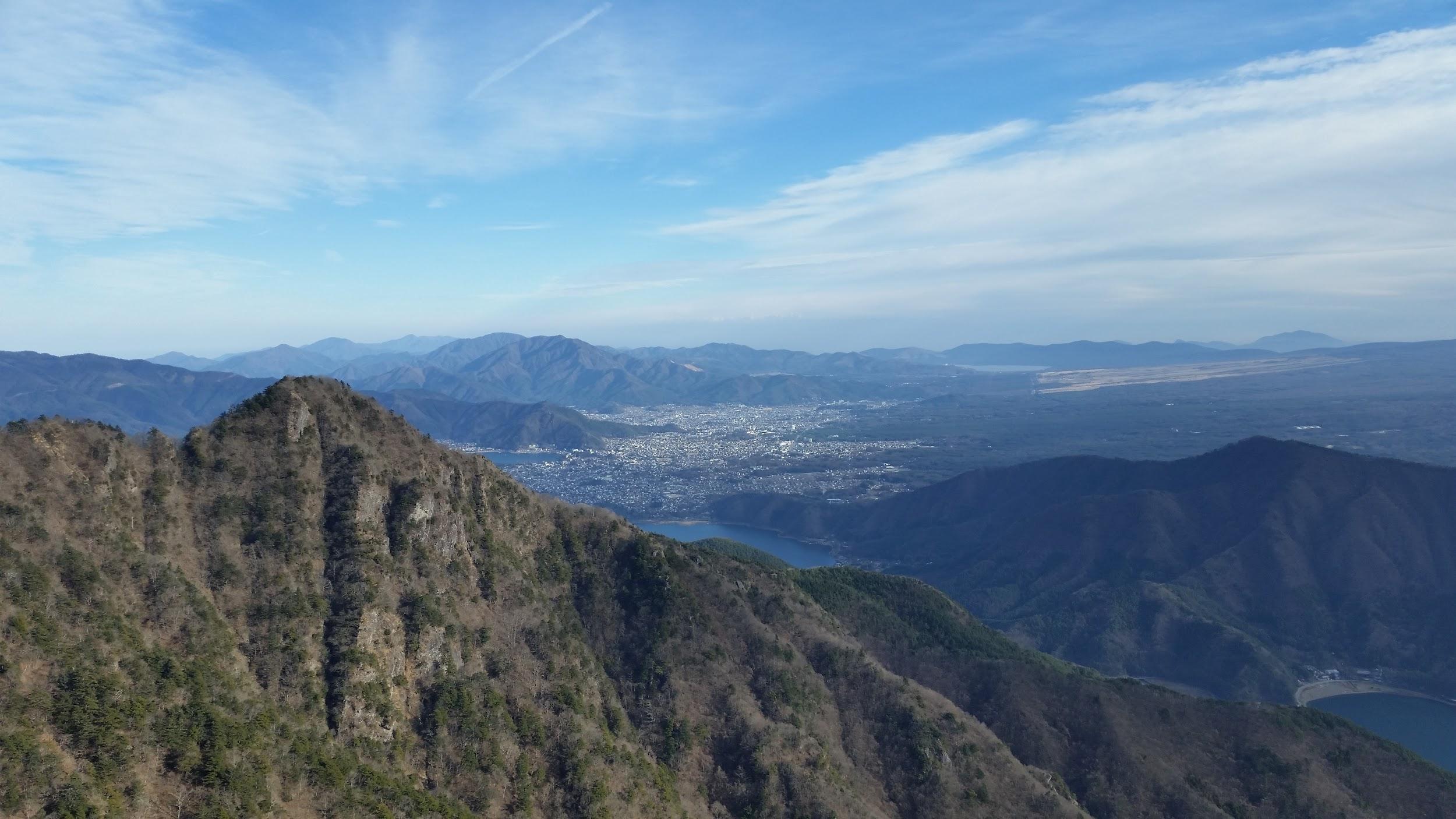
The start of the trail is next to Iyashi no Sato いやしの里 near Lake Saiko, about forty minutes away by bus from Kawaguchiko station (it can take longer due to traffic). It takes one hour along an unused road to reach the entrance of the hiking trail, and from there it’s another hour of steep climbing to the top of Mt Ou 王ヶ岳 (“King mountain”). The reward for this effort is a wide view of Mt Fuji with Aokigahara Forest spread out at its feet.

20160103_145040

The Tenshi Mountains to the South

Following the trail to the right, the next part is an enjoyable hike along a narrow ridgeline, past Mt Kagikake (1589) 鍵掛山, and all the way to Mt Oni 鬼ヶ岳 (“Demon mountain”) about two hours away. It’s best to factor in more time for this part since there are many spectacular views on the way: Mt Fuji, the Misaka mountains, the Tenshi Mountains, the Minami Alps, Yatsugatake, the Kofu valley, Oku-Chichibu mountains, and Kawaguchiko city with its lake.

20160103_141610

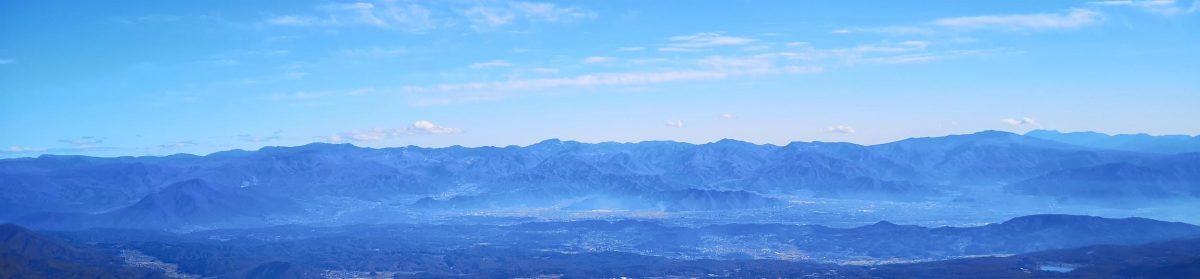
Minami Alps (left), Yatsugatake (right) and Mt Kasuga (front right)

From the summit, the path back down is to the right (South) towards Mt Settou (1710m) 雪頭ヶ岳 (not to be confused with nearby Mt Settou 節刀ヶ岳). After this last peak and final views, the trail heads steeply down the mountain through the forest, and ends back at Iyashi no Sato 90 minutes later, where one can catch a bus back to Kawaguchiko station.

null

Kawaguchi City with Mt Juni in front

Mt Kisrishima (1700m) & Mt Kaimon (924m), Kagoshima & Miyazaki Prefectures, November 2015

Hiking the hundred famous mountains of Japan 日本百名山

Hiking in Kyushu (九州)

Kirishima-Kinkowan National Park (霧島錦江湾国立公園)

霧島山 (きりしまやま kirishimayama)

開聞岳 (かいもんだけ kaimondake)

Get a hiking map of the Mt Kaimon hike

This map was developed for Japanwilds with the Hokkaido Cartographer

Mt Kirishima hiking map coming soon on Avenza

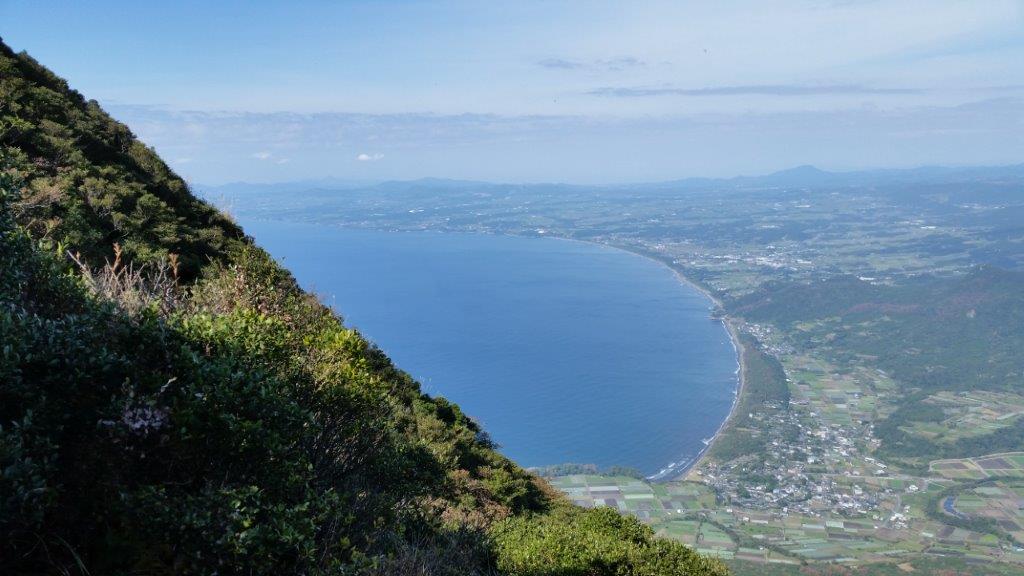
View of the ocean and the cost from near the summit of Mt Kaimon

See the views on the Mt Kaimon hike

Mt Amakazari (1963m), Otari Village, Nagano Prefecture, Monday, October 26, 2015 [Map Available]

Hiking the hundred famous mountains of Japan 日本百名山

Hiking in the Myoko-Togakushi Renzan National Park

妙高戸隠連山国立公園

雨飾山 (あまかざりやま amakazariyama)

Download a map of the Mt Amakazari hike

This map was developed for Japanwilds with the Hokkaido Cartographer

Find more Japan hiking maps on Avenza

View north from the summit of Mt Amakazari

Mt Ena (2191m), Nagano and Gifu Prefectures, October 2015 [Map Available]

Hiking the hundred famous mountains of Japan 日本百名山

Hiking in the Central Alps 中央アルプス

恵那山 (えなさん ena-san)

Hontani River near the Hirogawara Trail Entrance

Get a Map of the Mt Ena Hike

This map was developed for Japanwilds with the Hokkaido Cartographer

Find more Japan Hiking Maps on Avenza

View from the Hirogawara Trail

Hiking the Hirogawara Trail

See a video of the Mt Ena Hike

Mt Tanigawa (1977m), Minakami Town, Gunma Prefecture,Tuesday, September 22, 2015 [Map Available]

Tanigawa-dake 谷川岳 (たにがわだけ)

Hiking the Japan Hundred Famous Mountains

Hiking in the Joshin’etsukogen National Park 上信越高原国立公園

Download a hiking map of Mt Tanigawa

This map was developed for Japanwilds with the Hokkaido Cartographer

Find more Japan hiking maps on Avenza

Oki-no-Mimi, the highest point of Mt Tanigawa

See the views of the Mt Tanigawa hike