For this hike, I drove a rental car from Takasaki city to a small parking area near the entrance of the trail to the mountain. Starting from an elevation of 1450m at 11am, the hike to the top took only one hour. Although the top of Mt Asamakakushi 浅間隠し, meaning “Hidden Asama” was similar to that of my previous hike, it was a lot colder, since I was further North.
Yatsugatake in the background
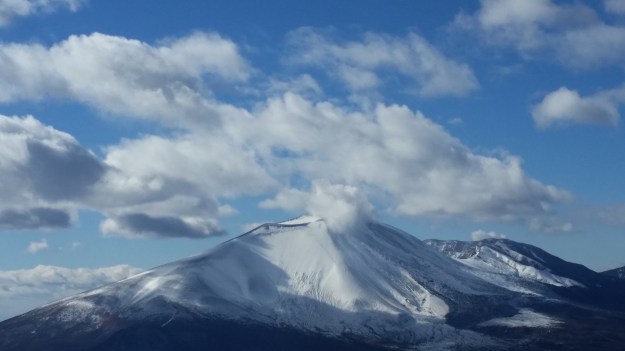
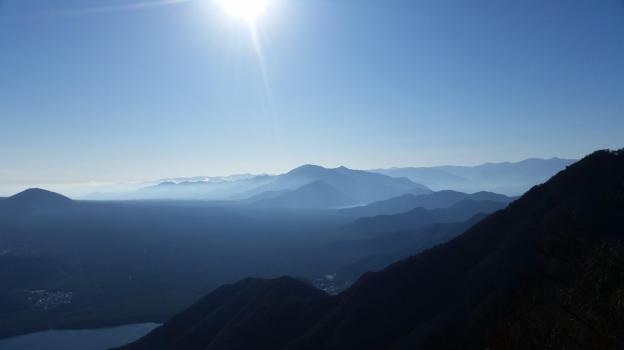
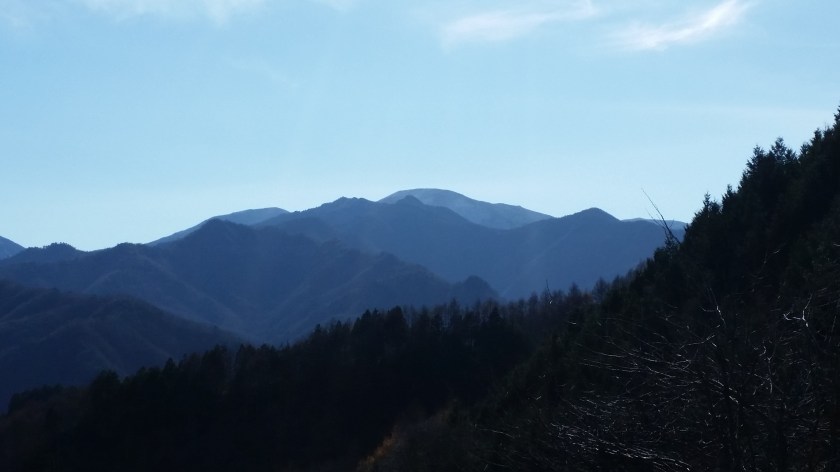
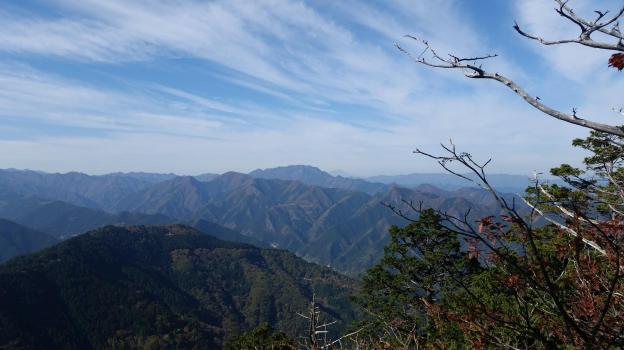
The view of snow covered Asamayama to the West was breathtaking. I could also see the entire Joshin-Estsu mountains forming the Northern edge of the Kanto plain; there are just too many mountains to list here. Southwards, I could make out the Yatsugatake range, Karuizawa and the Oku-Chichibu mountains. Finally the three holy mountains of Gunma – Myohgi, Haruna and Akagi – were all visible in the same panorama.
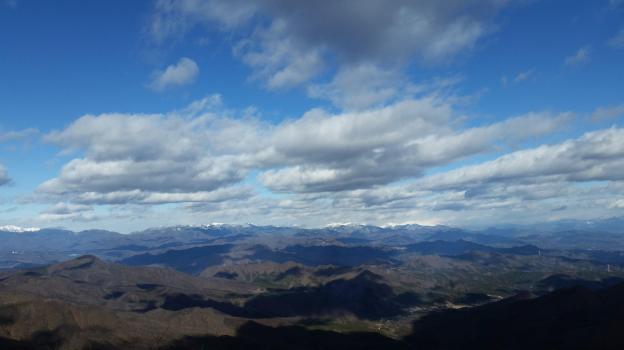
The Joshinetsu mountains
After an hour taking pictures and eating lunch in near freezing temperatures, I made my way down the same way I had come up. Once back to the car, I drove to the onsen at Hamayu Sanso at the base of the mountain. I got there just before 2pm and I was able to warm myself up, before driving back to Takasaki station.
I had already hiked parts of the Misaka mountains – the mountainous area between Mt Fuji and the Oku-Chichibu mountains (for example Mt Ou to Mt Oni). However, I had never hiked the central part, between Kawaguchi and Saiko lakes. I decided to approach from Ashigawa valley on the North side, and finish at lake Saiko, on the South side. I took the Chuo line to Isawa Onsen station, and then the bus to the farmer’s market in Ashigawa 芦川. I had a very good impression of the place since they offered me free tea while I got ready for my hike!
The Fujikyu bus from Isawa Onsen to Ogossoya (the Ashigawa farmer’s market) was discontinued in 2024. Access is now via car, or by bus from Kawaguchiko Station. However, since 2024, a free shuttle bus runs on weekends between Ogossoya and Suzuran.
Kawaguchiko City surrounded by nature
I started out after 10am, and walked along the road for about 20 minutes to the start of the trail, which then went straight up the side of the mountain, through trees completely bare of leaves. I reached Oishi pass (1515m) 大石峠 around noon. I had been there once before when hiking from Mt Kuro further to the East. This time I turned right and continued Westards along the ridge.
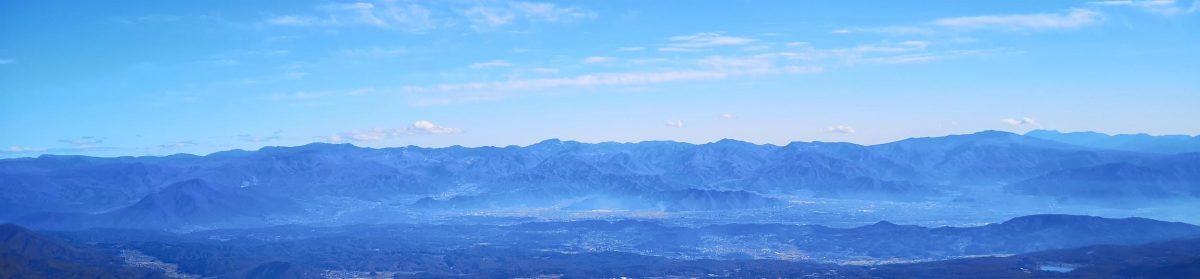
Kofu valley and beyond the Oku-chichibu mountains
The hiking path went up and down a wide ridge through beautiful evergreen forest. I had occasional views of Mt Fuji to my left, lake Kawaguchi behind me, and the Ashigawa valley to my right. I soon reached the top of Mt Settou 節刀ヶ岳 the third highest mountain along the ridge, after Mt Mitsumine and Mt Oni. From there I could see all the way to the Southern Alps, and the Kofu valley.
Against the sun, looking back towards Minobu
After admiring the view, I started to head down towards Saiko lake. Soon, I had to negotiate a slightly tricky bit involving some rocks and chains. After that, I arrived at the top of Mt Junigadake 十二ヶ岳 which translates simply as “Peak 12”, from where I had some more great views of Mt Fuji ahead of me. I now had two options. The path to the left was an exciting ridge including suspended bridges. Alternatively, I could head straight down to Izumi no Yu, a hot spring on the side of Saiko Lake. Since it was already 3pm, I decided to head down, and leave the exciting ridge for another hike.
Less than 100km away from the capital as the bird flies and smack in the middle of the Oku-Chichibu mountains of Saitama prefecture, lies Mt Nanten 南天山 1483m. Despite its relative closeness, accessing the start of the trail requires patience and a desire to explore new places.
Last Saturday, I rose at 6h30, got a seat on the Seibu line Red arrow limited express leaving around 7h30 from Ikebukuro station, hurried to catch the transfer to the Chichibu railway in the Seibu-chichibu station and got off at the last station, Mitsumineguchi at about 9h15.
Unfortunately the bus connection wasn’t ideal and I had to potter around for 45 minutes for the bus for Nakatsugawa 中津川, also the last stop and one hour away, making my arrival time a little past 11am. However I wasn’t there yet. I still needed to walk 30 minutes along a road which eventually turned into a dirt road, till I finally got to the entrance of the mountain trail, leading up a small river valley cleaved into the side of the mountain.
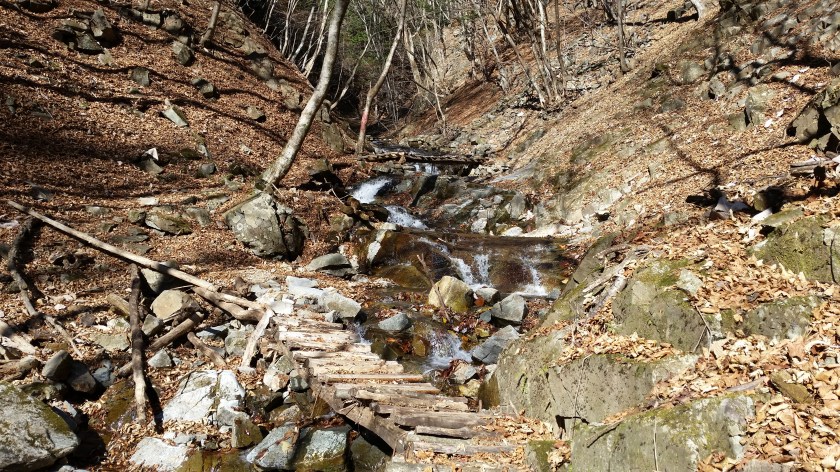
The path crossed a stream several times over narrow wooden bridges
After removing my inner layer, fixing my bear bell onto my bag and having a quick bite, I was officially ready to start up the mountain, a little before noon or nearly six hours after getting up. Fortunately, unlike my previous trip the week to Okutama the week before, the further I progressed the less people there were – just one other passenger on the bus who got off before the end. This was probably because the autumn leaves season was already over.
First views of the highest peaks of the Okuchichibu Area
The valley I walked up following a small stream was one of the most beautiful I’ve ever seen. I could only imagine what it must look like in the spring or the autumn. There was a fair amount of stream crossing along fairly new wooden bridges and the path goes up and down the side of the valley, making for a good warmup. Halfway up the valley, I came upon the spectacular Hojirushi waterfall 法印の滝. Even if you don’t climb to the top, it is well worth walking 20 minutes to check it out.
The Hojirushi waterfall along the Kamakura River
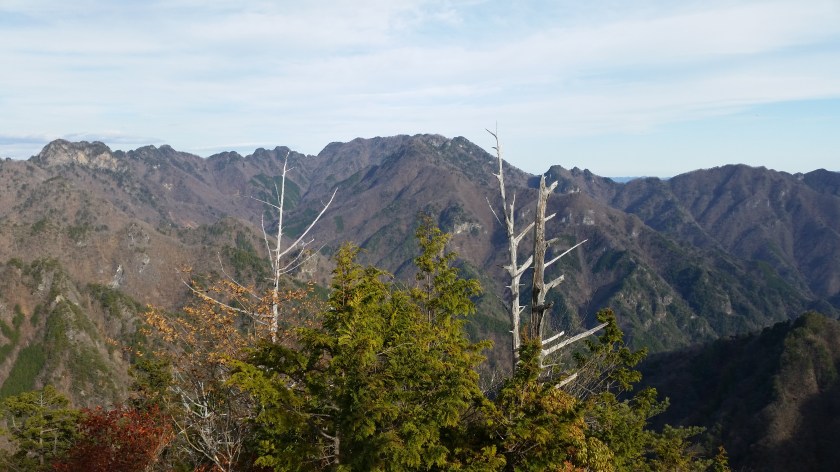
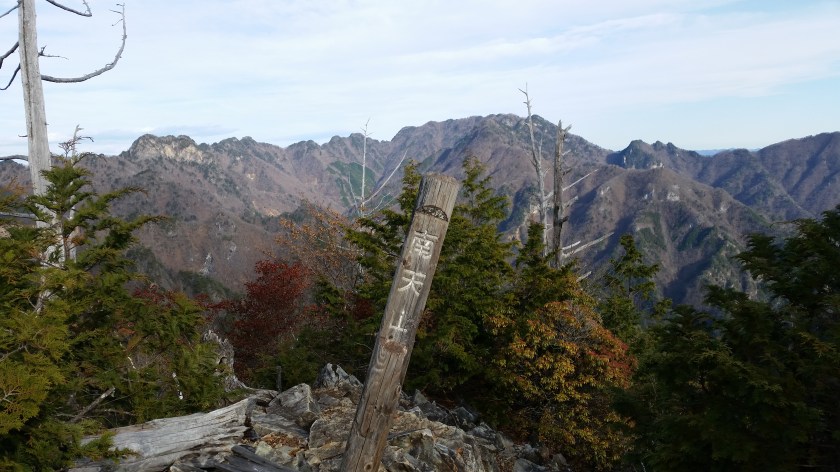
Twenty minutes further upstream, a zigzagging easy to walk path on the left takes you up to the top ridge where you progressively make your way to the highest point. The last part gets rather rocky and feels rather wild – hard to believe that you are in Saitama, especially when you reach the top and see nothing but mountains in all directions. Directly opposite one could see the massive bulk of Mt Ryokami and in the background Mt Asama already covered in snow,
I headed down a little after 2pm down another zig-zagging path and then joined up with the previous stream valley and legged it back to the road. I was able to take a quick bath before getting on the return bus a little after 4pm. This bus, the last one of the day, took me directly to Seibu Chichibu station in about 90 minutes where after a thirty minute wait, I got the next Red arrow limited express back to Ikebukuro, arriving at 8pm, taking me only a little less time than on the way there.
The summit marker of Mt Nanten with Mt Ryokami in the background
Enjoy the contrast between the rushing water and the silent summit
Winter is around the corner – I saw snowflakes fall on my hike last week – so it’s time to introduce more low-altitude destinations for the colder months, this time on the Northern edges of the Kanto plain. Admittedly there are fewer all-year round snow-free options but the adventurous hiker will be rewarded with beautiful vistas of the snow-capped peaks of the Joushin-Etsu that ranges from Mt Asama to Tanigawa, and the peaks of Oku-Nikko. The hikes presented below are in clockwise order from West to East.
Mt Kuwagara 鍬柄岳 and Mt Oogeta 大桁山, Gunma prefecture
These 2 peaks, 598m and 836m respectively, are located North of Sendaira 千平 Station the stop before Shimonita on the Joushin Dentetsu line running from Takasaki station. Mt Kuwagawara is the highlight and can be done by itself for a shorter hike. The last part requires some scrambling up a rocky face – nothing technical since there are set chains in place to assist but a good sense of balance and agility are required, and you’ll also need to come back the same way in order to continue the hike. However the view from the top is quite rewarding.
PROS: Roundtrip with station access, an exciting bit with chains, good views
CONS: Some road walking, not recommended for beginners
View towards Nishi Joushuu with the flat-topped Mt Arafune on the right
Mt Okono 小野小山 and Mt Juuni 十二ヶ岳, Gunma prefecture
Mt Okono 1208m and Mt Juuni 1201m are part of the same mountain – just 2 peaks on the same ridge that sits between Mt Haruna in the West and Mt Akagi in the East. Despite their relatively high altitude, I did them without snow in January but this may not always be the case so check beforehand. Access is from Onogami 小野上 station on the Agatsuma line, North of Takasaki, and return is one station further down, Onogamionsen 小野上温泉 station. There are some ups and downs along the ridge but your efforts will be rewarded with a breathtaking 360° panorama at the top of Mt Juuni.
PROS: Station access, great views, onsen at the end
CONS: Some road-walking, risk of snow, longish hike
The Tanigawa Ridgeline from the top of Mt Juuni
Mt Daishou 大小山 and Mt Daibou 大坊山, Tochigi Prefecture
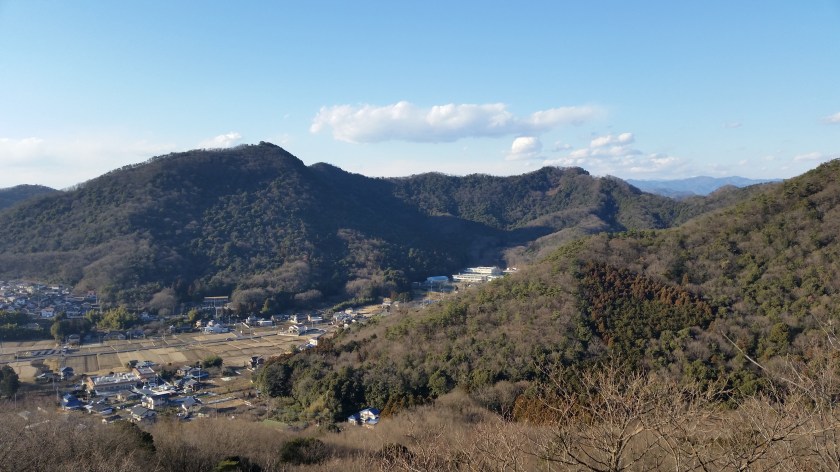
Mt Daishou 314m and Mt Daibou 286m are lowish peaks sitting on a semi-circular ridge East of Ashikaga city, accessible from Tomita station on the Ryoma line which connects Ooyama and Maebashi stations. From the top of Mt Daishou, and other viewpoints along the way, there are sweeping views to the South of the Kanto plain. Looking Northwards, there are mountains as far as the eye can see, with the Mt Fuji look-alike, Nikko’s Mt Nantai at the very back. This is a popular trail especially in the winter so expect to meet many hikers along the way.
PROS: Roundtrip with station access, very good views, relatively easy hiking
CONS: Some parts pass through the town, lots of people
Mt Daibou as seen from near Mt Daishou
Mt Kogashi 古賀志山, Tochigi Prefecture
This low-lying but rocky mountain cuts quite an impressive figure when seen from below. At any only 583m it will surprise you with its rocky but roped steep bits and plunging views to the plain below – agility and surefootedness are necessary. Placed somewhat East off the JR Nikko line connecting Utsunomiya and JR Nikko stations, you’ll need to take a bus or a taxi from Kanuma 鹿沼 station to get closer to the start of the hiking trail. There are plenty of trails up and down but the best, and most exciting route is to follow the ridge all the way to Mt Akaiwa 赤岩山 553m.
PROS: Roundtrip, great views, onsen at the end
CONS: Bus there and back, some tricky parts
Mt Kogashi with Akagawa Lake in the foreground
March 2019…Somehow I never completed the final part of the where to hike in winter series from 2017, and just rediscovered the draft. Although winter is officially over, these hikes below are also good in Spring and Autumn. However, these two Ibaraki and Chiba are the ideal places to go when it gets really cold since they combine relatively easy access and low altitude mountains that get little if any snow. These four hikes only scratch the surface of what can be done in these areas. I’ve added then to this blog post since they wouldn’t fit in with my latest series of blogs.
Mt Tsukuba (877m), Ibaraki Prefecture
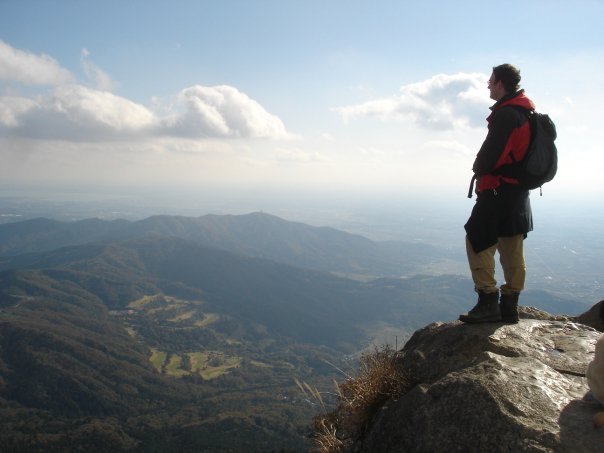
Like Mt Takao, Mt Tsukuba 筑波山 is an extremely popular hiking spot close to the Tokyo metropolis. You cannot rule out snow in the winter but is is rare and melts quickly. A bus is required to get to the start of the trail, but they run frequently from Tsukuba or Tsuchiura stations. A multitude of trails go up and down the mountain through beautiful cedar forests at the base, and interesting rock formations higher up. At the top, you’ll be rewarded with great views of the Kanto plain and perhaps Mt Fuji if you’re lucky. There is a ropeway and a cable car so you can just climb up or climb down if you prefer.
PROS: Easy to follow trails, Airplane-like views, Hot springs
CONS: Crowded on weekends & holidays, Summit area is overdeveloped, Access by bus
Enjoying the view from the summit
Hokyo (461m), Ibaraki Prefecture
I only recently discovered Mt Hokyo 宝篋山 but it is the perfect place for a winter escapade. There are many well-marked trails that you can follow to the top and back down, a couple of which follow beautiful mountain streams. There are great views of Mt Tsukuba from the top which you can enjoy while sitting in some longchairs. There are frequent buses from and to Tsuchiura station. Apparently there are some mountain sakura so it’s also a good place for hiking in April when they are in bloom.
PROS: Lots of trails, Seats and tables at the top, Great views
CONS: Short hike, Access is by bus, No hot springs
Lots of place to sit on the top of Mt Hokyo
Mt Nokogiri (330m), Chiba Prefecture
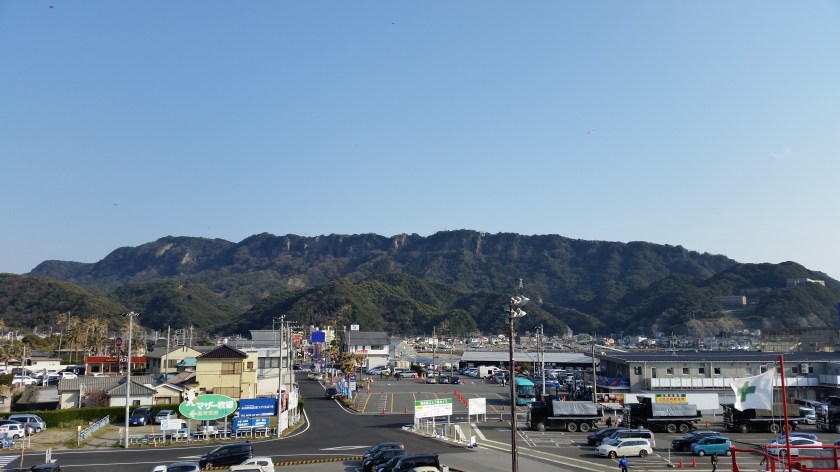
Mt Nokogiri 鋸山 is a fun place to visit and hike. It can be accessed by train but I find it worthwhile to do at least one leg of the trip by ferry across Tokyo Bay from Kurihama. There is a ropeway that goes to the top and if you choose that option, you should at least walk down a little explore the base of the cliffs on the front and then descend the path on the other side. There are giant Buddha statues on both sides. On the ragged top ridge (Nokogiri means saw in Japanese), there is a great lookout point over the cliffs called “jigoku nozoki” or “a peek into hell”. There are great views of the Boso and Miura peninsulas, and Tokyo Bay. If you’re hungry, there is an excellent kaiten sushi right next to Kanaya port.
PROS: Combines hiking and cultural sightseeing, Ferry ride, Sea views
CONS: A little far, Short hiking, Summit ridge area can be crowded
Mt Nokogiri from Kanaya Port
The Yoro River Valley, Chiba Prefecture
This is the classic Chiba hike and highly recommended if you haven’t been to the Yoro river Keikoku 養老渓谷 yet. The train from Goi station is charming and will deposit you smack in the middle of the countryside. The walk is mainly along a picturesque river valley so there is little climbing or descending. You can start two stations earlier from Tsukisaki for a longer hike. The highlight is the Awamata waterfall . The railway deviates from the river after Yoro Keikoku station so you’ll need to take a bus back.
PROS: Easy Hiking, River Walking, Hot springs
CONS: A little far, Bus for the return, Proximity to a road
Mt Komochi (1296m), Shibukawa City, Gunma Prefecture, Friday November 24, 2017
In 2010 I made a trip to Colombia and visited El Cocuy a mountain that is famous for a huge oblong sized boulder sitting near the summit called “Pulpito del Diablo” or the Devil’s Pulpit in English. Last week, I finally found its Japanese version, sitting near the top of Mt Komochi 子持山 (1296m), a Kanto 100 famous mountain about 30km North of Takasaki in Gunma prefecture.
I saw the photos when doing my research, the taxi driver pointed it out to me on the drive from Shibukawa station, but nobody had ever told me that such a thing existed in Japan so I took no notice. Yet Shishi-Iwa or Shishi Rock 獅子岩 deserves to know as one of the wonders of Japan, at least among hikers. Not along can you gaze at it as you climb up and down, from below, above and from the side, you can climb to its top via a combination of chains and ladders and gaze down into the void below.
Top of Shishi rock
I had a taxi driver drop me off near the start of the trail since the price was affordable and it saved me a great deal of time. Unfortunately you can’t go to the start of the trail anymore because the last part of the road was severely damaged by a recent typhoon. This seems to happen quite a bit – I saw another example at the base of Mt Kogashi – and I doubt whether these roads will ever be fixed one day.
A sunny day had turned to clouds when I reached the official trail entrance, looking a bit despondent devoid of people perhaps because I was there on a Friday or because autumn season was over. The path soon me below a massive cliff, Byobu-Iwa or Byobu Rock 屛風岩, the top parts of which were literally hanging over the path. I hurried along nervously let a loose piece of rock fall upon my head. What did fall upon my head just moments later were some snowflakes – winter had come to my surprise since the forecast had called for clear weather. Fortunately no snowstorm followed and the flakes stopped and started again before disappearing altogether.
The overhanging cliff, Byoubu Rock
In the meanwhile I was making my way up the back of the cliff and then onto the top of it. This was actually quite frightening because as I mentioned before the upper parts were hanging over the valley below. To the left and the right there was just void. I am not afraid of heights but when the ridge narrowed suddenly before the final part I gave up and retraced my steps. In any case this was just a short aside – the main path continued straight up the ridgeline in the opposite direction.
First glimpse of the “pulpit”
It’s around this point that I was getting my first glimpses of Shishi Rock. I was amazed at how long it took me to finally get to the base. This just goes to show how big it is and how deceptively small it looks from a distance. The front side is pure cliff so you need to make your way around the back in order to climb it. It’s pretty straightforward until you get to the ladder. Its metal, vertical, goes up a ten meter long chimney but not rigid so it moves slightly when you climb it, which will totally freak you out when you are nearing the top and the whole thing suddenly shifts.
Finally standing at the top felt fantastic especially after you had been staring at this marvel of nature during most of the climb up. I was especially careful not to get too close to the sides lest a gust of wind made me lose balance. It was surprising that there were no warning signs but then those who made it so far would be careful. The views of the surrounding peaks was amazing.
Tanigawa Ridgeline from the summit
View of Mt Akagi to the East
After climbing down, carefully, I made my way to the true summit another hour or so away. There I could take in all the peaks of the Joushin-Etsu Kogen National Park, already covered in snow. The view is not quite as good as from the top of neighbouring Mt Onoko but breathtaking all the same. After a quick lunch I quickly descended via another route that offered occasional glimpses of Shishi rock through the trees, arriving finally back at my starting point with about an hour of daylight left, just enough time to walk back to the nearest train station Shikishima.
One last look at Shishi RockThe Colombian Pulpito del Diablo
Mt Shishigura (1288m), Okutama Town and Tabayama Village, Tokyo & Yamanashi Prefectures, Sunday November 19, 2017
Hiking in Okutama 奥多摩
Yesterday I went for a hike in the Okutama area, starting from the Western edge of Okutama lake at Miyama Bridge 深山橋, going up Mt Shishigura 鹿倉山 1288m (not Shikakura as the Kanji suggests), and ending up at the Nomekoiyu のめこい湯 hot spring.
However it isn’t about the hike itself that I wish to write but rather about getting to and back from the area in the general. The trouble with Okutama is that it mostly sits within the Tokyo prefecture, one of the most populated areas in the world, and thus the trains and buses are packed, especially during the autumn foliage season.
Fortunately when I went out there on a whim yesterday (bad weather threatened my preferred options), I was able to sit all the way there and back. Seeing that the total travel time was nearly 5 hours, I feel that this considerably enhanced my experience, and it only required a little planning and some luck.
First, I turned up at Shinjuku station 20 minutes before the scheduled departure time of the direct train to Okutama and positioned myself first in line at the appropriate spot on the platform (indicated by an overhead sign). The train pulls in ten minutes early since it starts from Shinjuku so the rest of the waiting time is spent sitting comfortably.
After arriving in Okutama, I got off as quickly as possible and lined up for the bus. Despite the crowds it only took me a few minutes since I had previously charged my Pasmo with a generous amount of money and skipped the bathroom. Once out of the station I swooped onto the first bus attendant I saw to confirm where I should line up for my bus (the one for Kosuge no Yu 小菅の湯). I had perhaps a dozen people ahead of me but I still managed to snag one of the last seats.
On the return, I sacrificed some bath time in order to get to the bus stop ten minutes early. I was third in line which doesn’t necessarily guarantee a seat since the bus starts further up the valley. When the bus turned up, the line behind me had grown to a dozen people and there were only about 5 seats left. My gamble had paid off and I got a good seat too, one with space for my long legs.
There was some traffic on the way back and I was worried that I would miss the last direct train back to Shinjuku but thanks to the experienced driver we got to the station with time to spare. Repeating the same strategy as in the morning (move quickly, well-charged pasmo, skip bathroom break) I got a good seat on the train and the return was as smooth as one could hope for. Obviously these tricks only work if you are hiking by yourself or maybe as a pair (or you have good bladder control).
Mt Odake, one of the three famous peaks of the Okutama area
As for the hike itself, it was the kind I like. Steep ascents at the beginning, gently sloping ridge line in the middle, alternating views of forest and mountains, and a good wide path for most of the descent. I only crossed a small group of people during the whole hike. Unfortunately I can’t recommend this hike since at times the trail was hard to find / follow and the last part of the trail had somewhat collapsed and was difficult to walk. I hope they repair it soon and also put up more trail makers.
One final note: the Nomekoi Hot spring is only 300 yen but at present the rotemburo (outside bath) is closed for construction. However the inside bath has a high wooden slanting roof which gives it a traditional feel so it is definitely worth taking a bath there.
The long ridge leading to the summit of My Kumotori (on the left), the highest point in the Tokyo prefecture, as seen from the ridge below the top of Mt Shishigura.
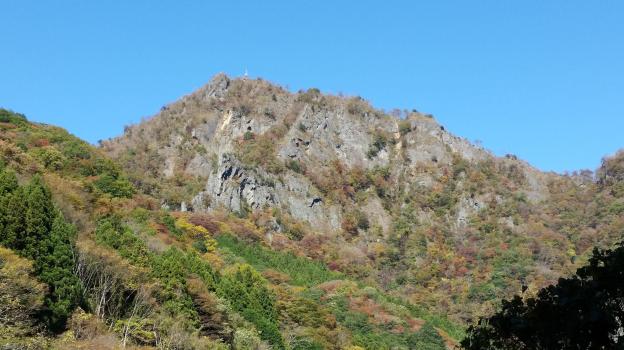
This was a trip to a prefecture that I have recently come to appreciate as a great hiking destination. Most of its hikes are situated in the Abukuma Mountains 阿武隈山地. This was also my first time to take the Suigun line that connects Mito, the capital of Ibaraki, and Koriyama in Fukushima (I took it again this year). Finally it was a good station to station hike – I had to walk one hour along a road from Saigane station to reach the start of the trail, but the surrounding scenery was beautiful.
One of the other peaks in the area
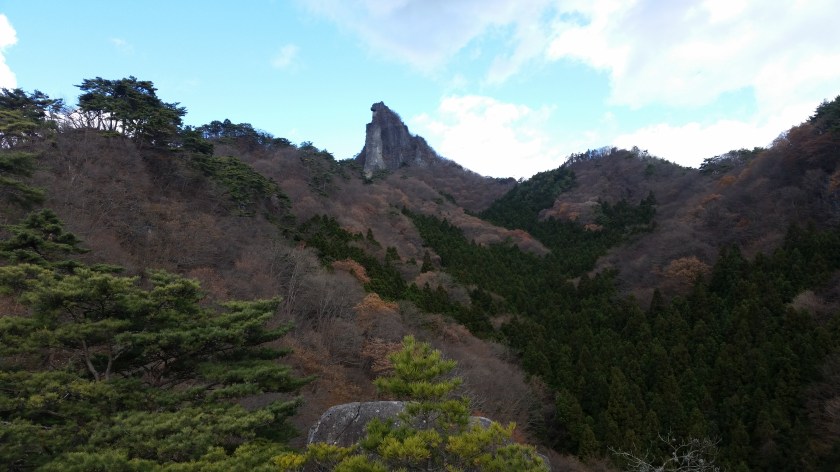
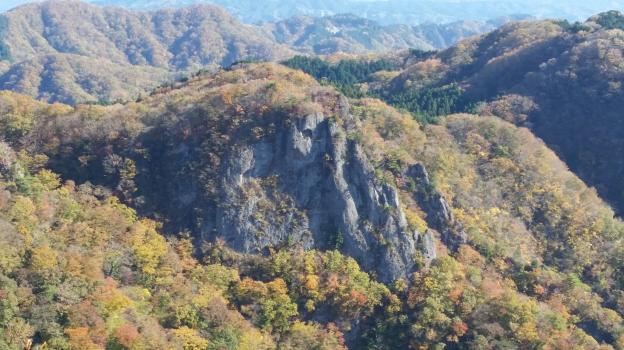
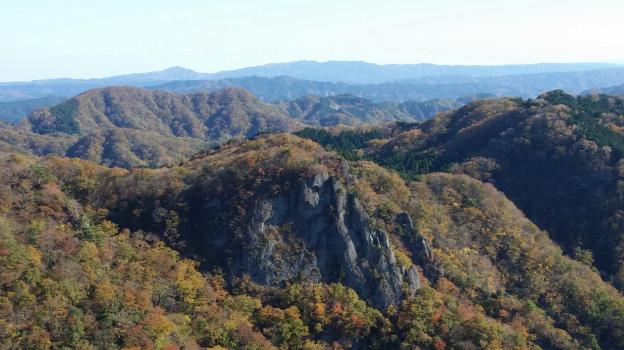
Once I started hiking in earnest, I got some really great views of the rocky summit of this Kanto 100 famous mountain. The weather was perfect, and the autumn colours were still at their peak. Soon I started climbing through some beautiful forest, and I reached the top of Mt Nantai 男体山 around 1h30. From the top, there was no doubt that this was the highest mountain in the area. To the south, I could see the shape of Mt Tsukuba in the distance.
At the very back, Mt Tsukuba and neighbouring mountains
After enjoying the bird’s eye views, I continued along the ridge. First down a steep slope, then along a pleasant mostly level path. It was so pleasant that I completely missed the turn-off down the mountain. After a while, I realised I was going in the wrong direction and retraced my steps to the junction which was properly signposted – I must have looked the other direction just when the sign came into view!
The prominent bulk of Mt Nantai
The downhill part to Kami-Ogawa station was through pleasant autumn forest, then along countryside back roads. Looking back, I got some more nice views of the rocky summit of the mountain I had just climbed. I reached the station in time for the infrequent train back to Mito city.
As the Autumn season gets into full swing and with winter just around the corner, it’s a good time to look at hiking options closer to Tokyo. In this article I will briefly introduce 3 main areas in the Tokyo area with their highlights.
OKUTAMA 奥多摩
First up in terms of popularity is Okutama, the mountainous area straddling the Western part of the Tokyo prefecture. The Chuo and Ome lines will take you into the heart of the mountains to Okutama city at the end of the line, from where buses can whisk you further into the mountains. Notable peaks include Mt Kumotori, Mt Mito, Mt Odake, Mt Gozen, Mt Kawanori, the 3 peaks of Mt Takamizu and Mt Mitake. Less strenuous hiking options include visits to Okutama lake followed by a walk along the old Okutama road, exploring the Nippara limestone caves, and walking along the Tama river ending with a visit to the the Ozawa sake brewery in Sawai. There is an information office outside the train station but note that most buses leaves shortly after the train arrives so planning ahead is recommended.
TRAVEL TIP: There are daily direct trains from Shinjuku to Okutama leaving fairly early in the morning but make sure to confirm with the conductor which carriage to board since the train splits mid-way, with one half going on to Musashi-Itsukaichi. There are also direct trains back in the mid-afternoon. If you miss those, expect to change trains at least twice on the way back so check the times in advance.
Okutama as seen from Mt Keikan
TANZAWA 丹沢
Next, in terms of the volume of hikers, would be the Tanzawa range in Kanagawa prefecture. In this case, access is via the Odakyu line which hugs the Southern side of the range before heading towards Hakone. One can get off at a number of stations on the way and catch frequent buses to various entry points into the mountains. The most notable ones are Isehara for Mt Oyama (which has a ropeway to take you halfway up this “big” mountain), Shibusawa for Mt Tonodake (popular with school children) and Matsuda for the Nishi-Tanzawa area and Mt Oomuro. What makes this area particularly attractive are the views of Sagami bay to the South, Mt Fuji to the West and the extensive Tokyo metropolis to the East. A word of caution though: most hikes have steep slopes and can be quite strenuous and are thus not really suited for beginners.
TRAVEL TIP: The Odakyu line runs a limited express train between Hakone and Shinjuku, “the Romance car”, which stops at Matsuda station and can provide a faster and more comfortable (but more expensive) trip there or back. An option worth considering after a tiring hike.
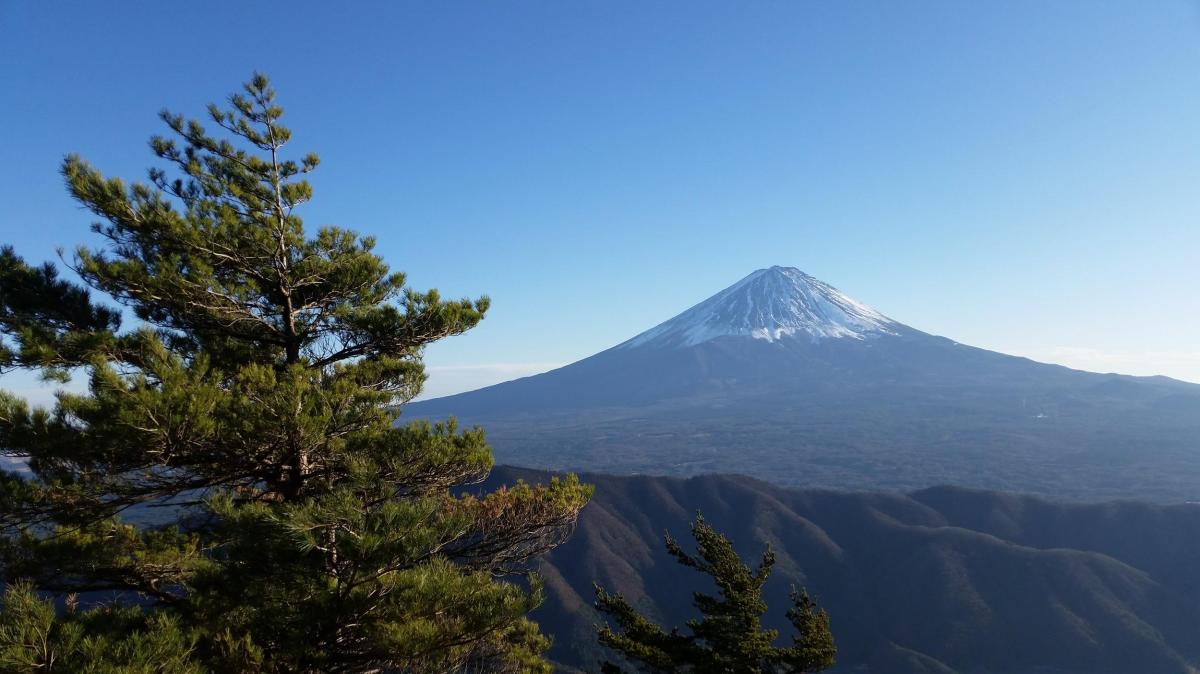
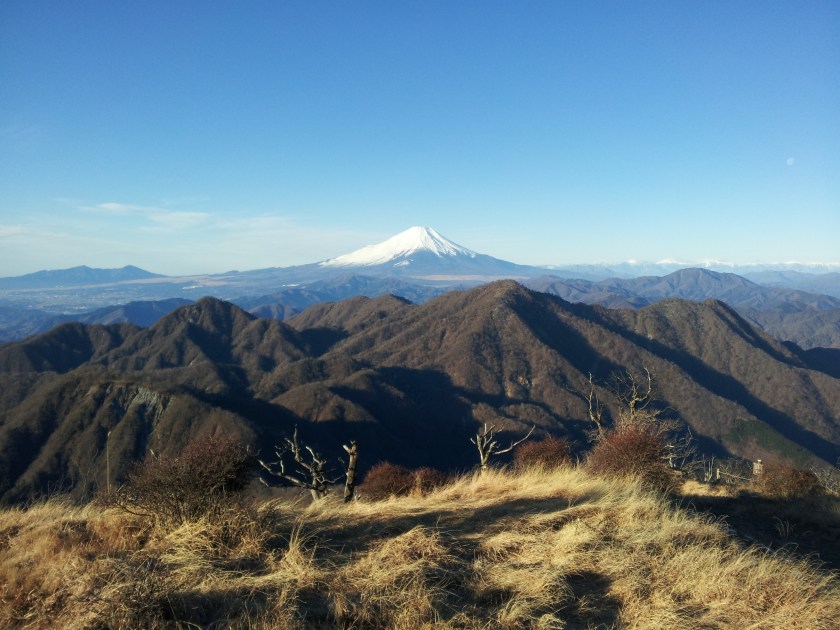
Mt Fuji as seen from the top of Mt Hiru on the 1st of January
CHICHIBU 秩父
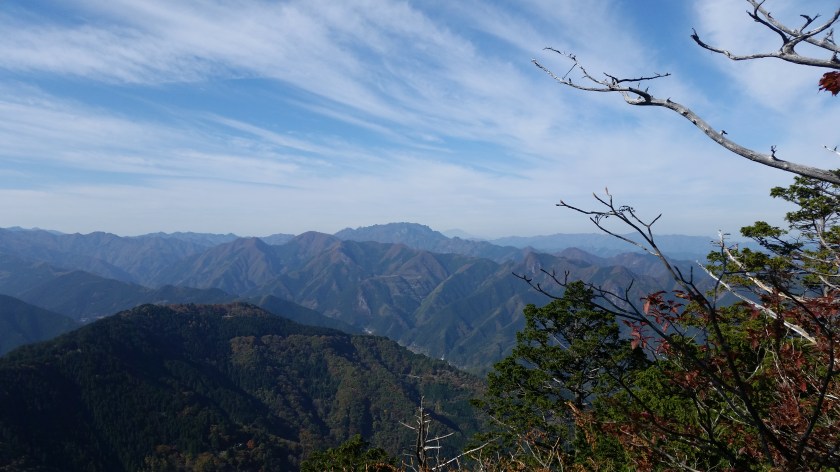
Finally, my personal favourite, the Chichibu area, which despite having the most hiking options seems to be the least popular of the three. The Seibu-Chichibu line ends at Chichibu city in the center of a wide valley surrounded by mountains. A few minutes away on foot is Ohanabatake station on the Chichibu railway (which sometimes runs an authentic steam locomotive) that can take you either East towards Nagatoro, famous for its rapids, or West towards Mitsumine Guchi, 40 minutes away by bus from the famous Mitsumine shrine. The Nagatoro side has lower peaks and gentler slopes that are suitable for beginners such as Mt Mino and Mt Hodo. The area beyond the Mistune Guchi is higher and has more difficult terrain. The main peak is Mt Ryokami but there are a number of other interesting peaks to climb in the area such as Mt Chichibu-Mitake, Mt Azuma and Mt Myouhou.
TRAVEL TIP: The Seibu line runs regular Limited express trains “the Red arrow”, which can get you from Ikebukuro to Chichibu city quickly and comfortably. Alternatively, for those on a budget, there are 2 local trains departing Ikebukuro station fairly early in the morning that take you directly to either Mitsumine Guchi or Nagatoro. The train splits before Chichibu city so confirm with the conductor where to get on. There are also 2 direct trains for the return in the mid-afternoon.
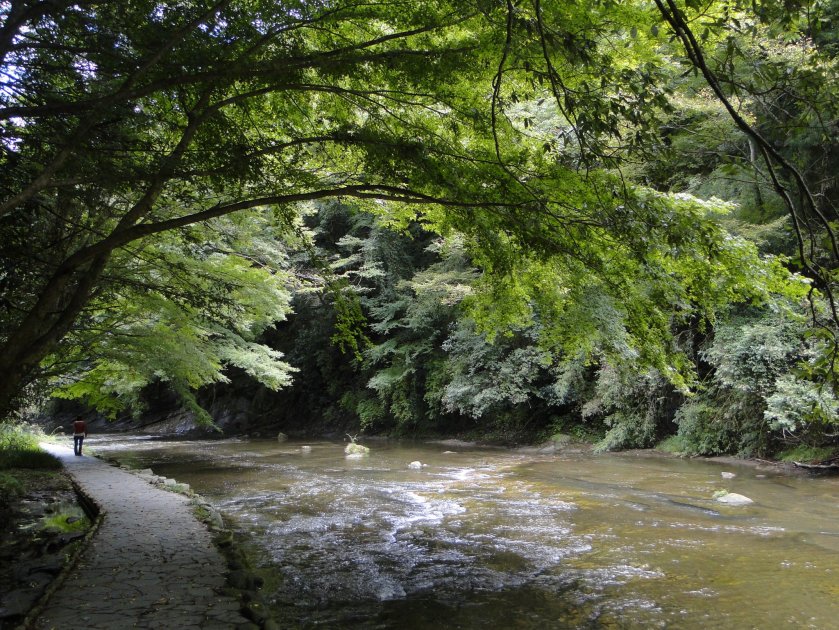
This was my very first visit to Kiryu City – I returned a couple more times last year in the autumn. However I had hiked in the Ashio mountains 足尾山地 several times before. I was again the only person on the bus, and when I got off at the last stop, I was surprised that it cost only 200 yen – probably the cheapest bus ride I’ve ever done in Japan. I had to walk another thirty minutes along the road, but I didn’t mind since it followed the beautiful Kiryu river.
Kiryu river, one of the top 100 forested valleys in Japan
I reached the start of the trail around noon – there was a well-made sign in Japanese and English explaining that the Kiryu River had been selected as one of the top 100 forested valleys in Japan – I wasn’t aware that such a list even existed! There are two trails up the mountain – the one on the left follows a small mountain stream, and is more challenging. I took the more direct trail going up the ridgeline. This trail had its share of fun, with rocky sections lined with ropes for safety – it’s not really dangerous, but it isn’t for beginners either.
The autumn colours made up for the gloomy weather
The autumn colours were still at their peak, and a little before 1h30, I reached the top of Mt Nemoto 根本山 (meaning “tree root”), a Gunma 100 famous mountain. There was no view, but there was a brand new sign. The weather had been sunny and cloudy all morning, but now it was completely overcast, with a cold wind. It felt like it might snow at any moment.
Mt Akagi, looking somber
I continued along the ridgeline, circling the source of the Kiryu river, clockwise. Soon, I was walking South along an easy trail, and I arrived at Mt Kumataka 熊鷹山 less than an hour later. There was a small observation tower with a 360° view of the surrounding mountains. I could make out Mt Koshin and Mt Kesamaru to the North, where there was some sun, and Mt Akagi under a dark cloud to the West. In the East, it seemed like it was raining.
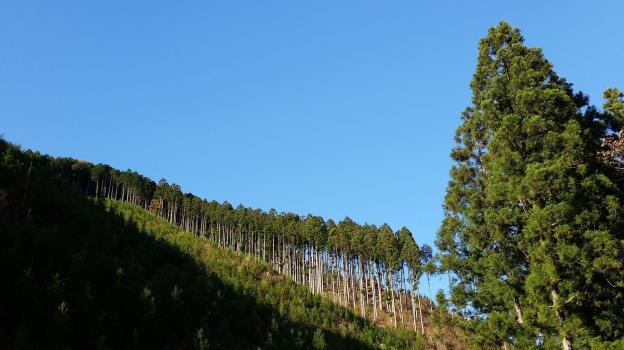
Trees marching up the side of the mountain – blue skies returned at the end of the hike
After enjoying the view and before my hands froze, I started to head down the mountain. The hiking trail quickly became a forest road, and the sun came out again. Soon, I was walking next to the Kiryu river again under blue skies. I was back at the start of the trail before 4pm, and half an hour later I was riding the last bus back to Kiryu City.
Kiryu river, also one of the 100 top forested water sources
The starting point for this hike was Mitsumine Shrine, a place I had visited a few times before, but had never really taken the time to explore. Since today’s hike was relatively short, I first took some time to check out the Mitsumine visitor center, one of the starting points for visiting the Chichibu-Tama-Kai National Park. It was a pleasant surprise – I found the displays of mounted animals and the model relief of the area particularly interesting.
View of Mt Wanakura (also known at Mt Shiroishi and climbed in 2018) from Mitsumine Shrine
After spending nearly an hour at the visitor center, I hurriedly set off along the hiking path up Mt Kumotori. The autumn colours were at their peak, and since it was a weekday, I had them mostly to myself. Very soon I reached the turnoff for today’s mountain, located on a small ridge branching left off the main ridgeline. In less than an hour, I reached the small shrine at the top of Mt Myoho (妙法山ヶ岳), from where I got some great views of Oku-Chichibu, with Mt Ryokami in the center.
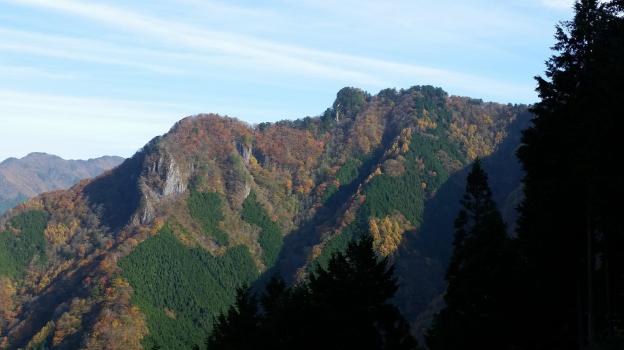
View of the jagged peak of Mt Ryokami from the summit
After lunch, I headed back to the shrine, and since it was still early in the day, I took some time to check out the shrine grounds – it was beautiful with all the autumn colours. At the back, there was a spectacular view of the mountain I had just climbed as well as Chichibu city.
Good views from the trail heading down from Mt Mitsumine shrine
Afterwards, I located the hiking path leading down the mountain. Although there were a number of people at the shrine, no one seemed interested in hiking down, so once again, I had the path entirely to myself. Unfortunately, it wasn’t possible to hike all the way down to the train station, and the path ended up on the road, from where I caught an express bus back to Seibu-Chichibu station.

























 Hiking Around Tokyo
You must be logged in to post a comment.