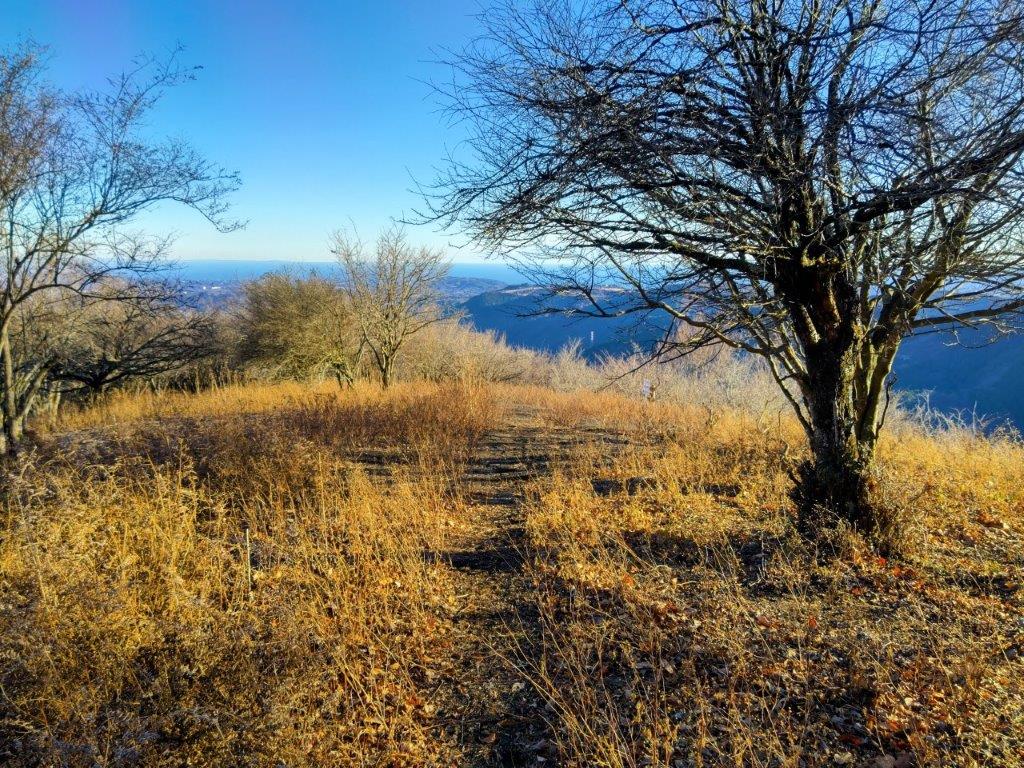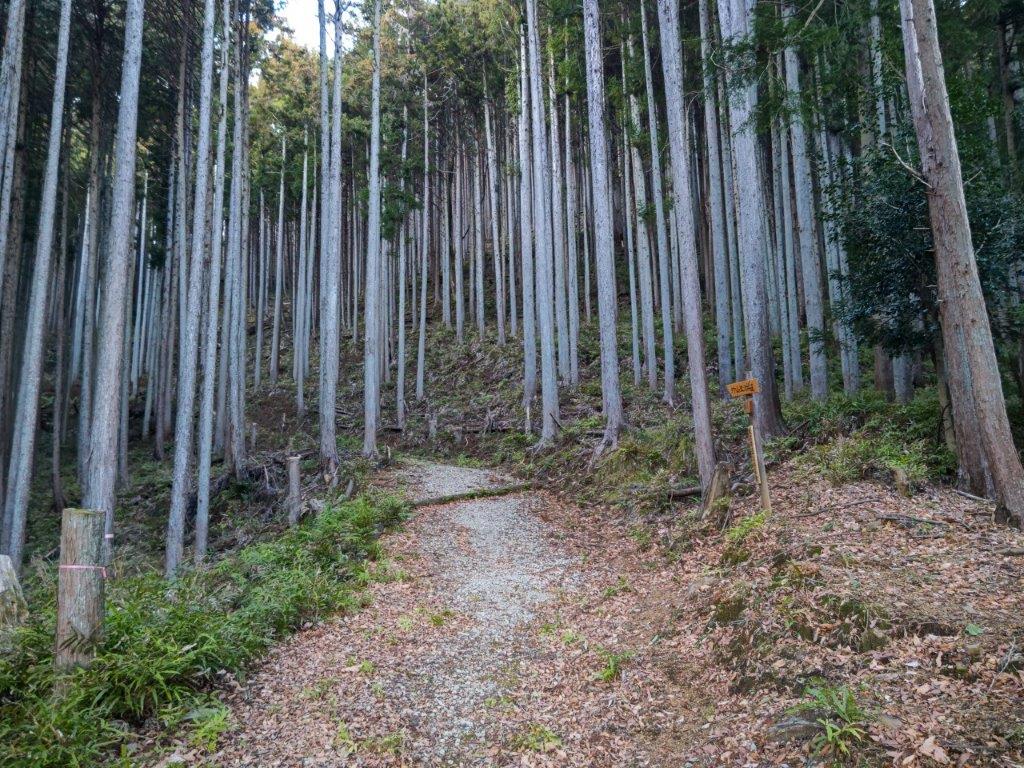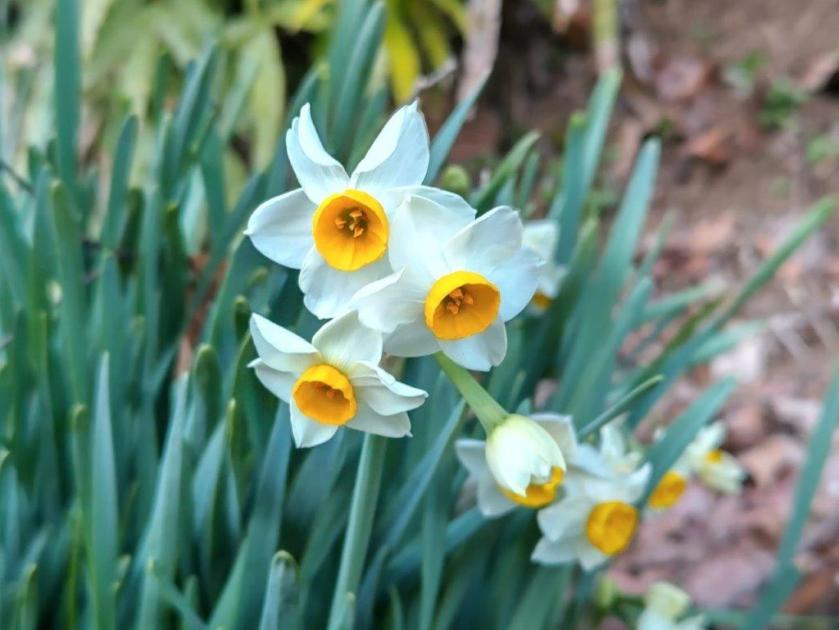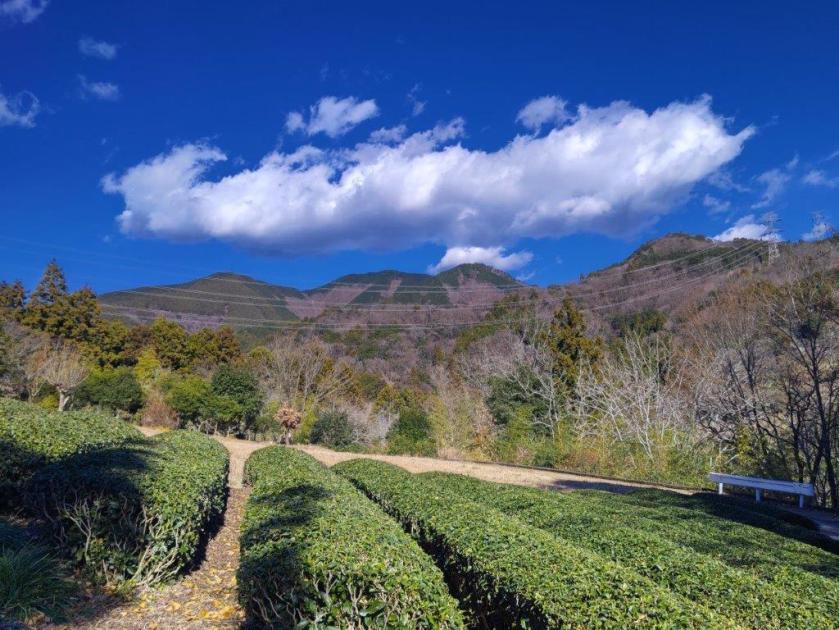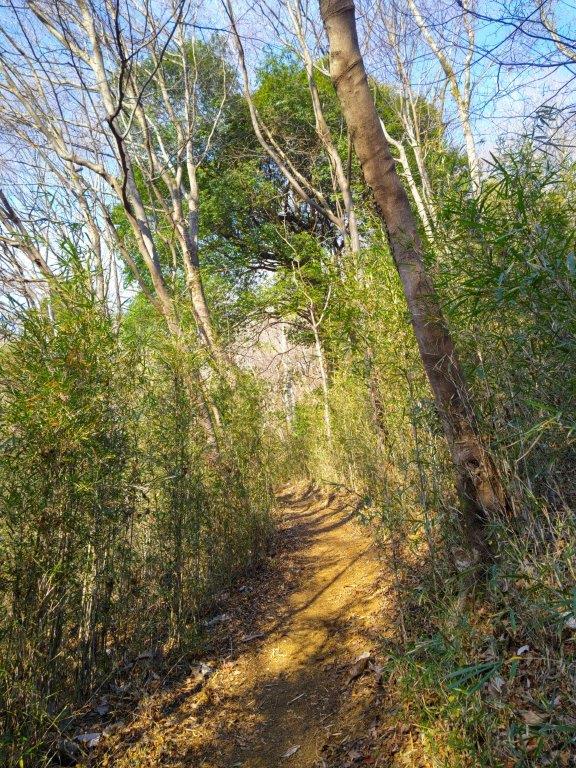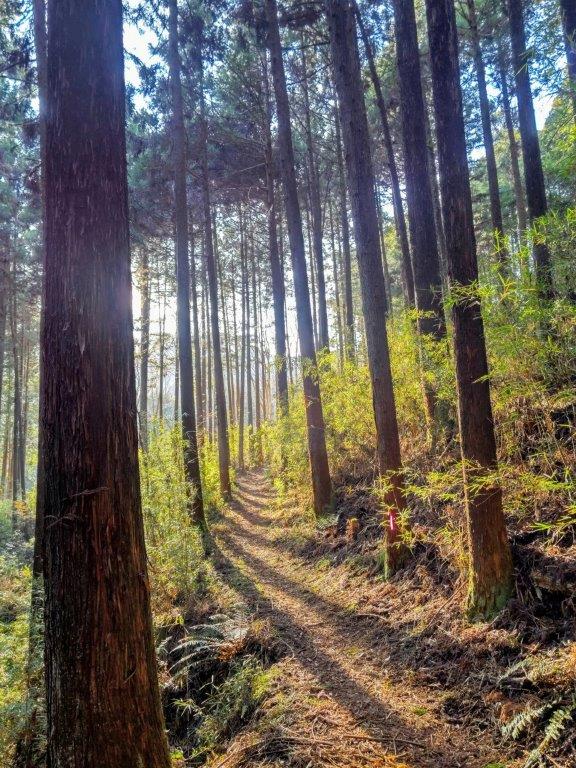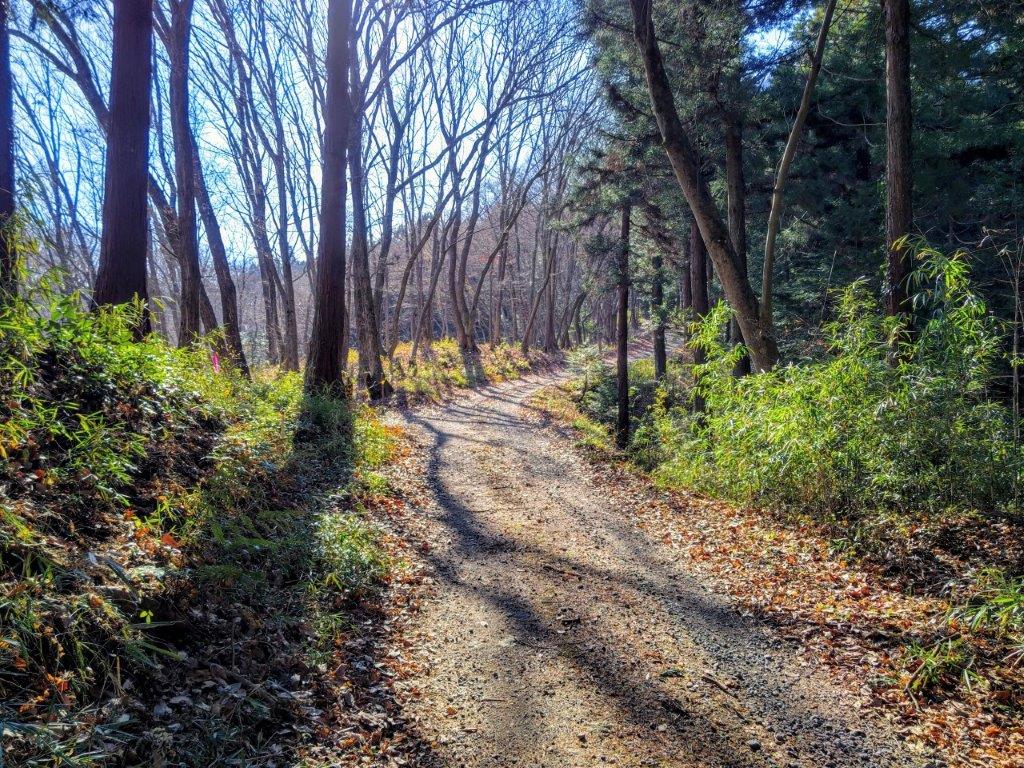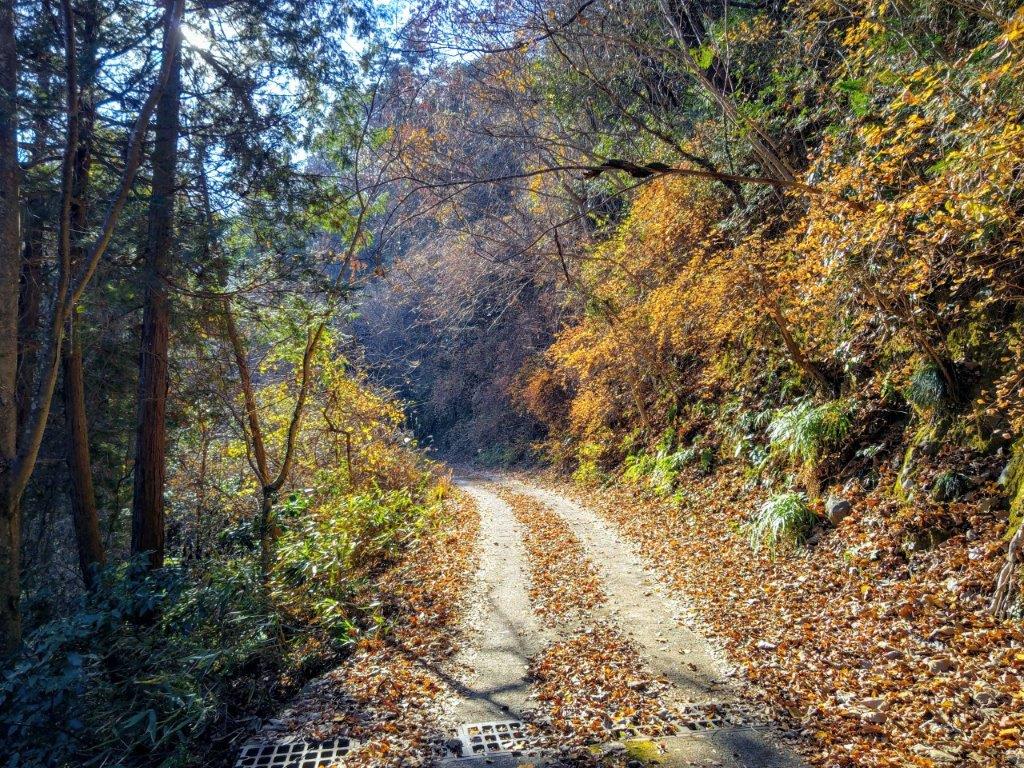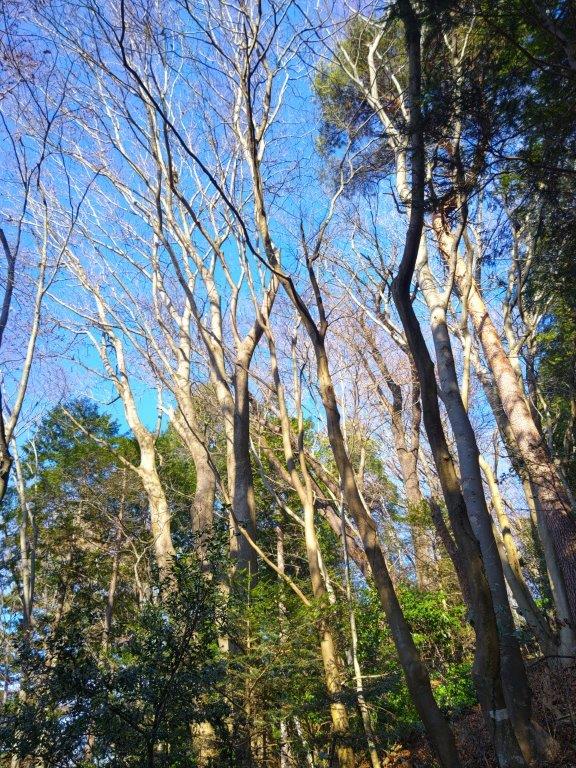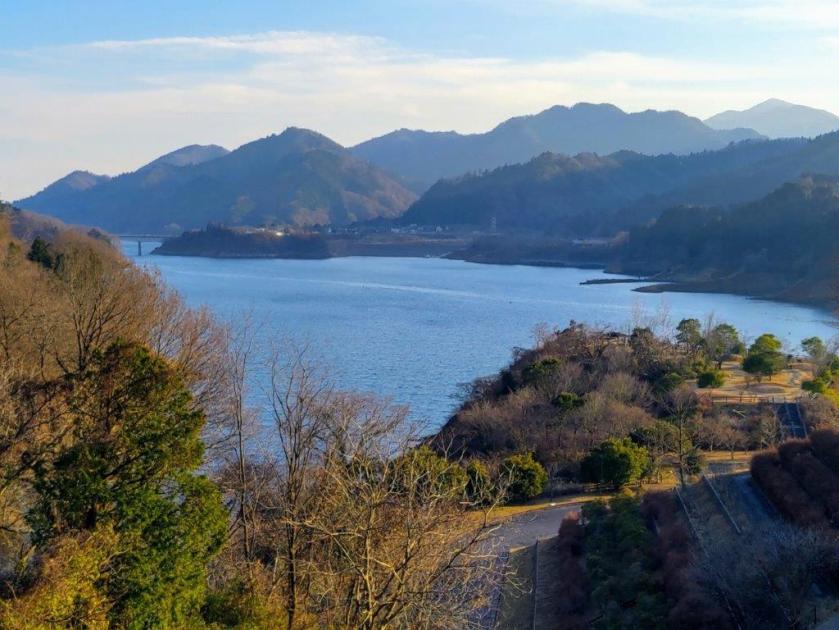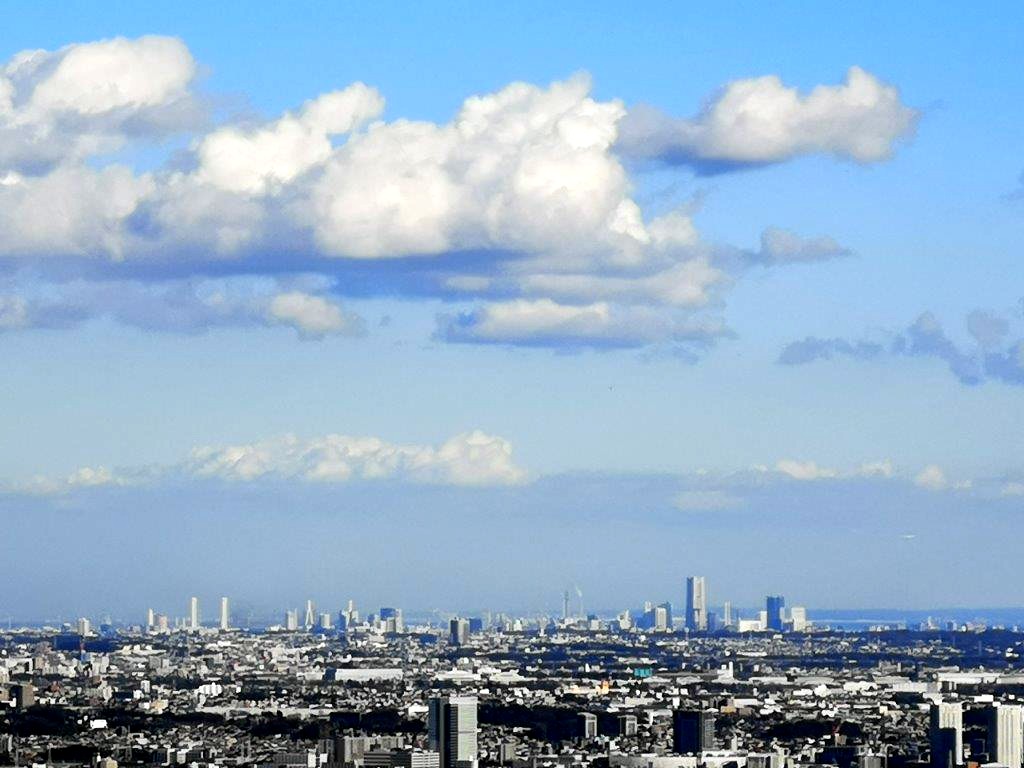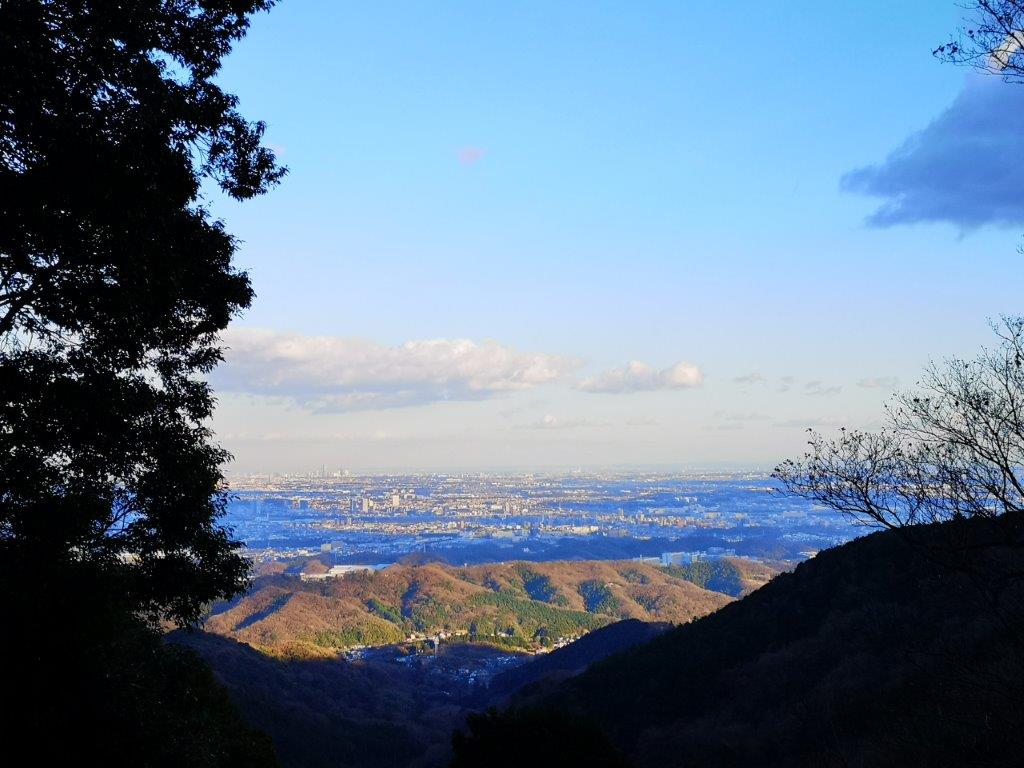
Mt Tobio (234m), Atsugi City, Kanagawa Prefecture, Saturday, February 1, 2025

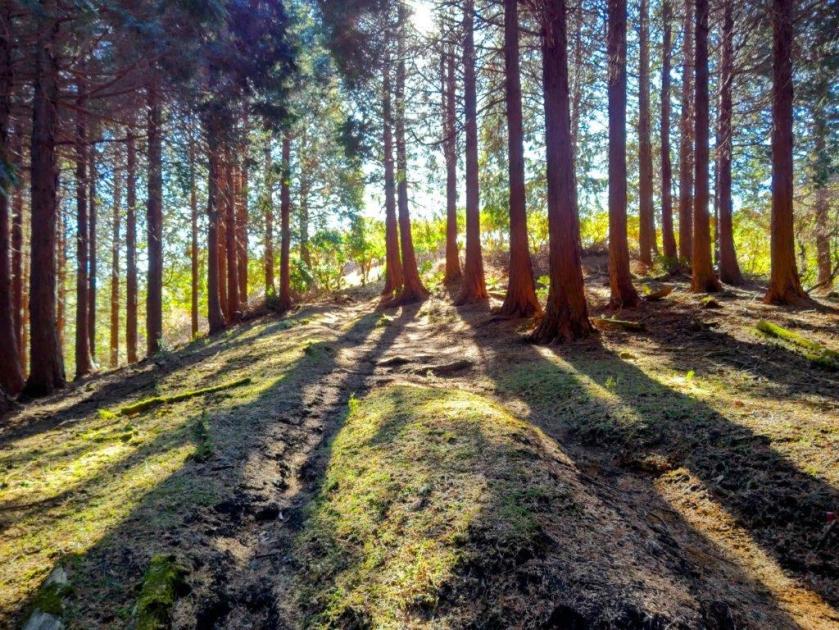
I found this hike, through the low hills at the edge of western Tanzawa, in one of my guidebooks; in addition to a view from the highest point, it also passed by an observation tower, seemingly a characteristic of the area. It was a little on the short side, but looking at maps online, I saw it was possible to extend it northeast and also include one more observation tower.

For subscribers, read this Post on Hiking Around Tokyo for a better viewing experience and the latest updates

Hiking in the Tanzawa Mountains 丹沢山地

To get to the start of the hike, I’d ride the Odakyu line limited express to Atsugi, and then board a bus for the Tobio locality, at the southern end of the hills. For the return, I’d catch a bus back to Atsugi near the northern end. The weather was supposed to be sunny in the morning, turning cloudy in the afternoon. I was looking forward to a relaxing winter hike with views of the Tanzawa mountains and the Kanto Plain.

Find Japan Hiking Maps on Japanwilds

Trail at the Start of the Hike (left) Trail past the Tower (right)

Steep Climb before Mt Tobio (left) Road for Mt Hasuge (right)

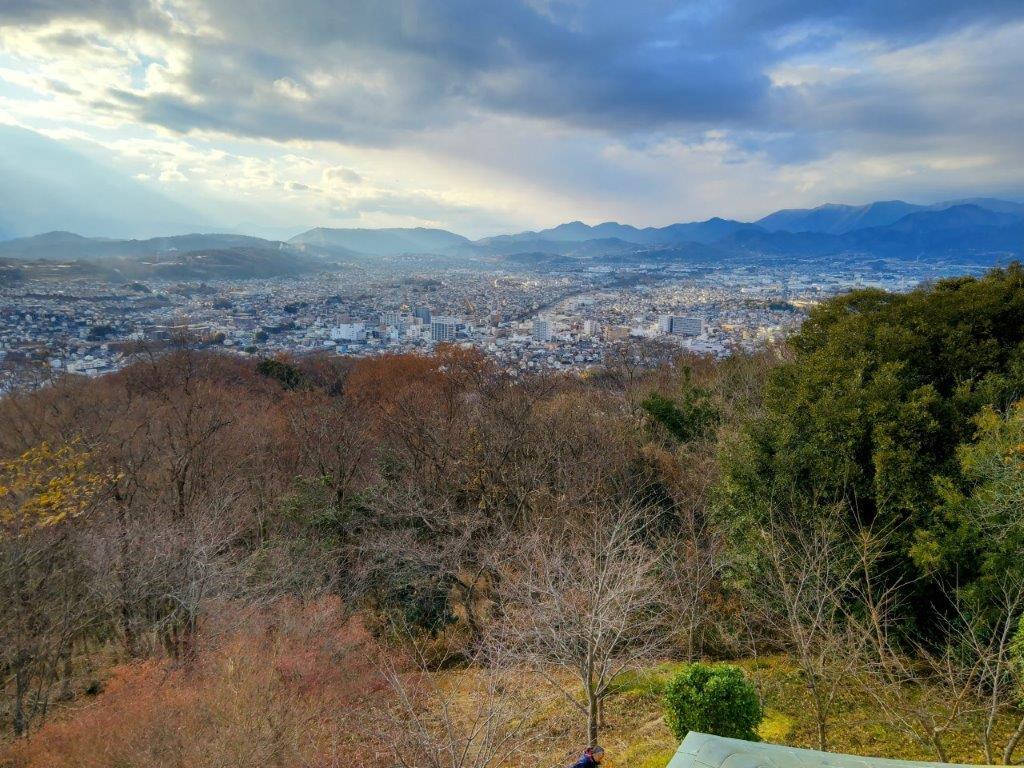
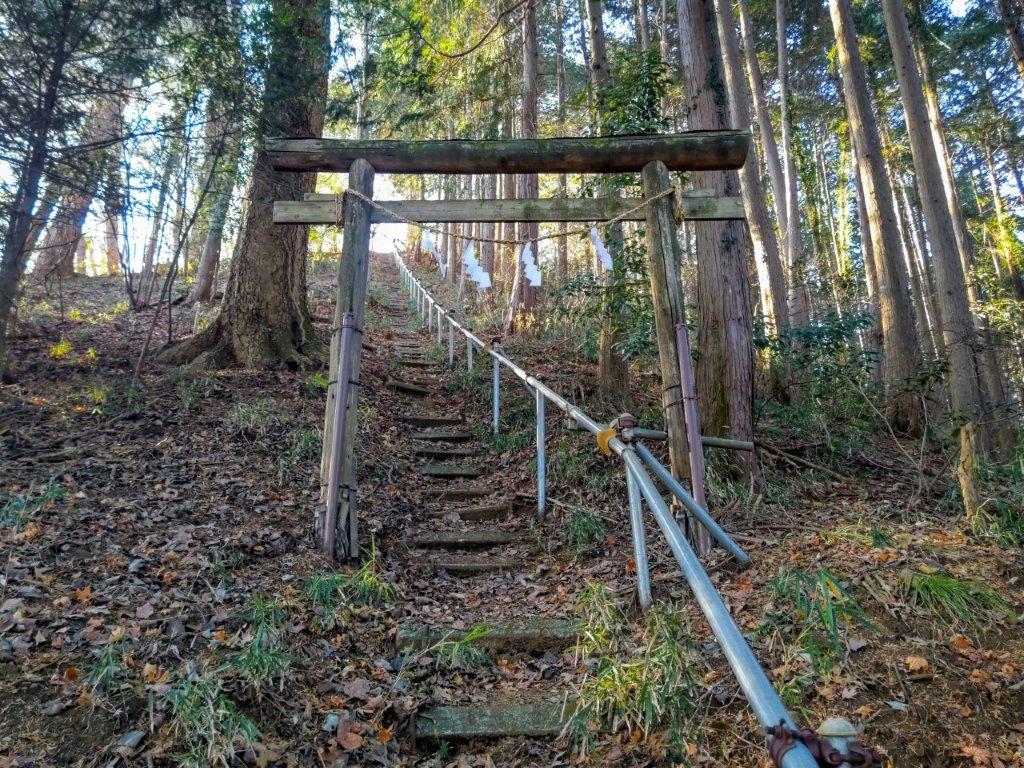
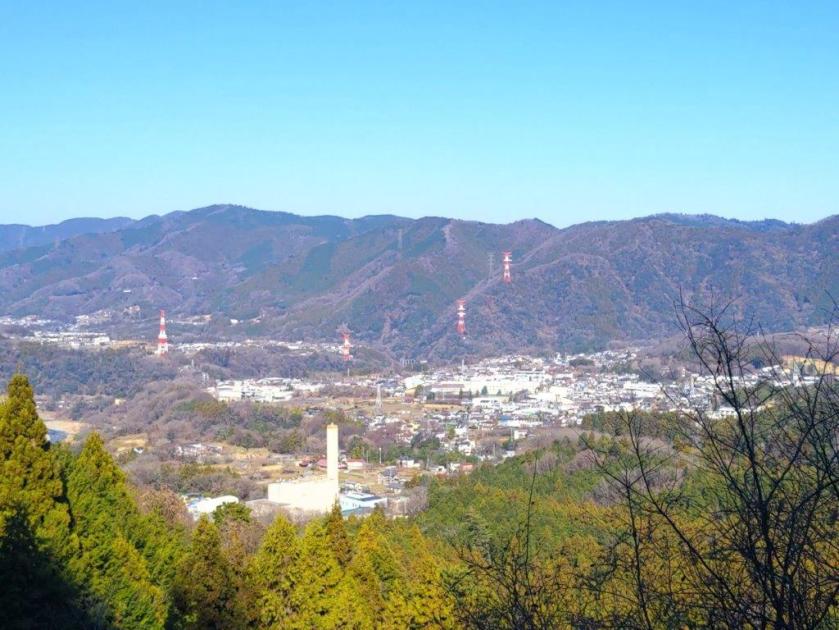
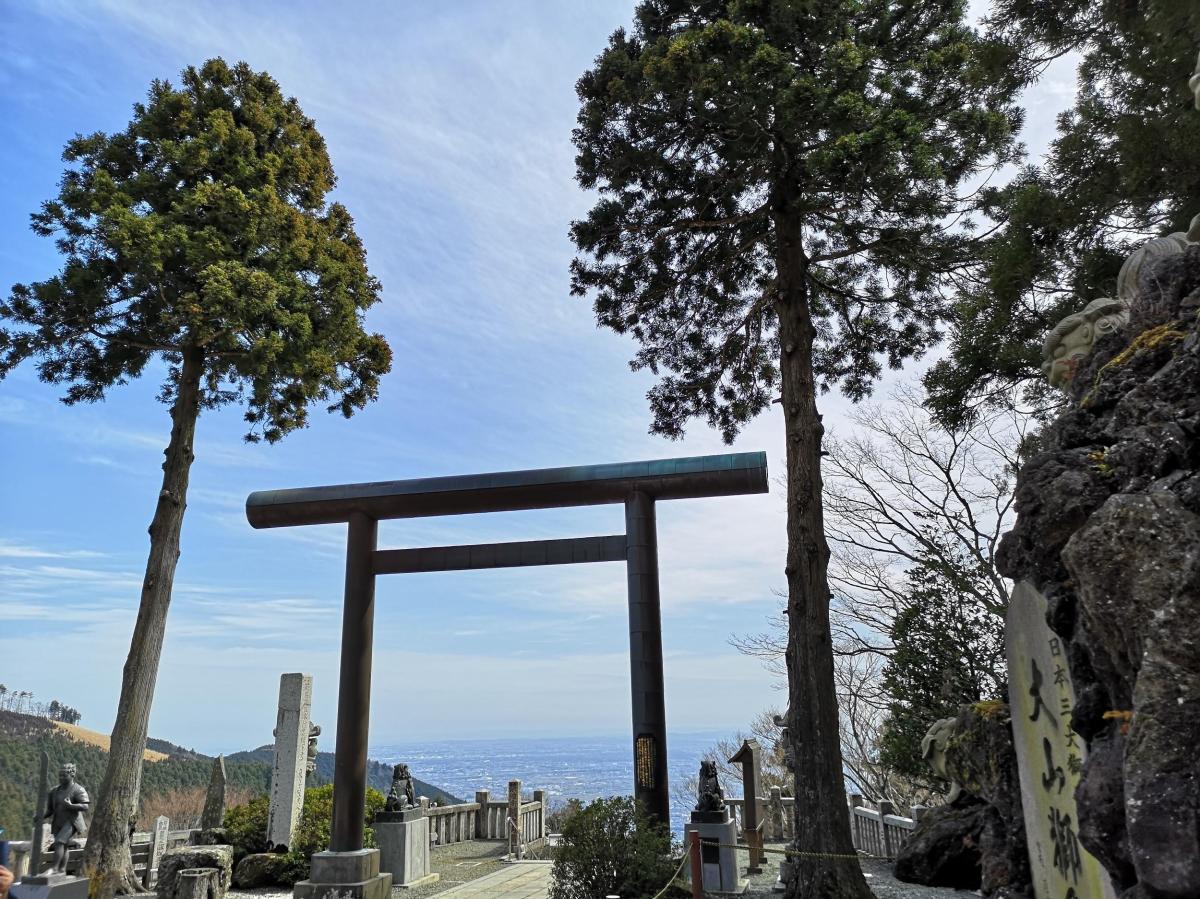
I sped south under blue skies comfortably seated on the “Romance Car”, arriving at Atsugi a little before 1030. There, I boarded a half-full bus for the half-hour ride to Tobio Danchi. After a short walk through a residential neighbourhood, I reached the start of the hiking trail at 1130 at the top of a long staircase. After following a level trail for a short while, I arrived at Sannosha (山王社), a Shinto Shrine at the edge of the forest with a view of the Kanto Plain on the eastern side.

View of the Kanto Plain from Sansho Shrine

Trail between Sannosha and Konpirasha Shrines

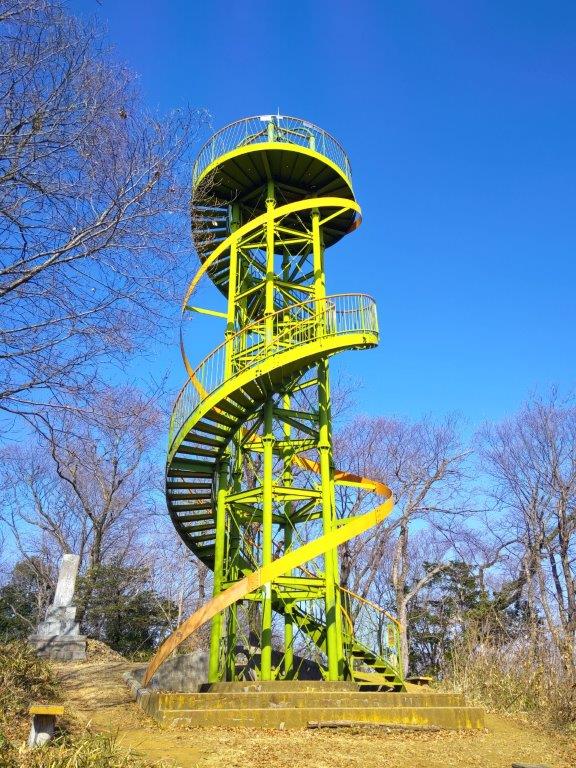
I was delighted to get a view so soon, even only of a flat urbanscape. After quickly checking out the shrine, I continued on my way, and soon arrived at Konpirasha (金毘羅社), another Shinto shrine, this one with a photogenic red “torii” or “Shinto gate”. It was completely in the forest, but a little further along the trail, I came upon the equally photogenic yellow konpirasan Observation Tower (金比羅山展望台 also known as the Mt Tobio Observation Tower).

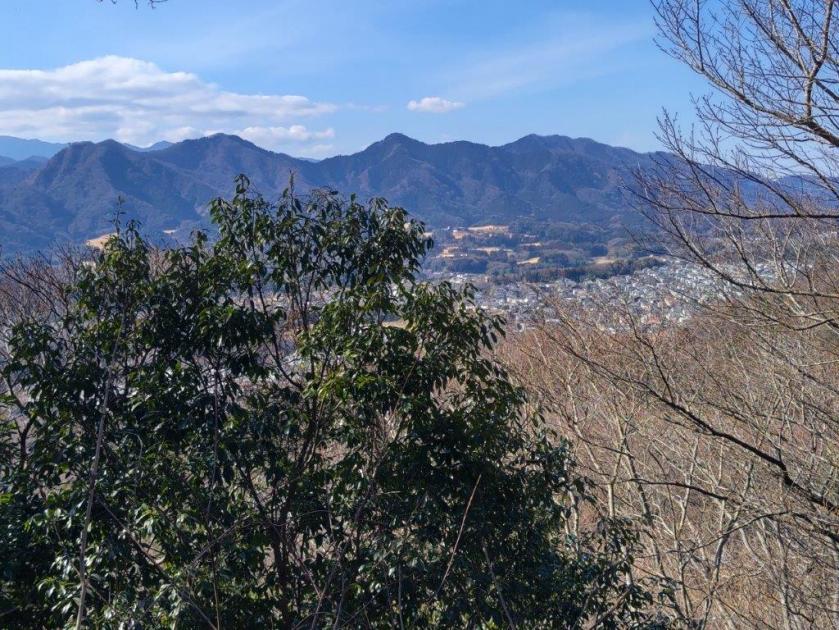
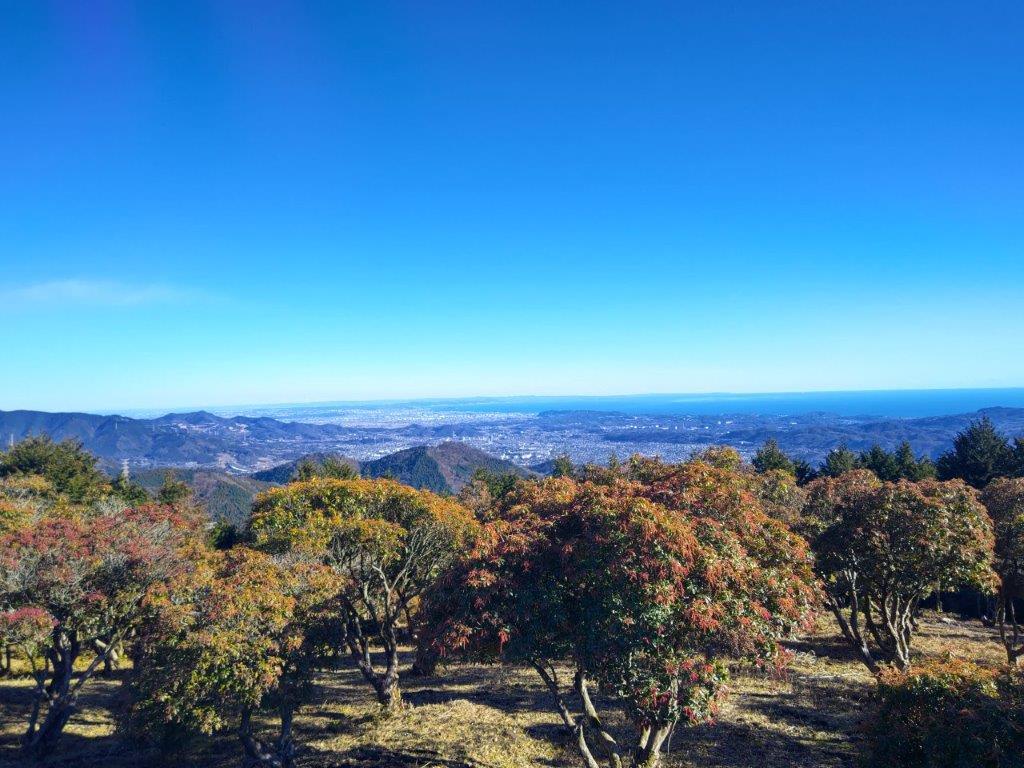
View Southeast of Kanagawa from the Observation Tower

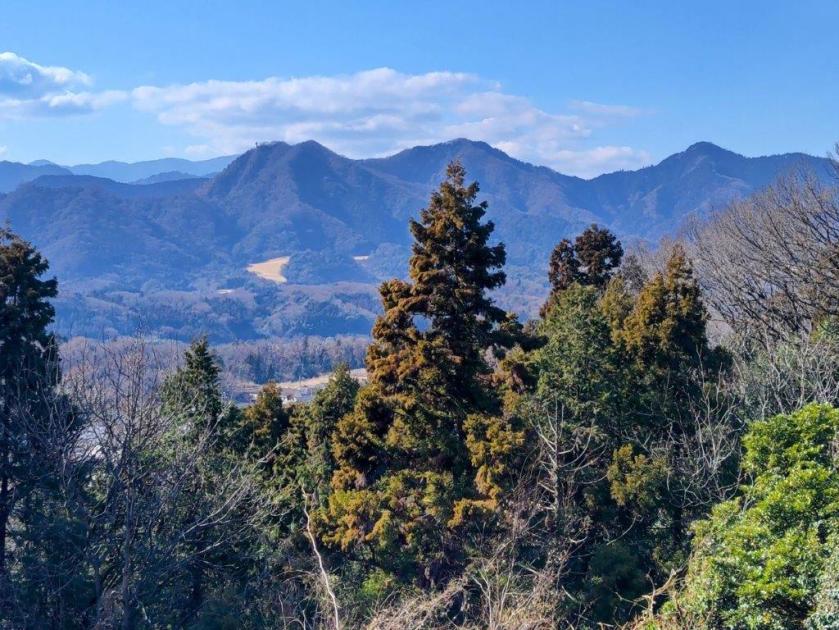
View Northeast of Tokyo from the Observation Tower

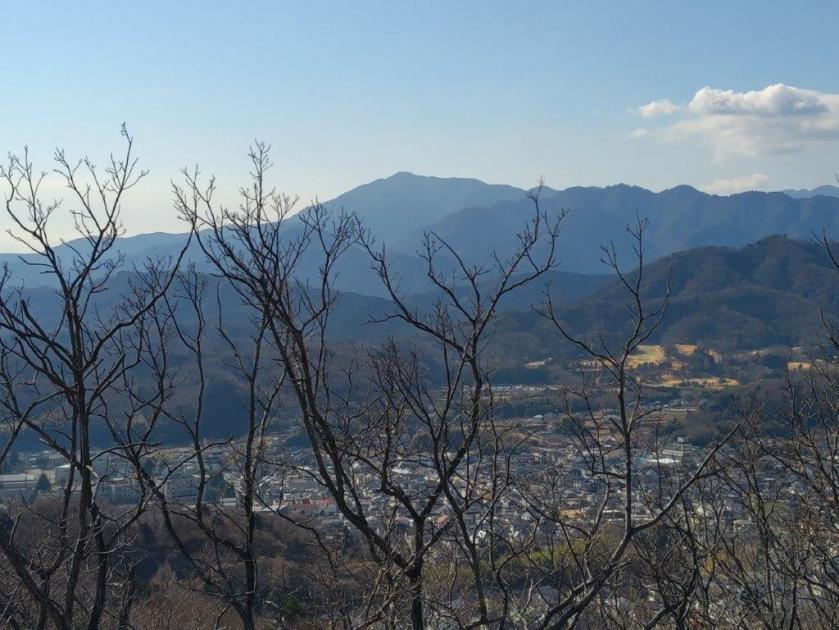
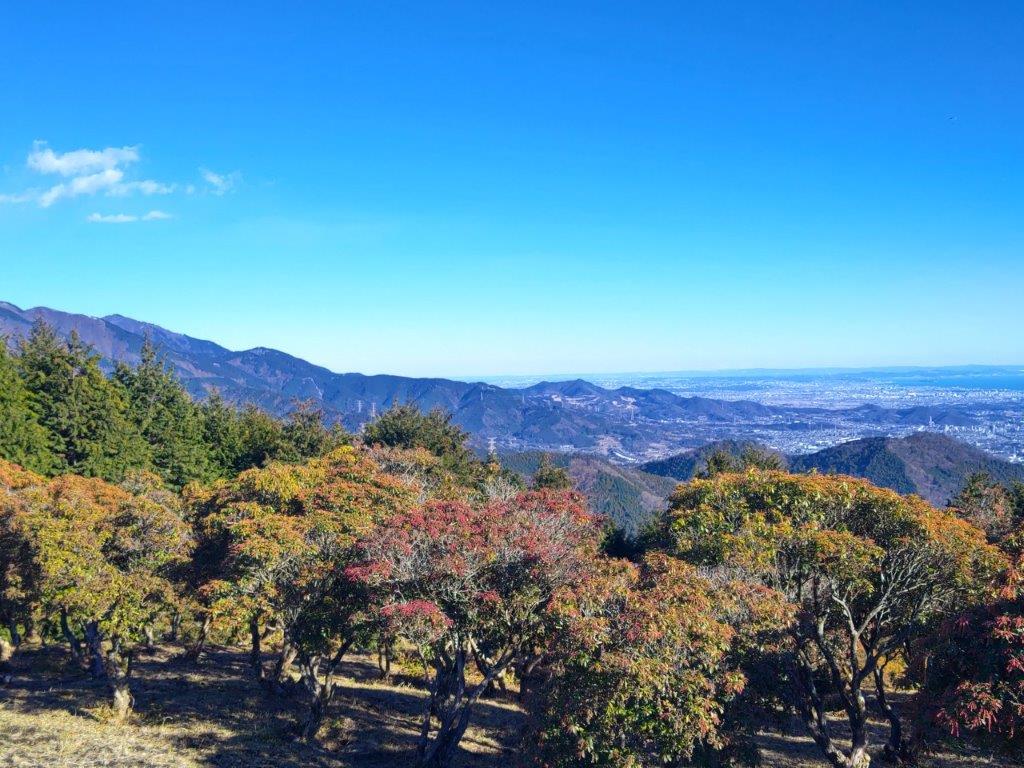
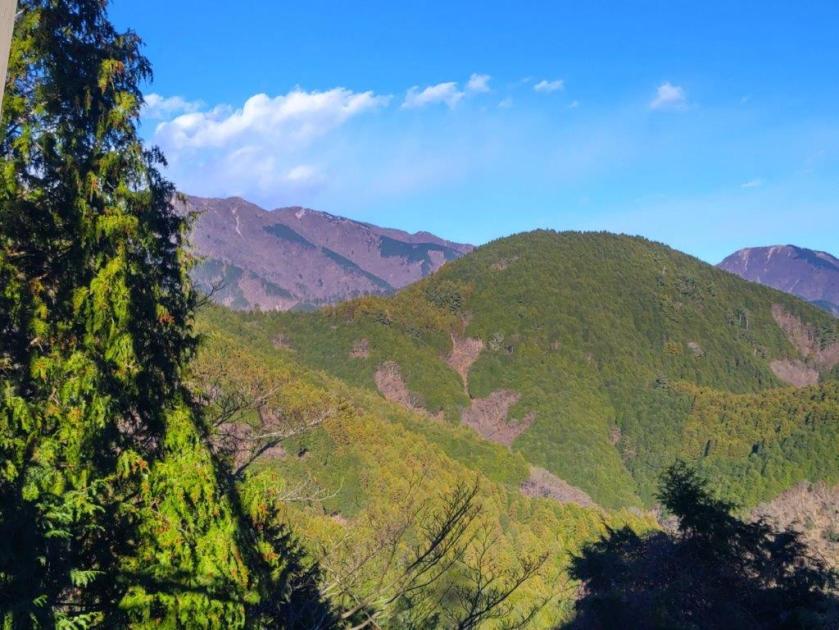
It was one of the tallest observation towers I’d ever been up; unfortunately, bare branches still reached high enough to partly interfere with the view of the Tanzawa mountains on the western side; I could still make out the triangular summit of Mt Oyama, as well as Mt Kyogatake, Mt Bukka and Mt Takatori; on the eastern side was the flat Kanto plain, Tokyo’s skyscrapers lost in the haze. Looking south, I could see the elevated plateau stretching from Shonan Daira to Hadano city. To the north, I could observe the entire length of the hills I’d be hiking today.

View of Western Tanzawa from the Observation Tower

Mt Oyama from the Observation Tower

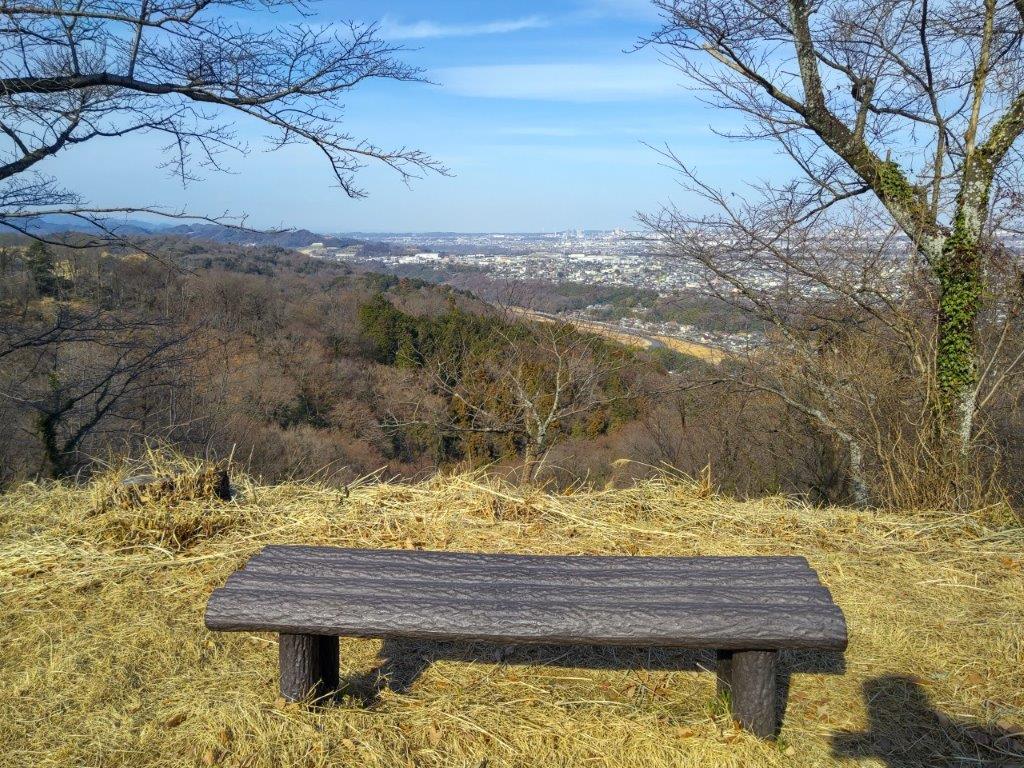
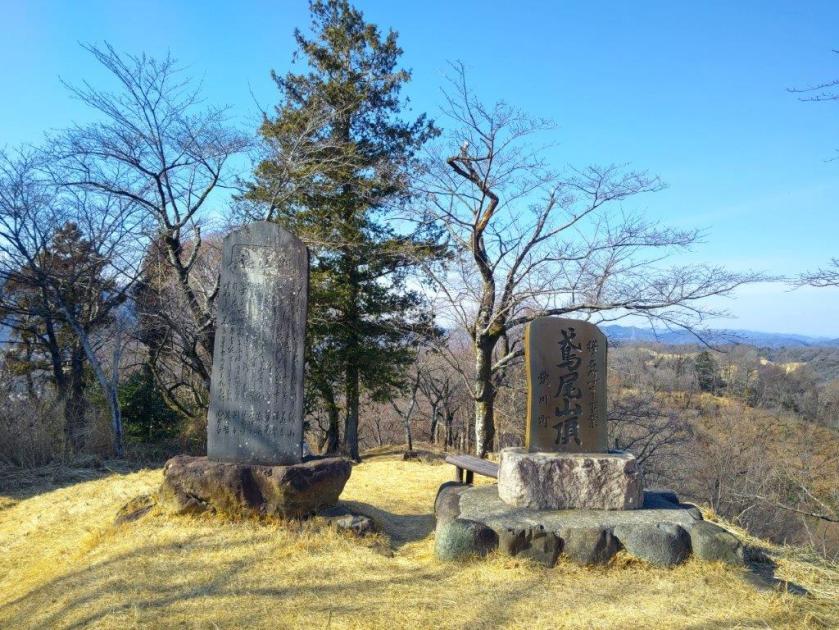
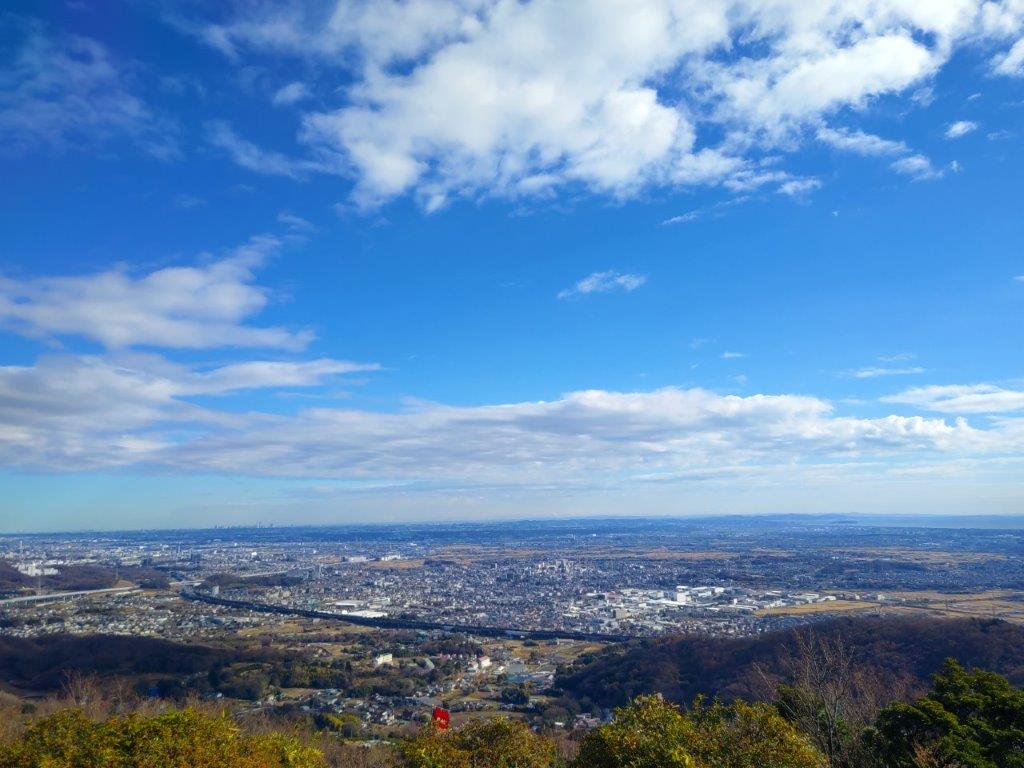
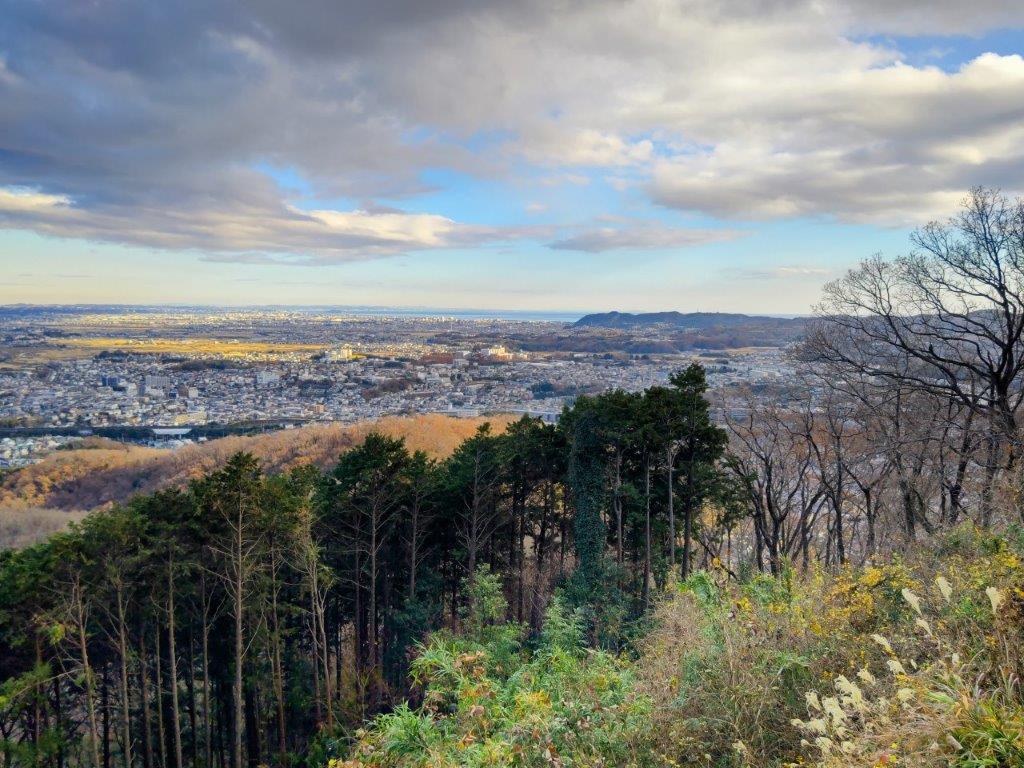
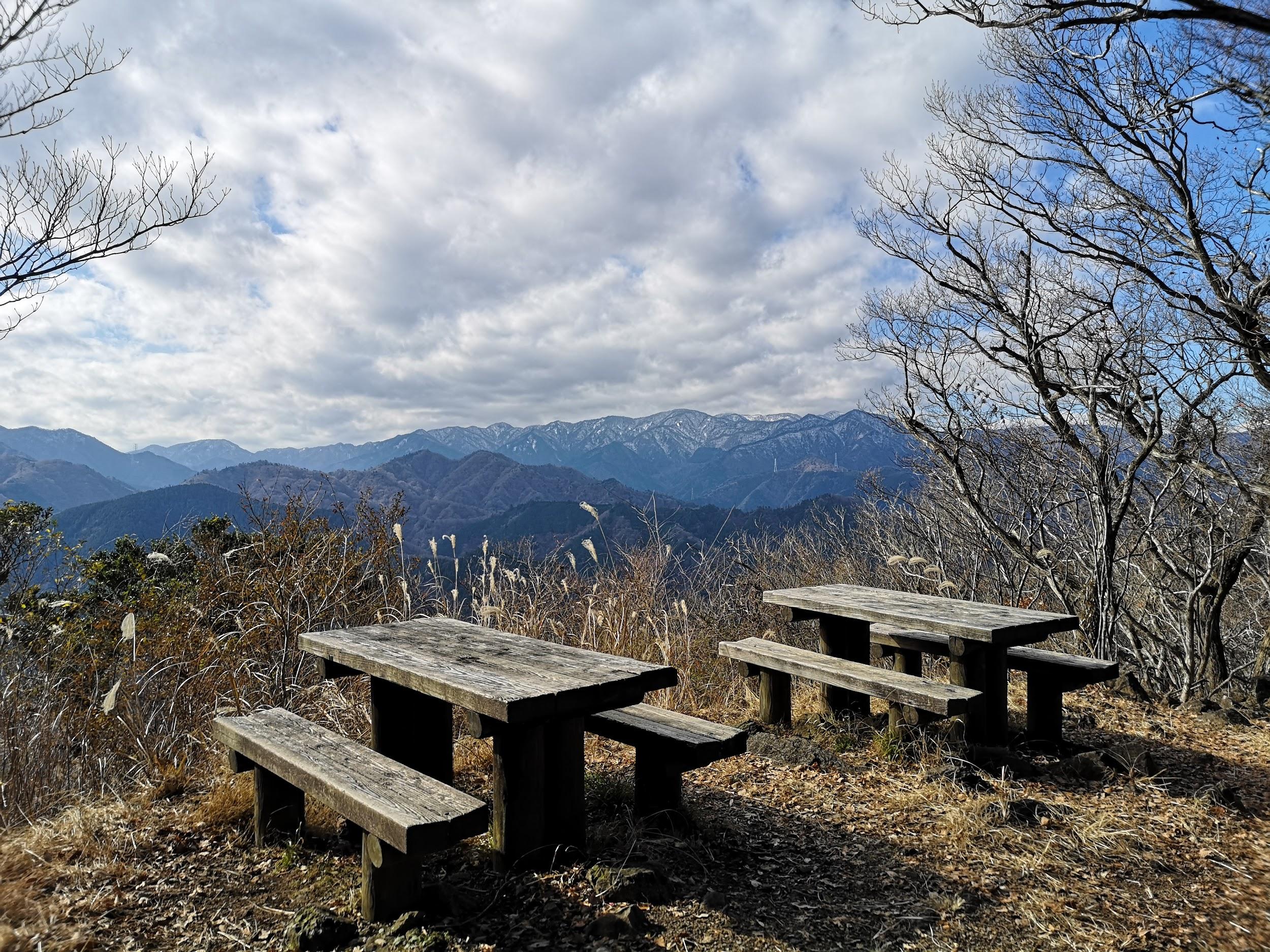
This was probably the best view of the day, and once satisfied, I headed down the stairs to continue my hike. The trail first went downhill, then became level near a rock mining area, before climbing steeply. Before I could break a sweat, I found myself at the top of Mt Tobio (鳶尾山 とびおさん tobio-san), known for its cherry blossoms trees, although in this season the branches were still bare. I had a view once again of the Kanto plain; northwards were the Okutama mountains, the distinctive shape of Mt Odake clearly visible in the far distance. Since it was just past 1pm, I sat on a sunny bench for lunch with a view. Once done, I set off again.

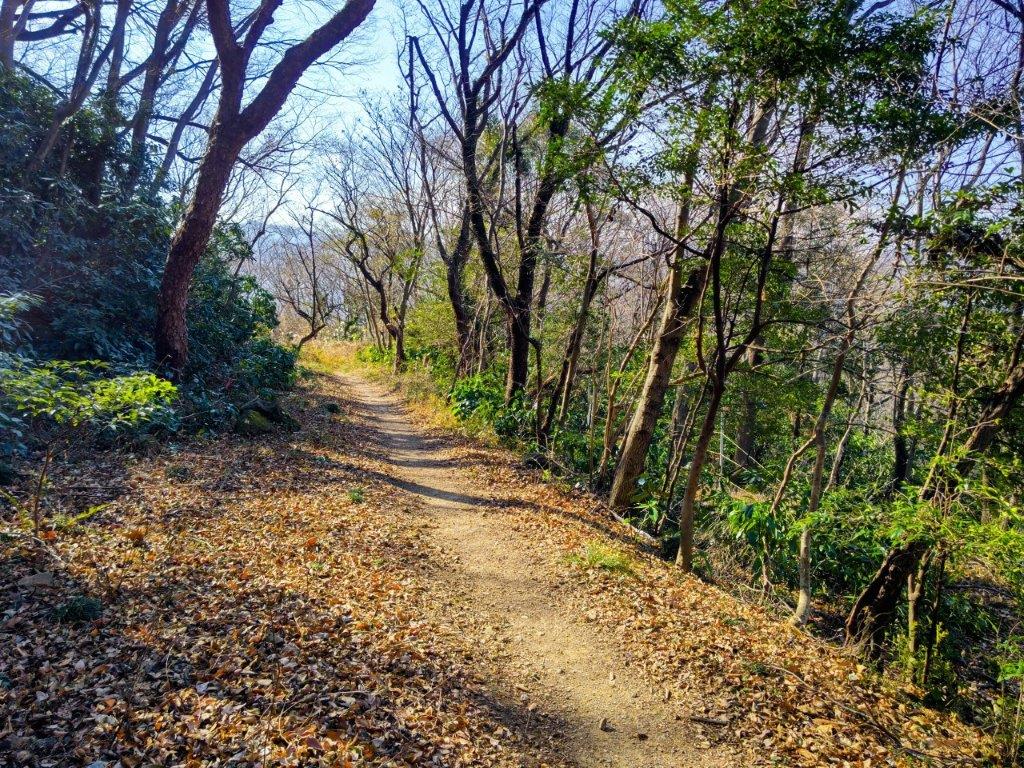
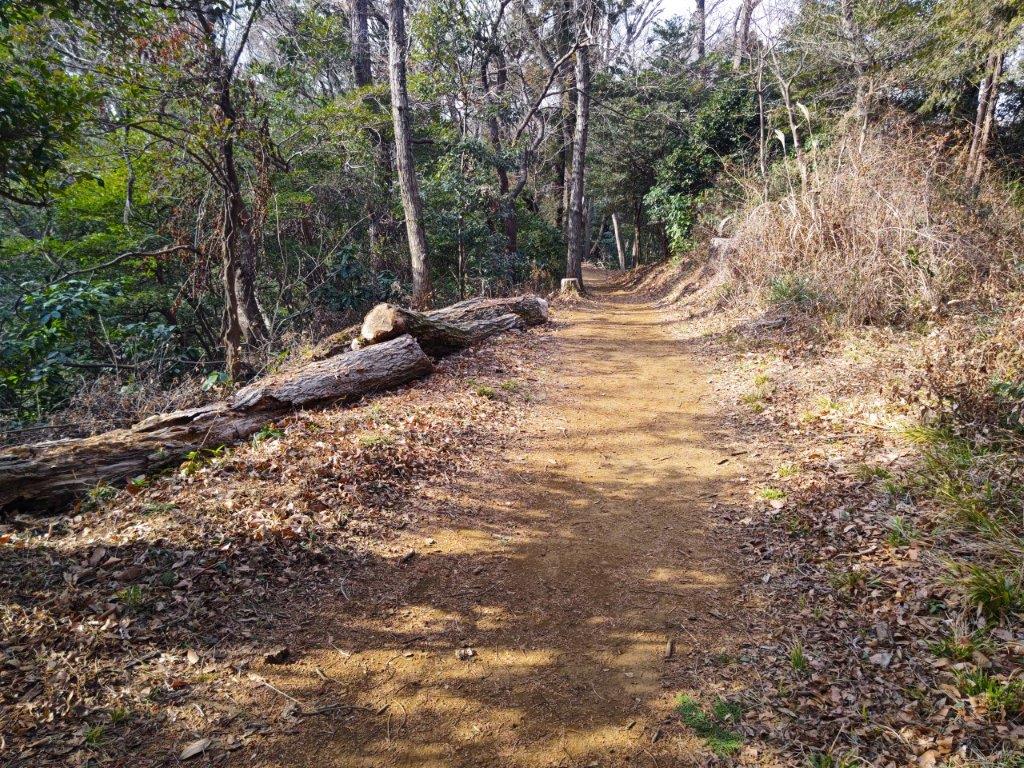
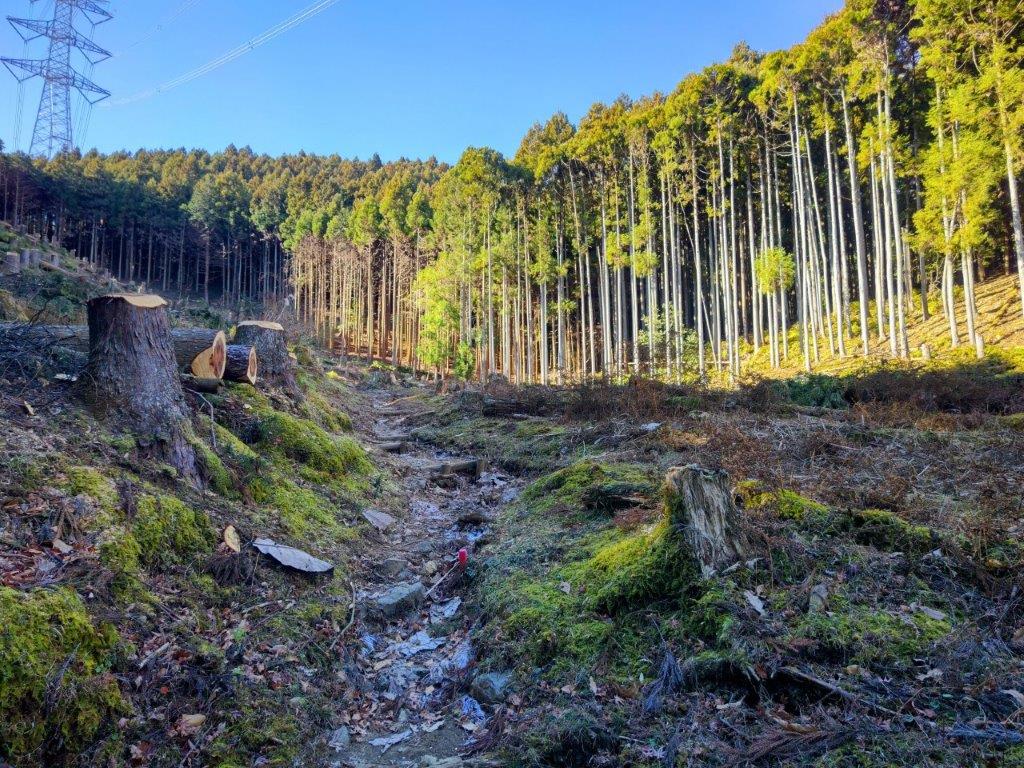
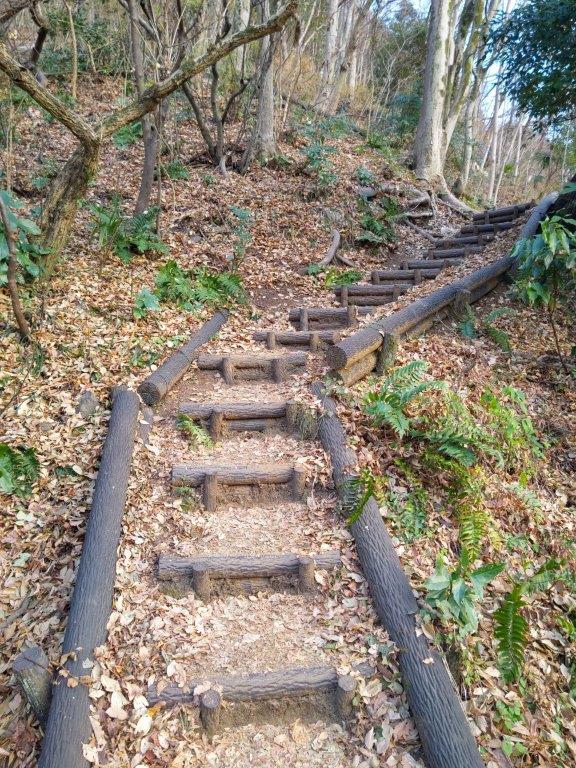
Trail past the Observation Tower

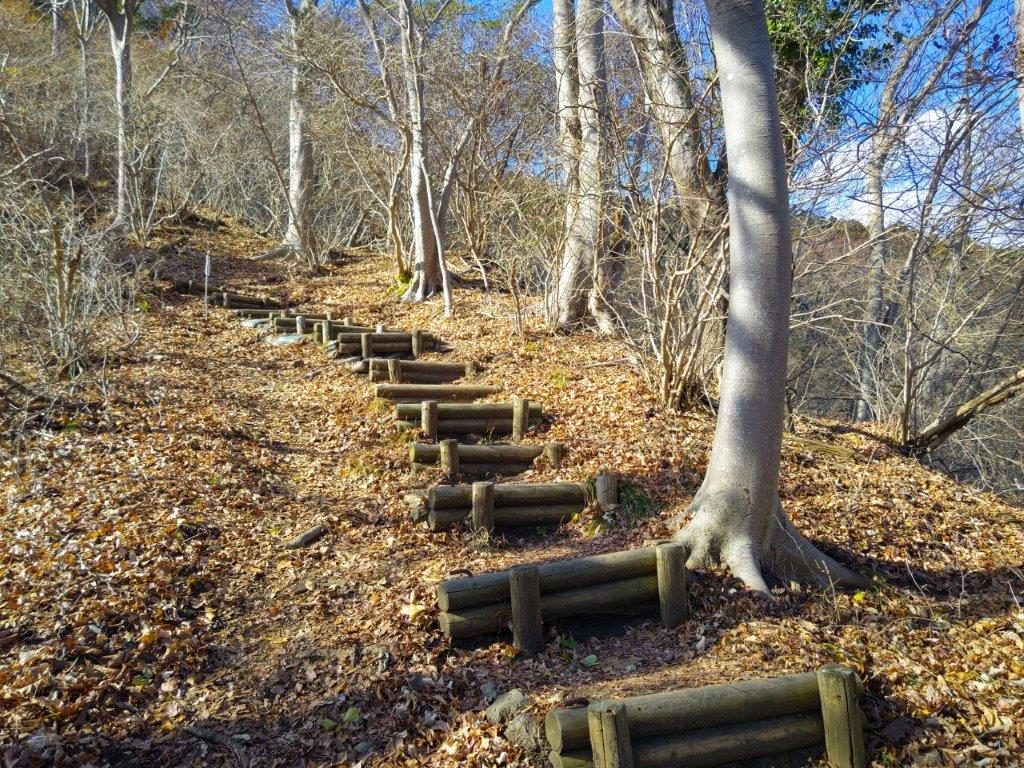
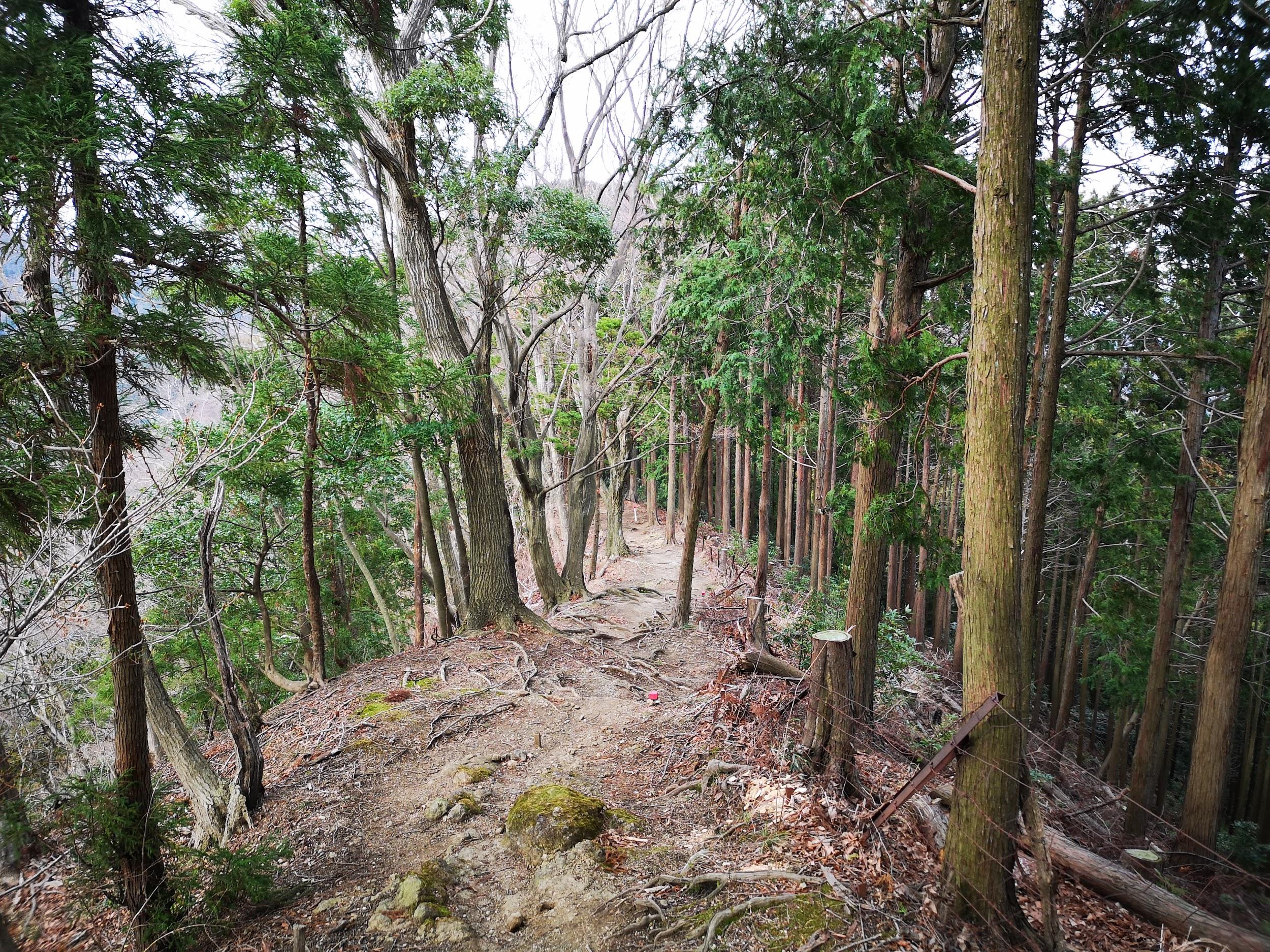
Level Section before Mt Tobio

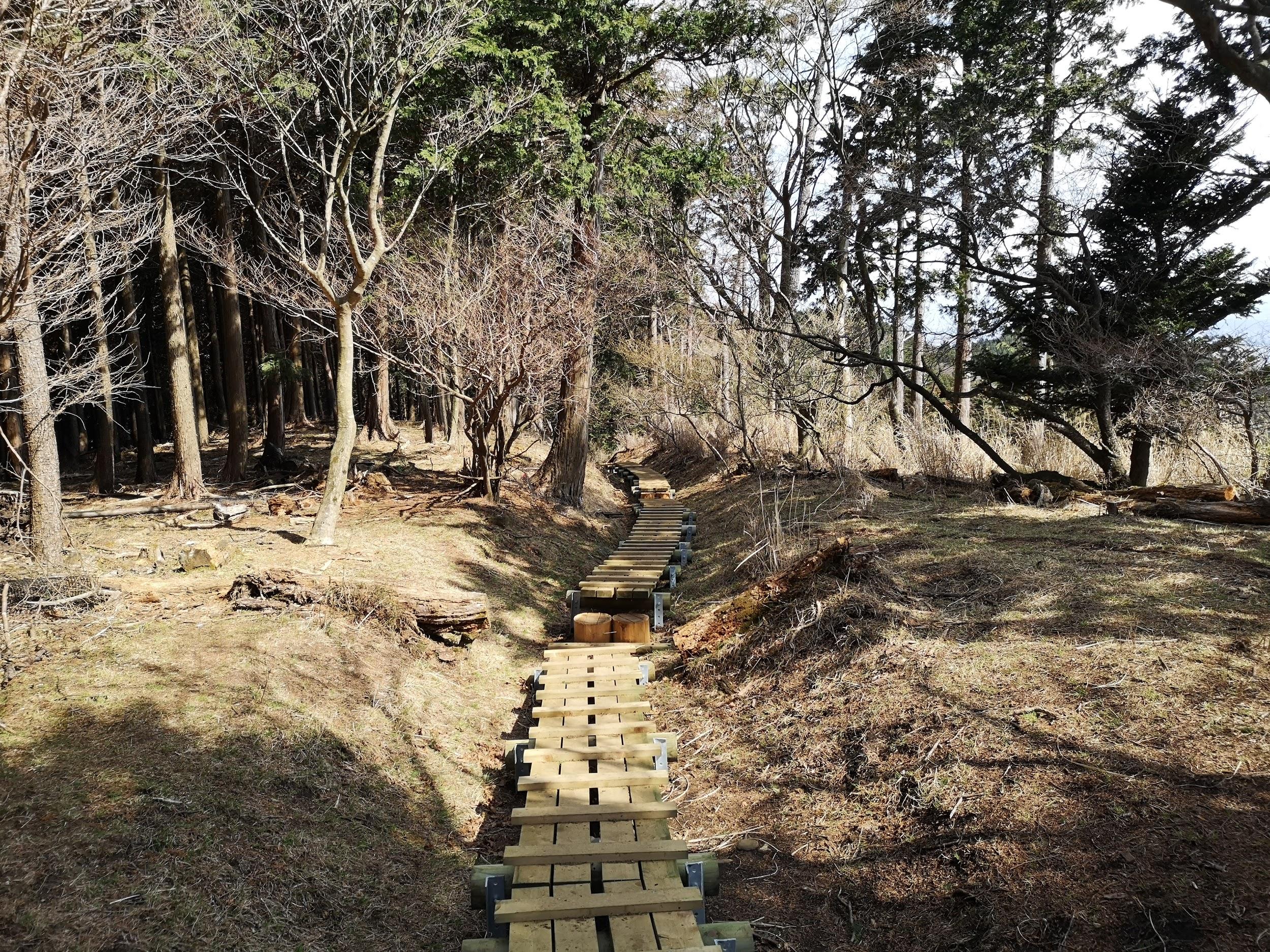
I followed a level trail surrounded by mixed forest, the most pleasant part of the hike so far, hiding the nearby city for a short while. I eventually reached a paved road at Yanami Pass (やなみ峠), the end of the Mt Tobio Hiking Trail. Here, I turned right onto the road as it descended gently through the forest. Just past a small creek at a bend, I spotted a series of log steps heading steeply up the mountain side. Clouds had covered the entire sky at an astonishing speed bringing a chill to what had been so far a pleasant winter day. I quickly made my way up the steps to warm my chilled body.

Bench at the Top of Mt Tobio

View of the City from Mt Tobio

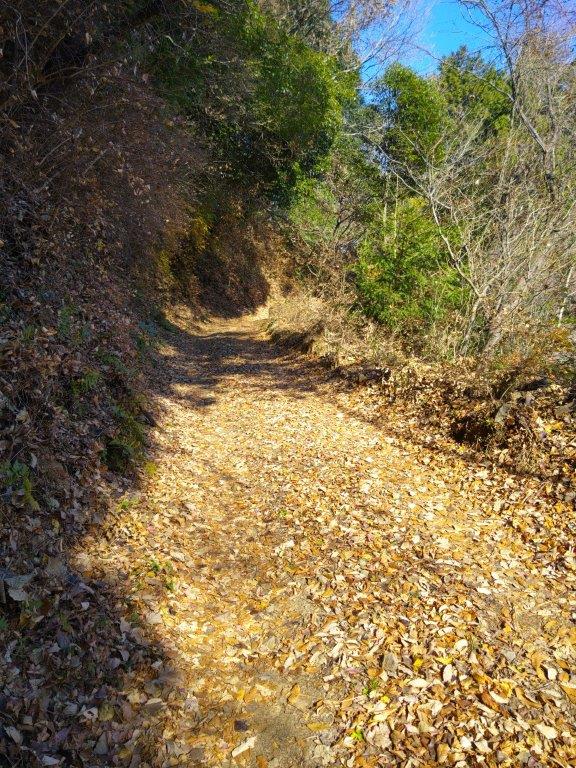
I was glad to be back on a hiking trail, even for a short while. At 2h30, I arrived at the the top of Mt Hasuge (八菅山 200m) and the Mt Hasuge Observation Tower (八菅山展望台), about half the height of the previous one. The view, only on the east side, was also less spectacular, possibly due to the white cloud cover and lower elevation. After checking out the nearby Hasuge Shrine (八菅神社), I continued northwards, now on a wide, level dirt track, trees on both sides. After a while, I reached a fence on the west side, beyond which I could see a golf course, the Nakatsugawa Country Club.

Trail past Mt Tobio

Tanzawa Mountains beyond the Green

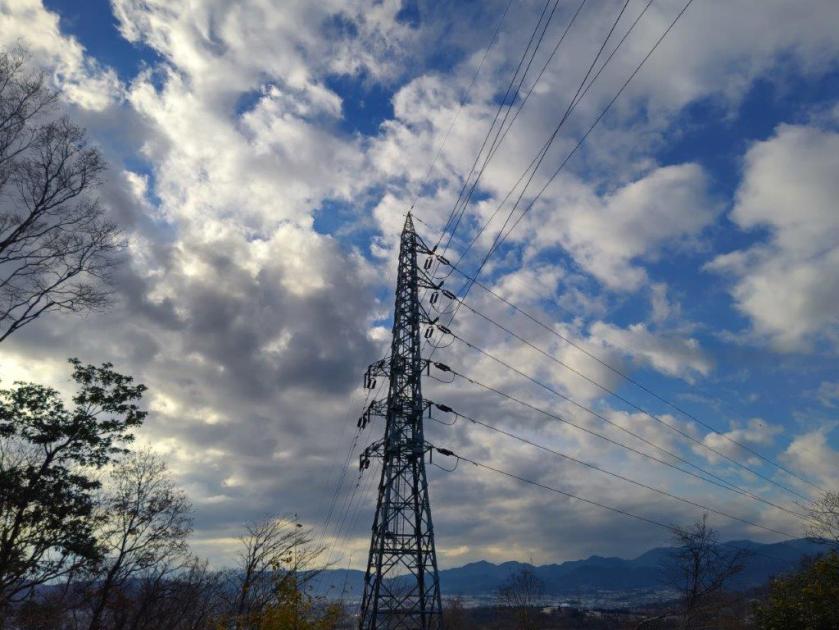
Beyond the green, I could see the dark outline of the Tanzawa mountains under grey clouds. A little further, I reached a road and an electric pylon at the top of the country club. Here, I turned left, descending between the greens, passing the club house and its huge parking lot. At 3h30 I reached the base of the mountain and after a short walk through the countryside, arrived at a bus stop on a busy road. Here and there, I could see the first plum blossoms of the season. A little later, I was on the bus for Atsugi, and at 5pm I boarded the Romance car for the one hour trip back to Tokyo.

Watch a Video of the Mt Tobio Hike

Watch the Video of the Hike on YouTube

See a Slideshow of More Pictures of the Hike

Mt Shidango (758m) & Mt Take (710m), Matsuda Town, Kanagawa Prefecture, Saturday, January 11, 2025

I wanted to do another hike in the Tanzawa mountains, winter being the best time to explore the area. Looking through my guidebook, I found a couple of nearby mountains I had yet to climb, along a river valley north of Matsuda station. The summit of the first peak was out of the trees; the second was in the forest, but with a viewpoint below it on the east side. Combining the two, I expected the hike to take about 4 hours, meaning I could leave mid-morning and take advantage of the “Mt Fuji Romancecar”, the only limited express train to stop in Matsuda.

For subscribers, read this Post on Hiking Around Tokyo for a better viewing experience and the latest updates

Hiking in the Tanzawa-Oyama Quasi-National Park

丹沢大山国定公園

To get to the start of the hike, I’d ride the Odakyu “Fuji-san” limited express from Shinjuku to Matsuda station, and from there, ride a Fujikyu bus to the last stop on the line. For the return, I’d catch the same bus several stops before the end of the line, and then ride the “Fuji-san” back to Tokyo. Apparently Mt Fuji can be seen from both summits, and since the weather was supposed to be sunny all day, I was looking forward to getting a second chance at my first Fuji sighting of 2025.

Find Japan Hiking Maps on Japanwilds

Paved road between Yadoriki and the Wildlife Gate

Powerline Clearing on the Way to Mt Shidango

It was a relaxing ride under light blue skies to Matsuda station. After getting off the train just before noon, I made my way to a bus stop in front of the nearby Shin-Matsuda station. I was surprised to find myself at the back of a line of teenagers, on their way to play a football match in the same place I was headed. Half an hour later, we all got off the bus in Yadoriki (寄). Leaving them to their ball game, I crossed a bridge over the Nakatsu River and followed signs for today’s mountain, past tea fields and up a steep road ending at a wildlife gate at the edge of the forest; beyond it was the start of the hiking trail.

View of Mt Kobo from Mt Shidango

View of Shonan Bay from Mt Shidango

I was glad to be walking through the forest, the cool shade contrasting sharply with the warm sun from moments before; walking up a series of log steps, I soon warmed up again. I soon reached a clearing allowing for the passage of a power line. Beyond it, I resumed my walk under the dark cedars. One hour after setting off, the path suddenly went straight up the mountain side, gnarly tree roots forming natural steps, and just before 2pm, I broke through the trees to reach a small shrine, also the top of Mt Shidango (シダンゴ山 しだんごやま shidango-yama), named after a hermit (“sennin“) called Shidagon who lived on this mountain top about 1300 years ago.

View of Mt Shidango on the Way to Mt Take

Fuji Viewing Platform below Mt Take

I was surprised to be the only person on the summit, since other nearby peaks usually have a lot of traffic. On the east side was the long ridgeline starting from Mt Oyama and ending at Mt Kobo, where I’d been one week ago. Directly ahead to the south was Sagami Bay. In between, I could make out the Miura Peninsula, and beyond it in the far distance, the Boso peninsula. On the west side, sandwiched between the next mountain and puffy clouds, I could see the white snows of Mt Fuji. The flat summit had a seating platform so I settled down for a late lunch with a view. At 2h30, I set off down some log steps, again under the cedars, heading westwards, and soon reached a paved road closed to traffic and hugging the mountain side. Here, ignoring a metal staircase heading straight up the opposite slope, I turned left along the road.

Mt Tono & Mt Oyama from near Mt Take

Walking through a Thicket of “Aburachan”

It was nice to walk on a level road for a short while, with views occasionally popping up on the east side through gaps in the vegetation. At 3pm, I reached the start of the trail for today’s second mountain. From this point, all signposts were in double, old wooden ones and newer metallic ones, provided by a local association. I appreciated how they felt the need to have sturdier and more functional signs while at the same time keeping the more fragile original ones. From this point, I also saw many warnings about leeches, as well as small salt containers (attached to most signposts) for their disposal (actively encouraged). I followed a path southwards and soon reached an electric pylon at the base of a steep slope.

The Tanzawa Mountains from the Mt Take Observation Platform

Mt Shidango (front), Mt Hiru (left), Mt Nabewari (middle), Mt Tono (right)

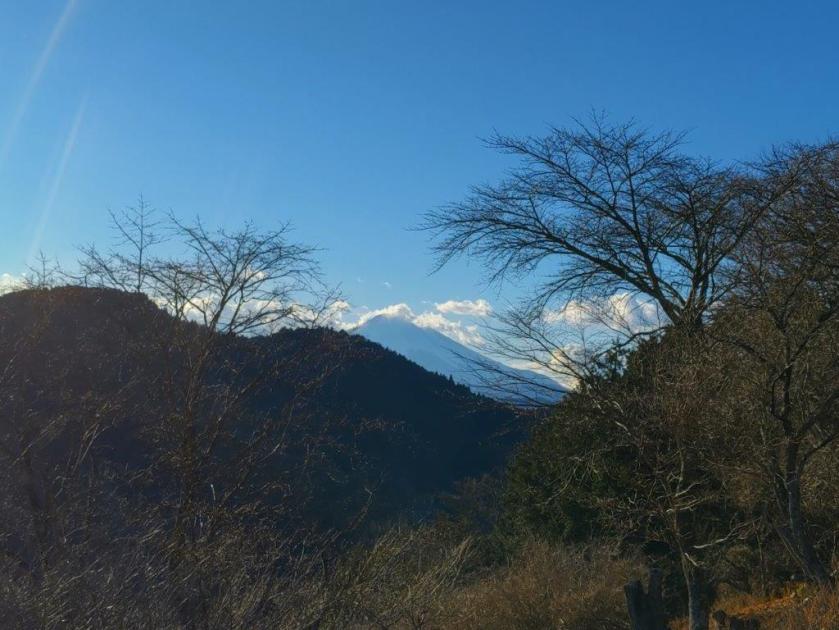
I took a few minutes to enjoy the unexpected view provided by the passage of the powerline. On the east side was Mt Fuji again, perfectly aligned with the next pylon; on the west side was the rounded green top of Mt Shidango. Behind, I could see Mt Tono to its left, and Sannoto to its right; in the far distance, I could just make out the pointy summit of Mt Oyama. After a little more climbing, I reached the top of Mt Take (タケ山 たけやま take-yama), another peak without Chinese characters. It was completely in the forest, one ray of sunlight fortuitously lighting up the summit marker (the wooden one). I soon moved on and reached blue skies at the edge of the forest.

Mt Tono (left) & Sannoto (right)

Sannoto (left), Mt Oyama & Mt Kobo (right)

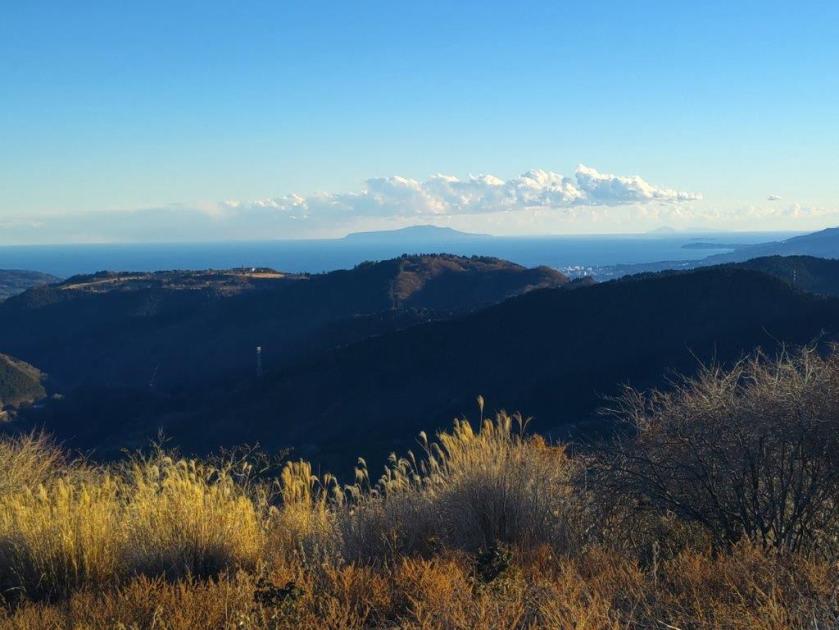
Looking up, I could see the full moon, already high in the sky. Walking a little further, I reached a wide viewpoint on the east side: the Mt Take Fuji Viewing Platform (タケ山富士見台). Looking excitedly to my right, the east side, I could see Mt Fuji now mostly free of clouds but against the sun at this time of the day. To its left, I could see the Hakone mountains, reaching all the way to Sagami Bay. On the west side, I had an excellent view of Sannoto and Mt Odake. To the south, under huge puffy clouds, was Oshima island; beyond, in the far distance, I could make out Toshima and Nijima islands. I took a short break on a bench to enjoy the view, as well as the late afternoon sun, before continuing on my way.

Hadano & Isehara Cities

Descending through “Aburachan” Shrubs

I was now walking inside a thicket of bare shrubs, affectionately called “Aburachan” in Japanese (February spicebush in English). The trail was vanishingly faint under a carpet of dead leaves but fortunately I soon popped into another clearing with another wide view on the east side: the Mt Take Observation Platform (タケ山展望台), where I had the best view of the day. On the west side, I had a spectacular vista of the Tanzawa mountains, from Mt Hiru, its highest point, all the way to Mt Oyama, with the full moon hanging above; Mt Nabewari was also visible, directly behind Mt Shidango. Further south, Hadano and Isehara cities spread out on each side of Mt Kobo. As before, the Shonan Bay, Oshima island and the Hakone mountains could be seen on the south side, only Mt Fuji now missing from the panorama.

Descending under the Cedars

End of the Mt Take Trail

I was once again the only person to enjoy this glorious view, partly because it’s on a local trail but also partly due to the late time of the day. It was nearly 4pm so I set off at a quick pace down a switchback trail, first through another “Aburachan” thicket, coloured orange in the late afternoon light, then through a dark forest of tall cedars. Half an hour later, I reached a small park at the end of the trail, here and there “suisen” (daffodils) in full bloom. From this point, I followed a road along a terraced river. At the confluence with the Nakatsu river, I turned left, and after crossing a bridge, with one last view of a pink-tinged ridgeline on the north side, reached a wooden bus shelter. When the bus arrived, I was reunited with the soccer team from before; luckily I was able to sit, and a little after 5pm, was back at Matsuda station. There, I boarded the Romancecar limited express for the 80-minute ride back to Shinjuku.

Watch a Video of the Mt Shidango Hike

Watch the Video of the Hike on YouTube

See a Slideshow of More Pictures of the Hike

Mt Hijiri (380m), Mt Takatori (556m) & Mt Kobo (235m), Isehara & Hadano Cities, Kanagawa Prefecture, Saturday, January 4, 2025

Like for the last outing of 2024, I needed a straightforward hike close to Tokyo to ensure a smooth start to the new year. I decided to head to the Tanzawa foothills, notorious for its leeches in the warmer months, but pest-free at this time of the year. I had already walked from the top of the Oyama cable car to Mt Takatori, as well as from Mt Kobo to Tsurumaki Onsen. This time, I’d explore the southern ridgeline between Mt Takatori and Mt Kobo. I knew I could get a good view of Mt Fuji past Mt Kobo, and also finish the hike at Manyu no Yu, two reasons for making this the first hike of 2025.

For subscribers, read this Post on Hiking Around Tokyo for a better viewing experience and the latest updates

Hiking in the Tanzawa Mountains  丹沢山地

To get to the start of the hike, I’d ride the local Odakyu line to Isehara station, and then board a local bus for a stop near a city park, a short distance from the trail Entrance. For the return, I could walk from the hot spring to Hadano station, and there, board the Odakyu Limited Express for Shinjuku. The weather was supposed to be sunny in the morning, turning cloudy in the afternoon, putting a question mark on my new year rendezvous with Mt Fuji. Still, I was looking forward to exploring new trails in a familiar area.

Find Japan Hiking Maps on Japanwilds

Steps for Mt To (left) Road for Mt Hijiri (right)

Leaving Mt Hijiri (left) Steps up Mt Takatori (right)

It felt quite cold as I stepped off the bus in the midst of a residential neighbourhood of Isehara city, a little before 10am. Thankfully, the sun was high enough to warm me up while I made my way to Tonoyama Park (塔の山公園), a wooded area surrounding a small mountain. After a short climb up a wide path, I reached some benches from where I already had a view of the flat coastal area reaching to Shonan Bay. After a late breakfast I set off at 1030, and soon after, reached the top of Mt To (塔ノ山 とうのやま tonoyama 202m, meaning “Mt Tower”), from where I had a view of summit of Mt Ooyama on the north side.

Trail past Mt Nenbutsu (left) Trail for Zenba Pass (right)

Steps past Mt Gongen (left) Steps past Mt Sengen (right)

I continued along the ridgeline, heading down through leafless trees, and soon arrived at a road on the north side of the mountain. I turned right, heading south, past the main park entrance, then turned left, following a sign for Hokokuji Temple, and shortly after, came upon a signpost for today’s next mountain. After a few more turns along back roads, I reached the Mt Hijiri trail entrance (聖峰登山口), another paved road but this one closed to vehicles. After passing through a wildlife gate, I continued straight, ignoring the shortcut on the left side, and a little before noon, reached the top of Mt Hijiri (聖峰 ひじりみね hijiri-mine meaning “sacred peak”), also the site of a small Buddhist temple.

View East from Hijiri-mine of the Miura and Boso Peninsulas

View South from Hijiri-mine of Shonan Bay and Shonan-daira

I was delighted to have such a wide view on my first hike of the year. Looking north, I could see the skyscrapers of Yokohama and central Tokyo; eastwards, I could make out the low rounded mountains of the Miura and Boso peninsulas; to the south was the level-topped Shonan-daira with Shonan Bay in the background. While I was admiring the view, a pickup truck pulled up, and a man went to open the temple building, called Hijiri-mine Fudoson (聖峰不動尊), giving myself, and two other people who happened to be there, a chance to peer at the Buddhist altar inside; we even got to touch a small snake statue (2025 is the year of the snake); finally, we each received a paper stamped with its “goshuin“, a red seal proving one’s visit to the place. After carefully placing it inside my pack, I set off again, along a level trail through tall cedars, and soon reached a series of log steps where the ridgeline rose steeply.

Steps Leading to Mt Takatori

View South from below Mt Takatori

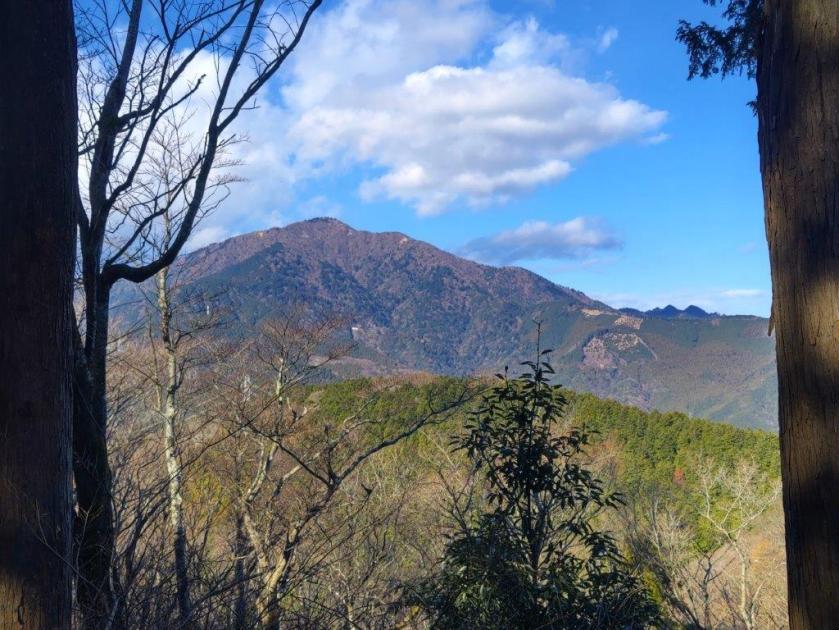
I broke a sweat for the first time of the day, only pausing briefly to take in a view that had appeared through a gap in the trees. Looking south, I could see the ridge I’d be following on the next part of the hike; curving northwards was the ridge I’d just ascended, green cedars crowning the top of Mt Hijiri. I reached a junction where the two ridges merged; I turned right, and after a little more climbing, reached the top of Mt Takatori (高取山 たかとりやま takatori-yama), also the site of an NTT relay tower. It was surrounded by trees except on the north side, where Mt Oyama’s pyramidal summit fit snuggly between two tree trunks. I retraced my steps to the junction and continued along the south ridge.

View towards Mt Hijiri and its “green crown”

Framed View of Mt Oyama from Mt Takatori

I was surprised by how steep and rocky the trail suddenly became, forcing me to slow my pace. I was relieved when the trail soon became more or less level again, and one hour after leaving Mt Takatori, I arrived at Mt Nenbutsu (念仏山 357m) where there was bench and a view on the south side. The name is a Buddhist term meaning visualizing a Buddha. By now, the clouds had covered the southern half of the sky forcing me to imagine most of the view as well. Since it was nearly 2pm, I had a late lunch break before continuing my way.

Trail between Mt Nenbutsu and Mt Kobo

View of the Tanzawa Mountains from the Fureai no Michi Junction

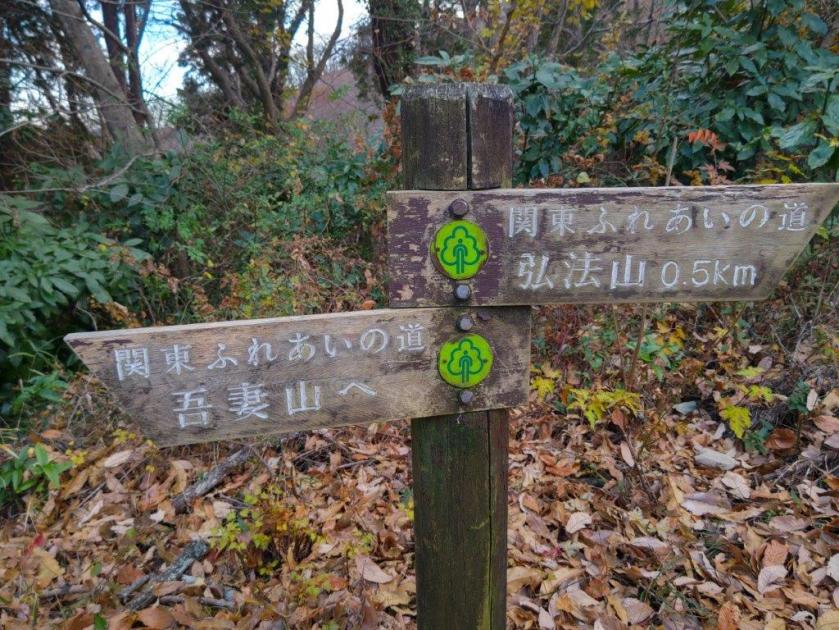
This was probably the nicest part of the hike, an easy to follow and slightly descending trail through an evergreen forest. At 2h30, I reached Zenba Pass (善場峠), and a little further, I emerged onto a road with a view of the Tanzawa mountains to the north, seemingly still free of snow. I crossed the road and headed up a trail on the other side, now inside Koboyama Park (弘法山公園) and also on the Kanto Fureai no Michi. After a short climb, I reached the top of Mt Kobo (弘法山 こうぼうやま koubou-yama), named after Kobo-daishi who is said to have trained in this place (he is also connected to Mt Mitsumine). Since my last visit in April 2016, a viewing platform had been erected on the east side. Like from Mt Hijiri, I had a view of the Shonan coastline, the Miura Peninsula and Shona-daira, but it looked quite different under a cloudy afternoon sky.

Final Steps before the Top of Mt Kobo

Viewing Platform on the East Side of Mt Kobo

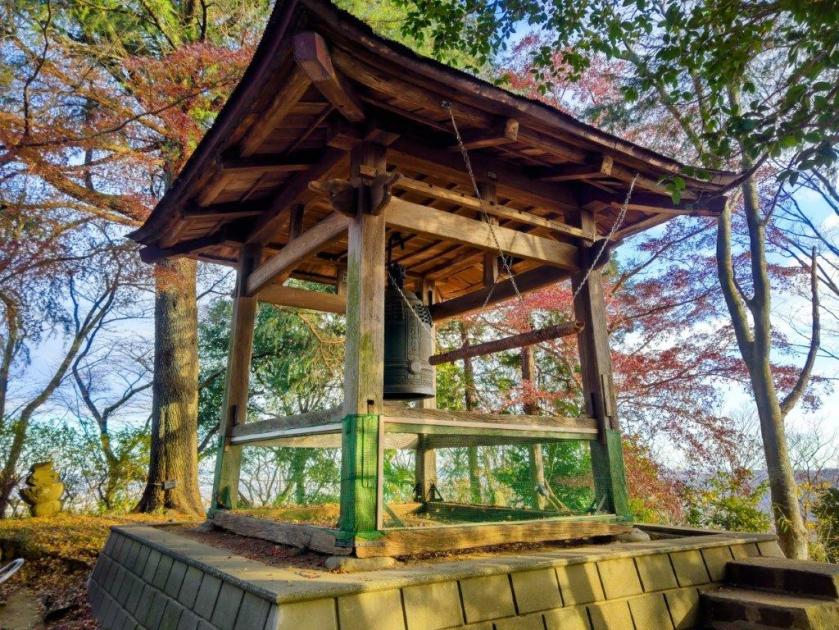
I admired the constantly changing patchwork of light and dark patches in the landscape below. On the south side, the bell tower sitting directly in the sun’s path lit golden. I now followed Babamichi road (馬場道) meaning “riding ground”, indeed wide enough for riding a horse, to the next summit, Mt Gongen (権現山 ごんげんやま 243m), a flat, grassy area with an observation tower on the east side. From its top, I hoped to finally have a glimpse of Mt Fuji, but those hopes were dashed by the thick, dark clouds massed on the south side. A ray of sunlight managed to squeeze through, illuminating the urban sprawl of Hadano City, providing the proverbial silver lining. On the east side, I could look down on the Soga Hills, a range of low hills stretching from Matsuda town to Kozu station on the Shonan Coast.

Patches of Light and Dark from Mt Kobo

Shonan Coast and Shonan-daira from Mt Kobo

I was surprised to see a few snowflakes fall gently and thought perhaps a snowstorm was on its way; fortunately, there was no follow-up, bits of blue sky still appearing overhead. At 3h30, I headed down steep steps on the south side, leaving the Fureai no Michi as it headed east to connect with my last year’s hike to Mt Takatori. After crossing a road, I passed by Mt Sengen (浅間山 せんげんやま  196m). It was more of a shoulder that a summit but what it lacked in prominence was made up by the prominence of its beautiful wood-carved summit marker. On my last visit, the scenery was white from the cherry blossom trees covering the “shoulder”; today it was bathed in yellow from the late afternoon sun.

View of the Soga Hills from Mt Gongen

View from Mt Gongen of Mt Hadano under a Ray of Sun

The final descent of the day was surprisingly pleasant: a switchback trail delightfully easy on tired knees, late afternoon sun shining through evergreen trees, and no one but me on the mountain. Just before 4pm, I reached the trail entrance and a busy road where I turned left. On Kobo bridge across the Kaname River, I had one last look at Mt Kobo, firmly under blue skies now, before heading to the nearby Man-no-yu Hot Spring. I reflected on how most of today’s mountains names are common mountain names in Japan and how unusual it was to find all along one ridgeline. After a satisfying hot spring soak, I walked the final 15 minutes to Hadano station, where I caught the Romance Car limited express for the one hour trip back to Shinjuku.

Watch a Video of the Mt Hijiri to Mt Kobo Hike

Watch the Video of the Hike on YouTube

See a Slideshow of More Pictures of the Hike

Mt Sendoji (583m) & Mt Sankaku (515m), Sagamihara City, Kanagawa Prefecture, Saturday, December 30, 2023

For subscribers, read this Blog Post on Hiking Around Tokyo for a better viewing experience

This hike requires a GPS device

I always find it tricky to select the final hike of the year since many bus services switch to special year-end schedules. This year was doubly difficult due to the unusually short “shogatsu” (Japanese new year holidays), meaning the day of my hike coincided with the first day of the holidays, and limited express trains were fully booked. Inspired by my previous outing, I decided to head to Hashimoto again, and ride the bus to the end of the line, near the western edge of Tsukui lake, my first time to visit that area. Looking at my map, I saw I could hike in the Tanzawa mountains, last visited nearly 3 years ago. I would summit a couple of minor peaks, and finish at a view point on Lake Miyagase, from where I could catch a different bus back to Hashimoto. The weather was supposed to be sunny and mild, as it usually is at this time of the year. I was looking forward to exploring a new area on my last hike of 2023.

Hiking in the Tanzawa Mountains 丹沢山地

Heading up to Sagami Forest (left) Hiking between Mt Sendoji and Mt Baba (right)

Walking down from Mt Sankaku

The express train was mostly empty for the one-hour ride to Hashimoto Station. I had a quick breakfast at the McDonalds near the south exit before heading to the north exit where I hopped on the bus for Mikage (三ヶ木), getting there around 10am. I dropped by a supermarket conveniently located on the way to the trail entrance. After buying supplies for the day, I continued along a busy road, and at 11am, turned right onto a road thankfully closed to traffic, but not hikers, that led up the mountain side and into the forest; it wasn’t signposted and it was only thanks to my phone GPS I managed to locate it.

Start of the hike in Sagami Forest

First view north towards the Mt Takao area

I was delighted to be walking on a forest road through beautiful, sunny forest, away from the noisy road. After a couple of switchbacks, I had a view on the north side of the mountains on the other side of Sagami river. I could see the spot where I had been hiking the previous week. A little later, I had a view on the east side of Mt Shiroyama. A little before noon, I arrived at signboard for Forest 21 Sagami no Mori” (Sagami’s Forest) and the start of the hiking trail. I took the left branch, the valley trail (谷道), along the mountain side, and very soon, I had some good views on the east side.

Road to Forest 21 Sagami’s Forest

A solitary hike on a sunny day

It was like gazing into a hidden valley, the Tokyo’s tall buildings almost hidden by the hilltops; as the noon chime rang out, I was reminded how close I was to civilisation. At the one point, all signs of the trail vanished, and I had to rely on my phone GPS to find my way back to the ridgeline. The trail remained faint, and I was completely dependent on my GPS signal and the occasional pink ribbon strip. I was moving through beautiful, mixed forest, and at times, it was easy to forget I was only a stone’s throw from Tokyo’s urban jungle. At the top of a short climb, I arrived at the summit of Mt Sendoji (仙洞寺山 せんどうじさん sendojisan), completely within the trees.

View of a Hidden Valley from Sagami’s Forest

Steep Climb up to Mt Baba

I was glad the summit was bathed in sunlight, the trees growing less thick and allowing for a patch of open sky. Since it was past 1230, I sat down for lunch. I set off again after 1pm, and found the trail to be just as hard to follow as before. After a steep descent, I reached a forest road, beyond which was a proper path. After another steep descent, the trail curved to the right, and started to climb gradually. I was completely surrounded by nature and found it hard to believe I wasn’t deep inside some national park. Suddenly, I reached the base of a steep series of steps, at the top of which was a small shrine, the top of Mt Baba (ババ山 ばばやま babayama). Since I couldn’t see a summit marker, nor a view, I quickly moved on, and after a short downhill section, arrived at an electric pylon.

Arriving at the top of Mt Baba

Heading back from Mt Sankaku

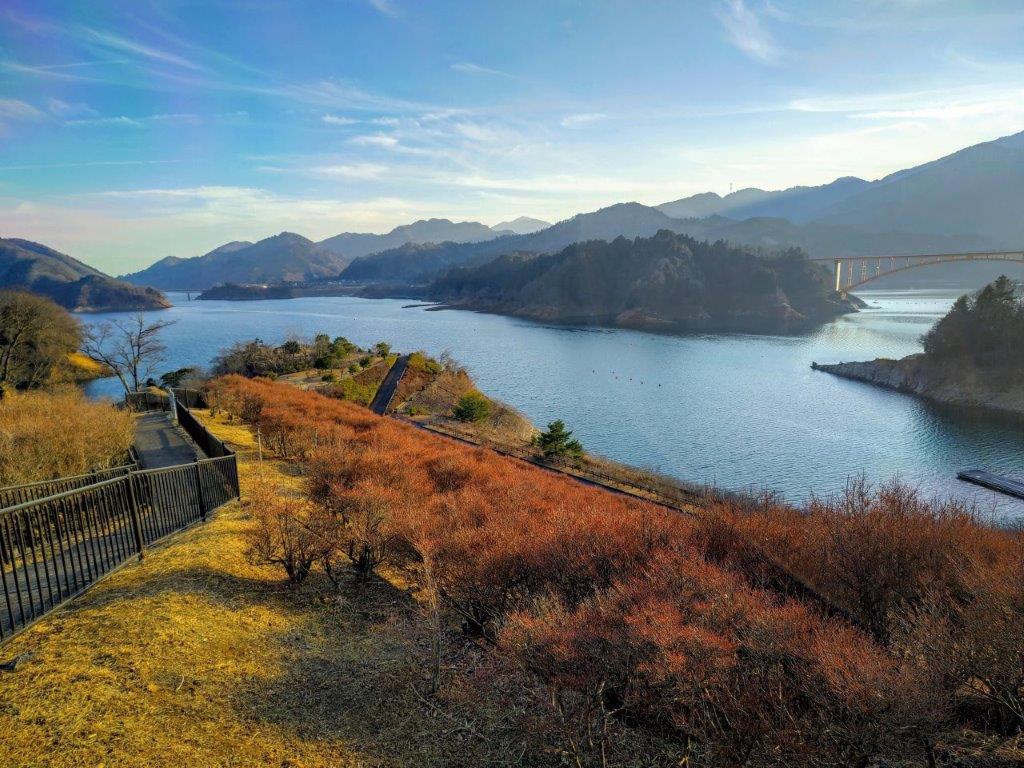
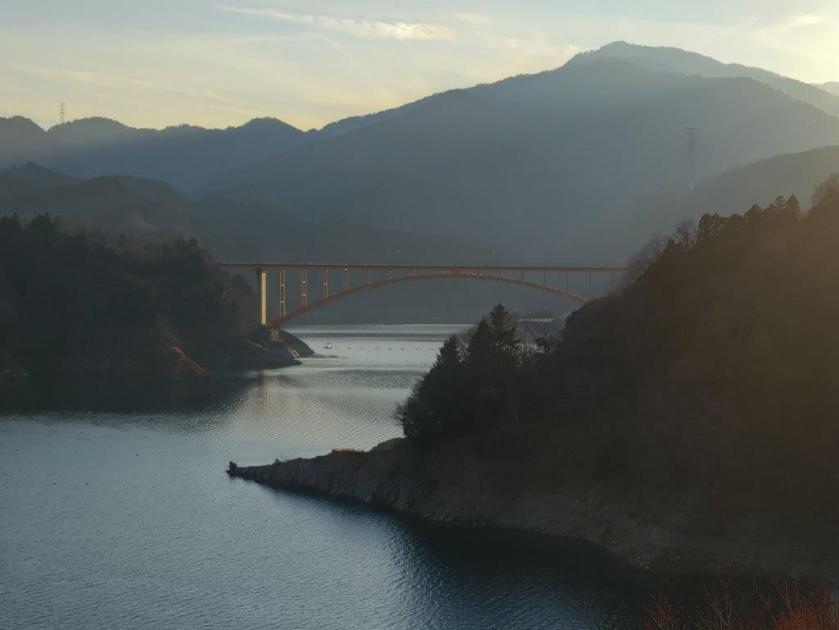
I continued up a sunny, narrow ridge, the higher peaks of the Tanzawa mountains visible through the leafless trees. At 2pm, I arrived at the top of Mt Sankaku (三角山さんかくやま sankakuyama), also the location of a TV relay station. Once again, it was surrounded by trees, so I soon headed back to the pylon, where I took a path heading down on the west side. After passing under some tall cedars at the base of the mountain, I emerged onto a road. I then walked through the countryside for half an hour before reaching Toribara Park (鳥居原園地) at the edge of Miyagase Lake (宮ケ瀬湖) at 3h30. After enjoying the late afternoon views of the lake and the Tanzawa mountains, I boarded a bus for the 30-minute ride back to Hashimoto station.

Looking back at Mt Sankaku (left) and Mt Sendoji (right)

View of Miyagase Lake from Toribara Park

I was entirely satisfied with my final hike of the year. Thanks to my phone GPS, I was able to save time looking for the trail. It’s a shame it isn’t better maintained, since it’s a beautiful patch of nature, wedged between two populated areas; perhaps the point is to keep it that way. It took a good five hours from start to finish, four of which were on forest roads, hiking trails and just walking through the forest. I saw no one else but that could be due to the year-end holiday period. In the future, I’d like to return to the end of the hike and continue the following the trail westwards into the Tanzawa mountains.

Watch a Video of the Mt Sendoji Hike

Watch the Video of the Hike on Youtube

See a Slideshow of More Pictures of the Hike

Yamabushi-Daira (710m), Minami-Ashigara City, Kanagawa Prefecture

I had been up Mt Kintoki and Mt Yagura before. Back then, I hadn’t known that a bus went up to the park near the pass between the two mountains. Studying my hiking map, I saw that I could ride this bus there and then walk down to a train station at the bottom of the valley. I was mostly interested in trying out a new bus line and getting some good views, even though I wouldn’t summit any mountains; I would also get to ride the Daiyuzan railway line to get there, a railway I had only taken twice before. Since this hike was on the short side, I could leave later in the day and have a soba lunch beforehand. The weather forecast predicted it would be sunny day with some clouds – not a bad thing on a warm spring day.

Hiking between Hakone and Tanzawa

After a comfortable ride on the Romance Car, I arrived at Odawara station around noon. I switched to the Daiyuzan line and got off at the last stop. After an excellent soba lunch at Hatsu Hana Soba, I caught the last bus of the day for Ashigara Manyo Park (足柄万葉公園). It was an interesting ride up a narrow winding road which also doubles as a hiking path.

An easy start to the hike
At 2h30, I was walking northwards along a flat and easy trail along the ridgeline. On the way, I spotted an interesting moth – I found out later that it was the Japanese version of the American Luna moth. Through a break in the trees, I could see the rounded top of Mt Yagura ahead to the northwest. At 3h30, after a short climb, I reached Yamabushi-Daira (山伏平) in the middle of the forest.

A rare moth in the daytime

There was no view so I continued without a break, heading down the other side of the mountain. Half an hour later, I crossed a small stream. After some descending, I reached a forest road following the mountain side. At 4h30, I arrived at the 21st Century forest (21世紀の森), although nothing about it made me think of the current century.

Mt Fuji through the late afternoon haze

A few minutes later, I reached a lookout point; it was rather small and the view wasn’t as great as I had hoped for. Looking west, I could see Mt Fuji, only a dim outline visible in the later afternoon haze. To the north, I could make out the peaks of western Tanzawa just above the treetops. I took a short break before setting off again, on a level gravel road.

Still some way down

Along the way, I had a view of Sagami Bay to the east, soon followed by a view of the Central Tanazawa mountains to the north, this time clear of trees, with the bare top of Mt Ono in the middle. Suddenly, the path swerved to the left and headed down a steep log staircase through the forest. At 5h30, I reached a little traveled forest road in dire need of maintenance.

The Tanzawa mountains

As the road wound round the mountainside, I got a wide view of the valley through which the Gotemba trail line passes, and Yamakita town, my final destination; it was easily the best view of the day. It still looked a long way down so I had to hurry up. I had a brief glimpse of a deer before it bounced away through the trees. I soon arrived at a paved road, which went steeply down via a series of switchbacks.

The Iris Japonica

The road was lined with Iris flowers (シャガ shaga) in full bloom, and it was a very peaceful walk at the end of the day. At 6pm, I arrived at the entrance for the Shasui falls (洒水の滝) and the end of the hiking path. I had been to the falls before, so I continued through the town, reaching Yamakita station at 6h30, just before dark. It was a short train ride to Matsuda station, where I changed to the Fujisan Limited Express (part of the Romance Car series) for the one hour ride back to Shinjuku.

Mt Haku (284m) and Mt Kane (561m), Atsugi City, Kanagawa Prefecture, January 2021

2021 started off very cold so I wanted to stay low for the first hike of the year. I also wanted to start and finish near areas where buses would be running during the Japanese New Year. In the end I decided to combine two small mountains at the edge of the Tanzawa mountains, just south of 2019’s last hike. The first one was featured in my Kanagawa hiking book; the second one I found on Google Maps; the trail in between followed the Kanto Fureai no Michi (関東ふれあいの道), a real treasure trove of good hiking paths around Tokyo. The weather was supposed to be sunny – it usually is this time of the year – and I was hoping to get some good views of the capital.

Hiking in the Tanzawa Mountains 丹沢山地

View from near the highest point of the hike
I left late, arriving at Atsugi station around 10am. I caught one of the frequent buses for Iiyama, running as usual over the New Year so that people can visit the nearby Iiyama Kannon (Hasedera) Temple (飯山観音). At 11am, I reached the bright red bridge over Koayu river, marking the official entrance to the mountain. I walked up the road and then a flight of steps to reach the temple. I walked past a the line of people waiting to pray, and found the trail entrance behind the main temple building.
The sunny “woman’s slope”

I went up the “woman’s slope” (女坂 “onna-zaka“), the gentler of the two trails up the mountain, mainly because I didn’t see the entrance to the steeper, “man’s slope”. The well-maintained path followed the valley side, colourful arrows pointing the way. Despite the cold temperatures, it felt warm thanks to the midday sun shining above the trees. At 11h30 I reached the small observation tower at the top of Mt Hakusan (白山 はくさん hakusan). Although It was a short climb, I decided to take a short break and have a late breakfast at one of the benches.

The Shinjuku skyscraper district

Taking up the entire eastern view was the vast Tokyo Megapolis, with the Shinjuku skyscrapers in the center just 40km away; beyond Shibuya, I could make out the Tokyo Skytree; to the west was Mt Oyama in the Tanzawa mountains; looking south I spotted the outline of Oshima island, 80km away. After checking out the view, I made a quick roundtrip to Hakusan Shrine (白山神社) just 5 minutes away along the top ridge. At noon, I set off again, walking down a steep path on the other side of this small mountain.

Looking south towards Shonan bay

The path soon leveled and I was now walking along the Fureai no Michi trail, a pleasant path along a forested ridge, with occasional viewpoints with benches. I passed several other hikers; it seemed to be a well-known secret among the locals. The path descended gradually, and I eventually arrived at the Nanasawa Forest Park (七沢森林公園). It was past one o’clock, so I stopped for lunch at another Tokyo viewpoint. Looking east, I could see the Miura peninsula and, half-hidden behind it, was the Boso peninsula, 50km away.

The Nanasawa Forest Park

At 1h30, I headed down the valley on the west side, towards Nanasawa Onsen (七沢温泉 meaning “seven stream hot spring”), a place I had first visited after descending Mt Tanzawa in a snowstorm several years ago. I stopped by a convenience store to replenish my supplies and started up my second, slightly higher, mountain of the day at 2pm. I soon found the start of the trail thanks to the abundance of signboards. Although I had never heard of it till a few days ago, it seemed a local favourite, probably because of the shrine at the top.

The path for Nanasawa Onsen

The path followed a ridge up through thick forest, alternating flat and steep bits. After thirty minutes of climbing, I reached a group of exposed boulders with good views eastwards of Tokyo, its buildings much sharper in the mid-afternoon. A little later, I had a good view of the ridge I had walked earlier in the day, also known as the Hakusan Pilgrimage Hiking Trail (白山順礼ハイキングコース). Looking down from my viewpoint 300 meters higher up, it looked very small indeed.

Tokyo in the late afternoon light

I finally arrived at a long stone staircase, marking the final approach to the shrine, and at 3pm, I was standing next to Asama Shrine (浅間神社). I wasn’t quite at the highest point, but there was a bench with a view of Tokyo, so I settled down for a break and an afternoon snack. By now, the sun had disappeared behind the mountains, and it was getting quite cold. Since it would be getting dark in about an hour, I quickly walked the final meters to the top of Mt Kane (鐘ヶ嶽 かねがたけ kanegatake), completely in the trees, and continued straight ahead down the other side.

In the shade, Mt Kyo, hiked at the end of 2019

I definitely felt that this trail was the nicer of the two. The surrounding forest was wild and beautiful despite the proximity of the city; I could hear deer calling in the distance; the path zigzagged down the steep, rocky mountain side, with chains fixed to the rock for safety. At 4pm I reached the road for Nanasawa Onsen next to a tunnel, and less than an hour later I was back on the road for Atsugi, waiting for the bus that would take me back to the big city.

Mt Hinata (404m) & Mt Mijo (237m), Isehara & Atsugi Cities, Kanagawa Prefecture

There is a section of the Kanto Fureai no Michi that passes by Mt Oyama. It doesn’t go all the way to the summit, but goes past the top of the cable car halfway up the mountain. I had hiked the section on the Southern side a few years ago, and I had always wanted to return and hike the Northern section. It continues to Nanasawa onsen 七沢温泉 which seemed like a good place to finish. Mt Oyama, a 300 famous mountain, is a popular hiking spot close to Tokyo, but since I went on a weekday there were relatively few people.

null

View halfway up Mt Oyama from Afuri Jinja Shrine 

null

Viewpoint of Mt Oyama and mostly empty benches

I took the Odakyu Romancecar to Isehara, where I transferred to one of the frequent buses for the Oyama Cable car. For once, the bus was nearly full. Since it was a short hike, I left later than usual, and got there around 11am. It had been a few years since my last visit, and I had forgotten that it was a twenty minute-walk up the Koma Sando コマ参道 shopping street to the cable car station. Since the next one was leaving at 11h20, I flew up the flights of steps, past the shops selling spinning tops, and hopped on to the green cable car just before they closed the doors.

null

Cable car up Mt Oyama

null

View from the top of the cable car

After getting off, I decided to walk up the steps to Afuri-Jinja Shrine 阿夫利神社 to check out the view. It was a bit hazy in the late morning but I could just make out the boso peninsula in the far distance. The path up Mt Oyama is behind the shrine, but the Fureai no Michi trail is at the base of the steps, so I headed back down, and it was around noon when I finally started hiking. The first part was mostly flat, hugging the side of the mountain. The surrounding trees were very beautiful, and I saw a giant cedar tree soaring up into the sky next to a tiny shrine.

A couple of impressive trees along the trail

null

Few people hiking on a weekday

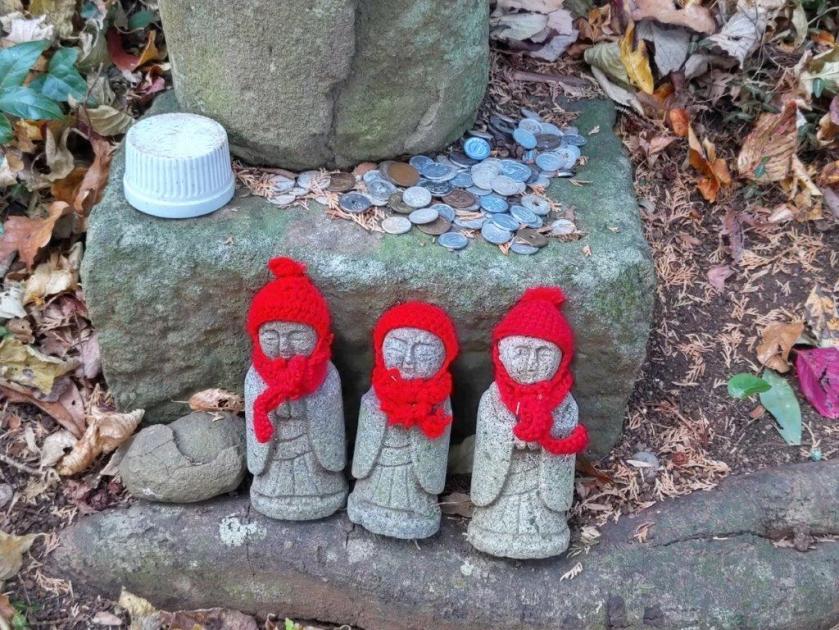
Half an hour later, I reached a viewpoint with a dozen benches, to accommodate the weekend crowds. I could see the triangular summit of Mt Oyama, as well as the urban spread to the North. After a short break, I set off for Hinata-Yakushi Temple 日向薬師寺, in the opposite direction of the trail for Mt Oyama, heading down the mountain. Some workers were doing maintenance on the trail, due to be completed today according to a sign I saw lower down. I had some good views Southwards of the Izu peninsula. Past a rather large jizo statue, which I first mistook for a person, the path turned sharply off the ridge and went downhill via a series of switchbacks.

null

View of the Izu Peninsula

null

Jizo statue protecting the traveler

Around 1h30, I emerged onto a road, but I soon turned left onto a small trail to Johotsuganji Temple. At this point, I had left the Fureai no Michi. After about ten minutes, I arrived at a small cave at the base of a cliff. It contained some Buddhist statues, and from the croaks I was hearing, some frogs as well! The trail continued up the mountain, along a ridge crisscrossed with tree roots, making it a little difficult to follow. Before reaching the highest point, the path turned right and followed the side of the valley. Here the path showed signs of maintenance, and was much easier to follow. Around 2pm I reached an old bench, a good place for a break and a late lunch. There was no view, but the surrounding was very peaceful save for the chirping of birds. The path continued, along a level ridge extending northwards.

null

The roots along this ridge made for tricky walking

null

Easier level ridge after lunch

This was my favourite part of the hike. It felt very wild and isolated; it was hard to believe that I was less than 10km from Hon-Atsugi station. I was also surprised that I had never heard about it before; perhaps the locals wanted to keep it a secret. After some descending, and then a short climb via log steps, I reached the summit of Mt Hinata 日向山. Through a break in the trees, I could see the flat expanse of Tokyo. The weather which had been sunny and warm in the morning, was now overcast and windy. I continued along the trail downhill, and soon reached an intersection. I continued straight up the other side to the top of Mt Mijo 見城山, the site of an ancient castle. The view was much better here; below was Nanasawa onsen, and the forested hills separating it from Tokyo.

null

A 120 year-old Ryokan in Nanasawa Onsen

null

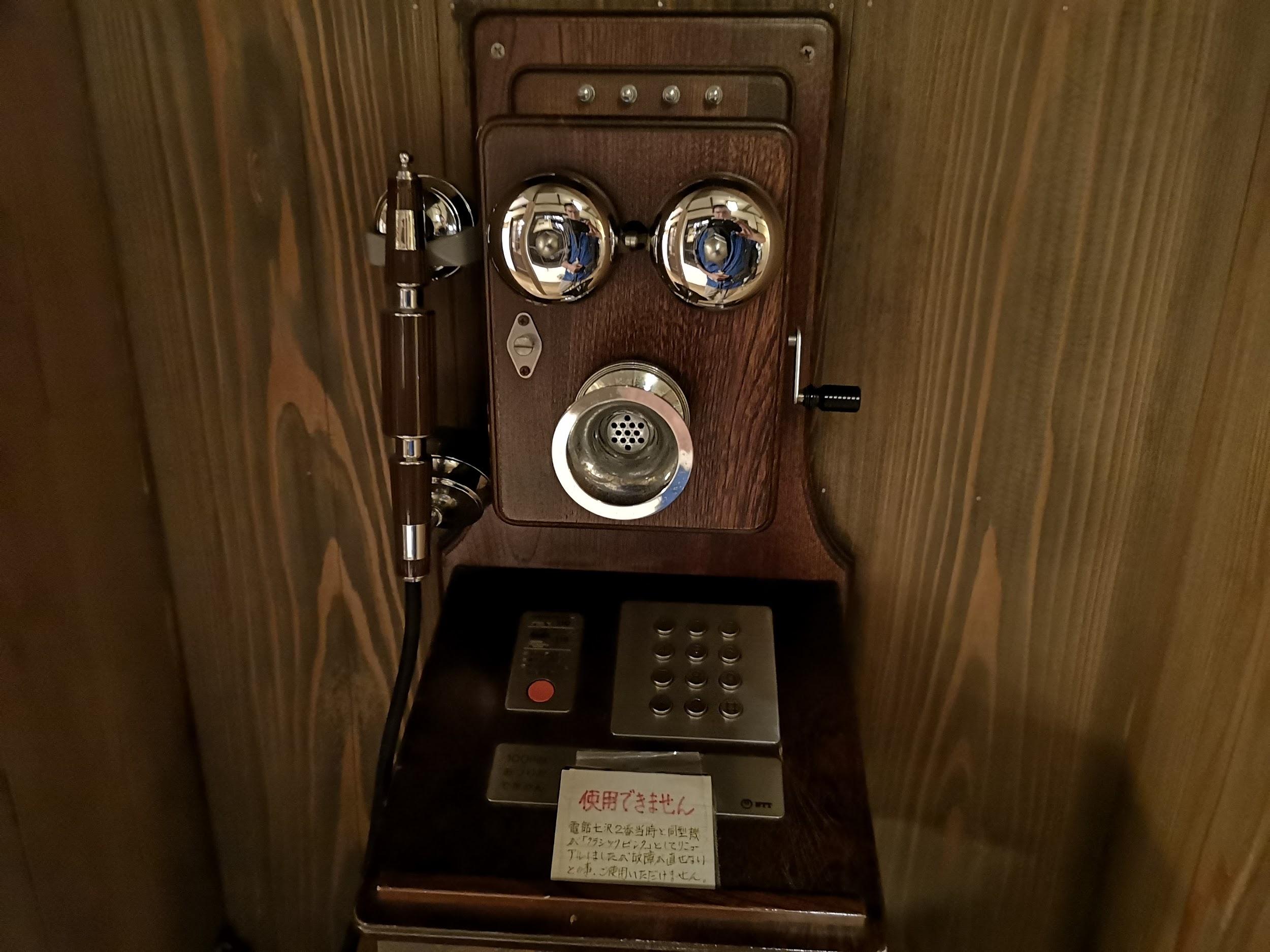
A rare but no longer functional rotary phone

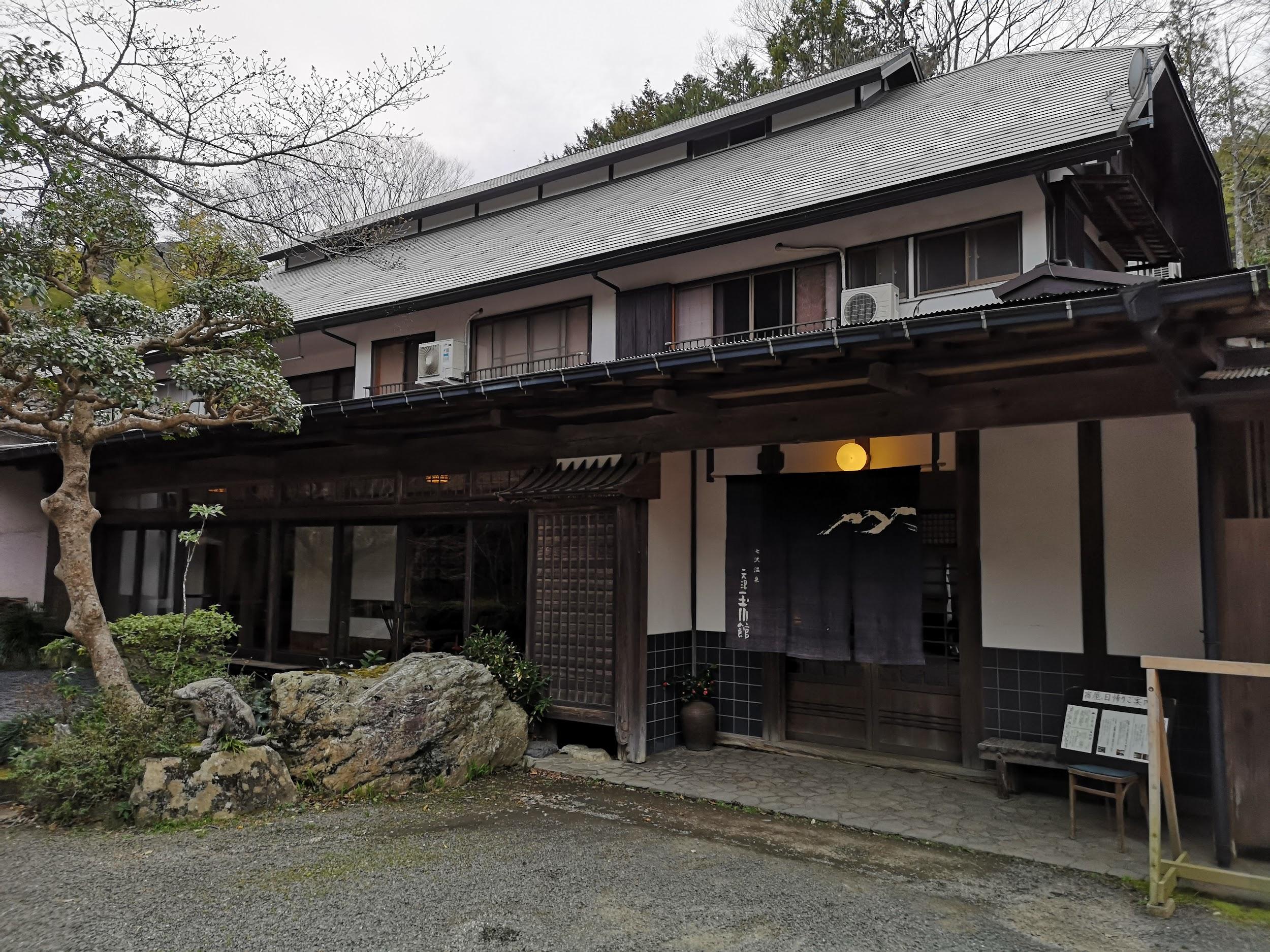
Since the trail ended here, I retraced my steps to the intersection, only a few minutes away, and turned left down the mountain, following the sign for the intriguingly named Turtle Rock 亀岩 (in English on the sign). I spotted it, just before arriving at a road, a massive moss-covered boulder in the midst of the cedar forest beyond a small stream. I walked up the road for a few minutes to check out the Nanasawa Observatory. It was a worn-out structure with an unimpressive view, a curiosity from past times. However, I did get a glimpse of the first signs of spring on the branches of the nearby trees. I continued down the road, and just after 4pm, I arrived at Tamagawakan, a Ryokan more than 100 years old; it even had an old rotary public phone near the lobby. After a short hot spring bath, I caught the bus for Hon-Atsugi station from the nearby bus stop, and from there, I took the Romancecar for the short trip back to Tokyo.

null

Mt Kyogatake (633m), Mt Bukka (747m) & Mt Takatori (706m), Aikawa Town, Kanagawa Prefecture, Sunday, December 29, 2019

Hiking in the Tanzawa Mountains 丹沢山地

For my last hike of 2019, I chose 3 small peaks along a narrow mountain range, squeezed between the Tanzawa mountains and the urban sprawl of Tokyo. This hike is right next to the city, and it’s possible to get to the start of the trail in under two hours. I had been to the area a few years ago, but this time I used different routes up and down. From afar, these mountains can seem deceptively high, however the trail inclination is mostly slight to average.

The highest part of the hike follows a gentle ridgeline

I took the Romance car to Atsugi station, technically still within the Tokyo area, where I transferred to one of the frequent buses heading out to Miyagase Lake 宮ヶ瀬湖. At 10am, I was ready to start hiking under blue skies and near freezing temperatures. The first part followed a section of the Kanto Fureai no Michi 関東ふれないの道. Like other portions of this long-distance trail, it was well-maintained and well-signposted; the surrounding forest was pretty and quiet, making this a good start to the last hike of the year.

Following the Kanto no Fureai Michi trail

Soon, I was getting my first views of Tokyo. With the zoom of my smartphone camera, I could make out the row of skyscrapers in the city center, as well as the Skytree. Later on, I had glimpses of the ridges and peaks of the Tanzawa range in the opposite direction. I arrived at the top of Mt Kyogatake 経ヶ岳 at 11h30, where I had a magnificent view of Mt Oyama, Mt Tono and Mt Tanzawa, their peaks white with snow. A few minutes before the summit, there was a local trail heading left to the next mountain in the opposite direction – a hike for another day maybe.

Lunch with a view of the Tanzawa mountains

Mt Oyama, with its distinctive pyramidal summit

After a quick bite, I set off again. Some clouds had appeared over the Tanzawa mountains, but overall it remained a sunny day. The path descended steeply, crossed a road, and ascended steeply again. The climb was made easier thanks to steps built into the path, a common feature in the Tanzawa area. I reached a level section, soon merging with a path coming up from the left, the one I had used on my previous hike here.

The trail is well-maintained, as in the other parts of the Tanzawa mountains

The path immediately started rising again, via another series of steps, and turned into a narrow ridge with spectacular views of the Tokyo metropolis on the right, and Tanzawa mountains and Miyagase lake on the left. Up to this point, the hike had been relatively easy, but this section required some surefootedness. Although I had hiked this part before, it all seemed new to me, and I spent a lot of time taking photos. Enjoying the dual view of the mountains and the city from above is one of the aspects I like the most about hiking in the Kanto area.

In winter, the trail is often in the sun

Approaching the highest point of the hike

I reached the top of Mt Bukka 仏果山 just before 1h30 pm. The summit is completely in the trees, but someone thoughtfully built an observation tower so hikers can enjoy panoramic views of the entire area; the next peak has a similar tower. Despite being artificial structures, they make the hike worthwhile. They offer some of the best views in the Kanto area. I could see the entire Southern side of the Oku-chichibu mountains stretching from East to West, from Mt Takao to Mt Kinpu; in the foreground was Mt Sekiro. Unfortunately, Mt Fuji was hidden from sight, despite being quite close.

The observation tower rising above the trees…

…offers a great viewpoint of Tokyo

Without the protection of the trees from the icy wind, it was very cold at the top. I had left my backpack with my gloves at the base of the tower, so I soon went back down, and continued to the next peak. This section was short and easy, and I reached Mt Takatori 高取山 just fifteen minutes later. From the top of this second tower, the view was similar, except for a person dabbling in amateur radio; he had deployed quite a big antenna on one side.

Amateur radio antenna and Mt Oyama

This slideshow requires JavaScript.

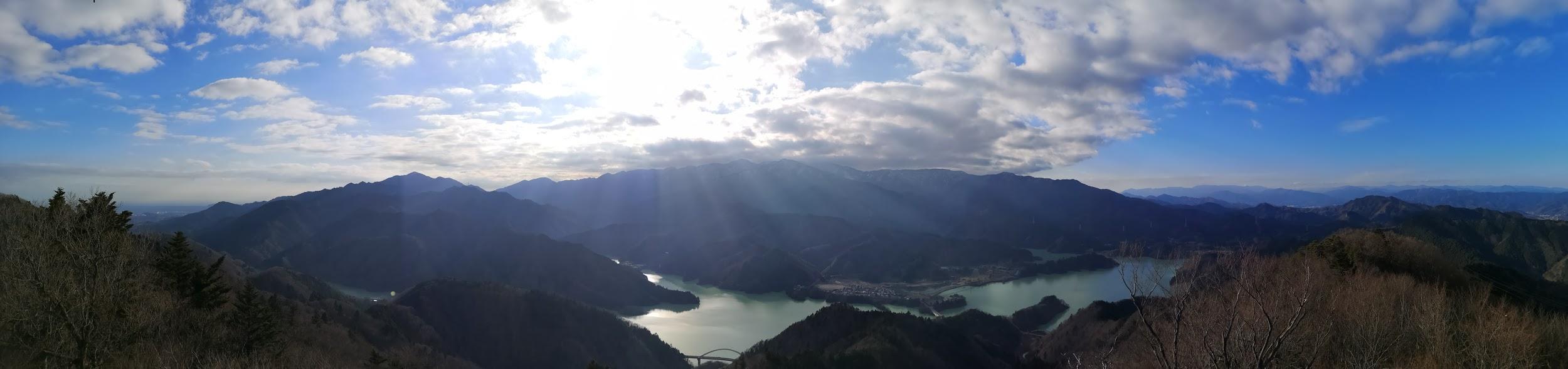
Panorama of Tanzawa and Miyagase lake

I had the second half of my lunch, and after I had my fill of food and views, I climbed down the tower, and started to descend towards Aikawa town. It was nearly 3pm and at this time of the year, it would be getting dark soon. The path down was easy to hike; there were a number of other trails, but I just followed the signs for Fureai no Mura ふれあいの村, and it took me less than an hour to reach the bus stop for Atsugi. It was a short ride back to the station. I hopped on the romance car back to Tokyo, and started to think of all the great hikes I would do in 2020.

Trees pointing in the wrong direction

A view of Aikawa town through the trees

Panoramic view from the top of Mt Takatori (you can hear the amateur radio user in the background)

Mt Gongen (1019m), Yamakita Town, Kanagawa Prefecture, Sunday, October 20, 2019

Hiking in the Tanzawa Mountains 丹沢山地

This was my first hike since typhoon Hagibis, which hit the Kanto area the previous week. Not only did it flood many low-lying areas, but it also damaged mountain roads and hiking trails. According to the latest update from the Nishi-Tanzawa visitor center, all trails in their vicinity were open, but this was before the heavy rains that hit the Kanto area again two days before my hike.

The Sunday forecast was supposed to be good, but when I got to Shin-Matsuda station it was definitely overcast. Oddly enough I was the only person to board the bus for Nishi-Tanzawa, a popular hiking destination, especially in the Autumn season. The reason soon became clear – Friday’s rain had caused a landslide along the road, preventing the bus from reaching the visitor center, the starting point for most hikes. Fortunately for me, I was getting off before that, at Tanzawa Lake. The bus ride was along a river, and I noticed that the water was brown and muddy. Further upstream there was a sign saying that water was being released from the dam at Tanzawa lake.

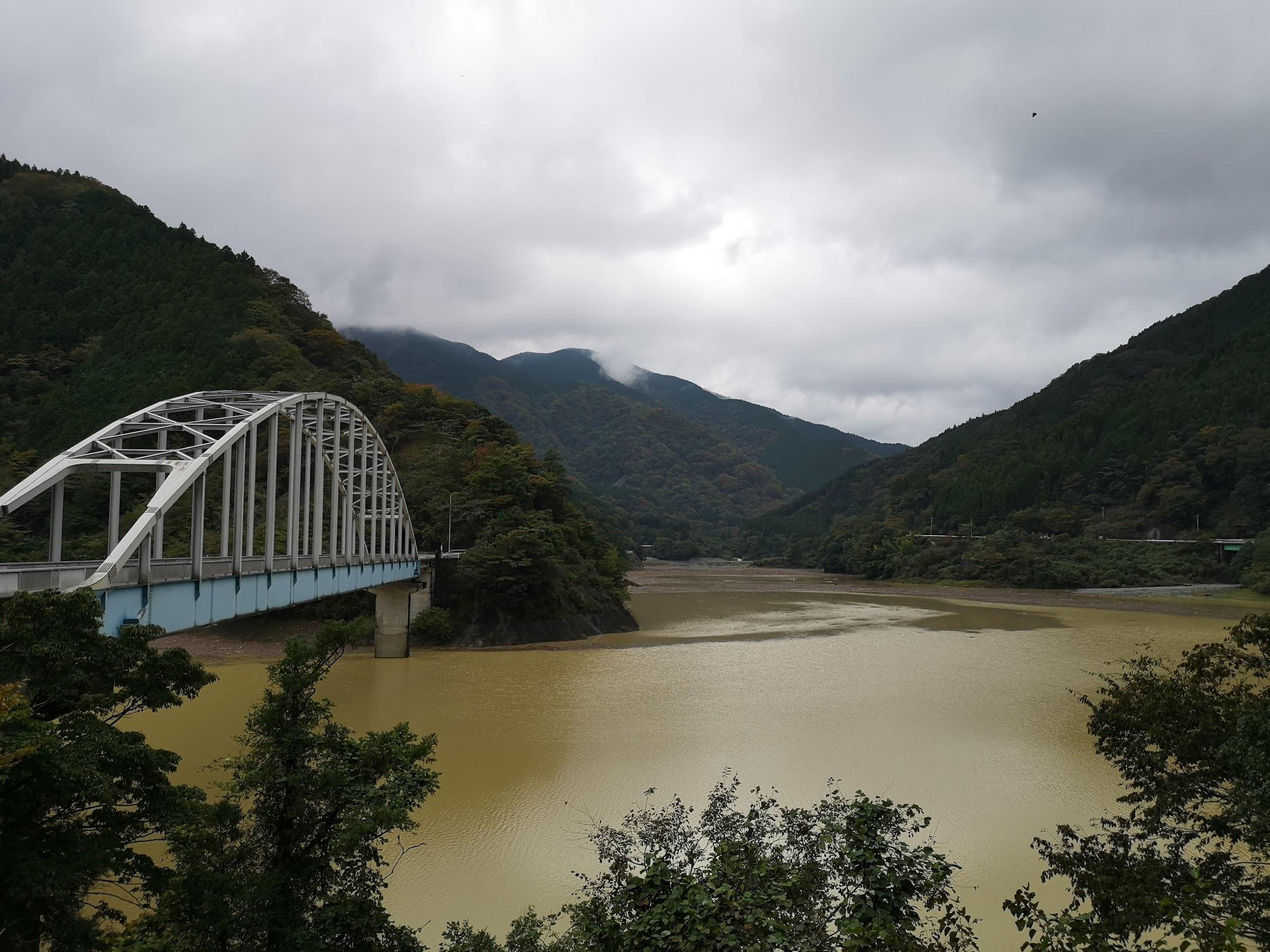
Once, I got off the bus, I was shocked to see the amount of debris, mostly tree branches, floating on the lake. The lake colour was muddy-brown like the river; hopefully it will regain its normal colour soon. On the bright side, it seemed that my target mountain was just low enough to stay clear of the clouds. Before I set off, I dropped by Ochiaikan 落合館 a nice little hotel where I took a bath after hiking Mt Ono three years earlier, to confirm whether they still allowed daytrippers to take a bath (“higaeri nyuyoku” 日帰り入浴). I was told yes, and I said I would be back around 4pm.

Tanzawa lake: May 2016 (left) and Oct 2019 (right)

I had to walk counter-clockwise alongside the lake for about forty minutes to reach the start of the trail. Along the way, I saw a small parking area full of cars and cameras mounted on tripods nearby. I asked one person what they were hoping to photograph. He replied “taka” which according to my dictionary is a falcon or a hawk. Always curious about the local wildlife, I would have liked to stick around to catch a glimpse of the bird, but I was running late, so I had to move on.

Wood debris floating on Tanzawa lake

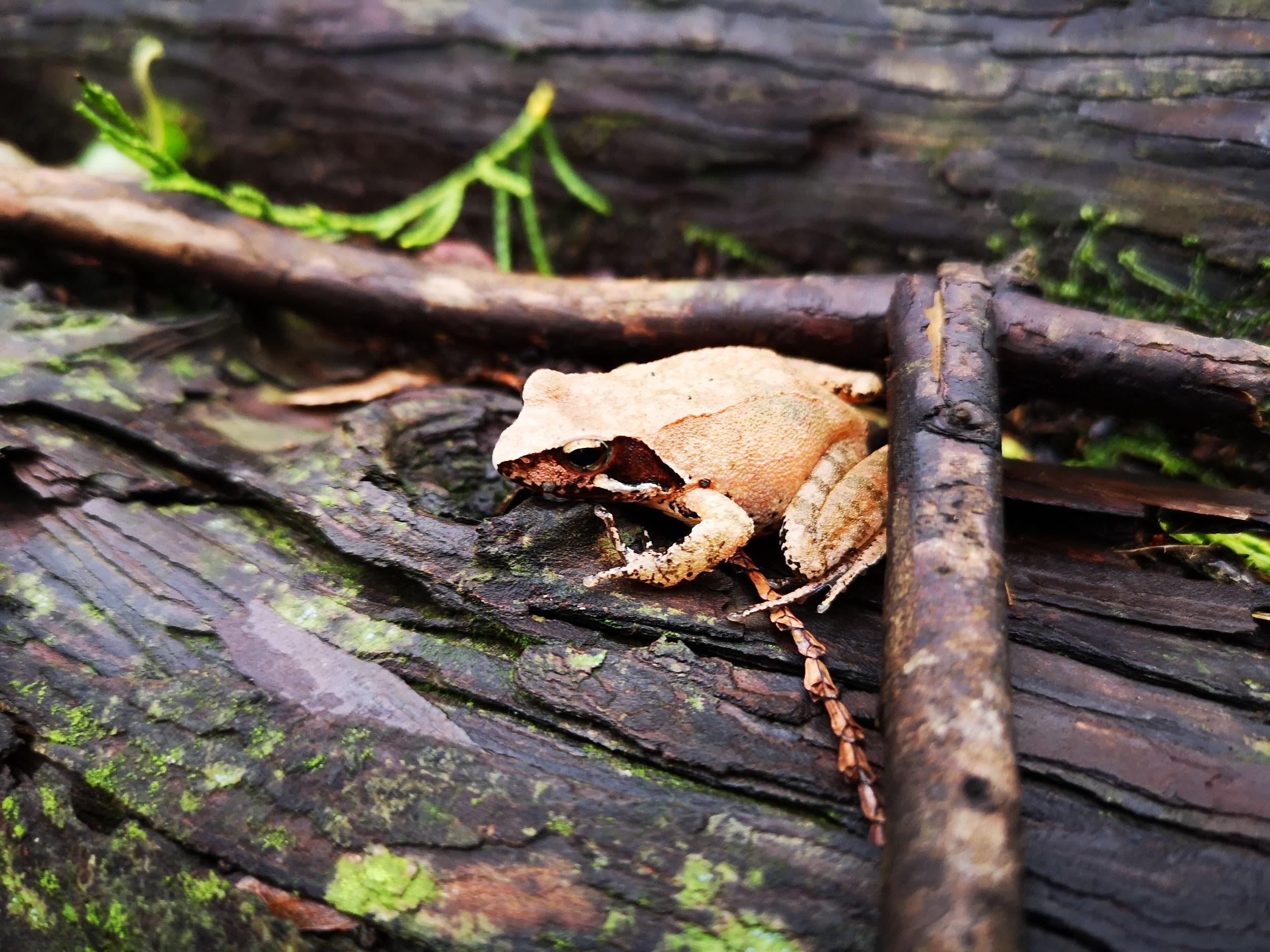
I reached the start of the trail a little before noon, and started climbing immediately. The trail climbed steeply through cedar forest. From the start it was hard to follow – this wasn’t a popular trail, and according to my guidebook, this hike is mainly done in the spring because of certain flowers that grow higher up. I got a nice surprise on the way – a small light-green frog hopped onto the path. Further up, it was the turn of a light-grey one. I have occasionally seen toads while hiking, but I had never seen a frog till this year. Earlier in the month I had also seen a couple of frogs along the Nakasendo in Nagano prefecture. I had read that the frog population was declining, but perhaps it’s making a rebound?

Frogs posing for pictures along the trail

I’m not sure whether it was because of the recent typhoon, but bright green cedar leaf branches were scattered all over the trail. I had never seen so many before, but they were effective at making the muddy trail underneath less slippery. As I gained altitude, the path became less steep, and the forest less dense, helping me spot two young deer dash away ahead of me. At times, the path was hard to follow, and I often had to rely on the “pink ribbons” to find the correct way.

The hiking path was covered with cedar leaf branches

I reached the flat top of Mt Mitsuba ミツバ山 (834m) just before 1pm. There was an opening in the trees a few meters to the South, but everything was in the clouds beyond the next ridge. In good weather, I imagine one could see Mt Fuji. After a quick break, I continued to climb along the ridgeline. Eventually, I saw mist to my right, so I figured that the top was in the cloud after all. Curiously enough, the left side remained clear for a while, before being engulfed in cloud as well.

This sign was kind of funny so I left it as it was

I reached the lonely summit of Mt Gongen 権現山 before 1pm. According to my map, there weren’t any views, just as well since there wouldn’t have been any because of the mist. This mountain’s name is fairly common: purely by coincidence, the next mountain I climbed, just 3 days later, had the same name. I didn’t even realise it until I went through my photos. After a quick lunch, I set off immediately. Since I had climbed fairly quickly, I hoped to descend equally quickly, and catch an earlier bus back, especially since the weather was poor.

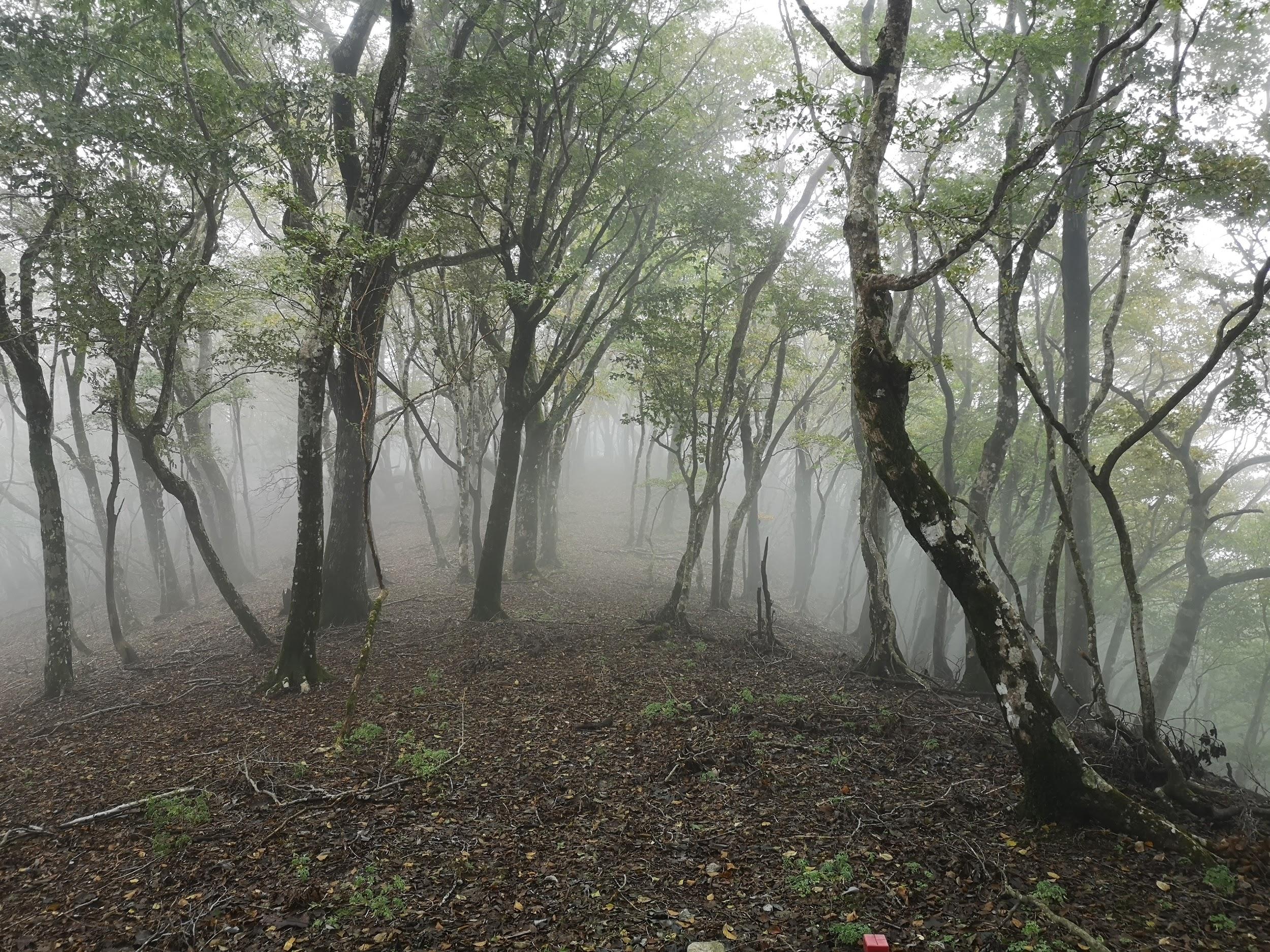
Mysterious and quiet forest at the top

The path down (heading left – the path going past the top is a shortcut leading back down to Tanzawa lake) was as hard to follow as the one going up. There were steps built into the steep slope, but they lacked maintenance. It seems that this path has fallen out of favour among the hiking community, and I can’t recommend it, unless one is seeking absolute solitude. On the way down I had some glimpses of Nakagawa onsen 中川温泉 in the valley below, an aging hot spring town I had stayed at a couple of years ago.

I lost quite a bit of time looking for the trail, at one point heading down a steep valley by mistake and having to climb back up, and I ended up missing the earlier bus, as well as the next one, arriving at the bus stop just below Nakagawa Onsen, at around 4h30. Even though sunset was at 5pm, it got quite dark hiking in the forest after 4pm. I might even have spotted the elusive “taka” taking off from a branch at one one point, but it might have been just a crow.

I finally arrived back at Tanzawa lake just before 5pm, and was looking forward to a hot bath, only to discover that the hotel was closed! However, after knocking at the door, the owner arrived, and kindly let me have a quick bath – since they didn’t see me arrive at 4pm, they thought I had changed my plans, and decided to lock up for the day. After a quick bath, I caught the last bus back to Shin-Matsuda station.

NEXT UP: Mt Gongen in Yamanashi Pref. (Yatsugatake)

Mt Omuro (1587m) & Mt Kanyudo (1418m), Sagamihara City, Kanagawa Prefecture

These mountains are located in the Western half of the Tanzawa mountains, and harder to access than those in the Eastern half like Mt Tanzawa and Mt Oyama. I  rode the bus from Shin-Matsuda station for over an hour, past Tanzawa lake, all the way to the last stop, the Nishi-Tanzawa Visitor Center 西丹沢ビジターセンター, a great starting or ending point for hikes in the area. It was the second week of November, which was rather late in the season; the autumn colours had already crept down the mountain sides into the valley. I was told by the staff at the visitor center to start heading down by 1pm at the latest, to avoid getting caught in the dark.

Hiking in the Tanzawa Mountains

丹沢山地

Ask for a hiking map for Mt Omuro

In the back hidden in the clouds is Mt Fuji

I set off at 10am under blue skies. The first part of the hike was along a small road that followed the river valley past a couple of camping sites. At the first junction, I headed right – I would be descending via the left junction. Here I finally entered the hiking trail proper, also part of the Tokai Nature Trail 東海自然歩道. I followed a narrow valley alongside a rocky river. Looking up, I could admire autumn colours in all directions. After an hour of climbing, I reached a pass, an Emergency hut, and the first views. However by now, grey clouds had rolled in hiding the ridgelines.

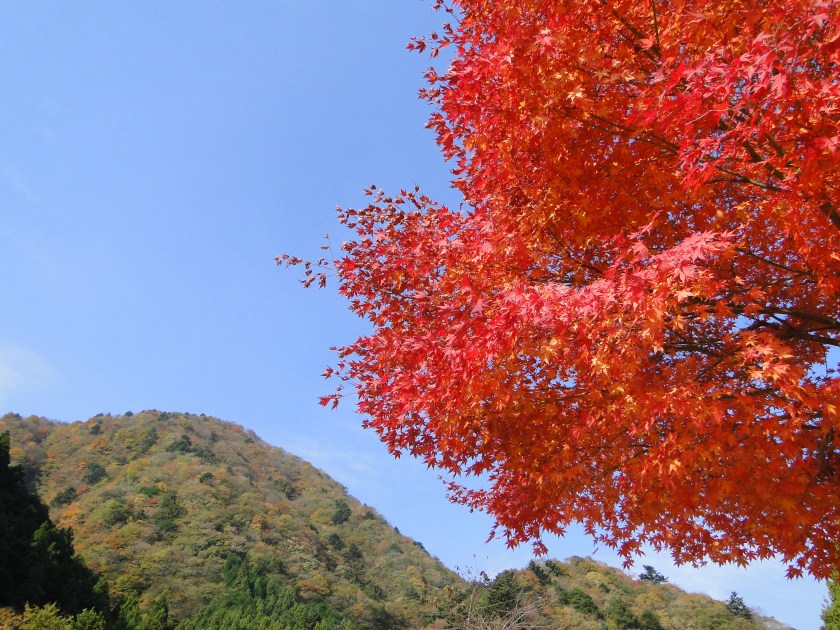
The brilliant red of the “momiji” tree

Climbing up through a “koyo” tunnel

I still needed another hour an hour of tough climbing to reach the summit of Mt Omuro (大室山 oomuroyama), a 100-famous mountain of Yamanashi and the 3rd highest peak of the Tanzawa mountains. Here, the trees were already bare of leaves, a strong hint that winter was just around the corner. I was now mostly above the clouds that had gathered on the Southern side, with just a few milky strands of mist left. I had great views North of Doshi Valley and the Doshi Sankai mountains. Since it was nearly 1pm, I had a quick lunch, and made my way Westwards along the ridgeline to the next peak Mt Kanyudo (加入道山 kanyuudouyama).

Mist and leafless trees near the summit

Doshi valley and Doshi mountains

There was another emergency hut here, but fortunately I still had enough time to descend safely.  Soon, I was walking on a wooden path alongside a beautiful mountain stream with a carpet of colourful fallen leaves on both sides. Suddenly the path and the stream parted ways. A few minutes later, I caught a glimpse of an impressive waterfall to my right. By now the clouds had disappeared and the blue skies were back. The sun had already disappeared behind the mountain ridge behind me. I emerged into a river valley with rocky banks, which I crossed several times on small wooden bridges, and finally got back to the visitor center by 4pm.

Easy walking on the way down

Ask for a hiking map for Mt Omuro