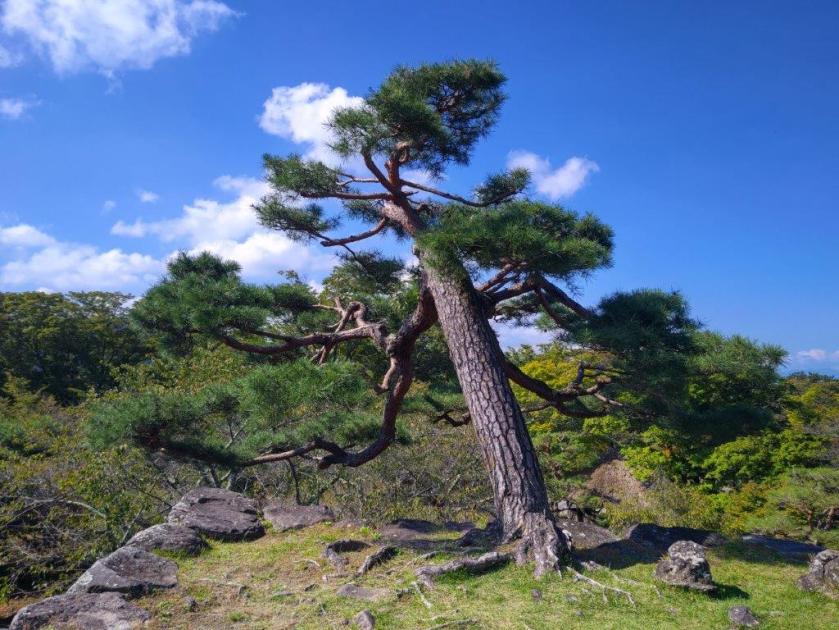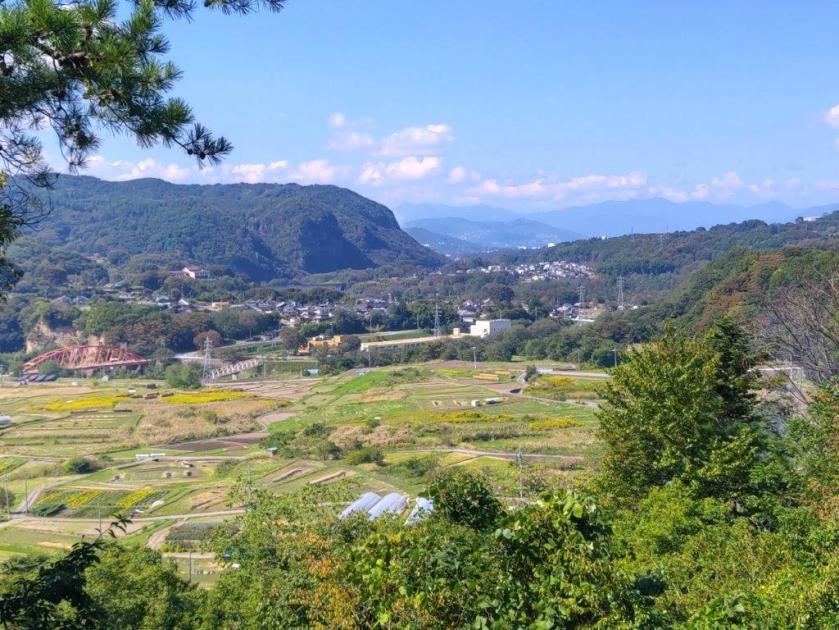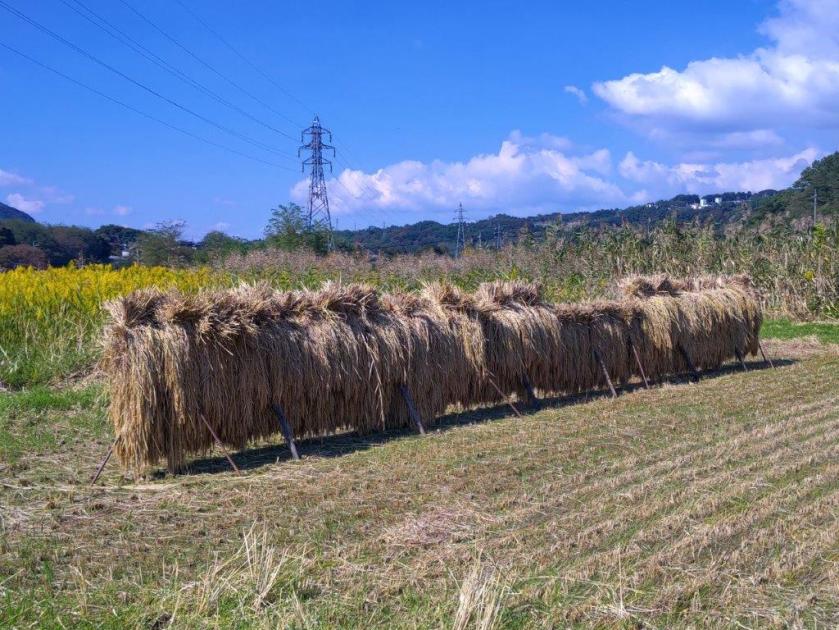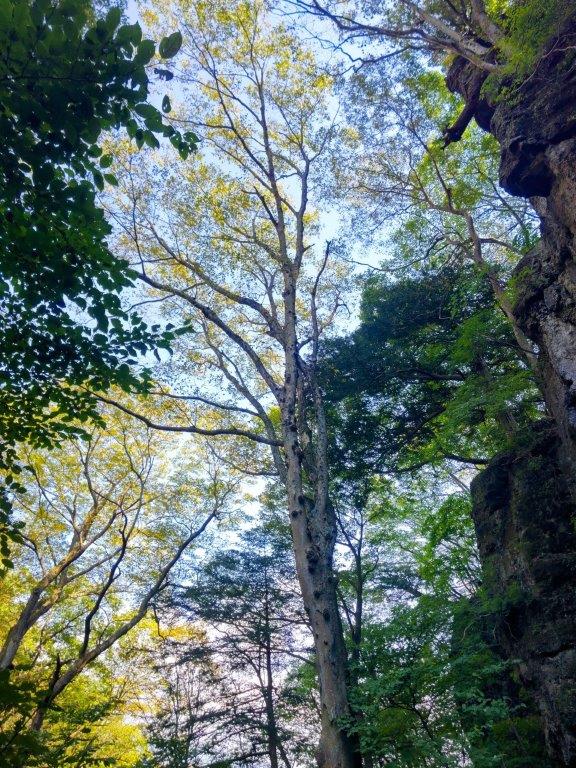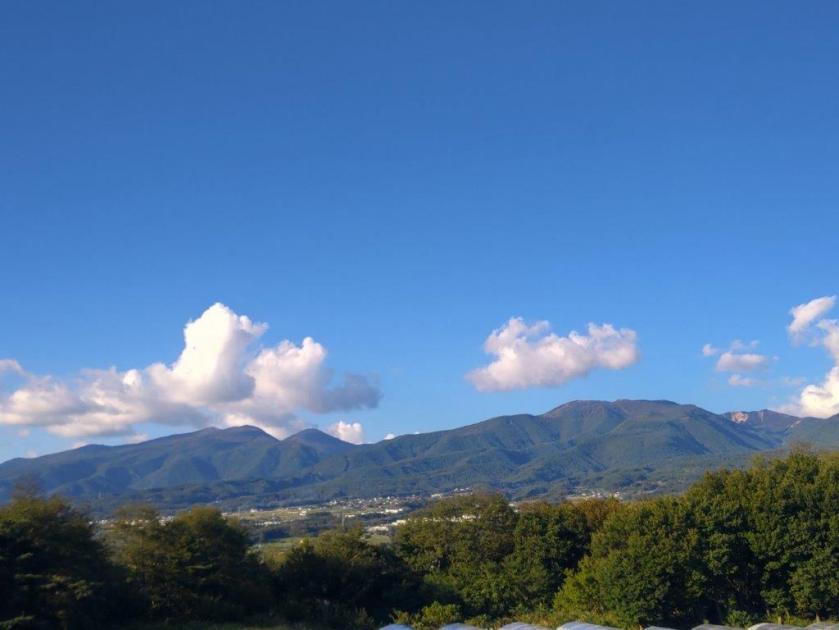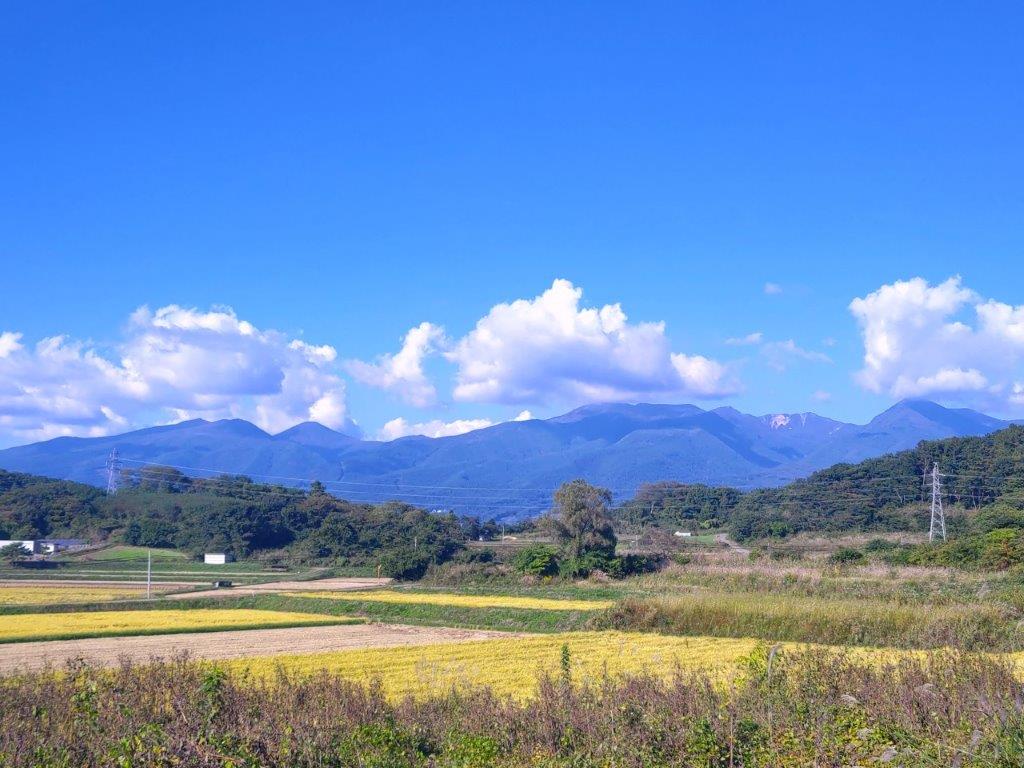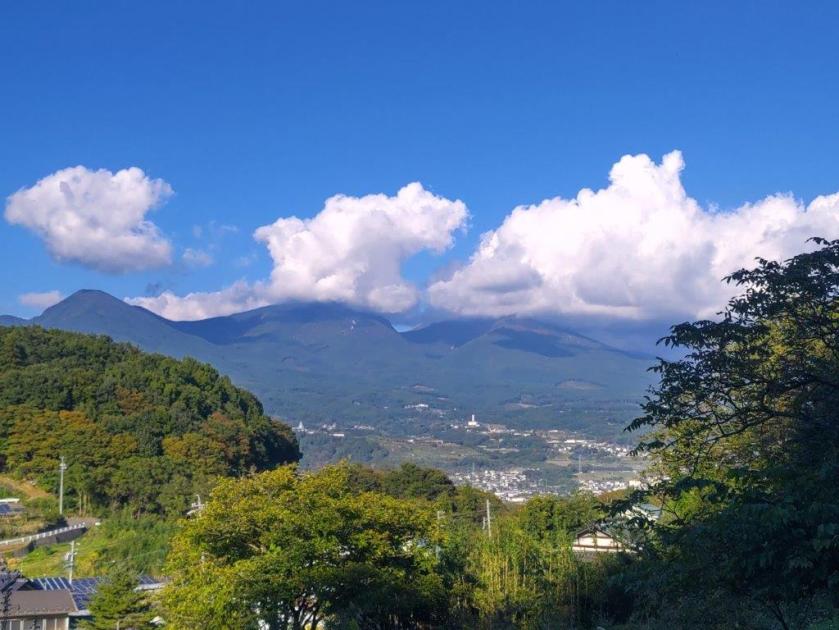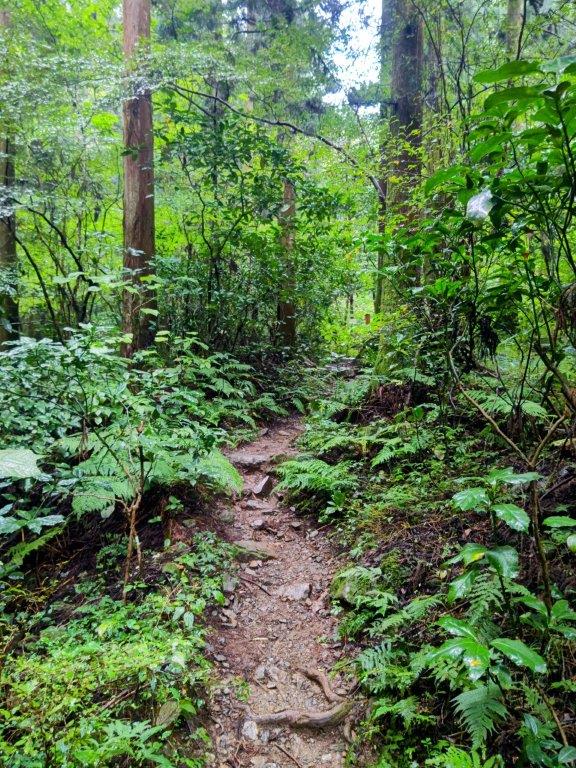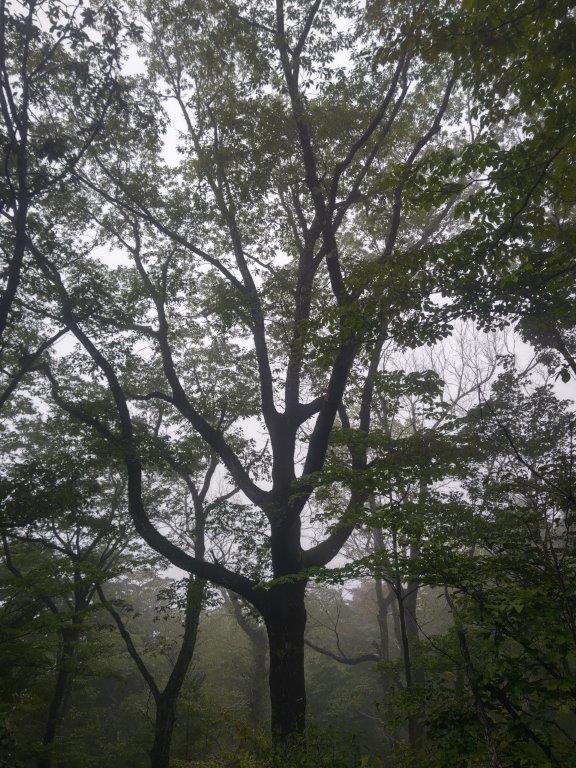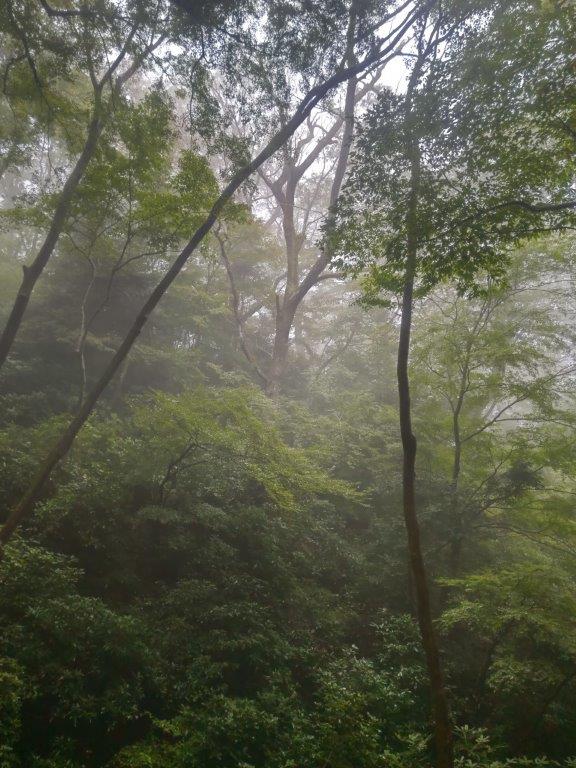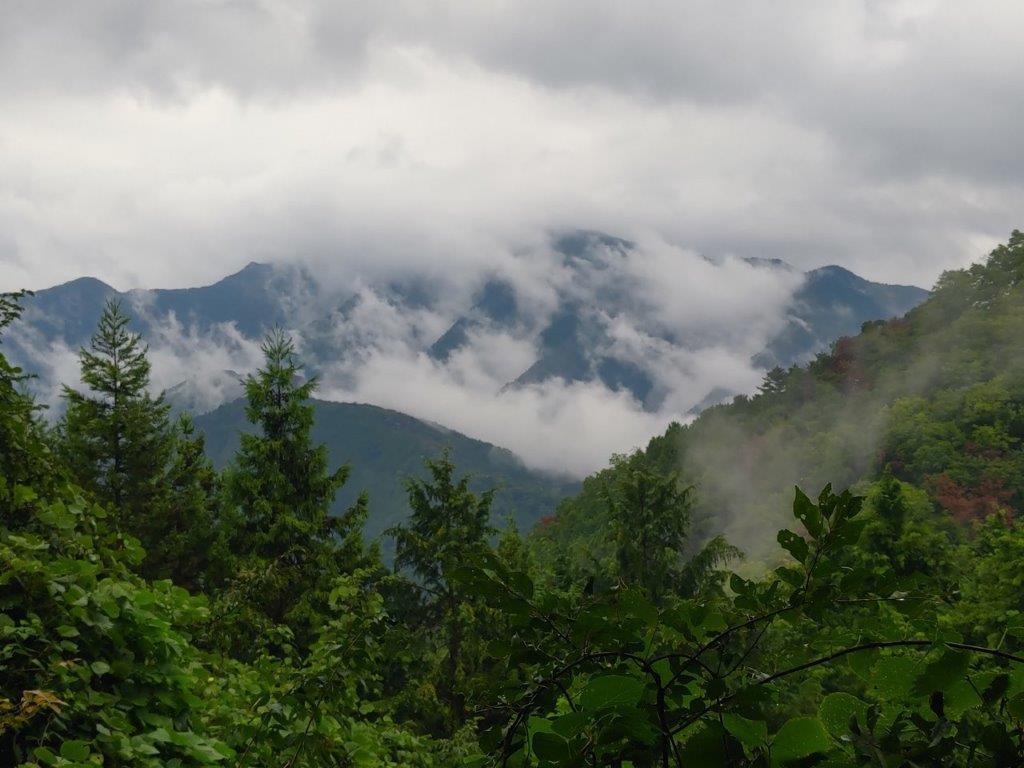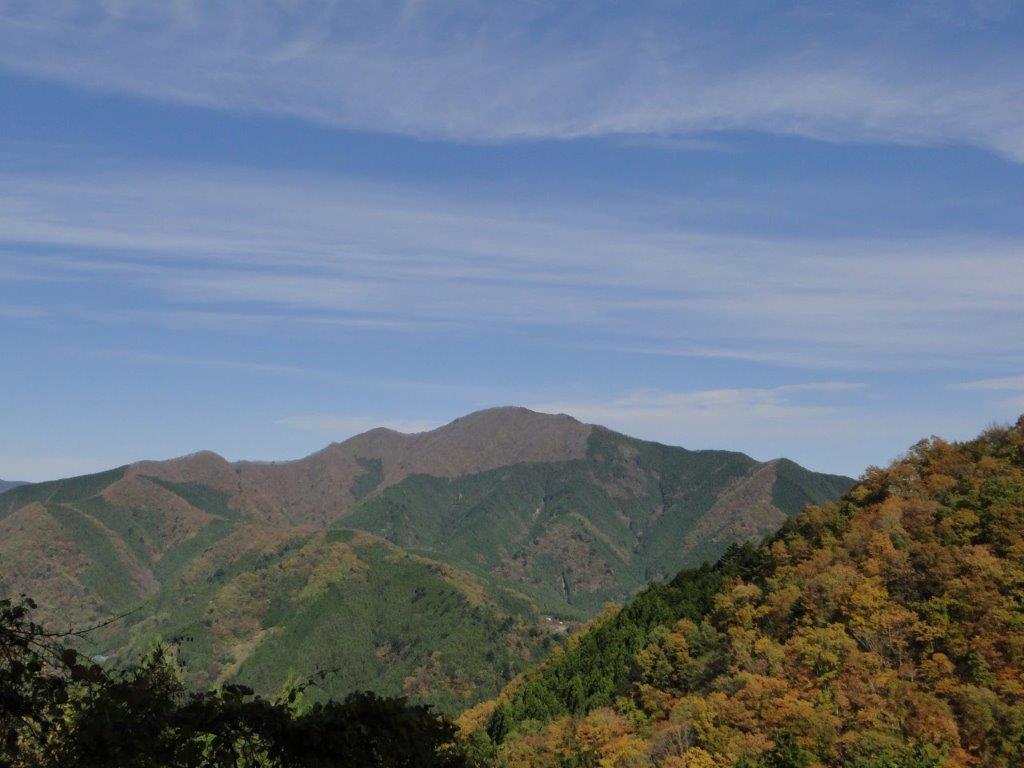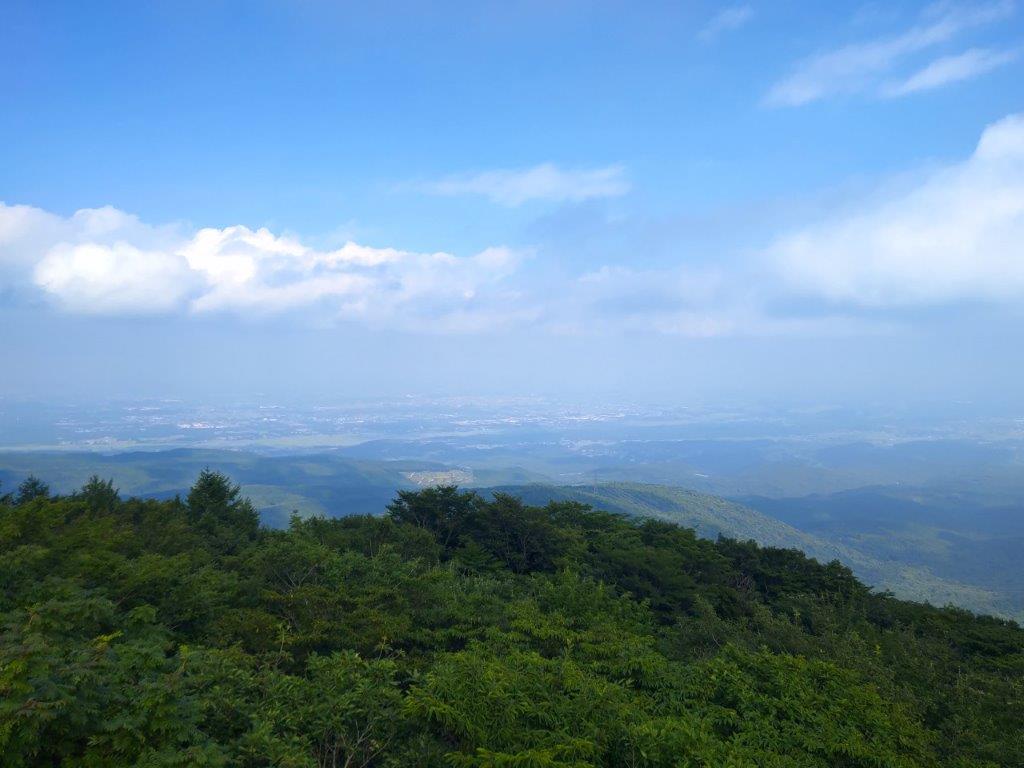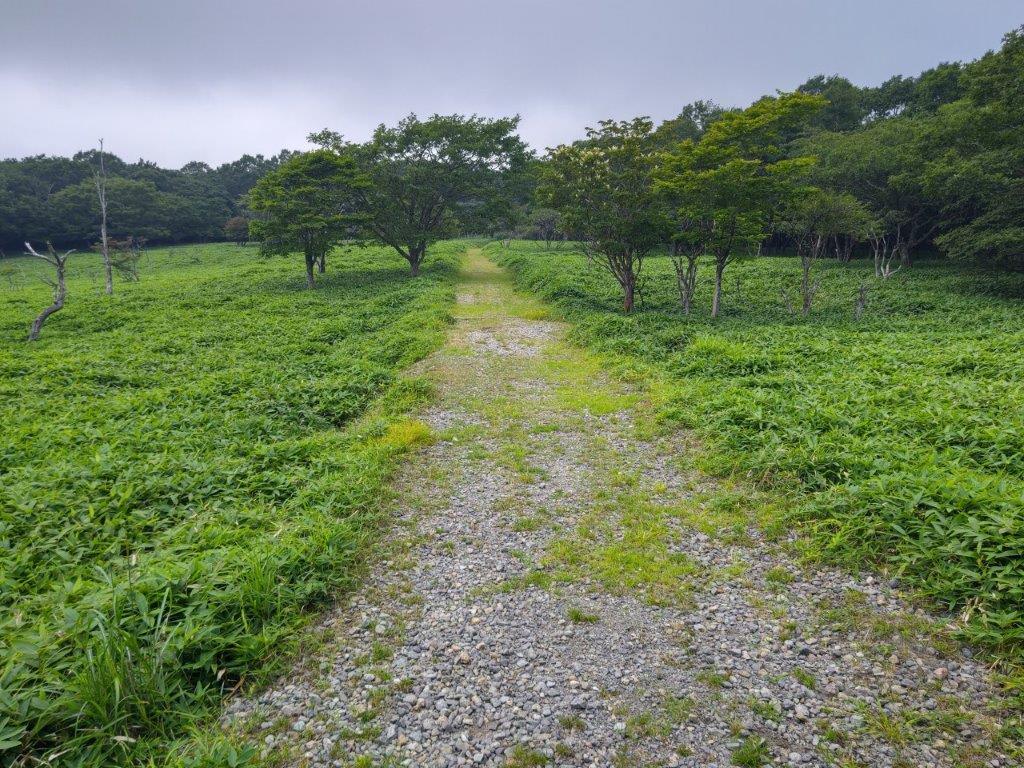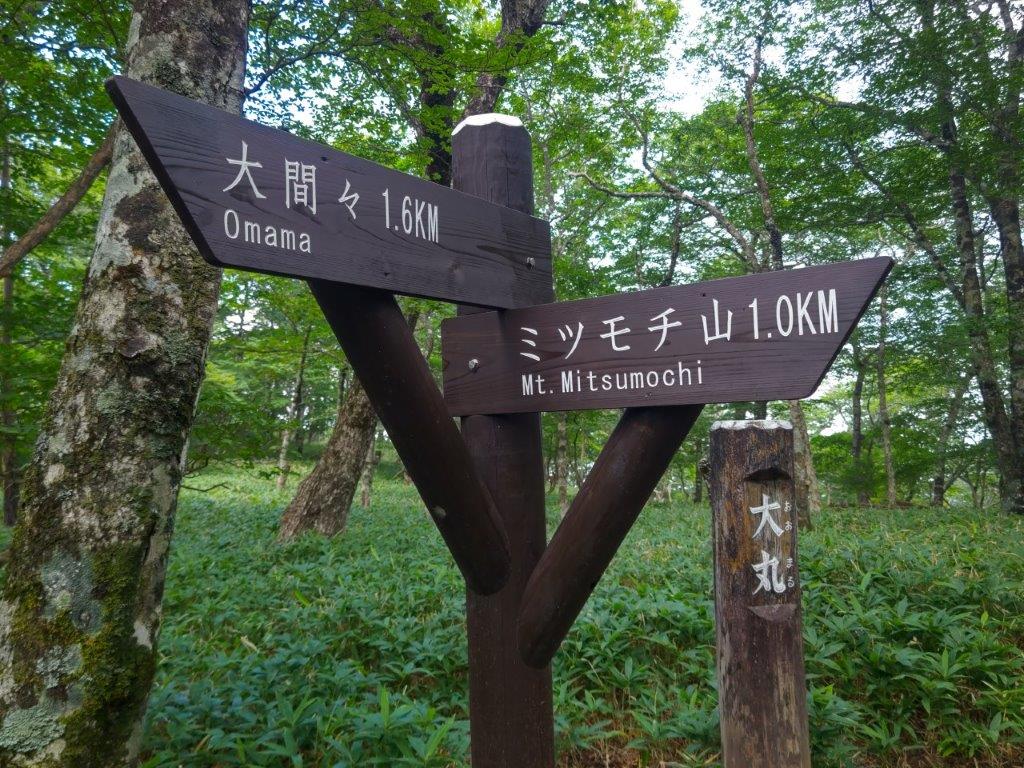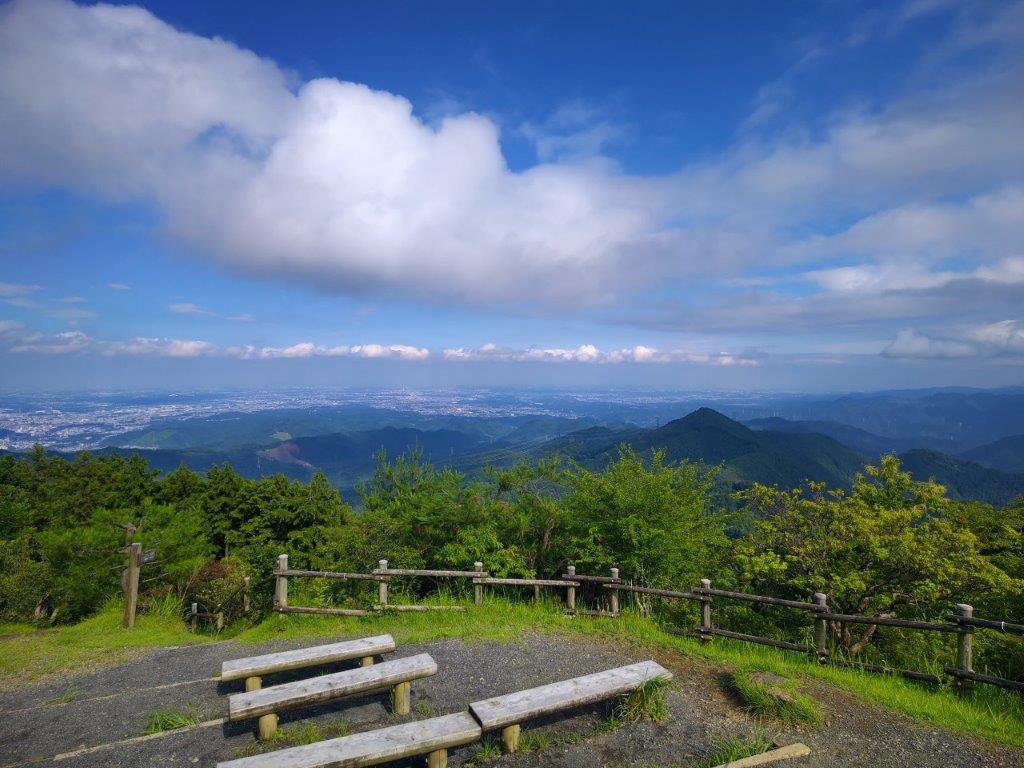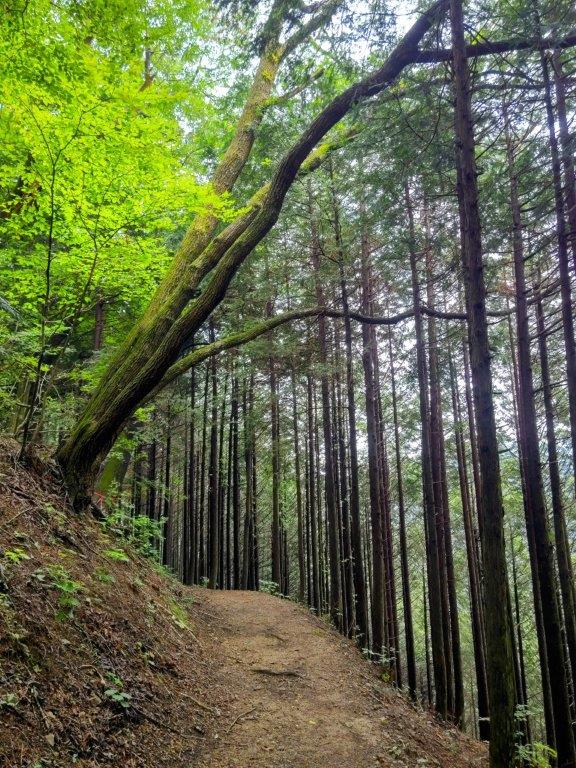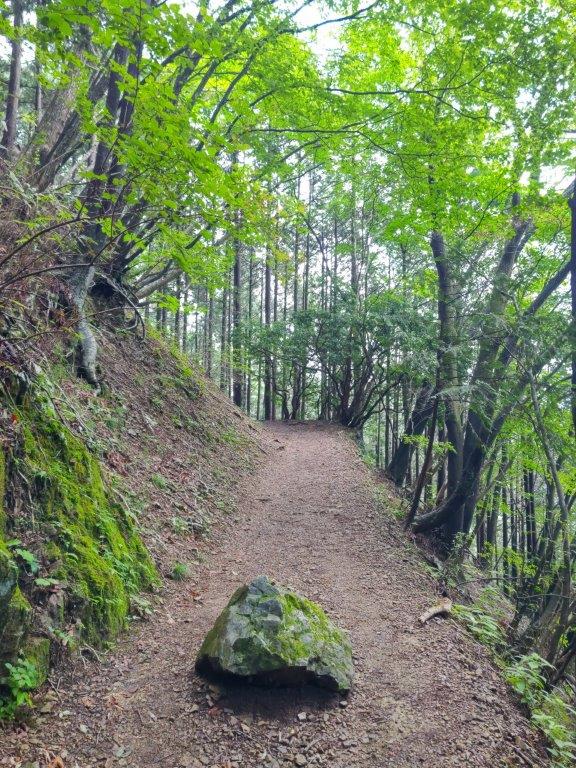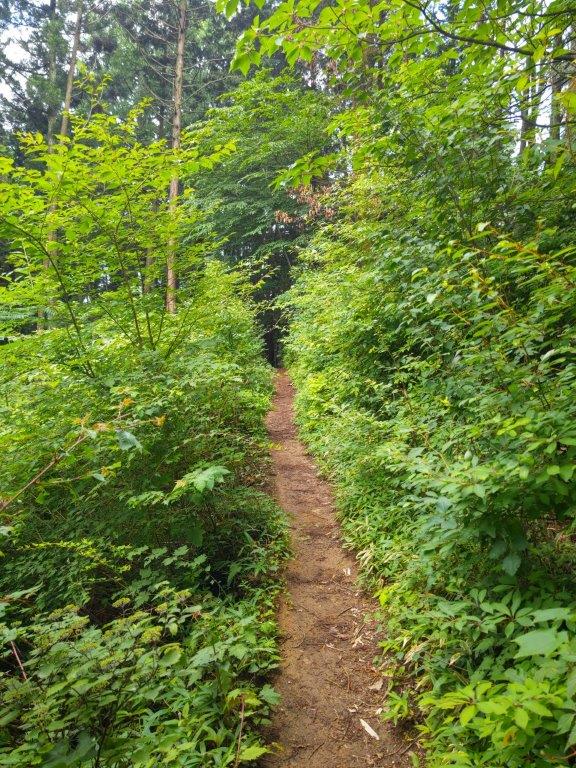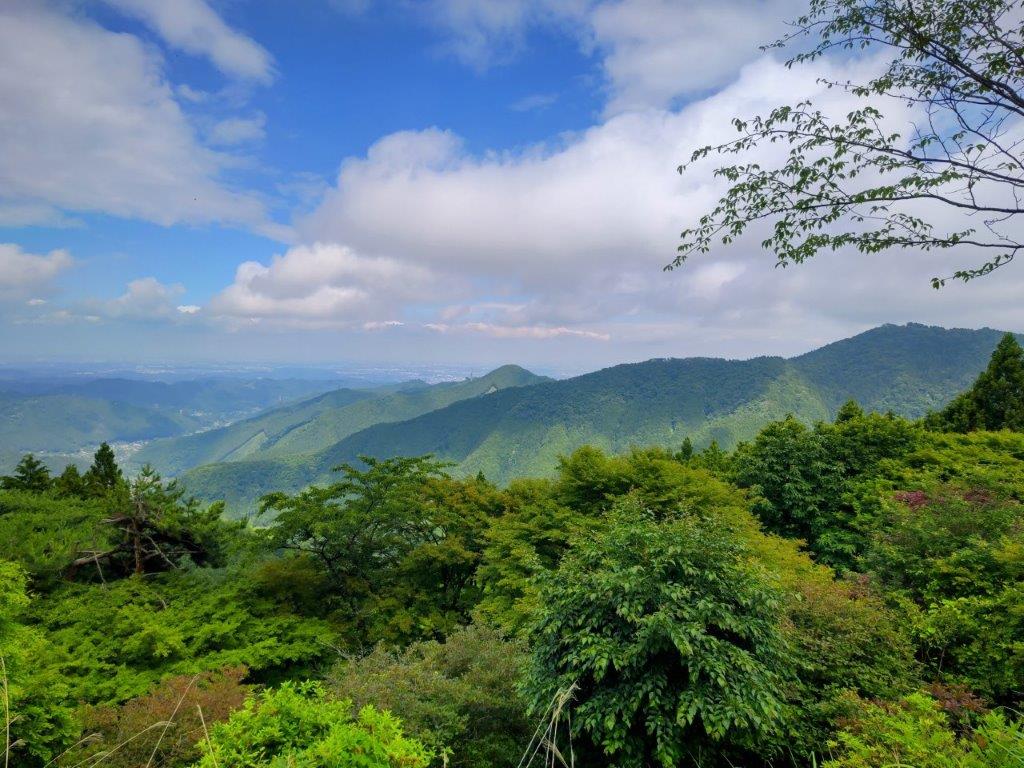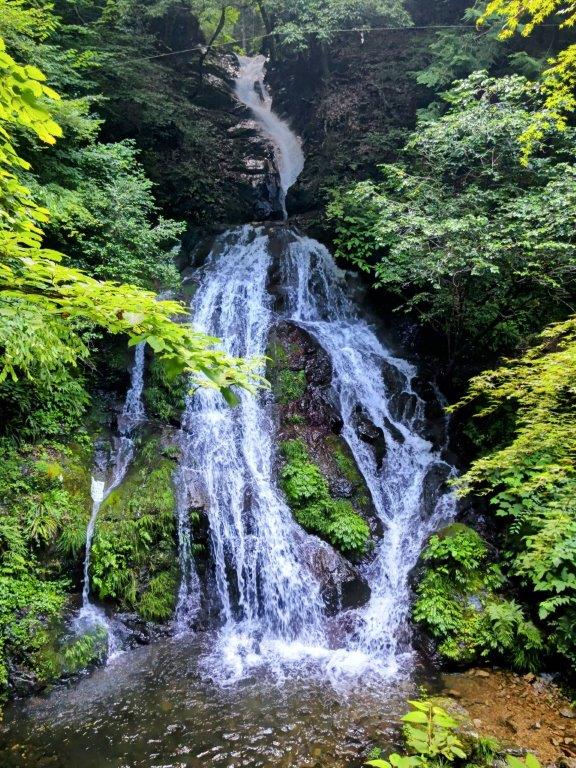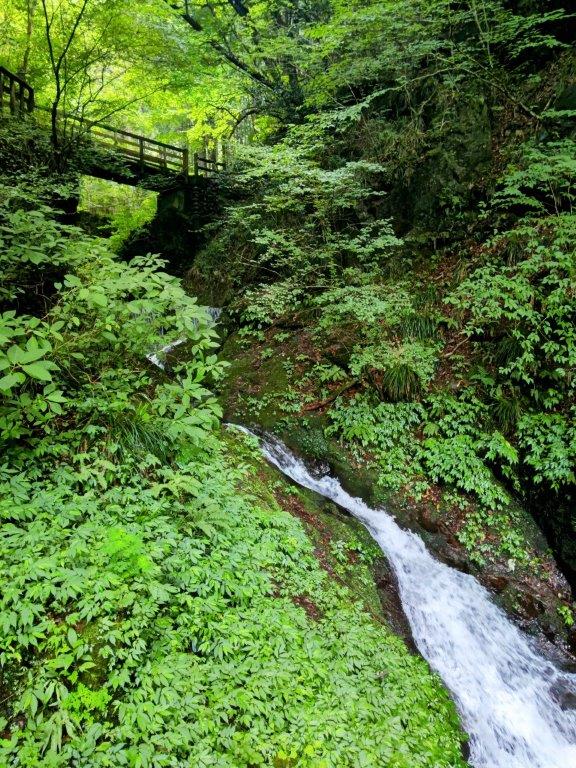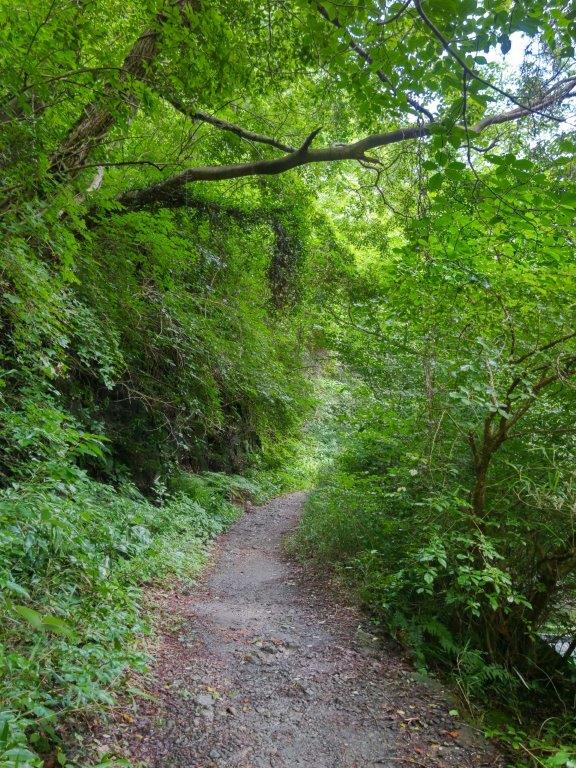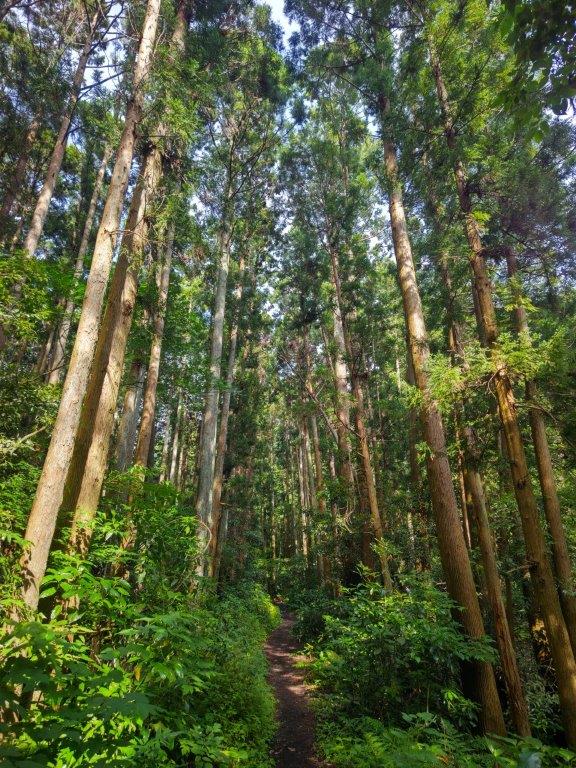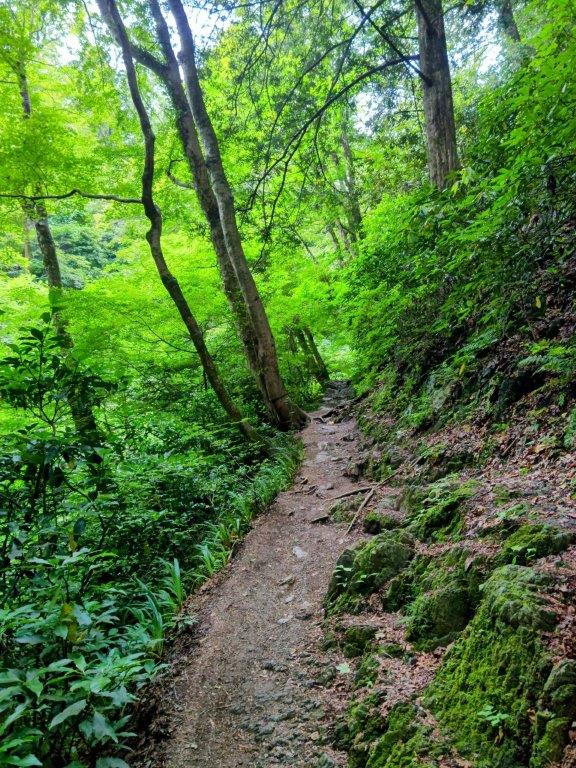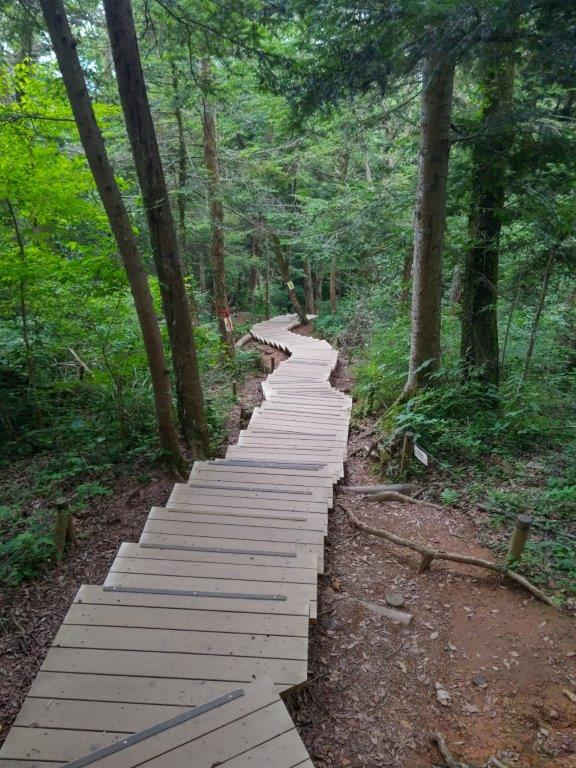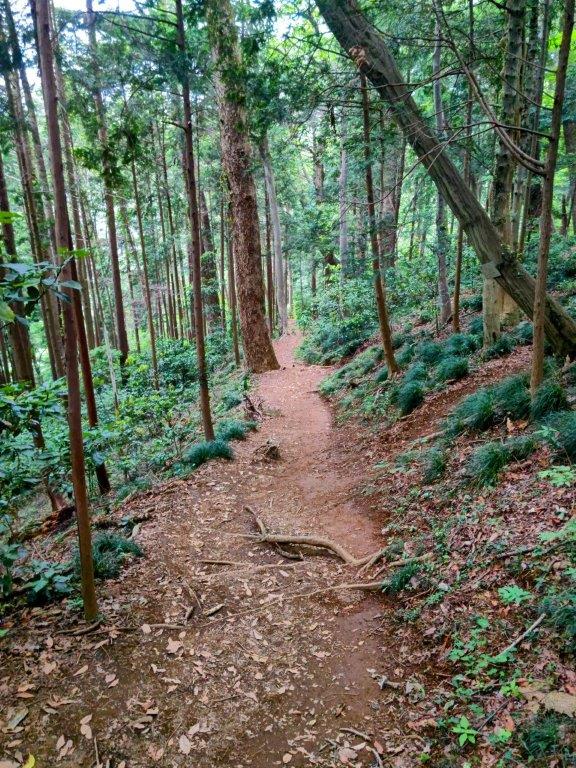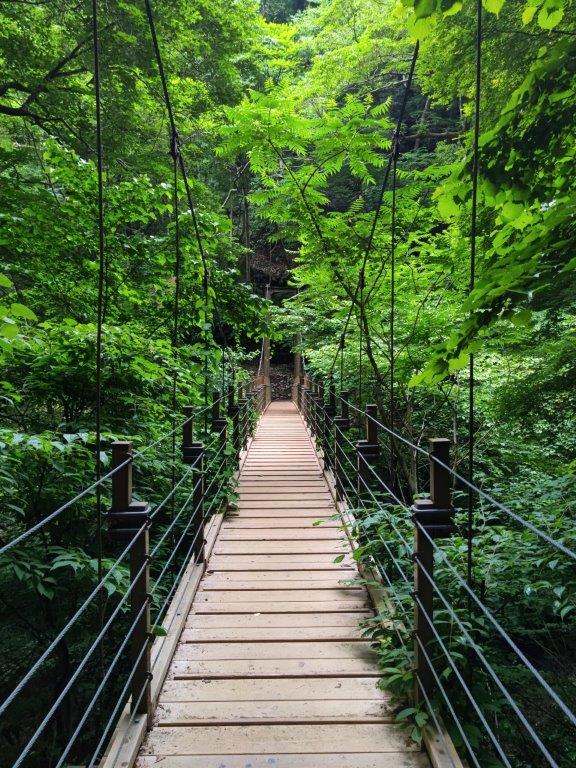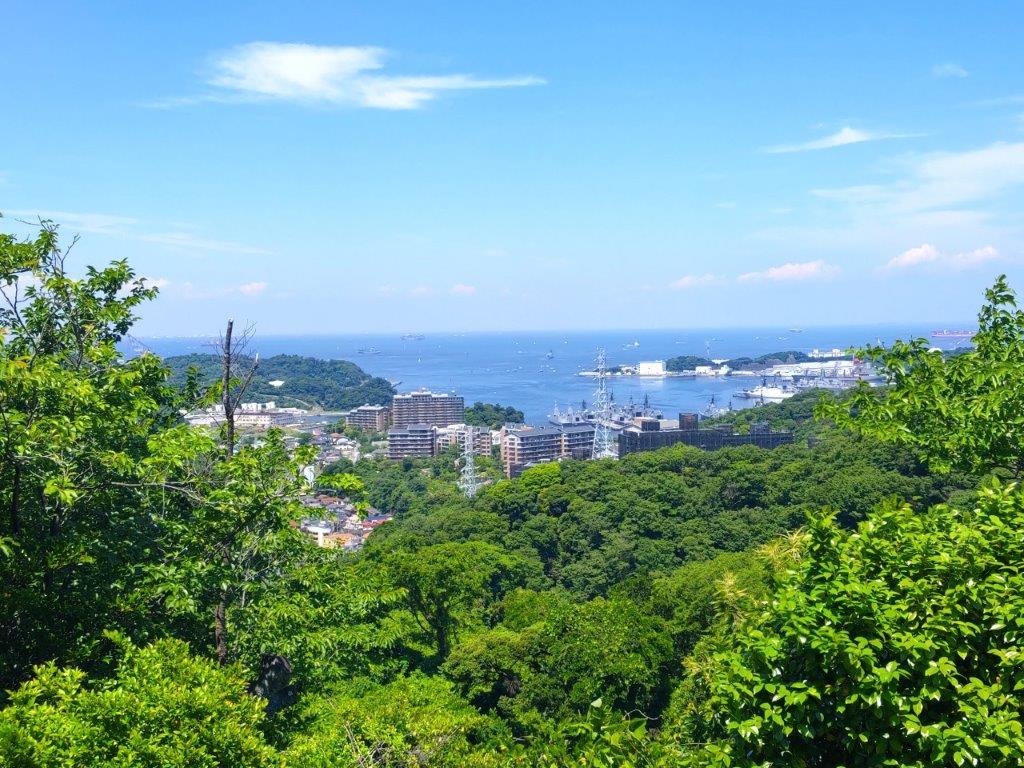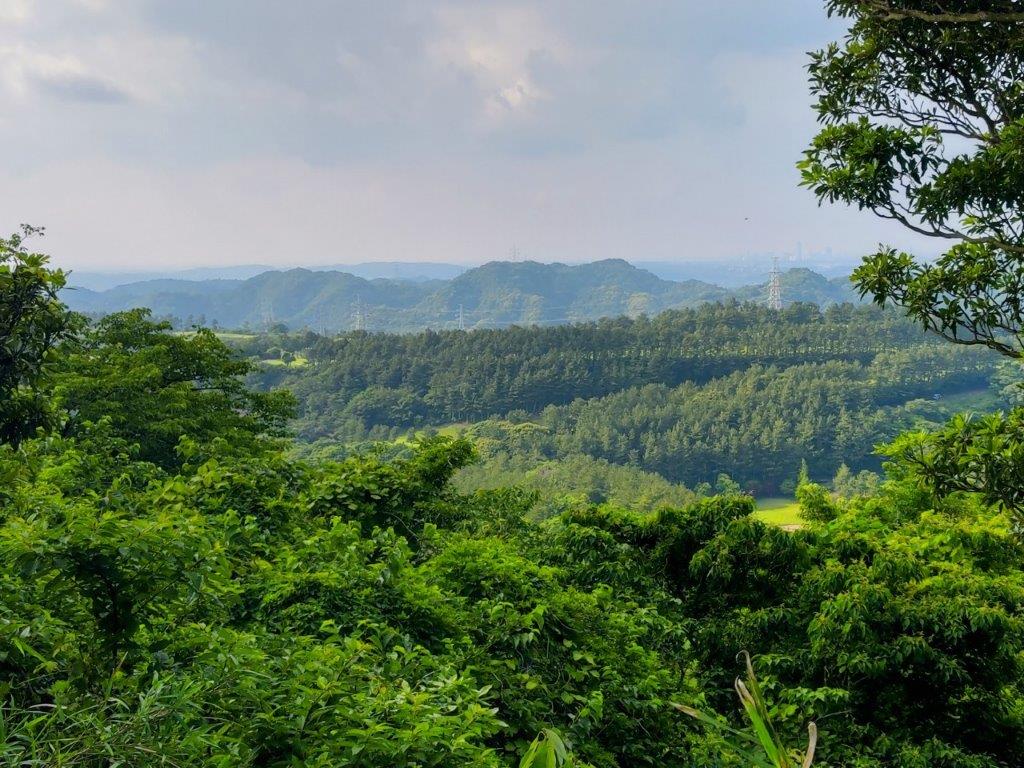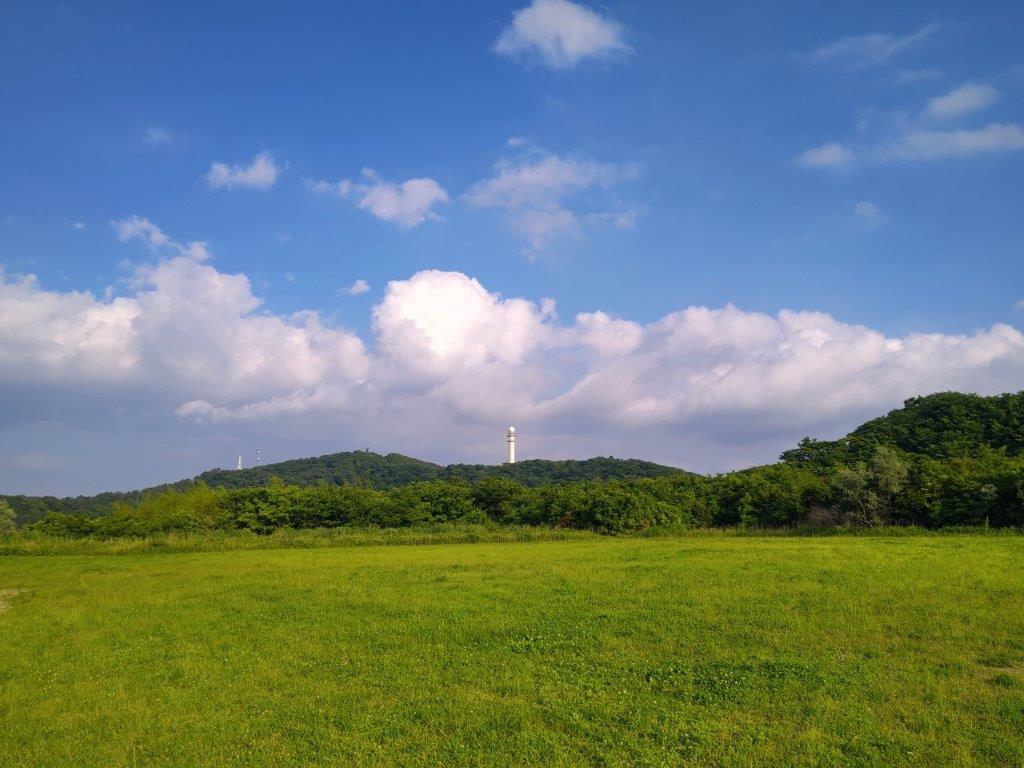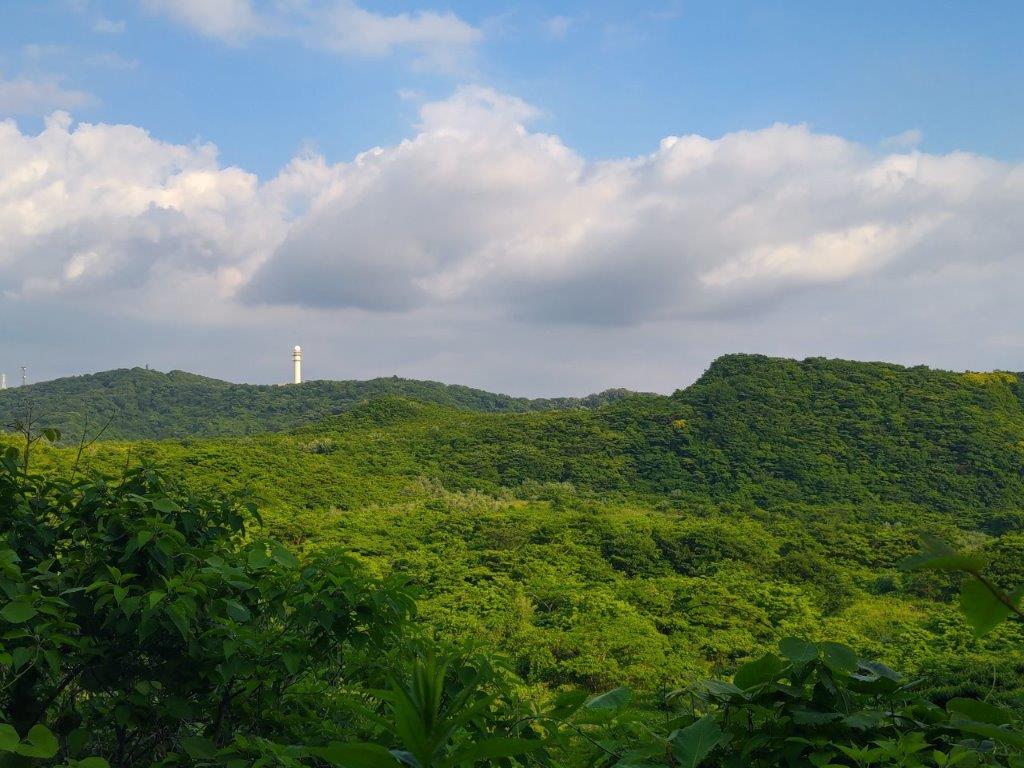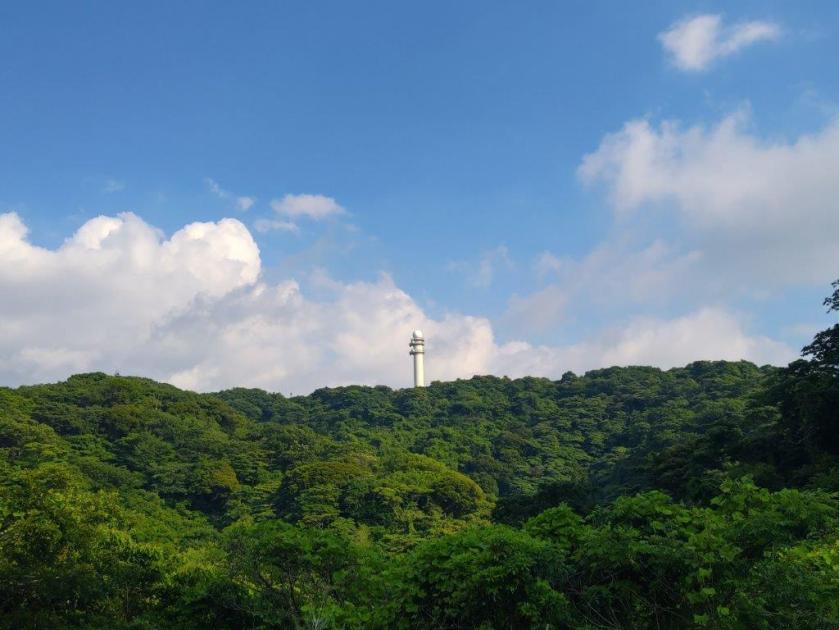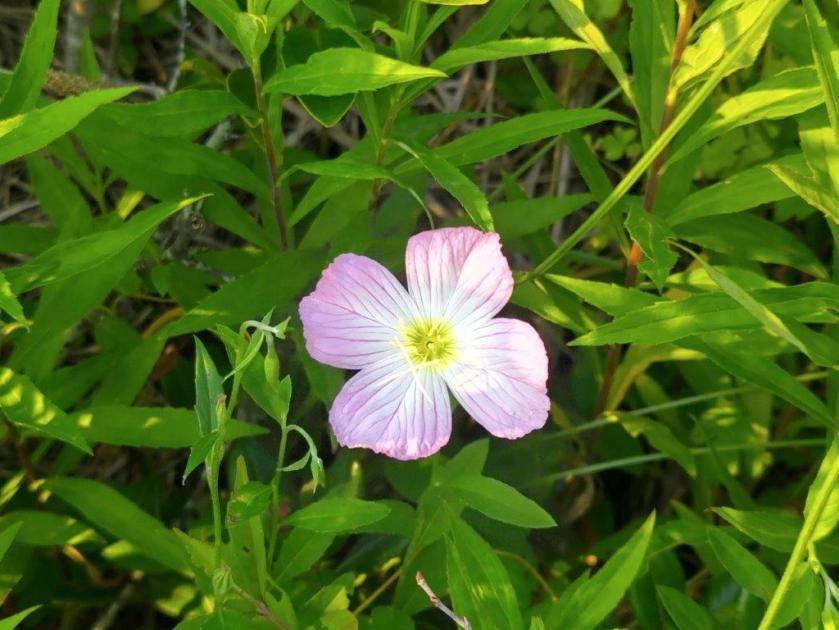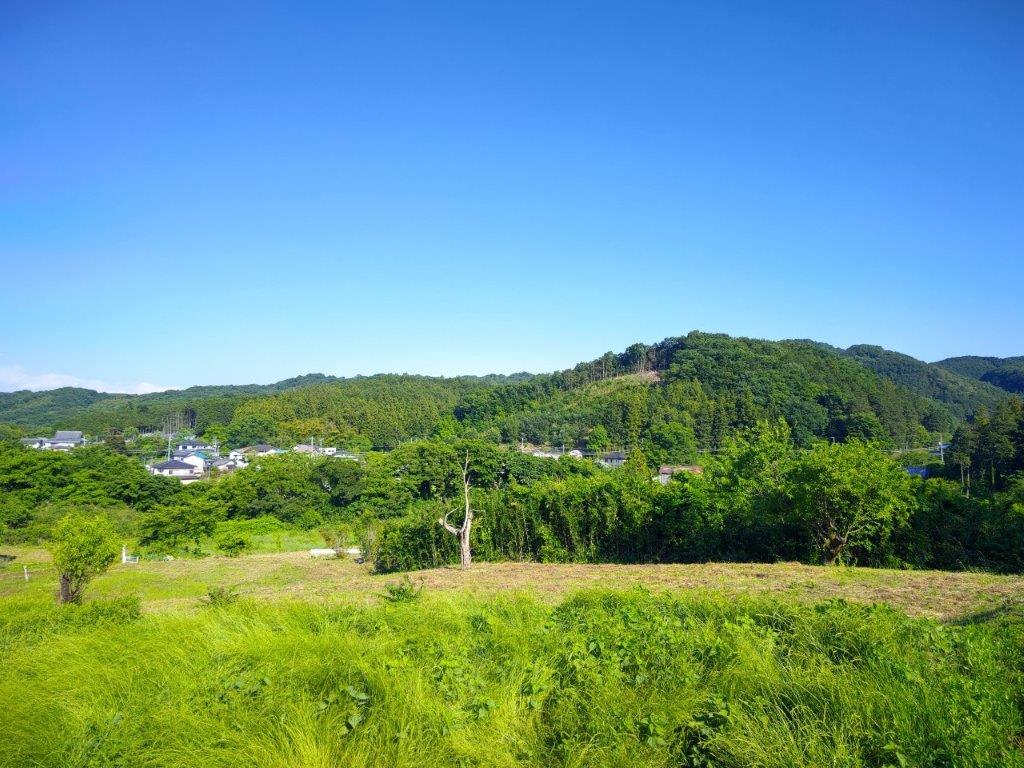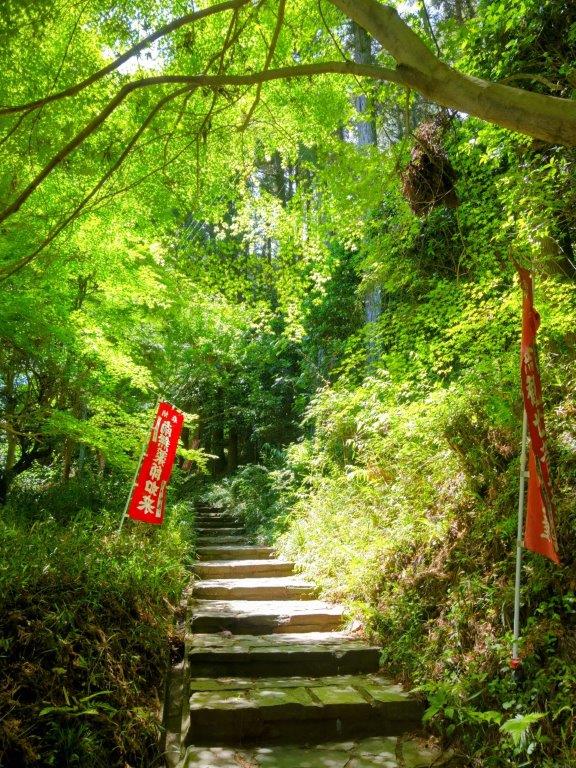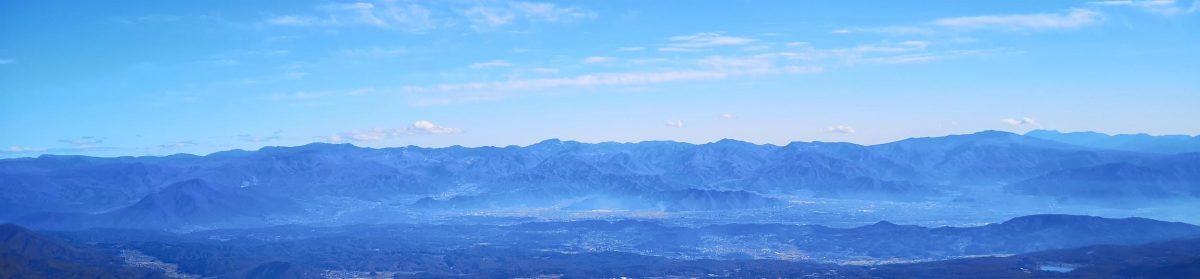
Mt Ogusu (241m), Yokotsuka City, Kanagawa Prefecture, Saturday, June 1, 2024 [Shonan International Village Route]

I wanted to do some more nearby, low-altitude hiking before the hot and humid weather forced me to travel far and high. Looking at my new Miura Peninsula hiking map, I decided to revisit Mt Ogusu: this time I’d start from Hemi station on the northeast side, and finish at Shonan Kokusai Village on the northwest side; on the way, I could pass by Anjin-Miura’s grave in Tsukayama Park, first visited in February 2019. I could also see the view from the Mt Ogusu observation tower, hopefully open this time.

Hiking on the Miura Peninsula 三浦半島

To get to my starting point, I would ride the Shonan-Shinjuku line to Yokohama, and there change to the local Keiyu line. For the return, I could ride a bus to Shiori station, the next stop from Hemi station. Although, the year’s first typhoon had hit the area the previous day, Saturday’s weather was supposed to be mostly sunny with temperatures in the mid-twenties. I wondered how comfortable hiking in this season would be, but was looking forward to getting some more views of the Miura Peninsula.

For subscribers, read this Blog Post on Hiking Around Tokyo for a better viewing experience and the latest updates

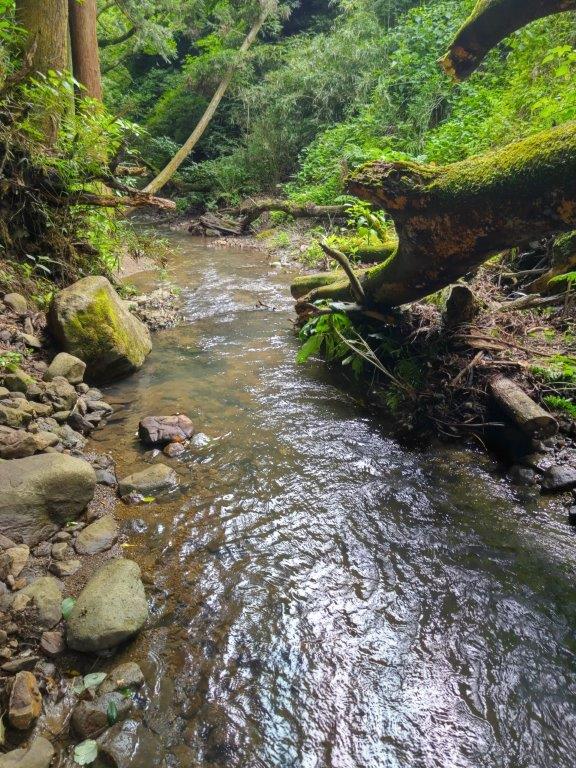
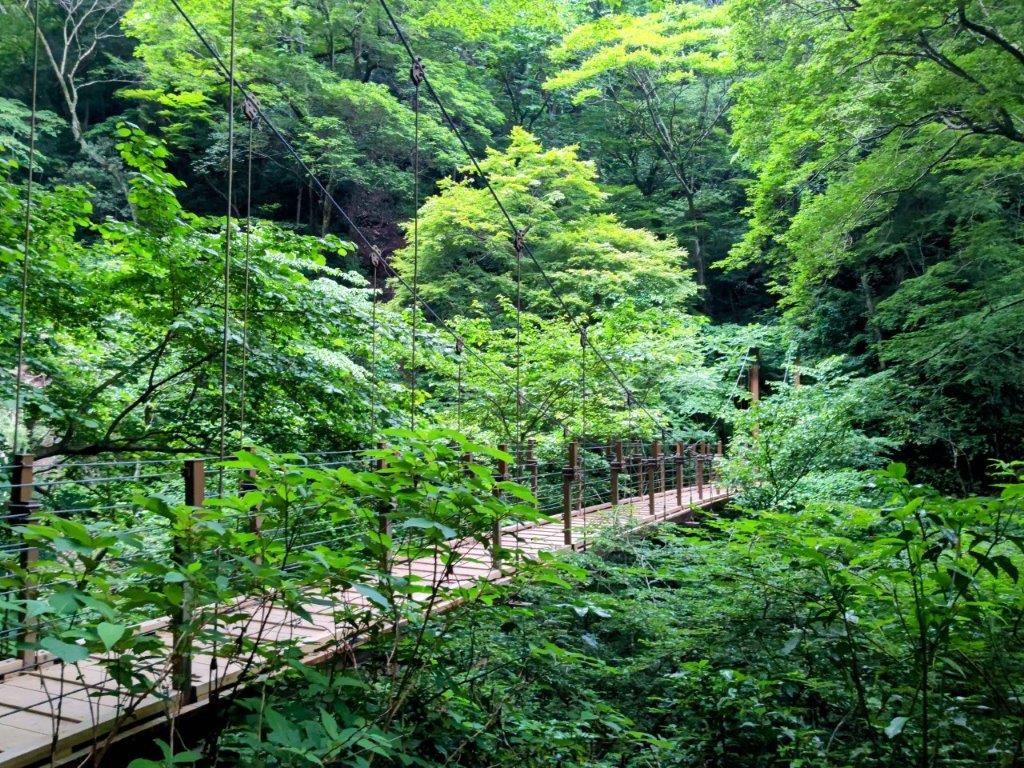
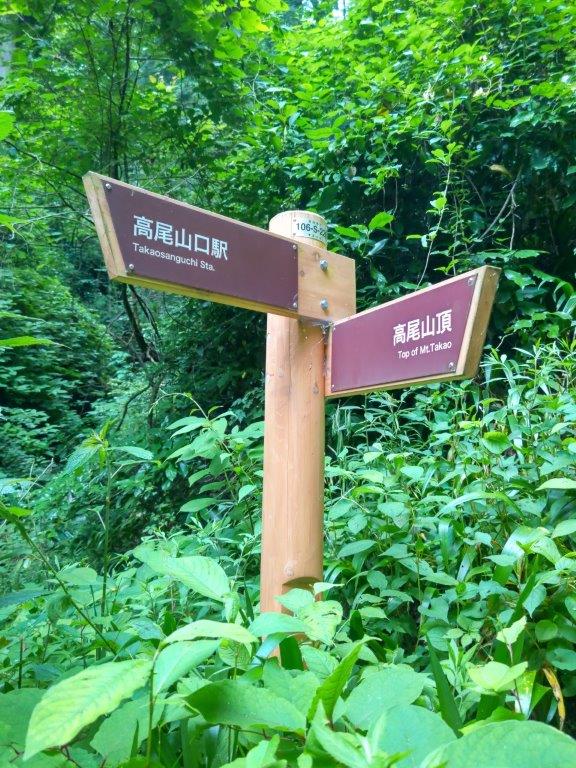
Start of the Hike (left) Lots of Water after the Typhoon (right)

Path near the top (left) and base (right) of Tsukayama Park

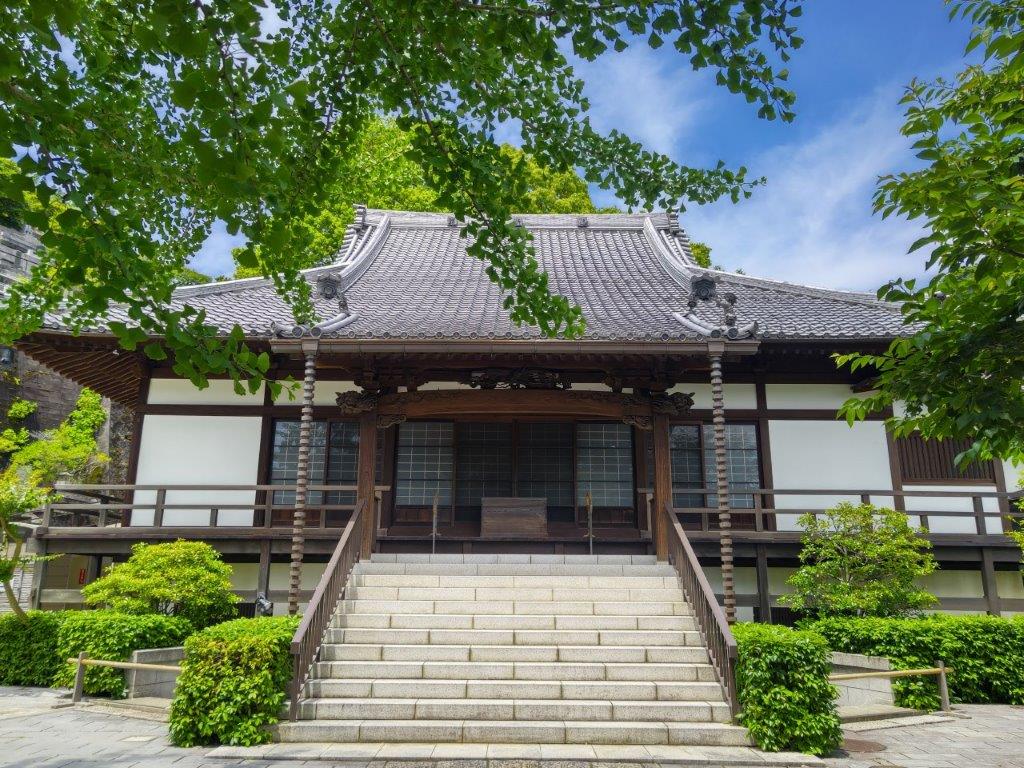
It was a beautiful spring day as I got off the train at Hemi station at 10am. As I made my way through the town, I noticed food stalls lining the main street, a sure sign a festival was taking place this weekend. I stopped by Jodoji Temple, a peaceful place with a bench; apparently a small Buddha statue belonging to Anjin-Miura is kept there but sadly not on display.

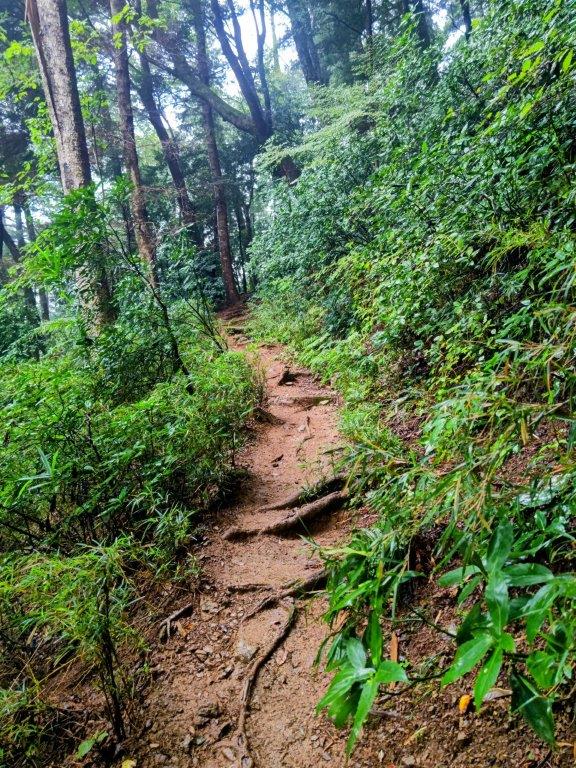
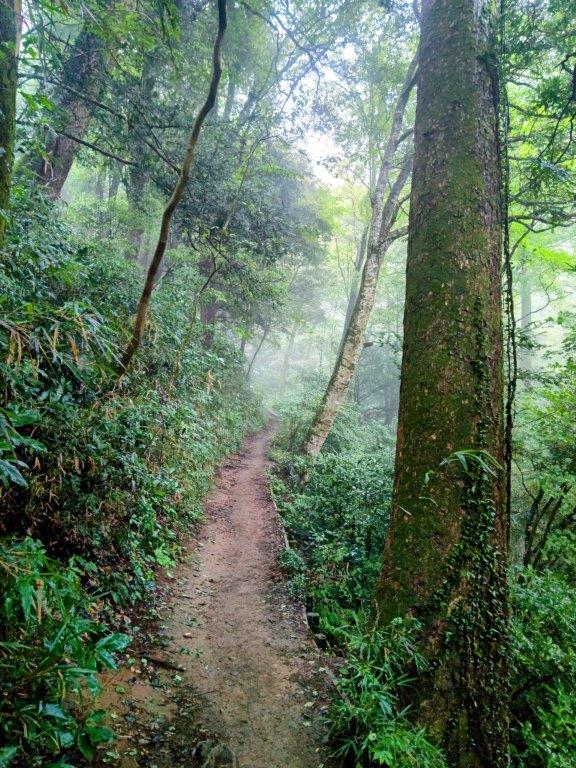
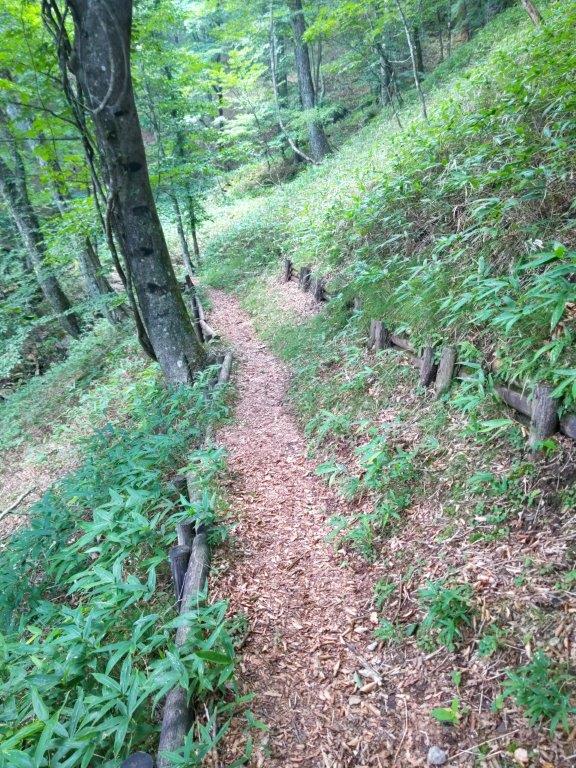
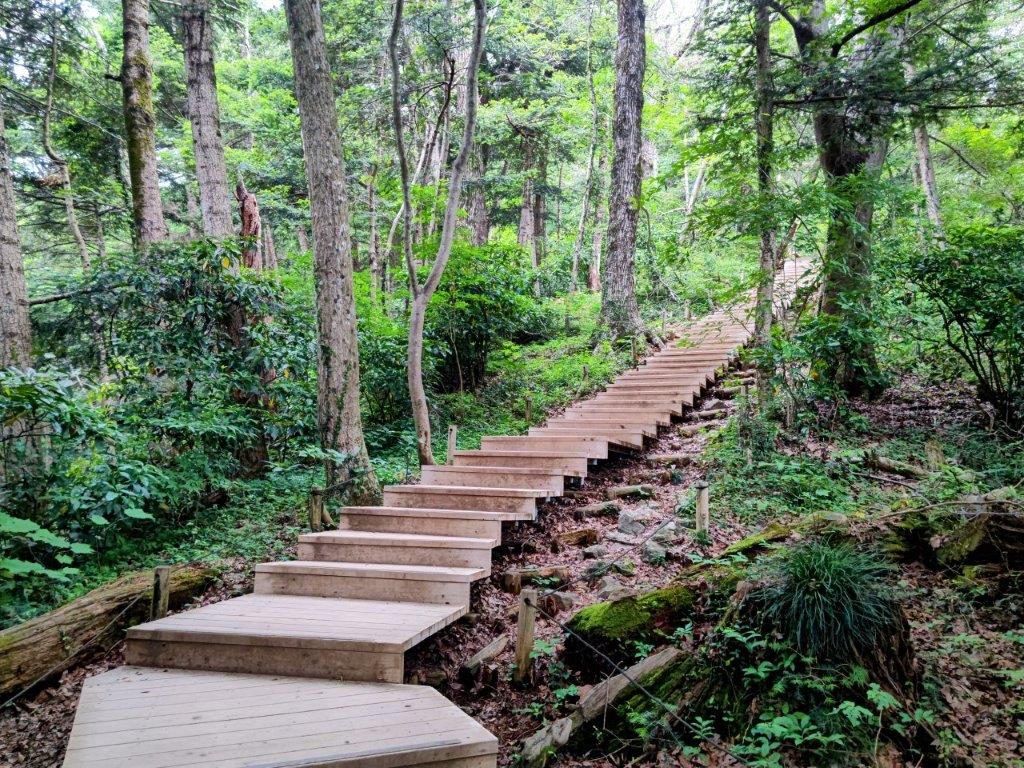
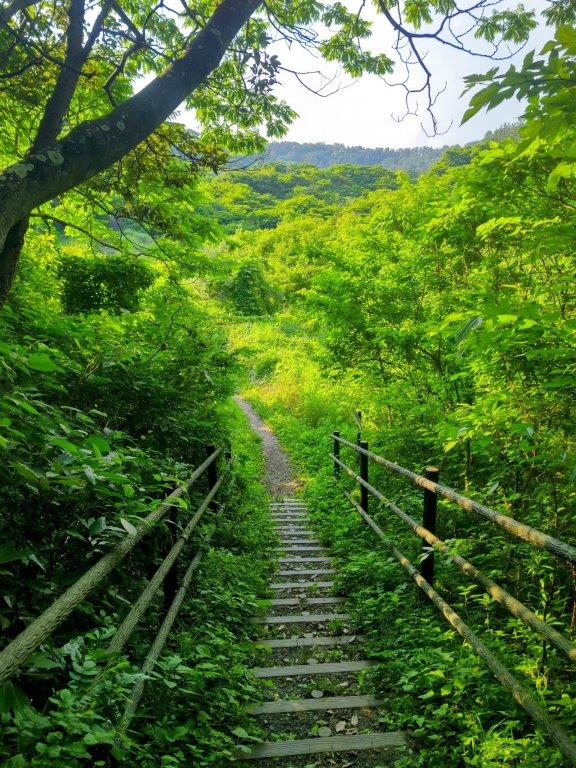
Walking next to the Bamboo (left) Path up Mt Ogusu (right)

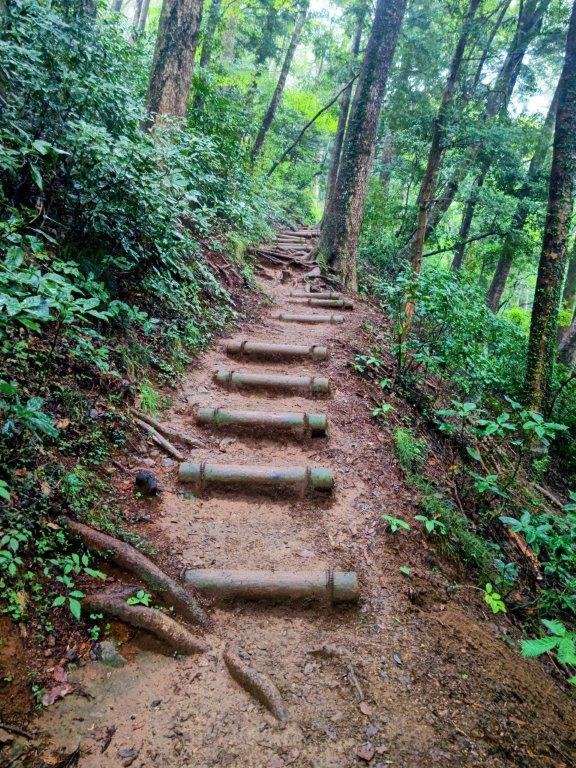
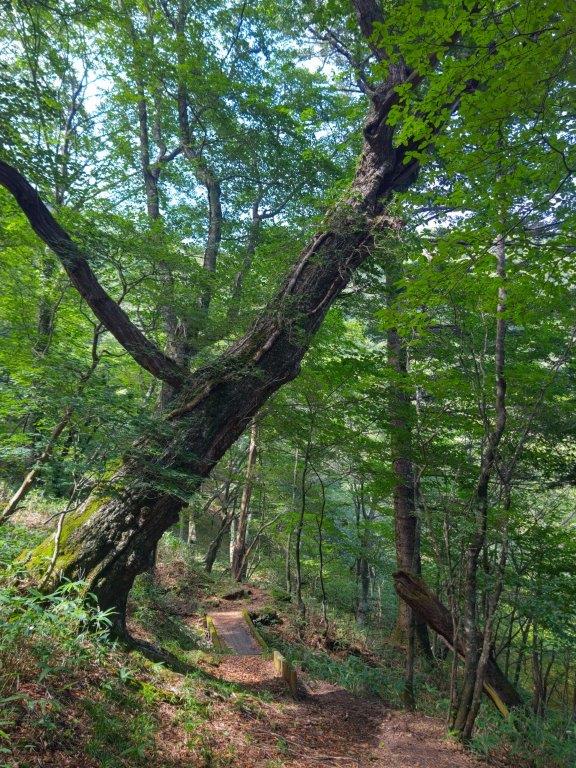
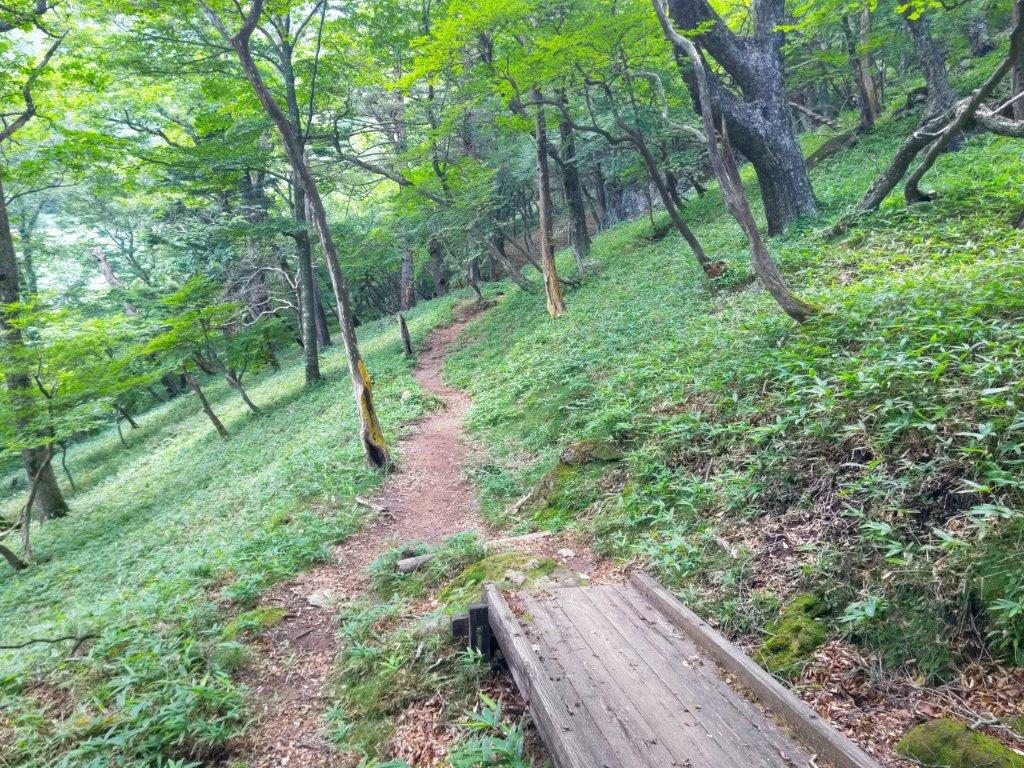
Walking down the steps (left) Near the Base of Mt Ogusu (right)

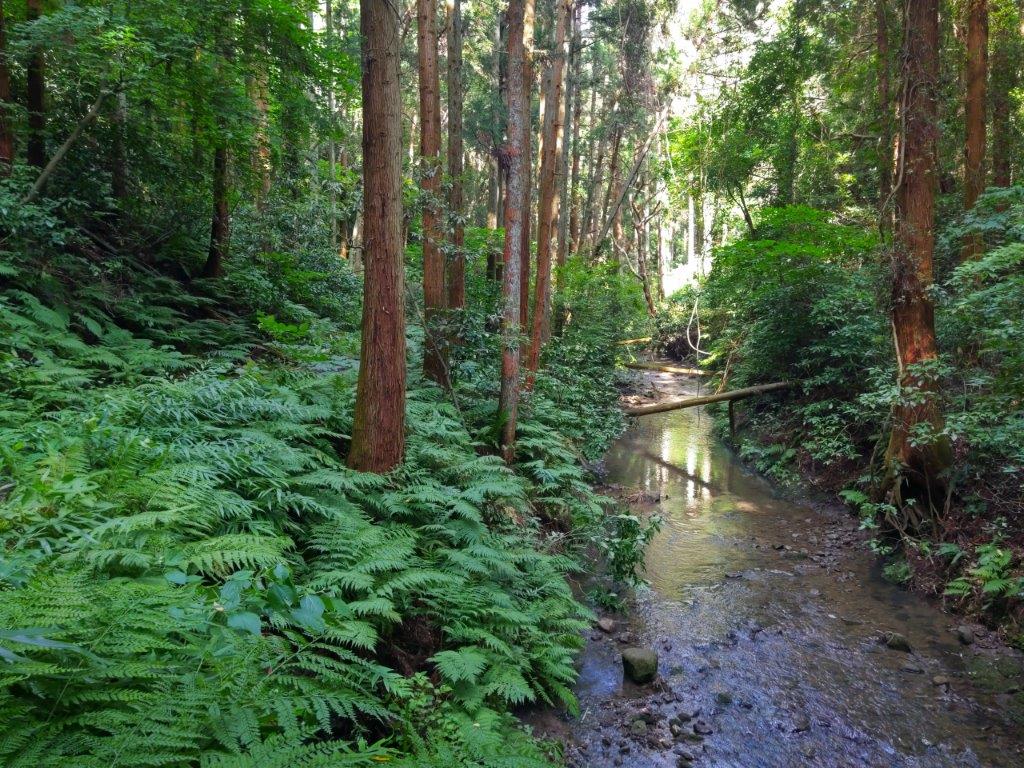
I could hear festival music playing in the background as I prepared for my hike. I set off at 11am and first made a small detour by “Hotaru no Sato” (Firefly village). It was too early in the day to see any fireflies but I discovered a charming little river valley filled with birdsong; although a path led directly to Tsukayama Park (塚山公園), I decided to head back and follow the official route, and at noon, arrived at the observation deck (見晴台) at the top of the park.

Jodoji Temple near Hemi Station

View towards “Firefly Village” on the way to Tsukayama Park

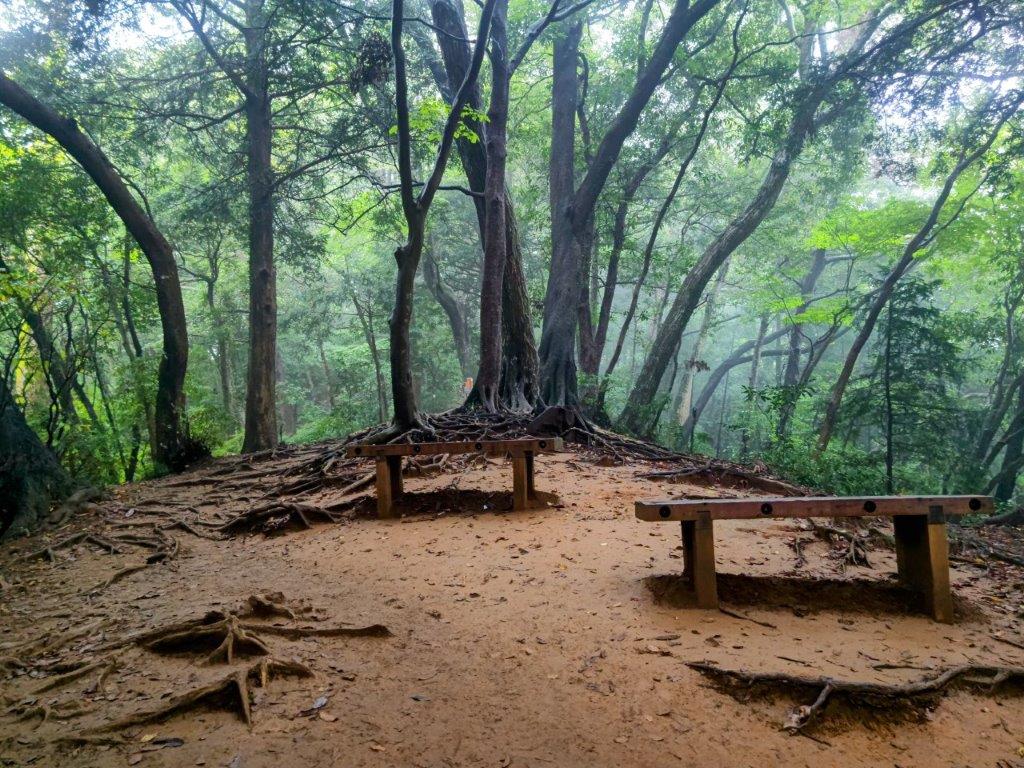
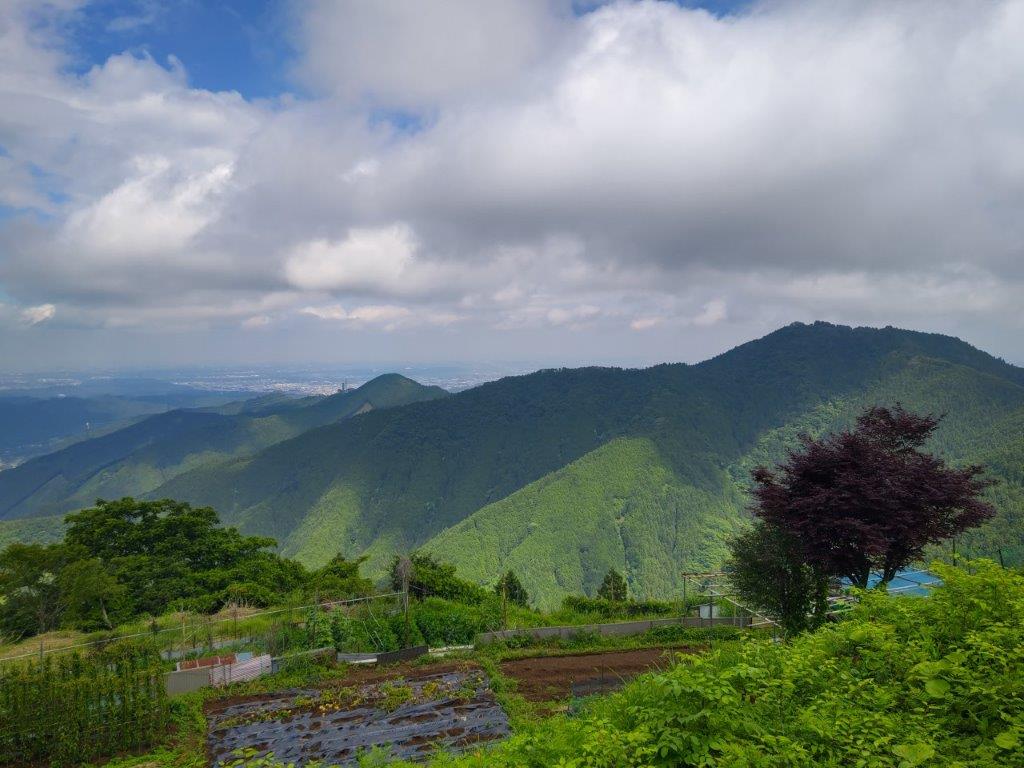
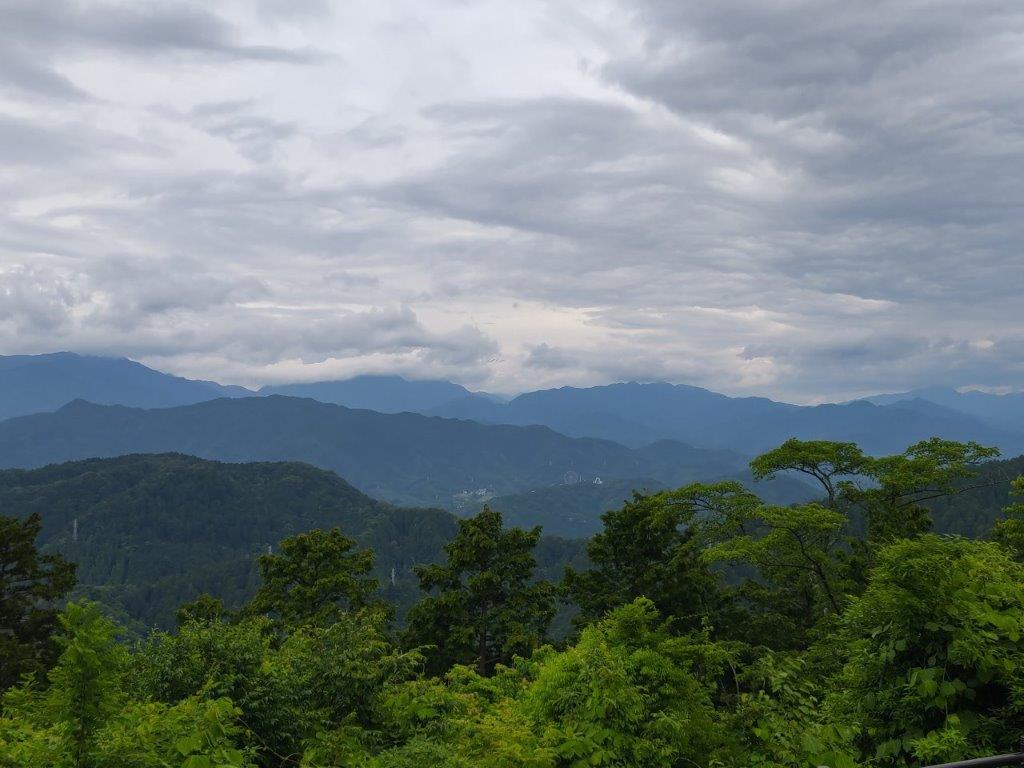
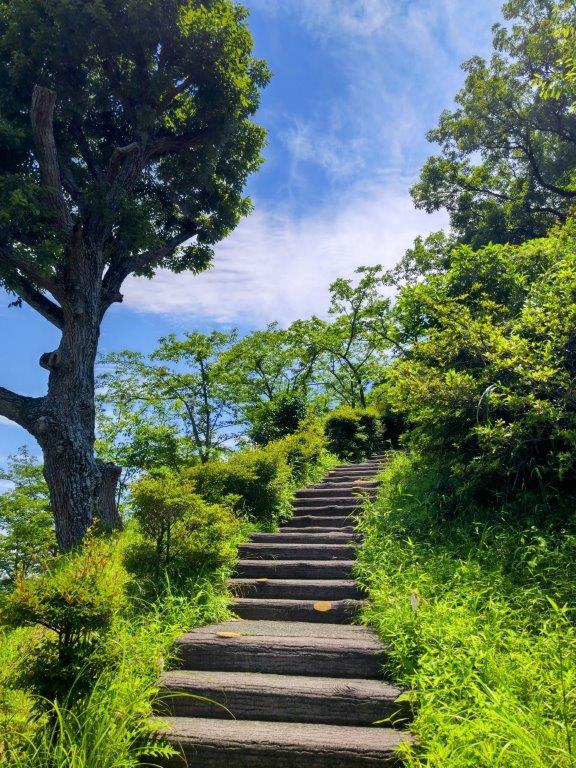
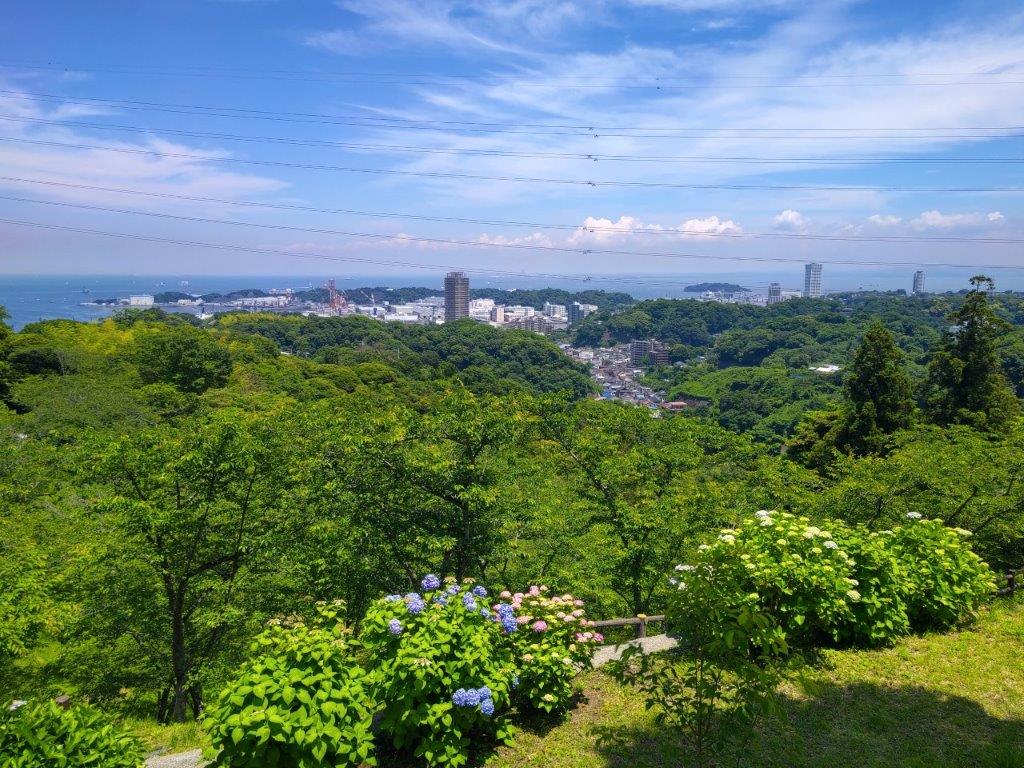
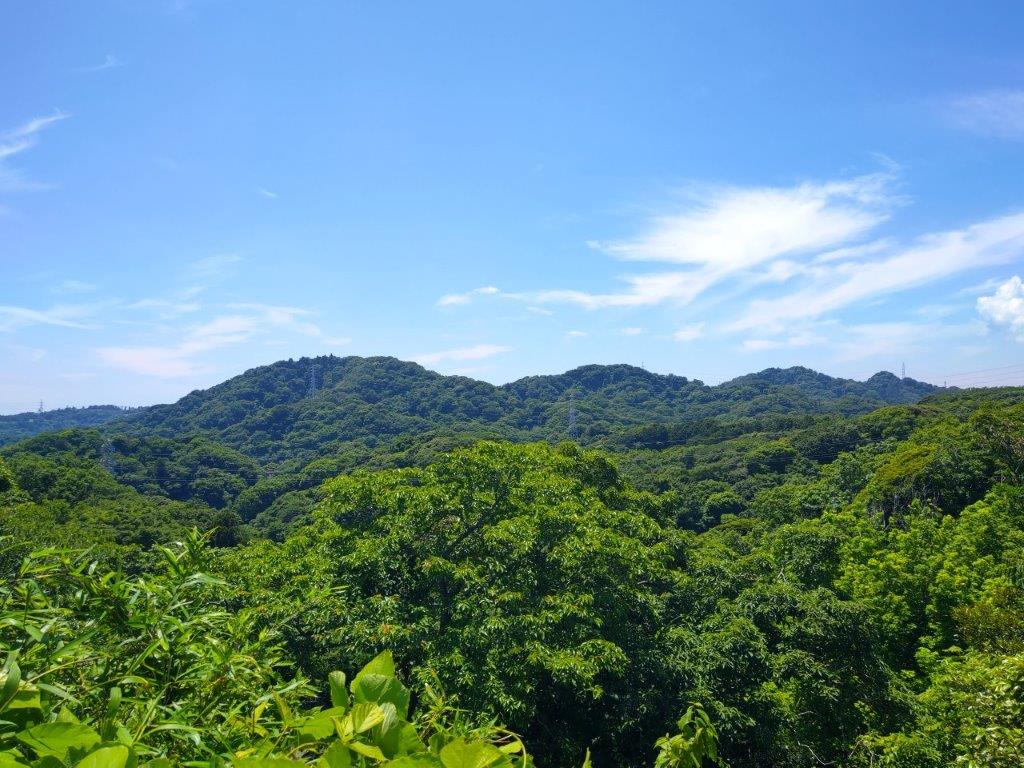
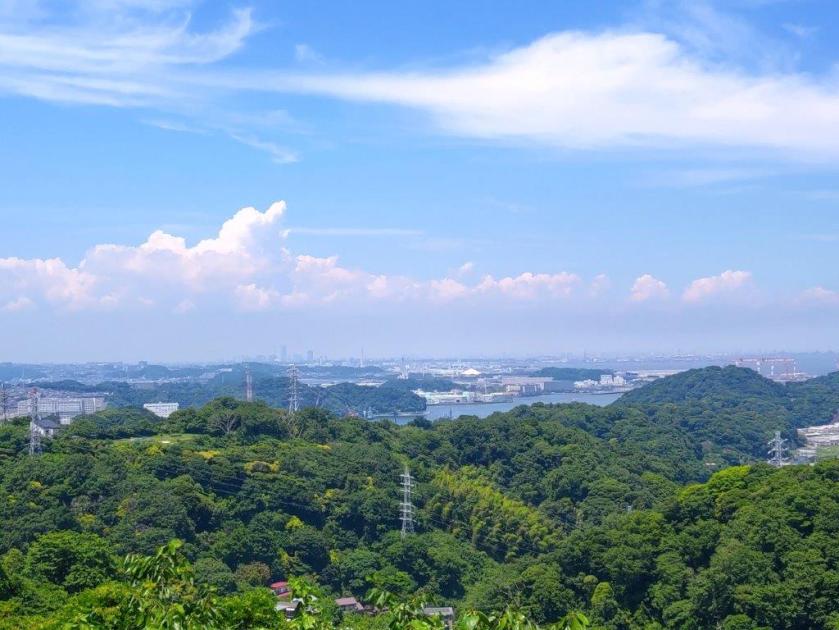
I could see the buildings of Yokotsuka City on the west side, and beyond, Tokyo Bay and the Boso peninsula; to the north, I could see the Kamakura Alps. From the nearby Fujimidai observation deck (富士見台) I could see the Miura Alps, although Mt Fuji was hiding today; overhead, cirrus clouds spread across the sky. I took a short break on a bench at Kashimadai (鹿島台), the third and last view point before heading down “Ishidatami” or Flagstone path (石畳道) on the other side. True to its name, I had to be careful not to slip on the smooth stones underfoot, still wet from yesterday’s rain.

View of Yokotsuka City with Hydrangeas in the foreground

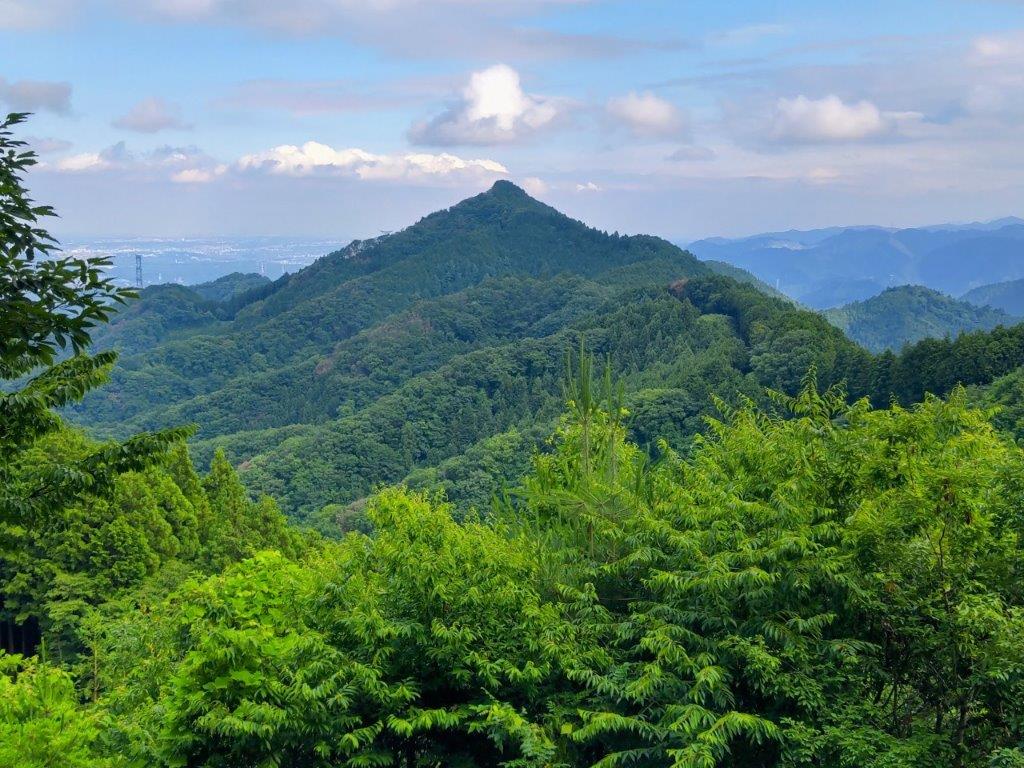
The Miura Alps from Fujimidai in Tsukayama Park

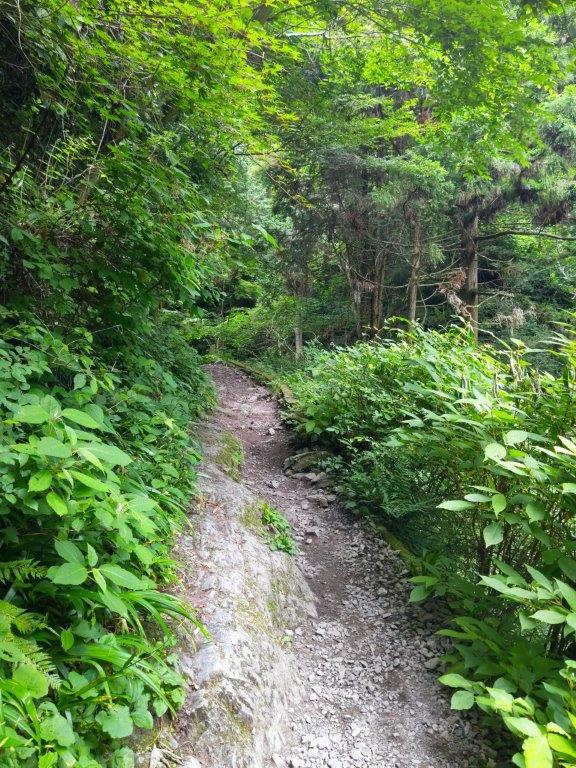
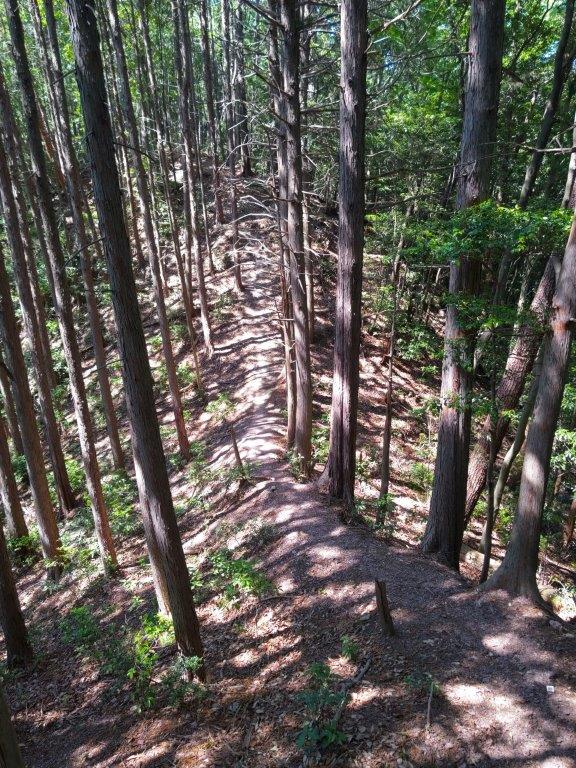
I was surprised to see a small stream running alongside the path, its temporary existence due to the previous night’s heavy rains. I left the park behind and followed a busy road southwards, soon reaching the entrance of another trail. After a short, steep climb, I reached the top of a narrow, up and down ridge. Although there were few views, I was glad to be in the shade during the hottest time of day. I soon passed the minor summit of Mt Gongen (権現山 138m), devoid of a summit marker and a view, so I continued without a break, now heading down.

View towards Yokohama from Tsukayama Park

View of Tokyo Bay from Kashimadai in Tsukayama Park

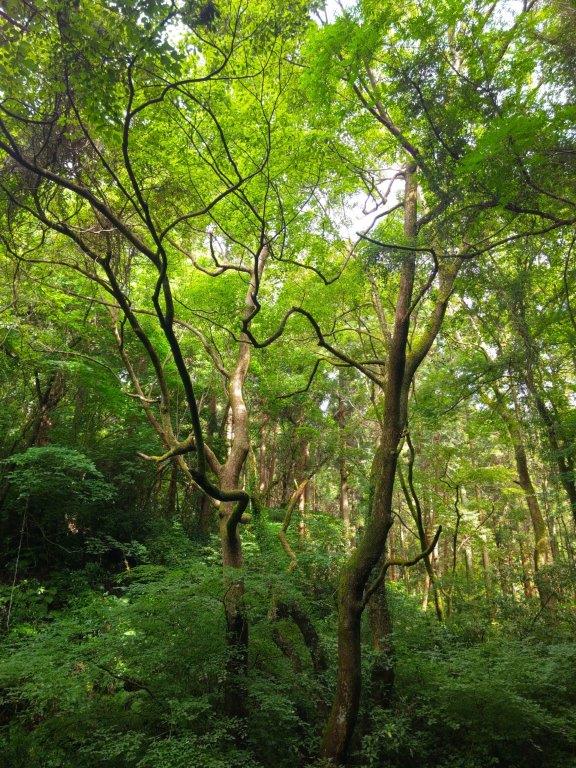
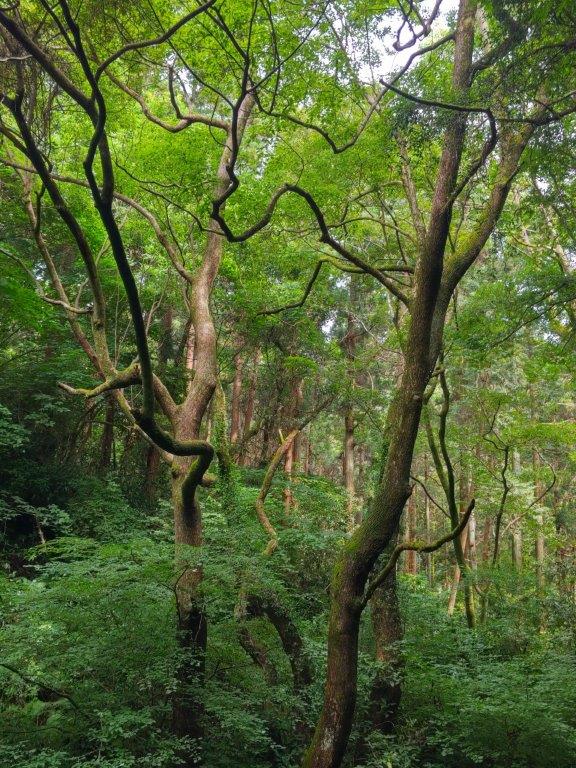
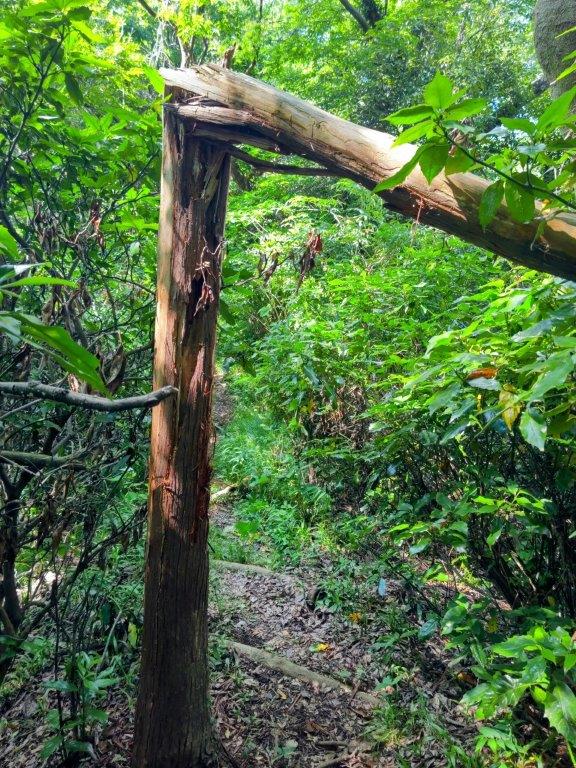
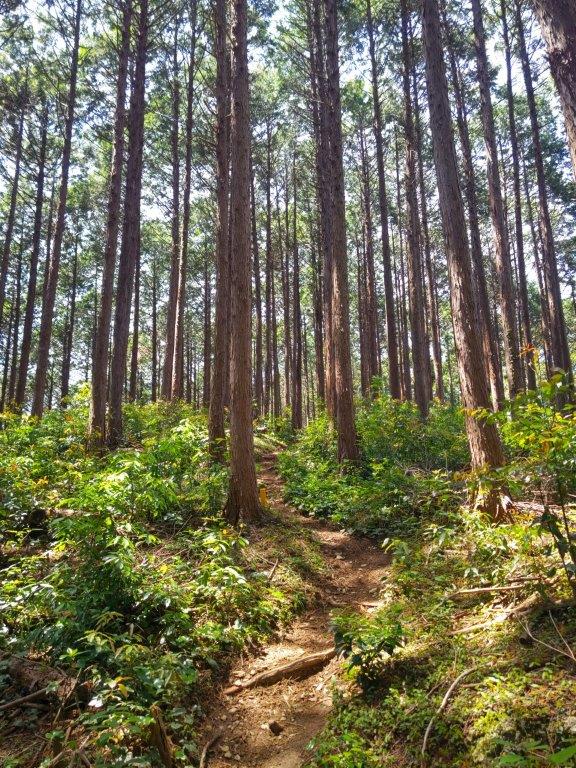
I had to fray myself a passage through the vegetation and was relieved upon reaching more open forest at the base of the hill. Suddenly, the path turned into a small stream and the sound of croaking could be heard under the tall cedars. I followed the water as it left the trail and ended in a large pond. The frogs lost their voice upon my arrival and stayed quiet even after I left. A few minutes later, I popped onto a road; turning around, I could hardly see the trail entrance. I crossed a busy road and at the top of a slope, reached another trail entrance, equally hard to find. The path hugged the forest on the left side, with fields on the right side.

A Hidden Pond at the base of Mt Gongen

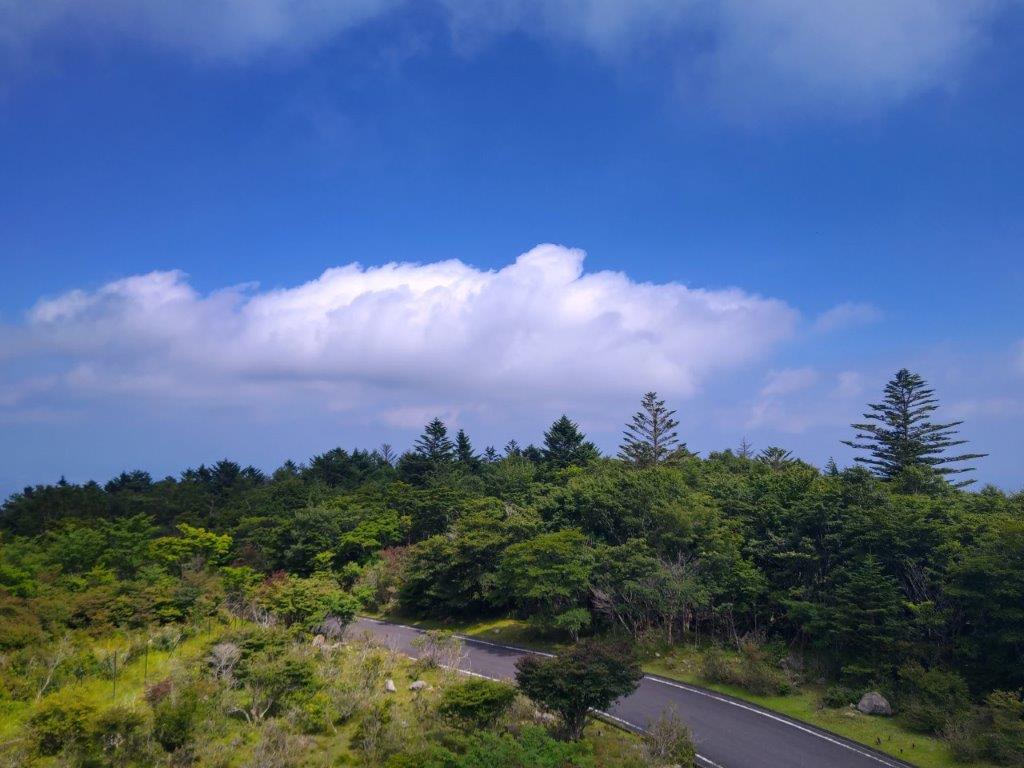
Gazing at the Miura Alps from the top of Mt Ogusu

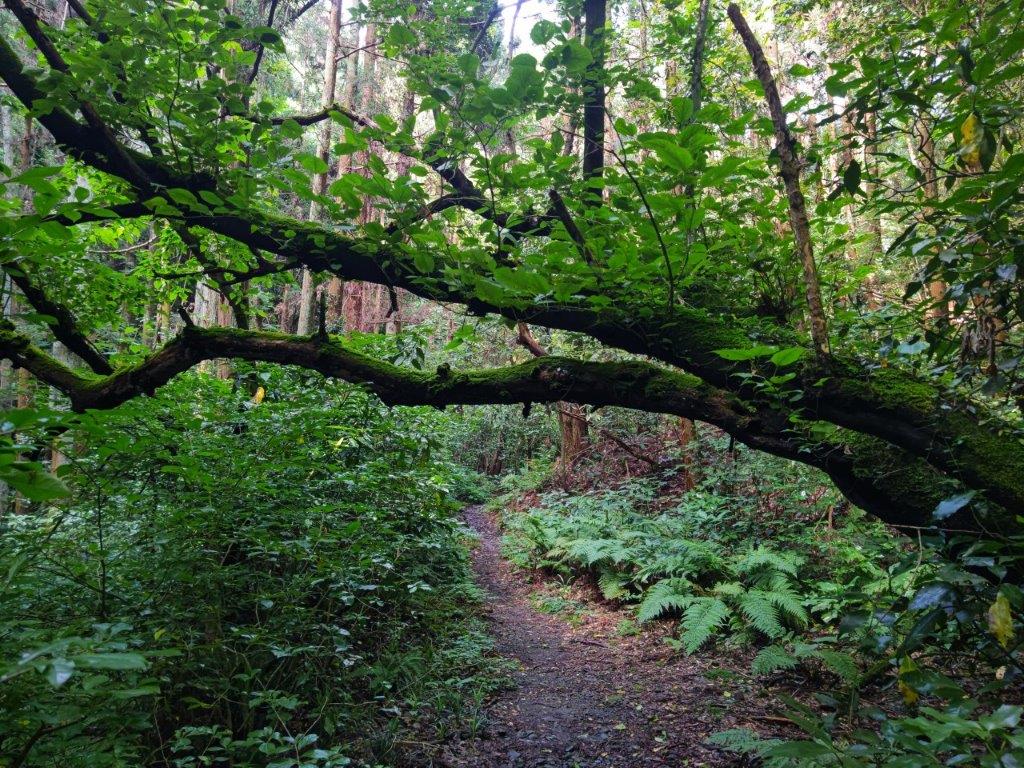
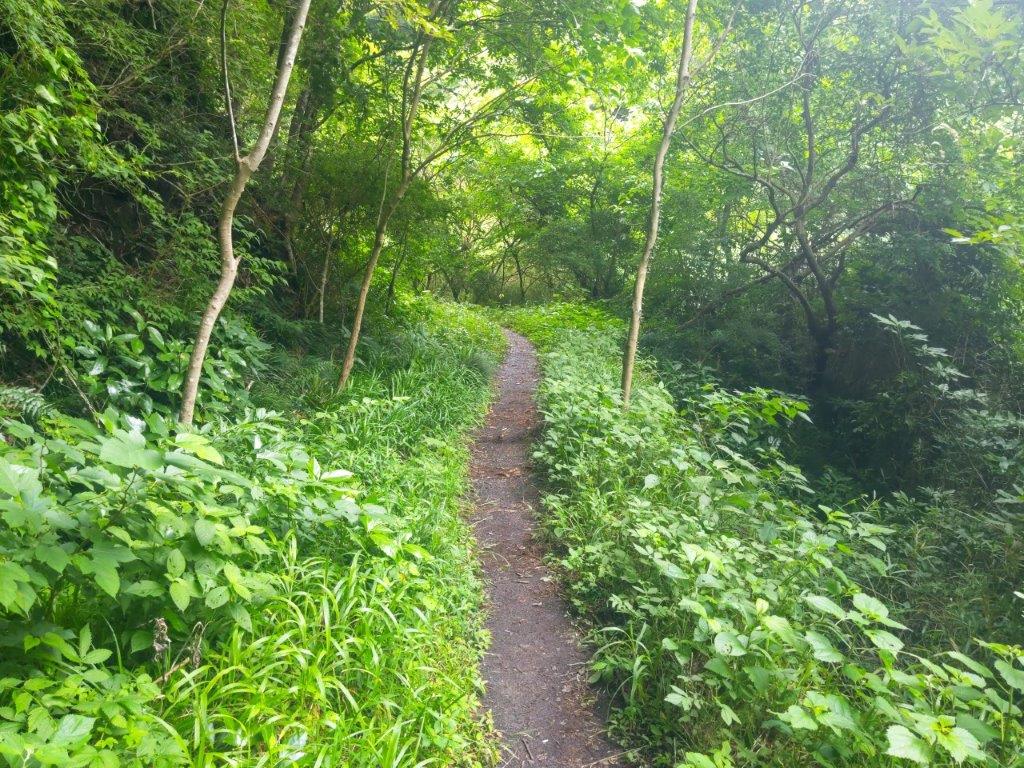
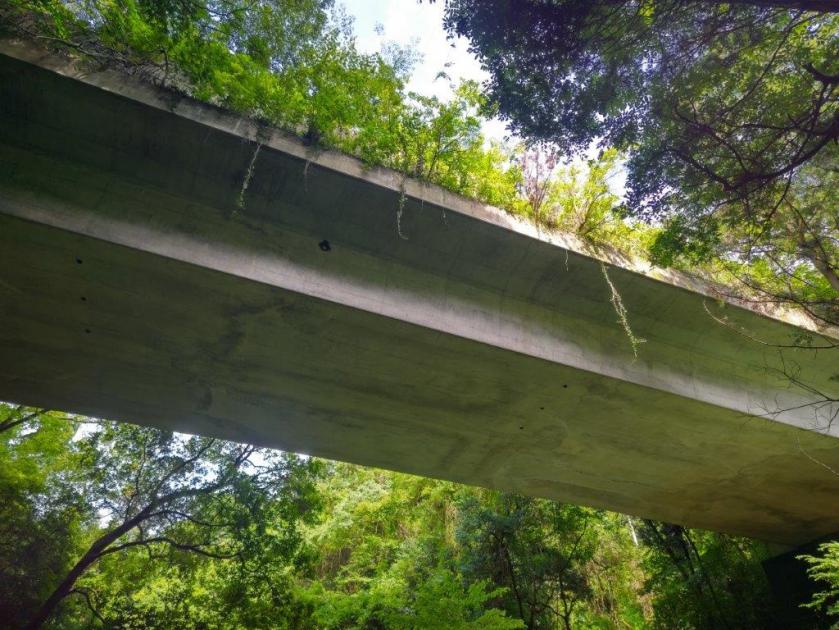
I was excited to suddenly spot a Japanese Pheasant at a bend in the path. I followed it for a while as it calmly lured me away from its chick. After a short climb, I reached a bridge over the Yokotsuka toll road, the trail continuing on the other side, recrossing the road via a graffiti-covered underground passage. I reached another section of near unpassable overgrown trail before arriving at a paved road at the base of Mt Ogusu. There, I turned left, and then right onto a lovely path along a bamboo grove. I soon reached another road, where I turned left. I was now walking next to a golf course, my path eventually merging with the one from my previous hike. At 4pm I reached the summit of Mt Ogusu.

Second Observation Tower on Mt Ogusu

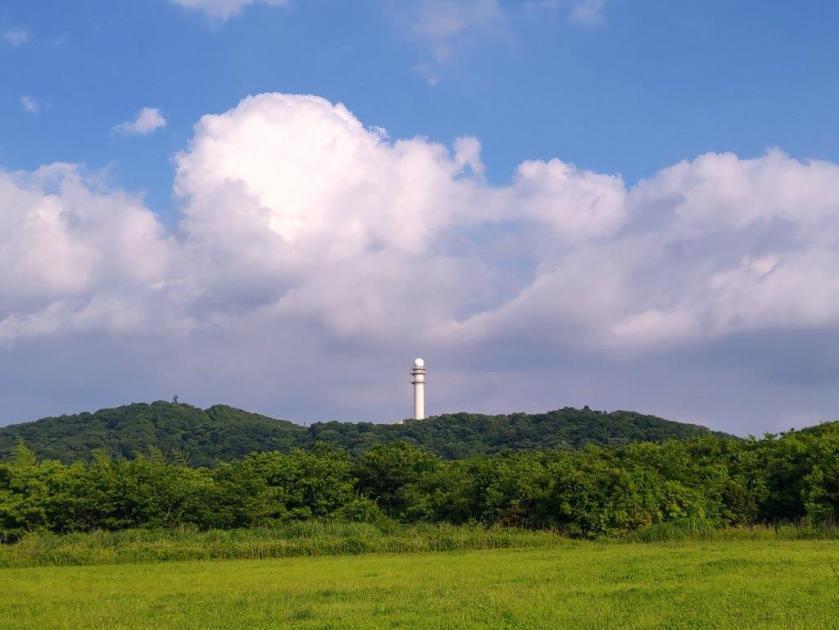
Mt Ogusu from the Shonan Kokusai Village

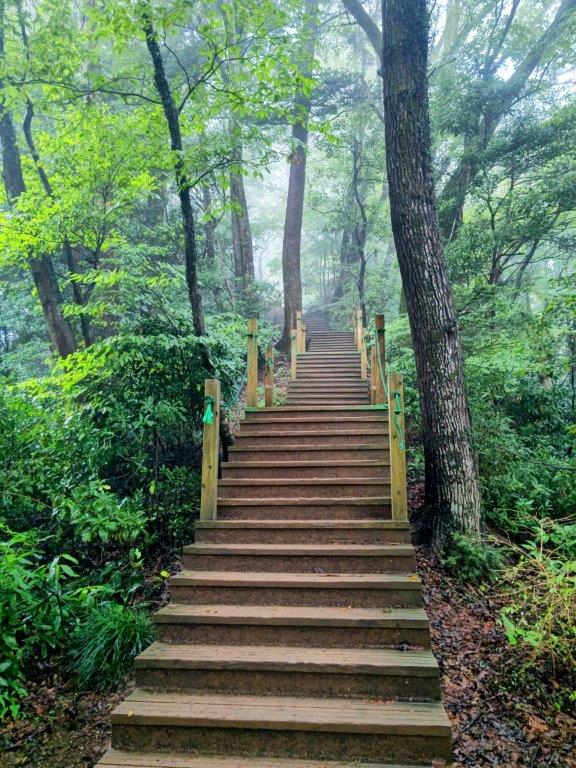
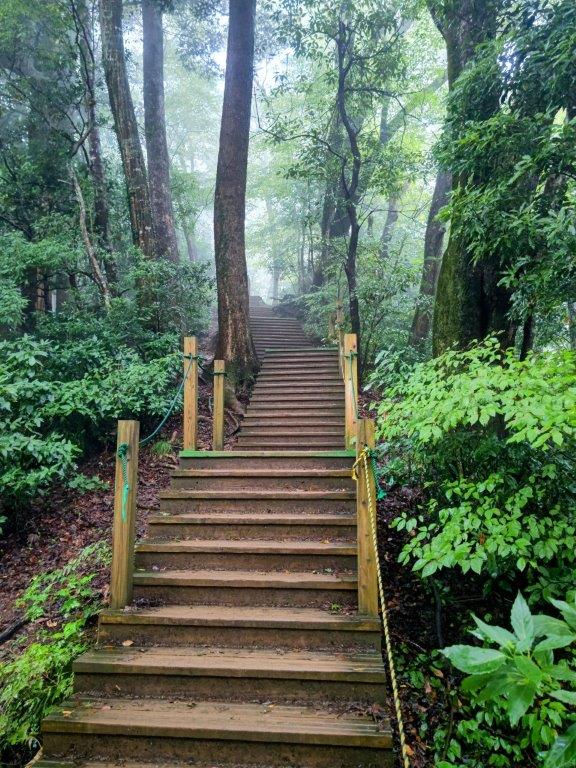
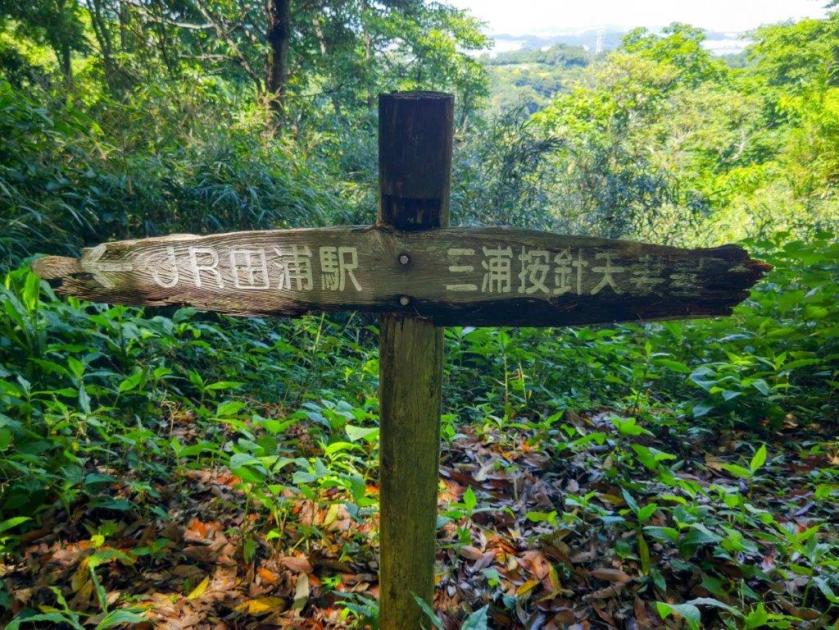
I was slightly disappointed to that the observation tower was still closed, and after a short break, headed to the second and lower observation tower for the make-up view. I had to backtrack a little to reach the entrance of the Shonan Kokusai Village Trail (湘南国際村コース), with steps to help with the steeper parts. At 4h30, I reached a paved road at the edge of the forest, once again bordering the golf course. As I followed it up and down a pass, I had good views of today’s mountain, the second observation tower shining in the late afternoon sun. I arrived at Shonan Kokusai Village a little before 5pm, where I caught a bus for the short ride back to Shiori station.

Watch a Video of the Mt Ogusu Hike

Watch the Video of the Hike on YouTube

See a Slideshow of More Pictures of the Hike

Mt Toki (463m), Mt Yasuyo (462m), Mt Kana (539m) & Mt Shiho (290m), Tokigawa and Ogawa Towns, Saitama Prefecture, Saturday, May 25, 2024

I wanted to some more hiking in the low hills of northwest Tokyo before the arrival of the rainy season. I was also looking for something short and easy after a 2-week break. Looking at my map, I saw I could walk from Jiko-ji temple in Tokigawa to Matsuoka Sake Brewery in Ogawa. After checking out the temple, I would head westwards to the highest point of the hike, then descend northeast along a ridge, and finish near the end of my hike on Mt Kannookura one year ago. If I got there before 5pm, I would be able to drop by the small shop inside the brewery and maybe even sample some Japanese sake.

Hiking in Oku-Musashi 奥武蔵

I would ride an express train from Ikebukuro to Ogawamachi, and from there, take a taxi to the parking below the temple. To get back to the station, I could catch a bus from a stop close to the brewery. The weather was supposed to be sunny all day with temperatures under 25 degrees, significantly cooler than the previous few weekends. Most of the route was downhill along a rough trail through the forest; I could expect few views but also few people. I was looking forward to a solitary ramble through the hills of Oku-Musashi.

For subscribers, read this Blog Post on Hiking Around Tokyo for a better viewing experience and the latest updates

Steps Leading to Jiko Temple (left) Start of the Hiking Path (right)

Path before Mt Toki (left) Path before Mt Yasuyo (right)

It was a perfect spring day as I rode the Tobu-Tojo line for the one-hour trip to Ogawamachi Station, arriving there at 11am. After buying some Okara donuts from Shimizuya opposite the station, I hopped into a taxi for the 20-minute ride to Jiko-ji temple (慈光寺), part of the Bando 33 Kannon Pilgrimage. After getting ready, I set off at 1230 and headed up some stone steps surrounded by the new green of spring, soon arriving at Kannon-do (観音堂).

Trail past Mt Kana (left) Descending to the Road Crossing (right)

Passing near a Rocky Outcrop (left) Following a Narrow Ridge (right)

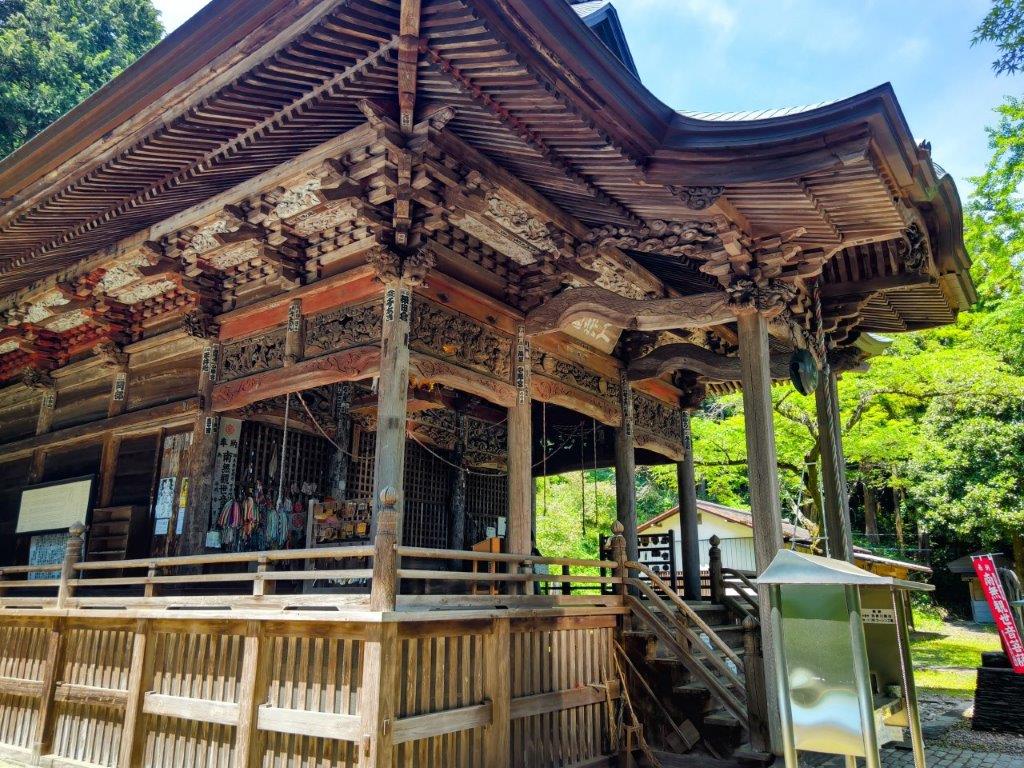
After admiring the elaborate wooden carvings of the Kannon temple, I located the start of the trail, leading into the forest behind the building. I was now on the Tokigawa Trekking Route (ときがわトレッキングコース), hiked in 2017, but soon left it, taking an unmarked trail on the right. After a short climb through the cedars, I reached the top of Mt Toki (都幾山 ときさん toki-san). I quickly moved on and after some level walking, arrived at the top of Mt Yasuyo (育代山 やすよやま yasuyo-yama). I continued without a break, and after some more climbing, reached the top of Mt Kana (金嶽 かなたけ kana-take), the highest point of the hike. There, I turned right, heading down the mountain side.

Stone steps through the New Green of Spring

Kannon-do Temple within the Jiko Temple Grounds

I was relieved to be following a clear path through the forest, although I couldn’t spot any signs indicating the way. At 1h30, I arrived at a road crossing, beyond which the trail became faint; fortunately from this point, I could count on pink ribbons to confirm the way, in addition to my phone GPS. As expected, I saw no other hikers on this up and down trail along a narrow ridgeline. At 2h30, I passed under an electric pylon where I had a view of Mt Kasa to the northwest. Soon after, I arrived at the top of Mt Shiho (士峰山 しほうざん shihou-zan), marked by a small shrine. I took a break for lunch, enjoying an Okura donut for dessert. From this point the trail suddenly became harder to walk and follow.

View Southeast from the Electric Pylon

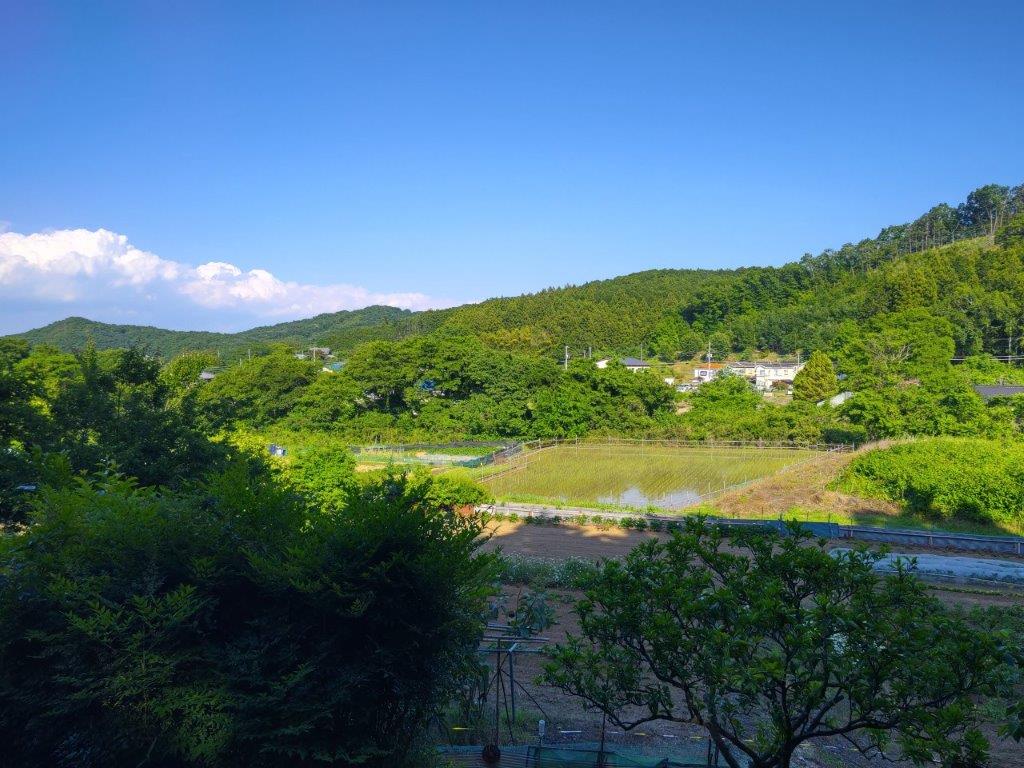
Countryside View at the End of the Hike

I proceeded with caution, picking the most walkable parts among the rocks and bushes. At 3h30, I passed another minor summit (古寺山 280m). From this point, the trail condition improved, although it had suddenly become quite windy. I started to descend quickly, and half an hour later, emerged onto a small lane. I had finished earlier than expected so I headed over to the nearby Matsuoka Sake Brewery and was able to sample their Mikado Matsu brand from their handy sake server. After buying a bottle for home, I set off for the bus stop, and after a short ride, was back at Ogawamachi station just before 5pm.

Watch a Video of the Mt Kana Hike

Watch the Video of the Hike on YouTube
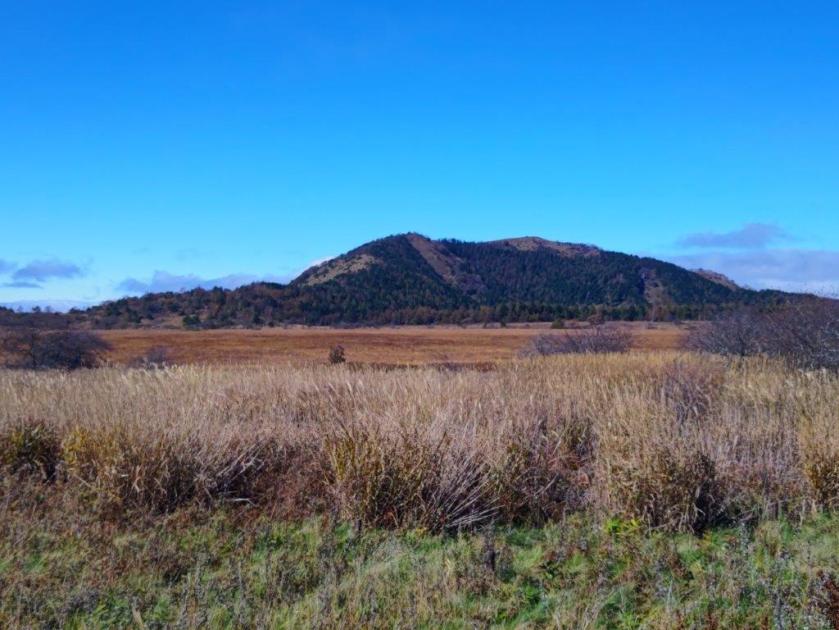
Mt Otakatori (376m), Ogose Town, Saitama Prefecture, Saturday May 11, 2024

I wanted to do a short morning hike close to Tokyo to beat the early summer heat that was forecast for the weekend. I decided to head to Mt Otakatori in the Ogose Alps, last climbed two years ago. Looking at my map, I spotted a trail on its west side leading to an observation deck on the top ridge. From there, I’d follow the ridgeline north to the highest point. I’d then descend a valley on the east side and check out a minor peak protruding from the forested foothills. I’d end the hike at a park at the foot of the mountain, a short walk from the station.

Hiking in Oku-Musashi & the Ogose Alps

奥武蔵 ・  越生アルプス

Start of the Kami-Daima Trail (left) Sun Shining on the New Green (right)

Walking under Fallen Trees (left) and between the Ferns (right)

To get to the start of the trail, I would ride the Tobu express train from Ikebukuro to Sakado and then change to a Tobu local train ending at Ogose station. From there, I’d catch a bus for Kuroyama and get off a few stops before the end of the line. The forecast called for blue skies and temperatures in the high twenties; I hoped I’d be able to wrap up my hike by the early afternoon. I was looking forward to exploring new trails on a familiar mountain and getting some good views on an early summer day.

For subscribers, read this Blog Post on Hiking Around Tokyo for a better viewing experience and the latest updates

Passing by Nishi-Daimon Orchards (left) Path for Kokuzoson (right)

Wide Trail (left) and Narrow Footpath (right) for Nishi-Yamafuji

It was a beautiful spring morning as I rode the train out of the city, glad that I could sit all the way. After arriving at Ogose station shortly after 9am, I boarded the bus for the short ride to Kami-Daima stop near a bridge over a river. After getting ready, I quickly located the start of the trail, an unmarked footpath to the right of a gravel driveway, and by 10am was walking in the cool shade of the cedars. Less than an hour later, I emerged from the forest onto a road at Nishi-Daimon Orchards (西大門農園), a short distance from the Katsuragi Kannon observation deck (桂木観音展望台), which I reached just before 11am.

View Southeast from the Katsuragi Kannon Observation Deck

View Northeast from the Top of Mt Otakatori

I enjoyed the view, the new green of spring contrasting nicely with the bright blue sky; in the distance I could see the flat Kanto Plain and the skyscrapers of Tokyo. I went up a series of stone steps starting directly behind the deck and ending at Katsuraki Kannon temple, the hiking trail continuing on the left. Very soon, I passed the minor summit of Mt Katsuragi (桂木山 かつらぎさん katsuragi-san 376m), completely within the trees. Soon after, I arrived at a large crossroads in the middle of the forest where I continued straight, reaching the summit of Mt Otakatori (大高取山 おおたかとりやま otakatori-yama) soon after.

View of the Ogose Alps from Mt Otakatori

Closeup of the section between Mt Ogose and Kanhashu

Some trees had been cut on the west side, opening up a superb view of the Ogose Alps (越生アルプス): I could see all the way from Mt Ogose on the left to Kanhashu on the right. I then turned to face the more familiar view on the west side: between a gap in the trees, I could see the rounded top of Mt Nishi-Takatori lower down and Ogose Town and the Kanto Plain beyond. It was already 1130 and time to head down; a little after noon, I turned right onto a path for Kokuzon (虚空蔵尊), taking me away from the busy main trail up and down the mountain.

Few People at the Summit on this Beautiful Day

Forest Road leading to Kokuzon Sakura Park

I was delighted to be have the trail to myself again, walking down a green valley alongside a bubbling stream. Half an hour later, I reached a forest road but soon turned right up a trail next to a brooklet, a tributary of the stream from earlier. The path curved in a counter-clockwise direction and I was soon heading east again. I made a short roundtrip to the top of Nishi-Yamafuji (西山富士 にしやまふじ nishi-yamafuji 190m), a peaceful spot in the middle of the forest. Back on the main trail, I soon exited the forest and arrived at a viewpoint and a couple of log benches, also the top of Mt Kokuzon Sakura (虚空蔵尊さくら山 170m), the highest point of the Kokuzon Sakura Park.

East Ridge of Mt Otakatori from Mt Kokuzon Sakura

View of the Kanto Plain from Kokuzon Sakura Park

I was pleasantly surprised by this beautiful view, not shown on any of my maps. I could see the eastern ridge of today’s mountain, freckled with light green, as well as the flat Kanto plain stretching away under the light blue sky streaked with white cirrus clouds. After a short break, I set off again, heading down one of the many paths through the park and arriving at the mountain base at about 1h30. I made my way back to Ogose station as fast as I could; although the surrounding countryside was pleasant, I was now out of the forest and fully exposed to the hot afternoon sun. By 2pm, I was glad to be sitting again in the cool interior of the train bound for Tokyo.

Watch a Video of the Mt Otakatori Hike

Watch the Video of the Hike on YouTube

See a Slideshow of More Pictures of the Hike

Tsuzura, Oyado & Nishi-Kubo Marshes, Tokorozawa City, Saitama Prefecture, Saturday, May 4, 2024

I was looking for an easy hike to get back in shape after a three-week break. Considering the Golden Week crowds, I settled on a morning stroll through the Sayama Hills, last visited one year ago. Looking at Google Maps, I found a new trail to explore: it was through a block of adjacent “Totoro’s Forests” surrounding a marsh at the eastern end of the hills. I could then follow the Sayama Lake Perimeter Road to the Saitama Green Forest Museum, and from there revisit two more wetlands on the northern side of the lake.

Hiking in the Sayama hills 狭山丘陵

I would ride the Seibu line to Kotesashi Station, and there, catch a bus for the 15-minute ride to “Waseda Daigaku”, the end of the line and next to several parcels of Totoro’s forest. From the final marsh, I could walk a short way to Miyadera-Nishi bus stop, the end of the line and a thirty-minute ride back to Kotesashi station. The forecast called for blue skies and temperatures approaching 30 degrees. I was looking forward to walking through green forests and wetlands on Greenery Day, and hoped they would keep me cool on an early summer day.

For subscribers, read this Blog Post on Hiking Around Tokyo for a better viewing experience and the latest updates

Start of the hike near Waseda University (right) Log steps for Totoro Forest #33 (left)

Path next to Totoro’s Forest #5 (left) Dirt Road around Sayama Lake (right)

I was glad to be comfortably seated on the half empty local line for the one-hour trip to Kotesashi station, most people preferring further destinations for the holidays. The bus for Waseda University was completed deserted on the weekend (also a holiday) but I could imagine it being packed on a class day. After getting ready and having a late breakfast on the shaded circular bus stop bench, I set off around 1030, already feeling quite warm under the mid-morning sun.

Boardwalk along Totoro’s Forest #51

Grassy Field at the end of Tsuzura Marsh

I was amazed to find a path leading into the forest directly opposite the bus stop, possibly the shortest distance between public transport and full-nature immersion in the area. As I passed Totoro’s Forests #20, 21, 26, 31, 33 & 41, it felt wonderful to be wandering through this nature preserve within the confines of Greater Tokyo. After some ups and downs I reached a wooden bridge spanning Tsuzura Marsh (葛籠湿地), also Totoro’s Forests #51 & 34, where I turned left along a boardwalk and then onto a footpath disappearing into a field of tall grasses at the head of a valley.

Bug Catching Family Walking through Oyado Marsh

Nothing but Green at the Edge of Dragonfly Swamp

I marvelled at being surrounded by green grass in every direction, forming a nice contrast with the blue sky overhead. After carefully treading a path of trampled grass around the field I retraced my steps to the bridge. There I took a path going up on the left but soon turned right and down some log steps into Wako Forest (和幸の森). At the top of a slope I followed a straight path along Totoro’s Forest #5. At 11h30 I reached the Sayama Lake Perimeter Road, following it in a counter-clockwise direction. Less than half an hour later I hopped back onto a path leading to the Forest Museum and Oyado Marsh (大谷戸湿地) where I overtook a net-wielding family hunting for bugs.

Grassy Path near Nishi-Kubo Marsh

One of the Hills of Sayama-Kyuryo

I was pleased to have the trail to myself again as a walked along the left side of the marsh, the muddy waters hidden by tall grasses. At Dragonfly Swamp (トンボ湿地) the path curved right as it reentered the forest; at the next junction I turned left, now merging with my previous hike. After a short climb followed by a descent I reached Nishi-kubo Marsh (西久保湿地), a lovely spot with ponds and a stream wedged between hills and houses. As I was ahead of schedule I spent some time observing clusters of tadpoles happily wiggling in sunny shallow ponds, as well as a grey heron take off and fly away.

Tea Fields surrounding Nishi-Kubo Marsh

View of the Hills of Okumusashi from near Nishi-Kubo Kannon Temple

I suddenly noticed a small, furry creature trotting along the edge of the marsh, either a tanuki or a weasel, but it soon scampered off into the forest. Other trails around the marsh were closed due to typhoon damage and this may account for the absence of people and presence of wildlife. My bus was due soon so I left the marshes behind and after a pleasant walk along lanes and fields, I arrived at Miyadera-Nishi just after 1pm. It was starting to feel hot under the midday sun and I was relieved to be sitting inside the cool bus for the ride back to Kotesashi station.

Watch a video of the Totoro Forest Hike

Watch the Video of the Hike on YouTube
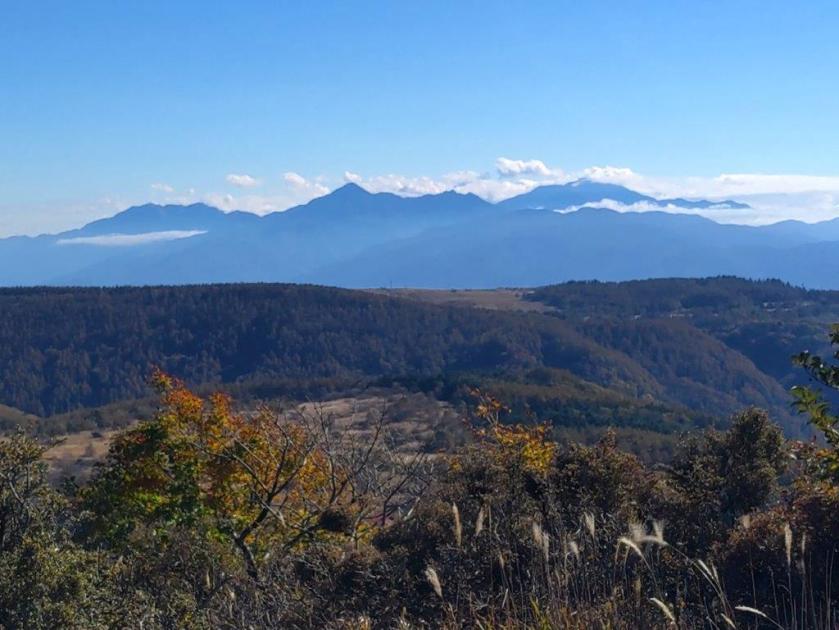
See a Slideshow of More Pictures of the Hike

Mt Kinugasa (134m) & Mt Ogusu (241m), Yokotsuka City, Kanagawa Prefecture, Saturday, April 13, 2024

I wanted to do another hike using the newly published Miura/Boso hiking map. Looking over the Miura section, I found a new peak to climb on the Tokyo Bay side. It was a little short but it seemed possible to continue along a hiking trail and go up the back side of Mt Ogusu (climbed in winter 2021). From the top, I would head down the main trail, ending on the Sagami bay side of the peninsula. It would be my first time to hike in this area in the spring and I hoped to catch the last cherry blossoms of the season

For subscribers, read this Blog Post on Hiking Around Tokyo for a better viewing experience and the latest updates

Steps going up (left) and down (right) in Kinugasa-yama Park

Connecting Path to Mt Ogusu (left) Alternative Trail up Mt Ogusu (right)

Hiking on the Miura Peninsula 三浦半島

To get to the start, I would take the Shonan-Shinjuku line to Zushi, and then ride the Yokotsuka line a few stops to Kinugasa station, a short distance on foot from the trailhead. For the return, I could catch one of the many buses for Zushi station, my only concern being the heavy weekend traffic around Hayama Town. The weather was supposed to be sunny most of the day and cooler near the ocean than on the mainland. Since each peak had its own observatory, I was looking forward to getting some good views of the Miura peninsula.

Hiking the Kanto Fureai no Michi 関東ふれあいの道

Rear Side Ridge (left) and Front Side Ridge (right) on Mt Ogusu

Walking in the Afternoon Sun (left) and along the River (right)

It was a fine spring day as I got off the train at Kinugasa Station around 10am. After a stroll through a shopping arcade, I reached Kinugasa-yama Park (衣笠山公園) and the start of the trail at 1030. Almost at once, I found myself walking through beautiful nature, no other hikers in sight. I soon arrived at a stone staircase where I turned left. At the top, I turned left again, now walking up a paved road, leading to a flat open space at the top of Mt Kinugasa (衣笠山 きぬがさやま kinugasa-yama). The view from the observation deck was partially hidden by cherry blossoms trees, so I quickly moved on to a taller observation tower a few minutes away.

Walking through the lower half of Kinugasa-yama Park

Walking through the higher half of Kinugasa-yama Park

I was impressed by the view from the top of this low mountain, as I could see most of the peaks of the Miura peninsula, Tokyo Bay and the western coast of the Boso peninsula. To the south, I spotted Mt Hodai and Mt Miura-Fuji past the treetops; directly west was Mt Ogusu, the highest peak in the area; finally, the Miura Alps extended across the neck of the peninsula on the north side. Cherry blossom trees surrounded the tower but were already past their prime. I continued my hike, walking down log steps sprinkled with fallen petals. Just before noon, I reached a busy road at the base of the mountain. I followed it for a short while but soon left it to follow a lane up a steep slope. Just beyond a staircase leading to a shrine, the lane ended at another hiking trail.

View of Mt Ogusu from the top of Mt Kinugasa

View of Tokyo Bay from the top of Mt Kinugasa

I was delighted to be back on a hiking path, surrounded by the forest and free of people. The trail was mostly level, a fallen tree trunk providing the only difficulty. Shortly before 1pm, I reached a bridge over a highway, picking up the trail on the other side. After a short climb, I arrived at a road free of traffic leading to a recycling center. After observing a couple of cats strut around, I made my way up some steps leading to the next part of the hiking route. After some easy climbing along a well-maintained path, I reached a ridgeline at 1h30, and continued straight, ignoring a trail on the left side.

Irises lining the path

Many steps up Mt Ogusu

The many iris flowers lining both sides of the path made this the most pleasant part of the hike. The forest retreated to allow for a power line, revealing blue skies splashed with white cirrus clouds. Very soon I arrived at the junction of my previous hike here. From this point, I followed a series of log steps through the new spring green all the way to the top of Mt Ogusu (大楠山 おおぐすやま oogusu-yama), a Kanto 100 famous mountain. Since it was 2h30, I sat down for a late lunch. The main observation tower was closed but another one a short distance way provided good views of the Miura Peninsual to the south and the Miura Alps to the north.

View of Mt Hodai and Mt Miura-Fuji from the top of Mt Ogusu

“Half Blossoms” and “half Miura” from the the Observation Tower

I was glad to see more cherry blossoms trees around the tower, half the petals still hanging on. I now headed down the Maedabashi route (前田橋コース), also the Kanto Fureai no Michi, passing relatively few people on the way. Half an hour later, I arrived at the start of the Maedagawa Promenade (前田川遊歩道). I had done it twice before but the water level had been lower than now, and it was a lot more impressive in this season. I wanted to linger to enjoy the sound of rushing water but I had a bus to catch. By 4pm, I was on my way back to Zushi station, reached after a slight delay due to the expected traffic jams. There, I boarded the Shonan-Shinjuku line for the one hour ride back to Tokyo.

Watch a video of the Mt Ogusu Hike

Watch the Video of the Hike on YouTube

See a Slideshow of More Pictures of the Hike

Mt Goten (364m) & Mt Kyozuka (310m), Minamiboso City, Chiba Prefecture, Sunday, March 31, 2024

I wanted to do a hike using the newly published Miura/Boso hiking map. Looking over the Boso Peninsula section, I discovered a new trail connecting Mt Goten (climbed in winter 2016), and Mt Kyozuka. The latter was mentioned in my mountains of Chiba guidebook, but had been badly battered by the powerful typhoons of 2018. Looking online, it seemed like the mountain had recovered sufficiently and the trails were passable again. Between the two mountains, was a dammed river crossable thanks to a pedestrian bridge.

Hiking on the Boso Peninsula 房総半島

To get to the start of the hike, I would ride the Sazanami limited express from Akihabara to Iwai station, and from there, take a bus to the Mt Goten trailhead*. From the base of Mt Kyozuka, I would ride another bus to Tateyama station. There, rather than catch the limited express back to Tokyo, the connection time being only a couple of minutes, I would take the longer but more picturesque ferry route back. The weather on the peninsula was supposed to be sunny, with temperatures high for the season, but cooler than the mainland. I was looking forward to exploring a new area on the eastern side of the Boso peninsula.

*The bus only runs to the Mt Iyo trailhead, about 30 minutes away on foot, and advance phone reservation is needed for it to continue to the Mt Gozen trailhead .

For subscribers, read this Blog Post on Hiking Around Tokyo for a better viewing experience and the latest updates

End of the Road and Start of the Mt Gozen Hiking Trail

View of Mt Atago from the Mt Gozen Hiking Trail

It was a perfect blue sky day as I rode the limited express to Iwai, with views of Tokyo Bay on the right side. A little after 10am, I boarded the microbus for the half an hour ride to the end of the line. After getting off at a parking near Koshoji-Temple, I was greeted with the soothing sound of croaking frogs and bamboo bushes swaying in the wind. Across the road was today’s first peak, looking tantalisingly close. After getting ready, I set off at 11am, continuing a little further along the main road, before taking a side road on the right, an alternative path to the summit. Here and there, I could see white and pink cherry blossom trees in full bloom.

View of Mt Iyo from the Mt Goten Trail

Trail below the Mt Goten Summit

Turning around, I had an impressive view of the valley, as well as Mt Atago, the highest mountain in Chiba. At 11h30, I reached a signboard marking the start of the trail. Although it was clearly marked on my map, it seemed to have fallen in disuse. After some scrambling and path finding, I reached the ridgeline and the main trail to the summit, a little after noon. A few minutes later, I arrived at a steep section leading to the summit. Instead of going up, I followed a level path on the right, around to the other side where some log steps made for a more relaxing ascent. At 1230, I was at the top of Mt Goten (御殿山 ごてんやま goten-yama), a Kanto 100 famous mountain and fifth highest peak in Chiba.

View south from the top of Mt Goten

View West of Mt Tomi and Mt Iyo from the top of Mt Goten

I had forgotten how impressive the view was, arguably one of the best on the peninsula. Since the summit is equally far from each coast, both Tokyo Bay and the Pacific Ocean are visible. On the west side, I could see Mt Iyo and Mt Tomi, and behind, the jagged top of Mt Nokogiriyama. All 3 peaks have unique shapes, creating a view worthy of a fantasy world. It was too early for lunch so I headed back down the steps and took a path on the left, leaving the ridgeline. The trail descended steeply and was at times rather faint, although the occasional log step showed I was on the right way; I eventually reached a stream at the bottom of the valley. The hike was starting to feel quite adventurous and I was a little worried I would suddenly reach a dead-end after one of the many twists and turns in the path as it now followed the meandering stream.

Walking under the Fallen Trees

Partially Buried Section

I was relieved to finally reach a forest road, right after crossing the stream. I still had to navigate a couple of obstacles, some fallen trees and a partially buried section, but eventually it became easy to walk. I heard the croaking of frogs again, and this time saw several soaking in the shallow pools along the road side. At 1h30 I reached the end of trail, marked by a domestic cat lounging on a paved road. After a short walk through the countryside, I reached a main road where I turned left. I soon turned left again, onto a smaller road, leading to a short, dark tunnel. A little beyond it, I crossed a bright red footbridge over a dammed river, its muddy waters light brown under the shining sun. On the other side, I headed up the trail for today’s second peak.

Near the end of the Mt Goten Trail

Dammed River between Mt Goten and Mt Kyozuka

It was delightfully cool in the shade under the trees on what was turning into quite a warm day. At a bend in the path, I came across an ancient mossy stone lantern, making me feel like I had stumbled into a Ghibli movie. After a short steep climb, I found myself surrounded by Japanese stone oaks (“matebashii“), their white tree trunks reaching up like an upside-down mangrove. A little after 2h30, I reached the summit of Mt Kyozuka (経塚山 きょうづかやま kyouzuka-yama). On the east side, I could again see the Pacific ocean, this time much closer. I sat on a log seat for a late lunch; I had somehow fallen behind schedule, the times indicated on the map being a little off, so I quickly moved on, now following a trail heading southwards and downhill. Half an hour later, I emerged onto a road leading through fields to a main road where I turned left, soon arriving at a bus stop.

View of the Pacific Ocean from the Top of Mt Kyozuka

Looking back at Mt Kyozuka from the End of the Hike

From Tateyama station, I rode the local Uchibo line to Hama-Kanaya station, where I switched to the Tokyo Bay Ferry for the forty-minute trip to Kurihama port. Mt Fuji was hidden by the clouds but it was refreshingly cool and pleasant around sunset. On the other side of the bay, it was a short bus ride to Keikyu-Kurihama station, from where it was thirty minutes to Yokohama. There I rode the Shonan-Shinjuku line back to central Tokyo. This hike took a little longer than expected, and although the connection between Mt Gozen and Mt Kyozuka is doable, it requires a GPS device to ensure one doesn’t lose the trail. In the future, I’d like to return to the area by car for some more exploring.

Watch a Video of the Mt Goten & Mt Kyozuka Hike

Watch the Video of the Hike on YouTube
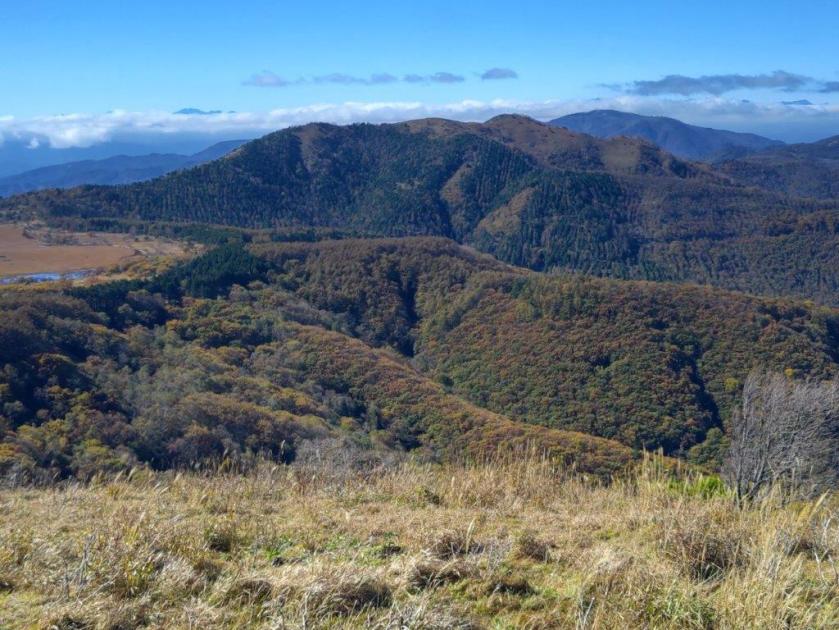
See a Slideshow of More Pictures of the Hike

Sakura no Sato (700m), Mt Myogi, Shimonita Town, Gunma Prefecture, Saturday, March 16, 2024

I had been planning to do this section of the Gunma Fureai no Michi for a while but kept on putting it off since the second half, done more than ten years ago, was closed due to rockfall. As with my previous hike, it was becoming clear that the closure might be permanent so I decided to head out anyway, and just follow the road for the last part. Although I wouldn’t be passing any summits on the way, I hoped to to get a view of the mountains of western Gunma from a park located on the southern flanks of Mt Myogi.

Hiking on the Kanto Fureai no Michi 関東ふれあいの道

Hiking in Nishi-Joshu 西上州

To get to the start of the hike, I would ride the shinkansen to Takasaki and then transfer to the Joshin railway for the one-hour ride to Shimonita. There, I would ride a taxi to a nearby plum blossom garden. I would end the hike at a hot spring facility at the northern edge of Mt Myogi; after a refreshing dip, I could take a taxi to Matsuida station on the Shin-Etsu line, a few stops from Takasaki. The weather was supposed to be sunny, as well as warm for the season. I was looking forward to getting some close up views of one of the three famous mountains of Gunma.

For subscribers, read this Blog Post on Hiking Around Tokyo for a better viewing experience and the latest updates

Going up through the Sakura no Sato Park

View of Hitto Rock (left) Path for Myogi Shrine (right)

Surprisingly, almost all seats on the Joshin Electric line were taken upon leaving Takasaki station, although most passengers got off well before Shinomita, the final station on the line. After a short taxi ride, I was at the entrance of Fukujuso no Sato (寿草の里), a little past 10am. After getting reading for hiking, I made a small donation at the front gate and entered the plum blossom garden, the last day of the year it was open to the public. I made my way along a path under white and red blossoms, slowly heading up the mountain side; at 11am, I reached a viewpoint at the highest point of the garden.

View of Mt Ogeta (right) from Fukujuso no Sato

View of the Plum Blossoms from the Highest Point

I was amazed by the sea of pink spreading down into the valley. Opposite was Mt Ogeta; on the south side, I spotted the triangular shape of Mt Inafukumi, and northwards, I could make out one of Mt Myogi’s many peaks. After a short break, I headed down via a different path, and half an hour later, joined up with the Fureai no Michi, descending from Mt Ogeta on the right. I was now heading north along a road connecting Shimonita with Matsuida, but soon turned left onto a smaller road leading up a valley. On the left side, beyond a stream, I could see the higher slopes of Mt Mido. At noon, I arrived at the Nakamura bus stop, where I turned right, heading up a small mountain road with almost no traffic.

View of Mt Mido from the Fureai no Michi

View of Mt Myogi from the Fureai no Michi

Along the way, I enjoyed the view of plum blossoms trees in full bloom, whetting my appetite for the approaching cherry blossom season. As the road climbed higher and higher, I noticed patches of melting snow in the shade, a reminder of the winter weather that had only just loosened its grip a few days ago. At 1pm, I reached a trail at the base of the Sakura no Sato Prefectural Forest Park (県立森林公園 さくらの里), meaning “Sakura Village” and famous for its many cherry blossom trees, supposed to reach full bloom in a few weeks. A short climb took me above the tree tops, their buds firmly closed, and at a fork in the path I stopped to turn around.

View of Western Gunma from Sakura no Sato

Nearing the Open Shelter and Mt Myogi Viewpoint

I was stunned by the impressive view of the long mountain ridge separating Gunma and Saitama, still covered in snow; I had climbed many of these peaks, including the highest one, Mt Akaguna; in the foreground, I could see Mt Ogeta and Mt Mido. A few more minutes up some log steps brought me to an open shelter with a dramatic view of Mt Kondo, the north side of Mt Myogi. Since it was just past 1pm, I settled down for lunch. At 2pm, I resumed my hike and made my way to the rest house at the highest point of the park. Along the way, I had some excellent views of the nearby Hitto-Iwa (筆頭岩 826m), a mini-version of the Matterhorn. Although the trail to the summit is closed, I could follow it all the way to the base of the rocky summit.

Mt Kondo from Sakura no Sato

In the background, Mt Mikabo (left), Mt Inafukumi (center) and Mt Akaguna (right)

I was rewarded with a striking view of Mt Souma, the south side of Mt Myogi and its highest peak, the best view of the day. Since I was on schedule, I took some time to walk along the road above the park to get some more views of the mountains of Nish-Joshu; I could see all the way from Mt Mikabo on the eastern side to Mt Arafune on the western side. At 3pm, after crossing the road, I was back on a hiking path for Myogi Shrine along the Fureai no Michi, heading down a steep, rocky trail, now in the afternoon shade. Very soon, I reached another viewpoint of Mt Souma, this time from below; fortunately, the rocky face was sill bathed in the late-afternoon sunlight.

The Matterhorn lookalike Hitto Rock from Sakura no Sato Park

Mt Souma from the Fureai no Michi

I admired the ragged summit, tantalizingly close but beyond the reach of the casual hiker. Some more descending brought me back to the road I was on earlier; it had taken a long detour around Hitto-Iwa. From this point it was a thirty-minute walk to Momiji-no-yu Hot Spring, which I reached around 4pm. Before hopping into the outdoor bath with a view of Mt Akagi, a made a quick visit to the neighbouring Visitor Center where I was able to examine a couple of relief models of Mt Myogi. The onsen staff were kind enough to arrange a taxi for me, and by 5h30, I was at Matsuida station waiting for the train for Takasaki. Although roughly half of this six-hour hike was on paved roads, I met no other hikers, saw plenty of plum blossoms and had some amazing views of the mountains of Gunma.

Watch a Video of the Sakura no Sato Mt Myogi Hike

Watch the Video of the Hike on YouTube
See a Slideshow of More Pictures of the Hike

Mt Hatsuhi (364m), Uchiurayama Forest & Mamenbara Highland, Otaki Town, Chiba Prefecture, Saturday, March 9th, 2024

I had been wanting to do a section of the Chiba Kanto Fureai no Michi for a while but it had been closed due to a landslide in 2021. It was supposed to be the continuation of a hike from March 2019. In the end, I decided to give up starting from Seichoji Temple. Instead, I would begin and end at Uchiurayama Forest, a short taxi ride from Awa-Kominato Station, which in turn was a two-hour trip from Tokyo with the Wakashio Limited Express.

Hiking in the Minami Boso Quasi-National Park

南房総国定公園

The hiking trails through the Forest were permanently closed due to typhoon damage in 2019, but I could explore the area by following narrow, winding mountain roads with little traffic. First, I would head north towards Katsuura Dam, then west and up to Mamenbara Highland, before finally making my way back down along the Fureai no Michi.

Hiking on the Kanto Fureai no Michi

関東ふれあいの道

From the highest point of the Highland it was possible to get a view of the Pacific Ocean. The forecast called for clear skies all day and a moderate breeze. I was looking forward to seeing some new views, as well as revisiting the ancient forests of Boso peninsula.

For subscribers, read this Blog Post on Hiking Around Tokyo for a better viewing experience and the latest updates

Log Steps (left) & Hiking Trail (right) North of Katsuura Dam

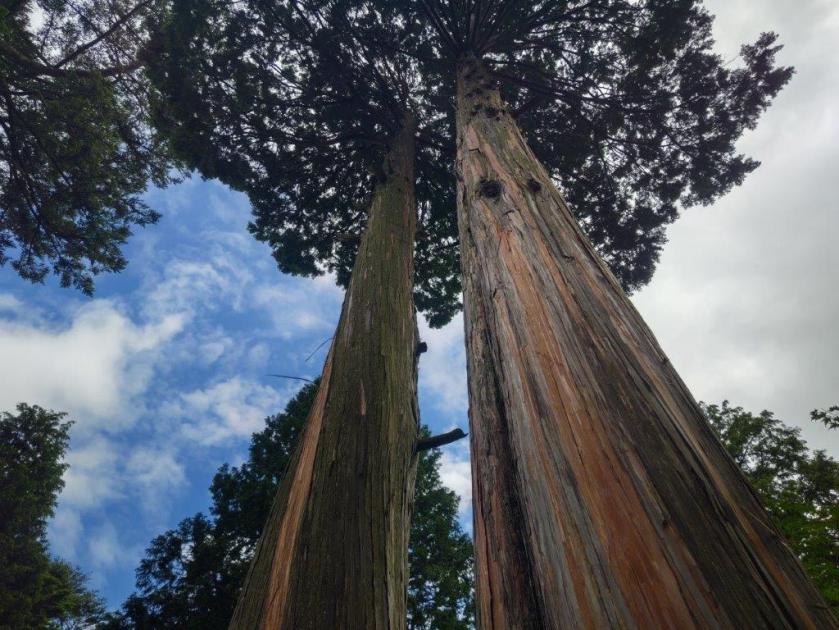
Inside the Uchiurayama Learning Center (left) Sequoia near Mominoki Soba (right)

It was a sunny winter day as I rode the limited express from Akihabara station along the Sotobo line all the way to Kominato station, one stop from Awa-Kamogawa, the end of the line. While waiting for a taxi to arrive, I watched the waves wash up on Uchiura Beach. After arriving at the Uchiurayama Prefectural Forest (内浦山県民の森), I went inside the learning center to check out a relief map of the area showing the now defunct hiking trails. At 1030, I set off along the Uchiurayama forest road. At a fork in the road, I turned right for Katsuura Dam (勝浦ダム), a few minutes away.

View West from Katsuura Dam

Hiking the Hills around Katsuura Dam

I was delighted to get a wide open view of blue waters and green shores, fluffy white clouds in the light blue sky completing this peaceful scene. I headed into the valley on the right and then followed a prefectural road northwards. After passing through a tunnel, I turned left, and soon reached the entrance of a trail on the left side. However, before diving into the forest, I decided to have lunch at the nearby Mominoki Soba Restaurant (もみの木庵), since it was nearly noon. After a filling soba meal, which I was able to eat at a table outside, I followed a signposted path to the top of a ridge on the north side of the dammed lake.

View of the Pacific from Mamenbara Kogen

View towards Yoro Keikoku from Mt Hatsuhi

I was surprised by how faint the trail was, nature slowly reclaiming this ancient forest track. At 1230, I emerged onto a forest road opposite a wooden Shinto Gate. I turned left and ignoring a couple of side trails descending to the lake, arrived at a hard to spot trail on the right. On the way, I passed an open shelter; it used to have a view, but that was now blocked by pampas grass. This part was easier to follow, the up and down path winding through swaying cedars. At 1pm, I reached a road where I turned left. After one hour of climbing, I reached Mamenbara Highland (麻綿原高原) and the top of Mt Hatsuhi (初日山 はつひやま hatsuhiyama), inside Tenpai-en Garden (天拝園), famous for its Azalea in the spring.

View of Okuyatsu Number 2 Dam

View of the Pacific from Uchiura Beach

I was stunned by the extensive view on the east side, far better than I had imagined. On the north side, I could see the rolling green hills of Boso extending to the Yoro River valley; on the south side, I could see forested ridges ending at the Pacific Ocean; directly below was Myohosho-ji Temple (妙法生寺). After a short break, I made my way back to the road, and soon turned left onto the Fureai no Michi, leaving behind the closed section on the right. After an hour of downhill walking, I arrived at a rest spot next to Okuyatsu Number 2 Dam (奥谷第二ダム). I spent a few minutes gazing at the yellow waters dazzling in the afternoon sun, the silence broken by urgent quacking of ducks. After setting off again, at a bend in the road, I spotted a “kyon“, a kind of miniature deer, darting into the bushes. At 3h30, I was back at the learning center, giving me plenty of time to catch the limited express for the two hour return trip to Tokyo.

Watch a video of the Mt Hatsuhi Hike

Watch the Video of the Hike on YouTube
See a Slideshow of More Pictures of the Hike

Mt Amamaki (533m) & Mt Mitsutoya (433m), Mashiko Town, Tochigi Prefecture, Saturday, March 2, 2024

I wanted to revisit a mountain in Ibaraki I had climbed six years ago. According to my guidebook, a network of trails existed on the other side, in Tochigi, allowing me to create a loop hike. I could combine it with another peak on the same ridge. Since no buses run in the area, I would need to drive a car from Mito station, one hour away. The hike was on the short side, so I could get an early lunch at one of the many soba restaurants dotted throughout the countryside, and then start walking from the early afternoon. The weather was supposed to be mostly sunny but cold for the season, with temperatures slightly above freezing at the highest point. I was looking forward to visiting a hard to access, but rewarding hiking area close to Tokyo.

For subscribers, read this Blog Post on Hiking Around Tokyo for a better viewing experience and the latest updates

Walking the Summit Ridge (left) A well-maintained Trail (right)

Trail Before (left) and After (right) Mt Mitsutoya

I got a good look at the plum blossoms of Kairakuen Park in full bloom, as the Hitachi limited express approached Mito station just before 10am. Shortly after getting off the Kita-Kanto expressway, I reached Donjuan (呑珠庵) where I enjoyed one of the best soba lunches in a long while. After driving a little further, I arrived at the Okawado parking lot (大川戸登山口駐車場) and was finally ready to start hiking just before 1am. The weather was cloudier than forecast, although the sun was shining as I followed a forest road up a river valley and through a cedar forest.

Trail just below the Summit of Mt Amamaki

Summit of Mt Amamaki

I was delighted to be hiking alongside a stream, the noise of the water rushing over rocks was like music to my ears. Eventually, the forest road turned into a rocky trail. Thirty minutes after setting out, I arrived at a fork where I turned right, onto the Mt Amamaki Ridge Route (雨巻山尾根コース). After a short, steep climb up a well-maintained path, I reached the ridgeline. There, I turned left, and after some gentle climbing surrounded by bare trees, arrived at the summit of Mt Amamaki (雨巻山 あままきやま amamaki-yama), a Tochigi and Kanto 100-famous mountain, a little after 2pm. On the west side, I could see Mt Takamine, Mt Bucho, and further away Mt Yakimori and Mt Keisoku.

View from the Top of Mt Amamaki

The Rounded Summit of Mt Bucho

I was surprised to find the summit completely deserted despite the nearly full parking lot at the base. I sat at one of the benches for a short break before heading back the same way. I continued past the top of the Ridge Route, now following the Mt Mitsutoya Ridge Route (三登谷山大根コース), a mostly level path through the trees. I soon reached a bench with a view of the Ashio mountains on the west side: I could see the highest peaks of Oku-Nikko, the pointy top of Mt Sukai, and the many summits of Mt Akagi. Another half an hour of walking brought me to one more viewpoint, this time on the south side. I could see the Ogodo Alps directly ahead, as well as Mt Tsukuba in the distance.

View West of the Ashio Mountains

Late Afternoon Sun and the Ogodo Alps

I was mesmerized by the colours of the late afternoon sun rays, piercing the clouds on the south side. Soon after, I arrived at Mt Mitsutoya (三登谷山 みつとやさん mitsutoya-san). Westwards, I could see the Oku-Nikko mountains, Mt Takahara and Mt Nasu; directly ahead, and much closer was Mt Takadate. After some descending, I turned right, off the ridge and into the valley through an evergreen forest, eventually rejoining the forest road taken earlier in the day. By now, the clouds had completely covered the sky, making the sun a distant memory. My car was almost the last one left, and by 5pm, I was on the road. At Mito station, I tried some local sake at Ibaraki Jizake Bar before boarding the limited express train for the comfortable ride back to Ueno.

Watch a Video of the Mt Amamaki Hike

Watch the Video of the Hike on YouTube
See a Slideshow of More Pictures of the Hike

Mt Jinba (854m) & Mt Arashi (406m), Sagamihara City, Kanagawa Prefecture, Saturday, February 24, 2024

I wanted to hike a section of the Tokai Nature Trail close to Tokyo which I hadn’t done before. The trail started a short bus ride from Sagamihara Station and ended near a bus stop on the same line, as well as a hot spring. The hike was on the short side, so I decided to tag on a mountain I had climbed nearly ten years ago; looking at my map, I saw I could redo it via a different set of trails. I would take the shortest route up from Wada, a short bus ride from Fujino station on the Chuo line, and walk down to Sagamihara station, passing a couple of minor summits on the way.

Hiking in Okutama 奥多摩

Hiking in the Takao-Jinba Natural Park 都立高尾陣場自然公園

The whole area is a popular hiking spot with well-maintained trails, so although it had snowed the previous day, I was confident it would be easy to walk; I also knew from my previous visit that the summit had a spectacular view of Mt Fuji. The weather was supposed to be sunny, with temperatures slightly above freezing. I was looking forward to a rare winter hike with a Fuji view from the highest point and a hot spring bath at the end.

For subscribers, read this Blog Post on Hiking Around Tokyo for a better viewing experience and the latest updates

Number 2 Wada Ridge Route without (left) and with Snow (right)

Walking the Ichi-no-O Ridge Trail (left) & the Kanto Fureai no Michi (right)

Before (left) and after (right) the summit of Ya-no-Ne

Just past Ohira Hut (left) & Just before Yose Shrine (right)

Heading Up (left) and Down Mt Arashi (right)

I could see patches of blue sky as I rode the almost full bus from Fujino station around 9am. Most people got off at the main trail entrance, and surprisingly, I was the only person heading up the Number 2 Wada Ridge Route (和田第二尾根コース), shortly before 10am. Looking up, I could see the higher slopes, white with snow before disappearing into the clouds. Less than half an hour later, the scenery changed from dull brown to brilliant white. Contrary to the forecast, the sun remained hidden behind a grey cloud cover, allowing the white mantle to last a little longer.

First snow on the Number 2 Wada Ridge Route

Fallen Log near the Junction with the Ichi-no-O Ridge Route

I was amazed by the beautiful wintery surroundings, the wet snow clinging to any surface that wasn’t completely vertical. Melting snow falling gently from the tree branches enhanced the effect, its falling noise reminiscent of soft rain. After merging with the Ichi-no-O Ridge Trail (一ノ尾尾根コース), I saw more people walking through this winter wonderland. At the top of a staircase, I reached the top of Mt Jinba (陣馬山 じんばさん jinba-san), a Kanto 100-famous mountain, shortly after 11am. The view of Mt Fuji on the south side was hidden by thick clouds, but the frozen landscape was compensation enough.

Walking through a Winter Wonderland

Cloudy View from the Top of Mt Jinba

I was stunned by the nearly completely white trees on the north side of the summit. Beyond their frosty crowns, I could see the Kanto Plain, as well as the eastern edge of the Takao mountain range. After a short break, I set off again, now following the Kanto Fureai no Michi. I was walking on the snow, but since any sloping sections had steps, it always felt perfectly safe. I was glad to be wearing a wide-brim hat, as it protected me from snow falling from the trees. A little after noon, I arrived at Myou Pass (明王峠) where I left the Fureai no Michi, and headed down a series of steps southwards.

White Trees on the North Side of Mt Jinba

In the Background, the Eastern Edge of the Takao Range

I was once again walking on solid ground although snow still covered the trunks and branches of the bare trees; it was like walking through a Christmas displayed created with snow spray. Thirty minutes later, I went left at a fork in the trail. Very soon, I reached the top of Yanone (矢ノ音 633m), completely in the trees. I immediately headed down a precipitous trail on the left side, and soon reached Ohira Hut (大平小屋), actually an open shelter. After a short break, I continued on my way, on a level trail though a forest of tall cedars. On the way, I made a short detour via Mt Mago (孫山 543m). After some descending, I reached a viewpoint on the southeastern side.

A little bit of Autumn in the Wintery Landscape

Snow Coated Trees at Lower Elevations

I enjoyed the view of the majestic bulk of Mt Sekiro rising directly behind Sagami Lake; to its left, was Mt Arashi, today’s next peak, and Sagamihara City. Since it was 2pm, I had a late lunch before setting off again. I soon reached Yose Shrine, at the base of the mountain, and shortly after, Sagamiko Station. There, I hopped on a bus for the short ride to Sagamiko Bridge, a few minutes on foot from the Tokai Nature Trail. After thirty minutes of easy climbing, I arrived at the summit of Mt Arashi (嵐山 あらしやま arashi-yama), meaning Mount Storm. On the west side, I could see Mt Momokura, Mt Ogiyama and Mt Gongen, but the view was rather subdued on this cloudy, wintery day.

Descending from Mt Mago

Viewpoint of Sagami Lake and Mt Sekiro

I was surprised by the up and down nature of the trail beyond the summit. I crossed tiny streams over narrow wooden bridges and scaled thin metal ladders up steep slopes. At 4pm, I crossed a dense and dark bamboo forest, always a fascinating experience for me. Less then half an hour later, I finally reached a road at the end of the trail. After a refreshing hot bath at Ururi Onsen, part of the Sagamiko Resort Pleasure Forest, I caught a bus for the ten-minute ride back to Sagamiko Station, where I boarded the Chuo line for the one-hour ride back to Shinjuku.

View of Mr Arashi (left) and Mt Sekiro (right ) from below Yose Shrine

Bamboo Forest on the Tokai Nature Trail

The hike was longer and harder than I had expected, over 6 hours, so I was glad I could recover at a hot spring at the end. On the other hand, the snowy scenery far exceeded my expectations, thanks to the cloudy cover shielding the sticky snowy tree decorations from the sun and preserving them throughout the day. The snowmelt dripping from the trees was also a new experience for me, as I was walking under sunshine and snowfall at the same time. I encountered many other hikers between Ichi-no-O Ridge and Myou Pass, but very few before and after. I hope to return in the future to explore the other trails crisscrossing the Takao mountain range.

Watch a Video of the Mt Jinba Hike

Watch the Video of the Hike on YouTube

See a Slideshow of More Pictures of the Hike