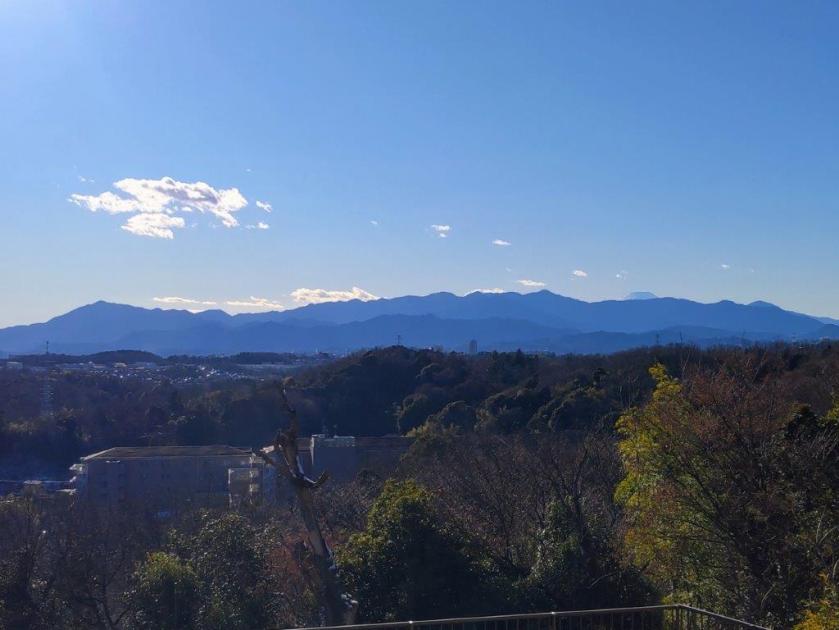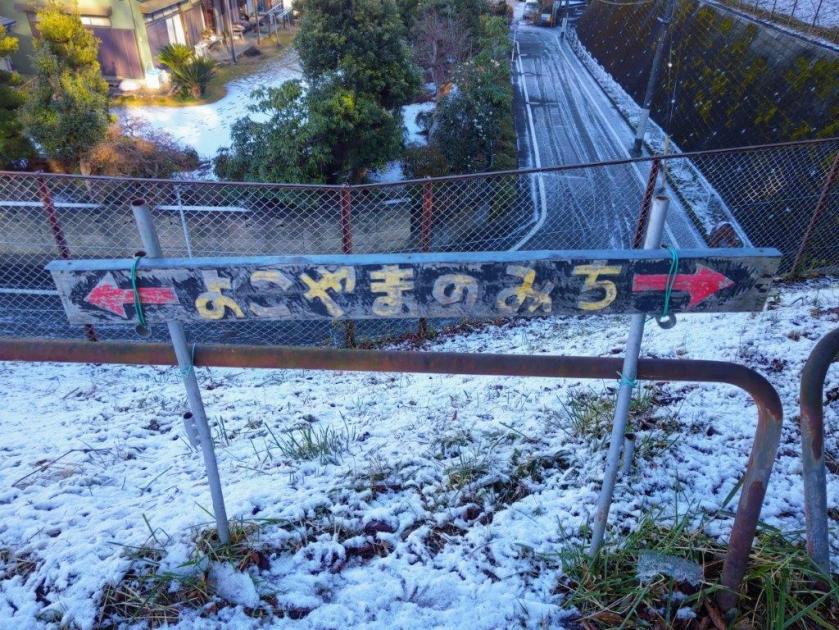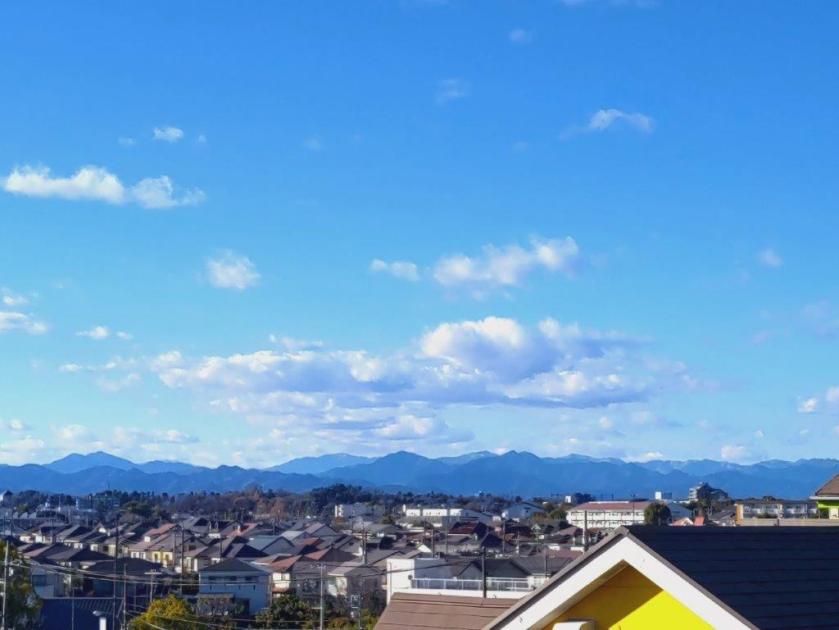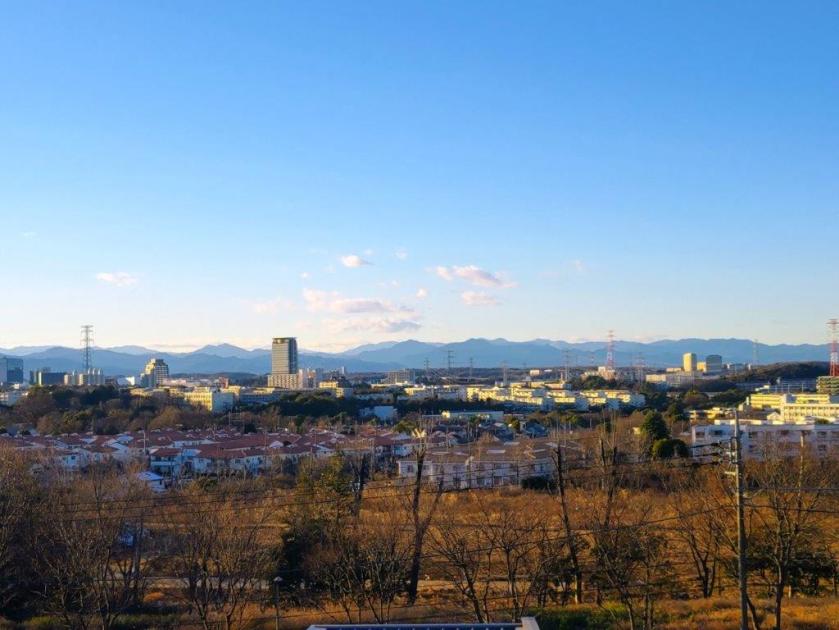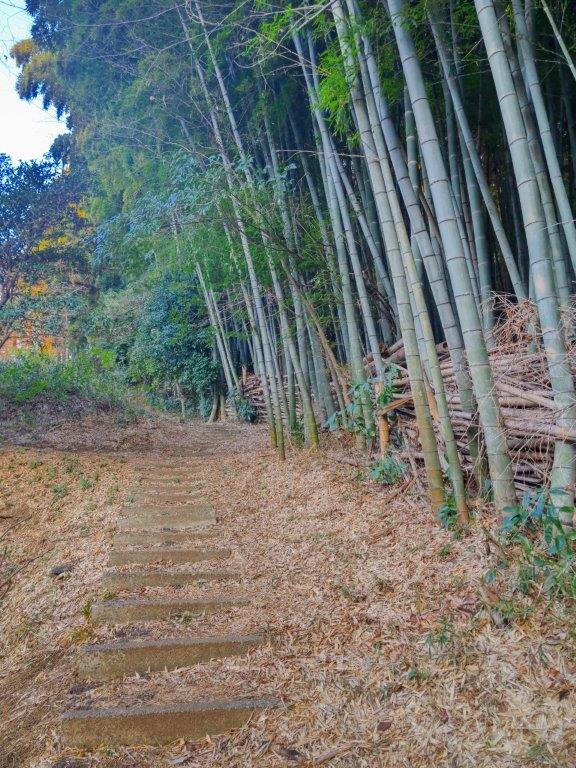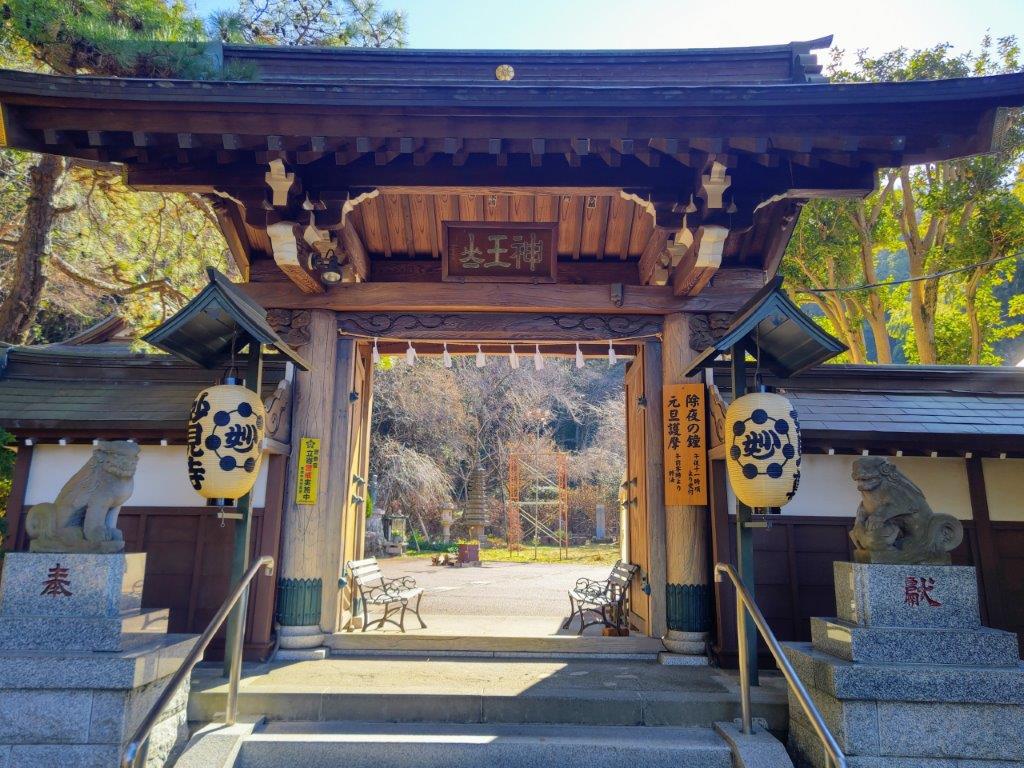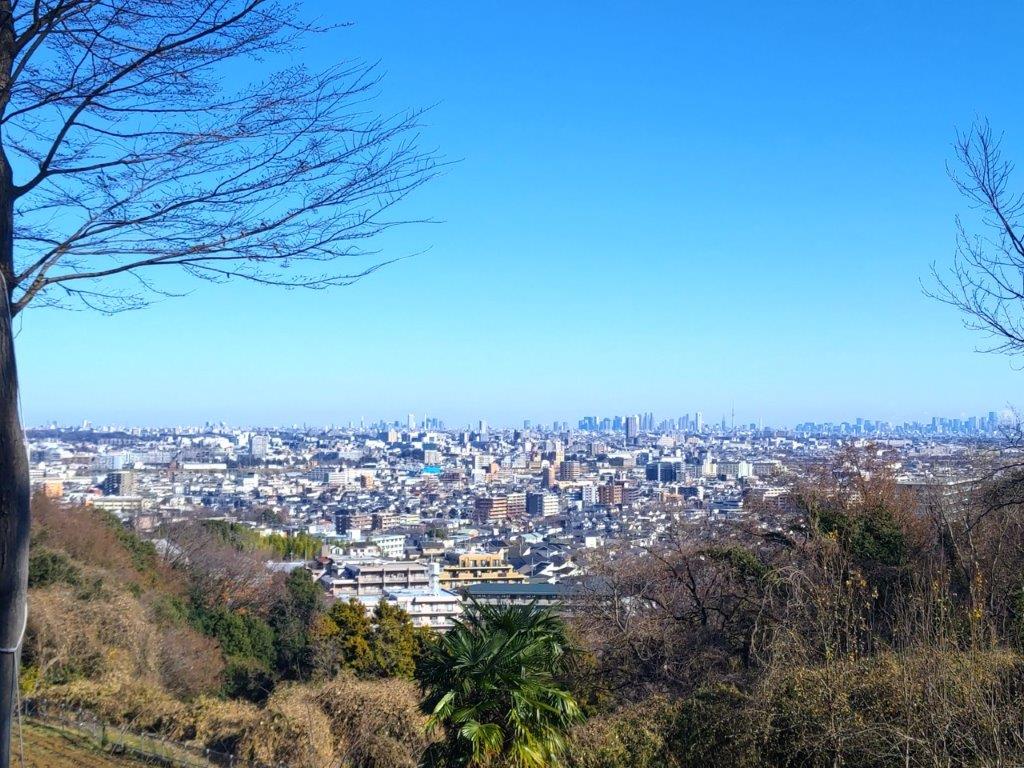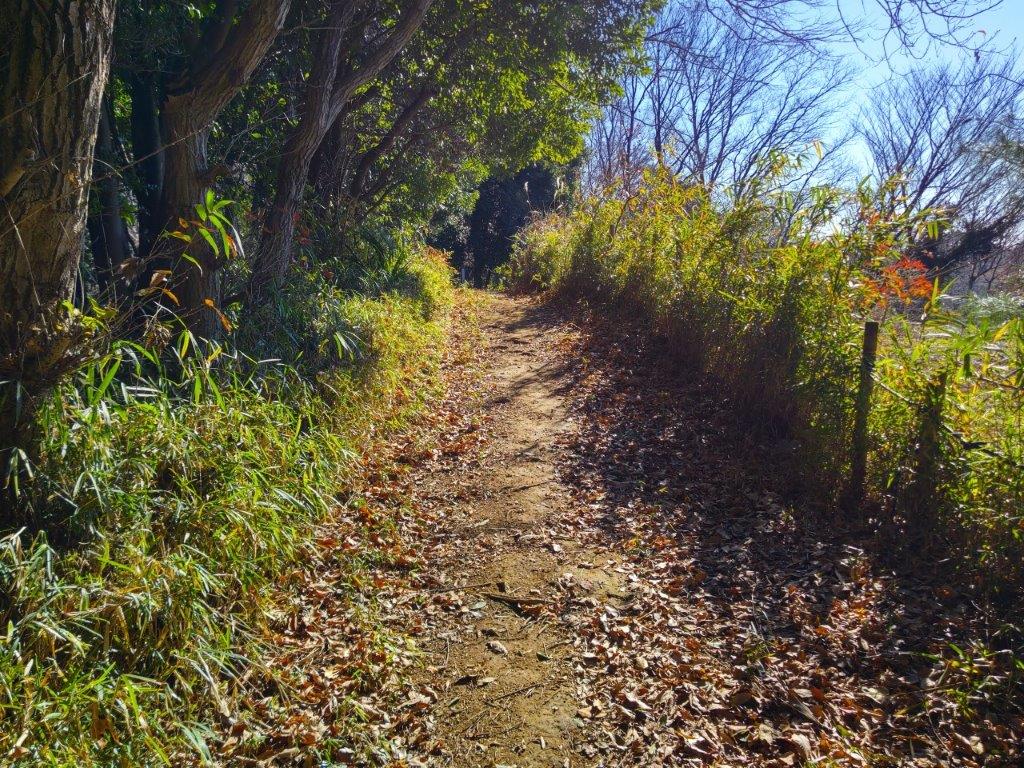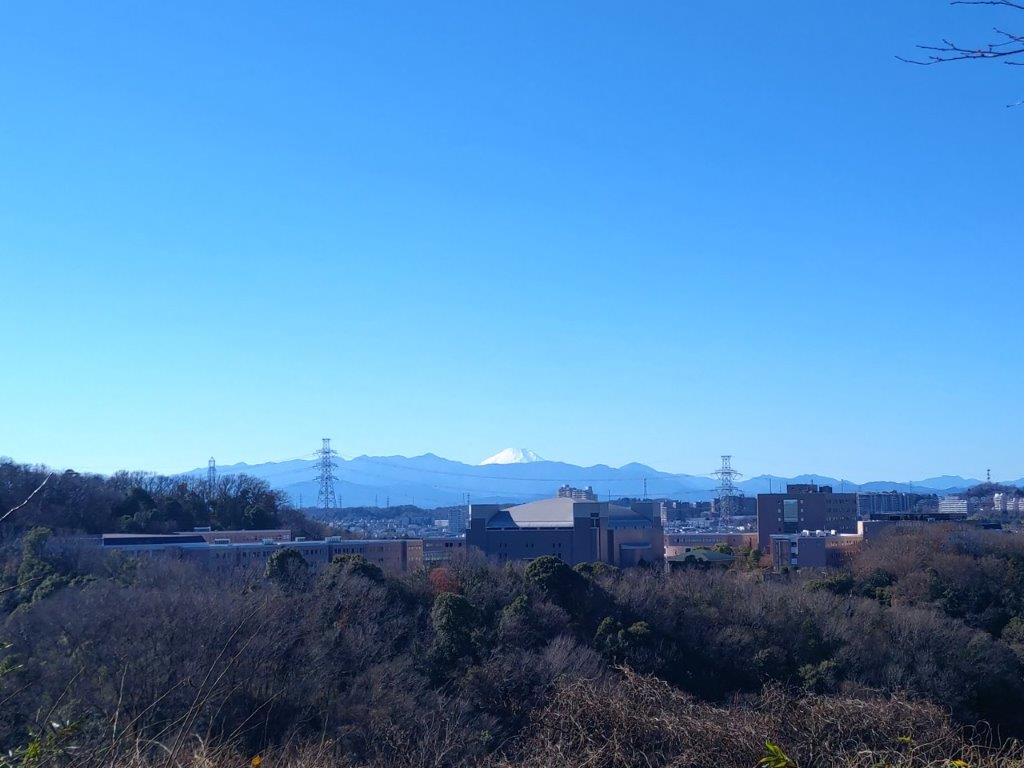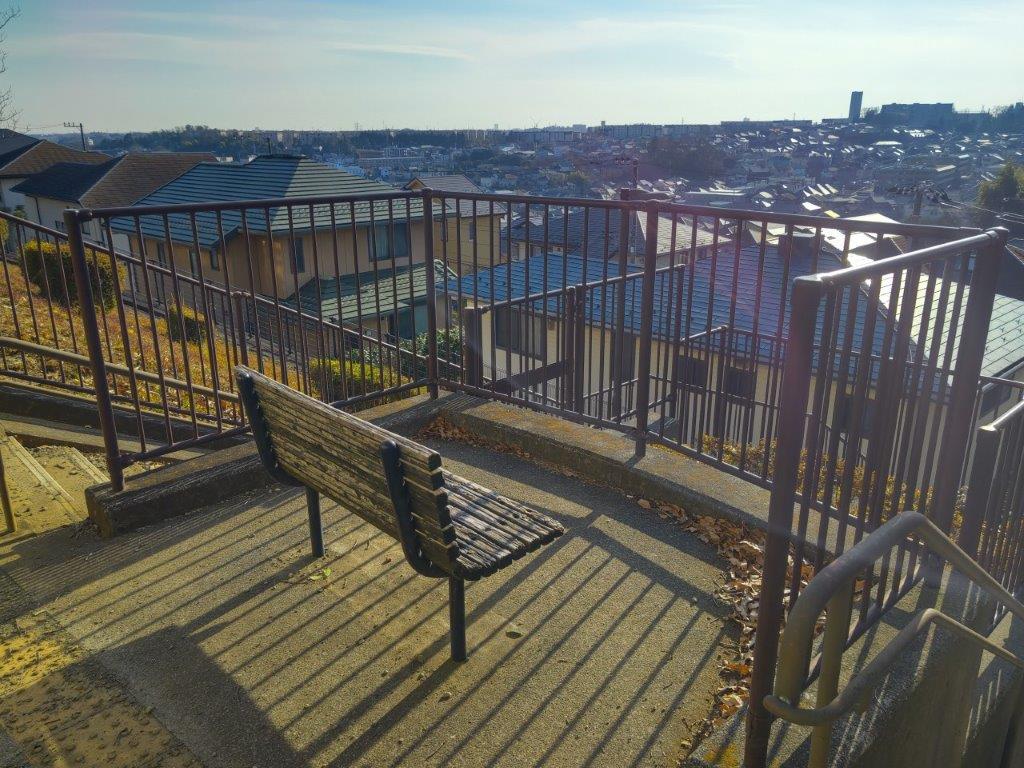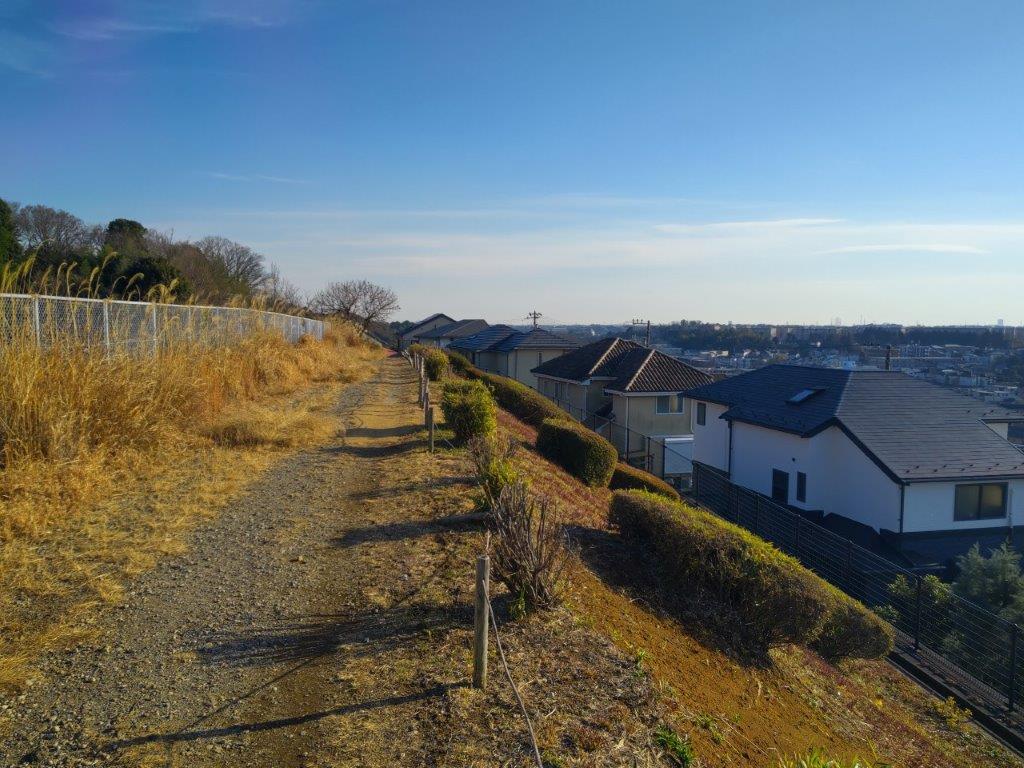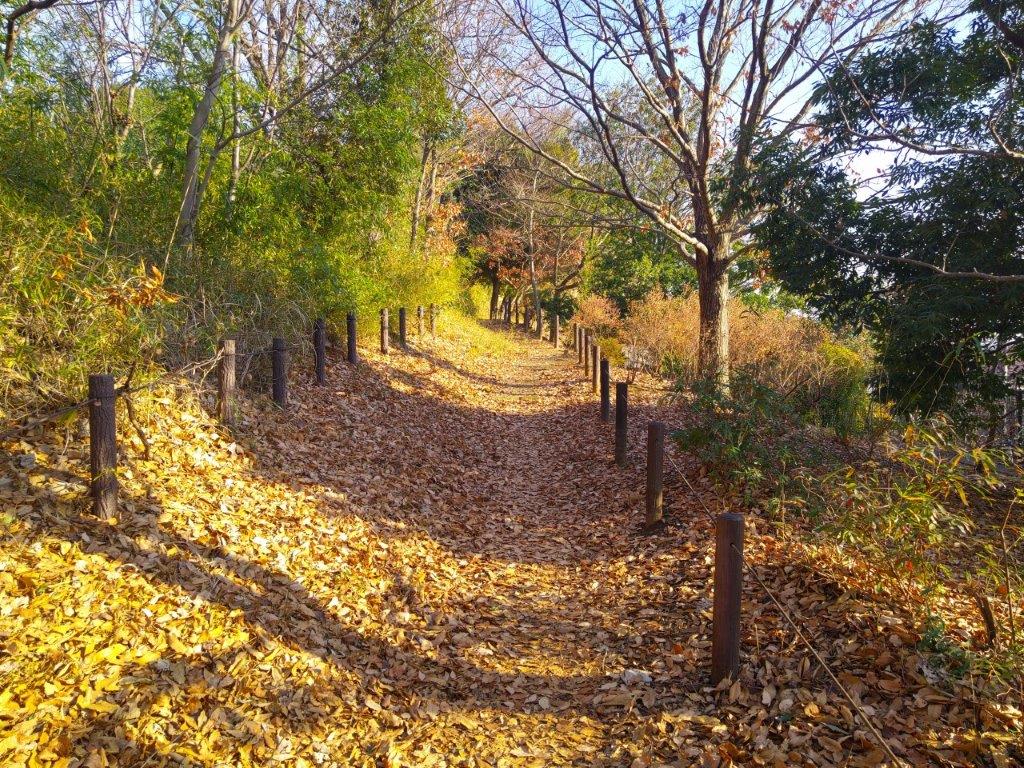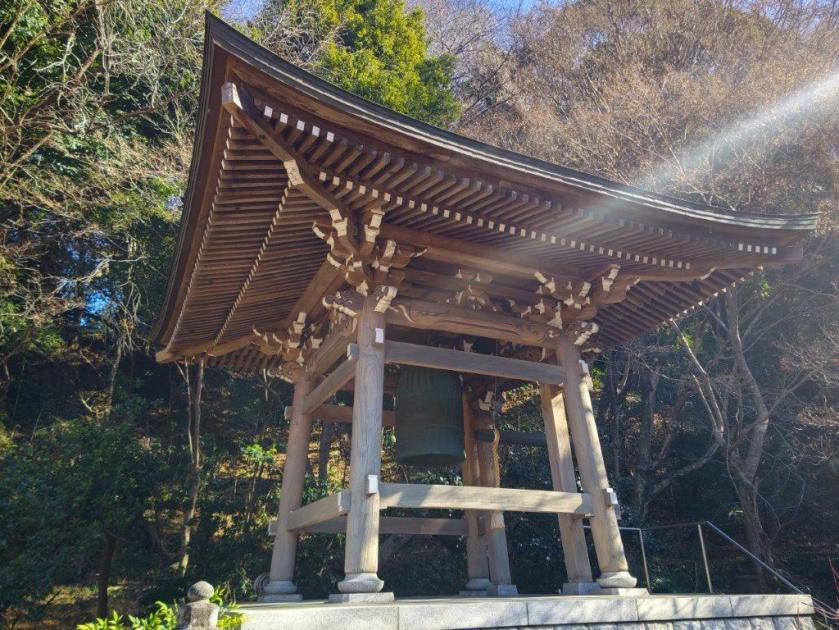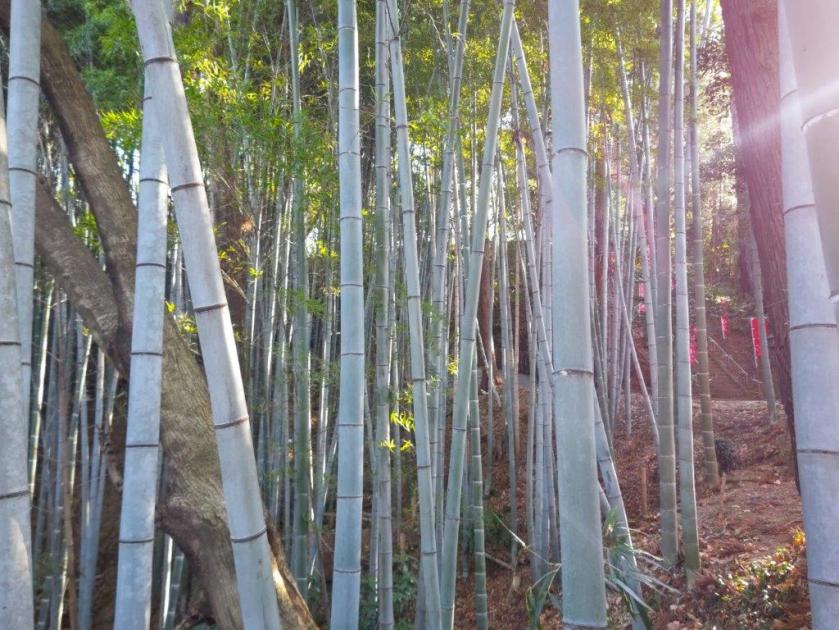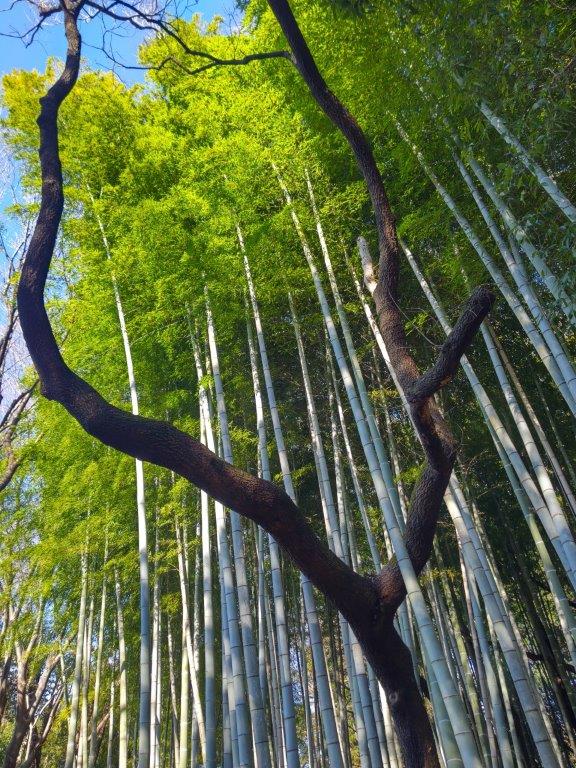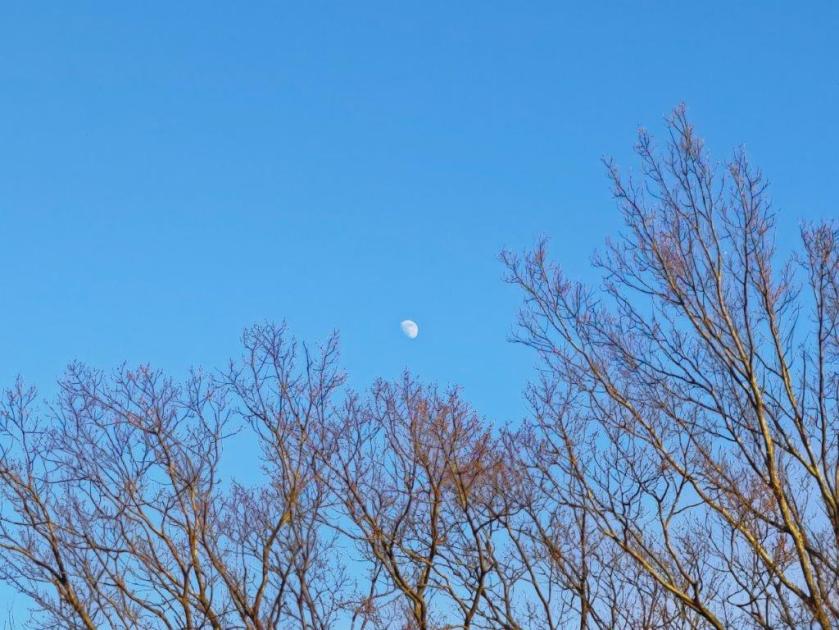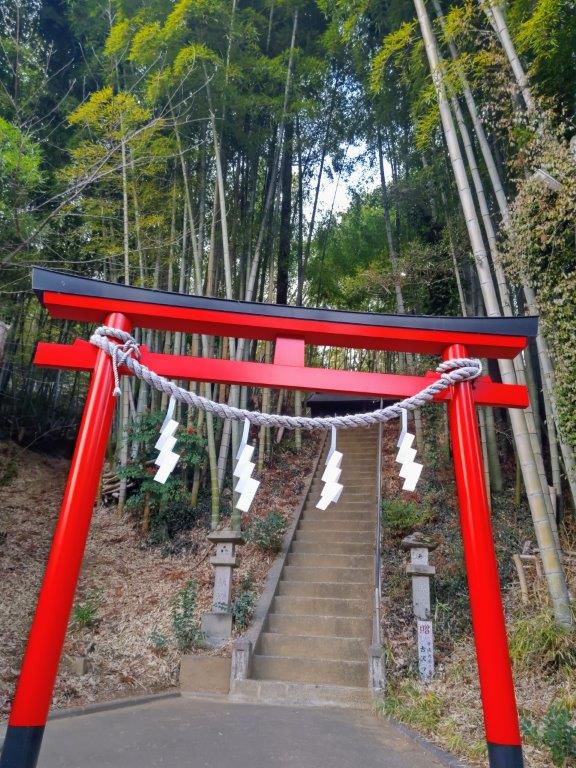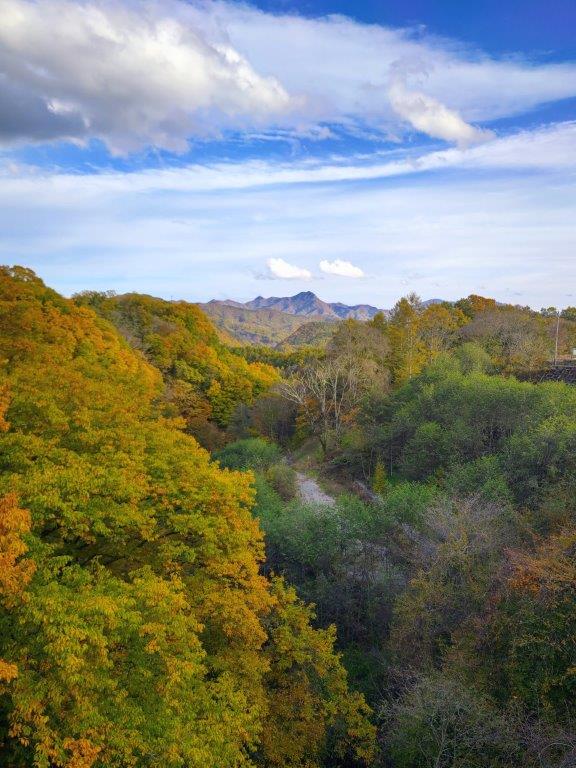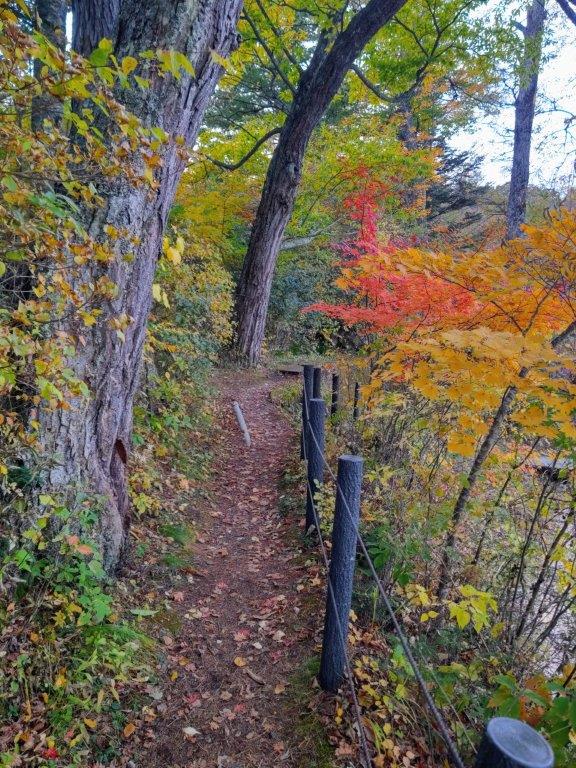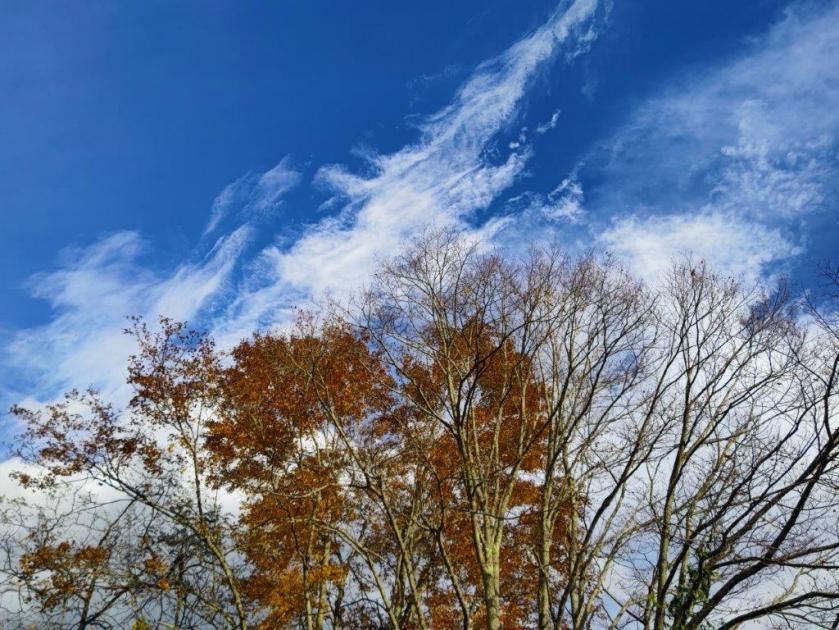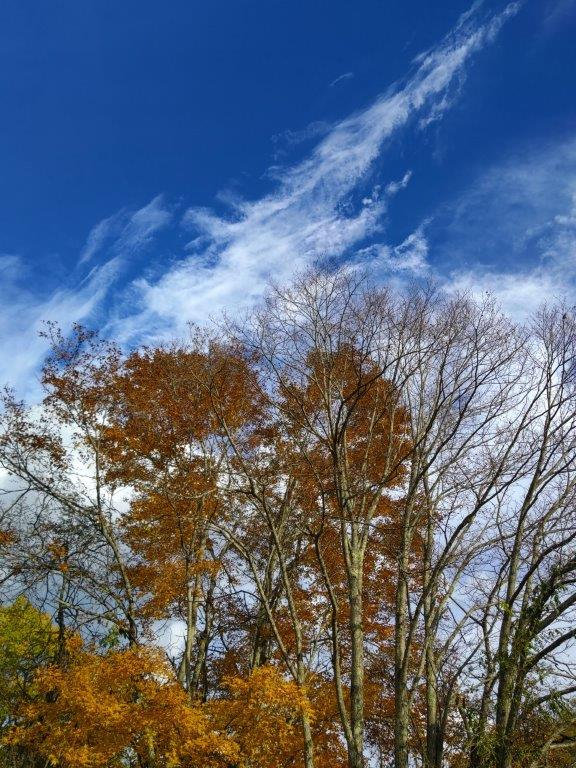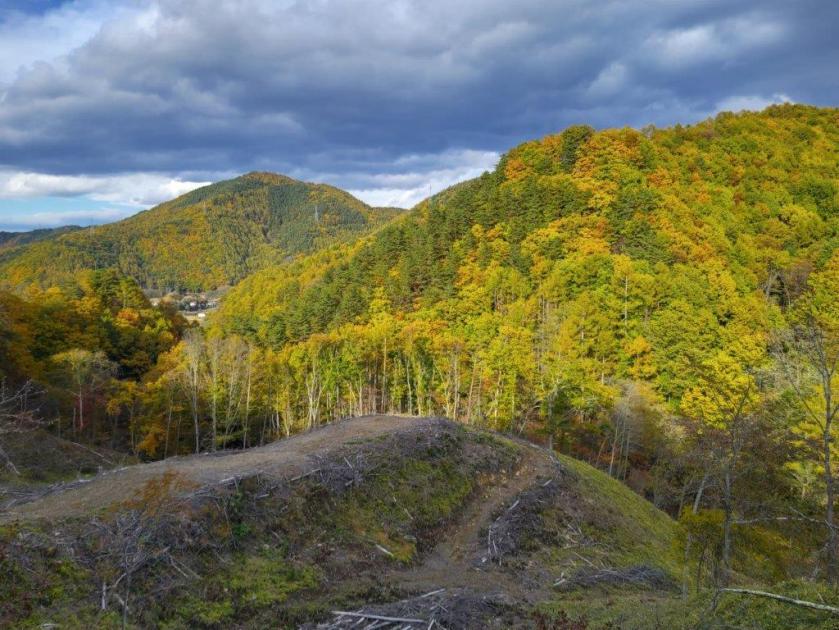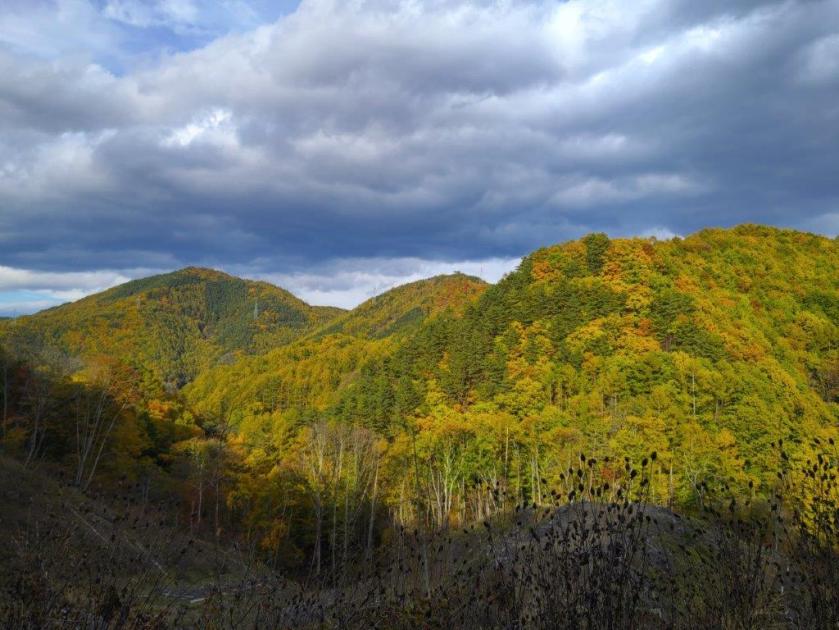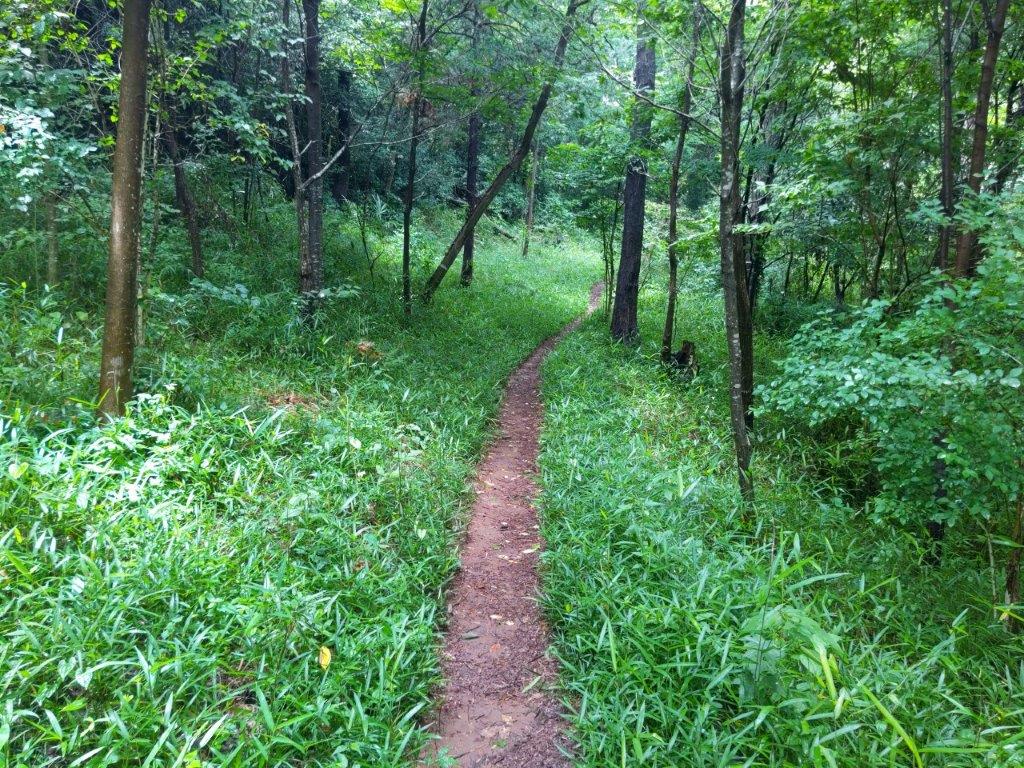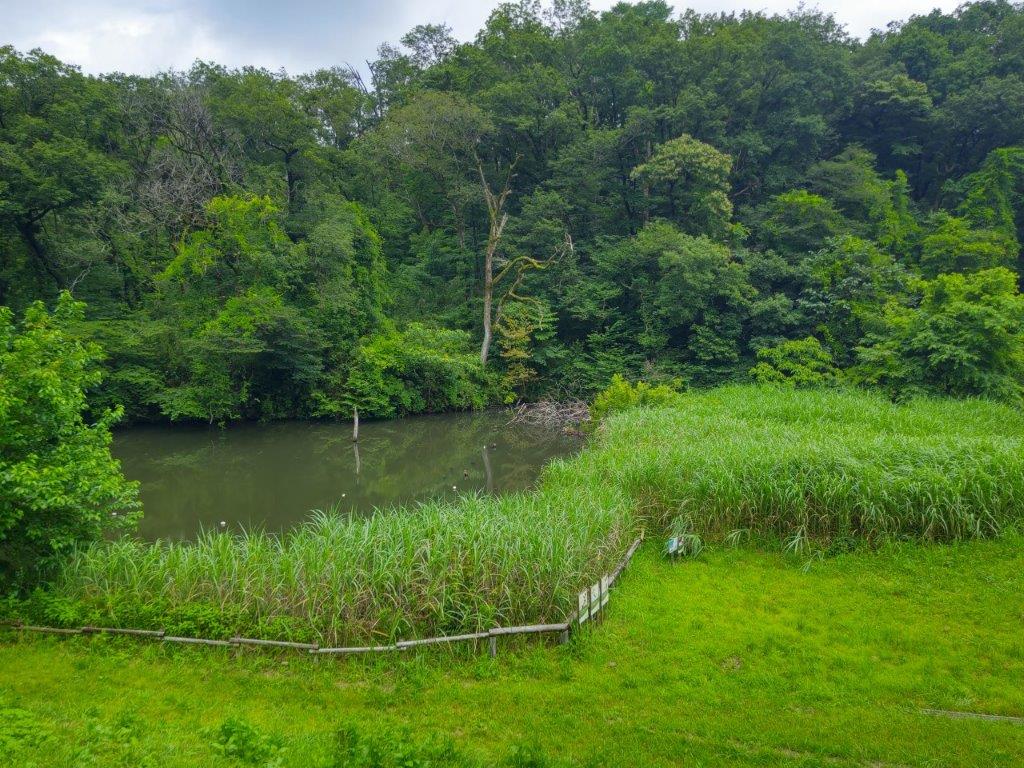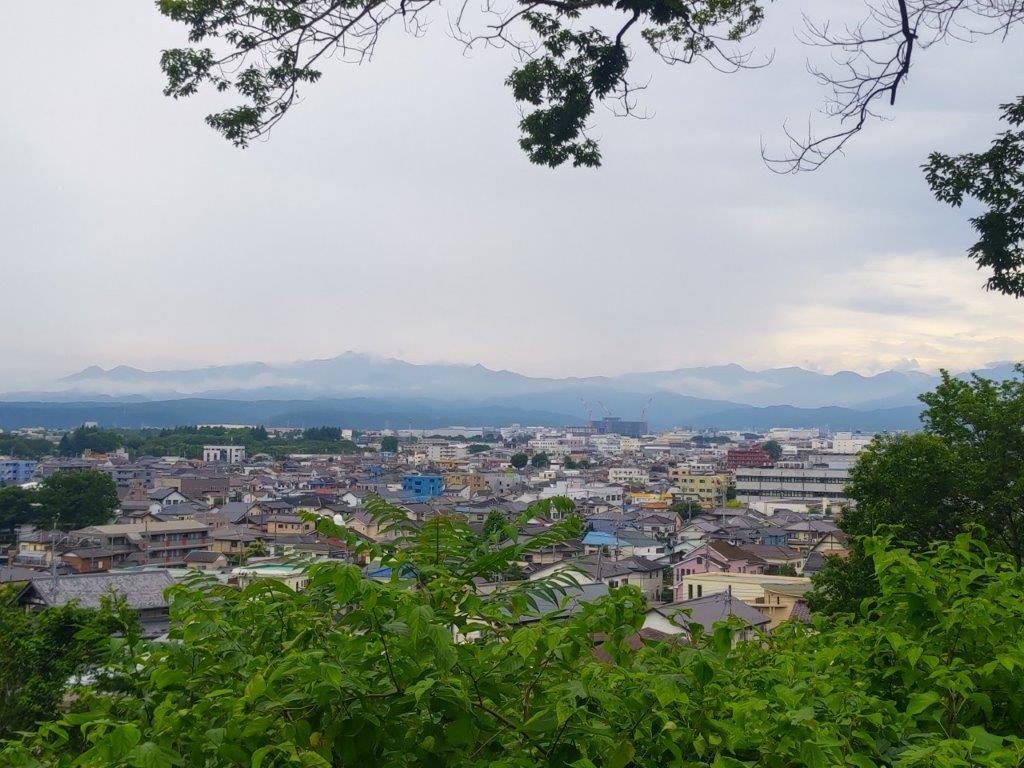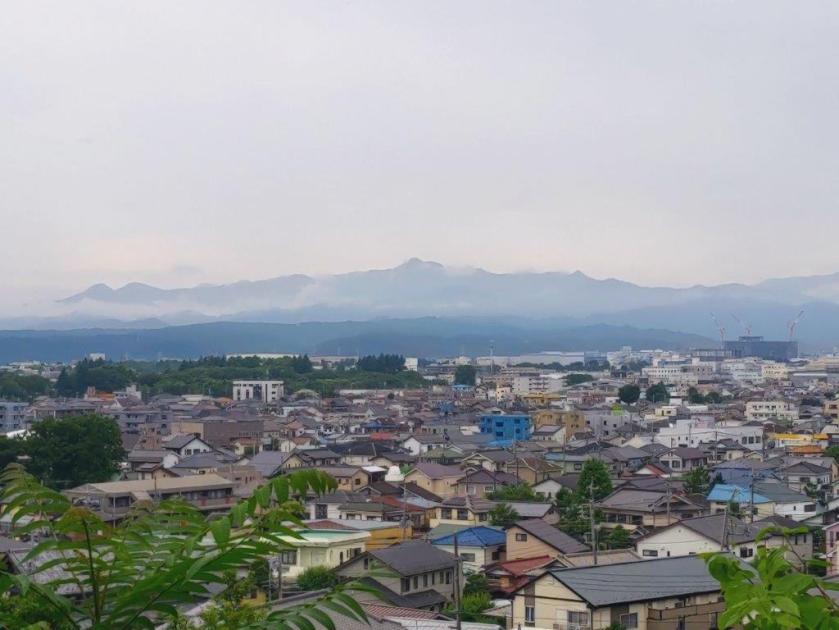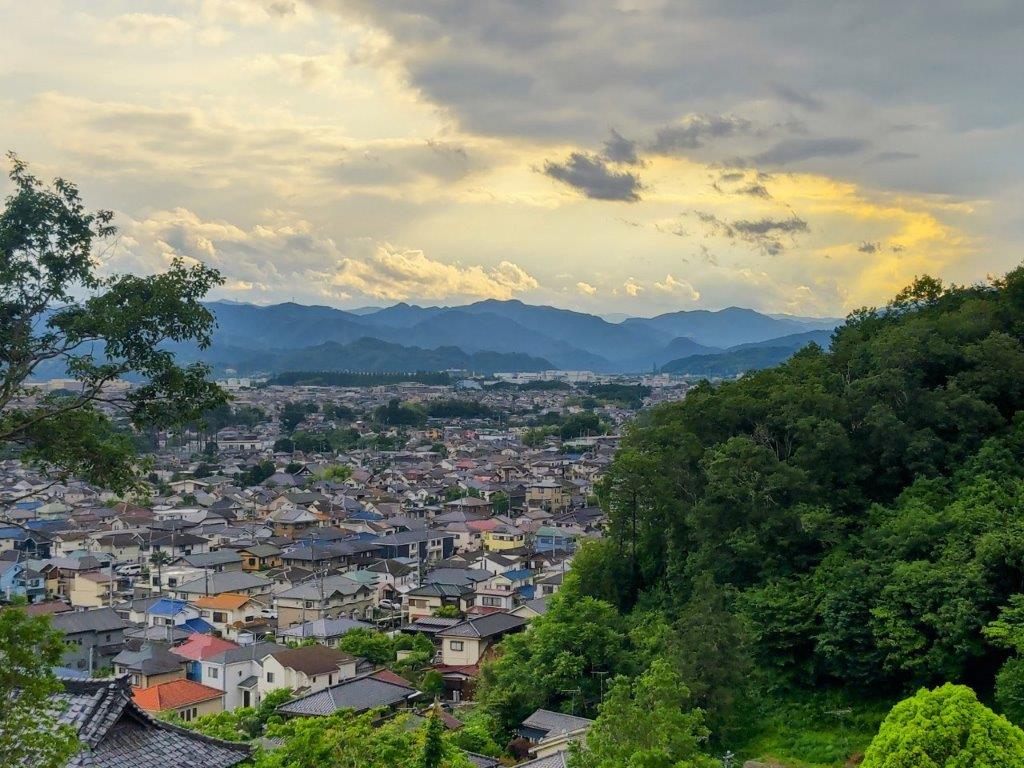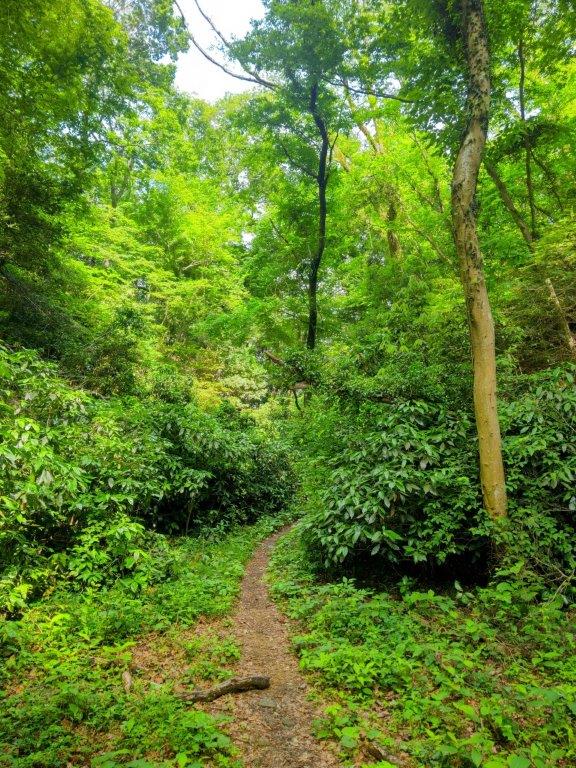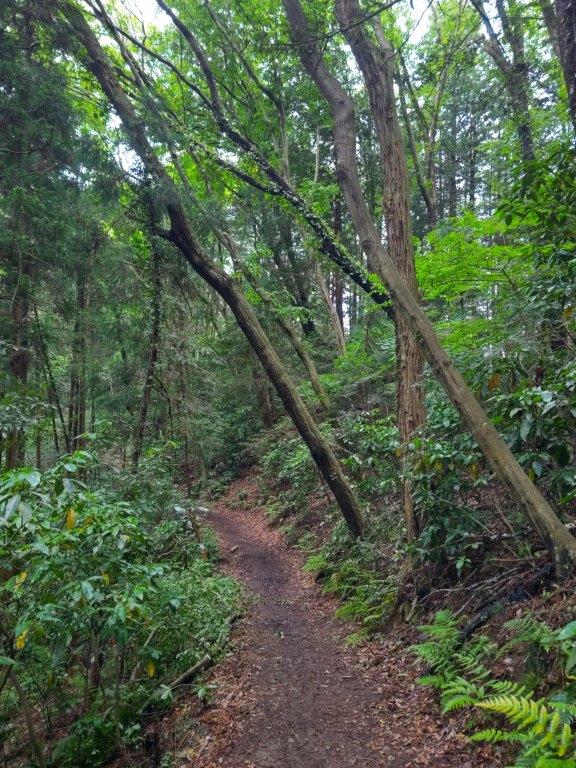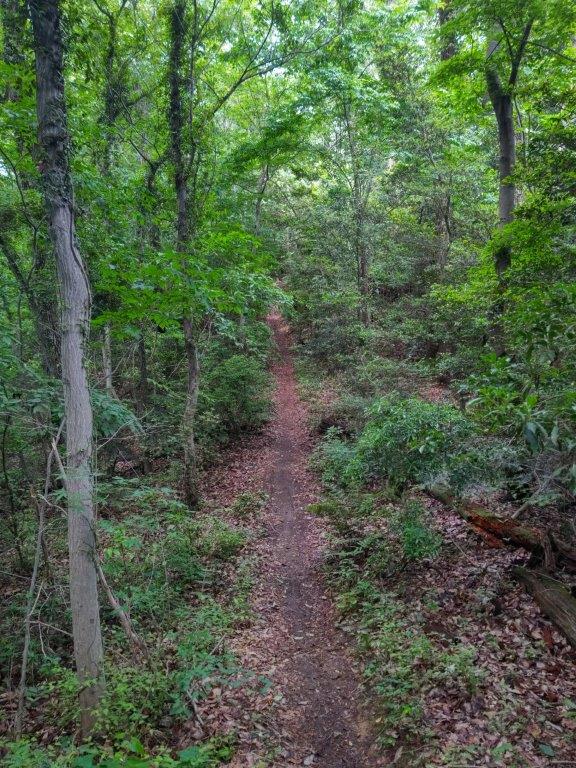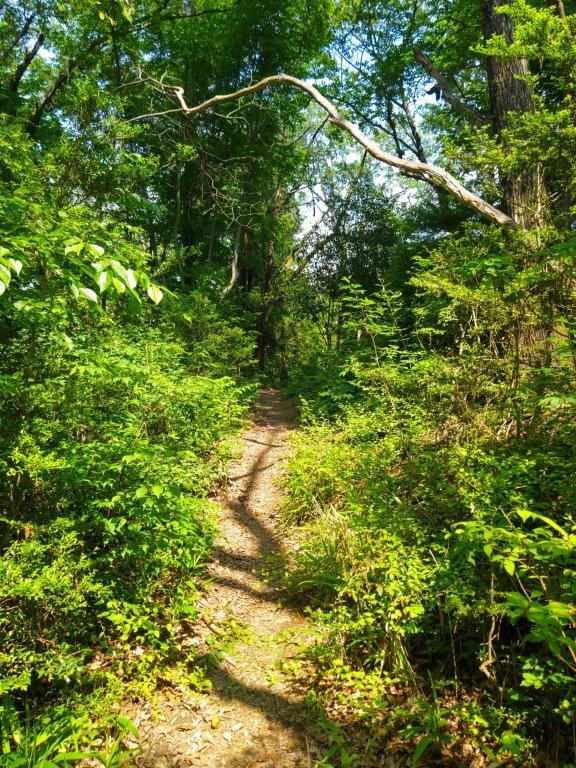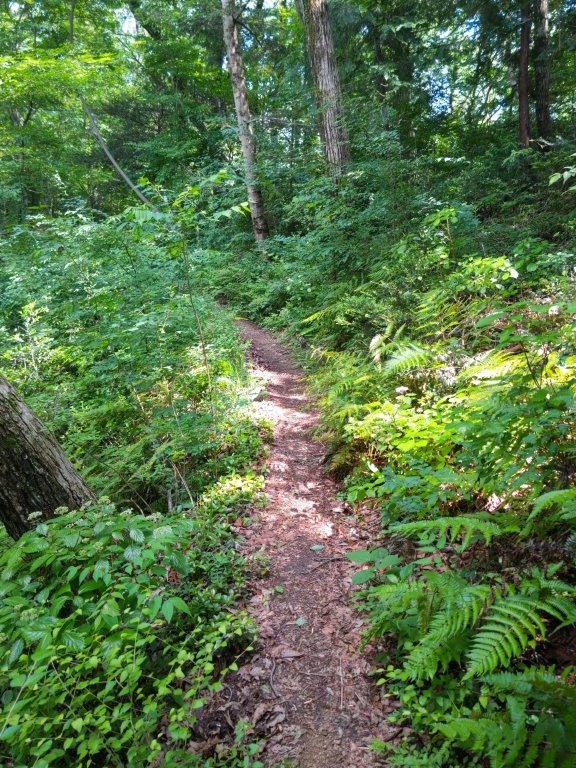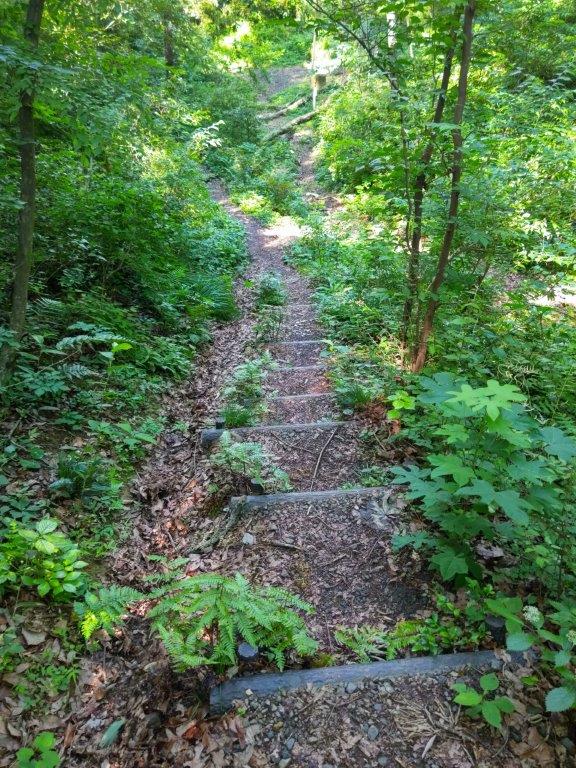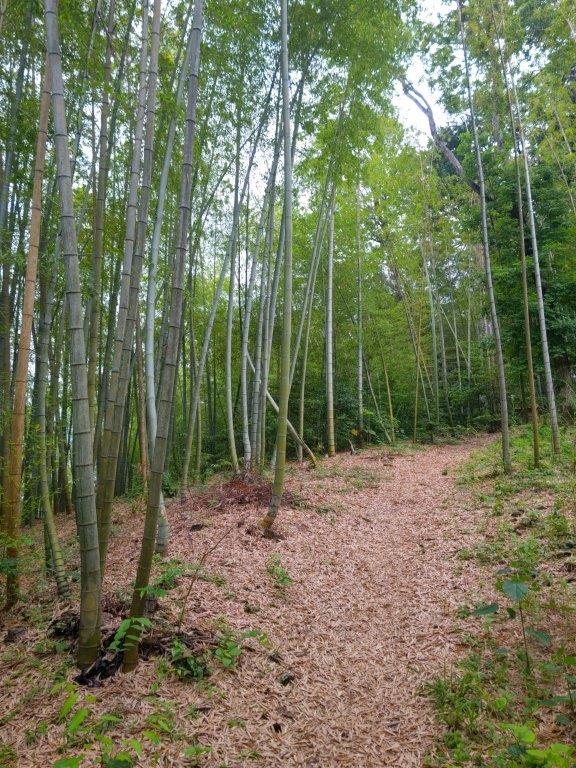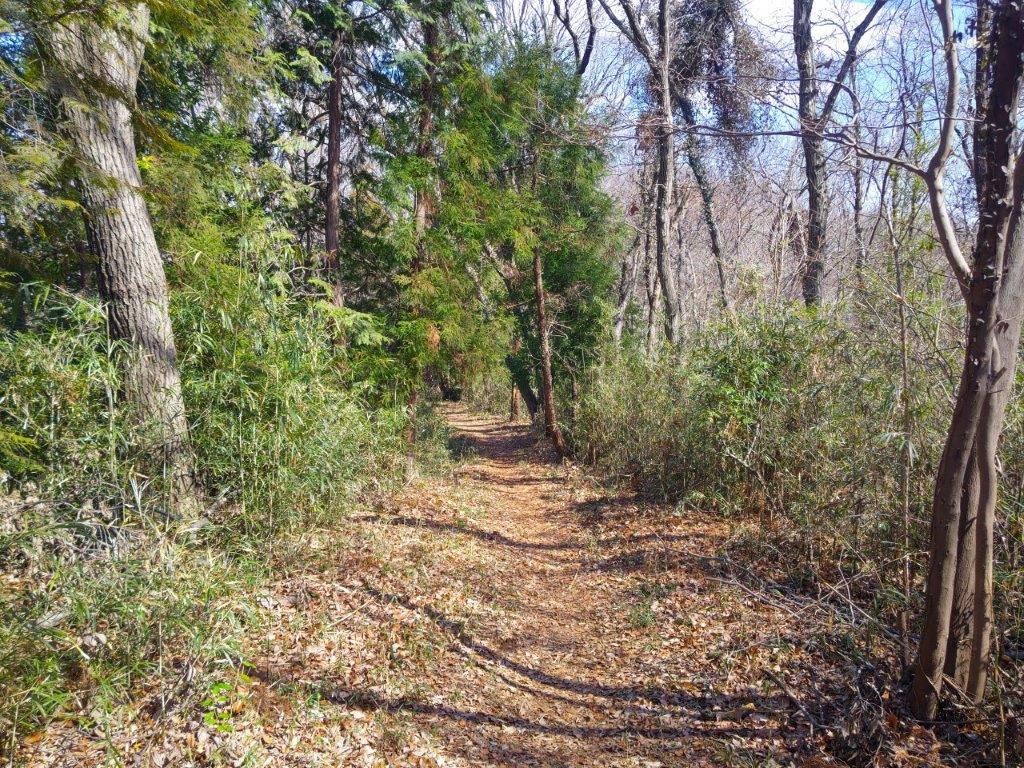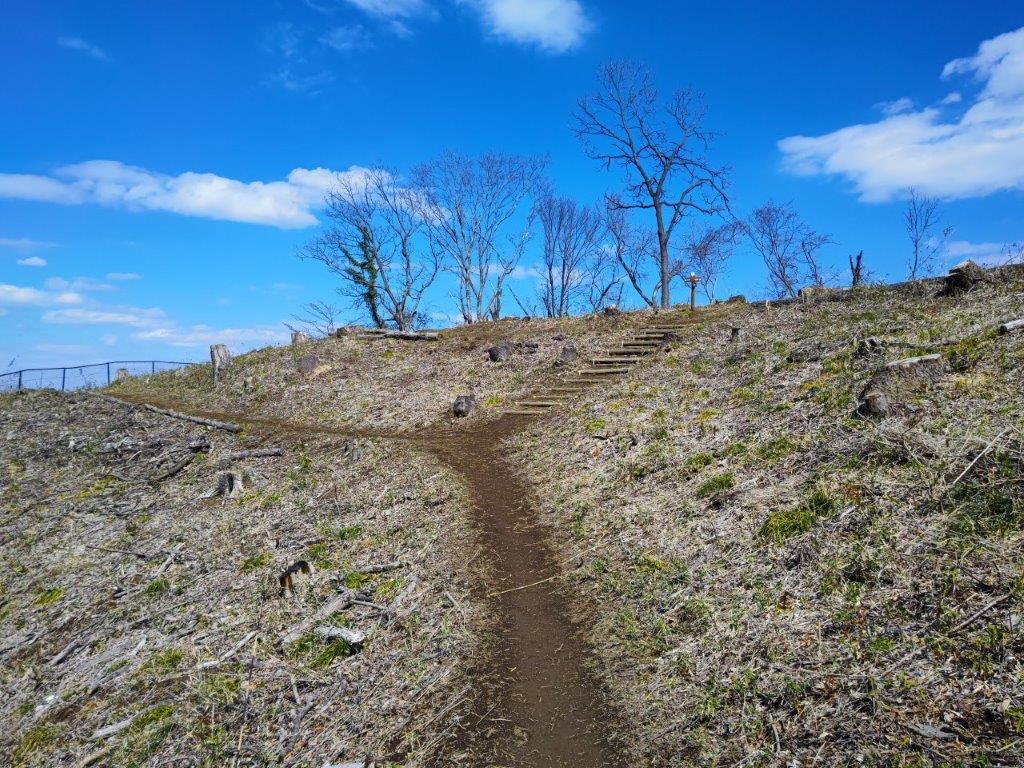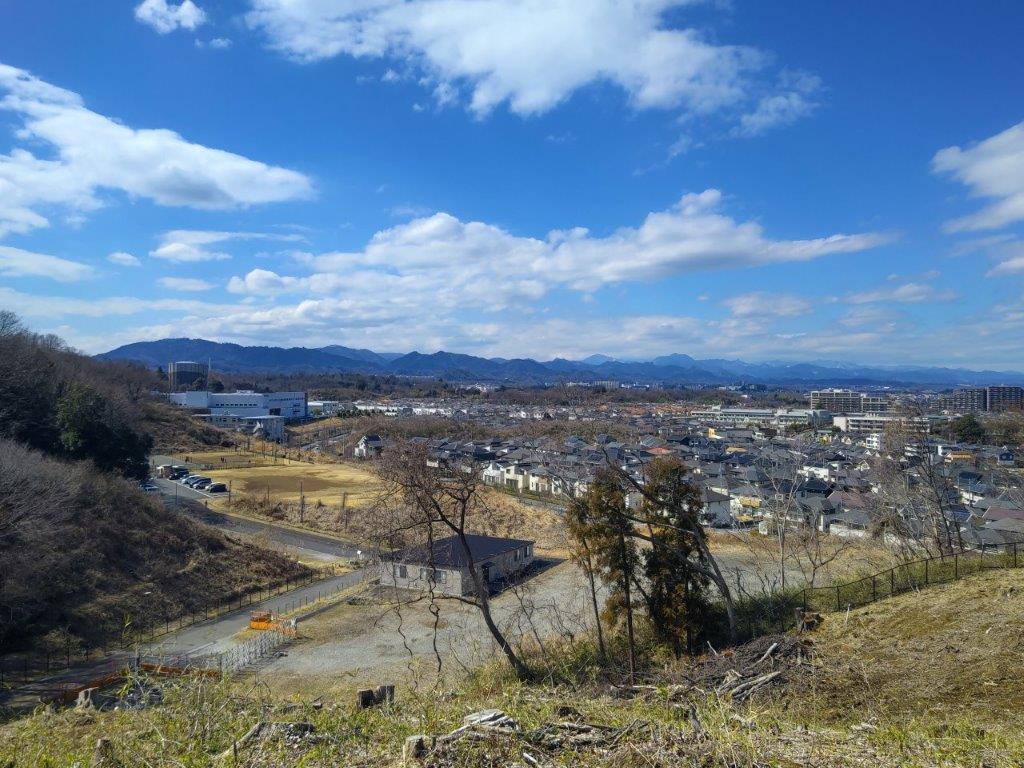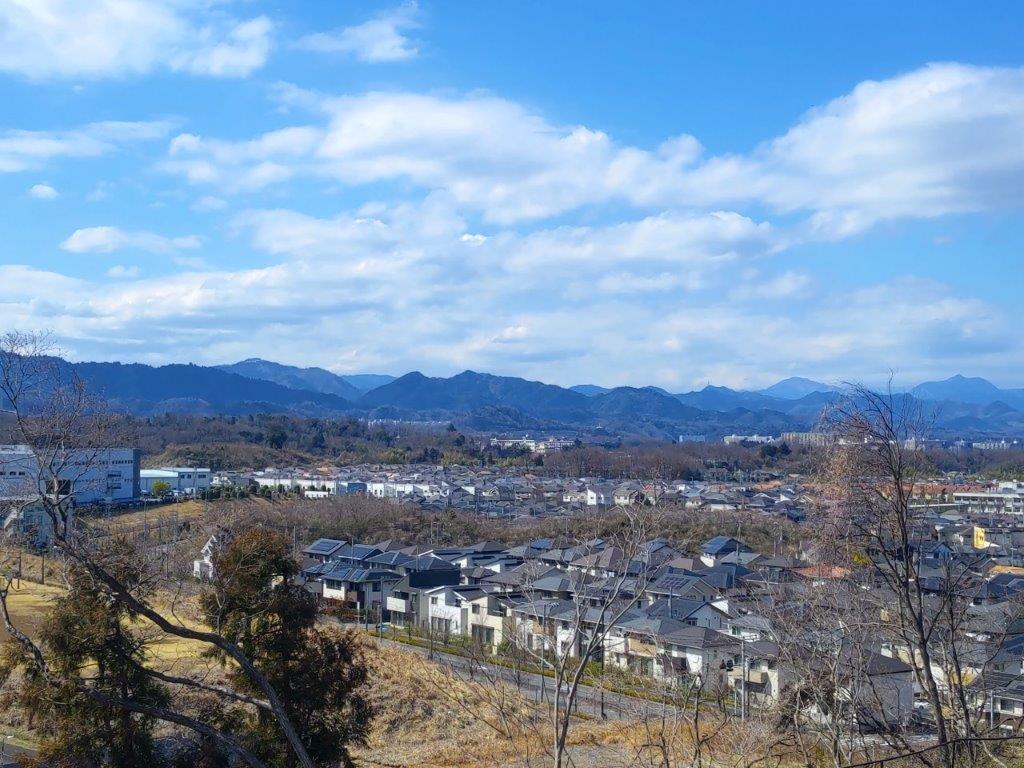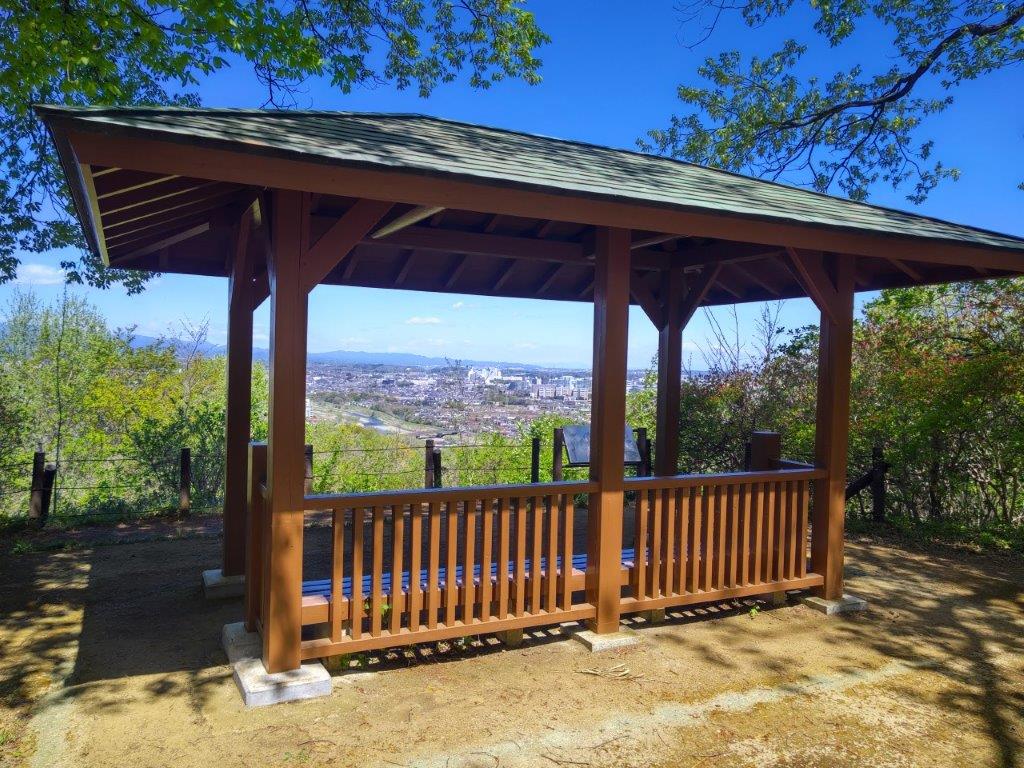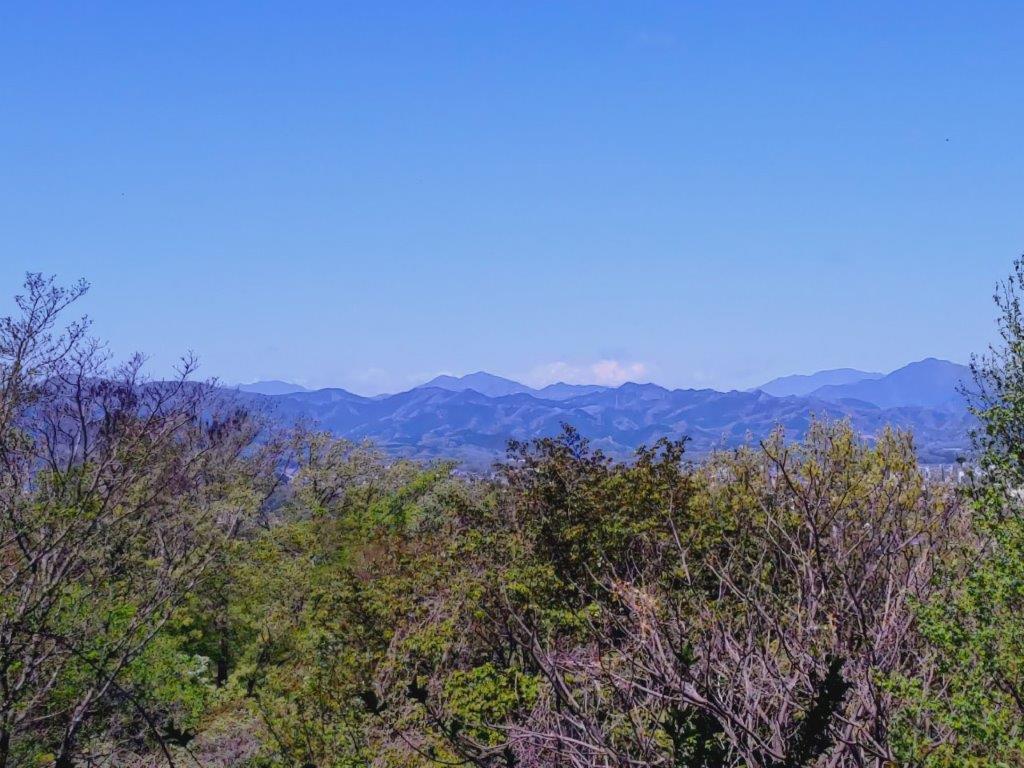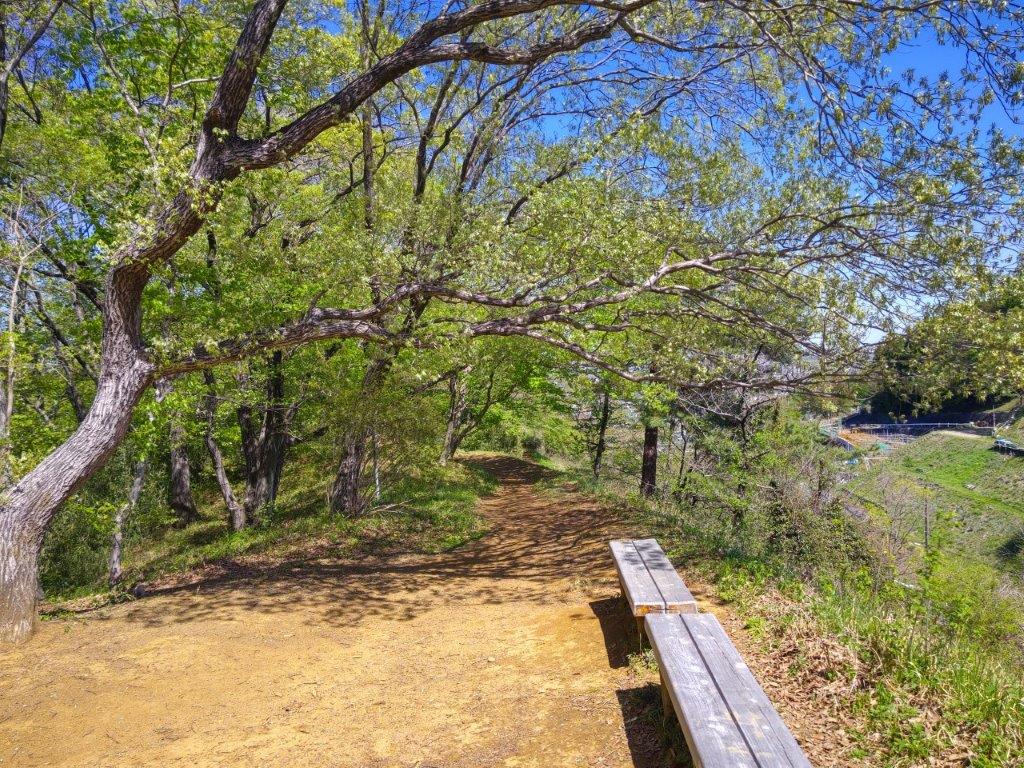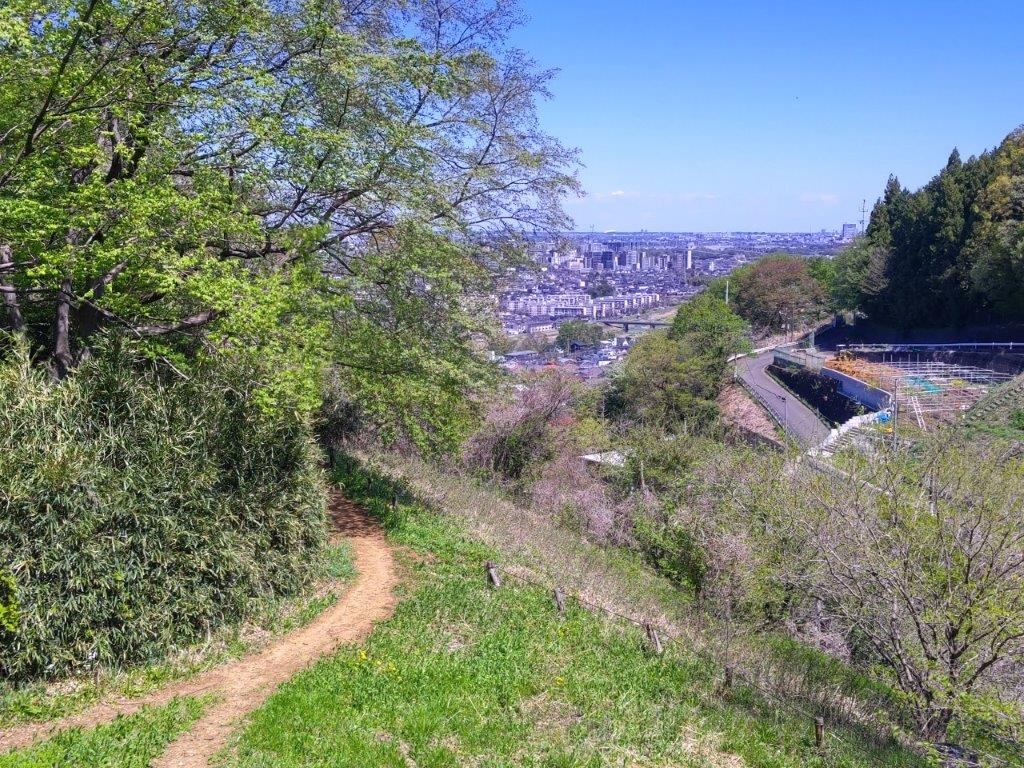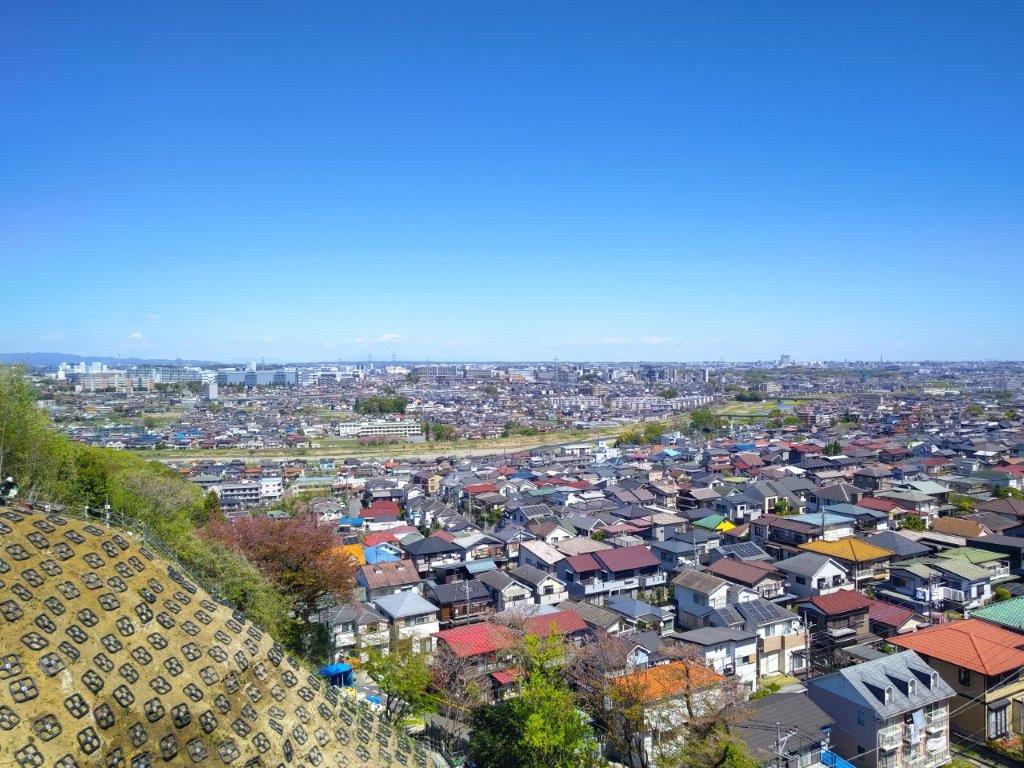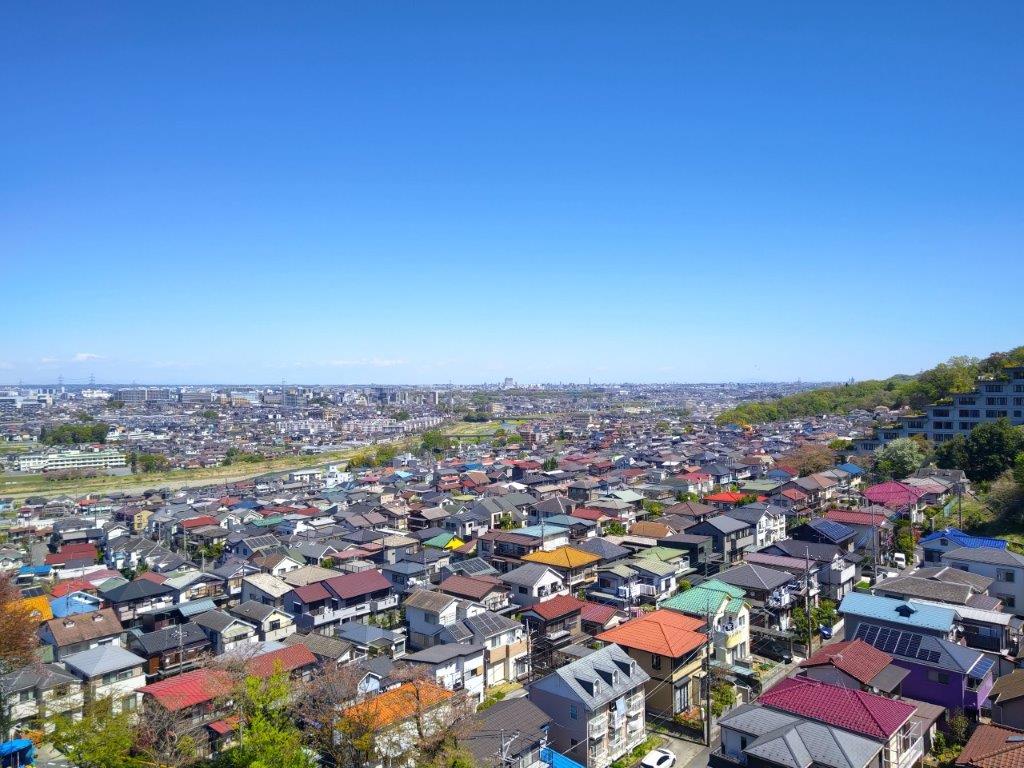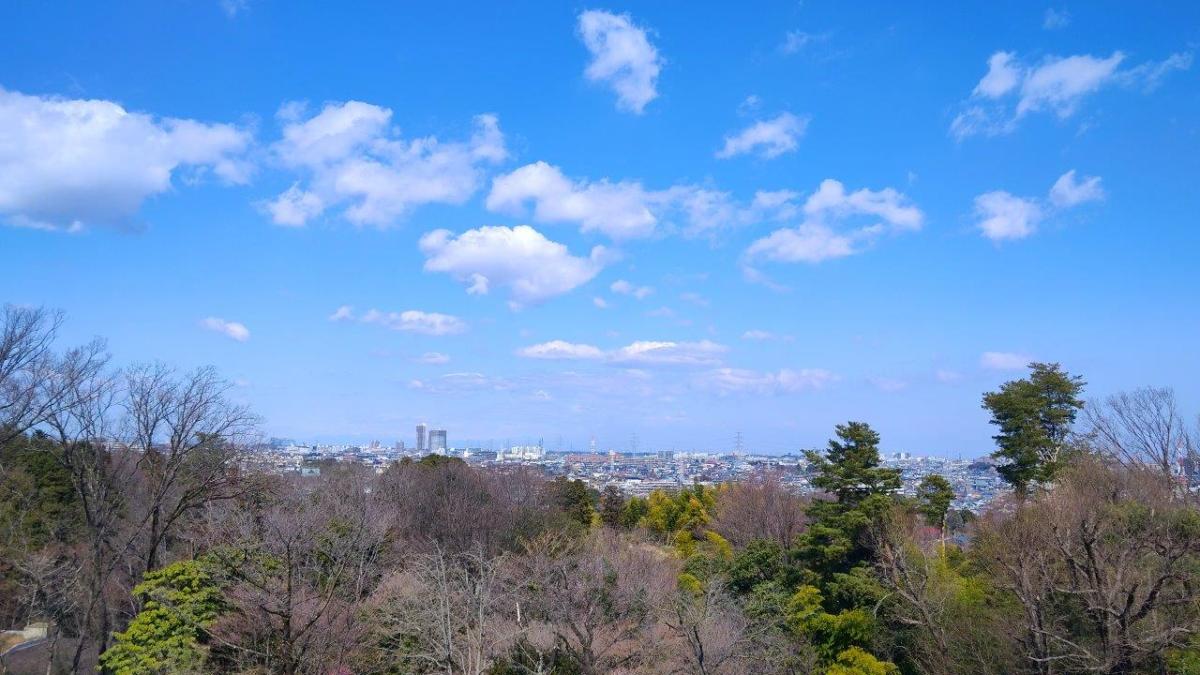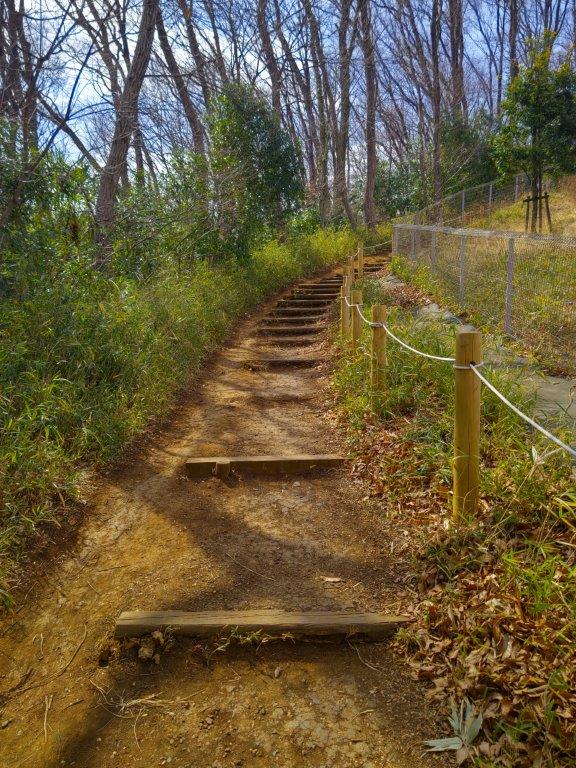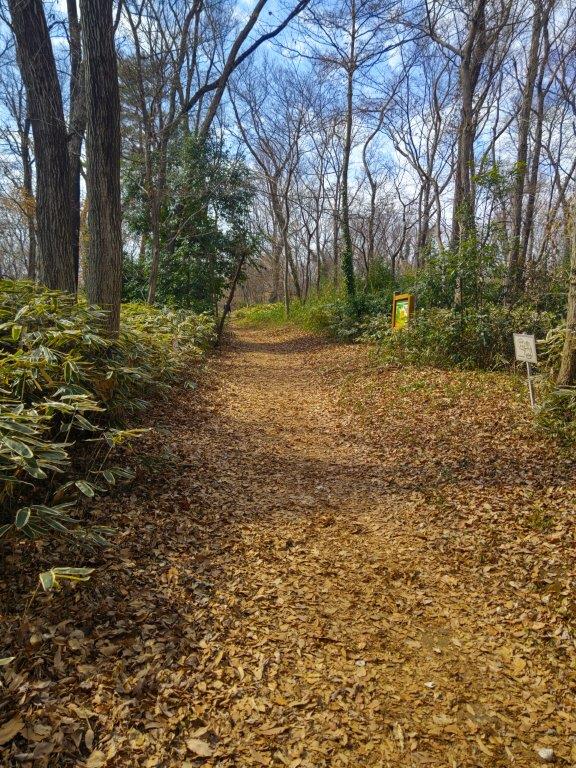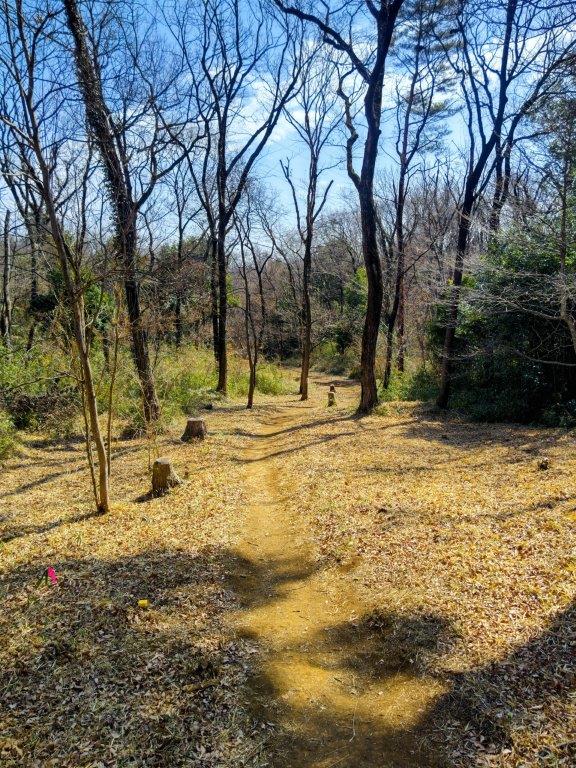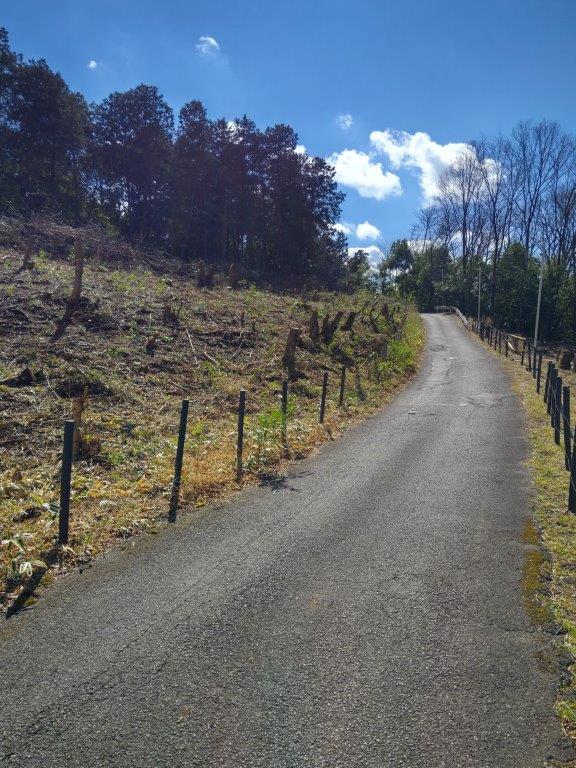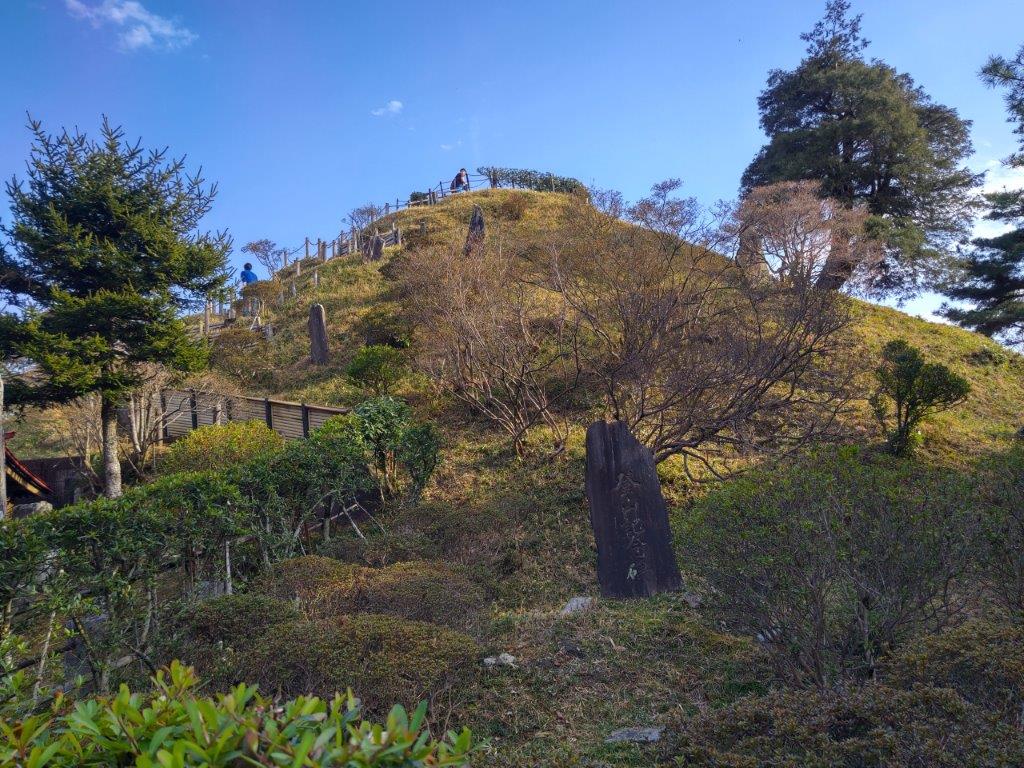
Yatsugatake Sanroku Super Trail (Highest Point 1410m), Minami-maki & Koumi Towns, Nagano Prefecture, Sunday, November 2, 2025

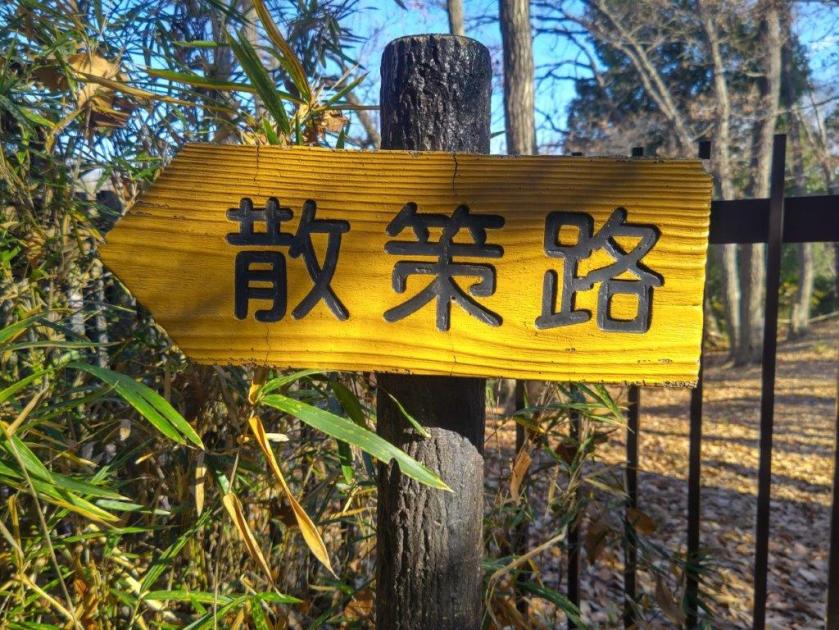
I had previously walked several sections of the Yatsugatake Sanroku Super Trail, from Kiyosato station to Kai-koizumi station (sections 5 & 6), from Nobeyama station to Kiyosato station (sections 7 & 8) and the Kirigamine Highland loop (#15); I was reminded of this long distance trail earlier this year when I passed by the head office of the Japan Long Trail Association at the Momofuku Ando Center. I felt it was time to explore another section of this multi-day trail around the foothills of the Yatsugatake mountain range. Looking at my map, it seemed that section 9, between Nobeyama station and Matsubara Lake, could be done as a day trip from Tokyo. It was on the long side, and although the elevation change was modest, I would need to walk fast with few breaks to complete it before dark.

Hiking on Yatsugatake 八ヶ岳

To get to the start of the hike, I would ride the Chuo line limited express to Kobuchizawa, and there, change to the Koumi lime for the half an hour 500 meter ascent to Nobeyama station. At the end of the hike, I could catch a bus from Matsubara Lake and get off at Yahho Onsen. After a hot bath, I could use the same bus in the opposite direction to get to Matsubarako Station; there, I could board the Koumi line for the one hour trip to Sakudaira station where I could hop on the shinkansen for Tokyo. The weather was supposed to be sunny, and although the temperatures would reach 20°C in the lowlands, they would remain under 10°C in the highlands. I was looking forward to a countryside ramble with views of the Nagano mountains.

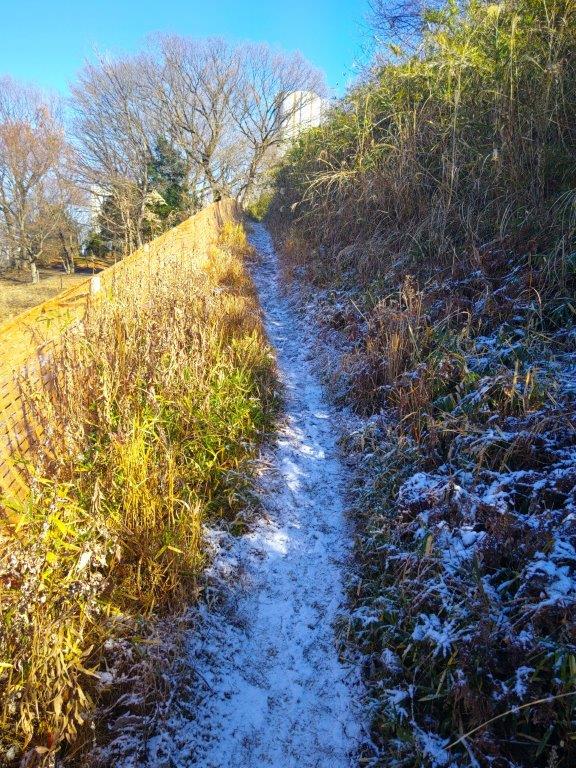
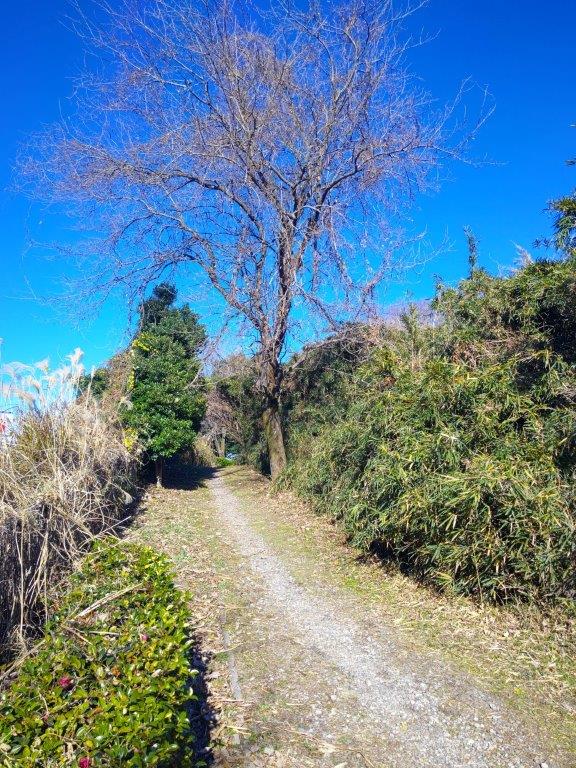
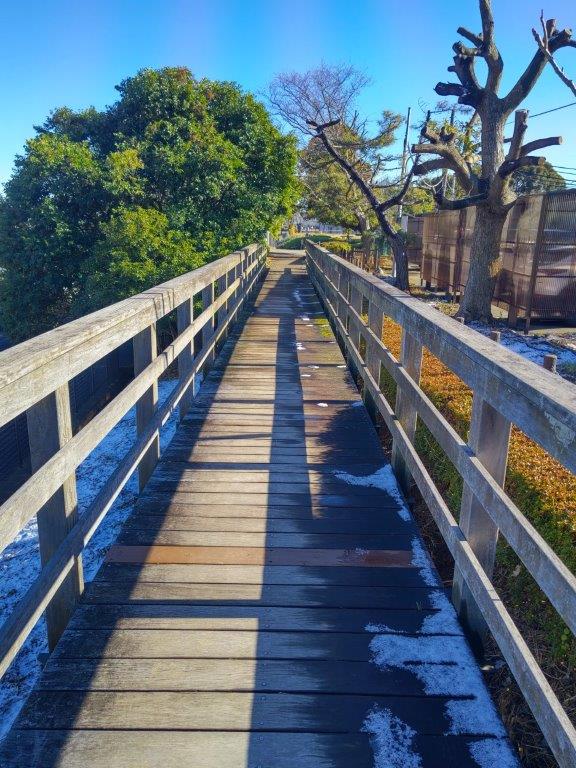
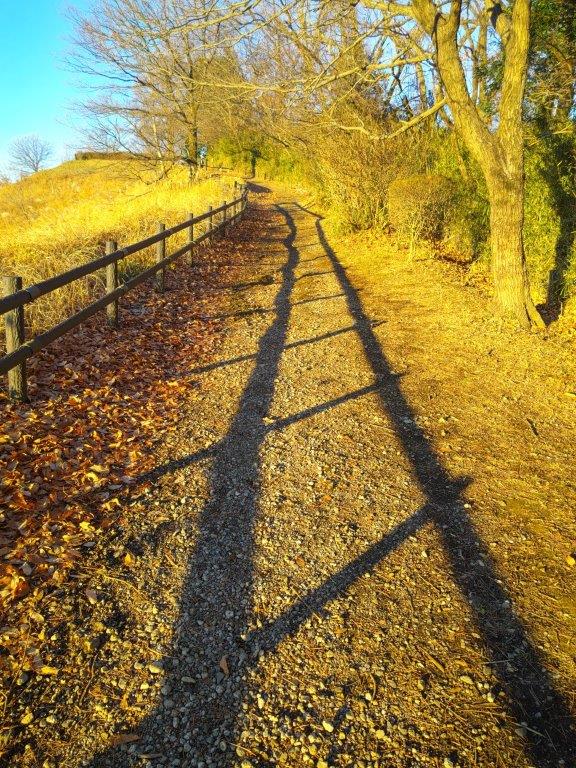
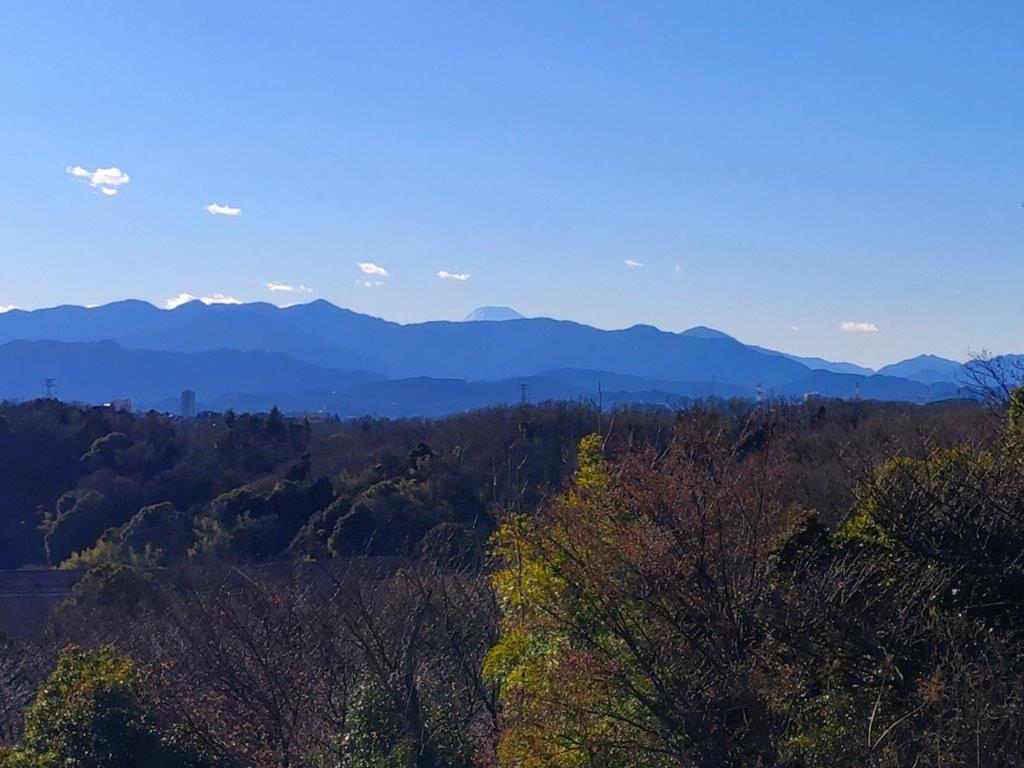
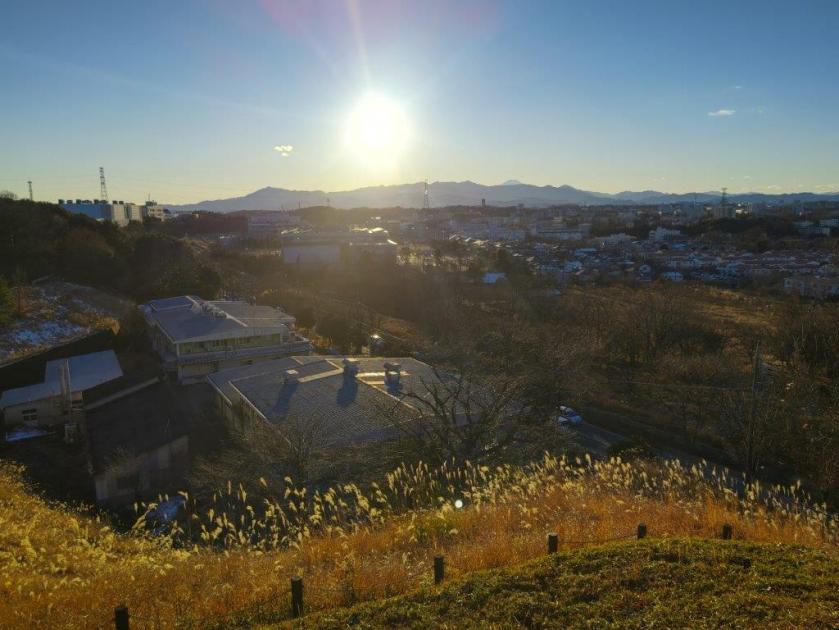
Oku-Chichibu Mountains (left) Mt Ogura (right)

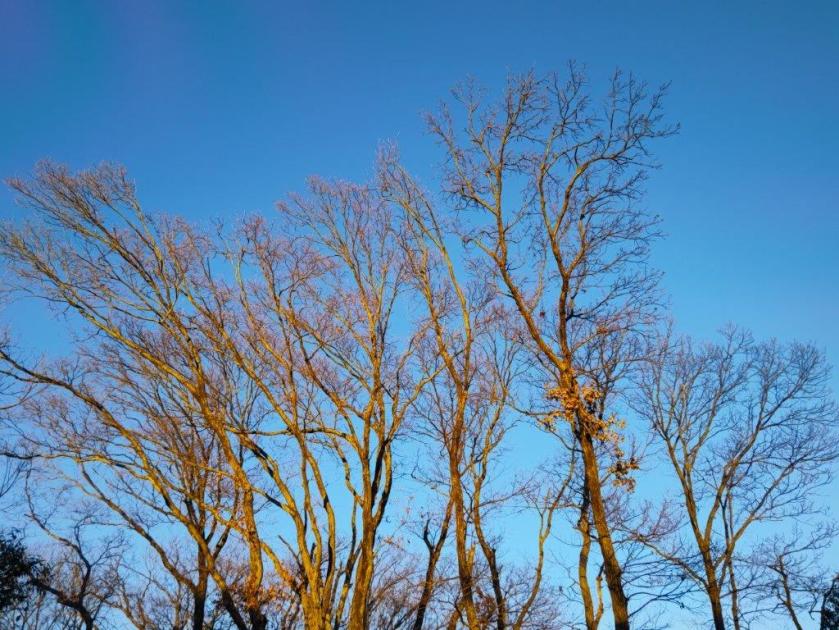
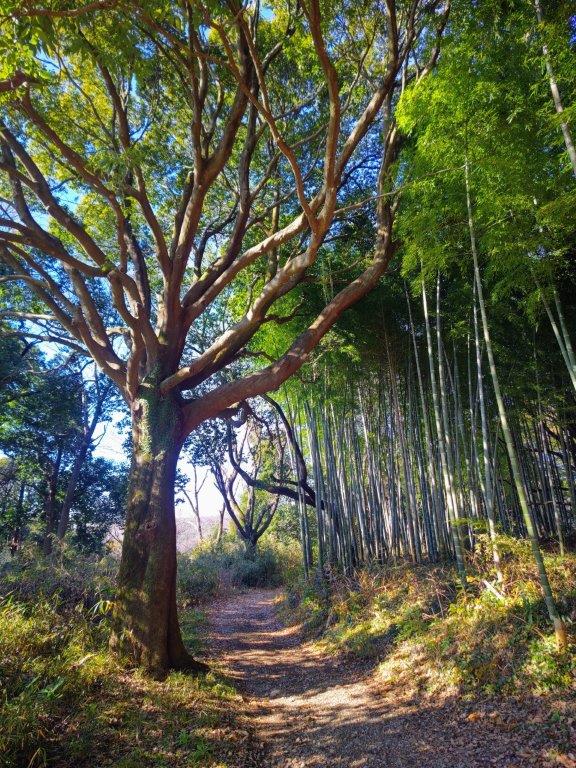
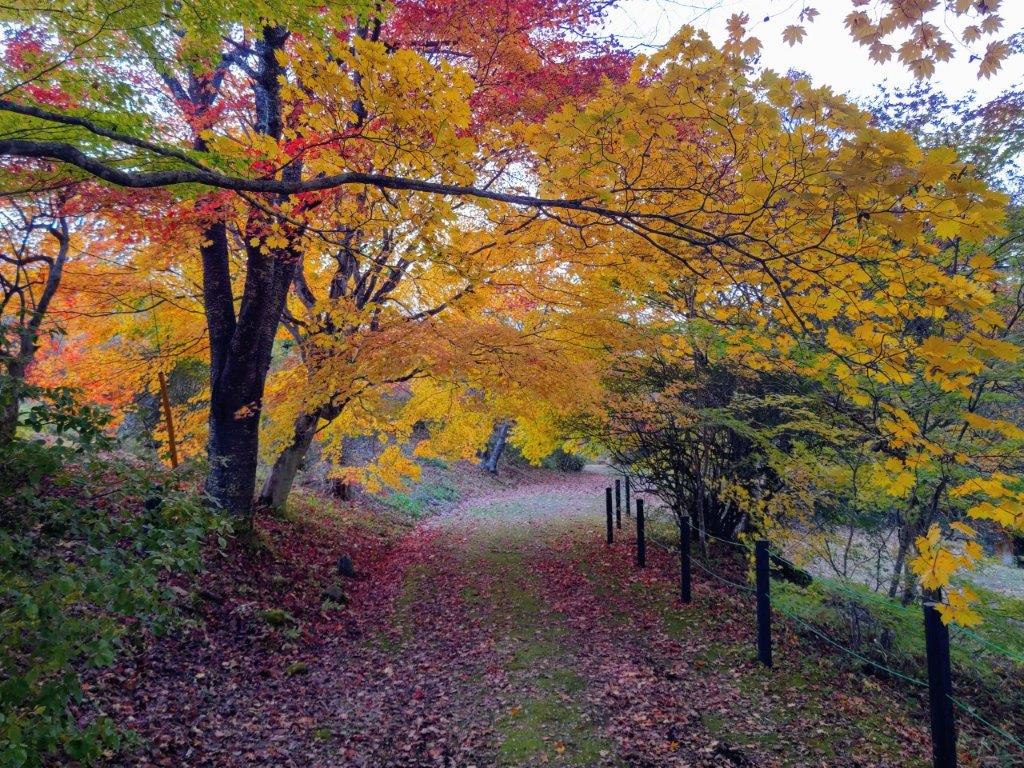
Japanese Maple (left) Matsubara Lake Path (right)

It was a sunny Autumn day as I rode the Azusa Limited Express to Kobuchizawa (887m), where I transferred to the packed two-car Koumi line train bound for Komoro. It was only from Kiyosato station that I could get a seat on the last section of the ride up the southeastern edge of Yatsugatake. A little before 11am, I stepped off the train at Nobeyama station (1345m), the highest train station in Japan, also the start of today’s section of the Yatsugatake Sanroku Super Trail (八ヶ岳山麓スーパートレイル) or Super Trail of the Mt Yatsu Foothills.

View of Yatsugatake from the Makiba Line

Nagano Autumn View

I was immediately chilled by the mountain breeze, as well as the freezing wind blowing from the Yatsugatake mountains directly opposite. After bundling up, I set off along a busy road past an equally busy dairy farm, but soon turned right onto a quiet countryside lane through mixed forest, the Yatsugatake Makiba Line (八ヶ岳まきばライン) which I’d follow for most of the hike. I soon reached an open section with pastures on each side of the road and wide views in both directions.

Mt Ogura (left), Mt Otoko (center) & Mt Tengu (right)

Autumn Leaves near Senga Falls

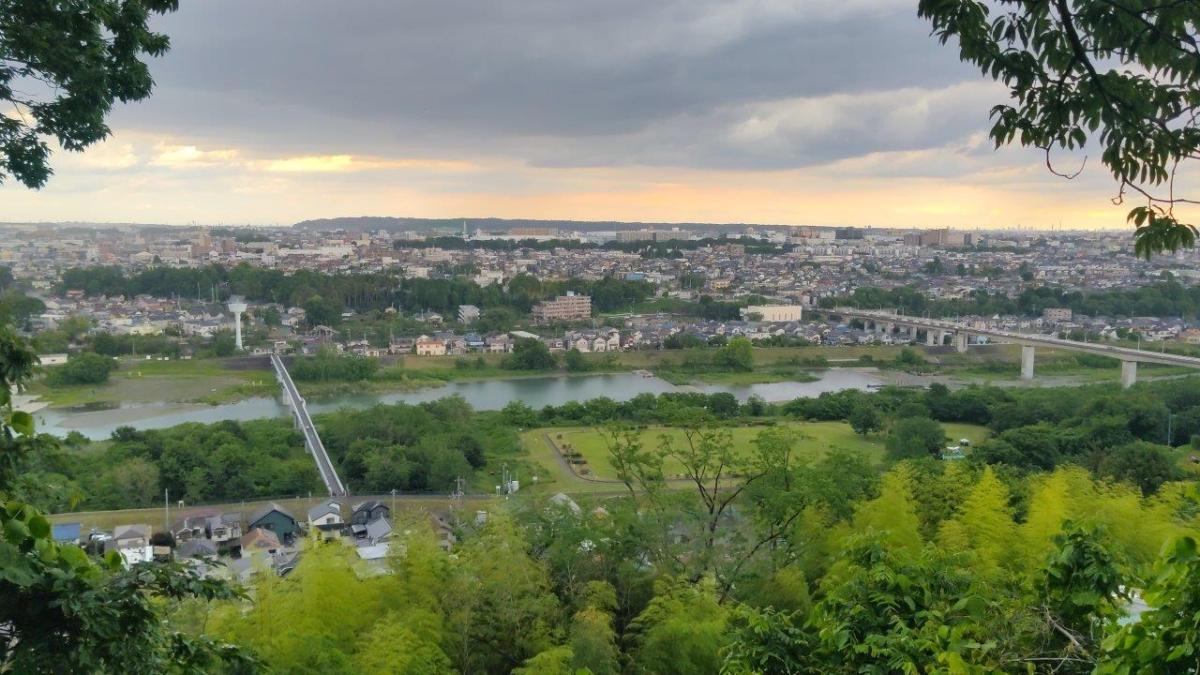
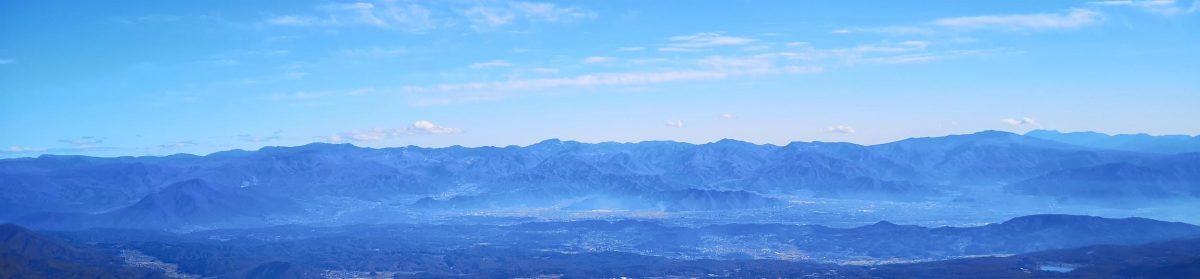
I was glad to get a view so soon on the hike. Looking west, I could see the Southern Yatsugatake mountains, its peaks tinged in white and its foothills tinted red; on the east side were the lower but more numerous peaks of the Oku-Chichibu mountains. Low clouds had appeared directly above Yatsugatake, casting shade on its steep rocky flanks; it made me wonder if the sunny weather would hold. The road dipped into a shallow valley and after crossing a bridge, I reached another viewpoint of the Oku-Chichibu mountains.

Autumn Colours above Senga Falls

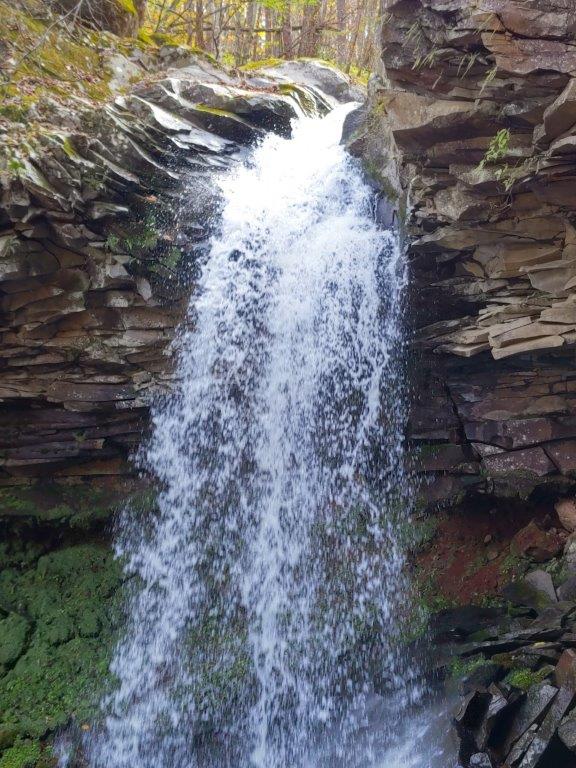
Metal Staircase for Senga Falls

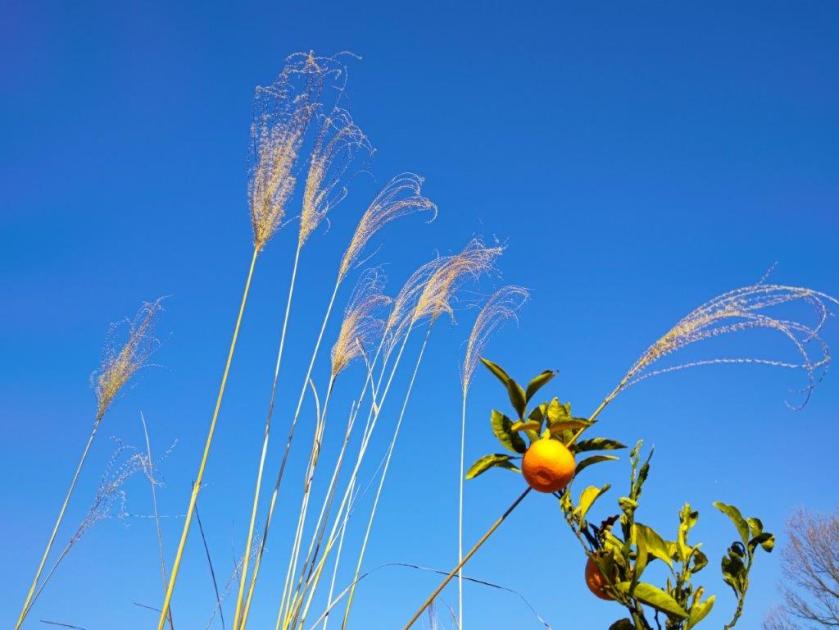
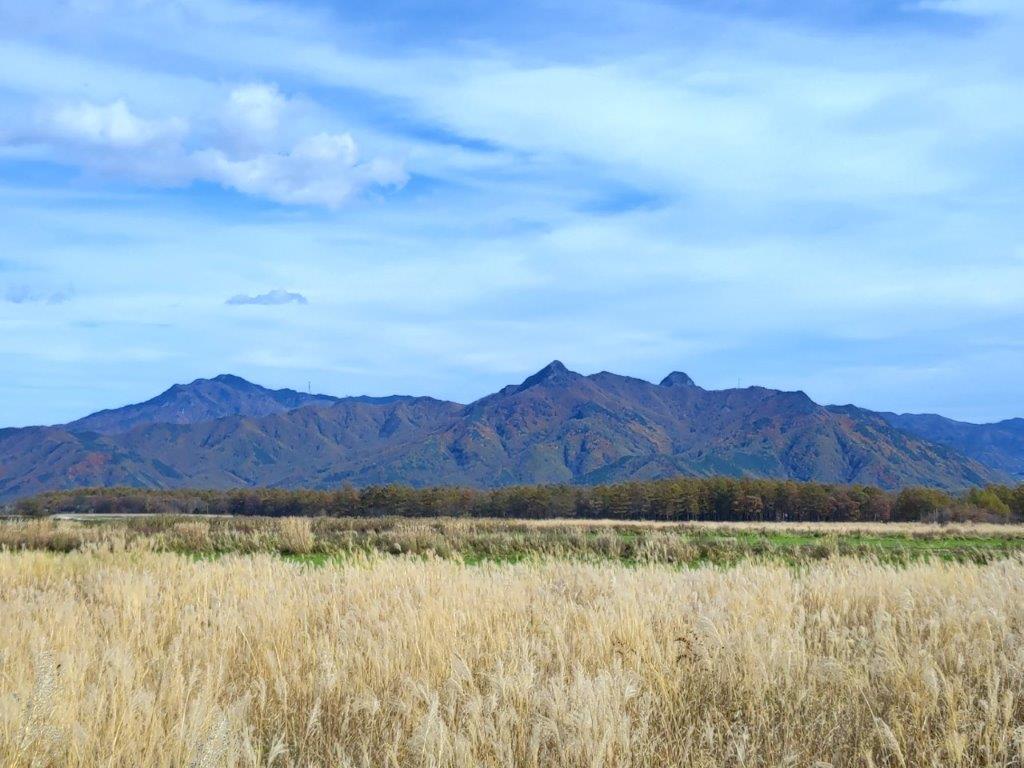
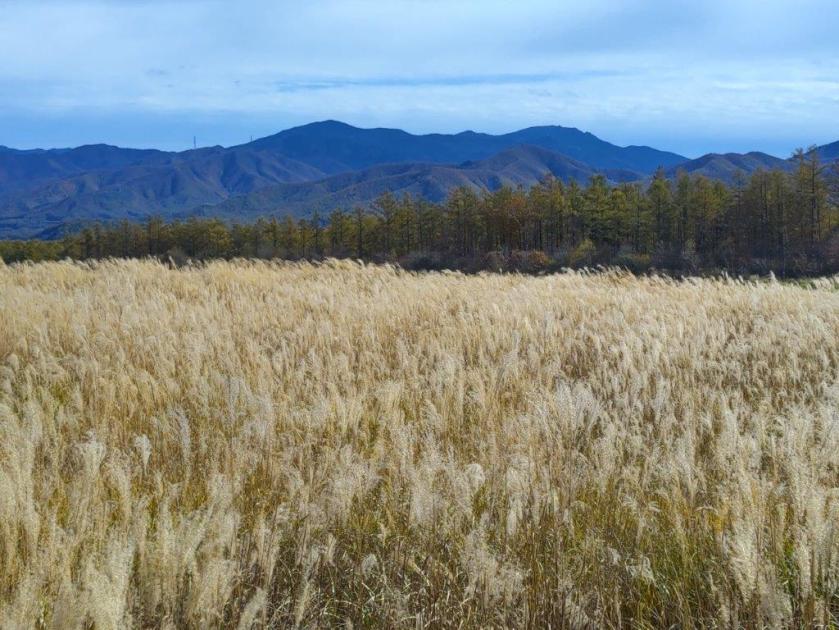
I was stunned by the contrast of light blue sky and pale yellow susuki grass. In the distance, I could make out, from left to right, Mt Ogura, Mt Otoko, Mt Tengu, Mt Yokoo and Mt Meshimori. The susuki was swaying in successive breezes, fluffy clouds moving south to north along the valley between the two mountain ranges. As the noon chime played, I remembered I was on a tight schedule and set off again, the occasional passing car interrupting the peaceful surroundings. I turned left at a junction with another road, staying on the Makiba line, and followed the road as it descended into a forested valley.

The Okuchichibu mountains with pastures in the foreground

Heading down into the Chikuma River Valley

I was pleased to discover the entrance to a hiking trail just past a bridge over a river. It was signposted for a waterfall and although time was short today, I decided to check it out. After a five-minute walk along a rough path, I reached the top of a metal staircase. From the base, it was a short distance to the roaring Senga Falls (千ヶ滝), its flow likely inflated due to the recent rains. After taking a while to admire the tumbling water, I retraced my steps to a spot next to the river where I sat on a boulder for a lunch break.

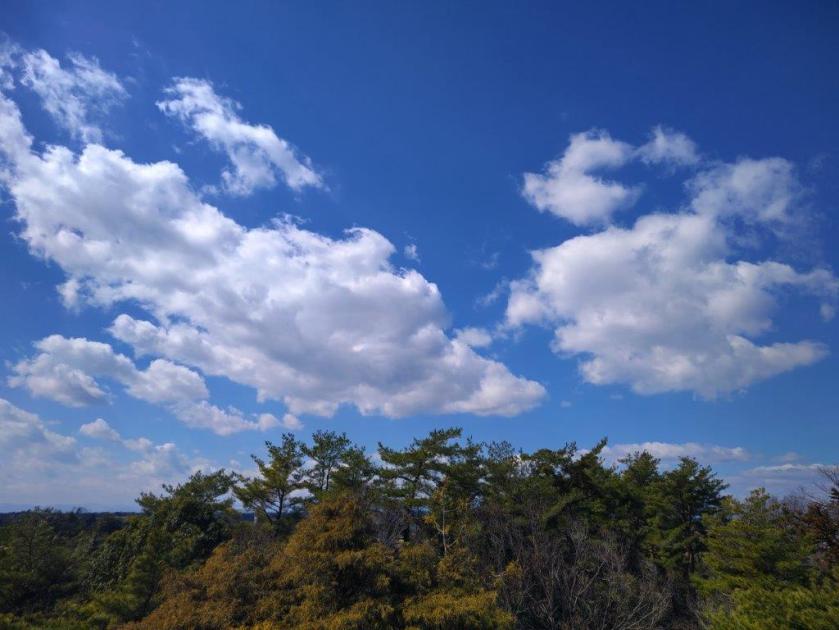
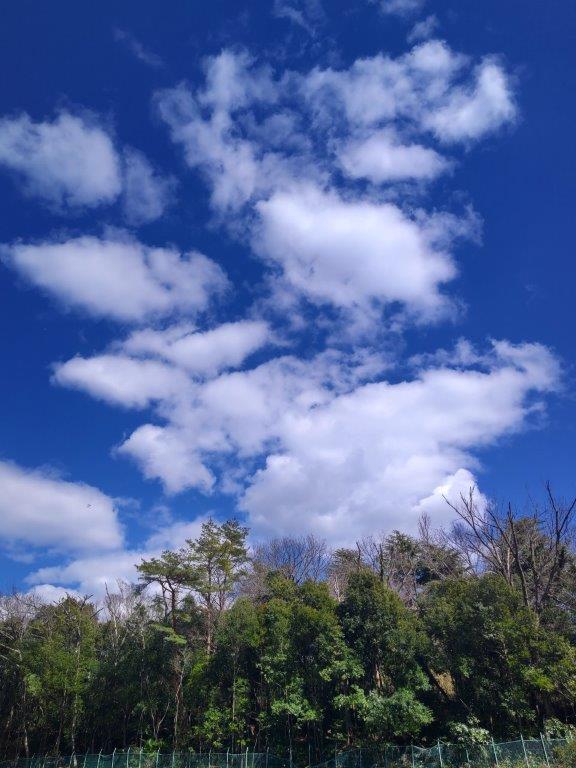
Clouds heading towards Mt Asama

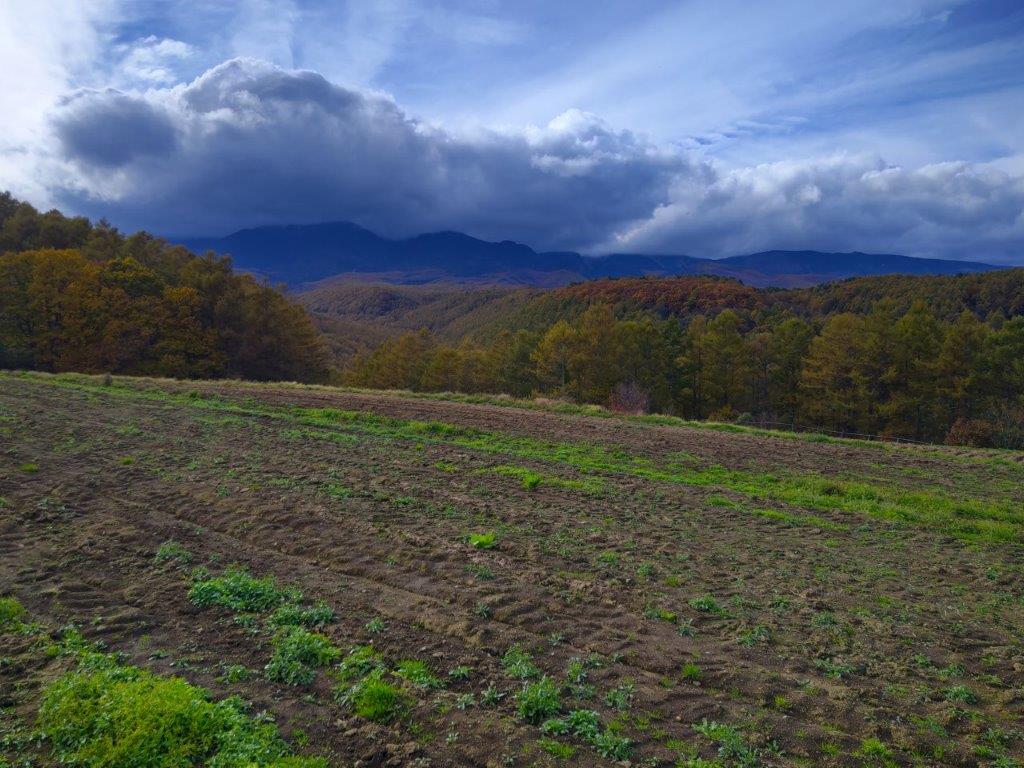
Dark Clouds above Yatsugatake

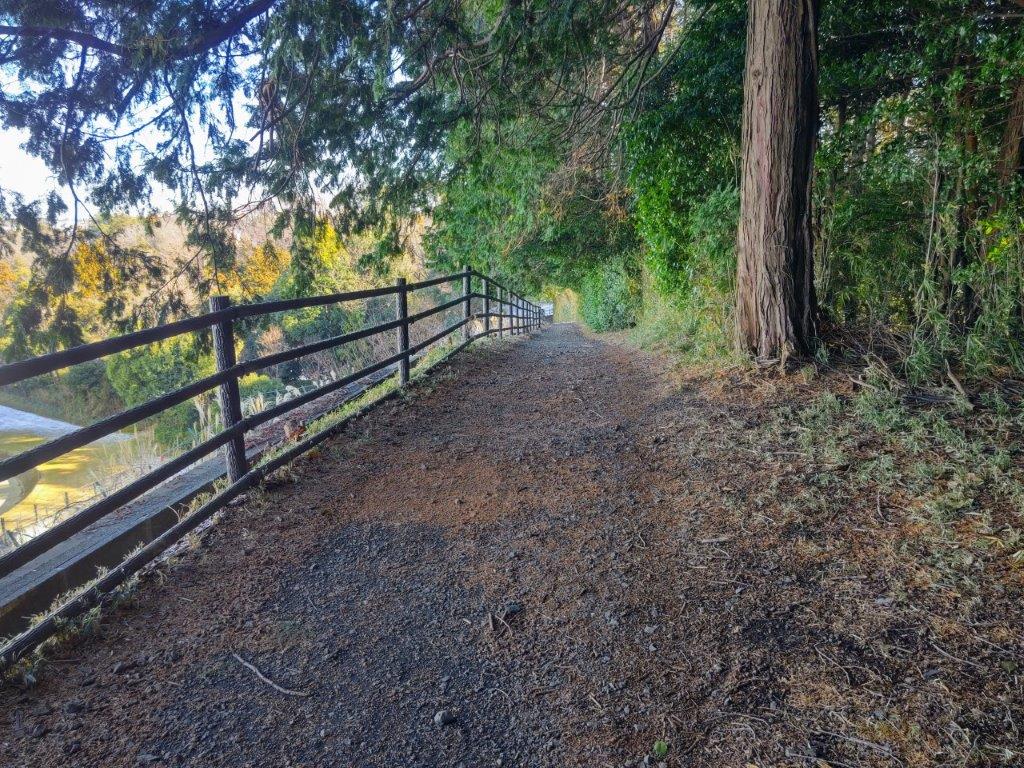
I was treated to a magical scenery of falling leaves with every gust of wind. The background music of rushing water nearly nursed me to sleep but I had to move along as it was nearly 1pm. Back on the road, I was surprised to see workers in uniform sweeping and raking the fallen leaves in the middle of nowhere. I turned right at a junction, staying on the main road. After another straight section with pastures and a view of the Oku-chichibu mountains, I turned left at the next junction, leaving the main road for a lane, also part of the Makiba line, going up through mixed forest.

Autumn Colours along the Chikuma River Valley

Koumi Line before Umijiri Station

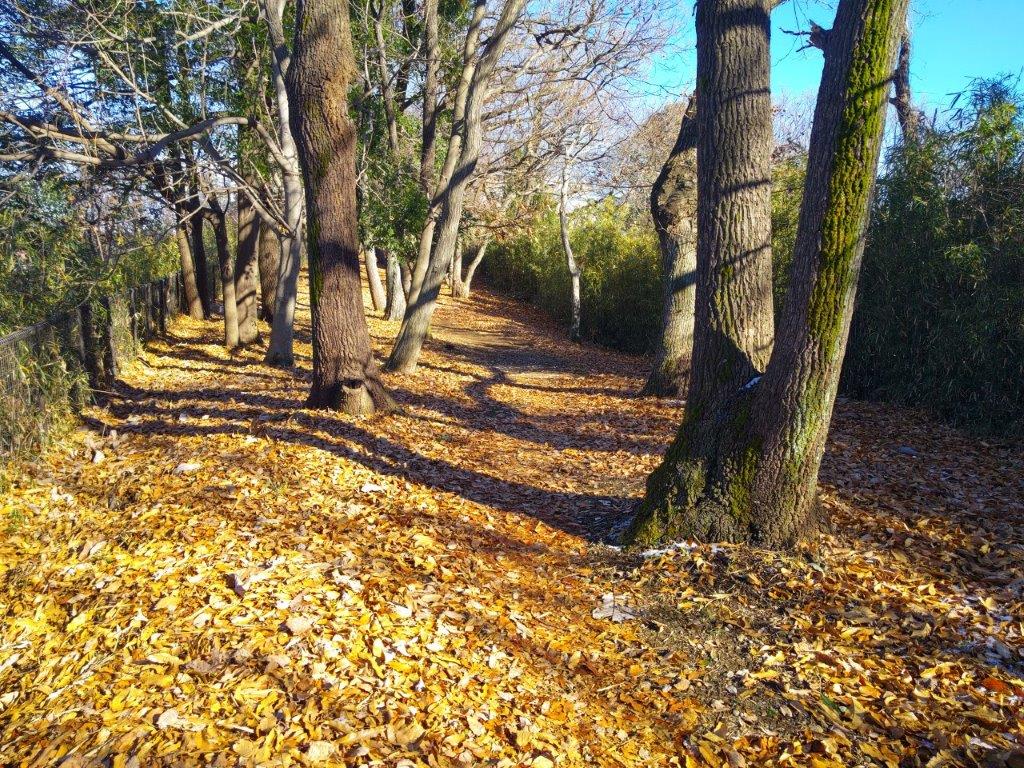
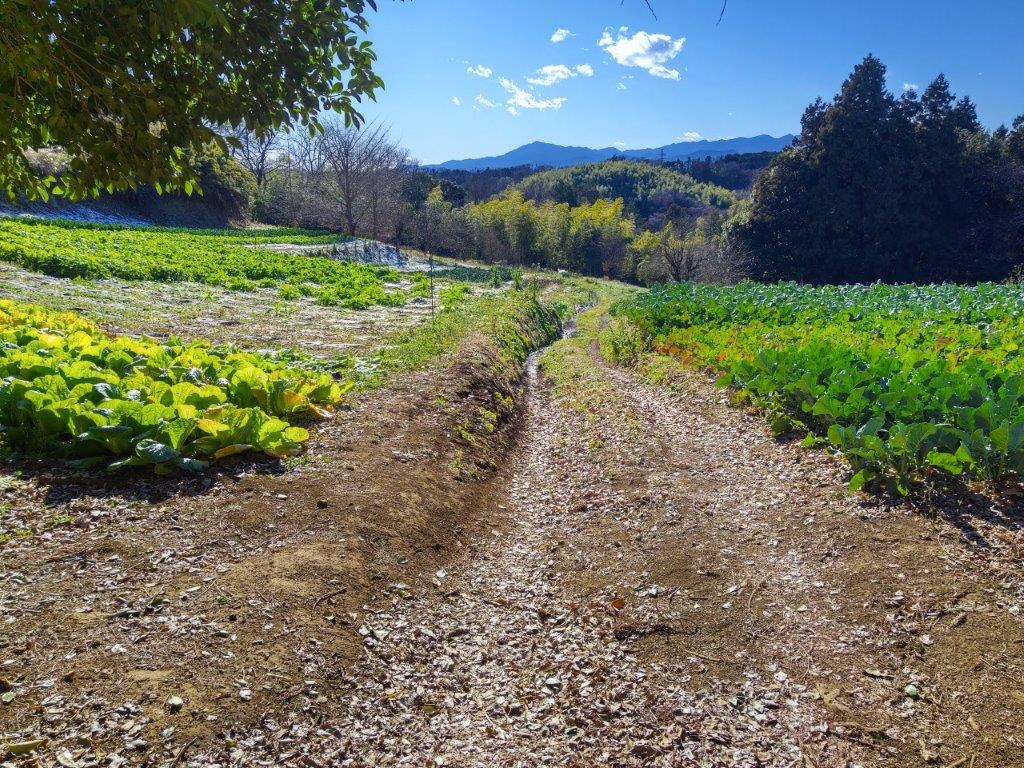
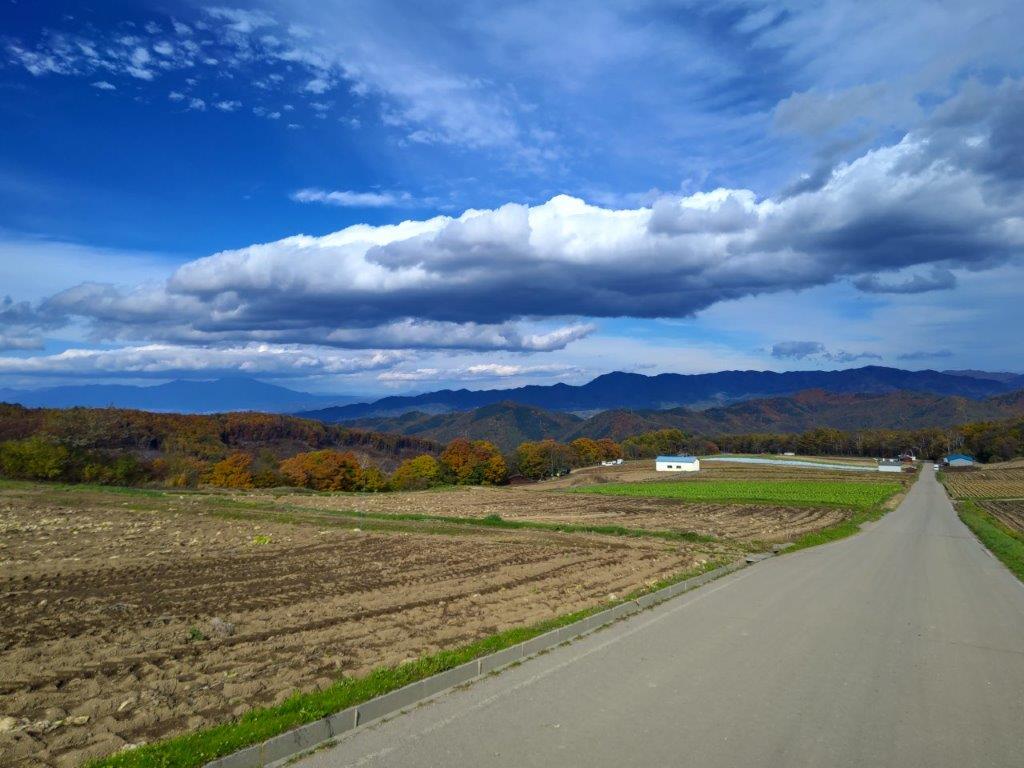
I now passed the highest point of today’s hike (1410m) completely surrounded by orange larches. I caught some movement in the forest and spotted a pair of deer before they bounded away. Soon the road veered right, exited the forest, and descended through farmland where people were busy working the fields. Far away to the north, beyond the green lettuce fields, was Mt Asama; turning around, dark menacing clouds threatened to engulf Yatsugatake. I continued downhill and soon the sound of rushing water could be heard; peering through the trees on the left side, I spotted a river flowing through a forested valley. Beyond a bridge the valley deepened, offering sweeping views of the opposite ridge.

Autumn Colours at Ioin Temple

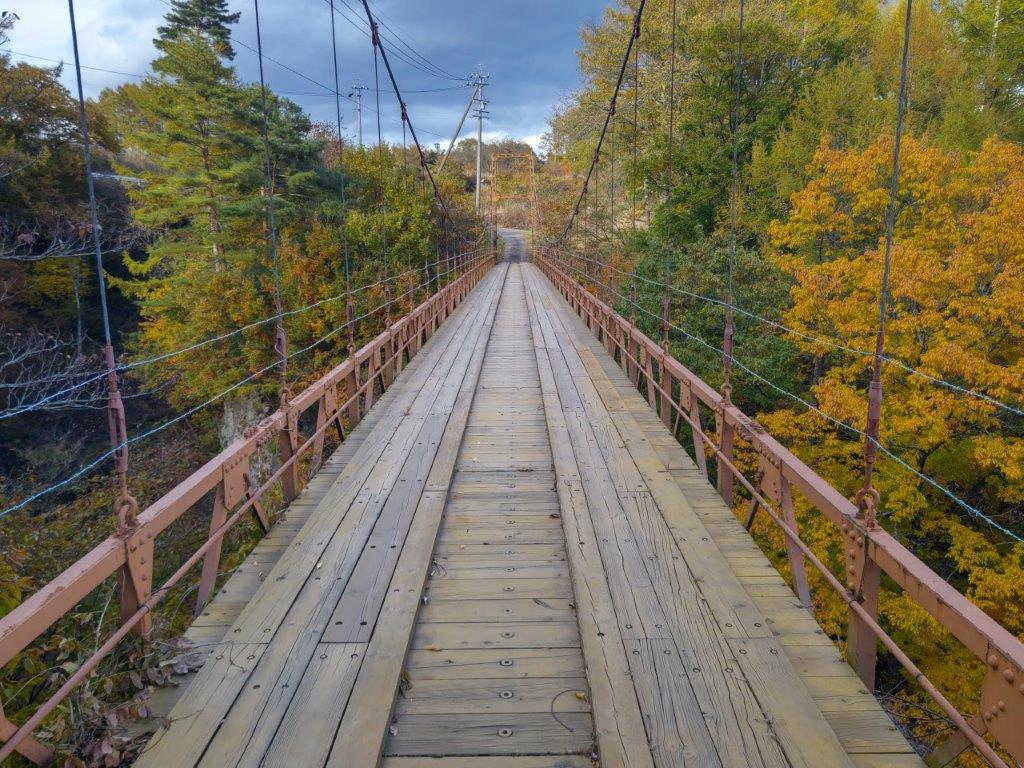
Footbridge over Otsuki River

This was the most beautiful section of the hike, the mountainside across the valley resplendent with Autumn colours and enhanced by the afternoon sun. Around 2h30, I reached the base of the valley and crossed the Chikuma river, the longest river in Japan; a little later, I passed through the small town around Umijiri station (1035m), the lowest point of today’s hike. After quickly checking out Ioin Temple, I followed a road heading back up into the mountains. Upon reaching a plateau, I turned right through a small community, and crossed a wooden footbridge high above a river.

Mt Ogura from the Footbridge over Mt Otsuki

Fiery Maple Leaf at Matsubara Lake

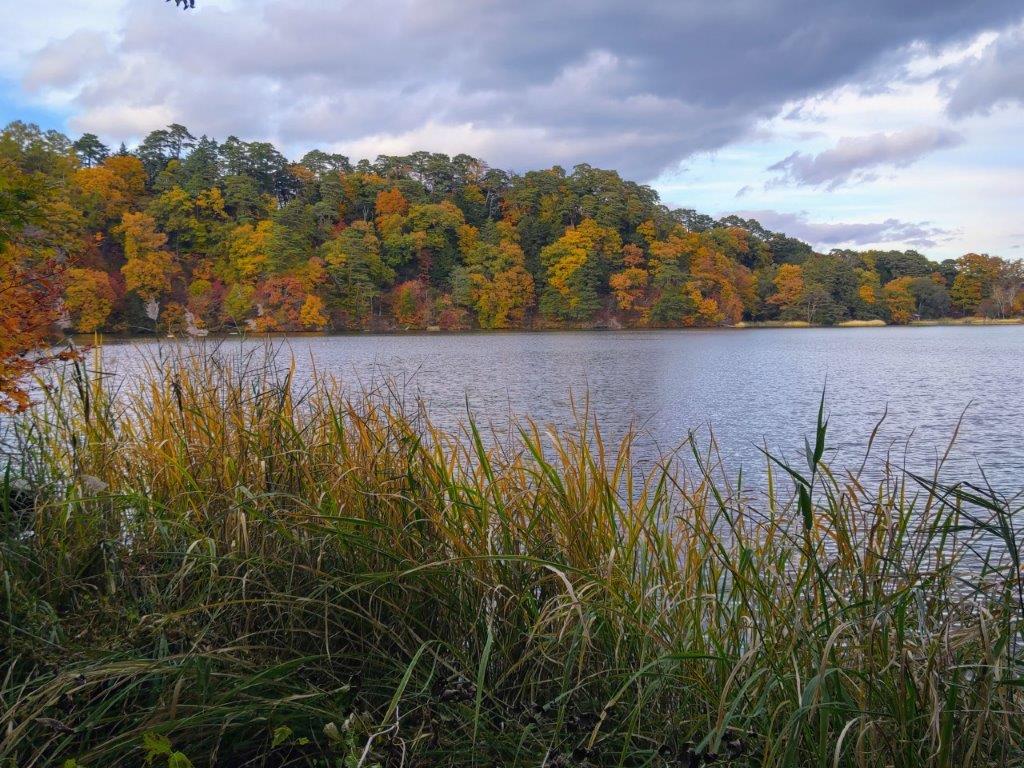
At the midway point, I had an impressive view of the orange-hued river valley, with Mt Ogura in the far distance, two puffy clouds floating overhead. It was now past 3pm so I hurried along, anxious to catch my bus. Here and there rice was still being harvested in individual fields, sharing the land with solar farms. The sun had sunk below the clouds on the west side, muting the colours of Cho Lake along the way. Soon after, I finally arrived at Matsubara Lake (松原湖), the main attraction of Matsubara Highland (松原湖高原). I followed a path along the lakeshore admiring the red and yellow colours along the way, before hopping on the bus for Yahho Hot spring. After a short but refreshing bath, I boarded the bus on its return trip to Matsubarako station.

Autumn Colours at Matsubara Lake

Lake View at the End of the Hike

In total, the hike took nearly five hours, mostly along paved roads which enabled me to walk at a fast pace. I was glad to have caught the Autumn colours at their peak, the first time for me to see them this season. Unlike the Asama-Yatsugatake Panorama Trail, signposting was non-existent and I had to rely on my phone GPS to find my way. This could explain why I saw no other hikers along the way. In the future I hope to be able to do sections 1 and 11, as they also seem doable as one day trips via public transport, and perhaps in a different season.

Watch a Video of the Hike
See More Pictures of the Hike
Mt Himekami (1123m), Morioka City, Iwate Prefecture, Sunday, July 20, 2025

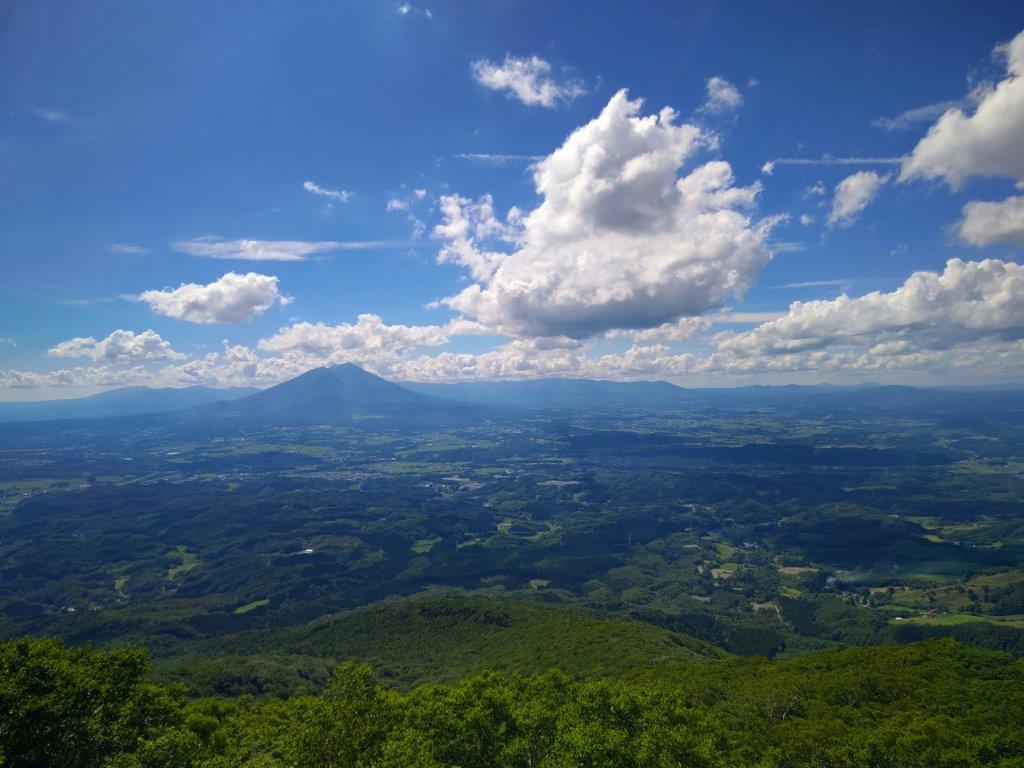
I wanted to do one last hike before my summer break. I decided to head up to Tohoku, northeast Japan, hoping it would be cooler than the Kanto area. I had been wanting to climb this 200 famous mountain since my last visit to Iwate five years ago. It promised 360° views from the summit on a clear day and some beautiful forest on the way up and down. Looking at my map, I saw I could take the most direct route up, and if time allowed, take a slightly longer route on the descent.

To get to the start of the hike, I’d ride the Tohoku shinkansen to Morioka, and then change to the local Iwate Galaxy Railway for the short ride to Koma station. There, I’d call a taxi to get to the parking near the trailhead. Since the shinkansen was reserved seating only, I purchased an e-ticket for my mobile Suica in advance. The weather was supposed to be sunny with temperatures around 30° at the base and 20° at the top. I was looking forward to the views and hoped the tree shade would keep me cool on the way up.

Cedars at the Start of the Hike (left) Log Steps Halfway up (right)

Rocky Path near the Top (left) Larches at the end of the Hike (right)

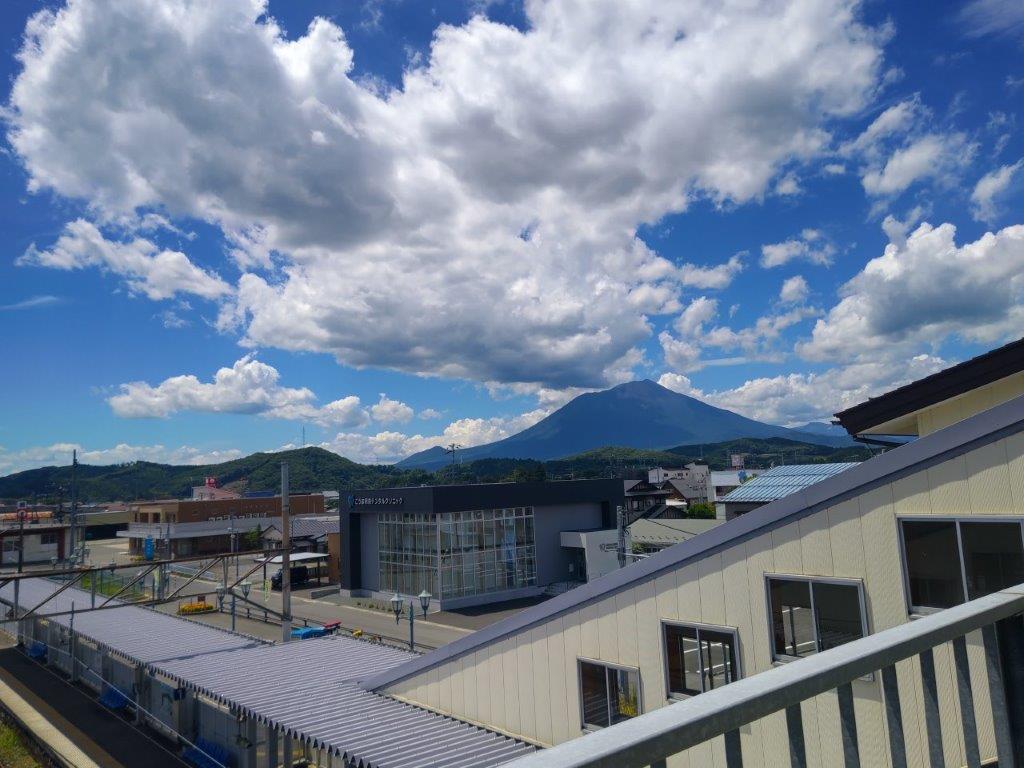
After a 2-hour lightning speed trip under mostly sunny skies, I arrived in Morioka just after 11am. It felt quite warm as I waited on the platform for the excitingly named Galaxy Railway (銀河鉄道) train. The ride to Koma station (好摩駅) itself was quite normal except for the enchanting flute theme that announced each station. After a 10-minute wait under the boiling sun for my taxi, and a 20-minute ride through the charming Iwate countryside, I reached the large but mostly empty parking lot near the Ipponsugi-enchi Campground (一本杉園地キャンプ場), a little after noon.

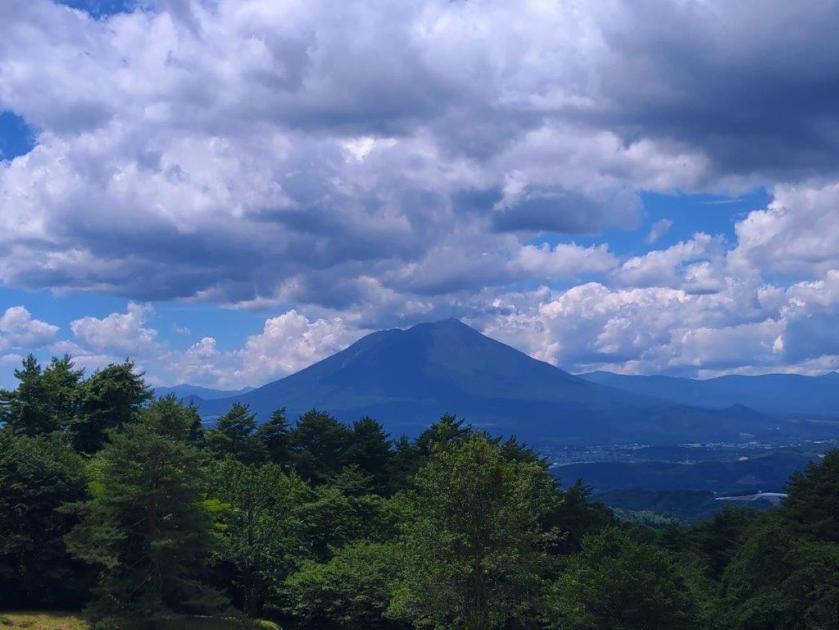
Impressive Clouds above Mt Iwate from Koma Station

Start of the Ipponsugi Trail

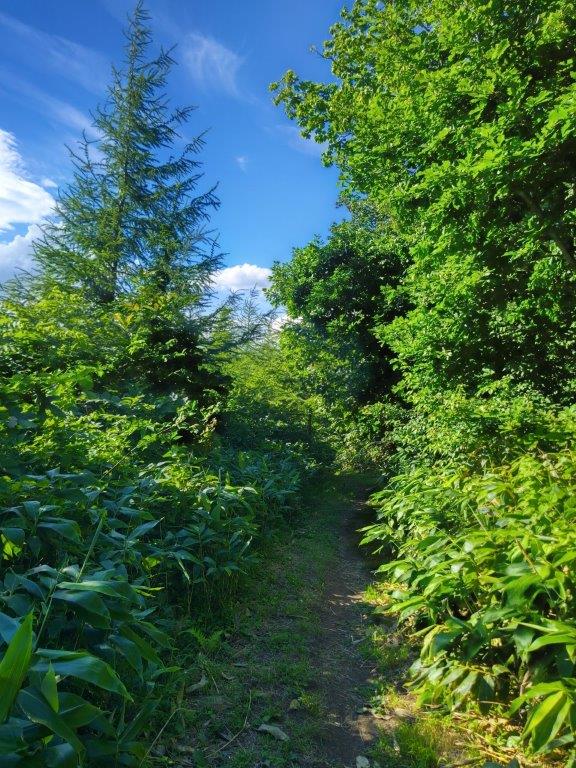
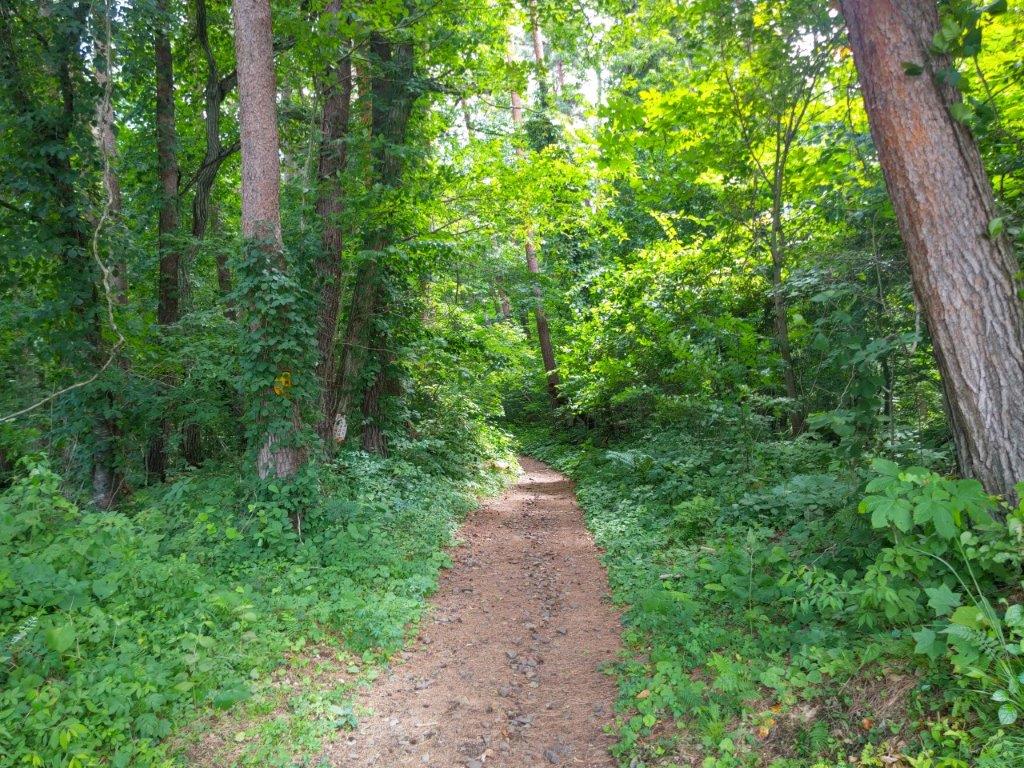
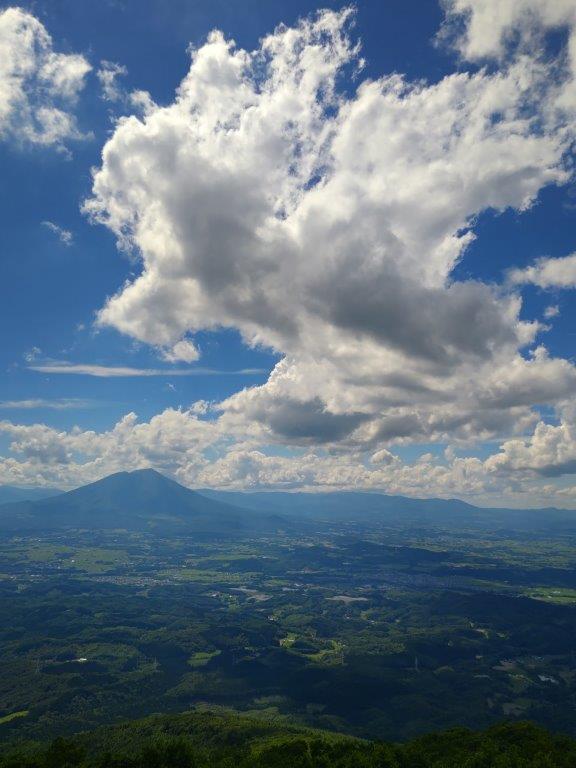
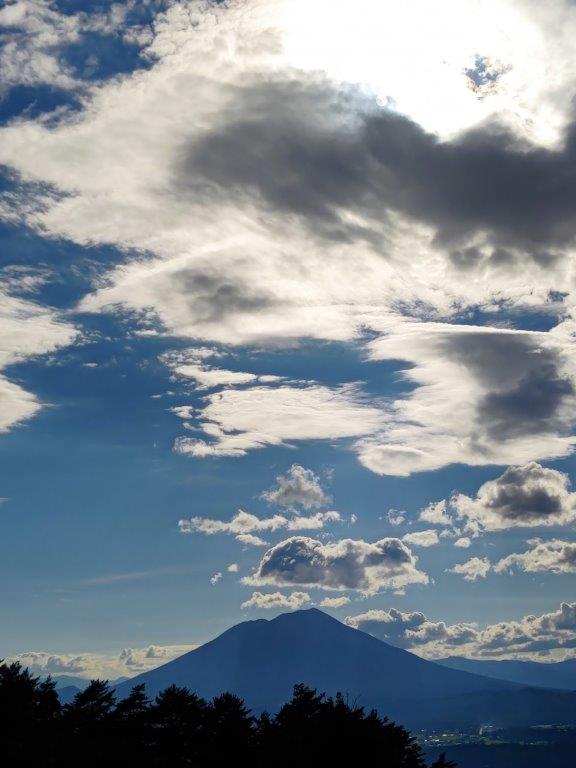
After getting ready, I walked up a grassy slope to some benches at the edge of the forest, the start of the Ipponsugi Trail (一本杉コース). Turning around, I had a startling view of Mt Iwate under dark menacing clouds. After passing an intersection with a forest road, I found myself walking along a narrow dirt path between tall cedars at 1230, happy to be in their shade. As the path started to climb gently, I reached a sign for Ipponsugi (一本杉) a solitary giant cedar, a few meters off the trail. After admiring this giant of nature, I continued on my way.

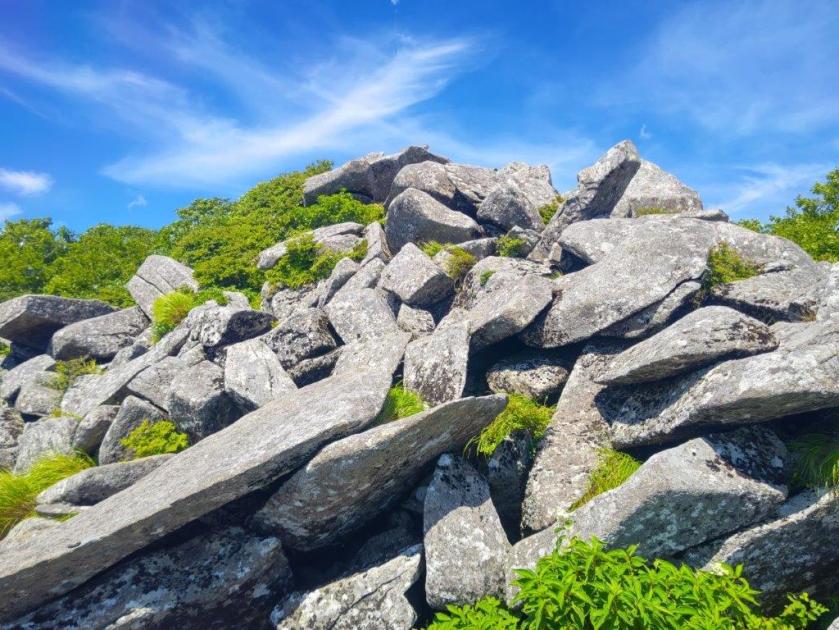
Rocky Section near the Top of the Trail

View of Mt Iwate near the Top of Mt Himekami

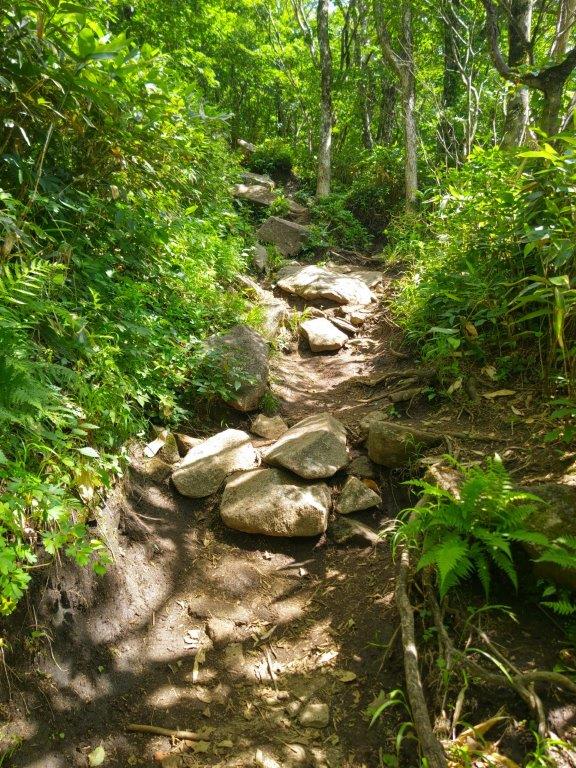
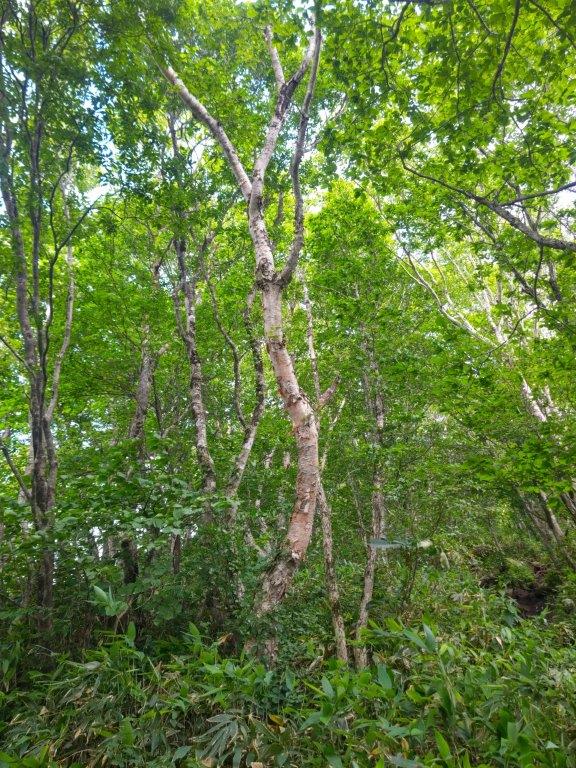
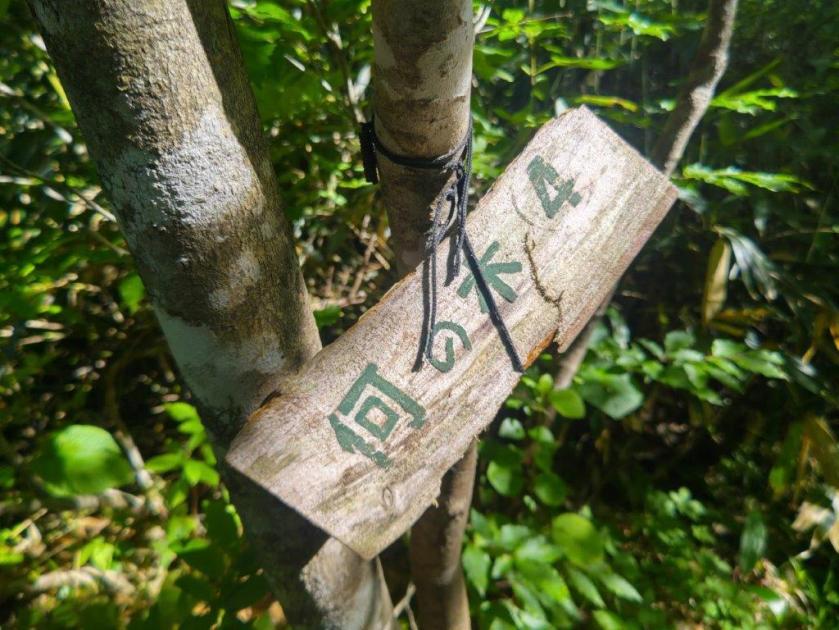
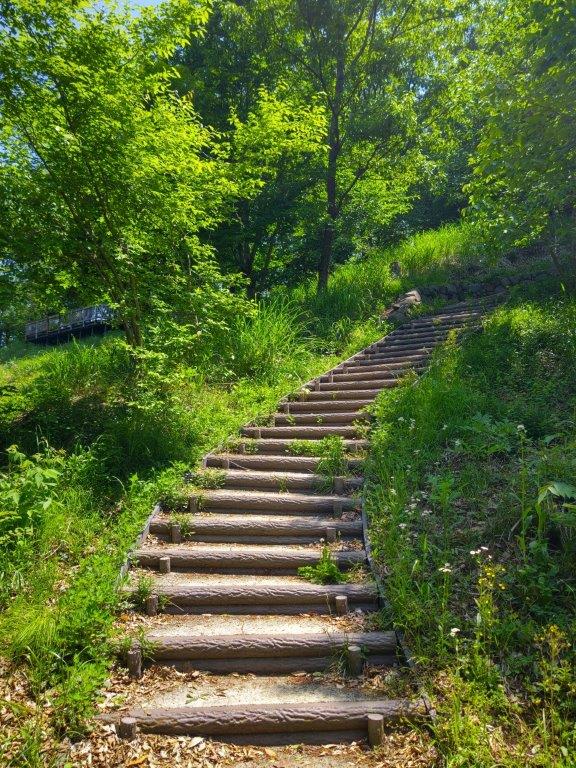
I soon arrived at the start of a series of steep log steps, a tough slog on what was turning out to be quite a hot day. I took my first break a little before 1pm at the 5th station (五合目), a level area half way to the top in distance, but only one third in elevation gain. The next section, covered in roots and rocks, was harder and more slippery to walk, and I was grateful when the steps reappeared further along. I spotted the occasional pale white trunks of birches (シラカンバ 白樺), a common mountain tree in northern Japan. Half an hour later, I reached another level area at the 7th station (七合目) where I settled on a large rock for the second break of the climb.

Huge Cloud Floating through the Sky

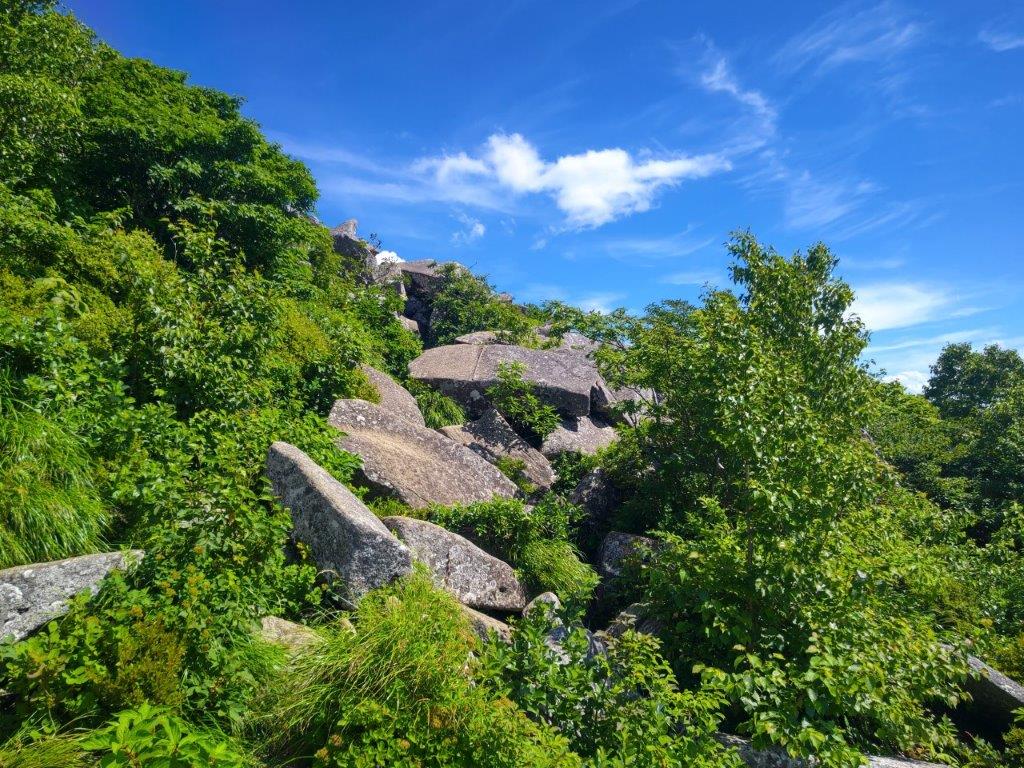
Boulder Hopping Section Close to the Summit

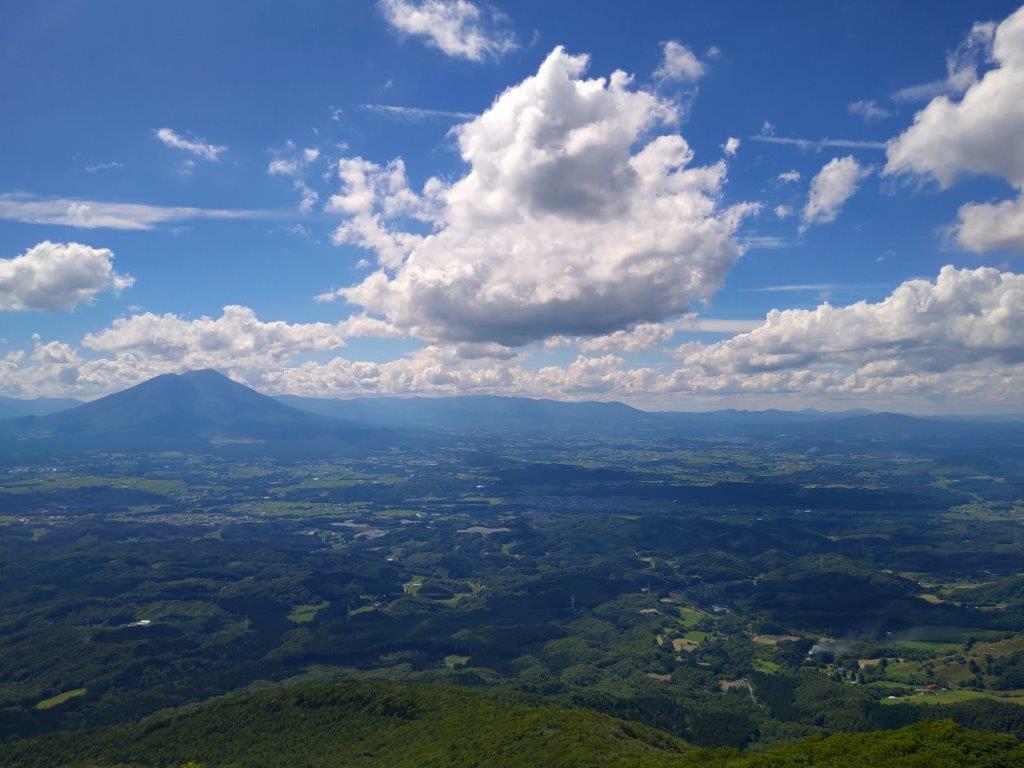
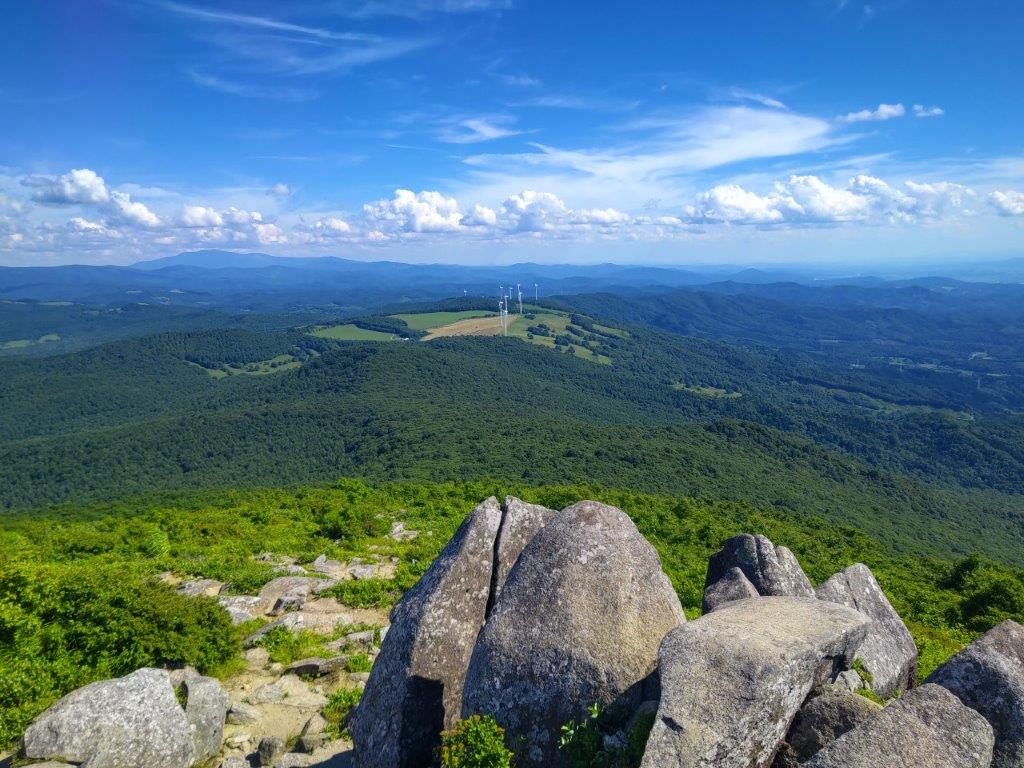
For the first time of the day, I felt a breeze blow through the trees, helping me to cool off before the final summit push. The rocks on the trail became bigger and bigger, forcing me to use my hands to haul myself over the largest ones. I suddenly emerged from the vegetation, blue sky with wisps of white cloud overhead. Standing on a flat rock, I had a wide view of Mt Iwate and Mt Hachimantai to the west. Just beyond, the trail split into two: the left fork went directly to the summit through the forest; however, I choose the panoramic right fork, hopping boulder to boulder, till it merged with the Jonai Trail (城内コース) on the southwest side.

View Northeast from the Top of the Ipponsugi Trail

View of Mt Iwate and Mt Hachimantai from Mt Himekami

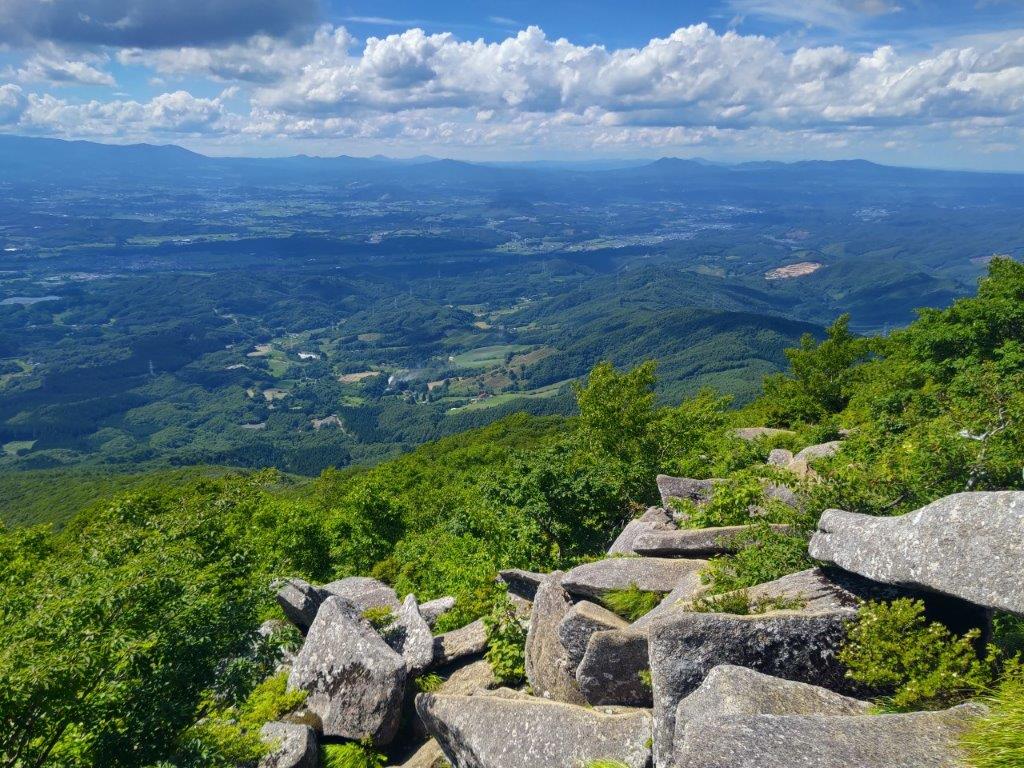
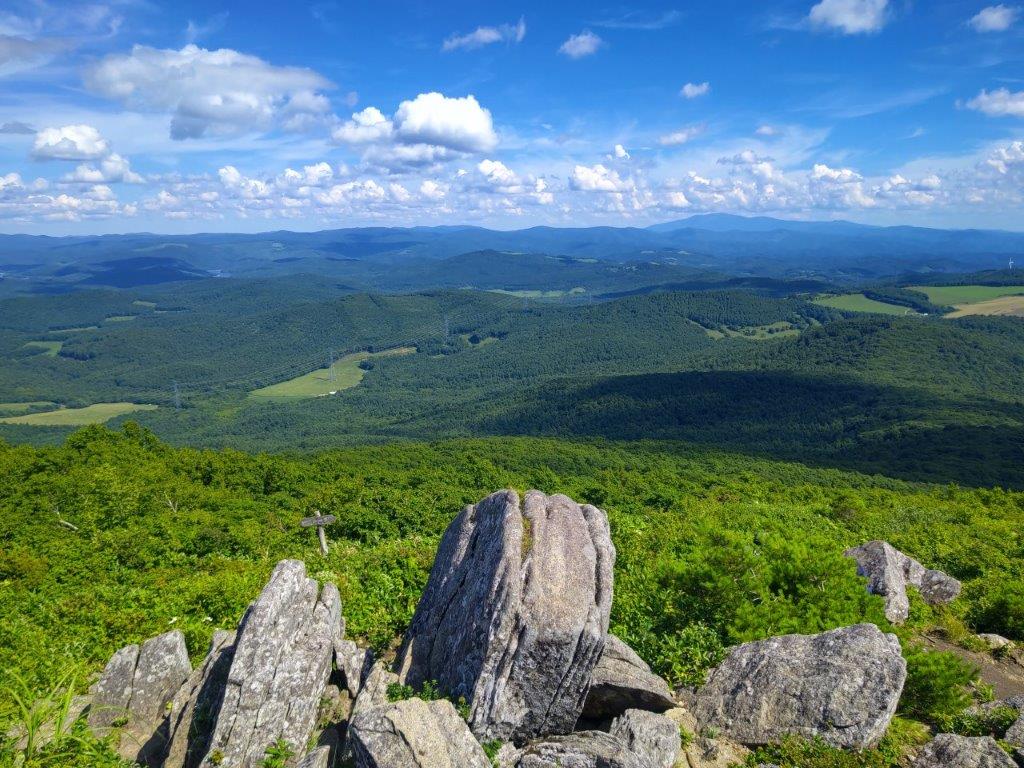
It had been a while since I had done such an adventurous trail and I had to watch out for the gaps between the flat slabs of rock. Once I was safely back on a proper trail, it took just a couple of minutes to reach the summit of Mt Himekami (姫神山 ひめかみさん himekami-san), meaning “princess god”. The view was stunning in all directions although I could only confidently identify Mt Hayachine to the south. Since it was past 2pm, I found a good rock to sit on for a late lunch with a view.

View South of Wind Turbines and Mt Hayachine (left)

View Southeast from Mt Himekami

I wanted to stay longer to admire the stunning view, as well as enjoy the spectacular clouds floating through the sky, but I had to allow enough time to catch my shinkansen for the return (also reserved). At 3pm, I dived back into the forest, down the Kowasaka Trail (こわ坂コース) on the northwest side. The first section headed down quite steeply, with ropes attached to the side for safety, but fortunately rock-free. I saw perhaps a dozen people on the ascent but passed no one on the descent. I enjoyed the solitude, making just a little noise in case a bear was lurking in the woods.

View East from the Top of Mt Himekami

Last View of Mt Iwate before Heading down

The surrounding forest was just as beautiful on this side, and lower down, I found myself walking through larches, a nice change from the cedars and birches. At 4pm, I reached the trail entrance where I turned left onto a paved road. The final section is one reason people avoid the Kowasaka trail (the other being it is less well-maintained), but it’s only a fifteen-minute walk back to the start of the Ipponsugi trail entrance. Along the way I was startled by a snake on the road; a closer inspection revealed that it was dead, perhaps hit by a car, but it was in perfect condition and extremely lifelike even in death.

Mt Iwate against the Late Afternoon Sun

The Prince God of Mt Himekani?

I was delighted to come upon a tube channeling ice cold water close to the end of the hike. After dousing my face and head several times, I called this morning’s taxi company, asking them to pick me up. I got dropped off at Koma station a little before 5pm, and half an hour later, was at Morioka Station with one hour to spare before my train back to Tokyo. After sampling some local Japanese sake from Kikizakeya, I boarded the shinkansen for the comfortable 2-hour ride back home.

Watch a Video of the Hike

See More Pictures of the Hike
Noyamakita-Rokudoyama Park (Highest Point 194m), Higashi-Murayama City and Mizuho Town, Tokyo Prefecture, Sunday, June 15, 2025

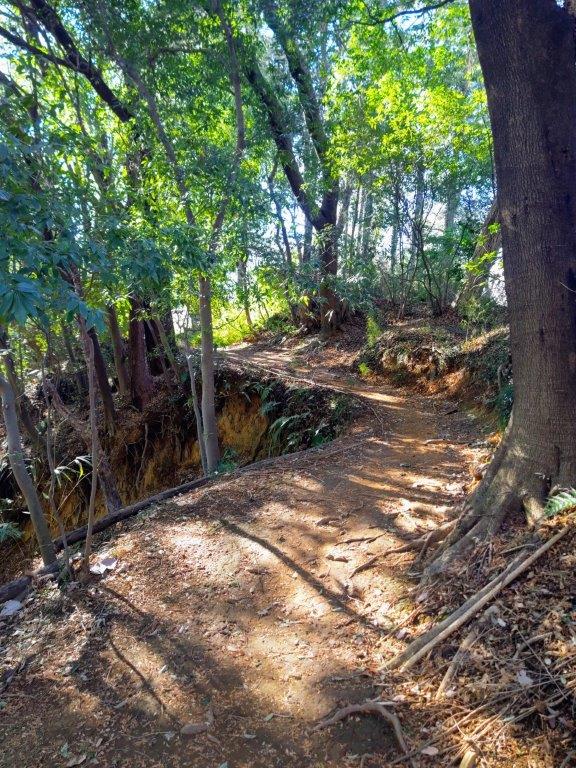
I’d been wanting to explore more of Tokyo largest park since my last visit a couple of years ago. I especially wanted to visit later in Spring to see the Kishi rice fields after planting; I also wanted to check out the “Satoyama Minka”, a traditional farmhouse; finally, I wanted to get a view from one of the several observation points on the western edge of the park. It would be a short hike which I could extend by making one or two detours along the park’s many footpaths.

Hiking in the Sayama Hills 狭山丘陵

To get there, I’d ride the Laview limited express to Hanno, and then take a local train one stop to Higashi-Hanno. There, I’d transfer to the Hachiko line for just two stops and get off at Hakonegasaki station, where a bus would take me to a stop near the park entrance. For the return, I could walk back to Hakonegasaki and do the same route in reverse. The weather was supposed to be cloudy but dry; I’d have to be careful of the muddy, slippery trails after heavy rain the previous day. I was looking forward to a relaxing hike near the center of Tokyo.

Find Japan Hiking Maps on Japanwilds and subscribe to our newsletter

Start of the hike (left) Trail on Maruyama (right)

Path for Kishi Rice Fields (left) Path for Sakurazawa Pond (right)

I had chosen a roundabout way to get to the start of today’s hike so that I could ride in comfort most of the way; thick clouds during the entire trip made me wonder about the wisdom of going out on such a day. The bus ride to Kishi bus stop was only a few minutes but saved me from walking along the busy Ome-kaido avenue. After a short walk through a residential neighbourhood I arrived at a staircase leading up to Suga Shrine ( 須賀神社) at the edge of Noyamakita-Rokudoyama Park (野山北・六道山公園). Past the shrine was a lane leading to Satoyama-Minka (里山民家), fronted by a small marsh, alive with the sound of croaking frogs.

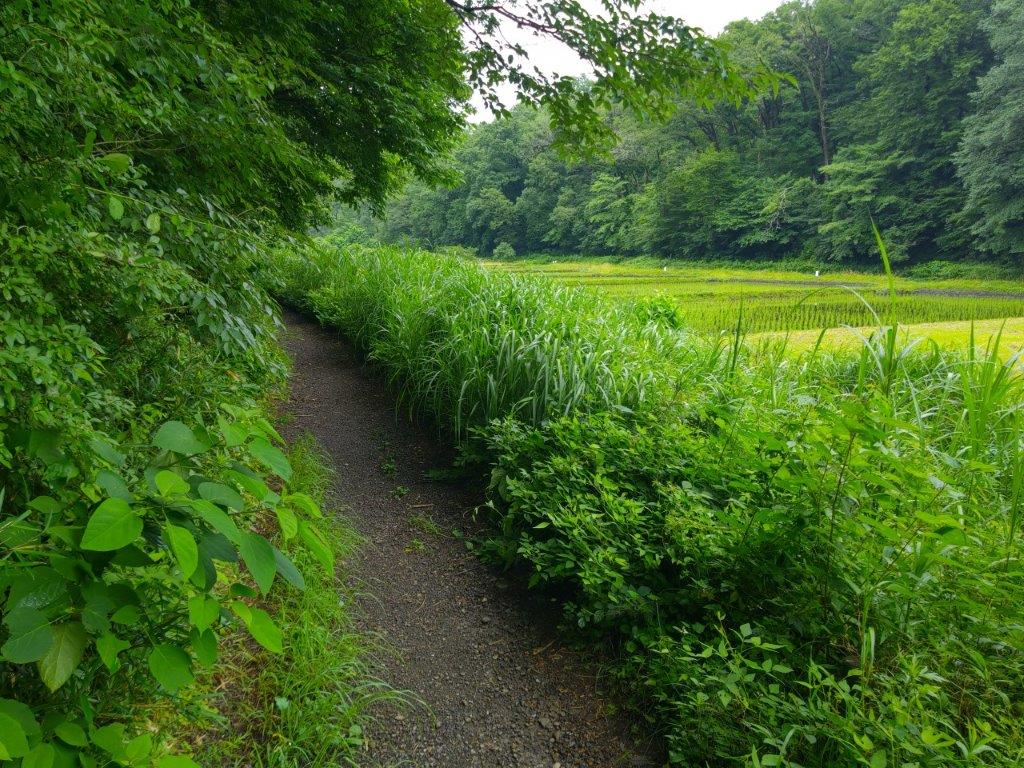
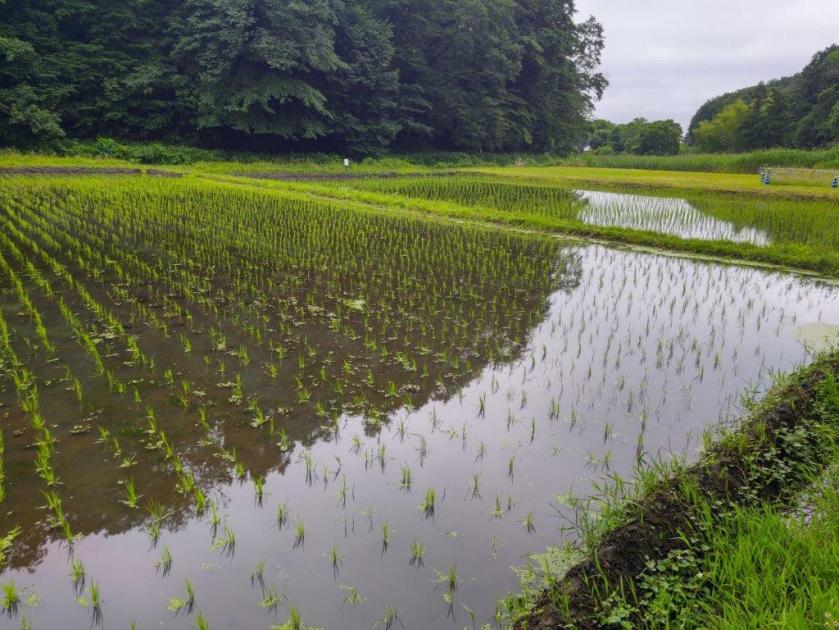
Hiking Trail along the Rice Fields

The Freshly Planted Kishi Fields

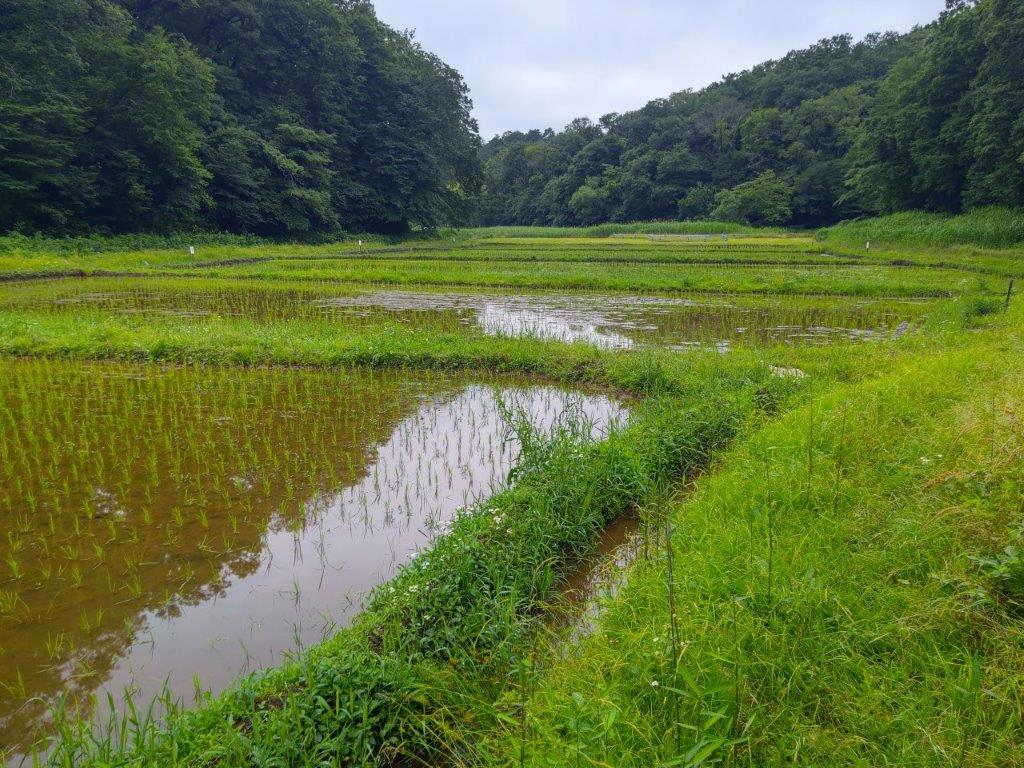
I was amazed by the quick transition from city to nature, all buildings, except the farmhouse with its thatched roof, hidden by the trees. The visit of the interior only took a short time, the rustic atmosphere recreated by the crackling fire in the sunken hearth (“irori”). After quickly walking the path circling the marsh, I headed over to the freshly planted Kish rice fields (岸田んぼ). I made my way up the left side but soon had to head back due to a trail closure. I crossed between two fields to the right side and headed back to the entrance of Maruyama (丸山), a small hill with several hiking trails. I hadn’t had time to explore it on my last visit so I eagerly made my way up the small path into the green forest, the first of my planned detours.

Looking back towards the Satoyama Farmhouse

Walking through Maruyama

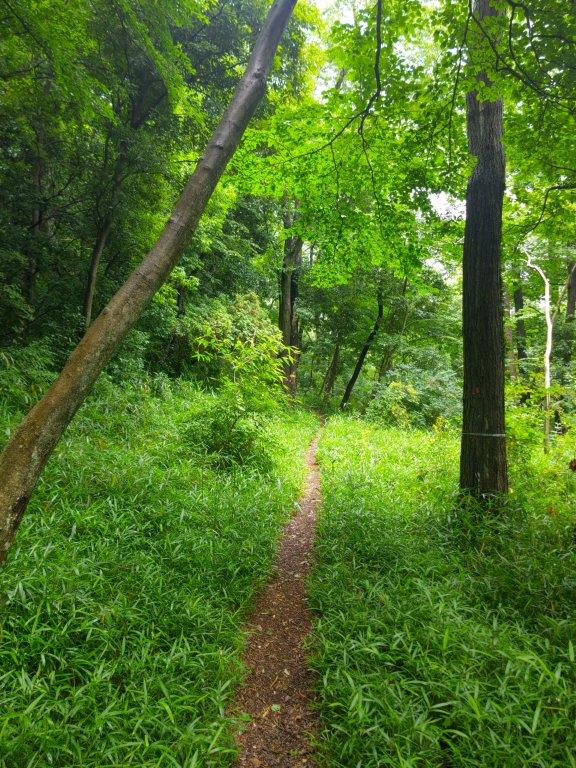
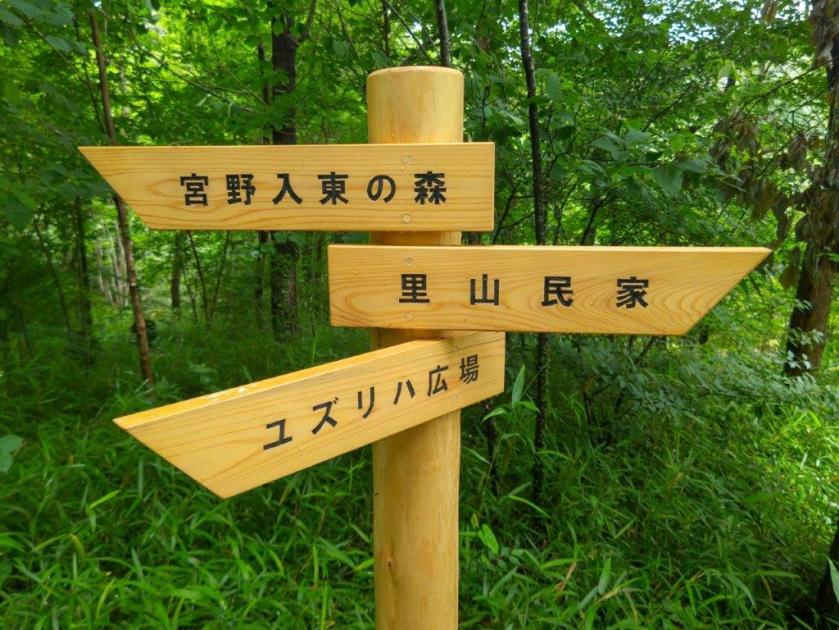
I was surprised by the well-maintained trails and relatively new signposts, although since the trail soon reached a dead-end at Yuzuriha Square (ユズリハ広場), a level space with a couple of benches surrounded by forest. I retraced my steps to a junction and followed the ridge north. I was the only person hiking these trails on what was so far a muggy, overcast day but fortunately I had the company of some very musical birds. I had to be careful not to step off the trail as the ankle-hike grass lining it was still wet from last night’s rain. After a short descent, I arrived back at the Kishi rice fields, just before noon. Instead of following the trail up to Mt Rokudo, which I had done before, I decided to cross the fields again and head up the ridge on the left side.

Heading North along Maruyama

Steps for Sakurazawa Pond

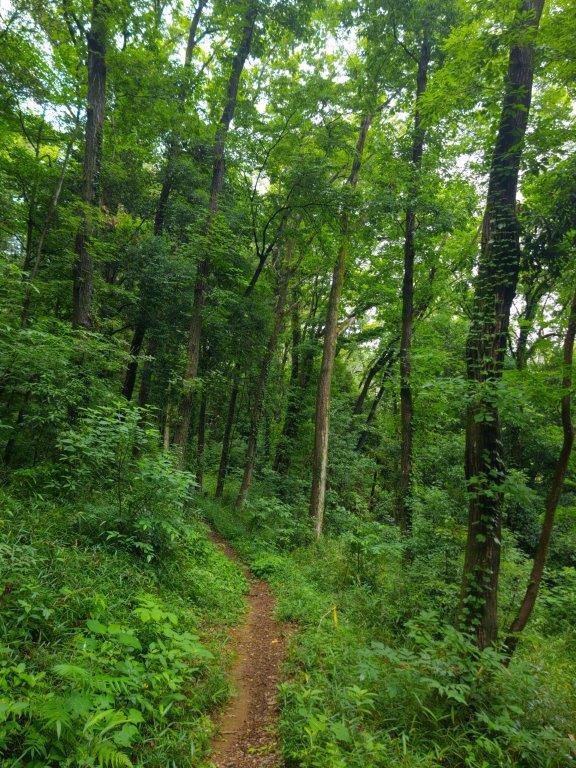
Soon after passing a pond with a tortoise swimming in the middle, I turned left and followed the path up a slope till it merged with the Obikiyama walking trail (尾引山遊歩道) where I turned right. I soon left this level ridge trail for some steep steps heading down on the right side, my second detour of the day. I was fascinated by the surrounding forest, tall trees wrapped by a species of vine . Here I finally met the first people of the day, solitary walkers enjoying some time in nature. At 12h30, I reached Sakurazawa Pond (桜沢池) where I was greeted by a new outburst of birdsong.

Path along Sakurazawa Pond

Some Blue Sky near Sakurazawa Pond

After heading up some steps to a wooden observation deck opposite the pond, I turned around and saw patches of blue sky for the first time of the day, giving me hope for the afternoon. I now followed another trail that soon merged with the Obikiyama trail from before. I was intrigued by the old worn-out signposts on this side of the valley, possibly because they were still in the middle of replacing the park signs. A little before 1pm, I arrived at the observation tower on top of Mt Rokudo (六道山 194m), my fourth time there.

Looking down at Sakurazawa Pond

Blue Sky from the Top of the Mt Rokudo Observation Tower

I could barely make out the Okutama and Tanzawa mountains from the top of the tower, Mt Fuji completely hidden behind the clouds. On the other hand, yesterday’s rain had thoroughly cleaned the air of smog, creating a surreal vision of the clouds above, their outline sharp and clear against the ever-expanding blue sky. I soon made my way back down the tower and followed a paved road towards Fujimidai square (富士見台広場), admiring purple and pink azaleas along the way. After reaching the wide grassy area of the square, I was faced with a choice of three trails for the final part of today’s hike.

Heading down to Yuhidai Playground

End of the Hike on the Tennozan Walking Trail

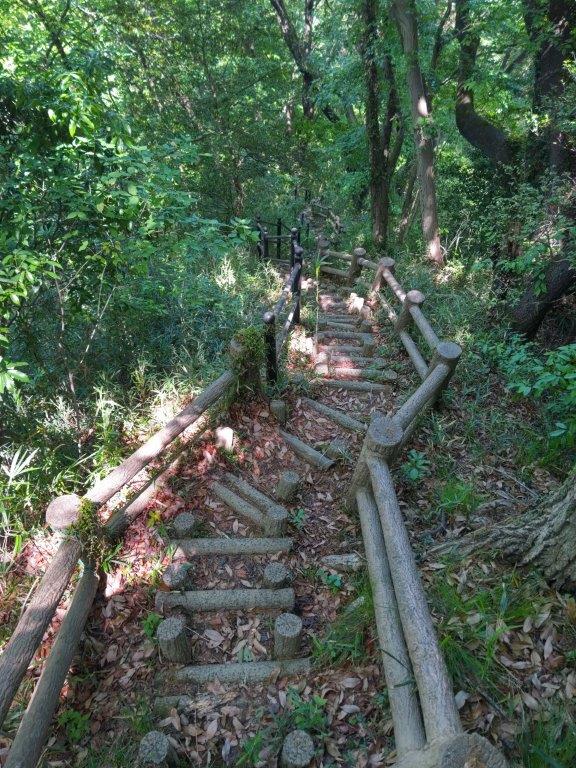
I opted for the middle one, the only one that was an actual hiking path, the Tennozan walking trail (天王山遊歩道); the other two, Daisaka (台坂) and Dainichiyama (大日山), were along paved roads. After passing another Suga Shrine (須賀神社), I followed some log steps down the mountain side; it abruptly ending at a steep embankment ramp, but luckily some steps on the left side, saved me the effort of having to rappel using the fixed rope. I had stumbled into the Yuhidai play equipment square (夕日台遊具広場), a kind of adventure playground, deserted on this warm humid day. Next up was a zip line, followed by a rope bridge, both looking eerily out of place in the middle of the forest.

Observation Square on the Tennozan Walking Trail

View of the Okutama Mountains with Mt Odake on the left

I suddenly emerged into a wide grassy space at the base of the hills. Making my way through the damp tall grass, I rejoined another section of the Tennozan trail but soon turned left up a log staircase ending at an Observation square with a view southwest. Through the mist, I could still make out the outline of Mt Odake and Mt Mitake. It was past 3h30, so I hurried down the road on the left side. I was soon walking among houses, and at 4pm, I was back at the station. While riding the Hachiko line to Hanno, the weather cleared up somewhat, giving me a closeup view of the Okutama mountains on the west side, a fitting end to today’s hike.

Watch a Video of the Hike

See a Slideshow of More Pictures of the Hike
Mt Sengen (235m) & Mt Daicho (192m), Ome & Akiruno Cities, Tokyo Prefecture, Sunday, June 1, 2025

I was looking for another hike close to home as the Spring weather continued to be unsettled. Thanks to Japanwilds, I was reminded of a small peak in Western Tokyo I had recently spotted on my hiking map, along the Hamura Kusabana hills hiking trail (羽村草花丘陵ハイキングコース). Since it was on the short side for a full day outing, I decided to start near Akaboko in Ome, and then head west through the hills south of Tama river. Along the way, I’d pass a second peak with a view from a shrine on its north side.

For subscribers, read this Post on Hiking Around Tokyo for a better viewing experience and the latest updates

To get to the start of the hike, I’d ride the Chuo and Ome lines from Shinjuku to Ome station, and there board a bus for the ten-minute trip to Meijibashi, a short distance from the trail entrance. For the return, I’d catch a bus from Shimo-kusabana, a few stops from Fussa station down the Ome line. The weather was supposed to be mostly cloudy, with a chance of sun in the afternoon. I was looking forward to exploring new trails inside the capital and hoping the weather would allow me to complete my planned route.

Find Japan Hiking Maps on Japanwilds and subscribe to our newsletter

Trail past Futatsu-zuka (left) & Before Manji (right)

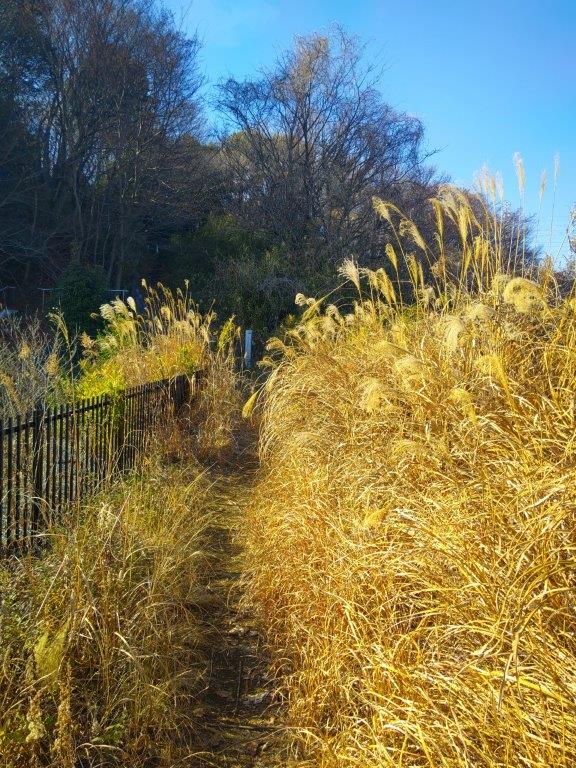
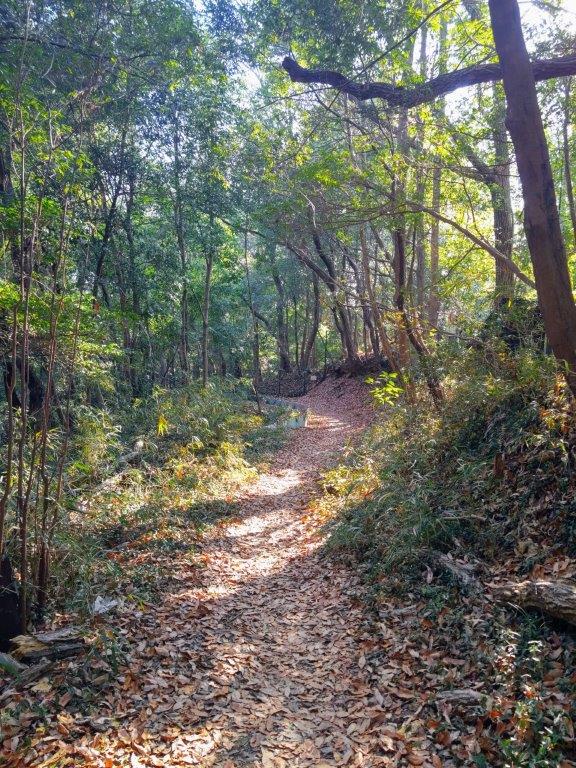
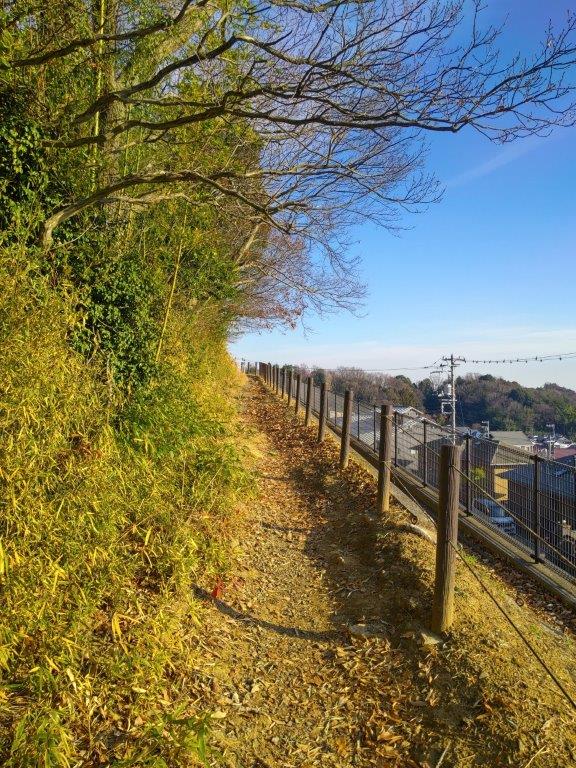
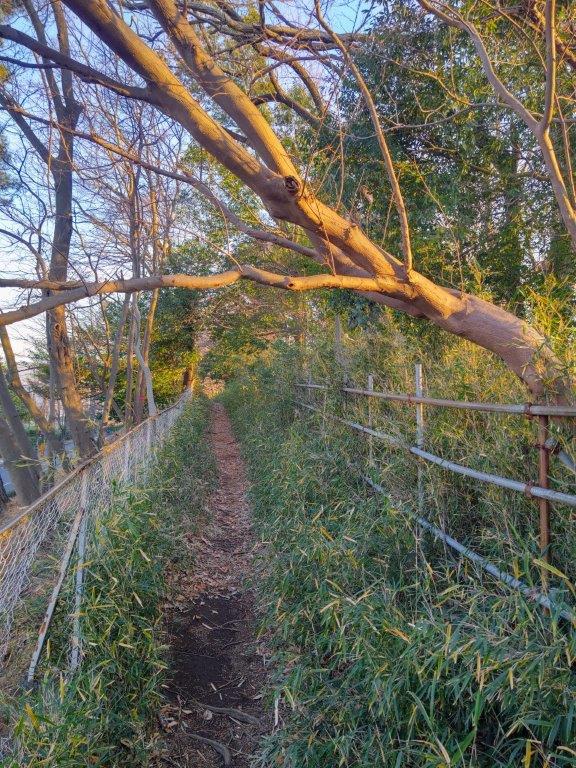
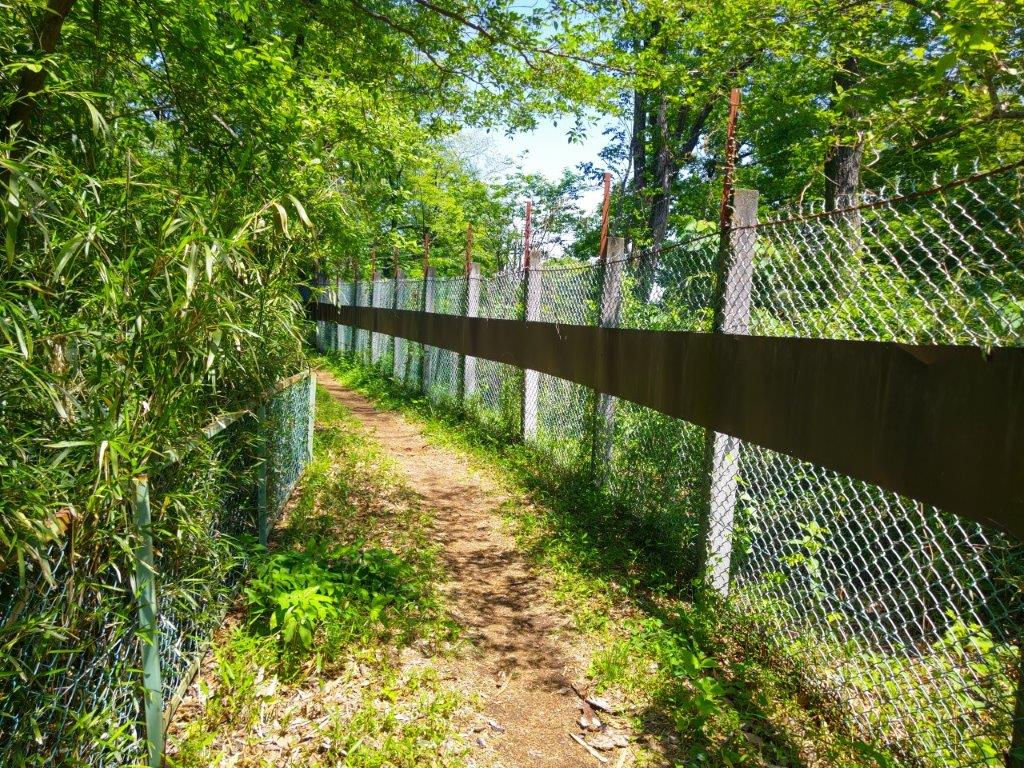
Walking next to Fences (left) & through Forest (right)

I rode the comfortable and nearly empty Green car to Ome station, arriving there at 11am. I got off the bus one stop early so I could stock up at a nearby convenience store. As I set off for the trail entrance, I noticed that more and more blue sky was appearing overhead, a trend I hoped would continue. At 1130, I reached the Mahiki-zawa forest road (馬引沢林道), and very soon, found myself surrounded by nature walking next to a rushing stream.

Steps past Mt Sengen (left) & Inside a Bamboo Grove (right)

Forested (left) & Open Sections (right) on Mt Daicho

I was delighted by this unexpected river walk, mossy rocks occasionally lit up by stray sun rays. Sturdy, well-made signposts, like those of the “Fureai no Michi”, told me I was following the “Ome! Water and Nature and Plum Road” (Ome! Mizu to Midori to Ume no Michi 青梅! 水と緑と梅の道). At noon, I reached a clearing from where I could see that the patches of blue had turned into a mostly blue sky. Feeling hopeful for the day ahead, I picked up the pace, as the path started to climb gently. Shortly after, I arrived at Mahiki-zawa Pass (馬引沢峠), where I turned left, merging with the Mt Nagabuchi Trail (長淵山ハイキングコース), as well as my Akaboko hike.

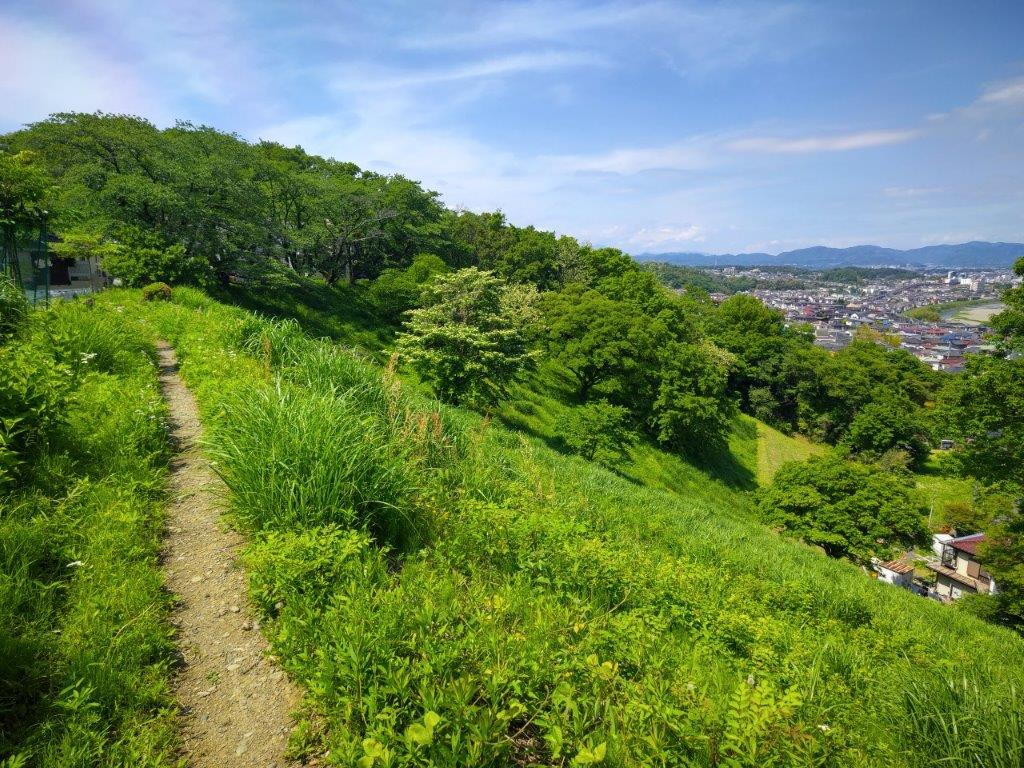
Start of the Hike on the Mahiki-zawa Forest Road

…next to a Rushing Stream

I made good time along the ridge trail, passing other hikers for the first time of the day and glancing at the instructive tree name signs along the way. At 1230, I reached another junction at the Old Futatsu-zuka Pass (旧二ッ塚峠 355m, the highest point of the hike); here I turned right, leaving behind the route of my previous hike. The path soon became narrow, the vegetation crowded in on both sides and the quality of the signposts dropped. I suddenly popped onto a paved road and it took me a few seconds to pick up the narrow trail on the other side. A handful of minutes later I reached the top of a cleft in the ridge allowing for the passage of a road connecting the Tama and Akigawa river valleys, the steep mountain sides covered in cement to prevent collapses. After a short descent, I darted across the road, made my way up the other side, and plunged back into the forest.

Blue Sky from the Forest Road

Fenced Section on the Way to Manji Pass

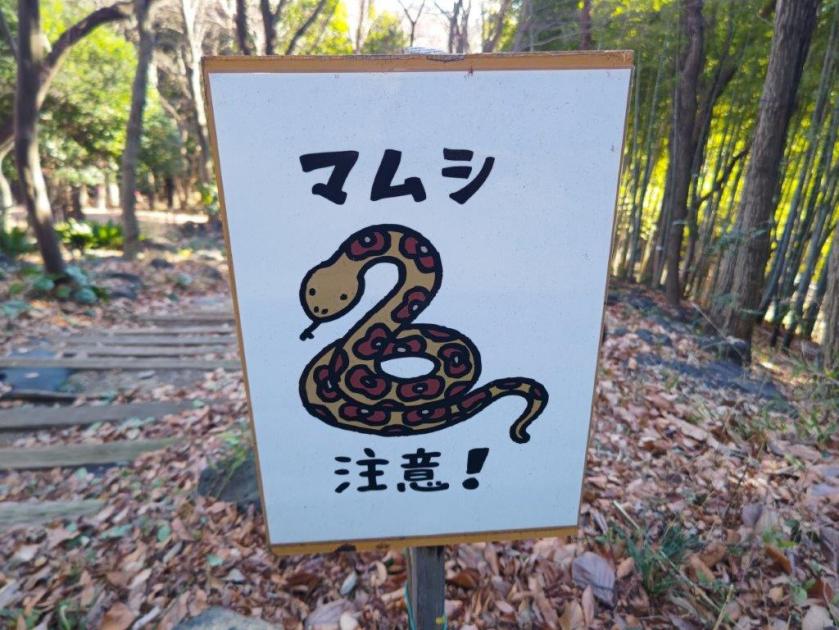
This was probably the most beautiful part of the hike and it was hard to believe that the busy city lay beyond the green forest. On top of the Spring green and scattered birdsong, I spotted translucent white “Snow Fungus” (Tremella fuciformis), orange-coloured mushrooms, and a ghostly Luna Moth flapping its wings very slowly (it seemed to be dying). I passed almost no one on this section, possibly because most people prefer this area in the colder months. Fortunately, today’s temperature, under 25°, was somewhat cool for June, and I was glad I could enjoy hiking here in this season. At 2pm, a fence appeared on the right of the trail; to it was attached a sign saying “Beware of the Mamushi”(マムシ注意), the Japanese Pit Viper, one of the most venomous Japanese snakes.

Footpath beyond Manji Pass

First View of the Day from Sengen Shrine

I started to worry about a snake encounter, the dense green vegetation on the left the perfect hiding spot. I walked as fast as I could, exposed to the strong June sun now high in the sky. At one point I spotted a green slender shape: webbed feet revealed it to be a lizard basking in the afternoon sun. I felt relieved when the trail finally took me back into the forest, leaving the fence behind. After a short descent, I passed Manji Pass (満地峠), sturdy well-made signposts suddenly making a comeback. At the top of some steps, a waist-high wall appeared on the right side, marking the boundary of a religious organisation. I headed down some steps leaving the wall behind and entered another section of dense and lush vegetation. Shortly after, I found myself walking with a golf green on the right side. After ascending some steps, I emerged onto the flat summit of Mt Sengen (浅間岳 せんげんだけ sengen-dake), completely in trees; since it was nearly 3pm, I sat on one of the benches for a late lunch.

Viewpoint between Mt Sengen & Mt Daicho

In the Distance, the Sayama Hills

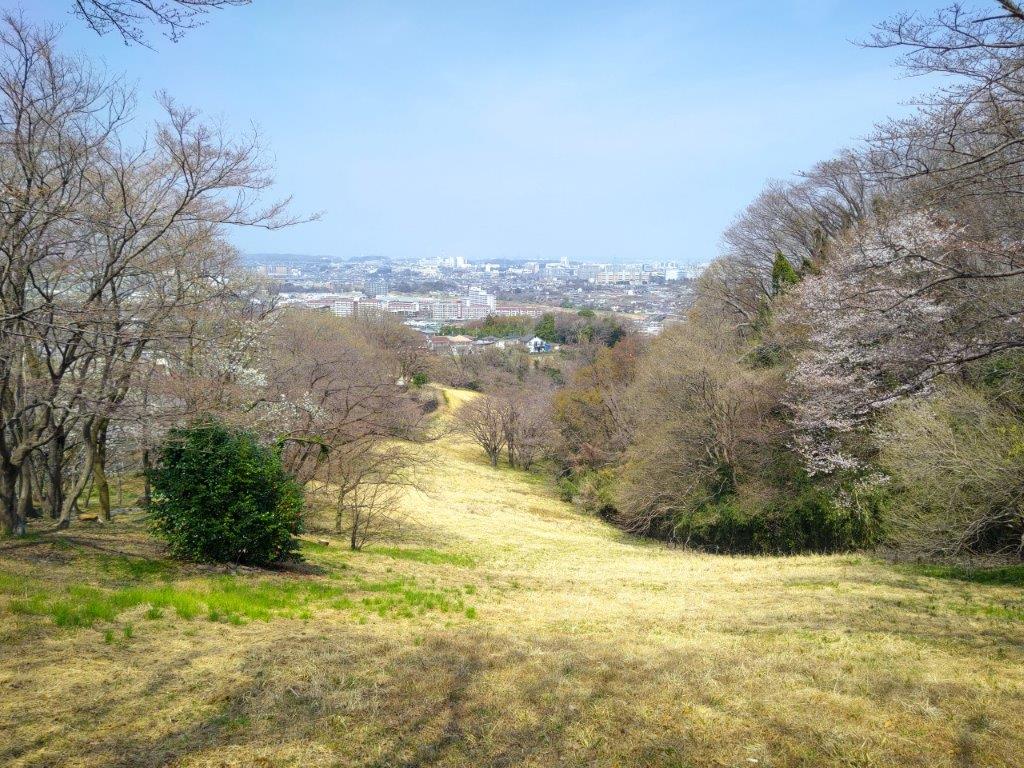
Looking up, I noticed thick dark clouds fully covering the sky on the north side. I started to worry about rain and set off quickly. First, I made a short detour to the nearby Hamura Shrine (羽村神社) from where I had a view on the north side of Tama river with the Kaji Hills in the background; looking east, I could see the low outline of the Sayama Hills; looking west, I could see the somewhat higher hills of Oku-musashi; on the north side, I spotted the much higher Okutama mountains though a gap in the vegetation; looking down, I realised I was standing at the edge of a cliff, a sturdy fence preventing any unfortunate accidents. I set off again, following the up and down trail westwards, now signposted at the Hamura Kusabana Hills Hiking Trail, and a little before 4pm, reached another viewpoint. Just then, it started to rain lightly.

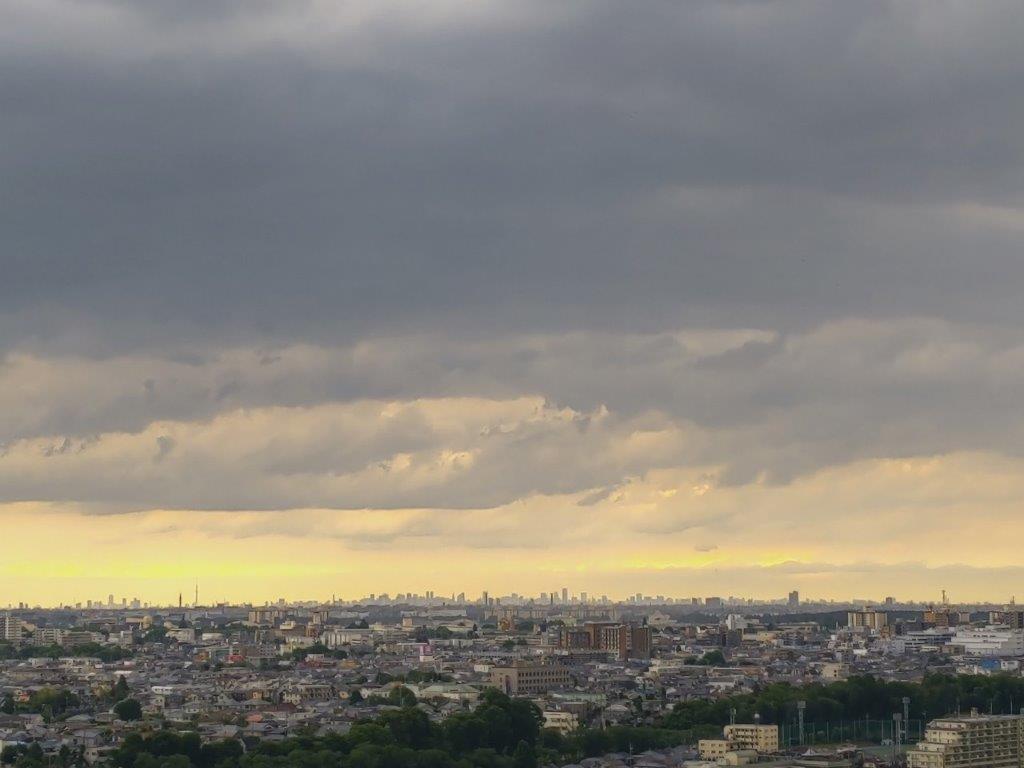
Central Tokyo under Dark Clouds

Bamboo Grove on Mt Daicho

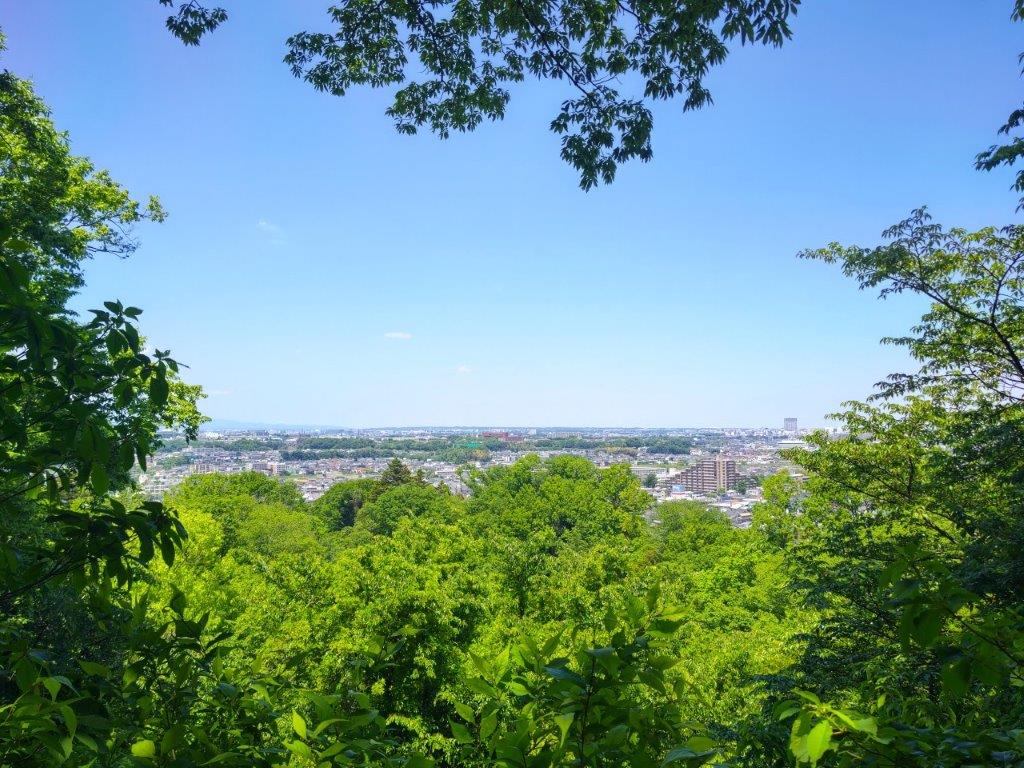
Fortunately the viewpoint was sheltered by trees so I sat on one of the two log benches to wait out this patch of bad weather. The rain strengthened and although I was mostly dry, I started to consider whether I should escape to the nearby Hamura station. Directly ahead lay the Sayama Hills, from this distance a flat green line extending across the north horizon; to the east, I could see the skyscrapers of Central Tokyo; directly below was the Tama River spanned by two bridges. After 4pm, the rain let up and I dashed off at once. After crossing two roads and a short forested section, I arrived at the base of today’s main mountain.

Trail before Mt Daicho

Trail after Mt Daicho

I soon found myself walking through a beautiful bamboo grove. Unfortunately, the short rain from before had brought out the first mosquitoes of the season; I made a mental note to bring anti-bug repellent on my next hike. At 4h30, the trail levelled as it passed through a section cleared of trees; above the treetops, I could see the rain clouds moving eastwards. At the top of some steps, I reached an open shelter and the top of Mt Daicho (大澄山 だいちょうざん daichou-zan). The summit was free of trees but lacked enough prominence to allow me to see past most of the surrounding forest; a gap on the north side showed a small section of the Sayama Hills beyond the city buildings.

Looking back at the Top of Mt Daicho

View South of the Tanzawa Mountains

I was delighted by this open space cut off from the surrounding city. I took a short break at the summit picnic table to enjoy the solitude and then followed a trail southwards between tall pines. I soon had a view of the Tanzawa mountains, forming a protective wall south of the city. Halfway down I came upon the small Kusabana Shrine on a terraced area; I had a wide view from Mt Mito in the Okutama mountains to Mt Oyama in the Tanzawa mountains, the background lit up yellow by the late afternoon sun. It was past 5pm, so I hurried down the steep shrine steps to the residential area at the base of the mountain. A short walk brought me to the bus stop and by 5h30 I was comfortably seated in the green car for the 45-minute ride back to Shinjuku.

Watch a Video of the Hike

Watch the Video of the Hike on YouTube

See a Slideshow of More Pictures of the Trail

See a Slideshow of More Pictures of the Hike Views
Nanao Hills (Highest Point 173m), Hachioji and Hino Cities, Tokyo Prefecture, Thursday, May 8, 2025

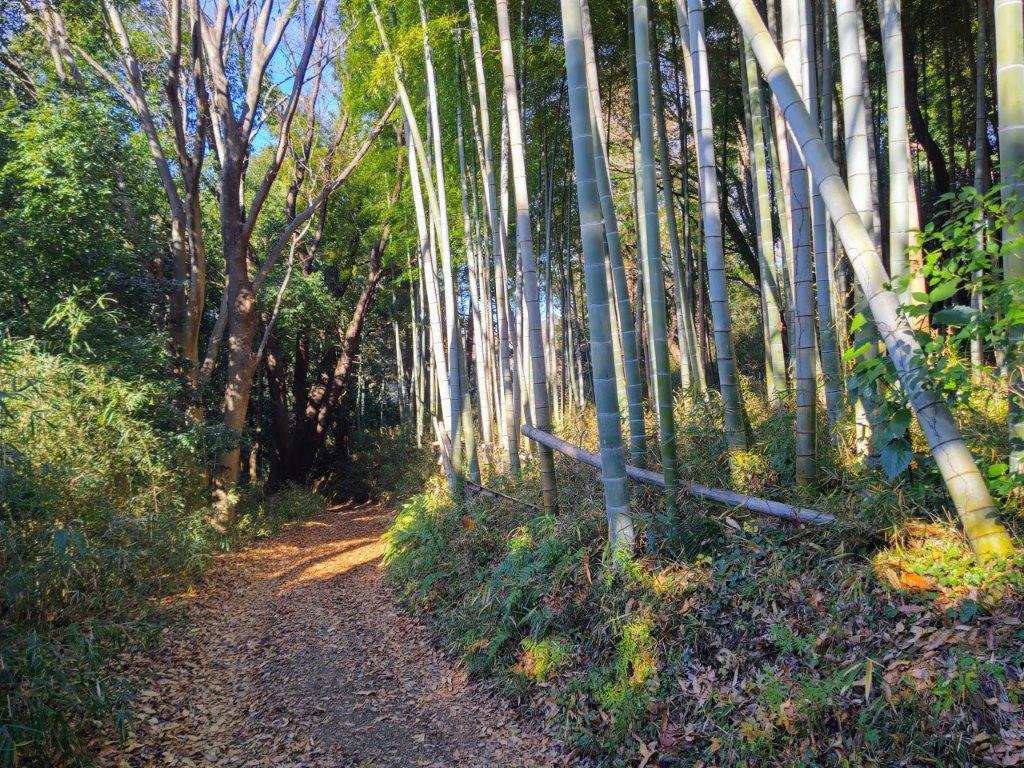
I had already done this short hike in Western Tokyo on a cold winter day more than ten years ago. Since I had a chance to go hiking on a weekday morning, I thought it would be nice to redo it and see the new Spring green in the middle of Tokyo. It would also be a continuation of my recent hike between Aihara and Naganuma. Although there are no summits along the trail, I would pass by an observation deck inside Hirayamajoshi park. This hilly trail would also pass next to the Tama Zoological Park with a chance to glimpse some exotic animals.

For subscribers, read this Post on Hiking Around Tokyo for a better viewing experience and the latest updates

Start of the Hike (left) Log Steps inside the Park (right)

To get to the start of the hike, I’d ride the Keio line from Shinjuku to Hirayamajoshi-koen Station. Depending on the time, I could catch a return train from Takahatafudoson station or the closer Minami-daira station, both on the Keio line. I was hoping to see the colourful Takahata Fudoson Temple but since the section around it is through the city, I didn’t mind giving it a miss. The weather was supposed to be sunny and warm and I was looking forward to revisiting a green area inside the city of Tokyo.

Find Japan Hiking Maps on Japanwilds and subscribe to our newsletter

Steps for an Observation Deck (left) Path between Park and Zoo (right)

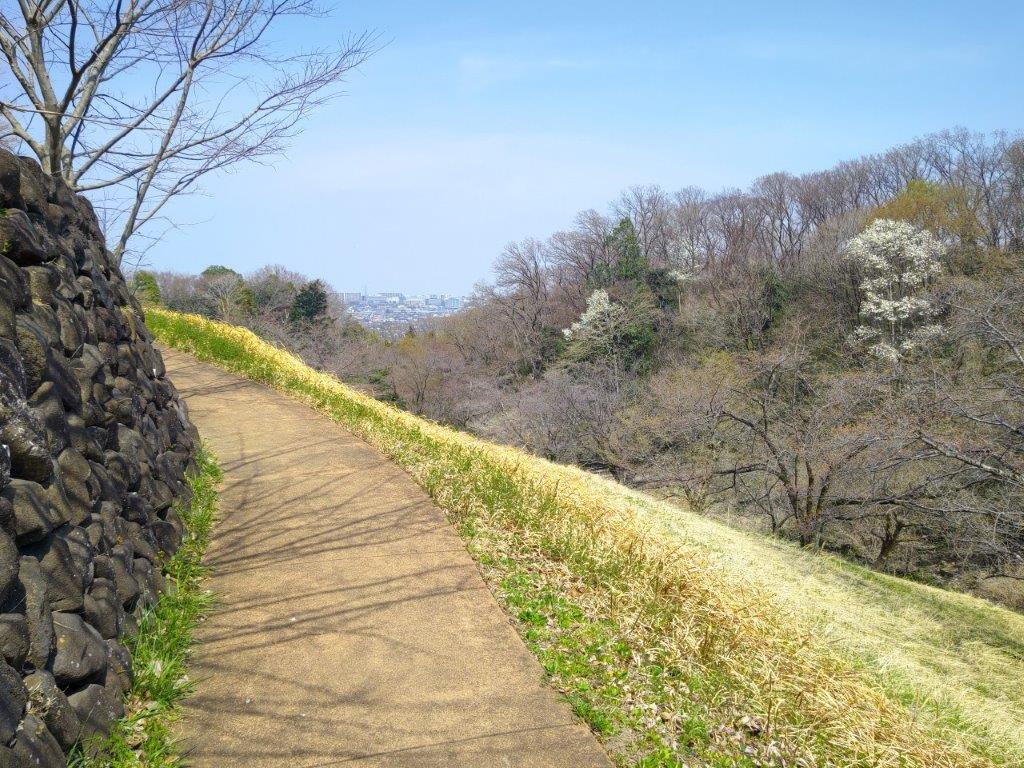
I got off the train at 9am, and after a short walk through a residential neighbourhood, I reached the start of the Nanao Hills walking path (七生散策路), marked by a signpost half-hidden by vegetation. A footpath led me up a grassy slope into the trees; I soon found myself climbing through forest along a well-defined path with wooden handrails, surprised by the sudden full-immersion into nature. A little before 10am, I reached a level open space with a view on the west side, in front of the houses of Hirayama-nichome.

Walking in Nanao Park (left) Walking next to Tama Zoo (right)

Walking on Top of (left) and Down (right) Nanao Hills

I was delighted by this unexpected view so early in the hike. Directly ahead, I could see the Okutama mountains, with Mt Odake, Mt Gozen and Mt Mito in the center; on each side, the Chichibu and Tanzawa mountains extended north and south, respectively; closeby, I could see the Southern Sky Tower next to Hachioji station; finally, on one side of the clearing, I spotted a huge Flowering Dogwood. I soon moved on, and after a short section on a paved road, reached a wooden signpost sending me up a series of steep steps on the left, leading back into the forest.

Open Space with a View at Hirayama-nichome

View of the Okutama Mountains

I was surprised by the constant birdsong, a sharp contrast to my previous hikes north of Tokyo. I soon reached a small shrine, purple azalea adding a dash of colour to the grey stone of its “torii“. From there, a level path led to the entrance of Hirayamajoshi park (平山城址公園), also the highest point of today’s hike. As I crossed the park from west to east, I marvelled at the abundance of green in every direction, more like an urban forest than a city park.

Close-up View of the Mountains surrounding Tokyo

Walking through the West Part of Hirayamajoshi Park

I could only see blue sky above the trees instead of buildings and I could only hear the song of birds, instead of city noises, since the park straddled one of the highest points of the hills. After some ups and down via log steps, I reached an observation deck in the eastern part of the park. Looking west, I could see Mt Gonzen, Mt Odake, Mt Mitake and Mt Hinode, although this view was less clear than the previous one. A little after 11am, I exited the park, and followed a connecting path between two fences, thoughtfully painted in green to match the scenery.

Walking through the East Part of the Hirayamajoshi Park

Hidamari “Sunny Spot” Platform in Hirayamajoshi Park

I was happy I could continue walking through nature, even if it was only a narrow section. I soon reached an open space above a cemetary, the Tama memorial garden, from where I had a view of the Tanzawa mountains to the south. I next followed a road for a short while, feeling quite hot under the midday sun, to a grassy path leading into Nanao Park. After some more ups and downs through beautiful greenery, the path always well-signposted, I reached a section with a chain-link fence on the right side; I knew that the Tama Zoological Garden was somewhere on the other side.

Log Steps inside Hirayamajoshi Park

Green Fence along the Connecting Path

I soon started hearing noises made by various animals although none could be seen through the vegetation. One exception was the Orangutan Forest: I was able to spot an orange lump lounging on one of the elevated platforms. This was probably the nicest section of the day as I was now following a real hiking trail, instead of a path inside a park. At one point, I had a view of the city through a gap in the vegetation on the left side. At noon, I reached a junction for Minami-daira station: here I decided to turn left and make my way back to the train station.

View of the Tanzawa Mountains from the Tama Memorial Garden

Approaching Tama Zoo

I was amazed by the steepness of the steps leading down the hillside; even though I was well inside the city, the angle of descent matched that of the mountains surrounding the Kanto Plain. Halfway down, I reached a small observation platform where I had a view of the flat city landscape extending northwards. Eventually I emerged onto a road from where it was a ten-minute walk to Minami-daira station, a forty-minute train ride back to Shinjuku.

View North Halfway down the Nanao Hills

End of the Nanao Hills Hike

I was glad I’d decided to redo this hike in Spring as the impression was quite different from my previous visit. Although the views might be better in winter, the new green scenery was stunning; the trails sections outside the parks were surprisingly well maintained and sign-posted; finally, even though the elevation is relatively low, the hilly nature of the trail made for an excellent workout. In the future, I hope to return and visit the Tama Zoo, as well as the Botanical Gardens of the Tokyo university of pharmacy and life sciences located right next to Hirayamajoshi Park.

Watch a Video of the Hike

Watch the Video of the Hike on YouTube

Mt Otsuka (213m), Machida & Hachioji Cities, Tokyo Prefecture, Thursday, March 20 & 27, 2025

I was looking for an easy hike for the Spring Equinox, since I planned to go hiking again a few days later on the weekend. It had snowed the day before in the mountains around Tokyo so I decided to explore some more parks inside the capital, which I hoped were mostly snow-free. Looking at my map, I noticed that Machida seemed to have a lot of green areas so it felt like a good place to start. I also saw that many trails started and ended at train stations so it seemed relatively easy to make a station to station hike.

For subscribers, read this Post on Hiking Around Tokyo for a better viewing experience and the latest updates

Find Japan Hiking Maps on Japanwilds and subscribe to our newsletter

To get to the start of the hike, I’d ride the Chuo line from Shinjuku to Hachioji station, enjoying the comfort of the newly added green (1st class) cars. There, I’d transfer to the JR Yokohama line and ride 3 stops to Aihara station. I’d end at Naganuma station on the Keio line which, after a transfer to the express at Takahatafudo station, I could ride all the way back to Shinjuku. Although Aihara is geographically far from Machida station (13km), it is connected to Machida city via a narrow neck extending westwards.

From the station, I’d head west along Machida-Kaido Avenue to the start of the Nanakuni Pass Promenade (七国峠遊歩道 nanakoku-toge yuhodo), an ancient road that used to run to Tsukui; I’d follow it north past Dainichido Shrine (大日堂 223m), the highest point of the hike, and Nanakuni Pass, where I’d turn eastwards along the north side of Aihara Central Park (相原中央公園). On the way, I hoped to get a view of the Okutama mountains on the west side from the Nanakuni Ridge Viewpoint (七国尾根見晴台).

After crossing Hachioji-kaido Avenue near Goten Pass (御殿峠 206m), I’d continue eastwards along another path, hugging the north side of a university campus; past a bridge over Hachioji bypass, I’d be standing at Yarimizu Pass (鑓水峠), just below the top of Mt Otsuka (大塚山 おおつかやま ootsukayama), also the site of Doryado Ruins (道了堂跡), a famous haunted spot. It’s also on the historical Silk road, between Hachioji and Yokohama, which I’d only follow for a short section before turning left. I’d then walk a few minutes down a paved road leading to the Kitanodai residential neighbourhood, and rejoin another hiking trail, on the south side of a small park.

After passing through forest, countryside and farmland in the Nakayama locality, and then crossing the Kaien-kaido Avenue, I’d finally arrive at Naganuma Park (長沼公園), a forested area occupying a steep slope south of Asakawa river, a tributary of Tama river. I’d descend to the park entrance via Tonoyato Path (殿ヶ谷戸の道), and from there it was a short walk through Naganuma Town to get to the train station. The weather was supposed to be cloudy in the morning turning sunny in the afternoon. I was looking forward to doing a rare hike within the city of Tokyo and getting views of the city as well as the surrounding mountains.

In the end, I decided to cut the hike short at Goten Pass, and head north to Katakura Station on the Yokohama line, one stop from Hachioji. The next Thursday, I returned to Aihara station, and after following a shorter route to Goten Pass, picked up where I had left off a week before. I reached Naganuma station around lunchtime, thus completing the planned hike. The one week delay gave me a chance to see the first cherry blossom trees in full bloom of the season.

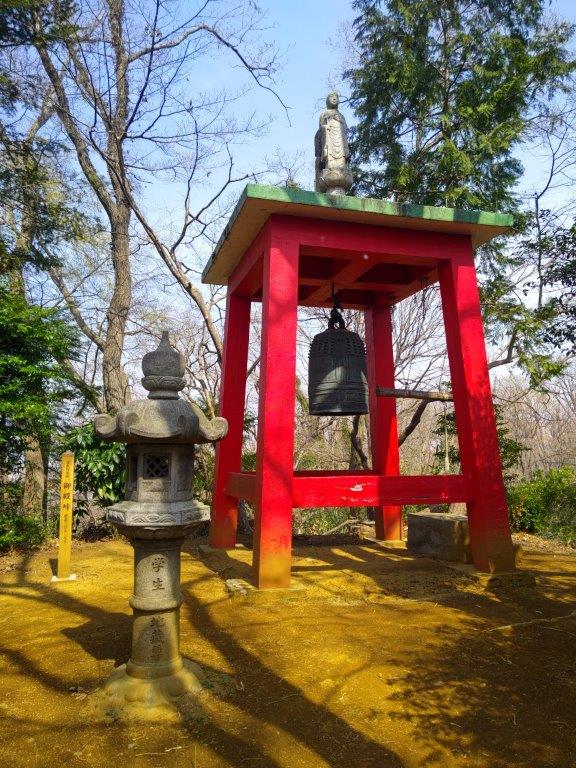
Donichido Shrine (left) Bell near Goten Pass (right)

See a Slideshow of pictures of the Trail

Snowy Tanzawa mountains near Aihara station

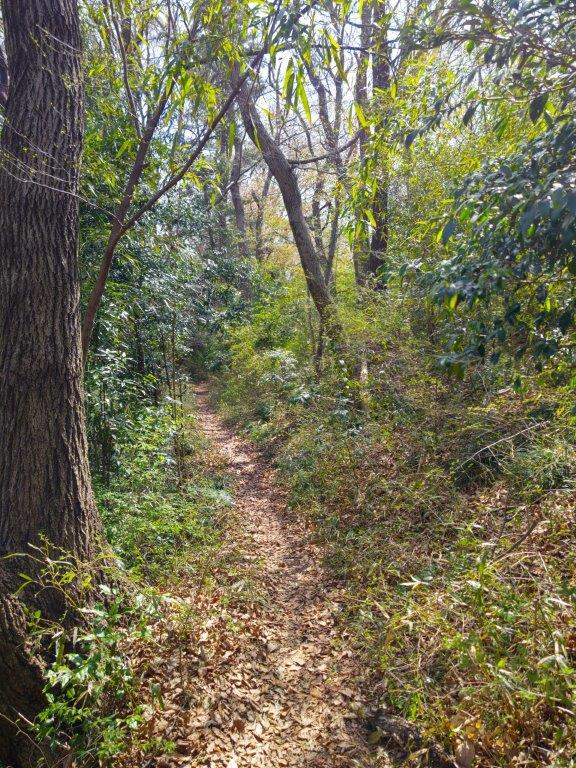
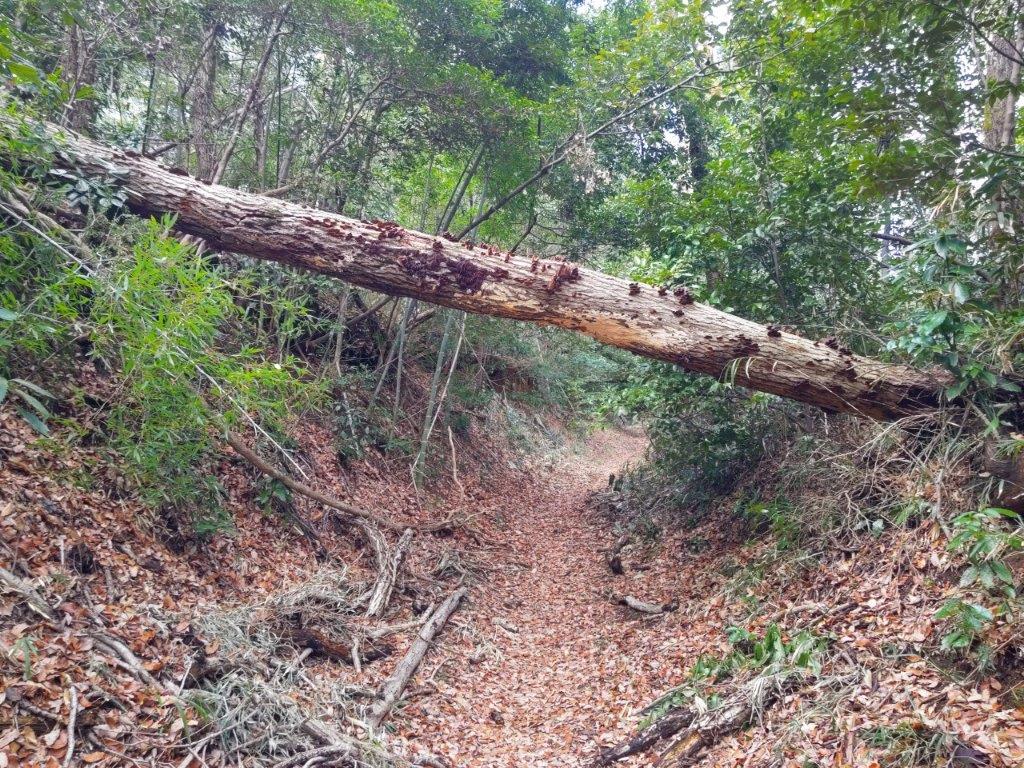
Fallen Tree on the Nanakuni Pass Promenade

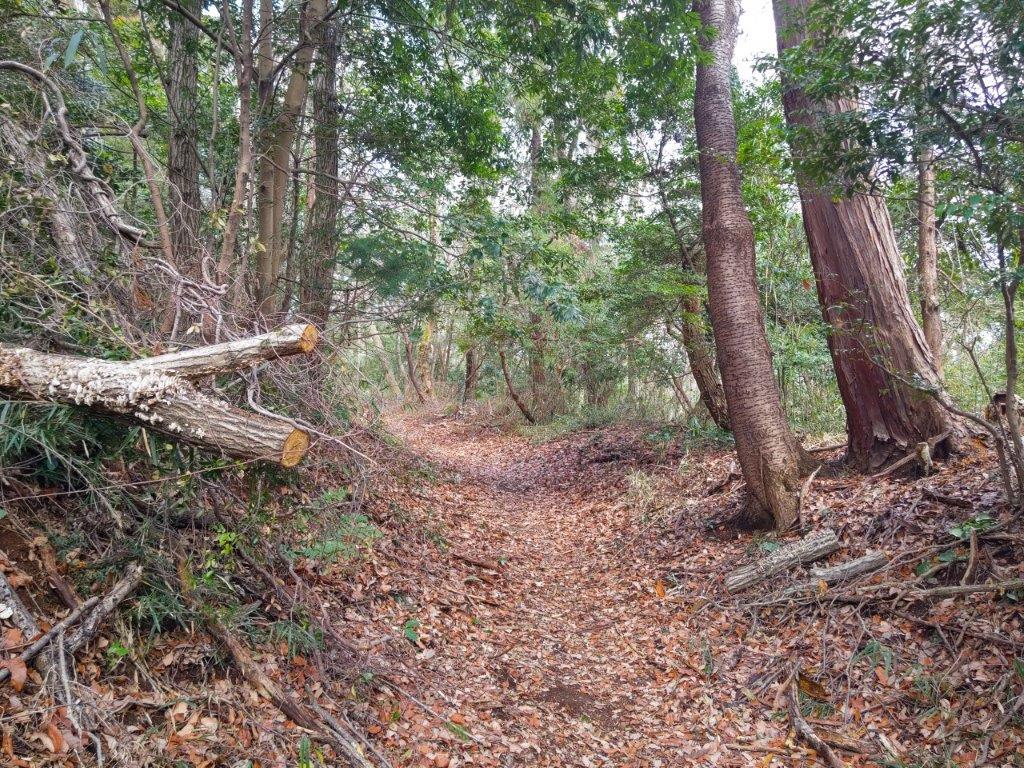
Gentle Climbing on the Nanakuni Pass Promenade

Trail on the North Side of the Aihara Central Park

Path heading up Nanakuni Ridge Green Space

View West of Okutama from the Nanakuni Ridge Viewpoint

Trail heading inside Aihara Central Park

Mt Takao (center front), Mt Goten & Mt Odake (right back)

Trail Past the Nanakuni Ridge Viewpoint

Trail Past Goten Pass

Bridge over Hachioji Bypass

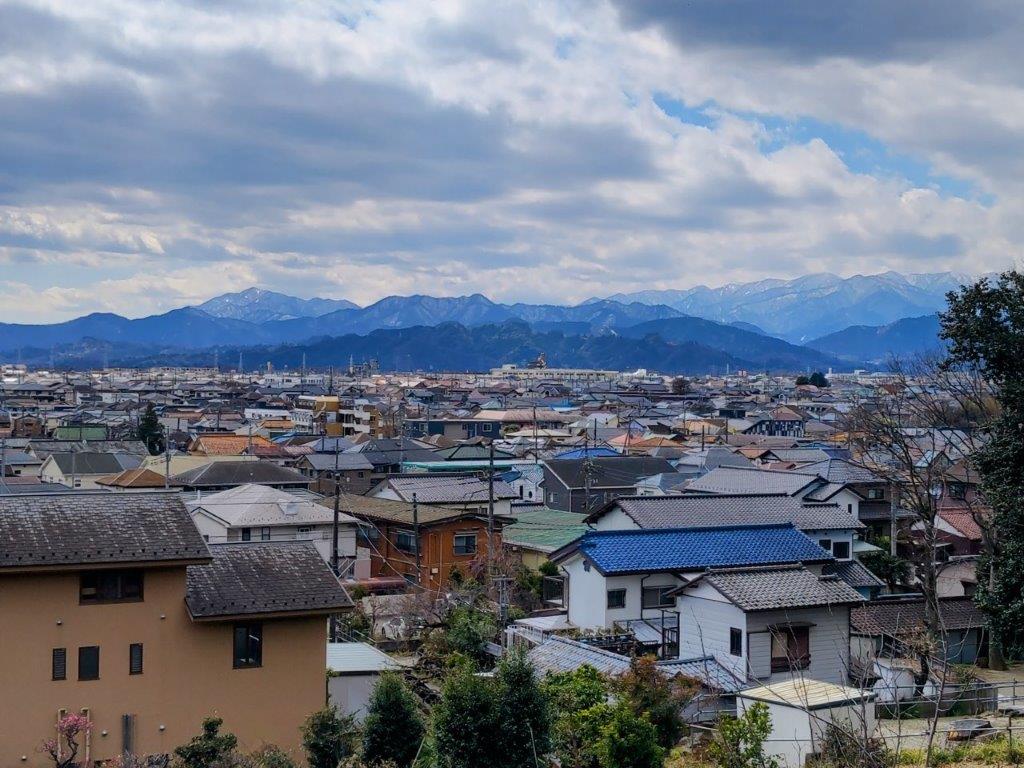
View of Western Tokyo from Yarimizu Pass

Looking back at Yarimizu Pass on the Silk Road

Looking down at the Kitanodai Residential Neighbourhood

On the Other Side, Naganuma Park

Back on a Hiking Trail in Nakayama

Beyond the Farmland, the High Rises of Tama Center

View of West Tokyo from the Top of Naganuma Park

Walking along the Tonoyato Path

Early Sakura at Rokushagu Shrine

Watch a Video of the Mt Otsuka Hike

Watch the Video of the Hike on YouTube

See a Slideshow of More Pictures of the Hike
This Blog Post Continues a Little Longer…

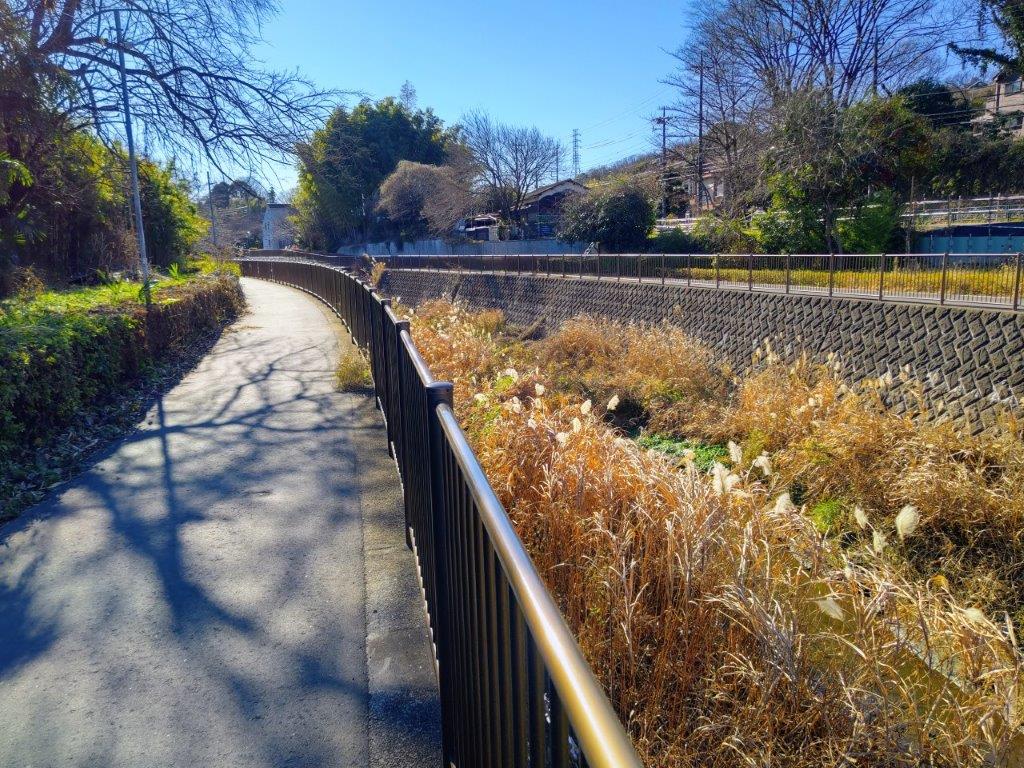
I was so taken by Naganuma Park that I decided to return on the third Wednesday of April for some more exploring. This time, I’d ride the Chuo line limited express from Shinjuku to Hachioji, and from there, take the Tama Monorail to Takahatafudo, 3 stops from Naganuma station on the Keio line. I chose this slightly longer way to enjoy the view of Mt Fuji from the right side of the Monorail. For the return, I’d simply ride the Keio line from Naganuma station back to Shinjuku.

A short walk from the station would bring me back to Rokushagu shrine (六社宮). There, I’d follow the West ridge (西尾根) trail to the top of the park (頂上園地 chojo-enchi), then walk a short way to the Naganuma Park Observation Point, an open shelter with a view of West Tokyo and the Okutama mountains. I’d then head down the Tochimoto Ridge (栃木尾根) on the east side of the park. After that, if time allowed, I’d head up the Chosenji Ridge trail (長泉寺尾根), and then, halfway up the park, head down the connecting Western Chosenji Ridge Trail (西長泉寺尾根). After descending once again to the base of the park, I’d make my way back to the nearby Naganuma station.

I was looking forward to getting some more views of western Tokyo, as well as the Tanzawa and Okutama mountains. Blue skies were forecast all day, and in this season, I’d also get to enjoy the new green of Spring, as well as the pleasing melody of birdsong, especially the distinctive call of the Uguisu, the Japanese bush warbler, a sure sign that Spring has arrived.

New green at the Top of the Park (left) and on the Chosenji Ridge (right)

Rokushagu Shrine without Cherry Blossoms

Hiking the West Ridge Trail

Bridge with a View near the Top of the Park

Mt Gozen (left), Mt Odake & Mt Mitake (center), Chichibu Mountains (right)

The Naganuma Park Observation Point

West Tokyo and Surrounding Mountains

Mt Mito (center) & Mt Kumotori behind Mt Odake (right)

Top of the Tochimoto Ridge Trail

Heading down the East Side of the Park

View of the Nikkei Housing Complex

In the Distance, the High Rises of Tachikawa

Watch a Video of Naganuma Park

Arahata-Fuji (119m), Tokorozawa, Higashi-Murayama & Higashi-Yamato Cities, Saitama & Tokyo Prefectures, Sunday, March 2 & 9, 2025

I was looking for a low-altitude hike near Tokyo to stay clear of the snow that usually covers the mountains surrounding the Kanto area in this season. I also wanted something relatively easy and straightforward to help me get back in shape after being out sick for a couple of weeks. I had explored the parks surrounding the Sayama and Tama lakes by bicycle many years ago. I thought it would be a good chance to revisit them on foot and have a closer look at the sights along the way.

For subscribers, read this Post on Hiking Around Tokyo for a better viewing experience and the latest updates

To get to the start of the hike, I’d ride the Seibu Laview Limited Express to Tokorozawa, and from there, walk half an hour to the entrance of Hachikoku-yama Park (八国山緑地). After traversing the park, I’d make a short detour to Hatomine Park (鳩峯公園) to visit one of the many Totoro forests in the area, as well as Hachiman Shrine (八幡神社) at its eastern end. I’d then head over to Arahata Citizen’s forest (荒幡富士市民の森) where I could “climb” Arahata-Fuji (荒幡富士), an artificial Mt Fuji with 10 real stations. After checking out the view from the summit, I could drop by the nearby Sayama Hills Flora & Fauna Interaction Center (狭山丘陵いきものふれあいの里センター) to learn more about the plants and animals that grow and live in the surrounding forest.

Hiking in the Sayama Natural Park 都立狭山自然公園

If time and energy allowed, I’d then cross over to Tama Lake (多磨湖), next to Seibuen Theme park. After admiring the view of the Okutama mountains, and hopefully Mt Fuji, from Murayama-shita Dam (村山下ダム), I’d walk clockwise around the lake to Higashi-Yamato Green Space (東大和市立狭山緑地) which promised a view of the Tanzawa mountains on its south side. I’d then double-back to Higashi-Yamato Park (東大和公園), making sure to visit the Higashiyamato City Local History Museum (東大和市立郷土博物館) on the way. Next, I’d head to Sayama Park (狭山公園), just below Tama Lake and its dam.

Find Maps & Blogs on Japanwilds & subscribe to our newsletter

Finally, if I made good time, I could explore the nearby and relatively short Seseragi road (せせらぎの道), and the equally short Megurita Greenway (廻田緑道), after which I’d follow the Yanase river to Kitayama Park (北山公園), a park famous for its flowers, although probably none in this season. This final park in my tour sits opposite Hachikoku-yama park, the forested area divided by the Seibuen line and its yellow train cars. From the bridge at the eastern end of the park, I could walk 15 minutes to Higashi-Murayama station, one stop from Tokorozawa on the Seibu-Shinjuku line. The weather was supposed to be clear in the morning, turning cloudy in the afternoon. I was looking forward to revisiting one of the closest nature spots to the center of Tokyo.

In the end, I decided to cut the hike short after visiting the Sayama Hills Flora & Fauna Interaction center, and headed home using the nearby Shimo-yamaguchi station on the Seibu Sayama line, a couple of stops from Tokorozawa. The next week I returned to the same station to pick up where I had left off, after making a second visit to Arahata-Fuji. Once again, I decided to skip the last part of the hike, and so after Sayama Park, I made my way back via Seibuen station on the Seibuen line.

Above is a slideshow showing the wide variety of trails within the many parks surrounding Tama Lake

Steps heading down in Hachikokuyama Ryokuchi Park

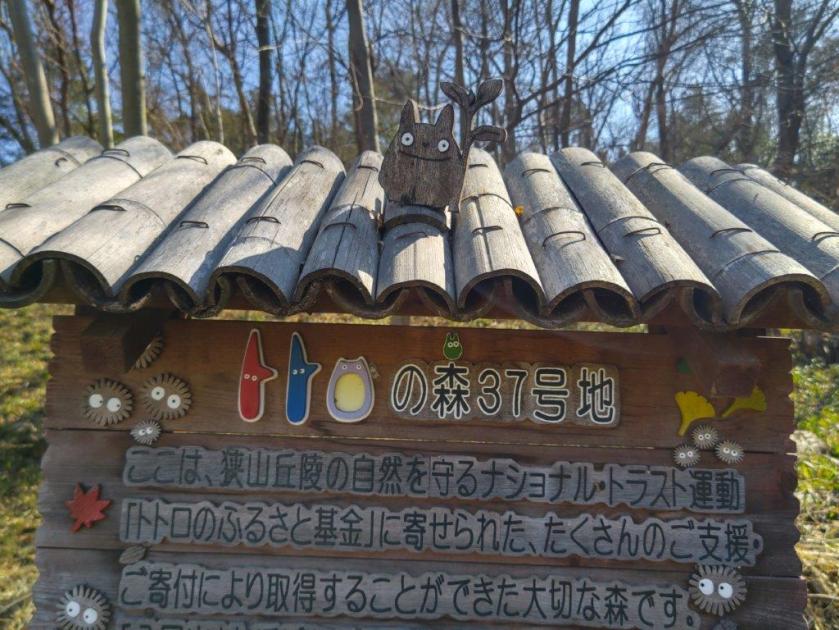
Totoro Forest #2 in Hatomine Park

Arahata-Fuji and its 10 stations

Leaving Arahata Citizen’s Forest

Re-entering Arahata Citizen’s Forest the Following Week

View North from the Top of Arahata-Fuji

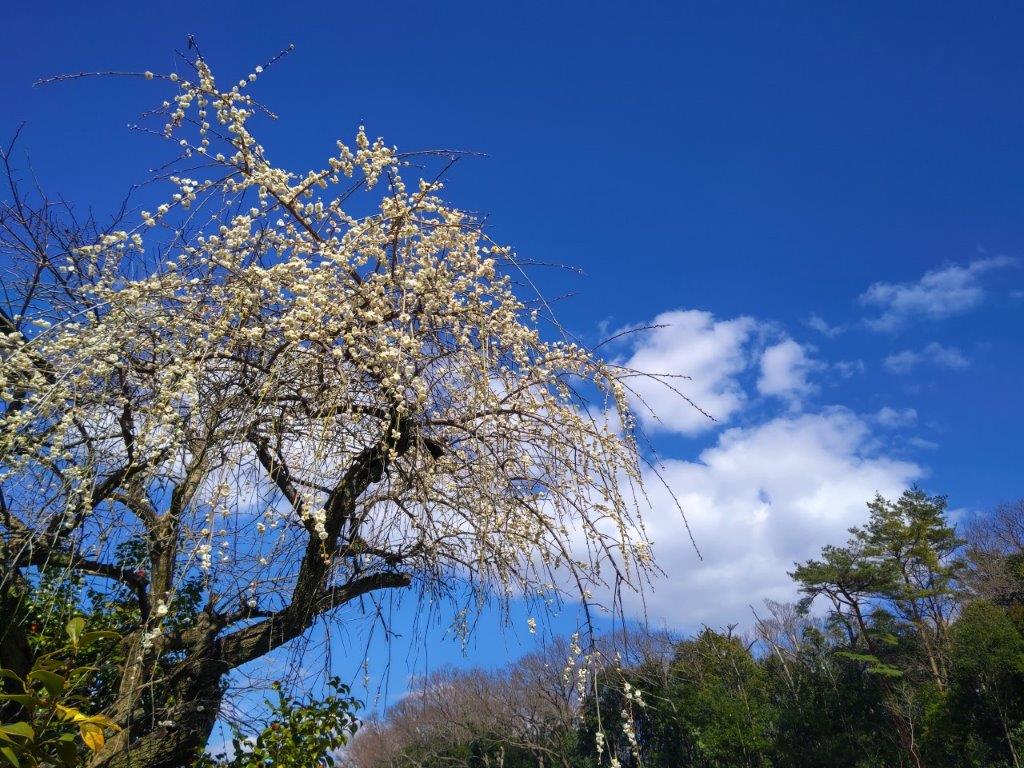
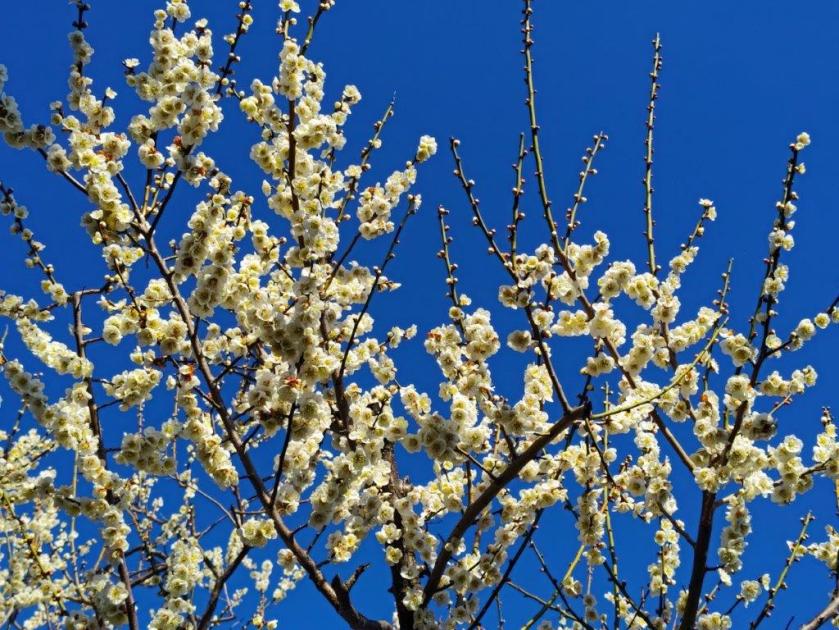
Weeping Plum Blossom Tree on the Way to Tama Lake

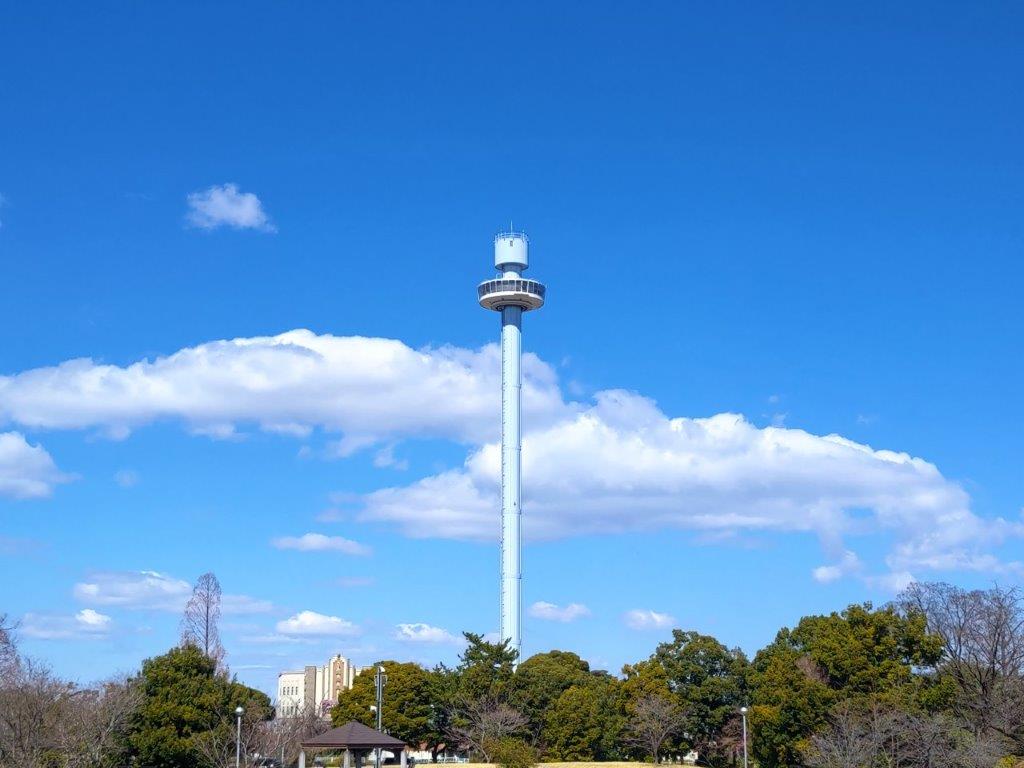
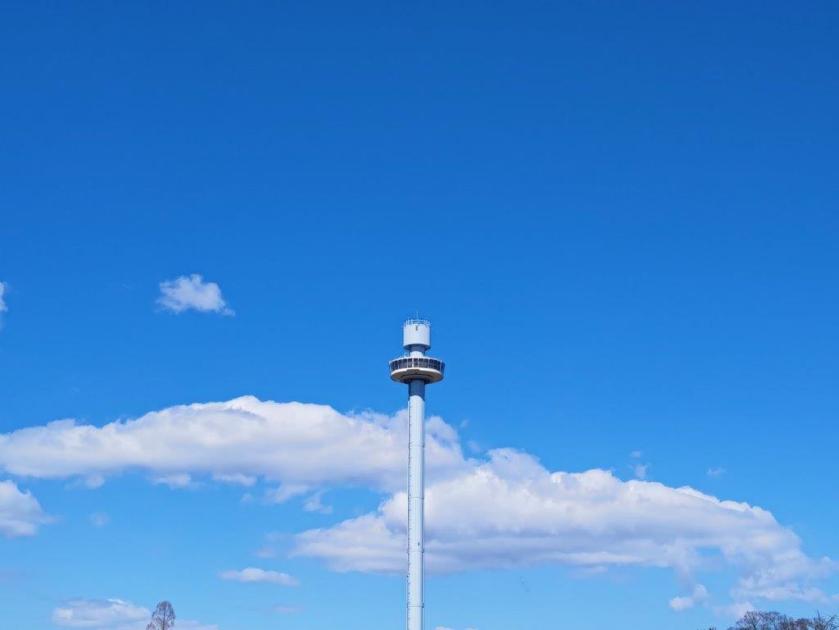
Fujimi “Periscope Tower” in Seibuen Park

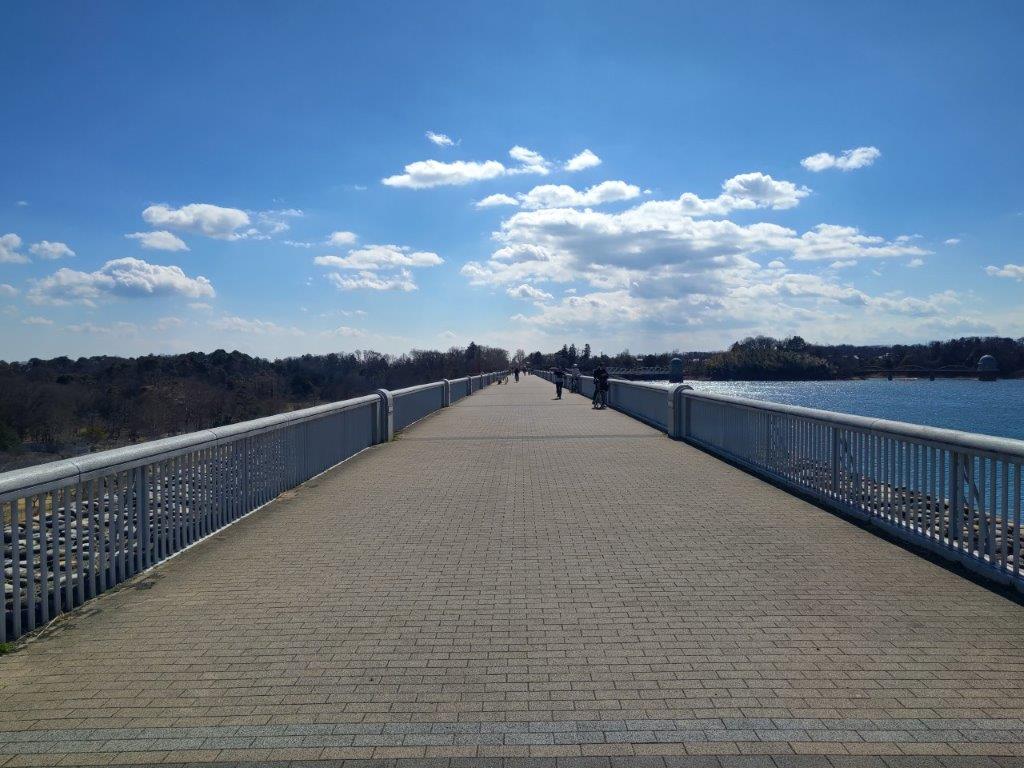
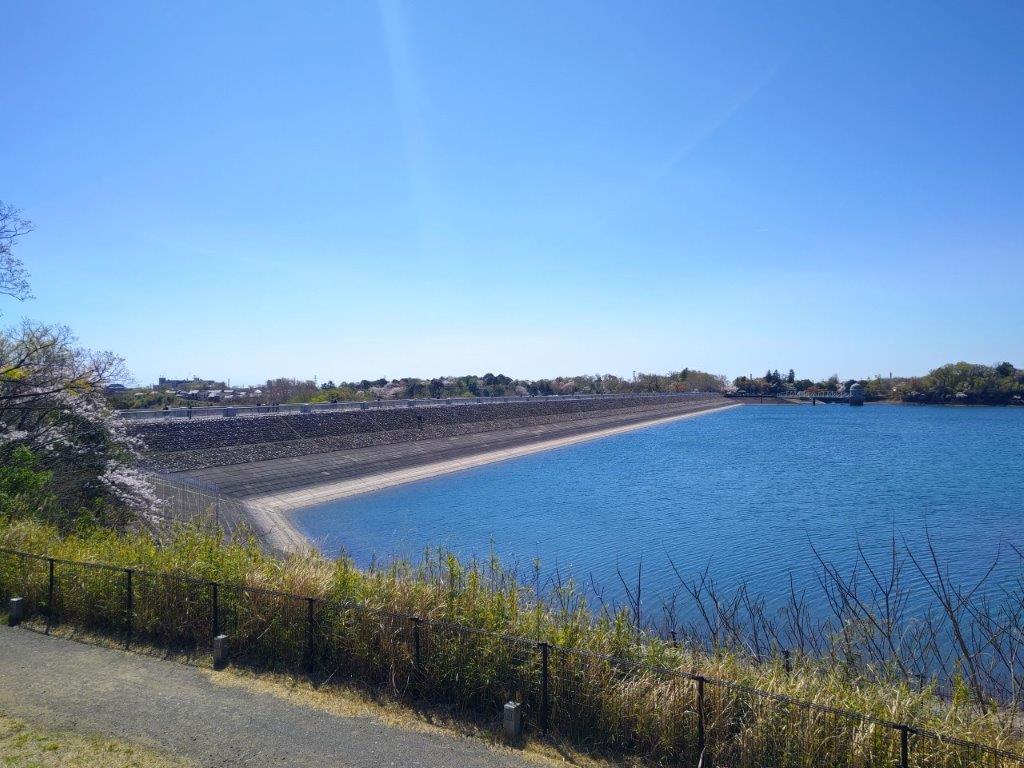
Murayama-shita Dam on Tama Lake

Few People Walking the Dam

…on a Cold Winter Day

View East of Higashi-Murayama City & Hachikokuyama Park

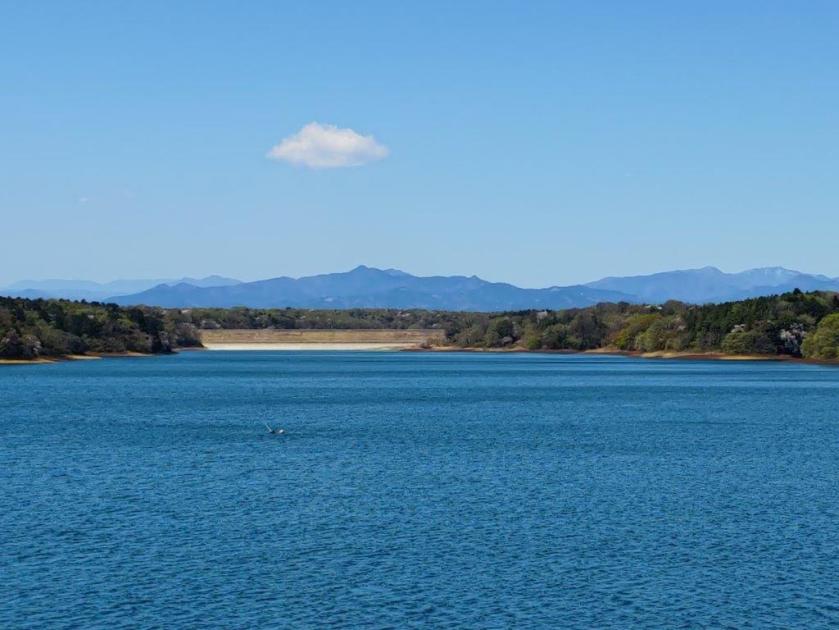
View West of the Okutama Mountains

Mt Fuji was in the Clouds but Seibu Dome was visible on the right

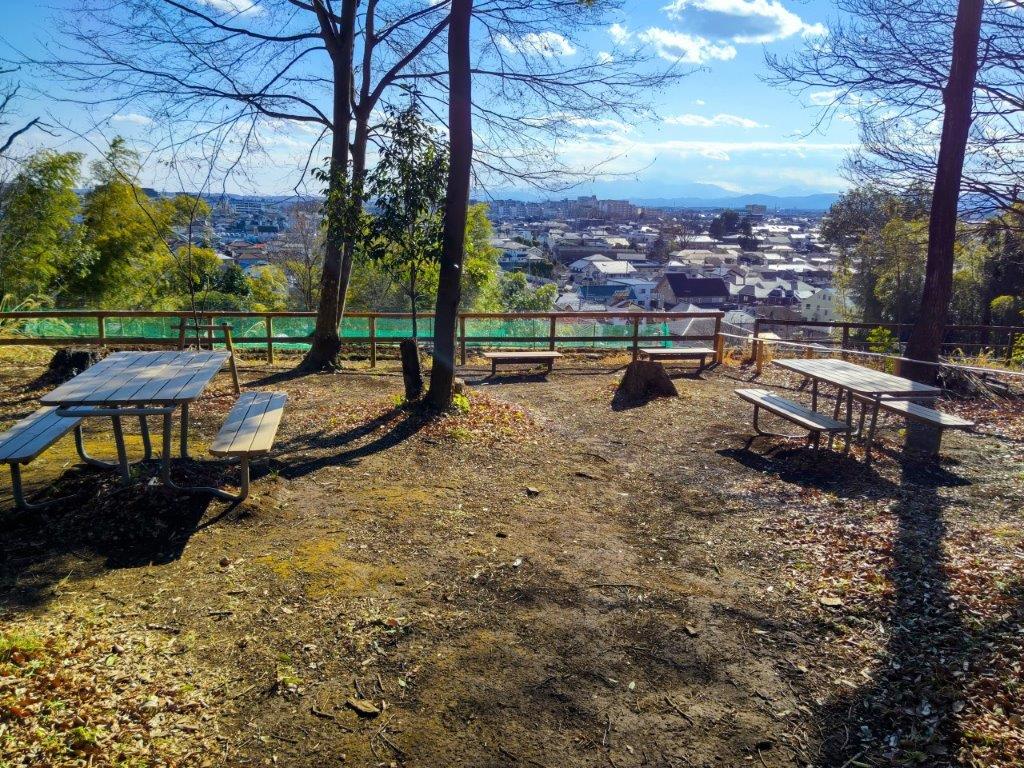
Wooden Walkway in Higashiyamato Sayama green space

Observation Plaza in Higashiyamato Sayama green space

Heading to one more viewpoint on the Southwestern Side of the Park

Tanzawa Mountains (left) and Okutama Mountains (right)

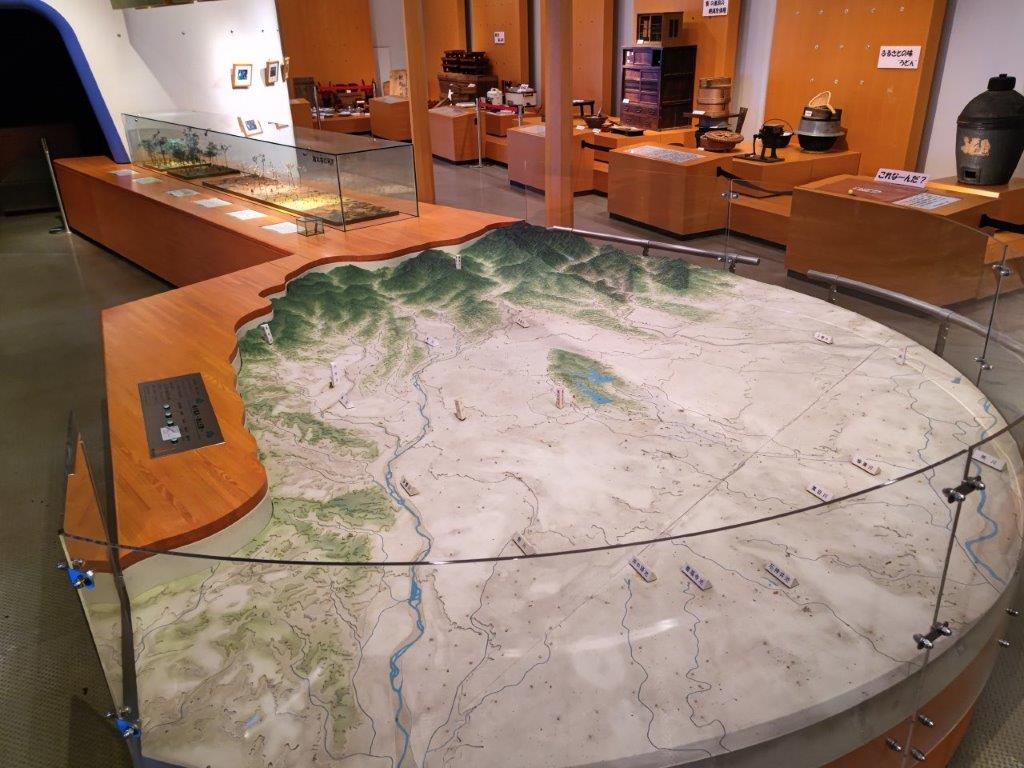
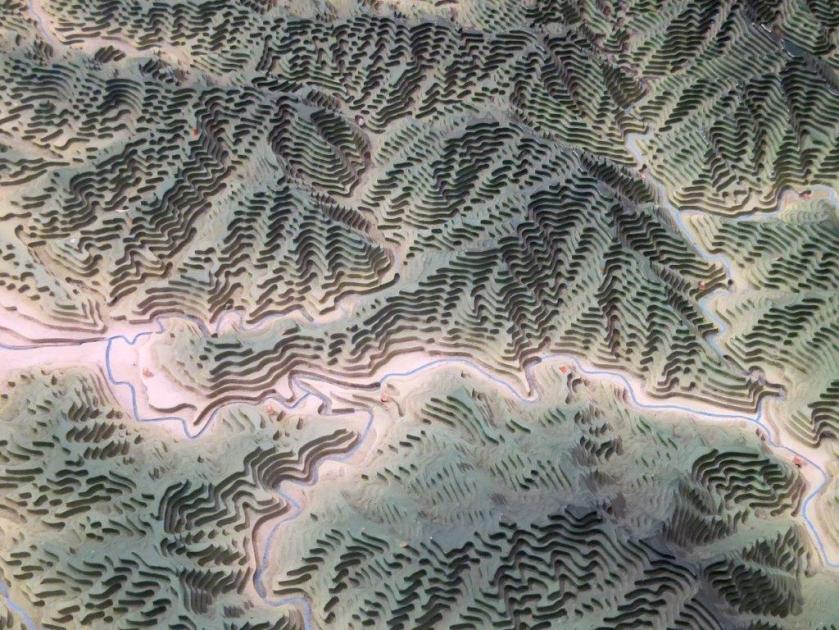
Diorama of the Mountains around Tokyo in Higashiyamato City Museum

Unsho-ji Temple on the way to Higashi-Yamato Park

Watch a Video of the Arahata-Fuji Hike

Watch the Video of the Hike on YouTube

See a Slideshow of More Pictures of the Hike
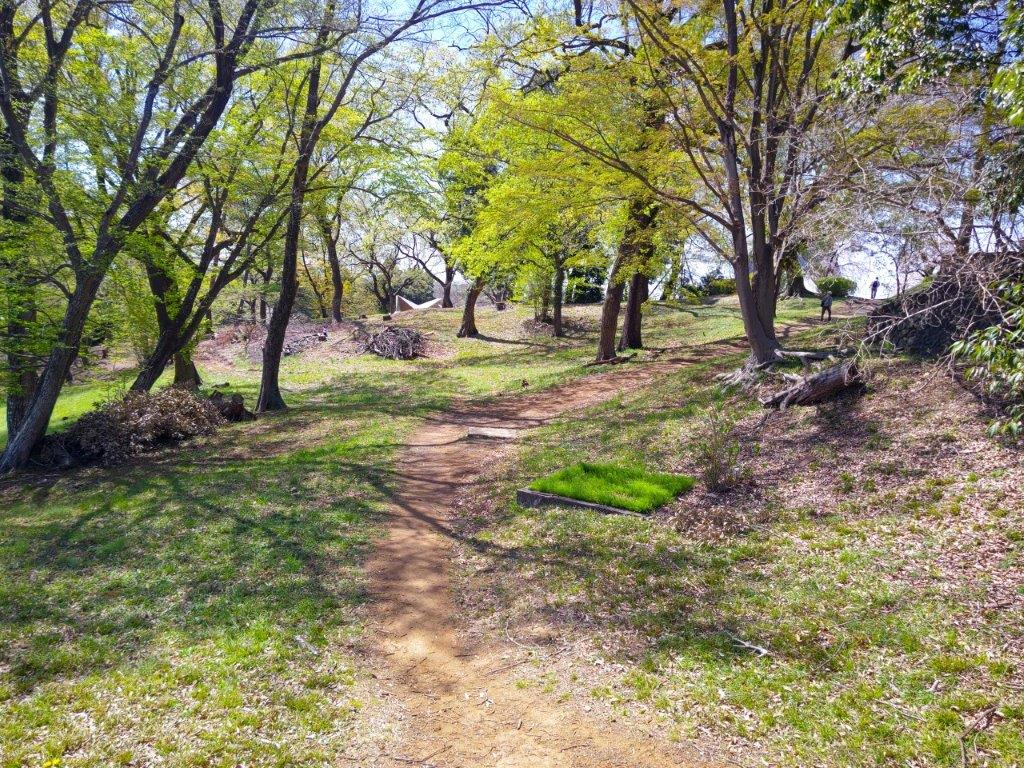
This Blog Post Continues a Little Longer…

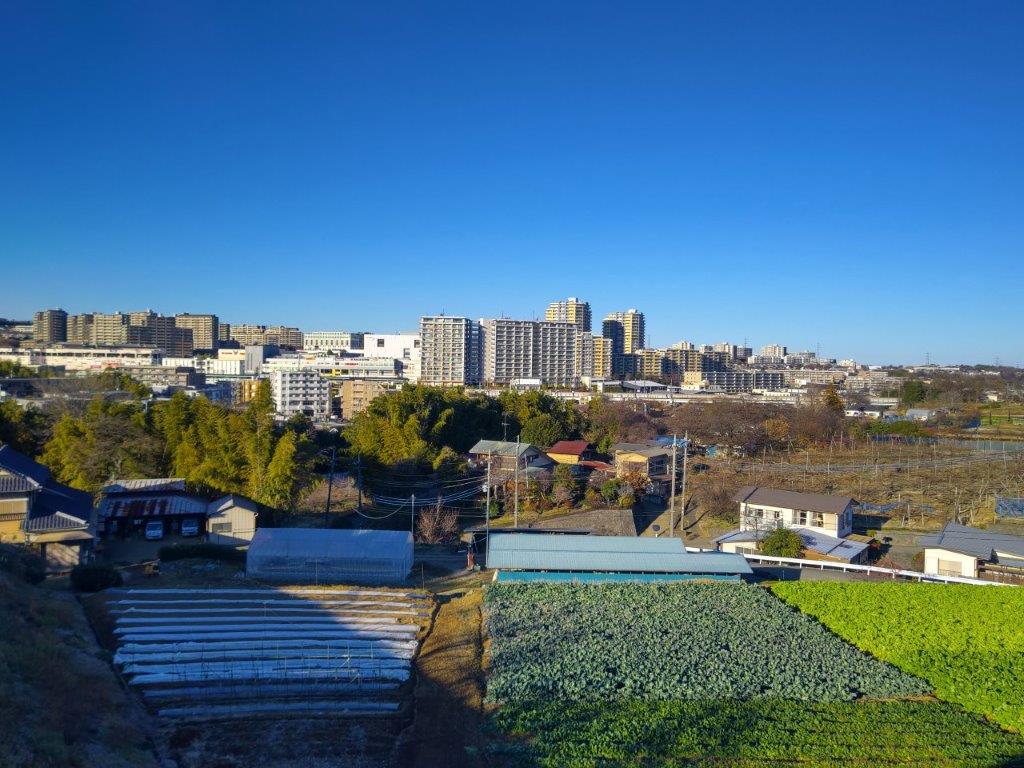
I wanted to return to Tama Lake to complete my originally planned hike. I finally had an opportunity for a short morning hike on the second Wednesday of April. The cherry blossom season had started later than usual due to unseasonably cold weather at the beginning of the month, and I was hoping to still see some sakura in full bloom, as well as the new green, inside Sayama Park.

I would ride the Laview Limited Express to Tokorozawa, then change to the Seibu Shinjuku line for the one stop ride to Higashi-Murayama, and change again to the Seibuen line for another one stop ride to Seibuen station, the whole trip possible in one hour thanks to short connection times. The weather was supposed to be warm and sunny and so I hoped to get my third view of Fuji of the year.

Seibuen Fujimi “Periscope Tower” Surrounded by Sakura

New Green at the North Side of Sayama Park

View of Mt Fuji from Tama Lake

Murayama-Shita Dam under the Morning Sun

Clear View of the Okutama Mountains (Mt Odake on the left side)

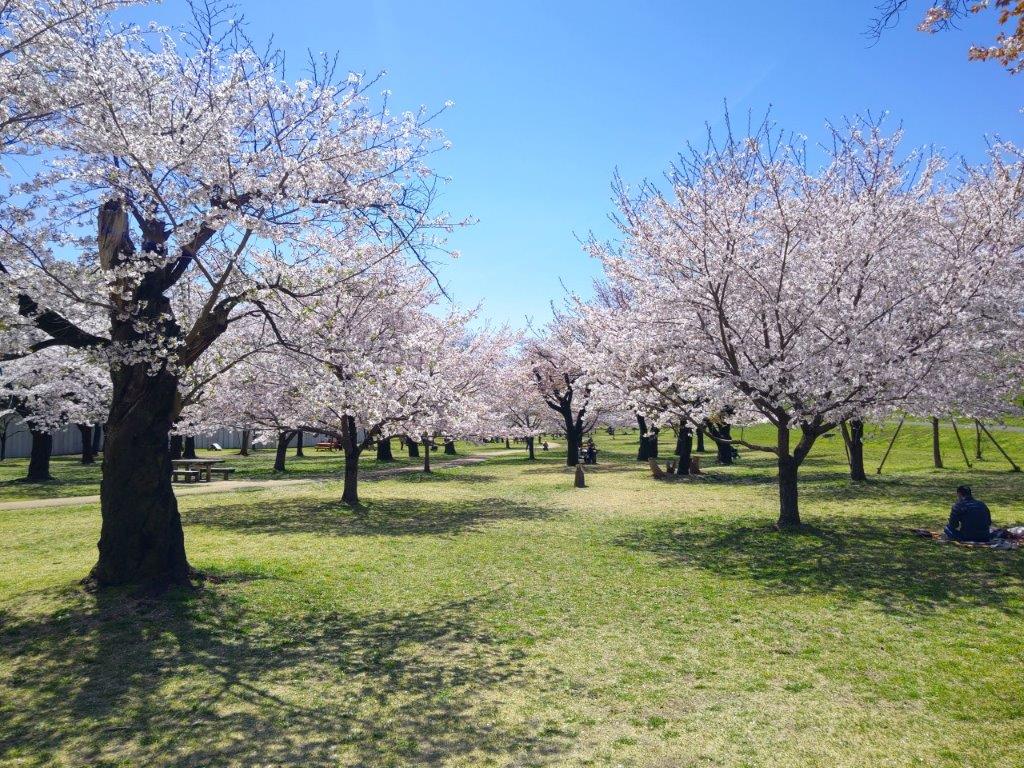
Cherry Blossom Trees in Sayama Park

A Good Spot for Hanami

Wooden Steps Connecting the Dam and the Park

Walking among the Sakura in Sayama Park

Following Seseragi Road in Higashi-Murayama

Observation Deck on Megurita Greenroad

Walking on Sakura Promenade at the End of Megurita Greenroad

Another Good Place for Hanami

Two People Enjoying a Break under a Huge Sakura Tree

Group of Huge Cherry Blossom Trees in Kitayama Park

Kitayama Park in the Early Spring

Pair of Weeping Cherry Blossom Trees in front of Higashi-Murayama Station

Watch a Video of the Final Part of the Arahata-Fuji Hike

See a Slideshow of some more Pictures of the Hike
Skiing around Tokyo

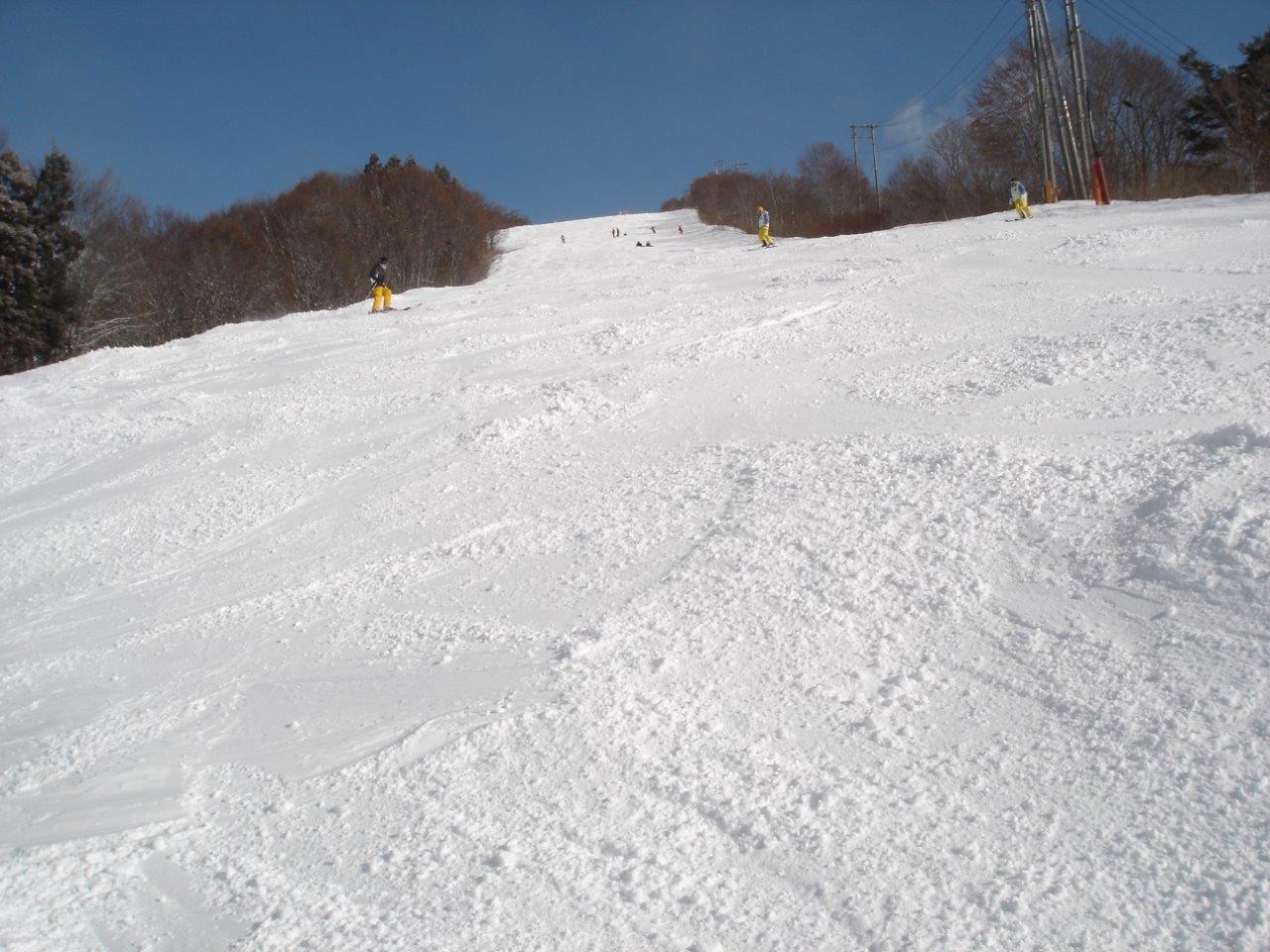
Since the skiing season has officially kicked off, why not hit the slopes? Thanks to the shinkansen, several great resorts are within easy reach of Tokyo, even as day trips. Below are my writeups on several resorts in Nagano and Niigata where you can enjoy the fresh powder.

Find Japan Hiking Maps on Japanwilds

Getting Ready to Ski at Nozawa Onsen

Most Hot Springs: Nozawa Onsen

Easiest Access: Madarao Kogen

Biggest Resort: Shiga Kogen

Longest Season: Myoko Kogen

Best Views: Togakushi Ski Resort

Happy New Year 2025

Thank you for following and subscribing to Hiking Around Tokyo in 2024, as well as liking and commenting on blog posts. It’s always a pleasure to get feedback on hike writeups and help fellow hikers get into the mountains.

This year saw the launch of Japanwilds, where you can find high-quality digital maps for hiking in Japan, as well as hike descriptions from bloggers around Japan. Please make sure to have a look and subscribe for future updates, thank you!

The Japanwilds Logo

Below are some numbers from the past year:

In 2024, I completed 33 day hikes (7 are yet to be published), the same number as in 2023, down from 38 in 2022 and 2021. I missed a handful of weekends in the early spring due to rainy weather, as well as a bunch in the summer due to high temperatures and humidity. On the bright side, I was able to hike every weekend from October till the end of the year, thanks to better weather in Autumn.

Saitama and Kanagawa had the most hikes, six each, followed by Yamanashi (5), Tokyo (4), Tochigi (3), Nagano (3), Shizuoka (2), Chiba (2), Gunma (1) and Fukushima (1). Sadly, no hikes in Niigata, nor Ibaraki this year; however, a couple were close to Ibaraki, with good views of the Abukuma Mountains. Ease of access and an abundance of mountains and trails explains why Saitama, Kanagawa and Yamanashi top this list.

The furthest location reached by train was Koriyama Station (200km) in Fukushima, followed by Kamisuwa Station in Nagano and Shizuoka station (both 150km). I used limited express trains for 14 hikes, local lines for 12 and the shinkansen for 7. I’m using bullet and express trains more and more, as they enable me to comfortably reach new destinations. From stations, I used local buses for 21 hikes, taxis and share cars 5 times each. I could still find 4 excellent station to station hikes.

The highest peak was Mt Washi (1798m), also the best 360° view of the year, and the highest elevation was Ama-ike Pass (2241m), both in Northern Yatsugatake. The lowest mountain was Mt Kinugasa (134m) on the Miura Peninsula. I reached about 50 summits, the tally varying on whether minor mountains are included or not; Mt Takao and Mt Ogusu were summited twice via different routes. Twelve of those peaks were repeats, also via different routes. I saw Mt Fuji six times and climbed 3 peaks with “Fuji” in their name. I visited 12 hot springs, among which 5 were first-time visits. Finally, I saw 3 snakes, leading up to year of the Snake.

Looking forward to more hiking in 2025!

Shirakoma & Ama Ponds (Highest Point 2241m), Chino City and Sakuho Town, Nagano Prefecture, Sunday, October 27, 2024

I had last visited the Northern Yatsugatake Mountains 6 years ago. This time, I wanted to check out two small lakes above 2000m and situated between Mt Tengu and Mt Kitayoko; I also wanted to explore the “Moss Path” near Mugikusa Pass. I’d start from the top of the Kita-Yatsugatake ropeway and walk counterclockwise around Mt Shimagare and Mt Chausu, climbed 10 years ago. Back then I stayed overnight at the Shimagare Lodge. However, in October the ropeway operated till 5pm, late enough for a day trip.

Hiking in the Yatsugatake-Chushin Kogen Quasi-National Park 八ヶ岳中信高原国定公園

Hiking on Kita-Yatsugatake 北八ヶ岳

To get to the start of my hike, I’d take the Chuo line limited express to Chino station and then catch an Alpico bus for the 40-minute ride to the ropeway; I’d use the same route for the return. The weather was supposed to be mostly cloudy, but no rain was forecast, maybe even a little sunshine in the late morning. I decided to head out as the next weekend the ropeway would run only till 4pm; also my main purpose was to see the lakes and mossy undergrowth. I was looking forward to what would probably be the last high-altitude hike of the year.

For subscribers, read this Blog Post on Hiking Around Tokyo for a better viewing experience and the latest updates

The hiking trails followed on this hike can be found on the Japanwilds map for Mt Shimagare and Mt Chausu, available for free with the Avenza app

Forest Bathing Observation Deck Route from the Kita-Yatsugatake Ropeway (left) Moss Path in the Yatsugatake Nature Recreation Forest (right)

Moss Path in Onodachi Forest (left) Walkway in Kokuyo Forest (right)

The sun was still shining as I rode the limited express to Chino, arriving there a little past 9am. From the bus, I could see the autumn colours around Tateshina lake, and I made a mental note to plan a hike there next year. Shortly after 10am, I was standing inside the full ropeway cabin (fits 100 people) as it rose from 1800m to over 2200m. After getting ready, I took a few minutes to enjoy the view of the South and Central Alps from the outside terrace; directly behind was the rounded top of Mt Shimagare.

Shirakoma Inner Garden (left) Walkway through Chamizu Forest (right)

The Ogawara Pass Forest Road (left) Walkway to Ama-ike Pond (right)

The mists had started to roll in, Mt Kitayoko and Mt Tateshina were already hidden in thick clouds. I set off before the next load of ropeway passengers arrived at 11am, and made my way along the Forest Bathing Observation Deck Route (森林浴展望台コース shinrinnyoku tenbodai kosu). I had done this route before but in reverse. I soon reached an open space where I had a view of the grassy highland of Kirigamine. After 11am, I passed the observation deck, the view partly obscured by trees, and left the wooden walkway for a proper hiking trail.

Walkway to Ama-ike Pond (left) Path for Amaike-toge (right)

Before Amaike-toge (right) After Amaike-toge (left)

The trail was rockier than I had remembered and my progress was slower than expected. At 1130, just past the Go-Tsuji intersection, I arrived at an open rest place opposite a beautiful bright orange larch, one of the few autumn leaves I saw on today’s hike. Soon after, I entered the Yatsugatake Nature Recreation Forest (八ヶ岳自然休養林 Yatsugatake shizen-kyuyo-rin) and I found myself walking through an enchanting forest with mossy undergrowth, the path now aptly named “Koke no Michi” (苔の道) or the Moss Path. Around this point, today’s hike diverged from the one I had done ten years ago.

Central Alps from the Top of the Kita-Yatsugatake Ropeway

Start of the Shinrinyoku Tenbodai Route

I was amazed by the sheer amount of bright green moss covering everything close to the ground; perhaps there was more than usual due to the higher than average rainfall this year. At noon, I crossed the busy Marchen Road connecting Chino city with Sakuho town, and continued along the Moss Path, now inside the Mist Garden (狭霧園地 sagiri-enchi), although no mist was hanging around at the time. After a short climb, I arrived at Onodachi Forest (斧断ちの森), mostly made up of slender birches.

Walking through the Mist Garden

Passing through Onodachi Forest

I enjoyed the combined effect of the white birch trunks and light green moss on my solitary stroll through the higher reaches of the Yatsugatake-Chushin Kogen Quasi-National Park (八ヶ岳中信高原国定公園). At 1230, I passed the bright red roof of the Mugikusa Hut; beyond, the top of Mt Chausu was temporarily free of clouds. I turned left onto a side trail leading through Kokuyo Forest (黒曜の森), the name referring to a dark green coloured moss. I then exited the forest and entered the Shirakoma Inner Garden (白駒中庭), blue patches appearing in the sky above, giving me hope for the afternoon.

Following the Moss Path

Entering the Shirakoma Inner Garden

I was thankful for the wooden walkway allowing me an easy passage above a tangle of rocks and creeping pine (這い松). After a short up and down through Shirakoma Forest, I finally arrived at Shirakoma Pond (白駒池). It was past 1pm so I took a lunch break inside a pond-side open shelter. Here, I had rejoined the crowds so I decided to skip a walk around the pond, and quickly headed back to Marchen Road which I followed to Mugikusa Pass. There, I ducked down a small trail on the right, leading through Chamizu Forest (茶水の森), all by myself once again.

Beyond is Shirakoma Forest and Shirakoma Pond

Grey Clouds above Shirakoma-ike Pond

The clouds had wrestled back control of the skies and it started to look like it might rain after all; this was also the most isolated part of the hike through somber and silent forest. I quickened my pace and by 2pm reached the Ogawara Forest Road (大河原林道) although I left it shortly after for yet another walkway. Half an hour later, I reached the far side of Ama Pond (雨池), meaning rain pond. It was smaller than indicated on my map and most likely reaches its full size after heavy rain or the spring snowmelt.

Walkway to Ama-ike Pond

Far Side of Ama-ike Pond

I was startled by a loud barking noise and looking at the opposite shore, I saw deer jump away into the forest; I wasn’t alone after all. I was back on schedule so I decided to walk around this pond. On the other side, I had a better view of the blue pond water; above the trees on the opposite bank, low clouds were blowing by quickly, a sure sign of a change in weather. As I started to climb up through the forest, I suddenly caught sight of a majestic stag with huge antlers; it was standing guard while his doe escaped. I rejoined the forest road but soon turned left up a steep trail through thick forest.

Near Side of Ama-ike Pond

Mist on Amaike-toge

I found myself surrounded by swirling white mist as I emerged from the forest at Amaike Pass (雨池峠). It was now 3h30, leaving me ample time before the last ropeway. I followed the final walkway of the day, down a small valley past Shimagare Lodge where I spent the night ten years ago, merging with my previous hike in the area. At 4pm I was back at the top of the ropeway; half an hour later I was riding a mostly empty bus back to Chino station where I boarded the limited express for the 2-hour trip back to Tokyo.

The hiking trails followed on this hike can be found on the Japanwilds map for Mt Shimagare and Mt Chausu, available for free with the Avenza app

Watch a Video of the Shirakoma and Ama Ponds Hike

Watch the Video of the Hike on YouTube
See a Slideshow of More Pictures of the Hike