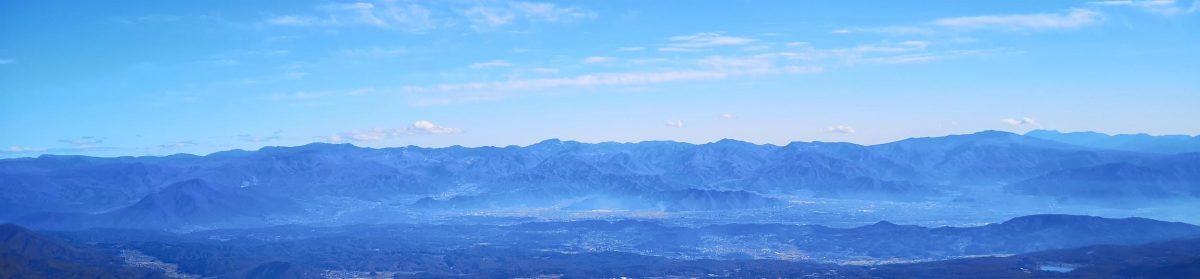
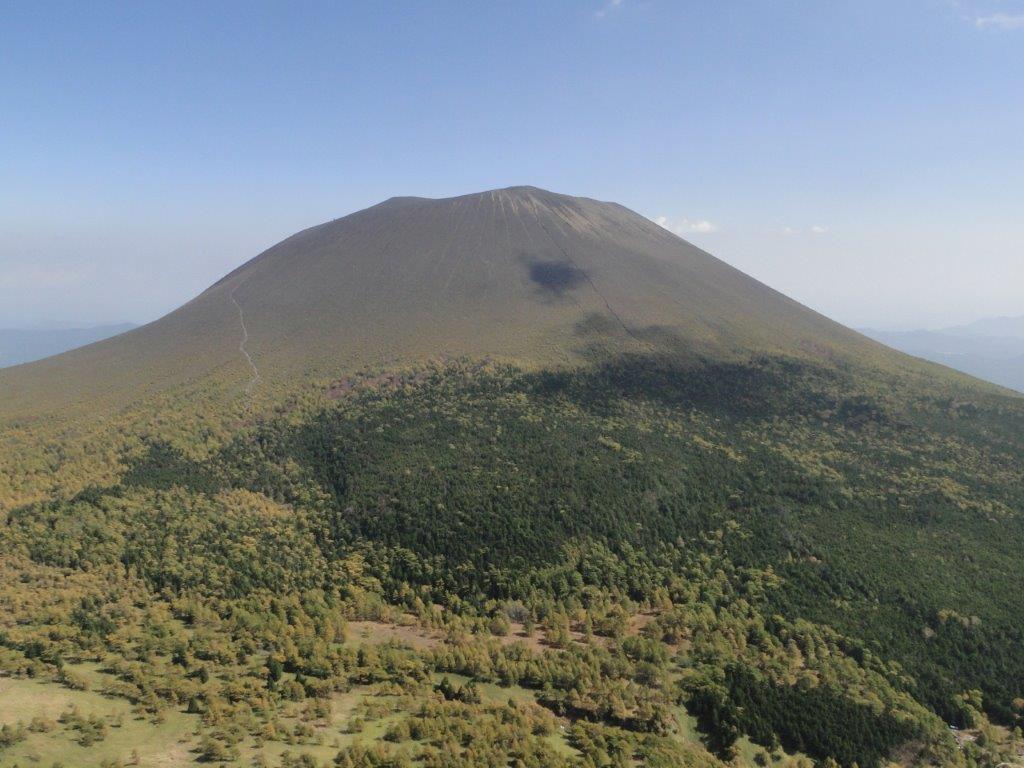
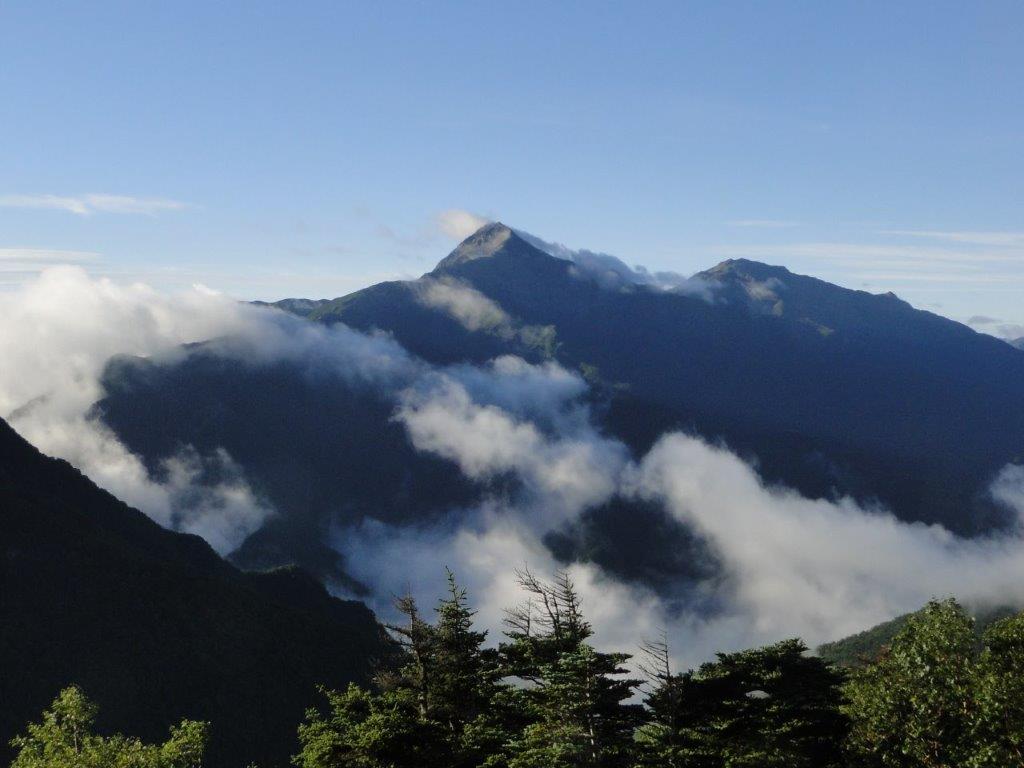
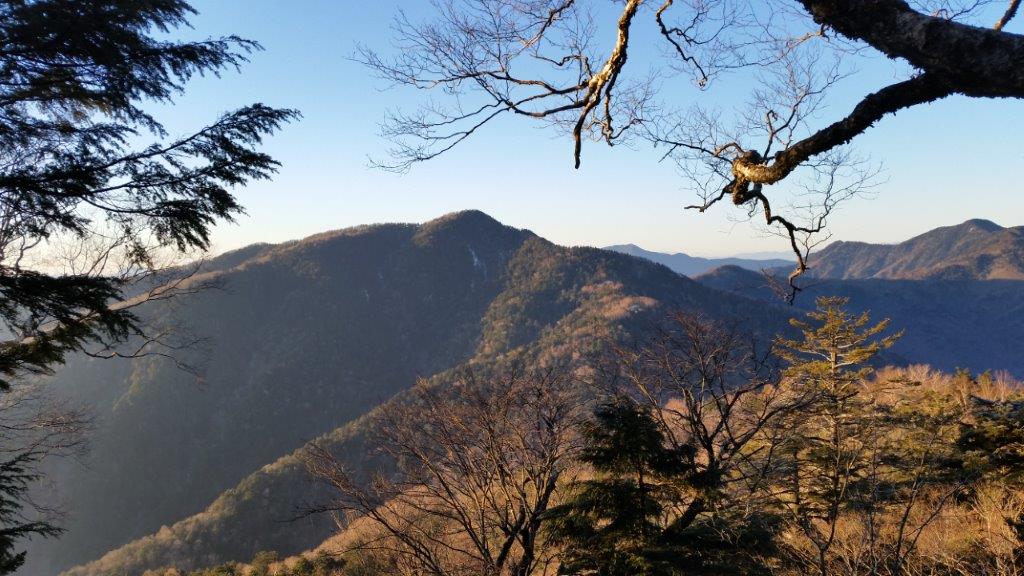
Mt Asama (2568m), Komoro City, Nagano Prefecture, Saturday, October 12, 2013 [Map Available]

Hiking the hundred famous mountains of Japan 日本百名山

Hiking in the Joshin-Etsu-Kogen National Park

浅間山 (あさまやま asamayama)

Download a map of the Mt Asama hike

This map was developed for Japanwilds with the Hokkaido Cartographer

Find more Japan hiking maps on Avenza

View of the summit of Mt Asama from near Mt Kurofu

Mt Kenashi (1964m), Mt Ama (1771m), Fujinomiya City, Shizuoka Prefecture

Mt Kenashi is a famous mountain but not part of the original one hundred. It is part of the famous two hundred mountains, which isn’t too shabby considering that there are thousands of mountains in Japan. It sits opposite Mt Fuji and thus has some excellent viewpoints of Japan’s most famous volcano. Consequently, there are quite a few people climbing this mountain.

Hiking in the Fuji-Hakone-Izu National Park

富士箱根伊豆国立公園

HOW TO GET THERE: The biggest drawback is that this mountain is tough to get to from Tokyo. You will need to shell out 5000 yen to take the Shinkansen from Tokyo station to Shinfuji station in Shizuoka (about an hour), and then put down another 1300 yen for the bus to the Asagiri Green Park entrance (also about an hour). To take your mind of all this spent money, there are great views of Mt Fuji along the way.

Fortunately the way back is slightly cheaper. At the end of the hike you can catch the same bus taken in the morning and get off in Kawaguchiko. From there, you have a choice between a local train or the limited express back to Shinjuku. The latter is more expensive and only runs a few times a day. Alternatively, you can take a bus to Shinjuku station for less than 2000 yen. However if you are going back on a weekend, beware of traffic jams. You could also take this way to go there but you would end up at the start of the hike half an hour later, and to trains heading out to the Mt Fuji can be packed (less so so on the way back).

Get a Map of the Mt Kenashi Hike

This map was developed for Japanwilds with the Hokkaido Cartographer

Find Japan Hiking Maps on Japanwilds

THE ROUTE: Once again I was the only person to get off the bus; it seems that most people come here by car. I had to walk along a flat road for about half an hour to reach the base of the mountain and the start of the hiking trail. The view of Mt Kenashi towering above me was impressive; I wondered if I really was going to be able to manage this long and steep 1000+ meter climb. On the way I passed a wide and grassy camp site on my right with some excellent views of Mt Fuji. I definitely want to camp here some time in the future.

At the end of the long asphalt road I turned left following the signs for Mt Kenashi. Eventually I entered the forest, passed numerous parked cars, and started climbing along a rock path. There were two main paths up Mt Kenashi. I chose the shorter one so that I would have enough time to take the long ridge route down. The path was divided into 10 stations each marked with a sign, similar to the Mt Fuji stations. I passed quite a few people going up and down the mountain. The weather was sunny and not too cold for a November day, although judging from the absence of leaves higher up, it seemed that autumn was already finished on this mountain.

Mt Kenashi with the camp site at its base

As expected the climb was seemingly endless. Similar to when I was climbing Mt Takanosuya in the mist, the top ridge always seemed to be out of reach, always just beyond my level of vision. Every time the path became level, and I thought I was finally there, it would surprise me by rising steeply again. I was slowly getting higher than the rest of the ridgeline, and it felt like I was ascending some kind of spire.

At last I reached a small rocky outcrop, marked as a viewpoint of Mt Fuji. I decided to have an early lunch there, not because I was especially hungry, but because the view was fabulous; there was a comfortable unoccupied sitting spot, and there was no guarantee of something similar at the summit. However I only got past my first sandwich when I was forced to flee because of a group of hikers that talked loudly behind me while taking photos of the view.
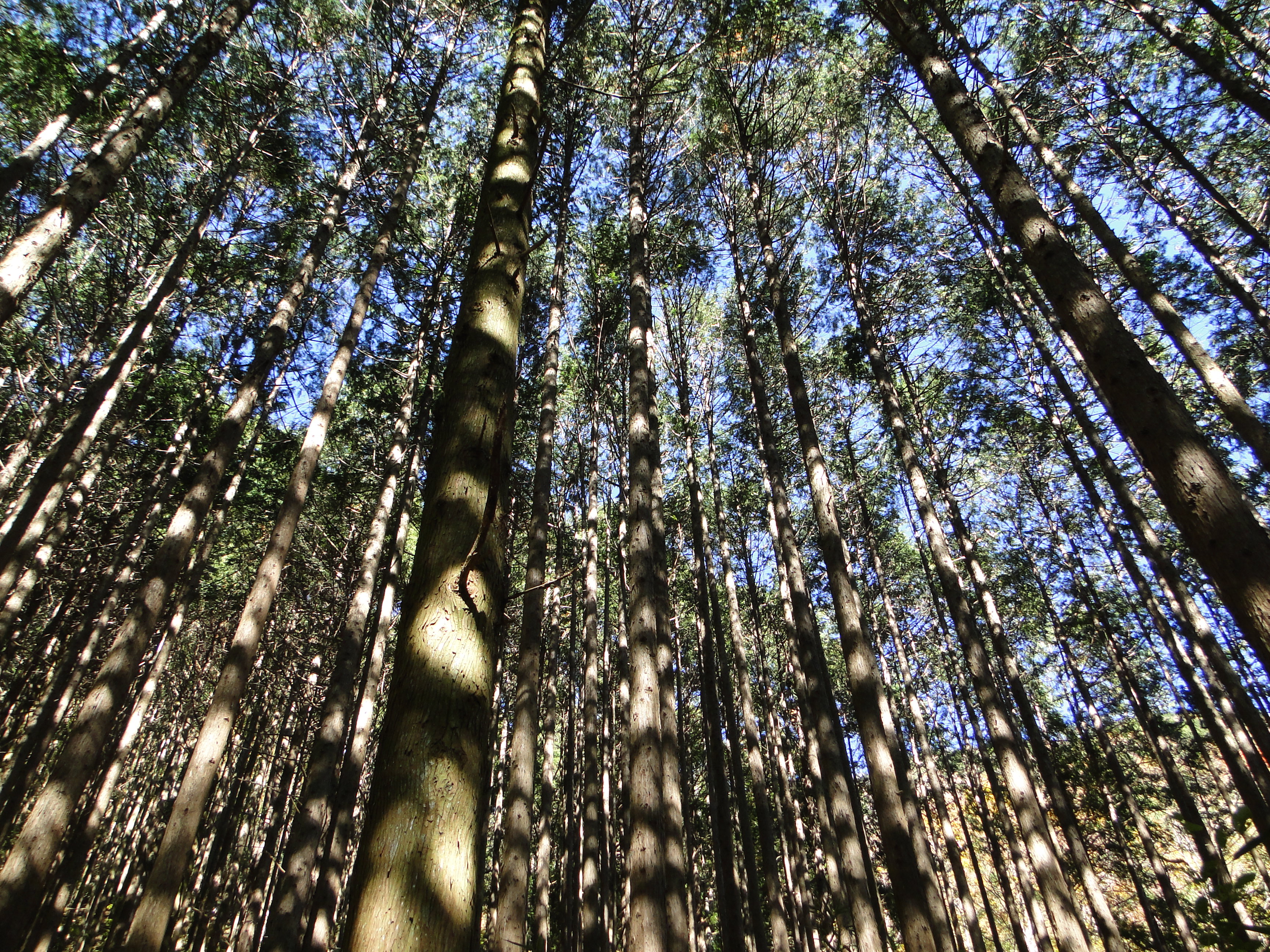
Pine tree forest at the base of Mt Kenashi

From this point I reached the top ridge quite quickly. I overtook a lady hiker for the second time, who couldn’t figure it out how that was possible (she hadn’t seen me taking my lunch break on the rocky outcrop earlier on). From there, on it was an easy stroll to the summit of Mt Kenashi (毛無山 kenashiyama – means hairless mountain). Interestingly, just by stepping onto the ridge, the temperature dropped to near freezing. At nearly 2000m, winter had arrived.

As expected, there were plenty of people at the summit. I still managed to find a decent spot to sit down and finish my lunch. Unfortunately, the view of Mt Fuji wasn’t as good from here. However, before I could tuck in, a friendly hiker told me (in good English) that if I continued ten more minutes along the ridge line, I would reach a much better spot for lunch with a 360 view, including Mt Fuji and the Southern Alps. That seemed like a very attractive proposition, so after having him take the obligatory photo of me and the summit marker, I set off for this perfect lunch spot.
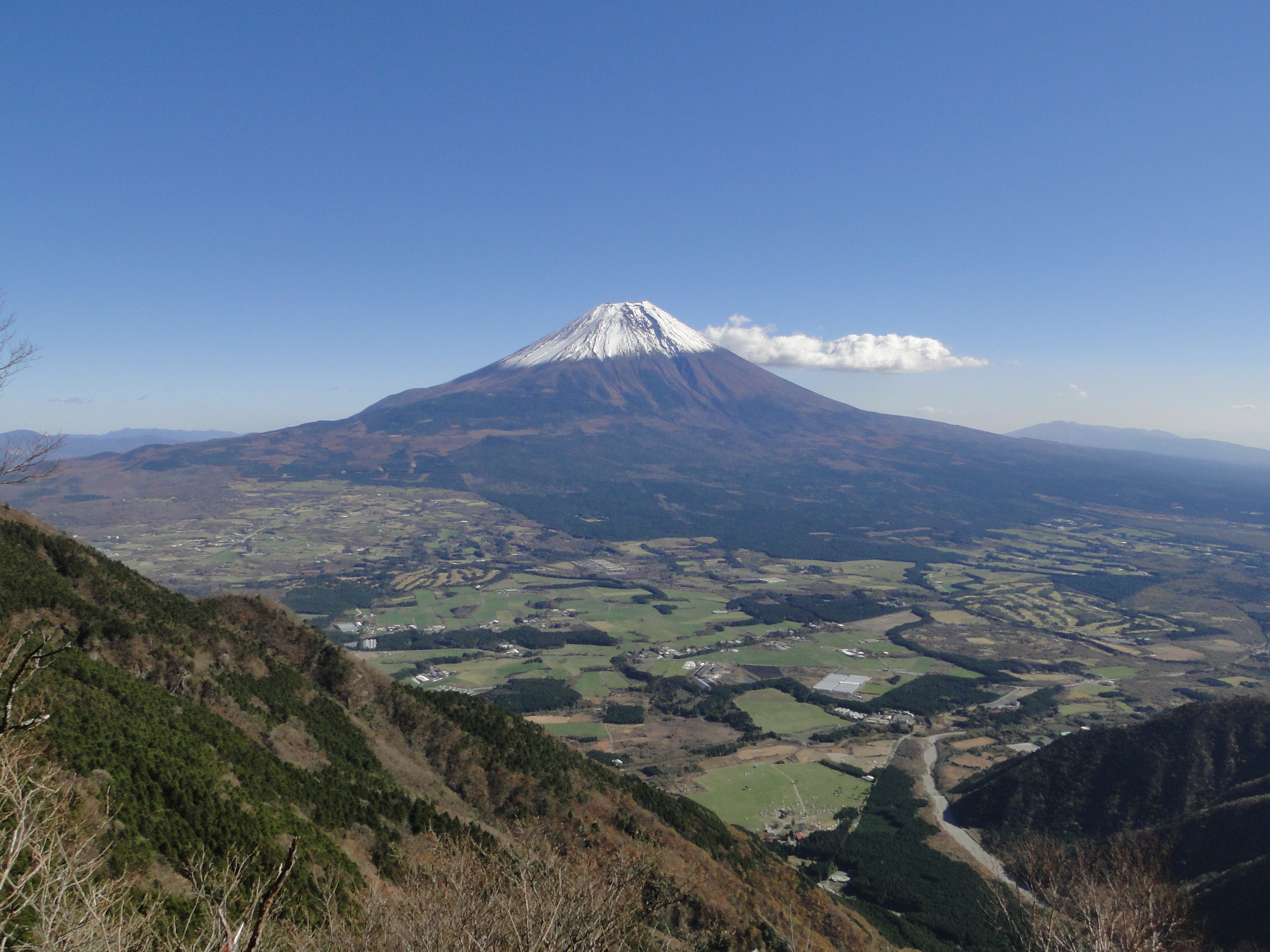
The first view of Mt Fuji before the summit

Sadly, I never found it, and one hour later I reached the next summit, Mt Ama (雨ヶ岳 amagadake), the last viewpoint before going down the mountain, and last chance for a (late) lunch. I was lucky I had eaten something before reaching the top, since I wasn’t able to find any good sitting spots with a view along the ridge. Even when I had a 360 degree view, the bamboo grass on either side was just too high to sit down comfortably. I guess the other hiker had walked the ridge in other seasons when the grass hadn’t been so high. The ridge was a mix of cold and shady forested sections, and warm and sunny  grassy sections. The views of Mt Fuji were the best I had ever seen since the sun was behind me; I could make out all the details of the snowy rocky summit area. There were also far less people walking the ridge, since most people, having come by car, had  to go up and down Mt Kenashi the same way.

I found a rectangular block of stone perfect for sitting. moved it into the sun and sat down to enjoy the rest of my lunch while examining Mt Fuji. However, I couldn’t stay too long however since I had a bus to catch. Soon I could see lake Motosuko on my left but too many branches in the way meant that I couldn’t get a good picture.  Oddly enough I had the same kind of experience going down as when going up. Three times I thought I had reached the lowest point between 2 peaks only to discover that the path dipped further down.

Picture perfect view of Mt Fuji along the ridge

Finally I reached the flat part between two peaks and at another viewpoint of Mt Fuji, I saw the escape path for the bus stop leading down to the right. Here I met a male hiker on his way up. He told me that he was going to camp at the top of the mountain so that he could see the sun rising above the summit crater of Mt Fuji the next day, also called Diamond Fuji. It’s something I have never been able to see, but at the same time I don’t think I want to put in some much effort.

After a short while I reached a junction for the Tokai Nature trail. I had to jog along the last flat portion of the way, and I finally reached the bus stop with less than five minutes to spare. The bus back was empty at first but filled up quickly at the next stop. Despite that it was an enjoyable ride since you could see Mt Fuji from time to time.

CONCLUSION: A difficult but rewarding hike with fantastic views up a famous mountain that will see the crowds melt away during the second part.

Ask for a hiking map for Mt Kenashi

View to the South

Mt Takanosu (1736m), Okutama town, Tokyo Prefecture

UPDATE MAY 2025
The Inamuraiwa Ridge Route (稲村岩尾根), described in this blog post, is currently closed as several trail sections have collapsed due to a typhoon. It is recommended to use one of the routes on the south side for climbing this mountain

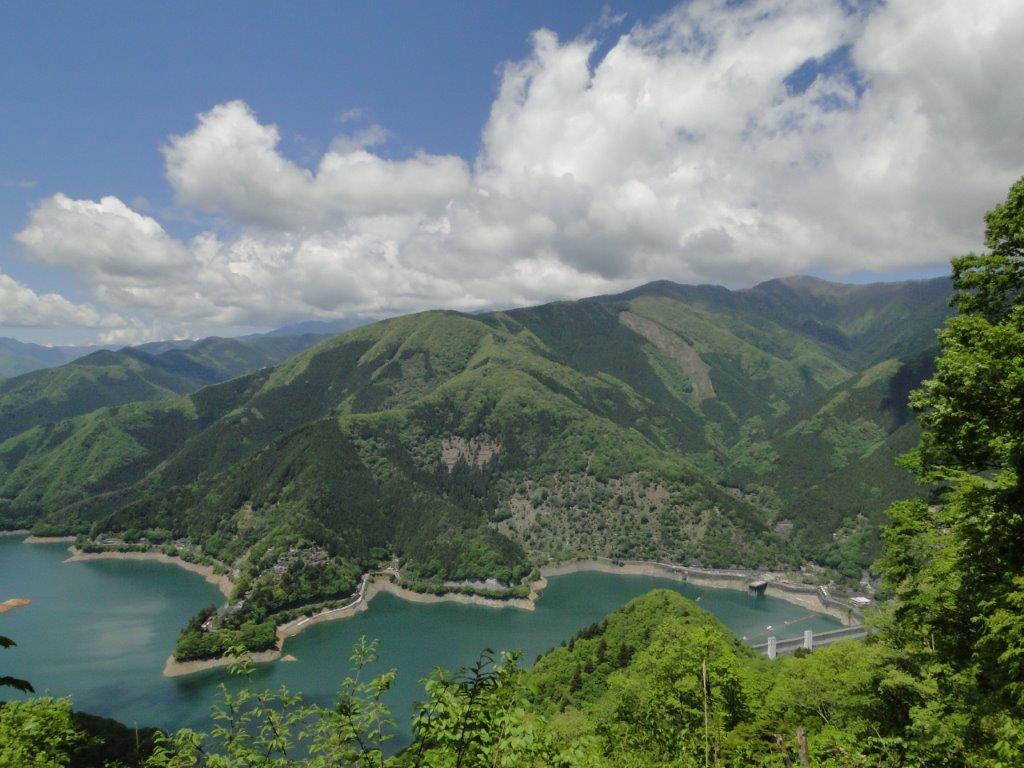
This isn’t a very famous mountain, but many people climb it since it’s one of the ways up Mt Kumotori, a hyakumeizan, as well as the highest summit in the Tokyo prefecture. It’s also inside the Chichibu-Tama-Kai National Park. I left Tokyo (the city) under the sun, but arrived under clouds and drizzle – how the weather can change fast!

HOW TO GET THERE: The best way is to hop on the early morning direct train to Okutama from Shinjuku station, otherwise you will need to change trains at least twice. If possible, sit in the front carriage, since this will put you close to the station exit; then make sure be at the front of the line for the bus, since this will guarantee you a seat. The bus for Nippara, also the stop for this hike, departs right in front of the train station.

THE ROUTE: After getting off the bus, I quickly continued walking along the road through the village. I knew the way since I had been here earlier this year to visit the Nippara caves. Also I was on a tight schedule and I didn’t have time to dawdle. Since the mountains were shrouded in mist, for once I didn’t lose any time taking photos. I arrived at a sign pointing to a footpath going down to the left, leading into the forest, over the river at the bottom of the valley and up the other side. It was pretty, but also slightly spooky, since there was no one else.

The path led me to a river bed through a ravine – it was remarkably beautiful (but difficult to take in photo). The approaching sound of bells told me that some other hikers were right behind me, but I lost them quickly on a steep slope. It took me away from the riverbed, and to the start of a rocky outcrop jutting above the ravine I had just climbed. Another group of hikers returning from the top of this outcrop told me it took 15 minutes to reach.

Despite my tight schedule I decided to attempt it since I was making good time. The rocky outcrop was somewhat slippery because of the recent rain, and turned into a bit of a scramble at the end. However it was worth it – even though the surrounding peaks were hidden in the clouds, I could see down the valley and the Nippara village below. Trees were showing their autumn colours here and there. It was hard to believe I was still in Tokyo prefecture.

View from the rocky outcrop – yes this is Tokyo prefecture.

Fifteen minutes later I was back on the main trail, and set off at a fast pace to make up for the lost time. Soon I was surrounded by mist. This made the climb doubly hard because it was impossible to see the summit – every time I thought I was about to arrive, the mist gave way to more forest and more climbing. Everything around me was silent and it felt a bit gloomy.

Finally I reached the top of Mt Takanosu (鷹ノ巣山 takanosuyama). There were a lot of people, but still plenty of space to sit down and have lunch. As expected there was no view to reward my efforts – just a lot of uniform whiteness. I headed down at once after lunch. There was really no point in hanging around, and I wanted to get back on schedule so that I would have time to take a hot bath at the end, and catch the direct train back to Shinjuku.

I thought that the way down was much nicer than the way up – a nice wide grassy ridge similar to a fire barrier. The mist went from spooky to mysterious. Suddenly I came to a point where the ridge turned right and went steeply downhill. The hiking trail seemed to be heading the same way. I was afraid of going down the mountain too soon, so I started to consul my map. Another hiker who had also been checking his map at the same place, told me this must be the right way. He was quite convincing so I started to follow him, anxious not to lose any more time. The path levelled and all seemed well; it started climbing again, became faint and  then disappeared. We both stopped to look for it through the mist. Eventually I found it twenty meters to our right. We were on a minor summit and the main trail had gone round it. I said goodbye to the other hiker, and continued ahead at at a fast pace. Funny things like this happen all the time.

Soon I came close to another minor summit, Mt Mutsuishi 1478m (六ツ石山 mutsuishiyama). The name means six rock mountain. It was only 5 minutes to the top so I went up. The top was grassy with some trees but looking back I could see Mt Takanosu. Since the elevation of Okutama station is only 350m, I knew I still had a long way down, and I quickly set off again. Soon the weather cleared up a little, allowing some sun through. I slipped on some rocks on a steep slope, somehow spinning around 180 degrees and landing with my chest on a rock. It knocked the wind out of me, but otherwise no damage done. Lower down, I had to navigate a slippery muddy path through thick forest. At one point I slipped again. After that, I decided to leave the path and walk through the forest alongside it. This is one reason not to go hiking after a period of rain.

Eventually I reached gentler slopes, an easier to walk path and finally a paved road. I was probably just above the old Okutama road which I had walked this year in May. At the entrance of the hiking path, there was a sign that a bear had been spotted at this location a few weeks ago. For one’s state of mind, I find it better to know this after the hike, rather than before. After another 30 minutes I was back inside Okutama town. From past experience, I called the hot spring Moegi no yu, but they told me it was very crowded at the moment and I would have to wait to get inside. I decided to skip my hot bath so that I could catch the last direct train for Shinjuku. As a consolation, I treated myself to some local sake on the ride back.

CONCLUSION: A surprisingly good hike with some pleasant ridge walking ending at the station. Definitely worth another shot in better weather. The official name for the hike from the summit down to Okutama is the Ishione Ridge Walk (石尾根縦走路 ishione jusoro).

Beware of bears

Mt Kita (3193m), Mt Aino (3189m), Mt Notori (3026m) & Mt Shiomi (3047m), Yamanashi, Nagano and Shizuoka Prefectures, September 2010 [Map Available]

Mt Kita seen from Mt Kaikoma

Hiking the hundred famous mountains of Japan 日本百名山

Hiking in the Minami Alps National Park 南アルプス国立公園

北岳 (きただけ kitadake)

間ノ岳 (あいのだけ ainodake)

農鳥岳 (のうとりだけ noutoridake)

塩見岳 (しおみだけ shiomidake)

Download a map of the Mt Kita hike

This map was developed for Japanwilds with the Hokkaido Cartographer

Find more Japan hiking maps on Avenza

Mt Kumotori (2017m), Tokyo, Saitama & Yamanashi Prefectures

Mt Kumotori is the highest point of Tokyo prefecture, first climbed in December 2006, and then again in December 2013 and 2015, staying in the summit hut each time. The purpose of my last 2 visits was for Hatsuhinode. The 2 main trails leading to the summit start from Okutama Lake in Tokyo and Mitsumine Shrine in Saitama and can be reached by bus from Okutama and Chichibu stations respectively; both are best done with an overnight stay in the summit lodge. The panoramic view of the Okutama and Chichibu mountains, as well as Mt Fuji, is definitely worth the effort of the lengthy ascent. Due to its relatively high elevation, the summit area has snow and ice in the winter months and crampons are recommended if climbing in that season.

The Long Ridge Leading to Mt Kumotori on the Okutama Side

Hiking in the Chichibu-Tama-Kai National Park

秩父多摩甲斐国立公園

雲取山 くもとりやま kumotori-yama

Japan 100 Famous Mountain 日本百名山

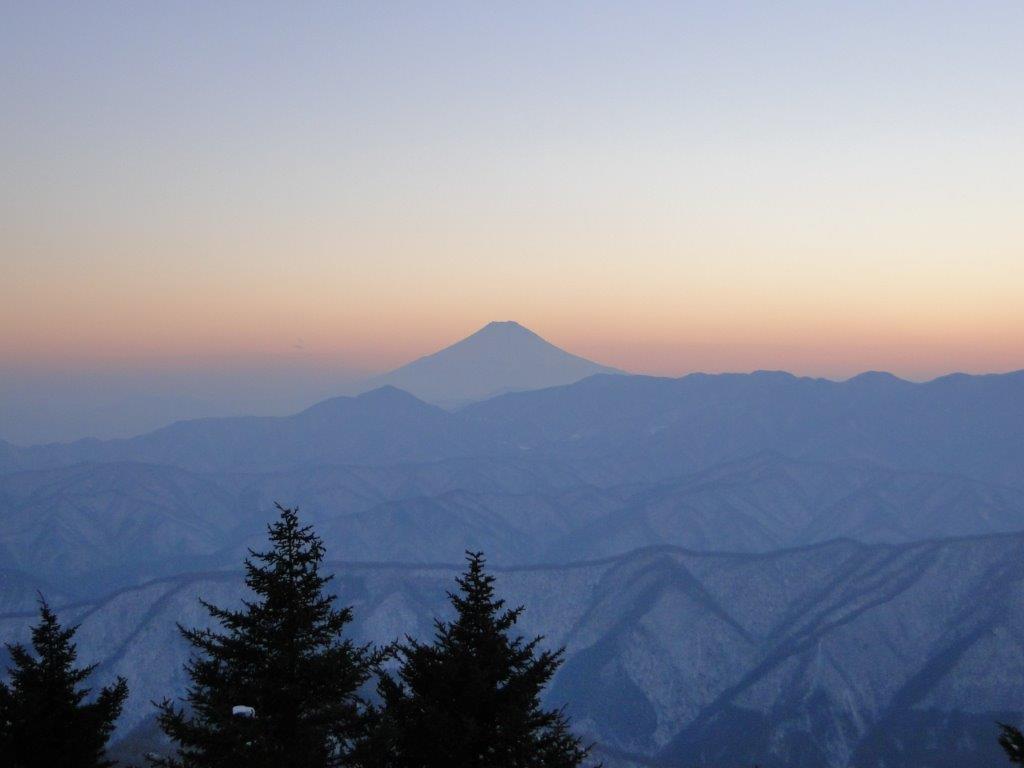
Mt Fuji at Dusk from the Top of Mt Kumotori

Request a Hiking Map for Mt Kumotori