The starting point for this hike was Mitsumine Shrine, a place I had visited a few times before, but had never really taken the time to explore. Since today’s hike was relatively short, I first took some time to check out the Mitsumine visitor center, one of the starting points for visiting the Chichibu-Tama-Kai National Park. It was a pleasant surprise – I found the displays of mounted animals and the model relief of the area particularly interesting.
View of Mt Wanakura (also known at Mt Shiroishi and climbed in 2018) from Mitsumine Shrine
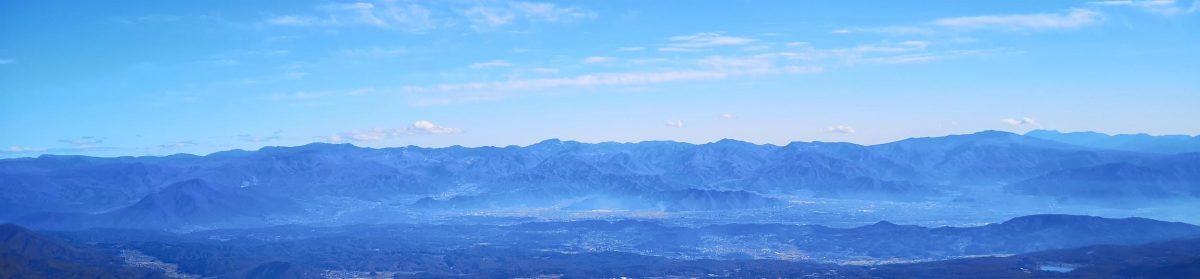
After spending nearly an hour at the visitor center, I hurriedly set off along the hiking path up Mt Kumotori. The autumn colours were at their peak, and since it was a weekday, I had them mostly to myself. Very soon I reached the turnoff for today’s mountain, located on a small ridge branching left off the main ridgeline. In less than an hour, I reached the small shrine at the top of Mt Myoho (妙法山ヶ岳), from where I got some great views of Oku-Chichibu, with Mt Ryokami in the center.
View of the jagged peak of Mt Ryokami from the summit
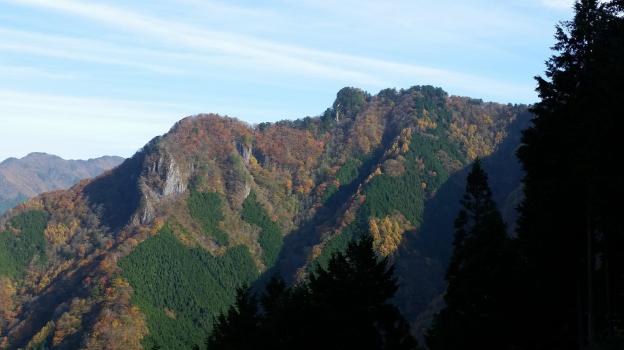
After lunch, I headed back to the shrine, and since it was still early in the day, I took some time to check out the shrine grounds – it was beautiful with all the autumn colours. At the back, there was a spectacular view of the mountain I had just climbed as well as Chichibu city.
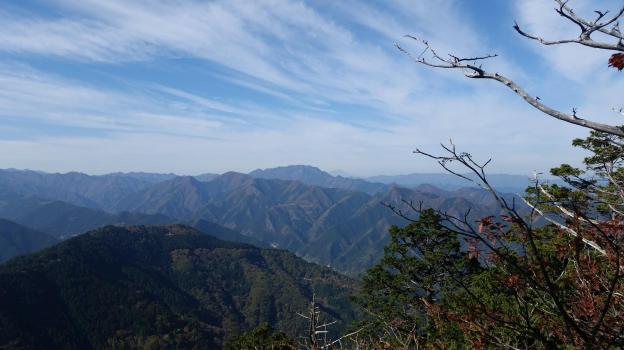
Good views from the trail heading down from Mt Mitsumine shrine
Afterwards, I located the hiking path leading down the mountain. Although there were a number of people at the shrine, no one seemed interested in hiking down, so once again, I had the path entirely to myself. Unfortunately, it wasn’t possible to hike all the way down to the train station, and the path ended up on the road, from where I caught an express bus back to Seibu-Chichibu station.
I did this hike with my mother who was visiting Japan for a couple of weeks. Since it was quite far from Tokyo, we rented a car in Takasaki, and spent the night in a traditional Japanese inn, or “ryokan”, in Kusatsu Onsen. The next morning was sunny, but by the time we had made our way all the way up to Yugama Lake 湯釜 the clouds had rolled in. We admired the light blue colour of the crater lake, but gave up on climbing Mt Kusatsu-Shirane. I had climbed it before in the clouds, and had little interest in doing it again in similar conditions.
A beautiful crater lake
We drove on to Yokoteyama Ropeway which took us to the top of Mt Yokote 横手山. We got some nice views of Shiga Highland 志賀高原. Fortunately, the Nagano side was still free of clouds. We finally arrived at Kumanoyu (meaning the bear’s bath) where we left the car. We were now firmly inside Nagano prefecture. Another short ropeway took up to the start of the hike. Luckily, the weather was holding up. The first part was quite level. At one point the path went through some very high bamboo, higher than our heads, and I was worried about bears. So I reached into my bag to retrieve my bear bell only to realise that I had left it in the car!
View from the top of Mt Yokote
Soon the path started to climb. It was steep, with big rocks and protruding tree roots, making progress slow. The path slowly wound up the side of the mountain. We saw few people, and thankfully no bears. We reached the top of Mt Shiga 志賀山 just before 2 pm. A little way past the summit, there were some good views of Onuma-ike Lake below. The whole hike is inside the Joshin Etsu Kogen National Park and is very wild and beautiful.
The area of our hike – Mt Shiga is in the clouds on the right
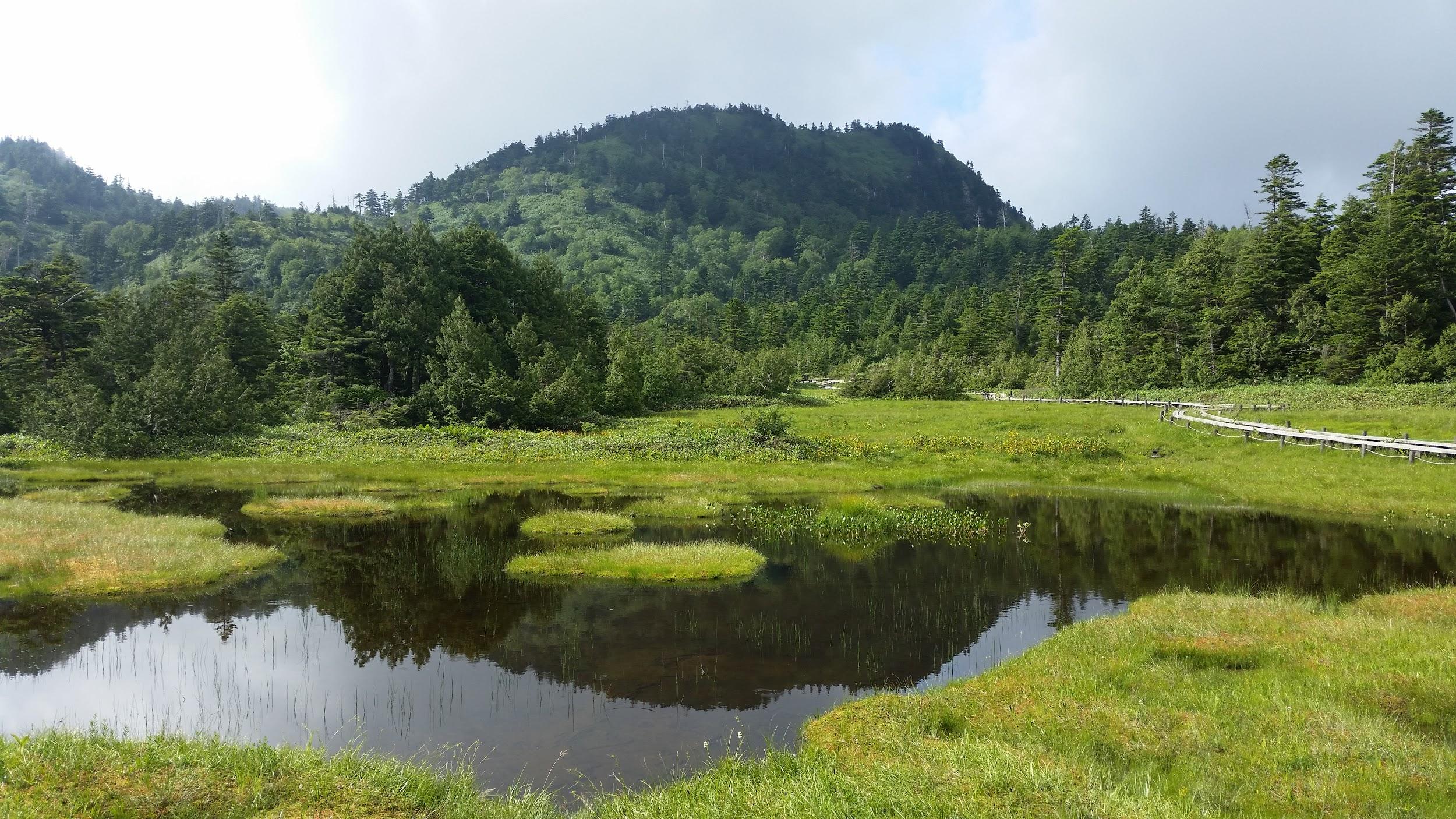
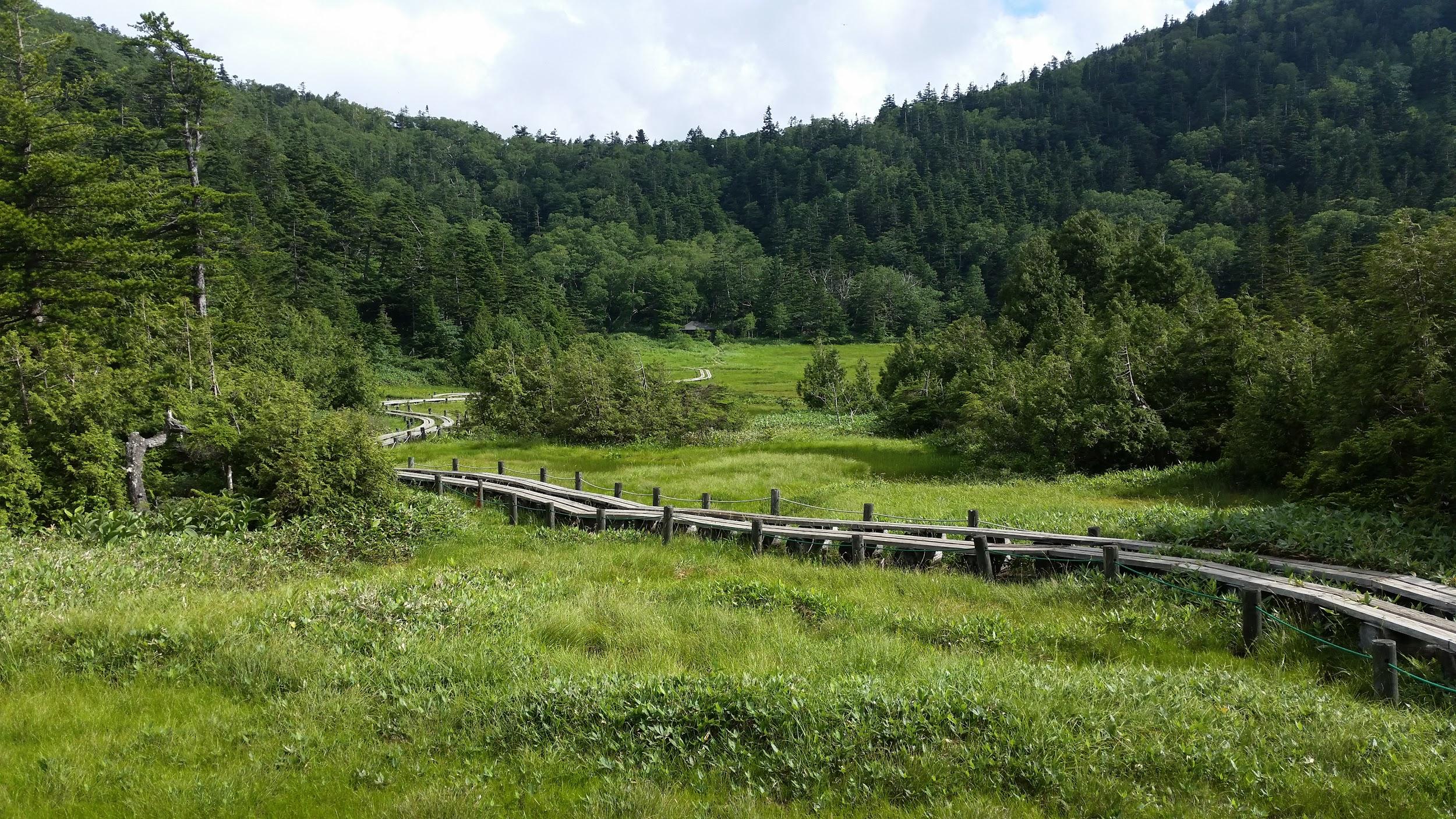
We climbed down via a different path, spotting various small ponds on the way. Finally, after passing through a shinto gate or “torii”, we reached the base of the cone-shaped Mt Shiga. The next part involved walking along an elevated walkway through marshlands – much easier than the rocky path down the mountain! The final part back to the ropeway was along a wide and level path through the forest.
Onuma Lake in the middle of Shiga Highland
Since it was getting late, we decided not to take a bath at Kumanoyu, and leave right away. No sooner had we set off, that a dark shadow dashed across the road – it was a bear cub. It disappeared into the bushes opposite. We waited a bit for a mother bear, but she was nowhere to be seen. In any case the place certainly deserves its name!
Elevated walkway through the marshland
On the way back, we stopped briefly for some photos at the marker for the highest national road in Japan at 2172m high. The drive down to Kusatsu onsen was through thick mist. We had a bath at the Sainokawara open-air bath, one of the biggest in Japan. After we were done, it started raining really hard, but we managed to get back to Takasaki safe and sound, a little after nightfall.
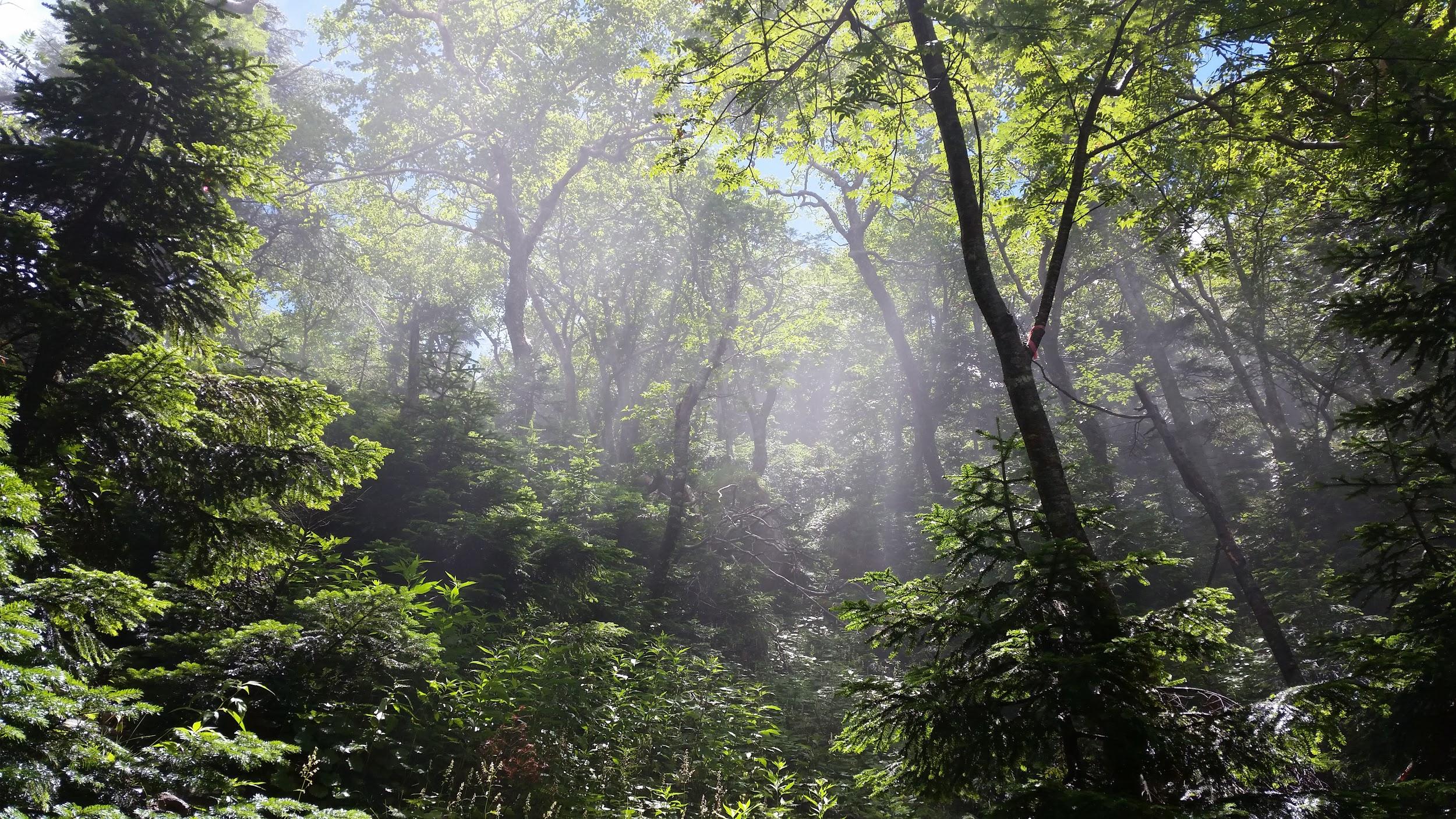
I did this hike with my mother who was visiting Japan for a couple of weeks. Since it was quite far from Tokyo, we spent the night at the Takasaki Dormy Inn Hotel, and the next morning, I drove to the Nikko-Shirane Ropeway. Even though it was a weekday, I was surprised by how few people there were, especially since it was the middle of the summer holidays. The place is mainly a ski resort in the winter so perhaps people aren’t aware that it also runs from June to October. I love ropeways and I keep on discovering new ones – it’s amazing how many there are in Japan!
Sun shining through the forest
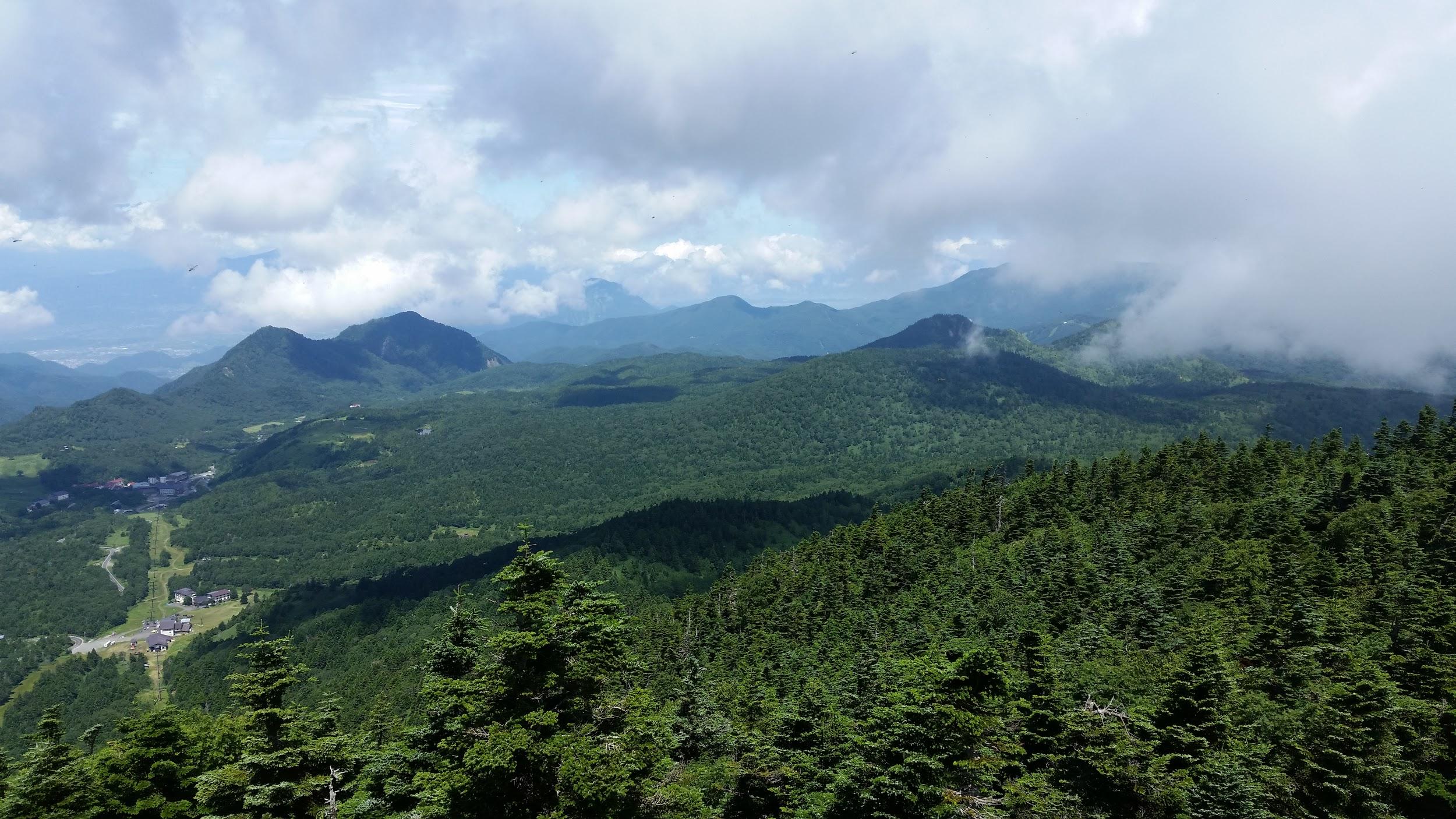
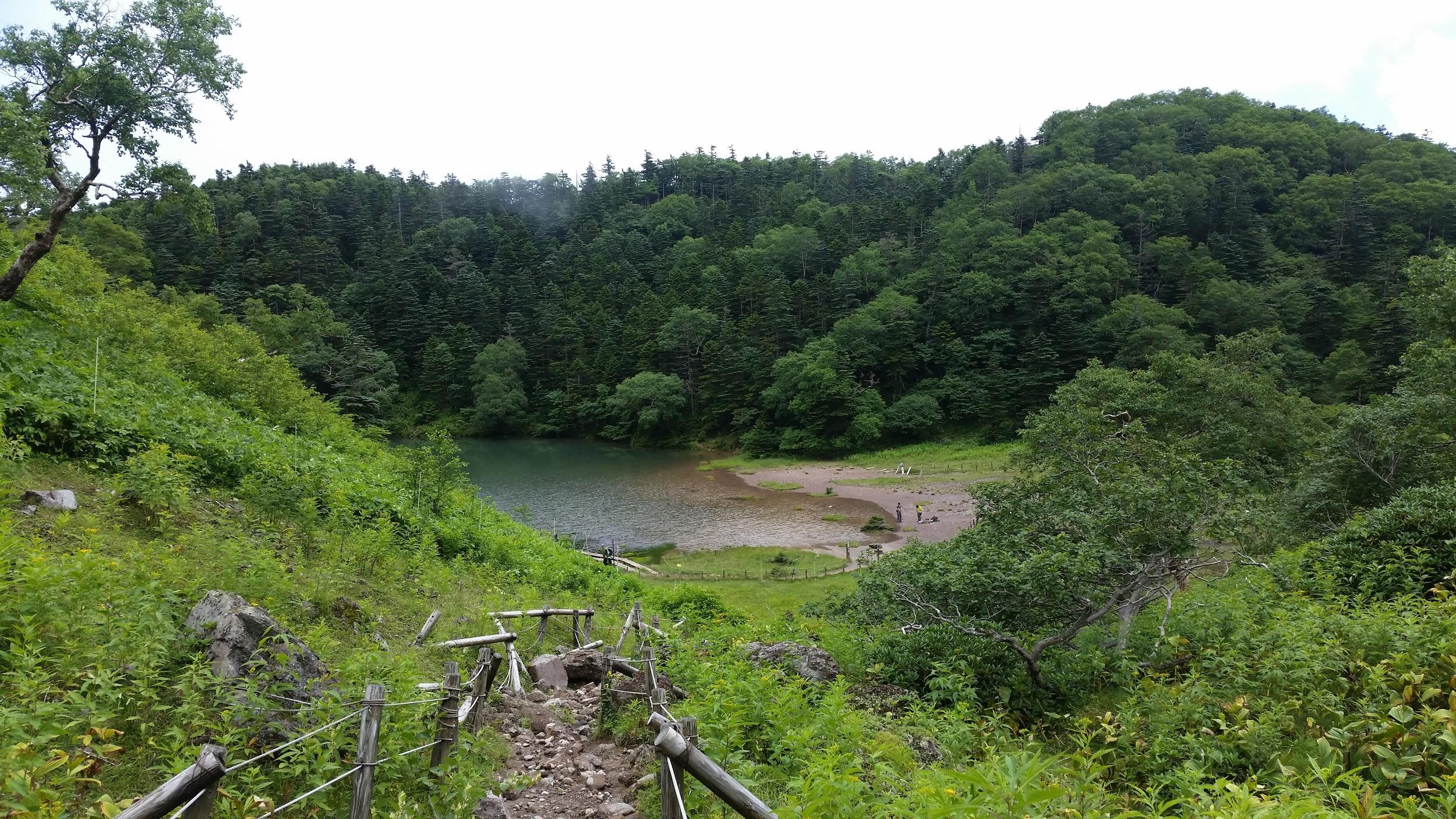
At the top of the ropeway, inside Nikko National Park and nearly 2000m high, the visibility wasn’t the best, and the views were a little disappointing. At least it was cooler than down in the valley. The hike started out on a fairly level trail through beautiful forest. After an hour or so, we had to climb steeply for a short while to reach the edge of a pond. Here I was able to look up towards the top of Mt Nikko-Shirane. I had been hoping to get my revenge, since it was in clouds when I climbed it several years ago. However, the top was in the clouds again, and another ascent seemed pointless.
Midaga Pond near the top of Mt Nikko-Shirane
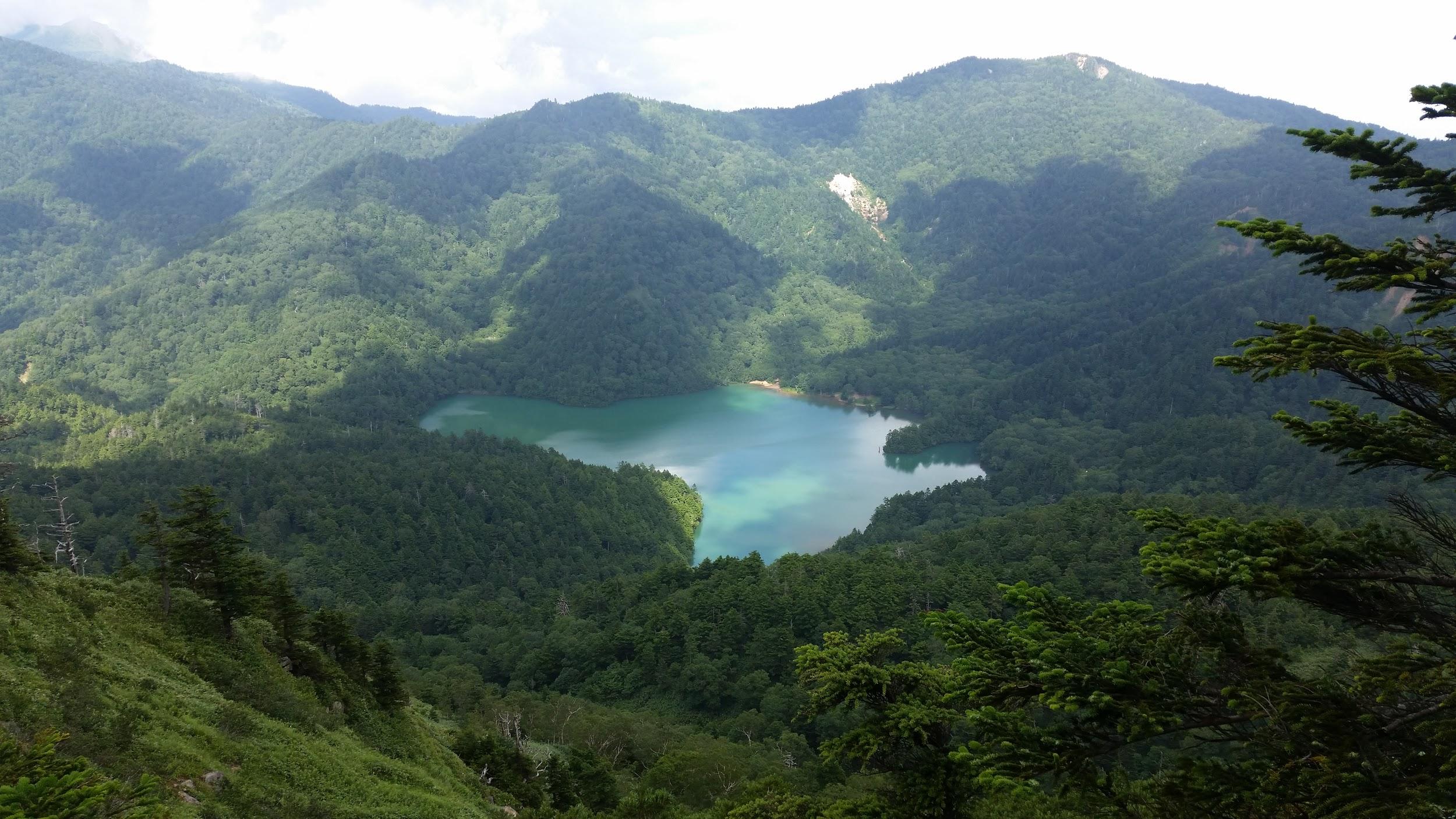
We continued a little further and reached the edge of a crater with at the bottom, the beautiful Goshiki-Numa lake 五色沼 (which means five-colour lake). Since we had enough time, I decided we could descend to the shore of the lake and climb back up again. Unfortunately the descent was steep and rocky, and we regretted it a bit.
The Goshiki-numa lake, inside Tochigi prefecture
After enjoying the peace and quiet of the lake, we made our way back up to the edge of the crater via a different path, and then walked back the way we had come. At the pond, we passed a group of noisy school children who had come up a different path. We headed back down the steep path to the forest below, and at the bottom we took another trail that looped back to the top of the ropeway.
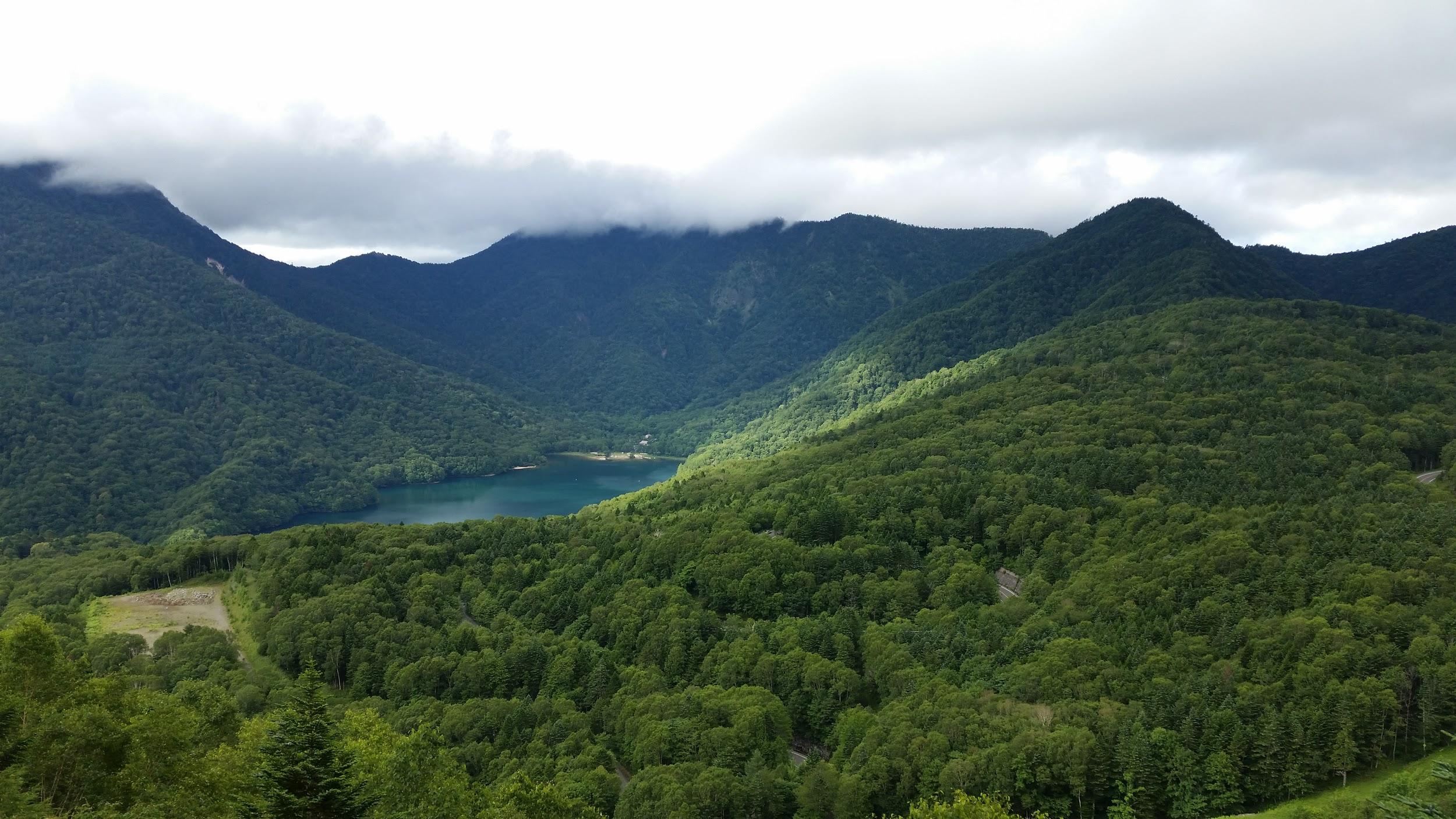
View of Maru-numa lake from the ropeway
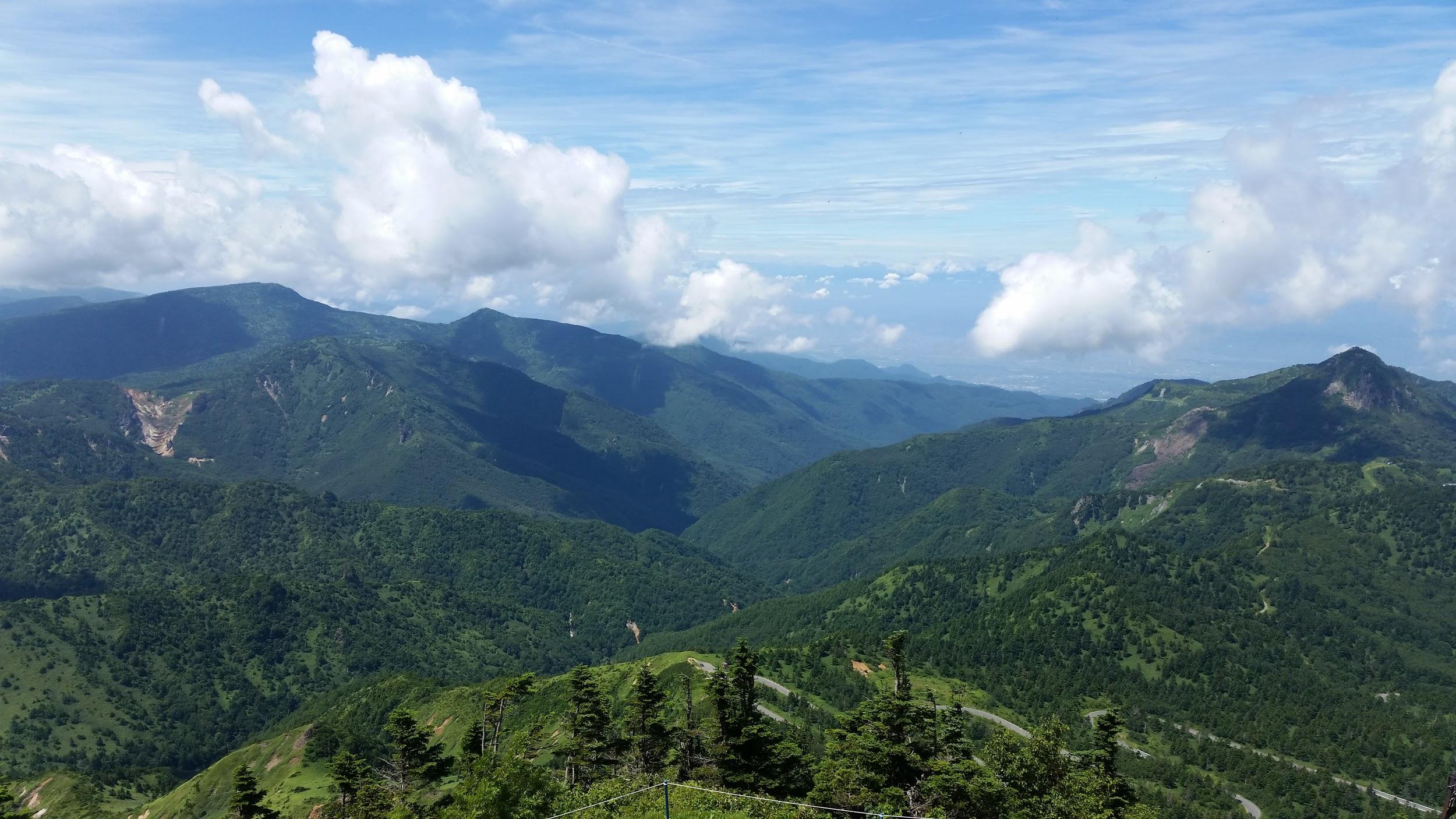
Check out the views of Nikko-Shirane
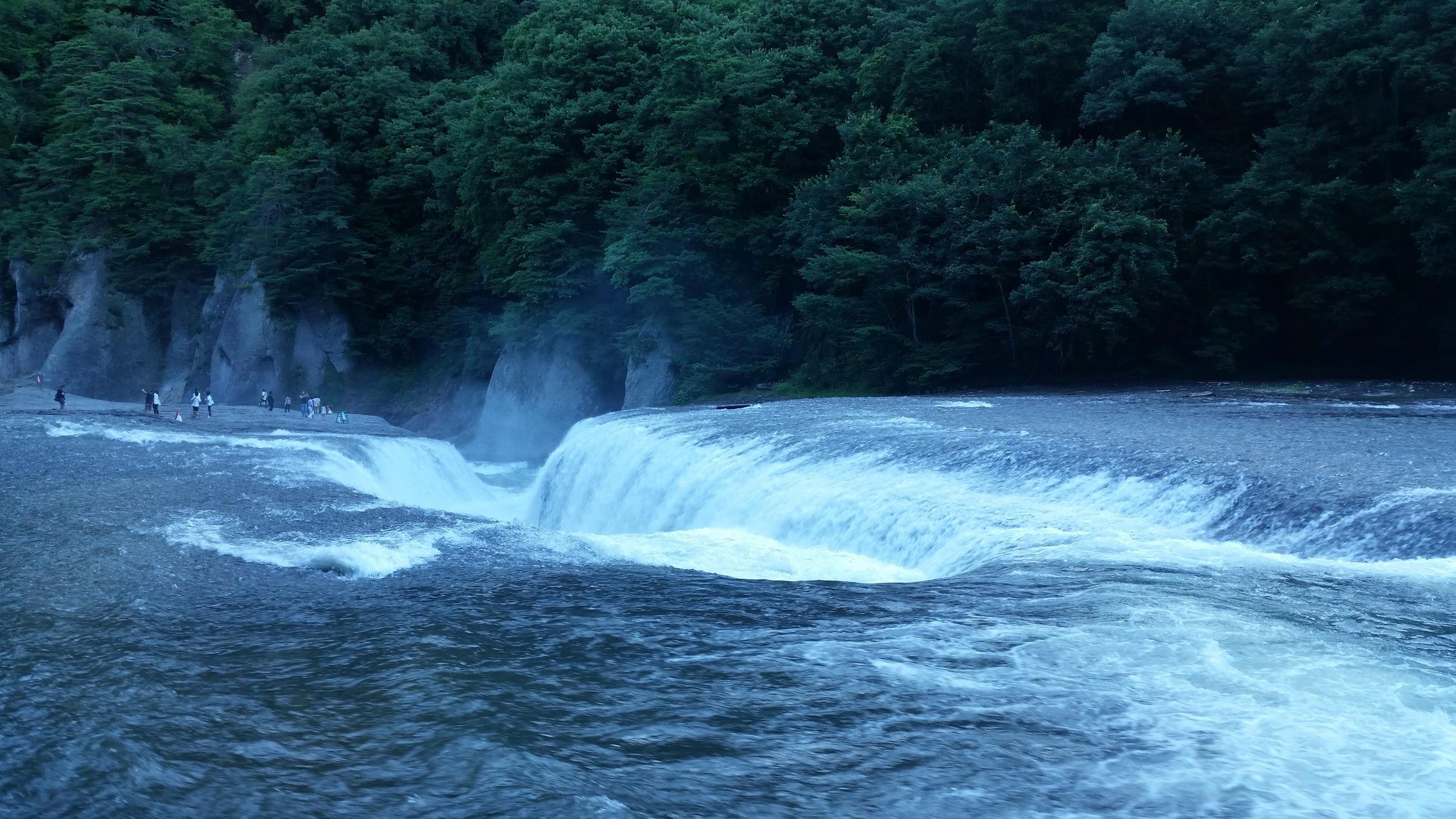
On the drive back to Takasaki we stopped at the very impressive Fukiware Waterfalls 吹割の滝 where we could walk along the river and the falls for a short way.
I had first climbed this mountain in early December 2009; I went up the Hinata-oya route on a beautiful autumn day and enjoyed some great views from the peak. In May 2014, I was invited by a friend to climb it again using the Shiroisazu route. We obtained permission in advance to use this trail, as it goes through private land; however, this time the weather was poor, and we turned back before reaching the exposed, rocky summit. I decided to give it another try the following year, but I wanted to try a different route. Looking at my map, I saw that by walking two hours along a small road, I could traverse from Hatcho Pass to Hinata-oya. The weather was supposed to be good all day, perfect for a long hike along a rocky ridgeline. It would be a success as long as I managed to catch the last bus back from Hinata-oya. I was looking forward to reaching the top for a second time and getting some great views of the Oku-chichibu area.
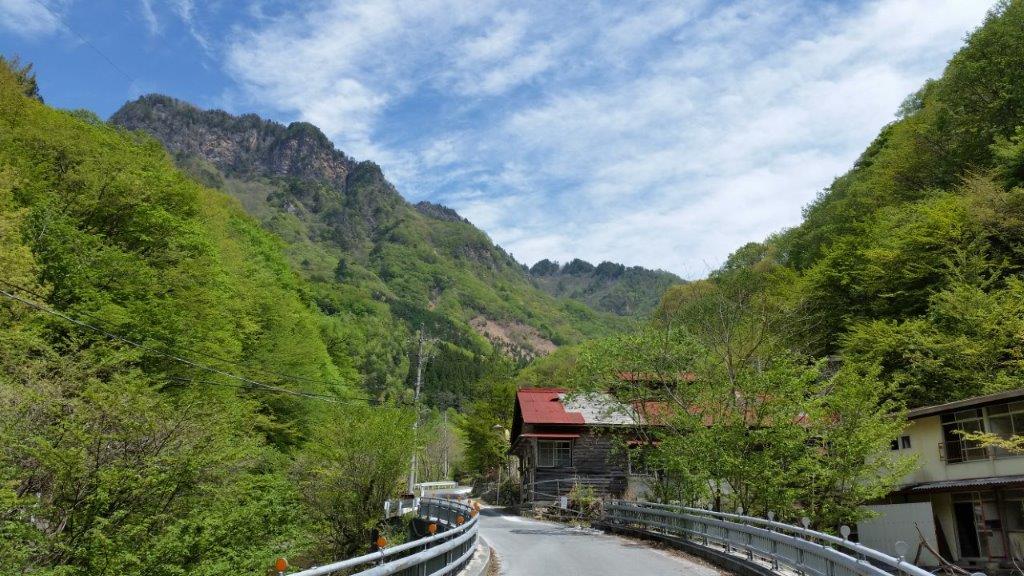
On a sunny spring morning, I rode the limited express from Ikebukuro to Seibu-Chichibu station, where I switched to the bus for Nakatsugawa. I got off a few stops before the end of the line and, after passing through a short tunnel, followed a road up a green valley next to a small river. Directly ahead, I could see rocky cliffs forming the summit of Mt Akaiwa (赤岩岳).
The ruins of the Nichitsu mine village
Mt Akaiwa from the approach to Hatcho pass
An hour after setting out, I passed the spooky, abandoned houses of the Nichitsu mine village (日窒鉱山), one of the many “haikyo” or urban ruin spots in Japan. I had heard about it before and was glad I had an opportunity to check it out in person. I found the start of the trail at a bend in the road and, just past noon, reached the top of Hactcho pass (八丁峠) and the start of the Hatcho Ridge route (八丁尾根コース).
First views from Hatcho ridge
The big dip between the Nishi and Higashi peaks
Before long, I was getting some fantastic views: northwards, I could see Nishi-joshu, the mountainous area of western Gunma; southwards I was looking at the highest peaks of the Chichibu-Tama-Kai national park; to the west was Yatsugatake, still covered in snow; straight ahead lay the impressive Hatcho ridgeline, leading to the summit. At 1h30, I reached the top of Nishi-dake (西岳 1613m).
Looking north towards the Nishi-Joshu area of Gunma
The steep climb up Nishi-dake, the rocky sections fitted with chains
From here, the trail made an huge dip and then rose again, passing numerous steep rocky sections, fitted with chains for safety. Since it was a long hike, I tried to keep a good pace and was lucky that there were few people on the same route that day. A little before 2h30, I reached the top of Higashi-dake (東岳 1660m), only slightly higher than the previous peak, but demanding quite an effort.
Northwest, Yatsugatake and Asamayama visible in the distance
Looking back at the route hiked so far
Looking north, was like seeing the view from a plane: I could look down on the the rocky summit ridge of Mt Futago half a kilometer below; looking east was the pyramid top of Mt Buko, with Chichibu city spread out at its feet; looking up was blue sky, not a cloud in sight. Even though the elevation was only half of the highest peaks of the Japanese Alps, it felt like alpine trekking, an impression reinforced by the steep rocky slopes covered in pine trees.
A bird’s eye view from the top of Higashi-dake
The striking shape of Mt Daikigi
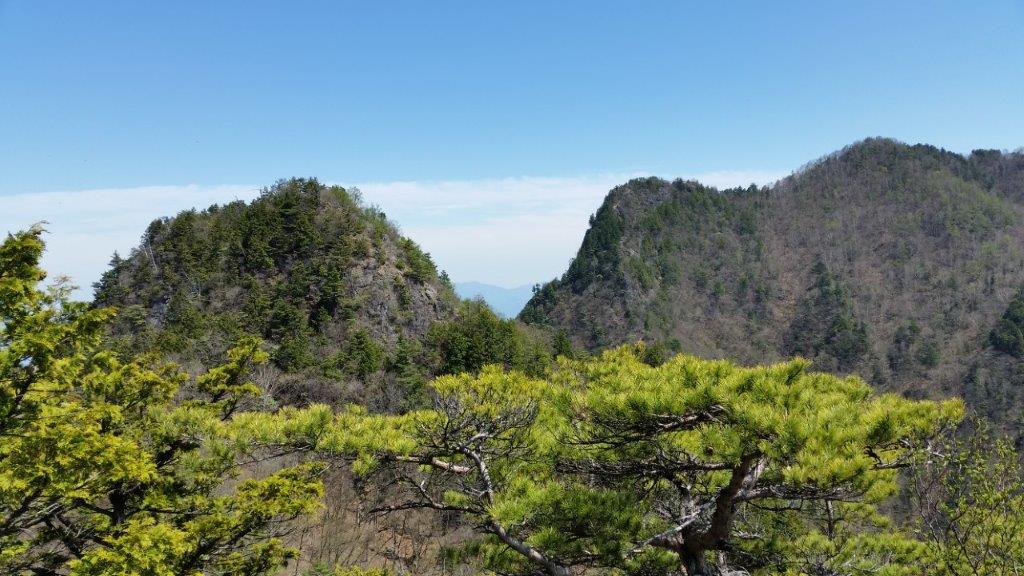
I took a break on the single bench placed on the narrow summit, and enjoyed the view of the nearby, pillar-shaped Daikigi (大キギ). I soon set off again, and at 3pm, I was standing on the top of Mt Ryokami (両神山 りょうかみさん ryokami-san), a 100 famous mountain of Japan. I was happy to be standing on the top again, and with better weather than the first time round.
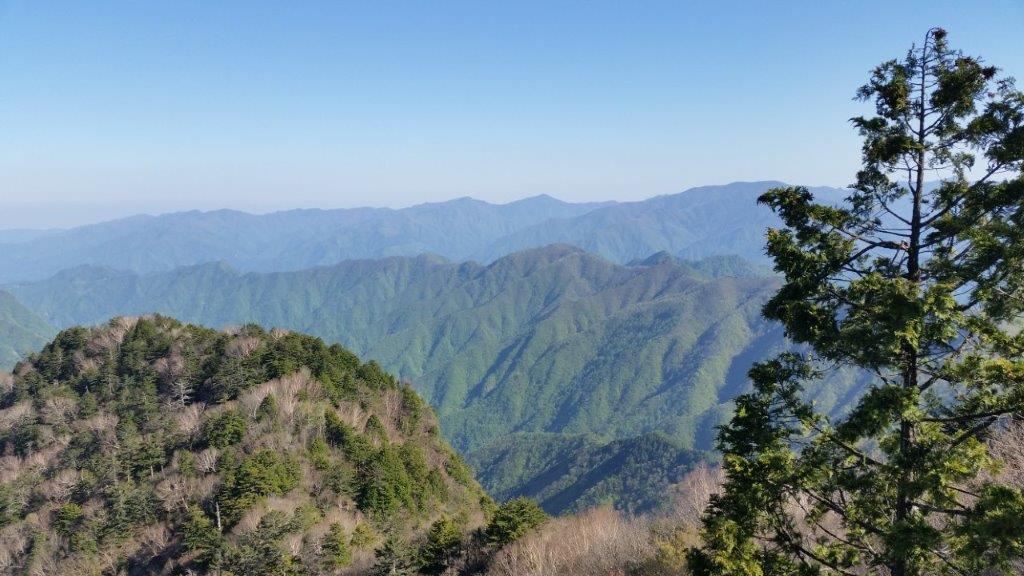
On the left, the mountains of Okutama
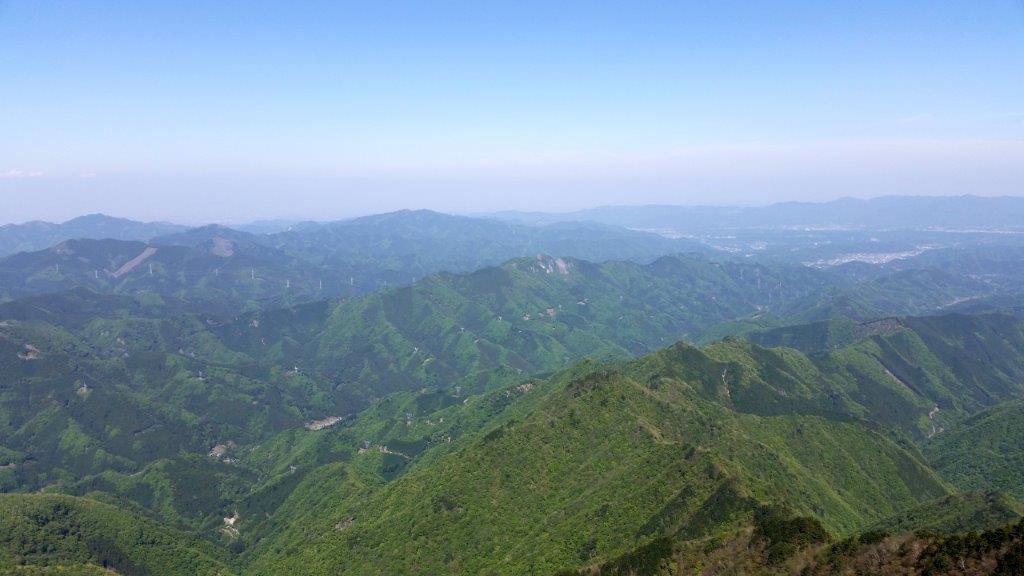
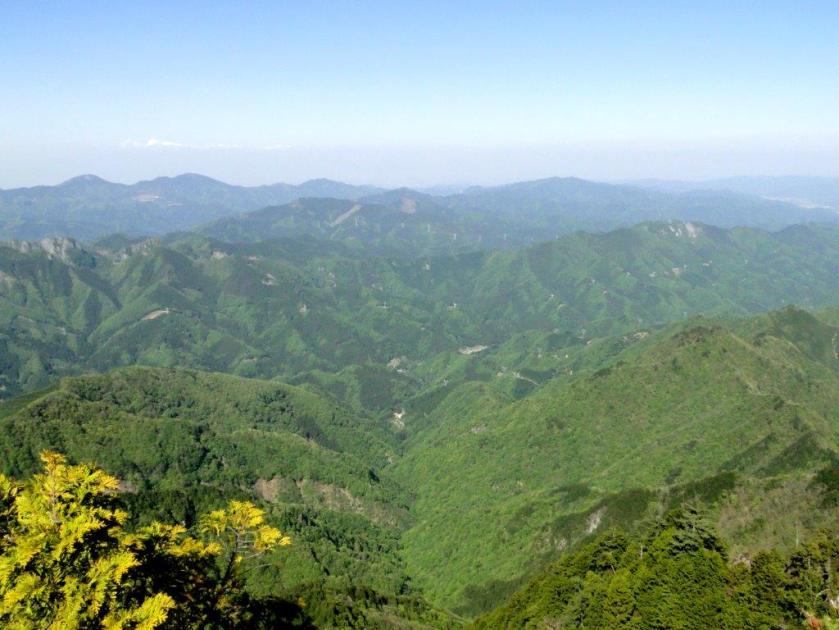
Westward view from the top of Mt Ryokami
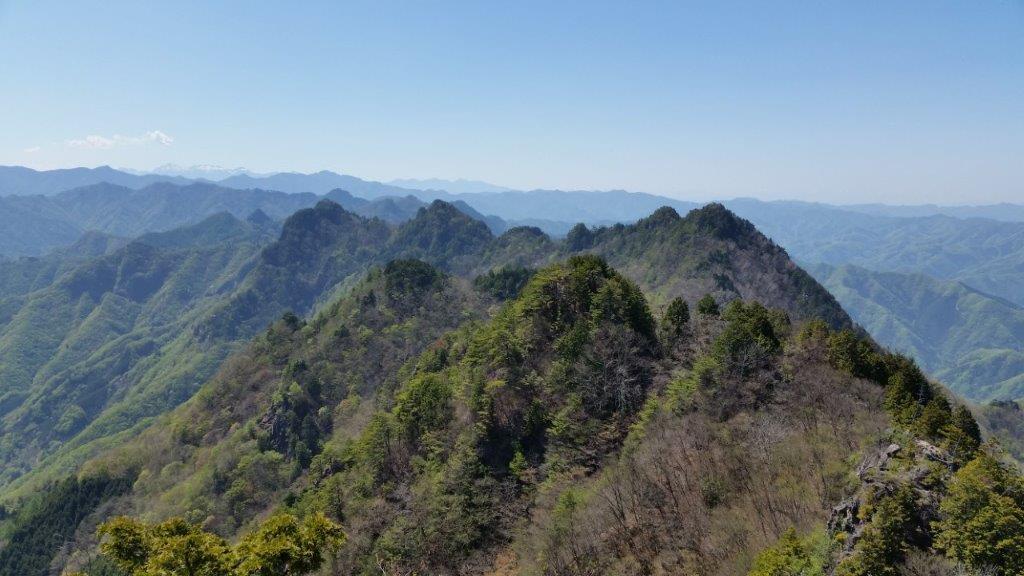
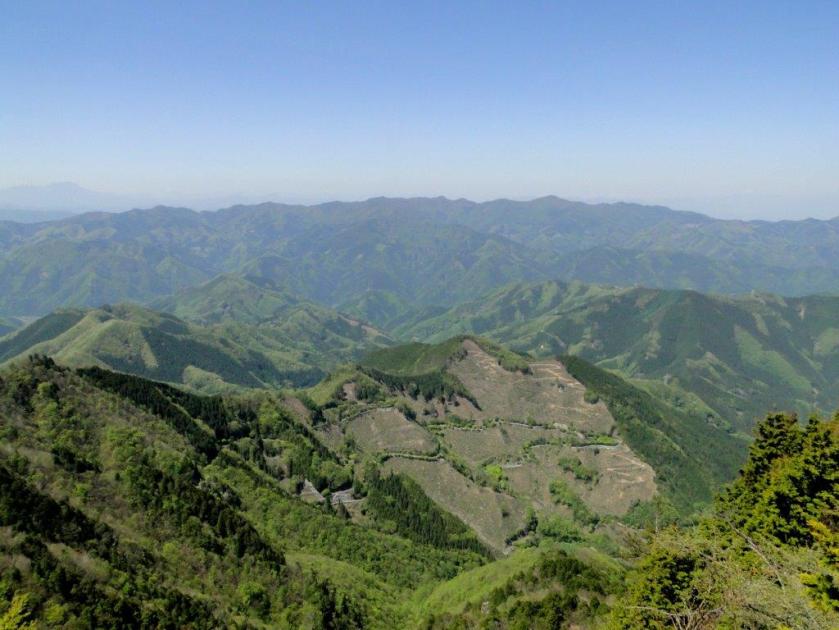
From the summit, I now had great views to the south, including the massive Mt Wanakura; in the opposite direction, I could see the faint outline of Mt Asama, 50 kilometers away; much closer to me was the long ridgeline that had taken nearly 3 hours to traverse. I wanted to enjoy the views some more but I had to move on right away if I wanted to catch my bus.
It was the perfect weather for this hike
A photo of the private shiroisazu route from the previous year
I descended the mountain at a swift pace along the familiar route and arrived at the bus stop a little after 5pm, just as the valley was being engulfed in shadows. I sat down on the bus seat, tired but relieved, and got off at the nearby Yakushi no yu hot spring for a quick bath. Refreshed, I then caught the last bus for Seibu-Chichibu station where I hopped on the limited express for the 80 minute ride back to Ikebukuro.




![Mt Hakusan (2702m)& Mt Arashima (1523m), Ishikawa and Gifu Prefectures, September 2017 [Maps Available]](https://hikingtokyo.com/wp-content/uploads/2022/11/20170903_175823-1.jpg?w=1024)






![Mt Daisen (1729m), Tottori Prefecture, November 2016 [Map Available]](https://hikingtokyo.com/wp-content/uploads/2023/04/20161107_110534.jpg?w=1024)


![Mt Amakazari (1963m), Otari Village, Nagano Prefecture, Monday, October 26, 2015 [Map Available]](https://hikingtokyo.com/wp-content/uploads/2022/11/20151026_073231.jpg?w=1024)

![Mt Ryokami (1723m), Ogano Town, Saitama Prefecture, Tuesday, May 5 2015 [Hatcho Ridge Route / Map Available]](https://hikingtokyo.com/wp-content/uploads/2015/05/dsc09731b.jpg?w=1200)











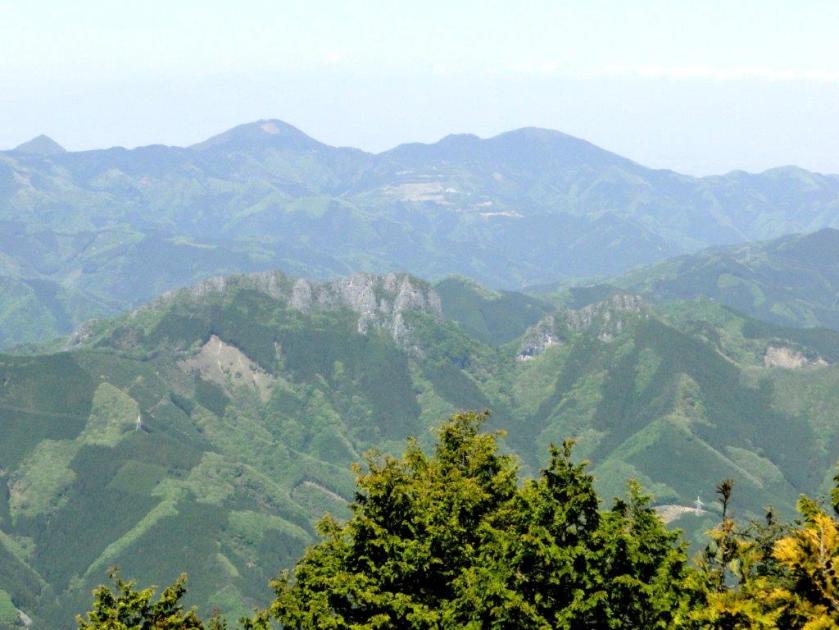


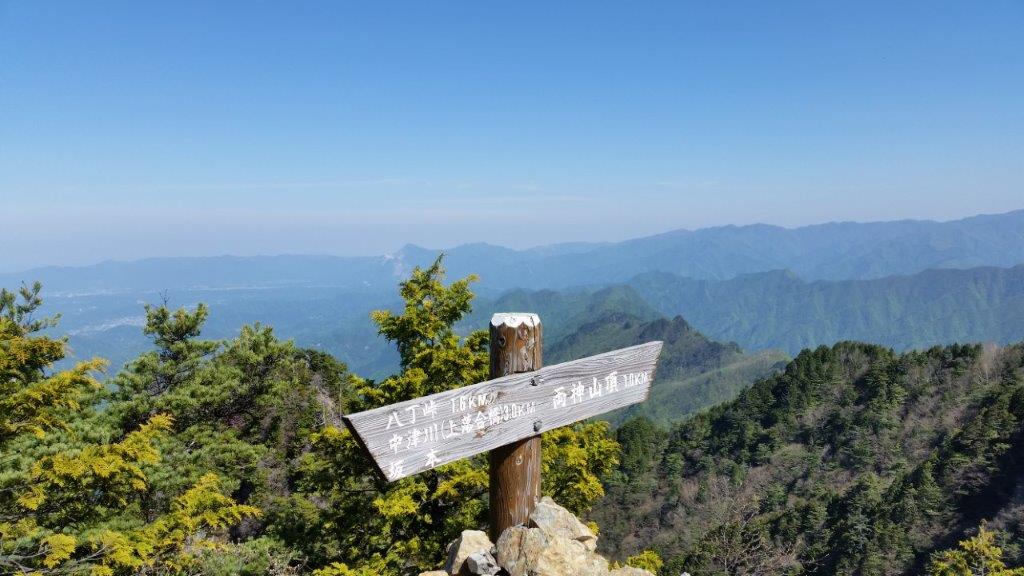
![Mt Omine (1915m) & Mt Odaigahara (1695m), Nara & Mie Prefectures, October 2014 [Maps Available]](https://hikingtokyo.com/wp-content/uploads/2022/12/dsc05061.jpg?w=1024)

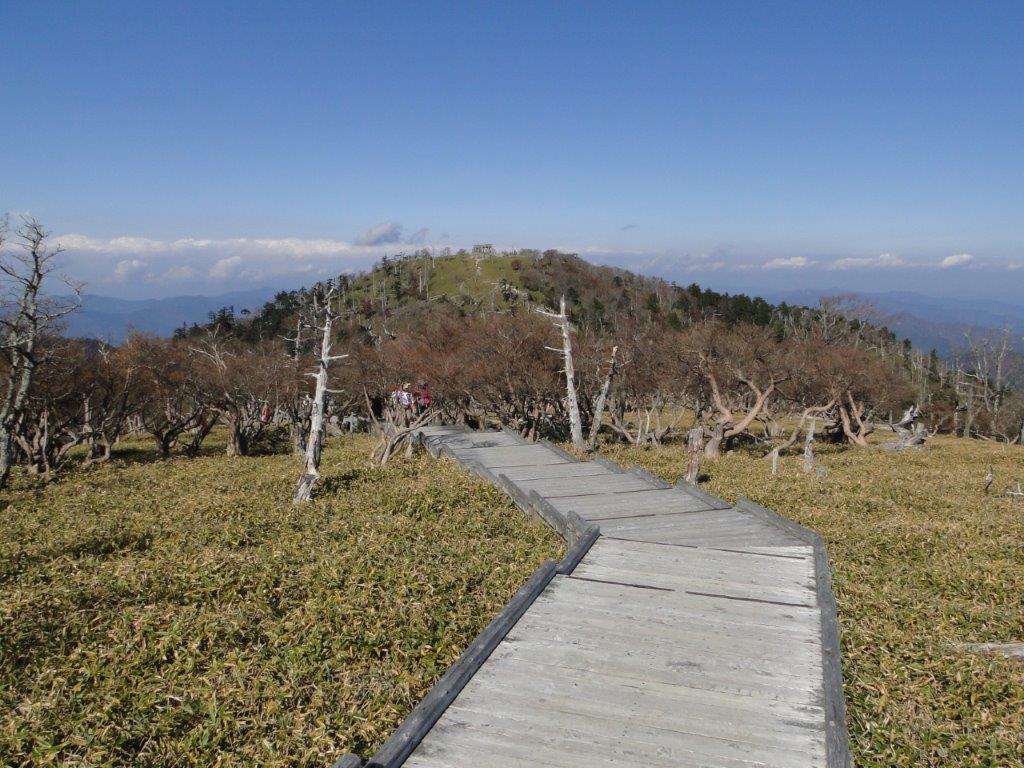
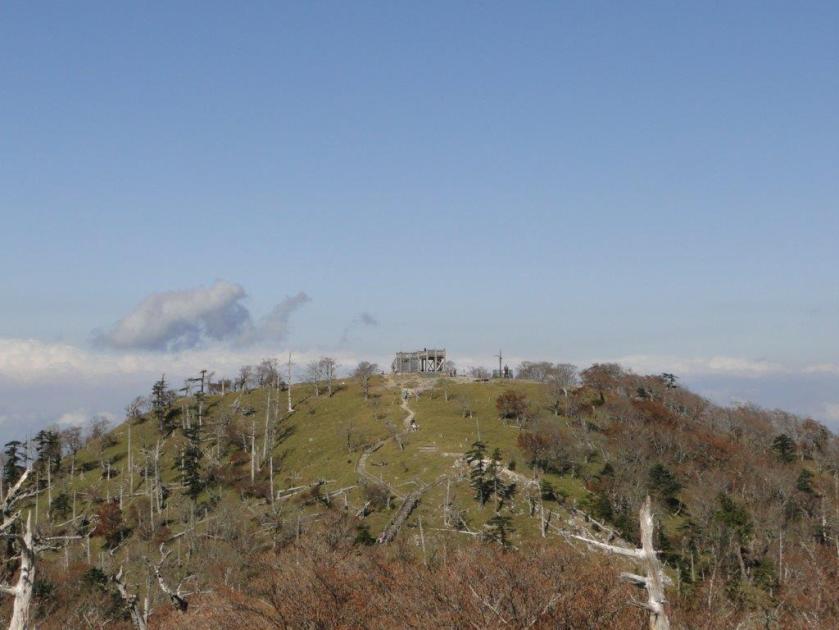




![Mt Kuju (1791m) & Mt Aso (1592m), Oita & Kumamoto Prefectures, April 2014 [Maps Available]](https://hikingtokyo.com/wp-content/uploads/2023/01/dsc09265.jpg?w=1024)
 Hiking Around Tokyo
You must be logged in to post a comment.