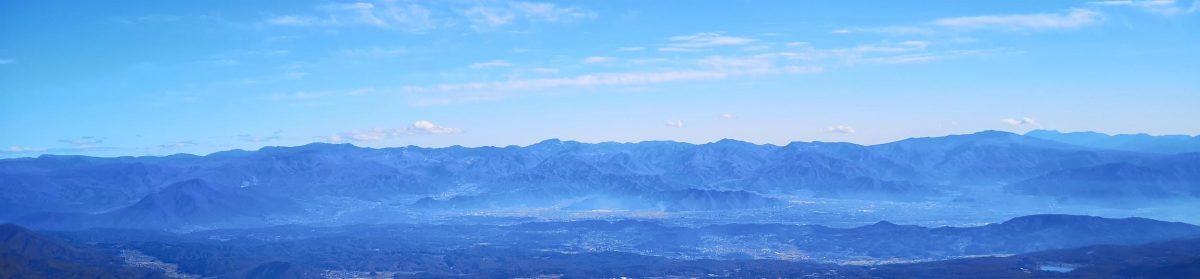
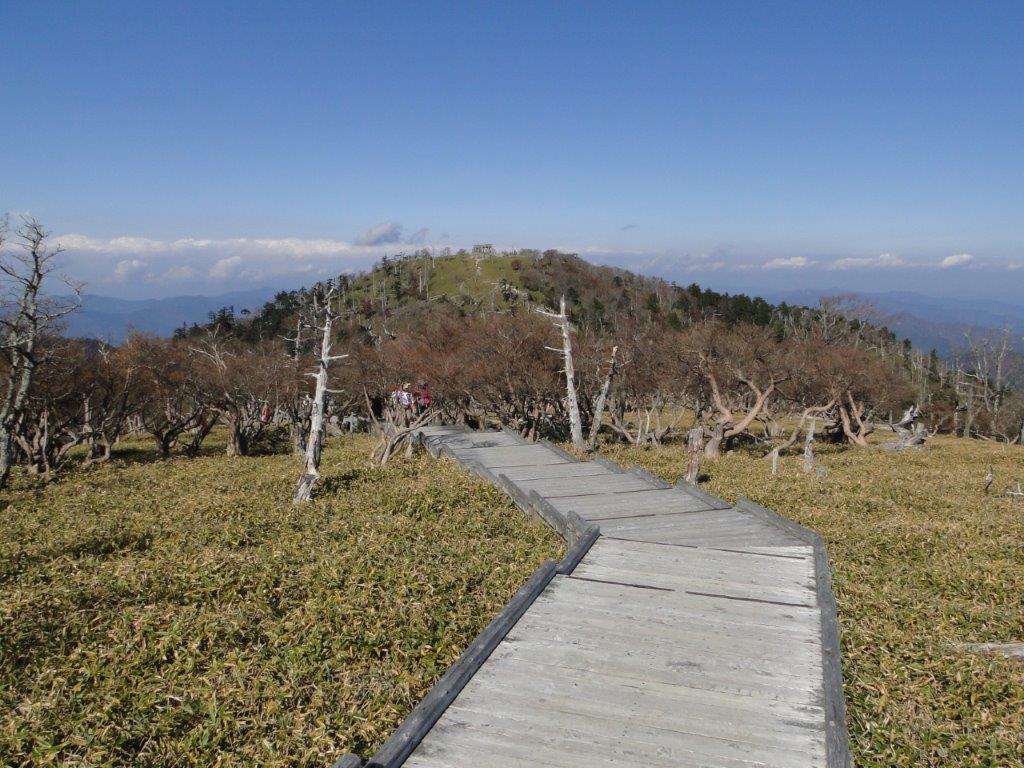
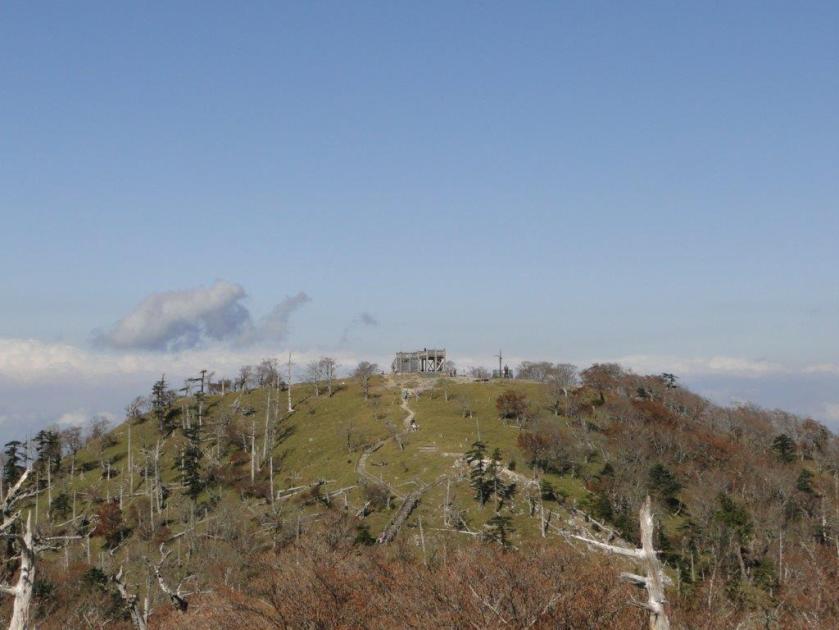
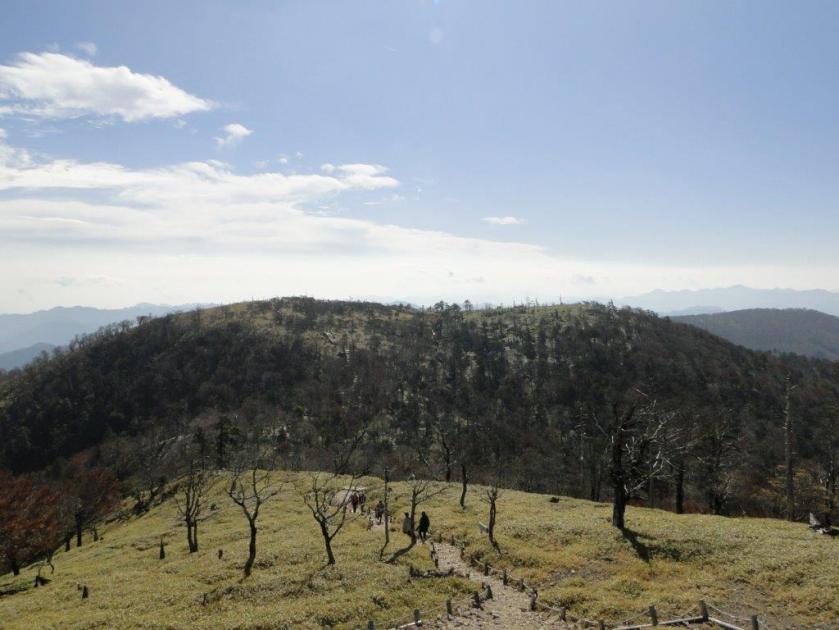
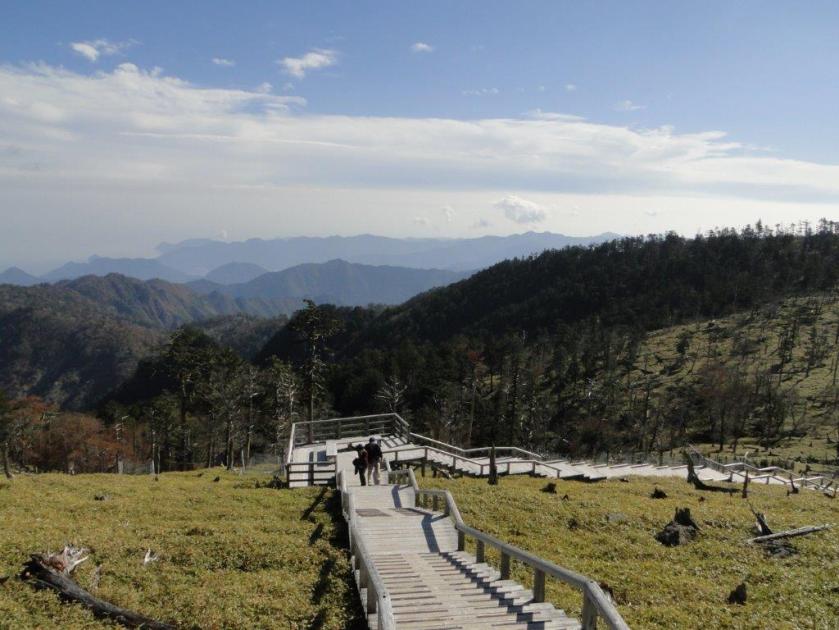
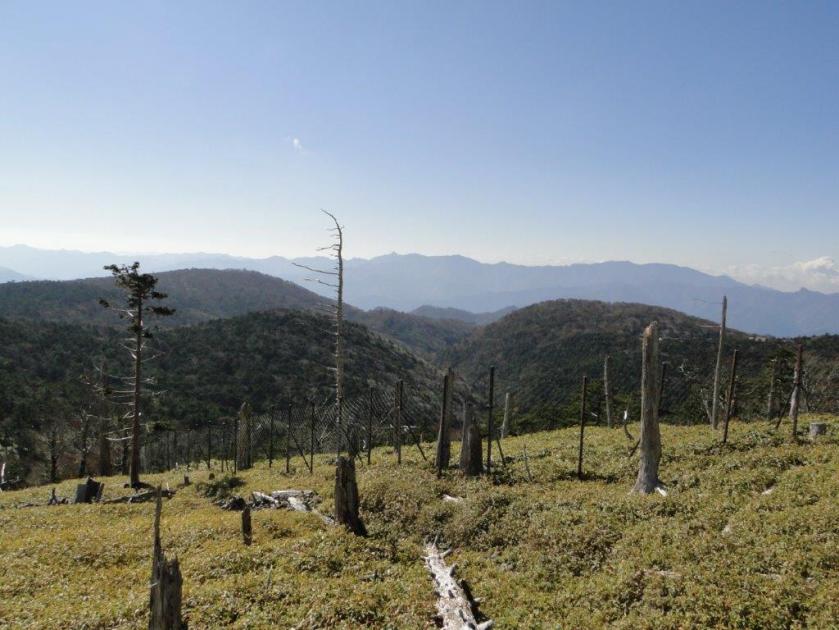
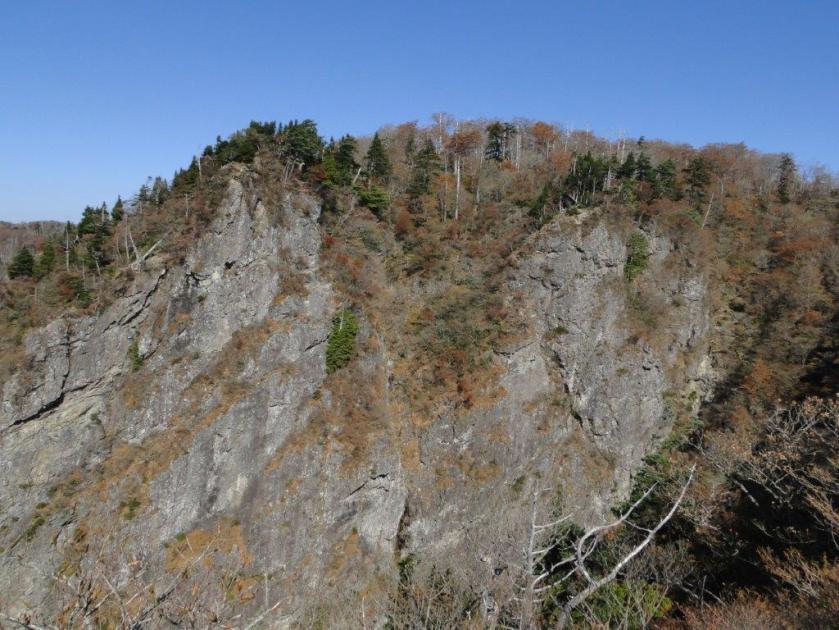
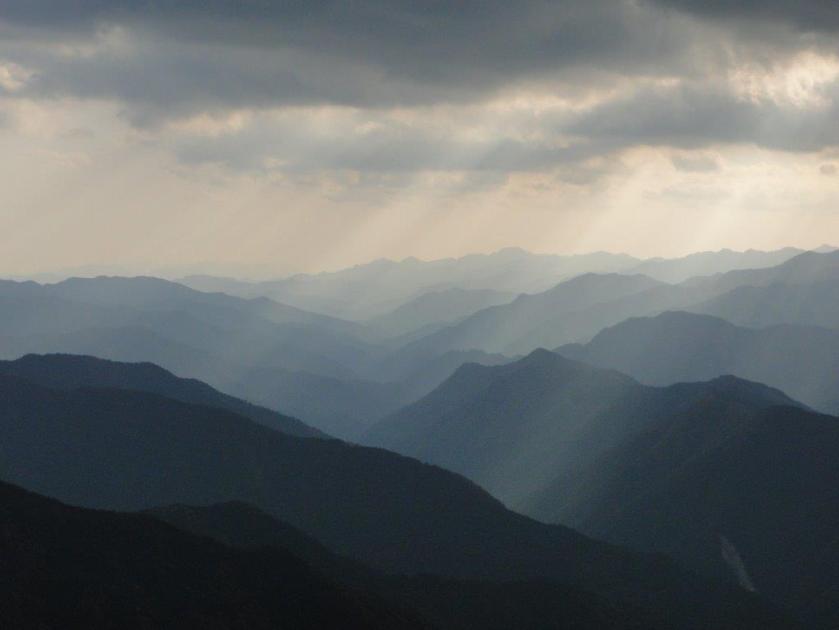
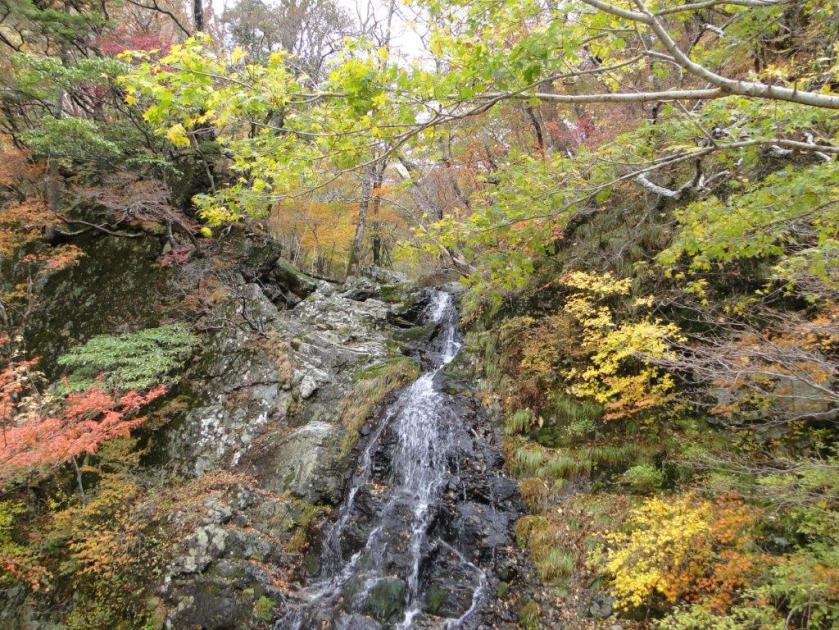
Mt Omine (1915m) & Mt Odaigahara (1695m), Nara & Mie Prefectures, October 2014 [Maps Available]

Hiking the hundred famous mountains of Japan 日本百名山

Hiking in the Yoshino Kumano National Park 吉野熊野国立公園

大峰山(おおみねさん omine-san)八経ヶ岳 (はっきょうがたけ hakkyou-dake)

大台ヶ原山(おおだいがはらやま odaigahara-yama

Download a map of the Mt Odaigahara hike

Download a map of the Mt Omine hike

These maps were developed for Japanwilds with the Hokkaido Cartographer

Find more Japan hiking maps on Avenza

Dusk on Mt Omine

Walking down from Mt Hide, the highest point of Odaigahara

See the views from the observation platform on top of Mt Hide

Hiking Mt Odaigahara (slideshow)

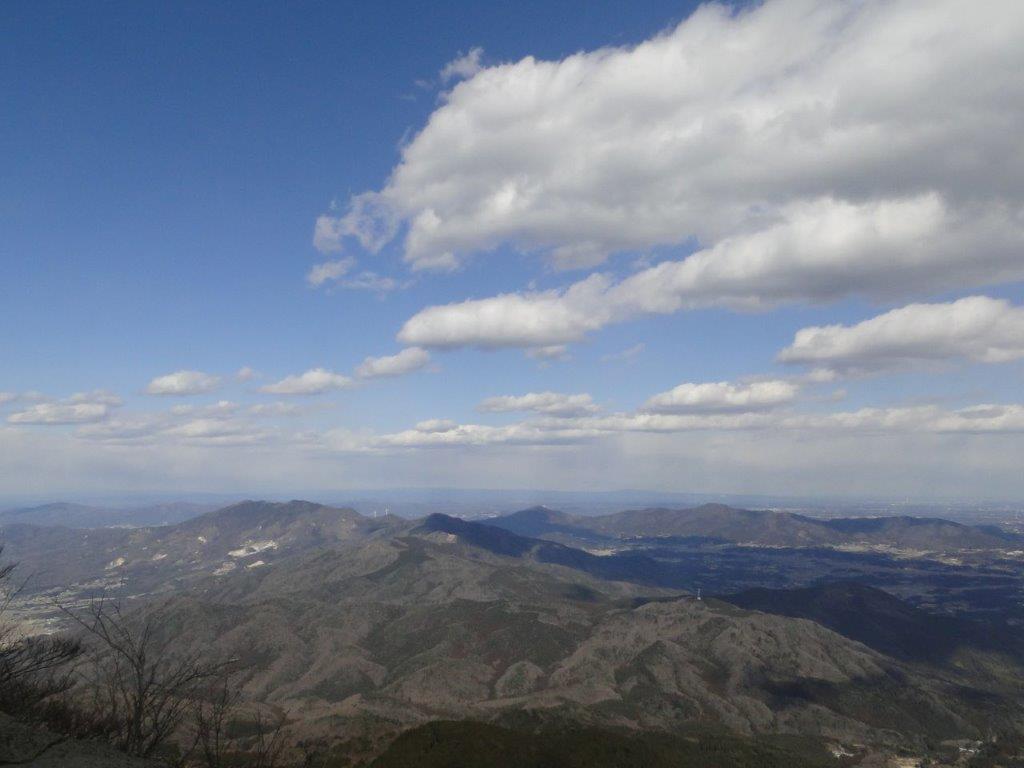
Sunset from near the summit of Mt Kyo, on Omine-san

Mt Sekirou (702m), Sagamihara City, Kanagawa Prefecture

This was my second visit to Mt Sekiro (石老山 sekirouzan) and the first time taking other people; the photos will be a combination of both trips. I feel that this mountain is really exceptional: it’s close to Tokyo, easy to climb, it has great views (including Mt Fuji), there is a temple at the base, and finally there are few hikers since it’s not a famous mountain.
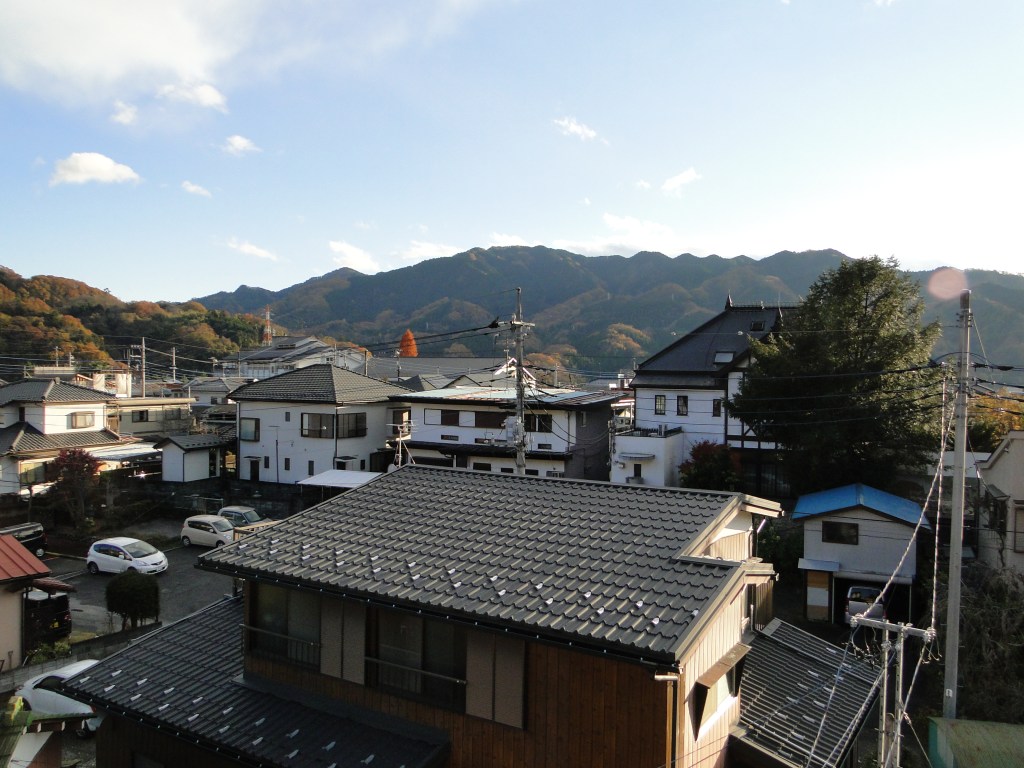
Mt Sekirou from Sagamiko Station

Mt Sekiro from Sagamiko Station

HOW TO GET THERE: Get on the Chuo line for Takao station, ride to the end of the line, and switch to the Chuo line again by simply crossing the platform. Get off at Sagamiko station, the next stop. The only tricky part here is catching a bus to the start of the hiking trail. Departures normally coincide with most train arrivals, but if the wait is too long, it’s possible to take a taxi since it is only ten minutes away.

THE ROUTE: From the bus stop, we crossed the road and headed up the road that lead away from it as a straight angle. There is a sign saying Sekirosan iriguchi (石老山入口 meaning entrance to Mt Sekiro) as well as a big sign showing the route. There are also toilets and a vending machine. After walking along the road for about twenty minutes we reached the start of the trail, behind a hospital. The weather wasn’t great, but it didn’t matter so much since the hike was mostly in the forest during autumn.

Ask for a hiking map for Mt Sekiro

The first part of the hike climbed steadily through a forest of tall cedar trees next to a stream. Massive moss-covered boulders lay strewn on both sides of the path. Some had small signs with Japanese explanations on their legendary origins.
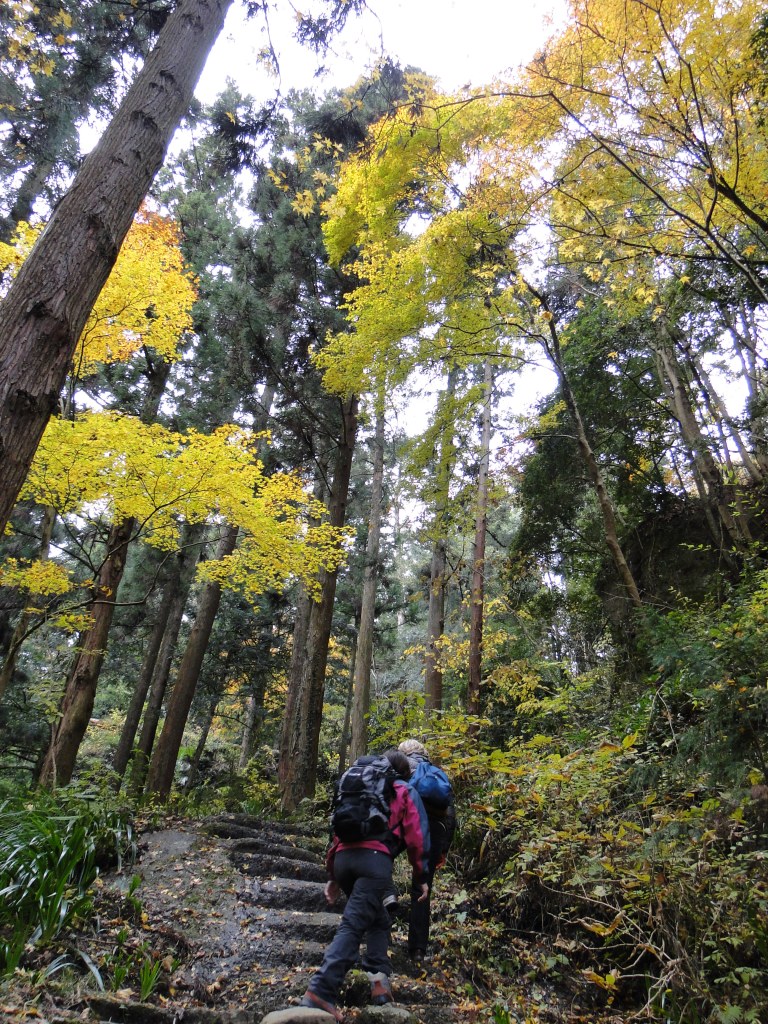
The road to the temple

The road to the temple

Huge moss covered boulders

Huge moss covered boulders

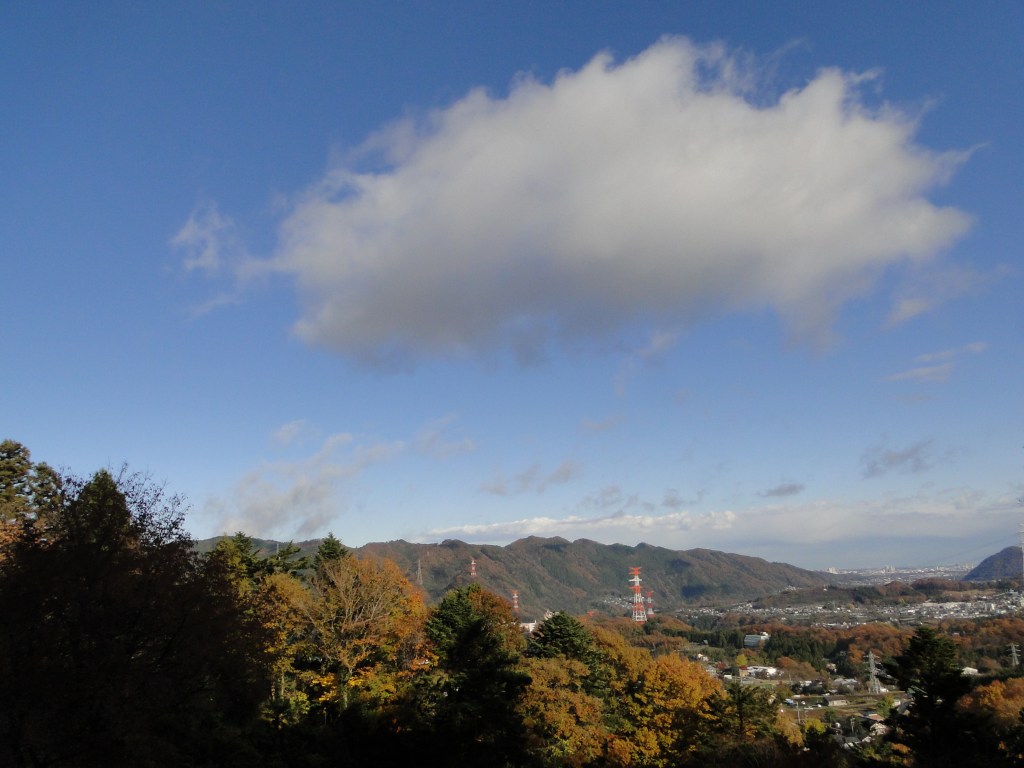
In less than half an hour, we reached Kenkyoji temple (顕鏡寺) perched on the lower reaches of the mountain; we took a photo break since it had some impressive autumn colours. Since there are no other mountains standing in the way, there was also a view west towards Tokyo, but clouds and smog meant that visibility was limited. Northwards, we could see Mt Takao, the closest mountain to Tokyo.

The trail continued behind the temple, winding back and forth, eventually a fork, unmarked on the map. We asked a small family on their way down who confirmed that the paths connected further up and that the right one was easier to walk. We took the right branch and were rewarded with some more nice westward vistas, as the path curved around the side of the mountain.
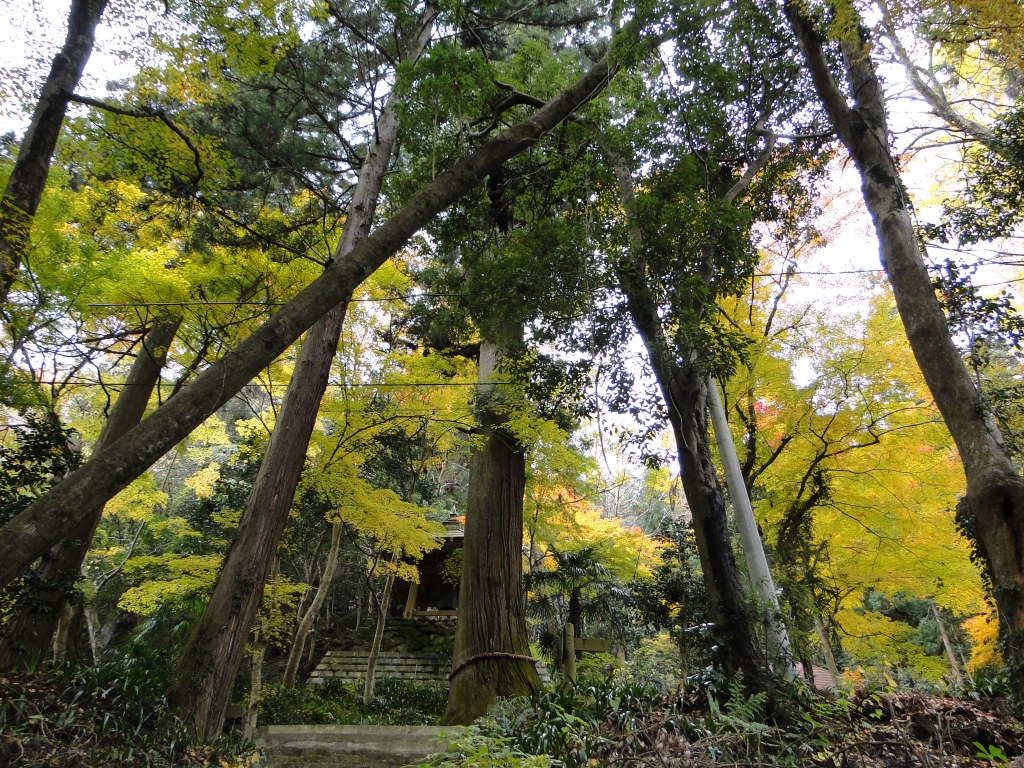
DSC05787

Autumn colours were in full swing

DSC05797

Orange and yellow fighting for dominance behind a stone lantern

Before we knew it, the paths joined up. From that point, the path climbed gently through the forest till a fantastic viewpoint of Lake Sagami. We couldn’t really see much of the view, since the weather was still cloudy. We continued up the mountain at a good pace and meeting few people. The path was a series of short steep climbs followed by flat or slightly downhill sections.

We reached the summit two hours after starting out. There were two or three tables where you can have a picnic while admiring the view of Mt Fuji. Unfortunately today the weather had steadily been getting worse, and there was no hope of seeing the majestic volcano today. We repaired to a table under a tree out of the cold wind that had suddenly started blowing, and prepared our ramen lunch.
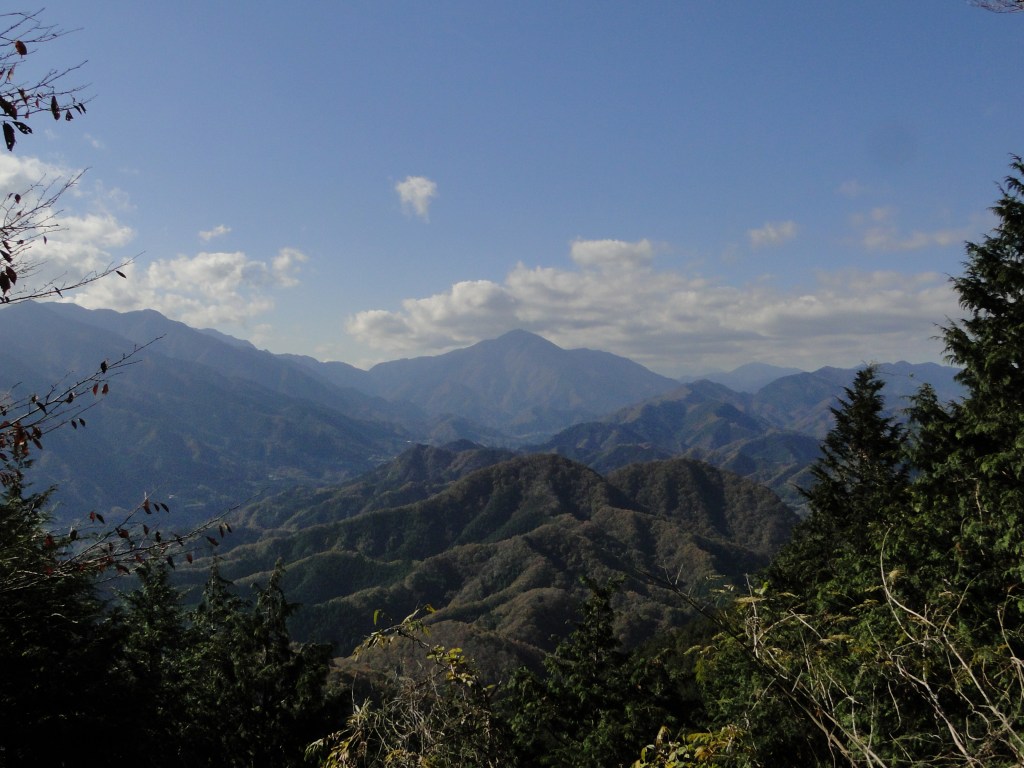
View from the top last year with Mt Omuro in the centre.

View from the with Mt Omuro in the center (taken the previous year)

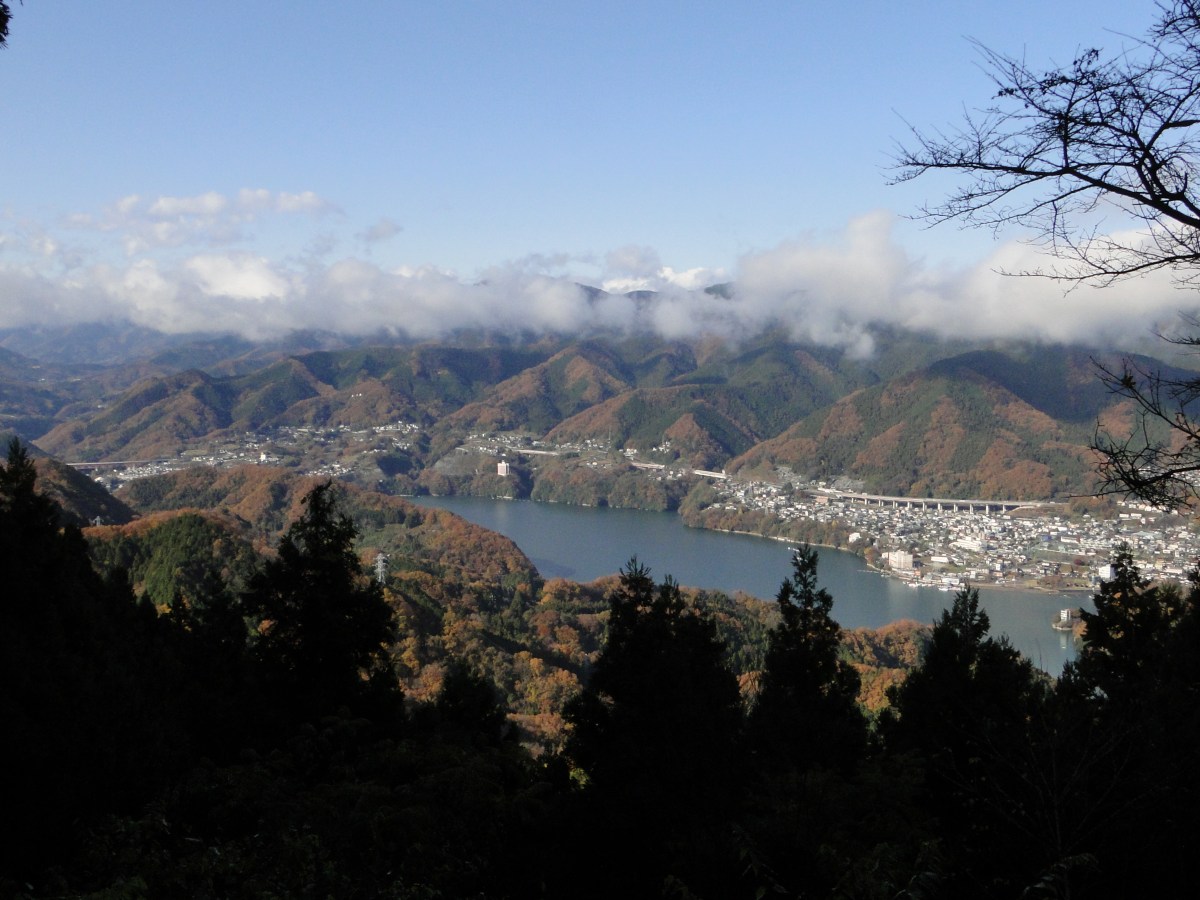
First glimpse of the lake on the way down

First glimpse of Sagami lake on the way down

Even though it was the first of December, the temperature had been warmer than expected. However it suddenly turned freezing and the clouds got greyer. I noticed some white specks on the table; amazingly, it had just started snowing! it wasn’t even the beautiful snowflake type of snow; it was the hard granular kind, that was more like sleet, forcing us to gulp down our lunch, and leave as quickly as possible. By that time, my fingers were feeling pretty numb from the cold.

I had originally planned a loop hike but decided on the spot, that we should head down the same way; it would be safer to down a familiar way in a freak snowstorm. However, as soon as we got a few meters from the summit, the snow stopped falling and it felt noticeably warmer. Ten minutes later we had blue skies above our head and the sun was shining. The storm was over just as quickly as it had started. The path looked quite different going down especially now that the weather was so good. The view of lake Sagami was completely different and we could see the mountain ranges beyond.

Sunny woods

Sunny woods

View towards Tokyo

View towards Tokyo

At the junction, we took the other path so as to complete the loop. Just below, there is a good view of Mt Sekiro, as well as the mountains to the west. The path passes through some more huge boulders, but it wasn’t particularly difficult. We got down ninety minutes, and after a twenty minute wait, we were able to hop onto a bus back to the station. In good weather, it’s possible to continue beyond the summit and make a loop back to the start of the hike.

CONCLUSION: Great hike for the late autumn / early winter period, because of its short length and relatively low altitude. It can be combined with some neighbouring mountains if you are a fast hiker.

As of October 2020, the trail around Kenkyoji Temple (顕鏡寺) is still closed due to trail damage due to last year’s Typhoon 19 / Hagibis – it’s not possible to reach the summit of Mt Sekiro via this route. No reopening date has been set yet. Please check the Sagamiko Tourist Association website for future updates. 
Ask for a hiking map for Mt Sekiro

The Takao range seen from the temple

The Takao range seen from the temple

Mt Shakushi (1597m), Fujiyoshida City, Yamanashi Prefecture [MAP AVAILABLE]

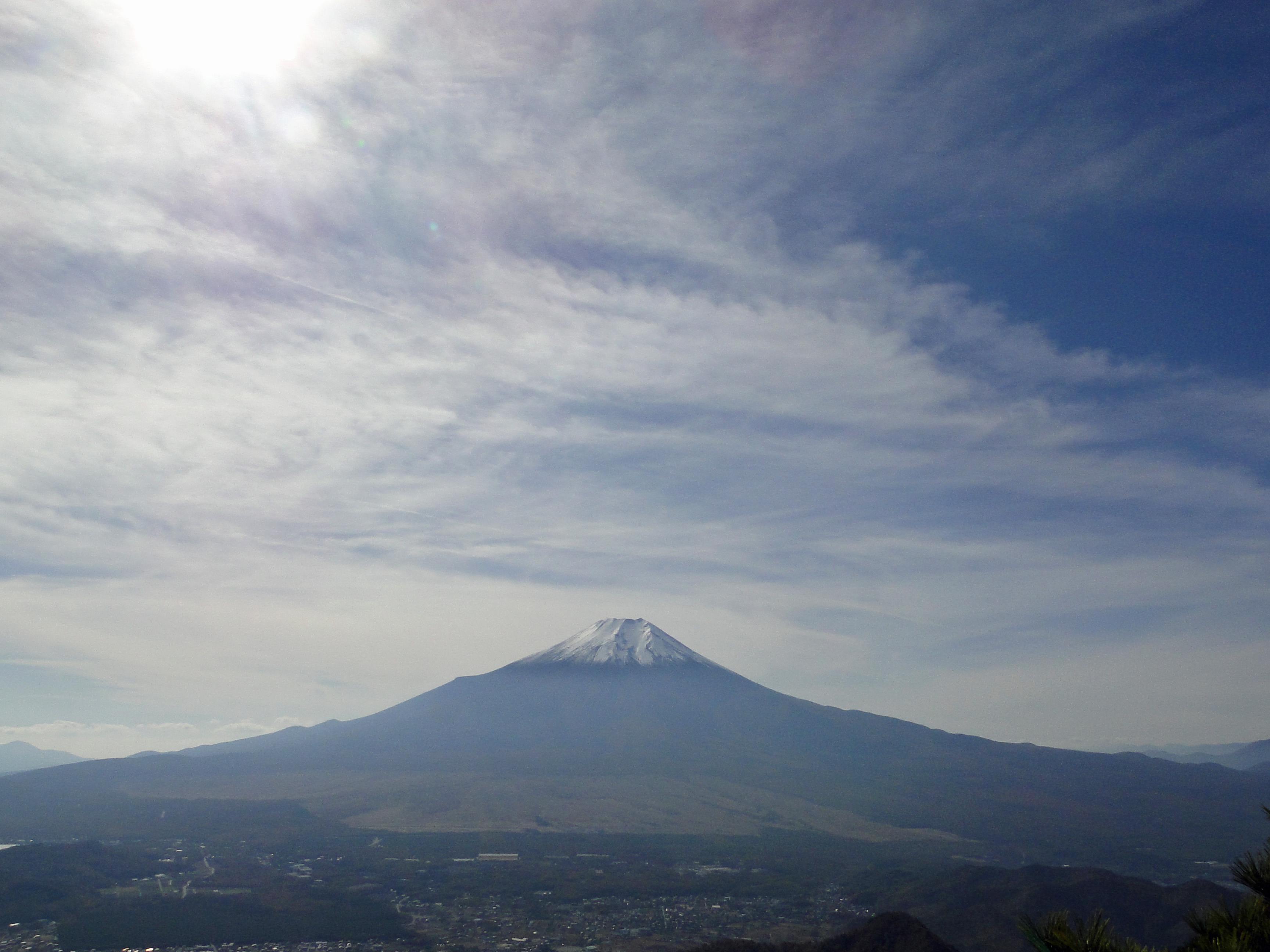
The main reason to climb Mt Shakushi, a Yamanashi 100 famous mountain, is to enjoy the fantastic view of Mt Fuji from the summit; there are no mountains in-between, just fields and forest surrounding Oshino village below. The hike is mostly along a ridgeline, with several smaller peaks along the way. Although I was hiking in the middle of November, there were few autumn colours.

HOW TO GET THERE: Take the limited express for Kawaguchiko station, and get off one stop before the end at Mt Fuji / Fujisan station (used to be Fujiyoshida station till 2010). This convenient but pricey train will get you to Fujiyama in time for the bus for Oshino village. It’s also possible to take a combination of local trains, but the connection won’t be as good. I was the only person on the bus – I guess everyone else had gone to see the autumn colours around Kawaguchiko lake.

Get a map of the Mt Shakushi hike

This map was developed for Japanwilds with the Hokkaido Cartographer

Find more Japan hiking maps on Avenza

THE ROUTE: From the bus stop, I headed along a road with Mt Fuji to my back. After crossing a couple of small streams I started seeing signs for the entrance to the hiking  trail. Very soon I walking along a dirt road surrounded by beautiful forest; it felt very different from hiking trails closer to Tokyo, especially since there was no-one else around. Eventually I overtook a family of five who had come by car.

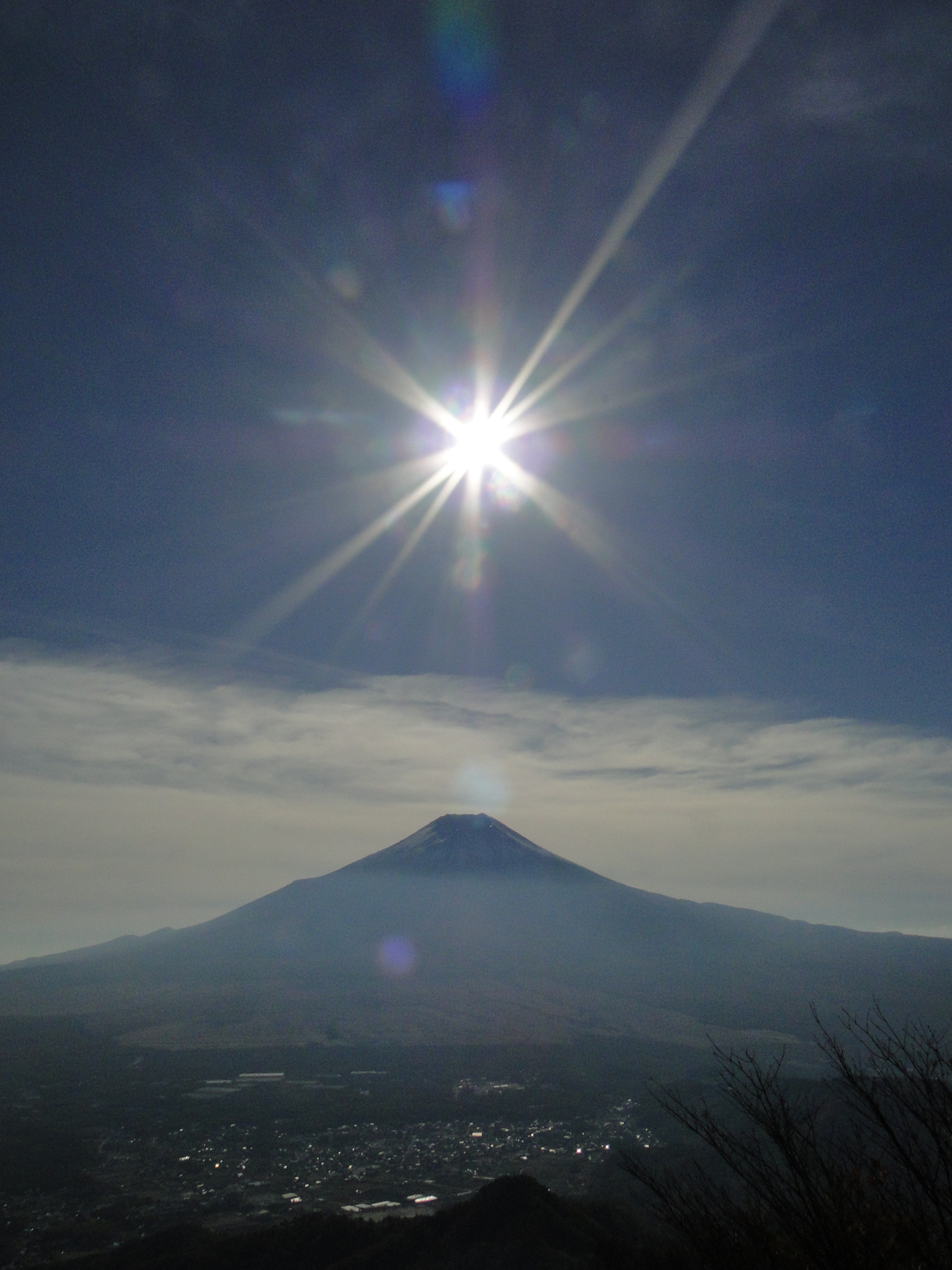
The sun was perfectly aligned above Mt Fuji

After climbing steadily for a while, I reached a pass where I turned left up the main ridge. I soon reached a rocky roped section, with a nice view of Mt Fuji to the side. After the obligatory snapshots, I continued towards the summit. After a while, I arrived at a junction, from where it was a short round-trip to another summit called Mt Shishidome 1632m 鹿留山 (shishidome-yama). Since there was no view, I decided to skip it and continue on my way. The path was now slightly downhill.

A good day for paragliding

Suddenly I came upon the perfect lunch spot – a lonely rock with a stunning view of Mt Fuji. Even though I was a short way from the summit, I decided to stop for lunch; the final part was mostly flat, and peaks can be surprisingly crowded even when there seems to be no one else on the mountain. Occasionally other hikers would stopped behind me to admire the view, but overall it was a very enjoyable lunch. Not only could I see Mt Fuji in front of me, but also the South Alps  (some of the highest peaks were already covered in snow) and lake Yamanaka. Eventually I managed to pull myself away from the view and reach the summit.

Mt Mitsutoge to the West

The top of Mt Shyakushi (杓子山 shakushi-yama) has a couple of benches, and interestingly enough, a bell to scare away bears. I was so busy taking photos of Mt Fuji, I completely forgot to ring it! I was glad I had already taken my lunch break – the sun was moving behind Mt Fuji, and the side facing me was slowly becoming a dark outline. It looked like the sun would set exactly behind the cone, a phenomenon called Diamond Fuji. Unfortunately, there was no way I could stay till sunset, even though it was nice and warm in the autumn sun.

View of Mt Fuji while descending

I hurried down the trail, quickly reentering the forest and losing the Mt Fuji views. I soon passed a jump-off spot for paragliders, just above Ozasu Pass (大権首峠). On the right was the forest road leading to Fudoyu, however I continued straight ahead. After some up and down, including a couple of rocky sections, I arrived at the top of Mt Takasazu (高座山 1304m). A short, steep descent brought me to the top of a wide Japanese Pampas (“susuki”) grass field. Walking along the top edge, I had many dramatic views of the outline of Mt Fuji, against the slowly sinking sun. At 4pm, just as it was getting dark, I was finally back in Oshino village where I caught a bus for Fujisan station.

Ask for a hiking map for Mt Shakushi

Mt Nokogiri (329m), Kyonan Town, Chiba Prefecture

Mt Nokogiri (鋸山 のこぎりやま nokogiriyama), literally “Saw Mountain”, due to its jagged summit, is a popular sightseeing spot situated on the Tokyo side of the Boso peninsula. In the Edo period, it used to be a quarry, which explains its smooth cliffs below the top ridge. It can be reached from Hama-Kanaya station on the Sazanami limited express (about 2 hours from Shinjuku), or by using the Tokyo Bay ferry from Kurihama on the Miura peninsula, Kanagawa prefecture (40 minutes each way).

View south of Minami-Boso from the top of the ropeway

View of the Kanaya ferry port

Most visitors prefer to take the Nokogiriyama ropeway up, and then make the roundtrip along the ridgeline to the observatory at Jigoku Nozomi (地獄のぞみ), meaning ” A peak into hell”, a ledge of rock overhanging a cliff. Looking west, one can gaze upon Tokyo bay and Mt Fuji in the distance. Although an entrance fee is required, it also gives access to Nihon-ji temple (日本寺) and the Nihon-ji Daibustu (日本寺大仏), both worthwhile sights on the south side of the mountain.

A peak into hell, the highlight of a visit to Mt Nokogiri

Kannon carved into the cliffside

For those wanting more exercice, it’s possible to walk down to the base of the ropeway on the north side via the Kangetsudai trail (観月台コース), also part of the Kanto Fureai no Michi. On the way, you’ll pass by the impressive Haykushaku-Kannon (百尺観音), carved into the cliffside. For a longer hike, it’s possible to start from Hota station and approach via the Ura-Nokogiri trail (裏鋸コース, the Nokogiri back trail), leading around the back of the mountain and over its highest point. Whichever option you choose, Mt Nokogiri makes a fun and interesting daytrip from Tokyo.

See the views of Mt Nokogiri

Mt Tsukuba (877m), Tsukuba City, Ibaraki Prefecture

Mt Tsukuba was one of the first mountains I climbed in Japan; its also one of the mountains I’ve been up the most. The shrine at its base is about a 40 minute bus ride from Tsukuba station, itself a 45-minute train ride from Akihabara station with the Tsukuba Express. The mountain is best known for the interestingly shaped rocks below the summit area. The view of the Kanto plain from the top is stunning, and on clear days, even Mt Fuji can be seen. A cable car and a ropeway can shorten the hike for those who’s rather just walk up or down. After the hike it’s possible to take a hot both at one of the several Onsen hotels clustered around Tsukuba Shrine.

Hiking in the Suigo-Tsukuba Quasi-National Park

水郷筑波国定公園

Tsukuba-san (筑波山 つくばさん)

Nyoto-san 女体山 (877m) & Nantai-san 男体山 (871)

Japan 100 Famous Mountain 日本百名山

Climbed in December 2006, November 2009, November 2010, February 2013

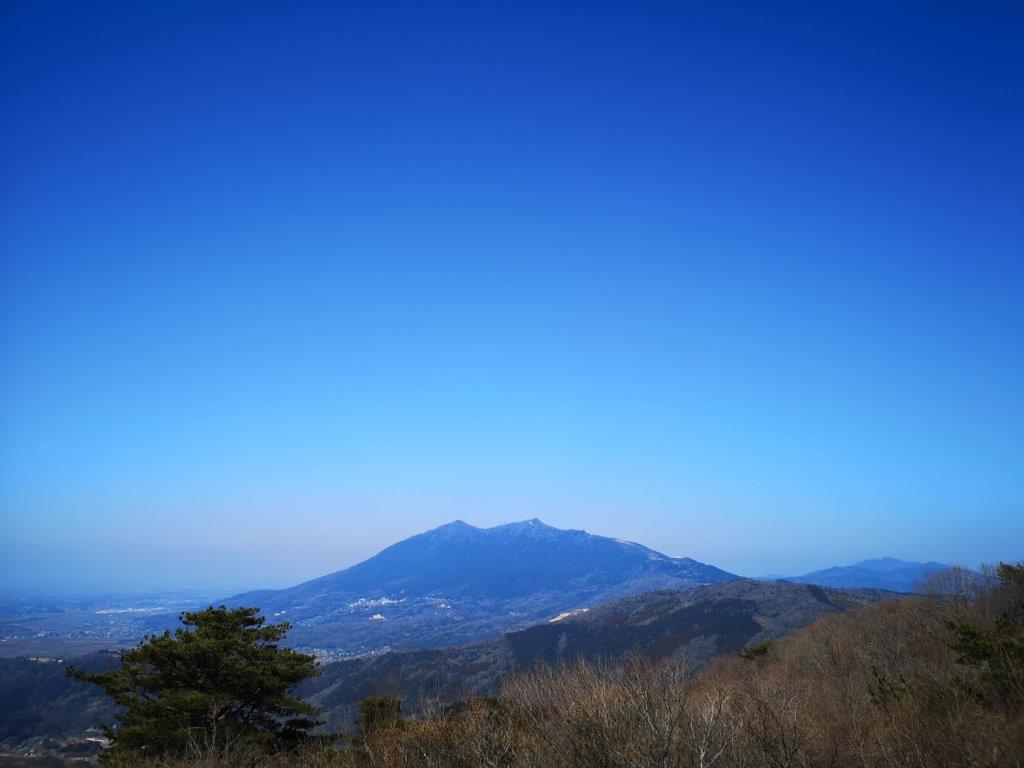
View North from the top of Mt Tsukuba

Request a Hiking Map for Mt Tsukuba