Mt Omuro (1587m) & Mt Kanyudo (1418m), Sagamihara City, Kanagawa Prefecture

These mountains are located in the Western half of the Tanzawa mountains, and harder to access than those in the Eastern half like Mt Tanzawa and Mt Oyama. I  rode the bus from Shin-Matsuda station for over an hour, past Tanzawa lake, all the way to the last stop, the Nishi-Tanzawa Visitor Center 西丹沢ビジターセンター, a great starting or ending point for hikes in the area. It was the second week of November, which was rather late in the season; the autumn colours had already crept down the mountain sides into the valley. I was told by the staff at the visitor center to start heading down by 1pm at the latest, to avoid getting caught in the dark.

Hiking in the Tanzawa Mountains

丹沢山地

Ask for a hiking map for Mt Omuro
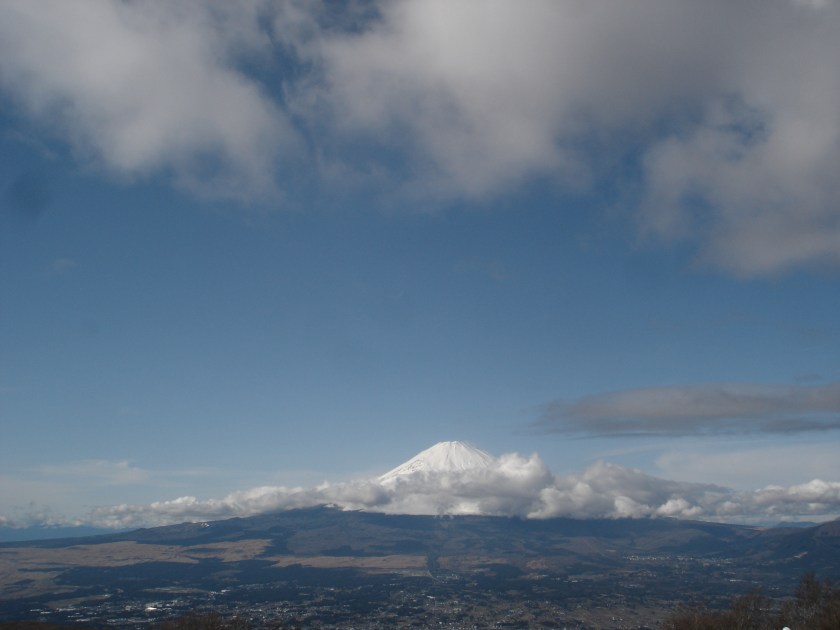
In the back hidden in the clouds is Mt Fuji

I set off at 10am under blue skies. The first part of the hike was along a small road that followed the river valley past a couple of camping sites. At the first junction, I headed right – I would be descending via the left junction. Here I finally entered the hiking trail proper, also part of the Tokai Nature Trail 東海自然歩道. I followed a narrow valley alongside a rocky river. Looking up, I could admire autumn colours in all directions. After an hour of climbing, I reached a pass, an Emergency hut, and the first views. However by now, grey clouds had rolled in hiding the ridgelines.
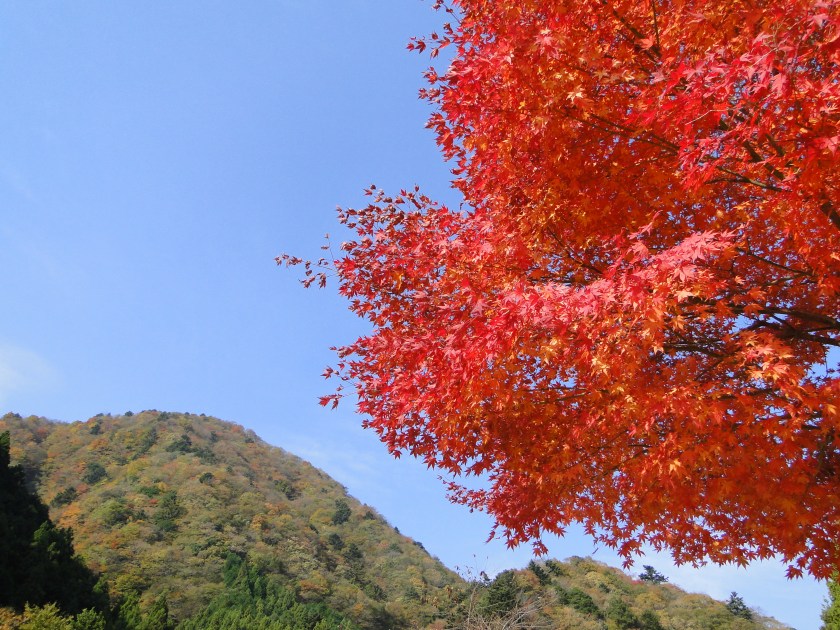
The brilliant red of the “momiji” tree

Climbing up through a “koyo” tunnel

I still needed another hour an hour of tough climbing to reach the summit of Mt Omuro (大室山 oomuroyama), a 100-famous mountain of Yamanashi and the 3rd highest peak of the Tanzawa mountains. Here, the trees were already bare of leaves, a strong hint that winter was just around the corner. I was now mostly above the clouds that had gathered on the Southern side, with just a few milky strands of mist left. I had great views North of Doshi Valley and the Doshi Sankai mountains. Since it was nearly 1pm, I had a quick lunch, and made my way Westwards along the ridgeline to the next peak Mt Kanyudo (加入道山 kanyuudouyama).

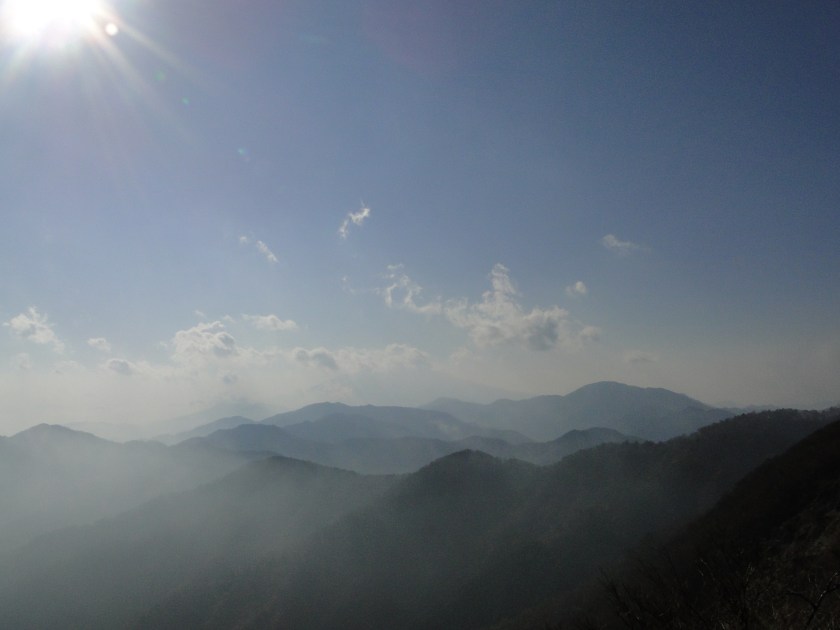
Mist and leafless trees near the summit
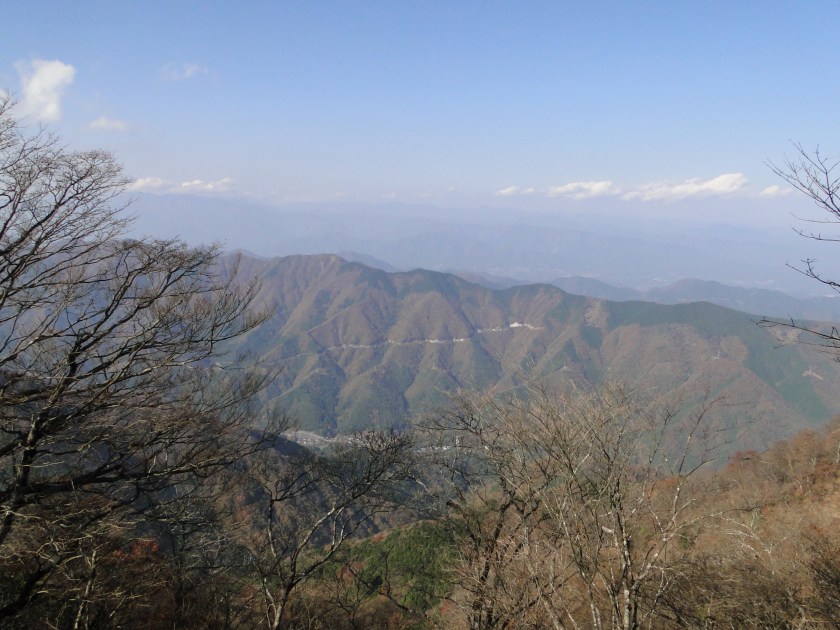
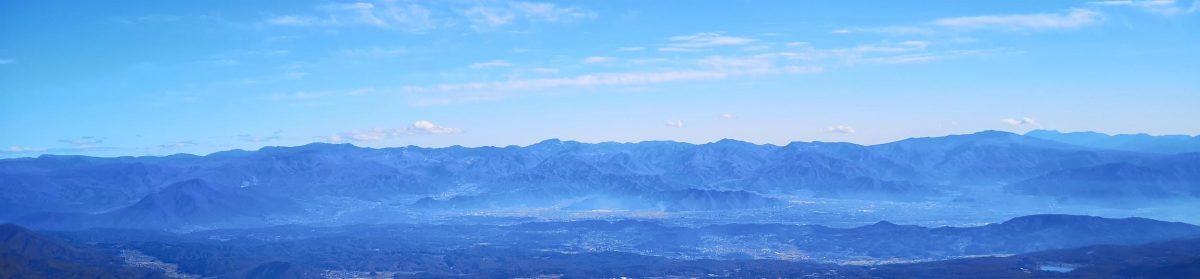
Doshi valley and Doshi mountains

There was another emergency hut here, but fortunately I still had enough time to descend safely.  Soon, I was walking on a wooden path alongside a beautiful mountain stream with a carpet of colourful fallen leaves on both sides. Suddenly the path and the stream parted ways. A few minutes later, I caught a glimpse of an impressive waterfall to my right. By now the clouds had disappeared and the blue skies were back. The sun had already disappeared behind the mountain ridge behind me. I emerged into a river valley with rocky banks, which I crossed several times on small wooden bridges, and finally got back to the visitor center by 4pm.
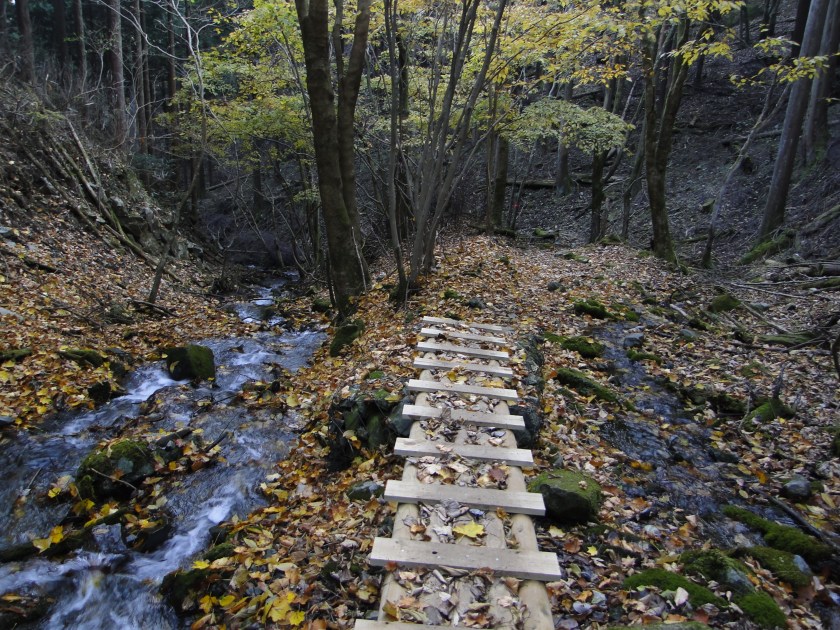
Easy walking on the way down
Ask for a hiking map for Mt Omuro

Mt Kintoki (1212m), Minami-Ashigara City, Kanagawa & Shizuoka Prefectures

This 300-famous mountain jutting out of the Northern tip of the Hakone outer crater, is one of the easiest, and most popular, climbs in the area. I first found out about it from my Kanto hiking book, and realised that I had already seen its pointy top from the train while traveling by train along the Shonan coast. The main attraction seemed to be the unobstructed view of Mt Fuji from the top, but would Japan’s famous volcano be clear of clouds the day of my hike? and with how many other hikers would I have to share the summit with?

Hiking in the Fuji-Hakone-Izu National Park

富士箱根伊豆国立公園

Ask for a hiking map for Mt Kintoki

I took a bus from Hakone-Yumoto station bound for Gotemba, but got off around 9am at the entrance of Kintoki Shrine 金時神社 about 30 minutes later (it’s before the tunnel that passes under the outer crater). The bus was fairly empty, slightly unusual for Hakone. However the parking lot next to the shrine was nearly full. These were the days when the highway toll was a flat fee of 1000 yen on weekends, a kind of stimulus put in place after the Lehman shock (as it is called here). The first part of the hike was fairly easy; it took one hour along a winding trail to reach the top of the rim.  There were some nice views of the outer crater, with Mt Mikuni above lake Ashi directly opposite, and Mt Koma to its left.

My best shot of Mt Fuji 

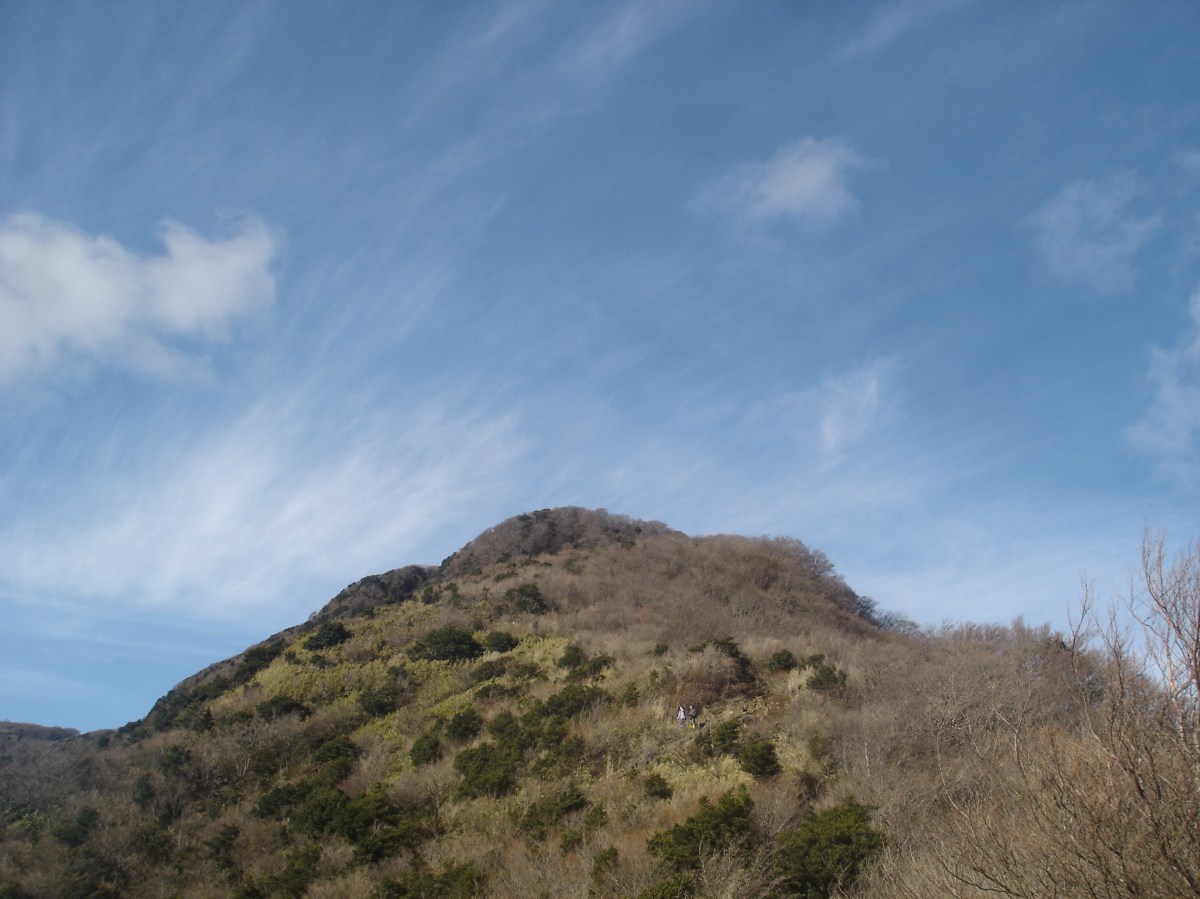
Turning left, it took another 20 minutes of steep climbing to reach the top of Mt Kintoki 金時山 (kintokiyama or kintokizan). The trees on this section were small, rather like big bushes, and bare of leaves since it was the middle of December. As expected, the top was packed with people and nearly all benches were taken. It seemed to be a popular place to have lunch while enjoying the view of majestic Fuji. Today, the giant was wrapped in grey clouds,  with only its white top showing itself.  It wasn’t the best view I had ever had, but it was still impressive.

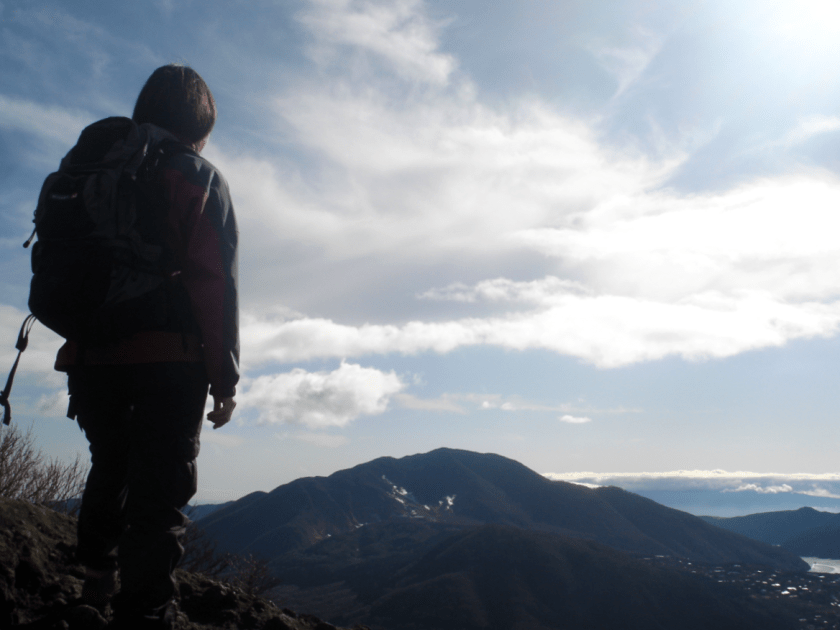
Another hiker gazing at Mt Koma, the highest point of Hakone

I found a spot to sit for lunch. In all directions it was mostly blue skies, and I had a great view of the impressive Hakone crater with the Suruga Bay in the background. This was undoubtedly one of the best views of the Kanto area within close reach of Tokyo. After lunch, I went back down the same way but instead of going back to the shrine, I followed the rim a little further East. The path was lined with tall bamboo grass on both sides, but it wasn’t high enough to block out the view of Mt Myojin ahead. At Yagurasawa Pass 矢倉沢峠, I turned right and headed down. The trail was steep this time, and I had to be careful not to slip. Half an hour later, I was back on the road.

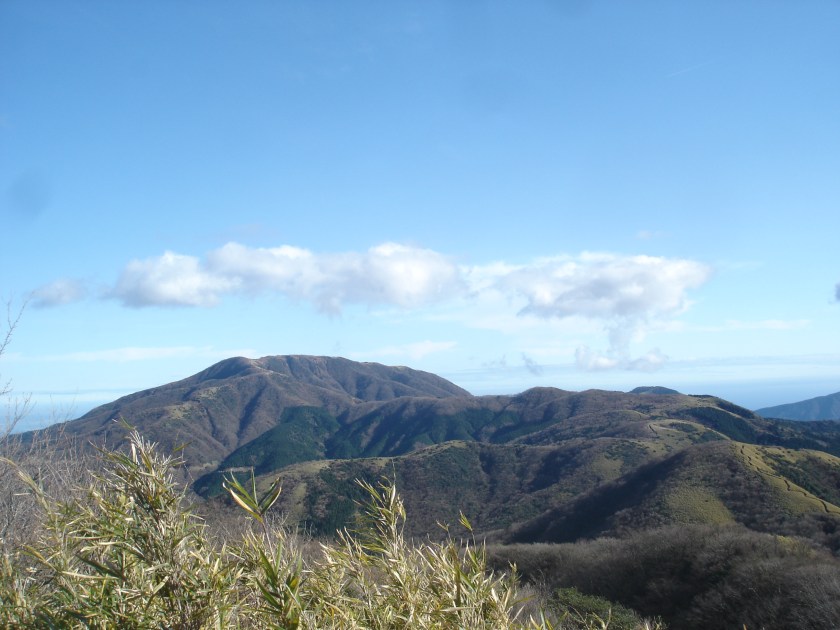
Mt Myojin, another great mountain to climb

Although it was a short hike, I didn’t mind since December days are also short. I definitely want to try my luck again to see Mt Fuji completely free of clouds from the top. One more good point about Hakone, is that there are many hot spring hotels. So after completing the hike in about four hours, I was able to have a nice hot soak before making my way back to Tokyo.

Ask for a hiking map for Mt Kintoki

See the panoramic view from the top of Mt Kintoki