Mt Hamaishi (707m), Shizuoka City, Shizuoka Prefecture, Sunday June 16, 2019

I was itching to head somewhere new. A place I hadn’t explored yet. June is the best time of the year to head faraway since the days are long. I decided to head South to Shizuoka prefecture, since it had rained all day the day before and therefore there were bound to be good views of Mt Fuji. It was also the location of a good station to station hike I had recently found in my Shizuoka prefecture hiking guide book. I used the Tokaido line to go all the way to Atami, where I changed to a local line for the final part of the trip to Yui station, halfway between Numazu and Shizuoka cities.
Yui, 3 hours from Tokyo station, is apparently the capital of Sakura Ebi or Sakura Shrimp fishing in Japan. It also used to be on the Tokaido, the ancient pathway that linked Tokyo and Kyoto. I had one small problem after stepping out of the train station just after ten thirty: it was a lot hotter than I had expected. The sun was pounding down from above. Normally I wouldn’t attempt a hike from sea level in June, but the last few days had been unseasonably cool so I thought I could risk it.
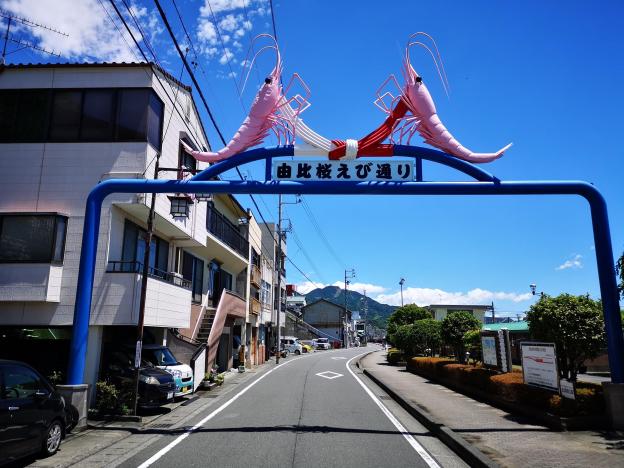
Welcome to the town of Sakura Ebi

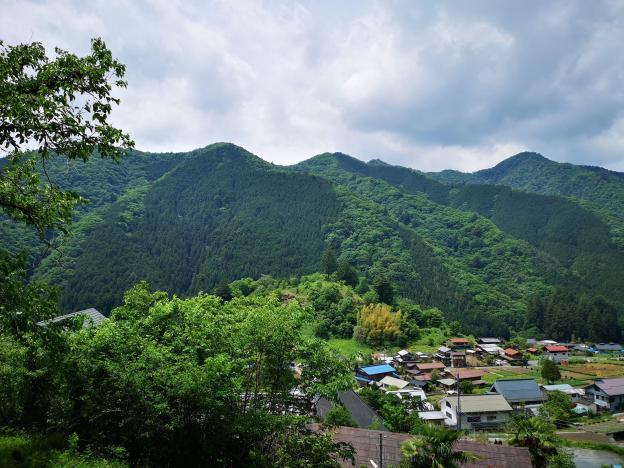
I set out as quickly, hoping to gain altitude and some coolness as soon as possible. The hike is well signposted, and soon I found myself walking up a narrow road with great views of Suruga Bay behind me. Mt Fuji was still in the clouds. After a little more than an hour a reach a flat area with some fields, toilets and a signboard. Shortly after, I spotted a hiking trail going straight up the mountainside. Although, it wasn’t mentioned in my guide book, I was glad for the opportunity to leave the road.
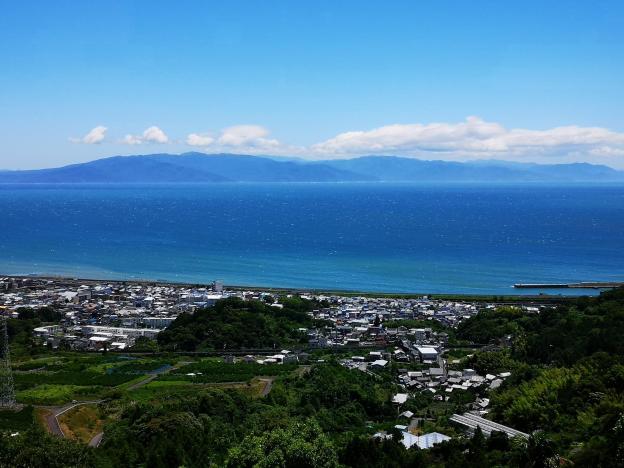
First good views East towards Izu one hour after setting out

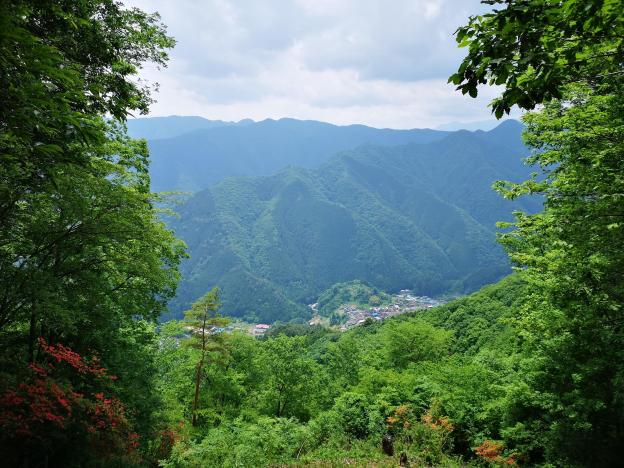
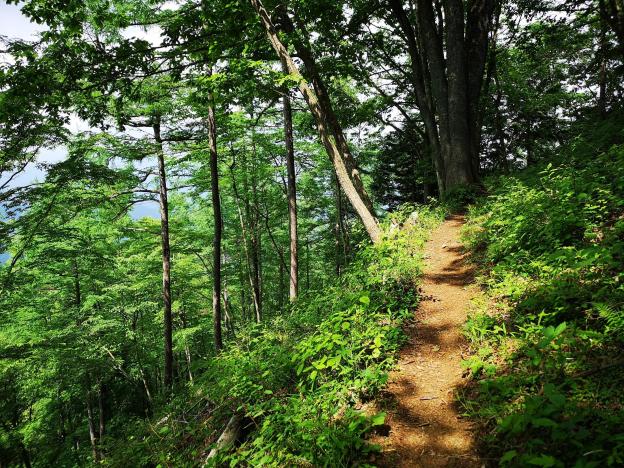
The trail had suffered a bit from the recent rains but climbed steadily through the forest. Eventually I emerged into an open area with great views of Suruga Bay, Izu peninsula, and Mt Fuji, slowly emerging from the clouds. After a short break, I set off again. Instead of climbing the path started to follow the contour of the mountainside – the surrounding vegetation reminded me very much of hiking on the Izu peninsula opposite, also part of Shizuoka prefecture.
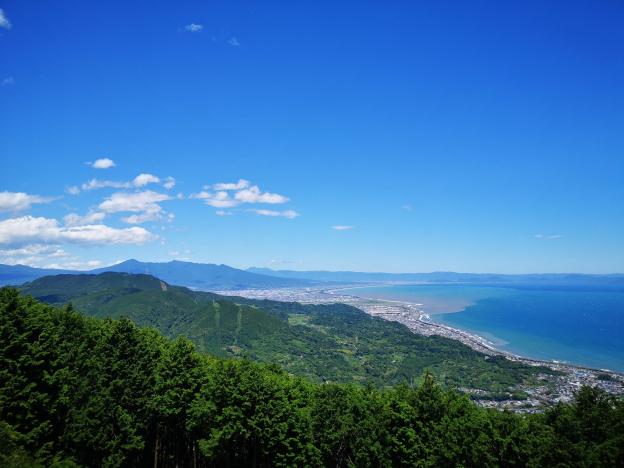
Beautiful views North towards Numazu City

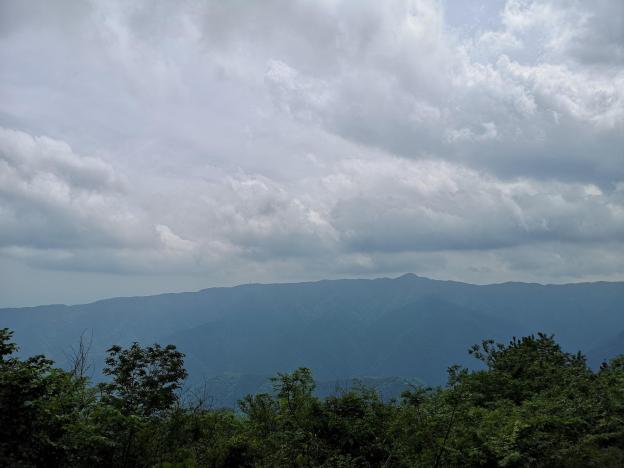
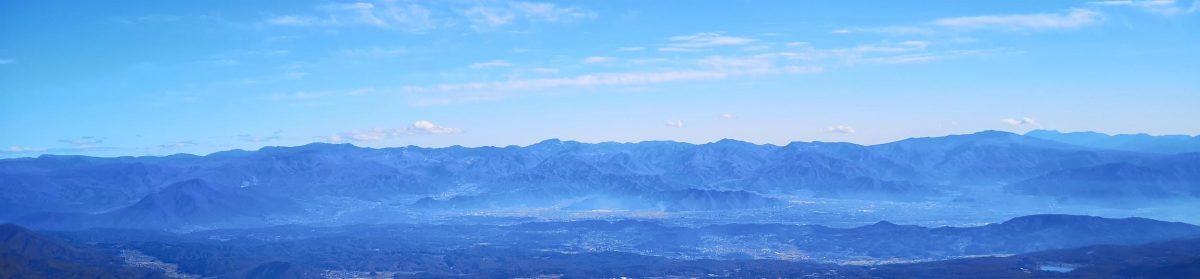
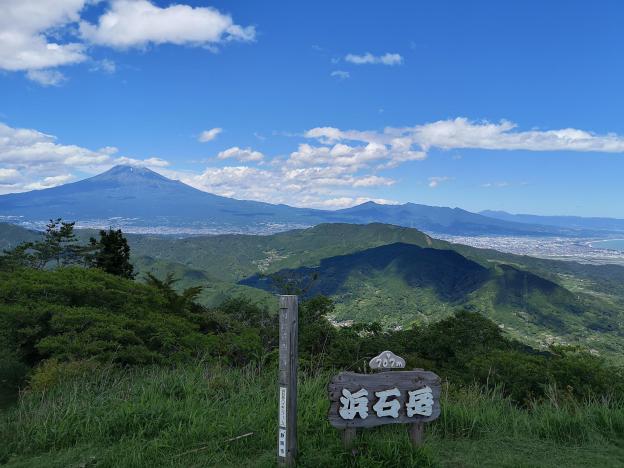
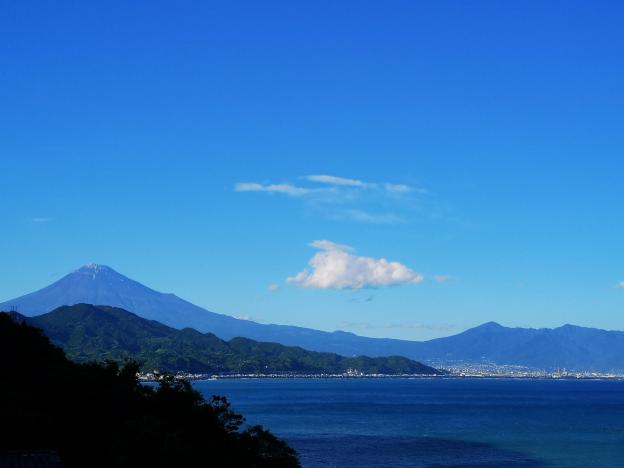
Just when I was starting to worry that I was on the wrong path, I saw a signpost that confirmed that I was on the right trail. The summit was just a short way away. The vegetation started to thin and finally I reached a bald grassy hill, behind which I could just make out the top of Mt Fuji, clear of clouds! I rushed the final few meters and snapped a few photos before clouds rolled in and covered Fuji’s summit from view. The summit of Mt Hamaishi 浜石岳 is famous for its great views and I wasn’t disappointed. I could see from left to right, Shizuoka city, the Southern part of the Southern Alps, Mt Fuji, Mt Ashitaka, Hakone, and the Izu peninsula. I probably say this often, but it was one of the best views I had ever seen in Japan, especially on a day trip from Tokyo.
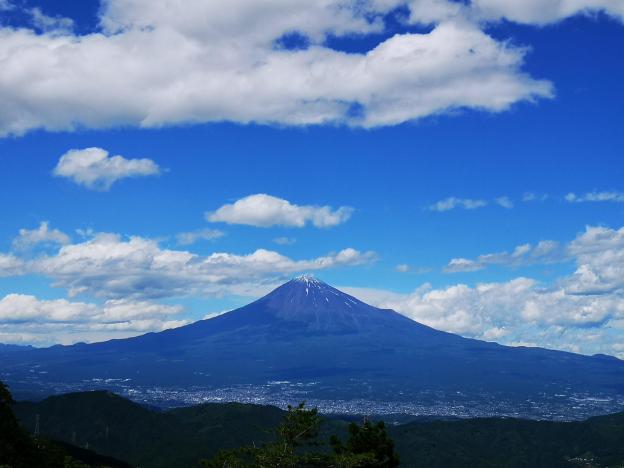
The majestic beauty of Mt Fuji from the top of Mt Hamaishi

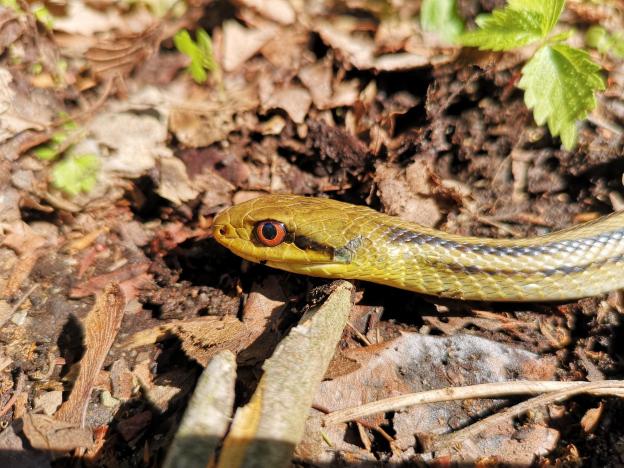
After nearly an hour, I was able to drag myself away from the amazing views. I had to head back down to the signpost I had seen earlier. I decided to run since I was behind schedule, and nearly stepped on a large snake! Fortunately the snake jumped out of the way and retreated into the bushes. I wasn’t sure whether it was poisonous or not, but I was a lot more cautious from that point forward. At the signpost I had passed earlier, my path continued straight, following a different way down, Southwards. The forest I was walking through reminded me somewhat of the Southern Alps, not surprising in fact, since, looking at a map, Mt Hamaishi sits at the very end of the end of the Southern Alps (not sure whether it’s geographically part of it).
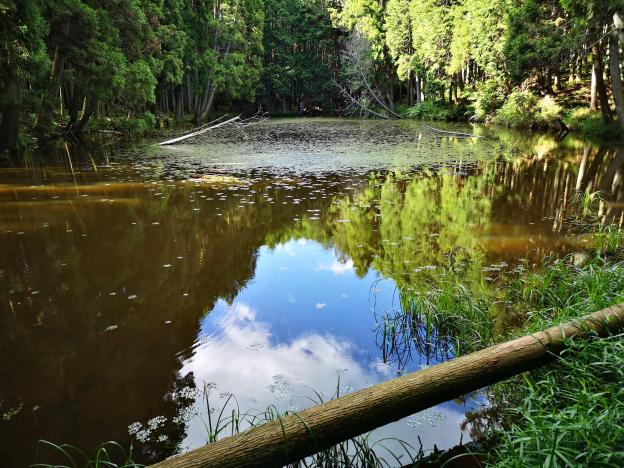
Blue sky and clouds reflected in Tachibana Pond

Soon I reached a signpost for Tachibana Pond, a short way from the main trail. It was amazing to see such a beautiful pond in the middle of the forest. After tearing myself away from the second great view of the day, I continued down the mountain. This incredibly beautiful part of the hike took two and a half hours, and I saw absolutely no one. At one point I crossed a spooky bamboo forest – even though it wasn’t a windy day, the bamboo trees swished and swayed as if I were in the midst of a storm. Finally I popped out at the Satta Pass viewpoint, just above the ocean. From there, it was another 45 minutes of fast walking back to the station, that would get me back to Tokyo.
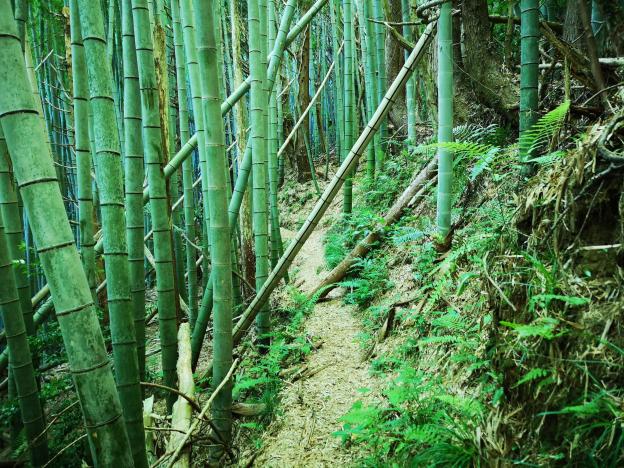
Spooky bamboo trail

Check out the snake that was crossing the trail just below Mt Hamaishi

Enjoy the sounds of the bamboo forest swaying in the wind
Mt Maruyama (1098m), Hinohara Village, Yamanashi & Tokyo Prefectures, Saturday, June 1st, 2019

I decided to return to the same area as the previous week, and do a portion of the Mitosan-Takosan ridge that I had never hiked before. It contains no major summits, but since it was featured in my Tokyo prefecture hiking book, I thought it would be make a nice ramble. Also, the weather was cooler, so I could start later and lower down. This time I was hiking South and East of Mt Mito, as opposed to the West and North the week before.

Iris season has started!

I took the bus from Uenohara station, but one hour later than the week before. Since the bus didn’t go all the way to Matsuhime pass, I was the only passenger. I got off at Gobara, in the charming village of Saihara 西原村. At 10:40 on a Saturday Morning it was completely deserted, and I wondered where everybody was. The hike was fairly well-signposted, and soon I was climbing up the side of the valley through forest.

Easy-to-hike: I passed a mountain biker coming down around here

It was cloudy and sunny but temperature-wise, perfect for hiking. The climb up was surprisingly beautiful: the path was easy to hike, and the surrounding forest felt wild and untouched – exactly what I crave for in a hike. Apart from a mountain biker, I saw no-else on the climb up. Halfway up, there was a nice viewpoint of Nishihara village, and the ridge I had hiked down from Matsuhime toge, 3 years ago.

After an hour and a half I reached Nishihara pass, and other hikers. I made a quick roundtrip to the top of Mt Makiyose 槇寄山 (1188) less than a minute away. I had been there once before when I had hiked down from Mt Mito years ago. I had a quick bite since there were a couple of benches and admired the view to the South – I could make out the shape of Mt Gongen, another peak climbed years ago.

I then retraced my steps and followed the ridge Southeast. The forest was beautiful and peaceful, with few people. I couldn’t quite decide if the area reminded me of the mountains directly south of the Chuo line, or of the ridge on the opposite of the Akigawa river valley. In any case, the ridge was wide and easy to walk, very unlike the section further down, around Mt Shoto, where it gets really narrow and tricky.

An enjoyable hike in the late spring

Eventually I reached another pass, Kazuma Pass, with benches and a viewpoint to the South. This was the point I had left the ridge on my previous hike down from Mt Mito, so from now on it was new territory. The weather had turned definitely cloudy, not a big problem in the pleasant June temperature. It was past one, so I sat down for the second part of my lunch.

The long ridge leading to the top of Mt Gongen

Another hour of hiking brought me to the top of Mt Maruyama 丸山 – no view unfortunately. I didn’t linger, and the path which had been fairly level up to now, started to descend. Oddly enough, English translations on the signposts appeared around here – I guess I was officially in Tokyo territory. I emerged at Asama Pass, and joined up with the “Kanto Fureai no Michi” about one hour later. I had been here when I climbed Mt Shoto. I had now officially hiked the entire ridge from Mt Mito to Mt Takao.

The sun made it through the clouds from time to time

From here, I turned left and started to head down to the Akigawa river valley and the bus stop for Musashi-Itsukaichi Station. I was one hundred meters from the stop and five minutes before the bus was scheduled to arrive, when it suddenly careened around a corner at top speed! I ran desperately after it waving my hand, but once I reached the bus stop, I wasn’t allowed to board! It turned out that it was a “zouhatsu” 増発 or extra bus which runs in the high season. Another, half empty, bus came along a few seconds later – I guess the Nishitokyo bus company likes its passengers to travel comfortably!

Off-the-beaten-track: Saihara Village

Tsuru Pass to Okutama Lake & Monkeys, Yamanashi & Tokyo Prefectures, Sat May 25 2019


Temperatures were unseasonably hot at the end of May – up to 35 degrees in Tokyo – so it made sense to start my hike from a higher point. I decided to take the bus from Uenohara station to Tsuru Pass 鶴峠, squarely inside Yamanashi prefecture at nearly 900m. On the way, I passed through the charming village of Saihara, one of the area’s hidden wonders. This hike is an original hike not featured in any of my guidebooks. It’s main purpose is to connect two bus stops without passing any major summits on the way (although a detour via Mt Mito can be made).

Once I got off the bus, just below the pass, I couldn’t believe how hot it was at 10am. Luckily it was a dry heat. To reach the start of the hike, I had to cross the road and take a hard-to-spot ascending path. There is another path going up to the left, towards Mt Narakura 奈良倉山 (1349m) which I climbed from the other side the year before. After barely a few minutes, I came across part of a deer leg lying across the path. Just the foreleg, with fur and hoof at the end. “Some animal must have killed the deer and left just this part here” I thought to myself. “…but what animal??”

Pleasant May hiking in the Chichibu-Tama-Kai National Park

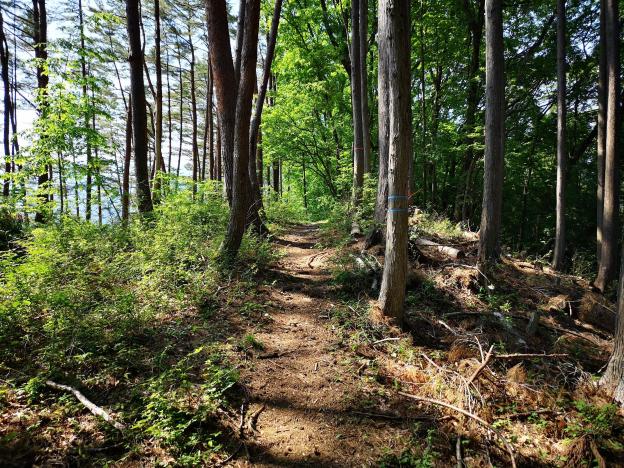
Shortly after, the path for Mt Mito 三頭山 branched to the right, and hugged the side of the mountain to the right. It was very peaceful until two ladies popped out of the forest above me – they had mistakenly continued straight along the previous road. After confirming they were now on the correct path, I soon left them behind. The trail gradually rose through the forest. There were few views but I was glad to be in the shade on this hot day.

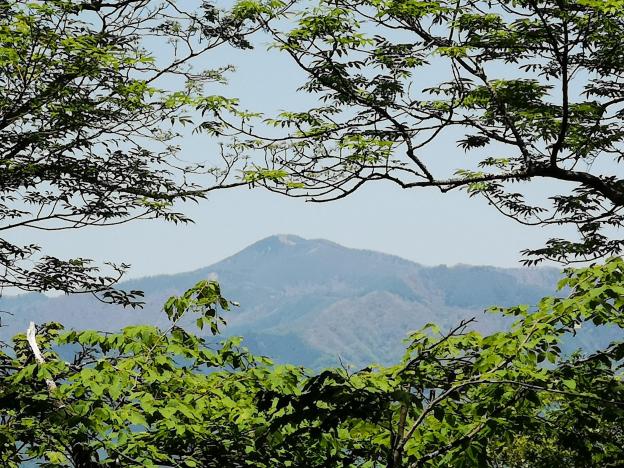
One of the rare views along the way: Mt Kumotori

After one hour of pleasant and mostly solitary hiking, I reached the junction for Mt Mito and hesitated : should I continue along what had been up to now a nice, quiet and mostly flat path, or should I climb up to the top of Mt Mito, which I had submitted twice before, and where there was bound to be tons of people? I chose the former option, and I was quite glad I did, because it soon became obvious that I wasn’t just following a hiking path. It was actually an old road that had probably been in use for generations; some sections had been propped up with stones. I had already hiked a similar road in the same area a few years before.

It was thrilling to follow the remnants of an old road high up a mountain

After another hour, I reached a second junction with Mt Mito. Here I turned left and headed down the mountain towards lake Okutama and into Tokyo prefecture. I had also entered the Chichibu-Tama-Kai National Park, although there were no markers or signs to indicate this; I only realised this while writing this blog post – a real shame! The descent was gentle at first, but soon there were some steep bits with ropes; these are fine for climbing, but going down them can be quite a pain!

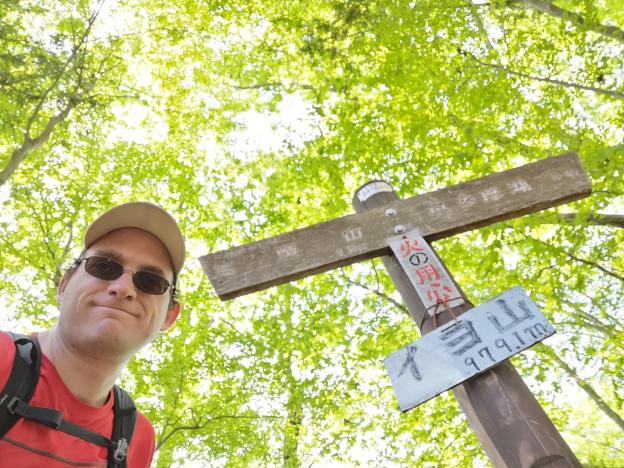
The author posing on a minor summit on the way down to Okutama lake

Soon, Okutama lake came into view and, after a couple of ups and downs, I finally emerged onto a road circling the lake, nearly two hours after I had started down. Here, my plan was to take something called a floating bridge “ukihashi” 浮橋 across the lake, but I was informed via a sign that it was closed at the moment. Nonetheless, I decided to check it out. While following the road, I saw a green snake. After some prodding with a branch, I realised that it was dead, despite looking very much alive. Apparently, it had been hit by a vehicle moving at high speed, and only suffered a “nick” to a part of the body, which was enough to kill it.

Even dead, the snake looked very much alive!

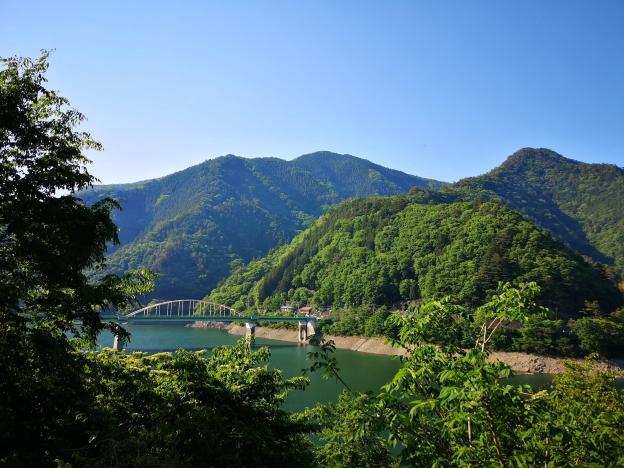
After a while I reached some steps leading towards the lake, and very soon I was able to lay eyes on the floating bridge. It had been detached from the shore I was on, and thus ended in the middle of the lake. The reason given was strong winds. Just opposite, was my bus stop. Now, in order to reach it, I had to circle round, a detour of about half an hour. I wandered back despondly, and decided to continue along the path circling the lake in the opposite direction since I had an hour to kill till the next bus.

The floating bridge floating in the middle of the lake

I was glad I did, because I got to see monkeys, lots of them, resting, playing and feeding in the trees. Eventually, one of them was sitting next to the path and I didn’t dare go further. In any case, I was quite content to take photos and videos. Soon my time was up, and I had to rush back along the road in order to catch the bus back to Okutama station. The views of the mountains surrounding the lake were beautiful – I don’t often get to see this area in perfect weather. It was pretty hot around the lake in the late afternoon, and it felt nice to sit inside the air conditioned bus!

View of deep blue Okutama lake under a light blue sky

Monkey in the way!

If you like monkeys, check out this compilation video