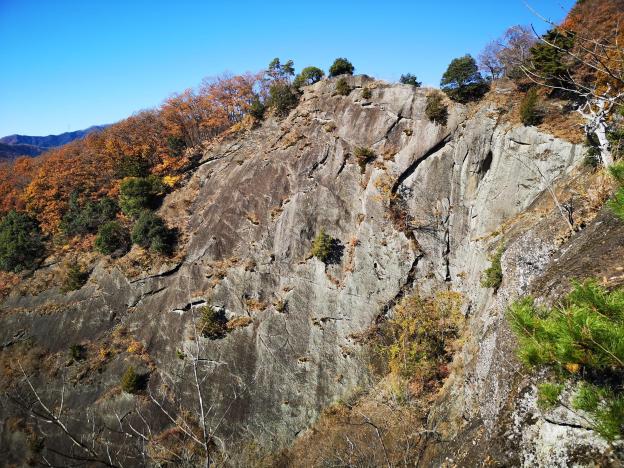
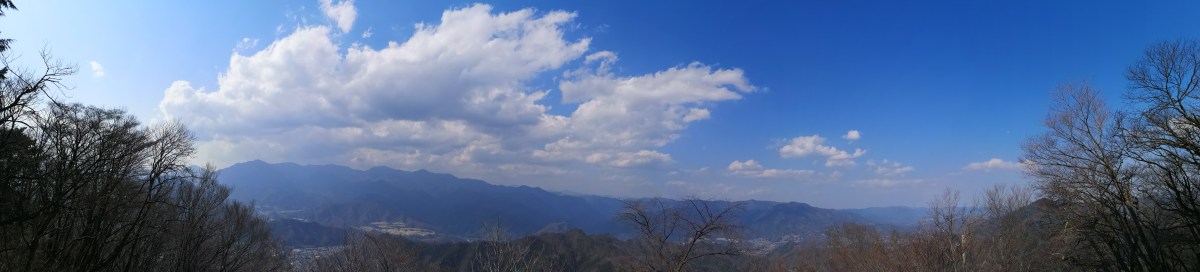
Mt Nodake (543m) & Mt Yaeyama (531m), Uenohara City, Yamanashi Prefecture, Tuesday, December 24, 2019

This was a short hike – about 3 hours – I did along the Chuo line. I decided to add it for a couple of reasons. First the views, including Mt Fuji, were amazing. Second, the signs – in Japanese and English – were excellent, and made this an easy-to-follow hike. It had snowed in the area 3 days earlier, but it seemed that crampons wouldn’t be needed.

I took the train to Uenohara station, about an hour from Shinjuku, from where it was another hour of walking to the start of the trail. In reality it takes a bit longer, but I was able to catch a bus midway. The buses in the area are infrequent and hard to figure out so I was lucky to catch one near a bus stop. It’s another ten minutes from the last stop to the start of the trail.

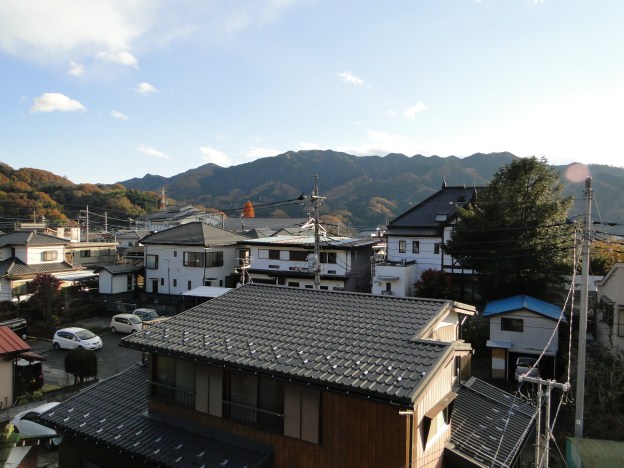
Start of the hiking trail

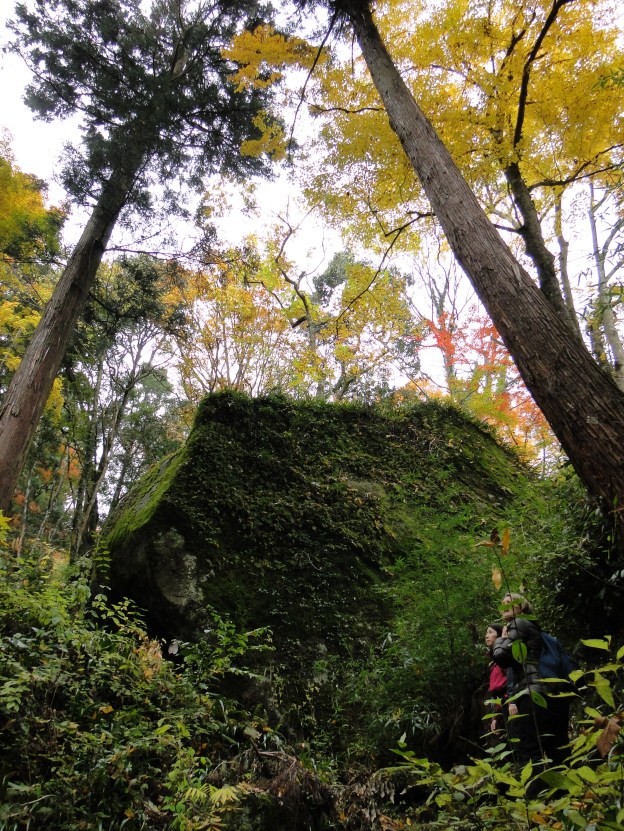
Beautiful forest just around the corner

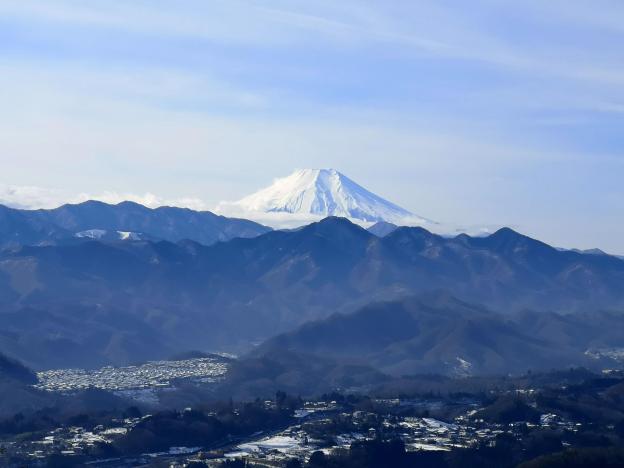
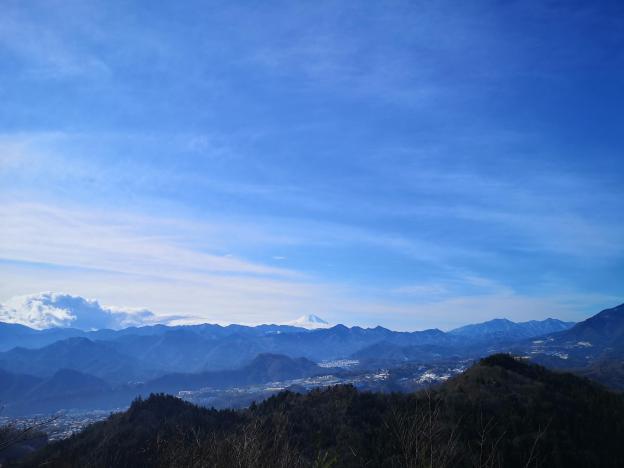
I started up the hiking trail just past 10am, and in less than ten minutes, I reached a viewpoint where I could see Mt Fuji. After taking a few pictures, I turned around, and saw that the path was covered in snow! However, I happened to be there at the same time as another hiker on his way down, and he assured me that there wasn’t much snow higher up.

Snow on the trail, but mostly on the North side

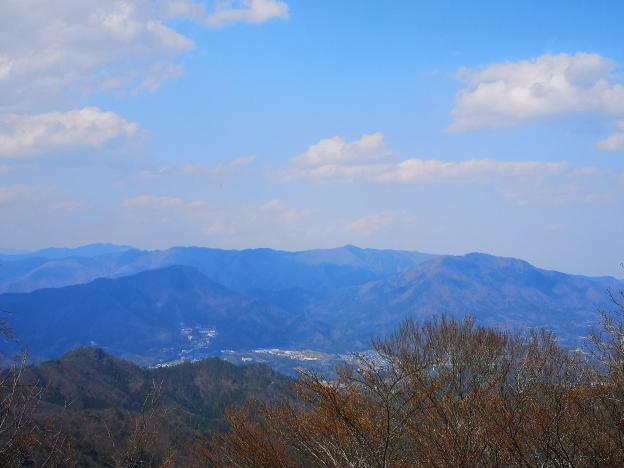
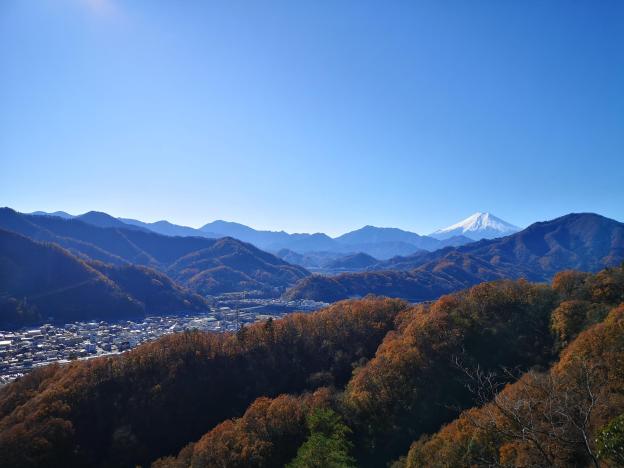
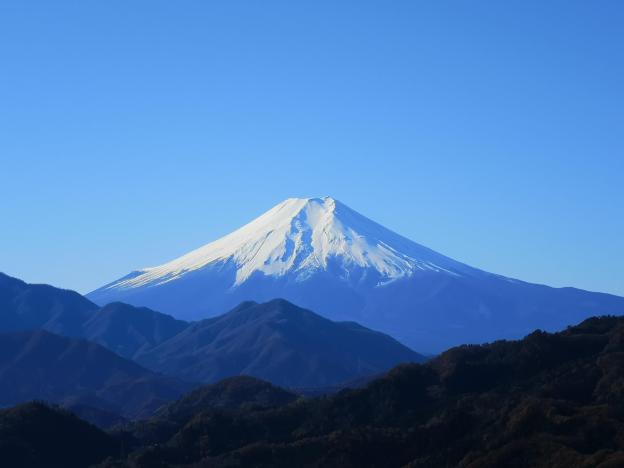
The path turned along the side of the mountain, and once it faced southwards, the snow did indeed disappear. It reappeared here and there further on, but it was never an issue. I was soon walking on the summit ridge, and after a couple of ups and downs, I reached the top of Mt Nodake 能岳 before 11am. The view of the Katsura river valley below with Mt Fuji in the background was outstanding.

View from the top of Mt Nodake

Closeup of Mt Fuji

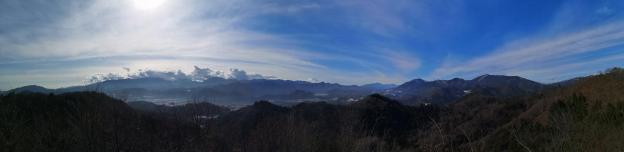
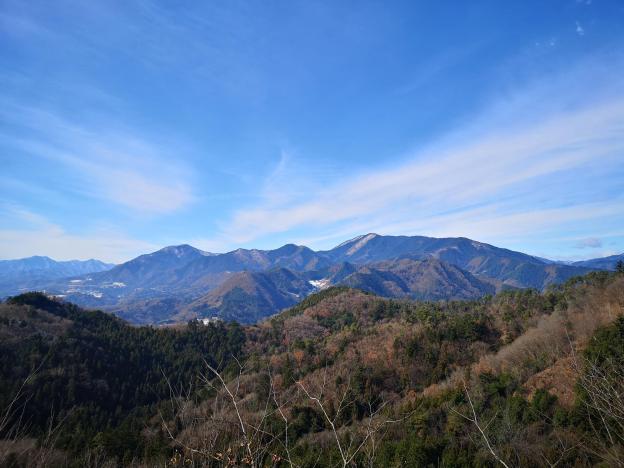
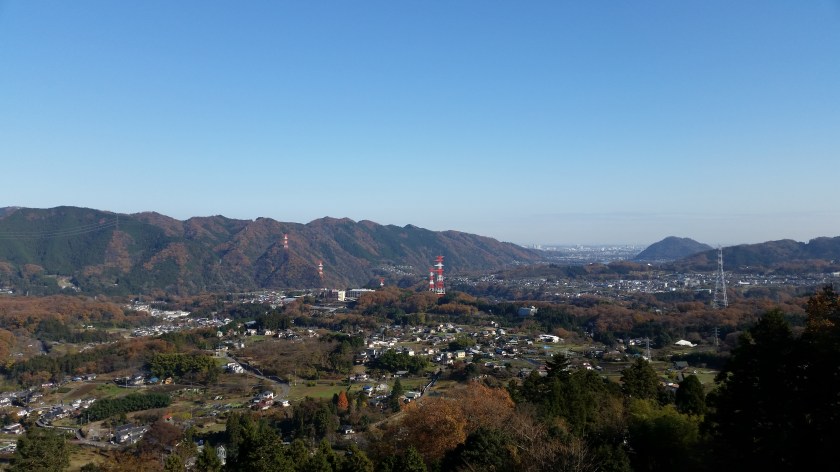
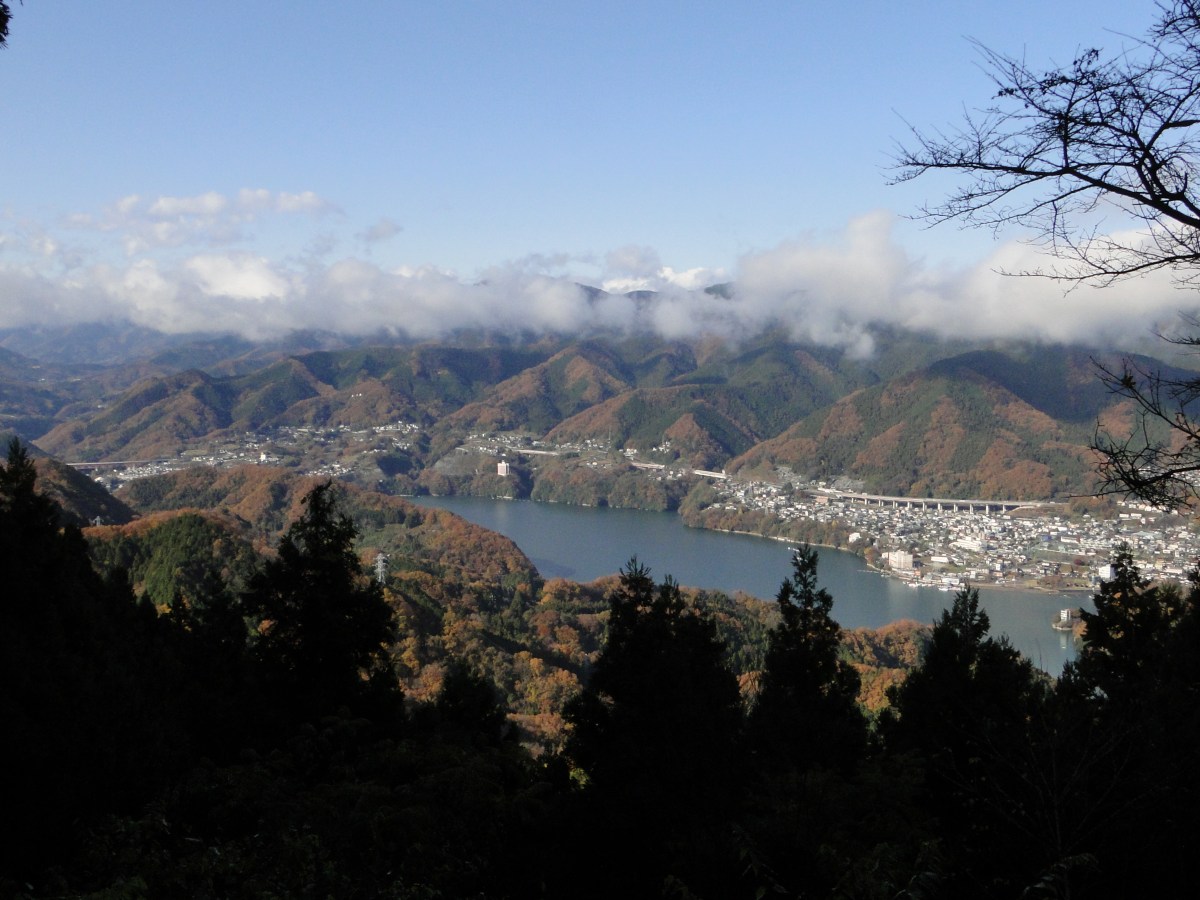
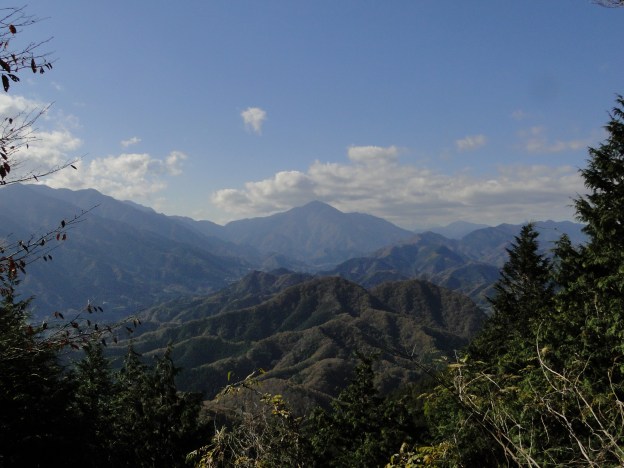
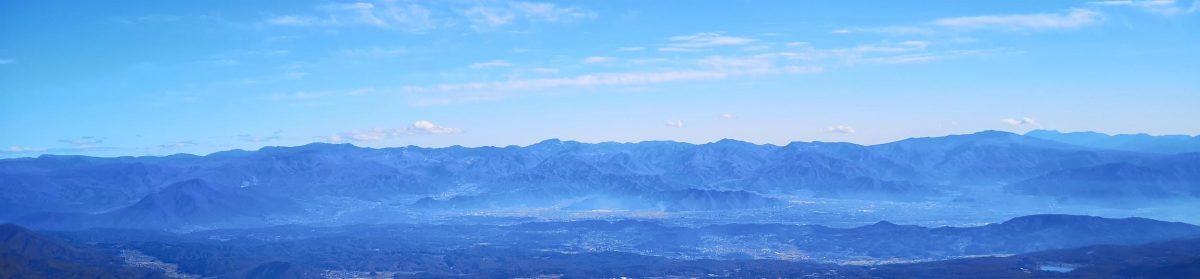
After a quick bite, I set off again. It took me only ten minutes to reach the top of Mt Yaeyama 八重山. There was a small arbour, but the view was somewhat obstructed by trees. I started walking down, and less than ten minutes later I came to another arbour and lookout point. Here, the view was top notch; arguably one of the best in the Tokyo area. From left to right, I could see the Tanzawa mountains, Mt Fuji, Mitsutoge, Mt Ogiyama and Mt Gongen.

View to the West of Mt Ogiyama and Mt Gongen

View from the Mt Yaeyama observatory

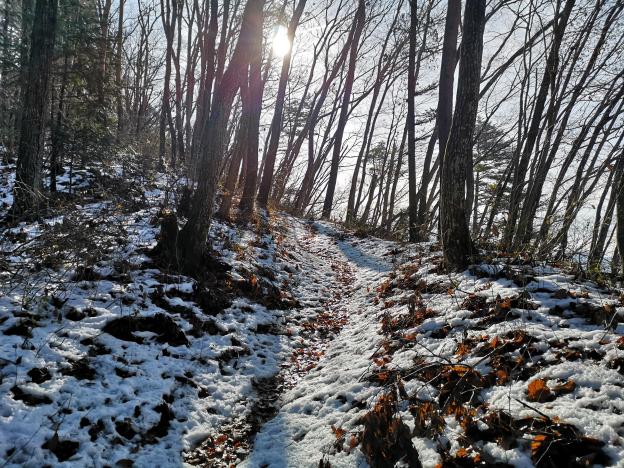
I left the viewpoint at 11h30. There are several paths down the mountain, but they all meet up lower down; some were closed due to typhoon damage. Once I reached the base of the mountain, the path followed a stream through the forest. At times, the sunlight filtering through the trees was magical. Very soon, I reached a road, and it took me another 45 minutes to get back to Uenohara station.

Magical forest at the end of the hike

NEXT UP: Mt Bukka (Tanzawa Mountains) in Kanagawa

Mt Iwadono (634m), Otsuki City, Yamanashi Prefecture, Sunday December 8, 2019

Hiking from the Chuo Line 中央線

I’d been through Otsuki so many times, on my way to either the Mt Fuji Five lakes area, or Kofu city, and each time I saw this rocky hill jutting up behind the city. Since it’s not a very big mountain, I did it as a morning hike, returning to Tokyo around noon. At the moment, two out of the three hiking trails are closed, these closures predate typhoon Hagibis, but it’s still possible to hike up via the back of the mountain. After reaching the highest point, it’s possible to continue along the ridge westwards for another hour, and finally walk back to Otsuki station forming a loop; since it’s a popular hike, there are warning signs and maps about this right outside the station, and along the approach to the trailhead.

Autumn colours still on display in December

I used the convenient and comfortable Chuo line limited express to get to Otsuki station, only one hour from Shinjuku. It took me another hour to reach the start of the trail – Hatagura tozanguchi 畑倉登山口, just opposite a driving school. Although I had to walk on the road, there were good views of Katsura river (which later becomes Sagami river), Mt Momokura and Mt Gongen. The crisp autumn weather made all the surrounding mountains clearly visible. After crossing the river, I turned around, and I saw the snowy top of Mt Fuji rising behind Otsuki city.

IMG_20191208_114213

The hike follows the ridge from right to left

From the start of the hiking path, it took me just half an hour to reach the top of Mt Iwadono 岩殿山. It used to be the site of a castle, Iwadonojo 岩殿城 but there isn’t much left now. I was rewarded with an amazing aerial view of Otsuki town with Mt Fuji in the background. On the left, were the Doshi mountains, and on the right, were the Misaka Mountains. I was standing on top of the rocky face of the mountain, with nothing but a low fence and some bushes separating me from a hundred meter drop. My arrival at the top coincided with that of a rather large group, and I was asked to take their photo. One of the group members very kindly offered me some sweets in exchange. After they had moved on, I enjoyed an early lunch.

Spectacular view from the top of Mt Iwadono

Fortunately, my hike wasn’t over yet. From the summit, I continued along the ridge, first heading down for a short while before climbing again. I soon reached a fork where I had 2 choices – the forest path or the rock climbing path. Unfortunately, the group I had encountered at the summit, were now busy making their way up the rock climbing path – there was no way to get around them. Since I was on a schedule, I took the less exciting forest option. However, the paths merged soon after, and I found myself ahead of the large group, so in the end it was a blessing in disguise.

Last good view of Mt Fuji

I had some more excellent views of the valley below, and Mt Fuji, while hiking along a narrow, rocky ridge. I had imagined that this would be an easy hike, but it turned out to be quite exciting. It took me less than an hour to reach the top of the next summit, Mt Tenjin 天神山, surrounded by trees. A few minutes later, I reached an impressive rocky face called Chigo-otoshi 稚児落とし. The hiking path took me above it, where I had some more great views of the area. Standing on top of the highest boulder, I took in the last views of today’s hike. From there, the path descended steeply through forest to Asari 浅利 at the bottom of the valley, and it was another 30-minute walk along the road back to Otsuki station, which I reached just before noon, nearly four hours after setting out. I was glad to find a mountain that hadn’t been too affected by last year’s powerful typhoons. Apart from one fallen tree, the trail and the surrounding forest seemed in good shape. Hopefully the other trails will reopen sometime in the future.

Chigo-otoshi at the end of the hike – no safety fence here!

NEXT UP: Mt Hagaba in Tochigi Prefecture

Mt Sekirou (702m) or the Other Takao

Last Saturday, I finally made it back to Mt Sekirou 石老山 (702m) for the 3rd time. I wrote about this mountain in an earlier blog post and at the time I had to cut short the loop hike because of a sudden snowstorm. I had promised to update the post once I managed to complete it but so much time has passed since then – four years – that I think it warrants a new post. Another reason I’d like to write about it again is that as the title suggests, it has many things in common with nearby Mt Takao. However unlike Takao, there aren’t as many people.

First it all it has relatively easy access.  Although it requires a bus ride from Sagamiko 相模湖 which is the next station from Takao station, buses depart on average twice an hour all day long. I didn’t even check the bus timetable in advance this time and the bus left within ten minutes of arriving at the station. The best thing is not to fret about the bus and just focus on getting to Sagamiko station at a reasonable time for hiking. Additionally, the bus ride to the entrance of the trail – the bus stop is conveniently called 石老山入口  entrance to Mt Sekirou – takes only about ten minutes so standing is not an issue.

The trail is fairly well marked – there is also a big board with a map at the start – so you don’t really need to bring your own map although I always recommend getting one   At one point (just after the temple) the trail splits in two but this isn’t an issue since both trails join up again 30 minutes later. I recommend the right branch since the views are better (sakura michi さくら道 on the signs). If you decide to descend via the same route, rather than the loop trail as described below, you could take the other branch on the way down.

20161203_123725
View of Mt Takao from the Sakura path

There are several wooden seating platforms where you can eat lunch on the summit and a good view of Mt Fuji as well as Mt Omuro in the Tanzawa range. We had a late start on Saturday so we only got there at 1h30 and we had the summit to ourselves. The path for descending is to the right. This is the one I opted not to take last time because of the weather. After a hundred meters or so there is a split and in order to complete the loop hike, you need to go right again.

20161203_140438
The empty summit

The path is very pleasant, generally wide and not too steep. There are however a couple of steep rocky parts which should be descended cautiously. After an hour or so, and a few up and downs, there is an observation platform. It has a nice view of the long ridge that includes Mt Takao and Mt Jimba. After that it’s about 30 minutes of downhill to get back to the road. The path follows a valley with a small stream that can be pretty dark and gloomy towards the end of the day. At times the trail is fairly rocky and difficult to walk, not unlike the part leading to the temple when going up.

20161203_153223
View from the observation platform

After reaching the road it takes another 20 minutes or so to get back to the bus stop. Overall, including a one-hour lunch break and walking at an average pace, the entire hike shouldn’t take more than 5 hours. During that time we saw less than two dozen hikers. Before heading back, I would recommend taking advantage of the very nice Ururi hot spring that is just across the road inside the Pleasure Forest amusement park.

The only two areas where Mt Takao wins against Mt Sekirou is 1) the number of attractions – Takao has several temples, a beer garden, a funicular, a chairlift and a monkey park 2) the numbers of trails up and down the mountain.

As of October 2020, the trail around Kenkyoji Temple (顕鏡寺) is still closed due to trail damage due to last year’s Typhoon 19 / Hagibis – it’s not possible to reach the summit of Mt Sekiro via this route. No reopening date has been set yet. Please check the Sagamiko Tourist Association website for future updates. 

Mt Sekirou (702m), Sagamihara City, Kanagawa Prefecture

This was my second visit to Mt Sekiro (石老山 sekirouzan) and the first time taking other people; the photos will be a combination of both trips. I feel that this mountain is really exceptional: it’s close to Tokyo, easy to climb, it has great views (including Mt Fuji), there is a temple at the base, and finally there are few hikers since it’s not a famous mountain.

Mt Sekirou from Sagamiko Station

Mt Sekiro from Sagamiko Station

HOW TO GET THERE: Get on the Chuo line for Takao station, ride to the end of the line, and switch to the Chuo line again by simply crossing the platform. Get off at Sagamiko station, the next stop. The only tricky part here is catching a bus to the start of the hiking trail. Departures normally coincide with most train arrivals, but if the wait is too long, it’s possible to take a taxi since it is only ten minutes away.

THE ROUTE: From the bus stop, we crossed the road and headed up the road that lead away from it as a straight angle. There is a sign saying Sekirosan iriguchi (石老山入口 meaning entrance to Mt Sekiro) as well as a big sign showing the route. There are also toilets and a vending machine. After walking along the road for about twenty minutes we reached the start of the trail, behind a hospital. The weather wasn’t great, but it didn’t matter so much since the hike was mostly in the forest during autumn.

Ask for a hiking map for Mt Sekiro

The first part of the hike climbed steadily through a forest of tall cedar trees next to a stream. Massive moss-covered boulders lay strewn on both sides of the path. Some had small signs with Japanese explanations on their legendary origins.

The road to the temple

The road to the temple

Huge moss covered boulders

Huge moss covered boulders

In less than half an hour, we reached Kenkyoji temple (顕鏡寺) perched on the lower reaches of the mountain; we took a photo break since it had some impressive autumn colours. Since there are no other mountains standing in the way, there was also a view west towards Tokyo, but clouds and smog meant that visibility was limited. Northwards, we could see Mt Takao, the closest mountain to Tokyo.

The trail continued behind the temple, winding back and forth, eventually a fork, unmarked on the map. We asked a small family on their way down who confirmed that the paths connected further up and that the right one was easier to walk. We took the right branch and were rewarded with some more nice westward vistas, as the path curved around the side of the mountain.

DSC05787

Autumn colours were in full swing

DSC05797

Orange and yellow fighting for dominance behind a stone lantern

Before we knew it, the paths joined up. From that point, the path climbed gently through the forest till a fantastic viewpoint of Lake Sagami. We couldn’t really see much of the view, since the weather was still cloudy. We continued up the mountain at a good pace and meeting few people. The path was a series of short steep climbs followed by flat or slightly downhill sections.

We reached the summit two hours after starting out. There were two or three tables where you can have a picnic while admiring the view of Mt Fuji. Unfortunately today the weather had steadily been getting worse, and there was no hope of seeing the majestic volcano today. We repaired to a table under a tree out of the cold wind that had suddenly started blowing, and prepared our ramen lunch.

View from the top last year with Mt Omuro in the centre.

View from the with Mt Omuro in the center (taken the previous year)

First glimpse of the lake on the way down

First glimpse of Sagami lake on the way down

Even though it was the first of December, the temperature had been warmer than expected. However it suddenly turned freezing and the clouds got greyer. I noticed some white specks on the table; amazingly, it had just started snowing! it wasn’t even the beautiful snowflake type of snow; it was the hard granular kind, that was more like sleet, forcing us to gulp down our lunch, and leave as quickly as possible. By that time, my fingers were feeling pretty numb from the cold.

I had originally planned a loop hike but decided on the spot, that we should head down the same way; it would be safer to down a familiar way in a freak snowstorm. However, as soon as we got a few meters from the summit, the snow stopped falling and it felt noticeably warmer. Ten minutes later we had blue skies above our head and the sun was shining. The storm was over just as quickly as it had started. The path looked quite different going down especially now that the weather was so good. The view of lake Sagami was completely different and we could see the mountain ranges beyond.

Sunny woods

Sunny woods

View towards Tokyo

View towards Tokyo

At the junction, we took the other path so as to complete the loop. Just below, there is a good view of Mt Sekiro, as well as the mountains to the west. The path passes through some more huge boulders, but it wasn’t particularly difficult. We got down ninety minutes, and after a twenty minute wait, we were able to hop onto a bus back to the station. In good weather, it’s possible to continue beyond the summit and make a loop back to the start of the hike.

CONCLUSION: Great hike for the late autumn / early winter period, because of its short length and relatively low altitude. It can be combined with some neighbouring mountains if you are a fast hiker.

As of October 2020, the trail around Kenkyoji Temple (顕鏡寺) is still closed due to trail damage due to last year’s Typhoon 19 / Hagibis – it’s not possible to reach the summit of Mt Sekiro via this route. No reopening date has been set yet. Please check the Sagamiko Tourist Association website for future updates. 

Ask for a hiking map for Mt Sekiro

The Takao range seen from the temple

The Takao range seen from the temple