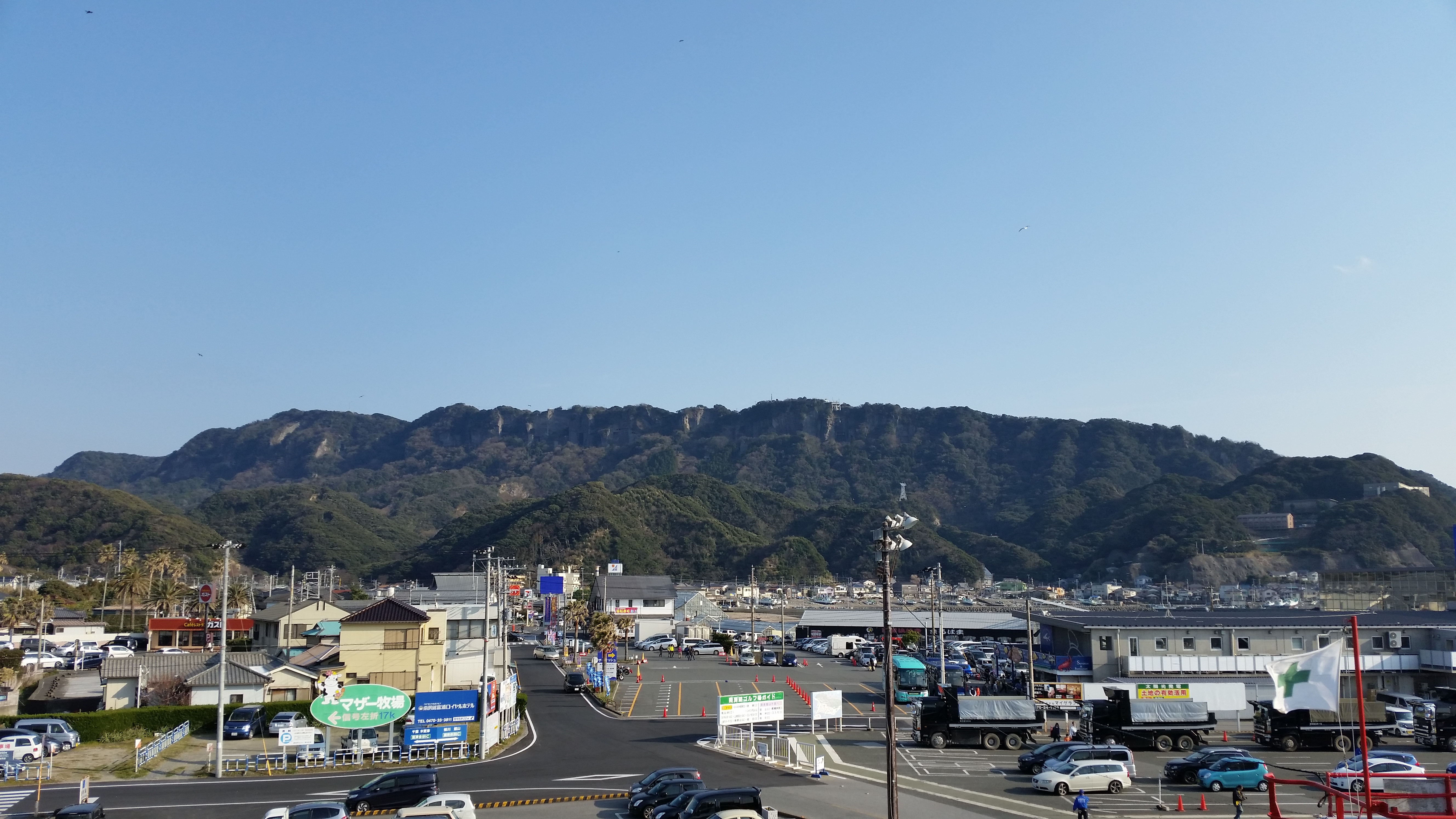
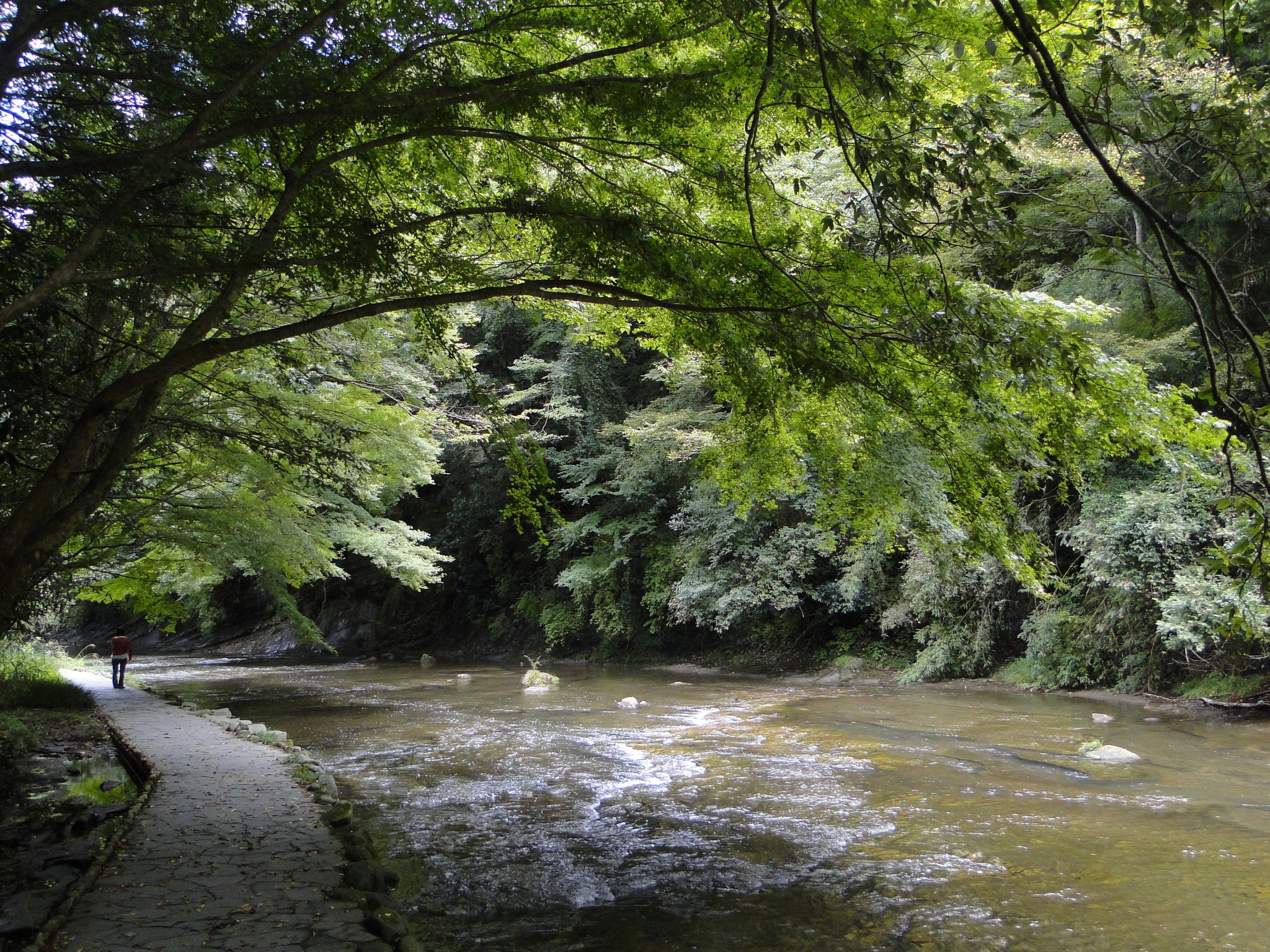
Tokyo Day Hikes February 2019

Despite February being a shorter month and the first snowfalls of the year in the Kanto area, I still managed to go hiking every weekend and fit in four more hikes – total of 9 so far this year. I visited 4 different prefectures, including my first hike of the year to Tochigi prefecture – hopefully I’ll be able to do something in Tokyo and Chiba in March. I also managed two more station to station hikes, something that never ceases to amaze me after more than a dozen years of hiking in Japan. I used the bus for the other two hikes. The average height of the climbed mountains was only 377m (nearly 1000n in January) proof that I was fleeing the cold and snow!

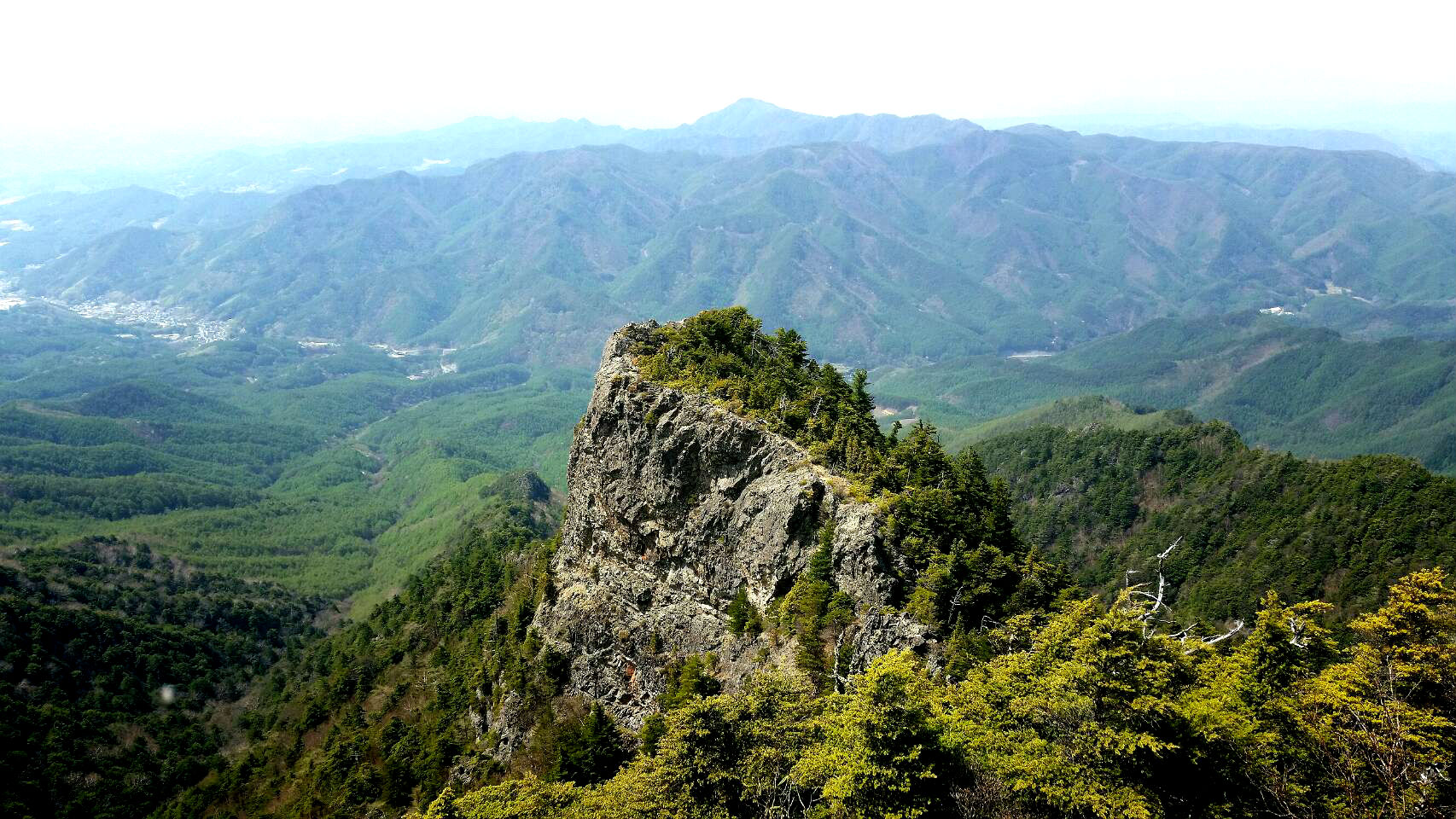
Utsunomiya Alps, (highest point 562m) , Utsunomiya City, Tochigi Prefecture, Sunday February 3

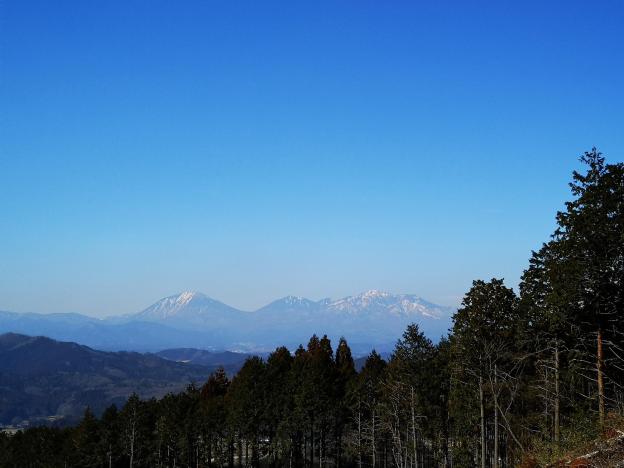
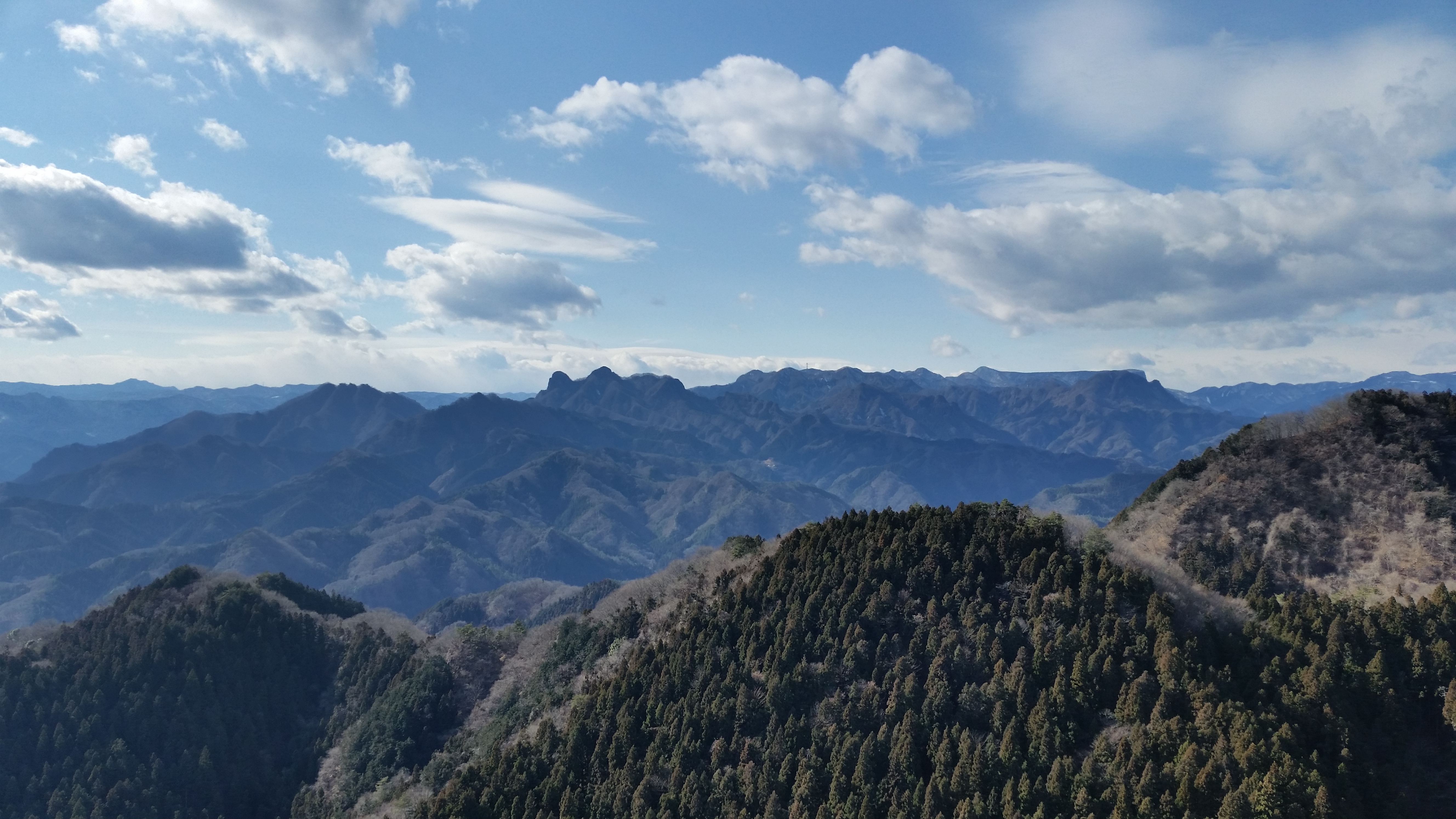
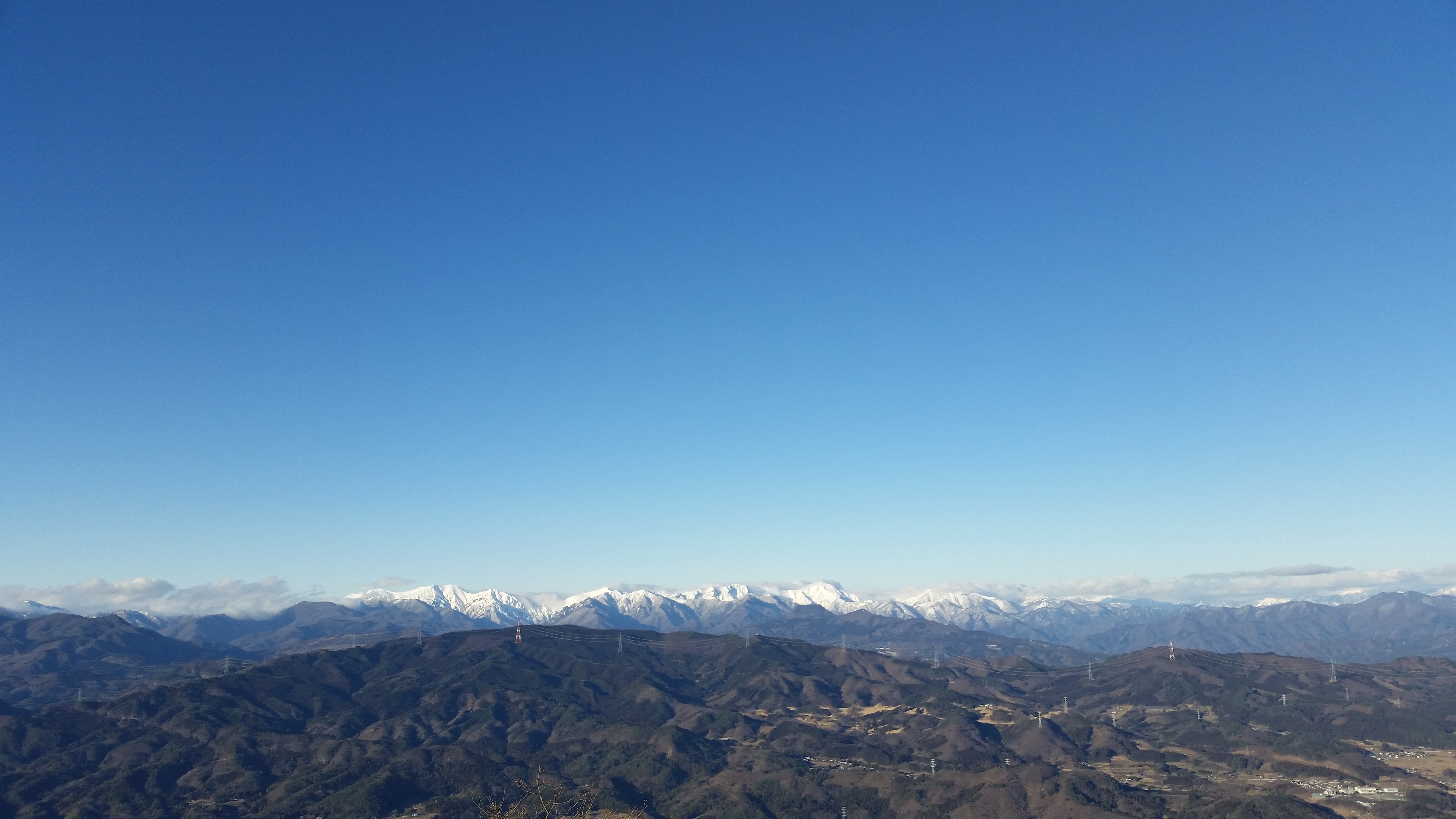
View of the Nikko range from the alternative path I took up

You may have read this before on this blog but the Utsunomiya Alps 宇都宮アルプス are another place that I’ve been meaning to explore for years. Originally I wanted to do it as a morning hike but had to give up since I couldn’t find the bus timetables and hiking maps. Since then, the hike has popped up in my hiking books and Google maps now includes reliable bus times.

After getting to Utsunomiya station, I had to ask an attendant for the bus to Nikko since the bus terminal is a big confusing. I believe she was also a bit confused to why I would be taking a bus to Nikko. In fact, I got off left than half way there. The first thing that caught my eye was some leftover snow next to the road which made me panic slightly. However there was very little snow during the entire hike.

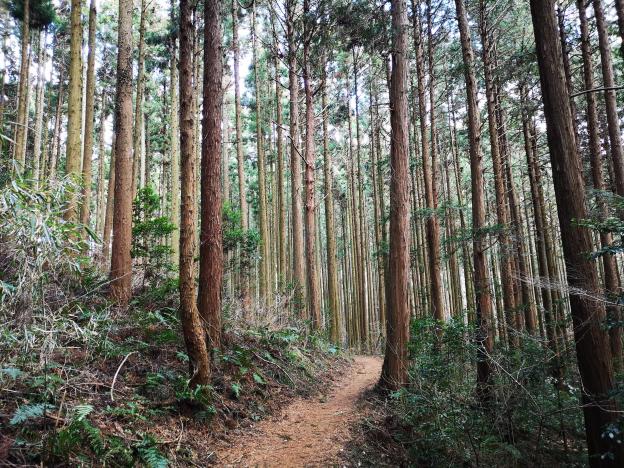
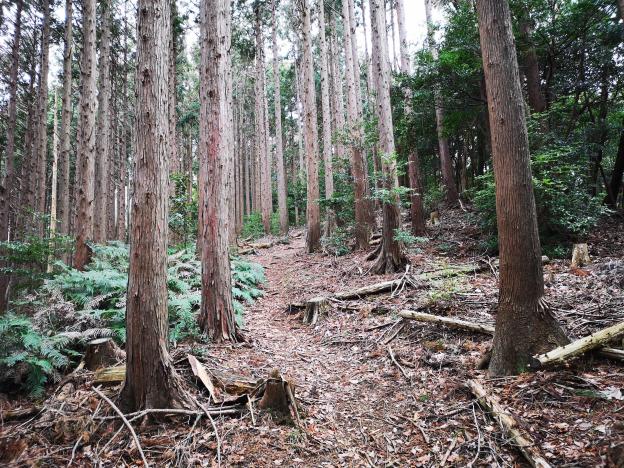
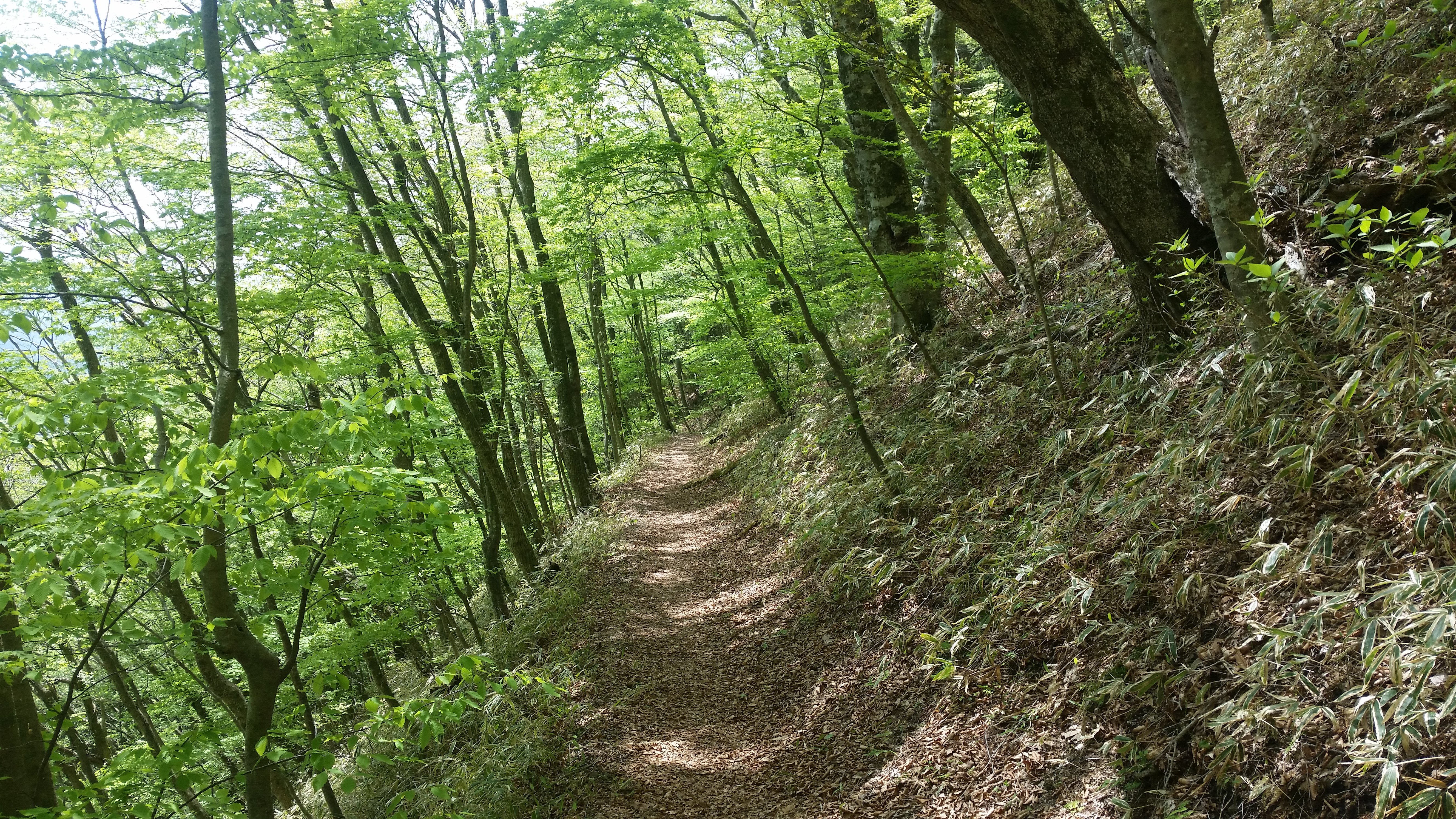
Cedar forest walking in the Utsunomiya Alps

From the bus stop, it was a 30 minute walk to the base of the Utsunomiya Alps (hills really). I overshot the start of the trail and ended going up a trail that was closed as it was being redone. It was only a minor inconvenience since only a short portion was difficult to walk. Also, I believe the views were far better on this path. After passing by a couple of minor peaks, I reached the highest point which had fantastic view of the Nikko range covered in a layer of snow.

Mt Nantai on the left and Mt Nyoho on the right

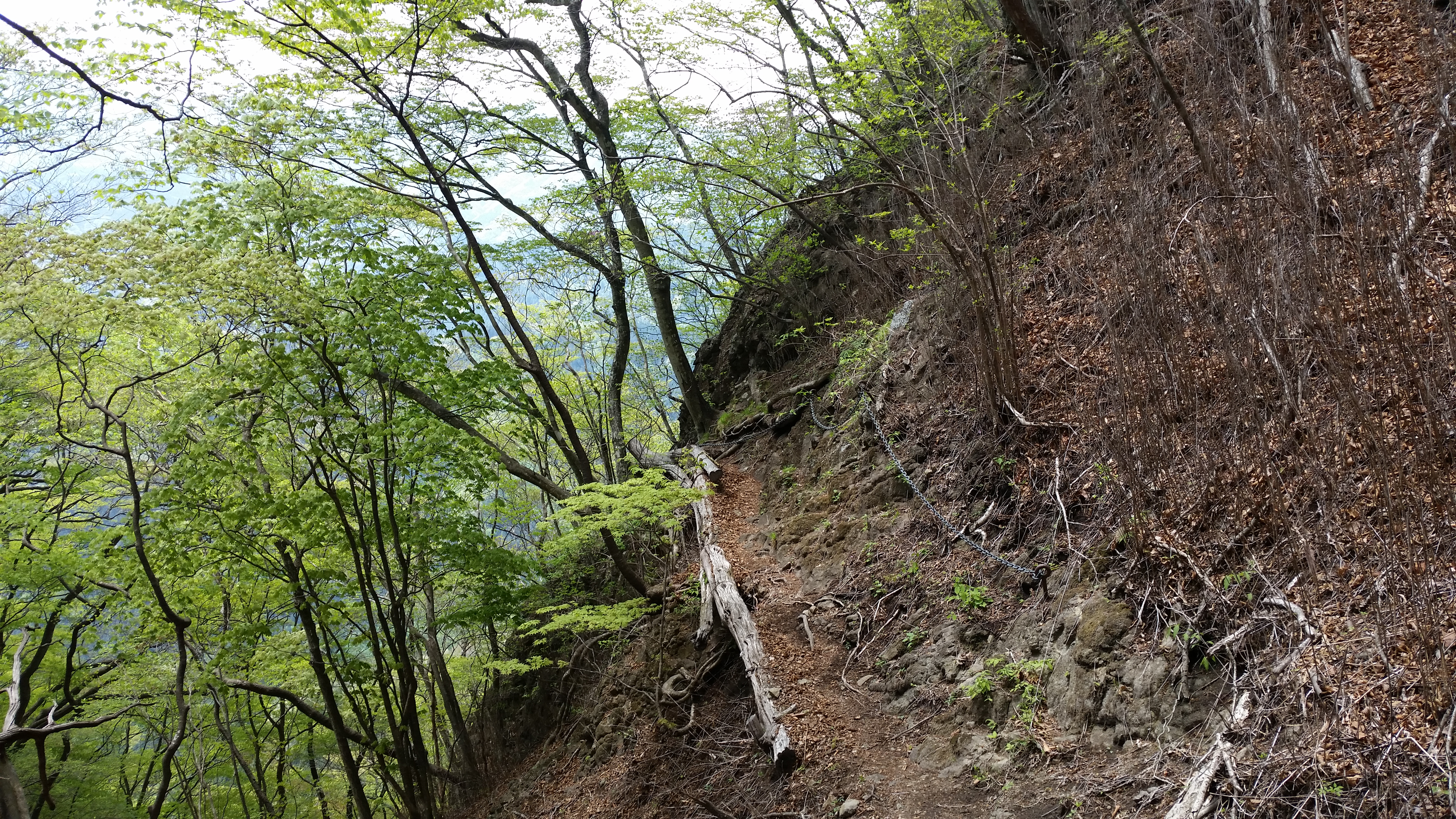
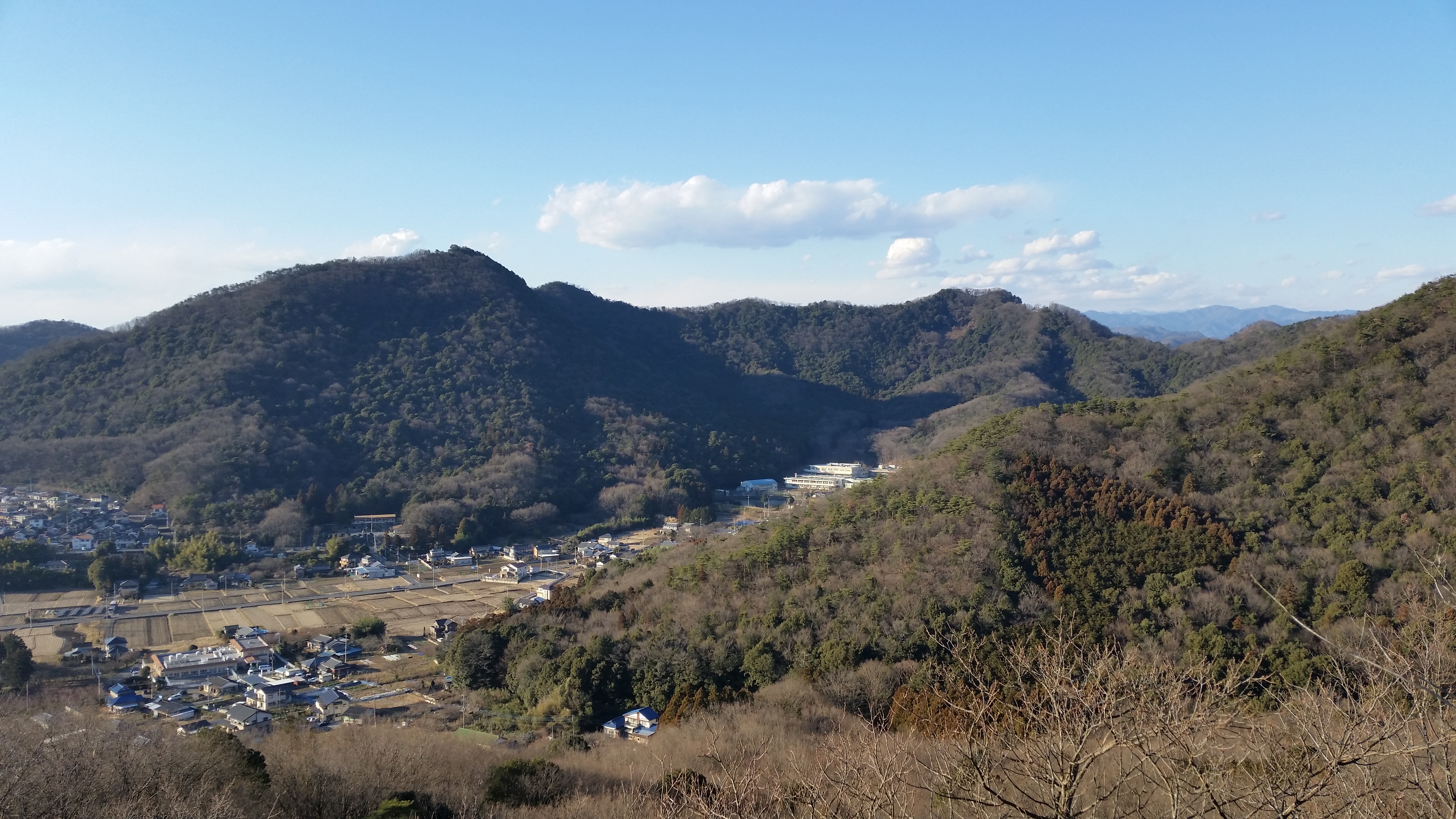
After a short lunch a continued along the ridgeline, which made a right angle towards the South. Unfortunately the weather had turned from sunny and warm to overcast and chilly. After a nice bit through forest, the next peak consisted of a steep climb and an even steeper descent – I was glad I had a good pair of shoes on.

The steep steep slope in the middle of the hike

After descending one more summit, I arrived onto a road which led to another bigger road. Here I somehow missed a turn for a path which led to another small summit. However I didn’t mind; at this point I was pretty satisfied and ready to wrap up the hike. At the foot of the “alps” I had another 30 minute walk to reach an onsen and the bus stop for the return to Utsunomiya.

Walking back to the bus stop can be enjoyable when the views are nice

Mt Obira (577m), Ito City, Shizuoka Prefecture, Sunday February 10 [Map Available]

A bit of sun on an otherwise gloomy day

Since I really enjoyed my hike up Mt Sukumo 2 weeks ago, I decided to return to the Izu peninsula. First, I had found what seemed like another good hike on my newly bought Izu hiking map. Second, going twice in a short time to the same area helps reinforce my memory of how to get there

Get a map of the Mt Obira Hike

This map was developed for Japanwilds with the Hokkaido Cartographer

Find more Japan hiking maps on Avenza

 This time, I went a little further south to Ito city to climb Mt Obira (大平山) meaning I could go all the way by express train, so the total travel time was about the same. For those interested in numbers, this hike is located 200km South from my previous hike in Tochigi.

The path up Mt Obira

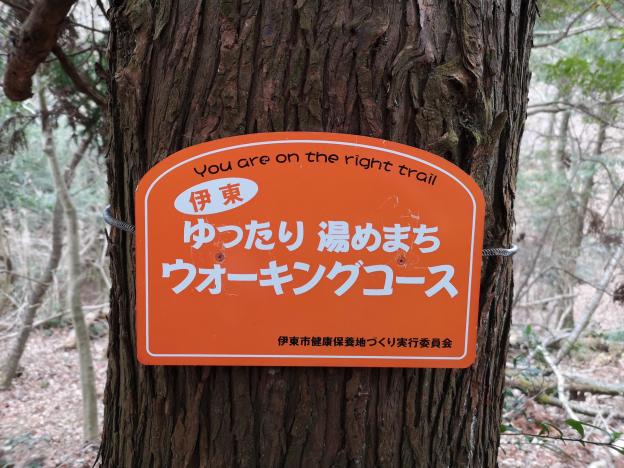
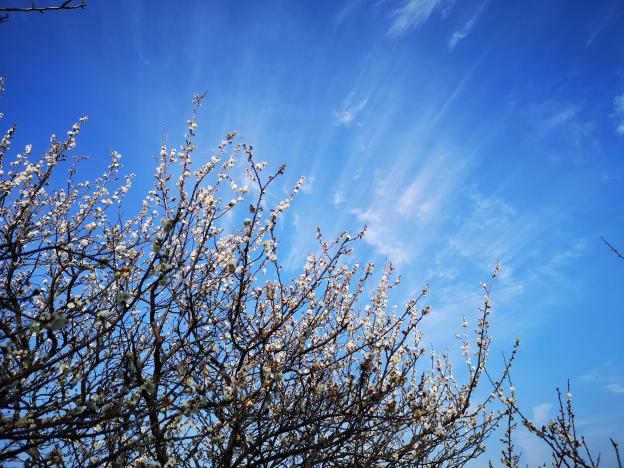
The hike starts directly from Ito city. Unfortunately the weather was overcast despite being sunny in Tokyo when I left. The fact that this place is a bit worn out didn’t help – this is one area that apparently isn’t getting a facelift because of the Olympics. I finally reached Maruyama park, the official start of the hike. It was completely deserted on this grey February day but I did see some plum early plum blossoms. Very soon, the path started climbing in earnest up a forested ridge. I was extremely grateful for the yellow signs that were everywhere along the trail and ensured that I never get lost – I really wish they would put these everywhere!

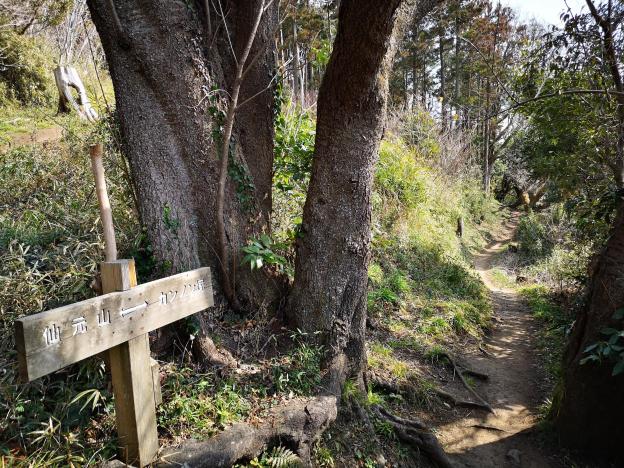
These helpful signs were everywhere along the hike

I encountered only one other hiker going down the ridge – he told me it was very cold at the top but that is kind of expected in the middle of winter at the top of any mountain, even on Izu peninsula. The top was more more of a ridgeline, but again, not surprising the name can roughly translate at “big flat top”. There were however good views of Ito town, the Pacific ocean and Oshima island. From there I moved North along the ridge and reached another opening in the trees with good views North along the coastline with Mt Oyama in the distance.


Atmospheric staircase just beyond Mt Obira

After that, the path turned West, inland and downhill. The entire hike is in fact a wide loop that after the initial climb, does a series of ups and downs, gradually turning anti-clockwise through beautiful forest. I realised later most of it is completely inside the Fuji-Hakone-Izu National Park. Finally I reached a wide open space with a view of the Pacific Ocean, Ito City, Oshima Island, Mt Omuro (a mini volcano) and snow-covered Mt Amagi, the highest point of the Izu peninsula.

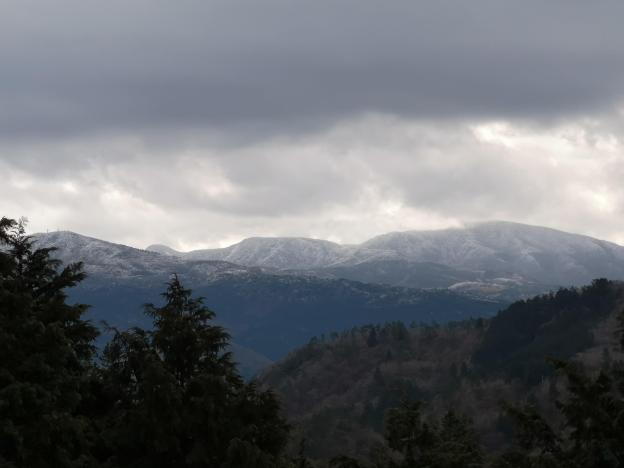
The snow-covered Amagi highlands, around 500m higher up

After taking photos to my heart’s content, I started on the descent. Eventually I got onto a road which I followed all the way back to Ito station. Ito is famous for its onsens and was able to take a quick dip at La Foret hotel. Originally I had planned to walk all the way to Mt Omuro but that was too ambitious – that will be for another hike!

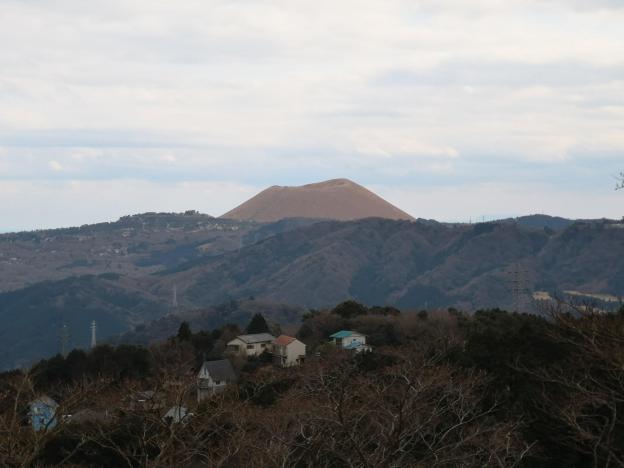
Mt Omuro, to be tackled on a future hike

Hachioji Hills (highest point 294m) & Mt Kana (239m), Kiryu & Ota Cities, Gunma Prefectures, Sunday February 17

Mt Akagi from the South-East – first time for me to see it from this angle

I had been saving this hike for a really cold winter day. Unfortunately, it was also a really windy one so I was doubly cold! The Hachioji hills 八王子丘陵 are a series of rolling hills running parallel to the edge of the mountainous area to the North of the Kanto plain. After getting off the Ryomo express train at Shin-kiryu, I took a local back one station to Azami station, about 10 minutes on foot from the start of the hiking trail.

A great hiking trail to do in the winter

The first half of the hills were mostly made up of gentle ups and downs which eventually led me to the highest point of the trail where there were excellent views of Kiryu City, Mt Kesamaru and Mt Akagi to the North, and Mt Haruna and Mt Asama to the West. There were 3 sets of binoculars available at different spots so that one could check out the view in detail.

Kiryu city is that way

The second half of the hills had steeper ascents and descents – even though the hills are low, they do make for a good workout! The last part in particular was a succession of ups and down through steep valleys – it was hard to believe that I was hiking in the middle of the densely populated Kanto plain. I saw almost no one in the last section. I finally emerged from the hills back into civilisation. Since it was still early afternoon, I decided to continue to neighbouring Kanayama mountain.

Mt Kesamaru – I was there last year in June

On the way I saw some human-sized Kokeshi dolls, had some nice views of the Hachioji hills and saw a group of 5 stray cats. According to Google maps I would need to make quite a big detour to reach the base of the mountain. However I decided to take a risk and head to a nearby campsite from where I thought there might be a connecting path to the mountain – and I was right! The path up Mt Kanayama 金山 was a lot steeper than I had imagined and I was pretty tired after my earlier crossing of the Hachioji Hills. So it was with great effort that I finally reached the top after 4pm.

I saw no one else hiking this part of the trail

The summit is home to a shrine and castle ruins. Unfortunately since it was late in the day, I didn’t have time to check out either fully. I also had to forgo the hiking path down and take the most direct route following the car road in order to reach the station by sundown. The hot bath hopes were dashed when the sento I found on Google Maps was no longer in existence. However I made a pleasant discovery at Ota station – the very new and beautiful Ota Art Museum and Library was a nice place to check out while waiting for the next express train back to Tokyo!

Sunset from the top of Mt Kanayama – time to head down

Votive tablets clattering in the wind

Miura Alps (highest point 212m), Zushi City, Kanagawa prefecture, Sunday February 24

View of Sagami Bay from the top of Mt Sengen

I had already done one hike on the Miura peninsula a few years ago, climbing the highest peak Mt Ogusa (241m). I hadn’t thought there was more hiking to be done there till I was combing through my Kanagawa hiking book and found that I could do what is called the “Miura Alps” 三浦アルプ – a series of hills that cross the entire peninsula from Zushi on the Sagami Bay to Taura on the Tokyo Bay.

Luckily Zushi is one of the easiest places for me to get to, since there are direct trains from Ikebukuro. From the station there are frequent buses for the short ride to the start of the trail. From the bus stop I climbed a steep road to a church (!) behind which started the trail. The trail felt very similar to the ones I’ve hiked in the Kamakura area – wide dirt trail path through a tunnel of vegetation. Very soon I arrived at the top of Mt Sengen with a ncie view of Sagami bay and Enoshima island. There were also tons of people, so I moved on quickly. Although this isn’t a famous mountain, it’s a fairly easy hike near populated areas so I often passed large groups of people. However, as usual, they were attentive and courteous, and always let me pass in front.

Walking along the Miura Alps

As I progressed along the ridge, further inland and completely surrounded by green hills, I certainly felt like a jungle explorer. Also, the name alps was well deserved as there was no end to the ups and downs. Not unpleasant but best to be prepared for the extra effort. Most summits were in the trees but I finally reached a clearing with a transmission tower so I decided to have lunch. The view wasn’t so good but at least it offered me some space a relatively quiet place to sit. As it usually happens, there was another transmission tower with a much better view a little further up. This was also the highest point of the hike, about 211m I believe. Finally I could see the Tokyo Bay on the other side of the peninsula.

The plum blossoms are nearly fully out

Next I hiked down a little and then back up to the last summit of the Alps, Mt Nyukasa. From it’s summit, there was one space where you can see through the trees towards Taura city, Tokyo Bay and Yokohama. From the summit it’s a steep rope lined descent all the way back down to sea level. On the way I crossed a highway and a plum blossom park (taura ume no sato) that was nearly at full bloom. After crossing a small bamboo forest, I emerged into the town. However my hike wasn’t over yet. It was still only 3 o’clock in the afternoon, so like the week before, I decided to tag on another short hike to nearly Tsukayama Park.

View of Tokyo bay from above Taura town

This demanded another climb up a steep staircase and then a pleasant stroll along a quiet road following a ridge with occasional views of Tokyo bay. I also got a good view of part of the Miura Alps which I had just traversed. Finally I ended up at at Tsukayama park where the gravestone of Anjin Miura is located. If you’ve read Shogun by James Clavell, you’ll know who that is. There are also a couple of good viewpoints inside the park. From there, it was a short 15 minute back to the station, from there it took me less than an hour an half to get home.

Lateral view of the Miura Alps

Tokyo Day Hikes January 2019

2019 got off to a great start – I was able to manage 5 great and new hikes in the months of January. This was thanks to a combination of lack of snow and abundance of national holidays. I visited five different prefectures, working my way clockwise from Yamanashi to Shizuoka, although this was unintentional. Two were station to station hikes, whereas the others were accessed by bus, taxi and car.

Mt Ryu (1485m), Fujikawaguchiko Town, Yamanashi Prefecture, Thursday January 2

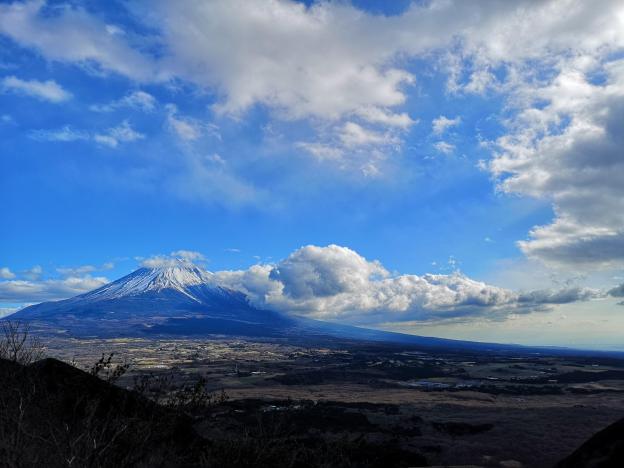
Spectacular view of Mt Fuji from near the top of Mt Ryu

I chose the Kawaguchiko area for my first hike of the year since it is said that seeing Mt Fuji at the beginning of the year brings luck. Luckily Fuji was clearly visible till the early afternoon, after which it progressively wrapped itself up in layers of clouds. I also had unfinished business there since Mt Ryu 竜ヶ岳, meaning “dragon” in Japanese, was one of the remaining peaks surrounding Mt Fuji that I had yet to climb. My trip got off to a bad start when my bus at Fujisan station failed to materialise. Despite confirming that the bus would be running, just before it was supposed to arrive there was an announcement saying that it wouldn’t be running today. Luckily there was another bus that was leaving about twenty minutes later – it would just mean a later start and later return in the evening. In any case, lesson learned: don’t count on buses around the new year holidays.

Mt Fuji as seen from the top of Mt Ryu

I finally got started around noon. First I inquired about a place where I could get a hot bath after my hike. Unfortunately, one place I enquired at didn’t accept daytrippers and another place was closed to day trippers during the new year period. The start of the hike was along a road sandwiched between the mountain and Motosu lake. Although the views of the lake to the right were beautiful, I was walking in the shade so it got pretty cold. After an hour or so I was able to get onto a path which led up the mountain through the forest. There are several ways up but my guidebook recommended this one as being particularly beautiful. It’s easy to forget that most of the area is inside the Fuji-Hakone-Izu National Park, but this path offered a vivid reminder of the kind of beautiful nature the park was created to protect. Unfortunately, a big cloud has moved in from the South, so even though I had higher up, I was still in the shade and the freezing January cold.

The cloud looming up from behind Mt Ame

I finally reached a col with a great view of Fuji. The view from the West is probably the best because the sun sets in your back so the whole mountain is in the sun all afternoon. The path to Mt Ame (meaning Mt Rain) was to the right but my hike took me left. As I rose, the trees disappeared, the views got wider and the wind got colder. On the right was majestic Fuji, on the left the South Alps. I noted sadly that all the surrounding mountains were in the sun except mine. I finally reached the top where it was freezing cold but free of snow. I had quick lunch, snapped pictures till my fingers grew numb, and then set off down the mountain.

The 3 Shirane peaks in the South Alps

Since the path was Fuji side, there were lots of great photo opportunities. After some zigzagging I reached a small lookout, after which the path entered the forest. After some nice views of Motosu lake, I finally got back to flat ground, and followed the road back to the bus stop. Because of my late start, it had to take the very last bus of the day, dashing any hope I had stopping by an onsen. On top of that the bus was quite late – often the case in the Fuji area. There were tons of people when I got back to Kawaguchiko station, mostly tourists. I love the area but it is drawing more and more people, thus making it in a hassle to visit. On the plus side, there is a lot of English spoken and written.

Wonderful hiking overlooking Aokigahara forest

Mt Takamatsu (801m), Matsuda Town, Kanagawa Prefecture , Saturday January 5

View from the top of Mt Takamatsu (Fuji in the clouds)

I opted for something relatively easy for my second hike of the year, and although it was short, it proved very satisfactory. I took the train to Yamakita station on the Gotemba line, two stops from Matsuda station. The first part of the walk was along a road which took me past a sake brewery. A small shop opposite had some of their sake but unfortunately I couldn’t burden myself at the beginning of my hike. After an hour I got to the start of the hiking trail, which quickly rose and offered some nice views. Eventually the path entered some lovely forest. Quite soon I emerged onto a wide rounded summit of Mt Takamatsu 高松山. Sadly, Fuji to the West was in the clouds. However there were good views of the Hakone mountains, Sagami bay and the foothills of the Tanzawa mountains.

rhdr

Fuji showed itself towards the end of the day

After a leisurely lunch, I headed down taking the path East towards Matsuda station. After some nice solitary forest walking, I emerged onto a small road for a short while before joining another hiking trail. I thought I was done with climbing but I was wrong – the path went up again, apparently over the top of Mt Matsuda but I never saw a summit marker. I soon reached a park with a pond famous for plum blossoms although at this time of the year there wasn’t anything going on. After the park, the path alternated between road and trail before ending at Matsuda station. It was well signposted but I did manage to make a wrong turn once. You definitely need a map or a guide to navigate this hike. Continuing past Matsuda would lead into the Soga hills which I hiked around the same time last year.

A bend in the trail lit by the late afternoon sun

Mt Inafukumi (1370m), Shimonita Town, Gunma Prefecture, Sunday January 13

Soaring above Shimonita (center) with Mt Asama (left) and Mt Myogi (right)

The first long weekend of the year combined with good weather gave me a chance to go hiking twice and use the Tokyo Wide Pass. I chose a couple of short hikes so that I wouldn’t be exhausted come Tuesday. The first hike was a Kanto 100 famous called Mt Inafukumi 稲含山. I wouldn’t normally dare to hike above one thousand meters in the middle of January but my research told me that the snow cover was minimal. I took the shinkansen to Takasaki, then the local train to Shimonita, and finally a taxi to the start of the trail. I was glad I had decided against renting a car since some parts of the road were really in a poor state. I enjoyed chatting with the taxi driver as well. There were five other cars parked at the top ensuring that I would have company.


Steps, snow and sun

It was a short climb to the top, with a thin layer of snow covering the parts in the shade. The view of the Nishi Joshu (Western Gunma) area from the summit was mind-blowing. Some people may consider 1370m as not particularly high, but after Mt Yatsugatake and Mt Arafune to the West, and Mt Asama to the North, it’s the highest mountain in the area. I had the sensation of being in a plane. To the East, nestled at the bottom of the valley, was a hidden village – according to my guidebook, one of the 100 beautiful villages of Japan.


There was a little snow but nothing troublesome

After lunch and photos, I reluctantly headed down. I took a different route but running parallel to the ascending one. At one point a did a quick there and back along a side path promising some nice views. I soon emerged back onto the road. My plan was to walk along it till I found a hiking path I knew existed and that would take me back down. However before I could leave the road, a car stopped and the driver offered to take me. I accepted since I knew that the hike down was quite long and I needed to save some energy for the following day. The driver, a local called Isamu, kindly took me by a couple of historical sites that were on the way before dropping me off at the train station. We visited a small cemetery and a residence, both linked to the family of Toyotomi Hideyoshi, the ruler of Japan before Tokugawa.

My little detour at the end had some nice views

Mt Tatsuware (658m), Hitachi City, Ibaraki Prefecture, Monday January 14

Lots of interesting stones on the way

The next day I set off express train for Mito station from where I drove about an hour all the way to the start of the trail. The last few hundred meters were along a narrow dirt road so I decided to park my car just before, since there was some space, instead of at the parking area. At the end of my hike I was offered a ride again which I had to decline. I don’t often get offered rides, so it was unusual for it to happen twice in a row.

Mt Tatsuware 竪破山 is another hundred famous mountain. It isn’t a long nor difficult hike but there are several interesting rock formations on the way (reminiscent of Mt Tsukuba). I quickly reached the summit where there was a lookout tower. From the top, I could see the outline of Mt Tsukuba to the West, the Nikko mountains and Mt Nasu to the North, and the Pacific ocean to the East. I noticed that the top parts of the surrounding trees had recently been cut in order to provide this view.

In the distance, the outline of Mt Tsukuba

The clouds were in again, so after a short and cold lunch, I continued my hike. I retraced my steps for a short while before continuing straight along the ridge through the forest. I encountered a Tochigi climbing group having fun one on the big boulders along the way, and we chatted for a bit. I made a short detour to see a small waterfall, and finally got back to my starting point ahead of schedule, always preferably when driving.

Shinto gate at the start of the trail

Mt Sukumo (580m), Ito City, Shizuoka Prefecture, Sunday January 27 [Map Available]

The magnificent view of Mt Fuji and the South Alps from Mt Sukumo

I hadn’t been hiking in Shizuoka since I did the Numazu Alps in December 2016 – far too long. With cold and snowy weather finally arriving to the Kanto plain, the Izu Peninsula seemed like the perfect place to visit. It is also a very easy place to get to, thanks to the Odoriko express trains running from Tokyo station. To get to Mt Sukumo 巣雲山 I had to change to a local train in Atami and get off at Usami station. From there I could start hiking directly.

Get a Map of the Mt Sukumo Hike

This map was developed for Japanwilds with the Hokkaido Cartographer

Find more Japan Hiking Maps on Avenza

The first part is along road through the town. At one point I turned around to gaze at the view of the sea behind me and a small flatbed van stopped beside me. The driver asked me where I was going, thinking I was lost. After hearing that I was heading up Mt Sukumo, he offered to drive me up – third time in a row this has happened to me! Since it would allow me to skip some road walking up, I got in the very small passenger space next to him.

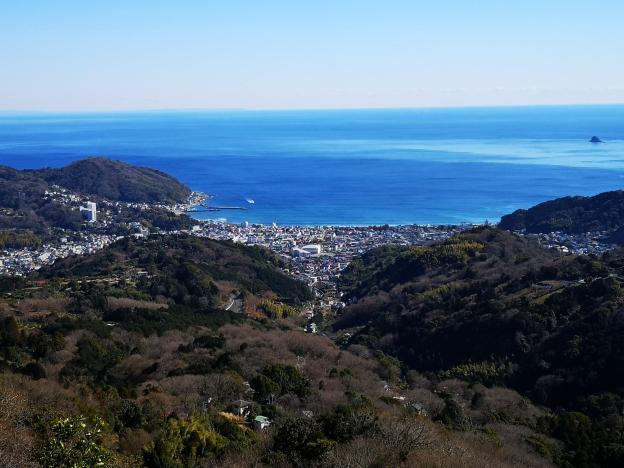
View of Usami from near my drop off point

Very soon we were zipping up narrow steep roads through mikan orchards. We didn’t slow down even when the road became a bumpy dirt road. “Luckily this is a four-wheel drive otherwise we wouldn’t be able to continue” he explained. I don’t think I would have minded walking at this stage but in any case it was a thrilling drive. Shortly after the first views appeared on the left, he stopped at a fork in the road and let me out. I thanked him profusely, and then he drove back down the mountain. Just as he disappeared from sight, I realised that because of the cramped seating, my map had fallen out of my pocket – goodbye map! Luckily I had another map on my phone. I also realised that I was already halfway up the mountain. Not a bad thing since I had left late in order to take the express train. This meant that I could take my time at the top. After taking a ton of photos of Usami town, the Pacific ocean and Oshima island, I finally started hiking up the mountain.

I love seeing the ocean from the top of a mountain!

Soon I reached a viewpoint of Mt Fuji, as well a fork in the path. I chose the higher path along Mt Daimaru. At one point I crossed the Izu Skyline. This part of the hike was very pleasant. I found out later that this the path is inside a small trip that belongs to the Fuji-Hakone-Izu National Park. After an hour or so, I reached the very wide and flat summit where there was a concrete observation tower. The view was one of the best I had ever seen in Japan. On one side was Hakone, Mt Fuji, the South Alps, the Numazu Alps and Sagami Bay. On the other side was the Pacific ocean, the Miura peninsula and the Boso peninsula. To the South was the massive bulk of Mt Amagi. I was glad I had extra time to spend there.


The Southern part of the South Alps – I was there last year in July

I finally managed to pull myself away and slowly start descending. After a short hour I emerged onto a road that snaked down the mountain back to Usami station between mostly summer residences. I was surprised to hear a lot of loud snapping and cracking noises coming from bamboo groves. At first I thought there were monkeys but afterwards I realised that it was the bamboo itself making the noise while growing – very impressive. On the way back I had to change trains in Atami so I decided to take a hot bath at one of the numerous hot spring hotels near the station, my first onsen of the year. I really enjoyed this hike in Izu and decided that I would try and come back soon.

Bamboo forest towards the end of the hike

Tokyo Day Hikes 2018

So 2018 has ended and I thought I would share all the day hikes I did from Tokyo over the past year, excluding those done using the shinkansen, since they are covered in the Tokyo Wide Pass updates. There were some additional hikes that required overnight stays that I hope to share eventually. I only managed about 30 hikes, about 10 less than year. Hopefully, I can make up for this in 2019 (already 5 in January so off to a good start!).

Soga Hills (highest point 328m), Odawara city, Kanagawa Prefecture, Saturday January 13
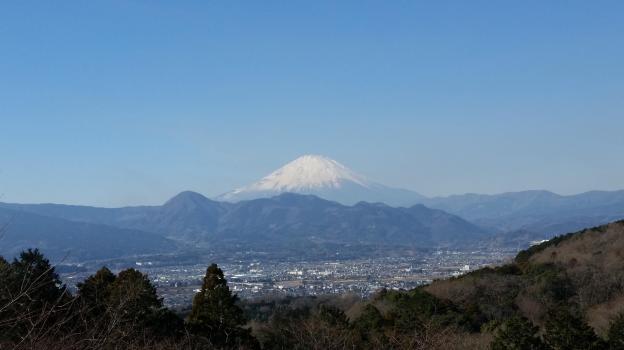
The rounded peak to the left of Mt Fuji is Mt Kintoki

I chose the Soga Hills 曽我丘陵, a hilly forested area in Western Kanagawa, stretching from the foothills of the Tanzawa mountains all the way to Sagami bay, for my first hike of the year. In theory you can hike from Shin-Matsuda all the way to Kozu. However my guidebook didn’t have any information about the first part, so I played it safe and started the hike a little further south, from Kamioi station instead. At first I had to walk along roads, then through fields with nice views of snow-capped Fuji. I saw some interesting wood piles destined for the bonfires of dondonyaki (celebrated on the 15th).

New year decorations and old charms such as Daruma heads are burned

A steep path finally brought me to “Yume no Sato” at the top of the ridge with great views of Mt Fuji and the Hakone mountains. From there it was easy walk with some slight ups and downs along countryside lanes and through lovely forest, with occasional glimpses of Mt Fuji to the West and the Tanzawa mountains to my back, in the North.

The Tanzawa mountains – the pyramid one on the very left is Mt Oyama

Finally Sagami bay came in view – I could spot the faint outline of Oshima island to the South and the hills of the Boso peninsula to the East. After reaching an area full of plum tree orchards, I started to descend along a road with good views of Odawara town, the Izu peninsula and the ocean. The path is well-sign posted with several detailed information boards, and I was lucky to find a good onsen about 1.5km West of Kozu station.

The sea and, in the far distance, the Chiba coastline

Mt Karasawa (249m), Mt Suwa (324m) and Mt Mikamo (229m), Sano City, Tochigi Prefecture, Sunday January 21

The final stretch before Karasawa shrine lined with banners

One area I discovered in 2017, and continued to explore in 2018, is the mountainous Southern part of Gunma and Tochigi prefectures, jutting into the Kanto plain from the North, and consisting of Kiryu, Ashikaga, Sano and Tochigi cities. It combines countless low hills with fairly good access from train stations.

Getting to the start of the hike required a little bit of road walking (I saw a couple of emus inside an enclosure on the way!) Once you start up the mountain, the scenery was surprisingly beautiful and wild. Near the top of Mt Karasawa 唐沢山 there is the Karasawa Shrine with its many (real) cats. The hike over to Mt Suwa 諏訪山 is also very pleasant – nice surrounding forest with lots of pine trees and good views of the valley.

Views of Southern Tochigi

Since it’s really quite a short hike, I decided to do one more mountain – Mt Mikamo 三毳山 just south of the Ryomo train line and a Kanto 100 famous mountain. I got the bus driver to drop me off at the nearest point and I quickly went up and down this relatively low mountain inside Mikamoyama park, making it down just after sunset.

Boshu Alps (highest point 268m), Boso Peninsula, Chiba Prefecture, Sunday February 4
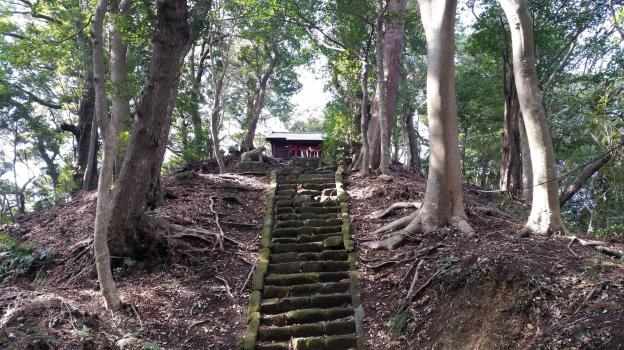
Kagutsuchi Shrine, a mysterious place a little off the main trail

I had been wanting to hike the the Boshu Alps 房州アルプス , the hilly area East of Mt Nokogiri, for a while, but unfortunately, there is no public transport to the start, and a round trip wasn’t feasible because the last bus at the end was too early. After I had hurt my knee in 2017 (not while hiking), I had decided that I should do all the hikes I really wanted to do regardless of cost (within reason), so I coughed up the money for a taxi from Kazusa Minato station.

Since it’s a fairly short hike, and to save money, I asked to be dropped off at the base of the hills. However, the taxi driver took me all the way up to where the trail actually starts. Lesson learned – on subsequent taxi rides I always made sure to check our position using the GPS on my phone so I could tell the driver where to stop exactly.

My taxi drop-off point and official start of the Boshu Alps hiking trail

This was my only hike of the year in Chiba – a shame since the area is very pittoresque with its rolling green hills. The end, however, was a bit of a disaster – I couldn’t find the last part of the trail going down and, after some lost time, ended up descending via the same route as when I did my last hike in the area in 2017. In fact, I also got somewhat lost on that hike as well – the area could use some better signposting because apart from those confusing bits, it’s a wonderful and easy place to hike in the winter.

Mt Gyodo 442m, Mt Ryogai 248m, Mt Oiwa, 417m Ashikaga City, Tochigi Prefecture, Sat February 24
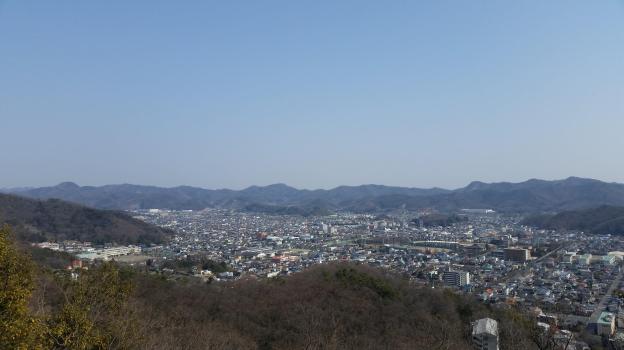
The urban sprawl of Ashikaga city

February 2021 – due to a forest fire, access to the hiking trail to Mt Gyodo is forbidden. Please check the Ashikaga City website for updates.

The best thing about hiking Mt Gyodou 行道山, apart from the views of the hills of Southern Tochigi, is that it starts at Ashikaga Orihime Shrine, passes through the ruins of Ashikaga Mountain castle, and finishes at Gyodosan-join temple, so I was able to include some cultural sightseeing with my hiking (there are signs with English explanations). I choose to walk to the start of the trail, instead of taking a taxi, and saw several interesting sights inside Ashikaga city, and some plum blossoms as well.
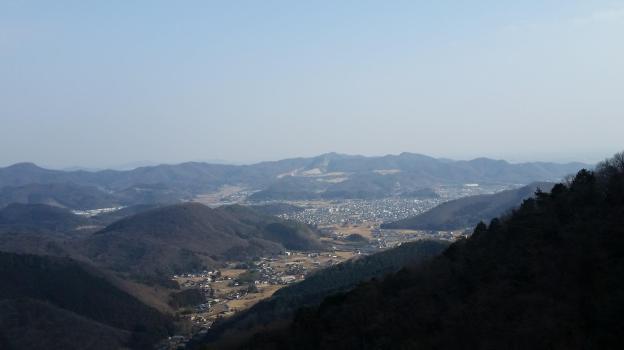
As you go further in, the city gives way to countryside

All the spots are very photogenic, and the trail in between, is rocky and alpine-like despite the low altitude. It’s a popular hiking area so I saw (and chatted) with lots of people, especially in the first section. The last part I was all by myself. I can’t think of a better hike to do in the middle of winter.

Steps leading up to Orihime shrine

Mt Amamaki (533m), Mt Takamine (520m) & Mt Bucho (431m), Kasama city, Ibaraki prefecture, Saturday March 3

The hills of Ibaraki prefecture to the South

This one required yet another taxi ride to the start of the trail. As I was starting to discover, Japanese taxi drivers can be very chatty, so I was getting some Japanese practice for the same price. I had originally spotted these 3 mountains when I had hiked from Mt Atago to Mt Wagakuni, South of the Mito line, in 2017. This was my first hike of the year to Ibaraki prefecture, another area I am slowly discovering, although all 3 mountains are on the border with Tochigi prefecture.

I enjoyed the start of the trail very much. It went through some nice forest and it was already quite warm in the beginning of the March. After reaching the top ridge I went left to the top of Mt Amamaki 雨巻山 with views of Tochigi prefecture to the East. I passed an observation tower on the way with good views to the South with Mt Tsukuba in the distance. There are other hiking trails up and down this mountain and it would make a good day hike by itself.

The hills of Tochigi prefecture to the North

I then retraced my steps and headed down the mountain and followed a road for a bit, still icy in some parts. I finally found the small path that led to the top of Mt Takamine, where there was a launching spot for paragliders and a fantastic panorama. I think this is about the 7th such spot that I’ve come upon while hiking – I hadn’t realised that it was such a popular spot in Japan! I continued through forest with good views of Tochigi to the North, to the last of the 3 summits, Mt Buccho 仏頂山, surrounded by trees. After descending, I walked through fields and villages all the way back to the train station.

Mt Kurakake (492m), Kanuma city, Tochigi Prefecture, Sunday April 8
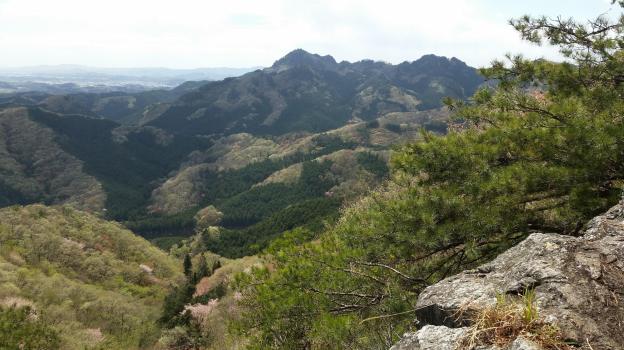
The ragged ridgeline of Mt Kogashi

Mt Kurakake 鞍掛山 is situated in a small hilly area located between Utsunomiya and Nikko cities. I used a taxi for the approach but asked to be dropped off at Akagawa lake, the starting point of neighbouring Mt Kogashi (climbed in 2017), so that I could walk the last part along small roads to the trailhead. I kind of regretted that decision because no sooner had I set out that in started snowing – yes, snowing in April! It didn’t last but I had to take refuge under some trees at one point. The area is not particularly high but it seems that the cold front had just moved in – it was quite cold for a while after that.

View of Mt Takahara to the North (Mt Tsukuba can be see to the West)

The hike starts past a “torii” or a Shinto gate, then separates into two routes which form a loop. I took the “iwa kosu” or rock route up – it ascends quite steeply at one point – there is a rope to prevent a nasty fall. The top is rather unremarkable, but I noticed that there is a connecting path to Mt Kogashi, something to try in the future. There is a good view further along at “oiwa” (big rock). I returned via the “one kosu” or ridge route, and made my way down back to the “torii”. I finished the hike along small roads all the way to a small town where there was an interesting hot spring – not a resort or a hotel, just a small building inside a park, where one can pay a small fee to use the hot spring bath.

Mt Mitsumine (605m), Tochigi City, Tochigi Prefecture, Sunday April 22

Ryuo Gorge & Mt Nandaira (1016m), Kawaji Onsen, Tochigi Prefecture, Sunday May 20

The Kinu river at the Ryuo gorge

Here is one more hike that was on my to-do list – ever since I first stayed overnight at Kinugawa onsen in 2010. At the time, I made it to Ryuo gorge, only 2 train stops away from the hot spring resort, but too late in the day to do any hiking. This time, not only was I early enough, I was also surprised how few people there were on this gorgeous May day. I saw only a handful of people while walking along the river gorge, and no one during my ascent and descent of Mt Nandaira 南平山.

Another river view along the hike

The gorge part is fantastic – mostly flat and with lots of scenic views up and down the valley. Although the top of Mt Nandaira doesn’t have a view, the path – up and down the same way – is well-maintained and very pleasant to walk on. Some people may turn their noses up at such a hike but I found it oddly satisfying. The hike ended at Kawaji Onsen, where there was a nice little hot spring near the river.

Kawaji Onsen, a hot spring resort next to the river

Mt Kanomata (1637m) & Tanbara marshland, Numata city, Gunma prefecture, Saturday May 26

Tanbara from Mt Kanomata through the late May haze

I was lucky enough to get a lift to the trailhead from occasional hiking partner Isobel who has a second house in nearby Minakami. Otherwise it’s possible to get there by bus from Numata station but you will need to leave Tokyo with the first trains. Tanbara marshland 玉原湿原 was a real discovery for me: I hadn’t imagined that a place with such beautiful nature existed within the confines of the Kanto plain, literally at the feet of Mt Hotaka.

Most of the hike is through beautiful forest on an elevated plateau through the center of which runs a bubbling brook. The area is home to a ski resort in the winter so at one point we walked under a stopped chairlift. The skies were hazy so unfortunately the views of Gunma prefecture to the West were somewhat muted. The hike to the top of Mt Kanomata 鹿俣山 is relatively short and easy with little altitude gain. On the return we extended the hike to the West towards Mt Amagahage 尼ヶ禿 (1466m).
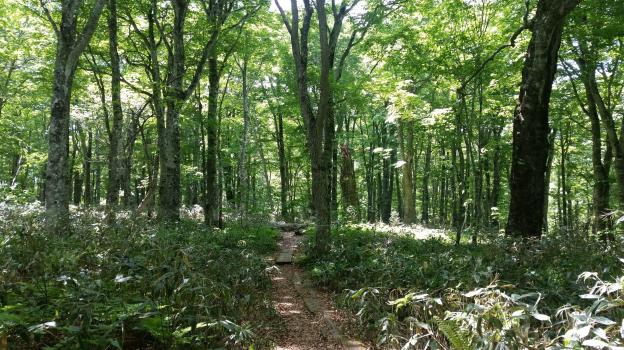
Forest walking around Tanbara marshland

Mt Wanakura (2036m), Koshu & Chichibu cities, Yamanashi & Saitama prefectures Saturday June 2

Soaring above Chichibu – the summit of Mt Wanakura

This mountain – a two-hundred famous mountain called Mt Wanakura 和名山 on the Saitama side and Mt Shiroishi 白石山 on the Yamanashi side – was on my bucket list for a long time, and it felt good to check it off. The reason I kept putting it off, is that it seemed impossible to do without an overnight stay on the mountain. In the end I forked out some money for the taxi ride from Enzan station to the trailhead on the Yamanashi side, which enabled to do the traverse over to the Saitama side in one long day.

Looking back towards Yamanashi and Mt Kobushi and Mt Kentoku

The climb up was nice (lots of larch trees) but the ridge section from the Saitama border to the summit was definitely worth it – stunning scenery, sweeping views and relatively easy hiking at around 2000m high. The views were easily some of the best I had ever seen of the central part of the Chichibu mountains. The summit completely surrounded by trees was a slight disappointment and the steep and rocky descent down into Chichibu was pretty tough – no wonder most people stay in a hut on the Yamanashi side and do it as a roundtrip only.

The vastness of the Okuchichibu mountains

There is a great suspension bridge at the very end, that enables one to cross Chichibu lake. I was waiting for the bus at the other end but it was very late so I was picked up by a couple of guys who had also climbed the same mountain but up and down the path I had found so terrible – quite a punishing climb and descent with no view at the end! They kindly me dropped me off at an onsen where I take a bath and catch a bus back.
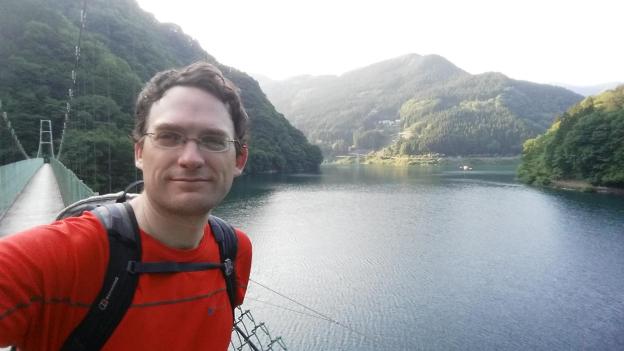
On the long suspension bridge spanning Chichibu lake

Mt Nijurokuya (971m) & Mt Takahata (982m), Uenohara, Yamanashi Prefecture, Sunday June 17
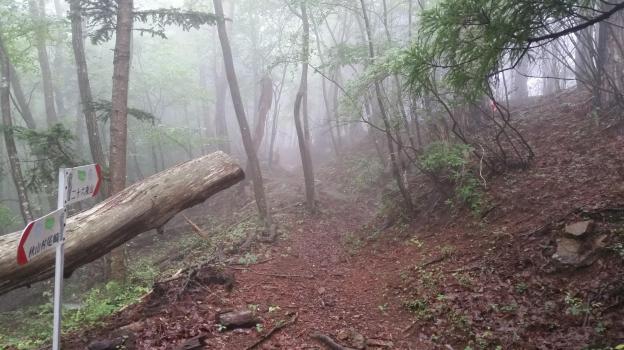
A misty climb can also be beautiful

The rainy season was in full swing but I decided to try my luck, and although it didn’t rain, I was nearly always in the mist – apparently it was sunny just 500m higher up! However I didn’t mind since with little wind, the conditions were quite pleasant and the surroundings atmospheric. I got to see some interesting spiderwebs and beetles, some beautiful alpine-like forest, and only encountered one other small group during the entire hike. I look forward to redoing this hike in clear weather so that I can enjoy the views.

The top of Mt Nijurokuya 二十六夜山 was quite unremarkable, a short there and back from the main trail. Supposedly you can see Mt Fuji from the top of Mt Takahata 高畑山 but the weather hadn’t improved enough by the time I got there. While hiking between the two peaks, you can catch a glimpse of the JR maglev station in the valley on the left. The final descent follows a pretty river valley which I had already walked up when climbing Mt Kuratake a few years ago. A bus ride from Uenohara is needed to get to the start of the hike. However it finishes on the Chuo line which you can ride direct back. It is by far one of the easiest Yamanashi hikes you can do from Tokyo.
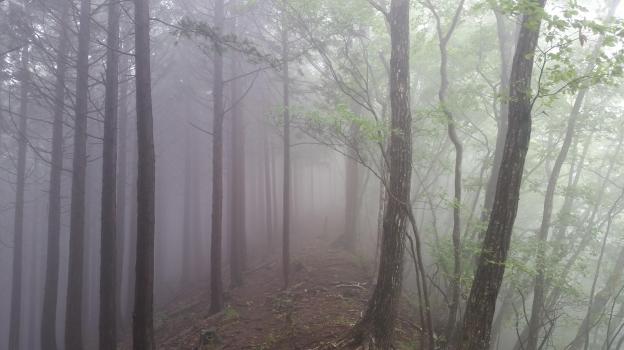
A misty ridge

Mt Kesamaru (1908m), Watarase Valley, Gunma prefecture, Sunday June 24

Glimpses of the other Kesamaru ridge

Mt Kesamaru 袈裟丸山 was another headache in terms of logistics. In the end I opted for a taxi ride for from Akagi station which in hindsight was a mistake. The ride was more expensive that I had estimated, and the road, which had been redone recently, was in far better state that I had imagined – renting a car from Takasaki would have been better overall.

From the taxi drop-off point, it was another couple of hours of road hiking to reach the trail entrance. From there, the hike was fairly amazing – beautiful forest and breathtaking views of the Watarase valley. Mt Kesamaru has actually two peaks “front” and “back”. I climbed the back one, hoping to be able to cross to the front one, and make a loop back down. Unfortunately the connection between the two was closed due to trail degradation and I didn’t dare venture onto to the crumbly ridge by myself – it will have to tackle the front part separately another time. So after gazing at the view Eastwards towards Tochigi prefecture, Westwards towards Mt Akagi, I headed down the same way.
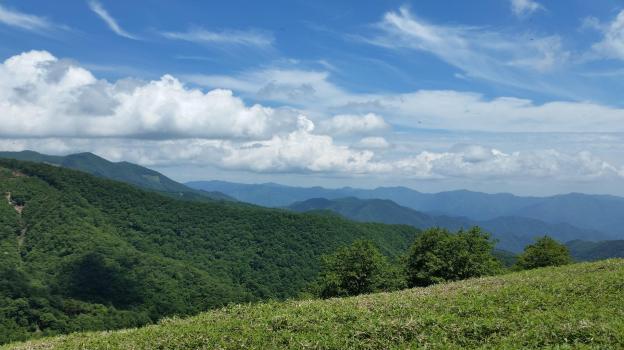
Five months later I would be hiking the mountains directly opposite

During the descent, I realised that I had miscalculated the timing of this hike and that due to the low frequency of trains on the Watarase line, there was a chance that I wouldn’t make it back to Tokyo Sunday night. So I hitchhiked, and was picked up by a kind couple who dropped me off at my request, not at the closest station, but two stations further down at Mizunuma 水沼, because it has an onsen inside the station.

Mt Hangetsu (1753m), Nikko, Tochigi Prefecture, Monday September 17

The classic view of lake Chuzenji and Mt Nantai

Mt Hangetsu 半月, meaning half moon in Japanese, is located on the Southern shore of Chuzenji lake in upper Nikko. Although I had observed the mountain ridge there multiples times and from different angles, I had so far never ventured to the area. I cheated a little and took the very short ropeway from the top of the iroha slope. I was mostly alone on my hike till I reached the car park a little below the summit with spectacular views of the lake and Mt Nantai – apparently there is a bus that runs all the way there too.

After reaching the summit, that I shared with several people, I made my way back to the bus stop at Chuzenji lake along the lakeshore – a nice and easy stroll. Unfortunately the Prince Hotel was closed for renovation so I had to scramble to find another hot spring for day trippers, before catching a bus back. September is actually a great time to visit the area since most hikers flock to the Alps and don’t flood the area till the autumn leaves start appearing in October.
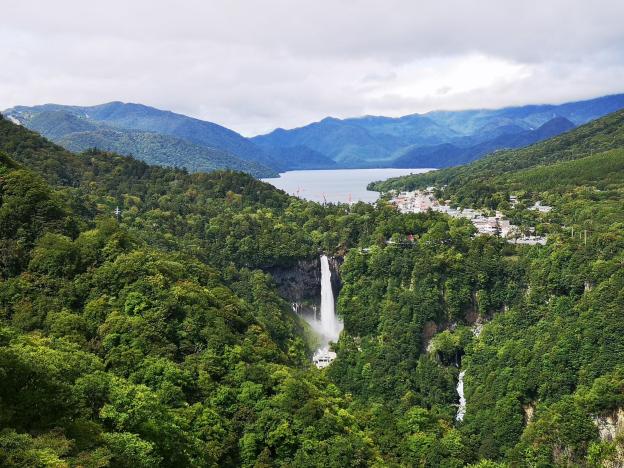
The Kegon falls as viewed from the top of the ropeway

Mt Senjin (663m) & Mt Akayuki (621m), Ashikaga city, Tochigi prefecture, Sunday November 18

View of Matsuda lake

Another Ashikaga hike – the station is starting to feel familiar. Due to poor bus connections, a taxi ride was required to the start of the trail – I used my phone’s GPS to pinpoint the exact drop off point. The start of the hike was unexpectedly beautiful – up a steep river valley. The lovely path suddenly became a steep switchback bringing me to the top of the ridge. I did a quick round trip to the right in order to get to a nice viewpoint of a lake and surrounding mountains. The surrounding vegetation was quite alpine-like which was surprising considering the relatively low altitude. I then made my way up to the top of Mt Senjin 山人ヶ岳 (no view).

My plan was to circle Matsuda lake till Mt Mt Akayui 赤雪山 and then descend towards Matsudagawa dam. The path was slightly longer than I had anticipated with a certain amount of ups and downs – a good workout! I met no other hikers. It was getting “girigiri” to catch my bus back so after reaching the “azumaya” at the top of Mt Akayuki (I left a message in the notebook in the “azumaya”) I took the shortest route down down and sorely regretted it.

My guidetalk had mentioned some fallen trees due to a past typhoon but nothing could prepare me for the mess I encountered. I was forced to leave the main path and find my own way through the forest. Just when I thought it couldn’t get any worse, I encountered a real barrage of fallen trees – I had never seen anything like it. They should seriously close off the path. After finding my way round and getting tangled in brambles, I finally emerged at the dam way behind schedule. Luckily, the first car that came by stopped to pick me up, and kindly dropped me off at the nearest train station.
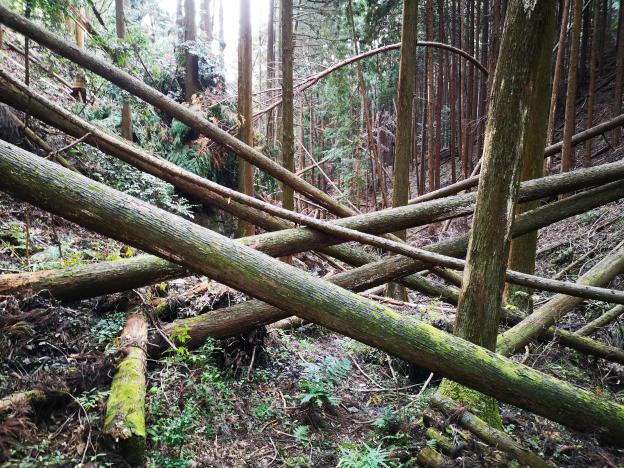
Route barred on the descent!

Mt Nyukasa (1955m), South Alps, Nagano prefecture, Friday November 23

I froze my fingers to take this picture of Yatsugatake!

When I am not busy climbing 100 famous mountains, I like to climb Kanto hundred famous mountains and 200 / 300 famous mountains in the Tokyo area. Mt Nyukasa 入笠 is a 200 famous mountain in Nagano prefecture, located at the northern tip of the South Alps. It’s a little far from Tokyo – I had to go all the way to Fujimi station on the Chuo line, and then take a taxi to the trailhead.

The climb to the top is relatively short and easy, but the views of Mt Yatsugatake opposite were breathtaking. There were also good view of Mt Fuji, Lake Suwa and the South Alps. It was definitely freezing there so I quickly made my way down the other side, and continued towards the Oahara marshland 大阿原湿原. Quite a nice place, it strongly reminded me of my native Belgium. I had originally planned to do a simple loop but halfway I found a path following a small stream.

A view that could easily be easily be the “haute fagnes”

The signboard nearby indicated – without any times – that it was possible to loop back to my starting point, so I decided to take a chance and follow this new route. I was rewarded by a very pretty river valley. It was mostly in the shade in winter, but I could imagine that in the summer it would be bathed by soft sunshine – a place to revisit. I emerged onto a dirt road but quickly left it to follow a small path up to the top of a ridge with great views of the central alps. Eventually I emerged back at the base of Mt Nyukasa. I still wasn’t done, since I had to walk all the way down the mountain. Luckily there was an onsen which I could stop by before hopping on to the train back to Tokyo.

View toward the Ida area of Nagano prefecture

Mt Narukami (980m), Kiryu city, Gunma Prefecture, Sunday November 25
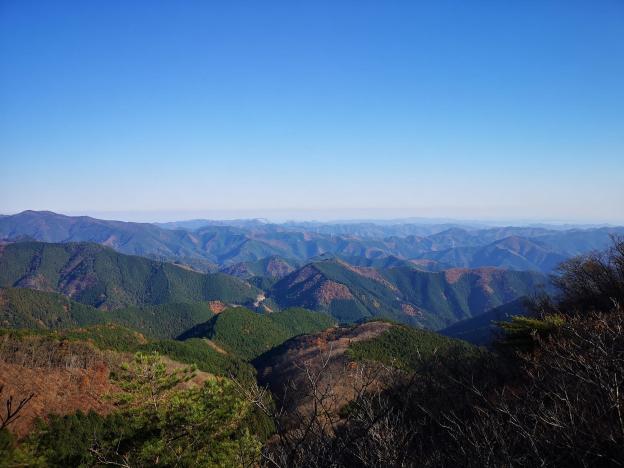
Pure Tochigi – endless mountains

The attraction for this hike are the 360 degrees panoramic views of Southern Tochigi from the top. After what seemed like an endless ascent, popping out of the trees onto the bareless top was quite a relief. Afterwards I continued on a little hiked path towards the North, all the way to Watarase valley, with good views of Mt Nantai and Kusagi dam. A word of caution: the trail was difficult to follow at times and had a lot of ups and downs (when I say a lot, I mean a lot). It’s also a very solitary hike – I only met two runners going in the opposite direction.
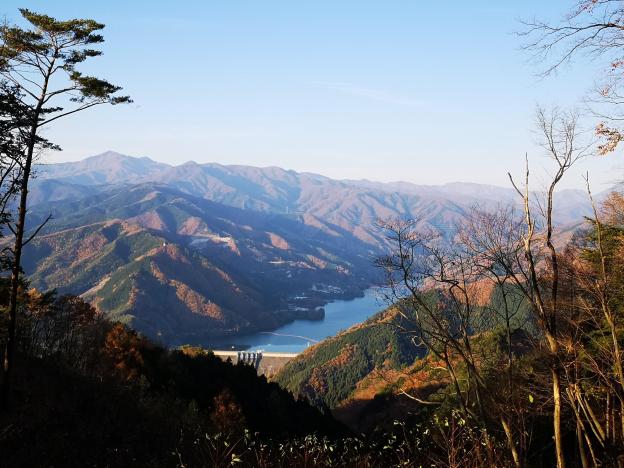
A rewarding view after a tough hike

Unfortunately I ended up taking longer than expected and missed the bus for the onsen at the end of the trail. Fortunately I was able to hitchhike to Mizunuma station, where there is an onsen right inside the station. Pretty handy since trains only run once an hour or so.

Kobugahara (1144m) & Mt Yokone (1373), Kanuma city, Tochigi Prefecture, Sunday December 2

This was another great discovery, tucked away in the heart of Tochigi prefecture. I had never heard of it till I stumbled across it in my hiking book (however my Japanese friends knew about it). The top part of the mountain is part farm and part wetlands – an interesting contrast scenery. The most amazing view however was of the view of Mt Nantai and Mt Nyoho – quite unexpected to see them appear above farmland.

Magical view of the high peaks of okunikko

I was so taken by the views that I had to rush going back to catch the bus – I didn’t want to miss it twice in a row! I took a different route down that I was recommended for people with “healthy legs” only. However it was much longer than I had calculated and only managed to catch the bus by doing a 100 meter dash down the last part which was along the road!
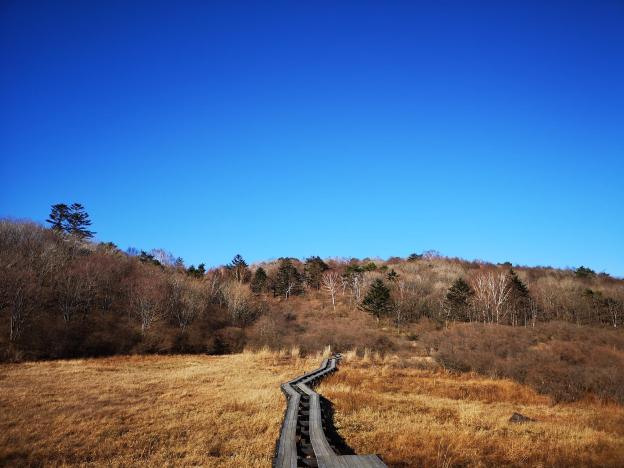
Ido Marshland, another hidden secret of Tochigi Prefecture

Mt Shigasakasuwa (1207m), Chichibu mountains, Saitama prefecture, Tuesday December 25
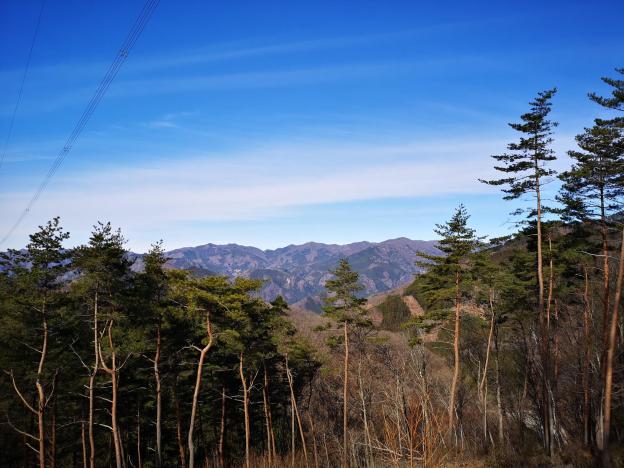
View towards Gunma prefecture

This was a rather short hike motivated by the discovery of a new shared car station in Chichibu station – I absolutely had to try it out! Plus I really enjoy visiting the Chichibu area so this Christmas day hilke was a no-brainer. After a one-hour drive, I reached the small parking area I was the only car – not surprising since the 25th is not a national holiday in Japan.

After a short climb, I reached the top of Mt Shigasakasuwa 志賀坂諏訪山 – the view was OK but not spectacular, not as good as my guidebook has led me to believe. Mt Ryokami was towards against the sun so perhaps it’s better earlier in the day. I opted for a different route down. The beginning was quite pleasant but the lower part was a bit too rocky for my taste. However, I was happy to get some nice views towards the Gunma side, including the top of Mt Asama. On the way back, I stopped at a nice ryokan that allows day trippers to take baths.

Mt Ryokami against the sun

Mt Bonomine (969m) & Mt Arima (1213m), Okutama / Chichibu mountains, Tokyo & Saitama prefectures, in December, Sunday December 30

Last view of Fuji of the year!

My last hike of 2018 was quite difficult but that’s alright since I wanted to challenge myself. I went up Mt Bonomine 棒ノ峰 from the Tokyo side – my 4th time climbing this wonderful mountain, but first time from this side – then hiked west up and down (mostly up though) along the ridge before turning sharply north at Hinatazawa (good view of Mt Fuji) into Saitama prefecture. More up and downs (7 in total) brought me to the unremarkable summit of Mt Arima 有間山, surrounded by trees.
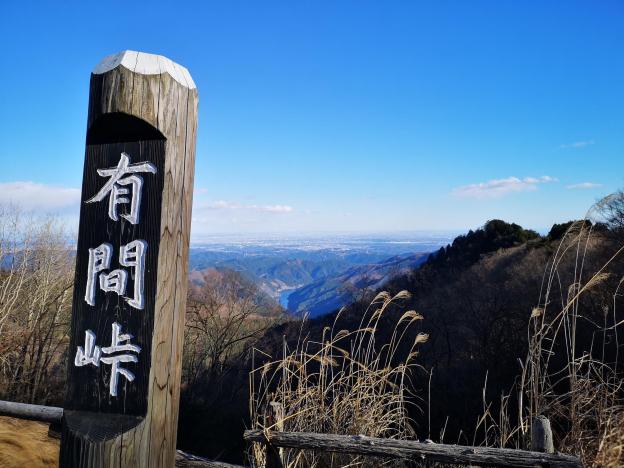
View of Naguri lake from Arima pass

After I left the summit, the trees completely disappeared on the North side giving you sweeping views of the Chichibu area with Mt Ryokami throning in the background. To the South, I could still get occasional glimpses of the Tokyo megalopolis in the distance among the trees. The two contrasting views are really made this part of the hike wonderful. I finished the hike on the Chichibu side, close to lake Urayama side, just on time to make the minibus back to Chichibu city. On the way I was lucky enough to spot some monkeys crossing the road –  a nice way to finish the year!

Last views of 2018 with Mt Ryokami in the back
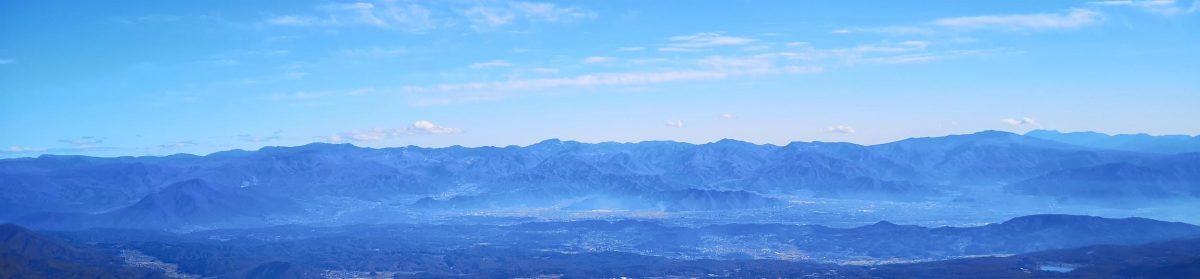
3 Mountain Lodges for New Year’s Eve & First Sunrise

Although I prefer to go on day trips as much as possible, I do enjoy staying the night of December 31st in a mountain hut and taking part in the Japanese tradition of hatsuhinode” (初日の出) or seeing the first sunrise of the year on the 1st of January. There is something magical about spending the last hours of the old year and the first hours of the new year near the top of a mountain. In addition to the special year end food and drinks, seeing a beautiful sunrise is a great way to start the new year. The weather is usually excellent in this season, despite being cold, so you can also get in two days of solid hiking.

Here are three places which I recommend for doing hatsuhinode, with their pros and cons:

Hirugadake Lodge 1673m (Kanagawa)

Hirugadake sansou (蛭ヶ岳山荘) sits on top of Mt Hiru (蛭ヶ岳), the highest point of the the Tanzawa mountain range in Kanagawa prefecture, South of Tokyo. It is the hut that has the longest and toughest access, in terms of hiking time and elevation gain.

PROS: Less crowded than other huts, great view of Mt Fuji and night view of Tokyo, summit is just next to the hut

CONS: Early bedtime curfew (around 8pm), not much in terms of New Year celebrations, small snow layer possible

ACCESS: Take the Odakyu line from Shinjuku station to Shibusawa station. There are many buses that can take you to Okura (大倉), the trailhead for for Mt Tonodake, Mt Tanzawa and Mt Hiru (the first two also have lodges open over the New Year period).

Kumotori lodge around 1950m, Tokyo

Kumotori Lodge (雲取山荘) is located below the triangular summit of Mt Kumotori 2017m (雲取山), the highest mountain of Tokyo prefecture. It is the highest and largest of the 3 huts with a capacity of around 200 people.

PROS: “Amazake” (sweet sake) on the evening of the 31st, lively atmosphere and countdown at midnight, relatively comfortable lodge

CONS: Crowded on December 31st, summit is 30 minute from the lodge, some snow possible

ACCESS: If possible try to catch the direct train from Shinjuku station that goes all the way to Okutama station, otherwise you’ll need to transfer once in Ome. From there, it’s a 35 minute bus ride to Torizawa 鳥沢, the start of the trailhead for Mt Kumotori.

Nabewari Lodge 1272m, Kanagawa

Nabewari Lodge (鍋割山荘) is also located in the Tanzawa mountain range, near the top of Mt Nabewari (鍋割) overlooking Sagami Bay. It’s one of the friendliest lodges that I have ever stayed at during my time in Japan. It also has the shortest hiking time of the three.

PROS: “Zouni” (Japanese new year dish) and sake on the morning of the 1st, great view of Mt Fuji, summit is right next to the hut

CONS: The hike down is relatively short, located on a ridge so doesn’t feel like being on the top of a mountain

ACCESS: Same as for Mt Hiru, you’ll need to take the Odakyu line from Shinjuku station to Shibusawa station, and catch the bus for Okura (大倉). However, instead of going straight up, take the path that goes left.

Before you go, there are 3 things you should do before.

First get a map of the mountain so that you can plan your hiking route carefully.

Secondly, call the hut to make a reservation and ask about the trail conditions.

Finally, check the weather before your departure. Although the weather is usually stable around this time of the year, bad weather can always happen.

In any case, be sure to bring warm clothes because it will be very cold while waiting for the first sunrise on the 1st of January 2019!

Mt Zao (1841m), Yamagata City, Yamagata Prefecture, Friday, October 26, 2018 [Map Available]

Hiking the hundred famous mountains of Japan 日本百名山

蔵王山(ざおうざん zaouzan)

Download a map of the Mt Zao hike

This map was developed for Japanwilds with the Hokkaido Cartographer

Find more Japan hiking maps on Avenza

View of the Okama crater lake from Uma-no-se

Mt Hakkai (Mt Yakushi 1654m), Minamiuonuma City, Niigata Prefecture, Monday, September 24, 2018

Famous for its brand of sake, Mt Hakkai is a sacred peak and one of the three Echigo Mountains. The summit ridge has several summits, the highest ones being rated as dangerous.

Find Japan Hiking Maps on Japanwilds and subscribe to our newsletter

View South from the Top of the Ropeway

This one broke the record for the furthest day hike from Tokyo – 175 km! I was less than 50 km from the Sea of Japan although I couldn’t see that far because of the poor visibility. I arrived in Niigata prefecture under the sun but the clouds rolled in with surprising speed and most of the day was spent under grey skies. Even the ragged top of Mt Hakkai (八海山 はっかいさん hakkai-san), a 200 famous mountain of Japan, soon disappeared in the mist.

View North of the Mountains of Niigata

After taking the shinkansen to Echigo-Yuzawa, I boarded a local train to Muikamachi station. The town is fairly rundown and would benefit from a facelift. I got on a bus to the Mt Hakkai ropeway – I was the only passenger. Even the parking lot was depressingly empty. We were perhaps a dozen people to board the ropeway. I was pretty relieved that I didn’t have to wait in line. The view from the wooden viewing platform (1120m) was quite impressive – I guess the lack of people was due to the poor weather forecast, although it never rained.

View Northeast of Mt Echigokoma

The hike itself wasn’t anything special – up and down the same path, alternating flat and climbing bits. There were some good views East of Mt Echigokoma, and Mt Tanigawa to the North. There wasn’t enough time to go all the way to the highest point (入道岳 1778m). Perhaps it was a good thing because it is rated as somewhat dangerous on my map – lots of steep bits with chains and ladders. Before turning around, I had a glimpse of Senbonhinoki Hut (千本檜小屋), perched just below the main summit ridge, through a gap in the mist.

Senbonhinoki Hut through the Mists

The clouds blocked most views from my turning back point, the top of Mt Yakushi (薬師岳 やくしだけ yakushi-dake) but there was a consolation prize in the form of some early autumn colours. I also saw three snakes which is always exciting. On the way back, I had a quick hot spring bath and bought some local sake, both inside Echigo-Yuzawa station, before hopping on the shinkansen for the ride back to Tokyo.

Heading Back to the Ropeway

Watch a Video of the Hike

See a Slideshow of More Pictures of the Hike

10 Tips for Climbing Mt Fuji

DSC03004

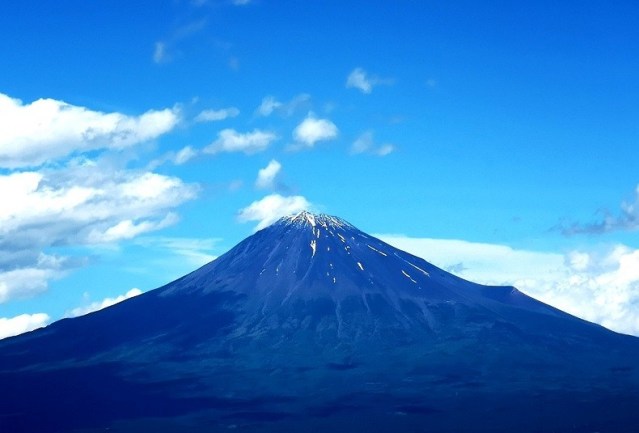
The official Mt Fuji climbing season only lasts two months a year. From early July to early September, you can safely climb to the top of Japan’s highest peak, 3776m high! If you’ve been mulling it over, but not quite sure where to begin with your preparations, here are 10 simple tips to get you started.

newfuji01

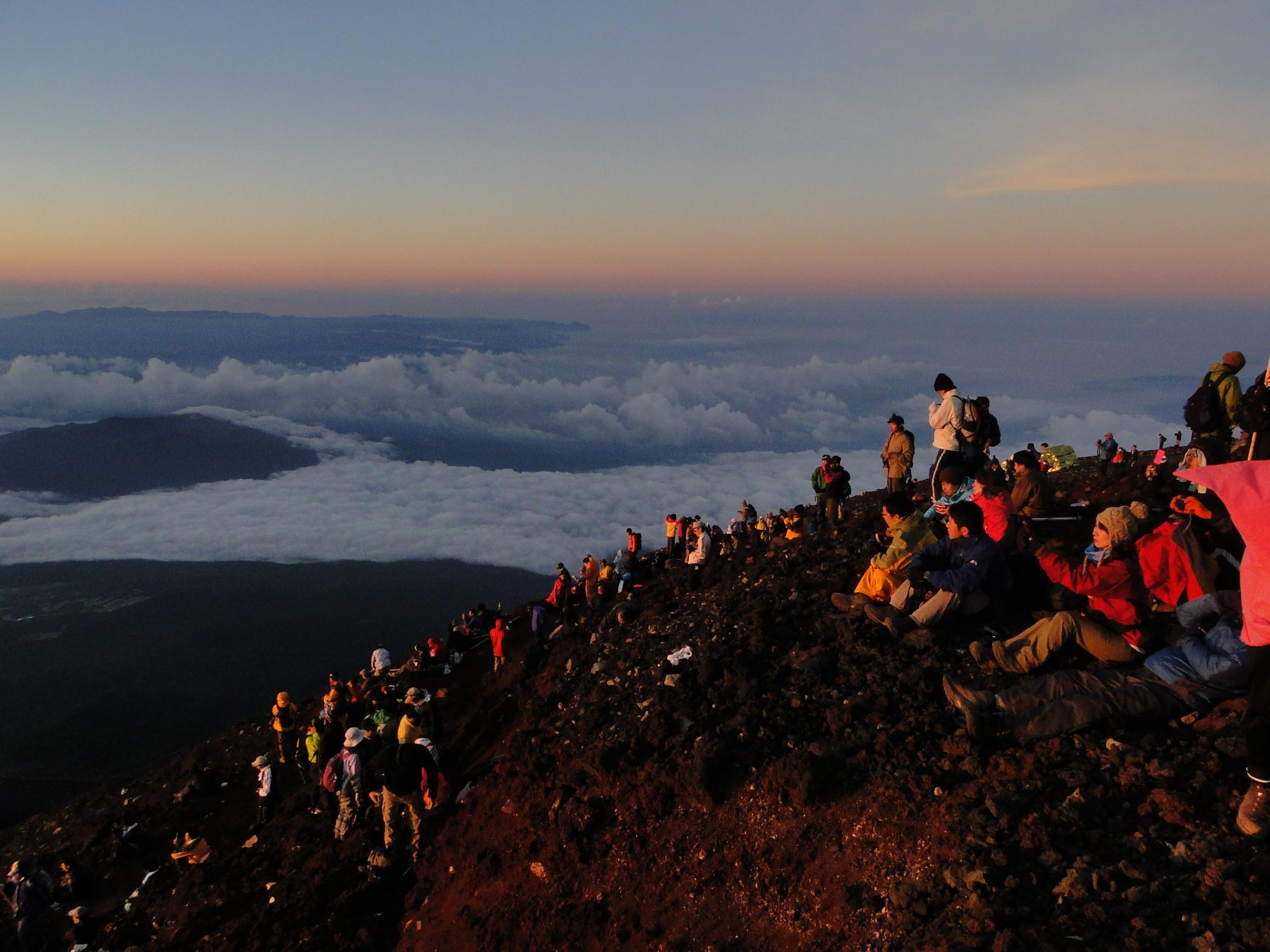
1. Be at the top for the sunrise. You may be wondering whether it’s worth climbing Mt Fuji during the night, or staying overnight in one of the huts. It is a bit of a hassle, since you would lose a good night’s sleep, but considering that the summit is nearly always in the clouds after the mid-morning, it’s worth it just to get an amazing view.

2. Pick a weekday for your climb. Even a Friday climb will almost certainly mean you will be stuck in traffic on the way down on Saturday. The same for a Sunday climb – you’ll get traffic on the way up, delaying your start. Taking a couple of days off in the week will mean avoiding traffic jams, overcrowded huts and lines to reach the top.

DSC02927
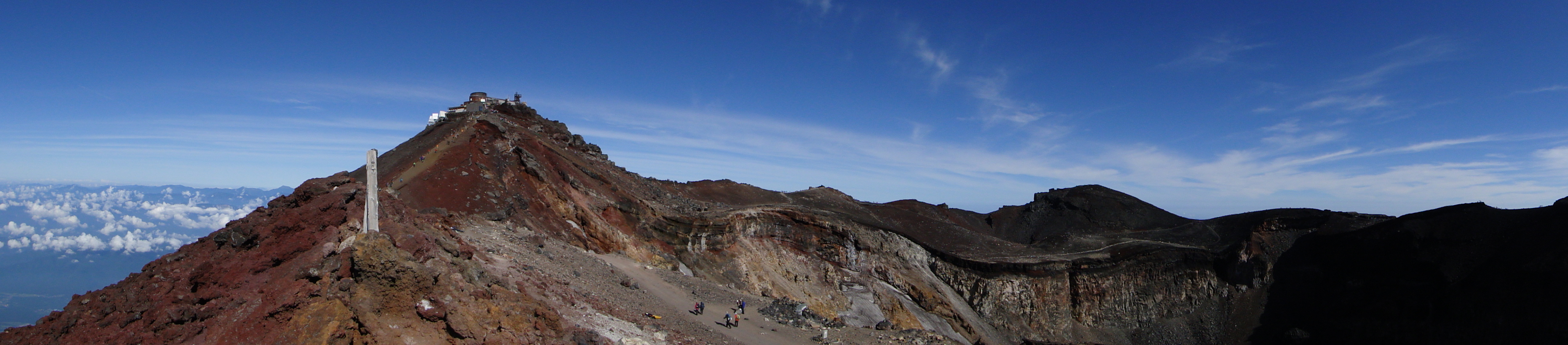
Arriving at the top of the Yoshida route after sunrise

3. Get good hiking shoes. Mt Fuji is rocky and some parts can be steep. The sturdier the shoes, the less risk of stumbling and injuring yourself. Don’t forget that new shoes need to be broken in, otherwise you’ll get painful blisters. Take them on a walk or two around the neighbourhood.

4. Make sure you have a waterproof jacket and pants. Since Mt Fuji has its own weather system, it can rain at any moment. Unusually strong wind is also a factor so it’s important to stay dry.

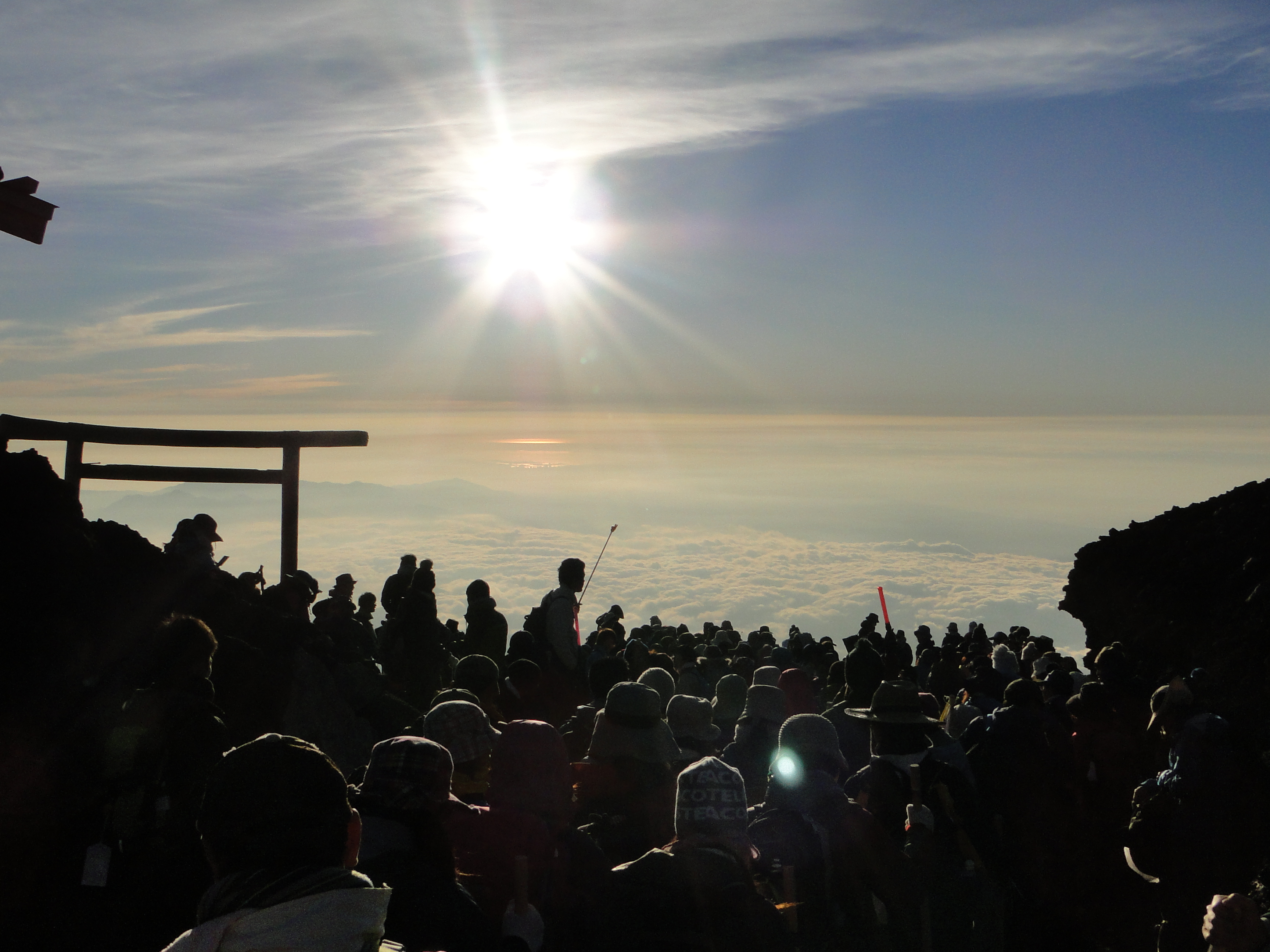
5. Bring warm clothes for the wait at the top. After you reach the top there will be a wait in the pre-dawn cold before sunrise, so bringing warm clothes including gloves and a hat is critical.

null
Waiting for sunrise from the top of the Fujinomiya route

6. Train a little beforehand. In case you don’t exercise regularly, you should probably go to the gym 2 or 3 times the week before your climb. I usually use the step machine for 20 minutes and try to climb 100 steps. Remember that after a 3-5 hour climb there is also a 2-3 hour descent. Even though the excitement of the climb may lift you to the top, the long descent is where your muscles really start to ache.

7. Keep an eye on the weather. If a typhoon threatens or if there is a period of bad weather, it may be wiser to reschedule. Google “fuji weather” to get current forecasts.

DSC03029
Make sure to bring sunscreen and a hat – the sun can be punishing at higher altitudes

8. Use the Fujinomiya route. Despite being further and more expensive, it has 3 advantages over the usual Yoshida route. First, it has the highest starting point (2380m). Second, the return can be made down the “Subashiri” sand run – you can run most of the way down in half the time (make sure to turn right for Mt Hoei). Finally, it is less crowded so there is no line to reach the top (click here for the bus times).

9. Get a good map of Mt Fuji. Even though there always tons of people and plenty of English signposts, there are many trails and visibility can sometimes drop to zero in bad weather. Having a good map will help you make the right decision. Also, it will include the walking times.

10. Be self-sufficient when it comes to food and water. Even though you can buy water and food pretty much anywhere on Mt Fuji, this is just a sound principle to stick to when climbing any mountain.

Make sure to check out the official Mt Fuji Climbing Site for the latest information on hiking routes up the mountain.

64561551_325382651706459_4655471135540903936_n

Where to go hiking when it’s hot and humid in Tokyo?

You might think that the summer months of June, July, August and September are the best time to go hiking. That is only partially true. The main problem is that the high temperatures and humidity make hiking up from a low elevation a torture – I know because I’ve done it. The trick is to use public transport to propulse yourself as high as possible before you need to start climbing. Even better are hikes that start high and consist mainly of flat and downhill walking. 

So, here is a list of 10 lesser-known hiking start points, from highest to lowest, in mountain areas reachable from Tokyo by bus (without using the Tokyo Wide Pass). A word of caution – starting higher also means going further and traveling longer which in turn is more expensive – there is a cost to getting high.

20180617_112425
Ridge walking in the mist, sometimes unavoidable in the warmer, wetter months (June 2018)

Fujinomiya 5th station 富士宮五合目 2380m

It’s no surprise that the highest point accessible by public transport is on the slopes of the highest mountain in Japan. However, instead of heading for the top, you can hike down to one of the lower stations, or cross over to the Gotemba fifth station, or even do a loop hike via Mt Hoei 宝永山 2693m, a mini-volcano on the flank of Mt Fuji, that was created during the last eruption 300 years ago.

Alternatively can get off at one of the lower stations and head up, if you want to do at least a little climbing. The forest bits are beautiful, and the parts that are devoid of vegetation because of ancient lava flows, offer some great views, when the clouds aren’t in. Best to avoid the Mt Fuji hiking season in July and August, since the buses will be packed.

Check Mt Fuji information on the Japan-Guide website for access information

DSC02079
Volcanic landscape near the Gotemba fifth station (June 2014)


Odarumi Pass 大弛峠 2365m

Only 15 meters lower than Fuji’s highest point, the main attraction here is to do the round trip to Mt Kinpu 金峰山 2599m, the highest peak in the Okutama-tama-kai national park. Most people go this way and the views are great. Another option is to head east towards Mt Kobushi 甲武信ヶ岳 2475m, passing over the highest point in the area, Kita Okusenjo 北奥千丈岳 2601m. Lots of solitary, but beautiful forest hiking. The bus can be taken from Enzan station on the Chuo line, but since it’s rather small it requires prior reservation (Japanese only). On the way you need to change at Yakiyama Toge 焼山峠 1520m – there are some good hiking options around here, although I have yet to explore them.

DSC03938
Looking back from the top of Mt Kinpu (Sept 2014)
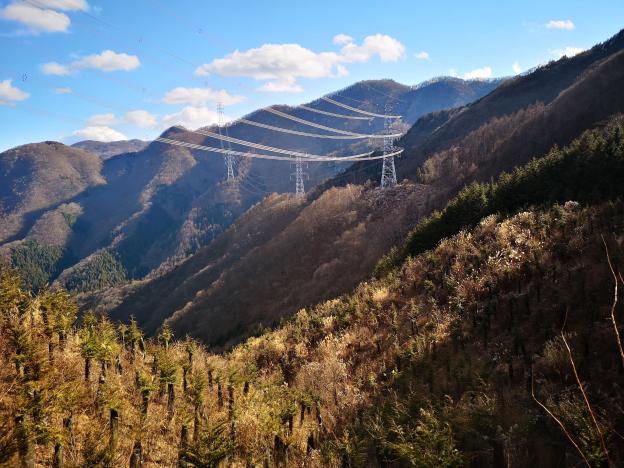
Subaru Line 5th station スバルライン五合目 2300m

Mt Fuji again – from here you can hike down through the Aokigahara 青木ヶ原 forest to Motosuko lake 本栖湖. Another option is to hike across to Okuniwa 奥庭 and cut across the previous hike and end up Fujikyu Highland. Good views of Mt Fuji and the Kawaguchiko area, as well as beautiful forest hiking on one of the most famous volcanoes in the world. You can catch the bus for the Subaru line from Fujisan 富士山 station.  There are 2 more 5th stations on Mt Fuji, but I won’t add them to the list since they can be connected from the 2 previous ones. 

Once again, go to Japan-Guide for bus information for the Subaru line.

20180609_121511
Mt Fuji from near Okuniwa (June 2018)


Kamihikawa toge 上日川峠 1580m

This is one of my favourite places to go in June. A short hike up will take you top of Mt Daibosatsurei 大菩薩嶺 2057m with good views of Mt Fuji on the way (the top is surrounded by trees). There are a number of trails that will take you down in various directions. Head South and you’ll get back to either Enzan 塩山 or Kai-Yamato 甲斐大和 stations (where you take the bus up). Head North and you’ll end up at Tabayama village 丹波山村, located West of Okutama. You may even see monkeys close to the trail. Most of the trails end up at at a hot spring.

DSC09349
Typical landscape around Daibosatsurei (June 2013)


Yanagisawa toge 柳沢峠 1480m

This pass is located only a few kilometers Northwest of Daibosatsurei. The bus leaves from Enzan station, and you can hike East to Mt Kurokawakeikan 黒川鶏冠山 1716m, and then on to Daibosatsurei (see above), or head North towards Mt Kasa 笠取山 1953m. I

20160618_095851
View from near the pass (June 2016)

Matsuhime toge 松姫峠 1250m

Update April 2025: The bus to Matsuhime pass is currently not running due to a landslide that occured in Autumn 2024

This is a good one I discovered recently. You only need to take the Chuo line to Uenohara 上野原 station, and there you can hop on a bus from the newly built bus terminal to Matsuhime toge. Granted the ride is a bit long and does a detour via Kosuge Onsen 小菅温泉, but with a name that translates in English as Princess Pine, that can be forgiven.

From the pass, you can walk down to the aforementioned onsen, or for a longer hike, head west and down to the Tsuru Valley, which runs parallel to the Akigawa valley North. Return is via bus to Uenohara. If you want a shorter bus ride then get off at Tsuru Toge 鶴峠 870m and hike to Mt Mito 三頭山 1531m (return bus can be had from Hinohara Tomin no Mori 檜原都民の森 1000m).

20170603_101505
Yes! Mt Fuji can be seen from Matsuhime Pass (June 2017)


Mitsutoge Tozanguchi 三ツ峠登山口 1230m

Instead of hiking up or on Mt Fuji, how about hiking in a place that has great views of the volcano? Up until the beginning of July, Mt Fuji will still have some snow on it, so you’ll still be able to take some memorable photos. The bus leaves from Kawaguchiko 河口湖 station and takes you behind and up the Western side of Mitsutoge, to Mitsutoge tozanguchi 三ツ峠登山口. After that, it’s a short hike to the top, where there are good views. You can then walk back down to Kawaguchiko. Actually the bus continues a little further up to 1300m. However I feel that the hiking options there are less exciting than the ones offered by Mitsutoge.

20160626_121205
Just follow the ridge all the way to get down…unfortunately Mt Fuji in the back, was head in the clouds (June 2016)


Kirifuri Kogen 霧降高原 1200m

This is a secret Nikko hiking spot, just East of Nikko town. Take the bus from JR Nikko station or Tobu-Nikko station to the Kirifuri highland stop. From there, you can walk up a 1445-step staircase to Komaruyama 小丸山 1601m, and then do a loop hike Mt Maru 丸山 1689m. Another option is to hike all the way down to Kirifuri waterfall, where you can catch the bus back to Nikko station.

20160430_110307
The very long staircase (May 2016)


Mitsumine Shrine 三峰神社 1040m

Mitsumine Jinja is a very famous shrine located in the Chichibu area of Saitama. You’ll need to get a Seibu bus from Mitsumineguchi 三峰口 station. From there you can climb the nearby Mt Myoho 妙法ヶ岳 1332m or/and walk back down to one of the bus stops between the station and the shrine. You could venture up Mt Kumotori 雲取山 2017m but in that case you’ll need to spend the night at the lodge at the top.
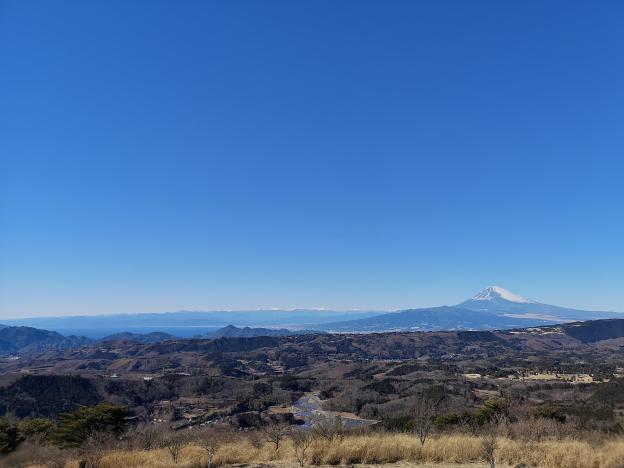
20180602_161606
Mitsumine Shrine and Mt Myoho as seen from a parallel ridge (June 2018)
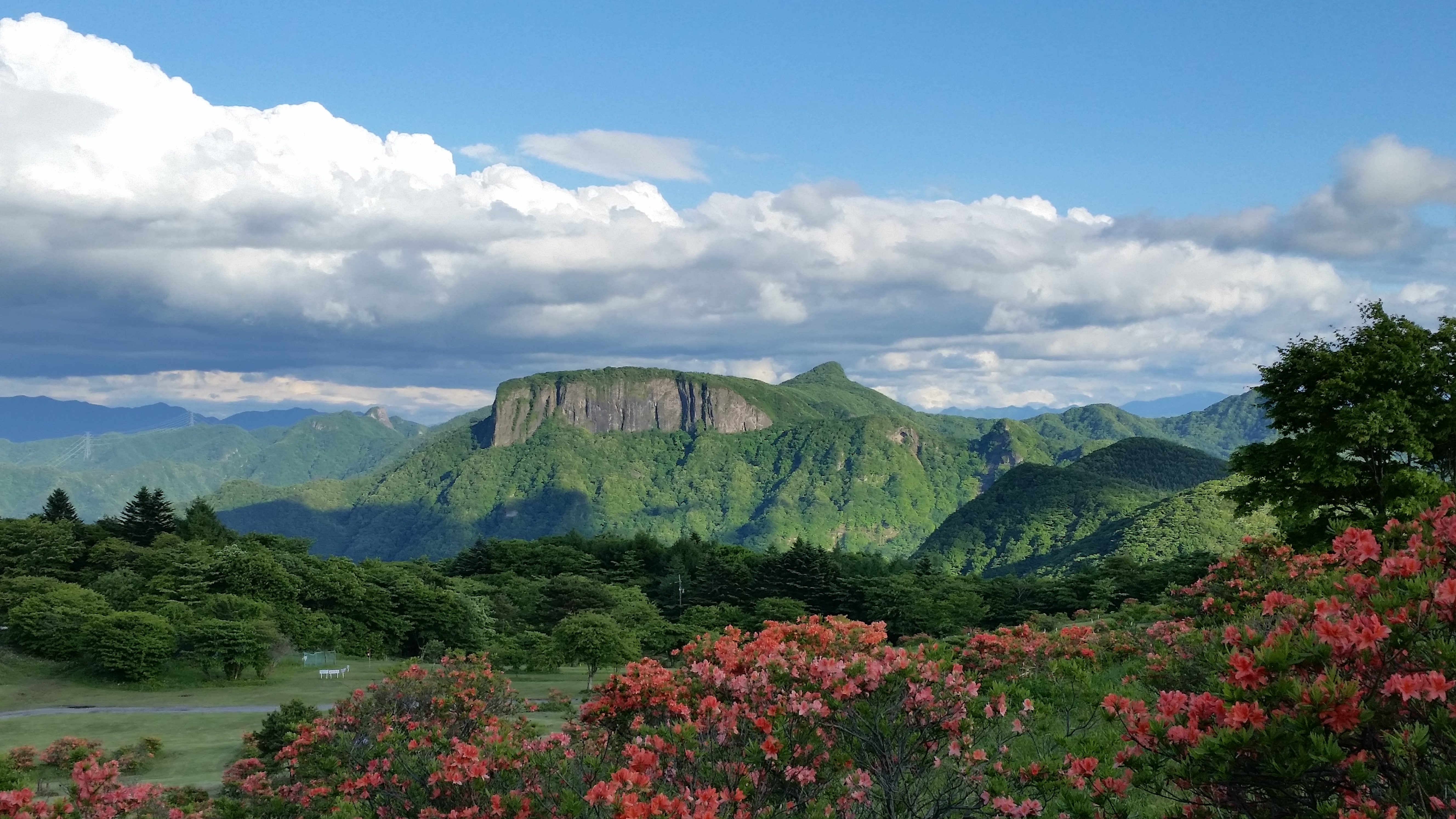
 

Michizaka Zuido Iriguchi 道坂隧道入口 1000m

A one-hour bus from Tsurushi 都留市 station on the Fujikyuko line between Otsuki and Kawaguchiko will get you to this pass leading into Doshi valley 道志渓谷. Unfortunately you’ll need to climb a bit to get to the ridgeline. From there you can go left (North) to Mt Imakura 今倉 1470m, or right (South) to Mt Mishotai 御正体 1681m. My recommendation is the former peak, from the top of which you can turn left (West) – there is an onsen at the end the the end of the trail, as well as excellent views of Mt Fuji if the weather allows.

20160611_110707
View from the top of Mt Matsutyama (June 2016)


Myojin Pass 明神峠 (900m)

Fujikyu runs a seasonal hiking bus from Suguru-Oyama station on the Gotemba line to Myojin-toge in the Tanzawa mountains on weekends from mid-April to mid-November. It’s the jump-off point for hikes to Mt Yubune and Mt Mikuni. The main drawback is that the bus departs relatively early in the morning, requiring a crack of dawn departure from Tokyo; there is also no return bus so hikers need to descend under their own steam. Heading west from Mt Mikuni, it’s possible to finish at a bus stop for Gotemba station, with great views of Mt Fuji along the way. Search for “明神峠ハイキングバス” to find the bus timetables and latest information.

Yamanakako-Oyama Line from near Myojin pass

The Tokyo Wide Pass Golden Week 2018 Update

I’ve already written a series of articles on the very useful Tokyo Wide Pass. Here are some of the latest hikes I’ve done using it, in reverse chronological order. A small side note before I start: an increase in the number of overseas tourists, combined with an increased awareness of the existence of the pass (because of this blog?) has led to longer lines at some sales points, notably Tokyo and Ueno stations. Allow enough time when purchasing it, or choose less central sales points.

  • May 5th 2018: Mt Shakagatake 釈迦ヶ岳 1795m. The highest peak of Mt Takaharayama 高原山, a 300 famous mountain in Tochigi Prefecture, one hour by car from Nasushiobara station 那須塩原 (Tohoku shinkansen). Views of the Kanto plain, Mt Nasu, the Ide range and the Nikko mountains. I met a fellow Belgian (living in Tochigi) on the way up and we ended up completing the hike together!

20180505_165411
View of Mt Nasu from the Omama 大間々 parking area

  • May 4th 2018: Mt Takeyama 嵩山 789m. Located in Gunma prefecture on the Agatsuma line 吾妻 (from Takasaki), a ten-minute taxi drive from Nakanojo station 中之条 (return can be done on foot in less than an hour). Great views of Mt Haruna, Mt Onoko, Mt Myogi and the Joshinetsu mountains (mountains on the border of Gunma and Niigata prefectures). This was a short hike (2h1/2) so I combined it with the one below (one train stop away).

20180504_100856
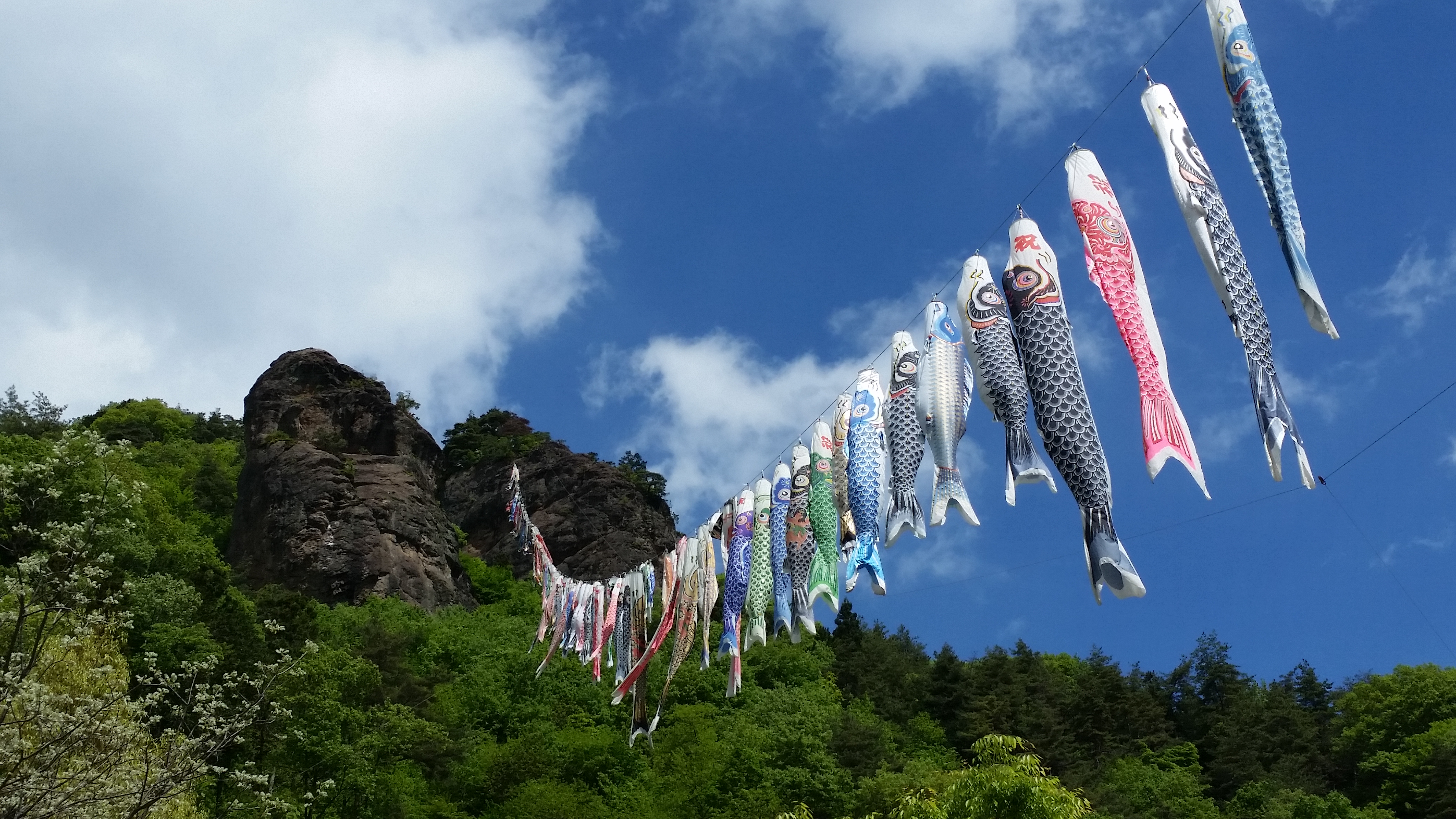
Koinobori from the Takeyama Michi no Eki (Service Station)

  • May 4th 2018: Mt Iwabitsuyama 岩櫃山 803m. Also located in Gunma prefecture on the Agatsuma line 吾妻. The trailhead is about 30 minutes on foot from either Gohara 郷原 or Gunma-haramachi 群馬原町 stations. WARNING: this hike has lots of chains and dangerous passages. Do not attempt this hike if you are a beginner or if you are afraid of heights. Also great views of Mt Haruna, Mt Onoko, Mt Myogi and the Joshinetsu mountains (mountains on the border of Gunma and Niigata prefectures). Mt Hotaka and Mt Akagi are also visible.

20180504_142411
The impressive figure of Mt Iwabitsu

  • May 1st 2018: Mt Ogura 御座山 2112m. A 200 famous mountain, located in Nagano prefecture, it is about a 30 minute bus ride (one bus transfer necessary) from Komi 小海 station on the Komi line. By the way, this is a pretty extraordinary train line – the highest station is 1345m high (Nobeyama 野辺山 station)! The Komi line is accesssed from Sakudaira 佐久平 station on the Hokuriku Shinkansen. This is also probably one of the furthest distances you can travel in one day using the pass – 200 km one way! this is because you have to go all the way around the mountainous area that is between the Kanto plain and Yatsugatake. Komi station is only 125km from Tokyo as the crow flies. Return to Komi station is also by bus but from the other (Northern) side of the mountain.  Good views of Yatsugatake, Mt Kinpu and Mt Ryokami.

    64475b
    View from the top of Mt Ogura
  • April 30th: Tatsuiwa 立岩 1265. A Kanto 100 famous mountain in Gunma prefecture, accessed via train (Joshin railway 上信電鉄 from Takasaki), bus from Shimonita 下仁田 station and taxi from Nanmoku 南牧. The trailhead starts at the impressive Sengataki 線ヶ滝 waterfall. WARNING: This hike has a steep section along a gully with loose rocks – be careful not to send any rocks tumbling down below you. Also there is a short section with chains along a rockwall. You need to maintain 3 points of contact at all times when progressing along it. Great views to the south of the Nishijotsu area. Return via the neighbouring mountain (Mt Arafune) to avoid a long walk along on a road from the Tatsuiwa trailhead.


20180430_120134
Trail near the top of Tatsuiwa

  • April 30th 2018: Mt Arafune 荒船山 1423m. A 200 famous mountain in Gunma prefecture, next to Tatsuiwa and shaped as a ship. It was my second time climbing it and it was simply a good way to end my hike at an onsen and bus stop (Arafunenoyu 荒船の湯). No views from the the top but before heading down to the onsen, there is a good viewpoint of Mt Myogi from tomoiwa 艫岩. This is on top of a cliff so be careful – the creator of Crayon Shin-Chan fell to his death here while taking a photo.

20150606_170915
Photo of Mt Arafune, taken 3 years ago from the Uchiyama campsite.

  • April 29th 2018: Mt Yamizo 八溝 1022m. A Kanto 100 famous mountain and the highest peak of Ibaraki prefecture, also on the border of Fukushima prefecture. One hour by car from Nasushiobara 那須塩原 station, you can literally drive to the top where there is a small castle-shaped observation tower (good views of Mt Nasu, Mt Takahara and the Nikko mountains). However for hiking purposes, I stopped at a small parking area about an hour on foot from the top, and did a round trip to Mt Takasasayama 高笹山 (922m) along the southeastern ridge.

20180429_101436
New green and easy hiking on Mt Yamizo


Here are the previous articles I’ve written concerning the Tokyo Wide Pass:
The Tokyo Wide Pass – Why use it?

Tokyo Wide Pass – Where to go? Part I: Takasaki

Tokyo Wide Pass – Where to go? Part II : Karuizawa

Tokyo Wide Pass – Where to go? Part III : Saku-Daira

Tokyo Wide Pass – Where to go? Part IV : Jomo-Kogen, Echigo-Yuzawa & beyond

Tokyo Wide pass – Where to go? Part V: Nikko and Nasu


Where to hike in the winter? Part III: Gunma & Tochigi + Part IV: Ibaraki & Chiba

Winter is around the corner – I saw snowflakes fall on my hike last week – so it’s time to introduce more low-altitude destinations for the colder months, this time on the Northern edges of the Kanto plain. Admittedly there are fewer all-year round snow-free options but the adventurous hiker will be rewarded with beautiful vistas of the snow-capped peaks of the Joushin-Etsu that ranges from Mt Asama to Tanigawa, and the peaks of Oku-Nikko. The hikes presented below are in clockwise order from West to East.

Mt Kuwagara 鍬柄岳 and Mt Oogeta 大桁山, Gunma prefecture

These 2 peaks, 598m and 836m respectively, are located North of Sendaira 千平 Station the stop before Shimonita on the Joushin Dentetsu line running from Takasaki station. Mt Kuwagawara is the highlight and can be done by itself for a shorter hike. The last part requires some scrambling up a rocky face – nothing technical since there are set chains in place to assist but a good sense of balance and agility are required, and you’ll also need to come back the same way in order to continue the hike. However the view from the top is quite rewarding.

PROS: Roundtrip with station access, an exciting bit with chains, good views

CONS: Some road walking, not recommended for beginners

20150111_115855
View towards Nishi Joushuu with the flat-topped Mt Arafune on the right

Mt Okono 小野小山 and Mt Juuni 十二ヶ岳, Gunma prefecture

Mt Okono 1208m and Mt Juuni 1201m are part of the same mountain – just 2 peaks on the same ridge that sits between Mt Haruna in the West and Mt Akagi in the East. Despite their relatively high altitude, I did them without snow in January but this may not always be the case so check beforehand. Access is from Onogami 小野上 station on the Agatsuma line, North of Takasaki, and return is one station further down, Onogamionsen 小野上温泉 station. There are some ups and downs along the ridge but your efforts will be rewarded with a breathtaking 360° panorama at the top of Mt Juuni.

PROS: Station access, great views, onsen at the end

CONS: Some road-walking, risk of snow, longish hike

20160109_151022
The Tanigawa Ridgeline from the top of Mt Juuni

Mt Daishou 大小山 and Mt Daibou 大坊山, Tochigi Prefecture

Mt Daishou 314m and Mt Daibou 286m are lowish peaks sitting on a semi-circular ridge East of Ashikaga city, accessible from Tomita station on the Ryoma line which connects Ooyama and Maebashi stations. From the top of Mt Daishou, and other viewpoints along the way, there are sweeping views to the South of the Kanto plain. Looking Northwards, there are mountains as far as the eye can see, with the Mt Fuji look-alike, Nikko’s Mt Nantai at the very back. This is a popular trail especially in the winter so expect to meet many hikers along the way.

PROS: Roundtrip with station access, very good views, relatively easy hiking

CONS: Some parts pass through the town, lots of people

20170122_151902
Mt Daibou as seen from near Mt Daishou

Mt Kogashi 古賀志山, Tochigi Prefecture

This low-lying but rocky mountain cuts quite an impressive figure when seen from below.  At any only 583m it will surprise you with its rocky but roped steep bits and plunging views to the plain below – agility and surefootedness are necessary. Placed somewhat East off the JR Nikko line connecting Utsunomiya and JR Nikko stations, you’ll need to take a bus or a taxi from Kanuma 鹿沼 station to get closer to the start of the hiking trail. There are plenty of trails up and down but the best, and most exciting route is to follow the ridge all the way to Mt Akaiwa 赤岩山 553m.

PROS: Roundtrip, great views, onsen at the end

CONS: Bus there and back, some tricky parts

20170304_111236
Mt Kogashi with Akagawa Lake in the foreground


March 2019…Somehow I never completed the final part of the where to hike in winter series from 2017, and just rediscovered the draft. Although winter is officially over, these hikes below are also good in Spring and Autumn. However, these two Ibaraki and Chiba are the ideal places to go when it gets really cold since they combine relatively easy access and low altitude mountains that get little if any snow. These four hikes only scratch the surface of what can be done in these areas. I’ve added then to this blog post since they wouldn’t fit in with my latest series of blogs. 


Mt Tsukuba (877m), Ibaraki Prefecture

Like Mt Takao, Mt Tsukuba 筑波山 is an extremely popular hiking spot close to the Tokyo metropolis. You cannot rule out snow in the winter but is is rare and melts quickly. A bus is required to get to the start of the trail, but they run frequently from Tsukuba or Tsuchiura stations. A multitude of trails go up and down the mountain through beautiful cedar forests at the base, and interesting rock formations higher up. At the top, you’ll be rewarded with great views of the Kanto plain and perhaps Mt Fuji if you’re lucky. There is a ropeway and a cable car so you can just climb up or climb down if you prefer. 

PROS:  Easy to follow trails, Airplane-like views, Hot springs

CONS: Crowded on weekends & holidays, Summit area is overdeveloped, Access by bus

1915622_191584392590_5241579_n

Enjoying the view from the summit

Hokyo (461m), Ibaraki Prefecture

I only recently discovered Mt Hokyo 宝篋山 but it is the perfect place for a winter escapade. There are many well-marked trails that you can follow to the top and back down, a couple of which follow beautiful mountain streams. There are great views of Mt Tsukuba from the top which you can enjoy while sitting in some longchairs. There are frequent buses from and to Tsuchiura station. Apparently there are some mountain sakura so it’s also a good place for hiking in April when they are in bloom.

PROS: Lots of trails, Seats and tables at the top, Great views

CONS: Short hike, Access is by bus, No hot springs

dav

Lots of place to sit on the top of Mt Hokyo


Mt Nokogiri (330m), Chiba Prefecture

Mt Nokogiri 鋸山 is a fun place to visit and hike. It can be accessed by train but I find it worthwhile to do at least one leg of the trip by ferry across Tokyo Bay from Kurihama. There is a ropeway that goes to the top and if you choose that option, you should at least walk down a little explore the base of the cliffs on the front and then descend the path on the other side. There are giant Buddha statues on both sides. On the ragged top ridge (Nokogiri means saw in Japanese), there is a great lookout point over the cliffs called “jigoku nozoki” or “a peek into hell”. There are great views of the Boso and Miura peninsulas, and Tokyo Bay.  If you’re hungry, there is an excellent kaiten sushi right next to Kanaya port. 

PROS: Combines hiking and cultural sightseeing, Ferry ride, Sea views

CONS: A little far, Short hiking, Summit ridge area can be crowded

20160227_151257

Mt Nokogiri from Kanaya Port

The Yoro River Valley, Chiba Prefecture

This is the classic Chiba hike and highly recommended if you haven’t been to the Yoro river Keikoku 養老渓谷 yet. The train from Goi station is charming and will deposit you smack in the middle of the countryside. The walk is mainly along a picturesque river valley so there is little climbing or descending. You can start two stations earlier from Tsukisaki for a longer hike. The highlight is the Awamata waterfall . The railway deviates from the river after Yoro Keikoku station so you’ll need to take a bus back. 

PROS: Easy Hiking, River Walking, Hot springs 

CONS: A little far, Bus for the return, Proximity to a road

55110_449637782590_226892_o

 The path is paved so even light shoes are fine