Hiking in Tohoku: Mt Karo (430m), Shinchi Town, Fukushima Prefecture

I had first heard about the newly-created Michinoku Coastal Trail inside the Sanriku Fukko National Park in 2019, but I couldn’t consider hiking it till the JR East Welcome Pass was introduced last year. My first task was to pick a section that could be done as a day-hike from Tokyo. The ones near the Miyagi / Fukushima border seemed ideal since they could easily be reached from Sendai, a 90-minute shinkansen ride from Tokyo. Next I tried to find a section with more hiking trails than roads. I settled on the Shinchi route: although it followed some roads, it also went up a small mountain with views of the Pacific ocean and the Mt Zao mountain range – hopefully the weather would be good. Even if it weren’t, I was excited to hike in new area of Japan.
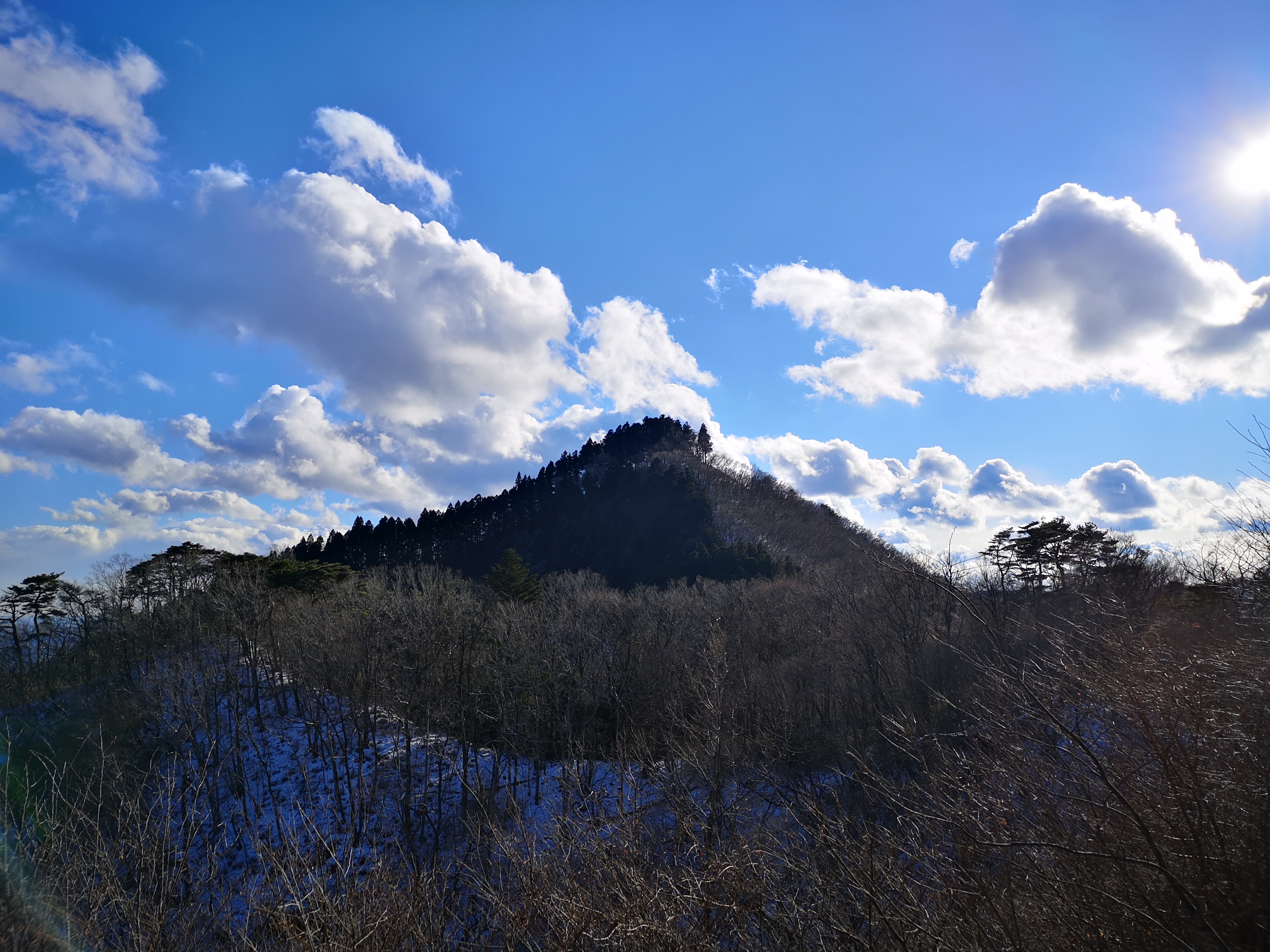
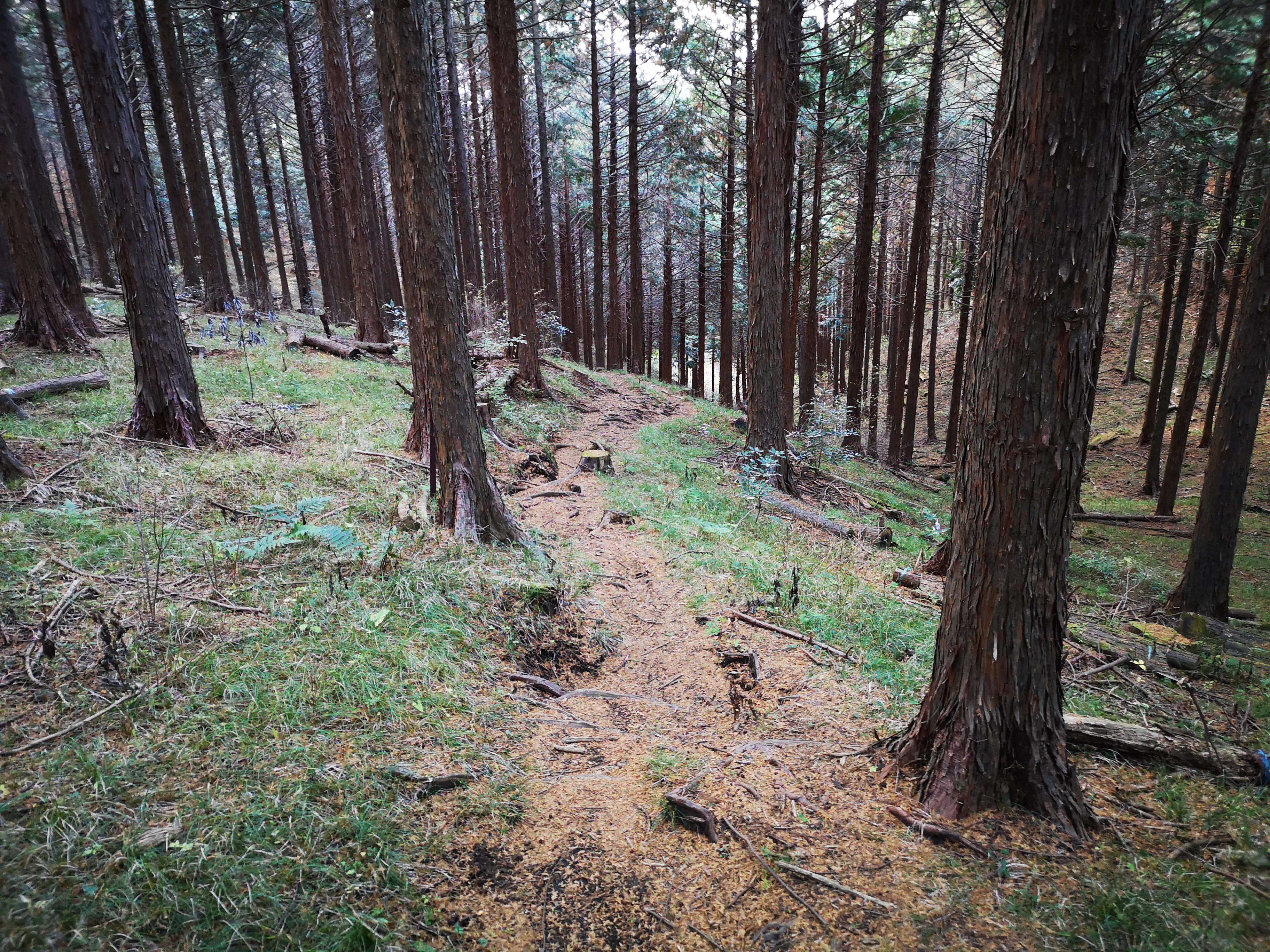
The north side of Mt Karo covered in trees

For once, the shinkansen was delayed, and I lost one hour on the way to Sendai. To make up for this, I called a taxi from Shinchi station on the Joban line to take me to the start of the trail, 6 kilometers away, and I was ready to start hiking at 11h45. The weather was good but cold; there was even a thin layer of snow in places out of the sun’s reach. I chose to head up the “chobo” or view trail; it meant I would be walking with my back to the view, but I wanted to be in the sun to warm myself up. Even though it was a short climb, there were frequent signs along the way telling me how many meters were left to the summit.

Mask-wearing shrine guardian

Walking the sunny “view” path up

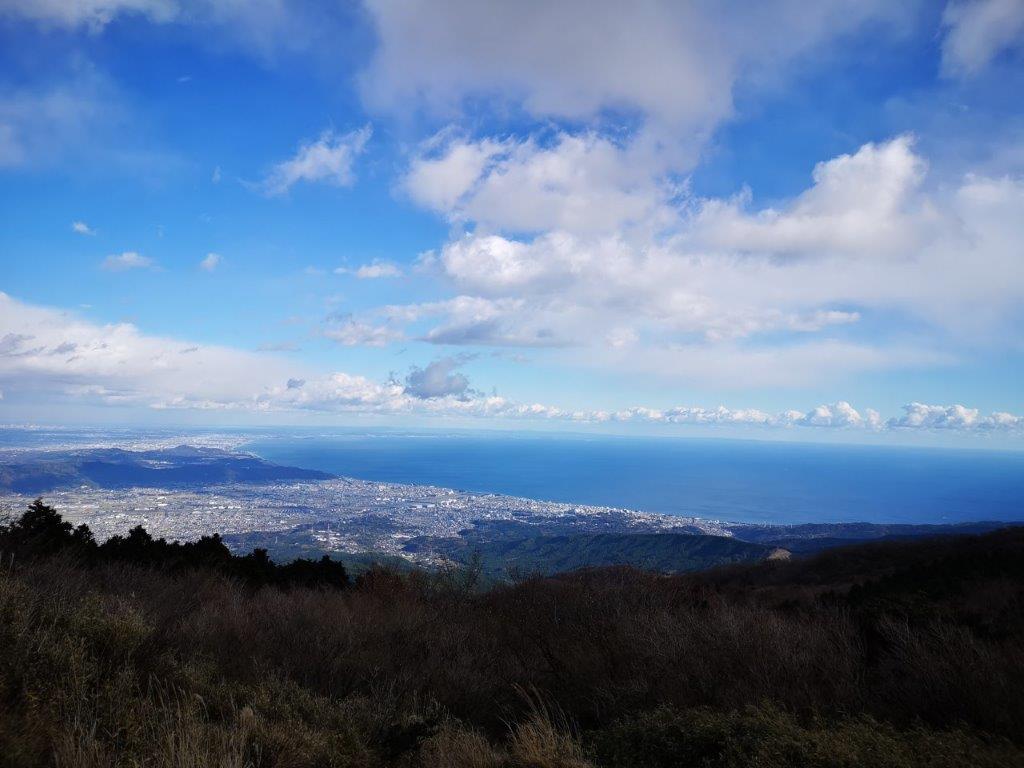
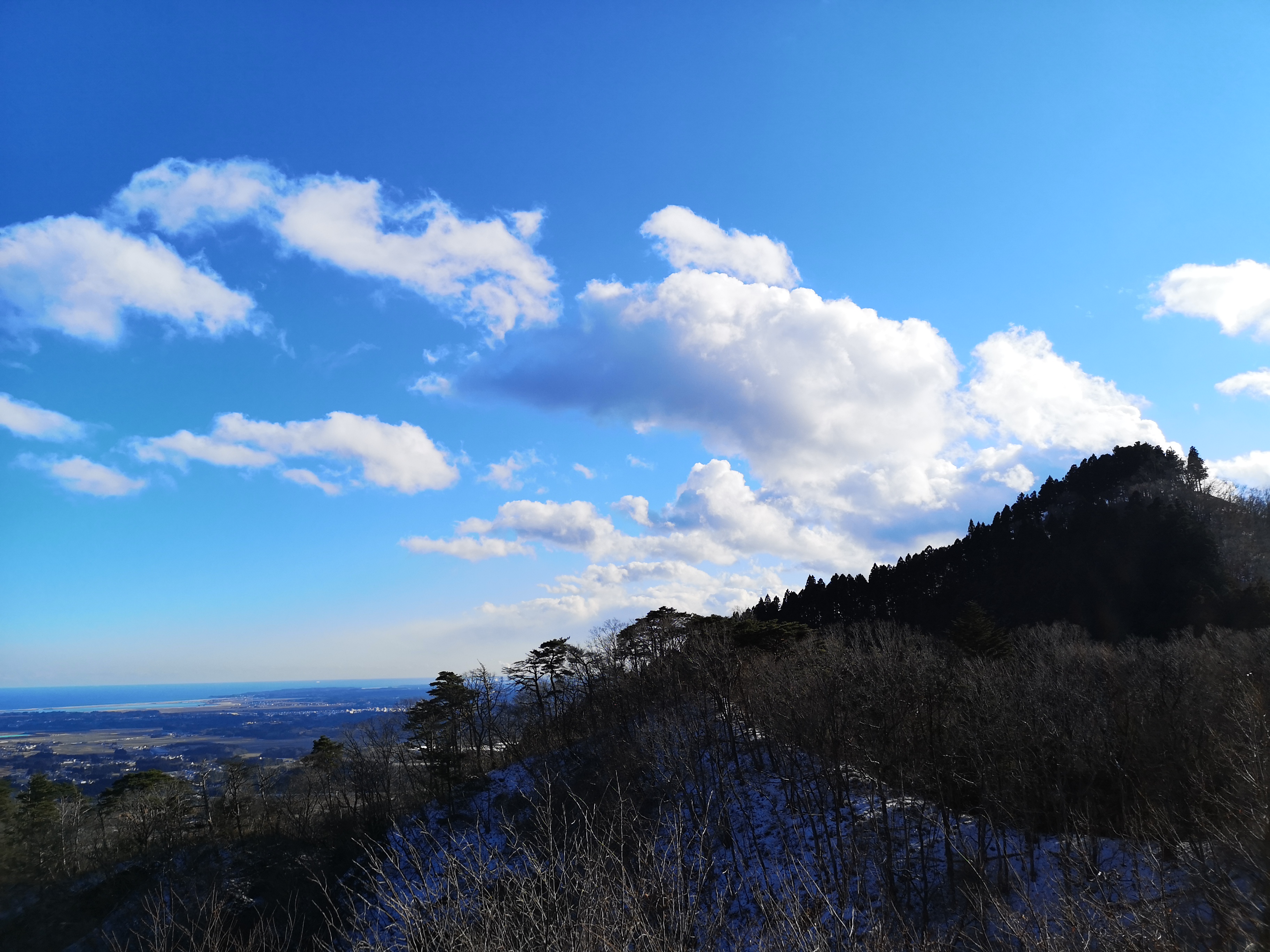
It took me half an hour to reach a small shrine inside a cluster of cedar trees. Right next to it, and bare of trees, was the summit of Mt Karo (鹿狼山 かろうさん karousan). Looking east, I took in the blue immensity of the Pacific ocean; squinting north, I could just make out the Oshika peninsula in Miyagi; gazing south, I could admire the rolling hills of the Abukuma highlands; turning west, I could see the mountains and valleys of Fukushima, but in the distance, Mt Zao was in the clouds. I decided to walk northwards to the end of the trail, and then retrace my steps for a second chance at the view.
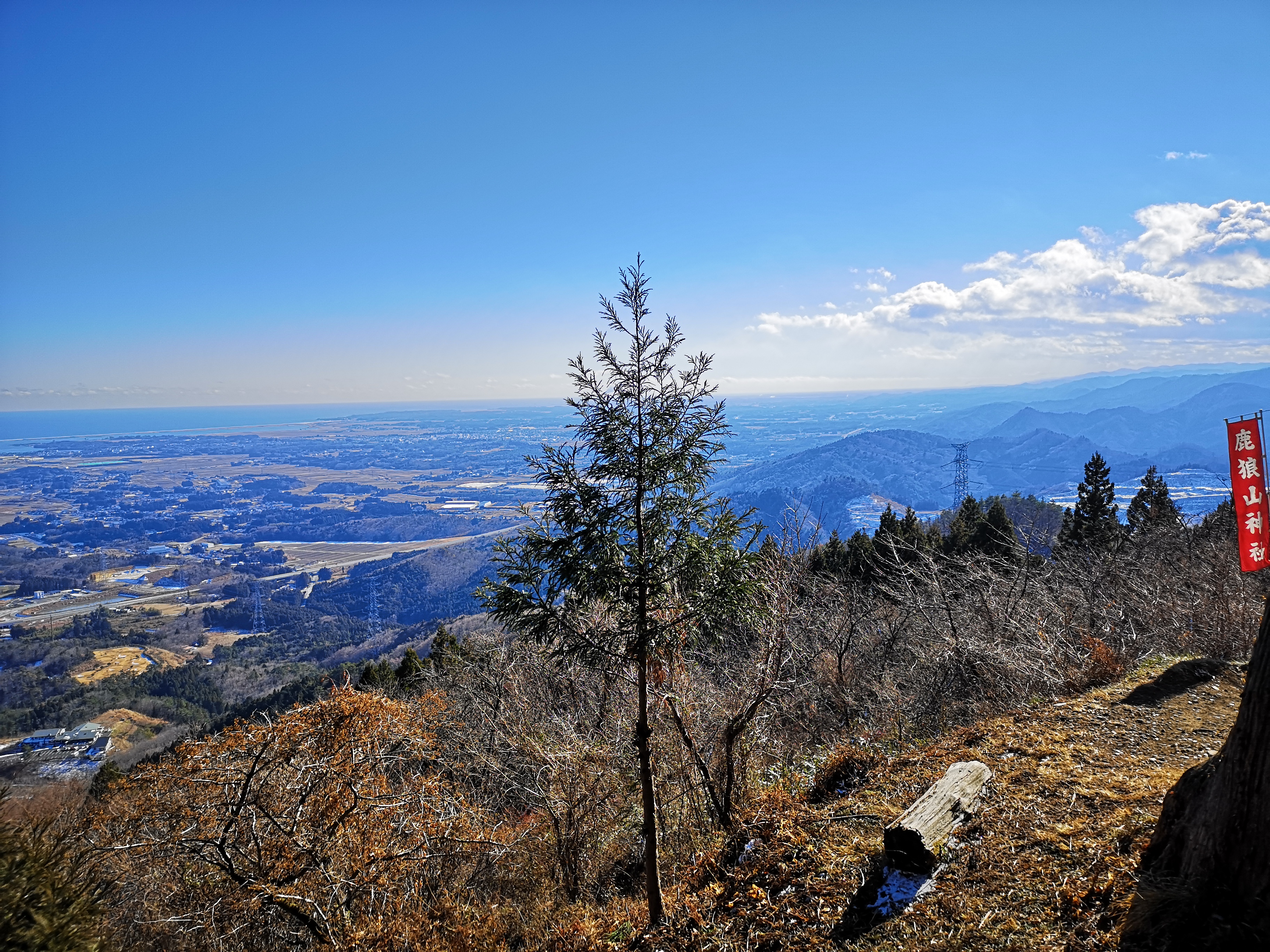
View from the the top of Mt Karo

Beautiful weather over the Pacific

First I had to tackle a steep and slippery staircase covered in snow. The trail then followed the rolling ridgeline as it slowly descended to the coastal plain. The surrounding forest, bare of foliage, was beautiful as the sun shined through unimpeded. It took me 45 minutes to reach the end of the hiking trail at a road crossing. There, I turned around and walked the same way back. Although this trail is called the Zao view route, the only view of Mt Zao was from the summit, which I reached again at 2h30.
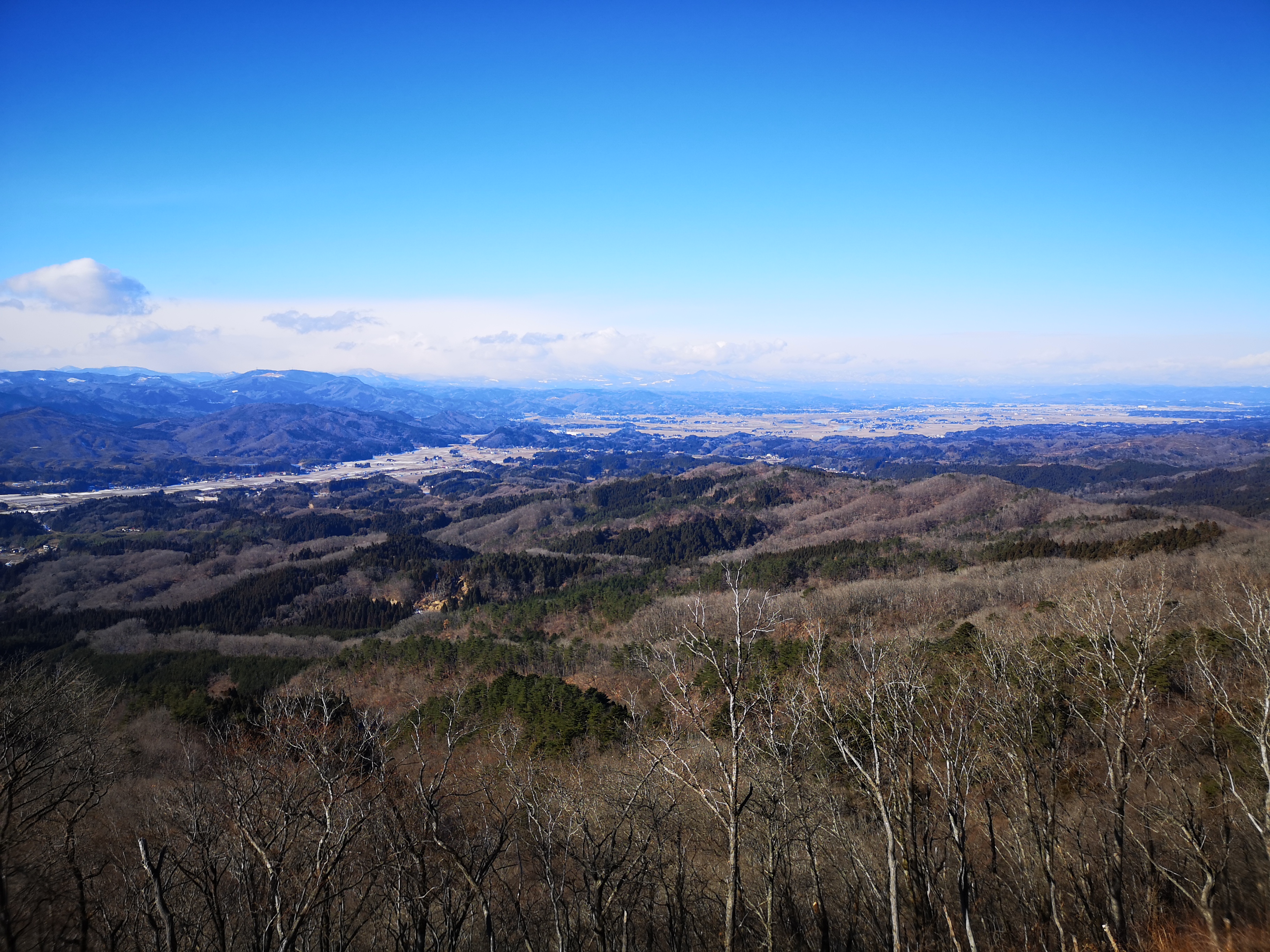
In the back somewhere is Mt Zao
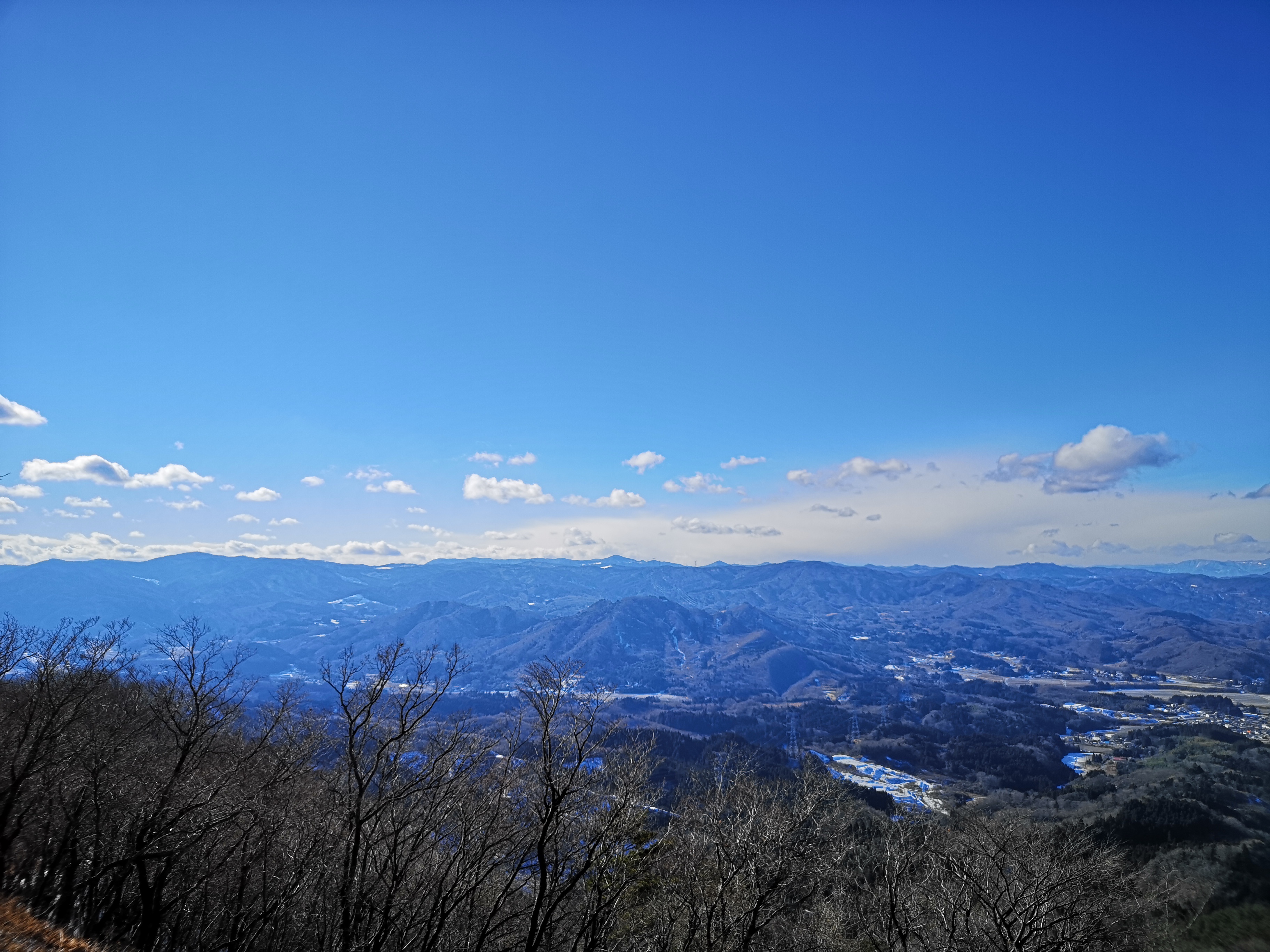
Most of the other mountains were visible

Mt Zao was still stubbornly inside the clouds, so after eating the last part of my lunch, I quickly made my way down the mountain following the “jukai” or “sea of trees” route. It was entirely in the shade and covered in snow. Luckily it wasn’t too steep, but I had to be careful not to slip. The trees next to the path had labels, and this kept me at a safe speed, as I stopped to study their names. At the bottom, I turned right and followed the road for a short while to reach the Karo no Yu onsen.

A tricky descent aided by ropes

Most of the snow along the ridge had melted

I had an excellent view of the coast from the outdoor bath; the bath itself was tiny and could only fit one person, probably a good thing in these times. I ended up calling a taxi again for the return to Shinchi station since it was already 4 o’clock and a long way back to Tokyo. While waiting for the train, I noticed that the train station was brand new, and reflected on how well the area had recovered so far, after being ravaged by the 2011 Tohoku earthquake and tsunami.
Mt Myojin (1169m), Hakone Town, Kanagawa Prefecture, December 2020

I had climbed this peak more than ten years ago, starting at Daiyuzan Saiyoji Temple, and finishing at Gora, the last stop on the Hakone Tozan line. This time, I decided to start from the entrance of the hiking trail for Mt Kintoki, and finish on the Daiyuzan train line, meaning that the two hikes would only overlap very slightly. On the up side, this would combine a short climb with a long descent, and an easy return by train. On the down side, there was an hour of road walking at the end and no hot spring. Overall, I was excited to try a new route, in an area I hadn’t visited since February. I had some misgivings about the weather; we were in the middle of a cold snap, and the temperature at the top would be around freezing. I was most concerned about keeping my fingers warm, especially when taking photos. However, no matter how cold it turned out to be, I would be satisfied as long as I could see Mt Fuji in its winter coat.

Hiking in the Fuji-Hakone-Izu National Park

Mt Hakone, the highest peak in the Hakone area

Mt Kintoki, a 300-famous mountain

I rode the Romance Car limited express train under a beautiful blue sky to Odawara, where I transferred to a Hakone Tozan Bus. I got off in Sengokuhara and walked to the closest convenience store to buy supplies for the hike. There I bought a pair of gloves that work with a smartphone touchscreens. I had never used such gloves before, so I hoped they would do the job today. At 10:30, I was finally ready to hike. Thanks to the many signposts, I easily found the start of the trail and was quickly making my way up to the ridgeline, reaching it at around 11am.

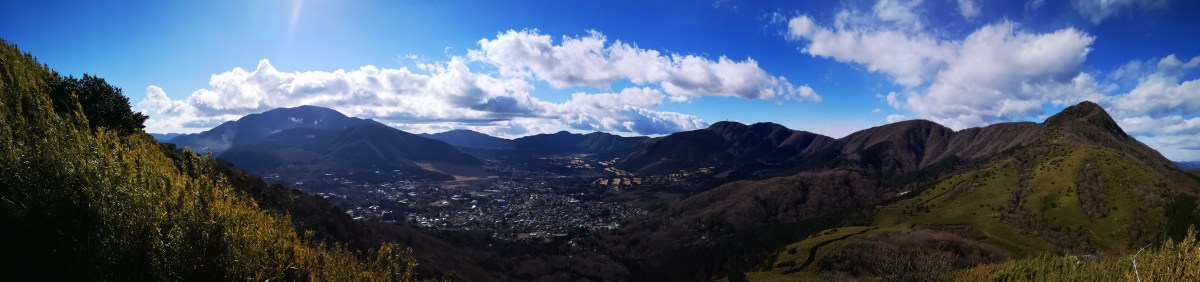
The Sengokuhara plain and part of the Hakone outer caldera rim

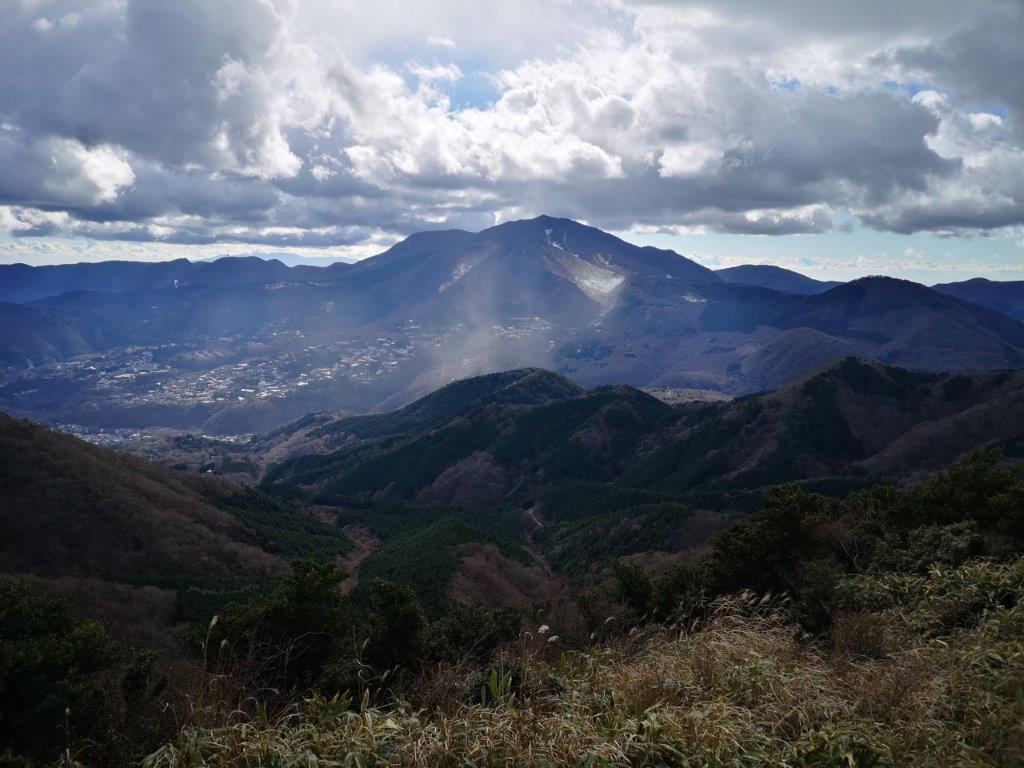
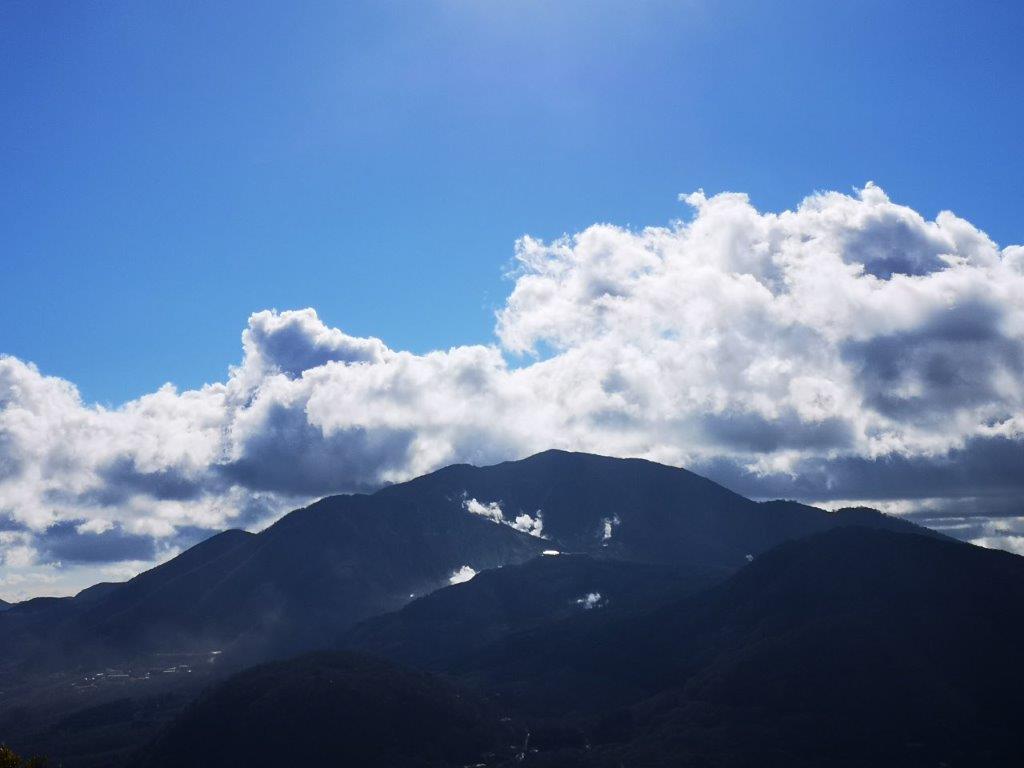
Menacing Mt Hakone

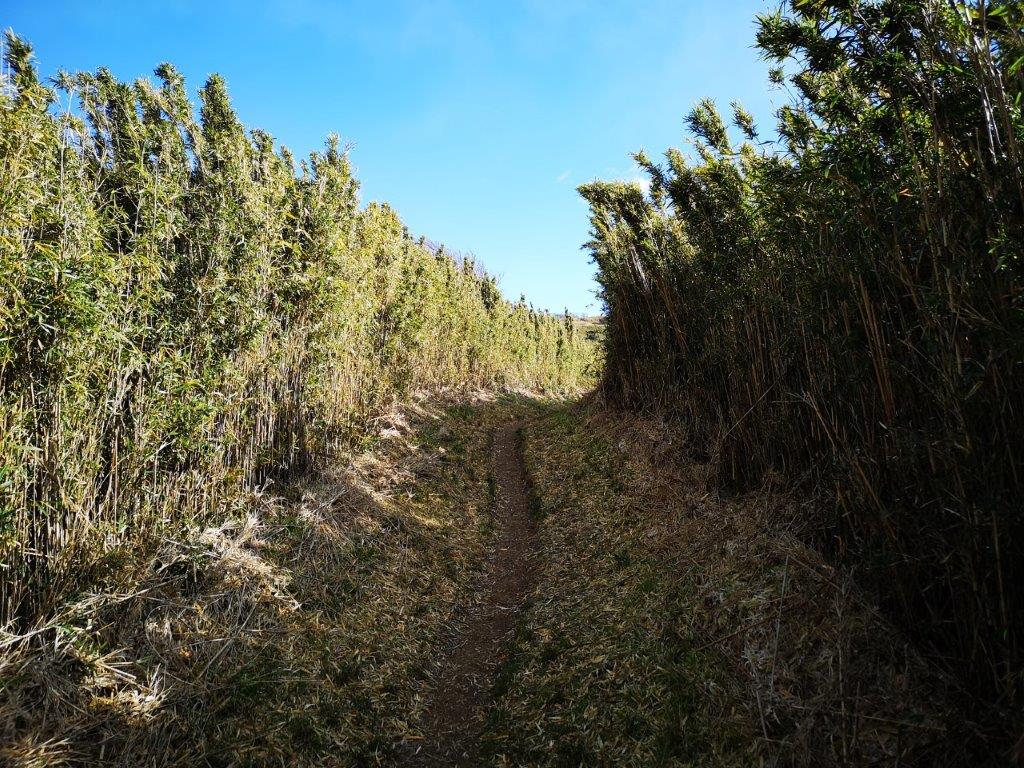
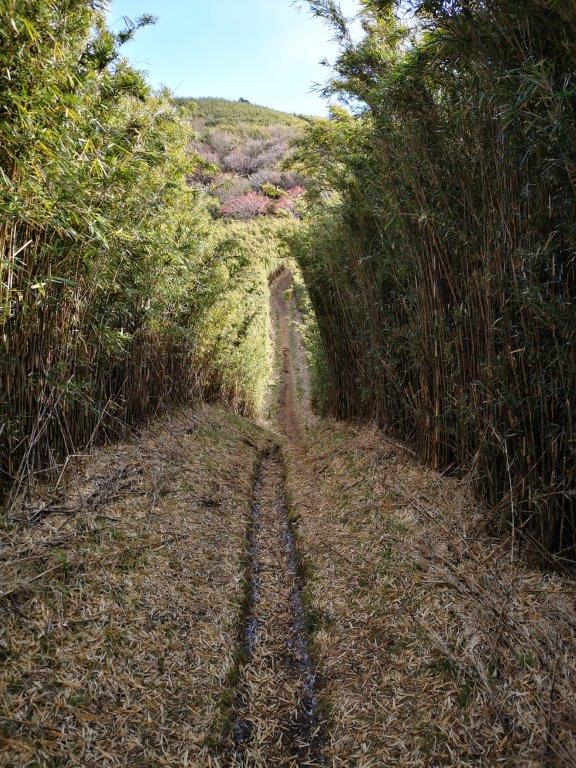
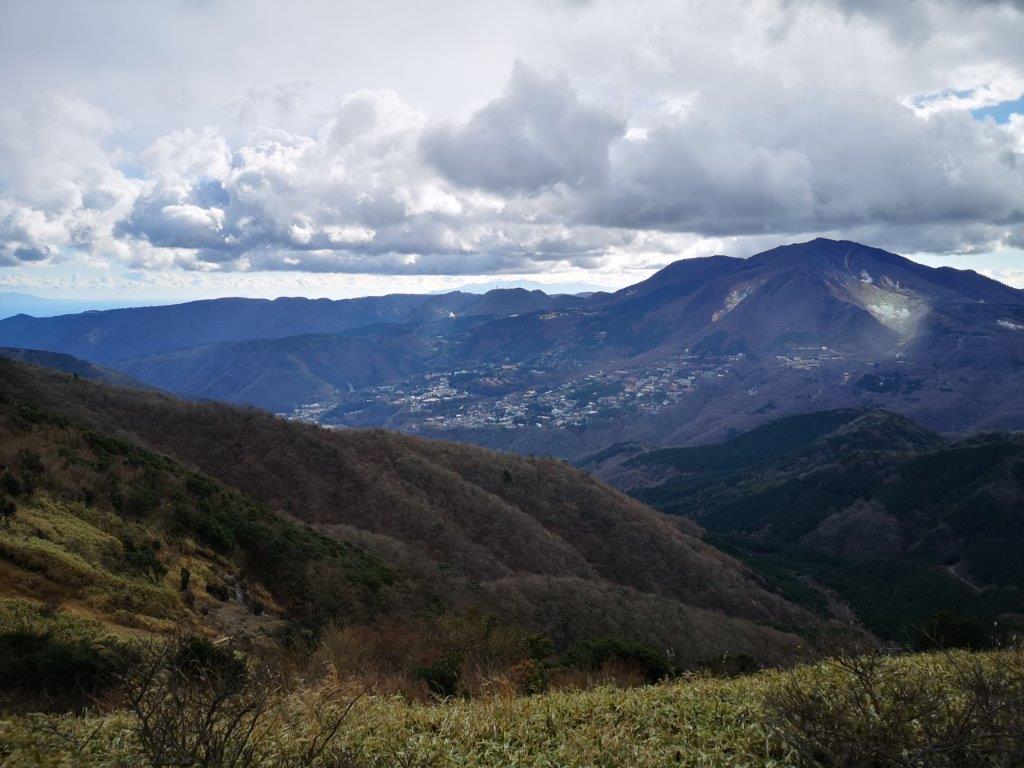
I was now following a path through bamboo grass higher than my head. After some more climbing, I had the first views of the day; to the west, I could see Mt Kintoki; to the south, was Sengokuhara, a vast plain in the middle of the Hakone caldera; behind it was the outer crater rim, curving eastwards; finally, under a dark cloud, and looking like Mordor’s Mount Doom, was Mt Hakone. It was cold and windy but still sunny. The gloves were hit-and-miss; I usually managed to take a picture only after a few tries.

No view but also no wind

Looking ahead and looking back views

Most of the trail was through a bamboo tunnel, like walking in a giant maze. Apart from a few gaps, there were no views, but at least the bamboo kept the wind out. At one point, the trail dipped down through a forest on the north side, to rejoin the ridge near the top of Mt Hiuchiishi 988m (火打石岳) around noon. From there, I had a good view of the last part of the climb to the top of today’s mountain; it looked close but it took me another hour to get there.

Mt Fuji’s “glacier”

Strate visible on the side of the mountain

I finally saw Mt Fuji near the top of the climb, but it was a different view from what I expected; the side facing me had snow halfway down, but the sides were bare, so it looked like a glacier. It was a good addition to my collection of Fuji pictures. To the right, I could see the entire range of the Tanzawa mountains, from Mt Mikuni to Mt Oyama. There was less bamboo grass here, and I had many good views of Mt Hakone, looking more and more menacing. I was now close enough to see the plumes of the sulfur fumes (it is an active volcano).

In the center, Mt Mikuni

Mt Oyama at the very right

The dark clouds over Mt Hakone had extended their reach to include the sky directly above me. I arrived at the summit of Mt Myojin (明神ヶ岳 みょうじんがたけ myoujingadake) at the coldest point of the day. There was no sun and the wind was now blowing hard. I took off my gloves to eat lunch, and my fingers ended up getting a bit numb after all. There were two other hikers, and after one of them complained of the cold, the other one asked if she was sensitive to the cold. In my mind, I was thinking “right now, yes, very much!”

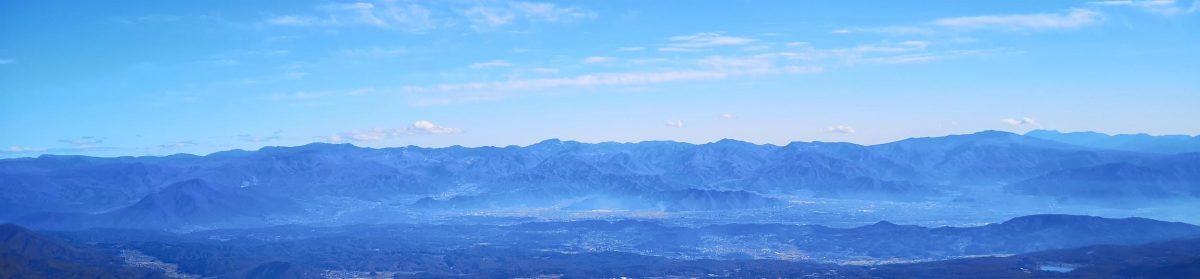
The Shonan coast and Tokyo bay

Mt Hakone with Gora at its feet

The cold finally won over the views, and I moved on quickly, rubbing my hands to warm them up. On the other side of the flat summit, I finally had a view east of the Shonan coast and Tokyo Bay. Ten minutes later, I reached the turn-off for the descent. I launched myself down the path, relieved to be out of the freezing cold wind. The path was easy to walk and not too steep, so I could move at a fast pace. Before long I was feeling more comfortable and was even able to remove a layer of clothing. Although I was now outside the Fuji-Hakone-Izu National Park, the surrounding forest seemed more beautiful than before.

A short section of road before returning to the hiking trail

Two pines marking a view point

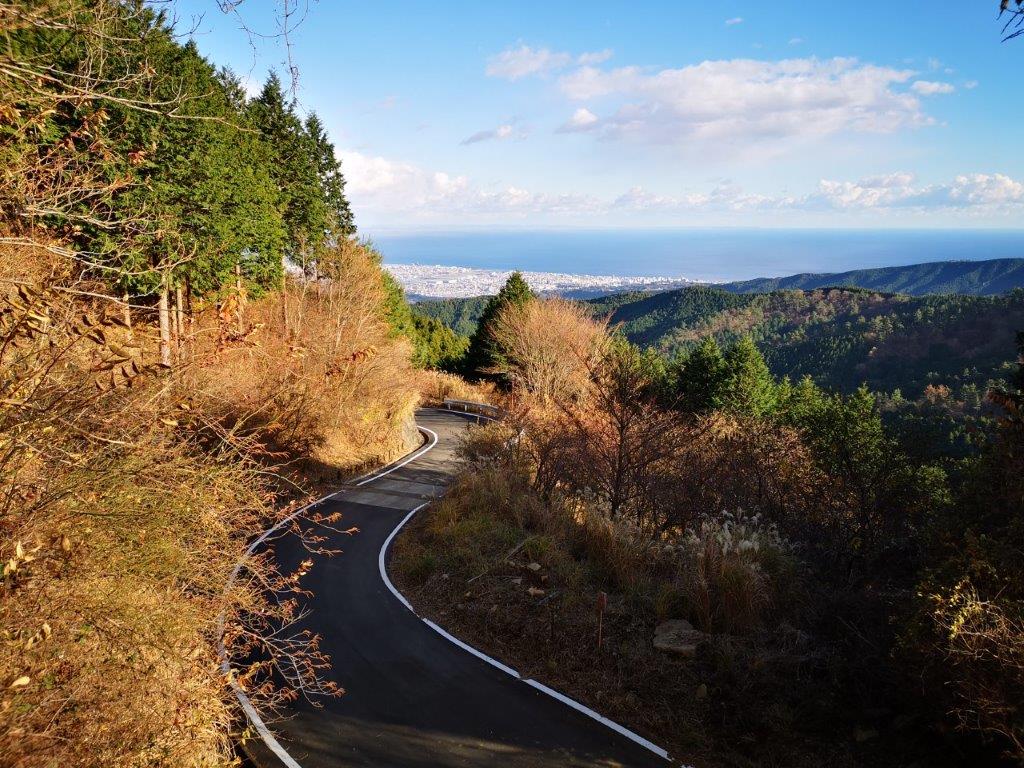
I saw no one on the way down and enjoyed the solitude of the mountain. Around 2h30, I popped out on to a road which I followed for a short while, before reaching a couple of pine trees and a view of the Tanzawa mountains to the north. By now, the sun had reappeared, so I stopped to finish the rest of the my lunch in warmer conditions. I set off again at 3pm. The path dived back into the forest, and thirty minutes later I reached the end of the trail and a small road. This was the prettiest section of the hike, and I thought it was a shame it wasn’t mentioned in any of my guidebooks.

A pleasant forest trail near the end of the hike

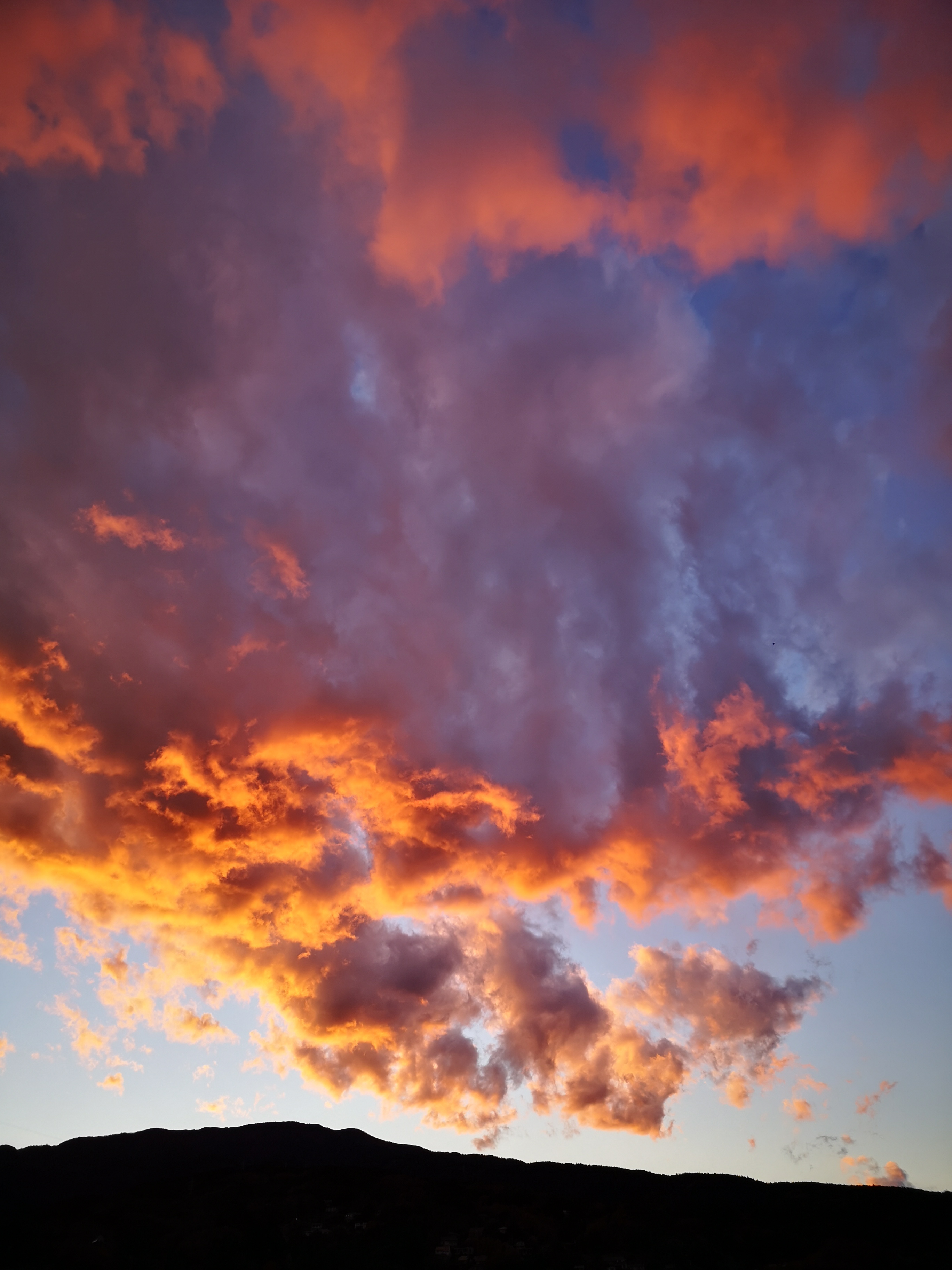
Autumn leaves and a fiery dusk

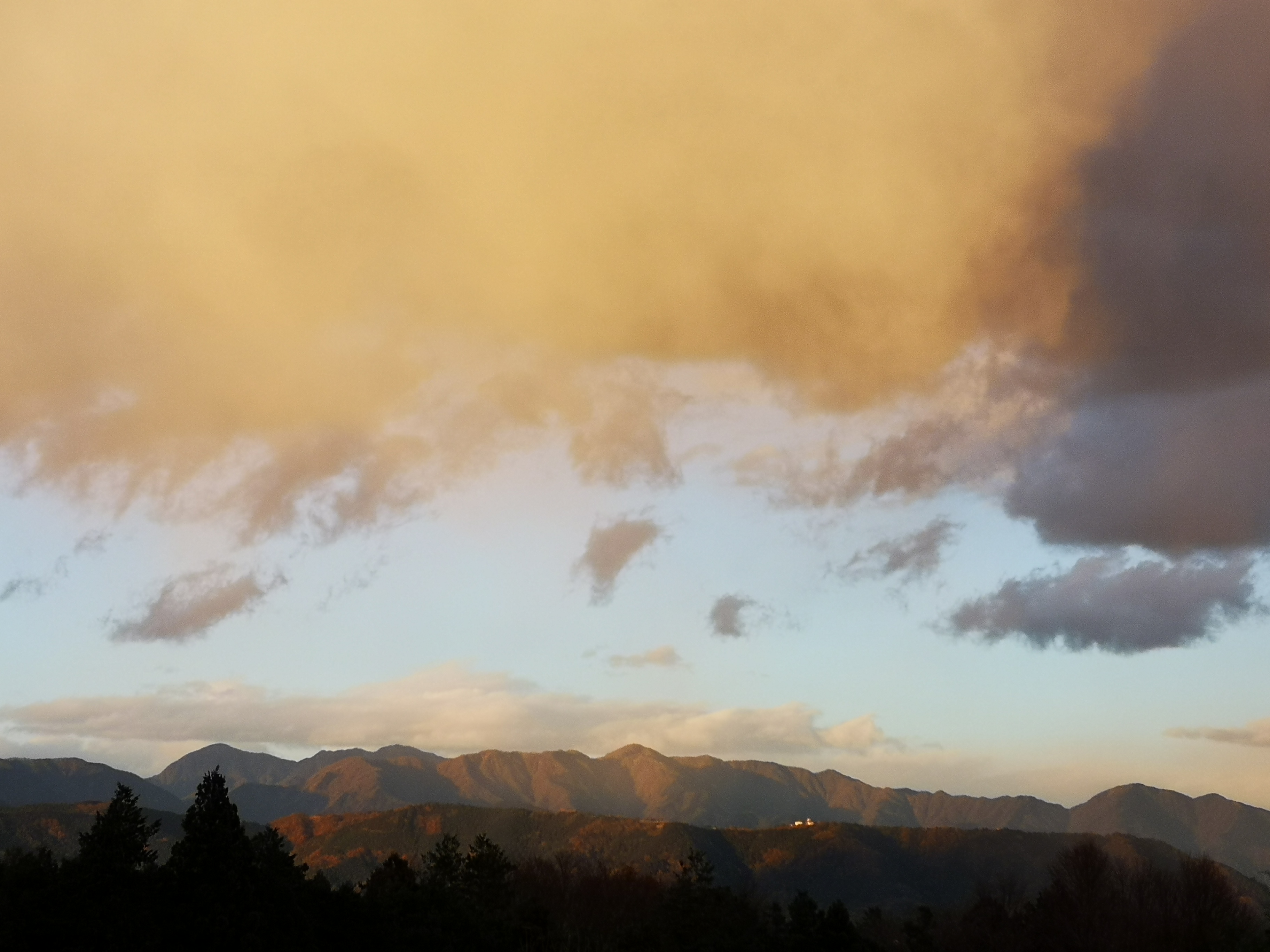
The walk back to the station turned out to be quite interesting. I passed by some trees still showing off their beautiful autumn colours. I also saw a statue of Ninomiya Sontoku, an important historical figure born in the area. Finally, just after sunset, I saw the Tanzawa mountains (and clouds) tinted in red. I lost some time here taking photos, but I could afford it, since the train ran frequently. I reached the tiny Tsukahara station just before 5pm, from where it was a short ride to Odawara and the Romance Car limited express back to Tokyo.

The “red” Tanzawa mountains

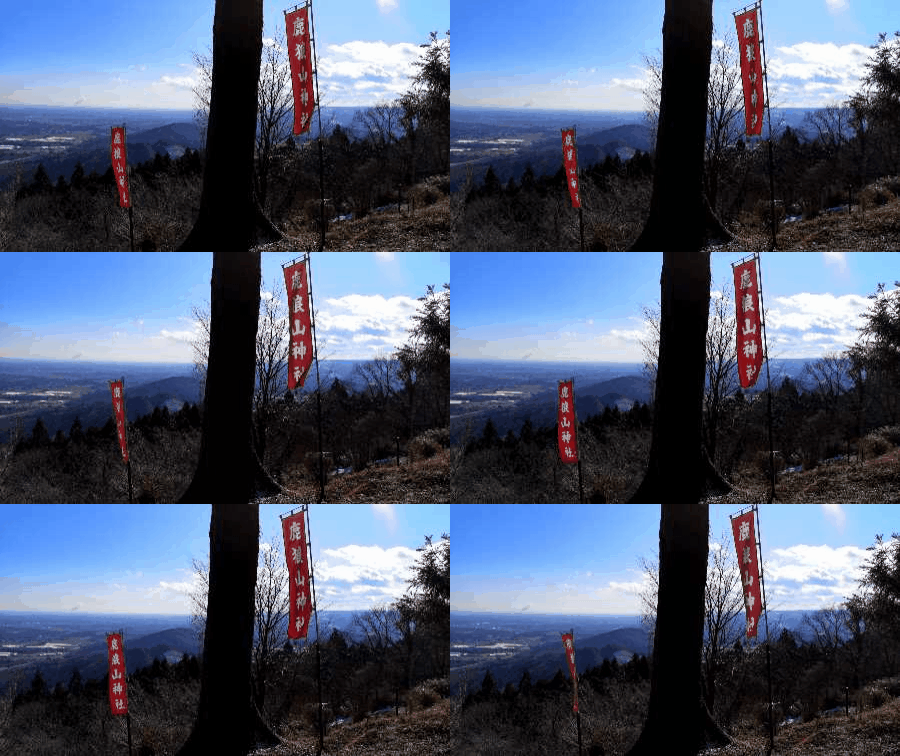
See the views from the top, filmed in strong wind (again)