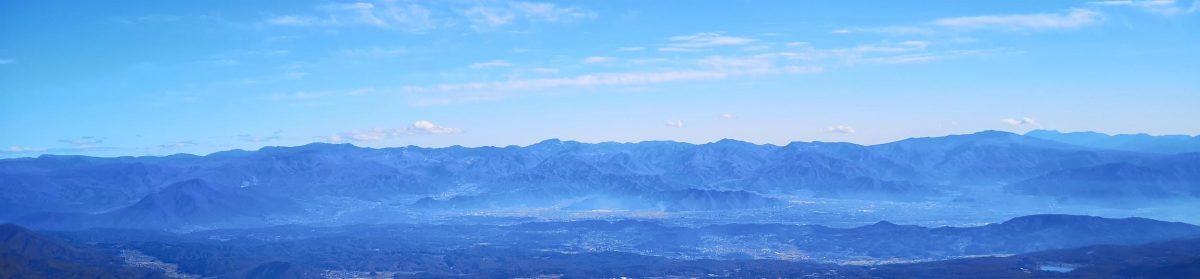
Aizu and Yuzawa are two areas in the Tohoku region that are part of Japan’s snow country. Relatively close geographically, they are separated by the extensive Echigo mountains. Over the years, I’ve visited both areas for hiking, skiing and sightseeing. They are also known for their light and dry Japanese sake, one of my favourite styles. I wanted to see each area in the snow so I decided to make a 4-day trip there in February. Since too much snow can disrupt travel, I had to keep alternatives in mind in case of a mid-winter snowstorm. I felt it’d be best to first head to Aizu via the Tobu line, then cross to Yuzawa via the Tadami and Joetsu lines, and finally, return to Tokyo via the Joetsu Shinkansen, making the final leg of the journey the shortest. The Tadami line is notorious for its many closures during the winter months so one alternative would be to ride the Ban-Etsu West line to Niigata City and then take the Joetsu Shinkansen to Yuzawa. This route takes roughly the same time and allows for a short visit of Niigata city, although it’s more expensive.
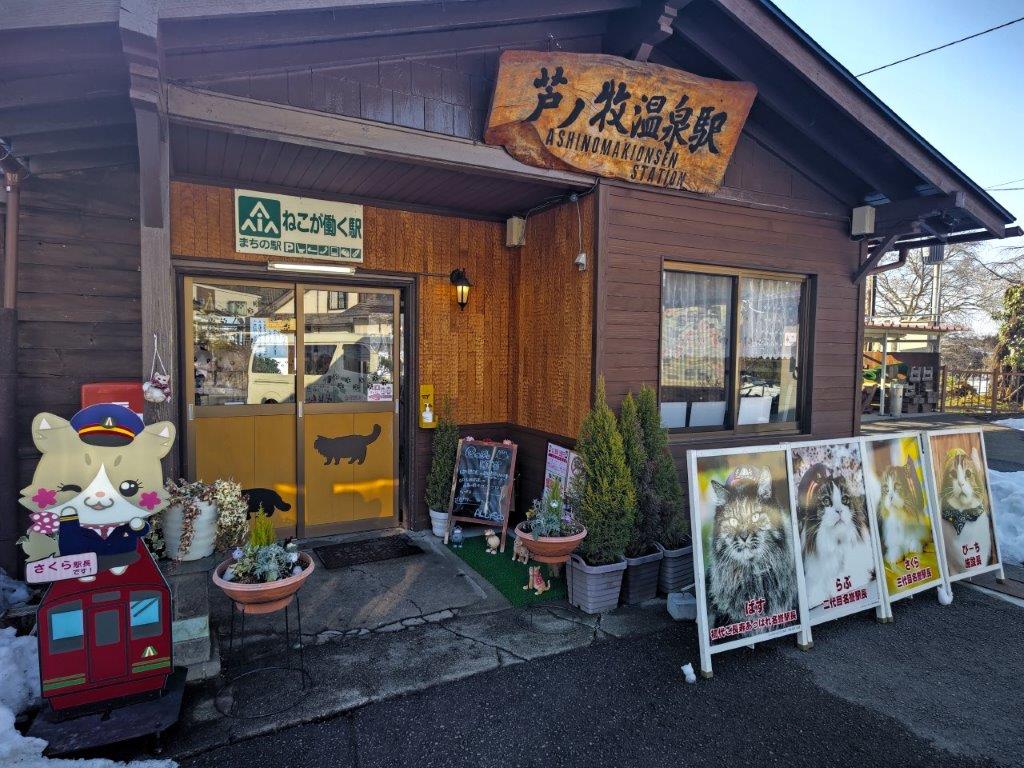
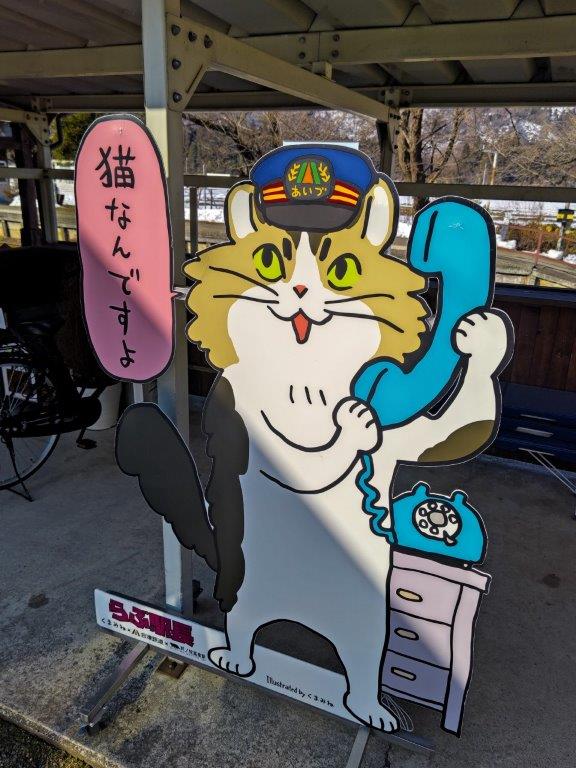
Ashinomaki Station and its Cat Stationmasters
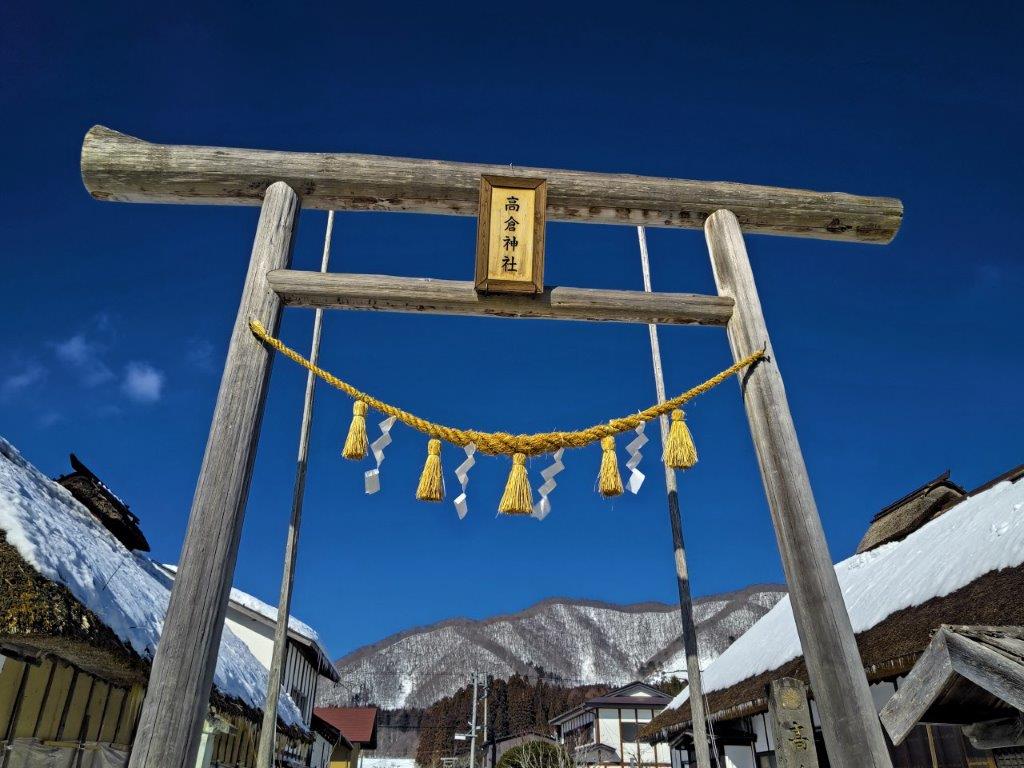
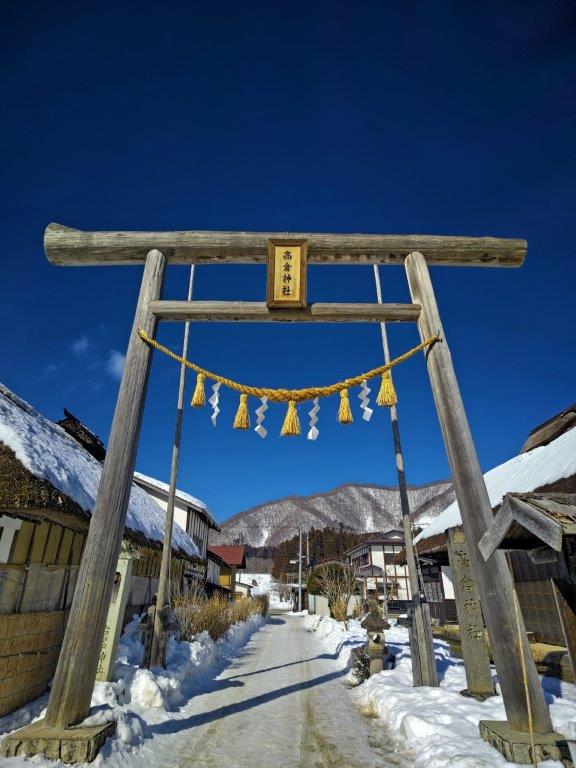
Shinto Gate at Ouchi Juku Post Town
I was departing from Ikebukuro so I reserved a seat on the JR limited express “Kinugawa 3” for Kinugawa-onsen. I’d then transfer to the Tobu limited express “Revaty Aizu 119” for Aizu-Tajima. Finally, I’d transfer to the Aizu line for the last portion of the trip to Ashinomaki onsen. I had ample time for both transfers so I wouldn’t need to worry about train delays. A key point is that the “Kinugawa” is operated by JR and the “Revaty” by Tobu, so I needed to reserve the seats on 2 different websites. Another key point is that IC cards such as Suica and Pasmo cannot be used to pay for the basic rail fare beyond Kinugawa-onsen, so a paper ticket needs to be bought during the first transfer. Afterwards, I could buy tickets for local and shinkansen lines before boarding, although considering it was the peak of the ski season, I booked a reserved seat in advance for the last portion of the trip between Yuzawa and Omiya.
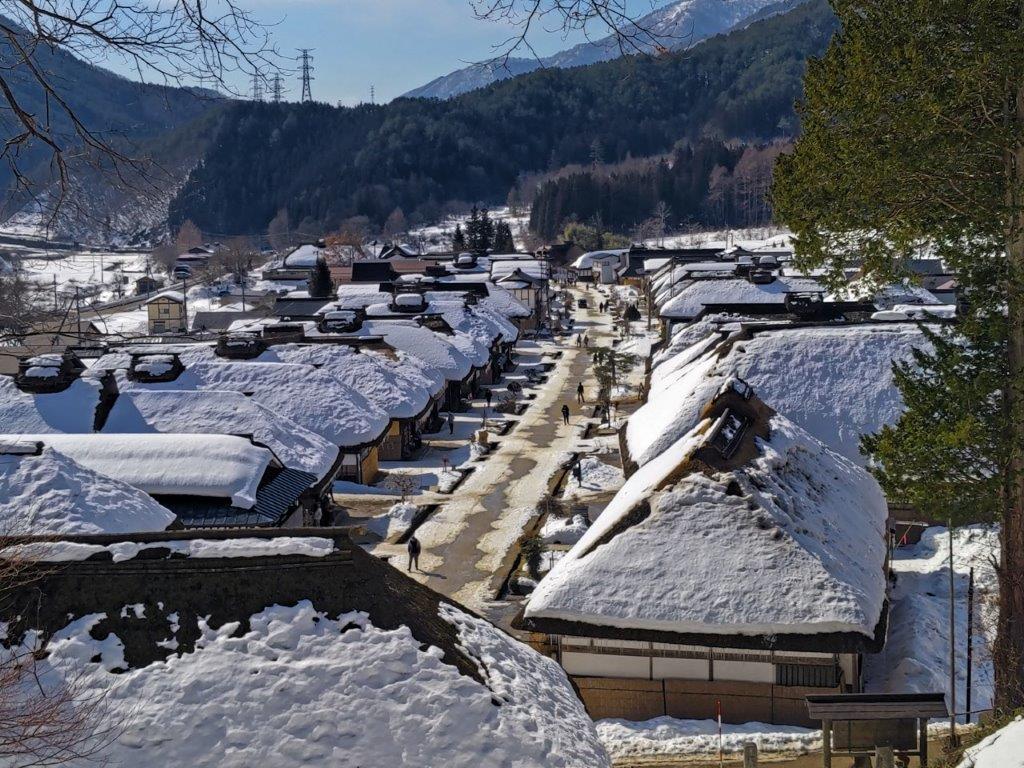
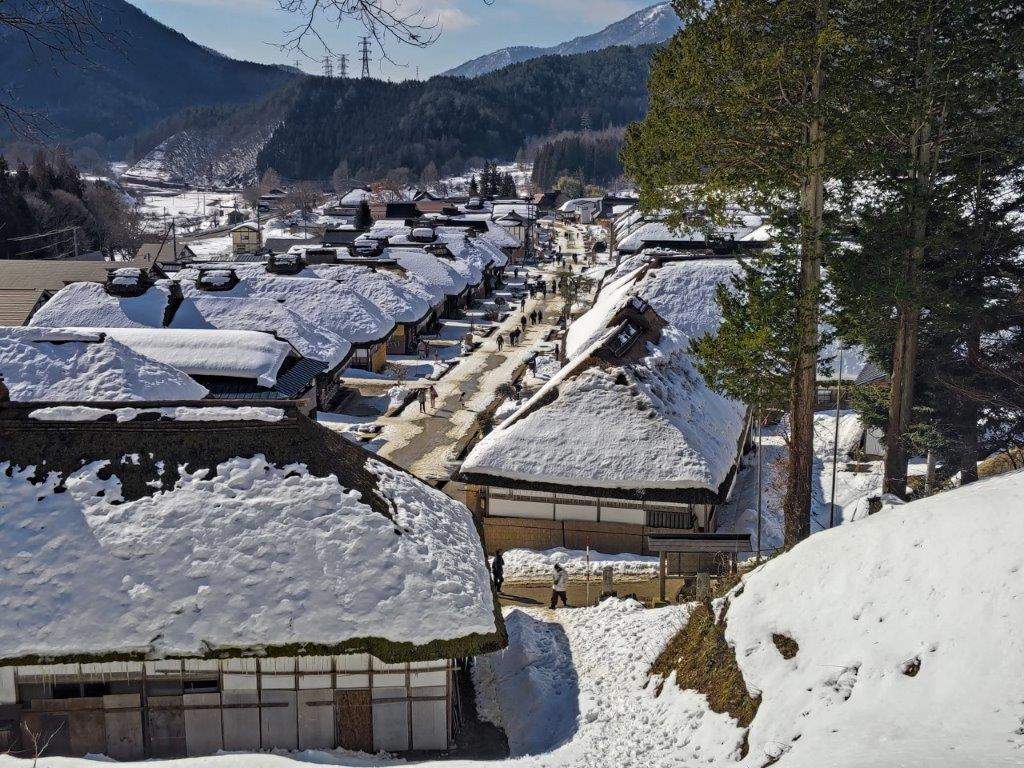
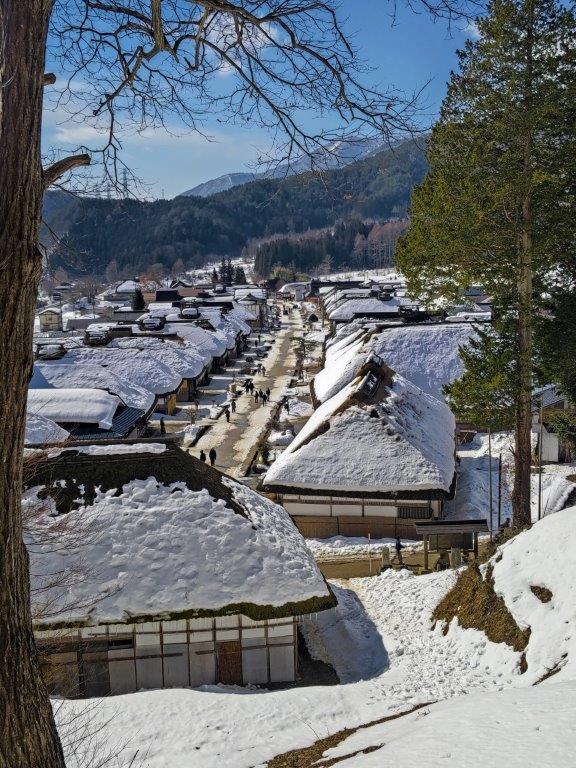
Ouchi Juku Post Town from the Lookout Point
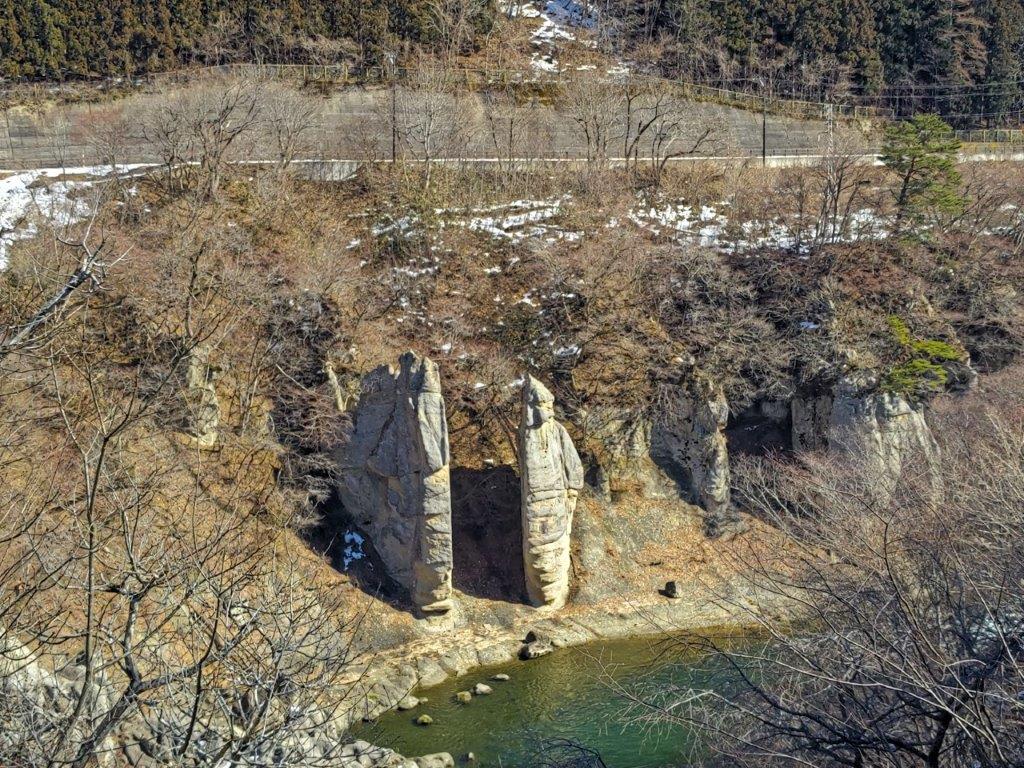
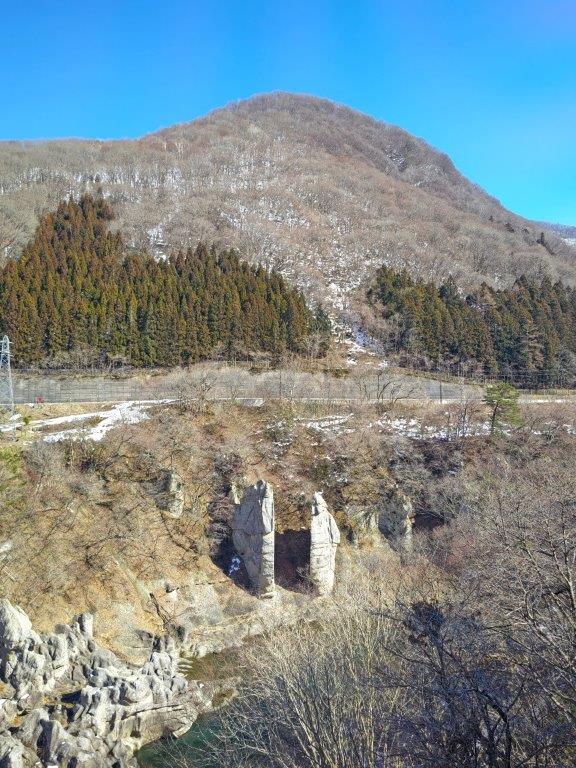
Husband and Wife Rocks near Yunokami-onsen
Since it was a 4-day trip with 3 nights, I decided to stay in a “ryokan“, a traditional Japanese hotel, for the first night in Ashinomaki Onsen, and the last night in Yuzawa Town, and then use a cheaper business hotel for the second night in Aizu-Wakamatsu. Both Ryokans had a shuttle bus service and the business hotel was next to the station, so I wouldn’t need to worry about getting to and from the hotel even in bad weather. As for sightseeing, I planned to visit Ouchi Juku, Tsuruga Castle and if the weather allowed, see the view from the top of the Yuzawa Onsen Ropeway. The highlight was of course riding the scenic Tadami line. However, as the departure date approached, it had been closed indefinitely due to avalanche risk after the heavy snowfall two weeks earlier. On the bright side, the weather in Aizu was supposed to be sunny and relatively warm for the first 2 days of the trip.
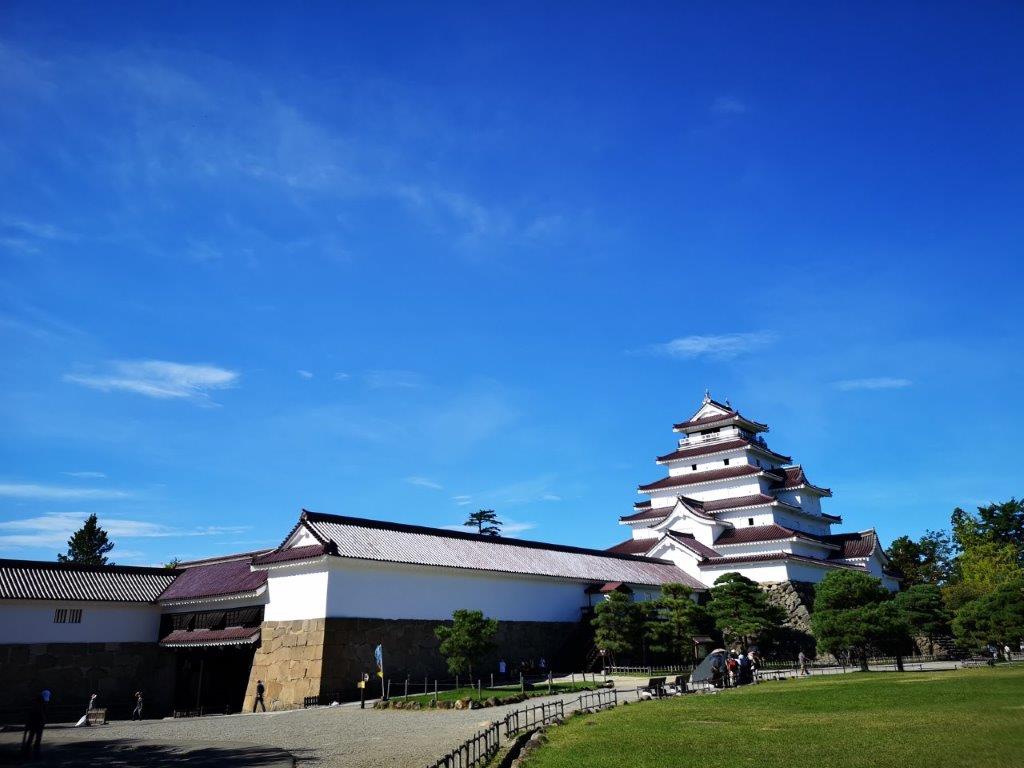
Tsuruga Castle in the Autumn
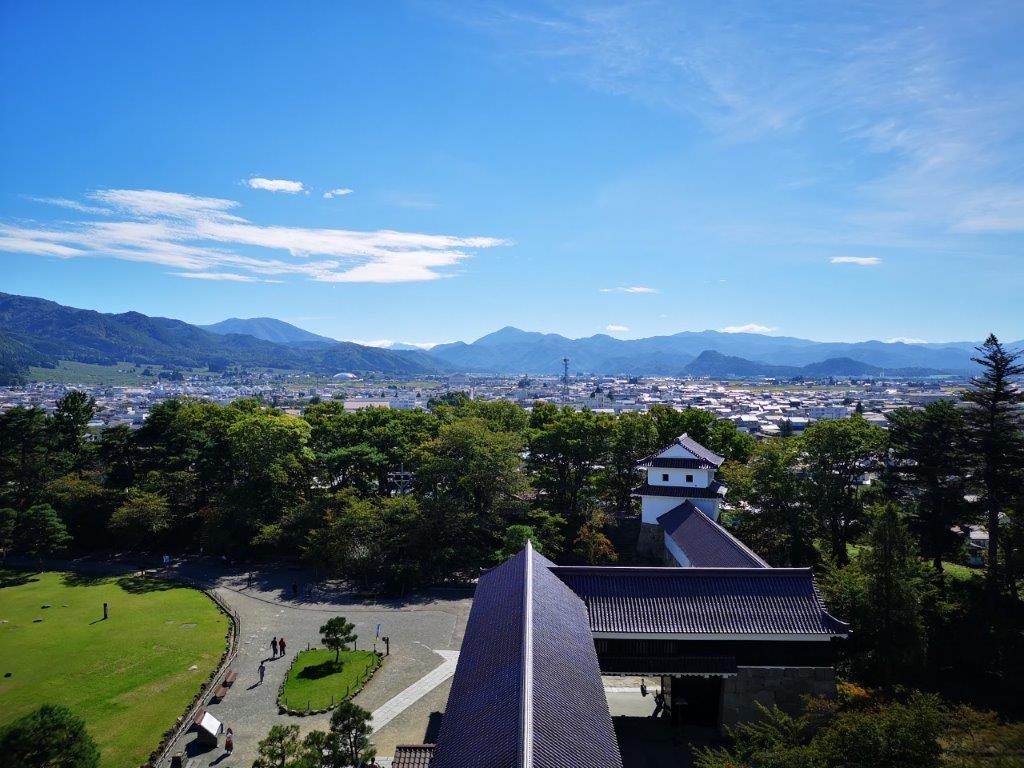
South View from the Top of the Castle in Autumn
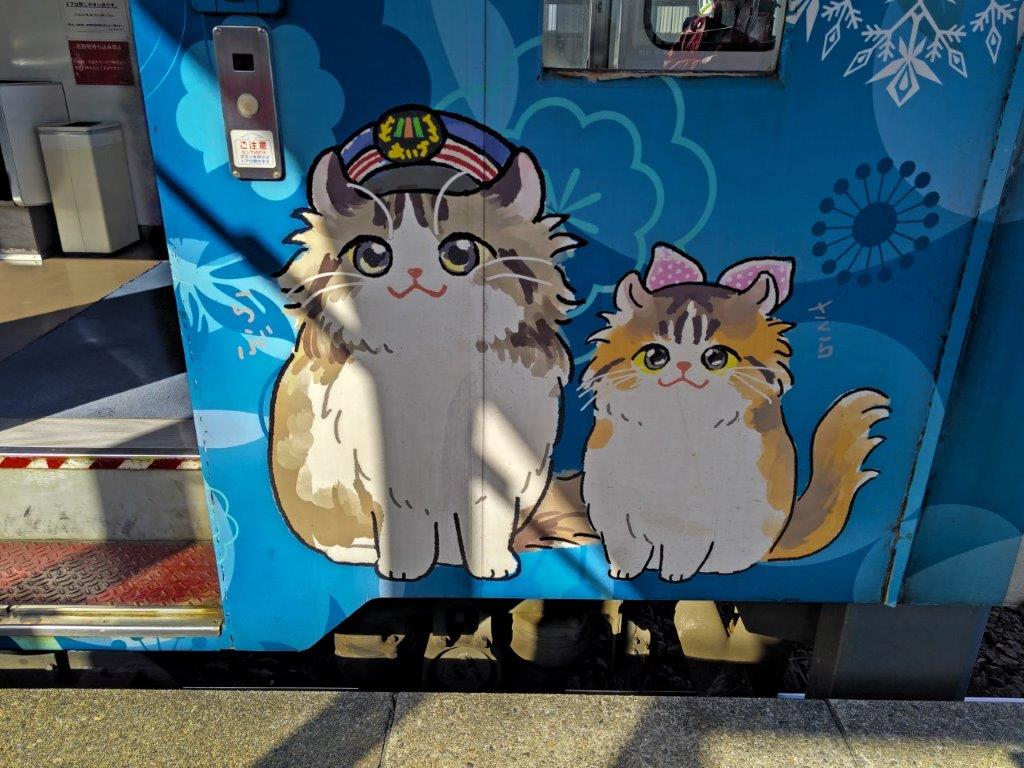
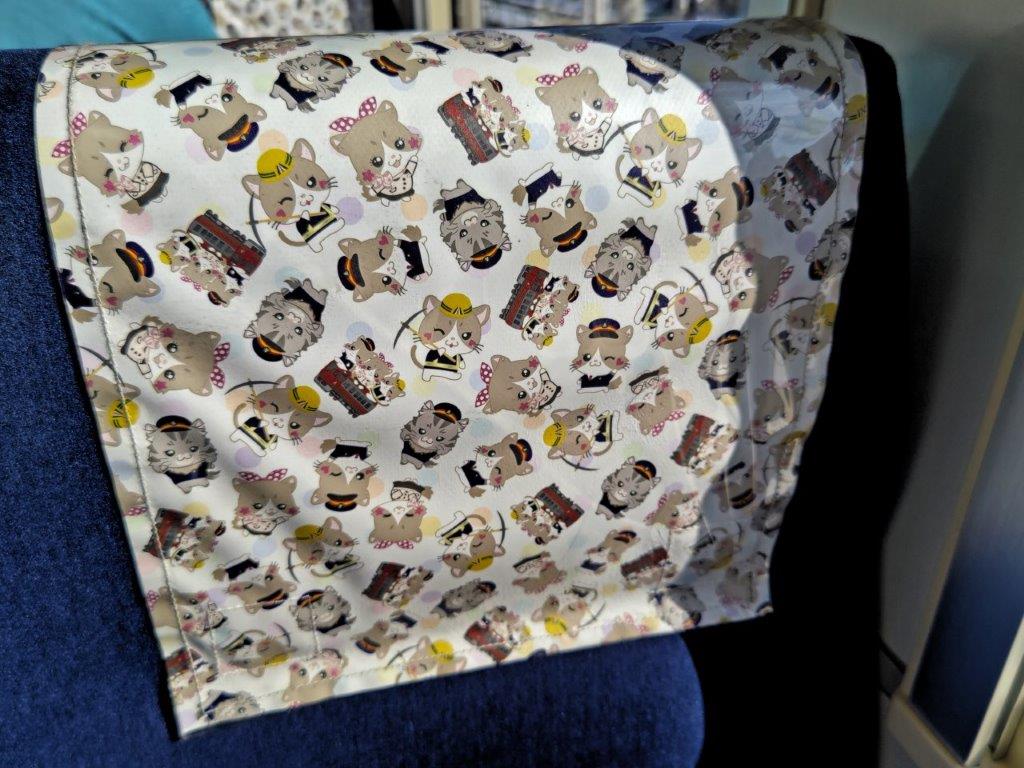
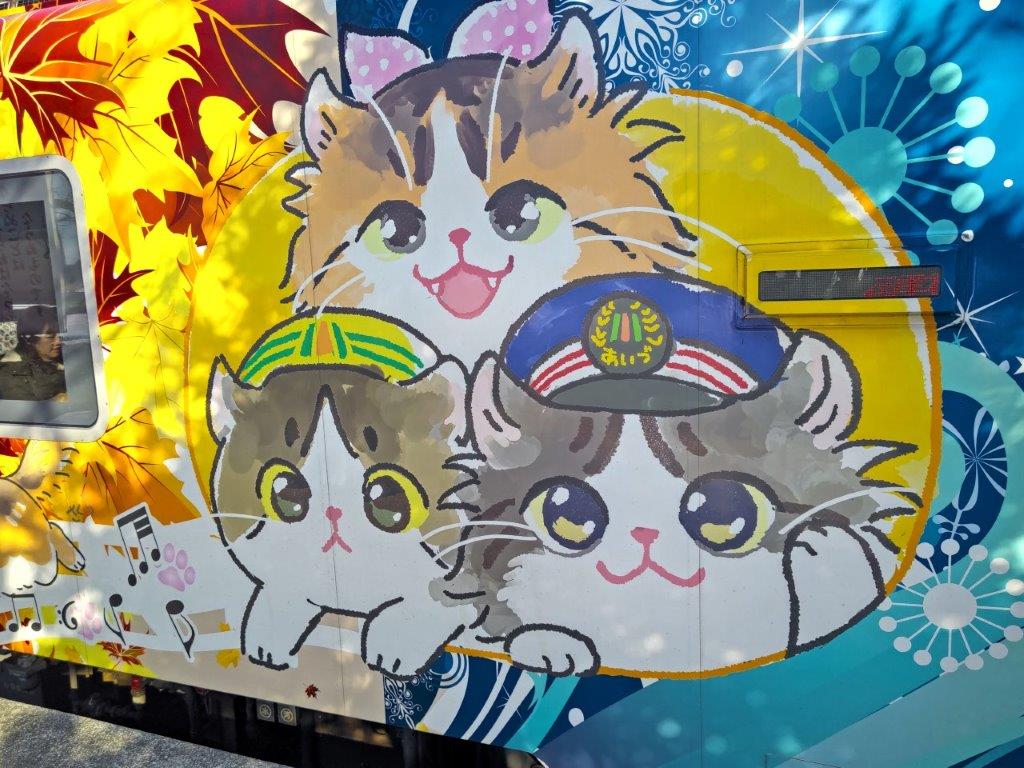
I left Ikebukuro in the mid-morning under blue skies and arrived at Kinugawa Onsen around lunchtime, the train only half full on a weekday. After purchasing the train fare for the rest of the trip at the ticket gate, I popped into Bento Cafe Kodama inside the station, where I snagged the last lunchbox to eat on the next leg of the journey, although I was tempted by some of the sandwich options. The train to Aizu-Tajima was surprisingly empty, a sign that I was well off the beaten track. Between lengthy tunnel sections, I recognised the various stations I had used on previous hikes. I transferred to a local train at Aizu-Tajima, and after a scenic, tunnel-free ride, got off at Ashinomaki-onsen a little after 3pm. While waiting for the hotel shuttle bus, I went to take a look at the Cat stationmaster “Sakura” (no photos allowed), awake and alert, but out of reach inside the station office. I was lucky since the stationmaster only works on certain day of the week and clocks out at 4pm. After a 10-minute ride, I arrived at Marumine Kanko hotel. I had splurged for a room with a private outdoor bath, a good choice considering the amazing river view. I also appreciated the sake tasting set at dinner time, giving me a chance to try some new local sake.
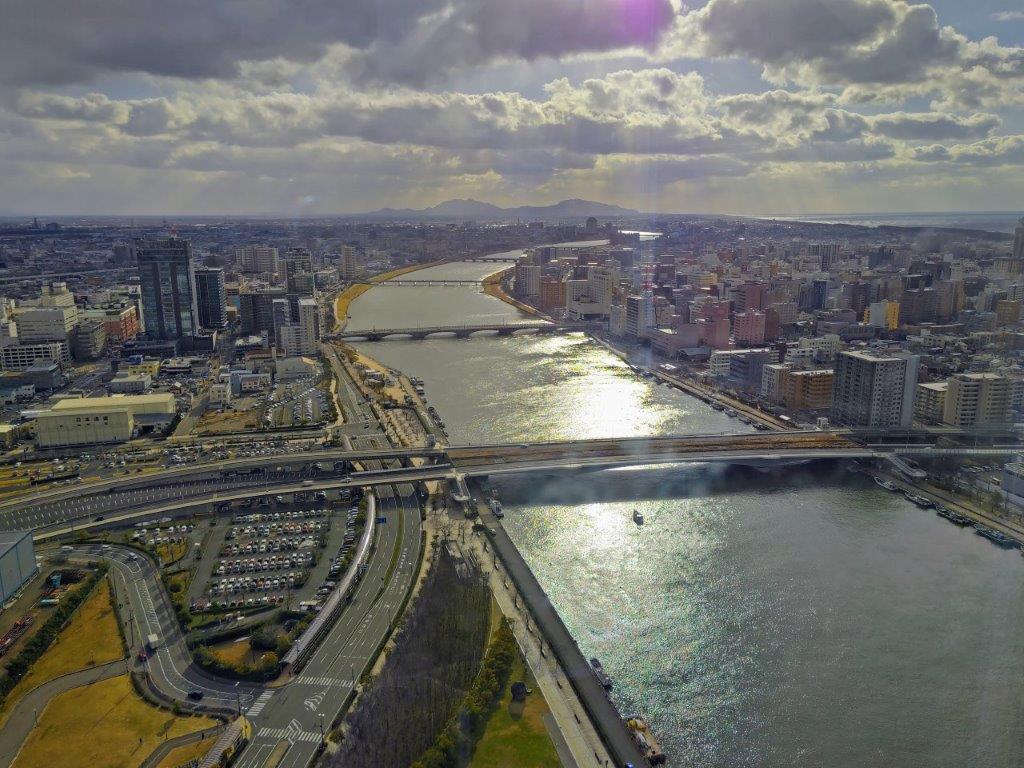
South View from the Befco Bakauke Observation Tower
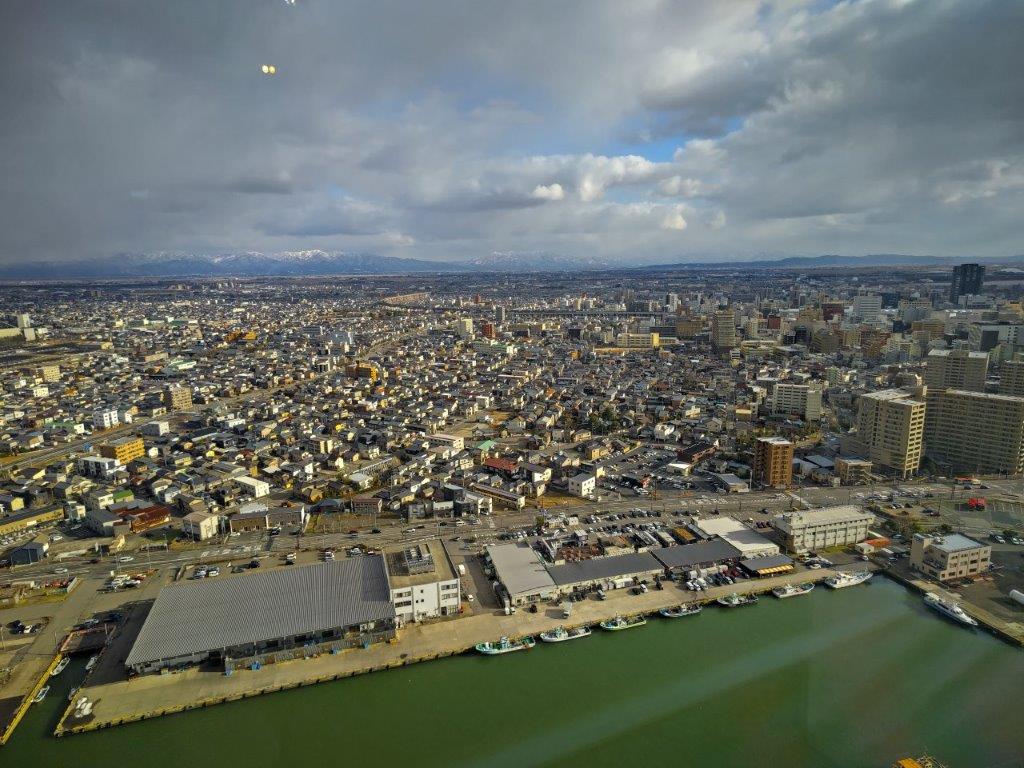
East View from the Befco Bakauke Observation Tower
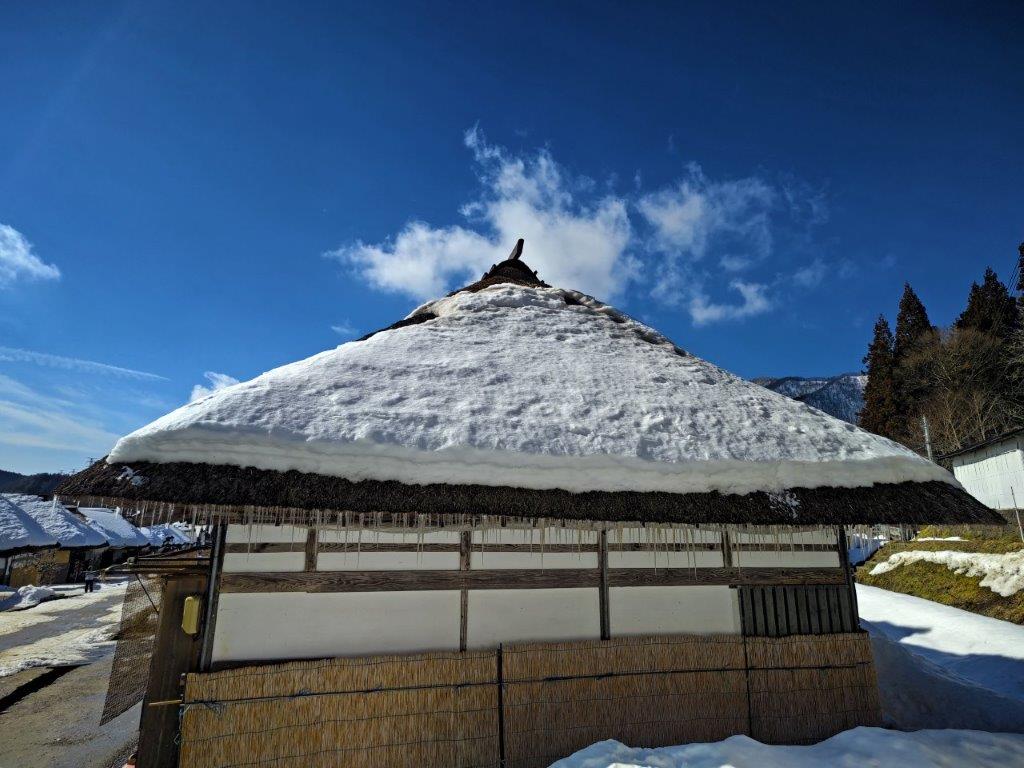
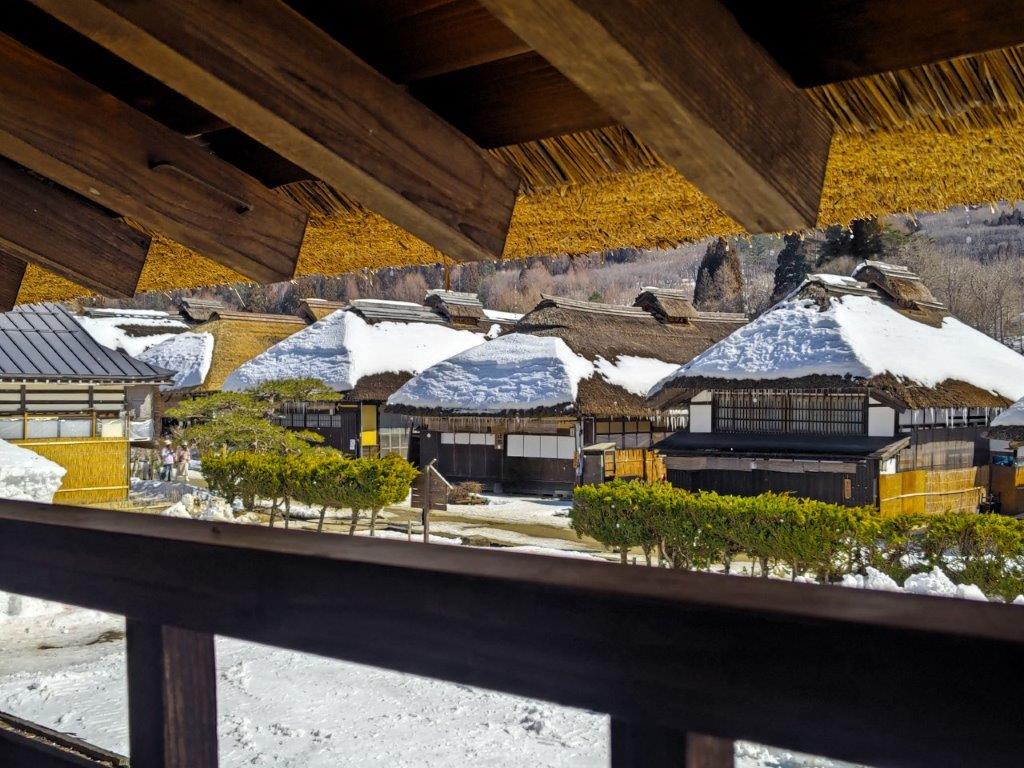
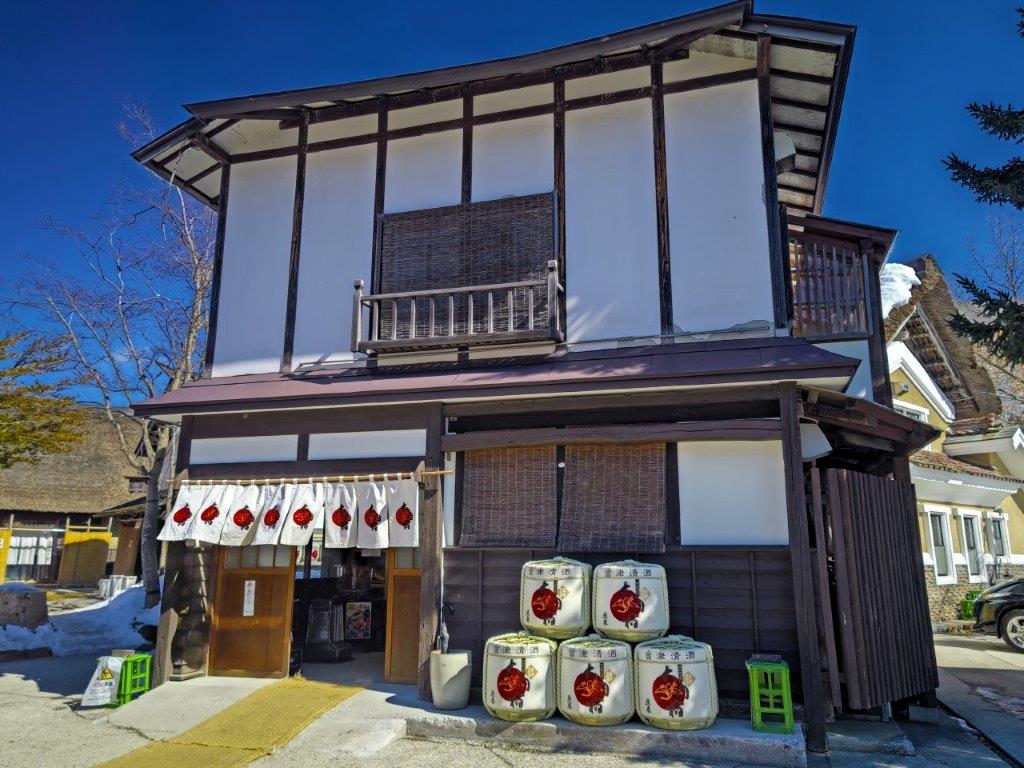
The next morning I left with the 9am shuttle bus as it allowed me to catch the last morning train for Yunokami-onsen, 3 stops up the line. There I boarded a bus for the short ride up into the mountains to Ouchi-Juku (大内宿), a historical post-town along a former route connecting Aizu with Edo (Old Tokyo). I had already been to several post towns on the Nakasendo, but I was curious to see this one in the snow. The warmer than average temperatures meant that by noon the main street had become part stream with snowmelt. I checked out the classic view of the town from the look-out point, up a short trail on the north side, and then visited the Town Museum, filled with everyday items from the Edo era. Afterwards, I enjoyed a delicious lunch of “Kurumi” (walnut) soba at Yamamotoya, before catching the return bus. I had reserved a seat for both ways in advance, but on this day it was half empty. While waiting for the train for Aizu-Wakamatsu, I wandered over to a viewpoint of Meotoiwa rock (夫婦岩 meaning Husband & Wife Rock), two tall pillars of rock with surprisingly human features.
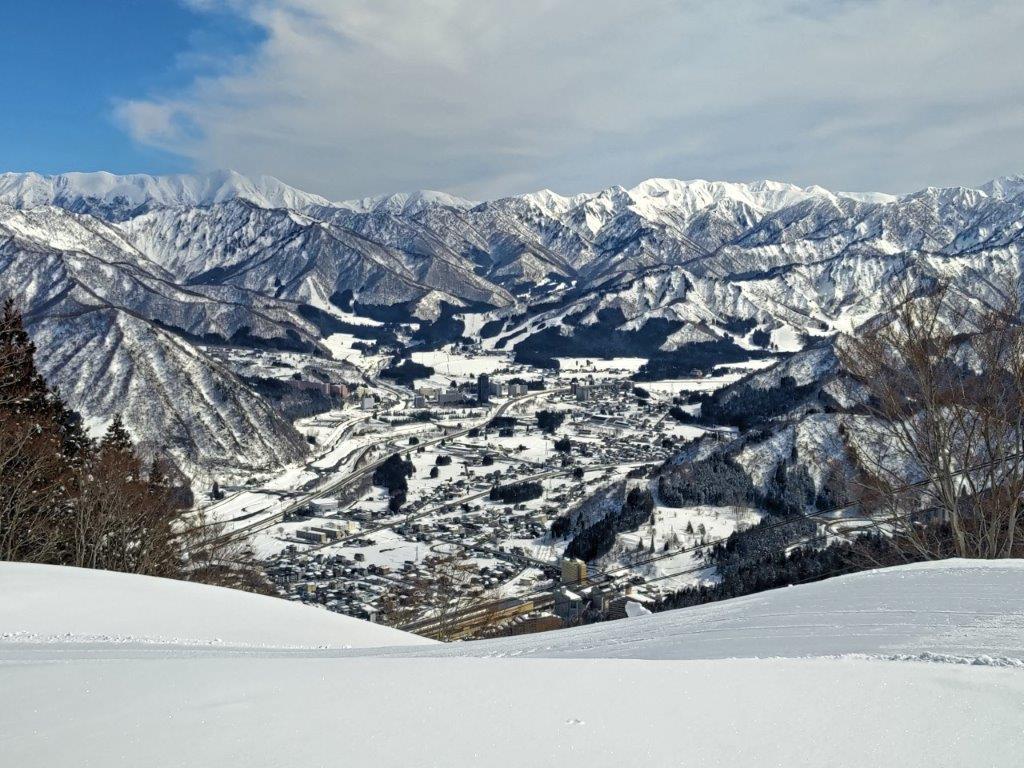
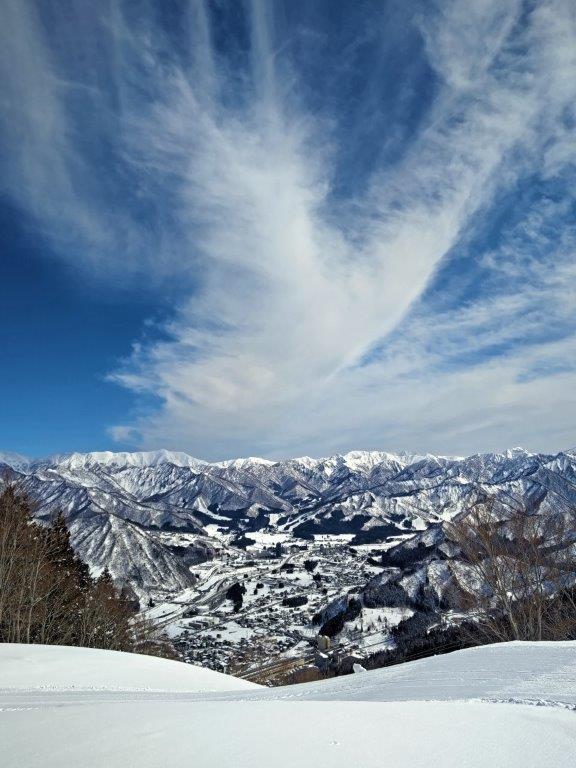
Yuzawa Town from the Panorama Station
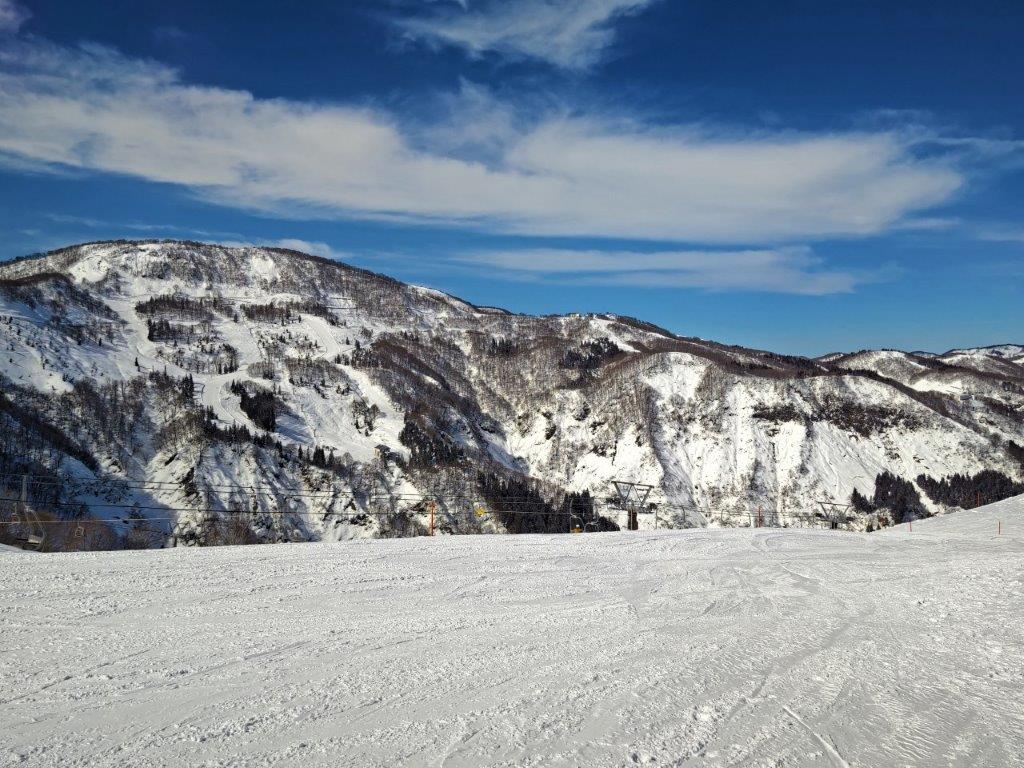
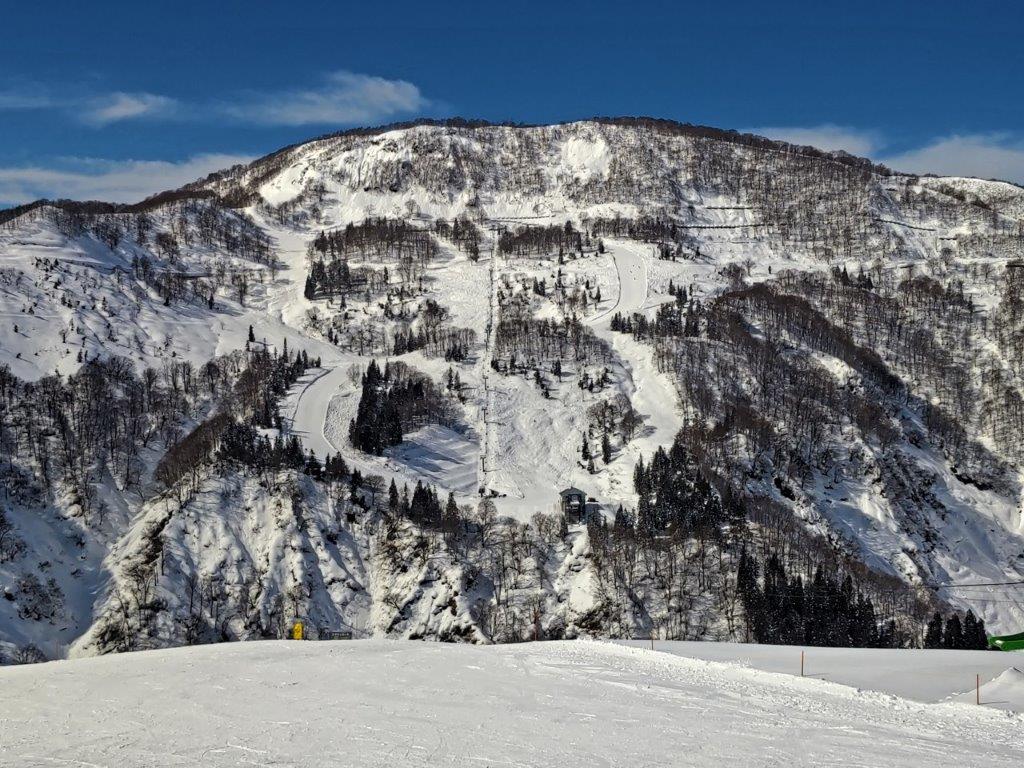
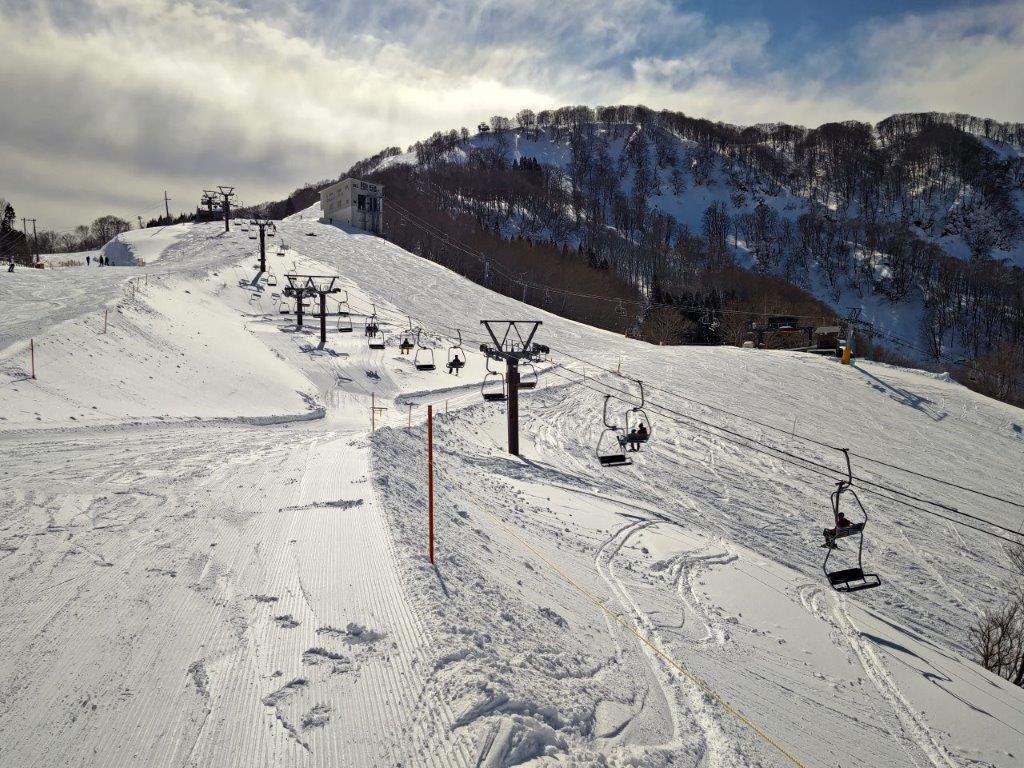
Walking along the Ski Slope with a Sightseeing Ticket
I arrived at Aizu-Wakamatsu in the early afternoon, my second time to visit the the capital of Aizu. On my previous visit I had travelled in the Autumn via Koriyama in the east. Up to now, the weather had been perfect with few clouds in the sky; I could see all the surrounding mountains, their snow cover shining white under the sun, although the city streets were snowless. The weather was changing quickly with dark clouds streaming in from the west so I hurried over to Tsuruga Castle. Even though it is a modern reconstruction like most Japanese castles, the surrounding garden is beautiful and the view from the top is spectacular. As I was enjoying the last of the views, the wind started to blow quite fiercely and the sun vanished behind thick clouds. I retreated back to my hotel, the basic but modern Toyoko Inn, and I tried to figure out where to have dinner. I didn’t think it’d be necessary to make advance reservations on a weekday night but it turned out that many places were either closed or full. In the end, the Izakaya Mokkiri said they could squeeze me in and I was able to enjoy some local cuisine in a cozy atmosphere. When I asked about Japanese sake, the waitress placed 14 bottles of local sake on the counter, while providing short explanations of each. Once dinner was over, it was snowing heavily outside, making it feel a little more like snow country.
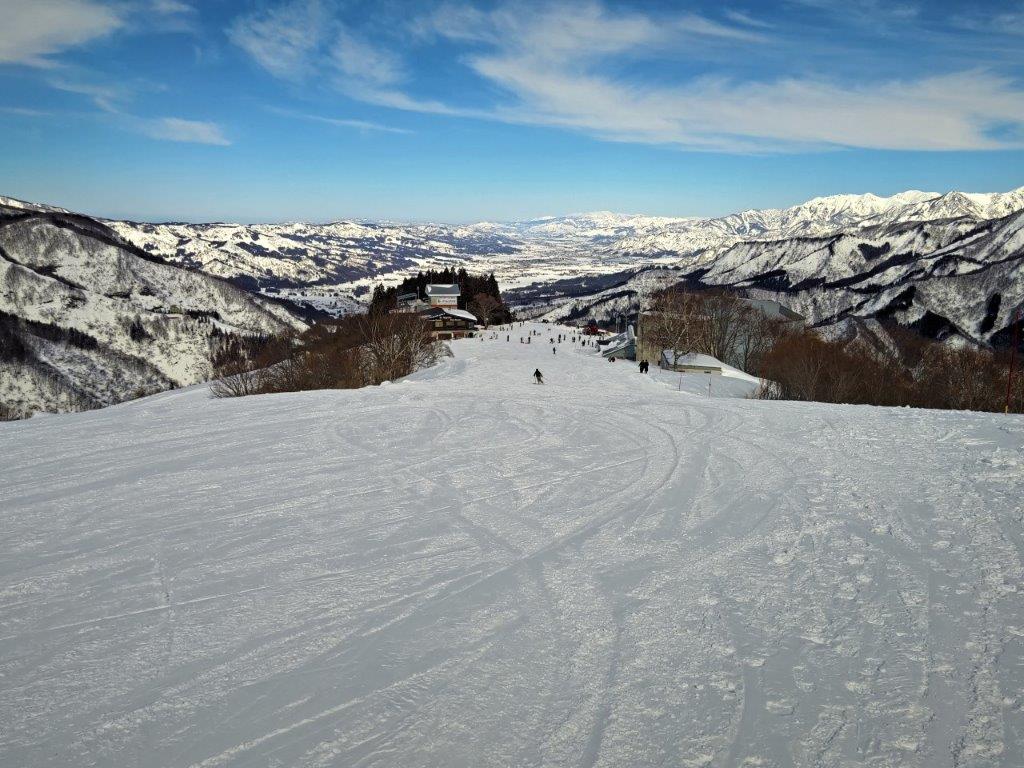
View towards Niigata
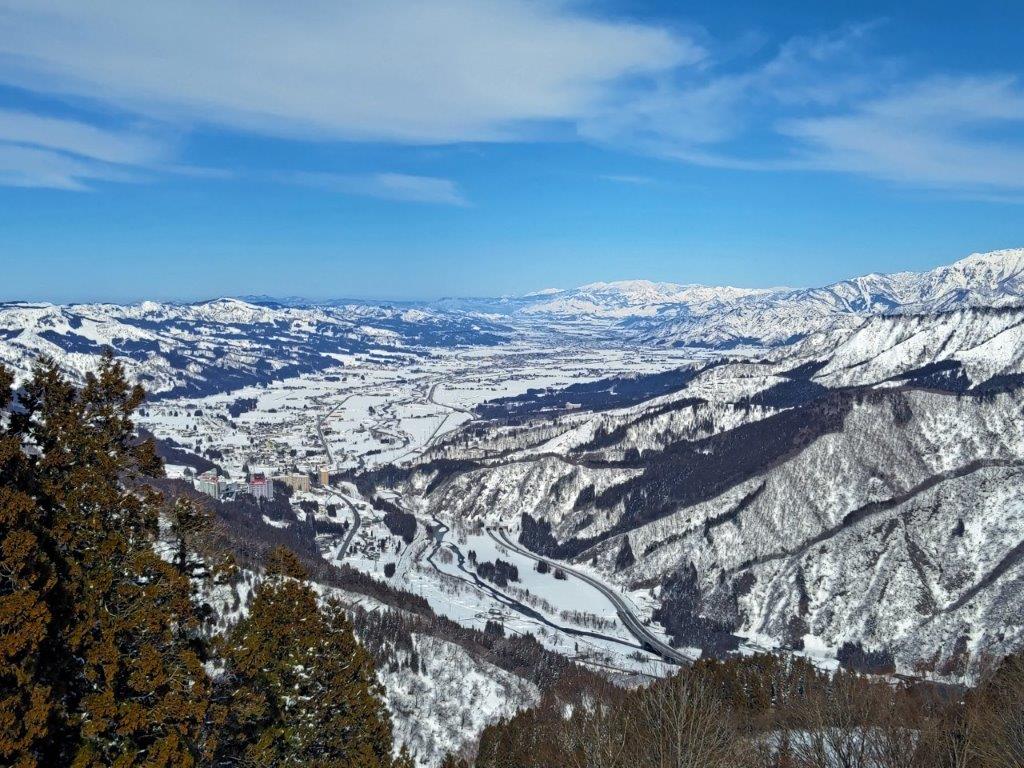
Japan’s Snow Country
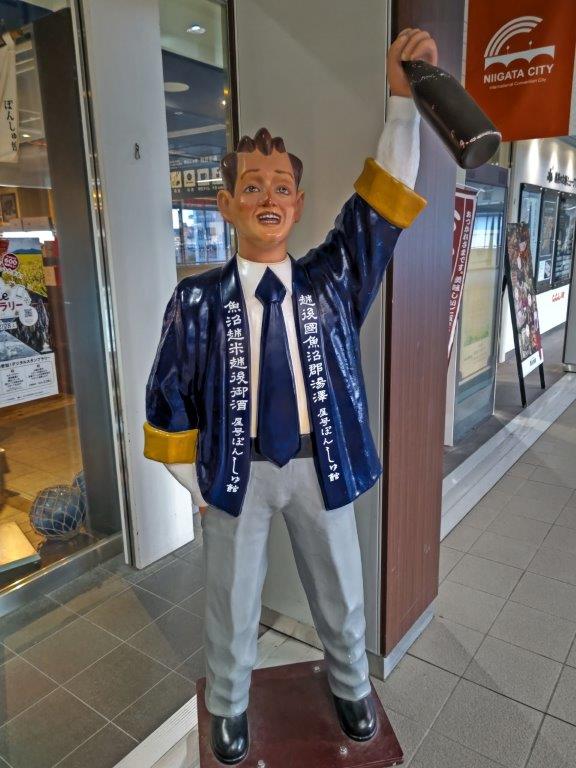
The snow had mostly stopped falling in the morning, although thick clouds remained which the sun was trying hard to pierce. The Tadami line was running but only halfway to Tadami station, which was no good for me since I needed to be in Yuzawa in the evening. So I boarded the Ban-Etsu line in the morning for the three-hour ride to Niigata, including a short transfer in Niitsu. It was a very scenic ride, the amount of snow gradually increasing as the railway line wound its way into the mountains, and for many sections, the train was almost empty. I arrived at the busy Niigata station around lunchtime, and after storing my bag in a locker, had a satisfying lunch at Ponshukan Uonuma Kamagura (ぽんしゅ館 魚沼釜蔵). Compared to other restaurants, it was spacious and quiet, the perfect place to unwind between two bouts of traveling. Afterwards, I boarded a bus for the short ride to Toki Messe where I could get a view of the city from the Befco Bakauke Observation Deck (Befcoばかうけ展望室) on the 31st floor.
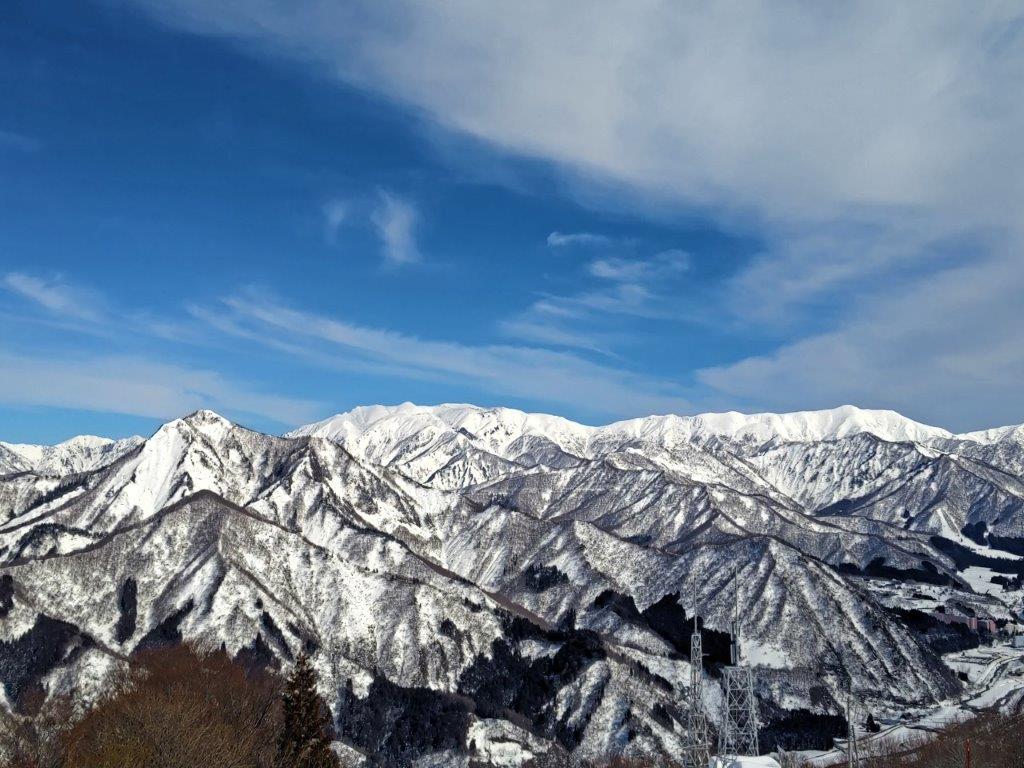
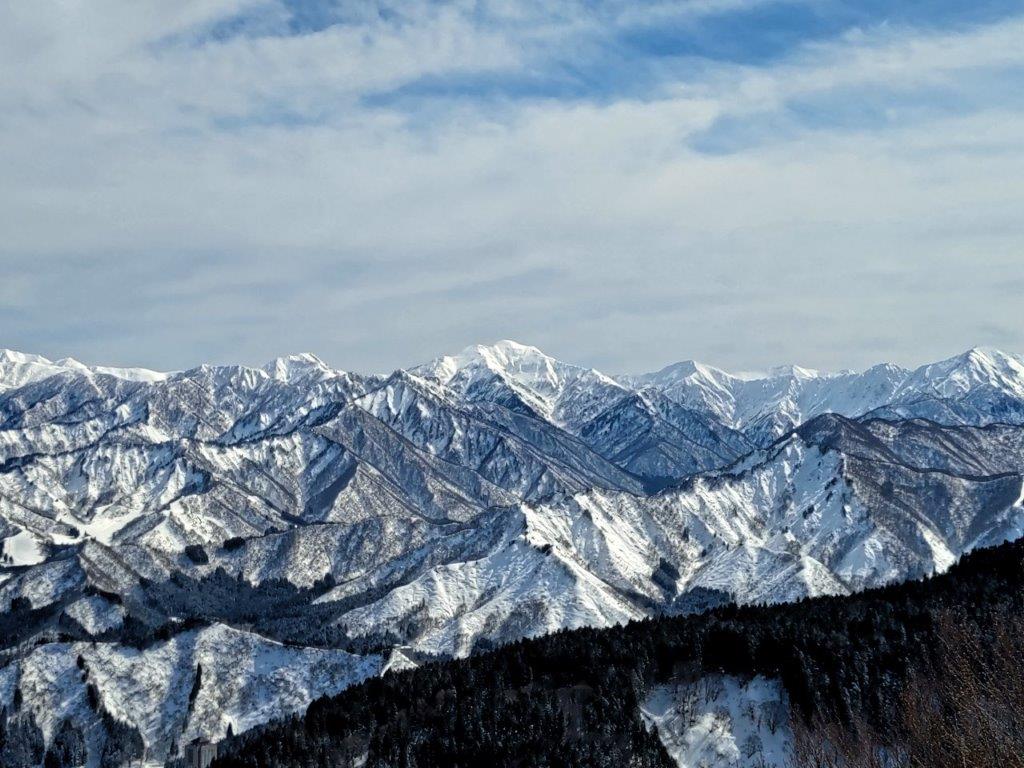
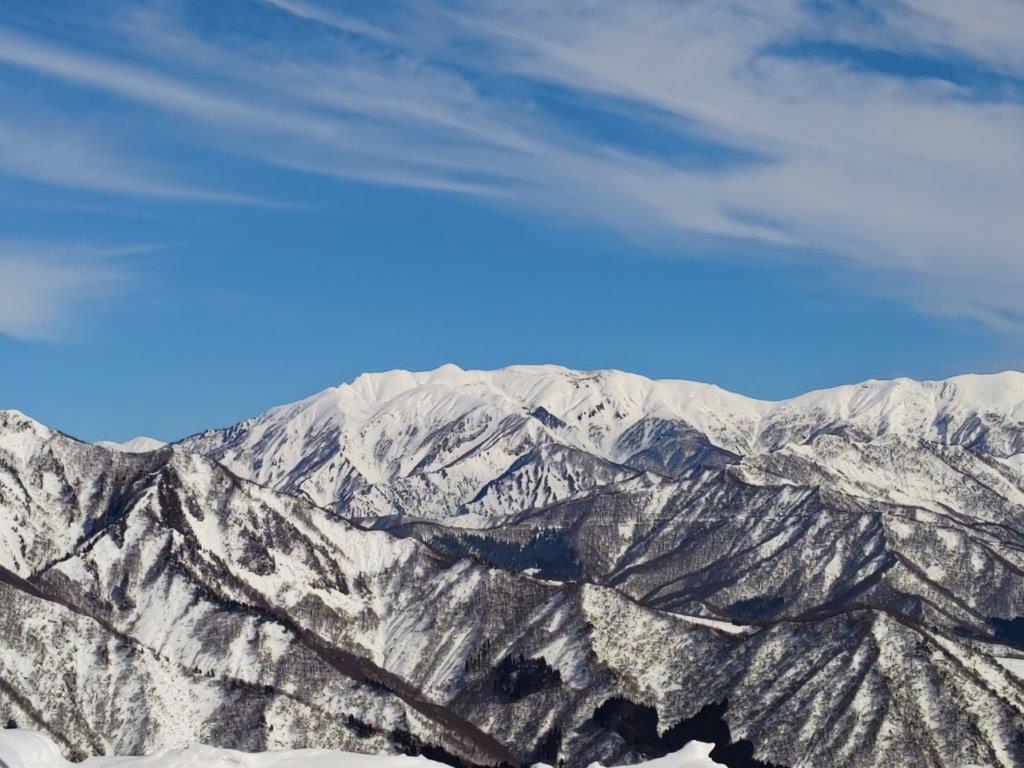
Mt Makihata in the Echigo Mountains
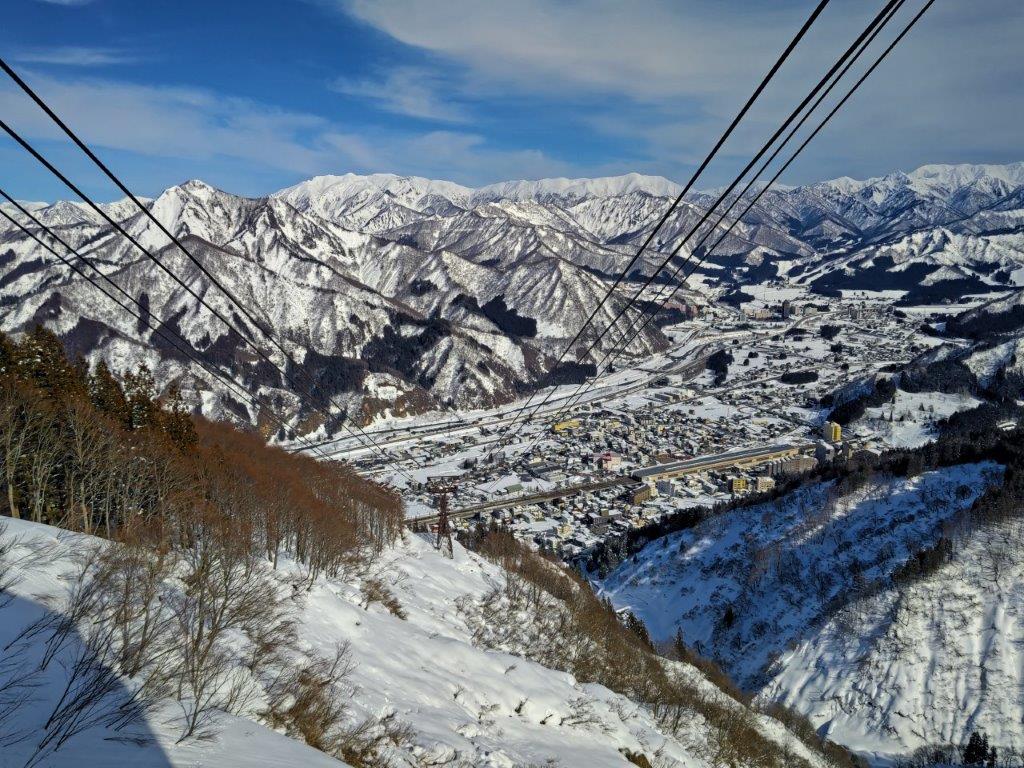
Looking down at Yuzawa Town from the Top of the Ropeway
Having seen the city from above, I would have loved to explore it on foot, especially since the city was exceptionally clear of snow in this season; but time was short so I returned to the station with the same bus. While waiting for the shinkansen, I tasted 5 different kinds of Niigata sake (from a choice of over 100) on the 3rd floor of Ponshukan. For 500 yen, you can get five coins for five 30ml servings although some fancier sake cost 2 or more coins. I arrived at Echigo-Yuzawa station at dusk, the shuttle bus waiting for me at the exit for the short ride to the final hotel of my trip, the Ryokan Futaba. The highlight was the rooftop bath with a spectacular view of the city lights at night, and the snowy mountains in the morning. Since Yuzawa is a busy ski resort, every restaurant was packed, but I finally found a free table at the newly opened Niigata Ramen Center, where I enjoyed a hearty Niigata-style ramen to end the day.
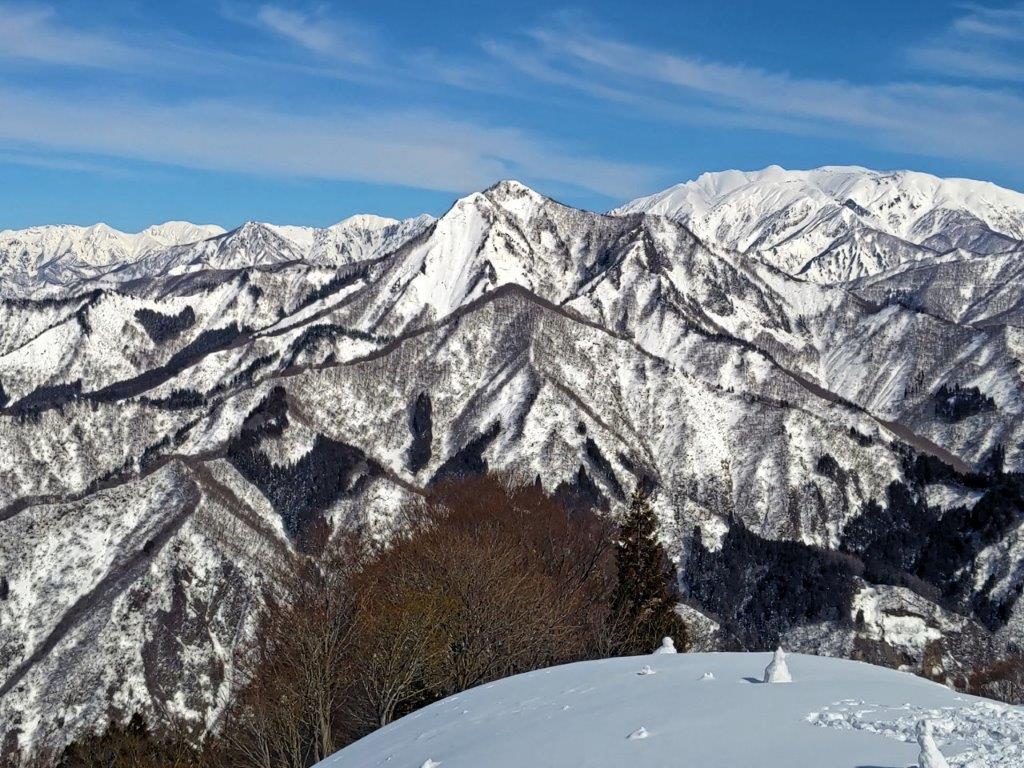
Echigosan-zan (left) & Mt Makihata (right)
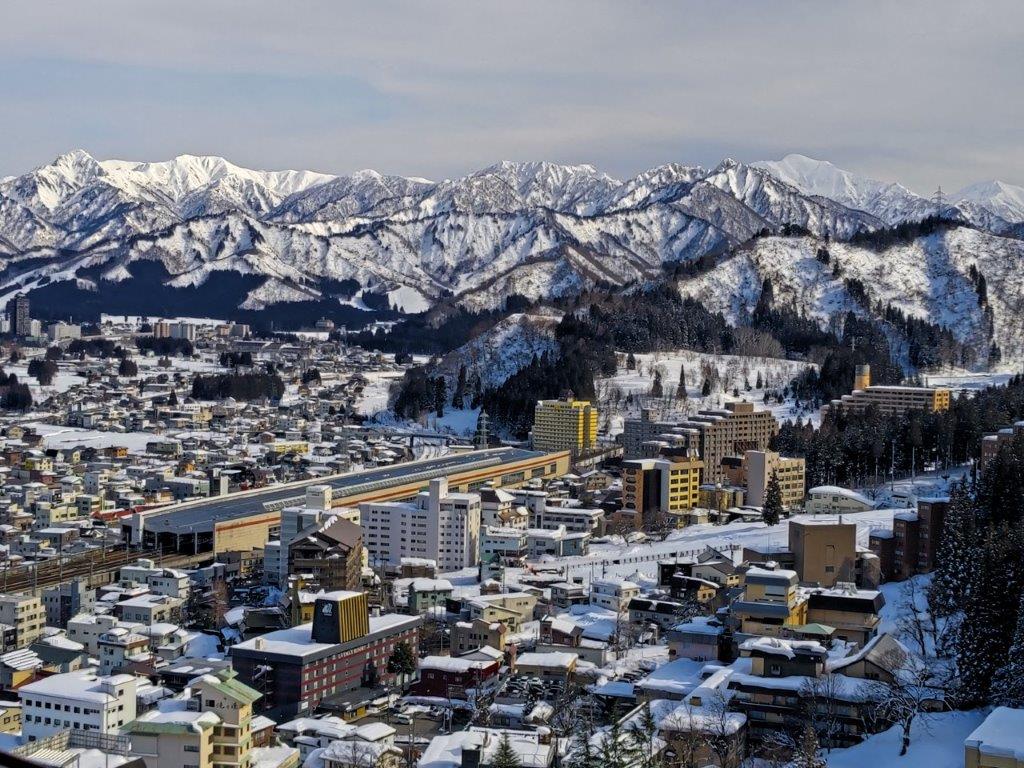
Yuzawa Town from the Ropeway
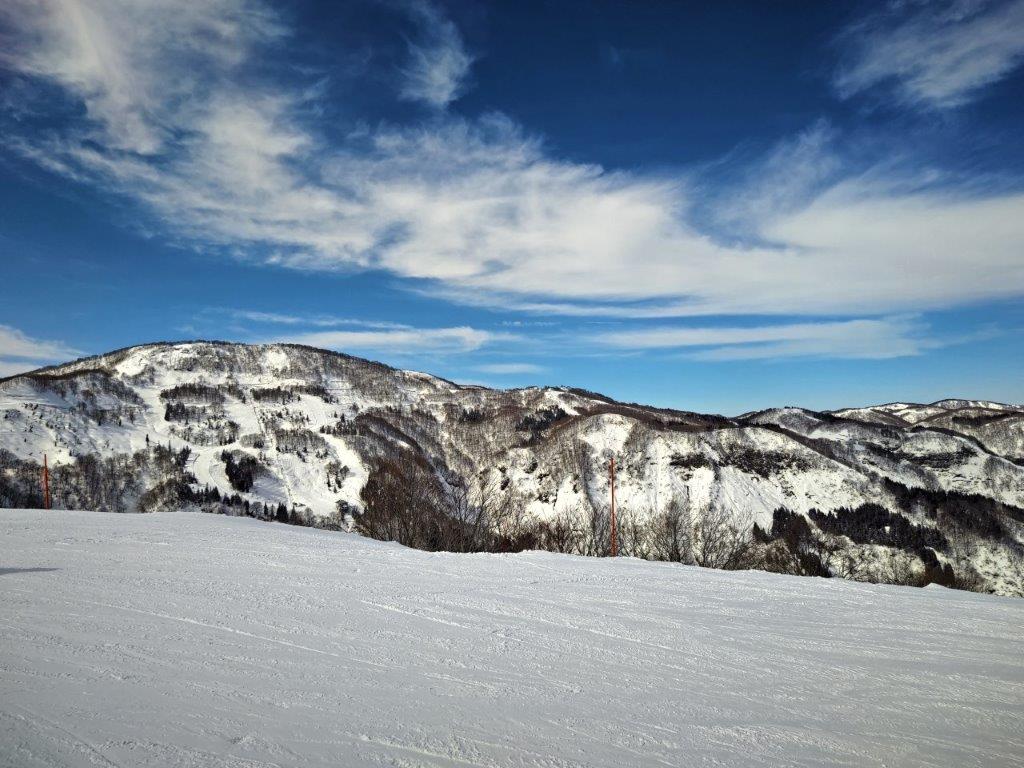
On the last day of my trip the good weather was back so after checking out from the hotel and storing my bag in a locker at the station, I walked ten minutes to the Yuzawa Onsen Ropeway where I purchased a sightseeing ticket, a round-trip to the Panorama station (860m). The view from the top was stunning: to the south I could see the Tanigawa mountain range, west was Mt Makihata, the Echigosan-zan and Mt Hakkai; Niigata’s snow country stretched northwards; Yuzawa town was nestled at the bottom of the valley 500 meters below. After admiring the views, I enjoyed a stone-baked pizza at Alpina, a highly-rated Italian restaurant located on the ski slopes. After descending with the gondola, I still had a little time before my return shinkansen so I decided to check out Takahan, the 800- year old ryokan where Yasunari Kawabata wrote his famous novel “Snow Country”. The upper floors were off limits but it was interesting to see the exhibits in the lobby area and chat with the hotel employees. After getting back to the station, I enjoyed another round of sake tasting at the Echigo-Yuzawa branch of Ponshukan before hopping on the shinkansen for the comfortable ride back to Tokyo.
Watch a Video of the Hike
See More Pictures of the Hike
 Hiking Around Tokyo