Tokyo Day Hikes February 2019

Despite February being a shorter month and the first snowfalls of the year in the Kanto area, I still managed to go hiking every weekend and fit in four more hikes – total of 9 so far this year. I visited 4 different prefectures, including my first hike of the year to Tochigi prefecture – hopefully I’ll be able to do something in Tokyo and Chiba in March. I also managed two more station to station hikes, something that never ceases to amaze me after more than a dozen years of hiking in Japan. I used the bus for the other two hikes. The average height of the climbed mountains was only 377m (nearly 1000n in January) proof that I was fleeing the cold and snow!

Utsunomiya Alps, (highest point 562m) , Utsunomiya City, Tochigi Prefecture, Sunday February 3
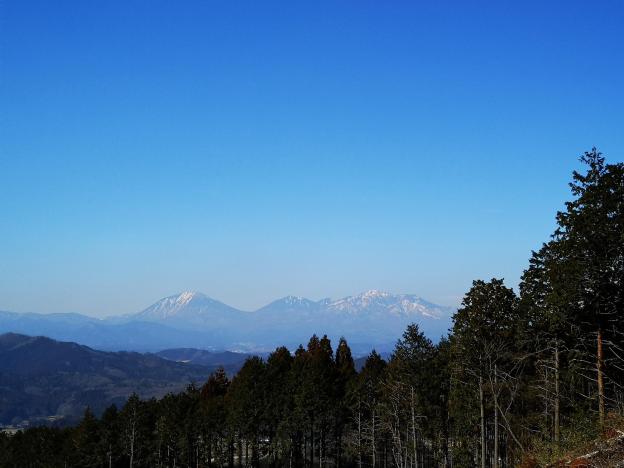
View of the Nikko range from the alternative path I took up

You may have read this before on this blog but the Utsunomiya Alps 宇都宮アルプス are another place that I’ve been meaning to explore for years. Originally I wanted to do it as a morning hike but had to give up since I couldn’t find the bus timetables and hiking maps. Since then, the hike has popped up in my hiking books and Google maps now includes reliable bus times.

After getting to Utsunomiya station, I had to ask an attendant for the bus to Nikko since the bus terminal is a big confusing. I believe she was also a bit confused to why I would be taking a bus to Nikko. In fact, I got off left than half way there. The first thing that caught my eye was some leftover snow next to the road which made me panic slightly. However there was very little snow during the entire hike.
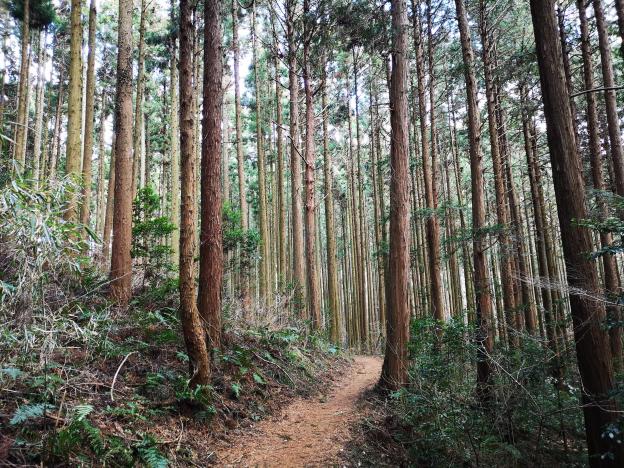
Cedar forest walking in the Utsunomiya Alps

From the bus stop, it was a 30 minute walk to the base of the Utsunomiya Alps (hills really). I overshot the start of the trail and ended going up a trail that was closed as it was being redone. It was only a minor inconvenience since only a short portion was difficult to walk. Also, I believe the views were far better on this path. After passing by a couple of minor peaks, I reached the highest point which had fantastic view of the Nikko range covered in a layer of snow.

Mt Nantai on the left and Mt Nyoho on the right

After a short lunch a continued along the ridgeline, which made a right angle towards the South. Unfortunately the weather had turned from sunny and warm to overcast and chilly. After a nice bit through forest, the next peak consisted of a steep climb and an even steeper descent – I was glad I had a good pair of shoes on.

The steep steep slope in the middle of the hike

After descending one more summit, I arrived onto a road which led to another bigger road. Here I somehow missed a turn for a path which led to another small summit. However I didn’t mind; at this point I was pretty satisfied and ready to wrap up the hike. At the foot of the “alps” I had another 30 minute walk to reach an onsen and the bus stop for the return to Utsunomiya.

Walking back to the bus stop can be enjoyable when the views are nice

Mt Obira (577m), Ito City, Shizuoka Prefecture, Sunday February 10 [Map Available]

A bit of sun on an otherwise gloomy day

Since I really enjoyed my hike up Mt Sukumo 2 weeks ago, I decided to return to the Izu peninsula. First, I had found what seemed like another good hike on my newly bought Izu hiking map. Second, going twice in a short time to the same area helps reinforce my memory of how to get there

Get a map of the Mt Obira Hike

This map was developed for Japanwilds with the Hokkaido Cartographer

Find more Japan hiking maps on Avenza

 This time, I went a little further south to Ito city to climb Mt Obira (大平山) meaning I could go all the way by express train, so the total travel time was about the same. For those interested in numbers, this hike is located 200km South from my previous hike in Tochigi.
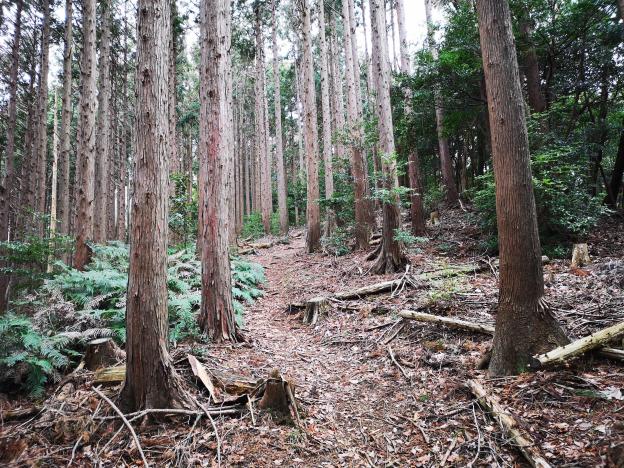
The path up Mt Obira

The hike starts directly from Ito city. Unfortunately the weather was overcast despite being sunny in Tokyo when I left. The fact that this place is a bit worn out didn’t help – this is one area that apparently isn’t getting a facelift because of the Olympics. I finally reached Maruyama park, the official start of the hike. It was completely deserted on this grey February day but I did see some plum early plum blossoms. Very soon, the path started climbing in earnest up a forested ridge. I was extremely grateful for the yellow signs that were everywhere along the trail and ensured that I never get lost – I really wish they would put these everywhere!
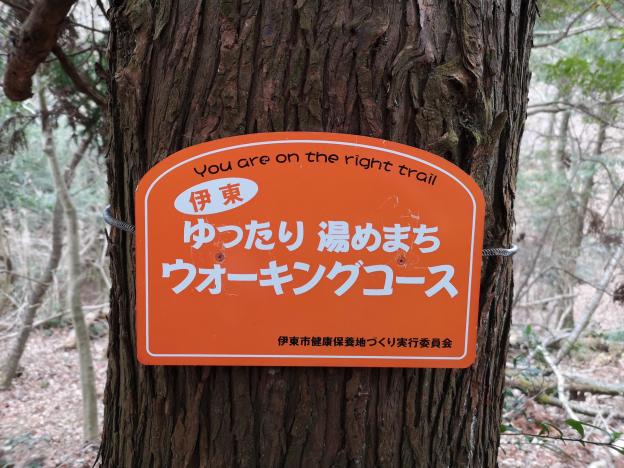
These helpful signs were everywhere along the hike

I encountered only one other hiker going down the ridge – he told me it was very cold at the top but that is kind of expected in the middle of winter at the top of any mountain, even on Izu peninsula. The top was more more of a ridgeline, but again, not surprising the name can roughly translate at “big flat top”. There were however good views of Ito town, the Pacific ocean and Oshima island. From there I moved North along the ridge and reached another opening in the trees with good views North along the coastline with Mt Oyama in the distance.


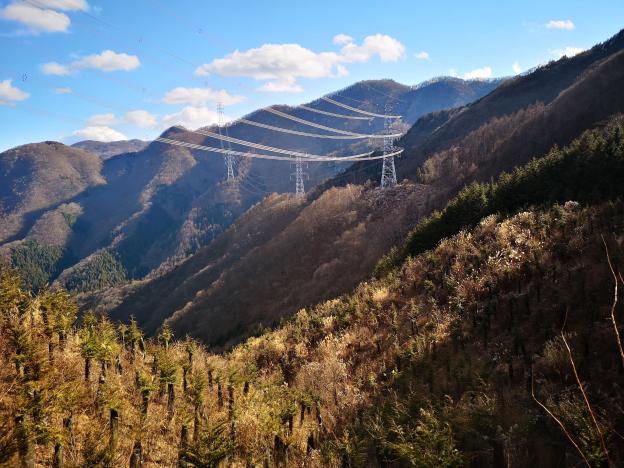
Atmospheric staircase just beyond Mt Obira

After that, the path turned West, inland and downhill. The entire hike is in fact a wide loop that after the initial climb, does a series of ups and downs, gradually turning anti-clockwise through beautiful forest. I realised later most of it is completely inside the Fuji-Hakone-Izu National Park. Finally I reached a wide open space with a view of the Pacific Ocean, Ito City, Oshima Island, Mt Omuro (a mini volcano) and snow-covered Mt Amagi, the highest point of the Izu peninsula.
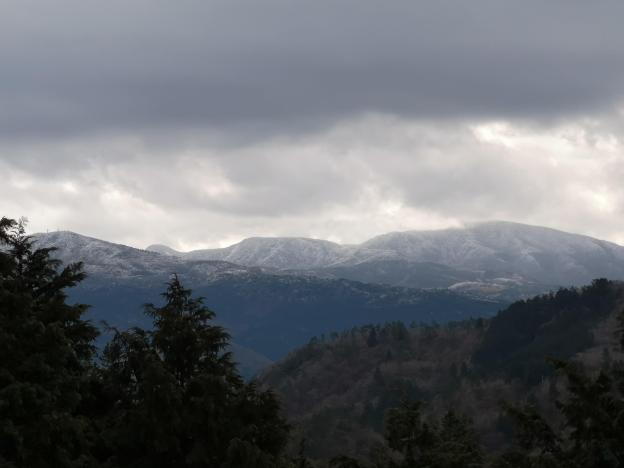
The snow-covered Amagi highlands, around 500m higher up

After taking photos to my heart’s content, I started on the descent. Eventually I got onto a road which I followed all the way back to Ito station. Ito is famous for its onsens and was able to take a quick dip at La Foret hotel. Originally I had planned to walk all the way to Mt Omuro but that was too ambitious – that will be for another hike!
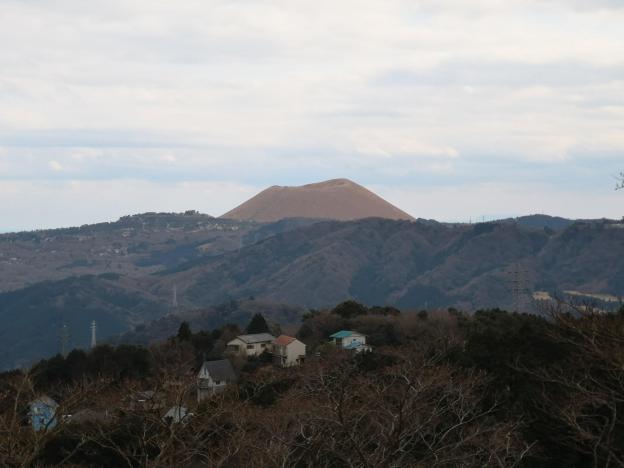
Mt Omuro, to be tackled on a future hike

Hachioji Hills (highest point 294m) & Mt Kana (239m), Kiryu & Ota Cities, Gunma Prefectures, Sunday February 17

Mt Akagi from the South-East – first time for me to see it from this angle

I had been saving this hike for a really cold winter day. Unfortunately, it was also a really windy one so I was doubly cold! The Hachioji hills 八王子丘陵 are a series of rolling hills running parallel to the edge of the mountainous area to the North of the Kanto plain. After getting off the Ryomo express train at Shin-kiryu, I took a local back one station to Azami station, about 10 minutes on foot from the start of the hiking trail.

A great hiking trail to do in the winter

The first half of the hills were mostly made up of gentle ups and downs which eventually led me to the highest point of the trail where there were excellent views of Kiryu City, Mt Kesamaru and Mt Akagi to the North, and Mt Haruna and Mt Asama to the West. There were 3 sets of binoculars available at different spots so that one could check out the view in detail.

Kiryu city is that way

The second half of the hills had steeper ascents and descents – even though the hills are low, they do make for a good workout! The last part in particular was a succession of ups and down through steep valleys – it was hard to believe that I was hiking in the middle of the densely populated Kanto plain. I saw almost no one in the last section. I finally emerged from the hills back into civilisation. Since it was still early afternoon, I decided to continue to neighbouring Kanayama mountain.

Mt Kesamaru – I was there last year in June

On the way I saw some human-sized Kokeshi dolls, had some nice views of the Hachioji hills and saw a group of 5 stray cats. According to Google maps I would need to make quite a big detour to reach the base of the mountain. However I decided to take a risk and head to a nearby campsite from where I thought there might be a connecting path to the mountain – and I was right! The path up Mt Kanayama 金山 was a lot steeper than I had imagined and I was pretty tired after my earlier crossing of the Hachioji Hills. So it was with great effort that I finally reached the top after 4pm.

I saw no one else hiking this part of the trail

The summit is home to a shrine and castle ruins. Unfortunately since it was late in the day, I didn’t have time to check out either fully. I also had to forgo the hiking path down and take the most direct route following the car road in order to reach the station by sundown. The hot bath hopes were dashed when the sento I found on Google Maps was no longer in existence. However I made a pleasant discovery at Ota station – the very new and beautiful Ota Art Museum and Library was a nice place to check out while waiting for the next express train back to Tokyo!

Sunset from the top of Mt Kanayama – time to head down

Votive tablets clattering in the wind

Miura Alps (highest point 212m), Zushi City, Kanagawa prefecture, Sunday February 24

View of Sagami Bay from the top of Mt Sengen

I had already done one hike on the Miura peninsula a few years ago, climbing the highest peak Mt Ogusa (241m). I hadn’t thought there was more hiking to be done there till I was combing through my Kanagawa hiking book and found that I could do what is called the “Miura Alps” 三浦アルプ – a series of hills that cross the entire peninsula from Zushi on the Sagami Bay to Taura on the Tokyo Bay.

Luckily Zushi is one of the easiest places for me to get to, since there are direct trains from Ikebukuro. From the station there are frequent buses for the short ride to the start of the trail. From the bus stop I climbed a steep road to a church (!) behind which started the trail. The trail felt very similar to the ones I’ve hiked in the Kamakura area – wide dirt trail path through a tunnel of vegetation. Very soon I arrived at the top of Mt Sengen with a ncie view of Sagami bay and Enoshima island. There were also tons of people, so I moved on quickly. Although this isn’t a famous mountain, it’s a fairly easy hike near populated areas so I often passed large groups of people. However, as usual, they were attentive and courteous, and always let me pass in front.
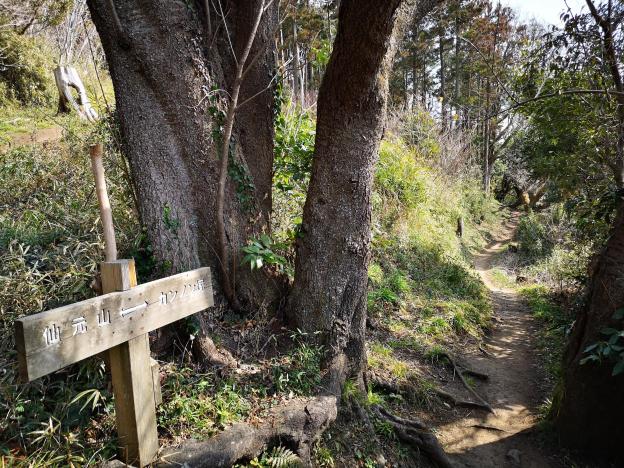
Walking along the Miura Alps

As I progressed along the ridge, further inland and completely surrounded by green hills, I certainly felt like a jungle explorer. Also, the name alps was well deserved as there was no end to the ups and downs. Not unpleasant but best to be prepared for the extra effort. Most summits were in the trees but I finally reached a clearing with a transmission tower so I decided to have lunch. The view wasn’t so good but at least it offered me some space a relatively quiet place to sit. As it usually happens, there was another transmission tower with a much better view a little further up. This was also the highest point of the hike, about 211m I believe. Finally I could see the Tokyo Bay on the other side of the peninsula.
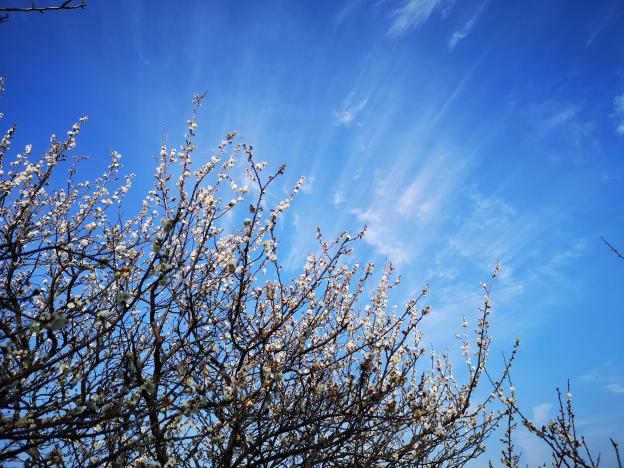
The plum blossoms are nearly fully out

Next I hiked down a little and then back up to the last summit of the Alps, Mt Nyukasa. From it’s summit, there was one space where you can see through the trees towards Taura city, Tokyo Bay and Yokohama. From the summit it’s a steep rope lined descent all the way back down to sea level. On the way I crossed a highway and a plum blossom park (taura ume no sato) that was nearly at full bloom. After crossing a small bamboo forest, I emerged into the town. However my hike wasn’t over yet. It was still only 3 o’clock in the afternoon, so like the week before, I decided to tag on another short hike to nearly Tsukayama Park.

View of Tokyo bay from above Taura town

This demanded another climb up a steep staircase and then a pleasant stroll along a quiet road following a ridge with occasional views of Tokyo bay. I also got a good view of part of the Miura Alps which I had just traversed. Finally I ended up at at Tsukayama park where the gravestone of Anjin Miura is located. If you’ve read Shogun by James Clavell, you’ll know who that is. There are also a couple of good viewpoints inside the park. From there, it was a short 15 minute back to the station, from there it took me less than an hour an half to get home.
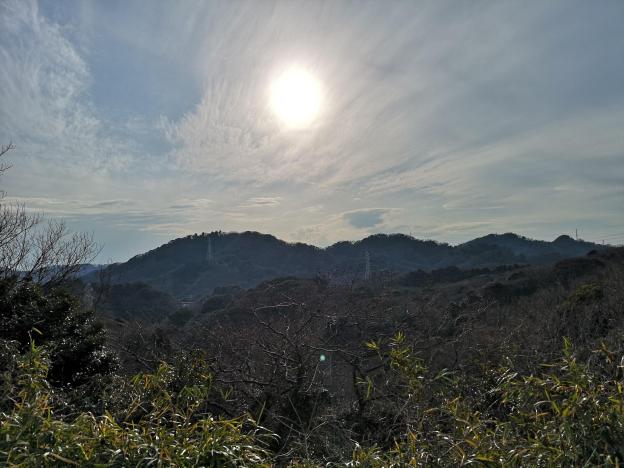
Lateral view of the Miura Alps
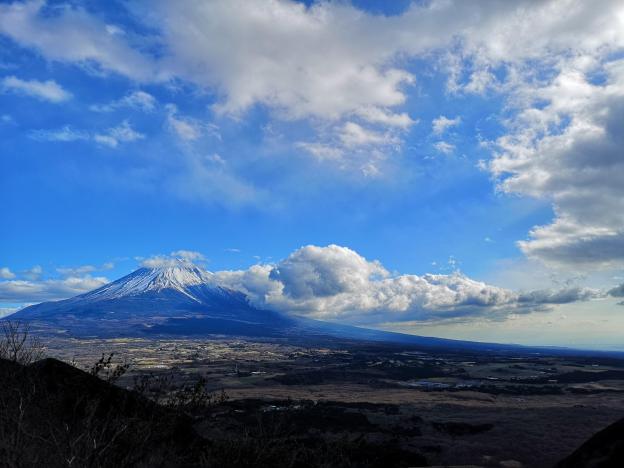
Tokyo Day Hikes January 2019

2019 got off to a great start – I was able to manage 5 great and new hikes in the months of January. This was thanks to a combination of lack of snow and abundance of national holidays. I visited five different prefectures, working my way clockwise from Yamanashi to Shizuoka, although this was unintentional. Two were station to station hikes, whereas the others were accessed by bus, taxi and car.

Mt Ryu (1485m), Fujikawaguchiko Town, Yamanashi Prefecture, Thursday January 2

Spectacular view of Mt Fuji from near the top of Mt Ryu

I chose the Kawaguchiko area for my first hike of the year since it is said that seeing Mt Fuji at the beginning of the year brings luck. Luckily Fuji was clearly visible till the early afternoon, after which it progressively wrapped itself up in layers of clouds. I also had unfinished business there since Mt Ryu 竜ヶ岳, meaning “dragon” in Japanese, was one of the remaining peaks surrounding Mt Fuji that I had yet to climb. My trip got off to a bad start when my bus at Fujisan station failed to materialise. Despite confirming that the bus would be running, just before it was supposed to arrive there was an announcement saying that it wouldn’t be running today. Luckily there was another bus that was leaving about twenty minutes later – it would just mean a later start and later return in the evening. In any case, lesson learned: don’t count on buses around the new year holidays.

Mt Fuji as seen from the top of Mt Ryu

I finally got started around noon. First I inquired about a place where I could get a hot bath after my hike. Unfortunately, one place I enquired at didn’t accept daytrippers and another place was closed to day trippers during the new year period. The start of the hike was along a road sandwiched between the mountain and Motosu lake. Although the views of the lake to the right were beautiful, I was walking in the shade so it got pretty cold. After an hour or so I was able to get onto a path which led up the mountain through the forest. There are several ways up but my guidebook recommended this one as being particularly beautiful. It’s easy to forget that most of the area is inside the Fuji-Hakone-Izu National Park, but this path offered a vivid reminder of the kind of beautiful nature the park was created to protect. Unfortunately, a big cloud has moved in from the South, so even though I had higher up, I was still in the shade and the freezing January cold.

The cloud looming up from behind Mt Ame

I finally reached a col with a great view of Fuji. The view from the West is probably the best because the sun sets in your back so the whole mountain is in the sun all afternoon. The path to Mt Ame (meaning Mt Rain) was to the right but my hike took me left. As I rose, the trees disappeared, the views got wider and the wind got colder. On the right was majestic Fuji, on the left the South Alps. I noted sadly that all the surrounding mountains were in the sun except mine. I finally reached the top where it was freezing cold but free of snow. I had quick lunch, snapped pictures till my fingers grew numb, and then set off down the mountain.

The 3 Shirane peaks in the South Alps

Since the path was Fuji side, there were lots of great photo opportunities. After some zigzagging I reached a small lookout, after which the path entered the forest. After some nice views of Motosu lake, I finally got back to flat ground, and followed the road back to the bus stop. Because of my late start, it had to take the very last bus of the day, dashing any hope I had stopping by an onsen. On top of that the bus was quite late – often the case in the Fuji area. There were tons of people when I got back to Kawaguchiko station, mostly tourists. I love the area but it is drawing more and more people, thus making it in a hassle to visit. On the plus side, there is a lot of English spoken and written.

Wonderful hiking overlooking Aokigahara forest

Mt Takamatsu (801m), Matsuda Town, Kanagawa Prefecture , Saturday January 5

View from the top of Mt Takamatsu (Fuji in the clouds)

I opted for something relatively easy for my second hike of the year, and although it was short, it proved very satisfactory. I took the train to Yamakita station on the Gotemba line, two stops from Matsuda station. The first part of the walk was along a road which took me past a sake brewery. A small shop opposite had some of their sake but unfortunately I couldn’t burden myself at the beginning of my hike. After an hour I got to the start of the hiking trail, which quickly rose and offered some nice views. Eventually the path entered some lovely forest. Quite soon I emerged onto a wide rounded summit of Mt Takamatsu 高松山. Sadly, Fuji to the West was in the clouds. However there were good views of the Hakone mountains, Sagami bay and the foothills of the Tanzawa mountains.

rhdr

Fuji showed itself towards the end of the day

After a leisurely lunch, I headed down taking the path East towards Matsuda station. After some nice solitary forest walking, I emerged onto a small road for a short while before joining another hiking trail. I thought I was done with climbing but I was wrong – the path went up again, apparently over the top of Mt Matsuda but I never saw a summit marker. I soon reached a park with a pond famous for plum blossoms although at this time of the year there wasn’t anything going on. After the park, the path alternated between road and trail before ending at Matsuda station. It was well signposted but I did manage to make a wrong turn once. You definitely need a map or a guide to navigate this hike. Continuing past Matsuda would lead into the Soga hills which I hiked around the same time last year.

A bend in the trail lit by the late afternoon sun

Mt Inafukumi (1370m), Shimonita Town, Gunma Prefecture, Sunday January 13

Soaring above Shimonita (center) with Mt Asama (left) and Mt Myogi (right)

The first long weekend of the year combined with good weather gave me a chance to go hiking twice and use the Tokyo Wide Pass. I chose a couple of short hikes so that I wouldn’t be exhausted come Tuesday. The first hike was a Kanto 100 famous called Mt Inafukumi 稲含山. I wouldn’t normally dare to hike above one thousand meters in the middle of January but my research told me that the snow cover was minimal. I took the shinkansen to Takasaki, then the local train to Shimonita, and finally a taxi to the start of the trail. I was glad I had decided against renting a car since some parts of the road were really in a poor state. I enjoyed chatting with the taxi driver as well. There were five other cars parked at the top ensuring that I would have company.


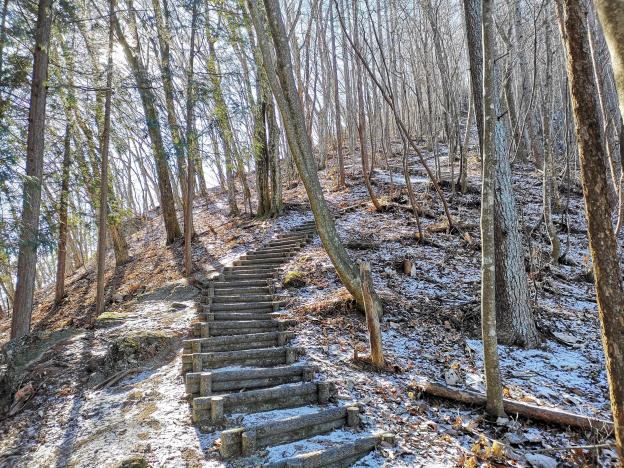
Steps, snow and sun

It was a short climb to the top, with a thin layer of snow covering the parts in the shade. The view of the Nishi Joshu (Western Gunma) area from the summit was mind-blowing. Some people may consider 1370m as not particularly high, but after Mt Yatsugatake and Mt Arafune to the West, and Mt Asama to the North, it’s the highest mountain in the area. I had the sensation of being in a plane. To the East, nestled at the bottom of the valley, was a hidden village – according to my guidebook, one of the 100 beautiful villages of Japan.


There was a little snow but nothing troublesome

After lunch and photos, I reluctantly headed down. I took a different route but running parallel to the ascending one. At one point a did a quick there and back along a side path promising some nice views. I soon emerged back onto the road. My plan was to walk along it till I found a hiking path I knew existed and that would take me back down. However before I could leave the road, a car stopped and the driver offered to take me. I accepted since I knew that the hike down was quite long and I needed to save some energy for the following day. The driver, a local called Isamu, kindly took me by a couple of historical sites that were on the way before dropping me off at the train station. We visited a small cemetery and a residence, both linked to the family of Toyotomi Hideyoshi, the ruler of Japan before Tokugawa.

My little detour at the end had some nice views

Mt Tatsuware (658m), Hitachi City, Ibaraki Prefecture, Monday January 14

Lots of interesting stones on the way

The next day I set off express train for Mito station from where I drove about an hour all the way to the start of the trail. The last few hundred meters were along a narrow dirt road so I decided to park my car just before, since there was some space, instead of at the parking area. At the end of my hike I was offered a ride again which I had to decline. I don’t often get offered rides, so it was unusual for it to happen twice in a row.

Mt Tatsuware 竪破山 is another hundred famous mountain. It isn’t a long nor difficult hike but there are several interesting rock formations on the way (reminiscent of Mt Tsukuba). I quickly reached the summit where there was a lookout tower. From the top, I could see the outline of Mt Tsukuba to the West, the Nikko mountains and Mt Nasu to the North, and the Pacific ocean to the East. I noticed that the top parts of the surrounding trees had recently been cut in order to provide this view.

In the distance, the outline of Mt Tsukuba

The clouds were in again, so after a short and cold lunch, I continued my hike. I retraced my steps for a short while before continuing straight along the ridge through the forest. I encountered a Tochigi climbing group having fun one on the big boulders along the way, and we chatted for a bit. I made a short detour to see a small waterfall, and finally got back to my starting point ahead of schedule, always preferably when driving.

Shinto gate at the start of the trail

Mt Sukumo (580m), Ito City, Shizuoka Prefecture, Sunday January 27 [Map Available]

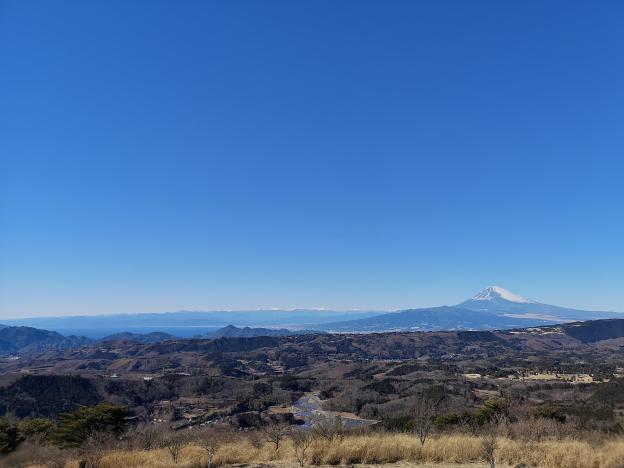
The magnificent view of Mt Fuji and the South Alps from Mt Sukumo

I hadn’t been hiking in Shizuoka since I did the Numazu Alps in December 2016 – far too long. With cold and snowy weather finally arriving to the Kanto plain, the Izu Peninsula seemed like the perfect place to visit. It is also a very easy place to get to, thanks to the Odoriko express trains running from Tokyo station. To get to Mt Sukumo 巣雲山 I had to change to a local train in Atami and get off at Usami station. From there I could start hiking directly.

Get a Map of the Mt Sukumo Hike

This map was developed for Japanwilds with the Hokkaido Cartographer

Find more Japan Hiking Maps on Avenza

The first part is along road through the town. At one point I turned around to gaze at the view of the sea behind me and a small flatbed van stopped beside me. The driver asked me where I was going, thinking I was lost. After hearing that I was heading up Mt Sukumo, he offered to drive me up – third time in a row this has happened to me! Since it would allow me to skip some road walking up, I got in the very small passenger space next to him.

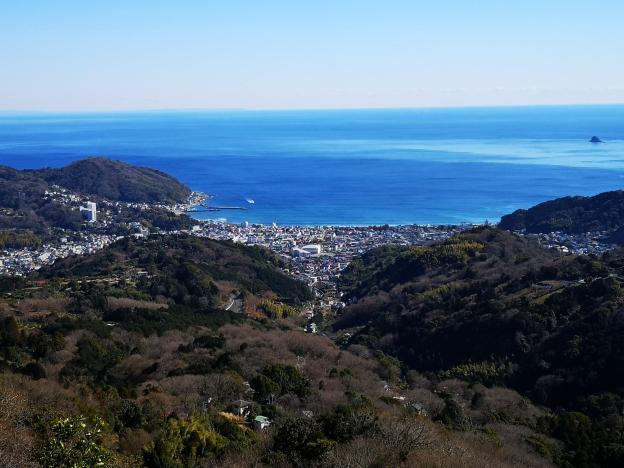
View of Usami from near my drop off point

Very soon we were zipping up narrow steep roads through mikan orchards. We didn’t slow down even when the road became a bumpy dirt road. “Luckily this is a four-wheel drive otherwise we wouldn’t be able to continue” he explained. I don’t think I would have minded walking at this stage but in any case it was a thrilling drive. Shortly after the first views appeared on the left, he stopped at a fork in the road and let me out. I thanked him profusely, and then he drove back down the mountain. Just as he disappeared from sight, I realised that because of the cramped seating, my map had fallen out of my pocket – goodbye map! Luckily I had another map on my phone. I also realised that I was already halfway up the mountain. Not a bad thing since I had left late in order to take the express train. This meant that I could take my time at the top. After taking a ton of photos of Usami town, the Pacific ocean and Oshima island, I finally started hiking up the mountain.

I love seeing the ocean from the top of a mountain!

Soon I reached a viewpoint of Mt Fuji, as well a fork in the path. I chose the higher path along Mt Daimaru. At one point I crossed the Izu Skyline. This part of the hike was very pleasant. I found out later that this the path is inside a small trip that belongs to the Fuji-Hakone-Izu National Park. After an hour or so, I reached the very wide and flat summit where there was a concrete observation tower. The view was one of the best I had ever seen in Japan. On one side was Hakone, Mt Fuji, the South Alps, the Numazu Alps and Sagami Bay. On the other side was the Pacific ocean, the Miura peninsula and the Boso peninsula. To the South was the massive bulk of Mt Amagi. I was glad I had extra time to spend there.


The Southern part of the South Alps – I was there last year in July

I finally managed to pull myself away and slowly start descending. After a short hour I emerged onto a road that snaked down the mountain back to Usami station between mostly summer residences. I was surprised to hear a lot of loud snapping and cracking noises coming from bamboo groves. At first I thought there were monkeys but afterwards I realised that it was the bamboo itself making the noise while growing – very impressive. On the way back I had to change trains in Atami so I decided to take a hot bath at one of the numerous hot spring hotels near the station, my first onsen of the year. I really enjoyed this hike in Izu and decided that I would try and come back soon.

Bamboo forest towards the end of the hike